Tim Keller on Five Practices of The Missional Church

THE MISSIONAL CHURCH

Missional church sign in the desert

The rapid decline of Christendom since the end of WWII has instituted an even greater need for “missional” churches to engage the surrounding community and retell the culture’s stories through the context of the gospel.

THE NEED FOR A MISSIONAL CHURCH

In the West for nearly a thousand years, the relationship of European Christian churches to the broader culture was a relationship known as “Christendom.” The institutions of society “Christianized” people and stigmatized non-Christian belief and behavior. Though people were Christianized by the culture, they were not necessarily regenerated or converted with the gospel. The church’s job was then to challenge persons into a vital, living relation with Christ.

There were great advantages and yet great disadvantages to Christendom. The advantage was a common language for public moral discourse with which society could discuss what was “good.” The disadvantage was that Christian morality without gospel-changed hearts often led to cruelty and hypocrisy. Think of how the small town in Christendom treated the unwed mother, for example. Also, under Christendom the church often was silent against the ruling classes’ abuses of the weak. For these reasons and others, the church in Europe and North America has been losing its privileged place as the arbiter of public morality since at least the mid- nineteenth century. The decline of Christendom has accelerated greatly since the end of World War II.

British missionary Lesslie Newbigin went to India around 1950. There he was involved with a church in a very non-Christian culture. When he returned to England some thirty years later, he discovered that the Western church now found itself in a non-Christian society as well, but it had not adapted to its new situation. Though public institutions and the popular culture of Europe and North America no longer Christianized people, the church still ran its ministries assuming that a stream of Christianized, traditional/moral people would simply show up at worship services. Some churches certainly carried out evangelism as one ministry among many, but the church in the West had not become completely missional—adapting and reformulating absolutely everything it did in worship, discipleship, community, and service so as to be engaged with the non-Christian society around it. It had not developed a missiology of Western culture, the way it had done with other nonbelieving cultures.

One of the reasons much of the evangelical church in the United States has not experienced the same precipitous decline as the Protestant churches of Europe and Canada is because in the United States there is still a heartland with remnants of the old Christendom society. There the informal public culture, though not the formal public institutions, still stigmatizes non-Christian beliefs and behavior. There is a “fundamental schism in American cultural, political, and economic life. There’s the quicker-growing, economically vibrant . . . morally relativist, urban-oriented, culturally adventuresome, sexually polymorphous, and ethnically diverse nation. . . .

And there’s the small-town, nuclear-family, religiously oriented, white-centric other America, [with] . . . its diminishing cultural and economic force. . . . [T]wo countries” (Michael Wolf, “The Party LIne,” New York, February 26, 2001: 19). In conservative regions, it is still possible to see people professing faith and the church growing without becoming missional. Most traditional evangelical churches can win to Christ only people who are temperamentally traditional and conservative. As Wolff notes, however, this

is a shrinking market, and eventually evangelical churches ensconced in the declining, remaining enclaves of Christendom will have to learn how to become missional. If they do not, they will decline or die.

We don’t simply need evangelistic churches; rather, we need missional churches.

THE PRACTICES OF A MISSIONAL CHURCH

(1) SPEAK IN THE VERNACULAR

In Christendom there is little difference between the language inside and outside of the church; technical biblical terms are well-known inside and outside church life. Documents of the early U.S. Congress, for ex- ample, are riddled with allusions to and references from the Bible. In a missional church, however, these terms must be explained.

The missional church:

+ avoids “tribal” language, stylized prayer language, unnecessarily pious evangelical jargon, and archaic lan- guage that seeks to set a spiritual tone.

+ avoids “we-they” language, disdainful jokes that mock people of different politics and beliefs, and dismis- sive, disrespectful comments about those who differ with us.

+ avoids sentimental, pompous, “inspirational” talk.

+ avoidstalkingasifnonbelievingpeoplewerenotpresent.Ifyouspeakanddiscourseasifyourwholeneigh- borhood were present (and not just scattered Christians), eventually more and more of your neighbors will find their way in or be invited.

Unless all of the above is the outflow of a truly humble-bold, gospel-changed heart, it is all just marketing and spin.

(2) ENTER AND RETELL THE CULTURE’S STORIES WITH THE GOSPEL

In Christendom it is possible to simply exhort Christianized people to do what they know they should. There is little or no real engagement, listening, or persuasion. Often, along with exhortation there is a heavy reliance on guilt to motivate behavior change. In a missional church, the preaching and communication always as- sume the presence of skeptical people and consequently engage their stories.

+ To enter the culture’s stories means to show sympathy toward and deep acquaintance with the literature, music, theater, and other arts expressing the existing culture’s hopes, dreams, heroic narratives, and fears.

+ To retell the culture’s stories is to show how only in Christ can we have freedom without slavery, and em- brace of the other without injustice. The older culture’s story called on people to be a good father/mother, son/daughter, and to live a decent, merciful, good life. Now the culture’s story calls people (a) to be free and self-created and authentic (note the theme of freedom from oppression); and (b) to make the world safe for everyone else to be the same (theme of inclusion of the “other”; justice).

(3) THEOLOGICALLY TRAIN LAYPEOPLE FOR PUBLIC LIFE AND VOCATION

In Christendom you can afford to train people solely in prayer, Bible study, and evangelism—private world skills— because they are not facing radically non-Christian values in their public life. In a missional church, the laity needs theological education to “think Christianly” about everything and to work with Christian distinctiveness. They need to know three things: (a) which cultural practices manifest common grace and are to be embraced, (b) which practices are antithetical to the gospel and must be rejected, and (c) which practices can be adapted/revised.

+ In a missional situation, the renewing and transformation of the culture through the work of laypeople with distinctively Christian vocations must be lifted up as real kingdom work and ministry, along with the traditional ministry of the Word.

+ Christians will have to use the gospel to demonstrate true, biblical love and tolerance in the public square toward those with whom we deeply differ. This tolerance should equal or exceed that which groups with opposing views show toward Christians. The charge of intolerance is perhaps the main “defeater” of the gospel in the non-Christian West.

(4) CREATE CHRISTIAN COMMUNITY THAT IS COUNTERCULTURAL AND COUNTERINTUITIVE

In Christendom, “fellowship” is basically just a set of nurturing relationships, support, and accountability. In a missional church, however, Christian community must go beyond that to embody a counterculture, showing the world how radically different a Christian society is with regard to sex, money, and power.

+ In sex. We avoid both the secular society’s idolization of sex and traditional society’s fear of sex. We also exhibit love rather than hostility or fear toward those whose sexual life-patterns are different from ours.

+ In money. We promote a radically generous commitment of time, money, relationships, and living space to social justice and the needs of the poor, the immigrant, and the economically and physically weak.

+ In power. We are committed to power sharing and relationship building among races and classes that are alienated outside of the body of Christ. A missional church must be deeply and practically committed to deeds of compassion and social justice and deeply and practically committed to evangelism and conversion.

(5) PRACTICE CHRISTIAN UNITY AS MUCH AS POSSIBLE ON THE LOCAL LEVEL

In Christendom, when “everyone was a Christian,” it was perhaps necessary for a church to define itself over against other churches—that is, to gain an identity you had to say, “We are not like that church over there or those Christians over here.” Today, however, it is much more illuminating and helpful for a church to define itself over against “the world”—the values of the non-Christian culture.

+ It is very important that we do not spend our time bashing and criticizing other kinds of churches. That criticalness simply plays into the common “defeater” that Christians are all intolerant.

+ While we have to align ourselves in denominations that share many of our distinctives, at the local level we should cooperate with, reach out to, and support the other congregations and churches in our area. This will raise many thorny issues, of course, but our bias should be in the direction of cooperation.

A CASE STUDY

This concept of the missional church goes beyond any program; the practices described here have to be present in every area of the church.

For example, what makes a small group missional? A missional small group is not necessarily one that is do- ing some kind of specific evangelism program (though that is to be encouraged). Rather, (1) if its members love and talk positively about the city/neighborhood, (2) if they speak in language that is not filled with pious tribal or technical terms and phrases, nor with disdainful and embattled verbiage, (3) if in their Bible study they apply the gospel to the core concerns and stories of the people of the culture, (4) if they are obviously interested in and engaged with the literature, art and thought of the surrounding culture and can discuss it both appreciatively and critically, (5) if they exhibit deep concern for the poor, generosity with their money, purity and respect with regard to the opposite sex, and humility toward people of other races and cultures, and (6) if they do not bash other Christians and churches—then seekers and nonbelieving people will be invited and will come and stay as they explore spiritual issues.

Copyright © 2001 by Timothy Keller, © 2009 by Redeemer City to City.

We encourage you to use and share this material freely—but please don’t charge money for it, change the wording, or remove the copyright information.

 About Tim Keller:

In 1989 Dr. Timothy J. Keller, his wife and three young sons moved to New York City to begin Redeemer Presbyterian Church. In 20 years it has grown to meeting for five services at three sites with a weekly attendance of over 5,000. Redeemer is notable not only for winning skeptical New Yorkers to faith, but also for partnering with other churches to do both mercy ministry and church planting.  Redeemer City to City is working to help establish hundreds of new multi-ethnic congregations throughout the city and other global cities in the next decades.

Dr. Tim Keller is the author of several phenomenal Christo-centric books including:

Joy for the World: How Christianity Lost Its Cultural Influence and Can Begin Rebuilding It (co-authored with Greg Forster and Collin Hanson (February or March, 2014).

Encounters with Jesus:Unexpected Answers to Life’s Biggest Questions. New York, Dutton (November 2013).

Walking with God through Pain and Suffering. New York, Dutton (October 2013).

Judges For You (God’s Word For You Series). The Good Book Company (August 6, 2013).

Galatians For You (God’s Word For You Series). The Good Book Company (February 11, 2013).

Every Good Endeavor: Connecting Your Work to God’s Plan for the World. New York, Penguin Publishing, November, 2012.

Center ChurchDoing Balanced, Gospel-Centered Ministry in Your City. Grand Rapids: Zondervan, September, 2012.

The Freedom of Self Forgetfulness. New York: 10 Publishing, April 2012.

Generous Justice: How God’s Grace Makes Us Just. New York: Riverhead Trade, August, 2012.

The Gospel As Center: Renewing Our Faith and Reforming Our Ministry Practices (editor and contributor). Wheaton: Crossway, 2012.

The Meaning of Marriage: Facing the Complexities of Commitment with the Wisdom of God. New York, Dutton, 2011.

King’s Cross: The Story of the World in the Life of Jesus (Retitled: Jesus the KIng: Understanding the Life and Death of the Son of God). New York, Dutton, 2011.

Gospel in Life Study Guide: Grace Changes Everything. Grand Rapids, Zondervan, 2010.

The Reason For God: Belief in an Age of Skepticism. New York, Dutton, 2009.

Counterfeit Gods: The Empty Priorities of Money, Sex, and Power, and the Only Hope That Matters. New York, Riverhead Trade, 2009.

Heralds of the King: Christ Centered Sermons in the Tradition of Edmund P. Clowney (contributor). Wheaton: Crossway Books, 2009.

The Prodigal God. New York, Dutton, 2008.

Worship By The Book (contributor). Grand Rapids: Zondervan, 2002.

Ministries of Mercy: The Call of the Jericho Road. Phillipsburg: P&R Publishing, 1997.

Where Are Christian Missionaries Coming From These Days?

Stats From 2010 May Surprise You!
Globe

Gordon-Conwell’s Center for the Study of Global Christianity “calculates that Christians sent out approximately 400,000 international missionaries in 2010. And nearly half of the world’s top missionary-sending countries are now located in the global South.” says Christianity Today’s Melissa Steffan.

The report puts numbers behind the dramatic rise in missionary sending from countries that many American Christians still associate only with mission destinations.

While the U.S. still does send the largest total number of missionaries, “127,000 in 2010 compared to the 34,000 sent by No. 2-ranked Brazil,” the prize for the largest percentage per million Christians in the population goes to a contender that many will find surprising.

Palestine.

This country’s vibrant population of Christians send 3,401 missionaries for every million Christians. Palestine’s “followed by Ireland, Malta, and Samoa. (Interestingly, South Korea ranks No. 5 at 1,014 missionaries sent per million church members, a sign of the continued strength of its missions movement compared to the No. 9-ranked United States at 614 missionaries sent).”

*Source: Leadership Journal

Dr. Aubrey Malphurs on The Meaning of Going and Making Disciples

WHAT DID JESUS MEAN IN MATTHEW 28:19-20 WHEN HE COMMANDED HIS CHURCH TO MAKE DISCIPLES?

Perhaps the most important questions that a church and its leadership can ask are: What does God want us to do? What is our mandate or mission? What are our marching orders? The answer to all three questions isn’t hard to find. More than two thousand years ago, the Savior predetermined the church’s mission-it’s the Great Commission, as found in such texts as Mark 16:15; Luke 24:46-49; John 20:21; and Matthew 28:19-20, where he says, “Make disciples.” This commission raises several important questions, such as what is a disciple and what does it mean to make disciples?

If you asked ten different people in the church (including the pastoral staff) what a disciple is, you might get ten different answers. The same is true at a seminary. If the church is not clear on what Jesus meant, then it will be difficult for it to comply with his expressed will. For the church to understand what the Savior meant in Matthew 28:19-20, we must examine the main verb and its object “make disciples” and then the two participles that follow- “baptizing” and “teaching.” What does all this mean?

 “Make Disciples”

First, let’s examine the main verb and its object: “make disciples.” A common view is that a disciple is a committed believer. Thus a disciple is a believer, but a believer isn’t necessarily a disciple. However, that’s not how the New Testament uses this term. I contend that the normative use of the term disciple is of one who is a convert to or a believer in Jesus Christ (though there are some obvious exceptions – Some exceptions are the disciples of Moses [John 9:28], the disciples of the Pharisees [Matt. 22:16; Mark 2:18], the disciples of John [Mark 2:18; John 1:35], and the disciples of Jesus who left him [John 6:60-66]). Thus the Bible teaches that a disciple isn’t necessarily a Christian who has made a deeper commitment to the Savior but simply a Christian. Committed Christians are committed disciples. Uncommitted Christians are uncommitted disciples. This is clearly how Luke uses the term disciple in the book of Acts and his Gospel. It is evident in passages such as the following: Acts 6:1-2, 7; 9:1, 26; 11:26; 14:21-22; 15:10; 18:23; 19:9. For example, Acts 6:7 tells us that God’s Word kept spreading and the number of disciples continued to increase greatly in Jerusalem. Luke isn’t telling us that the number of deeply committed believers was significantly increasing. He’s telling his readers that the church was making numerous converts to the faith. In Acts 9:1 Luke writes that Saul (Paul) was “breathing out murderous threats against the Lord’s disciples.” It’s most doubtful that Saul was threatening only the mature believers. He was persecuting as many believers as he could locate. A great example is Acts 14:21 where Luke says they “won a large number of disciples” in connection with evangelism. Here they preached the gospel and won or made a large number of disciples or converts, not mature or even growing Christians. (Note that the words “won a large number of disciples” is the one Greek word mathateusantes, the same word as in Matthew 28:19!) Disciples, then, were synonymous with believers. Virtually all scholars acknowledge this to be the case in Acts.

So is the command “make disciples” in Matthew 28:19 to be equated with evangelism? Before we can answer this question, we must also examine a second context. The first had to do with the use of the term disciple in the New Testament; the second has to do with the other Great Commission passages: Mark 16:15 and Luke 24:46-49 (with Acts 1:8). In Mark 16:15 Jesus commands the disciples, “Go into all the world and preach the good news to all creation.” Here “preach” like “make disciples” is the main verb (an aorist imperative) preceded by another circumstantial participle of attendant circumstance translated “go.” This is clearly a proactive command to do evangelism.

In Luke 24:46-48 we have much the same message with the gospel defined: “This is what is written: The Christ will suffer and rise from the dead on the third day, and repentance and forgiveness of sins will be preached in his name to all nations, beginning at Jerusalem. You are witnesses of these things.” Jesus presents the gospel message and the necessity that his witnesses preach that gospel to all nations. In these two Great Commission passages, the emphasis is clearly on evangelism and missions.

Finally, John gives us the least information in his statement of the commission. In John 20:21-22 Jesus tells the disciples that he’s sending them and provides them with the Holy Spirit in anticipation of Pentecost.

We must not stop here. There’s a third context. Much of Jesus’s teaching of the Twelve (who are believers, except for Judas) concerns discipleship or the need for the disciple to grow in Christ (Matt. 16:24-26; 20:26-28; Luke 9:23-25). For example, Matthew 16:24 says, “Then Jesus said to his disciples, `If anyone would come after me, he must deny himself and take up his cross and follow me.”‘

So how does this relate to the passages in Acts and the other commission passages in the Gospels? The answer is that the Great Commission has both an evangelism and an edification or spiritual growth component. To make a disciple, first one has to win a person (a nondisciple) to Christ. At that point he or she becomes a disciple. It doesn’t stop there. Now this new disciple needs to grow or mature as a disciple, hence the edification component.

“Baptizing and Teaching”

Having studied the main verb and its object, “make disciples,” we need to examine the two participles in Matthew 28:20- “baptizing” and “teaching.” The interpretation of these will address whether “make disciples” involves both evangelism and edification. While there are two feasible interpretive options, the better one is that they are circumstantial (adverbial) participles of means (The second option is to treat them as circumstantial [adverbial] participles of attendant circumstance. If this is correct, then the participles baptizing and teaching express an idea not subordinate to as above but coordinate to or on a par with the main verb [make disciples]. You would translate the main verb and the participles as a series of coordinate verbs, the mood of which is dictated by the main verb that in this case is imperative [aorist imperative]. The verse would read: “Go, therefore, and make disciples of all nations, baptize them in the name of the Father and of the Son and of the Holy Spirit, and teach them to obey everything that I have commanded you.” A former Dallas Seminary Greek professor, Philip Williams, takes this view in “Grammar Notes on the Noun and the Verb and Certain Other Items” [unpublished class notes, which were used by Dr. Buist Fanning in his course Advanced Greek Grammar, 1977], 53-54. The conclusion here is that the passage addresses a series of separate, coordinate chronological acts or steps. The first is to go, which implies proactivity. The second is to make disciples. The third is to baptize those disciples, and the fourth is to teach them. However, I believe that Dan Wallace makes the better argument for these being circumstantial participles of means. While I don’t believe that baptizontes and didaskontes are circumstantial participles of attendant circumstance, I do believe that the first participle in verse 19 [poreuthentes] is. It draws its mood from or is coordinate to the main verb [mathateusate], which is imperative. Jesus is commanding them to make disciples and to be proactive about it).

The NIV has taken this interpretation: “Therefore go and make disciples of all nations, baptizing them in the name of the Father and of the Son and of the Holy Spirit, and teaching them to obey everything I have commanded you.” Dan Wallace, a Greek scholar and professor of New Testament at Dallas Seminary, writes: “Finally, the other two participles (haptizontes, didaskontes) should not be taken as attendant circumstance. First, they do not fit the normal pattern for

attendant circumstance participles (they are present tense and follow the main verb). And second, they obviously make good sense as participles of means; i.e., the means by which the disciples were to make disciples was to baptize and then to teach” (Daniel B. Wallace, Greek Grammar Beyond the Basics. Grand Rapids: Zondervan, 1996, 645). If this is the case, then the two participles provide us with the means or the how for growing the new disciples. The way the church makes disciples is by baptizing and teaching its people.

But what is the significance of baptism in the life of a new disciple (believer)? Baptism is mentioned eleven times in Acts (Acts 2:38; 8:12, 16, 36, 38; 9:18; 10:48; 16:15, 33; 19:5; 22:16). In every passage except one (19:5) it’s used in close association with evangelism and immediately follows someone’s conversion to Christ. Baptism was the public means or activity that identified the new disciple with Jesus (See Wilkins, Following the Master, 189). Baptism was serious business, as it could mean rejection by one’s parents and family, even resulting in the loss of one’s life. As we have seen, it both implies or is closely associated with evangelism and was a public confession that one had become a disciple of Jesus. Thus Matthew includes evangelism in the context of disciple making.

And finally, what is the significance of teaching? Luke also addresses teaching in Acts (Acts 2:42; 5:25, 28; 15:35; 18:11; 28:31). Michael Wilkins summarizes this best when he says that “`teaching’ introduces the activities by which the new disciple grows in discipleship” (Ibid., 189-90).The object of our teaching is obedience to Jesus’s teaching. The emphasis on teaching isn’t simply for the sake of knowledge. Effective teaching results in a transformed life or a maturing disciple/believer.

The Conclusion

The conclusion from the evidence above is that the two participles are best treated and translated as circumstantial participles of means. The term make disciples (mathateusante) is a clear reference to both evangelism (baptizing) and maturation (teaching). (Note again the use of mathateusantes in Acts 14:21 in the context of evangelism.) Mark and Luke emphasize the evangelism aspect of the Great Commission (and John the sending out of the disciples). Matthew emphasizes both evangelism and the need to grow disciples in their newfound faith, as he adds the need not only to baptize but to teach these new believers as well to other passages in the New Testament, the latter would lead the new converts to spiritual maturity (1 Cor. 3:1-4; Heb. 5:11-6:3). Therefore, the goal is for them to become mature disciples in time. This would result from a combination of being taught and obeying Jesus’s commandments.

Jesus was clear about his intentions for his church. It wasn’t just to teach or preach the Word, as important as those activities are. Nor was it evangelism alone, although the latter is emphasized as much as teaching. He expects his entire church (not simply a few passionate disciple makers) to move people from prebirth (unbelief) to the new birth (belief) and then to maturity. In fact, this is so important that we can measure a church’s spiritual health and its ultimate success by its obedience to the Great Commission. It is fair to ask of every church’s ministry how many people have become disciples (believers) and how many of these disciples are growing toward maturity. In short, it’s imperative that every church make and mature disciples at home and abroad!

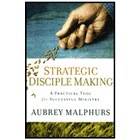
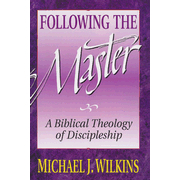
Note: I highly recommend Dr. Michael J. Wilkins’s Following the Master: A Biblical Theology of Discipleship (Zondervan, 1992). Wilkins is professor of New Testament language and literature and dean of the faculty at the Talbot School of Theology, Biola University. (Pictured on below)

About the Author: Aubrey Malphurs (Ph.D., Dallas Theological Seminary) is professor of pastoral ministries at Dallas Theological Seminary and president of The Malphurs Group. He engages in church consulting and training and is the author of numerous books, including Developing a Vision of Ministry in the Twenty-first Century.

The Article above was adapted from Appendix B: “Make Disciples” by Aubrey Malphurs. Strategic Disciple Making: A Practical Tool for Successful Ministry. Grand Rapids: Baker, 2008 (pp. 159-160). Kindle Edition.

How J. Hudson Taylor Learned How to Abide in Christ

Abiding, Not Striving or Struggling

Missionary pioneer J. Hudson Taylor of China was working and worrying so frantically that his health was about to break. Just when his friends feared he was near a breakdown, Taylor received a letter from fellow missionary John McCarthy that told of a discovery McCarthy had made from John 15—the joy of abiding in Christ. McCarthy’s letter said in part:

Abiding, not striving or struggling; looking off unto Him; trusting Him for present power … this is not new, and yet ’tis new to me.… Christ literally all seems to me now the power, the only power for service; the only ground for unchanging joy.

As Hudson Taylor read this letter at his mission station in Chin-kiang on Saturday, September 4, 1869, his own eyes were opened. “As I read,” he recalled, “I saw it all. I looked to Jesus, and when I saw, oh how the joy flowed!” Writing to his sister in England, he said:

As to work, mine was never so plentiful, so responsible, or so difficult; but the weight and strain are all gone. The last month or more has been perhaps the happiest of my life, and I long to tell you a little of what the Lord has done for my soul.…

When the agony of soul was at its height, a sentence in a letter from dear McCarthy was used to remove the scales from my eyes, and the Spirit of God revealed the truth of our oneness with Jesus as I had never known it before. McCarthy, who had been much exercised by the same sense of failure, but saw the light before I did, wrote (I quote from memory): “But how to get faith strengthened? Not by striving after faith but by resting on the Faithful One.”

As I read, I saw it all!.… As I thought of the Vine and the branches, what light the blessed Spirit poured into my soul.

Source of illustration: Robert J. Morgan. Nelson’s Complete Book of Stories, Illustrations, and Quotes. Nashville: Thomas Nelson Publishers, 2000.

An Excellent Overview of World Missions by Hampton Keathley IV

Missions Outline (adapted from hamptonk@bible.org)

Introduction

Over 7 billion people on earth

  • 60% in Asia
  • 15% in Europe
  • 12% in Africa
  • 8% in Latin America
  • 5% in America – but we (Americans) consume 60% of the world’s goods.

Missions is not an elective course—a tack on. It is the heartbeat of the church. If it weren’t for missions, God might as well come now. It is the main purpose of the church.

The Great Commandment 
(Matthew 22:34-40)

Matthew 22:34-40 But when the Pharisees heard that He had put the Sadducees to silence, they gathered themselves together. 35 And one of them, a lawyer, asked Him a question, testing Him, 36 “Teacher, which is the great commandment in the Law?” 37 And He said to him, “‘You shall love the Lord your God with all your heart, and with all your soul, and with all your mind.’ 38 “This is the great and foremost commandment. 39 “The second is like it, ‘You shall love your neighbor as yourself.’ 40 “On these two commandments depend the whole Law and the Prophets.” (NASB)

The Saducees were “sad you see” because they didn’t believe in the resurrection.

LOVE:

  • For God
  • 
For our Neigbor

Our society twists this. You need to love yourself or you can’t love your neighbor. Our society starts with self. We are supposed to start with God.

The Great Commission 
(Matthew 28:19-20)

Matthew 28:19-20 “Go therefore and make disciples of all the nations, baptizing them in the name of the Father and the Son and the Holy Spirit, 20 teaching them to observe all that I commanded you; and lo, I am with you always, even to the end of the age.”

  • Disciple Go is a command but the heart of the commission is to make disciples.
  • Baptizing – rooting and grounding them
  • Teaching – what? – to observe all things. The emphasis on observing.

Verse 20 ends with the fact that we will have help. Christ is with us.

Myths of Missions

1. Myth of the Closed door – there are no closed doors to God

2. Nationalism – This is true. Most of the world is independent. Prior to WWII 99.5% of the world was under Western Domination. By 1969 99.5% of the world was independent.

3. Indigenous churches are self-sufficient – No church should really be self-sufficient. The universal church should help take care of all its members.

4. The hungry heart – the heart is deceitful and loves its sin everywhere.

5. The specialist – you need to be a doctor or a pilot to go to missionfield

6. The unfulfilled life – people who go to the mission field couldn’t find anything better in the real world.

How Can We Be 
True World Christians?

1. We need information about the rest of the world

2. That should lead to intercession.

3. Intercession will lead to involvement.

4. That leads to more interest.

5. Then you will want more information.

Acts 2:42-45 And they were continually devoting themselves to the apostles’ teaching and to fellowship, to the breaking of bread and to prayer. 43 And everyone kept feeling a sense of awe; and many wonders and signs were taking place through the apostles. 44 And all those who had believed were together, and had all things in common; 45 and they began selling their property and possessions, and were sharing them with all, as anyone might have need. (NASB)

We have already seen that the church should love and disciple from Matt 22:34 and 28:19. Here we see a model that expands on these principles.

  • Worship
  • Instruction
  • Fellowship
  • Evangelism

The wife acronym is helpful for remembering what the church should be doing, but we can divide these four things into two areas

  • Love = Worship and Fellowship – Love for God and love for Neighbor
  • Discipleship = Evangelism and Instruction

Evangelism is essential. What if you went to a football game and the players never left the huddle. That’s what many churches are like. We are too comfortable and self-satisfied. We never hear the word “self-sacrifice.”

What is church planting?

Drawing together a group of believers into a corporate community for joint worship, mutual fellowship, continuing training and constant outreach.

Missions – the sending forth of authorized persons (those designed by God, empowered by the H.S. and sent by the church) beyond the borders of the church and the immediate gospel influence (this includes geographical and social or economic influence) to proclaim the gospel of J.C. to win converts and to establish functioning, multiplying local congregations. (Peters p. 11)

  • Purpose in Progress
  • God’s Concern = mission
  • God’s Communication = missions

Missions in the Old Testament 
5-12-5-5-12

Gen 11: 2 sins

  • Pride
  • Disobedience – “lest we be scattered over the face of the earth. Man has never wanted to go out into the unknown.

Gen 12:1-3

With context of 11: in mind we have Abraham’s call.

INDIVIDUAL

ASPECT

NATIONAL

ASPECT

INTERNATIONAL ASPECT

LAND

NATION

BLESSING

Gen 13

Gen 15

Gen 17

Palestinian

Davidic

New

Deut 30:3-5

2Sam 7:11-16

Jer 31:31-40

Poetry

  • Ps 2:
  • A Rebellious World – 1-3 — look around
  • A Righteous God 4-6 — look above
  • A Redeeming King 7-12 — look ahead

Retribution or refuge

  • vv. 1-5 = Praise = God’s Goodness to the earth
  • vv. 6-12 = Ponder = God’s Greatness over the eath
  • v. 13 = Pursue = God’s Guidance for the earth
  • A Prayer for God’s grace
, goodness & glory
  • With a Purpose for World redemption
World reverence
World rejoicing
  • Unto Praise for God’s person
, provision,
 & preeminence
  • Our Worship vv. 1-6 = Sing to the Lord because of:
  • who = all the earth
  • what = bless His name
  • when = from day to day
  • where = among the nations
  • why = for God is great
  • Our Witness vv. 7-10 = Ascribe to the Lord:
  • Say He reigns
  • among the nations
  • among the world
  • among the people
  • Our Wonder vv, 11-13
  • Say He rules:
  • the earth
  • the world
  • the peoples
 Prophets
  • Isaiah
  • Chapters 1-39 
= God’s Condemnation
  • Chapters 40-66
 = God’s Consolation
  • OT 
39 books
  • NT 
27 books

Our World 5:8-23

Woe – Materialism: possessions v 8-10

  • “Get all you can, can all you get , sit on the can”
 One beg reason we don’t want to go to missions is we don’t want to give up our stuff.

Woe – Hedonism: pleasure v 11-17

  • Philosophy that “pleasure is the chief end of man”

Woe – Humanism: presumption vs 18-19

  • Pulling ourselves up by our bootstraps – “I don’t need God. I’m doing fine without Him.”

Woe – Relativism: perversion v 20

  • No absolutes – who’s to say what’s right or wrong – “homosexuality is just an alternate lifestyle”

Woe – Intellectualism: pride v21

Woe – Imperialism: persecution v 22-23

  • What is the Solution to our world’s poblems?

Look up! In Isa 6:1 Isaiah looked up.

Our Worship 6:1-4

Our Witness 6:5-8

God’s preeminence v1 Conviction v5
God’s purity v2-3 Cleansing v6-7
God’s power v4 Commission v8

Verse 5: Isaiah had been saying woe is the world around him, but when he sees God, he says Woe is me!. I myself am awful.

  • Jonah

Chapter 1: Jonah Runs = God Chastens

Chapter 2: Jonah Prays = God Cleanses

Chapter 3: Jonah Preaches = God Converts

Chapter 4: Jonah Pouts = God Cares

1. We need to find our place in the world

2. We need to pray for the world

3. We need to proclaim to the world

4. We need to care for the world

Missions in the New Testament

History = 5 Gospels and Acts

Letters = 21 Letters

Prophecy = 1 Revelation

At the end of each gospel the writer gives us a homework assignment:

Emphasis is on scripture over experience – not like today. Beware of any movement that stresses experience over the Scriptures.

“You are witnesses” – good or bad, you are it.

THE SOURCE

THE CONTENT

THE AGENTS

God’s Word

Christ’s Work

Our Witness

God prophesied Salvation

Christ Procured Salvation

We Proclaim Salvation

Disciples had fear – Christ met needs – peace

Communion with Christ = Joy

He had the peace treaty in his hands – nail scars

They were sent but they had to have the Spirit before they could accomplish their mission. was this the filling of the HS. Probably not since He filled them in Acts 2: This was probably similar to Jn

Peace of Christ

Power of the Spirit

Pardon of God

v 19-21

v 22

v 23

We Rest in Him

We Rely on Him

We Reach Out for Him

GREAT COMMISSION PASSAGES

MATT

MARK

LUKE

JOHN

Make Disciples Preach the Gospel You are my Wtnesses So Send I You
All the Nations All the World All Nations The World Jn 3:16
Purpose Preaching People Process
We are Disciples Heralds Witnesses Ambassadors
Imperative Imperative Indicative Indicative

ACTS 
THE CHURCH

STARTS

SCATTERS

SENDS

1-7

8-12

13-28

  • Cross cultural expansion is emphasis in acts
  • Jerusalem, Judea, Samaria and uttermost part of the earth
  • Romans 10:14f

Four questions and the bottom line is that we need senders. Without senders, no one can go. There are plenty of people who are willing to go but raising support kills many endeavors.

(1) Can we reach the world in this generation? 2 Tim 2:1f is foundational. Vs 2 says faithfulness is only requirement.

Value of multiplication: 1 – 2 – 4 – 8 – 16 – 32 – 64 – 128 – 256 – 512 – 1024 – etc at end of 33 years we could have reached 9 billion

(2) Are the heathen lost?

See “Untold Billions: are they really lost.” Ron Blue, Bib Sac

Questions involved:

  • Is God Just?
  • Character of GodTheology Proper

(3) Is Christ the only way?

Sufficiency of Christ—Christology

(4) Did Christ have to die?

  • Necessity of the cross—Sotieriology
  • Is not evil relative? Judgment of sin—Amartiology
  • Is Man inherently sinful? Depravity of man—Anthropology
  • Is the church God’s unique witness? Role of the church—Ecclessiology
  • Is there a future reckoning?—Eschatology

God has revealed himself in creation and conscience.

What is man’s response to the Glory of God?

  • No praise. Notice: If you do nothing you will be moving.
    • No thanks—away from God
      • Vain thought:
        • Darkened heart—Dark in the heart – Dead in the head.
          • Pride
          • Foolish
          • Idolatry

Sacrificing chickens to a rock is not reaching out to God. It is the last stage in rejection of God.

Man has suppressed the truth. What does God do? He lets them go. He gives them over to their lusts and passions and depraved mind. These three areas correspond and are contrasted with the three areas we should love God with – our heart and soul and mind.

History of missions

  • Europe
  • Paul and Barnabas—Antioch
  • Patrick—Ireland
  • Augustine—England
  • Boniface—Germany
  • Asia
  • Francis Xavier—Japan
  • William Carey—India
  • Adoniram Judson—Burma
  • Hudson Taylor—China
  • Africa
  • Robert Moffat—South Africa
  • David Livingstone—Congo
  • Mary Slessor—Nigeria
  • C.T. Studd—Belgian Congo
  • Latin America
  • Bartolome De Las Casas
  • Cam Townsend—Guatemala – started Wycliffe Bible Translators
  • Jim Elliot—Equador (martyred)
  • Chet Bitterman—Columbia – martyred

Carey starts first sweep – Pioneer – coastal emphasis – 1800-1900

Taylor starts 2nd sweep – Inland emphasis – 1900’s

Townsend starts 3rd sweep – Hidden Peoples 1934 ->

Current Statistics about the Unfinished Task of World Evangelism

The following statistics represent some of the challenges facing the church in the unfinished task of world evangelism (Ronnie Floyd, Our Last Great Hope (Thomas Nelson, 2011):

As of April 2012, there were approximately 7 billion people on Earth. Approximately 750 million (or about 11 percent) of those are willing to claim Jesus as personal Lord and Savior.

At present, just over 50 percent of the world’s population (or 3.5 billion people) have not heard the gospel and most of them do not have a realistic opportunity to hear the gospel. Here’s another way to look at the challenge of world evangelism:

Of the 11,646 distinct people groups on the planet, 6,734 people groups (roughly 60 percent) contain between zero and two percent evangelical Christians. Many of these 6,734 people groups have no churches, no Bibles, no Christian literature, and no mission agencies who are seeking to share the gospel with them.

If evangelical missions worldwide were able to send one missionary to each group of 5000 people (of the 3.5 billion) we would need 700,000 additional missionaries!