Category: Ecclesiology (The Study of the Church)
Ecclesiology is so named because of the two words from the Greek: ekklesia – “church, called out of” and logos – “study of.” The study of the church as a biblical and theological topic is referred to as Ecclesiology. The New Testament presents various images that the early church struggled with as it sought its self-understanding in light of the gospel and controversies.
THE BIBLICAL BASIS FOR MENTORING
New Testament Verses in Support of Mentoring
He appointed twelve-designating them apostles-that they might be with him and that he might send them out to preach. (Mark 3:14)
… but everyone who is fully trained will be like his teacher. (Luke 6:40b) Therefore I urge you to imitate me. (1 Corinthians 4:16)
Follow my example, as I follow the example of Christ. (1 Corinthians 11:1)
Join with others in following my example, brothers, and take note of those who live according to the pattern we gave you. (Philippians 3:17)
Whatever you have learned or received or heard from me, or seen in me-put it into practice. And the God of peace will be with you. (Philippians 4:9)
Let the word of Christ dwell in you richly as you teach and admonish one another with all wisdom, and as you sing psalms, hymns and spiritual songs with gratitude in your hearts to God. (Colossians 3:16)
You became imitators of us and of the Lord; in spite of severe suffering, you welcomed the message with the joy given by the Holy Spirit. And so you became a model to all the believers in Macedonia and Achaia. The Lord’s message rang out from you not only in Macedonia and Achaia-your faith in God has become known everywhere. Therefore we do not need to say anything about it. (1 Thessalonians 1:6-8)
We did this, not because we do not have the right to such help, but in order to make ourselves a model for you to follow. (2 Thessalonians 3:9)
Don’t let anyone look down on you because you are young, but set an example for the believers in speech, in life, in love, in faith and in purity. (1 Timothy 4:12)
You, however, know all about my teaching, my way of life, my purpose, faith, patience, love, endurance…. (2 Timothy 3:10)
In everything set them an example by doing what is good. In your teaching show integrity, seriousness and soundness of speech that cannot be condemned, so that those who oppose you may be ashamed because they have nothing bad to say about us. (Titus 2:7-8)
Remember your leaders, who spoke the word of God to you. Consider the outcome of their way of life and imitate their faith. (Hebrews 13:7)
Not lording it over those entrusted to you, but being examples to the flock. (1 Peter 5:3)
Dear friend, do not imitate what is evil but what is good. Anyone who does what is good is from God. Anyone who does what is evil has not seen God. (3 John 11)
Dr. Bryan Chapell’s Process of Sermon Preparation
A SERMON PREPARATION PYRAMID
METHODS OF PREPARATION
The steps preachers take in preparing messages vary according to the personality of the preacher, the time available, the nature of the occasion, the type of sermon, the prior knowledge the preacher has of the text, and many other factors. Still, general guidance is helpful as preachers begin developing their own personal approach to preparing sermons.
Sometimes this guidance comes in colloquial terms: “I read myself full, think myself clear, pray myself hot, and let myself go.” Other times the guidance receives more academic treatment: “Read the text, research the material, then focus everything on a single idea. The following preparation pyramid captures the essence of these formulas while emphasizing ideas central to expository preaching.
STEPS ARE IN ASCENDING ORDER
14) Preach
13) Pray
12) Practice
11) Reduce to Outline
10) Write Sermon Body (Interchangeable with 9)
9) Write Conclusion and Introduction (Interchangeable with 10)
8) Plan Developmental Matter
7) Create a Homiletical Outline (Proposition and Main points)
6) Collect Developmental Matter (Quotes, statistics, illustrations, key terms, commentary, data, etc.)
5) Consider Specific Applications
4) Research the Text (History, grammar, exegetical outline, issues, etc.)
3) Identify the Fallen Condition Focus
2) Read and Digest the Thought of the Text
1) Spiritual Preparation: Piety, Planning, and Prayer
*SOURCE: Adapted from Bryan Chapell. “Appendix 3: Methods of Preparation” in Christ-Centered Preaching. Grand Rapids: Baker, 2005.
HELP ON PREPARING AND GIVING TALKS FROM THE BIBLE
Preparing and Giving Talks
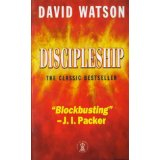
By David Watson
NOTE: Please work on this during the week before the Group Study.
INTRODUCTION: Most people are very nervous at the thought of giving a talk, however brief! But most people are quite able to do so. However, a good simple talk does require careful preparation. Mark Twain: ‘It takes me three weeks to prepare a good impromptu speech!’ Preparing a talk is a lot like building a house:
A) Select the site
With the ‘ground’ as the Bible, the ‘site’ will be some verse, passage, etc. 1 Peter 4:1 – Our ideas are unimportant; God’s Word is absolutely vital.
1. Use common sense
2. Keep a “jottings Notebook (especially if you are speaking regularly)
3. Know the needs of your hearers, as far as possible.
4. Pray – before any specific preparation begins.
B) Lay the Foundations
Study the verse/passage/theme as thoroughly as you can, until you really know what God is saying in his word. Without this there will be no conviction about your talk, and it may easily collapse!
C) Study the plan, or work out your message carefully
1. HAVE ONE AIM: It is often useful to write your aim in one short sentence, so that the rest of the talk can be referred back to that. Be ruthless! What is God’s message for the occasion?
2. There are usually many different ways of tackling a passage.
3. Remember Wesley’s words, ‘I offered them Christ.’
D) Erect the scaffolding
1. A simple plan: State your point (a heading), Explain, Illustrate, Apply.
2. Work out divisions and headings (usually about 2-3 points in a talk) (a) Use words of verse (b) Ask questions (Who? What? Why? etc.) (c) ‘Ask alliteration’s artful aid’ – but not too forced!
E) Build the walls
Give some substance to your talk. We are to ‘stimulate’, ‘instruct’, ‘feed’, ‘stir’, etc. Most talks will need some doctrine and teaching. Not just ‘Put your trust in Jesus’ – say why, etc. For this, study more than one translation, have a concordance and use a well-chosen commentary.
F) Don’t forget the windows – Illustrations are invaluable. Make a note of stories, quotes, topical news, etc. These often allow much light on a path of solid doctrine.
G) Make it fit for living – This is to be – not a museum, but a house to live in. Thus the talk should be relevant; suggest practical action, wherever possible.
H) Check front and back doors – i.e. Beginning and ending of talks are of special importance. Some useful openings: A question, startling statement, topical news item, story, advertisement, puzzle or problem, etc. Also know when to stop and how to stop!
I) Final preparation and delivery: For most people (though not all) the following is probably wise, at least start with:
1. Write out the talk in full, and then condense it to shorter notes.
2. Rehearse it – say it aloud (or whisper it!)
3. Be natural in (a) bearing – smile, stand still, avoid mannerisms (b) voice – ‘enlarge conversation’
4. Use variety in peace and pitch. Use pauses.
5. At all times PRAY – 1 Corinthians 2:1-5
Practical work: Prepare a short talk of not more than five minutes on any verse/theme from the Bible, and give this at the next Study/Small group.
*Source: David Watson. Discipleship. London: Hodder and Stoughton. 1981, pp. 281-82.
About the Author
David Christopher Knight Watson (1933-1984) was a visiting professor at Fuller Theological Seminary, a Pastor in York, England, and had a world-wide ministry of evangelism and renewal with student and lay groups and among British and political leaders in Parliament. He was the author of several books including: I Believe in Evangelism, I Believe in the Church, My God is Hear, One in the Spirit, Hidden Warfare, Is Anyone There? How to Find God, How to Win the War, Called and Committed, Jesus, Then and Now, You Are My God: An Autobiography, and Discipleship. He died of cancer on February 18th, 1984 after recording his fight with the disease in his final book Fear No Evil. John Gunstone remarked of Watson that “it is doubtful whether any other English Christian leader has had greater influence on this side of the Atlantic since the Second World War.” J.I. Packer called him “one of the best-known clergymen in England.”
SUNDAY OT SERMON: Dr. James Montgomery Boice on “FACT OR FICTION?” – Genesis 1:1
SERIES: GENESIS – PART 2
In the beginning God created the heavens and the earth.
Genesis raises many questions. One is whether it is to be understood as fact or fiction. This is a question we must settle early, for our views about the nature of the book will determine how we interpret it.
If the story of the fall of Adam and Eve into sin is fiction, perhaps “theological fiction,” as some would call it, it may be intended to give insight into what is basically wrong with us as individuals. It may show our frailty, sin, even our attitude of rebellion against God. But if it is not historical, if there was no literal fall, then there was no previous state of innocence and no guilt for having fallen from it. In other words, we are not sinful because of our own willful rebellion against God. We are simply sinful. We need a helper, perhaps a Savior. But we do not need to confess our sin and repudiate it. Similarly, if the flood is not history but only a myth created to teach certain eternal truths, the story may teach that God does not like sin. But it loses the fearful truth that God intervenes in history to judge sin and will judge it totally and perfectly at the end of time.
Is Genesis fact or fiction? Is it to be understood as a recounting of literal events? Or is it something like inspired poetry in which “spiritual” but not “historical” truths are taught? There are many who opt for fiction. Liberals have done this for years, calling Genesis “myth” or “fable.” Recently even some prominent evangelicals have been willing to take this position.
All Scripture from God
The starting point for answering whether Genesis is fact or fiction—though it does not settle everything—is that Genesis is a part of Holy Scripture and has therefore been given to us by God and speaks with his authority. We think here of 2 Timothy 3:16: “All Scripture is God-breathed and is useful for teaching, rebuking, correcting and training in righteousness.” When Paul wrote those words he had Genesis in mind as much as any other portion of Scripture. So if we accept his teaching, as all Christians should and must, this will have bearing on how we view Genesis.
The inspiration of Genesis does not settle everything concerning whether it is fact or fiction, for God can inspire fiction (for his own holy purposes) as well as he can inspire historical narration. Poetry is not always factually true, yet God inspired the poetry of the psalms. Our Lord told parables, which are stories told to make a clear spiritual point. Still, the inspiration of Genesis is not without bearing on the matter at hand in that it at least tells us that the book is the revelation of God to men (through the agency of the human writer) and not the gropings of any single man or men after the meaning of God or creation. When liberals talk of myth, fable, or fiction it is the latter conception they have in mind. They are putting Genesis on a level with any other document that may have come down to us from ancient times. But it is not like any other document if it is truly given to us by revelation.
E. J. Young, former professor of Old Testament at Westminster Theological Seminary (until his death in 1968), stated the matter succinctly: “The Bible is either a revelation of God, or it is simply the gropings of the Hebrew nation and the presentation of the best that they could find.” If it is a revelation from God, then “God has told us about the creation, and we [should] believe that it is historical, that is, that it actually took place, because God has so spoken.”
The Assumption of Scripture
The second point bearing on our question is the teaching—or, perhaps more accurately, the assumption (since the issue is not handled in a formal way)—of the rest of Scripture that Genesis is historical. Put as a question the issue is: Does the rest of the Bible view the Book of Genesis as fiction, or does it view it as fact?
This is the point with which Francis Schaeffer begins his short study of Genesis in Space and Time. His position is that the mentality of the whole Scripture is that “creation is as historically real as the history of the Jews and our own present moment of time. Both the Old and the New Testaments deliberately root themselves back into the early chapters of Genesis, insisting that they are a record of historical events.” As a case in point, Schaeffer cites the 136th psalm, which praises God for his enduring love. The psalm begins with a doxology but then passes on to the reasons why we should praise him. The first of these reasons is his work of creation:
who by his understanding made the heavens,
His love endures forever.
who spread out the earth upon the waters,
His love endures forever.
who made the great lights—
His love endures forever.
the sun to govern the day,
His love endures forever.
the moon and stars to govern the night;
His love endures forever.
verses 5–9
Without any apparent break and certainly without any indication that he is now beginning to write in a historical rather than in a poetical or less than literal vein, the poet then goes on to list a second reason why God should be praised: his work of delivering Israel from Egypt:
to him who struck down the firstborn of Egypt
His love endures forever.
and brought Israel out from among them
His love endures forever.
with a mighty hand and outstretched arm;
His love endures forever.
verses 10–12
The psalm continues to speak of the dividing of the Red Sea, God’s leading of the people through the wilderness, the defeat of the kings who had been occupying the land into which they came (Sihon king of the Amorites and Og king of Bashan—it cites them by name), the gift of the land, and then finally, the blessings of God to Israel in what was then the present time:
to the One who remembered us in our low estate
His love endures forever.
and freed us from our enemies,
His love endures forever.
and who gives food to every creature.
His love endures forever.
verses 23–25
What is involved here? Obviously a view of history and of God’s specific acts in history according to which there is natural continuity between the acts of God in creation and the events of the present day. This means that the Genesis account is to be taken as history.
A person may still say, “I believe that Genesis is put forth in the Bible as if it were history, but I do not believe its account.” This would be an honest person holding to convictions. But what we cannot say is, “I believe that the Genesis account is profoundly and spiritually true and that the Bible teaches this; it is poetry.” The one who says that is either dishonest or else is a faulty interpreter of the Bible’s teaching.
The Teaching of Jesus
A special aspect of the attitude of Scripture to Genesis is the teaching of Jesus Christ. This obviously carries special weight. We do not suggest that if Jesus did not specifically teach that the events and personages of Genesis were real events and real personages that the teaching of the rest of the Bible could therefore be abandoned. But it is surely of interest to those who profess to follow Jesus as their Lord to know what he said. His teaching has special weight if only because we revere the Lord highly.
Did Jesus consider the accounts of Genesis historical? Indeed he did! He quoted them as fact to prove other points in contention. When the Pharisees came to Jesus to ask a question about divorce—“Is it lawful for a man to divorce his wife for any and every reason?”—Jesus replied by a specific reference to Genesis 1:27 and 2:24. He said, “Haven’t you read … that at the beginning the Creator ‘made them male and female,’ and said, ‘For this reason a man will leave his father and mother and be united to his wife, and the two will become one flesh’? So they are no longer two, but one. Therefore what God has joined together, let man not separate” (Matt. 19:3–6). Jesus’ reply assumes God to be the Creator of the first man and woman, Adam and Eve, as well as being the One who instituted marriage. In fact, it shows Christ’s belief in the compatibility of the two parallel accounts of creation (in Genesis 1 and 2), since his reply contains a mutually supportive reference from each chapter.
In Mark 13:19, Jesus spoke of “the beginning, when God created the world.”
The Ancient Cosmologies
None of this will have much weight with those who consider the Genesis accounts to be mere versions of those clearly mythical accounts of creation that circulated in the ancient east both before and after the time Genesis was written. There are the Babylonian Epic of Creation and the cosmologies of Egypt and Phoenicia. These have similarities to the accounts in Genesis. If Genesis is merely one of them, must we not think that Jesus was mistaken in his view of creation or at least (some have suggested this) merely adapted his teaching to the viewpoints of his day, though he himself knew better, being God?
The opinion of the recognized dean of archaeologists, William F. Albright, is helpful at this point. Albright was not an evangelical—though he became increasingly conservative as his studies progressed—yet he spoke openly about the lack of similarity between Genesis and the other ancient accounts. His own view was that Israel was a “rarely endowed people” who selected “the most vital elements in their religious literatures,” combined them into “a new and richer synthesis,” purified them by “the monotheism of Moses, and spiritualized [them] by the inspired insight of the Prophets.” In other words, it was an almost purely human process. Yet in spite of this basic humanistic orientation, Albright argued that it is difficult to see how this early “mythological structure can be connected in any direct way whatsoever with the biblical story.”
Albright argued that the Babylonian Epic does have certain superficial resemblances to the Genesis account. It has seven tables, while the Jewish account represents creation as having taken place over a period of seven days. At some points the language is similar. But beyond that, hardly anything is the same. The Hebrew account is monotheistic. Its language is terse. The Babylonian account is polytheistic, verbose, and crassly mythological.
At the beginning there are two monsters, represented as dragons: Apsu, the freshwater subterranean ocean, and his consort Tiamat, the saltwater ocean that surrounds the earth. From these two spring a generation of deities, the last of which become so powerful that Apsu and Tiamat plot to destroy them. The result is a titanic struggle in which Tiamat is slain. Her body is split in two. The upper half is formed into the heavens. The lower half is formed into the earth. Men and women are made from the blood of Qingu, Tiamat’s chief minister. The text says, “Punishment they imposed on him, his blood-vessels they cut open, with his blood they created mankind.” Albright maintains, and I agree with him, that nearly anyone can see the vast gulf separating this obviously mythological account from the serious, historical account in Genesis.
Don’t scholars still argue that the Genesis account is myth? Yes, some do. But I am reminded of a remark made by C. S. Lewis. He said that when some learned scholar tells him that portions of the biblical narrative are myth, he does not want to know what his credentials are in the area of his biblical scholarship but rather how many myths he has read. Myths were Lewis’s business, and it was his testimony that the biblical accounts were not among them.
Some will still argue that we are missing the point. For whether the language of Genesis 1 is mythical or not, these will still think it inadequate for giving a truly factual (by which they mean “scientific”) account of creation. Let us think this through. The account of creation might have been written in one of three ways: 1) in scientific language, 2) in straightforward historical prose, or 3) in poetry. Poetry is out, for the reason that it does not go far enough. It does not tell us what we most want to know. This leaves scientific language and historical prose.
What would it take for the account of creation to be written in scientific language? My opinion is not worth much at this point, but I quote from Frederick A. Filby who has been a professor of chemistry in England for many years. He has registered his convictions in Creation Revealed.
The sciences which probe most deeply into the ultimate facts of matter and life are probably astro- and nuclear physics and biochemistry. But these sciences are written, not so much in languages as in symbols. It takes many pages of symbols to discuss the nature of a single atom of hydrogen. It has been estimated that to give a complete account of the position of the groups and bonds in a single virus of “molecular weight 300 million” would take a 200-page book.
If the scientific description of a single hydrogen atom, or of a virus too small to be seen without a microscope, takes a book, what hope is there of ever giving a scientific account of the creation of man and the universe? Yet Genesis 1 in its original form uses only 76 different root words. If Genesis 1 were written in absolute scientific language to give an account of creation, there is no man alive, nor ever has there been, who could understand it. If it were written in any kind of scientific language, only the favored few could comprehend it. It would have to be rewritten every generation to conform to the new views and terms of science. It could not be written in our mid-twentieth century scientific language, for no earlier generation could have grasped its meaning, and to our children it would be out-of-date. The scientific description of the “how” of the universe is beyond the understanding of any human brain, but Genesis 1 was written for all readers, not for none. …
What then would be the best method for the Creator to use for (1) making a beginning to his book and (2) establishing that the God of the Bible is also the God of creation—in language simple enough for all men in all time?
The answer is … Genesis 1 … the most amazing composition in all the world’s literature, using only 76 different word-forms fundamental to all mankind, arranged in a wonderful poetical pattern yet free from any highly colored figures of speech. It provides the perfect opening to God’s book and establishes all that men really need to know of the facts of creation. No man could have invented it: it is as great a marvel as a plant or a bird. It is God’s handiwork, sufficient for Hebrew children or Greek thinkers or Latin Christians; for medieval knights or modern scientists or little children; for cottage dwellers or cattle ranchers or deep sea fishermen; for Laplanders or Ethiopians, East or West, rich or poor, old or young, simple or learned … sufficient for all! Only God could write such a chapter … and he did.
I find that statement of conviction by a well-trained scientist compelling. Moreover, it is to the point, for the most fundamental of all issues is whether or not God has spoken in Scripture as the Bible claims he has. In the last message, I spoke of origins and beginnings, many of which are dealt with in Genesis. But Genesis serves another purpose, and that is to force us back to origins in the matter of our own thought values. It forces us to this: Has God spoken? Has he spoken here? Answer that in the negative, and all is chaos. Answer yes, and all that follows will become increasingly clear.
About the Preacher
James Montgomery Boice, Th.D., (July 7, 1938 – June 15, 2000) was a Reformed theologian, Bible teacher, and pastor of Tenth Presbyterian Church in Philadelphia from 1968 until his death. He is heard on The Bible Study Hour radio broadcast and was a well-known author and speaker in evangelical and Reformed circles. He also served as Chairman of the International Council on Biblical Inerrancy for over ten years and was a founding member of the Alliance of Confessing Evangelicals. James Boice was one of my favorite Bible teachers. Thankfully – many of his books and expositions of Scripture are still in print and more are becoming available. The sermon above was adapted from Chapter 2 in Genesis 1-11: An Expositional Commentary. vol. 1: Creation and Fall. Grand Rapids: Baker, 2006.
SUNDAY NT SERMON: “CHRIST OUR PROPHET” BY DR. TIMOTHY KELLER
SERIES: THE KING AND THE KINGDOM – PART 2 – ACTS 3:17-26
“And now, brothers, I know that you acted in ignorance, as did also your rulers. But what God foretold by the mouth of all the prophets, that his Christ would suffer, he thus fulfilled. Repent therefore, and turn back, that your sins may be blotted out, that times of refreshing may come from the presence of the Lord, and that he may send the Christ appointed for you, Jesus, whom heaven must receive until the time for restoring all the things about which God spoke by the mouth of his holy prophets long ago. Moses said, ‘The Lord God will raise up for you a prophet like me from your brothers. You shall listen to him in whatever he tells you. And it shall be that every soul who does not listen to that prophet shall be destroyed from the people.’ And all the prophets who have spoken, from Samuel and those who came after him, also proclaimed these days. You are the sons of the prophets and of the covenant that God made with your fathers, saying to Abraham, ‘ And in your offspring shall all the families of the earth be blessed.’ God, having raised up his servant, sent him to you first, to bless you by turning every one of you from your wickedness.” (ACTS 3:17-26 – ESV).
We have a famous resident of New York, Leonard Bernstein, who in the 1950s was the host for one of the most famous television specials in history. On that television show Leonard Bernstein said something about Beethoven’s Fifth. You can still see those great words often printed on the back of the album jackets of Bernstein’s rendition of Beethoven’s Fifth. In that special he said, “Beethoven … leaves us … with the feeling that something is right in the world, that something checks throughout, something that follows its own laws consistently, something we can trust, that will never let us down.”
Now if you asked Leonard Bernstein (I haven’t, but I know), “Do you believe there is a God who has spoken and given us a body of truth, God’s words are absolutely right, they are perfectly internally consistent, they check out throughout, they are completely trustworthy, and they cannot let us down?” If you asked Bernstein if he believed in a God like that or if he believed there was truth like that, I know he’d say, “No.” Yet the one area he knows the best, music, the one area he knows very well draws him inexorably to truth like that, something that checks throughout. Absolutely consistent. Absolutely trustworthy. It can never let us down. It’s the one area where he knows the best, he is drawn to it, and yet intellectually he denies it.
Why does Bernstein feel like that? Because all of us want a God who speaks. Not just a god, not just a George Lucas/Steven Spielberg god (“The Force”), but a God who can talk to you, a God to whom you can talk. But that’s not all. We also want a God who can talk back and a God who speaks. We really want this deeply.
If you think about it, it’s one of the deepest qualities or characteristics of the human species. We want to talk to other people besides us. Our literature has filled the world with talking animals and talking trees and people from outer space. We don’t want to believe we’re alone. We want to talk to someone else. There is somebody out there to talk to, but it’s not an animal, silly. It’s God.
The best and most plausible reason why Bernstein feels the way he does, why we all feel the way we do is because we were created by a God who speaks.
That’s what this text is about. It’s about the fact that God speaks, and he speaks fully through Jesus Christ. This is critical to understand because Christianity is quite different than most of the other religions you can see or you can hear about. Christianity is not just talking about union with God, some kind of God-consciousness, or some kind of mystical experience. Of course Christianity brings experience, but Christianity is a relationship between God and man based on communication, acceptance, reliance on, and feeding on truth.
As a result of that, the Bible is constantly talking to us about God’s talk. You can’t know Jesus in some general way without listening to what he says. That’s the reason why on the Mount of Transfiguration when some of the apostles were up there, they saw Jesus transfigured, and God spoke out of heaven, what did he say? He didn’t say, “This is my beloved son. Love him.” He said, “This is my beloved Son: hear him.” “Listen to him.”
There is that strange and scary place in Luke 6 where Jesus says, “Why do you call me, ‘Lord, Lord,’ and do not do what I say?” Jesus, in that statement, is remarking on the fact that there are plenty of people who are talking to him but who are not listening. “Why do you call me? Why are you talking to me? Why do you call me, ‘Lord, Lord,’ but you’re not listening to me?”
It is critical and crucial in the Christian view of things that you understand God has spoken. He is a God who speaks. He uses words that come especially through Jesus Christ. The only way to relate to God through Jesus Christ is by accepting, feeding on, taking into yourself, and relying and standing on truth.
We’re told a lot of things about Jesus Christ here, actually. I had to get up this morning and cut half the sermon out. I was tossing in bed in the morning, and I said, “This is too long. This sermon is too long.” I’m just giving you a little inside view of the torments of being a preacher. I got up and said, “The passage says five, six, or seven things about how Jesus brings us truth, but I only have time for three.” So I’m only going to talk to you about three. The passage tells you more.
The Bible tells us here first of all that Jesus brings the truth, secondly that Jesus is the truth, and thirdly that Jesus heals us with his truth. Did you get that? He brings the truth, he is the truth, and he heals us with the truth. Let’s go through one at a time.
1. Jesus Christ brings the truth
In verse 22 we’re told Jesus Christ is a prophet. “Moses said, ‘The Lord your God will raise up for you a prophet like me from among your own people; you must listen to everything he tells you.’ ” Jesus Christ is a prophet.
Now what is a prophet? Unfortunately the only thing the word prophecy means today to the average American is someone who foretells the future, but in the Bible foretelling the future is only peripheral to being a prophet. The word prophet is pretty simple. Two little words: pro and phemi. Prophecy. Pro. Phemi. It literally means to be for speak. It means to stand before (pro) and to speak for somebody else. Very simple.
In fact, it’s so simple you can see it in particular in Exodus 7 where God comes to Moses and says, “Moses, I want you to communicate to Pharaoh, but I want Aaron to communicate for you. Moses, I will make you as God to Pharaoh, and I will make Aaron as a prophet to you so whatever you speak Aaron will speak to the Pharaoh.”
Now that shows very clearly what the Bible means by the word prophecy. A prophet is someone who simply takes the words of someone else and brings them. In other words, what the prophet says, God says. If you wrote down what the prophet says, what you have on the page if it’s prophecy are God’s words. What the Scripture says (since it’s a word of prophecy), God says.
Now at this point I must contrast this view of truth with the views of truth that are prevalent in our culture today. Very important. Just take a moment. I don’t have time to go in and explain these two worldviews, but today in our society there are two worldviews, two ways of looking at life and understanding reality, two different ways that are vying for ascendancy. They are vying to be the main view of our society. I have no idea which one is going to win, but let me just outline them for you quickly.
One view is prevalent in the areas of science and technology. The view basically says, “There is no God, or if there is one, we can’t know him. The only thing that’s important, the only thing we really can know about, the only thing that really is is what you can taste, touch, hear, see, and smell. Therefore, there are scientific facts we can learn through science, but there is no truth. There is no such thing as truth that tells you your purpose in life, what’s right and wrong, your identity, or the essence of what the human critter is. There is no such thing as truth, just scientific facts. There is no truth.”
Now a great proponent of this particular worldview was a man named Bertrand Russell, the philosopher. He puts it, “Man is the product … of accidental collocations of atoms … all the noonday brightness of human genius [is] destined to extinction in the vast death of the solar system … Only within the scaffolding of these truths, only on the firm foundation of unyielding despair, can the soul’s habitation … be safely built.”
He says, “The only way you can really make it in life is if you start with these facts: You’re just an accident. You’re going to die. The whole universe is going to die. There is nothing to you but matter. There is nothing to you but what you can taste, touch, hear, see, and smell. There is no truth, just scientific facts. You have to start with that and make sure you build your life on those facts.”
Now there is another view, and this other view seems radically different. In many ways it is. This view doesn’t say, “There is no God. There is no truth.” The second view says, “We’re all God. All of us are God. God is everything, and here’s how you find truth. We have to get in touch with the fact that we are divinity, that we are radiance, that we are perfection, that we are part of everything, we are part of God, and we are God. Truth means going into yourself, knowing yourself, and coming to see through new states of consciousness that you’re part of this glorious reality. Truth is not something you can write on a piece of paper. It’s not something outside of you. It’s subjective experience.”
Here’s a lady who wrote like this. Now I could have chosen a lot of different people. I could have chosen Shirley MacLaine, who says that. I could have chosen Oprah Winfrey, who says that. Here’s a lady named Beverly Galyean. This isn’t particularly profound; this is just very typical of this view. She says, “Once we begin to see that we are all God, that we all have the attributes of God, then I think the whole purpose of human life is to reown the Godlikeness within us; the perfect love, the perfect wisdom, the perfect understanding … and when we do that, we create back to that old, that essential oneness which is consciousness.”
Now what Russell said there and what Beverly said there sound pretty blunt, but the fact is that both of these views are extremely prevalent. Virtually everything that is not based on the Bible and based on conscious Christian roots grows out of one view or the other. One says, “There is no truth.” The other says, “Truth is inside you.” They seem completely radically opposed to each other, but actually the bottom line is they’re the same. Do you know what they’re saying? They’re both saying, “When you get up tomorrow, there is nobody to obey. There is nobody to obey. There is no such thing as truth that is out here, outside of you, that you have to submit to.”
Both of these views completely get rid of the discipline of obedience, because obedience means submitting yourself to something, submitting yourself to truth. They get rid of it. Both of them are saying, “You are your own prophet. You are your own truth-bringer and truth-finder because there is no God, or there is no God who speaks to us words we have to obey. Because we don’t have a God who speaks or who we have to obey, you are your own prophet.” Do you see that?
This is utterly different than the view the Bible has of truth. It’s categorical. Look, verses 22 and 23. Maybe you don’t like to hear it, but here it is. “For Moses said, ‘The Lord your God will raise up for you a prophet …’ ” He is talking about Jesus. “ ‘… you must listen to everything he tells you. Anyone who does not listen to him will be completely cut off from among his people.’ ”
Don’t you see? We’re talking here about hard copy. The Bible’s understanding of truth is utterly different. When the prophets spoke in the Bible, they didn’t say, “Well here, let me throw a few ideas out for us to kick around.” They said, “Thus saith the Lord.” Jeremiah says, “There is a fire in my bones. I have something I have to tell you. It’s not my idea. I wish it wasn’t true, but it is.”
Paul says, “Here’s the truth. Here’s the gospel. If an angel from heaven appears, if an angel of light appears to you, you see that angel, his brightness and effulgence blast your senses, and he says something other than what I have given you as the truth …” What does Paul say to do? Does he say, “Ah, you’re obviously having a tremendous experience?” What he says is (I’m paraphrasing), “You take that angel by the seat of his effulgent pants, and you kick him out.” How could Paul say something like that? How did he know what altered state of consciousness a person might go through? Because of his understanding of truth.
Truth is hard copy. It’s outside of us. It’s something we have to submit to. It can be brought in and it can transform us, but it doesn’t begin in there. It comes from outside of us. It’s objective. It’s absolute. How else could it be what Bernstein deep down wants? How could you rely on something unless it was outside of you?
How could you rely on it if it was you? How can you lean on something if it is you? Have you ever heard about pulling yourself up from your bootstraps? Go stand in quicksand sometime and try to pull yourself up by your own bootstraps. You can’t do it, can you? How can you do it? There has to be something else you’re standing on beside you to pull yourself up.
The Bible talks about this kind of truth: not the truth of just scientific facts, but absolute truth. Not the truth of subjective experience, but absolute truth. The Bible tells us it comes through Jesus Christ. Jesus Christ has brought this truth with him. But it goes further. It doesn’t just say Jesus brings the truth.
2. Jesus Christ is the truth
This is very remarkable, and therefore, I’m going to remark on it. In verse 18 it says, “This is how God fulfilled what he had foretold through all the prophets …” That word all is very important. He is saying here that though there have been prophets for years and years and years, and they’ve been giving God’s words, they were all talking about one thing basically. Down further in verse 24 it says, “Indeed, all the prophets from Samuel on, as many as have spoken, have foretold these days. And you are heirs of the prophets and of the covenant …”
Which means everything the prophets talked about has come true in what? In Jesus. This is a remarkable statement. I’ll give you another remark. In the beginning of the book of Hebrews, in Hebrews 1:1–2, it says, “In the past God spoke to our forefathers through the prophets at many times and in various ways, but in these last days he has spoken to us by his Son …” It’s great because of two little Greek words. It says, “In many ways [polymerōs] and in many manners [polytropōs] …” “In many ways, in bits and pieces God has spoken to you, but now Jesus Christ is the prophet to end all prophets.”
Why? Why can’t there be any other prophets after Jesus? Because all of the prophets were talking about Jesus. Let’s put it into a statement. Jesus Christ doesn’t just bring us truth; he is the truth. Jesus Christ doesn’t just tell us how to live; he is the life. Jesus Christ doesn’t just give us God’s words; the Bible says he is the Word.
Now he does tell us how to live. He does tell you you should forgive your neighbor. He does tell you you should be generous to the poor. He does tell you many things about how to live, but this passage is telling us that beneath all of that it goes deeper. Jesus Christ doesn’t just tell us how to live; he is the life. He doesn’t just give us God’s words; he is the Word.
John 1:1: “In the beginning was the Word, and the Word was with God, and the Word was God.” The Greek word John uses there is logos. Jesus Christ is the logos. Now when John, the gospel writer, wrote that word he was using a term that was a loaded philosophical term. For centuries the Greek philosophers had been after the logos. Did you know that? The Greek philosophers had said, “There’s a truth, there’s a principle, that gives us the reason, the purpose, and the logic for everything. It would show us meaning in life.”
Basically the word logos meant, “What is the meaning of life? What is the one principle, the truth everything is going toward, that would make sense out of things, that would show us the logic of things?” For centuries the great philosophers had argued. Some said, “This is the logos.” Others said, “This is the logos.” By the time of Christ, they had given up looking. They had given up looking. Heraclitus said there is no unifying point, there is nothing absolute, everything is change, everything is relative, so live any way you want.
By the time of Jesus, the only Greek philosophy schools that were in existence anymore were the Stoics and the Epicureans. What were they? The Stoic says, “Hey, there is no truth, so you make up your own truth. Keep a stiff upper lip, just choose your standards, and do them. That’s how you find truth.” The Epicureans said, “Everything is relative, so live the way you want. Have as much fun as you possibly can. Just don’t overdo it.”
John comes along and drops a bombshell. The gospel writer says not just, “Hey fellas, there is a man who has come who has the truth, who found the logos, who can tell you all about it.” No, he goes further. He says, “There is someone who has brought the truth. No, beyond that he is the truth. That is, Jesus Christ, through his life and his death, because he suffered …” See it’s right there in verses 17, 18, and 19. “… can wipe away our sins and bring us the refreshment, the power, the life of God into our lives.
Because of that, yes, we need to know how to live, but we need to receive him personally. We need to live for him. We need to serve him. That’s how we find our purpose. That’s how we find our logos. That’s how we find our meaning. Jesus Christ doesn’t just give us truths we can order our lives according to. Don’t you see? He is the truth, and we have to live for him. Then all the truths find their places.”
Christianity, my dear friends, is not a philosophy. It’s true that it gives rise to a philosophy. You can talk about philosophy that rises out of Christian belief, but it’s not a philosophy; it’s a dynamic force that transforms every department of life, because it’s a person. Christianity is Christ. Because Jesus Christ comes and because through him and through him only can we find our logos, our meaning, we can say he is the truth. That’s what it’s talking about right here. Now Jesus Christ is not an abstract bit of truth; he is your Alpha and he is your Omega. He is the thing you were created by, and he is the thing you’re created for. That’s what gives you meaning.
I ought to say something right here. There have to be some people out there who are saying, “I think I’ve stepped into a time machine here. You must be joking. You’re talking about the Bible as if it’s a book of absolute, unquestioned truths when we know the Bible now is just one religious book among many.” You’re talking to me now inside. “You want to turn the clock back to that time of history where civilizations would just have blind faith in all of the religious dogmas and propositions of a particular religion. We just can’t live like that anymore.”
I say to you, “Okay. You have a right to that opinion, of course, but I wish you would own up to the real consequences of it. I wish you would see what it means to live consistently with that.” Some people turn it into black humor, and I like it. You have Woody Allen, who in the immortal words of Woody Allen said, “Not only is there no God, but try getting a plumber on weekends.” You can turn it into black humor, but I’d rather you looked at it seriously.
Here’s a man, Jacques Monod, who was a French molecular biologist and a Nobel Prize winner. He says, “The universe was not pregnant with life nor the biosphere with man. Our number came up in the Monte Carlo game. Is it any wonder if, like the person who has just made a million at the casino we feel a little strange and unreal?”
Let me put it this way. If there is no truth, if there is no logos, if there is no absolute truth outside of us, if there is no God or there is no God we can speak to who can tell us truth, then I want you to realize where that puts you. Because if God is not speaking to us, if that’s what you believe, you can’t speak to each other. We can’t speak to each other.
What do I mean? You may think the way for mankind to go is through love. Love. We need love. That will make the society better. Or you may have had an experience of God-consciousness, and you know love is the way to go. Here somebody else over here has another God experience, and he says, “I see the way for us to go. We need to kill 6 million Jews. We need to enslave blacks.” This person is talking like that.
You’re outraged, right? Why? On what basis are you outraged? You say, “That’s wrong.” Oh no, I’m sorry. You can say, “It doesn’t feel right to me,” but you have no basis on which to say it is wrong because the only way you can call something wrong is by pointing to an objective standard of right and wrong that exists outside of you and him. Don’t you see that? There is no other way to call a person wrong. You can’t do it.
You have nothing further to appeal to than your own mind. In fact, in a way you have nothing more to appeal to higher than your own feelings, your own digestive system. Here you are. You don’t know where you came from. You don’t know what you’re here for. You don’t know how to get rid of the guilt you feel. You don’t even know why in the world you would feel guilt if there isn’t any. Dear friends, live up to what is really the problem, and don’t forget there is no basis for heroism anymore. If you really want to say, “There is no truth and there is no way we can know any truth,” there is no heroism.
One of my great heroes was Athanasius of all people. Now those of you raised in Episcopal churches, for example, Romans Catholic churches may only know there is this thing that every so often you’d read in your Book of Prayer called the Athanasian Creed.
Let me tell you … Athanasius was a dwarf who lived some 1,300 or 1,400 years ago. He was a great Christian. He lived during a period in which there was a great controversy. A particular man named Arias decided something we have found today, and that is if you get enough followers behind you and you have enough personal charisma, religion is a great way to make a lot of money and gain a lot of power if you can just get some kind of rallying cry.
Arias decided Jesus Christ was not God, and he began to teach this. Because he was so charismatic, because he was so great, and because he was so persuasive, large numbers of the church began to follow him and began to completely remake historic Christian doctrine. The church was in danger of turning into something other than the church, because as we’ve seen, Jesus Christ doesn’t just bring the truth … he could do that if he was just a prophet … he is the truth. That radically changes Christianity.
Athanasius went to the mat for it. Athanasius says, “No, this is wrong. Our faith is at stake. This is one of the articles on which the church stands or falls.” Because he constantly spoke up for it, he was constantly getting persecuted. He was constantly getting exiled by this bishop and that bishop. He was exiled to that place, and then he would come back and he was exiled to that place. He was constantly penniless. He was constantly badgered. Eventually he won. He won. The Athanasian Creed was a creed that on the basis of his work the whole church affirmed. It affirmed who Jesus Christ really was.
When he died, on his grave they put (because they all spoke Latin back then), “Athanasius contra mundum.” Do you know what that means? Come on, somebody out there knows. “Athanasius against the world.” That’s our idea of a hero, isn’t it? Somebody who looks at the world, and the whole world is arrayed against them. A hero is somebody who spits in the eye of the world and says, “I don’t care what you say. I know what is right. I know what is true. I know what is just. I’m willing to die for it. I’m willing to stand up against you for it.” If there is no such thing as truth, you can forget heroism. It’s gone, and it was never there. It’s an illusion.
You could never call the majority wrong. If the majority of people say, “This is okay. It’s all right to enslave this group of people,” who are you to say it’s wrong? Where do you appeal? On the basis of either of the prevalent worldviews in this culture, there is no basis for heroism at all except through escapist fantasy. What’s very funny is all the movies that make money have heroes in them. Luckily, they’re just movies. This sort of thing can’t happen in real life because we can’t stand up for anything anymore; nothing is worth dying for. Friends, don’t you see the real problem?
By the way, the only alternative to not having a logos, the logos, the truth, is you create your own little one. New York is great for that. It’s unbelievable. You can find all kinds of little meanings in life, things that drive you, things you work for, things that give your life unification. What you have to do is you have to find a job or a career or something that gives your life meaning.
But look out. Dr. David Martyn Lloyd-Jones was a great Welsh preacher in London who is now dead. When he was first grappling with Christianity … He was a great surgeon, by the way. A great surgeon. He was a young man. He was still grappling with the claims of Christ over his life. One day he was in a hospital or some kind of place where the doctors lived, maybe even like a dormitory or even like a club. It was a great mansion for many of these renowned surgeons. One of the greatest surgeons in the world came walking in.
Lloyd-Jones saw him sit down in front of the fire, stare at that fire for two and a half hours, never budge, and never say a word to anybody. Lloyd-Jones found out later this man, with all of his worldly greatness, had fallen in love with a woman, and she had rejected him. Lloyd-Jones watched him and knew what was happening. He said, “At that minute I suddenly said to myself, ‘What in the world is worldly greatness anyway? What hope does this man have?’ ” This man had a logos which was finite. This man had a truth, something that gave meaning to his life, that crumbled. Everything crumbles but Jesus.
You can get, for a period of time, meaning or logos, you might say, out of your looks. You might be good enough looking for that, but you’ll wrinkle. You might get logos, you might get meaning, you might get truth out of relationships. There might be a couple of people in your life on whom you build your whole life, but you are going to be a bitter person because those are human beings. They are not the Word. They are going to disappoint you. You may build your life on financial security or financial independence. I don’t care what it is. You are destined for a long stare at the fire. You are.
Jesus Christ doesn’t just give us truths; he is the truth. Jesus Christ is the prophet to end all prophets. He gives us hard-copy words from God, truths on which we can build our lives, truths we have to submit to, truths we have to obey, and truths we have to build our lives on, but he himself is the truth. The core and the center of all the laws and all the regulations and all the words of God we have in the Word is, “… Jesus Christ, and him crucified.” Jesus Christ is Lord.
3. Jesus Christ heals us with the truth
Look at this verse 26, the last verse we read. “When God raised up his servant, he sent him first to you to bless you by turning each of you from your wicked ways.” To bless you. Now first of all that shows what we’ve already said. Christianity is not a philosophy because this prophet, this Jesus who has been raised up has come to turn you from your ways. That’s your life. That’s the way you live. That’s not just your thinking. He doesn’t come to give you a seminar, but rather he comes to change your ways.
Then it says, “… to bless you …” This word bless, as we’ve continually said and will say again, in the Bible it means utter fulfillment. Deep fulfillment and satisfaction. This statement, verse 26, is saying when you submit to the words of God, when you submit and obey what Jesus has told you, you don’t feel like a slave. You don’t feel trodden down. You don’t feel dehumanized. Instead, you find your true self.
Jesus has promised it somewhere else, John 8, where he says, “If you continue in my Word … you will know the truth and the truth will set you free.” An incredible claim, but absolutely at the heart of what the Bible says. In fact, there are some of you out there who know things the Bible teaches and you’re afraid to get underneath them. You’re afraid to bring yourself in underneath Jesus Christ because you’re afraid there are some things he will tell you to do, either stop doing or start doing, that will cramp your style. You do not know what you’re talking about. It can’t happen.
Think of freedom. Think of blessedness. Freedom. What is freedom? Look at how freedom exists out in the world anywhere. If you want to fly, look at how airplanes fly. How do airplanes fly? Because somebody obeyed the laws of aerodynamics. Somebody built the plane in just such a way and shaped it in such a way and the pilot flies it in such a way so the air pressure underneath it is heavier than the air pressure above.
I don’t understand how it works. It’s incredible every time I get on an airplane. I say, “This will never get off the ground. Tons and tons of metal. It’s ridiculous to think this will ever fly,” but it does because someone fastidiously obeyed certain laws.
What about sailing? I wish I could sail. How do you know the freedom of sailing? First of all somebody built the boat and obeyed the rules of the wind so the keel has to be at a certain ratio to the mast height. Then the sailor has to obey the laws of the wind. When you submit to the laws of the wind and submit to the laws of the design of the boat, when the sailor submits to the design of the boat, the power of the tide and the wind belong to the boat, right?
Now hear this. What is freedom? Freedom is doing what you were designed to do. It’s obeying your own design. “Well,” somebody says, “that makes no sense at all. As far as I know, freedom is doing what you want.” Let’s go with that definition for a while. Do you realize that’s okay to say? Freedom is doing what you want, but would you please admit how many conflicting wants you have?
I have two wants that are constantly butting heads against each other. I want ice cream. I want all the ice cream in the world. I want to be healthy and slender. Now which desire, which want is a liberating one? You tell me. Well the liberating one will be the desire that checks out with my physical nature.
Right now some of you know you ought to forgive somebody. You’re having a quarrel with somebody, and you ought to go and say, “I was wrong.” There is a desire in you to go make it straight. But every time you even get close to it, there is another desire that says, “Don’t you dare. Look what she has done to you. It’s true you started it, but she finished it. Let her come to you.” Which of those two desires should you obey? Which one will liberate you? Which one checks out with your nature?
My friends, it is true freedom is doing what you want, but the Bible says it’s not as simple as that. Freedom is when you fulfill your deepest longings. You were built, the Bible says, for Jesus. He is the Alpha and the Omega. You were built to serve him. Only the creator who built you and knows your body, knows your brain, knows your heart, and knows your relationships can tell you, can help you sort out which of those desires are liberating ones and which are not.
Do you know the liberty of obedience, friends? Do you know the freedom that comes from having Jesus Christ as your prophet? He brought you the words, and in the Spirit he comes to you and helps sort through (if you’re a Christian) which of your desires to ditch and which of your desires to hold on to. He sorts through these things, and he helps you to change. He refines you. You become who you are designed to be. That’s freedom.
Freedom is when you’re obeying your design, and only your designer, only the owner’s manual right here can tell you what you’re designed to do. Only the designer who can speak to you can sort out all those conflicting desires and tell you which ones are liberating one and which ones are enslaving. Yeah, freedom is doing what you want … what you really want, what you really at the deepest level long for.
All of our problems come ultimately from what? From refusing the truth, from refusing to take it into ourselves, and from refusing to listen to our prophet. Jesus says it himself. Do you know what it says in Matthew 6? He says, “… do not be anxious …” That’s easy for him to say, but he doesn’t stop there. Jesus would never be so insensitive as just say to somebody, “… do not be anxious …” He wouldn’t do that. He tells you how.
He says, “… do not be anxious … Consider the lilies of the field, how they grow: they neither toil nor spin, yet I tell you, even Solomon in all his glory was not arrayed like one of these.” He goes on and says, “God will take care of you. Look at the birds of the air. God takes care of them. How much more will he take care of you? You’re worth much more than a flower. You’re worth much more than a lily. You’re worth much more than a bird.”
What is he saying? He says, “The reason you have anxiety is you’re not thinking.” What did you think faith was? It was an absence of thinking? No, doubt is an absence of thinking. Jesus says, “Have no anxiety, but think about the truth, about what I told you about God, and about the nature of things.” It’s the same with depression. It’s the same with guilt. It’s the same all the way through. When you know the joy of obedience, when you know the blessedness of listening to the prophet.
Some of you are saying, “Well, I’ve started to obey, but it doesn’t feel all that free yet.” It takes time. It says in John 8, “If you continue in my Word … you will know the truth and the truth will set you free.” Larry Bird knew the freedom I will never know. I hope he comes back. I don’t know what you think, but I hope Larry Bird comes back. Here’s one of the greatest basketball players ever, and there’s a freedom to being a dominating player. There has to be a freedom to be able to go out there like this, go swish, and get three-pointers in like that. There has to be a freedom to know when he really wants to reach down deep he can just take over a game.
The freedom of outpacing the field, the freedom great athletes know … Where did that come from? Larry Bird spent thousands of hours throwing in tens and hundreds of thousands of shots in the gymnasium. There is the discipline of obedience before there is the freedom of obedience. I’d love to be able to sit down and play the way Maurice plays. I imagine if you’re happy or if you’re sad you can sit down and just play on that piano, but I never went through the incredible discipline of scales. I didn’t want to do that. Before there is the freedom of obedience, there is the discipline of obedience.
If you submit to the prophet, the joy of a bird flying through the air (which I wish I knew) or a boat sailing along (which I wish I knew) or an athlete outpacing the field (which I wish I knew) is nothing. It’s just a dim reflection compared to the freedom and the joy of obedience. “If you continue in my Word … you will know the truth and the truth will set you free.” I don’t know where you are, friends, with all regard to this, but let me just close with a remark to two kinds of people here.
There are some of you who really have never given your obedience to the Lord Jesus Christ. You’ve played around with Jesus. You’ve prayed to him in hard times. You took Religion 101 that got you totally confused. Every so often like a good New Yorker you read some book on religion or meaning or something like that. You know darn well you have never in your whole life said, “Lord Jesus Christ, you’re my truth. I submit myself to you totally. I put myself under your words. Whatever you say to me I will do.” Have you ever done that? Then of course you’re not going to know the freedom we’re talking about.
But let me say to you if you really want to obey Jesus, you have to obey the gospel, not just the Law. The Law says, “Don’t kill. Don’t lie. Don’t cheat. Don’t commit adultery.” You must obey that, but the gospel says, “Don’t you dare think by obeying you can be made right with God. You can disobey God by trying to obey in such a way as to hope that earns your acceptance with him.” Oh no. It says right here in verse 19, “Jesus suffered so your sins could be wiped out, so you could know the refreshing of God’s life in your life.” It doesn’t say, “You must try as hard as you possibly can so your sins can be wiped out, so you can know the refreshing of God in your life.” No way.
It could be the reason obediences always look like a drudgery to you. It could be the reason obediences always look like death to you. It’s because you haven’t grasped at the heart of the gospel: grace. Jesus Christ suffered that your sins might be wiped away. You have to receive him as Savior, and then obedience is no longer a drudgery; it’s just a life of grateful joy.
Now there is another group of you. There are those of you who, yes, have received Christ as Savior and Lord, but you got pretty uncomfortable (right?) when I started talking to you about all this great joy, of freedom, of knowing you’re changing, you’re becoming the person you were meant to be. You say, “Ugh.” I’m afraid if I ask the people who know you best and say, “Has this person really changed? Is this person less grumpy than they were last year? Less worried? Less anxious? More generous? More loving? More kind? More patient?” What would they say?
The answer is Colossians 3:16: “Let the Word of Christ dwell in you richly …” The Word here, friends, is not just something you read every so often when you need a pickup. Every day you take the Word of God, and you have to fight to get it back into your center, to get the truth of God into your center. Don’t be discouraged. It says right here, “When God raised up his servant, he is living again. His job is to come to you and bless you by helping you to obey.”
Look at Jesus Christ. Every time he was in trouble he used the Word of God. When he was tempted he used the Word. When he was suffering on the cross he used the Word. You’re wondering why you can’t handle your troubles and your suffering, and why I can’t.
ABOUT THE PREACHER
In 1989 Dr. Timothy J. Keller, his wife and three young sons moved to New York City to begin Redeemer Presbyterian Church. In 20 years it has grown to meeting for five services at three sites with a weekly attendance of over 5,000. Redeemer is notable not only for winning skeptical New Yorkers to faith, but also for partnering with other churches to do both mercy ministry and church planting. Redeemer City to City is working to help establish hundreds of new multi-ethnic congregations throughout the city and other global cities in the next decades.
Dr. Tim Keller is the author of several phenomenal Christo-centric books including:
Joy for the World: How Christianity Lost Its Cultural Influence and Can Begin Rebuilding It (co-authored with Greg Forster and Collin Hanson (February or March, 2014).
Encounters with Jesus:Unexpected Answers to Life’s Biggest Questions. New York, Dutton (November 2013).
Walking with God through Pain and Suffering. New York, Dutton (October 2013).
Judges For You (God’s Word For You Series). The Good Book Company (August 6, 2013).
Galatians For You (God’s Word For You Series). The Good Book Company (February 11, 2013).
Every Good Endeavor: Connecting Your Work to God’s Plan for the World. New York, Penguin Publishing, November, 2012.
Center Church: Doing Balanced, Gospel-Centered Ministry in Your City. Grand Rapids: Zondervan, September, 2012.
The Freedom of Self Forgetfulness. New York: 10 Publishing, April 2012.
Generous Justice: How God’s Grace Makes Us Just. New York: Riverhead Trade, August, 2012.
The Gospel As Center: Renewing Our Faith and Reforming Our Ministry Practices (editor and contributor). Wheaton: Crossway, 2012.
The Meaning of Marriage: Facing the Complexities of Commitment with the Wisdom of God. New York, Dutton, 2011.
King’s Cross: The Story of the World in the Life of Jesus (Retitled: Jesus the KIng: Understanding the Life and Death of the Son of God). New York, Dutton, 2011.
Gospel in Life Study Guide: Grace Changes Everything. Grand Rapids, Zondervan, 2010.
The Reason For God: Belief in an Age of Skepticism. New York, Dutton, 2009.
Counterfeit Gods: The Empty Priorities of Money, Sex, and Power, and the Only Hope That Matters. New York, Riverhead Trade, 2009.
Heralds of the King: Christ Centered Sermons in the Tradition of Edmund P. Clowney (contributor). Wheaton: Crossway Books, 2009.
The Prodigal God. New York, Dutton, 2008.
Worship By The Book (contributor). Grand Rapids: Zondervan, 2002.
Ministries of Mercy: The Call of the Jericho Road. Phillipsburg: P&R Publishing, 1997.
Dr. Robert L. Saucy on The Church and The Kingdom
THE CHURCH AND THE KINGDOM
PART 2 IN A SERIES OF 3
The relationship of the church to the kingdom concept in Scripture is of utmost importance for the perspective of the place of the church in God’s historical program. History reveals that much harm has come from the misunderstanding of this relationship. Based upon Augustine’s City of God, the church of the Middle Ages developed the theology which equated the church with the kingdom of God on earth, resulting in the absolute authority of the church in teaching and dispensing salvation grace. In another direction, this equation led to the concept of building the kingdom through the church, forgetting that the fulfillment of the promises of God’s reign is yet future (Cf. Hans Kung, The Church, pp. 90-92).
The equation of the church with the kingdom inevitably leads “to an intolerable glorification of the Church” which “is to forget that the power and the glory of the reign of God are still to come … that the Church is called to pilgrimage, not to rest. It is to forget that the Church is composed of men, and sinful men at that.…” (Ibid., pp. 92-93).
Such exaltation of the church at the expense of the proclamation of Jesus the Lord and the coming kingdom reign has not only often contributed to the failure of the church in its mission of servant in the world, but has also led to dissatisfaction and criticism of the church when it failed to produce a millennial utopia on earth (Ibid., pp. 93-94).
On the other hand, any radical divorce of the church from the kingdom sunders it unbiblically from participation in the salvation program of divine history.
DISTINCTIONS OF THE CHURCH AND THE KINGDOM
Meaning of the kingdom. The kingdom of God in Scripture is the all-embracing program of God’s divine salvation history. All ages, peoples, and saving activities are in some way related to it. It has well been described by Sauer as “the royal saving work of God to the carrying through of His counsels in creation and redemption.” (Sauer, p. 89).
Its comprehensive scope is seen in the prayer for the kingdom which the Lord taught His disciples: “Thy kingdom come, thy will be done in earth, as it is in heaven” (Mt 6:9). The coming of the kingdom is nothing less than the coming of the reign of God upon this earth. Involved in the term kingdom (basileia) are both the sovereignty or royal dignity of a king, and the realm or territory in which this kingship is exercised (Karl Ludwig Schmidt, “basileia” in TDNT, 1:579-80).
The kingdom of God thus refers to the sovereign rule of God over His creation. Although there is, in the ultimate sense, one kingdom of God, the Scripture uses this term for two distinct aspects of this kingdom. On the one hand, it signifies God’s universal, eternal rule over all creation: “The LORD hath prepared his throne in the heavens; and his kingdom ruleth over all” (Ps 103:19). On the other hand, it refers to the eschatological Messianic kingdom which is to be established in history, which Christ announced as at hand, and for which He taught His disciples to pray. While the first kingdom is ruled directly by God, the second aspect is founded upon covenant promises and ruled through the God-Man, Jesus Christ, the Seed of David. It is the purpose of this mediatorial aspect to establish the reign of God, which is now over the earth, directly upon it, and to make the kingdoms of this world “the kingdoms of our Lord, and of his Christ” (Rev 11:15b).
Stages of the kingdom. The kingdom program has been manifest in several forms as it moves toward the ultimate establishment of the kingdom of Christ upon earth. Founded upon the covenant promises with Abraham, it was begun in an initiatory form in the kingdom of Israel. Not only did God rule over Israel with the manifestation of His Shekinah glory in the tabernacle and the temple, but through this nation the way of salvation was prepared for all nations (Jn 4:22; Ro 11:12-15). The next appearance of the kingdom came with Christ. It was present in His person (Lk 17:21) and also in the power of the Spirit demonstrated in His mighty works (Lk 11:20). Again the glory of God was present, this time veiled in human flesh (Jn 1:14; cf. Lk 9:29-32). The kingdom is now present, working in the church according to the mysteries described by Christ in His parabolic teaching (Mt 13:11 ff.; cf. 20:1 ff.; 22:2 ff.) until the end of the age (Mt 13:39, 49). Finally, the mediatorial kingdom will be consummated in the millennial reign of Christ in glory on the earth (Rev 20:4-6). After the final putting of all His enemies under His feet, the kingdom will be delivered up to the Father “that God may be all in all” (1 Co 15:24-28).