Warren Wiersbe on Marks of a Mature Leader of God

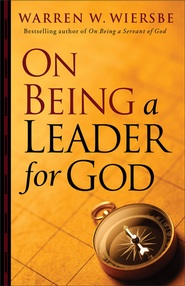
OBALFG Wiersbe

5 Marks of Maturity in Christian Leaders

This is a good place to think about maturity, because one of the goals of Christian leadership is to help others reach their full potential for service. We want to be at our best and we want those working with us to be at their best so that we can do our best work together and, if it’s God’s will, go on to greater challenges. This doesn’t mean that we “break” other people and “re-make” them in our own image, because we aren’t God, and our image—even our best image—doesn’t fit everybody. Instead, it means helping people to grow up and do their very best so they can move ahead in service. Maturing people know themselves, accept themselves, and are themselves in every situation. They don’t “play roles.” They are realistic about themselves and have no illusions about who they are or what they can do. They aren’t fooling themselves or trying to fool others, because maturity and humility go together.

David wrote about this in Psalm 139. No matter how inept we may be in some things, each of us is still “fearfully and wonderfully made,” and we should all praise God for what we are and what we can do (Ps. 139:14). When God made us, He made no mistakes. When I was in grade school, it didn’t take me long to discover that I was not an athlete. (My two older brothers were accomplished athletes.) When you are the last one chosen for every team, and the team that ends up with you tries to give you to another team, you eventually get the message. I could run fast, so soccer was the only game I excelled in; but soccer wasn’t an official school sport in those days. In Indiana, where I grew up, basketball and football reigned supreme. So what did I do? For protection, I managed to have either a star football player or star basketball player as a locker partner, and I managed to bungle my way on the field or in the gym, staying out of trouble. My teammates approved; after all, they did want to win the game. But when it came to academics, writing for the school paper, making speeches for the student government, and even serving as a substitute when a teacher was absent, I was in my element. In those days schools awarded letters only for athletics, not academics, but I didn’t mind. The entire experience helped me find myself and discover the work God wanted me to do.

What are some of the marks of people who are maturing?

To begin with, because they know themselves and accept themselves, they learn to accept others and cultivate a team approach to getting things done. It makes no difference who scores the points so long as the team wins. The key word is “cooperation” and not “competition.” I think it was the British naval hero Lord Nelson who came on deck and found two of his officers engaged in a violent argument. He watched them a few moments and then stepped between them. Pointing to the ocean, he said, “Gentlemen, there is but one enemy, and he is out there!” Whether it’s a coach giving a halftime pep talk or the president of a company explaining a new policy, the goal is the same: different people with different personalities working together to achieve the same purposes with the least possible amount of friction.

Maturing people speak the truth in love (Eph. 4:15). It has well been said that truth without love is brutality and love without truth is hypocrisy. Brutality and hypocrisy are both sins, and sin destroys. Truth and love are tools to build with, and they are partners that work together. It would benefit us to read 1 Corinthians 13 frequently and ask ourselves, “Is this my portrait?” Love is named first in the list of the fruit of the Spirit (Gal. 5:22–23) because love helps us produce and share the rest of the fruit that Paul names. Jesus called love a “new command” and said it is the major mark of each of His disciples (John 13:34–35).

Mature people know how to take responsibility willingly. When problems arise, they admit mistakes and ask questions instead of inventing excuses. They can be trusted to do their work well whether or not anybody is watching. I was once on a staff with a man whose evasive nonwork habits were obvious to everyone but himself. When asked to report on an assignment, he would invariably reply, “Oh, that’s in my briefcase!” When asked where his briefcase was, he would say, “It’s in the trunk of my car.” Where was his car? His wife had it! He didn’t stay on staff very long.

Mature people know that the way they do their work affects how others do their work. Mature people do more than is required, not to earn points or get special recognition but because they consider themselves “slaves of Christ, doing the will of God from [their] heart” (Eph. 6:6). If they see a fellow worker having trouble, they offer to help. They don’t compete with others; they compete with themselves and always strive to do their work better. Mature people have a healthy outlook on life and are dependable whether the Lord sends defeats or victories. If others have a gift of complaining, mature workers don’t preach at them but rather try to have a positive attitude that may help to transform pessimism into optimism. Like Paul and Silas in prison, mature workers can sing and pray—and bring down the house (Acts 16)!

As I’ve watched the men and women who have modeled leadership to me, I’ve observed that they not only have faith in God but also demonstrate faith in their co-workers. All of us on the team must believe in each other, or teamwork will be impossible. We must pray for one another and trust God to work in us, among us, and through us. “I hope in the Lord Jesus to send Timothy to you soon,” Paul wrote to the Corinthian church that Apollos was “quite unwilling” to visit them at that time but would come when he had opportunity (1 Cor. 16:12). This shows that Paul didn’t “play God” in the lives of his associates, moving them around against their wills. Paul had his plans, but so did the Lord—and Paul was flexible.

When a new member joins the team, we soon calculate their “maturity quotient,” and we might have to switch to Plan B to help them start growing. How do they respond to criticism and to praise? Are they patient with delays? Do they know which port they are headed for? Can they patiently listen without interrupting? Even seasoned servants occasionally become childish and require private therapy. “Wounds from a friend can be trusted, but an enemy multiplies kisses” (Prov. 27:6). When I reflect on my own years of service, I give thanks for the men and women who patiently helped me mature and become a better team player. I’m still learning.

Adapted from Warren W. Wiersbe. On Being a Leader for God (Kindle Locations 395-406). Grand Rapids: Baker Publishing Group. Kindle Edition, 2011.

About Warren W. Wiersbe

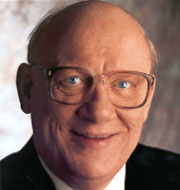
warren wiersbe image

Warren W. Wiersbe is the Distinguished Professor of Preaching at Grand Rapids Baptist Seminary, and is the author of more than 100 books. Billy Graham calls him “one of the greatest Bible expositors of our generation.” Interestingly, Warren’s earliest works had nothing to do with scriptural interpretation. His interest was in magic, and his first published title was Action with Cards (1944).

“It was sort of imbecilic for a fifteen-year-old amateur magician to have the audacity to write a book and send it to one of the nation’s leading magic houses,” Warren says. But having a total of three books published by the L.L. Ireland Magic Company—before the age of 20—gave him a surge of confidence. In later years, he applied his confidence and writing talent to the Youth for Christ (YFC) ministry.

Warren wrote many articles and guidebooks for YFC over a three-year period, but not all his manuscripts were seen by the public eye. One effort in particular, The Life I Now Live, based on Galatians 2:20, was never published. The reason, Warren explains with his characteristic humor, is simple: it was “a terrible book…Whenever I want to aggravate my wife, all I have to say is, ‘I think I’ll get out that Galatians 2:20 manuscript and work on it.’” Fortunately, Warren’s good manuscripts far outnumbered the “terrible” ones, and he was eventually hired by Moody Press to write three books.

The much-sought-after author then moved on to writing books for Calvary Baptist Church. It was during his ten years at Calvary that Expository Outlines on the New Testament and Expository Outlines on the Old Testament took shape. These two works later became the foundation of Warren’s widely popular Bible studies known as the Be series, featuring such titles as Be Loyal (a study on Matthew) and Be Delivered (a study on Exodus). Several of these books have been translated into Spanish.

His next avenue of ministry was Chicago’s Moody Memorial Church, where he served for seven years. He wrote nearly 20 books at Moody before moving to Lincoln, Nebraska, where he and his wife, Betty, now live. Prior to relocating, he had been the senior pastor of Moody Church, a teacher at Trinity Evangelical Divinity School, and a producer of the Back to the Bible radio program.

During all these years of ministry, Warren held many more posts and took part in other projects too numerous to mention. His accomplishments are extensive, and his catalog of biblical works is indeed impressive and far-reaching (many of his books have been translated into other languages). But Warren has no intention of slowing down any time soon, as he readily explains: “I don’t like it when people ask me how I’m enjoying my ‘retirement,’ because I’m still a very busy person who is not yet living on Social Security or a pension. Since my leaving Back to the Bible, at least a dozen books have been published, and the Lord willing, more are on the way.”

Wiersbe’s recent books include Your Next MiracleThe 20 Essential Qualities of a Child of GodClassic Sermons on the Fruit of the SpiritClassic Sermons on Jesus the ShepherdKey Words of the Christian LifeLonely PeopleA Gallery of GraceReal Peace: Freedom and Conscience in the Christian Life, and On Being a Leader for God.

Book Review on Dr. John Huffman’s Memoirs “A Most Amazing Call”

The Pastorate Can Be A Wonderful Life: Review By David P. Craig

AMAC Huffman

In this book John Huffman has written his memoirs highlighting five particular areas of his life as a pastor: his education, family life, ministry in the local church, international ministry, and working with the Boards of several  successful para-church ministries. Dr. Huffman does not deal with the day-to-day minutia of ministry – counseling, visitation, sermon preparation, and so forth. He primarily highlights the big issues, people, and events of over 50 years in pastoral ministry and his 70 years of life.

John writes about his education from growing up in Boston to attending Wheaton College and Princeton University. He went to school with several very influential politicians and ministers and recounts some great stories involving sports, politics, and his world-wide adventures in travel.

In local ministry John began working as a pastor with Dr. Norman Vincent Peale in New York, as well as pastorates in Tulsa, Oklahoma; Key Biscayne, Florida; Pittsburgh, Pennsylvania; and his last 31 years as the Senior  Minister at St. Andrews Presbyterian in Newport Beach, California. It’s interesting to hear about some of his conflicts and struggles with parishioners, as well as some of the amazing things God did in each of these ministries. He talks a lot in the book about being an evangelical in a main-line denomination – the Presbyterian Church U.S.A. He gives some wonderful commentary and insights into what he loves about the denomination (like their governmental structure) and what has been difficult (sexual/political issues). No matter what side you land on these issues – his diplomatic skills have been appreciated by both the liberal and conservative elements in his denomination.

Sprinkled throughout this book are fascinating accounts of his relationships with some amazing people like Richard Nixon, Norman Vincent Peale, Mark Hatfield, Chuck Colson, Billy Graham, Harold Ockenga, Carl F. Henry, Charles Pew, and many others. John traveled extensively in his ministry and has been to the Middle East over thirty times leading tours to Israel and Europe when he was only 18 years old!

John has been a Board member of World Vision, Christianity Today International, Gordon Conwell Seminary, and many other significant organizations. It’s fascinating to hear his stories of Board involvement and the different decisions he’s been involved in making over the years.

Dr. Huffman gives us a little glimpse into the family life of a busy pastor and gives some good insights and wisdom of what to do, and not to do scattered throughout the book. Overall, I really enjoyed reading about the highs and lows of this gifted pastors faithful ministry over the years and how God has used and is continuing to use him for the good of the Church in the United States and around the world. He retells the painful story of the loss of his eldest daughter to cancer – which is absolutely gut wrenching. Even though, most of his ministry and life have been full of blessings, the reality is that suffering visits every person and every family at some point in life. John shares with great empathy and compassion how he and his wife Anne dealt with their loss – and gives some sage advice on dealing with tragedy and loss when it knocks on our front door.

As a pastor myself I enjoyed hearing his story and different tidbits of advice and wisdom throughout the book. John has been a tireless worker for the sake of the Gospel around the globe. He has also been very influential in the local churches where he has served and abroad in missions work. He has traversed smooth and turbulent waters and has passed on much good here to be learned by pastors for future generations. Even if you aren’t a pastor you will enjoy this autobiography. Huffman is a very gifted story-teller and every story in this memoir has a few nuggets thrown in that can benefit a person in any walk of life. Huffman has truly lived an amazing calling that deserves to be read, gleaned from, and emulated.

James M. Boice on When is Jesus Coming Back?

What The Bible Has To Say About The Future: Part 4 in a Series of 9  – “The Days of Noah”

Last and Future World Boice image

If the Lord Jesus is coming back to this earth as He promised and as the prophets foretold, the most natural next question is: When is Jesus coming? This is not just a question for time-conscious, twenty-first century man, as though he more than others has a special concern for the timing or for the end of human history. It flows naturally from belief in Christ’s second coming itself and is, therefore, a question which has been asked by Christians ever since Christ first spoke of His return, elaborating on the Old Testament prophecies.

The question was in the minds of Christ’s disciples. Toward the end of Jesus’ three-year ministry, shortly before His crucifixion, the disciples asked Him, “Tell us, when will these things be, and what will be the sign of your coming and of the end of the age?” (Matthew 24:3). Part of Christ’s answer was that no one, not even Christ Himself, could know the precise moment at which the prophesied events would unfold. He said, “But concerning that day and hour no one knows, not even the angels of heaven, nor the Son, but the Father only” (Matthew 24:36). Later, after His resurrection, He gave a similar answer to an almost identical question. The disciples had asked, “Lord, will you at this time restore the kingdom to Israel?” Jesus said to them, “It is not for you to know times or seasons that the Father has fixed by his own authority” (Acts 1:6,7).

The disciples could not know. We cannot know. Still, this is not the whole story. For we can hardly fail to notice that when Jesus told the disciples that they could not know the time of His return, He nevertheless went on at some length to describe the conditions that would prevail in the world before He came again. These signs occupy at least two of the twenty-eight chapters of Matthew (24-25), one of the sixteen chapters of Mark (13), and one chapter of Luke (21). Moreover, in the last of these chapters a listing of some of the signs is followed by the challenge: “Now when these things begin to take place, straighten up and raise your heads, because your redemption is drawing near” (Luke 21:28).

Perhaps I can illustrate what Christ was saying by this illustration, borrowed from one of the unpublished writings of Dr. Donald Grey Barnhouse. Suppose a Shakespearean scholar enters a theater one evening not knowing what masterpiece of Shakespeare is to be presented. Before the curtain goes up, he is taken behind the scenes. On stage is a castle with ramparts looking out over a wooded countryside. At once he knows that he will not see Othello, which is set in Venice, not Julius Caesar, which begins with a street scene in Rome. He knows that he not see Macbeth; for although there is a castle scene in Macbeth, the play opens not with the castle but with the witches gathered around their caldron. Finally, our drama critic notices two soldiers with shields bearing the arms of the king of Denmark. He sees two other actors dressed up as a king and queen. There is an actor who is supposed to be a ghost. Now no one has to tell the critic what he will see, for he knows it will be Hamlet.

In the same way today, you and I who are Christians sit in the theater of world events awaiting the opening of God’s apocalyptic drama. We don not know when the play is to start, but, like the drama critic, we know more about it than many. Many stare at the future as at a curtain. For them the future is veiled because they do not have the knowledge of the plan of God. Nor can they go behind curtain where the scene is being set. The Christian is not left in such ignorance. We see behind the scenes. Thus, while it is true that we do not know the precise moment at which the play will begin, we do know the play itself and can begin to sense it beginning as we see the actors starting to take their proper places on the great world stage.

We will understand Christ’s remarks in this light when we realize that they were intended to be indefinite enough to keep anyone from self-satisfaction or complacency but precise enough to encourage Christians to examine history, asking whether the conditions of the Lord’s return may not be entering into their final stages through the developments of their lifetime.

The Days of Noah

But how are we to do this? Where should we begin? One answer to these questions is in Matthew 24, in the verses immediately following Jesus’s statement that no one knows the precise day or hour of His return. These verses contain a reference to the days of Noah, and the point is that the terrible moral conditions that prevailed on the earth just before the flood in Noah’s day will be repeated prior to Christ’s return and the ensuing judgment upon men and nations.

[Note: It might be argued that the emphasis of Matthew 24 is on the sudden and unexpected nature of Christ’s return rather than on the conditions that will prevail at that time. This is partly correct. Certainly Jesus did stress the suddenness of His return: “For as the lightning comes from the east and shines as far as the west, so will be the coming of the Son of Man” (v.27); “Therefore, stay awake, for you do not know on what day your Lord is coming” (v. 42). But that is not the sole message of these verses. And it does not negate the position taken here. Another prominent theme in this chapter is unbelief both in Noah’s day and in the day of Christ’s second coming, and unbelief in itself would lead to the conditions recorded. It may also be noted that the view that conditions of Noah’s day will be repeated before Christ’s return is reinforced by other New Testament passages which speak in similar terms of those days (e.g., 1 Tim. 4:1-4; 2 Tim. 3:1-7; 2 Pet. 2:4-9). Jesus stated elsewhere that conditions before His return would be similar to “the days of Lot” in Sodom, which was noted for its sexual perversions and excesses (Luke 17:28-30).

“For as were the days of Noah, so will be the coming of the Son of Man. For as in those days before the flood they were eating and drinking, marrying and giving in marriage, until the day when Noah entered the ark, and they were unaware until the flood came and swept them all away, so will be the coming of the Son of Man” (Matthew 24:37-39).

(1) Since the days of Noah are described in Genesis 6, we may turn to that chapter and see precisely what Jesus was referring to. One characteristic of the days of Noah was a rapid increase in population: “And it came to pass, when men began to multiply on the face of the earth…” (v. 1). Naturally, an increase in population is in itself without moral overtones. It is neither good nor bad. And yet, men being what they are, it is also natural that an increase in population was then and may again be accompanied by moral decadence.

There is a parallel here with developments of our own age. The world’s population is now approximately three billion people [in 1972 – Now in 2013 it’s more in the ballpark of 6-7 billion!]. That figure is double what it was in 1900m and it is expected to double again by the year 2000 or earlier [It has doubled again since 1972]. With the rapid increase in the world’s population there has been an accompanying increase in suffering, particularly in the area of hunger and malnutrition and related diseases. Some experts predict worldwide famine by the year 1985 [there have been and continue to be famines around the globe – malnutrition and starvation is the number one cause of death in the world today]. Another indication of this same general trend is that the movements of world history today seem to be less under the control of individual political leaders than of the mass movements of nationalism, ethnic consciousness, labor, and consumer activity.

We do not want to make the mistake of imagining that, because we have had a sharp increase in the world’s population in recent years, this is proof in itself that the Lord’s return is imminent. We are to look for trends in the history of our times that may be leading up to His return not for events that foretell it precisely. This is only one trend. Nevertheless, we can hardly overlook the fact that the rapid increase of the world’s population in our day has assumed a scale never before duplicated in known history and has caused even secular observers of the world scene to speak in apocalyptic terms when describing it.

(2) The days of Noah were also characterized by an unprecedented accumulation of knowledge. Genesis 4 speaks of the construction of cities, of developments in metallurgy, the arts, and other sciences. If we are to judge by the size of the ark itself — about 450 feet long with a beam of 75 feet, the size of many modern ocean liners — there was also considerable engineering knowledge and skill coupled with an ability to construct the objects designed. This knowledge contributed to a great indulgence in luxury, as it has for many in our day. It was not to the moral advantage of the age.

(3) In addition to the increases in population, knowledge, and luxury, there was also a rapid acceleration of vice and lawlessness. The account of Genesis says “The LORD saw that the wickedness of man was great on the earth, and that every intention of the thoughts of his heart was only evil continually…Now the earth was corrupt in God’s sight, and the earth was filled with violence. And God saw the earth, and behold, it was corrupt, for all flesh had corrupted their way on the earth” (Genesis 6:5, 11-12). Such wickedness was the cause of the great judgment that befell the earth in Noah’s time and was a primary basis for Christ’s warning that the conditions of Noah’s day would be repeated.

One picture that emerges from this description of wickedness in the early chapters of Genesis is of a world characterized by crime. We too are experiencing this. During the 1960’s, crime in the United States rose 148 percent, while arrests of persons under eighteen nearly doubled. In 1969, the number of reported crimes was 4,989,700, which made the crime rate 2,471 per 100,000 persons’ this compares to 2,234 one year earlier . An average of 9 major crimes per minute were committed during the same period [I shudder to think what the statistics are now in 2013!].

In New York City in 1971, the FBI reported an increase in crime of 11 percent, while homicides in the city increased 30 percent. In 1971 New York City, with a population of only 8 million persons, recorded more crimes than England, Scotland, Wales, Ireland, Switzerland, Spain, Sweden, the Netherlands, Norway, and Denmark combined. In that city there are over 300,000 alcoholics, affecting the lives of 1,500,000 people and costing more than 1 billion dollars annually. The loss approaches 2 billion dollars for the upward of 100,000 hard-core heroin addicts, who must continually steal to support their habit.

In Los Angeles crime has increased 60 percent in 6 years, or 7 times faster than the population of the city.

More alarming even than these figures are the growing permissiveness and disrespect for law that have characterized the last decade. These trends have affected even the police, as various “crime probes” have indicated. Courts are affected. Among the forerunners in open defiance of laws that they consider unjust have been clergymen; there is no lack of others to follow or excel their example.

Another example of vice and lawlessness given in the opening chapters of Genesis is an increase in sexual perversions and crimes. This too is reflected in our society. In one recent year, for instance, forcible rape rose 17 percent. Divorce and remarriage are rampant. Many, including clergymen, speak in favor of “term” rather than lifetime marriages. Venereal disease is reaching epidemic proportions. In an ultimate gesture of moral degeneracy and defiance of all former norms, homosexuality and lesbianism have burst from the darkness of the back alleys onto the front pages of newspapers and to televised talk shows. Recently, a new religious order  was founded by members of a so-called homosexual church named the “Church of the Beloved Disciple.” The order is called the Oblate Companions of St. John, who in turn is honored as “the disciple whom Jesus loved (John 21:20), thus implying a homosexual relationship between John and the Lord. Similar churches now exist in more than a dozen U.S. cities. Recently, national papers and magazines carried stories of the decision of delegates from nineteen United Churches of Christ in the San Francisco area to ordain a confessed homosexual to the gospel ministry [The increase of the homosexual population and influence in culture, politics, and the church is absolutely staggering from the time of Boice’s writing this in 1972].

Again, we dare not make the error of arguing that because these crimes and perversions are appearing to such alarming degrees in our age and society, therefore, the coming of Jesus Christ must occur immediately. We have no warrant for that. Nevertheless, we must ask: Are the alarming moral and economic conditions of our age not more than adequate fulfillment of the conditions that Jesus taught must prevail before His return? Are not our days equal in their vice to the days of Noah? Are they not equally lawless? If they are, then we dare not imagine that Christ cannot or will not appear. Nor dare we neglect His warning: “Therefore, stay awake, for you do not know on what day your Lord is coming” (Matthew 24:42).

Demonism

(4) There is one more characteristic of the times that is especially significant. That is the phenomenon of demonism. Genesis 6 relates that there was a time on earth when some of the angels who had fallen in Satan’s rebellion cohabited with the daughters of men, thereby producing a race of extraordinary beings, half demon and half human. This characteristic of the days of Noah is disclosed in the opening verses of the chapter:

“When men began to multiply on the face of the land and daughters were born to them, the sons of God saw that the daughters of man were attractive. And they took as their wives any they chose…The Nephilim were on the earth in those days, and also afterward, when the sons of God came in to the daughters of man and they bore children to them. These were the mighty men who were of old, the men of renown” (Genesis 6:1-2, 4).

Many who have studied this passage interpret it to mean that the godly descendants of Seth, called “sons of God,” married unbelievers [Note: That is the interpretation given to Genesis 6 by most of the older Protestant commentators–Calvin, Lange, Keil and Delitzch, Scofield and others. More recent interpreters–Simpson, Skinner, Von Rad, Pember, E.W. Bullinger, A.C. Gaebalein, DeHaan–favor the view that the marriages were between human women and demonic beings. Naturally there have been commentators on both sides f the issue at most periods of history]. That would explain the unusual corruption and decadence that existed in the world in Noah’s time and would make good sense of the passage. Nevertheless, there are several reasons why I feel this an inadequate interpretation of these verses.

First, the contrast in the verses is not between the descendants of Seth (both men and women) and the ungodly descendants of Cain. The contrast is between the daughters of men, meaning daughters of the whole human race, and the sons of God, whoever they may be.

Second, in the Old Testament, the phrase “sons of God” is never used of believers. The fact that believers become sons of God or children of God by faith in Jesus Christ is entirely a New Testament concept.

Third, the phrase “sons of God,” when it does occur in the Old Testament, seems to refer not to human beings who believe in God but to angels, that is, to beings not born of others like men but created directly by God. That would be the case with all angels, whether fallen or not. And it would explain the use of the phrase in a new way in New Testament times to refer to those who have experienced a new, direct birth by God through faith in Jesus Christ (Note: The one apparent exception to this usage, an application of the term to Adam in Luke 3:38, actually proves the point being made. For Adam alone, of all the Old Testament characters, was the result of the direct creative activity of God. It should be noted, however, that in the Greek text only phrase “of God” occurs).

The phrase “sons of God” occurs four times in the other parts of the Old Testament — three times in the Book of Job and once in Daniel. In Daniel the phrase was used by King Nebuchadnezzar after he looked into the burning furnace into which he had thrown the Hebrew captives, Shadrach, Meschach, and Abednego. He said, “But I see four men unbound, walking in the midst of the fire, and they are not hurt; and the appearance of the fourth is like a son of the gods” (Daniel 3:25). Nebuchadnezzar clearly meant that the fourth figure looked like an angel. In Job the phrase “the sons of God” occurs in two contexts. In chapter 38 God asked Job where he was at the beginning of creation “when the morning stars sang together, and all the sons of God shouted for joy” (Job 38:7). This is apparently a reference to the angels who witnessed the creation of the earth. In the first two chapters of Job we are twice told of a day when “the sons of God” appeared with Satan to present themselves before the Lord (Job 1:6; 2:1). It is in this sense that we must interpret the reference to “the sons of God” in Genesis.

The conclusive argument to this interpretation of Genesis 6 is that, historically, this was also the view held by the Jews before the time of Christ and expressed in various Jewish documents and apocalyptic literature. One outstanding example is in the book of Enoch, a pseudepigraphical work compiled during the time of the Maccabees or earlier.

And it came to pass when the children of men had multiplied that in those days were born unto them beautiful and comely daughters. And the angels, the children of heaven, saw and lusted after them, and said to one another: “Come let is choose us wives from among the children of men and beget us children” (1 Enoch 6:1,2).

After a description of how this happened and of the wickedness that resulted, the book then gives an account of the objection by the righteous angels.

They have gone to the daughters of men upon the earth, and have slept with the women, and have defiled them  -selves, and revealed to them all kinds of sins. And the women have born giants, and the whole earth has thereby been filled with blood and unrighteousness. And now, behold, the souls of those who have died are crying and make their suit to the gates of heaven, and their lamentations have ascended; and cannot cease because of the lawless deeds which are wrought on the earth (1 Enoch 9:8-10).

An account of the punishment of the fallen angels and a brief reference to the flood follows.

This interpretation of Genesis 6 is also found in the writings of Josephus and Philo, in The Testament of the Twelve Patriarchs, and in the Septuagint, which renders the phrase “sons of God” as “angels of God.”

Moreover, the New Testament seems to support the view also in those few passages which link God’s punishment of certain fallen angels to the time of the flood. Thus Peter writes, “For if God did not spare angels when they sinned, but cast them into hell and committed them to chains of gloomy darkness to be kept until the judgment; if he did not spare the ancient world, but preserved Noah, a herald of righteousness, with seven others, when he brought a flood upon the world of the ungodly; then the Lord knows how to rescue the godly from trials, and to keep the unrighteous under punishment until the day of judgment” (2 Peter 2:4-5, 9 cf. Jude 6).

What shall we say about the duplication or the possibility of the duplication of such things in our day? At the very least, we see an extraordinary revival of spiritism, witchcraft, magic, and Satanism in this country and around the world. Many cities possess hundreds, if not thousands, of spiritualists and mediums. Stories of news interest, particularly gruesome stories, frequently make the front page of the newspapers. Some years ago Swiss papers carried accounts of the murder of a young girl by a group of older people who beat her to death while attempting to exorcise a demon. In America papers carried exhaustive accounts of the Sharon Tate murders by a self-styled devil named Charles Manson and members of his so-called family. Some of the accounts of these murders, such as that which appeared in Esquire magazine (November, 1971), detailed the most horrible practices, including murder, animal and human sacrifice, ritual sex, and sexual perversions.

These practices often involve young people. In 1971, a twenty-year-old was drowned at his request by two friends (aged seventeen and nineteen) because, as he believed, a worshiper of Satan who dies violently is assured command of forty legions of demons in the life to come. He was part of a Satan cult that reportedly involved as many as seventy high school students in his area. Recently another young person who was apparently associated with this group committed suicide.

Are these merely tragic eccentricities? Or are they evidence of a widespread outbreak of genuine Satan worship and demonism in our time? Unfortunately, the extent of Satan worship suggests the latter. And, if the idea precedes the act and theme of the popular book and movie Rosemary’s Baby, which told the conception of a child by a demon father and a human mother, is any indication, the worst may be yet to come.

On the basis of all such evidence, David H.C. Read, minister of the Madison Avenue Presbyterian Church in New York City, recently wrote:

This kind of experience is spreading rapidly and has to be taken much more seriously than we have in the past. The time for ignoring it or laughing it off is over. For too long we have lived with a comfortable, rationalized religion, leaving the mystic, the emotional, and what we call the “spooky” to the ecclesiastical underworld or psychiatrists. In the main-line churches there has been little room for the supernatural of any hue, divine or demonic. Both angels and devils have evaporated from our consciousness. They have disappeared into a little box labeled “primitive superstitions.” Now the lid is off, and it is obvious that the sedate, sensible, secularized religion of the recent past is unable to cope with the storm that is bursting upon us.

According to the Bible, all these things — a rapid increase in the world’s population, an unprecedented accumulation of knowledge, the acceleration of vice and lawlessness, and demonism — will exist side by side with a worldwide proclamation of the Gospel of Jesus Christ before His return. Jesus said, “And this gospel of the kingdom will be proclaimed throughout the whole world as a testimony to tall the nations, and then the end will come” (Matthew 24:14).

Therefore Stand

One more point is in order here. Many are inclined to take lightly te so-called “spiritualist” phenomena — rappings, Ouija boards, witchcraft, seances, and even demonism — particularly as such things are portrayed in popular writings or on television. But the Christian should not do this, nor should he participate in seances or any other form of attempted communication with the spirit world. We have our knowledge of the life to come through Scripture. God has told us many things in the Bible, certainly everything we need to know. To indulge in spiritualist phenomena is really to dishonor and disobey God.

We must remember at this point that God ordered the people of Israel to avoid the various forms of devil worship practiced by the nations around them:

“There shall not be found among you anyone who burns his son or his daughter as an offering, anyone who practices divination or tells fortunes or interprets omens, or a sorcerer or a charmer or a medium or a necromancer or one who inquirers of the dead, for whoever does these things is an abomination to the LORD. And because of these abominations the LORD your God is driving them out before you”  (Deuteronomy 18:10–12).

At the same time, we need to be careful not to take the various evidences of demonism too seriously, in the sense that we might be tempted to fear these things and forget the power of our God. It is the demons, not Christians, who should fear.

It is significant that the demonic activity recorded in the Bible is not scattered throughout the years of biblical history but rather is concentrated at the four focal points of history at which God has been or will be particularly active.

(1) We find demonism at the creation of the world and in the generations immediately following creation. The days of Noah belong to this period.

(2) Again we find demonism at the time of the Exodus of the Israelites from Egypt. Ancient Egyptian worship was demon worship; the plagues at the time of the Exodus were directed  against the supposed power of these “gods.”

(3) Third, there was a remarkable outcropping of demonic activity during the lifetime of Jesus Christ. Many writers have expressed the idea that in this period particularly the demonic powers gathered themselves together in a major effort to prevent the destruction of their kingdom.

(4) The fourth period is one in which the Lord Jesus Christ will return.

“Is it possible that rising evidence of demonism in various forms has an eschatological import?” wrote Russell T. Hitt in a recent booklet. “Is it because the Second Coming of Christ is near, that we are witnessing stepped-up Satanic activity? Perhaps we have a clue here to present worldwide unrest in every area of life.  (Russell T. Hitt, “Demons Today” [Philadelphia: The Evangelical Foundation, 1969, p. 12).

If that is true — and the other periods of unusual demonic activity would suggest that it is — then the phenomena we are witnessing today are much more an evidence of fear and frenzy on the part of Satan and his followers than they are of confidence by Satan in the outcome. Those who are followers of Jesus Christ and know their Bible are not ignorant of Satan and his devices. In fact, armed with such knowledge and with the Word of the living God, we can stand against him: “Put on the whole armor of God, that you may be able to stand against the schemes of the devil” (Ephesians 6:11). We cannot do this in our own strength, of course, but we can in the power of the Lord Jesus Christ, who “disarmed the principalities and powers and made a public example of them, triumphing over them” (Colossians 2:15).

The Return of Jesus Christ

Well, then, is the Lord coming soon? That is the question with which we began, and again we must repeat our first answer. We do not know. Certainly it could be at any moment. It could be delayed.

We should not close this particular article without mentioning a final condition which must precede the return of Jesus. This condition has nothing to do with the days of Noah, yet it is mentioned several times in the Bible as being of great significance. It is the return of the Jews to their homeland, which began to take place in 1948, and especially the repossession of the old city of Jerusalem, which took place as a result of the Six Day War in 1967.

There are statements in the Bible by Jesus Christ that seem to date the second coming within a generation of these events. Two of the most significant statements are in Luke’s version of the Olivet discourse. After an opening section of the discourse listing events that will take place but which are not signs of His immediate return, Jesus refers to the repossession of Jerusalem by the Jews after a long period of Gentile domination. “Jerusalem will be trampled underfoot by the Gentiles, until the times of the Gentiles are fulfilled” (Luke 21:24). The implication is that His return will take place shortly after this time of Gentile domination. Several verses later He adds, “So also, when you see these things taking place, you know that the kingdom of God is near. Truly, I say to you, this generation will not pass away until all has taken place” (Luke 21:31-32). These verses seem to indicate that the Lord Jesus Christ will return within one generation of the repossession of Palestine and the reconquest of Jerusalem by the Jews. If that is so, the biblical length of a generation being about forty years of 1948 (the year of the reestablishment of the state of Israel) or of 1967 (the year in which the old city of Jerusalem once again came into Jewish hands).

All this makes the necessity of belief in the Lord Jesus Christ more urgent. People have always said, “Well, if things get bad enough, I’ll believe in Christ then.” They say that in our time.

It does not work that way. When conditions in the world become more and more like those prophesied for the end times, it is easier to postpone belief rather than harder. It is easy to do what you please when there is no longer a respect for law or popular opinion to restrain you or any regard for sound preaching. Do not think that if these things are true, you will find it easy to arrange a last-minute repentance. The Bible says, “In favorable time I listened to you, and in a day of salvation I have helped you. Behold, now is the favorable time; behold, now is the day of salvation” (2 Corinthians 6:2).

About the Author

Boice JM in pulpit

James Montgomery Boice, Th.D., (July 7, 1938 – June 15, 2000) was a Reformed theologian, Bible teacher, and pastor of Tenth Presbyterian Church in Philadelphia from 1968 until his death. He is heard on The Bible Study Hour radio broadcast and was a well-known author and speaker in evangelical and Reformed circles. He also served as Chairman of the International Council on Biblical Inerrancy for over ten years and was a founding member of the Alliance of Confessing Evangelicals.James Boice was one of my favorite Bible teachers. Thankfully – many of his books and expositions of Scripture are still in print and more are becoming available. He was one of only a handful of reformed theologians that was premillennial in his eschatology (Steven J. Lawson, John MacArthur, Erwin W. Lutzer, S. Lewis Johnson, Rodney Stordtz, John Hannah and John Piper also come to mind). However, what makes him really unique as a Reformed Theologian is that he was not Historic Premillennial – but leaned Dispensational (Held to a pre-tribulation rapture) as well. This article was adapted from Chapter Three in one of the first of James Boice’s plethora of books, and is entitled: The Last and Future World, Grand Rapids, MI.: Zondervan, 1974 (currently out of print). This book is based on 9 sermons that Dr. Boice preached at Tenth Presbyterian Church in Philadelphia in 1972. Though this book was written almost 40 years ago – it is just as relevant as when it was first written since many of the prophecies taught in the Scriptures and addressed by Dr. Boice in this book have yet to be fulfilled. Scripture verses are quoted from the more modern English Standard Version – DPC.

10 Ways The “Man of Steel” Points Us To Jesus

How The Man of Steel Helps Us to Behold Jesus – The Real Superman by David P. Craig

Man of Steel

On the road to Emmaus after Jesus rose from the dead He appears to His disciples and speaks of how all the Scriptures pointed to Himself: “And beginning with Moses and all the Prophets, he interpreted to them in all the Scriptures the things concerning himself” (Luke 24:27). Last night I went to see the movie “Man of Steel” about Superman with my wife and one of my daughters. We enjoyed the movie and afterward discussed some of the parallels between Superman and Jesus. The movie doesn’t purport to be a theologically accurate portrait of Jesus, but nevertheless it is rare occasion when you leave a movie thinking and talking about Jesus – and for that very reason alone this movie is very significant and worth seeing. This movie has been doing very well around the world – I think it’s because all of humanity longs for what Superman points us to – the real Superman – The Lord Jesus Christ. There’s probably more parallels than the ones we discussed, but here’s what we came up with:

(1) The first pointer is an ironic one. Jesus was born of a virgin (Isaiah 7:14 cf. with Matthew 1:20). In the movie everyone on Krypton is conceived through a sterile process that does not involve sexual reproduction. Kal-El (Superman) is the first child born in many centuries of a natural birth. This is the opposite of the way it is between all humans and Christ – nevertheless Superman’s birth like Jesus’ is totally unique among his people.

(2) Superman like Jesus has a “Heavenly” Father and an adopted earthly father and mother. Jesus had always been with His Heavenly Father and then came to earth and was raised by his earthly father and mother – Joseph and Mary. Superman had a Father on Krypton – Jor-El  (played by Russell Crowe)  and came to earth and was raised by his adopted dad, Jonathan Kent (played by Kevin Costner).

(3) Throughout his life Superman is mocked, taunted, and even beaten by others and refuses to retaliate in words or actions. This reminds us of Jesus: “He was oppressed, and he was afflicted, yet he opened not his mouth; like a lamb that is led to the slaughter, and like sheep that before its shearers is silent, so he oppened not his mouth” (Isaiah 53:7).

(4) Superman has tremendous powers as a child and refrains from using them accept to save others. Jesus came in total humility and lived in his human nature and refrained from using His omnipotent powers which reminds us of Philippians 2:3-5, “Do nothing from selfish ambition or conceit, but in humility count others more significant than yourselves. Let each of us look not only to his own interests, but also to the interests of others. have this mind among yourselves, which is yours in Christ Jesus.”

(5) Superman like Jesus has a “Heavenly” name (Kal-El) and a name given to him by his earthly parents (Clark). Jesus is called Immanuel “God with us” in Isaiah, and then Joseph and Mary are told to call Him Jesus “for He will save his people from their sins” (Matthew 1:21).

(6) Kal-El has to battle the vicious archenemy of humanity and the Kryptonites throughout the movie and ends up victorious just as Jesus was constantly attacked by Satan and was victorious. This reminds us of John 10:10, “The thief [Satan] comes only to steal and kill and destroy. I [Jesus] came that they may have life and have it abundantly.”

(7) Superman keeps his identity hidden until it is time to fulfill his mission. Jesus also waited to accomplish His mission in the fullness of time: “But when the fulness of time had come, God sent forth his Son, born or woman, born under the law, to redeem those who were under the law, so that we might receive adoption as sons” (Galatians 4:4-5).

(8) Kal-El (Superman) was sent to earth by his Father to save the world. Jesus was sent by His Heavenly Father to save the world – “For the Son of Man did not come to be served, but to serve and give His life as a ransom for many” (Mark 10:45).

(9) Clark Kent gives himself up in a crucifix pose at the age of 33 and fulfills his mission for which he came to earth – the same age Jesus was when He was crucified on the cross.

(10)  Superman was “cut-off” from his Father for the good of humanity. Just as Jesus was “forsaken” by His Heavenly Father for the salvation of humanity: “He was despised and rejected by men; a man of sorrows, and acquainted with grief; and as one from whom men hide their faces he was despised, and we esteemed him not. Surely he has borne our griefs and carried our sorrows; yet we esteemed him stricken, smitten by God, and afflicted. But he was pierced for our transgressions; he was crushed for our iniquities; upon him was the chastisement that brought us peace, and with his wounds we are healed. All we like sheep have gone astray; we have turned–every one–to his own way; and the LORD has laid on him the iniquity of us all” (Isaiah 53:3-6).

Joe Aldrich on Some Marks of Maturity For a Pastor

LE Aldrich

Some Marks of Maturity for a Pastor

To help identify the kind of shepherd who stimulates beauty, let’s look now at some marks of maturity for a pastor. These are goals to shoot for, a direction to move. Since pupils are to become like their teachers, they are really goals for all of us.

The Mark of an Expanding Faith

Faith is that God-given ability to take the promises of God out of mothballs and apply them to the challenges of everyday living. Men of faith dream God-sized dreams and then move out to transform those dreams into reality. God has said that without faith, it is impossible to please him (Hebrews 11:6). Pleasing him is believing him. Faith as belief is affirming who he is while faith as action is responsible behavior in the light of who he is and what he has promised.

Sometimes it is behavior which overcomes overwhelming odds. By faith men of God “conquered kingdoms … shut the mouths of lions … became powerful in battle” (11:33-34). More often it is a tenacious behavior which endures in the midst of intense struggle and personal loss. “Others were tortured and refused to be released, so that they might gain a better resurrection” (11:35). Some accepted joyfully the seizure of their property because they knew they had a better and an eternal possession (10:34). Faith is not shrinking back, whether one faces opportunity or oppression. Our Lord warned against the leaven of the Sadducees (rationalism). Rationalism—eliminating the supernatural—becomes the great enemy of faith. The deceptive thing about the leaven of the Sadducees is its reasonableness. Rationalism is reasonable and safe. Faith often appears unreasonable and risky. It was both unreasonable and risky for Peter to attempt to walk on water. It was unreasonable for Noah to build a boat, for Abraham to expect a son, for Moses to abandon the prestige of Egypt, and for George Mueller to care for orphans. We must all grow in faith if we are to please him. Certainly we want to do that! The great faith chapter (Hebrews 11) gives us three clues for faith building.

1. Belief in the Invisible. These faith giants saw through the problems of the natural world to a supernatural Being. They saw him who is invisible (11:27). The writer to the Hebrews exhorts us to do the same: “Let us run with perseverance the race marked out for us. Let us fix our eyes on Jesus, the author and perfecter of our faith” (12:1-2). Our eyes must move from the waves to the Master of the waves, from the storm to the Savior, from the fire to the Father. Abraham left the familiar and went out into the unfamiliar, the new, the untested, the uncharted, because he saw that God was the architect and builder of his future (11:10). Cultivation of our relationship with him who is invisible is the first key for building faith.

2. Faith in What Has Been Promised. The heroes of faith not only saw him who was invisible, but they welcomed his promises from a distance (11:13). As we cultivate a relationship with God we are able to claim with assurance (faith) the promises which grow out of that relationship. Sarah was enabled to conceive because Abraham believed God would be faithful to what he had promised (11:11). He believed God was reliable. Our pastor must know both the person of God and the promises of God if he is to be a man of faith.

Two things hinder this process: 1) A lack of knowledge of the promises of God, and 2) a lack of faith in the person and character of God. Men and women of faith welcome the promises of God from a distance. That is, their major expectations are in the future, in life beyond the veil. Moses claimed the promises of God and turned his back on the prestige, power, and wealth of Egypt because “he was looking ahead to his reward” (11:26). Others joyfully accepted the confiscation of their property knowing that they had “better and lasting possessions” (10:34). They will be winners; they will not be ashamed for the choices they made because God is faithful, his promises are true, and “he has prepared a city for them” (11:16). An expanding faith must be marked by confidence in God’s promises.

3. Living a Faith Life Style. A real winner feels the gold medal around his neck before he enters the race. So should the pastor. He should run to win, and motivate by his courageous example a multitude to run with him. The promises of God should be the fabric of his future. Faith begins with the person of God, moves to his promises, and then to a pattern for living. Ours is a living faith and a faith to be lived.

There is a faith life style summed up in Hebrews 11:13: “All these people were still living by faith when they died. They did not receive the things promised; they only saw them and welcomed them from a distance.” And they admitted that they were aliens and strangers on earth.

Pastors of all people must make this confession. It is the Magna Carta of Christian living. These heroes of the faith abandoned any hope of ultimate fulfillment in this life. They determined to ever be foreigners in their own countries, to live as aliens in their own land.

No city on this earth, no geographical location, no second home in the mountains has foundations which will last. We should abandon all hope of being satisfied and fulfilled with what is temporal. Our heartache is eternal, and no temporal bicarbonate will ease it. Nothing less than seeing Jesus face to face and dwelling in his presence will ever satisfy our deep longing. It’s a longing for home, and this world will never be our home.

Much of the Christian community acts as though this world is its home. Materialism is rampant. We have followed the gospel of the worldling who hopes that by doubling the cost of his new home he can double his happiness. This perverted gospel cripples the impact of countless Christians. The visible mark of faith is an alignment with an eternal home which creates an attitude and life style marked by its contrast with the secularism of our day. This alignment refocuses everything else. It changes our goals and objectives. It redirects our gifts and abilities and resources. It redefines our mission. Suddenly eternity with the Lord is everything, and his purposes become critical as we prepare for that great day. The “alien and stranger” lives for the possibility of hearing his Master say, “Well done, good and faithful servant.” Like Moses, he looks forward to the reward.

Pastors must be examples to the church of total stewardship. They should richly enjoy all that God has given, but their heavenly citizenship should be obvious. The deceitfulness of wealth, of any treasure but God himself, is a dangerous time bomb. Some pastors err in the other direction. They parade their poverty and continually let their needs be known, and then praise God for his wonderful provision. Be careful, and pray for balance.

Faith is the essential ingredient that pleases God. Faith is fueled as the pastor cultivates the presence of God. As D. L. Moody used to say, “I am a leaky vessel, and I need to keep under the tap.” Faith is freed as the pastor develops confidence in the promises of God. It is properly focused as he adopts God’s pattern of living. The man of faith is an alien sent by God as an agent of reconciliation. An ad in a secular magazine stated, “Once you discover you can change the world you’ll never be the same.” How true! Faith moves mountains.

The Marks of a Positive Ministry

Faith and hope are inseparable friends. The gospel itself is literally “good news.” A pastor should both be and communicate good news. It’s largely a matter of attitude. Many pastors gravitate toward a negative, critical, condemning pattern of life and ministry. Such a life style is not from God.

It is often thought that the Christian faith is a deprivation of joy in living, or that it is a mere pattern of religious observances, or that it is a hairsplitting system of beliefs. Christianity does involve some of these elements but they are only incidental. The modern evangelist has to sell the biblical point of view that the Christian faith is God’s way to undreamed of personal fulfillment. This will necessitate a shift to a more positive point of view in order to change this false but popular image of Christianity (James Jauncy, Psychology for Successful Evangelism [Chicago: Moody Press, 1972], 39).

Pastors need to be ministers of hope. It should permeate their lives and their preaching. Recently I heard a speaker say that the one who brings the most hope gains the most authority. That’s an amazing and scary thought. Lenin came with a message of hope and changed the world. As his “Utopia” unfolded, people gave everything, even their very lives, to further the cause. People rally around the bearer of hope and submit themselves to him. Hope is a vital quality for pastors.

Peter reminds us that we are to be ready to give an answer, with “gentleness and respect,” to everyone who asks us the reason for our hope (1 Peter 3:15). This is not “pumping sunshine.” Ministry is tough. It involves heartache, tragedy, and despair. The shepherd needs to have a faith which produces a hope that encourages, comforts, and strengthens even as the dark clouds gather. Those who worship Jesus Christ have reason for hope.

A ministry founded on and giving rise to hope is composed of several positive factors:

1. An Unveiled Face—Authenticity. One of the joys of the new covenant is that the veils can come off. Moses came down from the mountain and veiled his face so that his people could not see his glory fade away. In 2 Corinthians 3:12-18 Paul tells us that we no longer have to function as did Moses. When one “turns to the Lord, the veil is taken away” (3:16). Let’s not bring back what God has taken away. The Christian pilgrimage is not one sanctifying experience after which we put on the veil. We don’t reach a point where a veil becomes necessary. The longer we walk with him, the less a veil should be needed. Paul encourages us to look at him with unveiled face as we “are being transformed into his likeness with ever-increasing glory” (3:18).

People are attracted by authenticity. The pastor must guard himself against accepting the illusions, fantasies, or distorted expectations of his congregation. Integrity is the critical element. It is so easy to deceive from the pulpit, to preach about things we have not experienced and do not consistently practice. It is so easy to overstate, to play on guilt, and to imply that we solved a particular problem long ago. If we haven’t and imply that we have (often by what we don’t say), we are inauthentic.

2. A Diligent Student of the Word. The demands of ministry are great, but they must not take the pastor away from the Book. Since when should the pastor do the calling, teach Sunday school, chair three or four committees, fold the bulletins, oversee the youth ministries, plan the retreats, and on and on? His job has never been to do the work of the ministry. He is to equip others to do it.

Bible study, however, is hard work. There are plenty of things to keep a pastor “busy” and to provide an excuse for his lack of preparation. Poor preaching keeps most churches poor. Poor preaching in most cases is the result of poor priorities and procrastination. The minister who is going to build a contagious congregation must handle truth skillfully, knowing that truth is the foundation of beauty. Besides direct study of Scripture, the pastor must continue to learn. Seminars, books, retreats, and significant fellowship should have high priority in his schedule. Many secular management training programs are excellent. Each local church should set aside a substantial sum for its pastor’s continuing enrichment. It is money well spent.

3. A Liberator of the Body. The marvelous doctrine of reconciliation helps us see that ultimately evangelism is what Jesus Christ is doing through his church to reach his world. The pattern looks like this. At Christ’s incarnation, God was “reconciling the world to himself in Christ” (2 Corinthians 5:19). Since Christ ascended to his Father’s right hand, the Father “has committed to us the message of reconciliation. We are therefore Christ’s ambassadors, as though God were making his appeal through us” (5:19-20). That’s what Christ is doing today. He entreats a lost world to be reconciled through his church, which is his body. Christ sows his good seed (beautiful seed) in the world, where his work is to take place.

The pastor must focus his church outward, not inward. His motto should be, “When the saints, go marching out!” The church is not a holy huddle, it is a task force whose primary focus must always be the “fields ripe for harvest.” Unfortunately, bigger buildings, larger programs, and more staff dictate church mission. We must justify our large expenditures, and the basic evangelism strategy becomes herding fish toward our expensive, stained-glass trap. Instead, the church should be God’s family extending itself to meet needs in the name of Jesus. Evangelism is what Jesus is actually doing through the preaching, the worship and fellowship, and the service of the church.

The pastor more than any other individual determines the character of the church’s preaching, fellowship, worship, and service. The content and style of his preaching is critical to the church’s health and beauty. If a church is to be a learning center, the pastor must make diligent preparation so that what is delivered is biblical, balanced, relevant, and liberating. Likewise, the pastor is the key to liberating the church to be a healing communion as he gives himself to building up the body so that it moves toward health. The pastor is also the key to whether or not the church is free to worship and to respond as a family to the presence of God in its midst. Finally, the service of the church is conditioned by the pastor’s vision (or lack of it). Liberating a congregation to be God’s people in service can be threatening. It often involves a rethinking of the pastoral and leadership roles. In most cases it means seeking a lower profile and elevating the gifts and abilities of others.

Jesus desires to explode himself through the lives of his people and do greater works than he did while on earth. He wants once again to touch the untouchables, feed the hungry, bring light where there is darkness and life where there is death. He wants to invite the thirsty—whoever they are, wherever they are—to discover living water. In the counsels of eternity, God decided for a time to link himself (and in a sense limit himself) to the frailties of his creatures. Why he has not evangelized with the hosts of heaven we do not know. What we do know is that Jesus’ mission today is done through us, his ambassadors. We are now members of the second incarnation called to make visible the invisible God. His impact, his mission, is linked to our obedience and vision. If we draw limits he has not drawn, he becomes limited in his outreach. If our hearts have no compassion for the lost, we neglect our commission and Christ’s mission is aborted.

Who do you think God wants to use to reach your neighborhood? Is he doing it? Why not? Pastor, you are God’s instrument to set people free—to encourage them, to liberate them, to give them your blessing to mark the lost for Christ. It may mean you will have to change your attitudes toward the unsaved. You may need to realign your understanding of separation with biblical truth. Perhaps you will have to eliminate some programs, change the thrust and tone of your preaching, focus again on the essentials, and start reaching your own neighborhood. People may need to be encouraged not to attend the programs and activities of the church so they can spend time with the unsaved. Your church may need, with your firm leadership, to move out into the community and serve it. Neglected widows may need help, injustice in your community may need to be confronted, programs may need to be implemented to care for the poor and needy … with no strings attached. You may need to brainstorm with your leadership team about where Jesus would go in your community to meet needs, and then direct resources and people into that area. Christianity in action under qualified leadership is always effective evangelistically.

4. A Builder of Men. Men attract men, especially in a church context. A primary part of the pastor’s job is the building of men. To nudge men on toward maturity takes time and commitment. His must help others to minister—not do the work of ministry himself. The minister is like the foreman in a machine shop, or the coach of a team. He does not do all the work, nor does he make all the plays. (Though he is a working foreman and a playing coach!) If a man can’t operate a lathe, the foreman rolls up his sleeves and shows him how. If a player can’t carry out an assignment, the coach demonstrates how to make the play (Leighton Ford, The Christian Persuaders [New York: Harper & Row, 1969], 49).

Even though the pastor is a shepherd who loves the entire body, a ministry to men must have a special place in his heart. While in the pastorate I met with at least five groups of men each week. I met one on one with a dentist friend, with two other board members, with a group of twenty or thirty businessmen, with the entire board, and with the pastoral staff (seven men). Although the group dynamics were different, the purposes were similar. With mutual accountability we shared the Word, prayer, schedules, and relationships. Each year, at my request, the board of elders met without me to evaluate my ministry, my marriage and family, and anything else they desired. This information, often painful, was shared in love and resulted in growth and encouragement. It also set a precedent. As they saw the value of evaluation, the board members requested that each of them be evaluated too.

We as a board recognized our need to be a redemptive community. We structured our weekly board meetings so that the first hour focused on instruction and worship. Board members rotated the teaching assignment among themselves. I spent hours working with some of the men helping prepare them to preach and teach. What an exciting experience to sit on the front row as one of them delivers the morning message! Men, help your pastor by being honest with him. I remember so well the evening a man in my congregation said to me, “Joe, you’ve been my pastor for two years. I’m disappointed you haven’t built into my life more effectively.” It was a time of soul searching … and growth. You may need to pose a similar question to your pastor to nudge him into one of his most important responsibilities. An effective pastor builds into his leaders to establish the base for a healthy and attractive ministry. Before a church is ready to add members, it must increase the quality and quantity of its leadership. A wise pastor learns how to be a builder of men, then makes this challenge central to his ministry.

5. A Family Specialist. Focus on the family! Target sermons regularly on marriage and family living. Take advantage of the excellent video series and printed materials available. People are hurting desperately in this area. Meet these needs and evangelism problems are practically solved. If your church cannot accept the wreckage of broken homes and shattered dreams, it is not a place where Jesus lives. Your church should be the greatest garbage dump in town—a place where the broken, oppressed, misplaced, abandoned, and unloved can come and find a family where they are accepted and loved … as is. “As is” people are Jesus’ kind of people. The Pharisees despised them. They still do. “As is” people become great disciples and great soul winners. Those who have been forgiven the most love the most. The effective church ministers effectively to families because it is a family. Pastor, you’re the key. Father the fatherless, rebuke the offenders, encourage the discouraged, rejoice with those who rejoice, and weep, weep, weep. If your heart is not broken by broken people, you don’t have Jesus’ heart. If your heart is not compelled to go when lost men stumble in darkness, you don’t have Jesus’ heart. Pray that his mission will recapture the hearts of his children and of their leaders.

6. A Careful Planner. The old adage is true: If you fail to plan, you plan to fail. A goal is a statement of faith about the future. Visions remain visions unless goals are established as steps to the visions’ realization. Aim at nothing and you’ll hit it every time. A careful planner simply puts a foundation under his fantasy.

Some years ago I put together a document which has been very influential in shaping my life. It contains my personal objectives, goals, and standards. I established objectives and goals in five areas: spiritual, intellectual, physical, family, and ministry. Objectives became broad statements of purpose. Suppose one objective in my spiritual life is to be conformed to the image of Christ. That is a broad, unmeasurable purpose. To achieve it I must establish several goals. One goal would be to maintain a regular Bible study program. Another might be to develop a significant prayer life. Reading Christian biographies could be another goal. If I meet these goals I will be well on my way toward my objective of Christ-likeness. Unfortunately, these goals are still too general and unmeasurable. Therefore, I must establish standards to quantify my goals and make them measurable. Here is a sample:

I. Objective: To be conformed to the image of Christ.

Goal: Regular Bible study Standard:

30 minutes each day in Bible study

Standard: 10 minutes each day in devotional literature

Standard: Weekly reading of pertinent journals, such as Christianity Today

Goal: Develop a significant prayer life

Standard: 30 minutes each day

Standard: Written requests with answers recorded

Standard: Daily prayer with wife and family

Standard: Daily prayer with staff

Goal: Read significant Christian biographies

Standard: One biography per month

Such an exercise is invaluable. The more you plan, the more efficient is your time spent in working. Perhaps the greatest value of planning is the “self-fulfilled prophecy” effect Planning plants seeds which enable visions to grow into realities. Planning is simply taxing the mind to solve the problems that keep us from a fruitful future. Not to plan is not to set in operation the incredible resources of the human mind, a resource which when linked with faith can move mountains. A man of vision plans … so does an effective shepherd.

Our fifth and final question is one only the pastor can answer: “What changes must take place in the life of the pastor to make him that kind of a person?” It is a critical question. Pastors need the insight and the feedback of their leaders to answer it effectively. The question cannot be answered unless it’s asked. My prayer is that many pastors will take the risk … and ask.

Article adapted from the ‘Pastor and Evangelism” in Joe Aldrich. Lifestyle Evangelism: Learning to Open Your Life to Those Around You (pp. 149-160). Random House, Inc.. Kindle Edition.

About the Author:

Dr. Joe Aldrich (Th.D – Dallas Theological Seminary) was the Senior Pastor of Mariners Church in Newport Beach in the 1970’s, and the President of Multnomah School of the Bible in Portland, Oregon in the 1980’s and early 90’s.

Friday Humor: “The Man Who Never Sinned”

Series: Friday Humor #13

Man in suit distroted

A man walked up to Pastor Ray Stedman and said, “you know pastor I have come to the amazing realization that in all my life I have never sinned.” Ray responded “wow you must be very proud of that huh?” The man beamed “yes I am.” Ray looked him over and said “Welcome to your first sin.”

This story reminds us of the teaching about pride in Proverbs 16:8, “Pride goes before destruction, and a haughty spirit before a fall.”

James Montgomery Boice on the Distinction Between the Rapture and the Lord’s Day

Two Great Days: The Day of the Lord and the Day of Christ

What The Bible Has To Say About The Future: Part 3 in a Series of 9 – By Dr. James M. Boice

To the people of the ancient east the stars had great significance. They were the means by which people determined the hours of the night and the seasons of the year. The morning star was particularly important for it heralded the rising of the sun and the coming of a new day. The Lord Jesus Christ is our morning star, according to the book of Revelation (Revelation 22:16). He is coming. The dark night of human history may be long and filled with grim terrors, but the Daystar is coming and with Him the dawning of a new age.

We will consider the importance of this theme in biblical prophecy, to distinguish between two important aspects of Christ’s coming under the descriptive phrases “the day of the Lord” and “the day of Jesus Christ,” and to develop the relevance of the theme of the Lord’s return.

A Prominent Doctrine

It is unfortunate that in our day the second coming of Jesus Christ has faded to a remote and sometimes irrelevant doctrine in the opinion of many persons, even, it seems, within large segments of the evangelical church. That may be true in part because many extravagant, foolish, and utterly unscriptural  teachings have been linked to the doctrine of the Lord’s return. But that has been true of all biblical doctrines at some point of history, and that alone should not deter us from seeking to appreciate a theme which is prominent in the Word of God.

How prominent is this doctrine? In the New Testament 1 verse in 25 deals with the Lord’s return. It is mentioned 318 times in the 260 chapters of the New Testament. It occupies a prominent place in the Old Testament, inasmuch as the greater part of the prophecies concerning the coming of Christ in the Old Testament deal, not with His first advent in which He died as our sin-bearer, but with His second advent in which He is to rule as King. The return of Jesus Christ is mentioned in every one of the New Testament books except Galatians (which deals with a particular problem that had emerged within the churches of Galatia) and the very short books of the New Testament such as 2 and 3 John and Philemon.

The various New Testament writers obviously believed in the Lord’s return. Mark traced the origins  of his belief to the very words of Jesus. The first reference to the return of Jesus in Mark occurs in chapter 8. There is recorded Peter’s great confession of faith – “You are the Christ” – which was in turn the occasion of a greater revelation by Christ of the most important events that were to come in His ministry. First, He foretold His death and resurrection. He spoke of discipleship. Then, at the very end of the chapter, He spoke of His coming again.   Jesus said, “For whoever is ashamed of me and my words in this adulterous and sinful generation, of him will the Son of Man also be ashamed when he comes in the glory of his Father with the holy angels.”

Mark 13, where Jesus outlined what would come in the last days, is also full of this doctrine. Jesus spoke of the horror of the days immediately preceding His return, then added, “And then they will see the Son of Man coming in the clouds with great power and glory. And then he will send out the angels and gather his elect from the four winds, from the ends of the earth to the ends of heaven.” At this point the discourse moved on to teach that the disciples should be watching for this return; Jesus emphasized the point by an illustration: “It is like a man going on a journey, when he leaves home and puts his servants in charge, each with his work, and commands the doorkeeper to stay awake. Therefore stay awake — for you do not know when the master of the house will come, in the evening, or at midnight, or when the rooster crows, or in the morning– lest he come suddenly and find you asleep” (34-36).

Finally, this doctrine is mentioned in the account of Christ’s trial before the Jewish high priest (Mark 14). Jesus answered a question about whether or not He was the Messiah by saying, “I am, and you will see the Son of Man seated at the right hand of Power, and coming with the clouds of heaven” (Mark 14:62). Here are three expressions of the truth of Christ’s return in a book which most scholars consider to be the oldest of the four gospels.

In the other three gospels the same doctrine is prominent. Matthew and Luke repeated most of the sayings about the second coming given by Mark, sometimes with additions and variations, and John added others. For instance, John recorded a number of lengthy farewell discourses given by Jesus just before His crucifixion. In one of these Jesus declared, “Let not your hearts be troubled. Believe in God; believe also in me. In my Father’s house are many rooms. If it were not so, would I have told you that I go to prepare a place for you? And if I go and prepare a place for you, I will come again and will take you to myself, that where I am you may be also” (John 14:1-3). Christ’s return is also referred to in the last chapter of John’s gospel, in the record of Jesus’ conversation with Peter after His resurrection. The reference is incidental to Jesus’ point, but is all the more authentic on that account. Jesus had been encouraging Peter to faithfulness in discipleship, but Peter with his usual impetuosness turned and saw John. He asked Jesus, “Lord, what about this man?’ Jesus said to him, “If it is my will that he remain until I come, what is that to you? You follow me!” (John 21:21-22). John himself then points out that although many of the Christians of his day had interpreted that to mean that John would not die until Christ came back, that was not what Jesus had said. He had said only that even if that were the case, it should not affect Peter’s call to faithful service.

In all four gospels, then, there are unmistakable quotations from Jesus Christ to the effect that He would return to this earth a second time in glory, and these are quoted in such a way that we cannot doubt that the early church believed that these promises were to be fulfilled literally and in detail, possibly within its lifetime.

Paul’s letters are also full of this doctrine. To the church at Thessalonica he wrote, “For the Lord himself will descend from heaven with a cry of command, with the voice of an archangel, and with the sound of the trumpet of God. And the dead in Christ will rise first. Then we who are alive, who are left, will be caught up together with them in the clouds to meet the Lord in the air, and so we will always be with the Lord” (1 Thessalonians 4:16-17). To the Philippians Paul wrote: “But our citizenship is in heaven, and from it we await a Savior, the Lord Jesus Christ, who will transform our lowly body to be like his glorious body, by the power that enables him even to subject all things to himself” (Philippians 3:2–21).

Peter called the return of Jesus Christ our “living hope” (1 Pet. 1:3). Paul called it our “blessed hope” (Titus 2:13), John declared with conviction: “Behold, he is coming with the clouds, and every eye will see him” (Rev. 1:7a). The same author ended the New Testament with the words, “He who testifies to these things says, ‘Surely I am coming soon.’ Amen. Come, Lord Jesus!” (Revelation 22:20).

In these verses and in many others the early Christians expressed their belief in a personal return of Jesus Christ, a return  which would be the first of the unfolding events prophesied in the end time. The return of Jesus would be associated with a time of great wickedness on earth, the resurrection and transformation of their own bodies, an earthly rule of Jesus, and a final concluding judgment upon all men and nations. They comforted themselves with these truths in the midst of persecution or some while attempting to live their lives on a moral plane that would be honoring to the returning One.

The Day of the Lord

In the picture I have just presented, however, two important ideas have been merged. Therefore, to paint the prophetic picture for the end times in clearer detail and to have a basis for understanding some of the most important New Testament prophesies we must distinguish between them.

The first idea is associated with the phrase “the day of the Lord.” This phrase is quite prominent in the Old Testament, but it occurs frequently in the New Testament too, even in the context of some of the passages I have been quoting. This phrase is a technical phrase used initially by the Old Testament prophets to designate a future period of catastrophic judgment. Literally, it the day of Jehovah, the day in which Jehovah will break silence and intervene in history to judge Israel and the Gentile nations. The characteristics of this day can be seen in the following quotations:

“For the LORD of hosts has a day against all that is proud and lofty, against all that is lifted up–and it shall be brought low” (Isaiah 2:12).

“Wail, for the day of the LORD is near; as destruction from the Almighty it will come!…Behold, the day of the LORD comes, cruel, with wrath and fierce anger, to make the land a desolation and to destroy its sinners from it. For the stars of the heavens and their constellations will not give their light; the sun will be dark at its rising, and the moon will not shed its light” (Isaiah 13:6, 9-10).

“Woe to you who desire the day of the LORD! Why would you have the day of the LORD? It is darkness, and not light, as if a man fled from a lion, and a bear met him, or went into the house and leaned his hand against the wall, and a serpent bit him. Is not the day of the LORD darkness, and not light, and gloom with no brightness in it?”  (Amos 5:18-20).

It is obvious from the reference to the darkening of the sun, moon, and stars that this is the event referred to by Jesus in Matthew 24, where Jesus taught that He would exercise judgment. It is also the event of which Peter spoke when he wrote,

“But the day of the Lord will come like a thief, and then the heavens will pass away with a roar, and the heavenly bodies will be burned up and dissolved, and the earth and the works that are done on it will be exposed” (2 Peter 3:10).

In the liturgy of the church this is expressed by the Dies Irae, which means the day of the wrath of God. From an examination of these and other texts (Jer. 46:10; Lam. 2:22; Ezek. 30:3ff.; Joel 1:15; 2:1-11; 3:14-16; Zeph. 1:7-2:3; Zech. 14:1-7; Mal. 4:5) several things are clear.

  • First, the day of the Lord is the day of God’s judgment.
  • Second, the day is still future.
  • Third, it is preceded by a time of great trouble on earth.
  • Fourth, it is followed by the earthly rule of the Messiah.
  • Fifth, it has nothing to do with the church of Jesus Christ, for the church is not in these prophecies and was, in fact, completely unknown to the Old Testament writers who compiled them.

To be sure, as Kenneth S. Wuest, who summarized much of the data in his collection of Word Studies in the Greek New Testament, observed, “Some of the references to the day of the Lord in the Old Testament have a fulfillment in the past, and are precursors of the day of the Lord to follow (Kenneth S. Wuest, Wuest’s Word Studies From the Greek New Testament, vol. 3 [Grand Rapids: Eerdmans, 1966, p. 35]). But that does not alter the fact that the strict fulfillment of most of these prophecies awaits a future day.

That day is coming. The disasters of this life — pestilence, famine, wars, natural catastrophes — are only little judgments which come in the most part from man’s activities. When the day of God’s wrath is revealed, these things will pale by comparison, and no one who is not united to Christ by faith will be able to stand against Him.

No one can be sure of defending himself even from man-made destruction. For instance, there is an extensive military radar network called DEW line (Distant Early Waning), which stretches across the North American Continent. This line of defense has cost the United States billions of dollars. It was designed to limit to a minimum  the breakthrough of Soviet long-range bombers coming to wreak nuclear destruction on the United States; but today it is outmoded by missiles. Man can never defend himself adequately against the possibility of future destruction.

Thus, too, does he stand before God. Man has run away from God, and God has pursued him. God came to die for him in Jesus Christ. God has warned us of judgment — distant warnings and near warnings, early warnings, and late warnings — and He has warned us that He can penetrate any defense which we may try to throw up against Him. Man stands naked before God. The day of judgment is near. If you are not yet a believer, let me encourage you to turn to Christ. Martin Luther looked at this day and wrote for those of his time:

Great God, what do I see and hear!

The end of things created!

The Judge of mankind doth appear

On clouds of glory seated!

The trumpet sounds, the graves restore

The dead which they contained before:

Prepare, my soul, to meet him.

If you are a believer in Christ, let me encourage you to look up and be faithful to Him.

The Day of Christ (The Rapture)

The second major idea is associated with the phrase “the day of Jesus Christ.” That is not the same as “The day of the Lord.” The day of Jesus Christ is a happy day rather than a day of judgment. Moreover, far from warning men to fear it, the New Testament actually speaks of it as an event to be warmly anticipated. Christians are to be ready and watching, and they are to encourage one another because of it.

What is the nature of this day? The clearest answer to this question is in the verses already quoted from Paul’s first letter to the Christians at Thessalonica. They were in sorrow over certain of their number who had died, and Paul wrote to them to comfort them with the thought that they would see their departed friends once again at the day of Jesus Christ. He describes it thus:

“For the Lord himself will descend from heaven with a cry of command, with the voice of an archangel, and with the sound of the trumpet of God. And the dead in Christ will rise first. Then we are alive, who are left, will be caught up together with them in the clouds to meet the Lord in the air, and so we will always be with the Lord” (1 Thessalonians 4:16-17).

Quite obviously, this day does not concern Christ’s earthly rule. It is an aspect of His coming to draw believers out of this world to Himself. He will come in the air and gather His church up to meet Him, first those who have died and then — almost in the same instant — those who are living.

Jesus described this event, also stressing its unexpected and selective nature:

“Then two men will be in the field; one will be taken and one left. Two women will be grinding at the mill; one will be taken and one left. Therefore, stay awake, for you do not know on what day your Lord is coming” (Matthew 24:40-42).

In biblical theology this event is generally called the rapture. It is the first in the whole series of events prophesied for the end times. It is possible that at this point some of this teaching has become confusing. So let me elaborate upon the distinction between the day of Jesus Christ and the day of the Lord by looking at the way the Apostle Paul dealt with a similar confusion in his day.

Wherever he went, Paul apparently preached the full body of Christian doctrine as it had been revealed to him. And that included, quite naturally, the doctrine of the Lord’s imminent return to be followed, after certain events, by God’s judgment. These events  included persecution and great tribulation. We know that this doctrine had been accepted by the church at Thessalonica, for Paul alluded to it in his first letter, reminding the Christians there that they were to be comforted by the doctrine of the Lord’s return in face of the death of their friends. Some time after he had written this letter, however, a time of persecution broke out in the church at Thessalonica. Because the persecution seemed terrible and intense, someone began to teach that the persecutions were those leading to the day of the Lord, with its ultimate judgements, and that the Christians in Thessalonica, therefore, had missed the rapture. The Thessalonians may actually have received a letter purporting to be from Paul which affirmed this idea (2 Thessalonians 2:2).

News of their distress reached Paul, and he immediately wrote to the Thessalonians again, attempting to explain the meaning of their present persecution assuring them that they had not missed the coming again of the Lord Jesus Christ for those who believe in Him. First, he dealt with the meaning of present persecution. This occupies the first chapter. Then, in the second chapter, he begins to deal with the view that Christians might already be going through days of tribulation.

“Now concerning the coming of our Lord Jesus Christ and our being gathered together to him, we ask you, brothers, not to be quickly shaken in mind or alarmed, either by a spirit or a spoken word, or a letter seeming to be from us, to the effect that the day of the Lord has come. Let no one deceive you in any way. For that day will not come, unless the rebellion comes first, and the man of lawlessness is revealed, the son of destruction, who opposes and exalts himself against every so-called god or object of worship, so that he takes his seat in the temple of God, proclaiming to be God. Do you not remember that when I was still with you I told you these things?”  (2 Thessalonians 2:1-5).

Paul’s main points clearly were that the present suffering of the Christians at Thessalonica was not the tribulation prophesied  in the Old Testament and taught by himself, that the final tribulation would not come until after the Christians were caught up to meet the Lord Jesus Christ in the air, therefore, that the coming of Christ rather than the final judgment should be uppermost in the minds of believers.

(Note: There is a view in prophetic theology known at “posttribulationism.” According to this view, the church of Jesus Christ will go through the great tribulation, after which Jesus will return for those believers who are remaining. In reply, it is enough to note that, although the church has gone through periods of great persecution in the past and undoubtedly may go through intense persecutions before Christ’s return, nevertheless, the view of a posttribulation rapture is impossible for the simple reason that it makes meaningless the very argument that Paul was presenting in the Thessalonian letters. Paul was arguing for the imminence of Christ’s return. That is to be a major source of comfort for suffering believers. If Christ will not come until after the great tribulation [that is, a specific time of unusual and intense suffering still in the future], then the return of the Lord is not imminent and tribulation rather than deliverance is what we must anticipate. In view of the Bible’s message we must be careful not to adopt any view which turns our minds from Christ. If anything must occur before we see Christ personally, then the anticipation of that event will turn our eyes from Him to it. We may even guess that Satan will try to turn the believers’ eyes from Christ to events or signs that are supposed to precede Him and we should be warned accordingly).

All these themes will be treated in later articles, but even at this point we need to note the importance of the two events which Paul says must take place before the day of God’s judgment. The second event is the appearance of one whom he calls “the man of lawlessness” (2 Thess. 2:3). This person will attempt to centralize all human worship in himself, and will actually sit in the temple at Jerusalem, claiming that he is God. Since that has not happened, says Paul, the day of the Lord is yet future.

The first event that must take place before the day of the Lord comes is called “the falling away” in the Authorized Version of the Bible (2 Thess. 2:3). This is an unfortunate translation. The basis for this translation lies in the fact that elsewhere in the Bible a time of great apostasy or “falling away” from true Christian doctrine is prophesied for the time preceding the Lord’s return. Although this is true in itself, however, it is not the meaning of the Greek word here. The word apostasia, preceded by the definite article. Apostasia has given us our word “apostasy,” but the word itself simply means “a departure.” In a context where the truth or falsity of doctrine is in view, the word would naturally mean, “a departure from true doctrine” or “apostasy.” But here, where the issue is the past or future coming of Jesus Christ for his saints and where a particular event is specified by the use of the article, the word can mean equally well “the departure of believers to be with Jesus” or “the rapture.”

In Kenneth S. Wuest’s study, referred to earlier, these following additional facts are elaborated. Apostasia occurs in the New Testament only twice. But it is based on the verb aphistemi which occurs fifteen times. Eleven times it is translated “depart,” never “a falling away.” Unfortunately, most of the English versions follow the leading of the Authorized text (The ESV translates apostasia as “rebellion”). But it is significant that in the versions that precede the publication of the King James Bible — those of Tyndale (1534), Coverdale (1535), Cranmer (1539), and the Geneva Bible (1560) — apostasia was translated as “departure,” and the reference was obviously to the much-anticipated rapture of God’s saints.

It is worth pointing out that precisely the same order of events is presented in 1 Thessalonians. Once again the two different days — the day of the Lord and the day of Jesus Christ — are in view, as well as two distinct classes of people. The day of the Lord is a day that should concern unbelievers. Paul speaks of this group as “they” and “them.” The day of Jesus Christ is for believers only. Paul speaks of this class as “us” and “you.”

“For you yourselves are fully aware that the day of the Lord will come like a thief in the night. While people are saying, ‘There is peace and security,’ then sudden destruction will come upon them as labor pains come upon a pregnant woman, and they will not escape. But you are not in darkness, brothers, for that day to surprise you like a thief…So then let us not sleep, as others do, but let us keep awake and be sober…For God has not destined us for wrath, but to obtain salvation through our Lord Jesus Christ” (1 Thessalonians 5:2-4, 6, 9).

Paul’s teaching clearly indicates that the rapture, “the day of Jesus Christ,” must come first. Then will come the unfolding of the other events of prophecy, beginning with a period of great tribulation and continuing though Christ’s return to earth to judge Israel and the nations, the millennium, the final judgment, and a complete transition from the life of this world to the life of eternity.

These are the two greatest days of future world history — the day of Jesus Christ and the day of the Lord. Every man who has ever lived must stand before the Lord Jesus Christ on one of these two days. Which will it be in your case? Will it be the day of the Lord with its judgments? Or will it be the day of Jesus Christ with the joy of seeing Him and the glorification and rewarding of believers? Believers wait only for the coming of Jesus Christ, and they rejoice, knowing that this the next event in the unfolding of God’s prophetic timetable.

A Practical Doctrine

Thus far in our study of the return of Jesus Christ we have dealt with the importance of the doctrine of the New Testament books and with the precise meaning of His return as it is related to the catching away of believers first and to God’s judgment. It would be wrong to stop at this point, however, for we must go on to see that the doctrine of the Lord’s return is practical. In other words, it should have a bearing on our lives.

(1) First of all, the imminent return of the Lord Jesus Christ should be an incentive to godly living. That is the point Jesus Himself made when talking about His return in Matthew 24. The chapter is filled with imperatives: “See that no one leads you astray” (v. 4); “See that you are not alarmed” (v. 6), “flee to the mountains” (v. 16); “pray” (v. 20); “do not believe it” (vv. 23, 26); “learn” (v. 32); “know” (v. 33). Jesus concluded with the warning, “Therefore you also must be ready, for the Son of Man is coming at an hour you do not expect” (Matthew 24:44). The apostle John, who undoubtedly heard the Lord on this occasion, later made the identical point in one of his letters, “Beloved, we are God’s children now, and what we will be has not yet appeared; but we know that when he appears we shall be like him, because we shall see him as he is. And everyone who this hopes in him purifies himself as he is pure” (1 John 3:2-3).

This thought should affect every aspect of your personal life — your prayer life, your choices in the area of ethics and morals, even your social concerns. Lord Shaftesbury, the great English social reformer and a mature Christian, said near the end of his life, “I do not think that in the last forty years I have ever lived one conscious hour that was not influenced by the thought of our Lord’s return.” In his case, the expectation of meeting Jesus was undoubtedly one of the strongest motives behind his social programs.

Are you looking for Christ’s return? In an earlier study of this same subject I once wrote:

If you are motivated by prejudice against other Christians or others in general, whether they are black or white, rich or poor, cultured or culturally naive, or whatever they may be–then the return of Jesus Christ has not made its proper impression on you. If you are contemplating some sin, perhaps a dishonest act in business, perhaps trifling with sex outside marriage, perhaps cheating on your income tax return–then the return of Jesus Christ has not made its proper impression on you. If your life is marked by a contentious, divisive spirit in which you seek to tear down the work of another person instead of building it up–then the return of Jesus Christ has not made its proper impression on you. If you first protect your own interests and neglect to give food, water, or nothing to the needy as we are instructed to do in Christ’s name–then the return of Jesus Christ has not made its proper impression on you (James Montgomery Boice, Philippians: An Expositional Commentary [Grand Rapids: Zondervan, 1971], p. 249).

(2) The second result of a belief in the imminent return of the Lord Jesus Christ should be an effort on our part to comfort Christians who are suffering, particularly those who are suffering the close loss of a friend or relative. We have already seen how the Apostle Paul did this in the case of his friends at Thessalonica. They suffered persecution. They had lost friends through death. Paul wrote to them, reminding them of the blessed hope of Christians. He then observed, “Therefore encourage one another with these words” (1 Thessalonians 4:18).

Dr. R.A. Torrey, a former president of the Bible Institute of Los Angeles (BIOLA) and a great Bible teacher, wrote along the same line: “Time and again in writing those who have lost for a time those whom they love, I have obeyed God’s commandment and used the truth of our Lord’s return to comfort them, and many have told me afterwards how full of comfort this truth has proven when everything else has failed” (R.A. Torrey, The Return of the Lord Jesus [Grand Rapids: Baker, 1966], p. 15). The return of the Lord Jesus Christ is the one doctrine with which God commands us to comfort suffering saints.

(3) Finally, the return of the Lord Jesus Christ should make us more and more energetic in evangelism. If it is true that the Lord is coming, then it is not true, as scoffers say, that all things will “continue as they were from the beginning” (2 Peter 3:4). The end is in sight. The days for evangelism are numbered. Is it not a lesson for our own time that, when the disciples began to ask Jesus Christ for specific details of the time of His coming after His resurrection and before His ascension, He brushed their requests aside and instead reiterated the church’s great commission to evangelize throughout the duration of this age? They were not to look for a precise timetable. They were to go into the world with the Gospel.

He said to them “It is not for you to know times or seasons that the Father has fixed by his own authority. But you will receive power when the Holy Spirit has come upon you, and you will be my witnesses in Jerusalem and in all Judea and Samaria, and to the end of the earth” (Acts 1:7-8).

These were Jesus’ last words on earth. The next words we hear may well be the question: “How well have you carried out my commission?”

James Montgomery Boice, Th.D., (July 7, 1938 – June 15, 2000) was a Reformed theologian, Bible teacher, and pastor of Tenth Presbyterian Church in Philadelphia from 1968 until his death. He is heard on The Bible Study Hour radio broadcast and was a well-known author and speaker in evangelical and Reformed circles. He also served as Chairman of the International Council on Biblical Inerrancy for over ten years and was a founding member of the Alliance of Confessing Evangelicals.James Boice was one of my favorite Bible teachers. Thankfully – many of his books and expositions of Scripture are still in print and more are becoming available. He was one of only a handful of reformed theologians that was premillennial in his eschatology (Steven J. Lawson, John MacArthur, Erwin W. Lutzer, S. Lewis Johnson, Rodney Stordtz, John Hannah and John Piper also come to mind). However, what makes him really unique is that he was not Historic Premillennial – but leaned Dispensational (Held to a pre-tribulation rapture) as well. This article was adapted from Chapter Three in one of the first of James Boice’s plethora of books, and is entitled: The Last and Future World, Grand Rapids, MI.: Zondervan, 1974 (currently out of print). This book is based on 9 sermons that Dr. Boice preached at Tenth Presbyterian Church in Philadelphia in 1972. Though this book was written almost 40 years ago – it is just as relevant as when it was first written since many of the prophecies taught in the Scriptures and addressed by Dr. Boice in this book have yet to be fulfilled. Scripture verses are quoted from the more modern English Standard Version – DPC.


The Ten Commandments of Mentoring

Connecting Paul D Stanley and J Robert Clinton

PAUL D. STANLEY AND J. ROBERT CLINTON ON THE 10 COMMANDMENTS OF MENTORING

Not all mentoring relationships work out well. Sometimes you both expect more than what happens. Occasionally your relationship sags in the middle. Sometimes it drifts off and never finishes. The mentoring relationship can disappoint. You may not know what to do to repair it or improve it. Even so, you almost always gain some empowerment. Learning the hard way, you discover some practical guidelines that can help improve your mentoring. We could list many important guidelines that would help you in specific mentoring relationships. In this article we will describe some common ones that we found helpful for Intensive and Occasional mentoring situations. May you will add new ones, but these are good for starters.

COMMANDMENT 1: RELATIONSHIP

The stronger the relationship, the greater the empowerment. In all dimensions of the Constellation Model-vertical and lateral – relationships are vital. Sometimes mentoring relationships just happen and develop in a natural way. Others take time and are more deliberate. Compatibility and chemistry are true advantages, especially for co-mentoring. Most relationships will not grow to an intimate level, and not all need to. But it is important to keep in mind that you need to continue to develop the relationship.

COMMANDMENT 2: PURPOSE

Sometimes mentoring proves disappointing. This disappointment can frequently be traced back to differing or unfulfilled expectations. We find that expectations should be expressed, negotiated, and agreed upon at the beginning of a mentoring relationship. Commandments two through eight all deal with important areas of expectations. Along with expectations, you need to discuss and mutually affirm the purpose or basic aims of the mentoring relationship.

COMMANDMENT 3: REGULARITY

Disappointments can arise from differing expectations as to regularity of meetings between the mentor and mentoree. Some mentors may have in mind less frequent times together, while growing mentorees may envision more time together. It is better to talk this over and set some ground rules both for regular meeting times and for impromptu interactions. Availability for impromptu times always facilitates the development of the relationship, but there could be conflict with competing time demands if the mentor is heavily engaged in other priorities. Clarify these issues early on in the relationship. Intensive mentoring probably works best with at least once-a-week contact either face-to-face or by phone. Regularity may vary if the mentoree is a self-starter or a person with heavy responsibilities.

COMMANDMENT 4: ACCOUNTABILITY

Accountability or mutual responsibility is an important mentoring dynamic. Again, it usually does not just happen. You must plan for it. Agree together on how you will establish and monitor mentoring tasks. The heart of empowerment lies not only in what the mentor shares with the mentoree but also in the tasks the mentor gives to the mentoree. You must complete the tasks in order to benefit. Accountability is the prod to make sure this happens, because change is difficult and rarely takes place without it. It can occur many ways: written reports, scheduled phone calls, probing questions during meetings, or a planned evaluation time. What a mentor likes to see is a mentoree who takes responsibility to see that accountability takes place. The mentoree’s self-initiative in accountability speeds and enhances empowerment.

COMMANDMENT 5: COMMUNICATION MECHANISMS

Frequently mentors see something in a mentoree that needs correction or about which they feel concern. How and when to communicate this is important to clarify early in a mentor relationship. This is particularly important among peers, who are more apt to hold one another accountable in personal areas. As mentors, we have always asked our mentorees, “If I see or learn of an area of need or concern for you – and it may be negative – how and when do you want me to communicate it to you?” It is important to discover timing and procedure so that when the opportunity comes for correction and challenge (and it will!), we are ready for it and can anticipate a mature response. When peers commit to each other, this is important for them to discuss when they make a covenant. A mentoree can also initiate this as he or she is in a place to learn, grow, and respond to challenge by the mentor.

COMMANDMENT 6: CONFIDENTIALITY

Commandments five and six have to do with communication. Five concerns communication between mentor and mentoree, and six concerns communication outside the mentoring relationship. The mentoring relationship, if it deepens, may involve a sharing of personal matters between mentor and mentoree. It may be that one or both of them do not want these things conveyed to those outside the relationship. Several factors influence the level of confidentiality. One factor involves the personalities of both mentor and mentoree. Some people are more vulnerable, and others are less vulnerable. Some are not concerned that others know the deeper issues of their lives, while others feel threatened by the thought that someone may find out about their personal concerns. They may not even want their age known. A mentoring relationship must honor the participants’ personalities and feelings about confidentiality. You will have to explore this with each individual mentoring relationship you set up. In counseling, you should consider all things confidential and not to be shared with others without permission. For other mentoring relationships, you both need to make it clear when something you share should be treated as confidential. Such a simple statement to each other will free you to speak openly and may save much grief later on.

COMMANDMENT 7: LIFE CYCLES OF MENTORING

Periods of mentoring vary in length of time for empowerment to happen. You should realize this and set reasonable time lengths for the type of mentoring you are involved in. Avoid open-ended mentorships. When you enter a mentoring relationship, do not expect it to last forever. In fact, we prefer breaking up potentially long mentoring experiences into obvious or logical segments, so that at each juncture closure can be made if desired. If you assume that the given purposes and accountability measures will take six months, set up a smaller goal of three months with evaluation. Then both of you can back out without losing face if the mentoring relationship does not meet your expectations. On the other hand, if it goes well you can continue the relationship and set up a new evaluation point. Better to have short periods, evaluation, and closure points with the possibility of reentry than have a sour relationship for a long time that each fears terminating. In summary, here are the basic guidelines: Set realistic time limits. Have exit points where both parties can leave without bad relations. Have open doors where the invitation to continue can be open. Recognize the necessity of a time limit in any mentoring situation.

COMMANDMENT 8: EVALUATION

No mentoring relationship is ideal. Expectations are seldom totally realized. From time to time the mentoring relationship should be evaluated. Wise mentors will use the three dynamic factors (attraction, responsiveness, accountability) and empowerment to help them evaluate the ongoing state of the mentoring venture. This allows for mid-course corrections. Evaluation is dominantly a mentor function. Mentorees will sense growth but will not have the perspective to effectively evaluate; therefore, a joint evaluation is best. In fact, in preparing for mentoring sessions it is a good idea for the mentor to review the whole process and see where progress has been made, where there are problems, and what should be done at the present juncture to improve the mentoring. The following is an example of the evaluation steps we suggest:

Step 1: Mentor evaluates first, on his own.

  • Lacks attention
  • Little prayer
  • Assignments not really on target
  • Interest is flagging
  • Ready to go on
  • Need to redefine

Step 2: Mentor initiates appropriate self-correction

Step 3: Evaluate and discuss – mentor and mentoree

Step 4: Mutual agreement to redefine or modify expectations

COMMANDMENT 9: EXPECTATIONS

Commandments eight and nine are two sides of the same coin. While evaluation, commandment eight, is mainly the responsibility of the mentor, expectation, commandment nine, is mainly the responsibility of the mentoree. Expectations are the root of most disappointing mentoring experiences. The basic rule that can offset missed expectations is a simple one: Use evaluation and feedback to modify your expectations so that they fit your real-life mentoring situation. Recognize that you will seldom reach ideal expectations, because real-life situations have complexities you cannot always anticipate. But you will probably reach realistic expectations. After a time of mentoring, modify what you ideally hoped for down to what is most likely going to happen. Recognize that there will be empowerment and rejoice in that. Lack of meeting ideal expectations does not have to be the source of dissatisfaction in mentoring.

COMMANDMENT 10: CLOSURE

A basic rule in planning passed around more and more is, “Begin with the end in mind.” All mentoring should follow this basic notion. Closure has to do with bringing a satisfactory end to a mentoring experience. Vertical mentoring that has no clear end in mind will usually dwindle to nothing with uneasy feelings on the part of both people. Vertical mentoring is not intended to be an ongoing experience. A happy ending for a mentoring experience involves closure, in which both parties evaluate, recognize how and where empowerment has occurred, and mutually end the mentoring relationship. What frequently happens in successfully closed mentoring is an ongoing friendship that allows for occasional mentoring and future interweaving of lives as needed. So then, don’t forget this final commandment: “Bring closure to the mentoring relationship.” This is probably the most violated of all the commandments, and the most detrimental. Even unsuccessful mentoring experiences should have closure.

LEARNING FROM OUR MISTAKES

Both of us have become increasingly involved in mentoring over the past years. Perhaps you can profit from some of our mistakes. We certainly have! Here are five mistakes to avoid.

1. Don’t be too dominant in establishing the purpose of the mentoring relationship. Draw the mentoree into it for his or her motivation, ownership, and appropriate focus.

2. Do not give out too many tasks too early. Let the mentoree set the pace.

3. Watch out for midway relational “sag.” The mentoring relationship tends to lose its original zest at about the midpoint. Ensure that the mentoree makes bite-size progress, and keep frequent contact.

4. Assess and select mentorees carefully. Check motivation, responsiveness, and right timing.

5. Be careful of “weak closure” and sloppy accountability. Be faithful to the mentoree during the mentoring experience, and end well.

Article adapted from Chapter 13 in Paul D Stanley and Robert Clinton. Connecting: The Mentoring Relationships You Need to Succeed. Colorado Springs: NavPress, 1992.

Tim Keller on What Motivates Obedience to God

“The Battle for the Heart” – Series: Splendor in the Furnace – 1 Peter, Part 1—October 31, 1993

Tim Keller teaching at RPC image

1 Peter 1:13–21

13 Therefore, prepare your minds for action; be self-controlled; set your hope fully on the grace to be given you when Jesus Christ is revealed. 14 As obedient children, do not conform to the evil desires you had when you lived in ignorance. 15 But just as he who called you is holy, so be holy in all you do; 16 for it is written: “Be holy, because I am holy.” 17 Since you call on a Father who judges each man’s work impartially, live your lives as strangers here in reverent fear.

18 For you know that it was not with perishable things such as silver or gold that you were redeemed from the empty way of life handed down to you from your forefathers, 19 but with the precious blood of Christ, a lamb without blemish or defect. 20 He was chosen before the creation of the world, but was revealed in these last times for your sake. 21 Through him you believe in God, who raised him from the dead and glorified him, and so your faith and hope are in God.

What we’re looking at and what we have been looking at is the subject of holiness. We said the passage Peter quotes from out of the Old Testament, out of the book of Leviticus, “… be ye holy, because I am holy,” takes the main Hebrew word for holiness in the Bible, the word qadowsh, which means to cut, to cut it off, to separate. We said when holiness refers to God, what it means is he’s off our scales. He’s transcendently above us. He’s not like anything we can imagine.

However, we also said when you apply the word holy to us (what is a holy person), what it means is we are set apart. We’re separated unto God. That’s a religious sounding word. You sang about it tonight. Did you notice that in your first song, “You Have Called Us?”

We are a chosen race

A royal priesthood by your grace

We are a holy nation, set apart

We said last week if you want a real trite illustration of what it means to be holy, just imagine yourself reading a newspaper. You’re reading it, getting information, and as you’re reading through it suddenly there is one article with some information you can use. You want to use it in a sales pitch. You want to use it in a paper. You want to use it in a promotion. You want to use it. The only way to use it is to set it apart. You have to cut it out of the paper. You have to set it apart from the newspaper. Why?

If you don’t do that, you can’t use it. To cut something out, to set it apart for your use, is exactly what the Bible means when it talks about being holy. Every week we’ll come back to this and look at it from another perspective. To be a holy person is not at all what people popularly think. At the worst, the word holy is a terrible word in modern English now. When we use the word holy we almost always mean something imperious, something inaccessible maybe. We use the word holy to refer to “holier than thou,” condescending and self-righteous.

At the very best, people think of a holy person as somebody who keeps all the rules. Don’t you see this goes so much deeper than keeping all the rules? Holiness is an attitude of heart in which you look at God and you say, “Use me.” This is a tremendous clash with modern culture. In modern culture you’re supposed to be independent. You’re not supposed to let anybody use you, but that’s the antithesis to this. A holy person is someone who looks at God and does not say, “Just give me the rules and tell me what the rules are so I can get to it.”

No! A holy person is someone who says, “I belong to you. I’m set apart for you.” That’s what we’ve been trying to get at each week. Last week we talked about holiness of mind. To be holy means to be wholly his, to wholly belong to him. That means, first of all, we talked about the mind. This week and next week, let’s talk about the life.

It’s great to say to be holy means you have to submit your mind to God and submit your beliefs and so forth, but a person who submits the mind without submitting the life, the heart, and the will is a hypocrite, and we hate them. Therefore, to be holy means more than just to give him your mind; you have to give him your life. What we’re going to look at here tonight is a depiction of what a holy life is. It’s really right here in these verses.

“As obedient children, do not conform to the evil desires you had when you lived in ignorance. Since you call on a Father who judges each man’s work impartially, live your lives as strangers here in reverent fear. For you know that it was not with perishable things such as silver or gold that you were redeemed from the empty way of life handed down to you from your forefathers, but with the precious blood of Christ, a lamb without blemish or defect.”

There is a contrast here between a life without God and a holy life. If we look at the contrast, we’ll continue to get a better feel for what it means to “be holy, for he is holy.”

1. A life without God is ignorant, but a life of holiness integrates the thought and the life

The word holiness comes from the English word wholeness. Therefore, there is a bifurcation. The life without God is a bifurcation of thought and action, but a holy life means a coherent integration of thought and life. Let me explain this. Most people in Manhattan who don’t believe in God or Christianity, they think they don’t believe in it because they know too much, because they think too much.

They say, “There are Christians. That’s great for some people. They’re religious. Fine. My problem is I’m a thinker. I think, and rational people, thoughtful people, thinking people, aren’t religious people. Religious people are people who have abandoned. They’ve jettisoned the rationality. They’ve given up hard thought. They’ve abandoned and jettisoned their capacities for thought and reason and consideration, so they’ve sort of leapt emotionally into the arms of this faith. They just take leaps of faith.”

People say, “The problem for Christians and for religious people is they don’t think, but not me. I can’t believe because I’m a thinker. I think.” In this text here and throughout the Bible, we’re told that actually the opposite is the case. You see what it says here in verse 14? It says, “As obedient children, do not conform to the evil desires you had when you lived in ignorance.” A life without God is a thoughtless life. Let me show you what I mean.

Some of you, having come to Redeemer for a while, have heard arguments up here, rational arguments for why we believe what we believe. How do we know Christianity is true? They sound so wonderfully compelling, so you go out and you try them on people. For some reason they don’t like them. Do you know why? Here’s how they go. For example, ask somebody sometime who says, “Well, you know, you’re religious. Fine. But I’m not a religious person; I’m a thinker.” You say, “Okay, so think. Think with me. What are you living for? What is the meaning of your life anyway?”

If somebody came up to you after the service and said, “I’d like you to spend your entire afternoon with me tomorrow,” what would you say? You would probably say, “What for? What’s the purpose? Articulate for me the purpose of our meeting.” The person says, “Well, I’m not really sure, but I would like to meet with you.” You’ll probably say. like a busy New Yorker, “Well, a whole afternoon? Unless you can articulate the purpose, unless you can tell me what it’s about, it will be a waste of time.”

“That’s only logical. Well, all right. Let me ask you a question. What is your life about? What is your life for?” They say, “Well, I’m working. I have a career.” “Okay, great. You have a career. What is it for? What do you actually hope to accomplish? What is the meaning of your life? What difference will it make that you have lived?” People don’t like to be asked that. Oh, no. They really don’t like it at all.

“I have to press you a little bit on this. You would not spend an afternoon with me unless you knew the reason for it. Otherwise it would be a waste, and yet you can’t tell me the reason for your life. You can’t tell me what your life is about. How do you know it’s not a waste? What’s it for? What’s the purpose of your life? What is its meaning?”

People don’t want to think about that. They’ll get irritated with you at a certain point. Very quickly, they’ll start to get irritated with you. Why? They don’t want to think. They don’t want to think about these things. The average person’s lifestyle and behavior is based on no thought, no thinking out a philosophy of life. They don’t want to think about that. They think it’s morbid to think about that. They say, “You’re getting religious on me.”

“What do you mean, ‘getting religious on you’? You wouldn’t meet with me all afternoon because you wanted a purpose. I’m asking you, what is your purpose? If there is no God and if you don’t know if there is a God and if when you die you rot, then isn’t it possible nothing you are doing has any meaning and nothing you are doing makes any difference? If when we die we rot and eventually the universe is going to burn up, nothing you do, whether you’re a violent person or a compassionate person, will make any difference. Have you thought that through?” They don’t want to think it through.

Let me give you another example. This week we went to see a movie that is not a particularly good movie, but there are a couple of good scenes in it. It’s the movie Fearless with Jeff Bridges in it. At one point, Jeff Bridges (he’s a survivor of a plane crash and he’s talking with a young woman who is also a survivor of a plane crash, and she believes in God, and he doesn’t) says, “People don’t really believe in God; they just choose not to believe in nothing.” He says, “People want to think life and death have a purpose to them. They like to think they were born for a reason.”

He says, “Like the Giants needed a new homerun hitter, that’s why I was born, or my mother needed somebody to console her. You think you’re born for a reason; you think you die for a reason. We talk about not dying in vain.” He says, “It just happens. There is no God. It just happens. Life happens; death happens. There is no reason for the life when it happens; there is no reason for the death when it happens. There is no reason for anything,” he says triumphantly.

The lady looks up at him and says, “Well, if that’s true then there is no reason to love either.” He looks and says, “What?” She says, “There would be no reason to love.” What she’s doing to him in her own inimical way … he stares at her because there is no answer … is she’s doing what we call presuppositional apologetics, which means she’s pulling the rug out. She says, “If that is true, why are you here trying to help me?”

The whole idea was he was a plane crash survivor and she was a plane crash survivor, and they were having troubles adjusting, so he was there to help. He said, “The only way to help yourself is to get rid of your idea of God. Get rid of it! That’s the reason why you’re all full of guilt and shame. Get rid of it. I’m here to help you.” She said, “If there is no God, why should you help me? Why shouldn’t you just scratch my eyes out?”

A typical person in Manhattan will say, “Racism is wrong, intolerance is wrong, but sexually, you can do pretty much what you want.” Now just ask this question: What is the basis for that distinction? The person says, “Everybody knows racism is wrong.” You say, “Well, there have been countries where everybody knew certain races should go to the gas chamber. I don’t think we should determine morality by a popular vote. Are you saying that as long as a majority of the people think something is right, therefore it’s right?”

“Oh, no,” the person says. “Actually, I believe everybody has to make up their minds on their own. There are no moral absolutes. We have to all determine for ourselves what is right and wrong.” You ask yourself, “You mean there is nothing that is always wrong?”

“Isn’t torture always wrong?”

“Oh, of course, torture is always wrong.”

“Why? Maybe that’s just what some people like to do. Maybe that’s right for them.”

“Oh, no. Torture is always wrong because you can’t mess with human beings.”

“Why not? On what basis have you determined that people are really more valuable than rocks? On what basis?” The person, you see, will get mad at you. They always do. If you’re trying this out on people, they will get mad. Do you know why? They don’t want to think. Most of the simplest, uneducated Christians have worked out epistemology issues. They don’t know the name. They’ve worked out metaphysical issues. They’ve worked out ethical issues.

Let me ask you a question. This is a typical Christian’s framework. A Christian would say, “I discovered there was a body of evidence that indicated there was a man who lived 2,000 years ago who claimed to be God and convinced a lot of monotheistic people that he was God and that he had been raised from the dead. I discovered there were 500 people who claimed in an eyewitness account that they saw this man raised from the dead. It was documented, and I began to study the evidence.” This is how a Christian would speak.

“I began to study the evidence, and as hard as it was to believe this man was God, I decided the alternative explanations for the phenomenon of this man were even more incredible, and I decided to believe he was who he said he was on the basis of the evidence, on the basis of weighing it out. If he is God, therefore, he is my author, and that means I have a purpose in life. I know why I was built; I was built for him. I know what is right and wrong: whatever his will is.” Perfectly coherent, based on evidence, based on rationality. Then go further.

The Christian says, “I’ve begun to live this life in faith. I found that it fits my nature. I found through personal experiences I began to give myself to the will of this One who I have decided to believe in. I began to find that he fits me. The things he says, the things he’s done, they fit my nature.

As that one writer said, ‘I’ve been all my life a bell, and I never knew it till he picked me up and rung me.’ I found out, not only is this fitting me in a way I never thought before, but I found out there were millions of people over 2,000 years who have found the same thing out. I read the works of Christians who lived 1,000 years ago and I read their experience with Jesus, and I discover this is the same relationship I have with Jesus.”

Does that sound like a leap of faith? Sure, there is faith in there. Does that sound like you’re not thinking? Not at all. Let me show you a leap of faith: somebody who you press and say, “Well, how do you know torture is wrong if there is no God? How do you know people are more valuable than rocks if there is no God? How do you know there is any meaning in life?” They say, “Well, you just know. We just know people are valuable just because I know it.” Oh, that’s a leap of faith.

That’s thoughtlessness. That’s ignorance. That’s a bifurcation between your life and your thinking. Friends, life without God is a thoughtless life. A holy life means you integrate how you live. You know why you’re doing the things you’re doing, because you’re always thinking, “What is the meaning of my life?” And you have it in front of you. You’re always looking at what is right and wrong on the basis of the meaning in life, on the basis of whom you know God is and who you know you are. There is an integration. Don’t live a life of ignorance. Don’t go back to that life.

2. A life without God is an imitative life, but a holy life is an examined life

Look down at verse 18. “For you know that it was not with perishable things such as silver or gold that you were redeemed from the empty way of life handed down to you from your forefathers.” A life without God is an imitative life, but a holy life is an examined life. Let me put it this way. Again, just like I said, a lot of people in Manhattan and a lot of people in New York I meet would say, “I’m not a religious person because I think so much.”

I’m trying to show that ordinarily a life without God is not a thinking life or a reflective life; it’s a thoughtless life, but secondly a lot of people say, “Well, I’m not a religious person because I’m not a conformist. I’m an original. I think for myself.” That’s not what Peter says, and I think he’s right. Especially people come to Manhattan and they say, “I got out of bourgeoisie, middle America. I live in Manhattan now. I’m a sophisticated person. I think for myself.” What do you mean, you think for yourself?

If you’re a Christian in Manhattan, you really have to think for yourself. You open up the New York Times and you read the op-ed pages, what is happening? Your faith, your beliefs, your worldview is getting blasted with every article. You have to think for yourself. Most people in Manhattan open up their newspaper of choice, and they’re just kind of affirmed. You get into your particular imitative style of unbelief. Peter says unbelief is handed down. We see people doing certain things, and so we do them.

In C.S. Lewis’ book, The Great Divorce, there is a great place where a man who had lost his faith … He used to believe, but he had lost his faith because he went to college, and he began to think. His friend said to him, “Is that really what happened? Don’t you remember how we really lost our faith? We didn’t want to be laughed at. We heard a lot of other people saying things, and we wanted them to think that we were smart and intelligent and sophisticated, too. We wrote the kinds of papers that our professors thought were courageous and relevant and creative.”

He said, “We never thought our way out of faith; we just wanted to imitate what was around us.” That’s exactly what Peter is talking about. We all have our uniforms. If you say, “I’m a sophisticated person, and I’ve thrown off bourgeoisie, middle-America values,” in Manhattan the only way you’d let people know that is if you have to dress in a certain way. You have to dress downtown, or maybe you dress uptown, but the point is there are uniforms here. There is imitation going on here.

What it means to be a holy person, however, is utterly different. Nothing is passed down to us. The Bible says to be a holy person means that now Jesus is your authority, and the Word of God is your authority, and it doesn’t matter if you say, “I’m Italian; I’ve always done things in an Italian way.” Is it biblical? “I’m Park Avenue.” Is it biblical? “We’ve always done things this way.” Is it biblical? Is it in conformity with your Master and his will and your new self? “Well, we’ve always done things because I’m a southerner.” Is it Christian?

“We’ve always done things this way because I’m from Brooklyn?” Is it Christian? “I’m Irish.” Is it Christian? The great thing about being a Christian is you’re pulled up out of anything that was passed down to you. You don’t say, “Well, this is the way I am. This is the way my parents were. This is the way my family was. This is the way my peers are. This is the way the people are who read the books I read and read the journals we read and hang out at the same parties we hang out at. This is the way we are.” A Christian’s life is utterly examined. Every bit of it is examined. Every single part of it is examined.

One of my favorite memories of a good example of this is how, when I went as a Yankee, as a Northeastern college educated kid, I took a church in blue collar, Southern town. There was a culture there. I remember there were several marks of that culture. That culture was much more frugal than I was used to. That culture was much more hospitable and less privatized than I was used to. That culture was much more negative and scornful of education than I was used to. That culture was much more full of racial stereotypes than I was used to.

As a result, I could see all these differences, but very often the people who were living in the culture couldn’t. I remember one man, a friend of mine, who did not even graduate from junior high school. When he became a Christian he could hardly read, and yet I remember when he became a Christian he grasped what it meant to be holy. He knew just because all the other good ol’ boys did things didn’t mean that was the way he should live, so he began to examine.

Actually, he virtually taught himself to read in order to live a holy life, so he could study the Bible, so he could think things out. He awoke, and here’s what happened. He began to realize the fact he was more frugal than I was. That was a biblical value I had to learn. The fact he was more hospitable than I was. That was a biblical value. But his scorn of education he realized was a kind of ego defense mechanism, and his racial stereotype was also sinful.

What was he doing? He refused to take what was handed down to him. A holy life is an examined life. Isn’t this interesting? Life without God is supposed to be sophisticated, but actually, it’s thoughtless. Life without God is supposed to be original and creative, but actually, it’s imitative.

3. A life without God is a life of slavery without authority, but a holy life is a life of freedom under authority

I know that sounds weird. If you’re under authority you’re not supposed to be free, right? No. Look carefully at this verse. “As obedient children, do not conform to the evil desires you had …” Now unfortunately, this another one of those places where the text’s translation is not only wimpy, but kind of misleading. The word conform is a word that means to be shaped or molded.

The translation of the words evil desires is two words that is the translation of one word, epithymia, which is really a poor translation, and here’s why. The word epithymia means an inordinate desire. Think of Abraham Maslow’s hierarchy of needs. Do you remember the pyramid? The more basic needs are you need to eat and drink. Then you move up, and you need relaxation and recreation. Another need is sexuality. Then you keep moving up to more complex needs. You need to be loved. You need to feel like you accomplish things. You need to see your significance in the world. These are all needs.

Every one of those things is a legitimate need. They were all created by God. God invented food and drink. He likes them. God invented rest. You know, on the seventh day he rested. That’s what it says in Genesis. God invented sex, and he saw it was good. God invented our social needs for approval of other people. God gave us the desire to work and to accomplish something. They’re all good, but Peter says a godless life is not a life so much of evil desires. That’s a bad translation of this word. It gives you the impression what it’s talking about are people who pillage and murder and do violence and so forth.

That’s not what we’re talking about. He says, “You used to be molded, you used to be fashioned, you used to be utterly controlled by good desires that had become inordinate.” That’s what the word means: out of order, too important to you, good things. We talked about this last week, but Thomas Oden, who teaches at the graduate school at Drew University, has a fascinating book in which he lays out a couple of principles.

He says, “Everybody has to live for something.” Remember I told you before people don’t want to think about what they’re living for, but everybody has to live for something. “Everybody has to have some central value that is the basis on which we make decisions.” The only way you can make priority decisions, the only way you can decide this and not this, is if you have a hierarchy of values. “There is something that is your ultimate value, your ultimate reason for living. It could be attractiveness. It could be approval of people. It could be power. It could be anything, but everybody has to have something you live for.”

Thomas Oden said, “That central value is that something without which you cannot receive life joyfully.” If you don’t have that your life falls apart. He says, “You can either make God your central value which is an infinite center or you can put something finite in the way, something finite in the center—and when that happens—to the degree that I center my life on a finite value instead of God, to that degree I relate to my past with guilt and to my future with anxiety.” Here are a couple of quotes from him.

For example, he says, “My relationship to the future will be one of anxiety to the degree that I have idolized finite values. Anxiety becomes neurotically intensified to the degree that I have idolized finite values that properly should have been regarded as limited.” He says, “If the thing I’m living for is money or if the thing I’m living for is my children or if the thing I’m living for is the Republican party or the Democratic party, I’m always going to be experiencing anxiety because those finite values cannot last, and so I will always feel threatened.”

He says, “On the other hand, my relationship to the past will be one of guilt. Guilt becomes neurotically intensified to the degree that I have idolized finite values that properly should have been regarded as limited. Why? Because if you’ve decided, ‘The only way in which I know I’m going to be able to look myself in the mirror is because of this value (I will achieve, I will be loved, I will look good),’ whatever you decide that you have to have in order to feel you have meaning in life, when you fail those standards, finite gods never forgive, ever. You’re always down on yourself.”

What is Thomas Odin saying? “I have guilt in my life to the degree that I idolize finite values. I have anxiety in my life to the degree that I idolize finite values. That’s what Peter is talking about. What he is saying is life without God necessarily means I am driven by inordinate desires, good desires for good things that now fill me with anxiety and fill me with guilt.” Isn’t it interesting? A life without God is supposed to be sophisticated, but it’s thoughtless. A life without God is supposed to be original, but it’s imitative. A life without God is supposed to be free, but it’s a life of bondage.

However, a holy life is different. It’s a life of coherence between thought and life. It’s a life of examination. Lastly, it’s a life of freedom under authority. “As obedient children …” Let’s just look at that, and this is the final point. Do you know what it means to be a holy person? First of all, it means you’re obedient, and unfortunately the word obedience means, yes, to be holy you have to submit your will to another’s. To be obedient means there is a submission of your will to the will of someone else.

There are really two basic epistemologies. There are two basic ways of knowing that are dominant in New York right now, and these are kind of fanciful names. There is the scientist view of life and the New Ageism view of life. The scientistic view of life says, “You know, there is no supernatural. There is no spiritual realm. All that exists is matter, and when you die you rot, and that’s that.” That’s one view. You live your life the way you decide, however you see fit.

Then there is the New Agestic view, and of course, the New Agestic view is growing. New Ageism isn’t just one particular group, but the New Agestic view says, “That’s not true. The scientistic view is wrong. Everything is divine. Everything is sacred. God is in everything. God is throughout everything. You are God yourself, and you must come into contact with it. You must get in touch with the greatness of what you are and the greatness of who you are.”

What is so funny is those two views look like they’re against each other, but they agree in one area: neither of them has any concept of obedience. The scientistic view says, “There is no obedience; there is no one to obey. Do what you want.” The New Agestic view says, “Get in touch with God, but this a God who is impersonal, not a God who speaks.” If you want to understand how New Ageism believes you should get in touch with God, you just watch Luke Skywalker. What does Obi-Wan Kenobi say to Luke Skywalker? “Reach out with your feelings. Get in touch with your feelings.” Okay. No obedience. No obedience at all.

A holy life is an obedient life. Right here Christianity is running a head-on collision with the two dominant worldviews of New York City. What does it mean to be holy? It means to say, “Use me.” It means to be cut out. It means to say, “I belong to you.” It means to say, “You have your will, O Lord, and where my will crosses your will, my will goes.” Otherwise, you’re not really his.

In fact, let’s go one step further. Do you notice down here in verse 15 it says, “… as he who called you is holy, so be holy in all you do?” Let me push this a little further. To be holy means to be wholly obedient. If there is any area of your life in which you’re not being obedient, you’re actually not being obedient at all. Some people will say to me, “Well, I’m a Christian, and I am obeying God … except there. I’ll get it together.” You’re not obeying God except there. There is no such thing as obeying God except there.

Think of it this way: if you can say to somebody, “You can have the whole house except for that room. You can have the whole house, but you can never go in that room,” if you’re in a position to tell somebody they have the whole house except for that room, they don’t have the house; you have the house. Even if you only live in that room, and you give all the rest of the house to that person, if you can keep that person out of that room, you still own the house.

If you say, “Well, I’m going to submit to what Jesus says about this area of my life and this area of my life, but not this area. Not now. No. Not right now, but I’ll give him my life in every other way,” you haven’t done it at all. Do you see? “But just as he who called you is holy, so be holy in all you do.” Anything else isn’t holy. I’m not saying to be holy you have to be perfectly obedient. Nobody is. We’ve been through this before. A person is a Christian strictly because Jesus died for them. They rest and trust in that, and therefore, they are forgiven.

The only proper response and the only way you can know that you received Christ as Savior and the only proper response to him giving himself utterly for you on the cross is you giving yourself utterly to him right now. Anything else is inappropriate. Anything else is not holy. To be holy doesn’t mean to be perfectly obedient; to be holy means to be completely submitted in the sense of saying, “I take my hands off my life. I give you the rights to every room in my house. Come in. I can’t keep you out of any, because the house isn’t mine.”

More than that, real holiness does not simply consist of external submission to authority. It says, “As obedient children …” That’s the last point. If you want to know what holiness means, it’s not simply getting all the rules and getting all the regulations. Oh, no. Think about this. Why would Peter say “as obedient children?” Why not as obedient people or as obedient servants? Why obedient children? Because the obedience of a child is different than the obedience of a servant or a slave.

A child can’t obey his or her father … a child can’t obey the parent … unless there has already been an action on the part of the parent to receive that child. You can’t obey your parent unless your parent has had you. You can’t obey your parent unless your parent has adopted you. There either has to be a biological action or there has to be a legal action, but the point is your obedience is not the reason your parents have you; the fact that your parents have you is the reason for your obedience. That’s utterly different.

A slave is scared to death. A slave, or a servant, or an employee says, “I’d better do well.” An employee says, “I’d better do well. Otherwise, I could be fired.” The employee is completely motivated out of rewards and punishments. “I want my reward; I fear the punishment. I want my salary; I don’t want to lose my job. I want a promotion; I don’t want to be demoted.” That’s the employee, and there is obedience to an employee. But no! Not for a Christian. The essence of a holy life is that you obey as children.

“I know I’m accepted.” The entire obedience of a Christian is based on this little word, for. Why should you be obedient? Because “… you know that it was not with perishable things such as silver or gold that you were redeemed … but with the precious blood of Christ, a lamb without blemish or defect.” If you want to get to the very, very heart of what it means to live an obedient life as a holy person, as a child, not as an employee, to be wholly God’s and to belong wholly to him in your life will only issue from a vision of how he wholly gave himself for you.

At the very end of the movie, The Bible, the one John Huston put together some years ago, George C. Scott plays Abraham. My wife and I can never watch that thing without weeping at the end, so we avoid it. (No, we don’t.) Here is George C. Scott playing Abraham, and God comes to him. In Genesis 15, God said to Abraham, “I will bless you and your descendants through Isaac, your son.” God moves between the pieces of cut up animals to show … He says, “I will obey my promise. I will bless you and your descendants, and if I don’t, may I be cut up as these animals.”

Yet, years later, God comes to Abraham and says, “Abraham, do you know that son I promised I was going to bless you through? I want you to kill him.” The Bible tells us Abraham wrestled and wrestled and wrestled, and finally he walked up the hill with his son, and he put him on the altar. In the movie, they add a little line that is not in the Bible, but it’s perfectly appropriate. In the movie, as Abraham is tying up Isaac and Isaac realizes what he’s doing, Isaac says, “Father, is there nothing he cannot ask of thee?” Abraham says, “Nothing.”

Why not? Why was Abraham holy? Why was Abraham wholly God’s at that point? Because he was just knuckling under the naked power of God? Did Abraham say, “Well, there’s nothing I can do; how can I fight against God?” No. The book of Hebrews tells us he walked up with his son, figuring out somehow God was going to raise him from the dead because God would keep his promise. Ah, if Abraham was only here now. Do you know why? Because as soon as Abraham had wholly given even Isaac …

Everybody in this room has “Isaacs,” things we want to hold on to, and yet God says, “You must be wholly mine.” As Abraham was ready to give Isaac up, God said, “ ‘Abraham! Abraham!’ ‘Here am I,’ he replied.” “Do not harm the lad. Now I know that you love me for you did not withhold your son, your only son whom you love from me.” Abraham, as an Old Testament figure, understood God was good. That’s why he obeyed. He understood God was loving in a general way, but, boy, we have something Abraham didn’t have.

If Abraham was here now, do you know what he would know? He would know why God was able to say, “Abraham, you don’t have to kill your son.” Do you know why? Because years after Abraham, God walked up the hill with his Son and he slew him, and there was nobody there to call out from heaven, “Don’t do it.” If Abraham was here now, he would look at God and say, “Here’s why I’m wholly yours. Now I know, O Lord God, that you love me, because you did not withhold your Son, your only Son, whom you love, from me.”

As obedient children, for you know you were not redeemed with perishable things like silver and gold, but redeemed with the precious blood of Jesus Christ. That creates a motivation for obedience that no one else knows. It’s not an oppressive thing; it’s a liberating thing. We put ourselves wholly under him, wholly in all that we do, and obedient in every area of life. Isn’t it amazing? The ungodly life is not sophisticated; it’s thoughtless. It’s not original; it’s imitative. It’s not free; this is freedom. His service is perfect freedom. “You will know the truth,” Jesus said, “and the truth will set you free.” Let’s pray.

Help us, O Father, to get that freedom and to get that holiness of life, which only comes from the sight of you walking up that mountain with your Son and slaying him for our sins so we could know your pardon. Thank you for taking our punishment upon yourself. I pray, Father, that everybody in this room would know tonight that only if they give themselves wholly to you, because your Son gave himself wholly for us, will we know the freedom and the liberty of holiness. In Jesus’ name we pray, amen.

About the Preacher

Tim Keller praching w bible image

Timothy Keller is founding pastor of Redeemer Presbyterian Church (PCA) in New York City and the author of numerous books, including Every Good Endeavor, Center Church, Galatians For You, The Meaning of Marriage, The Reason for GodKing’s CrossCounterfeit GodsThe Prodigal God, and Generous Justice.


Why is Tim Keller Indebted to Dr. David Martyn Lloyd-Jones?

3 Important Reminders on Preaching Dr. Tim Keller Gleaned from Dr. D. Martyn Lloyd-Jones’ Classic Preaching and Preachers  

Preaching and Preachers Image 

DAVID MARTYN LLOYD-JONES’ Preaching and Preachers remains astonishingly up-to-date. In particular I find these three reminders helpful to me, and have been over the years.

(1) Give preaching the primacy— despite the resistance.

Lloyd-Jones was lecturing in 1969 out of a British context where many claimed that Christian preaching would no longer be effective. World War II had given Europeans a suspicion of “great orators” (think Hitler). Television and radio had changed people’s attention spans and created an appetite for intimate, informal speech. The culture’s loss of belief in authority was another factor; in a post-Christian society how could we think it effective to bring people to hear a monologue? Instead, the objectors proposed using new media (television and radio), or putting greater emphasis on liturgy and art, or making the church more of a social service and counseling agency. Some called churches to abandon their current form totally. Christians, they said, should disperse, throwing themselves into addressing people’s personal and social problems out in the world. Then, when holding gatherings, they should be small, informal, and characterized by dialogue and discussion.

It is surprising how similar this sounds to proposals that have been made in United States more recently under the heading of “the emerging church.” Lloyd-Jones’ answers to these objections are still compelling. He shows how in Acts 6 the apostles appointed others to the important ministry of mercy so they could devote themselves to the primary thing—” prayer and the ministry of the Word” (Acts 6: 4). He argues that people sense a power and experience a sermon very differently in person, in a gathered assembly, than they do through media. Most boldly he takes on the main objection—” people just won’t come.” He retorts: “The answer is that they will come, and that they do come when it is true preaching.” Speaking from the heart of secular, pluralistic, late-modern Manhattan, this preacher completely agrees with him.

(2) Don’t preach as if everyone is a Christian— or as if the gospel is not for Christians.

Lloyd-Jones warns preachers not to “assume that all … who are members of the church, are … Christians. This, to me, is the most fatal blunder of all.” He goes on to say that many people have accepted Christianity intellectually but have never come under the power of the Word and the Gospel and therefore have “not truly repented.” Under real Gospel preaching there will always be a steady stream of church members who, every year, come forward and confess that they had never understood the Gospel and had, over the past months, finally repented and believed truly.

There is a flip side to this. Lloyd-Jones calls us not only to evangelize as we edify, but insists that we can edify Christians as we evangelize. As he put it, believers need to feel the power of the Gospel again and again and “almost” go through the experience of conversion again. Lloyd-Jones preached sermons in the evening that were primarily evangelistic and sermons in the morning that were primarily edification, but he insisted that his members come to both and that preachers not make “too rigid” a distinction. The Gospel edifies and evangelizes at the same time.

When I came to New York City in 1989, I listened to scores of Lloyd-Jones recordings. I heard how expository and theological his evangelistic preaching was, and how evangelistic and Gospel-centered his edificational preaching was. It was an epiphany for me. I realized that the Willow Creek strategy of light “seeker talks” every weekend was misguided. I also saw that the reaction against Willow Creek— the move to lengthy, didactic, expository teaching that assumed all were Christians— was inappropriate for Manhattan as well. New York City in the late 1980s was more like midcentury London than anywhere else in the U.S., and so I listened to recordings of sermons by Lloyd-Jones and Dick Lucas, another London preacher. I learned to preach evangelistic-edificational sermons and edificational-evangelistic sermons.

(3) Don’t preach just to make the truth clear— but to make it real.

In 1968, during convalescence after surgery, Lloyd-Jones visited many of the churches pastored by members of his Westminster Ministerial Fellowship. He was disappointed by the preaching he heard. On October 9 of that year he gave the Fellowship an informal lecture (preserved by Iain Murray in Lloyd-Jones: Messenger of Grace, 2008, pp. 99ff.) saying that “once evangelical preaching was too subjective— now it is too objective.” In their concern to avoid entertainment and storytelling, their preaching addressed only the mind and not “the whole man.”

These concerns reemerge in Preaching and Preachers. He speaks against the idea that expository preaching is just a “running commentary.” A sermon must have progression to a climax, it must be life-related with argument and passion. In fact, in a 1976 lecture on Jonathan Edwards, Lloyd-Jones argued that the primary object of preaching is not only to give information to be used later, but to make an impression on the heart on the spot. For this reason he even discouraged people from taking notes. The point of preaching is not just to expound doctrine, but to make the doctrine real to the heart and therefore permanently life-changing.

This message was and is important for those circles that do believe in the primacy of preaching, especially expository preaching. Lloyd-Jones argued strenuously against what he called “the pew dictating to the pulpit,” or overcontextualization. Yet Lloyd-Jones saw that his disciples had overreacted. In his October 9 lecture he appealed to them: “Let us present the sermon the best we can— the best language, the best of everything. We have got the curious notion, ‘It’s the doctrine that matters,’ and ignore this. With the message we have got, it is tragic if we can be cold, lifeless, and dull.”

Preaching and Preachers contains many statements about preaching that many will quibble with, including me. But his main themes and messages to preachers are powerful and still so, so timely. This book likely flies in the face of the last five or six books you have read on preaching. But it is one of the most important books on preaching in print. I personally owe it a debt I can never repay.

*The essay above A “Tract for the Times” was written by Dr. Tim Keller following Chapter 4 (The Form of the Sermon) in the special 40th Anniversary of D. Martyn Lloyd-Jones. Preaching and Preachers. Grand Rapids: Zondervan (2012 Reprint of 1972 edition).

 About the Author

Tim Keller in office image

Dr. Timothy Keller is founding pastor of Redeemer Presbyterian Church (PCA) in New York City and the author of numerous books, including Galatians For You, Every Good Endeavor, Center Church, The Meaning of MarriageThe Reason for GodKing’s CrossCounterfeit GodsThe Prodigal God, and Generous Justice. Be watching out for his new book Encounters with Jesus: Unexpected Answers to Life’s Biggest Questions coming in November 2013.