Dr. Sidney Greidanus on Ten Steps from Text to Sermon

Dr. Greidanus’ *Ten Steps from Text to Sermon

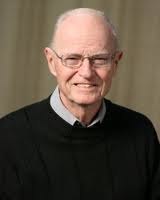
Sidney Greidanus

(1) Select the preaching text.

Select the preaching text with an eye to congregational needs. The text must be a literary unit and contain a vital theme.

(2) Read the text in its literary context.

Read and reread the text in its context and jot down initial questions.

(3) Outline the structure of the text.

In the Hebrew/Aramaic or Greek text, note the major affirmations, clausal flow, plot line, scenes, or other literary structures. Mark major units with headings and verse references.

(4) Interpret the text in its own historical setting.

a. Literary interpretation

b. Historical interpretation

c. Theocentric interpretation

Review your results with the help of some good commentaries.

(5) Formulate the text’s theme, goal, and need addressed.

a. State the textual theme in a brief sentence that summarizes the message of the text for its original hearers: subject and predicate. What is the text saying?

b. State the goal of the author for his original hearers. What is the text doing? Does the author aim to persuade, to motivate, to urge, to warn, to comfort? Be specific.

c. State the need the author addressed – the question behind the text.

(6) Understand the message in the contexts of canon and redemptive history.

a. Canonical interpretation: interpret the message in the context of the whole canon;

b. Redemptive-historical interpretation: understand the message in the context of God’s redemptive history from creation to new creation;

c. Christocentric interpretation: explore the ways of (1) redemptive-historical progression, (2) promise-fulfillment, (3) typology, (4) analogy, (5) longitudinal themes, (6) New Testament references, and (7) contrast.

(7) Formulate the sermon theme, goal, and need addressed.

a. Ideally, your sermon theme will be the same as your textual theme (Step 5a). If Step 6 forces a change, stay as close as possible to the textual theme. Your theme will guide especially the development of the body of the sermon.

b. Your goal must be in harmony with the author’s goal (Step 5b) and match the sermon theme. Your goal will guide the style of the sermon as well as the content of its conclusion.

c. State the need you are addressing. This need should be similar to the need addressed by the author. The need will inform the content of your introduction.

(8) Select a suitable sermon form.

Select a sermon form that respects the form of the text (didactic or narrative, deductive or inductive) and that achieves the goal of the sermon.

(9) Prepare the sermon outline.

If possible, follow the flow of the text (Step 3) in the body of the sermon. Main points, derived from the text, support the theme. The introduction should expose the need. The conclusion should clinch your goal.

(10) Write the sermon in oral style.

Say it out loud as you write it. Write in oral style, using short sentences, vivid words, strong nouns and verbs, active voice, present tense, images and illustrations.

PCFD Greidanus

*Adapted from Appendix One in Sidney Greidanus. Preaching Christ From Daniel (Foundations For Expository Sermons). Grand Rapids, MI. Eerdmans, 2012.

About the Author:

Sidney Greidanus received his B.A. from Calvin College in Grand Rapids, MI, his B.D. from Calvin Theological Seminary, also in Grand Rapids, and his Th.D. from the Free University in Amsterdam, The Netherlands. His dissertation, Sola Scriptura: Problems and Principles in Preaching Historical Texts, was first published in 1970 and reprinted in 1979. Since returning to North America, he served as pastor of two Christian Reformed Churches in Canada, taught at Calvin College in Grand Rapids, MI, The King’s College in Edmonton, AB, Canada, and since 1990 has been professor of preaching at Calvin Theological Seminary.

Besides many articles and sermons, he has published several excellent scholarly and theologically rich books on preaching including:

Preaching Christ from Daniel: Foundations for Expository Sermons. Grand Rapids: Eerdmans, 2012.

Preaching Christ from Ecclesiastes: Foundations for Expository Sermons. Grand Rapids: Eerdmans, 2010.

Preaching Christ from Genesis: Foundations for Expository Sermons. Grand Rapids: Eerdmans, 2007.

Sola Scriptura: Problems and Principles in Preaching Historical Texts. Wipf & Stock Publishers, 2001.

Preaching Christ from the Old Testament: A Contemporary Hermeneutical Method. Grand Rapids: Eerdmans, 1999. (from which the article above is adapted).

The Modern Preacher and the Ancient Text: Interpreting and Preaching Biblical Literature: Grand Rapids: Eerdmans. 1989. Selected “The 1990 Book of the Year” by the Journal Preaching.

God’s Grace Displayed in Every Book of the Bible by Dane Ortlund

The Grace of God in the Bible by Dr. Dane Ortlund

Crosses 3 in sunset image

There is always a danger of squeezing the Bible into a mold we bring to it rather than letting the Bible mold us. And, there could hardly be more diversity within the Protestant canon–diverse genres, historical settings, authors, literary levels, ages of history.

But while the Bible is not uniform, it is unified. The many books of the one Bible are not like the many pennies in the one jar. The pennies in the jar look the same, yet are disconnected; the books of the Bible (like the organs of a body) look different, yet are interconnected. As the past two generations’ recovery of biblical theology has shown time and again, certain motifs course through the Scripture from start to end, tying the whole thing together into a coherent tapestry–kingdom, temple, people of God, creation/new creation, and so on.

Yet underneath and undergirding all of these, it seems to me, is the motif of God’s grace, his favor and love to the undeserving. Don’t we see the grace of God in every book of the Bible? (NT books include the single verse that best crystallizes the point.)

Genesis shows God’s grace to a universally wicked world as he enters into relationship with a sinful family line (Abraham) and promises to bless the world through him.

Exodus shows God’s grace to his enslaved people in bringing them out of Egyptian bondage.

Leviticus shows God’s grace in providing his people with a sacrificial system to atone for their sins.

Numbers shows God’s grace in patiently sustaining his grumbling people in the wilderness and bringing them to the border of the promised land not because of them but in spite of them.

Deuteronomy shows God’s grace in giving the people the new land ‘not because of your righteousness’ (ch. 9).

Joshua shows God’s grace in giving Israel victory after victory in their conquest of the land with neither superior numbers nor superior obedience on Israel’s part.

Judges shows God’s grace in taking sinful, weak Israelites as leaders and using them to purge the land, time and again, of foreign incursion and idolatry.

Ruth shows God’s grace in incorporating a poverty-stricken, desolate, foreign woman into the line of Christ.

1 and 2 Samuel show God’s grace in establishing the throne (forever—2 Sam 7) of an adulterous murderer.

1 and 2 Kings show God’s grace in repeatedly prolonging the exacting of justice and judgment for kingly sin ‘for the sake of’ David. (And remember: by the ancient hermeneutical presupposition of corporate solidarity, by which the one stands for the many and the many for the one, the king represented the people; the people were in their king; as the king went, so went they.)

1 and 2 Chronicles show God’s grace by continually reassuring the returning exiles of God’s self-initiated promises to David and his sons.

Ezra shows God’s grace to Israel in working through the most powerful pagan ruler of the time (Cyrus) to bring his people back home to a rebuilt temple.

Nehemiah shows God’s grace in providing for the rebuilding of the walls of the city that represented the heart of God’s promises to his people.

Esther shows God’s grace in protecting his people from a Persian plot to eradicate them through a string of ‘fortuitous’ events.

Job shows God’s grace in vindicating the sufferer’s cry that his redeemer lives (19:25), who will put all things right in this world or the next.

Psalms shows God’s grace by reminding us of, and leading us in expressing, the hesed (relentless covenant love) God has for his people and the refuge that he is for them.

Proverbs shows us God’s grace by opening up to us a world of wisdom in leading a life of happy godliness.

Ecclesiastes shows God’s grace in its earthy reminder that the good things of life can never be pursued as the ultimate things of life and that it is God who in his mercy satisfies sinners (note 7:20; 8:11).

Song of Songs shows God’s grace and love for his bride by giving us a faint echo of it in the pleasures of faithful human sexuality.

Isaiah shows God’s grace by reassuring us of his presence with and restoration of contrite sinners.

Jeremiah shows God’s grace in promising a new and better covenant, one in which knowledge of God will be universally internalized.

Lamentations shows God’s grace in his unfailing faithfulness in the midst of sadness.

Ezekiel shows God’s grace in the divine heart surgery that cleansingly replaces stony hearts with fleshy ones.

Daniel shows God’s grace in its repeated miraculous preservation of his servants.

Hosea shows God’s grace in a real-live depiction of God’s unstoppable love toward his whoring wife.

Joel shows God’s grace in the promise to pour out his Spirit on all flesh.

Amos shows God’s grace in the Lord’s climactic promise of restoration in spite of rampant corruption.

Obadiah shows God’s grace by promising judgment on Edom, Israel’s oppressor, and restoration of Israel to the land in spite of current Babylonian captivity.

Jonah shows God’s grace toward both immoral Nineveh and moral Jonah, irreligious pagans and a religious prophet, both of whom need and both of whom receive the grace of God.

Micah shows God’s grace in the prophecy’s repeated wonder at God’s strange insistence on ‘pardoning iniquity and passing over transgression’ (7:18).

Nahum shows God’s grace in assuring Israel of good news’ and ‘peace,’ promising that the Assyrians have tormented them for the last time.

Habakkuk shows God’s grace that requires nothing but trusting faith amid insurmountable opposition, freeing us to rejoice in God even in desolation.

Zephaniah shows God’s grace in the Lord’s exultant singing over his recalcitrant yet beloved people.

Haggai shows God’s grace in promising a wayward people that the latter glory of God’s (temple-ing) presence with them will far surpass its former glory.

Zechariah shows God’s grace in the divine pledge to open up a fountain for God’s people to ‘cleanse them from sin and uncleanness’ (13:1).

Malachi shows God’s grace by declaring the Lord’s no-strings-attached love for his people.

Matthew shows God’s grace in fulfilling the Old Testament promises of a coming king. (5:17)

Mark shows God’s grace as this coming king suffers the fate of a common criminal to buy back sinners. (10:45)

Luke shows that God’s grace extends to all the people one would not expect: hookers, the poor, tax collectors, sinners, Gentiles (‘younger sons’). (19:10)

John shows God’s grace in becoming one of us, flesh and blood (1:14), and dying and rising again so that by believing we might have life in his name. (20:31)

Acts shows God’s grace flooding out to all the world–starting in Jerusalem, ending in Rome; starting with Peter, apostle to the Jews, ending with Paul, apostle to the Gentiles. (1:8)

Romans shows God’s grace in Christ to the ungodly (4:5) while they were still sinners (5:8) that washes over both Jew and Gentile.

1 Corinthians shows God’s grace in favoring what is lowly and foolish in the world. (1:27)

2 Corinthians shows God’s grace in channeling his power through weakness rather than strength. (12:9)

Galatians shows God’s grace in justifying both Jew and Gentile by Christ-directed faith rather than self-directed performance. (2:16)

Ephesians shows God’s grace in the divine resolution to unite us to his Son before time began. (1:4)

Philippians shows God’s grace in Christ’s humiliating death on an instrument of torture—for us. (2:8)

Colossians shows God’s grace in nailing to the cross the record of debt that stood against us. (2:14)

1 Thessalonians shows God’s grace in providing the hope-igniting guarantee that Christ will return again. (4:13)

2 Thessalonians shows God’s grace in choosing us before time, that we might withstand Christ’s greatest enemy. (2:13)

1 Timothy shows God’s grace in the radical mercy shown to ‘the chief of sinners.’ (1:15)

2 Timothy shows God’s grace to be that which began (1:9) and that which fuels (2:1) the Christian life.

Titus shows God’s grace in saving us by his own cleansing mercy when we were most mired in sinful passions. (3:5)

Philemon shows God’s grace in transcending socially hierarchical structures with the deeper bond of Christ-won Christian brotherhood. (v. 16)

Hebrews shows God’s grace in giving his Son to be both our sacrifice to atone for us once and for all as well as our high priest to intercede for us forever. (9:12)

James shows us God’s grace by giving to those who have been born again ‘of his own will’ (1:18) ‘wisdom from above’ for meaningful godly living. (3:17)

1 Peter shows God’s grace in securing for us an unfading, imperishable inheritance no matter what we suffer in this life. (1:4)

2 Peter shows God’s grace in guaranteeing the inevitability that one day all will be put right as the evil that has masqueraded as good will be unmasked at the coming Day of the Lord. (3:10)

1 John shows God’s grace in adopting us as his children. (3:1)

2 and 3 John show God’s grace in reminding specific individuals of ‘the truth that abides in us and will be with us forever.’ (2 Jn 2)

Jude shows God’s grace in the Christ who presents us blameless before God in a world rife with moral chaos. (v. 24)

Revelation shows God’s grace in preserving his people through cataclysmic suffering, a preservation founded on the shed blood of the lamb. (12:11)

Adapted from Dane Ortlund: http://dogmadoxa.blogspot.com/search?q=The+Grace+of+God+in+the+Bible September 25, 2010

About Dane Ortlund:

Dane Ortlund

Dane Ortlund serves as Bible Publishing Director at Crossway Books in Wheaton, Illinois. He is the author of A New Inner Relish: Christian Motivation in the Thought of Jonathan Edwards (Christian Focus, 2008) and Defiant Grace: The Surprising Message and Mission of Jesus (Evangelical, 2011). He is a graduate of Covenant Theological Seminary (M.Div., Th.M.) and Wheaton College (B.A., Ph.D.). Dane is married to his college sweetheart, Stacey, and they have three boys. He blogs at Strawberry-Rhubarb Theology.

The Problem of Anxiety by Dr. Tim Keller

praying man on one knee image

Series: Modern Problems; Ancient Solutions

October 24, 1993, Manhattan, N.Y. Based on Psalm 27

“The Problem of Anxiety” by Tim Keller

We’ve been looking at the book of Psalms in the fall, and we’ve been trying to bring them to bear on what we’ve been calling “modern problems,” which, of course, if you can bring the Psalms (a 3,000-year-old book) to bear on them, they’re not that modern, but we always like to flatter ourselves that our problems are worse than anyone else’s. I mean, every age has always felt that way. So I’m pandering to our arrogance and suggesting we do have modern problems (yet which have solutions) that are very ancient. Now let me read to you Psalm 27 in its entirety.

The Lord is my light and my salvation—whom shall I fear? The Lord is the stronghold of my life—of whom shall I be afraid? When evil men advance against me to devour my flesh, when my enemies and my foes attack me, they will stumble and fall. Though an army besiege me, my heart will not fear; though war break out against me, even then will I be confident. One thing I ask of the Lord, this is what I seek: that I may dwell in the house of the Lord all the days of my life, to gaze upon the beauty of the Lord and to seek him in his temple.For in the day of trouble he will keep me safe in his dwelling;he will hide me in the shelter of his tabernacle and set me high upon a rock.Then my head will be exalted above the enemies who surround me; at his tabernacle will I sacrifice with shouts of joy; I will sing and make music to the Lord. Hear my voice when I call, O Lord; be merciful to me and answer me. My heart says of you, “Seek his face!” Your face, Lord, I will seek. Do not hide your face from me, do not turn your servant away in anger; you have been my helper. Do not reject me or forsake me, O God my Savior. 10 Though my father and mother forsake me, the Lord will receive me. 11 Teach me your way, O Lord; lead me in a straight path because of my oppressors. 12 Do not turn me over to the desire of my foes, for false witnesses rise up against me, breathing out violence. 13 I am still confident of this: I will see the goodness of the Lord in the land of the living. 14 Wait for the Lord; be strong and take heartand wait for the Lord.

That’s God’s Word

Now this psalm is all about fear, worry, anxiety, and how the Bible tells us to deal with it. Now when we look at the psalm, we’re going to see a very refreshing realism, even though it’s full of tremendous promises, because the realism is important. I was just reading an author, a man named Ernest Becker, who said, “I think that taking life seriously means something such as this: that whatever man does on this planet has to be done in the lived truth of the terror of creation, of the grotesque, of the rumble of panic underneath everything. Otherwise, it is false.”

He must have lived in New York. There’s always this rumble of panic. It’s really the subway, but you walk along and you feel this rumble of panic, and you say, “Why do I feel so disconcerted?” Then you realize you’re on Park Avenue, and there goes the subway. Ernest Becker is right, and here’s why.

So many of the articles and the books I survey (and I constantly do) … Whenever I see a book in a store or an article in a newspaper or a magazine saying, “How to Overcome Worry” or “How to Overcome Anxiety,” almost always what they essentially say is, “The things you’re worried about may never happen. What a waste of time it is to be worrying about things that may never happen. Instead, visualize a future that is satisfying and focus on that. Visualize that future. Focus on that. Don’t sit around and visualize all the things that could go wrong.”

Is that the way David does it? No. You know, for example, in verse 10, he says, “Though my father and mother forsake me …” Now there is no indication David’s mother and father had actually forsaken him. It says, “Though an entire army was encamped against me …” He doesn’t say, “It has encamped against me …” It says, “Even if it did …” What is David doing? He is doing the opposite of what the articles say. He is actually imagining the worst things that can happen. He is visualizing the worst things that can happen. Why? Because he wants to have a strategy of life, a strategy of dealing with fears and anxieties, that can stand up to anything.

He doesn’t listen to the advice that says, “Maybe none of these things will ever happen, so don’t think about them.” Oh no. As Ernest Becker says, any attitude toward life that minimizes the evil and terror of things is phony. Well, he would have been very happy with Psalm 27. David goes so far as to imagine the worst. The fierce realism of the Bible is seen right here. The Bible says you can have a way of dealing with anger and with anxiety and fear that assumes the worst things may and can happen, that your father and mother forsake you, that an army encamps against you. Think about it! Go ahead. It doesn’t matter, because you can use this on anything.

So what is that strategy? I’ll tell you, whatever it was, we ought to look at it because David had literal enemies, and they had real weapons. They were people who were literally after their lives. Most of you, that’s probably not true. Therefore, if he was able to find a strategy that enabled him to deal with the fears of his life, don’t you think it ought to work for most of us? So let’s see what he says this great strategy is. Actually, it’s all in verse 4.

In verse 3, he says, “I have so much freedom from anxiety and fear that I have enough left over that if an army came up, I’d be okay. I’d be able to handle it.” That’s what he says in verse 3. Then in verse 4 he tells us the secret. There are three verbs: to dwell, to gaze, and to seek. Those are the three. So let’s take a look. How can you have a strategy that will enable you to face any of the anxieties, the stresses of life? I don’t know how you’re doing right now with this, but I know you can improve. Take a look.

1. Dwelling

In verse 4, he says, “One thing I ask of the Lord … that I may dwell in the house of the Lord …” Now what does that mean? What does it mean to dwell in the house of the Lord? Now one of the things you have to think about is David is not thinking so much about a physical spot. First of all, he couldn’t dwell in the house of the Lord literally. You can’t live in a temple. He wasn’t asking for that. Only the Levites could live in there, and nobody could live right there in the Holy of Holies.

What he is actually asking for is to experience the unbroken presence of God, because the thing he is really after is the face of God. The face! “I want to gaze on your beauty. I want to be in your presence.” The house of God or the temple of God was the place where God’s paniym (which is the Hebrew word for face, his presence) dwelt. What David says is, “I want to be always in your presence.” What’s that mean?

Now people always ask this question at this point: “What does that mean? I thought God was present everywhere!” The answer is always best given through an illustration … something like this. You know, Tammy (who was playing the piano) and Steve (on the flute and the sax), you are in their presence, aren’t you? I mean, you’ve already heard them playing. You’re in their presence. Of course. You’ve listened to them and you’re in their presence, and yet nobody can say (yet) that you have met them unless after the service you walk on up and you come up face to face.

Because, you see, your face is the relational gate into your heart. From far away, you can’t have a relationship. You actually have to come up face to face. When you come up to somebody, you can’t look at their kneecap or their shoulder. You have to look in their face if you want to have a personal transaction, a personal interaction, because the face is the place where I see and hear you and the face is the place where you see and hear me. So you have to come face to face.

Now why am I saying that? Last week we said Psalm 19 says the heavens are telling of the glory of God. Psalm 19 says when you go out and see the stars, are you in God’s presence? Sure! The Bible insists you can’t know God personally through nature. It insists on it. Now we looked at that last week in some detail, but let me just put it out again this way. When you come into the presence of a pianist and you listen to her play, as great as it is to be in her presence, you haven’t had a friendship with her by that. You have to come up face to face.

If you want to have a friendship with Henry Ford, you don’t do it by putting your head under a Model T and saying, “Henry? Are you in there, Henry?” To be in the presence of the handiwork, to be in the general presence of someone, is not the same thing as to have a personal relationship. The Bible says, therefore, what David is after here is, “I don’t want to know you distantly. I don’t want to obey you in a general way. I don’t want to have a kind of general inspirational belief in you. I want to know you personally and intimately. That’s what I want.”

That’s the whole secret to a fearless life. Now why? Why? Why does verse 4 answer and explain verse 3? Why would verse 4 be the answer to fear? Here it is. When David says, “The one thing I want is to dwell in your house and gaze on your beauty and seek you in your temple,” that’s the secret right there. Let me put it this way, and then we’ll unpack it. What David is saying is, “My fears are directly proportional to the vulnerability of the things that are my greatest joys. If the thing that is my greatest joy is God, I will live without fear. If my one thing … the thing I most want … is God, I am safe.”

You see, when David says, “I’ll be safe in your dwelling place …” You see it in verse 5. He says, “I’ll be safe in the tabernacle, the tent of God.” David is not thinking physically. He isn’t! He is not so stupid as to think that these people who are after him with their real knives and their real swords, if he runs into the tabernacle, somehow if they come in after him in an Indiana Jones style kind of scene, the ark of the covenant will zap all the bad guys. That’s not what he is thinking.

What he is saying is, “I’m only safe not when I’m physically inside the dwelling of the tabernacle or the temple. I’m only safe when you are the one thing I want most of all. Then I’m safe. Then I’m fearless.” Let me show you how that works. There’s a man over at Drew University named Thomas Oden. He is a great theological teacher, and he is an expert on the early church writers. It’s call patristics, meaning the church fathers. I was reading some of his work on Saint Augustine. Saint Augustine had an amazingly relevant (especially for us today looking at Psalm 27) and intriguing way to understand anxiety.

Augustine said, “Here’s where anxiety comes from. All of us have good things in our lives, and we love them, and we desire them. Good things! Parents and children are good things. A career is a good thing. Romance is a good thing. Sex is a good thing. All sorts of things are good things. We have lots of good things in our lives.” But Augustine says, “When something which is finite becomes …”

In other words, when the good things become the “one thing” we think we have to have in order to be happy, when the good things become the “one thing,” we gaze on them. We seek them. We gaze on their beauty. We adore them, and we believe we cannot receive life joyfully unless we have it. So when good things become “one things,” when good desires become inordinate desires, disproportional-to-their-being desires, Augustine says that’s when anxiety comes.

Why? Because anxiety is like the smoke, and you can follow the smoke down to the fire. The fire is this. Anxiety is always the result of the implosion or the collapse of a false god. “When good things become ‘one things,’ you see, when things that are good to have become things you have to have, when they become the central values of your life, that’s where anxiety comes from,” says Augustine, “because anxiety is always a sign of the collapse of a false god.”

Now let me tell you one of the reasons we squirm with this and one of the reasons some of you may squirm. Some of you may be eaten up with worry and anxiety right now, and you think this is unfair, because you’re worried about a person, or you’re worried about how you’re going to feed your family because of the finances. You’re worried about a lot of things, and they’re good things. See, this is what’s so hard. The things that turn into little idols in our lives are always good things. They were created by God. They’re wonderful. That’s the reason they can slip into the center.

Let me put it this way. A little anxiety is always a very good thing. Remember, there is a place where Paul says, “I have on me the daily anxiety of all the churches.” So a little anxiety shows you’re a caring person, but debilitating anxiety and devastating anxiety shows good things have become “one things.” Now you’re gazing on their beauty and you’re seeking them above all. You think, “Unless I have that, I cannot be happy.” That is what creates debilitating anxiety and fear.

So do you see what David is saying is, “If you’re my ‘one thing,’ if you’re the one thing I require, the one thing I ask for … to gaze on your beauty, to seek you in the temple … I’m fearless?” Because, see, anything but God and his will is subject to the vicissitudes of time and life. Anything but God and his will is vulnerable. Nothing can take God away from you. Nothing can take that away from you. Now you’re fearless. But anything else you set your heart on like this can be taken away. When there’s a threat to it, you go to pieces.

Now David gives us a great example of this. Let’s just use one example. “Though my father and mother forsake me, the Lord will receive me.” Now is there anything wrong with the love between parents and children? Of course not! God invented love between parents and children. God commands love between parents and children. Therefore, for you to want, for example, the love of your parents is something good. For you to want it very deeply is something good. Not only is it something very good; it’s something inevitable that you want it.

Yet what happens if your mother and father forsake you, which of course happens, does it not? What happens? There are people who I’ve talked to, who you’ve talked to (and maybe some of you are), who say, “My mother and father have forsaken me, and I will not be consoled. I will not! I will never forget what they did. I will never forget what they failed to do. I will never be okay. I will always feel worthless. I will always be unhappy!” You just refuse to be consoled. What is that? A good thing (parent love) has become the “one thing,” and you’re gazing at its beauty, and you’re longing for it, and you’re seeking after it. You’re worshiping it in the temple.

As a result, you will be anxious and fearful all of your life. Don’t you see? “If my father and mother forsake me, if my spouse forsakes me, if my career forsakes me, if romance forsakes me, if my looks forsake me, the Lord will receive me. The Lord will receive me!” Unless you get that into your blood, unless you understand the reason we get anxious is because good things become “one things,” and they slide into the center, unless we actually are …

You know, Augustine said anxiety is a very, very helpful thing. It tells you a lot about yourself, because you can always follow your worries to those things which enslave you. You can always follow your worries. Anxiety is always the result of the collapse of a false god, the implosion. Do you understand that? Unless you’re able to get this into your blood you’re going to live a fearful life.

So the question then is … How do we make sure God becomes our “one thing?” How do we do that? I would say the text is actually telling us two ways. The two ways are right there in verse 4. You see, when David says, “There’s only one thing I want,” and then he says, “… to dwell, to gaze, and to seek,” now wait a minute; that’s three things. So what does he mean? He has to mean dwelling and gazing and seeking are basically all the “one thing.” In fact, I think seeking and gazing are actually two ways we dwell in the house. I think seeking and gazing is just a kind of breakdown of what it means to dwell in God’s house.

Do you want to live in his presence? Do you want him to be the “one thing?” Do you want that so you can live a fearless life? The question is … How? You have to gaze on his beauty, and you have to seek him in his temple. Now the reason I think that’s true, by the way, that these two things are the ways in which you dwell in the house (gazing on his beauty and seeking him in the temple) is because the rest of the psalm breaks into two parts.

Starting in verse 8, he says, “Show me your face.” Verses 8 through 10: “Show me your face.” Then verses 11–14 are, “Teach me your way.” Those are the same two things! “Show me your face” is the same thing as gazing on his beauty. “Teach me your way” is the same thing as seeking him. Let me show you these two things. These are the two things you have to do in order to make him your “one thing.”

2. Gazing

First of all, you have to gaze on his beauty. Now if you don’t mind, I’ll just tip my hat to those of you who were here at the end of August because I gave a sermon once on this at the end of August in the evening. When David says, “I’ve come to the temple to gaze on your beauty,” do we think it means a literal vision, something he saw with his physical eyes? I doubt it. Well, I’m not saying David, being a prophet and being a great king and so on, could never have had a vision, but I doubt very much that’s what he is talking about. There’s no indication it means every time he goes in he gets a vision. Oh no!

What does it mean to gaze on his beauty? This is what we’ve called communion with God. This is the difference between knowing about God and knowing God. This is the difference between knowing he is holy and loving and experiencing his holiness and his love. Let me go back to Saint Augustine. Some of you might remember this from two months ago, the sermon in the evening.

Saint Augustine was a great African theologian of the church. He lived in the fourth and fifth century AD. Augustine actually lays out in one of his sets of writings what it really means to actually see God. He says there are three parts: retentio, contemplatio, and dilectio? Remember? Retentio, he says, is finding a truth, getting it out of the Bible. Retentio is the word for retain. You retain it. You distill the truth, and you say, “There it is.” You see it, and you learn it, and you know it.

Augustine stays, “Ah, but you don’t stop there. Oh no! You mustn’t stop there. Once you get that truth, you see God is holy, you see God is wise, you don’t just close your book. You don’t close your notebook and say, ‘Ah, now I know that! I know another attribute of God. I know it!’ Oh no! Now, secondly, you move from retenetio to contemplatio, which means you contemplate or you look at God through the truth. You gaze at God through the truth.”

That means you start to ask yourself questions. “What does this verse tell me about God? What does it show me about God? What does it show me about how marvelous he is, how holy he is, how loving he is? Do I really understand he is holy? Do I really understand it? Am I living it out? What false attitudes and false emotions come when I forget this?” What Augustine means is this is a discipline of the mind in which you’re reaching out and you’re actually saying, “I want to see you.” You stretch every nerve to not see him with the eyes of your eyes but to see him, as Paul says in Ephesians, with the eyes of your heart. You stretch out.

Because we have the Holy Spirit, sometimes to some degree or another, we move to the third of the three phases: dilectio, which means to delight in him. Sometimes we find if we really spend the time seeking to see him, to gaze on his beauty, ideas about him get very real. Ideas about his holiness or his love begin to comfort us, begin to disturb us, begin to thrill us. Now don’t look at me like, “What is all this?” Don’t you remember what Augustine said? Everybody does this with everything but God. We all gaze at the beauty of these good things that have become “one things.”

You know what it means to gaze on the beauty of something. You turn it over in your imagination, the thing you want. It may be a career. It may be a house at the beach. It may be a particular person, and you think what life will be like if you get it. You gaze on the beauty of it. See? You fill your mind with it. You taste it. You rest in it. We do it with everything else but God. Now do it with him! That’s the only way to make the real one thing the “one thing.” Gaze on his beauty. Do you know how to do that? Do you take time to do that? David says unless you do that, you’ll not be dwelling in his house and you’ll have a fearful life.

3. Seeking

He doesn’t just say, “I want to gaze on your beauty,” but, “I want to seek him.” Now the word seek is a very, very specific Hebrew word. It actually means to go and get counsel. So what it means is, “When I come to you, I am trying to find out what your will is, Oh Lord.” He wants to obey. He wants to find out God’s will, and he wants to submit to it.

Boy, this is extremely important. These are the two parts of what it really means to be a Christian. These are the two parts of true religion: gazing on the beauty and seeking God’s will. If you only seek God’s will to obey, to find out what he teaches and disobey it day in and day out, if that’s all you do without gazing on the beauty, it will be all phariseeism and legalism. On the other hand, if you just try to gaze on his beauty, just have this great experience, but you don’t want to find out his will and do daily obedience, well, it won’t work either, and I’ll show you why.

Just think of marriage. A good marriage is a wonderful thing because you can fall in each other’s arms every so often. You see, you gaze on each other’s beauty. You have intimate fellowship, but you can’t walk around all the time in each other’s arms. There’s a life to live. You have to go to work and so on.

Let me tell you what 95 percent of what marriage is: finding out how to serve the other person and how to do for them. Because if you want to experience the other person’s love and yet the other person says, “Hey, would you do this and this and this for me?” and you say, “Oh no. That’s too inconvenient. I don’t like to do that,” if you live like a selfish person, if you don’t learn what the other person’s wishes are, if you don’t serve that other person in the little things day in and day out, it will be the end of intimacy.

Don’t you see? You can’t just live selfishly. You can’t just walk around and do anything you want, not trying to find out how to serve that person, not making sacrifices for that person, not obeying the needs and the wishes of that person and then expect to just jump in bed and have a wonderful, wonderful time of gazing on her beauty or his beauty. If you think that’s going to work, it doesn’t! It never works!

A human being is not a computer. There’s not an entrance sequence that you just poke in and then you get everything you want. In a relationship if you want intimacy, if you want to gaze on the beauty of the other person, if you want to commune with that person in love, you also have to find out that person’s will and do it. That’s just the way it works! What does that mean? I’ll tell you what this means.

A lot of people have wanted desperately to gaze on God’s beauty and get these experiences I’m talking about. You know, I was reading the other day. Here’s a guy who wrote a friend near the end of his life. There was a minister who prayed every day but began to really get a breakthrough, began to gaze on God’s beauty. Almost every week he began to just have these breakthroughs.

He wrote a friend, and he said, “Almost every week, a measure of his great love comes down upon my heart. He has unlocked every compartment of my being and filled and flooded them all with the light of his radiant presence. The inner spot has been touched, and the flintiness of my heart has been melted in the presence of love divine, all love’s excelling.”

What is that? He is in the temple. He is dwelling in the house of the Lord. He is gazing on the beauty, and all of his fears are going. Somebody says, “Ah! I want that so much.” A lot of us go to church just seeking that. A lot of us try to find church that will give us this great sense of highness, that we’ve touched God during the worship services. That’s good. That’s fine, but I’ll tell you this. To gaze on his beauty without seeking his will will never work. You want to gaze on his beauty? There’s a way to do that.

Do you remember blind Bartimaeus? He knew Jesus was going to come by on a certain road, so he pitched his tent there. He just cried out, “Lord, have mercy on me!” Do you want to experience the beauty of God? Do you want to gaze on his beauty? Do you want to have the sense of love these great people I always am reading from their journals have? Do you want that? Of course you want that. Well, how do you get it? You don’t get it by running around trying to get it. You pitch your tent on the road Jesus inevitably will come down, and that road is the road of obedience, seeking him.

There are disciplines to seeking his will. You read the Bible. You pray. You meditate. You take the sacraments at church. Those are the inner disciplines. Then you have the outer disciplines. Be simple in your lifestyle instead of materialistic. Be chaste in your lifestyle instead of impure. Be forgiving in your lifestyle instead of bitter. Have a servant heart instead of an ambitious and selfish heart. These are disciplines. Obey, seek him, and you’ll gaze on his beauty. Otherwise, no.

Okay, you want to dwell in his house? There’s the discipline of gazing on his beauty, and there’s the discipline of seeking his will. Now let me close this way. Some of you are probably finding this a pretty odd thing (gazing on God’s beauty), and you’re thinking, “Well, that’s great. I’d love to have an experience like that. How do I do it?” Here’s how you do it. You have to seek him in his temple. You have to gaze on his beauty in his temple.

Ah, but what is his temple? It says in John 2, Jesus Christ looked at the temple, and he said to the religious leaders, “Tear this temple down, and I will build it up again in three days.” They all looked at him and said, “You’re crazy! It took 40 years to build this temple. You’re going to build it up in three days?” The text tells us he was referring to himself. Jesus is the temple. Now let me explain what I mean.

David gazed at the beauty of God. Now remember we said Augustine says the way you gaze on God is you take certain truths and you look at God through the truths. You look at God through them. So when we’re told David gazed on the beauty of God at the temple, what did that mean? We said he probably didn’t have a vision. It means he went and he watched the temple ritual, and he saw the beauty of God through it. How did that happen?

Well, like this. You know what happened in the temple ritual? Animals were constantly getting slaughtered on the block and sacrificed up to God. David saw the beauty of the Lord, he gazed on the beauty of the Lord, through the sacrifices. How could that happen? Well, when he saw the animals being slain, he saw the beauty of God’s justice and holiness. He said, “Here is a God who requires sin be paid for. Here is a God who is so good and so holy, he cannot count men’s sin. Here’s a God who can’t overlook it. Here’s a God who must deal with evil. What a good God. What a just God. What a holy God.”

On the other hand, when he looked at the sacrifices, he also saw a merciful God. “Here’s a God who wants to deal with our sins so we can still approach him. Here’s a God who wants to forgive us our sins. Here’s a God who wants to find us a way to himself.” Now here’s the point. If David was able to gaze at the beauty of God through the tabernacle and the temple worship, how much more of the beauty of God will we see if we gaze at God through the face of Jesus?

You see, when we look at God today, we don’t have to look at him through a bull being slaughtered on the block. We see the face of a human being, the most loving human being ever, dying for us, suffocating on the cross, his ribs snapping as he suffocates, the blood and the sweat flowing down on his face, looking at us and saying, “You don’t know what you’re doing. I’ve been forsaken for you.”

Now let me tell you something. If David saw so much of the beauty of God in the temple, so much of the beauty of God that it turned him into a great heart so that he could handle an army, how much more of the beauty of God do you think you and I can see if we do what Paul said? What did Paul say? He says, “We are beholding with unveiled faces the light of the glory of God in the face of Jesus Christ.”

That’s what we look at. Gaze on him. Look at him. Look at what he is doing. Look at him dying for you. Gaze on the beauty of God. If the beauty David saw could turn him into someone who could handle an army, what do you think it’s going to turn you into? How much more of the beauty of God can we see? How much more are we going to be able to look at God and say, “You’re my ‘one thing.’ I see your beauty. It fills me up so I’m afraid of nothing anymore. I have the only thing I need?”

This is what it means to seek him. You have to seek the Father. You have to gaze at his beauty through Jesus. It says in John 1:12, “But as many as received him, to them gave he power to become the sons of God …” So if you want him, if you want all the things we’re talking about, it’s not an abstract thing. It’s not a technique. You have to go to God through Jesus. That’s how you gaze on his beauty.

Now, Christian friends, just think about this. There are a number of you who are saying, “Okay, this is very interesting. In fact, this is very moving. This is very powerful, but I’m scared right now about something that’s going to happen on Thursday. That’s four days away. What do I do till then?”

Listen. It’s true the Bible gives you this tremendous solution to anxiety. It says learn to gaze on his beauty and seek him in his temple. Eventually you develop a habit of the heart. You develop a whole orientation toward God. Of course that’s not something that happens really quickly. So the fact of the matter is I can’t give you something that really quickly will overcome all of your anxiety between now and Thursday. The books in the bookstores do. The magazines in the grocery store do.

They give you those little behavior modification grids, and they give you these little rational motive techniques on thought control. They teach you how to turn away from the negative thoughts and put on the positive thoughts. Let me tell you something. The Bible is giving you an antidote to anxiety too, but it’s not a patch. It’s not a Band-Aid. It’s regeneration. It’s a new heart, a new way of life, a new way of doing everything.

So I admit this is something that takes a long time to develop. This is not a quick fix, but you can start right now. You know, “A journey of a thousand miles begins with a single step,” right? You know that cliché? Okay, let’s use it. Do you know what the first step is? Today you can say, “One thing. Finally, Lord God, I’m going to make you the ‘one thing.’ One thing. I’m going to make you my highest priority.

I today determine that gazing on your beauty and seeking you, I can no longer let other things crowd it out of my schedule. I can no longer let other things crowd it out of my energy. I can no longer let other things crowd it out of my creativity. Today you’re the ‘one thing.’ Finally I ditch all other competition. I ditch all other competing concerns. I ditch everything else. I insist on this. I will make time for it. I will do it.” That’s the first step, so do it.

Last of all, let me just give you a quick read of something. In a minute we’re going to sing the hymn that goes, “We rest on Thee, our shield and our defender.” Do you remember several years ago we had a woman here named Betty Elliot who was a missionary? She told us her husband, Jim Elliot, 40 years ago or so now, and six other missionaries decided they were going to go into the jungles of Ecuador and make contact with a very primitive tribe they were going to try to meet, try to live with, try to learn their language, try to give them a written version of their language, bring in literacy and give them a copy of the Bible in their own language.

They were going to do literacy work and Bible translation. They knew it was dangerous, so the night before they were to contact these Indians, they sat around a table, and they sang this hymn together.

We rest on Thee,

Our shield and our defender!

We go not forth alone against the foe;

Strong in Thy strength,

Safe in Thy keeping tender

We rest on Thee,

And in Thy name we go.

Strong in Thy strength,

Safe in Thy keeping tender,

We rest on Thee,

And in Thy name we go.

The next day they were all speared to death by the Indians. Do you remember that story? Elisabeth Elliot, a friend of ours, will say that’s interesting. “We rest on Thee,” they sang. “Strong in Thy strength and safe in Thy keeping.” The next day they were speared. So does it not work? “Of course it works,” she said. They also sang,

Jesus our righteousness,

Our sure foundation,

Our Prince of glory,

And our King of love.

You see, if the one thing that’s non-negotiable in your life, if the one thing you really want, if the one thing you really need, if the one thing is to gaze on the beauty of God, you’re absolutely safe, because the worst thing that could happen to you is a spear gets thrown through your heart (which is exactly what happened), in which case you gaze on the beauty of the Lord in a way you never have before.

Or there was an English missionary named Allen Gardiner. In 1851 he was on his way to South America to start a new mission, and he was shipwrecked on a very remote island. He and his companions tried their very best to stay alive until somebody came to find them, but nobody did. Finally he died, far away from everybody, far away from his loved ones, far away from his family, dying of thirst, dying of hunger. A horrible, horrible way to go.

When they finally discovered his body they found right next to his body was his quiet time notebook, his journal. They opened it up, and they saw on the very last page, he had written out Psalm 34:10. This is what it says: “The young lions do lack, and suffer hunger: but they that seek the Lord shall not want any good thing.” Right underneath it, the last words he penned were, “I am overwhelmed with a sense of the goodness of God.”

Huh? What do you mean, “I am overwhelmed with a sense of the goodness of God?” Why wasn’t he mad? Why wasn’t he angry? Why wasn’t he scared? Because he had the “one thing,” and there was nothing to be afraid of. Don’t you see it’s your only hope? Come and get it. Dwell. Gaze. Seek. Let’s pray.

Father, now we pray everybody in this room might be enabled to say, “The one thing I want is to dwell in your house and gaze on your beauty and seek you in your temple.” Father, for some of us, that’s going to mean actually to get ourselves converted to say that. For a lot of the rest of us, it means we’re going to have to reshuffle our priorities around and realize we’re living like pagans. Many, many good things have become our “one things,” and we’re being just jerked around by them. I pray today you will enable, by the power of your Spirit, to let everybody in this room say, “One thing I ask. One thing only will I seek.” We pray this in Jesus’ name, amen.[1]

 About the Author

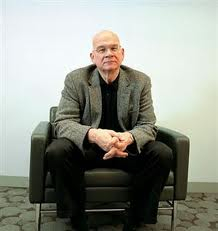
Tim Keller seated image

Timothy Keller is founding pastor of Redeemer Presbyterian Church (PCA) in New York City and the author of numerous books, including The Reason for GodKing’s CrossCounterfeit GodsThe Prodigal God, and Generous Justice.


[1] Keller, T. J. (2013). The Timothy Keller Sermon Archive. New York City: Redeemer Presbyterian Church.

How Long Would it Take to Reach The World for Christ?

C&C David Watson

If you were an outstanding gifted evangelist with an international reputation, and if, under God, you could win 1,000 persons for Christ every night of every year, how long would it take you to win the whole world for Christ?

Answer: Ignoring the population explosion over 10,000 years.

But if you are a true disciple of Christ, and if you are able under God to win just one person to Christ each year; and if you could then train that person to win one other person to Christ; and if you could then train that person to win one other person for Christ each year, how long would it take to win the world for Christ?

 Answer: just 32 years!

– David Watson, speaking of James Kennedy’s illustration


Humor is Part of Good Health

Woman laughing

And Sarah said, “God has made laughter for me; everyone who hears will laugh over me.” – Genesis 21:6

“These things I have spoken to you, that my joy may be in you, and that your joy may be full.”- John 15:11

The late Norman Cousins, formerly editor of Saturday Review, had so serious a disease in the 1960’s that doctors gave him only one in five hundred chances of surviving. That gaunt prediction notwithstanding, he beat the odds by rejecting hospital treatment and formulating his own plan. He took massive doses of vitamin C, watched Marx Brothers films and Candid Camera reruns, and read exhaustively from humor books. He found that laughter banished negative feelings and relieved his pain. Previously, pain led to tension and tension to more pain. He discovered that ten minutes of “genuine belly laughter” gave him at least two hours of pain-free sleep.

Gelotology—the science of humor—is in its infancy and cannot explain all the reasons laughter is so valuable to us. Perhaps it relieves pain by releasing endorphins, the body’s natural opiates, into the bloodstream. It certainly protects us from negative emotions and attitudes. It encourages us to develop self-enhancing behavior patterns.

While humor encouraged better health for Mr. Cousins, it was still a limited benefit. Christ offers an eternal benefit. He removes sin from our lives altogether, absolutely, completely, and forever. In Christ, God claims complete amnesia over the sins we have committed and confessed. For good reason. Jesus had the perfect sacrifice to offer: himself He had the place to offer it: the cross. He had a compelling reason to offer it: forgiveness. He had a place to take it once offered: into heaven. He had a purpose in taking it there: to represent us eternally before the throne of God.

Hurley, V. Speaker’s Sourcebook of New Illustrations (electronic ed.) (106–107). Dallas: Word Publishers, 2000.

9 Principles For Improving Your Preaching by Justin Anderson


Justin Anderson preaching RSF

J—Just be you.

O—Only preach as long as people want to listen to you

E—Every point should make the same point

L—Listen to what your body is saying

O—Operate a Manuel Transmission (change gears)

S—Say less, prove more

T—Teach me, move me, show me

E—Engage 4 archetypes: (1) Mechanic, (2) Smart Skeptic, (3) Disciple, (4) Dude there to pick up chicks (hit him with a hammer).

E—Everything is not “awesome” – only God is “Awesome”

N—Nurture your brain and heart

Justin Anderson is the Pastor of Redemption Church in San Francisco, California (redemptionsf.com)

*This acronym does not endorse by any means the ministry or theology of Joel Osteen. It just happens to be a good acronym for remembering these 9 points to improving your preaching craft.

Robertson McQuilkin on the question: Why Does God Let Us Get Old?

Robertson McQuilkin

Robertson McQuilkin, former esteemed president of Columbia International University in Columbia, South Carolina, once drove an elderly friend on an errand. She moved slowly and painfully, being crippled with arthritis.

“Robertson,” she asked as they drove along, “why does God let us get old and weak? Why must I hurt so?”

“I’m not sure,” McQuilkin replied, “but I have a theory.”

“What is it?”

He hesitated to share it, but she insisted. This is what he said: “I think God has planned the strength and beauty of youth to be physical. But the strength and beauty of age is spiritual. We gradually lose the strength and beauty that is temporary, so we’ll be sure to concentrate on the strength and beauty which is forever.”

How To Shape Your Life With Intentionality by Dr. David P. Craig

A TEMPLATE FOR SHAPING MY LIFE WITH INTENTIONALITY

Developed by Dr. David Craig – Pastor and Life Coach – Vertical Living Ministries

prayer in field w sunset

 “So whether you eat or drink, or whatever you do. Do all to the glory of God.” – 1 Corinthians 10:31

Head –            Convictions                          What do I need to Know?                         Personal

Heart –       Communication                         What do I need to Say/Convey?               Relational

Hands –       Contribution                             What do I need to Do?                            Practical

For each of the nine areas below set goals in light of the above 3 questions: What will I study or need to know about_____; What will I feel or communicate about _____; and what will I do or what actions shall I take about ______. Each goal is meant to turn what you value into an intentional habit that will make a great difference cumulatively in others lives, your own life, and for the sake of God’s ultimate glory.

 Nine Primary Areas of Living Intentionally:

(1) SpirituallyYour Relationship to God through The Lordship of Jesus Christ. Psalm 37:3-7; 1 Peter 1:3-11; 2 Tim. 2:15; 1 Thess. 5:17

(2) MarriageYour triune covenantal relationship with Christ at the center. Gen. 2:18-25; 1 Cor. 7:1-7; 13:1-8; Eph. 5:22-31

(3) Family/ParentingHow to be a Christ-centered family and raise Children that love Jesus above all else. Deut. 6:1-9; Proverbs; Eph. 6:1-4; 1 Tim. 5:8

(4) VocationallyYour Work in the World and with the Church. Genesis 2:15; Colossians 3:23-25; 1 Cor. 3:5-23

(5) HealthTaking care of the Temple that God will use on this earth until the day of your final glorification. 1 Tim. 4:7-8; 1 Cor. 6:19-20; 10:31; Philippians 4:4-9

(6) FriendshipYour connections and building bridges with others as you reflect Christ in your community. Matt. 5:13-16; Gal. 6:9-10; Eph. 5:15-18; Col. 4:5-6; Lk. 6:27-31

(7) FinanciallyYour stewardship of God’s resources. Matt. 6:19-24; 1 Tim. 6:6-11, 17-19; 1 Cor. 16:1; 2 Cor. 9:6-8

(8) MentoringYour investing in Others Using your Unique Skills, Gifting, Talents, and Personality. Prov. 27:17; 2 Tim. 2:2; Titus 2:4; 1 Thess. 5:11

(9) DiscipleshipYour Investing in the Spiritual Growth of other followers and would-be followers of Christ. Lk. 6:40; Matt. 28:19-20; 1 Tim. 4:16; 2 Tim. 3:10


An Acronym to Help You With P.R.A.Y.E.R.

 Prayer consists of P.R.A.Y.E.R

Prayer in a dark sunset 

P-etition: “Daniel made his petition three times a day” (Daniel 6:13)

R-everance: “Let us offer to God acceptable worship, with reverence and awe” (Hebrews 12:28)

A-doration: “My lips will praise You” (Psalm 63:3)

Y-earning: “Blessed are those who hunger and thirst for righteousness” (Matthew 5:6)

E-xpection: “Elijah…prayed fervently that it might rain” (James 5:17)

R-equests: “Let your requests be made known to God.” (Philippians 4:6)

The Hour That Changes The World – A 12 Step Way to Pray By Dick Eastman

In the United States today is the “National Day of Prayer” and do we ever need to be praying. Our nation is crumbling before our eyes spiritually, morally, economically, and in many other ways. The only way I can fathom any significant change is for the gospel to go forth in power resulting in repentance and faith in Christ in droves.

One of the mysterious means God has given us as Christians to work in this world is the gift of prayer. Whereby Christ mediates our prayers in the power and through the working of the Holy Spirit to the throne room of God the Father. God answers our prayers in accordance with His sovereign plans.

Today I will be working through the twelve steps of prayer below presented as a template and expounded upon in the excellent book on prayer by Dick Eastman entitled: “The Hour That Changes The World.” Dick Eastman’s book is highly recommended in that it provides a plethora of outstanding resources on how to pray biblically, and therefore with great effectiveness and power. Today I will be praying through these twelve steps with a special emphasis on praying for the USA – and it’s much-needed revival!

Dick Eastman suggests using this template to pray for an hour. You may not be able to pray for an hour – and that’s ok. It’s not the time that matters. It’s really about your intimacy with God and focusing in and honing in on what’s important to Him so it’s also important to you – and you become a doer of what He wants done on earth. Revival starts with the Church and then results in penetrating culture. I hope you will join me today in praying for our beloved country and for all the nations of the earth that so desperately need to repent of their sins and trust in Jesus’ provision for them on the cross, and through His resurrection.

HTCTW Eastman

The Hour That Changes The World – By Dick Eastman 

(1) Begin with Praise – Recognize God’s Nature

Psalm 63:3, “Because your steadfast love is better than life, my lips will praise you.

(2) Waiting – Silent Soul Surrender

Psalm 46:10, “Be still, and know that I am God. I will be exalted among the nations, I will be exalted in the earth!”

(3) Confession – Temple Cleansing Time

Psalm 139:23-24, “Search me, O God, and know my heart! Try me and know my thoughts! And see if there be any grievous way in me, and lead me in the way everlasting!”

(4) Scripture Praying – Word Enriched Prayer

Jeremiah 23:29, “Is not my word like fire, declares the Lord, and like a hammer that breaks the rock in pieces?”

(5) Watching – Develop Holy Alertness

Colossians 4:2, “Continue steadfastly in prayer, being watchful in it with thanksgiving.”

(6) Intercession – Remember The World

1 Timothy 2:1-2, “First of all, then, I urge that supplications, prayers, intercessions, and thanksgivings be made for all people, 2 for kings and all who are in high positions, that we may lead a peaceful and quiet life, godly and dignified in every way.”

(7) Petition – Share Personal Needs

Matthew 7:7, “Ask, and it will be given to you; seek, and you will find; knock, and it will be opened to you.”

(8) Thanksgiving – Confess My Blessings

1 Thessalonians 5:18, “give thanks in all circumstances; for this is the will of God in Christ Jesus for you.”

(9) Singing – Worship In Song

Psalm 100:2, “Serve the Lord with gladness! Come into his presence with singing! 

 (10) Meditation – Ponder Spiritual Themes

Joshua 1:8, “This Book of the Law shall not depart from your mouth, but you shall meditate on it day and night, so that you may be careful to do according to all that is written in it. For then you will make your way prosperous, and then you will have good success.”

(11) Listening – Receive Spiritual Instruction

Ecclesiastes 5:2, “Be not rash with your mouth, nor let your heart be hasty to utter a word before God, for God is in heaven and you are on earth. Therefore let your words be few.”

(12) Praise – Recognize God’s Nature

Psalm 52:9, “I will thank you forever, because you have done it. I will wait for your name, for it is good, in the presence of the godly.