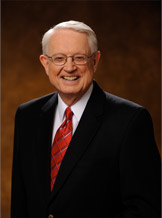
5 Tips From Chuck Swindoll for Staying Young

Adapted from Charles R. Swindoll’s “The Tale of The Tardy Oxcart”

(1)  Your mind is not old, keep developing it.

(2)  Your humor is not over, keep enjoying it.

(3)  Your strength is not gone, keep using it.

(4)  Your opportunities have not vanished, keep pursuing them.

(5)  God is not dead, keep seeking Him.

 About the Author:

Charles R. Swindoll has devoted his life to the clear, practical teaching and application of God’s Word and His grace. A pastor at heart, Chuck has served as senior pastor to congregations in Texas, Massachusetts, and California. Since 1998, he has served as the senior pastor-teacher of Stonebriar Community Church in Frisco, Texas, but Chuck’s listening audience extends far beyond a local church body. As a leading program in Christian broadcasting since 1979, Insight for Living airs in major Christian radio markets around the world, reaching people groups in languages they can understand. Chuck’s extensive writing ministry has also served the body of Christ worldwide and his leadership as president and now chancellor of Dallas Theological Seminary has helped prepare and equip a new generation for ministry. Chuck and Cynthia, his partner in life and ministry, have four grown children and ten grandchildren.

Chuck’s prolific writing ministry has blessed the body of Christ for over thirty years. Beginning with You and Your Child in 1977, Chuck has contributed more than seventy titles to a worldwide reading audience. His most popular books in the Christian Bookseller’s Association include: Strengthening Your Grip, Improving Your Serve, Dropping Your Guard, Living on the Ragged Edge, Living Above the Level of Mediocrity, The Grace Awakening, Simple Faith, Laugh Again, The Finishing Touch, Intimacy with the Almighty, Suddenly One Morning, The Mystery of God’s Will, Wisdom for the Way, The Darkness and the Dawn, A Life Well Lived, and the Great Lives from God’s Word series, which includes Joseph, David, Esther, Moses, Elijah, Paul, Job, Jesus: The Greatest Life of All, and his most recent addition, The Church Awakening: An Urgent Call for Renewal. As a writer, Chuck has received the following awards: Gold Medallion Lifetime Achievement Award, Evangelical Press Association, 1997 and Twelve Gold Medallion Awards.

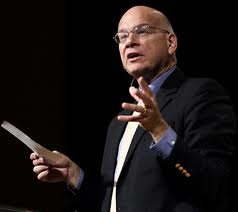
Dr. Tim Keller on The Girl Nobody Wanted: A Christo-centric Gem

The Girl Nobody Wanted by Tim Keller (Genesis 29:15-35)

[15] Then Laban said to Jacob, “Because you are my kinsman [relative], should you therefore serve me for nothing? Tell me, what shall your wages be?” [16] Now Laban had two daughters. The name of the older was Leah, and the name of the younger was Rachel. [17] Leah’s eyes were weak, but Rachel was beautiful in form and appearance. [18] Jacob loved Rachel. And he said, “I will serve you seven years for your younger daughter Rachel.” [19] Laban said, “It is better that I give her to you than that I should give her to any other man; stay with me.” [20] So Jacob served seven years for Rachel, and they seemed to him but a few days because of the love he had for her.

[21] Then Jacob said to Laban, “Give me my wife that I may go in to her, for my time is completed.” [22] So Laban gathered together all the people of the place and made a feast. [23] But in the evening he took his daughter Leah and brought her to Jacob, and he went in to her. [24] (Laban gave his female servant Zilpah to his daughter Leah to be her servant.) [25] And in the morning, behold, it was Leah! And Jacob said to Laban, “What is this you have done to me? Did I not serve with you for Rachel? Why then have you deceived me?” [26] Laban said, “It is not so done in our country, to give the younger before the firstborn. [27] Complete the week of this one, and we will give you the other also in return for serving me another seven years.” [28] Jacob did so, and completed her week. Then Laban gave him his daughter Rachel to be his wife. [29] (Laban gave his female servant Bilhah to his daughter Rachel to be her servant.) [30] So Jacob went in to Rachel also, and he loved Rachel more than Leah, and served Laban for another seven years. [31] When the LORD saw that Leah was hated, he opened her womb, but Rachel was barren. [32] And Leah conceived and bore a son, and she called his name Reuben, for she said, “Because the LORD has looked upon my affliction; for now my husband will love me.” [33] She conceived again and bore a son, and said, “Because the LORD has heard that I am hated, he has given me this son also.” And she called his name Simeon. [34] Again she conceived and bore a son, and said, “Now this time my husband will be attached to me, because I have borne him three sons.” Therefore his name was called Levi. [35] And she conceived again and bore a son, and said, “This time I will praise the LORD.” Therefore she called his name Judah. Then she ceased bearing. Gen. 29:15-35

There is no book, I believe, less sentimental about marriage and the family then the Bible. It is utterly realistic about how hard it is not to be married; and it is utterly realistic about how hard it is to be married. Out in the world, especially in the culture outside the church, there are a lot of people who are cynical about marriage. They don’t trust marriage, so they avoid it altogether or give themselves an easy escape by living together. Then there are people inside the church who are very much the opposite. They think, “Marriage, family, white picket fences—that is what family values are all about. That’s how you find fulfillment. That is what human life is all about.”

The Bible shows us marriage and the family, with all of its joys and all of its difficulties, and points us to Jesus and says, “This is who you need, this is what you need, to have a fulfilled life.” What the Bible says is so nuanced, so different, so off the spectrum. One of the places you see this is in this fascinating story—the account of Jacob’s search for his one true love. I would like you to notice three things in the story:

First, this overpowering human drive to find one true love [Key Theme – a hope];

Secondly, the devastation and disillusionment that ordinarily accompanies the search for true love;

[Third], and finally, what we can do about this longing – what will fulfill it.

 1) THE HUMAN DRIVE TO FIND ONE TRUE LOVE

At the beginning of the passage, Laban says to Jacob, “Just because you are a kinsmen [relative] of mine, should you work for me for nothing? Tell me what your wages should be” (v. 15). Before continuing, let me give you the back-story.

Two generations earlier, God had come to Abraham, Jacob’s grandfather, and said, “Abraham, look at the misery, the death, and the brokenness. I am going to do something about it. I am going to redeem this world, and I am going to do it through your family, through one of your descendents. And therefore, in every generation of your descendents, one child will bear the Messianic line. That child will walk before me and be the head of the clan and pass the true faith on to the next generation. Then there will be another child that bears the Messianic line [seed] and another, until one day, one of your descendents will be the Messiah himself, the King of kings.”

Abraham fathered Isaac, the first in the line Messianic forebears, and when Isaac’s wife, Rebekah, became pregnant with twins, God spoke to Rebekah through and said, “The elder will serve the younger.” That was God’s way of saying that the second twin born would be the chosen one, to carry on the Messianic hope. Esau is born first and then Jacob, but in spite of the prophecy, Isaac set his heart on the oldest son. He set his heart on Esau and favored him all through his life. As a result, he distorted his entire family. Esau grew up proud, spoiled, willful, and impulsive; Jacob grew up rejected and resentful and turned into a schemer; Rebekah favored her younger son and became alienated from her husband Isaac.

Finally, the time came for the aged Isaac to give the blessing to the head of the clan, which was to be Esau; but Jacob dressed up as Esau, went in, and got the blessing. When Esau found out about it, he became determined to kill Jacob, and Jacob had to flee into the wilderness. Now everything was ruined. Jacob’s life was ruined. Not only did he no longer have a family to be the head of; he no longer had a family or an inheritance at all, and he had to flee for his life. Jacob did not know whether Esau messed up or he messed up or Isaac or maybe even God, but now his life was in ruins and he would never fulfill his destiny. Just to survive, he was forced to flee to the other side of the Fertile Crescent.

Jacob escaped to his mother’s family, and they took him in as a kind of charity case. Laban, his uncle, allowed him to be a shepherd. Laban realized that Jacob had tremendous ability as a shepherd and a manager. He figured out that he could make a lot of money if Jacob were in charge of his flocks. That is how we get to this question: “How much can I pay you to be in charge of my flocks?”

Jacob’s answer [vv. 16-18] is basically one word: Rachel.  He wanted Rachel as his bride, and was willing to work seven years for her. What do we know about Rachel? The text comes right out and says that Rachel was lovely in form and beautiful. The Hebrew word translated “form” is quite literal it means exactly what you think. It is talking about her figure. Rachel had a great figure. She had a beautiful face and was absolutely gorgeous. I want to give credit where credit is due and say that Robert Alter, the great Hebrew literature scholar at Berkeley, has helped me understand this text a lot. Alter says there are all sorts of signals in the text about how over-the-top, intensely lovesick and overwhelmed Jacob is with Rachel. There is the poignant but telling statement where the text says, “Jacob served seven years for Rachel, and they seemed to him but a few days because of the love he had for her (v.20).”

More interesting is the next verse: “Then Jacob said to Laban, “Give me my wife that I may go in to her, for my time is completed.” Of course that means he wants to have sex with her. Alter says that this statement is so blunt, so graphic, so sexual, so over-the-top and inappropriate and non-customary that, over the centuries, Jewish commentators have had to do all kinds of backpedaling to explain it. But he says it is not that hard to explain the meaning. He says that the narrator is showing us a man driven by and overwhelmed with emotional and sexual longing for one woman.

What is going on here? Jacob’s life was empty. He never had his father’s love. Now he didn’t even have his mother’s love, and he certainly had no sense of God’s love. He had lost everything—no family, no inheritance, no nothing. And then he saw Rachel, the most beautiful woman he had ever seen, the most beautiful woman for miles around, and he said to himself, “If I had her, finally, something would be right in my lousy life. If I had her, life would have meaning. If I had her, it would fix things.” If he found his one true love, life would finally be okay.

All the longings of the human heart for significance, for security, and for meaning—he had no other object for them—they were all fixed on Rachel.

Jacob was somewhat unusual for his time. Cultural historians will tell you that in ancient times people didn’t generally marry for love (that is actually a relatively recent phenomenon). They married for status. Nevertheless, he is not rare today.

Ernest Becker was a secular man, an atheist, who won the Pulitzer Prize in the 1970’s for his book The Denial of Death. In the book, he talks about how secular people deal with the fact that they don’t believe in God. He says that one of the main ways secular culture has dealt with the God vacuum is through apocalyptic sex and romance. Our secular culture has loaded its desire for transcendence into romance and love. Talking about the modern secular person, he says:

He still needed to feel heroic, to know that his life mattered in the scheme of things…He still had to merge himself with some higher, self-absorbing meaning, in trust and gratitude…If he no longer had God, how was he to do this? One of the first ways that occurred to him, as [Otto] Rank saw, was the “romantic solution.” …The self-glorification that he needed in the innermost nature he now looked for in the love partner. The love partner becomes the divine ideal within which to fulfill one’s life…

After all, what is it that we want when we elevate the love partner to the position of God? We want redemption—nothing less. We want to be rid of our faults, of our feelings of nothingness. We want to be justified, to know that our creation has not been in vain. … That is exactly what Jacob did. And that is what people are doing all over the place. That is what our culture is begging us to do—to load all of the deepest needs of our hearts for significance, security, and transcendence into romance and love, into finding that one true love. That will fix my lousy life!

Let me tell you something you notice when you live in New York City. It is a tough town; everybody looks so cool and pulled together. But the amount of money people spend on their appearance shows they are desperate. They cannot imagine living without apocalyptic romance and love. The human longing for one true love has always been around, but in our culture now, it has been magnified to an astounding degree. But where does it lead?

 2) The Disillusionment That Comes

Secondly, let’s look at the disillusionment and devastation that almost always accompanies a search for that one true love. We begin with Laban’s plot. Laban knew that Jacob offered to serve seven years for Rachel. He knew what that meant. At that time, when you wanted to marry someone, you paid the father a bride price, and it was somewhere around thirty to forty-five shekels. Robert Alter says that a month’s wages was equal to one and a half shekels, and therefore, you can see that Jacob, right out of the box is absolutely lovesick. He is a horrible bargainer; he is immediately offered three to four times the normal bride price. Laban knew he had him. He knew this man was vulnerable.

Commentators say there are indicators in the text that Laban immediately came up with a plan, realizing he could get even more out of this deal. Notice the conversation between Jacob and Laban. The text says, “Jacob loved Rachel. And he said, “I will serve you seven years for your younger daughter Rachel.” (v.18). Look at how Laban responds. He never says, “Yes”! He does not say, “Yes, seven years. It is a deal.” No! Laban said, “It is better that I give her to you than that I should give her to any other man; stay with me” (v.19).

Jacob wants it to be a yes, so he hears a yes. But it is not a yes. Laban is just saying, “Yea, okay, if you want to marry Rachel, it is a good idea.”

Seven years pass; now Jacob says, “Give me my wife.” As customary, there is a great feast. In the middle of the feast, the bride is brought heavily veiled to the groom. She was given to him, and he took her into the tent. He was inebriated, as was also the custom; and in that dark tent, Jacob lay with her. The text tells us, “When morning came, there was Leah!” (v. 25). Jacob looked and discovered that he had married Leah, and had had sex with Leah, and he had consummated the marriage with Leah. Jacob, rightfully angry, goes to Laban and says, “What is this you have done to me? I served you for Rachel, didn’t I? Why have you deceived me? (v. 25). Laban replies that it is customary for the older girl to be married before the younger girl.

I must say I have read this text for thirty years or more and I have never understood why Jacob basically says, “Oh, okay.” I have never figured it out. He is obviously angry and the situation is absolutely ridiculous. Why doesn’t Jacob kill him? Why doesn’t he throttle him? Again, Robert Alter is very helpful here. He suggests something that I think is rather profound.

First of all, what Laban literally says is: “It is not the custom here to put the younger before the older.”

Second, Alter points out that when Jacob said, “Why have you deceived me?” the word translated “deceived” is the same Hebrew word that was used in chapter 27 to describe what Jacob did to Isaac. [What goes around comes around; sowing…and reaping]

Alter says (this is surmise, but what surmise!) that it must have occurred to Jacob that Laban had only done to him what he had done to his father. In the dark, he thought he was touching Rachel, as his father in the dark of his blindness had thought he was touching Esau. Alter then quotes an ancient rabbinical commentator who imagines the conversation the next day between Jacob and Leah. Jacob says to Leah: “I called out ‘Rachel’ in the dark and you answered. Why did you do that to me?” And Leah says to him, “Your father called out ‘Esau’ in the dark and you answered. Why did you do that to him?” Fury dies on his lips. Cut to the quick. Suddenly the evil he has done has come to Jacob. And he sees what it is like to be manipulated and deceived, and meekly he picks up and works another seven years.

We leave Jacob in his devastation (I don’t have a better word for it), and then we see what it has done to Leah. Now, who is Leah? We are told that Leah is the older daughter, but the only detail we are given about her is that she has weak eyes. Nobody quite knows what “weak eyes” means; some commentators have assumed it means she has bad eyesight. But the text does not say that Leah had weak eyes, but Rachel could see a long way. Weakness probably means cross-eyed; it could mean something unsightly. But here is the point: Leah was particularly unattractive, and she had to live all of her life in the shadow of her sister who was absolutely stunning.

As a result, Laban knew no one was ever going to marry her or offer any money for her. He wondered how he was going to get rid of her, how was he going to unload her. And then he saw his chance, he saw an opening and he did it. And now the girl that Laban, her father, did not want has been given to a husband who doesn’t want her either. She is the girl nobody wants. Leah has a hollow in her heart every bit as the hollow in Jacob’s heart. Now she begins to do to Jacob what Jacob had done to Rachel and what Isaac had done to Esau. She set her heart on Jacob. You see the evil and the pathology in these families just ricocheting around again and again from generation to generation.

The last verses here are some of the most plaintive [sad] I have ever read in the Bible (most English translations tell you a little about what the words actually mean). [she uses Hebrew words that express her longing for Jacob] Leah gave birth to her first child, a boy and she named him Reuben. Reuben means, “to see” and she thought, “Now maybe my husband will see me; maybe I won’t be invisible anymore.” But she had a second son, and she named him Simeon, which has to do with hearing: “Now maybe my husband will finally listen to me.” But he didn’t. She had a third son and named him Levi, which means “to be attached,” and she said, “Maybe finally my husband’s heart will be attached to me.”

What was she doing? She was trying to get an identity through traditional family values. Having sons, especially in those days, was the best way to do that; but it was not working. She had set her heart, all of her hopes and dreams, on her husband. She thought, “If I have babies and if I have sons and my husband loves me, then finally something will be fixed in my lousy life.” Instead, she was just going down into hell. And the text says—it is sort of like the summary statement—Jacob loved Rachel more than Leah. That meant she was condemned every single day. This is what I mean by hell—every single day she was condemned to see the man she most longed for in the arms of the one in whose shadow she had lived all her life. Every day was like another knife in the heart.

All we see here is devastation, right? No, that is actually not the way the text ends. But before we look at how the text ends, let me field two objections and draw two lessons.

The first objection has to do with all these ancient practices. Some people who read the text or listen to a sermon on it are thinking, Why are you telling me this story—men buying and selling women, primogeniture [pry-mo-gen-i-turr], sexual slavery—what is this about? I am offended by this kind of old primitive culture. I know they existed, but thank goodness we don’t live in a culture like that anymore. Why do we have to know about it?

First, it is important to see (and this comes from what Robert Alter says), if you read the book of Genesis, and you think it is condoning primogeniture [the right of succession belonging to the firstborn child], polygamy, and bride purchase—if you think it is condoning these things, you have not yet learned how to read. Because in absolutely every single place where you see polygamy or primogeniture, it always wreaks devastation. It never works out. All you ever see is the misery these patriarchal institutions cause in families. Alter says if you think the book of Genesis is promoting those things, you have no idea what is being said. He says these stories are subversive [seeking or intended to subvert an established system or institution] to all those ancient patriarchal institutions. Just read!

You might also be thinking, Thank goodness we don’t live in a culture in which a woman’s value is based on her looks. Thank goodness we don’t live in a culture where a woman looks in a mirror and says, “Look at me I am a size 4, I can get a rich husband.” Hundreds of years ago, people used to do that but nobody does that anymore. Really?

I am sorry, I shouldn’t be sarcastic, but what in the world makes you think that we are in a less brutal culture? We are and we aren’t. Besides that, what the Bible says about the human heart is always true, it is always abiding. If anything, what we are saying is truer today than it was before.

The second objection people have has to do with the moral of the story. They ask, “Where are all the spiritual heroes in this text? Who am I supposed to be emulating? Who is the good guy? What is the moral of the story? I don’t see any! What is going on here?

The answer is: That is absolutely correct. You are starting to get it. You are starting to get the point of the Bible. What do I mean? The Bible doesn’t give us a god at the top of a moral ladder saying, “Look at the people who have found God through their great performance and their moral record. Be like them!” Of course not! Instead, over and over again, the Bible gives us absolutely weak people who don’t seek the grace they need and who don’t deserve the grace they get.

They don’t appreciate it after they get it, and continue to screw up and abuse it even after they have it. And yet, the grace keeps coming! The Bible is not about a god who gives us accounts or moral heroes. It is about grace, and that is what this story is about. So what do we learn from this story? Is there any moral? I wouldn’t put it that way, but here are two things I would want you to see?

First, we learn that through all of life there runs a ground note of cosmic disappointment. You are never going to lead a wise life, no matter who you are, unless you understand that. Here is Jacob, and he says, “If I can just get Rachel, everything will be okay.” And he goes to bed with someone whom he thinks is Rachel, and then, literally, the Hebrew says, “But in the morning, behold, it was Leah.” What does this show us? Listen, I love Leah; I really do. I have been thinking about this text for a long time, and I love her and I want to protect her, so I hope you don’t think I am being mean to her in what I am trying to say. But I want you to know that—  when you get married, no matter how great you think that marriage is going to be; when you get a career, no matter how great you think your career is going to be; when you go off to seminary, no matter how much you think it is going to make you into a man or a woman of God—in the morning, it is always Leah!You think you are going to bed with Rachel, and it in the morning, it is always Leah. Nobody has ever said this better than C. S. Lewis in Mere Christianity:

Most people, if they have really learned to look into their own hearts, would know that they do want, and want acutely, something that cannot be had in this world. There are all sorts of things in this world that offer to give it to you, but they never quite keep their promise. The longings which arise in us when we first fall in love, or first think of some foreign country, or first take up some subject that excites us, are longings which no marriage, no travel, no learning, can really satisfy. I am not now speaking of what would be ordinarily called unsuccessful marriages, or holidays, or learned careers. I am speaking of the best possible ones. There was something we have grasped at, in that first moment of longing, which just fades away in the reality. I think everyone knows what I mean. The souse may be a good spouse, and the hotels and scenery may have been excellent, and chemistry may be a very interesting job: but something has evaded us.

You have got to understand that it is always Leah! Why? Because if you get married, if you have families, if you go into the ministry, and say that “finally this is going to fix my life” (you don’t really think you are doing it until you do it)—those things will never do what you think they will do. In the morning, it is always Leah.

If you get married, and in any way do as Jacob does and put that kind of weight on the person you are marrying, you are going to crush him or her. You are going to kill each other. You are going to think you have gone to bed with Rachel, but you get up and it is Leah. As time goes on, eventually you are going to know that this is the case; that everything disappoints, that there is a note of cosmic disappointment and disillusionment in everything, in all things into which we most put our hopes. When you finally find that out, there are four things you can do.

One, you can blame the things and drop them and go try new ones, better ones. That is the fool’s way.

The second thing you can do is blame yourself and beat yourself up and say, “I have been a failure. I see everybody else happy. I don’t know why I’m not happy. There is something wrong with me.” So you blame yourself and you become a self-hater.

Third, you can blame the world and get cynical and hard. You say, “Curses on the entire opposite sex” or whatever, in which case you dehumanize yourself.

Lastly, you can, as C. S. Lewis says at the end of his great chapter on hope, change the entire focus of your life. He concludes, “If I find in myself a desire which no experience in this world can satisfy, the most probable explanation is that I was made for another world [something supernatural and eternal].

We see that both the liberal mindset and the conservative mindset are wrong when it comes to romance, sex, and love.

Neither serves us well. In fact, you can almost see it in Jacob and Leah. Jacob, with a liberal mindset, is after an apocalyptic hookup. He says, “Give me my wife! I want sex!” he actually says that. On the other hand, here is Leah, and what is she doing? She is the conservative. She is having babies. She is not out having a career. She is trying to find her identity in being a wife—“Now my husband will love me.”

Guess what? They are both wrong. They are not going anywhere. Their lives are a mess. That is the reason why Ernest Becker says so beautifully, “No human relationship can bear the burden of godhood… However much we idolize him [the love partner], he inevitably reflects earthly decay and imperfection. And as he is our ideal measure of value, this imperfection falls back upon us. If your partner is you “All’ then any shortcoming in him becomes a major threat to you.” – Becker, Denial of Death, 166. As Becker said, what we want when we elevate the love partner to the position of God is to be rid of our faults, to be justified to know our existence has not been in vain. We are after redemption. He then adds, “Needless to say, human partners can’t do this.” You might think that is pretty obvious; but we done believe it. We thought the Bible was a source of family values. Well, it is, in a sense, but how realistic it is! So what are we going to do? We are all creatures of our culture. We have this drive in us for one true love. What are we going to do with it? Here is the answer.

3) What We Can Do about This Longing

I want you to see what God does in Leah and for Leah. Leah is the first person to get it; she does begin to see what you are supposed to do.

Look first at what God does in her. As we have said, every time she has a child, she puts all of her hopes in her husband now loving her. And yet, one of the things scholars notice that is very curious is that even though she is clearly making a functional idol out of her husband and her family, she is calling on the Lord. She doesn’t talk about God in some general way or invoke the name of Elohim. She  uses the name Yahweh. In verse 32, it says, “And Leah conceived and bore a son, and she called his name Reuben, for she said, “Because the LORD [Yahweh] has looked upon my affliction.” How does she know about Yahweh?

Elohim was the generic word for God back then. All creatures at that time had some general idea of God or gods; they were gods at the top of a ladder, and you had to get up to the top through rituals or through transformations of consciousness or moral performance. Everyone understood God in that sense, but Yahweh was different. Yahweh was the God who came down the ladder, the one who entered into a personal covenantal relationship and intervened to save. Certainly they didn’t know all he was going to do, but Abraham and Isaac knew something about it, and Jacob would have known about it as well. It is interesting that Leah must have learned about Yahweh from Jacob. Even though she is still in the grip of her functional idolatry, somehow she is trying, she is calling out, she is reaching out to a God of grace. She has grasped the concept.

You might say that she has got a theology of sorts, as advanced as it was at the time, but she is having trouble connecting it. She is calling him the Lord, and yet she is treating him like a “god.” Do you follow me?

She is saying, “God can help me save myself through childbearing. God can help me save myself by getting my husband’s love. So she is using God, and yet she not call him God [Elohim]; she calls him Lord [Yahweh]. She is beginning to get it, and what is intriguing is that, at the very end, something happens. The first time she gives birth she says, ‘Now maybe my husband will see me. Now maybe my husband will love me.” And when she gives birth to her third son, she says, “Now maybe my husband will be attached to me.”

Finally, it says that she conceived for the fourth time, and when she gave birth to Judah, she said, “This time!” Isn’t that defiant? It is totally different; no mention of husband, no mention of child. There is some kind of breakthrough. She says, “This time I will praise the LORD.”

At that point, she has finally taken her heart’s deepest hopes off of the old way, off of her husband and her children, and she has put them in the Lord.

Here is what I believe is going on. Jacob and Laban had stolen Leah’s life, but when she stopped giving her heart to a good thing that she had turned into an ultimate thing and gave it to the Lord, she got her life back.

May I respectfully ask you: What good thing in your life are you treating as an ultimate thing?

What do you need to stop giving your heart to if you are going to get your life back?

There are a lot of things I am certain about, but I am absolutely certain that everybody in this room has got something.

Do you know what it is?

If you have no idea, you need to think about it. Something happened to Leah; God did something in her. There was a breakthrough. She began to understand what you are supposed to do with your desire for one true love. She turned her heart toward the only real beauty, the only real lover who can satisfy those cosmic needs.

But we shouldn’t just look at what God did in her. We have to also look for what God has done for her—because God has done something for her. I believe that she had some consciousness, although it might have been semi-consciousness or just intuition, that there was something special about this last child. It would probably be reading too much into the text to say she understood, but I believe she sensed that God had done something for her. And he had.

The writer of Genesis knows what God has done. This child is Judah, and who is Judah? The writer of Genesis tells us in chapter 49 that it is through Judah that Shiloh will come, and it is through Shiloh that the King will come. This is the line! This is the Messianic line! God has come to the girl that nobody wanted, the unloved, and made her the mother of Jesus—not beautiful Rachel, but the homely one, the unwanted one, the unloved one.

Why did God do that? Does he just like the underdog? He did it because of his person and because of his work.

First, because of his person. It says that when the Lord saw Leah was not loved, he loved her. God is saying, “I am the real bridegroom. I am the husband of the husbandless. I am the father of the fatherless.” What does that  mean?

He is attracted to the people that the world is not attracted to. He loves the unwanted. He loves the unattractive. He loves the weak, the ones the world doesn’t want to be like. God says, “If nobody else is going to be the spouse of Leah, I will be her spouse.”

Guess what? It is not just those of you without spouses who need to see God as your ultimate spouse, but those of us with spouses have got to see God as our ultimate spouse as well. You have to demote the person you are married to out of first place in your heart to second place behind God or you will end up killing each other. You will put all of your freight, all the weight of all your hopes, on that person. And of course, they are human beings, they are sinners, just like you are. God says you must see him as what he is: the great bridegroom, the spouse for the spouseless. He is not just a king and we are the subjects; he is not just a shepherd and we are the sheep. He is a husband and we are his lovers. He loves us! He is ravished with us—even those of us whom no one else is ravished with; especially those of us whom no one else is ravished with. That is his person. But that is not all.

The second reason why he goes after Leah and not Rachel, why he makes the girl who nobody wanted into the mother of Jesus, the bearer of the Messianic line, the bearer of salvation to the world, is not just that he likes the underdog, but because that it the gospel.

When God came to earth in Jesus Christ, he was the son of Leah. Oh yes, he was! He became the man nobody wanted. He was born in a manger. He had no beauty that we should desire him. He came to his own and his own received him not. And at the end, nobody wanted him. Everybody abandoned him. Even his Father in heaven didn’t want him. Jesus cried out on the cross: “My God, my God, why have you forsaken me?”

Why did he become Leah’s son? Why did he become the man nobody wanted? For you and for me! Here is the gospel: God did not save us in spite of the weakness that he experienced as a human being but through it.  And you don’t actually get that salvation into your life through strength; it is only for those who admit they are weak. And if you cannot admit that you are a hopeless moral failure and a sinner and that you are absolutely lost and have no hope apart from the sheer grace of God, then you are not weak enough for Leah and her son and the great salvation that God has brought into the world.

God chose Leah because he is saying, “This is how salvation works. This is the upside-down way that my people will live, at least in relationship to the world, when they receive my salvation.”

Now the way up is down. The way to become rich is to give your money away. The way to become rich is to give your money away. The way to power is to serve God, when he came to earth, as the son of Leah. God made Leah, the girl nobody wanted into the mother of Jesus. Why?

Because he chooses the foolish things to shame the wise; he chooses the weak things to shame the strong; he chooses even the things that are not to bring to nothing the things that are, so that no one will boast in his presence (1 Cor. 1:27-29).

In conclusion, let me give you a few practical applications.

First, if there is anyone with a Laban in their life right now, don’t be bitter and don’t beat them up. Don’t let them take advantage of you either if you can; but remember, God can use that person in your life to make you a better person in your life if you don’t become bitter.

Second, are you somebody who has been rejected, betrayed, maybe recently divorced, and you didn’t want to be? Are you a Leah? Remember, God knows what it is like to be rejected. He didn’t just love Leah, but he actually became Leah. He became the son of Leah. He came to his own and his own received him not.

He understands rejection, and if anything, he is, from what we can tell in the Scripture, attracted to people in your condition. It is his nature, so don’t worry. He knows and he cares.

Third, please don’t let marriage throw you. I have been saying this all along: in the morning, it will always be Leah. And if you understand that, it will make some of you less desperate in your marriage-seeking, and it will make some of you less angry at your spouse for his imperfections.

Last, you may believe you have messed up your life; that your life is on plan B. You should have done this or that, and now it is too late. Think about it:

Should Jacob have deceived Isaac and Esau? No.

Should Isaac have shown the favoritism that turned Jacob into a liar? No.

Everybody sinned. There are no excuses. They shouldn’t have done what they did. They blew up their lives. But if those things hadn’t happened, would Jacob have met the love of his life, Rachel?

Jesus Christ, who is a result of Jacob’s having to flee to the other side of the Fertile Crescent, isn’t plan B! You can’t mess up your life. You can’t mess up God’s plan for you. You will find that no matter how much you do to mess it up, all you are doing is fulfilling his destiny for you.

That does not mean what they did was okay. The devastation and the unhappiness and the misery that happens in your life because of your sins are your fault. You are responsible, you shouldn’t do them; and yet, God is going to work through you. Those two things are together. It is an antinomy, a paradox.

Remember, it is never too late for God to work in your life! Never! You can’t put yourself on plan B. Go to him. Start over now. Say it: “This time, no matter what else I have done, I will praise the Lord!”

*[Delight yourself in the LORD, and He will give you the desires of your heart – Psalm 37:4]

The sermon manuscript by Dr. Timothy Keller above was adapted and excerpted in parts from the original sermon and from the printed manuscript that can be found in the excellent book of sermons edited by Dr. Dennis E. Johnson entitled: Heralds of the King: Christ-Centered Sermons in the Tradition of Edmund P. Clowney. Wheaton: Crossway Books, 2009.

 About The Author/Preacher:

In 1989 Dr. Timothy J. Keller, his wife and three young sons moved to New York City to begin Redeemer Presbyterian Church. In 20 years it has grown to meeting for five services at three sites with a weekly attendance of over 5,000. Redeemer is notable not only for winning skeptical New Yorkers to faith, but also for partnering with other churches to do both mercy ministry and church planting.  Redeemer City to City is working to help establish hundreds of new multi-ethnic congregations throughout the city and other global cities in the next decades.

Dr. Tim Keller is the author of several phenomenal books including:

Every Good Endeavor: Connecting Your Work to God’s Plan for the World. New York, Penguin Publishing, November, 2012.

Center Church: Doing Balanced, Gospel-Centered Ministry in Your City. Grand Rapids: Zondervan, September, 2012.

The Freedom of Self Forgetfulness. New York: 10 Publishing, April 2012.

Generous Justice: How God’s Grace Makes Us Just. New York: Riverhead Trade, August, 2012.

The Gospel As Center: Renewing Our Faith and Reforming Our Ministry Practices (editor and contributor). Wheaton: Crossway, 2012.

The Meaning of Marriage: Facing the Complexities of Commitment with the Wisdom of God. New York, Dutton, 2011.

The Prodigal God. New York, Dutton, 2011.

King’s Cross: The Story of the World in the Life of Jesus. New York, Dutton, 2011.

Counterfeit Gods: The Empty Priorities of Money, Sex, and Power, and the Only Hope That Matters. New York, Riverhead Trade, 2011.

The Reason For God: Belief in an Age of Skepticism. New York, Dutton, 2009.

Worship By The Book (contributor). Grand Rapids: Zondervan, 2002.

Ministries of Mercy: The Call of the Jericho Road. Phillipsburg: P&R Publishing, 1997.

Dr. Gary R. Collins on Six Ways To Find Your Passion

“How To Find Your Passion”

(1)  Ask someone who knows you well to identify your passions.

(2)  Look at your environment. Does this reveal what really interests and excites you?

(3)  If you had no limitations in terms of money or time, what would you do?

(4)  Think of times in your life when you felt exuberant and excited to be alive. What might this say about your passion?

(5)  When you were young and your parents couldn’t find you, what did they assume you were doing? What does this say about your passion?

(6)  Pray that God will reveal His passion and open doors for you to be able to use your passion for His glory in your life.

The six steps above are condensed and adapted from the excellent book on by Gary Collins called Christian Coaching. Colorado Springs: NavPress, 2009 (Revised Edition).

 About the Author:

Gary R. Collins is a licensed clinical psychologist with a Ph.D. in clinical psychology from Purdue University. He is author of numerous articles and over 50 books, including Christian Counseling: A Comprehensive Guide, The Biblical Basis of Christian Counseling, and Christian Coaching: Helping Others Turn Potential into Reality. Gary was general editor of the thirty-volume Resources for Christian Counseling series of professional counseling books mostly published in the 1980s, the Word Christian Counseling Library of cassette tapes, and the twelve-volume Contemporary Christian Counseling series of books that appeared in the early 1990’s.

In December 2001 NavPress published Gary’s book Christian Coaching, a book that has been revised, expanded, updated, and published in 2009. The third edition of Christian Counseling (revised, expanded and completely updated) was published by Thomas Nelson publishers in 2007, followed by an accompanying Casebook of Christian Counseling, also published by Nelson.

Gary Collins grew up in Canada and graduated from McMaster University in Hamilton, Ontario and the University of Toronto before taking a year of study at the University of London. His first teaching occurred during that year as he taught courses for the University of Maryland in Germany and England. Gary spent several years in the Royal Canadian Navy Reserve before moving to the United States to study clinical psychology at Purdue University. He took his clinical psychology internship at the University of Oregon Medical School Hospitals (now University of Oregon Health Sciences University) in Portland and subsequently enrolled at Western Seminary for a year of theological study.

At Western he met his wife Julie. They were married in 1964 and moved to Minnesota where Gary taught psychology at Bethel College in St. Paul. Their two daughters, Lynn and Jan were born in Minnesota. After a year on the faculty of Conwell School of Theology in Philadelphia, the Collins family moved to Illinois where Gary taught psychology and counseling at Trinity Evangelical Divinity School. For much of that time he was department chairman.

In 1991, Gary assumed responsibility for co-leading the fledgling American Association of Christian Counselors. In the seven years that followed, Gary was AACC Executive Director and later the organization’s first President. During that time AACC grew from about 700 paid members to more than 15,000. In addition to these duties, Gary founded Christian Counseling Today, the official AACC magazine which he edited for several years. In October, 1998 Gary Collins resigned from his responsibilities with AACC so he could devote more time to developing Christian counseling and Christian coaching worldwide. In addition to his other responsibilities, he currently holds a position as Distinguished Professor of Coaching and Leadership at Richmont Graduate University (formerly Psychological Studies Institute) in Atlanta and Chattanooga. In addition he is Distinguished Visiting Professor in the School of Psychology and Counseling at Regent University in Virginia where he consults with the faculty and annually teaches an accredited on-line doctoral course in coaching.

Gary has accepted invitations to speak in more than fifty countries and he continues to travel overseas and within North America to give lectures and lead workshops on Christian counseling, leadership, and Christian coaching. Gary also has a small coaching practice, writes the weekly Gary R. Collins Newsletter, and mentors a number of young, emergent leaders. He is active in a local fitness center, is blessed with boundless energy and good health, and has no plans to retire. Gary and Julie Collins live in northern Illinois, not far from their two daughters, their son-in-law, and their grandson Colin Angus McAlister.

Dr. Tim Keller on Suffering

Dr. Tim Keller on Dealing With The Question “Why Me?”

[This article first appeared in edited form on CNN and is printed below in its entirety. The article is adapted from the City to City Blog of Redeemer Presbyterian Church in New York on August 6, 2012: http://redeemercitytocity.com/blog/view.jsp?Blog_param=446%5D

When I was diagnosed with cancer, the question “Why me?” was a natural one. Later, when I survived but others with the same kind of cancer died, I also had to ask, “Why me?”

Suffering and death seem random, senseless. The recent Aurora shootings—in which some people were spared and others lost—is the latest, vivid example of this, but there are plenty of others every day: from casualties in the Syria uprising to victims of accidents on American roads. Tsunamis, tornadoes, household accidents—the list is long. As a minister, I’ve spent countless hours with suffering people crying: “Why did God let this happen?” In general I hear four answers to this question—but each is wrong, or at least inadequate.

The first answer is, “This makes no sense—I guess this proves there is no God.” But the problem of senseless suffering does not go away if you abandon belief in God. Dr. Martin Luther King, Jr., in his Letter from Birmingham Jail, said that if there was no higher divine Law, there would be no way to tell if any particular human law was unjust or not. If there is no God, then why have a sense of outrage and horror when suffering and tragedy occur? The strong eat the weak—that’s life—so why not? When Friedrich Nietzsche heard that a natural disaster had destroyed Java in 1883, he wrote a friend: “Two hundred thousand wiped out at a stroke—how magnificent!” Nietzsche was relentless in his logic. Because if there is no God, all value judgments are arbitrary. All definitions of justice are just the results of your culture or temperament. As different as they were in other ways, King and Nietzsche agreed on this point. If there is no God or higher divine Law, then violence is perfectly natural. So abandoning belief in God doesn’t help with the problem of suffering at all, and as we will see, it removes many resources for facing it.

The second answer is, “If there is a God, senseless suffering proves that God is not completely in control of everything. He couldn’t stop this.”  As many thinkers have pointed out—both devout believers as well as atheists—such a being, whatever it is, doesn’t really fit our definition of God. And this leaves you with the same problems mentioned above. If you don’t believe in a God powerful enough to create and sustain the whole world, then the world came about through natural forces, and that means, again, that violence is natural. Or if you think that God is an impersonal life force and this whole material world is just an illusion, again you remove any reason to be outraged at evil and suffering or to resist it.

The third answer to seemingly sudden, random death is, “God saves some people and lets others die because he favors and rewards good people.” But the Bible forcefully rejects the idea that people who suffer more are worse people than those who are spared suffering. This was the self-righteous premise of Job’s friends in that great Old Testament book. They sat around Job, who was experiencing one sorrow in life after another, and said, “the reason this is happening to you and not us is because we are living right and you are not.” At the end of the book, God expresses his fury at Job’s “miserable comforters.” The world is too fallen and deeply broken to issue in neat patterns of good people having good lives and bad people having bad lives.

The fourth answer is, “God knows what he’s doing, so be quiet and trust him.” This is partly right, but inadequate. It is inadequate because it is cold and because the Bible gives us more with which to face the terrors of life.

God did not create a world with death and evil in it. It is the result of humankind turning away from him. We were put into this world to live wholly for him, and when instead we began to live for ourselves everything in our created reality began to fall apart—physically, socially, and spiritually. Everything became subject to decay. But God did not abandon us. Of all the world’s major religions, only Christianity teaches that God came to earth (in Jesus Christ) and became subject to suffering and death himself—dying on the Cross to take the punishment our sins deserved—so that some day he can return to earth to end all suffering without ending us.

Do you see what this means? Yes, we don’t know the reason God allows evil and suffering to continue, or why it is so random, but now at least we know what the reason isn’t—what it can’t be. It can’t be that he doesn’t love us! It can’t be that he doesn’t care. He is so committed to our ultimate happiness that he was willing to plunge into the greatest depths of suffering himself.

He understands us, he’s been there, and he assures us that he has a plan to eventually to wipe away every tear, to make “everything sad come untrue,” as J.R.R. Tolkien put it at the end of his Christian allegory The Lord of the Rings.

Someone might say, “But that’s only half an answer to the question ‘Why?'” Yes, but it is the half that we need.

If God actually explained all the reasons why he allows things to happen as they do, it would be too much for our finite brains. Think of small children and their relationship to their parents. Three-year-olds can’t understand most of what their parents allow and disallow for them. But though they aren’t capable of comprehending their parents’ reasons, they are capable of knowing their parents’ love, and therefore capable of trusting them and living securely. That is what they really need. Now the difference between God and human beings would be infinitely greater than the difference between a thirty-year-old parent and a three-year-old child. So we should not expect to be able to grasp all God’s purposes, but through the Cross and gospel of Jesus Christ, we can know his love. And that is what we need most.

In Ann Voskamp’s book One Thousand Gifts, she shares her journey to understand the senseless death of her sister, crushed by a truck at the age of two. In the end, she concludes that the primary issue is whether we trust God’s character. Is he really loving? Is he really just? Her conclusion:

“[God] gave us Jesus… If God didn’t withhold from us His very own Son, will God withhold anything we need? If trust must be earned, hasn’t God unequivocally earned our trust with the bark on the raw wounds, the thorns pressed into the brow, your name on the cracked lips? How will he not also graciously give us all things He deems best and right? He’s already given the incomprehensible.”

 About The Author:

In 1989 Dr. Timothy J. Keller, his wife and three young sons moved to New York City to begin Redeemer Presbyterian Church. In 20 years it has grown to meeting for five services at three sites with a weekly attendance of over 5,000. Redeemer is notable not only for winning skeptical New Yorkers to faith, but also for partnering with other churches to do both mercy ministry and church planting.  Redeemer City to City is working to help establish hundreds of new multi-ethnic congregations throughout the city and other global cities in the next decades.

Dr. Tim Keller is the author of several phenomenal books including:

Every Good Endeavor: Connecting Your Work to God’s Plan for the World. New York, Penguin Publishing, November, 2012.

Center Church: Doing Balanced, Gospel-Centered Ministry in Your City. Grand Rapids: Zondervan, September, 2012.

The Freedom of Self Forgetfulness. New York: 10 Publishing, April 2012.

Generous Justice: How God’s Grace Makes Us Just. New York: Riverhead Trade, August, 2012.

The Gospel As Center: Renewing Our Faith and Reforming Our Ministry Practices (editor and contributor). Wheaton: Crossway, 2012.

The Meaning of Marriage: Facing the Complexities of Commitment with the Wisdom of God. New York, Dutton, 2011.

The Prodigal God. New York, Dutton, 2011.

King’s Cross: The Story of the World in the Life of Jesus. New York, Dutton, 2011.

Counterfeit Gods: The Empty Priorities of Money, Sex, and Power, and the Only Hope That Matters. New York, Riverhead Trade, 2011.

The Reason For God: Belief in an Age of Skepticism. New York, Dutton, 2009.

Worship By The Book (contributor). Grand Rapids: Zondervan, 2002.

Ministries of Mercy: The Call of the Jericho Road. Phillipsburg: P&R Publishing, 1997.

Richard Baxter on The Importance of Hard Work

Colossians 3:23-24, “Whatever you do, work heartily, as for the Lord and not for men, knowing that from the Lord you will receive an inheritance as your reward. You are serving the Lord Christ.”

(1)  You will show that you are not sluggish and servants to your flesh (as those that cannot deny it ease), and you will further the putting to death of all the fleshly lusts and desires that are fed by ease and idleness.

(2)  You will keep out idle thoughts from your mind, that swarm in the minds of idle persons.

(3)  You will not lose precious time, something that idle persons are daily guilty of.

(4)  You will be in a way of obedience to God when the slothful are in constant sins of omission.

(5)  You may have more time to spend in holy duties if you follow your occupation diligently. Idle persons have no time for praying and reading because they lose time by loitering at their work.

(6)  You may expect God’s blessing and comfortable provision for both yourself and your families.

(7)  It may also encourage the health of your body which will increase its competence for the service of your soul.

About Richard Baxter: A Mini-Biography

Excerpt from Meet the Puritans

by Dr. Joel Beeke and Randall J. Pederson

Richard Baxter was born in 1615, in Rowton, near Shrewsbury, in Shropshire. He was the only son of Beatrice Adeney and Richard Baxter, Sr. Because of his father’s gambling habit and inherited debts, and his mother’s poor health, Richard lived with his maternal grandparents for the first ten years of his life. When his father was converted through “the bare reading of the Scriptures in private,” Richard returned to his parental home, and later acknowledged that God used his father’s serious talks about God and eternity as “the Instrument of my first Convictions, and Approbation of a Holy Life” (Reliquiae Baxterianae, 1:2-4).

Baxter’s education was largely informal; he later wrote that he had four teachers in six years, all of whom were ignorant and two led immoral lives. Nevertheless, he had a fertile mind, and enjoyed reading and studying. A prolonged illness and various books—particularly William Perkins’s Works—were the means God used to “resolve me for himself,” Baxter wrote (Reliquiae Baxterianae, 1:3-4). When he was fifteen, he was deeply affected by Richard Sibbes’s The Bruised Reed: “Sibbes opened more the love of God to me, and gave me a livelier apprehension of the mystery of redemption and how much I was beholden to Jesus Christ.” Subsequently, Ezekiel Culverwell’s Treatise of Faith (1623) “did me much good” (ibid., 1:4-5).

Baxter’s education took a turn for the better when he transferred to the Wroxeter grammar school, where he received some tuition support from a schoolmaster named John Owen. His best teacher there was an erudite minister, Francis Garbet, who took a real interest in Baxter. At the age of sixteen, under Owen’s persuasion, Baxter decided to forego university in favor of placing himself under the instruction of Owen’s friend, Richard Wickstead, chaplain at Ludlow Castle, who tutored him rather half-heartedly for eighteen months.

In 1633, Baxter went to London under the patronage of Sir Henry Herbert, Master of the Revels, in the court of Charles I. Joseph Symonds and Walter Cradock, two godly Puritan ministers in London, roused his sympathy for nonconformity, but he stayed in London only four weeks. Having become dissatisfied with the worldly court life in London and desiring to care for his ailing mother, he returned home in 1634; his mother died in May of 1635. He spent the next four years privately studying theology, particularly that of the scholastics, including Aquinas, Scotus, and Ockham.

At age twenty-three, having as yet “no scruple at all against subscription,” and thinking “the Conformists had the better cause” (ibid., 1:13), Baxter was ordained deacon by John Thornborough, the elderly bishop of Worcester. For nine months he served as master of the school founded at Dudley, a center of nonconformity. In 1639, he became an assistant minister at Bridgnorth, Shropshire, where he developed a deeper appreciation for nonconformity.

In 1641, Baxter became curate at Kidderminster. Though many among a rather corrupt and crude population of handloom workers were initially offended by his forceful preaching and stress on a controlled Lord’s Supper and on church discipline, his seventeen-year ministry there (1641-42, 1647-61) bore substantial fruit. He preached as “a dying man to dying men,” which, with the Spirit’s blessing, resulted in numerous conversions. His praying was no less intense: “His soul tookwing for heaven and rapt up the souls of others with him” (Leonard Bacon, Select Practical Writings of Richard Baxter [New Haven, 1831], 1:262).

During the early days of the Civil War, Baxter supported, and on occasion accompanied, the Parliamentary Army. He preached before Cromwell, but he was uncomfortable with the Protector’s toleration of separatists. Though he was only an occasional “conformer,” Baxter favored being part of an established church and opposed the Solemn League and Covenant of 1643. He also believed that the antinomian tendencies of some of the soldiers and preachers, such as Tobias Crisp and John Saltmarsh, were antithetical to practical Christian living. Their teaching prompted him to write Aphorisms of Justification (1649), in which he argued for a combination of divine grace and human cooperation in justification.

In 1647, Baxter’s prolonged illnesses compelled him to leave the army. He recuperated at the Worcestershire home of Sir Thomas and Lady Rous, where he wrote the first part of The Saints’ Everlasting Rest. He later said he wrote it as a labor of love while “looking death full in the face and yet experiencing the sufficient grace of God.”

After he recovered, Baxter returned to Kidderminster, where he concentrated on writing. “My writings were my chiefest daily labor,” he wrote, whereas “preaching and preparing for it, were but my recreation” (Reliquae, p. 85). He also catechized church members two days each week. He went from home to home with an assistant, speaking with each family for one hour and providing each family with an edifying book or two, usually written by himself. He said of these visits, “Few families went from me without some tears, or seemingly serious promises [to strive] for a godly life.” He added, “Some ignorant persons, who have been so long unprofitable hearers, have got more knowledge and remorse of conscience in half an hour’s close disclosure, than they did from ten year’s public preaching” (ibid., 1:83ff.).

The home visits bore fruit. The congregation kept overflowing its meeting place so that five galleries had to be added. When Baxter came to Kidderminster, scarcely one family on each street among the 800 families honored God in family worship. By the end of his ministry in 1661, there were streets on which every family did so. On the Sabbath, he writes, “you might hear an hundred families singing Psalms and repeating sermons, as you passed through the streets.” Of the approximately six hundred people who became full communicants under his ministry, he adds, “There was not twelve that I had not good hopes of, as to their sincerity” (ibid., 1:84-85).

Baxter worked hard, despite chronic pain from the age of twenty-one until the end of his life. He suffered from tuberculosis and feared consumption. In the years following the Restoration, he left Kidderminster for London, where he often preached at St. Dunstan’s and lectured at Pinner’s Hall and Fetters Lane. He pleaded in vain, however, at the Savoy Conference (1661) for the non-prelatical, synodical form of episcopacy devised by Archbishop James Ussher (1581-1656) and for a Puritan revision of the Prayer Book.

In 1662, Baxter was ejected from the Church of England by the Act of Uniformity. He continued to preach for the rest of his life where he could, but never gathered a congregation of his own. J. I. Packer writes, “Miscalled a Presbyterian, Baxter was a reluctant Nonconformist who favored monarchy, national churches, liturgy and episcopacy, and could accept the unsympathetically revised 1662 Prayer Book. But the 1662 Act of Uniformity required renunciation on oath of Puritan ideals of reformation as a condition of incumbency in the restored Church of England, and Baxter balked at that” (New Dictionary of Theology, p. 83).

After his ejection, when he was almost fifty, Baxter married one of his converts, Margaret Charlton, who was in her early twenties. The disparity of their ages caused some consternation for a time, but the excellence of their marriage in Christ silenced the rumors. Margaret proved to be a devout Christian and faithful wife who earnestly yearned for the salvation of souls. Baxter’s tenderness toward her, and her godliness, are described in Breviate of the Life of Mrs. Margaret Baxter (1681). There Baxter writes that he “never knew her equal” in practical divinity, for she was “better at resolving a case of conscience than most Divines that ever I knew.” Consequently, Baxter habitually shared all cases with her except for those that compelled confidentiality (Breviate, pp. 67-68).

The Baxters settled in London. Prelates and magistrates hounded Baxter for most of his remaining years. He was imprisoned at least three times for preaching and never again resumed a pastoral charge; even his books were taken from him. His response was, “I found I was near the end of both that work and that life which needeth books, and so I easily let go all.” Once, even the bed on which he was lying sick was confiscated.

After James II took the throne in 1685, Baxter was charged with attacking episcopacy in Paraphrase on the New Testament and was brought before Lord Chief Justice Jeffreys. Jeffreys charged Baxter with seditious behavior, calling him “an old rogue who poisoned the world with his Kidderminster doctrine.” Jeffreys went on to exclaim, “This conceited, stubborn, fanatical dog—that did not conform when he might have been preferred; hang him!” The bishop of London intervened, and Baxter was spared a public whipping, though he was still imprisoned
for five more months.

Baxter eventually benefited from the Toleration Act of 1689, introduced by William and Mary to protect nonconformists. His last days were spent in the pleasant surroundings of Charterhouse Square. He occasionally preached to large crowds there, but he spent most of his time writing. When he was dying and a friend reminded him of the benefits many had received from his writings, Baxter replied, “I was but a pen in God’s hand, and what praise is due to a pen?” By the time he died on December 8, 1691, Baxter had written about 150 treatises, as well as hundreds of unpublished letters and papers.

Baxter’s writings are a strange theological mix. He was one of a few Puritans whose doctrines of God’s decrees, atonement, and justification were anything but Reformed. Though he generally structured his theology along Reformed lines of thought, he frequently leaned towards Arminian thinking. He developed his own notion of universal redemption, which offended Calvinists, but retained a form of personal election, which offended Arminians. He rejected reprobation. He was greatly influenced by the Amyraldians and incorporated much of their thinking, including hypothetical universalism, which teaches that Christ hypothetically died for all men, but His death only has real benefit to those who believe. For Baxter, Christ’s death was more of a legal satisfaction of the law than a personal substitutionary death on behalf of elect sinners.

Baxter’s approach to justification has been called neonomianism (that is, “new law”); he said that God has made a new law offering forgiveness to repentant breakers of the old law. Faith and repentance—the new laws that must be obeyed—become the believer’s personal, saving righteousness that is sustained by preserving grace. Baxter’s soteriology, then, is Amyraldian with the addition of Arminian “new law” teaching. Happily, these erroneous doctrines do not surface much in Baxter’s devotional writings, which are geared mainly to encourage one’s sanctification rather than to teach theology.

Baxter professed to resent having to write polemical treatises: “Controversies I have written of, but only to end them, not to make them.” Hans Boersma has shown, however, that though irenic in some respects, Baxter could be provocative as well (see A Hot Pepper Corn: Richard Baxter’s Doctrine of Justification in its Seventeenth-Century Context of Controversy [Zoetermeer: Boekencentrum, 1993]).

Modern Reprints

A Call to the Unconverted (Zondervan; 170 pages; 1953). This classic evangelistic “tract,” based on Ezekiel 33:11, reveals Baxter’s passionate concern for evangelism. It is an earnest and reasoned appeal to the unsaved to turn to God and accept His offered mercy. Here is one example:

If thou die unconverted, there is no doubt to be made of thy damnation; and thou are not sure to live an hour, and yet art thou not ready to turn and to come in? Oh miserable wretch! Hast thou not served the flesh and the devil long enough yet? Hast thou not enough of sin? Is it so good to thee? or so profitable for thee? Dost thou know what it is, that thou wouldst yet have more of it? Hast thou had so many calls and so many mercies, and so many blows, and so many examples? Hast thou seen so many laid in the grave, and yet art thou not ready to let go thy sins and come to Christ? What? After so many convictions and gripes of conscience, after so many purposes and promises, art thou not ready yet to turn and live? Oh that thy eyes, thy heart were opened to know how fair an offer is now made to thee! and what joyful message it is that we are sent on, to bid thee come, for all things are ready (pp. 70-71).

Stressing that sinners “die because they will die; that is, because they will not turn,” Baxter says, “So earnest is God for the conversion of sinners, that he doubleth his commands and exhortations with vehemency, Turn ye, turn ye; why will ye die?” Discernment is necessary in reading this book, since Baxter’s unsound views do occasionally surface.

Dying Thoughts (Baker; 144 pages; 2004). Based on Philippians 1:23, “For I am in a strait betwixt two, having a desire to depart, and to be with Christ, which is far better,” Baxter sets forth a proper attitude towards the present life and the life hereafter. Dying Thoughts was written shortly before Baxter’s death in 1691. It breathes a spirit of vital faith in the promises of God.

This reprint was abridged by Benjamin Fawcett. It also contains an excellent introductory essay by Edward Donnelly, “A Corrective for Reformed Preachers,” which gleans practical lessons for ministers from Baxter’s preaching.

The Practical Works of Richard Baxter (SDG; 4 vols., 4,201 pages; 2000). Baxter authored about 150 books, of which several were folios of more than a million words. If his entire works were ever to be printed, they would amount to more than double the size of Owen’s. Most of Baxter’s books are homiletical, catechetical, biographical, historical, practical, philosophical, ethical, or polemical in nature, though he also published commentaries, poetry, and politics. Keeble writes, “Puritanism had always utilized the press, but there had never been a literary career like this, either in scale or in success: Baxter was the first author of a string of bestsellers in British literary history” (Oxford DNB, 4:430).

Baxter’s practical writings were usually the most popular. His Practical Works were published in four folio volumes in London in 1707, then helpfully edited by William Orme and republished in twenty-three volumes in 1830, after which H. R. Rogers’s four-volume set was published in 1868. The SDG reprint in 2000 is of the Rogers set.

The first volume, A Christian Directory (1673), offers keen insights into the life of the believer, expounding practical and casuistical divinity in more than a million words. No Puritan work on applied theology has approached the popularity, scope, or depth of this treatise. With widespread interest in counseling and practical, biblical living in today’s church, this reprint of Baxter’s work should be a welcome addition to every library and to anyone who wishes to give solid scriptural
answers to man’s most important questions.

Volume 2, titled A Call to the Unconverted (1658), contains that work unabridged, plus eleven treatises, including The Reasons of the Christian Religion, The Unreasonableness of Infidelity, A Treatise of Conversion, and The Character of a Sound, Confirmed Christian. Volume 3 contains The Saints’ Everlasting Rest (1649), A Treatise of Self-Denial (1659), Dying Thoughts (1683), and other miscellaneous treatises. Volume 4 contains the unabridged version of the masterful treatise The Reformed Pastor (1656), as well as The Catechising of Families, The Vain Religion of the Formal Hypocrite, various sermons, and thirteen smaller treatises, including The Cure of Melancholy and Overmuch Sorrow, by Faith—perhaps the most undervalued work of Baxter. In it, Baxter, as a physician of souls, probes with remarkable insight into the human psyche and offers suggestions for the cure of depression and other mental ailments. For example, Baxter says, “As much as you can, divert them from the thoughts which are their trouble; keep them on some other talks and business; break in upon them and interrupt their musings; rouse them out of it, but with loving importunity; suffer them not to be long alone; get fit company to them, or them to it; especially, suffer them not to be idle, but drive or draw them to some pleasing works which may stir the body, and employ the thoughts” (Practical Works, 4:933).

The Reformed Pastor (BTT; 256 pages; 1999). Abridged from the original work, this edition offers a more accessible look at Baxter’s pastoral theology. Writing this book out of a deep determination to rectify the pastoral neglect he had experienced as a young man in the West Midlands, Baxter describes in zealous detail the oversight pastors are to have over themselves first and then over their flocks, out of heartfelt love for souls (Acts 20:28).

By “Reformed” in the title, Baxter does not only mean that pastors should be “Calvinistic,” but they must be “revived.” He excels in convincing ministers of their high calling to pursue personal revival and to take up their work seriously and prayerfully. Certain portions of this book are remarkably convicting, such as Baxter’s denunciation of pastoral pride. He also offers much practical guidance for dealing with the perennial problems of instructing and guiding the church. This is Baxter at his best.

Philip Doddridge writes of this work: “The Reformed Pastor should be read by every young minister, before he takes a people under his stated care; and, I think, the practical part of it reviewed every three or four years; for nothing would have a greater tendency to awaken the spirit of a minister to that zeal in his work, for want of which many good men are but shadows of what they might be, if the maxims and measures laid down in that incomparable treatise were strenuously pursued.”

Reliquiae Baxterianae (RE; 312 pages; n.d.). This work contains considerably less than half of the original which first appeared in 1696 under the editorship of Matthew Sylvester. While the original, which has never been reprinted in its entirety, has been called “a confused and shapeless hulk,” it remains an important source for seventeenth-century history. Edmund Calamy (1671-1732) condensed Baxter’s work into a more readable edition and published it in 1702. In 1925, J. M. Lloyd Thomas edited an unsatisfactory abridgment, The Autobiography of Richard Baxter (London: Dent). The current edition, published in the 1990s, though uneven in quality, contains fascinating insights into Baxter’s life and offers valuable nuggets of wisdom, particularly for ministers.

The Saints’ Everlasting Rest (CFP; 704 pages; 1999). This is deservedly one of the most valued of Baxter’s practical works. He wrote most of the book when he was far from home and had no book but the Bible to consult. Being ill for many months and expecting to die, he fixed his thoughts on the believer’s eternal rest in Christ. After he recovered, Baxter preached these thoughts in his weekly lectures at Kidderminster. Thomas Doolittle, a native of Kidderminster who later became a well-known Puritan minister and author, dated his conversion to the time when he heard these lectures.

In 1650, Baxter published the substance of his lectures as the first of many practical writings. William Bates wrote of this book: “To allure our desires, he unveils the sanctuary above, and discovers the glories and joys of the blessed in the divine presence, by a light so strong and lively, that all the glittering vanities of this world vanish in the comparison, and a sincere believer will despise them, as one of mature age does the toys of children. To excite our fear, he removes the screen, and makes the everlasting fire of hell so visible, and represents the tormenting passions of the damned in such dreadful colors, as, if duly considered, would check and control the unbridled, licentious appetites of the most sensual wretches.”

The Puritan minister John Janeway said that his conversion was greatly influenced by reading Baxter’s book. Referring to the part of the book that explains heavenly contemplation, Janeway wrote to a friend, “There is a duty, which, if it were exercised, would dispel all cause of melancholy: I mean heavenly meditation and contemplation of the things to which the true Christian religion tends. If we did but walk closely with God one hour in a day in this duty, O what influence would it have upon the whole day besides, and, duly performed, upon the whole life! This duty, with its usefulness, manner, and directions, I knew in some measure before, but had it more pressed upon me by Mr. Baxter’s Saints’ Everlasting Rest, a book that can scarce be overvalued, and for which I have cause for ever to bless God.”

*Excerpt from Meet the Puritans 
by Dr. Joel Beeke and Randall J. Pederson.

Erik Raymond Illustrates Old Testament Salvation

ICE CREAM AND THE ATONEMENT

How Were People Saved in the OT?

It’s been said before that kids ask the best questions. They often come at the issue from a different perspective. The challenge then is not in the getting of questions it is in the answering.

Our little 10-year-old daughter asked me a question the other day about how the atonement works for people who lived before Christ’s death. She wondered if they were either given a break, out of luck, or something else.

I showed her how in Romans 4 the Apostle Paul dealt with this very question. He showed how both Abraham and David were justified (declared righteous) on the basis of faith. They were not forgiven by law-keeping (doing) but by trusting (faith). This shows the continuity with the New Testament teaching of justification by faith alone. A guy like Abraham, who came before Moses and David, who came after Moses, were both justified by faith in God.

God could promise forgiveness to these and other saints on the basis of his certainty that Jesus would earn it for us all. By Jesus’ doing and dying for us, God is able to justify all who truly come to faith in God according to his revealed word.

To illustrate this I spoke of a visit to an ice cream shop. When we come in with 6 kids there is quite a line. Some go ahead and I stay in the back. As they are ordering their various flavors the workers will usually have handed them the completely ice cream to them before I even get through the line. “How can the workers do that?” I asked. “It is because they are confident that the man with the money is coming through the line.” Jesus is ultimately the one with the money, he is the one who comes through the line to pay for everything his family needs. Every single person who is forgiven, including Abraham and David, are forgiven because of what Jesus has paid for them.

Children are such a precious gift to us. I love how they make us think and work through our answers thoughtfully. Maybe this will help you as you work with kids to teach them the gospel; or maybe it’ll just remind you of the beauty of Christ’s work—either way, it is good to think about these things over ice cream!

About the Author: Erik Raymond has been writing at “Ordinary Pastor” since 2006. He lives in Omaha, Nebraska with his wife and kids while pastoring at Emmaus Bible Church. Follow regular updates on Twitter at www.twitter.com/erikraymond. This excellent article was adapted from his website http://www.ordinarypastor.com on August 8, 2012.

The A-Z’s of Life

An Acronym For Living LIfe From A-Z 


Avoid negative sources, people, places, things and habit

Believe in your abilities

Consider things from every angle

Don’t give up and don’t give in

Enjoy life today, yesterday is gone, tomorrow may never come

Family and friends are hidden treasures, seek them and enjoy their riches

Give more than you planned to

Hang on to your dreams

Ignore those who try to discourage you

Just do it

Keep trying no matter how had it seems, it will get easier

Love God first and most

Make it happen

Never lie, cheat, or steal, always strike a fair deal.

Open your eyes and see things as they really are

Practice makes perfect

Quitters never win and winners never quit

Read, study and learn about everything important

Stop procrastinating

Take control of your destiny

Understand yourself in order to better understand others

Visualize the possibilities

Want it more than anything

Xcellerate your efforts

You are unique of all God’s creations, nothing can replace you

Zero on your target and go for it

*Author for A-Z’s of Life Unknown

The A to Z’s of the Christian

Our Spiritual ABC’s

Ask the Father daily in prayer and He will answer

Believe God is always sovereign and works all things for our good and His glory!

Christ must be the center of your life

Dare to be a disciple of Jesus

Even you can make a difference in the lives of others by acting out God’s revealed will

Friends are special gifts from God

Give to others cheerfully

Harmony is what you should strive for in your relationships with others

Interest in others will make you a broader minded person

Judge others with love and compassion

Knowledge and wisdom come from the Lord

Live in such a way that others will be attracted to Jesus because of you

Make sure to always love others as Jesus does

New life comes to you via a personal relationship with Jesus by repentance and faith

Obedience of God’s will leads to God’s blessings

Please God in all of your actions

Question your priorities often – make sure God is in the center of all of them

Read God’s Word daily

Shepherd’s protect God’s sheep – be grateful that the Lord is my Shepherd

Talk with God often

Use your heart to show concern for others

Vent feelings, but always with the love of Christ

eXult the Lord always!

Yesterday’s sins are already paid for by the grace of Jesus Christ

Zeal in living my spiritual ABC’s will help me grow in the Lord.

*Author of “Our Spiritual ABC’s” unknown

11 Things To Know At 21 For Ministry Leaders by Stan Endicott

I Wish I Knew This Stuff When I Was 21!

(1)  I wish I’d understood Micah 6:8 and Exodus 35:3-33 – This is how to live – Do good, show mercy, and be humble.

(2)  I wish I’d understood how not to be “out of breath.” How not to be so busy with ministry and life – “Have ‘head-room’ or ‘band-width’ for the unexpected

(3)  I wish I’d understood how to have a curious, learning spirit

(4)  I wish I’d understood how to work thru difficult situations

(5)  I wish I’d understood how to understand and ‘hear’ the vision of the senior pastor

(6)  I wish I’d understand how to observe leaders within the congregation

(7)  I wish I’d understood how to talent scout – to find and develop talent

(8)  I wish I’d I wish I’d understood how to look at it from the ‘blimp

(9)  I wish I’d understood the difference between the words, ‘intrinsic’ and ‘extrinsic’ as they relate to the church and community

(10) I wish I’d understood that what a person enjoyed as a 4th grader is what will bring them joy today.

(11) I wish I’d understood how hurtful it is to be critical of others.

Stan Endicott is a nationally recognized, deeply respected and beloved Worship Pastor, Music Producer and Mentor to hundreds of young leaders. He was producer for Maranatha Music for over twenty years during which time he produced Promise Keepers recordings, including “Stand in the Gap”. This was the theme for the “1997 million man march” in Washington D.C. He produced and directed gospel choirs for many Internationally-known ministries including Franklin Graham, Greg Laurie, Willow Creek, and Saddleback Church. Recently he produced the newest worship project for Youth With A Mission, (YWAM). Stan is founder and partner of Slingshot Group and leads their Coaching division. Stan’s heart is for mentoring, “aiming”, and training young worship leaders and artists. His professional music production and church-related skills have prepared him for this new venture. He has served ten years part-time on the worship staff at Mariners church in Irvine, Ca. He and his wife Connie live in Irvine. They have five grandkids.

Dr. Sidney Greidanus Gives 5 Reasons for Preaching Christ Today

Why We Still Need to Preach Christ Today

In response to the question why we should preach Christ today, many might respond by pointing to the example of the apostles: If Peter and Paul preached Christ, then preachers today must preach Christ. But this argument from imitation is rather superficial and flawed. To imitate Paul in preaching Christ is rather selective imitation, for most of us do not imitate Paul in going on missionary journeys to do our preaching. Nor do we imitate Paul in going first to the synagogues to do our preaching. Nor do we imitate Paul in literally making tents to support a “tentmaking ministry.” In all these and other instances we realize that biblical description of what Paul was doing does not necessarily translate into biblical prescription for us today (Reading biblical description as biblical prescription is a common form of the genre mistake, i.e., reading the genre of historical or autobiographical narrative as if it were the genre of law or exhortation (See Sidney Greidanus. Modern Preacher, 17, 165). So we must dig deeper to make the case for preaching Christ today.

We must ask ourselves:

What were the underlying reasons for Paul and the other apostles to preach Christ?

And do these reasons still hold for preachers today?

 Jesus’ Command: “Go … and Make Disciples of All Nations….”

(1) A frequently overlooked but obvious reason why the apostles preached Christ was Jesus’ parting command:

“Go … and make disciples of all nations, baptizing them in the name of the Father and of the Son and of the Holy Spirit, and teaching them to obey everything that I have commanded you. And remember, I am with you always, to the end of the age” (Matt 28:19-20). Although the baptismal formula is trinitarian, the command to make “disciples [of Jesus]” and to “teach … them to obey everything that I have commanded you,” and the promise of Jesus’ presence – all focus specifically on Jesus Christ. The apostle Peter later recalls, “He commanded us to preach to the people and to testify that he is the one ordained by God as judge of the living and the dead” (Acts 10:42).

Even the apostle Paul, who did not receive the original mandate, would later receive the specific command to preach Christ. While he was on the way to Damascus to persecute Christians, the living Lord intercepted him: “I am Jesus, whom you are persecuting. But get up and enter the city, and you will be told what you are to do.” Then Jesus told Ananias to meet Paul, “for he is an instrument whom I have chosen to bring my name before the Gentiles and kings and before the people of Israel” (Acts 9:5-6, 15).

The apostles, then, were commanded by their risen Lord to preach his “name” (the revelation concerning Jesus) among the nations, and they responded by preaching Jesus Christ. A few decades later, the Gospel writers. accepted this original mandate as their mandate. For example, in writing his Gospel, Mark reveals his central concern in his opening verse: “The beginning of the good news of Jesus Christ, the Son of God.” Christian preachers today also live under the command to preach the “name” of Jesus Christ, for the command to preach Christ reaches far beyond the first apostles and Gospel writers – it reaches “to the end of the age.”

Exciting News: The King Has Come!

(2) In addition to obedience to Jesus’ mandate, another major reason for preaching Christ lies in the message itself.

Even today when a President or a Queen visits a city, the arrival itself is a newsworthy event. No one needs to command broadcasters to tell the story, for the story itself begs to be told. If this is true for the arrival of a President or a Queen, how much more for the arrival of “the King of Kings.” After centuries of waiting for God’s promised Messiah, after many high expectations and more dashed hopes, the story of his arrival simply has to be proclaimed.

For example, when Peter’s brother Andrew met Jesus, he found a natural outlet for his excitement: “The first thing Andrew did was to find his brother Simon and tell him, ‘We have found the Messiah’…. And he brought him to Jesus” (John 1:41-42, NIV). Andrew’s need to tell was but a small foretaste of the church’s missionary zeal after Jesus’ resurrection. This story simply has to be told: God has fulfilled his promises; his salvation has become a reality; the kingdom of God has broken into this world in a wonderful new way; the King has come!

Life-Giving News: “Believe on the Lord Jesus, and You Will Be Saved.”

(3) Another major reason for preaching Christ lies in the life-saving character of the message.

When there was an outbreak of polio in British Columbia, Canada, in the 1970s, the government wasted no time getting out the message to all parents to have their children inoculated against polio. It was a vital message; it needed to be broadcast immediately. The need to tell was obvious in the light of the disease and the availability of an antidote. Ever since the fall into sin, humanity has been alienated from God and under the penalty of death. Everyone with discernment can recognize the disease, but not all know the cure. People need to be told about the cure. When the Philippian jailer cried out, “What must I do to be saved?” Paul answered, “Believe on the Lord

Jesus, and you will be saved, you and your household” (Acts 16:30-31). As Paul put it a few years later, “If you confess with your lips that Jesus is Lord and believe in your heart that God raised him from the dead, you will be saved” (Rom 10:9). Faith in Jesus Christ is the antidote for eternal death. In a world dead in sin, alienated from God, headed for death, the life-giving message of Jesus Christ is so urgent that it simply must be told. For it is a message of hope, of reconciliation, of peace with God, of healing, of restoration, of salvation, of eternal life.

 Exclusive News: “There Is Salvation in No One Else.”

(4) A further stimulus for preaching Christ is that Christ is the only way of salvation.

As Peter puts it, “There is salvation in no one else, for there is no other name under heaven given among mortals by which we must be saved” (Acts 4:12). Peter’s hopeful but exclusive message echoes the message of Jesus himself,

“I am the way, and the truth, and the life. No one comes to the Father except through me.” – John 14:6

“I am the vine; you are the branches. Whoever abides in me and I in him, he it is that bears much fruit, for apart from me you can do nothing… These things I command you, so that you will love one another. John 15:5,17

“All things have been handed over to me by my Father, and no one knows the Son except the Father, and no one knows the Father except the Son and anyone to whom the Son chooses to reveal him.”  – Matthew 11:27

“Therefore, we are ambassadors for Christ, God making his appeal through us. We implore you on behalf of Christ, be reconciled to God. For our sake he made him to be sin who knew no sin, so that in him we might become the righteousness of God.” – 2 Corinthians 5:20-21

“For there is one God, and there is one mediator between God and men, the man Christ Jesus, who gave himself as a ransom for all, which is the testimony given at the proper time.” – 1 Timothy 2:5-6

Eternal life is to be found only in Jesus Christ.

If Jesus were one of many ways of salvation, the church could relax a bit, hoping that people might find some other way to be saved from death. But now that Christ is the only way, the urgency of preaching Christ is all the more pressing. There is salvation in no one else but Jesus (See, e.g., Allan Harman, “No Other Name,” Theological Forum 24. November, 1996, 43-53).

All of the above reasons for preaching Christ hold today as much as they did in the times of the New Testament church, for Jesus’ command is valid “till the end of the age.” In a century which counts more Christian martyrs than in all of church history, the good news that the King has come is as significant and encouraging as ever; in a materialistic age in which people despair of the meaning of human life, the vital news that there is salvation from death through faith in Christ is as crucial as ever; and in our relativistic, pluralistic society with its many so-called saviors, the exclusive news that there is salvation in no one else but Jesus Christ is as essential as ever.

Hearers in a Non-Christian Culture

(5) The final reason for preaching Christ is that our hearers are living in a non-Christian culture. The early church, in the nature of the case, addressed people living in a non-Christian culture. People needed to hear about Christ and the difference he makes. But contemporary preachers equally address people living in a non-Christian or post-Christian culture. If contemporary hearers were living in a culture saturated with Christian thinking and action, one might perhaps take for granted that people hearing a sermon would sense how it is related to Christ. For all of life is related to Christ. As Paul writes, “He [Christ] is the image of the invisible God … ; for in him all things in heaven and on earth were created . . . – all things have been created through him and for him. He himself is before all things, and in him all things hold together” (Col 1:15-17). But preachers today cannot assume that their hearers will see these connections; they cannot even assume that their hearers will know the meaning of words like “gospel” and “God” and “Christ.”

 Non-Christian Hearers

Europe and North America have become mission fields. People have lost their way and are searching for the Ultimate, for meaning to their brief existence on earth. Church services are fast-moving from Christian worship to “seeker services.”

Today, both in Christian worship (seeker sensitive, one would hope) and in seeker services, Christ needs to be preached. “One of the most fascinating of all the preacher’s tasks,” John Stott writes, “is to explore both the emptiness of fallen man and the fullness of Jesus Christ, in order then to demonstrate how he can fill our emptiness, lighten our darkness, enrich our poverty, and bring our human aspirations to fulfillment” (John Stott, Between Two Worlds. Grand Rapids: Eeerdmans, 1982, p. 154). For “to encounter Christ is to touch reality and experience transcendence. He gives us a sense of self-worth or personal significance, because he assures us of God’s love for us. He sets us free from guilt because he died for us, from the prison of our own self-centeredness by the power of his resurrection, and from paralyzing fear because he reigns…. He gives meaning to marriage and home, work and leisure, personhood and citizenship” (Ibid, p.

 Christian Hearers

Committed Christians as well as non-Christians will benefit from explicitly Christ-centered preaching today. In a post-Christian culture such preaching will enable Christians to sense the centrality of Christ in their lives and in the world. It will help them to distinguish their specific faith from that of Judaism, Eastern religions, the new age movement, the health-and-wealth gospel, and other competing faiths. It will continually build their faith in Jesus, their Savior and Lord. Preaching Christ in a non-Christian culture sustains Christians as water sustains nomads in the desert. Reu claims, “Genuine Christian faith and life can exist only so long as it remains a daily appropriation of Christ” (Johann Michael Reu. Homiletics: A Manuel of the Theory and Practice of Preaching. Nabu Press, 2010, p. 57).  Even those committed to Christ must continually learn and relearn what it means to serve Jesus their Savior as Lord of their life.

Preaching in a post-Christian culture places a tremendous responsibility on contemporary preachers to preach Christ plainly, genuinely, and perceptively. Preachers can no longer assume that their hearers will discern the connections of the message with Christ in the context of a Christian mind-set and in the context of Christian worship. These connections need to be intentionally exposed for all to see. John Stott brings the goal into focus for contemporary preachers: “The main objective of preaching is to expound Scripture so faithfully and relevantly that Jesus Christ is perceived in all his adequacy to meet human need” (Stott, Between Two Worlds, p. 325) William Hull adds this sound advice, “Let us not mount the pulpit to debate peripheral questions or to speculate on esoteric curiosities. . . . We are there to preach Jesus Christ as Lord…. That is our awesome assignment: to put into words, in such a way that our hearers will put into deeds, the new day that is ours in Jesus Christ our Lord” (William E. Hull, “Called to Preach.” In Heralds to a New Age. Ed. Don M. Aycock. Elgin, IL.: Brethren, 1985. pp. 47-48).

The article above is adapted from Sidney Greidanus. Preaching Christ from the Old Testament: A Contemporary Hermeneutical Method. Grand Rapids: Erredmans, 1999. Kindle Locations 4499-4500.

About the Author: Sidney Greidanus received his B.A. from Calvin College in Grand Rapids, MI, his B.D. from Calvin Theological Seminary, also in Grand Rapids, and his Th.D. from the Free University in Amsterdam, The Netherlands. His dissertation, Sola Scriptura: Problems and Principles in Preaching Historical Texts, was first published in 1970 and reprinted in 1979. Since returning to North America, he served as pastor of two Christian Reformed Churches in Canada, taught at Calvin College in Grand Rapids, MI, The King’s College in Edmonton, AB, Canada, and since 1990 has been professor of preaching at Calvin Theological Seminary.

Besides many articles and sermons, he has published several excellent scholarly and theologically rich books on preaching including:

Preaching Christ from Daniel: Foundations for Expository Sermons. Grand Rapids: Eerdmans, 2012.

Preaching Christ from Ecclesiastes: Foundations for Expository Sermons. Grand Rapids: Eerdmans, 2010.

Preaching Christ from Genesis: Foundations for Expository Sermons. Grand Rapids: Eerdmans, 2007.

Sola Scriptura: Problems and Principles in Preaching Historical Texts. Wipf & Stock Publishers, 2001.

Preaching Christ from the Old Testament: A Contemporary Hermeneutical Method. Grand Rapids: Eerdmans, 1999. (from which the article above is adapted).

The Modern Preacher and the Ancient Text: Interpreting and Preaching Biblical Literature: Grand Rapids: Eerdmans. 1989. Selected “The 1990 Book of the Year” by the Journal Preaching.