“Discipling Over The Long Haul” By Francisco Arzadon IV

*Tips For Discipling

I discipled Ricky back in college days. We met every week for Bible study and one-to-one counseling and training. As he got busy during his senior year, he slowly drifted away from such intense involvement. But once in a while we bumped into each other and would briefly share what was happening in our lives. He later invited me to help prepare for his wedding, and when he opened a food business, I became an occasional customer. One day, he decided to invest heavily in his business. Since that time, he and his wife have been consulting me about the decisions they face. I feel as if we’re back to the good old days of really being involved in one another’s lives.

From my experience with Ricky and others I’ve discipled, I’ve learned the value of maintaining an open hand. After building basic biblical foundations in their lives, we should give our disciples enough space to decide for themselves what level of relationship they need from us. That level may change often through the years.

One common pitfall among disciplers is the tendency to constantly exert control. We can become overbearing in our efforts to keep people “on track.” Such a relationship can be stifling and offensive, so that as soon as the people we disciple can escape our control, they will. As disciplers, we can learn from the farmer who plants the seed, then patiently waits for his crop to grow and bear fruit. Sometimes that fruit comes years after discipling—if we keep an open hand.

The following are some principles in maintaining an “open hand relationship.”

See your discipling relationship as long term. This will remove the pressure to dump too much on a young disciple short term.

Be sensitive. Take note of the level of spiritual hunger in the person you’re discipling. Listen to him, and learn what he is excited about. Don’t give him more than he is eager to receive.

Don’t be disappointed. When someone doesn’t meet your expectations, give him freedom to grow at his pace.

Become a resource person. Maintain an open-ended relationship. Stay in touch even after your formal discipling relationship ends.

Be there for critical moments. Use natural entry points in his life (wedding, change of career, first baby, death in the family, and so forth).

Keep on praying. Ask God to make your disciple what God wants him to be.

*Article Adapted from Discipleship Journal 99, p. 87.

13 Years And 13 Tears Later – Remembering Columbine’s Rachel Scott

  Series: On This Day in Christian History – April 20th, 1999

By Mike and Sharon Rusten*

Rachel Scott was just eight when her father, Pastor Darrell Scott, walked out on her mother, Beth, leaving her with five children. A year later Rachel’s grandparents helped her mom move to Littleton, Colorado, and buy a home.

When Rachel was twelve, she had a life-changing spiritual encounter. She later wrote in her journal, “Everyone was there at the altar, and I felt so drawn to it. You have to understand that I was so young…to be drawn that way, it was nothing short of God…That night I accepted Jesus into my heart. I was saved.” From that time on her family saw a spiritual depth beginning to develop in Rachel.

Two years later Rachel’s mother remarried. During this difficult adjustment Rachel became increasingly withdrawn and private. When she was sixteen, her mother gave her a journal, the first of many. Rachel began to chronicle her spiritual journey and commitment to Christ—a commitment that cost her deeply. She broke up with the boy she loved in order to keep herself chaste and later was rejected by five of her closest friends for talking openly about her faith. On April 20, 1998, one year to the day before she died, she wrote these words: “I have no personal friends at school. But you know what…it’s all worth it to me…If I have to sacrifice everything I will.” Rachel had no idea of the sacrifice she would ultimately make (Rachel’s last school picture on left).

On April 20, 1999, Rachel sat outside the cafeteria when two troubled students armed with guns came up the stairs at Columbine High School. They opened fire, hitting three times. After leaving to find more victims, they returned to where Rachel lay crying in pain. One of them lifted her head by her ponytail and jeered, “Do you believe in God?” She answered, “Yes.” He put the gun to her temple and killed her.

About a month after Rachel’s funeral, her father received a phone call from a stranger who told about a dream he had. As Darrell recalled it, “He dreamed about her eyes and a flow of tears that were watering something that he couldn’t quite see in the dream. He was adamant about the eyes and tears and wanted to know if that meant anything to me…He told me that the dream had haunted him for days, and he knew there was a reason for it.”

Her father had no idea what the dream could mean. Several days later he picked up Rachel’s backpack from the sheriff’s office. Inside were two journals, one with a bullet hole through it. He turned to the last page of her most recent diary and was dumbfounded to see a drawing of her eyes with a stream of thirteen tears watering a rose. The tears appeared to turn into drops of blood as they touched the rose. The number of tears matched the number of victims at Columbine. It practically took his breath away to see in Rachel’s final diary exactly what the stranger had described to him a week earlier.

Looking in previous diaries, her parents discovered that same rose drawn a year before Rachel’s death. The earlier drawing simply showed the rose with the blood like drops, not her eyes or the clear tears, and it showed the rose growing up out of a columbine plant, the state flower from which Columbine High School got its name (Rachel’s drawing on the right).

Rachel’s diaries reveal the heart of a young woman who loved her Lord. When the time came to put her faith on the line, she was prepared to pay the ultimate sacrifice.

 For Reflection:

Are you willing to put your faith on the line and speak out boldly of your Savior? If we follow Rachel’s example of committing ourselves completely to Christ, we too will be willing to sacrifice all if called upon to do so.

“If you try to keep your life for yourself, you will lose it.

But if you give up your life for me, you will find true life.” – Luke 9:24

Remember that Jesus willingly died on the cross for your sins:

“In this is love, not that we have loved God but he loved us and sent his Son to be the propitiation for our sins.” – 1 John 4:10

“Therefore he had to be made like his brothers in every respect, so that he might become a merciful and faithful high priest in the service of God, to make propitiation for the sins of the people.” Hebrews 2:17

“Greater love has no one than this, that someone lay down his life for his friends.” – John 15:13

“He is the propitiation for our sins, and not for ours only but also for the sins of the whole world.” – 1 John 2:2

“He himself bore our sins on his body on the tree, that we might die to sin and live to righteousness. By his wounds you have been healed.” – 1 Peter 2:24

“For our sake he made him to be sin who knew no sin, so that in him we might become the righteousness of God.” – 2 Corinthians 5:21

“For Christ also suffered once for sins, the righteous for the unrighteous, that he might bring us to God, being put to death in the flesh but made alive in the spirit.” – 1 Peter 3:18

“If you confess with your mouth that Jesus is Lord and believe in your heart that God raised him from the dead, you will be saved. For with the heart one believes and is justified, and with the mouth one confesses and is saved…For everyone who calls on the name of the Lord will be saved.” Romans 10:9-11

Author’s of the Article Above: Mike and Sharon Rusten are not only marriage and business partners; they also share a love for history. Mike studied at Princeton (B.A.), the University of Minnesota (M.A.), Westminster Theological Seminary (M.Div.), Trinity Evangelical Divinity School (Th.M.), and New York University (Ph.D.). Sharon studied at Beaver College, Lake Forest College, and the University of Minnesota (B.A.), and together with Mike has attended the American Institute of Holy Land Studies (now Jerusalem University College). The Rustens have two grown children and live in Minnetonka, Minnesota. This article was adapted from the April 20th entry in their wonderful book The One Year Book of Christian History, Carol Stream, IL: Tyndale, 2003.

For More About Rachel Scott: If you would like to know the whole story about Rachel see Darrell Scott and Beth Nimmo. Rachel’s Tears: The Spiritual Journey of Columbine Martyr Rachel Scott. Nashville: Nelson, 2009, 10th Anniversary edition.

For More About Columbine’s Cultural & Spiritual Ramifications: see Wendy Murray Zoba. Day of Reckoning: Columbine and the Search for America’s Soul. Grand Rapids: Baker, 2000.

 *Other Significant Events on April 20th in Church History:

1500: Pedro Cabral took possession of Brazil for Portugal with religious ceremonies this Easter Monday.

1558: Johannes Bugenhagen, a coworker of Martin Luther’s, professor at Wittenburg and key reformer, died on this day. He helped Luther translate the Bible into German and did another translation into Low German.

1884: Leo XIII issued the encyclical Humanum Genus against the Masoni order.

1946: The Lutheran bishops’ conference of the United Evangelical Lutheran Church in Germany issued a protest to the Communist government against ongoing persecution.

1999: At a Colorado school, several children were killed by classmates in an incident known as the Columbine shooting. Among those killed was Rachel Scott, a Christian girl who answered “yes” when asked point-blank if she believed in God (see article above).

*Adapted from This Day In Christian History, edited by A Kenneth Curtis and Daniel Graves, Camp Hill, PA: Christian Publications.

Will Everyone Ultimately Be Saved? Sermon Outline on Colossians 1:20 – May 1, 2011 – Dr. David P. Craig Preached at Whidbey Evangelical Free Church

Universalism states that sooner or later all people will be saved. This position holds that the concepts of hell and punishment are inconsistent with a loving God. The older form of universalism, originating in the second century, taught that salvation would come after a temporary period of punishment. The newer form of universalism declares that all men are now saved, though all do not realize it. – Ron Rhodes (Christian Apologist and author of the “Reasoning With…” series of books)

Here Are Some Excerpts from Robb Bell that Suggest Universalism

“A staggering number of people have been taught that a select few Christians will spend forever in a peaceful, joyous place called heaven, while the rest of humanity spends forever in torment and punishment in hell with no chance for anything better…. This is misguided and toxic and ultimately subverts the contagious spread of Jesus’ message of love, peace, forgiveness, and joy that our world desperately needs to hear.”

“As soon as the door is opened to Muslims. Hindus, Buddhists, and Baptists from Cleveland, many Christians become very uneasy, saying that then Jesus doesn’t matter anymore, the cross is irrelevant, it doesn’t matter what you believe, and so forth.”

“Not true. Absolutely, unequivocally, unalterably not true…What Jesus does is declare that he, and he alone, is saving everybody. And then he leaves the door way, way open. Creating all sorts of possibilities. He is as narrow as himself and as wide as the universe.”

“People come to Jesus in all sorts of ways…Sometimes people use his name; other times they don’t…Some people have so much baggage with regard to the name “Jesus” that when they encounter the mystery present in all of creation–grace, peace, love, acceptance, healing, forgiveness–the last thing they are inclined to name it is ‘Jesus.'”

“What we see Jesus doing again and again–in the midst of constant reminders about the seriousness of following him living like him, and trusting him–is widening the scope and expanse of his saving work.” – Robb Bell in Love Wins.

The Bible and Universalism

1)    Universalism teaches that sooner or later all people will be saved.

2)    The verse at hand: “and through him to reconcile to himself all things, whether on earth or in heaven, making peace by the blood of his cross.” Col. 1:20

3)    There is no hope for reconciliation and peace with God apart from the blood of the cross of Christ (Acts 4:12; John 14:6; Romans 5:1-2)

Acts 4:12, “And there is salvation in no one else, for there is no other name [“This Jesus” from v. 11] under heaven given among men by which we must be saved.”

John 14:6, Jesus said to him, “I am the way, and the truth, and the life. No one comes to the Father except through me.”

Romans 5:1-2, “Therefore, since we have been justified by faith, we have peace with God through our Lord Jesus Christ. Through him we have also obtained access by faith into this grace in which we stand, and we rejoice in hope of the glory of God.”

4)    Reconciliation is the finished work of God bringing men from the position and attitude of enmity to the position of attitude and amity by the work of Christ on the cross – propitiation (God-ward) and redemption (sin-ward) result in reconciliation (man-ward). – S. Lewis Johnson (see Romans 5:10-11)

Romans 5:10-11, “For if while we were enemies we were reconciled to God by the death of his Son, much more, now that we are reconciled, shall we be saved by his life. More than that, we also rejoice in God through our Lord Jesus Christ, through whom we have now received reconciliation.”

5)    Paul is not speaking about universal salvation here, but simply of the universal sovereignty of Jesus Christ (Matt. 28:18).

Matthew 28:18, And Jesus came and said to them, [His disciples] “All authority in heaven and earth has been given to me.

6)    By virtue of the fact of His death and resurrection, Christ as the last Adam is Lord over all that was lost by the First Adam (cf. 1 Cor. 15:45-49).

1 Corinthians 15:45-49, Thus it is written, “The first man Adam became a living being”; the last Adam became a life-giving spirit. But it is not the spiritual that is first but the natural, and then the spiritual. The first man was from was from the earth, a man of dust; the second man is from heaven.

As was the man of dust, so also are those who are of the dust, and as is the man of heaven, so also are those who are of heaven. Just as we have been born of the image of the man of dust, we shall also bear the image of the man of heaven.

7)    The Scriptures continually make a distinction between the saved and the lost (see Matt. 7:13-14; 25:41; Rev. 20:10-15; Luke 16:19-31; 2 Thess. 1:7-9)

Matthew 7:13-14, “Enter by the narrow gate. For the gate is wide and the way is easy that leads to destruction, and those who enter by it are many. For the gate is narrow and the way is hard that leads to life, and those who find it are few.”

Paul used similar language in Ephesians 1:10 when he described God’s eternal purpose as the “summing up” or the “uniting” of “all things” in Christ, “things in heaven and things on earth” (1:10). His final purpose will have been achieved:

1) God’s grace and mercy will have been glorified by the salvation of his people,

2) God’s holiness and justice will have been glorified by the condemnation of his enemies ,

3) and heaven and earth will have been restored under God’s created and determined order, the universe placed once again under His reign without the corruption of sin (Romans 8:19-23).

Romans 8:19-23, “For the creation waits with eager longing for the revealing of the sons of God. For the creation was subjected to futility, not willingly, but because of him who subjected it, in hope that the creation itself will be set free from its bondage to corruption and obtain the freedom of the glory of the children of God. For we know that the whole creation has been groaning together in the pains of childbirth until now. And not only the creation, but we ourselves, who have the firstfruits of the Spirit, groan inwardly as we wait eagerly for adoption as sons, the redemption of our bodies.”

“However we may describe it in the various designations Scripture provides, is one from which all conflict, enmity, disharmony, warfare will be excluded; it will mean the final triumph of righteousness and peace, in a word, of reconciliation. The powers of darkness will be cast out and by the judgment executed made to ‘confess that Jesus Christ is Lord to the glory of God the Father’ (Phil. 2:11). Bowing the knee in compulsive submission, this will be the reconciliation as it bears upon them; it will constitute the ultimate unconditional surrender, the confessed defeat of age-long assault upon the kingdom of God. We can and must see in this grand climax of victory the fruit of the blood of Christ’s cross” (Dr. John Murray, “The Reconciliation,” Westminster Theological Journal, 9).

“Paul thinks cosmically, the whole world is out of proper adjustment since the fall.  There are, in heaven, beings that are fallen beings, who are enemies of God and hostile to him, Satan and the evil angels, the demons.  All of these intelligences in this universe, as well as the physical universe itself, are touched by the saving work of the Lord Jesus Christ on Calvary’s cross.  What a cosmic event the cross really was, touching not simply men, not simply the creation about us, but all of the intelligences of the universe.  So reconciliation then refers, ultimately, to the bringing into proper harmony all of God’s creation.” – S. Lewis Johnson

We remember the words of Jesus when he said, “Enter by the narrow gate. For the gate is wide and the way is easy that leads to destruction, and those who enter by it are many. For the gate is narrow and the way is hard that leads to life, and those who find it are few (Matthew 7:13-14).”

What kind of a God would have such a narrow gate? The question implies a serious accusation; that God has not done enough to provide redemption for mankind. Let us examine the accusation from a hypothetical perspective. Let us suppose that there is a God who is altogether holy and righteous. Suppose that God freely creates mankind and gives to mankind the gift of life.

Suppose He sets His creatures in an ideal setting and gives them the freedom to participate in all of the glories of the created order with freedom. Suppose, however, that God imposes one small restriction upon them, warning them that if they violate that restriction, they will die. Would such a God have the right to impose such a restriction with the penalty of forfeiture of the gift of life if His authority is violated?

Suppose that for no just cause the ungrateful creatures disobeyed the restriction the moment God’s back was turned. Suppose when He discovered their violation instead of killing them, He redeemed them. Suppose the descendents of the first transgressors broadly and widely increased their disobedience and hostility toward their creator to the point that the whole world became rebellious to God, and each person in it, “did what was right in his own eyes” (Judg. 21:25).

Suppose God still determined to redeem these people and freely gave special gifts to one nation of people in order that, through them, the whole world would be blessed. Suppose God delivered this people from poverty and enslavement to a ruthless Egyptian Pharoah. Suppose this privileged nation, as soon as it was liberated, rose up in further rebellion against their God and their liberator. Suppose they took His law and violated it consistently.

Suppose that God, still intent upon redemption, sent specially endowed messengers or prophets to plead with His people to return to Him. Suppose the people killed the divine messengers and mocked their message. Suppose the people then began to worship idols of stone and things fashioned by their own hands. Suppose these people invented religions that were contrary to the real God and worshiped creatures rather than the Creator.

Suppose in an ultimate act of redemption God Himself became incarnate in the person of His Son. Suppose this Son came into the world not to condemn the world, but to redeem the world. But suppose this Son of God were rejected, slandered, mocked, tortured, and murdered. Yet, suppose that God accepted the murder of His own Son as punishment for the sins of the very persons who murdered Him.

Suppose this God offered to His Son’s murderers total amnesty, complete forgiveness, transcendent peace that comes with the cleansing of all guilt, victory over death and an eternal life of complete felicity.

Suppose God gave these people as a free gift the promise of a future life that would be without pain, without sickness, without death, and without tears. Suppose that God said to these people, “There is one thing that I demand. I demand that you honor my only-begotten Son and that you worship and serve Him alone.” Suppose God did all of that, would you be willing to say to Him, “God, that’s not fair, you haven’t done enough”?

If man has in fact committed cosmic treason against God, what reason could we possibly have that God should provide any way of redemption? In light of the universal rebellion against God, the issue is not why is there only one way, but why is there any way at all? I know of no way of answering that question. (R.C. Sproul, Reason to Believe, pp. 41-43).

Guide For Community Group Discussion: Will Everyone Ultimately Be Saved?

May 1, 2011 – Colossians 1:20

1)    Certain passages – John 12:32, Colossians 1:20, Philippians 2:11, and 1 Timothy 2:4 – are typically twisted out of context in support of universalism. Look each of these up and interpret them in their context (as well as in the light of other Scriptures) – how would you answer a Universalist based on these passages – one-by-one?

2)    The Scriptures consistently categorize people into one of two classes (saved/unsaved, also called believers/unbelievers), and portray the final destiny of every person as being one of two realities (heaven or hell). Write a brief summary of these passages:

  • Matthew 7:13-14; 13:30, 49
  • Matthew 25:32, 41
  • Luke 16:19-31
  • 2 Thess. 1:7-9

3)    What do the following passages have to say about Hell?

  • Rev. 14:9-11; 20:11-15
  • Matt. 5:21-22, 27-30
  • Matt. 23:15, 33
  • Matt. 25:41,46

4)    Read Col. 1:13-23 and then the following passages. Why does the Bible teach that Jesus is the only way that God provided for us to be saved?

  • John 14:6; Acts 4:12 & 16:31
  • Romans 5:1-2
  • Romans 10:9-13
  • Hebrews 9:27-28
  • 2 Cor. 5:10-21

William Emerson – American Colonial Prophet and Statesman? On April 19, 1775

Series: On This Day in Christian History – April 19th – By Mike and Sharon Rusten*

The British were taxing the colonists without representation; King George III, a devout evangelical Christian, had recently declared himself and parliament sovereign over the colonies in “all cases whatsoever”; and British troops had arrived in Boston to enforce royal supremacy. During this turbulent time the colonists, more than ever, turned to their ministers for guidance, thereby giving them a unique role in history. They not only were preaching the gospel but also helping to create a nation. Their roles were both prophets and statesmen.

In Concord, Massachusetts, William Emerson (grandfather of Ralph Waldo Emerson) was one such prophet and statesmen. As a minister he tried to analyze the rapidly changing events in the light of Scripture. In the spring of 1775 he was quickly propelled from being an ordinary country preacher into taking part in what he called “the greatest events taking place in this present age.”

By March, Emerson and other patriots in Concord were aware that British spies had infiltrated their town and had informed General Thomas Gage about a hidden armory, where the local “Sons of Liberty” were stockpiling weapons. Emerson began to fear for the safety of his town. On March 13 he preached a sermon to Concord militia that would alter the course of history.

He had the power to either promote or discourage a call to arms. What should he say? Was it God’s will for America to fight for independence? After much prayer and study, he came on the side of armed resistance.

He reminded the militia of the inevitable “approaching storm of war and bloodshed.” He asked them if they were ready for “real service.” He explained that readiness depended not only on military skill and weapons but also on moral and spiritual resolve. He challenged them to believe wholeheartedly in what they were fighting for and to trust in God’s power to uphold them, or else they would end up running in fear from the British.

He argued for colonial resistance on the grounds that they had been standing by their liberties and trusting only in God yet had been “cruelly charged with rebellion and sedition” by the Crown. “For my own part, the more I reflect upon the movements of the British nation…the more satisfied I am that our military preparation here for our own defense is…justified in the eyes of the impartial world. Nay, for should we neglect to defend ourselves by military preparation, we never could answer it to God and to our own consciences of the rising [generations].” The colonists should go forth into war, assured that “the Lord will cover your head in the day of battle and carry you from victory to victory.” Emerson was convinced that in the end the whole world would realize “that there is a God in America.”

On April 19, 1775, British troops marched as predicted on Lexington and Concord. Before they reached Concord, patriot silversmith Paul Revere had made his famous ride into town, warning of the approaching redcoats. Because the colonists were warned, Emerson and other minutemen from nearby towns were assembled and ready. The first shot, the famed “shot heard ‘round the world,” was fired, and the war for independence began. Three Americans and twelve British soldiers were casualties in that first battle.

Throughout the war of independence, ministers such as Emerson were the single most influential voice of inspiration and encouragement for the fighting colonists. For many ministers, the religious aspect of war was exactly the point of revolution—gaining freedom in order to create a new order in which God’s principles would rule.

For Reflection:

Do you believe there was a biblical basis for waging a war of independence against England?

Was “taxation without representation” a sufficient reason for a just war?

Should the disciples have started a war against Rome in the first century because they had “taxation without representation”?

“You must obey government for two reasons: to keep from being punished and to keep a clear conscience. Pay taxes, too, for these same reasons.” – Romans 13:5-6

Author’s of the Article Above: Mike and Sharon Rusten are not only marriage and business partners; they also share a love for history. Mike studied at Princeton (B.A.), the University of Minnesota (M.A.), Westminster Theological Seminary (M.Div.), Trinity Evangelical Divinity School (Th.M.), and New York University (Ph.D.). Sharon studied at Beaver College, Lake Forest College, and the University of Minnesota (B.A.), and together with Mike has attended the American Institute of Holy Land Studies (now Jerusalem University College). The Rustens have two grown children and live in Minnetonka, Minnesota. This article was adapted from the April 19 entry in their wonderful book The One Year Book of Christian History, Carol Stream, IL: Tyndale, 2003.

 *Other Significant Events on April 19th in Church History:

Annual: Feast day of St. Alphege, archbishop of Canterbury. He refused ransom when captured by the Danes, saying England was too poor to afford it. The Danes martyred him.

1529: In response to the decision of the German diet of Speyer to stay the growth of the new religion of Protestantism, five princes joined with fourteen cities to protest on this day. The name Protestant came from that protest.

1560: Melancthon, the influential reformer and friend of Martin Luther, died on this day. He wrote the Lutheran Augsburg Confession.

1824: Johannes Grossner gave his last Russian sermon. Originally a German Roman Catholic, he began preaching evangelistic messages until he was driven out of his native land by Jesuits. Traveling to Russia, he preached to large crowds before the Orthodox backlash forced him out of the country.

1959: The Coptic (Egyptian) Church chose its 116th patriarch, Kyrillos VI.

*Adapted from This Day In Christian History, edited by A Kenneth Curtis and Daniel Graves, Camp Hill, PA: Christian Publications.

Three Essential Qualities of a Disciplemaker by Lee Brase

“Who Me? Make Disciples?”

 By Lee Brase

 THE KEY IS NOT in the technique but in the heart. Who has had a great influence on your life for Christ? What qualities did this person have that enabled him to have such an influence on you?

I’ve asked hundreds of people these questions. No one has ever said he was helped because the person was so intellectual, had a dynamic personality, or was so good-looking! Neither do people mention the syllabus they studied, or the hoops they jumped through.

What they do say is that it was the person’s relationship with people and God that really mattered. “He really cared for me.” “She had such a genuine interest in me.” He believed in me.” “He had a close walk with God.” “She took time to listen to me.” “She was open and honest.”

When the disciples heard Jesus say, “Go and make disciples” (Matthew 28:19), they responded, “Yes, Lord,” and did it. Today when we hear this same command, we respond, “Who, me? I’m not eloquent. I haven’t been trained. No one’s ever shown me how to do this.” However, the qualities of a disciplemaker are available to all of us. To emphasize this truth, our Lord seemed deliberately to train those who were “unschooled, ordinary men” (Acts 4:13) and leave His work in their hands.

I’ve discovered three essential qualities of a disciplemaker. God expects them of any Christian. If you have them, you can expect God to use you to help others grow.

(1) A Walk of Faith

 When God appeared to Moses through the burning bush, He told him he had seen Israel’s misery and wanted Moses to go back and lead them our of Egypt. Moses’ immediate response was to question God’s judgment in selecting him (Exodus 3:11). Forty years earlier, Moses had attempted to help the Israelites and failed miserably. He’d run from Egypt with an Israelite’s question ringing in his mind: “Who made you ruler or judge over us?” (Exodus 2:14).

Most of us, like Moses, have attempted to help people along the way and failed. The second person I tried to disciple dropped me a note after several months of meeting regularly: “I want nothing to do with you or God.” I wanted to do what Moses did—run to the desert and work with sheep. It was hard to get excited about discipling the next person who needed my help.

Where do we find courage to get involved in people’s lives after we’ve failed? Or what about the courage to help that very first person?

The answer lies in God’s response to Moses. He gave the promise, “I will be with you” (Exodus 3:12).

God didn’t try to encourage Moses to rely on his ability and training. He simply assured Moses of His presence. Jesus made the same promise when He commissioned the apostles to go and make disciples. None of these men had a good record of accomplishment. Yet, each risked his life to disciple people all over the world. Jesus backed up their commission to make disciples with two statements: “All authority in heaven and earth has been given to me” and “Surely I am with you always, to the very end of the age” (Matthew 28:18, 20).

If Jesus Christ were here in human form and went with us to help someone, we’d go with great confidence that the person would receive what he needed. That’s exactly what He’s promised to do. Faith is the ability to believe that what God says is more real than what our eyes see. We can rely on the promise of His presence.

People who trust God make excellent disciplemakers. Knowing that only God can change lives, they become people of prayer. They see God work way beyond their natural abilities. God receives the glory only when our ministries go beyond what we could do on our own.

Believing God also frees us to believe in people. I remember a time when my spiritual growth accelerated. Why? The person helping me believed in God and believed in me. He believed God could do things with my life I never dreamed possible. I grew in accordance with his faith.

It was only natural that I should then believe God for the people I was discipling. Some years later, a man I’d discipled said he knew his solid walk with Christ had occurred because, “You believed in me.” He boiled down hundreds of hours together to that one statement.

“The one who calls you is faithful and he will do it” (1 Thessalonians 5:24). A discipler has faith that God will work through him to make disciples.

(2) A Heart For People

A disciplemaker must love those he wants to help. In addition, love sees people the way they are and then serves them.

A disciplemaker’s goal is to build people up in Christ. The Apostle Paul, “Knowledge puffs up, but love builds up” (1 Corinthians 8:1). It was Paul’s love, more than his knowledge and abilities, that established hundreds of Christians throughout Asia Minor and Europe. He was able to write to the Thessalonians, “As apostles of Christ we could have been a burden to you, but we were among you, like a mother caring for her little children. We loved you so much that we were delighted to share with you not only the gospel of God but our lives as well, because you had become so dear to us” (1 Thessalonians 2:6-8).

Love, like faith, expresses itself in action. That’s why Paul went on to say to the Thessalonians, “Surely you remember, brothers, our toil and hardship; we worked night and day in order not to be a burden to anyone while we preached the gospel of God to you” (1 Thessalonians 2:9). Paul called himself a servant to the Corinthians (1 Corinthians 4:1). Serving is love in action.

Several years ago, a Chinese Christian stayed with us for a month. He observed how I tried to train people using my programs. My experience and knowledge limited the training. Finally, he confronted me: “You train a man and he can only become what you are, but if you serve a man, the sky is the limit.”

This liberated me from thinking of discipling as getting people through programs and methods. I began thinking of how to serve each person to help him become more mature in Christ. The person, not my program, became the focus. Those who want to co-labor with Christ in others’ lives are not to “lord it over them” (Matthew 20:25), but to serve them.

Every human being has needs and birdens. They-re necessary for growth. We help people grow when we “carry each other’s burdens” (Galatians 6:2). Doing this takes a servant’s heart.

We have a beautiful picture of serving in Jesus’ life. “Come to me, all you who are weary and burdened, and I will give you rest” (Matthew 11:28). His invitation came at the end of a very difficult day. Jesus had just had to denounce the cities in which most of His miracles had been performed because the people didn’t repent (Matthew 11:20). People who questioned His motives called Him “a glutton and a drunkard” (Matthew 11:19). And John the Baptist had just sent some of his disciples to ask Jesus, “Are you the one who was to come, or should we expect someone else?” (Matthew 11:2).

Jesus had had enough disappointments that day to make most of us withdraw, sulk, and cry. However, He invited others to bring their cares and burdens to Him.

Love gives us the capacity to serve others even when our burdens are heavy. It enables us to put our cares aside for the moment and give ourselves to someone else. Without love, we’ll never truly disciple others. They’ll have to fit into our schedule and needs—and they won’t, and shouldn’t have to.

(3) A Life Patterned After Jesus

A disciple follows Jesus Christ with the intent of becoming like Him. This implies two things: That he focuses on Christ and that he’s a learner.

A Focus on Jesus: Imagine what would have happened if Jesus had called to Peter and Andrew, “Leave your boat and nets and come join my Bible study class” and three years later had said, “Go into all the world and promote my three-year discipleship program.” No one would give his or her lives for a class or a program. These things aren’t worthy of our lives. But Jesus Christ is. Everything in life finds meaning when we properly relate to Him. He leads, we follow. We know we’re disciples when we allow Jesus Christ to order our lives—family, finances, career, pleasures, friendships, possessions, etc.

J.I. Packer was once asked what he saw as the greatest need in the Church in the Western world. His response was that we must get back to the centrality of Jesus Christ. Paul said to the Corinthians, “But I’m afraid that…your minds may somehow be led astray from your sincere and pure devotion to Christ” (2 Cor. 11:3). One of the major reasons many Christians avoid discipling others is that they have lost that pure devotion to Christ. They give themselves to activities, classes, and programs, and that’s all they have to offer others.

One of the best disciplemakers I know was raised as a flower farmer. Because of the needs on the farm, Dirk had to drop out of high school. However, his mind was alert and his heart set on Christ. This drove him to the Bible. He memorized a verse every day and then meditated on it while working. Such a heart for the Lord was contagious. Before long, university students sought him out for help in their lives. It was the Person of Christ in his life that attracted others.

A Teachable Spirit: The disciplemaker is a learner. He is open to change. For him, the entire world is a classroom. He not only teaches the one he’s discipling, but also learns from him. The wisest man on earth said, “Better a poor but wise youth than an old but foolish king who no longer knows how to take warning” (Ecclesiastes 4:13).

The disciplemaker studies people and seeks to become skillful in helping them. Paul said he discipled the Corinthians “as an expert builder” (1 Corinthians 3:10). He became that by observing them so well that he knew just what they needed.

Bob and Dave have a ministry together that reaches into several states. They are both well educated, mature men. They know enough about the Lord, His Word, and ministry techniques to put most of us to shame. Yet, as I have traveled with them, I have seen them constantly put themselves in the position of learners rather than the ones with the answers. As a result, they always have people around them asking questions.

Yes, You!

 Three facts stand out for us as Christ’s people:

The Lord wants us to make disciples. He commissioned us to do it when He said, “Go and make disciples of all nations” (Matthew 28:19).

Plenty of people need to be discipled. “The harvest is plentiful but the workers are few” (Matthew 9:37).

Any of us can disciple others if we believe God, love people, and follow Christ with the intent of becoming like Him.

Don’t wait until you feel capable. The heart of the disciplemaker is his character, not his skills. Step out in faith, invest your life in someone else, and pick up the skills as go along.

 Questions For Reflection:

 Who has had a great influence on you? What were some of the qualities of people who you found inspiring as you were formulating your spiritual path?

Who is someone you tried to influence but failed? As you look back, why do you think you failed?

One Brazilian disciplemaker was asked what he felt was the key to the success of many generations of disciples in his country. After thinking for a few days he replied, “I give you a new commandment – to loveone another. Just as I have loved you, you also are to love one another.Everyonewill know by this that you are my disciples – if you have love for one another” (John 13:34-35). Why do you think he thought this was key?

Article Information: “Who Me? Make Disciples?” Discipleship Journal 60, November/December, 1990, p. 40.

About the Author: Lee and his wife Marilyn, live in Portland, Oregon, where they’re partners in The Navigators’ Prayer Ministry.

Questions For Reflection: From the FANTASTIC book by Ron Bennett and John Purvis, The Adventure of Discipling Others: Training in the Art of Disciplemaking, NavPress, Colorado Springs, 2003, 30.

According To Billy Graham Who Has Touched The Most Lives For Christ?

“DAWS”

“It’s hard for the flesh to think God thoughts. It’s hard to concentrate on spiritual concepts. The brain doesn’t like to think, especially if its on spiritual matters. We like to sit down in a nice, soft chair in a cool breeze and float to heaven on a flowery bed of ease. I’m that way and I know that in life, there are a lot of things that come easy, but getting the Word of God on your heart through memorization isn’t one of them. It’s spiritual. Anything spiritual is work, and my flesh and blood doesn’t like work. But it can be done, and we can do it!” – Dawson Trotman

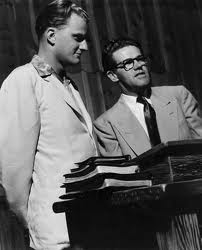
Mini Biography of Dawson Trotman: The Reverend Billy Graham preached the funeral of Dawson Trotman in 1956 after Trotman died while rescuing a swimmer at an upstate New York lake. “I think Dawson Trotman has personally touched more lives [for Christ’s sake] than anybody that I have ever known,” Graham said. Graham knew Trotman and the ministry he founded—The Navigators—quite well, using material Trotman developed as follow-up instruction for his crusades. The Navigators’ influence has since grown to worldwide proportions with about 3,600 staff representing 60 nationalities working in 101 countries. Trotman founded The Navigators in 1934. He originated its Bible teaching material and led it through its formative years as it expanded from an initial emphasis on discipling military personnel to reaching college students and laymen. At the heart of Trotman and the ministry he founded was and is the discipleship of believers—grounding Christians in the spiritual disciplines of prayer, worship, Bible study, and service. (Billy Graham and Dawson Trotman pictured at right in the 1950’s)

The Conversion: Trotman’s high school years featured impressive credentials. He was class valedictorian, student body president, chairman of the student council, and captain of the basketball team. However, the next several years saw Trotman’s life drift dangerously. He gambled. He drank. He became a noted pool shark. However, a late night encounter with a local policeman was the catalyst for a spiritual encounter with Jesus Christ. Drunk and unable to find his car, Trotman was arrested at an amusement park. Fortunately, the officer saw a deeper problem than alcohol. “Son, do you like this kind of life?” the officer questioned. “Sir, I hate it,” Trotman replied. The policeman returned Trotman’s keys and encouraged him to change his lifestyle. Two days later, Trotman attended a youth gathering at a local church where contests were conducted for Scripture memorization. Given ten verses on salvation, Trotman was the only person in the group who memorized them for the next week’s meeting. Given ten more verses to memorize on spiritual growth for the next week, Trotman quickly grasped them as well. Several weeks later, one of the Scripture verses on salvation flashed through his mind. And it was then that he asked for Christ to change his life. “Oh God,” he said, “whatever it means to receive Jesus, I want to do it right now.”

The Beginning Of Ministry: Trotman spent the next several years engaging in intensive personal evangelism while committing himself to a disciplined life of prayer. As usual, his focus was on the intake and absorption of God’s Word. In 1934, Trotman was asked to visit a sailor, Les Spencer, and share God’s Word with him. Betty Skinner, the author of Trotman’s biography Daws, described the scene: “Parked by a schoolhouse, they were pouring over the Scriptures when a security guard approached and asked what they were doing. ‘Reading the Bible,’ Trotman answered and seized the opportunity to witness . . . Dawson turned from one passage to another to explain the Gospel and answer all the defenses of the hapless guard. “On the way back to the landing [Spencer] said, ‘Boy, I’d give my right arm to know how to use the Word like that.'” It marked the beginning of The Navigators ministry, so named for its nautical origins. Spencer led another to Christ who in turn led still others to salvation. The discipleship ministry of The Navigators was birthed, and the process of winning and discipling men and women for Christ continues throughout the world today.

Memorization And Meditation: Trotman’s conversion experience centered on memorization and meditation on God’s Word. He was a discipler of men because he himself was first discipled by God through the Scriptures. His emphasis on memorizing Scriptures, arranged on topical themes, continues to be part of the core curriculum of The Navigators today. Memorization was not approached in legalistic fashion by Trotman, who understood that God’s Spirit must create the desire and will to mine the treasures of His Word. Regular Scripture memorization and meditation are fundamental to experiencing an abundant Christian life. The psalmist “treasured” God’s Word in his heart (Psalm 119:11) and meditated on the Scriptures “day and night.” (Psalm 1:2) As you write God’s Word on the tablet of your heart, you will find your mind renewed and ready to face temptations, challenges, and adversity from God’s perspective of truth. It is truth that sets you free; and the more Scripture you store in your heart, the more like Christ you will become. Graham summed up Trotman’s life this way: “Dawson loved the Word of God. I think more than anybody else he taught me to love it. He always carried his Bible around and always had it marked. The Word of God was sweetness to him.” 

If you want to read more on Dawson Trotman. Betty Skinner has written a very enjoyable biography on his life entitled “DAWS” – Dawson’s beloved nickname. Product description: From his youth as a liar, gambler, and pool shark to manhood as an indefatigable witness for his Lord Jesus Christ, Dawson Trotman revolutionized the practice of evangelism and founded one of the most widespread and respected Christian organizations in the world today. This moving historical account, drawn from the memories of those whose lives he touched and from the author’s firsthand knowledge, will both encourage you in your faith and inspire you to action. 391 pages, paperback, from Navpress.

John Foxe’s Book of Martyrs – April 18 in Christian History

John Foxe’s Book of Martyrs – April 18 in Christian History

 Series: On This Day in Christian History, April 18, 1587 By *R. J. Morgan

John Foxe entered Oxford still a boy. He was eventually elected a fellow of Magdalen College, and from 1539 to 1545 he studied church history. He converted to Protestantism and was forced to resign his academic position as a result. In 1550 he was ordained by Nicholas Ridley, Bishop of London, and he became friends with Hugh Latimer, William Tyndale, and Thomas Cranmer. But when Queen Mary ascended the throne, tilting England back into Catholicism, Foxe fled. In Switzerland he heard horrible news filtering from England. Latimer, Ridley, Cranmer, and countless others were being captured and burned.

An idea formed in Foxe’s mind, soon obsessing him. He would compile a record of the persecution of God’s people. Living on the edge of poverty, Foxe spent every spare moment on his project. He labored by day in a printing shop to support his family, but by night he pored over his manuscript. He wrote vividly, giving details, painting word pictures. In 1559 Foxe published his book on the continent—732 pages in Latin. Returning to England under Protestant Elizabeth, he resumed pastoral work and translated his book into English. John Day published it in London in 1563 under the title Acts and Monuments of These Latter and Perilous Days Touching Matters of the Church (title page of the first English edition in 1563 at right).

But Foxe wasn’t finished. He spent four years interviewing witnesses, tracking down documents, finding letters. After long days of church ministry, he sat by flickering candlelight, continuing his writing. In 1570 a second edition appeared—two large volumes totaling 2,315 pages—then a third and fourth. Foxe’s Book of Martyrs was one of the most important publications in Elizabeth’s reign, having an extraordinary impact. It was in every cathedral alongside the Bible. Francis Drake read it aloud on the Western seas. It inspired the Puritans. It took the world by storm.

But it also took a toll on Foxe’s personal health, and he never recovered. He died from weariness on April 18, 1587. But he had given us his life’s crowning achievement.

“At that time the church in Jerusalem suffered terribly. All of the Lord’s followers, except the apostles, were scattered everywhere in Judea and Samaria…The Lord’s followers who had been scattered went from place to place, telling the good news.” – Acts 8:1-4

Author of Article: Robert J. Morgan is the pastor of Donelson Fellowship in Nashville, Tennessee and the author of the best-selling Then Sings My Soul, From This Verse, On This Day, and Red Sea Rules. He conducts Bible conferences, parenting and marriage retreats, and leadership seminars across the country.

*Other Significant Events on April 18th in Church History:

 246: Cyprian of Carthage was baptized. Cyprian was a notable North African bishop who wrote about the unity of the Church. He died a martyr.

1161: Theobald, archbishop of Canterbury, died. He had been chosen as archbishop in 1138 for his meekness, and he remained a moderate churchman for most his life. However, he disobeyed an order by King Stephen not to attend a council in Reims. He also refused to crown Stephen’s son, Eustace, and crowned Henry the II instead. His successor was Thomas a Becket.

1587: Isabella Thobum opened her school, one of the first for the women of India. Seven frightened girls were coaxed into attending. Their priests had warned them that the gods would destroy them if they gained education.

1874: David Livingstone’s remains were interred at Westminster Abbey in London. The explorer missionary died in Africa.

*Adapted from This Day In Christian History, edited by A Kenneth Curtis and Daniel Graves, Camp Hill, PA: Christian Publications.

21 Positive Contributions Christianity Has Made Through the Centuries By D. James Kennedy

Despite its humble origins, the Church has made more changes on earth for good than any other movement of force in history. To get an overview of some of the positive contributions Christianity has made through the centuries, here are a few highlights:

(1) Hospitals, which essentially began during the Middle Ages.

 (2) Universities, which also began during the Middle Ages. In addition, most of the world’s greatest universities were started for Christian purposes.

 (3) Literacy and education for the masses.

(4) Capitalism and free enterprise.

(5) Representative government, particularly as it has been seen in the American experiment.

(6) The separation of political powers.

(7) Civil liberties.

(8) The abolition of slavery, both in antiquity and in more modern times.

(9) Modern science.

(10) The discovery of the New World by Columbus.

(11) The elevation of women.

(12) Benevolence and charity; the good Samaritan ethic.

(13) Higher standards of justice.

(14) The elevation of common man.

(15) The condemnation of adultery, homosexuality, and other sexual perversions. This has helped to preserve the human race, and it has spared many from heartache.

(16) High regard for human life.

(17) The civilizing of many barbarian and primitive cultures.

(18) The codifying and setting to writing of many of the world’s languages.

(19) Greater development of art and music. The inspiration for the greatest works of art.

(20) The countless changed lives transformed from liabilities into assets to society because of the gospel.

(21) The eternal salvation of countless souls.

The last one mentioned, the salvation of souls, is the primary goal of the spread of Christianity. All the other benefits listed are basically just by-products of what Christianity has often brought when applied to daily living.

When Jesus Christ took upon Himself the form of a man, He imbued mankind with dignity and inherent value that had never been dreamed of before. Whatever Jesus touched or whatever He did transformed that aspect of human life.

Many are familiar with the 1946 film classic It’s a Wonderful Life, wherein the character played by Jimmy Stewart gets a chance to see what life would be like had he never been born. The main point of the film is that each person’s life has an impact on everybody else’s life. Had they never been born, there would be gaping holes left by their absence. Jesus has had an enormous impact—more than anybody else—in history. Had he never come, the hole would be a canyon about the size of a continent.

For Reflection:

How different would your life be, had Jesus never been born?

What are you most thankful for – because of Jesus?

*Dennis James Kennedy (November 3, 1930 – September 5, 2007), better known as D. James Kennedy, was an American pastor, evangelist, and Christian broadcaster. He founded the Coral Ridge Presbyterian Church in Fort Lauderdale, Florida, where he was senior pastor from 1960 until his death in 2007. Kennedy also founded Evangelism Explosion International, Coral Ridge Ministries, the Westminster Academy in Ft. Lauderdale, the Knox Theological Seminary, and the Center for Reclaiming America for Christ, a socially conservative political group. In 1974, he began Coral Ridge Ministries, which produced his weekly religious television program, The Coral Ridge Hour, carried on various networks and syndicated on numerous other stations with a peak audience of three million viewers in 200 countries. The above 21 points were adapted from the Introduction to the fascinating book What if Jesus Had Never Been Born? Coauthored by D. James Kenney, and Jerry Newcombe, Nashville, Thomas Nelson, 2001. They go on to elaborate with overwhelming evidence the gaping hole that would exist – had Jesus never been born.

Interesting Christian Derivations of Expressions and Sayings By Alvin J. Schmidt

                         CHART OF CHRISTIAN DERIVATIVES                      

EXPRESSION/SAYING

SOURCE/ORIGIN

CURRENT MEANING

“Good Samaritan”

Jesus Christ’s parable (Luke 10:30-37)

Someone who is kind and helpful, especially to strangers

“Avoid it like the plague”

St. Jerome, early 5th cent.

Spiritual kinship with someone not biologically related

“Doubting Thomas”

Thomas doubting Christ’s resurrection (Jn. 20:24-28)

Someone who doubts valid evidence

“Filthy lucre”

St. Paul (Titus 1:11)

Often applied to all money

“The gospel truth”

The veracity of Jesus Christ’s life and sayings in the four NT Gospels

A synonym for absolute truth

“Harmless as doves”

Jesus Christ (Matt. 10:16)

Someone who does no one any harm

“A Judas”

Betrayal of Jesus by Judas (NT Gospels)

An inside person who betrays a friend or group

“Rob Peter to pay Paul”

Assets of St. Peter’s church in London being used to repair St. Paul’s cathedral, 1540’s

Taking money from one person or group to assist another

“Thorn in the flesh”

St. Paul’s enduring personal ailment (2 Corinthians 12:7)

Any problem that continues to vex someone

“Turn the other cheek”

Jesus’ Sermon on the Mount (Matthew 5:39)

Not getting even with one’s enemy

“When in Rome, do as the Romans do”

St. Ambrose, ca. early 390’s

Adopt the manners of the place one visits

“Wolf in sheep’s clothing”

Jesus Christ (Matthew 7:15)

An appealing person can be deceptive

“Brother”

A concept expressed by Jesus Christ (Mark 3:3)

Spiritual kinship with someone not biologically related

 Chart Adapted From: How Christianity Changed The World By Alvin J Schmidt. Grand Rapids, Zondervan, 2004.

Alvin J. Schmidt (PhD, University of Nebraska) retired in 1999 as professor of sociology at Illinois College in Jacksonville, Illinois, where he still lives. He is the author of several books, including The Great Divide: The Failure of Islam and the Triumph of the West, and the acclaimed How Christianity Changed The World, and served as a consulting editor for Dictionary of Cults, Sects, Religions and the Occult.


The Gospel Brings About Reformation By Dr. Philip Ryken

Series: On This Day in Christian History

 Martin Luther at the Diet of Worms – April 17, 1521 – By *Dr. Philip Ryken

It is customary to date the beginning of the Protestant Reformation to October 31, 1517, the day on which a young German monk and Bible scholar named Martin Luther nailed his famous “Ninety-five Theses” to the door of Wittenburg.

Luther’s document attacked the common Roman Catholic practice of allowing people to reduce the punishment for their sin by buying indulgences. His “ninety-five-Theses” also gave the first inkling of his major personal and theological breakthrough: the doctrine of justification by faith alone (If you’re not familiar with them, I have posted Luther’s 95 Theses on this website under the Category Church History).

Luther needed a breakthrough because he had long been troubled by his sins. How could an unrighteous man like himself serve a righteous God? As he later wrote:

“Though I lived as a monk without reproach, I felt that I was a sinner before God with an extremely disturbed conscience. I could not believe that he was placated by my satisfaction. I did not love, yes, I hated the righteous God who punishes sinners, and secretly, if not blasphemously, certainly murmuring greatly, I was angry with God” (Luther’s Works, eds. Jaroslav Pelikan [vols. 1-30] and Helmut T. Lehmann [vols. 31-55], Minneapolis: Fortress and Concordia, 1955-76, 34:336-37).

What especially troubled Luther was Paul’s announcement at the beginning of his epistle to Romans: “In the gospel a righteousness from God is revealed, a righteousness that is by faith from first to last” (Rom. 1:17). This verse was a terror to Luther because the only righteousness he ever heard of was the kind that destroyed sinners like himself.

Then Luther had his breakthrough:

At last, by the mercy of God, meditating day and night, I gave heed to the context of the words, namely, “In it the righteousness of God is revealed, as it is written, ‘He who through faith is righteous shall live.’” There I began to understand that the righteousness of God is that which the righteous lives by a gift of God, namely by faith. And this is the meaning: the righteousness of God is revealed by the gospel, namely, the passive righteousness with which a merciful God justifies us by faith, as it is written, “He who’s faith is righteous shall live.” Here I felt that I was altogether born again and had entered paradise itself through open gates (Luther’s Works, 34:336-37).

That was the beginning of the Reformation, but only the beginning. Luther soon attracted the attention of the pope, not so much for his doctrine of justification as for his criticism of the church. But during the next several years it would still have been possible for the church to have been reformed without being divided. It was not until the Diet of Worms (“Diet” here is a meeting – not the process of losing weight) that the break between the Reformers and the Catholics became final, which is why that meeting, which took place on April 17, 1521, was the most significant event in the church history of the sixteenth century.

Luther had been summoned to Worms by the Holy Roman Emperor himself, Charles V. When the Reformer entered the imperial chamber, he found his writings spread out on the table. These were the writings the emperor wanted Luther to recant, declaring publicly that everything he had ever written about the gospel and the church was mistaken.

Luther hardly knew what to say. Some of his works were devotional writings which no one would wish to recant. Others contained criticisms of the Roman Catholic church which no one could deny. Yet Luther was aware that some of his other writings contained harsh criticisms he perhaps ought to recant. But this he would only do on one condition, namely, that someone exposes his errors “by the writings of the prophets and the evangelists.” “Once I have been taught,” Luther went on to say, “I shall be quite ready to renounce every error, and I shall be the first to cast my books into the fire.”

This was hardly the answer the emperor and his counselors were looking for, especially since they did not have the theological expertise to refute Luther themselves. Again they pressed him to repudiate his doctrine. Finally, Luther spoke his famous words:

Unless I am convinced by the testimony of the Scriptures or by clear reason (for I do not trust either in the pope or in councils alone, since it is well-known that they have often erred and contradicted themselves), I am bound by the Scriptures I have quoted and my conscience is captive to the Word of God. I cannot and I will not retract anything, since it is neither safe nor right to go against conscience. God help me. Amen. Here I stand, I cannot do otherwise (For the full account of Luther’s trial, see Luther’s Works 32:103-31).

With these words, Luther staked all his theological claims on the second great principle of the Reformation: Scripture alone (sola scriptura). For the churches of the Reformation, the Bible and the Bible alone was the final authority for Christian faith and practice.

When Luther refused to place the authority of the church on par with the authority of Scripture, he was taking a stand that would end up dividing the church. And rightly so! The church can only be the church when it preaches the gospel of salvation by grace alone through faith alone in Christ alone, as is taught in Scripture alone.

The great doctrines of the Reformation are as badly needed today as they were in the sixteenth century. Pope John Paul II announced that would grant an indulgence to anyone who made a pilgrimage to Israel in the year 2000. This is just one example of the way the Roman Catholic Church still encourages its members to pay for their sins by doing good works. For this and many other reasons, the world still needs to hear the voice of Martin Luther, who wrote the following paraphrase of Psalm 130:

From trouble deep I cry to thee,

Lord God, hear thou my crying;

Thy gracious ear, oh, turn to me,

Open it to my sighing.

For if thou mean’st to look upon

The wrong and evil that is done,

Who, Lord, can stand before thee?

With thee counts nothing but grace

To cover all our failing.

The best life cannot win the race,

Good works are unavailing.

Before thee no one glory can,

And so must tremble every man,

And live by thy grace only (Luther’s Works 53:223).

About the Author: *Philip Graham Ryken (D.Phil., University of Oxford) is the 8th president of Wheaton College and, prior to that, served as senior minister at Philadelphia’s historic Tenth Presbyterian Church. He has written several books for Crossway, and has lectured and taught at universities and seminaries worldwide. Dr. Ryken and his wife, Lisa, live in Wheaton and have five children. The article above is adapted from Chapter 41 in his book He Speaks To Me Everywhere, Phillipsburg, New Jersey: P&R Publishing, 2004. Historical details of this article were drawn chiefly from Mark A. Noll, Turning Points: Decisive Moments in the History of Christianity, Grand Rapids: Baker, 1997, 151-74; among the best biographies of Martin Luther is Roland H. Bainton, Here I Stand: A Life of Martin Luther, New York: Abingdon, 1950.

*Significant Events on April 17th in Church History:

326: St. Alexander died. He was appointed to the patriarchate of Alexandria instead of Arius, who denied Christ’s divinity. Alexander was kind to Arius, even while supporting Athanasius, the defender of the Trinity.

341: Simeon, bishop of Seleucia, Ktesiphon (located south of Baghdad), was executed for refusing to levy an extra war tax on his church people. He was one of many Persian martyrs.

858: Pope Benedict III died. Emperors Lothaire and Louis II had confirmed Anastasius in his place, but popular protest brought Benedict back.

1640: Robert Torkillus of Sweden became the first Lutheran pastor to arrive in the American colonies when they landed in Delaware.

1713: William Law was suspended from his pulpit for nonconformist views. He is famed as the author of A Serious Call to a Devout and Holy Life and a later book entitled The Power of the Spirit.

1912: The International Conference of the Negro began. Although not explicitly Christian, out of it came a renewed interest to reach Africa for Christ.

*Adapted from This Day In Christian History, edited by A Kenneth Curtis and Daniel Graves, Camp Hill, PA: Christian Publications.