How Christian Coaching Can Help You? By Dr. Gary R. Collins

After being a senior pastor for over twenty years and now being a full-time “Pastoral Life Coach” I’m often asked by people – “What is life coaching and how is it different from counseling?” I don’t think I’ve come across a better answer for this than that of *Gary R. Collins in Appendix C in his fantastic book Christian Coaching, published by NavPress, Colorado Springs: 2009. Gary Collins describes almost perfectly what I seek to do with those I coach:

COACHING FACTS

 What is coaching?

The first time it was ever used, the word coach described a horse-drawn vehicle—a stagecoach that would get people from where they were to where they wanted to be. A modern bus does the same thing, and often these vehicles are called coaches. Most often today, coaches are people who help athletes and teams more from one place to another that is better and where they want to be. Even Tiger Woods has a coach to help his game of golf.

But coaches also help musicians, public speakers, and actors, who rely on coaching to improve their skills, overcome obstacles, remain focused, and get to be where they want to be. Coaching is very popular in business and corporate settings around the world where “executive coaches” help managers and other business leaders deal with change, develop new management styles, make wise decisions, become more effective, cope with their hyperactive lifestyles, and deal with stress.

Executive coaches work with people in business to help them move from where they are to levels where they are more competent, fulfilled, and self-confident than they would have been otherwise.

In summary, coaches guide people from where they are toward the greater competence and fulfillment they desire. Christian coaching is the art and practice of working with a person or group in the process of moving from where they are to where God wants them to be {My [DPC] own definition is similar, “Christian Coaching is taking a person from where they are to where God wants them to be in reflecting the image of Christ.”}.

Why would anybody want a coach?

 Coaching helps people who want to:

  • Get unstuck

  • Build their confidence

  • Expand their vision for the future

  • Fulfill their dreams

  • Unlock their potential

  • Increase their skills

  • Move through transitions

  • Take practical steps toward their goals

How does coaching differ from counseling? 

  • Unlike counseling or therapy, coaching is less threatening, less about problem solving, more about helping people reach their potential.

  • Coaching is not for people who need therapy to overcome painful influences from the past; coaches help people build vision and move toward the future.

  • Coaching is not about looking back; it’s about looking ahead.

  • Coaching is not about healing; it’s about growing.

  • Coaching focuses less on overcoming weaknesses and more on building skills and strengths.

  • Usually coaching is less formal than the counselor/counselee relationship; more often it is a partnership between two equals, one of whom has experiences, perspectives, skills, or knowledge that can be useful to the other.

What do coaches do to help others? 

Coaches stimulate better skills. Good coaching helps people anticipate what they could become, overcome self-defeating habits or insecurities, manage relationships, develop new competencies, and build effective ways to keep improving.

Coaches stimulate vision. Many individuals and churches have no clear vision. They keep doing what they have done for years, without much change and with little expectation that things will ever be different. Coaches work with individuals and organizations (including churches) as they think beyond the present, more clearly envision the future, and plan how to get there.

Coaches help people grow through life transitions. Whenever we encounter major changes in our lives—such as a new job, a promotion, a move, the death of a loved one, the launch of a new career, or retirement—we face uncertainty and the need to readjust. Experienced coaches better enable people to reassess their life goals, find new career options, change lifestyles, get training, reevaluate their finances, or find information so they can make wise decisions.

Coaches guide Christians in their spiritual journeys. Many believers understand the basics of the faith and aren’t looking to be discipled. But they need focused time with somebody who has been on the spiritual road longer, who models Christlikeness, can point out the barriers to growth, and can guide the journey.

Coaches speak the truth in love. Good coaches know that sometimes the best way to help is by refusing to ignore harmful behavior patterns. Instead, coaches nudge people to deal with attitudes and behavior that should be faced and changed.

What happens in coaching?

Coaching is a relationship that most often is client centered and goal directed. Every coaching situation is unique, but usually coaches will begin by exploring the issues that the person wants to change. In what areas does he or she want to grow? Sometimes the person wants to be a better leader, better self-manager, or someone with a clearer perspective about where to go in the future. Christians in coaching may seek to determine where God appears to be leading them to go.

There is also the need for better awareness of where the person is at present. What are his or her strengths, weaknesses, abilities, interests, passions, spiritual gifts, values, worldviews, and hopes? Often the coach will use assessment tools to enable people to learn more about themselves.

Then comes vision. Coaches might assist people, organizations, or churches in formulating life-vision or life-mission statements. Coaches might ask, for example, “Considering your gifts, abilities, driving passions, and unique God-given personality, what is your life mission?” It takes time to answer a question like that, but without a clear vision, people, churches, organizations, and even governments tend to drift with no direction.

At some time, coaches will help people set goals and plan ways to reach these goals.

When obstacles get in the way, coaches challenge, encourage, and give accountability so the person can get past the obstacles and experience success. A coach can help you remove the blinders, allowing you to see what you may not recognize and give support as you move forward. A Christian coach is there for you, prayerfully listening to your concerns and asking questions that will give you clarity on your situation, get you past your own blocks, realize your God-given potential, and challenge you to be your best.

{DPC I’d like to add my two cents about the coaching I do – I love coaching it allows me to focus on the specific needs of individuals and organizations and intentionally help them become Christ focused and thus more strategic and effective in that which truly satisfies and will last forever. The primary means I use to help people in coaching is by helping individuals develop what I call a ‘Vertical Life Plan.” A VLP is a personalized goal plan to integrate all of life holistically centered in and around Jesus as your Leader, and you as a devoted follower of Him as your Savior and Lord.  If you are interested in personal or organizational life coaching I’d love to hear how I can serve you – Dr. David P Craig – I can best be reached at: LifeCoach4God@gmail.com}

*Gary R. Collins is a licensed clinical psychologist with a Ph.D. in clinical psychology from Purdue University. He is the author of numerous articles and over 50 books, including Christian Counseling: A Comprehensive Guide, The Biblical Basis of Christian Counseling, and Christian Coaching: Helping Others Turn Potential into Reality. Gary was general editor of the thirty-volume Resources for Christian Counseling series of professional counseling books mostly published in the 1980s, the Word Christian Counseling Library of cassette tapes, and the twelve-volume Contemporary Christian Counseling series of books that appeared in the early 1990’s.

In December 2001 NavPress published Gary’s book Christian Coaching, a book that has been revised, expanded, updated, and published in 2009. The third edition of Christian Counseling (revised, expanded and completely updated) was published by Thomas Nelson publishers in 2007, followed by an accompanying Casebook of Christian Counseling, also published by Nelson.

Gary Collins grew up in Canada and graduated from McMaster University in Hamilton, Ontario and the University of Toronto before taking a year of study at the University of London. His first teaching occurred during that year as he taught courses for the University of Maryland in Germany and England. Gary spent several years in the Royal Canadian Navy Reserve before moving to the United States to study clinical psychology at Purdue University. He took his clinical psychology internship at the University of Oregon Medical School Hospitals (now University of Oregon Health Sciences University) in Portland and subsequently enrolled at Western Seminary for a year of theological study.

At Western he met his wife Julie. They were married in 1964 and moved to Minnesota where Gary taught psychology at Bethel College in St. Paul. Their two daughters, Lynn and Jan were born in Minnesota. After a year on the faculty of Conwell School of Theology in Philadelphia, the Collins family moved to Illinois where Gary taught psychology and counseling at Trinity Evangelical Divinity School. For much of that time he was department chairman.

In 1991, Gary assumed responsibility for co-leading the fledgling American Association of Christian Counselors. In the seven years that followed, Gary was AACC Executive Director and later the organization’s first President. During that time AACC grew from about 700 paid members to more than 15,000. In addition to these duties, Gary founded Christian Counseling Today, the official AACC magazine which he edited for several years. In October, 1998 Gary Collins resigned from his responsibilities with AACC so he could devote more time to developing Christian counseling and Christian coaching worldwide. In addition to his other responsibilities, he currently holds a position as Distinguished Professor of Coaching and Leadership at Richmont Graduate University (formerly Psychological Studies Institute) in Atlanta and Chattanooga. In addition he is Distinguished Visiting Professor in the School of Psychology and Counseling at Regent University in Virginia where he consults with the faculty and annually teaches an accredited on-line doctoral course in coaching.

Gary has accepted invitations to speak in more than fifty countries and he continues to travel overseas and within North America to give lectures and lead workshops on Christian counseling, leadership, and Christian coaching. Gary also has a small coaching practice, writes the weekly Gary R. Collins Newsletter, and mentors a number of young, emergent leaders. He is active in a local fitness center, is blessed with boundless energy and good health, and has no plans to retire. Gary and Julie Collins live in northern Illinois, not far from their two daughters, their son-in-law, and their grandson Colin Angus McAlister.

Are You A Spiritual Orphan or Child of God? By Arrow Ministries

(Chart Below Adapted from Arrow Ministries – Original Source is Unknown)

SUBJECT ORPHANED FROM GOD MARKS OF A CHILD OF GOD
Condition Bondage Liberty
Dependency Independent/self-reliant Interdependent/Acknowledges need
Expression of Love Guarded and conditional; based upon others’ performance as you seek to get your own needs met Open, patient, and affectionate as you lay your life and agendas down in order to meet the needs of others
Future Fight for what you can get! Release your inheritance!
Handling Others Faults Accusation and exposure in order to make yourself look good by making others look bad Love covers as you seek to restore others in a spirit of love and gentleness
Image of God See God as Master See God as loving Father
Motive for Purity ‘Must” be holy to have God’s favor, thus increasing a sense of shame and guilt “Want to” be holy; do not want anything to hinder your intimate relationship with God
Motive for service A need for personal achievement as you seek to impress God and others, or no motivation to serve at all Service that is motivated by a deep gratitude for being unconditionally loved and accepted by God
Need for approval Strive for the praise, approval, and acceptance of man Totally accepted in God’s love and justified by grace
Peer Rela-

tionships

Competition, rivalry, and jealousy toward others’ success and position Humility and unity as you value others and are able to rejoice in their blessings and success
Position Feel like a servant/slave Feel like a beloved son/daughter
Sense of God’s Presence Conditional and Distant Close and intimate
Source of Comfort Seek comfort in counterfeit affections: addictions, compulsions, escapism, busyness, hyper-religious activity Seek times of quietness and solitude, to rest in the Father’s presence and love
Theology Live by the love of Law Live by the Law of Love
View of Admonition Difficulty receiving admonition; you must be right so you easily get your feelings hurt and close your spirit to discipline See the receiving of admonition as a blessing and need in your life so that your faults and weaknesses are exposed and put to death
View of Authority See authority as a source of pain; distrustful toward them and lack a heart attitude of submission Respectful, honoring; you see them as ministers of God for good in your life
Vision Spiritual ambition; the earnest desire for some spiritual achievement and distinction and the willingness to strive for it; a desire to be seen counted among the mature To daily experience the Father’s unconditional love and acceptance and then be sent as a representative of his love to family and others


15 Great Questions for Personal Evaluation by Carson Pue

(Adapted from *Carson Pue, Mentoring Leaders, Grand Rapids, MI: Baker, 2005, p. 243)

 Spiritual Questions

Distractions: Have you used anything other than God in an attempt to meet your emotional or spiritual needs this week?

God’s Word: Have you been purposefully filling your mind with the knowledge of God’s Word daily? If not, how often? How do you plan to change?

Fasting: Have you fasted and prayed in the last month? If not, when was the last time? When have you next scheduled these disciplines?

Obedience: Is your conscience clear? If not, why? How do you plan to attain a clear conscience?

 Physical Health Questions

Sleep: Are you getting enough sleep each night? If not, how much are you getting? How do you plan to change?

Exercise: Are you exercising daily? If not, how often are you exercising? How do you plan to change?

Eating: Are you eating properly? If not, what are you eating/not eating? How do you plan to change?

Substances: Are you abusing harmful substances? If not, when and how often have you taken them? How do you plan to change?

 Action Oriented Questions

Finances: Where are you financially right now? Are things under control? Are you feeling anxious? Is there any great debt? How are you planning to proceed in this area of your life?

Purity: Have you kept your mind pure (thoughts of anger, bitterness, movies, magazines, Internet pornography, other)? If not, when did you fall?

What temptations need to be removed or precautions taken to prevent it?

Material Goods: Do you have anything that is used for evil needing to be destroyed or removed? If so, what? When and how will you (we) destroy or remove them?

Control: Have you lost control either verbally or otherwise since we last met? If so, when? When and how will you do something to restore and correct your actions?

Relational Questions

Deposits: Have you made positive emotional and spiritual deposits with your kids and your spouse? If not, why? What might you be able to do to make this a natural response?

Family: Have you offended any family member since we last met? If so, when? When and how will you restore and correct those actions?

Truthfulness: Have you told the whole truth in your answers to the questions I have asked you? If not, what do you need to correct? What actions do we need to take to stay and remain accountable?

Process: Is the asking of any of these questions adequate for you? If not, what changes are needed? Who else needs to be a part of this process?

*Carson Pue is the Executive Director at First Baptist Church right smack in the heart of downtown Vancouver, Canada. He describes the church this way, “Congregating in this historic stone building in the very heart of the downtown is a community. We are young, old and in-between, rich, poor, employed and re-training, multicultural, families and singles, Bible scholars, seekers. All share a heart for the city.”

For fourteen years Carson served as CEO of Arrow Leadership a ministry recognized as a global leader in Christian leadership development. Arrow develops leaders worldwide “to be led more by Jesus, lead more like Jesus, and to lead more to Jesus.” They have been highly successful in transforming and enriching the lives and  leadership of men and women who are now deployed around the world.

Recognized as a leader of leaders Carson has an ability to identify leaders and invest wisdom into their development through mentoring, teaching and spiritual guidance.He is also best-selling author: “Mentoring Leaders: Wisdom for Developing Character, Calling and Competency” by Baker Books and his new  Mentoring Wisdom: Living and leading well. Carson is known through his speaking at conferences, published articles, national radio programs and commentaries. Through referrals over 50,000 leaders benefit from his monthly leadership emails “To the Point” “Mentoring Questions” and magazine columns.

With his encouraging style, creative ideas, engaging humor and ministry experience, people find Carson well fitted for his role. In a straightforward manner Carson shares both from success and failure in ministry, believing that leaders learn from both. He is a popular keynote speaker on themes around leadership, spiritual development and the realities of being a pastor today.Carson extends his leadership by serving on the board of directors for World Vision,  Crossroad Communications and CTS Television Network. In addition he is an advisor for the boards of The Billy Graham CenterTruefaced, and the Entrepreneurial Leaders Organization.  He is a trusted advisor to Christian leaders across Canada and the USA and connects globally with The Lausanne Movement and World Evangelical Alliance.

When not traveling the world encouraging leaders, he loves sailing with his BFF and first mateBrenda whom he has been married to since 1976. He loves time with his three sons, two daughters by marriage and three grandsons. He is also restored by laughter, sailing, Ireland, writing and spiritual retreats.

Dr. Zack Eswine’s Sermon Preparation Help For Preaching in a Post-Everything World

 *Adapted from Appendix 1 in Zach Eswine’s outstanding award winning book

Preaching to a Post-Everything World: Crafting Biblical Sermons that Connect with our Culture (Grand Rapids, MI.: Baker, 2008).

Use the Four Stories in Six Steps


^Day/Hour – (explanation: Some might use one day for each step. For these preachers I have broken steps down into days. Others might use each step in one day. For these preachers I have broken the steps down into hours.)

 ^Monday/Hour One – Step One

 Story #1 – Goal = What does this text teach me about God?

Identify the textual manner (word type and mood).

Locate parrot words. Connecting words, and divine comments.

Interrogate the big idea with questions (who, what, when, where, why, how)

Show and tell from the text.

Identify the echoes of redemption (armor, promise, fruit, gift, diaconal, miracle, community, divine silence, himself).

Find the illustrative path (picture, sensory, and creation words).

^Tuesday/Hour Two – Step Two

 Story #2 – Goal = What does this text teach me about people?

Identify echoes of creation (worship, relationship, vocation, conscience)

Identify echoes of the fall (fallen, finite, fragile, faltering)

Identify idol noise (superstition, skepticism, suspicion, stardom, stealing, squandering, sophistry).

Expose my moralistic responses to fallen echoes and idol noise.

Locate the vine.

^Wednesday/Hour Three – Step Three

 Story #3 – Goal = What does this text teach me about life under the sun?

Identify the Context of Reality (COR) (life situations, life seasons).

Discern my expository bans (censoring, muting, equivocating, evicting).

Expose my simplistic response to life under the sun.

Account for the accents of my hearers (memoir, marketplace, lore, land).

Translate cultural connections with biblical redirection (“You have heard it said…, but I say to you…”).

Describe the third way.

Account for the consciences of my hearers (hard-hearted and soft-hearted).

Bring echoes of heaven and hell into these features as appropriate.

^Thursday/Hour Four – Step Four

 Story #4 – Goal = What does this text say to me?

Receive instruction (grieving and quenching the Spirit).

Locate the vine.

Seek repentance.

Find forgiveness.

Give thanks and praise.

Testify.

^Friday/Hour Five – Step Five

 Goal: Place the four stories into a deductive or inductive sermon form


^Saturday/Sunday/Hour Six – Step Six

 Goal = Pray the four stories

Pray for illumination = Psalm 119:18, “Open my eyes, that I may behold wondrous things out of your law.”

Pray for a message = Ephesians 6:19, “and also for me, that words may be given to me in opening my mouth boldly to proclaim the mystery of the gospel.”

Pray for an open door = Colossians 4:3-4, “At the same time, pray for us, that God may open to us a door for the word, to declare the mystery of Christ, on account of which I am in prison.”

Pray for effectiveness = 2 Thessalonians 3:1, “Finally, brothers, pray for us, that the word of the Lord may speed ahead and be honored, as happened among you,”

Pray for clarity = Colossians 4:4, “that I may make it clear, which is how I ought to speak.”

Pray for boldness = Ephesians 6:20, “for which I am an ambassador in chains, that I may declare it boldly, as I ought to speak.”

Pray for a deliverance = 2 Thessalonians 3:2, “and that we be delivered from wicked and evil men. For not all have faith.”

*Zack Eswine serves as the Senior Pastor of Riverside Community Church in St. Louis, Missouri. His role focuses his time on setting vision, preaching, spiritual formation and pastoral care.

Dr. Eswine has served in pastoral roles for over twenty years. He served as Assistant Professor of Homiletics and Director for Doctor of Ministry for six years at Covenant Theological Seminary.  Zack’s most recent book, won Preaching Today’s Book of the Year Award in 2009. It is entitled, Preaching to a Post-Everything World: Crafting Biblical Sermons that Connect with our Culture (Baker, 2008).  He has also written, Kindled Fire: How the Methods of C.H. Spurgeon can help your Preaching (Mentor, 2006). His forthcoming books are entitled, Preaching Barefoot: Life and Ministry as a Human Being (Crossway) and Spurgeon’s Sorrows: Handling the Darker Sides of Life and Ministry (Christian Focus).

David Martyn Lloyd-Jones on Authority in Preaching by Iain H. Murray

During the Second World War a Scot who was in the services and visiting London went to Westminster Chapel but the Chapel was closed, damaged by bombing, but on a piece of paper visitors were directed to a nearby hall. He described a ‘thin man’ wearing a tie calling the people to worship. He thought the man was a church officer, and he appreciated his prayer, but then the man began to preach, beginning quietly enough. “This must be Lloyd-Jones,” he thought. But for the next 40 minutes he was unconscious of anything else in the world, hearing only this man’s words. He had been caught up in the mystery of preaching. That man later became a well-known Church of Scotland minister called Tom Allen.

When he left that service Tom Allen was taken up with the message, not the preacher. DMLJ would have thought little of conferences addresses like this one about himself. He thought messages about contemporary men had done great injury especially during the Victorian period. With man-centeredness being the terrible bane of today’s church there is a danger in drawing attention to personalities. DMLJ would quote the words of God, “My servant Moses is dead so arise and go over to Jordan.” DMLJ prevented several would-be biographers writing anything, and reluctantly consented to Iain Murray’s official biography if only something could be written which would encourage those who were entering the gospel ministry.

DMLJ believed that God was the God of tomorrow who would raise up servants who would enjoy blessings that he himself had not known. Frequently when he prayed it was particularly for a recovery of authority and power in preaching.

One must add another observation, that preaching was not DMLJ’s exclusive concern. He was concerned with the church fellowship, prayer meetings, and the promotion of foreign missionaries, but he was convinced that the spiritual health of the church depended on the state of the pulpit. On behalf of Christ the true preacher speaks and the Lord himself is building his church in his sovereign way. So DMLJ was conscious of what he spoke of as the romance of preaching. The preacher is but an instrument in the Lord’s hands: the preacher is not in control. Preaching is the highest and most glorious calling to which anyone could be called.

So when we come to the subject of authority in preaching there are a number of ways this could be addressed and the New Testament terminology on this theme should be studied, e.g. that ‘Jesus spoke with authority’, the phrase ‘the word came with power’, and the word ‘boldness’ which is surprisingly frequent in the NT. Iain Murray’s approach was to take the characteristics of preaching with power.

(1) It always is attended by a consciousness of the presence of God.

Though a worshipper may be meeting in the midst of a large congregation of people when the preaching is with authority the individual forgets the person he has come with, and the building they are sitting in, and even the one who is preaching. He is conscious that he is being spoken to by the living God. Thus it was in Acts 2. A remarkable illustration of this is the spiritualist woman in Sandfields, drawn to hear DMLJ and conscious that she was surrounded by ‘clean’ power. For the first time she was conscious she was in the presence of God. Thomas Hooker had such a sense of God about him that it was said that he could have put a king in his pocket.

(2) There is no problem of holding the attention of the people.

It is a problem to keep people’s attention. The preacher has his chain of thought, and all the people also may have theirs which are all very different so that they are taking in very little from the preaching. But authoritative preaching gets inside people because it speaks to the heart, conscience and will. Skillful oratory cannot come anywhere near to that preaching. It made a moral and emotional earthquake in those who heard the word at Thessalonica. The well-remembered ship builder who built ships in his mind during Sundays’ sermon could not lay the first plank when he was listening to George Whitefield preach. Conviction of sin and the reality of the living God became far more important to him than his business.

One Friday night in his series of lectures on theology DMLJ was preaching from Revelation on the final judgment on Babylon and listening to that exultant message it would have been impossible to have been occupied with any other subject, the great reality was such that awareness of anything else disappeared. The very date of that occasion was accurately quoted, easily memorable to the speaker because the next day he was getting married, but all thoughts of that were gone as he saw the overthrow of great Babylon.

(3) Even children can understand it.

There is a mistake in thinking that preaching is chiefly to address the intellect, and thus the will. Rather preaching is to address the heart and soul of men and women. Preaching which accomplishes that can arrest a child as easily as a grown-up. Children did listen to DMLJ because of the character of the preaching and the sense of God about it.

(4) It is preaching that results in a change in those who listen.

It may be repentance; it may be restoration, or reconciliation; it may be strength given for those in the midst of trials, but powerful preaching brings that change. Sometimes they went away indignant and some of them were later converted. You cannot be apathetic under true preaching. Felix trembled. There was no certainty of conversions but there was a degree of certainty that there will be power in that preaching. In Mrs Bethan Lloyd-Jones’ book on Sandfields there is a reference to a professor of law at Liverpool who said that there were two men who kept the country from communism – Aneurin Bevan and DMLJ. His preaching affected communities. On November 15 1967 he was preaching in Aberfan a year after the disaster. His text was Romans 8:18 “the sufferings of the present time are not worthy to be compared to the glory to be revealed in us.” It had a great impact on the perplexed little religious community in the Taff valley.

What is Necessary for Powerful Preaching? What elements produce it?

(1) Sermons will not be marked by authority and power unless they are marked by truth that the Holy Spirit can honor.

The word of God is to be exegeted and explained. That has to be the heart of the sermon. There is a real danger that we become over concerned about such things as delivery, while the New Testament is insistent on the content: “let him speak as the oracles of God.” The authority of the preaching comes from the text of Scripture. It is God- given power which honours his own word.

Dr Lloyd-Jones grew up in a vague sentimental era with churches fascinated with the personalities and quirks of famous men. DMLJ as a man was absorbed with the glory and the greatness of the truth. A preacher lives in the truth. DMLJ expected the preacher to go through the whole Bible in his personal devotions once each year. He expected him to continue to read theology as long as he lived. The more he read the better. Preaching is theology coming through a man who is on fire.

In the latter part of his ministry there was a change in emphasis. In the first 30 years there was a stress on the importance of the historic faith, and then in the last decades a new emphasis emerged, not now on the recovery of truth but with the accompanying need of power to proclaim it.

(2) The man himself is a part of the message. He can read all the best books and give out a whole rounded exegesis of the text, but somehow the man himself has not become a part of the truth.

The less we say of ourselves in preaching the better, but the Holy Spirit does not work in preaching except through the man, and so, inevitably, not only does the message compel attention but the man himself. The man becomes a part of the message. What does that mean?

The preacher must know the power of the message he is bringing to others.

When DMLJ was 25 and at the cross-roads of his life, he became engaged to Bethan Philips, and she became conscious that her future husband was considering becoming a preacher. She was very concerned because she had never heard him preach. At that point a letter came from a missionary society inviting them to become medical missionaries in India. She was challenged by this invitation but DMLJ had no interest at all. Bethan said to him, “But how do you know that you can preach?” “I know I can preach to myself” he replied. He knew the power of the truth in his own heart.

When he was preaching on Ephesians 2 on fulfilling the lusts of the flesh and the mind he raised the question what they were? He interjected that “as I was preparing this sermon it filled me with a loathing and hatred of myself. I look back and I think of the hours I have wasted in mere talk and argumentation. And it was with one end only, simply to gain my point and to show how clever I was” (“God’s Way of Reconciliation” p.65). So DMLJ was preaching to himself before he spoke to others.

The Holy Spirit must produce the feelings in the preacher’s heart that must be in harmony with what the Spirit has breathed out.

Paul writes, “Knowing the terror of the Lord we persuade men.” Again he speaks of some “with tears” that they are enemies of the cross. One finds phrases like, “I tell you weeping …I am glad and rejoice with you all.” There was something in the way these preachers used by God spoke – “I preached what I smartingly did feel,” said Bunyan. A most important part of preaching is exhortation. In preaching we move people to do what they are listening to, and to this end there has to be a felt consciousness in the preacher of the truth of what he is saying. We have to bring our feelings into harmony with the stupendous nature of what we are saying. The men most used of God in their pulpits are those who know they had fallen far short of the wonder that should characterise the preaching.

The more he becomes part of his message then the more he forgets himself.

What is the main feeling in the preacher? It should be love – to God and to man. It is the very opposite of self-centredness. Love seeks not her own. The needs of the people spoken to take over. We forget ourselves. A baptism of Holy Spirit love gives us a love for people.

Preaching Under the Influence of the Holy Spirit.

There is a total insufficiency in ourselves or in anyone else in the world, so that we cannot preach without the Holy Spirit. 1 Corinthians 2:3 – is the key text, “And I was with you in weakness, and in fear, and in much trembling.” God makes us weak and so enables us to become true preachers. Real authority always comes out of felt weakens, and then God uses us. The preacher is the last person to be praised. To be clapped when he had finished would have horrified him.

Bethan Lloyd-Jones once listed to some men speaking about her husband and she interjected, “No one will understand my husband who does not realise that he was first an evangelist and a man of prayer.” DMLJ loved the hymn of Oswald Allen, “Today thy mercy calls us…” especially these final lines:

When all things seem against us,


To drive us to despair,


We know one gate is open,


One ear will hear our prayer

That is what he believed. His public pastoral prayer lifted many burdens long before the preaching began. He rested ultimately on the Holy Spirit being given to them that ask him. The real preacher is a mere voice sounding in the wilderness. DMLJ was criticized for being too dogmatic and authoritarian. If we are preaching from God then that has to be delivered with faith and confidence that we knows what God is saying. You have to believe definite truths in order to be saved. Men have to know that they are condemned before they can be saved. There is the utter certainty of a preacher in what he is preaching. Paul says, “We have the same spirit of faith … we also believe and we speak.” That is the fundamental thing. We are going against all that the natural man believes.

DMLJ’s faith came out in what he preached, that man was under the wrath of God, depraved and lost. He preached this with absolute conviction, and he followed it up with the cross, week by week. That authority was given by the Holy Spirit. It influenced DMLJ’s whole way of looking at things. He was a man who stood alone for most of his life and one reason was that he was conscious that the problem with man was far deeper than people in the church were prepared to acknowledge They were thinking of ‘communication to the modern man’ etc. DMLJ believed that we face not the problem of communication but what was wrong in the church itself. One of the reasons that he did not take part in the big crusades was because there was something wrong in the churches themselves. He quietly stood aside, God having kept him in the way he did, he preached evangelistically each Sunday.

The test of the presence of the Holy Spirit’s work is the presence of Christ himself in the assembly and known by the congregation. A maid worked in a Manse and there was great anticipation for the coming of the powerful preacher, Mr Cook. One maid was not enthusiastic, and she told the butcher she was fed up, “with all this fuss you would think Jesus Christ himself was coming.” Mr Cook duly came and preached and as she heard him something happened in her life. The butcher said to her with a grin on the following Tuesday, “Did Jesus Christ come?” “Yes, he did come,” she said seriously.

William Williams of Pantycelyn said, “Love is the greatest thing in religion, and without it religion is nothing.” DMLJ often quoted those words. Love has to lead the way. He thought the people were not ready to hear extended series of systematic expository sermons for the first 20 years he was in the ministry. The needs of the people were paramount because love is in our hearts.

*Summary of an Address given by Iain H. Murray at the Carey Conference 2001 at Swanwick. Iain Hamish Murray (b. 1931; Lancashire, England) was educated in the Isle of Man and at the University of Durham. He entered the Christian ministry in 1955. He served as assistant to Martyn Lloyd-Jones at Westminster Chapel(1956–59) and subsequently at Grove Chapel, London (1961–69) and St. Giles Presbyterian Church, Sydney, Australia, (1981–84). In 1957 he and Jack Cullum founded the Reformed publishing house, the Banner of Truth Trust, where he has periodically worked full-time and remains the Editorial Director.

*David Martyn Lloyd-Jones (December 20, 1899 – March 1, 1981) was a Welsh Protestant minister, preacher and medical doctor who was influential in the Reformed wing of the British evangelical movement in the 20th century. For almost 30 years, he was the minister of Westminster Chapel in London. Lloyd-Jones was strongly opposed to Liberal Christianity, which had become a part of many Christian denominations; he regarded it as aberrant. He disagreed with the broad church approach and encouraged evangelical Christians (particularly Anglicans) to leave their existing denominations. He believed that true Christian fellowship was possible only amongst those who shared common convictions regarding the nature of the faith. One of his classic works has been republished as a 40th Edition – with many new features –  (reviewed on this blog) and is entitled Preaching and Preachers.

Preachers: 10 Questions To Ask in Taking Inventory of Your Sermon by David and Warren Wiersbe

(Adapted form Elements of Biblical Preaching by David and Warren Wiersbe, Wheaton: Tyndale House, 1986)

(1) Is the message solidly based on Scripture?

(2) Does it exalt the Person and work of Jesus Christ?

(3) Will it meet the needs of the people?

(4) Is the theme a timeless truth worth talking about?

(5) Is the message organized so that I can preach it clearly and the people understand it easily? Is there a concise and clear statement of purpose? Is there a clear plan of development? Is there practical application that makes the message personal?

(6) Are all Scripture references and historical facts accurate?

(7) Is the message real to me personally so that I may make it real to others?

(8) Does the message fit into the total “preaching plan” for this church and into the context of the church’s ministry at this time?

(9) Does the message fit into the ministry of the Church at large and Christ’s concern to save a lost world?

(10) Is the message worth preaching again?

*Warren W. Wiersbe is the Distinguished Professor of Preaching at Grand Rapids Baptist Seminary, Warren Wiersbe is the author of more than 100 books. Billy Graham calls him “one of the greatest Bible expositors of our generation.” Interestingly, Warren’s earliest works had nothing to do with scriptural interpretation. His interest was in magic, and his first published title was Action with Cards (1944).

“It was sort of imbecilic for a fifteen-year-old amateur magician to have the audacity to write a book and send it to one of the nation’s leading magic houses,” Warren says. But having a total of three books published by the L.L. Ireland Magic Company—before the age of 20—gave him a surge of confidence. In later years, he applied his confidence and writing talent to the Youth for Christ (YFC) ministry.

Warren wrote many articles and guidebooks for YFC over a three-year period, but not all his manuscripts were seen by the public eye. One effort in particular, The Life I Now Live, based on Galations 2:20, was never published. The reason, Warren explains with his characteristic humor, is simple: it was “a terrible book…Whenever I want to aggravate my wife, all I have to say is, ‘I think I’ll get out that Galations 2:20 manuscript and work on it.’” Fortunately, Warren’s good manuscripts far outnumbered the “terrible” ones, and he was eventually hired by Moody Press to write three books.

The much-sought-after author then moved on to writing books for Calvary Baptist Church. It was during his ten years at Calvary that Expository Outlines on the New Testament and Expository Outlines on the Old Testament took shape. These two works later became the foundation of Warren’s widely popular Bible studies known as the Be series, featuring such titles as Be Loyal (a study on Matthew) and Be Delivered (a study on Exodus). Several of these books have been translated into Spanish.

His next avenue of ministry was Chicago’s Moody Memorial Church, where he served for seven years. He wrote nearly 20 books at Moody before moving to Lincoln, Nebraska, where he and his wife, Betty, now live. Prior to relocating, he had been the senior pastor of Moody Church, a teacher at Trinity Evangelical Divinity School, and a producer of the Back to the Bible radio program.

During all these years of ministry, Warren held many more posts and took part in other projects too numerous to mention. His accomplishments are extensive, and his catalog of biblical works is indeed impressive and far-reaching (many of his books have been translated into other languages). But Warren has no intention of slowing down any time soon, as he readily explains: “I don’t like it when people ask me how I’m enjoying my ‘retirement,’ because I’m still a very busy person who is not yet living on Social Security or a pension. Since my leaving Back to the Bible, at least a dozen books have been published, and the Lord willing, more are on the way.”

Wiersbe’s recent books include Your Next MiracleThe 20 Essential Qualities of a Child of GodThe Bumps are What You Climb OnClassic Sermons on the Fruit of the SpiritClassic Sermons on Jesus the ShepherdKey Words of the Christian LifeLonely PeopleA Gallery of GraceReal Peace: Freedom and Conscience in the Christian Life, and On Being a Leader for God.

12 Ways To Prepare Yourself For Listening to Biblical Preaching by Dr. David P. Craig

(1) Only those who have been saved from sin by grace through faith in Christ can truly understand the truth of God’s Word.

“Test yourselves to see if you are in the faith” … “The natural person does not accept the things of the Spirit of God, for they are folly to him, and he is not able to understand them because they are spiritually discerned. The spiritual person judges all things, but is himself to be judged by no one. For who has understood the mind of the Lord so as to instruct him? But we have the mind of Christ. – 2 Corinthians 13:5 & 1 Corinthians 2:14-16

(2) A Commitment to listening to Biblical Preaching helps you grow spiritually.

“Make them pure and holy by teaching them your words of truth.” – John 17:17

“You must crave pure spiritual milk so that you can grow into the fullness of your salvation. Cry out for nourishment as a baby cries for milk.” – 1 Peter 2:2

“And we also thank God continually because, when you received the word of God, which you heard from us, you accepted it not as the word of men, but as it actually is, the word of God, which is at work in you who believe.” – 1 Thessalonians 2:13

(3) Confess and Forsake your sins continually.

“If we confess our sins, he is faithful and just to forgive us our sins and to cleanse us from all unrighteousness.” – 1 John 1:9

(4) Through prayer and disciplined thought, adjust your attitude prior to the service so that you expect to hear exciting and life-changing truths from God’s Word.

“Open my eyes to see the wonderful truths in your law. I long to obey your commandments! Renew my life with your commandments. Give discernment to me, your servant; then I will understand your decrees. I rejoice in your word like one who finds great treasure.” -Psalm 119:18, 40, 125, 162

(5) Eliminate any potential distractions that might hinder your attentiveness during the message.

“But put on the Lord Jesus Christ, and make no provision for the flesh, to gratify its desires.” – Romans 13:14

(6) Make a concerted effort during the worship service to understand and retain as much as you can from the teaching by taking notes and writing down in your own words the primary lessons you learn and the questions raised in your mind.

“I have hidden your Word in my heart that I might not sin against You.” – Psalm 119:11

(7) Practice and develop your skills of discernment by examining the teaching carefully, but remember to maintain a humble, teachable spirit.

“Now these [Bereans] were more noble than those in Thessalonica; they received the Word with all eagerness, examining the Scriptures daily to see if these things were so.” – Acts 17:11

(8) Discuss the message after the service & throughout the week with other Christians, asking them questions and sharing the encouragement and challenges you received.

“I am fully convinced, dear brothers and sisters, that you are full of goodness. You know these things so well that you are able to teach others all about them.” – Romans 15:14

“Think of ways to encourage one another to outbursts of love and good deeds.” – Hebrews 10:24

(9) Study the passage or topic further by discussing it with the teacher/preacher or another knowledgeable Christian, and by referring to commentaries or other reference books on the topic.

“Do your best to present yourself to God as one approved, a worker who has no need to be ashamed, rightly handling the word of truth.” – 2 Timothy 2:15

(10) Purpose in your heart to make any changes necessary as a result of what you have learned, pray about those changes and practice them daily (see James 1:22-25; Hebrews 13:7-17)

“But be doers of the word, and not hearers only, deceiving yourselves.” – James 1:22

(11) Devote yourself to supporting those who teach you.

“Anyone who receives instruction in the word must share all good things with his teacher.” Galatians 6:6

“Christian workers should be paid by those they serve.” – 1 Corinthians 9:10b

“Devote yourselves to prayer with an alert mind and a thankful heart. Don’t forget to pray for us, too, that God will give many opportunities to preach about His secret plan—that is also for you Gentiles. That’s why I am here in chains. Pray that I will proclaim this message as clearly as I ought.” – Colossians 4:2-4

(12) Prepare yourself for the message the night before by getting to bed early. Also, by rising early enough to have plenty of time to get ready for a smooth ride to church (plan for a peaceful rather than a stressful rushed morning).

What is Biblical Mentoring? By David P. Craig

Mentoring: What it is and Why it’s Practice is Crucial

Mentoring is a relational experience in which one person empowers another by sharing God-given resources.” – Paul Stanley & J.R. Clinton

Discipling is a relational process in which a more experienced follower of Christ shares with a newer believer the commitment, understanding, and basic skills necessary to know and obey Jesus as Lord.” – Paul Stanley & J.R. Clinton

“A discipler is one who helps an understudy (1) give up his own will for the will of God the Father, (2) live daily a life of spiritual sacrifice for the glory of Christ, and (3) strive to be consistently obedient to the commands of his Master. A mentor, on the other hand, provides modeling, close supervision on special projects, individualized help in many areas—discipline, encouragement, correction, confrontation, and a calling to accountability.” – Ted Engstrom (The Fine Art of Mentoring)

Mentoring is a process of opening our lives to others, of sharing our lives with others; a process of living for the next generation.” – Ron Lee Davis

“If you are planting for a year, plant grain.

If you are planting for a decade, plant trees.

If you are planting for a century, plant people.” – Old Chinese Proverb

  • More time spent with fewer people equals greater lasting impact for God. – Principle of Mentoring from the Life of Jesus
  • Some Biblical Examples of Mentoring: Moses mentored Joshua, Naomi mentored her daughter-in-law, Ruth, Ezra mentored Nehemiah, Elijah mentored Elisha, Elizabeth mentored her cousin Mary. Barnabas mentored Paul and John Mark, Paul mentored his spiritual son Timothy. Paul also mentored Priscilla and Aquila, who in turn mentored Apollos.

Mentor #1 – Who Is Your Paul or Elizabeth?

  • Do you have a spiritual mentor who is pouring his/her life into you the way Paul poured his life into Timothy or Elizabeth poured her life into her cousin Mary?
  • Do you have someone you can go to for wise counsel?
  • Do you have someone who is a godly example for you and a model worth imitating?
  • Do you have someone who lives out biblical values and spiritual maturity?
  • Do you have someone with solid skills that can help you improve where you are weak?

THE JOB DESCRIPTION OF A MENTOR

(Adapted from Ron Lee Davis, Mentoring, pp. 50-51, unfortunately out of print)

A willingness to spend the time it takes to build an intensely bonded relationship with the learner.

A commitment to believing in the potential and future of the learner; to telling the learner what kind of exciting future you see ahead for him or her; to visualizing and verbalizing the possibilities of his or her life.

A willingness to be vulnerable and transparent before the learner, willing to share not only strengths and successes, but also weaknesses, failures, brokenness, and sins.

A willingness to be honest yet affirming in confronting the learner’s errors, faults, and areas of immaturity.

A commitment to standing by the learner through trials—even trials that are self-inflicted as a result of ignorance or error.

A commitment to helping the learner set goals for his or her spiritual life, career, or ministry, and to helping the learner dream his or her dream.

A willingness to objectively evaluate the learner’s progress toward his or her goal.

Above all, a commitment to faithfully put into practice all that one teaches the learner.

“Be what you would have your pupils to be.” – Thomas Carlyle

“A mentor is not a person who can do the work better than his followers. He is a person who can get his followers to do the work better than he can.” – Fred Smith

“In truth, the deepest dimensions of the Christian life cannot simply be taught in a classroom or a book. They must be heard, seen, studied intently, handled, lived, and experienced in order to be proven and assimilated.” – Ron Lee Davis

Mentor #2 – Who is Your Barnabas?

  • Do you have someone in your life to encourage you?
  • Do you have someone to believe in you, support you, and guide you?

Encouragement: “is the kind of expression that helps someone want to be a better Christian, even when life is rough.” – Dr. Larry Crabb

“A person is never more like Christ than when full of compassion for those who are down, needy, discouraged, or forgotten.” – Chuck Swindoll

Lessons From Barnabas:

1)    He was generous with his finances (Acts 4:32-37).

2)    He reached out to Paul when everyone else was skeptical about him (Acts 9:26-31 & 11:25-30).

3)    He spent time with Mark when he had failed (Acts 15:36-39)

The Results of Barnabas’ Encouragement:  If it were not for Barnabas we would not have Paul’s epistles nor Mark’s gospel; nor the rapid spread of the gospel.

 Four Key’s to Barnabas’ Life (Acts 11:24):

1)    He was a man of integrity.

2)    He was a man full of the Holy Spirit (John 14:16-17, 26).

3)    He was a man full of faith.

4)    He was teachable. (Acts 13:43, 50)

#3 Mentoree – Who is Your Timothy or Mary?

  • Do you have someone in whom to invest your own life?
  • If married, you should look at your spouse, children, or grandchildren as “Timothy’s” or “Mary’s,” but is there anyone outside your family in whom you are investing?
  • You then, my child, be strengthened by the grace that is in Christ Jesus, and what you have heard from me in the presence of many witnesses entrust to faithful men who will be able to teach others. –  2 Tim. 2:1-2

 What Mentoring is in a Nutshell?

Relational – The you in v.2 above refers to Timothy and the me refers to the Apostle Paul. People learn how to better love and follow Jesus in the context of a focused friendship.

Personal – The basics that Timothy learned from Paul were mediated through his unique personality, gifting, and style.

Theologically Grounded – Paul is faithfully delivering what he himself received from many witnesses or marturon (“martyrs”). In the first century a martyr denoted a public witness to the truth. The meaning of the word martyr into its present meaning is evidence that Christian truth-telling could be terminally costly. In the Greek the word entrust means making a secure run to the bank to deposit a treasure.

Intentional – All of us are involved in hundreds of unintentional relationships. However, in the case of Paul and Timothy we see a relationship that was established for a specific purpose.

Transformational – Mentoring involves study; reflection; action; and receptivity.

Reproducible who will be able to teach others.

 The Power of Multiplication

(adapted from Keith Philips, The Making of a Disciple, p. 23)

Year                        Evangelist                        Discipler

1                        365                                     2

2                        730                                    4

3                        1095                                    8

4                        1460                                    16

5                        1825                                    32

6                        2190                                    64

7                        2555                                    128

8                        2920                                    256

9                        3285                                    512

10                        3650                                    1,024

11                        4015                                    2,048

12                        4380                                    4,096

13                        4745                                    8,192

14                        5110                                    16,384

15                        5475                                    32,768

16                        5840                                    65,536


*Keith’s chart compares the numeric difference between one person coming to Christ a day and one person a year being discipled to maturity. Catch the vision and start making disciples now!

9 Steps To Take While Waiting for a Pastoral Call

I had a very clear calling to pastoral ministry when I was seventeen years old. The steps below written by a veteran pastor are steps that I took by default – however, I could have benefited from Dave Harvey’s book immensely in my pastoral journey which began over thirty years ago [DPC]:

 What to DO While You Are WAITING for Your Ministry MARCHING ORDERS from God

by David T. Harvey

 *Start Now

A man listening for a call is never a man sitting still. A key sign of the summons is godly ambition that’s been channeled into action. That’s why, as a leader responsible for weighing in on external call issues, I’m not just looking at who a guy is and what he might do. I’m looking for what he’s already doing. That helps me gauge the degree of aspiration as well as desire— “If anyone aspires to the office of overseer, he desires a noble task” (1 Tim. 3:1).

Brothers, there’s a lot you can do right now to prepare yourself in the summons (God’s call on your life to ministry – Harvey defines a “Summons” as: “a call away from one thing and into another”). Here are some ideas to get you started. For each one, I’ve included some specific “next actions” you can take.

(1) Be honest about your desires. If you “aspire to the office of overseer,” tell your pastor. If you don’t have a pastor, find a good church and get a pastor. It’s not humble to remain silent about your dreams. You’re not Mary treasuring “up all these things in [your] heart” (Luke 2:51). It’s far more profitable to share your dreams. Evaluation from others is going to happen eventually; why not let it start now?

A practical step: Write your pastor and share your sense of call and desire for ministry. Invite him to lunch to specifically discuss his feedback on your letter.

(2) Pray. Do you consistently pray about your calling?

A practical step: Schedule regular times of prayer, perhaps even personal retreats, where you’re able to both stoke your sense of call and lay it on the altar before the Lord.

(3) Start Serving. Calling is revealed in service. A young, called guy so often wants to find a role right now that matches his gifts. But at this stage, the summons is not a warrant to flex your gifts; it’s an invitation to be a servant wherever you’re needed. Feel called to preach to the masses? Great—go teach in children’s ministry. It’s a great place to start.

A practical step: Go to your church leaders and say, “Where does our church need the most help?” Then do whatever they need you to do. Serving in obscurity can do more to shape a future leader than a dozen years of combing evangelicalism for the perfect position.

(4) If you’re in college, pursue a vocational direction. Moving directly from college into full-time ministry is the exception, not the rule. Don’t assume you need a degree that will directly relate to ministry.

A practical step: Be a disciplined, well-balanced student. Pursue excellence and immerse yourself in the ministry opportunities that come with college life. Don’t hide in your Christian group—engage the campus as a witness for Christ. Learn to think and persuade from a biblical perspective. Choose someone who you think is a humble influencer of others, and ask a lot of questions.

(5) Pursue counsel and evaluation. Are you actively and consistently pursuing the wisdom of men who know you and sense of call?

A practical step: Keep taking your pastor out to lunch—invite his ongoing insight into your personal life. Also, cultivate accountable fellowship with wise men your age and older.

(6) Study. Are you deepening your theological well through a systematic study of sound doctrine and biblical theology?

A practical step: Ask your pastor for a book list to study. Then make a plan for how and when you’ll complete that study—and give it to your pastor so he can follow up with you.

(7) Mature. How does your life presently line up with the qualities of an elder as found in 1 Timothy and Titus? Where do you need to grow?

A practical step: Seek regular accountability and correction from those closest to you. If you’re married, begin with your wife. As Wayne Grudem says, “It is not optional that [pastors’] lives be examples for others to follow; it is a requirement.”

(8) Get your house in order. The path to pastoral ministry is often a sacrificial one. You may need to live lean and flexible. Are you prepared to make sacrifices to pursue your call? I know a number of men, for example, whose ability to act on an opportunity has been blocked by excessive debt. You should also care for your wife as you explore your call. If she doesn’t [confidently agree with your calling], then preparing for ministry means hearing her reservations, carefully considering her reuluctance, and humbly responding to her observations.

A practical step: Get rid of all the debt you can, and stay that way. If you’re married, make sure your call is an open conversation your wife can have whenever she wants. Explore any concerns she may bring. Discuss any objections with trusted friends and a wise pastor.

(9) Patiently persevere. Are you committed to waiting for God to bring you into ministry rather than anxiously brokering your own opportunities?

A practical step: Pursue a vocation that you can live on and grow in. Develop employable skills so you won’t be depending on the ministry for survival.

*Adapted from Chapter 10 of David T. Harvey’s excellent book published by Crossway entitled Am I Called?. David T. Harvey is responsible for church planting, church care, and international expansion for Sovereign Grace Ministries, having served on the leadership team since 1995. He has a D. Min. from Westminster Theological Seminary, is the author of When Sinners Say I Do, and is a contributing author to Worldliness: Resisting the Seduction of a Fallen World.

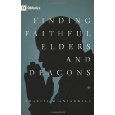
Book Review: Finding Faithful Elders and Deacons by Thabiti M. Anyabwile

A Useful Primer For Biblical Leadership in the Church

 In this book experienced pastor Thabiti Anyabwile writes three sections on how to find deacons, elders, and specify what their roles are in the church. Pastor Anyabwile gives the pertinent biblical requirements for deacons and elders, and gives numerous helps on biblical qualifications, traits to watch for, and questions and observations for examining whether or not those under consideration are wise choices for the respective offices of elder and deacon.

I think the best way to use this book is to use it as Thabiti Anyabwile intended it to be used:

 “First, use it prayerfully. Pray for pastors and elders as they shepherd and serve the sheep. Pray for more men to be raised up in the congregation for this important work. Pray that the Lord would pour out his grace on those serving these tasks. Pray that the members of the church would show genuine appreciation, love, and care for their shepherds. Pray that all the men in the church would grow in the qualities that elders should possess. Pray that men would have a godly desire to give their lives in serving the body of Christ as servant-leaders.

Second, use this book practically. The book does not delve into a lot of detailed argumentation, hoping instead to make application easily and quickly. I want the book to help in actually doing something—identifying and training elders—not just considering something. Put the suggestions into practice, and improve them with the experience and wisdom that come from your particular church setting and other faithful leaders.

Finally, use the book pedagogically. That is, use it to teach and instruct. Perhaps a church needs to select its first elders after a period of planning and study. Pastors may wish to use these brief chapters to ‘flesh out’ for the average church member which qualities the congregation as a whole needs to be looking and praying for in their prospective elders. Examination and pastoral search committees may find similar help.”

Take it from my own experience in over twenty years of pastoring – you want to get all the help you can in the wise selection of, praying for, training of, and role implementation of your elders and deacons – because the church will ultimately rise to great heights or fall to low depths based on the quality, character, and biblical execution of it’s leaders.

I highly recommend this book for church planters, existing leadership teams, solo pastors, deacons, and elders. It serves as a concise handbook that you can use to strengthen your existing leadership, develop future leaders, and most certainly add health and value to Christ’s church as you seek to be a good steward of its most valuable resources.