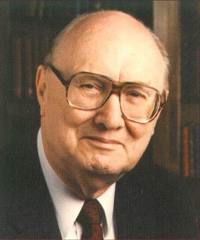
Dr. John F. Walvoord on “Is a Posttribulational Rapture Revealed in Matthew 24?”

Matthew 24 is a crucial passage in the debate between pre- and posttribulationists. The context of Matthew 24 and especially vv 40–41  argues that a posttribulational rapture is not being taught. Rather Christ, on the analogy of Noahs flood, spoke of some being taken in judgment. Thus it can be concluded that no biblical text places the rapture after the tribulation (The article below is adapted from the Grace Theological Journal [Fall 85], p.258ff).
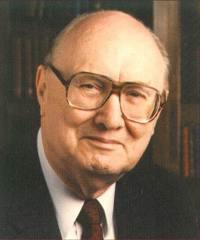
Walvoord J F image

Among premillenarians, the question as to whether the rapture of the church occurs before or after the end time tribulation continues to be a live subject for debate. Among other eschatological points of view such as postmillennialism and amillennialism, it is assumed that the rapture is a part of the second coming of Christ and therefore is posttribulational. Postmillenarians and amillenarians accept almost without question a posttribulational rapture because they interpret prophecies of the events leading up to the second coming nonliterally. By contrast premillenialism depends upon a literal interpretation of prophecy.

Among premillenarians, however, the issue of pretribulationism continues to be discussed, and books continue to be published on the issues involved. The differences of opinion stem largely from the question as to whether end time prophecies are to be interpreted literally, especially as they distinguish Israel’s future from that of the church, the body of Christ.

Both pretribulationists and posttribulationists are confronted with the fact that the Scripture does not expressly state either view. Pretribulationists find what approximates a direct teaching of their view in 2 Thessalonians 2 where the lawless one is said to be revealed only after the restrainer is removed. The traditional interpretation among pretribulationists is that the restrainer is the Holy Spirit who indwells the church. Thus, it is the Holy Spirit (and by implication the church) who must be removed before the lawless one can be revealed (E.g., see D. Edmond Hiebert, The Thessalonian Epistles [Chicago: Moody, 1971] 313-14; J. Dwight Pentecost, Things to Come [Grand Rapids: Zondervan, 1958] 259-63; and John F. Walvoord, “Is the Tribulation before the Rapture in 2 Thessalonians,” BSac 134 [1977]107-13).

If the lawless one is the end time ruler, he would be revealed at least seven years before the second coming of Christ. According to this interpretation of 2 Thessalonians 2, then, the rapture occurs prior to the tribulation. Posttribulationists, of course, dispute this interpretation and interpret the passage in a manner that does not yield a pretribulational sequence of end time events (E.g., see Robert H. Gundry, The Church and the Tribulation [Grand Rapids: Zondervan, 1973] 122-28. For a recent discussion of the passage from pre-, mid-, and posttribulational perspectives see Gleason L. Archer, Paul D. Feinberg, Douglas J. Moo, and Richard D. Reiter, The Rapture: Pre-, Mid-, or Post-tribulational? [Grand Rapids: Zondervan, 1984] 126-27,189-90,228-29.

What is often overlooked in the discussion by posttribulationists is that they also lack a specific statement that the rapture of the church occurs at the time of Christ’s second coming to set up his kingdom. It is quite common for posttribulationists to challenge pretribulationists to offer a single verse in the Bible that teaches their position. Pretribulationism counters by offering passages that imply it, such as 2 Thessalonians 2. Pretribulationists also point out that all the passages clearly identified as referring to the rapture name no preceding events. On the other hand, passages dealing with the second coming of Christ to set up his kingdom predict a complicated series of world-shaking events such as are described in Revelation 6–18  and other passages dealing with the end time.

Posttribulationists are also embarrassed by the fact that the most detailed account of the second coming of Christ, found in Revelation 19–20 , nowhere mentions either a rapture or a resurrection in connection with Christ’s coming from heaven to earth, and there is no legitimate place to insert the events of 1 Thessalonians 4. Accordingly posttribulationists recognize the need for a specific passage that will support the posttribulational view. This for many posttribulationists is found in Matthew 24. This chapter of the Bible, therefore, becomes a strategic crux interpretum in the debate between the two views. Those who hold a midtribulational view, that is, that the rapture will occur three and one-half years before the second coming of Christ, also turn to Matthew 24. The discussion of this portion of Scripture and its proper exegesis, therefore, becomes quite determinative in any conclusion as to where the rapture fits into the prophetic scheme. Practically every author who attempts to refute the pretribulational view discusses in some detail Matthew 24 in an effort to find support for posttribulationalism (E.g., see Gundry, The Church and the Tribulation, 135–39, 158; George E. Ladd, The Blessed Hope [Grand Rapids: Eerdmans, 1956] 144-45; and Alexander Reese, The Approaching Advent of Christ [London: Marshall, Morgan, and Scott, 1932] 29, 208, 214-15).

The Context of Matthew 24

As the Gospels make clear, the Olivet Discourse, contained in Matthew 24–25 , occurred only days before the death and crucifixion of Christ. Opposition to Christ and efforts to kill him on the part of religious leaders of the day intensified as the time approached for the death and crucifixion of Christ. All of this troubled the disciples because it did not fit into their expectation that Jesus Christ was their Messiah and Savior, the Son of God, who would deliver them from the oppression of the Roman Empire. They were further troubled by Christ’s own statement that he was to die by crucifixion. This had been implied in his comparison of his own death and resurrection to the experience of Jonah (Matt 12:38–41). Then he had explicitly predicted his death and resurrection three times as recorded in all three Gospels (Matt 16:21; 17:22–23 ; 19:18–19 ; Mark 8:31–33; 9:30–32 ; 10:32–34 ; Luke 9:22; 9:43–45 ; 18:31–34 ). These predictions did not harmonize with the disciples’ expectation that Christ would deliver Israel from the oppression of Rome.

The disciples were further disturbed by Christ’s denunciation of the Pharisees (Matthew 23) when he pronounced seven woes upon them. He denounced them as hypocrites, as whitewashed tombs, and as vipers. He closed his denunciation with the reminder that their forefathers had killed the prophets God had sent them. Accordingly, because they rejected Christ, Jerusalem would also be left desolate. These prophecies did not fit in with the anticipation of a glorious kingdom on earth in which Christ would reign.

It was in this context that the disciples reminded Christ of the beauty of their temple, the symbol of their religion and national solidarity. Here again they were dismayed when Christ announced “not one stone here will be left upon another; every one will be thrown down” (Matt 24:2).

Things came to a head after Christ had crossed the brook Kidron with his disciples and had stopped on the western slope of the Mount of Olives. It was then that the inner circle of the twelve disciples (Peter, James, John, and Andrew, according to Mark 13:3) came to Christ privately with three major questions (Matt 24:3). These questions were (1) “when will this happen,” (2) “what will be the sign of your coming,” and (3) “(what will be) the sign…of the end of the age”? The first question, referring to the destruction of the temple, is answered in Luke 21:20–24 by a prophecy which was fulfilled in the destruction of Jerusalem in A.D. 70. Matthew does not record Christ’s answer to the first question but does record the answers to questions (2) and (3) which both deal with the second coming of Christ. At this time the disciples did not understand the difference between the first and second coming of Christ. What they were really questioning was, what were the signs of the approaching kingdom? Their questions were prompted by their attempt to harmonize in some way the OT prophecies of the Messiah’s death and resurrection with the promises of his glorious reign and the deliverance of Israel.

It is most significant that saints in the OT (including the writers of Scripture [1 Pet 1:10–12]) as well as the twelve disciples in the NT never understood clearly the difference between the first and second coming of Christ. It was only after Christ’s ascension into heaven that the distinction was made clear. With the help of historical hindsight, today the difference between the first and second coming of Christ can be sorted out because in the first coming of Christ the prophecies relating to his birth, life on earth, miracles, death and resurrection were all literally fulfilled while the prophecies of his glorious kingdom reign still await future fulfillment. If major events like the first coming and second coming of Christ could be so mingled in the OT and even in the Gospels, it is not surprising that there should be confusion today between a pretribulational rapture and a second coming of Christ to set up his kingdom.

However, in contrast to the universal confusion of the first and second coming of Christ prior to Christ’s ascension, many students of prophecy today firmly believe that the rapture of the church will be pretribulational. They do this on much the same grounds that the first and second coming of Christ are separated today—that is, they distinguish the two events because they are so different in many characteristics, including the events which precede the event itself, and the events which follow.

Taking all the facts available, it can be determined that the setting for the questions of the disciples was that they did not know how to harmonize events relating to the first and second coming of Christ. It is to this crucial question that Christ gave the answers recorded in Matthew 24–25.

Contemporary Confusion on the Interpretation of Matthew 24

An examination of major commentaries on Matthew 24 demonstrates that there is disagreement as to what the passage really teaches.

Conservative scholars who accept a literal second coming of Christ are usually united in their interpretation that the passage in general refers to the second coming of Christ. This is because the passage is very explicit. The events described will climax in Christ’s coming as stated by Christ himself—”they will see the Son of Man coming on the clouds of the sky, with power and great glory” (Matt 24:30).

The confusion arises in interpreting what Christ said about events leading up to the second coming. G. Campbell Morgan divides the Olivet Discourse into three divisions. He considers Matt 24:5–35 to be talking about Israel. He relates Matt 24:36–25:30  to the church “as the spiritual Israel of God.” He interprets Matt 25:31–46 as a judgment that Christ pronounced on the nations (G. Campbell Morgan, The Gospel According to Matthew [New York: Revell, 1929] 284). He holds that Matt 24:6–22 was fulfilled in the fall of Jerusalem, but in his exegesis he skips almost completely the problems of interpretation that exist in Matt 24:1–44.

Robert Gundry illustrates the posttribulational interpretation of this passage. He directs attention away from the subject matter to the hypothetical question, “To whom is the passage directed?” He writes, “To what group of redeemed do the Jewish saints addressed by Jesus and represented by the Apostles belong, Israel or the church?” (Gundry, The Church and the Tribulation, 129).

In his complicated answer to this problem, he needlessly misdirects attention. This point of view is adopted by other posttribulationists and midtribulationists. They also insert the hypothesis that the prophecies had to be fulfilled in the lifetime of the apostles—an erroneous approach since the second coming of Christ and the course of the entire preceding age is predicted.

The disciples were both Jews and the initial members of the church, the body of Christ. The answers to their questions concerned anyone who was interested in the events of the end of the age, and they are not limited to the apostolic age. While the disciples obviously were interested in how this related to the Jews, as illustrated by their questions, the answer that Christ gave is largely non-Jewish. It involves prophecies which affect the whole world with the Olivet Discourse specifically concluding with the judgment of the Gentiles. The issue at hand is not to whom Christ’s answer is addressed, but the question of the content of the prophecy itself. Gundry never even mentions the three questions that are being answered in this discourse of Christ.

A typical amillennial interpretation is offered by R. C. H. Lenski. He holds that many of the prophecies of this passage, including the great tribulation, have already been fulfilled in connection with the destruction of Jerusalem and the events which preceded it. In general he finds that the prophecies are largely fulfilled already historically, but that they obviously lead up to the second coming of Christ. He does not consider the question as to whether the subject of the rapture is being presented. Everything is related to the second coming of Christ as far as the consummation is concerned (R. C. H. Lenski, The Interpretation of St. Matthews Gospel [Minneapolis: Augsburg, 1943] 956).

The great variety of opinions on Matthew 24 indicate that this passage is difficult to interpret. The present discussion will focus on the contribution of Matt 24:31 and Matt 24:37–42 toward understanding the time relationship between the rapture and the tribulation.

The Gathering of the Elect

Immediately following predictions of catastrophic interference with the sun, moon, and stars, Christ states,

At that time the sign of the Son of Man will appear in the sky, and all nations of the earth will mourn. They will see the Son of Man coming on the clouds of the sky with power and great glory. And He will send His angels with a loud trumpet call, and they will gather His elect from the four winds, from one end of the heavens to the other [Matt 24:30–31].

Among conservative interpreters of Scripture, there is general agreement that this prophecy concerns a gathering of the elect in connection with the second coming of Christ. Some premillenarians limit the “elect” to the Jewish people because Christ is addressing the apostles in this passage. Others view the “elect” as including all the saved, whether OT or NT saints. Premillenarians, whether pretribulational or posttribulational, recognize that there will be a gathering of all the saints at the time of the second coming of Christ in order that they may all participate in the millennial kingdom. Amillenarians would agree with this, but they would add the resurrection of the wicked as indicated in Rev 20:11–15. Postmillenarians would have essentially the same view as the amillenarians.

The major question raised by premillenarians, whether pretribulationists or posttribulationists, is whether this event includes the rapture of the church. Even if the church is raptured earlier in the sequence of events, it nevertheless would be included in this gathering.

The two essentials of the rapture of the church are resurrection of the dead in Christ and translation of living Christians, as brought out clearly in central passages such as 1 Thess 4:13–18 and 1 Cor 15:51–58. The prophecy in Matthew, however, says nothing of either resurrection or translation and refers only to the gathering of the elect. It may be assumed that the elect so gathered have been either translated or resurrected, but it is not indicated when this occurs. Accordingly the passage cannot properly be used by either the pretribulationists or the posttribulationists as positive proof of their position, although the silence relative to resurrection and translation here would be in favor of the pretribulational position.

Most of the attention between pretribulational and posttribulational arguments, however, has centered on Matt 24:36–42. Here the time factor is specifically discussed. Christ states, “No one knows about that day or hour, not even the angels in heaven, nor the Son, but only the Father” (Matt 24:36). This presents a problem for all eschatological views in that Christ states that he does not know the day or the hour, but that only the Father knows. Christ is emphasizing that the time has not been revealed. If Christ did not know it, neither can anyone else.

In the interpretation of end time prophecy, many premillenarians hold that the last seven years referred to in Dan 9:27 will culminate in the second coming of Christ. Even if prophetic years of 360 days are used, it is not clear what day or hour will actually signal the second coming of Christ. The final period of great tribulation leading up to the second coming of Christ is defined as one-half of the last seven years in Dan 9:27. In Dan 7:25 and 12:7  the expression “a time, times and half a time” is usually interpreted as three and one-half years. The same expression occurs in Rev 12:14. In Rev 13:5 the period is referred to as forty-two months. In Dan 12:11–12, the period is described as 1290 and 1335 days. Here the forty-two month period is extended thirty and seventy-five days to uncertain termini. While all of these should be interpreted as literal time periods, they do not reveal the day or the hour of Christ’s return.

Expanding on the uncertainty of the day and the hour, Christ declares it will be like the days of Noah (Matt 24:37). While Noah was building the ark, it was obvious that the flood would not come until he had completed the project. Once the ark was completed the situation changed radically. As observers saw the animals going into the ark by two in a manner contrary to nature, it was obvious that this was a sign that something was about to happen. But the day or the hour still was not clear. Then as they observed Noah’s family enter the ark and the door shutting, they still could not know the day or the hour, but it was obvious that the flood could come at any time.

Because of the uncertainty of the time of the flood and their skepticism as to whether the flood was even going to occur, Christ describes them as continuing in the normal course of life “eating and drinking, marrying and giving in marriage, up to the day Noah entered the ark” (Matt 24:38). Christ goes on to say that when the flood came it “took them all away” (Matt 24:39).

Using this OT illustration, Christ compares it to the events which will occur at the second coming of Christ. Like the flood, the second coming will be preceded by specific signs which indicate the approach but not the day or the hour of the coming of the Lord. Like the flood, it will be a time of judgment. This is summarized in Matt 24:40–41, “Two men will be in the field; one will be taken and the other left. Two women will be grinding with a hand mill; one will be taken and the other left.”

The similarity of this to the rapture of the church has caused many expositors, especially posttribulationists, to liken this to what will take place at the time of the second coming. Alexander Reese, whose major work is The Approaching Advent of Christ, cites these verses as proof that the rapture occurs in connection with the second coming of Christ. His book, on which he spent twenty-five years, has been the regularly-cited classic work on posttribulationism ever since it was published. There is a major problem, however, with this interpretation.

In the illustration of the flood which Christ himself used, the one who is taken is drowned whereas those who are left, that is, Noah’s family, are safe in the ark. To view the one taken as the righteous one and the one left as the judged one is to reverse the illustration completely.

Reese, however, believes he has solved this problem and makes this a major argument for his posttribulational position. He notes that there are two different Greek words used for “taken.” In Matt 24:39 the verb used is ἧρεν from αἴρω. In vv 40–41  the verb παραλαμβάνεται from παραλαμβάνω is used. Reese claims that παραλαμβάνω is used in Scripture only in a friendly sense. In taking this position, he opposes Darby:

Darby, in one of the few instances where he allowed views to influence (and mar) his admirable literal translation, translated paralambanō in Luke xvii:34–5  by seize. The use of this word in the NT is absolutely opposed to this; it is a good word; a word used exclusively in the sense of ‘take away with,’ or ‘receive,’ or ‘take home.’ (Reese, Approaching Advent, 215).

Reese and others have pointed out that παραλαμβάνω is used of the rapture in John 14:3. This is an illustration, however, that even a careful scholar may make mistakes. Reese evidently failed to check John 19:16 (“the soldiers took charge of [παρέλαβον] Jesus”), where “took charge of” is hardly a reference to a friendly taking. As a matter of fact, it refers to taking Christ to the judgment of the cross.

Gundry is aware of this problem and attempts to settle the matter dogmatically by stating,

But granting that the context indicates judgment, we are not forced to conclude that ‘one will be taken’ in judgment and ‘one will be left’ in safety. The reverse may just as easily be understood: ‘one will be taken’ in rapture and ‘one will be left’ for judgment (Gundry, The Church and the Tribulation, 138).

However, the context completely contradicts Reese and Gundry. The context here is more determinative than the fact that the word παραλαμβάνω is used for the rapture in John 14:3 by a different author.

Interestingly, after additional study, Gundry changed his mind. In his later work (Matthew) he reversed his opinion. He states, “But Matthew’s parallelistic insertion of airen in v. 39 , where judgment is in view, makes the taking judgmental in his gospel. Hence, being left means being spared from instead of exposed to judgment” (Robert H. Gundry, Matthew: A Commentary on His Literary and Theological Art [Grand Rapids: Eerdmans, 1982] 494).

In other words, he concedes what he formerly refuted and agrees with the pretribulational interpretation of this passage.

If there is any doubt as to the interpretation here, it should be settled by a parallel reference in Luke 17 where Christ, predicting the same event in the same context states, “I tell you, on that night, two people will be in one bed; one will be taken and the other left. Two will be grinding grain together; one will be taken and the other left” (Luke 17:34–35). Gundry also cites this passage but significantly stops before 37, which would have made the matter clear. Here the disciples asked the question, “Where, Lord?” Christ replied, “Where there is a dead body, there the vultures will gather.” It is clear that the ones taken are put to death. This actually is a preliminary stage of the judgment that is later detailed in Matt 25:31–46 where the unsaved Gentiles are destroyed.

Conclusion

Posttribulationists and midtribulationists as well have misread the immediate context of Matt 24:40–41 and have reached an unwarranted conclusion that there is a rapture in this passage. Instead, the passage teaches that the righteous will be left as Noah and his family were left alive in the ark, whereas all others will be taken away in judgment. The argument for posttribulationism based upon this text, which even posttribulationists admit is the only passage approximating a direct statement of a posttribulation rapture, collapses upon careful analysis. Even Gundry has reversed his former view of this passage.

The fact that those who are left, are left alive to enter the millennial kingdom because they are saved is further confirmed by Christ in Matt 25:31–46 where the sheep are ushered into the kingdom and the goats are cast into everlasting fire. This indicates the separation of the saved from the unsaved at the time of the second coming. There is no rapture at the second coming because those who survive the period after this purging judgment of God enter the millennium in their natural bodies so that they can fulfill the Scriptures that describe them as living natural lives, bearing children, living, dying, and even sinning. All of these factors would be impossible if every saved person were raptured at the time of the second coming.

A careful study of the passage relating to the second coming of Christ in Matthew 24, therefore, gives no ground for a posttribulational rapture. In fact it confirms the concept that those who are caught up at the rapture are caught up to heaven to the Father’s house as Christ promised in John 14. This will occur at a time preceding the events of Matthew 24–25  which must be fulfilled prior to the second coming of Christ. The rapture therefore is an imminent event which today may be expected momentarily.

in judgment. The argument for posttribulationism based upon this text, which even posttribulationists admit is the only passage approximating a direct statement of a posttribulation rapture, collapses upon careful analysis. Even Gundry has reversed his former view of this passage.

The fact that those who are left, are left alive to enter the millennial kingdom because they are saved is further confirmed by Christ in Matt 25:31–46 where the sheep are ushered into the kingdom and the goats are cast into everlasting fire. This indicates the separation of the saved from the unsaved at the time of the second coming. There is no rapture at the second coming because those who survive the period after this purging judgment of God enter the millennium in their natural bodies so that they can fulfill the Scriptures that describe them as living natural lives, bearing children, living, dying, and even sinning. All of these factors would be impossible if every saved person were raptured at the time of the second coming.

A careful study of the passage relating to the second coming of Christ in Matthew 24, therefore, gives no ground for a posttribulational rapture. In fact it confirms the concept that those who are caught up at the rapture are caught up to heaven to the Father’s house as Christ promised in John 14. This will occur at a time preceding the events of Matthew 24–25  which must be fulfilled prior to the second coming of Christ. The rapture therefore is an imminent event which today may be expected momentarily.

About Dr. John F. Walvoord

John Flipse Walvoord, theologian, writer, and teacher, seminary president, and defender of dispensational pretribulational premillennialism, was born on May 1, 1910, in Sheboygan, Wisconsin. He was the youngest of three children.  John was raised in a home that valued education in general and religious training in particular. His father, John Garrett Walvoord, was a school teacher.  During his mother Mary Flipse Walvoord’s difficult pregnancy, her doctors advised an abortion; however, because of their conviction that the child was a gift from the Lord, they brought John to term. The child proved to be robust, and Mary lived to be 102. The family were members of the First Presbyterian Church, his father an elder and Sunday school superintendent. His parents determined that their children would be reared on the Westminster Shorter Catechism and Scripture memory.

When John was fifteen, the family moved to Racine where his father was a junior high school superintendent. During his high school years, John excelled in academics and athletics but continued to have only a nominal interest in Christianity, although he had committed his life to Christian work when he was twelve. His family joined the Union Gospel Tabernacle (now the nondenominational Racine Bible Church). While attending a study of the book of Galatians, he became assured of God’s mercy toward him. Three years later (1928), he entered Wheaton College. John continued to excel in academics and athletics, though he also distinguished himself as a member of the debate team that won state championships in 1930 and 1931. Additionally, he was president of the college’s Christian Endeavor where he made a commitment to foreign missions. He completed his undergraduate degree in 1931 with honors having accelerated his progress due to summer school work at the University of Colorado.

Wedding photo of John and Geraldine (Lundgren) Walvoord in 1939

Wedding photo of John and Geraldine (Lundgren) Walvoord in 1939

He married Geraldine Delores Lundgren in her hometown of Geneva, Illinois. Geraldine was the fifth of six children born to native SwedesGustaf Edward Lundgren and Emily Skoglund.

Geraldine was born September 6, 1914 in Geneva, Illinois. Geraldine made a personal decision to accept Christ as her Savior at an early age. After developing avenues of ministry in music and youth programs in her church, Geraldine continued her education at Wheaton College and Northern Illinois University. It was during this time that Geraldine`s sister Harriet Lundgren began dating Ellwood Evans, a student from Evangelical Theological College (later renamed Dallas Theological Seminary). One Christmas holiday, another theology student traveled with Ellwood as he headed north to visit Harriet. When they arrived, Ellwood made the simple introduction, “Geraldine, I want you to meet my friend John Walvoord.”

John accepted the invitation to stay for dinner before traveling on to his parents’ home in Wisconsin and over the next several years more than a few letters and visits cultivated their friendship into a lifelong romance. Deeply in love and convinced of God’s will for their lives, John and Geraldine were married on June 28, 1939.


“What I covet for you is the same experience that I had — and that is discovering God’s perfect will for your life — nothing less, nothing more, nothing else.”

– John F. Walvoord


Blessed Hope: The Autobiography of John F. WalvoordBlessed Hope: The Autobiography of John F. Walvoord

John graduated from Dallas Theological Seminary in 1934. He wanted to go to China as a missionary. At the time he couldn’t believe that everyone didn’t want to go to China. But the Lord had different plans for him. As he launched into his doctoral studies in Dallas in 1934, the young graduate was called to the Rosen Heights Presbyterian Church in nearby Fort Worth where he served as a pastor for sixteen years. Then in 1936 more responsibility came. He was asked to temporarily fill the position of registrar at the Seminary and in a short time he did much to organize and structure the office. In 1945, after nine years of faculty service, Dr. Walvoord was asked to assume the role of assistant to the president, a position he held until the death of Dr. Chafer seven years later. On February 6, 1953, John F. Walvoord was inaugurated as the second president of Dallas Theological Seminary.

SAVE TIME AND MONEY WITH EMEALS MEAL PLANSDr. John F. Walvoord is considered perhaps the world’s foremost interpreter of biblical prophecy. He was a member of the Dallas Theological Seminary faculty for fifty years from 1936 to 1986. He served as president and professor of systematic theology at Dallas Theological Seminary from 1952 to 1986. He has served as chancellor at that institution since that time. He holds A.B. and D.D. degrees from Wheaton College; an A. M. degree from Texas Christian University; a Th.B., Th.M., and Th.D. from Dallas Theological Seminary; and a Litt.D. from Liberty Baptist Seminary.

Under Dr. Walvoord’s leadership, Dallas Theological Seminary enrollment grew from 300 to over 1,700, four major educational buildings were erected on campus, and the degree programs increased from three to six. Dr. Walvoord is known worldwide for his evangelical scholarship in Christology, pneumatology (the doctrine of the Holy Spirit), and Bible prophecy. Dallas Theological Seminary, one of the world’s largest, is recognized for its commitment to the inerrancy of the Scriptures, premillennial theology, and biblical preaching and teaching.

Dr. Walvoord is the author of nearly thirty books including:

  • The Bible Knowledge Commentary* (co-editor of two volumes).
  • The Holy Spirit,
  • The Rapture Question* ,
  • Israel in Prophecy,
  • The Nations In Prophecy
  • The Church In Prophecy
  • The Return of the Lord,
  • The Millennial Kingdom,
  • To Live Is Christ,
  • The Thessalonian Epistle,
  • The Revelation Of Jesus Christ,
  • Jesus Christ Our Lord,
  • Daniel, The Key to Prophetic Revelation
  • The Holy Spirit At Work Today,
  • Major Bible Themes* ,
  • Matthew: Thy Kingdom Come,
  • The Blessed Hope And The Tribulation,
  • Major Bible Prophecies: 37 Crucial Prophecies That Affect You Today,
  • The Final Drama: 14 Essential Keys To Understanding the Prophetic Scriptures,
  • The End Times: An Explanation of World Events in Biblical Prophecy
  • What We Believe: Understanding & Applying The Basics Of The Christian Life,
  • Four Views On Hell (co-author), and
  • Every Prophecy of the Bible* .
  • Blessed Hope: The Autobiography of John F. Walvoord*

.

Book Review on David Hocking’s “Israel’s Right to the Land!”

Book Review by David P. Craig: 12 Biblical Reasons Why Israel Has a Right to It’s Land

IRTTL Hocking

In this brief biblical study David Hocking does an excellent job of giving twelve compelling reasons why Israel has a right to her land. The bottom line in this argument is what does God have to say about this issue? Hocking gives hundreds of passages in this study of God’s specific promises to the people of Israel. He lays out the biblical facts with biblical support, and then lets the reader decide. Here is a summary of the 12 biblical facts of what God has said about Israel and her land:

(1) This Land belongs to God! Leviticus 25:23 states, “The land, moreover, shall not be sold permanently, for the land is Mine; for you are but aliens and sojourners with Me.”

(2) The Land was given by God to the Descendants of Abraham! Genesis 12:7, says, The Lord appeared to Abram and said, “To your descendants I will give this land.”

(3) The Gift of this Land to Abraham and his descendants was based on an Unconditional Covenant from God Himself! Genesis 17:7-8 sates: “And I will establish My covenant between Me and you and your descendants after you throughout their generations for an everlasting covenant, to be God to you and to your descendants after you. And I will give to you and to your descendants after you, the land of your sojourning, all the land of Canaan, for an everlasting possession; and I will be their God.”

(4) This Land was not given to the Descendants of Ishmael, but rather to the Descendants of Isaac! In Genesis 17:19 God promises, “No, but Sarah your wife shall bear you a son, and you shall call his name Isaac; and I will establish My covenant with him for an everlasting covenant for his descendants after him.”

(5) This Land was not given to the other Sons of Abraham, but only to Isaac! In Genesis 26:3 God said, “Sojourn in this land and I will be with you and bless you, for to you and to your descendants I will give all these lands, and I will establish the oath which I swore to your father Abraham.”

(6) This Land was not given to the Descendants of Esau, but only to Jacob! In Romans 9:10-13 we read, “And not only this, but there was Rebekah also, when she had conceived twins by one man, our father Isaac; for though the twins were not yet born, and had not done anything good or bad, in order that God’s purpose according to His choice might stand, not because of works, but because of Him who calls, it was said to her, “The older will serve the younger. Just as it is written, “Jacob I loved, but Esau I hated.”

(7) God continued to remind the Children of Israel of this Covenant during their bondage in Egypt and wilderness wanderings! Exodus 2:24, “So God heard their groaning; and God remembered His covenant with Abraham, Isaac, and Jacob.”

(8) God told Israel to conquer the Land which He had given them! Deuteronomy 1:8 reads, “See, I have placed the land before you; go in and possess the land which the Lord swore to give to your fathers, to Abraham, to Isaac, and to Jacob, to them and their descendants after them.”

(9) Israel’s sin and captivity did not change their divine right to this Land! In Leviticus 26:44-45 God promises to bring them back, “Yet in spite of this, when they are in the land of their enemies, I will not reject them, nor will I so abhor them as to destroy them, breaking My covenant with them; for I am the Lord their God. But I will remember for them the covenant with their ancestors, whom I brought out of the land of Egypt in the sight of the nations, that I might be their God. I am the Lord.”

(10) God’s Promise to Israel is certain as the existence and order of the universe! Jeremiah 31:35-37 sates, “Thus says the Lord, Who gives the sun for light by day and the fixed order of the moon and the stars for light by night, Who stirs up the sea so that its waves roar; The Lord of hosts is His name: “If this fixed order departs from Me,” declares the Lord, “then the offspring of Israel also shall cease from being a nation before Me forever.” Thus says the Lord, “If the heavens above can be measured, and the foundations of the earth searched out below, then I will also cast off all the offspring of Israel for all that they have done,” declares the Lord.

(11) The Name of this Land is not Palestine, but Israel! Ezekiel 37:11-12 makes this clear, “Then He said to me, “Son of man, these bones are the whole house of Israel; behold, they say, ‘Our bones are dried up, and our hope has perished. We are completely cut off.’ Therefore prophesy, sand say to them, ‘Thus says the Lord God, “Behold, I will open your graves and case you to come up out of your graves, My people; and I will bring you into the land of ISRAEL.”

(12) The full restoration of Israel to its Land with complete peace and security will require the coming of the Messiah! Isaiah 59:20-21 declares, “And a Redeemer will come to Zion, and to those who turn from transgression in Jacob,” declares the Lord. “And as for Me, this is My covenant with them,” says the Lord: “My Spirit which is upon you, and My words which I have put in your mouth shall not depart from your mouth, nor from the mouth of your offspring, nor from the mouth of your offspring’s offspring,” says the Lord, “from now and forever.”

For all twelve of these facts Hocking provides many more Scriptures with insightful commentary. The reality is that the Bible is full of passages, plans, and promises for and about Israel and her right to the Land. Hocking’s study is very compelling because of the plethora of biblical evidence in support of God’s plans and promises for Israel and her land.

James M. Boice on When is Jesus Coming Back?

What The Bible Has To Say About The Future: Part 4 in a Series of 9  – “The Days of Noah”

Last and Future World Boice image

If the Lord Jesus is coming back to this earth as He promised and as the prophets foretold, the most natural next question is: When is Jesus coming? This is not just a question for time-conscious, twenty-first century man, as though he more than others has a special concern for the timing or for the end of human history. It flows naturally from belief in Christ’s second coming itself and is, therefore, a question which has been asked by Christians ever since Christ first spoke of His return, elaborating on the Old Testament prophecies.

The question was in the minds of Christ’s disciples. Toward the end of Jesus’ three-year ministry, shortly before His crucifixion, the disciples asked Him, “Tell us, when will these things be, and what will be the sign of your coming and of the end of the age?” (Matthew 24:3). Part of Christ’s answer was that no one, not even Christ Himself, could know the precise moment at which the prophesied events would unfold. He said, “But concerning that day and hour no one knows, not even the angels of heaven, nor the Son, but the Father only” (Matthew 24:36). Later, after His resurrection, He gave a similar answer to an almost identical question. The disciples had asked, “Lord, will you at this time restore the kingdom to Israel?” Jesus said to them, “It is not for you to know times or seasons that the Father has fixed by his own authority” (Acts 1:6,7).

The disciples could not know. We cannot know. Still, this is not the whole story. For we can hardly fail to notice that when Jesus told the disciples that they could not know the time of His return, He nevertheless went on at some length to describe the conditions that would prevail in the world before He came again. These signs occupy at least two of the twenty-eight chapters of Matthew (24-25), one of the sixteen chapters of Mark (13), and one chapter of Luke (21). Moreover, in the last of these chapters a listing of some of the signs is followed by the challenge: “Now when these things begin to take place, straighten up and raise your heads, because your redemption is drawing near” (Luke 21:28).

Perhaps I can illustrate what Christ was saying by this illustration, borrowed from one of the unpublished writings of Dr. Donald Grey Barnhouse. Suppose a Shakespearean scholar enters a theater one evening not knowing what masterpiece of Shakespeare is to be presented. Before the curtain goes up, he is taken behind the scenes. On stage is a castle with ramparts looking out over a wooded countryside. At once he knows that he will not see Othello, which is set in Venice, not Julius Caesar, which begins with a street scene in Rome. He knows that he not see Macbeth; for although there is a castle scene in Macbeth, the play opens not with the castle but with the witches gathered around their caldron. Finally, our drama critic notices two soldiers with shields bearing the arms of the king of Denmark. He sees two other actors dressed up as a king and queen. There is an actor who is supposed to be a ghost. Now no one has to tell the critic what he will see, for he knows it will be Hamlet.

In the same way today, you and I who are Christians sit in the theater of world events awaiting the opening of God’s apocalyptic drama. We don not know when the play is to start, but, like the drama critic, we know more about it than many. Many stare at the future as at a curtain. For them the future is veiled because they do not have the knowledge of the plan of God. Nor can they go behind curtain where the scene is being set. The Christian is not left in such ignorance. We see behind the scenes. Thus, while it is true that we do not know the precise moment at which the play will begin, we do know the play itself and can begin to sense it beginning as we see the actors starting to take their proper places on the great world stage.

We will understand Christ’s remarks in this light when we realize that they were intended to be indefinite enough to keep anyone from self-satisfaction or complacency but precise enough to encourage Christians to examine history, asking whether the conditions of the Lord’s return may not be entering into their final stages through the developments of their lifetime.

The Days of Noah

But how are we to do this? Where should we begin? One answer to these questions is in Matthew 24, in the verses immediately following Jesus’s statement that no one knows the precise day or hour of His return. These verses contain a reference to the days of Noah, and the point is that the terrible moral conditions that prevailed on the earth just before the flood in Noah’s day will be repeated prior to Christ’s return and the ensuing judgment upon men and nations.

[Note: It might be argued that the emphasis of Matthew 24 is on the sudden and unexpected nature of Christ’s return rather than on the conditions that will prevail at that time. This is partly correct. Certainly Jesus did stress the suddenness of His return: “For as the lightning comes from the east and shines as far as the west, so will be the coming of the Son of Man” (v.27); “Therefore, stay awake, for you do not know on what day your Lord is coming” (v. 42). But that is not the sole message of these verses. And it does not negate the position taken here. Another prominent theme in this chapter is unbelief both in Noah’s day and in the day of Christ’s second coming, and unbelief in itself would lead to the conditions recorded. It may also be noted that the view that conditions of Noah’s day will be repeated before Christ’s return is reinforced by other New Testament passages which speak in similar terms of those days (e.g., 1 Tim. 4:1-4; 2 Tim. 3:1-7; 2 Pet. 2:4-9). Jesus stated elsewhere that conditions before His return would be similar to “the days of Lot” in Sodom, which was noted for its sexual perversions and excesses (Luke 17:28-30).

“For as were the days of Noah, so will be the coming of the Son of Man. For as in those days before the flood they were eating and drinking, marrying and giving in marriage, until the day when Noah entered the ark, and they were unaware until the flood came and swept them all away, so will be the coming of the Son of Man” (Matthew 24:37-39).

(1) Since the days of Noah are described in Genesis 6, we may turn to that chapter and see precisely what Jesus was referring to. One characteristic of the days of Noah was a rapid increase in population: “And it came to pass, when men began to multiply on the face of the earth…” (v. 1). Naturally, an increase in population is in itself without moral overtones. It is neither good nor bad. And yet, men being what they are, it is also natural that an increase in population was then and may again be accompanied by moral decadence.

There is a parallel here with developments of our own age. The world’s population is now approximately three billion people [in 1972 – Now in 2013 it’s more in the ballpark of 6-7 billion!]. That figure is double what it was in 1900m and it is expected to double again by the year 2000 or earlier [It has doubled again since 1972]. With the rapid increase in the world’s population there has been an accompanying increase in suffering, particularly in the area of hunger and malnutrition and related diseases. Some experts predict worldwide famine by the year 1985 [there have been and continue to be famines around the globe – malnutrition and starvation is the number one cause of death in the world today]. Another indication of this same general trend is that the movements of world history today seem to be less under the control of individual political leaders than of the mass movements of nationalism, ethnic consciousness, labor, and consumer activity.

We do not want to make the mistake of imagining that, because we have had a sharp increase in the world’s population in recent years, this is proof in itself that the Lord’s return is imminent. We are to look for trends in the history of our times that may be leading up to His return not for events that foretell it precisely. This is only one trend. Nevertheless, we can hardly overlook the fact that the rapid increase of the world’s population in our day has assumed a scale never before duplicated in known history and has caused even secular observers of the world scene to speak in apocalyptic terms when describing it.

(2) The days of Noah were also characterized by an unprecedented accumulation of knowledge. Genesis 4 speaks of the construction of cities, of developments in metallurgy, the arts, and other sciences. If we are to judge by the size of the ark itself — about 450 feet long with a beam of 75 feet, the size of many modern ocean liners — there was also considerable engineering knowledge and skill coupled with an ability to construct the objects designed. This knowledge contributed to a great indulgence in luxury, as it has for many in our day. It was not to the moral advantage of the age.

(3) In addition to the increases in population, knowledge, and luxury, there was also a rapid acceleration of vice and lawlessness. The account of Genesis says “The LORD saw that the wickedness of man was great on the earth, and that every intention of the thoughts of his heart was only evil continually…Now the earth was corrupt in God’s sight, and the earth was filled with violence. And God saw the earth, and behold, it was corrupt, for all flesh had corrupted their way on the earth” (Genesis 6:5, 11-12). Such wickedness was the cause of the great judgment that befell the earth in Noah’s time and was a primary basis for Christ’s warning that the conditions of Noah’s day would be repeated.

One picture that emerges from this description of wickedness in the early chapters of Genesis is of a world characterized by crime. We too are experiencing this. During the 1960’s, crime in the United States rose 148 percent, while arrests of persons under eighteen nearly doubled. In 1969, the number of reported crimes was 4,989,700, which made the crime rate 2,471 per 100,000 persons’ this compares to 2,234 one year earlier . An average of 9 major crimes per minute were committed during the same period [I shudder to think what the statistics are now in 2013!].

In New York City in 1971, the FBI reported an increase in crime of 11 percent, while homicides in the city increased 30 percent. In 1971 New York City, with a population of only 8 million persons, recorded more crimes than England, Scotland, Wales, Ireland, Switzerland, Spain, Sweden, the Netherlands, Norway, and Denmark combined. In that city there are over 300,000 alcoholics, affecting the lives of 1,500,000 people and costing more than 1 billion dollars annually. The loss approaches 2 billion dollars for the upward of 100,000 hard-core heroin addicts, who must continually steal to support their habit.

In Los Angeles crime has increased 60 percent in 6 years, or 7 times faster than the population of the city.

More alarming even than these figures are the growing permissiveness and disrespect for law that have characterized the last decade. These trends have affected even the police, as various “crime probes” have indicated. Courts are affected. Among the forerunners in open defiance of laws that they consider unjust have been clergymen; there is no lack of others to follow or excel their example.

Another example of vice and lawlessness given in the opening chapters of Genesis is an increase in sexual perversions and crimes. This too is reflected in our society. In one recent year, for instance, forcible rape rose 17 percent. Divorce and remarriage are rampant. Many, including clergymen, speak in favor of “term” rather than lifetime marriages. Venereal disease is reaching epidemic proportions. In an ultimate gesture of moral degeneracy and defiance of all former norms, homosexuality and lesbianism have burst from the darkness of the back alleys onto the front pages of newspapers and to televised talk shows. Recently, a new religious order  was founded by members of a so-called homosexual church named the “Church of the Beloved Disciple.” The order is called the Oblate Companions of St. John, who in turn is honored as “the disciple whom Jesus loved (John 21:20), thus implying a homosexual relationship between John and the Lord. Similar churches now exist in more than a dozen U.S. cities. Recently, national papers and magazines carried stories of the decision of delegates from nineteen United Churches of Christ in the San Francisco area to ordain a confessed homosexual to the gospel ministry [The increase of the homosexual population and influence in culture, politics, and the church is absolutely staggering from the time of Boice’s writing this in 1972].

Again, we dare not make the error of arguing that because these crimes and perversions are appearing to such alarming degrees in our age and society, therefore, the coming of Jesus Christ must occur immediately. We have no warrant for that. Nevertheless, we must ask: Are the alarming moral and economic conditions of our age not more than adequate fulfillment of the conditions that Jesus taught must prevail before His return? Are not our days equal in their vice to the days of Noah? Are they not equally lawless? If they are, then we dare not imagine that Christ cannot or will not appear. Nor dare we neglect His warning: “Therefore, stay awake, for you do not know on what day your Lord is coming” (Matthew 24:42).

Demonism

(4) There is one more characteristic of the times that is especially significant. That is the phenomenon of demonism. Genesis 6 relates that there was a time on earth when some of the angels who had fallen in Satan’s rebellion cohabited with the daughters of men, thereby producing a race of extraordinary beings, half demon and half human. This characteristic of the days of Noah is disclosed in the opening verses of the chapter:

“When men began to multiply on the face of the land and daughters were born to them, the sons of God saw that the daughters of man were attractive. And they took as their wives any they chose…The Nephilim were on the earth in those days, and also afterward, when the sons of God came in to the daughters of man and they bore children to them. These were the mighty men who were of old, the men of renown” (Genesis 6:1-2, 4).

Many who have studied this passage interpret it to mean that the godly descendants of Seth, called “sons of God,” married unbelievers [Note: That is the interpretation given to Genesis 6 by most of the older Protestant commentators–Calvin, Lange, Keil and Delitzch, Scofield and others. More recent interpreters–Simpson, Skinner, Von Rad, Pember, E.W. Bullinger, A.C. Gaebalein, DeHaan–favor the view that the marriages were between human women and demonic beings. Naturally there have been commentators on both sides f the issue at most periods of history]. That would explain the unusual corruption and decadence that existed in the world in Noah’s time and would make good sense of the passage. Nevertheless, there are several reasons why I feel this an inadequate interpretation of these verses.

First, the contrast in the verses is not between the descendants of Seth (both men and women) and the ungodly descendants of Cain. The contrast is between the daughters of men, meaning daughters of the whole human race, and the sons of God, whoever they may be.

Second, in the Old Testament, the phrase “sons of God” is never used of believers. The fact that believers become sons of God or children of God by faith in Jesus Christ is entirely a New Testament concept.

Third, the phrase “sons of God,” when it does occur in the Old Testament, seems to refer not to human beings who believe in God but to angels, that is, to beings not born of others like men but created directly by God. That would be the case with all angels, whether fallen or not. And it would explain the use of the phrase in a new way in New Testament times to refer to those who have experienced a new, direct birth by God through faith in Jesus Christ (Note: The one apparent exception to this usage, an application of the term to Adam in Luke 3:38, actually proves the point being made. For Adam alone, of all the Old Testament characters, was the result of the direct creative activity of God. It should be noted, however, that in the Greek text only phrase “of God” occurs).

The phrase “sons of God” occurs four times in the other parts of the Old Testament — three times in the Book of Job and once in Daniel. In Daniel the phrase was used by King Nebuchadnezzar after he looked into the burning furnace into which he had thrown the Hebrew captives, Shadrach, Meschach, and Abednego. He said, “But I see four men unbound, walking in the midst of the fire, and they are not hurt; and the appearance of the fourth is like a son of the gods” (Daniel 3:25). Nebuchadnezzar clearly meant that the fourth figure looked like an angel. In Job the phrase “the sons of God” occurs in two contexts. In chapter 38 God asked Job where he was at the beginning of creation “when the morning stars sang together, and all the sons of God shouted for joy” (Job 38:7). This is apparently a reference to the angels who witnessed the creation of the earth. In the first two chapters of Job we are twice told of a day when “the sons of God” appeared with Satan to present themselves before the Lord (Job 1:6; 2:1). It is in this sense that we must interpret the reference to “the sons of God” in Genesis.

The conclusive argument to this interpretation of Genesis 6 is that, historically, this was also the view held by the Jews before the time of Christ and expressed in various Jewish documents and apocalyptic literature. One outstanding example is in the book of Enoch, a pseudepigraphical work compiled during the time of the Maccabees or earlier.

And it came to pass when the children of men had multiplied that in those days were born unto them beautiful and comely daughters. And the angels, the children of heaven, saw and lusted after them, and said to one another: “Come let is choose us wives from among the children of men and beget us children” (1 Enoch 6:1,2).

After a description of how this happened and of the wickedness that resulted, the book then gives an account of the objection by the righteous angels.

They have gone to the daughters of men upon the earth, and have slept with the women, and have defiled them  -selves, and revealed to them all kinds of sins. And the women have born giants, and the whole earth has thereby been filled with blood and unrighteousness. And now, behold, the souls of those who have died are crying and make their suit to the gates of heaven, and their lamentations have ascended; and cannot cease because of the lawless deeds which are wrought on the earth (1 Enoch 9:8-10).

An account of the punishment of the fallen angels and a brief reference to the flood follows.

This interpretation of Genesis 6 is also found in the writings of Josephus and Philo, in The Testament of the Twelve Patriarchs, and in the Septuagint, which renders the phrase “sons of God” as “angels of God.”

Moreover, the New Testament seems to support the view also in those few passages which link God’s punishment of certain fallen angels to the time of the flood. Thus Peter writes, “For if God did not spare angels when they sinned, but cast them into hell and committed them to chains of gloomy darkness to be kept until the judgment; if he did not spare the ancient world, but preserved Noah, a herald of righteousness, with seven others, when he brought a flood upon the world of the ungodly; then the Lord knows how to rescue the godly from trials, and to keep the unrighteous under punishment until the day of judgment” (2 Peter 2:4-5, 9 cf. Jude 6).

What shall we say about the duplication or the possibility of the duplication of such things in our day? At the very least, we see an extraordinary revival of spiritism, witchcraft, magic, and Satanism in this country and around the world. Many cities possess hundreds, if not thousands, of spiritualists and mediums. Stories of news interest, particularly gruesome stories, frequently make the front page of the newspapers. Some years ago Swiss papers carried accounts of the murder of a young girl by a group of older people who beat her to death while attempting to exorcise a demon. In America papers carried exhaustive accounts of the Sharon Tate murders by a self-styled devil named Charles Manson and members of his so-called family. Some of the accounts of these murders, such as that which appeared in Esquire magazine (November, 1971), detailed the most horrible practices, including murder, animal and human sacrifice, ritual sex, and sexual perversions.

These practices often involve young people. In 1971, a twenty-year-old was drowned at his request by two friends (aged seventeen and nineteen) because, as he believed, a worshiper of Satan who dies violently is assured command of forty legions of demons in the life to come. He was part of a Satan cult that reportedly involved as many as seventy high school students in his area. Recently another young person who was apparently associated with this group committed suicide.

Are these merely tragic eccentricities? Or are they evidence of a widespread outbreak of genuine Satan worship and demonism in our time? Unfortunately, the extent of Satan worship suggests the latter. And, if the idea precedes the act and theme of the popular book and movie Rosemary’s Baby, which told the conception of a child by a demon father and a human mother, is any indication, the worst may be yet to come.

On the basis of all such evidence, David H.C. Read, minister of the Madison Avenue Presbyterian Church in New York City, recently wrote:

This kind of experience is spreading rapidly and has to be taken much more seriously than we have in the past. The time for ignoring it or laughing it off is over. For too long we have lived with a comfortable, rationalized religion, leaving the mystic, the emotional, and what we call the “spooky” to the ecclesiastical underworld or psychiatrists. In the main-line churches there has been little room for the supernatural of any hue, divine or demonic. Both angels and devils have evaporated from our consciousness. They have disappeared into a little box labeled “primitive superstitions.” Now the lid is off, and it is obvious that the sedate, sensible, secularized religion of the recent past is unable to cope with the storm that is bursting upon us.

According to the Bible, all these things — a rapid increase in the world’s population, an unprecedented accumulation of knowledge, the acceleration of vice and lawlessness, and demonism — will exist side by side with a worldwide proclamation of the Gospel of Jesus Christ before His return. Jesus said, “And this gospel of the kingdom will be proclaimed throughout the whole world as a testimony to tall the nations, and then the end will come” (Matthew 24:14).

Therefore Stand

One more point is in order here. Many are inclined to take lightly te so-called “spiritualist” phenomena — rappings, Ouija boards, witchcraft, seances, and even demonism — particularly as such things are portrayed in popular writings or on television. But the Christian should not do this, nor should he participate in seances or any other form of attempted communication with the spirit world. We have our knowledge of the life to come through Scripture. God has told us many things in the Bible, certainly everything we need to know. To indulge in spiritualist phenomena is really to dishonor and disobey God.

We must remember at this point that God ordered the people of Israel to avoid the various forms of devil worship practiced by the nations around them:

“There shall not be found among you anyone who burns his son or his daughter as an offering, anyone who practices divination or tells fortunes or interprets omens, or a sorcerer or a charmer or a medium or a necromancer or one who inquirers of the dead, for whoever does these things is an abomination to the LORD. And because of these abominations the LORD your God is driving them out before you”  (Deuteronomy 18:10–12).

At the same time, we need to be careful not to take the various evidences of demonism too seriously, in the sense that we might be tempted to fear these things and forget the power of our God. It is the demons, not Christians, who should fear.

It is significant that the demonic activity recorded in the Bible is not scattered throughout the years of biblical history but rather is concentrated at the four focal points of history at which God has been or will be particularly active.

(1) We find demonism at the creation of the world and in the generations immediately following creation. The days of Noah belong to this period.

(2) Again we find demonism at the time of the Exodus of the Israelites from Egypt. Ancient Egyptian worship was demon worship; the plagues at the time of the Exodus were directed  against the supposed power of these “gods.”

(3) Third, there was a remarkable outcropping of demonic activity during the lifetime of Jesus Christ. Many writers have expressed the idea that in this period particularly the demonic powers gathered themselves together in a major effort to prevent the destruction of their kingdom.

(4) The fourth period is one in which the Lord Jesus Christ will return.

“Is it possible that rising evidence of demonism in various forms has an eschatological import?” wrote Russell T. Hitt in a recent booklet. “Is it because the Second Coming of Christ is near, that we are witnessing stepped-up Satanic activity? Perhaps we have a clue here to present worldwide unrest in every area of life.  (Russell T. Hitt, “Demons Today” [Philadelphia: The Evangelical Foundation, 1969, p. 12).

If that is true — and the other periods of unusual demonic activity would suggest that it is — then the phenomena we are witnessing today are much more an evidence of fear and frenzy on the part of Satan and his followers than they are of confidence by Satan in the outcome. Those who are followers of Jesus Christ and know their Bible are not ignorant of Satan and his devices. In fact, armed with such knowledge and with the Word of the living God, we can stand against him: “Put on the whole armor of God, that you may be able to stand against the schemes of the devil” (Ephesians 6:11). We cannot do this in our own strength, of course, but we can in the power of the Lord Jesus Christ, who “disarmed the principalities and powers and made a public example of them, triumphing over them” (Colossians 2:15).

The Return of Jesus Christ

Well, then, is the Lord coming soon? That is the question with which we began, and again we must repeat our first answer. We do not know. Certainly it could be at any moment. It could be delayed.

We should not close this particular article without mentioning a final condition which must precede the return of Jesus. This condition has nothing to do with the days of Noah, yet it is mentioned several times in the Bible as being of great significance. It is the return of the Jews to their homeland, which began to take place in 1948, and especially the repossession of the old city of Jerusalem, which took place as a result of the Six Day War in 1967.

There are statements in the Bible by Jesus Christ that seem to date the second coming within a generation of these events. Two of the most significant statements are in Luke’s version of the Olivet discourse. After an opening section of the discourse listing events that will take place but which are not signs of His immediate return, Jesus refers to the repossession of Jerusalem by the Jews after a long period of Gentile domination. “Jerusalem will be trampled underfoot by the Gentiles, until the times of the Gentiles are fulfilled” (Luke 21:24). The implication is that His return will take place shortly after this time of Gentile domination. Several verses later He adds, “So also, when you see these things taking place, you know that the kingdom of God is near. Truly, I say to you, this generation will not pass away until all has taken place” (Luke 21:31-32). These verses seem to indicate that the Lord Jesus Christ will return within one generation of the repossession of Palestine and the reconquest of Jerusalem by the Jews. If that is so, the biblical length of a generation being about forty years of 1948 (the year of the reestablishment of the state of Israel) or of 1967 (the year in which the old city of Jerusalem once again came into Jewish hands).

All this makes the necessity of belief in the Lord Jesus Christ more urgent. People have always said, “Well, if things get bad enough, I’ll believe in Christ then.” They say that in our time.

It does not work that way. When conditions in the world become more and more like those prophesied for the end times, it is easier to postpone belief rather than harder. It is easy to do what you please when there is no longer a respect for law or popular opinion to restrain you or any regard for sound preaching. Do not think that if these things are true, you will find it easy to arrange a last-minute repentance. The Bible says, “In favorable time I listened to you, and in a day of salvation I have helped you. Behold, now is the favorable time; behold, now is the day of salvation” (2 Corinthians 6:2).

About the Author

Boice JM in pulpit

James Montgomery Boice, Th.D., (July 7, 1938 – June 15, 2000) was a Reformed theologian, Bible teacher, and pastor of Tenth Presbyterian Church in Philadelphia from 1968 until his death. He is heard on The Bible Study Hour radio broadcast and was a well-known author and speaker in evangelical and Reformed circles. He also served as Chairman of the International Council on Biblical Inerrancy for over ten years and was a founding member of the Alliance of Confessing Evangelicals.James Boice was one of my favorite Bible teachers. Thankfully – many of his books and expositions of Scripture are still in print and more are becoming available. He was one of only a handful of reformed theologians that was premillennial in his eschatology (Steven J. Lawson, John MacArthur, Erwin W. Lutzer, S. Lewis Johnson, Rodney Stordtz, John Hannah and John Piper also come to mind). However, what makes him really unique as a Reformed Theologian is that he was not Historic Premillennial – but leaned Dispensational (Held to a pre-tribulation rapture) as well. This article was adapted from Chapter Three in one of the first of James Boice’s plethora of books, and is entitled: The Last and Future World, Grand Rapids, MI.: Zondervan, 1974 (currently out of print). This book is based on 9 sermons that Dr. Boice preached at Tenth Presbyterian Church in Philadelphia in 1972. Though this book was written almost 40 years ago – it is just as relevant as when it was first written since many of the prophecies taught in the Scriptures and addressed by Dr. Boice in this book have yet to be fulfilled. Scripture verses are quoted from the more modern English Standard Version – DPC.

50 Reasons For a Pretribulational Rapture By Dr. John F. Walvoord

Dr. John Walvoord’s 50 Arguments For A Pretribulational Rapture

TRQ Walvoord

In previous discussion of premillennialism in relation to the Tribulation, the respective arguments for pretribulationism, partial rapture, posttribulationism, and midtribulationism have been examined and the pretribulational position in general sustained. By way of conclusion and summary, some fifty arguments for pretribulationism can now be proposed. It is not presumed that the statement of these arguments in themselves establishes their validity but rather that the previous discussion supports and justifies this summary of reasons for the pretribulational view.

For the sake of brevity, the term rapture or translation is used for the coming of Christ for His church, while the term second coming is uniformly used as a reference to His coming to the earth to establish His millennial kingdom, an event that all consider posttribulational. While the words rapture and translation are not quite identical, they refer to the same event. By the term rapture, reference is made to the fact that the church is “caught up” from the earth and taken to heaven. By the term translation the thought is conveyed that those who are thus raptured are transformed in their physical bodies from natural and corruptible bodies to spiritual, incorruptible, and immortal bodies. Strictly speaking, the dead are raised while the living are translated. In common usage, however, this distinction is not normally maintained.

In the discussion, the posttribulational view is considered the principal contender against pretribulationism and is primarily in mind in the restatement of the arguments. The other positions, however, are also mentioned insofar as they oppose pretribulationism on some special point. The preceding discussion has pointed to the preponderance of argument in support of the pretribulational position, and the following restatement should serve to clarify the issues involved.

 Historical Argument

1. While posttribulationism appeared as early as 2 Thessalonians 2, many in the early church believed in the imminency of the Lord’s return, which is an essential doctrine of pretribulationism.

2. The detailed development of pretribulational truth during the past few centuries does not prove that the doctrine is new or novel. Its development is similar to that of other major doctrines in the history of the church. Hermeneutics

3. Pretribulationism is the only view that allows literal interpretation of all Old and New Testament passages on the Great Tribulation.

4. Pretribulationism distinguishes clearly between Israel and the church and their respective programs.

Nature of the Tribulation

5. Pretribulationism maintains the scriptural distinction between the Great Tribulation and tribulation in general that precedes it.

6. The Great Tribulation is properly interpreted by pretribulationists as a time of preparation for Israel’s restoration (Deut. 4:29-30; Jer. 30:4-11). It is not the purpose of the Tribulation to prepare the church for glory.

7. None of the Old Testament passages on the Tribulation mention the church (Deut. 4:29-30; Jer. 30:4-11; Dan. 8:24-27; 12:1-2).

8. None of the New Testament passages on the Tribulation mention the church (Matt. 13:30, 39-42, 48-50; 24:15-31; 1 Thess. 1:9-10, 5:4-9; 2 Thess. 2:1-11; Rev. 4-18).

9. In contrast to midtribulationism, the pretribulational view provides an adequate explanation for the beginning of the Great Tribulation in Revelation 6. Midtribulationism is refuted by the plain teaching of Scripture that the Great Tribulation begins long before the seventh trumpet of Revelation 11.

10. The proper distinction is maintained between the prophetic trumpets of Scripture by pretribulationism. There is no proper ground for the pivotal argument of midtribulationism that the seventh trumpet of Revelation is the last trumpet in that there is no established connection between the seventh trumpet of Revelation 11, the last trumpet of 1 Corinthians 15:52, and the trumpet of Matthew 24:31. They are three distinct events.

11. The unity of Daniel’s seventieth week is maintained by pretribulationists. By contrast, posttribulationism and midtribulationists destroy the unity of Daniel’s seventieth week and confuse Israel’s program with that of the church.

Nature of the Church

12. The translation of the church is never mentioned in any passage dealing with the second coming of Christ after the Tribulation.

13. The church is not appointed to wrath (Rom. 5:9; 1 Thess. 1:9-10; 5:9). The church therefore cannot enter “the great day of their wrath” (Rev. 6:17).

14. The church will not be overtaken by the day of the Lord (1 Thess. 5:1-9), which includes the Tribulation.

15. The possibility of a believer escaping the Tribulation is mentioned in Luke 21:36.

16. The church of Philadelphia was promised deliverance from “the hour of trial that is going to come upon the whole world to test those who live on the earth” (Rev. 3:10).

17. It is characteristic of divine dealing to deliver believers before a divine judgment is inflicted on the world as illustrated in the deliverance of Noah, Lot, Rahab, etc. (2 Peter 2:5-9).

18. At the time of the translation of the church, all believers go to the Father’s house in heaven (John 14:3) and do not immediately return to the earth after meeting Christ in the air as posttribulationists teach.

19. Pretribulationism does not divide the body of Christ at the Rapture on a works principle. The teaching of a partial rapture is based on the false doctrine that the translation of the church is a reward for good works. It is rather a climactic aspect of salvation by grace.

20. The Scriptures clearly teach that all, not part, of the church will be raptured at the coming of Christ for the church (1 Cor. 15:51-52; 1 Thess. 4:17).

21. As opposed to a view of a partial rapture, pretribulationism is founded on the definite teaching of Scripture that the death of Christ frees from all condemnation.

22. The godly remnant of the Tribulation are pictured as Israelites, not members of the church as maintained by the posttribulationists.

23. The pretribulational view, as opposed to posttribulationism, does not confuse general terms like elect and saints, which apply to the saved of all ages, with specific terms like church and those in Christ, which refer to believers of this age only.

Doctrine of Imminency

24. The pretribulational interpretation teaches that the coming of Christ is actually imminent.

25. The exhortation to be comforted by the coming of the Lord (1 Thess. 4:18) is very significant in the pretribulational view and is especially contradicted by most posttribulationists.

26. The exhortation to look for “the glorious appearing” of Christ to His own (Titus 2:13) loses its significance if the Tribulation must intervene first. Believers in that case should look for signs.

27. The exhortation to purify ourselves in view of the Lord’s return has most significance if His coming is imminent (1 John 3:2-3).

28. The church is uniformly exhorted to look for the coming of the Lord, while believers in the Tribulation are directed to look for signs.

The Work of the Holy Spirit

29. The Holy Spirit as the restrainer of evil cannot be taken out of the world unless the church, which the Spirit indwells, is translated at the same time. The Tribulation cannot begin until this restraint is lifted.

30. The Holy Spirit as the restrainer must be taken out of the world before “the lawless one,” who dominates the tribulation period, can be revealed (2 Thess. 2:6-8).

31. If the expression “except there come a falling away first” (KJV) is translated literally, “except the departure come first,” it would plainly show the necessity of the Rapture taking place before the beginning of the Tribulation.

Necessity of an Interval Between the Rapture and the Second Coming

32. According to 2 Corinthians 5:10, all believers of this age must appear before the judgment seat of Christ in heaven, an event never mentioned in the detailed accounts connected with the second coming of Christ to the earth.

33. If the twenty-four elders of Revelation 4:1-5:14 are representative of the church as many expositors believe, it would necessitate the rapture and reward of the church before the Tribulation.

34. The coming of Christ for His bride must take place before the Second Coming to the earth for the wedding feast (Rev. 19:7-10).

35. Tribulation saints are not translated at the second coming of Christ but carry on ordinary occupations such as farming and building houses, and they will bear children (Isa. 65:20-25). This would be impossible if all saints were translated at the Second Coming to the earth, as posttribulationists teach.

36. The judgment of the Gentiles following the Second Coming (Matt. 25:31-46) indicates that both saved and unsaved are still in their natural bodies. This would be impossible if the translation had taken place at the Second Coming.

37. If the translation took place in connection with the Second Coming to the earth, there would be no need of separating the sheep from the goats at a subsequent judgment, but the separation would have taken place in the very act of the translation of the believers before Christ actually sets up His throne on earth (Matt. 25:31).

38. The judgment of Israel (Ezek. 20:34-38), which occurs subsequent to the Second Coming, indicates the necessity of regathering Israel. The separation of the saved from the unsaved in this judgment obviously takes place sometime after the Second Coming and would be unnecessary if the saved had previously been separated from the unsaved by translation.

Contrasts Between the Rapture and the Second Coming

39. At the time of the Rapture the saints meet Christ in the air, while at the Second Coming Christ returns to the Mount of Olives to meet the saints on earth.

40. At the time of the Rapture the Mount of Olives is unchanged, while at the Second Coming it divides and a valley is formed to the east of Jerusalem (Zech. 14:4-5).

41. At the Rapture living saints are translated, while no saints are translated in connection with the second coming of Christ to the earth.

42. At the Rapture the saints go to heaven, while at the Second Coming to the earth the saints remain on the earth without translation.

43. At the time of the Rapture the world is unjudged and continues in sin, while at the Second Coming the world is judged and righteousness is established in the earth.

44. The translation of the church is pictured as a deliverance before the day of wrath, while the Second Coming is followed by the deliverance of those who have believed in Christ during the Tribulation.

45. The Rapture is described as imminent, while the Second Coming is preceded by definite signs.

46. The translation of living believers is a truth revealed only in the New Testament, while the Second Coming with its attendant events is a prominent doctrine of both Testaments.

47. The Rapture concerns only the saved, while the Second Coming deals with both saved and unsaved.

48. At the Rapture Satan is not bound, while at the Second Coming Satan is bound and cast into the abyss.

49. No unfulfilled prophecy stands between the church and the Rapture, while many signs must be fulfilled before the Second Coming.

50. No passage dealing with the resurrection of saints at the Second Coming ever mentions translation of living saints at the same time. The blessed hope of the return of the Lord for His church is a precious aspect of faith and expectation. While learned and devout saints have not always agreed as to the content of this hope, the present discussion has attempted to justify this important aspect of truth. May the promise of our Lord “I will come back and take you to be with me that you also may be where I am” (John 14:3) bring comfort and hope to us in a modern world as it was intended to do for the disciples in the upper room on that dark night before the Crucifixion. “The Spirit and the bride say, ‘Come!’ And let him who hears say, ‘Come!’…He who testifies to these things says, ‘Yes, I am coming soon’“ (Rev. 22:17, 20).

Article adapted from John F. Walvoord. The Rapture Question. Grand Rapids, MI. Zondervan, 1979 (Chapter 20).

About Dr. John F. Walvoord

Walvoord J F image

John F. Walvoord (May 1, 1910 – December 20, 2002) was a Christian theologian, pastor, and president of Dallas Theological Seminary from 1952 to 1986. He was the author of over 30 books, focusing primarily on eschatology and theology including The Rapture Question, and was co-editor of The Bible Knowledge Commentary with Roy B. Zuck. He earned AB and DD degrees from Wheaton College, an AM degree from Texas Christian University in philosophy, a ThB, ThM, and ThD in Systematic Theology from Dallas Theological Seminary, and a LittD from Liberty Baptist Seminary.

Walvoord was brought up in a Christian home, but had little interest in the faith until he was fifteen, when his family moved to Racine after his father accepted a position as superintendent of the junior high. They joined the Union Gospel Tabernacle where he committed his life to Christ after attending a Bible study on Galatians.

After continuing his education at Wheaton College, Walvoord went on to Texas Christian University and Dallas Theological Seminary where he completed his ThD in 1936. Seminary president and mentor Lewis Sperry Chafer appointed Walvoord registrar. During his tenure, he also taught systematic theology at the seminary, and pastored the Rosen Heights Presbyterian church in Fort Worth. Walvoord became more involved in the administration of the school, serving as Chafer’s assistant and secretary to the faculty, and upon Chafer’s death in 1952, became the seminary’s second president where he served until his retirement in 1986.

In addition to his responsibilities at the seminary, Walvoord earned a reputation as one of the most influential dispensational theologians of the 20th century and played a prominent role in advocating a rapture of Christians from the earth prior to a time of great tribulation, followed by a literal thousand-year millennial reign of Christ, and a renewed focus of God on the nation of Israel as distinct from the church.

Books Authored

The Revelation of Jesus Christ. Chicago. Moody Publishers (1966).

Daniel: The Key to Prophetic Revelation. Chicago. Moody Publishers (1971).

Philippians. Chicago. Moody Publishers (1971).

Armageddon, Oil and the Middle East Crisis. Grand Rapids: Zondervan (1974, rev. ed. 1976 and 1990).

Jesus Christ Our Lord. Chicago. Moody Publishers (1974).

Major Bible Themes (with Lewis Sperry Chafer) Grand Rapids: Zondervan (1974).

The Blessed Hope and the Tribulation: A Historical and Biblical Study of Posttribulationism (1976).

The Rapture Question. Grand Rapids: Zondervan (1979).

The Millennial Kingdom. Grand Rapids: Zondervan (1983).

The Bible Knowledge Commentary, (with Roy B. Zuck). Wheaton: Cook Communications (1989).

The Holy Spirit: A Comprehensive Study of the Person and Work of the Holy Spirit Chicago: Moody Press (1991).

(Contributor: “The Augustinian-Dispensational Perspective”) Five Views on Sanctification. Grand Rapids: Zondervan (1996).

(Contributor: “The Literal View”) Four Views on Hell. Grand Rapids: Zondervan (1996).

Matthew: Thy Kingdom Come, The Moody Bible Institute of Chicago (1974).

The Final Drama: Fourteen Keys to Understanding the Prophetic Scriptures. Grand Rapids: Kregel Publications (1997).

Every Prophecy of the Bible. Colorado Springs: Cook Communications (1990, 2011).

The Church in Prophecy: Exploring God’s Purpose for the Present Age. Grand Rapids: Kregel Publications (1999).

The Power of Praying Together: Experiencing Christ Actively in Charge, (with Oliver W. Price). Grand Rapids: Kregel Publications (1999).

Major Bible Prophecies. Grand Rapids: Zondervan (1999).

Blessed Hope. (Autobiography with Mal Couch), AMG Publishers (2001).

Prophecy in the New Millennium. Grand Rapids: Kregel Publications (2001).

1 & 2 Thessalonians. Chicago: Moody Publishers (Reprinted, 2012).

Dr. Erwin W. Lutzer on The Literal Millennial Kingdom Reign of Christ on Earth

“The King Reins in His Kingdom” 

The messianic Kingdom on earth is a vindication of God’s creative activity…. The triumph of God over the satanic dominion of this planet is necessary for the glory of God. If there were no messianic age, if God simply picked up the redeemed remnant and took them to heaven, then we would have to conclude that God was unable to complete what he began. —William S. LaSor

He shall judge between the nations, and shall decide disputes for many peoples; and they shall beat their swords into plowshares, and their spears into pruning hooks; nation shall not lift up sword against nation, neither shall they learn war anymore. – Isaiah 2:4

When we pray “Thy kingdom come,” what are we praying for? What did Jesus have in mind when He asked us to pray for His coming kingdom, and how would we recognize this kingdom if it were to appear? And what would our role be in it?

The idea of utopia exists in every human heart. Every generation has looked forward to an idyllic time when men and women live in peace and prosperity. This has been the goal of every civilization, every political philosophy, and every sincere Christian. Thomas More invented the word utopia in 1516 when he wrote a book by that title, but the vision of a time of harmony and freedom was in existence long before then.

The Bible describes a future utopia, but one very different from worldly descriptions that have come to us throughout history. The biblical vision includes the intervention of God, namely, the coming of Christ to earth to personally establish His kingdom. History has proven conclusively that man cannot bring in any form of utopia because sin permeates human nature. Selfishness, dishonesty, and distrust make the possibility of any such a golden age impossible. But when Jesus returns, the King of Kings will do what man cannot. And, incredibly, we as believers will be given a part to play in this new world order.

Thankfully, God will complete what He began. The devil will not have the last word on this planet. The very place where Satan was given authority to rule will eventually be ruled by Jesus Christ. God subjected the rule of this world to Adam who dropped the scepter, and God let Satan pick it up.

And so, the second Adam—that is, Jesus—will reverse this sequence of events and claim the title to rule in triumph. “You made him a little lower than the angels; you crowned him with glory and honor and put everything under his feet” (Hebrews 2:7–8). In putting everything under Him, God left nothing that is not subject to Him. Yet at present we do not see everything “subject to him” (v. 8). Yes, eventually all things will again be subject to man, specifically the one man named Jesus. Where Satan won a victory, Jesus will triumph.

 OLD TESTAMENT PREDICTIONS OF THE COMING KINGDOM

The prediction of a coming kingdom on earth ruled by Christ was clearly revealed to David. God gave him this startling revelation saying that he would have a son who would build a temple, and who would be disciplined when he did evil. But there was much more to this prediction: “When your days are over and you rest with your fathers, I will raise up your offspring to succeed you, who will come from your own body, and I will establish his kingdom. He is the one who will build a house for my Name, and I will establish the throne of his kingdom forever” (2 Samuel 7: 12–13). Solomon fulfilled the first part of that verse, but most assuredly, the throne of his kingdom was not established forever. That word house means “genealogy” and the word kingdom means “territory” in Israel where David ruled.

Has this promise ever been fulfilled? I think not. David certainly did not rule “forever.” God was speaking about a kingdom that would transcend David’s and Solomon’s era, and He predicted a coming king who would rule forever.

As further proof that this promise was not fulfilled in Old Testament times, we are again reminded that the angel Gabriel said to Mary, “You will be with child and give birth to a son, and you are to give him the name Jesus. He will be great and will be called the Son of the Most High. The Lord God will give him the throne of his father David, and he will reign over the house of Jacob forever; his kingdom will never end” (Luke 1:31–33). Has Jesus ever ruled over the house of David and over the tribe of Jacob? Certainly we must agree He has never ruled from Jerusalem and the territory over which David ruled. Clearly, this is a reference to the coming kingdom age.

In the Old Testament prophets there are many chapters devoted to the idea of a utopia where God’s special king rules, and we have descriptions of a kingdom, the likes of which we have never seen. For example, Isaiah 2:2–4 says:

In the last days the mountain of the Lord’s temple will be established as the chief among the mountains; it will be raised above the hills, and all nations will stream to it. Many peoples will come and say, “Come, let us go up to the mountain of the Lord, to the house of the God of Jacob. He will teach us his ways, so that we may walk in his paths.” The law will go out from Zion, the word of the Lord from Jerusalem. He will judge between the nations and will settle disputes for many peoples. They will beat their swords into plowshares and their spears into pruning hooks. Nation will not take up sword against nation, nor will they train for war anymore.

If you visit the United Nations building in New York and then walk cross the street to the plaza, you will see a wall with an inscription of only the last half of verse 4, which reads, “And they shall beat their swords into plowshares, their spears into pruning hooks; nation shall not lift up sword against nation, neither shall they learn war anymore.” Why wasn’t the first part of the verse included in this inscription? Obviously, it is because the first part of the verse predicts that Messiah shall usher in this rule (judge) and bring peace to the nations. The point to be made is that the United Nations thinks it can accomplish the heady goal of peace without Christ’s intervention and help.

Tellingly, on the wall there is no chapter and verse given for this quotation, but under it is simply the name Isaiah. The wall itself is called the “Isaiah Wall,” but there is no hint that his prophecy necessitates the coming of Messiah in order for it to be fulfilled. Quite possibly the architects did not give the reference in Isaiah, lest someone look it up in the Bible and discover that it was a Messianic passage! The United Nations may be doing many good things, but trust me, their agenda does not include establishing peace on earth under the authority of Jesus! Let’s consider another similar prediction of Isaiah:

And he will delight in the fear of the Lord. He will not judge by what he sees with his eyes, or decide by what he hears with his ears; but with righteousness he will judge the needy, with justice he will give decisions for the poor of the earth. He will strike the earth with the rod of his mouth; with the breath of his lips he will slay the wicked. Righteousness will be his belt and faithfulness the sash around his waist. The wolf will live with the lamb, the leopard will lie down with the goat, the calf and the lion and the yearling together; and a little child will lead them. (11:3–6)

The phrases, “the wolf will live with the lamb” and the “leopard will lie down with the goat” remind us that we are not yet in the era of the millennial kingdom. Today if a wolf were to lie down with the lamb, when the wolf got up we would discover that the lamb is missing! Isaiah is speaking about the rule of Jesus on earth in the coming kingdom. Peace will come—but only Christ can bring it to earth.

 WHO’S IN AND WHO’S OUT?

Who will qualify to enter into this kingdom? All those who pass the test at “The judgment of the nations” discussed by Jesus in Matthew 25. To quote the words of Jesus, “When the Son of Man comes in his glory, and all the angels with him, he will sit on his throne in heavenly glory. All the nations will be gathered before him, and he will separate the people one from another as a shepherd separates the sheep from the goats. He will put the sheep on his right and the goats on his left” (vv. 31–33).

We should note in passing that this text is further proof of the pretribulation rapture of the church. If the rapture and the glorious appearing happened simultaneously, there would be no need to have a judgment of the “sheep and the goats.” That separation would have already occurred when all believers were caught up into the clouds to meet King Jesus. The only plausible explanation is that there is a period of time between the rapture and the glorious return when people do come to trust in Messiah Jesus. Thus this judgment does not take place at the rapture, but rather it takes place after the tribulation just before the millennium.

The imagery of sheep and goats would have been familiar to the first-century listeners. Sheep and goats, I’m told, don’t get along well. Sheep are usually quite docile whereas goats are very unruly, so in this context, the sheep enter the kingdom and the goats are cast out. Jesus explains the terms of the judgment: Then the King will say to those on his right, “Come, you who are blessed by my Father; take your inheritance, the kingdom prepared for you since the creation of the world. For I was hungry and you gave me something to eat, I was thirsty and you gave me something to drink, I was a stranger and you invited me in, I needed clothes and you clothed me, I was sick and you looked after me, I was in prison and you came to visit me.” (Matthew 25:34-36)

Has Jesus changed the terms of salvation? Is He now teaching that we are saved by our deeds of kindness to the poor and those who are imprisoned? After all, He commends those who fed the hungry and visited the oppressed in prison and invites these to enter the kingdom, whereas those who neglected these good works go into everlasting destruction. “Then he will say to those on his left, ‘Depart from me, you who are cursed, into the eternal fire prepared for the devil and his angels’” (v. 41).

There is a better explanation for these verses than to say that deeds of kindness save us. Remember that during the tribulation period the faithful do not take the mark of the beast, whether Jew or Gentile. These people will endure persecution; they will be jailed, and many killed. The Jews especially

The Jews especially will be targeted for persecution and martyrdom. The righteous Gentiles will want to support their fellow brethren, the Jews, and will do whatever is needed to stand in solidarity with the Jewish people. These Gentiles will have proved their loyalty to Christ by the way they treated His “brothers” (v. 40). Their sacrificial kindness is not the root of their faith, but the fruit of their faith.

The bottom line is that only believers will enter into the kingdom that is about to be established. Both Jews and Gentiles who refused the mark of the beast will be found worthy to enter the kingdom and hear words of welcome from Jesus. As for the others, “They will go away to eternal punishment, but the righteous to eternal life” (v. 46).

 WHAT WILL WE FIND IN THE KINGDOM?

What are some of the characteristics of this kingdom? One of them is most assuredly that Jesus rules. “I have installed my King on Zion, my holy hill” (Psalm 2:6). During this kingdom age the curse will be partially lifted, but not totally. “Never again will there be in it an infant who lives but a few days, or an old man who does not live out his years; he who dies at a hundred will be thought a mere youth; he who fails to reach a hundred will be considered accursed” (Isaiah 65:20). The point is that if you die at the age of a hundred in the kingdom, you’re dying young; whereas today to die at the age of a hundred is to die very old. In the kingdom there will be health and longevity, but death itself will not be avoided. These predictions do not depict heaven as some interpreters allege. In heaven all people will have eternal, indestructible bodies that will not die; whereas in the kingdom, people live in natural bodies and die.

At Christmas one of our favorite carols is “Joy to the World.” Most of us only know the first stanza, “Joy to the world, the Lord is come! Let earth receive her King.” But when you read through stanzas two through four, you find a beautiful description of the millennial reign of Jesus. The third stanza reads, “No more let sins and sorrows grow, nor thorns infest the ground.” Verse four includes, “He rules the world with truth and grace, and makes the nations prove the glories of His righteousness, and wonder of His love.”

Today Jesus is not making the nations “prove” anything. Look carefully at a crop growing in a field and you will see plenty of weeds; perhaps even thorns will be infesting the ground. Read the newspapers and you will soon discover that no one is ruling the world with “truth and grace.”

So when we sing this carol, we should realize that the author, Isaac Watts, was not only thinking about the first coming of Jesus in Bethlehem but also His second coming when He will redeem the earth.

 SATAN IS THROWN INTO THE ABYSS

Read this critical passage that sheds additional light on the nature and length of the kingdom reign. Note especially the binding of Satan and the time frame:

And I saw an angel coming down out of heaven, having the key to the Abyss and holding in his hand a great chain. He seized the dragon, that ancient serpent, who is the devil, or Satan, and bound him for a thousand years. He threw him into the Abyss, and locked and sealed it over him, to keep him from deceiving the nations anymore until the thousand years were ended. After that, he must be set free for a short time (Revelation 20:1–3).

Satan is thrown into the Abyss, a holding place for evil spirits which for now will include Satan. Recall that demons asked Jesus to not cast them into the abyss. The lake of fire still awaits these evil creatures; for now they are being held for judgment. In being confined here, Satan is not yet being punished, but he is simply prevented from deceiving the nations. As the millennial kingdom is about to begin, Jesus in effect says to an angel, “I have a job for you to do. I’m going to empower you so that you can bind Satan with a chain and throw him into the pit.” The chain is probably symbolic, but the point is that this angel has the key (authority) to open the Abyss and throw the devil into this bottomless pit. All that the angel has to do is say, “Satan, I am under God’s authority. Come over here. We have a place for you. You’re going to be incarcerated for a thousand years. Get into the pit right now!” We salute the absolute authority of Jesus and His angels over Satan! An unnamed angel, acting under divine authority can bind the evil one and put him away for a thousand years! So much for his vaunted pride and power.

Six times in this chapter we read the phrase “a thousand years.” Have you ever wondered where the idea arose that the kingdom is going to last a thousand years? It is based on this chapter which repeatedly mentions this length of time—hence the term millennium (meaning a thousand years). And if you believe as I do that Jesus will return in glory before the millennium, you are a premillennialist. There is another popular view called amillennialism, which teaches there will be no millennial reign as such. These Bible teachers tend to spiritualize the Old Testament promises regarding the kingdom and believe that the church (not Israel) will inherit these promises. They assume that the “throne of David” is actually Jesus ruling in heaven rather than on earth. Certainly David would have never understood God’s promise in that way. And when the angel said to Mary that her son would inherit the throne of his father David, and “reign over the house of Jacob forever” she certainly could never have imagined that this was to be fulfilled in heaven and not on earth.

 BELIEVERS RULE WITH CHRIST

During this millennium, Satan is bound and believers rule with Christ: “I saw thrones on which were seated those who had been given authority to judge” (v. 4). Who will rule with Jesus in the millennial kingdom? I believe there will be four different categories of people.

First, there will be the Old Testament saints. Daniel predicted that His holy ones were going to be ruling with him (7:27). This will include Abraham, Moses, David, and a whole host of other unnamed people saved in ancient times who will join in the rule with Christ during the millennial kingdom. I expect that Enoch who walked with God before the flood will also be raised to enter the kingdom.

Second, the apostles certainly will be ruling with Jesus. He gave them this special promise: “Jesus said to them, ‘I tell you the truth, at the renewal of all things, when the Son of Man sits on his glorious throne, you who have followed me will also sit on twelve thrones, judging the twelve tribes of Israel’” (Matthew 19:28). We know that the eleven apostles will certainly rule with Christ.

And, lest you think we will be left out, the good news is that all present believers will also rule with Jesus. Paul writes, “If we endure, we will also reign with him” (2 Timothy 2:12). Jesus said to the churches of the book of Revelation, “He who overcomes, to him I shall grant to sit with me on my throne, even as I overcame and sat with my father on his throne.” It also says in Revelation 5:10 that “You have made them to be a kingdom and priests to serve our God, and they will reign on the earth.” We will be sitting with Jesus and carrying out the responsibilities that He gives us.

Finally, there is a fourth category: those believers who accepted Christ during the tribulation period and then either died a natural death or were martyred for their faith—these will be resurrected to reign with Christ. “I saw the souls of those who had been beheaded because of their testimony for Jesus and because of the word of God…. They came to life and reigned with Christ a thousand years…. This is the first resurrection” (Revelation 20:4–5). So, these saints join the others who will reign with Christ in the kingdom.

A point of clarification: When you read the above passage, just note that the word this in the phrase, “this is the first resurrection” actually refers back to the martyrs in verse 4 and does not include the dead who will be raised after the millennium to face judgment. In other words, the phrase, “The rest of the dead did not come to life until the thousand years were ended” (v. 5) is actually a parenthesis.

So, in John’s mind, there are basically two resurrections. All those who participate in the “first resurrection” are believers: these include Jesus who was the first to be raised, then also the saints who were raised at the rapture, and now we can add to these those who died as martyrs in the tribulation period. And at some later period, there no doubt will be a resurrection of those who die in the millennium as believers. Obviously, the “first resurrection” is not just a one-time event but includes several resurrections. No wonder he writes “blessed and holy are those who have participated in the first resurrection.”

The “second resurrection” is the resurrection of the unrighteous, those who will appear at the great white throne judgment. “The rest of the dead did not come to life until the thousand years were ended” (v. 5). These belong to the second resurrection, that is, the resurrection of those who will experience the “second death.” The bottom line is that at one time or another all who die will be raised, either to everlasting life or everlasting damnation. All human beings will be eternal beings; all will have indestructible bodies, either enjoying eternal bliss or suffering eternal damnation.

Are you troubled when you realize that in the millennial kingdom, those who have their eternal/resurrected bodies will be ruling over people who still have their earthly bodies? This interaction between the two kinds of people should not trouble us. After His resurrection, Jesus was able to interact with His disciples, and although in a glorified body, He ate fish with them (Luke 24:40–43; John 21:11–13). So, while it is difficult for us to imagine what life will be like in an entirely different sphere, we can trust the promises of God. We will rule with Christ in the kingdom and apparently intermingle with those who still struggle with the challenges of an earthly existence.

THERE IS A FINAL REBELLION

Incredibly, at the end of the millennium, Satan is released and foments a rebellion against God. “When the thousand years are over, Satan will be released from his prison and will go out to deceive the nations in the four corners of the earth—Gog and Magog—to gather them for battle” (Revelation 20:7–8). Gog and Magog are sometimes used generally to refer to nations that are rebellious against God.

How could this rebellion happen in a peaceful environment under the leadership of Christ? Does this mean that believers can lose their eternal salvation and end in rebellion against Christ? A better explanation is that these people, the “sheep” who enter the millennial kingdom in their earthly bodies, will have children, and those children will grow up and some of them will trust King Jesus and others won’t. Given their sin nature, they will be given the opportunity to express their opposition to Christ. This brief rebellion will be the final proof that human nature, even with Satan bound, will express itself in self-will and sustained rebellion. We don’t need the devil to help us do evil, though he is glad to oblige.

As a contingent of rebels in this final battle arrives near the city of Jerusalem, God ends their foolishness by sending fire from heaven to destroy His enemies. Satan is then thrown into the lake of fire where the Beast and the false prophet already are, and “they will be tormented day and night for ever and ever” (v. 10). Never again will there be a rebellion on Planet Earth. The millennial kingdom is coming to an end, and a new era is about to begin.

 THE KINGDOM BECOMES ETERNAL

What next? With the era of the millennium now over, Paul tells us what happens: “Then the end will come, when he hands over the kingdom to God the Father after he has destroyed all dominion, authority and power” (1 Cointhians 15:24). In eternity past, God the Father in effect saidto God the Son, “I’m going to give You a people to redeem.” These are referred to as the elect; Jesus referred to them as “those you have given me.” (See His repeated use of this phrase in John 17.) Jesus then comes and redeems His people by dying for them; He wins a massive victory over Satan, proving His superiority over all rivals. And, having completed His mission, and with all enemies now under His feet, He now triumphantly submits the kingdom to God the Father. And what does the Father do? Apparently the Father, deeply gratified by the Son’s obedience, returns the kingdom back to the Son, because we are told that Jesus will rule forever and ever, “The kingdom of the world has become the kingdom of our Lord and of his Christ, and he will reign for ever and ever” (Revelation 11:15).

Perhaps it is better to say that God the Father and God the Son will share the eternal throne in Trinitarian glory and splendor. And we will be invited to join them and participate in this unimaginable honor. And to think, at this point in our experience, eternity will hardly have begun.

 STRENGTH FOR TOMORROW

It is easy for us to read about the millennial kingdom, but it is quite different for us to grasp its reality. And, how can these truths transform us today? All of the Bible is relevant for us, and this is no exception. We must prepare for our distant future with the same diligence with which we plan for retirement, only more so.

First, let us remember what we learned about rewards. If we are faithful, we will be generously rewarded with a more honorable position in the kingdom. In a parable (Luke 19:11–27), Jesus indicated that there were differences of levels of faithfulness and therefore different levels of reward. In summary, after giving each servant a mina (about three month’s wages), the king returned for an accounting: “The first one came and said, ‘Sir your mina has earned ten more.’ ‘Well done, my good servant!’ the master replied. ‘Because you have been trustworthy in a very small matter, take charge often cities’” (vv. 16–17).

Then as the parable continues, the man whose mina made five more was put in charge of five cities. But the unfaithful servant, who hid his mina and refused to invest it, had his taken away from him and it was given to the servant whose mina had made ten minas. “I will judge you by your own words, you wicked servant! … Take his mina away from him and give it to the one who has ten minas” (vv. 22, 24). The point is that if you are faithful in this life you will be rewarded with special honors in the next. To live for one’s self after Jesus has given His life for us is an insult to our Savior that will not go unnoticed.

Don’t take it for granted that in the kingdom and the eternity that follows you will have the same honors as everyone else. The way we live in this life affects our position in the kingdom and, for that matter, all of eternity. Let us repent of our lack of passion in serving Christ. A victor at an ancient Greek Olympic game is said to have been asked, “Spartan, what will you gain by this victory?” He replied, “Sir, I shall have the honor to fight on the front line for my king.” That determination should be ours as we fight for the King of Kings.

There is a second lesson, and that is the incorrigible nature of evil. A thousand years of incarceration do not change Satan’s nature. He will come out of the Abyss just as evil and with just as much intent to fight against God as he had before he enters. He was probably even more enraged, because an evil being (or, for that matter, an evil person) doesn’t change simply because he/she has been defeated. Hell is perfectly just for Satan who both will not and cannot repent of his rebellion against God. And those individuals who harden their own hearts and follow him will receive the same fate.

We’ve also seen that the children of human beings, though living under the authority of Jesus, will also rebel. In effect they will say, “Who is Jesus to rule over us? Yes, we took that field trip to Jerusalem. We saw that He is reigning there, and we see His far-reaching authority, but why should He be the one to choose what mansion we get to live in? We don’t want Him to reign over us. We’d rather be free in hell than servants in the millennium!”

Think about this: As indicated, some of the children who grow up in the millennial kingdom will be “gospel hardened,” as the saying goes. Living under the rule of Jesus, they will have heard it all and seen it all. They will reject His offer of eternal life in favor of their own rebellious ways. We must beware that we are not like them. “Today, if you hear his voice, do not harden your hearts…. See to it, brothers, that none of you has a sinful, unbelieving heart that turns away from the living God” (Hebrews 3:7–8, 12).

Things are not always what they appear to be. Satan, freed from his abyss, anxious to fight against Jesus one more time, will receive a whiff of satisfaction when he is released and foments a last rebellion against God. He will try to recruit as many as he can to join him in this last revolt against Jesus. But he and his accomplices will be defeated by Jesus using simply “the breath of his mouth.” One breath and it will all be over. Let us never forget that time is short and eternity is long.

 About the Author:

Since 1980, Erwin W. Lutzer has served as senior pastor of the world-famous Moody Church in Chicago, where he provides leadership to Chicago pastors. Dr. Lutzer earned his B.Th. from Winnipeg Bible College, a Th.M. from Dallas Theological Seminary, an M.A. in philosophy from Loyola University, an LL.D. from Simon Greenleaf School of Law, and a D.D. from Western Conservative Baptist Seminary.

Dr. Lutzer is a featured radio speaker on the Moody Broadcasting Network and the author of numerous books, including 10 Lies About God: And the Truths That Shatter Deception; The Vanishing Power of Death, Cries from the Cross, the best-selling One Minute Before You Die and Hitler’s Cross, which received the Evangelical Christian Publishers Association (EPCA) Gold Medallion Book Award. He speaks both nationally and internationally at Bible conferences and tours and has led tours of the cities of the Protestant Reformation in Europe. The article above was adapted from the excellent and practical book on the End Times and Prophecy in Erwin W. Lutzer with Dillon Burroughs. The King is Coming: Preparing to Meet Jesus. Chicago: Moody Publishers. 2012 (Chapter 8).

Warren W. Wiersbe on Our Great God of Comfort in Trying Times – An Exposition of Isaiah 40-48

“How Great Thou Art”

“In your time we have the opportunity to move not only toward the rich society and the powerful society but upward to the Great Society.” President Lyndon B. Johnson spoke those words at the University of Michigan on May 22, 1964. Reading them nearly three decades later, I asked myself, “I wonder how the Jewish captives in Babylon would have responded to what the President said?”

A rich society? They were refugees whose land and holy city were in ruins.

A powerful society? Without king or army, they were weak and helpless before the nations around them.

A great society? They had been guilty of great rebellion against God and had suffered great humiliation and chastening. They faced a great challenge but lacked great human resources.

That is why the prophet told them to get their eyes off themselves and look by faith to the great God who loved them and promised to do great things for them. “Be not afraid!” he admonished them. “Behold your God!” (40:9)

Years ago, one of my radio listeners sent me a motto that has often encouraged me: “Look at others, and be distressed. Look at yourself, and be depressed. Look to God, and you’ll be blessed!” This may not be a great piece of literature, but it certainly contains great practical theology. When the outlook is bleak, we need the uplook. “Lift up your eyes on high, and behold who hath created these things … for He is strong in power” (v. 26).

When, like Israel of old, you face a difficult task and an impossible tomorrow, do what they did and remind yourself of the greatness of God. In these eight chapters, the prophet describes the greatness of God in three different areas of life.

 (1)  God is greater than our circumstances (Isa. 40:1–31)

The circumstances behind us (Isa. 40:1–11). As the remnant in Babylon looked back, they saw failure and sin; and they needed encouragement. Four voices are heard, each of them with a special message for these needy people.

(1) The voice of pardon (vv. 1–2). The nation had sinned greatly against the Lord, with their idolatry, injustice, immorality, and insensitivity to His messengers (Jer. 7). But they were still His people, and He loved them. Though He would chasten them, He would not forsake them. “Speak tenderly” means “speak to the heart,” and “warfare” means “severe trials.” “Double” does not suggest that God’s chastenings are unfair, for He is merciful even in His punishments (Ezra 9:13). God chastened them in an equivalent measure to what they had done (Jer. 16:18). We should not sin; but if we do, God is waiting to pardon (1 John 1:5–2:2).

(2) The voice of providence (vv. 3–5). The Jews had a rough road ahead of them as they returned to rebuild Jerusalem and the temple, but the Lord would go before them to open the way. The picture here is of an ambassador repairing the roads and removing obstacles, preparing the way for the coming of a king. The image of the highway is frequent in Isaiah’s prophecy (see 11:16). Of course, the ultimate fulfillment here is in the ministry of John the Baptist as he prepared the way for the ministry of Jesus (Matt. 3:1–6). Spiritually speaking, Israel was in the wilderness when Jesus came; but when He came, God’s glory came (John 1:14). The way back may not be easy; but if we are trusting God, it will be easier.

(3) The voice of promise (vv. 6–8). “All flesh is grass!” Assyria was gone, and now Babylon was gone. Like the grass, nations and their leaders fulfill their purposes and then fade away, but the Word of God abides forever (Pss. 37:1–2; 90:1–6; 103:15–18; 1 Peter 1:24–25.) As they began their long journey home, Israel could depend on God’s promises. Perhaps they were especially claiming 2 Chronicles 6:36–39.

(4) The voice of peace (vv. 9–11). Now the nation itself comes out of the valley and climbs the mountaintop to declare God’s victory over the enemy. To “bring good tidings” means “to preach the Good News.” The good news in that day was the defeat of Babylon and the release of the captive Jews (52:7–9). The Good News today is the defeat of sin and Satan by Jesus Christ and the salvation of all who will trust in Him (61:1–3; Luke 4:18–19). God’s arm is a mighty arm for winning the battle (Isa. 40:10), but it is also a loving arm for carrying His weary lambs (v. 11). “We are coming home!” would certainly be good news to the devastated cities of Judah (1:7; 36:1; 37:26).

The circumstances before us (Isa. 40:12–26). The Jews were few in number, only a remnant, and facing a long and difficult journey. The victories of Assyria, Babylon, and Persia made it look as though the false gods of the Gentiles were stronger than the God of Israel; but Isaiah reminded them of the greatness of Jehovah. When you behold the greatness of God, then you will see everything else in life in its proper perspective.

God is greater than anything on earth (vv. 12–20) or anything in heaven (vv. 21–26). Creation shows His wisdom, power, and immensity. He is greater than the nations and their gods. He founded the earth and sits on the throne of heaven, and nothing is equal to our God, let alone greater than our God. The next time you are tempted to think that the world is bigger than God, remember the “drop of a bucket” (v. 15) and the “grasshoppers” (v. 22; see Num. 13:33). And if you ever feel so small that you wonder if God really cares about you personally, remember that He knows the name of every star (Isa. 40:26) and your name as well! (See John 10:3, 27.) The same God who numbers and names the stars can heal your broken heart (Ps. 147:3–4).

Someone has defined “circumstances” as “those nasty things you see when you get your eyes off of God.” If you look at God through your circumstances, He will seem small and very far away; but if by faith you look at your circumstances through God, He will draw very near and reveal His greatness to you.

The circumstances within us (Isa. 40:27–31). Instead of praising the Lord, the nation was complaining to Him that He acted as though He did not know their situation or have any concern for their problems (v. 27; 49:14). Instead of seeing the open door, the Jews saw only the long road before them; and they complained that they did not have strength for the journey. God was asking them to do the impossible.

But God knows how we feel and what we fear, and He is adequate to meet our every need. We can never obey God in our own strength, but we can always trust Him to provide the strength we need (Phil. 4:13). If we trust ourselves, we will faint and fall; but if we wait on the Lord by faith, we will receive strength for the journey. The word “wait” does not suggest that we sit around and do nothing. It means “to hope,” to look to God for all that we need (Isa. 26:3; 30:15). This involves meditating on His character and His promises, praying, and seeking to glorify Him.

The word “renew” means “to exchange,” as taking off old clothes and putting on new. We exchange our weakness for His power (2 Cor. 12:1–10). As we wait before Him, God enables us to soar when there is a crisis, to run when the challenges are many, and to walk faithfully in the day-by-day demands of life. It is much harder to walk in the ordinary pressures of life than to fly like the eagle in a time of crisis.

“I can plod,” said William Carey, the father of modern missions. “That is my only genius. I can persevere in any definite pursuit. To this I owe everything.” The journey of a thousand miles begins with one step. The greatest heroes of faith are not always those who seem to be soaring; often it is they who are patiently plodding. As we wait on the Lord, He enables us not only to fly higher and run faster, but also to walk longer. Blessed are the plodders, for they eventually arrive at their destination!

(2) God is greater than our fears (Isa. 41:1–44:28)

In this section of the book, the Lord seven times says “Fear not!” to His people (41:10, 13, 14; 43:1, 5; 44:2, 8); and He says “Fear not!” to us today. As the Jewish remnant faced the challenge of the long journey home and the difficult task of rebuilding, they could think of many causes for fear. But there was one big reason not to be afraid: The Lord was with them and would give them success.

God seeks to calm their fears by assuring them that He is going before them and working on their behalf. The Lord explains a wonderful truth: He has three servants in His employ who will accomplish His will: Cyrus, king of Persia (41:1–7); the nation of Israel (vv. 8–29; 43:1–44:27); and the Messiah (42:1–25).

God’s servant Cyrus (Isa. 41:1–7). God convenes the court and asks the nations to present their case against Him, if they can. At least seventeen times in his prophecy, Isaiah writes about “the islands” (KJV) or “the coastlands” (NIV), referring to the most distant places from the holy land (11:11; 24:15; 41:1, 5; 42:4, 10, 12). “Produce your cause,” He challenges these nations (41:21); “present your case” (NIV).

God is not afraid of the nations because He is greater than the nations (40:12–17); He controls their rise and fall. He announced that He would raise up a ruler named Cyrus, who would do His righteous work on earth by defeating other nations for the sake of His people Israel. Cyrus would be a shepherd (44:28), anointed by God (45:1), a ravenous bird that could not be stopped (46:11). “He treads on rulers as if they were mortar, as if he were a potter treading the clay” (41:25, NIV).

Isaiah called Cyrus by name over a century before he was born (590?-529); and while Isaiah nowhere calls Cyrus “God’s servant,” Cyrus did serve the Lord by fulfilling God’s purposes on earth. God handed the nations over to Cyrus and helped him conquer great kings (45:1–4). The enemy was blown away like chaff and dust because the eternal God was leading the army.

As Cyrus moved across the territory east and north of the holy land (41:25), the nations were afraid and turned to their idols for help. With keen satire, Isaiah describes various workmen helping each other manufacture a god who cannot help them! After all, when the God of heaven is in charge of the conquest, how can men or gods oppose Him?

Cyrus may have thought that he was accomplishing his own plans, but actually he was doing the pleasure of the Lord (44:28). By defeating Babylon, Cyrus made it possible for the Jewish captives to be released and allowed to return to their land to rebuild Jerusalem and the temple (Ezra 1:1–4). “I have raised him up in righteousness, and I will direct all his ways; he shall build My city, and he shall let go My captives” (Isa. 45:13).

Sometimes we forget that God can use even unconverted world leaders for the good of His people and the progress of His work. He raised up Pharaoh in Egypt that He might demonstrate His power (Rom. 9:17), and He even used wicked Herod and cowardly Pontius Pilate to accomplish His plan in the crucifixion of Christ (Acts 4:24–28). “The king’s heart is in the hand of the Lord, like the rivers of water; He turns it wherever He wishes” (Prov. 21:1, NKJV).

God’s servant Israel (Isa. 41:8–29; 43:1–44:28) The prophet presents four pictures to encourage the people. In contrast to the fear experienced by the Gentile nations is the confidence shown by Israel, God’s chosen servant (41:8–13), because God was working on their behalf. In spite of their past rebellion, Israel was not cast away by the Lord. The Jewish captives did not need to fear either Cyrus or Babylon, because Cyrus was working for God, and Babylon would be no more. As you read this paragraph, you sense God’s love for His people and His desire to encourage them to trust Him for the future.

The title “My servant” is an honorable one; it was given to great leaders like Moses (Num. 12:7), David (2 Sam. 3:18), the prophets (Jer. 7:25), and Messiah (Isa. 42:1). But is there any honor in being called a “worm”? (41:14–16) “Servant” defined what they were by God’s grace and calling, but “worm” described what they were in themselves. Imagine a worm getting teeth and threshing mountains into dust like chaff! As the nation marched ahead by faith, every mountain and hill would be made low (40:4); and the Lord would turn mountains into molehills!

From the pictures of a servant and a worm, Isaiah turned to the picture of a desert becoming a garden (41:17–20). The image reminds us of Israel’s wanderings in the wilderness and God’s provision for their every need. Water and trees are important possessions in the East, and God will supply both to His people. Certainly Isaiah was also looking beyond the return from Babylon to the future kingdom when “the desert shall rejoice and blossom like the rose” (35:1).

The final picture is that of the courtroom (41:21–29). “Produce your cause!” means “Present your case!” God challenged the idols of the nations to prove that they were really gods. Did any of their predictions come true? What have they predicted about the future? Did they announce that Cyrus would appear on the scene or that Jerusalem would be restored? “No one told of this, no one foretold it, no one heard any words from you,” taunted the Lord (v. 26, NIV). Not only were the idols unable to make any valid predictions, but they were not even able to speak! The judgment of the court was correct: “See, they are all false! Their deeds amount to nothing; their images are but wind and confusion” (v. 29, NIV).

The theme of “Israel God’s servant” is continued in Isaiah 43–44 with an emphasis on God the Redeemer of Israel (43:1–7). (Note also v. 14; 44:6, 22–24.) The word translated “redeem” or “Redeemer” is the Hebrew word for “a kinsman redeemer,” a near relative who could free family members and their property from bondage by paying their debts for them. (See Lev. 25:23–28 and the Book of Ruth.) God gave Egypt, Ethiopia (Cush), and Seba to Cyrus as a ransom payment to redeem Israel from Babylon, because Israel was so precious to Him. And He gave His own Son as a ransom for lost sinners (Matt. 20:28; 1 Tim. 2:6).

Israel is God’s servant in the world and also God’s witness to the world (Isa. 43:8–13). This is another courtroom scene where God challenges the idols. “Let them bring in their witnesses!” says the Judge; but, of course, the idols are helpless and speechless. Twice the Lord says to Israel, “You are My witnesses” (vv. 10, 12, NKJV), for it is in the history of Israel that God has revealed Himself to the world. Frederick the Great asked the Marquis D’Argens, “Can you give me one single irrefutable proof of God?” The Marquis replied, “Yes, your majesty, the Jews.”

Along with Israel’s new freedom and new witness, Isaiah writes about Israel’s new “exodus” (vv. 14–28). Just as God led His people out of Egypt and through the Red Sea (Ex. 12–15), so He will lead them out of Babylon and through the terrible wilderness to their home in the holy land. Just as He defeated Pharaoh’s army (14:28; 15:4), so He will defeat Israel’s enemies, and snuff them out “like a wick” (Isa. 43:17, NIV).

When God forgives and restores His people, He wants them to forget the failures of the past, witness for Him in the present, and claim His promises for the future (vv. 18–21). Why should we remember that which God has forgotten? (v. 25) He forgave them, not because they brought Him sacrifices—for they had no altar in Babylon—but purely because of His mercy and grace.

God chose Israel and redeemed them, but He also formed them for Himself (44:1–20). In this chapter, Isaiah contrasts God’s forming of Israel (vv. 1–8) and the Gentiles forming their own gods (vv. 9–20). “I have formed thee” is a special theme in chapters 43–44 (43:1, 7, 21; 44:2, 24). Because God formed them, chose them, and redeemed them, they had nothing to fear. He will pour water on the land and His Spirit on the people (59:21; Ezek. 34:26; Joel 2:28–29; John 7:37–39), and both will prosper to the glory of the Lord. The final fulfillment of this will be in the future Kingdom Age when Messiah reigns.

Isaiah 44:9–20 show the folly of idolatry and should be compared with Psalm 115. Those who defend idols and worship them are just like them: blind and ignorant and nothing. God made people in His own image, and now they are making gods in their own image! Part of the tree becomes a god, and the rest of the tree becomes fuel for the fire. The worshiper is “feeding on ashes” and deriving no benefit at all from the worship experience.

But God formed Israel (Isa. 44:21, 24), forgave His people their sins (v. 22; see 43:25), and is glorified in them (44:23). He speaks to His people and is faithful to keep His Word (v. 26). May we never take for granted the privilege we have of knowing and worshiping the true and living God!

God’s Servant Messiah (Isa. 42). Isaiah 42:1–7 is the first of four “Servant Songs” in Isaiah, referring to God’s Servant, the Messiah. The others are 49:1–6; 50:1–11; and 52:13–53:12. Contrast “Behold, they [the idols] are all vanity” (41:29) with “Behold My Servant” (42:1). Matthew 12:14–21 applies these words to the earthly ministry of Jesus Christ. He could have destroyed His enemies (the reed and flax), but He was patient and merciful. The Father delights in His Son, (Matt. 3:17; 17:5).

It is through the ministry of the Servant that God will accomplish His great plan of salvation for this world. God chose Him, God upheld Him, and God enabled Him to succeed in His mission. Because of the death and resurrection of Jesus Christ, one day there will be a glorious kingdom; and God will “bring justice to the nations” (Isa. 42:1, NIV). Jesus Christ is “the light of the world” (John 8:12), and that includes the Gentiles (Isa. 42:6; Acts 13:47–48; Luke 1:79). Isaiah 42:7 refers to the nation’s deliverance from Babylon (29:18; 32:3; 35:5) as well as to the sinner’s deliverance from condemnation (61:1–3; Luke 4:18–19).

The closing section (Isa. 42:10–25) describes a singing nation (vv. 10–12), giving praise to the Lord, and a silent God who breaks that silence to become a shouting conqueror (vv. 13–17). God is long-suffering toward sinners; but when He begins to work, He wastes no time! The “servant” in verses 18–25 is Israel, blind to their own sins and deaf to God’s voice (6:9–10); yet the Lord graciously forgave them and led them out of bondage. Now God says to the Babylonians, “Send them back!” (42:22, NIV)

How sad it is when God disciplines us and we do not understand what He is doing or take it to heart (v. 25). Israel’s Captivity in Babylon cured the nation of their idolatry, but it did not create within them a desire to please God and glorify Him.

 (3) God is greater than our enemies (Isa. 45:1–48:22)

These chapters deal with the overthrow of Babylon, and one of the major themes is, “I am the Lord, and there is none else” (45:5–6, 14, 18, 21–22; 46:9). Jehovah again reveals Himself as the true and living God in contrast to the dumb and dead idols.

The conqueror described (Isa. 45:1–25). Just as prophets, priests, and kings were anointed for service, so Cyrus was anointed by God to perform his special service for Israel’s sake. In this sense, Cyrus was a “messiah,” an “anointed one.” God called him by name over a century before he was born! Cyrus was the human instrument for the conquest, but it was Jehovah God who gave the victories. Anyone who opposed Cyrus was arguing with God, and that was like the clay commanding the potter or the child ordering the parents (vv. 9–10). God raised up Cyrus to do His specific will (v. 13), and nothing would prevent him from succeeding.

Note the emphasis on salvation. The idols cannot save Babylon (v. 20), but God is the Savior of Israel (vv. 15, 17). He is “a just God and a Savior” (v. 21), and He offers salvation to the whole world (v. 22). It was this verse that brought the light of salvation to Charles Haddon Spurgeon when he was a youth seeking the Lord.

The false gods disgraced (Isa. 46:1–13). Bel was the Babylonian sun god, and Nebo was his son, the god of writing and learning. But both of them together could not stop Cyrus! As the Babylonians fled from the enemy, they had to carry their gods; but their gods went into captivity with the prisoners of war! God assures His people that He will carry them from the womb to the tomb. Verse 4 is the basis for a stanza for the familiar song “How Firm a Foundation” that is usually omitted from our hymnals:

E’en down to old age, all My people shall prove,

My sovereign, eternal unchangeable love;

And then when grey hairs shall their temples adorn,

Like lambs they shall still in My bosom be borne. – (Richard Keen)

How comforting it is to know that our God cares for us before we are born (Ps. 139:13–16), when we get old, and each moment in between!

The city destroyed (Isa. 47:1–15). Babylon, the proud queen, is now a humbled slave. “I will continue forever—the eternal queen!” she boasted (v. 7, NIV). But in a moment, the judgment for her sins caught up with her; and she became a widow. Neither her idols nor her occult practices (vv. 12–14) were able to warn her or prepare her for her destruction. But God knew that Babylon would fall, because He planned it ages ago! He called Cyrus, who swooped down on Babylon like a bird of prey. Babylon showed no mercy to the Jews, and God judged them accordingly.

The Jewish remnant delivered (Isa. 48:1–22). The Jews had become comfortable and complacent in their Captivity and did not want to leave. They had followed the counsel of Jeremiah (Jer. 29:4–7) and had houses, gardens, and families; and it would not be easy for them to pack up and go to the holy land. But that was where they belonged and where God had a work for them to do. God told them that they were hypocritical in using His name and identifying with His city but not obeying His will (Isa. 48:1–2). They were stubborn (v. 4) and were not excited about the new things God was doing for them.

Had they obeyed the Lord in the first place, they would have experienced peace and not war (vv. 18–19), but it was not too late. He had put them into the furnace to refine them and prepare them for their future work (v. 10). “Go forth from Babylon; flee from the Chaldeans!” was God’s command (v. 20; see Jer. 50:8; 51:6, 45; Rev. 18:4). God would go before them and prepare the way, and they had nothing to fear.

One would think that the Jews would have been eager to leave their “prison” and return to their land to see God do new and great things for them. They had grown accustomed to the security of bondage and had forgotten the challenges of freedom. The church today can easily grow complacent with its comfort and affluence. God may have to put us into the furnace to remind us that we are here to be servants and not consumers or spectators.

About the Author: Warren W. Wiersbe is the Distinguished Professor of Preaching at Grand Rapids Baptist Seminary, Warren Wiersbe is the author of more than 100 books. Billy Graham calls him “one of the greatest Bible expositors of our generation.” The article above adapted from Warren W. Wiersbe. Be Comforted (Isaiah). David C. Cook, 2009.

Dr. Gleason L. Archer on Armageddon and the Future of Israel

How Can We Make Sense of Daniel’s Prophecy of the 70 Weeks?

The prophecy of the Seventy Weeks in Daniel 9:24–27 is one of the most remarkable long-range predictions in the entire Bible. It is by all odds one of the most widely discussed by students and scholars of every persuasion within the spectrum of the Christian church. And yet when it is carefully examined in the light of all the relevant data of history and the information available from other parts of Scripture, it is quite clearly an accurate prediction of the time of Christ’s coming advent and a preview of the thrilling final act of the drama of human history before that advent.

Daniel 9:24 reads: “Seventy weeks have been determined for your people and your holy city [i.e., for the nation Israel and for Jerusalem].” The word for “week” is šāûCac, which is derived from šea’, the word for “seven.” Its normal plural is feminine in form: še ûC’ŏ. Only in this chapter of Daniel does it appear in the masculine plural šāûC‘îCm. (The only other occurrence is in the combination [“heptads of weeks”] in Ezek. 21:28 [21:23 English text]). Therefore, it is strongly suggestive of the idea “heptad” (a series or combination of seven), rather than a “week” in the sense of a series of seven days. There is no doubt that in this case we are presented with seventy sevens of years rather than of days. This leads to a total of 490 years.

At the completion of these 490 years, according to v.24b, there will be six results: (1) “to finish or bring transgression [or ‘the sin of rebellion’] to an end”; (2) “to finish [or ‘seal up’] sins”; (3) “to make atonement for iniquity”; (4) “to bring in everlasting righteousness”; (5) “to seal up vision and prophecy”; and (6) “to anoint the holy of holies.” By the end of the full 490 years, then, the present sin-cursed world order will come to an end (1 and 2), the price of redemption for sinners will have been paid (3); the kingdom of God will be established on earth, and all the earth will be permanently filled with righteousness, as the waters cover the sea (4); and the Most Holy One (Christ?), or the Most Holy Sanctuary (which seems more probable, since Christ was already anointed by the Holy Spirit at His first advent), will be solemnly anointed and inaugurated for worship in Jerusalem, the religious and political capital of the world during the Millennium (5 and 6). Daniel 9:25 reads: “And you are to know and understand, from the going forth of the command [or ‘decree’; lit., ‘word’—āār] to restore and [re] build Jerusalem until Messiah the Prince [nāgîCd] will be [or ‘there are; the Hebrew omits the verb ‘to be’ in this case] seven heptads and sixty-two heptads.” This gives us two installments, 49 years and 434 years, for a total of 483 years. Significantly, the seventieth heptad is held in abeyance until v.27. Therefore we are left with a total of 483 between the issuance of the decree to rebuild Jerusalem and the coming of the Messiah.

As we examine each of the three decrees issued in regard to Jerusalem by kings subsequent to the time Daniel had this vision (538 B.C., judging from Dan. 9:1), we find that the first was that of Cyrus in 2 Chronicles 36:23: “The LORD, the God of heaven,… has appointed me to build Him a house in Jerusalem, which is in Judah” (NASB). This decree, issued in 538 or 537, pertained only to the rebuilding of the temple, not of the city of Jerusalem. The third decree is to be inferred from the granting of Nehemiah’s request by Artaxerxes I in 446 B.C., as recorded in Nehemiah 2:5–8. His request was “Send me to Judah, to the city of my fathers’ tombs, that I may rebuild it.” Then we read, “So it pleased the king to send me, and I gave him a definite time [for my return to his palace]” (NASB). The king also granted him a requisition of timber for the gates and walls of the city.

It should be noted that when Nehemiah first heard from his brother Hanani that the walls of Jerusalem had not already been rebuilt, he was bitterly disappointed and depressed—as if he had previously supposed that they had been rebuilt (Neh. 1:1–4). This strongly suggests that there had already been a previous decree authorizing the rebuilding of those city walls. Such an earlier decree is found in connection with Ezra’s group that returned to Jerusalem in 457, the seventh year of Artaxerxes I. Ezra 7:6 tells us: “This Ezra went up from Babylon,… and the king granted him all he requested because the hand of the LLORD his God was upon him” (NASB; notice the resemblance to Neh. 2:8, the last sentence). According to the following verse, Ezra was accompanied by a good-sized group of followers, including temple singers, gatekeepers, temple servants, and a company of laymen (“some of the sons of Israel”). After arriving at Jerusalem, he busied himself first with the moral and spiritual rebuilding of his people (Ezra 7:10). But he had permission from the king to employ any unused balance of the offering funds for whatever purpose he saw fit (v. 18); and he was given authority to appoint magistrates and judges and to enforce the established laws of Israel with confiscation, banishment, or death (v.26). Thus he would appear to have had the authority to set about rebuilding the city walls, for the protection of the temple mount and the religious rights of the Jewish community.

In 9:9 Ezra makes reference to this authority in his public, penitential prayer: “For we are slaves; yet in our bondage, our God has not forsaken us, but has extended lovingkindness to us in the sight of the kings of Persia, to give us reviving to raise up the house of our God, to restore its ruins, and to give us a wall in Judah and Jerusalem” (NASB; italics mine). While this “wall” may have been partly a metaphor for “protection,” it seems to have included the possibility of restoring the mural defenses of Jerusalem itself. Unfortunately, we are given no details as to the years that intervened before 446; but it may be that an abortive attempt was made under Ezra’s leadership to replace the outer wall of the city, only to meet with frustration—perhaps from a lack of self-sacrificing zeal on the part of the Jewish returnees themselves or because of violent opposition from Judah’s heathen neighbors. This would account for Nehemiah’s keen disappointment (as mentioned above) when he heard that “the wall of Jerusalem is broken down and its gates are burned with fire” (Neh. 1:3, NASB).

If, then, the decree of 457 granted to Ezra himself is taken as the terminus a quo for the commencement of the 69 heptads, or 483 years, we come out to the precise year of the appearance of Jesus of Nazareth as Messiah (or Christ): 483 minus 457 comes out to A.D. 26. But since a year is gained in passing from 1 B.C. to A.D.1 (there being no such year as zero), it actually comes out to A.D. 27. It is generally agreed that Christ was crucified in A.D. 30, after a ministry of a little more than three years. This means His baptism and initial ministry must have taken place in A.D. 27—a most remarkable exactitude in the fulfillment of such an ancient prophecy. Only God could have predicted the coming of His Son with such amazing precision; it defies all rationalistic explanation.

Daniel 9:25 goes on to say, “It will again be built with street and moat, even when times are difficult.” It is fair to deduce from this that the actual completion of the reconstruction of the city, both walls and interior appointments of the city, would take up about seven heptads, or forty-nine years. Soon after 400 B.C., then, the walls, the defensive moat, and all the streets and buildings behind those walls had been completely restored.

Daniel 9:26 goes on to foretell the tragic death of the Messiah: “And subsequent to the sixty-two heptads [ensuing upon the earlier installment of forty-nine], the Messiah will be cut off and shall have no one [or ‘nothing’].” This suggests that the Messiah would be violently put to death, without any faithful followers to protect Him. He would die alone! This refers to the great event that took place on Golgotha in A.D. 30. There are some able scholars who prefer the date 33 but the calendrical data seem to favor the earlier date. At all events, the earlier statement “until Messiah the Prince” in v.25 refers to His first appearance to Israel as the baptized and anointed Redeemer of Israel; it does not refer to the year of His death, since His “cutting off” is not mentioned until v.26.

Daniel 9:26b then foretells what will happen by way of retribution to the “holy city” that has rejected Jesus and voted to have Him “cut off”: “And the people of the prince who shall come [i.e., Titus, the victorious commander of the Roman troops in A.D. 70] will destroy the holy city, and its end will come with a flood [of disaster], and war is determined down to the [very] end, with devastation.” These vivid terms point to the total destruction that overtook Jerusalem in that fateful year.

Daniel 9:27 reads: “And he will confirm a covenant with the many for one heptad [i.e., seven years], but in the middle of the heptad he will terminate sacrifice and offering.” The subject of “confirm” is indefinite in the Hebrew, for no subject is expressed; but it is easily inferred from the last personal subject mentioned in the previous verse: “the prince who shall come,” that ruler who will establish a covenant or concordat with the Jewish community (“the many”—a term originating in Isa. 53:11–12) is an antitype of the Roman general who destroyed Jerusalem after the termination of the sixty-ninth heptad (i.e., Titus in A.D. 70). That antitype has already appeared back in Daniel 7:25 as the Little Horn of the last days who will persecute “the saints of the Most High” for “a time [Aramaic ‘iddān], times, and half a time,” i.e., for three and a half years. This same period recurs in Daniel 12:7, where the mighty angel swears to Daniel that “it will be for a time [Heb. môC’ēd), times, and a half; and as soon as they finish shattering the power [lit., ‘hand’] of the holy people, all these things will come to an end”—i.e., that final heptad of years will be over. The data of v.26 indicate that a long but indeterminable interval is intended between A.D. 27 (the end of the sixty-ninth heptad)—after Messiah appears; then the Crucifixion occurs; Jerusalem is destroyed by the Romans; and finally there is a period of overwhelming disaster, war, and desolation—and the inception of the final seven years of the last days (v.27), in the midst of which the antitypical prince or supreme dictator covenants with the Jewish people for seven years of religious tolerance, only to revoke his promise after three and a half years.

By the use of proper grammatical exegesis, then, it is possible to make perfect sense of the Seventy Weeks prophecy of Daniel 9 and see a remarkable correspondence with subsequent history up through the sixty-ninth heptad and the events that have ensued between then and now. But the reference to “sacrifice and offering” in 9:26 does seem to presuppose the prior erection of a valid temple and altar on the Temple Mount as a feature at the inception of the final seven years before the Battle of Armageddon and the establishment of the kingdom of God on earth in the millennial rule of Christ on the throne of David.

Article above adapted from Gleason L. Archer, Jr. New International Encyclopedia of Bible Difficulties (Zondervan’s Understand the Bible Reference Series). Grand Rapids: Zondervan, 2011.

 About the Author

Gleason L. Archer Jr. (1916-2004 – B.A., M.A., Ph.D., Harvard University; B.D., Princeton Theological Seminary; L.L.B., Suffolk Law School) was a biblical scholar, theologian, educator, and author. He served as an assistant pastor of Park Street Church in Boston from 1945 to 1948. He was a Professor at Fuller Theological Seminary for 16 years, teaching New Testament, Greek, Hebrew, and Arabic. From 1965 to 1986 he served as a Professor of Old Testament and Semitics at Trinity Evangelical Divinity School, Deerfield, Illinois. He became an emeritus faculty member in 1989. He also served for many years as a minister of the Evangelical Free Church of America. The remainder of his life was spent researching, writing, and lecturing. Archer served as one of the 50 original translators of the NASB published in 1971. He also worked on the team which translated the NIV Bible published in 1978. I give this introduction, because many people are not familiar with Archer (unfortunately), but he was a brilliant Christian scholar who could have excelled as a lawyer (his father was the founder and president of Suffolk Law School), and chose to use his exceptional gifts to defend the inerrancy and integrity of the Scriptures over the span of his entire adult life. I would say that along with Bruce Waltke and Walter Kaiser Jr., he was one of the most influential Old Testament Evangelical Scholars at the end of the Twentieth Century. Legend has it, (I have not been able to verify whether this is 100% true or not) that he was so gifted in languages that for fun (and as a challenge) he would study the Bible in a different language every year to continue to grow and develop mentally.

Leslie Flynn on Why We Owe The Messiah To The Jews

“The Messiah” By Leslie B. Flynn

During the early persecution of the Jews in Nazi Germany, some Jews began going to churches on Sunday. The Nazis sent orders to church leaders to ask the Jews to leave. Someone has related that in the middle of one service a pastor asked the folks to bow their heads and all who had Jewish fathers to leave. There was some rustling. Then the pastor asked all who had Jewish mothers to leave. Louder commotion. When the congregation looked up, someone had removed the form on the cross.

We owe the Messiah to the Jews. In His humanity He was Jewish. He was born in the Jewish city of Bethlehem, David’s city, of a Jewish mother. He was a descendent of Abraham, Isaac, Jacob, and David. He was called “The Lion of the Tribe of Judah.” He bore the Jewish name of Jesus.

He never left the confines of Palestine, except briefly as an infant carried in flight by his parents to Egypt. He spoke the Hebrew dialect of His day. He attended the Jewish synagogue and temple services and participated in the yearly festivals. For thirty years He lived in a Jewish home. When He began His ministry, He was recognized as a Jew. The Samaritan woman at Jacob’s well asked in surprise, “You are a Jew and I am a Samaritan woman. How can you ask me for a drink?” (Jhn. 4:9). The superscription on the cross read, “Jesus of Nazareth, the king of the Jews” (Jhn. 19:19). He was bone of their bone, and flesh of their flesh. Paul said that from the patriarchs “is traced the human ancestry of Christ, who is God over all, forever praised!” (Rom. 9:5).

Max I. Reich, a Jewish professor during my student days at Moody Bible Institute, penned these words,

They meant to shame me, calling me a Jew!

I pity them. They know not what they do.

They little think the name which they deride,

Each time I hear it fills my heart with pride.

Since Jesus bore that name when here on earth

No princely title carries half such worth.”

HANDEL’S MESSIAH

Recently my wife and I were looking around a gift shop filled with Christmas decorations. Suddenly above the din of friendly conversation I heard the strains of faint music over the store’s sound system. I caught these words, “unto us a Child is born; unto us a Son is given, and the government shall be upon His shoulder, and His name shall be called Wonderful, Counselor, the Mighty God, the Everlasting Father, the Prince of Peace.” I knew I was listening to The Messiah. I rejoiced in the almost universal acclaim given this oratorio sung every December in countless churches and played in shopping malls everywhere. I thought of how its composer, Handel, at the lowest ebb in his life, sequestered in his attic study for 24 days, often going without food and sleep, wrote almost continuously to capture the glorious music often called “The Greatest Story Ever Sung.”

Every word of The Messiah is from the Bible. Listening to this oratorio, you hear only God’s Word sung, for it’s a compilation of verses drawn entirely from Holy Writ, predictions or fulfillments of the Anointed One. More verses come from the Old Testament than from the New. More than one-fifth of the Bible books are quoted, seven from the Old, and seven from the New. Most quoted Old Testament books are Isaiah and Psalms. The Messiah is about the Messiah.

Two strains of seeming opposing thought run throughout this oratorio. First is the suffering, the humiliation, and the disavowal of the Messiah. “He was despised and rejected of men; a man of sorrows, and acquainted with grief. He gave His back to smiters, and His cheeks to them that plucked off the hair. He hid not His face from shame and spitting…. He was wounded for our transgressions; He was bruised for our iniquities.” Reportedly, a visitor who arrived while Handel was writing this section found the composer shaking with emotion.

The second strain found in The Messiah is a glorious one, predicting the ultimate triumph and reign of the Lord Jesus Christ. The resurrection is promised in these lines, “But Thou didst not leave His soul in hell; nor didst Thou suffer Thy Holy one to see corruption.” Also in “I know that my Redeemer liveth, and that He shall stand at the latter day upon the earth.” But the most thrilling section of The Messiah for most folks is the “Hallelujah Chorus” as it exclaims over and over again, “And He shall reign for ever and ever, King of Kings, and Lord of Lords.”

How sad that people, hearing The Messiah sung, fail to grasp the significance of these verses from the Bible. John Newton, once a slave trader and best known for his hymn “Amazing Grace,” was converted seven years after the composition of this famous work. He grew to admire this oratorio, but with its rising popularity recoiled at the thought of people finding enjoyment in the music while totally heedless of the message. As a pastor, he delivered a series of “Fifty Expository Discourses on the Scriptural Oratorio,’ praying that audiences would respond with a sense of obligation to the divine love that sent the Messiah.

THE MESSIAH-PREDICTION AND FULFILLMENT

The inspiring compilation of texts in The Messiah doesn’t begin to exhaust the Old Testament predictions about His coming. The Old Testament contains dozens and dozens of such prophecies. Dr. John Gerstner, professor at Pittsburgh Theological Seminary, quoted Church of England Canon Liddon as stating that “there are in all more than three hundred prophecies in the Old Testament concerning the coming Messiah. All have been fulfilled, more or less fully and clearly, in Jesus of Nazareth” (John Gerstner. Reasons For Faith. New York: Harper & Row. 1960, p. 115).

Many times in the Gospels, events in the life of Jesus are mentioned as specifically fulfilling an Old Testament prophecy. For example, the account of His virgin birth (Matt. 1:22,23) is said “to fulfill what the Lord had said through the prophet.” Then follows a quote from Isaiah 7:14, “The virgin will be with child and will give birth to a son, and they will call him Immanuel.” The birthplace of Jesus-Bethlehem-was predicted over 500 years in advance. When the wise men came to Jerusalem seeking a newborn king, King Herod was disturbed at the mention of a rival, and asked the teachers of the law where the Christ was to be born. “In Bethlehem in Judea,” they replied, “for this is what the prophet

has written.” To Herod they then quoted Micah 5:2: “But you, Bethlehem, in the land of Judah, are by no means least among the rulers of Judah; for out of you will come a ruler who will be the shepherd of my people Israel” (Matt. 2:1-6).

The flight of Joseph and Mary with baby Jesus to escape Herod’s slaughter of innocent infants (Matt. 2:13-15) is said to fulfill what the Lord had said through the prophet Hosea (11:1), “Out of Egypt I called my son.”

The senseless murder of baby boys (Matt. 2:16,17) fulfilled Jer. 31:15, which Matthew quoted. (From here on, we’ll give just the reference of the prophecy and omit the quote.) In a Sabbath service in his hometown synagogue of Nazareth, Jesus read a prophecy about the Spirit’s anointing of the Messiah for a ministry to the poor, to prisoners, and to the blind and the oppressed (Luke 4:16-21). Then with all eyes focused on Him, Jesus declared, “Today this Scripture is fulfilled in your hearing.” He had quoted the prophet Isaiah (61:1,2).

The moving of Jesus from Nazareth to Capernaum, which was situated by the lake near Zebulun and Naphtali (Matt. 4:12-16) fulfilled a prophecy by Isaiah (9:1,2).

His plentiful use of parables (Matt. 13:34,35) was predicted in Ps. 78:2. Failure of the people to believe in Jesus even after performing many miracles in their presence (John 12:37), fulfilled Isaiah’s prophecy (53:1).

Betrayal by one of His own (John 13:18-39) fulfilled a prophecy of David (Psalm 41:9).

Hatred against Jesus without any cause (John 15:24) was predicted by David in two Psalms (35:19; 69:4).

Jesus riding into Jerusalem on a colt in His so-called triumphal entry on the day we call Palm Sunday (Matt. 21:4,5) was foretold hundreds of years before by the prophet Zechariah (9:9).

The use of the thirty pieces of silver given Judas for betraying Jesus to purchase a potter’s field (Matt. 27:3-10) was also foretold by the prophet Zechariah (11:12,13).

The division of Jesus’ garments by the soldiers into four shares, and the casting of lots for His seamless robe (Jhn. 19:23,24) was foretold in another of David’s Psalms (22:18)

The apostle John related that Jesus’ cry, “I am thirsty” was uttered on purpose “so that the Scripture would be fulfilled” (19:28). The prophecy came from David’s Psalm (69:21).

It was customary to break the legs of victims of crucifixion to hasten their death. Though the soldiers broke the legs of the thieves on either side of Jesus, they did not break His for they saw He was already dead. Instead, a soldier pierced His side with a spear, bringing a sudden flow of blood and water (John 19: 31-37). These actions, sparing His bones and piercing His side, fulfilled two prophecies (Psalm 22:17 and Zechariah 12:10).

Many predictions about Jesus are found in certain Psalms, termed by scholars “Messianic Psalms.” Twice on the first Easter, first to the couple on the Emmaus road, and then to the disciples in the Upper Room, Jesus showed how the law of Moses, the Psalms, and the Prophets, predicted not only His death, but His glory as well (Luke 24:25-27, 44).

In Peter’s sermon on the Day of Pentecost (Acts 2:24- 35) he clearly declared that the resurrection of Jesus from the dead and His exaltation to the right hand of God had been prophesied by David (Psalm 16:8-11;110:1). Two Messiahs had not been prophesied, one to suffer, and another to reign; rather, the one same Messiah was to both suffer and then be exalted. Paul’s strategy in preaching in synagogues on his missionary journeys was to reason with his hearers from the Scriptures that the Messiah, when He came, had to suffer and rise from the dead. Then he would declare, “This Jesus I am proclaiming to you is the Christ” (Acts 17:1-3). His presentation rested strongly on Jesus’ fulfillment of Old Testament prophecies.

Available in many Christian bookstores is the New Testament Prophecy Edition which notes in bold print verses that fulfill Old Testament prophecies about the Messiah. The Old Testament says, “The Messiah will come.” The New Testament says, “The Messiah has come.” Despite all the evidence to the Messiahship of Jesus, many believe that the Messiah has not yet come.

To those who hold that His coming is still future, Joseph Rabinowitz, pioneer of a Messianic congregation in 1885 in Russia, used to relate “The Parable of the Wheel,” which went like this. Some people driving in a four-wheel wagon happened to lose a wheel. Finding that the wagon lurched along clumsily, they looked about and discovered that a wheel was missing. One of the men jumped down and ran forward in search of the missing wheel. To everyone he met he said, “We’ve lost a wheel. Have you seen a wheel?” Finally a wise bystander said, “You are looking in the wrong direction. Instead of looking in front for your wheel, you ought to be looking behind.”

Then Rabinowitz commented that this was the same mistake Jews have been making for centuries. They have been looking ahead for the Messiah instead of looking back. The Messiah has already come. The four wheels of Hebrew history are Abraham, Moses, David, and Jesus. The Jews by looking in front, instead of behind, have failed to find their fourth wheel. Abraham, Moses and David are but beautiful types and symbols of Jesus. But thank God, “the Israelites of the New Covenant” have found Y’shua, our Brother Jesus, our All, “who of God has been made unto us, wisdom, righteousness, sanctification, and redemption;” from whom alone we have found divine light, life, liberty, and love, for the great Here and the greater Hereafter (Kai Kjaer. Joseph Rabinowitz and the Messianic Movement. Grand Rapids: Eerdmans, pp. 57-58).

THE BLOOD OF THE LAMB

The Old Testament not only gave direct predictions of the coming Messiah, but also foreshadowed His death on the cross in many events involving sacrifices.

Right after Adam and Eve had sinned and stood in naked shame before a righteous God, the “Lord God made garments of skin for the pair and clothed them” (Gen. 3:21). They then learned that the covering for their sin came at a price-the death of an innocent substitute-the shedding of some animal’s lifeblood.

Adam’s sons, Cain and Abel, each brought an offering to the Lord. The Lord rejected Cain’s, but accepted Abel’s. Abel had offered portions of his flock. Through the shedding of blood, “by faith Abel offered God a better sacrifice than Cain did” (Heb. 11:4).

When the Lord was about to deliver the Israelites from Egyptian bondage, he directed the Jews to slay a lamb, and sprinkle its blood on their doorframes. The Lord said, “when I see the blood, I will pass over you” (Ex. 12:12,13). At midnight the Lord struck all the firstborn in Egypt. But every house that had the blood on the doorposts was passed over, and no one “under the blood” died. The lambs had died, but the sons were alive-saved by the blood of the lambs. This story foreshadowed the deliverance from sin’s bondage for all who put their trust in the blood of the Messiah shed on Calvary. Paul wrote that “Christ, our Passover lamb, has been sacrificed” (I Cor. 5:7).

On Yom Kippur, the day of atonement, the High Priest required two goats. He would sacrifice one and sprinkle its blood on the Mercy Seat atop the Ark which contained the tablets of the Ten Commandments which the people had broken. On the head of the other goat the High Priest would lay both hands, confess the wickedness of the Israelites, and send it off into the desert. This annual ceremony anticipated the redemptive work of Jesus Christ who would first offer up Himself, shedding His blood as a sacrifice for our sins, and who also would carry away our sins never to be remembered against us again. The book of Hebrews points out the finality of Jesus’ sacrifice on the cross. Once He had offered Himself at Calvary and entered heaven to appear for us in God’s presence, no further sacrifice was needed. “Nor did he enter heaven to offer himself again and again, the way the high priest enters the Most Holy Place every year with blood that is not his own….But now he has appeared once for all at the end of the ages to do away with sin by the sacrifice of himself” (9:25,26). The once-for-allness of Jesus’ sacrifice was indicated by the ripping of the veil in front of the Holy Place. Just at the moment Jesus died, the curtain was torn from top to bottom (Matt. 27:51).

The downward direction indicated a heavenly hand. Not only the Day of Atonement ceremony, but also the entire Levitical sacrificial system with its daily sacrifices, was done away with through the final, all-sufficient offering of the Lamb of God. Priests must have sewed the curtain back together and used it till the temple was destroyed 40 years later. But other priests evidently saw a relationship between the tearing of the veil and the death of Jesus and became believers (Acts 6:7). Of the various animals offered in Old Testament sacrifices, the lamb was probably the most frequent. So, it’s not strange that “the Lamb” was a favorite title for the Lord Jesus. John the Baptist pointed Him out, “Look, the Lamb of God, who takes away the sin of the world!” (Jhn. 1:29). In the book of Revelation, He is called the Lamb over 25 times. John has a vision of “a lamb, looking as if it had been slain” (5:6). Revelation speaks of “the song of Moses the servant of God and the song of the Lamb” (15:3). Also of “the wedding supper of the Lamb” (19:9). Perhaps the most thrilling picture is that of the ten thousand times ten thousand circling the throne of God, where Jesus now sits, singing, “Worthy is the Lamb, who was slain, to receive power and wealth and wisdom and strength and honor and wealth and wisdom and strength and honor and glory and praise.”

Recently Messianic believers in Israel have pioneered the placing of full-page advertisements in the nation’s leading Hebrew newspapers. The first, just before Yom Kippur in 1988, pictured a slain lamb on the Temple altar, and was headlined, “Who Is The Sacrifice?” It explained to a potential audience of half the population of Israel how Y’shua the Messiah atones for sin.

ISAIAH 53

Probably no Old Testament chapter speaks more clearly beforehand of the humiliation, suffering and victory of the Messiah than Isaiah 53. Here are snatches of the chapter:

“He was despised and rejected by men, a man of sorrows, and familiar with suffering…. we considered him stricken by God, smitten by him, and afflicted. But he was pierced for our transgressions, he was crushed for our iniquities; the punishment that brought us peace was upon him, and by his wounds we are healed. We all, like sheep, have gone astray, each of us has turned to his own way; and the Lord has laid on him the iniquity of us all. He was oppressed and afflicted, yet he did not open his mouth; he was led like a lamb to the slaughter, and as a sheep before her shearers is silent, so he did not open his mouth …. He was assigned a grave with the wicked, and with the rich in his death, though he had done no violence, nor was any deceit in his mouth …. my righteous servant will justify many … For he bore the sin of many, and made intercession for the transgressors.”

Rabbinical scholars have tried to identify the Suffering Servant of Isaiah 53 as the nation of Israel. But there are some problems with this view. Isaiah 53 speaks of the Suffering Servant’s perfect innocence, whereas Israel could never be characterized as innocent. Also, the Servant suffers vicariously for the sins of others, whereas in the Old Testament Israel suffers because of its own sin. Again, the Servant suffers willingly, but the Old Testament never describes the sufferings of Israel as a willing sacrifice for the sins of others, especially for the sins of Gentile people.

The language is so descriptive that it seems as though the prophet was standing by the cross reporting the proceedings. Interestingly, a few years ago some of our church teenagers told me of an incident in their high school where a section of the Bible was read over the loudspeaker each morning before classes. Because of a large Jewish enrollment, the agreement was that only the Old Testament would be read. One morning someone read Isaiah 53. A howl of protest went up from students claiming that the reading was from the New Testament and about Jesus!

The Ethiopian

It was Isaiah 53 that an important Ethiopian official was reading on his way home after worship in Jerusalem. Sitting in his chariot in the desert of Gaza, he was met by Philip, an evangelist, who had been diverted by an angel from evangelism in Samaria and directed to the Ethiopian’s chariot.

Philip asked the Ethiopian if he understood what he was reading. “How can I,” he said, “unless someone explains it to me,” and then invited Philip to join him. The Ethiopian was reading the passage, “He was led like a sheep to the slaughter, and as a lamb before the shearer is silent, so he did not open his mouth.” He asked who the prophet was talking about. “Philip began with that very passage of scripture and told him the good news about Jesus” (Acts 8:35). The Ethiopian believed and was baptized.

A Rabbi Believes

Through the centuries Isaiah 53 has led many to trust in Jesus as their Messiah. Harold A. Sevener details the conversion story of the founder of Chosen People Ministries.Leopold Cohn, an orthodox rabbi from Hungary, in his search for the Messiah, left his wife and family to come to America. On his third Sunday in New York City, out for a walk, he saw a church sign in Hebrew saying, “Meeting for Jews.” About to walk in, he was warned by friends not to enter a building with a cross on top, “There are some apostates in that church who mislead our Jewish brethren. They say that the Messiah has already come.” But since he was searching for the Messiah he went in (Harold A. Sevener. Vision. Chosen People Ministries, pp. 7-11).

Inside on the platform 24 Jewish girls, dressed in blue frocks with white sleeves, were singing in Yiddish with great sincerity and enthusiasm, “At the cross, at the cross, where I first saw the light.” While he was pondering the enigma of Jewish girls singing about Jesus, the rabbi noticed that the room grew quiet, as if something exciting was about to happen. Suddenly, as if out of nowhere, a young man sprang onto the platform and without introduction began preaching about the Messiah. He ran back and forth across the platform with the force of a political orator. Suddenly he leaped to one side, disappeared into the wings, and in a few seconds came out again, carrying in his arms a little live lamb. The audience gasped. He went on with his sermon about the Lamb of God and the Lamb in Isaiah 53. Then the speaker, who was a Jew, went to the wings of the platform, handed the lamb over to another person, then came running out, shouting at the top of his voice, “The Messiah has come! The Messiah has come!” Though both fascinated and disgusted, the rabbi heard for the first time how salvation was available to all who believed in the Lamb of God, the Messiah.

Sometime later Leopold Cohn accepted Jesus as his Messiah and started a mission to Jews which, after a hundred years, is still going strong.

The book Testimonies: of Jews who believe In Jesus contains the full accounts of how sixteen Jews came to believe in Jesus as their Messiah. Edited by Ruth Rosen, she chose to begin with the account of her mother’s journey to faith:

Losing her mother in infancy, Ceil Rosen was raised in an Orthodox Jewish home by foster parents who loved her and treated her as their own. They were strict about the dietary laws, kept all the holidays and forbad picking up a needle, scissors or even a pencil on Saturdays. She knew that being Jewish meant knowing the real God who expected things to be done in a certain way. She knew that unlike Jews, the goyim (non-Jews) had strange ideas about God. As observant as her foster parents were, she didn’t hear much about God at home.

When she was 13, her mother moved to Denver because of her need for a better climate. At the age of questioning authority, Ceil tired under the restrictions of her Orthodox upbringing. When she was 14, she answered a knock at the door and found a boy named Moishe Rosen standing there, who was selling house numbers. Her mother didn’t buy any, but Moishe asked her out on a date. She refused. A year later he asked again. At age 15 she went for a walk with him. They lived on the same block, went to the same school, and they began going steady. His family were nominally Orthodox, members of an Orthodox synagogue, but his mother didn’t keep kosher. Ceil could eat bacon at his house and not feel guilty.

As a member of the high school girls’ chorus, Ceil recalls them dressing up as Israeli women for a Christmas program, gliding across the floor in flowing gowns, and singing, “O come, O come Immanuel/ And ransom captive Israel.” She suddenly realized that Jesus was Jewish, and briefly wondered if He could be for Jewish people after all.

Moishe and Ceil married when she was 18. They decided not to have an Orthodox home, but be modern American Jews without religious hang-ups. With pride in their heritage they maintained their roots, but the compulsion to be religious was lifted. Having her first baby at 19, she began saying prayers of thanks to God. Any doubts as to the existence of God evaporated. Though she didn’t know what to believe about God, she knew He was the giver of life and in charge of things.

She and Moishe went to the movies a lot. The picture “Quo Vadis” made a lasting impression on her. Something about Jesus nabbed her attention. After Moishe gave her an album of Christmas carols which she listened to over and over, she asked herself, “Was it possible God really wanted her to believe in Jesus?” She began to wonder about the New Testament. She asked her cousin to buy a copy of the whole Bible at Newberry’s 5 & 10. She read the four gospels, and then started all over again. She knew Jesus was real, and just couldn’t read enough about Him. It was so obvious he was Jewish, and she was impressed with the down-to-earth, authoritative, compassionate way He talked.

Ceil knew that to confess Christ had the potential of disrupting family relationships. But she also knew that if Jesus’ claims were true, then to deny Him would be to deny God. If she came to the conviction that Jesus was truly the Messiah, she would not be able to deny it, inconvenient and disruptive as it might be.

She wanted to talk to someone but didn’t know where to turn. On a snowy day Mrs. Hannah Wago, a missionary, knocked on the door. A Christian lady, totally unaware of Ceil’s search, had asked the missionary to visit the Rosens. Mrs. Wago began teaching every week but Moishe wanted no part of Ceil’s growing interest. Finally, he told Ceil that Mrs. Wago was not welcome in their home. Ceil shifted their Bible studies to the telephone. One day Moishe came home to find Ceil engaged in one of their phone Bible studies. Moishe, who ordinarily would not deny Ceil anything, became so infuriated that he ripped the phone out of the wall. Embarrassed at his flash of anger, Moishe later apologized, but made no attempt to call a repairman. Ceil discreetly continued her studies with Mrs. Wago.

On Easter Sunday 1953, Ceil walked into a church for the first time in her life. She responded to the invitation and came forward to pray with the minister. After that she prayed for her husband every day, weeping as she asked the Lord to show him the truth about Jesus. Seeing Ceil’s deep interest, Moishe began reading about Jesus and could make quite a case against Christianity. But the information he had read had taken root. They both were surprised one Saturday night when Moishe confessed his faith. They both prayed for him to accept Jesus as his Messiah. He told Ceil he wanted to go to church the next day. He went forward at the minister’s invitation, just as Ceil had on Easter.

They told both sets of parents who could not understand nor accept their children for believing in Jesus. Ceil’s folks told her to forget that she was their daughter. They left town, and Ceil never saw them or heard from them again. She did hear that they moved to Israel, but could never discover any trace of them. Moishe’s parents threatened to disown them, but did not cut them out of their lives for more than a year or so.

Says Ceil, “When I began praying that Moishe would accept Jesus as his Messiah, I had no idea what I was asking. Once my husband committed his life to Y’shua, he could not bear to stand idly by while the majority of our people wnet on believing that Jesus is only for Gentiles. My husband eventually became the founder and executive director of Jews for Jesus, a team of people who have challenged literally millions to think about Jesus.”

Moishe Rosen says, “Witnessing to Jews is like Philip who, becoming a follower of Jesus, went and found Nathaniel. Like Philip, we want to find our brothers and sisters and tell them, “We have found the one Moses wrote about in the Law, and about whom the prophets also wrote—Jesus of Nazareth, the son of Joseph.’”

Rosen has a suggested prayer to help Jews or Gentiles who wish to become followers of Jesus:

“God of Abraham, I know that I have sinned against You, and I want to turn from my sins. I believe you provided Jesus (Y’shua when speaking to Jews) as a once-and-for-all atonement for me. With this prayer I receive Jesus as my Savior and my Lord. I thank You for cleansing me of sin and making me a new person. Amen.”

A well-to-do businessman was entertaining a devout believer in his palatial home. In the course of the evening, while the two of them were sitting in the living room before the glowing fireplace, the wealthy host, a nominal Christian, made a biased remark, “I want nothing Jewish in my home.” The surprised guest said nothing at first. Then slowly rising from his chair, he approached a painting on the wall. It was the apostle Paul preaching to the Athenians on Mars Hill. Carefully he took the painting down and laid it by the crackling fireplace. Then spotting a lovely leather Bible on the marble table, he walked over, picked it up, and placed it beside the painting. Looking around, he saw a paitning of the crucifixion, painstakingly removed it and laid it beside the Bible and the other painting. Then picking up all three items, and moving in the direction of the fireplace, he paused, “You said you want nothing Jewish in your home. Would you like me to put these in the fire?”

In a flash the host jumped to his feet. “Stop! Stop! May God forgive me! I never thought of it in this light before. I never realized how indebted I am for things Jewish—especially my Savior” (Testimonies: of Jews who believe In Jesus, ed. Ruth Rosen. San Francisco: Purple Pomegranate Productions, 1992, pp. 1-11).

*The article above was adapted from Chapter 7 in the excellent book by Leslie B. Flynn. What the Church Owes the Jew. Magnus Press. Carlsbad, CA: 1998.

About the Author

Leslie B. Flynn, pastor, author, teacher, radio broadcaster, husband, father, grandfather, and great-grandfather, died at home in Nanuet, New York on August 11, 2006, at age 87. Reverend Flynn was the pastor of the Grace Baptist Church in Nanuet, New York for 40 years, from 1949 until he retired in 1989, and he had been Pastor Emeritus there from 1989 until his death. At the age of 15, Leslie Flynn claimed Psalm 37:4 as his life verse: “Delight yourself in the Lord and he shall give you the desires of your heart.”

Reverend Flynn often said that this verse proved to be true in his life. He dedicated himself to trying to answer God’s call for his life and in return he felt blessed beyond measure. Reverend Flynn enjoyed a rewarding career doing meaningful work that he loved, an active retirement, and a rich family life. Married for 61 years, he and his wife raised seven daughters. Upon his retirement from Grace Baptist Church at the age of 70, he invoked Psalm 23:6, saying “Surely goodness and mercy have followed me all the days of my life.”

Born in Hamilton, Ontario, Canada on October 3, 1918, Reverend Flynn graduated from a five-year high school at the age of 16. He completed the pastor’s course at Moody Bible Institute and earned a Bachelor of Arts degree from Wheaton College, a Bachelor of Divinity degree from Eastern Baptist Seminary, and a Master of Arts degree in philosophy from the University of Pennsylvania. He was also granted an honorary Doctor of Divinity degree from Denver Seminary. Before coming to Nanuet, he was the pastor of Bethlehem Baptist Church in St. Clair, Pennsylvania from 1944–1949.

During his 40-year pastorate at Grace Baptist Church in Nanuet, Reverend Flynn was dedicated to his parishioners. He started each workday praying for members of his congregation individually by name. He was faithful in his visitation, making approximately 1,000 calls a year to homes and hospitals. Under his leadership, two new buildings were erected to accommodate the needs of the growing congregation. When asked how he survived 40 years in the same church, he answered, “Ultimately, through the goodness of God and the support of a kind congregation.”

Reverend Flynn’s ministry was not confined to his church. A prolific writer, he authored 43 books and hundreds of articles for religious magazines. His last book, Laugh, he completed at age 87. His most popular book, 19 Gifts of the Spirit, sold over 250,000 copies since its publication in 1973. His most widely published tract, Through the Bible in a Year, has had more than nine million copies printed. In addition to pastoring and writing, Reverend Flynn taught pastoral methods, journalism, and evangelism at Nyack College for 21 years. He also had weekly broadcasts on three local New York radio stations for 24 years. In addition, he filled an average of 40 speaking engagements outside the church each year. Reverend Flynn was a member of the Board of Trustees of Denver Seminary for 15 years and a member of the Board of Directors of the World Relief Commission for 20 years. Through the generosity of his church and in his capacity as a World Relief board member, he traveled extensively, visiting mission fields worldwide.

Through his ministry at the church, on the radio, in writing and in person, Reverend Flynn touched countless lives and worked tirelessly to spread God’s message of love and forgiveness to all people. He was gentle, hard-working, humble, disciplined, and soft-spoken. He had both an encyclopedic knowledge of the Bible and a winning sense of humor. Nothing made him happier than to see someone’s life change for the better through Christ’s teachings. When asked how he would like to be remembered, he answered, “Simply, that I preached the word of God.” Reverend Flynn is survived by his wife, Bernice Carlson Flynn; seven daughters, Dr. Linnea Carlson-Sabelli, of Chicago, Illinois, Rev. Janna Roche of Williamsburg, Virginia, Marilee Lee of Jensen Beach, Florida, Annilee Oppenheimer of Potomac, Maryland, Donna McGrath of Ravena, New York, Carol Mellema of Sioux Falls, South Dakota, and Susan Symington of Bethesda, Maryland; 22 grandchildren; and five great-grandchildren. Published in the Journal News: Friday, August 18th, 2006.

Biblical Connections To Israel and Jerusalem From the Old Testament

(Adapted from Appendix “D” in the book Israel: The Will to Prevail by Danny Danon. New York: Palgrave MacMillian. 2012.

THE FOLLOWING ARE JUST SOME OF THE PASSAGES FROM THE BIBLE that indicate that Jerusalem is part of Israel.

GENESIS 12:7A: “The Lord appeared to Abram and said, ‘To your descendants I will give this land.’

GENESIS 13:15: “. . . for all the land which you see, I will give it to you and to your descendants forever.”

GENESIS 15:18: “To your descendants I have given this land.”

GENESIS 17:7–8: “And I will establish My covenant between Me and you and your descendants after you throughout their generations for an everlasting covenant, to be God to you and to your descendants after you. And I will give to you and to your descendants after you, the land of your sojourning, all the land of Canaan, for an everlasting possession; and I will be their God.”

JEREMIAH 31:35–36: “This is what the Lord says, ‘He who appoints the sun to shine by day, Who decrees the moon and stars to shine by night, Who stirs up the sea so that its waves roar— the Lord Almighty is His Name; Only if these ordinances vanish from My sight,’ declares the Lord, ‘will the descendants of Israel ever cease to be a nation before Me.’”

GENESIS 12:1–3: “The Lord has said to Abram, ‘Leave your country, your people and your father’s household and go to the land I will show you. I will make you into a great nation and I will bless you; I will make your name great, and you will be a blessing. I will bless those who bless you and whoever curses you I will curse; and all the peoples on earth will be blessed through you.

GENESIS 17:18: Abraham said to God, “Oh that Ishmael might live before You.” In Genesis 17:19, God answered Abraham: “No, but Sarah, your wife shall bear you a son, and you shall call his name Isaac; and I will establish My covenant with him for an everlasting covenant for his descendants after him.”

GENESIS 28:13–15: “I am the Lord, the God of your father Abraham and the God of Isaac; the land on which you lie, I will give it to you and to your descendants. Your descendants shall also be like the dust of the earth, and you shall spread out to the west and to the east and to the north and to the south; and in you and in your descendants shall all the families of the earth be blessed. And behold, I am with you, and will keep you wherever you go, and will bring you back to this land; for I will not leave you until I have done what I have promised you.”

DEUTERONOMY 1:8: “See, I have placed the land before you; go in and possess the land which the Lord swore to give to your fathers, to Abraham, to Isaac, and to Jacob, to them and their descendants after them.”

JOSHUA 1:2– 4,6: “Moses My servant is dead. Now then, you and all these people, get ready to cross the Jordan river into the land I am about to give to them— to the Israelites. I will give you every place where you set your foot, as I promised Moses. Your territory will extend from the desert and from Lebanon to the great river, the Euphrates— all the Hittite country— and to the Great Sea on the west. Be strong and courageous, because you will lead these people to inherit the land I swore to their forefathers to give them.”

LEVITICUS 26:44–45: “Yet in spite of this, when they are in the land of their enemies, I will not reject them, nor will I so abhor them as to destroy them, breaking My covenant with them; for I am the Lord their God. But I will remember for them the covenant with their ancestors, whom I brought out of the land of Egypt in the sight of the nations, that I might be their God. I am the Lord.”

DEUTERONOMY 30:3–5: “Then the Lord your God will restore you from captivity, and have compassion on you, and will gather you again from all the peoples where the Lord your God has scattered you. If your outcasts are at the ends of the earth, from there the Lord your God will gather you, and from there He will bring you back. And the Lord your God will bring you into the land which your fathers possessed, and you shall possess it; and He will prosper you and multiply you more than your fathers.”

AMOS 9:14–15: “Also I will restore the captivity of My people Israel, and they will rebuild the ruined cities and live in them. They will also plant vineyards and drink their wine, and make gardens and eat their fruit. I will also plant them on their land, and they will not again be rooted out from their land which I have given them, says the Lord your God.”

EZEKIEL 36:24: “I will take you from the nations and gather you from all the countries and bring you to your land.”

EZEKIEL 37:11–12: “Then He said to me, ‘Son of man, these bones are the whole house of Israel; behold, they say, Our bones are dried up, and our hope has perished. We are completely cut off.’ Therefore prophesy, and say to them, ‘thus says the Lord God, Behold, I will open your graves and cause you to come up out of your graves. My people; and I will bring you into the land of Israel.”

Dr. James M. Boice Makes An Excellent Case For Premillennialism

A Presbyterian Who Was Premillennial!

“Earth’s Golden Age: The Future Coming Kingdom Reign of Christ on Earth”

[James Boice was one of my favorite Bible teachers. Thankfully – many of his books and expositions of Scripture are still in print and more are becoming available. He was one of only a handful of reformed theologians (that I know of, Steven J. Lawson, John MacArthur, Erwin W. Lutzer, S. Lewis Johnson, Rodney Stordtz, John Hannah and John Piper also come to mind) that was premillennial in his eschatology. However, what makes him really unique is that he was not Historic Premillennial – but Dispensational (Held to a pre-tribulation rapture) as well. This article was adapted from Chapter Two in one of the first of James Boice’s plethora of books (currently out of print), and is entitled: The Last and Future World, Grand Rapids, MI.: Zondervan, 1974. Though this book was written almost 40 years ago – it is just as relevant today as when it was first written since most of the prophecies taught in the Scriptures and addressed by Dr. Boice in this book have yet to be fulfilled – DPC] 

What The Bible Has To Say About The Future: Part 2 in a Series of 9

 By Dr. James M. Boice

At the heart of biblical prophecy lies the statement that the same Jesus of Nazareth who came to this earth to die for salvation will one day come again to establish perfect social order – a golden age. To be sure, His coming is a complex affair, as we shall see. His return, in part, will be to take his followers to be with Him in heaven. Shortly after that He will appear on earth bodily to set up an earthly kingdom. He will appear once again as a judge of men and nations. Nevertheless, at the heart of these prophecies lies the promise of a golden age for mankind which will be established by the Lord Jesus Christ at His coming.

This thought should be of great interest to us all, of course, for one of the dreams shared by thinking people from all periods of history and all cultures is of an age in which men and women can live in peace and prosperity and find life meaningful.

The idea of a golden age exists in the philosophical writings and myths of most of the world’s great civilizations. Plato wrote of a perfect age in his Republic. Virgil popularized the theme for the Romans in his Fourth Eclogue. In more recent history the dream of a utopia has been voiced by Thomas More, Samuel Butler, and Edward Bellamy, as well as by Henry David Thoreau, Robert Owen, and Leo Tolstoy, all of whom actually tried to create one. In our day communists express the same vision as “the classless state,” by western governments in terms of material prosperity, and by the youth of most countries as a time of universal love, brotherhood, peace, and understanding. The difficulty is that no person or culture has ever achieved this ideal and even the future, which has always been the bright hope of dreamers, does not look promising.

Even though men dream of a golden age and have some idea of what it should be like, nothing in actual history gives us any ground for hoping that anything like a utopia is forthcoming. One writer concluded:

The rule of man…has been characterized with irreconcilable ambitions and conflicts of interests. The brains of man have been dedicated to the production of military machines and accouterments for the scattering of death and desolation among the inhabitants of the earth. The highest considerations and culture of the race have been blown to pieces by the withering blasting of bursting shells. Man has looked for peace and found war. He has talked of brotherhood and love and seen hatred and persecution. He has boasted of his civilization, enlightenment, and progress, and the so-called heathen have upbraided him for his godless practices. He has bowed down to the god of gold and broken the backs of old and young, and starved millions to get it. He has spent billions of dollars for war; millions for pleasure; and only a few paltry thousands of spreading the gospel of Christ. He has professedly worshiped in his mosques, cathedrals, temples, synagogues, and churches, and over many of them God has since written “Ichabod”—“the glory of God has departed,” due to formalism and ritualism, which have been substituted for the blood of Christ, and to the sinful denials of the faith. Everywhere and in every age, the rule of man has been characterized by greed, avarice, covetousness, robbery, plunder, rebellion, confusion, pride, presumption, boastings, poverty, pestilence, disease, suffering, and sin. It is no better now and gives no promise of improvement. As it was, so it is, and will be until the King comes back. There has not been a period since the fall of man in which the race has enjoyed or witnesses the condition which prophecy declares shall obtain in the Kingdom of the Lord Jesus Christ  (Note 1: Quoted in W.H. Rogers, The End From the Beginning. New York: Arno C. Gaebelein, Inc., 1938, 262-263).

Some people would think these words too harsh. But they are a far more accurate description today than in the day when they were written. For Rogers wrote in 1938, before World War II, the Korean War, the Vietnamese conflict, or any of the other social upheavals and problems that characterize our time. We dream of a golden age. But if there is ever to be such an age, it seems certain that God Himself must establish it.

 God’s Rule

This, of course, is exactly what we find in the Bible. One of the prophets who had the clearest vision of the golden age was Isaiah. He lived in a period of great social upheaval, witnessing the overthrow of the southern kingdom of Judah by the Babylonians in 586 B.C. In Isaiah’s day events were growing worse and worse. Yet even as they did, he wrote prophetically of a better and, indeed, perfect day to come.

The theme first occurs in the second chapter of Isaiah’s prophecy.

It shall come to pass in the latter days

that the mountain of the house of the Lord

shall be established as the highest of the mountains,

and shall be lifted up above the hills;

and all the nations shall flow to it,

and many peoples shall come, and say:

“Come, let us go up to the mountain of the Lord,

to the house of the God of Jacob,

that he may teach us his ways

and that we may walk in his paths.”

For out of Zion shall go the law,

and the word of the Lord from Jerusalem.

He shall judge between the nations,

and shall decide disputes for many peoples;

and they shall beat their swords into plowshares,

and their spears into pruning hooks;

nation shall not lift up sword against nation,

neither shall they learn war anymore. (Isaiah 2:2-4)

According to these verses, there will come a time when God Himself will rule the earth from Jerusalem and war will cease.

In chapter 4 Isaiah speaks of the golden age again, referring on this occasion to the rule of the messiah, whom he terms “the branch of the Lord” (v.2). Chapter 9, which speaks of the birth of this Messiah, also foretells His eventual reign.

Then, in chapter 11, the theme is developed in much greater detail.

There shall come forth a shoot from the stump of Jesse,

and a branch from his roots shall bear fruit.

And the Spirit of the Lord shall rest upon him,

the Spirit of wisdom and understanding,

the Spirit of counsel and might,

the Spirit of knowledge and the fear of the Lord.

And his delight shall be in the fear of the Lord.

He shall not judge by what his eyes see,

or decide disputes by what his ears hear,

but with righteousness he shall judge the poor,

and decide with equity for the meek of the earth;

and he shall strike the earth with the rod of his mouth,

and with the breath of his lips he shall kill the wicked.

Righteousness shall be the belt of his waist,

and faithfulness the belt of his loins.

The wolf shall dwell with the lamb,

and the leopard shall lie down with the young goat,

and the calf and the lion and the fattened calf together;

and a little child shall lead them.

The cow and the bear shall graze;

their young shall lie down together;

and the lion shall eat straw like the ox.

The nursing child shall play over the hole of the cobra,

and the weaned child shall put his hand on the adder’s den.

They shall not hurt or destroy

in all my holy mountain;

for the earth shall be full of the knowledge of the Lord

as the waters cover the sea. (Isaiah 11:1-9)

From this point on the idea of a golden age is repeated again and again, almost as leitmotif throughout the prophecy (in chapters 25, 32, 42, 49, and 52), until near the end of the book the tempo picks up again.

Arise, shine, for your light has come,

and the glory of the Lord has risen upon you.

For behold, darkness shall cover the earth,

and thick darkness the peoples;

but the Lord will arise upon you,

and his glory will be seen upon you.

And nations shall come to your light,

and kings to the brightness of your rising. (Isaiah 60:1-3)

In these final chapters the prosperity of the earth under the rule of the Messiah is emphasized, as well as the special blessing that will come upon the Jewish nation.

It is impossible to give here all the references in Scripture to the coming age of God’s rule. But in addition to these full prophecies of Isaiah, several other significant passages should be mentioned.

First, in the Book of Micah there is a prophecy of great material prosperity during the same period. Micah writes, “But they shall sit every man under his vine and under his fig tree, and not one shall make them afraid, for the mouth of the LORD of hosts has spoken” (Micah 4:4). This is Micah’s way of describing individual prosperity in an age when neither life not possessions will be threatened by warfare.

Second, in Jeremiah 33 there is a lengthy description of the blessing that will come upon Jerusalem in that age. The special and solemn emphasis upon the literal nature f the promises is noteworthy. The opening verses say that God will return the captivity of Judah—that is, He will bring those who were exiled from Judah back to their own land – and He will cleanse them of sin. The middle verses speak of the rule of the Messiah. Then God says, “If you can break my covenant with the day and my covenant with the night, so that day and night will not come at their appointed time, then also my covenant with David my servant may be broken, so that he shall not have a son to reign on his throne, and my covenant with the Levitical priests my ministers” (Jeremiah 33:20-21). In other words, God vows by the regularity of the day and night that the promise to David of an heir to reign upon his throne forever will be fulfilled.

The third passage that deserves special mention is in Revelation 20. In this chapter two new ideas are introduced. First, the chapter tells us that in the golden age the devil, who has long deceived the nations, will be bound that he might do no more harm. And adds that this binding of Satan will last one thousand years, after which he will be loosed for a little time. “Then I saw an angel coming down from heaven, holding in his hand the key to the bottomless pit and a great chain. And he seized the dragon, that ancient serpent, who is the devil and Satan, and bound him for a thousand years, and threw him into the pit, and shut it and sealed it over him, so that he might not deceive the nations any longer, until the thousand years were ended. After that he must be released for a little while” (Revelation 20:1-3). This phrase “thousand years” occurs six times in the first seven verses of this chapter and has given us, as an Anglicization of the Latin word for thousand, the important theological term “millennium.”

A Literal Millennium?

At this point we must stop and ask a question which has become prominent in biblical interpretation: Is the promise of a golden age to be understood literally or is it only a symbol of something spiritual? In discussions about the millennium there have been three major views, two of which regard the millennium as literal and one which sees it as symbolic. They are premillennial, postmillennial, and amillennial interpretations.

Literally, the term postmillennial means that Jesus Christ will return after the millennium. But the heart of the postmillennial position lies in its view of history. According to those who have held this view, the church will, little by little, bring truth and righteousness to the whole earth so that all will eventually be converted. During this time Jesus will reign in and through the church. He will return to the earth bodily as judge only after the church’s mission is accomplished. The great Catholic theologian Thomas Aquinas and reformed theologians Charles Hodge and B.B. Warfield were proponents of this view.

One who holds the view in our day is Loraine Boettner, author of the valuable studies The Reformed Doctrine of Predestination, Studies in Theology, Immortality, and The Millennium. Several years ago in an article for Christianity Today he wrote,

The redemption of the world, then, is a long, slow process, extending through the centuries, yet surely approaching an appointed goal. We live in the day of advancing victory and see the conquest taking place. From the human viewpoint there are many apparent setbacks, and it often looks as though the forces of evil are about to gain the upper hand. But as one age succeeds another, there is progress. Looking back across the nearly two thousand years that have elapsed since the coming of Christ, we see that there has been marvelous progress. All over the world, pagan religions have had their day and are disintegrating. None of them can stand the open competition of Christianity. They wait only the coup de grace of an aroused and energetic Christianity to send them into oblivion…The Church must conquer the world, or the world will destroy the Church. Christianity is the system of truth, the only one that through the ages has had the blessing of God upon it. We shall not expect the final fruition within our lifetime, nor within this century. But the goal is certain and the outcome sure. The future is as bright as the promises of God. The great requirement is faith that the Great Commission of Christ will be fulfilled through the outpouring of the Holy Spirit and preaching of the everlasting Gospel (Note 2: Quoted from Loraine Boettner, “Christian Hope and the Millennium,’ Christianity Today, September 29, 1958, p. 14).

What should be said about this view? One objection to it is clearly that this does not seem to be happening, as Boettner admits. In fact, the pagan religions are actually experiencing a resurgence, though they were not in 1958 when these words were written. One may argue, as Boettner does, that we must judge by faith rather than sight. But the reply is surely that the kingdom, even according to postmillennialists, is literal and therefore must be literally seen. If we do not see it, it is not irreligious or faithless to doubt that it is coming.

A second objection to the postmillennial position is that, if these views are right, then all the promises of literal blessing upon Israel in the future age (some of which we have outlined) must either be forgotten or else spiritualized; that is, applied not to Israel but to the church.

The third, and, in my opinion, the decisive objection is that the Scriptures themselves teach something entirely different for the course of this age. For instance, Jesus warned the disciples against supposing that, as the result of their preaching, the whole world would eventually come to believe in the Gospel and that, therefore, truth and righteousness would prevail.

In Matthew 13 is a collection of parables called “the parables of the kingdom,” by which Jesus forecast the developments of the church during the present church age. The first parable is the parable of the sower. A certain man went out to sow seed, and the seed fell on different types of soil. Some of it fell by the wayside where it was quickly eaten up by the birds. Some seed fell on stony ground where it sprang up quickly, only to be scorched by the sun. Some fell among thorns and the growing plants were choked. The rest fell on good ground and produced in some cases a hundred bushels of grain for one bushel of seed and, in others, sixty for one or thirty for one (v.8).

Jesus then explained the parable, showing that the seed stood for the Gospel. The Gospel would always be received in four distinct ways by those who heard it. The devil would quickly snatch away the seed of the Gospel from those without understanding. Others who heard the Gospel would apparently receive it with joy, but it would not penetrate deeply and so would easily be scorched out by persecution. For still others, the cares of the world would choke out the message. Only a fourth part would actually hear the Gospel and have it take root and produce fruit in them.

This parable must mean that the church age is to be a seed-growing age in which only a part of the preaching of the Gospel will be successful. This parable alone dispels the idea that the preaching of the Gospel will be more and more successful as time goes on and that it will eventually bring a total triumph for the church.

The second parable makes the same point. It is the story of a man who had sowed grain in his field but discovered that an enemy had come and sown tares. The servants of the owner of the field wanted to root out the tares, but they were told not to do so lest they tear up some of the wheat in their zeal to exterminate the weeds. Instead, they were to let both grow together until the harvest, at which time the entire field would be harvested, the wheat separated from the chaff and gathered into the barns, and the tares burned. When Jesus explained this parable to the disciples, He showed that the field was the world and that the world would always contain believers and unbelievers mixed together until the day of His judgment.

The rest of Christ’s parables in this chapter are unexplained. The explanation of the first two, however, gives us the clue by which the rest of the parables are to be understood. Thus, the parable of the mustard seed points to the unnatural growth of church structures. The parable of the leaven shows that in this age the kingdom of heaven will always have evil present within it, since leaven is a symbol of evil in the Bible. The stories of the field with treasure in it and the pearl of great price tell of the sacrifice Jesus made to redeem a people for Himself, while implying at the same time that He did not die to save everyone. Finally, the parable of the dragnet points to the day in which Jesus will be the judge of all men, separating those who have been made righteous through His death and resurrection from those who have not and who will be put away from Him forever.

In our age God is calling out a group of people to Himself – people from every walk of life and with every imaginable ethnic and intellectual background – and is changing them into men and women who are becoming more and more like the Lord Jesus Christ.

It is worth adding that whatever our particular view of Christ’s parables, this was nevertheless the message that got through to the disciples. For there is very little in their writing that can be interpreted as optimistic regarding the course of human history. Thus Peter wrote of the last days: “But false prophets also arose among the people, just as there will be false teachers among you, who will secretly bring in destructive heresies, even denying the Master who bought them, bringing upon themselves swift destruction. And many will follow their sensuality, and because of them the way of truth will be blasphemed” (2 Peter 2:1-2). Jude wrote “In the last time there will be scoffers, following their own ungodly passions” (Jude 18). Paul declared, “Now the Spirit expressly says that in later times some will depart from the faith by devoting themselves to deceitful spirits and teachings of demons, through the insincerity of liars whose consciences are seared” (1 Timothy 4:1-2). He added later, “For the time is coming when people will not endure sound teaching, but having itching ears they will accumulate for themselves teachers to suit their own passions, and will turn away from listening to the truth and wander off into myths” (2 Timothy 4:3-4).

None of these verses envisions an increasingly successful expansion of the gospel message. Rather, they encourage a faithful adherence to and preaching of the Gospel in spite of the fact that it will not be universally received and that there will be a period of increasing unbelief and lawlessness. It is significant that the period of recent history culminating in two world wars has witnessed the death of any widespread enthusiasm for the postmillennial position.

Amillennialism

In the place of the old postmillennialism, there developed in some important circles a new interest in a view known to be amillennialism. This means there is to be no literal millennium, as we have already indicated. There were individuals who spoke along such lines previously, but many of them assumed the amillennial position non-critically. That is, they tended to be amillennial by default. It is not until fairly recent times that this view has had any great development (Note 3: The Reformers were apparently amillennialists, but their views on prophecy must not be overstated inasmuch as they tended to view most prophetic ideas as referring to the struggles of their own day. Thus, the Pope became the Antichrist, the Roman Catholic Church became the great whore of Babylon, and so on. Augustine has also been cited as an amillennialist, largely due to his heavy polemic against the Chiliasts, who were excessively literal in their views. However, since he went on to identify the millennium with the history of the church on earth – in his City of God – he seems to me much more of a post-millennialist).

According to amillennialists, much of what has been said in criticism of the postmillennial position is right. There will be no gradually unfolding triumph for the church militant before Christ’s return. But, on the other hand, there will be no literal reign of Christ either. According to this view, the millennium (if it is even right to speak of it as “the” millennium) must be spiritualized.

Now we must say that most amillennialists hold to important doctrines of conservative biblical theology. The doctrine of man is correct. There is a genuine expectation of Christ’s literal, second coming. Salvation is of grace. The period of the offer of God’s grace is followed by judgment. All this is good. Yet I cannot help but feel that the spiritualizing of the prophecies concerning Christ’s rule is inadequate.

The amillennial view cannot answer the problem of unfulfilled prophecy, for example, the promise of God to Abraham that his descendents would possess the land from the river of Egypt to the Euphrates. This promise is contained in Genesis 15 and is set in the context of the most solemn and unconditional pledge of the truth of the promise to Abraham. We are told that God commanded Abraham to prepare animals in the form of a ceremony often used in antiquity (“And the men who transgressed my covenant and did not keep the terms of the covenant that they made before me, I will make them like the calf that they cut in two and passed between its parts—the officials of Judah, the officials of Jerusalem, the eunuchs, the priests, and all the people of the land who passed between the parts of the calf. And I will give them into the hand of their enemies and into the hand of those who seek their lives. Their dead bodies shall be food for the birds of the air and the beasts of the earth” – Jeremiah 34:18-20).

He then appeared to Abraham to renew His promises and to forecast the next four hundred years of Jewish history. The Lord reiterated His promise of blessing, saying, “On that day the Lord made a covenant with Abram, saying, “To your offspring I give this land, from the river of Egypt to the great river, the river Euphrates, the land of the Kenites, the Kenizzites, the Kadmonites, the Hittites, the Perizzites, the Rephaim, the Amorites, the Canaanites, the Girgashites and the Jebusites” (Genesis 15:18-21).

It is not possible to identify precisely all the territory possessed by the people listed in these verses, but it is certain that it covered an enormous expanse of land involving at least all of what we would today call Sinai, Israel, Jordan, Lebanon, Iran, Iraq, and portions of Turkey, and it is fairly certain that the Jews have never literally possessed all of it (Note 4: it has been argued persuasively by proponents of the amillennial position that Israel has possessed the land promised to Abraham, as a comparison of Genesis 15:18-21 with 1 Kings 4:20, 21 and 2 Chronicles 9:26 is supposed to show. We may agree that there is a resemblance between these descriptions of the borders of the land possessed by Solomon and God’s original promises of the land to Abraham. However, there are three difficulties:

(1) even at the height of his great power Solomon did not actually possess all the land described in these verses but only a part of it, receiving tribute from the rest;

(2) the word used for “river” in the phrase “the river of Egypt” does not mean “wadi” or “stream” [there is another word in Hebrew for that] but actually denotes a river. Thus the reference is to the Nile rather than the Wadi el Arish, and this marks off territory which Israel has never possessed;

(3) if the land of the Hittites is in view in Genesis 15:18-20, then this area also lies outside any land previously occupied by the Jewish nation. This point is negated, of course, if the reference is only to the Hittite people or there were Hittites in Canaan [Exodus 3:8; Deut. 7:1; 20:17]).

What are we to do with such promises? We cannot dismiss them, for there is nothing in the words of God to Abraham to suggest that they were conditional, as some other promises were. We cannot apply them to the church, for there is no relationship between these precise geographic boundaries and the church’s nature, growth, or commission. The promises must be literal. Thus, if they have not yet been fulfilled in history, then they must be fulfilled in the future. The obvious time for that is in the period immediately following the return of the Lord Jesus Christ in power at the end of this age.

God’s Rule

The third of the three major views on the millennium is premillennialism. Premillennialists hold that the millennium is literal, that Christ will rule, and that this will follow and indeed be the direct result of His return in power to this earth, as He has promised.

Some of my reasons for interpreting the promises concerning the earth’s golden age in this way are already obvious.

First, there is an obligation to interpret Scripture as literally as possible; that is, to take a passage in the literal sense unless it is demonstrably poetic or unless it simply will not bear a literal interpretation. Thus, to give one example, when this principle is applied to Revelation 20, it is hard to escape the feeling that a definite time sequence is envisioned, whatever one may think of the actual figure of one thousand years. We come to the chapter after a description of the proclamation of the marriage supper of the Lamb (Rev. 19:7-10), the vision of the Lord Jesus Christ riding forth in glory to conquer the nations (Rev. 19:11-16), and the account of Armageddon (Rev. 19:17-21). The description of this period is then followed by an account of the final judgment and of the establishment of a new heaven and a new earth (Rev. 20:11-22:5). Clearly, there is no reason why this cannot be a listing of a series of literal events.

The second reason for anticipating a literal millennium has already been given in part. It is the unfulfilled nature of some of the promises made to Israel during the Old Testament period. It is true, of course, that some of the promises made are conditional; but not all of them are. Among these unconditional promises are some that have not been fulfilled, such as the promises regarding the land. We may remind ourselves here that Paul lived after Jesus Christ’s first coming and was quite aware of the fact that, temporarily at least, Israel had forfeited her heritage. But it was Paul above all the other New Testament writers who stressed a future period of national blessing for Israel (Rom. 11:26-32).

To my mind, however, the best and ultimate reason why there must be a literal millennium is that only in a literal millennium do we have a meaningful culmination of world history.

We must realize at this point that one of the reasons for the continuation of history as we know it is God’s desire to demonstrate man’s utter ruin in sin and man’s total responsibility for the state of the world as we find it. God has told us that before Him “every mouth will be stopped” (Rom. 3:19), and yet men’s mouths have never yet stopped finding excuses for themselves and for encouraging sin.

The first obvious excuse men had for their conduct must have been voiced shortly after Cain had killed Abel and God had responded by marking Cain so no one would kill him (Gen. 4:15). We are told that the state of affairs in the world then grew so bad there were multiple murders and other evil acts. Now if God had approached men at this time and had asked them, “What have you done? Why is there so much wickedness?” men could have replied by throwing the blame back upon God. They could have said, “It’s your fault, God. When Cain killed his brother, You protected him. Since nothing happened to Cain, others thought they could get away with murder too, and that’s why things are as they are. Why, if You had let us make an example of Cain, we’d have dealt so roughly with him that no one would ever have done such a thing again!”

“Well,” God may have said then, “we’ll try it your way. We’ll institute capital punishment.” So we read several chapters later in God’s message to Noah after the flood, “Whoever sheds the blood of man, by man shall his blood be shed, for God made man in his own image” (Genesis 9:6). Obviously conditions did not improve. Thus, while capital punishment may be a deterrent to crime in some instances, no one would dare to argue that even the most rigid enforcement of capital punishment would bring in the age we long for.

At this point men had what we could call the powers of human government. But when the world did not improve by the exercise of such powers, there was “True, we now have the power. But the difficulty lies in the fact that we do not know where to apply it. In short, we do not know what You want us to do.”

“All right,” says God, “I’ll tell you what to do.” So the law of Moses was given, but  the unanimous and united testimony of the race is that law, even the law of Moses, cannot bring the millennium.

“Well,” says another, “the problem now is that the law is abstract. It is full of do’s and don’ts. If only we could see an example of what You want to be done.” So God sent the Lord Jesus Christ, the only perfect Man who ever lived, the Man who could say to His enemies and leave them speechless, “Which of you can convict me of sin?” And what was the result? Christ so exposed the moral and spiritual failures of even the best men of His day that they hated Him for it and eventually had Him executed on false charges.

Following the death of Jesus Christ and His resurrection, God gave His own Spirit to those who believed in Christ, so that today we may be said to be living in an age of great grace out of which God provides for all the needs of His children. But still men will not accept God’s way and continue to devise their excuses.

Some of the excuses are merely repetitions of those which have already been given, but there is one excuse that has not been exposed. Today, while men can no longer truly blame God for the present state of the world – and will not blame themselves – a little thought will show anyone who really seeks an escape that he can still blame the devil. “Satan must be responsible,” he can argue. Those who know the Bible know, of course, that is untrue. James, the Lord’s brother, wrote his brief letter, “What causes quarrels and what causes fights among you? Is it not this, that your passions are at war within you?” (James 4:1). Jesus Himself declared, “For from within, out of the heart of man, come evil thoughts, sexual immorality, theft, murder, adultery, coveting, wickedness, deceit, sensuality, envy, slander, pride, foolishness. All these evil things come from within, and they defile a person” (Mark 7:21-23). The Bible clearly declares that the blame lies on man. And yet, men still have a chance to blame the devil and the environment they declare he created.

The millennium, then, will be the final proof of man’s total depravity and full responsibility. God says He will establish a perfect age, a golden age. He will begin by eliminating the devil as a factor in world affairs (Rev. 20:2,3). Satan will be bound for one thousand years. God will establish a perfect government on this earth under Jesus Christ, who will rule in and through the redeemed of all ages. The earth itself will be transformed, experiencing an increase in fertility.

That will mean the abolition of the “curse” to which the earth was subjected as the result of God’s initial judgments upon sin (Rom. 8:19-23). It will mean the end of the predatory nature of the animal kingdom (Isa. 11:6-9). Out of this change great prosperity will come. There will be no more war. All the desirable elements that the philosophers, sociologists, historians, theologians, and dreamers have ever envisioned for the earth’s golden age will appear – literally and abundantly. There should then be total and eternal gratitude to the Lord Jesus Christ, who has brought such conditions to the earth. And yet, to prove the totally perverse nature of the human heart, when Satan is released at the end of the thousand years, men will immediately cry out upon seeing him, “Thank God for the devil.” And they will rebel against Christ.

This rebellion is the great purpose of the millennium. We know from the scriptural account that this final, great rebellion will not succeed. In fact, we know it will be brief and will be followed at once by God’s final judgment upon sin and by the entrance of all things into the eternal state. Nevertheless, the fact will have been demonstrated. Men cannot run their affairs by themselves and are, in fact, themselves the reason why they cannot.

Teaching for Today

We must not lose sight of the fact that several important doctrines for the present follow from this millennium teaching. First, if we really understand the purpose of the millennium, as I have outlined it, then called in reformed the “total depravity” of man. We will do what we can in this world. We will always work to see that truth and righteousness prevail. Nevertheless, we will not be fooled by the futile belief that men will solve their own problems; men are the source of their problems. So they need a Savior.

Second, we will be increasingly dependent upon God. Salvation does not come by men or through men. So if they will ever be even a limited amount of truth and righteousness in this age, it will come only through those whose lives are yielded to God. This gives us a great present role as His children.

Third, it teaches us patience. It is true that history has continued without significant moral change for thousands of years. It may continue much longer. But if it does, we may be sure that God has His own definite purposes in it all. What are these purposes?

One of them is to draw out people to Himself. If you are a Christian, aren’t you glad that the Lord Jesus did not return to establish His reign before you were born and grew old enough to understand these things and become a thinking believer? That is exactly what Peter was talking about in his second letter when he wrote, “The Lord is not slow to fulfill his promise as some count slowness, but is patient toward you, not wishing that any should perish, but that all should reach repentance” (2 Peter 3:9). That does not mean that all men will be saved, but that God is delaying the return of Jesus Christ until all whom He has chosen in Christ will be born and be saved. You are among this great company if you are a Christian.

On the other hand, if you have not yet believed, the very fact that Christ has not returned is your hope. Won’t you turn to Him who alone is your Savior? Commit yourself to Him. Say, “Lord Jesus Christ, I admit that I have fallen short of what You require, that I am a sinner; but I also know that You died for me and are able to give me new life. Take me now as one of Your children and give me assurance of salvation.”

About the Author: James Montgomery Boice, Th.D., (July 7, 1938 – June 15, 2000) was a brilliant Reformed theologian, Bible teacher, and pastor of Tenth Presbyterian Church in Philadelphia from 1968 until his death. He is heard on The Bible Study Hour radio broadcast and was a well-known author and speaker in evangelical and Reformed circles. He also served as Chairman of the International Council on Biblical Inerrancy for over ten years and was a founding member of the Alliance of Confessing Evangelicals. He is the author of numerous Bible expositions and one of my favorite Systematic Theologies called Foundations of the Christian Faith.