Have You Developed an Intentional Life Plan?

[The very helpful resource below is similar to the Vertical Life Plan that I have developed to help people live more intentionally with Christ at the center of all of life for the ultimate glory of God. I highly recommend that you get a Bible, a journal, and slip away to a quiet place to work through this Life Plan. Ideally, if you can get away for a day or two in a quiet place where you will have minimal disturbances or distractions you will find that God can really meet you in a powerful way and release you on a rejuvenating and reinvigorating journey with Him and for Him. I would also highly recommend that you go through this inventory with a trusted friend, pastor, life-coach, or mentor for some honest accountability and encouragement to give your life focus, direction, and faithfulness to God’s calling on your life – DPC]


 “LIFE PLAN” by Dr. Martin Sanders

It’s been called “MIDLIFE crisis,” “midlife reevaluation,” “midcourse adjustment,” “crunch-time” and many other things. When you reach a place in your life where it becomes clear either to you or to the people around you that it’s time for you to do an assessment, where do you start?

This tool is designed for self-evaluation and reflection. You may want to have others [like a professional life coach, pastor, or trusted friend] assist you in the process. Realize that not every section will be the most pertinent for you, but seek to go through each of them in a thoughtful and reflecting manner. This process may take you a few hours or, for some, a few days. It may cause you to reflect, find hope or maybe even shed some tears. It is designed to assist you in more effectively evaluating the best of who you are and how to reach your life dream in life.

Whether it’s time for a change in lifestyle or career or simply a time for you to reevaluate how to do what you do more effectively and more efficiently, this life plan is designed to help you move from your original dream through the developmental stages of assessment to finally arrive as a future dream.

Original Dream

Describing your original dream takes you to a place of ultimate impact and fulfillment. It’s a place where your life has maximum meaning. Almost everyone has a dream, but the fear of failure and concern about finances are often limitations. The purpose of this exercise is to help you figure our what it is that really captures your imagination, how you can be used the most and then how you can take steps to fulfill that original dream.

(1)  God back to a time in your life—high school, college or some other time—when you were dreaming your original dream. Begin to define or describe that dream.

(2)  What really excites you about your dream?

(3)  Do you possess the necessary resources—education, experience, discipline, courage, confidence, finances, etc., –to fulfill your dream? If not, can you secure them?

(4)  Do you think in terms of success n life or personal significance and influence? Do you think in terms of financial success or personal or spiritual impact?

(5)  How clear is your sense of dream? Is it very undefined? Is there a general sense to it? Are there general steps for it to be accomplished?

(6)  What are two or three steps you could take to get you started on defining, discovering and fulfilling your original dream?

Your Gifts And Calling

Gifts/Passions. When you assess your areas of gifting, it’s not just about reflecting on what you’ve done. It’s also important to look at areas that you’ve not yet developed. Look past successes and failures. Look at issues of confidence, or lack thereof, to see if they are holding you back. Also, look not only at your experiences, but also at your passion and your dreams. Then look at issues of your temperament, the time availability you have and your personal and spiritual maturity. This will help you figure out what your gifting and passion are and how you can best invest your life.

(1)  What do you like to do?

(2)  What have you been successful at?

(3)  What is the primary passion of your life? What do you dream about when you give yourself time and permission to dream?

(4)  Of the experiences you have had in the last five years, which ones have captured your imagination most?

(5)  If you were guaranteed that success and money were not an issue, what would you do with your life?

(6)  Do you feel trapped, or is there fulfillment in what you do? Can you see yourself there for the long-term or even the rest of your life?

(7)  When you look at how you are investing or have invested your time, energy and gifting, is this the best use of who you are? Is this as good as it gets for you?

Kingdom Investment of Your Life

It is important that, once you have discovered the particular gifts and abilities that God has given you, you examine whether you only use them to enjoy them or if you use them in ways that bring glory to Him.

(1)  Have you figured out how to take the best of who you are and invest it in God’s kingdom in such a way that it reproduces dividends that last for eternity?

(2)  Do you intentionally look for ways to take those gifts and abilities and use them in a way that other people can benefit from them?

(3)  Are you confident in taking the best of what God has given you and using it as widely as possible, or do you simply use it in formats that are comfortable for you?

(4)  Do you see ways that God would like to use you that you don’t feel confident doing now?

(5)  Are there times when you know that you’re supposed to do something but don’t have the courage or want to take the time to do it?

(6)  If you could be given one or two things that would help you take the best of who you are and invest it more completely, what would it be? Do you need courage, confidence, education, financial resources, empowerment, or someone to walk you through the process? Do you need a mentor, friend, spiritual director, or life coach? Do you need someone to pray with you and listen to you?

(7)  Think through any limitations that hold you back from investing the best of who you are. Begin to address those.

(8)  Interview several other people. Ask them ways they have seen God use you. Why did he use you in this way? Did it happen just once, or is there a pattern? Don’t overlook old friends, members of churches you have been a part of, family members and ministers you have known. They can help you with this.

Calling, Clarification, Leading, Direction

 There are three different types of calling:

The first type is the general calling to be holy as God is holy and to love the Lord God with all your heart, soul, mind and strength. It’s a general sense of leaving what you have to follow Christ completely.

The second kind of call comes to specific people, such as the disciples of Jesus, who were called to leave their locations and their livelihoods to follow Him completely with their time and receive financial support for their sustenance.

The third kind of call is a very specific one of which there are plenty of examples in the Bible: See the stories of Moses, Samson, Isaiah, Jeremiah, John the Baptist, Jesus and Saul of Tarsus. These individuals were singled out. They were often told that they had a purpose from before their birth. Their whole lives’ purpose was to fulfill a particular destiny or calling that God had for them. Be careful about assuming that this third type of call is normative. It does still happen today, but if we only have a dozen or so examples recorded in the Bible, then we know that their occurrence is somewhat limited.

The key aspect of calling is clarification. Am I being called by God to follow Him with the totality of my life? Or is it also with the totality of my time, whereby I leave my current vocation and take on a ministerial vocation where I am paid by kingdom finances and resources?

A second aspect of calling is leading. One can have multiple leadings over his or her lifetime, all of which will fit under some kind of vocational ministry. For example, I know a man who has been a pastor, a missionary a supervisor of a thousand missionaries, a denominational executive, a college professor, dean and president and ultimately, president of a denomination.

A final aspect is direction. Direction is, “Where do I live this out? What are some concrete ways to live out my sense of calling and leading? For example, if I am called to follow God completely and I am led to be a teacher, is God going to lead me in the direction of working with children, youth or adults? Is my work going to be spiritual development or also educational and academic development? Is it going to be at a college level or a graduate level? Is it going to be here in the United States or is it going to be overseas? Is it going to be in the urban core or is it going to be in suburbia or someplace in the heartland? As you look at your life, it is significant to clarify issues of calling, leading and direction.

(1)  Do you have a clear sense that God is leading you to resign from your career in order to use the full extent of your time and energies in serving Him?

(2)  If everyone is called to follow God completely, do you have a sense that He is asking you to follow Him with the totality of your life? Are you convinced that you would do that best by giving Him the totality of your time as well?

(3)  Do you have a sense that God wants you to stay in your career or location to serve Him? Or are you to leave behind that career or location and receive financial support from kingdom monies in order to follow Him completely with your time as well as your life?

Your Career

There are a number of assessments that are helpful in determining a job or career. A popular book written to help in this area is What Color Is Your Parachute? By Nelson Bolles. A detailed career assessment tool called IDAK is also extremely useful in helping you discover for what career or job you are most suited. (An IDAK assessment will take you approximately eight to ten hours.) Ask yourself the following questions:

(1)  What do I fantasize about?

(2)  What is my dream job?

(3)  What will bring me the most fulfillment?

(4)  How do I invest my life in a way that counts the most?

(5)  What are the outcomes of my life that I want to celebrate?

(6)  When I’m old and sitting on a porch in a rocking chair, looking back over my life, what do I want to have the greatest memories about?

(7)  When I near the end of my life, what will I wish I would have explored and gone for that I hesitated about and didn’t pursue?

(8)  What can I do in life that brings me the greatest sense of accomplishment, fulfillment, satisfaction and peace that also makes a difference in the kingdom?

Getting There

Intentionality. Looking at your life purpose and intentionality with which you approach your life will really be the key to the fulfillment of your life plan. Begin to think in terms of how intentional and purposeful you are with your life, your giftedness and how you invest the best of yourself, your time and your resources each day. Look at your current situation and do some honest evaluation of where you are currently and how you arrived there.

(1)  How much of your life currently is a response to an intentional design or pattern of decision-making?

(2)  Do you feel particularly directed by God to this situation?

(3)  Have you been systematically discipled?

(4)  Has your spiritual development been, or is it now, an intentional direction?

(5)  How intentional have you been with spending time with God? With key friends in your life? With developing relationships with family?

(6)  In your spiritual life, have you sought to replicate your giftedness, reproducing it in other people so they can benefit from it?

(7)  Is your current life purpose and vocation something that has grown out of thoughtfulness and intentional development, or have you just happened to stumble into what you’re currently doing?

(8)  Do you thoughtfully dream and think about what your life is and could become or do you simply do what is required of you each day to get through it?

Other Key Questions to ask:

(1)  Have you participated in the intentional development of other people in your life?

(2)  Why did they choose you?

(3)  What did they see in you that they saw as either necessary or useful?

(4)  How did they impact you?

(5)  What’s been their ongoing influence in your life?

(6)  How has the influence changed your life?

(7)  How have you or can you pass that on to other people?

Proper Motives. Some people do the right things for the wrong reasons. To discover why you do what you do, it is important to regularly check your motives. The following are some key questions to as. Often nothing will show up. It is essential, however, that you do not try to answer these solely in your own mind, but that you have someone probe a bit into other aspects of why you do what you do. This should preferably be done with a mentor or an older, trusted friend with some wisdom who will ask you questions to clarify your purposes. A therapist’s help may even be beneficial. It’s important to note your idiosyncrasies here [a pastor or life coach can also be extremely helpful here].

(1)  Why are you the way you are? What are the life experiences and decisions that have formed you as the person you are becoming?

(2)  Why do you do what you do? Why is it important to you? What are the key motivational factors for you?

(3)  What criteria have you used to make decisions?

(4)  Do you do what you do for the right reasons?

(5)  Who benefits the most from what you do?

(6)  Are there any improper motives that need to be checked?

(7)  Is there any way that you are trying to fulfill your life plan in such a way that it will ultimately hurt, harm, limit or even destroy you or someone else?

(8)  What are your temptations to do things that will make you look better in the public eye? Do you take too much responsibility for how well you did? Do you give credit where credit is due?

(9)  Do you have any ‘dark-side’ temptations? Sexuality, addiction or addictive traits? (Again, to have a mentor, an older, wise friend or even a therapist [pastor or life coach] help you with these regularly is helpful).

(10) Who asks you tough questions about your motives? Who speaks truth to you? Who is someone in your life who can tell you that you have made a wrong decision and to whom you will listen?

(11) Do you have any patterns or tendencies to discredit people who do not agree with you? Do you discredit them or your opponents or do you take their advice and attempt to understand its implications for you?

Assessments help you create a personal profile of why you are the way you are and why you do the things you do. They will help you understand and see more objectively your preferences, the kind of person you are and God’s work in your life and help you figure out how to develop from there. In choosing assessments, it is crucial to look at personality, temperament, preference, vocational contexts and leadership management styles. Here is a short list of recommended assessments and the areas they assessment:

  • 16PF: Personality Profile
  • Uniquely You: DISC profile, temperament analysis, spiritual gift assessment and summary profile
  • IDAK: career assessment
  • LEAD: leadership style
  • Management Style Diagnostic Inventory: managerial style
  • Networking: complete spiritual gift analysis and spiritual gift profile

Focus. There is an old adage: “Very few people in life plan to fail; they just fail to plan.” This is a time to take a good look at your life and figure out what is holding you back and keeping you from fulfilling your life purpose. Ask yourself the following questions. You may also find it useful to pursue people in your life who will answer these questions for you.

(1)  How do you get a focus to your life?

(2)  What distractions in your life need to be addressed?

(3)  Are you a dabbler? Do you enjoy many things without focusing on one?

(4)  Do you have tendencies to over commit and do more things than you can do well?

(5)  Are you aware of the things you do best? Are you confident in them? Do they bring you a sense of satisfaction?

(6)  What are clutter issues in your life? Timing? Relationships? Emotional or spiritual deprivation needs?

(7)  If you were to ask the person closest to you, “What is the thing that keeps me from being successful or impacting others?” what would he or she highlight as the clutter that keeps you from experiencing success in your life?

(8)  What would that same person say was “good” in your life but was keeping you from doing your best?

(9)  How would the person who works closest with you but dislikes you answer the previous questions?

(10) If you take stock in your life today, assuming that the current pattern will continue for the rest of your life, will you be happy with the outcome?

(11) Is this the time for you to get a clearer focus and rid your life of some “stuff”?

Areas to Develop. Don’t forget that sometimes your greatest successes can become limitations. Sometimes you celebrate them too much and forget to keep a clear focus on priorities. Consider the three to five things in your life that you want to do most successfully and the values that drive you. Focus for a moment on any potential or perceived limitations to achieving your goal.

(1)  Do you take stock of your life in your emerging life plan?

(2)  What are the areas of your life that still need to be developed in order for you to fulfill this life dream, calling and life mission?

(3)  What areas need to be addressed with clear intentionality?

(4)  What areas of depth of wisdom, insight, relationship, spiritual understanding and understanding motivations that need to be developed?

(5)  Is there anything holding you back?

(6)  Have you let a minor setback keep you from experimenting or trying something else?

(7)  Have you focused too much on one strength without pursuing additional strengths to accompany it?

(8)  Have you simply become accustomed to what you do? Although you are comfortable in your current situation, is it possible that it’s not the best use of the totality of your strengths?

(9)  How do you maintain your passion?

(10)  How do you stay on the right road? How do you keep a clear focus and ensure that this isn’t another tangent or another “to do” in your life, but really the purpose, direction and focus of your life?

After you have done this assessment for yourself, find some other people to help you. Utilize friends, family members, counselors, pastors, life coaches, mentors and spiritual directors to ask questions like:

(1)  What are some areas in my life that are yet to be developed?

(2)  What are the developmental steps needed for me to develop them?

(3)  How do I move from where I am to actually fulfilling my life plan?

Future Dreams

As you look at future dreams, ask yourself the following questions. All of these come together to create a life plan for you. The goal is to invest the life you have been given in such a way that it creates the greatest impact on the kingdom of God and in eternity.

(1)  What else it there for me?

(2)  Is there one more big challenge? I there a mission or task that I need to undertake that I have nor yet done?

(3)  Is there something that no one else is doing that I can do?

(4)  What maturity and development do I need in order to be able to do it?

(5)  Do I have a unique perspective, calling or purpose in life that could be used in ways I have not thought of? In ways that perhaps others have not thought of, either?

(6)  What will be the lasting impact of my life? How can I begin to plan for it now?

(7)  What resources do I need in order to fulfill my missions(s)? People resources? Financial resources? Experiential resources?

A lot has gone into making you the person you are now. Some things you have just assumed, a few you have regretted. But they have all gone into making you the person you are today. Attempt to see your life with the greatest outcomes in view, and attempt to see your life from God’s perspective. He does have a dream for your life. He is on your side. He is working with you to accomplish it. May your life fulfill both your dream and His for you.

About the Author: Dr. Martin Sanders is a professor at Alliance Theological Seminary in Nyack, New York. He also serves as president of Global Leadership, Inc. through which he develops leaders, national pastors and missionaries in over 30 countries. Dr. Sanders is married and has four adult children. He is the author of the highly recommended book The Power of Mentoring: Shaping People Who Will Shape the World. Christian Publications, Inc., Camp Hill, PA, 2004 from which the article above is adapted – Appendix 1 (pp. 173-187). He is has also written a very good book on the family entitled: How to Get the Family You’ve Always Wanted.

10 Things That REALLY MATTER From A College President

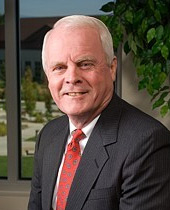
10 Things That Really Matter by Dr. Joe Aldrich

(1)  Always tell the truth.

(2)  Be sure you have all the facts before making a decision.

(3)  Keep open and friendly relations with God, family, and neighbors.

(4)  Devote time to helping others.

(5)  Review and adjust personal priorities on a regular basis.

(6)  Be financially responsible.

(7)  Discover “blind spots” by seeking advice from others.

(8)  Make personal hygiene and physical health a priority.

(9)  Become interdependent—we really do need each other.

(10) Recognize God in daily life and explore the power of prayer.

About the author: Joe Aldrich is most well know for being the Multnomah Bible College (Now Multnomah University) President 1978-1997 [DPC- I was a student at MSB from 1985-88 during his presidency]. Dr. Aldrich, was one of Willard Aldrich’s (former MSB President) nine children, was born in Portland and grew up in Vancouver, WA. In 1962, he married Ruthe Miles and they had two children: Kristen and Stephen. He was appointed Multnomah’s president in 1978 on Willard Aldrich’s retirement. Up until that time had been pastoring Mariner’s Church in Newport Beach, CA at the time. He retired from the presidency in 1997 due to Parkinson’s disease. Dr. Aldrich died February 12, 2009 at the age of 68 after a 15-year battle with Parkinson’s. One of his favorite quotes was this, “God can draw a straight line with a crooked stick.” Some of his accomplishments while at Multnomah were the following:

  • Construction of the John and Mary Mitchell Library (1980)
  • Founding of Multnomah Graduate School of Ministry (1987) and renamed it Multnomah Biblical Seminary (1993).
  • Charter membership in the Evangelical Council for Financial Accountability (ECFA). (1988)
  • Chairman for the Pacific Northwest Billy Graham Crusade. (1992)
  • Renaming Multnomah School of the Bible to Multnomah Bible College and Seminary. (1993)
  • Second majors introduced. (1994)
  • Construction of the Scruggs Married Student Apartments. (1995)
  • Accreditation of Multnomah Biblical Seminary through the Association of Theological Schools (ATS). (1996)
  • Wrote more than a dozen books, including “Lifestyle Evangelism: Learning to Open Your Life to Those Around You.”
  • Spearheaded the prayer summit movement called Northwest Renewal Ministries, now independent and renamed International Renewal Ministries. (1994)

The Spiritual Importance of Becoming an Emotionally Healthy Preacher

KEY ISSUES TO ADDRESS AS WE LOOK BENEATH THE SURFACE

 Preaching Today Interview with Peter Scazzero

[All preachers know that we need to prepare our souls to preach, but what exactly needs to enter into that preparation? Obviously it is not enough simply to punch the clock in prayer for a certain period of time, so what should we pray about? How do we discern the condition of our own souls? In this insightful interview with Peter Scazzero, author of Emotionally Healthy Spirituality (Nelson) and The Emotionally Healthy Church (Zondervan), we learn specifics about essential places to turn our attention as we prepare our hearts to proclaim God’s Word – I believe the two books mentioned above should be MUST reading for elders, pastors, deacons and leadership teams in churches].

PreachingToday.com: You’ve written two books on what you call emotionally healthy spirituality. Could you provide a brief overview of what you mean by that term and why it’s important?

Peter Scazzero: Basically, it’s a paradigm for how ordinary Christians can experience real transformation in Christ. It’s taking people beyond outward changes and moving into the depths of their interior life in order to be transformed.

We look at this process in two broad strokes. First, we say that every Christian should have a contemplative life. Simply put, that means that each follower of Christ needs to cultivate a deep relationship with Christ—without living off other people’s spiritual lives. That requires slowing down and structuring your whole life in such a way that Christ really becomes your Center.

Secondly, emotionally healthy spirituality means that emotional maturity and spiritual maturity go hand in hand. It’s simply not possible to become spiritually mature while you remain emotionally immature. And emotional maturity really boils down to one thing: love. So if you’re critical, defensive, touchy, unapproachable, insecure—telltale signs of emotional immaturity—you can’t be spiritually mature. It doesn’t matter how “anointed” you are or how much Bible knowledge you have. Love is that indispensable mark of maturity. Emotionally healthy spirituality unpacks what that looks like.

Why is there such a glaring need for this approach to our life in Christ?

I think it addresses some missing components in the way we approach discipleship, especially in the West. We can be very intellectually driven. We can also be driven by success and big numbers, so the idea of living contemplatively—sitting at the feet of Jesus like Mary in Luke 10—feels very counter-cultural to many of us. It’s counter to our church culture as well, especially if you’re a pastor. That’s why this has such a huge impact on preaching: it starts with the transformation of the person in the pulpit.

So how does emotionally healthy spirituality change a pastor’s approach to preaching?

That’s probably best summed up by the 13th-century theologian Thomas Aquinas, who said that all of our preaching or teaching should be the fruit of contemplation. In other words, as a preacher I don’t just study and exegete a text; I don’t just find good stories to illustrate the text; I also let it pass through my life in such a significant way that the Word has transformed me—not just on the surface but in the depths of my heart. I am a different person because I’ve been steeping in this text all week long. I’ve sat at the feet of Jesus. That’s the fruit of contemplation.

To me, that’s the foundational issue for preachers. In my travels throughout North America, I think the great problem with preaching today is that most pastors don’t take the biblical text and sit with Jesus. So we’re preaching “great” sermons—clever, interesting sermons—but I’m not sure those sermons are changing people’s lives on a deep level.

So how do we see real transformation in people’s lives through our preaching?

Again, it begins with the preacher. To change people’s lives deeply through the Word, the preacher’s life has to be transformed first by that Word. At this point in my ministry I rarely preach on a text that I haven’t been meditating on all week long—and the goal is to allow God to transform me, not just write a good sermon. So before I get up to preach, the text needs to have changed me first.

For instance, I went for a four-mile walk today, and the whole time I was meditating and praying about my preaching text—the story from Mark about blind Bartimaeus. At times I was struggling with the text, wrestling with how it intersects with my life. By the time I get in the pulpit, I’ve often memorized the passage. Of course I still do my Greek and my Hebrew word studies, but as I enter my 26th year of preaching, I spend a lot more time praying the Word before God. I spend more time asking and listening to him about how he wants me to approach the text.

In your books you say that our lives are often like an iceberg—there’s a lot underneath the surface, but it’s largely hidden from us. How does that apply to what you’re saying about our preparation for preaching?

As preachers the problem is that we usually don’t take the time to look beneath the surface of our lives, at the rest of the iceberg, the 90 percent that people can’t see. I know that I can easily ignore the immaturity and worldliness in my heart. As a result, I can diminish my preaching text because I’m stunted in my own relationship with Jesus. But when we wrestle with a biblical text, when we let it explore the hidden parts of our lives—that’s when real transformation starts to happen.

“If I’m too concerned about what people think of me and how the sermon is going to come off, I don’t think I’m ready to preach.”

For example, a couple of weeks ago I preached on John 21, where Jesus tells Peter, “I tell you the truth, when you were younger, you dressed yourself and went where you wanted, but when you’re older you will stretch forth your hand and someone else will dress you and lead you where you don’t want to go.” Before I preached that verse, I had to let it sink into my own life. As I prayed about that verse, listening to the voice of Jesus to me through that verse, I realized how often I make plans without consulting him. God started peeling off the layers of my false self: Pete, are you really looking for happiness in security, control, and power, like Peter? Like him, are you just trying to do your own thing and go your own way?

I had to wrestle with the fact that a big chunk of my ministry has been focused on my will. In the end, God brought me to a new place of surrender to him and to his will.

Every week I need to listen to the Lord like that. The Word needs to pass deep into my life—underneath the surface. And that will bear fruit in my preaching. I can’t get that from a book. You can’t read that in a commentary.

Do you think part of our emotional-spiritual immaturity comes from getting too wrapped up in the preacher’s role—that our identity is tied too closely to our sermonic success?

Absolutely. Number one, I need to be preaching to myself first. So every week I need to remind myself that I stand before God based on the righteousness of Christ alone, not on whether I preached a good sermon. So if someone says, “That sermon stunk,” or “That sermon didn’t hit the mark for me,” I don’t need to get depressed or defensive. I can just say, “Okay, tell me why it didn’t hit the mark for you.” I don’t expect to hit a home run every week. I offer God the best I have, and I let the rest go.

One of the best things I have to offer people is what God is doing in my life through this text. I look for a clear outline with solid points and good illustrations, but they’re not my highest priority. My highest priority is to be centered in the love of Christ. If I’m too concerned about what people think of me and how the sermon is going to come off, I don’t think I’m ready to preach that sermon.

Since you started focusing more on transformational preaching, what other changes have you seen in your sermon preparation?

I definitely spend a lot more time thinking and praying through the sermon application. What difference will this make in people’s lives? What does this passage say to the single mom, the stressed-out executive, or the questioning teenager? When people walk out the door, what are they going to do with this text?

Often I see two extremes in sermon application. There’s the ultra-practical, how-to, “Four Steps to a Happy Marriage” type of sermon that’s almost all application. Those sermons are often theologically and historically empty. But then there’s also the exegetically correct sermon that has little practical, everyday application. These preachers haven’t allowed the text to pass through their own lives.

For example, when I’m preaching on blind Bartimaeus, I have to think about the fact that we have six blind people in our congregation. How does this passage apply to their lives? My point can’t just be that Jesus heals the blind, so come and get healed right now. I need to wrestle with this text and apply it to the lives of these real people. That’s hard work—whether your church is rural, suburban, or urban. It takes time. Honestly, I’m not sure how I’m going to apply this text, but I know I need to apply it to myself first. At this point in my sermon prep I can sure relate to the people in the crowd who kept telling Bartimaeus to shut up. I also want to be more like Bartimaeus—desperately crying out to Jesus even when everyone around me is telling me to be quiet. Those are definitely points to explore as I seek to apply this text.

In one of your recent blog posts you wrote, “Unknowingly, some pastors use their flock as extensions of their own needs and ambitions.” How do you think pastors can “use their flock” when it comes to preaching?

I’ve often heard preachers say things like, “I have a fire in my bones, and I have to preach.” But if you look underneath the surface of their lives, they’re preaching has a lot to do with their own issues and needs. They are thinking about how they’re performing: What do people think of me? Did people like my sermon today? If that is the case, the whole process of preaching focuses on us, not God and his people.

It happens in subtle ways, too. A while ago I had to pull aside one of the guys in our preaching team and say, “I have to tell you that you crossed a line in your sermon last week. At one point you were really funny, and you had people rolling, but it seemed like you started working the crowd on a level that wasn’t appropriate.” It wasn’t a terrible issue, but it definitely felt show-offy—and it detracted from the flow of what God wanted to do through him.

As I look back on my own preaching, I wish I would have had someone to pull me aside and help me look underneath the surface of my life as a preacher. I learned so many things the hard way. Now I constantly tell younger preachers, “If you want to be a great preacher, learn Greek and Hebrew, learn a lot about church history; but first and foremost, learn to be with Jesus, develop a deep prayer life, know yourself well and learn to love people.” I’ve heard some brilliant sermons, but it didn’t take a rocket scientist to see that the sermon was more focused on the person in the pulpit.

But how do you preach powerful sermons when you know you haven’t arrived yet, when you know your life is still raw or immature? Let’s say you’re preaching on forgiveness, and you’re struggling to forgive someone as you prepare the sermon. How should you approach that as a preacher?

That’s the real beauty of preaching! Those are the most powerful sermons—when we know we’re still in the process of growing in Christ. That’s when God can really show up. You’re going to preach the truth—the truth about Scripture and the truth about your life. Obviously, you’re not going to say, “I’m struggling to forgive Joe Jones in the fourth row because he sent me a nasty letter this week.” But during my sermon prep I’m going to feel the hurts of life—pastors take a lot of hits—and I’m going to feel how impossible it is to forgive anyone. I can’t do it in my own strength. Left to myself, I don’t love my enemies.

That’s why brokenness before God is so crucial in our preaching. Obviously, I hope I have some spiritual maturity, but on the other hand there are probably people in my church who are further ahead of me on the path of forgiveness—or many other issues. I’m not up in the pulpit saying I have this all figured out. In my preaching I’m always communicating: I’m a fellow traveler just like all of you. God has been teaching me some things through this text, and I’m struggling with this truth just as you are. I stand by the grace of God just as you do. You better not put me on a pedestal because I’m not worthy of being on a pedestal. If you put me on a pedestal, you’ll be disappointed.

But you can still speak God’s Word with authority. You can preach on forgiving your enemies, because it’s true. “Jesus told us to forgive those who trespass against us because we’re going to get hurt every day. So choose to do good to those who hurt you, even when you don’t feel like it.” But I can also say, “Friends, this is impossible. I know because I’ve tried. Only God can help you do it. It will take a miracle—but God wants to give us the miracle of forgiveness.”

So preaching from brokenness and weakness isn’t just a technique or a preaching strategy. It has to flow genuinely from your life.

I’ve been a Christian for 36 years, but I’m still such a beginner. “We’re always beginners,” as Karl Barth said. The cross is starting to make more sense to me these days—that the Christian life is all about being crucified with Jesus so that he might live through me. I love the Apostle Paul’s view in 2 Corinthians 10-13. Paul was clear that he was not a super-apostle. He had a thorn in the flesh, yet he delighted in his weaknesses. That’s a counter-cultural, even un-American approach to preaching.

There are some great speakers in the church today. I’m in awe of the gifts that some people have. But I feel like one of my contributions to the preaching conversation is this idea of preaching from our brokenness and weakness—that God’s power flows through that. If God has given you great eloquence, then use that gift; but don’t ever let that gift cloud where true power comes from. Ultimately, it’s the rawness of your life and your encounter with God’s grace that becomes one of your greatest preaching gifts.

Actually, gifted preachers are the most in danger. They can get by, and people love it, but it’s also possible that nothing significant is taking place. You can draw a crowd of people, but in terms of spiritual transformation little is actually happening.

Here’s the key principle behind preaching that leads to transformation in Christ: You can’t bring people on a journey that you haven’t taken. You can tell them about the journey, but they could read that in a book. But if you go on a journey with Jesus that has real depth, it will come out in your preaching. If you’ve been sidetracked from that journey with Christ—building a big church, or gaining people’s approval, or being so busy you can’t even think straight—I would say that God is telling you to slow down so that you can be with Jesus. Your people need you to spend time in prayer. Your people need you to be with God, so you can bring a real Word from God.

Interview with Preaching Today and Peter Scazzero Adapted from the website below on 2/27/2012 http://www.preachingtoday.com/skills/themes/sermonprep/healthypreacher.html

About Pete Scazzero (MDiv, Gordon-Conwell Theological Seminary) is the founder and senior pastor of New Life Fellowship Church in Queens, New York, a large, multicultural, multiracial church with more than fifty-five nations represented. Today this flagship congregation has grown to an association of churches that includes five different congregations across New York City (four in English, one in Spanish) and two overseas (Dominican Republic and Colombia). Scazzero is also the author of Emotionally Healthy Spirituality and of several highly successful Bible study guides, including Love: The Key to Healthy Relationships and New Life in Christ.

Dr. John Piper’s 10 Resolutions For Mental Health

 Psalm 19:1, “The heavens declare the gory of God, and the sky proclaims His handiwork.”

On October 22, 1976, Clyde Kilby, who is now with Christ in Heaven, gave an unforgettable lecture. I went to hear him that night because I loved him. He had been one of my professors in English Literature at Wheaton College. He opened my eyes to more of life than I knew could be seen. O, what eyes he had! He was like his hero, C. S. Lewis, in this regard. When he spoke of the tree he saw on the way to class this morning, you wondered why you had been so blind all your life. Since those days in classes with Clyde Kilby, Psalm 19:1 has been central to my life: “The sky is telling the glory of God.”

That night Dr. Kilby had a pastoral heart and a poet’s eye. He pled with us to stop seeking mental health in the mirror of self-analysis, but instead to drink in the remedies of God in nature. He was not naïve. He knew of sin. He knew of the necessity of redemption in Christ. But he would have said that Christ purchased new eyes for us as well as new hearts. His plea was that we stop being unamazed by the strange glory of ordinary things. He ended that lecture in 1976 with a list of resolutions. As a tribute to my teacher and a blessing to your soul, I offer them for your joy.

1. At least once every day I shall look steadily up at the sky and remember that I, a consciousness with a conscience, am on a planet traveling in space with wonderfully mysterious things above and about me.

2. Instead of the accustomed idea of a mindless and endless evolutionary change to which we can neither add nor subtract, I shall suppose the universe guided by an Intelligence which, as Aristotle said of Greek drama, requires a beginning, a middle, and an end. I think this will save me from the cynicism expressed by Bertrand Russell before his death when he said: “There is darkness without, and when I die there will be darkness within. There is no splendor, no vastness anywhere, only triviality for a moment, and then nothing.”

3. I shall not fall into the falsehood that this day, or any day, is merely another ambiguous and plodding twenty-four hours, but rather a unique event, filled, if I so wish, with worthy potentialities. I shall not be fool enough to suppose that trouble and pain are wholly evil parentheses in my existence, but just as likely ladders to be climbed toward moral and spiritual manhood.

4. I shall not turn my life into a thin, straight line which prefers abstractions to reality. I shall know what I am doing when I abstract, which of course I shall often have to do.

5. I shall not demean my own uniqueness by envy of others. I shall stop boring into myself to discover what psychological or social categories I might belong to. Mostly I shall simply forget about myself and do my work.

6. I shall open my eyes and ears. Once every day I shall simply stare at a tree, a flower, a cloud, or a person. I shall not then be concerned at all to ask what they are but simply be glad that they are. I shall joyfully allow them the mystery of what Lewis calls their “divine, magical, terrifying and ecstatic” existence.

7. I shall sometimes look back at the freshness of vision I had in childhood and try, at least for a little while, to be, in the words of Lewis Carroll, the “child of the pure unclouded brow, and dreaming eyes of wonder.”

8. I shall follow Darwin’s advice and turn frequently to imaginative things such as good literature and good music, preferably, as Lewis suggests, an old book and timeless music.

9. I shall not allow the devilish onrush of this century to usurp all my energies but will instead, as Charles Williams suggested, “fulfill the moment as the moment.” I shall try to live well just now because the only time that exists is now.

10. Even if I turn out to be wrong, I shall bet my life on the assumption that this world is not idiotic, neither run by an absentee landlord, but that today, this very day, some stroke is being added to the cosmic canvas that in due course I shall understand with joy as a stroke made by the architect who calls himself Alpha and Omega.

John Piper was pastor for preaching and vision at Bethlehem Baptist Church in the Twin Cities of Minnesota. He grew up in Greenville, South Carolina, and studied at Wheaton College, Fuller Theological Seminary (B.D.), and the University of Munich (D.theol.). For six years he taught Biblical Studies at Bethel College in St. Paul, Minnesota, and in 1980 accepted the call to serve as pastor at Bethlehem. John is the author of more than 40 books and more than 30 years of his preaching and teaching is available free at desiringGod.org. John and his wife, Noel, have four sons, one daughter, and twelve grandchildren.

6 Destructive Mistakes People Make: Observed by Cicero

(1)  The delusion that personal gain is made by crushing others.

(2)  The tendency to worry about things that cannot be changed or corrected.

(3)  Insisting that a thing is impossible because we cannot accomplish it.

(4)  Refusing to set aside trivial preferences.

(5)  Neglecting development and refinement of the mind, and not acquiring the habit of reading and studying.

(6)  Attempting to compel others to believe and live as we do.

Marcus Tullius Cicero was born in 106 B.C. in Arpino, Italy and died on December 7, 43 B.C. He was a statesmen, philosopher, and orator.

10 Danger Signs of Stress

YOU MAY BE UNDER TOO MUCH STRESS IF YOU…

Find yourself irritable or impatient with things you normally tolerate.

Have difficulty getting to sleep and feel exhausted when you are awake.

Sense you are one step away from falling apart.

Suffer from frequent headaches or stomach pains.

Get distracted easily and have trouble concentrating.

Talk more negatively than usual.

Become forgetful and absentminded.

Don’t laugh as much as you used to.

Use alcohol, prescription drugs, or food to help you relax.

Postpone what is truly important, to accomplish what isn’t that important.

– Carol Clifford, PH.D. (Psychology)


26 Excellent Self Evaluation Questions By Gordon MacDonald

Accountability Questions For You and Your Mentoree/Disciple

 (Adapted from *Gordon MacDonald, Restoring Joy to Your Inner World, Inspiration Press, p. 573)

“Chances are that you have a physical once a year or every two years. I recommend that you also have a “spiritual” once a year as well. Your soul care is just as important as your body care! This is an excellent list of questions to help care for your soul.” – Dr. David P. Craig

(1) Where are you right now in your relationship with God?

(2) What have you read in the Bible in the last week?

(3) What has God been saying to you in this?

(4) Where do you find yourself resisting God these days?

(5) What specific things do you find yourself praying for regarding others?

(6) What specific things do you find yourself praying for yourself?

(7) What specific tasks are facing you that you consider incomplete?

(8) What habits are intimidating you at present?

(9) What have you read in the secular press this week?

(10) What general reading have you been doing?

(11) What have you done to play this week?

(12) How are you doing with your spouse/kids?

(13) If I were to ask your spouse about your state of mind, spirit, etc., what would he/she say?

(14) Are you sensing any spiritual attacks from the enemy this week? Today?

(15) If Satan were to try to invalidate you as a servant of God, where or how would he attack you?

(16) What is the state of your sexual life (temptation, fantasy, etc)?

(17) Where are you at financially (Do you have control, debts, etc)?

(18) Are there any unresolved conflicts (ailing relatives, stress, disputes) in your circle of relationships right now (family, friends those among whom we’re supposed to feel safe)?

(19) When was the last time you spent time with a friend of the same gender?

(20) What kind of time have you spent with a non-Christian this past week?

(21) What challenges do you expect to face in the coming month?

(22) What are your fears at the present time (letting family down, bodies letting us down, etc)?

(23) Are you sleeping well?

(24) What three things are you most thankful for?

(25) Do you like yourself at this point of your pilgrimage?

(26) What are you greatest confusions about your relationship with God?


*Gordon MacDonald has been a pastor and author for over forty years. For many years he pastored Grace Chapel in Lexington, Massachusetts and continues to serve as Pastor Emeritus. He has also provided leadership to influential ministries such as Intervarsity Christian Fellowship, which he served as President for three years, and World Relief, which he currently serves as Chairman. Gordon’s best-selling books include Ordering Your Private World, Mid-Course Correction and, most recently, A Resilient Life. He also writes and serves as Editor-at-Large for Christianity Today’s Leadership Journal. When not writing, leading or speaking at conferences, Gordon and his wife Gail can be found hiking the trails of New England.

15 Great Questions for Personal Evaluation by Carson Pue

(Adapted from *Carson Pue, Mentoring Leaders, Grand Rapids, MI: Baker, 2005, p. 243)

 Spiritual Questions

Distractions: Have you used anything other than God in an attempt to meet your emotional or spiritual needs this week?

God’s Word: Have you been purposefully filling your mind with the knowledge of God’s Word daily? If not, how often? How do you plan to change?

Fasting: Have you fasted and prayed in the last month? If not, when was the last time? When have you next scheduled these disciplines?

Obedience: Is your conscience clear? If not, why? How do you plan to attain a clear conscience?

 Physical Health Questions

Sleep: Are you getting enough sleep each night? If not, how much are you getting? How do you plan to change?

Exercise: Are you exercising daily? If not, how often are you exercising? How do you plan to change?

Eating: Are you eating properly? If not, what are you eating/not eating? How do you plan to change?

Substances: Are you abusing harmful substances? If not, when and how often have you taken them? How do you plan to change?

 Action Oriented Questions

Finances: Where are you financially right now? Are things under control? Are you feeling anxious? Is there any great debt? How are you planning to proceed in this area of your life?

Purity: Have you kept your mind pure (thoughts of anger, bitterness, movies, magazines, Internet pornography, other)? If not, when did you fall?

What temptations need to be removed or precautions taken to prevent it?

Material Goods: Do you have anything that is used for evil needing to be destroyed or removed? If so, what? When and how will you (we) destroy or remove them?

Control: Have you lost control either verbally or otherwise since we last met? If so, when? When and how will you do something to restore and correct your actions?

Relational Questions

Deposits: Have you made positive emotional and spiritual deposits with your kids and your spouse? If not, why? What might you be able to do to make this a natural response?

Family: Have you offended any family member since we last met? If so, when? When and how will you restore and correct those actions?

Truthfulness: Have you told the whole truth in your answers to the questions I have asked you? If not, what do you need to correct? What actions do we need to take to stay and remain accountable?

Process: Is the asking of any of these questions adequate for you? If not, what changes are needed? Who else needs to be a part of this process?

*Carson Pue is the Executive Director at First Baptist Church right smack in the heart of downtown Vancouver, Canada. He describes the church this way, “Congregating in this historic stone building in the very heart of the downtown is a community. We are young, old and in-between, rich, poor, employed and re-training, multicultural, families and singles, Bible scholars, seekers. All share a heart for the city.”

For fourteen years Carson served as CEO of Arrow Leadership a ministry recognized as a global leader in Christian leadership development. Arrow develops leaders worldwide “to be led more by Jesus, lead more like Jesus, and to lead more to Jesus.” They have been highly successful in transforming and enriching the lives and  leadership of men and women who are now deployed around the world.

Recognized as a leader of leaders Carson has an ability to identify leaders and invest wisdom into their development through mentoring, teaching and spiritual guidance.He is also best-selling author: “Mentoring Leaders: Wisdom for Developing Character, Calling and Competency” by Baker Books and his new  Mentoring Wisdom: Living and leading well. Carson is known through his speaking at conferences, published articles, national radio programs and commentaries. Through referrals over 50,000 leaders benefit from his monthly leadership emails “To the Point” “Mentoring Questions” and magazine columns.

With his encouraging style, creative ideas, engaging humor and ministry experience, people find Carson well fitted for his role. In a straightforward manner Carson shares both from success and failure in ministry, believing that leaders learn from both. He is a popular keynote speaker on themes around leadership, spiritual development and the realities of being a pastor today.Carson extends his leadership by serving on the board of directors for World Vision,  Crossroad Communications and CTS Television Network. In addition he is an advisor for the boards of The Billy Graham CenterTruefaced, and the Entrepreneurial Leaders Organization.  He is a trusted advisor to Christian leaders across Canada and the USA and connects globally with The Lausanne Movement and World Evangelical Alliance.

When not traveling the world encouraging leaders, he loves sailing with his BFF and first mateBrenda whom he has been married to since 1976. He loves time with his three sons, two daughters by marriage and three grandsons. He is also restored by laughter, sailing, Ireland, writing and spiritual retreats.

Developing Vision in Those You Are Mentoring By Asking Great Questions by Bobb Biehl

Developing Vision in Your Mentoree/Disciple

(Adapted from Bobb Biehl, Mentoring, pp. 201-202)

 DREAMING…about the Future in a Practical Way

  1. God: What three changes in me would most please our Eternal God in His Holy Heaven?
  1. Dream/Purpose: What can I do to make the most significant difference for God in my lifetime? Why am I on the earth? What is the very best organizational context for my dream?
  1. Primary Result: What is the single best measurable indicator that I am making progress with my dream?


  1. Life Priorities: If I could accomplish only three measurable priorities before I die, what would I accomplish?
  1. Ten-Year Focus: If I could accomplish only three measurable priorities in the next ten years what would make a 50% difference in my life-long contribution, what would I accomplish?
  1. Annual Focus:
    • Focus – What single word best captures the focus of my next year?
    • Opportunity – Where was my greatest unexpected success last year? Why? What three steps could I take now to take full advantage of this “Window of Opportunity” this coming year?
    • Land Mines – What three land mines or roadblocks need my immediate attention? What have I been praying most about in the past 30 days? What three changes could reduce my “risk” by 50%?
    • 30/10/50% – If I could only accomplish three measurable priorities in the next twelve months that would make a 50% difference in my contribution in the next ten years, which 3 things would I most want to accomplish?
  1. Quarterly Focus: What three measurable priorities could I accomplish in the next ninety days to make a 50% difference in the results I see by the end of the year?
  1. Organization: What three categories could I make to see a 50% difference in our morale as a family or team?
  1. Cash: If I had to cut my budget 21%, what would be the first three things to go? If I got a surprise gift of 21% of my budget, what three things would I do immediately?
  1. Quality: What three changes could improve the quality of my work by 50% in the next twelve months?

*Bobb Biehl is an executive mentor. He graduated from Michigan State University (psychology major) in 1964 and received a Master’s degree (counseling) from Michigan State in 1966.

In 1976, Bobb founded Masterplanning Group International. As its president, he has consulted personally with over 400 clients. In that time, he has met one-on-one with over 3,500 executives (board members, senior executives, and staff members) and invested an estimated 40,000 hours in private sessions with some of the finest leaders of our generation. His clients are primarily large or fast-growing churches, nonprofit organizations, for profit corporations, and government agencies.

Based on these thousands of hours of practical “rubber-meets-the-runway” experience, Bobb has originated 35 resources (books, tapes, notebooks) in the area of personal and organizational development. These resources include published books entitled Boardroom Confidence, Dreaming, Leading with Confidence, Masterplanning, Mentoring, Stop Setting Goals, and Why You Do What You Do. His latest book, Dreaming Big, is co-authored with Dr. Paul Swets.

Bobb is a founding member of the board of directors of Focus on the Family. He is also a member of the board of directors of Liquid Metal (publicly traded). Prior to starting Masterplanning Group, Bobb was on the executive staff of World Vision International. While at World Vision he designed and developed the Love Loaf program, which has raised millions of dollars worldwide.

Bobb and his wife, Cheryl, have been married since 1964.

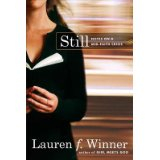
Book Review: Still – Notes On A Mid-Faith Crisis by Lauren F. Winner

Would Be Much More Helpful if Centered on Christ, and Not on Self

Every once in a while I randomly pick a book simply because the topic intrigues me. As a Christian pastor and professional life coach, one of the issues I specialize in is helping Christians transition into what’s been termed as the “new normal.” In other words, what used to be normal in one’s life is gone and lost forever, and for some it becomes a very serious conundrum. What do I do now that I lost my job? My marriage? My kids? My health? My money? And the list and litany of life changing questions demand answers and solutions.

I was hoping that this book would be helpful to me – as a pastor who is transitioning myself – from being a senior pastor – to a life coach; from having five kids at home – to being an empty nester; from having a very comfortable life – to one that is very financially uncertain. As well as a help to those I counsel, disciple, and coach in transition.

The book was interesting, transparent and authentic, well written, worth reading, but in the final analysis – unhelpful and leaves you without the hope that we are offered in Jesus Christ. The most disappointing thing to me was the that the writer never really arrives at answers, nor the hope, and help of the gospel that is found in Jesus Christ. She finds her “answers” in the community of faith, poetry, daily meanderings to varied places, and various encounters with strangers.

Winner drew me in to her world and when I finished the book I wanted to help her. Instead of helping me, I was drawn to come alongside her as a friend, counselor, pastor, and coach. Her understanding of what it means to have a relationship with Jesus appears to be much like that of a teenager trying to get into the “cool” group of peers. I believe that Lauren is sincere, smart, a very talented writer, but she appears to be directionless and lost – and a lost person who has no directions – is ill equipped to genuinely help people who are “lost and directionless.”

I can sympathize and empathize with Winner. I like her – I think we would be good friends. I think she would make a good listener, and empathizer herself. What’s missing is her own security in Christ, in the truth, in the authority of God’s Word, and in the gospel.

The book I would recommend that Winner and anyone else reading this review would devour on the topic Winner addresses is Paul David Tripp’s book “Lost in the Middle: Midlife and the Grace of God.” Whether you are in mid-life or mid-faith crises, Tripp’s book wonderfully articulates the realities of sin, redemption, reconciliation, and redemption in such a way that you can find real grace, hope, and solutions by putting your trust in Jesus Christ and in Him alone for your salvation, and sanctification – resulting in significance, present and eternal security, and life long solutions – for the “new normals” of your life.