Why Regeneration is Necessary For Believing the Truth

Regeneration: The Key to Believing the Truth

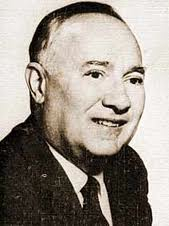
Gordon H. Clark

by Gordon Clark

When Adam fell, the human race became, not stupid so that the truth was hard to understand, but inimical, to the acceptance of the truth. Men did not like to retain God in their knowledge and changed the truth of God into a lie, for the carnal mind is enmity against God. Hence the preaching of the cross is to them that perish foolishness, for the natural man receives not the things of the Spirit of God because they are spiritually discerned. In order to accept the Gospel, therefore, it is necessary to be born again. The abnormal, depraved intellect must be remade by the Holy Spirit; the enemy must be made a friend. This is the work of regeneration, and the heart of stone can be taken away and a heart of flesh can be given only by God himself. Resurrecting the man who is dead in sin and giving him a new life, far from being a human achievement, requires nothing less then almighty power.

It is therefore impossible by argument or preaching alone to cause anyone to believe the Bible. Only God can cause such belief. At the same time, this does not mean that argument is useless. Peter tells us, “always be ready to give a defense to everyone who asks you a reason for the hope that is in you.” This was the constant practice of the apostles. Stephen disputed with the Libertines; the Jerusalem council disputed; in Ephesus Paul disputed three months in the synagogue and then continued disputing in the school of Tyrannus. (Acts 6:9; 15:7; 19:8,9: compare Acts 17:2; 18:4, 19; 24:25). Anyone who is unwilling to argue, dispute, and reason is disloyal to his Christian duty.

At this point the natural question is, What is the use of all this expounding and explaining if it does not produce belief? The answer should be clearly understood. The witness or testimony of the Holy Spirit is a witness to something. The Spirit cannot produce belief in Christ unless a sinner has heard of Christ. “How then shall they call on him of whom they have not heard?…So then faith comes by hearing, and hearing by the Word of God” (Romans 10:14,17).

No doubt God in his omnipotence could reveal the necessary information to each man individually without a written Bible or ministerial preaching. But this is not what God has done. God gave the apostles and preachers the duty of expounding the message; but the production of belief is the work of the Spirit, for faith is the gift of God.

This is part of the reason why it was said above that the best procedure for us, if we want someone to accept the doctrine of plenary and verbal inspiration, is to expound the Scripture in detail. We may well use archaeology and historical criticism too, but the main task is to communicate the message of the Bible in as understandable language as we can manage.

It is to be noted too that the sinner, without any special work of the Spirit, can understand the message. Belief in its truth and understanding its meaning are two different things. The Bible can be understood by the same methods of study used on Euclid or Aristotle. Despite some pious disclaimers, it is true that antagonistic unbelievers often enough understand the Bible better than devout Christians. The Pharisees saw the significance of Christ’s claims to deity more quickly and more clearly than the disciples did.

As Paul persecuted the Christians in Jerusalem and set out for Damascus, he understood the words, “Jesus is Lord” as well as any of the twelve. It was precisely because he understood so well that he persecuted so zealously. Had he been unsure of the meaning, he would not have been so exercised. But the trouble was, he did not believe it. On the contrary, he believed that it was false. Then on the Damascus road Christ appeared to him and caused him to believe that the statement was true. Paul did not understand the phrase any better a moment after his conversion than a moment before. Doubtless in later years God revealed further information to him for use in his epistles. But at the moment, Christ did not enlarge his understanding one whit; he caused him to receive, accept, or believe what he had already understood quite well. Thus it is that the Spirit witnessed to the message previously communicated.

Strong emphasis needs to be placed on the work of the Holy Spirit. Man is dead in sin, an enemy of God, opposed to all righteousness and truth. He needs to be changed. Neither the preacher nor, much less, the sinner himself can cause the change. But “blessed is the man whom you choose, and cause to approach you” (Psalm 65:4). “And I will take the stony heart out of their flesh, and give them a heart of flesh” (Ezekiel 11:19; 36:26, 27). “As many as had been appointed to eternal life believed” (Acts 13:48). “God when we were dead in trespasses, made us alive together with Christ” (Ephesians 2:4-5). “For it is God who works in you both to will and to do for his good pleasure” (Philippians 2:13). “God from the beginning chose you for salvation through sanctification by the Spirit and belief in the truth” (2 Thessalonians 2:13). “Of his own will he brought us forth by the word of truth” (James 1:18).

These verses, which primarily refer to regeneration, are applicable to our acceptance of the Bible as the very word of God. Indeed, the new life which the second birth initiates” the life to which we are “raised from the death of sin” is precisely the life of faith; and a full faith includes a plenary and verbal inspiration of the salvation message. It is the gift of God.

This is why the greatest of all the creeds issuing from the Reformation, the Westminster Confession says:

The authority of the Holy Scripture, for which it ought to be believed and obeyed, dependeth not upon the testimony of any man or Church, but wholly upon God (who is Truth itself), the author thereof; and, therefore, it is to be received, because it is the Word of God. “our full persuasion and assurance of the infallible truth and divine authority thereof is from the inward work of the Holy Spirit, bearing witness, by and with the Word, in our heart (I,iv and v.)

In the last analysis, therefore “although historical and archaeological confirmation of the Bible” accuracy is of great interest to us and of great embarrassment to unbelievers-a conviction that the Bible is really the Word of God cannot be the conclusion of a valid argument based on more clearly evident premises. This conviction is produced by the Holy Spirit himself.

It must always be kept in mind that the proclamation in the Gospel is part of a spiritual struggle against the supernatural powers of the evil one, and victory comes only through the omnipotent grace of God. Accordingly, as Jesus explained his mission to both Peter and the Pharisees, so we today must expound and explain the Scripture in all its fullness to all sorts of men; and we can then be assured that our Father in Heaven will reveal his truth to some of them.

– Gordon H. Clark, “God’s Hammer: The Bible and its Critics“ pg.20-23

About the Author:

Gordon Haddon Clark (1902-1985) was a philosopher and Calvinist theologian and taught philosophy at the college level for most of his life. He was an expert in pre-Socratic and ancient philosophy and was noted for his rigor in defending Platonic realism against all forms of empiricism, in arguing that all truth is propositional, and in applying the laws of logic. The Trinity Foundation continues to publish his writings and other books as well.

R.C. Sproul Summarizes The Doctrines of Grace: “T.U.L.I.P”

TULIPS

In a series of blog articles at ligonier.org entitled “TULIP and Reformed Theology,” Dr. R. C. Sproul provided a brief summary of the five points of Calvinism (also known as the Doctrines of Grace) expressed in the acrostic TULIP:

INTRODUCTION

Just a few years before the Pilgrims landed on the shores of New England in the Mayflower, a controversy erupted in the Netherlands and spread throughout Europe and then around the world. It began within the theological faculty of a Dutch institution that was committed to Calvinistic teaching. Some of the professors there began to have second thoughts about issues relating to the doctrines of election and predestination. As this theological controversy spread across the country, it upset the church and theologians of the day. Finally, a synod was convened. Issues were squared away and the views of certain people were rejected, including those of a man by the name of Jacobus Arminius.

The group that led the movement against orthodox Reformed theology was called the Remonstrants. They were called the Remonstrants because they were remonstrating or protesting against certain doctrines within their own theological heritage. There were basically five doctrines that were the core of the controversy. As a result of this debate, these five core theological issues became known in subsequent generations as the “five points of Calvinism.” They are now known through the very popular acrostic TULIP, which is a clever way to sum up the five articles that were in dispute. The five points, as they are stated in order to form the acrostic TULIP, are: total depravity, unconditional election, limited atonement, irresistible grace, and perseverance of the saints.

I mention this historical event because it would be a serious mistake to understand the essence of Reformed theology simply in light of these five doctrines—the Reformed faith involves many other elements of theological and ecclesiastical confession. However, these are the five controversial points of Reformed theology, and they are the ones that are popularly seen as distinctive to this particular confession. Over the next five posts, we are going to spend some time looking at these five points of Calvinism as they are spelled out in the acrostic TULIP.

(1) TOTAL DEPRAVITY

The doctrine of total depravity reflects the Reformed viewpoint of original sin. That term—original sin—is often misunderstood in the popular arena. Some people assume that the term original sin must refer to the first sin—the original transgression that we’ve all copied in many different ways in our own lives, that is, the first sin of Adam and Eve. But that’s not what original sin has referred to historically in the church. Rather, the doctrine of original sin defines the consequences to the human race because of that first sin.

Virtually every church historically that has a creed or a confession has agreed that something very serious happened to the human race as a result of the first sin—that first sin resulted in original sin. That is, as a result of the sin of Adam and Eve, the entire human race fell, and our nature as human beings since the fall has been influenced by the power of evil. As David declared in the Old Testament, “Oh, God, I was born in sin, and in sin did my mother conceive me” (Ps. 51:5). He was not saying that it was sinful for his mother to have borne children; neither was he saying that he had done something evil by being born. Rather, he was acknowledging the human condition of fallenness—that condition that was part of the experience of his parents, a condition that he himself brought into this world. Therefore, original sin has to do with the fallen nature of mankind. The idea is that we are not sinners because we sin, but that we sin because we are sinners.

In the Reformed tradition, total depravity does not mean utter depravity. We often use the term total as a synonym for utter or for completely, so the notion of total depravity conjures up the idea that every human being is as bad as that person could possibly be. You might think of an archfiend of history such as Adolf Hitler and say there was absolutely no redeeming virtue in the man, but I suspect that he had some affection for his mother. As wicked as Hitler was, we can still conceive of ways in which he could have been even more wicked than he actually was. So the idea of total total depravity doesn’t mean that all human beings are as wicked as they can possibly be. It means that the fall was so serious that it affects the whole person. The fallenness that captures and grips our human nature affects our bodies; that’s why we become ill and die. It affects our minds and our thinking; we still have the capacity to think, but the Bible says the mind has become darkened and weakened. The will of man is no longer in its pristine state of moral power. The will, according to the New Testament, is now in bondage. We are enslaved to the evil impulses and desires of our hearts. The body, the mind, the will, the spirit—indeed, the whole person—have been infected by the power of sin.

I like to replace the term total depravity with my favorite designation, which is radical corruption. Ironically, the word radical has its roots in the Latin word for “root,” which is radix, and it can be translated root or core. The term radical has to do with something that permeates to the core of a thing. It’s not something that is tangential or superficial, lying on the surface. The Reformed view is that the effects of the fall extend or penetrate to the core of our being. Even the English word core actually comes from the Latin word cor, which means “heart.” That is, our sin is something that comes from our hearts. In biblical terms, that means it’s from the core or very center of our existence.

So what is required for us to be conformed to the image of Christ is not simply some small adjustments or behavioral modifications, but nothing less than renovation from the inside. We need to be regenerated, to be made over again, to be quickened by the power of the Spirit. The only way in which a person can escape this radical situation is by the Holy Spirit’s changing the core, the heart. However, even that change does not instantly vanquish sin. The complete elimination of sin awaits our glorification in heaven.

(2) UNCONDITIONAL ELECTION

The Reformed view of election, known as unconditional election, means that God does not foresee an action or condition on our part that induces Him to save us. Rather, election rests on God’s sovereign decision to save whomever He is pleased to save.

In the book of Romans, we find a discussion of this difficult concept. Romans 9:10–13 reads: “And not only so, but also when Rebekah had conceived children by one man, our forefather Isaac, though they were not yet born and had done nothing either good or bad—in order that God’s purpose of election might continue, not because of works but because of him who calls—she was told, ‘The older will serve the younger.’ As it is written, ‘Jacob I loved, but Esau I hated.’” Here the Apostle Paul is giving his exposition of the doctrine of election. He deals with it significantly in Romans 8, but here he illustrates his teaching of the doctrine of election by going back into the past of the Jewish people and looking at the circumstances surrounding the birth of twins—Jacob and Esau. In the ancient world, it was customary for the firstborn son to receive the inheritance or the patriarchal blessing. However, in the case of these twins, God reversed the process and gave the blessing not to the elder but to the younger. The point that the Apostle labors here is that God not only makes this decision prior to the twins’ births, He does it without a view to anything they would do, either good or evil, so that the purposes of God might stand. Therefore, our salvation does not rest on us; it rests solely on the gracious, sovereign decision of God.

This doesn’t mean that God will save people whether they come to faith or not. There are conditions that God decrees for salvation, not the least of which is putting one’s personal trust in Christ. However, that is a condition for justification, and the doctrine of election is something else. When we’re talking about unconditional election, we’re talking in a very narrow confine of the doctrine of election itself.

So, then, on what basis does God elect to save certain people? Is it on the basis of some foreseen reaction, response, or activity of the elect? Many people who have a doctrine of election or predestination look at it this way. They believe that in eternity past God looked down through the corridors of time and He knew in advance who would say yes to the offer of the gospel and who would say no. On the basis of this prior knowledge of those who will meet the condition for salvation—that is, expressing faith or belief in Christ—He elects to save them. This is conditional election, which means that God distributes His electing grace on the basis of some foreseen condition that human beings meet themselves.

Unconditional election is another term that I think can be a bit misleading, so I prefer to use the term sovereign election. If God chooses sovereignly to bestow His grace on some sinners and withhold His grace from other sinners, is there any violation of justice in this? Do those who do not receive this gift receive something they do not deserve? Of course not. If God allows these sinners to perish, is He treating them unjustly? Of course not. One group receives grace; the other receives justice. No one receives injustice. Paul anticipates this protest: “Is there injustice on God’s part?” (Rom. 9:14a). He answers it with the most emphatic response he can muster. I prefer the translation, “God forbid” (v. 14b). Then he goes on to amplify this response: “For he says to Moses, ‘I will have mercy on whom I have mercy, and I will have compassion on whom I have compassion’” (v. 15). Here the Apostle is reminding his reader of what Moses declared centuries before; namely, that it is God’s divine right to execute clemency when and where He desires. He says from the beginning, “I will have mercy on whom I will have mercy.” It is not on those who meet some conditions, but on those whom He is pleased to bestow the benefit.

(3) LIMITED ATONEMENT

I think that of all the five points of Calvinism, limited atonement is the most controversial, and the one that engenders perhaps the most confusion and consternation. This doctrine is chiefly concerned about the original purpose, plan, or design of God in sending Christ into the world to die on the cross. Was it the Father’s intent to send His Son to die on the cross to make salvation possible for everyone, but with the possibility that His death would be effective for no one? That is, did God simply send Christ to the cross to make salvation possible, or did God, from all eternity, have a plan of salvation by which, according to the riches of His grace and His eternal election, He designed the atonement to ensure the salvation of His people? Was the atonement limited in its original design?

I prefer not to use the term limited atonement because it is misleading. I rather speak of definite redemption or definite atonement, which communicates that God the Father designed the work of redemption specifically with a view to providing salvation for the elect, and that Christ died for His sheep and laid down His life for those the Father had given to Him.

One of the texts that we often hear used as an objection against the idea of a definite atonement is 2 Peter 3:8–9: “But do not overlook this one fact, beloved, that with the Lord one day is as a thousand years, and a thousand years as one day. The Lord is not slow to fulfill his promise as some count slowness, but is patient toward you, not wishing that any should perish, but that all should reach repentance.” The immediate antecedent of the word any in this passage is the word us, and I think it’s perfectly clear that Peter is saying that God is not willing that any of us should perish, but that all of us should come to salvation. He’s not speaking of all mankind indiscriminately; the us is a reference to the believing people to whom Peter is speaking. I don’t think we want to believe in a God who sends Christ to die on the cross and then crosses His fingers, hoping that someone will take advantage of that atoning death. Our view of God is different. Our view is that the redemption of specific sinners was an eternal plan of God, and this plan and design was perfectly conceived and perfectly executed so that the will of God to save His people is accomplished by the atoning work of Christ.

This does not mean that a limit is placed on the value or the merit of the atonement of Jesus Christ. It’s traditional to say that the atoning work of Christ is sufficient for all. That is, its meritorious value is sufficient to cover the sins of all people, and certainly anyone who puts his or her trust in Jesus Christ will receive the full measure of the benefits of that atonement. It is also important to understand that the gospel is to be preached universally. This is another controversial point, because on the one hand the gospel is offered universally to all who are within earshot of the preaching of it, but it’s not universally offered in the sense that it’s offered to anyone without any conditions. It’s offered to anyone who believes. It’s offered to anyone who repents. Obviously the merit of the atonement of Christ is given to all who believe and to all who repent of their sins.

(4) IRRESISTIBLE GRACE

In historic Reformation thought, the notion is this: regeneration precedes faith. We also believe that regeneration is monergistic. Now that’s a three-dollar word. It means essentially that the divine operation called rebirth or regeneration is the work of God alone. An erg is a unit of labor, a unit of work. The word energy comes from that idea. The prefix mono- means “one.” So monergism means “one working.” It means that the work of regeneration in the human heart is something that God does by His power alone—not by 50 percent His power and 50 percent man’s power, or even 99 percent His power and 1 percent man’s power. It is 100 percent the work of God. He, and He alone, has the power to change the disposition of the soul and the human heart to bring us to faith.

In addition, when He exercises this grace in the soul, He brings about the effect that He intends to bring about. When God created you, He brought you into existence. You didn’t help Him. It was His sovereign work that brought you to life biologically. Likewise, it is His work, and His alone, that brings you into the state of rebirth and of renewed creation. Hence, we call this irresistible grace. It’s grace that works. It’s grace that brings about what God wants it to bring about. If, indeed, we are dead in sins and trespasses, if, indeed, our wills are held captive by the lusts of our flesh and we need to be liberated from our flesh in order to be saved, then in the final analysis, salvation must be something that God does in us and for us, not something that we in any way do for ourselves.

However, the idea of irresistibility conjures up the idea that one cannot possibly offer any resistance to the grace of God. However, the history of the human race is the history of relentless resistance to the sweetness of the grace of God. Irresistible grace does not mean that God’s grace is incapable of being resisted. Indeed, we are capable of resisting God’s grace, and we do resist it. The idea is that God’s grace is so powerful that it has the capacity to overcome our natural resistance to it. It is not that the Holy Spirit drags people kicking and screaming to Christ against their wills. The Holy Spirit changes the inclination and disposition of our wills, so that whereas we were previously unwilling to embrace Christ, now we are willing, and more than willing. Indeed, we aren’t dragged to Christ, we run to Christ, and we embrace Him joyfully because the Spirit has changed our hearts. They are no longer hearts of stone that are impervious to the commands of God and to the invitations of the gospel. God melts the hardness of our hearts when He makes us new creatures. The Holy Spirit resurrects us from spiritual death, so that we come to Christ because we want to come to Christ. The reason we want to come to Christ is because God has already done a work of grace in our souls. Without that work, we would never have any desire to come to Christ. That’s why we say that regeneration precedes faith.

I have a little bit of a problem using the term irresistible grace, not because I don’t believe this classical doctrine, but because it is misleading to many people. Therefore, I prefer the term effectual grace, because the irresistible grace of God effects what God intends it to effect.

(5) PERSEVERANCE OF THE SAINTS

Writing to the Philippians, Paul says, “He who has begun a good work in you will perfect it to the end” (Phil. 1:6). Therein is the promise of God that what He starts in our souls, He intends to finish. So the old axiom in Reformed theology about the perseverance of the saints is this: If you have it—that is, if you have genuine faith and are in a state of saving grace—you will never lose it. If you lose it, you never had it.

We know that many people make professions of faith, then turn away and repudiate or recant those professions. The Apostle John notes that there were those who left the company of the disciples, and he says of them, “Those who went out from us were never really with us” (1 John 2:19). Of course, they were with the disciples in terms of outward appearances before they departed. They had made an outward profession of faith, and Jesus makes it clear that it is possible for a person to do this even when he doesn’t possess what he’s professing. Jesus says, “This people honors Me with their lips, but their heart is far from Me” (Matt. 15:8). Jesus even warns at the end of the Sermon on the Mount that at the last day, many will come to Him, saying: “Lord, Lord, didn’t we do this in your name? Didn’t we do that in your name?” He will send them away, saying: “Depart from Me, you workers of iniquity. I never knew you” (Matthew 7:23). He will not say: “I knew you for a season and then you went sour and betrayed Me. No, you never were part of My invisible church.” The whole purpose of God’s election is to bring His people safely to heaven; therefore, what He starts He promises to finish. He not only initiates the Christian life, but the Holy Spirit is with us as the sanctifier, the convictor, and the helper to ensure our preservation.

I want to stress that this endurance in the faith does not rest on our strength. Even after we’re regenerated, we still lapse into sin, even serious sin. We say that it is possible for a Christian to experience a very serious fall, we talk about backsliding, we talk about moral lapses, and so on. I can’t think of any sin, other than blasphemy against the Holy Spirit, that a truly converted Christian is not capable of committing.

We look, for example, at the model of David in the Old Testament. David was surely a man after God’s own heart. He was certainly a regenerate man. He had the Spirit of God in Him. He had a profound and passionate love for the things of God. Yet this man not only committed adultery but also was involved in a conspiracy to have his lover’s husband killed in war—which was really conspiracy to murder. That’s serious business. Even though we see the serious level of repentance to which David was brought as a result of the words of the prophet Nathan to him, the point is that David fell, and he fell seriously.

The apostle Paul warns us against having a puffed-up view of our own spiritual strength. He says, “Therefore let anyone who thinks that he stands take heed lest he fall” (1 Cor. 10:12). We do fall into very serious activities. The Apostle Peter, even after being forewarned, rejected Christ, swearing that he never knew Him—a public betrayal of Jesus. He committed treason against His Lord. When he was being warned of this eventuality, Peter said it would never happen. Jesus said, “Simon, Simon, Satan would have you and sift you like wheat, but I have prayed for you, so that when you turn, strengthen the brothers” (Luke 22:31). Peter fell, but he returned. He was restored. His fall was for a season. That’s why we say that true Christians can have radical and serious falls but never total and final falls from grace.

I think this little catchphrase, perseverance of the saints, is dangerously misleading. It suggests that the perseverance is something that we do, perhaps in and of ourselves. I believe that saints do persevere in faith, and that those who have been effectually called by God and have been reborn by the power of the Holy Spirit endure to the end. However, they persevere not because they are so diligent in making use of the mercies of God. The only reason we can give why any of us continue on in the faith is because we have been preserved. So I prefer the term the preservation of the saints, because the process by which we are kept in a state of grace is something that is accomplished by God. My confidence in my preservation is not in my ability to persevere. My confidence rests in the power of Christ to sustain me with His grace and by the power of His intercession. He is going to bring us safely home.

About The Author:

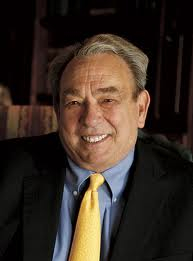
Sproul R C image seated with Bible

Dr. R.C. Sproul has been a professor of Apologetics, Philosophy, and Theology at numerous Seminaries. He is the Founder of Ligonier Ministries, President of Reformation Bible College, and the Senior Minister of St. Andrews Presbyterian Church in Sanford, Fl. He has authored over 70 books including the following books on Soteriology: Chosen By God; Willing to Believe; Getting the Gospel Right; What is Reformed Theology?; The Truth of the Cross; Faith Alone; and Grace Unknown.

The Power of the Gospel in Kirsten Powers Life

Kirsten Powers

She is a political analyst, blogger, columnist and commentator. She is a Democrat who regularly contributes to USA Today, Newsweek, The Daily Beast, Fox News and the Wall Street Journal among other publications. She formerly served under the Clinton administration from 1993-1998 and was appointed Deputy Assistant U.S Trade Representative for Public Affairs.

In an interview with Focus on the Family, she shares how she converted from atheism to Christianity. She said: “I was not looking to be a Christian. The last thing in the world I wanted to be was a Christian. I had grown up as an Episcopalian, but not evangelical, born again, or any of those kinds of things. It was very high church, kind of mainline, protestant, episcopalian. I did believe in God, but it wasn’t anywhere near what would come to happen to me later in life.

“When I went away to college, whatever little faith I had, I lost. I ended up graduating from college. I worked in the Clinton administration. All my friends were secular liberals. At this point, I really got even more deeply into an incredibly secular world because now, all my friends were basically atheists, or if they had any kind of spirituality, they were very hostile towards religion, Christianity in particular. So, I really didn’t have any interest in it.

“I started dating someone who went to Tim Keller’s church, Redeemer Presbyterian in New York City. Out of curiosity, I went with him. But I told him upfront that I would never become a Christian; that it’s never going to happen. After about six or seven months, I began to think that the weight of history is more on the side of what [I was hearing at this church] than not. Tim Keller had made such a strong case, that I began to think it’s not even smart to reject this. It just doesn’t seem like a good intellectual decision.

“Really, it was like God sort of invaded my life. It was very unwelcome. I didn’t like it. Obviously, I started having a lot of different experiences where I felt God was doing a lot of things in my life. It’s kind of hard to describe, but I did have this moment where the scales just fell off of my eyes, where I was saying, ‘this is just totally true, I don’t even have any doubt.’ …I don’t really feel like I had any courage when I became a Christian, I just gave in. I wasn’t courageous; I didn’t have any choice. I kept trying to not believe but I just couldn’t avoid [accepting Christ]. If I could have avoided it, I would have. There is nothing convenient about it in my life or in the world I live in. It’s not like living in the South where everybody is a Christian. I live in a world where nobody is a believer. But God pursued me.” Her name is Kirsten Powers.

Article adapted from: Kirsten Powers: How a Liberal Democrat and Former Atheist Came to Know Jesus Christ as her Savior – Gospel Light Minute ^ | 2 June 2013 – Posted on July 14, 2013 5:59:59 AM PDT by Gamecock

R.C. Sproul on What Happens To The Person Who Never Heard of Jesus?

Objection #3 To Christianity Answered: “What About the Poor Native Who Never Heard of Christ?”

Objections Answered image

As a teacher of theology I am regularly faced with a plethora of questions raised by inquiring students. Though I’ve never tabulated these queries with a computer, I am convinced there is one question that heads the list in terms of numerical frequency. The question most often raised is, “What happens to the poor innocent native in Africa who has never heard of Christ?” The query expresses a deep concern for the person who dwells in remote parts of the earth, far removed from the exposure of modern media or communication. This person lives and dies without hearing a single word of the biblical message. Where does that person stand with God?

Why is this question asked so frequently? Why are so many students plagued by it? Perhaps there are several factors that stimulate the inquiry. First of all, people in the Western world are acquainted enough with Christianity to have some idea of the central motif of the love of God. Add to that the common understanding that at the core of the Christian faith is the assertion of the unique importance of the person and work of Christ. If Christ is unique and necessary for redemption, how can one avail himself of this redemption if he has no knowledge of it? If God is so loving, why does He not light up the skies with a celestial message that is broadcast so clearly that none could possibly miss it? Why is the “good news” of redemption in Christ limited to those living in cultures that have access to it?

The question is stimulated not only by matters of speculative theology but also by a spirit of human compassion. if compassion resides within us at all, we must be ever sensitive to those who live in less privileged circumstances than we. We are not concerned here with a paternalistic or imperialistic sense of cultural privilege but with an ultimate sense of redemptive privilege. There can be found no intrinsic sense of righteousness within us that would induce God to make the means of redemption available to us in a privileged way. It might even be argued that our “privilege” is rooted in our greater need for redemption owing to our greater corruption. However, since sin is universal and not restricted to either civilized or uncivilized, Western or non-Western humanity, we can hardly find the answer there.

What Happens to the Innocent Person Who Never Heard of Christ?

Regardless of the motivations for it, we are still faced with the question. What does happen to the innocent person who has never heard of Christ? The way the question is phrased will affect the answer given. When we ask, “What happens to the innocent person who has never heard?” we are loading the question with significant assumptions. If the question, however, is asked in this manner the answer is easy and is obvious. The innocent native who never hears of Christ is in excellent shape, and we need not be anxious about his redemption. The innocent person does not need to hear of Christ. He has no need of redemption. God never punishes innocent people. The innocent person needs no Savior; he can save himself by his innocence.

When the question is framed in this way, however, it betrays the assumption that there are innocent people in this world. If that is so (an assumption which Christianity emphatically denies), then we need not be concerned about them. But we are faced still with the larger question, “What happens to the guilty person who has never heard?”

The question of innocence often slips into the question unnoticed. What is often meant is not a perfect innocence, but a relative innocence. We observe that some persons are more wicked than others. The wickedness appears all the more wicked when it occurs within a context of privilege. When a person lives wickedly knowing the details of God’s commandments and has been instructed in them repeatedly, his wickedness appears heinous when measured against those who live in relative ignorance.

On the other hand, if the remote native is guilty, wherein lies his guilt? Is he punished for not believing in a Christ of whom he has never heard? If God is just, that cannot be the case. If God were to punish a person for not responding to a message he had no possibility of hearing, that would be a gross injustice; it would be radically inconsistent with God’s own revealed justice. We can rest assured that no one is ever punished for rejecting Christ if they’ve never heard of Him.

Before we sigh too deep a breath of relief, let us keep in mind that the native is still not off the hook. Some have stopped at this point in their consideration of the question and allowed their sigh of relief to lull them too quickly into a comfortable ease about the question. The unspoken assumption at this point is that the only damnable offense against God is rejection of Christ. Since the native is not guilty of this we ought to let him alone. In fact letting him alone would be the most helpful and redemptive thing we could do for him. If we go to the native and inform him of Christ, we place his soul in eternal jeopardy. For now he knows of Christ, and if he refuses to respond to Him, he can no longer claim ignorance as an excuse. Hence, the best service we can render is silence.

But what if the assumption above is incorrect? What if there are damnable offenses against God? That would change the situation and rouse us from our dogmatic slumbers. What if the person who has never heard of Christ has heard of God the Father and has rejected Him? Is rejection of God the Father as serious as a rejection of God the Son? It would seem to be at least as serious if not more serious.

What About the Person Who Knows About God?

It is precisely at this point that the New Testament locates the universal guilt of man. The New Testament announces the coming of Christ to a world that had already rejected God the Father. Christ Himself said, “I came not to call the righteous, but the sinner to repentance. Those who are well have no need of a physician” (see Matthew 9:12-13).

The biblical response to the question of the person who never heard of Christ is found in Romans 1, beginning with verse 18. The section begins with an awesome announcement of the wrath of God:

For the wrath of God is revealed from heaven against all the ungodliness and unrighteousness of men, who by their unrighteousness suppress the truth.

Notice that God’s wrath is revealed not against innocence or ignorance but against ungodliness and wickedness. What kind of wickedness? Both the word “ungodliness” and the word “wickedness” are generic terms describing general classes of activity. What is the specific act that is provoking the divine wrath? The answer is clear, the suppressing of truth. We must ask, “What truth i being suppressed?” The rest of the text provides the answer:

For what can be known about God is plain to them, because God has shown it to them. For his invisible attributes, namely, his eternal power and divine nature, have been clearly perceived, ever since the creation of the world, in the things that have been made. So they are without excuse. For although they knew God, they did not honor him as God or give thanks to him, but they became futile in their thinking, and their foolish hearts were darkened (Romans 1:19-21).

Here the apostle gives us a description of what theologians call “general revelation.” This means simply that God has revealed something generally. The “general” character of the revelation refers to two things, content and audience. The content is general in that it does not provide a detailed description of God. The trinity is not a part of this revelation. God reveals that He is, that He has eternal power and deity. The audience is general in  that all men receive this revelation. God does not reveal Himself only to a small elite group of scholars or priests but to all mankind.

What else does this text teach about general revelation?

First, we learn that it is clear and unambiguous. This knowledge is said to be plain (manifest) to them; that God has shown it to them; that it has been clearly perceived. Thus, this knowledge is not obscure.

Secondly, we learn that the knowledge “gets through” and finds its mark. God does not merely provide an available objective revelation of Himself that may or may not be subjectively received. We read “they knew God.” Man’s problem is not that he doesn’t know God but that he refuses to acknowledge what he knows to be true.

Thirdly, we learn that this revelation has been going on since the foundation of the world. It is not a once-for-all event but continues in a constant way.

Fourthly, we learn that revelation comes by way of creation. God’s invisible nature is revealed “through the things that are made.” The whole creation is a glorious theater which gives a magnificent display of its creation.

Fifthly, we learn that the revelation is sufficient to render man inexcusable. The passage says, “So they are without excuse.” What excuse do you suppose the apostle had in mind? What excuse does general revelation eliminate? Obviously the excuse eliminated is that of ignorance. If the apostle is correct about general revelation then none will ever say to God, “I’m sorry I didn’t worship and serve you. I didn’t know you existed. If only I had known I most certainly would have been your obedient servant. I wasn’t a militant atheist; I was an agnostic. I didn’t think there was sufficient evidence to affirm your existence.” If God has in fact clearly revealed Himself to all men, no man can plead ignorance as an excuse for not worshiping Him.

Ignorance may function as an excuse for certain things under certain circumstances. The Roman Catholic Church, in developing their moral theology, adopted a distinction between vincible ignorance and invincible ignorance. Vincible ignorance is that ignorance which could and should be overcome. It does not excuse. Invincible ignorance is that ignorance which could not possibly be overcome. It does excuse.

Suppose a person from Texas drove his care to California and came to San Francisco. Upon entering the city limits of San Francisco the motorist promptly ran a red light. A police officer accosted him and gave him a ticket for going through a red light. The motorist protested saying, “I did not know it was against the law to go through a red light in California. I am from Texas.” Would this appeal to ignorance excuse the man? Certainly not. If the Texan presumes to drive his car in California, he is responsible to know the traffic laws. The laws are readily available and are not concealed by being locked up in a secret vault. This man’s ignorance would be vincible, leaving him without excuse.

Suppose on the other hand, that the city council of San Francisco were desperate for accumulating money quickly. Hence they meet in a secret conclave and pass a local municipal ordinance that outlaws driving through green lights and stopping at red lights. They decide the penalty for violating the law is a $100 fine. The catch is they decide not to notify the press or make any mention of the new secret law. The plan is to have a policeman at every intersection arresting motorists who stop on red and go on green. Could the arrested motorists plead ignorance as an excuse? Yes, their ignorance would be invincible and should excuse them.

Thus, the person who has never heard of Christ can plead ignorance at that point but cannot plead ignorance with respect to God the Father.

But aren’t the people who live in remote areas of the world religious? Doesn’t their religious activity remove them from any danger of the wrath of God? Isn’t it true that many anthropologists tell us that man is homo religiosus, that religion is universal? Such people may not be educated or sophisticated in their religious activity. Perhaps they worship totem poles, cows, or bee trees. But at least they are trying and doing the best they can. They surely don’t know any better. If they are born and raised in a culture that worships cows, how can they be expected to do any differently?

It is precisely at this point that the notion of general revelation is devastating. If Paul is correct, the practice of religion does not excuse the pagan but in fact compounds his guilt. How can that be? Paul continues his treatment of general revelation by saying:

Claiming to be wise, they became fools, and exchanged the glory of the immortal God for images resembling mortal man and birds and animals and creeping things. Therefore God gave them up in the lusts of their hearts to impurity, to the dishonoring of their bodies among themselves, because they exchanged the truth about God for a lie and worshiped and served the creature rather than the Creator, who is blessed forever! Amen (Romans 1:22-25).

Here the apostle examines pagan religion. He views it as a distortion of truth. An “exchange” takes place between the truth of God and the lie. God’s glory is replaced by the substitution of the “glory” of the creature. Creature worship is religion, but it is the religion of idolatry. To be zealous in the worship of idols is to be zealous in the insulting of the glory and dignity of God. If God clearly reveals His glory and that glory is replaced by the worship of creatures, the ensuing religion is not pleasing, but displeasing to God.
Thus the fact that people are religious does not in itself mean that God is pleased with them. Idolatry represents the ultimate insult to God. To reduce God to the level of a creature is to strip God of His deity. This is particularly odious to God in light of the fact that all men have received enough revelation about Him to know that He is not a creature. Pagan religion is viewed then not as growing out of an honest attempt to search for God, but out of a fundamental rejection of God’s self-revelation.
How Are the Pagans Judged?
The New Testament makes it clear that people will be judged according to the light that they have. All the elements of the Old Testament Law are not known by people living in remote parts of the world. But we read that they do have a law “written on their hearts” (Romans 2:15). They are judged by the law they do not know and are found wanting. No one keeps the ethic he has even if he invents it himself.
I counseled once with a college student who was in my office as a “captive audience.” He had come at his mother’s insistence. His mother was a zealous Christian who continuously sought to persuade her son to become a Christian. The son was deeply alienated and resisted her persuasion. His rebellion was radical as he opted for a life-style that was on a collision course with his family values. As he spoke to me he argued that everyone had the right to develop his own ethic. He believed in a “do your own thing” morality. He complained that his mother had no right to “shove religion down my throat.”
I asked him why he objected to his mother’s tactics. If his mother followed his ethic she would have every right to shove religion down his throat. His mother’s “thing” was shoving religion down people’s throats. I explained to him that his mother was not being consistent with her own Christian ethic because she was so insensitive to her son. Yet she was being consistent with her son’s ethic. As we talked, he came to realize that what he really believed was that people could do their own thing as long as their own thing did not impinge on his own thing. He wanted one ethic for himself but quite another for everybody else. It is when we complain about other people’s behavior that we reveal what our deepest views of ethics are.
The pagan in Africa has an ethic. But even that ethic is violated. Thus, he remains exposed to the judgment of God. So often the primitive is idealized as being untainted by the corruption of civilization. Such idealized descriptions, however, do not fit the facts.
Thus if a person in a remote area has never heard of Christ, he will not be punished for that. What he will be punished for is the rejection of the Father of whom he has heard and for the disobedience to the law that is written on his heart. Again, we must remember that people are not rejected for what they haven’t heard but for what they have heard.
If all men have heard of the Father but naturally reject Him, then it follows that all men need to know of the redemption offered in Christ. To have no knowledge of Christ is to be in jeopardy because of the prior rejection of the revelation of the Father. But to hear of Christ and reject Him is to be in a state of double jeopardy. Now not only has the Father been rejected but the Son as well. Thus every time the gospel is proclaimed it bears a two-edged sword. To those who believe, it is the savor of glory. To those who reject, it is death.
How Can the Native Hear?
If the person who never heard of Christ is in serious jeopardy, how can his plight be alleviated? The answer comes in a simple statement made by the apostle Paul:
How then will they call on him in whom they have not believed? And how are they to believe in him of whom they have never heard? And how are they to hear without someone preaching? And how are they to preach unless they are sent? As it is written, “How beautiful are the feet of those who preach the good news!” (Romans 10:14-15).
Here the apostle reiterates the need for the mission of the church. Mission (from the Latin “to send”) begins with the love of God. It is because God so loved the world that He “sent” His Son into the world. The mission of Christ was in behalf of those who rejected the Father. The rejected Father sent the Son sent His church. That is the basis for the world mission of the church. It is the mandate of Christ that those who have not heard do hear. They cannot hear without a preacher, and there cannot be a preacher without a “sending.” The mandate of Christ is that the gospel be preached in every land and nation, to every tribe and tongue, to every living person. If this mandate were carried out by the church, the question of what happens to those who never heard would be a moot one.
The Christian must ask a second question after he has dealt with the question of those who have never heard. The Christian must ask, “What happens to me if I never do anything to promote the world mission of the church?” If the Christian takes this question seriously then his response must be equally serious. His concern for the remote native must begin with compassion, and it must also culminate in a response of compassion.
The question of the fate of the person who never hears of Christ is one that must not only be answered with words but by action as well. The action of mission must be prompted not by paternalism nor by imperialism but by obedience to the “sending” of Christ. All men need Christ, and it is the duty of the church to meet the need.

Key Points to Remember:

(1) All men know God the Father (Romans 1:18ff). The problem of the pagan who has never heard the gospel is the problem of our universal fallenness. We must emphasize that God has revealed Himself to all men. All men know there is a God. Thus, no one can plead ignorance as an excuse for denying God.

(2) All men distort and reject true knowledge of God. Since all men know God and all distort or reject that knowledge, they are not innocent.

(3) There are no innocent people in the world. People who die without hearing the gospel  will be judged according to the knowledge they have. They will be judged guilty for rejecting God the Father. God never condemns innocent people.

(4) God judges according to the knowledge people have. Idolatry as a “religion” does not please God but adds insult to injury to the glory of God (see Isa. 42:8). Idolatry does not represent man’s search for God but rather man’s flight from God.

(5) The gospel is God’s gift of redemption for the lost. God sends Christ to give people an opportunity for redemption from the guilt  they already have. If men reject Christ they face the double judgment of rejecting both the Father and the Son (see Colossians 1:13-17).

(6) The pagan needs Christ to reconcile him to God the Father. Christ Himself viewed the pagan as being in a “lost” condition.

(7) Christ commands the Church to make sure everyone hears the gospel (see Mark 16:15).

(8) Rejection of Christ brings a double judgment (see 2 Tim. 4:1).

(9) “Religion” does not redeem people but may add to their guilt.

About The Author:

Sproul R C image seated with Bible

Dr. R.C. Sproul has been a professor of Apologetics, Philosophy, and Theology at numerous Seminaries. He is the Founder of Ligonier Ministries, President of Reformation Bible College, and the Senior Minister of St. Andrews Presbyterian Church in Sanford, Fl. He has authored over 70 books including the following books on Apologetics: The Psychology of AtheismDefending the FaithNot a Chance; and a contributor to Classical Apologetics. The article above was adapted from Chapter 3 in his book Reason to Believe (previously – Objections Answered. Grand Rapids: Zondervan, 1982).

Book Review on Will Metzger’s “Tell The Truth”

How To Share the Gospel in Truth and with Love: Book Review by David P. Craig

TTT Metzger

Tell the Truth fills a huge void in the literature on the subject of evangelism – sharing the good news of Jesus Christ with others. Most books on evangelism focus on techniques and methods. Metzger on the other hand focuses primarily on developing a theology of evangelism. Metzger does a phenomenal job of tackling the question: What truth or key truths are essential to the gospel message? After spending time on the key elements of doctrinal truth of our message (understanding the gospel) – Metzger gives abundant examples of how to share the truth/s of the gospel message with others.

In this thorough handbook on evangelism Metzger addresses the following issues with great theological depth, biblical support and commentary, and practical applications: The importance of doctrine and theology in evangelism; Distinguishing our role from God’s role in evangelism; Man-centered verses God-centered methods in evangelism; The five primary points of evangelism; Myths and facts about God’s grace; God’s sovereignty and our responsibility; How worship is the motivation for evangelism; Challenges for evangelism amid pluralism; How to communicate the gospel personally with different types of people; and how to bloom with the gospel where you are planted.

This book also contains a plethora of resources for training material on every aspect of evangelism including: How to prepare your testimony; How to develop a theological methodology of evangelism; How to say what you mean; How to ask good questions; Doing friendship evangelism; Questions non-Christians ask; Sharing the gospel using stories; and many other helpful templates, Charts, outlines, guides, questions to ask, and so forth. There is also a schedule for doing a God-centered evangelism training seminar in your church, school, or small group; and a study guide containing twelve sessions for individuals or groups.

I believe Metzger’s book is arguably the best resource on evangelism available today from a God-centered perspective. It is the equivalent of a seminary course in evangelism and is a book that you will come to again and again for its depth of insight and practical wisdom as you seek to better understand and declare the good news of the gospel for life. I am so grateful for this exceptional resource that guides the beginner or seasoned veteran in “speaking the truth in love.”

Book Review on Sinclair Ferguson’s “The Grace of Repentance”

Our Entire Lives Should Be One of Repentance: Book Review by David P. Craig

TGOR Ferguson

How can Sinclair Ferguson equate grace and repentance together? Martin Luther made this statement, “When our Lord and Master, Jesus Christ, said ‘repent,’ he meant that the entire life of believers should be one of repentance.” In this little booklet Ferguson reiterates Luther’s great discovery from the reformation: “Repentance is a characteristic of the whole life, not the action of a single moment.”

Ferguson defines repentance as “turning away from rebellion against God, and turning to God.” Biblical repentance is made possible by God’s grace and mercy and result in two things: (1) Recognizing that offenses have been committed against God and the covenant He has made with his people; and (2) Turning away from sin in view of the gracious provisions that the Lord has made for us in His covenant. “Repentance means returning to a spirit of creatureliness before the Creator in recognition of His mercy to penitent believers. Ungodliness is thus rejected and righteousness is embraced.”

Repentance isn’t a one time act, but is a change of mind that leads to a continual change of one’s lifestyle. It is impossible to be saved without repentance. Ferguson writes, “Justification is by faith, not by repentance. But faith (and therefore justification) cannot exist where there is no repentance. Repentance is as necessary to salvation by faith as the ankle is to walking. The one does not act apart from the other. I cannot come to Christ in faith without turning from sin in repentance. Faith is trusting in Christ; repentance is turning from sin. They are two sides of the same coin of belonging to Jesus.”

In the last several years the doctrine of biblical repentance as necessary for salvation and for sanctification has been radically neglected in our churches. Ferguson gives a robust theology of, and for repentance as the starting point for our justification and our ongoing sanctification. The Grace of Repentance is a thorough, clear, and concise primer on the biblical doctrine and application of the doctrine of repentance that is so neglected in our day. Ferguson does a wonderful job of showing how ongoing repentance changes our hearts, attitudes, and purposes as we seek to be formed and conformed to the image of Christ by the God who has begun a good work in us. Belief and ongoing repentance in Christ are essential habits for believers who are promised that “He who began a good work in us, will carry it on to completion until the day of Christ” by His mercy and grace in the power of the Holy Spirit (see Philippians 1:6).

Jonathan Edwards on The Universality of Sin and Man’s Free Will

Jonathan Edwards: We Are Inclined to Sin by Dr. R.C. Sproul

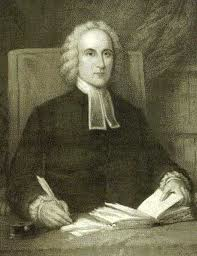
Jonathan Edwards image

If the case be such indeed,

that all mankind are by nature

in a state of total ruin, …

then, doubtless,

the great salvation by Christ

stands in direct relation

to this ruin,

as the remedy to the disease.

– Jonathan Edwards

Apart from his famous sermon, Sinners in the Hands of an Angry God, Jonathan Edwards is most known for his twin works Religious Affections (1746) and Freedom of the Will (1754). One of his lesser known works is on original sin, an important work published posthumously.

In The Great Christian Doctrine of Original Sin Defended (1758), Edwards was not replying to any specific author, but he was moved to write what he called a “general defence” of this important doctrine. He says of it in his preface: “I look on the doctrine as of great importance; which every body will doubtless own it is, if it be true. For, if the case be such indeed, that all mankind are by nature in a state of total ruin, both with respect to the moral evil of which they are the subjects, and the afflictive evil to which they are exposed, the one as the consequence and punishment of the other; then, doubtless, the great salvation by Christ stands in direct relation to this ruin, as the remedy to the disease; and the whole gospel, or doctrine of salvation, must suppose it; and all real belief, or true notion of that gospel, must be built upon it” (Jonathan Edwards, The Great Christian Doctrine of Original Sin Defended: Evidences of Its Truth Produced, and Arguments to the Contrary Answered, in Jonathan Edwards, The Works of Jonathan Edwards, A.M., 10th ed., 2 vols. (1865; Edinburgh / Carlisle, Penn.: Banner of Truth, 1979), 1:145. The author’s preface is dated 1757).

Much of the controversy over human free will is waged in the context of speculative debate over the relationship of man’s freedom to God’s knowledge, or to election and reprobation. For Edwards the central issue of free will is rooted in the ancient controversy (as between Pelagius and Augustine) over the relationship of free will to man’s fallen nature and ultimately to his redemption through the gospel. In a word, Edwards focuses on the broader issue of biblical redemption or the gospel. This same motive drove Martin Luther in his debate with Erasmus: the concern to see sola fide solidly rooted in sola gratia. For Edwards, the greatness of the gospel is visible only when viewed against the backdrop of the greatness of the ruin into which we have been plunged by the fall. The greatness of the disease requires the greatness of the remedy.

Evidence for Original Sin

One interesting facet of Edwards’s defense of the classical view of the fall and original sin is his attempt to show that, even if the Bible were silent on the matter, this doctrine would be demonstrated by the evidence of natural reason. Since the phenomena of human history demonstrate that sin is a universal reality, we should seek an explanation for this reality. In simple terms the question is, Why do all people sin?

Those who deny the doctrine of original sin usually answer this question by pointing to the corrupting influences of decadent societies. Man is born in a state of innocence, they say, but he is subsequently corrupted by the immoral influence of society. This idea begs the question, How did society become corrupt in the first place? If all people are born innocent or in a state of moral neutrality, with no predisposition to sin, why do not at least a statistical average of 50% of the people remain innocent? Why can we find no societies in which the prevailing influence is to virtue rather than vice? Why does not society influence us to maintain our natural innocence?

 Events in the Life of Jonathan Edwards

1703 Born in East Windsor, Conn.

1716–20 Studied at Yale

1726 Became assistant minister in Northampton, Mass.

1727 Married Sarah Pierrepont

1729 Became minister in Northampton

1734 Great Awakening began in Northampton

1751 Moved to Stockbridge to be a pastor, missionary

1758 Inaugurated president of Princeton; Died in Princeton, N.J.

Even the most sanguine critics of human nature, those who insist that man is basically good, repeat the persistent axiomatic aphorism “Nobody’s perfect.” Why is no one perfect? If man is good at the core of his heart and evil is peripheral, tangential, or accidental, why does not the core win out over the tangent, the substance over the accidents? Even in the society in which we find ourselves today, in which moral absolutes are widely denied, people still readily admit that no one is perfect. The concept of “perfect” has been denuded by the rejection of moral absolutes. Yet with a lower standard or norm of perfection than the one revealed by Scripture, we recognize that even this “norm” is not met. With the lowest common denominator of ethics such as Immanuel Kant’s categorical imperative, we still face the frustration of failing to live up to it.
We may discount ethical standards, reducing them below the level of actual perfection, and still fail to meet those standards. People claim a commitment to moral relativism, but when somebody steals our purse or our wallet, we still cry, “Foul.” Suddenly the credo that “everyone has the right to do his own thing” is challenged when the other person’s “thing” conflicts with my “thing.”

Edwards saw in the universal reality of sin manifold evidence for a universal tendency toward sin. Edwards states an objection to this and then answers the objection:

If any should say, Though it be evident that there is a tendency in the state of things to this general event—that all mankind should fail of perfect obedience, and should sin, and incur a demerit of eternal ruin; and also that this tendency does not lie in any distinguishing circumstances of any particular people, person, or age—yet it may not lie in man’s nature, but in the general constitution and frame of this world. Though the nature of man may be good, without any evil propensity inherent in it; yet the nature and universal state of this world may be full of so many and strong temptations, and of such powerful influence on such a creature as man, dwelling in so infirm a body, etc. that the result of the whole may be a strong and infallible tendency in such a state of things, to the sin and eternal ruin of every one of mankind (Ibid., 1:151, col. a.).

Edwards answers this supposition with the following reply:

To this I would reply, that such an evasion will not at all avail to the purpose of those whom I oppose in this controversy. It alters not the case as to this question, Whether man, in his present state, is depraved and ruined by propensities to sin. If any creature be of such a nature that it proves evil in its proper place, or in the situation which God has assigned it in the universe, it is of an evil nature. That part of the system is not good, which is not good in its place in the system; and those inherent qualities of that part of the system, which are not good, but corrupt, in that place, are justly looked upon as evil inherent qualities. That propensity is truly esteemed to belong to the nature of any being, or to be inherent in it, that is the necessary consequence of its nature, considered together with its proper situation in the universal system of existence, whether that propensity be good or bad (Ibid).

Edwards draws an analogy from nature to illustrate his point: “It is the nature of a stone to be heavy; but yet, if it were placed, as it might be, at a distance from this world, it would have no such quality. But being a stone, is of such a nature, that it will have this quality or tendency, in its proper place, in this world, where God has made it, it is properly looked upon as a propensity belonging to its nature.… So, if mankind are of such a nature, that they have an universal effectual tendency to sin and ruin in this world, where God has made and placed them, this is to be looked upon as a pernicious tendency belonging to their nature” (Ibid).

Edwards concludes that within the nature of man there is a propensity toward sin. This inclination is part of the inherent or constituent nature of man. It is natural to fallen mankind. When Scripture speaks of “natural man,” it refers to man as he is since the fall, not as he was created originally. The fall was a real fall and not a maintenance of the status quo of creation.

John Calvin acknowledged that men, though fallen, perform works of seeming righteousness, and he called these works acts of civic righteousness. Such “virtues,” which Augustine called “splendid vices,” may conform outwardly to the law of God, but they do not proceed from a heart inclined to please God, or from a heart that loves God. In biblical categories a good or virtuous work must not only conform outwardly to the prescriptions of God’s law but also proceed from an inward disposition or motive rooted in the love of God. In a real sense the Great Commandment to love God with all the heart underlies the moral judgment of all human activity.

Concerning the preponderance of evil deeds over good ones, Edwards says: “Let never so many thousands or millions of acts of honesty, good nature, etc. be supposed; yet, by the supposition, there is an unfailing propensity to such moral evil, as in its dreadful consequences infinitely outweighs all effects or consequences of any supposed good” (Ibid., 1:152, col. a.).

Edwards goes on to point out the degree of wickedness and heinousness that is involved in merely one sin against God. Such an act would be so wicked since it is committed against such a holy being that it would outweigh the sum of any amount of contrasting virtue. “He that in any respect or degree is a transgressor of God’s law,” Edwards says, “is a wicked man, yea, wholly wicked in the eye of the law; all his goodness being esteemed nothing, having no account made of it, when taken together with his wickedness” (Ibid., 1:152, col. a.).

At this point Edwards echoes the sentiment of James, saying that to sin against one point of the law is to sin against the whole law (James 2:10–11) and, of course, the Law-Giver himself. Likewise, Edwards says works of obedience, strictly speaking, cannot outweigh disobedience. When we are obedient, we are merely doing what God requires us to do. Here we can be nothing more than unprofitable servants.

Edwards sees evidence for man’s depraved nature in the propensity of humans to sin immediately, as soon as they are morally capable of committing actual sin. He sees further evidence in the fact that man sins continually and progressively, and that the tendency remains even in the most sanctified of men. Edwards also finds significant what he calls the “extreme degree of folly and stupidity in matters of religion” (Ibid., 1:156, col. b.).

In a cursory look at human history, Edwards provides a catalogue of woes and calamities that have been perpetrated by and on the human race. Even the most jaded observer of history must admit that things are not right with the world. Then Edwards turns to the universality of death as proof for the universality of sin. In the biblical view, death came into the world through and because of sin. It represents the divine judgment on human wickedness, a judgment visited even on babies who die in infancy. “Death is spoken of in Scripture as the chief of calamities,” Edwards notes, “the most extreme and terrible of all natural evils in this world” (Ibid., 1:173, col. a.).
The Bible and Original Sin

Edwards then turns his attention to the scriptural warrant for the doctrine of original sin. He pays particular attention to Paul’s teaching in Ephesians 2.

Another passage of the apostle, to the like purpose with that which we have been considering in the 5th [chapter] of Romans, is that in Ephesians 2:3—“And were by nature children of wrath, even as others.” This remains a plain testimony to the doctrine of original sin, as held by those who used to be called orthodox Christians, after all the pains and art used to torture and pervert it. This doctrine is here not only plainly and fully taught, but abundantly so, if we take the words with the context; where Christians are once and again represented as being, in their first state, dead in sin, and as quickened and raised up from such a state of death, in a most marvellous display of free rich grace and love, and exceeding greatness of God’s power, etc. (Ibid., 1:197, col. b.).

With respect to the uniform teaching of Scripture, Edwards concludes: “As this place in general is very full and plain, so the doctrine of the corruption of nature, as derived from Adam, and also the imputation of his first sin, are both clearly taught in it. The imputation of Adam’s one transgression, is indeed most directly and frequently asserted. We are here assured, that ‘by one man’s sin, death passed on all.’ … And it is repeated, over and over, that ‘all are condemned,’ ‘many are dead,’ ‘many made sinners,’ etc. ‘by one man’s offence,’ ‘by the disobedience of one,’ and ‘by one offence.’ ”

Related Works by Edwards

The Great Christian Doctrine of Original Sin Defended: Evidences of Its Truth Produced, and Arguments to the Contrary Answered … In The Works of Jonathan Edwards, A.M. 10th ed. 2 vols. 1865. Reprint. Edinburgh / Carlisle, Penn.: Banner of Truth, 1979. 1:143–233.Freedom of the Will. Edited by Paul Ramsey. The Works of Jonathan Edwards, edited by Perry Miller, vol. 1. New Haven and London: Yale University, 1957.A Jonathan Edwards Reader. Edited by John E. Smith, Harry S. Stout, and Kenneth P. Minkema. New Haven: Yale University, 1995.

Finally Edwards argues for original sin from the biblical teaching regarding the application of redemption. The Spirit’s work in regeneration is a necessary antidote for a previous, corrupt condition: “It is almost needless to observe, how evidently this is spoken of as necessary to salvation, and as the change in which are attained the habits of true virtue and holiness, and the character of a true saint; as has been observed of regeneration, conversion, etc. and how apparent it is, that the change is the same.… So that all these phrases imply, having a new heart, and being renewed in the spirit, according to their plain signification” (Ibid., 1:214, col. a.).

In his introduction to the Yale edition of Edwards’s Freedom of the Will, Paul Ramsey makes this observation:

Into the writing of it he poured all his intellectual acumen, coupled with a passionate conviction that the decay to be observed in religion and morals followed the decline in doctrine since the founding of New England. The jeremiads, he believed, had better go to the bottom of the religious issue! The product of such plain living, high thinking, funded experience and such vital passion was the present Inquiry, a superdreadnaught which Edwards sent forth to combat contingency and self-determination (to reword [David F.] Swenson’s praise of one of [Søren] Kierkegaard’s big books) and in which he delivered the most thoroughgoing and absolutely destructive criticism that liberty of indifference, without necessity, has ever received. This has to be said even if one is persuaded that some form of the viewpoint Edwards opposed still has whereon to stand. This book alone is sufficient to establish its author as the greatest philosopher-theologian yet to grace the American scene (Paul Ramsey, “Editor’s Introduction,” in Jonathan Edwards, Freedom of the Will, ed. Paul Ramsey, The Works of Jonathan Edwards, ed. Perry Miller, vol. 1 (New Haven and London: Yale University, 1957), pp. 1–2. The full title of Edwards’s work was originally A Careful and Strict Enquiry into the Modern Prevailing Notions of That Freedom of Will, Which Is Supposed to Be Essential to Moral Agency, Virtue and Vice, Reward and Punishment, Praise and Blame. Ramsey alludes to David F. Swenson, translator of Søren Kierkegaard’s Philosophical Fragments (1936), Concluding Unscientific Postscript (1941), Three Discourses on Imagined Occasions (1941), volume 1 of Either/Or (1941), and Works of Love (1946); and author of Something about Kierkegaard (Minneapolis: Augsburg, 1941).

In his own preface to Freedom of the Will, Edwards speaks of the danger of pinning labels on representatives of various schools of theological thought and the needless rancor often attached to such labels. Yet he pleads that generic terms are necessary for the sake of literary smoothness. A writer must have a shorthand way of distinguishing various characteristics of systems of thought. Although he does not agree with Calvin at every point, Edwards says he is not offended when labeled a Calvinist because he stands so squarely in that tradition.

His chief concern, however, is that the reader understand the consequences of differing theological perspectives. He regards the question of human freedom with the same earnestness Luther displayed in his debate with Erasmus. Far from being an isolated, peripheral, speculative matter, Edwards thinks this question is supremely important. He says:

The subject is of such importance, as to demand attention, and the most thorough consideration. Of all kinds of knowledge that we can ever obtain, the knowledge of God, and the knowledge of ourselves, are the most important. As religion is the great business, for which we are created, and on which our happiness depends; and as religion consists in an intercourse between ourselves and our Maker; and so has its foundation in God’s nature and ours, and in the relation that God and we stand in to each other; therefore a true knowledge of both must be needful in order to true religion. But the knowledge of ourselves consists chiefly in right apprehensions concerning those two chief faculties of our nature, the understanding and will. Both are very important: yet the science of the latter must be confessed to be of greatest moment; inasmuch as all virtue and religion have their seat more immediately in the will, consisting more especially in right acts and habits of this faculty. And the grand question about the freedom of the will, is the main point that belongs to the science of the will. Therefore I say, the importance of this subject greatly demands the attention of Christians, and especially of divines (Edwards, Freedom of the Will, p. 133).

Why We Choose

Edwards begins his inquiry by defining the will as “the mind choosing.” “… the will (without any metaphysical refining) is plainly, that by which the mind chooses anything,” he writes. “The faculty of the will is that faculty or power or principle of mind by which it is capable of choosing: an act of the will is the same as an act of choosing or choice” (Ibid., p. 137).

Even when a person does not choose a given option, the mind is choosing “the absence of the thing refused.” Edwards called these choices voluntary or “elective” actions.

John Locke asserted that “the will is perfectly distinguished from desire.” Edwards argues that will and desire are not “so entirely distinct, that they can ever be properly said to run counter. A man never, in any instance, wills anything contrary to his desires, or desires anything contrary to his will” (Ibid., p. 139. Quotes from John Locke, An Essay Concerning Human Understanding, 7th ed. [1716], 2.21.30).

This brief assertion is critical to understanding Edwards’s view of the will. He maintains that a man never chooses contrary to his desire. This means that man always acts according to his desire. Edwards indicates that the determining factor in every choice is the “strongest motive” present at that moment. In summary, we always choose according to the strongest motive or desire at the time.

People may debate this point with Edwards, recalling moments when they chose something they really did not want to choose. To understand Edwards, we must consider the complexities involved in making choices. Our desires are often complex and even in conflict with each other. Even the Apostle Paul experienced conflicting desires, claiming that what he wanted to do he failed to do and what he did not want to do he actually did (see Rom. 7:15). Does the apostle here belie Edwards’s point? I think not. Paul expresses the struggle he endures between desires in conflict. When he chooses what he “does not want to choose,” he is experiencing what I call the “all things being equal” dimension.

For example, every Christian has some desire in his heart to be righteous. All things being equal, we want always to be righteous. Yet a war is going on inside of us because we also continue to have wicked desires. When we choose the wicked over the righteous course of action, at that moment we desire the sin more than obedience to God. That was as true for Paul as it is for us. Every time we sin we desire more to do that than we do to obey Christ. Otherwise we simply would not sin.

Not only are desires not monolithic, but also they are not constant in their force or intensity. Our desire levels fluctuate from moment to moment. For example, the dieter desires to lose weight. After a full meal it is easy to say no to sweets. The appetite has been sated and the desire for more food diminished. As time passes, however, and self-denial has led to an increased hunger, the desire for food intensifies. The desire to lose weight remains. But when the desire to gorge oneself becomes stronger than the desire to lose weight, the dieter’s resolve weakens and he succumbs to temptation. All things do not remain in a constant state of equality.

Another example is a person being robbed. The robber points a gun at the person and says, “Your money or your life!” (We remember the skit made famous by Jack Benny. When posed with this option, Benny hesitated for a protracted time. In frustration the robber said, “What are you waiting for?” Benny replied, “I’m thinking it over.”) To be robbed at gunpoint is to experience a form of external coercion. The coercion reduces the person’s options to two. All things being equal, the person has no desire to donate the contents of his wallet to the thief. But with only two options the person will respond according to his strongest motive at the moment. He may conclude that if he refuses to hand over his wallet, the robber will both kill him and take his money. Most people will opt to hand the money over because they desire to live more than they desire to keep their wallets. It is possible, however, that a person has such a strong antipathy to armed robbery that he would prefer to die rather than give over his wallet “willingly.”

Related Works about Edwards

Gerstner, John H. The Rational Biblical Theology of Jonathan Edwards. 3 vols. Powhatan, Va.: Berea / Orlando: Ligonier, 1991–93.

Gerstner, John H. Jonathan Edwards: A Mini-Theology. Wheaton: Tyndale, 1987.

Lang, J. Stephen, ed. Jonathan Edwards and the Great Awakening. Christian History 4, 4 (1985).

Murray, Iain H. Jonathan Edwards: A New Biography. Edinburgh and Carlisle, Penn.: Banner of Truth, 1987.

Because this example contains a coercive dimension, I put the word willingly in quotation marks. We must ask if under these circumstances the action really is voluntary? It is if we view it in the context of only two options. However much external coercion is involved, there still remains a choice. Even here, Edwards would say, the person will choose the alternative for which he or she has the stronger motive.

The strongest-motive concept may be lost on us when we consider the manifold decisions we make every day without thoroughly considering the options available to us. We walk into a classroom where several seats are vacant or we walk to an unoccupied park bench and sit down. Rarely do we list the pros and cons before selecting a seat or a part of the bench. On the surface it seems that these choices are entirely arbitrary. We choose them without thinking. If that is so, it belies Edwards’s thesis that the will is the “mind choosing.”

Such choices seem to be mindless ones, but if we analyze them closely, we discover that some preference or motive is operating, albeit subtly. The motive factors may be so slight that they escape our notice. Experiments have been run in which people choose a seat on an unoccupied park bench. Some people always sit in the middle of the bench. Some are gregarious and long for company, so they choose the middle of the bench in hopes that someone will come along and sit beside them. And some people prefer solitude, so they sit in the middle in hopes that no one else will sit on the bench.

Likewise some people prefer to sit in the front of the classroom or the back for various reasons. The decision to select a certain seat is not an involuntary action like the beating of one’s heart. It is a voluntary action, which proceeds from some motive, however slight or obscure. In a word, there is a reason why we choose the seats we choose.

What Determines Our Choices

In his analysis of choices, Edwards discusses the determination of the will. He writes: “By ‘determining the will,’ if the phrase be used with any meaning, must be intended, causing that the act of the will or choice should be thus, and not otherwise: and the will is said to be determined, when, in consequence of some action, or influence, its choice is directed to, and fixed upon a particular object” (Edwards, Freedom of the Will, p. 141).

Edwards is not speaking of what is commonly called determinism, the idea that human actions are determined by some form of external coercion such as fate or manifest destiny. Rather he is here speaking of self-determination, which is the essence of human volition.

Edwards considers utterly irrational the idea that an “indifferent will” makes choices. “To talk of the determination of the will, supposes an effect, which must have a cause,” he says. “If the will be determined, there is a determiner. This must be supposed to be intended even by them that say, the will determines itself. If it be so, the will is both determiner and determined; it is a cause that acts and produces effects upon itself, and is the object of its own influence and action” (Ibid).

At this point Edwards argues from the vantage point of the law of cause and effect. Causality is presupposed throughout his argument. The law of cause and effect declares that for every effect there is an antecedent cause. Every effect must have a cause and every cause, in order to be a cause, must produce an effect. The law of causality is a formal principle that one cannot deny without embracing irrationality. David Hume’s famous critique of causality did not annihilate the law but our ability to perceive particular causal relationships.

The law of causality with which Edwards operates is “formal” in that it has no material content in itself and is stated in such a way as to be analytically true. That is, it is true by analysis of its terms or “by definition.” In this regard the law of causality is merely an extension of the law of noncontradiction. An effect, by definition, is that which has an antecedent cause. If it has no cause then it is not an effect. Likewise, a cause by definition is that which produces an effect. If no effect is produced then it is not a cause.

I once was criticized in a journal article by a scholar who complained, “The problem with Sproul is that he doesn’t allow for an uncaused effect.” I plead guilty to the charge, but I see this as virtue rather than vice. People who allow for uncaused effects are allowing for irrational nonsense statements to be true. If Sproul is guilty here, Edwards is more so. Edwards is far more cogent in his critical analysis of the intricacies of causality than Sproul will ever be in this life.

When Edwards declares that the will is both determined and determiner, he is not indulging in contradiction. The will is not determined and the determiner at the same time and in the same relationship. The will is the determiner in one sense and is determined in another sense. It is the determiner in the sense that it produces the effects of real choices. It is determined in the sense that those choices are caused by the motive that is the strongest one in the mind at the moment of choosing.

John H. Gerstner, perhaps the twentieth century’s greatest expert on Edwards, writes:

Edwards understands the soul to have two parts: understanding and will. Not only is Freedom of the Will based on this dichotomy; that dichotomy underlies Religious Affections as well.…

Edwards agreed with the English Puritan, John Preston, that the mind came first and the heart or will second. “Such is the nature of man, that no object can come at the heart but through the door of the understanding.…” In the garden, man could have rejected the temptation of the mind to move the will to disobey God. After the fall he could not, although Arminians and Pelagians thought otherwise. Their notion of the “freedom of the will” made it always possible for the will to reject what the mind presented. This perverted notion, Edwards said in Original Sin, “seems to be a grand favorite point with Pelagians and Arminians, and all divines of such characters, in their controversies with the orthodox.” For Edwards, acts of the will are not free in the sense of uncaused (John H. Gerstner, “Augustine, Luther, Calvin, and Edwards on the Bondage of the Will,” in Thomas R. Schreiner and Bruce A. Ware, eds., The Grace of God, the Bondage of the Will, 2 vols. [Grand Rapids: Baker, 1995], 2:291. Quotation from John Preston, “Sermon on Hebrews 5:12, ” in John Preston, Works, 2:158).

To Edwards a motive is “something that is extant in the view or apprehension of the understanding, or perceiving faculty” (Edwards, Freedom of the Will, p. 142).

He says:

… Nothing can induce or invite the mind to will or act anything, any further than it is perceived, or is some way or other in the mind’s view; for what is wholly unperceived, and perfectly out of the mind’s view, can’t affect the mind at all.…

… everything that is properly called a motive, excitement or inducement to a perceiving willing agent, has some sort and degree of tendency, or advantage to move or excite the will, previous to the effect, or to the act of the will excited. This previous tendency of the motive is what I call the “strength” of the motive.… that which appears most inviting, and has, by what appears concerning it to the understanding or apprehension, the greatest degree of previous tendency to excite and induce the choice, is what I call the “strongest motive.” And in this sense, I suppose the will is always determined by the strongest motive (Ibid).

Edwards further argues that the strongest motive is that which appears most “good” or “pleasing” to the mind. Here he uses good not in the moral sense, because we may be most pleased by doing what is not good morally. Rather the volition acts according to that which appears most agreeable to the person. That which is most pleasing may be deemed as pleasure. What entices fallen man to sin is the desire for some perceived pleasure.

Edwards then turns his attention to the terms necessity and contingency. He says “that a thing is … said to be necessary, when it must be, and cannot be otherwise” (Ibid., p. 149).

He goes beyond the ordinary use of the word necessary to the philosophical use. He says:

Philosophical necessity is really nothing else than the full and fixed connection between the things signified by the subject and predicate of a proposition, which affirms something to be true. When there is such a connection, then the thing affirmed in the proposition is necessary, in a philosophical sense; whether any opposition, or contrary effort be supposed, or supposable in the case, or no. When the subject and predicate of the proposition, which affirms the existence of anything, either substance, quality, act or circumstance, have a full and certain connection, then the existence or being of that thing is said to be necessary in a metaphysical sense. And in this sense I use the word necessity, in the following discourse, when I endeavor to prove that necessity is not inconsistent with liberty (Ibid., p. 152).

Edwards discusses various types of necessary connection. He observes that one type of connection is consequential: “things which are perfectly connected with other things that are necessary, are necessary themselves, by a necessity of consequence.” This is to say that if A is necessary and B is perfectly connected to A, then B is also necessary. It is only by such necessity of consequence that Edwards speaks of future necessities. Such future necessities are necessary in this way alone.

Similarly Edwards considers the term contingent. There is a difference between how the word is used in ordinary language and how it functions in philosophical discourse. He writes:

… Anything is said to be contingent, or to come to pass by chance or accident, in the original meaning of such words, when its connection with its causes or antecedents, according to the established course of things, is not discerned; and so is what we have no means of the foresight of. And especially is anything said to be contingent or accidental with regard to us, when anything comes to pass that we are concerned in, as occasions or subjects, without our foreknowledge, and beside our design and scope.

But the word contingent is abundantly used in a very different sense; not for that whose connection with the series of things we can’t discern, so as to foresee the event; but for something which has absolutely no previous ground or reason, with which its existence has any fixed and certain connection (Ibid., p. 155).

In ordinary language we attribute to accident or “chance” any unintended consequences. In a technical sense nothing occurs by chance, for chance has no being and can exercise no power. When the term contingent refers to effects with no ground or reason, it retreats to the assertion that there are effects without causes. It is one thing to say that we do not know what causes a given effect; it is quite another thing to say that nothing causes the effect. Nothing cannot do anything because it is not anything (See R. C. Sproul, Not a Chance: The Myth of Chance in Modern Science and Cosmology (Grand Rapids: Baker, 1994).

Our Moral Inability

One of the most important distinctions made by Edwards is the one between natural ability and moral ability. He also distinguishes between natural necessity and moral necessity. Natural necessity refers to those things that occur via natural force. Moral necessity refers to those effects that result from moral causes such as the strength of inclination or motive. He applies these distinctions to the issue of moral inability.

We are said to be naturally unable to do a thing, when we can’t do it if we will, because what is most commonly called nature [doesn’t] allow … it, or because of some impeding defect or obstacle that is extrinsic to the will; either in the faculty of understanding, constitution of body, or external objects. Moral inability consists not in any of these things; but either in the want of inclination; or the strength of a contrary inclination; or the want of sufficient motives in view, to induce and excite the act of the will, or the strength of apparent motives to the contrary. Or both these may be resolved into one; and it may be said in one word, that moral inability consists in the opposition or want of inclination (Edwards, Freedom of the Will, p. 159).

Man may have the desire to do things he cannot do because of limits imposed by nature. We may wish to be Superman, able to leap tall buildings in a single bound, more powerful than a locomotive, and faster than a speeding bullet. But unless we become fifteen-million-dollar men (up from six million due to inflation), it is highly unlikely that we will ever perform such prodigious feats. Nature enables birds to fly through the air without the aid of mechanical devices, and fish to live underwater without drowning. They are so constituted in their natures to be able to do these things. But we lack wings and feathers, or gills and fins. These are limitations imposed by nature. They reveal a lack or deficiency of necessary faculties or equipment.

Moral inability also deals with a deficiency, the lack of sufficient motive or inclination. Edwards cites various examples of moral inability: an honorable woman who is morally unable to be a prostitute, a loving child who is unwilling to kill his father, a lascivious man who cannot rein in his lust.

Given man’s moral inability, the will cannot not be free. The will is always free to act according to the strongest motive or inclination at the moment. For Edwards, this is the essence of freedom. To be able to choose what one desires is to be free in this sense. When I say the will cannot not be free, I mean the will cannot choose against its strongest inclination. It cannot choose what it does not desire to choose. Edwards refers to the common meaning of liberty: “… that power and opportunity for one to do and conduct as he will, or according to his choice.” The word says nothing of “the cause or original of that choice” (

Man may have the desire to do things he cannot do because of limits imposed by nature. We may wish to be Superman, able to leap tall buildings in a single bound, more powerful than a locomotive, and faster than a speeding bullet. But unless we become fifteen-million-dollar men (up from six million due to inflation), it is highly unlikely that we will ever perform such prodigious feats. Nature enables birds to fly through the air without the aid of mechanical devices, and fish to live underwater without drowning. They are so constituted in their natures to be able to do these things. But we lack wings and feathers, or gills and fins. These are limitations imposed by nature. They reveal a lack or deficiency of necessary faculties or equipment.

Moral inability also deals with a deficiency, the lack of sufficient motive or inclination. Edwards cites various examples of moral inability: an honorable woman who is morally unable to be a prostitute, a loving child who is unwilling to kill his father, a lascivious man who cannot rein in his lust.

Given man’s moral inability, the will cannot not be free. The will is always free to act according to the strongest motive or inclination at the moment. For Edwards, this is the essence of freedom. To be able to choose what one desires is to be free in this sense. When I say the will cannot not be free, I mean the will cannot choose against its strongest inclination. It cannot choose what it does not desire to choose. Edwards refers to the common meaning of liberty: “… that power and opportunity for one to do and conduct as he will, or according to his choice.” The word says nothing of “the cause or original of that choice” (Ibid., p. 164).

Edwards notes that Arminians and Pelagians have a different meaning for the term liberty. He lists a few aspects of their definition:

1. It consists in a self-determining power or a certain sovereignty the will has over itself, whereby it determines its own volitions.

2. Indifference belongs to liberty previous to the act of volition, in equilibrio.

3. Contingence belongs to liberty and is essential to it. Unless the will is free in this sense, it is deemed to be not free at all (Ibid., pp. 164–65).

Edwards then shows that the Pelagian notion is irrational and leads to an infinite regress of determination:

… If the will determines the will, then choice orders and determines the choice: and acts of choice are subject to the decision, and follow the conduct of other acts of choice. And therefore if the will determines all its own free acts, then every free act of choice is determined by a preceding act of choice, choosing that act. And if that preceding act of the will or choice be also a free act, then by these principles, in this act too, the will is self-determined; that is, this, in like manner, is an act that the soul voluntarily chooses.… Which brings us directly to a contradiction: for it supposes an act of the will preceding the first act in the whole train, directing and determining the rest; or a free act of the will, before the first free act of the will. Or else we must come at last to an act of the will, determining the consequent acts, wherein the will is not self-determined, and so is not a free act … but if the first act in the train … be not free, none of them all can be free.…

… if the first is not determined by the will, and so not free, then none of them are truly determined by the will.…(Ibid., pp. 172–73).

Edwards says the idea of an indifferent will is absurd. First, if the will functions from a standpoint of indifference, having no motive or inclination, then how can the choice be a moral one? If decisions are utterly arbitrary and done for no reason or motive, how do they differ from involuntary actions, or from the mere responses of plants, animals, or falling bodies?

Second, if the will is indifferent, how can there be a choice at all? If there is no motive or inclination, how can a choice be made? It requires an effect without a cause. For this reason, Edwards labors the question of whether volition can possibly arise without a cause through the activity of the nature of the soul. For Edwards it is axiomatic that “nothing has no choice.” “Choice or preference can’t be before itself, in the same instance, either in the order of time or nature,” he says. “It can’t be the foundation of itself, or the fruit or consequence of itself” (Ibid, p. 197).

Here Edwards applies the law of noncontradiction to the Pelagian and Arminian view of free will, and he shows that it is absurd. Indifference can only suspend choices, not create them. To create them would be to act ex nihilo, not only without a material cause, but also without a sufficient or efficient cause.

Edwards then treats several common objections to the Augustinian view, but we will not deal with them here. We conclude by summarizing Edwards’s view of original sin. Man is morally incapable of choosing the things of God unless or until God changes the disposition of his soul. Man’s moral inability is due to a critical lack and deficiency, namely the motive or desire for the things of God. Left to himself, man will never choose Christ. He has no inclination to do so in his fallen state. Since he cannot act against his strongest inclination, he will never choose Christ unless God first changes the inclination of his soul by the immediate and supernatural work of regeneration. Only God can liberate the sinner from his bondage to his own evil inclinations.

Like Augustine, Luther, and Calvin, Edwards argues that man is free in that he can and does choose what he desires or is inclined to choose. But man lacks the desire for Christ and the things of God until God creates in his soul a positive inclination for these things.

 The Article above was adapted from chapter 7 of R.C. Sproul. Willing to Believe: The Controversy Over Free Will. Grand Rapids, Baker, 1997.
About the Author:
RC Sproul in yellow tie image
Dr. R.C. Sproul (Founder of Ligonier Ministries; Bible College and Seminary President and Professor; and Senior Minister at Saint Andrews in Sanford, Florida) is an amazingly gifted communicator. Whether he is teaching, preaching, or writing – he has the ability to make the complex easy to understand and apply. He has been used more than any other person in my life to deepen my walk with Christ and help me to be more God-centered than man-centered. His book the Holiness of God has been the most influential book in my life – outside of the Bible.
 

The G-O-S-P-E-L in a Nutshell

An Acronym for the GOSPEL

GTGR

 The Gospel is:

G-ood news of
G-od’s grace to
G-uilty men
O-ffered to all and
O-beyed by faith
S-alvation by a
S-ubstitutionary Sacrifice
P-eace and pardoned proclaimed through
P-ropitiation
E-ternal life given to
E-veryone that repents of their sins and believes in Jesus, with
L-ight,
L-iberty and
L-ove.

For God So Loved the World by R. Scott Clark

For God So Loved the World by R. Scott Clark

Earth from space

 John 3:16, “For God so loved the world, that he gave his only Son, that whoever believes in him, should not perish but have eternal life.”

To many, the topics of common grace and atonement would seem to be mutually exclusive, as if we should either hold to common grace or to definite atonement, but not to both. There are, however, good biblical and theological reasons for holding both the Reformed doctrines of common grace and definite atonement.

By common grace I do not mean that God has endowed all humans with a universal gift whereby, if they will, they may do what is necessary to obtain salvation. Rather, using the formula adopted by the Christian Reformed Churches in 1924, “common grace” means three things: First, God has a sort of general benevolence toward humanity that is not saving; second, God providentially restrains evil; third, unregenerate persons are able to do “civic” but not “saving” good. In short, it is really a way of speaking about what we traditionally have called “providence.”

By atonement, we mean that Christ lived and died as the substitute for His people, putting away their sin and turning away God’s wrath from them, that is, all those whom God chose, in Christ, from eternity out of pure grace.

Creation and Redemption

How do we reconcile the notion of a limited, personal, substitutionary atonement with a universal non-saving favor? If God is favorably inclined toward all, how can one say that Christ did not die for them? And if Christ did not die for all, how can God be favorable toward them in any way?

We say this because creation and redemption are distinct. In creation, God made all that is. In His providence, He sustains and orders all that He made. In redemption, however, He saves His elect image bearers from sin and judgment. Redemption presupposes creation, since there must be a creation (that is, humans) for whom Christ died and whom He redeemed.

God’s Saving Favor in Christ

When Christ said, “For God so loved the world that he gave his only begotten Son, so that whoever believes in him shall not perish but have everlasting life” (John 3:16), He was not speaking of His providential gifts to His creatures but about His saving work for His people.

The term world here is synonymous with the word sinners. In view is not the extent of the atonement, but the degree of God’s love and the quality of those for whom Christ died. How much did God love us? He loved us so much that He gave His only begotten Son. What sort of people did He love? He loved the “world,” or those who, because of their sin and sinfulness, are opposed to God (John 1:10; 15:18; 17:14). This is how John 3:19 defines “world.” The light has come to the “world,” but men loved darkness rather than light.

The difference between creation and redemption is evident in the way Scripture describes God’s general favor and the way it speaks of the atonement. The atonement is for particular persons. Christ died “for us” (Rom. 5:8; 1 Cor. 15:3). The Shepherd lays down His life for His sheep, whom He knows (John 10:14–16).

In contrast, regarding God’s general providence, Jesus taught that the Father “makes the sun to rise on the evil and the good and sends rain on the just and the unjust” (Matt. 5:45). Common grace is general and benefits all people, but the same is not true of the atonement.

The Nature of the Atonement

Just as there are two parts to common grace (creation and providence) so there are two parts to the atonement, expiation and propitiation. To expiate means to cover sins, which Jesus accomplished in His obedience and death (Heb. 9:22). By His obedience and death, Jesus also turned away God’s wrath from all His people. This is propitiation.

Moses’ intercession for Israel (Ex. 32) is a good illustration of propitiation. Having come down from the mountain, Moses said upon seeing their sins, “You have committed a great sin. But now I will go up to the Lord; perhaps I can make propitiation for your sin.” This turning away of God’s wrath from His people becomes even clearer later (vv.14–16) when Moses prayed and Yahweh, “appeased,” became favorable towards His people. All that Moses illustrated, Christ fulfilled in His obedience and death.

In Luke18:9–14, the Pharisee congratulated himself for his righteousness. The tax-collector, however, cried out to God saying, “God be propitious to me, I am a sinner.” The apostle Paul spoke clearly about Christ’s propitiating work in Romans 3:25–26: “God presented Him [Jesus] as the place of propitiation, through faith in His blood, for a demonstration of His righteousness, because of the passing over of the sins committed beforehand in the forbearance of God, for a demonstration of His righteousness now in this season in order that He might be righteous, and the one declaring righteous him who has faith in Jesus.”

In this passage, Paul is explaining how we are declared righteous by God. (vv. 21–22). In the past, God “overlooked” the sins of the Israelites. It was not that He did not “see” them in His omniscience, or that He is morally sloppy, but He suspended execution of His justice in view of the coming of Christ. In other words, His general providence served His plan of definite atonement.

Paul says that now, in Christ’s death, God’s justice is demonstrated and satisfied by Christ’s becoming our place of propitiation (see Heb. 9:5). In His death as our sin-bearer (2 Cor. 5:21), Jesus has become our propitiation and the place and means of propitiation, that we might become “the righteousness of God.”

When He died, Jesus actually accomplished expiation and propitiation for sins, but for whom? If Jesus propitiated God for the sins of all, then all are saved. Clearly, however, not all are saved. This is because it was never our Savior’s intention to propitiate God’s wrath for everyone who ever lived. Rather, it was His intention to redeem all of His people completely.

Difficult Passages

What then do we do with passages such as 1 John 2:2: “He is the propitiation for our sins; and not for ours only, but also for the whole world”? It is good to remember the context of this verse. John is encouraging Christians to obedience based on Christ’s atoning work for believers. In context, it makes little sense to read this passage to mean “Christ turned away God’s wrath for all who ever lived.” In this context it makes more sense to read “world” in a qualitative sense (sinners) or to mean “many more folk beyond Asia Minor.”

We have a similar case in 2 Corinthians 5:15 where Scripture says that Christ died “for all.” If we stopped there, we might conclude that the Arminians are correct, but if we continue, we see that Scripture says Christ died so that the Christians “might no longer live for themselves but for him who for their sake died and was raised” (emphasis added). The “all” of the first part of verse 15 is qualified by the second clause, “for their sake,” to refer to believers who are united to Christ. What seemed at first glance like a universalistic passage actually teaches definite atonement.

The usefulness of the doctrine of common grace for our understanding of the atonement becomes clearer in 1 Timothy 4:10 where Paul wrote, “For to this end we labor and strive, because we have our hope set on the living God, who is the Saviour of all men, specially of them that believe” (ASV).

Critics ask how we can continue to hold to a definite atonement in the face of such language. The answer is that Paul was not speaking of the atonement here. The Greek noun for “Savior” here is soter. As my colleague Steven M. Baugh has pointed out, in Ephesus there was a statue dedicated to Caesar that proclaimed him a “god” and “the universal soter of the life of men,” referring to Caesar’s gifts to the city. Against this background, Paul is best read to say, “It is not some presumptuous king who is the provider for humanity, but the living God is the provider, and especially to those who believe.” Here, general providence illumines particular grace.

In His providence, God gives many wonderful gifts to humanity. We rejoice in the colors of autumn and the joy of music. These gifts are good in themselves, but they are universal and distinct from His particular gift of redemption in Christ Jesus (Rom. 3:24). All humans know God as Creator and Judge (Rom. 1:18–21), but believers know Him as Redeemer. We know that in His love, He sent His Son not merely to make salvation possible, since in that case none would be saved. Rather, Jesus came to earn it for us (Phil. 2:8) by turning away God’s wrath so that, “having been justified by faith, we have peace with God through our Lord Jesus Christ” (Rom. 5:1).

About the Author: Dr. R. Scott Clark is associate professor of historical and systematic theology at Westminster Seminary California and the associate pastor of Oceanside United Reformed Church in Oceanside, California.

Tabletalk Magazine Issue November 1st, 2004. © Tabletalk magazine 
Permissions: You are permitted and encouraged to reproduce and distribute this material in any format provided that you do not alter the wording in any way, you do not charge a fee beyond the cost of reproduction, and you do not make more than 500 physical copies. For web posting, a link to this document on our website is preferred (where applicable). If no such link exists, simply link to http://www.ligonier.org/tabletalk. Any exceptions to the above must be formally approved by Tabletalk.

Please include the following statement on any distributed copy: From Ligonier Ministries and R.C. Sproul. © Tabletalk magazine. Website: http://www.ligonier.org/tabletalk. Email: tabletalk@ligonier.org. Toll free: 1-800-435-4343.

“The Sinfulness of Sin” on “Cosmic Treason” by R.C. Sproul

TTOTC Sproul

“The sinfulness of sin” sounds like a vacuous redundancy that adds no information to the subject under discussion. However, the necessity of speaking of the sinfulness of sin has been thrust upon us by a culture and even a church that has diminished the significance of sin itself. Sin is communicated in our day in terms of making mistakes or of making poor choices. When I take an examination or a spelling test, if I make a mistake, I miss a particular word. It is one thing to make a mistake. It is another to look at my neighbor’s paper and copy his answers in order to make a good grade. In this case, my mistake has risen to the level of a moral transgression. Though sin may be involved in making mistakes as a result of slothfulness in preparation, nevertheless, the act of cheating takes the exercise to a more serious level. Calling sin “making poor choices” is true, but it is also a euphemism that can discount the severity of the action. The decision to sin is indeed a poor one, but once again, it is more than a mistake. It is an act of moral transgression.

In my book The Truth of the Cross I spend an entire chapter discussing this notion of the sinfulness of sin. I begin that chapter by using the anecdote of my utter incredulity when I received a recent edition of Bartlett’s Familiar Quotations. Though I was happy to receive this free issue, I was puzzled as to why anyone would send it to me. As I leafed through the pages of quotations that included statements from Immanuel Kant, Aristotle, Thomas Aquinas, and others, to my complete astonishment I came upon a quotation from me. That I was quoted in such a learned collection definitely surprised me. I was puzzled by what I could have said that merited inclusion in such an anthology, and the answer was found in a simple statement attributed to me: “Sin is cosmic treason.” What I meant by that statement was that even the slightest sin that a creature commits against his Creator does violence to the Creator’s holiness, His glory, and His righteousness. Every sin, no matter how seemingly insignificant, is an act of rebellion against the sovereign God who reigns and rules over us and as such is an act of treason against the cosmic King.

Cosmic treason is one way to characterize the notion of sin, but when we look at the ways in which the Scriptures describe sin, we see three that stand out in importance. First, sin is a debt; second, it is an expression of enmity; third, it is depicted as a crime. In the first instance, we who are sinners are described by Scripture as debtors who cannot pay their debts. In this sense, we are talking not about financial indebtedness but a moral indebtedness. God has the sovereign right to impose obligations upon His creatures. When we fail to keep these obligations, we are debtors to our Lord. This debt represents a failure to keep a moral obligation.

The second way in which sin is described biblically is as an expression of enmity. In this regard, sin is not restricted merely to an external action that transgresses a divine law. Rather, it represents an internal motive, a motive that is driven by an inherent hostility toward the God of the universe. It is rarely discussed in the church or in the world that the biblical description of human fallenness includes an indictment that we are by nature enemies of God. In our enmity toward Him, we do not want to have Him even in our thinking, and this attitude is one of hostility toward the very fact that God commands us to obey His will. It is because of this concept of enmity that the New Testament so often describes our redemption in terms of reconciliation. One of the necessary conditions for reconciliation is that there must be some previous enmity between at least two parties. This enmity is what is presupposed by the redeeming work of our Mediator, Jesus Christ, who overcomes this dimension of enmity.

The third way in which the Bible speaks of sin is in terms of transgression of law. The Westminster Shorter Catechism answers the fourteenth question, “What is sin?” by the response, “Sin is any want of conformity to, or transgression of, the law of God.” Here we see sin described both in terms of passive and active disobedience. We speak of sins of commission and sins of omission. When we fail to do what God requires, we see this lack of conformity to His will. But not only are we guilty of failing to do what God requires, we also actively do what God prohibits. Thus, sin is a transgression against the law of God.

When people violate the laws of men in a serious way, we speak of their actions not merely as misdemeanors but, in the final analysis, as crimes. In the same regard, our actions of rebellion and transgression of the law of God are not seen by Him as mere misdemeanors; rather, they are felonious. They are criminal in their impact. If we take the reality of sin seriously in our lives, we see that we commit crimes against a holy God and against His kingdom. Our crimes are not virtues; they are vices, and any transgression of a holy God is vicious by definition. It is not until we understand who God is that we gain any real understanding of the seriousness of our sin. Because we live in the midst of sinful people where the standards of human behavior are set by the patterns of the culture around us, we are not moved by the seriousness of our transgressions. We are indeed at ease in Zion. But when God’s character is made clear to us and we are able to measure our actions not in relative terms with respect to other humans but in absolute terms with respect to God, His character, and His law, then we begin to be awakened to the egregious character of our rebellion.

Not until we take God seriously will we ever take sin seriously. But if we acknowledge the righteous character of God, then we, like the saints of old, will cover our mouths with our hands and repent in dust and ashes before Him.

© Tabletalk magazine 
Permissions: You are permitted and encouraged to reproduce and distribute this material in any format provided that you do not alter the wording in any way, you do not charge a fee beyond the cost of reproduction, and you do not make more than 500 physical copies. http://www.ligonier.org/tabletalk. Any exceptions to the above must be formally approved by Tabletalk. Article from May 1, 2008 – Tabletalk Magazine Online.

Please include the following statement on any distributed copy: From Ligonier Ministries and R.C. Sproul. © Tabletalk magazine. Website: http://www.ligonier.org/tabletalk. Email: tabletalk@ligonier.org. Toll free: 1-800-435-4343.