Terry Muck on How To Be Thankful in a Thankless World

If we gauge gratitude by the way God has worked in our lives, then nothing the world withholds can dispel our thanksgiving, and we can even rejoice in the pettiness of those around us.—Terry Muck

An old man wistfully reads the Hebrew Scripture’s promise of a Messiah to come. Night after night he reads until the light or his energy wanes. Each night he prays, O, that I could see the Messiah before I die!

Silence is his only answer. Still he prays.

Then one night he prays and, instead of silence, God answers: I have heard your prayer.

You shall see the Promised One.

Not sure he has heard correctly, the old man continues his yearning prayer on the nights that follow—yet the answer grows stronger, more firm. You shall see him. You shall hold him and touch the Messiah.

Simeon’s joy was great. He was probably already an old man when God told him he would not die until he had seen the Messiah. The promised coming of the Savior was ancient, and few really believed it anymore. For a man of Simeon’s age, it was too much to hope for. Yet God said it would happen—and the promised day did come.

In the temple Simeon took the baby Jesus in his arms and said, “Sovereign Lord, as you have promised, you now dismiss your servant in peace. For my eyes have seen your salvation, which you have prepared in the sight of all people” (Luke 2:29–30 niv).

Simeon’s experience is the paradigm of true thanksgiving. What better reason for giving thanks to God than the fact that we have all been given the chance to see the Savior? We have not held the baby Jesus in our arms, but we have been given the joy of holding him in our minds and hearts. If every other facet of our lives were negative—if we were poor, homeless, and friendless—we would still have this reason to be thankful: the fact of Jesus Christ.

Our human nature being what it is, however, very often we find the fact of Jesus Christ is not enough to help us maintain an attitude of thanksgiving. Gratitude is one of the most difficult emotions to express and maintain.

Perhaps our culture is partly to blame. Gratitude is particularly hard when everything comes easily, when our relative wealth makes us think we can, by birthright or the sweat of our brow, get whatever we need. Why should we be thankful when we’ve earned it on our own?

For Christian leaders, the problem is even more complex. Leaders are victims to all the gratitude-limiting pressures of a wealthy society, but as helping professionals they also suffer the ingratitude of those they serve, both lay workers and fellow leaders. Christian leaders are assailed from two directions: a sated society and a sometimes thankless Christian community.

Victims of prosperity

Wealth is not a worldwide phenomenon. Other cultures still have to struggle to earn their daily bread, to keep their families warm and safe. Westerners who live in those cultures for even a short time discover new meaning to the word gratitude.

Missionaries are typical.

Franklin and Phileda Nelson went to Burma as missionaries in the 1940s. They served there eight and a half years before the government closed the country to further missionary work. They returned to the United States where Franklin served several churches in various pastoral roles.

While in Burma they worked among remote tribes, and Franklin found his sense of gratitude for God’s providence rekindled:

In the Burmese hill country, the only way to get to remote villages was by “shank mare.” (That’s walking, in case you’ve never heard the phrase.) It was not at all uncommon for me to walk twenty miles a day in the dry season. When I got back to the States and worked as a pastor and church leader, I rarely walked a mile a day; the telephone and car made walking unnecessary.

In Burma, if one of us got sick, the nearest hospital was ten days away. In the States, medical care is minutes away. In Burma, we’d go months without bread. Once we asked our daughter Karen to say grace before a meal, and she said, “Why do I have to pray for my daily bread when I don’t ever get any?” I have often coveted that experience for our youngest daughter who never had to wonder where her food came from. It’s hard to have that sense of helplessness and humility so vital to prayer when you sit down to your daily bread and don’t even think about how you got it.

I don’t in any way blame people here for not knowing what God can do. We’re victims of our prosperity. But I sometimes wish we had a few more hard times so people could experience firsthand how wonderful it is to be totally dependent on God.

Thankless followers

One denominational official lamented that for him one of the hardest things about leadership has been developing lay and professional leaders in churches, only to have them quickly forget “from whence cometh their help” and turn their backs on their benefactors as soon as they begin to make it on their own.

I asked my father, who recently retired after thirty-five years of teaching at a Christian college, if he had any regrets about his fruitful professorial career.

“I guess it would have to be the lack of gratitude by students,” he said. “I never had very high expectations about students thanking me. They are in school at a difficult age—late teens and early twenties. Their identity crisis makes it a hard time psychologically for expressing thankfulness. But I did notice a steady decline over the years in what gratitude there was. It was almost as if students were never taught to be thankful. And even though I didn’t expect much gratitude, I missed it all the same.”

Gratitude is one of those curious emotions that grows or shrivels in direct proportion to the amount we receive from others. Pastors, especially, seem to get caught in the middle of a two-flank attack: our wealthy society discourages it, and the nature of the pastoral task often seems hopeless, helpless, and thankless. Over the past generation or two, a subtle devaluation of the pastoral role has occurred that rivals the devaluation of the dollar. In the same span that has seen the dollar shrink in buying power by almost half, the role of the pastor in the local community has probably shrunk even further. The natural respect once shown is a thing of the past. The gratitude that goes with respect is even less.

Interestingly, you don’t find many pastors publicly bemoaning their reduced status. But in terms of their functioning in the community, in terms of their spiritual lives, the danger is that cynicism about the task can subtly creep in and rot the roots of thankfulness.

God-based gratitude

What’s the solution? Perhaps to focus on the natural opportunities of Christian leadership, not its shortcomings. The call to ministry is not strictly parallel to other professional career paths. God guides his chosen leaders in profound ways. We sometimes feel frustrated with our inability to discern God’s will for our lives. The factor most often overlooked in such cases is that gratitude for guidance is actually one of the things that increases its intensity. Recognition that God has directed in the past is what increases the volume of his voice in the future.

Some helpful insights for gratitude can be found in Deuteronomy 26, which outlines three elements to thanksgiving.

The first is a concrete expression of thanks. “Take some of the firstfruits of all that you produce from the soil of the land … and [the priest shall] set it down in front of the altar of the Lord your God” (vv. 2–4 niv). God says that when the Israelites arrive in the land and have conquered it and are living there, they must present to the Lord the firstfruits from each annual harvest. They are to take it in a basket and hand it to the priest at the temple.

It is almost paradoxical but still true today: giving increases gratitude. Psychologists tell us that the human mind grasps the concrete far more easily than the abstract. By giving a concrete expression of thanks, the abstract reality (our feeling of gratitude), the crucial part, becomes more real to us.

Sometimes the concrete gift is prayer itself. Gib Martin, pastor of Trinity Church in Burien, Washington, said, “Bonhoeffer wrote that the Psalms were God’s gift to the church, and when we have nothing else to give God, we can give those back to him in the form of prayers. I have tried that and reaped the benefits.”

The second element is to remember difficulties God has seen you through. Verses five to nine say that after the priest has accepted the gifts in the name of God, the people should recite a brief history of their being freed from Egypt and given a new fertile land. In this illustration, the children of Israel remember what it was like to live in Egypt. For us it is the remembrance or recognition of what we are like without God. After all, that is the crucial factor. What is it like not to hold the Messiah in our hearts and minds? Bleak, desolate, hopeless.

One Christian leader said she uses the harder times of her life to combat current crises: “I’m a person who is always ready with plan B or C if plan A doesn’t work out. I think my experiences have forced me to develop that attitude. I once had three major surgeries in three months. I had no control over what would happen with my life then. Remembering those brick walls helps me understand God’s sovereignty and the potter-clay relationship.”

Perhaps for today’s Christian leaders, fellowship needs are greater than any other. Most local churches, for example, are one-person pastorates, and most are operated in entrepreneurial fashion. Fellowship languishes under such conditions. No camaraderie with staff, no employer to unload on, no evaluation sessions to tell you how it’s going. Ministerial associations usually turn into bragging rather than brainstorming sessions. The minister feels cut off from the warmth of peer support.

Again, Franklin Nelson’s experience on the mission field is instructive:

Like the pastorate in the States, the mission field can be lonely. I remember when our first daughter was born. Several days after her birth I had to visit some villages. It would take two weeks. After a couple of days out I began to feel sorry for myself. I was alone, climbing steep hills, no one to talk to and tell about my new daughter.

I asked the Lord for some sign that he was with me. I didn’t know what I wanted him to do because I didn’t know what would help me. As far as I knew, it was impossible to cheer me up. But I asked God to do it anyway.

The middle of that afternoon I came to a village. It was a new Christian village that was just beginning to get grounded spiritually, so I didn’t expect the warm welcome of old friends. But to my surprise, they came out en masse singing a welcome song. I hadn’t planned on spending the night there, but they asked me to. They took me to a hut they had cleaned up very nicely. I decided to stay. This overwhelming hospitality and love, totally unexpected, answered my prayer. It was simple, something we expect almost as a matter of course back home. But it was just what I needed at that time.

Remembrances of God’s love in good times and bad can stimulate our gratitude.

The third element is to be grateful for what the Lord has made out of us. After reciting the litany of our once-lost-now-found status, the Lord says to “rejoice in all the good things the Lord your God has given to you and your household” (v. 11). Like Simeon who held the baby Jesus and rejoiced, we should be ever aware that God has worked, is working, and will continue to work in our lives.

For Christian leaders, then, the key to developing a deep thankfulness is not to base our gratitude on the uncertain status of wealth and prosperity or the fickle gratitude of those we serve. The Christian leader’s gratitude must be based on a deep satisfaction in ministries faithful to God’s will.

Gordon Johnson pastored College Avenue Baptist Church in San Diego. Before coming to California, Gordon had been dean of a Christian college and had held several pastorates. He said:

Gratitude for me comes only when I focus strictly on what God has done in my life. For example, I pray for guidance more often than anything—and God has always answered. When I was serving a church in Chicago, I had two job offers at once. One was to become dean of students at a Christian college. They asked first, and after interviewing there, I was pretty convinced I would go if the college trustee board approved the call. I went back to Chicago and preached in my church on Sunday morning. After the service representatives from another church in the area came up and asked if they could take me and my family out to dinner. We had no other commitments, so I agreed. At dinner they asked me if I would come to pastor their church. I was thrown into a terrible confusion. Why is God doing this? What is he trying to tell me?

That week an official letter of invitation came from both the church and the college. I prayed about both at length and finally wrote a letter of acceptance to the college and a letter of rejection to the other church. My wife typed the letters, and I remember sitting on the edge of my bed that evening looking at them both. I felt sick, plagued by inner doubt. You’re just getting emotional about this, I thought. Get them in the mail and that will give you some peace.

I walked to the corner mailbox and dropped the letters in. But when I got back home, I felt sicker and sicker about the whole thing. About eleven o’clock that night I called the post office to see if I could get the letters back. “Too late,” they said. They had already gone.

The next morning I called the college president and asked if he would please ignore the letter he was about to receive from me. I did the same with the pastoral search committee. Then I got on a train and went back to the college for one more look. By the end of that visit, I decided being dean of students wasn’t for me, and I turned down their invitation. I also declined the invitation from the other church.

Looking back, I think God used the invitation from the church to get me to rethink the way he was working in my life.

Had Gordon not asked the fundamental question of What is God trying to tell me in this? His prayer for guidance might have been the much more self-centered—Please, God, which of these offers will be the best for me?

If we gauge our gratitude on worldly wealth and opportunity, we may someday find ourselves in Franklin Nelson’s shoes in Burma with no worldly wealth to celebrate. If we gauge gratitude on the thankfulness of those around us, human nature will disappoint us. Nine of ten healed lepers ran away without even thanking Jesus.

If, however, we gauge gratitude by the way God has worked in our lives, then nothing the world withholds can dispel our thanksgiving, and we can even rejoice in the pettiness of those around us because we can say, “Lord Jesus, thank you for the opportunity of working with these your children so obviously in need of your love.”

To those who seek, God provides the grace to be gracious.

About Terry Muck:

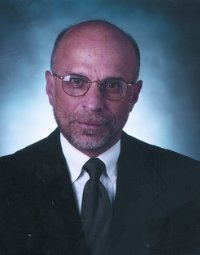
Terry C. Muck is professor of World Religions at Asbury Theological Seminary. The article above was adapted from chapter six in a collection of articles from the Library of Christian Leadership book entitled Deepening Your Ministry Through Prayer and Personal Growth: 30 Strategies to Transform Your Ministry; edited by Marshall Shelley. Nashville: Moorings, 1996.

Negative Attitude? Here’s Help From John C. Maxwell In Developing a Positive Attitude!

“Why Your Attitude Is So Important In Your Pathway to Success”


Do you feel the world is treating you well? If your attitude toward the world is excellent, you will receive excellent results. If you feel so-so about the world, your response from the world will be average. Feel badly about your world and you will seem to have only negative feedback from life. – John C. Maxwell

We live in a world of words. Attached to these words are meanings that bring varied responses from us. Words such as happiness, acceptance, peace and success describe what each of us desires. But there is one word that will either heighten the possibility of our desires being fulfilled or prevent them from becoming a reality within us.

While leading a conference in South Carolina, I tried the following experiment. To reveal the significance of this word, I read the previous paragraph and asked, “What word describes what will determine our happiness, acceptance, peace and success?” The audience began to express words such as job, education, money, and time. Finally someone said attitude. Such an important area of their lives was a second thought. Our attitude is the primary force that will determine whether we succeed or fail.

For some, attitude presents a difficulty in every opportunity; for others it presents an opportunity in every difficulty. Some climb with a positive attitude, while others fall with a negative perspective. The very fact that the attitude “makes some” while “breaking others” is significant enough for us to explore its importance. Studying the major statements listed in this chapter will highlight this truth to us.

 Attitude Axiom #1: Our attitude determines our approach to life.

The story of the two buckets underlines this truth. One bucket was an optimist, and the other was a pessimist. “There has never been a life as disappointing as mine,” said the empty bucket as it approached the well. “I never come away from the well full but what I return again empty.”

“There has never been such a happy life as mine:’ said the full bucket as it left the well. “I never come to the well empty but what I go away again full.”

Our attitude tells us what we expect from life. If our “nose” is pointed up, we are taking off; if it is pointed down, we may be headed for a crash.

One of my favorite stories is about a grandpa and grandma who visited the grandchildren. Each afternoon Grandpa would lie down for a nap. One day, as a practical joke, the kids decided to put Limburger cheese in his moustache. Quite soon he awoke sniffing. “Why, this room stinks;’ he exclaimed as he got up and went out into the kitchen. He wasn’t there long until he decided that the kitchen smelled too, so he walked outdoors for a breath of fresh air. Much to Grandpa’s surprise, the open air brought no relief, and he proclaimed, “The whole world stinks”

How true that is to life! When we carry “Limburger cheese” in our attitudes, the whole world smells bad.

One of the valid ways to test your attitude is to answer this question: “Do you feel your world is treating you well?” If your attitude toward the world is excellent, you will receive excellent results. If you feel so-so about the world, your response from the world will be average. Feel badly about your world, and you will seem to have only negative feedback from life. Look around you. Analyze the conversations of people who lead unhappy, unfulfilled lives. You will find they are crying out against a society, which they feel is out to get them and to give them a lifetime of trouble, misery and bad luck. Sometimes their own hands have built the prison of discontent.

The world doesn’t care whether we free ourselves from this prison or not. It marches on. Adopting a good, healthy attitude toward life does not affect society nearly so much as it affects us. The change cannot come from others. It must come from us.

The apostle Paul had a terrible background to overcome. He told Timothy that he was the “chief of sinners.” But after his conversion he was infused with desire to know Christ in a greater way. How did he fulfill this desire? Not by waiting for someone else to assist him. Neither did he look backward and whine about his terrible past. Paul diligently “pressed on to lay hold of Jesus.” His singleness of purpose caused him to state, “But one thing I do: forgetting what lies behind and reaching forward to what lies ahead, I press on toward the goal for the prize of the upward call of God in Christ Jesus” (Philippians 3:13,14).

We are individually responsible for our view of life. The Bible says, “Whatever a man sows, this he will also reap” (Galatians 6:7). Our attitude and action toward life help determine what happens to us.

It would be impossible to estimate the number of jobs, which have been lost, the number of promotions missed, the number of sales not made and the number of marriages ruined by poor attitudes. But almost daily we witness jobs that are held but hated and marriages that are tolerated but unhappy, all because people are waiting for others, or the world, to change instead of realizing that they are responsible for their behavior. God is sufficient to give them the desire to change, but the choice to act upon that desire is theirs.

It is impossible for us to tailor-make all situations to fit our lives perfectly. But it is possible to tailor-make our attitudes to fit. The apostle Paul beautifully demonstrated this truth while he was imprisoned in Rome. He certainly had not received a “fair shake” The atmosphere of his confinement was dark and cold. Yet he writes to the church at Philippi brightly declaring, “Rejoice in the Lord always; again I will say rejoice” (Philippians 4:4). Notice that the confined man was telling carefree people to rejoice Was Paul losing his mind? No. The secret is found late in the same chapter. Paul states:

Not that I speak from want; for I have learned to be content in whatever circumstances I am. I know how to get along with humble means and I also know how to live in prosperity; in any and every circumstance I have learned the secret of being filled and going hungry, both of having abundance and suffering need (verses 11-12).

The ability to tailor-make his attitude to his situation in life was learned behavior. It did not come automatically. The behavior was learned and a positive outlook became natural. Paul repeatedly teaches us by his life that man helps create his environment-mental, emotional, physical and spiritual-by the attitude he develops.

 Attitude Application:

Circle, underline, or highlight the number that most closely reveals your attitude toward life:

1. “Make the World Go Away”

2. “Raindrops Keep Falling on my Head”

3. “I Did It My Way”

4. “Oh, What a Beautiful Morning”

 Attitude Axiom #2: Our attitude determines our relationships with people.

The Golden Rule: “Therefore, however you want people to treat you, so treat them” (Matthew 7:12). This axiom takes on a higher significance when, as Christians, we realize that effective ministry to one another is based on relationships. The model of ministry (as I understand ministry) is best captured in John 13. Christ and His disciples are gathered in the upper room. The components of Christ’s model of ministry are:

1. Men with whom He had shared all areas of life;

2. An attitude and demonstration of servanthood;

3. An all-encompassing command of relational love. (“By this all men will know you are My disciples.”)

An effective ministry of relating to others must include all three of these biblical components. No single methodology (preaching, counseling, visitation) will effectively minister to all the needs all the time. It takes a wise combination of many methods to reach the needs of people. And the bridge between the gospel remedy and people’s needs is leadership based on relationship. John 10:3-5 gives a view of relational leadership:

1. Relationship to the point of instant recognition (He calls His own sheep by name);

2. Established relationship built on trust (His sheep hear his voice and come to Him);

3. Modeled leadership (He walks ahead of them and they follow Him).

Yet establishing such relationships is difficult. People are funny. They want a place in the front of the bus, the back of the church and the middle of the road. Tell a man there are 300 billion stars, and he will believe you. Tell that same man that a bench has just been painted, and he has to touch it to be sure.

People are frustrating at times. They show up at the wrong place at the wrong time for the wrong reason. They are always interesting but not always charming. They are not always predictable because they have minds of their own. You can’t get along with them, and you can’t make it without them. That’s why it is essential to build proper relationships with others in our crowded world.

The Stanford Research Institute says that the money you make in any endeavor is determined only 12.5 percent by knowledge and 87.5 percent by your ability to deal with people.

87.5% people knowledge + = Success 12.5% product knowledge

That is why Teddy Roosevelt said, “The most important single ingredient to the formula of success is knowing how to get along with people.”

“I will pay more for the ability to deal with people than any other ability under the sun;’ asserted John D. Rockefeller.

J. Paul Getty, when asked what was the most important quality for a successful executive, replied, “It doesn’t make much difference how much other knowledge or experience an executive possesses; if he is unable to achieve results through people, he is worthless as an executive.”

When the attitude we possess places others first and we see people as important, then our perspective will reflect their viewpoint, not ours. Until we walk in the other person’s shoes and see life through another’s eyes, we will be like the man who angrily jumped out of his car after a collision with another car. “Why don’t you people watch where you’re driving?” he shouted wildly. “You’re the fourth car I’ve hit today!”

A few years ago I was traveling in the South and stopped at a service station for some fuel. It was a rainy day, yet the station workers were diligently trying to take care of the customers. I was impressed by the first-class treatment and fully understood the reason when I read this sign on the front door of the station:

 WHY CUSTOMERS QUIT

1% die, 3% move away, 5% other friendships, 9% competitive reasons (price), 14 % product dissatisfaction – BUT…68% quit because of an attitude of indifference toward them by some employee! In other words, 68 percent quit because the workers did not have a customer mindset working for them.

Usually the person who rises within an organization has a good attitude. The promotions did not give that individual an outstanding attitude, but an outstanding attitude resulted in promotions. A recent study by Telemetrics International concerned those “nice guys” who had climbed the corporate ladder. A total of 16,000 executives were studied. Observe the difference between executives defined as “high achievers” (those who generally have a healthy attitude) and “low achievers” (those who generally have an unhealthy attitude):

  • High achievers tended to care about people as well as profits; low achievers were preoccupied with their own security.
  • High achievers viewed subordinates optimistically; low achievers showed a basic distrust of subordinates’ abilities.
  • High achievers sought advice from their subordinates; low achievers didn’t.
  • High achievers were listeners; low achievers avoided communication and relied on policy manuals.

In 1980-81 I took on a rather ambitious project, which included teaching and leading fifteen pastors and their congregations to become growing, vibrant churches. One of my favorite responsibilities was to speak in a Sunday service and recruit workers for that particular church. Right before the “enlisting service;’ I would ask the pastor how many people he thought would come forward, sign a card and enlist in evangelism and discipleship. I would watch the pastor slowly calculate the “who woulds” and the “who would nots:” After receiving the carefully chosen number, I would announce, “More than that number will sign up.”

Why could I say that? Did I know his people better than he did? Of course not. What I did know was that the pastor had mentally placed his people into slots and “knew” how they would react during the service. Since I did not know the congregation, my attitude was open and positive toward all of them. I treated the listeners as if they all would respond, and most did! All fifteen pastors guessed lower than the actual laity response.

A negative past experience sometimes paralyzes our thinking and our attitude. A man unable to find his best saw, suspected his neighbor’s son who was always tinkering around with woodworking. During the next few days everything that the young man did looked suspicious-the way he walked, the tone of his voice and his gestures. But when the older man found the saw behind his own workbench, where it had fallen when he accidentally knocked it off the bench, he no longer saw anything suspicious in his neighbor’s son.

Attitude Application:

Challenge: For one week treat every person you meet, without a single exception, as the most important person on earth. You will find that they will begin treating you the same way.

Attitude Axiom #3: Often our attitude is the only difference between success and failure.

History’s greatest achievements have been made by men who excelled only slightly over the masses of others in their fields. This could be called the principle of the slight edge. Many times that slight difference was attitude. The former Israeli Prime Minister Golda Meir underlined this truth in one of her interviews. She said, “All my country has is spirit. We don’t have petroleum dollars. We don’t have mines or great wealth in the ground. We don’t have the support of a worldwide public opinion that looks favorably on us. All Israel has is the spirit of its people. And if the people lose their spirit, even the United States of America cannot save us.” This great lady was saying,

Resources + Bad Attitude = Defeat

Resources + Right Attitude = Victory

Below I’ve listed resources that enable a person to achieve success. Beside this list write down some of your other blessings. Read them when you are losing that slight edge.

  • Experiences
  • Connections
  • Health
  • Friends
  • Family
  • Aptitude
  • Money
  • Attitude
  • Goals

Certainly aptitude is important to our success in life. Yet success or failure in any undertaking is caused more by mental attitude than by mere mental capacities. I remember times when Margaret, my wife, would come home from teaching school frustrated because of modern education’s emphasis on aptitude instead of attitude. She wanted the kids to be tested on A.Q. (attitude quotient) instead of just the I.Q. (intelligence quotient). She would talk of kids whose I.Q. was high yet their performance was low. There were others whose I.Q. was low, but their performance was high.

As a parent, I hope my children have excellent minds and outstanding attitudes. But if I had to choose in an “either-or” situation, without hesitation I would want their A.Q. to be high.

A Yale University president some years ago gave this advice to a former president of Ohio State: “Always be kind to your A and B students. Someday one of them will return to your campus as a good professor. And also be kind to your C students. Someday one of them will return and build a two-million dollar science laboratory.”

A Princeton Seminary professor discovered that the spirit of optimism really does make a difference. He made a study of great preachers across past centuries. He noted their tremendous varieties of personalities and gifts. Then he asked the question, “What do these outstanding pulpiteers all have in common besides their faith?” After several years of searching he found the answer. It was their cheerfulness. In most cases they were happy men.

There is very little difference in people, but that little difference makes a big difference. The little difference is attitude. The big difference is whether it is positive or negative. Nowhere is this principle better illustrated than in the story of the young bride from the East who, during wartime, followed her husband to a U.S. Army camp on the edge of the desert in California.

Living conditions were primitive at best, and her husband had advised against her move, but she wanted to be with him. The only housing they could find was a rundown shack near an Indian village. The heat was unbearable in the daytime—115 degrees in the shade. The wind blew constantly, spreading dust and sand all over everything. The days were long and boring. Her only neighbors were Indians, none of whom spoke English. When her husband was ordered farther into the desert for two weeks of maneuvers, loneliness and the wretched living conditions got the best of her. She wrote to her mother that she was coming home. She couldn’t take it anymore.

In a short time she received a reply which included these two lines, “Two men looked through prison bars; one saw mud, the other saw stars.” She read the lines over and over again and began to feel ashamed of herself. She didn’t really want to leave her husband. All right, she thought, she’d look for the stars. In the following days she set out to make friends with the Indians, asking them to teach her weaving and pottery. At first they were distant, but as soon as they sensed her genuine interest, they returned her friendship. She became friendly with their culture and history—in fact, everything about them. As she began to study the desert, it too changed from a desolate, forbidding place to a marvelous thing of beauty.

She had her mother send her books. She studied the forms of the cacti, the yuccas and the Joshua trees. She collected sea shells that had been left there when the sands had an ocean floor. Later, she became such an expert on the area that she wrote a book about it.

What had changed? Not the desert; not the Indians. Simply by changing her own attitude she had transformed a miserable experience into a highly rewarding one.

Attitude Application:

There is very little difference in people, but that little difference makes a big difference. That difference is attitude. Think of something that you desire. What attitude will you need to get it or achieve it?

Attitude Axiom #4: Our attitude at the beginning of a task will affect its outcome more than anything else.

Coaches understand the importance of their teams having the right attitude before facing a tough opponent. Surgeons want to see their patients mentally prepared before going into surgery. Job-seekers know that their prospective employer is looking for more than just skills when they apply for work. Public speakers want a conducive atmosphere before they communicate to their audience. Why? Because the right attitude in the beginning insures success at the end. You are acquainted with the saying, “All’s well, that ends well.” An equal truth is “All’s well that begins well.

One of the key principles I teach when leading evangelism conferences is the importance of our attitude when witnessing to others. Most of the time it is the way we present the gospel rather than the gospel itself that offends people. Two people can share the same news with the same person and receive different results. Why? Usually the difference is in the attitude of the person sharing. The eager witness says to himself, “People are hungry for the gospel and desirous of a positive change in their lives.” The reluctant witness says to himself, “People are hungry for the gospel and desirous of a positive change in their lives.” The reluctant witness says to himself, “People are not interested in spiritual things and don’t want to be bothered.” Those two attitudes will not only determine the number of attempts made in witnessing (can you guess which one will witness?) but also will determine the results if they both share the same faith.

The American statesman Hubert H. Humphrey was admired by millions. His bubbly enthusiasm was contagious. When he died I cut out one of his quotes from a newspaper article about him. It was written to his wife on his first trip to Washington, D.C., in 1935: “I can see how someday, if you and I just apply ourselves and make up our minds for bigger things, we can someday live here in Washington and probably be in government, politics or service. Oh gosh, I hope my dream comes true; I’m going to try anyhow.” With that type of attitude he couldn’t fail!

Most projects fail or succeed before they begin. A young mountain climber and an experienced guide were ascending a high peak in the Sierras. Early one morning a tremendous cracking sound suddenly awakened the young climber.

He was convinced that the end of the world had come. The guide responded, “It’s not the end of the world, just the dawning of a new day.” As the sun rose, it was merely hitting the ice and causing it to melt.

Many times we have been guilty of viewing our future challenges as the sunset of life rather than the sunrise of a bright new opportunity.

For instance, there’s the story of two shoe salesman who were sent to an island to sell shoes. The first salesman, upon arrival, as shocked to realize that no one wore shoes. Immediately he sent a telegram to his home office in Chicago saying, “Will return home tomorrow. No one here wears shoes.”

The second salesman was thrilled by the same realization. Immediately he wired the home office in Chicago saying, “Please send me 10,000 shoes. Everyone here needs shoes.” Raise the level of your attitude!

Attitude Axiom #5: Our attitude can turn problems into blessings.

In Awake, My Heart, my find J. Sidlow Baxter writes, “What is the difference between an obstacle and an opportunity? Our attitude toward it. Every opportunity has a difficulty and every difficulty has an opportunity.”

When confronted with a difficult situation, a person with an outstanding attitude makes the best of it while he gets the worst of it. Life can be likened to a grindstone. Whether it grinds you down or polishes you depends upon what you are made of.

While attending a conference of young leaders, I heard this statement: “No society has ever developed tough men during times of peace.” Adversity is prosperity to those who possess a great attitude. Kites rise against, not with, the wind. When the adverse wind of criticism blows, allow it to be to you what the blast of wind is to the kite—a force against it higher. A kite would not fly unless it had the controlling tension of the string to tie it down. It is equally true in life.

When Napoleon’s school companions made sport of him because of his humble origin and poverty, he devoted himself entirely to his books. Quickly rising above his classmates in scholarship, he commanded their respect. Soon he was regarded as the brightest in the class.

If the germ of the seed has to struggle to push its way up through the stones and hard sod, to fight its way up to the sunlight and air and then to wrestle with storm, snow and frost, the fiber or its timber will be all the tougher and stronger.

Few people knew Abraham Lincoln until the great weight showed his character.

Robinson Crusoe was written in prison. John Bunyan wrote Pilgrim’s Progress in the Bedford jail. Sir Walter Raleigh wrote The History of the World during a thirteen-year imprisonment. Luther translated the Bible while confined in the castle of Wartburg. For ten years Dante, author of The Divine Comedy, worked in exile and under the sentence of death. Beethoven was almost totally deaf and burdened with sorrow when he produced his greatest works.

When God wants to educate a man, He does not send him to the school of graces but to the school of necessities. Through the pit and the dungeon Joseph came to the throne. Moses tended sheep in the desert before God called him for service. Peter, humbled and broken by his denial of Christ, heeded the command to “Feed My sheep.” Hosea loved and cared for an unfaithful wife out of obedience to God.

In the Chinese language, whole words are written with a symbol. Often when two completely unlike symbols are put together, they have a meaning different from their two separate components. An example is the symbol of “man” and that of “woman.” When combined, they mean “good.”

The same is true of dreams and problems. As the answers always lie in the questions, so the opportunities of life lie directly in our problems. Thomas Edison said, “There is much more opportunity than there are people to see it.”

Great leaders emerge when crises occur. In the lives of people who achieve, we read repeatedly of terrible troubles which force them to rise above the commonplace. Not only do they find the answers, but also they discover a tremendous power within themselves. Like a ground swell far out in the ocean, this force within explodes into a mighty wave when circumstances seem to overcome. Then out steps the athlete, the author, the statesman, the scientist or the businessman. David Sarnoff said, “There is plenty of security in the cemetery; I long for opportunity.”

We will know our attitude is on the right track when we are like the small businessmen whose clothing store was threatened with extinction. A national chain store had moved in and acquired all the properties on his block. This one particular businessman refused to sell. “All right then, we’ll build around you and put you out of business,” the new competitors said. The day came when the small merchant found himself hemmed in with a new department store stretching out on both sides of this little retail shop. The competitors’ banners announced, “Grand Opening!” The merchant countered with a banner stretching across the entire width of his store. It read, “Main Entrance.”

Attitude Application:

List two problems that are presently a part of your life. Besides the two problems write down your present reactions to them. Are they negative? Your challenge: Discover at least three possible benefits from each problem. Now attack the problem with your eyes on the benefits, not the barriers.

Attitude Axiom #6: Our attitude can give us an uncommonly positive perspective.

The result of that truth: the accomplishment of uncommon goals. I have keenly observed the different approaches and results achieved by a positive thinker and by a person filled with fear and apprehension.

Example: When Goliath came up against the Israelites, the soldiers all thought, He’s so big we can never kill him. David looked at the same giant and thought; He’s so big I can’t miss.

Example: When you go to a shopping mall or any public place that contains a lot of cars and people, do you start at the farthest point of the parking lot and work your way toward the building, or drive to the front, assuming someone will be pulling out so you can pull in? If you operate from a positive perspective in life you will always go to the front. One time I had a friend ask me why I always assumed a close parking space would be available. My answer: “The odds are that a person coming out of the store has been there the longest. Since that individual arrived at the store the earliest, he parked the closest.” When they pull out, I drive in and give them a friendly wave. It’s the least I can do for a person who has saved my parking space.

Former Moody Bible Institute President George Sweeting, in his sermon entitled “Attitude Makes the Difference,” tells about a Scotsman who was an extremely hard worker and expected all the men under him to be the same. His men would tease him, “Scotty, don’t you know that Rome wasn’t built in a day?” “Yes,” he would answer, “I know that. But I wasn’t foreman on that job.”

The individual whose attitude causes him to approach life from an entirely positive perspective is not always understood. He is what some would call a “no-limit person.” In other words, he doesn’t accept the normal limitations of life like most people. He is unwilling to accept “the accepted” just because it is accepted. His response to self-limiting conditions will probably be a “Why?” instead of an “Okay.” He has limitation in his life. His gifts are not so plentiful that he cannot fail. But he determined to walk to the very edge of his potential or the potential of a prophet before he accepts a defeat.

He is like the bumblebee. According to a theory of aerodynamics, as demonstrated through the wind tunnel tests, the bumblebee should be unable to fly. Because of the size, weight and shape of his body in relationship to the total wingspread, flying is scientifically impossible. The bumblebee, being ignorant of scientific theory, goes ahead and flies anyway and makes honey every day.

This mindset allows a person to start each day with a positive disposition, like the elevator operator on Monday morning. The elevator was full and the man began humming a tune. One passenger seemed particularly irritated by the man’s mood and snapped, “What are you so happy about?” “Well, sir,” replied the man happily, “I ain’t never lived this day before!”

Asked which of his works he would select as his masterpiece, architect Frank Lloyd Wright, at age 83, replied, “My next one.” The future not only looks bright when the attitude is right, but also the present is much more enjoyable. The positive person understands that the journey is as enjoyable as the destination.

One day a man was watching two masons working on a building. He noticed that one worker continually frowned, groaned and cursed his labors. When asked what he was doing, he replied, “Just piling one stone on top of another all day long until my back is about to break.” The other mason whistled as he worked. His movements were swift and sure and his face was aglow with satisfaction. When asked what he was doing, he replied, “Sir, I’m not just making a stone wall. I’m helping to build a cathedral.”

A friend of mine in Ohio drove for an interstate trucking company. Knowing the hundreds of miles he logged weekly, I once asked him how he kept from getting extremely tired. “It’s all in your attitude,” he replied. “Some drivers ‘go to work’ in the morning but I ‘go for a ride in the country.’” That kind of positive perspective gives him the “edge” on life.

Attitude Application:

Notice the limitation that you or your friends accept today. With each limitation example ask the question, “Why? Example: “Why did I choose this parking space far away without checking up close first?” Make a mental note to become a “no limit person” each time you ask the question, Why?

Attitude Axiom #7: Our attitude is not automatically good just because we are Christians.

It is noteworthy that even the seven deadly sins (pride, covetousness, lust, envy, anger, gluttony, and sloth) are all matters of attitude, inner spirit and motives. Sadly, many carnal Christians carry with them inner spirit problems. They are like the elder brother in the parable of the prodigal son, thinking they do everything right. He chose to stay home with his father. No way was he going to spend his time sowing wild oats. Yet, when the younger brother came back home, some of the elder brother’s wrong attitudes began to surface.

First came a feeling of self-importance. The elder brother was out in a field doing what he ought to do, but he got mad when the party began at home. He didn’t get mad because he didn’t like parties. I know he liked parties, because he claimed to his father that he would never let him throw one!

That was followed by a feeling of self-pity. The elder brother said, “Look! For so many years I have been serving you, and I have never neglected a command of yours; and yet you have never given me a kid, that I might merry with my friends; but when this son of yours came, who devoured your wealth with harlots, you killed the fatted calf for him” (Luke 15:29-30).

Often we overlook the true meaning of the story of the prodigal son. We forget that have not one but two prodigals. The younger brother is guilty of the sins of the spirit (attitude). When the parable closes, it is the elder brother—the second prodigal—who is outside the father’s house. [For an outstanding presentation of the Gospel from Luke 15 and contrast in the religiosity of the one son and rebelliousness of the other – see Tim Keller’s short book: The Prodigal God – DPC].

In Philippians 2:3-8, Paul talks about the attitudes we should possess as Christians:

Do nothing from selfish ambition or conceit, but in humility count others more significant than yourselves. Let each of you look not only to his own interests, but also to the interests of others. Have this mind among yourselves, which is yours in Christ Jesus, who, though he was in the form of God, did not count equality with God a thing to be grasped, but emptied himself, by taking the form of a servant, being born in the likeness of men. And being found in human form, he humbled himself by becoming obedient to the point of death, even death on a cross.

Paul tells us at least 5 things about the proper Christian attitude:

  1. Do things for the right reasons (verse 3).
  2. Regard others as more important than yourself (verse 3).
  3. Look out for the interests of others (verse 4).
  4. Christ recognized His sonship and therefore was willing to serve God and others (verse 6).
  5. Possess the attitude of Christ, who was not power hungry (verse 6) but rather emptied Himself (verse 7), demonstrated obedience (verse 8) and fulfilled God’s purpose (verse 8).

When our emphasis of lifestyle is focused on verse 4, looking out for own personal interests, we become like the elder brother. We nurture attitudes of jealousy, pity and selfishness. Christians who possess no greater cause than themselves are not as happy as those who do not know Christ as Savior, yet have a purpose greater than themselves.

This “elder brother” attitude has three possible results, none of which is positive.

First, it is possible for us to assume the place and privilege of a son while refusing the obligations of a brother. The elder brother outwardly was correct, conscientious, industrious and dutiful [externally religious], but look at his attitude. Also note that a wrong relationship with the brother brought a strained relationship with the father (Luke 15:28).

Second, it is possible to serve the Father faithfully yet not be in fellowship with Him. A right relationship will usually cultivate similar interests and priorities. Yet the elder brotherhad no idea why the father would rejoice over his son’s return.

Third, it is possible to be an heir of all our Father possesses yet have less joy and liberty than one who possesses nothing. The servants were happier than the elder son. They ate, laughed and danced while he stood on the outside demanding his rights.

A wrong attitude kept the elder brother away from the heart’s desire of the father, the love of his brother and the joy of the servants. Wrong attitudes in our lives  will block the blessings of God and cause us to live below God’s potential for our lives.

Attitude Application:

When our attitude begins to erode like the elder brother’s we should rememeber two things:

  1. Our privilege: “My child, you have always been with me” (Luke 15:31)
  2. Our possessions: “All that is mine is yours” (Luke 15:31).

Take a moment to list your privileges and possessions in Christ. How rich we are!

 About John C. Maxwell

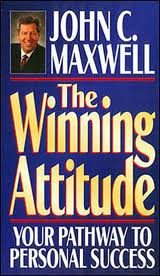
John C. Maxwell is an internationally renowned pastor, leadership expert, coach, and author who has sold over 21 million books. Dr. Maxwell founded EQUIP and the John Maxwell Company, organizations that have trained more than 5 million leaders in 174 countries. Every year he speaks to Fortune 100 companies, international government leaders, and organizations such as the United States Military Academy at West Point, the National Football League, and the United Nations. A New York Times, Wall Street Journal, and Business Week best-selling author, Maxwell’s The 21 Irrefutable Laws of Leadership has sold more than 2 million copies. Developing the Leader Within You and The 21 Indispensable Qualities of a Leader have each sold more than 1 million copies. The article above was adapted from the encouraging and practical book by John C. Maxwell. The Winning Attitude: Your Pathway to Personal Success. Nashville: Thomas Nelson, 2001, Chapter 3.

You can read his blog at JohnMaxwellOnLeadership.com, follow him at Twitter.com/JohnCMaxwell, and learn more about him at JohnMaxwell.com.


“Every Day With Jesus is Like A Thanksgiving Holiday” By Dr. David P. Craig

“Thank God It’s Thanksgiving Everyday – Especially on Thursday’s!”

I have always loved the Thanksgiving Holiday. It’s one of the few times of the year where our very large family can come together from all over the United States and enjoy giving thanks for our many blessings. This year more than likely I’ll be having liquid formula through a feeding tube in my stomach. I already had the G-Tube surgically implanted in my stomach this past week. During chemotherapy and radiation around Thanksgiving time will be a time of great testing for me, when according to my Doctors I will be unable to swallow and chew due to the severity of my treatment for throat and neck cancer. Watching every one I love dearest passing around the turkey with all the trimmings will be something my eyes will enjoy, but not my taste buds. However, I’m good with that. I’m good with whatever comes my way because I can choose whether I’m a “reactor” or a “responder.” Let me explain.

Over the past decade I’ve had eye problems off and on – a cataract surgery and lattice degeneration in both eyes, which required laser surgery to repair numerous tiny little “tears” in the back of my eyes. A few days ago the Eye Doctor discovered I have a Vitreous Detachment and a Vitreous Hemorrhage in my right eye. After seeing a cataract specialist I was referred to another specialist who confirmed these diagnoses. All I know is that it is difficult for me to read, and that I see flashes of light at night, and what looks like a “blob” during the day out of my right eye. The Ophthalmologist thinks it should go away – but for now, I’m hoping and praying the “blob” will clear up.

I have also had an off-and-on battle with “Gout” (Charles Haddon Spurgeon had Gout as well – which makes me feel a little bit better about it – at least I’m in good company). They say Gout is a “rich man’s disease” (well one out of two ain’t bad – and “rich” isn’t the one). The first time I experienced Gout was after coaching one of my daughter’s soccer practices. I remember lying on the bed at night after soccer practice and feeling like someone took my right big toe and pounded it with a hammer as if they were really mad at the nail – and it just so happened my big “toe” represented the nail. It was excruciating. I’ve finally (after years of hopping, limping, and crawling through various “Gout” attacks) resorted to taking medication a few months ago – so far so good. The reality is I get “Gout” not because I’m rich, but because my body is missing an enzyme and therefore I manufacture too much uric acid which builds up “crystals” (more like little torturous demons) in weak areas of the body – joints in the extremities – and inflames them, so that even a bed sheet touching the inflamed joint hurts like you just got stepped on by a really upset “Chuck Norris.”

Today I am on my way to the hospital to get my face fitted for a mask that I will wear for radiation treatment. I will also have a CT-Scan to see if I’m ready to start chemotherapy and radiation for the Stage 3, throat and neck cancer I’ve recently been diagnosed with. God-willing I will begin treatment early next week (the sooner the treatment begins – the better). So what’s with all the grim news? Well, honestly, I truly believe that some tough days are ahead – but they will go a lot better if I have a thankful heart.

I also have learned something about life – We are either coming out of tough times, going through tough times, or about to go through tough times! The good news – is that as Christians we know that God “God is faithful, and he will not let you be tempted beyond your ability, but with the temptation he will also provide a way of escape that you may be able to endure it” (1 Corinthians 10:13b). Warren W. Wiersbe calls the Christian life a “land of hills and valleys.” We journey from low points to high points and everything in between.

 Why Lord? What’s with All the Tough Stuff?

James puts it this way, “Count it all joy, my brothers, when you meet trials of various kinds, for you know that the testing of your faith produces steadfastness. And let steadfastness have its full effect, that you may be perfect and complete, lacking nothing” (James 1:2-4). In other words, if you want to lack nothing, be spiritually mature, and satisfied – the only way to do it, is by meeting all kinds of trials with “joy.” Why? Because God designed it that way! If you’ve got a problem with it…He’s got a bigger problem! He took our sin problem head-on and voluntarily. He sent His perfect Son to die in your and my place and exchanged His perfect record of righteousness for your (and my) heinous record of unrighteousness.

I didn’t choose to have a cataract or lattice degeneration in my eyes; Gout, or Squamous Cell Carcinoma Cancer. But, I do know for a fact that God has allowed me to have these ailments, and I can either react to, (negative thinking) or respond to (positive thinking) God’s sovereign will and plans. I know that God works everything out for my good, and more importantly, for His glory. I know that God can heal me if He chooses to do so. I know that He can use medicine and the skill of excellent Physicians, medications, diet, and the prayers of His people to rid me of my cancer if He so desires. I also know, that we live in a fallen world, and one out of one people die. As a pastor I’ve easily performed over 100 funerals, and I’ve also witnessed miraculous healings. However, I do not presume to know what God’s sovereign hidden will happens to be in my cancer. I only know that I must decide whether God is good or evil – and the track record is that I’m very evil, and He is very good – as a matter of fact Perfect and immutably so. Only God is infinitely Wise in His plans. I simply want to trust and obey Him in the midst of this trial.

 God is Good and Sovereign:

Lamentations 3:21-26 – But this I call to mind, and therefore I have hope: The steadfast love of the Lord never ceases; his mercies never come to an end; they are new every morning; great is your faithfulness. “The Lord is my portion,” says my soul, “therefore I will hope in him.” The Lord is good to those who wait for him, to the soul who seeks him. It is good that one should wait quietly for the salvation of the LORD.”

Psalm 90:12 – Moses prays, “so teach us to number our days that we may get a heart of wisdom.”

Proverbs 16:9 – Solomon says, “Man plans His ways, but the LORD determines His steps.”

Psalm 139:16 “Your eyes saw my unformed substance; in your book were written, every one of them, the days that were formed for me, when as yet there was none of them”– in paraphrase: “All of our days are numbered before one of them came to be.”

Romans 8:18, 28-29, 32 – “For I consider that the sufferings of this present time are not worth comparing with the glory that is to be revealed to us…And we know that for those who love God all things work together for good, for those who are called according to his purpose. For those whom he foreknew he also predestined to be conformed to the image of his Son, in order that he might be the firstborn among many brothers…He who did not spare his own Son but gave him up for us all, how will he not also with him graciously give us all things?”

In summary: God has given me a certain number of days to suffer and grow in wisdom. He has always been faithful to provide for all my needs. If He didn’t spare His own Son – how could He possibly abandon me now? In the days He entrusts to me I can either react or respond to everything that He allows in my life. He promises that everything that comes my way is ultimately for my good and His glory. Ultimately all of my suffering is not worth comparing with the glories to come. God has predestined and purposed for me in His infinite wisdom and love that through suffering my character would conform to the image of Jesus – so that I would look like His brother – an heir with Christ, adopted into the family of God! God will give me an allotted time known only to Him to make much of Jesus and to bring Him glory – nothing else really matters.

Are You a “Reactor” or a “Responder”?

Here is an example of the difference and importance of “reacting” to circumstances, and “responding” to them: If I begin radiation and chemotherapy on Monday and within a few weeks my tumor shrinks from 7 to 5 cm, and the cancer cells are disappearing – then that’s a positive “response” to the treatment – it’s working! My body is responding to the treatment. If the tumor and cancer cells metastasize to another part of my body and the tumor grows to 8-9 cm then that’s called a “reaction” to the treatment – it’s not working. My body would be “reacting” to the treatment. The treatment will either cause my body to “react,” (negatively) or “respond” (positively) to the treatment. Responding is good. Reacting is bad.

The good news of the gospel is that even when you or I “react” negatively in our thinking, Christ has us covered! Even when you or I “respond” it’s only by His grace that we’re able to respond the way we should. I thank God that my salvation is NOT based on the way I react or respond to everything in life. I thank God that it is solely by repentance and faith – God’s gift to me – sola gratia, sola fide, solus Christus, Soli Deo Gloria – that I’m accepted, adopted, and saved by my beloved Triune God.

I truly believe that we can respond to circumstances by responding by having a greater understanding of the incredible mercy and grace of God in saving us. Read carefully just a sampling of God’s amazing Triune grace and mercy in saving us:

“But to all who did receive him, who believed in his name, he gave the right to become children of God, who were born, not of blood nor of the will of the flesh nor of the will of man, but of God” (John 1:12-13).

“No one can come to me unless the Father who sent me draws him. And I will raise him up on the last day” (John 6:44).

“And you were dead in the trespasses and sins in which you once walked, following the course of this world, following the prince of the power of the air, the spirit that is now at work in the sons of disobedience—among whom we all once lived in the passions of our flesh, carrying out the desires of the body and the mind, and were by nature children of wrath, like the rest of mankind. But God, being rich in mercy, because of the great love with which he loved us, even when we were dead in our trespasses, made us alive together with Christ—by grace you have been saved” (Ephesians 2:1-5).

“For by grace you have been saved through faith. And this is not your own doing; it is the gift of God, not a result of works, so that no one may boast. For we are his workmanship, created in Christ Jesus for good works, which God prepared beforehand, that we should walk in them.” (Ephesians 2:8-10).

“Therefore you have no excuse, O man, every one of you who judges. For in passing judgment on another you condemn yourself, because you, the judge, practice the very same things. We know that the judgment of God rightly falls on those who practice such things. Do you suppose, O man—you who judge those who practice such things and yet do them yourself—that you will escape the judgment of God? Or do you presume on the riches of his kindness and forbearance and patience, not knowing that God’s kindness is meant to lead you to repentance?” (Romans 2:1-4).

For he says to Moses, “I will have mercy on whom I have mercy, and I will have compassion on whom I have compassion.” So then it depends not on human will or exertion, but on God, who has mercy.” (Romans 9:15-16).

“But when the goodness and loving kindness of God our Savior appeared, he saved us, not because of works done by us in righteousness, but according to his own mercy, by the washing of regeneration and renewal of the Holy Spirit, whom he poured out on us richly through Jesus Christ our Savior, so that being justified by his grace we might become heirs according to the hope of eternal life” (Titus 3:4-7).

I like the way Pastor David Platt puts it, “Salvation has absolutely nothing to do with human merit and absolutely everything to do with divine mercy.” John MacArthur says it like this, ““There are basically only two kinds of religion in the world: those based on human achievement and those based on divine accomplishment. One says you can earn your way to heaven; the other says you must trust in Jesus Christ alone.” Tullian Tchividijian makes the same point this way, ““The Bible doesn’t tell the story of good people who do great things; it tells the story of great sin that is met with a greater Savior.”

Paul David Tripp writes, ““Because we sin specifically, the gospel intends us to grow in grace specifically…We must emphasize again and again the nowism of the gospel…Jesus didn’t just die for your past and future, He died for you’re here and now! To die for you, Jesus had to first live for you. He lived a perfect life in your place so he would be an acceptable sacrifice for your sin.”

When trials come into our lives in the form of a long traffic light that makes us late for work, an unexpected tax increase, or in the form of a pink slip from our boss, small or large trial – we all have them – where we differ and show what we are made of is in the arena of our character. Character is made in the shade of trials – the inner being. Our character is manifest in the light of the fight. It is in the heat of the hottest fire where the gold is most refined. Gold is never made without heat. Our purity came at a huge cost – the life of the perfect One – crucified (the greatest suffering), buried (the greatest abandonment), risen (the greatest triumph), and coming again (our greatest hope)!

Therefore, I am going to do something I’ve never done before starting this Thursday – Today. I’m going to make it a “Day of Thanks” – no matter what comes my way. I am going to choose to “respond” and not “react” – be positive and not negative – praise God and not whine to Him. I’m going to spend my entire day choosing joy over sorrow, and to focus on the Grandeur of the God of the Gospel.

Thursday’s for me – from this Thursday on – by God’s grace will be a day of responding to God in gratitude and thanks all day long. October 18, 2012 is going to be a day dedicated to Thanksgiving. I will not ask for anything of God. I will spend my day delighting in what He has already done and will continue to do for me. I will choose to delight in His nature and attributes. I will respond to Him by rejoicing in His plans that are ultimately always for His glory and for my good. As a Christian I know that even my suffering has a purpose – I know that behind every pain there is a plan by a loving God who suffered and was in more pain than I’ll ever know, in order to spare me from His wrath that I so rightly deserved. Now all I know is that because of the Triune work and plan of God I will never be punished for my wretched sin – Jesus took care of it, and stated “It is finished” two thousand years ago.

The new normal for me may consist of a lot of pain – but that’s ok because Jesus has been through the greatest pain on my behalf – out of love for the Father and love for me as His adopted heir in the family of God. His goal for me whether He gives me many more years or just a few more days is spelled out clearly by the Apostle Paul in Romans 5:1-8,

“Therefore, since we have been justified by faith, we have peace with God through our Lord Jesus Christ. Through him we have also obtained access by faith into this grace in which we stand, and we rejoice in hope of the glory of God. Not only that, but we rejoice in our sufferings, knowing that suffering produces endurance, and endurance produces character, and character produces hope, and hope does not put us to shame, because God’s love has been poured into our hearts through the Holy Spirit who has been given to us. For while we were still weak, at the right time Christ died for the ungodly. For one will scarcely die for a righteous person—though perhaps for a good person one would dare even to die—but God shows his love for us in that while we were still sinners, Christ died for us.”

 Today is a Day of Thanksgiving because I’ve been:

(1)  Justified by faith (not my works – but the perfect works of Jesus on my behalf);

(2)  I have peace with Jesus – He’s not mad at me even though He died for “my” sins;

(3)  I stand in grace – undeserved, free, and infinite – accessed solely by faith in Jesus Person and Work on my behalf in his life, death, burial, and resurrection;

(4)  I can rejoice in the hope of the glory of God – I will see Him in His perfect glory forever – no blinders and no barriers because I am his child forever;

(5)  I can rejoice in my sufferings – because they have purpose – they aren’t by “chance” or “luck” – they are carefully designed by an infinitely wise and loving God to conform me to the image of Jesus;

(6)  My character will be produced by endurance, strength, and hope by choosing to respond and not react in the midst of the hardships – because the more I become like Jesus – the more prepared I will be to bring gratitude and glory to Him;

(7)  I have God’s love in my heart because He poured it there via the Holy Spirit – no more guilt or shame, because I’m covered by the blood of Christ, and the Spirit has taken up residence in my life forever – never to leave me nor forsake me;

(8)  No matter how weak I am – Jesus the risen one who conquered death – who died for my sin – who rose from the dead and will return and reign as King – the righteous for the unrighteous – how can I doubt His love or plans for me;

(9)  He can never love me more than he already has demonstrated – for while I was a sinner He died for me. I can never do anything to make Him love me more. So whether I “react” or “respond” because of my repenting of my sins past, present, and future – He’s got me covered by His blood shed for me.

Thursdays from this day forth will be “Days of Thanksgiving.” Not the all-you-can eat Turkey and gravy fests The focus on my prayers will be to be express my gratitude and “respond” to God’s amazing graces in my life. And if He never did another thing for me – only He would be worthy of all of my praise for Who He is, what He has done, and what He has promised to do for His glory and His Eternal Kingdom.

Today I Start with this Simple Prayer of Thanks – “Response”:

“Father thank you for orchestrating my election in eternity past. If you never did anything else than to pick me on your team – adopt me into your family and not make me pay forever for my sin – that would be enough for me to thank you each millisecond for the next billion years. Jesus, thank you for coming after me courageously and unflinchingly receiving the Father’s wrath for my sin – if it were only my sin it would have been brutal enough. But you also took on the sins of the world. You are the Man – there is no one who can be named in the same breath with the name of Jesus. At your name every knee will bow and every tongue will confess that You are Lord. I do so now willingly, with gratitude, humbly, and filled with joy – that you would exchange your righteousness for my righteousness which to you are only as “filthy rags.” Holy Spirit, I am grateful that you regenerated me. You took a dead man with no ability whatsoever to trust in Jesus, and made me alive spiritually. You gave me the gift of faith in the One you pointed me to – the Holy Lamb of God who takes away the sins of the world – and who took away all my sins – past, present, and future. Thank you Triune God for your plan to save me; your perfect execution to save me in totally fulfilling the righteous requirements of the law; and the reconciliatory requirements in order to forgive me on the basis of the name that above all other names, and You will reign as King forever and ever! – Amen!

I hope that you will join me in committing to making one day a week – it doesn’t have to be a Thursday; the date isn’t as important as your becoming focused on the Gospel – seeking to conform to being more like Jesus. I encourage you to join me in becoming a “responder” to the Gospel and not a “reactor” that doubts the goodness of our loving God. Please join me in giving God the Father, Son, and Spirit the gratitude and glory due Him for the great things He has done – let’s strive to be “responders” to His grace, and not “reactors” because of our foolish idolatries. Soli Deo Gloria!

 About Dr. David P. Craig

I am first and foremost a great sinner, saved by an even Greater Savior – Jesus Christ. I have been a pastor for over 23 years and working as a Pastoral Life Coach for the past year. There is nothing I enjoy more than teaching from God’s Word and pointing others to the focal point of the Scriptures and the Universe – it’s all about Jesus. I have no greater passion than to make disciples who make disciples of my Lord and Savior Jesus Christ! Whether I make disciples by teaching large groups, coaching one-on-one, or in discipleship – the formate doesn’t matter to me. I love seeing and experiencing the Spirit of God come upon and transform lives through the power of the Gospel. I love to help people get more balance in their lives by identifying and delivering them from their idolatries and discovering that Jesus is always better than anything else. I have been blessed with a wonderful wife, five outstanding children, two amazing grand sons, and my only claim to fame is that I know where to find lasting satisfaction and joy – and it’s to be found only in knowing Jesus personally and intimately.

Dr. James Montgomery Boice on Laying Your Burdens Before The Throne

“He drew me up from the pit of destruction, out of the miry bog, and set my feet upon a rock, making my steps secure.” – Psalm 40:2

“If You’re Defeated, Bring Your Defeats to God”

What is your slimy pit? Some people are caught in the mud and mire of sin. David himself was an example of this at one point in his life. He began his descent into this pit by staying home from battle in the season when kings were supposed to be at war. While enjoying himself in Jerusalem, he saw a woman named Bathsheba bathing herself on the roof of a home close to the palace. David brought her to the palace, slept with her, and then, when he learned she was pregnant, arranged to have her husband Uriah abandoned in battle so that he was killed by enemy soldiers. David continued nearly a year in this condition. The story is in 2 Samuel 11.

Maybe you are caught in just such a sin. Perhaps one sin has led to another. You know what is happening but you can’t get out of it. That is no surprise. Sin is like that. Romans Chapter One describes the downward pull of sin on all people. When you are caught in this way, there is no point beyond which you may not go. You need help. Where is your help to come from if not from God?

Some people have a very different kind of pit from which they need to be lifted. It is the pit of personal defeat, whether at work or school or in the home or in some other setting or relationship. Some people would say that their entire lives have been one long and unending defeat. They have never succeeded at anything.

I do not want to trivialize your discouragement. But I can tell you this. God does have things he wants you to succeed at, and he will enable you to succeed at those, even though they may be different from what you are doing now. The place to begin is where David began. He began by laying his problem before the Lord. There was a time early in his life when he could have spoken very graphically of his defeats. No matter what he did, he was unable to please King Saul, and Saul in his hatred and jealousy of David ruthlessly hounded the young man from place to place. It was many years before the Lord intervened to remove Saul and eventually bring David to the throne. If you are defeated, bring your defeats to God. Wait on God. David “waited patiently for the Lord.” That is how Psalm 40:1 begins: “I waited patiently for the Lord; He inclined to me and heard my cry.”

If you wait patiently, you too will learn that God has important things for you to do, and he will give you significant victories in his own perfect time.

 About James Montgomery Boice:

Dr. James Montgomery Boice, just 8 weeks after being diagnosed with a fatal liver cancer, died in his sleep on June 15, 2000. The senior pastor of Tenth Presbyterian Church in Philadelphia, he was a world-famous Bible teacher, author, and statesman for Reformed theology. He informed his congregation of 32 years of his condition on May 7, proclaiming his complete confidence in God’s sovereignty and goodness.

In the past 72 years, historic Tenth Presbyterian Church had two senior pastors, Donald Grey Barnhouse and James Montgomery Boice – previous to Dr. Philip Graham Ryken (Currently the President at Wheaton College). Founded in 1828, the church itself predates their tenure by another hundred years. Tenth Presbyterian Church lies in the very heart of the city and today has about 1,200 members.

James Montgomery Boice accepted the position as senior pastor in 1968, and was the teacher of the Bible Study Hour since 1969 and the more recent God’s Word Today broadcast as well. Dr. Boice held degrees from Harvard, Princeton Theological Seminary, and the University of Basel, Switzerland. He had written or contributed to nearly 50 books, including Foundations of the Christian FaithLiving by the Book, and exegetical commentaries on Genesis, Psalms, Acts, and Romans.

He was no less involved in the preserving of the fundamentals of the faith than his predecessor, Dr. Barnhouse. In 1985, Boice assumed the presidency of Evangelical Ministries, Inc., the parent organization of the Bible Study Hour, Bible Study Seminars, Bible Studies magazine, and other teaching ministries. In 1997, Evangelical Ministries merged with Christians United for Reformation and the Alliance of Confessing Evangelicals, taking the latter as the new organization’s name, and Dr. Boice assumed the presidency. In 1997, he was a founding member of, and chaired, the International Council on Biblical Inerrancy.

Of particular concern to Boice was the matter of the church and her relationship to and engagement of society. His recent book, Two Cities, Two Loves, maintains that Christians are citizens of the kingdom of this world and the kingdom of heaven and that they have responsibilities in each. He urged Christians to “participate in secular life rather than merely shoot from the sidelines at secular people.”

His wife, Linda, and three daughters survive Dr. Boice. Characteristic of his ministry was his pushing Christians to commit themselves to staying in one place. He lived what he preached, committing to the church and his downtown neighborhood for 30 years. A gifted pastor and leader, he turned down many attractive opportunities in order to build a sense of permanence and belonging. And he urged his parishioners to do the same.

The article above is adapted from a Book of Sermons by Dr. Boice entitled: Psalm 1-41: An Exposition of the Psalms, Volume 1. Grand Rapids: Baker, 1994/2004, pages 348-349.

Warren Wiersbe on the Question: How Can We Trust God When Going Through the Furnace of Pain?

“Through The Furnace of Pain”

Nearly two hundred years ago, Thomas Jefferson wrote a letter to his friend Mrs. Cosway, and in it he said, “The art of life is the avoiding of pain.” Thomas Jefferson was a great man and a brilliant thinker, but I disagree. When we first hear that statement, it appears to be true. None of us deliberately looks for pain as we go about our daily activities. When it comes time for our six-month’s dental checkup or our annual visit to the doctor, we really wish we didn’t have to go. After all, the dentist might have to fill a cavity, or the doctor might order an operation or a diet! Generally speaking, all of us do our best to avoid pain.

But when you take a deeper look at the statement, you see that it fails to live up to the facts of history. Thomas Jefferson himself paid a price to help bring the American independence! Many of the patriots of that day lost their names, their homes, their fortunes, and some their lives, in order to win liberty. Our liberty was purchased by pain and death; and our liberty has been protected by pain and death. History itself shows us that human progress can only be made when somebody suffers for that which is true and right.

Even apart from history, our own personal experience teaches us the folly of this statement. The deepest pains are not physical; they are emotional and spiritual. All of us have suffered pain during our pilgrimage of life. We could have avoided the pain, but we have learned that the most important things in life usually involve suffering. If people lived to avoid pain, they would never want to grow up. But just think of what they would miss!

Take the matter of human birth. To be sure, we have modern scientific methods to protect mothers, but there is still a certain amount of pain. Jesus Himself used this as an illustration of His own suffering when He said, “A woman when she is in travail hath sorrow, because her hour is come: but as soon as she is delivered of the child, she remembereth no more the anguish, for joy that a man is born into the world” (John 16:2 1).

Think, too, of the pain and sorrow that the mother and father experience as they seek to raise that child. The old proverb says, “When they are little, children step on your feet; but when they are older, they step on your heart.” Often this is true. In my ministry I have met dedicated Christian parents whose hearts have been broken because of wayward children who failed to heed their instruction and example. If everybody really lived to avoid pain, nobody would get married and raise a family; yet people do it all the time.

We must never think that pain is something sinful. Some suffering comes because of disobedience; but not all pain is the result of sin. If Adam in the Garden of Eden had tripped over a rock, he would have felt it. To be sure, the pain of sickness and physical decline is ultimately caused by sin; but even the pain of sickness can have a good result. If you and I never felt pain when something was wrong in our bodies, we would die from neglect. A pain somewhere in the body is a danger signal, and we ought to be thankful for it. But for the Christian believer, pain has much higher ministries. I often hear people say that Christians suffer more than other people do, but I’m not so sure this can be proved. As I visit hospitals and nursing homes, I meet many unsaved people who are suffering. In fact, I believe that the dedicated Christian probably avoids a lot of the physical suffering that comes to a person who defiles and destroys his body through sin and selfishness.

What are the higher ministries of pain? Well, for one thing, pain can have a purifying power. The apostle Peter writes in 1 Peter 4:1, “For he that hath suffered in the flesh hath ceased from sin.” One of the modern translations puts it, “You must realize then that to be dead to sin inevitably means pain.” I once went through intense physical suffering, and it very definitely had a purifying effect on my heart and mind. It made me see spiritual things a lot more clearly. My priorities were rearranged. Granted, pain by itself can never accomplish this; but when we yield to Christ and ask for His help, pain can purify us.

A secondary ministry of pain is that of fellowship with Christ. In Philippians 3:10 Paul writes about “the fellowship of his [Christ’s] sufferings.” Some people turn against God when they go through suffering, but this need not be so. You and I can be drawn closer to God by faith when we are going through the furnace of pain. None of us has ever experienced all that Jesus experienced on the cross. The unsaved person has no idea of the wonderful joy and peace the believer experiences in his heart even in the midst of constant pain.

A third ministry of pain is bringing glory to God. This doesn’t mean that God deliberately makes us suffer just so He can receive glory. But it does mean that God can use our suffering to glorify His name. When Jesus faced the hour of His death, He said, “Father, glorify thy name.” And God was glorified in the suffering and death of His Son, and God honored Christ and raised Him from the dead in great glory. I have visited Christians in hospitals and homes whose lives were glorifying God even in their suffering.

Pain purifies. Pain draws the Christian closer to Christ. Pain glorifies God. But we must also remember that pain today means glory and honor tomorrow. Paul wrote, “The sufferings of this present time are not worthy to be compared with the glory which shall be revealed in us” (Rom. 8:18). God doesn’t always settle His accounts in this life. In fact, no Christian should expect to receive much reward in this world. Jesus said, “In the world you shall have tribulation.” A man said to me one day, “I don’t believe in hell or heaven. You have your hell or heaven here on earth.” That man was wrong. The unsaved person had better enjoy this world all he can, because it’s the only heaven he will ever see! “It is appointed unto men once to die but after this the judgment.”

But the Christian is looking forward to the glory of heaven. Jim Elliot, one of the martyred missionaries of Ecuador, wrote in his journal: “He is no fool to give what he cannot keep, to gain what he cannot lose.” If we suffer with Christ today, it only means glory with Christ tomorrow. For the Christian, the best is yet to come.

Have you surrendered your pain to Christ and asked Him to use it for your good and His glory? I suggest that you do so by faith. God doesn’t promise to remove our pain, or even to relieve our pain; but He does promise to transform it and use it for His eternal purposes.

The great apostle Paul was in pain. He had a thorn in the flesh, given to him by God to help keep him humble and useful. Paul did what any Christian would have done-he prayed for the pain to be removed. God did not answer his prayer, but He did meet his need. He gave Paul all the grace he needed to transform that weakness into strength, that suffering into glory. And God will give grace to you and me if only we will yield our all to Him.

About the Author:

Warren W. Wiersbe is the Distinguished Professor of Preaching at Grand Rapids Baptist Seminary, and is the author of more than 100 books. Billy Graham calls him “one of the greatest Bible expositors of our generation.” Interestingly, Warren’s earliest works had nothing to do with scriptural interpretation. His interest was in magic, and his first published title was Action with Cards (1944).

“It was sort of imbecilic for a fifteen-year-old amateur magician to have the audacity to write a book and send it to one of the nation’s leading magic houses,” Warren says. But having a total of three books published by the L.L. Ireland Magic Company—before the age of 20—gave him a surge of confidence. In later years, he applied his confidence and writing talent to the Youth for Christ (YFC) ministry.

Warren wrote many articles and guidebooks for YFC over a three-year period, but not all his manuscripts were seen by the public eye. One effort in particular, The Life I Now Live, based on Galatians 2:20, was never published. The reason, Warren explains with his characteristic humor, is simple: it was “a terrible book…Whenever I want to aggravate my wife, all I have to say is, ‘I think I’ll get out that Galatians 2:20 manuscript and work on it.’” Fortunately, Warren’s good manuscripts far outnumbered the “terrible” ones, and he was eventually hired by Moody Press to write three books.

The much-sought-after author then moved on to writing books for Calvary Baptist Church. It was during his ten years at Calvary that Expository Outlines on the New Testament and Expository Outlines on the Old Testament took shape. These two works later became the foundation of Warren’s widely popular Bible studies known as the Be series, featuring such titles as Be Loyal (a study on Matthew) and Be Delivered (a study on Exodus). Several of these books have been translated into Spanish.

His next avenue of ministry was Chicago’s Moody Memorial Church, where he served for seven years. He wrote nearly 20 books at Moody before moving to Lincoln, Nebraska, where he and his wife, Betty, now live. Prior to relocating, he had been the senior pastor of Moody Church, a teacher at Trinity Evangelical Divinity School, and a producer of the Back to the Bible radio program.

During all these years of ministry, Warren held many more posts and took part in other projects too numerous to mention. His accomplishments are extensive, and his catalog of biblical works is indeed impressive and far-reaching (many of his books have been translated into other languages). But Warren has no intention of slowing down any time soon, as he readily explains: “I don’t like it when people ask me how I’m enjoying my ‘retirement,’ because I’m still a very busy person who is not yet living on Social Security or a pension. Since my leaving Back to the Bible, at least a dozen books have been published, and the Lord willing, more are on the way.”

Wiersbe’s recent books include Your Next MiracleThe 20 Essential Qualities of a Child of GodClassic Sermons on the Fruit of the SpiritClassic Sermons on Jesus the ShepherdKey Words of the Christian LifeLonely PeopleA Gallery of GraceReal Peace: Freedom and Conscience in the Christian Life, and On Being a Leader for God.

The article above was adapted from Warren W. Wiersbe’s classic encouraging devotional: The Bumps Are What You Climb On: Encouragement For Difficult Days. Tappan, N.J.: Fleming H. Revell, 1996.

It’s Friday, But Sunday is Coming! By Dr. David P. Craig

“Thank God for Sunday!”

I think the first time I ever heard the phrase, “It’s Friday, but Sunday is Coming!” was from a message that Tony Campolo delivered in Chapel in the mid 1980’s at Multnomah School of the Bible (Now called Multnomah University in Portland, Oregon).

Yesterday, I had a “procedure” a nicer and more sweet sounding term than “surgery” at a hospital in Irvine, CA. I was recently diagnosed with Cancer – Squamous Cell Carcinoma – that started on the back of my tongue and has resulted in a huge mass the size of a lemon in my neck.

I had a “G-tube” inserted in my stomach because doctors and former patients I’ve consulted with say that weeks 3-6 of radiation and chemotherapy will be “brutal” – my throat will hurt “200 times worse than strep throat” (Doctor’s exact words). Also, that I will not be able to eat or drink anything orally during that time because of the pain. I recently talked with a friend of a friend who had the exact same cancer two years ago (and by God’s grace is cancer free now), and he lost 80 pounds during treatment and had the G-tube “procedure” in a weakened state mid-way through treatment. His advice was “get the G-tube NOW!”

So yesterday – with a tube in my nose that went to my stomach and feeling like I was battling in a kick boxing match with Chuck Norris and Jackie Chan I was thinking of the aforementioned phrase by Tony Campolo, “It’s Friday, but Sunday is coming.”

During surgery – I was awake during the “procedure” and in a lot of pain – I tried quoting Bible verses and singing hymns (I can never remember the new songs – only classics like “And Can It Be; “How Great Thou Art”; and “Amazing Grace”); and trying to take my focus off of the pain. Quoting verses or hymns just didn’t seem to work – I couldn’t concentrate on anything other than the pain.

So the Holy Spirit  began take my focus off of my pain and on to Jesus – what He did for me on the cross 2000 years ago. I visualized the torture He endured – the lashes; the insults; the crown of thorns; suffocating; the blood, sweat, and tears. Ultimately being unrecognizable, forsaken, and dying for my sins. He was perfect and never did anything wrong – and yet He volunteered to endure more torture than I could imagine. I endured what seemed like torture for 45 minutes – and now its done. I didn’t accomplish any atoning work for anyone. Yet His righteousness was imputed to me, and His voluntary sacrifice in payment for my sin were absolutely necessary to make me right with a Holy and perfect God.

Jesus was crucified on a Friday, but rose again on Sunday. I can’t even come close to comparing my “torture” with His. However, I do have a deeper appreciation for what He endured in His 33 years on earth: facing temptation without sinning; completely obeying God the Father in every way; and becoming the “Lamb that was slain” so that He could be my Savior and Lord.

I don’t know what will become of my cancer, I hope and pray that God will take it away. One thing I do know, is that He has already wiped away my sin, and that everything He allows is for my good and ultimately for the Glory of His Son.  I hope and pray that God will use my cancer for the furtherance of the glorious Gospel. However, I know that even if I’m silent the rocks will cry out of His glorious works. I know that I am weak and frail and but a mere sinful vessel. I also know that Jesus was weak, suffered, and died in my place, and rose from the dead on Sunday. He is so strong that no one and nothing can defeat Him. Today is Friday. But Sunday is coming! Last time He came as a humble servant. Next time He comes as King!

Today may be a tough day for you my friend. But remember that anyone who comes to Him will not be cast away. Our confession of sin in exchange for His righteousness. We can never earn our salvation – but Jesus has earned the right to be trusted and believed in unto salvation. “The righteous for the unrighteous, to bring us to God.”

Today, I’m doing better, but will continue down a rough road with radiation and chemotherapy ahead. However, I am grateful that because of the righteous life, death, burial, and resurrection of my Lord and Savior Jesus Christ, that no matter how many “Friday’s” I will have in this trial – that because of Jesus finished work on the cross, my future hope is that “Sunday is coming!”

Some Scriptures God The Holy Spirit Used To Comfort Me in my Pain:

“My God, my God, why have you forsaken me? Why are you so far from saving me, from the words of my groaning?” – Psalm 22:1

“For he grew up before him like a young plant, and like a root out of dry ground; he had no form or majesty that we should look at him, and no beauty that we should desire him. He was despised and rejected by men; a man of sorrows, and acquainted with grief; and as one from whom men hide their faces he was despised, and we esteemed him not. Surely he has borne our griefs and carried our sorrows; yet we esteemed him stricken, smitten by God, and afflicted. But he was pierced for our transgressions; he was crushed for our iniquities; upon him was the chastisement that brought us peace, and with his wounds we are healed. All we like sheep have gone astray; we have turned—every one—to his own way; and the Lord has laid on him the iniquity of us all. He was oppressed, and he was afflicted, yet he opened not his mouth; like a lamb that is led to the slaughter, and like a sheep that before its shearers is silent, so he opened not his mouth. – Isaiah 53:2-7

Yet it was the will of the Lord to crush him; he has put him to grief; when his soul makes an offering for guilt, he shall see his offspring; he shall prolong his days; the will of the Lord shall prosper in his hand. Out of the anguish of his soul he shall see and be satisfied; by his knowledge shall the righteous one, my servant, make many to be accounted righteous, and he shall bear their iniquities. Therefore I will divide him a portion with the many, and he shall divide the spoil with the strong, because he poured out his soul to death and was numbered with the transgressors; yet he bore the sin of many, and makes intercession for the transgressors. – Isaiah 53:10-12

Therefore, we are ambassadors for Christ, God making his appeal through us. We implore you on behalf of Christ, be reconciled to God. For our sake he made him to be sin who knew no sin, so that in him we might become the righteousness of God. – 2 Corinthians 5:20-21

Since then we have a great high priest who has passed through the heavens, Jesus, the Son of God, let us hold fast our confession. For we do not have a high priest who is unable to sympathize with our weaknesses, but one who in every respect has been tempted as we are, yet without sin. Let us then with confidence draw near to the throne of grace, that we may receive mercy and find grace to help in time of need. – Hebrews 4:14-16

For to this you have been called, because Christ also suffered for you, leaving you an example, so that you might follow in his steps. He committed no sin, neither was deceit found in his mouth. When he was reviled, he did not revile in return; when he suffered, he did not threaten, but continued entrusting himself to him who judges justly. He himself bore our sins in his body on the tree, that we might die to sin and live to righteousness. By his wounds you have been healed. For you were straying like sheep, but have now returned to the Shepherd and Overseer of your souls. – 1 Peter 2:21-25

For it is better to suffer for doing good, if that should be God’s will, than for doing evil. For Christ also suffered once for sins, the righteous for the unrighteous, that he might bring us to God, being put to death in the flesh but made alive in the spirit. – 1 Peter 3:17-18

Beloved, do not be surprised at the fiery trial when it comes upon you to test you, as though something strange were happening to you. But rejoice insofar as you share Christ’s sufferings, that you may also rejoice and be glad when his glory is revealed…Yet if anyone suffers as a Christian, let him not be ashamed, but let him glorify God in that name [the name of Christ]. – 1 Peter 4:12-13, 16

Since therefore Christ suffered in the flesh, arm yourselves with the same way of thinking, for whoever has suffered in the flesh has ceased from sin, so as to live for the rest of the time in the flesh no longer for human passions but for the will of God. – 1 Peter 4:1-2

My little children, I am writing these things to you so that you may not sin. But if anyone does sin, we have an advocate with the Father, Jesus Christ the righteous. He is the propitiation for our sins, and not for ours only but also for the sins of the whole world. 1 John 2:1-2

The sting of death is sin, and the power of sin is the law. But thanks be to God, who gives us the victory through our Lord Jesus Christ. Therefore, my beloved brothers, be steadfast, immovable, always abounding in the work of the Lord, knowing that in the Lord your labor is not in vain. – 1 Corinthians 15:56-58

Deidre Maloney on 10 Tough Truths About Leadership

“The Ten Leadership Lessons We Don’t Talk About”

Truth #1: Politics are Everywhere

(*DPC [see below] – would add stick to the truth and your convictions and seek to be a bridge builder. The apostle Paul sates it this way in Romans 12:18-3:1, “Repay no one evil for evil, but give thought to do what is honorable in the sight of all. If possible, so far as it depends on you, live peaceably with all. Beloved, never avenge yourselves, but leave it to the wrath of God, for it is written, “Vengeance is mine, I will repay, says the Lord.” To the contrary, “if your enemy is hungry, feed him; if he is thirsty, give him something to drink; for by so doing you will heap burning coals on his head.” Do not be overcome by evil, but overcome evil with good. Let every person be subject to the governing authorities. For there is no authority except from God, and those that exist have been instituted by God.”)

 Truth #2: Great Leaders Aren’t Liked Very Much

(DPC – you can’t please all of the people all of the time, only some of the people some of the time – it goes with the territory – some will not like your mission/vision/ some will be jealous and want your job; and some people are just rebels! As Rick Warren often likes to say, “Live for an Audience of One.” Ultimately if you are seeking to please God and uphold the Gospel you will be well pleasing to Him and be benefiting everyone around you. The important thing is that you seek to bring glory and honor to God as the Apostle Paul specifies, “So whether you eat, or drink, or whatever you do, do it all to the glory of God.”– 1 Corinthians 10:31).

 Truth #3: Nobody Will Find You as Interesting as You Do

(DPC – The reality is everyone likes to be encouraged, praised, and appreciated for his or her talents, skills, accomplishments, and so forth. People know if you care more about your own agenda, or if you are genuinely interested in their welfare. In the famous “golden rule” Jesus states, “You shall love the Lord your God with all your heart and with all your soul and with all your strength and with all your mind, and your neighbor as yourself” – Luke 10:27 – Nobody can ever question Jesus’ love for them – as the Apostle John states in his version of the golden rule based on Christ’s death on the cross for our sins, “This is my commandment, that you love one another as I have loved you. Greater love has no one than this, that someone lay down his life for his friends – John 15:12-13).

Truth #4: Every Single Person, Even the Greatest Leader Out There, is Afraid

(DPC – God’s Word says that perfect love; God’s providential dealings; and meditating on and applying His Scriptures help us to overcome fear: “There is no fear in love, but perfect love casts out fear. For fear has to do with punishment, and whoever fears has not been perfected in love… “Fear not, for I have redeemed you; I have called you by name, you are mine. When you pass through the waters, I will be with you; and through the rivers, they shall not overwhelm you; when you walk through fire you shall not be burned, and the flame shall not consume you… This Book of the Law shall not depart from your mouth, but you shall meditate on it day and night, so that you may be careful to do according to all that is written in it. For then you will make your way prosperous, and then you will have good success. Have I not commanded you? Be strong and courageous. Do not be frightened, and do not be dismayed, for the Lord your God is with you wherever you go” [1 John 4:18 to all Disciples of Jesus; Isaiah 43:1a-2, to the people of Israel; and Joshua 1:8-9, God to Moses’ successor – Joshua]).

Truth #5: Someone is Always Watching You

(“But let each one test his own work, and then his reason to boast will be in himself alone and not in his neighbor. For each will have to bear his own load. Let the one who is taught the word share all good things with the one who teaches. Do not be deceived: God is not mocked, for whatever one sows, that will he also reap. For the one who sows to his own flesh will from the flesh reap corruption, but the one who sows to the Spirit will from the Spirit reap eternal life. And let us not grow weary of doing good, for in due season we will reap, if we do not give up. So then, as we have opportunity, let us do good to everyone, and especially to those who are of the household of faith.” – The Apostle Paul in Galatians 6:5-10).

Truth #6: Great Leaders Diligently Protect Their Energy

(The Prophet Isaiah is helpful here: “but they who wait for the Lord shall renew their strength; they shall mount up with wings like eagles; they shall run and not be weary; they shall walk and not faint”– Isaiah 40:31).

Truth #7: Great Leaders Possess Supreme, Undying Confidence

(DPC – I would add: in the Gospel and in the power of the Holy Spirit – as the Apostle Paul says – “Put no confidence in the flesh” – and “it is the power of God unto salvation for everyone who believes”– Philippians 3:3a & Romans 1:16a).

Truth #8: Great Leaders Never, Ever Talk Trash

(DPC – It’s hard to beat what the Apostle Paul says about the power of encouraging words in Ephesians 4:26-29, “Be angry and do not sin; do not let the sun go down on your anger, and give no opportunity to the devil. Let the thief no longer steal, but rather let him labor, doing honest work with his own hands, so that he may have something to share with anyone in need. Let no corrupting talk come out of your mouths, but only such as is good for building up, as fits the occasion, that it may give grace to those who hear.”

And what James says about the power of words: “Not many of you should become teachers, my brothers, for you know that we who teach will be judged with greater strictness. For we all stumble in many ways. And if anyone does not stumble in what he says, he is a perfect man, able also to bridle his whole body. If we put bits into the mouths of horses so that they obey us, we guide their whole bodies as well. Look at the ships also: though they are so large and are driven by strong winds, they are guided by a very small rudder wherever the will of the pilot directs. So also the tongue is a small member, yet it boasts of great things. How great a forest is set ablaze by such a small fire! And the tongue is a fire, a world of unrighteousness. The tongue is set among our members, staining the whole body, setting on fire the entire course of life, and set on fire by hell. For every kind of beast and bird, of reptile and sea creature, can be tamed and has been tamed by mankind, but no human being can tame the tongue. It is a restless evil, full of deadly poison. With it we bless our Lord and Father, and with it we curse people who are made in the likeness of God. From the same mouth come blessing and cursing. My brothers, these things ought not to be so. Does a spring pour forth from the same opening both fresh and salt water? Can a fig tree, my brothers, bear olives, or a grapevine produce figs? Neither can a salt pond yield fresh water.

Who is wise and understanding among you? By his good conduct let him show his works in the meekness of wisdom. But if you have bitter jealousy and selfish ambition in your hearts, do not boast and be false to the truth. This is not the wisdom that comes down from above, but is earthly, unspiritual, demonic. For where jealousy and selfish ambition exist, there will be disorder and every vile practice. But the wisdom from above is first pure, then peaceable, gentle, open to reason, full of mercy and good fruits, impartial and sincere. And a harvest of righteousness is sown in peace by those who make peace” – James 3:1-18).

Truth #9: Great Leaders Know What They Want and Go After it Relentlessly

(DPC – The greatest Person whoever lived – Jesus – focused on one thing: “For the Son of Man did not come to be served, but to give His life as a ransom for many” – Matthew 20:28. In Luke 19:10 Jesus put it this way, “For the Son of Man came to seek and to save the lost.” In John 14:6 Jesus said, “I am the way, the truth, and the life; no one comes to the Father except through me.” In other words, Jesus came to earth and lived the perfect life we could never live in order to give us His righteousness in exchange for our sin, so that we can be saved from the just punishment of our sins before a Holy God, and give us eternal life through repentance and faith in His life, death, burial, and resurrection – His paying the death penalty that we rightly deserved and giving us His righteousness so that we can have a relationship with God forever. Paul summarizes our salvation made possible by Jesus’ mission in this way, “For our sake he made him to be sin who knew no sin, so that in him we might become the righteousness of God” – 2 Corinthians 5:21. The Apostle Peter describes it this way in 1 Peter 2:24 & 3:18, “For Christ also suffered once for sins, the righteous for the unrighteous, that he might bring us to God, being put to death in the flesh but made alive in the spirit, He himself bore our sins in his body on the tree, that we might die to sin and live to righteousness. By his wounds you have been healed”).

The greatest church planter and leader of all time and author of half the New Testament – The Apostle Paul – summed up his mission this way: “But whatever gain I had, I counted as loss for the sake of Christ. Indeed, I count everything as loss because of the surpassing worth of knowing Christ Jesus my Lord. For his sake I have suffered the loss of all things and count them as rubbish, in order that I may gain Christ and be found in him, not having a righteousness of my own that comes from the law, but that which comes through faith in Christ, the righteousness from God that depends on faith—that I may know him and the power of his resurrection, and may share his sufferings, becoming like him in his death, that by any means possible I may attain the resurrection from the dead.

Not that I have already obtained this or am already perfect, but I press on to make it my own, because Christ Jesus has made me his own. Brothers, I do not consider that I have made it my own. But one thing I do: forgetting what lies behind and straining forward to what lies ahead, I press on toward the goal for the prize of the upward call of God in Christ Jesus”).

Truth #10: Great Leaders Insist On Excellent, Pristine Communication

 (DPC – There is a ton of Biblical guidance on communication. Here is a small sampling:

Titus 3:1-7, “Remind them to be submissive to rulers and authorities, to be obedient, to be ready for every good work, to speak evil of no one, to avoid quarreling, to be gentle, and to show perfect courtesy toward all people. For we ourselves were once foolish, disobedient, led astray, slaves to various passions and pleasures, passing our days in malice and envy, hated by others and hating one another. But when the goodness and loving kindness of God our Savior appeared, he saved us, not because of works done by us in righteousness, but according to his own mercy, by the washing of regeneration and renewal of the Holy Spirit, whom he poured out on us richly through Jesus Christ our Savior, so that being justified by his grace we might become heirs according to the hope of eternal life.”

The Apostle Paul in Colossians 4:1-6, “Masters, treat your bondservants justly and fairly, knowing that you also have a Master in heaven. Continue steadfastly in prayer, being watchful in it with thanksgiving. At the same time, pray also for us, that God may open to us a door for the word, to declare the mystery of Christ, on account of which I am in prison—that I may make it clear, which is how I ought to speak. Walk in wisdom toward outsiders, making the best use of the time. Let your speech always be gracious, seasoned with salt, so that you may know how you ought to answer each person.”

James 4:11-12, “Do not speak evil against one another, brothers. The one who speaks against a brother or judges his brother, speaks evil against the law and judges the law. But if you judge the law, you are not a doer of the law but a judge. There is only one lawgiver and judge, he who is able to save and to destroy. But who are you to judge your neighbor?”

1 Thessalonians 5:12-18, “We ask you, brothers, to respect those who labor among you and are over you in the Lord and admonish you, and to esteem them very highly in love because of their work. Be at peace among yourselves. And we urge you, brothers, admonish the idle, encourage the fainthearted, help the weak, be patient with them all. See that no one repays anyone evil for evil, but always seek to do good to one another and to everyone. Rejoice always, pray without ceasing, give thanks in all circumstances; for this is the will of God in Christ Jesus for you.”

1 Peter 4:8-11, “Above all, keep loving one another earnestly, since love covers a multitude of sins. Show hospitality to one another without grumbling. As each has received a gift, use it to serve one another, as good stewards of God’s varied grace:  whoever speaks, as one who speaks oracles of God; whoever serves, as one who serves by the strength that God supplies—in order that in everything God may be glorified through Jesus Christ. To him belong glory and dominion forever and ever. Amen.”)

*DPC – stands for David P. Craig – A Pastoral Life Coach who views everything through the lenses of Scripture and a Christ Centered Perspective. All the Scripture references are from the English Standard Version (ESV). I think her book stands alone and will help any leader – whether non-profit; business; or even in the home. The verses and comments are DPC’s are not to be associated or attributed to Deidre Maloney. Deidra Maloney’s “10 truths” are elaborated on in her new book Tough Truth’s mentioned below.

 About Deidre Maloney:

Deidre is a nationally recognized speaker and author who uses her brand of “mild audacity” to validate and inspire. She passionately runs Momentum LLC, which helps organizations meet their goals…and their leaders sleep better at night. Her first book, The Mission Myth, helps nonprofits meet their missions through better business. Maloney currently resides in San Diego with her husband Jason. You can follow Deidre on twitter @Deidre_Maloney. The 10 leadership lessons listed above are elaborated on in her excellent new 100-page book: Tough Truths: The Ten Leadership Lessons We Don’t Talk About. Business Solutions Press: San Diego, 2012.

6 Reasons I’m Grateful for My Cancer by Dr. David P. Craig

A Positive Acronym for C.A.N.C.E.R.

C – is for Christ – Jesus Christ chose to be my cancer. He chose to be the spiritual good cells I needed to make me right with the Father – his righteousness in exchange for my sin (justification); and He chose to be the bad cells (cancer cells – my sin) that were rightly punished by a Holy God (propitiation). In short Jesus took my chemotherapy (His Goodness killed my idolatrous religiosity and evil thoughts and deeds) on Himself so I can have the righteousness of God imputed to my account.

2 Corinthians 5:21, “For our sake he made him to be sin (cancerous cells) who knew no sin (good and perfect cells), so that in him we might become the righteousness of God.

A – is for Attitude – I truly believe that there are too many benefits to list in regards to having cancer. However, maybe the best benefit is that I know God is sovereign and good. He has demonstrated this time and again throughout my life and all throughout the Scriptures. I know two big things about God – He’s sovereign and has a plan in my cancer; and secondly He is always good. I know that cancer is evil and that the cancer wants to kill me. I also know that to God cancer is evil and He will use it for His purpose and for my good and the good of others.

Genesis 50:20, “As for you, you meant evil (cancer) against me, but God meant it (cancer) for good, to bring it about that many people should be kept alive, as they are today.”

N – is for New Focus – The Christian life is a continuous battle against the world, the flesh, and the devil. I like to illustrate my cancer this way – If you ever played the Atari Classic video game “Asteroids,” you have these big asteroids coming at you and you are in a little space ship that moves about killing the asteroids and they break up into more asteroids coming at you quickly until you kill them all. I feel like with cancer, my past concerns of finding work, overcoming financial setbacks, and so forth were like a bunch of little asteroids coming at me. Now I have the ability to focus on a big asteroid (cancer) coming at me slowly. However, I have a God that’s bigger and in control of how He chooses to use that cancer for His glory. He can and will destroy it in His perfect time. My job right now is to seek His glory and it’s easier to hone in and focus on the battle with the cancer.

1 Corinthians 10:31, “So, whether you eat or drink, or whatever you do (fight cancer), do all to the glory of God.”

C – is for Community – I am so grateful for the body of Christ and the community of cancer over comers and those in the fight with me. I have never experienced such care and concern from others and the outpouring of love from family and friends who are going to battle for and with me in prayer.

James 5:15, “And the prayer of faith will save the one who is sick (with cancer), and the Lord will raise him up. And if he has committed sins, he will be forgiven.”

E – is for Encouragement – I am daily receiving cards, emails, and calls that display an outpouring of camaraderie and the urge to be courageous in my plight. I am spurred on to want to live well for my Lord and Savior and do well for His glory while I have breath.

Hebrews 6:10 and 10:23-25, “For God is not unjust so as to overlook your work and the love that you have shown for his name in serving the saints, as you still do…Let us hold fast the confession of our hope without wavering, for he who promised is faithful. And let us consider how to stir up one another to love and good works, not neglecting to meet together, as is the habit of some, but encouraging one another, and all the more as you see the Day drawing near.”

R – is for Repentance and Restoration. I believe that I am a huge idolater. God is continually bringing to mind things that I’ve put before Him – even good things like food and family. However, with cancer I have no idols that can save me. Only the love of God can deliver me from fear. Only the worship of God satisfies my cravings. Only the promises of God give me hope. Only the Gospel gives me pleasure all day long. Only the Word of God sustains me and gives me courage. Only the Holy Spirit convicts me of my sin and comforts and counsels me. I am a sinner in desperate need of God’s grace and endless pleasures that in He alone satisfy my soul. I repent of my worthless and powerless idolatries and I find my satisfaction in Christ my Lord and Savior – my Healer and restorer! He will make me strong when I am weak and He will use my total dependence on Him to point others to His glory in Christ!

Acts 3:19, “Repent therefore, and turn again, that your sins may be blotted out.”

Hebrews 12:11-13, “Being disciplined isn’t enjoyable while it’s happening – it hurts! But afterwards we can see the result, a quiet growth in grace and character. So take a new grip with your tired hands, stand firm on your shaky legs, and mark out a straight, smooth path for your feet so that those who follow you, though weak and lame, will not fall and hurt themselves, but become STRONG.”  (Living Translation)

Jeremiah 30:17a, “For I will restore health to you, and your wounds I will heal, declares the LORD.”

*I am not taking these verses and exegeting and interpreting them in context – that’s not my purpose here. I’m merely applying them to my circumstances. I believe that God speaks to us corporately and individually – and I take comfort in and through the Holy Spirit through the various amazing applications of the Gospel found throughout the Scriptures daily!

Zig Ziglar on The Power of Having a Positive Attitude

“The Power of Attitude”

My friend and associate John Maxwell says, “Never underestimate the power of your attitude. It is the advance man of our true selves. Its roots are inward, but its fruit is outward. It is our best friend, or our worst enemy. It is more honest and more consistent than our words. It has an outward look based on past experiences. It is the thing which draws people to us or repels them. It is never content until it is expressed. It is the librarian of our past; it’s the speaker of our present, and it’s the prophet of our future.”

Many people have stated that attitudes are more important than facts, and research establishes that something like 85 percent of the reason we get jobs and get ahead in those jobs has to do with our attitudes. Unfortunately, among too many of our youth today, when someone speaks of attitude, it’s invariably a reference to a bad one.

Attitude is the key to education. It’s the key to getting along with others and moving ahead in life. The student with a right attitude is more than willing to study to accomplish the objective of passing. A worker with the right attitude will learn to do the job better and proceed cheerfully in doing that job. The husband or wife with the right attitude will handle difficult situations in a much more effective way and enhance the relationship substantially The physician with the right attitude will have a leg up in administering care to patients.

When everything else is equal or if there is any doubt, the coach will always choose the athlete with the best attitude. So will the employer or the man or woman seeking a mate.

Message: Develop a winning attitude.

Article adapted from the always encouraging and optimistic: Zig Ziglar. Something to Smile About: Encouragement and Inspiration for Life’s Ups and Downs.

 About Zig Ziglar:

Zig Ziglar was born in Coffee County, Alabama on November 26, 1926 and was the tenth of 12 children. In 1931, when Ziglar was five years old, his father took a management position at a Mississippi farm, and family moved to Yazoo City, Mississippi, where he spent his early childhood. In 1932, his father died of a stroke, and his younger sister died two days later.

Zigler served in the Navy during World War II (circa 1943-1945). He was in the Navy V-12 College Training Program, attending the University of South Carolina. In 1944 he met his wife Jean, in Jackson, Mississippi; he was 17 and she was 16. They married in late 1946.

Ziglar later worked as a salesman in a succession of companies. In 1968 he became the vice president and training director for the Automotive Performance company, moving to Dallas, Texas.

In 1970, Ziglar went into the business of motivational speaking full-time, with an emphasis on Christian values. Until then, he called himself by his given name, Hilary, but now satarted using his nickname, Zig, instead.

Until 2010 (aged 86) Ziglar traveled around the world taking part in motivational seminars, but has been somewhat limited recently due to a fall down a flight of stairs in 2007 that has impaired his short-term memory and physical abilities.

Through the ups and downs of life Ziglar has maintained his optimism and encouraged thousands of people to be their best in the particular endeavors to which God has called them. Zig Ziglar is one of the most inspirational people on the planet today and is a terrific example of someone who has embraced the struggle of life giving God the glory each step of the way.

 Zig Ziglar’s Encouraging and Attitude Helping Books:

Ziglar, Zig; Ziglar, Tom. Born to Win: Find Your Success Code. Dallas: SUCCESS Media (2012).

Something Else To Smile About: More Encouragement and Inspiration for Life’s Ups and Downs. Nashville: Thomas Nelson (2010).

Ziglar, Zig; Norman, Julie Ziglar. Embrace the Struggle: Living Life on Life’s Terms. New York: Howard Books (2009).

The One-Year Daily Insights with Zig Ziglar. Tyndale House Publishers (2009)

Inspiration 365 Days a Year with Zig Ziglar. SIM (2008)

God’s Way is Still the Best Way. Nashville: Thomas Nelson  (2007).

Better Than Good: Creating a Life You Can’t Wait to Live. Nashville: Thomas Nelson Publishers (2006).

Conversations with My Dog. B&H Books (2005).

The Autobiography of Zig Ziglar. New York: Random House (2004).

Confessions of a Grieving Christian. Nashville: B&H Publishing Group 2004).

Courtship After Marriage: Romance Can Last a Lifetime. Nashville: Thomas Nelson  (2004).

Staying Up, Up, Up in a Down, Down World. Nashville: Thomas Nelson  (2004).

Zig Ziglar’s Life Lifters: Moments of Inspiration for Living Life Better. B&H (2003).

Selling 101: What Every Successful Sales Professional Needs to Know. Nashville: Thomas Nelson Publishers (2003).

Ziglar, Zig and Hayes, John P. Network Marketing For Dummies. Foster City, Calif: IDG Books (2001).

Success for Dummies. Foster City, Calif: IDG Books (1998).

Something to Smile About: Encouragement and Inspiration for Life’s UPS and DOWNS. Nashville: Thomas Nelson (1997).

Great Quotes from Zig Ziglar. Career Press (1997)

Over the Top. Nashville: Thomas Nelson Publishers (1994).

Five Steps to Successful Selling. Nigtingale-Conant Corp. (1987).

Top Performance: How to Develop Excellence in Yourself and Others. New York: Berkley Books (1986).

Raising Positive Kids in a Negative World. Nashville: Oliver Nelson (1985).

Zig Ziglar’s Secrets of Closing the Sale. New York: Berkley Books (1982).

See You at the Top. Gretna: Pelican (1975).

Zig Ziglar on Having a Mature Attitude Amidst Difficult Challenges

“The Best News”


There are many different attitudes. Roberto De Vincenzo, a golfer from Argentina, beautifully displayed one of the best ones many years ago when he won the Masters golf tournament but was denied the coveted green jacket.

I say he won it because he had the lowest score at the end of four days. But his playing partner who kept the score had inadvertently written that he had made a five in on one of the holes when in reality he had made a four.

De Vincenzo signed the card, and when an incorrect card is signed, the player is disqualified. He had not cheated, but the rules stood. What was his reaction when he learned he was disqualified? Did he blame his playing partner? No, he said he made a stupid mistake. He accepted full responsibility himself. Now what kind of man is he?

Some time later he won another tournament. After they gave him the check, he spent a great deal of time in the dressing room. He was in no particular hurry. When he got out to the parking lot, it was empty except for a young woman. She approached him saying she didn’t have a job, her sick baby was at the point of death, and she didn’t have the money to pay the hospital or the doctors. De Vincenzo signed his tournament winnings over to the young woman and went on his way.

The next week he was in a country club. One of the PGA officials told him he had been a victim of fraud—that the woman didn’t have a baby and was not even married. De Vincenzo said, “You mean there is not a sick baby at all?” The official said, “That’s right.” De Vincenzo said, “You have just given me the best news I’ve heard all year.”

Where’s your heart? What’s your attitude? How would you have felt under those circumstances? Who had the greater problem—the golfer or the young woman? I think it is obvious isn’t it? How many of you think De Vincenzo really brooded the rest of his life over that woman who had beaten him out of that check? I don’t think he gave it another thought. He was truly glad that there had not been an ill child. Now that takes compassion, it takes heart, but it also takes wisdom.

When is maturity in attitude reached? Is attitude a head thing, a heart thing, or both? Maturity in attitude is reached when you fully understand what you can change and what you can’t change, and you respond accordingly. De Vincenzo couldn’t change the figures on his score card retrieve the money he had signed over to the lying woman. Fussing and fuming would not change the reality of either mistake. He chose to accept what had happened and move forward. By doing so he saved his partner any further embarrassment and grief over the mistake. He showed everyone who witnessed the other incident his true character and was not made to look like a naïve fool by an official who was all too proud to have the scoop.

People with a good heart are exposed most readily in times of stress and ill fortune. De Vincenzo was more interested in the needs of his golfing partner and the wlfare of a baby than he was in claiming to have been wronged. A heart like his, one that is honest, expects the best and holds no malice. It is developed over a lifetime.

Roberto De Vincenzo at some point decided he was responsible for his circumstances in life, that he had control over how he responded to disappointment, and that a good attitude and a trusting heart offered many more rewards than their counterparts. Make the same decisions for yourself and relax into a more fulfilling life.

 Message! 

It’s not what happens to you; it’s how you handle it that will determine whether you are happy or miserable.

 About Zig Ziglar:

Zig Ziglar was born in Coffee County, Alabama on November 26, 1926 and was the tenth of 12 children. In 1931, when Ziglar was five years old, his father took a management position at a Mississippi farm, and family moved to Yazoo City, Mississippi, where he spent his early childhood. In 1932, his father died of a stroke, and his younger sister died two days later.

Zigler served in the Navy during World War II (circa 1943-1945). He was in the Navy V-12 College Training Program, attending the University of South Carolina. In 1944 he met his wife Jean, in Jackson, Mississippi; he was 17 and she was 16. They married in late 1946.

Ziglar later worked as a salesman in a succession of companies. In 1968 he became the vice president and training director for the Automotive Performance company, moving to Dallas, Texas.

In 1970, Ziglar went into the business of motivational speaking full-time, with an emphasis on Christian values. Until then, he called himself by his given name, Hilary, but now satarted using his nickname, Zig, instead.

Until 2010 (aged 86) Ziglar traveled around the world taking part in motivational seminars, but has been somewhat limited recently due to a fall down a flight of stairs in 2007 that has impaired his short-term memory and physical abilities.

Through the ups and downs of life Ziglar has maintained his optimism and encouraged thousands of people to be their best in the particular endeavors to which God has called them. Zig Ziglar is one of the most inspirational people on the planet today and is a terrific example of someone who has embraced the struggle of life giving God the glory each step of the way.

The article above was adapted from Chapter 5 in the very encouraging book by Zig Ziglar entitled Zig Ziglar’s Life Lifters: Moments of Inspiration for Living Life Better. Nashville, TN.: B&H, 2003.

 Zig Ziglar’s Books:

Ziglar, Zig; Ziglar, Tom. Born to Win: Find Your Success Code. Dallas: SUCCESS Media (2012).

Something Else To Smile About: More Encouragement and Inspiration for Life’s Ups and Downs. Nashville: Thomas Nelson (2010).

Ziglar, Zig; Norman, Julie Ziglar. Embrace the Struggle: Living Life on Life’s Terms. New York: Howard Books (2009).

The One-Year Daily Insights with Zig Ziglar. Tyndale House Publishers (2009)

Inspiration 365 Days a Year with Zig Ziglar. SIM (2008)

God’s Way is Still the Best Way. Nashville: Thomas Nelson  (2007).

Better Than Good: Creating a Life You Can’t Wait to Live. Nashville: Thomas Nelson Publishers (2006).

Conversations with My Dog. B&H Books (2005).

The Autobiography of Zig Ziglar. New York: Random House (2004).

Confessions of a Grieving Christian. Nashville: B&H Publishing Group 2004).

Courtship After Marriage: Romance Can Last a Lifetime. Nashville: Thomas Nelson  (2004).

Staying Up, Up, Up in a Down, Down World. Nashville: Thomas Nelson  (2004).

Zig Ziglar’s Life Lifters: Moments of Inspiration for Living Life Better. B&H (2003).

Selling 101: What Every Successful Sales Professional Needs to Know. Nashville: Thomas Nelson Publishers (2003).

Ziglar, Zig and Hayes, John P. Network Marketing For Dummies. Foster City, Calif: IDG Books (2001).

Success for Dummies. Foster City, Calif: IDG Books (1998).

Something to Smile About: Encouragement and Inspiration for Life’s UPS and DOWNS. Nashville: Thomas Nelson (1997).

Great Quotes from Zig Ziglar. Career Press (1997)

Over the Top. Nashville: Thomas Nelson Publishers (1994).

Five Steps to Successful Selling. Nigtingale-Conant Corp. (1987).

Top Performance: How to Develop Excellence in Yourself and Others. New York: Berkley Books (1986).

Raising Positive Kids in a Negative World. Nashville: Oliver Nelson (1985).

Zig Ziglar’s Secrets of Closing the Sale. New York: Berkley Books (1982).

See You at the Top. Gretna: Pelican (1975).

 About Golfer Roberto De Vincenzo

The world will always remember Roberto De Vicenzo for what he lost, not for what he won-for that careless mistake he made at the 1968 Masters, signing an incorrect scorecard that had him making a par and not a birdie on the 17th hole that Sunday afternoon-and, thus, his uttering of the immortal golf quote, “What a stupid I am.” Yet there is so much more to De Vicenzo’s career and the contributions he made to golf around the world than what occurred in the scorer’s tent at Augusta National that should not overshadow the man’s legacy. Roberto De Vicenzo won more than 230 golf tournaments, including the 1967 Open Championship at Hoylake, where he held off the Sunday charges of Jack Nicklaus and Gary Player to become, at 44, the oldest winner of the world’s oldest golf championship.

Facing success and catastrophe and treating those twin imposters the same inspired British golf writer Peter Dobereiner to use the Rudyard Kipling quote when giving De Vicenzo his due. In Dobereiner’s words, “By that standard, De Vicenzo is a giant of a man because he faced the greatest triumph and the most devastating disaster which the game of golf can provide.” The United States Golf Association and the Golf Writers Association of America agreed, presenting De Vicenzo with the Bob Jones and William Richardson Awards, respectively, in 1970.

All the trophies he captured didn’t mean as much to De Vicenzo as the friends he made traveling the globe. He won national opens in Belgium, Brazil, Chile, Colombia, Holland, France, Germany, Jamaica, Mexico, Panama, Peru, Spain, Uruguay, Venezuela and Argentina, a country he represented 17 times in the World Cup. Essayist Jack Whitaker once said that if golf were war, Roberto would have conquered more countries than Alexander the Great. But golf was not war to De Vicenzo. And that is what made him so loved.

Born in Buenos Aires April 14, 1923, De Vicenzo learned the game as a caddy’s assistant. He turned professional at age 15 and won his first of nine Argentine Open titles six years later. Three-time Open Championship winner Henry Cotton once said there were very few professionals in the business who would not take the play through the green of Argentine golfing master Roberto De Vicenzo, and his game never left him. At 51 he won the PGA Seniors’ Championship and in 1980, at age 57, the inaugural U.S. Senior Open.

He believed in hard practice, routinely hitting 400 balls a day and maintaining a slow pace. “If you hurry,” he would say, “then nothing seems to go right.” He’d visualize a shot, pick a club and hit. His method was simple to watch, and it held up under pressure.

It did that final round at the Masters in 1968. What’s lost behind that staggering mistake made by fellow competitor Tommy Aaron and signed for by De Vicenzo is that Roberto shot what has been called one of the greatest rounds in major championship history. He took only 65 strokes around Augusta National that day, including a bogey at the 18th, on his 45th birthday. His 31 on the front side started with an eagle 2 at the first and tied the course record. It should have been good enough to tie Bob Goalby and set up a playoff which, had he won, would have given Roberto De Vicenzo both the Open Championship and Masters titles at the same time.