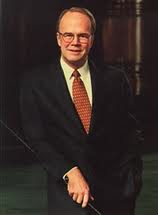
John Piper on How To Pray For a Desolate Church

A Sermon Based on Daniel 9:1-23
In the first year of Darius the son of Ahasuerus, by descent a Mede, who was made king over the realm of the Chaldeans— 2 in the first year of his reign, I, Daniel, perceived in the books the number of years that, according to the word of the Lord to Jeremiah the prophet, must pass before the end of the desolations of Jerusalem, namely, seventy years.

3 Then I turned my face to the Lord God, seeking him by prayer and pleas for mercy with fasting and sackcloth and ashes. 4 I prayed to the Lord my God and made confession, saying, “O Lord, the great and awesome God, who keeps covenant and steadfast love with those who love him and keep his commandments, 5 we have sinned and done wrong and acted wickedly and rebelled, turning aside from your commandments and rules. 6 We have not listened to your servants the prophets, who spoke in your name to our kings, our princes, and our fathers, and to all the people of the land. 7 To you, O Lord, belongs righteousness, but to us open shame, as at this day, to the men of Judah, to the inhabitants of Jerusalem, and to all Israel, those who are near and those who are far away, in all the lands to which you have driven them, because of the treachery that they have committed against you. 8 To us, O Lord, belongs open shame, to our kings, to our princes, and to our fathers, because we have sinned against you. 9 To the Lord our God belong mercy and forgiveness, for we have rebelled against him 10 and have not obeyed the voice of the Lord our God by walking in his laws, which he set before us by his servants the prophets. 11 All Israel has transgressed your law and turned aside, refusing to obey your voice. And the curse and oath that are written in the Law of Moses the servant of God have been poured out upon us, because we have sinned against him. 12 He has confirmed his words, which he spoke against us and against our rulers who ruled us, by bringing upon us a great calamity. For under the whole heaven there has not been done anything like what has been done against Jerusalem. 13 As it is written in the Law of Moses, all this calamity has come upon us; yet we have not entreated the favor of the Lord our God, turning from our iniquities and gaining insight by your truth. 14 Therefore the Lord has kept ready the calamity and has brought it upon us, for the Lord our God is righteous in all the works that he has done, and we have not obeyed his voice. 15 And now, O Lord our God, who brought your people out of the land of Egypt with a mighty hand, and have made a name for yourself, as at this day, we have sinned, we have done wickedly.

16 “O Lord, according to all your righteous acts, let your anger and your wrath turn away from your city Jerusalem, your holy hill, because for our sins, and for the iniquities of our fathers, Jerusalem and your people have become a byword among all who are around us. 17 Now therefore, O our God, listen to the prayer of your servant and to his pleas for mercy, and for your own sake, O Lord, make your face to shine upon your sanctuary, which is desolate. 18 O my God, incline your ear and hear. Open your eyes and see our desolations, and the city that is called by your name. For we do not present our pleas before you because of our righteousness, but because of your great mercy. 19 O Lord, hear; O Lord, forgive. O Lord, pay attention and act. Delay not, for your own sake, O my God, because your city and your people are called by your name.”

20 While I was speaking and praying, confessing my sin and the sin of my people Israel, and presenting my plea before the Lord my God for the holy hill of my God, 21 while I was speaking in prayer, the man Gabriel, whom I had seen in the vision at the first, came to me in swift flight at the time of the evening sacrifice. 22 He made me understand, speaking with me and saying, “O Daniel, I have now come out to give you insight and understanding. 23 At the beginning of your pleas for mercy a word went out, and I have come to tell it to you, for you are greatly loved. Therefore consider the word and understand the vision (ESV).

The reason I titled this message “How to Pray for a Desolate Church” is that I see much of the Christian church today as desolate. The ruin of Jerusalem and the captivity of Israel in Babylon are pictures of the church today in many places around the world. There are pockets of life and purity and depth and faithfulness and power and zeal around the world. God will never give up on his people and he will get his global purposes done, even if he has to use a remnant to do it.

But much of the Christian movement today has become a desolation of disobedience and disunity and dishonor to the name of Christ. So the way Daniel prays for the desolation of his people is a pointer for how we can pray for the desolation of ours.

Three Aspects of the Desolation of God’s People

Let me mention three aspects of the desolation of God’s people in this text to see if you won’t agree that it sounds like much of the Christian movement today.

1. The People Are Captive to Godless Forces

Two times, verses 11 and 13, Daniel says that this calamity of Babylonian captivity was warned against in the law of Moses. For example, in Deuteronomy 28:36 Moses says that if the people forsake God, “The Lord will bring you . . . to a nation that neither you nor your fathers have known; and there you shall serve other gods.” Now that had come true in Babylon.

In 1520, Martin Luther wrote an essay which he called “The Babylonian Captivity of the Church.” What he meant was that forces and powers that were foreign to Christ and to his Word had captured the mind and heart of the church. She was in bondage to godless forces.

That is the situation in much of the church today. Millions of church-goers today think the way the world thinks. The simple assumptions that govern behavior and choices come more from what is absorbed from our culture than from the Word of God. The church shares the love affair of the world with prosperity and ease and self. Many groups of Christians are just not that different from the spirit of Babylon, even though the Lord says that we are aliens and exiles and that we are not to be conformed to this age. So, like Israel of old, much of God’s church today is captive to godless forces.

2. The People Are Guilty and Ashamed

Daniel spends most of his prayer confessing the sin of the people. For example, verse 5: “We have sinned and done wrong and acted wickedly and rebelled, turning aside from thy commandments.” In other words, we have great guilt before God. And because of this real guilt there is real shame. This is mentioned in verses 7 and 8. The RSV has the phrase “confusion of face”—”To us belongs confusion of face.” Literally it means, “To us belongs shame of face.” What we have done is so terrible and so known that our face turns red and we want to cover it and run away. That is the way Daniel felt about the people of God. Their guilt and their shame were great.

Today in the church there is an uneasy conscience. There is the deep sense that we are to be radically different, living on the brink of eternity with counter-cultural values and behaviors of love and justice and risk-taking service that show our citizenship is in heaven. But then, we look in the mirror and we see that the church does not look that way. And the result is a sense of shame based on the real guilt of unbelief and disobedience. So we slink through our days with faces covered, and scarcely anyone knows we are disciples of Jesus.

3. The People Were a Byword Among the Nations

Verse 16b: “Jerusalem and thy people have become a byword among all who are round about us.” “Byword” (in the RSV) means reproach, or object of scorn. It means that the nations look at the defeated and scattered Israelites and they laugh. They mock Israel’s God.

That is the way it is with the Christian church in many places. She has made the name of Jesus an object of scorn by her duplicity—trying to go by the name Christian and yet marching to the drum of the world. So the world sees the name “Christian” as nothing radically different—perhaps a nice way to add a little component of spirituality to the other parts of life that basically stay the same.

So when Daniel prays for the desolations of the people of Israel, I hear a prayer for the desolations of the Christian church—captive to godless forces, guilty and ashamed, and a byword among the nations.

Four Ways to Pray for a Desolate Church

Now how do we pray for such a church?

1. Go to the Bible

First, we pray for a desolate church by beginning where Daniel began. We go to the books.

Verse 2: “In the first year of [Darius’s] reign, I, Daniel, perceived in the books . . . ” The books are the prophet Jeremiah and other biblical books. Prayer begins with the Bible.

George Mueller said that for years he tried to pray without starting in the Bible in the morning. And inevitably his mind wandered. Then he started with the Book, and turned the Book into prayer as he read, and for 40 years he was able to stay focused and powerful in prayer.

Without the Bible in our prayers, they will be just as worldly as the church we are trying to free from worldliness. Daniel’s prayer begins with the Bible and it is saturated with the Bible. Phrase after phrase comes right out of the Scriptures. There are allusions to Leviticus (26:40) and Deuteronomy (28:64) and Exodus (34:6) and Psalms (44:14) and Jeremiah (25:11). The prayer brims with a biblical view of reality, because it brims with the Bible.

What I have seen is that those whose prayers are most saturated with Scripture are generally most fervent and most effective in prayer. And where the mind isn’t brimming with the Bible, the heart is not generally brimming with prayer. This is not my idea. Jesus was pointing to it in John 15:7 when he said, “If you abide in me, and my words abide in you, ask whatever you will, and it shall be done for you” (John 5:7). When he says, “If my words abide in you . . . ,” he means, “If my words saturate your mind . . . if my words shape your way if thinking . . . if my words are memorized and just as likely to come to your mind as advertising jingles . . . then you will pray so as to heal the desolations of the church.”

So the first way to pray for a desolate church is to go to the Book. Saturate your mind with the Bible. Pray the Scripture.

2. Confess Our Sin

The second way to pray for a desolate church is to confess our sin.

About 12 verses of Daniel’s prayer is confession: verses 4–15. This means being truthful about God and about sin.

It means recognizing sin as sin and calling it bad names, not soft names: things like wickedness and rebellion and wrong (v. 5) and treachery and shameful (v. 7) and disobedience (v. 10). It means recognizing God as righteous (v. 7) and great and fearful (v. 4) and merciful and forgiving (v. 9). It means feeling broken and remorseful and guilty (v. 8) before God.

Before God! There is a difference between feeling miserable because sin has made our life miserable and feeling broken because our sin has offended the holiness of God and brought reproach on his name. Daniel’s confession—biblical confession—is God-centered. The issue is not admitting that we have made our life miserable. The issue is admitting that there is something much worse than our misery, namely, the offended holiness and glory of God.

So we pray for a desolate church by going to the Book and by confessing our sins.

3. Remember Past Mercies Knowing God Never Changes

The way to pray for a desolate church is to remember past mercies, and be encouraged that God never changes.

Verse 15: “And now, O Lord our God, who didst bring thy people out of the land of Egypt with a mighty hand . . . ” Daniel knew that the reason God saved Israel from Egypt was not because Israel was so good. Psalm 106:7–8,

Our fathers, when they were in Egypt, did not consider thy wonderful works; they did not remember the abundance of thy steadfast love, but rebelled against the Most High at the Red Sea. Yet he saved them for his name’s sake, that he might make known his mighty power.

Prayer for a desolate church is sustained by the memory of past mercies. Jesus Christ is the same yesterday, today, and forever (Hebrews 13:8). If God saved a rebellious people once at the Red Sea, he can save them again. So when we pray for a desolate church, we can remember brighter days that the church has known, and darker days from which she was saved.

This is why church history is so valuable. There have been bad days before that God had turned around. The papers this week have been full of statistics of America’s downward spiral into violence and corruption. Church history is a great antidote to despair at times like this. For example, to read about the moral decadence and violence of 18th century England before God sent George Whitefield and John Wesley is like reading today’s newspapers. For example,

Only five or six members of parliament even went to church . . . The plague, small pox, and countless diseases we call minor today had no cures . . . Clothing was expensive, so many of the cities’ poor wore rags that were like their bedding, full of lice . . . The penalties for crimes seem barbaric today (hanging for petty thievery) . . . Young boys, and sometimes girls, were bound over to a master for seven years of training. They worked six days a week, every day from dawn to dusk and often beyond . . . If you were unlucky and starving, you might fall foul of the law and be packed off to the stench of New Gate Prison. From there, you might have the chance to go to the New World in a boat loaded with prisoners of all sorts . . . [Drunkenness was rampant] and gin was fed to the babies too, to keep them quiet, with blindness and often death as a result [did you think crack babies were a new thing?] . . . The people’s love of tormenting animals at bull-baitings was equaled only by their delight in a public execution. (“Revival and Revolution,” Christian History 2, pp. 7–8)

All that and more, including a desolate and corrupt and powerless church. Yet God moved with a great awakening. And to add hope upon hope for our prayers, he used two men who could not agree on some significant theological points and one of them was overweight and the other was 5′ 3″ tall and weighed 128 pounds.

We pray for a desolate church by remembering past mercies, past triumphs of grace. We remember that history is not a straight line down any more than it is a straight line up.

4. Appeal to God’s Zeal for the Glory of His Own Name

Finally, we pray for a desolate church by appealing to God’s zeal for the glory of his own name.

Look how the prayer comes to its climax in verses 18b–19: “We do not present our supplications before thee on the ground of our righteousness but on the ground of thy great mercy. 19) O Lord, hear; O Lord, forgive; O Lord, give heed and act; delay not, for thy own sake, O my God, because thy city and thy people are called by thy name.”

The people of God are known by his name. And God has an infinite zeal for his own name. He will not let it be reproached and made a byword indefinitely. That is our deepest confidence. God is committed to God. God is committed with explosive passion to the glory of his name and the truth of his reputation.

So that’s the bottom of our prayer for a desolate church. We are called by your name. We live by your name. Not to us, O Lord, not to us, but to your name give glory. For your name’s sake, O Lord, save. For your name’s sake, revive. For your name’s sake purify and heal and empower your church, O Lord. For we are called by your name.

Sermon above: By Dr. John Piper, January 5, 1992. ©2012 Desiring God Foundation. Website: desiringGod.org.

About the Author: John Piper is pastor for preaching and vision at Bethlehem Baptist Church in the Twin Cities of Minnesota. He grew up in Greenville, South Carolina, and studied at Wheaton College, Fuller Theological Seminary (B.D.), and the University of Munich (D.theol.). For six years he taught Biblical Studies at Bethel College in St. Paul, Minnesota, and in 1980 accepted the call to serve as pastor at Bethlehem. John is the author of more than 40 books and more than 30 years of his preaching and teaching is available free at desiringGod.org. John and his wife, Noel, have four sons, one daughter, and twelve grandchildren.
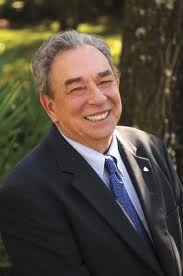
Dr. R.C. Sproul on Making Your Calling and Election Sure

“Fear Not”

We are fragile mortals, given to fears of every sort. We have a built-in insecurity that no amount of whistling in the dark can mollify. We seek assurance concerning the things that frighten us the most.

The prohibition uttered most frequently by our Lord is the command, “Fear not.” He said this so often to his disciples and others he encountered that it almost came to sound like a greeting. Where most people greet others by saying “Hi” or “Hello,” the first words of Jesus often were “Fear not.”

Why? Perhaps Jesus’ predilection for those words grew out of his acute sense of the thinly veiled fear that grips all who approach the living God. We fear his power, we fear his wrath, and most of all we fear his ultimate rejection.

The assurance we need most is the assurance of salvation. Though we are loathe to think much about it or contemplate it deeply, we know, if only intuitively, that the worst catastrophe that could ever befall us is to be visited by God’s final punitive wrath. Our insecurity is worsened by the certainty that we deserve it.

Many believe that assurance of eternal salvation is neither possible or even to be sought. To claim such assurance is considered a mask of supreme arrogance, the nadir of self-conceit.

Yet, if God declares that it is possible to have full assurance of salvation and even commands that we seek after it, then it would be supremely arrogant to deny our need or neglect the search.

In fact, God does command us to make our election and calling sure: Therefore, my brothers, be all the more eager to make your calling and election sure. For if you do these things, you will never fall” (2 Pet. 1:10).

This command admits of no justifiable neglect. It addresses a crucial matter. The question, “Am I saved?” is one of the most important I can ever ask myself. I need to know the answer; I must know the answer. This is not a trifle. Without the assurance of salvation the Christian life is unstable, vulnerable to the debilitating rigors of mood changes. Basing assurance on changing emotions allows the wolf of heresy to camp on the doorstep. Progress in sanctification requires a firm foundation in faith. Assurance is the cement of that foundation. Without it the foundation crumbles.

How, then, do we receive assurance? The Scripture declares that the Holy Spirit bears witness with our spirit that we are the children of God. This inner testimony of the Holy Spirit is as vital as it is complex. It can be subjected to severe distortions, being confused with subjectivism and self-delusion. The Spirit gives his testimony with the Word and through the Word, never without the Word or against the Word.

Since it is possible to have false assurance of salvation it is all the more urgent that we seek the Spirit’s testimony in and through the Word. False assurance usually proceeds from a faulty understanding of salvation. If one fails to understand the necessary conditions for salvation, assurance becomes, at best, a guess.

Therefore, we insist that right doctrine is a crucial element in acquiring a sound basis for assurance. It may even be a necessary condition, though it is by no means a sufficient condition. Without sound doctrine we will have an inadequate understanding of salvation. However, having a sound understanding of salvation is no guarantee that we have the salvation we so soundly understand.

If we think the Bible teaches universal salvation we may arrive at a false sense of assurance by reasoning as follows:

Everybody is saved.

I am a body.

Therefore, I am saved.

Or, if we think salvation is gained by our own good works and we are further deluded into believing that we possess good works, we will have a false assurance of salvation.

To have sound assurance we must understand that our salvation rests upon the merit of Christ alone, which is appropriated to us when we embrace him by genuine faith. If we understand that, the remaining question is, “Do I have the genuine faith necessary for salvation?”

To answer that question two more things must be understood and analyzed properly. The first is doctrinal. We need a clear understanding of what constitutes genuine saving faith. If we conceive of saving faith as a faith that exists in a vacuum, never yielding the fruit of works of obedience, we have confused saving faith with dead faith, which cannot save anyone.

The second requirement involves a sober analysis of our own lives. We must examine ourselves to see if the fruit of regeneration is apparent in us. Do we have a real affection for the biblical Christ? Only the regenerate person possesses real love for the real Jesus. Next we must ask the tough question, “Does my life manifest the fruit of sanctification?” I test my faith by my works.

I call this last question the tough question for various reasons. We can lose assurance if we think perfect obedience is the test. Every sin we commit after conversion can cast doubt upon our assurance. That doubt is exacerbated by Satan’s assault of accusation against us. Satan delights in shaking the true Christian’s assurance.

Or we can delude ourselves by looking at our own works with an exalted view of our goodness, seeing virtue in ourselves when there is none. Here we quake in terror before our Lord’s warning: “Many will say to me on that day, ‘Lord, Lord, did we not prophesy in your name, and in your name drive out demons and perform many miracles?’ Then I will tell them plainly, ‘I never knew you. Away from me, you evildoers!’” (Matt. 7:22–23).

Real assurance rests on a sound understanding of salvation, a sound understanding of justification, a sound understanding of sanctification, and a sound understanding of ourselves. In all these matters we have the comfort and assistance of the Holy Spirit who illumines the text of Scripture for us, who works in us to yield the fruit of sanctification, and who bears witness with our spirit that we are the children of God.

The article above adapted from Chapter 7 in the short book edited by Dr. R.C. Sproul. Doubt & Assurance. Grand Rapids: Baker, 2000.

About Dr. R.C. Sproul: He is the founder and chairman of Ligonier Ministries, an international Christian education ministry located near Orlando, Florida. His teaching can be heard on the program Renewing Your Mind, which is broadcast on hundreds of radio outlets in the United States and in 40 countries worldwide. He is the executive editor of Tabletalk magazine and general editor of The Reformation Study Bible, and the author of more than seventy books (including some of my all time favorites: The Holiness of God; Chosen By God; Reason to Believe; Knowing Scripture; Willing to Believe;  Intimate Marriage; Pleasing God; If There’s A God, Why Are There Atheists?, and Defending The Faith) and scores of articles for national evangelical publications. Dr. Sproul also serves as president of Ligonier Academy of Biblical and Theological Studies and Reformation Bible College. He currently serves as Senior Minister of preaching and teaching at Saint Andrew’s in Sanford, FL.

Dr. James Boice on How We Can Find Fulfillment and Happiness in Life

The sermon below “The Fast Lane or the Right Path” was excerpted from James Boice. Psalms 1-41: An Exposition of the Psalms. Grand Rapids: Baker, Grand Rapids, 2003. Today, July 7th is Dr. Boice’s birthday in Heaven!

“The Fast Lane or the Right Path” – A Sermon on Psalm 1

Blessed is the man who does not walk in the counsel of the wicked

or stand in the way of sinners

or sit in the seat of mockers.

But his delight is in the law of the Lordand on his law he meditates day and night.

He is like a tree planted by streams of water,

which yields its fruit in season

and whose leaf does not wither.

Whatever he does prospers.

Not so the wicked!

They are like chaff

that the wind blows away.

Therefore the wicked will not stand in the judgment,

nor sinners in the assembly of the righteous.

For the Lord watches over the way of the righteous,

but the way of the wicked will perish. – Psalm 1:1-6

The first psalm is among the best known, if not the best known, psalm in the entire Psalter, and rightly so, for it stands as a magnificent gateway to this extraordinary ancient collection of Hebrew religious verse. To use another image, it is a text of which the remaining psalms are essentially exposition. Psalm 1 is a practical psalm. Since it leads the collection, we are taught at once that study of the Psalter must have practical effects if the psalms are to achieve the purpose for which God gave them to us. Psalm 1 introduces us to the way in which we may find happiness and fulfillment in life. It is by meditation on and delight in the law of God. The psalm also warns us of sure, eventual, and eternal ruin if we do not.

Divergent Ways

Psalm 1 introduces us to the doctrine of the two ways, which is a very common concept. Most Americans are acquainted with Robert Frost’s use of the idea in the poem “The Road Not Taken.”

Two roads diverged in a wood, and I—

I took the one less traveled by,

And that has made all the difference.

Those who know literature a bit more thoroughly are aware that the idea of paths diverging in a wood is also found in Dante Alighieri, the Florentine poet of the Middle Ages, whose Divine Comedy begins,

Midway this way of life we’re bound upon,

I woke to find myself in a dark wood,

Where the right road was wholly lost and gone.

But there are biblical examples too. The most important is the use of the idea by Jesus toward the end of the Sermon on the Mount as recorded by Matthew. The last section of the sermon lists a series of contrasts, between which choices must be made: two gates and two roads, two trees and their two types of fruit, two houses and two foundations. The part regarding the two ways says, “Enter through the narrow gate. For wide is the gate and broad is the road that leads to destruction, and many enter through it. But small is the gate and narrow the road that leads to life, and only a few find it” (Matt. 7:13–14). Psalm 1 is the clearest, most carefully developed, and first full expression of this idea in the Bible.

But let me back up slightly.

The psalms have been classified in a variety of types or genres, about seven of them, and one of them is “wisdom psalm,” which is what this is. It portrays the way the wise man chooses. But Psalm 1 is more than this. It is the father of all the wisdom psalms. Saint Jerome, the translator of the Latin Vulgate, calls Psalm 1 “the preface of the Holy Spirit” to the Psalter. The great Baptist preacher Charles Haddon Spurgeon, who also calls Psalm 1 a “Preface Psalm,” adds, “It is the psalmist’s desire to teach us the way to blessedness, and to warn us of the sure destruction of sinners. This then, is the matter of the first psalm, which may be looked upon in some respects, as the text upon which the whole of the psalms make up a divine sermon.”

In his helpful introduction to the psalms Tremper Longman III, an associate professor of Old Testament at Westminster Theological Seminary, writes, “Psalm 1 deliberately [draws] two portraits in our minds: the portrait of the wicked man and the portrait of the wise man. The question then is posed: Which are we? As we enter the sanctuary of the psalms to worship and petition the Lord, whose side are we on?”

The Two Ways Described

The first verse of Psalm 1, and therefore also the first verse of the Psalter, begins with the word blessed. This is important certainly, for it is a way of saying that the psalms (as well as all Scripture) have been given to us by God to do us good. Blessed means supremely happy or fulfilled. In fact, in Hebrew the word is actually a plural, which denotes either a multiplicity of blessings or an intensification of them. The verse might correctly be translated, “O the blessednesses of the man who does not walk in the counsel of the wicked.”

At first glance it might seem surprising that the idea of the blessed or the happy man is followed immediately by a description of the wicked man, particularly since a description of the way of the wicked also appears later in verses 4 and 5. But it is actually an excellent device. By starting in this way the poet achieves three important things.

First, he begins where we are. None of us automatically starts out being righteous. We start out being sinners, and if we do eventually enter by the straight gate upon the narrow road that leads to life, it is by God’s grace. No one, either in the Old Testament or in the New Testament period, was saved in any other way.

Second, the poet is able to introduce the doctrine of the two ways from the start. We do not have to wait until verse 4 to read that there is a way other than the way of the godly.

Third and finally, the author says something important about godliness. He is going to present godliness positively as the way of the one who delights in the law of the Lord. But any positive affirmation, to have meaning, must have a negative to go with it. Thus, in order to say what the way of the godly man is, we must also be able to say what it is not, and that is what the first verse of the first psalm accomplishes.

How beautifully it does it! The most striking feature of Hebrew poetry is what is known as parallelism, that is, saying the same thing or a variety of the same thing, in two linked lines. That is what we have here, only in this verse there are three linked lines and there are three parallel terms in each line: set 1, “walk, stand, sit”; set 2, “counsel, way, seat”; and set 3, “wicked, sinners, mockers.”

Because of this common feature of Hebrew poetry, a number of writers are reluctant to see any special progression in these terms. But it is hard to believe that the phrases are not saying that the way of the wicked is downhill and that sinners always go from bad to worse. Certainly Spurgeon thought so. He said, “When men are living in sin they go from bad to worse. At first they merely walk in the counsel of the careless and ungodly, who forget God—the evil is rather practical than habitual—but after that, they become habituated to evil, and they stand in the way of open sinners who willfully violate God’s commandments; and if let alone, they go one step further, and become themselves pestilent teachers and tempters of others, and thus they sit in the seat of the scornful. They have taken their degree in vice, and as true Doctors of Damnation they are installed.”

This interpretation is built into the psalm. The psalm does not merely describe the lifestyle of the wicked; it shows the fruit of that way of life and its end. To the unsaved, “the way of sinners” may seem wonderful and exciting. It is the track they want to be on. But the psalmist warns that it is actually a fast track to emptiness and frustration here as well as judgment in the life to come.

What about the other way, the way of the righteous? We might expect, since the wicked man has been described in terms of his associations, that the godly man will now be described in terms of his associations too, that is, as a person who associates with the godly. But that is not the case. Instead, he is described as one whose “delight is in the law of the Lord” on which “he meditates day and night” (v. 2).

That is a powerful expression: to “delight” in the law of the Lord. But it is also somewhat puzzling, at least at first glance. The British scholar and Christian apologist C. S. Lewis found it to be so. In Reflections on the Psalms he describes how at first he found the psalmist’s delight in God’s law “utterly bewildering” and “mysterious.” Lewis said he could understand how one could delight in God’s mercies, visitations, and attributes, but not how one could delight in God’s law. You do not delight in law, not really. Rather law is something you respect and (one hopes) obey.

I would argue that it is possible to delight in a good law, one that is both well written and effective in promoting righteousness. But I think Lewis is also right when he suggests that more than this is involved. He finds the clue to the psalmist’s meaning in the idea of meditation on God’s law. This makes the law a subject of the righteous man’s study. So, for the ancient Jew, saying that he delights in the law is much like what we might mean if we said that we love history or physics or archaeology. But, of course, it is even more than that. For when we study the Bible—the word law is used to refer to the whole of God’s inscripturated revelation—we are really learning, not about human beings or nature primarily (which is what the other disciplines teach us), but about God. And, as Lewis says, “The Order of the Divine mind, embodied in the Divine Law, is beautiful.” The language of the poet is “not priggery nor even scrupulosity; it is the language of a man ravished by a moral beauty.”

John R. W. Stott adds wisely that this delight “is an indication of the new birth, for ‘… the sinful mind is hostile to God. It does not submit to God’s law, nor can it do so’ (Rom. 8:7). As a result of the inward, regenerating work of the Holy Spirit, however, the godly find that they love the law of God simply because it conveys to them the will of their God. They do not rebel against its exacting demands; their whole being approves and endorses it. … Delighting in it, the godly will meditate in it, or pore over it, constantly, day and night.”

The contrast between the two ways may be put like this. It is the difference between those who are in love with sin and those who love God. The first class love sin’s ways and follow it. The second love God and seek him in Scripture, where he may be found.

Flourishing or Fruitless

When most people think of the results of upright or godly living they think of rewards. That is, they think that if they do what God tells them to do, he will reward them, but that if they do not, they will be punished. There is an element of truth in this; it is what is involved in the doctrine of the final judgment. But what the psalmist actually says here is quite different. He is talking about “blessedness,” the blessedness of the man “who does not stand in the way of sinners” but whose “delight is in the law of the Lord.” His point is that this is not a reward but rather “the result of a particular type of life.”

The poet uses two images to show the result of these two ways. The first is a fruitful tree. It describes the man who delights in the law of God and draws his spiritual nourishment from it as a tree that draws its nourishment from an abundantly flowing stream. The land about might be quite dry and barren. The winds might be hot. But if the tree is planted by the stream, so that it can sink its roots down and draw nourishment, it will prosper and yield fruit. This is the godly man.

He is like a tree planted by streams of water,

which yields its fruit in season

and whose leaf does not wither.

Whatever he does prospers.

Years ago a couple who had gone to China as missionaries used this image to describe their life there after the communists had taken over China at the end of the Second World War. Their name was Matthews, and they were the last missionaries of the China Inland Mission to escape from that country. They were under communism for two years, during which time they lived with their young daughter Lilah in a small room. Their only furniture was a stool. They could not contact their Christian friends for fear of getting them into trouble. Except for the smallest trickle, their funds were cut off by the government. Heat came from a small stove which they lit once a day to boil rice for dinner. The only fuel they had was dried animal refuse that Art Matthews collected from the streets. These were indeed dry times. But afterward, when they wrote their testimony to God’s grace in the midst of such privations, they called their book Green Leaf in Drought Time, because they found that those who delight in the Word of God do not wither but instead produce the Holy Spirit’s fruit.

The second illustration the psalmist uses is chaff, to which he compares the wicked. The picture here is of a threshing floor at the time of the grain harvest. The threshing floors of Palestine are on hills that catch the best breezes. Grain is brought to them, is crushed by animals or by threshing instruments that are drawn over it, then is pitched high into the air where the wind blows the chaff away. The heavier grain falls back to the threshing floor and is collected. The chaff is scattered or burned, and it is what the psalmist says those who live wickedly are like.

The wicked are like chaff in two senses. Chaff is worthless, and chaff is burned. This pictures the futile, empty, worthless life of the godless, as well as their inevitable judgment.

If only those who are running away from God could see this! But they cannot, because they will not listen to God and the world is shouting the exact opposite of the Bible’s teaching. The world says that to be religious is foolishness. Religious people never have any fun or accomplish anything, the wicked say. If you want to amount to something and enjoy yourself doing it, get on the fast track of sin, reach out for whatever you want, and take it. Be happy. That is what the world teaches. But it is all a lie, which is exactly what Paul calls it in Romans 1 where he analyzes this fast downward spiral (v. 25).

In Eden, the devil told Eve that if she disobeyed God by eating of the forbidden tree, her eyes would be “opened” and she would be “like God, knowing good and evil” (Gen. 3:5). But she did not become like God; she became like Satan. And her eyes were not opened; they had been open. Now she (and her husband) became blind to spiritual realities.

Do not believe the devil’s lie. Do not follow the world when it tries to draw you from righteous living by beguiling falsehoods.

Two Final Ends

Verse 6 is a fitting end to the psalm and a proper thematic statement from which to proceed on into the Psalter. It distinguishes between the final end of the righteous and the final end of the wicked, saying,

For the Lord watches over the way of the righteous, but the way of the wicked will perish.

The verse describes the destiny of these two groups of people. Wise King Solomon wrote,

There is a way that seems right to a man, but in the end it leads to death (Prov. 14:12).

That is the way of the wicked. The way of the righteous is the way of the Lord Jesus Christ, who described himself as “the way and the truth and the life” (John 14:6) and promised to keep those who follow him (Matt. 28:20).

I do not want to read too much prophecy into the psalms, though there is some, and I do not want to suggest that the author of this psalm, whoever he may have been, was looking forward to the coming of the Lord Jesus Christ when he wrote it. I do not believe he was. Nevertheless, it is hard not to notice, as Arno C. Gaebelein, an excellent devotional writer on the psalms, has said, that “the perfect man portrayed in the opening verses … is … the Lord Jesus.” He is the only one who was really like this.

Let me close with this story. Harry Ironside, the Bible teacher, told of a visit to Palestine years ago by a man named Joseph Flacks. He had an opportunity to address a gathering of Jews and Arabs and took for the subject of his address the first psalm. He read it and then asked the question: “Who is this blessed man of whom the psalmist speaks? This man never walked in the counsel of the wicked or stood in the way of sinners or sat in the seat of mockers. He was an absolutely sinless man.”

Nobody spoke. So Flacks said: “Was he our great father Abraham?”

One old man said, “No, it cannot be Abraham. He denied his wife and told a lie about her.”

“Well, how about the lawgiver Moses?”

“No,” someone said. “It cannot be Moses. He killed a man, and he lost his temper by the waters of Meribah.”

Flacks suggested David. It was not David.

There was silence for a long while. Then an elderly Jew arose and said, “My brothers, I have a little book here; it is called the New Testament. I have been reading it; and if I could believe this book, if I could be sure that it is true, I would say that the man of the first Psalm was Jesus of Nazareth.”

Jesus is that man, of course. He is the only perfect man who ever lived, and he is the sinner’s Savior. It is he who stands at the portal of this book to show us the way to live and help us do it.

Author: James Montgomery Boice, Th.D., (July 7, 1938 – June 15, 2000) was a Reformed theologian, Bible teacher, and pastor of Tenth Presbyterian Church in Philadelphia from 1968 until his death. He is heard on The Bible Study Hour radio broadcast and was a well known author and speaker in evangelical and Reformed circles. He also served as Chairman of the International Council on Biblical Inerrancy for over ten years and was a founding member of the Alliance of Confessing Evangelicals. He is the author of numerous Bible expositions and one of my favorite Systematic Theologies called Foundations of the Christian Faith.

Chuck Swindoll on The Only Way to Find Rest for Your Soul

“Man’s Quest”

Greece said…Be wise, know yourself.

Rome said…Be strong, discipline yourself.

Judaism says…Be holy, conform yourself.

Epicureanism says…Be sensuous, enjoy yourself.

Education says…Be resourceful, expand yourself.

Psychology says…Be confident, fulfill yourself.

Pride says…Be superior, promote yourself.

Asceticism says…Be inferior, suppress yourself.

Diplomacy says…Be reasonable, control yourself.

Communism says…Be collective, secure yourself.

Humanism says…Be capable, trust yourself.

Philanthropy says…Be unselfish, give yourself.

And on and on goes the quest of man. No wonder people are confused! Pick any thought-dish from this smorgasbord of human philosophy, then digest it completely…and you will find yourself suffering from the worst case of indigestion imaginable. It may smell good and even satisfy your rhetorical palate during the time you are consuming it…but it will leave you hungry, uneasy, and searching for something else to satisfy.

Rollo May’s word’s often interrupt my thinking as I ponder the plight of searching men and women today: “It is an old and ironic habit of human beings to run faster when we have lost our way.”

And so it is! Look across your office desk tomorrow and chances are you’ll be observing a living example of someone still searching, still running to find inner satisfaction. Step out in front of your apartment or home tomorrow morning and look both ways…listen to the roar of automobiles…study the dwellings around you. Those sights and sounds represent people who have, like Little Bo-Peep’s sheep, “lost their way,” and, tragedy upon tragedy—they don’t know where to find it. Many of them have tried hard to “be religious” or “live by the golden rule” or “tie a knot and hang on” or “be sincere,” but they are still running blind and bored and baffled.

They are attempting to fill the inner vacuum with everything but the only thing. You name it, it’s being tried. As Henry Thoreau declared: “The mass of men lead lives of quiet desperation.”

Robert Ingersol, the bold and brilliant agnostic, spent many years of his life opposing and attacking the Scriptures and Christ’s claims. On his deathbed…at the end of his race, he uttered:

“Life is a narrow veil between the cold and barren peaks of two eternities. We strive in vain to look beyond the heights. We cry aloud, and the only answer is the echo of our wailing cry.”

Ingersol’s pursuit is best described in the bumper sticker I saw on my way to work:

DON’T FOLLOW ME…I’M LOST

Pontius Pilate, Judea’s notorious governor, stood eyeball to eyeball with Jesus of Nazareth. In the judicial process of interrogation, he heard Christ refer to “everyone who is of the truth,” to which Pilate replied, “What is truth?” That question hangs heavily on the thin wire of reason in many a mind in this very hour. Pilate never waited for an answer. Jesus could have told him that He alone had satisfying words of life…for He alone is “the way, the truth, and the life” (John 14:6).

Christianity is not a system of human philosophy nor a religious ritual nor a code of moral ethics—it us the impartation of divine life through Christ. Apart from the Way there is no going…apart from the Truth there is no knowing…apart from the Life there is no living.

God says…Be in Christ, rest yourself.

“Man’s Quest” was written by Chuck Swindoll and is excerpted from the excellent devotional book: Growing Strong in the Seasons of Life. Portland: Multnomah, 1983, pp. 216-217.

About the Author: In the summer of 1977, the sermons that Chuck Swindoll preached at the First Evangelical Free Church in Fullerton, California, were broadcast on twenty-seven stations in the United States. Listeners responded immediately to the lively message of this down-to-earth pastor who could communicate God’s truth in terms they could understand and apply to their lives. In 1979, the radio ministry of Insight for Living was officially born, beginning on just a handful of stations. Today, more than two thousand stations carry the program around the world in seven different languages.

Two passions have directed the life and ministry of Chuck Swindoll: an unwavering commitment to the practical communication and application of God’s Word and an untiring devotion to seeing lives transformed by God’s grace. Chuck has devoted more than four decades to these goals, and he models the contagious joy that springs from enthusiastically following Jesus Christ

While on the island of Okinawa during his tour of duty in the United States Marine Corps, Chuck recognized that the Lord was calling him to devote his life to the gospel ministry. With Cynthia, his partner in life for more than fifty-one years, Chuck has devoted himself to the challenge of communicating practical, biblical truth and its application in the context of God’s grace.

After being honorably discharged from the Marine Corps, Chuck enrolled in Dallas Theological Seminary [DTS]. Chuck’s course of study at DTS and the lifelong mentors he met there have permanently marked his life and the course of his ministry.

Chuck graduated magna cum laude from Dallas Theological Seminary in 1963 with three major honors:

  • Harry A. Ironside Award for Expository Preaching
  • Christian Education Award for the greatest achievement in the field of his academic major
  • Faculty Award for the most outstanding graduate in the opinion of the faculty

Chuck has also received four honorary doctorate degrees in recognition of his outstanding contributions to ministry:

  • Doctor of Divinity, Talbot Theological Seminary, 1977
  • Doctor of Humane Letters, Taylor University, 1986
  • Doctor of Laws, Pepperdine University, 1990
  • Doctor of Literature, Dallas Baptist University, 1997

For more than forty years, Chuck’s pulpit ministry has emphasized the grace of God alongside an uncompromising commitment to practical, biblical truth and its application. He has served the following congregations in his pastoral ministry:

  • Grace Bible Church, Dallas, Texas, Assistant Pastor, 1963–1965
  • Waltham Evangelical Free Church, Waltham, Massachusetts, 1965–1967
  • Irving Bible Church, Irving, Texas, 1967–1971
  • First Evangelical Free Church, Fullerton, California, 1971–1994
  • Stonebriar Community Church, Frisco, Texas. In October of 1998, Chuck founded Stonebriar Community Church, where he continues to serve as senior pastor.

As a pastor, Chuck has received the following awards:

  • Clergyman of the Year, Religious Heritage of America, 1988
  • Named one of the top twelve preachers in the nation by the Effective Preachers Program of Baylor University and George W. Truett Theological Seminary, 1997

Ranked second to Rev. Billy Graham in a 2009 survey which asked 800 Protestant pastors to name the living Christian preachers who most influenced them (survey conducted by LifeWay Research).

Chuck’s congregation extends far beyond the local church body. Through the Insight for Living broadcast, Chuck’s teaching is on the air in every major Christian radio market in all fifty states and  through more than 2,100 outlets worldwide in numerous foreign languages, and it is also available to an exploding Webcast and podcast audience. While Chuck serves as chairman of the board, his wife, Cynthia, serves as president and chief executive officer of Insight for Living. They have directed its expansion to become one of the leading radio programs in Christian broadcasting. Their leadership has made Chuck’s messages accessible to 100 percent of the world’s population. Headquartered in Plano, Texas, Insight for Living now has a staff of over 125 employees. We also maintain offices in Melbourne for our Australian listeners, in Brasilia for our Brazilian listeners, in Vancouver for our Canadian listeners, and in London for our listeners in the United Kingdom.

As teacher on Insight for Living, Chuck has received the following awards:

  • Program of the Year, National Religious Broadcasters, 1994
  • Religious Broadcaster of the Year, National Religious Broadcasters, 1999
  • Hall of Fame Award, National Religious Broadcasters, 2000

Chuck’s prolific writing ministry has blessed the body of Christ for over thirty years. Beginning with You and Your Child in 1977, Chuck has contributed more than seventy titles to a worldwide reading audience. His most popular books in the Christian Bookseller’s Association include: Strengthening Your Grip, Improving Your ServeDropping Your GuardLiving on the Ragged EdgeLiving Above the Level of MediocrityThe Grace AwakeningSimple FaithLaugh AgainThe Finishing TouchIntimacy with the AlmightySuddenly One MorningThe Mystery of God’s WillWisdom for the WayThe Darkness and the DawnA Life Well Lived, and the Great Lives from God’s Word series, which includes JosephDavidEstherMosesElijahPaulJobJesus: The Greatest Life of All, and his most recent addition, The Church Awakening: An Urgent Call for Renewal.

As a writer, Chuck has received the following awards:

  • Gold Medallion Lifetime Achievement Award, Evangelical Press Association, 1997

Twelve Gold Medallion Awards, more than any other Christian author to date

After serving as Dallas Theological Seminary’s fourth president for seven years (1994–2001), Chuck became the seminary’s chancellor in 2001. As the sixth-largest seminary in the world, DTS’s primary goal is to equip godly servant-leaders for the proclamation of God’s Word and the building up of the body of Christ worldwide, a mission Chuck wholeheartedly supports in his life and teaching. He continues to uphold the school’s motto, “Preach the Word,” as he serves in leadership at Dallas Theological Seminary, at Insight for Living, and at Stonebriar Community Church.

10 Excellent Tips on Personal Evangelism from Dr. Tim Keller

Tim Keller Teaching Below at Redeemer Presbyterian Church in New York:

  1. Let people around you know you are a Christian (in a natural, unforced way)
  2. Ask friends about their faith – and just listen!
  3. Listen to your friends’ problems – maybe offer to pray for them
  4. Share your problems with others – testify to how your faith helps you
  5. Give them a book to read
  6. Share your story
  7. Answer objections and questions
  8. Invite them to a church event
  9. Offer to read the Bible with them
  10. Take them to an explore course

These are arranged from 1-10 as a progression. We too often start with numbers 8-10, but we need to start with 1-4 with most people. In fact, he says, we may need to loop through 1-4 multiple times before getting to the later steps. Not only is it more humble of us to begin with 1-4, but it is more loving.

By being real with our friends (#1), we show we trust them enough to be open with them. By listening to their thoughts about faith (#2) and to any problems they may be facing (#3), we show we value them and are genuinely interested in what they have to say. Showing love for our friends may even open opportunities to serve them by praying for them. #4 comes back full circle to being real and honest with our friends in an unforced way.

If we believe that our life is hidden with Christ in God (Col. 3:3), then we should feel the freedom to share our lives with our neighbors, and to love them enough to take the time to listen and get to know them. It isn’t our life anyway, but Jesus’s (Gal. 2:20). We’re just sharing with others that which doesn’t belong to us.

*This article has been posted on several excellent websites:http://gospeldots.com/2012/06/28/tim-kellers-top-10evangelismtips/;http://faithim.wordpress.com/2012/07/05/572/;http://timchester.wordpress.com/2012/06/05/kellers-top-ten-evangelism-tips/ – The Ten tips originating with Dr. Tim Keller.

About Dr. Tim Keller: He is an a Pastor, Writer, and sought after speaker. He is wonderfully Christocentric and gospel centered in all that he teaches. Some of his well known books are: The Prodigal God; The Reason for God; and Counterfeit Gods. He will soon be releasing a book entitled Center Church based on his missional and gospel centered philosophy of ministry and church planting – this book has been much anticipated by pastors and church planters for several years!

Dr. John Piper on the question “Is Being Born Again Up to Us?”

John 3:3 Jesus answering Nicodemus – “Truly, truly, I say to you, unless one is born again he cannot see the kingdom of God.”

The following is an edited transcription of the audio.

Is being born again up to us?

It’s no more up to us than it was up to my grandson, who was born two days ago, to get out of the womb. In other words, birth is something done to us. It’s not something that we do.

It is, however, something that we react to. The first cry of a newborn in Christ is faith. I would never write a book on how to be born again—because that is like writing a book for babies on how to get out of the womb—but I would write a book on how to be saved, because that is about faith in Jesus Christ.

I’ve never met a believer who, when you ask how they came to Christ, really wants to take credit for it. I’ve never talked to anybody who wants to say that they were the one who really provided the decisive initiative and the decisive work behind their salvation. Almost every believer, because of the work of God within them, wants to give God the credit for their salvation.

When you have two brothers listening to a sermon together, and one is awakened to see the spiritual beauty of Christ while the other isn’t, can this awakening in the one be attributed to any innate wisdom or sensitivity to spiritual things? No! These things are not innate. The Bible says that we are all dead in our trespasses and sins and that it is God who makes us alive together with Christ. God, in his sovereign mercy, is the one who quickens people and causes them to be born again.

The new birth is the prior, miraculous, subconscious work by which people are enabled to see and savor and embrace Jesus Christ. Therefore we must pray accordingly.

I’ve prayed for my own children, before they were born again, that God would do a decisive, regenerating work in their hearts. I didn’t pray that God would keep his distance and leave it up to my son to come to Christ. I prayed, “Break in! Crash in! Take out the heart of stone and give a heart of tenderness!”

We pray for regeneration—we pray for new birth—so that people can believe. They don’t believe so that they can be born again. They’re born unto a living hope so that they can believe. People don’t believe unless God breaks into their lives, raises them from the dead, gives them a new heart, and enables them to see the beauty of Christ.

Do you think we’ll ever be able to resolve the tension between God’s sovereignty and man’s responsibility?

Yes, in heaven. I think it can be resolved to a significant measure here, if you read the very best analyses of it. (Jonathan Edward’s book The Freedom of the Will is as good as they get, and I think he comes to a pretty close solution. But practically I find that lay people, by and large, are not going to read such a heavy-duty book).

In the end, however, we have to live with mystery because we are finite. And we must make sure that we draw the line for mystery in the right place. I find that a lot of people agree that there is mystery, but they don’t agree on what that mystery is.

The mystery is not between the sovereignty of God that governs all things (including the will of man) and the absolutely self-determining free will of man. That is not the biblical mystery.

The biblical mystery is between God, who is sovereign over all things and governs all things (including the will of man), and our accountability and responsibility to will what we ought to even though we don’t have absolute self-determination. That’s the mystery. And I’m willing to live with that because the Bible teaches both of those things.

What is the first step in our responsibility?

If we read Jesus in John 3 we see that the new birth is God’s work. The wind of God’s Spirit blows where he wills. And if was talking to another person who showed some interest in spiritual things, I would say to them, “There is evidence that the wind is blowing here because of your concern, interest, and conviction. Therefore, take this initiative that God has wrought in your life and use it to close with Christ. Come to Christ. Come to the cross, and reach out with the arms of your heart and will, and embrace Christ as Savior and Lord.”

Then the person must admit, “I was brought to this point by the Spirit of God. Yet now I must use my will, enabled by God, to embrace him, to receive him” (John 1:12).

So I would plead with people to come to Christ as the fountain of living water and as the bread of heaven (Isaiah 55:1-3). And when people come and embrace Christ with faith they are saved, their sins are forgiven, and they have the hope of eternal life. Then they’ll look back some day and say, “I came because he drew me. I came because I was born again. He opened my eyes. He gave me ears to hear. He enabled me to taste and see that the Lord is good.”

Article above: By Dr. John Piper, Novmeber 9, 2007. ©2012 Desiring God Foundation. Website: desiringGod.org. He has written an outstanding book on the topic of Regeneration called Finally Alive: What Happens When We Are Born Again? Published by the British Publishers – Christian Focus, 2009 (Pictured at the beginning of the article above).

About the Author: John Piper is pastor for preaching and vision at Bethlehem Baptist Church in the Twin Cities of Minnesota. He grew up in Greenville, South Carolina, and studied at Wheaton College, Fuller Theological Seminary (B.D.), and the University of Munich (D.theol.). For six years he taught Biblical Studies at Bethel College in St. Paul, Minnesota, and in 1980 accepted the call to serve as pastor at Bethlehem. John is the author of more than 40 books and more than 30 years of his preaching and teaching is available free at desiringGod.org. John and his wife, Noel, have four sons, one daughter, and twelve grandchildren.
Dr. J.I. Packer on Freedom in Christ and What It Really Means

ANTINOMIANISM: WE ARE NOT SET FREE TO SIN

Dear children, do not let anyone lead you astray. He who does what is right is righteous, just as he [Christ] is righteous. – 1 JOHN 3:7

Antinomianism, which means being “anti-law,” is a name for several views that have denied that God’s law in Scripture should directly control the Christian’s life.

Dualistic antinomianism appears in the Gnostic heretics against whom Jude and Peter wrote (Jude 4-19; 2 Pet. 2). This view sees salvation as for the soul only, and bodily behavior as irrelevant both to God’s interest and to the soul’s health, so one may behave riotously and it will not matter.

Spirit-centered antinomianism puts such trust in the Holy Spirit’s inward prompting as to deny any need to be taught by the law how to live. Freedom from the law as a way of salvation is assumed to bring with it freedom from the law as a guide to conduct. In the first 150 years of the Reformation era this kind of antinomianism often threatened, and Paul’s insistence that a truly spiritual person acknowledges the authority of God’s Word through Christ’s apostles (1 Cor. 14:37; cf. 7:40) suggests that the Spirit-obsessed Corinthian church was in the grip of the same mind-set.

Christ-centered antinomianism argues that God sees no sin in believers, because they are in Christ, who kept the law for them, and therefore what they actually do makes no difference, provided that they keep believing. But 1 John 1:8–2:1 (expounding 1:7) and 3:4-10 point in a different direction, showing that it is not possible to be in Christ and at the same time to embrace sin as a way of life.

Dispensational antinomianism holds that keeping the moral law is at no stage necessary for Christians, since we live under a dispensation of grace, not of law. Romans 3:31 and 1 Corinthians 6:9-11 clearly show, however, that law-keeping is a continuing obligation for Christians. “I am not free from God’s law but am under Christ’s law,” says Paul (1 Cor. 9:21).

Dialectical antinomianism, as in Barth and Brunner, denies that biblical law is God’s direct command and affirms that the Bible’s imperative statements trigger the Word of the Spirit, which when it comes may or may not correspond exactly to what is written. The inadequacy of the neo-orthodox view of biblical authority, which explains the inspiration of Scripture in terms of the Bible’s instrumentality as a channel for God’s present-day utterances to his people, is evident here.

Situationist antinomianism says that a motive and intention of love is all that God now requires of Christians, and the commands of the Decalogue and other ethical parts of Scripture, for all that they are ascribed to God directly, are mere rules of thumb for loving, rules that love may at any time disregard. But Romans 13:8-10, to which this view appeals, teaches that without love as a motive these specific commands cannot be fulfilled. Once more an unacceptably weak view of Scripture surfaces.

It must be stressed that the moral law, as crystallized in the Decalogue and opened up in the ethical teaching of both Testaments, is one coherent law, given to be a code of practice for God’s people in every age. In addition, repentance means resolving henceforth to seek God’s help in keeping that law. The Spirit is given to empower law-keeping and make us more and more like Christ, the archetypal law-keeper (Matt. 5:17). This law-keeping is in fact the fulfilling of our human nature, and Scripture holds out no hope of salvation for any who, whatever their profession of faith, do not seek to turn from sin to righteousness (1 Cor. 6:9-11; Rev. 21:8).

Article above adapted from J.I. Packer. Concise Theology. Wheaton: Tyndale, 1993, pp. 178-180.

About the Author: James Innell Packer (born in Gloucester, England) is a British-born Canadian Christian theologian in the Calvinistic Anglican tradition. He currently serves as the Board of Governors’ Professor of Theology at Regent College in Vancouver, British Columbia. He is considered to be one of the most important evangelical theologians of the late 20th century.

The son of a clerk for the Great Western Railway, Packer won a scholarship to Oxford University. He was educated at Corpus Christi College, obtaining the degrees of Bachelor of Arts (1948), Master of Arts (1952), and Doctor of Philosophy (1955).

It was as a student at Oxford where he first met C.S. Lewis whose teachings would become a major influence in his life. In a meeting of the Oxford Inter-Collegiate Christian Union, Packer committed his life to Christian service.

He spent a brief time teaching Greek at Oak Hill Theological College in London, and in 1949 entered Wycliffe Hall, Oxford to study theology. He was ordained a deacon (1952) and priest (1953) in the Church of England, within which he became recognized as a leader in the Evangelical movement. He was Assistant Curate of Harborne Heath in Birmingham 1952-54 and Lecturer at Tyndale Hall, Bristol 1955-61. He was Librarian of Latimer House, Oxford 1961-62 and Principal 1962-69. In 1970 he became Principal of Tyndale Hall, Bristol, and from 1971 until 1979 he was Associate Prinicipal of Trinity College, Bristol, which had been formed from the amalgamation of Tyndale Hall with Clifton College and Dalton House-St Michael’s.

In 1978, he signed the Chicago Statement on Biblical Inerrancy, which affirmed a conservative position on Biblical inerrancy.

In 1979, Packer moved to Vancouver to take up a position at Regent College, eventually being named the first Sangwoo Youtong Chee Professor of Theology, a title he held until his retirement. A prolific writer and frequent lecturer, although best known for a single book, “Knowing God,” Packer is widely regarded in conservative Protestant circles as one of the most important theologians of the modern era. He is a frequent contributor to and an executive editor of Christianity Today. Since arriving at Regent he has published a book every year. Together his books have sold more than three million copies. His wife Kit is quick to point out the source of his success, “His devotion to the Lord is the reason for everything he’s done. His writing, his preaching, his lecturing, his living are all centered on the Lord.”

Packer served as general editor for the English Standard Version of the Bible (2001), an Evangelical revision of the Revised Standard Version of 1971. He is now at work on his magnum opus, a systematic theology.

To read more about Packer, a recent biography by Alister McGrath, entitled J. I. Packer, gives a careful and sensitive examination of his life.

Great Questions to Ask Your Mentoree/Disciple

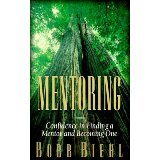
[Bobb Biehl is a personal and organizational leadership expert – below are some great questions to go over = personally; with your staff, team, mentoree, small group, disicple/s, etc.]

(Adapted from Bobb Biehl, Mentoring, pp. 201-202)

 DREAMING…about the Future in a Practical Way

  1. God: What three changes in me would most please our Eternal God in His Holy Heaven?
  1. Dream/Purpose: What can I do to make the most significant difference for God in my lifetime? Why am I on the earth? What is the very best organizational context for my dream?
  1. Primary Result: What is the single best measurable indicator that I am making progress with my dream?
  1. Life Priorities: If I could accomplish only three measurable priorities before I die, what would I accomplish?
  1. Ten-Year Focus: If I could accomplish only three measurable priorities in the next ten years what would make a 50% difference in my life-long contribution, what would I accomplish?
  1. Annual Focus:
    • Focus – What single word best captures the focus of my next year?
    • Opportunity – Where was my greatest unexpected success last year? Why? What three steps could I take now to take full advantage of this “Window of Opportunity” this coming year?
    • Land Mines – What three land mines or roadblocks need my immediate attention? What have I been praying most about in the past 30 days? What three changes could reduce my “risk” by 50%?
    • 30/10/50% – If I could only accomplish three measurable priorities in the next twelve months that would make a 50% difference in my contribution in the next ten years, which 3 things would I most want to accomplish?
  1. Quarterly Focus: What three measurable priorities could I accomplish in the next ninety days to make a 50% difference in the results I see by the end of the year?
  1. Organization: What three categories could I make to see a 50% difference in our morale as a family or team?
  1. Cash: If I had to cut my budget 21%, what would be the first three things to go? If I got a surprise gift of 21% of my budget, what three things would I do immediately?
  1. Quality: What three changes could improve the quality of my work by 50% in the next twelve months?

Bobb Biehl is an executive mentor. He graduated from Michigan State University (psychology major) in 1964 and received a Master’s degree (counseling) from Michigan State in 1966.

In 1976, Bobb founded Masterplanning Group International. As its president, he has consulted personally with over 400 clients. In that time, he has met one-on-one with over 3,500 executives (board members, senior executives, and staff members) and invested an estimated 40,000 hours in private sessions with some of the finest leaders of our generation. His clients are primarily large or fast-growing churches, nonprofit organizations, for profit corporations, and government agencies.

Based on these thousands of hours of practical “rubber-meets-the-runway” experience, Bobb has originated 35 resources (books, tapes, notebooks) in the area of personal and organizational development. These resources include published books entitled Boardroom Confidence, Dreaming, Leading with Confidence, Masterplanning, Mentoring, Stop Setting Goals, and Why You Do What You Do. His latest book, Dreaming Big, is co-authored with Dr. Paul Swets.

Bobb is a founding member of the board of directors of Focus on the Family. He is also a member of the board of directors of Liquid Metal (publicly traded). Prior to starting Masterplanning Group, Bobb was on the executive staff of World Vision International. While at World Vision he designed and developed the Love Loaf program, which has raised millions of dollars worldwide.

Bobb and his wife, Cheryl, have been married since 1964.

Good Acronym for Life Applications from the Bible by Rick Warren

The “S.P.A.C.E.  P.E.T.S” Acronym

 WHEN STUDYING THE BIBLE ASK THE FOLLOWING 9 QUESTIONS: “Is There Any?”

Sin to confess? Do I need to make restitution with anyone?

Promise to claim? Is it a universal promise? Have I met the conditions of the promise?

Attitude to change? Am I willing to work on changing my attitude to a Christ-like one?

Command to obey? Am I willing to do it no matter how I feel?

Example to follow? Is there a positive example to copy or a negative one to avoid?

Prayer to pray? Is there anything I need to pray back to God?

Error to avoid? Is there any problem that I should be aware of, or alert to?

Truth to believe? What can I learn about the character or nature of God?

Something to praise God for? What can I be thankful or grateful for?

3 Reasons Christians Have Victory Over Death by Warren W. Wiersbe

The 3 P’s of Jesus’ Comfort to Christians in the Face of Death:

 1)    Because of the Price Jesus Paid

1 Thessalonians 5:9-10, For God has not destined us for wrath, but to obtain salvation through our Lord Jesus Christ, who died for us so that whether we are awake or asleep we might live with him.

2)    Because of the Promise Jesus Made

John 14:1-6, “Let not your hearts be troubled. Believe in God; believe also in me. In my Father’s house are many rooms. If it were not so, would I have told you that I go to prepare a place for you? And if I go and prepare a place for you, I will come again and will take you to myself, that where I am you may be also. And you know the way to where I am going.” Thomas said to him, “Lord, we do not know where you are going. How can we know the way?” Jesus said to him, “I am the way, and the truth, and the life. No one comes to the Father except through me.

3)    Because of the Prayer Jesus Prayed

John 17:24, “Father, I desire that they also, whom you have given me, may be with me where I am, to see my glory that you have given me because you loved me before the foundation of the world.”