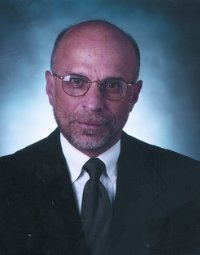
Dr. John Oswald Sanders on the Leader and His Prayer Life


SL Sanders

Prayer and Leadership

 I urge then, first of all, that requests, prayers, intercession and thanksgiving be made for everyone. 1 Timothy 2:1

The spiritual leader should outpace the rest of the church, above all, in prayer. And yet the most advanced leader is conscious of the possibility of endless development in his prayer life. Nor does he ever feel that he has “already attained.” Dean C. J. Vaughan once said: “If I wished to humble anyone, I should question him about his prayers. I know nothing to compare with this topic for its sorrowful self-confessions.”

Prayer is the most ancient, most universal, and most intensive expression of the religious instinct. It includes the simplest speech of infant lips, and the sublime entreaties of older age. All reach the Majesty on high. Prayer is indeed the Christian’s vital breath and native air.

But, strange paradox, most of us find it hard to pray. We do not naturally delight in drawing near to God. We sometimes pay lip service to the delight and power of prayer. We call it indispensable; we know the Scriptures call for it. Yet we often fail to pray.

Let us take encouragement from the lives of saintly leaders who overcame this natural reluctance and became mighty in prayer. Of Samuel Chadwick it was said: He was essentially a man of prayer. Every morning he would be astir shortly after six o’clock, and he kept a little room which was his private sanctum for his quiet hour before breakfast. He was mighty in public prayer because he was constant in private devotion. . . . When he prayed he expected God to do something. “I wish I had prayed more,” he wrote toward the end of his life, “even if I had worked less; and from the bottom of my heart I wish I had prayed better” (N.G. Dunning, Samuel Chadwick. London: Hodder & Stoughton, 1934, 19).

“When I go to prayer,” confessed an eminent Christian, “I find my heart so loath to go to God, and when it is with Him, so loath to stay.” Then he pointed to the need for self-discipline. “When you feel most indisposed to pray, yield not to it,” he counseled, “but strive and endeavor to pray, even when you think you cannot.”

Mastering the art of prayer, like anything else, takes time. The time we give it will be a true measure of its importance to us. We always find the time for important things. The most common excuse for little time spent in prayer is the list of “to-dos” that crowd our day—all our many duties. To Martin Luther, an extra load of duties was reason enough to pray more, not less. Hear his plans for the next day’s work: “Work, work from early till late. In fact I have so much to do that I shall spend the first three hours in prayer.” If Luther was busy, and prayed, so can we.

Try to explain exactly how prayer works and you will quickly run against some very difficult puzzles. But people who are skeptical of prayer’s validity and power are usually those who do not practice it seriously or fail to obey when God reveals His will. We cannot learn about prayer except by praying. No philosophy has ever taught a soul to pray. The intellectual problems associated with prayer are met in the joy of answered prayer and closer fellowship with God.

The Christian leader who seeks an example to follow does well to turn to the life of Jesus Himself. Our belief in the necessity of prayer comes from observing His life. Surely if anyone could have sustained life without prayer, it would be the very Son of God Himself. If prayer is silly or unnecessary, Jesus would not have wasted His time at it. But wait! Prayer was the dominant feature of His life and a recurring part of His teaching. Prayer kept His moral vision sharp and clear. Prayer gave Him courage to endure the perfect but painful will of His Father. Prayer paved the way for transfiguration. To Jesus, prayer was not a hasty add-on, but a joyous necessity.

In Luke 5:16 we have a general statement which throws a vivid light on the daily practice of the Lord. “And He withdrew Himself in the deserts and prayed.” It is not of one occasion but of many that the evangelist speaks in this place. It was our Lord’s habit to seek retirement for prayer. When He withdrew Himself from men, He was accustomed to press far into the uninhabited country—He was in the deserts. The surprise of the onlookers lay in this, that one so mighty, so richly endowed with spiritual power, should find it necessary for Himself to repair to the source of strength, that there He might refresh His weary spirit. To us, the wonder is still greater, that He, the prince of Life, the Eternal word, the Only-begotten of the Father, should prostrate Himself in meekness before the throne of God, making entreaty for grace to help in time of need (D.M. McIntyre, The Prayer Life of Our Lord. London: Morgan & Scott, n.d., 30–31).

Christ spent full nights in prayer (Luke 6:12). He often rose before dawn to have unbroken communion with His Father (Mark 1:35). The great crises of His life and ministry began with periods of special prayer, as in Luke 5:16: “Jesus often withdrew to lonely places and prayed”—a statement that indicates a regular habit. By word and example He instructed His disciples on the importance of solitude in prayer (Mark 6:46, following the feeding of the five thousand; Luke 9:28, preceding the Transfiguration). To the person on whom devolves the responsibility for selecting personnel for specific spiritual responsibilities, the example of the Lord’s spending the night in prayer before making His choice of apostles (Luke 6:12) is luminous.

Both our Lord and His bond slave Paul made clear that true prayer is not dreamy reverie. “All vital praying makes a drain on a man’s vitality. True intercession is a sacrifice, a bleeding sacrifice,” wrote J. H. Jowett. Jesus performed miracles without a sign of outward strain, but “he offered up prayers and petitions with loud cries and tears” (Hebrews 5:7).

Sometimes our prayers are pale and weak compared to those of Paul or Epaphras. “Epaphras . . . is always wrestling in prayer for you,” wrote Paul in Colossians 4:12. And to the same group: “I want you to know how much I am struggling for you” (Colossians 2:1). The Greek word used for “struggle” here is the root for our words “agony” and “agonize.” It is used to describe a person struggling at work until utterly weary (Colossians 1:29) or competing in the arena for an athletic prize (1 Corinthians 9:25). It describes a soldier battling for his life (1 Timothy 6:12), or a man struggling to deliver his friends from danger (John 18:36). True prayer is a strenuous spiritual exercise that demands the utmost mental discipline and concentration.

We are encouraged to note that Paul, probably the greatest human champion of prayer, confessed, “We do not know what we ought to pray for.” And then he hastened to add, “The Spirit intercedes for us with groans that words cannot express. And he who searches our hearts knows the mind of the Spirit, because the Spirit intercedes for the saints in accordance with God’s will” (Romans 8:26–28). The Spirit joins us in prayer and pours His supplications into our own.

Pray in the Spirit

All Christians need more teaching in the art of prayer, and the Holy Spirit is the master teacher. The Spirit’s help in prayer is mentioned in the Bible more frequently than any other help He gives us. All true praying comes from the Spirit’s activity in our souls. Both Paul and Jude teach that effective prayer is “praying in the Spirit.” That phrase means that we pray along the same lines, about the same things, in the same name, as the Holy Spirit. True prayer rises in the spirit of the Christian from the Spirit who indwells us.

To pray in the Spirit is important for two reasons. First, we are to pray in the realm of the Spirit, for the Holy Spirit is the sphere and atmosphere of the Christian’s life. In this we often fail. Much praying is physical rather than spiritual, in the realm of the mind alone, the product of our own thinking and not of the Spirit’s teaching. But real prayer is deeper. It uses the body, requires the cooperation of the mind, and moves in the supernatural realm of the Spirit. Such praying transacts its business in the heavenly realm.

Second, we are to pray in the power and energy of the Spirit. “Give yourselves wholly to prayer and entreaty; pray on every occasion in the power of the Spirit” (Ephesians 6:18 NEB). For its superhuman task, prayer demands more than human power. We have the Spirit of power as well as the Spirit of prayer. All the human energy of heart, mind, and will can achieve great human results, but praying in the Holy Spirit releases supernatural resources. The Spirit delights to help us pray. In each of our three chief handicaps, we can count on the Spirit’s help. Sometimes we are kept from prayer by sin in our heart. As we grow in trust and submission, the Holy Spirit leads us to the blood of Christ, which cleanses every stain.

Sometimes the ignorance of our minds hinders our prayers. But the Spirit knows the mind of God and shares that knowledge with us as we wait and listen. The Spirit does this by giving us a clear conviction that a particular prayer request is part of God’s will for us, or not.

Sometimes we are earthbound because of the infirmity of the body. We get sick, we feel ill, we are weak. The Spirit will quicken our bodies and enable us to rise above weaknesses, even those imposed by sultry tropical climates.

Then, as if these three conditions were not enough, the spiritual leader must oppose Satan in prayer. Satan will try to depress, to create doubt and discouragement, to keep a leader from communion with God. In the Holy Spirit, we have a heavenly ally against this supernatural foe.

Spiritual leaders should know the experience of praying in the Spirit as part of their daily walk. Do we ever try to live independently of the Spirit? Do we fail to see full answers to prayer? We can read all day about prayer, and experience little of its power, and so stunt our service.

The Bible often explains prayer as spiritual warfare. “For our struggle is . . . against the rulers, against the authorities, against the powers of this dark world and against the spiritual forces of evil in the heavenly realms” (Ephesians 6:12). In this struggle phase of prayer, three personalities are engaged. Between God and the devil stands the Christian at prayer. Though weak alone, the Christian plays a strategic role in the struggle between the dragon and the Lamb. The praying Christian wields no personal power, but power nonetheless delegated by the victorious Christ to whom that faithful believer is united by faith. Faith is like a reticulating system through which the victory won on Calvary reaches the devil’s captives and delivers them from darkness into light.

Jesus was not so much concerned over wicked people and their deeds as with the forces of evil that caused those people to sin. Behind Peter’s denial and Judas’s betrayal was the sinister hand of Satan. “Get thee behind me, Satan,” was the Lord’s response to Peter’s presumptuous rebuke. All around us are people bound in sin, captives to the devil. Our prayers should ascend not only for them but against Satan who holds them as his prize. Satan must be compelled to relax his grip, and this can only be achieved by Christ’s victory on the cross.

As Jesus dealt with sin’s cause rather than effect, so the spiritual leader should adopt the same method in prayer. And the leader must know how to help those under his charge who are also involved in that same spiritual warfare.

In a telling illustration, Jesus compared Satan to a strong man, fully armed. Before anyone can enter such a man’s house and set captives free, the man must first be bound. Only then can a rescue succeed (Matthew 12:29). What could it mean to “tie up the strong man” except to neutralize his might through the overcoming power of Christ who came “to destroy (nullify, render inoperative) the works of the devil”? And how can that happen except by the prayer of faith that lays hold of the victory of Calvary and claims it for the problem at hand? We cannot hope to effect a rescue from Satan’s den without first disarming the adversary. God makes available His divine authority through prayer, and we can confidently claim it. Jesus promised His disciples: “I have given you authority . . . to overcome all the power of the enemy” (Luke 10:19).

The spiritual leader will be alert to the most effective way to influence people. Hudson Taylor is well known for his expression, “It is possible to move men, through God, by prayer alone.” During his missionary career he demonstrated the truth of his claim a thousand times.

Practice

It is one thing to believe such power is available in prayer, but another thing to practice it. People are difficult to move; it is much easier to pray for things or provisions than to deal with the stubbornness of the human heart. But in just these intricate situations, the leader must use God’s power to move human hearts in the direction he believes to be the will of God. Through prayer the leader has the key to that complicated lock.

It is the supreme dignity and glory of the human creature to be able to say yes or no to God. Humans have been given free will. But this poses a problem. If by prayer we can influence the conduct of others, does such power encroach on free will? Will God temper one person’s freedom to answer another person’s prayer? It seems difficult to imagine. And yet, if prayers cannot influence the course of events, why pray?

The first point to make is that God is consistent with Himself always. God does not contradict Himself. When God promises to answer prayer, the answer will come—always in a manner consistent with divine nature, for “he cannot disown himself” (2 Timothy 2:13). No word or action from God will contradict any other word or action of God.

The second point in resolving these questions is that prayer is a divine ordinance. God has commanded prayer, and we can be confident that as we meet revealed conditions for prayer, answers will be granted. God sees no contradiction between human free will and divine response to prayer. When God commands us to pray “for kings and those in authority,” there is implied power to influence the course of men and events. If not, why pray? Our obligation to pray stands above any dilemma concerning the effects of prayer.

Third, we can know the will of God concerning the prayer we raise. Our capacity to know God’s will is the basis for all prayers of faith. God can speak to us clearly through our mind and heart. The Bible instructs us directly concerning the will of God on all matters of principle. In our hearts the Holy Spirit ministers to instruct us in the will of God (Romans 8:26–27). As we patiently seek the will of God concerning our petition, the Spirit will impress our minds and convince our hearts. Such God-given conviction leads us beyond the prayer of hope to the prayer of faith.

When God lays a burden on our hearts and thus keeps us praying, He obviously intends to grant the answer. George Mueller was asked if he really believed that two men would be converted, men for whom Mueller had prayed for over fifty years. Mueller replied: “Do you think God would have kept me praying all these years if He did not intend to save them?” In fact, both men were converted, one shortly after Mueller’s death (George Mueller [1805–1898] was a Plymouth Brethren leader who refused a salary, believing that God would supply his needs by prayer alone. He established an orphanage in Bristol for two thousand youngsters on the strength of prayer and promoted prayer during a seventeen-year world tour).

In prayer we deal directly with God and only in a secondary sense other people. The goal of prayer is the ear of God. Prayer moves others through God’s influence on them. It is not our prayer that moves people, but the God to whom we pray.

Prayer Moves The Arm That moves the world To bring deliverance down.

To move people, the leader must be able to move God, for God has made it clear that He moves people in response to prayer. If a scheming Jacob was given “power with God and with men,” then surely any leader who follows God’s prayer principles can enjoy the same power (Genesis 32:28).

Prevailing prayer that moves people is the outcome of a right relationship with God. The Bible is very clear on the reasons why prayers go unanswered, and every reason centers on the believer’s relationship with God. God will not cooperate with prayers of mere self-interest, or prayers that come from impure motives. The Christian who clings to sin closes the ear of God. Least of all will God tolerate unbelief, the chief of sins. “Anyone who comes to him must believe” (Hebrews 11:6). In all our prayers the paramount motive is the glory of God.

Great leaders of the Bible were great at prayer. “They were not leaders because of brilliancy of thought, because they were exhaustless in resources, because of their magnificent culture or native endowment, but because, by the power of prayer, they could command the power of God” (E. M. Bounds, Prayer and Praying Men. London: Hodder & Stoughton, 1921). Edward McKendree Bounds [1835–1913] was an American Methodist Episcopal minister who served churches throughout the South. He was a captain in the Confederate army).

Article adapted from the classic work on Leadership by, J. Oswald Sanders (2007-05-01). Spiritual Leadership (Kindle Locations 1579-1736). Moody Publishers. Kindle Edition. 

About Dr. J.O. Sanders

Dr. John Oswald Sanders (October 17, 1902—October 24, 1992) was a general director of Overseas Missionary Fellowship (then known as China Inland Mission) in the 1950s and 1960s. He authored more than forty books on the Christian life. He became an elder statesman and worldwide conference speaker from his retirement until his death. Sanders was born in Invercargill, New Zealand and gained a law degree in 1922. He attended the Bible Training Institute in Auckland and joined its staff in 1926. In 1931, he married Edith Mary Dobson. Sanders left a promising law practice in his native New Zealand to serve as an instructor and administrator at the Bible College of New Zealand. In 1954 he became general director of the China Inland Mission and led the reorganization of the CIM into the Overseas Missionary Fellowship. He was instrumental in beginning many new missions projects throughout East. Upon his retirement in 1969, he continued to teach worldwide and to write prolifically.

Dare To Pray Like Daniel by John Piper

“Prayer: A Warrior’s Weapon”

In Daniel 10, the prophet receives a word from the Lord (v. 1) — a vision of conflict that stunned him with its greatness. So Daniel set himself with tears and fasting and prayer to seek the meaning of the vision, and for three weeks he wrestled in prayer over this vision and sought to know God’s will.

After three weeks he went out to the banks of the Tigris River (v. 4). There he had a vision that was so awesome he could hardly bear it. To make matters worse (in v. 10), a hand reached out and touched him so that he shook terribly on his hands and knees. Then the voice said (vv. 11–12): “O Daniel, man greatly loved, understand the words that I speak to you, and stand upright, for now I have been sent to you…. Fear not, Daniel, for from the first day that you set your heart to understand and humbled yourself before your God, your words have been heard, and I have come because of your words.”

Now this is immensely important for understanding prayer. Notice the words: “I have come because of your words.” Put that together with the words in verse 11: “I have been sent to you.” That is, God sent him. So the point is that God answered Daniel’s prayer as soon as he began to pray three weeks ago. “From the first day that you humbled yourself before your God your words [your prayers] have been heard, and I have come because of your words [your prayer].”

So this heavenly being has come because Daniel prayed and humbled himself before God and fasted. And the three-week delay was not because God took three weeks to hear. What was it then?

Verse 13: “The prince of the kingdom of Persia withstood me twenty-one days, but Michael, one of the chief princes, came to help me.” The reason the messenger of God was detained is because a spiritual being called “the prince of the kingdom of Persia” stood against him. And the reason this angelic messenger got free from this opposition was because the angel Michael came to help him.

This is the clearest example in all the Bible of what is called by some people a “territorial spirit.” Verse 13 refers to “the prince of the kingdom of Persia.” The natural meaning of this phrase would be that among the supernatural beings opposed to God, at least one is assigned to a territory or, more accurately, to a kingdom, in this case Persia. Presumably his job is to darken the people of Persia — to keep them from having the truth and the light of God’s Word.

But this spirit is not the only one mentioned. Look at verse 20–21: “Then he [the messenger from God] said, ‘Do you know why I have come to you? But now I will return to fight against the prince of Persia; and when I go out, behold, the prince of Greece will come. But I will tell you what is inscribed in the book of truth: there is none who contends by my side against these except Michael, your prince.’”

So it appears that there was a spirit over Persia and a spirit over Greece. But it also seems that Michael, the good angel, has some special assignment for Israel, because it says at the end of verse 21: “Michael, your prince.” And the “your” there is plural. This is not a reference to Daniel’s guardian angel, but to Israel’s guardian angel.

How then shall we do ministry in view of this reality of territorial spirits?

First, we ought to take the supernatural seriously and realize that we are in a warfare that cannot and should not be domesticated by reinterpreting everything in the biblical worldview so that it fits nicely with secular, naturalistic ways of thinking about the world.

Secondly, notice that Daniel’s prayer that has such powerful effects in the spiritual realm did not focus on angels and territorial spirits. Rather, he was wrestling for truth and for the good of God’s people. He was totally shocked when an angel appeared to him. And he knew nothing about the conflict with the prince of the kingdom of Persia.

But it’s no accident that the messenger said that his struggle with the prince of Persia lasted exactly the same amount of time that Daniel’s fasting and prayer did — twenty-one days. The reason for this is that the warfare in the spirit realm was being fought in a real sense by Daniel in the prayer realm.

And so it is with more of our prayers than we realize. But the point is this: Daniel’s praying was not about angels. And probably ours shouldn’t be either. We should wrestle in prayer and fasting for the things that we know are God’s will in our lives and our families and our church and our city and our world. But by and large we should probably leave it to God how He will use angels to get His work done. If God shows us more, we will use it. But the essence of the matter is not knowing the spirits but knowing God and praying in the power of Holy Spirit.

So let us be about prayer with all our might. May the Lord make us a people who pray like Daniel.

Article Information: From Tabletalk Magazine (Ligonier Ministries), July 1st, 2007 by Former Preaching Pastor of Bethlehem Baptist Church, and founder of Desiring God – Dr. John Piper.

R.C. Sproul on the Question: “Does Prayer Change God’s Mind?”

We’ve been taught that prayer changes things. In view of God’s sovereignty, what is the role of prayer in a Christian’s life?


First of all, we need to establish that it is the sovereign God who not only invites us but commands us to pray. Prayer is a duty, and as we perform that duty, one thing for sure is going to be changed, and that is us. To live a life of prayer is to live a life of obedience to God.

Also, we must understand that there is more to prayer than intercession and supplication. When the disciples said to Jesus, “Lord, teach us to pray,” they saw a connection between the power of Jesus and the impact of his ministry and the time he spent in prayer. Obviously, the Son of God felt that prayer was a very valuable enterprise because he gave himself to it so deeply and passionately. But I was surprised that he answered the question by saying, “Here’s how you ought to pray,” and gave them the Lord’s Prayer. I would have expected Jesus to answer that question a different way: “You want to know how to pray? Read the Psalms,” because there you see inspired prayer.

The Spirit himself, who helps us to pray, inspired the prayers that are recorded in the Psalms. When I read the Psalms, I read intercession and I read supplication, but overwhelmingly what I read is a preoccupation with adoration, with thanksgiving, and with confession.

Take those elements of prayer, and what happens to a person who learns how to adore God? That person is changed. What happens to a person who learns how to express his gratitude to God? That person will now become more and more aware of the hand of Providence in his life and will grow in his sense of gratitude toward God. What happens to the person who spends time confessing his sins? He keeps in front of his mind the holiness of God and the necessity of keeping short accounts with God.

But can our requests change God’s sovereign plan? Of course not. When God sovereignly declares that he is going to do something, all of the prayers in the world aren’t going to change God’s mind. But God not only ordains ends, he also ordains means to those ends, and part of the process he uses to bring his sovereign will to pass are the prayers of his people. And so we are to pray.

Question adapted from the section on Prayer by R.C. Sproul. Now, That’s a Good Question! Wheaton: Tyndale House Publishers, 2001.

About Dr. R.C. Sproul

R.C. Sproul has taught theology to hundreds of thousands of people through books, radio, audiotapes, videotapes, seminars, sermons, seminary classes and other forums.

Sproul has written approximately sixty books (and counting). In addition to many volumes designed to teach theology, apologetics, and ethics to laymen through expository prose, he has written a novel, a biography, and several childrens books. He has also edited several volumes, including a festschrift for John H. Gerstner, a seminary textbook, and the New Geneva Study Bible. He has written one of the top classics of the 20th century – The Holiness of God; and perhaps the best book to explain God’s sovereignty in our salvation for laymen entitled Chosen by God.

Sproul founded Ligonier Ministries in 1971, a teaching ministry to assist the church in nurturing believers and equipping them for the ministries to which God has called them. Ligonier sponsors a radio program, “Renewing Your Mind,” which features Sproul and is broadcast nationally, five days a week.

Ligonier Ministries sponsors several seminars each year, the largest one in Orlando every winter. Ligonier publishes a monthly periodical, Tabletalk, and has its own web site (http://www.gospelcom.net).

Sproul has taught theology and apologetics at several seminaries. He earned a B.A. degree from Westminster College, a B.D. from Pittsburgh Theological Seminary, and a Drs. from the Free University of Amsterdam. He is ordained in the Presbyterian Church in America.

In 1994 Christianity Today asked a select list of “critics,” “What theologian or biblical scholar has most shaped your Christian life?” Third on the list (and the only American in the top four) was R.C. Sproul.

Tim Keller on How to Pray Better in Public and in Private

Lesson on Prayer from Thomas Cranmer

Years ago when I wanted to become more skillful in public prayer, I was fortunate to come across the collects of Thomas Cranmer, the writer of the original Episcopal Book of Common Prayer. The “collects” (the stress is on the first syllable)that Cranmer wrote were brief but extremely ‘packed’ little prayers that tied together the doctrine of the day to a particular way of living. They were prayed by the minister on behalf of the people, or prayed in unison by the whole congregation.

As I have read them over the years they have brought me two great benefits. First, they have given me a basic structure by which I can compose good public prayers, either ahead of time, or spontaneously. Cranmer’s collects consist of 5 parts:

1. The address – a name of God

2. The doctrine – a truth about God’s nature that is the basis for the prayer

3. The petition – what is being asked for

4. The aspiration – what good result will come if the request is granted

5. In Jesus’ name – this remembers the mediatorial role of Jesus

See this structure in Cranmer’s famous collect for the service of Holy Communion:

1. Almighty God

2. unto whom all hearts are open, all desires known, and from whom no secrets are hid,

3. cleanse the thoughts of our hearts by the inspiration of thy Holy Spirit,

4. that we may perfectly love thee, and worthily magnify thy holy name,

5. through Jesus Christ our Lord, Amen. 

See how the prayer moves from a doctrinal basis (why we can ask for it) to the petition (what we want) to the aspiration (what we will do with it if we get it.) It is remarkable how this combines solid theology with deep aspirations of the heart and concrete goals for our daily life.

As time has gone on I have come to use Cranmer’s collects in my personal devotional time (this is the second benefit.) I take up one collect at the beginning of each new week. I read Paul Zahl’s volume The Collects of Thomas Cranmer (Eerdmans, 1999) that provides a very short explanation and meditation on the prayer. Then I pray that prayer to God reflectively every morning for the rest of the week as I begin my personal time with God. I commend this practice to you. Here are a couple of my favorites:

Blessed Lord, who has caused all holy Scripture to be written for our learning; grant that we may so hear them, read, mark, learn, and inwardly digest them; that by patience and comfort of thy holy word we may embrace and ever hold fast the blessed hope of eternal life, which thou hast given us in our savior, Jesus Christ. Amen.

Almighty God, who dost make the minds of all faithful men to be of one will; grant unto thy people, that they may love the thing which thou commandest, and desire that which thou dost promise, that among the sundry and manifold changes of the world, our hearts may be surely fixed where true joys are to be found, through Jesus Christ our Lord. Amen. 

God, which hast prepared to them that love thee such good things as pass all man’s understanding; Pour into our hearts such love toward thee, that we loving thee in all things, may obtain thy promises, which exceed all that we can desire; through Christ our Lord. Amen.

Almighty and everlasting God, who art always more ready to hear than we to pray, and art wont to give more than either we desire or deserve, pour down upon us the abundance of thy mercy, forgiving us those things whereof our conscience is afraid and giving unto us that which our prayer dare not presume to ask; through Jesus Christ our Lord. Amen.

Almighty and everlasting God, give unto us the increase of faith, hope, and charity, that we may obtain that which thou dost promise, make us to love that which thou does command; through Jesus Christ our Lord. Amen.


*Article adapted from the Redeemer Report – October, 2010.


Terry Muck on How To Be Thankful in a Thankless World

If we gauge gratitude by the way God has worked in our lives, then nothing the world withholds can dispel our thanksgiving, and we can even rejoice in the pettiness of those around us.—Terry Muck

An old man wistfully reads the Hebrew Scripture’s promise of a Messiah to come. Night after night he reads until the light or his energy wanes. Each night he prays, O, that I could see the Messiah before I die!

Silence is his only answer. Still he prays.

Then one night he prays and, instead of silence, God answers: I have heard your prayer.

You shall see the Promised One.

Not sure he has heard correctly, the old man continues his yearning prayer on the nights that follow—yet the answer grows stronger, more firm. You shall see him. You shall hold him and touch the Messiah.

Simeon’s joy was great. He was probably already an old man when God told him he would not die until he had seen the Messiah. The promised coming of the Savior was ancient, and few really believed it anymore. For a man of Simeon’s age, it was too much to hope for. Yet God said it would happen—and the promised day did come.

In the temple Simeon took the baby Jesus in his arms and said, “Sovereign Lord, as you have promised, you now dismiss your servant in peace. For my eyes have seen your salvation, which you have prepared in the sight of all people” (Luke 2:29–30 niv).

Simeon’s experience is the paradigm of true thanksgiving. What better reason for giving thanks to God than the fact that we have all been given the chance to see the Savior? We have not held the baby Jesus in our arms, but we have been given the joy of holding him in our minds and hearts. If every other facet of our lives were negative—if we were poor, homeless, and friendless—we would still have this reason to be thankful: the fact of Jesus Christ.

Our human nature being what it is, however, very often we find the fact of Jesus Christ is not enough to help us maintain an attitude of thanksgiving. Gratitude is one of the most difficult emotions to express and maintain.

Perhaps our culture is partly to blame. Gratitude is particularly hard when everything comes easily, when our relative wealth makes us think we can, by birthright or the sweat of our brow, get whatever we need. Why should we be thankful when we’ve earned it on our own?

For Christian leaders, the problem is even more complex. Leaders are victims to all the gratitude-limiting pressures of a wealthy society, but as helping professionals they also suffer the ingratitude of those they serve, both lay workers and fellow leaders. Christian leaders are assailed from two directions: a sated society and a sometimes thankless Christian community.

Victims of prosperity

Wealth is not a worldwide phenomenon. Other cultures still have to struggle to earn their daily bread, to keep their families warm and safe. Westerners who live in those cultures for even a short time discover new meaning to the word gratitude.

Missionaries are typical.

Franklin and Phileda Nelson went to Burma as missionaries in the 1940s. They served there eight and a half years before the government closed the country to further missionary work. They returned to the United States where Franklin served several churches in various pastoral roles.

While in Burma they worked among remote tribes, and Franklin found his sense of gratitude for God’s providence rekindled:

In the Burmese hill country, the only way to get to remote villages was by “shank mare.” (That’s walking, in case you’ve never heard the phrase.) It was not at all uncommon for me to walk twenty miles a day in the dry season. When I got back to the States and worked as a pastor and church leader, I rarely walked a mile a day; the telephone and car made walking unnecessary.

In Burma, if one of us got sick, the nearest hospital was ten days away. In the States, medical care is minutes away. In Burma, we’d go months without bread. Once we asked our daughter Karen to say grace before a meal, and she said, “Why do I have to pray for my daily bread when I don’t ever get any?” I have often coveted that experience for our youngest daughter who never had to wonder where her food came from. It’s hard to have that sense of helplessness and humility so vital to prayer when you sit down to your daily bread and don’t even think about how you got it.

I don’t in any way blame people here for not knowing what God can do. We’re victims of our prosperity. But I sometimes wish we had a few more hard times so people could experience firsthand how wonderful it is to be totally dependent on God.

Thankless followers

One denominational official lamented that for him one of the hardest things about leadership has been developing lay and professional leaders in churches, only to have them quickly forget “from whence cometh their help” and turn their backs on their benefactors as soon as they begin to make it on their own.

I asked my father, who recently retired after thirty-five years of teaching at a Christian college, if he had any regrets about his fruitful professorial career.

“I guess it would have to be the lack of gratitude by students,” he said. “I never had very high expectations about students thanking me. They are in school at a difficult age—late teens and early twenties. Their identity crisis makes it a hard time psychologically for expressing thankfulness. But I did notice a steady decline over the years in what gratitude there was. It was almost as if students were never taught to be thankful. And even though I didn’t expect much gratitude, I missed it all the same.”

Gratitude is one of those curious emotions that grows or shrivels in direct proportion to the amount we receive from others. Pastors, especially, seem to get caught in the middle of a two-flank attack: our wealthy society discourages it, and the nature of the pastoral task often seems hopeless, helpless, and thankless. Over the past generation or two, a subtle devaluation of the pastoral role has occurred that rivals the devaluation of the dollar. In the same span that has seen the dollar shrink in buying power by almost half, the role of the pastor in the local community has probably shrunk even further. The natural respect once shown is a thing of the past. The gratitude that goes with respect is even less.

Interestingly, you don’t find many pastors publicly bemoaning their reduced status. But in terms of their functioning in the community, in terms of their spiritual lives, the danger is that cynicism about the task can subtly creep in and rot the roots of thankfulness.

God-based gratitude

What’s the solution? Perhaps to focus on the natural opportunities of Christian leadership, not its shortcomings. The call to ministry is not strictly parallel to other professional career paths. God guides his chosen leaders in profound ways. We sometimes feel frustrated with our inability to discern God’s will for our lives. The factor most often overlooked in such cases is that gratitude for guidance is actually one of the things that increases its intensity. Recognition that God has directed in the past is what increases the volume of his voice in the future.

Some helpful insights for gratitude can be found in Deuteronomy 26, which outlines three elements to thanksgiving.

The first is a concrete expression of thanks. “Take some of the firstfruits of all that you produce from the soil of the land … and [the priest shall] set it down in front of the altar of the Lord your God” (vv. 2–4 niv). God says that when the Israelites arrive in the land and have conquered it and are living there, they must present to the Lord the firstfruits from each annual harvest. They are to take it in a basket and hand it to the priest at the temple.

It is almost paradoxical but still true today: giving increases gratitude. Psychologists tell us that the human mind grasps the concrete far more easily than the abstract. By giving a concrete expression of thanks, the abstract reality (our feeling of gratitude), the crucial part, becomes more real to us.

Sometimes the concrete gift is prayer itself. Gib Martin, pastor of Trinity Church in Burien, Washington, said, “Bonhoeffer wrote that the Psalms were God’s gift to the church, and when we have nothing else to give God, we can give those back to him in the form of prayers. I have tried that and reaped the benefits.”

The second element is to remember difficulties God has seen you through. Verses five to nine say that after the priest has accepted the gifts in the name of God, the people should recite a brief history of their being freed from Egypt and given a new fertile land. In this illustration, the children of Israel remember what it was like to live in Egypt. For us it is the remembrance or recognition of what we are like without God. After all, that is the crucial factor. What is it like not to hold the Messiah in our hearts and minds? Bleak, desolate, hopeless.

One Christian leader said she uses the harder times of her life to combat current crises: “I’m a person who is always ready with plan B or C if plan A doesn’t work out. I think my experiences have forced me to develop that attitude. I once had three major surgeries in three months. I had no control over what would happen with my life then. Remembering those brick walls helps me understand God’s sovereignty and the potter-clay relationship.”

Perhaps for today’s Christian leaders, fellowship needs are greater than any other. Most local churches, for example, are one-person pastorates, and most are operated in entrepreneurial fashion. Fellowship languishes under such conditions. No camaraderie with staff, no employer to unload on, no evaluation sessions to tell you how it’s going. Ministerial associations usually turn into bragging rather than brainstorming sessions. The minister feels cut off from the warmth of peer support.

Again, Franklin Nelson’s experience on the mission field is instructive:

Like the pastorate in the States, the mission field can be lonely. I remember when our first daughter was born. Several days after her birth I had to visit some villages. It would take two weeks. After a couple of days out I began to feel sorry for myself. I was alone, climbing steep hills, no one to talk to and tell about my new daughter.

I asked the Lord for some sign that he was with me. I didn’t know what I wanted him to do because I didn’t know what would help me. As far as I knew, it was impossible to cheer me up. But I asked God to do it anyway.

The middle of that afternoon I came to a village. It was a new Christian village that was just beginning to get grounded spiritually, so I didn’t expect the warm welcome of old friends. But to my surprise, they came out en masse singing a welcome song. I hadn’t planned on spending the night there, but they asked me to. They took me to a hut they had cleaned up very nicely. I decided to stay. This overwhelming hospitality and love, totally unexpected, answered my prayer. It was simple, something we expect almost as a matter of course back home. But it was just what I needed at that time.

Remembrances of God’s love in good times and bad can stimulate our gratitude.

The third element is to be grateful for what the Lord has made out of us. After reciting the litany of our once-lost-now-found status, the Lord says to “rejoice in all the good things the Lord your God has given to you and your household” (v. 11). Like Simeon who held the baby Jesus and rejoiced, we should be ever aware that God has worked, is working, and will continue to work in our lives.

For Christian leaders, then, the key to developing a deep thankfulness is not to base our gratitude on the uncertain status of wealth and prosperity or the fickle gratitude of those we serve. The Christian leader’s gratitude must be based on a deep satisfaction in ministries faithful to God’s will.

Gordon Johnson pastored College Avenue Baptist Church in San Diego. Before coming to California, Gordon had been dean of a Christian college and had held several pastorates. He said:

Gratitude for me comes only when I focus strictly on what God has done in my life. For example, I pray for guidance more often than anything—and God has always answered. When I was serving a church in Chicago, I had two job offers at once. One was to become dean of students at a Christian college. They asked first, and after interviewing there, I was pretty convinced I would go if the college trustee board approved the call. I went back to Chicago and preached in my church on Sunday morning. After the service representatives from another church in the area came up and asked if they could take me and my family out to dinner. We had no other commitments, so I agreed. At dinner they asked me if I would come to pastor their church. I was thrown into a terrible confusion. Why is God doing this? What is he trying to tell me?

That week an official letter of invitation came from both the church and the college. I prayed about both at length and finally wrote a letter of acceptance to the college and a letter of rejection to the other church. My wife typed the letters, and I remember sitting on the edge of my bed that evening looking at them both. I felt sick, plagued by inner doubt. You’re just getting emotional about this, I thought. Get them in the mail and that will give you some peace.

I walked to the corner mailbox and dropped the letters in. But when I got back home, I felt sicker and sicker about the whole thing. About eleven o’clock that night I called the post office to see if I could get the letters back. “Too late,” they said. They had already gone.

The next morning I called the college president and asked if he would please ignore the letter he was about to receive from me. I did the same with the pastoral search committee. Then I got on a train and went back to the college for one more look. By the end of that visit, I decided being dean of students wasn’t for me, and I turned down their invitation. I also declined the invitation from the other church.

Looking back, I think God used the invitation from the church to get me to rethink the way he was working in my life.

Had Gordon not asked the fundamental question of What is God trying to tell me in this? His prayer for guidance might have been the much more self-centered—Please, God, which of these offers will be the best for me?

If we gauge our gratitude on worldly wealth and opportunity, we may someday find ourselves in Franklin Nelson’s shoes in Burma with no worldly wealth to celebrate. If we gauge gratitude on the thankfulness of those around us, human nature will disappoint us. Nine of ten healed lepers ran away without even thanking Jesus.

If, however, we gauge gratitude by the way God has worked in our lives, then nothing the world withholds can dispel our thanksgiving, and we can even rejoice in the pettiness of those around us because we can say, “Lord Jesus, thank you for the opportunity of working with these your children so obviously in need of your love.”

To those who seek, God provides the grace to be gracious.

About Terry Muck:

Terry C. Muck is professor of World Religions at Asbury Theological Seminary. The article above was adapted from chapter six in a collection of articles from the Library of Christian Leadership book entitled Deepening Your Ministry Through Prayer and Personal Growth: 30 Strategies to Transform Your Ministry; edited by Marshall Shelley. Nashville: Moorings, 1996.

“Every Day With Jesus is Like A Thanksgiving Holiday” By Dr. David P. Craig

“Thank God It’s Thanksgiving Everyday – Especially on Thursday’s!”

I have always loved the Thanksgiving Holiday. It’s one of the few times of the year where our very large family can come together from all over the United States and enjoy giving thanks for our many blessings. This year more than likely I’ll be having liquid formula through a feeding tube in my stomach. I already had the G-Tube surgically implanted in my stomach this past week. During chemotherapy and radiation around Thanksgiving time will be a time of great testing for me, when according to my Doctors I will be unable to swallow and chew due to the severity of my treatment for throat and neck cancer. Watching every one I love dearest passing around the turkey with all the trimmings will be something my eyes will enjoy, but not my taste buds. However, I’m good with that. I’m good with whatever comes my way because I can choose whether I’m a “reactor” or a “responder.” Let me explain.

Over the past decade I’ve had eye problems off and on – a cataract surgery and lattice degeneration in both eyes, which required laser surgery to repair numerous tiny little “tears” in the back of my eyes. A few days ago the Eye Doctor discovered I have a Vitreous Detachment and a Vitreous Hemorrhage in my right eye. After seeing a cataract specialist I was referred to another specialist who confirmed these diagnoses. All I know is that it is difficult for me to read, and that I see flashes of light at night, and what looks like a “blob” during the day out of my right eye. The Ophthalmologist thinks it should go away – but for now, I’m hoping and praying the “blob” will clear up.

I have also had an off-and-on battle with “Gout” (Charles Haddon Spurgeon had Gout as well – which makes me feel a little bit better about it – at least I’m in good company). They say Gout is a “rich man’s disease” (well one out of two ain’t bad – and “rich” isn’t the one). The first time I experienced Gout was after coaching one of my daughter’s soccer practices. I remember lying on the bed at night after soccer practice and feeling like someone took my right big toe and pounded it with a hammer as if they were really mad at the nail – and it just so happened my big “toe” represented the nail. It was excruciating. I’ve finally (after years of hopping, limping, and crawling through various “Gout” attacks) resorted to taking medication a few months ago – so far so good. The reality is I get “Gout” not because I’m rich, but because my body is missing an enzyme and therefore I manufacture too much uric acid which builds up “crystals” (more like little torturous demons) in weak areas of the body – joints in the extremities – and inflames them, so that even a bed sheet touching the inflamed joint hurts like you just got stepped on by a really upset “Chuck Norris.”

Today I am on my way to the hospital to get my face fitted for a mask that I will wear for radiation treatment. I will also have a CT-Scan to see if I’m ready to start chemotherapy and radiation for the Stage 3, throat and neck cancer I’ve recently been diagnosed with. God-willing I will begin treatment early next week (the sooner the treatment begins – the better). So what’s with all the grim news? Well, honestly, I truly believe that some tough days are ahead – but they will go a lot better if I have a thankful heart.

I also have learned something about life – We are either coming out of tough times, going through tough times, or about to go through tough times! The good news – is that as Christians we know that God “God is faithful, and he will not let you be tempted beyond your ability, but with the temptation he will also provide a way of escape that you may be able to endure it” (1 Corinthians 10:13b). Warren W. Wiersbe calls the Christian life a “land of hills and valleys.” We journey from low points to high points and everything in between.

 Why Lord? What’s with All the Tough Stuff?

James puts it this way, “Count it all joy, my brothers, when you meet trials of various kinds, for you know that the testing of your faith produces steadfastness. And let steadfastness have its full effect, that you may be perfect and complete, lacking nothing” (James 1:2-4). In other words, if you want to lack nothing, be spiritually mature, and satisfied – the only way to do it, is by meeting all kinds of trials with “joy.” Why? Because God designed it that way! If you’ve got a problem with it…He’s got a bigger problem! He took our sin problem head-on and voluntarily. He sent His perfect Son to die in your and my place and exchanged His perfect record of righteousness for your (and my) heinous record of unrighteousness.

I didn’t choose to have a cataract or lattice degeneration in my eyes; Gout, or Squamous Cell Carcinoma Cancer. But, I do know for a fact that God has allowed me to have these ailments, and I can either react to, (negative thinking) or respond to (positive thinking) God’s sovereign will and plans. I know that God works everything out for my good, and more importantly, for His glory. I know that God can heal me if He chooses to do so. I know that He can use medicine and the skill of excellent Physicians, medications, diet, and the prayers of His people to rid me of my cancer if He so desires. I also know, that we live in a fallen world, and one out of one people die. As a pastor I’ve easily performed over 100 funerals, and I’ve also witnessed miraculous healings. However, I do not presume to know what God’s sovereign hidden will happens to be in my cancer. I only know that I must decide whether God is good or evil – and the track record is that I’m very evil, and He is very good – as a matter of fact Perfect and immutably so. Only God is infinitely Wise in His plans. I simply want to trust and obey Him in the midst of this trial.

 God is Good and Sovereign:

Lamentations 3:21-26 – But this I call to mind, and therefore I have hope: The steadfast love of the Lord never ceases; his mercies never come to an end; they are new every morning; great is your faithfulness. “The Lord is my portion,” says my soul, “therefore I will hope in him.” The Lord is good to those who wait for him, to the soul who seeks him. It is good that one should wait quietly for the salvation of the LORD.”

Psalm 90:12 – Moses prays, “so teach us to number our days that we may get a heart of wisdom.”

Proverbs 16:9 – Solomon says, “Man plans His ways, but the LORD determines His steps.”

Psalm 139:16 “Your eyes saw my unformed substance; in your book were written, every one of them, the days that were formed for me, when as yet there was none of them”– in paraphrase: “All of our days are numbered before one of them came to be.”

Romans 8:18, 28-29, 32 – “For I consider that the sufferings of this present time are not worth comparing with the glory that is to be revealed to us…And we know that for those who love God all things work together for good, for those who are called according to his purpose. For those whom he foreknew he also predestined to be conformed to the image of his Son, in order that he might be the firstborn among many brothers…He who did not spare his own Son but gave him up for us all, how will he not also with him graciously give us all things?”

In summary: God has given me a certain number of days to suffer and grow in wisdom. He has always been faithful to provide for all my needs. If He didn’t spare His own Son – how could He possibly abandon me now? In the days He entrusts to me I can either react or respond to everything that He allows in my life. He promises that everything that comes my way is ultimately for my good and His glory. Ultimately all of my suffering is not worth comparing with the glories to come. God has predestined and purposed for me in His infinite wisdom and love that through suffering my character would conform to the image of Jesus – so that I would look like His brother – an heir with Christ, adopted into the family of God! God will give me an allotted time known only to Him to make much of Jesus and to bring Him glory – nothing else really matters.

Are You a “Reactor” or a “Responder”?

Here is an example of the difference and importance of “reacting” to circumstances, and “responding” to them: If I begin radiation and chemotherapy on Monday and within a few weeks my tumor shrinks from 7 to 5 cm, and the cancer cells are disappearing – then that’s a positive “response” to the treatment – it’s working! My body is responding to the treatment. If the tumor and cancer cells metastasize to another part of my body and the tumor grows to 8-9 cm then that’s called a “reaction” to the treatment – it’s not working. My body would be “reacting” to the treatment. The treatment will either cause my body to “react,” (negatively) or “respond” (positively) to the treatment. Responding is good. Reacting is bad.

The good news of the gospel is that even when you or I “react” negatively in our thinking, Christ has us covered! Even when you or I “respond” it’s only by His grace that we’re able to respond the way we should. I thank God that my salvation is NOT based on the way I react or respond to everything in life. I thank God that it is solely by repentance and faith – God’s gift to me – sola gratia, sola fide, solus Christus, Soli Deo Gloria – that I’m accepted, adopted, and saved by my beloved Triune God.

I truly believe that we can respond to circumstances by responding by having a greater understanding of the incredible mercy and grace of God in saving us. Read carefully just a sampling of God’s amazing Triune grace and mercy in saving us:

“But to all who did receive him, who believed in his name, he gave the right to become children of God, who were born, not of blood nor of the will of the flesh nor of the will of man, but of God” (John 1:12-13).

“No one can come to me unless the Father who sent me draws him. And I will raise him up on the last day” (John 6:44).

“And you were dead in the trespasses and sins in which you once walked, following the course of this world, following the prince of the power of the air, the spirit that is now at work in the sons of disobedience—among whom we all once lived in the passions of our flesh, carrying out the desires of the body and the mind, and were by nature children of wrath, like the rest of mankind. But God, being rich in mercy, because of the great love with which he loved us, even when we were dead in our trespasses, made us alive together with Christ—by grace you have been saved” (Ephesians 2:1-5).

“For by grace you have been saved through faith. And this is not your own doing; it is the gift of God, not a result of works, so that no one may boast. For we are his workmanship, created in Christ Jesus for good works, which God prepared beforehand, that we should walk in them.” (Ephesians 2:8-10).

“Therefore you have no excuse, O man, every one of you who judges. For in passing judgment on another you condemn yourself, because you, the judge, practice the very same things. We know that the judgment of God rightly falls on those who practice such things. Do you suppose, O man—you who judge those who practice such things and yet do them yourself—that you will escape the judgment of God? Or do you presume on the riches of his kindness and forbearance and patience, not knowing that God’s kindness is meant to lead you to repentance?” (Romans 2:1-4).

For he says to Moses, “I will have mercy on whom I have mercy, and I will have compassion on whom I have compassion.” So then it depends not on human will or exertion, but on God, who has mercy.” (Romans 9:15-16).

“But when the goodness and loving kindness of God our Savior appeared, he saved us, not because of works done by us in righteousness, but according to his own mercy, by the washing of regeneration and renewal of the Holy Spirit, whom he poured out on us richly through Jesus Christ our Savior, so that being justified by his grace we might become heirs according to the hope of eternal life” (Titus 3:4-7).

I like the way Pastor David Platt puts it, “Salvation has absolutely nothing to do with human merit and absolutely everything to do with divine mercy.” John MacArthur says it like this, ““There are basically only two kinds of religion in the world: those based on human achievement and those based on divine accomplishment. One says you can earn your way to heaven; the other says you must trust in Jesus Christ alone.” Tullian Tchividijian makes the same point this way, ““The Bible doesn’t tell the story of good people who do great things; it tells the story of great sin that is met with a greater Savior.”

Paul David Tripp writes, ““Because we sin specifically, the gospel intends us to grow in grace specifically…We must emphasize again and again the nowism of the gospel…Jesus didn’t just die for your past and future, He died for you’re here and now! To die for you, Jesus had to first live for you. He lived a perfect life in your place so he would be an acceptable sacrifice for your sin.”

When trials come into our lives in the form of a long traffic light that makes us late for work, an unexpected tax increase, or in the form of a pink slip from our boss, small or large trial – we all have them – where we differ and show what we are made of is in the arena of our character. Character is made in the shade of trials – the inner being. Our character is manifest in the light of the fight. It is in the heat of the hottest fire where the gold is most refined. Gold is never made without heat. Our purity came at a huge cost – the life of the perfect One – crucified (the greatest suffering), buried (the greatest abandonment), risen (the greatest triumph), and coming again (our greatest hope)!

Therefore, I am going to do something I’ve never done before starting this Thursday – Today. I’m going to make it a “Day of Thanks” – no matter what comes my way. I am going to choose to “respond” and not “react” – be positive and not negative – praise God and not whine to Him. I’m going to spend my entire day choosing joy over sorrow, and to focus on the Grandeur of the God of the Gospel.

Thursday’s for me – from this Thursday on – by God’s grace will be a day of responding to God in gratitude and thanks all day long. October 18, 2012 is going to be a day dedicated to Thanksgiving. I will not ask for anything of God. I will spend my day delighting in what He has already done and will continue to do for me. I will choose to delight in His nature and attributes. I will respond to Him by rejoicing in His plans that are ultimately always for His glory and for my good. As a Christian I know that even my suffering has a purpose – I know that behind every pain there is a plan by a loving God who suffered and was in more pain than I’ll ever know, in order to spare me from His wrath that I so rightly deserved. Now all I know is that because of the Triune work and plan of God I will never be punished for my wretched sin – Jesus took care of it, and stated “It is finished” two thousand years ago.

The new normal for me may consist of a lot of pain – but that’s ok because Jesus has been through the greatest pain on my behalf – out of love for the Father and love for me as His adopted heir in the family of God. His goal for me whether He gives me many more years or just a few more days is spelled out clearly by the Apostle Paul in Romans 5:1-8,

“Therefore, since we have been justified by faith, we have peace with God through our Lord Jesus Christ. Through him we have also obtained access by faith into this grace in which we stand, and we rejoice in hope of the glory of God. Not only that, but we rejoice in our sufferings, knowing that suffering produces endurance, and endurance produces character, and character produces hope, and hope does not put us to shame, because God’s love has been poured into our hearts through the Holy Spirit who has been given to us. For while we were still weak, at the right time Christ died for the ungodly. For one will scarcely die for a righteous person—though perhaps for a good person one would dare even to die—but God shows his love for us in that while we were still sinners, Christ died for us.”

 Today is a Day of Thanksgiving because I’ve been:

(1)  Justified by faith (not my works – but the perfect works of Jesus on my behalf);

(2)  I have peace with Jesus – He’s not mad at me even though He died for “my” sins;

(3)  I stand in grace – undeserved, free, and infinite – accessed solely by faith in Jesus Person and Work on my behalf in his life, death, burial, and resurrection;

(4)  I can rejoice in the hope of the glory of God – I will see Him in His perfect glory forever – no blinders and no barriers because I am his child forever;

(5)  I can rejoice in my sufferings – because they have purpose – they aren’t by “chance” or “luck” – they are carefully designed by an infinitely wise and loving God to conform me to the image of Jesus;

(6)  My character will be produced by endurance, strength, and hope by choosing to respond and not react in the midst of the hardships – because the more I become like Jesus – the more prepared I will be to bring gratitude and glory to Him;

(7)  I have God’s love in my heart because He poured it there via the Holy Spirit – no more guilt or shame, because I’m covered by the blood of Christ, and the Spirit has taken up residence in my life forever – never to leave me nor forsake me;

(8)  No matter how weak I am – Jesus the risen one who conquered death – who died for my sin – who rose from the dead and will return and reign as King – the righteous for the unrighteous – how can I doubt His love or plans for me;

(9)  He can never love me more than he already has demonstrated – for while I was a sinner He died for me. I can never do anything to make Him love me more. So whether I “react” or “respond” because of my repenting of my sins past, present, and future – He’s got me covered by His blood shed for me.

Thursdays from this day forth will be “Days of Thanksgiving.” Not the all-you-can eat Turkey and gravy fests The focus on my prayers will be to be express my gratitude and “respond” to God’s amazing graces in my life. And if He never did another thing for me – only He would be worthy of all of my praise for Who He is, what He has done, and what He has promised to do for His glory and His Eternal Kingdom.

Today I Start with this Simple Prayer of Thanks – “Response”:

“Father thank you for orchestrating my election in eternity past. If you never did anything else than to pick me on your team – adopt me into your family and not make me pay forever for my sin – that would be enough for me to thank you each millisecond for the next billion years. Jesus, thank you for coming after me courageously and unflinchingly receiving the Father’s wrath for my sin – if it were only my sin it would have been brutal enough. But you also took on the sins of the world. You are the Man – there is no one who can be named in the same breath with the name of Jesus. At your name every knee will bow and every tongue will confess that You are Lord. I do so now willingly, with gratitude, humbly, and filled with joy – that you would exchange your righteousness for my righteousness which to you are only as “filthy rags.” Holy Spirit, I am grateful that you regenerated me. You took a dead man with no ability whatsoever to trust in Jesus, and made me alive spiritually. You gave me the gift of faith in the One you pointed me to – the Holy Lamb of God who takes away the sins of the world – and who took away all my sins – past, present, and future. Thank you Triune God for your plan to save me; your perfect execution to save me in totally fulfilling the righteous requirements of the law; and the reconciliatory requirements in order to forgive me on the basis of the name that above all other names, and You will reign as King forever and ever! – Amen!

I hope that you will join me in committing to making one day a week – it doesn’t have to be a Thursday; the date isn’t as important as your becoming focused on the Gospel – seeking to conform to being more like Jesus. I encourage you to join me in becoming a “responder” to the Gospel and not a “reactor” that doubts the goodness of our loving God. Please join me in giving God the Father, Son, and Spirit the gratitude and glory due Him for the great things He has done – let’s strive to be “responders” to His grace, and not “reactors” because of our foolish idolatries. Soli Deo Gloria!

 About Dr. David P. Craig

I am first and foremost a great sinner, saved by an even Greater Savior – Jesus Christ. I have been a pastor for over 23 years and working as a Pastoral Life Coach for the past year. There is nothing I enjoy more than teaching from God’s Word and pointing others to the focal point of the Scriptures and the Universe – it’s all about Jesus. I have no greater passion than to make disciples who make disciples of my Lord and Savior Jesus Christ! Whether I make disciples by teaching large groups, coaching one-on-one, or in discipleship – the formate doesn’t matter to me. I love seeing and experiencing the Spirit of God come upon and transform lives through the power of the Gospel. I love to help people get more balance in their lives by identifying and delivering them from their idolatries and discovering that Jesus is always better than anything else. I have been blessed with a wonderful wife, five outstanding children, two amazing grand sons, and my only claim to fame is that I know where to find lasting satisfaction and joy – and it’s to be found only in knowing Jesus personally and intimately.

5 Questions Dr. Tim Keller Asks of a Biblical Passage

David Cooke has posted Keller’s Five Questions over at Cookies Days (a blog full of Gospel centered resources worth frequenting). David first posted these questions Keller asks in 2009.

Tim Keller said these are five questions he asks of a biblical text as he reads it for himself. Helpful.

  1. How can I praise him?
  2. How can I confess my sins on the basis of this text?
  3. If this is really true, what wrong behavior, what harmful emotions or false attitudes result in me when I forget this? Every problem is because you have forgotten something. What problems are you facing?
  4. What should I be aspiring to on the basis of this text?
  5. Why is God telling me this today?

About Dr. Tim Keller:

In 1989 Dr. Timothy J. Keller, his wife and three young sons moved to New York City to begin Redeemer Presbyterian Church. In 20 years it has grown to meeting for five services at three sites with a weekly attendance of over 5,000. Redeemer is notable not only for winning skeptical New Yorkers to faith, but also for partnering with other churches to do both mercy ministry and church planting.  Redeemer City to City is working to help establish hundreds of new multi-ethnic congregations throughout the city and other global cities in the next decades.

Dr. Tim Keller is the author of several phenomenal Christo-centric books including:

Every Good Endeavor: Connecting Your Work to God’s Plan for the World. New York, Penguin Publishing, November, 2012.

Center Church: Doing Balanced, Gospel-Centered Ministry in Your City. Grand Rapids: Zondervan, September, 2012.

The Freedom of Self Forgetfulness. New York: 10 Publishing, April 2012.

Generous Justice: How God’s Grace Makes Us Just. New York: Riverhead Trade, August, 2012.

The Gospel As Center: Renewing Our Faith and Reforming Our Ministry Practices (editor and contributor). Wheaton: Crossway, 2012.

The Meaning of Marriage: Facing the Complexities of Commitment with the Wisdom of God. New York, Dutton, 2011.

The Prodigal God. New York, Dutton, 2011.

King’s Cross: The Story of the World in the Life of Jesus. New York, Dutton, 2011.

Counterfeit Gods: The Empty Priorities of Money, Sex, and Power, and the Only Hope That Matters. New York, Riverhead Trade, 2011.

The Reason For God: Belief in an Age of Skepticism. New York, Dutton, 2009.

Worship By The Book (contributor). Grand Rapids: Zondervan, 2002.

Ministries of Mercy: The Call of the Jericho Road. Phillipsburg: P&R Publishing, 1997.

Why and How to Have a “Quiet Time”

How To Have A Daily Quiet Time

A daily quiet time is a private meeting each day between a disciple and the Lord Jesus Christ. It should not be impromptu. We can commune with the Lord on a spur-of-the-moment basis many times each day, but a quiet time is a period of time we set aside in advance for the sole purpose of a personal meeting with our Savior and Lord. A daily quiet time consists of at least three components.

(1) Reading the Bible with the intent not just to study but to meet Christ through the written Word.

(2) Meditating on what we have read so that biblical truth begins to saturate our minds, emotions and wills. “This Book of the Law shall not depart from your mouth, but you shall meditate on it day and night, so that you may be careful to do according to all that is written in it. For then you will make your way prosperous, and then you will have good success” (Joshua 1:8).

(3) Praying to (communing with) God: praising, thanking and adoring him as well as confessing our sins, asking him to supply our needs and interceding for others. 

WHY IS IT IMPORTANT?

Why should we have a daily quiet time? There are at least three reasons:

(1) It pleases the Lord. Even if there were no other consequences, this would be sufficient reason for private daily communion with God. Of all the Old Testament sacrifices there was only one that was daily-the continual burnt offering. What was its purpose? Not to atone for sin but to provide pleasure (a sweet-smelling aroma) to the Lord. The New Testament directs us to continually offer up a sacrifice of praise to God, “the fruit of lips that confess his name” (Hebrews 13:15). It may astonish us to realize that God is seeking people who will do just that: “They are the kind of worshipers the Father seeks” (John 4:23). One indicator of the depth of our relationship with the Lord is our willingness to spend time alone with him not primarily for what we get out of it but for what it means to him as well.

(2) We receive benefits. The psalmist had this in mind when he wrote, “As the deer pants for streams of water, so my soul pants for you, 0 God. My soul thirsts for God, for the living God” (Psalm 42:1-2).

(3) Jesus had a quiet time. “Very early in the morning, while it was still dark, Jesus got up, left the house and went off to a solitary place, where he prayed” (Mark 1:35). If our Lord found it necessary to meet privately with his Father, surely his example gives us a good reason to do likewise. The question is whether we will be mediocre Christians or growing Christians. A major factor in determining the answer is whether or not we develop the discipline of a daily quiet time.

 4 Benefits of a Quiet Time:

(1) Information. We learn about Christ and his truths when we spend time with him and his Word. Before we can obey him we need to know what he commands. Before we can understand what life is all about we need to know what he has taught.

(2) Encouragement. At times we get discouraged. There is no better source for inspiration than the Lord Jesus Christ.

(3) Power. Even when we know what we should be and do we lack the strength to be that kind of person and do those kinds of works. Christ is the source of power, and meeting with him is essential to our receiving it.

(4) Pleasure. Being alone with the person we love is enjoyable, and as we spend time with Christ we experience a joy unavailable anywhere else.

 HOW TO BEGIN A QUIET TIME

 Once you desire to begin a daily quiet time, what can you do to start? – 7 Steps:

(1) Remember the principle of self-discipline: do what you should do when you should, the way you should, where you should and for the correct reasons. In other words, self-discipline is the wise use of your personal resources (such as time and energy).

(2) Set aside time in advance for your quiet time. A daily quiet time should take place each day at the time when you are most alert. For some this will be in the morning, perhaps before breakfast; for others it will be another time of the day or evening. Though it is not a hard and fast rule, the morning is a preferable time since it begins before the rush of thoughts and activities of the day. An orchestra does not tune its instruments after the concert.

How much time should you spend? This will vary from person to person, but a good plan to follow is to start with ten minutes a day and build up to approximately thirty minutes. This regularly scheduled chunk of time can be a major factor in strengthening self-discipline. Here’s a suggestion: pause while reading this and make a decision-now-about when and for how long, beginning tomorrow, you will meet the Lord Jesus Christ for a daily quiet time.

(3) Plan ahead. Go to bed early enough so that you can awaken in a refreshed condition to meet Christ. The battle for the daily quiet time is often lost the night before. Staying up too late hampers our alertness, making us bleary-eyed and numb as we meet the Lord, or else we oversleep and skip the quiet time altogether.

(4) Make your quiet time truly a quiet time. Psalm 46:10 speaks to this: “Be still, and know that I am God.” Turn off your radio or television. Find as quiet a place as possible and make sure your location and position are conducive to alertness. Get out of bed. Sit erect. If you are stretched out in bed or reclining in a chair that is too comfortable you might be lulled into drowsiness.

(5) Pray as you start your time with God. Ask the Holy Spirit to control your investment of time and to guide your praising, confessing, thanking, adoring, interceding, petitioning and meditating, as well as to help you get into the Bible. Open your mind and heart to Scripture.

(6) Keep a notebook/journal handy. Write down ideas you want to remember and questions you can’t answer. Expression deepens impression-and writing is a good mode of expression.

(7) Share your plans and goals with a friend. Tell him or her you are trying to develop the discipline of a daily quiet time. Request his or her prayer that God will enable you to succeed with your objectives.

 COMMON PITFALLS YOU WILL ENCOUNTER

 Following are some common problems that are often encountered along the way:

I know I ought to have a daily quiet time, but I don’t want to.

Solution: Ask the Holy Spirit to plant within you the desire to have a daily quiet time. Nobody else can do this for you. You cannot generate the desire, and no other person can produce it for you.

I don’t feel like having a daily quiet time today.

Solution: Have your quiet time anyway and honestly admit to Christ that you don’t feel like meeting him but that you know he nevertheless is worth the investment of your time. Ask him to improve your feelings and try to figure out why you feel this way. Then work on the factors that produce such failings.

My mind wanders.

Solution: Ask the Holy Spirit to give you strength to set your mind on Christ and his Word. Use your self-discipline to direct your mind so that it wanders less and less. If you are in a quiet place, singing, praying and reading out loud will give a sense of dialogue. Your mind will wander less when you write things down, like making an outline for prayer or study notes while reading the Bible.

I miss too many quiet times.

Solution: Ask the Lord to strengthen your desire and to give you power to discipline your use of time. Share with another Christian friend your desire to have a daily quiet time and allow your friend to hold you accountable for it. Don’t let an overactive conscience or the accusations of the devil play on your guilt. Confess that you have failed to keep your appointment with Jesus, ask his forgiveness and renew your relationship.

My daily quiet time is a drag.

Solution: Pray that the joy of the Lord would be restored to your private meeting with Christ (Psalm 51:12). Put some variety into your approach. Sing a hymn for a change, or try a different form of Bible study.

There are two major reasons it is so difficult to develop the discipline of a daily quiet time.

First is the influence of the flesh. Keep in mind that your old nature is opposed to daily quiet time (and to every other discipline that would please Christ; see Galatians 5:16-17). Pray that the Holy Spirit will enable your new nature to overcome your old nature in this battle.

The second reason is resistance by Satan. The devil opposes your every effort to please Christ. His strategy is to rob you of daily quiet time joy, to complicate your time schedule by keeping you up late at night and making it hard for you to get up in the morning, to make you drowsy during your time with the Lord, to make your mind wander, and otherwise to disrupt your meeting with Christ. Ask the Holy Spirit to restrain the devil.

 DON’T WAIT: DO IT NOW!

Plan now for your daily quiet time tomorrow-and every tomorrow. If you miss a morning, do not quit. Deny the devil the pleasure of defeating you. Ask the Lord to forgive you for missing the meeting and to help you make it next time. You will doubtless miss several times, and it will take repeated beginnings before you succeed in developing this discipline. Indeed, it takes some people months to mature to the point where they develop the habit of a daily quiet time. For some it is a lifelong battle. In any case, don’t quit when you miss. With God’s help determine that you will grow to be a committed disciple who meets Christ regularly in meaningful daily quiet times.

*The article above is adapted from various sources: a pamphlet published in 1973 entitled “Lord of the Universe, Lord of My Life,” published by IVP: Downers Grove, Ill; Richard Foster’s acclaimed book: Celebration of Discipline; Robert Munger’s booklet: My Heart Christ’s Home; and Greg Ogden’s phenomenal workbook: Discipleship Essentials, C3.

Dr. Tim Keller on The Correlation Between the Gospel and Prayer

Prayer and the Gospel

Principles: One of the most basic things that the gospel does is change prayer from mere petition to fellowship and the praise of his glory. Galatians 4:6-7 teaches us that when we believe the gospel, we not only become God’s children legally, but we receive the Spirit in order to experience our sonship. The Spirit leads us to call out passionately to God as our tender and loving Father. The Spirit calls out ‘Abba’ (4:7). In the very next verse Paul refers to this experience as “knowing God” (4:8). We do not just know and believe that God is holy and loving, but we actually experience contact with his holiness and his love in personal communion with him.

No one had a deeper insight into the gospel and prayer than Jonathan Edwards. Edwards concluded the most essential difference between a Christian and a moralist is that a Christian obeys God out of the sheer delight in who he is. The gospel means that we are not obeying God to get anything but to give him pleasure because we see his worth and beauty. Therefore, the Christian is able to draw power out of contemplation of God. Without the gospel, this is impossible. We can only come and ask for things- petition. Without the gospel, we may conceive of a holy God who is intimidating and who can be approached with petitions if we are very good. Or we may conceive of a God who is mainly loving, and regards all positively. To approach the first “God” is fearsome; to approach the second is no big deal. Thus without the gospel, there is no possibility of passion and delight to praise and approach God.

There are two fairly common distortions of prayer that arise from a lack of orientation to the gospel in our prayer lives. Here is a more practical description.

1. On the one hand, our prayer can have “light without heat.”
 There can be long lists of things that we pray for, and long lists of Bible verses we read, and long lists of things we thank him for. Yet there is no fire. Why? If we lose focus on the glory of God in the gospel as the solution to all our problems, then we devolve into a set of “grocery list” prayers, made rather desperately. When we are done, we only feel more anxious than before. The presence of God is not sensed because God is really just being used – he is not being worshipped.

Instead, we should always remember that the first thing we need is a new perspective on our needs and problems. We should always intertwine with repentance over our unbelief and indifference to God’s grace. On the one hand, we must “pray into” ourselves that the thing we are asking for is not our Savior or God or glory! But, (on the other hand) after we repent and refine our desire, we should “pray into” ourselves that God is our Father and wants to give us good things, so we can ask in confidence. Also, intertwined with our petitions should be praise and marveling that we are able to approach God, and be welcomed in Christ.

This is gospel-centered prayer, rather than anxious petitioning. Our desires are always idolatrous to some degree, and when we pray without dealing with that first, we find our prayers only make us more anxious. Instead, we should always say, in effect, “Lord, let me see your glory as I haven’t before, let me be so ravished with your grace that worry and self-pity and anger and indifference melt away!” Then, when we turn to ask God for admission to grad school or healing of an illness, those issues will be put in proper perspective. We will say, “Lord, I ask for this because I think it will glorify you – so help me get it, or support me without it.” If the overall focus of the prayer is on God’s glory and the gospel, our individual petitions will be made with great peace and confidence.

2. On the other hand, our prayer can have “heat without light.”
Unlike the “light without heat” prayer, focused on anxious personal petitions, there is a kind of prayer which is its direct opposite – “heat without light.” This is prayer with lots of “fire” and emotion. It focuses on boldly claiming things in Jesus’ name. A lot of military and conflict imagery is usually used. Often the prayers themselves are said (either in your head or out loud) in a very unnatural, dramatic kind of voice and language.

Now, if (as stated above) prayer focuses on the gospel and glory of God, and if by the Spirit’s help, that glory becomes real to us as we contemplate it, there will be passion, and maybe strong and dramatic emotion. But “heat without light” prayer always begins with a lot of drama and feeling automatically. I think that many people who pray like that are actually reacting against the very limp kind of prayer meetings that result from anxious personal petition. But they respond by simply trying to directly inject emotion and drama into prayer.

This kind of prayer is also not gospel-centered. Just as the anxious-petitioning is often legalistic and fails to base itself on God’s grace, so the bold-claiming is sometimes legalistic and fails to base itself on God’s grace. There is a sense that “if I pray long and without any doubts at all then God will surely hear me.” Many people believe that they must suppress all psychological doubts and work up tremendous confidence if they are to get answered.

In addition, often personal problems are treated abstractly. People may say: “Lord, I ask you to come against the strongholds of worry in my life.” Or “Lord, I claim the victory over bitterness,” instead of realizing that it is faith in the gospel that will heal our worry and bitterness. Ironically, this is the same thing that the “anxious petitioner” does. There is no understanding of how to “bathe” the needs and petitions in contemplating the glory of God in the gospel until the perspective on the very petition is combined with joyful yet profound repentance, e.g. “Lord, I am experiencing such fear – but you are the stronghold of my life. Magnify your name in my sight. Let your love and glory ravish me till my fear subsides. You said you will never forsake me, and it is sheer unbelief that brings me to deny it. Forgive and heal me.”

So, ironically, we see that “heat without light” prayer and “light without heat” prayer both stem from the same root. They come from works-righteousness, a conviction that we can earn God’s favor, and a loss of orientation with respect to our free justification and adoption.

Practice: How can we very practically move toward a gospel-centered prayer life that aims primarily at knowing God? Meditation and communion.

This essential discipline is meditation on the truth. Meditation is a “crossing” of two other disciplines: Bible study and prayer. Meditation is both yet it is not just moving one to another – it is a blending of them. Most of us first study our Bible, and then move to the prayer list, but the prayer is detached from the Bible you just studied. But meditation is praying the truth (just studied) deep into your soul till it catches “fire.” By “fire” we mean – until it makes all sorts of personal connections – with YOU personally, so it shapes the thinking, it moves the feelings, and it changes the actions. Meditation is working out the truth personally.

The closest analogy to meditating on the truth is the way a person eagerly reads a love letter. You tear it open and you weigh every word. You never simply say, “I know that” but “what does this mean? What did he or she really mean by that?” You aren’t reading it quickly just for information – you want to know what lies deep in the clauses and phrases. And more important, you want the letter to sink in and form you.

Augustine saw meditation, “the soul’s ascent into God,” as having three parts: retentio, contemplatio, dilectio.

First, retentio means the distillation of the truths of Scripture and holding them centrally in the mind. This means study and concentration on a passage of scripture to simply understand it, so you see its thrust. “Retentio” is thus learning what a passage says. The many books on Bible study and interpretation can help us here.

Second, contemplatio, means “gazing at God through this truth.” It is to pose and answer questions such as:

What does this tell me about God; what does it reveal about him?

How can I praise him for and through this?

How can I humble myself before him for and through this?

If he is really like this, what difference does this particular truth make to how I live today?

What wrong behavior, harmful emotions, false attitudes result in me when I forget he is like this?

How would my neighborhood, my family, my church, my friends be different if they saw it deeply?

Does my life demonstrate that I am remembering and acting out of this?

Lord, what are you trying to tell me about you, and why do you want me to know it now, today?

Above all, the purpose of contemplatio is to move from a kind of objective analytical view of things to a personal dealing with God as he is. It is to deal with God directly, to stretch every nerve to turn this “knowing about” into knowing – to move from knowing a fact about him to actually “seeing” him with the heart – to adore, to marvel, to rest in, or to be troubled by, to be humbled by him. It is one thing to study a piece of music and another to play it. It is one thing to work on a diamond, cutting and polishing it; it is another to stand back and let it take your breath away.

Third, dilectio means delighting and relishing the God you are looking at. You begin to actually praise and confess and aspire toward him on the basis of the digested and meditated truth. If you have moved from learning to personal meditation, then, depending on your spiritual sharpness, the circumstances of your life at that time, and God’s sovereign Spirit, you begin to experience him. Sometimes it is mild, sometimes strong, and sometimes you are very dry. But whenever you are meditating (“contemplatio”) and you suddenly find new ideas coming to you and flowing in, then write them down and move to direct praising and confessing and delighting. That is (as Luther would say) the “Holy Spirit preaching to you.”

*Original article from 2007. Where the article first appeared unknown.

About The Author:

In 1989 Dr. Timothy J. Keller, his wife and three young sons moved to New York City to begin Redeemer Presbyterian Church. In 20 years it has grown to meeting for five services at three sites with a weekly attendance of over 5,000. Redeemer is notable not only for winning skeptical New Yorkers to faith, but also for partnering with other churches to do both mercy ministry and church planting.  Redeemer City to City is working to help establish hundreds of new multi-ethnic congregations throughout the city and other global cities in the next decades.

Dr. Tim Keller is the author of several phenomenal Christo-centric books including:

Every Good Endeavor: Connecting Your Work to God’s Plan for the World. New York, Penguin Publishing, November, 2012.

Center Church: Doing Balanced, Gospel-Centered Ministry in Your City. Grand Rapids: Zondervan, September, 2012.

The Freedom of Self Forgetfulness. New York: 10 Publishing, April 2012.

Generous Justice: How God’s Grace Makes Us Just. New York: Riverhead Trade, August, 2012.

The Gospel As Center: Renewing Our Faith and Reforming Our Ministry Practices (editor and contributor). Wheaton: Crossway, 2012.

The Meaning of Marriage: Facing the Complexities of Commitment with the Wisdom of God. New York, Dutton, 2011.

The Prodigal God. New York, Dutton, 2011.

King’s Cross: The Story of the World in the Life of Jesus. New York, Dutton, 2011.

Counterfeit Gods: The Empty Priorities of Money, Sex, and Power, and the Only Hope That Matters. New York, Riverhead Trade, 2011.

The Reason For God: Belief in an Age of Skepticism. New York, Dutton, 2009.

Worship By The Book (contributor). Grand Rapids: Zondervan, 2002.

Ministries of Mercy: The Call of the Jericho Road. Phillipsburg: P&R Publishing, 1997.