
Category: Reformation and Revival

Fortress for Truth: Martin Luther

By Steven J. Lawson
Martin Luther was a giant of history. Some believe he was the most significant European figure of the second millennium. He was the pioneer Reformer, the one God first used to spark a transformation of Christianity and the Western world. He was the undisputed leader of the German Reformation. In a day of ecclesiastical corruptions and apostasies, he was a valiant champion of the truth; his powerful preaching and pen helped to restore the pure gospel. More books have been written about him than any other man of history except Jesus Christ and possibly Augustine.
Luther came from hard-working stock. He was born in the little town of Eisleben, Germany, on November 10, 1483. His father, Hans, was a copper miner who eventually gained some wealth from a shared interest in mines, smelters, and other business ventures. His mother was pious but religiously superstitious. Luther was raised under the strict disciplines of the Roman Catholic Church and was groomed by his industrious father to be a successful lawyer. To this end, he pursued an education at Eisenach (1498–1501) and then at the University of Erfurt in philosophy. At the latter, he received a bachelor of arts degree in 1502 and a master of arts degree in 1505.
Luther’s life took an unexpected turn in July 1505, when he was twenty-one. He was caught in a severe thunderstorm and knocked to the ground by a nearby lightning strike. Terrified, he cried out to the Catholic patroness of miners, “Help me, St. Anna, and I will become a monk.” Luther survived the storm and made good on his dramatic vow. Two weeks later, he entered the Augustinian monastery in Erfurt. His father was furious over Luther’s apparent wasted education, but Luther was determined to follow through on his vow.
Lost in Self-Righteousness
In the monastery, Luther was driven to find acceptance with God through works. He wrote: “I tortured myself with prayer, fasting, vigils and freezing; the frost alone might have killed me… . What else did I seek by doing this but God, who was supposed to note my strict observance of the monastic order and my austere life? I constantly walked in a dream and lived in real idolatry, for I did not believe in Christ: I regarded Him only as a severe and terrible Judge portrayed as seated on a rainbow” (Luther’s Works, Vol. 24, eds. Jaroslav Jan Pelikan, Hilton C. Oswald, and Helmut T. Lehmann [St. Louis: Concordia, 2002], 62). Elsewhere he recalled: “When I was a monk, I wearied myself greatly for almost fifteen years with the daily sacrifice, tortured myself with fastings, vigils, prayers, and other very rigorous works. I earnestly thought to acquire righteousness by my works” (Luther’s Works, Vol. 12, 273).
In 1507, Luther was ordained to the priesthood. When he celebrated his first Mass, as he held the bread and cup for the first time, he was so awestruck at the thought of transubstantiation that he almost fainted. “I was utterly stupefied and terror-stricken,” he confessed. “I thought to myself, ‘Who am I that I should lift up mine eyes or raise my hands to the divine majesty? For I am dust and ashes and full of sin, and I am speaking to the living, eternal and true God’” (Luther, cited in Bruce Shelley, Church History in Plain Language [Nashville: Thomas Nelson, 1995], 238). Fear only compounded his personal struggle for acceptance with God.
In 1510, Luther was sent to Rome, where he witnessed the corruption of the Roman church. He climbed the Scala Sancta (“The Holy Stairs”), supposedly the same stairs Jesus ascended when He appeared before Pilate. According to fables, the steps had been moved from Jerusalem to Rome, and the priests claimed that God forgave sins for those who climbed the stairs on their knees. Luther did so, repeating the Lord’s Prayer, kissing each step, and seeking peace with God. But when he reached the top step, he looked back and thought, “Who knows whether this is true?” (Luther, cited in Barbara A. Somervill, Martin Luther: Father of the Reformation [Minneapolis: Compass Point Books, 2006], 36). He felt no closer to God.
Luther received his doctor of theology degree from the University of Wittenberg in 1512 and was named professor of Bible there. Remarkably, Luther kept this teaching position for the next thirty-four years, until his death in 1546. One question consumed him: How is a sinful man made right before a holy God?
In 1517, a Dominican itinerant named John Tetzel began to sell indulgences near Wittenberg with the offer of the forgiveness of sins. This crass practice had been inaugurated during the Crusades to raise money for the church. Commoners could purchase from the church a letter that allegedly freed a dead loved one from purgatory. Rome profited enormously from this sham. In this case, the proceeds were intended to help Pope Leo X pay for a new St. Peter’s Basilica in Rome.
This horrible abuse enraged Luther. He determined that there must be a public debate on the matter. On October 31, 1517, he nailed a list of Ninety-five Theses regarding indulgences to the front door of the Castle Church in Wittenberg. Nailing such theses to the church door was a common practice in the scholarly debates of the time. Luther hoped to provoke calm discussion among the faculty, not a popular revolution. But a copy fell into the hands of a printer, who saw that the Ninety-five Theses were printed and spread throughout Germany and Europe in a few weeks. Luther became an overnight hero. With that, the Reformation essentially was born.
The Tower Experience
It is possible Luther was still not yet converted. In the midst of his spiritual struggles, Luther had become obsessed with Romans 1:17: “For in it the righteousness of God is revealed from faith for faith, as it is written, ‘The righteous shall live by faith.” Luther had understood the righteousness of God to mean His active righteousness, His avenging justice by which He punishes sin. On those terms, he admitted that he hated the righteousness of God. But while sitting in the tower of the Castle Church in Wittenberg, Luther meditated on this text and wrestled with its meaning. He writes:
Though I lived as a monk without reproach, I felt that I was a sinner before God with an extremely disturbed conscience. I could not believe that he was placated by my satisfaction. I did not love, yes, I hated the righteous God who punishes sinners, and secretly, if not blasphemously, certainly murmuring greatly, I was angry with God, and said, “As if, indeed, it is not enough, that miserable sinners, eternally lost through original sin, are crushed by every kind of calamity by the law of the Decalogue, without having God add pain to pain by the gospel and also by the gospel threatening us with his righteousness and wrath!” Thus I raged with a fierce and troubled conscience. Nevertheless, I beat importunately upon Paul at that place, most ardently desiring to know what St. Paul wanted.
At last, by the mercy of God, meditating day and night, I gave heed to the context of the words, namely, “In it the righteousness of God is revealed, as it is written, ‘He who through faith is righteous shall live.’” There I began to understand that the righteousness of God is that by which the righteous lives by a gift of God, namely by faith. And this is the meaning: the righteousness of God is revealed by the gospel, namely, the passive righteousness with which merciful God justifies us by faith, as it is written, “He who through faith is righteous shall live.” Here I felt that I was altogether born again and had entered paradise itself through open gates. There a totally other face of the entire Scripture showed itself to me. Thereupon I ran through the Scriptures from memory. I also found in other terms an analogy, as, the work of God, that is, what God does in us, the power of God, with which he makes us strong, the wisdom of God, with which he makes us wise, the strength of God, the salvation of God, the glory of God. (Luther’s Works, Vol. 34, 337)
The time of Luther’s conversion is debated. Some think it took place as early as 1508, but Luther himself wrote that it happened in 1519, two years after he posted his Ninety-five Theses. More important is the reality of his conversion. Luther came to realize that salvation was a gift for the guilty, not a reward for the righteous. Man is not saved by his good works but by trusting the finished work of Christ. Thus, justification by faith alone became the central tenet of the Reformation.
Attacking Papal Authority
Justification by faith alone clashed with Rome’s teaching of justification by faith and works. Thus, the pope denounced Luther for preaching “dangerous doctrines” and summoned him to Rome. When Luther refused, he was called to Leipzig in 1519 for a public debate with John Eck, a leading Catholic theologian. In this dispute, Luther affirmed that a church council could err, a point that had been made by John Wycliffe and John Hus.
Luther went on to say that the authority of the pope was a recent contrivance. Such religious superstition, he exclaimed, opposed the Council of Nicaea and church history. Worse, it contradicted Scripture. By taking this stand, Luther irritated the major nerve of Rome—papal authority.
In the summer of 1520, the pope issued a bull, an edict sealed with a bulla, or red seal. The document began by saying: “Arise, O Lord, and judge Your cause. A wild boar has invaded Your vineyard” (Pope Leo, Exsurge Domine, as cited in R.C.Sproul, The Holiness of God [Wheaton: Tyndale, 1998], 81). With these words, the pope was referring to Luther as an unrestrained animal causing havoc. Forty-one of Luther’s teachings were deemed to be heretical, scandalous, or false.
With that, Luther had sixty days to repent or suffer excommunication. He responded by publicly burning the papal bull. This was nothing short of open defiance. Thomas Lindsay writes, “It is scarcely possible for us in the twentieth century to imagine the thrill that went through Germany, and indeed through all Europe, when the news spread that a poor monk had burnt the Pope’s Bull” (Thomas Lindsay, Martin Luther: The Man Who Started the Reformation [Ross-shire, Scotland: Christian Focus, 2004], 91). But though he was hailed by many, Luther was a marked man in the eyes of the church.
The Diet of Worms: Luther’s Stand
In 1521, the young Holy Roman emperor, Charles V, summoned Luther to appear at the Diet of Worms in Worms, Germany, in order to officially recant. The renegade monk was shown his books on a table in full view. Then Luther was asked whether he would retract the teachings in the books. The next day, Luther replied with his now-famous words: “Unless I am convinced by the testimony of the Scriptures or by clear reason (for I do not trust either in the pope or in councils alone, since it is well known that they have often erred and
contradicted themselves), I am bound by the Scriptures I have quoted and my conscience is captive to the Word of God. I cannot and I will not recant anything, since it is neither safe nor right to go against conscience. I cannot do otherwise, here I stand, may God help me, Amen” (Luther’s Works, Vol. 32, 113). These defiant words became a Reformation battle cry.
Charles V condemned Luther as a heretic and placed a hefty price on his head. When Luther left Worms, he had twenty-one days for safe passage to Wittenberg before the sentence fell. While he was en route, some of his supporters, fearing for his life, kidnapped him and took him to the Wartburg Castle. There, he was hidden from public sight for eight months. During this time of confinement, Luther began his translation of the Bible into German, the language of the commoners. Through this work, Reformation flames would spread even swifter.
On March 10, 1522, Luther explained the mounting success of the Reformation in a sermon. With strong confidence in God’s Word, he declared: “I simply taught, preached, and wrote God’s Word; otherwise I did nothing. And while I slept … the Word so greatly weakened the papacy that no prince or emperor ever inflicted such losses upon it. I did nothing; the Word did everything” (Luther’s Works, Vol. 51, 77). Luther saw that God had used him as a mouthpiece for truth. The Reformation was founded not on him and his teachings, but on the unshakeable footing of Scripture alone.
In 1525, Luther married Katherine von Bora. This amazing woman was an escaped nun committed to the Reformation cause. The two repudiated their monastic vows in order to marry. Luther was forty-two and Katie was twenty-six. Their union produced six children. Luther had an extremely happy family life, which eased the demands of his ministry.
Till the end of his life, Luther maintained a heavy workload of lecturing, preaching, teaching, writing, and debating. This work for reform came at a high physical and emotional price. Each battle extracted something from him and left him weaker. He soon became subject to illnesses. In 1537, he became so ill that his friends feared he would die. In 1541, he again became seriously ill, and this time he himself thought he would pass from this world. He recovered yet again, but he was plagued by various ailments throughout his final fourteen years. Among other illnesses, he suffered from gallstones and even lost sight in one eye.
Faithful to the End
In early 1546, Luther traveled to Eisleben, his hometown. He preached there and then traveled on to Mansfeld. Two brothers, the counts of Mansfeld, had asked him to arbitrate a family difference. Luther had the great satisfaction of seeing the two reconciled.
That evening, Luther fell ill. As the night passed, Luther’s three sons—Jonas, Martin, and Paul—and some friends watched by his side. They pressed him: “Reverend father, do you stand by Christ and the doctrine you have preached?” The Reformer gave a distinct “yes” in reply. He died in the early hours of February 18, 1546, within sight of the font where he was baptized as an infant.
Luther’s body was carried to Wittenberg as thousands of mourners lined the route and church bells tolled. Luther was buried in front of the pulpit in the Castle Church of Wittenberg, the very church where, twenty-nine years earlier, he had nailed his famous Ninety-five Theses to the door.
Upon his death, his wife, Katherine, wrote concerning his lasting influence and monumental impact upon Christendom: “For who would not be sad and afflicted at the loss of such a precious man as my dear lord was. He did great things not just for a city or a single land, but for the whole world” (Katherine Luther, cited in Martin E. Marty, Martin Luther: A Life [New York: Penguin, 2008], 188). She was right. Luther’s voice sounded throughout the European continent in his own day and has echoed around the world through the centuries since.
Source: Excerpted with edits from Pillars of Grace, © 2011 by Steven J. Lawson. Published by Reformation Trust Publishing, a division of Ligonier Ministries. http://www.ligonier.org/blog/fortress-truth-martin-luther/October 17, 2011.
Is New York City on the Brink of a Great Awakening?

By Joy Allmond
20 years ago, Eric Metaxas knew practically every born again believer in Manhattan.
“It was like a spiritual ghost town,” the cultural commentator, thought leader and author recalled.
Yet, over the recent decades—particularly this last one—New York has seen a surge in evangelicalism. Some cultural experts believe the Big Apple to be on the brink of another ‘Great Awakening.’
Gregory Thornbury, president of The King’s College—the only free-standing Christian institution of higher learning in New York City—compares this rise in Christianity to the the great Wall Street revival of 1857.
“I would say there is a very special moment of spiritual renaissance happening in New York City right now,” he said.
The Roots of the Renaissance
While it may seem to onlookers that the spiritual renaissance in New York City has just started, it has roots that reach several decades deep.
In 1969, shortly before the Cymbalas came to lead The Brooklyn Tabernacle, B.J. and Sheila Weber sensed a need in the city for evangelical, like-minded businessmen to come together for encouragement and growth. So, they founded New York Fellowship. Incorporated in 1984, New York Fellowship grew beyond the meeting of businessmen and extended its reach into the city. Chaplaincy to New York City’s professional sports teams began, along with ministry to the homeless and inner city youth.
New York also had other evangelical pioneers like the late David Wilkerson, whose heart was pierced for the gang members and drug addicts of New York. He moved there in the 60’s and began Teen Challenge, a ministry that is still considered successful today.
These ministries, and others, gained momentum and flourished over the next two decades.
As the 80’s came to a close, a man considered by many to be one of the most influential pastors of our time answered a call to New York City to start a church: Tim Keller planted Redeemer Presbyterian, hailed as one of the most vital congregations in New York City.
By that time, the abortion rate in New York City had skyrocketed. Through the planting of Redeemer, a need for a crisis pregnancy center was identified. Subsequently, Midtown Pregnancy Support Center was founded. Other Redeemer members saw the need for a classical Christian school in New York City. So, the Geneva School was formed. That brought families into the city that wanted their children to attend that school.
As the year 2000 neared, New Yorkers saw more than the turn of a new century; they found ways to intellectually examine faith.
The King’s College opened its doors in a 34,000 square foot space the Empire State Building—after a short period of closure—in 1999 (the school is now located in the financial district). This placed the next generation of Christian thinkers in the hub of New York—and American—culture. Because of the placement of The King’s College, hundreds of young people are flooding the churches in the Big Apple.
In 2000, Metaxas started Socrates In the City, a monthly forum that facilitates discussion around “the bigger questions in life.” This event has seen growth over the 13 years in existence, and consistently attracts what Metaxas calls “The cultural elite.” Topics covered at these forums include: the existence of evil, the implications of science in faith, and the role of suffering.
In 2001, New Yorkers saw the terrorist attacks at the World Trade Center. “These events focused hearts on New York City,” said Metaxas. “This caused a lot of people to move to the city and start churches and other ministries.”
A post-September 11 New York City would see the emergence of many new churches, such as Journey in 2002, Trinity Grace in 2006, and Hillsong NYC in 2011—representing a wide variety of theological and worship styles. More parachurch organizations, like Q, have popped up. Founded by Gabe Lyons in 2007, Q exists to help church and cultural leaders engage the Gospel in public life.
“Now, there are so many churches in town, I don’t know the names of all of them. I know that the Lord is in all of this,” said Metaxas. “I am convinced we are on the verge of some kind of faith renaissance in New York City that will blow a lot of minds.”
The Gospel and Secularism in NYC
Thornbury believes that even amid the influx of different churches and ministries, the Church in New York City shows solidarity.
“Benjamin Franklin said at the second continental congress, ‘We must all hang together, or we must all hang separately.’ This can be applied to Christian solidarity,” said Thornbury. “This is what I think is happening now, among Christians in New York City. There’s this sense that we are all in this together.”
In a world where Christian sects are often divided, even in the modern American evangelical church, Thornbury and Metaxas agree that Christians in New York have no choice but to be unified in the secular setting.
“Being a Christian in New York City is tougher than being a Christian in most other cities in the U.S.,” explained Metaxas, of the social implications of discipleship. “It costs us more here, and so we dispense of the nonessentials (denominational traditions, religious language, etc.). “
Thornbury sees the challenge as an advantage: “Because we live in a more secular culture than most of the country, being a Christian ups the ante a bit for us. I think what a lot of people would perceive to be a downside of doing ministry in New York City is actually a positive.”
Evangelizing New York: Lessons From the Early Church
Perhaps it is easy to forget that the early church took root in a primarily secular culture. That is where Thornbury sees some parallels between the current day Church in New York City and the early Church, citing that Paul and the other apostles spent a majority of their time investing in the metropolitan areas.
“Colossae was a small, insignificant city. Paul wrote them a letter, but he never visited them. He spent his time in the leading centers: Ephesus and Corinth. And, he had an agenda to go to other big cities, like Rome and Jerusalem,” he explained.
“So, I think it is the playbook of the New Testament to focus on metropolitan areas, but I do think it is important to ‘stay in your lane’ and continue to be faithful where they are.”
The Rules of Engagement
To be an effective promoter of the gospel, Metaxas believes that cultural engagement is crucial—especially in New York City. Socrates In the City is one way he is working to achieve that.
“We, as Christians, need to earn intellectual respectability so that we can have a seat at the table during crucial conversations. At Socrates In the City, we’re not pushing anything, we are just there to talk about the big questions,” he explained.
“Jesus is truth, so we talk about truth. We’re just trusting that this will lead people to Him—whether it is a leap at the time, or a millimeter at a time. Most of the people who attend Socrates In the city—the cultural elites—are one of the unreached people groups.”
Thornbury believes that New York Christians should take their cultural engagement cues from Daniel. But, this will require a measure of grace, he said.
“Daniel was given a position of influence because of his overall posture toward the king. He was not seen as antagonistic toward his government, even though he may have disagreed with much of the king’s policy,” Thornbury explained. “He was was faithful, but he was also positive, upbeat and engaged.”
What’s Next for NYC?
While much has been accomplished spiritually in New York City, there is still much to be done. Even still, patience and prayer are required, according to Metaxas:
“New Yorkers have to see things from a long term point of view. This ‘renaissance’ isn’t happening overnight, so we have to continue to prepare the ground for friendship evangelism. And friendships take time.”
Since New York City is a center of influence in terms of media and entertainment, Metaxas also asserts that a spiritual change inside of New York would have a ripple effect outside of New York: “If we could see changes in places like New York and Los Angeles, we could see changes across the whole country.”
As someone shaping the next generation of believers, Thornbury is eager to see young Christians continuing the work in New York City: “I see the Church in New York City becoming a prophetic witness that seeks the welfare of the community. I also envision more young believers relocating here, doing a work in the city, and having a heart for metropolis.”
He continued, “Historians will be able to tell us a generation from now whether or not—technically speaking—this era in New York City fits what missiologists and sociologists would call a ‘revival.’ But, it’s clear that God is on the move here.”
Joy Allmond is a web writer for the Billy Graham Evangelistic Association, and a freelance writer. She lives in Charlotte, N.C., with her husband, two teenage stepsons and two dogs. Follow her on Twitter @joyallmond.
Publication date: November 19, 2013
Source: http://www.religiontoday.com/columnists/guest-commentary/is-new-york-city-on-the-brink-of-a-great-awakening.html
Steven J. Lawson on The Great Significance of Preaching the Word
“Preach the Word”

by Steven Lawson
Every season of reformation and every hour of spiritual awakening has been ushered in by a recovery of biblical preaching. This cause and effect is timeless and inseparable. J.H. Merle D’Aubigné, noted Reformation historian, writes, “The only true reformation is that which emanates from the Word of God.” That is to say, as the pulpit goes, so goes the church.
Such was the case in the Protestant Reformation of the sixteenth century. Martin Luther, John Calvin, and other reformers were raised up by God to lead this era. At the forefront, it was their recovery of expository preaching that helped launch this religious movement that turned Europe and, eventually, Western civilization upside down. With sola Scriptura as their battle cry, a new generation of biblical preachers restored the pulpit to its former glory and revived apostolic Christianity.
The same was true in the golden era of the puritans in the seventeenth century. A recovery of biblical preaching spread like wildfire through the dry religion of Scotland and England. A resurgence of authentic Christianity came as an army of biblical expositors — John Owen, Jeremiah Burroughs, Samuel Rutherford, and others — marched upon the British Empire with an open Bible and uplifted voice. In its wake, the monarchy was shaken and history was altered.
The eighteenth century witnessed exactly the same. The Bible-saturated preaching of Jonathan Edwards, George Whitefield, and the Tennents thundered through the early colonies. The Atlantic seaboard was electrified with the proclamation of the gospel, and New England was taken by storm. The Word was preached, souls were saved, and the kingdom expanded.
The fact is, the restoration of biblical preaching has always been the leading factor in any revival of genuine Christianity. Philip Schaff writes, “Every true progress in church history is conditioned by a new and deeper study of the Scriptures.” That is to say, every great revival in the church has been ushered in by a return to expository preaching.
D. Martyn Lloyd-Jones, preacher of Westminster Chapel London, stated, “The most urgent need in the Christian Church today is true preaching; and as it is the greatest and the most urgent need in the Church, it is the greatest need of the world also.” If the doctor’s diagnosis is correct, and this writer believes it is, then a return to true preaching — biblical preaching, expository preaching — is the greatest need in this critical hour. If a reformation is to come to the church, it must begin in the pulpit.
In his day, the prophet Amos warned of an approaching famine, a deadly drought that would cover the land. But not an absence of mere food or water, for this scarcity would be far more fatal. It would be a famine for hearing God’s Word (Amos 8:11). Surely, the church today finds itself in such similar days of shortage. Tragically, exposition is being replaced with entertainment, doctrine with drama, theology with theatrics, and preaching with performances. What is so desperately needed today is for pastors to return to their highest calling — the divine summons to “preach the word” (2 Tim. 4:1–2).
What is expository preaching? The Genevan reformer John Calvin explained, “Preaching is the public exposition of Scripture by the man sent from God, in which God Himself is present in judgment and in grace.” In other words, God is unusually present, by His Spirit, in the preaching of His Word. Such preaching starts in a biblical text, stays in it, and shows its God-intended meaning in a life-changing fashion.
This was the final charge of Paul to young Timothy: “Preach the word; be ready in season and out of season; reprove, rebuke, and exhort, with complete patience and teaching” (2 Tim. 4:2). Such preaching necessitates declaring the full counsel of God in Scripture. The entire written Word must be expounded. No truth should be left untaught, no sin unexposed, no grace unoffered, no promise undelivered.
A heaven-sent revival will only come when Scripture is enthroned once again in the pulpit. There must be the clarion declaration of the Bible, the kind of preaching that gives a clear explanation of a biblical text with compelling application, exhortation, and appeal.
Every preacher must confine himself to the truths of Scripture. When the Bible speaks, God speaks. The man of God has nothing to say apart from the Bible. He must not parade his personal opinions in the pulpit. Nor may he expound worldly philosophies. The preacher is limited to one task — preach the Word.
Charles Haddon Spurgeon said, “I would rather speak five words out of this book than 50,000 words of the philosophers. If we want revivals, we must revive our reverence for the Word of God. If we want conversions, we must put more of God’s Word into our sermons.” This remains the crying need of the hour.
May a new generation of strong men step forward and speak up, and may they do so loud and clear. As the pulpit goes, so goes the church.
Article above from the January 1, 2010 issue of © Tabletalk magazine
Permissions: You are permitted and encouraged to reproduce and distribute this material in any format provided that you do not alter the wording in any way, you do not charge a fee beyond the cost of reproduction, and you do not make more than 500 physical copies. For web posting, a link to this document on our website is preferred (where applicable). If no such link exists, simply link to http://www.ligonier.org/tabletalk. Any exceptions to the above must be formally approved by Tabletalk.
Please include the following statement on any distributed copy: From Ligonier Ministries and R.C. Sproul. © Tabletalk magazine. Website: http://www.ligonier.org/tabletalk. Email: tabletalk@ligonier.org. Toll free: 1-800-435-4343.
About the Author:
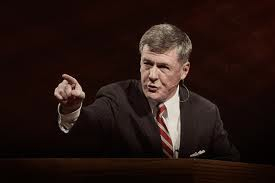
Dr. Steven J. Lawson is the Senior Pastor of Christ Fellowship Baptist Church in Mobile, Alabama, having served as a pastor in Arkansas and Alabama for the past twenty-nine years. He is a graduate of Texas Tech University (B.B.A.), Dallas Theological Seminary (Th.M.), and Reformed Theological Seminary (D. Min.).
The focus of Dr. Lawson’s ministry is the verse-by-verse exposition of God’s Word. The overflow of this study and preaching has led to his authoring fifteen books, including In It to Win It, The Kind of Preaching God Blesses, & The Unwavering Resolve of Jonathan Edwards. His other recent books include The Gospel Focus of Charles Spurgeon, The Expository Genius of John Calvin, The Heroic Boldness of Martin Luther, Foundations of Grace 1400 BC-AD 100, volume one of a multi-volume series & Pillars of Grace AD 100 – 1564, also, three volumes in the Holman Old Testament Commentary Series, Job, Psalms Volume I (Psalms 1-75), and Volume II (Psalms 76-150).
He has contributed to John Calvin: A Heart for Devotion, Doctrine, and Doxology, work celebrating the 500 year anniversary of the birth of John Calvin. He is the Series Editor for A Long Line of Godly Men Profile, a series of biographies of noted Christian leaders.
Dr. Lawson has also authored Famine in the Land: A Passionate Call to Expository Preaching, Made In Our Image, Absolutely Sure, The Legacy, When All Hell Breaks Loose, and Faith Under Fire. His books have been translated into various languages around the world, including Russian, Italian, Portuguese, Spanish, German, Albanian, Korean, Dutch, and the Indonesian language.
He has contributed several articles to Bibliotheca Sacra, The Southern Baptist Journal of Theology, The Faith and Mission, Decision Magazine, and Discipleship Magazine, among other journals and magazines.
Dr. Lawson’s pulpit ministry takes him around the world, preaching in such places as Russia, the Ukraine, Scotland, Wales, England, Ireland, Germany, Japan, New Zealand, Switzerland, Italy and many conferences in the United States, including The Shepherd’s Conference and the Resolved Conference at Grace Community Church, Sun Valley, California, the Ligonier National and Pastor’s Conference, and the Philadelphia Conference on Reformed Theology.
He is president of New Reformation, a ministry designed to bring about biblical reformation in the church today. He serves on the Executive Board of The Master’s Seminary and College and is a Teaching Fellow with Ligonier Ministries and a Visiting Professor at the Ligonier Academy, teaching Expository Preaching and Evangelism and Missions in the Doctor of Ministry program. Dr. Lawson taught in the Distinguished Scholars Lecture Series at The Master’s Seminary, lecturing in 2004 on “Expository Preaching of the Psalms.” He also serves on the Advisory Council for Samara Preachers’ Institute & Theological Seminary, Samara, Russia.
Steve and his wife Anne have three sons, Andrew, James, and John, and a daughter, Grace Anne.
An Interview with Author Richard F. Lovelace on Revival
An Interview with Author Richard Lovelace & Christian Book Distributors (CBD)
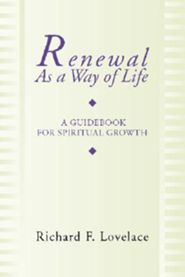
“Revival is an infusion of new spiritual life imparted by the Holy Spirit to existing parts of Christ’s body.”
-Richard Lovelace
Richard F. Lovelace (Th. D., Princeton), professor emeritus of church history at Gordon-Conwell Theological Seminary, is the author of Homosexuality and the Church,The American Pietism of Cotton Mather, and Dynamics of Spiritual Life. He has written numerous articles and has recently written Renewal as A Way of life.

The following comments were made by Richard Lovelace in an interview with Christianbook.com on August 26th 1999.
CBD: Could you describe yourself, your background, your hobbies and interests?
Lovelace: Ok. This is sort of a first! I am 68 years old. I am a graduate of Yale College with a BA in philosophy, as well as a Graduate of Westminster Seminary and of Princeton Theological Seminary. I am emeritus professor of Church History at Gordon-Conwell Seminary, a writer, and still teaching. I am married [and have] three children.
I have a great interest in music. I was a classical DJ for a year on Boston’s WBAQ before we moved, and I would still be doing that if there were a place to. I am an avid fisherman. My son has converted me to fly fishing trout!
CBD: Could you describe the overall premise of your book The Dynamics of Spiritual life, as well as your current book Renewal as a Way of Life ?
Lovelace: Certainly. I would encourage people to read the second book as well, which can be downloaded on the web athttp://www.overit.com/lovelace/lovelacebooks/index.html I wroteThe Dynamics of Spiritual Life, published in 1978, because I wanted to set forth what I call the unified field theory of Christian Spirituality that would make use of insights particularly on the Reformation, the Puritans, the Great Awakening movements, catholic spirituality, and other areas. It is a very catholic book. It really endeavors to reach out everywhere to come upon Biblical principles of spirituality. It is a book on what is called spiritual theology or the historical theology of Christian experience. I started out my own Christian life absorbed in a Christian community which was an offshoot tracing back to the Welsh Revival—the overcomer conference in England. The name of the group was Peniel, it’s still in existence, and I am still working in it. It has devoted itself to the production of pastoral theology, and practical theology of the Christian life. It was there that I got interested in the subject of spiritual awakening, revival, and renewal in the Church. The Dynamics of Spiritual life book attempts to set forth both a Biblical portrayal of individual spiritual life, but it also attempts to deal with the great movements of spiritual awakening, because in my opinion these things are related. You can pursue individual spiritual growth but inevitably you will come up with the realization that there is a corporate aspect to this. Christians grow as they are immersed in currents of spiritual life that are larger than individual or local congregations for instance.
CBD: Could you give a definition of what you think revival is, and what it would be distinguished by?
Lovelace: As used by all the historians of revivals, it means an infusion of new spiritual life imparted by the Holy Spirit to existing parts of Christ’s body. In other words, it happens to a church or community that has already been brought into spiritual life in the past in which that life is ebbing or is at a low ebb. These are also simply communities that are in covenant with God. I would say that God’s covenant embraces over the generations groups of persons moving through history in what are called denominations. So that in the Presbyterian or Baptist churches for example, you have a collection of people whose grandparents were vital Christians, and God is faithful to his covenant and will strike again and again [to ignite revival] in those lines.
In my own denomination, the Presbyterian Church, we were born half-dead in America. People with a somewhat dead orthodoxy came over and a powerful movement of Revival through the Log Collegemen (people trained in William Tennent’s in New Jersey) carried the message of not just having orthodox beliefs, but also being born again, and having the vital presence of the Holy Spirit. That divided the Presbyterian Church for 17 years, but it also was a powerful movement of multiplying Christians and the church reunited and that was the first great Awakening from about the 1730’s and 1740’s. There was another powerful movement again in the congregational and Presbyterian Church’s called the Second Great Awakening from about 1795 to roughly 1838. You see splits occur again and again in revival periods. Yet, I don’t see this to be an evidence of revival nor an end goal. This is a very counter theory to the idea that you become more and more revived the more you split. I don’t see that in history although everything that splits is still on the board, still operating. If you take a great movement such as the Anglican Communion, there are still streams of life pouring into it, especially from Africa. You could do this with a local congregational history too. If you could go back to a local congregation that started in 1745, which would be in the middle of the First Great Awakening, you would find that it went though periods of decline in renewal.
CBD: In your book you see great prospects for either Christian Revival or anti-Christian movements. How important is Revival in terms of the outcome?
Lovelace : This depends on what is called your eschatology. Whether you are pre mill, post mill, a mill, or don’t even know what mill is. But during the 18th and 19th century it didn’t matter what you were, pre-mill or post-mill or a-mill, everybody expected a triumphant increase. Just think of the Hymn “Jesus Shall Reign from Shore to Shore.” That is a declaration of war on the powers of darkness. That is according to Psalm 72 that the gospel will spread to the ends of the earth. Jesus says “the gospel will be preached in every nation and then will come the end. Generally, during the 18 th and 19th centuries people believed that there would be increasing degeneracy as the end drew near, ultimately seen in the coming of many Anti-Christs and then the Anti-Christ. But also, they believed that there would be great outpourings of the Holy Spirit as Joel predicts and simply on the basis of Acts 2; that as Christians pray, they will be equipped and enabled to move out and advance the kingdom. The great historical example of that was the early Church in the first four centuries. They really did not expect that they would conquer the Roman Empire. God didn’t let on that they were going to do it either. Nevertheless, it occurred. Christianity became so powerful a force that the people at the top had to change. We see that happen over and over again in History. We have seen this bring a quiet infusion of life in the Church that has brought about at least nominal Christianity to a lot of places. Right now, we are sitting here looking at I don’t now how much of the planet under the veil of Islam, the Moslems, that’s where I would expect Spiritual Awakening to spread to. If you are going to say that the Gospel is preached to every nation, I would say a powerful lot of Web site, internet, or radio and TV communication would have to take place in the Moslem area. Also there is China, in which one recent figure said that 28,000 Christians are being made there everyday. If you project that for a decade or so, it will mean a very powerful spread of the gospel there.
CBD: What specifically is your eschatology and your current view of the prospects for Revival?
Lovelace: Here is my eschatology basically. It is a quote from a conference held in 1801. “The world is coming to either Christ or to Beelzebub, and the parties are arming on both sides.” In other words, what is seen as a decline in American culture, is just an extremely obnoxious upsurge of the Beelzebub party so to speak, which is much smaller than it appears at times. What happens in such an upsurge is usually that the people of God began to call out to God in prayer for a revival. That is what is happening today. The most exciting things going on today are with David Bryant’s prayer ministry, and other things related to the prayer movements that are bubbling up everywhere on the planet. There are huge numbers of these that are now interlocked by the Web. This is also seen in Bill Bright’s movements of fasting and prayer for revival. The Bryant people are trying to get a praying area called a lighthouse for every one of those nine digit zip codes in America. This is human methodology, but it reflects a tremendous upsurge in a burden for revival. I would say where you see this kind of fireplace being built there is going to be a fire. There already is a fire.
CBD: A current modern day revival is documented in Jim Cymbala’s book Fresh Wind, Fresh Fire. The striking note of his account is the dominant role of prayer in the church ministry of the Brooklyn Tabernacle. How is revival linked to the prayer ministry?
Yes, also you have areas of this planet in which simultaneously horrific disasters are occurring, in Africa particularly where the AIDS virus is just ravaging the continent, but also there is every evidence of very, very deep spirituality and growing Christian influence there. In all of this, one of the things to bear in mind for today is Jonathan Edwards prediction which was that just as the printing press was a catalyst for the Reformation, so new methods of communication and travel would be used by the Holy Spirit in a great outpouring.
CBD: That’s fascinating!
Lovelace: What we are dealing with today on the Internet is this: it is changing everything. It is changing business, it is changing the economy, and what happening there is literally a big footrace between the “Beelzebub forces,” and the “Christian forces.” The question is, how much good stuff can we get out there on the Internet because of course it is accessible all over the planet. Everybody speaks English. They have to in order to do business. In addition to this, one can easily translate languages- for example I have this $99 program that translates Swahili web sites!
CBD: In your work you speak of Jonathan Edwards, Distinguishing Marks of a Work of the Spirit of God. Among those, where do you see the Church going?
Lovelace: Jonathan Edwards said a work of the Holy Spirit will have a strong renewed interest and emphasis on Jesus Christ. It will renew faithful reading of Scripture. It will damage the Kingdom of darkness. It will lead to a rebuilding of strong Orthodox theology, and it will generate love towards God and man. He later revised those to some degree in his treatise on the Religious Affections. Basically, there was a strong emphasis through Evangelicals on solid Biblical study and orthodox Reformation theology. Evangelicals have not been so strong on experience. They tend to be rationalistic at times.
The Wesleyan quadrilateral, which is like a baseball diamond, has Scripture as its home plate. The first base is tradition. The second base is reason, and the third base is experience. According to Albert Outler in John Wesley, you had to run around that diamond and keep coming back to Scripture. So, it starts with Scripture, followed by tradition, which is orthodox theology. Then reason, that is applying things to what we know now, and experience—that’s the impact of the Holy Spirit in your life. Finally, you come back to Scripture.
Evangelicals are very strong on Scripture, tradition, and reason. Charismatics and Pentecostals have been real strong on experience, to some degree also on Scripture. They have not been at all involved deeply in tradition, and sometimes don’t make enough use of reason. But what I see coming is a balance of all of this. My hope is that we will not have glossolalic and non-glossolalic communities all absolutely isolated from one another, but that we will have communities in which the nine gifts in 1 Corinthians 12 are displayed. Evangelicals could use some of these, words of knowledge, words of wisdom. I see more of a vanilla-fudge mixture coming in the future, where you can’t tell the Charismatics from the Evangelicals. You have a lot people in the Roman Catholic Church who can’t tell what they are either, but when they talk you listen.
What I am expecting is a stronger emphasis on the doctrine of the Holy Spirit, but also a renewed Christology. This is where the battle lines are being drawn in the mainline denominations now. There are these skirmishes over homosexuality and sexuality in general, but the real skirmish is over the deity and salvific work of Christ, and also over Scripture. All of those things, you are going to see the screen come into better focus if God continues to give us a reviving work.
Incidentally, I wrote an article which so far has not been published, in which I analyze the last forty years and I consider that a low key but real revival has taken place during this time. That has especially proceeded from the work of the likes of Billy Graham, Bill Bright, and Intervarsity for example. There’s been a lot of proliferation of real Christians during this time. Christians may currently be partially disarmed or unarmed for Christian warfare, but if they tensed up the society would feel the brunt of this.
CBD : If Christians were to “tense up”, react, and take their stand, what kind of responses would you suggest should take place?
Lovelace: Well, historically the Second Awakening was the high water mark of cultural impact of Protestantism. In that awakening decades of evangelistic growth was the basis of what ever occurred. Out of that came home and foreign missions as a first level or phase.
¨ The first phase of response is seen in the great missions movement and great number of Evangelicals who fill pulpits in America. This is evident in the Presbyterian movement, which has been colonized with people from Gordon-Conwell and Fuller Seminary.
¨ The second phase is the production of edifying literature, some of which is not so edifying, but Christian writings could totally absorb the New York Times book review all the time.
¨ Thirdly, there is an educational movement. This is occurring all over the place, especially as it is seen in the homeschooling movement. This is also evident in the proliferation of lower level Christian schools. We haven’t yet created major Christian Universities, but I really like what Regent University has done. We have colonized the Notre Dame department. This is amazing! They are all Evangelicals there. If you are going to see this whole society revived the way it was in the first fifty years of the 19th century (1800-1850), you are going to have to have a massive educational revival. Because if you are going to find one toxic drip that has been dripping into us, it is our school systems.
¨ Fourthly, great solid crusades against moral depravity must take place. We have had a couple of groups take a whack at this, but they often appear to be the Republican party at prayer, which is not a broad enough base.
¨ The fifth phase would be great crusades for social justice, where a mass of born again Catholics, Evangelicals, Charismatics, and Pentecostals, get mad at some things that are wrong. I have a list of things that are really bad in this country, from campaign finance reform to the gun situation, from our education, to a whole bunch of other stuff. The generation of righteous indignation in the 19th century abolished slavery. . We are not doing well with this. Probably because our leaders have been told that you can’t manage social reform, you just have to evangelize. Maybe that was right for a while. But when you get enough Christians that are alive and they get mad about something like abortion, or other deformities on the scene. They are probably going to start praying about it and there are going to be changes.
Some people have said that the anti-abortion crusade is the equivalent of the anti-slavery crusade. The evangelicals in England whipped out slavery essentially. Other issues in need of attention would be the low level of health care in this country. There are so many poor people who don’t have it. That’s an atrocity. What are we going to do? Let all the humanists in Sweden beat us on this? So, I do see those five phases that we might expect or aim at.
CBD: What additional thoughts have you contributed to The Dynamics of Spiritual Life in your recent book Renewal as a Way of Life?
Lovelace: The one thing I did do in Renewal, is to develop more a theology of renewal based on the Kingdom of God, or the Kingdom of Christ. I tried to make it kingdom centered prayer and renewal. Recently, I was out in Holland Michigan, the land of what is sometimes called “frozen chosen,” and I discovered that they weren’t all frozen. There were people translating Abraham Kuyper and Herman Baavinck. I read some Kuyper and I was amazed at the spiritual vitality of Kuyper. It was like reading Andrew Murray or Mrs. Penn Lewis. There was a real strong sense of spiritual conflict and the Holy Spirit’s operation in history. Kuyper has a very positive attitude towards culture, event the French revolution which is a black beast for him had elements in the revolution which to him reflected elements of the resurrection. We would not have what we have in the Western world had it not been for Christ’s resurrection.
Kuyper went to Keswick, a great spiritual growth center in England. He was spiritually hungry and said that got fed there, but there are a couple of places there that are not running on all cylinders. One of them is that they have become somewhat introverted in their spirituality, and they don’t realize the necessity to conquer in the realm of ideas. The famous statement that he made was that “there isn’t a square inch of territory in this planet in which Jesus Christ is not Lord now.” He says that we have got to be able to out think the forces that are broadcasting material inimical to Christ. So, firstly we have to get our minds filled with the spirit, and secondly, Kuyper said, we cannot surrender any areas of our society to the forces of darkness without putting up a fight in prayer. Kuyper started up a newspaper, a University, a Political part, and he is elected premier of Holland for decades. It is a case study of what happens when there is a real spirit filled renewal in a local area. What happens, as Phillip Schaff and Alexis de Tocqueville in the 19th century said when they came to America. “This is amazing! There are no established churches, but Christianity in all these denominations, they hand together enough to make Christianity rule the roost. Back in 1850 we ran the store in this country. I hope to see at least a movement in that direction in the next century.
CBD: Thank you for sharing these comments with us.
R.C. Sproul Summarizes The Doctrines of Grace: “T.U.L.I.P”

In a series of blog articles at ligonier.org entitled “TULIP and Reformed Theology,” Dr. R. C. Sproul provided a brief summary of the five points of Calvinism (also known as the Doctrines of Grace) expressed in the acrostic TULIP:
INTRODUCTION
Just a few years before the Pilgrims landed on the shores of New England in the Mayflower, a controversy erupted in the Netherlands and spread throughout Europe and then around the world. It began within the theological faculty of a Dutch institution that was committed to Calvinistic teaching. Some of the professors there began to have second thoughts about issues relating to the doctrines of election and predestination. As this theological controversy spread across the country, it upset the church and theologians of the day. Finally, a synod was convened. Issues were squared away and the views of certain people were rejected, including those of a man by the name of Jacobus Arminius.
The group that led the movement against orthodox Reformed theology was called the Remonstrants. They were called the Remonstrants because they were remonstrating or protesting against certain doctrines within their own theological heritage. There were basically five doctrines that were the core of the controversy. As a result of this debate, these five core theological issues became known in subsequent generations as the “five points of Calvinism.” They are now known through the very popular acrostic TULIP, which is a clever way to sum up the five articles that were in dispute. The five points, as they are stated in order to form the acrostic TULIP, are: total depravity, unconditional election, limited atonement, irresistible grace, and perseverance of the saints.
I mention this historical event because it would be a serious mistake to understand the essence of Reformed theology simply in light of these five doctrines—the Reformed faith involves many other elements of theological and ecclesiastical confession. However, these are the five controversial points of Reformed theology, and they are the ones that are popularly seen as distinctive to this particular confession. Over the next five posts, we are going to spend some time looking at these five points of Calvinism as they are spelled out in the acrostic TULIP.
(1) TOTAL DEPRAVITY
The doctrine of total depravity reflects the Reformed viewpoint of original sin. That term—original sin—is often misunderstood in the popular arena. Some people assume that the term original sin must refer to the first sin—the original transgression that we’ve all copied in many different ways in our own lives, that is, the first sin of Adam and Eve. But that’s not what original sin has referred to historically in the church. Rather, the doctrine of original sin defines the consequences to the human race because of that first sin.
Virtually every church historically that has a creed or a confession has agreed that something very serious happened to the human race as a result of the first sin—that first sin resulted in original sin. That is, as a result of the sin of Adam and Eve, the entire human race fell, and our nature as human beings since the fall has been influenced by the power of evil. As David declared in the Old Testament, “Oh, God, I was born in sin, and in sin did my mother conceive me” (Ps. 51:5). He was not saying that it was sinful for his mother to have borne children; neither was he saying that he had done something evil by being born. Rather, he was acknowledging the human condition of fallenness—that condition that was part of the experience of his parents, a condition that he himself brought into this world. Therefore, original sin has to do with the fallen nature of mankind. The idea is that we are not sinners because we sin, but that we sin because we are sinners.
In the Reformed tradition, total depravity does not mean utter depravity. We often use the term total as a synonym for utter or for completely, so the notion of total depravity conjures up the idea that every human being is as bad as that person could possibly be. You might think of an archfiend of history such as Adolf Hitler and say there was absolutely no redeeming virtue in the man, but I suspect that he had some affection for his mother. As wicked as Hitler was, we can still conceive of ways in which he could have been even more wicked than he actually was. So the idea of total total depravity doesn’t mean that all human beings are as wicked as they can possibly be. It means that the fall was so serious that it affects the whole person. The fallenness that captures and grips our human nature affects our bodies; that’s why we become ill and die. It affects our minds and our thinking; we still have the capacity to think, but the Bible says the mind has become darkened and weakened. The will of man is no longer in its pristine state of moral power. The will, according to the New Testament, is now in bondage. We are enslaved to the evil impulses and desires of our hearts. The body, the mind, the will, the spirit—indeed, the whole person—have been infected by the power of sin.
I like to replace the term total depravity with my favorite designation, which is radical corruption. Ironically, the word radical has its roots in the Latin word for “root,” which is radix, and it can be translated root or core. The term radical has to do with something that permeates to the core of a thing. It’s not something that is tangential or superficial, lying on the surface. The Reformed view is that the effects of the fall extend or penetrate to the core of our being. Even the English word core actually comes from the Latin word cor, which means “heart.” That is, our sin is something that comes from our hearts. In biblical terms, that means it’s from the core or very center of our existence.
So what is required for us to be conformed to the image of Christ is not simply some small adjustments or behavioral modifications, but nothing less than renovation from the inside. We need to be regenerated, to be made over again, to be quickened by the power of the Spirit. The only way in which a person can escape this radical situation is by the Holy Spirit’s changing the core, the heart. However, even that change does not instantly vanquish sin. The complete elimination of sin awaits our glorification in heaven.
(2) UNCONDITIONAL ELECTION
The Reformed view of election, known as unconditional election, means that God does not foresee an action or condition on our part that induces Him to save us. Rather, election rests on God’s sovereign decision to save whomever He is pleased to save.
In the book of Romans, we find a discussion of this difficult concept. Romans 9:10–13 reads: “And not only so, but also when Rebekah had conceived children by one man, our forefather Isaac, though they were not yet born and had done nothing either good or bad—in order that God’s purpose of election might continue, not because of works but because of him who calls—she was told, ‘The older will serve the younger.’ As it is written, ‘Jacob I loved, but Esau I hated.’” Here the Apostle Paul is giving his exposition of the doctrine of election. He deals with it significantly in Romans 8, but here he illustrates his teaching of the doctrine of election by going back into the past of the Jewish people and looking at the circumstances surrounding the birth of twins—Jacob and Esau. In the ancient world, it was customary for the firstborn son to receive the inheritance or the patriarchal blessing. However, in the case of these twins, God reversed the process and gave the blessing not to the elder but to the younger. The point that the Apostle labors here is that God not only makes this decision prior to the twins’ births, He does it without a view to anything they would do, either good or evil, so that the purposes of God might stand. Therefore, our salvation does not rest on us; it rests solely on the gracious, sovereign decision of God.
This doesn’t mean that God will save people whether they come to faith or not. There are conditions that God decrees for salvation, not the least of which is putting one’s personal trust in Christ. However, that is a condition for justification, and the doctrine of election is something else. When we’re talking about unconditional election, we’re talking in a very narrow confine of the doctrine of election itself.
So, then, on what basis does God elect to save certain people? Is it on the basis of some foreseen reaction, response, or activity of the elect? Many people who have a doctrine of election or predestination look at it this way. They believe that in eternity past God looked down through the corridors of time and He knew in advance who would say yes to the offer of the gospel and who would say no. On the basis of this prior knowledge of those who will meet the condition for salvation—that is, expressing faith or belief in Christ—He elects to save them. This is conditional election, which means that God distributes His electing grace on the basis of some foreseen condition that human beings meet themselves.
Unconditional election is another term that I think can be a bit misleading, so I prefer to use the term sovereign election. If God chooses sovereignly to bestow His grace on some sinners and withhold His grace from other sinners, is there any violation of justice in this? Do those who do not receive this gift receive something they do not deserve? Of course not. If God allows these sinners to perish, is He treating them unjustly? Of course not. One group receives grace; the other receives justice. No one receives injustice. Paul anticipates this protest: “Is there injustice on God’s part?” (Rom. 9:14a). He answers it with the most emphatic response he can muster. I prefer the translation, “God forbid” (v. 14b). Then he goes on to amplify this response: “For he says to Moses, ‘I will have mercy on whom I have mercy, and I will have compassion on whom I have compassion’” (v. 15). Here the Apostle is reminding his reader of what Moses declared centuries before; namely, that it is God’s divine right to execute clemency when and where He desires. He says from the beginning, “I will have mercy on whom I will have mercy.” It is not on those who meet some conditions, but on those whom He is pleased to bestow the benefit.
(3) LIMITED ATONEMENT
I think that of all the five points of Calvinism, limited atonement is the most controversial, and the one that engenders perhaps the most confusion and consternation. This doctrine is chiefly concerned about the original purpose, plan, or design of God in sending Christ into the world to die on the cross. Was it the Father’s intent to send His Son to die on the cross to make salvation possible for everyone, but with the possibility that His death would be effective for no one? That is, did God simply send Christ to the cross to make salvation possible, or did God, from all eternity, have a plan of salvation by which, according to the riches of His grace and His eternal election, He designed the atonement to ensure the salvation of His people? Was the atonement limited in its original design?
I prefer not to use the term limited atonement because it is misleading. I rather speak of definite redemption or definite atonement, which communicates that God the Father designed the work of redemption specifically with a view to providing salvation for the elect, and that Christ died for His sheep and laid down His life for those the Father had given to Him.
One of the texts that we often hear used as an objection against the idea of a definite atonement is 2 Peter 3:8–9: “But do not overlook this one fact, beloved, that with the Lord one day is as a thousand years, and a thousand years as one day. The Lord is not slow to fulfill his promise as some count slowness, but is patient toward you, not wishing that any should perish, but that all should reach repentance.” The immediate antecedent of the word any in this passage is the word us, and I think it’s perfectly clear that Peter is saying that God is not willing that any of us should perish, but that all of us should come to salvation. He’s not speaking of all mankind indiscriminately; the us is a reference to the believing people to whom Peter is speaking. I don’t think we want to believe in a God who sends Christ to die on the cross and then crosses His fingers, hoping that someone will take advantage of that atoning death. Our view of God is different. Our view is that the redemption of specific sinners was an eternal plan of God, and this plan and design was perfectly conceived and perfectly executed so that the will of God to save His people is accomplished by the atoning work of Christ.
This does not mean that a limit is placed on the value or the merit of the atonement of Jesus Christ. It’s traditional to say that the atoning work of Christ is sufficient for all. That is, its meritorious value is sufficient to cover the sins of all people, and certainly anyone who puts his or her trust in Jesus Christ will receive the full measure of the benefits of that atonement. It is also important to understand that the gospel is to be preached universally. This is another controversial point, because on the one hand the gospel is offered universally to all who are within earshot of the preaching of it, but it’s not universally offered in the sense that it’s offered to anyone without any conditions. It’s offered to anyone who believes. It’s offered to anyone who repents. Obviously the merit of the atonement of Christ is given to all who believe and to all who repent of their sins.
(4) IRRESISTIBLE GRACE
In historic Reformation thought, the notion is this: regeneration precedes faith. We also believe that regeneration is monergistic. Now that’s a three-dollar word. It means essentially that the divine operation called rebirth or regeneration is the work of God alone. An erg is a unit of labor, a unit of work. The word energy comes from that idea. The prefix mono- means “one.” So monergism means “one working.” It means that the work of regeneration in the human heart is something that God does by His power alone—not by 50 percent His power and 50 percent man’s power, or even 99 percent His power and 1 percent man’s power. It is 100 percent the work of God. He, and He alone, has the power to change the disposition of the soul and the human heart to bring us to faith.
In addition, when He exercises this grace in the soul, He brings about the effect that He intends to bring about. When God created you, He brought you into existence. You didn’t help Him. It was His sovereign work that brought you to life biologically. Likewise, it is His work, and His alone, that brings you into the state of rebirth and of renewed creation. Hence, we call this irresistible grace. It’s grace that works. It’s grace that brings about what God wants it to bring about. If, indeed, we are dead in sins and trespasses, if, indeed, our wills are held captive by the lusts of our flesh and we need to be liberated from our flesh in order to be saved, then in the final analysis, salvation must be something that God does in us and for us, not something that we in any way do for ourselves.
However, the idea of irresistibility conjures up the idea that one cannot possibly offer any resistance to the grace of God. However, the history of the human race is the history of relentless resistance to the sweetness of the grace of God. Irresistible grace does not mean that God’s grace is incapable of being resisted. Indeed, we are capable of resisting God’s grace, and we do resist it. The idea is that God’s grace is so powerful that it has the capacity to overcome our natural resistance to it. It is not that the Holy Spirit drags people kicking and screaming to Christ against their wills. The Holy Spirit changes the inclination and disposition of our wills, so that whereas we were previously unwilling to embrace Christ, now we are willing, and more than willing. Indeed, we aren’t dragged to Christ, we run to Christ, and we embrace Him joyfully because the Spirit has changed our hearts. They are no longer hearts of stone that are impervious to the commands of God and to the invitations of the gospel. God melts the hardness of our hearts when He makes us new creatures. The Holy Spirit resurrects us from spiritual death, so that we come to Christ because we want to come to Christ. The reason we want to come to Christ is because God has already done a work of grace in our souls. Without that work, we would never have any desire to come to Christ. That’s why we say that regeneration precedes faith.
I have a little bit of a problem using the term irresistible grace, not because I don’t believe this classical doctrine, but because it is misleading to many people. Therefore, I prefer the term effectual grace, because the irresistible grace of God effects what God intends it to effect.
(5) PERSEVERANCE OF THE SAINTS
Writing to the Philippians, Paul says, “He who has begun a good work in you will perfect it to the end” (Phil. 1:6). Therein is the promise of God that what He starts in our souls, He intends to finish. So the old axiom in Reformed theology about the perseverance of the saints is this: If you have it—that is, if you have genuine faith and are in a state of saving grace—you will never lose it. If you lose it, you never had it.
We know that many people make professions of faith, then turn away and repudiate or recant those professions. The Apostle John notes that there were those who left the company of the disciples, and he says of them, “Those who went out from us were never really with us” (1 John 2:19). Of course, they were with the disciples in terms of outward appearances before they departed. They had made an outward profession of faith, and Jesus makes it clear that it is possible for a person to do this even when he doesn’t possess what he’s professing. Jesus says, “This people honors Me with their lips, but their heart is far from Me” (Matt. 15:8). Jesus even warns at the end of the Sermon on the Mount that at the last day, many will come to Him, saying: “Lord, Lord, didn’t we do this in your name? Didn’t we do that in your name?” He will send them away, saying: “Depart from Me, you workers of iniquity. I never knew you” (Matthew 7:23). He will not say: “I knew you for a season and then you went sour and betrayed Me. No, you never were part of My invisible church.” The whole purpose of God’s election is to bring His people safely to heaven; therefore, what He starts He promises to finish. He not only initiates the Christian life, but the Holy Spirit is with us as the sanctifier, the convictor, and the helper to ensure our preservation.
I want to stress that this endurance in the faith does not rest on our strength. Even after we’re regenerated, we still lapse into sin, even serious sin. We say that it is possible for a Christian to experience a very serious fall, we talk about backsliding, we talk about moral lapses, and so on. I can’t think of any sin, other than blasphemy against the Holy Spirit, that a truly converted Christian is not capable of committing.
We look, for example, at the model of David in the Old Testament. David was surely a man after God’s own heart. He was certainly a regenerate man. He had the Spirit of God in Him. He had a profound and passionate love for the things of God. Yet this man not only committed adultery but also was involved in a conspiracy to have his lover’s husband killed in war—which was really conspiracy to murder. That’s serious business. Even though we see the serious level of repentance to which David was brought as a result of the words of the prophet Nathan to him, the point is that David fell, and he fell seriously.
The apostle Paul warns us against having a puffed-up view of our own spiritual strength. He says, “Therefore let anyone who thinks that he stands take heed lest he fall” (1 Cor. 10:12). We do fall into very serious activities. The Apostle Peter, even after being forewarned, rejected Christ, swearing that he never knew Him—a public betrayal of Jesus. He committed treason against His Lord. When he was being warned of this eventuality, Peter said it would never happen. Jesus said, “Simon, Simon, Satan would have you and sift you like wheat, but I have prayed for you, so that when you turn, strengthen the brothers” (Luke 22:31). Peter fell, but he returned. He was restored. His fall was for a season. That’s why we say that true Christians can have radical and serious falls but never total and final falls from grace.
I think this little catchphrase, perseverance of the saints, is dangerously misleading. It suggests that the perseverance is something that we do, perhaps in and of ourselves. I believe that saints do persevere in faith, and that those who have been effectually called by God and have been reborn by the power of the Holy Spirit endure to the end. However, they persevere not because they are so diligent in making use of the mercies of God. The only reason we can give why any of us continue on in the faith is because we have been preserved. So I prefer the term the preservation of the saints, because the process by which we are kept in a state of grace is something that is accomplished by God. My confidence in my preservation is not in my ability to persevere. My confidence rests in the power of Christ to sustain me with His grace and by the power of His intercession. He is going to bring us safely home.
About The Author:

Dr. R.C. Sproul has been a professor of Apologetics, Philosophy, and Theology at numerous Seminaries. He is the Founder of Ligonier Ministries, President of Reformation Bible College, and the Senior Minister of St. Andrews Presbyterian Church in Sanford, Fl. He has authored over 70 books including the following books on Soteriology: Chosen By God; Willing to Believe; Getting the Gospel Right; What is Reformed Theology?; The Truth of the Cross; Faith Alone; and Grace Unknown.
9 Characteristics of Leaders God Uses to Bring About Revival
What kind of human leaders has god used to influence the church when He is pleased to send revival?

In every period of history God has given gifts to the church in the form of servants who are a great blessing to that age. Some periods seem to have a good number of people while others only have a few. Horatius Bonar, the famous Scottish minister in the 19th century wrote a small tract called True Revivals and Men God Uses. In this tract Bonar listed nine characteristics of the kinds of leaders God used in seasons of revival.
Horatius Bonar asks the question this way: “What weapons did they employ?”
1) They were in earnest about the great work of the ministry on which they had entered.
2) They were bent on success.
3) They were men of faith.
4) They were men of labor.
5) They were men of patience.
6) They were men of boldness and determination.
7) They were men of prayer.
8) They were men whose doctrines were of the most decided kind, both as respects law and gospel.
9) They were men of solemn deportment and deep spirituality of soul.
About the Author:

Dr. John H. Armstrong is a former pastor and church-planter, of more than twenty years, the author/editor of eleven books, and the author of hundreds of magazine, journal, and Web based articles. Besides this ministry of writing Dr. Armstrong serves as an adjunct professor of evangelism at Wheaton College Graduate School, teaches in various seminaries and colleges as a guest lecturer, and is a seminar and conference speaker in the United States and abroad. He is the founder and president of ACT 3, based in Carol Stream, Illinois. John and Anita, his wife of thirty-eight years, have two adult married children. Their son Matthew is engaged in a ministry of evangelism and discipleship and is a church planter, while their daughter Stacy is an administrative assistant for ACT 3. John and Anita have two granddaughters, Gracie and Abbie.
John was born in Lebanon, Tennessee (March 1, 1949). He is the youngest of two sons of the late Dr. Thomas H. and Marie F. Armstrong. John’s dad was a dentist and the editor of the Tennessee State Dental Journal. He also served on the faculty of the University of Tennessee Dental School in Memphis for nearly fifteen years. John’s brother is a family physician in Huntsville, Alabama. He attended Castle Heights Military Academy in Lebanon, Tennessee, where he was an ROTC cadet officer and graduated cum honore in 1967. He attended the University of Alabama from 1967-1969, studying journalism and history. In 1969 he transferred to Wheaton College, were he received the B. A. in history (1971) and the M. A. in theology and missions (1973). He did further study at Trinity Evangelical Divinity School, Deerfield, Illinois, and Northern Baptist Seminary, Lombard, Illinois. He earned the D. Min degree (1979) at Luther Rice Seminary, Atlanta, Georgia.
John is the author of Five Great Evangelists (Christian Focus Publications, 1997), The Catholic Mystery (Harvest House, 1999), True Revival: What Happens When God’s Spirit Moves (Harvest House, 2000), and The Stain That Stays: The Church’s Response to the Sexual Misconduct of It’s Leaders (Christian Focus, 2000). He is the general editor of Roman Catholicism: Evangelical Protestants Analyze What Unites and Divides Us (Moody Press, 1994), The Coming Evangelical Crisis (Moody Press, 1996), Reforming Pastoral Ministry (Crossway, 2001), and The Glory of Christ (Crossway, 2002), Understanding Four Views on Baptism (Zondervan, 2007) and Understanding Four Views on the Lord’s Supper (Zondervan, 2007) He has contributed single chapters, theological and historical introductions, and forewords to a dozen or more volumes, and has been published in Christianity Today, Christian History and similar popular Christian periodicals.
John is a member of several fellowships and societies, including the World Reformed Fellowship, the Karl Barth Society, the John Calvin Society and the Abraham Lincoln Forum. John’s hobbies include baseball, with a love for the Atlanta Braves which goes back to the 1957 Milwaukee Braves who won the World Series, and book collecting. He also enjoys reading great literature, art, movies and walking/biking. He remains an avid college football fan, following his beloved Crimson Tide of Alabama. John and Anita have a special place in their home for Neo, the Armstrong’s miniature dachshund. John and Anita’s grandchildren, Gracie and Abbie, bring very special joy to their busy lives through regular visits.
Dr. Erwin W. Lutzer on the Great Need For Revival in America Today
“America’s Spiritual Crisis”

Despite its foundational Christian heritage, America is rapidly degenerating into a godless society. The church in America, although highly visible and active, appears powerless to redirect the rushing secular currents. Mired in a moral and spiritual crisis, America’s only hope is a national revival, like God has graciously bestowed in the past.
The Removal of God. From the beginning, Christian values ingrained America’s political and social fabric. Its democratic form of government was founded on faith in God. To this day United States currency bears the inscription, “In God We Trust.” America flourished while Christianity permeated all aspects of life, including the laws, education, and culture.
The powers in America today, however, have chosen a path of rejecting God and His ways. Federal courts have interpreted our constitution as requiring that the Bible, prayer and religious discussion be removed from classrooms, community buildings and places of public gatherings. Government officials and educators across the country are systematically eliminating any vestiges of God from society. Militant secularists will not be satisfied until God is expunged from every facet of American life.
American laws are being reinterpreted and rewritten to sanction what is abominable to a holy God. In 1973 the Supreme Court legalized abortion for any reason, and Congress subsequently passed a law providing government funds for such barbarous acts. Old laws making homosexual practices criminal are being repealed, and new legislation is being enacted requiring society to support such lifestyles. While religious discussion is gagged, pornography is permitted to saturate our culture.
Our society is fast becoming openly hostile to Christian values. The media trivializes and ridicules Christianity in the name of humanistic and pluralistic concerns. American culture is dominated by television and movies, whose profanity and lewdness tramp God’s honor into the mud, inculcating non -Christian values from infancy. Public schools teach our children how to practice various forms of immorality. One school curriculum in America teaches acceptance of homosexuality in the first grade and mutual masturbation in junior high.
America is reaping the dire consequences of rejecting God. Our society is morally bankrupt, and the problems seem resistant to government cures. William J. Bennet, in his Index of Leading Cultural Indicators, provides the following statistics for the past 30 years. Despite increased funding and stricter laws, violent crime has increased more than 500 percent. While sex education programs have proliferated, illegitimate births have increased over 400 percent, significantly among teenagers. The divorce rate has quadrupled, and single parent homes have become the majority. Our young people today exhibit a hopelessness, with a more than 200 percent increase in the teenage suicide rate. And America appears helpless before its great problems.
The Church’s Ineffectiveness. The church in America, despite its many activities and apparent successfulness, has had no measurable affect in reversing this downward spiral. We must candidly admit that no country has had more Christian organizations, more radio stations, more books, more seminars, and more churches with proportionately less impact on society. We are confounded with the pollsters who tell us that religion is up but morality is down.
Sadly, the influence has been in the wrong direction, as we see evidence that our culture has begun to permeate our churches. The church is seduced by the social agenda of wealth and pleasure, and has condoned sinful compromises. There is moral decay within the church, with highly publicized scandals involving ministers, and divorce statistics which are not much better than those outside the church. Think of all that we and our churches would have to repent of if a spirit of holiness began to captivate us. How can America be influenced by an inconsistent and hypocritical church?
If the strength of the church should be determined by its impact on its surrounding culture, we desperately need an injection of spiritual life. The present powerlessness of the church may be a sign that God has withdrawn His blessing that we might seek Him.
A National Revival Needed. There is reason to believe that only a national revival can pull us out of the ditch into which we have slid. I am convinced ‘ as all of us must be ‘ that every human resource is now inadequate and only the direct intervention of God can reverse our country’s spiritual decay. If America will really be given another chance, at least some kingdoms of darkness will have to fall like dominoes. That can only happen if God chooses to show us the mercy we most assuredly do not deserve.
America has experienced three great periods of revival in the previous two centuries, during which all of society was dramatically affected. There was a widespread restoration of the people of God, that resulted in tens of thousands of conversions greatly affecting the culture of the day. America returned to its Christian roots. Taverns were closed, families were reconciled, and young people became sober in their pursuit of God.
From our past, we learn the clear lesson that a genuine spiritual revival can do more to transform culture than all of our political/social activism. We need a renewal that can only be effected by widespread repentance before the Almighty whom we have so grievously offended. The forces of evil are so deeply entrenched that any cultural shifts will only be cosmetic unless they are accompanied by a spiritual awakening that affects large segments of our population.
When Ephesus experienced revival, the people brought their occult books and artifacts, and publicly burned them (Acts 19:18-19). What bonfires of pornography, rock music, artifacts, and books of occultism we would have if God’s presence was manifestly felt!
There is Hope. Revival is possible as long as God is God. Jonathan Edwards, a leader during the First Great Awakening in America, argued that God grants light when the darkness is the greatest, and it was in just such times that the glorious periods of revival occurred in America’s history. When there was disinterest in religion, gross immorality and rampant unbelief, God poured out His undeserved gracious blessing.
So let’s dream for a while: Catch the vision of crowded churches from coast to coast, shops closing during the noon hours for special prayer, and our legislators turning to God for wisdom in making decisions. Think of the nightly news telling the story of tens of thousands of believers making restitution for past wrongs, and reports of thousands of conversions to Christ.
Imagine a country where abortion would become rare, not just through legislation but because mothers valued their children and immorality was on the decline. Imagine a country in which homosexuals repented and sought God for help in overcoming their lifestyles rather than imposing their values on society. Imagine a country where the courts would reflect America’s Christian roots.
We must believe God for something more than our generation has seen. May our sights be raised and our faith increased, to fervently seek God for a national revival. What God has done in the past, He can do again!
About the Author: Since 1980, Erwin W. Lutzer has served as senior pastor of the world-famous Moody Church in Chicago, where he provides leadership to Chicago pastors. Dr. Lutzer earned his B.Th. from  Winnipeg Bible College, a Th.M. from Dallas Theological Seminary, an M.A. in philosophy from Loyola University, an LL.D. from Simon Greenleaf School of Law, and a D.D. from Western Conservative Baptist Seminary.
Dr. Lutzer is a featured radio speaker on the Moody Broadcasting Network and the author of numerous books, including The Vanishing Power of Death, Cries from the Cross, the best-selling One Minute Before You Die and Hitler’s Cross, which received the Evangelical Christian Publishers Association (EPCA) Gold Medallion Book Award. He speaks both nationally and internationally at Bible conferences and tours and has led tours of the cities of the Protestant Reformation in Europe.
Dr. Lutzer and his wife, Rebecca, live in the Chicago area and are the parents of three grown children.The article above was adapted from: http://articles.ochristian.com/article3157.shtml. If you would like to read more on the theme of this article check out his short book Is God on America’s Side? The Surprising Answer and How It Affects Our Future.
Prayer: The Prelude To Revival by Dr. Roger R. Nicole
It is in keeping with Reformed thought that revival should be grounded in prayer, because in prayer we  acknowledge God’s sovereignty. God alone is the One who can dispense revival. So, revival is not something that is within the reach of human beings; it is something God alone can provide.
Sometimes people have expressed the attitude they think we ought to have in a motto which goes like this: “You ought to pray like a Calvinist and preach like an Arminian.” That is, pray as if everything depended upon God and preach as if everything depended on you. I would like to suggest a change in this formula which will improve it by fifty percent: “You ought to pray like a Calvinist and preach like a Calvinist.” Do not pray as if everything depends on God. (There is no good reason to have an “as if” in that motto, because things do depend on God. He is the One who sovereignly ordains and blesses.) Then preach like a Calvinist, because there, too, the results depend on God. Do not imagine that either prayer or preaching are activities in which we suddenly take leave of the doctrine of God’s sovereignty.
What Does Prayer Change?
When we consider prayer, there are questions which often are disturbing to the minds of some people. The first question is: “Do you think that you can really change the mind of God? That is, can prayer make God modify His sovereign plan?” There are people who feel that unless you are prepared to say this, there is no great value in prayer. I do not know what the reader’s particular idea on this subject may be, but I would like to say that if you believe you can change the mind of God through prayer, I hope you are using some discretion. If that is the power you have, it is certainly a most dangerous thing. Surely God does not need our counsel in order to set up what is desirable. Surely God, whose knowledge penetrates all minds and hearts, does not need to have us intervene to tell Him what He ought to do. The thought that we are changing the mind of God by our prayers is a terrifying concept.
I will be frank to confess that if I really thought I could change the mind of God by praying, I would abstain. I would have to say, “How can I presume, with the limitations of my own mind and the corruptions of my own heart—how can I presume to interfere in the counsels of the Almighty?” It is almost as if you were to introduce somebody who is utterly ignorant of electronics to a weapons plant in which, by pushing certain buttons, one might precipitate an explosion. You say, “Go ahead and push buttons. Never mind what happens.” Oh, no! There is comfort for the child of God in being assured that our prayers will not change God’s mind. This is not what is involved in prayer, and we are not in danger of precipitating explosions by some rash desire on our part. But then people say, “If you cannot change God’s mind, what is the point of praying? If prayer does not change things, prayer is worthless.”
Here you have perhaps noticed that I have changed the formula. I did not say,” change the mind of God,” but “change things.” I never said that prayer does not change things. Prayer does change things, but it does not change the mind of God. The reason prayer changes things but does not change God is that He has appointed prayer as an effectual means for accomplishing His own purpose. This effectual means is essential for this accomplishment. When we have a right understanding of the sovereignty of God, we recognize that God has established a plan in which not only the effects but also the causes are ordained. We cannot disconnect the causes from the effects or the effects from the causes.
For example, I lift a book in your sight. Because the book has risen into the air, I am in a position to say, “God has ordained that it should get to this particular place.” He must have ordained it because that is where the book is. But notice, God did not ordain for the book to rise all by itself. He ordained that it should rise at the end of my hand. He ordained that I should have strength in my arm to lift it. He ordained that I should choose this particular book in order to illustrate this particular point. There is a connection between the book’s rising and the subject I wish to develop. All these things are tied up together. If there were no lecture, there would be no point of illustrating the power of second causes. If there were no desire to illustrate the power of second causes, my hand would have remained at my side. If my hand had remained at my side, the book would not have risen. I think we can argue in this way.
God, however, ordained that there should be this lecture, that there should be a desire to show the correlation of causes and effects in His sovereign plan, that this particular illustration should come to my mind, and that I should implement it by the strength that He has given me. One cannot say, “If you hadn’t touched it, it would have risen anyway,” because God did not ordain that it should rise anyway. He ordained that it should rise through my hand.
That is exactly the case with prayer. Prayer is an effectual secondary cause that God has related to the effects involved. Just as the activity of human beings on earth is related to the effects that are produced, just as the book rising is related to the hand lifting, so are the effects of prayer related to the prayer that is offered. So although prayer does not change the mind of God, it does change things. God has appointed change through prayer, even though the way in which the cause is related to the effect is not perfectly clear to us.
The fact that the way this happens is not clear does not give us grounds for denying the relationship. We pray for healing. If God provides healing, we cannot say, “There would have been healing whether I prayed or not; I would have gotten well anyway.” God provided healing in relation to prayer.
We pray for an increase in the knowledge of God and earnestness in His service. If God is pleased to bless our lives in this way, we cannot say, “This would have happened whether I prayed or not.” God provides His blessing in relation to the prayer.
We pray for the salvation of someone we love, someone God placed on our hearts to intercede and plead for. That person is born again by the work of the Holy Spirit. We cannot say, “This would have happened whether I prayed or not.” It is related to our prayers. God, who has appointed the salvation, has also appointed prayer as the means to that salvation. We cannot omit any link in that chain and say that the chain will exist whether the link is there or not.
A final question is: “How can I pray if I do not see how prayer works?” That is not a wise way of handling the matter, since it is God who tells us that prayer is part of His plan for us. It is not necessary that we have an understanding of the ways in which God’s purposes are implemented. God has put this means at our disposal. He encourages us to pray. In 2 Chronicles 7:14 He says, “If My people, who are called by My name, will humble themselves and pray and seek My face and turn from their wicked ways, then will I hear from heaven and will forgive their sin and will heal their land.” To insist that we must have an understanding of how this works is a very unreasonable attitude.
Even in affairs of daily life we do not have this attitude. I am sure you have used a touch-system telephone. Do you understand how it works? Do you have that consummate knowledge of communications to know exactly what goes on when you press those little buttons? Do you know how those numbers are changed into binary code and used to track down the particular telephone you wish to call? Experts may understand this. But I must say, as far as I am concerned, when I am calling, I do not think of any of those things. I just pick up the phone and touch the buttons. I do not worry about how this happens. I am interested only in whom I am going to reach and what I will say.
It is the same with prayer. We do not have to know how it works. It is enough to know that it does work. Prayer is part of God’s sovereign plan and is an effectual means by which we can share with God in the fulfillment of that plan. When we pray, we are cooperating; we are working together with God in the work to which, in His own mercy, He has been pleased to call us.
Since prayer is part of God’s plan, we are not forcing God’s hand at any time by praying. We are not intruding our own will in a way that is disagreeable or uncomfortable to God. We do not need to fear that we are finagling with buttons about which we know nothing, which might bring disaster on ourselves and others. We are praying in line with the great purposes of God. Without prayer there are many things that would be different. It is by virtue of prayer that they are what God has planned them to be.
Prayer and Revival
In Scripture, prayer is presented as a prerequisite for revival. It is a prelude. If you study the history of revivals, you will find that they are best documented not only in their effects but also in their preparatory prayer periods. This was true of the revival in New England under the ministry of Jonathan Edwards. It was true in the revival in Wales under Evan Roberts. It was true of the revivals attending the ministry of Charles Grandison Finney in the United States. Revival that is worthwhile is bathed in prayer. When He wants a revival, God is pleased to lead His people to pray that revival might be forthcoming.
The prayer that leads to revival must be believing prayer. This is the point the apostle James makes in his Epistle (James 1:5–7). When we come to the Lord we must come with the expectation that He is able and will do great things. If we come vacillating, wondering whether God is able to accomplish anything, whether the situation is really so desperate that even God cannot touch it, then obviously our prayer is lacking in fervency. We are just going through the motions, as it were. We are not really praying.
God wants us to come to Him in faith. Indeed, prayer is an exercise of faith in which we are steeped in the supreme greatness and ability of God, and have our eyes fixed on the majesty of His purpose and the superlative quality of His resources. Nothing is impossible for our God. Our God is able to move mountains. He is able to transform hearts, break resistances, reach out even underneath the conscious lives of people to transform them. So we should never say, “Here is somebody beyond God’s reach. The hardness of heart is so great, the wickedness of life is so manifest, that this cannot possibly be a candidate for acceptance into the kingdom of God. We might as well give up on this person.”
In spite of the fact that the early church had seen God do many great things, it undoubtedly thought this way about Paul. The early Christians thought, “This one is lost. There is no way God will bring Paul into the kingdom. He is a persecutor, an enemy, an opponent. There is no hope for him.” When Paul tried to join the church, they gave him the cold shoulder (Acts 9:26). They said, “We can’t trust this man. He will be spying on us and then use his knowledge to annihilate the church.” It took Barnabas to reason, “God saved me; may be He can save Paul, too.” He went close to Paul and befriended him at great danger to himself. He made sure that Paul truly was a child of God. Then he brought him to the apostles (Acts 9:27). We, too, might think, “What less likely a candidate for election than Paul?” Yet God was pleased to reach him and change him. God made him the great apostle of the Gentiles, the benefit of whose ministry is still with us to this day.
We need believing prayer, prayer that does not concentrate on the obstacles. We must not say, “He is hopeless,” or “Our country has gone to the dogs,” or “Our church has gone liberal.” Prayer must recognize that God is all-powerful and can do wonders. If anyone prays and does not believe, that one is unstable (James 1:6–7). He cannot expect anything. But if we come with faith, accepting the reality of the power of God, we will experience that effective prayer which changes things in keeping with God’s purpose.
If It Be God’s Will
The second characteristic of the prayer that brings revival is submission. It must be submissive prayer. That is, we must be prepared to submit our own ideas, aims, and ambitions to the sovereign God. We must not intrude with our outlook, pressing it on God, as it were. Rather, we must come with a desire to understand God’s outlook and subordinate our desires to what He has ordained.
Some people say, “That kind of prayer is not really effective. If you start by saying, ‘If it be Your will …’ you are attempting to give God an out in case He is not going to do it. You are not believing.” That is not the point at all. We do not need to give God an out. God does not need an out. What we are doing when we say, “If it is Your will…” is articulating the principle that we are not telling God what should be done but are actually identifying with His purpose and asking to work together with Him in fulfillment of that purpose.
We have a moving example of this kind of prayer on the lips of our Lord Himself. In Gethsemane He said, “If it is possible… Yet not as I will, but as You will” (Matt. 26:39). This is mysterious to us, for it indicates that at that point of His human consciousness, our Lord was left in suspense as to what the will of God was. “Not as I will, but as You will.” That is the condition of effective prayer—that we should be willing to accept what God has ordained in order that His purpose might be accomplished.
Sometimes it is hard for us to pray that way, because our will is so strong, and our understanding of what God should want is so clear that we do not even feel like saying, “Your will be done.” When we pray for revival, especially, we say, “We do not need to introduce conditional clauses. The very fact that God leads us to pray is an indication that He wills that some form of revival should come.” Still, the very essence of a consecrated prayer is that it should be in keeping with the will of God.
This is what is meant by praying in the name of Jesus. To pray in the name of Christ is not simply to have a little addition to your prayer, in which you use those words almost as a magical formula to insure success. To pray in the name of Christ is to identify yourself with Christ, with His aims, His purposes, His ministry. It is to say, “I am with Jesus, I am for Him and His purposes.” The one who prays in the name of Jesus does not need to fear disappointments, because unity with the purpose of God protects him from that. There is a submission to God which acknowledges with gratitude the way in which God is pleased to answer.
This prayer must be God-centered. It must relate itself to God’s glory rather than to our private desires. Of course, God permits us to present our private desires as well. There is nothing wrong in asking God to give us good weather for mountain climbing if good weather is important for it. But here again, it would be wise to say, “If it be Your will,” because there are also people, such as farmers, who need rain. Since the desire of the mountaineer may conflict with the desire of the farmer, it would be good for both of them to be submitted to whatever God is pleased to send. God permits us to present our desires, but we must have a supreme desire, especially in the prayer for revival, to see the glory of God manifested.
Some of the most effective prayers in Scripture do this. They are even argumentative at this point. Think of the prayer of Abraham when he prayed for Sodom and Gomorrah. He even argued with God, saying, “Is it right for You to destroy those cities if fifty … forty-five … forty … thirty … twenty … ten righteous people live there?” (Gen. 18:24–33). God blessed that prayer. So we can say that if Lot and his family were saved, it was because of the faithful intercession of Abraham, who did not relent, even though, in the end, the number he cited was not sufficiently small to warrant salvation of the wicked cities.
Think of the prayer of Moses who argued, “If You destroy Your people, what will happen to Your name? Your glory is at stake. Don’t do it” (Ex. 32:11–13). God blessed that glorious intercessory prayer of Moses, who disregarded his personal ambitions in order to identify with the purposes of God.
A prayer for revival should be centered, not in the desire that we should have more money for our church (because there will be more people coming), not that there should be a new vitality in our denomination (as compared with other denominations), nor that any other of our human desires and ambitions should be satisfied, but rather that the glory of God might be manifested. We should pray that His name might be exalted, that His kingdom might be made evident, that His glorious reign might be established even more widely in the hearts of men and women.
Do Not Give Up
Our prayer must be persistent. The Scripture emphasizes that we ought not easily be discouraged in prayer (Luke 18:1). If we do not receive at once the answer we are looking for, we ought not to reason, “Well, God just doesn’t want me to have that; I guess I’ll give up.” There are people who have been wonderfully persistent in prayer—for husbands or wives, children or parents—and God has blessed their persistence. Do not give up too soon. Do not conclude too rapidly that God is uninterested. So long as you have a burden on your heart, keep praying.
In the church in which I am a member there is a man who has moved me profoundly in this respect. It is a wonderful church now. We have a preacher who is a wonderful expositor of the Word of God. I never attend a service there at which my soul is not blessed. But some 40 years ago this church was exceedingly small—there were about 10 or 12 people on a Sunday morning—and it was passing through a veritable desert from the point of view of biblical ministry. I understand that at one time one of the pastors was actually a practicing Christian Scientist. Throughout this bleak period this man, Deacon George Day, was praying. He did not say, “This church gives me nothing. There is nothing to be expected here, nothing to be hoped. I am going to find another fellowship that will be more fruitful for me.” No! This man said, “This is my church. I am not going to give up. Since I do not get any spiritual nurture from the sermons, I will get it from the Bible directly. I will attend some other meetings in other places, but I am still going to be in my own church on Sunday morning, and I am going to pray for this ministry.” Deacon Day kept praying for that church for years. Now he is an old man, more than 80. There is hardly any strength left in his body. When he can come to church he uses an earphone, because he is very deaf. But there is joy in his heart which moves one to tears. Whenever I see Deacon Day, I see the power of God to answer persistent prayer. I see a warrior who did not allow himself to be defeated, but who stayed at his post, pleading for his church and asking God’s blessing upon it.
Pray and Work Also
Finally, the prayer that leads to revival must be consistent prayer, in which we are prepared also to do what we can to achieve what we are asking. If we pray for the conversion of our loved ones, somehow we must give out witness, too. We must witness by life and words, when they can be effectually presented. If we pray for revival, we must be prepared to open our hearts so that God may revive them. We ought never to take prayer as a means of avoiding the actions God challenges us to.
My father had an experience which I would like to relate to illustrate this point. As a young minister he had been an assistant in a large church which had only two pastors in 50 years, one ministry of 25 years, followed by another of 25 years. After having been in that church, my father became pastor of a very small church in a little village in southern France. Prayer meeting was on Wednesday evening, and there was usually a very limited attendance. One Wednesday there was a frightful storm. The wind was blowing. Rain was falling in buckets. My father thought, “There is not going to be anybody at the prayer meeting tonight. If I go, I will only drench myself. I might as well stay home.” My father was very interested in Hebrew and was studying the song of Deborah in the book of Judges. The temptation was great to stay in his cozy home and deal with that.
As my father was wrestling with this, there came to his memory a sermon given at the time of his ordination. It was on the passage which says, “Go out and make them come in” (Luke 14:23). Most of the time we think about the expression “make them come in.” But on this occasion, the preacher had focused on the phrase, “Go out.” He had said, “‘Go out’ means to reach out for people; it means, do not stay in the coziness of your study. You must go out and reach out.” While the gales were blowing and the wind was hitting the windows, my father remembered that and concluded, “Well, I guess God wants me to go out. I do not expect many people. I do not expect very much of anything go out and speak at the prayer meeting.” But if God has told me to go out, I will go out. I do not expect many people. I do not expect very much of anything at this prayer meeting. But if God has told me to go out, I will go out. This was the meeting in which revival started in his church!
Prayer is the prelude to revival. Do you want revival? Then be prepared to pray. “If My people, who are called by My name, will humble themselves and pray … then will I hear from heaven and will forgive their sins and will heal their land.”
 About the Author: Dr. Roger R. Nicole (1915-2010) served as a professor of theology at the Gordon-Conwell Theological Seminary in South Hamilton, Massachusetts and Reformed Theological Seminary in Orlando, Florida. Dr. Nicole received his A.B. from the Gymnase Classique, Lausanne; his M.A. from the Sorbonne, Paris; his B.D., S.T.M., and Th.D. from Gordon Divinity School; and his Ph.D. from Harvard University. Dr. Nicole was a Baptist minister and the author of numerous books and articles. He was long regarded as one of the pre-eminent theologians by his peers in America. He devoted his lifetime to defending orthodox Christian doctrines under attack – in particular the inerrancy of the Scriptures; the Classical View of God’s Omniscience and Sovereingty; and the Penal Substitutionary atonement of Christ. This article was originally an address given at the 1982 Philadelphia Conference on Reformed Theology, Philadelphia, PA. It is also Chapter 13 in the Book Our Sovereign Saviour: The Essence of the Reformed Faith. Genies House, Fearn, Ross-shire, Great Britain: Christian Focus Pupblications, 2002. More about Roger Nicole below.
A.W. Tozer on 10 Steps To Experiencing a Radical Spiritual Renaissance
 While revivals are usually talked about at the corporate or societal level, they all begin with individuals. One of the spiritual giants in the history of the church addresses the bottom line of individual responsibility.
Any Christian who desires to may at any time experience a radical spiritual renaissance, and this altogether independent of the attitude of his fellow Christians.
The important question now is, How? Well, here are some suggestions which anyone can follow and which, I am convinced, will result in a wonderfully improved Christian life.
(1) Get thoroughly dissatisfied with yourself. Complacency is the deadly enemy of spiritual progress. The contented soul is the stagnant soul. When speaking of earthly goods Paul could say, “for I have learned, in whatsoever state I am, therewith to be content” (Philippians 4:11); but when referring to his spiritual life he testified, “I press toward the mark” (3:14). “Thou stir up the gift of God, which is in thee” (2 Timothy 1:6).
(2) Set your face like a flint toward a sweeping transformation of your life. Timid experimenters are tagged for failure before they start. We must throw our whole soul into our desire for God. “The kingdom of heaven suffereth violence, and the violent take it by force” (Matthew 11:12).
(3) Put yourself in the way of the blessing. It is a mistake to look for grace to visit us as a kind of benign magic, or to expect God’s help to come as a windfall apart from conditions known and met. There are plainly marked paths which lead straight to the green pastures; let us walk in them. To desire revival, for instance, and at the same time to neglect prayer and devotion is to wish one way and walk another.
(4) Do a thorough job of repenting. Do not hurry to get it over with. Hasty repentance means shallow spiritual experience and lack of certainty in the whole life. Let godly sorrow do her healing work. Until we allow the consciousness of sin to wound us, we will never develop a fear of evil. It is our wretched habit of tolerating sin that keeps us in our half-dead condition.
(5) Make restitution whenever possible. If you owe a debt, pay it, or at least have a frank understanding with your creditor about your intention to pay, so your honesty will be above question. If you have quarreled with anyone, go as far as you can in an effort to achieve reconciliation. As fully as possible make the crooked things straight.
(6) Bring your life into accord with the Sermon on the Mount and such other New Testament Scriptures as are designed to instruct us in the way of righteousness. An honest man with an open Bible and a pad and pencil is sure to find out what is wrong with him very quickly. I recommend that the self-examination be made on our knees, rising to obey God’s commandments as they are revealed to us from the Word. There is nothing romantic or colorful about this plain, downright way of dealing with ourselves, but it gets the work done. Isaac’s workmen did not look like heroic figures as they digged in the valley, but they got the wells open, and that was what they had set out to do.
(7) Be serious-minded. You can well afford to see fewer comedy shows on TV. Unless you break away from the funny boys, every spiritual impression will continue to be lost to your heart, and that right in your own living room. The people of the world used to go to the movies to escape serious thinking about God and religion. You would not join them there, but you now enjoy spiritual communion with them in your own home. The devil’s ideals, moral standards and mental attitudes are being accepted by you without your knowing it. And you wonder why you can make no progress in your Christian life. Your interior climate is not favorable to the growth of spiritual graces. There must be a radical change in your habits or there will not be any permanent improvement in your interior life.
(8) Deliberately narrow your interests. The jack-of-all-trades is the master of none. The Christian life requires that we be specialists. Too many projects use up time and energy without bringing us nearer to God. If you will narrow your interests, God will enlarge your heart. “Jesus only” seems to the unconverted man to be the motto of death, but a great company of happy men and women can testify that it became to them a way into a world infinitely wider and richer than anything they had ever known before. Christ is the essence of all wisdom, beauty and virtue. To know Him in growing intimacy is to increase in appreciation of all things good and beautiful. The mansions of the heart will become larger when their doors are thrown open to Christ and closed against the world and sin. Try it.
(9) Begin to witness. Find something to do for God and your fellow men. Refuse to rust out. Make yourself available to your pastor and do anything you are asked to do. Do not insist upon a place of leadership. Learn to obey. Take the low place until such time as God sees fit to set you in a higher one. Back your new intentions with your money and your gifts, such as they are.
(10) Have faith in God. Begin to expect. Look up toward the throne where your Advocate sits at the right hand of God. All heaven is on your side. God will not disappoint you. If you will follow these suggestions you will most surely experience revival in your own heart. And who can tell how far it may spread? God knows how desperately the church needs a spiritual resurrection. And it can only come through the revived individual.
Article adapted from A.W. Tozer & H. Verploegh. The Size of the Soul. Camp Hill, PA.: WingSpread. 1992, 16-19, Chapter 5 “What About Revival?”
 About the Author: Aiden Wilson Tozer was born April 21, 1897, on a small farm among the spiny ridges of Western Pennsylvania. Within a few short years, Tozer, as he preferred to be called, would earn the reputation and title of a “20th-century prophet.”
Able to express his thoughts in a simple but forceful manner, Tozer combined the power of God and the power of words to nourish hungry souls, pierce human hearts, and draw earthbound minds toward God.
When he was 15 years old, Tozer’s family moved to Akron, Ohio. One afternoon as he walked home from his job at Goodyear, he overheard a street preacher say, “If you don’t know how to be saved . . . just call on God.” When he got home, he climbed the narrow stairs to the attic where, heeding the preacher’s advice, Tozer was launched into a lifelong pursuit of God.
In 1919, without formal education, Tozer was called to pastor a small storefront church in Nutter Fort, West Virginia. That humble beginning thrust him and his new wife Ada Cecelia Pfautz, into a 44-year ministry with The Christian and Missionary Alliance.
Thirty-one of those years were spent at Chicago’s Southside Alliance Church. The congregation, captivated by Tozer’s preaching, grew from 80 to 800.
In 1950 Tozer was elected editor of the Alliance Weekly now called Alliance Life. The circulation doubled almost immediately. In the first editorial dated June 3, 1950, he set the tone: “It will cost something to walk slow in the parade of the ages while excited men of time rush about confusing motion with progress. But it will pay in the long run and the true Christian is not much interested in anything short of that.”
Tozer’s forte was his prayer life which often found him walking the aisles of a sanctuary or lying face down on the floor. He noted, “As a man prays, so is he.” To him the worship of God was paramount in his life and ministry. “His preaching as well as his writings were but extensions of his prayer life,” comments Tozer biographer James L. Snyder. An earlier biographer noted, “He spent more time on his knees than at his desk.”
Tozer’s love for words also pervaded his family life. He quizzed his children on what they read and made up bedtime stories for them. “The thing I remember most about my father,” reflects his daughter Rebecca, “was those marvelous stories he would tell.”
Son Wendell, one of six boys born before the arrival of Rebecca, remembers that, “We all would rather be treated to the lilac switch by our mother than to have a talking-to by our dad.”
Tozer’s final years of ministry were spent at Avenue Road Church in Toronto, Canada. On May 12, 1963, his earthly pursuit of God ended when he died of a heart attack at age 66. In a small cemetery in Akron, Ohio, his tombstone bears this simple epitaph: “A Man of God.”
Some wonder why Tozer’s writings are as fresh today as when he was alive. It is because, as one friend commented, “He left the superficial, the obvious and the trivial for others to toss around. . . . [His] books reach deep into the heart.”
His humor, written and spoken, has been compared to that of Will Rogers–honest and homespun. Congregations could one moment be swept by gales of laughter and the next sit in a holy hush.
 For almost 50 years, Tozer walked with God. Even though he is gone, he continues to speak, ministering to those who are eager to experience God. As someone put it, “This man makes you want to know and feel God.”
If you haven’t read any of his over fifty published books I’d recommend that you start with his classic devotional on the attributes of God entitled: The Knowledge of the Holy (It’s one of those books I go back to time and time again to be renewed and refreshed in my intimacy with God).
 LifeCoach4God