David R. Helm: A Biblical Exposition on Sharing in Christ’s Sufferings From 1 Peter 4:1-6

“Embrace Your Calling to Suffer in the World”

“Since therefore Christ suffered in the flesh, arm yourselves with the same way of thinking, for whoever has suffered in the flesh has ceased from sin, so as to live for the rest of the time in the flesh no longer for human passions but for the will of God. For the time that is past suffices for doing what the Gentiles want to do, living in sensuality, passions, drunkenness, orgies, drinking parties, and lawless idolatry. With respect to this they are surprised when you do not join them in the same flood of debauchery, and they malign you; but they will give account to him who is ready to judge the living and the dead. For this is why the gospel was preached even to those who are dead, that though judged in the flesh the way people are, they might live in the spirit the way God does” (1 Peter 4:1-6).

Some would say that those who suffer most often suffer first from blind naiveté. Albert Schweitzer thought as much about Jesus, claiming that his cruel death on the cross was nothing more than the unfortunate result of naiveté. According to Schweitzer, Jesus, the misguided visionary, never saw the sufferings of the cross coming until it was too late:

There is silence all around. The Baptist appears, and cries: “Repent, for the Kingdom of Heaven is at hand.” Soon after that comes Jesus, and in the knowledge that He is the coming Son of Man lays hold of the wheel of the world to set it moving on that last revolution which is to bring all ordinary history to a close. It refuses to turn, and He throws Himself upon it. Then it does turn, and crushes Him. Instead of bringing in the eschatological conditions, He has destroyed them. The wheel rolls onward, and the mangled body of the one immeasurably great Man, who was strong enough to think of Himself as the spiritual ruler of mankind and to bend history to His purpose, is hanging upon it still. That is His victory and His reign (Albert Schweitzer, The Quest of the Historical Jesus. New York: Macmillan, 1968, pp. 370, 371).

Peter, however, has been telling a different story. Jesus was vindicated in death. He rose victorious in the spirit and now reigns eternally as the Ascended Son at God’s right hand. According to Peter, naiveté is set aside. Jesus’ suffering was not the unfortunate result of an impoverished itinerant’s idealistic fervor. Instead, his suffering was by divine initiative. Persecution was the predetermined pathway for God’s Son.

All the Gospel writers concur. The Jesus they present to the world is well aware that his unique work required suffering and service. Jesus believed it on the strength of the Hebrew Scriptures. And Jesus embraced it every step along the way of his earthly ministry. Repeatedly he told his disciples, “The Son of Man must suffer many things and be rejected by the elders and the chief priests and the scribes and be killed” (Mark 8:31; 9:31; 10:33). When Jesus stood before the Sanhedrin on the night of his betrayal, never once did he defend himself in hopes of avoiding the cross. In fact, when he did speak, he intentionally said what he knew would seal his fate (Mark 14:62).

Clearly, Jesus fully embraced his calling to suffer out of his desire to save us. As Peter argued in 3:18: Christ suffered once for sins, the righteous for the unrighteous, that he might bring us to God.

Now, with the opening phrase of our text, Peter again returns to Christ’s sufferings, but this time with different intentions — he feels no need to further encourage us with Christ’s triumphant vindication. He accomplished that in 3:18-22. Rather, he writes about Christ’s suffering in this particular text to call us to embrace it as well. In 4:1 he says: “Since therefore Christ suffered in the flesh, arm yourselves with the same way of thinking.”

“Arm yourselves.” Emulate Jesus. It is as if Peter has finally come to the place in the letter where he rises up to unashamedly proclaim, “Followers of Jesus, be prepared to embrace not only submission but suffering as an aspect of your calling! Get yourselves ready for suffering!” (It is interesting that until this time suffering appears in the letter to be “if necessary.” But now he speaks with definitive force, preparing the church for the inevitable).

The question of course is, how? How do we go about getting ready? What does a person need to know and do to prepare to embrace his or her calling in the world?

Fortunately for us, the structure of our text unfolds the answers to these questions with clarity and simplicity. If we intend to embrace this aspect of our calling, there are three gospel commitments we must be willing to make (4:1-3), two personal costs we should be ready to endure (4:4), and one encouraging reminder that a final accounting awaits all humanity (4:5, 6).

THREE GOSPEL COMMITMENTS (vv. 1-3)

Become a Person of Resolve

How do we go about embracing our calling? First, by becoming persons of resolve. Take another look at verse 1. Peter writes, “arm yourselves with the same way of thinking.” Notice, to embrace our calling in Christ initially requires the attention of our mind. We begin by thinking clearly. And for that we need to develop the mental disposition of Jesus.

Today, in the West at least, it is the church that suffers from a naiveté of the mind. It is difficult for Christians here to understand and embrace God’s intentions in suffering. We prefer a gospel in which God gives us healthy bodies and bulging wallets. And we too readily think that material blessing is the entitled reward of the gospel. To put it bluntly, the democratized West expects in Jesus, comfort, ease, and acceptance from the world.

Yet, in actual fact the life of Christ challenges all of this. Jesus resolved to live as a stranger in the world. He expected hardship. And when he read his own Hebrew Scriptures, they taught him that union with God culminates in mixed reviews here on earth.

In one sense, when Peter calls us to arm ourselves with “the same way of thinking,” he is saying, “Beloved, grow up! Get the mind of Christ. Become a person of resolve. Be prepared. If you have been united with him by faith, you will need to identify with him in suffering.”

The first gospel commitment Peter calls us to embrace closes with a phrase that needs some explanation. Look at the latter part of 4:1:

“Arm yourselves with the same way of thinking, for whoever has suffered in the flesh has ceased from sin.”

The natural question this phrase raises is, what does it mean to “cease from sin”? Is the suffering person a sinless person? We ask this even though we know that such a wooden interpretation of the verse goes against all of Scripture and life experience. So what is Peter saying?

He is simply affirming that those who suffer for the gospel do, by their very willingness, demonstrate that they are done with sin. To put it as clearly as I can, everyone who suffers for Jesus first resolved, somewhere along the line, to cease from sinning. After all, the suffering they experience is a result of leaving off with sin. Thus, Peter says, “For whoever has suffered in the flesh has ceased from sin.”

Live for the Will of God

In the next verse Peter puts forward the second and third gospel commitments that followers of Christ make as they embrace their calling in the world: “…so as to live for the rest of the time in the flesh no longer for human passions but for the will of God” (v. 2).

The two commitments we are to make are spelled out by way of contrast: “…no longer for human passions” with “but for the will of God.” Since the following verse is going to highlight the kinds of behavior the Christian leaves behind, let’s look first at what we are to be about. Peter says we are to live “for the will of God.” What does Peter mean by the phrase “the will of God”? And how are we to start living for his will? Fortunately we have already seen in 1 Peter the kinds of godly pursuits he wants us to pursue. And in fact, in each of those places he contrasted the
things that God wills for us with the same phase he uses here — “human passions.”

So by looking back in the letter for “passions” we will run headlong into what Peter means when he wants us to make a commitment to “the will of God.” Look at 1 Peter 1:14,15: “As obedient children, do not be conformed to the passions of your former ignorance, but as he who called you is holy, you also be holy in all your conduct.”

If the will of God is found by way of contrast to human passions, then we can know for sure that we prepare our minds for suffering by giving ourselves wholly over to the pursuit of holiness. God wants us to make a commitment to holiness, to sanctification, to putting on the new man. This is how we prepare to embrace our calling.

Another text in 1 Peter that teaches us what the will of God is can be found in 2:11,12: “Beloved, I urge you as sojourners and exiles to abstain from the passions of the flesh, which wage war against your soul. Keep your conduct among the Gentiles honorable, so that when they speak against you as evildoers, they may see your good deeds and glorify God on the day of visitation.

We do the will of God when we “keep [our] conduct . . . honorable” by doing “good deeds.” This, of course, will require us to be countercultural. We will always be swimming against the current of today’s moral tide. We are to be known for doing good. And as we have seen in this letter, the supreme mark of goodness is our submission to difficult and ungodly people in authority.

Leave Human Passions Behind

I love the opening phrase in verse 3: “The time that is past suffices.” It is as if Peter barks out, “Enough already. Put sin in your rearview mirror.” And then he goes on to list the kinds of things that Christians are to put away. Look at how the verse finishes: “living in sensuality, passions, drunkenness, orgies, drinking parties, and lawless idolatry.”

Be done. Enough. The past is sufficient. Life as an ongoing fraternity party is a major problem in the church today. If we are not there in person, we are all too often present through what we watch on television, see in the theaters, or watch on the Internet. For men, sensuality is an especially prevalent issue. Sex is the elephant in the room. Peter says that in this matter it is time to clean house. Until we wake up and tackle this area head-on and out in the open, we will only continue debilitating a generation and will keep them from being grounded in their faith, unable to fly unencumbered toward Heaven’s delights.

The Danish philosopher Søren Kierkegaard tells a parable of the disastrous effects of not putting to death the desires of the flesh, of failing to leave a way of life behind. One springtime a duck was flying with his friends northward across Europe. During the flight he came down in a barnyard where there were tame ducks. He enjoyed some of their corn. He stayed for an hour, and then for a day. One week passed, and before he knew it a month had gone by. He loved the good food, so he stayed all summer long.

One autumn day, when the same wild ducks were winging their way southward again, they passed overhead, and the duck on the ground heard their cries. He was filled with a strange thrill and joy, and he desired to fly with them once again. With a great flapping of wings he rose in the air to rejoin his old comrades in flight.

But he found that his good fare had made him so soft and heavy that he could rise no higher than the eaves of the barn. He dropped back again into the barnyard and said to himself, “Oh well, my life is safe here, and the food is good.” Every spring and autumn when he heard the wild ducks honking, his eyes would gleam for a moment, and he would begin flapping his wings. But finally the day came when the wild ducks flew overhead uttering their cries, but he paid no attention. In fact, he failed to hear them at all.

What an apt parable for the church in our time. As Christians, too many of us have feasted for too long on the pleasant fare this world has to offer. We too easily forget that the time past was enough. We forget that we are still far from home — we haven’t arrived at our destination yet. Sadly, many go on day by day unfazed by the gospel thought that as we feed on the husks of this world we demonstrate that we think too little of the delights that await us in Heaven. Peter says to us, “Enough. Rise up, O men of God. Have done with lesser things” (From the hymn “Rise Up, O Men of God,” lyrics by William P. Merrill; http://www.cyberhymnal.org/htm/r/i/riseupom.htm; accessed July 31, 2007).

C. S. Lewis struggled with his own inability to grasp the gravity of his sin in light of God’s clear teaching on the subject. He wrote:

Indeed the only way in which I can make real to myself what theology teaches about the heinousness of sin is to remember that every sin is the distortion of an energy breathed into us — an energy which, if not thus distorted, would have blossomed into one of those holy acts whereof “God did it” and “I did it” are both true descriptions. We poison the wine as He decants it into us; murder a melody He would play with us as the instrument. We caricature the self-portrait He would paint. Hence all sin, whatever else it is, is sacrilege (C.S. Lewis, Letters to Malcolm: Chiefly on Prayer, chapter 13, as quoted in Wayne Martindale and Jerry Root, The Quotable Lewis. Wheaton, IL: Tyndale House, 1989, p. 547).

God has plans for your body, and they are plans for purity and for good. Don’t cheapen life. Don’t settle for distortion. Don’t poison the wine God decants into you. Be done with “sensuality, passions, drunkenness, orgies, drinking parties, and lawless idolatry.”

Make three gospel commitments that tell the world you are prepared to embrace this aspect of your calling in Christ.

  • Become a person of resolve.
  • Live for the will of God.
  • Leave human passions behind.

TWO PERSONAL COSTS (v. 4)

But as you do, know this: your newfound commitments come with a twofold cost. Consider verse 4: With respect to this they are surprised when you do not join them in the same flood of debauchery, and they malign you.

They Are Surprised at You

First, your friends and family will be surprised. You will be misunderstood. Remember, there are no categories for them to understand why you no longer grab all that you can in this life without regard for the next. “Come on,” they will say. “What happened? Loosen up. Look out for your own happiness. Pursue some pleasure. Live a little!” Malcolm Muggeridge articulates well how your new life in Christ will affect your relationship with former friends who are still pursuing only happiness and pleasure:

Anyone who suggests that the pursuit of happiness — that disastrous phrase written almost by chance into the American Declaration of Independence, and usually signifying in practice the pursuit of pleasure as expressed in the contemporary cult of eroticism — runs directly contrary to the Christian way of life as conveyed in the New Testament is sure to be condemned as a life-hater (Malcolm Muggeridge, Jesus Rediscovered. London: Collins, 1969, pp. 101,102).

Over time their surprise will turn to ridicule.

They Malign You

Surprise evokes misunderstanding, and misunderstanding evokes a sense of being judged. And when the world feels that it has been judged by your way of life, those who are of it will condemn you as “a life-hater.” They will malign you. Take a look again at the progression of behavior embedded in verse 4. “Surprised” gives way to the word “malign”:

With respect to this they are surprised when you do not join them in the same flood of debauchery, and they malign you.

R. C. Sproul, in his book The Holiness of God, tells of a time when Billy Graham was invited to play golf with President Ford and two PGA tour professionals. He writes:

After the round of golf was finished, one of the other pros came up to the golfer and asked, “Hey, what was it like playing with the President and with Billy Graham?” The pro unleashed a torrent of cursing, and in a disgusted manner said, “I don’t need Billy Graham stuffing religion down my throat.” With that he turned on his heel and stormed off, heading for the practice tee. His friend followed. . . . His friend said nothing. He sat on the bench and watched. After a few minutes the anger of the pro was spent. He settled down. His friend said quietly, “Was Billy a little rough on you out there?” The pro heaved an embarrassed sigh and said, “No, he didn’t even mention religion. I just had a bad round.”

About the incident Sproul concludes:

Astonishing. . . . Billy Graham is so identified with religion, so associated with the things of God, that his very presence is enough to smother the wicked man who flees when no man pursues. Luther was right, the pagan does tremble at the rustling of a leaf. He feels the hound of heaven breathing down his neck. He feels crowded by holiness even if it is only made present by an imperfect, partially sanctified human vessel (R.C. Sproul, The Holiness of God. Wheaton, IL: Tyndale House, 1985, pp. 91-93).

ONE FINAL ACCOUNTING (vv. 5, 6)

Peter closes our text with a reminder on the final judgment. It is meant as an encouragement to his readers. In verse 5 it appears that he is especially thinking of the judgment that awaits those unbelievers who choose to malign us. But they will give account to him who is ready to judge the living and the dead. In one sense you and I do not need to judge the world. It already stands condemned. Entrust yourself to God, and wait for Jesus to set all things straight. The closing verse in our text is tricky to get hold of at first glance. It is especially hard to see how it functions as an encouraging word to

Christians who await the final judgment. “For this is why the gospel was preached even to those who are dead, that though judged in the flesh the way people are, they might live in the spirit the way God does” (v. 6).

What we need to remember is that the early church had many questions about their family members and friends who had died after coming to faith in Christ. They wondered what happened to believers after death. There was a concern for those who had already undergone the penalty of death. Peter wants to reassure his readers here with news that although believers are “judged in the flesh the way all people are,” they need not worry about their future with God. He says they will still “live in the spirit the way God does.”

We have nothing to fear in Christ! We have nothing to fear in embracing suffering in this life. Peter wants us to grasp this as part of our calling. To do so, we need to make three gospel commitments: become a person of resolve, live for the will of God, and leave human passions behind. We must be ready to incur two costs: the surprise of those with whom we once lived in sin and the inevitable maligning and slander that is sure to follow. In all this, though, Peter reassures us with one encouraging reminder: there will be a final accounting for everyone. As those who are in Christ, we shall live on in the Spirit forever.

Dear Lord, help us to truly embrace our calling to suffer in Christ. May we receive it with open arms. We know that everything we bear for you in this life will be nothing to compare with the glory we will share in with you in Heaven. Make us people of resolve. In your precious name we pray, Amen.

The end of all things is at hand; therefore be self-controlled and sober-minded for the sake of your prayers. Above all, keep loving one another earnestly, since love covers a multitude of sins. Show hospitality to one another without grumbling. As each has received a gift, use it to serve one another, as good stewards of God’s varied grace: whoever speaks, as one who speaks oracles of God; whoever serves, as one who serves by the strength that God supplies — in order that in everything God may be glorified through Jesus Christ. To him belong glory and dominion forever and ever. Amen. (4:7-11)

The Sermon/Article above was adapted from the sermon based on 1 Peter 4:1-6 in David R. Helm’s terrific book of sermons on 1 & 2 Peter, and Jude: Sharing Christ’s Sufferings in the Christo-centric Series of expositions published by Crossway books in Wheaton, IL. – The Preaching the Word Series edited by the faithful expositional preacher R. Kent Hughes.

About the Preacher:

David Helm, along with Arthur Jackson, serves as Lead Pastor of our Hyde Park Congregation, and is the Director of Ministry Training at HTC. After ten and a half years as founding Sr. Pastor of Holy Trinity Church, David handed off the Senior Pastor role to Jon Dennis on November 23, 2008. In addition to serving our South Side congregation, David is Chairman of The Charles Simeon Trust, a ministry devoted to equipping men in expository preaching.

A graduate of Wheaton College and Gordon-Conwell Theological Seminary, David is ordained in the PCA and serves on the council of The Gospel Coalition. He authored I, II Peter and Jude in Crossway’s Preaching the Word series, and contributed to Preach the Word:Essays in Expository Preaching in Honor of Kent Hughes. In addition, David has written The Big Picture Story Bible and The Genesis Factor (the latter with Jon Dennis).

David and his wife, Lisa, have five children (Noah, Joanna, Baxter, Silas and Mariah) and reside in the Hyde Park neighborhood. In his spare time, he generally roots for the Chicago White Sox and enjoys Johnny Cash.

Don’t Waste Your Cancer: An Interview With Matt Chandler

Tabletalk (The Monthly Magazine of R.C. Sproul’s – Ligonier Ministries) And Matt Chandler on His Battle with Brain Cancer

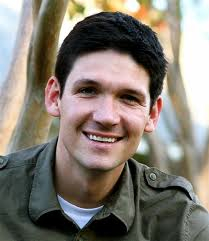
Tabletalk: By way of offering a brief introduction of yourself and your family, when was God’s call to serve His people confirmed for you (Matt, cancer free, recently pictured above with his wife Lauren and their three children)?

Matt Chandler: I think my story is a bit strange in that my awareness of God’s call on my life to serve His people was a bit lost in me serving His people. I’ll try and explain that. I was very frustrated with my church experiences heading into college. I loved sharing the gospel and loved the God of the Bible, but it appeared to me (probably my immaturity) that my church and I were seeing different things in the Scriptures. I saw atonement and the fear of the Lord, and at church they were teaching us not to drink beer and not to have sex. To be truthful, I wasn’t drinking beer or having sex, and could see that drunkenness was sinful and that God had a plan for sex in marriage. Yet it appeared to me that those were secondary issues that should be addressed after the atoning work of Christ was communicated and understood. I started teaching at an ecumenical gathering while I was in college and assumed I would finish school, become a good lawyer, and teach Sunday school at the local Baptist church wherever I settled (I was hoping for the West Coast). The Bible study blew up numerically, and we were running around one thousand to fifteen hundred students every week. A young woman from that study asked me when I received the “call of ministry.” I was honestly confused by her question. I thought she was asking if the Baptists had literally called me on the phone and let me teach the Bible study. She clarified her question, and it sent all my dreams and plans into another direction altogether. It was at this time that I came to understand that I wouldn’t be spending my life doing law and teaching Sunday school but rather teaching and leading God’s people into maturity by the Spirit’s power and by the proclamation of the Word.

TT: What counsel would you give to a believer on the day he or she is diagnosed with cancer? How about six months after the diagnosis?

MC: One of God’s big mercies in all of this has been allowing me to pastor a young church. I have done multiple funerals every year I have been here, and only one has been for a person over the age of fifty. I learned very early that people need to have a good grasp of God’s goodness and God’s sovereignty. On the day that a person is diagnosed, I try to encourage them in God’s knowledge — that this hasn’t surprised Him or caught Him off guard. I want to remind them that this isn’t punitive, but rather that God is on the move and He can be trusted. Six months after the diagnosis is harder to answer because cancer can go one of two ways. If the man or woman is still in a real fight, I want to draw his or her attention to Hebrews 11 or the story of Abraham being promised a son or even David being anointed king and then running from Saul for all those years before sitting on the throne. I think it’s important to remind people after the initial shock of diagnosis wears off and the wear and tear of treatment settles in that victory for those who are children of God is guaranteed, although difficulty, pain, and waiting might all be very present.

TT: In what ways has your cancer sanctified you?

MC: It’s made me look long and hard at my motives and has drawn me deeply into God in prayer. I am an excellent studier and researcher, and before all this began, I would say a decent man of prayer; but I learned after they told me I only had two to three years left that I knew much more about God than I actually knew Him. The bulk of my sanctification through this ordeal has been the birth of a deep desire for intimacy with our great God and King.

TT: How do you counsel Christians to face death and disease (both those who are personally facing such crises and those who are currently enjoying robust health)?

MC: I simply have tried to point out that we shouldn’t be surprised by death and disease because the Bible is filled with it. As I stated above, an understanding of God’s goodness and His sovereign power are necessary to cope with life in a fallen world. I want to teach people that life is extremely fragile and that there isn’t a person in our sanctuary or listening to a podcast who can’t have his or her whole world change with a phone call or, as in my case, getting up one morning and getting a cup of coffee. Those are heavy truths, and I know they don’t make for feel-good sermons, but it’s better to know these truths than to pretend it’s not reality.

TT: You’ve written that if you had not heard John Piper’s answer to the question “For whom did Christ die?” at the 1997 Passion conference, you would not have had ground to stand on years later when you heard the words “brain cancer.” How did your understanding of the atonement help you deal with such a devastating diagnosis?

MC: Actually, I think my wife, Lauren, said that in a blog she wrote after my prognosis was given to us. That sermon was significant for both of us because up until that point, I’m not sure we grasped the size and holiness of God. That sermon changed the trajectory of both our lives in that it shifted how we saw God and understood Him.

TT: You’ve also written that there were moments last year when you felt you were “punched in the soul” but that you were reminded nevertheless that the disease with which you’re dealing “isn’t punitive but somehow redemptive.” Could you unpack that a little?

MC: I have been very blessed by God in my life. My cancer has honestly been one of the more difficult things to deal with. Lauren and I have tried to trust the Lord in everything, and when we’ve stepped out in faith He has been beyond gracious to us. People come to hear; they give generously to the church, and almost every “idea” we’ve had God has blessed and grown. I can honestly say that ministry and life were pretty easy for us up until Thanksgiving 2009. After I had the seizure and they found the tumor, I thought it would be like everything else had been — easy and would end well. When I first met my neurosurgeon on the Tuesday after Thanksgiving, I was ignorantly and maybe even arrogantly thinking that nothing would come of it and that we would just need to watch this thing and see.

I was caught completely off guard when Dr. Barnett told me that it didn’t look good and that we needed to do surgery immediately. That was one of the first times in my life, if not the first time, that things went “worst-case scenario” on me. The Holy Spirit was quick to remind me of great passages on God’s sovereignty and goodness in difficulty. I thought of Romans 8, Hebrews 11, and several others. I wasn’t being punished with brain cancer because I didn’t tell that guy at the gym about Jesus or because I hadn’t read Piper’s latest book, but rather God was at work. He was doing something, and I could be sure that He loved me and in the end I would have increased joy and He would be glorified. Here we are over a year later and that’s exactly what’s happened.

TT: How has dealing with your disease affected your view of God’s sovereignty (or, how has your view of God’s sovereignty affected how you view your disease)?

MC: (Pictured above Matt on a video update to his church after chemo treatment – having lost his hair – which has since grown back) I believe the Scriptures teach that God is aware of every act at every level of the universe. From a star exploding to the rate at which our planet spins to a cell dividing, He knows. I don’t believe in the end that God gave me cancer, but He certainly could have stopped it and didn’t. So I have to believe like Joseph, John the Baptist, and Paul had to believe when they were in prison — that God is working, and what the enemy means for evil, He will turn to good. There have been multiple occasions when God has used this tremendously. The Associated Press let me preach the gospel in an article that ran worldwide. The story has caught the imagination of the media here in Dallas, and we’ve been able to talk about the atoning work of Christ on TV as well as in newspaper articles. That has led to a ton of men and women surrendering their lives to Christ after wanting to talk with me through their own sufferings. If my life gets “cut short” but we get to see new births in the kingdom, then I don’t feel slighted or robbed in the least.

TT: In the late summer/early fall of 2010, you went to Sudan. How did that trip impact your life?

MC: I was deeply moved by my trip to Sudan. I’ve traveled quite a bit internationally but have never seen anything like it. It isn’t even a Third World country. That’s what they want to be. We are connected with some extremely godly men there, and the opportunities for the advancement of a Christ-centered, biblically-strong faith growing in southern Sudan are very real. On a side note, if I had not been diagnosed with cancer, I would not have been able to make the trip. The original diagnosis had us clear my external speaking schedule and opened that time frame for us to go.

Article Information:

From: Tabletalk Magazine – From Ligonier Ministries and R.C. Sproul. © Tabletalk magazine. Website: http://www.ligonier.org/tabletalk. Email: tabletalk@ligonier.org. Toll free: 1-800-435-4343. Interview published on July 1st, 2011.

 About Matt Chandler:

Matt Chandler serves as lead pastor of the Village Church in Flower Mound, Texas. He has become a leader in the evangelical world through his ministry at the Village Church, the Acts 29 Church Planting Network, and his teaching at multiple conferences. Matt is known to a wider audience most recently through his faithful witness to Jesus Christ while battling a malignant brain tumor. Chandler is also the author of the teaching series Philippians: To Live Is Christ & to Die Is Gain; and his excellent first book published by Crossway, entitled: The Explicit Gospel.

10 Danger Signs of Stress By Carol Clifford

YOU MAY BE UNDER TOO MUCH STRESS IF YOU…

  • Find yourself irritable or impatient with things you normally tolerate.
  • Have difficulty getting to sleep and feel exhausted when you are awake.
  • Sense you are one step away from falling apart.
  • Suffer from frequent headaches or stomach pains.
  • Get distracted easily and have trouble concentrating.
  • Talk more negatively than usual.
  • Become forgetful and absentminded.
  • Don’t laugh as much as you used to.
  • Use alcohol, prescription drugs, or food to help you relax.
  • Postpone what is truly important, to accomplish what isn’t that important.

*Signs of Stress by Carol Clifford, PH.D. (Psychology)

Dr David P. Craig on the Question: “Am I Pastor or a Life Coach?”

Answer: “I’m a Pastoral Life Coach”

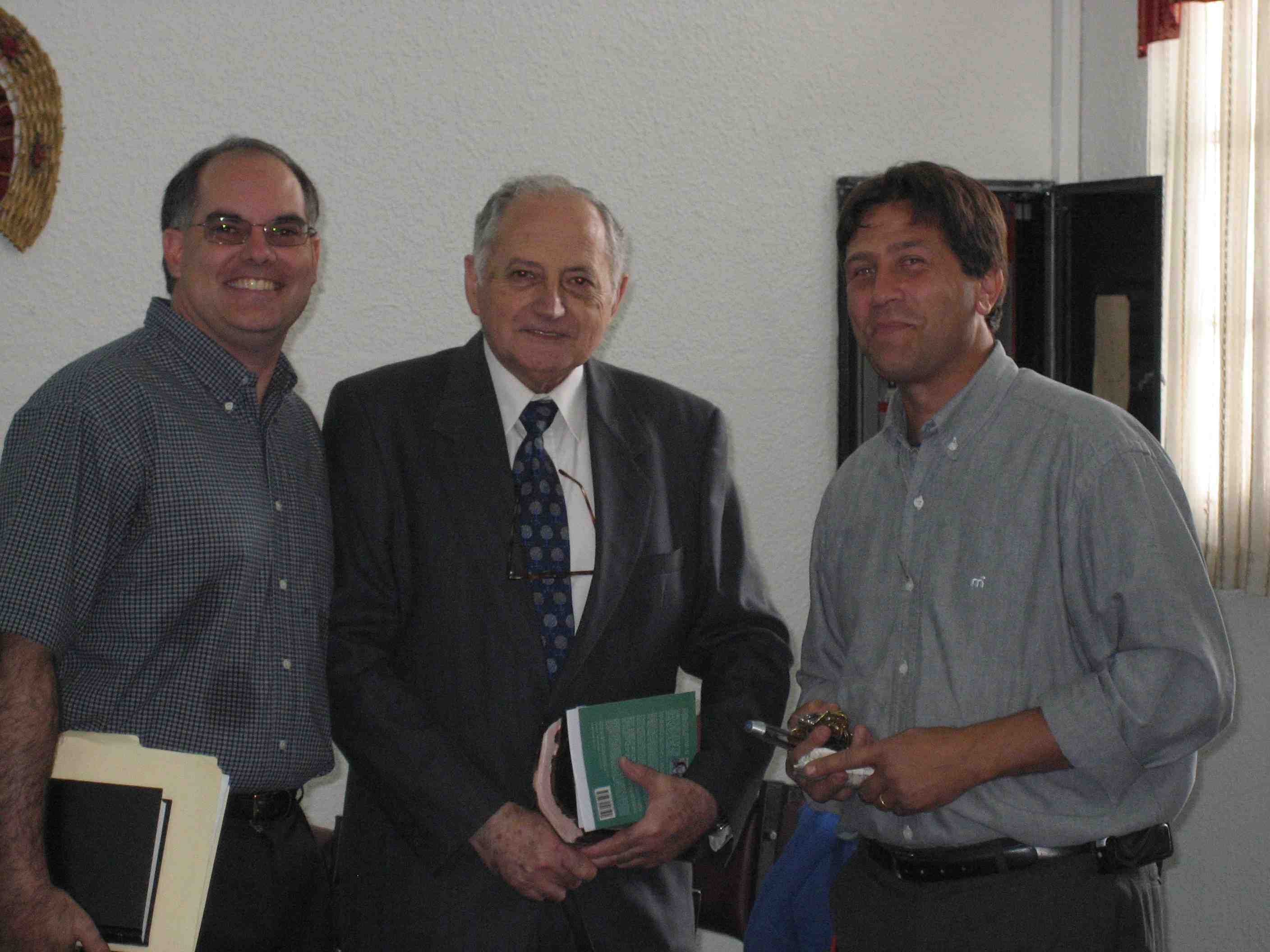
About the picture above: From the left [me] David P. Craig; in the middle – my uncle Enrique – the brother of my mother – and a faithful disciple and evangelist of Jesus, and on the right, a church member named Jorge. I had just preached on what family relationships from Ephesians 5 :22 -6:4 look like when Christ is at the center of them. It was a tremendous honor to preach in Spanish with several family members present on my mother’s side. My family has a long history of church involvement – planting; preaching; and service in Quilmes – a large city in a suburb of Buenos Aires. I had just returned from a week of training pastors in the Northern part of Argentina – Jujuy; and was about to do some training with some young church leaders at A Christian Camp Facility in Buenos Aires.

In January of 2006 I had returned from a trip to South America to train pastors and missionaries (almost all of them were bi-vocational; in the Province of Jujuy on the Northern Argentinean and Southern Bolivian border. I have been on such trips in Europe, Asia, the Caribbean, and many times in Argentina (the land of my roots – My parents were born there and I have adopted many of their customs – especially drinking an Argentine tea called “mate;” becoming a soccer fanatic – especially of River Plate and Quilmes, and of course their national team (Messi is the Best!); and loving all foods Argentine – especially “asados” with “entrana” and chorizos; empanadas, bocadillos, tortilla, and gnocchi. I also grew up learning “Castellano” – the Italian sounding Spanish of the Argentines – full of slang – they have a unique word, phrase, or idiom for everything!

Both of my grandfathers were preachers. My dad’s father – John Craig (my youngest son, Johnny aged 16, is named after him) – was a Plymouth Brethren missionary who was born in Belfast, Ireland and spent over 50 years in Argentina and Uruguay planting churches, being an itinerant preacher, and making disciples (I’ve spoken in parts of Argentina where people have told me that my grandfather led them to the Lord and discipled them – it always brings me to tears of joy). John Craig died at the age of 86 and he was still pastoring a church in the Province of Tucuman in Argentina shortly before his promotion to Heaven.

My mom’s dad – Saul Moreira (of Portuguese heritage) was a beloved Bible teacher and expositor of the Bible. Everyone loved to hear “Don Saul” teach – children, co-workers, and the various “Hermanos Libres” churches in and around Quilmes – a large suburb of Buenos Aires  La Boca is most famous for the “Boca Juniors Football Club” and the dance known worldwide as the “Tango.”

About the picture above: My Grandfather – Saul Moreira – was one of the project supervisors of the building of the bridge pictured above “Puente Transborador” – built in 1914 is one of the most recognized bridges in all of South America. The Bridge is located in what many consider the heart of Buenos Aires – “La Boca.” The La Boca neighborhood was so named for its position at “the mouth” of the Riachuelo, and its role as the port of call for thousands of immigrants from Italy, Spain, and other European countries in the 1800’s and early 1900’s. It’s within walking distance from of the birth of the “Tango” in El Caminito, and the home of the famous Boca Juniors Football Club).

When I was 17 years old (almost the age of my youngest son) I was a soccer, football, basketball, and baseball FANATIC! On any given day you would see me with a ball in competition depending on the season – I was fiercely seeking a victory in one of these sports. Growing up in the 1970’s and 1980’s in Huntington Beach, CA., I was a diehard Laker fan (during the Magic Johnson vs. Larry Bird era); a HUGE Dodger fan -during the Dodgers vs. Cincinnati Red Machine; when the St. Louis Rams were the L.A. Rams and played in Anaheim; and the L.A. Galaxy didn’t exist and we had season tickets for the L.A Aztecs. I still vividly recall going to the L.A. Coliseum and witnessing the amazing offensive and defensive skills of some of the best players in world soccer history – Johann Cruyff, Pele, and Franz Beckenbauer.

About the picture above: My room in Huntington Beach in 1975.  I was ten years old and already a sports fanatic. Notice the Rams (in L.A. back then) souvenirs on the left and the Los Angeles Dodgers souvenirs on the right. There is a 10th Anniversary Houston “Astrodome” pennant on my desk, and I’m reading a baseball world series magazine from 1975. I still love the Dodgers; wear Hawaiian shirts; but prefer the San Diego Chargers to those “traders” – the St. Louis Rams.

In my junior year of High School I was involved in a serious car accident. My best friend at the time was driving his Jeep and we were cut off by a drunk driver after the first day of baseball season my junior year. My dad and mom were on a business trip in Europe at the time. My older sister and the great staff at the hospital in Fountain Valley took terrific care of me. I suffered numerous broken ribs, bones, and had a lot of stitches in my head. I can remember shaking in bed at the hospital for a week straight and had a migraine headache for the next three months that subsided gradually so I could take catnaps here and there.

It was during that time that I received my calling to the ministry. Up until that year I was dreaming of either being a pro soccer or baseball player. Before the car accident I made my decision to focus on baseball and have a terrific junior season at Liberty Christian High School in Huntington Beach. I had dreamed about being a Los Angeles Dodger with the goal of taking over Bill Russell’s job at shortstop  The reality is I was a good baseball player, but not “great.”  I think if I had focused on being great at one sport instead of being “good” at four sports – I would have had a chance to make the pros (I ended up playing soccer in college for 3 years in Portland).

About the picture above. From about 1975 to 1980 my family would get about 20-30 games of season tickets during some of the Dodgers best years. The first Dodger game I went to was in 1974 and Ron Cey “The Penguin” hit a home run against the New York Mets to win the game in the 9th inning. I was imediately hooked on the Dodgers.Here is a picture of the “Fabulous Four: Ron Cey – 3B; Davey Lopes – 2B; Bill Russell – SS; and Steve Garvey – 1B.

I missed all of baseball season my junior year. During that summer – I started thinking more seriously about my life.  I had been a disciple of Jesus Christ since I was six years old.  I always loved the Lord, went to church weekly, loved going to “big church” (my pastor was the well-known Bible expositor – David L. Hocking. I’d rather hear “Pastor Dave” preach the meat of the Word than “watered down” Sunday school lessons designed for children who’d rather play with lincoln logs, than listen to a teacher. From an early age I’ve always loved apologetics and anything to do with the Bible, Theology, the Gospel, and the Church for whom Jesus gave His life.

However, the summer of 1983 was different from any previous summer in my short life. My passion for sports waned, and God gave me a renewed passion to know Him intimately and magnify Jesus in the proclamation of the Gospel. My senior year of high school I didn’t play any sports for the first time since I was six years old. I realized that I was a follower of Christ second, and a sports idolater first. I needed to repent of my sin of “sports idolatry” and was struck by what the Apostle Paul said in 1 Corinthians 10:31, “So whether you eat, or drink, or whatever you do, do it all to the glory of God.”

Up until my junior year of high school I had been a selfish “sports-aholic,” primarily living for the thrill of victory and to avoid the agony of defeat. I had been living for my glory first, and Christ’s second. I was convicted by the Holy Spirit of this rebellious state and moved by the Holy Spirit “to be transformed by the renewing of my mind” (See Romans 12:1-2).

Over the summer I started asking and wrestling with these questions:

“What if I had died in that accident?”

“What have I accomplished in life that will actually last for eternity?”

“What will I do that will last for eternity for the rest of my life?”

“What things will last on into eternity when I die?”

“Why did God create humans for in the first place?”

“How many people do I know that have I never told about Jesus?

There were many more questions like those above. However, my senior year was different. I started going to a Christian Book store called “Pilgrim’s Progress” and started devouring theology books by J.I. Packer, R.C. Sproul, David Martyn Lloyd-Jones, and many others. While all my friends were going on dates and spending money on movies – I was saving money to buy more books. I studied Greek that fall in a discipleship relationship with my Bible professor in High School – he was a Talbot Seminary student at the time (I would eventually earn my Master of Divinity at Talbot in 1991); I started teaching a junior high Sunday school class in my church; I was witnessing to everything that breathed – I even practiced on my cocker spaniel – “Carlitos” and my cat “Jinx.”

Two defining moments happened to me in the summer of 1983. The first was through an evangelist that you’ve probably heard of – Luis Palau. Billy Graham, Bill Bright, and Luis Palau have planted more seeds of the Gospel than perhaps all the other evangelists of history combined. Luis Palau was passing through on his way to Los Angeles and came over for dinner one evening. Anyone who has ever eaten my mom’s cooking, would NEVER pass up an opportunity to eat her food! If she were younger (she’s 80 today – and still cooks up a storm), I’m convinced she would have her own show on the Food Network and be more popular than Paula Dean or Giada DeLaurentiis!

About the picture above: Luis Palau has literally preached to more people than anyone in the history of Christianity next to Billy Graham – and he’s done it in perfect Spanish and English.  I haven’t heard or seen much of Luis since our days at Multnomah – but I will be forever indebted to Luis for recommending I attend Multnomah University. I received some great training there. However, the best gifts I received were some of my life-long godly friends – who are all comrades in the ministry of the Gospel around the world. Luis Palau’s nephew George Palau, who with his wonderful wife – Stacey – runs an orphanage in Mexico is one of those very close friends. George is one of the greatest servants of Christ I’ve ever known. I have learned much more from him, than I ever will from Luis. Nothing against Luis. But one of the great things about being a Christian is that we all impact one another up close in the context of community – especially when we minister to those who are suffering and in great need. George drove all the way from Mexico yesterday to spend the day with me. I love George, Dave Steele, Eddie Remley, and Mark Wilks, as if they were my very own brothers – and in Christ we are a “band of brothers.” 

Luis Palau is one of the few “big name” Christian heroes that I really respect and admire. He is one of the few pastors I know that is the same in his home, as when he is in front of a crowd of 100,000 people. What you see or hear from Luis is what you get. He practices what he preaches, and is quick to repent when he blows it. My parents grew up in the same Plymouth Brethren (“Los Hermanos Liberes”) church as Luis in Quilmes, Argentina and have known him since he was very young.

Getting back to the dinner. My mom made her famous Caesar salad, homemade spinach ravioli with her amazing Osso-Bucco and meat-sauce, and we had her amazing homemade “dulce de batata” for dessert (I remember – because these are three foods I never eat anywhere else – because no one comes close to preparing these items as well as my mom). After this very filling and satisfying meal Luis and I went for a long walk. I picked his brain and remember asking him, “Luis, how do you know if you are being called to the ministry?”

I honestly can’t remember his exact reply. I just remember that he affirmed my calling and recommended that I attend the same college he attended when Ray Stedman (author of the very influential book “Body Life” and, at that time Pastor of the influential Peninsula Bible Church in Northern California) helped bring a young Luis to the United States to be pastorally trained – because he heard Luis preach on a trip to Argentina and saw how gifted he was. Ray Stedman made it possible for Luis Palau to go to Multnomah School of the Bible in Portland, Oregon. The school’s motto was, “If it’s Bible you want, then you want Multnomah”.  Luis encouraged me to visit the school and noted and affirmed my passion to know the Word and to make Jesus known.

The second “defining moment” for me came in letting my parents know that I believed and felt overwhelmingly that God was calling me to full-time ministry. God was blessing my teaching, evangelism, and discipleship with youth. I couldn’t imagine doing anything more worthwhile for the rest of my life. I wanted to make my time and life count for what would matter for eternity.

A few days after my walk and talk with Luis Palau, I sat down at approximately 11:30 a.m. at the kitchen table with my mom. My parents are godly people. My dad has worked hard since he was seven years old and he has had several successful businesses in Argentina, England, and the United States. My dad has always been incredibly giving and very involved in ministry. I don’t ever remember getting up in the morning not seeing my dad with an open Bible and drinking mate (Argentine tea). My dad has been an elder and on the Board of several missions around the world. He devours theology, and manifests all the fruit of the Spirit. There is not a single man on the planet that I admire, respect, and desire to be more like than my father. He has been such a good model and such an influence in my life – that I could probably write a whole book on his influence for good in my life.

Meanwhile, getting back to the table with my mom. My dad was working in his office – he added an office to the garage over our Huntington Harbor home, so he didn’t have to drive to Los Angeles anymore. I sat down with my mom and was hesitant to bring up my “calling” for fear that my parents would think I was “loco.” I thought I would share it with my mom first before bringing it up to my dad. My plan up until that summer had been to get a baseball scholarship to a Pac Ten (now Pac 12 or whatever they call it) school, preferably UCLA (Go Bruins! – largely through John Wooden’s influence in my life – his book “They Call Me Coach” was the first book I read from cover-to-cover; John Wooden pictured below)), and to major in Business Administration. I never thought of being anything but a professional athlete – my only difficult decision was I wanted to play all four major USA sports – baseball, football, basketball, and soccer! I’m sure hockey would have been in there too, but nobody except for Canadians knew what that was in the 1980’s – until we won the Olympics in the “Miracle on Ice”!

About the picture above: John Wooden won 10 National Championships as a coach of the UCLA Bruins Basketball team. Wooden had some great players; but he was also able to make great players make other players even better. I think John Wooden (a committed Christ follower) would have been a great pastor as well. He is a perfect model of a life coach – committed to Christ; committed to bringing out the best in individuals; and their teams, churches, and organizations. Everybody wins when they have a good coach. John Wooden was simply the best!

I would literally dream almost every night, and daydream in my classes in school of throwing the over time touchdown pass in the last seconds of the Super Bowl to lead the Rams to victory over the Steelers; hitting a grand slam in the bottom of the ninth in the seventh game of the World Series before the home crowd in Los Angeles over (who else?) the New York Yankees; shooting a three-point shot in over time to win the NBA championship for the Lakers against the Celtics.  I dreamed of taking the Americans all the way to the final in the World Cup and beating Germany, Argentina, or Brazil by scoring a hat trick in bringing the World Cup to the USA for the first time. I even remember in my dreams calling my cousins Ariel and Martin in Argentina to apologize to them for beating their homeland in their favorite sport!

Oh yeah – sorry, sidetracked – back to the table with my mom. When I told my mom about the stirring in my heart, my desire to know the Scriptures, my passion to proclaim Christ, and my desire to attend Multnomah in Portland – she began to sob. I was thinking to myself, “Oh no, now I’m in trouble – there goes the family business.”

My mom came around the table and gave me a big hug and went and got her Bible and read from 1 Samuel 1 – the story of Samuel’s being dedicated to the Lord (I encourage you to read it). She read the entire chapter to me out loud and then after reading the last three verses of chapter 1 and the first 2 verses of chapter where Hannah says and prays the following:

And she said, “Oh, my lord! As you live, my lord, I am the woman who was standing here in your presence, praying to the Lord. For this child I prayed, and the Lord has granted me my petition that I made to him. Therefore I have lent him to the Lord. As long as he lives, he is lent to the Lord.” And he worshiped the Lord there. And Hannah prayed and said, “My heart exults in the Lord; my horn is exalted in the Lord. My mouth derides my enemies, because I rejoice in your salvation. “There is none holy like the Lord: for there is none besides you; there is no rock like our God.” (1 Samuel 1:26-2:2)…

She came and hugged me, and said that Hannah’s was her story and Samuel’s story was my story. Rachel (my mom) told me that the doctors told her she would never have a child again. She lost two children due to complications between my sister – Miriam – and myself.

I never knew the story of my mom and dad’s loss until this day, at this moment, at the table in our kitchen. In short, my mother had always wanted six children (two of them I will meet for the first time in Heaven one day). I have two brothers – Daniel, 15 years my senior and George, 10 years older than me; and a sister that’s 8 years older than me – Miriam. One child my mom lost was never named (but will have a name that Jesus has given according to Revelation), the other was named Michelle.

My mom went and got my dad from the office and she shared the story of how she prayed that if God gave her another child – she and my dad would dedicate him to the Lord – just as Hannah had dedicated Samuel. Talk about a confirmation! We all wept and prayed, and thanked the Lord for His answers to prayer to my faithful parents prayer to bring glory to the Lord Jesus Christ.

About the Picture above: My parents have been the biggest influences on my life spiritually. My dad, Daniel, will be 90 in January; and my mom, Rachel, will be 81. They prayed for me before I was born. They read the Bible to me from the time I was a baby (and still quote it to me on the phone or every time we are together). They are my biggest heroes in life. They are going to be married 64 years on December 4, 2012. My parents have always been my biggest fans, but better than that – they have been huge fans of Jesus, His Church, and the spread of the Gospel around the world. They have had a lot of difficult times financially, physically, and have lost almost all their life-long friends. And yet they always have a smile on their faces and exhibit the peace of God that surpasses all understanding. I love them with such admiration, appreciation, and respect that I will never be able to convey in words. I am a Christian today because of the sovereign election of God in eternity past; and love and follow Jesus because they modeled His love and grace when I was growing up, and continue to do so, to this very day. I can’t think of two people who better model what the Apostle Paul said, “Follow my example, as I follow the example of Jesus Christ.”

Since that day I have gone on to earn a B.S. (at Multnomah); a M.Div. at Talbot School of Theology; a doctorate and doctoral work in Theology and Pastoral Leadership at Westminster Seminary in Escondido, and Northwest Graduate School in Seattle. I have been a youth and senior pastor in California and Washington State. I have traveled to more than 30 countries on missions trips and training pastors and missionaries. I have discipled dozens of men. My best education was one I never purposely applied for, but have most definitely been “accepted” to. It’s proverbially called “The School of Hard Knocks.” I would concur with the great Reformer Martin Luther who summarized his learning in this way, ““Suffering has made me a better theologian than any book I’ve ever read.” However, I don’t think I’ve seen the tip of the iceberg of what God has entrusted unto me as a steward of the glorious Gospel of Jesus Christ.

The questions I asked earlier are questions I’m still asking. Having been diagnosed with cancer recently and beginning radiation and chemotherapy in the next week, I pray that God will continue to change me and conform me to His Son. I pray that whether I live another forty-six years, or only have days to live for him – that people will know, see, and hear about my Lord and Savior Jesus Christ. I desire more than anything that all my family members would know and follow Jesus. I firmly believe with the sentiment, “This life will soon be past, only what’s done for Christ will last.”

I have lived a wonderful life. I have been bruised and broken, but not crushed. I am becoming stronger through life’s trials and tribulations. Since the age of seventeen all I’ve ever wanted to do, is know Jesus intimately and make Him known.

This past year I’ve been doing some “life coaching” through a non-profit ministry I established called Vertical Living Ministries. I started this Pastoral ministry with the help of some wonderful people who have sacrificially contributed generously, so that I can make multiplying disciples of the Lord Jesus Christ around the world. I have trained people one-on-one and in small and large groups, discipled men and women, and trained people in Christ-centered living through this ministry.

I originally established Vertical Living MInistries to provide training for leaders in poor countries. We who live in America have access to so many good resources by way of books, conferences, Bible Colleges, and Seminaries. I have been to countries where pastors share one Bible amongst themselves and have absolutely no training or access to any resources whatsoever. However, now with my cancer, I really don’t know where God is calling me. However, I know that I will always be a pastor. I am a shepherd. I have had Jesus shepherd me, and I simply want to find other sheep who will follow hard after the Good Shepherd.

I call myself a Pastoral Coach because I want to encourage Christians to make Christ number one in their lives. I love “life” coaching because I can help disciples of Christ focus on the following nine areas of Christo-centricity.  Just as we talk about  a Planetary system that’s Helio, and not Geo-centered, I like to think of life functioning best when our lives revolve around, and in our Lord and Savior, Jesus Christ.

(1) Spiritually – Your Relationship to God through the Lordship of Jesus Christ. My main focus here is to help people understand the life transforming ramifications of the Gospel in your life: past, present, and future ramifications for today. Most Christians only remember or hold on to their past, or future in Christ and forget how the Gospel needs to be lived out on a daily basis – we are continually learning to repent and grow in our faith with Christ at the center of it all.

(2) Marriage – Your triune covenantal relationship with Christ at the center. Marriages can work for two unbelievers, and even sometimes when an unbeliever is married to an unbeliever. However, it was designed by God to not be a marriage of two, but of three. I help couples to practically make Christ the center of their “solar system” in their marriage.

(3) Family/Parenting – How to be a Christ-centered family and raise Children that love Jesus above all else. For many parents, their children become “idols.”, especially for women.  Their identity, security, and significance is oftentimes wrapped up in the performance, success, and behavior of their children. If their children are doing well – they are doing well. However, if a child rebels or is unsuccessful in life – they take it personally, and lose their way. Many “empty nesters” – especially women, become depressed and feel like life is meaningless when their kids move out of the home. I help parents to see that our security and significance needs to be properly placed in submission to the Lordship of Christ. Only God never changes. If we place our security in our kids or anything else – we are in big trouble. In raising our children we are merely short-term stewards of what is rightfully God’s. The greatest thing we can do as parents is to model Christo-centricity for our children. I’m grateful that my parents modeled and taught me daily that the most important thing in life is my relationship with and service unto Jesus.

(4) Vocationally – Your Work in the World and with the Church. Most women have the idolatry of “motherhood.” Most men see their significance and security in their work. Their identity is wrapped up in their position, possessions, and provisions for their families. Well, what happens to the man who loses his job, gets physically incapacitated, or runs into midlife.  You’ve been working at a job for 30 years and come to realize that you were climbing the wrong ladder that was leaning up against the wrong wall in your “prime” years? Men and women both have pseudo securities – or what the Bible calls “idolatry.” I try to teach people how to view their talents, passions, skills, abilities, and hobbies as unto the Lord. Ultimately, God is our boss and we will spend the bulk of our lives working – but do we find the pleasure of God in our work? Few things excite me more than seeing businessmen or women shine brightly for the sake of Christ in the context of making a profit that will last for eternity in the lives of others.

(5) Health – Taking care of your body that God will use on this earth until the day of your final glorification. This is one of the most neglected areas for Christians. It’s very easy to get out of balance in what we eat, how we exercise, and being responsible with the stewardship of our bodies. I love what C.S. Lewis says, “You don’t have a soul, you are a soul. You have a body.” In other words, we are dualists. We have an immaterial part of us, and we are housed in a physical body that must be maintained. Sometimes, we can’t control what happens to our bodies (Doctors don’t know how I got cancer). However, even if we have ailments and age, we still need to be responsible in taking care of our bodies as best as we can, so we can serve Jesus as long as we can, and as effectively as we can, while we “house” the soul.

(6) Friendship – Your connections and building bridges with others as you reflect Christ in your community. Too many people are wrapped up in work, family, and get isolated outside of community. I thank God for the emphasis on community by many churches. However, if you want to have friends, you must be a friend. Nobody models this better than Jesus, “a friend of sinners.” Friends are so important – especially in tough times. Having friends and family means the world to me especially when the “going gets tough.” I firmly believe that especially among pastors (health and friendships are two of the most neglected areas in this list of nine – and that it’s what will “do them in” during mid-life or their retirement years).

(7) Financially – Your stewardship of God’s resources. I can honestly say that having to give away or sell more than 6,000 theology books in the past five years, going from a 3,400 square foot house we owned to a 1,600 square foot condo we rent, and having to give away all our pets (four cats and a dog) have been some of the hardest things to go through, but also some of the best. Money and possessions (having control) is a huge idolatry in our culture. Simple is better. Jesus left earth for Heaven literally naked – and so will we. However, are you content with only Him and nothing else? Look at the difference Jesus made two thousand years ago, and is still making today. He owned nothing and left no possessions behind. Nothing “owned” Him. What owns you? I believe that generosity exhibits the nature and character of God perhaps more fully than any other trait. For example, I don’t think it’s coincidence that the most famous verse in the Bible is about the greatest sacrifice and the greatest gift: “For God so loved the world, that He gave His one and only Son, that whoever believes in Him will not perish, but have eternal life” (John 3:16). Aren’t you glad God is a giver? How about you? I believe that Tim Keller is dead-on here when he says, “Idolatry is just a failure to obey God, It’s setting the whole heart on something besides God… Where your money goes most effortlessly, that’s where your heart really rests.” In my life I’ve found peace and rest not in the economy, but in Jesus alone – and He never changes – satisfaction is truly found when you realize that when God is all you have, He’s all you really need.

(8) Mentoring – Investing in Others Using your unique Skills, Gifting, Talents, Personality, and Passion. I’m forty-six years old and have never really been formally discipled or mentored by anyone. That’s a tragedy of the first order. I firmly believe that every single man and every woman has strengths and skills to teach future generations, but these don’t typically happen without intentionality. I train people to use their unique gifts, passions, abilities, skills, and so forth and pass those on to future generations – with intentionality. It really upsets me to no end to see how self-absorbed we’ve become. We have our I-pads, I-pods, and I-phones, and have become “I-focused”! Don’t get me wrong – I love technology, but for many it’s become an obsession and an idol. We need to become more focused on Jesus and others if we want to make a difference that will last into eternity. I love what Paul says about Jesus in Philippians 2:4-5, “Let each of you look not only to his own interests, but also the interests of others. Have this mind among yourselves, which is yours in Christ Jesus.”

(9) Discipleship – You’re investing in the Spiritual Growth of other followers and would-be followers of Christ. Nothing gets me more riled up than the lack of lifestyle and intentional discipleship taking place among Christians. Again, without intentionality this just doesn’t happen. I have asked men in their twenties up until their eighties if they have ever been discipled by another man – In thirty years of doing ministry I hear “Never” or “What are you talking about” at least 90% of the time. This is unconscionable! And yet, the great commission is all about “making disciples” of all nations. Are you intentionally making disciples in your circle of influence with your children, friends, neighbors, spouses, family, co-workers, teammates, and fellow students?

It is my prayer and hope to take the baton that has been passed on to me from my godly heritage in these nine areas. I hope that God will use my cancer to further the Gospel. I desire to teach, preach, and live for the glory of Christ while I have breath.

My life verses are 1 Timothy 4:16 where the Apostle Paul says to Timothy: “Keep a close watch on yourself and on the teaching. Persist in this, for by so doing you will save both yourself and your hearers.”

Acts 20:24, where the Apostle Paul proclaims, “But I do not account my life of any value nor as precious to myself, if only I may finish my course and the ministry that I received from the Lord Jesus Christ, to testify to the gospel of the grace of God.”

And Romans 8:16-18 & 28-30, where the Apostle Paul declares, The Spirit himself bears witness with our spirit that we are children of God, and if children, then heirs—heirs of God and fellow heirs with Christ, provided we suffer with him in order that we may also be glorified with him. For I consider that the sufferings of this present time are not worth comparing with the glory that is to be revealed to us… And we know that for those who love God all things work together for good, for those who are called according to his purpose. For those whom he foreknew he also predestined to be conformed to the image of his Son, in order that he might be the firstborn among many brothers. And those whom he predestined he also called, and those whom he called he also justified, and those whom he justified he also glorified.”

It’s been about 13 months since I last preached – I haven’t had any invitations. And yet the passion of my soul is to preach the Gospel. Sometimes I feel like a Pastor who is a dinosaur in the 21st century, fast-paced Church. I have tried to get a job in a modern church for the past 13 months – in churches that appear to want CEO’s, not Shepherds; Programs, not Preachers; is more concerned about being politically correct and pragmatic than Theologically correct and Christ-centered. Whether I end up pastoring again in a local church or life coaching, I can’t help but be what I am – dependent on God’s mercy and grace as I battle cancer. Since the age of seventeen all I’ve ever wanted to do, is to know Jesus and to make Him known.

I love Him because He first loved me. I love the gospel and to declare it with my whole heart, mind, and soul. I love to shepherd people – not because I’m a great shepherd, but because I have a Great Shepherd! His name is Jesus! As long as I have breath I will declare Him among the nations. I will serve Him because He came to seek, serve, and save me first. He is my peace, and He is the hope of all nations. He will reign on the Earth again, and I will reign with Him. Until that day, I believe wholeheartedly with these words of Paul David Tripp:

“No matter how great your weakness is, God’s power is greater. No matter how out of control your life is, God’s sovereignty is greater. No matter how alone you may feel, God’s presence is greater. No matter how out of control your life is, God’s provisions are greater. No matter how deep your sin is, God’s grace is deeper. No matter how foolish your foolishness is, God’s wisdom is greater. The same sovereign God who planned the details of your life sent his Son so you would have what you need to face what He willed for you.”

According to the New American Oxford Dictionary a “Pastor” is “one who gives guidance to someone.” A coach is “a tutor who gives private or specialized teaching.” It is my desire to guide people with the experiences and education I’ve received and to teach them of Jesus at the center of all of life. Whether in a local church as a pastor, or in the Church universal as a “pastoral life coach.” I only want to invest in that which matters for eternity. All these years I have preached the Gospel – how one can have peace with God through the Lord Jesus Christ. Now as I battle cancer, it is my desire to preach with my life and suffering how to have peace with my Lord and Savior Jesus Christ.

Once again I quote from the Apostle Paul,

For if I preach the gospel, that gives me no ground for boasting. For necessity is laid upon me. Woe to me if I do not preach the gospel!” (1 Corinthians 6:19)

“For the love of Christ controls us, because we have concluded this: that one has died for all, therefore all have died; and he died for all, that those who live might no longer live for themselves but for him who for their sake died and was raised” (12 Corinthians 5:14-15).

“Indeed, I count everything as loss because of the surpassing worth of knowing Christ Jesus my Lord. For his sake I have suffered the loss of all things and count them as rubbish, in order that I may gain Christ and be found in him, not having a righteousness of my own that comes from the law, but that which comes through faith in Christ, the righteousness from God that depends on faith—that I may know him and the power of his resurrection, and may share his sufferings, becoming like him in his death, that by any means possible I may attain the resurrection from the dead.

Not that I have already obtained this or am already perfect, but I press on to make it my own, because Christ Jesus has made me his own. Brothers, I do not consider that I have made it my own. But one thing I do: forgetting what lies behind and straining forward to what lies ahead, I press on toward the goal for the prize of the upward call of God in Christ Jesus” (Philippians 3:8-14).

 Sola Scriptura! Sola Fide! Sola Gratia! Solus Christus! Soli Deo Gloria!

 (Scripture Alone! Faith Alone! Grace Alone! Christ Alone – To God be the Glory Alone!)

Why Not Be Anxious? A Great Quote From Dr. James M. Boice

 James Montgomery Boice on Faith NOT Seeking Understanding:

“Whether you can see it or not – and often we cannot – everything is being used of God for your good as well as the good of others…This knowledge is by faith. It is not always by sight. But it is nevertheless certain, because it is based on the character of God, who reveals himself to us as both sovereign and benevolent…We are not to be anxious about the unknown future or to fret about it. We are to live in a moment-by-moment dependence upon God.” – excerpt from notes I took from a late 1980’s sermon of Dr. Boice

About Dr. James Montgomery Boice

*Dr. James Montgomery Boice, just 8 weeks after being diagnosed with a fatal liver cancer, died in his sleep on June 15, 2000. The senior pastor of Tenth Presbyterian Church in Philadelphia, he was a world-famous Bible teacher, author, and statesman for Reformed theology. He informed his congregation of 32 years of his condition on May 7, proclaiming his complete confidence in God’s sovereignty and goodness.

In the past 72 years, historic Tenth Presbyterian Church had two senior pastors, Donald Grey Barnhouse and James Montgomery Boice – previous to Dr. Philip Graham Ryken (Currently the President at Wheaton College). Founded in 1828, the church itself predates their tenure by another hundred years. Tenth Presbyterian Church lies in the very heart of the city and today has about 1,200 members.

James Montgomery Boice accepted the position as senior pastor in 1968, and was the teacher of the Bible Study Hour since 1969 and the more recent God’s Word Today broadcast as well. Dr. Boice held degrees from Harvard, Princeton Theological Seminary, and the University of Basel, Switzerland. He had written or contributed to nearly 50 books, including Foundations of the Christian FaithLiving by the Book, and exegetical commentaries on Genesis, Psalms, Acts, and Romans.

He was no less involved in the preserving of the fundamentals of the faith than his predecessor, Dr. Barnhouse. In 1985, Boice assumed the presidency of Evangelical Ministries, Inc., the parent organization of the Bible Study Hour, Bible Study Seminars, Bible Studies magazine, and other teaching ministries. In 1997, Evangelical Ministries merged with Christians United for Reformation and the Alliance of Confessing Evangelicals, taking the latter as the new organization’s name, and Dr. Boice assumed the presidency. In 1997, he was a founding member of, and chaired, the International Council on Biblical Inerrancy.

Of particular concern to Boice was the matter of the church and her relationship to and engagement of society. His recent book, Two Cities, Two Loves, maintains that Christians are citizens of the kingdom of this world and the kingdom of heaven and that they have responsibilities in each. He urged Christians to “participate in secular life rather than merely shoot from the sidelines at secular people.”

His wife, Linda, and three daughters survive Dr. Boice. Characteristic of his ministry was his pushing Christians to commit themselves to staying in one place. He lived what he preached, committing to the church and his downtown neighborhood for 30 years. A gifted pastor and leader, he turned down many attractive opportunities in order to build a sense of permanence and belonging. And he urged his parishioners to do the same.

H.J. Berry on the Question: “Why Does God Send Trials Into Our Lives?”

Series: Word Studies in New Testament Greek #1 – Testing: for Good or Evil? 

James wrote, “Count it all joy, my brothers, when you meet trials of various kinds, for you know that the testing of your faith produces steadfastness.” In verse 12 of the same chapter he wrote, “Blessed is the man who remains steadfast under trial, for when he has stood the test he will receive the crown of life, which God has promised to those who love him. However, a problem arises when the next verse is read, because it says, “Let no one say when he is tempted, “I am being tempted by God,” for God cannot be tempted with evil, and he himself tempts no one’” (James 1:2,12-13).

On the one hand it seems that temptations are sent to us from God and we are to consider it a privilege to pass through them, but on the other hand we are told that God does not tempt any man.

In order to understand these verses, it is necessary to know the meaning of the words that are translated “trial” and “tempted.” The same Greek word is used in all three of the verses quoted from James (vv. 2,12-13). Yet there are different shades of meaning intended by the author. The word is used in its noun form in verses 2 and 12 and its verb form in verse 13. The noun is peirasmos and the verb us peirazo. The root word of these forms has such meanings as “test,” “try,” and “prove.”

The matter of significance about peirazo is that it is used in both a good sense and a bad sense It can have the idea of testing with the purpose of bringing out that which is good, or it can have the idea of testing with the purpose of bringing out that which is bad.

When the word is used in regard to Satan, it has the bad sense of brining out that which is evil or soliciting to evil. Satan himself is known as “the tempter” (Matthew 4:3a). Satan thought he could get Christ to respond to evil, but because Christ is God, there was nothing in Him which answered to evil. Christ told Satan, “You shall not put the Lord your God to the test” (Matthew 4:7). Satan was not trying to bring out that which was good in God but was endeavoring to solicit Him to evil.

When Ananias and Sapphira lied about the amount they had received for their land, Peter asked Sapphira, “How is it that you have agreed together to test the Spirit of the Lord?” (Acts 5:9). They were not trying to bring out that which was good in the Lord, so the word is used in its bad sense in this context.

The word peirazo is used in 2 Corinthians 13:5, where Paul told the Corinthians, “Examine yourselves, to see whether you are in the faith. Test yourselves. Or do you not realize this about yourselves, that Jesus Christ is in you? —unless indeed you fail to meet the test!” In this context the Corinthians were obviously to look at the good as well as the bad in their lives. So the word is also used in a good sense. This, in the Book of James, the “trials of various kinds” have a good purpose in view—to bring out that which is good in the believers. This is also true regarding James 1:12. However, the word is used in its negative sense in verse 13, as is evident from the words, “for God cannot be tempted with evil.” In the phrase “and he himself tempts no one,” it is with reference to “with evil.” Therefore, God never solicits a person to do evil but rather He brings tests into a person’s life that will bring out that which is good in him.

First Corinthians 10:13 uses both peirasmos and peirazo in their good sense: “No temptation has overtaken you that is not common to man. God is faithful, and he will not let you be tempted beyond your ability, but with the temptation he will also provide the way of escape, that you may be able to endure it.” God sends tests and trials into our lives to bring out that which is good in us, and He always provides the strength necessary to bear up under the tests.

Another Greek word was frequently used when the writer wanted to emphasize a testing with the purpose of bringing out that which is good. This word is dokimazo. Whereas peirazo could be used in either a good or bad sense, dokimazo is used only in a good sense. In this regard it has to do with “proving” or “examining.” In fact, of the 23 times dokimazo is used in the New Testament, it is translated “prove,” “examine,” or “discern” ten times (depending on the English translation).

One such occurrence is Romans 12:2: “Do not be conformed to this world, but be transformed by the renewal of your mind, that by testing you may discern (dokimazo = “prove,” or “examine,”) what is the will of God, what is good and acceptable and perfect.”

Dokimazo is also translated “examine” in Luke 14:19: “And another said, ‘I have bought five yoke of oxen, and I go to examine them. Please have me excused.’ The excuse this person used for not attending the great supper was that he wanted to try out his yoke of oxen to see how good they were.

In 1 Corinthians 3, which tells of the Judgment Seat of Christ, dokimazo is translated “will test” in verse 13: “each one’s work will become manifest, for the Day will disclose it, because it will be revealed by fire, and the fire will test what sort of work each one has done.” This helps us to see that at the Judgment Seat of Christ the emphasis will be on discovering that which is good so it might be rewarded. Only those who have received Jesus Christ as Savior will appear before the Judgment Seat of Christ. The purpose of the judgment will be, not to condemn, but to reward that which is good. The believer has been delivered from all condemnation through faith in Christ.

The understanding of this Greek word also helps us to see what God’s purpose is in sending trials of our faith. 1 Peter 1:7 says, “so that the tested genuineness of your faith—more precious than gold that perishes though it is tested by fire—may be found to result in praise and glory and honor at the revelation of Jesus Christ.” The word “tested” is a noun form of dokimazo. Thus we see that the purpose for the trials of our faith is that God might bring out that which is good and that it might become mature Christians.

Because peirazo has both good and bad meanings, it can be used in regard to both God and Satan. However, dokimazo can never be used for Satan because he never tests to “prove, discern, or examine” that which is good but rather to solicit to evil.

 About the Author:

Harold J. Berry specialized in Theology and Greek at Dallas Theological Seminary and graduated in 1960 with his Th.M. He was for many years the personal assistant to Dr. Theodore H. Epp (the Bible Teacher of the Back to the Bible Hour before Warren W. Wiersbe became its primary teacher). He was known as an outstanding professor of Greek in various Institutions. The Word Study above was adapted from a publication by Berry entitled “Gems From The Original” published by Back to the Bible Broadcast in Lincoln, Nebraska in 1972. The outdated language has been updated where necessary, and the more familiar ESV has been used instead of the KJV.

“Every Day With Jesus is Like A Thanksgiving Holiday” By Dr. David P. Craig

“Thank God It’s Thanksgiving Everyday – Especially on Thursday’s!”

I have always loved the Thanksgiving Holiday. It’s one of the few times of the year where our very large family can come together from all over the United States and enjoy giving thanks for our many blessings. This year more than likely I’ll be having liquid formula through a feeding tube in my stomach. I already had the G-Tube surgically implanted in my stomach this past week. During chemotherapy and radiation around Thanksgiving time will be a time of great testing for me, when according to my Doctors I will be unable to swallow and chew due to the severity of my treatment for throat and neck cancer. Watching every one I love dearest passing around the turkey with all the trimmings will be something my eyes will enjoy, but not my taste buds. However, I’m good with that. I’m good with whatever comes my way because I can choose whether I’m a “reactor” or a “responder.” Let me explain.

Over the past decade I’ve had eye problems off and on – a cataract surgery and lattice degeneration in both eyes, which required laser surgery to repair numerous tiny little “tears” in the back of my eyes. A few days ago the Eye Doctor discovered I have a Vitreous Detachment and a Vitreous Hemorrhage in my right eye. After seeing a cataract specialist I was referred to another specialist who confirmed these diagnoses. All I know is that it is difficult for me to read, and that I see flashes of light at night, and what looks like a “blob” during the day out of my right eye. The Ophthalmologist thinks it should go away – but for now, I’m hoping and praying the “blob” will clear up.

I have also had an off-and-on battle with “Gout” (Charles Haddon Spurgeon had Gout as well – which makes me feel a little bit better about it – at least I’m in good company). They say Gout is a “rich man’s disease” (well one out of two ain’t bad – and “rich” isn’t the one). The first time I experienced Gout was after coaching one of my daughter’s soccer practices. I remember lying on the bed at night after soccer practice and feeling like someone took my right big toe and pounded it with a hammer as if they were really mad at the nail – and it just so happened my big “toe” represented the nail. It was excruciating. I’ve finally (after years of hopping, limping, and crawling through various “Gout” attacks) resorted to taking medication a few months ago – so far so good. The reality is I get “Gout” not because I’m rich, but because my body is missing an enzyme and therefore I manufacture too much uric acid which builds up “crystals” (more like little torturous demons) in weak areas of the body – joints in the extremities – and inflames them, so that even a bed sheet touching the inflamed joint hurts like you just got stepped on by a really upset “Chuck Norris.”

Today I am on my way to the hospital to get my face fitted for a mask that I will wear for radiation treatment. I will also have a CT-Scan to see if I’m ready to start chemotherapy and radiation for the Stage 3, throat and neck cancer I’ve recently been diagnosed with. God-willing I will begin treatment early next week (the sooner the treatment begins – the better). So what’s with all the grim news? Well, honestly, I truly believe that some tough days are ahead – but they will go a lot better if I have a thankful heart.

I also have learned something about life – We are either coming out of tough times, going through tough times, or about to go through tough times! The good news – is that as Christians we know that God “God is faithful, and he will not let you be tempted beyond your ability, but with the temptation he will also provide a way of escape that you may be able to endure it” (1 Corinthians 10:13b). Warren W. Wiersbe calls the Christian life a “land of hills and valleys.” We journey from low points to high points and everything in between.

 Why Lord? What’s with All the Tough Stuff?

James puts it this way, “Count it all joy, my brothers, when you meet trials of various kinds, for you know that the testing of your faith produces steadfastness. And let steadfastness have its full effect, that you may be perfect and complete, lacking nothing” (James 1:2-4). In other words, if you want to lack nothing, be spiritually mature, and satisfied – the only way to do it, is by meeting all kinds of trials with “joy.” Why? Because God designed it that way! If you’ve got a problem with it…He’s got a bigger problem! He took our sin problem head-on and voluntarily. He sent His perfect Son to die in your and my place and exchanged His perfect record of righteousness for your (and my) heinous record of unrighteousness.

I didn’t choose to have a cataract or lattice degeneration in my eyes; Gout, or Squamous Cell Carcinoma Cancer. But, I do know for a fact that God has allowed me to have these ailments, and I can either react to, (negative thinking) or respond to (positive thinking) God’s sovereign will and plans. I know that God works everything out for my good, and more importantly, for His glory. I know that God can heal me if He chooses to do so. I know that He can use medicine and the skill of excellent Physicians, medications, diet, and the prayers of His people to rid me of my cancer if He so desires. I also know, that we live in a fallen world, and one out of one people die. As a pastor I’ve easily performed over 100 funerals, and I’ve also witnessed miraculous healings. However, I do not presume to know what God’s sovereign hidden will happens to be in my cancer. I only know that I must decide whether God is good or evil – and the track record is that I’m very evil, and He is very good – as a matter of fact Perfect and immutably so. Only God is infinitely Wise in His plans. I simply want to trust and obey Him in the midst of this trial.

 God is Good and Sovereign:

Lamentations 3:21-26 – But this I call to mind, and therefore I have hope: The steadfast love of the Lord never ceases; his mercies never come to an end; they are new every morning; great is your faithfulness. “The Lord is my portion,” says my soul, “therefore I will hope in him.” The Lord is good to those who wait for him, to the soul who seeks him. It is good that one should wait quietly for the salvation of the LORD.”

Psalm 90:12 – Moses prays, “so teach us to number our days that we may get a heart of wisdom.”

Proverbs 16:9 – Solomon says, “Man plans His ways, but the LORD determines His steps.”

Psalm 139:16 “Your eyes saw my unformed substance; in your book were written, every one of them, the days that were formed for me, when as yet there was none of them”– in paraphrase: “All of our days are numbered before one of them came to be.”

Romans 8:18, 28-29, 32 – “For I consider that the sufferings of this present time are not worth comparing with the glory that is to be revealed to us…And we know that for those who love God all things work together for good, for those who are called according to his purpose. For those whom he foreknew he also predestined to be conformed to the image of his Son, in order that he might be the firstborn among many brothers…He who did not spare his own Son but gave him up for us all, how will he not also with him graciously give us all things?”

In summary: God has given me a certain number of days to suffer and grow in wisdom. He has always been faithful to provide for all my needs. If He didn’t spare His own Son – how could He possibly abandon me now? In the days He entrusts to me I can either react or respond to everything that He allows in my life. He promises that everything that comes my way is ultimately for my good and His glory. Ultimately all of my suffering is not worth comparing with the glories to come. God has predestined and purposed for me in His infinite wisdom and love that through suffering my character would conform to the image of Jesus – so that I would look like His brother – an heir with Christ, adopted into the family of God! God will give me an allotted time known only to Him to make much of Jesus and to bring Him glory – nothing else really matters.

Are You a “Reactor” or a “Responder”?

Here is an example of the difference and importance of “reacting” to circumstances, and “responding” to them: If I begin radiation and chemotherapy on Monday and within a few weeks my tumor shrinks from 7 to 5 cm, and the cancer cells are disappearing – then that’s a positive “response” to the treatment – it’s working! My body is responding to the treatment. If the tumor and cancer cells metastasize to another part of my body and the tumor grows to 8-9 cm then that’s called a “reaction” to the treatment – it’s not working. My body would be “reacting” to the treatment. The treatment will either cause my body to “react,” (negatively) or “respond” (positively) to the treatment. Responding is good. Reacting is bad.

The good news of the gospel is that even when you or I “react” negatively in our thinking, Christ has us covered! Even when you or I “respond” it’s only by His grace that we’re able to respond the way we should. I thank God that my salvation is NOT based on the way I react or respond to everything in life. I thank God that it is solely by repentance and faith – God’s gift to me – sola gratia, sola fide, solus Christus, Soli Deo Gloria – that I’m accepted, adopted, and saved by my beloved Triune God.

I truly believe that we can respond to circumstances by responding by having a greater understanding of the incredible mercy and grace of God in saving us. Read carefully just a sampling of God’s amazing Triune grace and mercy in saving us:

“But to all who did receive him, who believed in his name, he gave the right to become children of God, who were born, not of blood nor of the will of the flesh nor of the will of man, but of God” (John 1:12-13).

“No one can come to me unless the Father who sent me draws him. And I will raise him up on the last day” (John 6:44).

“And you were dead in the trespasses and sins in which you once walked, following the course of this world, following the prince of the power of the air, the spirit that is now at work in the sons of disobedience—among whom we all once lived in the passions of our flesh, carrying out the desires of the body and the mind, and were by nature children of wrath, like the rest of mankind. But God, being rich in mercy, because of the great love with which he loved us, even when we were dead in our trespasses, made us alive together with Christ—by grace you have been saved” (Ephesians 2:1-5).

“For by grace you have been saved through faith. And this is not your own doing; it is the gift of God, not a result of works, so that no one may boast. For we are his workmanship, created in Christ Jesus for good works, which God prepared beforehand, that we should walk in them.” (Ephesians 2:8-10).

“Therefore you have no excuse, O man, every one of you who judges. For in passing judgment on another you condemn yourself, because you, the judge, practice the very same things. We know that the judgment of God rightly falls on those who practice such things. Do you suppose, O man—you who judge those who practice such things and yet do them yourself—that you will escape the judgment of God? Or do you presume on the riches of his kindness and forbearance and patience, not knowing that God’s kindness is meant to lead you to repentance?” (Romans 2:1-4).

For he says to Moses, “I will have mercy on whom I have mercy, and I will have compassion on whom I have compassion.” So then it depends not on human will or exertion, but on God, who has mercy.” (Romans 9:15-16).

“But when the goodness and loving kindness of God our Savior appeared, he saved us, not because of works done by us in righteousness, but according to his own mercy, by the washing of regeneration and renewal of the Holy Spirit, whom he poured out on us richly through Jesus Christ our Savior, so that being justified by his grace we might become heirs according to the hope of eternal life” (Titus 3:4-7).

I like the way Pastor David Platt puts it, “Salvation has absolutely nothing to do with human merit and absolutely everything to do with divine mercy.” John MacArthur says it like this, ““There are basically only two kinds of religion in the world: those based on human achievement and those based on divine accomplishment. One says you can earn your way to heaven; the other says you must trust in Jesus Christ alone.” Tullian Tchividijian makes the same point this way, ““The Bible doesn’t tell the story of good people who do great things; it tells the story of great sin that is met with a greater Savior.”

Paul David Tripp writes, ““Because we sin specifically, the gospel intends us to grow in grace specifically…We must emphasize again and again the nowism of the gospel…Jesus didn’t just die for your past and future, He died for you’re here and now! To die for you, Jesus had to first live for you. He lived a perfect life in your place so he would be an acceptable sacrifice for your sin.”

When trials come into our lives in the form of a long traffic light that makes us late for work, an unexpected tax increase, or in the form of a pink slip from our boss, small or large trial – we all have them – where we differ and show what we are made of is in the arena of our character. Character is made in the shade of trials – the inner being. Our character is manifest in the light of the fight. It is in the heat of the hottest fire where the gold is most refined. Gold is never made without heat. Our purity came at a huge cost – the life of the perfect One – crucified (the greatest suffering), buried (the greatest abandonment), risen (the greatest triumph), and coming again (our greatest hope)!

Therefore, I am going to do something I’ve never done before starting this Thursday – Today. I’m going to make it a “Day of Thanks” – no matter what comes my way. I am going to choose to “respond” and not “react” – be positive and not negative – praise God and not whine to Him. I’m going to spend my entire day choosing joy over sorrow, and to focus on the Grandeur of the God of the Gospel.

Thursday’s for me – from this Thursday on – by God’s grace will be a day of responding to God in gratitude and thanks all day long. October 18, 2012 is going to be a day dedicated to Thanksgiving. I will not ask for anything of God. I will spend my day delighting in what He has already done and will continue to do for me. I will choose to delight in His nature and attributes. I will respond to Him by rejoicing in His plans that are ultimately always for His glory and for my good. As a Christian I know that even my suffering has a purpose – I know that behind every pain there is a plan by a loving God who suffered and was in more pain than I’ll ever know, in order to spare me from His wrath that I so rightly deserved. Now all I know is that because of the Triune work and plan of God I will never be punished for my wretched sin – Jesus took care of it, and stated “It is finished” two thousand years ago.

The new normal for me may consist of a lot of pain – but that’s ok because Jesus has been through the greatest pain on my behalf – out of love for the Father and love for me as His adopted heir in the family of God. His goal for me whether He gives me many more years or just a few more days is spelled out clearly by the Apostle Paul in Romans 5:1-8,

“Therefore, since we have been justified by faith, we have peace with God through our Lord Jesus Christ. Through him we have also obtained access by faith into this grace in which we stand, and we rejoice in hope of the glory of God. Not only that, but we rejoice in our sufferings, knowing that suffering produces endurance, and endurance produces character, and character produces hope, and hope does not put us to shame, because God’s love has been poured into our hearts through the Holy Spirit who has been given to us. For while we were still weak, at the right time Christ died for the ungodly. For one will scarcely die for a righteous person—though perhaps for a good person one would dare even to die—but God shows his love for us in that while we were still sinners, Christ died for us.”

 Today is a Day of Thanksgiving because I’ve been:

(1)  Justified by faith (not my works – but the perfect works of Jesus on my behalf);

(2)  I have peace with Jesus – He’s not mad at me even though He died for “my” sins;

(3)  I stand in grace – undeserved, free, and infinite – accessed solely by faith in Jesus Person and Work on my behalf in his life, death, burial, and resurrection;

(4)  I can rejoice in the hope of the glory of God – I will see Him in His perfect glory forever – no blinders and no barriers because I am his child forever;

(5)  I can rejoice in my sufferings – because they have purpose – they aren’t by “chance” or “luck” – they are carefully designed by an infinitely wise and loving God to conform me to the image of Jesus;

(6)  My character will be produced by endurance, strength, and hope by choosing to respond and not react in the midst of the hardships – because the more I become like Jesus – the more prepared I will be to bring gratitude and glory to Him;

(7)  I have God’s love in my heart because He poured it there via the Holy Spirit – no more guilt or shame, because I’m covered by the blood of Christ, and the Spirit has taken up residence in my life forever – never to leave me nor forsake me;

(8)  No matter how weak I am – Jesus the risen one who conquered death – who died for my sin – who rose from the dead and will return and reign as King – the righteous for the unrighteous – how can I doubt His love or plans for me;

(9)  He can never love me more than he already has demonstrated – for while I was a sinner He died for me. I can never do anything to make Him love me more. So whether I “react” or “respond” because of my repenting of my sins past, present, and future – He’s got me covered by His blood shed for me.

Thursdays from this day forth will be “Days of Thanksgiving.” Not the all-you-can eat Turkey and gravy fests The focus on my prayers will be to be express my gratitude and “respond” to God’s amazing graces in my life. And if He never did another thing for me – only He would be worthy of all of my praise for Who He is, what He has done, and what He has promised to do for His glory and His Eternal Kingdom.

Today I Start with this Simple Prayer of Thanks – “Response”:

“Father thank you for orchestrating my election in eternity past. If you never did anything else than to pick me on your team – adopt me into your family and not make me pay forever for my sin – that would be enough for me to thank you each millisecond for the next billion years. Jesus, thank you for coming after me courageously and unflinchingly receiving the Father’s wrath for my sin – if it were only my sin it would have been brutal enough. But you also took on the sins of the world. You are the Man – there is no one who can be named in the same breath with the name of Jesus. At your name every knee will bow and every tongue will confess that You are Lord. I do so now willingly, with gratitude, humbly, and filled with joy – that you would exchange your righteousness for my righteousness which to you are only as “filthy rags.” Holy Spirit, I am grateful that you regenerated me. You took a dead man with no ability whatsoever to trust in Jesus, and made me alive spiritually. You gave me the gift of faith in the One you pointed me to – the Holy Lamb of God who takes away the sins of the world – and who took away all my sins – past, present, and future. Thank you Triune God for your plan to save me; your perfect execution to save me in totally fulfilling the righteous requirements of the law; and the reconciliatory requirements in order to forgive me on the basis of the name that above all other names, and You will reign as King forever and ever! – Amen!

I hope that you will join me in committing to making one day a week – it doesn’t have to be a Thursday; the date isn’t as important as your becoming focused on the Gospel – seeking to conform to being more like Jesus. I encourage you to join me in becoming a “responder” to the Gospel and not a “reactor” that doubts the goodness of our loving God. Please join me in giving God the Father, Son, and Spirit the gratitude and glory due Him for the great things He has done – let’s strive to be “responders” to His grace, and not “reactors” because of our foolish idolatries. Soli Deo Gloria!

 About Dr. David P. Craig

I am first and foremost a great sinner, saved by an even Greater Savior – Jesus Christ. I have been a pastor for over 23 years and working as a Pastoral Life Coach for the past year. There is nothing I enjoy more than teaching from God’s Word and pointing others to the focal point of the Scriptures and the Universe – it’s all about Jesus. I have no greater passion than to make disciples who make disciples of my Lord and Savior Jesus Christ! Whether I make disciples by teaching large groups, coaching one-on-one, or in discipleship – the formate doesn’t matter to me. I love seeing and experiencing the Spirit of God come upon and transform lives through the power of the Gospel. I love to help people get more balance in their lives by identifying and delivering them from their idolatries and discovering that Jesus is always better than anything else. I have been blessed with a wonderful wife, five outstanding children, two amazing grand sons, and my only claim to fame is that I know where to find lasting satisfaction and joy – and it’s to be found only in knowing Jesus personally and intimately.

Dr. James Montgomery Boice on Laying Your Burdens Before The Throne

“He drew me up from the pit of destruction, out of the miry bog, and set my feet upon a rock, making my steps secure.” – Psalm 40:2

“If You’re Defeated, Bring Your Defeats to God”

What is your slimy pit? Some people are caught in the mud and mire of sin. David himself was an example of this at one point in his life. He began his descent into this pit by staying home from battle in the season when kings were supposed to be at war. While enjoying himself in Jerusalem, he saw a woman named Bathsheba bathing herself on the roof of a home close to the palace. David brought her to the palace, slept with her, and then, when he learned she was pregnant, arranged to have her husband Uriah abandoned in battle so that he was killed by enemy soldiers. David continued nearly a year in this condition. The story is in 2 Samuel 11.

Maybe you are caught in just such a sin. Perhaps one sin has led to another. You know what is happening but you can’t get out of it. That is no surprise. Sin is like that. Romans Chapter One describes the downward pull of sin on all people. When you are caught in this way, there is no point beyond which you may not go. You need help. Where is your help to come from if not from God?

Some people have a very different kind of pit from which they need to be lifted. It is the pit of personal defeat, whether at work or school or in the home or in some other setting or relationship. Some people would say that their entire lives have been one long and unending defeat. They have never succeeded at anything.

I do not want to trivialize your discouragement. But I can tell you this. God does have things he wants you to succeed at, and he will enable you to succeed at those, even though they may be different from what you are doing now. The place to begin is where David began. He began by laying his problem before the Lord. There was a time early in his life when he could have spoken very graphically of his defeats. No matter what he did, he was unable to please King Saul, and Saul in his hatred and jealousy of David ruthlessly hounded the young man from place to place. It was many years before the Lord intervened to remove Saul and eventually bring David to the throne. If you are defeated, bring your defeats to God. Wait on God. David “waited patiently for the Lord.” That is how Psalm 40:1 begins: “I waited patiently for the Lord; He inclined to me and heard my cry.”

If you wait patiently, you too will learn that God has important things for you to do, and he will give you significant victories in his own perfect time.

 About James Montgomery Boice:

Dr. James Montgomery Boice, just 8 weeks after being diagnosed with a fatal liver cancer, died in his sleep on June 15, 2000. The senior pastor of Tenth Presbyterian Church in Philadelphia, he was a world-famous Bible teacher, author, and statesman for Reformed theology. He informed his congregation of 32 years of his condition on May 7, proclaiming his complete confidence in God’s sovereignty and goodness.

In the past 72 years, historic Tenth Presbyterian Church had two senior pastors, Donald Grey Barnhouse and James Montgomery Boice – previous to Dr. Philip Graham Ryken (Currently the President at Wheaton College). Founded in 1828, the church itself predates their tenure by another hundred years. Tenth Presbyterian Church lies in the very heart of the city and today has about 1,200 members.

James Montgomery Boice accepted the position as senior pastor in 1968, and was the teacher of the Bible Study Hour since 1969 and the more recent God’s Word Today broadcast as well. Dr. Boice held degrees from Harvard, Princeton Theological Seminary, and the University of Basel, Switzerland. He had written or contributed to nearly 50 books, including Foundations of the Christian FaithLiving by the Book, and exegetical commentaries on Genesis, Psalms, Acts, and Romans.

He was no less involved in the preserving of the fundamentals of the faith than his predecessor, Dr. Barnhouse. In 1985, Boice assumed the presidency of Evangelical Ministries, Inc., the parent organization of the Bible Study Hour, Bible Study Seminars, Bible Studies magazine, and other teaching ministries. In 1997, Evangelical Ministries merged with Christians United for Reformation and the Alliance of Confessing Evangelicals, taking the latter as the new organization’s name, and Dr. Boice assumed the presidency. In 1997, he was a founding member of, and chaired, the International Council on Biblical Inerrancy.

Of particular concern to Boice was the matter of the church and her relationship to and engagement of society. His recent book, Two Cities, Two Loves, maintains that Christians are citizens of the kingdom of this world and the kingdom of heaven and that they have responsibilities in each. He urged Christians to “participate in secular life rather than merely shoot from the sidelines at secular people.”

His wife, Linda, and three daughters survive Dr. Boice. Characteristic of his ministry was his pushing Christians to commit themselves to staying in one place. He lived what he preached, committing to the church and his downtown neighborhood for 30 years. A gifted pastor and leader, he turned down many attractive opportunities in order to build a sense of permanence and belonging. And he urged his parishioners to do the same.

The article above is adapted from a Book of Sermons by Dr. Boice entitled: Psalm 1-41: An Exposition of the Psalms, Volume 1. Grand Rapids: Baker, 1994/2004, pages 348-349.

Warren Wiersbe on the Question: How Can We Trust God When Going Through the Furnace of Pain?

“Through The Furnace of Pain”

Nearly two hundred years ago, Thomas Jefferson wrote a letter to his friend Mrs. Cosway, and in it he said, “The art of life is the avoiding of pain.” Thomas Jefferson was a great man and a brilliant thinker, but I disagree. When we first hear that statement, it appears to be true. None of us deliberately looks for pain as we go about our daily activities. When it comes time for our six-month’s dental checkup or our annual visit to the doctor, we really wish we didn’t have to go. After all, the dentist might have to fill a cavity, or the doctor might order an operation or a diet! Generally speaking, all of us do our best to avoid pain.

But when you take a deeper look at the statement, you see that it fails to live up to the facts of history. Thomas Jefferson himself paid a price to help bring the American independence! Many of the patriots of that day lost their names, their homes, their fortunes, and some their lives, in order to win liberty. Our liberty was purchased by pain and death; and our liberty has been protected by pain and death. History itself shows us that human progress can only be made when somebody suffers for that which is true and right.

Even apart from history, our own personal experience teaches us the folly of this statement. The deepest pains are not physical; they are emotional and spiritual. All of us have suffered pain during our pilgrimage of life. We could have avoided the pain, but we have learned that the most important things in life usually involve suffering. If people lived to avoid pain, they would never want to grow up. But just think of what they would miss!

Take the matter of human birth. To be sure, we have modern scientific methods to protect mothers, but there is still a certain amount of pain. Jesus Himself used this as an illustration of His own suffering when He said, “A woman when she is in travail hath sorrow, because her hour is come: but as soon as she is delivered of the child, she remembereth no more the anguish, for joy that a man is born into the world” (John 16:2 1).

Think, too, of the pain and sorrow that the mother and father experience as they seek to raise that child. The old proverb says, “When they are little, children step on your feet; but when they are older, they step on your heart.” Often this is true. In my ministry I have met dedicated Christian parents whose hearts have been broken because of wayward children who failed to heed their instruction and example. If everybody really lived to avoid pain, nobody would get married and raise a family; yet people do it all the time.

We must never think that pain is something sinful. Some suffering comes because of disobedience; but not all pain is the result of sin. If Adam in the Garden of Eden had tripped over a rock, he would have felt it. To be sure, the pain of sickness and physical decline is ultimately caused by sin; but even the pain of sickness can have a good result. If you and I never felt pain when something was wrong in our bodies, we would die from neglect. A pain somewhere in the body is a danger signal, and we ought to be thankful for it. But for the Christian believer, pain has much higher ministries. I often hear people say that Christians suffer more than other people do, but I’m not so sure this can be proved. As I visit hospitals and nursing homes, I meet many unsaved people who are suffering. In fact, I believe that the dedicated Christian probably avoids a lot of the physical suffering that comes to a person who defiles and destroys his body through sin and selfishness.

What are the higher ministries of pain? Well, for one thing, pain can have a purifying power. The apostle Peter writes in 1 Peter 4:1, “For he that hath suffered in the flesh hath ceased from sin.” One of the modern translations puts it, “You must realize then that to be dead to sin inevitably means pain.” I once went through intense physical suffering, and it very definitely had a purifying effect on my heart and mind. It made me see spiritual things a lot more clearly. My priorities were rearranged. Granted, pain by itself can never accomplish this; but when we yield to Christ and ask for His help, pain can purify us.

A secondary ministry of pain is that of fellowship with Christ. In Philippians 3:10 Paul writes about “the fellowship of his [Christ’s] sufferings.” Some people turn against God when they go through suffering, but this need not be so. You and I can be drawn closer to God by faith when we are going through the furnace of pain. None of us has ever experienced all that Jesus experienced on the cross. The unsaved person has no idea of the wonderful joy and peace the believer experiences in his heart even in the midst of constant pain.

A third ministry of pain is bringing glory to God. This doesn’t mean that God deliberately makes us suffer just so He can receive glory. But it does mean that God can use our suffering to glorify His name. When Jesus faced the hour of His death, He said, “Father, glorify thy name.” And God was glorified in the suffering and death of His Son, and God honored Christ and raised Him from the dead in great glory. I have visited Christians in hospitals and homes whose lives were glorifying God even in their suffering.

Pain purifies. Pain draws the Christian closer to Christ. Pain glorifies God. But we must also remember that pain today means glory and honor tomorrow. Paul wrote, “The sufferings of this present time are not worthy to be compared with the glory which shall be revealed in us” (Rom. 8:18). God doesn’t always settle His accounts in this life. In fact, no Christian should expect to receive much reward in this world. Jesus said, “In the world you shall have tribulation.” A man said to me one day, “I don’t believe in hell or heaven. You have your hell or heaven here on earth.” That man was wrong. The unsaved person had better enjoy this world all he can, because it’s the only heaven he will ever see! “It is appointed unto men once to die but after this the judgment.”

But the Christian is looking forward to the glory of heaven. Jim Elliot, one of the martyred missionaries of Ecuador, wrote in his journal: “He is no fool to give what he cannot keep, to gain what he cannot lose.” If we suffer with Christ today, it only means glory with Christ tomorrow. For the Christian, the best is yet to come.

Have you surrendered your pain to Christ and asked Him to use it for your good and His glory? I suggest that you do so by faith. God doesn’t promise to remove our pain, or even to relieve our pain; but He does promise to transform it and use it for His eternal purposes.

The great apostle Paul was in pain. He had a thorn in the flesh, given to him by God to help keep him humble and useful. Paul did what any Christian would have done-he prayed for the pain to be removed. God did not answer his prayer, but He did meet his need. He gave Paul all the grace he needed to transform that weakness into strength, that suffering into glory. And God will give grace to you and me if only we will yield our all to Him.

About the Author:

Warren W. Wiersbe is the Distinguished Professor of Preaching at Grand Rapids Baptist Seminary, and is the author of more than 100 books. Billy Graham calls him “one of the greatest Bible expositors of our generation.” Interestingly, Warren’s earliest works had nothing to do with scriptural interpretation. His interest was in magic, and his first published title was Action with Cards (1944).

“It was sort of imbecilic for a fifteen-year-old amateur magician to have the audacity to write a book and send it to one of the nation’s leading magic houses,” Warren says. But having a total of three books published by the L.L. Ireland Magic Company—before the age of 20—gave him a surge of confidence. In later years, he applied his confidence and writing talent to the Youth for Christ (YFC) ministry.

Warren wrote many articles and guidebooks for YFC over a three-year period, but not all his manuscripts were seen by the public eye. One effort in particular, The Life I Now Live, based on Galatians 2:20, was never published. The reason, Warren explains with his characteristic humor, is simple: it was “a terrible book…Whenever I want to aggravate my wife, all I have to say is, ‘I think I’ll get out that Galatians 2:20 manuscript and work on it.’” Fortunately, Warren’s good manuscripts far outnumbered the “terrible” ones, and he was eventually hired by Moody Press to write three books.

The much-sought-after author then moved on to writing books for Calvary Baptist Church. It was during his ten years at Calvary that Expository Outlines on the New Testament and Expository Outlines on the Old Testament took shape. These two works later became the foundation of Warren’s widely popular Bible studies known as the Be series, featuring such titles as Be Loyal (a study on Matthew) and Be Delivered (a study on Exodus). Several of these books have been translated into Spanish.

His next avenue of ministry was Chicago’s Moody Memorial Church, where he served for seven years. He wrote nearly 20 books at Moody before moving to Lincoln, Nebraska, where he and his wife, Betty, now live. Prior to relocating, he had been the senior pastor of Moody Church, a teacher at Trinity Evangelical Divinity School, and a producer of the Back to the Bible radio program.

During all these years of ministry, Warren held many more posts and took part in other projects too numerous to mention. His accomplishments are extensive, and his catalog of biblical works is indeed impressive and far-reaching (many of his books have been translated into other languages). But Warren has no intention of slowing down any time soon, as he readily explains: “I don’t like it when people ask me how I’m enjoying my ‘retirement,’ because I’m still a very busy person who is not yet living on Social Security or a pension. Since my leaving Back to the Bible, at least a dozen books have been published, and the Lord willing, more are on the way.”

Wiersbe’s recent books include Your Next MiracleThe 20 Essential Qualities of a Child of GodClassic Sermons on the Fruit of the SpiritClassic Sermons on Jesus the ShepherdKey Words of the Christian LifeLonely PeopleA Gallery of GraceReal Peace: Freedom and Conscience in the Christian Life, and On Being a Leader for God.

The article above was adapted from Warren W. Wiersbe’s classic encouraging devotional: The Bumps Are What You Climb On: Encouragement For Difficult Days. Tappan, N.J.: Fleming H. Revell, 1996.

John Piper on the Question: How Can We Be Thankful In The Midst of Suffering?

Thanksgiving in Suffering

“Since we have a great high priest, Jesus, the Son of God, who has passed through the heavens [or: gone into heaven], let us hold fast our confession. For we do not have a high priest who is unable to sympathize with our weaknesses, but one who in every respect has been tested as we are, yet without sin. Let us then with confidence draw near to the throne of grace, that we may receive mercy and find grace to help in time of need” (Hebrews 4:14-16).

I want to present Jesus to you as a sympathetic Go-between for you and God. I want you to understand how Jesus, the Son of God, is alive today, and stands ready to serve you as your advocate with God the Father. I want you to see why you can draw near to the throne of God with Jesus as your Go-between and Advocate, and expect to find mercy and grace to help in times of need. If it’s true that we can always go to God’s throne and find mercy and help in times of need, then there can always be thanksgiving, even in suffering—and that’s my theme, “Thanksgiving in Suffering.”

A Wrong Way to View Jesus as a Go-Between

Now when I call Jesus a “Go-between” for you and God, I realize that I might be creating a false picture in your mind. You might take me to mean that God is the bad guy and we are the victims and Jesus is the good guy, and Jesus comes between us and God the way a level-headed son comes in between a furious father and a helpless child and rescues the child by grabbing the father’s arms and saying, “Cool it! Cool it, dad.”

We Are Not Victims but Sinners

There are three things wrong with that picture. You and I are not victims of God, we are sinners against God. The Bible says, “All have sinned and fallen short of God’s glory” (Romans 3:23). Our consciences tell us plainly that we have not even lived up to our own standards, let alone God’s.

Sending Jesus Was God’s Idea

The second thing wrong with that picture is that Jesus did not intrude himself between us and God. He didn’t jump in to wrestle God away from us against God’s will. God put Jesus between us and himself. “For God so love the world that he GAVE his only begotten Son, that whoever believes on him might have everlasting life” (John 3:16). The Go-between was God’s idea. He took the initiative to make a way for sinners to come to him through Jesus.

God Is Never Impulsive or Rash or Reckless

The third thing wrong with that picture is that God does not lose his cool. He is not impulsive or rash or reckless. He is perfectly righteous and unswervingly just and infinitely holy and pure. He never plays fast and loose with truth or with virtue. He upholds his law with unimpeachable equity and integrity. No shady deals. No bribery. No skeletons in the closet. “God is light and in him is no darkness at all” (1 John 1:5).

The Right Understanding of Jesus as a Go-Between

That’s why we need a Go-between. The Bible says, “Your iniquities have made a separation between you and your God, and your sins have hid his face from you” (Isaiah 59:2). God is like a blazing fire of light and truth and righteousness, and I am like a broken, dark, dead, dry piece of wood. If I get near him, I will be consumed.

And so God sends a Go-between—his Son. He takes on human nature, he lives a perfect life, he dies to bear the sins of many, and he rises to vindicate the saving power of his death. Now Jesus says, “I am the way the truth and the life, no one comes to the Father but by me” (John 14:6). Jesus is the only true Go-between with God. The apostle Peter said, “Christ died for sins once for all, the righteous for the unrighteous, that he might bring us to God” (1 Peter 3:18). Only Jesus can bring us to God. The apostle Paul said, “We were reconciled to God by the death of his Son” (Romans 5:10). Only Jesus can save us from the separation and alienation that cuts us off from the Father. “There is salvation in no one else, for there is no other name under heaven given among men by which we must be saved” (Acts 4:12). It’s Jesus or alienation.

He came into the world and took on himself our human nature, our weaknesses, our pain, and our death. He was tested in every way like we are, and yet he didn’t sin. Since he didn’t sin, he can be a perfect High Priest—a Go-between—for us. And since he suffered and was tested and tempted, he can be a sympathetic Go-between.

The Amazing Invitation of Hebrews 4:16

I say all of this just to lay the foundation for the amazing invitation that God gives to us in Hebrews 4:16. He says, “Therefore, let us with confidence [not hesitation, not reluctance, but with confidence let us] draw near to the throne of grace, that we may receive mercy and find grace to help in time of need.” When Jesus is your Go-between, the throne of God is a throne of grace, not judgment, and what you find there is mercy and grace to help in time of need.

What this means is that when Jesus, the perfect Go-between, has met your need for forgiveness and acceptance with God, he doesn’t take off and say, “You’re on your own now; see you in heaven.” Instead, he stands ready to serve you all the rest of your life.

The Christian life begins with forgiveness and reconciliation with God. It’s like a great homecoming, with tears of repentance and hope and joy and acceptance. For some it’s almost too good to be true. But then the Christian life continues, and it’s a life of ongoing dependence on the grace of God. We don’t escape the pain and stress and disappointments and suffering and calamities and tragedies and frustrations and pressures of life in this world.

In fact, sometimes becoming a Christian and obeying the Word of the Lord increases our troubles rather than lessening them. But the difference now is, first, that the outcome of life is settled—it will be eternal life with infinite happiness (Romans 8:17–18)—and, second, all along the way in this world God helps us in times of need through our Go-between, Jesus. God’s invitation to everyone is, first, come to Jesus for forgiveness and reconciliation with me, and then, second, “Draw near to the throne of grace, that you may receive mercy and find grace to help in time of need.”

The Story of Sandra Tarlen

I want to illustrate this power and willingness of God to help you in time of need by introducing you to one more person who is living evidence that God gives mercy and grace to help in time of need.

This person is Sandra Tarlen. She has been part of our fellowship since early this year. Her story goes like this.

My major crisis started when I was four years old! I was burned in a gasoline fire. A little boy threw a can of gasoline into a fire and I was standing on the other side. The gas went through the fire and into my face and the flames followed. My face suffered 1st, 2nd, and 3rd degree burns. These burns left ugly, disfiguring scars. When I started school it was very difficult. I felt different from the rest of the children and a lot of them were very cruel to me. I didn’t like school much, but I didn’t like summers either, because that always meant I would have to have another surgery on my face.

My father became an alcoholic and the word love or any action of love was not heard or seen in my family that I can ever remember. An old man who lived next door to us was always very nice and would buy or make me things—but there was a price to pay for gifts. He fondled and molested me repeatedly. One night when I was 13 years old, I was walking home from the show, and a gang of young men picked me up and raped me.

Although these things caused me to feel dirty and empty inside, they also gave me the feeling that at least somebody wanted me for something. I began to fill a lot of loneliness with sexual relationships. My heart began to get hard and bitter and full of hate. The hate began to eat at me from the inside out.

I became anorexic, then bulimic. I had chronic migraine headaches, ulcers, a hysterectomy, and other major surgeries. I was in and out of doctor’s offices constantly looking for a remedy. I experimented with alcohol, drugs and a couple of times even suicide! By the time I was 17 I already had two children and by the time I was 25 I had been married four times. Life seemed pretty hopeless.

I knew there had to be more to life than what I was living. In search for that, I went with my best friend Sherry to a Victorious Christian Living Conference. There I heard David Ritzenthaler talk about the Gospel. He explained how much God loved me, enough to send His own Son to die for me and save me from my sins. I knew that this God David was talking about was not the God of my life and I desperately wanted to know Him. Five days after hearing this, I called David. I went to his office and he shared with me the “Four Spiritual Laws.” That night on March 12, 1982, at 7:30 PM, I prayed and confessed I was a sinner in need of a Savior, I invited Jesus into my heart to be Lord of my life. At that very moment God gave me new life.

That was just the beginning of new life for Sandra. We will give her time to tell her story early next year. But there remained 11 more surgeries to bring the total to 32 in her life. She speaks of surgeries and scar tissue on the inside too. Broken relationships and broken dreams being healed. Amazingly Sandra writes,

He gave me new dreams as I continued to seek Him. Today after all those surgeries, I can honestly say with a joyful heart that I am thankful for the experiences I’ve gained as a result of them all. God has used each one to strengthen me and my relationship with Him and when I share my experience, it has helped to strengthen others.

The point of Sandra Tarlen’s story and the point of God’s word in Scripture is that Jesus is a very sympathetic, caring, and powerful Go-between with God. Because he loved us and died for us and rose from the dead, anyone—any one of you—who trusts him can draw near to the throne of grace to receive mercy and grace to help in time of need.

Sermon/ Article Above Used by Permission. By Dr. John Piper. © 2012 Desiring God Foundation. Website: desiringGod.org. Thanksgiving in Suffering is a synopisis of John Piper’s sermon in  a Celebration of Thanksgiving at Maranatha Hall on November 18,1990.

About Dr. John Piper

John Piper was pastor for preaching and vision for over thirty years at Bethlehem Baptist Church in the Twin Cities of Minnesota. He grew up in Greenville, South Carolina, and studied at Wheaton College, Fuller Theological Seminary (B.D.), and the University of Munich (D.theol.). For six years he taught Biblical Studies at Bethel College in St. Paul, Minnesota, and in 1980 accepted the call to serve as pastor at Bethlehem. John is the author of more than 40 books and more than 30 years of his preaching and teaching is available free at desiringGod.org. John and his wife, Noel, have four sons, one daughter, and twelve grandchildren.