The Art of Cultivating a Heart of Gratitude in the Character of Christ by Dr. Ken Boa

Ken Boa

Our culture teaches us that people are basically good and that their internal problems are the result of external circumstances. But Jesus taught that no outside-in program will rectify the human condition, since our fundamental problems stem from within (Mark 7:20-23). Holiness is never achieved by acting ourselves into a new way of being. Instead, it is a gift that God graciously implants within the core of those who have trusted in Christ. All holiness is the holiness of God within us—the indwelling life of Christ. Thus, the process of sanctification is the gradual diffusion of this life from the inside (being) to the outside (doing), so that we become in action what we already are in essence. Our efforts faithfully reveal what is within us, so that when we are dominated by the flesh we will do the deeds of the flesh, and when we walk by the Spirit we will bear the fruit of the Spirit (Galatians 5:16-26).

A Process from the Inside to the Outside

Holiness is a new quality of life that progressively flows from the inside to the outside. As J. I. Packer outlines it in Keep in Step with the Spirit, the nature of holiness is transformation through consecration; the context of holiness is justification through Jesus Christ; the root of holiness is co-crucifixion and co-resurrection with Jesus Christ; the agent of holiness is the Holy Spirit; the experience of holiness is one of conflict; the rule of holiness is God’s revealed law; and the heart of holiness is the spirit of love. When we come to know Jesus we are destined for heaven because He has already implanted His heavenly life within us. The inside-out process of the spiritual life is the gradual outworking of this kingdom righteousness. This involves a divine-human synergism of dependence and discipline so that the power of the Spirit is manifested through the formation of holy habits. As Augustine put it, “Without God we cannot; without us, He will not.” Disciplined grace and graceful discipline go together in such a way that God-given holiness is expressed through the actions of obedience. Spiritual formation is not a matter of total passivity or of unaided moral endeavor, but of increasing responsiveness to God’s gracious initiatives. The holy habits of immersion in Scripture, acknowledging God in all things, and learned obedience make us more receptive to the influx of grace and purify our aspirations and actions.

“Beloved, if our heart does not condemn us, we have confidence before God” (1 John 3:21). It is wise to form the habit of inviting God to search your heart and reveal “any hurtful way” (Psalm 139:23) within you. Sustained attention to the heart, the wellspring of action, is essential to the formative process. By inviting Jesus to examine our intentions and priorities, we open ourselves to His good but often painful work of exposing our manipulative and self-seeking strategies, our hardness of heart (often concealed in religious activities), our competitively-driven resentments, and our pride. “A humble understanding of yourself is a surer way to God than a profound searching after knowledge” (Thomas A Kempis, The Imitation of Christ). Self-examining prayer or journaling in the presence of God will enable us to descend below the surface of our emotions and actions and to discern sinful patterns that require repentance and renewal. Since spiritual formation is a process, it is a good practice to compare yourself now with where you have been. Are you progressing in Christlike qualities like love, patience, kindness, forgiveness, compassion, understanding, servanthood, and hope? To assist you, here is a prayer sequence for examination and encouragement that incorporates the ten commandments, the Lord’s prayer, the beatitudes, the seven deadly sins, the four cardinal and three theological virtues, and the fruit of the Spirit. This can serve as a kind of spiritual diagnostic tool:

Search me, O God, and know my heart; Try me and know my anxious thoughts;

And see if there be any hurtful way in me, And lead me in the everlasting way. (Psalm 139:23-24)

Watch over your heart with all diligence, For from it flow the springs of life. (Proverbs 4:23)

The Ten Commandments

  1. You shall have no other gods before Me.
  2. You shall not make for yourself an idol.
  3. You shall not take the name of the Lord your God in vain.
  4. Remember the sabbath day, to keep it holy.
  5. Honor your father and your mother.
  6. You shall not murder.
  7. You shall not commit adultery.
  8. You shall not steal.
  9. You shall not bear false witness against your neighbor.
  10. You shall not covet.

The Lord’s Prayer
Our Father who is in heaven,

Hallowed be Your name.

Your kingdom come,

Your will be done,

On earth as it is in heaven.

Give us this day our daily bread.

And forgive us our debts, as we also have forgiven our debtors.

And do not lead us into temptation,

But deliver us from evil.

For Yours is the kingdom and the power and the glory forever.

The Beatitudes

Poverty of spirit (nothing apart from God’s grace)

Mourning (contrition)

Gentleness (meekness, humility)

Hunger and thirst for righteousness

Merciful to others

Purity of heart (desiring Christ above all else)

Peacemaking

Bearing persecution for the sake of righteousness

The Seven Deadly Sins

Pride

Avarice

Envy

Wrath

Sloth

Lust

Gluttony

The Four Cardinal and Three Theological Virtues

Prudence (wisdom, discernment, clear thinking, common sense)

Temperance (moderation, self-control)

Justice (fairness, honesty, truthfulness, integrity)

Fortitude (courage, conviction)

Faith (belief and trust in God’s character and work)

Hope (anticipating God’s promises)

Love (willing the highest good for others, compassion)

The Fruit of the Spirit

Love

Joy

Peace

Patience

Kindness

Goodness

Faithfulness

Gentleness

Self-control

Letting Loose of Control and Results

One of the great enemies of process spirituality is the craving to control our environment and the desire to determine the results of our endeavors. Many of us have a natural inclination to be manipulators, grabbers, owners, and controllers. The more we seek to rule our world, the more we will resist the rule of Christ; those who grasp are afraid of being grasped by God. But until we relinquish ownership of our lives, we will not experience the holy relief of surrender to God’s good and loving purposes. Thomas Merton put it this way in New Seeds of Contemplation:

This is one of the chief contradictions that sin has brought into our souls: we have to do violence to ourselves to keep from laboring uselessly for what is bitter and without joy, and we have to compel ourselves to take what is easy and full of happiness as though it were against our interests, because for us the line of least resistance leads in the way of greatest hardship and sometimes for us to do what is, in itself, most easy, can be the hardest thing in the world.

Our resistance to God’s rule even extends to our prayerful attempts to persuade the Lord to bless our plans and to meet our needs in the ways we deem best. Instead of seeking God’s will in prayer, we hope to induce Him to accomplish our will. Thus, even in our prayers, we can adopt the mentality of a consumer rather than a servant.

Perhaps the most painful lesson for believers to learn is the wisdom of being faithful to the process and letting loose of the results.

Opportunity Obedience Outcome
Divine Sovereignty Human Responsibility Divine Sovereignty

We have little control over opportunities we encounter and the outcomes of our efforts, but we can be obedient to the process.

Distorted dreams and selfish ambitions must die before we can know the way of resurrection. We cannot be responsive to God’s purposes until we abandon our strategies to control and acknowledge His exclusive ownership of our lives. At the front end, this surrender to the life of Christ in us appears to be the way of renunciation, but on the other side of renunciation we discover that it is actually the way of affirmation. “For whoever wishes to save his life will lose it, but whoever loses his life for My sake, he is the one who will save it” (Luke 9:24). The better we apprehend our spiritual poverty and weakness, the more we will be willing to invite Jesus to increase so that we may decrease (John 3:30).

Another key to staying in the process is learning to receive each day and whatever it brings as from the hand of God. Instead of viewing God’s character in light of our circumstances, we should view our circumstances in light of God’s character. Because God’s character is unchanging and good, whatever circumstances He allows in the life of His children are for their good, even though they may not seem so at the time. Since His will for us is “good and acceptable and perfect” (Romans 12:2), the trials, disappointments, setbacks, tasks, and adversities we encounter are, from an eternal vantage point, the place of God’s kingdom and blessing. This Romans 8:28-39 perspective can change the way we pray. Instead of asking the Lord to change our circumstances to suit us, we can ask Him to use our circumstances to change us. Realizing that “the sufferings of this present time are not worthy to be compared with the glory that is to be revealed to us” (Romans 8:18), we can experience “the fellowship of [Christ’s] sufferings” through “the power of His resurrection” (Philippians 3:10). Thus, Blaise Pascal prayed in his Pensees:

With perfect consistency of mind, help me to receive all manner of events. For we know not what to ask, and we cannot ask for one event rather than another without presumption. We cannot desire a specific action without presuming to be a judge, and assuming responsibility for what in Your wisdom You may hide from me. O Lord, I know only one thing, and that is that it is good to follow You and wicked to offend You. Beyond this, I do not know what is good for me, whether health or sickness, riches or poverty, or anything else in this world. This knowledge surpasses both the wisdom of men and of angels. It lies hidden in the secrets of Your providence, which I adore, and will not dare to pry open.

We are essentially spiritual beings, and each “today” that is received with gratitude from God’s hand contributes to our preparation for our glorious and eternal destiny in His presence. In “the sacrament of the present moment” as Jean-Pierre de Caussade described it, “It is only right that if we are discontented with what God offers us every moment, we should be punished by finding nothing else that will content us” (Abandonment to Divine Providence). It is when we learn to love God’s will that we can embrace the present moment as a source of spiritual formation.

As we grow in dependence on Christ’s life and diminish in dependence on our own, the fulfillment of receiving His life gradually replaces the frustration of trying to create our own. It is in this place of conscious dependence that God shapes us into the image of His Son. Here we must trust Him for the outcome, because we cannot measure or quantify the spiritual life. We know that we are in a formative process and that God is not finished with us yet, but we must also remember that we cannot control or create the product. Furthermore, we cannot measure our ministry or impact on others in this life. If we forget this, we will be in a hurry to accomplish significant things by the world’s standard of reckoning. Frances Felenon noted that “the soul, by the neglect of little things, becomes accustomed to unfaithfulness” (Christian Perfection). It is faithfulness in the little daily things that leads to faithfulness in much (Luke 16:10). Henri Nouwen used to ask God to get rid of his interruptions so he could get on with his ministry. “Then I realized that interruptions are my ministry.” As servants and ambassadors of the King, we must be obedient in the daily process even when we cannot see what difference our obedience makes.

Cultivating a Heart of Gratitude

A young man with a bandaged hand approached the clerk at the post office. “Sir, could you please address this post card for me?” The clerk did so gladly, and then agreed to write a message on the card.

He then asked, “Is there anything else I can do for you?” The young man looked at the card for a moment and then said, “Yes, add a PS: ‘Please excuse the handwriting.’”

We are an ungrateful people. Writing of man in Notes from the Underground, Dostoevsky says, “If he is not stupid, he is monstrously ungrateful! Phenomenally ungrateful. In fact, I believe that the best definition of man is the ungrateful biped.” Luke’s account of the cleansing of the ten lepers underscores the human tendency to expect grace as our due and to forget to thank God for His benefits. “Were there not ten cleansed? But the nine—where are they? Was no one found who turned back to give glory to God, except this foreigner?” (Luke 17:17-18).

Remember: God’s Deliverance in the Past

Our calendar allocates one day to give thanks to God for His many benefits, and even that day is more consumed with gorging than with gratitude. Ancient Israel’s calendar included several annual festivals to remind the people of God’s acts of deliverance and provision so that they would renew their sense of gratitude and reliance upon the Lord.

In spite of this, they forgot: “they became disobedient and rebelled against You . . . . they did not remember Your abundant kindnesses . . . . they quickly forgot His works” (Nehemiah 9:26;Psalm 106:7, 13). The prophet Hosea captured the essence of this decline into ingratitude: “As they had their pasture, they became satisfied, and being satisfied, their heart became proud; therefore, they forgot Me” (13:6). When we are doing well, we tend to think that our prosperity was self-made; this delusion leads us into the folly of pride; pride makes us forget God and prompts us to rely on ourselves in place of our Creator; this forgetfulness always leads to ingratitude.

Centuries earlier, Moses warned the children of Israel that they would be tempted to forget the Lord once they began to enjoy the blessings of the promised land. “Then your heart will become proud and you will forget the Lord your God who brought you out from the land of Egypt, out of the house of slavery. . . . Otherwise, you may say in your heart, ‘My power and the strength of my hand made me this wealth’” (Deuteronomy 8:14, 17). The antidote to this spiritual poison is found in the next verse: “But you shall remember the Lord your God, for it is He who is giving you power to make wealth” (8:18).

Our propensity to forget is a mark of our fallenness. Because of this, we should view remembering and gratitude as a discipline, a daily and intentional act, a conscious choice. If it is limited to spontaneous moments of emotional gratitude, it will gradually erode and we will forget all that God has done for us and take His grace for granted.

Remember: God’s Benefits in the Present

“Rebellion against God does not begin with the clenched fist of atheism but with the self-satisfied heart of the one for whom ‘thank you’ is redundant” (Os Guinness, In Two Minds). The apostle Paul exposes the error of this thinking when he asks, “What do you have that you did not receive? And if you did receive it, why do you boast as if you had not received it?” (1 Corinthians 4:7). Even as believers in Christ, it is quite natural to overlook the fact that all that we have and are—our health, our intelligence, our abilities, our very lives—are gifts from the hand of God, and not our own creation. We understand this, but few of us actively acknowledge our utter reliance upon the Lord throughout the course of the week. We rarely review the many benefits we enjoy in the present. And so we forget.

We tend toward two extremes when we forget to remember God’s benefits in our lives. The first extreme is presumption, and this is the error we have been discussing. When things are going “our way,” we may forget God or acknowledge Him in a shallow or mechanical manner. The other extreme is resentment and bitterness due to difficult circumstances. When we suffer setbacks or losses, we wonder why we are not doing as well as others and develop a mindset of murmuring and complaining. We may attribute it to “bad luck” or “misfortune” or not “getting the breaks,” but it really boils down to dissatisfaction with God’s provision and care. This lack of contentment and gratitude stems in part from our efforts to control the content of our lives in spite of what Christ may or may not desire for us to have. It also stems from our tendency to focus on what we do not possess rather than all the wonderful things we have already received.

“Rejoice always; pray without ceasing; in everything give thanks; for this is God’s will for you in Christ Jesus” (1 Thessalonians 5:16-18). We cannot give thanks and complain at the same time. To give thanks is to remember the spiritual and material blessings we have received and to be content with what our loving Lord provides, even when it does not correspond to what we had in mind. Gratitude is a choice, not merely a feeling, and it requires effort especially in difficult times. But the more we choose to live in the discipline of conscious thanksgiving, the more natural it becomes, and the more our eyes are opened to the little things throughout the course of the day that we previously overlooked. G. K. Chesterton had a way of acknowledging these many little benefits: “You say grace before meals. All right. But I say grace before the concert and the opera, and grace before the play and pantomime, and grace before I open a book, and grace before sketching, painting, swimming, fencing, boxing, walking, playing, dancing and grace before I dip the pen in the ink.” Henri Nouwen observed that “every gift I acknowledge reveals another and another until, finally, even the most normal, obvious, and seemingly mundane event or encounter proves to be filled with grace.”

Remember: God’s Promises for the Future

If we are not grateful for God’s deliverance in the past and His benefits in the present, we will not be grateful for His promises for the future. Scripture exhorts us to lay hold of our hope in Christ and to renew it frequently so that we will maintain God’s perspective on our present journey. His plans for His children exceed our imagination, and it is His intention to make all things new, to wipe away every tear, and to “show the surpassing riches of His grace in kindness toward us in Christ Jesus” in the ages to come (Ephesians 2:7).

Make it a daily exercise, either at the beginning or the end of the day, to review God’s benefits in your past, present, and future. This discipline will be pleasing to God, because it will cultivate a heart of gratitude and ongoing thanksgiving.

The Secret of Contentment

“We want a whole race perpetually in pursuit of the rainbow’s end, never honest, nor kind, nor happy now, but always using as mere fuel wherewith to heap the altar of the future every real gift which is offered them in the Present.” Uncle Screwtape’s diabolical counsel to his nephew Wormwood in C. S. Lewis’ The Screwtape Letters is a reminder that most of us live more in the future than in the present. Somehow we think that the days ahead will make up for what we perceive to be our present lack. We think, “When I get this or when that happens, then I’ll be happy,” but this is an exercise in self-deception that overlooks the fact that even when we get what we want, it never delivers what it promised.

Most of us don’t know precisely what we want, but we are certain we don’t have it. Driven by dissatisfaction, we pursue the treasure at the end of the rainbow and rarely drink deeply at the well of the present moment, which is all we ever have. The truth is that if we are not satisfied with what we have, we will never be satisfied with what we want.

The real issue of contentment is whether it is Christ or ourselves who determine the content (e.g., money, position, family, circumstances) of our lives. When we seek to control the content, we inevitably turn to the criterion of comparison to measure what it should look like. The problem is that comparison is the enemy of contentment—there will always be people who possess a greater quality or quantity of what we think we should have. Because of this, comparison leads to covetousness. Instead of loving our neighbors, we find ourselves loving what they possess.

Covetousness in turn leads to a competitive spirit. We find ourselves competing with others for the limited resources to which we think we are entitled. Competition often becomes a vehicle through which we seek to authenticate our identity or prove our capability. This kind of competition tempts us to compromise our character. When we want something enough, we may be willing to steamroll our convictions in order to attain it. We find ourselves cutting corners, misrepresenting the truth, cheating, or using people as objects to accomplish our self-driven purposes.

It is only when we allow Christ to determine the content of our lives that we can discover the secret of contentment. Instead of comparing ourselves with others, we must realize that the Lord alone knows what is best for us and loves us enough to use our present circumstances to accomplish eternal good. We can be content when we put our hope in His character rather than our own concept of how our lives should appear.

Writing from prison to the believers in Philippi, Paul affirmed that “I have learned to be content in whatever circumstances I am. I know how to get along with humble means, and I also know how to live in prosperity; in any and every circumstance I have learned the secret of being filled and going hungry, both of having abundance and suffering need” (Philippians 4:11-12). Contentment is not found in having everything, but in being satisfied with everything we have. As the Apostle told Timothy, “we have brought nothing into the world, so we cannot take anything out of it either. If we have food and covering, with these we shall be content” (1 Timothy 6:7-8). Paul acknowledged God’s right to determine his circumstances, even if it meant taking him down to nothing. His contentment was grounded not in how much he had but in the One who had him. Job understood this when he said, “Naked I came from my mother’s womb, and naked I shall return there. The Lord gave and the Lord has taken away. Blessed be the name of the Lord” (Job 1:21). The more we release temporal possessions, the more we can grasp eternal treasures. There are times when God may take away our toys to force us to transfer our affections to Christ and His character.

A biblical understanding of contentment leads to a sense of our competency in Christ. “I can do all things through Him who strengthens me” (Philippians 4:13). As Peter put it, “His divine power has granted to us everything pertaining to life and godliness” (2 Peter 1:3). “Not that we are adequate in ourselves to consider anything as coming from ourselves, but our adequacy is from God” (2 Corinthians 3:5). Contentment is not the fulfillment of what we want, but the realization of how much we already possess in Christ.

A vision of our competency in Christ enables us to respond to others with compassion rather than competition, because we understand that our fundamental needs are fulfilled in the security and significance we have found in Him. Since we are complete in Christ, we are free to serve others instead of using them in the quest to meet our needs. Thus we are liberated to pursue character rather than comfort and convictions rather than compromise.

Notice the contrast between the four horizontal pairs in this chart:

WHO DETERMINES THE CONTENT OF YOUR LIFE?

SELF

CHRIST

Comparison

Covetousness

Competition

Compromise

Contentment

Competency

Compassion

Character

As we learn the secret of contentment, we will be less impressed by numbers, less driven to achieve, less hurried, and more alive to the grace of the present moment.

Article adapted from several sources on the Internet – most likely originally from Bible.org or Monergism.com. Dr. Ken Boa is an outstanding Bible scholar, and Spiritual director, and author of numerous helpful books including the Outstanding Textbook on the Subject of Sanctification and Spiritual Formation: Conformed To His Image.

John C. Maxwell on Contentment vs. Discontentment

Which Tent Do You Live In?

All men live in one of two tents—content or discontent. In which do you live?

The contented man looks beyond his circumstances and sees a better day; the discontented man looks at his circumstances and sees no other way.

The contented man understands the purpose for which he was born; the discontented man looks at other’s success with a face that is filled with scorn.

The contented man has surrendered to a purpose that demands his best; the discontented man has selfishly hoarded much and grasping for more, will not rest.

The contented man has placed his values on things which will forever last; the discontented man has placed his values on things which will soon be past.

The contented man is anchored to clear goals and is hardly ever swayed;  the discontented man has no goals that anchor him and is many times dismayed.

The contented man counts his blessings and names them one by one; the discontented man counts other’s blessings and thinks he has no fun.

All men live in one of two tents—content or discontent. In which do you live?

 About John C. Maxwell:

John C. Maxwell is an internationally renowned pastor, leadership expert, coach, and author who has sold over 21 million books. Dr. Maxwell founded EQUIP and the John Maxwell Company, organizations that have trained more than 5 million leaders in 174 countries. Every year he speaks to Fortune 100 companies, international government leaders, and organizations such as the United States Military Academy at West Point, the National Football League, and the United Nations. A New York Times, Wall Street Journal, and Business Week best-selling author, Maxwell’s The 21 Irrefutable Laws of Leadership has sold more than 2 million copies. Developing the Leader Within You and The 21 Indispensable Qualities of a Leader have each sold more than 1 million copies. The article above was adapted from the encouraging and practical book by John C. Maxwell. Think On These Things. Kansas City: Beacon Hill Press, 1979, Chapter 30. This was the book that launched Maxwell’s writing career!

You can read his blog at JohnMaxwellOnLeadership.com, follow him at Twitter.com/JohnCMaxwell, and learn more about him at JohnMaxwell.com.

John C. Maxwell On Changing Your Life By Changing Your Thinking

“Finally, brothers, whatever is true, whatever is honorable, whatever is just, whatever is pure, whatever is lovely, whatever is commendable, if there is any excellence, if there is anything worthy of praise, think about these things” (Philippians 4:8)

 “Think About These Things”

I consider the above verses to be one of the most important verses in the Bible. What occupies your mind and what you think means more than anything else in your life. Your thought life will determine how much you earn, where you live, and what you become in life.

Your life today is a result of your thinking yesterday. Your life tomorrow will be determined by what you think today. During a question and answer period at a recent ministerial conference, a pastor spoke up and said, “I think I can build a church to an average of 200. What do you think?” I said, “I agree, you can build one to that size.” Another pastor without raising his hand blurted out, “I think I can build a church up to 500. What do you think?”

The first pastor stood up and said, “That doesn’t seem fair. Why do you think he can build a larger church than I can when you do not even know our abilities and talents?” My reply to the protesting pastor was, “It doesn’t matter which one of you has the greatest ability. That which determines the success of your church’s growth more than any other ingredient is what you think you can do. If you think you can, you can. If you think you are, you are.”

Words have never been more true than in the Proverbs, “As a man thinks in his heart, so is he.” We have all heard the comment about an individual who lacks tact in his conversation: “He says what he thinks.” That comment could be made about each one of us. Although we may not instantly blurt out our initial reactions, they will come out sooner or later if we continue to think about them. What enters our mind and occupies our thought process will somewhere, sometime, come out of our mouth.

My father is an example of the preceding statement. In the past 32 years he has been successful in church leadership. He has been successful as a pastor, district superintendent, and for the last 16 years as president of Circleville Bible College. One of the reasons for his success has been his ability to study and concentrate on church-related subjects. Since this specific area has occupied his thinking process for the past 32 years, he opens his mouth and out come church growth principles. He has become what he thinks about. It has been said before, “Be careful what you set your heart on, for you will surely get it.” Be careful what occupies your mind, because it will greatly determine what you will become tomorrow.

Much of my counseling with people centers around their desire to change their lives. I share with them a simple two-step formula which will help make them a different person. First, I let them read 2 Corinthians 5:17, “Therefore if anyone is in Christ, he is a new creation, old things are passed away, all things are become new.” The new birth that Jesus said we all must experience to be assured of going to Heaven not only determines our eternal destiny, it also changes our life right now. Forgiveness of sins removes much heartache and all guilt from the past. The love, joy, and peace that Jesus gives when we become His children will without question make a change in any individual’s life.

But I know many Christians who still need radical transitions in their home and in their daily lives. The second step to becoming the person you want to be is changing your thought life. You can literally change your life by beginning to think different thoughts. If you desire a mental “spring cleaning” I suggest you check the following areas.

 (1) In What Environment Do You Live?

Each one of us are products of the environment that surrounds our lives. It is no accident that people who tend to be negative are too often found in the same household. Two people can live in the same county, under the same law, with the same privileges, and yet turn out to be drastically different in their values, priorities, and life-styles. Why? Because their environment, especially at home, was drastically different. Their thoughts reflected what they were given by their environment.

 (2) What Are You Doing With Your Free Time?

How you spend the time that is your own will greatly determine what you think about. No doubt. Satan brings his greatest temptations to people when they have time on their hands. It takes discipline of character and proper goals to handle correctly the extra hours given to an individual in our society.

My parents were very concerned about what we children did in our spare time growing up. They were careful to make sure my brother, sister, and I had plenty of games at home so that our friends could come to our house to play. This enabled them to watch over our activities and relationships. I will forever be indebted to them for encouraging me to read the Bible and/or good Christian material for a half-hour daily. They understood the importance of filling my free time with tools that would help me to think right.

(3) Who Are Your Closest Friends?

The people you associate with will greatly determine how you think. One of the positive values of attending church is that the Christian receives encouragement from other believers. It is possible to know the characteristics of a person by knowing his friends. Peer pressure is often the greatest influence upon the life of an individual.

To Sum up, you can change your life by changing your thinking. You can change your thinking by changing your environment, the use of your free time, and your associations. Use Philippians 4:8 as the guideline to be applied in your thought life. Do your best to make it your standard for selecting friends, filling your free time, and changing your surroundings.

About John C. Maxwell:

John C. Maxwell is an internationally renowned pastor, leadership expert, coach, and author who has sold over 21 million books. Dr. Maxwell founded EQUIP and the John Maxwell Company, organizations that have trained more than 5 million leaders in 174 countries. Every year he speaks to Fortune 100 companies, international government leaders, and organizations such as the United States Military Academy at West Point, the National Football League, and the United Nations. A New York Times, Wall Street Journal, and Business Week best-selling author, Maxwell’s The 21 Irrefutable Laws of Leadership has sold more than 2 million copies. Developing the Leader Within You and The 21 Indispensable Qualities of a Leader have each sold more than 1 million copies. The article above was adapted from the encouraging and practical book by John C. Maxwell. Think On These Things. Kansas City: Beacon Hill Press, 1979, Chapter 1. This was the book that launched Maxwell’s writing career!

You can read his blog at JohnMaxwellOnLeadership.com, follow him at Twitter.com/JohnCMaxwell, and learn more about him at JohnMaxwell.com.


Dr. John Piper on Why Christians are Called to Suffer

“Called to Suffer and Rejoice: That We Might Gain Christ” 

A Sermon Delivered by Dr. John Piper on August 23, 1992

“Finally, my brethren, rejoice in the Lord. To write the same things again is no trouble to me, and it is a safeguard for you. Beware of the dogs, beware of the evil workers, beware of the false circumcision; for we are the true circumcision, who worship in the Spirit of God and glory in Christ Jesus and put no confidence in the flesh, although I myself might have confidence even in the flesh. If anyone else has a mind to put confidence in the flesh, I far more: circumcised the eighth day, of the nation of Israel, of the tribe of Benjamin, a Hebrew of Hebrews; as to the law, a Pharisee; as to zeal, a persecutor of the church; as to the righteousness which is in the law, found blameless. But whatever things were gain to me, those things I have counted as loss for the sake of Christ. More than that, I count all things to be loss in view of the surpassing value of knowing Christ Jesus my Lord, for whom I have suffered the loss of all things, and count them but rubbish in order that I may gain Christ, and may be found in him, not having a righteousness of my own derived from the Law, but that which is through faith in Christ, the righteousness which comes from God on the basis of faith, that I may know him, and the power of his resurrection and the fellowship of his sufferings, being conformed to his death; in order that I may attain to the resurrection from the dead. Not that I have already obtained it, or have already become perfect, but I press on in order that I may lay hold of that for which also I was laid hold of by Christ Jesus. Brethren, I do not regard myself as having laid hold of it yet; but one thing I do: forgetting what lies behind and reaching forward to what lies ahead, I press on toward the goal for the prize of the upward call of God in Christ Jesus.” – Philippians 3:1-14

 The Bible Promises Suffering for God’s People

We are focusing in these weeks on the need to prepare for suffering. The reason for this is not just my sense that the days are evil and the path of righteousness costly, but the promise of the Bible that God’s people will suffer.

For example,

Acts 14:22 says that Paul told all his young churches, “Through many tribulations we must enter the kingdom.”

And Jesus said, “If they persecuted me, they will persecute you” (John 15:20).

And Peter said, “Do not be surprised at the fiery ordeal among you, which comes upon you for your testing, as though some strange thing were happening to you” (1 Peter 4:12). In other words it is not strange; it is to be expected.

And Paul said (in 2 Timothy 3:12), “Indeed, all who desire to live godly in Christ Jesus will be persecuted.”

So I take it to be a biblical truth that the more earnest we become about being the salt of the earth and the light of the world, and reaching the unreached peoples of the world, and exposing the works of darkness, and loosing the bonds of sin and Satan, the more we will suffer. That’s why we should prepare. And that’s why I am preaching in these weeks from texts that will help us prepare.

The messages deal with four purposes that God has in our suffering in his service. One is the moral or spiritual purpose: in suffering we come to hope more fully in God and put less confidence in the things of the world. Second, there is the intimacy purpose: we come to know Christ better when we share his sufferings. That is our focus today.

The Purpose of Greater Intimacy with Christ

God helps us prepare for suffering by teaching us and showing us that through suffering we are meant to go deeper in our relationship with Christ. You get to know him better when you share his pain. The people who write most deeply and sweetly about the preciousness of Christ are people who have suffered with him deeply.

Suffering in the Life of Jerry Bridges

For example, Jerry Bridges’ book, Trusting God, Even When Life Hurts, is a deep and helpful book about suffering and going deep with God through affliction. And so it’s not surprising to learn that when he was 14 years old, he heard his mother call out in the next room, totally unexpectedly, and arrived to see her take her last breath. He also has physical conditions that keep him from normal sports. And just a few years ago his wife died of cancer. Serving God with the Navigators has not spared him pain. He writes with depth about suffering because he has gone deep with Christ in suffering.

Suffering in the Life of Horatius Bonar

Over a hundred years ago Horatius Bonar, the Scottish pastor and hymn-writer, wrote a little book called Night of Weeping, or, “When God’s Children Suffer.” In it he said his goal was, “to minister to the saints . . . to seek to bear their burdens, to bind up their wounds, and to dry up at least some of their many tears.” It is a tender and deep and wise book. So it’s not surprising to hear him say,

It is written by one who is seeking himself to profit by trial, and trembles lest it should pass by as the wind over the rock, leaving it as hard as ever; by one who would in every sorrow draw near to God that he may know Him more, and who is not unwilling to confess that as yet he knows but little.

Bridges and Bonar show us that suffering is a path deep into the heart of God. God has special revelations of his glory for his suffering children.

The Words of Job, Stephen, and Peter

After months of suffering, Job finally says to God, “I had heard of Thee by the hearing of the ear, but now my eye sees Thee” (Job 42:5). Job had been a godly and upright man, pleasing to God, but the difference between what he knew of God in prosperity and what he knew of him through adversity was the difference between hearing about and seeing.

When Stephen was arrested and put on trial for his faith and given a chance to preach, the upshot was that the religious leaders were enraged and ground their teeth at him. They were just about to drag him out of the city and kill him. At just that moment, Luke tells us, “Stephen was full of the Holy Spirit and gazed into heaven and saw the glory of God and Jesus standing at the right hand of God” (Acts 7:55). There is a special revelation, a special intimacy, prepared for those who suffer with Christ.

Peter put it this way, “If you are reproached for the name of Christ, you are blessed, because the Spirit of glory and of God rests upon you” (1 Peter 4:14). In other words God reserves a special coming and resting of his Spirit and his glory on his children who suffer for his name.

Three Observations from the Text (Philippians 3:5-11)

So the focus of today’s message is on this intimacy factor in suffering. One of the purposes of the suffering of the saints is that their relationship with God might become less formal and less artificial and less distant, and become more personal and more real and more intimate and close and deep.

In our text (Philippians 3:5–11) I want us to see at least three things:

  1. First, Paul’s preparation to suffer by reversing his values;
  2. Second, Paul’s experience of suffering and loss as the cost of his obedience to Christ;
  3. Third, Paul’s aim in all of this, namely, to gain Christ: to know him and be in him and fellowship with more intimacy and reality than he knew with his best friends Barnabas and Silas.

Paul’s Preparation to Suffer

In verses 5 and 6 Paul lists the distinctives he enjoyed before he became a Christian. He gives his ethnic pedigree as a thoroughbred child of Abraham, a Hebrew of Hebrews. This brought him great gain, a great sense of significance and assurance. He was an Israelite. Then he mentions three things that go right to the heart of Paul’s life before he was a Christian (at the end of verse 5): “as to the law, a Pharisee; as to zeal, a persecutor of the church; as to the righteousness which is in the law, found blameless.”

Paul’s Values Before He Met Christ

This was Paul’s life. This was what gave him meaning and significance. This was his gain, his fortune, his joy. Different strokes for different folks—and Paul’s was that he belonged to the upper-echelon of law-keepers, the Pharisees, and that among them he was so zealous that he led the way in persecuting the enemies of God, the church of Jesus, and that he kept the law meticulously. He got strokes from belonging, he got strokes from excelling, he got strokes from God—or so he thought—for his blameless law-keeping.

And then he met Christ, the Son of the living God, on the Damascus road. Christ told him how much he would have to suffer (Acts 9:16). And Paul prepared himself.

Paul Counted His Prior Values as Loss

The way he prepared himself is described in verse 7. “But whatever things were gain to me, those things I have counted as loss for the sake of Christ.” Paul looks at his standing in the upper-echelons of religious society, the Pharisees; he looks at the glory of being at the very top of that group with all its strokes and applause; he looks at the rigor of his law-keeping and the sense of moral pride he enjoyed; and he prepares to suffer by taking his whole world and turning it upside down, by reversing his values: “Whatever things were gain to me [that’s verses 5–6], those things I have counted as loss.”

Before he was a Christian he had a ledger with two columns: one that said, gains, and another that said, losses. On the gain side was the human glory of verses 5–6. On the loss side was the terrible prospect that this Jesus movement might get out of hand and Jesus prove real and win the day. When he met the living Christ on the Damascus road, Paul took a big red pencil and wrote “LOSS” in big red letters across his gains column. And he wrote “GAIN” in big letters over the loss column that only had one name in it: Christ.

And not only that, the more Paul thought about the relative values of life in the world and the greatness of Christ, he moved beyond the few things mentioned in verses 5–6 and put everything but Christ in that first column: Verse 8: “More than that, I count all things to be loss in view of the surpassing value of knowing Christ Jesus my Lord.” He started by counting his most precious accomplishments as loss, and he ended by counting everything as loss, except Christ.

Normal Christianity

That’s what it meant for Paul to become a Christian. And lest anyone of us think he was unique or peculiar, notice that in verse 17 he says with his full apostolic authority, “Brethren, join in following my example.” This is normal Christianity.

What Paul is doing here is showing how the teaching of Jesus is to be lived out. For example, Jesus said, “The kingdom of heaven is like a treasure hidden in a field, which a man found and hid; and from joy over it he goes and sells all that he has, and buys that field” (Matthew 13:44). Becoming a Christian means discovering that Christ (the King) is a Treasure Chest of holy joy and writing “LOSS” over everything else in the world in order to gain him. “He sold all that he had to buy that field.”

Or again in Luke 14:33 Jesus said, “No one of you can be my disciple who does not take leave of all his own possessions.” In other words, becoming a disciple of Jesus means writing “LOSS” in big red letters over all your possessions—and everything else this world offers.

What This Means Practically

Now what does that mean practically? I think it means four things

  1. It means that whenever I am called upon to choose between anything in this world and Christ, I choose Christ.
  2. It means that I will deal with the things of this world in ways that draw me nearer to Christ so that I gain more of Christ and enjoy more of him by the way I use the world.
  3. It means that I will always deal with the things of this world in ways that show that they are not my treasure, but rather show that Christ is my treasure.
  4. It means that if I lose any or all the things this world can offer, I will not lose my joy or my treasure or my life, because Christ is all.

Now that was the reckoning that Paul reckoned in his soul (v. 8): “I count all things to be loss in view of the surpassing value of knowing Christ Jesus my Lord.” Christ is all and all else is loss.

Why Is This a Way of Preparing to Suffer?

Now let’s stand back a minute and get our bearings. I am still dealing with the first point: namely, that this is Paul’s way of preparing to suffer. Why do I say that? Why is becoming a Christian, and writing “LOSS” across everything in your life but Christ a way of preparing to suffer?

The answer is that suffering is nothing more than the taking away of bad things or good things that the world offers for our enjoyment—reputation, esteem among peers, job, money, spouse, sexual life, children, friends, health, strength, sight, hearing, success, etc. When these things are taken away (by force or by circumstance or by choice), we suffer. But if we have followed Paul and the teaching of Jesus and have already counted them as loss for the surpassing value of gaining Christ, then we are prepared to suffer.

If when you become a Christian you write a big red “LOSS” across all the things in the world except Christ, then when Christ calls you to forfeit some of those things, it is not strange or unexpected. The pain and the sorrow may be great. The tears may be many, as they were for Jesus in Gethsemane. But we will be prepared. We will know that the value of Christ surpasses all the things the world can offer and that in losing them we gain more of Christ.

Paul’s Experience of Suffering

So in the second half of verse 8 Paul moves from preparing for suffering to actual suffering. He moves from counting all things as loss in the first half of verse 8 to actually suffering the loss of all things in the second half of the verse. “…for whom [that is, Christ] I have suffered the loss of all things, and count them as rubbish in order that I might gain Christ.” We are going to see this next week: Paul had experienced so much actual loss of the normal benefits and comforts of the world that he could say that he was not merely counting things loss; he was suffering loss. He had prepared by turning his values upside down, and now he was being tested. Did he value Christ above all?

Paul’s Goal (and God’s Purpose) in Suffering

So let me close by riveting our attention on Paul’s goal and God’s purpose in this suffering. Why did God ordain and Paul accept the losses that it meant for him to be a Christian?

Paul gives the answer again and again in these verses so that we cannot miss the point. He is not passive in this suffering loss. He is purposive. And his purpose is to gain Christ.

Verse 7: “I counted them loss for the sake of Christ.”

Verse 8a: “I count all things to be loss for the surpassing value of knowing Christ Jesus my Lord.”

Verse 8b: “For him I have suffered the loss of all things.”

Verse 8c: “And I count them but rubbish in order that I may gain Christ…”

Verse 9: “…and that I may be found in him [so as to have God’s righteousness, not my own]…”

Verse 10a: (still giving his aim in accepting the loss of all things) “…that I may know him”

Verses 10b–11: (followed by four specifics of what it means to know Christ)

  1. ” . . . [to know] the power of his resurrection”; and
  2. “the fellowship of his sufferings”;
  3. “being conformed to his death”;
  4. “in order that I may attain to the resurrection from the dead.”

In other words, what sustains Paul in suffering the loss of all things is the confidence that in his losing precious things in the world he is gaining something more precious—Christ.

And two times that gaining is called a knowing—verse 8a: “…in view of the surpassing value of knowing Christ Jesus my Lord.” Verse 10: “That I might know him.” This is the intimacy factor in suffering. Do we want to know him? Do we want to be more personal with him and deep with him and real with him and intimate with him—so much so that we count everything as loss to gain this greatest of all treasures?

If we do, we will be ready to suffer. If we don’t, it will take us by surprise and we will rebel. May the Lord open our eyes to the surpassing worth of knowing Christ!

Sermon/ Article Above Used by Permission. By Dr. John Piper. © 2012 Desiring God Foundation. Website: desiringGod.org


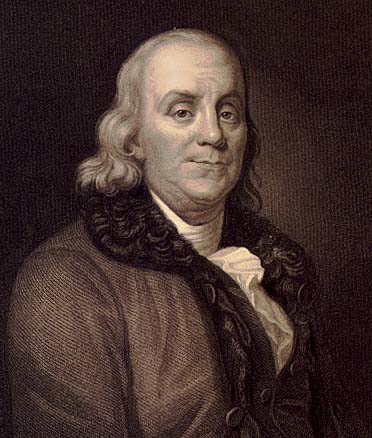
Motivation To Last a Lifetime: Learning from the Ingenuity of Benjamin Franklin

An old article in Newsweek titled “Advice to a (Bored) Young Man” sheds light on the life of one individual whose life was one of exploration and discovery.

Many people reading this page are doing so with the aid of bifocals. Inventor? Benjamin Franklin, age 79.

The presses that printed this page were powered by electricity. One of the first harnessers? B. Franklin, age 40.

Some are reading this on the campus of one of the Ivy League universities. Founder? B. Franklin, age 45.

Others, in a library. Who founded the first library in America? B. Franklin, age 25.

Who started the first fire department? B. Franklin, age 31.

Who invented the lightning rod? B. Franklin, age 43.

Who designed a heating stove still in use today? B. Franklin, age 36.

Wit. Conversationalist. Economist. Philosopher. Diplomat. Printer. Publisher. Linguist (he spoke and wrote five languages). Advocate of paratroopers (from balloons) a century before the airplane was invented. All this until age 84. And he had exactly two years of formal schooling. It’s a good bet that you already have more sheer knowledge than

Franklin ever had when he was your age. Perhaps you think there’s no use trying to think of anything new, that everything’s been done.

Wrong…. Go do something about it.

-Ted Engstrom, Motivation to Last a Lifetime.

Source: Charles R. Swindoll. Swindoll’s Ultimate Book of Illustrations & Quotes. Nashville: Thomas Nelson, 2007.


Dr. Paul David Tripp on God’s Plan For Your LIfe

That I may dwell in the house of the LORD all the days of my life, to gaze upon the beauty of the LORD and to inquire in his temple. – PSALM 27:4

Now, admit it—you love yourself, and you have a wonderful plan for your life. Somehow, someway we all are too focused on our own lives. All of us get captured by what we want, what we feel, and what we have determined we need. Every one of us is a dreamer. We have all been given the amazing capacity to envision the future and to plan toward it. A dream is imagination coupled with desire and projected into the future. There are things that you would love to have as part of your life. There are things that you would like to accomplish. There are locations you would love to experience. There are relationships you would like to enjoy. There are situations you would like to avoid. Every day you get up and you work toward some kind of dream.

But dreamers don’t just dream their dream; they also dream to be sovereign. In some way, at some time, all of us have wished that we had enough control over our lives to guarantee that we could experience the things we have dreamed. We would like to control people and situations just enough to ensure that the “good things” we’ve dreamed would actually come true. What does the Bible call all of this? The Bible calls it worship.

You see, you and I are worshipers. This is one of the things that separates us from the rest of creation. As worshipers we are always living for something. Something is always laying claim to the affection and rulership of our hearts. There is always something that commands our dreams. There is something that we look to for identity, meaning, and purpose, and that inner sense of well-being that everyone seeks.

Scripture says that there are only two choices (Rom. 1:25). Either you are living in pursuit of the creation or you are living in pursuit of the Creator. You are looking for your satisfaction and meaning in the physical, created world, or you are finding it in the Lord.

This means that there is a war of dreams that rages in our hearts, and in the middle of the fog of this war it is so easy to get it wrong. It is so easy to think that because we have our theology in the right place, because we are biblically literate and functioning members of a good church, that our lives are shaped by worship of the Lord. But that may not be the case at all. On closer inspection, it may actually be the case that underneath all of those things we are driven by personal success, or material things, or the respect of others, or power and control. I am deeply persuaded that there’s a whole lot of idolatrous Christianity out there. The most dangerous idols are those that fit well within the culture of external Christianity.

It’s here that Psalm 27 is so helpful and convicting. What is David’s dream for his life? What is his plan? Well, the answer sounds so spiritual as to be impractical, but it gets right to the heart of why we were created in the first place. David says, in Old Testament language, “I want to spend my life in worship of the Lord. I want to dwell in his temple and gaze upon his beauty.” The shekinahglory presence of the Lord filled the holy place of the temple, like a cloud. It was a physical picture of God dwelling with his people. David was saying, “I want to be where God is. I want to do what I was created to do.”

No, David isn’t some super-spiritual mystic. David gets it right. His quest is for a life shaped and directed by a daily worship of the Lord. David knows who he is: a creature created for worship. David knows who God is: the only “thing” in the universe truly worthy of worship. His dream is the best dream that you could ever dream. Far from being impractical, this dream, if lived out at street level, will bring purity and peace to your life.

What is your plan for your life? How close is your plan to the plan God had for you when he gave you life and breath? Is there, perhaps, something in your plan that competes for the place that only God should have?

May your plan for you be identical to his plan for you!

 Take a Moment

1. How close is your dream for your life to the plan for life to which God has called you?

2. Is God calling you to let go of a dream so that his plan for you may flourish?
*The article above adapted from the excellent book by Paul David Tripp. A Shelter in the Time of Storm: Meditations on God and Trouble. Wheaton: Good News Publishers/Crossway Books. 2009, pp. 149-150.

 About the Author:

Dr. Paul David Tripp is the president of Paul Tripp Ministries (www.paultrippministries.org), a nonprofit organization, whose mission statement is “Connecting the transforming power of Jesus Christ to everyday life.” This mission leads Paul to weekly speaking engagements around the world. In addition to being a gifted communicator and sought after conference speaker with Paul Tripp Ministries, Paul is the Executive Director of the Center for Pastoral Life and Care in Fort Worth, Texas, and has taught at respected institutions worldwide. As an author, Paul has written many books on Christian Living that are read and distributed internationally. He has been married for many years to Luella and they have four grown children.

 He is the author of the following excellent Christ-centered books:

Dangerous Calling: Confronting The Unique Challenges of Pastoral Ministry. Wheaton: Crossway Books, 2012.

Forever: Why You Can’t Live Without It. Grand Rapids: Zondervan, 2011.

What Did You Expect? Redeeming The Realities of Marriage. Wheaton: Crossway, 2010.

The Power of Words and the Wonder of God (contributor). Wheaton: Crossway, 2009.

A Shelter in the Time of Storm: Meditations on God and Trouble. Wheaton: Crossway, 2009.

Broken Down House: Living Productively in a World Gone Bad. Shepherd Press, 2009.

Helping People Change (with Timothy S. Lane). Greensboro, N.C.: New Growth Press, 2008.

Whiter Than Snow: Meditations on Sin and Mercy. Wheaton: Crossway, 2008.

Helping Your Adopted Child. Greensboro, N.C.: New Growth Press, 2008.

Peer Pressure. Greensboro, N.C.: New Growth Press, 2008.

A Quest for More: Living For Something Bigger Than You. Greensboro, N.C.: New Growth Press, 2007.

Grief: Finding Hope Again. Greensboro, N.C.: New Growth Press, 2005.

Lost in the Middle: Midlife and the Grace of God. Shepherd Press, 2004.

Pastoral Leadership for Manhood and Womanhood (contributor). Wheaton: Crossway, 2003.

Instruments in the Redeemer’s Hands: People in Need of Change Helping People in Need of Change. Phillipsburg, NJ: P&R, 2002.

Age of Opportunity: A Biblical Guide to Parenting Teens. Phillipsburg, NJ: P&R, 2001.

War of Words: Getting to the Heart of Communication Struggles. Phillipsburg, NJ P&R, 2001.

Dr. Tom Nelson on A Theology of Work

“CREATED TO WORK”


“All vocations are intended by God to manifest His love in the world.” – Thomas Merton (Quoted in William C. Placher, ed., Callings: Twenty Centuries of Christian Wisdom on Vocation. Grand Rapids, MI: Eerdmans, 2005. 426).

The animated movie WALL-E is a cute story of a curious robot whose job is to clean up a trashed earth. While humans once inhabited the earth, we soon discover that they have been evacuated from earth with the hopes of returning one day after robots clean up the mess. Though a hardworking robot,

WALL-E has a rather lonely existence. But that changes when WALL-E meets another robot by the name of Eve. WALL-E quickly gains a fondness for his newfound friend whose name evokes a biblical image of creation.

WALL-E enthusiastically pursues EVE to the point of making an unplanned journey, via spaceship, to a high-tech space station where humans who have made a real mess of planet Earth are now living a “utopian,” carefree, work-free existence. As residents of the space station, humans are waited on hand and foot by robots attending to their every whim and desire. As a result, the pampered humans have become self-indulgent, bored couch potatoes. With the passage of time, adult humans now resemble giant babies with soft faces, rounded torsos, and stubby, weak limbs—the tragic deforming and atrophying result of human beings doing nothing but cruising around on cushy, padded, reclining chairs, their eyes fixed on video screens, taking in large amounts of calories, and sipping from straws sticking out of giant cups.

As a movie watcher, the high-tech space station filled with human couch potatoes is anything but appealing. The creators of WALL-E explore many important themes, but possibly none more compelling than what it means to be human. WALL-E reminds us that a do-nothing couch potato existence is actually repulsive and dehumanizing. But why is this? As human beings we were not created to be do-nothings; we were created with work in mind.

 CREATED WITH WORK IN MIND

As human beings, we have been designed not only to rest and to play but also to work. From the very beginning of Scripture we see that the one true God is not a couch potato God, nor did he create a couch potato world. As the Genesis storyline opens, we read, “In the beginning, God created the heavens and the earth.” Here we are immediately introduced to God as a thoughtful and creative worker. At first glance we observe the triune God as an active deity. The Spirit of God is hovering over the waters. God’s infinite creativity, omnipotence, and omniscience are unleashed, and he is intimately engaged in his good creation.

As God’s work of creation unfolds, humankind—the crown of creation—emerges on the literary landscape. God the Creator places a distinguishing stamp of uniqueness on human beings, one that sets humanity apart from the rest of creation. Then God said,  “Let us make man in our image, after our likeness. And let them have dominion over the fish of the sea and over the birds of the heavens and over the livestock and over every creeping thing that creeps on the earth.” So God created man in his own image, in the image of God he created him; male and female he created them. And God blessed them. And God said to them, “Be fruitful and multiply and fill the earth and subdue it, and have dominion over the fish of the sea and over the birds of the heavens and over every living thing that moves on the earth” (Gen. 1:26–28).

The Genesis writer wants us to grasp the unique place of human beings in creation. We observe this uniqueness in two foundational ways.

First, humans are designed by God to exercise proper dominion over creation, which is a divinely delegated stewardship role.

Second, humans are designed by God to be his image-bearers, to uniquely reflect who God is to his good world. The repeated use of the word image by the Genesis writer tells us of the importance of this concept for our understanding of what it means to be human.

IMAGE-BEARERS OF GOD

As God’s image-bearers, we were created to mirror the glory and excellence of the triune God. An image-bearer is designed to reflect the image of another. I was reminded of this truth as my wife, Liz, and I were cheering on our Kansas City Royals baseball team. While enjoying a beautiful summer evening at Kauffman Stadium, we had a delightful conversation with the wife of a professional baseball player whose present work and vocational calling is being a mom and raising her children. Sitting in the row right in front of us were two of her beautiful children whom we had not seen for a couple of years. The last time we had seen them they were still infants, and now at three and five years old, their budding personalities and appearances were emerging. As I looked at their five-year-old son, I was simply stunned at how much he was like his dad. The closer I looked, the more amazed I became. His physical appearance remarkably resembled his dad, though on a smaller scale. The boy’s voice

sounded the same. Even as a five-year-old he had similar mannerisms, and like his dad he was already into baseball. I couldn’t help but comment to my wife, Liz, “Look at him; he is the spitting image of his dad!”

I am not in any way suggesting that we are somehow little gods or that we will ever be God, but as human beings we were created to reflect our heavenly Father. In a sense we were created to be his spitting image. We were created to worship God and to display a glimpse of God’s glory to a vast and expanding universe. This glimpse of God’s glory reveals many things about the character and magnificence of the one true God, and at a very foundational level, we must recognize our image-bearing reveals that God is a creator, a worker. God is not some cosmic do-nothing deity.

 WHY DO WE WORK?

While While commuting to my office, on more than one occasion I have seen a bumper sticker that provides one answer to this question of why we work: “I owe, I owe, it’s off to work I go.” Paying the many bills that come to us each month is no small matter. We can all give testimony to the high cost of modern-day living, but is economic transaction the foundational reason why we work?

Scripture tells us that the most bedrock answer to the question of why we work is that we were created with work in mind. Being made in God’s image, we have been designed to work, to be fellow workers with God. To be an image-bearer is to be a worker. In our work we are to show off God’s excellence, creativity, and glory to the world. We work because we bear the image of One who works. This is why the apostle Paul writes to a group of first-century followers of Jesus who have embraced the gospel, “If anyone is not willing to work, let him not eat” (2 Thess. 3:10). At first blush, Paul’s rather blunt words seem cold and lacking Christian compassion, but upon further theological reflection, Paul’s words convey to us some needed insight. Paul does not rebuke those who, for various legitimate reasons, cannot work, but he does say that an unwillingness to work is no trivial thing. For anyone to refuse to work is a fundamental violation of God’s creation design for humankind.

When we grasp what God intended for his image-bearers, it is not surprising that throughout the book of Proverbs the wise are praised for their diligence and the foolish are rebuked for their laziness. When we hear the word fool, we often think of someone who is mentally deficient. However, a foolish person in Scripture is not necessarily one who lacks intelligence but rather one who lives as if God does not exist. The psalmist puts it this way: “The fool says in his heart, ‘There is no God’ ” (Ps. 14:1). A fool is one who rejects not only the Creator but also creation design, including the design to work. Throughout Scripture slothfulness is rightly viewed in a negative light. A slothful Christian is a contradiction in terms. We should not be shocked to see that the Christian church throughout history has reflected negative sentiments about slothfulness. Sloth finds a prominent place in Pope Gregory the Great’s listing of the seven deadly sins. The Protestant Reformers spoke of the poverty of slothfulness and laziness. Consistently they made the connection that those who spend their time in idleness and ease should rightly doubt the sincerity of their Christian commitment.

God could have placed Adam and Eve in the garden of Eden and made it much like the world of humans in WALL-E, where they could sit around with food coming to them, sipping their life-giving nutrients out of giant cups. This was not God’s desire or his design for his good world. Because God himself is a worker, and because we are his image-bearers, we were designed to reflect who God is in, through, and by our work. The work we are called to do every day is an important part of our image-bearing nature and stewardship. As human beings we were created to do things. In this sense we are not only human beings, we are also human doings. We have been created to contribute to God’s good world.

CREATED TO CONTRIBUTE

First and foremost, work is not about economic exchange, financial remuneration, or a pathway to the American Dream, but about God-honoring human creativity and contribution. Our work, whatever it is, whether we are paid for it, is our specific human contribution to God’s ongoing creation and to the common good. Work is an integral aspect of being human, an essential aspect of loving God and his created world, and a vital part of loving our neighbor as ourselves. Gilbert Meilaender presses into the rich implications of the truths presented to us in the Genesis account. He writes, “To regard work as a calling is to suggest that we live to work, that our work is of central significance for our person. Still more, the calling gives to work a religious significance which it is not likely to acquire in any other way” (Quoted in Mark R. Schwehn and Dorothy C. Bass, eds., Leading Lives That Matter. Grand Rapids, MI: Eerdmans, 2006. 237). For us to view work outside a theological framework is to inevitably devalue both work and the worker.

The creation account recorded for us in Genesis 2 emphasizes God’s design for humanity and the significant contribution the crown of creation is to make in his good world. Prior to God forming man from the dust of the earth and breathing life into him, before sin entered the world, the Genesis writer raises a tension regarding the incompleteness of God’s creation. In Genesis chapter 2:5 we read that “there was no man to work the ground.” In other words, God created humans not only to worship him and to delight in him, but to make an important ongoing contribution to his creation. From Genesis 2 we see that the earth itself was created in order to be cultivated and shaped by humankind. Unspoiled pristine nature is not necessarily a preferred state. God desired that there would be harmonious human cooperation within the creation order. Not only would the crown of creation have joyful intimacy with their Creator, but they would also be given the joyful privilege of contributing to the work of God in his good world.

As Genesis chapter 2 continues, we get a further picture of a human being as a worker. We observe work as it was originally designed to be, before sin and death entered the world. In Genesis 2:15 we read these words, “The LORD God took the man and put him in the garden of Eden to work it and keep it.” The Lord God takes the initiative and places humankind in the garden of Eden with a particular task in mind. The emphasis here is not about personal human choice but rather divine initiative and divine calling.

Already in Genesis we see that vocation is not something we ultimately choose for ourselves; it is something to which God calls us. Contrary to much of our present cultural emphasis that deifies personal choice, a biblical worldview begins not with human choice, but with a good and sovereign God who is not only the Creator but also the Caller. Here in the Genesis narrative, before humanity’s fall into sin and resulting corruption of the world and our work, we are given two bedrock truths regarding human work and vocation: we were created with an important stewardship in mind, to cultivate creation and to keep it; and we are commissioned by God to nurture, care for, and protect his creation.

A STEWARDSHIP POSTURE

Humankind, the crown of creation, was created for the glory of God and entrusted with a remarkable stewardship exercising dominion over the earth. A vital aspect of this stewardship is the essential work not only of tending things and making things but also of cultivating and creating culture. Andy Crouch convincingly undermines the rationale for both Christian withdrawal from the common culture and for Christian hubris that projects a kind of utopian triumphalism of changing the world. Crouch suggests Christians adopt a stewardship posture anchored in cultivation and creation, what he often refers to as culture making. The stewardship of culture making involves both cultivators and creators. Crouch

 describes cultivators as “people who tend and nourish what is best in human culture, who do the hard and painstaking work to preserve the best of what people before us have done.” Creators, he says, are “people who dare to think and do something that has never been thought or done before, something that makes the world more welcoming and thrilling and beautiful” (Quoted in Gideon Strauss, “Making It New: Andy Crouch Proposes a Different Way for Christians to Engage Culture” Books & Culture, September–October 2008).

Andy Crouch makes an important point. Humanity’s creative work is varied, broad and far reaching. We not only make things or fix things, but also we are actively involved in creating and cultivating human culture itself.

 AVODAH

The language of work as cultivation and creation in Genesis 2:15 is embedded in the Hebrew word avodah, which is behind the English translation “to cultivate.” The Hebrew word avodah is translated in various ways in the Old Testament. It is rendered as “work,” “service,” or “craftsmanship” in many instances, yet other times it is translated as “worship.” Avodah is used to describe the back-breaking hard work of God’s covenant people making bricks as slaves in Egypt (Ex. 1:14), the artisans building the tabernacle (Ex. 35:24), and the fine craftsmanship of linen workers (1 Chron. 4:21). Avodah also appears in the context of Solomon dedicating the temple. Solomon employs this word as he instructs the priests and Levites regarding their service in leading corporate worship and praise of the one true God (2 Chron. 8:14). Whether it is making bricks, crafting fine linen, or leading others in corporate praise and worship, the Old Testament writers present a seamless understanding of work and worship. Though there are distinct nuances to avodah, a common thread of meaning emerges where work, worship, and service are inextricably linked and intricately connected. The various usages of this Hebrew word found first in Genesis 2:15 tell us that God’s original design and desire is that our work and our worship would be a seamless way of living. Properly understood, our work is to be thoughtfully woven into the integral fabric of Christian vocation, for God designed and intended our work, our vocational calling, to be an act of God-honoring worship.

 WORK AS AN ACT OF WORSHIP

So often we think of worship as something we do on Sunday and work as something we do on Monday. However, this dichotomy is not what God designed nor what he desires for our lives. God designed work to have both a vertical and horizontal dimension. We work to the glory of God and for the furtherance of the common good. On Sunday we say we go to worship and on Monday we say we go to work, but our language reveals our foggy theological thinking. That our work has been designed by God to be an act of worship is often missed in the frenzied pace of a compartmentalized modern life.

One of our favorite family vacations was visiting England. Touring beautiful Westminster Abbey and Christopher Wren’s truly breathtaking St. Paul’s Cathedral was one of my personal highlights. As I walked through these beautiful and inspiring architectural works of art, I was reminded of the apocryphal story of the three stone masons who were engaged in conversation by a visitor. “What are you doing?” the visitor asked the first mason. “I am cutting stone,” the mason replied. A second mason chimed in, “I’m making a living.” “And how about you?” the visitor asked the third mason. “Me, I’m building a cathedral for God and his people.” What a difference our perspective on work makes!

 AN AUDIENCE OF ONE

When our children were young, my wife, Liz, and I tried to impress on them that we live and work before an Audience of One (Os Guinness, The Call: Finding and Fulfilling the Central Purpose of Your Life. Thomas Nelson, 2003. 70). Our line of thought went something like this: If God is aware and cares for every sparrow that falls, then we know that our loving heavenly Father watches over us wherever we are and whatever we are doing. Nothing we think, say, or do ever escapes God’s loving, caring, and watchful eye. Living before an Audience of One also means that all we do and say is to be an act of God-honoring worship. Of course we all fell short many times in keeping this perspective in mind, but, as a gymnast, our daughter, Sarah, latched on to this transforming truth. Over the many years of her devotion to the sport of gymnastics,

Sarah encountered the daily hard work of preparation, the exhilaration of victory, and the agony of defeat. Through the good and the bad times, Sarah remained remarkably focused and resilient. Sadly, Sarah’s gymnastics career was cut short due to a severe ankle injury. Years later we were reminiscing about her years of being a competitive gymnast. I asked Sarah how it was that she stayed so buoyant during those years. She looked at me and said, “Dad, remember you and mom taught me to live before an Audience of One.”

Doing our work before an Audience of One changes what we do and how we do it. Living with this mind-set helps us connect our faith with our work, for we live before the same Audience on Monday at work as we do on Sunday at worship. Dorothy Sayers, a contemporary of C. S. Lewis, gave a lot of thought to how followers of Christ who have embraced the gospel ought to see their work. She also spoke in a compelling way about how the church has so often dropped the ball when it comes to connecting our Sunday faith with Monday work. In a thoughtful essay simply titled “Why Work?” Sayers writes, “The Church’s approach to an intelligent carpenter is usually confined to [moral instruction and church attendance]. What the Church should be telling him is this: that the very first demand that his religion makes upon him is that he should make good tables. . . .” (Dorothy Sayers, “Why Work?” in Mark R. Schwehn and Dorothy C. Bass, eds., Leading Lives That Matter: What We Should Do and Who We Should Be. Grand Rapids, MI: Eerdmans, 2006, 195).

Dorothy Sayers is not saying that offering moral instruction and inspiring worship services is unimportant. Clearly this is an important stewardship of any gospel preaching and Christ-honoring local church. But what we must not miss in her insightful words is the importance of the church in teaching each one of us that our work, whatever it is, is to be an act of worship. With remarkable insight Sayers continues, “Let the church remember this: that every maker and worker is called to serve God in his profession or trade—not outside it. . . . The only Christian work is good work well done” (Ibid).

So often we use the language of Christian work to refer exclusively to ecclesiastical, missionary, or parachurch callings, but this distorted understanding exposes our inadequate grasp of the transforming truths of Christian vocation. It is hard to imagine how our understanding of work and the quality of our work would change if we would truly live before an Audience of One and fully embrace the truth that the only Christian work is good work well done. Dorothy Sayers is not being novel; she is simply saying what the apostle Paul penned to the first century local church at Colossae: “Whatever you do, work heartily, as for the Lord and not for men, knowing that from the Lord you will receive the inheritance as your reward. You are serving the Lord Christ” (Col. 3:23–24).

RETHINKING WORK

Though our work may be difficult and at times exasperating, we do not have to hate our work or merely live for the weekends. We need to rethink how we think about our work. When we begin to embrace how work ought to be, then we begin to see what we do each and every day as an integral part of our worship of God. If you understand that God designed you to contribute to his creation, you will take seriously how and where you are called to make your important contribution in the world. When we thoughtfully reflect on God’s original design for our work, we are inspired with its beauty and grandeur, but we also realize that work and the workplaces we inhabit in our present world are not as God designed them to be.

You may be thinking, Tom, this reflection on God’s design for our work all sounds well and good, but you don’t know the difficulty of my work or the pressures of my workplace or what a difficult boss I work for! And you are right in the sense that I don’t know all that you are facing in this competitive, fast-paced world. I may not know the particularities of your work, but over the years I have interacted with many people about their work, and I do know that for each one of us who desires to connect our Sunday faith with our Monday work, the ongoing challenges are ever present and significant.

 THE OFFICE

I must confess I am an enthusiastic fan of the television show The Office. Each week the Dunder Mifflin gang makes their way into our living room. The Scranton division of a fictitious paper company by the name of Dunder Mifflin and the cast of characters have become a lasting fixture in our imaginations. The Office, at first glance, gives a humorous depiction of work and workplace antics, but the more you enter into the lives of these characters and the workplace they inhabit, the more painfully broken it seems. On display every week for the entire world to see is the ongoing drama of very broken individuals who daily bump into each other in the workplace. Though the writers of The Office sometimes go over the edge for my tastes, each week they remind a watching world that work is an important part of what it means to be human. The Office says to us that we were created to work, yet unresolved tensions fill the air of every episode, and we are left to ponder that work now is not what it really ought to be. Daily we are confronted by a sobering reality that our work, the workers we work with, and the workplaces in which we work are not as God originally designed them. In a myriad of ways we are painfully reminded each and every day that we live and work in a fallen and corrupted world. Like many other things in life, work in this less-than-perfect world is a mixed bag. This is the inescapable reality to which we will turn our attention next.

A Prayer for Our Work

 Let your work be shown to your servants, and your glorious power to their children. Let the favor of the Lord our God be upon us, and establish the work of our hands upon us; yes, establish the work of our hands! (Ps. 90:16–17)

Questions for Reflection and Discussion:

How does knowing that you are created in the image of a God who works change the way you view work?

In what ways does your work serve to create and cultivate culture?

What would change in your work if you maintained the mindset that you live and work before an Audience of One?

How might you do your work as a God-honoring act of worship?

 
ABOUT THE AUTHOR:

Dr. Tom Nelson (DMin, Trinity Evangelical Divinity School) has served as senior pastor of Christ Community Church in Leawood, Kansas, for more than twenty years. He is the author of Five Smooth Stones and Ekklesia as well as a member of The Gospel Coalition. The article above was adapted from Chapter One his fabulous theology on work entitled: Work Matters. Wheaton: Crossway Books, 2011.

Richard Baxter on The Importance of Hard Work

Colossians 3:23-24, “Whatever you do, work heartily, as for the Lord and not for men, knowing that from the Lord you will receive an inheritance as your reward. You are serving the Lord Christ.”

(1)  You will show that you are not sluggish and servants to your flesh (as those that cannot deny it ease), and you will further the putting to death of all the fleshly lusts and desires that are fed by ease and idleness.

(2)  You will keep out idle thoughts from your mind, that swarm in the minds of idle persons.

(3)  You will not lose precious time, something that idle persons are daily guilty of.

(4)  You will be in a way of obedience to God when the slothful are in constant sins of omission.

(5)  You may have more time to spend in holy duties if you follow your occupation diligently. Idle persons have no time for praying and reading because they lose time by loitering at their work.

(6)  You may expect God’s blessing and comfortable provision for both yourself and your families.

(7)  It may also encourage the health of your body which will increase its competence for the service of your soul.

About Richard Baxter: A Mini-Biography

Excerpt from Meet the Puritans

by Dr. Joel Beeke and Randall J. Pederson

Richard Baxter was born in 1615, in Rowton, near Shrewsbury, in Shropshire. He was the only son of Beatrice Adeney and Richard Baxter, Sr. Because of his father’s gambling habit and inherited debts, and his mother’s poor health, Richard lived with his maternal grandparents for the first ten years of his life. When his father was converted through “the bare reading of the Scriptures in private,” Richard returned to his parental home, and later acknowledged that God used his father’s serious talks about God and eternity as “the Instrument of my first Convictions, and Approbation of a Holy Life” (Reliquiae Baxterianae, 1:2-4).

Baxter’s education was largely informal; he later wrote that he had four teachers in six years, all of whom were ignorant and two led immoral lives. Nevertheless, he had a fertile mind, and enjoyed reading and studying. A prolonged illness and various books—particularly William Perkins’s Works—were the means God used to “resolve me for himself,” Baxter wrote (Reliquiae Baxterianae, 1:3-4). When he was fifteen, he was deeply affected by Richard Sibbes’s The Bruised Reed: “Sibbes opened more the love of God to me, and gave me a livelier apprehension of the mystery of redemption and how much I was beholden to Jesus Christ.” Subsequently, Ezekiel Culverwell’s Treatise of Faith (1623) “did me much good” (ibid., 1:4-5).

Baxter’s education took a turn for the better when he transferred to the Wroxeter grammar school, where he received some tuition support from a schoolmaster named John Owen. His best teacher there was an erudite minister, Francis Garbet, who took a real interest in Baxter. At the age of sixteen, under Owen’s persuasion, Baxter decided to forego university in favor of placing himself under the instruction of Owen’s friend, Richard Wickstead, chaplain at Ludlow Castle, who tutored him rather half-heartedly for eighteen months.

In 1633, Baxter went to London under the patronage of Sir Henry Herbert, Master of the Revels, in the court of Charles I. Joseph Symonds and Walter Cradock, two godly Puritan ministers in London, roused his sympathy for nonconformity, but he stayed in London only four weeks. Having become dissatisfied with the worldly court life in London and desiring to care for his ailing mother, he returned home in 1634; his mother died in May of 1635. He spent the next four years privately studying theology, particularly that of the scholastics, including Aquinas, Scotus, and Ockham.

At age twenty-three, having as yet “no scruple at all against subscription,” and thinking “the Conformists had the better cause” (ibid., 1:13), Baxter was ordained deacon by John Thornborough, the elderly bishop of Worcester. For nine months he served as master of the school founded at Dudley, a center of nonconformity. In 1639, he became an assistant minister at Bridgnorth, Shropshire, where he developed a deeper appreciation for nonconformity.

In 1641, Baxter became curate at Kidderminster. Though many among a rather corrupt and crude population of handloom workers were initially offended by his forceful preaching and stress on a controlled Lord’s Supper and on church discipline, his seventeen-year ministry there (1641-42, 1647-61) bore substantial fruit. He preached as “a dying man to dying men,” which, with the Spirit’s blessing, resulted in numerous conversions. His praying was no less intense: “His soul tookwing for heaven and rapt up the souls of others with him” (Leonard Bacon, Select Practical Writings of Richard Baxter [New Haven, 1831], 1:262).

During the early days of the Civil War, Baxter supported, and on occasion accompanied, the Parliamentary Army. He preached before Cromwell, but he was uncomfortable with the Protector’s toleration of separatists. Though he was only an occasional “conformer,” Baxter favored being part of an established church and opposed the Solemn League and Covenant of 1643. He also believed that the antinomian tendencies of some of the soldiers and preachers, such as Tobias Crisp and John Saltmarsh, were antithetical to practical Christian living. Their teaching prompted him to write Aphorisms of Justification (1649), in which he argued for a combination of divine grace and human cooperation in justification.

In 1647, Baxter’s prolonged illnesses compelled him to leave the army. He recuperated at the Worcestershire home of Sir Thomas and Lady Rous, where he wrote the first part of The Saints’ Everlasting Rest. He later said he wrote it as a labor of love while “looking death full in the face and yet experiencing the sufficient grace of God.”

After he recovered, Baxter returned to Kidderminster, where he concentrated on writing. “My writings were my chiefest daily labor,” he wrote, whereas “preaching and preparing for it, were but my recreation” (Reliquae, p. 85). He also catechized church members two days each week. He went from home to home with an assistant, speaking with each family for one hour and providing each family with an edifying book or two, usually written by himself. He said of these visits, “Few families went from me without some tears, or seemingly serious promises [to strive] for a godly life.” He added, “Some ignorant persons, who have been so long unprofitable hearers, have got more knowledge and remorse of conscience in half an hour’s close disclosure, than they did from ten year’s public preaching” (ibid., 1:83ff.).

The home visits bore fruit. The congregation kept overflowing its meeting place so that five galleries had to be added. When Baxter came to Kidderminster, scarcely one family on each street among the 800 families honored God in family worship. By the end of his ministry in 1661, there were streets on which every family did so. On the Sabbath, he writes, “you might hear an hundred families singing Psalms and repeating sermons, as you passed through the streets.” Of the approximately six hundred people who became full communicants under his ministry, he adds, “There was not twelve that I had not good hopes of, as to their sincerity” (ibid., 1:84-85).

Baxter worked hard, despite chronic pain from the age of twenty-one until the end of his life. He suffered from tuberculosis and feared consumption. In the years following the Restoration, he left Kidderminster for London, where he often preached at St. Dunstan’s and lectured at Pinner’s Hall and Fetters Lane. He pleaded in vain, however, at the Savoy Conference (1661) for the non-prelatical, synodical form of episcopacy devised by Archbishop James Ussher (1581-1656) and for a Puritan revision of the Prayer Book.

In 1662, Baxter was ejected from the Church of England by the Act of Uniformity. He continued to preach for the rest of his life where he could, but never gathered a congregation of his own. J. I. Packer writes, “Miscalled a Presbyterian, Baxter was a reluctant Nonconformist who favored monarchy, national churches, liturgy and episcopacy, and could accept the unsympathetically revised 1662 Prayer Book. But the 1662 Act of Uniformity required renunciation on oath of Puritan ideals of reformation as a condition of incumbency in the restored Church of England, and Baxter balked at that” (New Dictionary of Theology, p. 83).

After his ejection, when he was almost fifty, Baxter married one of his converts, Margaret Charlton, who was in her early twenties. The disparity of their ages caused some consternation for a time, but the excellence of their marriage in Christ silenced the rumors. Margaret proved to be a devout Christian and faithful wife who earnestly yearned for the salvation of souls. Baxter’s tenderness toward her, and her godliness, are described in Breviate of the Life of Mrs. Margaret Baxter (1681). There Baxter writes that he “never knew her equal” in practical divinity, for she was “better at resolving a case of conscience than most Divines that ever I knew.” Consequently, Baxter habitually shared all cases with her except for those that compelled confidentiality (Breviate, pp. 67-68).

The Baxters settled in London. Prelates and magistrates hounded Baxter for most of his remaining years. He was imprisoned at least three times for preaching and never again resumed a pastoral charge; even his books were taken from him. His response was, “I found I was near the end of both that work and that life which needeth books, and so I easily let go all.” Once, even the bed on which he was lying sick was confiscated.

After James II took the throne in 1685, Baxter was charged with attacking episcopacy in Paraphrase on the New Testament and was brought before Lord Chief Justice Jeffreys. Jeffreys charged Baxter with seditious behavior, calling him “an old rogue who poisoned the world with his Kidderminster doctrine.” Jeffreys went on to exclaim, “This conceited, stubborn, fanatical dog—that did not conform when he might have been preferred; hang him!” The bishop of London intervened, and Baxter was spared a public whipping, though he was still imprisoned
for five more months.

Baxter eventually benefited from the Toleration Act of 1689, introduced by William and Mary to protect nonconformists. His last days were spent in the pleasant surroundings of Charterhouse Square. He occasionally preached to large crowds there, but he spent most of his time writing. When he was dying and a friend reminded him of the benefits many had received from his writings, Baxter replied, “I was but a pen in God’s hand, and what praise is due to a pen?” By the time he died on December 8, 1691, Baxter had written about 150 treatises, as well as hundreds of unpublished letters and papers.

Baxter’s writings are a strange theological mix. He was one of a few Puritans whose doctrines of God’s decrees, atonement, and justification were anything but Reformed. Though he generally structured his theology along Reformed lines of thought, he frequently leaned towards Arminian thinking. He developed his own notion of universal redemption, which offended Calvinists, but retained a form of personal election, which offended Arminians. He rejected reprobation. He was greatly influenced by the Amyraldians and incorporated much of their thinking, including hypothetical universalism, which teaches that Christ hypothetically died for all men, but His death only has real benefit to those who believe. For Baxter, Christ’s death was more of a legal satisfaction of the law than a personal substitutionary death on behalf of elect sinners.

Baxter’s approach to justification has been called neonomianism (that is, “new law”); he said that God has made a new law offering forgiveness to repentant breakers of the old law. Faith and repentance—the new laws that must be obeyed—become the believer’s personal, saving righteousness that is sustained by preserving grace. Baxter’s soteriology, then, is Amyraldian with the addition of Arminian “new law” teaching. Happily, these erroneous doctrines do not surface much in Baxter’s devotional writings, which are geared mainly to encourage one’s sanctification rather than to teach theology.

Baxter professed to resent having to write polemical treatises: “Controversies I have written of, but only to end them, not to make them.” Hans Boersma has shown, however, that though irenic in some respects, Baxter could be provocative as well (see A Hot Pepper Corn: Richard Baxter’s Doctrine of Justification in its Seventeenth-Century Context of Controversy [Zoetermeer: Boekencentrum, 1993]).

Modern Reprints

A Call to the Unconverted (Zondervan; 170 pages; 1953). This classic evangelistic “tract,” based on Ezekiel 33:11, reveals Baxter’s passionate concern for evangelism. It is an earnest and reasoned appeal to the unsaved to turn to God and accept His offered mercy. Here is one example:

If thou die unconverted, there is no doubt to be made of thy damnation; and thou are not sure to live an hour, and yet art thou not ready to turn and to come in? Oh miserable wretch! Hast thou not served the flesh and the devil long enough yet? Hast thou not enough of sin? Is it so good to thee? or so profitable for thee? Dost thou know what it is, that thou wouldst yet have more of it? Hast thou had so many calls and so many mercies, and so many blows, and so many examples? Hast thou seen so many laid in the grave, and yet art thou not ready to let go thy sins and come to Christ? What? After so many convictions and gripes of conscience, after so many purposes and promises, art thou not ready yet to turn and live? Oh that thy eyes, thy heart were opened to know how fair an offer is now made to thee! and what joyful message it is that we are sent on, to bid thee come, for all things are ready (pp. 70-71).

Stressing that sinners “die because they will die; that is, because they will not turn,” Baxter says, “So earnest is God for the conversion of sinners, that he doubleth his commands and exhortations with vehemency, Turn ye, turn ye; why will ye die?” Discernment is necessary in reading this book, since Baxter’s unsound views do occasionally surface.

Dying Thoughts (Baker; 144 pages; 2004). Based on Philippians 1:23, “For I am in a strait betwixt two, having a desire to depart, and to be with Christ, which is far better,” Baxter sets forth a proper attitude towards the present life and the life hereafter. Dying Thoughts was written shortly before Baxter’s death in 1691. It breathes a spirit of vital faith in the promises of God.

This reprint was abridged by Benjamin Fawcett. It also contains an excellent introductory essay by Edward Donnelly, “A Corrective for Reformed Preachers,” which gleans practical lessons for ministers from Baxter’s preaching.

The Practical Works of Richard Baxter (SDG; 4 vols., 4,201 pages; 2000). Baxter authored about 150 books, of which several were folios of more than a million words. If his entire works were ever to be printed, they would amount to more than double the size of Owen’s. Most of Baxter’s books are homiletical, catechetical, biographical, historical, practical, philosophical, ethical, or polemical in nature, though he also published commentaries, poetry, and politics. Keeble writes, “Puritanism had always utilized the press, but there had never been a literary career like this, either in scale or in success: Baxter was the first author of a string of bestsellers in British literary history” (Oxford DNB, 4:430).

Baxter’s practical writings were usually the most popular. His Practical Works were published in four folio volumes in London in 1707, then helpfully edited by William Orme and republished in twenty-three volumes in 1830, after which H. R. Rogers’s four-volume set was published in 1868. The SDG reprint in 2000 is of the Rogers set.

The first volume, A Christian Directory (1673), offers keen insights into the life of the believer, expounding practical and casuistical divinity in more than a million words. No Puritan work on applied theology has approached the popularity, scope, or depth of this treatise. With widespread interest in counseling and practical, biblical living in today’s church, this reprint of Baxter’s work should be a welcome addition to every library and to anyone who wishes to give solid scriptural
answers to man’s most important questions.

Volume 2, titled A Call to the Unconverted (1658), contains that work unabridged, plus eleven treatises, including The Reasons of the Christian Religion, The Unreasonableness of Infidelity, A Treatise of Conversion, and The Character of a Sound, Confirmed Christian. Volume 3 contains The Saints’ Everlasting Rest (1649), A Treatise of Self-Denial (1659), Dying Thoughts (1683), and other miscellaneous treatises. Volume 4 contains the unabridged version of the masterful treatise The Reformed Pastor (1656), as well as The Catechising of Families, The Vain Religion of the Formal Hypocrite, various sermons, and thirteen smaller treatises, including The Cure of Melancholy and Overmuch Sorrow, by Faith—perhaps the most undervalued work of Baxter. In it, Baxter, as a physician of souls, probes with remarkable insight into the human psyche and offers suggestions for the cure of depression and other mental ailments. For example, Baxter says, “As much as you can, divert them from the thoughts which are their trouble; keep them on some other talks and business; break in upon them and interrupt their musings; rouse them out of it, but with loving importunity; suffer them not to be long alone; get fit company to them, or them to it; especially, suffer them not to be idle, but drive or draw them to some pleasing works which may stir the body, and employ the thoughts” (Practical Works, 4:933).

The Reformed Pastor (BTT; 256 pages; 1999). Abridged from the original work, this edition offers a more accessible look at Baxter’s pastoral theology. Writing this book out of a deep determination to rectify the pastoral neglect he had experienced as a young man in the West Midlands, Baxter describes in zealous detail the oversight pastors are to have over themselves first and then over their flocks, out of heartfelt love for souls (Acts 20:28).

By “Reformed” in the title, Baxter does not only mean that pastors should be “Calvinistic,” but they must be “revived.” He excels in convincing ministers of their high calling to pursue personal revival and to take up their work seriously and prayerfully. Certain portions of this book are remarkably convicting, such as Baxter’s denunciation of pastoral pride. He also offers much practical guidance for dealing with the perennial problems of instructing and guiding the church. This is Baxter at his best.

Philip Doddridge writes of this work: “The Reformed Pastor should be read by every young minister, before he takes a people under his stated care; and, I think, the practical part of it reviewed every three or four years; for nothing would have a greater tendency to awaken the spirit of a minister to that zeal in his work, for want of which many good men are but shadows of what they might be, if the maxims and measures laid down in that incomparable treatise were strenuously pursued.”

Reliquiae Baxterianae (RE; 312 pages; n.d.). This work contains considerably less than half of the original which first appeared in 1696 under the editorship of Matthew Sylvester. While the original, which has never been reprinted in its entirety, has been called “a confused and shapeless hulk,” it remains an important source for seventeenth-century history. Edmund Calamy (1671-1732) condensed Baxter’s work into a more readable edition and published it in 1702. In 1925, J. M. Lloyd Thomas edited an unsatisfactory abridgment, The Autobiography of Richard Baxter (London: Dent). The current edition, published in the 1990s, though uneven in quality, contains fascinating insights into Baxter’s life and offers valuable nuggets of wisdom, particularly for ministers.

The Saints’ Everlasting Rest (CFP; 704 pages; 1999). This is deservedly one of the most valued of Baxter’s practical works. He wrote most of the book when he was far from home and had no book but the Bible to consult. Being ill for many months and expecting to die, he fixed his thoughts on the believer’s eternal rest in Christ. After he recovered, Baxter preached these thoughts in his weekly lectures at Kidderminster. Thomas Doolittle, a native of Kidderminster who later became a well-known Puritan minister and author, dated his conversion to the time when he heard these lectures.

In 1650, Baxter published the substance of his lectures as the first of many practical writings. William Bates wrote of this book: “To allure our desires, he unveils the sanctuary above, and discovers the glories and joys of the blessed in the divine presence, by a light so strong and lively, that all the glittering vanities of this world vanish in the comparison, and a sincere believer will despise them, as one of mature age does the toys of children. To excite our fear, he removes the screen, and makes the everlasting fire of hell so visible, and represents the tormenting passions of the damned in such dreadful colors, as, if duly considered, would check and control the unbridled, licentious appetites of the most sensual wretches.”

The Puritan minister John Janeway said that his conversion was greatly influenced by reading Baxter’s book. Referring to the part of the book that explains heavenly contemplation, Janeway wrote to a friend, “There is a duty, which, if it were exercised, would dispel all cause of melancholy: I mean heavenly meditation and contemplation of the things to which the true Christian religion tends. If we did but walk closely with God one hour in a day in this duty, O what influence would it have upon the whole day besides, and, duly performed, upon the whole life! This duty, with its usefulness, manner, and directions, I knew in some measure before, but had it more pressed upon me by Mr. Baxter’s Saints’ Everlasting Rest, a book that can scarce be overvalued, and for which I have cause for ever to bless God.”

*Excerpt from Meet the Puritans 
by Dr. Joel Beeke and Randall J. Pederson.

The A to Z’s of the Christian

Our Spiritual ABC’s

Ask the Father daily in prayer and He will answer

Believe God is always sovereign and works all things for our good and His glory!

Christ must be the center of your life

Dare to be a disciple of Jesus

Even you can make a difference in the lives of others by acting out God’s revealed will

Friends are special gifts from God

Give to others cheerfully

Harmony is what you should strive for in your relationships with others

Interest in others will make you a broader minded person

Judge others with love and compassion

Knowledge and wisdom come from the Lord

Live in such a way that others will be attracted to Jesus because of you

Make sure to always love others as Jesus does

New life comes to you via a personal relationship with Jesus by repentance and faith

Obedience of God’s will leads to God’s blessings

Please God in all of your actions

Question your priorities often – make sure God is in the center of all of them

Read God’s Word daily

Shepherd’s protect God’s sheep – be grateful that the Lord is my Shepherd

Talk with God often

Use your heart to show concern for others

Vent feelings, but always with the love of Christ

eXult the Lord always!

Yesterday’s sins are already paid for by the grace of Jesus Christ

Zeal in living my spiritual ABC’s will help me grow in the Lord.

*Author of “Our Spiritual ABC’s” unknown

11 Things To Know At 21 For Ministry Leaders by Stan Endicott

I Wish I Knew This Stuff When I Was 21!

(1)  I wish I’d understood Micah 6:8 and Exodus 35:3-33 – This is how to live – Do good, show mercy, and be humble.

(2)  I wish I’d understood how not to be “out of breath.” How not to be so busy with ministry and life – “Have ‘head-room’ or ‘band-width’ for the unexpected

(3)  I wish I’d understood how to have a curious, learning spirit

(4)  I wish I’d understood how to work thru difficult situations

(5)  I wish I’d understood how to understand and ‘hear’ the vision of the senior pastor

(6)  I wish I’d understand how to observe leaders within the congregation

(7)  I wish I’d understood how to talent scout – to find and develop talent

(8)  I wish I’d I wish I’d understood how to look at it from the ‘blimp

(9)  I wish I’d understood the difference between the words, ‘intrinsic’ and ‘extrinsic’ as they relate to the church and community

(10) I wish I’d understood that what a person enjoyed as a 4th grader is what will bring them joy today.

(11) I wish I’d understood how hurtful it is to be critical of others.

Stan Endicott is a nationally recognized, deeply respected and beloved Worship Pastor, Music Producer and Mentor to hundreds of young leaders. He was producer for Maranatha Music for over twenty years during which time he produced Promise Keepers recordings, including “Stand in the Gap”. This was the theme for the “1997 million man march” in Washington D.C. He produced and directed gospel choirs for many Internationally-known ministries including Franklin Graham, Greg Laurie, Willow Creek, and Saddleback Church. Recently he produced the newest worship project for Youth With A Mission, (YWAM). Stan is founder and partner of Slingshot Group and leads their Coaching division. Stan’s heart is for mentoring, “aiming”, and training young worship leaders and artists. His professional music production and church-related skills have prepared him for this new venture. He has served ten years part-time on the worship staff at Mariners church in Irvine, Ca. He and his wife Connie live in Irvine. They have five grandkids.