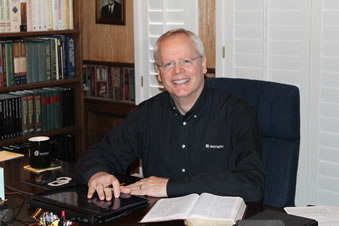
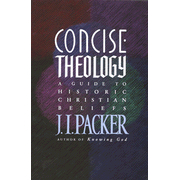
Dr. Charles C. Ryrie on What is God Like?

ASOBD Ryrie

In the midst of the knowledge explosion of the past half century, it is astounding how many have forgotten that the greatest knowledge they could possess is the knowledge of God. Suppose inhabitants of other planets were discovered; this would not be as great as knowing about the one who inhabits heaven. The fact that we have sent men to the moon is not so amazing as sending men to heaven. The knowledge of God is certainly top priority.

 Does God Exist?

Traditionally there have been two lines of argument used to demonstrate the existence of God.

NATURALISTIC ARGUMENTS

The traditional line of proof is philosophical and may or may not satisfy an unbeliever. But the arguments go like this: The first is an argument from cause and effect and simply reminds people that everywhere they look in the world around them they are faced with an effect. In other words, the natural world is a result or an effect, and this forces them to account for that which caused such an effect. Actually there are two possible answers. Either (1) nothing caused this world (but the uncaused emergence of something has never been observed), or (2) something caused this world. This something may be an “eternal cosmic process,” or it may be chance, or one might conclude that God was the cause. While we have to admit that this cause-and-effect argument does not in itself “prove” that the God of the Bible exists, it is fair to insist that the theistic answer is less complex to believe than any other. It takes more faith to believe that evolution or blind intelligence (whatever such a contradictory phrase might mean) could have accounted for the intricate and complex world in which we live than it does to believe that God could.

The second philosophical argument concerns the purpose we see in the world. In other words, we are not only faced with a world (the first argument) but that world seems to have purpose in it. How do you account for this? The nontheist answers that this happens by chance and/or through the processes of natural selection (which are by chance too). The question remains, however: Can random “by chance” actions result in the highly integrated organization which is evident in the world about us? To say it can is possible, but it requires a great deal of faith to believe. The Christian answer may also involve faith, but it is not less believable.

The third argument concerns the nature of man. Man’s conscience, moral nature, intelligence, and mental capacities have to be accounted for in some way. Again the nontheist answers that all of this evolved, and he has proposed very elaborate explanations of how this has happened. A tendency today seems to be to consider man as a biological or organic and cultural or superorganic creature and to account for the evolving of both these aspects totally by chance. But does this explain conscience or that reaching out for a belief in a higher being which seems to be universal (though terribly defective as far as understanding what that being is like)? Or does the very existence of man point to the existence of a personal God? Paul put the question this way to the philosophers of Athens: “Forasmuch then as we are the offspring of God, we ought not to think that the Godhead is like unto gold or silver, or stone, graven by art and man’s device” (Ac 17:29).

In connection with this anthropological argument, the moral argument is sometimes delineated. It poses the question, How did the idea of good and bad, right and wrong ever come into human culture? Man seems to have a sense of what is desirable as opposed to what is not. Where does this sense come from, and on what basis does man decide what ought to be desired or what ought not to be? Some argue that man’s recognition of good and his quest for a moral ideal point to the existence of a God who gives reality to that ideal. Others have emphasized that the ethical systems advanced by philosophers always contain contradiction and paradox if Christian theism is left out, which argues for the necessity of theism to explain satisfactorily man’s idea of good and evil. For instance, the humanist declares that he does not accept any absolute standard, yet in the next breath he exhorts you to do better.

A fourth line of reasoning seems much more sophisticated and much less easy to comprehend. It is called the ontological argument (from the present participle form of the Greek verb “to be”). The idea is that God has to be since man commonly has the idea of a most perfect Being and that idea must include the existence of such a Being. The reason is simply that a being, otherwise perfect, who did not exist would not be so perfect as a being who was perfect and who did exist. Therefore, since this concept does exist in the minds of men, such a most perfect Being must exist. Or to put it another way, since God is the greatest Being who can be thought of, He cannot be conceived as not existing; for if He could, then it would be possible to conceive of a being greater than God who does exist; therefore, God must exist. Many (including Immanuel Kant) do not feel this argument has any value. It originated with Anselm in the twelfth century.

One has to face the fact that these philosophical arguments do not of themselves prove the existence of the true God. But we do not minimize them. They may be used to establish a presumption in favor of the existence of the God of the Bible, and they produce sufficient evidence to place the unregenerated man under a responsibility to accept further knowledge from God or to reject intelligently this knowledge and thus to relieve God of further obligation on his behalf. You may find that using these lines of reasoning may trigger the thinking or open the way to present the gospel more clearly to a fellow student or friend.

The entire theistic world view has come under massive attack because of the rise of mechanistic science and its questioning of the possibility of miracles and because of the popular acceptance of evolution. Evolution is discussed in chapter 7, but a word about miracles is in order here.

If a miracle is defined (as Hume did) as a violation of the laws of nature, then, of course, the possibility of a miracle happening is slim if not nil. But if a miracle is contrary to what we know as the laws of nature, then the possibility of introducing a new factor into the known laws of nature is not eliminated. This new miraculous factor does not contradict nature because nature is not a self-contained whole; it is only a partial system within total reality, and a miracle is consistent within that greater system which includes the supernatural. It is true, however, that a miracle is something which nature, if left to its own resources, could not produce. If one admits the postulate of God, miracles are possible. If one adds the postulates of sin and salvation and sign-evidence, then they seem necessary.

The Christian does not view miracles as an easy way out of difficulties, but as an important part of the real plot of the story of the world. Most historians will not admit the occurrence of a miracle until they have tried every other possible and less probable explanation. But the admitted improbability of a miracle happening at a given time and place does not make the story of its happening untrue or unbelievable. It is improbable that you should be the millioneth customer to enter a store and thus receive a prize, but if you are, your friends should not refuse to believe that you were simply because it was unlikely that you would be.

The dimension of the supernatural is essential to Christianity and is often seen in history. Beware when considering specific miracles that you do not slip into naturalistic explanations for them. Remember, too, that to deny miracles is to deny also the resurrection of Christ, which would mean that our faith is empty.

BIBLICAL ARGUMENTS

The other line of proof is what the Bible presents, and this may be summarized very quickly. Often it is said that the Bible does not argue for the existence of God; it simply assumes it throughout. It is true that the opening words of the Bible assume His being, and this assumption underlies and pervades every book. But it is not the whole story to say that the Bible assumes but does not argue God’s existence. Look at Psalm 19 and notice that David says clearly that God has revealed His existence in the world around us. Isaiah told backslidden people who were making and worshiping idols to consider the world around them and then think whether or not idols that they made with their hands could fashion such a world. The answer is obviously negative. Then he said, “Lift up your eyes on high, and behold who hath created these things” (Is 40:26). The apostle Paul argued before a non-Christian audience that the rain and change of seasons witness to the existence of God (Ac 14:17). So the Bible does argue for as well as assume the existence of God.

How Has God Revealed Himself?

Liberalism teaches that man knows God through his own efforts. In contrast to this, one of the “good” things that Barth did when he thundered on the world his new theology was to remind men that there can be no revelation of God unless God Himself takes the initiative to make Himself known. In other words, the question is the one which Zophar asked a few thousand years before, “Canst thou by searching find out God?” (Job 11:7). The liberal says yes; the conservative says no (this is not intended to imply that Barth was a conservative, because he also said no; his view of the Bible demonstrates that he was not one).

If God has taken the initiative to reveal Himself, in what ways has He done this? We may think immediately of Christ and the Bible as answers to this question. But there are other answers too, like nature and history. These latter two ways are obviously different from the former in that they do not tell us as much about God. In other words, there seem to be general ways and special ways in which God has revealed Himself; the revelation of God through nature and history is called general revelation, while other means are labeled special revelation.

What are the characteristics of general revelation? Look at Psalm 19:1–6. Verse 1 states the content of that revelation as being the glory and handiwork of God. Verse 2 affirms the continuousness of it—day and night (since the sky is always there for man to behold). Verse 3 states the character of that revelation in nature as being a silent revelation (the word “where” is not in the original text). Verses 4–6 tell that the coverage of that revelation is worldwide (v. 4) and to every man (note v. 6 which intimates that even a blind man can feel the heat of the sun). Romans 1:18–20, which is the other central passage on this doctrine, adds the fact that the revelation of God in nature contains a revelation of His “eternal power and Godhead.” God’s revelation of Himself through history comes in various ways. He gives all people rain and productive seasons (Ac 14:17); He especially revealed a variety of aspects of His being and power to the nation Israel (Ps 78—His miraculous power, v. 13; His anger, v. 21; His control of nature, v. 26; His love, v. 38). In many ways the revelation of God through history is more explicit than that through nature.

Through Jesus Christ, God revealed Himself (“exegeted” is the word in Jn 1:18) in clarity and detail. The miracles of Christ showed things like the glory of God (Jn 2:11); His words told of the Father’s care (Jn 14:2); His person showed the Father (Jn 14:9). The way to know God is to know His Son; and apart from the revelation through the Son, little is known of God.

The other avenue of special revelation is the Bible. Today some are saying that the Bible is a lesser revelation than the Son, and to make too much of it is to worship the Bible (bibliolatry). But if we do not make much of the Bible, then we cannot know much of the Son, for our only source of information about the Son (and hence about the Father) is through the Bible. Furthermore, if the Bible is not to be trusted, then again we cannot know truth about the Son. Or if only certain parts of the Bible are trustworthy, we will end up with as many pictures of Christ as there are people picking the parts of the biography which they think are reliable. In other words, if the Bible is not completely true, we end up with either misinformation or subjective evaluation. Jesus Himself asserted that the Bible revealed Him (Lk 24:27, 44–45; Jn 5:39). And, of course, the Bible reveals many other things about God. Think, for instance, of the many aspects of His plan which are known only through the Bible and which tell us about Him. You might say that the Bible is an inexhaustible source of information about God.

What Is God Like?

With all these channels of revelation we ought to be able to learn something about what God is like. Traditionally, the characteristics of God stated formally and systematically are called the attributes of God; and traditionally, they have been divided into two categories. There are some ways in which God is like us (for instance, God is just, and man can be just too); and there are some ways in which God is unique (for instance, He is infinite, which finds no correspondence in us). However, these categories are not hard and fast, and some of the choices as to which attributes to place within which category are debatable. The important thing to study is the attribute itself to learn not only what it reveals about God but also what implications that it has for one’s personal outlook and life.

1. God is omniscient. Omniscience means that God knows everything, and this includes the knowledge not only of things that actually happen but also of things which might happen. This kind of knowledge God had by nature and without the effort of learning. Jesus claimed omniscience when He said, “If the mighty works, which were done in you, had been done in Tyre and Sidon, they would have repented long ago in sackcloth and ashes” (Mt 11:21). Here is a display of the knowledge of things that might have happened. God “telleth the number of the stars; he calleth them all by their names” (Ps 147:4), and “known unto God are all his works from the beginning of the world” (Ac 15:18).

The practical ramifications of the omniscience of God are many. Think, for instance, what this means in relation to the eternal security of the believer. If God knows all, then obviously nothing can come to light subsequent to our salvation which He did not know when He saved us. There were no skeletons in the closet which He did not know about when He offered to give us eternal salvation. Think again what omniscience means when something tragic occurs in our lives. God knows and has known all about it from the beginning and is working all things out for His glory and our ultimate good. Consider what omniscience ought to mean in relation to living the Christian life. Here is Someone who knows all the pitfalls as well as the ways to be happy and who has offered to give us this wisdom. If we would heed what He says then we could avoid a lot of trouble and experience a lot of happiness.

2. God is holy. The word holiness is very difficult to define. The dictionary does not help much since it just defines holiness as absence of evil, and it is usually measured against a relative standard. In God, holiness is certainly absence of evil, but it must also include a positive righteousness and all of this measured against Himself as an absolute standard. Holiness is one of the most important, if not the most important, attributes of God, and certainly nothing that God does can be done apart from being in complete harmony with His holy nature. Peter declares that “he which hath called you is holy” (1 Pe 1:15), and then he goes on to state what effect that should have in our lives, namely, “so be ye holy in all manner of conversation [life].”

An analogy may help in understanding this concept of holiness. What does it mean to be healthy? It means more than not being sick. Likewise, holiness is more than absence of sin; it is a positive, healthy state of being right. This is what John meant when he said that God is light (1 Jn 1:5).

The ramification of this is obvious: “Walk in the light,” A proper concept of holiness as a requirement for Christian living would end a lot of discussion about what is permitted to the Christian and what is not. It seems as though many are trying to discover how close they can come to sin without being cut off from their particular Christian group or clique instead of determining the propriety of things on the simple basis of “Is it holy?” Don’t be tempted to be a leader in or follower of the “let’s skate on as thin ice as possible” group; instead, be a leader in holiness. This will please God because it imitates Him.

3. God is just (or righteousness). While holiness principally concerns the character of God, justice or righteousness has more to do with the character expressed in His dealings with men. It means that God is equitable, or, as the Bible puts it, He is no respecter of persons. David said, “The judgments of the Lord are true and righteous altogether” (Ps 19:9; see also Ps 116:5; 145:17; Jer 12:1).

The most obvious application of the justice of God is in connection with judgment. When men stand before God to be judged they will receive full justice. This is both a comfort (for those who have been wronged in life) and a warning (for those who think they have been getting away with evil). Before an unsaved audience Paul emphatically warned of the coming righteous judgment: “He hath appointed a day, in the which he will judge the world in righteousness by that man whom he hath ordained; whereof he hath given assurance unto all men, in that he hath raised him from the dead” (Ac 17:31).

If you think a little further you might ask if God can save sinners and still be just. This is a good question and is answered by Paul in Romans 3:21–26 in the affirmative, but only because (as he explains) Jesus died to pay the penalty for sin which a just God required. But the price having been paid, God can be just (not compromising His holiness) and at the same time justify the one who believes in Jesus.

4. God is love (1 Jn 4:8). What is love? This is one of the most often used and most infrequently defined words in our vocabulary today. Here is one way of arriving at a proper concept of what love is. When young people think of love they think first and quite naturally of a pleasant emotional experience. And this is love, but it is not the whole concept. When those same young people grow up, marry, and have children, they soon learn that they have to discipline those children. The couple that first cuddles a baby and then soon after corrects that baby who, for instance, reaches out to touch a hot stove, is expressing two aspects of love. So any definition of love must be broad enough to include both the cuddling and correcting aspects of love. Therefore, we might tentatively propose the definition that love is that which seeks good for the object loved. But anyone who rears children knows that there are as many experts on child-rearing as there are grandmothers and aunts. What is good in the opinion of one is not good in the judgment of another. For the Christian this problem of what is good is easily solved. Good is the will of God. So, putting that in our tentative definition, we may say that love is that which seeks the will of God in the object loved. Will such a definition work? Let’s test it. God is love, meaning that He seeks His own will or glory, and we know that this is true. God loves the world, meaning that He seeks to have His will followed by the world. God loves sinners, meaning He wants them to know His will, and it is His desire that they believe on His Son. We are to love one another, meaning that we are to endeavor to see that the will of God is done in each other. So the definition seems to work.

The love of God seems to be of such a nature as to interest itself in the welfare of creatures in a measure beyond any normal human conception (1 Jn 3:16; Jn 3:16). It is almost beyond human comprehension to think of God allowing Himself to become emotionally involved with human beings. Of course the great manifestation of this was in the sacrifice of His Son for the salvation of men (1 Jn 4:9–10). The Bible also teaches that the love of God is shed abroad in the hearts of the children of God (Ro 5:8).

There is a very popular teaching today that says that because God is love and always acts in a loving manner toward His creatures, eventually all men will be saved. This teaching is called universalism. The trouble with the doctrine is not only that it contradicts direct statements of the Bible which say that men will be cast into hell forever (Mk 9:45–48), but it misunderstands the concept of love and its relation to the other attributes of God. Love may have to punish, and the attribute of love does not operate in God apart from His other attributes, particularly the attributes of holiness and justice.

5. God is true. Truth is another concept which is difficult to define. The dictionary says that it is agreement which is represented; if applied to God, it means that God is consistent with Himself and thus everything He does is true also. The Bible asserts that God is true (Ro 3:4) and Jesus claimed to be the truth (Jn 14:6), thus making Himself equal with God. The ramifications of the truthfulness of God lie chiefly in the area of His promises. He cannot be false to any one of the promises He has made. This includes broad and inclusive promises as, for instance, to the nation Israel and it affects with equal certainty the promises made to believers for daily living. The truth of God also affects His revelation, for He who is true cannot and has not revealed anything false to us.

6. God is free. Freedom in God means that He is independent of all His creatures, but it obviously could not mean that He is independent of Himself. Often we hear it said that the only restrictions on God are those inherent in His own person (e.g., God cannot sin because His holiness restricts Him from doing that). Perhaps it would be better to consider the matter in this fashion: the only restrictions on God’s freedom are the restrictions of perfection, and since perfection is no restriction, in reality, then, God is not restricted in any way. When Isaiah asked the people, Who has directed the Lord or who has taught Him anything or who has instructed Him? (Is 40:13–14), He expected the answer “no one,” because God is free (independent of His creatures). If this be true, then anything God has done for His creatures is not out of a sense of obligation to them, for He has none. What He has done for us is out of His love and compassion for us.

7. God is omnipotent. Fifty-six times the Bible declares that God is the almighty one (and this word is used of no one but God, cf. Rev 19:6). When students talk about the omnipotence of God they often joke about it along the line of asking if God could make two plus two equal six. The trouble with such a question is simply that it is not in the realm which omnipotence is concerned with. You might as well ask if dynamite could make two plus two equal six. The truths of mathematics are not in the area of omnipotence. But the security of the believer certainly is, and we are kept secure in our salvation by an omnipotent God (1 Pe 1:5). In fact, our salvation comes because the gospel is the power of God unto salvation (Ro 1:16). So rather than meditating on the ridiculous, let’s be thankful for the basics of our redemption which are effected by the power of God. Furthermore, God’s omnipotence is seen in His power to create (Gen 1:1), in His preservation of all things (Heb 1:3), and in His providential care for us.

8. God is infinite and eternal. Since there is nothing in our human natures which corresponds to infinity (only the opposite, finitude), it is difficult, if not impossible, for us to comprehend the term. Indeed, most dictionaries resort to defining it by negatives—without termination or without finitude. Eternity is usually defined as infinity related to time. Whatever is involved in these concepts, we can see that they must mean God is not bound by the limitations of finitude and He is not bound by the succession of events, which is a necessary part of time. Also His eternality extends backward from our viewpoint of time as well as forward forever. Nevertheless, this concept does not mean that time is unreal to God. Although He sees the past and future as clearly as the present, He sees them as including a succession of events, without being Himself bound by that succession. “Before the mountains were brought forth, or ever thou hadst formed the earth and the world, even from everlasting to everlasting, thou art God” (Ps 90:2; cf. Gen 21:33; Ac 17:24).

9. God is immutable. Immutability means that God is unchanging and unchangeable. God never differs from Himself, and thus in our concept of God there can be no idea of a growing or developing being. He is the one in whom is no variableness (Ja 1:17; cf. Mal 3:6; Is 46:9–10).

There is a problem in connection with the immutability of God, and it concerns verses which say that God repented (Gen 6:6; Jon 3:10). If these verses are understood to mean that there actually was a change in God’s plans, then He is either not immutable or not sovereign. But if such verses refer only to the revelation or unfolding of God’s plans to men, then it can be said that although His plan does not change, as man views its unfolding it seems to involve change. In other words, God’s “repentance” is only from our viewpoint; therefore, it is only apparent repentance as His eternal and unchanging plan is worked out in history.

10. God is omnipresent. Omnipresence means simply that God is everywhere present. That concept is not difficult, but some aspects related to it are. For instance, what is the difference between omnipresence and pantheism? Essentially, it is this: Omnipresence says God is everywhere present (though separate from the world and the things in it), while pantheism says that God is in everything. Omnipresence says that God is present in the room where you are reading this, while pantheism affirms that God is in the chair and in the window, etc. Another important distinction is this: Even though God is everywhere (though not in everything), this does not contradict the fact that there are varying degrees of the manifestation of His presence. God’s presence in the Shekinah glory was an immediate and localized manifestation of His presence, while His presence in relation to unredeemed men is scarcely realized by them. Furthermore, the presence of God is not usually in visible or bodily form. Occasionally He has appeared so that His glory was seen, but omnipresence is a spiritual manifestation of God. Psalm 139 teaches His omnipresence in a most vivid way, and of course this doctrine means that no one can escape God. If people try throughout their entire lifetime, they still cannot escape Him at death. On the other hand, it also means that a believer may experience the presence of God at all times and know the blessing of walking with Him in every trial and circumstance of life.

11. God is sovereign. The word sovereign means chief, highest, or supreme. When we say that God is sovereign we are saying that He is the number one Ruler in the universe. Actually, the word itself does not tell anything about how that Ruler may rule, although this is described in the Bible. The word itself means only that He is the supreme Being in the universe. Of course, the position brings with it a certain amount of authority, and in God’s case that authority is total and absolute. This does not mean, however, that He rules His universe as a dictator, for God is not only sovereign, He is also love and holiness. He can do nothing apart from the exercise of all His attributes acting harmoniously together. The concept of sovereignty involves the entire plan of God in all of its intricate details of design and outworking. Although He often allows things to take their natural course according to laws which He designed, it is the sovereign God who is working all things according to His wise plan.

That the Bible teaches the sovereignty of God there can be no doubt. Just read Ephesians 1 and Romans 9 (and don’t worry about all the ramifications). For the Christian the idea of sovereignty is an encouraging one, for it assures him that nothing is out of God’s control, and that His plans do triumph.

These are the principal attributes or characteristics of God, and this is the only God that exists. The God of the Bible is not a god of man’s own making or thinking or choosing, but He is the God of His own revelation.

What Does God Call Himself?

A person’s names always tell something about him or about the relationship he has to those who use the names. Often names grow out of experiences people have. So it is with God. He has revealed aspects of His nature by the names He uses with men, and some of them have grown out of specific experiences men have had with God.

PRIMARY OLD TESTAMENT NAMES

1. Elohim. The most general (and least specific in significance) name for God in the Old Testament is Elohim, Although its etymology is not clear, it apparently means “Strong One,” and it is used not only of the true God but also of heathen gods (Gen 31:30; Ex 12:12). The im ending indicates that the word is plural, and this has given rise to considerable speculation as to the significance of the plural. Some have suggested that it is an indication of polytheism, which would be difficult to sustain since the singular (Eloah) is rarely used and since Deuteronomy 6:4 clearly says that God is one. Others have attempted to prove the concept of the Trinity from this plural word. While the doctrine of the Trinity is of course a biblical one, it is very doubtful that it can be proved on the basis of this name for God. Nevertheless, this is not to say that the plural Elohim in no way indicates some distinctions within the Godhead. Though the plural does allow for the subsequent clear revelation of the Trinity in the New Testament, it most likely is best understood as indicating fullness of power. Elohim, the strong one, is the powerful Governor of the universe and of all the affairs of mankind. This name for God occurs over 2,500 times in the Old Testament. Take time to read verses like Genesis 1:1 and remember that this one is your God in all the circumstances of life.

2. Jehovah. This is the most specific name for God in the Old Testament, though Jehovah is not a real word! It is actually an artificial English word put together from the four Hebrew consonants YHWH and the vowels from another name for God, Adonai. Thus Jehovah was concocted this way: YaHoWaH, or Jehovah. The Jews had a superstitious dread of pronouncing the name YHWH, so whenever they came to it they said Adonai. We probably ought to pronounce it Yahweh.

The meaning of the word is also a matter of much discussion. There seems to be agreement that it is connected somehow with the Hebrew verb, to be, or some variant or earlier form of it, so that it does have the idea of God’s eternal self-existence (Ex 3:14). In its use in Exodus 6:6, however, there seems to be an added idea that connects this name in a special way with God’s power to redeem Israel out of Egyptian bondage. We have already seen that a name usually tells something about a person and some relationship that person has. In the name Yahweh these two features of a name are evident: Yahweh is eternal, and Yahweh bore a special relationship to Israel as her Redeemer.

The name occurs nearly 7,000 times in the Old Testament and is especially associated with Yahweh’s holiness (Lev 11:44–45), with His hatred of sin (Gen 6:3–7) and with His gracious provision of redemption (Is 53:1, 5, 6, 10).

3. Adonai. This is the name of God which the Jews substituted for the Tetragrammaton (the four letters YHWH, Yahweh) when they read the Scriptures. Yet it, too, is a basic designation for God and means Lord (master). It is used, as one might expect, of the relationship between men (like master and slave, as in Ex 21:1–6); thus when it refers to God’s relationship with men it conveys the idea of His absolute authority. Notice its occurrences in Joshua 5:14 (where Joshua recognized the authority of the captain of the Lord’s hosts) and Isaiah 6:8–11 (where Isaiah was commissioned by his Master).

There are two sides to a master-servant relationship. On the one hand, the servant must give absolute obedience to his master. On the other hand the master obligates himself to take care of the servant. If the believer truthfully calls God by His name, Lord, then he can expect God to take care of him, and God in turn can expect the believer to obey Him in everything.

COMPOUND OLD TESTAMENT NAMES

Frequently the Old Testament reveals something about the character or activity of God by using some designation in compound with Yahweh or El (which is the singular of Elohim). Here are some examples:

1. El Elyon—“The most high” (Gen 14:22). Notice its use in connection with Lucifer’s desire to be like the Most High (Is 14:14).

2. El Olam—“The everlasting God” (Gen 21:33). Notice this use in connection with God’s inexhaustible strength (Is 40:28).

3. El Shaddai—“The Almighty God” (Gen 17:1). This probably derives from a related word which means “mountain” and pictures God as the overpowering almighty one standing on a mountain. The name is often used in connection with the chastening of God’s people, as in Ruth 1:20–21 and the thirty-one times it is used in the book of Job.

4. Yahweh Jireh—The Lord provides (Gen 22:14). This is the only occurrence. After the angel of the Lord pointed to a ram as a substitute for Isaac, Abraham named the place, “the Lord provides.”

5. Yahweh Nissi—The Lord is my Banner (Ex 17:15). Similarly, after the defeat of the Amalekites, Moses erected an altar and called it Yahweh Nissi. Actually this and the other compounds are not really names of God, but designations that grew out of commemorative events.

6. Yahweh Shalom—The Lord is peace (Judg 6:24).

7. Yahweh Sabbaoth—“The Lord of hosts” (1 Sa 1:3). The hosts are the angels of heaven which are ready to obey the Lord’s commands. This title was often used by the prophets (Isaiah and Jeremiah) during times of national distress to remind the people that Yahweh was still their Protector.

8. Yahweh Maccaddeshcem—The Lord thy Sanctifier (Ex 31:13).

9. Yahweh Roi—“The Lord … my shepherd” (Ps 23:1).

10. Yahweh Tsidkenu—The Lord our Righteousness (Jer 23:6). This title was a direct thrust against King Zedekiah (which means Yahweh is righteousness) who was a completely unrighteous king (2 Ch 36:12–13).

11. Yahweh Shammah—“The Lord is there” (Eze 48:35).

12. Yahweh Elohim Israel—“The Lord God of Israel” (Judg 5:3). This is a designation frequently used by the prophets (Is 17:6), similar to the God of Abraham, Isaac, and Jacob.

13. Qadosh Israel—“The Holy One of Israel” (Is 1:4).

This list might go on and on because these compounds are not really distinct names but are more designations or titles. Yet they need to be included in our study since they do reveal some things about God. Remember, in the East a name is more than an identification; it is descriptive of its bearer, often revealing some characteristic or activity of that person. “O Lord, our Lord, how excellent is thy name in all the earth!” (Ps 8:1, 9).

To review: The knowledge of the true God is the highest knowledge any person can have. There are certain logical arguments which can at least tip the balance in favor of theism (though they do not tell us who God is or what He is like). The world around us tells us of the power of God, but it is from the Bible that we learn the full facts about God. Specifically we learn about Him through what the Bible says about His character (attributes) and His names.

What Is the Trinity?

The word trinity is not found in the Bible; indeed, many think it is a poor word to use to try to describe this particular teaching of the Bible. Actually, it describes only half the teaching; the reason will become clear shortly.

When you study a book like this, it may appear to you that the writer, or the church, or somebody else is saying to you, “Here are the doctrines—believe them!” If that’s the case it is only because you are looking at the results of someone’s study, not the process of it. We are not saying, “Here are some doctrines to be believed whether you like it or not,” but rather, “Here are some facts to be faced. How would you harmonize and organize them?”

The teaching on the Trinity is a good illustration of this point. You have probably heard lessons on the Trinity in which you were taught only the results: that the one God exists in three Persons. Then you asked for illustrations and got none that were satisfying. So you concluded that there was a doctrine you were expected to believe—regardless! Actually, the way we ought to go about it is this: as we read the Bible, certain astounding facts confront us and demand our attention. Specifically, the Bible seems to say clearly that there is only one true God. But it also seems to say with equal clarity that there was a man Jesus Christ who claimed equality with God and there is Someone called the Holy Spirit who is also equal with God. Now how do you put those facts together? The way conservatives have put them together results in the doctrine of the Trinity. Others have put these facts together and have come up with a different idea of the Trinity (the Persons being modes of expression of God and not distinct persons), and still others, rejecting the claims of Christ and the Spirit to be God, become Unitarians. But the claims are still there in the Bible, and the need for packaging them is what we study in this section.

Any concept of the Trinity must be carefully balanced, for it must maintain on the one side the unity of God, and on the other, the distinctness and equality of the Persons. That is why the word trinity only tells half of the doctrine—the “threeness” part and not the unity. Perhaps the word tri-unity is better since it contains both ideas—the “tri” (the threeness) and the “unity” (the oneness).

EVIDENCE FOR ONENESS

Deuteronomy 6:4 may be translated various ways (e.g., Yahweh our God is one Yahweh,” or “Yahweh is our God, Yahweh alone”), but in any case it is a strong declaration of monotheism. So are Deuteronomy 4:35 and 32:39 as well as Isaiah 45:14 and 46:9. The first of the so-called Ten Commandments shows that Israel was expected to understand that there is only one true God (Ex 20:3; Deu 5:7). The New Testament is equally clear in passages like 1 Corinthians 8:4–6, Ephesians 4:3–6 and James 2:19, all of which state emphatically that there is only one true God. Therefore, the doctrine of the Trinity must not imply in any way that there might be three Gods. God is single and unique, demanding the exclusion of all pretended rivals and removing any hint of tritheism.

EVIDENCE FOR THREENESS

Nowhere does the New Testament explicitly state the doctrine of triunity (since 1 Jn 5:7 is apparently not a part of the genuine text of Scripture), yet the evidence is overwhelming.

1. The Father is recognized as God. Notice, among many Scripture verses, John 6:27 and 1 Peter 1:2. This point is seldom debated.

2. Jesus Christ is recognized as God. Doubting Thomas recognized Him as such (Jn 20:28). He Himself claimed some of the attributes which only God has, like omniscience (Mt 9:4), omnipotence (Mt 28:18) and omnipresence (Mt 28:20). Further, He did things which only God can do (and the people recognized this) (Mk 2:1–12—healing the paralytic was done to prove that Christ had the power to forgive sins, which was acknowledged as something only God can do).

3. The Holy Spirit is recognized as God. He is spoken of as God (Ac 5:3–4—lying to the Spirit is the same as lying to God). He possesses the same attributes as God and those which belong exclusively to God (omniscience, 1 Co 2:10; omnipresence, Ps 139:7). It is the Spirit who regenerates man (Jn 3:5–6, 8).

This New Testament evidence is quite clear and explicit. Is there any similar evidence in the Old Testament? The answer is no, because what the Old Testament reveals concerning the Trinity is not clear and explicit but intimating and implicit. It is probably best to say that the Old Testament, although it does not reveal the triunity of God, does allow for the later New Testament revelation of it. Passages which use the plural word for God, Elohim, and plural pronouns of God allow for this subsequent revelation (Gen 1:1, 26). The Angel of Yahweh is recognized as God and yet is distinct from God (Gen 22:15–16), indicating two equal Persons. The Messiah is called the mighty God (Is 9:6 and note eternality ascribed to Him in Mic 5:2) again indicating two equal yet distinct Persons. Probably Isaiah 48:16 is the clearest intimation of the Trinity in the Old Testament because “I”—the Lord—is associated with God and the Spirit in an apparently equal relationship. But still these are only intimations and are not so explicit as the New Testament evidences.

THE EVIDENCE FOR TRIUNITY

Probably the verse that best states the doctrine of the triunity of God balancing both aspects of the concept, the unity and the Trinity, is Matthew 28:19, “baptizing them in the name of the Father, and of the Son, and of the Holy Ghost.” There is no question about the “threeness” aspect, for the Father, Son, and Spirit are mentioned—and only three. The unity is strongly indicated in the singular “name” rather than “names.” There are other verses similar to this one where the three are associated in equality and yet distinguished (like the benediction in 2 Co 13:14 and the presence of the Trinity at the baptism of Christ, Mt 3:16–17), but they do not also contain the strong emphasis on unity as indicated in the singular “name” in Matthew 28:19.

Having looked at the evidence and having concluded that there is one God and yet three Persons in the Godhead, is it possible to formalize this concept in a definition? Warfield’s is one of the best: “The doctrine that there is one only and true God, but in the unity of the Godhead there are three eternal and co-equal Persons, the same in substance but distinct in subsistence.” Subsistence means being or existence. The word person is really not so good, because it seems to indicate separate individuals in the Godhead; but, though we all recognize deficiency in the word, what better one is there?

Can the Trinity be illustrated? Not perfectly, nor probably very well, because most illustrations cannot include the idea that the three fully possess all the qualities of the one equally and without separation. One illustration from psychology notes that the innermost being of man—his soul—can carry on dialogue with itself, noting both sides of the debate and making judgments. Another uses the sun (like the Father) and notes that we only see the light of the sun, not the sun itself, which yet possesses all the properties of the sun (like the Son who came to earth), and observing further that the chemical power of the sun (which also possesses all the qualities of the sun and yet is distinct) is what makes plants grow. The sun, its light, and its power may give some help in illustrating the Trinity.

It is no wonder that a difficult doctrine like this has been the focal point of many errors throughout church history. One error that crops up again and again sees the Spirit as a mere influence and not a living person who is God. Sometimes Christ, too, is regarded as inferior to the Father, even as is some created being (dynamic Monarchianism, Arianism, present-day Unitarianism). Another error regards the concept of the Trinity as merely modes or manifestations of God (Sabellianism, after Sabellius, c. a.d. 250, or modalism). Karl Barth was for all intents and purposes a modalist, though he often rejected the label.

Is the teaching important? How else could one conceive of our atonement being accomplished apart from a triune God? God becoming man, living, dying, raised from the dead is pretty hard to conceive of if you are a Unitarian. Does not this doctrine illuminate the concept of fellowship? The fact that God is Father, Son, and Spirit emphasizes the fact that He is a God of love and fellowship within His own being. And this is the one with whom we as believers can enjoy fellowship as well.

The Father

Since the Son and the Holy Spirit are considered in detail later, we need to add a word here concerning the particular relationships and works of the Father.

THE PARTICULAR RELATIONSHIPS OF THE FATHER

1. All people are called the offspring of God (Ac 17:29); therefore, there is a sense in which God is the Father of all men as their Creator. This is simply a creature-Creator relationship and is in no sense a spiritual one.

2. God is the Father of the nation Israel (Ex 4:22). Not all in Israel were redeemed, so this relationship was both spiritual (with believers) and governmental (with all in Israel, whether believers or not).

3. God is the Father of the Lord Jesus Christ (Mt 3:17).

4. In a very special way God is the Father of all who believe in Christ (Gal 3:26).

THE PARTICULAR WORKS OF THE FATHER

Almost everything God does involves in some way or other all the Members of the Trinity. So when we speak of the particular works of the Father we are not excluding the other Persons, but simply delineating those things which seem to be the prerogative of the Father in a special way.

1. It is the Father who was the Author of the decree or plan of God (Ps 2:7–9).

2. The Father was related to the act of election as its Author (Eph 1:3–6).

3. The Father sent the Son to this world (Jn 5:37).

4. The Father is the disciplinarian of His children (Heb 12:9).

Important Ramifications of the Doctrine of God

Two final thoughts:

1. There is no other God but the one we have been trying to describe. Gods of our making, whether radically different from the God of the Bible or akin to Him, are false. Even good Christians can fall into the trap of trying to mold God according to their own thinking or wishes or pleasure. The result may be a god not dissimilar to the God of the Bible, but it will not be the true God. We know God not because we can initiate or generate such knowledge, but because He has revealed Himself. Therefore, what we know does not come from our minds but from His revelation. Beware of creating a god!

2. If the true God is as He is revealed to be, then it shouldn’t be hard for us to believe that He could perform miracles, give us an inspired Bible, become incarnate, or take over the kingdoms of this world. In other words, if we accept the facts about the true God which have been revealed, then it shouldn’t be difficult to believe He could and can do what is claimed of Him. That is why the knowledge of God takes first priority in the study of doctrine.

About the Author:
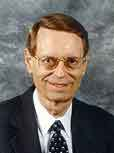
Ryrie

Charles Caldwell Ryrie (born 1925) is a Christian writer and theologian. He graduated from Haverford College (B.A.), Dallas Theological Seminary (Th.M., Th.D.) and the University of Edinburgh, Scotland (Ph.D.). For many years he served as professor of systematic theology and dean of doctoral studies at Dallas Theological Seminary and as president and professor at Philadelphia College of Bible, now Philadelphia Biblical University. He is a premillennial dispensationalist, though irenic in his approach. He is also the editor of the popular Ryrie Study Bible.

R.C. Sproul on Do Our Prayers Change God’s Mind?

OSG Boice and Sproul

One of those perennial questions that all Calvinists face from time to time and that you hear quite frequently is: If God is sovereign, then why pray? If that is the case, would not prayer be a superfluous activity, at best an exercise in meditation or some form if inspiring soliloquy? I am sure we have all had to wrestle with this question at times. Moreover, I think that it is not unlike a similar question that Calvinists also hear frequently. That is, if God is sovereign and predestination is true, why should we be involved in evangelism?

Why Pray? Why Evangelize?

In seminary I had the privilege of being in one of Dr. John Gerstner’s classrooms when he was holding forth on the subject of predestination. After he had given his lecture he began his Socratic method of discourse and started to ask up questions. That class was a seminar of about eighteen men, and we were in a semicircle. I was sitting on one end, and he started on the other end by asking that gentleman, “Now, sir, if predestination is true, why should we be involved in evangelism?”

The student looked up at Gerstner and said, “I don’t know.”

Gerstner went down the line to the next fellow, who said, “Beats me.”

The next student said, “I always wondered about that myself, Dr. Gerstner.”

Our professor kept going around the semicircle, knocking us off one by one, and I was sitting over there in the corner feeling like Socrates in one of Plato’s dialogues. Plato had raised the difficult question. He had heard from all the lesser stars. Now Socrates was to give the lofty answer to the impenetrable mysteries of the question that had been raised. I was frightened. Finally Dr. Gerstner came to me. “Well, Mr. Sproul, if predestination is true, why should we be involved in evangelism?”

I slid down in the chair and prefaced my answer with all kinds of apologies, saying to him, “Well, Dr. Gerstner, I know this isn’t what you’re looking for, and I know that you must be seeking for some profound, intellectual response which I am not prepared to give. But just in passing, one small point that I think we ought to notice here is that God does command us to be involved in evangelism.”

Dr. Gerstner laughed and said, “Yes, Mr. Sproul. God does command us to be involved in evangelism. And of course, Mr. Sproul, what could be more insignificant than the fact that the Lord of glory, the Savior of your soul, the Lord God omnipotent, has commanded you to be involved in evangelism?” I got the point in a hurry! So it is with prayer. One reason to pray is that we are commanded to pray. But in addition to being commanded to pray we are also given the privilege of prayer. Prayer for the Christian is both a duty and an unspeakable privilege.

About ten years ago, I had an experience with another theologian—Dr. Nicole—regarding this question. At that time, whenever students at Gordon College asked me questions about prayer I would say to them, “Well, the way I do it is this: I preach like a Calvinist, but I pray like an Arminian.” I said this in Dr. Nicole’s presence, and I looked at him to see what he would say. He looked at me in his warm fashion and said, “Brother Sproul, I think perhaps that God would be more pleased if you would preach like a Calvinist and pray like a Calvinist as well.” I did not forget that! And I thought I had better learn what it means to pray like a Calvinist.

When I began to pay attention to what Calvin had written on the question of prayer, I noticed something very unusual. As I turned to the Institutes I found that Calvin prefaces his treatment of the doctrine of election and predestination (Book III, chapter 21) with a lengthy treatment of the nature and significance of prayer. I have always required that students in my courses on Calvin read Book III, chapter 20, of the Institutes before they even start the first chapter of Book I, so that they should be disarmed of the host of prejudices that surround the figure of John Calvin and that they might see the warmth of his heart and the passion that he had to converse in dialogue with his Creator and Lord.

Let me give a brief quotation from that chapter. Calvin writes, “But, someone will say, does God not know, even without being reminded, both in what respect we are troubled and what is expedient for us, so that it may seem in a sense superfluous that he should be stirred up by our prayers—as if he were drowsily blinking or even sleeping until he is aroused by our voice? But they who thus reason do not observe to what end the Lord instructed his people to pray, for he ordained it not so much for his sake as for ours.”

So the first point in response to the question, “Does prayer change things?” is simply this: Yes, indeed prayer changes things. If nothing else, it changes us. When we come into the presence of God in conversation with him, one of the immediate benefits of that conversation is what happens to us.

The essence of prayer is adoration, confession, and thanksgiving. What happens to a person who comes daily and regularly to the throne of grace with a broken and a contrite heart? Does God’s forgiveness change him? What happens to the heart that experiences gratitude and in the posture of prayer is able to recall what God has done for him? Does a grateful heart change a person? Certainly. People are changed through spending time with God.

Spiritual Treasures

But what of the thorny question concerning that kind of prayer we call supplication? What about intercession? Calvin again, in his own style, says that when we are involved in intercession and supplication we are actively involved in digging up those treasures that God has stored up for us in heaven. I like that image. The business of prayer, the prayer of supplication, is digging up those treasures that God has laid away for us. Do you remember what James said? “You have not, because you ask not” (James 4:2).

Prayer Unlimited

Certainly the New Testament finds no conflict between the sovereignty of God and the effectual power of supplication for his people. But is there any sense in which God’s sovereignty limits the power of prayer? Or is the power of prayer unlimited? I know that when we see answers to our prayers right before our eyes we often get very excited and sometimes overstate our position. We try to encourage everybody to pray, and we sometimes make statements like: “The power of prayer is limitless! We can do anything if we just pray right!” But that is not true. In our enthusiasm and zeal for the power of prayer we sometimes get carried away and attribute to prayer more power than it actually has. Prayer is powerful and rich. But God’s sovereignty places certain limitations on our prayers.

Not too long ago a woman asked me in class, “Mr. Sproul, does prayer change God’s mind?” Do you notice the difference between that question and the question we are dealing with here? It is one thing to ask, “Does prayer change things?” It is quite another thing to ask, “Does prayer change God’s mind?” I looked at the woman and said, “I don’t think so, if you mean by the mind of God his determinate counsel, his eternal decrees.”

I would never presume to ask God to change his eternal decrees. For example, it is foolishness to think that our prayers could change the ultimate blueprint of the plan of redemption. Suppose we went before the throne of grace and said to God, “We would ask you, please, never to send Jesus back to this planet.” Do you think we could change God’s mind? God has decreed that his Son will return in glory, and if you pray against that from now until kingdom come, he still will come. So there are certain limitations. People have said to me, “If we really want to change the world, shouldn’t we get together and pray for the conversion of Satan?” Do not waste your time! The Word of God has made it clear that God has other plans for Satan. Besides, he does not have a mediator. So how could he be saved even if we did pray for him? These are, I hope, obvious illustrations of the way in which God’s sovereignty does at least to some degree limit our prayers.

Another thing that I think we need to look at is the question of the relationship between my will and the will of God. We understand that creatures in this world are volitional beings. We have wills of our own. We have desires and requests and the ability to exercise those desires and make those requests at the throne of grace. But when we are dealing with God, we also think of God as a volitional being. We talk of our freedom, but it is limited by God’s freedom. Do we think for a moment that if there is a conflict of interests between the will of God and my will, my will could possibly prevail? Certainly not! But this is the way the humanist thinks in our day, and these humanistic views often infiltrate the Christian community. A fundamental postulate of humanism is that God’s sovereignty may never impinge upon or overrule human freedom. The Calvinist looks at it another way: man is free, but his freedom can never overrule God’s sovereignty. Do you see the difference? It is a radical difference. It is the difference between God and no God, when it comes right down to it.

Again, we often hear Christians say, “I believe that the Holy Spirit is a gentleman and will never intrude into the life of a person without an invitation.” But that is a monstrous lie! And I am glad that it is a lie, because if God the Holy Spirit had not intruded upon me, if God the Holy Spirit had not come into my heart before I ever thought of inviting him, I would not be a Christian.

Was the Holy Spirit a gentleman with Jeremiah? Jeremiah said, “O God, you have overwhelmed me, and I am overwhelmed.” Jeremiah knew that he was overwhelmed. He never asked to be overwhelmed, but God overwhelmed him. He overwhelmed him in the power and efficacy of his freedom, freedom to take this fallen and destroyed creature and bring him from death into life. If God waited for us to ask him for every droplet of mercy and grace that we receive, we would be spiritually impoverished.

Again, prayer cannot manipulate God. I sometimes hear Christians saying, “If you pray like this or that or if you claim this or that, God is obliged to answer your prayer.” I hear them say, “If I claim the answer to my prayer before I have any evidence that God is pleased to give it to me [I am not talking about an explicit promise in God’s Word], God will grant it.” I see them stand up before others in church and say, “I know that God is going to do such and such for me,” and it sounds like an exercise in faith. Moreover, it sounds as if (now that they have said it publicly) God is going to get a bad reputation if he doesn’t do it. But God does not have to do it.

You cannot manipulate God. You cannot manipulate him by incantations, repetition, public utterances, or your own predictions. God is sovereign. So when you bring your requests to God he may say Yes, and he may say No.

If It Be Your Will

This raises the next big question—the relationship of the will of God and the will of man. Is it proper to pray, “Not my will, but yours be done”? There are evangelicals who believe that to say “If it be your will” in the context of prayer is unbelief. But if that is unbelief, then our Lord was guilty of unbelief in the Garden of Gethsemane, for he came to his Father in precisely this way. It is as simple as that. So if it is proper and fitting for our Lord to pray that way, it is certainly proper and fitting for us to pray that way.

I must add, however, there are times when we should not say, “If it be your will.” There are times where God has made it abundantly clear that, if we do certain things, he will do certain things. In these cases we do not have to say, “If it be your will.” He has revealed that it is his will.

Let me illustrate what I am talking about. I was out in California a few years ago, and a little old woman came up to me in a spirit of great distress. She said, “Mr. Sproul, would you please help me? I’m desperately trying to figure out the will of God for my life. Can you please help me?”

I said, “Well, what’s your problem?”

She said, “I’ve been married to a man for over forty years, and all the time I’ve been married to him I’ve been a Christian. He’s never been a Christian. He still isn’t a Christian. He’s been a good husband as far as the world is concerned. He’s provided a living. He’s been wonderful to the children. He’s been faithful to me. He tolerates my religious devotion. But the things that are precious to me are not important to him, and the things that are vital to him are not important to me. I can’t stand another day of this incompatibility. So two weeks ago I left my husband. Now every night he’s been calling me on the phone, and he’s been weeping and saying, ‘Oh, Mabel, come home. I can’t live without you after forty-two years.’ I don’t know what to do. I can’t go back to him, but I can’t stand his weeping and crying. Please help me find the will of God in this matter.”

I said, “I’ll solve your problem. The first thing to do is stop praying.”

“What do you mean?”

I said, “You can stop because God has already answered your question. What does the Bible say on the question of the marriage of a believer and an unbeliever? If the unbeliever wants to depart, let him go. But if he doesn’t want to depart, the believer must not depart. God’s will is that you go back to your husband.”

Suddenly this woman’s sweet demeanor changed to outright fury. She looked at me and she said, “You wouldn’t say that if you had to live with him!”

I answered, “Well, I don’t know what I would say or what I wouldn’t say. But, you see, you didn’t ask me what I would do if I were in your situation. It’s quite possible that if I had been unequally yoked to an unbeliever twenty-five, thirty, or forty years ago, I would have broken God’s law long before you have. I might have bailed out in sin years ago. But you did not ask me what I would do in the frailty of my fallen nature. You asked me what the will of God is.”

That woman did not want to know what the will of God is. She wanted God to change his mind. She wanted God to change his prescriptive will. She wanted God to set aside his commandment for his people and make a special case for her. And you know, she was even telling her friends that the Lord had led her to leave her husband, that she had prayed about it and felt peace. That peace did not come from God the Holy Spirit. She was praying against God’s sovereignty, not within it.

I must add, however, that this woman was a Christian and that she eventually came to herself and went home, because she had ears to hear.

Last year I saw a television program on which a certain gentleman was being interviewed. He had become very prosperous by running a brothel which had by this time been open for something like eight years. The news commentator was asking him how he ever became involved in prostitution in the first place, and he said, “Well, I was tired of scratching about for a living, and I decided that I should try some new enterprises. I thought of opening up a brothel and hiring prostitutes to work for me. I made a covenant with God. I said, ‘God, if you will bless my business for ten years, then after ten years I will give you the rest of my life in service.’ And look how God has prospered me.” He was serious, absolutely serious. He had asked God to bless him in his business of prostitution, and he thought God had blessed him. But he prayed against what is the clear revelation of God’s Word.

I say all this in order to point out that when the biblical writers give us statements such as, “If two people agree on anything, it will be done,” or “Seek and you shall find; knock and it shall be opened,” these statements must be understood as they are qualified by other passages. We have to be careful how we deal with them.

Personal Petitions

God has invited us to come to him with our personal requests. We are to come with our supplications in a spirit of humility, as Calvin says, and yet with confidence. That is the ironic posture of prayer, the attitude of humility and boldness.

Many people come into the pastor’s study and say, “Oh, please pray for me. I’m driven to despair by guilt.”

“What’s the problem?”

“Well, I did such and such.” They then tell of a dark crime they have committed.

“Have you asked God to forgive you?”

“Yes, I’ve prayed for forgiveness many times, but I still feel guilty.”

“Let’s pray one more time.”

“Why should we pray one more time? I’ve already prayed many times, and I still feel guilty. One more time is not going to do any good.”

“Wait a minute. You’ve prayed for God to forgive you for that sin. This time I’m going to ask God to forgive you for something else.”

“What?”

“For your arrogance.”

“Arrogance? Now wait a minute. I may be guilty of stealing, murder, anger and adultery, but I am certainly humble enough to ask God to forgive me.”

“But does God say that if you confess your sins he will forgive you your sins?”

“Yes, he says that.”

“Does God lie? Are you suggesting for a minute that the God of heaven and earth, in whom there is no shadow of turning whatsoever, could possibly make a promise to you that he would break and violate? Are you attributing to him the same characteristics of covenant-breaking that are so typical of you? How dare you suggest that the God of glory would break an explicit promise to his people! Let’s get down and pray again, because you are determining your confidence of forgiveness on the basis of your feelings rather than on what God has said in his Word.” Do you see? People confuse forgiveness and the feeling of forgiveness, just as they confuse guilt and guilt feelings. So while we pray with humility, we also are to pray with confidence that what God has promised he will certainly do. We know that if we confess our sins, God is “faithful and just to forgive us our sins, and to cleanse us from all unrighteousness” (1 John 1:9).

God’s Hidden Counsel

Finally, what about the big problem? What about the problem of what theologians call concurrence, the relationship between the ultimate providence of God and our human desires and activities? What about God’s hidden counsel? I am not talking now about what he reveals, but about what he chooses to keep hidden. Does not Calvin say, “All events so proceed from his determinate counsel that nothing happens fortuitously”? Does not Augustine say, “In a certain sense God wills everything that takes place”? Does not Basil, that great Calvinist, say, “Fortune and chance are heathen terms, the meaning of which ought not to occupy pious minds”? Here is where the crunch comes. And that is really what this question is about. Does prayer change things? What we really want to know is the connection between what the philosophers call secondary causality and primary causality. What is the relationship?

I can answer that question, and I can answer it clearly and easily: I do not know. I have not a clue!

I used to worry about that. So I went to college and took all the courses I could take in religion. But nobody seemed to know the answer to that question. I went to seminary. I even studied under John Gerstner, and I figured that if anybody would know the answer to that question, he would. I asked him. And he said, “I don’t know.” I went to Europe to see Dr. Berkhouwer, and I asked him. He said, “I don’t know.” In fact, I have not been able to find any university that offers courses in the secret counsels of God. So when I say that “there is just one thing I do not understand,” I am not playing Columbo. I am not pretending that I do not know only to unravel the riddle for you ten minutes later. I really do not know. And all the raincoats in the world are not going to give me the answer.

But I do know that God is sovereign. I know that he invites me to bring my petitions to him, those that are not against his prescribed will. I am invited to come into his presence, and more than that, I am even provided with a mediator who intercedes for me day and night, carrying my weak, stuttering petitions to the very presence of God. I am assisted by God’s Spirit, who does know something of the secret counsels of God and who aids me in prayer. As a result, whenever I am not sure what the will of God is, I come with what the Father has given me and I leave my request with him. That is when I say, “Not my will but your will be done.”

In the final analysis, that is the only answer I can give beyond what Luther said when he declared, “If God told me to eat the dung off the street, not only would I eat it, but I would know that it was good for me.” That was not a stupid statement. That was a statement from a man who knew the trustworthiness of God and who was not afraid of his sovereignty. He knew that anything that God wills in the ultimate sense is redemptive, and he trusted him to that end. This was not blind trust. It was not a leap of faith. It was trust that had been acquired over a period of time in a life which had repeatedly witnessed the manifestation of God’s perfect trustworthiness.

So you ask me about God’s hidden counsel? I say with Luther, “Let God be God.” I say with Calvin, “Wherever God has closed his holy mouth I will desist from inquiry, but where he has spoken I will speak.” The Bible says that the secret things belong to the Lord our God, but that the things which he has revealed belong to us and to our seed forever.

Article above adapted from “Prayer and God’s Sovereignty.” Our Sovereign God: Addresses Presented to the Philadelphia Conference on Reformed Theology, 1974–1976. James M. Boice, ed. Grand Rapids: Baker, 1977.

About the Author:

Sproul in his forties

Dr. R.C. Sproul (Founder of Ligonier Ministries; Bible College and Seminary President and Professor; and Senior Minister at Saint Andrews in Sanford, Florida) is an amazingly gifted communicator. Whether he is teaching, preaching, or writing – he has the ability to make the complex easy to understand and apply. He has been used more than any other person in my life to deepen my walk with Christ and help me to be more God-centered than man-centered. His book the Holiness of God has been the most influential book in my life – outside of the Bible.

Kevin DeYoung on Can God Know Everything and Still Give Us a Free Will?

DeYoung K image

Permit me a little exercise in theological philosophy and logic.

Almost every Christian believes that God knows everything. Many Christians believe human beings have free will. Some Christians affirm free will but deny traditional omniscience (e.g., open theists). Some Christians affirm omniscience but deny free will (Calvinists). Other Christians try to affirm both (Arminians). It’s no secret that I’m a Calvinist so it will surprise no one that I agree with the middle sentence. I think open theism is a grave error. But given that it is very much a minority position among Christians, I am not concerned about it in this post. My reflections are focused on the disagreement between Calvinists and Arminians.

Of course, I’m not going to settle such a long standing debate with a single blog post, but I do want to think for a few moments about whether divine omniscience and free will are compatible. That is, can the Arminian have it both ways and affirm that God knows everything and that we have free wills?

Definitions

Let me define a few terms I’ll be using. By omniscience I mean that God knows everything. A related term (that can also be used as a synonym for omniscience) is foreknowledge. By foreknowledge I mean that God knows everything that is yet to happen in the future. By free will I mean free will as Arminians define it. Arminians argue that we have a libertarian free will, which simply put means that we have the power of contrary choice; or to put it another way, that our choices can be otherwise than they are.

What’s for Breakfast?

Let’s put these terms in a typical scenario. Tomorrow morning I will open my freezer and choose whether to have Eggo waffles for breakfast or Eggo french toast. Arminians and Calvinists (although not Openness theologians) believe that an omniscient God has foreknowledge of what choice I will make. That is, God knows with certainty that tomorrow morning I will choose the waffles and not the french toast. Arminians go on to argue that libertarian free will is consistent with divine foreknowledge. I have libertarian free will to choose the waffles or the french toast. I have power of contrary choice. I may choose the waffles; I may choose the french toast. The outcome of my choice is not fixed. It is up to my free will to decide. Nevertheless, God, who knows all things, knows for certain that I will choose the waffles tomorrow morning.

By this understanding, we are led to believe that divine omniscience, or foreknowledge in this case, is wholly compatible with libertarian free will. God’s knowing what I will choose is simply a knowledge based on foreseen evidence, and this knowledge in no way determines my choice of waffles. God simply looked into the future and saw what my choice would be. It is as if he put into his cosmic VCR the tape marked “Kevin’s Breakfast October 27.” He saw that I would choose waffles and therefore he knows for certain what my free choice will be. But when I wake up tomorrow and look in the freezer I will have the power of contrary choice. God’s knowledge is certain, but my choice is in no way necessary or fixed; it is free and can be otherwise. Thus, according to the Arminian, foreknowledge co-exists just fine with free will.

But this is not so. Here’s why. If an omniscient God has foreknowledge as to my choice of waffles, than this knowledge must be of an event that is fixed and necessary. For if God’s knowledge is always correct, that is, infallible and certain, then what he knows of the future will certainly and infallibly come to pass. Take our Eggo example. Suppose God knows for certain that tomorrow morning I will choose the waffles. Then if I were to ask you, “What will I choose, the waffles or the french toast?” All of you would say, with certainty, “You will choose the waffles.” My choice cannot be otherwise. If it could be otherwise, then the possibility exists that God in his foreknowledge is mistaken. But if God’s foreknowledge is infallible, then what he knows will certainly come to pass. So when I open the freezer tomorrow morning, although the choice may seem very free to me, in reality my choice cannot be other than waffles. It is a fixed and necessary consequence that I will eat waffles and not french toast. I can possess no libertarian free will (with the power of contrary choice) where God has a sure and certain knowledge of the future.

What About After-Knowledge?

You may object that foreknowledge of an event has no more influence on the necessity of that event than after-knowledge. If you can look into the future and see that I will choose waffles tomorrow, all you have done is seen the future. Your knowing the future, you may argue, has no bearing on my choice of Eggos tomorrow. It’s no different than after-knowledge you may say. If you read in my journal entry for today: “Yesterday, ate waffles for breakfast” you simply know that I had waffles yesterday. Thus, as the reasoning goes, just as your after-knowledge of my choice did not make my choice necessary, neither does your foreknowledge of my choice make it necessary.

To which I would respond, that this misses the point. You are quite right to argue that knowledge of an event does not make that event necessary. Knowing something ahead of or before its occurrence does not cause the necessity of the occurrence, but it does prove that it cannot be otherwise. If you have after-knowledge of my breakfast choice because you read my journal from today, you can have certain knowledge that I ate waffles. Your knowledge of this did not cause my choice, but your infallible certainty about the waffles proves that yesterday’s breakfast cannot be other than waffles. Any certain knowledge of a choice proves that the choice itself is fixed and cannot be otherwise.

In other words, foreknowledge does not affect future certainty; it assumes it. We see this plainly with after-knowledge. What you know for certain about the past does not cause the past event but it does assume that it is fixed, or else your knowledge would not be certain. So when it comes to foreknowledge the same applies. For all certain knowledge of a choice (before, after, or during) demonstrates that the choice is necessary, fixed, and cannot be otherwise than it is. And if my choice cannot be otherwise, then I have no free will in the libertarian sense.

A Middle Ground?

Someone at this point may raise the question “What about middle knowledge?” According to middle knowledge, God does not determine human choices but he does create the circumstances necessary to actualize these choices. God knows all things actual and potential, hence he knows what I would do in any given circumstances. God knows that if I wake up tomorrow morning and find the box of waffles in front of the french toast I will choose the waffles. Since God’s perfect plan is for me to choose the waffles he manages the circumstance such that I will choose the waffles (i.e. having the box of waffles in front of the french toast). By this knowledge of all possible decisions and outcomes (middle knowledge) God can direct the future and know for certain what my decisions will be.

Middle knowledge is an attractive “middle” ground, but it fails on two accounts. First, if God never violates human free will how can he effectively and consistently create the circumstances necessary to actualize my decision? God may try to arrange the situation such that the waffles are in front of the french toast, but he can’t prevent my wife from getting up before me, eating the french toast and putting the french toast box in front of the waffles. My wife is free to do as she chooses and her choice may disrupt God’s intended circumstance.

The second problem is that in the middle knowledge system where humans have libertarian free will, how can God know even my potential decisions? Can God really know for certain what I would do in any given situation? What makes God so sure that I will choose the waffles just because they are in front of the french toast? That may be a good hunch on his part, but as long as I have the power of contrary choice God has no way of knowing for sure that I will not reach behind the waffles and grab the french toast. So any middle knowledge that is certain undermines free will just like any other certain kind of knowledge.

God’s Timelessness?

There is one other objection that may be raised: What about God’s timelessness? God does not look into the future per se because all of history past, present, and future happens for God in the eternal now. He does not need to put in a tape of “Kevin’s Breakfast October 27″ because he is there right now. If we make the analogy fit a God who stands outside of time and can experience the past, present, and future simultaneously, we can imagine that God is watching (and experiencing) on his cosmic VCR all my breakfasts from eternity to eternity. There is no before or after for God; he is outside of time and experiences all of our time all the time. Therefore, since there is no succession of time for God, the argument runs, he simply knows all our free choices because he is right there with us. God knows what I will eat for breakfast tomorrow because he is already there.

But arguing for God’s timelessness (which is a proper thing to argue) does nothing to help secure libertarian free will. The same issue still surfaces. If God has certain knowledge of an event, whether that knowledge is a foreknowledge or strictly speaking a timeless knowledge, what matters is that God’s knowledge is certain. Because if it is certain, by whatever means, then the event will come to pass as it has been certainly known. If God knows that fifty years from now Canada will invade the United States, it matters not (for our discussion) if God knows it because the event, 50 years away for us, is present to God. What matters is that God knows the event with infallible certainty. Since God knows that in 50 years Canada will invade the United States, in 50 years it cannot be otherwise than that the United States will be invaded by Canada. If this were not so fixed, God, in 50 years may prove to be mistaken in his knowledge.

Hence, free will (as Arminians understand it) does not exist even if it be argued that God’s knowledge is timeless. In fact, that God’s knowledge has no succession of time points to a more important inference, namely, that God’s knowledge never increases. God has a perfect and never-failing knowledge. Nothing can occur other than how God knows it to be. All events must come to pass as God knows them because they are to a timeless God if they had already been. Therefore, the timelessness of God actually strengthens the argument against libertarian free will.

 Conclusion

It is true, that none of this proves that God is the determiner of all things. What it does show is that the determination and necessity of future events is really no greater for the Calvinist than for the Arminian. The Arminian objects to the Calvinist God because God’s predetermination of all things does not allow for libertarian free will. But by my reckoning the Arminian scheme does not allow for libertarian free will either. For if God certainly knows the future, then the future must for certainty come to pass as God knows it. And if future choices are fixed and necessary, there is no place for the power of contrary choice.

Article adapted from http://thelightheartedcalvinist.com/2009/10/30/can-god-know-everything-and-still-give-us-free-will-by-kevin-deyoung/

About Kevin DeYoung (In his own words)

I am the Senior Pastor at University Reformed Church(RCA) in East Lansing, Michigan, near Michigan State University.  I’ve been the pastor there since 2004.  I was born in Chicagoland, but grew up mostly in the Grand Rapids, Michigan area.  I root for da Bears, da Bulls, da Blackhawks, the White Sox, and the Spartans.

I am married to Trisha.  We live in Lansing and have five young children, and, for some reason, a bunny.

Kevin has authored numerous helpful books including:

Crazy Busy: A (Mercifully) Short Book about a (Really) Big Problem. Wheaton: Crossway, 2013.

The Hole in Our Holiness: Filling the Gap between Gospel Passion and the Pursuit of Godliness. Wheaton: Crossway, 2012.

What Is the Mission of the Church? Wheaton: Crossway, 2011.

Don’t Call It a Comeback. Wheaton: Crossway, 2011.

The Holy Spirit. Wheaton: Crossway, 2011.

The Good News We Almost Forgot: Rediscovering the Gospel in a 16th Century Catechism. Chicago: Moody Press, 2010.

Just Do Something: A Liberating Approach to Finding God’s Will or How to Make a Decision Without Dreams, Visions, Fleeces, Impressions, Open Doors, Random…Liver Shivers, Writing in the Sky, etc. Chicago: Moody Press, 2009.

Why We Love the Church: In Praise of Institutions and Organized Religion. Chicago: Moody Press, 2009.

Why We’re Not Emergent: By Two Guys Who Should Be. Chicago: Moody Press, 2008.

A.W. Tozer on God’s Unchanging Nature

The Immutability of God

portugal surfing sunset

O Christ our Lord, Thou hast been our dwelling place in all generations. As conies to their rock, so have we run to Thee for safety; as birds from their wanderings, so have we flown to Thee for peace. Chance and change are busy in our little world of nature and men, but in Thee we find no variableness nor shadow of turning. We rest in Thee without fear or doubt and face our tomorrows without anxiety. Amen.

The immutability of God is among those attributes less difficult to understand, but to grasp it we must discipline ourselves to sort out the usual thoughts with which we think of created things from the rarer ones that arise when we try to lay hold of whatever may be comprehended of God.

To say that God is immutable is to say that He never differs from Himself. The concept of a growing or developing God is not found in the Scriptures. It seems to me impossible to think of God as varying from Himself in any way. Here is why:

For a moral being to change it would be necessary that the change be in one of three directions. He must go from better to worse or from worse to better; or, granted that the moral quality remain stable, he must change within himself, as from immature to mature or from one order of being to another. It should be clear that God can move in none of these directions. His perfections forever rule out any such possibility.

God cannot change for the better. Since He is perfectly holy, He has never been less holy than He is now and can never be holier than He is and has always been. Neither can God change for the worse. Any deterioration within the unspeakably holy nature of God is impossible. Indeed I believe it impossible even to think of such a thing, for the moment we attempt to do so, the object about which we are thinking is no longer God but something else and someone less than He. The one of whom we are thinking may be a great and awesome creature, but because he is a creature he cannot be the self-existent Creator.

As there can be no mutation in the moral character of God, so there can be none within the divine essence. The being of God is unique in the only proper meaning of that word; that is, His being is other than and different from all other beings. We have seen how God differs from His creatures in being self-existent, self-sufficient, and eternal. By virtue of these attributes God is God and not some other being. One who can suffer any slightest degree of change is neither self-existent, self-sufficient, nor eternal, and so is not God.

Only a being composed of parts may change, for change is basically a shift in the relation of the parts of a whole or the admission of some foreign element into the original composition. Since God is self-existent, He is not composed. There are in Him no parts to be altered. And since He is self-sufficient, nothing can enter His being from without.

“Whatever is composed of parts,” says Anselm, “is not altogether one, but is in some sort plural, and diverse from itself; and either in fact or in concept is capable of dissolution. But these things are alien to Thee, than whom nothing better can be conceived of. Hence, there are no parts in Thee, Lord, nor art Thou more than one. But Thou art so truly a unitary being, and so identical with Thyself, that in no respect art Thou unlike Thyself; rather Thou art unity itself, indivisible by any conception.”

“All that God is He has always been, and all that He has been and is He will ever be.” Nothing that God has ever said about Himself will be modified; nothing the inspired prophets and apostles have said about Him will be rescinded. His immutability guarantees this.

The immutability of God appears in its most perfect beauty when viewed against the mutability of men. In God no change is possible; in men change is impossible to escape. Neither the man is fixed nor his world, but he and it are in constant flux. Each man appears for a little while to laugh and weep, to work and play, and then to go to make room for those who shall follow him in the never-ending cycle.

Certain poets have found a morbid pleasure in the law of impermanence and have sung in a minor key the song of perpetual change. Omar the tentmaker was one who sang with pathos and humor of mutation and mortality, the twin diseases that afflict mankind. “Don’t slap that clay around so roughly,” he exhorts the potter, “that may be your grandfather’s dust you make so free with.” “When you lift the cup to drink red wine,” he reminds the reveler, “you may be kissing the lips of some beauty dead long ago.”

This note of sweet sorrow expressed with gentle humor gives a radiant beauty to his quatrains but, however beautiful, the whole long poem is sick, sick unto death. Like the bird charmed by the serpent that would devour it, the poet is fascinated by the enemy that is destroying him and all men and every generation of men.

The sacred writers, too, face up to man’s mutability, but they are healthy men and there is a wholesome strength in their words. They have found the cure for the great sickness. God, they say, changes not. The law of mutation belongs to a fallen world, but God is immutable, and in Him men of faith find at last eternal permanence. In the meanwhile change works for the children of the kingdom, not against them. The changes that occur in them are wrought by the hand of the inliving Spirit. “But we all,” says the apostle, “with open face beholding as in a glass the glory of the Lord, are changed into the same image from glory to glory, even as by the Spirit of the Lord.”

In a world of change and decay not even the man of faith can be completely happy. Instinctively he seeks the unchanging and is bereaved at the passing of dear familiar things.

O Lord! my heart is sick,

Sick of this everlasting change;

And life runs tediously quick

Through its unresting race and varied range:

Change finds no likeness to itself in Thee,

And wakes no echo in Thy mute Eternity.

—Frederick W. Faber

These words of Faber find sympathetic response in every heart; yet much as we may deplore the lack of stability in all earthly things, in a fallen world such as this the very ability to change is a golden treasure, a gift from God of such fabulous worth as to call for constant thanksgiving. For human beings the whole possibility of redemption lies in their ability to change. To move across from one sort of person to another is the essence of repentance: the liar becomes truthful, the thief honest, the lewd pure, the proud humble. The whole moral texture of the life is altered. The thoughts, the desires, the affections are transformed, and the man is no longer what he had been before. So radical is this change that the apostle calls the man that used to be “the old man” and the man that now is “the new man, which is renewed in knowledge after the image of him that created him.”

Yet the change is deeper and more basic than any external acts can reveal, for it includes also the reception of life of another and higher quality. The old man, even at his best, possesses only the life of Adam: the new man has the life of God. And this is more than a mere manner of speaking; it is quite literally true. When God infuses eternal life into the spirit of a man, the man becomes a member of a new and higher order of being.

In the working out of His redemptive processes the unchanging God makes full use of change and through a succession of changes arrives at permanence at last. In the Book of Hebrews this is shown most clearly. “He taketh away the first, that he may establish the second,” is a kind of summation of the teaching of that remarkable book. The old covenant, as something provisional, was abolished, and the new and everlasting covenant took its place. The blood of goats and bulls lost its significance when the blood of the Paschal Lamb was shed. The law, the altar, the priesthood—all were temporary and subject to change; now the eternal law of God is engraven forever on the living, sensitive stuff of which the human soul is composed. The ancient sanctuary is no more, but the new sanctuary is eternal in the heavens and there the Son of God has His eternal priesthood.

Here we see that God uses change as a lowly servant to bless His redeemed household, but He Himself is outside of the law of mutation and is unaffected by any changes that occur in the universe.

And all things as they change proclaim

The Lord eternally the same.

—Charles Wesley

Again the question of use arises. “Of what use to me is the knowledge that God is immutable?” someone asks. “Is not the whole thing mere metaphysical speculation? Something that might bring a certain satisfaction to persons of a particular type of mind but can have no real significance for practical men?”

If by “practical men” we mean unbelievers engrossed in secular affairs and indifferent to the claims of Christ, the welfare of their own souls, or the interests of the world to come, then for them such a book as this can have no meaning at all; nor, unfortunately, can any other book that takes religion seriously. But while such men may be in the majority, they do not by any means compose the whole of the population. There are still the seven thousand who have not bowed their knees to Baal. These believe they were created to worship God and to enjoy His presence forever, and they are eager to learn all they can about the God with whom they expect to spend eternity.

In this world where men forget us, change their attitude toward us as their private interests dictate, and revise their opinion of us for the slightest cause, is it not a source of wondrous strength to know that the God with whom we have to do changes not? That His attitude toward us now is the same as it was in eternity past and will be in eternity to come?

What peace it brings to the Christian’s heart to realize that our Heavenly Father never differs from Himself. In coming to Him at any time we need not wonder whether we shall find Him in a receptive mood. He is always receptive to misery and need, as well as to love and faith. He does not keep office hours nor set aside periods when He will see no one. Neither does He change His mind about anything. Today, this moment, He feels toward His creatures, toward babies, toward the sick, the fallen, the sinful, exactly as He did when He sent His only-begotten Son into the world to die for mankind.

God never changes moods or cools off in His affections or loses enthusiasm. His attitude toward sin is now the same as it was when He drove out the sinful man from the eastward garden, and His attitude toward the sinner the same as when He stretched forth His hands and cried, “Come unto me, all ye that labour and are heavy laden, and I will give you rest.”

God will not compromise and He need not be coaxed. He cannot be persuaded to alter His Word nor talked into answering selfish prayer. In all our efforts to find God, to please Him, to commune with Him, we should remember that all change must be on our part. “I am the Lord, I change not.” We have but to meet His clearly stated terms, bring our lives into accord with His revealed will, and His infinite power will become instantly operative toward us in the manner set forth through the gospel in the Scriptures of truth.

Fountain of being! Source of Good!

Immutable Thou dost remain!

Nor can the shadow of a change

Obscure the glories of Thy reign.

Earth may with all her powers dissolve,

If such the great Creator will;

But Thou for ever art the same,

I AM is Thy memorial still.

From Walker’s Collection

Article adapted from Chapter 9 of A.W. Tozer’s classic book on the Attributes of God entitled: The Knowledge of the Holy. Harper, many reprints – most recently 2008.

About the Author. Aiden Wilson Tozer was born April 21, 1897, on a small farm among the spiny ridges of Western Pennsylvania. Within a few short years, Tozer, as he preferred to be called, would earn the reputation and title of a “20th-century prophet.”

Able to express his thoughts in a simple but forceful manner, Tozer combined the power of God and the power of words to nourish hungry souls, pierce human hearts, and draw earthbound minds toward God.

When he was 15 years old, Tozer’s family moved to Akron, Ohio. One afternoon as he walked home from his job at Goodyear, he overheard a street preacher say, “If you don’t know how to be saved . . . just call on God.” When he got home, he climbed the narrow stairs to the attic where, heeding the preacher’s advice, Tozer was launched into a lifelong pursuit of God.

In 1919, without formal education, Tozer was called to pastor a small storefront church in Nutter Fort, West Virginia. That humble beginning thrust him and his new wife Ada Cecelia Pfautz, into a 44-year ministry with The Christian and Missionary Alliance.

Thirty-one of those years were spent at Chicago’s Southside Alliance Church. The congregation, captivated by Tozer’s preaching, grew from 80 to 800.

In 1950 Tozer was elected editor of the Alliance Weekly now called Alliance Life. The circulation doubled almost immediately. In the first editorial dated June 3, 1950, he set the tone: “It will cost something to walk slow in the parade of the ages while excited men of time rush about confusing motion with progress. But it will pay in the long run and the true Christian is not much interested in anything short of that.”

Tozer’s forte was his prayer life which often found him walking the aisles of a sanctuary or lying face down on the floor. He noted, “As a man prays, so is he.” To him the worship of God was paramount in his life and ministry. “His preaching as well as his writings were but extensions of his prayer life,” comments Tozer biographer James L. Snyder. An earlier biographer noted, “He spent more time on his knees than at his desk.”

Tozer’s love for words also pervaded his family life. He quizzed his children on what they read and made up bedtime stories for them. “The thing I remember most about my father,” reflects his daughter Rebecca, “was those marvelous stories he would tell.”

Son Wendell, one of six boys born before the arrival of Rebecca, remembers that, “We all would rather be treated to the lilac switch by our mother than to have a talking-to by our dad.”

Tozer’s final years of ministry were spent at Avenue Road Church in Toronto, Canada. On May 12, 1963, his earthly pursuit of God ended when he died of a heart attack at age 66. In a small cemetery in Akron, Ohio, his tombstone bears this simple epitaph: “A Man of God.”

Some wonder why Tozer’s writings are as fresh today as when he was alive. It is because, as one friend commented, “He left the superficial, the obvious and the trivial for others to toss around. . . . [His] books reach deep into the heart.”

His humor, written and spoken, has been compared to that of Will Rogers–honest and homespun. Congregations could one moment be swept by gales of laughter and the next sit in a holy hush.

For almost 50 years, Tozer walked with God. Even though he is gone, he continues to speak, ministering to those who are eager to experience God. As someone put it, “This man makes you want to know and feel God.”

The Goodness of God and the Reality of Evil by Dr. Albert Mohler

lightning striking 7 times

Every thoughtful person must deal with the problem of evil. Evil acts and tragic events come to us all in this vale of tears known as human life. The problem of evil and suffering is undoubtedly the greatest theological challenge we face.

Most persons face this issue only in a time of crisis. A senseless accident, a wasting disease, or an awful crime demands some explanation. Yesterday, evil showed its face again as a giant tornado brought death and destruction to Moore, Oklahoma.

For the atheist, this is no great problem. Life is a cosmic accident, morality is an arbitrary game by which we order our lives, and meaning is non-existent. As Oxford University’s Professor Richard Dawkins explains, human life is nothing more than a way for selfish genes to multiply and reproduce. There is no meaning or dignity to humanity.

For the Christian Scientist, the material world and the experience of suffering and death are illusory. In other religions suffering is part of a great circle of life or recurring incarnations of spirit.

Some Christians simply explain suffering as the consequence of sins, known or unknown. Some suffering can be directly traced to sin. What we sow, so shall we reap, and multiple millions of persons can testify to this reality. Some persons suffer innocently by the sinful acts of others.

But Jesus rejected this as a blanket explanation for suffering, instructing His disciples in John 9 and Luke 13 that they could not always trace suffering back to sin. We should note that the problem of evil and suffering, the theological issue of theodicy, is customarily divided into evil of two kinds, moral and natural. Both are included in these passages. In Luke 13, the murder of the Galileans is clearly moral evil, a premeditated crime–just like the terrorist acts in New York and Washington. In John 9, a man is blind from birth, and Jesus tells the Twelve that this blindness cannot be traced back to this man’s sin, or that of his parents.

Natural evil comes without a moral agent. A tower falls, an earthquake shakes, a tornado destroys, a hurricane ravages, a spider bites, a disease debilitates and kills. The world is filled with wonders mixed with dangers. Gravity can save you or gravity can kill you. When a tower falls, it kills.

People all over the world are demanding an answer to the question of evil. It comes only to those who claim that God is mighty and that God is good. How could a good God allow these things to happen? How can a God of love allow killers to kill, terrorists to terrorize, and the wicked to escape without a trace?

No superficial answer will do. Our quandary is well known, and the atheists think they have our number. As a character in Archibald MacLeish’s play, J.B. asserts, “If God is God He is not good, if God is good He is not God; take the even, take the odd . . . .” As he sees it, God can be good, or He can be powerful, but He cannot be both.

We will either take our stand with God’s self-revelation in the Bible, or we are left to invent a deity of our own imagination. The Bible quickly excludes two false understandings.

First, the Bible reveals that God is omnipotent and omniscient. These are unconditional and categorical attributes. The sovereignty of God is the bedrock affirmation of biblical theism. The Creator rules over all creation. Not even a sparrow falls without His knowledge. He knows the number of hairs upon our heads. God rules and reigns over all nations and principalities. Not one atom or molecule of the universe is outside His active rule.

The sovereignty of God was affirmed by King Nebuchadnezzar, who confessed that God “does according to His will in the host of heaven and among the inhabitants of the earth; and no one can ward off His hand or say to Him, ‘What have You done?’” [Daniel 4:36]. Process theologians have attempted to cut God’s power down to size, rendering the Creator as one power among others. The evangelical revisionists pushing open theism have attempted to cut God’s omniscience down to size, rendering Him as one mind among others.

Rabbi Harold Kushner argues that God is doing the best He can under the circumstances, but He lacks the power to either kill or cure. The openness theists argue that God is always ready with Plan B when Plan A fails. He is infinitely resourceful, they stress, just not really sovereign.

These are roads we dare not take, for the God of the Bible causes the rising and falling of nations and empires, and His rule is active and universal. Limited sovereignty is no sovereignty at all.

The second great error is to ascribe evil to God. But the Bible does not allow this argument. God is absolute righteousness, love, goodness, and justice. Most errors related to this issue occur because of our human tendency to impose an external standard–a human construction of goodness–upon God. But good does not so much define God as God defines good.

How then do we speak of God’s rule and reconcile this with the reality of evil? Between these two errors the Bible points us to the radical affirmation of God’s sovereignty as the ground of our salvation and the assurance of our own good. We cannot explain why God has allowed sin, but we understand that God’s glory is more perfectly demonstrated through the victory of Christ over sin. We cannot understand why God would allow sickness and suffering, but we must affirm that even these realities are rooted in sin and its cosmic effects.

How does God exercise His rule? Does He order all events by decree, or does He allow some evil acts by His mere permission? This much we know–we cannot speak of God’s decree in a way that would imply Him to be the author of evil, and we cannot fall back to speak of His mere permission, as if this allows a denial of His sovereignty and active will.

A venerable confession of faith states it rightly: “God from eternity, decrees or permits all things that come to pass, and perpetually upholds, directs, and governs all creatures and all events; yet so as not in any way to be the author or approver of sin nor to destroy the free will and responsibility of intelligent creatures.”

God is God, and God is good. As Paul affirms for the church, God’s sovereignty is the ground of our hope, the assurance of God’s justice as the last word, and God’s loving rule in the very events of our lives: “And we know that God causes all things to work together for good to those who love God, who are the called according to His purpose.” [Romans 8:28]

We dare not speak on God’s behalf to explain why He allowed these particular acts of evil to happen at this time to these persons and in this manner. Yet, at the same time, we dare not be silent when we should testify to the God of righteousness and love and justice who rules over all in omnipotence. Humility requires that we affirm all that the Bible teaches, and go no further. There is much we do not understand. As Charles Spurgeon explained, when we cannot trace God’s hand, we must simply trust His heart.

And so, we weep with those who weep, and we reach out with acts of care and compassion. We pray for those who are grieving and have experienced such loss. We cry for the children lost in this storm, even as we are so thankful for brave people who did their best to save lives as the winds raged. And, we pray: Even so, Lord come quickly.

Article originally appeared on August 20, 2005 and reposted again @ http://www.albertmohler.com/2013/05/21/the-goodness-of-god-and-the-reality-of-evil-4/

About Dr. Albert Mohler:

R Albert Mohler

Dr. R. Albert Mohler Jr. serves as president of The Southern Baptist Theological Seminary – the flagship school of the Southern Baptist Convention and one of the largest seminaries in the world.

Dr. Mohler has been recognized by such influential publications as Time and Christianity Today as a leader among American evangelicals. In fact, Time.com called him the “reigning intellectual of the evangelical movement in the U.S.”

In addition to his presidential duties, Dr. Mohler hosts two programs: “The Briefing,” a daily analysis of news and events from a Christian worldview; and “Thinking in Public,” a series of conversations with the day’s leading thinkers. He also writes a popular blog and a regular commentary on moral, cultural and theological issues. All of these can be accessed through Dr. Mohler’s website, http://www.AlbertMohler.com. Called “an articulate voice for conservative Christianity at large” by The Chicago Tribune, Dr. Mohler’s mission is to address contemporary issues from a consistent and explicit Christian worldview.

Widely sought as a columnist and commentator, Dr. Mohler has been quoted in the nation’s leading newspapers, including The New York Times, The Wall Street Journal, USA Today, The Washington Post, The Atlanta Journal/Constitution and The Dallas Morning News. He has also appeared on such national news programs as CNN’s “Larry King Live,” NBC’s “Today Show” and “Dateline NBC,” ABC’s “Good Morning America,” “The NewsHour with Jim Lehrer” on PBS, MSNBC’s “Scarborough Country” and Fox’s “The O’Reilly Factor.”

Dr. Mohler is a theologian and an ordained minister, having served as pastor and staff minister of several Southern Baptist churches. He came to the presidency of Southern Seminary from service as editor of The Christian Index, the oldest of the state papers serving the Southern Baptist Convention.

A native of Lakeland, Fla., Dr. Mohler was a Faculty Scholar at Florida Atlantic University before receiving his Bachelor of Arts degree from Samford University in Birmingham, Ala. He holds a master of divinity degree and the doctor of philosophy (in systematic and historical theology) from Southern Seminary. He has pursued additional study at the St. Meinrad School of Theology and has done research at University of Oxford (England).

Dr. Mohler also serves as the Joseph Emerson Brown Professor of Christian Theology at Southern Seminary. His writings have been published throughout the United States and Europe. In addition to contributing to a number of collected volumes, he is the author of several books, including Culture Shift: Engaging Current Issues with Timeless Truth (Multnomah); Desire & Deceit: The Real Cost of the New Sexual Tolerance (Multnomah); Atheism Remix: A Christian Confronts the New Atheists (Crossway); He Is Not Silent: Preaching in a Postmodern World (Moody); The Disappearance of God: Dangerous Beliefs in the New Spiritual Openness (Multnomah); and Words From the Fire: Hearing the Voice of God in the Ten Commandments (Moody). From 1985 to 1993, he served as associate editor of Preaching, a journal for evangelical preachers, and is currently editor-in-chief of The Southern Baptist Journal of Theology.

A leader within the Southern Baptist Convention, Dr. Mohler has served in several offices including a term as Chairman of the SBC Committee on Resolutions, which is responsible for the denomination’s official statements on moral and doctrinal issues. He also served on the seven-person Program and Structure Study Committee, which recommended the 1995 restructuring of the nation’s largest Protestant denomination. In 2000, Dr. Mohler served on a blue-ribbon panel that made recommendations to the Southern Baptist Convention for revisions to the Baptist Faith and Message, the statement of faith most widely held among Southern Baptists. Most recently, he served on the Great Commission Task Force, a denominational committee that studied the effectiveness of SBC efforts to fulfill the Great Commission. He currently serves as chairman of the Southern Baptist Convention’s Council of Seminary Presidents.

Dr. Mohler has presented lectures or addresses at institutions including Columbia University, the University of Virginia, Wheaton College, Samford University, Trinity Evangelical Divinity School, the University of Richmond, Mercer University, Cedarville University, Beeson Divinity School, Reformed Theological Seminary, The Master’s Seminary, Geneva College, Biola University, Covenant Theological Seminary, The Cumberland School of Law, The Regent University School of Law, Grove City College, Vanderbilt University and the historic Chautauqua Institution, among many others.

Dr. Mohler is listed in Who’s Who in America and other biographical reference works and serves on the boards of several organizations including Focus on the Family. He is a member of the Council for Biblical Manhood and Womanhood and serves as a council member for The Gospel Coalition.

He is married to Mary, and they have two children, Katie and Christopher.

Tornadoes, Tsunamis, And The Mystery of Suffering and Sovereignty by Sam Storms

tornado 1

I’m inclined to think the best way to respond to the tragedy that struck our community today is simply to say nothing. I have little patience for those who feel the need to theologize about such events, as if anyone possessed sufficient wisdom to discern God’s purpose. On the other hand, people will inevitably ask questions and are looking for encouragement and comfort. So how best do we love and pastor those who have suffered so terribly?

I’m not certain I have the answer to that question, and I write the following with considerable hesitation. I can only pray that what I say is grounded in God’s Word and is received in the spirit in which it is intended.

I first put my thoughts together on this subject when the tsunami hit Japan a couple of years ago. Now, in the aftermath of the tornado that struck Moore and other areas surrounding Oklahoma City, I pray that those same truths will prove helpful to some. Allow me to make seven observations.

(1) It will not accomplish anything good to deny what Scripture so clearly asserts, that God is absolutely sovereign over all of nature. He can himself send devastation. Or he may permit Satan to wreak havoc in the earth. Yes he can, if he chooses, intervene and prevent a tornado, a tsunami, and all other natural disasters. In the end, we do not know why he makes one choice and not another. In the end, we must, like Job, join the apostle Paul and say: “Oh, the depth of the riches and wisdom and knowledge of God! How unsearchable are his judgments and how inscrutable his ways! For who has known the mind of the Lord, or who has been his counselor? Or who has given a gift to him that he might be repaid? For from him and through him and to him are all things. To him be glory forever. Amen” (Romans 11:33-36).

(2) God is sovereign, not Satan. Whether or to what extent Satan may have had a hand in what occurred we can never know. What we can know and must proclaim is that he can do nothing apart from God’s sovereign permission. Satan is not ultimately sovereign. God alone is.

(3) Great natural disasters such as this tell us nothing about the comparative sinfulness of those who are its victims. Please do not conclude that the residents of Moore, Oklahoma, are more sinful than any other city that has not as yet experienced such devastation. Please do not conclude that we are more righteous than they because God has thus far spared us from such events. The Bible simply won’t let us draw either conclusion. What the Bible does say is that we all continue to live and flourish not because we deserve it but solely because of the mercy and longsuffering of God. Life is on loan from God. He does not owe us existence and what he has mercifully given he can take back at any time and in any way he sees fit.

(4) Events such as this should remind us that no place on earth is safe and that we will all one day die (unless Jesus returns first). Whether by a peaceful natural death at the age of 90, or by a sudden heart attack at 50, or in a car accident at 15, or by a slow battle with cancer at virtually any age, we will all likewise die. We are not immortal. The only ultimately and eternally safe place to be is in the arms of our heavenly Father from which no tornado or earthquake or tsunami or cancer or car wreck can ever snatch us or wrench us free.

(5) We should not look upon such events and conclude that the Second Coming of Christ and the end of history are at hand, but neither should we conclude that the Second Coming of Christ and the end of history are not at hand. What we should do is humble ourselves before the Lord and prepare our hearts for the day of his return, whenever that may be, whether in our lifetime or some distant date centuries from now.

(6) We must learn to weep with those who weep. We must pray for them, serve them, help them, give to them, and do all within our power to alleviate their suffering (even if their suffering is caused by God). We do not have to agree with them religiously or politically to shower them with the love of Christ. Jesus calls upon us to show mercy to those who suffer, even if they do not deserve it. The fact is, none of us deserves it. That’s why the Bible calls it mercy: it is undeserved kindness. Remember Luke 6:27 where Jesus said, “Love your enemies, do good to those who hate you.”

(7) Pray that God will use such an event to open the hearts and eyes of a city and a state immersed in unbelief and idolatry (and I have in mind not merely Oklahoma, but also America as a whole), to see the gospel of the Lord Jesus Christ and turn in faith to him, lest something infinitely worse than a tornado befall them: Eternal condemnation. Eternal suffering.

Article from: http://www.samstorms.com/enjoying-god-blog/post/tornadoes–tsunamis–and-the-mystery-of-suffering-and-sovereignty – May 20, 2013

Who is Sam Storms?

Sam Storms

Sam was born February 6, 1951, in Shawnee, Oklahoma. Both of his parents, as well as his sister, Betty Jane, were Christians. Sam was raised in a Southern Baptist context and came to saving faith in Christ at the age of nine. When he turned ten, his family moved to Midland, Texas, where they lived for the next four years. In 1965, as Sam was entering his freshman year in high school, the Storms family moved to Duncan, Oklahoma, where Sam’s father became president of a local bank. Sam graduated from Duncan Senior High School in 1969, hoping for a career as a professional golfer. He attended the University of Oklahoma where he soon abandoned his plans to play golf (due to the combined factors of incompetence and a notoriously bad temper!).

Near the beginning of his sophomore year at OU, Sam met Ann Elizabeth Mount, to whom he proposed marriage on their first date! Sam and Ann were married on May 26th, 1972. They have two daughters, Melanie (born December 23, 1978) and Joanna (born October 3, 1984), as well as four grandchildren.

After graduation from OU in 1973, Sam entered Dallas Theological Seminary to study in preparation for the ministry. He graduated in 1977 with a Th.M. in Historical Theology. While at Dallas, Sam served as interim pastor of Dallas Independent Presbyterian Church (1974-1977). Upon graduation in 1977, he joined the pastoral staff at Believers Chapel in Dallas, a non-denominational bible church. Sam began his work on a Ph.D. in Intellectual History in 1978 and received his degree from the University of Texas at Dallas in 1984, having written his dissertation on the topic of “Jonathan Edwards and John Taylor on Human Nature: A Study of the Encounter between New England Puritanism and the Enlightenment.”

In August of 1985 Sam accepted a call to serve as Senior Pastor of Christ Community in Ardmore, Oklahoma, where he ministered for eight years. In 1993 he resigned his position in order to become President of Grace Training Center, the full-time bible school at Metro Christian Fellowship in Kansas City, Missouri, where Sam also served as Associate Pastor.

Although he never thought he would leave Kansas City, God had other plans, and in August of 2000 Sam accepted the offer to become an associate professor of theology at Wheaton College in Wheaton, Illinois. After four years on the faculty at Wheaton, Sam made the decision to resign in order that he might establish Enjoying God Ministries.

In 2008 Sam became Lead Pastor for Preaching and Vision at Bridgeway Church in Oklahoma City, Oklahoma. Sam serves on the Board of Desiring God, Bethlehem College & Seminary, and the Acts 29 Network.

Below is a more formal listing of Sam’s educational background, ministerial experience, and publications (both books and journal articles).

Educational Degrees:

  • B.A. in History, University of Oklahoma (1973).
  • Th.M. in Historical Theology, Dallas Theological Seminary (1977)

Thesis topic: “An Analysis of Jonathan Edwards on the Freedom of the Will”

  • Ph.D. in Intellectual History (minor in Aesthetics), University of Texas at Dallas (1984)

Dissertation topic: “Jonathan Edwards and John Taylor on Human Nature: A Study of the Encounter between New England Puritanism and the Enlightenment”

Honors and Awards:

  • Phi Eta Sigma – Freshman Men’s Honorary Society; University of Oklahoma (1969)
  • W. H. Griffith Thomas Scholarship Award – Dallas Seminary (1977; awarded to the student who maintained the highest academic record during the four year program)
  • Charles A. Nash Award in Historical Theology – Dallas Seminary (1977; awarded to the student who did the best work in historical theology for the year)
  • Rollin Thomas Chafer Award in Apologetics – Dallas Seminary (1977; awarded to the student who submitted the best paper in defense of the Christian faith)
  • Who’s Who in American Colleges and Universities (1977).

Teaching and Pastoral Background

2008 – present / Lead Pastor for Preaching and Vision, Bridgeway Church, Oklahoma City, OK

2004 – present / President of Enjoying God Ministries

2000 – 2004 / Visiting Associate Professor of Theology, Wheaton College, Wheaton, IL (Systematic Theology, Historical Theology)

1993 – 2000 / President and Instructor in Theological and Biblical Studies, Grace Training Center (Systematic Theology, Historical Theology [with a focus on history of doctrine, ancient, medieval, and especially Reformation history] NT [both survey and exegetical courses], OT [survey], Ethics, Spiritual Formation).

1993 – 2000 / Associate Pastor, Metro Christian Fellowship, Kansas City, MO.

1985-1993 / Senior Pastor, Christ Community Church, Ardmore, OK.

1977-1985 / Associate Pastor, Believers Chapel, Dallas, TX, and Instructor in Theological and Biblical Studies, Advanced Studies Center.

1974-1977 / Interim Pastor, Dallas Independent Presbyterian Church, Dallas, TX.

Published Writings

  • The Singing God (new edition from Passio, 2013)
  • The Beginner’s Guide to Spiritual Gifts (new and expanded edition from Regal, 2013)
  • Kingdom Come: The Amillennial Alternative (forthcoming from Christian Focus in May, 2013)
  • Tough Topics (Crossway, March, 2013)
  • For the Fame of God’s Name: Essays in Honor of John Piper (edited, together with Justin Taylor, Crossway, 2010).
  • A Sincere and Pure Devotion to Christ: 100 Daily Meditations on 2 Corinthians in 2 volumes(Crossway Publishers, 2010)
  • More Precious than Gold: 50 Daily Meditations on the Psalms (Crossway Publishers, 2009)
  • To the One Who Conquers: 50 Daily Meditations on the Seven Letters of Revelation 2-3(Crossway Publishers, 2008)
  • The Hope of Glory: 100 Daily Meditations on Colossians (Crossway Publishers, 2008)
  • Signs of the Spirit: An Interpretation of Jonathan Edwards’ ‘Religious Affections’ (Crossway Publishers, 2007)
  • Chosen for Life: The Case for Divine Election (Crossway Publishers, February 2007).
  • Convergence: Spiritual Journeys of a Charismatic Calvinist (Enjoying God Ministries, 2005).
  • One Thing: Developing a Passion for the Beauty of God (Christian Focus Publications, 2004)
  • Pleasures Evermore: The Life-Changing Power of Enjoying God (NavPress, 2000).
  • The Beginner’s Guide to Spiritual Gifts (Regal Books, 2002).
  • “Women in Ministry in the Vineyard, U.S.A.”, in The Journal for Biblical Manhood & Womanhood, Volume 12, Issue 2, Fall 2007, 20-25.
  • “Open Theism in the Hands of an Angry Puritan: Jonathan Edwards on Divine Foreknowledge,” in The Legacy of Jonathan Edwards, edited by D. G. Hart, Sean Michael Lucas, Stephen Nichols (Baker Book House, 2003).
  • “Is Imputation Unjust? Jonathan Edwards on the Problem of Original Sin” in Journal of Reformation & Revival, Volume 12, Number 3, Fall 2003.
  • “Prayer and the Power of Contrary Choice,” in Journal of Reformation & Revival, Volume 12, Number 2, Spring 2003, 53-67.
  • “Fettered but Free: Jonathan Edwards on Freedom of the Will,” in A God-Entranced Vision, edited by John Piper and Justin Taylor (Crossway Books, 2004).
  • The Singing God: Discover the Joy of Being Enjoyed by God (Creation House, 1998)
  • “A Third Wave View” in Are Miraculous Gifts for Today? Four Views; ed. by Wayne Grudem (Zondervan, 1996).
  • To Love Mercy: Becoming a Person of Compassion, Acceptance, & Forgiveness (NavPress, 1991).
  • Healing and Holiness: A Biblical Response to the Faith-Healing Phenomenon (Presbyterian & Reformed, 1990).
  • Reaching God’s Ear (Tyndale House, 1988).
  • Chosen for Life: An Introductory Guide to the Doctrine of Divine Election (Baker Book House, 1987).
  • Tragedy in Eden: Original Sin in the Theology of Jonathan Edwards (University Press of America, 1985).
  • The Grandeur of God: A Theological and Devotional Study of the Divine Attributes (Baker Book House, 1984).
  • “Prayer and Evangelism under God’s Sovereignty,” in The Grace of God, The Bondage of the Will: Biblical and Practical Perspectives on Calvinism, edited by Thomas R. Schreiner and Bruce A. Ware (Grand Rapids: Baker Book House, 1995), pp. 215-31 (recently reprinted in Still Sovereign: Contemporary Perspectives on Election, Foreknowledge, and Grace [Baker, 2000]).
  • “Defining the Elect: A Review Article,” Journal of the Evangelical Theological Society 27 (June 1984): 205-18.
  • “Jonathan Edwards on the Freedom of the Will,” Trinity Journal 3 (Fall 1982): 131-69.
  • Review of The Great Debate: Calvinism, Arminianism and Salvation, by Alan P. F. Sell (Baker), in Trinity Journal 4 (Spring 1983).
  • Review of The Worship of God, by Ralph P. Martin, in Journal of the Evangelical Theological Society 26 (December 1983): 458-59.
  • Review of Offense to Reason: A Theology of Sin, by Bernard Ramm, in Journal of the Evangelical Theological Society 30 (December 1987): 495-97.
  • “A Tribute to S. Lewis Johnson, Jr.” in Continuity and Discontinuity: Perspectives on the Relationship Between the Old and New Testaments, ed. by John Feinberg (Crossway Books, 1988), pp. 321-23.
  • Brief articles in Decision Magazine, Discipleship Journal.

Why the Incarnation of Jesus Was Necessary by Dr. Gordon Wenham

Christmas Incarnation


The Blood of the Lamb of God by Gordon Wenham


“Without the shedding of blood there is no forgiveness of sins,” says the epistle to the Hebrews (9:22). Most of that epistle is taken up with showing how Christ fulfilled the hopes and aspirations of the Old Testament, especially in regard to the sacrificial system of ancient Israel. But for modern readers who have never seen a sacrifice and do not think in Old Testament categories, this is all double Dutch: What has the killing of animals to do with the forgiveness of sins?

It is explained at length in the book of Leviticus, which begins with a long section setting out just how to offer the different kinds of sacrifice and what each achieves (chap. 1–7). However, we need to start further back than this to understand Leviticus and the basic notion of sacrifice.

Genesis 18 tells how Abraham was visited one day by three men. He had no idea who they were, but being a very hospitable man, Abraham laid on a splendid feast for them. His wife Sarah made a pile of fresh bread, while he offered a tender young calf, which his servants killed and cooked for the visitors. We are not told that he gave them wine, but, doubtless where that was available, it too would be served to important guests. Subsequently Abraham discovered who his visitors were — the Lord and two angels!

Though this episode is not seen as a sacrifice, it does give us an insight into the basic dynamics of sacrifice. At a sacrifice, God is the most important guest: His presence is honored by offering Him those items — meat, bread, and wine — that were served only on very special occasions. Meat eating was a rare luxury in Old Testament times, and doubtless wine was reserved for big occasions too.

Israel’s ancient neighbors saw sacrifices as meals for the gods, but the Old Testament indignantly rejects this idea. It is God who provides food for man (Gen. 1:29), not the other way around. Psalm 50:10, 12 puts it well:

Every beast of the forest is mine,

the cattle on a thousand hills… .

If I were hungry, I would not tell you,

for the world and its fullness are mine.

So what was the point of these massive feasts in front of the tabernacle and later in the temple precincts? The first sacrifices in the Bible are those offered by Cain and Abel. These are mentioned straight after Adam and Eve’s expulsion from the Garden of Eden, where they had enjoyed walking with God in the cool of the day. Excluded from the garden, they were deprived of this privilege of intimacy with God. So one motive for sacrifice suggested by this story is that sacrifice allows man to renew fellowship with God.

But it must be offered in the right spirit. Cain offered only some of the fruit of the ground, whereas Abel “brought of the firstlings of his flock and their fat portions” (Gen. 4:4), that is, the very best bits of his most valued animals. God accepted the latter but not the former. Here we realize one of the most important features of sacrifice: the animals must be young and healthy, not decrepit and elderly. The Passover lamb had to be without blemish and one year old. Repeatedly, the sacrificial laws in Leviticus insist that the animals involved must be “without blemish.” The Cain and Abel story shows what will happen if this is ignored: “they will not be accepted” (Lev. 22:25; see also 19:7; 22:20).

After the fall, an avalanche of sin, especially murder and violence, engulfed the world. God complains that sin is built into man: “every intention of the thoughts of his heart was only evil continually” (Gen. 6:5). “The earth was corrupt in God’s sight, and the earth was filled with violence” (6:11). So God sent the flood to wipe out sinful humanity and start afresh with Noah, the one man “who was righteous, blameless in his generation” (6:9).

When Noah eventually emerged from the ark, his first act was to build an altar and offer sacrifice. One might suppose that this was just an act of thanksgiving for being saved from destruction himself, but the text indicates it achieved much more. “When the Lord smelled the pleasing aroma, the Lord said in heart, ‘I will never again curse the ground because of man, for the intention of man’s heart is evil from his youth’” (8:21). In other words, though man’s evil character has not been changed (see 6:9), God’s attitude to human sin has: He will never again punish the world with a flood. Why? Because of the pleasing aroma of the sacrifices offered by Noah (8:21). Sacrifice according to Genesis 8 thus cools God’s anger at human sin. That animal sacrifices produce a pleasing aroma for God is a frequent refrain in Leviticus 1–7.

But why is animal sacrifice so effective in appeasing God’s wrath? The account of Abraham’s offering of Isaac gives some insight into this. Genesis 22 tells how God tested Abraham by asking him to sacrifice his most precious possession, namely, his only son Isaac. Abraham did not know that this was a test — for him it was deadly earnest. So at the last minute, just as Abraham was about to cut Isaac’s throat, the angel of the Lord told him to stop: “for now I know that you fear God” (22:12). Then Abraham looked up, saw a ram, and offered it up instead of Isaac.

This story shows that if someone is ready to obey God totally, God will accept an animal instead of the worshiper. Isaac was Abraham’s future, and Abraham was willing to give him to God, yet God was satisfied with a ram. Here the doctrine of substitutionary atonement is illustrated for us. It is even clearer in the laws in Leviticus, where an essential feature of every sacrifice is the placing of the worshiper’s hand on the animal’s head. This action declares that the animal is taking the place of the worshiper. The worshiper is giving himself entirely to God by identifying himself with the animal; the animal is dying instead of the worshiper.

In Leviticus 1–7, four different types of animal sacrifice are discussed. The emphasis in these chapters is on how to carry out the different types of sacrifice. We must now focus on the features that distinguish one type of sacrifice from another. The burnt offering (Lev. 1) was unique in that it was the only sacrifice in which the entire animal was burnt on the altar. In this, the total consecration of the worshiper to the service of God was represented. At the same time, it made atonement (Lev. 1:4) for the worshiper. “Make atonement” is more exactly “pay a ransom,” a phrase used elsewhere in the Law, where an offender who might otherwise face the death penalty was let off by the payment of damages (for example, Ex. 21:30).

The peace offering (Lev. 3) was probably the most popular of Old Testament sacrifices, as it was the only one in which the worshiper who donated the animal had a share of the meat (usually, only the priests ate the sacrificial meat). The peace offering could be offered spontaneously as an act of thanksgiving to God, but it might be offered when you made a vow asking for God to do something for you, or when that prayer was answered.

The sin offering (Lev. 4) was peculiar in that some of the animal’s blood was smeared on the altar or sprinkled inside the tabernacle or temple. This blood cleansed the tabernacle from the pollution of sin. Sin does not just make one guilty before God or make Him angry, it also makes places and people unclean and thus unfit for God to dwell in. By smearing blood on the altar or sprinkling the interior of the temple with blood, these objects were cleansed of pollution. At the same time, the sinner who had caused the pollution by his misdeeds was forgiven his sins and cleansed from its pollution. This cleansing made it possible for God to re-enter the temple and indwell the believer.

Finally, there was the guilt offering (Lev. 5:14–6:7), which expressed the idea that certain deeds put us in God’s debt. These sins can only be atoned for by the sacrifice of an expensive ram. Though discussed relatively briefly in Leviticus, the sacrifice is of great importance in Isaiah 53, where the suffering servant is called the guilt offering (v. 10; see the ESV, “offering for sin”), who suffers for our transgressions (vv. 5–6). As this chapter describes most fully the atoning role of Christ, it is central to the New Testament’s understanding of Christ’s death.

The imagery of sacrifice in general pervades the New Testament’s interpretation of the cross. When John the Baptist said “Behold, the lamb of God, who takes away the sin of the world” (John 1:29), he was most likely seeing Christ as the perfect Passover lamb, an image that Paul also uses when he speaks of “Christ, our Passover lamb” (1 Cor. 5:7). He is also seen as the supreme burnt offering, a sacrifice superior to Isaac, an idea alluded to in such well-known passages as John 3:16 and Romans 8:32: “He who did not spare his own Son but gave him up for us all.” Mark 10:45 describes the Son of Man as the ultimate servant, who gave “his life as a ransom for many.” 1 John 1:7 takes up the imagery of the sin offering when he says that “the blood of Jesus his Son cleanses us from all sin.” For the epistle to the Hebrews Jesus is the supreme High Priest, who through His death achieves all the goals to which the Old Testament sacrificial system pointed (see Heb. 9:1–14).

Finally, we should note that the death of Christ does not exhaust the significance of the sacrificial system for the Christian. We too are expected to walk in Christ’s footsteps and share His suffering (1 Peter 2:21–24). So we too are encouraged “to present our bodies as a living sacrifice” (Rom. 12:1). Paul, anticipating his own death, compared it to being “poured out as a drink offering,” that is, like the wine that was poured over the altar with every animal sacrifice (see also Phil. 2:17; 2 Tim. 4:6). In this way the old modes of worship should still inspire our consecration today.


About the Author: Dr. Gordon Wenham is senior professor of Old Testament at the University of Gloucestershire, England, and he served on the translation oversight committee for the English Standard Version Bible.

Article Information: From Tabletalk Magazine, September 1, 2005. © Tabletalk magazine 
Permissions: You are permitted and encouraged to reproduce and distribute this material in any format provided that you do not alter the wording in any way, you do not charge a fee beyond the cost of reproduction, and you do not make more than 500 physical copies. For web posting, a link to this document on our website is preferred (where applicable). If no such link exists, simply link to http://www.ligonier.org/tabletalk. Any exceptions to the above must be formally approved by Tabletalk.

Please include the following statement on any distributed copy: From Ligonier Ministries and R.C. Sproul. © Tabletalk magazine. Website: http://www.ligonier.org/tabletalk. Email: tabletalk@ligonier.org. Toll free: 1-800-435-4343.

“The Sinfulness of Sin” on “Cosmic Treason” by R.C. Sproul

TTOTC Sproul

“The sinfulness of sin” sounds like a vacuous redundancy that adds no information to the subject under discussion. However, the necessity of speaking of the sinfulness of sin has been thrust upon us by a culture and even a church that has diminished the significance of sin itself. Sin is communicated in our day in terms of making mistakes or of making poor choices. When I take an examination or a spelling test, if I make a mistake, I miss a particular word. It is one thing to make a mistake. It is another to look at my neighbor’s paper and copy his answers in order to make a good grade. In this case, my mistake has risen to the level of a moral transgression. Though sin may be involved in making mistakes as a result of slothfulness in preparation, nevertheless, the act of cheating takes the exercise to a more serious level. Calling sin “making poor choices” is true, but it is also a euphemism that can discount the severity of the action. The decision to sin is indeed a poor one, but once again, it is more than a mistake. It is an act of moral transgression.

In my book The Truth of the Cross I spend an entire chapter discussing this notion of the sinfulness of sin. I begin that chapter by using the anecdote of my utter incredulity when I received a recent edition of Bartlett’s Familiar Quotations. Though I was happy to receive this free issue, I was puzzled as to why anyone would send it to me. As I leafed through the pages of quotations that included statements from Immanuel Kant, Aristotle, Thomas Aquinas, and others, to my complete astonishment I came upon a quotation from me. That I was quoted in such a learned collection definitely surprised me. I was puzzled by what I could have said that merited inclusion in such an anthology, and the answer was found in a simple statement attributed to me: “Sin is cosmic treason.” What I meant by that statement was that even the slightest sin that a creature commits against his Creator does violence to the Creator’s holiness, His glory, and His righteousness. Every sin, no matter how seemingly insignificant, is an act of rebellion against the sovereign God who reigns and rules over us and as such is an act of treason against the cosmic King.

Cosmic treason is one way to characterize the notion of sin, but when we look at the ways in which the Scriptures describe sin, we see three that stand out in importance. First, sin is a debt; second, it is an expression of enmity; third, it is depicted as a crime. In the first instance, we who are sinners are described by Scripture as debtors who cannot pay their debts. In this sense, we are talking not about financial indebtedness but a moral indebtedness. God has the sovereign right to impose obligations upon His creatures. When we fail to keep these obligations, we are debtors to our Lord. This debt represents a failure to keep a moral obligation.

The second way in which sin is described biblically is as an expression of enmity. In this regard, sin is not restricted merely to an external action that transgresses a divine law. Rather, it represents an internal motive, a motive that is driven by an inherent hostility toward the God of the universe. It is rarely discussed in the church or in the world that the biblical description of human fallenness includes an indictment that we are by nature enemies of God. In our enmity toward Him, we do not want to have Him even in our thinking, and this attitude is one of hostility toward the very fact that God commands us to obey His will. It is because of this concept of enmity that the New Testament so often describes our redemption in terms of reconciliation. One of the necessary conditions for reconciliation is that there must be some previous enmity between at least two parties. This enmity is what is presupposed by the redeeming work of our Mediator, Jesus Christ, who overcomes this dimension of enmity.

The third way in which the Bible speaks of sin is in terms of transgression of law. The Westminster Shorter Catechism answers the fourteenth question, “What is sin?” by the response, “Sin is any want of conformity to, or transgression of, the law of God.” Here we see sin described both in terms of passive and active disobedience. We speak of sins of commission and sins of omission. When we fail to do what God requires, we see this lack of conformity to His will. But not only are we guilty of failing to do what God requires, we also actively do what God prohibits. Thus, sin is a transgression against the law of God.

When people violate the laws of men in a serious way, we speak of their actions not merely as misdemeanors but, in the final analysis, as crimes. In the same regard, our actions of rebellion and transgression of the law of God are not seen by Him as mere misdemeanors; rather, they are felonious. They are criminal in their impact. If we take the reality of sin seriously in our lives, we see that we commit crimes against a holy God and against His kingdom. Our crimes are not virtues; they are vices, and any transgression of a holy God is vicious by definition. It is not until we understand who God is that we gain any real understanding of the seriousness of our sin. Because we live in the midst of sinful people where the standards of human behavior are set by the patterns of the culture around us, we are not moved by the seriousness of our transgressions. We are indeed at ease in Zion. But when God’s character is made clear to us and we are able to measure our actions not in relative terms with respect to other humans but in absolute terms with respect to God, His character, and His law, then we begin to be awakened to the egregious character of our rebellion.

Not until we take God seriously will we ever take sin seriously. But if we acknowledge the righteous character of God, then we, like the saints of old, will cover our mouths with our hands and repent in dust and ashes before Him.

© Tabletalk magazine 
Permissions: You are permitted and encouraged to reproduce and distribute this material in any format provided that you do not alter the wording in any way, you do not charge a fee beyond the cost of reproduction, and you do not make more than 500 physical copies. http://www.ligonier.org/tabletalk. Any exceptions to the above must be formally approved by Tabletalk. Article from May 1, 2008 – Tabletalk Magazine Online.

Please include the following statement on any distributed copy: From Ligonier Ministries and R.C. Sproul. © Tabletalk magazine. Website: http://www.ligonier.org/tabletalk. Email: tabletalk@ligonier.org. Toll free: 1-800-435-4343.

WHY THE INCARNATION? GOD SENT HIS SON, TO SAVE US by J.I. Packer

The Word became flesh and made his dwelling among us. We have seen his glory, the glory of the One and Only, who came from the Father, full of grace and truth. JOHN 1:14

CT Packer

Trinity and Incarnation belong together. The doctrine of the Trinity declares that the man Jesus is truly divine; that of the Incarnation declares that the divine Jesus is truly human. Together they proclaim the full reality of the Savior whom the New Testament sets forth, the Son who came from the Father’s side at the Father’s will to become the sinner’s substitute on the cross (Matt. 20:28; 26:36-46; John 1:29; 3:13-17; Rom. 5:8; 8:32; 2 Cor. 5:19-21; 8:9; Phil. 2:5-8).

The moment of truth regarding the doctrine of the Trinity came at the Council of Nicaea (A.D.325), when the church countered the Arian idea that Jesus was God’s first and noblest creature by affirming that he was of the same “substance” or “essence” (i.e., the same existing entity) as the Father. Thus there is one God, not two; the distinction between Father and Son is within the divine unity, and the Son is God in the same sense as the Father is. In saying that Son and Father are “of one substance,” and that the Son is “begotten” (echoing “only-begotten,” John 1:14, 18; 3:16, 18, and NIV text notes) but “not made,” the Nicene Creed unequivocally recognized the deity of the man from Galilee.

A crucial event for the church’s confession of the doctrine of the Incarnation came at the Council of Chalcedon (A.D.451), when the church countered both the Nestorian idea that Jesus was two personalities—the Son of God and a man—under one skin, and the Eutychian idea that Jesus’ divinity had swallowed up his humanity. Rejecting both, the council affirmed that Jesus is one divine-human person in two natures (i.e., with two sets of capacities for experience, expression, reaction, and action); and that the two natures are united in his personal being without mixture, confusion, separation, or division; and that each nature retained its own attributes. In other words, all the qualities and powers that are in us, as well as all the qualities and powers that are in God, were, are, and ever will be really and distinguishably present in the one person of the man from Galilee. Thus the Chalcedonian formula affirms the full humanity of the Lord from heaven in categorical terms.

The Incarnation, this mysterious miracle at the heart of historic Christianity, is central in the New Testament witness. That Jews should ever have come to such a belief is amazing. Eight of the nine New Testament writers, like Jesus’ original disciples, were Jews, drilled in the Jewish axiom that there is only one God and that no human is divine. They all teach, however, that Jesus is God’s Messiah, the Spirit-anointed son of David promised in the Old Testament (e.g., Isa. 11:1-5; Christos, “Christ,” is Greek for Messiah). They all present him in a threefold role as teacher, sin-bearer, and ruler—prophet, priest, and king. And in other words, they all insist that Jesus the Messiah should be personally worshiped and trusted—which is to say that he is God no less than he is man. Observe how the four most masterful New Testament theologians (John, Paul, the writer of Hebrews, and Peter) speak to this.

John’s Gospel frames its eyewitness narratives (John 1:14; 19:35; 21:24) with the declarations of its prologue (1:1-18): that Jesus is the eternal divine Logos (Word), agent of Creation and source of all life and light (vv. 1-5, 9), who through becoming “flesh” was revealed as Son of God and source of grace and truth, indeed as “God the only begotten” (vv. 14, 18; NIV text notes). The Gospel is punctuated with “I am” statements that have special significance because I am (Greek: ego eimi) was used to render God’s name in the Greek translation of Exodus 3:14; whenever John reports Jesus as saying ego eimi, a claim to deity is implicit. Examples of this are John 8:28, 58, and the seven declarations of his grace as (a) the Bread of Life, giving spiritual food (6:35, 48, 51); (b) the Light of the World, banishing darkness (8:12; 9:5); (c) the gate for the sheep, giving access to God (10:7, 9); (d) the Good Shepherd, protecting from peril (10:11, 14); (e) the Resurrection and Life, overcoming our death (11:25); (f) the Way, Truth, and Life, guiding to fellowship with the Father (14:6); (g) the true Vine, nurturing for fruitfulness (15:1, 5). Climactically, Thomas worships Jesus as “my Lord and my God” (20:28). Jesus then pronounces a blessing on all who share Thomas’s faith and John urges his readers to join their number (20:29-31).

Paul quotes from what seems to be a hymn that declares Jesus’ personal deity (Phil. 2:6); states that “in Christ all the fullness of the Deity lives in bodily form” (Col. 2:9; cf. 1:19); hails Jesus the Son as the Father’s image and as his agent in creating and upholding everything (Col. 1:15-17); declares him to be “Lord” (a title of kingship, with divine overtones), to whom one must pray for salvation according to the injunction to call on Yahweh in Joel 2:32 (Rom. 10:9-13); calls him “God over all” (Rom. 9:5) and “God and Savior” (Titus 2:13); and prays to him personally (2 Cor. 12:8-9), looking to him as a source of divine grace (2 Cor. 13:14). The testimony is explicit: faith in Jesus’ deity is basic to Paul’s theology and religion.

The writer to the Hebrews, purporting to expound the perfection of Christ’s high priesthood, starts by declaring the full deity and consequent unique dignity of the Son of God (Heb. 1:3, 6, 8-12), whose full humanity he then celebrates in chapter 2. The perfection, and indeed the very possibility, of the high priesthood that he describes Christ as fulfilling depends on the conjunction of an endless, unfailing divine life with a full human experience of temptation, pressure, and pain (Heb. 2:14-17; 4:14-5:2; 7:13-28; 12:2-3).

Not less significant is Peter’s use of Isaiah 8:12-13 (1 Pet. 3:14). He cites the Greek (Septuagint) version, urging the churches not to fear what others fear but to set apart the Lord as holy. But where the Septuagint text of Isaiah says, “Set apart the Lord himself,” Peter writes, “Set apart Christ as Lord” (1 Pet. 3:15). Peter would give the adoring fear due to the Almighty to Jesus of Nazareth, his Master and Lord.

The New Testament forbids worship of angels (Col. 2:18; Rev. 22:8-9) but commands worship of Jesus and focuses consistently on the divine-human Savior and Lord as the proper object of faith, hope, and love here and now. Religion that lacks these emphases is not Christianity. Let there be no mistake about that!

From: Concise Theology: A Guide To Historic Christian Beliefs

God Has Always Been and Ever Will Be by J.I. Packer

“Before the mountains were brought forth, or ever you had formed the earth and the world, from everlasting to everlasting you are God.” – Psalm 90:2

The Self-Existence of God: His Aseity 

Children sometimes ask, “Who made God?” The clearest answer is that God never needed to be made, because he was always there. He exists in a different way from us: we, his creatures, exist in a dependent, derived, finite, fragile way, but our Maker exists in an eternal, self-sustaining, necessary way—necessary, that is, in the sense that God does not have it in him to go out of existence, just as we do not have it in us to live forever. We necessarily age and die, because it is our present nature to do that; God necessarily continues forever unchanged, because it is his eternal nature to do that. This is one of many contrasts between creature and Creator.

God’s self-existence is a basic truth. At the outset of his presentation of the unknown God to the Athenian idolaters, Paul explained that this God, the world’s Creator, “is not served by human hands, as if he needed anything, because he himself gives all men life and breath and everything else” (Acts 17:23-25). Sacrifices offered to idols, in today’s tribal religions as in ancient Athens, are thought of as somehow keeping the god going, but the Creator needs no such support system. The word aseity, meaning that he has life in himself and draws his unending energy from himself (a se in Latin means “from himself”), was coined by theologians to express this truth, which the Bible makes clear:

Psalm 90:1-4, “Lord, you have been our dwelling place in all generations. Before the mountains were brought forth, or ever you had formed the earth and the world, from everlasting to everlasting you are God. You return man to dust and say, “Return, O children of man!” For a thousand years in your sight are but as yesterday when it is past, or as a watch in the night.”

Psalm 102:25-27, “Of old you laid the foundation of the earth, and the heavens are the work of your hands. They will perish, but you will remain; they will all wear out like a garment. You will change them like a robe, and they will pass away, but you are the same, and your years have no end.”

Isaiah 40:28-31, “Have you not known? Have you not heard? The Lord is the everlasting God, the Creator of the ends of the earth. He does not faint or grow weary; his understanding is unsearchable. He gives power to the faint, and to him who has no might he increases strength. Even youths shall faint and be weary, and young men shall fall exhausted; but they who wait for the Lord shall renew their strength; they shall mount up with wings like eagles; they shall run and not be weary; they shall walk and not faint.”

John 5:26, “For as the Father has life in himself, so he has granted the Son also to have life in himself.”

Revelation 4:10-11, “the twenty-four elders fall down before him who is seated on the throne and worship him who lives forever and ever. They cast their crowns before the throne, saying, “Worthy are you, our Lord and God, to receive glory and honor and power, for you created all things, and by your will they existed and were created.”

In theology, endless mistakes result from supposing that the conditions, bounds, and limits of our own finite existence apply to God. The doctrine of his aseity stands as a bulwark against such mistakes. In our life of faith, we easily impoverish ourselves by embracing an idea of God that is too limited and small, and again the doctrine of God’s aseity stands as a bulwark to stop this happening. It is vital for spiritual health to believe that God is great (cf. Ps. 95:1-7 below), and grasping the truth of his aseity is the first step on the road to doing this.

Psalm 95:1-7, “Oh come, let us sing to the Lord; let us make a joyful noise to the rock of our salvation! Let us come into his presence with thanksgiving; let us make a joyful noise to him with songs of praise! For the Lord is a great God, and a great King above all gods. In his hand are the depths of the earth; the heights of the mountains are his also. The sea is his, for he made it, and his hands formed the dry land. Oh come, let us worship and bow down; let us kneel before the Lord, our Maker! For he is our God, and we are the people of his pasture, and the sheep of his hand. Today, if you hear his voice, do not harden your hearts.”

Article above adapted from J.I. Packer. Concise Theology: A Guide to Historic Christian Beliefs. Wheaton: Tyndale House Publishers, 2001, p. 26.

About J.I. Packer:

Dr. J.I. Packer is a British Theologian and has written over 50 books and numerous contributions to theological journals, reference works, and compilations. He is a a brilliant humble scholar who is best known for his works on Theology Proper – The Study of God. His classic work on the attributes and character of God – Knowing God is “must reading” for the Christian.