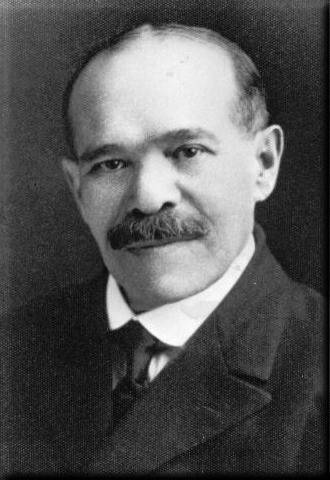
The “Jesus Focus” in the Book of Acts by Dr. Michael Williams

Reading The Bible Through The Jesus Lens in the Book of Acts

From Biblical Book to Biblical Hook

Chart adapted from *Dr. Michael Williams Book

Title for Acts

Acts: Theme

Acts 1:8

“Witness”

God expands and empowers his church through his Spirit.

“You will receive power when the Holy Spirit comes on you; and you will be my witnesses in Jerusalem, and Samaria, and to the ends of the earth.”

Christ-Focus in Acts

Implications from Acts

Hooks from Acts

The Spirit of the risen Christ empowers witness about him.

 And Jesus said to them,

“Follow me, and I will make you become fishers of men.”

 – Mark 1:17

Let the Spirit of the risen Christ empower our witness to the gospel.

 “for God gave us a spirit not of fear but of power and love and self-control.

 Therefore do not be ashamed of the testimony about our Lord, nor of me his prisoner, but share in suffering for the gospel by the power of God.”

 – 2 Timothy 1:7-8


When was the last time you told someone the good news of salvation in Christ?

 What prevents you from doing so more often?

 How did you hear the gospel?

 Is the effectiveness of your witness of Christ ultimately up to you?

 How do you acknowledge and draw on the strength of the indwelling Spirit for your witness to life in Christ?

 In your present circumstances, what is one way you could make the gospel clear to others?


*Michael James Williams in his own words: “After my conversion in the U. S. Navy (in a submarine beneath the North Atlantic!), I entered Columbia Bible College, where I received a B.A. (1985). This was followed by an M.A. in Religion at Westminster Theological Seminary (1987) and a Ph.D. in Biblical Studies at the University of Pennsylvania (1999). In 2000, I was ordained in the Christian Reformed Church, and since 1995 have been teaching at Calvin Theological Seminary. I have also taught courses at Westminster Theological Seminary, the University of Pennsylvania, and brief stints in Limuru, Kenya; Donetsk, Ukraine; and Warsaw, Poland. In addition to articles on Old Testament topics in various reference works and academic journals, and contributing to and editing “Mishneh Todah: Studies in Deuteronomy and Its Cultural Environment in Honor of Jeffrey H. Tigay” (2009); I have authored “Deception in Genesis: A Comprehensive Analysis of a Unique Biblical Phenomenon” (2001); “The Prophet and His Message: Reading Old Testament Prophecy Today” (2003); and, most recently, “How to Read the Bible through the Jesus Lens: A Guide to Christ-Focused Reading of Scripture” (2012). My amazing wife, Dawn, and I enjoy hiking and all things outdoors.”

How Jesus Transformed An Intellectual Philosophy Major Named R.C. Sproul

*R.C. Sproul’s Christian Testimony: A Personal Pilgrimage

The quest for the meaning of life was a troublesome problem for me from an early age. The “why” questions were the ones that gripped my mind—not so much physical questions but metaphysical questions. Many children are fascinated by “how” things work. They may even pester their parents with questions like, What makes a car run? How does a clock work? How does a seed turn into a flower? I had childhood friends like that, forever tinkering with cars and lawnmowers and skeletons. Some became engineers, some doctors, one a geologist and one a physicist. But I was bored with those questions. I knew they were very important questions, but they simply were not the ones on my mind.

As a youth I had two consuming passions. One was sports and the other the “why” questions. I saw no relationship between them at the time but in present reflection I think I can see how they fit together in my own circumstances.

I was a wartime child. The earliest question that plagued me was the question of war. I wanted to know why there were wars. They seemed pretty silly to me at the age of four. I couldn’t sit at a table and resolve their differences without using tanks and bombs and ships. Of course I had a personal vested interest in the question. What the war meant to me personally was the absence of my father. From the age of two to age six my father was a picture of a man in uniform. He was the one who wrote air letters to us. He was the one my mother talked about and typed letters to every night. She let me punch the X and O keys at the end of every letter. For some strange reason none of my childhood friends’ fathers were away at war. I kept wondering, “Why does everyone else have a dad at home and I don’t?

The plaguing question of war evaporated for me with a happy ending. Playing stickball on the streets of Chicago I was startled by a sound of people screaming and beating on pots and pans. I watched them hug each other and behave in a strange manner. I was upset that their antics interrupted the stickball game until I understood what it was all about—V.J. Day, 1945.

The full implications of their jubilation did not hit me until I stood in a railroad terminal that looked as if it was filled with a million men in uniform and a lot of weeping women. Then the troop trains came in. In the midst of a multitude of soldiers who all looked the same, one of them caught my eye. Fifty feet away he dropped his duffle bag, dropped to his knees and threw open his arms with a flashing grin on his face. I broke from my mother’s hand and covered fifty feet in Guinness record time. Dodging servicemen and running around duffle bags I flew into the arms of my father. The war didn’t matter anymore.

Then came school. From day one I didn’t like school. It is still something of a mystery to me how I ever ended up in an academic vocation. I remember walking to school on Mondays dreaming about Fridays. The thought that plagued me was why do I have to go to school five days a week and get to play only two? It didn’t make sense to me. My father’s schedule looked even worse. It seemed like he was always working. I wondered what life was all about when you had to spend so much time doing what you don’t like so you could spend so little time doing what you do like.

I was a good student but my heart wasn’t in it. Sports were my passion. Sports made sense to me. I took a sensuous and intellectual pleasure in them. I liked the feel of my body responding to action moves: dodging a would-be tackler, driving through the key for an “unmakeable” lay-up; skirting across the bag at second and firing to first for a double play. I was consumed by sports. I read every book in the town library on sports. I was a walking encyclopedia of sports “trivia.” My hero was the fictional Chip Hilton. He excelled at everything; he was a pristine model of fair play; he was a champion.

Practice for sports was never work. I was never so tired that I wanted practice to end. I loved every second of it. There was a reason for practice. The game. Victory. The game had a starting point, a goal, and an end point. Victory was a real possibility; defeat never entered my mind. When we were behind my thoughts were never “What if we lose?” but rather, “How can we win?” Like Vince Lombardi, I never lost a game but just ran our of time on a few occasions. My coaches were my real life idols because they always pointed ways to victory. We would be willing to die for them on the field as a matter of obvious course.

But something happened that changed all that and changed me so radically that I’m not over it yet. I was 16 years old when my mother came to me and said, “Son, your father has an incurable disease. There is nothing the doctors can do for him. You can still play some sports but you’ll have to cut back and get a part time job. Dad is dying and you have to be the man of the house.” I took the message outwardly with stoic heroism. Inwardly I was enraged. I could not believe there was something as an unsolvable problem. We won the war, didn’t we? We always found a way to win ball games. Why can’t we beat this? There must be a cure. The doctors are wrong. But there was no cure. The doctors were right. Dad didn’t die right away. He died a day at a time. Every night I fireman-dragged his emaciated body to the dinner table.

I still played sports for a while but it was different. They were foolishness. The coach said, “Sproul, I want you to take this football and carry it with you everywhere you go. I want you to take it to dinner ad sleep with it. You have to eat, drink, and sleep football.”

Two weeks earlier if had said that to me I would have loved him for it. Now I wanted to scream at him, “You idiot!” Don’t you know this stuff doesn’t matter at all!” Practice was misery. The games became a nightmare. Sports, like life, were an exercise in futility. Chip Hilton was a myth and life a bitter joke. When the referee blew his whistle and called a foul I pushed his whistle in his mouth. When the umpire called me out I took a swing at him. Bitter, frustrated, confused, I knew only defeat. Now there was no way to win. I quit.

The last time my father fell I picked him up and carried him to bed, unconscious. Twenty hours later he was dead. No tears from me—no emotion. I “quarter-backed” the funeral arrangements. When we put him in the ground my soul went under with him. The next year was a year of unrestrained degeneracy. (Anger can do a lot of things to a young man.) I became the paradigm of the angry young man. In junior high I graduated second in my class, legitimately; from senior high I was one hundred fifty-seventh by every crooked means available.

Sandlot football won me a scholarship to college. Then came radicalizing number two. One week on campus and my life was turned upside down again. The star of the football team called me aside and told me about Jesus. I couldn’t believe this guy. In my eyes ministers were “pansies,” and “Christian” was a synonym for “sissy.” I don’t remember what he said to me; but it drove me to the New Testament. Truth breathed from every page. It was my virgin experience with the Bible. It was a spiritual experience of revolution. I always knew there was a God but I hated Him. In this week my anger and bitterness dissolved into repentance. The result was forgiveness and life.

It would perhaps be appropriate to relate a story of coming to Christ via the route of intellectual inquiry. But that’s not how it happened with me. The intellectual drive came later. For one year I had a consummate passion to learn the Scriptures. I couldn’t understand why everyone didn’t believe them. Most of my professors were skeptics. The campus atmosphere was mostly secular. I was quickly faced with every conceivable objection to Christianity. I was most vulnerable, in light of my past history, to the charge that my faith grew out of my emotional trauma and psychological need for Jesus to be my “Father” and to give me hope in my despair and bitterness.

I wasn’t a Christian long until I had to face the question squarely: Was my conversion rooted in objective reality or was it merely an expression of my own subjective needs? I began to experience what Saint Augustine called, “Faith seeking understanding.” Thus I turned my attention to the study of philosophy as my major academic pursuit.

The study of the history of philosophy exposed me to virtually every serious alternative to Christianity the world has brought forth. I began to see the bankruptcy of secular world views. I found valuable insights in Spinoza, Kant, Sartre, and others. But no one seemed to have a consistent and coherent life and world view. The philosophers themselves were their own best critics. Hume critiqued Locke; Kant critiqued Hume; Hegel critiqued Kant, and so on it went. There emerged no “sure results” of speculative thought. The study of philosophy did provide very important tools for critical analysis which proved very helpful for my own pilgrimage. The more I studied philosophy the more intellectually credible and satisfying Christianity became.

After college came seminary. Naively I expected seminary to be a citadel of scholarly interpretation and defense of Christianity. Instead I found it to be a fortress of skepticism and unbelief. A negative posture toward classical Christianity prevailed which exposed me to a wide variety of contemporary critical theories that rejected orthodox Christianity. Thus seminary exposed me to a wide variety of scholarly criticisms of the Bible. This forced me to face the question of the trustworthiness of Scripture. Fortunately I was blessed with two crucial support systems. On the one hand I was well enough equipped with the tools of analytical philosophy to spot the philosophical assumptions that the negative critics were using. Through philosophical tools I was able, to some degree, to critique the critics. I was intellectually unimpressed by the weak philosophical assumptions of the “liberal” professors. On the other hand I was fortunate to study under one professor who did affirm classical Christianity. He was our toughest professor and most academically demanding. His “bear-trap” mind and singular ability for “close” and “tight” reasoning impressed me. He seemed to tower over the rest of the professors both in knowledge and analytical brilliance.

From seminary I went on to a doctoral program in Europe. It was a difficult and exhilarating experience. Almost al of my work had to be done in foreign languages which required a new kind of intellectual discipline for me. Studying under G. C. Berkouwer of the Free University of Amsterdam exposed me to all the latest theories of theology and biblical studies. The European system exposed me to the method of approaching theology and biblical studies as a technical science. Studying the primary sources in original languages such as Dutch, German and Latin gave new tools for scholarship.

From Europe I returned to America and began my teaching career. Teaching in both college and seminary I had an unusual pattern of teaching assignments. At one college I taught almost exclusively in the field of philosophy. In another college I was responsible to teach theology and biblical studies. My first seminary appointment had me teaching philosophical theology which combined both philosophy and theology. Oddly enough I was also asked to teach New Testament theology. In an age of specialization I was forced into being a “generalist,” working in several different but related fields.

The science of apologetics which offers intellectual defense of the credibility of Christianity finally became my point of “specialty.” That is usually what happens to generalists.

My training was not in a conservative “hothouse.” I have been through the gamut of liberal scholarship. I am a first-generation conservative—by conviction, not heritage or training.

The teaching arena has been the crucible of my thinking. The more I study and the more I teach and engage in dialogue with unbelievers and critics the more confident I have become in the rock-solid intellectual integrity and truth of Christianity. In fact, I am overwhelmed by the profundity, coherency, and intricate internal consistency of Christianity. I am awed by the majesty and brilliance, not to mention the power, of the Scriptures. Take away the Scriptures and you take away Christ. Take away the Christ and you take away life. My conviction is one with that of Luther: Spiritus Sanctus non scepticus: “The Holy Spirit is not a skeptic and the assertions He has given us are surer and more certain than sense and life itself.”

*This article was published in the Introduction to the book Reason To Believe (originally published in 1978 as Objections Answered) by R. C. Sproul, pp. 11-18.

Dr. R.C. Sproul is the founder and chairman of Ligonier Ministries, an international Christian education ministry located near Orlando, Florida. His teaching can be heard on the program Renewing Your Mind, which is broadcast on hundreds of radio outlets in the United States and in 40 countries worldwide. He is the executive editor of Tabletalk magazine and general editor of The Reformation Study Bible, and the author of more than seventy books (including some of my all time favorites: THE HOLINESS OF GOD; CHOSEN BY GOD; KNOWING SCRIPTURE; REASON TO BELIEVE; and PLEASING GOD) and scores of articles for national evangelical publications. Dr. Sproul also serves as president of Ligonier Academy of Biblical and Theological Studies and Reformation Bible College. He currently serves as senior minister of preaching and teaching at Saint Andrew’s in Sanford, FL. (The picture to the left was taken approximately around the time of Sproul’s conversion as a College student).

How Do the Law and Gospel Relate? An Excellent Sermon by Ray Comfort

“Hell’s Best Kept Secret” by Ray Comfort

In the late seventies, God very graciously opened an itinerant ministry to me. As I began to travel, I found that I had access to church growth records, and found to my horror that something like 80 to 90% of those making a decision for Christ were falling away from the faith. That is, modern evangelism with its methods is creating something like 80 to 90 of what we commonly call backsliders for every hundred decisions for Christ.

Let me make it more real for you. In 1991, in the first year of the decade of harvest, a major denomination in the U.S. was able to obtain 294,000 decisions for Christ. That is, in one year, this major denomination of 11,500 churches was able to obtain 294,000 decisions for Christ. Unfortunately, they could only find 14,000 in fellowship, which means they couldn’t account for 280,000 of their decisions, and this is normal, modern evangelical results, and something I discovered way back in the late seventies; it greatly concerned me. I began to study the book of Romans intently and, specifically, the gospel proclamation of men like Spurgeon, Wesley, Moody, Finney, Whitfield, Luther, and others that God used down through the ages, and I found they used a principle which is almost entirely neglected by modern evangelical methods. I began teaching that principle; I was eventually invited to base our ministry in southern California, the city of Bellflower, specifically to bring this teaching to the church of the U.S.

Things were quiet for the first three years, until I received a call from Bill Gothard, who had seen the teaching on video. He flew me to San Jose in northern California; I shared it with a thousand pastors. Then in 1992 he screened that video to 30,000 pastors. The same year David Wilkerson called from New York. He called from his car. (He had been listening to the teaching in his car and called me on his car phone.) Immediately, he flew me 3,000 miles from L.A. to New York to share the one-hour teaching with his church; he considered it to be that important. And recently I heard of a pastor who had listened to the audio tape 250 times. I’d be happy if you’d listen just once to this teaching which is called “Hell’s Best Kept Secret.”

The Bible says in Psalm 19, verse 7, “The law of the Lord is perfect converting the soul.” What is it that the Bible says is perfect and actually converts the soul? Why scripture makes it very clear: “The law of the Lord is perfect converting the soul.” Now to illustrate the function of God’s law, let’s just look for a moment at civil law. Imagine if I said to you, “I’ve got some good news for you: someone has just paid a $25,000 speeding fine on your behalf.”

You’d probably react by saying, “What are you talking about? That’s not good news: it doesn’t make sense. I don’t have a $25,000 speeding fine.” My good news wouldn’t be good news to you: it would seem foolishness. But more than that, it would be offensive to you, because I’m insinuating you’ve broken the law when you don’t think you have. However, if I put it this way, it may make more sense: “On the way to this meeting, the law clocked you at going 55 miles an hour through an area set aside for a blind children’s convention. There were ten clear warning signs stating that fifteen miles an hour was the maximum speed, but you went straight through at 55 miles an hour. What you did was extremely dangerous; there’s a $25,000 fine. The law was about to take its course, when someone you don’t even know stepped in and paid the fine for you. You are very fortunate.”

Can you see that telling you precisely what you’ve done wrong first actually makes the good news make sense. If I don’t clearly bring instruction and understanding that you’ve violated the law, then the good news will seem foolishness; it will seem offensive. But once you understand that you’ve broken the law, then that good news will become good news indeed.

Now in the same way, if I approach an impenitent sinner and say, “Jesus Christ died on the cross for your sins,” it will be foolishness and offensive to him. Foolishness because it won’t make sense. The Bible says that: “The preaching of the cross is to them that perish foolishness” (1Cor. 1:18). And offensive because I’m insinuating he’s a sinner when he doesn’t think he is. As far as he’s concerned, there are a lot of people far worse than him.

But if I take the time to follow in the footsteps of Jesus, it may make more sense. If I take the time to open up the divine law, the ten commandments, and show the sinner precisely what he’s done wrong, that he has offended God by violating His law, then when he becomes, as James says, “convinced of the law as a transgressor” (Jam. 2:9), the good news of the fine being paid for will not be foolishness, it will not be offensive, it will be “the power of God unto salvation” (Rom. 1:16).

Now, with those few thoughts in mind by way of introduction, let’s now look at Romans 3, verse 19. We’ll look at some of the functions of God’s law for humanity. Romans 3, verse 19: “Now we know that whatsoever things the law says, it says to them who are under the law that every mouth may be stopped and all the world may become guilty before God.” So one function of God’s law is to stop the mouth. To stop sinners justifying themselves and saying, “There’s plenty of people worse than me. I’m not a bad person. Really.” No, the law stops the mouth of justification and leaves the whole world, not just the Jews, but the whole world guilty before God. Romans 3, verse 20: “Therefore by the deeds of the law there shall no flesh be justified in his sight: for by the law is the knowledge of sin.” So God’s law tells us what sin is. 1 John 3:4 says, “Sin is transgression of the law.”

Romans 7, verse 7: “What shall we say then?” says Paul. “Is the law sin? God forbid! No, I had not known sin but by the law.” Paul says, “I didn’t know what sin was until the law told me.” In Galatians 3:24, “Wherefore, the law was our schoolmaster to bring us to Christ that we might be justified by faith.” God’s law acts as a schoolmaster to bring us to Jesus Christ that we might be justified through faith in His blood. The law doesn’t help us; it just leaves us helpless. It doesn’t justify us; it just leaves us guilty before the judgment bar of a holy God.

And the tragedy of modern evangelism is because around the turn of the century when it forsook the law in its capacity to convert the soul, to drive sinners to Christ, modern evangelism had to, therefore, find another reason for sinners to respond to the gospel. And the issue that modern evangelism chose to attract sinners was the issue of “life enhancement”. The gospel degenerated into “Jesus Christ will give you peace, joy, love, fulfillment, and lasting happiness.” Now to illustrate the unscriptural nature of this very popular teaching, I’d like you to listen very carefully to this following anecdote, because the essence of what I’m saying pivots on this particular illustration; so please listen carefully.

Two men are seated in a plane. The first is given a parachute and told to put it on as it would improve his flight. He’s a little skeptical at first because he can’t see how wearing a parachute in a plane could possibly improve the flight. After a time he decides to experiment and see if the claim is true. As he puts it on he notices the weight of

it upon his shoulders and he finds that he has difficulty in sitting upright. However, he consoles himself with the fact that he was told the parachute would improve the flight. So, he decides to give the thing a little time. As he waits he notices that some of the other passengers are laughing at him, because he’s wearing a parachute in a plane. He

begins to feel somewhat humiliated. As they begin to point and laugh at him and he can stand it no longer, he slinks in his seat, unstraps the parachute, and throws it to the floor. Disillusionment and bitterness fill his heart, because, as far as he was concerned, he was told an outright lie. The second man is given a parachute, but listen to what he’s told. He’s told to put it on because at any moment he’d be jumping 25,000 feet out of the plane. He gratefully puts the parachute on; he doesn’t notice the weight of it upon his shoulders, nor that he can’t sit upright. His mind is consumed with the thought of what would happen to him if he jumped without that parachute.

Let’s analyze the motive and the result of each passenger’s experience. The first man’s motive for putting the parachute on was solely to improve his flight. The result of his experience was that he was humiliated by the passengers; he was disillusioned and somewhat embittered against those who gave him the parachute. As far as he’s concerned it’ll be a long time before anyone gets one of those things on his back again. The second man put the parachute on solely to escape the jump to come, and because of his knowledge of what would happen to him without it, he has a deep-rooted joy and peace in his heart knowing that he’s saved from sure death. This knowledge gives him the ability to withstand the mockery of the other passengers. His attitude towards those who gave him the parachute is one of heart-felt gratitude.

Now listen to what the modern gospel says. It says, “Put on the Lord Jesus Christ. He’ll give you love, joy, peace, fulfillment, and lasting happiness.” In other words, “Jesus will improve your flight.” So the sinner responds, and in an experimental fashion, puts on the Savior to see if the claims are true. And what does he get? The promised temptation, tribulation, and persecution. The other passengers mock him. So what does he do? He takes off the Lord Jesus Christ, he’s offended for the word’s sake (Mark 4:17), he’s disillusioned and somewhat embittered, and quite rightly so. He was promised peace, joy, love, fulfillment, and lasting happiness, and all he got were trials and humiliation. His bitterness is directed toward those who gave him the so-called “good news”. His latter end becomes worse than the first: another inoculated and bitter backslider.

Saints, instead of preaching that Jesus improves the flight, we should be warning the passengers they’re going to have to jump out of the plane. That it’s “appointed unto man once to die, but after this the judgment” (Heb. 9:27). And when a sinner understands the horrific consequences of breaking God’s law, then he will flee to the Savior solely to escape the wrath that’s to come. And if we’re true and faithful witnesses, that’s what we’ll be preaching. That there is wrath to come; that God “commands all men everywhere to repent” (Acts 17:30). Why? “Because He has appointed a day, in which He will judge the world in righteousness” (vs. 31). You see, the issue isn’t one of happiness, but one of righteousness. It doesn’t matter how happy a sinner is, how much he’s enjoying “the pleasures of sin for a season” (Heb. 11:25). Without the righteousness of Christ, he’ll perish on the day of wrath. “Riches profit not on the day of wrath, but righteousness delivers from death” (Prov. 11:4).

Peace and joy are legitimate fruits of salvation, but it’s not legitimate to use these fruits as a draw card for salvation. If we continue to do so, sinners will respond with an impure motive lacking repentance. Now, can you remember why the second passenger had joy and peace in his heart? It was because he knew that parachute was going to save him from sure death. And as a believer, I have, as Paul says, “joy and peace in believing” (Rom. 15:13), because I know that the righteousness of Christ is going to deliver me from the wrath that’s to come.

Now with that thought in mind, let’s take a close look at an incident on board the plane. We have a brand new stewardess. She’s carrying a tray of boiling hot coffee. It’s her first day; she wants to leave an impression on the passengers, and she certainly does. Because as she’s walking down the aisle, she trips over someone’s foot and slops that boiling hot coffee all over the lap of our second passenger. Now what’s his reaction as that boiling liquid hits his tender flesh? Does he go, “Ssssfffff! Man that hurt”? Mmm-hhh. He feels the pain. But then does he rip the parachute from his shoulders, throw it to the floor and say, “The stupid parachute!”? No. Why should he? He didn’t put the parachute on for a better flight. He put it on to save him from the jump to come. If anything, the hot coffee incident causes him to cling tighter to the parachute and even look forward to the jump.

Now if you and I have put on the Lord Jesus Christ for the right motive, to flee from the wrath that’s to come, when tribulation strikes, when the flight gets bumpy, we won’t get angry at God; we won’t lose our joy and peace. Why should we? We didn’t come to Jesus for a happy lifestyle: we came to flee from the wrath that’s to come. And if anything, tribulation drives the true believer closer to the Savior. And sadly we have literally multitudes of professing Christians who lose their joy and peace when the flight gets bumpy. Why? They’re the product of a man-centered gospel. They came lacking repentance, without which you can’t be saved.

I was in Australia recently ministering; Australia is a small island off the coast of New Zealand. And I preached sin, law, righteousness, holiness, judgment, repentance, and hell, and I wasn’t exactly crushed by the amount of people wanting to “give their hearts to Jesus.” In fact, the air went very tense. After the meeting, they said, “There’s a young guy down in the back who wants to give his life to Christ.” I went down the back and found a teenage lad who could not pray the sinner’s prayer because he was weeping so profusely.

Now, for me it was so refreshing, because for many years I suffered from the disease of “evangelical frustration”. I so wanted sinners to respond to the gospel I unwittingly preached a man-centered message. The essence of which was this: “You’ll never find true peace without Jesus Christ; you’ve a God-shaped vacuum in your heart that only God can fill.” I’d preach Christ crucified; I’d preach repentance. A sinner would respond to the alter; I’d open an eye and say, “Oh no. This guy wants to give his heart to Jesus and there’s an 80% chance he’s going to backslide. And I am tired of creating backsliders. So I’d better make sure this guy really means it. He’d better be sincere!” So I’d approach the poor guy in a Gestapo spirit. I’d walk up and say, “Vhat do you vant?” He’d say, “I’m here to become a Christian.” I’d say, “Do you mean it?” He’d say, “Yeah.” I’d say, “Do you REALLY MEAN IT!?” He’d say, “Yeah, I reckon.” “Okay, I’ll pray with you, but you’d better mean it from your heart.” He said, “Okay, okay.” “Now you repeat this prayer sincerely after me and mean it from your heart sincerely and really mean it from your heart sincerely and make sure you mean it. ‘Oh, God, I’m a sinner.’ ” He’d say, “Uh…oh, God, I’m a sinner.” And I’d think, “Man, why isn’t there a visible sign of contrition. There’s no outward evidence the guy is inwardly sorry for his sins.” Now, if I could have seen his motive, I would have seen he was 100% sincere. He really did mean his decision with all his heart. He sincerely wanted to give this Jesus thing a go to see if he could get a buzz out of it. He had tried sex, drugs, materialism, alcohol. “Why not give this Christian bit a go and see if it’s as good as all these Christians say it is: peace, joy, love, fulfillment, lasting happiness.”

He wasn’t fleeing from the wrath that was to come, because I hadn’t told him there was wrath to come. There was this glaring omission from my message. He wasn’t broken in contrition, because the poor guy didn’t know what sin was. Remember Romans 7, verse 7? Paul said, “I had not known sin but by the law.” How can a man repent if he doesn’t know what sin is? Any so-called “repentance” would be merely what I call “horizontal repentance”. He’s coming because he’s lied to men, he’s stolen from men.

But when David sinned with Bathsheba and broke all ten of the ten commandments (when he coveted his neighbor’s wife, lived a lie, stole his neighbor’s wife, committed adultery, committed murder, dishonored his parents, and thus dishonored God), he didn’t say “I’ve sinned against man.” He said, “Against you, and you only, have I sinned, and done this evil in your sight” (Ps. 51:4). When Joseph was tempted sexually, he said, “How can I do this thing and sin against God?” (Gen. 39:9). The prodigal son said, “I’ve sinned against heaven” (Luke 15:21). Paul preached “repentance toward God” (Acts 20:21). And the Bible says, “Godly sorrow works repentance” (2Cor. 7:10). And when a man doesn’t understand that his sin is primarily vertical, he’ll merely come and exercise superficial, experimental, and horizontal repentance, and fall away when tribulation, temptation, and persecution come.

A.B. Earl said, “I have found by long experience that the severest threatenings of the law of God have a prominent place in leading men to Christ. They must see themselves lost before they will cry for mercy; they’ll not escape danger until they see it.” Now I’d like you to do something a little unusual. I’ll not embarrass you; I give you my word. But I would like to ask, how many of you were thinking of something else when I was reading that quote from A.B. Earl? Now, I want to admit something to you. I was thinking of something else when I was reading that quote from A.B. Earl: I was thinking, “Nobody’s listening to me; they’re thinking of something else.” So, to make a very important point, I’d like you to be really honest. If you were thinking of something else and you haven’t got a clue what A.B. Earl said, could you raise your hand up nice and high…up nice and high.

It’s usually half to two- thirds and we’ve got that here tonight. Let’s try again….God bless you, Pastor, for your honesty. A.B. Earl was a famous evangelist of the last century who had 150,000 converts to substantiate his claims. Satan doesn’t want you to get a grip of this, so listen very closely. A.B. Earl said, “I have found by long experience [that’s the true test] that the severest threatenings of the law of God have a prominent place in leading men to Christ. They must see themselves lost before they will cry for mercy; they’ll not escape danger until they see it.”

You see, you try and save a man from drowning when the man doesn’t believe he’s drowning, he’ll not be too happy with you. You see him swimming out in the lake; you think, “I think he’s drowning. Yes, I believe he is.” You dive in, pull him to the shore, without telling him anything. He’s not going to be very happy with you. He won’t want to get saved until he sees that he’s in danger. They’ll not escape danger until they see it. You see, if you came to me and said, “Hey, Ray,” and I said, “Yeah.” You said, “This is a cure to Groaninzin’s disease; I sold my house to raise the money to get this cure. I’m giving it to you as a free gift.” I’d probably react something like this: “What? Cure to what? Groaninzin’s disease? You sold your house to raise the money to get this cure? You’re giving it to me as a free gift? Why, thanks a lot. Bye….That guy’s a nut.” I mean, that’s probably how I’d react if you sold your house to raise the money to get a cure for a disease I’d never heard of and your giving it to me as free gift, I’d think you’re rather strange.

But instead, if you came to me and said, “Ray, you’ve got Groaninzin’s disease. I can see ten clear symptoms on your flesh. You’re going to be dead in two weeks.” And I became convinced I had the disease (the symptoms were so evident), and said, “Oh! What shall I do?” And then you said, “Don’t worry. This is a cure to Groaninzin’s disease. I sold my house to raise the money to get this cure. I’m giving it to you as a free gift.” I’m not going to despise your sacrifice; I’m going to appreciate it and I’m going to appropriate it. Why? Because I’ve seen the disease that I might appreciate the cure.

And sadly, what’s happened in the U.S. and the Western world as follow is that we have preached the cure without first convincing of the disease. We have preached a gospel of grace without first convincing men of the law, that they’re transgressors; and, consequently, almost everyone I try and witness to in southern California or around the Bible belt has been born-again six or seven times. You say, “You need to give your life to Jesus Christ.” “Uh, I did that when I was seven, eleven, seventeen, twenty-three, twenty-five, twenty-eight, thirty-two…” You know the guy’s not a Christian. He’s a fornicator. He’s a blasphemer, but he thinks he’s saved because he’s been “born-again”. What’s happening? He’s using the grace of our God for an occasion of the flesh. He doesn’t esteem the sacrifice. For him it’s not a bad thing to trample the blood of Christ underfoot (Heb. 10:29). Why? Because he’s never been convinced of the disease that he might appreciate the cure.

Biblical evangelism is always, without exception, law to the proud and grace to the humble. Never will you see Jesus giving the gospel, the good news, the cross, the grace of our God, to a proud, arrogant, self-righteous person. No, no. With the law he breaks the hard heart and with the gospel he heals the broken heart. Why? Because He always did those things that please the Father. God resists the proud and gives grace to the humble (Jam. 4:6; 1Pet. 5:5). “Everyone who is proud of heart,” scripture says, “is an abomination to the Lord” (Prov. 16:5).

Jesus told us whom the gospel is for. He said, “The spirit of the Lord is upon me because he has anointed me to preach the gospel to the poor, the broken-hearted, the captives and the blind” (Luke 4:18). Now, they are spiritual statements. The poor in spirit (Mat. 5:3). The broken hearted are the contrite ones (Is. 57:15). The captives are those of whom Satan has taken captive to do his will (2Tim. 2:26); and the blind are those of whom the god of this world has blinded lest the light of the gospel should shine on them (2Cor. 4:4). Only the sick need a physician (Mark 2:17), and only those who are convinced of the disease will appreciate and appropriate a cure. So we’re going to now very briefly look at examples of law to the proud and grace to the humble. Luke 10:24…Luke 10:24. And when I give you a reference from the pulpit I’ll give it twice, because I know that men are present, and men need to be told things twice….Men need to be told things twice. This can be backed up biblically.

When God speaks to men in the Bible he uses their name twice. “Abraham, Abraham…Saul, Saul…Moses, Moses…Samuel, Samuel…” Because men need to be told things twice. Women once. I don’t know how many times I’ve sat in a pew, preacher said, “Ah, Luke 10:25.” I turn to my wife and say, “What’d he say?” She says, “Luke 10:25.” I say, “Thank you, dear.” HELP-MATE. That’s why God created women, because men could not handle it on their own. The whole thing is: men lose things, women find things. “Where’s the keys love?” “Hangin’ on your nose, Dear.” I mean, I don’t know how many times I’ve opened the cupboard, “[Burp] There’s no honey here, Honey!” She says, “Here is here, Dear.” Where would man be without women? Mm? Still in the Garden of Eden. Eve found the tree. Adam didn’t really know what was going on. In fact, if you look at the creation of woman, to create woman the Bible says God put man into a deep sleep. And Scripture doesn’t say he ever came out of it.

In Luke 10:25 we see a certain lawyer stood up and tempted Jesus. This is not an attorney, but a professing expert on God’s law. He stood up and he said to Jesus, “How can I get everlasting life?” Now, what did Jesus do? He gave him law. Why? Because he was proud, arrogant, self-righteous. Here we have a professing expert on God’s law tempting the Son of God. And the spirit of his question was, “And what do you think we’ve got to do to get everlasting life?” So Jesus gave him law. He said, “What is written in the law? What is your reading of it?” He says, “Ah, you should love the Lord your God with all your heart, mind, soul, and strength; love your neighbor as yourself.” And Jesus said, “This do and you shall live.”

And then the Scripture says, “But He, willing to justify Himself, said to Jesus, ‘Who’s my neighbor?’ ” The Living Bible brings out more clearly the effect of the law on the man. It said, “The man wanted to justify his lack of love for some kinds of people; so he asked, ‘Which neighbors?’ ” See, he didn’t mind Jews, but he didn’t like Samaritans. So Jesus then told him the story of what we call the “good Samaritan” who was not “good” at all. In loving his neighbor as much as he loved himself, he merely obeyed the basic requirements of God’s law. And the effect of the essence of the law, the spirituality of the law (of what the law demands in truth), was that that man’s mouth was stopped. See, he didn’t love his neighbor to that degree. The law was given to stop every mouth and leave the whole world guilty before God.

Similarly, in Luke 18, verse 18, the rich, young ruler came to Jesus. He said, “How can I get everlasting life?” I mean, how would most of us react if someone came up and said, “How can I get everlasting life?” We’d say, “Oh…quickly say this prayer before you change your mind.” But what did Jesus do with His potential convert? He pointed Him to the law. He gave him five horizontal commandments, commandments to do with his fellow men. And when he said, “Ah, I’ve kept those from my youth,” Jesus said, “One thing you lack.” And he used the essence of the first of the ten commandments: “I am the Lord your God…You shall have no other Gods before me” (Ex. 20:2– 3). He showed this man that His god was His money, and “you cannot serve God and mammon” (Mt. 6:24). Law to the proud.

Then we see grace being given to the humble in the case of Nicodemus (John 3). Nicodemus was a leader of the Jews. He was a teacher in Israel. Therefore, he was thoroughly versed in God’s law. He was humble of heart, because he came to Jesus and acknowledged the Deity of the Son of God. A leader in Israel? “We know that you’ve come from God for no man can do these miracles that you do unless God is with Him.”

So Jesus gave the sincere seeker of truth, who had a humble heart and a knowledge of sin by the law, the good news of the fine being paid for and “For God so loved the world that He gave his only begotten Son.” And it was not foolishness to Nicodemus but the “power of God to salvation.” Similarly, in the case of Nathaniel (John 1:43–51). Nathaniel was an Israelite brought up under the law in deed, not just in word, in whom there was no guile; there was no deceit in his heart. Obviously the law was a schoolmaster to bring this godly Jew to Christ.

Similarly with the Jews on the day of Pentecost (Acts 2). They were devout Jews, godly Jews, who, therefore, ate, drank, and slept God’s law. Matthew Henry, the Bible commentator, said the reason they were gathered together on the day of Pentecost was to celebrate the giving of God’s law on Mt. Sinai. So when Peter stood up to preach to these godly Jews, he didn’t preach wrath. No, the law works wrath; they knew that. He didn’t preach righteousness or judgment. No, no. He just told them the good news of the fine being paid for, and they were pricked in their hearts and cried, “Men and brethren, what shall we do?” (vs. 37).

The law was a schoolmaster to bring them to Christ that they might be justified through faith in His blood. And the hymn-writer said, “By God’s word at last my sin I learned; then I trembled at the law I’d spurned, till my guilty soul imploring turned to Calvary.”

1 Timothy, chapter 1, verse 8, says, “But we know that the law is good if it used lawfully for the purpose for which it was designed.” God’s law is good if it’s used lawfully for the purpose for which it was designed. Well, what was the law “designed” for? The following verse tells us: “The law was not made for a righteous man but for sinners.” It even lists the sinners: homosexuals, fornicators. If you want to bring a homosexual to Christ, don’t get into an argument with him over his perversion; he’s ready for you with his boxing gloves on. No, no. Give him the ten commandments.

The law was made for homosexuals. Show him that he is damned despite his perversion. If you want to bring a Jew to Christ, lay the weight of the law upon him; let it prepare his heart for grace as happened on the day of Pentecost. If you want to bring a Moslem to Christ, give him the law of Moses; they accept Moses as a prophet. Well, give them the law of Moses and strip them of their self-righteousness and bring them to the foot of a blood-stained cross. I heard of a Moslem reading our book Hell’s Best Kept Secret, and God soundly saved him purely through reading the book. Why? Because the law of the Lord is perfect converting the soul.

Think of the woman caught in the act of adultery (John 8:1–11). Violation of the seventh commandment. The law called for her blood (Lev. 20:10). She found herself in between a rock and a hard place. She had no avenue but to fling herself at the feet of the Son of God for mercy; and that is the function of God’s law. Paul spoke of being shut up under the law (Gal. 3:23). It condemns. You say, “You can’t condemn sinners.” Saints, they’re already condemned. John 3, verse 18: “He that believes not is condemned already.” All the law does is show him himself in his true state.

Ladies, you might recognize this. Your table needs dusting in your living room. So you dust it clean; all the dust is gone. Then you draw back the curtains and let in the early morning sunlight. What do you see on the table? Dust. What do you see in the air? Dust. Did the light create the dust? No, the light merely exposed the dust. And when you and I take the time to draw back the curtains of the holy of holies and let the light of God’s law shine upon the sinner’s heart, all that happens, is that he sees himself in truth. “The commandment is a lamp and the law is light” (Prov. 6:23). That’s why Paul said, “By the law is the knowledge of sin” (Rom. 3:20). That’s why he said, “By the commandment sin became exceedingly sinful” (Rom. 7:13). In other words, the law showed him sin in its true light.

Now, normally at this stage of this teaching I go through the ten commandments one by one, but what I’ll do is share with you how I witness personally because I think it would be more beneficial. Now, I’m a strong believer in following in the footsteps of Jesus. Never, ever, would I approach someone and say, “Jesus loves you.” Totally unbiblical; there’s no precedent for that in Scripture. Neither would I go up to someone and say, “I’d like to talk to you about Jesus Christ.” Why? Because if I wanted to awaken you from a deep sleep, I wouldn’t use a flashlight in your eyes. That will offend you. I’d turn on the light dimmer very gently.

First, the natural, then the spiritual. Why? Because “the natural man receives not the things of the spirit of God; neither can he know them. They are foolishness to him because they are spiritually understood” (1Cor. 2:14). The precedent in Scripture is given in John 4 for personal witness. You can see Jesus’ example with the woman at the well. He started in the natural realm, swung to the spiritual, brought conviction using the seventh commandment, and then revealed Himself as the Messiah. So, when I meet someone, I’ll talk about the weather, I’ll talk about sport: let them feel a little bit of sanity. Get to know them; maybe joke here and there and then deliberately swing from the natural to the spiritual. Now, the way I do this is that I use gospel tracts. We have something like 24, 25 different tracts; we’re a ministry to the body of Christ. We’ve printed millions and millions of tracts and our tracts are unusual. If you get a hold of them, what you’ll have to do is have a stack on you because people chase you and ask for more. Let me give you an example. This is our optical illusion tract. Which looks bigger, if you can see? Does the pink look bigger? Can you see that? For those listening by tape…They’re the same size; it’s an optical illusion. I say, “It’s actually a gospel tract; instructions are on the back…how to get saved, actually.” I say, “You can keep that.” He says, “Hey…thanks a lot! This is neat…Whoa!” “Got another gift for you.” And out of my pocket I get a pressed penny with the ten commandments on it.

We have a machine that does this. We buy the pennies new from the bank; nice golden-looking pennies and we feed them into this machine and it presses them, or it will do your thumbnail if you want to hold still. But it presses them with the ten commandments. It’s legal to do this: this is considered art. It’s not defacing a penny. So I say, “Here’s a gift.” He says, “Oh…what is it?” I say, “It’s a penny with the ten commandments on it; I did it with my teeth….I do the i’s with my eye teeth but the e’s are really difficult.”

Now, what I’m doing is putting out a feeler to see if he’s open to spiritual things. If he negatively says, “Ten commandments? Thanks a lot,” he’s not open. But the usual reaction is, “Ten commandments…Hey, thanks! I appreciate this.” I say, “Ah, do you think you’ve kept the ten commandments?” He says, “Ah, yeah…pretty much.” I say, “Let’s go through them. Ever told a lie?” He says, “Ah, yeah…yeah, one or two.” I say, “What does that make you?” He says, “A sinner.” I say, “No, no. Specifically, what does it make you?” He says, “Well, man, I’m not a liar.” I say, “How many lies, then, do you have to tell to be a liar? Ten and a bell rings and ‘ppppbbbbtttt’ across your forehead? Isn’t it true if you tell one lie, it makes you a liar?” He says, “Yeah…I guess you’re right.”

I say, “Have you ever stolen something?” He says, “No.” I say, “Come on; you’ve just admitted to me you’re a liar.” I say, “Ever stolen something, even if its small?” and he says, “Yeah.” I say, “What does that make you?” He says, “A thief.” I say, “Jesus said, ‘If you look at a woman and lust after her, you commit adultery with her in your heart’ (Mat. 5:28). Ever done that?” He says, “Yeah, plenty of times.” “Then from your own admission, you’re a lying, thieving, adulterer at heart, and you have to face God on judgment day; and we’ve only looked at three of the ten commandments. There’s another seven with their cannons pointed at you. Have you used God’s name in vain?”

“Yeah…I’ve been trying to stop.” “You know what you’re doing? Instead of using a four-letter filth word beginning with ‘s’ to express disgust, you’re using God’s name in its place. That’s called blasphemy; and the Bible says, ‘Every idle word a man speaks he’ll give account thereof on the day of judgment’ (Mat. 12:36). ‘The Lord will not hold him guiltless who takes his name in vain’ (Ex. 20:7).

The Bible says if you hate someone, you are a murderer (1 John 3:15).” Now the wonderful thing about God’s law is that God has taken the time to write it upon our heart. Romans 2, verse 15: “…which show the work of the law written in their hearts, their conscience bearing witness…” Now, conscience means “with knowledge.” Con is “with,” science is “knowledge.” Conscience. So when he lies, lusts, fornicates, blasphemes, commits adultery, he does it with knowledge that it’s wrong.

God has given light to every man. The Holy Spirit convicts them of sin, righteousness, and judgment (John 16:8). Sin which is transgression of the law (1 John 3:4); righteousness which is of the law (Rom. 10:5; Philip. 3:9); judgment which is by the law. His conscience accuses him—the work of the law written on his heart (Rom. 2:15)—and the law condemns him. So I say, “So if God judges you by this standard on the day of judgment, are you going to be innocent or guilty?” He says, “Guilty.” I say, “Well, do you think you’ll go to heaven or hell?” And the usual answer is, “Heaven.”

A product of the modern gospel. I say, “Why do you feel like that? Is it because you think God is good and he’ll overlook your sins?” He says, “Yeah, that’s it. He’ll overlook my sins.” “Yeah, well, try that in a court of law. You’ve committed rape, murder, drug pushing—very serious crimes. The judge says, ‘You’re guilty. All the evidence is here. Have you anything to say before I pass sentence?’ And you say, ‘Yes, Judge. I’d like to say I believe you’re a good man and you’ll overlook my crimes.’ The judge would probably say, ‘You’re right about one thing. I am a good man, and because of my goodness, I’m going to see that justice is done. Because of my goodness, I’m going to see that you’re punished.’ ”

And the very thing sinners are hoping will save them on the day of judgment, the goodness of God, will be the very thing that will condemn them. Because if God is good, He must by nature punish murderers, rapists, thieves, liars, fornicators, and blasphemers. God is going to punish sin wherever it’s found. So with this knowledge, he’s now able to understand. He now has light that his sin is primarily vertical: that he has “sinned against heaven” (Luke 15:21). That he has violated God’s law and that He has angered God and the wrath of God abides upon Him (John 3:36). He can now see that He is “weighed in the balance” of eternal justice and “found wanting” (Dan. 5:27). He now understands the need for a sacrifice. “Christ redeemed from the curse of the law being made a curse for us” (Gal. 3:13). “God commended His love toward us in that while we were yet sinners Christ died for us” (Rom. 5:8). We broke the law; he paid the fine. It’s as simple as that. And if a man will repent, if a woman will repent and put their faith in Jesus, God will remit their sins so that on the day of judgment, when their court case comes up, God can say, “Your case is dismissed through lack of evidence.” “Christ redeemed from the curse of the law being made a curse for us.” And, therefore, exercise repentance towards God, faith toward our Lord Jesus Christ (Acts 20:21), put his hand to the plough and not look back because he’s fit for the kingdom (Luke 9:62). That word fit means “ready for use”. The soil of his heart has been turned that he might receive the engrafted word which is able to save his soul (Jam. 1:21).

Now, I haven’t got time to share these quotes with you, but their in our literature. I’m sure you’ll recognize these names. John Wycliffe, the Bible translator. He said, “The highest service to which a man may obtain on earth is to preach the law of God.” Why? Because it will drive sinners to faith in the Savior, to everlasting life. Martin Luther said, “The first duty of the gospel preacher is to declare God’s law and to show the nature of sin.” In fact, as we read these quotes, these men have so much conviction you can feel their teeth grit. They say things like, “If you do not use the law in gospel proclamation, you will fill the church with false converts.” Stony ground hearers who will receive the word with joy and gladness. Listen to what Martin Luther said. He said, “Satan, the god of all dissension stirs up daily new sects. And last of all which of all others I should never have foreseen or once suspected, he has raised up a sect such as teach that men should not be terrified by the law, but gently exhorted by the preaching of the grace of Christ.” So what’s Luther saying? He saying, “Listen, guys. There’s a demonic, Satanic sect that’s just risen up. Man, I never, ever would have believed this could happen. He’s raised up a sect such as teach that men should not be terrified by the law, but gently exhorted by the preaching of the grace of Christ,” which perfectly sums up most of our evangelism.

John Wesley said to a friend, in writing to a young evangelist, “Preach 90 percent law and 10 percent grace.” And you say, “90 percent law and 10 percent grace? Pretty heavy. Couldn’t it be 50-50.” Think of it like this. I’m a doctor; you’re a patient. You have a terminal disease. I have a cure, but it’s absolutely essential that you are totally committed to this cure; if you’re not 100 percent committed, it will not work. How am I going to handle it? Probably like this. “Come in here. Sit down. I’ve some very serious news for you: you have a terminal disease.” I see you begin to shake. I think to myself, “Good. He’s beginning to see the seriousness of this situation.” I bring out charts; I bring out x-rays. I show you the poison seeping through your system. I speak to you for ten whole minutes about this terrible disease. How long, then, do you think I’m going to have to talk about the cure? Not long at all. When you’re sitting there trembling after ten minutes, I say, “By the way, here’s the cure.” You grab it and gulp it down.

Your knowledge of the disease and its horrific consequence has made you desire the cure. You see, before I was a Christian, I had as much desire for righteousness as a four-year-old boy has for the word “bath.” What’s the point? See, Jesus said, “Blessed are those who hunger and thirst for righteousness.” How many non-Christians do you know who are hungering and thirsting after righteousness? The Bible says, “There is none who seek after God” (Rom. 3:11). It says they love the darkness, they hate the light; neither will they come to the light least there deeds be exposed (John 3:19–20). The only thing they drink in is iniquity like water (Job 15:16). But the night I was confronted with the spiritual nature of God’s law and understood that God requires truth in the inward parts (Ps. 51:6), that He saw my thought-life and considered lust to be the same as adultery, hatred the same as murder, I began to say, “I can see I’m condemned. What must I do to be made right?” I began to thirst for righteousness. The law put salt on my tongue. It was a schoolmaster to bring me to Christ. Charles Spurgeon said, “They will never accept grace until they tremble before a just and holy law.” D.L. Moody, John Bunyan, John Newton, who wrote “Amazing Grace” (and if anyone had a grip on grace it was Newton), he said that “the correct understanding of the harmony between law and grace is to preserve oneself from being entangled by errors on the right hand and on the left.” And Charles Finney said, “Evermore the law must prepare the way for the gospel.” He said, “To overlook this in instructing souls is almost certain to result in false hope, the introduction of a false standard of Christian experience, and to fill the church with false converts.”

Saints, the first thing David Wilkerson said to me when he called me on his car phone was, “I thought I was the only one who didn’t believe in follow-up.” Now, I believe in feeding a new convert; I believe in nurturing him. I believe in discipling him—biblical and most necessary. But I don’t believe in following him. I can’t find it in Scripture.

The Ethiopian eunuch was left without follow-up. How could he survive? All he had was God and the Scriptures. You see, follow-up…now let me explain follow-up for those of you who don’t know. Follow-up is when we get decisions, either through crusades or local church, and we take laborers from the harvest field, who are few as it is, and give them this disheartening task of running after these decisions to make sure they’re going on with God.

What it is, is a sad admission of the amount of confidence we have in the power of our message and in the keeping power of God. If God has saved them, God will keep them. If they’re born of God, they’ll never die. If He’s begun a good work in them, He’ll complete it to that day (Philip. 1:6); if He’s the author of their faith, He’ll be the finisher of their faith (Heb. 12:2). He’s able to save to the uttermost them that come to God by Him (Heb. 7:25). He’s able to keep them from falling and present them faultless before the presence and glory with exceeding joy (Jude 24). Jesus said, “No one will pluck you from my father’s hand” (John 10:29).

You see, saints, the problem is that Lazarus is four days dead (John 11). We can run in the tomb, we can pull him out, we can prop him up, we can open his eyes, but “he stinketh” (vs. 39). He needs to hear the voice of the Son of God. And the sinner is four days dead in his sins. We can run up and say, “Say this prayer.” Still, he needs to hear the voice of the Son of God, or there is no life in him; and the thing that primes the sinner’s ear to hear the voice of the Son of God is the law. It’s a schoolmaster to bring him to Christ that he might be justified through faith (Gal. 3:24). Saints, the law works; it converts the soul (Ps. 19:7). It makes the person a new creature in Christ. That old things pass away; behold, all things are become new (2Cor. 5:17). So find yourself a sinner, and experiment on him. But as you do so, remember this one anecdote.

You’re sitting on a plane, sipping you’re coffee, biting a cookie, and watching a movie. It’s a good flight, very pleasurable, when suddenly you hear, “This is your captain speaking. I have an announcement to make. As the tail section has just fallen off of this plane, we’re about to crash. There’s a 25,000 foot drop. There’s a parachute under your seat; we’d appreciate it if you’d put it on. Thank you for your attention, and thank you for flying with this airline.” You say, “What!? 25,000 feet!? Man, am I glad to be wearing this parachute!” You look next to you; the guy next to you is biting his cookie, sipping his coffee, and watching the movie. You say, “Excuse me, did you hear the captain? Put the parachute on.” He turns to you and says, “Oh, I really don’t think the captain means it. Besides, I’m quite happy as I am, thanks.” Don’t turn to him in sincere zeal and say, “Oh, please, put the parachute on. It will be better than the movie.” Now, that doesn’t make sense. If you tell him that somehow the parachute will improve his flight, he’s going to put it on for a wrong motive. If you want him to put it on and keep it on, tell him about the jump. You say, “Excuse me, ignore the captain if you wish. Jump without a parachute…SPLAT!” He says, “I’m sorry; I beg your pardon.” “I said, if you jump without a parachute, law of gravity. ‘Ppppbbbbtttt’ on the ground.” “Ah! Goodness me! I see what you’re saying! Thank you very much!”

And as long as that man has knowledge he has to pass through the door and face the consequences of breaking the law of gravity, there’s no way you’re going to get that parachute off his back, because his very life depends on it. Now, if you look around you, you’ll find there are plenty of passengers enjoying the flight. They’re enjoying the pleasures of sin for a season. Go up and say, “Excuse me. Did you hear the command from our Captain about salvation, ‘Put on the Lord Jesus Christ.’ ” He turns to you and says, “Oh, I really don’t think God means it. God is love. Besides, I’m quite happy as I am, thanks.” Don’t turn to him in sincere zeal without knowledge and say, “Please, put on the Lord Jesus Christ. He’ll give you love, joy, peace, fulfillment, and lasting happiness. You’ve got a God-shaped vacuum in your heart only God can fill. If you have a marriage problem, drug problem, alcohol problem, just give your heart to Jesus.” No. You’ll give him the wrong motive for his commitment.

Instead say, “Oh, God, give me courage!” and tell him about the jump. Just say, “Hey, it’s appointed to man once to die. If you die in your sins, God will be forced to give you justice, and His judgment is going to be so thorough. Every idle word a man speaks he’ll give account thereof on the day of judgment; if you’ve lusted, you’ve committed adultery. If you’ve hated someone, you’ve committed murder. And Jesus warned that justice will be so thorough, the fist of eternal wrath will come upon you and [SMACK] grind you to powder. God bless.”

Now saints, I’m not talking about hell-fire preaching. Hell-fire preaching will produce fear-filled converts. Using God’s law will produce tear-filled converts. This one comes because why? He wants to escape the fires of hell. But in his heart, he thinks God is harsh and unjust, because the law hasn’t been used to show him the exceeding sinful nature of sin. He doesn’t see hell as being his just desert, that he deserves hell.

Therefore, he doesn’t understand mercy or grace; and, therefore, he lacks gratitude to God for His mercy. And gratitude is the prime motivation for evangelism. There’ll be no zeal in the heart of a false convert to evangelize. But this one comes knowing he has sinned against heaven. That God’s eye is in every place beholding the evil and the good and God has seen darkness, as though it were pure light. He’s seen his thought life. If God in His holiness on the day of wrath made manifest all the secret sins of his heart, all the deeds done in darkness, if he made manifest all the evidence of his guilt, God could pick him up as an unclean thing and cast him into hell and do that which is just. But instead of giving him justice, he’s given him mercy. He’s commended his love toward him in that while he’s yet a sinner Christ died for him. He falls on his knees before that blood-stained cross, and he says, “Oh, God, if You do that for me, I’ll do anything for You. I delight to do Your will, oh, my God. Your law is written upon my heart.” And like the man who knew he had to pass through the door and face the consequences of breaking the law of gravity and would never take his parachute off because his very life depended on it, so he who comes to the Savior, knowing he has to face a holy God on the day of wrath, would never forsake the righteousness of God in Christ because His very life depends on it.

Let me see if I can coagulate this teaching as we draw it to a close. I was in a store some time ago, and the owner of the store was serving a customer and using God’s name in blasphemy. Now, if somebody used my wife’s name in blasphemy, I would be extremely offended if they used her name as a curse word in that sense. But this guy was using God’s name as a curse word, when God had given him life, his eyes, the ability to think, his children, his food; every pleasure he’s ever had was given to him by the goodness of God, and he’s using God’s name as a curse word. Indignantly, between him and his customer, I leaned and said, “Excuse me. Is this a religious meeting?” The guy says, “What? H-E-L-L no!” “Yes it is, because now you’re talking about hell. Let me get you one of my books.”

So I went out to my car and got a book that I’ve written called God Doesn’t Believe in Atheists: Proof the Atheist Doesn’t Exist. And it’s a book which uses logic, humor, reason, and rationalism to prove the existence of God, which you can do in two minutes without the use of faith. It’s a very simple thing to conclusively, absolutely prove God’s existence; and it proves also that the atheist doesn’t exist. In fact, let me show you our bumper sticker. “National Atheist’s Day: April 1.” So I gave him this book, and two months later I went in and gave him another book I’ve written called My Friends Are Dying! A book which is a true and gripping story about the ministering of the gospel in the most murderous portion of Los Angeles; a book which also uses humor in its presentation. I gave him those books and he called me and told me what had happened. He told me his wife kept giving him filthy looks, because there he was reading a book called My Friends Are Dying! and laughing every two minutes. But he was cleaning out his room and he picked up God Doesn’t Believe in Atheists. He said, “Ah,” and he opened it up and read the first page and then he read the whole book, 260 pages. He said, “It was weird because I hate reading.”

Then he read My Friends Are Dying!, gave his life to Christ, bought himself a Bible, came around to say, “Hi,” and told me after two days of being a Christian, in his Bible he was already up to what he called the book of “Lev-ih-tie- kus.” And I guess he was going to read “Palms” and then John. But up until his commitment, the man was a practicing witch. “The law of the Lord is perfect, converting the soul.” And it’s as though God looked down upon me, as for many years I open-air preached, and as I fought off the enemy with the feather duster of modern evangelism, it’s as though God said, “What are you doing? My weapons are not carnal but mighty through God to the pulling down of strongholds (2Cor. 10:4). Here are ten great cannons.” And as I lined up the ten cannons of God’s law, no longer did sinners scoff and mock. No, their faces went pale; they lifted their hands and said, “I surrender all! All to Jesus I freely give!” They came across to the winning side never to become deserters.

Such converts become soul winners, not pew warmers, laborers, not layabouts, assets, not liabilities for the local church. And now saints, with every head raised and every eye open, and no music playing, let me challenge you as to the validity of your salvation. Modern evangelism says, “Never question your salvation.” The Bible says the exact opposite. It says, “Examine yourself and see if you’re in the faith” (2Cor. 13:5). Better now than on the day of judgment. The Bible says “make your calling and election sure” (2Pet. 1:10), and some of you know that something is radically wrong in your Christian walk. You lose your peace and joy when the flight gets bumpy. There is a lack of zeal to evangelize. You never fell on your face before Almighty God and said, “I’ve sinned against You, oh God! Have mercy upon me!” You’ve never fled to Jesus Christ and His blood for cleansing, in desperation crying out, “God be merciful to me a sinner!” And there’s a lack of gratitude; there’s not a burning zeal for the lost. You can’t say you’re on fire for God; in fact, you’re in danger of being one of the ones that are called “lukewarm” and will be spewed out of the mouth of Christ on the day of judgment (Rev. 3:16) when multitudes will cry out to Jesus, “Lord, Lord.” And he’ll say, “Depart form me you worker of iniquitylawlessness: I never knew you” (Mat. 7:22–23). No regard to the divine law.

The Bible says, “Let everyone who names the name of Christ depart from iniquity”—lawlessness (2Tim. 2:19). So today you need to readjust the motive for your commitment. Friend, don’t let your pride stop you. I would like to pray for you: I’ll remain up here, you remain in your seat. And if you’d like to be included in this prayer, I’d like for you to slip up your hand, but remember this. If you say, “Well, I should put my hand up but what will people think?” that’s pride. You prefer the praises of men to the praises of God (John 12:43). Everyone who is proud of heart is an abomination to the Lord (Prov. 16:5). God resists the proud but gives grace to the humble. So humble yourself before the mighty hand of God; He’ll exalt you in due time (1Pet. 5:5–6). Call it a recommittal; call it a committal. But whatever you call it, make your calling and election sure.

*This message was first preached in August 1982.  “Hell’s Best Kept Secret” is non-copyrighted, duplication is encouraged.  http://www.LivingWaters.com – Living Waters Publications, P.O. Box 1172, Bellflower, CA  90706 – Order line: 1-800-437-1893

Ray Comfort is the best-selling author of more than 70 books, including The Evidence Bible (2002 Gold Medallion Book Awards finalist). He is the co-host of an award-winning television program (with actor Kirk Cameron), blogs daily to hundreds of atheists at “Atheist Central” (http://raycomfortfood.blogspot.com), has debated atheistic evolution on ABC’s Nightline and on the BBC. His “Atheist Test” booklet has sold more than one million copies. He lives with his wife, Sue, in Southern California where they have three grown children.


The “Jesus Focus” in the Gospel of John by Dr. Michael J. Williams

Reading The Bible Through The Jesus Lens in the Gospel of John

From Biblical Book to Biblical Hook

Chart adapted from *Dr. Michael Williams Book

*After my conversion in the U. S. Navy (in a submarine beneath the North Atlantic!), I entered Columbia Bible College, where I received a B.A. (1985). This was followed by an M.A. in Religion at Westminster Theological Seminary (1987) and a Ph.D. in Biblical Studies at the University of Pennsylvania (1999). In 2000, I was ordained in the Christian Reformed Church, and since 1995 have been teaching at Calvin Theological Seminary. I have also taught courses at Westminster Theological Seminary, the University of Pennsylvania, and brief stints in Limuru, Kenya; Donetsk, Ukraine; and Warsaw, Poland. In addition to articles on Old Testament topics in various reference works and academic journals, and contributing to and editing “Mishneh Todah: Studies in Deuteronomy and Its Cultural Environment in Honor of Jeffrey H. Tigay” (2009); I have authored “Deception in Genesis: A Comprehensive Analysis of a Unique Biblical Phenomenon” (2001); “The Prophet and His Message: Reading Old Testament Prophecy Today” (2003); and, most recently, “How to Read the Bible through the Jesus Lens: A Guide to Christ-Focused Reading of Scripture” (2012). My amazing wife, Dawn, and I enjoy hiking and all things outdoors.

Title for John

John: Theme

John 1:1

“Union with God”

Jesus, the Word, is God.

“In the beginning was the Word, and the Word was with God, and the Word was God.”

Christ-Focus in John

Implications from John

Hooks from John

Jesus and the Father are one.

 “I and the Father are one.”

 – John 10:30

We have union with the Father through Jesus Christ.

 “I do not ask for these only, but also for those who will believe in me through their word,

 that they may all be one, just as you, Father, are in me, and I in you, that they also may be in us, so that the world may believe that you have sent me.

 The glory that you have given me I have given them, that they may be one, even as we are one,

 I in them and you in me, that they may become perfectly one, so that the world may know that you sent me and loved them even as you loved me.”

 – John 17:20-23

How close do you feel to God?

 What enhances your relationship with God?

 What interferes with it?

 How closely do people associate you with God?

 What is one attribute or activity in your life that makes your union with God most visible to others?

 How does your union with God affect your behavior?

 Is your union with God reflected in your union with other believers?

 Is your union with God producing any fruit?

How a Rabbi Found Peace: Personal Testimony of Dr. Max Wertheimer

Born of orthodox Jewish parents, my earliest childhood impression was of my parents rising in the morning very early in order to spend a long time reading the Hebrew prayers. Even in the cold winter, before fires were kindled for their physical comfort, they carried on faithfully these early devotions. Insofar as their knowledge of God was concerned, they were a devout and God-fearing couple.

From the age of five to fifteen my training was in a Jewish school, in orthodox Judaism. A scholarly Hebrew instructed me in the five books of Moses. I went to the Gymnasium for my classical training and later was apprenticed to a manufacturer, doing office work. My associates at that time led me into the sinful pleasures of the world, and although I attended synagogue and read my Hebrew prayers on the Sabbath, I drifted from the faith of my fathers.

A parental decision to send me to America to pursue my classical education brought me to Hebrew Union College in Cincinnati, Ohio. I graduated in seven years, having meanwhile taken my degrees in letters and Hebrew literature, and four years later my Master’s degree. We studied the Old Testament, translated it from Hebrew into the vernacular, went through Jewish history from beginning to the present day, and learned the oral laws.

After finishing the rabbinical course we were publicly ordained and inducted into the rabbinical office. My first call was to Dayton, Ohio, where I officiated as rabbi for ten years, during which I made many friends and received many tokens of love which I treasure highly. In my Friday evening lectures I spoke on social, industrial and economic questions, monotheism, ethical culture, the moral systems of the Jews, etc. In the Saturday morning addresses I took weekly sections of the Pentateuch, followed by a corresponding section of the prophets. On Sunday I taught Sunday School from eight in the morning until five in the evening, with one hour intermission for dinner.

In 1895, a series of meetings was held in the Christian Church of Dayton, with various denominational pastors giving addresses on their religion. I stood proudly before that audience of professing Christians and told them why I was a Jew and would not believe in their Christ as my Messiah and Savior. I gloried in Reform Judaism that acknowledged no need of an atoning sacrifice for sin, a religion of ethics which quieted qualms of conscience through a smug self-righteousness. In the audience sat an humble aged woman, a devout Christian, who was deeply stirred as she listened. “O God,” she prayed, “bring Dr. Wertheimer to realize his utter need of that Savior he so boastingly rejects. Bring him if necessary to the very depths in order that he may know his need of my Lord Jesus Christ.”

What unforeseen forces were brought into action as a result of that unknown woman’s heart-cry! How perfectly satisfied with life I was that day: I had a young, attractive, accomplished wife, was rabbi of the B’nai Yeshorun Synagogue, had a beautiful home, a comfortable income, a place of prominence in the community, had become an honorary member of the ministerial association, was a member of the Present-Day Club, served as chaplain in the Masonic lodge, and was a popular speaker before women’s clubs, schools, civic organizations, etc. Had you visited my library at that time you would have found a wide range of reading. I had every book Bob Ingersoll wrote, read them, and corresponded with the author. I was an oft-invited guest speaker in every denominational church in the city. I was satisfied with life! My wife and I enjoyed the musical treats, we had a large home, two servants, and a beautiful baby boy and daughter, Rose.

Suddenly there came a change! My wife was taken seriously ill, and in spite of many physicians and specialists, she died, leaving me a distraught widower with two little children. After the funeral I put Rose in the care of my mother-in-law, advertised for a housekeeper for myself and boy, and found myself the most miserable of men. I could not sleep. I walked the streets, striving to forget the void, the vacancy in my heart and life. My dreams of a successful career and serene domestic life were all shattered. Where was comfort to be found? The heavens were brass when I called on the God of my fathers! How could I speak as a rabbi words of comfort to others when my own sorrow had brought me to despair? I investigated Spiritism but found it utter fallacy. I attended meetings and read the literature of Theosophy and Christian Science, only to find it futile and hopeless. My experience was comparable to Job’s when he cried, “My days are swifter than a weaver’s shuttle, and are spent without hope” (Job 7:6). The tenth year of my rabbinical office drew to its close. I decided not to accept re-election, and resigned. I wanted to think over things! I would study! Where is the spirit and soul of one who was such a gifted pianist, who gave charm to life, who made existence so sweet? What had become of all the faculties, the intents and purposes of that active, keen mind? I turned to my Bible!

I studied about Judaism, but it answered no questions, satisfied no craving of my heart. Then I began reading the New Testament and comparing it with the Old Testament. Many passages were read, pondered, meditated upon. One made a definite impression: the fifty-third chapter of Isaiah, eleventh verse, last clause: “By his knowledge shall my righteous servant justify many; for he shall bear their iniquities” (Isaiah 53:11). Here was the only mention of that phrase “My righteous servant” I could find. It is found nowhere else in the Word of God, in either testament. We have “David my servant,” “Isaiah my servant,” “Daniel my servant,” but here it is “my righteous servant.” I said to myself: “Who is that righteous servant? To whom does the prophet refer?” I argued, “Whoever that ‘righteous servant’ of Jehovah is, of one thing I am sure: he is not Israel, because the prophet declares Israel to be a sinful nation, a people laden with iniquity, a leprous nation. The righteous servant of Jehovah must be One Who is holy. If it isn’t Israel, who could it be?” I decided it must be Isaiah. But in Isaiah 6 I found it could never be the prophet, for he confesses himself to be a guilty sinner and a man of unclean lips in God’s sight. “My righteous servant.” Who could it be? Then I began to study the context of the fifty-third chapter and in Isaiah 50:6 I found, “I gave my back to the smiters.” I pondered that: Who gave his back to the smiters? In the beginning of the chapter it says, “Thus saith Jehovah.” Jehovah is the only speaker in the chapter. Jehovah gave His back to the smiters? Had God a back? When and why was it smitten? Who smote it? Further I read: “Who gave his cheeks to them that plucked off the hair.” And still further: “I hid not my face from shame and spitting.” What did all this mean? Who had been so abused? When? Why? Did Jehovah have all these human characteristics?

I studied more and more various prophetic utterances. In Psalm 110:1 it is written: “The LORD said unto my Lord, Sit thou at my right hand, until I make thine enemies thy footstool.” Here was David himself, speaking of his own seed and calling Him “Lord.” How did He get up there? Why didn’t God specify? Why didn’t He speak so plainly to Israel that every Jew could understand?

In confusion I decided to begin at the first chapter of Isaiah and read the book through. I was stopped at the ninth: “For unto us a child is born, unto us a son is given: and the government shall be upon his shoulder: and his name shall be called Wonderful, Counsellor, The mighty God, The everlasting Father, The Prince of Peace” (Isaiah 9:6). Here was a most incomprehensible thing!

I was faced with the doctrine of the trinity. We Jews have a popular monotheistic slogan: “Sh’ma Yisroel, Adonai Eloheynu, Adonai echod” (Hear, O Israel, the LORD our God is one LORD, Deuteronomy 6:4). The word echod means one. Upon that word the doctrine of unity of Jehovah is rooted and grounded, the entire philosophy of Judaism is based. Taught by the rabbis for ages, that word echod means absolute unity. Now I could not believe it; my teaching was wrong! I began to study the word and I discovered it meant not absolute unity but composite unity. Let me illustrate: Adam and Eve became one flesh; the Hebrew for one flesh is bosor echod, a composite unity. Moses sent twelve spies into Canaan, and they returned bearing a gigantic bunch of grapes. That cluster of grapes is called in Hebrew eschol-echod. With hundreds of grapes on the stem it could not have been an absolute unity; they are called in Hebrew “one cluster,” composite unity. There was wickedness committed in Gibeah of Benjamin which disgraced Jehovah and His name and character. The other tribes were indignant and “all the people arose as one man.” That is what I want you to see: at that time the men of Israel, beside Benjamin, were 400,000 men of war, yet they were “knit together as one man” (in Hebrew: ish echod). Here again composite unity: thousands acted as one! These and other Scriptures showed conclusively that echod cannot be an absolute unity.

God revealed Himself to Abraham as Almighty (El Shaddai). The first letter of this word is schin; it has three strokes joined as one. This letter is on the top of the phylacteries and on the casing of the door posts. Jews have always taken this letter as symbolical of the godhead because it had three strokes (one for each Person in the trinity), joined together as one to show unity. But another question troubled me: if He Who was on the cross was truly an incarnation of Jehovah, then who was in heaven? I turned to the eighteenth of Genesis. Abraham had three visitors; two angels, and the third he addressed fourteen times as Jehovah. Later, two went away, but the third said to Abraham: “Shall I hide from Abraham that which I shall do? I am going down to Sodom and Gommorah to see whether or not they have done altogether according to the report which has come to me. If not, I will know I am going to destroy the cities.” Abraham interceded for them, the Lord went His way, and Abraham went home. Now here is the point: We find Jehovah inspecting the moral condition of Sodom and Gomorrah and refusing to spare them because not even ten righteous citizens could be found within their borders. But in this same chapter we have this statement: “Then Jehovah rained upon Sodom and upon Gomorrah brimstone and fire from Jehovah out of heaven.” How and why could there be two Jehovahs, one walking the streets of Sodom and another in heavenly places? It must be one omnipresent Jehovah! Then if that were true, He could be simultaneously both in heaven and with and in Jesus on the cross.

Another problem succeeded it: “Why is the name Jesus never mentioned in the Hebrew Scriptures?” I studied this question. Imagine my surprise when I found that 275 years before Christ, King Ptolemy Philadelphus summoned men from Palestine and bade them translate the Hebrew Scriptures into Greek vernacular. They took the Pentateuch first and when they came to the name “Joshua” they translated it the book of “Yesous,” written with a circumflex over it to show there had been a suppression of Hebrew that could not be expressed in Greek. When Joshua went into Canaan with the other eleven spies he was called “Yehoshua” (Jehovah is the Savior). That is exactly what the word “Jesus” means.

I could hold out in unbelief no longer; I was convinced of the truth of God as it is in Christ Jesus. I cried, “Lord, I believe that Thou as Jehovah Yesous hast made the atonement for me. I believe that Jehovah Yesous died for me! I believe Thou hast made provision for me! I believe Thou hast the ability and power! From henceforth I will publicly confess Yeshua as my Savior and Lord!” Thus after months of searching I was convinced that Jesus was the righteous servant of Jehovah—Jehovah-tsidkenu, “The LORD our righteousness!”

On March 30, 1904, I publicly confessed Christ in the Central Baptist Church, and having been licensed to preach, doors readily opened to me. I was persuaded to enter Southern Baptist Seminary in Louisville, Kentucky, from which I graduated after a year of study. Mr. Icenbarger, at my request, called a council of Dayton Association of ministers, and 35 Baptist pastors assembled in Central Church questioned me relative to my personal faith and doctrine. My ordination took place that evening, and my first call came from Ada, Ohio, where I served as pastor for five years. From there the New Covenant Mission in Pittsburgh, of which Maurice Ruben was founder and superintendent for many years, called me to be their pastor-evangelist. After two and a half years of this ministry I was convinced that God was calling me to a wider sphere in preaching the Gospel to both Jew and Gentile, depending upon the Lord for the support of myself and family. In 1913 we returned to Ada, the little flock over which I had been under-shepherd for five years being very dear to our hearts.

I started out in Bible teaching, and God was ever faithful. Were I to write of all the manifestations of His goodness and grace, it would fill a book. Critical operations, publication of my books, supplying all our needs—He never failed to care and provide. In Christ I have found my only abiding comfort for every sorrow.

As a rabbi I had yearned to give the bereaved some hope on which to lean, but how could I give that which I did not possess? I gave sympathy, but in times of heart-aching grief and tragedy, sympathy is of little comfort. But to the heartbroken how satisfying and glorious are the words of our Lord Jesus Christ, “I am the resurrection, and the life: he that believeth in me, though he were dead, yet shall he live” (John 11:25). And again, “Verily, verily, I say unto you, He that heareth my word, and believeth on him that sent me, hath [possesses now] everlasting life, and shall not come into condemnation; but is passed from death unto life” (John 5:24).

There is but one eternal life. There is but one source of eternal life; that is God’s Son. What a great and glorious message we, His redeemed ones, are commissioned to deliver today!

*Max Wertheimer (1863-1941) was born in the province of Baden, Germany, to an Orthodox Jewish family. He received a strictly Jewish education, and beginning the age of five was required to study the Torah in Hebrew with Rashi’s commentary as well as parts of the Talmud. He eventually immigrated to the United States to Buffalo, New York, where he met the rabbi of the local synagogue who was instrumental in his attending Hebrew Union College (HUC) in the fall of 1882.

Wertheimer became an outstanding student, finishing the eight year program in only seven years. He also won the favor of the president who took the young man under his wing. Wertheimer graduated with his doctorate from Cincinnati University in 1887 and from the rabbinical seminary in 1889. Following graduation he became the rabbi of Bnai Yeshurun Temple in Dayton, Ohio – the first American-trained rabbi of the congregation, where he served for 10 years.

Dr. Wertheimer’s reputation as a lecturer, teacher, and preacher led him to be frequently called upon to speak in literary societies and in schools. As a distinguished rabbi he also addressed Christian gatherings of various denominations, including some Roman Catholic institutions. In short, he was loved and esteemed not only by Jews, but also by Christians.

Despite his success, however, Rabbi Wertheimer was still searching for something he felt was missing. He often locked himself in his library studying and praying to HaShem for light. As he searched the Scriptures his thoughts were repeatedly directed to Isaiah 53. Again and again his attention focused on the central figure of the chapter—“the righteous servant.”

On March 30, 1904, Dr. Wertheimer publicly confessed his faith in Yeshua and for the remainder of his life traveled around the country as a speaker and teacher.

The Quest for Joy Can Only Be Found in Jesus Christ by John Piper

Did you know that God commands us to be glad?

 “Delight yourself in the Lord and he will give you the desires of your heart.” (Psalm 37:4)

1) God created us for his glory

“Bring my sons from afar and my daughters from the ends of the earth,… whom I created for my glory.” (Isaiah 43:6-7)

God made us to magnify his greatness – the way telescopes magnify stars. He created us to put his goodness and truth and beauty and wisdom and justice on display. The greatest display of God’s glory comes from deep delight in all that he is. This means that God gets the praise and we get the pleasure. God created us so that he is most glorified in us when we are most satisfied in him.

2) Every human should live for God’s glory

“So whether you eat or drink or whatever you do, do it all for the glory of God.” (1 Corinthians 10:31)

If God made us for his glory, it is clear that we should live for his glory. Our duty comes from his design. So our first obligation is to show God’s value by being satisfied with all that he is for us. This is the essence of loving God (Matthew 22:37) and trusting him (1 John 5:3-4) and being thankful to him (Psalm 100:2-4) It is the root of all true obedience, especially loving others (Colossians 1:4-5).

3) All of us have failed to glorify God as we should

“All have sinned and fall short of the glory of God.” (Romans 3:23)

What does it mean to “fall short of the glory of God?” It means that none of us has trusted and treasured God the way we should. We have not been satisfied with his greatness and walked in his ways. We have sought our satisfaction in other things, and treated them as more valuable than God, which is the essence of idolatry (Romans 1:21-23). Since sin came into the world we have all been deeply resistant to having God as our all-satisfying treasure (Ephesians 2:3). This is an appalling offense to the greatness of God (Jeremiah 2:12-13).

4) All of us are subject to God’s just condemnation

“The wages of sin is death…” (Romans 6:23)

We have all belittled the glory of God. How? By preferring other things above him. By our ingratitude, distrust and disobedience. So God is just in shutting us out from the enjoyment of his glory forever. “They will suffer the punishment of eternal destruction and exclusion from the presence of the Lord and from the glory of his might” (2 Thessalonians 1:9).

The word “hell” is used in the New Testament fourteen times1—twelve times by Jesus himself. It is not a myth created by dismal and angry preachers. It is a solemn warning from the Son of God who died to deliver sinners from its curse. We ignore it at great risk.

If the Bible stopped here in its analysis of the human condition, we would be doomed to a hopeless future. However, this is not where it stops…

5) God sent his only son Jesus to provide eternal life and joy

“Here is a trustworthy saying that deserves full acceptance: Christ Jesus came into the world to save sinners…” (1 Timothy 1:15)

The good news is that Christ died for sinners like us. And he rose physically from the dead to validate the saving power of his death and to open the gates of eternal life and joy (1 Corinthians 15:20). This means God can acquit guilty sinners and still be just (Romans 3:25-26). “For Christ died for sins once for all, the righteous for the unrighteous, to bring us to God” (1 Peter 3:18). Coming home to God is where all deep and lasting satisfaction is found.

6) The benefits purchased by the death of Christ belong to those who repent and trust him

“Repent, then, and turn to God, so that your sins may be wiped out” (Acts 3:19). “Believe in the Lord Jesus and you will be saved” (Acts 16:31).

“Repent” means to turn from all the deceitful promises of sin. “Faith” means being satisfied with all that God promises to be for us in Jesus. “He who believes in me,” Jesus says, “shall never thirst” (John 6:35). We do not earn our salvation. We cannot merit it (Romans 4:4-5). It is by grace through faith (Ephesians 2:8-9). It is a free gift (Romans 3:24). We will have it if we cherish it above all things (Matthew 13:44). When we do that, God’s aim in creation is accomplished: He is glorified in us and we are satisfied in him – forever.

Does this make sense to you?

Do you desire the kind of gladness that comes from being satisfied with all that God is for you in Jesus? If so, then God is at work in your life.

What should you do?

Turn from the deceitful promises of sin. Call upon Jesus to save you from the guilt and punishment and bondage. “All who call upon the name of the Lord will be saved” (Romans 10:13). Start banking your hope on all that God is for you in Jesus. Break the power of sin’s promises by faith in the superior satisfaction of God’s promises. Begin reading the Bible to find his precious and very great promises, which can set you free (2 Peter 1:3-4). Find a Bible-believing church and begin to worship and grow together with other people who treasure Christ above all things (Philippians 3:7).

The best news in the world is that there is no necessary conflict between our happiness and God’s holiness. Being satisfied with all that God is for us in Jesus magnifies him as a great Treasure.

“You have made known to me the path of life; you will fill me with joy in your presence, with eternal pleasures at your right hand.” (Psalm 16:11)


*John Piper is the Pastor for Preaching at Bethlehem Baptist Church in Minneapolis, Minnesota. He grew up in Greenville, South Carolina, and studied at Wheaton College, where he first sensed God’s call to enter the ministry. He went on to earn degrees from Fuller Theological Seminary (B.D.) and the University of Munich (D.theol.). For six years he taught Biblical Studies at Bethel College in St. Paul, Minnesota, and in 1980 accepted the call to serve as pastor at Bethlehem. John is the author of more than 30 books, including Desiring God, The Pleasures of God, Recovering Biblical Manhood and Womanhood, What Jesus Demands from the World, and Don’t Waste Your Life. DesiringGod.org provides a huge selection of God-centered resources from the prolific ministry of John Piper with free audio and video sermons, books, conference teachings, and articles like this one.

How To Lead Secular People To Christ by *Tim Keller

The Implausibility Structure of a Culture

Defeater beliefs – Every culture hostile to Christianity holds to a set of ‘common-sense’ consensus beliefs that automatically make Christianity seem implausible to people. These are what philosophers call “defeater beliefs”. A defeater belief is a Belief-A that, if true, means Belief-B can’t be true.

Christianity is disbelieved in one culture for totally opposite reasons it is disbelieved in another. So for example, in the West it is widely assumed that Christianity can’t be true because of the cultural belief there can’t be just one “true” religion. That doesn’t seem implausible at all. Rather there it is widely assumed that Christianity can’t be true because of the cultural belief that American culture, based on Christianity, is unjust and corrupt. (Skeptics ought to realize, then, that the objections they have to the Christian faith are culturally relative!) So each culture has its own set of culturally based doubt-generators which people call ‘objections’ or ‘problems’ with Christianity.

When a culture develops a combination of many, widely held defeater beliefs it becomes a cultural ‘implausibility-structure.’ In these societies, most people don’t feel they have to give Christianity a good hearing – they don’t feel that kind of energy is warranted. They know it just can’t be true. That is what makes evangelism in hostile cultures so much more difficult and complex than it was under ‘Christendom.’ In our Western culture (and in place like Japan, India, and Muslim countries) the reigning implausibility-structure against Christianity is very strong. Christianity simply looks ludicrous. In places like Africa, Latin America, and China, however, the implausibility structures are eroding fast. The widely held assumptions in the culture make Christianity look credible there.

Dealing With the Implausibility Structure Today

Many books on reaching post-moderns today give the impression that people now need virtually no arguments at all. The ‘apologetic’ is a loving community, or the embodiment of social concern. I couldn’t agree more that post-modern people come to Christ through process, through relationships, through mini-decisions, through ‘trying Christianity on.’ They are pragmatic rather than abstract in their reasoning, etc. But the books that are against any arguments at all seem to miss the fact that the extreme pragmatism of non-Christians today is part of a non-Christian world-view. Our post-enlightenment culture believes what has been called expressive individualism. That is – ‘it is true if it works for me.’ This obviously is based on the view that truth and right-or-wrong is something I discover within my own self and consciousness.

What then of the claim that “post-modern people don’t want arguments – they just want to see if it works for them”? All right – as with any form of contextualization, let us as evangelists enter – adapt partially – to the culture of expressive individualism. Let us show them the reality of changed lives. Let us use narratives rather than long strings of logic. But at some point, the idea that “it is true if and only if it works for me” must be challenged. We have to say: “Ultimately that is correct – in the very, very long run, obeying the truth will ‘work’ and bring you to glory and disobeying the truth might lead to ostracism, persecution, or other suffering.

There have been many times in New York City that I have seen people make professions of faith that seemed quite heart-felt, but when faced with serious consequences if they maintained their identification with Christ (e.g. missing the opportunity for a new sexual partner or some major professional setback) they bailed on their Christian commitment. The probable reason was that they had not undergone deeper ‘world-view change’. They had fitted Christ to their individualistic world-view rather than fitting their world-view to Christ. They professed faith simply because Christianity worked for them, and not because they grasped it as true whether it is ‘working’ for them this year or not! They had not experienced a “power-encounter’ between the gospel and their individualistic world-view. I think apologetics does need to be ‘post-modern.’ It does need to adapt to post-modern sensibilities. But it must challenge those sensibilities too. There do need to be ‘arguments.’ Christianity must be perceived to be true, even though less rationalistic cultures will not demand watertight proofs like the older high-modern society did.

A ‘Sandwich’ Approach to Sharing the Gospel

 There are two parts to sharing the gospel. What this means now is that there are two parts to sharing the gospel in a particular culture – a more ‘negative’ and a more ‘positive’ aspect.

The more negative aspect has to do with ‘apologetics’ – it consists in deconstructing the culture’s implausibility structure. In short, this means you have to show on the cultures terms (that is, by its own definitions of justice, rationality, meaning) that its objections to Christianity don’t hold up.

The more positive aspect of sharing the gospel is to connect the story of Jesus to the base-line cultural narratives. In short, you have to show in line with culture’s own (best) aspirations, hopes, and convictions that its own cultural story won’t be resolved or have ‘a happy ending’ outside of Christ.

A sandwich of three layers — I think the overall best way to ‘present the gospel’ is a kind of ‘sandwich’ approach to these two parts. The following assumes there is a process and a series of conversations between you and the person who doesn’t believe.

Brief gospel summary. First, the gospel must be presented briefly but so vividly and attractively (and so hooked into the culture’s base-line narratives) that the listener is virtually compelled to say “It would be wonderful if that was true, but it can’t be!” Until he or she comes to that position, you can’t work on the implausibility structure! The listener must have motivation to hear you out. That is what defeaters do – they make people super-impatient with any case for Christianity. Unless they find a presentation of Christ surprisingly attractive and compelling (and stereo-type breaking) their eyes will simply glaze over when you try to talk to them.

Dismantle plausibility structure. Alvin Plantinga wisely asserts that people avoid Christianity not because they have really examined its teachings and found them wanting, but because their culture gives huge plausibility (by the media, through art, through the expertise and impressive credentials of is spokespersons) to believe a series of defeater beliefs that they know are true, and since they are true, Christianity can’t be. The leading defeaters must be dealt with clearly and quickly but convincingly. Defeaters are dealt with when the person feels you have presented the objection to Christianity in a clearer and stronger way than they could have done it.

Longer explanation of the person and work of Christ. Now, if people find you have at least undermined the defeaters in a listener’s mind, you can now return to talking at greater length about creation, fall, redemption, and restoration. If you try to do apologetics before you pull off a quick, attractive presentation of Christ, people’s eyes will glaze over and they will become bored. But if you try to do a very lengthy explanation of the meaning of Christ’s cross and resurrection before you convincingly deal with the defeaters, they won’t listen to you either.

Summary of the approach:

The attractive gospel – Brief gospel connected to baseline narratives

Why Christianity can be true – Dismantling doubts and defeaters

The Biblical story of the gospel – A more thorough telling

The Process:

The gospel connected to baseline cultural narratives

The doctrines of creation, sin, grace, and faith must be presented in connection with ‘baseline cultural narratives’ – Jesus must be the answer to the questions the culture is asking. Don’t forget – every gospel presentation presents Jesus as the answer to some set of human-cultural questions, like ‘how can I be forgiven?’ (Western moral individualism) or ‘how can I be free?’ (Post-modern expressive individualism) or ‘how can we over come evil forces in the world?’ (Contemporary Africans) etc. Every gospel presentation has to be culturally incarnated, it must assume some over-riding cultural concern, so we may as well be engaged with the ones that we face! Christianity must be presented as answers to the main questions and aspirations of our culture. Two of the over-riding concerns are:

Cultural concerns. First, a concern for personal freedom and identity. Contemporary people ask: Who am I? I’m not completely sure – but I do know I have to be free to create my own identity and sense of self. Whatever spirituality I have, it must leave me free to experiment and seek and not be a ‘one size fits all.’

Second, a concern for unity in diversity. Contemporary people ask: How can we get past exclusion and exclusivism? How can we live at peace in a pluralistic world? How can we share power rather than using power to dominate one another? How can we embrace the ‘Other’ – the person of a sharply different viewpoint and culture?

Gospel resources. Gospel resources for personal freedom. Kierkegaard depicts sin in The Sickness unto Death – as ‘building your identity on anything but God’ which leads to internal slavery and narrowness of spirit. This is a gospel presentation that connects well today. (Kierkegaard, like Nietzsche and other great thinkers, was a good century ‘ahead of his time.’) Kierkegaard also deconstructed mere religion and moralism and contrasted them with the gospel. (See his Three ways of life: the aesthetic, the ethical, and the spiritual.) Building your identity on any finite created thing besides God leads to the idolization of that factor and the demonization of anyone who lacks it.

Gospel resources for living at peace. If you build your identity mainly on your class, or race, or culture, or performance you will necessarily vilify and disdain anyone who lacks what you consider the cornerstone of your own significance. Therefore, building your identity on God leads to hatred of the other, to social conflict and oppression. Jonathan Edwards (again, a man ahead of his time) recognized that if your highest love is based on your nation, your family, your career, even your religious performance, then you will disdain other nations, families, classes of people, and other religions. If anything but God is our “highest good” (i.e. if make anything an idol) then we have to demonize or at least exclude some part of creation. But if God is our ultimate good, then we are free to develop deep love for (what Edwards calls) “Being in general.” If we truly made the Lord our ultimate beauty and Savior and good – we would have an equal love and joy equally in all creation, all individuals, all people groups, even in all nature and created things.

In any case, there is no religion with a more powerful ground-motif for accepting enemies and the ‘Other’ than Christianity. We are the only faith that has at its heart a man dying for his enemies, forgiving them rather than destroying them. This must be presented to our culture as an unparalleled resource for living in peace in a pluralistic society.

Summary

As we said above, people’s eyes will ‘glaze over’ if you start your presentation with ‘reasons Christianity is true’. Christianity must be attractive to people before they will sit still for a presentation of intellectual credibility. A person must come to the point where he or she says, “that would be great if it were true – but is it?” Then and only then will they sit still for a discussion on why Christianity is true. So Christianity has to first be presented attractively and compellingly. We must show post-modern western culture – with its aspirations for personal freedom and unity in diversity – that its ‘Story’ can have a ‘happy ending’ in Jesus Christ. Then we can deal with the main objections (the ‘defeaters’) in our cultures that make it hard it hard to believe that Christianity is true.

Here is an example of a brief gospel presentation:

Why we are here. The one God is community – a Trinity of three persons who each perfectly know and defer to one another and love one another and therefore have infinite joy and glory and peace. God made a good, beautiful world filled with beings who share in this life of joy and peace by knowing, serving, and loving God and one another.

What went wrong. Instead, we chose to center our lives on ourselves and on the pursuit of things rather than on God and others. This has led to the disintegration of creation and the loss of peace – within ourselves, between ourselves, and in the nature itself. War, hunger, poverty, injustice, racism, bitterness, meaninglessness, despair, sickness, and death all are symptoms.

What puts the world right. But though God lost us he determined to win us back. He entered history in the person of Jesus in order to deal with all the causes and results of our broken relationship with him. By his sacrificial life and death he both exemplifies the life we must live and rescues us from the life we have lived. By his resurrection he proved who he was and showed us the future – new bodies and a completely renewed and restored new heavens and new earth in which the world is restored to full joy, justice, peace, and glory.

How we can be part of putting the world right. Between his first coming to win us and his last coming to restore us we live by faith in him. When we believe and rely on Jesus’ work and record (rather than ours) for our relationship to God, his healing kingdom power comes upon us and begins to work through us. Christ gives us a radically new identity, freeing us from both self-righteousness and self-condemnation. This liberates us to accept people we once excluded, and to break the bondage of things (even good things) that once drove us. He puts us into a new community of people which gives a partial, but real, foretaste of the healing of the world that God will accomplish when Jesus returns.

Deconstructing the Implausibility Structure

What are the dominant defeaters in contemporary Western civilization? These are the dominant defeaters discovered in a recent survey I did of young under 25 year olds NYC who are not Christian. Below six ‘defeaters’ are stated and answered in a nutshell. Why Christianity can’t be true because of:

The other religions. Christians seem to greatly over-play the difference between their faith and all the other ones. Though millions of people in other religions say they have encountered God, have built marvelous civilizations and cultures, and have had their lives and characters changed by their experience and of faith, Christian insist that only they go to heaven – that their religion is the only one that is ‘right’ and true. The exclusivity of this is breath taking. It also appears to many to be a threat to international peace.

Brief response: Inclusivism is really covert exclusivism. It is common to hear people say: “No one should insist their view of God is better than all the rest. Every religion is equally valid.” But what you just said could only be true if: First, there is no God at all, or second, God is an impersonal force that doesn’t care what your doctrinal beliefs about him are. So as you speak you are assuming (by faith!) a very particular view of God and you are pushing it as better than the rest! That is at best inconsistent and at worst hypocritical, since you are doing the very thing you are forbidding. To say “all religions are equally valid” is itself a very white, Western view based in the European enlightenment’s idea of knowledge and values. Why should that view be privileged over anyone else’s?

Evil and suffering. Christianity teaches the existence of an all-powerful, all-good and loving God. But how can that belief be reconciled with the horrors that occur daily? If there is a God, he must be either all-powerful but not good enough to want an end to evil and suffering, or he’s all-good but not powerful enough to bring an end to evil and suffering. Either way the God of the Bible couldn’t exist. For many people, this is not only an intellectual conundrum but also an intensely personal problem. Their own lives are marred by tragedy, abuse, and injustice.

Brief response: If God himself has suffered our suffering isn’t senseless. First, if you have a God great and transcendent enough to be mad at because he hasn’t stopped evil and suffering in the world, then you have to (at the same moment) have a God great and transcendent enough to have good reasons for allowing it to continue that you can’t know. (You can’t have it both ways.) Second, though we don’t know the reasons why he allows it to continue, he can’t be indifferent or un-caring, because the Christian God (unlike the gods of all the other religions) takes our misery and suffering so seriously that he is willing to get involved with it himself. On the cross, Jesus suffered with us.

The ethical strait jacket. In Christianity the Bible and the church dictate everything that a Christian must believe, feel, and do. Christians are not encouraged to make their own moral decisions, or to think out their beliefs or patterns of life for themselves. In a fiercely pluralistic society there are too many options, too many cultures, too many personality differences for this approach. We must be free to choose for ourselves how to live – this is the only truly authentic life. We should only feel guilty if we are not being true to ourselves – to our own chosen beliefs and practices and values and vision for life.

Brief response. Individual creation of truth removes the right to moral outrage. First, aren’t there any people in the world who are doing things you believe are wrong that they should stop doing no matter what they believe inside about right and wrong? Then you do believe that there is some kind of moral obligation that people should abide by and which stands in judgment over their internal choices and convictions. So what is wrong with Christians doing that? Second, no one is really free anyway. We all have to live for something, and whatever our ultimate meaning in life is (whether approval, achievement, a love relationship, our work) it is basically our ‘lord’ and master. Everyone is ultimately in a spiritual straightjacket. Even the most independent people are dependent on their independence and so can’t commit. Christianity gives you a lord and master who forgives and dies for you.

The record of Christians. Every religion will have its hypocrites of course. But it seems that the most fervent Christians are the most condemning, exclusive, and intolerant. The church has a history of supporting injustices, of destroying culture, or oppression. And there are so many people who are not Christian (or not religious at all) who appear to be much more kind, caring, and indeed moral than so many Christians. If Christianity is the true religion – then why can this be? Why would so much oppression have been carried out over the centuries in the name of Christ and with the support of the church?

Brief response. The solution to injustices is not less but deeper Christianity. First, there have been terrible abuses. Second, in the prophets and the gospels we are given tools for a devastating critique of moralistic religion. Scholars have shown that Marx and Nietzsche’s critique of religion relied on the ideas of the prophets. So despite its abuses, Christianity provides perhaps greater tools than the other religions do for its own critique. Third, when Martin Luther King Jr. confronted terrible abuses by the white church he did not call them to loosen their Christian commitments. He used the Bible’s provision for church self-critique and called them to truer, firmer, deeper Christianity.

The angry God. Christianity seems to be built around the concept of a condemning, judgmental deity. For example, there’s the cross – the teaching that the murder of one man (Jesus) leads to the forgiveness of others. But why can’t God just forgive us? The God of Christianity seems a leftover from primitive religions where peevish gods demanded blood in order to assuage their wrath.

Brief response. On the cross God does not demand our blood but offers his own. First, all forgiveness of any deep wrong and injustice entails suffering on the forgiver’s part. If someone truly wrongs you, because of our deep sense of justice, we can’t just shrug it off. We sense there’s a ‘debt.’ We can either (a) make the perpetrator pay down the debt you feel (as you take it out of his hide in vengeance!) in which case evil spreads into us and hardens us or (b) you can forgive – but that is enormously difficult. But that is the only way to stop evil from hardening as well. Second, if we can’t forgive without suffering (because of our sense of justice) its not surprising to learn that God couldn’t forgive us without suffering – coming in the person of Christ and dying on the cross.

The unreliable Bible. It seems impossible any longer to take the Bible as completely authoritative in the light of modern science, history, and culture. Also we can’t be sure what in the Bible’s accounts of events is legendary and what really happened. Finally, much of the Bible’s social teaching (for example, about women) is socially regressive. So how can we trust it scientifically, historically, and socially?

Brief response: The gospels’ form precludes their being legends. The Biblical gospels are not legends but historically reliable accounts about Jesus’ life. Why? First, their timing is far too early for them to be legends. The gospels, however, were written 30-60 years after Jesus’ death – and Paul’s letters, which support all the accounts, came just 20 years after the events. Second, their content is far too counter-productive to be legends. The accounts of Jesus crying out that God had abandoned him, or the resurrection where all the witnesses were women – did not help Christianity in the eyes of first century readers. The only historically plausible reason that these incidents are recorded is that they happened. The ‘offensiveness’ of the Bible is culturally relative. Texts you find difficult and offensive are ‘common sense’ to people in other cultures. And many of the things you find offensive because of your beliefs and convictions, many will seem silly to your grandchildren just as many of your grandparents’ beliefs offend you. Therefore, to simply reject any Scripture is to assume your culture (and worse yet, your time in history) is superior to all others. It is narrow-minded in the extreme.

Two Final Notes on Dealing with ‘Doubts’ and ‘Defeaters’

First, it is critical to state these defeaters in the strongest possible way. If a non-Christian hears you express them and says, “that’s better than I could have put it” then they feel that they are being respected and will take your answer more seriously. You will need to have good answers to these defeaters woven in redundantly to everything you say and teach in the church.

Second, our purpose with these defeaters and doubts is not to ‘answer’ them or ‘refute’ them but to deconstruct them. That is, to “show that they are not as solid or as natural as they appear” (Kevin Vanhoozer). It is important to show that all doubts and objections to Christianity are really alternate beliefs and faith-acts about the world. (If you say, “I just can’t believe that there is only one true religion” – that is a faith-act. You can’t prove that.) And when you see your doubts are really beliefs, and when you require the same amount of evidence for them that you are asking of Christian beliefs, then it becomes evident many of them are very weak and largely adopted because of cultural pressure.

Steps Into Faith

What about the positive? If you are ready to move toward the exploration of faith in Christianity, you must be:

Deconstructing doubt. Your doubts are really beliefs, and you can’t avoid betting your life and destiny on some kind of belief in God and the universe. Non-commitment is impossible. Faith-acts are inevitable.

Knowing there’s God. You actually already believe in God at the deep level, whatever you tell yourself intellectually. Our outrage against injustice despite how natural it is  (in a world based on natural selection) shows that we already do believe in God means the world is not the product of violence or random disorder (as in both the ancient and modern accounts of creation) but was created by a Triune God to be a place of peace and community. So at the root of all reality is not power and individual self-assertion (as in the pagan and post-modern view of things) but love and sacrificial service for the common good.

Recognizing your biggest problem. You aren’t spiritually free. No one is. Everyone is spiritually enthralled to something. ‘Sin’ is not simply breaking rules but is building your identity on things other than God, which leads internally to emptiness, craving, and spiritual slavery and externally to exclusion, conflict, and social injustice.

Discerning the difference between religion and the gospel. There is a radical difference between religion – in which we believe our morality secures for us a place of favor in God and in the world – and gospel Christianity – in which our standing with God is strictly a gift of grace. These two different core understandings produce very different communities and character. The former produces both superiority and inferiority complexes, self-righteousness, religiously warranted strife, wars, and violence. The latter creates a mixture of humility and enormous inner confidence, a respect for ‘the other’, and a new freedom to defer our needs for the common good.

Understanding the Cross. All forgiveness entails suffering and that the only way for God to forgive us and restore justice in the world without destroying us was to come into history and give himself and suffer and die on the Cross in the person of Jesus Christ. Both the results of the Cross (freedom from shame and guilt; awareness of our significance and value) and the pattern of the Cross (power through service, wealth through giving, joy through suffering) radically changes the way we relate to God, the world, and ourselves.

Embracing the resurrection. Because there is no historically possible alternative of the rise of the Christian church than the bodily resurrection of Jesus Christ. And if Jesus was raised from the dead as a forerunner of the renewal of all the material and physical world, then this gives Christians both incentive to work to restore creation (fighting poverty, hunger, and injustice) as well as infinite hope that our labors will not be in vain. And finally, it eliminates the fear of death.

*TIMOTHY KELLER was born and raised in Pennsylvania, and educated at Bucknell University, Gordon-Conwell Theological Seminary, and Westminster Theological Seminary. He was first a pastor in Hopewell, Virginia. In 1989 he started Redeemer Presbyterian Church in Manhattan with his wife, Kathy, and their three sons. Today, Redeemer has more than five thousand regular attendees at five services, a host of daughter churches, and is planting churches in large cities throughout the world. He is the author of KING’S CROSS, COUNTERFEIT GODS, THE PRODIGAL GOD, and the New York Times bestseller THE REASON FOR GOD & the forthcoming CENTER CHURCH (August 2012).

“Christ Be With Me” by Saint Patrick

Christ with me, Christ before me, Christ behind me,

Christ in me, Christ beneath me, Christ above me,

Christ on my right, Christ on my left,

Christ where I lie, Christ where I sit, Christ where I arise,

Christ in the heart of everyone who thinks of me,

Christ in the mouth of every one who speaks to me,

Christ in every eye that sees me,

Christ in every ear that hears me.

Salvation is of the Lord.

Salvation is of the Christ.

May your salvation, Lord, be ever with us.

Patrick: Missionary to Ireland by George Grant

A small body of Christian believers has faithfully maintained a century-long Gospel legacy in the heart of the teeming city of Jakarta. Planted by Dutch missionaries during the colonial era, the Reformed Chapel has gracefully shown forth the love of Christ to the world’s largest Muslim nation in both word and deed. Though many of the members of the congregation had only recently been oppressed, tyrannized, and sent fleeing from their family homes on the island of Sumatra, they responded quickly to the tsunami disaster that swept many of their former persecutors into a horror of death, destruction, and loss. They have collected money for relief. They have sent doctors, nurses, technicians, and engineers to help. They have mobilized whatever help they could possibly muster. They have been quick in such a time of need to care for men and women they knew to be their enemies — and the enemies of God.

That is the Gospel in action. It is the very essence of the missionary impulse. It always has been. It always will be. It was the sort of thing that Patrick of Ireland would have understood only too well. Indeed, it was in fact, the story of his life.

Patrick was a younger contemporary of Augustine of Hippo and Martin of Tours — the fifth century heroes of the faith who laid the foundations for the great civilization of Christendom. He was apparently born into a patrician Roman family in one of the little Christian towns near present day Glasglow — either Bonavern or Belhaven. Although his pious parents, Calphurnius and Conchessa, nurtured him in the Christian faith, he later confessed that he much preferred the passing pleasures of sin. One day while playing by the sea as a teen, marauding pirates captured Patrick and sold him into slavery to a petty Celtic tribal king, named Milchu. During the next six years of captivity he suffered great adversity, hunger, nakedness, loneliness, and sorrow while tending his master’s flocks in the valley of the Braid and on the slopes of the Slemish.

It was amidst such dire straits that Patrick began to remember the Word of God his mother had taught him. Regretting his past life of selfish pleasure-seeking, he turned to Christ as his Savior. Of his conversion he later wrote, “I was sixteen years old and knew not the true God and was carried away captive; but in that strange land the Lord opened my unbelieving eyes, and although late I called my sins to mind, and was converted with my whole heart to the Lord my God, who regarded my low estate, had pity on my youth and ignorance, and consoled me as a father consoles his children. Every day I used to look after sheep and I used to pray often during the day, the love of God and a holy fear of Him increased more and more in me. My faith began to grow and my spirit was ardently stirred. Often, I would pray as many as a hundred times in a single day — and nearly as many at night. Even when I was staying out in the woods or on the mountain, I would rise before dawn for prayer, in snow and frost and rain. I felt no ill effect and there was no slackness in me. As I now realize, it was because the Spirit was maturing and preparing me for a work yet to come.”

Amazingly, Patrick came to love the very people who humiliated him, abused him, and taunted him. He yearned for them to know the blessed peace he had found in the Gospel of Christ. Eventually rescued through a remarkable turn of events, Patrick returned to his family in Britain. But his heart increasingly dwelt upon the fierce Celtic peoples he had come to know so well. He was stunned to realize that he actually longed to return to Ireland and share the Gospel with them.

Though his parents were grieved to see him leave home once again, they reluctantly supported his efforts to gain theological training on the continent. His classical education had been interrupted by his captivity, so he was far behind his peers academically. But what he lacked in knowledge, he made up for in zeal. Before long he had secured a warrant to evangelize his former captors.

Thus, Patrick returned to Ireland. He preached to the pagan tribes in the Irish language he had learned as a slave. His willingness to take the Gospel to the least likely and the least lovely people imaginable was met with extraordinary success. And that success would continue for over the course of nearly half a century of evangelization, church planting, and social reform. He would later write that God’s grace had so blessed his efforts that “many thousands were born again unto God.” Indeed, according to the early-church chronicler W. D. Killen: “There can be no reasonable doubt that Patrick preached the Gospel, that he was a most zealous and efficient evangelist, and that he is entitled to be called the Apostle of Ireland” (Ecclesiastical History of Ireland, London, 1875).

We know that the kingdom of heaven belongs to “those who have been persecuted for the sake of righteousness” (Matt. 5:10) and that great “blessings” and “rewards” eventually await those who have been “insulted,” “slandered,” and “sore vexed” who nevertheless persevere in their high callings (Matt. 5:12–13). We know that often it is in “afflictions, hardships, calamities, beatings, imprisonments, tumults, labors, sleeplessness, and hunger” (2 Cor. 6:4–5) that our real mettle is proven. Nevertheless, we often forget that these things are not simply to be endured. They actually frame our greatest calling. They lay the foundations for our most effective ministries. It is when, like Patrick, we come to love God’s enemies and ours that we are set free for great effectiveness.

Jesus said, “Bless those who curse you, do good to those who hate you and pray for those who persecute you (Matt. 5:44); and again, “Love your enemies, do good to those who hate you.” (Luke 6:27). Therein is the missionary impulse. Patrick’s life, like that of those selfless believers in Jakarta, provides us with a stunning reminder of that remarkable Gospel paradox.

*Dr. George Grant is senior minister of Parish Presbyterian Church in Franklin, Tennessee, and director of the King’s Meadow Study Center.  This article first appeared in Tabletalk, August 2005.

20 Questions to Ask in Getting to Know Your Mentoree/Disciple by Bobb Biehl

*(Adapted from Bobb Biehl, Mentoring, pp. 197-200)

1)    What do you see as your top three strengths in rank order?

2)    What ten specific measurable things do you want to get done before age 65?

3)    What do you consider your lifework?

4)    What are your three deepest personal needs which make you potentially vulnerable…morally, ethically or legally?

5)    Which three people threaten you most personally? Why?

6)    Who are the three people who are (or could be) your mentors/disciplers?

7)    Who are three people who could be your mentorees/disciples?

8)    What is your “preferred ideal hope-to-have-someday” title (president, doctor, teacher, friend, encourager, leader, etc.)?

9)    What three things would you most like to change about yourself if you could? Why?

10) What three things are you most committed to doing before you die?

11) What three things do you feel are your greatest roadblocks in your life at this point?

12) In what three areas would you most like to grow personally in the next one to five years?

13) What one to three things are keeping you from being as close to God as you would like?

14) How do you picture yourself in ten years, ideally?

15) What one subject would you most like to share from your heart of hearts that you have never been able to put into words?

16) What have been your life’s: a) Milestones? b) Traumas? c) Questions?

17) How would you describe your general style of leading?

18) How would you describe your relationship with each of your immediate family members when you were growing up?

19) What three relational bridges do you need/want to rebuild?

20) Who are your five closest friends? Why?

Bobb Biehl is an Executive Mentor. His personal dream is “Strengthening Christian Leaders Internationally”. In 1976, he founded Masterplanning Group International. As its president, he has consulted personally with over 500 clients. In that time, he has met one-to-one with over 5,000 executives (board members, senior executives, and staff members) and invested an estimated 50,000 hours in private sessions with some of the finest leaders of our generation. His clients are primarily: For-profit corporations; Government agencies; Large or fast-growing churches and Nonprofit organizations. Bobb is a proven “Behind the Scenes” leader. He consistently brings practical / proven insight to the process of Leading, Managing, and Living life. His experience is reflected in all of the practical proven tools available on this web site … each designed to make you an even stronger Christian leader.