Book Review: Christ Formed In You by Brian Hedges

Justification and Sanctification in Harmony

 Brian Hedges’ first book is a clear presentation of the gospel and how the gospel impacts our salvation and the process of being conformed to the image of Christ. The organization of the book and the combination of biblical exegesis, quotes from God-centered writers of the past and present, and some very good illustrations combine to make this a book that is really a reference work that one can use again and again on the topics in the three major sections of the book:

Part 1: The Foundations for Personal Change – All five chapters in this section are related to how the gospel powerfully changes us to conform us to the image of Christ.

Part 2: The Pattern of Personal Change – Focuses on four key areas of growth in the Christian life – Holiness, Dying to Sin, Understanding and Applying Grace, and the Quest for Joy.

Part 3: The Means of Personal Change – Three chapters on “how” to become more like Christ – Practicing the Spiritual Disciplines; Preparing for and the purposes of suffering; and living out the Christian faith in the context of community.

The book also has a very extensive section of helpful notes, a general index, and a Scripture index.

I think this is an especially good book for young believers or Christians that would like to see the interplay of the gospel with reference to what saves us, and how we walk in that salvation. I think what would make this book more helpful is a study guide or application questions at the end of each chapter. I think this book could easily be used and very beneficial for a small group, and even for a membership class – because it covers many of the essential teachings related to becoming a disciple of Jesus.

Shepherd Press provided a free copy of this book for my honest review.

Book Review: When Being Good, Isn’t Good Enough by Steve Brown

All of *Steve Brown’s books contain great illustrations, stories, quotes, and make you laugh and sometimes cry. He has the ability (as few do) to make reformed theology fun.

This book is no exception. I think that Chapter 2 “The Music of Freedom” (a marvelous parable on sanctification) is worth the price of the book. Brown writes this book to help stave off the legalism that is so prevalent among Christians. He writes this book to articulate this thesis: “Obedience doesn’t lead to freedom. Freedom leads to obedience. If that is backwards you lose both your freedom and eventually your obedience.”

The number one reason to read this book is that it will encourage you. It will fill you with practical principles from God’s Word that will help you tap into the glorious riches you already have in Christ.

*Steve Brown is a radio broadcaster, seminary professor and author. He previously served as a pastor for over twenty-five years and now devotes much of his time to the radio broadcast, Key Life.

With such varied experience and unique perspective on life, Steve is an original. He refuses to be a “guru,” doesn’t want to be anyone’s mother and gives, in his teaching, the freedom to think. Overall, Steve has become known for his refreshing and practical Biblical applications.

Steve serves as Professor Emeritus of Preaching and Pastoral Ministry at Reformed Theological Seminary. He sits on the board of the National Religious Broadcasters and Harvest USA. Traveling extensively, Steve is a much-in-demand speaker.

Steve is the author of numerous books including A Scandalous Freedom, What Was I Thinking? and Approaching God. His articles appear in such magazines and journals as Leadership, Decision, Plain Truth and Today’s Christian Woman.

Book Review: The Constantine Codex by Paul L. Maier

Dr. Paul Maier is the Russell H. Seibert Professor of Ancient History at Western Michigan University. He holds a PhD.; from the University of Basel (1957)
and is an expert in Ancient Near East; Ancient Greece; Ancient Rome; Christianity and the Roman Empire; & the Reformation Era. He is a Distinguished Scholar and has received the Alumni Teaching Excellence award & Professor of the Year award from the Council for the Advancement and Support of Education.

Dr. Maier’s research includes a variety of methodologies involved in manuscript and text analysis, archaeology, and comparison of sacred and secular sources from the first century A.D. I give all this background because the author is not your typical fiction writer – he is an erudite scholar with a passion for history and gifted in communicating in a way that is fun and exciting.

This is the third book in a series of historical fiction that Dr. Maier has written. The first book was called “A Skeleton in God’s Closet” (Thomas Nelson, 1994); and the second was called “More Than a Skeleton” (Thomas Nelson, 2003). It’s been a long time coming for this third book in the series but well worth the wait. Dr. Maier is fun to read because he is a gifted historian, theologian, teacher, and writer. Therefore, for those who enjoy a good work of fiction and learning history to boot – anything by Maier is a treat.

The great thing about Maier’s fictional works is that they all stand-alone. The main characters are the same, but you will not be lost if you start with any of the three books. My recommendation would be to read all three of these books in order.

The main character in the story is Dr. Jonathan Weber. He is a professor of theology at Harvard, an archaeologist, and the best selling author of a book called “Jesus of Nazareth.” This book is full of twists and turns, intrigue and suspense, and keeps you engaged with a well developed plot until the end of the book. Another winner from Maier!

Book Review: On Being a Leader for God by Warren W. Wiersbe

I have never been disappointed reading anything by Wiersbe. He is especially helpful for anyone who teaches the Scriptures. This book is filled with helpful bible verses, quotes, stories, and illustrations of what it means to be a godly and biblical leader for God’s glory. He has a way of writing that always keeps you interested, turning the page, and constantly saying to yourself, “That was an excellent point…” or “well put.”

According to Wiersbe, “Christian leaders are people who, by faith, willingly use their character, abilities, authority, and opportunities to serve others and to help them reach their fullest potential, to their benefit, the benefit of the organization, and the glory of God.” The body of the book is used as a practical exposition of this definition of leadership.

Warren Wiersbe uses his pastoral experience and breadth of reading and writing experience to give us a plethora of Biblical, historical, and modern day examples of what makes for an outstanding leader of God.

Reading Wiersbe is like reading from a Biblical Patriarch. He is knowledgeable, godly, wise, and puts the leadership principles on the bottom shelf – where any Christian can learn and grow to become a better leader for God as a result of reading and applying the principles laid out in this excellent book.
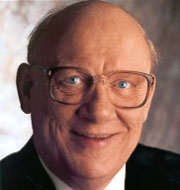
*Distinguished Professor of Preaching at Grand Rapids Baptist Seminary, Warren Wiersbe is the author of more than 100 books. Billy Graham calls him “one of the greatest Bible expositors of our generation.” Interestingly, Warren’s earliest works had nothing to do with scriptural interpretation. His interest was in magic, and his first published title was Action with Cards (1944).

“It was sort of imbecilic for a fifteen-year-old amateur magician to have the audacity to write a book and send it to one of the nation’s leading magic houses,” Warren says. But having a total of three books published by the L.L. Ireland Magic Company—before the age of 20—gave him a surge of confidence. In later years, he applied his confidence and writing talent to the Youth for Christ (YFC) ministry.

Warren wrote many articles and guidebooks for YFC over a three-year period, but not all his manuscripts were seen by the public eye. One effort in particular, The Life I Now Live, based on Galations 2:20, was never published. The reason, Warren explains with his characteristic humor, is simple: it was “a terrible book…Whenever I want to aggravate my wife, all I have to say is, ‘I think I’ll get out that Galations 2:20 manuscript and work on it.’” Fortunately, Warren’s good manuscripts far outnumbered the “terrible” ones, and he was eventually hired by Moody Press to write three books.

The much-sought-after author then moved on to writing books for Calvary Baptist Church. It was during his ten years at Calvary that Expository Outlines on the New Testament and Expository Outlines on the Old Testament took shape. These two works later became the foundation of Warren’s widely popular Bible studies known as the Be series, featuring such titles as Be Loyal (a study on Matthew) and Be Delivered (a study on Exodus). Several of these books have been translated into Spanish.

His next avenue of ministry was Chicago’s Moody Memorial Church, where he served for seven years. He wrote nearly 20 books at Moody before moving to Lincoln, Nebraska, where he and his wife, Betty, now live. Prior to relocating, he had been the senior pastor of Moody Church, a teacher at Trinity Evangelical Divinity School, and a producer of the Back to the Bible radio program.

During all these years of ministry, Warren held many more posts and took part in other projects too numerous to mention. His accomplishments are extensive, and his catalog of biblical works is indeed impressive and far-reaching (many of his books have been translated into other languages). But Warren has no intention of slowing down any time soon, as he readily explains: “I don’t like it when people ask me how I’m enjoying my ‘retirement,’ because I’m still a very busy person who is not yet living on Social Security or a pension. Since my leaving Back to the Bible, at least a dozen books have been published, and the Lord willing, more are on the way.”

Wiersbe’s recent books include Your Next Miracle, The 20 Essential Qualities of a Child of God, The Bumps are What You Climb On, Classic Sermons on the Fruit of the Spirit, Classic Sermons on Jesus the Shepherd, Key Words of the Christian Life, Lonely People, A Gallery of Grace, Real Peace: Freedom and Conscience in the Christian Life, and Preaching in Black and White: What We Can Learn From Each Other.

DVD REVIEW: Start! Walking with Leslie Sansone 3 Mile Walk

In her two-mile walk video I lost 21 pounds in six weeks. Now with this DVD, after two weeks I’ve lost 4% body fat – from 26%-22%. It’s a big step up (energy wise) from the two-mile workout. It’s also 45 minutes of your time. My wife and I have been doing it five times a week – and it’s giving me a lot of energy and I think I’ve even lost an inch on my waistline too! Leslie makes it fun, and the first and third miles go pretty fast – the second mile (for some reason) is the tough one!

Book Review: What Is A Healthy Church? By Mark Dever

This book is essentially a condensed version of “Nine Marks of a Healthy Church” by Mark Dever – Pastor of a Large Conservative Baptist Church in Washington D.C. What makes this book valuable is the concise presentation of the nine practices that make for a healthy church. It is a good resource for a church staff, elder board, deacon board, or small group to go through. I used it to teach through the “nine marks” in an adult Sunday school class in the church where I am the senior pastor.

The Nine Marks of a Healthy Church are as Follows:

1)    Expository Preaching

2)    Biblical Theology

3)    A Biblical Understanding of the Good News

4)    A Biblical Understanding of Conversion

5)    A Biblical Understanding of Evangelism

6)    A Biblical Understanding Membership

7)    Biblical Church Discipline

8)    Biblical Discipleship and Growth

9)    Biblical Church Leadership

I think that any church that focuses on these areas is going to be pretty solid. However, it doesn’t guarantee health. I think character and emotional health come into play as well – e.g. – 1 Corinthians 13 talks about love being an essential quality of the church; also, many churches have good doctrine, infrastructure, and do all the above, but live in a false peace (see Peter Scazzero’s – The Emotionally Healthy Church).

Overall, I recommend this little book as an introductory primer as a good evaluation tool, containing specific areas for local churches to have a good “check list” of ideas and practices to shoot for as they seek to be more Biblical in what they do when they gather together as a local church body. For more detail then what Dever writes in this book – I would recommend the slightly larger book – Nine Marks of a Healthy Church.

Book Review: Johann Sebastian Bach (Christian Encounters Series) by Rick Marschall

In 1 Corinthians 10:31, the apostle Paul writes, “So, whether you eat or drink, or whatever you do, do all to the glory of God (ESV).” The author makes it clear throughout this book that the master musician – Johann Sebastian Bach – set out to do this very thing – make music to the glory of God. I think the author does a good job of balancing the personal, professional, and lasting legacy of arguably the greatest musician who ever walked the face of the earth.

I have listened to a lot of Bach’s music before reading this book (particularly through the masterful guitar playing of Christopher Parkening). However, I really enjoyed everything about the book. I liked hearing some of the technical stuff (as a non-musician), it was very interesting. I also liked the way the author inserted historical and cultural aspects related to Bach’s life. The reading was a little bit choppy and sometimes tangential, but held my attention, because of the man he was writing about.

Overall – I am inspired to learn more, and read more about Bach. I finished the book with a longing for more Bach’s in our own time. Reading this book challenged me to pray for more geniuses and hard workers who will penetrate our culture with master pieces in music, the arts, inventions, all to the glory of God!

I long for those who (like Bach) would pray and write “Jesus help me” (Jesu, Juva) before they begin their work, and “to God alone be the glory” (Soli Deo Gloria) when they finish their work. Bach certainly is an example of someone who took to heart Paul’s words to the Colossians, “Whatever you do, work heartily, as for the Lord and not for men (3:23, ESV).” We would do well to “go and do likewise.”

Disclosure of Material Connection: I received this book free from the publisher through the BookSneeze®.com book review bloggers program. I was not required to write a positive review. The opinions I have expressed are my own. I am disclosing this in accordance with the Federal Trade Commission’s 16 CFR Part 255: “Guides Concerning the Use of Endorsements and Testimonials in Advertising.”

Book Review: A Guide to Prayer for All Who Seek God by Rueben P. Job & Norman Shawchuck

For those looking to break out of a “prayer slump” this is a very good place to start. I have used this book as a companion with me in my quiet time for close to a year, and it’s been very helpful in keeping me focused, theological, devotionally inclined, and most importantly – it has nurtured my walk in intimacy with Jesus.

The book is divided into The Christian Calendar:

–   The Season of Advent

–   The Season of Christmas

–   The Day of Epiphany

–   The Season of Lent

–   The Season of Easter

–   The Day of Pentecost

–   The Season of Pentecost

There are a total of 56 sections to guide you in meditation, prayer, and Bible readings for each day. One of the most important aspects of this guide to prayer are the sections for reflection – containing great writing with poignant theological, devotional, and practical insights gleaned from the writing of ancient and modern saints. I highly recommend any of the Prayer Guides in the “Upper Room Books” series.

Book Review: Emotionally Healthy Spirituality by Peter Scazzero

The “Missing Link” in Christian Discipleship

Pete Scazzero (the pastor of a thriving church in New York) writes a very transparent and yet helpful account of how Christians have a tendency to neglect two areas of their lives: the emotions, and the realities of generational sin. He begins the book by demonstrating how devastating this can be in relationships, and how this affects the corporate health of the body of Christ. What this does ultimately is it creates a “false peace” that deals only with symptoms and not the causes of what makes for unhealthy relationships.

I think this book is must reading for all Christians, especially church leaders (pastors, teachers, small group leaders, etc.) because I think most interpersonal relationships, marriages, families, and thus churches live in this reality Scazzero calls “false peace.” In the book he gives various examples from his life, and others lives – as well as many biblical examples of how to identify these real emotional and sinful tendencies, and how to correct them through the biblical disciplines.

For example – I have discipled numerous men over the years (as a pastor and professional life coach) who know the Bible well, but their relationships are a mess. Sometimes they have a ton of repressed anger inside, or are trying to “make up” for the approval they never received at home, or they have an incurable “lust” problem, etc. Ultimately, all these “realities” are typically below the surface in the discipleship process – and never dealt with. We give people more verses; more lists of dos and don’ts, and continue to live in this realm of false peace.

Scazzero builds a great case in the book for identifying personal and generational sin, and gives excellent tools for grappling with, and overcoming these areas of sin with the help of God’s Word and the Holy Spirit. I can’t recommend this book (and the workbook that goes with it) highly enough. I think if Christians and churches (he’s also written a book called the Emotionally Healthy Church with a workbook that goes with it) want to really become healthy and rid the false peace and barriers that have been built up over time, you can’t do any better than to read and work through this book.

My wife and I have read this book and gone through the workbook at least four times, and it has been absolutely life transforming. Along with R.C. Sproul’s the “Holiness of God,” and Peter Kreeft’s (“Heaven: The Heart’s Deepest Longing”) and Randy Alcorn’s books on Heaven – this book has radically changed my thinking and behavior – and has helped me repent of, and deal with sin in my life in a way that few books have helped me to do. I think every Christian should read this book more than once and go through the workbook with another person, or several people (small groups are ideal – especially if they are a close knit small group).

As a pastor and church leader for many years I also recommend that staff’s, elders, and ministry teams go through this book and the Workbook based on this book for healthier teams that will radically benefit the body of Christ for good. If I could give this a higher rating than a five I would – this book is one of the greatest gifts of God’s grace I’ve received – it has helped me in all of my relationships – with God, other believers, and those who have yet to believe – and taken me to a deeper level in all these relationships than I ever thought possible.


*Peter Scazzero is the Founder and Senior Lead Pastor of New Life Fellowship Church. A graduate of Gordon-Conwell (MDiv) and Eastern Baptist Theological Seminary (DMin in marriage and family), he is also the author of Emotionally Healthy Spirituality (Nelson, 2006), The Emotionally Healthy Church: Expanded (Zondervan, 2010), and Begin the Journey with the Daily Office (WCA, 2009). Pete has been married to his best friend, Geri, and together they have four daughters – Maria, Christy, Faith and Eva. He loves libraries, bookstores, and the printed page — on almost any topic. Basketball, hiking and the outdoors (thanks to Geri), laughter, Italian opera, history, and great meals with family, are among his greatest joys. Pete and Geri are co-founders of Emotionally Healthy Spirituality.

Book Review: New International Encyclopedia of Bible Difficulties by Gleason L. Archer Jr.

The author – Gleason L. Archer Jr., (1916-2004 – B.A., M.A., Ph.D., Harvard University; B.D., Princeton Theological Seminary; L.L.B., Suffolk Law School) was a biblical scholar, theologian, educator, and author. He served as an assistant pastor of Park Street Church in Boston from 1945 to 1948. He was a Professor at Fuller Theological Seminary for 16 years, teaching New Testament, Greek, Hebrew, and Arabic. From 1965 to 1986 he served as a Professor of Old Testament and Semitics at Trinity Evangelical Divinity School, Deerfield, Illinois. He became an emeritus faculty member in 1989. He also served for many years as a minister of the Evangelical Free Church of America. The remainder of his life was spent researching, writing, and lecturing.

Legend has it, (I have not been able to verify whether this is 100% true or not) that he was so gifted in languages that for fun (and as a challenge) he would study the Bible in a different language every year to continue to grow and develop mentally.

Archer served as one of the 50 original translators of the NASB published in 1971. He also worked on the team which translated the NIV Bible published in 1978. I give this introduction, because many people are not familiar with Archer (unfortunately), but he was a brilliant Christian scholar who could have excelled as a lawyer (his father was the founder and president of Suffolk Law School), and chose to use his exceptional gifts to defend the inerrancy and integrity of the Scriptures over the span of his entire adult life. I would say that along with Bruce Waltke and Walter Kaiser Jr., he was one of the most elite and influential Old Testament Evangelical Scholars at the end of the Twentieth Century.

As for this book – it’s simply outstanding. It covers all the thorny issues from Genesis to Revelation in biblical order, and considers questions from the cultural, linguistic, and authorial intent of each passage considered. Of all the books I have on questions, and Bible answers, this is the one I turn to the most. It is extremely thorough and will increase anyone’s’ belief in the supernatural authorship of the sixty-six books in the Protestant Canon. It is definitely a “must have” for any interpreter/student/teacher of the Bible, or an apologist for the Christian faith.