WHAT’S PROGRESSIVE DISPENSATIONALISM?

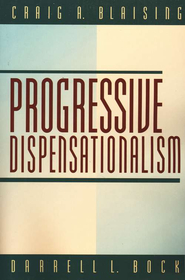
Progressive Dispensationalism

PG BLAISING AND BOCK

Introduction
In recent years there has been a rise in what has become known as Progressive Dispensationalism (PD) (Other labels for PD include “revised,” “reconstructed,” or “new” dispensationalism.). Adherents to PD see themselves as being in the line of normative or traditional dispensationalism, but at the same time, have made several changes and/or modifications to the traditional dispensational system. Thus, PD adherents view themselves as furthering the continual development of dispensational theology. It is also true that progressive dispensationalists seek a mediating position between traditional dispensationalism and nondispensational systems.

The meaning of progressive

According to Charles Ryrie, the adjective ‘progressive’ refers to a central tenet that the Abrahamic, Davidic, and new covenants are being progressively fulfilled today (as well as having fulfillments in the millennial kingdom). According to Craig Blaising, The name progressive dispensationalism is linked to the progressive relationship of the successive dispensations to one another.

Origin of PD

The public debut of PD was made on November 20, 1986, in the Dispensational Study Group in connection with the annual meeting of the Evangelical Theological Society in Atlanta, Georgia. . . . Actually, the label ‘progressive dispensationalism’ was introduced at the 1991 meeting, since ‘significant revisions’ in dispensationalism had taken place by that time. Some view Kenneth Barker’s presidential address at the 33rd annual meeting of the Evangelical Theological Society on December 29, 1981 as the precursor to some of the views of PD. His address was called, False Dichotomies Between the Testaments.

PD Proponents

Craig Blaising, Darrell Bock, Robert Saucy, Kenneth Barker, David Turner, John Martin. NOTE: It should not be thought that all who have associated themselves with PD in some way are agreed on all issues. Blaising and Bock have been the most prolific in promoting PD so it is their views that will mostly be examined.

Beliefs of PD

Jesus’ is currently reigning from David’s throne in heaven

According to traditional dispensationalism, Jesus is currently exalted at the right hand of the Father, but He is not sitting on David’s throne nor has His messianic kingdom reign begun yet. Progressive dispensationalism, however, teaches that the Lord Jesus is now reigning as David’s king in heaven at the right hand of the Father in an ‘already’ fulfillment aspect of the Davidic kingdom and that He will also reign on earth in the Millennium in the ‘not yet’ aspect. Thus, according to PD, the Davidic throne and the heavenly throne of Jesus at the right hand of the Father are one and the same. The use of Psalm 110 and 132 in Acts 2 are used to support this claim that Jesus is currently reigning as Davidic King.

HOWEVER, This view is suspect for a number of reasons:

  • Distinction in thrones. In Revelation 3:21, Jesus makes a distinction between His throne (the Davidic throne) and the Father’s throne (of which He is on now in heaven). Thus, the throne Jesus is currently on (the throne of deity) is different than the one He will assume when the millennium starts (Davidic throne). The writer of Hebrews also indicates that Jesus “sat down at the right hand of the throne of God” not the throne of David (12:2).

  • Matthew 25:31 places Christ’s seating on David’s throne at the time of the second coming: “But when the Son of Man comes in His glory, and all the angels with Him, then He will sit on His glorious throne.”

  • Acts 2 shows identity not function. In Acts 2, Peter argues that Jesus’ resurrection is proof that Jesus is the King. He does not state that Jesus is currently reigning as King. Acts 2, then, shows Jesus’ identity as King not a present function of His reigning as king. (It should be noted that David was anointed king before His actual reign began.) In fact, nowhere in the NT is Jesus said to be currently reigning as messianic king. His reign is associated with His second coming and Kingdom (see Matt. 25:31; Rev. 11:15; 20:6).

  • NOTE: PD proponents Blaising and Bock differ somewhat from Saucy on this issue. Blaising and Bock equate the “right hand of God” with “David’s throne” and see a current reign of Jesus as Davidic King. Saucy also equates the right hand of God with the throne of David but does not see Christ ruling from this throne. According to Saucy, being at the right hand of God, i.e. David’s throne affirms the present exaltation of Jesus but not a present function of ruling

  • Evaluation: There is not enough biblical evidence to show that David’s throne is the same as the right hand of God in heaven. It is best to understand David’s throne as an earthly throne that Christ will assume at His second coming.

The “already” aspect of the Kingdom arrived (and stayed) with the first coming of Christ

Thus, when Jesus said the kingdom of heaven is near this meant the kingdom had actually arrived. HOWEVER:

  • The kingdom was near in proximity not arrival Saucy, again disagreeing with Blaising and Bock, shows the improbability of this view: “Jesus said this kingdom was ‘at hand.’ Though some scholars have said the term eingiken[near] means that the kingdom had actually arrived, most see it as indicating only that the kingdom had drawn near or was imminent. Kummel says the term denotes ‘an event which is near, but has not yet taken place.’ According to Hill, ‘to declare that the kingdom is at hand means that the decisive establishment or manifestation of the divine sovereignty has drawn so near to men that they are now confronted with the possibility and ineluctable necessity of repentance and conversion.’ Thus in Jesus’ preaching the kingdom had drawn near, but its actual arrival had not yet occurred. The disciples could still be taught to pray for its coming (Matt. 6:10)”.

  • Kingdom is future. If the kingdom arrived with Jesus’ first coming why did the apostles see the kingdom as future in Acts 1:3-7?

  • The “already/not yet” unproven: PD sees the kingdom as already here but also awaiting a future fulfillment as well. This already/not yet construct, popularized by C.H. Dodd in 1926, though, is highly suspect. This is evident by the confusion shown by those who accept it. Amillennialists, Covenant premillennialists and PD’s all accept the idea but disagree on the outworking of what is already and what is not yet.

The church is not a distinct anthropological group:

As Blaising states, “One of the most striking differences between progressive and earlier dispensationalists, is that progressives do not view the church as an anthropological category in the same class as terms like Israel, Gentile Nations, Jews, and Gentile people. . . .The church is precisely redeemed humanity itself (both Jews and Gentiles) as it exists in this dispensation prior to the coming of Christ”

HOWEVER: It is hard to discern what Blaising means by this but this view seems to blur the distinctions between Israel and the church. One PD advocate, John Turner, for example, refers to the church as the “new Israel”. ALSO: Paul does treat the church as an anthropological entity distinct from Israel and the Gentiles when he writes, “Give no offense either to Jews, or to Greeks or to the church of God” (1 Cor. 10:32). If the church is kept distinct from Israel (even believing Israel) how can the church not be a distinct anthropological group?

NOTE: This appears to be another area where Saucy disagrees with Blaising and Bock. Saucy argues strongly for a clear distinction between Israel and the church. As he states, “The biblical teaching about the roles of Israel and the church in history reveals that although they have much in common, they remain distinctively different”. Saucy, however, does use confusing “one people of God” terminology. By this he means that Israel and the church are saved in the same way, which is correct. But if Israel and the church are “distinctively different,” why refer to them as “one people of God”? The one people of God concept can easily be interpreted in the covenant theology sense of no essential distinction between Israel and the church.

The mysteries of the NT have been revealed in some manner in the OT

Saucy writes, “Contrary to the former [traditional dispensationalists], the contents of both mysteries-i.e., the equal participation of Jew and Gentile in the body of Christ (Eph 3) and his indwelling in his people (Col 1)-are best understood as fulfillments of Old Testament prophecies”. While traditional dispensationalists have taken the NT mysteries to be truths now being revealed that were absolutely not found in the OT, PD’s take the mysteries of Eph. 3 and Col. 1 to be truths that were partially hidden in the OT that are now being fully revealed in the NT. The big difference is that PD’s see the NT mysteries as being found in some manner in the OT.

HOWEVER: though it is true that the ideas of Gentile salvation and Gentile participation in the covenants were found in the OT, the body concept including Jew and Gentiles and the “Christ in you” concept were not found in the OT.

The biblical covenants have been inaugurated and today we are experiencing a “partial” fulfillment of their promises

PD’s see a partial fulfillment of the spiritual promises of the covenants (Abrahamic, Davidic and New) but see a future fulfillment of the physical promises in the millennium.

ON THE OTHER HAND: Traditional dispensationalists do not see the Davidic covenant as being partially fulfilled in any sense in this age. They are also reluctant to say that the New covenant is fulfilled in any way in this age, though they do believe that some spiritual benefits of the New covenant are being applied to the church. As Homer Kent states, “There is one new covenant to be fulfilled eschatologically with Israel, but participated in soteriologically by the church today. This view recognizes that Christ’s death provided the basis for instituting the new covenant, and also accepts the unconditional character of Jeremiah’s prophecy which leaves no room for Israel’s forfeiture. At the same time it also notes that the New Testament passages definitely relate New Testament Christians to this covenant”.

Dispensations as successive arrangements

Progressive dispensationalists understand the dispensations not simply as different arrangements between God and humankind, but as successive arrangements in the progressive revelation and accomplishment of redemption. These dispensations “point to a future culmination in which God will both politically administer Israel and Gentile nations and indwell all of them equally (without ethnic distinctions) by the Holy Spirit”.

Holistic redemption in progressive revelation

God’s divine plan is holistic encompassing all peoples and every area of life: personal, cultural, societal and political.

Pre-tribulation rapture

PD’s, for the most part, accept the pre-tribulational view of the Rapture though most of their writings ignore the issue altogether.

Hermeneutics of PD

The foundational difference between PD and traditional dispensationalism is hermeneutical. With PD’s desire for cordial relations has come a hermeneutical shift away from literal interpretation, also called the grammatical-historical method, which has been one of the ongoing hallmarks of dispensationalism.

ELEMENTS OF PD HERMENEUTICS

Meaning of texts can change

Blaising and Bock believe the meaning of biblical texts can change. “Meaning of events in texts has a dynamic, not a static, quality.” “Once a text is produced, commentary on it can follow in subsequent texts. Connection to the original passage exists, but not in a way that is limited to the understanding of the original human author.” “Does the expansion of meaning entail a change of meaning? . . .The answer is both yes and no. On the one hand, to add to the revelation of a promise is to introduce ‘change’ to it through addition.”

Preunderstanding as part of the interpretive process

The PD emphasis on “preunderstanding” as part of the interpretive process is confusing. If all they mean by it is that the interpreter should be aware of one’s predetermined ideas so that he can suppress them and come up with the intended meaning of the text, it is a good thing. They do not say this, though. The implication of their writings is that we all have presuppositions and preunderstandings that influence our understanding of Scripture but they say nothing on how to deal with these. What are they getting at? Does this mean all our interpretations are the product of our preunderstandings? Is it not possible with the help of the Holy Spirit to lay aside our biases and come up with the intended meaning of the text? This is one area where PD advocates are too vague. What they say, in and of itself is not wrong, but it could lead to faulty conclusions.

The Complementary Hermeneutic:

According to this approach, the New Testament does introduce change and advance; it does not merely repeat Old Testament revelation. In making complementary additions, however, it does not jettison old promises. The enhancement is not at the expense of the original promise. For example, with PD, the Davidic throne is both earthly (as revealed in the OT) and heavenly (as supposedly revealed in the NT).

Evaluation of PD Hermeneutics

Part of the confusion over PD is that its adherents claim to hold to the grammatical-historical method of interpretation but by it they mean something different. Historically, the grammatical-historical method meant that biblical texts had only one meaning that could not change. This meaning was what the biblical author intended. This meaning could be found as the believer put aside his biases, with the help of the Holy Spirit, and sought the author’s meaning by looking at the grammar of the text and taking into account the historical situation facing the biblical author. PD advocates, though, say the meaning of texts can change and we cannot be sure of our findings because of our “preunderstandings.” This approach places PD outside the realm of dispensationalism.

THE FUTURE OF PD

Drift toward Covenant Theology

The hermeneutical doors that PD has opened make very possible the eventual shift to covenant theology. As a covenant theologian, Vern Poythress is appreciative of the moves PD’s have been making. But he also says, “However, their position is inherently unstable. I do not think that they will find it possible in the long run to create a safe haven theologically between classical dispensationalism and covenantal premillennialism. The forces that their own observations have set in motion will most likely lead to covenantal premillennialism after the pattern of George Ladd.” Walter A. Elwell: “the newer dispensationalism looks so much like nondispensationalist premillennialism that one struggles to see any real difference” Commenting on the one people of God concept of PD, Bruce Waltke states, “That position is closer to covenant theology than to dispensationalism”.

Further revisions and changes

“One expects that there will be further revisions and changes in progressive dispensationalism as time passes. Where it will all lead and whether or not it will be understood and received by those who have embraced normative dispensationalism, no one knows. But already progressive dispensationalism certainly appears to be more than a development with normative dispensational teaching. Some so-called developments are too radical not to be called changes” (Ryrie).

– Michael Vlach

Bibliography

C Ryrie, Dispensationalism; C Blaising and D Bock, Progressive Dispensationalism (1993); R L Saucy, The Case for Progressive Dispensationalism (1993); Dispensationalism, Israel and the Church (1992) edited by C Blaising and D Bock; R L Saucy, The Presence of the Kingdom in the Life of the Church; V Poythress, Understanding Dispensationalists; H Kent, The Epistle to the Hebrews; W A Elwell, “Dispensationalists of the Third Kind,” Christianity Today, 9/12, 1994, p. 28; R L Thomas, “A Critique of Progressive Dispensational Hermeneutics,” When the Trumpet Sounds, p. 415; E. Johnson, “Prophetic Fulfillment: The Already and Not Yet,” Issues in Dispensationalism; C Ryrie, “Update on Dispensationalism,” Issues in Dispensationalism; D Bock, “The Reign of the Lord Christ,” DIC, pp. 37-67; B Waltke, DIC, p. 348.

SUNDAY OT SERMON: “God The Creator” by James Montgomery Boice on Genesis 1:1

Genesis 1-11 vol 1 Boice

SERIES: GENESIS – PART 4

In the beginning God created the heavens and the earth.

In the message last week I referred to a question that has been thought to be profound but actually is not: Why is there something rather than nothing? This is not profound for the reason that it is not even a true question. The question seems to offer us a choice between something and nothing. But what is nothing? As soon as we answer that, saying, “Nothing is … ,” nothing ceases to be nothing and becomes something. If nothing really is nothing, nothing defies description. In fact, it defies mental conception of any kind. So the question really boils down to: Why is there something?

In this form the question is not meaningless. On the contrary, it is one of the truly big philosophical questions. It can be stated in different forms—Where did the universe come from? Who made the atom? How did everything get to be as it is?—but in essence these are the same basic questions. Something is there—an immense, intricate, and orderly something. It was there before we were, for we cannot even imagine our existence without it. But how did it get there? And how did it get to be as we detect it?

Genesis 1:1 is the answer to these questions. It tells us that “in the beginning God created the heavens and the earth.”

The Christian Answer

There are other answers to the question of the origins of the universe, however, and it is these plus the Christian answer that we now want to consider. How many answers are there? Like all truly big questions, the possibilities are not numerous. In this case, there are just four.

First, there is the view that the universe had no origin. That is, there was no origin because in some form the universe always existed. Matter existed. This has been the dominant view of both ancient and modern science until relatively recent times, and it is still held by some.

Second, there is the view that everything has a beginning and that this beginning was the work of a good personal being. This is the Christian view.

Third, everything came into existence through the work of a personal being who is evil.

Fourth, there is now and there always has been a dualism. This last view takes several forms depending on whether one is thinking of a personal or impersonal, moral or immoral dualism, but the views are related. This was the outlook of the ancient cosmologies referred to earlier, of which the Babylonian Epic is an example. It is still the characteristic view of the eastern religions and mysticism.

What are we to say concerning these four possibilities? The easiest to dismiss is number three, which gives a personal but evil origin to the universe. It says, in effect, that Satan is the creator. This is easiest to dismiss because it does not give an adequate explanation of the origin of the good. Evil can be conceived as a corruption of the good—Satan can rebel against the Christian God—but it is not really possible to think of good as having emerged out of evil. In the former case, evil can be a misuse of otherwise good traits or abilities. But in the second case, there is no place for the good to come from. We may state the problem in a slightly different way. For a power to be evil it (or he) must possess the attributes of intelligence and will. But since these attributes are in themselves good, he must be getting them from a good power. And this means that the good power must have existed previously and that the evil power is therefore not the origin of all things.

The fourth possibility, a dualism, is unsatisfactory too, although this is not as quickly apparent as in number three. The reason is that, although belief in a dualism has often been quite popular and has endured for long periods of history, it does not stand up under close analysis. For having stated the dualism, we immediately want to pass behind it to some type of unity that includes the dualism. Or else we choose one part of the dualism and make it prominent over the other, in which case we are really easing into one of the other possibilities.

C. S. Lewis has written about this problem, pointing to what he calls the “catch” in the system. According to dualism, two powers (spirits or gods), one good and one evil, are supposed to be quite independent and eternal. Neither is responsible for the other, and each has an equal right to call itself God. Each presumably thinks that it is good and the other bad. But Lewis asks, What do we mean when we say, as we do in stating this dualism, that the one power is good and the other bad? Do we mean merely that we prefer the one to the other? If that is all we mean, then we must give up any real talk about good or evil, and if we do that, then the moral dimension of the universe vanishes entirely and we are left with nothing more than matter operating in certain ways. We cannot mean that and still hold to the dualism. We have fallen back to possibility number one.

But if, on the contrary, we mean that one power really is good and the other really is bad, then we are actually introducing some third thing into the universe, “some law or standard or rule of good which one of the powers conforms to and the other fails to conform to.” And this standard, rather than the other, will turn out to be the true God. Lewis concludes, “Since the two powers are judged by this standard, then this standard, or the Being who made this standard, is farther back and higher up than either of them, and he will be the real God. In fact, what we meant by calling them good and bad turns out to be that one of them is in a right relation to the real, ultimate God and the other in a wrong relation to him.”

So neither an evil origin for the universe, from which good arose, nor a dualism adequately accounts for reality as we know it. The real alternative is between the view that holds to an eternity of matter and the view that sees everything as having come into existence through the personal will of an eternal and moral God.

Let us look at Christianity’s chief competitor, materialism. The origins of this view are lost in the past, but the view is clearly very ancient. It is found in the scientism of the Greek philosopher Epicurus, who taught that everything is composed of small building blocks of matter, conceived of as hard, indestructible particles. Epicurus called them atoms, which is where our word “atom” comes from. He probably derived his ideas from Democritus of Abdera who in turn was indebted to the little-known philosopher Leucippus. Leucippus may have gotten his ideas from a Phoenician philosopher named Moschus, who lived prior to 1000 b.c.

Today this view is the dominant philosophy of western civilization, although not in the form Epicurus gave to it. For one thing, we know that the atom can be divided. We have done it. Again, we have been taught by Einstein that energy and mass are interchangeable, which is mind-boggling. Knowledge of this should in itself shake the presuppositions of materialism, but for the most part it has not seriously shaken them, and the western world continues to be philosophically materialistic.

Today’s materialism usually does not deny that there is personality in the universe, but it conceives this as having arisen out of impersonal substance. It does not deny the complexity of the universe—even including such things as the intricacy of the atom—but it supposes that complexity came from that which was less complex and that in turn from something still less complex until eventually we arrive back at that which is ultimately simple, that is, to mere matter. Matter, it is supposed, always existed—because there is no further explanation. This view lies beneath most thought concerning evolution.

But this description of the origin of the universe has already introduced problems that the theory itself apparently has no means of solving. First, we have spoken of a form to matter and then of more complex forms. But where does form come from? Form means organization and perhaps purpose, too. But how can organization and purpose come from mere matter? Some would insist that organization and purpose were in the matter inherently, like genes in an egg or spermatozoa. But in addition to making nonsense of the theory—this is no longer mere matter—the basic question still remains unanswered, for the problem is how the organization and purpose even got there. At some level, either early or late, we have to account for the form; and, if this is the case, we soon find ourselves looking for the Former, Organizer, or Purposer.

Moreover, we have introduced the idea of the personal, and if we begin with an impersonal universe, there is no explanation for the emergence of personality. Francis Schaeffer writes: “The assumption of an impersonal beginning can never adequately explain the personal beings we see around us, and when men try to explain man on the basis of an original impersonal, man soon disappears.”

Genesis begins with the opposite answer. It maintains that the universe exists with form and personality because it has been brought into existence by an orderly and personal God. God was there before the universe came into existence, and he was and is personal. He created all we know, including ourselves. Consequently, the universe naturally bears the mark of his personality.

God’s Creation

But we may be missing something at this point. We are arguing for the Christian view of origins, which is not at all unimportant. But in the very act of arguing we are likely to miss (or postpone) a true wonder at God’s creation, which is what a proper contemplation of these themes should cause. Biblical writers never fall into this pit. Consequently, when they look at creation they inevitably end up praising God, and when they praise God, one of the things they praise him for is creation.

You are worthy, our Lord and God, to receive glory and honor and power, for you created all things, and by your will they were created and have their being. – Revelation 4:11

Can we not do that too? Our text tells us that God created “the heavens and the earth.” As we contemplate these great canvases of God’s work, are we not led to praise him?

How vast the heavens are! When we look up into the sky on a clear night we see perhaps 10,000 points of light. A few of these are the planets of our solar system that shine by reflected light. Thousands belong to the special grouping of stars known as the Milky Way, to which our sun belongs. Other thousands are entire galaxies, which shine as one point because they are so distant. We say 10,000 points because that is what we can see with unaided eyes. But these 10,000 are only the tiniest fraction of the existing stars. A typical galaxy contains billions of individual stars—our galaxy alone contains 200 billion stars. Its form is of a giant spiral rotating majestically in space, its glowing arms trailing behind it like the distended points of a pinwheel. Our sun is in one arm of the spiral. It makes a complete rotation in 250 million years. These figures are staggering. But this is only our galaxy. There are thousands of others visible to the naked eye and billions more within range of the 200-inch telescope on California’s Palomar Mountain.

As revealed to us by time exposure photography, these distant galaxies of stars display a seemingly unending array of beauty. Some are spirals like ours. Others are nearly spherical clusters. Others are flattened out like pancakes. Still others are irregular. All the stars in the heavens are clustered together in these intricate and beautiful groupings.

Again, the galaxies are scattered about in an irregular pattern. Between them there are vast amounts of space. The distance from one edge of an average galaxy to the other edge is approximately 600 thousand trillion miles. The average distance from one galaxy to another is 20 million trillion miles. If these numbers were to be written out in zeros, they would fill up several lines of type. So to avoid such large numbers astronomers generally use a unit of distance called the light-year, that is, the distance light travels in one year at the speed of 186,000 miles per second. A light-year is approximately 6 trillion miles. Translated into these terms, the size of an average galaxy is 100 thousand light-years, and the distance between them is 3 million light-years approximately.

The Andromeda Galaxy is the galaxy closest to our own Milky Way. It is separated from us by 2 million light-years. This means that the light coming to us now from Andromeda has taken 2 million years to get here. Put in other terms, it means that when we look at Andromeda what we see is the galaxy as it existed, not a moment ago, but 2 million years in the past.

Moreover, the galaxies are not fixed in space but rather are moving away from each other at tremendous speeds. Vesto Melvin Slipher, the first to discover this fact, found that the galaxies he could observe were moving away from the earth at several million miles per hour. His scientific followers, Milton Humason and Edwin Hubble, showed that the most distant galaxies were retreating from us at the rate of 100 million miles per hour. Moreover, everything is retreating from everything. Nothing is coming toward us, nor is anything coming toward any other galaxy. This means that the universe is expanding. By working backward from the present position of the galaxies and their known speed, astronomers have placed the origins of the universe approximately 15 to 20 billion years in the past.

We turn to the stars themselves and find equal evidence of variety, design, beauty, and mystery. Not all stars are alike, though they seem to follow a similar pattern as they are born, burn, grow old, and eventually die.

At any given moment millions of stars are being born in space. They are born as clouds of interstellar gas contract under the force of gravity acting between the atoms that compose them. As they contract the temperature rises. Finally, at the critical temperature of 20 million degrees Fahrenheit, the hydrogen within the ball of condensed gas ignites in reactions similar to those that occur in the explosion of a hydrogen bomb. The release of this energy halts any further condensing of the gas, and the star continues to burn in that fashion for many billions of years. Our sun is at this stage.

Eventually the hydrogen in the star begins to be used up. It starts to swell and redden. Such stars are called red giants. As the last of its fuel is burned off, the star begins its final collapse under the force of gravity. If it is relatively small, it condenses to a tightly compressed sphere called a white dwarf. In one of these dead stars a few cubic centimeters of matter weigh a ton. If the star is large, a different fate envelops it. Instead of compressing quietly, it blows itself up, thereby scattering its elements—now containing carbon, oxygen, iron, gold, and others—throughout the universe where they are eventually picked up by other suns or planets.

The heavens declare the glory of God; the skies proclaim the work of his hands. Day after day they pour forth speech; night after night they display knowledge. There is no speech or language where their voice is not heard. Their voice goes out into all the earth, their words to the ends of the world. – Psalm 19:1–4

And what of the earth? We need not consider the earth and its marvels fully at this point. We have looked at the heavens carefully since this is the last point in Genesis at which the heavens are mentioned for themselves. From this point the chapter passes on to consider God’s acts of creation on earth. (The sun, moon, and stars are mentioned only in regard to their giving light to the earth.) In a sense everything that occurs from this point on is about the earth. But we can note in passing that the marvels of the macrocosm (the world of large things) are repeated in the microcosm (the world of small things). Here we are confronted with electrons, protons, neutrons, neutrinos, and a seemingly endless variety of particles barely understood. The distances between these particles, proportionate to their size, are comparable to some of the distances involved in the solar system. If we were to take the simplest of atoms, the hydrogen atom, and blow it up billions upon billions of times to where the proton at its center would now be the size of a ten-inch soccer ball, the electron that circles this nucleus would now be the size of a golf ball and would be circling the proton at a distance of five miles. There would be nothing else within the circle!

To God Be the Glory

On the basis of the first verse of Genesis we can define God as the One who creates. We cannot create. We often use the word of human endeavors, and human beings are creative in the sense we give to that word. But if we are to be precise, we will say that at the best we only form or fashion things in imaginative ways, and even then, it is the case that we get our imagination as well as all other physical, mental, and spiritual gifts from God. Strictly speaking, we are craftsmen. We use preexisting material. But God does create, and he does so on what is to us a vast and incomprehensible scale. We do not know how God has done it. But he has willed creation, and as a result all we know, see, and are have come into being.

If God were not the Creator, he would be only a part of the world process, coming and going, waxing and waning. He could not help us. E. J. Young has written, “If he is only a little bigger than we are, if he is only a big brother and nothing more, if he is only a part of the whole, then we are all in it together, God, you and I, and then there are no standards. There is no absolute. It is every man for himself, and all modern philosophies and ideas that are being spread in our days—new morality, new theology, and so on—are all perfectly admissible if God is only a part of the world process. If it is so, it does not matter whether he is dead or alive. … Let us live for the moment, let us live for our enjoyment; there is no absolute; there us no standard of morality, for all changes. What may be right today may be wrong tomorrow; so let us get through life as best we can.”

But this is not the God of Genesis. “The Bible does not so speak. It tells us that God has created all things. That is why there is meaning in life, and why there are absolute standards that do not change. God tells us what is right and what is wrong, and that is why there is meaning in life. That is why you and I who believe in this God can very well say that our chief reason for existence is to glorify him and enjoy him forever.”

About the Preacher

Boice JM in pulpit

James Montgomery Boice, Th.D., (July 7, 1938 – June 15, 2000) was a Reformed theologian, Bible teacher, and pastor of Tenth Presbyterian Church in Philadelphia from 1968 until his death. He is heard on The Bible Study Hour radio broadcast and was a well-known author and speaker in evangelical and Reformed circles. He also served as Chairman of the International Council on Biblical Inerrancy for over ten years and was a founding member of the Alliance of Confessing Evangelicals. James Boice was one of my favorite Bible teachers. Thankfully – many of his books and expositions of Scripture are still in print and more are becoming available. The sermon above was adapted from Chapter 4 in Genesis 1-11: An Expositional Commentaryvol. 1: Creation and Fall. Grand Rapids: Baker, 2006.

Under Dr. Boice’s leadership, Tenth Presbyterian Church became a model for ministry in America’s northeastern inner cities. When he assumed the pastorate of Tenth Church there were 350 people in regular attendance. At his death the church had grown to a regular Sunday attendance in three services of more than 1,200 persons, a total membership of 1,150 persons. Under his leadership, the church established a pre-school for children ages 3-5 (now defunct), a high school known as City Center Academy, a full range of adult fellowship groups and classes, and specialized outreach ministries to international students, women with crisis pregnancies, homosexual and HIV-positive clients, and the homeless. Many of these ministries are now free-standing from the church.

Dr. Boice gave leadership to groups beyond his own organization. For ten years he served as Chairman of the International Council on Biblical Inerrancy, from its founding in 1977 until the completion of its work in 1988. ICBI produced three classic, creedal documents: “The Chicago Statement on Biblical Inerrancy,” “The Chicago Statement on Biblical Hermeneutics” and “The Chicago Statement on the Application of the Bible to Contemporary Issues.” The organization published many books, held regional “Authority of Scripture” seminars across the country, and sponsored the large lay “Congress on the Bible I,” which met in Washington, D.C., in September 1987. He also served on the Board of Bible Study Fellowship.

He founded the Alliance of Confessing Evangelicals (Alliance) in 1994, initially a group of pastors and theologians who were focused on bringing the 20th and now 21st century church to a new reformation. In 1996 this group met and wrote the Cambridge Declaration. Following the Cambridge meetings, the Alliance assumed leadership of the programs and publications formerly under Evangelical Ministries, Inc. (Dr. Boice) and Christians United for Reformation (Horton) in late 1996.

Dr. Boice was a prodigious world traveler. He journeyed to more than thirty countries in most of the world’s continents, and he taught the Bible in such countries as England, France, Canada, Japan, Australia, Guatemala, Korea and Saudi Arabia. He lived in Switzerland for three years while pursuing his doctoral studies.

Dr. Boice held degrees from Harvard University (A.B.), Princeton Theological Seminary (B.D.), the University of Basel, Switzerland (D. Theol.) and the Theological Seminary of the Reformed Episcopal Church (D.D., honorary).

A prolific author, Dr. Boice had contributed nearly forty books on a wide variety of Bible related themes. Most are in the form of expositional commentaries, growing out of his preaching: Psalms (1 volume), Romans (4 volumes), Genesis (3 volumes), Daniel, The Minor Prophets (2 volumes), The Sermon on the Mount, John (5 volumes, reissued in one), Ephesians, Phillippians and The Epistles of John. Many more popular volumes: Hearing God When You Hurt, Mind Renewal in a Mindless Christian Life, Standing on the Rock, The Parables of Jesus, The Christ of Christmas, The Christ of the Open Tomb and Christ’s Call to Discipleship. He also authored Foundations of the Christian Faith a 740-page book of theology for laypersons. Many of these books have been translated into other languages, such as: French, Spanish, German, Japanese, Chinese and Korean.

He was married to Linda Ann Boice (born McNamara), who continues to teach at the high school they co-founded.

Sources: Taken directly from the Aliance of Confessing Evangelicals’ Website

Boice’s Books:

from the Tenth Presbyterian Church website
Books
1970 Witness and Revelation in the Gospel of John (Zondervan)
1971 Philippians: An Expositional Commentary (Zondervan)
1972 The Sermon on the Mount (Zondervan)
1973 How to Live the Christian Life (Moody; originally, How to Live It Up,
Zondervan)
1974 Ordinary Men Called by God (Victor; originally, How God Can Use
Nobodies)
1974 The Last and Future World (Zondervan)
1975-79 The Gospel of John: An Expositional Commentary (5 volumes,
Zondervan; issued in one volume, 1985; 5 volumes, Baker 1999)
1976 “Galatians” in the Expositor’s Bible Commentary (Zondervan)
1977 Can You Run Away from God? (Victor)
1977 Does Inerrancy Matter? (Tyndale)
1977 Our Sovereign God, editor (Baker)
1978 The Foundation of Biblical Authority, editor (Zondervan)
1979 The Epistles of John: An Expositional Commentary (Zondervan)
1979 Making God’s Word Plain, editor (Tenth Presbyterian Church)
1980 Our Savior God: Studies on Man, Christ and the Atonement, editor (Baker)
1982-87 Genesis: An Expositional Commentary (3 volumes, Zondervan)
1983 The Parables of Jesus (Moody)
1983 The Christ of Christmas (Moody)
1983-86 The Minor Prophets: An Expositional Commentary (2 volumes,
Zondervan)
1984 Standing on the Rock (Tyndale). Reissued 1994 (Baker)
1985 The Christ of the Open Tomb (Moody)
1986 Foundations of the Christian Faith (4 volumes in one, InterVarsity
Press; original volumes issued, 1978-81)
1986 Christ’s Call to Discipleship (Moody)
1988 Transforming Our World: A Call to Action, editor (Multnomah)
1988, 98 Ephesians: An Expositional Commentary (Baker)
1989 Daniel: An Expositional Commentary (Zondervan)
1989 Joshua: We Will Serve the Lord (Revell)
1990 Nehemiah: Learning to Lead (Revell)
1992-94 Romans (4 volumes, Baker)
1992 The King Has Come (Christian Focus Publications)
1993 Amazing Grace (Tyndale)
1993 Mind Renewal in a Mindless Age (Baker)
1994-98 Psalms (3 volumes, Baker)
1994 Sure I Believe, So What! (Christian Focus Publications)
1995 Hearing God When You Hurt (Baker)
1996 Two Cities, Two Loves (InterVarsity)
1996 Here We Stand: A Call from Confessing Evangelicals, editor with
Benjamin E. Sasse (Baker)
1997 Living By the Book (Baker)
1997 Acts: An Expositional Commentary (Baker)
1999 The Heart of the Cross, with Philip Graham Ryken (Crossway)
1999 What Makes a Church Evangelical?
2000 Hymns for a Modern Reformation, with Paul S. Jones
2001 Matthew: An Expositional Commentary (2 volumes, Baker)
2001 Whatever Happened to the Gospel of Grace? (Crossway)
2002 The Doctrines of Grace, with Philip Graham Ryken (Crossway)
2002 Jesus on Trial, with Philip Graham Ryken (Crossway)

Chapters

1985 “The Future of Reformed Theology” in David F. Wells, editor,
Reformed Theology in America: A History of Its Modern Development
(Eerdmans)
1986 “The Preacher and Scholarship” in Samuel T. Logan, editor, The
Preacher and Preaching: Reviving the Art in the Twentieth Century
(Presbyterian and Reformed)
1992 “A Better Way: The Power of Word and Spirit” in Michael Scott
Horton, editor, Power Religion: The Selling Out of the Evangelical Church?
(Moody)
1994 “The Sovereignty of God” in John D. Carson and David W. Hall,
editors, To Glorify and Enjoy God: A Commemoration of the 350th
Anniversary of the Westminster Assembly (Banner of Truth Trust)

SUNDAY NT SERMON: “SIGNS OF THE KING” BY TIMOTHY KELLER – ACTS 2:37-47

Series: The King and the Kingdom – Part 4 

Tim Keller preaching image

Preached in Manhattan, NY on August 13, 1989

37 When the people heard this, they were cut to the heart and said to Peter and the other apostles, “Brothers, what shall we do?” 38 Peter replied, “Repent and be baptized, every one of you, in the name of Jesus Christ for the forgiveness of your sins. And you will receive the gift of the Holy Spirit. 39 The promise is for you and your children and for all who are far off—for all whom the Lord our God will call.”

40 With many other words he warned them; and he pleaded with them, “Save yourselves from this corrupt generation.” 41 Those who accepted his message were baptized, and about three thousand were added to their number that day. 42 They devoted themselves to the apostles’ teaching and to the fellowship, to the breaking of bread and to prayer. 43 Everyone was filled with awe, and many wonders and miraculous signs were done by the apostles.

44 All the believers were together and had everything in common. 45 Selling their possessions and goods, they gave to anyone as he had need. 46 Every day they continued to meet together in the temple courts. They broke bread in their homes and ate together with glad and sincere hearts, 47 praising God and enjoying the favor of all the people. And the Lord added to their number daily those who were being saved. – ACTS 2:37-47

Last week we began a series of messages, of talks, on the church. Have you noticed how often I talk about us launching a church? Why do I like to use that word launching? Is it just because I’m a frustrated sailor? No. Actually, I think of a rocket ship, and I think of how important liftoff is, because if you’re aiming at the moon and your rocket ship down here is just a silly millimeter off, it could be thousands of miles off when it gets there.

Therefore, if this church is not going to join the thousands and thousands of cultural institutions that are totally ineffective in this country within just a few years, it is vital we strain every nerve to think about the church aright, to envision it, to see exactly what it is and what it can be. Now last week we said there was a central fact, the most important thing you have to understand if you’re going to understand what the church is. That central fact is the church is the place where God dwells, where God comes down as it were and meets us in all of his transcendent love and light and fire and majesty.

That’s what the Bible says, and the church has known this for years. Not programs. Not busyness. Not work, but that. You know, one of the greatest hymns ever written about the church was written by John Newton. It says,

Glorious things of thee are spoken,

Zion, City of our God!

He’s talking about the church.

He, whose word cannot be broken,

Formed thee for his own abode.

The first thing Newton says in that hymn is the church is the place where God dwells. Now this particular passage is very critical because it gives us the birth of the New Testament church. You see, there’s a little group of people. Jesus, when he left, had only left a small handful of people. Peter preaches this remarkable message on the day in the history of the church we have always called the day of Pentecost, and on that day, Peter preached a message, and the message that formed that church, that gathered those 3,000 souls that first day, was through Jesus Christ you can have the presence of God in your life.

We’ll look at that just for a minute because I want to show you that was his message. That’s what formed the church. We see that in verses 37–41. That’s the message that formed the church. Then in verses 42–47 we see the marks of the life of this early church. In other words, if a group of people actually come together and build their lives on that reality that God is present in the midst, if a group of people come together and actually take that seriously (not cynically) and say, “This is what we’re going to build our lives on,” the presence of God expresses itself.

There is a cosmic vitality that expresses itself through a church like that, and I want to show you the signs of it. It’s right there in verses 42–47. There are five signs of that cosmic vitality. It’s the way you can tell whether a church is realizing the presence of God. What we’re trying to show and what this passage tries to show is first of all, before we can run off to our busyness and run off to our ministries and our programs, we have to stand before God and realize his presence and know it and yearn for it.

Then it’s the presence of God that becomes like the motor or the driveshaft for everything else the church does, and that’s what we’re going to see. First, the message that forms the church is that Jesus Christ is the way to know the presence of God. Secondly, the five signs of life that flow out of that should characterize every good church. Let’s look at the message and then let’s look at those five signs which are the evidences of that kind of vitality.

First, the message. In a way we talked about this last week, but I just want to show you again what it is. Peter says to them, “Repent and be baptized, every one of you, in the name of Jesus Christ for the forgiveness of your sins. And you will receive the gift of the Holy Spirit.” He says, “Repent and be baptized …” That is virtually the same thing Jesus said when he came out of the wilderness and first began to preach in Mark 1:15 and said, “Repent, and believe the gospel.”

Those two things are always there: repentance and trust. Repent and trust your sins can be put away through Jesus Christ so they are no longer a barrier between you and God. Repent and believe. Those are not two different things; that’s one thing. It’s repentant faith, turning from your old ways, resting and trusting in Christ, and making him your only hope in life and death.

They are really two sides to the same coin, and that’s how you receive Christ as Savior and Lord, through repentance and faith. Obviously, we could spend quite a bit of time talking about repentance and faith, but right now let’s move on to how this creates the church. If a person receives Christ as Savior and Lord, Peter says you will receive the gift of the Holy Spirit. Now let’s take that apart for a moment. Give me a 90-second tangent for some of you.

Even though you have repented and believed, the Holy Spirit comes in as a gift. Your repentance and your faith do not earn the Spirit; it is a gift. Now the only reason I say that is because I continually meet people who don’t know where they stand in the Christian faith, and they say, “I know you’re not saved by your efforts and your good deeds. You’re saved strictly by faith alone, but I don’t know whether my faith is good enough. It just doesn’t seem to be very strong. It doesn’t seem to be very pure.”

Repentance and faith receive the gift. Your repentance and faith don’t have to be pure enough to earn it. Then it wouldn’t be a gift. Let me put it this way. It’s the fact of your repentant faith, not the purity of it, that brings it in, and anyone who is worried and always saying, “I don’t know if I repented well enough. I wonder if I repented well enough.” I can clear that up for you right now. You haven’t. Nobody has ever repented well enough. Who in the world has ever been sorry enough for the things they’ve done wrong?

You say, “I don’t know whether my faith is good enough.” I can clear that up, too. My friends, here is the bad thing. If you’re worried about it, there is pride in there. As humble and as despairing as you seem, what you’re saying is, “Oh, I have to get good enough. I have to be pure enough. I have to be faithful enough so Jesus Christ can give me his Spirit.” My friends, receiving Jesus Christ as Savior and Lord is a gift. Eternal life is a gift. The Holy Spirit is a gift. Your faith receives it; it doesn’t earn it. It can’t. Don’t you see?

Now it’s the gift of the Holy Spirit I want to look at here for a second. Peter is telling us something I’m afraid most of us here cannot really understand the momentous nature of. (How do you like that for a sentence?) I don’t think anybody in this room can understand how momentous a statement this was unless we spend some time reflecting on it. Peter didn’t just preach this sermon. Years later, he wrote a couple of epistles which are in the back of this Book. He wrote a couple of letters to some other churches.

In this sermon he says there is a tremendous promise. He says, “The promise is for you and your children and for all who are far off …” You can come near to God. You can come near. You’re far off. You can come into the presence of God and receive the Holy Spirit. Now he says it a different way in his second epistle (letter) in 1:4, where he says, “Through his great and precious promises, we participate in the divine nature.” That’s the same thing.

See, what is the Holy Spirit? It’s the glory of God. It’s the lifeblood of God. I’m sorry. You see, this promise beggars description. It’s his very glory, and Peter is saying that, through receiving Jesus Christ as Savior and Lord, can flood into your life. Now get the hang of this. Remember Moses said, “Show me your glory.” What he was saying was, “Oh, Lord, I want your glory to come into my life. I want to see it,” and God said, “You can’t. It will kill you. Your poor, bitty, little soul would crack under the strain of it, so I’m going to let you see the gleam of my brightness through the back door,” in a sense.

He said, “I’ll put you in the cleft of the rock, and I’ll let my hind parts go by you.” We don’t know what in the world that means except God was saying to Moses, “Moses, you can’t take my glory.” When Isaiah got just a glimpse of God in the temple, what did he say? He said, “Woe is me! for I am undone …” which is a good King James Version way of saying, “I feel unzipped! I feel I’m being unbuttoned. I’m unraveling.” Why? He said, “… for mine eyes have seen the King …” “The King is here, and even getting this close, I feel like I’m coming apart.”

The glory of God (his face, his royal presence, his raw presence, what in the Old Testament they called the shekinah, the glory cloud of God) dwelt in the Holy of Holies in the center of the tabernacle in the temple behind the veil over the ark of the covenant. Who could get there? Who could go back there? Who could get near the presence of God? Only the high priest, the holiest person (supposedly) in Israel, one day a year on the Day of Atonement after spending days purifying himself in body and soul.

Then he would go back there with a blood atonement, sprinkling incense everywhere so he didn’t see anything that might kill him. He had bells on the tassels on his robe so the people outside could hear him moving around so they knew he was still alive. Now why was the presence of God so fatal to people? One of the problems is we have movies, and I know in a way Steven Spielberg wasn’t really trying to depict this, but you know in the Raiders of the Lost Ark, the power of God that comes out of the ark of the covenant is depicted as a completely abstract thing.

You remember, don’t you, through great special effects, the nasty Nazis opened the lid and they looked in? If I remember correctly, Harrison Ford and Karen Allen closed their eyes. Isn’t that right? You get the impression first of all, because they closed their eyes while the Nazis were looking at it, and secondly, you also get the impression because the Nazis are nasty and because Harrison Ford and Karen Allen were kind of good people, they didn’t get melted down the way all the other people did with all those great special effects.

In other words, the ark of the covenant is depicted as a kind of cosmic mouse trap, and the power is abstract. If you push the right buttons and you do the right things, you see, it won’t harm you; it will harm somebody else. My friends, that is not at all the way the Bible depicts the glory of God. The glory of God was fatal to people, and the reason it was fatal to people was because of the holiness and sin issues. Maybe the best way to understand it is the old orbit analogy.

God, because he’s completely pure, and he’s completely holy, and he’s completely just, everything he is and does and thinks centers on what is good and what is holy and what is just and what is pure. That’s why he does what he does. Now let’s think about ourselves for a moment. Remember everything we do centers on … let’s face it … our happiness and our comfort. We will take the good, the true, and the holy into consideration, but we reject it if it looks like its not comfortable, right?

Let’s be honest. What do we center on? Why do we do the things we do? Why do we make the decisions we make? What do we center on? We center on our own comfort and our own happiness, and here is God centering on what is good and what is true and what is right. My friends, when two planets have the same center, you have a solar system, and you have harmony.

When two planets come together and they have two different centers, you have an accident looking for a place to happen. It’s inevitable there will be cataclysm, and when a holy God and human beings who make everything revolve around their own pride and themselves … When a holy God comes into the presence of sinful man, there is trauma. There is clash.

When Moses said, “Show me your glory,” God said, “I can’t.” Even all through the Bible, you see, though Moses knew he needed the presence of God and we were all built for it, and he knew it would fulfill something deep in every human soul, he couldn’t have it. In the Bible, whenever it says, “Come into his presence with singing,” we know that was a relative command because the people could not come into the presence of God. They could come relatively into the presence of God.

They could come into the outer courts, but nobody could go into the presence of God except that poor high priest with his knees knocking. Then Peter has the audacity to say, “Through his great and precious promises, we are made partakers of the divine nature.” Through receiving Jesus Christ as Savior and Lord, because he is the real High Priest, because he is the final sacrifice, when Jesus died that veil was ripped and the barrier between the presence of God and the people was gone because Jesus is the door, and when you receive Jesus Christ as your Savior and Lord, the very presence of God comes into your life.

The Holy Spirit comes in with all of his unconquerable mirth. Mirth! The Holy Spirit has enough joy in him to set a whole kingdom laughing. Why not? God is the center of joy. The Holy Spirit, with his absolute purity and boundless love and dynamic energy and strength, comes in and we’re never the same again. Don’t you see this is radical and this is what the church is built on? This is what the people responded to. Now just before we move on, quickly one thing.

You can’t have something like that coming into your life without turmoil. See, some of you are fairly new Christians, and that’s one of the reasons I’m here in New York to meet people like you. It depends on how new you are. I would say if it’s been a few weeks, if it’s been a couple of months, somewhere in there you experience the tough side of being a Christian. There are all sorts of tough sides, and I don’t have time to go into a catalogue of them now, but some of you are out there saying, “If God is my Savior and if my sins are forgiven and he accepts me and all these great things are true, why are all these problems happening to me?”

Some of you are saying, “If the Holy Spirit has come into my life like this, why does it seem to be taking so long for me to get better? Why in some ways do I feel like I’m actually doing worse? Am I really a Christian?” For something of this kind of power and magnitude to come into your life, it just does not sneak in. It doesn’t slip in. If you think of the Christian life as one unbroken, smooth road of peace from here on in, look out.

Suppose we were in the middle of a tremendous heat wave. I mean, we haven’t had heat waves this year, but like last year. Worse than last year. Day after day after day of 110 degrees. People are dying. Imagine being in a heat wave like that, and you start to say, “We are going to perish if we don’t get a cool, Canadian high.”

Then we find out there is one on the way. Well, how will it come and release us and deliver us from this heat? A thunderstorm, right? You see, a cold air mass coming and hitting that heat wave, the only way to move it out before everything clears off and the haze is gone, things get worse before they get better. Before the haze is gone so we can finally see the blue sky, things have to get a lot worse. That’s a normal approach.

My friends, when God’s presence comes into your life full of selfishness with his love, full of power with your anxiety, there’s going to be a clash. It has to happen. There will be, but don’t worry. The haze will clear out. That’s the only thing I need to tell you. Somebody says, “If God is a loving God, why is it he is showing me so many bad things about my life? Why is it that everything is going like this?” Well, listen, remember who he is. He is light, and he is love, and he is wise, and he is holy.

There is this tremendous quote I got out of C.S. Lewis’ book, The Problem of Pain, in which he says just be careful when you ask the living God into your life. He says, “In awful and surprising truth, we are objects of his love. You asked for a loving God; you have one. The great spirit [God] you … invoked … is present …” Now listen to every word here. “… not a senile benevolence that drowsily wishes you to be happy in your own way, not with the cold philanthropy of a conscientious magistrate … but [he is] the consuming fire himself, the love that made the worlds, persistent as the artist’s love for his work … as provident and venerable as a father’s love for a child, jealous, inexorable, exacting as love between the sexes.”

Yes, God has come in with his love. It’s a holy love. It’s a powerful love, and it’s going to renovate you, and it’s going to remake you, but nobody ever renovates someplace without a lot of dust and a lot of dirt and a lot of inconvenience, without it getting uglier before it gets more beautiful? Right? That’s normal! How can you expect it to be any other way? Trust him, though, you see. You trust in him, of course, but recognize when something like this comes into your life, there’s going to be a cloud of dust.

Now verses 42–47 tell us these people who took hold of this truth with both hands and said, “All right. We’re going to build our lives on this. Though we were far away from God, we can be brought near right into the presence of God and have the Holy Spirit in our lives.” I want to show you there are five signs of this vitality. Let me put it this way. Every one of you in this room who has received Christ as Savior and Lord have access to the presence of God when you sit down and pray, when you say, “Because of what Jesus Christ did, O Father, hear my prayer.”

You have access to his presence, but the Bible also says, “For where two or three [of you] are gathered in my name, there am I in the midst of [you].” What that means, among other things, is when several Christians get together, though they individually have access to the presence of God, the presence of God expresses itself in corporate ways in the corporate life of those people. Here is what they are, five of them, and I want you to keep this in mind.

I’m going to go through them quickly because every one of them at some future date will get an extended treatment. I guarantee you. I want you to see at this point the importance is they all have to be together. Having one or two or three will not do the trick, and I’ll explain why. The five things are teaching, community, social compassion, evangelism, and worship. Let’s go through them quickly.

1. Teaching

It says here in verse 42, they were devoted to the apostles’ teaching. Devoted. A vital church understands truth is not just a subjective thing. Of course, it’s subjective, but we also believe there is a body of truth (the teaching of the apostles and the prophets) deposited here, and that truth not only gives us guidance for every area of our lives, but the truth isn’t an abstract thing. The Bible says about itself that it’s alive and active. It’s a transforming power that comes in and changes us.

For a church to honor the truth does not just mean people flock to hear the great teacher, nor does it mean the people of the church just run by their Bibles in the morning for five minutes and just expect inspiration to jump out of it onto you somewhere to take you through the day. Rather, it says the people of a church like this are devoted to the apostles’ teaching. They devoted themselves, you see. They dug in. They spent the time. They reflected. They thought. They meditated. They wrestled.

They said, “How do I get this truth into my life? What does this truth mean?” You see, they thought about it. One of the hard things to explain in a place like New York, especially in a place like Manhattan, is that wherever God’s presence is, there is an insatiable hunger for truth. Now the reason it’s harder to show in a college town or a big city is there are a lot of people around who are already predisposed to enjoy reading and studying. You become Christians and you continue to enjoy reading and studying.

It’s starkly obvious when you go to a place where people hate reading and studying. When the presence of God comes down in their midst, it’s amazing to see the change. I took a church in Virginia that, when I got there, as far as I knew, virtually none of the officers had finished high school. Especially the males in that particular blue-collar, southern community felt readin’ and writin’ were feminine.

I remember a man who came to Christ just before I got there. He had been an alcoholic. He had been a career army sergeant. He was a tough, rough person. He became a Christian, and this man who had only finished eighth grade (I don’t know how in the world he got that far) became hungry to study the Word of God.

He could barely read, and he would spend hours reading a passage, having to look everything up in the dictionary. After a while, he came to me and said, “I want to teach.” I said, “I don’t know how you’re going to do that.” He said, “Give me a chance.” So we gave him a Sunday school class. His wife told me absolutely for sure that he spent 45 hours a week preparing his lesson. He would spend hours just reading with the dictionary through the Sunday school teacher’s guide.

Then he would write out what he was going to say. He would speak it into a tape. He’d take the tape to some friends, and they would listen. He would say, “Now am I pronouncing these words right?” and “What does this word mean?” What did he turn out to be? A good teacher. Nothing spectacular. A mediocre teacher, but it was unbelievable to see what happened in this man’s life, and he changed. I remember after being there for nine years, one of the last days I was there, this man came up to me and said something.

He said, “Do you know what? Before you came to this town, before I came under your teaching, I was a racist.” Now I had never ever talked to this man. Of course, he was a racist! Everybody in town was a racist, and frankly, I had never talked to this man about it ever. That is one of the last things a blue-collar, Southern male over the age of 50 will ever say. What happened to him? Whenever God is present, the truth shines. Some of you may up till now have been saying, “I don’t even know I’m sure what you mean when you talk about access to the presence of God.”

Let me tell you what the sign of it is. Let me give you the most common way to experience it only through Jesus Christ, of course. You’re reading a passage you’ve read 100 times before and suddenly it shines like somebody plugged it in and you’re looking for the cord. You’re saying, “Why didn’t I ever see that before?” You see, the truth gets real. Real! When we talk about the presence of God, we mean it gets real. For example, the promise of God’s love becomes more real to you than the rejection you’re getting in your life, so you’re just not walking around with your head hanging down.

The promise of God’s protection, the truth of that, becomes more real to you than the things you’re afraid of, the threats that are coming to you. Do you see? That’s why Peter can say, “Through his great and precious promises, we participate in the divine nature.” It’s the promises. It’s devoting yourself to the Word. It’s getting and understand the truth. It shines only when God does it. You experience the presence of God when he becomes real to you through the Word, and that’s a sign of the presence of God. That’s the first sign, and that’s a mark of real Christianity. It’s the essence of a real Christian, and it’s the mark of a church like this.

2. Community

It says there they had everything in common and they didn’t claim anything they had was their own. Now I know the example it gives here is economic sharing, giving a lot of money and resources to each other, but let me just say they devoted themselves to fellowship and community. Community exists to the degree people are saying to one another, “What’s mine is yours.” We’re not just talking about money at all. As a matter of fact, you can have communism without any community at all, right?

You can have a forced redistribution of wealth without any community. Community has to do first of all with what is in the heart. For example, in the church if somebody comes to me and says, “Do you know what? I don’t like the way in which you are treating your children.” What if I say, “That’s none of your business?” I have no concept then of community, no concept of what the Bible says the church is. I’m a radical, American individualist, but I have no idea about this, because you see, my sins are your business.

The Bible says, “… confess your sins to one another …” “Bear one another’s burdens …” That means we don’t just share our bucks, though we do. We share our joys. We share our mistakes. We share our sorrows. Now this can be done in a very icky way, and you can very artificially press this kind of community on people. It grows, and it has to grow in an organic, natural way, but I tell you, we in America are absolutely against this. In his book, Habits of the Heart, Robert Bellah says the one thing Americans hold dear is the idea I am not accountable to anybody but myself for the meeting of my own needs.

That, my friends, is worldliness. I know many churches have said what worldliness means is, “We don’t smoke, and we don’t chew, and we don’t go with girls who do.” That’s worldliness. My friends, that’s not worldliness. Worldliness is saying, “I don’t want to be accountable to anybody.” The only thing that can really create community is the presence of God. I saw The Abyss the other night. It was pretty good. I’m just a frustrated film critic, so I won’t say anything about the movie.

That movie is a typical adventure movie in that you have a bunch of people who, for one reason or another, don’t like each other, but because they go through the same incredible experience that sets them apart from everybody else in the world, by the end they are lifelong pals. It’s like The Dirty Dozen. They all hated each other, but then they got on this great mission in the end. It had male bonding stuff. Oh, how great it is. Any two people, no matter how different they are in every other way, who through Jesus Christ have experienced the presence of God, there is community there.

The relationship between two Christians outweighs any other relationship you have on the basis of your race, on the basis of your gender, or on the basis of your social status. You are a Christian first and you’re white second. You’re a Christian first and you’re black second. You’re a Christian first and you’re wealthy or poor second. You’re a Christian first and you’re an American second. Do you see what I’m saying? Community can only be based on the presence of God.

3. Social compassion

It says here these people were unbelievably generous to anybody who was in need. The difference between a real Christian and a moralistic person is not that Christians repent of their sins. My friends, lots of moralistic people repent of their sins. The difference between Christians and non-Christians, the difference between real Christians and moralistic people is Christians also repent of their best deeds.

In other words, they also recognize even the best things they’ve ever done are filthy rags in God’s sight, and I have to rest wholly and completely in what Jesus has done for me. Now if you are a moralist, if you’re basically a Pharisee, if you basically believe God saves you and loves you because you’re a pretty good person, you’re going to look at needy people, and you’re going to say, “Pull yourself up by your bootstraps. I did.”

If, on the other hand, you know you’re a sinner saved by grace, when you look at a person who smells terrible, who has no resources, no mind, nothing left, you say, “I realize I’m looking in a mirror. I realize this is what I look like to God spiritually, and you’re generous.” Only an encounter with God through Jesus Christ can you have that kind of spirit, and any church that understands and realizes the presence of God in its midst is compassionate like that.

4. Evangelism

Notice it says they enjoyed the favor of all the people and they grew every day. Now can I point out to you, though it says the radiance and the responsibility and the beauty of this Christian community was so great that people were attracted to it (they loved it), non-believers said, “What is going on here?” They had the favor of all the people. Don’t forget 2 Timothy 3:12. It says, “All who live godly in Christ Jesus will be persecuted.”

Now somebody is out there saying, “What do you mean, ‘Don’t forget’? Those two things seem to contradict. How can you keep them together?” It’s really pretty simple. Anybody who is living a consistent, Christian walk will polarize people. That means there will be some people who will say, “You are remarkable. You are amazing. You are fascinating to me. I want to talk to you about my problems. I want to find out what’s going on in your life. I want to get to know you better.” Or you’ll have people who are extremely upset with you, offended by you, and angry at you.

You may go through seasons where there is a lot of popularity and seasons where there is persecution. It might be happening at the same time, but only if you are absolutely not living a consistent, Christian life will nobody notice. The fact is, whenever the church is the church, it’s getting both: a terrific amount of growth through attraction and persecution.

I knew a man who was a college kid when I was a college kid. One summer he was going to work for the post office. He said to me, “The thing I want to know is how can I be a Christian postal worker?” So we sat down and said, “Okay. How do we integrate our Christianity into our postal working service?” We started to say to ourselves, “Okay. Does the Christian put the stamp on any different than a non-Christian?” “No.”

We finally figured out all he could do was get in there and do eight hours of a hard day’s work. In just one brief summer, he polarized that office because on the one hand he had people saying, “I like your style. I like your hard work. I like your savvy. I like your attitude.” Yet, other people were coming and saying, “You might get roughed up if you don’t slow down. You’re making us look lousy. You’re just a kid. You’re here for three months. We have to work here all of our lives. Your production is making us look bad. It’s putting heat on us. Cut it out!”

He polarized the place just by doing eight hours of good work. What I want to know is why that’s not happening to you and why it’s not happening to me and why it’s not happening to us. All I know is if you’re walking the way you ought to walk, there will be that polarizing, and the church will grow.

5. Worship

They praised God in the temple and in their homes. Verse 43 says there was awe, and intimacy and glad, generous hearts. You know, real worship is characterized both by an awe and an intimacy at the same time, not just sober dignity that eventually makes the place seem like a funeral home, and not just “gee, wish, golly, and God’s a wonderful guy who makes us feel warm and fuzzy,” but both together. There is both an awe and an intimacy, and the reason for that is God will reveal his face to us as a group when we come together and worship him.

That’s not an easy thing to understand, and I can’t explain it. All I know is I exist in this entire field of space right here. Six foot four of it and 220 pounds of it, I exist in this whole field of space, but if you come up and try to talk to me, you probably won’t talk to the back of my kneecap, will you? Why? Because that’s not the way in. This is the way in. Isn’t that weird? The front of my head is the way in. You’re going to talk to the front of my head. You’re going to talk to my face, because that’s the way to make contact.

God is a spirit. He is everywhere, you see. In fact, he’s more than everywhere. It says, “The heavens, even the highest heaven, cannot contain you,” which is pretty hard to figure out. He’s bigger than everywhere. The greatness of God! The place to communicate with him is at his face. How do you find his face? Well, how do you find my face? It’s pretty easy. It’s up here at about six foot four. How do you find the face of a spirit? He has to reveal it to you, and he promises to reveal it to those in worship who receive Christ as Savior and Lord.

In conclusion, let me just say how can any church be a church like this? The answer is on the one hand, we do have to be careful to balance our programs. Yeah, we do. If you don’t have all five of those things, do you realize how bad it can be? It’s possible to have social compassion not because of the Spirit of God … listen to this … but just out of a pride and a humanism, a pride in human beings. A social compassion like that, which arises out of humanistic pride, will not go along with teaching, and it won’t go along with evangelism.

You can have a church or group who loves great teaching and indoctrinating people because it likes tidy systems, and it likes telling people they’re wrong, but there won’t be a lot of fellowship or celebration in that church. You can find people who love celebration. They love great music. They love to get together, and they say it is worship, but it’s probably just an emotional catharsis because there is no truth and teaching in that church. You see what I mean? You can have a church that seems like its full of fellowship and full of community where people love each other because they’re lonely, but there is no outreach and there is no social compassion.

What I’m trying to say is only if you have all five is that a sign that the Spirit of God is there, and you have to work for balance in your programs, yeah, but ultimately, my friends, you and I have to create little altars in our own lives for the fire to come down on us if we expect a church to be a big altar on which the fire can fall. That little altar is right there in verse 42. I suggest you circle it. I suggest you take it home with you. It says you have to be devoted to three things. “They were devoted to the apostles’ teaching.” That’s study. “They were devoted to fellowship.” That’s real communication and accountability to other believers. “They were devoted to prayer.”

My friends, if you give those things short shrift, do not expect the fire to come down. In the Old Testament, you built the altar. You put the sacrifice there, and the fire came down, you see. The fire is the reality and presence of God. I have three sons, and I can’t spend all of my time in their faces. I’d love to do it. I love at night to climb into their bunk beds, to read them a book, to communicate my undying love and affection, to hug them, to touch them. I can’t do that all the time.

I love to buy them gifts, and I love them to hug me. I can’t do that all the time, but I do tell them this: “If you listen to me, if you obey me, if you love me, if you follow me, those times will become more and more frequent.” God says the same thing to you, and you have to look at your life, and if you say, “This reality is just not part of my understanding, my knowledge at all,” dare I say it … you really have no excuse. There is a three-pronged tripod there. They were devoted to the apostles’ teaching, to prayer, and to fellowship.

Look at yourself. Is there anybody in fellowship you are accountable to for your life who you really talk to, not just in general about the weather, but about what God is doing in your life? Do you have anybody like that? Can you really be said to be devoted to study? Can you really be said to be devoted to prayer? If not, you can forget about access to the presence of God. It’s not automatic.

Lastly, if there is anybody in this room who has had a religious experience, has had maybe God answer prayers, has asked God for help in changing some bad habits and you’ve changed them, and you say, “Well, I think I’m a Christian,” let me tell you this: The purpose of Jesus Christ is not just to give you a lift, just to help you overcome your bad habits, just to answer your prayers. He does all that, yes, but the purpose of the gospel of Jesus Christ is to give you something that enables you to stand before God face to face today and on the day of your death. If you don’t know you can do that, then you still don’t understand what the gospel is.

Jesus Christ, if you repent and believe in him alone and receive him, then you can look at him face to face. To stand in the presence of God, that is what the gospel is. The gospel is not primarily about forgiveness. It’s not primarily about good feelings. It’s not primarily about power. All those things are byproducts, sparks. It’s primarily about the presence of God. Do you know that in your life? Let’s pray.

Our Father, we thank you this is available, and we ask you would enable every person in here to realize it. Now many of us belong to you, yet we’re dry as a bone. We’re cold, and we need your fire, and we see there is an altar we have to build. Enable us to build it. Father, there are people here tonight, I believe, I know, who have never actually received you in repentant faith and therefore, do not know.

 ABOUT THE PREACHER

In 1989 Dr. Timothy J. Keller, his wife and three young sons moved to New York City to begin Redeemer Presbyterian Church. In 20 years it has grown to meeting for five services at three sites with a weekly attendance of over 5,000. Redeemer is notable not only for winning skeptical New Yorkers to faith, but also for partnering with other churches to do both mercy ministry and church planting.  Redeemer City to City is working to help establish hundreds of new multi-ethnic congregations throughout the city and other global cities in the next decades.

Dr. Tim Keller is the author of several phenomenal Christo-centric books including:

Joy for the World: How Christianity Lost Its Cultural Influence and Can Begin Rebuilding It (co-authored with Greg Forster and Collin Hanson (February or March, 2014).

Encounters with Jesus:Unexpected Answers to Life’s Biggest Questions. New York, Dutton (November 2013).

Walking with God through Pain and Suffering. New York, Dutton (October 2013).

Judges For You (God’s Word For You Series). The Good Book Company (August 6, 2013).

Galatians For You (God’s Word For You Series). The Good Book Company (February 11, 2013).

Every Good Endeavor: Connecting Your Work to God’s Plan for the World. New York, Penguin Publishing, November, 2012.

Center ChurchDoing Balanced, Gospel-Centered Ministry in Your City. Grand Rapids: Zondervan, September, 2012.

The Freedom of Self Forgetfulness. New York: 10 Publishing, April 2012.

Generous Justice: How God’s Grace Makes Us Just. New York: Riverhead Trade, August, 2012.

The Gospel As Center: Renewing Our Faith and Reforming Our Ministry Practices (editor and contributor). Wheaton: Crossway, 2012.

The Meaning of Marriage: Facing the Complexities of Commitment with the Wisdom of God. New York, Dutton, 2011.

King’s Cross: The Story of the World in the Life of Jesus (Retitled: Jesus the KIng: Understanding the Life and Death of the Son of God). New York, Dutton, 2011.

Gospel in Life Study Guide: Grace Changes Everything. Grand Rapids, Zondervan, 2010.

The Reason For God: Belief in an Age of Skepticism. New York, Dutton, 2009.

Counterfeit Gods: The Empty Priorities of Money, Sex, and Power, and the Only Hope That Matters. New York, Riverhead Trade, 2009.

Heralds of the King: Christ Centered Sermons in the Tradition of Edmund P. Clowney (contributor). Wheaton: Crossway Books, 2009.

The Prodigal God. New York, Dutton, 2008.

Worship By The Book (contributor). Grand Rapids: Zondervan, 2002.

Ministries of Mercy: The Call of the Jericho Road. Phillipsburg: P&R Publishing, 1997.


BOOK REVIEW: R.C. SPROUL’S “CAN I HAVE JOY IN MY LIFE?”

WHY PUTTING JESUS FIRST RESULTS IN JOY

CIHJIML? Sproul

Book Review by David P. Craig

In this insightful book Sproul helps the reader discern what true biblical joy consists of. It is not based on our circumstances, or even our personality. Sproul writes, “The key to the Christian’s joy is its source, which is the Lord. If Christ is in me and I am in Him, that relationship is not a sometimes experience. The Christian is always in the Lord and Lord is always in the Christian, and that is always a reason for joy. Even if the Christian cannot rejoice in his circumstances, if he finds himself passing through pain, sorrow, or grief, he still can rejoice in the Lord, and since He never leaves us or forsakes us, we can rejoice always.”

R.C. helps the reader by taking you to key passages of Scripture from Philippians, James, Romans, and the Gospel of John and gleans principles on the ground and source of our joy as being in Christ – who never changes and will never leave nor forsake us. The primary enemy of our joy is anxiety. Fear and anxiety rob us of our joy. However, if we understand who Christ is, and what he has done for us it deepens and opens up a new dimension of joy in us.

The acronym J-O-Y is used to demonstrate that Jesus first, then others, and then you – is actually a good way to practice the habit of joy in our lives. If we focus on Jesus – who is perfect, never changing, loving, and so forth – instead of our imperfect selves, or the imperfections of others and changing circumstances we can maintain and equilibrium of and growth in the genuine joy of the Holy Spirit who dwells within us as Christians. According to Sproul the reason that joy is often so elusive s because we put ourselves first, and Jesus last.

I love what Sproul has to say about Jesus’ own joy: “Jesus is the only person in history who spelled the word joy without putting the letter ‘j’ first. He put Himself last in order to make it possible for us to participate in joy.” The greatest joy anyone can possibly have is knowing and being like Jesus – trusting and believing in His redemptive work on our behalf. By participating (abiding) in our new life with Christ as forgiven, reconciled, children of God we have everything we need to live in peace and joy with God, others, and ourselves. Joy is possible because of Jesus alone. Even our continued struggles with sin, doubts, guilt, and so forth can never take away His righteousness in exchange for our sins and His gift of eternal life. Since our names our written in the Lamb’s Book of Life we have reason to rejoice no matter what our circumstances are – because ultimately we win in Him. We can always rejoice “in the Lord” – because the Lord has an infinite supply of unchanging perfections for us to delight in.

The Page From C.S. Lewis That Changed My Life: By Jared Wilson

C. S. Lewis wrote about how the writing of George MacDonald “baptized his imagination” for later receipt of the gospel of Jesus. The writing of Lewis himself did this for me. I consumed the Narnia stories in elementary school, the Space Trilogy in junior high, and most of Lewis’s non-fiction in high school. My experience is not rare, I know. For many Christians, the writing of C. S. Lewis serves as a gateway to both intellectual and imaginative Christianity. This is why he is the greatest Christian writer of the 20th century and one of the greatest of all time.

A burgeoning storyteller myself, I had an overactive imagination that spilled over into my sense of self and my understanding of the world around me. Childhood was magical because I wished it so. Everything in my environment seemed ripe with splendor and meaning. I was an odd kid. But I didn’t just enjoy Lewis’s Narnia—I felt it. I knew instinctively he had tapped into something truer and better about fairy tales and fantasy and also about the ordinary world that seemed on sabbatical from wonder, much less from the prevalent miracles of the Bible. But I didn’t know what.

When I graduated from high school in 1994, my Grammy gave me a paperback copy of C.S. Lewis’s “God in the Dock” and Other Essays. I devoured it. And when I came to my absolute favorite piece in the book, a little treatise on the importance of mythology called “Myth Became Fact,” the effect was similar to putting on corrective lenses for the first time. Clarity of vision descended. I am speaking of page 67 in my edition, specifically, where Lewis writes this: “We must not be ashamed of the mythical radiance resting on our theology.” He has been explaining why the ancient myths continue to be so resonant; namely, because “myth transcends thought” (66). These stories are received on a deeper frequency than other transmissions.

I like theology and its systems. I like to think rationally and logically. (So did Lewis!) But there is an inscrutable logic in a statement like this:

“We must not, in false spirituality, withhold our imaginative welcome. If God chooses to be mythopoeic . . . shall we refuse to be mythopathic?” (67)

Lewis’s point is this: Myths resonate because there is a residue of truth in them—not historic facts of course, but truth about reality. (In his novel Perelandra he writes that myth is “gleams of celestial beauty falling on a jungle of filth and imbecility.”) And in the biblical story of Jesus and his gospel we find the convergence of the radiance of the mythopoeic with the glorious radiance of fact! Finally the one true “myth,” the myth that is not fiction. Lewis writes:

For this is the marriage of heaven and earth: Perfect Myth and Perfect Fact: claiming not only our love and our obedience, but also our wonder and delight, addressed to the savage, the child, and the poet in each one of us no less than to the moralist, the scholar, and the philosopher (67).

Can even the Christian scholar and philosopher deny that the facts of the gospel are received on a frequency deeper than just the intellect? We discern the facts of the gospel with our minds, of course, but we receive them with our hearts because the Spirit has freed our hearts to receive them as true—to receive Christ as The Truth, the one true myth that is incontrovertibly fact.

What Lewis helped me see in that page helped me to see period. Page 67 of “Myth Became Fact” helped me to make the difference between seeing along the beam of light and seeing into the beam of light (to borrow from a later essay in the volume, “Meditation in a Toolshed”). Lewis helps me see how wondrous our real God and Savior is, how expansive, how utterly and eternally glorious. These words in “Myth Become Fact” gave me permission to wonder at God and to deepen in enjoyment of the true story of his Son’s reversal of death, rescuing of the bride, razing of evil, ruining of the dragon, and reigning forevermore. He has helped me see that nothing is wasted under God’s sovereign authorship of the universe, not even our fictions.

Article adapted from: http://thegospelcoalition.org/blogs/tgc/2012/06/20/the-page-that-changed-my-life-jared-wilson/

Jared C. Wilson is the pastor of Middletown Springs Community Church in Middletown Springs, Vermont, and the author of the books Your Jesus Is Too SafeGospel Wakefulness, and the study 7 Daily Sins.

THE DEBT I OWE C.S. LEWIS by Dr. Holly Ordway

The Chronicles of Narnia

I owe more to C.S. Lewis than I can ever express. On this day, Nov. 22, 2013, the fiftieth anniversary of his death and the day that he is honored with a memorial in Poets’ Corner of Westminster Abbey, I wish more than anything to say ‘thank you’ to this great man.

And so I decided to share a glimpse of how Lewis helped change my life. In my memoir Not God’s Type, I’d alluded to Lewis’s significance in my conversion to Christianity, but not gone into detail. In the revision, significantly expanded and revised, which will be published in 2014 by Ignatius Press (and tentatively retitled The Sword and the Cross) I write a great deal more about the role of Lewis’s Narnia Chronicles in my journey.

The following is an excerpt from Chapter 12 of my forthcoming book.

At this point in my journey of faith, I had accepted the arguments for the existence of God; I had become a theist. But what about the idea of a personal God? And in particular, what about Jesus? I found myself struggling, resistant, terrified . . . and so we jump in as I wrestle with the meaning of the Incarnation:

THE LION, THE WITCH, AND THE WARDROBE

I had rejected the idea of ‘talking to God’ in prayer – not from intellectual disagreement, but from a visceral reaction of fear and anger, and although the cause was new, the feeling of baffled rage was all too familiar. I had felt it when I was eight or nine years old, weeping over my long-division homework (and refusing to do it); in high school, my stomach in a knot as I stared at geometry proofs that meant nothing to me; as a college freshman, sick with frustration as I struggled with my chemistry problem sets. I knew that there was some meaning locked up in these figures, these equations and problems, but I was unable to see what the teacher (and the other students!) seemed to find so obvious, and my inability easily to understand made me both angry at myself and, eventually, dismissive of the subject.

The idea of a personal God was almost impossible for me to grasp to begin with, let alone the Christian claim that the Creator become a human person, flesh and blood like me, yet also fully God. The ‘watchful dragons’ (as Lewis calls them) of my rebellious self spoke up loud and clear, insisting, “It can’t possibly be true that the Creator of the universe would respond to you, or even be aware of your existence. Who do you think you are, anyway? And these Christians are obviously talking nonsense. How could it be that the First Cause of the universe would somehow become a man, an actual human being walking around, getting his hands dirty, getting killed. Ridiculous. Who can believe that?”

I had nothing to say.

These new philosophical ideas about God made rational sense of the world as I saw it, but they did not show me that the God of the philosophers would have anything to do with me as an individual – much less that His concern for human beings would extend to becoming incarnate, as the Christians said that He had. God’s morality might apply to me, yes, but like gravity, indiscriminately to all people; or like a law code, written down and handed over, with its authority coming from the Law-Giver, but at a distance. Surely He could not, would not, take notice of me: I was too small; He was too big. Surely He would not enter into His creation; it was grubby and messy and material, and He was spiritual and orderly and infinite.

I could understand the definition of the word ‘Incarnation’ but not grasp its meaning. It seemed unimaginable that God would come close enough to be touched, would become man.

Or was it? I began to recall glimpses of something I’d been intrigued by, yet had been unable to name, from an earlier, deeper vision.

What if the idea of the Incarnation did not have to be solved like a math problem . . . what if I could get hold of its meaning in a different way?

I picked up The Lion, the Witch and the Wardrobe: this time, not to analyze it for my dissertation, but to enter Narnia like a little girl again.

And I encountered Aslan.

First just as a name, a glimpse of hope – “Aslan is on the move” – and then as a hope fulfilled, the great Lion really present in Narnia, bringing an end to a hundred years of winter. Aslan was a force to be reckoned with: he led the Narnians into battle, and killed the White Witch himself; when he roared, “they saw all the trees in front of him bend before the blast of his roaring as grass bends in a meadow before the wind.” No tame lion, indeed.

And yet he was touchable, playful, personal. If I could have stepped through the wardrobe door and seen this character for myself, I don’t know if I’d have first run up and buried my hands and face in his shaggy mane, or fallen down before his great velveted paws with their terrible claws, afraid to look at him, but love and awe would have been mingled in both.

In Narnia, I found that the Incarnation was not a bizarre idea, out of place in the world. It infused the very atmosphere; I breathed it in and was strengthened by it. That God would join His creatures by becoming part of creation Himself seemed, here in Narnia, as fitting as the fact that winter’s end brought crocuses peeking brightly through half-melted snow; as right as the fact that sunlight warms chilled limbs and water quenches thirst.

In Narnia . . . but here, in real life? It might not be true that God was involved with His world; it might not be likely that Jesus was God incarnate . . . but it was no longer unimaginable.

From The Sword and the Cross – forthcoming, Ignatius Press, 2014

Deo gratias.

*ARTICLE ADAPTED FROM: http://www.hieropraxis.com/2013/11/my-debt-to-c-s-lewis/

ABOUT THE AUTHOR

Dr. Holly Ordway is a poet, academic, and Christian apologist. She is the chair of the Department of Apologetics and director of the MA in Cultural Apologetics at Houston Baptist University, and the author of Not God’s Type (2010; revised and expanded 2nd ed. forthcoming as The Sword and the Cross, 2014, Ignatius Press). Her work focuses on imaginative and literary apologetics, with special attention to C.S. Lewis and Charles Williams.

Half Century Since C.S. Lewis by David Mathis

C.S. Lewis on Stone with Flowers

He went quietly. It was very British.

While the Americans rocked and reeled, and the world’s attention turned to Dallas and the assassination of President John F. Kennedy, one Clive Staples Lewis breathed his last in Oxford just a week shy of his 65th birthday. Strangely enough, science-fictionist Aldous Huxley passed the same day, and in one calendar square, three of the twentieth-century’s most influential figures were gone.

It was November 22, 1963 — 50 years ago today.

C.S. Lewis

C.S. Lewis is known best for his series of seven short fiction books, the Chronicles of Narnia, which have sold over 100 million copies in 40 languages. With three of the stories already becoming major motion pictures, and the fourth in the making, Lewis is as popular today as he’s ever been. But even before he published Narnia in the early 1950s, he distinguished himself as a professor at Oxford and Cambridge, the world’s foremost expert in Medieval and Renaissance English literature, and one of the great lay thinkers and writers in two millennia of the Christian church.

Discovering Truth and Joy

Lewis was born in Belfast, Northern Ireland, in 1898. He became an atheist in his teens, and stridently such in his twenties, before slowly warming to theism in his early thirties, and finally being fully converted to Christianity at age 33. And he would prove to be for many, as he was for his friend Owen Barfield, the “most thoroughly converted man I have ever known.”

What catches the eye about Lewis’s star in the constellation of Christian thinkers and writers is his utter commitment to the life of the mind and the life of the heart. He both thinks and feels with the best. Lewis insisted that rigorous thought and deep affections were not at odds, but mutually supportive. And as impressive as he was in arguing for it, he was even more convincing in his demonstration.

What eventually led Lewis to theism, and finally to Christianity, was Longing — an ache for Joy with a capital J. He had learned all too well that relentless rationality could not adequately explain the depth and complexity of human life, or the textures and hues of the world in which we find ourselves. From early on, an angst gnawed at him which one day he would express so memorably in his most well-known single book, Mere Christianity: “If I find in myself a desire which no experience in this world can satisfy, the most probable explanation is that I was made for another world.”

This World and the Other

Such is the heart of his genius, his spiritual genius. So few treat the world in all its detail and contour like he does, and yet so few tirelessly point us beyond this world, with all its concreteness and color and taste, with the aggression and ardor of C.S. Lewis.

And so for many his impact has been so personal. For me, it was a six-word sentence in Lewis — “we are far too easily pleased” — that popped the hood on a massive remodeling of my soul.

If we consider the unblushing promises of reward and the staggering nature of the rewards promised in the Gospels, it would seem that Our Lord finds our desires not too strong, but too weak. We are half-hearted creatures, fooling about with drink and sex and ambition when infinite joy is offered us, like an ignorant child who wants to go on making mud pies in a slum because he cannot imagine what is meant by the offer of a holiday at the sea. We are far too easily pleased.

Does Jesus really find our desires not too strong, but too weak? I had long professed Christianity, but this tasted so different than what I knew. It tasted! This affirmation of happiness and pleasure and desire and delight was, to me, so new in the context of the Christian faith. And Lewis was the chef.

My notions about God and the Christian life were exposed as mere duty-driven, and my soul was thrilling at the possibility that Christianity might not mean muting my desires but being encouraged (even commanded!) to turn them up — up to God.

Feel the Weight of Glory

As a layman, Lewis didn’t preach weekly, but occasionally had his chance at a pulpit. His most remembered sermon is one he preached under the title “The Weight of Glory.”

When he breathed his last and quietly slipped from this life 50 years ago now, he took one big step toward becoming the kind of glorious creature in the coming new creation he speaks about in that sermon.

It is a serious thing to live in a society of possible gods and goddesses, to remember that the dullest and most uninteresting person you can talk to may one day be a creature which, if you saw it now, you would be strongly tempted to worship, or else a horror and a corruption such as you now meet, if at all, only in a nightmare.

All day long we are, in some degree, helping each other to one or other of these destinations. It is in the light of these overwhelming possibilities, it is with the awe and the circumspection proper to them, that we should conduct all our dealings with one another, all friendships, all loves, all play, all politics.

There are no ordinary people. You have never talked to a mere mortal. Nations, cultures, arts, civilisations — these are mortal, and their life is to ours as the life of a gnat. But it is immortals whom we joke with, work with, marry, snub, and exploit — immortal horrors or everlasting splendours.

This does not mean that we are to be perpetually solemn. We must play. But our merriment must be of that kind (and it is, in fact, the merriest kind) which exists between people who have, from the outset, taken each other seriously.

For a growing number of us, Lewis occupies a class to himself. Few, if any, have taught us so much about this world, and the next, save the Scriptures. If you’d like to take him seriously, and with the smile and warmth he requests, start with his Mere ChristianityThe Screwtape LettersThe Abolition of Man, the Chronicles of Narnia, or just about anything you can find with his name as author. His writings are pervasively thoughtful, engaging, provoking, and rewarding. He will not disappoint.


ARTICLE ADAPTED FROM http://www.desiringgod.org/blog/posts/half-a-century-since-c-s-lewis. 11/22/2013. This article also appears in the Minneapolis StarTribune and Saint Paul Pioneer Press. For more on the fiftieth anniversary of Lewis’s death, see Justin Taylor’s and Joe Rigney’s brief comparison of Lewis and Kennedy, “The Two Jacks.” Rigney’s ebook on Narnia is discounted for the fiftieth anniversary. He was a seminar speaker at our recent National Conference celebrating Lewis’s life and work, from which the full audio and video are available, as well as John Piper’s 2010 biographical address on Lewis, “Lessons from an Inconsolable Soul.”

Topic: Christian Biography

David Mathis (@davidcmathis) is executive editor at desiringGod.org and an elder at Bethlehem Baptist Church, Minneapolis. He has edited several books, including Thinking. Loving. Doing.Finish the Mission, and Acting the Miracle, and is co-author of How to Stay Christian in Seminary.

Dr. Roger Nicole on The Apologetics of C.S. Lewis

God in the Dock: The Apologetics of C. S. Lewis

The Apologetics of Joy by Linville

In modern English the words apology and apologize indicate regret because some statement or action was offensive and wrong. This is not the case for “apologetics” in theology, for that discipline is intended to manifest “a point of view is right.” It is intended for those who differ in order to win them over, or for those who agree in order to confirm them in the truth for which the apologist testifies.

It is in this sense that C.S. Lewis is recognized as an “apologist,” for a number of his works are intended to manifest the adequacy of the Christian outlook over against a “naturalist” position, which asserts that the universe is simply a great material mass functioning in terms of its own mechanism or laws without any possible intervention from the outside and specifically without a creative or governing power of a mind. C.S. Lewis was very well prepared for this task because until late in his twenties he was a devotee of atheism without any reference to Jesus Christ and was twenty-nine years old before being converted and embracing a Christian world-and-life view. Thus, he was more knowledgeable than many Christian apologists who know the views that they dispute only from the outside. He also experienced personally the gravity of the problems that the atheist has to face and the way in which such problems may force a person of integrity to look beyond atheism for a suitable philosophical and religious outlook. C.S. Lewis wrote about his own experience in 1933 in an autobiographical volume entitled The Pilgrim’s Regress, in the manner of John Bunyan, and again in Surprised by Joy (1955).

His first contribution to apologetics was entitled The Problem of Pain, published in October 1940 as part of The Christian Challenge Series (it was reprinted ten times by 1943). He dealt there forthrightly with the question: “If God is almighty and supremely loving, why does He permit pain in this universe?” He showed how pain is inevitable for real persons wherever sin exists. Who could imagine what a frightful world it should be if sin could grow without restraint? C.S. Lewis proceeds in his analysis in an orderly and lucid manner, dealing with this difficult subject in a way that a lay person can readily understand. From time to time, he has striking comments that remain unforgettable, like the following: “A man can no more diminish God’s glory by refusing to worship Him than a lunatic can put out the sun by scribbling the word “darkness” on the walls of his cell” (p. 41). From 1941–44, he delivered a series of thirty-three broadcast talks whose titles describe well their contents:

1941: Right and Wrong as a Clue to the Meaning of the Universe (5 talks)
1942: What Christians Believe (5 talks)
1943: Christian Behaviors (12 talks)
1944: Beyond Personality; or, First Steps in the Doctrine of the Trinity (11 talks)

First published separately in three volumes, these lectures were gathered together under the titleMere Christianity and often republished. The term mere in this title means “pure,” as it did in old English. The emphasis is to deal with major views largely common to all denominations in Christendom.

In 1943, The Screwtape Letters appeared, and this is probably C.S. Lewis’ most popular writing. Here we have a course by correspondence in which a master demon, Screwtape, instructs Wormwood, a novice in the art of tempting human beings and preventing on their part a true allegiance to God and the Gospel. This gives an opportunity to look on the Christian claims from below, so to speak, not with some artificial adornments provided by self-deceitfulness or charity in considering others, but with a kind of cynical realism that penetrates into the actual motives that people ordinarily attempt to hide. C.S. Lewis can cast a critical evaluation of many moves and motives that are flourishing under the umbrella of genuine Christianity. With sharp discernment and superb control of language, gained perhaps in his scholarly studies in early English literature, his wit and discernment surface on every page as some
of the following quotations evidence:

“We have won many a soul through pleasure. All the same, it is [God’s] invention, not ours. He made the pleasure: all our research so far has not enabled us to produce one” (p. 41).

“A moderate religion is as good for us as no religion at all — and more amusing” (p. 43).

“It does not matter how small the sins are, provided that their cumulative effect is to edge the man away from the Light and into the Nothing. Murder is no better than cards if cards can do the trick. Indeed, the safest road to Hell is the gradual one” (p. 56).

“A good many Christian political writers think that Christianity began going wrong and departing from the doctrine of its Founder, at a very early stage. Now, this idea must be used by us to encourage again the conception of a historical Jesus to be found by clearing away later ‘accretions and perversions’ and then be contrasted with the whole Christian tradition. In the last generation we promoted the construction of such a ‘historical Jesus’ on liberal and ‘humanitarian’ lines; we are now putting forward a new ‘historical Jesus’ on Marxian, catastrophic, and revolutionary lines. The advantage of these constructions, which we intend to change every thirty years or so, are manifest. In the first place they all tend to direct man’s devotion to something which does not exist, for each ‘historical Jesus’ is unhistorical” (p. 106).

If these few quotations arouse your appetite, get the book and you will find much more than this sample.

The volume entitled Miracles: A Preliminary Study appeared in 1947, very shortly after Dr. E.W.Barnes, Bishop of Birmingham, published The Rise of Christianity, in which he denied the factuality of all miracles recorded in the New Testament, including those concerning the life and ministry of Jesus Christ. The word preliminary in the title should not be mistaken for elementary, for it is a rather technical vindication of supernaturalism versus naturalism defined as a view that nothing exists except nature, that is, the gigantic interlocking of all particles of matter existing from times immemorial. Nature cannot explain the origin of rational thought, and even less provide a basis for morality and conscience.

We are led, therefore, to recognize a powerful and purposive reality beyond the material world, who is the creator and sustainer of all that exists. With this in view, it is not strange that there would be occasions in which interaction between this power and His world might occur where the laws that govern matter might not function as they ordinarily do.

C.S. Lewis then devotes an essential chapter to the “Grand Miracle” of the incarnation of the second person of the Trinity. Then he discusses miracles of the old creation with “the Divine Man focusing for us what the God of Nature has already done on a larger scale” (p. 169). The miracles of the new creation are those in which a “reversal” is manifest, principally the resurrection, which is fundamental for the whole of Christianity.

A brief epilogue and two appendices conclude the book. Throughout we can appreciate the great qualities of C.S. Lewis, his earnestness, his meticulous care not to leave any gaps in his reasoning, his thorough commitment to Holy Scripture, and his marvelous style. Dealing with objections to the virgin birth of Christ, he says that some opponents of it “think they see in this miracle a slur upon sexual intercourse (though they might just as well see in the feeding of the five thousand an insult to bakers)” (p. 115).

That parenthesis is worth the price of the book!

Article Originally appeared @ http://www.ligonier.org/learn/articles/god-dock/

About the Author

Dr. Roger Nicole was professor emeritus of theology at Reformed Theological Seminary in Orlando, Fla., and author of Standing Forth. A notable theologian of the twentieth century, he was very influential in the shaping of evangelical theology in America.

Seven Questions about C.S. Lewis with Alister McGrath

C.S. Lewis 50 Years Later

by Aaron Cline Hanbury with Alister McGrath (AM)

Fifty years ago, Nov. 22, 1963, 20th century author and English scholar C.S. Lewis died. Five decades later, his influence continues to grow. Towers editor Aaron Cline Hanbury asks Alister McGrath, theologian, intellectual historian and apologist at King’s College London, about the legacy of Lewis and his new books, C.S. Lewis — A Life and The Intellectual World of C.S. Lewis.

1. Why, 50 years after his death, are we still talking about C.S. Lewis?

AM: Because he says some very good things, and says them very well. Lewis offers his reader an intelligent and winsome Christian orthodoxy, which has helped some to come to faith, and others to come to a deeper faith. He’s helped me a lot, especially in my apologetic ministry.

2. Evangelicals seems to be Lewis’ most enthusiastic readers, yet he himself was not an evangelical. How should evangelicals approach Lewis critically while learning from him?

AM: Lewis wasn’t an evangelical, and has quite a weak view of the authority and place of Scripture. But what he offers evangelicals is a richer vision of Christianity, which adds to their biblical foundations. Lewis deepens a biblical faith, without diluting it. There are many points at which evangelicals will rightly want to raise issues with Lewis — for example, on the authority of Scripture. We can be critical of Lewis, and still be helped by him. When giving a lecture in London recently, I quipped that what evangelicals really need is a mixture of John Stott and C. S. Lewis — Stott’s deep rooting in the Bible and determination to engage secular culture, and Lewis’ rich vision of the Christian faith as something that enriches both the mind and the imagination.

3. What sparked your own interest in Lewis?

AM: I began reading Lewis after my own conversion back in 1971. Lewis didn’t help me come to faith. But friends at Oxford told me he might be useful in deepening my faith, and helping me to think things through. They were right! I started reading Lewis in 1974. In fact, I still have some of the original copies of his works that I bought back then. And I never stopped reading him. Somehow, there’s always more to discover.

4. In your recent book, C.S. Lewis — A Life, you address certain common assumptions about Lewis (I’m thinking specifically about your treatment of Lewis’ conversion experience). What in your research surprised you the most?

AM: It was great researching this book. I read everything that Lewis wrote in chronological order and found that I had missed a lot from previous readings! I think my proposal for a redating of Lewis’ conversion from 1929 to 1930 may be the most important aspect of the book. But what surprised me most was how bad his relationship with his father was. Although I realize that Lewis wasn’t a Christian at this time, I found myself really quite uncomfortable with the way Lewis treated his father. I think Lewis eventually came to feel the same way himself. One of his later letters expressed his regret for his attitude toward his father.

5. Lewis’ writings took many forms in a wide variety of genres and outlets. How did Lewis think about the task of and impetus for writing? 

AM: That’s a great question. Lewis saw writing as a way of opening up questions. He suggested that a writer was a “set of spectacles,” not a “spectacle.” His point was that we shouldn’t look at a writer, but look through him — in other words, see the world through his eyes, and see if that helps us make sense of things. Lewis wrote the Narnia series partly to help children think about core Christian themes in a very imaginative way, and figure out the difference that these beliefs make to the way in which we think and live. One of Lewis’ big discoveries was that writing stories — like Narnia — captured the imagination of his audiences, and made them want to think about the ideas that these stories embodied.

6. How would you summarize the Lewis canon?

AM: I think there are three main sections in this canon. First, the works of scholarship in English literature, which established Lewis’ reputation as a leading scholar of his age. We don’t read these much today, although they have stood the test of time remarkably well. Then there is Lewis the Christian apologist, who presented the faith in a winsome, engaging and satisfying way. Mere Christianity is still very well regarded, and rightly so. One of the reasons that Lewis was so effective was that he used to be an atheist himself, and knew both what atheists believed, and how to counter their ideas. And then there is Lewis the writer of fiction — supremely Narnia, but also other works, such as The Great Divorce and Till We Have Faces. These remain widely read, and some have
become classics.

7. Commonly, people are familiar with Lewis, but they haven’t actually read his works. For those people, where do you recommend they begin?

AM: It’s like dipping a toe in the swimming pool, isn’t it? Happily, there are lots of introductions to Lewis, which make this process easier — such as Walter Hooper’s excellent C.S. Lewis: Companion and Guide. I would recommend beginning by reading Lewis in small doses. For example, don’t read all of his Mere Christianity. Take it slowly, and in small doses. One of the best chapters is on “Hope.” It’s a gem. Read it slowly, see the points he is making, and the way he draws you in. Underline the good quotes — there are quite a few of them in this chapter. In my view, his best work is the sermon, “The Weight of Glory,” which he preached at Oxford in June 1941. It repays close study and careful reading. But many would say that The Lion, the Witch and the Wardrobe is the best place to start, because it is such a great story, and so well told. You might like to read one of the guides to Narnia to help you get more out of it.

Article Posted Originally @ http://www.sbts.edu/blogs/2013/11/22/seven-questions-about-c-s-lewis-with-alister-mcgrath/

Gene Edward Veith on The Key to C.S. Lewis

C.S. Lewis 1898-1963

C.S. Lewis was not only a Christian apologist and lay theologian. He was also an unusually imaginative and creative novelist. And in his day job at Oxford and then Cambridge he was an astonishingly perceptive and influential literary scholar.

At a time when the modernist literary establishment was obsessed with depressingly bleak realistic fiction, Lewis sent readers’ imaginations soaring in his Chronicles of Narnia. While the modernists were looking down their noses at popular genre fiction, Lewis was writing the provocative
science fiction of his Space Trilogy.

In his apologetic and theological writing, Lewis was surprising both non-believers and emotional pietists in applying lucid, logical thinking to argue that Christianity is actually true. In his fiction, though, Lewis opposed the dull rationalism of his age to provoke in his readers feelings of wonder, mystery, and longing.

In his literary scholarship, Lewis taught modern readers, inhibited by the blinders of their own narrow little time, how to respond to allegory (The Allegory of Love), how to understand Milton (Preface to Paradise Lost), how to appreciate ancient cosmology (The Discarded Image), and how to read for pleasure (An Experiment in Criticism).

In his breath-takingly comprehensive volume in The Oxford History of English Literature, with the daunting title English Literature in the Sixteenth Century (Excluding Drama), Lewis not only discusses apparently every work written in that century, he develops the notion that there are two styles of poetry: the golden and the drab. Golden verse employs beautiful language to evoke the transcendent. Spenser, Shakespeare, and Milton are golden. Drab verse employs colloquial, unadorned language to evoke the cynical and down-to-earth. Donne and most poets currently in vogue are drab. In other writings, Lewis defends Shelley (the atheist) for his golden verse, while critiquing John Donne and T.S. Eliot (his fellow Anglican Christians) for their drabness.

The point here is that Lewis was a complex thinker with a wide-ranging sensibility. He was both logical and wildly imaginative, conservative and a non-conformist, a devout Christian whose faith was never stodgy or limiting, but stimulating and liberating. And I think I have found the key to understanding Lewis in all of his complexities and in all of his different kinds of writing.

Not long after he became a Christian, Lewis wrote about his conversion in an odd book entitled Pilgrim’s Regress. An allegory, like John Bunyan’s Pilgrim’s Progress, it depicts an everyman named John who reflects Lewis’ own spiritual journey. He leaves his childhood home, Puritania, rebelling against its rules and restrictions, just as Lewis left behind his protestant upbringing in Northern Ireland. Just as young Lewis did, John falls in with characters like Mr. Sensible and Mr. Humanist and faces the temptations of the spirit of the age (Freudianism, Marxism), as well as moral temptations (the Brown Girls, symbolizing lust, and the Clevers, symbolizing worldliness). All along, John has glimpses of a far-away island, which fills him with transcendent longing, just as Lewis describes in his memoir Surprised by Joy.

Eventually, through the mysterious leading of the “Man” (Christ), John comes to accept the Landlord (God) and is received by Mother Kirk (the church). But he still must travel a narrow path, avoiding both the the arid rocks on the North (symbolizing rationalism) and the fetid swamps on the South (symbolizing emotionalism). Eventually, he arrives at where he began, the faith of his childhood at Puritania, which he now recognizes was not about rules and restrictions at all, but grace and faith. He then, like Bunyan, crosses the waters into the everlasting life beyond.

Pilgrim’s Regress is an odd book for many people, but it has always been one of my favorites. Its deft portrayals of different philosophies and worldviews are insightful and illuminating. More than that, the book is an evocative fantasy — giants, dragons, and adventure — of the sort that Lewis later would develop so thoroughly in The Chronicles of Narnia. And everything that Lewis would write is summed up in the book’s subtitle: “An Allegorical Apology for Christianity, Reason, and Romanticism.”

The phrase seems strange. The words do not seem to go together. Are not reason and romanticism opposites? The Enlightenment’s Age of Reason was countered, at least for a while, with Romanticism’s Age of Emotion. And did not both movements oppose Christianity? And yet, it is true that all three need to be defended, since they are all three under attack. Today, even more than in Lewis’ time, our culture rejects not only reason but objective truth altogether. Romantic idealism has been replaced with cynicism and nihilism. True, both rationalism and romanticism, by themselves, lead to falsehoods and dead ends. But there is a legitimate use of reason and of emotion. And Christianity is the only world view big enough to account for them both.

Christianity offers not only a world view but a sensibility, a way to think and to feel. Lewis addresses both the head and the heart. He is an apologist for reason, romanticism, and — what holds them together — Christianity.

ARTICLE ORIGINALLY APPEARED ON JANUARY 1ST, 2008 IN TABLE TALK MAGAZINE: http://www.ligonier.org/learn/articles/key-cs-lewis/

ABOUT THE AUTHOR

Dr. Gene Edward Veith is academic dean of Patrick Henry College in Purcellville, Virginia, and director of the Cranach Institute at Concordia Theological Seminary in St. Louis, Missouri.