SUNDAY NT SERMON: “CHRIST OUR PROPHET” BY DR. TIMOTHY KELLER
SERIES: THE KING AND THE KINGDOM – PART 2 – ACTS 3:17-26

“And now, brothers, I know that you acted in ignorance, as did also your rulers. But what God foretold by the mouth of all the prophets, that his Christ would suffer, he thus fulfilled. Repent therefore, and turn back, that your sins may be blotted out, that times of refreshing may come from the presence of the Lord, and that he may send the Christ appointed for you, Jesus, whom heaven must receive until the time for restoring all the things about which God spoke by the mouth of his holy prophets long ago. Moses said, ‘The Lord God will raise up for you a prophet like me from your brothers. You shall listen to him in whatever he tells you. And it shall be that every soul who does not listen to that prophet shall be destroyed from the people.’ And all the prophets who have spoken, from Samuel and those who came after him, also proclaimed these days. You are the sons of the prophets and of the covenant that God made with your fathers, saying to Abraham, ‘ And in your offspring shall all the families of the earth be blessed.’ God, having raised up his servant, sent him to you first, to bless you by turning every one of you from your wickedness.” (ACTS 3:17-26 – ESV).
We have a famous resident of New York, Leonard Bernstein, who in the 1950s was the host for one of the most famous television specials in history. On that television show Leonard Bernstein said something about Beethoven’s Fifth. You can still see those great words often printed on the back of the album jackets of Bernstein’s rendition of Beethoven’s Fifth. In that special he said, “Beethoven … leaves us … with the feeling that something is right in the world, that something checks throughout, something that follows its own laws consistently, something we can trust, that will never let us down.”
Now if you asked Leonard Bernstein (I haven’t, but I know), “Do you believe there is a God who has spoken and given us a body of truth, God’s words are absolutely right, they are perfectly internally consistent, they check out throughout, they are completely trustworthy, and they cannot let us down?” If you asked Bernstein if he believed in a God like that or if he believed there was truth like that, I know he’d say, “No.” Yet the one area he knows the best, music, the one area he knows very well draws him inexorably to truth like that, something that checks throughout. Absolutely consistent. Absolutely trustworthy. It can never let us down. It’s the one area where he knows the best, he is drawn to it, and yet intellectually he denies it.
Why does Bernstein feel like that? Because all of us want a God who speaks. Not just a god, not just a George Lucas/Steven Spielberg god (“The Force”), but a God who can talk to you, a God to whom you can talk. But that’s not all. We also want a God who can talk back and a God who speaks. We really want this deeply.
If you think about it, it’s one of the deepest qualities or characteristics of the human species. We want to talk to other people besides us. Our literature has filled the world with talking animals and talking trees and people from outer space. We don’t want to believe we’re alone. We want to talk to someone else. There is somebody out there to talk to, but it’s not an animal, silly. It’s God.
The best and most plausible reason why Bernstein feels the way he does, why we all feel the way we do is because we were created by a God who speaks.
That’s what this text is about. It’s about the fact that God speaks, and he speaks fully through Jesus Christ. This is critical to understand because Christianity is quite different than most of the other religions you can see or you can hear about. Christianity is not just talking about union with God, some kind of God-consciousness, or some kind of mystical experience. Of course Christianity brings experience, but Christianity is a relationship between God and man based on communication, acceptance, reliance on, and feeding on truth.
As a result of that, the Bible is constantly talking to us about God’s talk. You can’t know Jesus in some general way without listening to what he says. That’s the reason why on the Mount of Transfiguration when some of the apostles were up there, they saw Jesus transfigured, and God spoke out of heaven, what did he say? He didn’t say, “This is my beloved son. Love him.” He said, “This is my beloved Son: hear him.” “Listen to him.”
There is that strange and scary place in Luke 6 where Jesus says, “Why do you call me, ‘Lord, Lord,’ and do not do what I say?” Jesus, in that statement, is remarking on the fact that there are plenty of people who are talking to him but who are not listening. “Why do you call me? Why are you talking to me? Why do you call me, ‘Lord, Lord,’ but you’re not listening to me?”
It is critical and crucial in the Christian view of things that you understand God has spoken. He is a God who speaks. He uses words that come especially through Jesus Christ. The only way to relate to God through Jesus Christ is by accepting, feeding on, taking into yourself, and relying and standing on truth.
We’re told a lot of things about Jesus Christ here, actually. I had to get up this morning and cut half the sermon out. I was tossing in bed in the morning, and I said, “This is too long. This sermon is too long.” I’m just giving you a little inside view of the torments of being a preacher. I got up and said, “The passage says five, six, or seven things about how Jesus brings us truth, but I only have time for three.” So I’m only going to talk to you about three. The passage tells you more.
The Bible tells us here first of all that Jesus brings the truth, secondly that Jesus is the truth, and thirdly that Jesus heals us with his truth. Did you get that? He brings the truth, he is the truth, and he heals us with the truth. Let’s go through one at a time.
1. Jesus Christ brings the truth
In verse 22 we’re told Jesus Christ is a prophet. “Moses said, ‘The Lord your God will raise up for you a prophet like me from among your own people; you must listen to everything he tells you.’ ” Jesus Christ is a prophet.
Now what is a prophet? Unfortunately the only thing the word prophecy means today to the average American is someone who foretells the future, but in the Bible foretelling the future is only peripheral to being a prophet. The word prophet is pretty simple. Two little words: pro and phemi. Prophecy. Pro. Phemi. It literally means to be for speak. It means to stand before (pro) and to speak for somebody else. Very simple.
In fact, it’s so simple you can see it in particular in Exodus 7 where God comes to Moses and says, “Moses, I want you to communicate to Pharaoh, but I want Aaron to communicate for you. Moses, I will make you as God to Pharaoh, and I will make Aaron as a prophet to you so whatever you speak Aaron will speak to the Pharaoh.”
Now that shows very clearly what the Bible means by the word prophecy. A prophet is someone who simply takes the words of someone else and brings them. In other words, what the prophet says, God says. If you wrote down what the prophet says, what you have on the page if it’s prophecy are God’s words. What the Scripture says (since it’s a word of prophecy), God says.
Now at this point I must contrast this view of truth with the views of truth that are prevalent in our culture today. Very important. Just take a moment. I don’t have time to go in and explain these two worldviews, but today in our society there are two worldviews, two ways of looking at life and understanding reality, two different ways that are vying for ascendancy. They are vying to be the main view of our society. I have no idea which one is going to win, but let me just outline them for you quickly.
One view is prevalent in the areas of science and technology. The view basically says, “There is no God, or if there is one, we can’t know him. The only thing that’s important, the only thing we really can know about, the only thing that really is is what you can taste, touch, hear, see, and smell. Therefore, there are scientific facts we can learn through science, but there is no truth. There is no such thing as truth that tells you your purpose in life, what’s right and wrong, your identity, or the essence of what the human critter is. There is no such thing as truth, just scientific facts. There is no truth.”
Now a great proponent of this particular worldview was a man named Bertrand Russell, the philosopher. He puts it, “Man is the product … of accidental collocations of atoms … all the noonday brightness of human genius [is] destined to extinction in the vast death of the solar system … Only within the scaffolding of these truths, only on the firm foundation of unyielding despair, can the soul’s habitation … be safely built.”
He says, “The only way you can really make it in life is if you start with these facts: You’re just an accident. You’re going to die. The whole universe is going to die. There is nothing to you but matter. There is nothing to you but what you can taste, touch, hear, see, and smell. There is no truth, just scientific facts. You have to start with that and make sure you build your life on those facts.”
Now there is another view, and this other view seems radically different. In many ways it is. This view doesn’t say, “There is no God. There is no truth.” The second view says, “We’re all God. All of us are God. God is everything, and here’s how you find truth. We have to get in touch with the fact that we are divinity, that we are radiance, that we are perfection, that we are part of everything, we are part of God, and we are God. Truth means going into yourself, knowing yourself, and coming to see through new states of consciousness that you’re part of this glorious reality. Truth is not something you can write on a piece of paper. It’s not something outside of you. It’s subjective experience.”
Here’s a lady who wrote like this. Now I could have chosen a lot of different people. I could have chosen Shirley MacLaine, who says that. I could have chosen Oprah Winfrey, who says that. Here’s a lady named Beverly Galyean. This isn’t particularly profound; this is just very typical of this view. She says, “Once we begin to see that we are all God, that we all have the attributes of God, then I think the whole purpose of human life is to reown the Godlikeness within us; the perfect love, the perfect wisdom, the perfect understanding … and when we do that, we create back to that old, that essential oneness which is consciousness.”
Now what Russell said there and what Beverly said there sound pretty blunt, but the fact is that both of these views are extremely prevalent. Virtually everything that is not based on the Bible and based on conscious Christian roots grows out of one view or the other. One says, “There is no truth.” The other says, “Truth is inside you.” They seem completely radically opposed to each other, but actually the bottom line is they’re the same. Do you know what they’re saying? They’re both saying, “When you get up tomorrow, there is nobody to obey. There is nobody to obey. There is no such thing as truth that is out here, outside of you, that you have to submit to.”
Both of these views completely get rid of the discipline of obedience, because obedience means submitting yourself to something, submitting yourself to truth. They get rid of it. Both of them are saying, “You are your own prophet. You are your own truth-bringer and truth-finder because there is no God, or there is no God who speaks to us words we have to obey. Because we don’t have a God who speaks or who we have to obey, you are your own prophet.” Do you see that?
This is utterly different than the view the Bible has of truth. It’s categorical. Look, verses 22 and 23. Maybe you don’t like to hear it, but here it is. “For Moses said, ‘The Lord your God will raise up for you a prophet …’ ” He is talking about Jesus. “ ‘… you must listen to everything he tells you. Anyone who does not listen to him will be completely cut off from among his people.’ ”
Don’t you see? We’re talking here about hard copy. The Bible’s understanding of truth is utterly different. When the prophets spoke in the Bible, they didn’t say, “Well here, let me throw a few ideas out for us to kick around.” They said, “Thus saith the Lord.” Jeremiah says, “There is a fire in my bones. I have something I have to tell you. It’s not my idea. I wish it wasn’t true, but it is.”
Paul says, “Here’s the truth. Here’s the gospel. If an angel from heaven appears, if an angel of light appears to you, you see that angel, his brightness and effulgence blast your senses, and he says something other than what I have given you as the truth …” What does Paul say to do? Does he say, “Ah, you’re obviously having a tremendous experience?” What he says is (I’m paraphrasing), “You take that angel by the seat of his effulgent pants, and you kick him out.” How could Paul say something like that? How did he know what altered state of consciousness a person might go through? Because of his understanding of truth.
Truth is hard copy. It’s outside of us. It’s something we have to submit to. It can be brought in and it can transform us, but it doesn’t begin in there. It comes from outside of us. It’s objective. It’s absolute. How else could it be what Bernstein deep down wants? How could you rely on something unless it was outside of you?
How could you rely on it if it was you? How can you lean on something if it is you? Have you ever heard about pulling yourself up from your bootstraps? Go stand in quicksand sometime and try to pull yourself up by your own bootstraps. You can’t do it, can you? How can you do it? There has to be something else you’re standing on beside you to pull yourself up.
The Bible talks about this kind of truth: not the truth of just scientific facts, but absolute truth. Not the truth of subjective experience, but absolute truth. The Bible tells us it comes through Jesus Christ. Jesus Christ has brought this truth with him. But it goes further. It doesn’t just say Jesus brings the truth.
2. Jesus Christ is the truth
This is very remarkable, and therefore, I’m going to remark on it. In verse 18 it says, “This is how God fulfilled what he had foretold through all the prophets …” That word all is very important. He is saying here that though there have been prophets for years and years and years, and they’ve been giving God’s words, they were all talking about one thing basically. Down further in verse 24 it says, “Indeed, all the prophets from Samuel on, as many as have spoken, have foretold these days. And you are heirs of the prophets and of the covenant …”
Which means everything the prophets talked about has come true in what? In Jesus. This is a remarkable statement. I’ll give you another remark. In the beginning of the book of Hebrews, in Hebrews 1:1–2, it says, “In the past God spoke to our forefathers through the prophets at many times and in various ways, but in these last days he has spoken to us by his Son …” It’s great because of two little Greek words. It says, “In many ways [polymerōs] and in many manners [polytropōs] …” “In many ways, in bits and pieces God has spoken to you, but now Jesus Christ is the prophet to end all prophets.”
Why? Why can’t there be any other prophets after Jesus? Because all of the prophets were talking about Jesus. Let’s put it into a statement. Jesus Christ doesn’t just bring us truth; he is the truth. Jesus Christ doesn’t just tell us how to live; he is the life. Jesus Christ doesn’t just give us God’s words; the Bible says he is the Word.
Now he does tell us how to live. He does tell you you should forgive your neighbor. He does tell you you should be generous to the poor. He does tell you many things about how to live, but this passage is telling us that beneath all of that it goes deeper. Jesus Christ doesn’t just tell us how to live; he is the life. He doesn’t just give us God’s words; he is the Word.
John 1:1: “In the beginning was the Word, and the Word was with God, and the Word was God.” The Greek word John uses there is logos. Jesus Christ is the logos. Now when John, the gospel writer, wrote that word he was using a term that was a loaded philosophical term. For centuries the Greek philosophers had been after the logos. Did you know that? The Greek philosophers had said, “There’s a truth, there’s a principle, that gives us the reason, the purpose, and the logic for everything. It would show us meaning in life.”
Basically the word logos meant, “What is the meaning of life? What is the one principle, the truth everything is going toward, that would make sense out of things, that would show us the logic of things?” For centuries the great philosophers had argued. Some said, “This is the logos.” Others said, “This is the logos.” By the time of Christ, they had given up looking. They had given up looking. Heraclitus said there is no unifying point, there is nothing absolute, everything is change, everything is relative, so live any way you want.
By the time of Jesus, the only Greek philosophy schools that were in existence anymore were the Stoics and the Epicureans. What were they? The Stoic says, “Hey, there is no truth, so you make up your own truth. Keep a stiff upper lip, just choose your standards, and do them. That’s how you find truth.” The Epicureans said, “Everything is relative, so live the way you want. Have as much fun as you possibly can. Just don’t overdo it.”
John comes along and drops a bombshell. The gospel writer says not just, “Hey fellas, there is a man who has come who has the truth, who found the logos, who can tell you all about it.” No, he goes further. He says, “There is someone who has brought the truth. No, beyond that he is the truth. That is, Jesus Christ, through his life and his death, because he suffered …” See it’s right there in verses 17, 18, and 19. “… can wipe away our sins and bring us the refreshment, the power, the life of God into our lives.
Because of that, yes, we need to know how to live, but we need to receive him personally. We need to live for him. We need to serve him. That’s how we find our purpose. That’s how we find our logos. That’s how we find our meaning. Jesus Christ doesn’t just give us truths we can order our lives according to. Don’t you see? He is the truth, and we have to live for him. Then all the truths find their places.”
Christianity, my dear friends, is not a philosophy. It’s true that it gives rise to a philosophy. You can talk about philosophy that rises out of Christian belief, but it’s not a philosophy; it’s a dynamic force that transforms every department of life, because it’s a person. Christianity is Christ. Because Jesus Christ comes and because through him and through him only can we find our logos, our meaning, we can say he is the truth. That’s what it’s talking about right here. Now Jesus Christ is not an abstract bit of truth; he is your Alpha and he is your Omega. He is the thing you were created by, and he is the thing you’re created for. That’s what gives you meaning.
I ought to say something right here. There have to be some people out there who are saying, “I think I’ve stepped into a time machine here. You must be joking. You’re talking about the Bible as if it’s a book of absolute, unquestioned truths when we know the Bible now is just one religious book among many.” You’re talking to me now inside. “You want to turn the clock back to that time of history where civilizations would just have blind faith in all of the religious dogmas and propositions of a particular religion. We just can’t live like that anymore.”
I say to you, “Okay. You have a right to that opinion, of course, but I wish you would own up to the real consequences of it. I wish you would see what it means to live consistently with that.” Some people turn it into black humor, and I like it. You have Woody Allen, who in the immortal words of Woody Allen said, “Not only is there no God, but try getting a plumber on weekends.” You can turn it into black humor, but I’d rather you looked at it seriously.
Here’s a man, Jacques Monod, who was a French molecular biologist and a Nobel Prize winner. He says, “The universe was not pregnant with life nor the biosphere with man. Our number came up in the Monte Carlo game. Is it any wonder if, like the person who has just made a million at the casino we feel a little strange and unreal?”
Let me put it this way. If there is no truth, if there is no logos, if there is no absolute truth outside of us, if there is no God or there is no God we can speak to who can tell us truth, then I want you to realize where that puts you. Because if God is not speaking to us, if that’s what you believe, you can’t speak to each other. We can’t speak to each other.
What do I mean? You may think the way for mankind to go is through love. Love. We need love. That will make the society better. Or you may have had an experience of God-consciousness, and you know love is the way to go. Here somebody else over here has another God experience, and he says, “I see the way for us to go. We need to kill 6 million Jews. We need to enslave blacks.” This person is talking like that.
You’re outraged, right? Why? On what basis are you outraged? You say, “That’s wrong.” Oh no, I’m sorry. You can say, “It doesn’t feel right to me,” but you have no basis on which to say it is wrong because the only way you can call something wrong is by pointing to an objective standard of right and wrong that exists outside of you and him. Don’t you see that? There is no other way to call a person wrong. You can’t do it.
You have nothing further to appeal to than your own mind. In fact, in a way you have nothing more to appeal to higher than your own feelings, your own digestive system. Here you are. You don’t know where you came from. You don’t know what you’re here for. You don’t know how to get rid of the guilt you feel. You don’t even know why in the world you would feel guilt if there isn’t any. Dear friends, live up to what is really the problem, and don’t forget there is no basis for heroism anymore. If you really want to say, “There is no truth and there is no way we can know any truth,” there is no heroism.
One of my great heroes was Athanasius of all people. Now those of you raised in Episcopal churches, for example, Romans Catholic churches may only know there is this thing that every so often you’d read in your Book of Prayer called the Athanasian Creed.
Let me tell you … Athanasius was a dwarf who lived some 1,300 or 1,400 years ago. He was a great Christian. He lived during a period in which there was a great controversy. A particular man named Arias decided something we have found today, and that is if you get enough followers behind you and you have enough personal charisma, religion is a great way to make a lot of money and gain a lot of power if you can just get some kind of rallying cry.
Arias decided Jesus Christ was not God, and he began to teach this. Because he was so charismatic, because he was so great, and because he was so persuasive, large numbers of the church began to follow him and began to completely remake historic Christian doctrine. The church was in danger of turning into something other than the church, because as we’ve seen, Jesus Christ doesn’t just bring the truth … he could do that if he was just a prophet … he is the truth. That radically changes Christianity.
Athanasius went to the mat for it. Athanasius says, “No, this is wrong. Our faith is at stake. This is one of the articles on which the church stands or falls.” Because he constantly spoke up for it, he was constantly getting persecuted. He was constantly getting exiled by this bishop and that bishop. He was exiled to that place, and then he would come back and he was exiled to that place. He was constantly penniless. He was constantly badgered. Eventually he won. He won. The Athanasian Creed was a creed that on the basis of his work the whole church affirmed. It affirmed who Jesus Christ really was.
When he died, on his grave they put (because they all spoke Latin back then), “Athanasius contra mundum.” Do you know what that means? Come on, somebody out there knows. “Athanasius against the world.” That’s our idea of a hero, isn’t it? Somebody who looks at the world, and the whole world is arrayed against them. A hero is somebody who spits in the eye of the world and says, “I don’t care what you say. I know what is right. I know what is true. I know what is just. I’m willing to die for it. I’m willing to stand up against you for it.” If there is no such thing as truth, you can forget heroism. It’s gone, and it was never there. It’s an illusion.
You could never call the majority wrong. If the majority of people say, “This is okay. It’s all right to enslave this group of people,” who are you to say it’s wrong? Where do you appeal? On the basis of either of the prevalent worldviews in this culture, there is no basis for heroism at all except through escapist fantasy. What’s very funny is all the movies that make money have heroes in them. Luckily, they’re just movies. This sort of thing can’t happen in real life because we can’t stand up for anything anymore; nothing is worth dying for. Friends, don’t you see the real problem?
By the way, the only alternative to not having a logos, the logos, the truth, is you create your own little one. New York is great for that. It’s unbelievable. You can find all kinds of little meanings in life, things that drive you, things you work for, things that give your life unification. What you have to do is you have to find a job or a career or something that gives your life meaning.
But look out. Dr. David Martyn Lloyd-Jones was a great Welsh preacher in London who is now dead. When he was first grappling with Christianity … He was a great surgeon, by the way. A great surgeon. He was a young man. He was still grappling with the claims of Christ over his life. One day he was in a hospital or some kind of place where the doctors lived, maybe even like a dormitory or even like a club. It was a great mansion for many of these renowned surgeons. One of the greatest surgeons in the world came walking in.
Lloyd-Jones saw him sit down in front of the fire, stare at that fire for two and a half hours, never budge, and never say a word to anybody. Lloyd-Jones found out later this man, with all of his worldly greatness, had fallen in love with a woman, and she had rejected him. Lloyd-Jones watched him and knew what was happening. He said, “At that minute I suddenly said to myself, ‘What in the world is worldly greatness anyway? What hope does this man have?’ ” This man had a logos which was finite. This man had a truth, something that gave meaning to his life, that crumbled. Everything crumbles but Jesus.
You can get, for a period of time, meaning or logos, you might say, out of your looks. You might be good enough looking for that, but you’ll wrinkle. You might get logos, you might get meaning, you might get truth out of relationships. There might be a couple of people in your life on whom you build your whole life, but you are going to be a bitter person because those are human beings. They are not the Word. They are going to disappoint you. You may build your life on financial security or financial independence. I don’t care what it is. You are destined for a long stare at the fire. You are.
Jesus Christ doesn’t just give us truths; he is the truth. Jesus Christ is the prophet to end all prophets. He gives us hard-copy words from God, truths on which we can build our lives, truths we have to submit to, truths we have to obey, and truths we have to build our lives on, but he himself is the truth. The core and the center of all the laws and all the regulations and all the words of God we have in the Word is, “… Jesus Christ, and him crucified.” Jesus Christ is Lord.
3. Jesus Christ heals us with the truth
Look at this verse 26, the last verse we read. “When God raised up his servant, he sent him first to you to bless you by turning each of you from your wicked ways.” To bless you. Now first of all that shows what we’ve already said. Christianity is not a philosophy because this prophet, this Jesus who has been raised up has come to turn you from your ways. That’s your life. That’s the way you live. That’s not just your thinking. He doesn’t come to give you a seminar, but rather he comes to change your ways.
Then it says, “… to bless you …” This word bless, as we’ve continually said and will say again, in the Bible it means utter fulfillment. Deep fulfillment and satisfaction. This statement, verse 26, is saying when you submit to the words of God, when you submit and obey what Jesus has told you, you don’t feel like a slave. You don’t feel trodden down. You don’t feel dehumanized. Instead, you find your true self.
Jesus has promised it somewhere else, John 8, where he says, “If you continue in my Word … you will know the truth and the truth will set you free.” An incredible claim, but absolutely at the heart of what the Bible says. In fact, there are some of you out there who know things the Bible teaches and you’re afraid to get underneath them. You’re afraid to bring yourself in underneath Jesus Christ because you’re afraid there are some things he will tell you to do, either stop doing or start doing, that will cramp your style. You do not know what you’re talking about. It can’t happen.
Think of freedom. Think of blessedness. Freedom. What is freedom? Look at how freedom exists out in the world anywhere. If you want to fly, look at how airplanes fly. How do airplanes fly? Because somebody obeyed the laws of aerodynamics. Somebody built the plane in just such a way and shaped it in such a way and the pilot flies it in such a way so the air pressure underneath it is heavier than the air pressure above.
I don’t understand how it works. It’s incredible every time I get on an airplane. I say, “This will never get off the ground. Tons and tons of metal. It’s ridiculous to think this will ever fly,” but it does because someone fastidiously obeyed certain laws.
What about sailing? I wish I could sail. How do you know the freedom of sailing? First of all somebody built the boat and obeyed the rules of the wind so the keel has to be at a certain ratio to the mast height. Then the sailor has to obey the laws of the wind. When you submit to the laws of the wind and submit to the laws of the design of the boat, when the sailor submits to the design of the boat, the power of the tide and the wind belong to the boat, right?
Now hear this. What is freedom? Freedom is doing what you were designed to do. It’s obeying your own design. “Well,” somebody says, “that makes no sense at all. As far as I know, freedom is doing what you want.” Let’s go with that definition for a while. Do you realize that’s okay to say? Freedom is doing what you want, but would you please admit how many conflicting wants you have?
I have two wants that are constantly butting heads against each other. I want ice cream. I want all the ice cream in the world. I want to be healthy and slender. Now which desire, which want is a liberating one? You tell me. Well the liberating one will be the desire that checks out with my physical nature.
Right now some of you know you ought to forgive somebody. You’re having a quarrel with somebody, and you ought to go and say, “I was wrong.” There is a desire in you to go make it straight. But every time you even get close to it, there is another desire that says, “Don’t you dare. Look what she has done to you. It’s true you started it, but she finished it. Let her come to you.” Which of those two desires should you obey? Which one will liberate you? Which one checks out with your nature?
My friends, it is true freedom is doing what you want, but the Bible says it’s not as simple as that. Freedom is when you fulfill your deepest longings. You were built, the Bible says, for Jesus. He is the Alpha and the Omega. You were built to serve him. Only the creator who built you and knows your body, knows your brain, knows your heart, and knows your relationships can tell you, can help you sort out which of those desires are liberating ones and which are not.
Do you know the liberty of obedience, friends? Do you know the freedom that comes from having Jesus Christ as your prophet? He brought you the words, and in the Spirit he comes to you and helps sort through (if you’re a Christian) which of your desires to ditch and which of your desires to hold on to. He sorts through these things, and he helps you to change. He refines you. You become who you are designed to be. That’s freedom.
Freedom is when you’re obeying your design, and only your designer, only the owner’s manual right here can tell you what you’re designed to do. Only the designer who can speak to you can sort out all those conflicting desires and tell you which ones are liberating one and which ones are enslaving. Yeah, freedom is doing what you want … what you really want, what you really at the deepest level long for.
All of our problems come ultimately from what? From refusing the truth, from refusing to take it into ourselves, and from refusing to listen to our prophet. Jesus says it himself. Do you know what it says in Matthew 6? He says, “… do not be anxious …” That’s easy for him to say, but he doesn’t stop there. Jesus would never be so insensitive as just say to somebody, “… do not be anxious …” He wouldn’t do that. He tells you how.
He says, “… do not be anxious … Consider the lilies of the field, how they grow: they neither toil nor spin, yet I tell you, even Solomon in all his glory was not arrayed like one of these.” He goes on and says, “God will take care of you. Look at the birds of the air. God takes care of them. How much more will he take care of you? You’re worth much more than a flower. You’re worth much more than a lily. You’re worth much more than a bird.”
What is he saying? He says, “The reason you have anxiety is you’re not thinking.” What did you think faith was? It was an absence of thinking? No, doubt is an absence of thinking. Jesus says, “Have no anxiety, but think about the truth, about what I told you about God, and about the nature of things.” It’s the same with depression. It’s the same with guilt. It’s the same all the way through. When you know the joy of obedience, when you know the blessedness of listening to the prophet.
Some of you are saying, “Well, I’ve started to obey, but it doesn’t feel all that free yet.” It takes time. It says in John 8, “If you continue in my Word … you will know the truth and the truth will set you free.” Larry Bird knew the freedom I will never know. I hope he comes back. I don’t know what you think, but I hope Larry Bird comes back. Here’s one of the greatest basketball players ever, and there’s a freedom to being a dominating player. There has to be a freedom to be able to go out there like this, go swish, and get three-pointers in like that. There has to be a freedom to know when he really wants to reach down deep he can just take over a game.
The freedom of outpacing the field, the freedom great athletes know … Where did that come from? Larry Bird spent thousands of hours throwing in tens and hundreds of thousands of shots in the gymnasium. There is the discipline of obedience before there is the freedom of obedience. I’d love to be able to sit down and play the way Maurice plays. I imagine if you’re happy or if you’re sad you can sit down and just play on that piano, but I never went through the incredible discipline of scales. I didn’t want to do that. Before there is the freedom of obedience, there is the discipline of obedience.
If you submit to the prophet, the joy of a bird flying through the air (which I wish I knew) or a boat sailing along (which I wish I knew) or an athlete outpacing the field (which I wish I knew) is nothing. It’s just a dim reflection compared to the freedom and the joy of obedience. “If you continue in my Word … you will know the truth and the truth will set you free.” I don’t know where you are, friends, with all regard to this, but let me just close with a remark to two kinds of people here.
There are some of you who really have never given your obedience to the Lord Jesus Christ. You’ve played around with Jesus. You’ve prayed to him in hard times. You took Religion 101 that got you totally confused. Every so often like a good New Yorker you read some book on religion or meaning or something like that. You know darn well you have never in your whole life said, “Lord Jesus Christ, you’re my truth. I submit myself to you totally. I put myself under your words. Whatever you say to me I will do.” Have you ever done that? Then of course you’re not going to know the freedom we’re talking about.
But let me say to you if you really want to obey Jesus, you have to obey the gospel, not just the Law. The Law says, “Don’t kill. Don’t lie. Don’t cheat. Don’t commit adultery.” You must obey that, but the gospel says, “Don’t you dare think by obeying you can be made right with God. You can disobey God by trying to obey in such a way as to hope that earns your acceptance with him.” Oh no. It says right here in verse 19, “Jesus suffered so your sins could be wiped out, so you could know the refreshing of God’s life in your life.” It doesn’t say, “You must try as hard as you possibly can so your sins can be wiped out, so you can know the refreshing of God in your life.” No way.
It could be the reason obediences always look like a drudgery to you. It could be the reason obediences always look like death to you. It’s because you haven’t grasped at the heart of the gospel: grace. Jesus Christ suffered that your sins might be wiped away. You have to receive him as Savior, and then obedience is no longer a drudgery; it’s just a life of grateful joy.
Now there is another group of you. There are those of you who, yes, have received Christ as Savior and Lord, but you got pretty uncomfortable (right?) when I started talking to you about all this great joy, of freedom, of knowing you’re changing, you’re becoming the person you were meant to be. You say, “Ugh.” I’m afraid if I ask the people who know you best and say, “Has this person really changed? Is this person less grumpy than they were last year? Less worried? Less anxious? More generous? More loving? More kind? More patient?” What would they say?
The answer is Colossians 3:16: “Let the Word of Christ dwell in you richly …” The Word here, friends, is not just something you read every so often when you need a pickup. Every day you take the Word of God, and you have to fight to get it back into your center, to get the truth of God into your center. Don’t be discouraged. It says right here, “When God raised up his servant, he is living again. His job is to come to you and bless you by helping you to obey.”
Look at Jesus Christ. Every time he was in trouble he used the Word of God. When he was tempted he used the Word. When he was suffering on the cross he used the Word. You’re wondering why you can’t handle your troubles and your suffering, and why I can’t.
*Sermon delivered by Dr. Timothy Keller at Redeemer Presbyterian Church in Manhattan, N.Y. on July 16, 1989.
ABOUT THE PREACHER
In 1989 Dr. Timothy J. Keller, his wife and three young sons moved to New York City to begin Redeemer Presbyterian Church. In 20 years it has grown to meeting for five services at three sites with a weekly attendance of over 5,000. Redeemer is notable not only for winning skeptical New Yorkers to faith, but also for partnering with other churches to do both mercy ministry and church planting. Redeemer City to City is working to help establish hundreds of new multi-ethnic congregations throughout the city and other global cities in the next decades.

Dr. Tim Keller is the author of several phenomenal Christo-centric books including:
Joy for the World: How Christianity Lost Its Cultural Influence and Can Begin Rebuilding It (co-authored with Greg Forster and Collin Hanson (February or March, 2014).
Encounters with Jesus:Unexpected Answers to Life’s Biggest Questions. New York, Dutton (November 2013).
Walking with God through Pain and Suffering. New York, Dutton (October 2013).
Judges For You (God’s Word For You Series). The Good Book Company (August 6, 2013).
Galatians For You (God’s Word For You Series). The Good Book Company (February 11, 2013).
Every Good Endeavor: Connecting Your Work to God’s Plan for the World. New York, Penguin Publishing, November, 2012.
Center Church: Doing Balanced, Gospel-Centered Ministry in Your City. Grand Rapids: Zondervan, September, 2012.
The Freedom of Self Forgetfulness. New York: 10 Publishing, April 2012.
Generous Justice: How God’s Grace Makes Us Just. New York: Riverhead Trade, August, 2012.
The Gospel As Center: Renewing Our Faith and Reforming Our Ministry Practices (editor and contributor). Wheaton: Crossway, 2012.
The Meaning of Marriage: Facing the Complexities of Commitment with the Wisdom of God. New York, Dutton, 2011.
King’s Cross: The Story of the World in the Life of Jesus (Retitled: Jesus the KIng: Understanding the Life and Death of the Son of God). New York, Dutton, 2011.
Gospel in Life Study Guide: Grace Changes Everything. Grand Rapids, Zondervan, 2010.
The Reason For God: Belief in an Age of Skepticism. New York, Dutton, 2009.
Counterfeit Gods: The Empty Priorities of Money, Sex, and Power, and the Only Hope That Matters. New York, Riverhead Trade, 2009.
Heralds of the King: Christ Centered Sermons in the Tradition of Edmund P. Clowney (contributor). Wheaton: Crossway Books, 2009.
The Prodigal God. New York, Dutton, 2008.
Worship By The Book (contributor). Grand Rapids: Zondervan, 2002.
Ministries of Mercy: The Call of the Jericho Road. Phillipsburg: P&R Publishing, 1997.
BOOK REVIEW: B. TYLER ELLIS’ “QUESTION EVERYTHING”
A GREAT WAY TO INTERACT WITH THE BIBLE

Book Review by David P. Craig
The Bible is without question the best selling book of all-time. However, it’s also perhaps the most un-read or neglected book of all time as well. J.H. Smith has said, “If all the Christians were to dust their Bibles at the same time, we would have the greatest dust storm in history.” In my opinion nothing is more important than daily intake and interaction with the Bible. As Vance Havner has stated, “If you see a Bible that is falling apart, it probably belongs to someone who isn’t!”
The problem for many people when coming to the Scriptures is they get bogged down with names they can’t pronounce, places they are unfamiliar with, and concepts that are sometimes obtuse and abstract. What Ellis has provided in this very helpful book is a question for every single verse in the New Testament. In other words, he has provided a way for the reader to interact and dialogue with God. He has provided a resource that keeps your mind, heart, and will focused because it is a means of studying the Scriptures relationally by asking great questions of the text.
Ellis has structured the book in several helpful ways:
(1) Each chapter has a question for each verse of the New Testament. For example for Matthew 1:1 the question asked is “Who is Jesus identified as?” There are either “What?”, “Why?”, “Whose?”, “When?”, “How?”, or “Where?” questions for each verse and for every chapter of the New Testament. There is ample room provided for you to write your answer down for each question in the space provided.
(2) The actual verses aren’t included so you can read from whatever translation you prefer and answer the questions accordingly.
(3) At the end of each chapter there is a place to write answers to the following 4 questions: (a) What does the chapter reveal to you about God? (b) What does the chapter reveal to you about yourself? (c) What does the chapter reveal to you about your relationship with others? (d) What difference does it make?
There are several great strengths to studying the Bible in this manner of asking questions:
(1) It is more like a dialogue than a monologue. You are actually interacting and connecting with God in your reading of the Scriptures. It is as though you are sitting across the table from Jesus Himself – listening, asking questions, in relationship with Him through the text.
(2) It helps your mind not to wander off. You are constantly thinking about what the text is saying – making observations; interpreting; and applying the text to your life.
(3) It’s a great way to read the Bible with your family, friends, or in a group Bible study. It allows you to discuss what the Bible is actually saying in the context of community, fellowship, and getting different perspectives on the questions being asked of the text.
(4) It teaches you how to ask good questions and how to become a more observant and obedient student of the Scriptures.
(5) It will bring to the forefront of your life the deepest and profoundest questions and answers of eternal importance: Why did God create humanity? Why am I here? How can I know God personally? And many others.
(6) Simply by learning to ask good questions you will become a better student in all the great subjects of life. It will help you to become a better reader so that your reading and comprehension will improve in whatever subject you take on.
(7) It will remind you daily of how relevant the Scriptures are to your own life and those you work, study, live, and recreate with.
(8) You will become more like Jesus in your thinking and speech – because one of the most brilliant things about Jesus was He was a master of asking great questions. The more you read this book the better you will become at wisely asking questions of Scripture, of others, and of life itself.
(9) My mentor Bobb Biehl has said, “If you ask shallow questions you get shallow answers, if you ask profound questions you get profound answers.” Therefore, this book does a great job of helping you ask profoundly great questions so that you will get profoundly great answers to your questions of the most profound book in the Universe.
(10) Perhaps the greatest aspect of this book is that it helps you to listen to what God has to say to you through the text. So many studies today focus on the question: “What does this mean to me?” rather than focusing on “What does God mean by saying this to me?” It helps us to listen to what God is actually saying, not what we want Him to say. I think that’s the most important aspect of this practical book.
I highly recommend this resource for students, teachers, pastors, and anyone who wants to have a deeper intimacy with God, understanding of His Word, and greater desire to obey Him in all aspects of life. Ellis has provided an outstanding resource that will only enhance and enrich your experience with God through His Word as revealed in the New Testament.
*B. Tyler Ellis is a College Minister in Newark, DE and you can follow him on Twitter @BTylerEllis and has a website: btylerellis.com/tyler-3/
FRIDAY HUMOR: “THE BOSS IS ALWAYS RIGHT”
SERIES: FRIDAY HUMOR #33

Billy Martin was a controversial New York Yankee manager. In his office was this sign:
“Company rules:
Rule 1. The boss is always right.
Rule 2. If the boss is wrong, see Rule 1″
*SOURCE: The Speaker’s Quote Book: Over 4,500 Illustrations and Quotations for All Occasions (Kindle Locations 769-770). Kindle Edition.
Dr. Robert L. Saucy on The Church and The Kingdom
THE CHURCH AND THE KINGDOM

PART 2 IN A SERIES OF 3
The relationship of the church to the kingdom concept in Scripture is of utmost importance for the perspective of the place of the church in God’s historical program. History reveals that much harm has come from the misunderstanding of this relationship. Based upon Augustine’s City of God, the church of the Middle Ages developed the theology which equated the church with the kingdom of God on earth, resulting in the absolute authority of the church in teaching and dispensing salvation grace. In another direction, this equation led to the concept of building the kingdom through the church, forgetting that the fulfillment of the promises of God’s reign is yet future (Cf. Hans Kung, The Church, pp. 90-92).
The equation of the church with the kingdom inevitably leads “to an intolerable glorification of the Church” which “is to forget that the power and the glory of the reign of God are still to come … that the Church is called to pilgrimage, not to rest. It is to forget that the Church is composed of men, and sinful men at that.…” (Ibid., pp. 92-93).
Such exaltation of the church at the expense of the proclamation of Jesus the Lord and the coming kingdom reign has not only often contributed to the failure of the church in its mission of servant in the world, but has also led to dissatisfaction and criticism of the church when it failed to produce a millennial utopia on earth (Ibid., pp. 93-94).
On the other hand, any radical divorce of the church from the kingdom sunders it unbiblically from participation in the salvation program of divine history.
DISTINCTIONS OF THE CHURCH AND THE KINGDOM
Meaning of the kingdom. The kingdom of God in Scripture is the all-embracing program of God’s divine salvation history. All ages, peoples, and saving activities are in some way related to it. It has well been described by Sauer as “the royal saving work of God to the carrying through of His counsels in creation and redemption.” (Sauer, p. 89).
Its comprehensive scope is seen in the prayer for the kingdom which the Lord taught His disciples: “Thy kingdom come, thy will be done in earth, as it is in heaven” (Mt 6:9). The coming of the kingdom is nothing less than the coming of the reign of God upon this earth. Involved in the term kingdom (basileia) are both the sovereignty or royal dignity of a king, and the realm or territory in which this kingship is exercised (Karl Ludwig Schmidt, “basileia” in TDNT, 1:579-80).
The kingdom of God thus refers to the sovereign rule of God over His creation. Although there is, in the ultimate sense, one kingdom of God, the Scripture uses this term for two distinct aspects of this kingdom. On the one hand, it signifies God’s universal, eternal rule over all creation: “The LORD hath prepared his throne in the heavens; and his kingdom ruleth over all” (Ps 103:19). On the other hand, it refers to the eschatological Messianic kingdom which is to be established in history, which Christ announced as at hand, and for which He taught His disciples to pray. While the first kingdom is ruled directly by God, the second aspect is founded upon covenant promises and ruled through the God-Man, Jesus Christ, the Seed of David. It is the purpose of this mediatorial aspect to establish the reign of God, which is now over the earth, directly upon it, and to make the kingdoms of this world “the kingdoms of our Lord, and of his Christ” (Rev 11:15b).
Stages of the kingdom. The kingdom program has been manifest in several forms as it moves toward the ultimate establishment of the kingdom of Christ upon earth. Founded upon the covenant promises with Abraham, it was begun in an initiatory form in the kingdom of Israel. Not only did God rule over Israel with the manifestation of His Shekinah glory in the tabernacle and the temple, but through this nation the way of salvation was prepared for all nations (Jn 4:22; Ro 11:12-15). The next appearance of the kingdom came with Christ. It was present in His person (Lk 17:21) and also in the power of the Spirit demonstrated in His mighty works (Lk 11:20). Again the glory of God was present, this time veiled in human flesh (Jn 1:14; cf. Lk 9:29-32). The kingdom is now present, working in the church according to the mysteries described by Christ in His parabolic teaching (Mt 13:11 ff.; cf. 20:1 ff.; 22:2 ff.) until the end of the age (Mt 13:39, 49). Finally, the mediatorial kingdom will be consummated in the millennial reign of Christ in glory on the earth (Rev 20:4-6). After the final putting of all His enemies under His feet, the kingdom will be delivered up to the Father “that God may be all in all” (1 Co 15:24-28).
The kingdom distinct from the church. From the above outline of God’s kingdom program it is evident that, far from equation, several distinctions must be noted between the church and the kingdom: Not only are the terms church (ekklesia) and kingdom (basileia) never equated in the New Testament, but each has a distinct etymological and connotational meaning. The introduction of the kingdom and that of the church are entirely different. The kingdom is introduced as something “at hand” from the beginning of Christ’s ministry (Mt 4:17), while the church is only the subject of prophecy much later (Mt 16:18). The coming of the kingdom is the breaking in of the perfect heavenly reign of God. It is not the product of growth and organic development as the church of which Christ said, “I will build my church” (Mt 16:18; cf. Eph 2:21-22). Finally, the usage of the terms in the New Testament reveals a clear distinction. In the gospels, the term kingdom occurs many times, while church is used only three times and these in a prophetic sense (Mt 16:18; 18:17). However, in the book of Acts, which forms the historical transition from the time of the gospels to that of the church, the attention of the disciples is turned away from the kingdom by the Lord’s statement that it was not for them to know the times and seasons (Ac 1:6-7), and increasing reference is made to the newly established church. This continues in the epistles, which are addressed to the churches or members of the churches but never to the saints of the kingdom. Only in Revelation does the kingdom again become prominent with its establishment at the coming of Christ. Thus the kingdom appears in Scripture as a distinct concept from the church. Nevertheless, the church shares in the kingdom as a part of God’s purpose to reign upon the earth.
THE RELATION OF THE CHURCH AND THE KINGDOM
The two errors of identifying the church with the kingdom or radically separating them are usually associated with a one-sided concept of the nature of the kingdom. Those who would see the kingdom as the church are compelled to stress the abstract aspect of the kingdom, thus viewing it as the present spiritual reign of God in the hearts of men. Likewise, those separating the kingdom from the church stress the futurity and apocalyptic nature of the kingdom. The kingdom (basileia) includes both aspects. The church is therefore presently related to the kingdom in its spiritual nature but also looks forward to participation in the glorious culmination in the literal apocalyptic manifestation of the kingdom.
Present relation of the church to the kingdom. The relation of the church to the kingdom at present is based upon the fact of her salvation in Christ. In the gospels, the kingdom of God is so closely associated with Christ that in some passages to speak of the kingdom is to speak of Christ Himself. In Mark 11:10 the people cried, “Blessed be the kingdom of our father David, that cometh in the name of the Lord,” but in Matthew 21:9 and Luke 19:38 the same language is used with reference to Christ. A similar close relationship is seen in the phrases “for my sake, and the gospel’s” (Mk 10:29), “for my name’s sake” (Mt 19:29), and “for the kingdom of God’s sake” (Lk 18:29). The coming of the kingdom of God (Mk 9:1; Lk 9:27) is the coming of the Son of man with His kingdom (Mt 16:28). Christ even pointed to His mighty work while on earth as the arrival of the kingdom of God (Mt 12:28; Ibid., pp. 588-89).
From these passages it is evident that kingdom is, in reality, nothing less than the salvation of God in Christ. What was announced as imminent in the proclamation of the gospels was begun through the passion and exaltation of Christ. The decisive saving events had taken place, the promised eschatological salvation was present spiritually in the rule of Christ as Lord over the hearts and lives of His people. Temporally they live in this present age, but “spiritually they belong to the heavenly kingdom and enjoy the life of the age to come” (F.F. Bruce, The Book of Acts, p. 35).
This was the message the apostles proclaimed in Acts. Luke says that Christ for forty days between the resurrection and the ascension spoke to the apostles “of the things pertaining to the kingdom of God” (Ac 1:3). Part of His instruction during this period is related again by Luke when he records that the risen Lord opened the understanding of the disciples that they might understand the Scriptures concerning His suffering and resurrection “and that repentance and remission of sins should be preached in his name among all nations, beginning at Jerusalem” (Lk 24:45-47). Thus the gospel of the gracious remission of sins through Christ is the message of the kingdom. The Samaritans “believed Philip preaching the things concerning the kingdom of God, and the name of Jesus Christ” (Ac 8:12). Likewise, Paul’s ministry of “the gospel of the grace of God” was at the same time the “preaching [of] the kingdom of God” (Ac 20:24 ff.). To the end of Acts, both to Jew and Gentile he was “preaching the kingdom of God, and teaching those things which concern the Lord Jesus Christ” (Ac 28:31; cf. v. 23). The person of Christ and His Lordship became the prominent objects of apostolic preaching, rather than the “kingdom,” as in the gospels, because now the reign of God is His. As Küng notes, “The concept of the reign of God becomes of secondary importance; because the glorified Kyrios shows in himself the meaning of the reign of God in which the church lives.” The crucified Jesus has been made “both Lord and Christ” (Ac 2:36) and all authority in heaven and earth are given to Him (Mt 28:18).
The relationship of the church to the kingdom presently involves both her nature and her mission (Sauer, pp. 90-93; cf. Herman Ridderbos, The Coming of the Kingdom, pp. 354-56). Concerning her nature, the church is first the fruit of the kingdom. The members of the church are those who have been gathered together, as we have seen, by the preaching of the gospel, which is the word of the kingdom. They therefore have their “citizenship in heaven” as citizens of the kingdom (Philippians 3:20, NASB; cf. Col 1:13). So also the “good seed” which is sown during the period of the mysteries of the kingdom “are the sons of the kingdom” (Matthew 13:38, NASB). As citizens, the church is secondly those who acknowledge the regal lordship of Christ (1 Corinthians 12:3; Romans 10:9-10). According to Paul, the gospel carries with it the command to repent (Acts 17:30). Conversion takes place in the act of submission plus the obedience of faith toward the Lord (Romans 16:26; Acts 26:19). It is at the same time the recognition of the kingly rule of God in Christ and entrance into the membership of the church. Finally, the church, as citizens of the kingdom, enjoys certain blessings of that kingdom even while living in the kingdoms of this world. McClain notes this fact when he says, “From His [Christ’s] present throne in the heavens, He is abundantly able to bestow certain of His regal blessings even before the arrival of the Kingdom” (Alva J. McClain, The Greatness of the Kingdom, p. 440).
These blessings are manifest and operative in the presence and power of the Spirit by whom the risen Lord is present in His church. Through life in the Spirit, the church already experiences “the powers of the age to come” (Hebrews 6:5, NASB). The church, as citizens of the kingdom, is called into the service of the kingdom as ambassadors for Christ the King (2 Corinthians 5:20) with the mission of representing “its heavenly government in this world as in a foreign land” (Sauer, p. 92). Under the full authority of Christ, the members of the church are sent forth (Matthew 28:18-20) to proclaim the salvation of the kingdom and the command of God to repent and believe (Acts 17:30; Romans 16:26). Through the church the good seed of the kingdom is scattered abroad in order that sons of the kingdom might be prepared for the arrival of its manifestation in glory (Matthew 13:36-43). In its very nature and mission the church is therefore presently “surrounded and impelled by the revelation, the progress, the future of the kingdom of God without, however, itself being the basilea, and without ever being identified with it” (Ridderbos, p. 356).
Relation of the church to the future kingdom. Although the church is presently related to the kingdom, the vast majority of references to the kingdom in the New Testament look to the future kingdom. The present mystery phase of the kingdom is not the final act; if fact, the disciples make no mention of it in the gospels but rather look to the future establishment of the kingdom (Matthew 19:27-30; 20:21; cf. Acts 1:6). Christ Himself, although referring to the presence of the kingdom Himself and His ministry, specifically taught in the parable of the nobleman that the kingdom was not going to appear immediately (Luke 19:11). The same forward look characterizes the epistles. The kingdom is an inheritance of the believers in the church from which those of the world will be excluded (1 Corinthians 6:9; Galatians 5:21; Ephesians 5:5; James 2:5). It is something for which the church presently suffers that they might be “counted worthy of the kingdom of God” (2 Thessalonians 1:5; cf. Acts 14:22) and for which they live fruitful lives that theirs may be an “entrance…abundantly into the everlasting kingdom of…[their] Lord and Savior Jesus Christ” (2 Peter 1:11). Members of the church stand related to the future kingdom first of all as heirs. In its unity with Christ the church as His body is coheir with Christ of the glory of the age to come when the kingdom will be manifest in all creation (Romans 8:17ff.). Second, as heirs with Christ the church shares in the reign of the coming kingdom. Although believers are often called the servants and slaves of their Lord and are therefore subject to His regal rule, the New Testament avoids referring to them as subjects of the kingdom (Peters, 1:597). For when the kingdom comes, “the saints shall judge the world” (1 Corinthians 6:2) and reign with Christ (2 Timothy 2:12; Revelation 1:6; 5:10; 20:6). As the bride, they will be one with Him in His kingdom reign. Thus the church appears in Scripture as vitally related to the kingdom program of God both presently and in the future because of her relation to Christ the Lord, God’s mediatorial King,
ABOUT THE AUTHOR

ROBERT LLOYD SAUCY (B.A., Westmont College; Th. D., Th. M., Dallas Theological Seminary) is a distinguished professor of systematic theology at Talbot Theological Seminary. He previously served as president of the Evangelical Theological Society and addresses that group frequently. He is author of numerous books, including The Church in God’s Program, The Bible: Breathed from God and The Case for Progressive Dispensationalism, and is the editor of Women and Men in Ministry: A Complementary Perspective. He also wrote the “Open But Cautious View” in Are Miraculous Gifts for Today? Four Views, edited by Dr. Wayne Grudem. His shorter works have appeared in many journals including Bibliotheca Sacra, Grace Theological Journal, andJournal of the Evangelical Theological Society. He also was one of only three scholars who worked both on the original 1971 translation of the New American Standard Bible as well as the 1995 update. Dr. Saucy resides in Anaheim, California.
BOOK REVIEW: “A Love Worth Finding” – The Life of Adrian Rogers And His Philosophy of Preaching by Joyce Rogers
ONE PASTOR’S UTOPIA
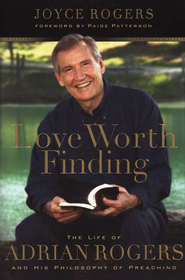
Book Review By David P. Craig
As a pastor I enjoy reading biographies and auto-biographies of other pastors. I especially can identify with the struggles that other pastors face. Unfortunately this book is written a lot like a Eulogy – even though it was written before Rogers passed away. It is full of Adrian Rogers’ accomplishments and highlights from a very gifted pastor’s life. It’s almost comparable to reading the life of Joseph in the Bible – without the hardships. Rogers almost comes across as a “perfect pastor” – which obviously doesn’t exist. A life full of nothing but successes, victories, grand tributes, and accolades. It reads a lot like a fairy tale – A Pastoral Utopia.
There is one major hardship that Joyce writes about early in the book – the loss of one of their children to SIDS. This was actually the one time in the book where I could identify with this couple. I could identify with their pain, loss, and suffering. But even this episode was glossed over. One almost gets the feeling that 99% of Adrian’s and Joyce’s life together was Camelot. I just don’t think this is reality.
In my own experience of the pastorate with real men and women life consists of hills and valleys – and there are usually more valleys to go through than hills – this book has one valley and the rest is about all the hills. This may be encouraging to some who read it. But I’m concerned for young pastors or young men and women who may read this book and think that ministry is all roses with no thorns.
I would have liked to have read a biography that was less on the surface of reality and went a little deeper into some of the basic daily realities and hardships of life. It wouldn’t even make a good movie, because there is simply not enough conflict and resolution. It is a book piled with grace on top of grace – and I just don’t think it’s transparent or authentic enough. Honestly, there was precious little to help the average pastor in this book. It read more like the highlights of the greatest pastor of the 20th Century. There were very few things that most pastors could actually relate to. It would be the equivalent of a struggling baseball player trying to figure out how to be a better baseball player and reading a biography of Babe Ruth which only highlighted and focused on all his home runs – without ever talking about any of his strike outs – and how he handled his hitting slumps.
The best part of the book for preachers starts with about 30% of the book left. It’s an extended interview with Adrian Rogers on his homiletical philosophy and sermon preparation. I think this section is very helpful and worth the price of the book. It’s very thorough and yet concise and has many helpful tips in answering some very important questions for sermon preparation like: What is the role of the Holy Spirit in preaching? What is the difference between preaching and unction? What is the nature and central place of preaching? Is Jesus Christ central to preaching? And many others.
I think this book will be especially interesting for pastors (or would-be pastors). It reminds me a lot of “A Man Called Peter” by Catherine Marshall. The difference is that Marshall’s book was more transparent and dealt with more of the tough issues that pastors face. This book may bring a lot of encouragement and inspire many young pastors, but in all honesty – 99% of the pastorates I know of are nothing like the one described in this book.
BOOK REVIEW: Max Lucado’s “GOD WILL USE THIS FOR GOOD”
TRUSTING GOD TO TRUMP EVIL
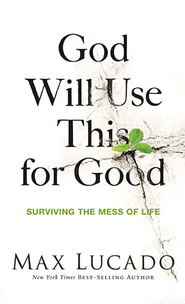 Book Review by David P. Craig
Oftentimes when we are going through tough times we need some short and quick reminders that everything is going to be okay. In this short treatment of the life of Joseph from the Old Testament Lucado reminds us: “”You’ll get through this. It won’t be painless. It won’t be quick. But God will use this mess for good. In the meantime don’t be foolish or naive. But don’t despair either. With God’s help you will get through this.”
In retelling the story of Joseph the author takes time to provide ample applications (contemporary and ancient) to bring forth the principles that help us as we wait for God to bring forth good out of the messes in our lives whether we made them, inherited them, or we were the object of someone’s evil plans. Ultimately nothing can thwart the plans that God has for us, and that means that all things will work out for our good and God’s glory. The main idea brought out by Lucado in this book is that “in God’s hands intended evil becomes eventual good.”
This short book would make a good gift or recommendation for Christians that are currently going through a rough time. Lucado’s story telling connects well with readers by continually making connections between the biblical subject and the relevant points to our own lives. Lucado has written a helpful manual for believers who need guidance in their pain by helping us trust in the God who always trumps evil for our own good.
BOOK REVIEW: R.C. Sproul’s “WHAT IS THE CHURCH?”
A GREAT PRIMER ON WHAT THE CHURCH IS ALL ABOUT