SCHOLARSHIP AND WARMTH: AN INTERVIEW WITH BRUCE WALTKE

Interview Originally Conducted on May 8, 2013 with Darryl Dash

Dr, Bruce Waltke is a preeminent Old Testament scholar. His teaching career has earned him a reputation of being a master teacher with a pastoral heart. Dr. Waltke has also pastored several churches, lectured at many evangelical seminaries in North America and has spoken at numerous Bible conferences.

130508a.jpg

I’ve been impressed by Dr. Waltke’s scholarship, as well as his pastoral warmth. I’m grateful to Dr. Waltke for agreeing to answer some of my questions.

As Professor of Old Testament, what brings you the greatest joy? Is it studying, writing, teaching, or something else?

I wish I could say that I find my greatest joy in my students.  Though I do delight in them and in their ministries, I find my greatest joys in writing and publishing and in teaching. I used to get the most joy out of teaching and preaching, but as I got older I realized more and more how transitory verbal ministries are. As I got older I came to value teaching more and more for  what it built into the lives of my students and its multiplication and its continuation in their ministries. That reward, however, is less direct and seemingly more restricted  than that of writing, for writings touch more lives for more time than students in a classroom. But writings, like all things, will pass away, as publishers undoubtedly will cease to publish my dated works. But unlike Qoheleth I know there will always be a residue of eternal profit, for all ministry participates in the eternal kingdom of God.

Your exegetical work seems to me to combine scholarship and worship, which aren’t found together as often as one might wish. How have you been able to maintain both together?

Others note an alleged combination of scholarship and worship. It must be relative, for I am unconscious of it.  My scholarship always seems to be inadequate because knowledge is always imperfect–there is always another book to read on a subject or is being written on it.  As for worship,  though I do not know the full depths of my depravity, I know it well enough to know that my motives are always tarnished by self-interest, not by worship. My spiritual flaw is a carnal perfectionism. I believe God is taking that flaw and sanctifying it by his Spirit in me.  Quintillius said:  “Ambition is a vice but it can be the mother of virtue.”  To become a vrtue must be the work of God’s grace.  I have nothing of which to boast. This process of holiness is true of all healthy Christians, isn’t it?

Pastors often feel pushed away from theology to be more “practical.” What advice would you give to a pastor who aspires to be a pastor and scholar?

I cannot distinguish between theology and practical theology.  If my theology does not change my life, it is not good theology, but an idol. I hope every pastor who stands behind the sacred lectern is a scholar.  By that I mean, I hope the teacher of God’s Word will teach it as responsibly as possible within the time available.  Very few are so gifted they can be both an academic in a university or seminary and a pastor. There is by the restraint of time and being human a less than perfect scholarship and of pastoring. What is needed is both humility, a recognition of our limitations, and a commitment to give God the best of what he has given to us. We need to keep our priorities straight, lest we make Success our god. It’s hard not to envy those who worship Success and receive worldly rewards.

Knowledge is both a virtue and a vice.  It is necessary and certainly better than ignorance.  Paul frequently says he doesn’t want us to be ignorant.  On the other hand, it is a vice: it always puffs up and is imperfect.  By God’s grace I overcome its endemic tendency to pride the pure virtue of love and its imperfection by the pure virtues of faith and hope.

It’s a joy to see the warmth between you and your friend Haddon Robinson. It’s a good example of friendship maintained through years of life and ministry. How have friendships like this sustained you?

130508b.jpg

Photo courtesy of Chris Brauns

Haddon is so uniquely gifted that I feel unworthy of his friendship.  His warm friendship toward our family  is a mark of his truly godly character. His brilliant conversation always refreshes me.  Bonnie’s love is peerless. Elaine and I treasure their friendship.  The sustenance of their friendship brings delight, psychic joy that cannot be fully verbalized. When the four of us are together we  seem to feed on each others thoughts, commitments and basic disposition toward God and others, though Elaine is now suffering dementia. Haddon or Bonnie never interpret us negatively; they truly believe and hope all things;  I do not think they ever think of enduring us.

How can we pray for you?

I have taken a leave of absence from teaching at Knox, to test how I can best serve God without a contract to teach. Pray that I will finish well and have the wisdom to prioritize my time well in this new context.

Source: http://dashhouse.com/dashhouse/2013/5/8/scholarship-and-warmth-an-interview-with-bruce-waltke

ABOUT BRUCE WALTKE

Bruce K. Waltke is an Old Testament scholar and Professor Emeritus of Old Testament Studies at Regent College. He has doctorates from Dallas Theological Seminary (ThD) and Harvard University (PhD). He has had a distinguished career as Professor of Old Testament at Dallas Theological Seminary, Westminster Theological Seminary, Reformed Theological Seminary (Orlando), and Regent College (Vancouver).

Waltke’s writings and publications include, Introduction to Biblical Hebrew SyntaxFinding the Will of God: A Pagan Notion? and commentaries on the books of Micah, Genesis, and Proverbs. He served as Old Testament editor for the “Expositor’s Bible Commentary”, the “New Geneva Study Bible”, the “Spirit of the Reformation Study Bible”, and co-edited the Theological Wordbook of the Old Testament. Waltke is also a member of the translation committee for TNIV and served a term as president of the Evangelical Theological Society.

Selected publications

  • A Commentary on Micah. Eerdmans, 2007. ISBN 0802849334
  • An Old Testament Theology: A Canonical and Thematic Approach, Zondervan, 2006. ISBN 0310218977
  • The Book of Proverbs: 15-31, NICOT. Eerdmans, 2005.
  • The Book of Proverbs: 1-15, NICOT. Eerdmans, 2004.
  • Theological Wordbook of the Old Testament (co-author) Moody, 2003. ISBN 0802486495
  • Finding the Will of God: A Pagan Notion?. Eerdmans, 2002. ISBN 0802839746
  • Genesis: A Commentary, with Cathi J. Fredricks. Zondervan, 2001. ISBN 0310224586
  • Knowing the Will of God, with Jerry MacGregor. Harvest House, 1998.
  • An Introduction to Biblical Hebrew Syntax. Eisenbrauns, 1990. ISBN 0931464315
  • Creation and chaos: An exegetical and theological study of biblical cosmogony. Western Conservative Baptist Seminary, 1981.

BOOK REVIEW: “COVERING YOUR LIFE IN PRAYER” BY ERWIN W. LUTZER

DISCOVER A LIFE-CHANGING CONVERSATION WITH GOD

CYLIP LUTZER

LEARNING HOW TO PRAY THE SCRIPTURES FOR YOUR LOVED ONES

Book Review By David P. Craig

Nothing has revolutionized my own prayer life more than learning how to pray the Scriptures. In this very practical book Lutzer was inspired to pray more intentionally and biblically for his 8 grandchildren. He decided to pray through the Scriptures for them, rather than just making a list of needs and praying these needs back to God in a ritual-like format day after day. He wanted to avoid the “meaningless repetition” of prayer that Jesus describes in Matthew 6:7.

Lutzer asks and answers these two important questions (1) What if I changed my perspective on prayer and began to pray Scripture? and (2) What if I echoed back to God that which I know is His will? – Wouldn’t that stimulate more faith and bring God more glory?

Praying the Scriptures has many advantages over “list” oriented prayer: Here are just a few: (1) It gives a freshness to your prayer life – because you don’t know exactly what you will be praying for on a daily basis; (2) It aligns your prayers with God’s will – it’s more difficult to pray errantly when you are speaking the truth from God’s Word back to the truth Giver; (3) It reminds you daily of requirements and promises of God; (4) It helps you to hear from and communicate  intimately with God as He reveals His heart to you from His very words. (5) It aligns you with the will and sovereign plans of God. (6) It brings God’s purposes and intentions to bear on your life each time you pray.

Lutzer divides the book up into 52 weeks or prayer sessions. In each session there is a passage of Scripture, a brief explanation of the passage, and a prayer to pray based on the passage. An individual can pray these prayers for a loved one, a friend, a child, a parent, co-worker, and so forth. The prayers are about two to three paragraphs in length and cover such passages and topics as: overcoming fear; hope; worshiping God in trials; identity in Christ; purity; resisting temptation; and resting confidently in God’s love. There are 52 subjects covered. Lutzer (and his wife) prays these Scriptures over his children and grandchildren (one each day, two on Saturday’s) seven days a week.

I have been praying these prayers for my spouse, children, and grandchildren and it has helped make my prayers more focused, spontaneous, and well-rounded. Since you are praying specific prayers instead of just praying “God bless so and so” it is more intimate, personal, and intentional. I find that it has helped my prayer life to be less wooden and ritualistic and much more exciting as I am learning to pray the whole counsel of God over my loved ones. Daily covering my loved ones with God’s promises, and purposes from the whole counsel of God is an exciting way to pray that benefits my loved ones immensely.

I sincerely believe that this book will help renew, refresh, and rekindle your prayer life, invigorate your walk with our Heavenly Father, and help you to pray balanced prayers for the good of your loved ones so that God’s will is done on “Earth as it is in Haven.”

SUNDAY SERMON: “HATH GOD SAID?” BY DR. R.C. SPROUL

One of the biggest issues of our day revolves around the trustworthiness and the authority of the Scriptures for all of life – private and public. This is a classic sermon by one of the most influential theologians living today. Though given in the late 70′s during the beginning stages of the development of the International Council of Biblical Inerrancy – it is just as pertinent, relevant, and needed today. R.C. teaches with absolute clarity and expositional and theological precision that the Scriptures are indeed authoritative and sufficient for all of life and practice privately and publicly. Enjoy this wonderful sermon by Dr. R.C. Sproul [DPC].

Now the serpent was more crafty than any other beast of the field that the LORD God had made. He said to the woman, “Did God actually say, (“hath God said” in KJV) ‘You shall not eat of any tree in the garden’?” – Genesis 3:1

Serpent and the fruit

“Hath God Said?” By Dr. R.C. Sproul

I think that we are all not only aware, but in many cases painfully aware, of the continued academic, technical, and intellectual difficulties that we face when we make an affirmation of the inerrancy of Holy Scripture. I trust that we have not been bathed in obscurantism to a degree that makes us ignorant of the avalanche of criticism that has been directed toward the church’s classic position over the last two hundred years. And I hope that we recognize that much of that criticism may not be lightly dismissed. To do so, of course, would not be wise.

I think we are aware that it is our duty and the urgent need of the Christian community of our day, not to rest merely on the splendid statements of our fathers in defense of the authority of Scripture. Surely our generation is called to face the new issues that have been raised in academic circles. What I am saying simply is this: that there exist problems of an academic and intellectual nature with respect to the confessions that we are so bold to make. But that’s not what I am concerned to focus our attention on this morning.

For in addition to these questions of an intellectual nature, which at times indeed may be excruciating, there are other facets to this question that must never be overlooked. There is an emotional dimension. There is a psychological dimension. There is a theological, or perhaps what we may call a religious dimension that touches the heart of this issue.

As you recall a few months ago, I had the privilege in behalf of the International Council on Biblical Inerrancy to be involved in dialogue with a group of very respected theologians and biblical scholars in this country. It was a behind-closed-door session of question and discussion, clarification of our position, vis-à-vis theirs. The discussions went for an intense period of seven hours. And at no time during that discussion did it become one of vituperative or vitriolic exchange. It was a sanguine atmosphere and the discussion was carried on in the spirit of cordiality. But it was intensely academic in nature, and I believe that we were all weary at the end of it. What I recall was that after the discussions were over and we were moving to the parking lot, one of the elder statesmen of the other group who has been a friend and colleague of mine for years came up to me, not in a paternalistic way, but in a genuine fatherly gesture. He put his arm around me and said, “R.C., why do you get so exercised over this question? Why are you devoting so much of your time to the question of biblical inerrancy? Why can’t we leave that aside and move on the real issues of reaching the fallen people of this generation?”

I’m sure that this man’s primary concern was precisely that we get on with the business of the work of the church and of Christ and not be paralyzed by internal disputes and debates about matters like these. He was expressing genuine concern over my particular career as a teacher. And he was almost weeping as he raised that question.

As I stepped out of the academic and intellectual atmosphere that had characterized the previous hours and looked at him, I answered his question as emotionally as he asked it. And I said, “I can’t help it. Scriptures are my life. I am not a second generation Christian. I came to Jesus Christ from the streets, and that’s what brought me into the kingdom of God, the words from this Book. I love it. The contents, the message broke through the recalcitrance of my pagan heart and brought me into the kingdom of God and showed me the loveliness and sweetness of Christ.”

And then in a statement of perhaps characteristic belligerence, I said to him, “No one will ever take this Book from me.” And I had to admit candidly that I am somewhat prejudiced and emotionally involved in this question. I raised this point with him. “I understand,” I said, “the difficulties that criticism has raised, and I know that many feel that as a matter of intellectual integrity they must set aside this doctrine, that they cannot cling to it merely for emotional or sentimental reasons. I must agree with the integrity of that.” But I said to him, “What I would like to see when that happens, is that our Christian brothers and scholars who have abandoned this point lay it down with tears. And I haven’t seen that.”

I would think that if we came to the conclusion that this point of the faith of our fathers indicates an error of our tradition, and that we must abandon inerrancy, that if we did, in fact, come to that conclusion, that we would do it with tears, rather than in the attitude or spirit we have seen in some circles. I don’t see this in evangelical circles, but in some circles there seems to be a certain delight and glee in finding difficulties in the text of Scripture. At that point it becomes religious, moral, and I think that we are facing the problem not only of the academic but the problem of enormous pressure to conform to contemporary drifts of opinion. Many have said quite candidly, “It is not expedient for us to take such a stand in this day and age.”

Again another candid and private conversation I had with a pastor for whom I have great respect and love. He said, “R.C., I am not a scholar. I am not an academician. I am not a trained and skilled apologist. I am a pastor and my concerns are pastoral in nature. Now, R.C., in my heart I believe in the inerrancy of Scripture, but I simply cannot defend it. I do not have the tools, the erudition necessary in this sophisticated era to make a good defense. And so I prefer not to stand for the doctrine.” It was only a few months later that this pastor was asked in a public situation, “Do you, sir, affirm the inerrancy of Scripture?” and his response publicly was, “I do not.”

Now it’s possible that the man changed his mind in the intervening months between our private conversation and his public statement. But I am also recognizing the real possibility that the intimidation that he was experiencing was more than he could bear in his humanity. And who of us has not had to face that kind of pressure? Who of us has not succumbed to it at one point or another in our lives? We have sinned and do sin, my brothers and sisters, and we must be careful in this concern that we not give the idea that we are the ones who maintain a pristine purity of Christian life and obedience, while others have easily and quickly capitulated and negotiated the faith of Jesus Christ. We all have participated at one time or another in such capitulation.

We are often put to the test, and the test of our faith is very infrequently couched in terms of strict theological affirmation such as, “Do you believe in God?” We all confess that we believe in God, but the point at which we negotiate is a different question. “Do you believe God?” That’s the issue. And that’s where the point of testing is focused in our day. Now the idea of a test at the point of believing God is nothing new. And it’s not an experience that we are facing as a first generation of the tested, but rather to God that is the test of fidelity.

Let me say it another way. The two greatest tests in the history of mankind focus the term of the test precisely on the point of whether or not the ones being tested believed God. I am referring, of course, to the test of our original parents in paradise and the test of our Redeemer in the wilderness. And I would like to direct your attention in the time that is remaining to an examination again of the terms and the circumstances and the outcome of those two critically important moments of test.

Let’s look at the third chapter of Genesis. It begins with three words that appear to be innocuous in the text, but which the late E. J. Young throws into bold relief in his commentary as having interesting and significant import. Those three words are, “Now the serpent … ” E. J. Young rhapsodizes on the significance of those three words as they introduce the third chapter of Genesis. Everything that has preceded those three words is a majestic statement of God’s acts of creation. Everything is so positive and so lovely and so good and so true about God and his created order, until that note of dissonance is introduced into biblical history.

“Now the serpent … ” It sort of suggests that something sinister and negative is about to be unfolded. And the words continue, “Now the serpent was more subtle than any of the other of the wild beasts of the field that God had created.” This draws attention to the subtlety or craftiness of the creature being introduced. We read that this subtle serpent comes and speaks to the woman and asks what appears to be at the outset a harmless question, a request for information.

“Did God say, ‘You shall not eat of any of the trees in the garden’?” The question again in the ancient version is, “Hath God said, ‘You shall not eat of any of the trees in the garden’?” It’s a very, very interesting question. You might wonder why the serpent raised the question in the first place. Was he just saying in “Columbo” fashion, “There’s just one thing that I’m not quite sure about; do you mind if I ask you a personal question? Let’s see if I have it right here. Did God say that you shall not eat of any of the trees of the garden? Is that what he said? Just wanted to get the record straight.” Perhaps Adam and Eve were to assume that the serpent was doing a job of recording the facts for posterity.

I don’t think that’s what it was about here. But before I suggest what it was about, let me indicate another alternative. Do you think that the serpent did not know what God had said? Do you think that the serpent was ignorant of the terms of the probationary test that God had put before his creatures? I think the serpent knew very well what God had said. But listen to the subtlety of the question. “Hath God said, ‘You shall not eat of any of the trees of the garden’?” What’s the suggestion there? Satan knew very well that was not the case. They say, “No. In fact, God said we could eat freely of all the trees of the garden, but one. And that one, of course, he said if we touched, we would surely die.”

Existentialist Jean Paul Sartre in the twentieth century has made it a matter of evangelistic zeal to maintain that unless man is utterly and completely autonomous, he is not, in fact, free. Sartre gives one of the most fascinating and clever arguments against the existence of God I have ever read. Traditionally we have argued, if there is man, and we have to explain and account for his creation, then there must be a God. Sartre turns that around; he says, “If man is, God cannot be. Because intrinsic to our notion of humanity is the concept of human subjectivity and freedom. And if there is a God to whom we are ultimately accountable and responsible, a God who has sovereignty over us, then we do not have autonomy. If we do not have autonomy, we do not have freedom. If we do not have freedom, we do not have subjectivity. If we do not have subjectivity, we do not have humanity.” Ergo. “Since we do have these things, there is no God.”

The point is very subtle; unless you are utterly and completely free you are not free at all, and Satan is raising that very point here. “Hath God said, ‘You shall not eat of any of the trees of the garden’?” Every one of us has encountered this question of freedom in our own lives, particularly those of us who are parents. My daughter comes and asks, “Daddy, can I go to this rock concert in Pittsburgh on Friday night?” I say, “I’m sorry, honey, I have to say, ‘No.’” And what do you suppose her response is? “You never let me do anything!” Put that one restriction there and the natural reaction is, “I’m not free at all.” Unless I can have total freedom, absolute autonomy, I’m not really free; and that’s the subtlety of the serpent that is being repeated again and again and again, even down to this very day.

But the test shifts from matters of subtlety to a direct contradiction and denial of what God in fact had said. Now the serpent leaves his “Columbo” methodology, becomes very straightforward, and says, “You shall not die, but you shall be as gods.” I say that because so frequently I have heard it said that the initial slogan of humanism was the famous statement from Protagoras: Homo neusura—Man, the measure. Man is the measure of all things. No, my friends, the irony of history is that humanism’s slogan does not begin with Protagoras; it begins with the serpent in Genesis who said, “You shall be as gods.” An irony of ironies: the father of humanism was not even human.

Now it becomes a test of whom to believe. God says, “You’ll die.” The serpent says, “You will not die.”Today some have said that’s all right; they contradict but contradiction is the hallmark of truth. We say contradiction is the hallmark of the lie. Imagine the theory that contradiction is the hallmark of truth in this situation. Adam and Eve are wrestling with the dialectic. “God says, ‘You will die,’ whatever that means. This one says “we will not die.”

“Now that’s a contradiction,” says Adam. “And contradiction’s a hallmark of truth, so this serpent must be the ambassador of the truth. And if God is the truth, then this must be God’s ambassador who is now abrogating and setting aside the earlier prohibition. So let’s go to the tree. It looks sweet; it’s delightful; let’s help ourselves.” The issue in the Fall was the issue of believing God’s Word.

Now let’s go to the New Testament to the new Adam, and to the work that he performs immediately following his baptism. We read, “Jesus, full of the Holy Spirit, returned from the Jordan and was driven (or led) by the Spirit into the wilderness.” Now, before we consider the content of the test of Jesus, let’s take a moment to examine the scenario in terms of the differences between the temptation of the second Adam and the conditions under which the first Adam received his test.

The first Adam was subjected to a test of righteousness and obedience in the midst of a lush garden, a garden that provided for him all of the resources and benefits that he required to sustain his bodily needs. In fact, if I understand the test correctly, he was in a gourmet’s paradise. Whatever he wanted to eat was there, readily available to him.

But the circumstance and the context of the test of Jesus was that of a fast. Not a three-day fast, but a forty-day fast during which Jesus ate nothing.

Jesus is not in paradise, but he was driven into the wilderness, outside the camp into the outer darkness into that desert place, which to be sure in one sense is the traditional meeting place between God and his people; yet at the same time, it symbolizes that threatening, ominous state of fear and solitude. Solitude is quite significant for our consideration, because the test that is given to Adam and Eve is given to them in the context of a supportive community, indeed the most supportive community that God has ever instituted, namely that of marriage. When Adam underwent a test, he had at least the support of a helpmate that was suitable for him, who stood next to him, shoulder to shoulder. And as the evil one came to seduce them, to cause them to negotiate and compromise their loyalty and devotion to God, they had each other for mutual consolation and support. But Jesus was alone.

Again I take you back to the original account of creation where in every aspect of creation, after God does his work, he pronounces a benediction: “That’s good.” And yet the first malediction of biblical history comes when God sees something that is not good.

It is not good that man should be alone. God understands the anguish that is involved with one who is sentenced to solitude. Kierkegaard is eloquent on this point when he discusses the problem of existential solitude, pointing out that one of the worst punitive measures we can enact against a criminal is to place him in a situation of solitary confinement. Yes, indeed, there are moments when we crave our privacy, and even Jesus at times sought the respite of solitude, but how many of us could stand it for day after day after day? And then have to face temptation when we are alone.

But when we as Christians come together and sing together and work together, I feel a sense of encouragement welling up, a challenge to stand firm where I might, if left to myself, be quite willing to compromise my faith. And most of the sins of which we are most deeply ashamed are done in secret, things we would keep from the scrutiny and the knowledge of the community. There is a sense in which solitude gives us a certain freedom to do things that we might not do publicly.

This is not the sense in which Jesus is saying, “OK. I’ve just come out of the Jordan River and here publicly John the Baptist has sung the Agnus Dei. He has declared me to be the Lamb of God who taketh away the sins of the world. He said such marvelous things: that he is not worthy to untie my shoe laces. And now I’m being put to the test in front of the public.” In that situation it would be difficult for Jesus to compromise. But now, it’s off in the wilderness, by himself, no wife, no support system, utterly alone, no one there to offer restraints in terms of public opinion, and along comes that same serpent. And the point is not so much the contrast, but the similarity.

But … the issue is precisely the same. I have heard sermons on this many, many times, and I hear the text frequently read like this, “If you are the Son of God, change these stones into bread.” The preacher focuses on the agony and anguish of Jesus’ hunger, which, indeed, must have been great, but I think the point is in the beginning of this thing. “If you are the Son of God, change the stones into bread.” Jesus is not confronted with the statement by Satan, “Jesus, since you are the Son of God, go ahead and change the stones into bread,” or “Because you are the Son of God, go ahead and change the stones into bread.” But he says, “If you are the Son of God.”

Ah, there’s that subtlety again. What were the last words, as far as we know from the biblical record, that Jesus had heard from the mouth of God? When he came up out of the Jordan River after his baptism, the heavens opened and the dove descended and a voice was heard saying, “This is my beloved Son.” God had declared it. He had made an utterance to the effect that Jesus of Nazareth was his son. Now I suspect that if God, in this day, in this room, opened up the heavens and spoke to us directly and immediately, not through the medium of human authorship of the Scriptures or anything like that, but directly and immediately, and said, “This Book is the inerrant Word of God,” the debates would be over.

But it wasn’t over with Christ, because Satan came and said, “If you are the Son of God.” I wonder. I don’t want to be a heretic here and maybe wander to the rim of heresy to even ask the question, but I wonder if during that ordeal that Jesus suffered, the thought may have come into his mind, “If I am the Son of God, why am I going through this hunger? I am happy to do it, Lord, I’ll hold out to the end, and I won’t play with the stones; I won’t eat; I won’t break the fast. I’ll do all those things, but this seems to be a very strange way for the Son of God to have to live.” But that’s the way Satan comes on. “If you are the Son of God.” He is suddenly suggesting that maybe what God said at Jesus’ baptism was not altogether true.

But Jesus responded quite differently from Adam and Eve. He said, “Satan, it is written.” (I think it has been demonstrated once and for all that this has the force of a technical formula, by which the biblical authors are referring to sacred Scripture.) “It is written, ‘Man shall not live by bread alone, but by every Word that proceedeth forth from the mouth of God.’ Satan, the Bible says that I am not to live merely by bread. Now I am hungry. I would love to have a piece of bread. There is nothing I would like better than a piece of bread. but I don’t live by bread alone, and you’ve forgotten that it is my duty to live by every word that proceeds from the mouth of God.”

Our doctrine of inspiration confesses that the words of Scripture proceed ultimately from the mouth of God. We grant the mediation of human authorship and all the qualifications that are made, but we are speaking in terms of inspiration of the origin of this Word, as having been breathed out by God. And it is my duty, says the Lord, to live by that Word. Now let’s look at Luke’s version of the temptation rather than Matthew’s—the progression is different. (It’s one of those problems we have to deal with.) “And the devil took him up, and showed him all the kingdoms of the world in a moment of time, and said to him, ‘To you I will give all this authority and their glory; for it has been delivered to me, and I give it to whom I will. If you, then, will worship me, it shall all be yours’” (Luke 4:5–7).

The devil is saying: “I know the Father has promised you a blessing, if you go through your humiliation. You probably have some idea that exultation is at the end of the road, that all glory and power and dominion will be yours. But you have to go the via dolorosa, and this would make it so much easier, so much more expedient for you, since the end is the same. What difference does it make what means we use to get there? I can give you the same thing that God can give you: the kingdom. I can give you a kingdom here and all you have to do is genuflect ever so slightly. Bow one knee, that’s all; we are out here in the wilderness and nobody’s going to see you. John the Baptist will never know it. The multitudes who are to hear your sermon on the mount will have no report of it. Just one slight action of homage and it’s yours.”

And Jesus said, “That sounds so easy. But there’s something you have overlooked. You’ll have to excuse me, Satan, if I tend to be a bit rigid on this point, but it is written, it is written. You see, Satan, it says here, ‘you shall worship the Lord your God and him only shall you serve.’”

And Satan says, “That’s all right, you can still serve him. I’m not asking you to quit serving God; I am just asking you momentarily to give me a little homage. Why can’t you serve us both? Oh, I guess I didn’t read that text right, did I? ‘Him only shall you serve.’”

“Satan, I can’t serve two masters, and what you’ve asked me to do is to choose this day whom I will serve, and the choice is clear. I go by what is written.”

Satan responds, “But that was written so long ago. Is it really relevant to this live situation in which you are finding yourself today? Come on, certainly, Jesus, you have been a victim of the errors of your day and you are restricted by your human knowledge and living on the basis of Midrashic tradition and the like; certainly we don’t have to enforce that ancient prohibition that wasn’t written by Moses in the first place.”

Now very shortly Satan began to get the idea that this tactic was not working, so his subtlety became even more intense. “And he took him to Jerusalem, and set him on the pinnacle of the temple” (v. 9). For you see, Satan perceived that Jesus was a very religious man. So he took him out of that isolated circumstance of the wilderness, out of the arena of profanity, and brought him into the temple’s dominion itself. Indeed, to the pinnacle of the temple. It was comfortable, his Father’s house. And then Satan says again, “If you are the Son of God, throw yourself down from here, for it is written … OK, Jesus, you have come after me all the time with this ‘It-is-written’ stuff, so let me give it back to you. I read the Bible too. I know what it says. Now look.” Now it becomes a question of hermeneutics. “It is written,” says Satan, “‘He will give his angels charge of you, to guard you,’ and ‘On their hands they will bear you up, lest you strike your foot against a stone’” (vv. 10, 11).

Jesus said, “I know what’s in that Book. But does it not also say, ‘You shall not tempt the Lord your God’? And, Satan, we must not set Scripture against Scripture.”

What’s Jesus saying here? He is saying that the Scripture prohibits us from putting God to a test of fidelity.“God has said as you have pointed out, Satan, that he will give his angels charge over me. Now at the present time I can look all around the temple and I can go back to the wilderness and look behind every bush, and I have to confess I haven’t seen an angel in the whole forty days I have been here. I know that God says that he will give his angels charge, and I haven’t seen any. So you want me really to see if God meant what he said. You want me to see if God’s Word is trustworthy for this particular life situation I am in. You want me to jump off the temple and see if the angels catch me in their arms. Well, you see, there is something that you don’t understand, Satan. What’s going on here is not a test of God, but God is testing me.”

Some have interpreted this text to suggest that Jesus is saying that Satan is inappropriate in testing Jesus, as touching his divine nature. And this is cryptically a confession of Jesus’ deity by Jesus himself, saying, “You should not tempt the Lord your God, and since you are here tempting, or testing me, you are doing something that is quite diabolical which is your nature, namely: to suggest that I as the Lord God incarnate, may be tempted.” I don’t think that is the point at all in the context. Remember that this test is being done to Christ as the second Adam. Jesus is representing man. I don’t want to divide the two natures obviously, but I think that we can safely distinguish them at times, and here Jesus is saying, “I have no right touching my humanity, as one undergoing a test, as the second Adam, to turn that test around and throw it in God’s lap. Why should God be put to the test? Has not the whole redemptive history demonstrated again and again that our God is a God of truth? Our God never violates his covenant. Our God never breaks his Word. The question of loyalty is not one that we can raise about God. The question that history raises is the loyalty of man. I am the one who is to be tested, not the Father. So go away, with your distorted applications of Scripture.”

And we read that, “Satan departed from him until he could find a more opportune or convenient moment.”

I want to conclude with one more contrast between them. Jesus believed God’s Word indicating that he was the Son of God. Jesus believed God that angels would be given charge over him. Now we read in the Scriptures in Matthew’s account that as soon as Satan departed, what happened? The angels appeared and embraced Jesus. They nourished his broken, mutilated physical body that had gone through this struggle and trial. I suggest that Jesus’ physical appearance by the end of that forty days must have resembled that of a Mahatma Gandhi after a hunger strike. He must have experienced the ravages of the lack of food on his frame, and the angels came and embraced him and nourished him and applauded his triumph.

What happened when the tempter left the original Adam? There we read that the serpent left, and “God came back into the garden.” Before, when our parents heard the voice, they walked in the cool of the evening. They were delighted and their souls were thrilled. They couldn’t wait to go up and speak and have direct and intimate fellowship with God, but after their test, God came into their presence, and they fled and hid. They were naked; they were aware of their nakedness. They were ashamed. They were embarrassed to be in the presence of God because they had denied God.

Do you remember Peter standing outside of the judgment hall where his test came? Even after he had been warned as to what was at hand and prepared for it, when the test came, not by the princes of the church or the accrediting educational institutions … but some washerwoman came up and said, “Do you know the man?”not only did Peter say, “I don’t know the man,” but he began to swear he didn’t know him.

And just as Jesus was being led from one of the places of judgment, as they were escorting him under arrest, the Scriptures tell us, “His eyes fell upon Peter.” He didn’t say anything. He just looked at him. That was the most painful moment of Peter’s life, when he looked into the eyes of Christ, who even at that moment was going to deliver himself to the forces of hell rather than betray his Father. And Jesus looked at him and knew that Peter had failed the test.

“Do you believe God?” This must never be seen as a purely academic question. This is a matter that touches our faith in Jesus Christ. Faith, not in the sense of assent, but faith in the sense of fidelity. Do we live, or do we not live by every word that proceeds forth from the mouth of God?

I am weak, and you are weak. We are all too susceptible to subtle pressures and temptations to compromise on this point. But it is a real test. And it requires in our lives nothing less than a dependence on the grace of God from moment to moment and a clear recognition that we understand that our feet are of clay and that our frames are of dust and that we must cling tenaciously to that grace that God has given us. If left to ourselves, there would be no perseverance. And not only do we need the grace of God, but part of that grace and its outworking in this world is the support of the Christian brotherhood, the fellowship of the church, the communion of the saints. We are told again and again in Scripture, “Encourage one another.” What we need in this hour is not simply knowledge and erudition, but I am convinced what we need is moral courage. And so I ask you to encourage me and to encourage each other and to encourage the church and even the world that God’s Word is true.

*Source: Sermon adapted from R.C. Sproul’s chapter entitled “Hath God Said? Genesis 3:1” in the book Can We Trust the Bible? Earl D. Radmacher, ed. Wheaton: Tyndale, 1979.

 About the Preacher:

RC Sproul teaching in red tie image

Dr. R.C. Sproul is the founder and chairman of Ligonier Ministries, an international Christian education ministry located near Orlando, Florida. His teaching can be heard on the programRenewing Your Mind, which is broadcast on hundreds of radio outlets in the United States and in 40 countries worldwide. He is the executive editor of Tabletalk Magazine and general editor of The Reformation Study Bible, and the author of more than seventy books (including some of my all time favorites: THE HOLINESS OF GOD; CHOSEN BY GOD; KNOWING SCRIPTURE; WILLING TO BELIEVE; REASON TO BELIEVE; andPLEASING GOD) and scores of articles for national evangelical publications. Dr. Sproul also serves as president of Ligonier Academy of Biblical and Theological Studies and Reformation Bible College. He currently serves as senior minister of preaching and teaching at Saint Andrew’s in Sanford, FL.T

BOOK REVIEW: “THE MAKING OF A LEADER” BY DR. J. ROBERT CLINTON

RECOGNIZING THE LESSONS AND STAGES OF LEADERSHIP DEVELOPMENT

TMOAL Clinton

A PRIMER ON THE PROCESS OF BECOMING A LEADER

Book Review By David P. Craig

Knowing where one is at is crucial in moving forward in life. Nothing is more helpful when one is lost than having a map of where one is, and how to get to where we need to go. Recently, I experienced going through a difficult bout with cancer. The treatment and side effects of the treatment were absolutely brutal. However, I had a guide along the way to help me get through it. He was a man who had the exact same cancer and treatment as me, but he was already “cancer free” and a year ahead of me in the process. He helped me in my journey in two ways: (1) He helped me realize that what I was going through was normal and miserable, but necessary for the cancer to be killed; (2) He gave me a “living hope” that I would be cancer free like him if I endured to the end of the treatment without giving up. The process was excruciating, but now that I look back a year later – like him – I want to help people in their journey with cancer.

In the same vein as my illustration above Dr. Clinton helps emerging leaders understand the process of becoming a mature leader by evaluating the lives of biblical and modern leaders journeys. He identifies six primary processes’ that all leaders must go through on the way to becoming a healthy and mature leader of leaders. Some of the examples used in this book are the Prophets Jeremiah and Daniel, the Apostles Paul and Barnabas, and modern examples: Dawson Trotman, Warren Wiersbe, A.W. Tozer, Watchman Nee, Amy Carmichael and several others.

In his study Clinton articulates six phases or stages of a leaders development:

(1) Phase One is called “Sovereign Foundations” – This is where a leader starts to become aware of his or her calling to leadership. It is a time where  character issues are developing, skills are developing, and one’s calling is being wrestled with. There is a deep sense of God’s calling and purpose and the building blocks for the emerging leader’s life are starting to lay the foundations for a life of leadership.

(2) Phase Two is called “Inner Life Growth” – This is a time where the leader is learning to hear and obey God’s leading. It is a time of deep spiritual growth and intimacy with God. The leader is often put through several major tests during this process – will he or she obey and submit wholeheartedly to God?

(3) Phase Three is called “Ministry Maturing” – In this stage the leader is reaching out to others and discovering and practicing ones spiritual gifts. Both positive and negative lessons are being learned during this phase. The leader is learning his or her own strengths and weaknesses in working with others. Oftentimes there is a strong desire to get more training during this time to minimize one’s weaknesses and enhance one’s strengths. In the first three phases God is primarily working “in” the leader not through him or her. In the next three phases God is working “through” the leader. As Clinton articulates “Many emerging leaders don’t recognize this, and become frustrated. They are constantly evaluating productivity and activities, while God is quietly evaluating their leadership potential. He wants to teach us that we minister out of what we are.”

(4) Phase Four is called “Life Maturing” – This is a time in the leaders life where the leader “is using his or her spiritual gifts in a ministry that is satisfying. He gains a sense of priorities concerning the best use of his gifts and understands that learning what not to do is as important as learning what to do. A mature fruitfulness is the result. Isolation, crisis, and conflict take on new meaning. The principle that ‘ministry flows out of being’ has new significance as the leader’s character mellows and matures.” Communion and intimacy with God becomes immensely more important than one’s ‘success’ in ministry.

(5) Phase Five is called “Convergence” – God takes the leader and matches him or her with a role that matches his or her gift-mix and experience so that ministry is maximized. Life maturing and ministry maturing peak together during this phase. Many leaders never get to experience this phase. Some leaders like Dawson Trotman and Jim Elliott were taken to Heaven before entering this phase. Some leaders don’t get to experience this phase because of their own sin, or other providential circumstances. For those who experience convergence it is a time of transitional leadership where the baton is passed down to other faithful leaders who will continue to develop the leaders’ vision for the church or organization they have developed.

(6) The final phase is called “Afterglow” or “Celebration” – Clinton describes this stage as “The fruit of a lifetime of ministry growth culminates in an era of recognition and indirect influence at broad levels. Leaders in Afterglow have built up a lifetime of contacts and continue to exert influence in these relationships. Others will seek them out because of their consistent track record of following God. Their storehouse of wisdom gathered over a lifetime of leadership will continue to bless and benefit many.”

Clinton defines leadership as “a dynamic process in which a man or woman with God-given capacity influences a specific group of God’s people toward His purposes for the group.” This book is written for leaders and potential leaders who are (a) wondering what God is doing in their lives – asking the question “Is God calling me into Christian ministry?”; (b) are beginning to discover ministry opportunities; (c) need a fresh challenge from God; (d) need to understand how to select and develop younger leaders; (e) are at a crossroads, facing a major decision; (f) want to know how God develops leaders; (g) want to know where you are at in the process of your leadership development – is what you are experiencing normal for a leader?

I think all emerging and veteran leaders will benefit immensely from reading this book. It is packed with useful examples, illustrations, charts, and principles to help you become a godly leader. Also, it is immensely helpful to help you understand the process’ of leadership and how to invest in other emerging leaders. If you believe God is calling you to leadership, or has already entrusted you with a leadership role, you will most definitely benefit from Clinton’s wisdom – from one leader to another.

9 GOD-CENTERED EVALUATION QUESTIONS FOR LEADERS

AM I LEADING IN A GOD-CENTERED MANNER?

Leadership Viars

  • Do people understand more of God’s mercy because of the way I respond to their mistakes?

  • Do people understand more of God’s holiness because of my high ethical standards?

  • Do people understand more of God’s patience because of the time I give to grow and develop?

  • Do people understand more of God’s truthfulness because of the way I communicate honestly?

  • Do people understand more of God’s more of God’s faithfulness because they see me keep my promises?

  • Do people understand more of God’s kindness because of the tone of my voice?

  • Do people understand more of God’s love because I go out of my way to help and serve them as I lead?

  • Do people understand more of God’s grace because I avoid being harsh and unreasonably demanding?

  • To what extent does my leadership actually model and teach something about the character of God?

“SOURCE: Stephen Viars. Leadership: How to Guide Others Integrity. New Growth Press, 2012.

FRIDAY HUMOR: A HORSE WITH NO NAME

Series: Friday Humor #29

MAN RIDING HORSE IN THE SUNSET

Jack strode into ‘John’s Stable’ looking to buy a horse. “Listen here” said John, “I’ve got just the horse your looking for, the only thing is, he was trained by an interesting fellow. He doesn’t go and stop the usual way. The way to get him to stop is to scream heyhey the way to get him to go is to scream Thank God.

Jim nodded his head, “fine with me, can I take him for a test run?”

Jim was having the time of his life this horse sure could run he thought to himself. Jim was speeding down the dirt road when he suddenly saw a cliff up ahead “stop!” screamed Jim, but the horse kept on going. No matter how much he tried he could not remember the words to get it to stop. “yoyo” screamed Jim but the horse just kept on speeding ahead. It was 5 feet from the cliff when Jim suddenly remembered “heyhey!” Jim screamed. The horse skidded to a halt just 1 inch from the cliff.

Jim could not believe his good fortune, he looked up to the sky, raised his hands in the air, breathed a deep sigh of relief and said with conviction “Thank God.”

SOURCE: Funny Stories http://www.greatcleanjokes.com/jokes/other-joke-types/funny-stories/#ixzz2hNClfsPk

Jonathan Merritt Interview with Jefferson Bethke on Faith and Culture

On Faith & Culture

‘Jesus (still) hates religion’: An interview with YouTube sensation Jefferson Bethke with Jonathan Merritt on October 8, 2013

YouTube sensation Jefferson Bethke answers his critics and explains why he still hates religion.

Yes, he’s from Tacoma, Washington. Yes, he played baseball in college. Yes, he loves Frosted Flakes. But, if you’re like over 25 million other YouTube viewers, you probably know Jefferson Bethke from his viral video, “Why I Hate Religion, But Love Jesus.” Bethke’s new book, Jesus > Religion: Why He is So Much Better Than Trying Harder, Doing More and Being Good Enough explores some of the themes from the 2012 sensation. Here, we talk about religion, his critics, and why he still thinks Jesus hates religion.

JM: Jeff, your spoken word YouTube video has had over 25 million views.  Why do you think it resonated with so many?

JB: That’s a great question. I still am not entirely sure. But if I had to speculate I think it resonated because I think there’s this constantly growing chasm in the 21st century western evangelicalism and this vibrant, beautiful, revolutionary, new creation oriented world Jesus launched at the resurrection you see more predominantly in the scriptures. Even though it seems like a caricature, reading YouTube comments on many religious oriented videos, would show that many people’s Christianity doesn’t go much farther than “don’t get tattoos, don’t drink beer, and never swear or curse.” I think my generation has constantly felt this almost awkward vibe when reading the New Testament and then looking up into the landscape of modern evangelicalism and saying, “really? This is the same thing?”

JM: Not every Youtube sensation can or should write a book like you have. Can you say something about the thinkers who have influenced you and why people should listen to what you have to say?

JB: Amen to that first sentence! And to be honest I thought that same thing about myself at first. But when I dug around in my own heart, passions, and desires, I realized the reason I did poetry in the first place was because I love to teach. In school, I studied politics and government and my plan was to be a lawyer, and then that evolved into becoming a high school social studies teacher. So I love to teach and think analytically (I’m left handed, which makes me a little corky as well). I think poetry is an outflow of that, rather than my main passion. In fact, I don’t know how much longer I’ll do spoken word, as I don’t think it’s necessarily my gift or passion. Writing seems more up my alley.

Some of the thinkers who’ve shaped my faith pretty significantly have been Tim Keller, Dietrich Bonhoeffer, NT Wright, A.W. Tozer, Charles Spurgeon, C.S. Lewis, Ann Voskamp, Francine Rivers, Watchman Nee, Francis Schaeffer, Beth Moore, and Andrew Murray. I really owe each of them for particular seasons of life, struggles, joys and events. Their writings have all given me a unique perspective about Jesus and His message that I hadn’t seen before and that had a profound impact on this book.

JM: How do you see today’s 20-somethings taking a new approach to faith? Has there been a cultural shift among this demographic in your opinion?

Book cover courtesy of Thomas Nelson

Book cover courtesy of Thomas Nelson

JB: Well, I think if you study church history you definitely see each generation having to figure it out on their own. It seems to be the way God has weaved mystery into depths of Christian faith. It’s every generation’s job to figure out what it means to follow Jesus in that particular context and culture. If you simply adopt your parent’s methodology and don’t wrestle it out yourself, it almost self destructs. So yes, I’d definitely say there is a shift.

There’s issues our parents raved about that we might not seem to be making much of a big deal of, and then there are some things that might have not been championed by our parents that we are taking a keen interest in. When I look out at the landscape of my peers, I see a lot of desire for authenticity. I think because of systemic injustices like fatherlessness being more prevalent in our generation than ever before, we’re keenly aware of fakery and deceit. We can tell if someone is authentic or the real deal pretty quickly.

Also, with the wide spread nature of technology, news, and the internet, it’s impossible for my generation to turn a blind eye to the suffering of the world (both in our back yards and abroad). It’s too much in our face to not care, which is why you see the idea of justice and setting the world to right, and joining God in his redemptive mission, as another key component of the 20-somethings faith.

The one thing that does scare me though is our complacency about community. I see a lot of 20-somethings, myself included, who are okay with living in isolation. We substitute Facebook, Twitter, and email for real face-to-face interaction. We forget the importance of sharing meals together, which has been a deep sacred rhythm in the Christian faith since the beginning, and serving one another. So I pray that we’d come to grips with the depth and need for community. For life on life existences. For reflecting the image of God when we gather as the people of God—loving, serving, giving to one another. That’s a thing our parents did well. We need to realize that our faith is built on their shoulders, and we need to learn from them.

JM: Can you say something about how faith-messages are communicated today?  How has rise of social media impacted conversations about faith?

JB: Technology is a double-edged sword. I think social media, and YouTube specifically, has really forced the Church to cultivate and reclaim it’s creativity. We have the Creator as our Dad, so we should have the uttermost creativity. Social media has a very harsh “weeding out” aspect. If it’s dry and unengaging, then no one will listen or engage with it. But the other side is that we continually are reducing the size of our messages to fit shrinking attention spans. I know for me, social media is great but I also have to just completely shut down sometimes because it prevents me from doing simple things like quieting down, reading, studying the scriptures and journaling for more than 30 seconds. Social media has transformed the Bible from a beautiful narrative, written over thousands of years, by different authors, ranging from poetry to historical narrative, to 140 characters or less.

JM: You contrast “moralistic man-made religion” and a “divinely-designed relationship of grace.” What are the signs of a moralistic man-made religion?

JB: One thing I’d say first is what they are not. Moralistic man-made religion is not the same as discipline, church attendence, rhythms, and routine. There’s this weird sphere, especially among my age group, where if something requires grace-driven discipline then someone cries “legalism.” That’s simply not true. I mean Hebrews goes as far to say that Jesus learned obedience through suffering. But, signs of true man-made religion would be pride, power grabbing (usually through violence—physically or of the heart), and making yourself the center of the story rather than Jesus. Jesus didn’t seem to get so upset with the Pharisees over their basic theology or Torah interpretation. But he got pretty upset over them for how they applied it or added to it–the reflection they were giving of who God is and what God is like.

JM: Some criticized your video saying it was theologically inaccurate and filled with false dichotomies. How do you respond?

JB: The initial craze and critique of the video taught me so many things. I’m so thankful for it and how much it taught me, shaped me, and made me think about things I wouldn’t otherwise consider. And if I can be honest, when I read most of the critiques, I couldn’t help but say, “Amen!” I think technology has completely flattened any sense of geographical or regional contextualization. The word “religion” might mean something different to someone in Seattle than it does someone in Nashville. Or Bangkok for that matter. So for me, when someone comes up to me and says they hate religion, I want to first know what they mean by “religion.” That pretty much gives away their trajectory.

In my context, there is a good group of people that use the word to describe moral behaviors that place you in right standing with God. And if that’s the case, well that seems pretty upside-down of what Jesus came to preach. His gospel is about Him doing something we couldn’t. But, all-in-all my critics taught me that language is multi-faceted, it can mean different things to different people, and before I critique someone I first like to ask, “What do you mean by that?” before I start pushing further.

– See more at: http://jonathanmerritt.religionnews.com/2013/10/08/jesus-still-hates-religion-interview-youtube-sensation-jefferson-bethke/#sthash.COjOmr3M.dpuf

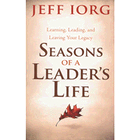
BOOK REVIEW: JEFF IORG’S “SEASONS OF A LEADERS LIFE”

LEARNING, LEADING, AND LEAVING A LEGACY

SOALL Iorg

Leadership Lessons  from the Life of Peter the Apostle

Book Review by David P. Craig

Just as life has seasons, leaders also have stages or phases of leadership. In this practical book Jeff Iorg tackles the three seasons or phases of a leader’s life. Using the Apostle Peter as his thematic teaching point, Iorg highlights leadership lessons from the three seasons or phases of leadership: Phase One – learning about leadership; Phase Two – actively leading; and Phase Three – leaving a legacy.

In Part One – Lessons for Emerging Leaders – Iorg tackles 21 lessons for leaders to grapple with in the earliest phases of their leadership development. Some of the topics addressed include: a leader’s calling, identity, prayer life, how to forgive, and serve humbly. The first section of the book highlights leadership principles and lessons from the stories in the Gospels where the Apostle Peter is specifically singled out by Jesus.

Part Two – Priorities for Active Leaders – contains 13 priorities for leaders in their prime, including: calling people to Jesus, accessing God’s power, confronting sin, defending the faith, working with other leaders, and how to move on after making mistakes. In this section of the book Iorg gives emphasis to every story in Acts and the Epistles where Peter is involved in leadership and the lessons or insights we can glean from his example.

In Part Three – Convictions of Maturing Leaders – Iorg expounds upon 10 powerful convictions of a leader intent on leaving a lasting legacy, including: Jesus is enough, pursuing purity, building good relationships, trusting Jesus and His Word, and giving glory to Jesus. The last section of the book summarizes Peter’s legacy from the wisdom he gained, the disciples and leaders he influenced, and the convictions he held to and modeled for a generation of leaders to come.

Jeff Iorg has written a very insightful and practical book that helps leaders learn more about leadership, focus on what’s most important in leadership, and finish well in one’s calling by leading effectively and leaving a legacy for future leaders. Written with emerging leaders and veteran leaders in mind, this book is filled with great insights for leaders of all seasons, ages, and phases of life. Each short chapter includes helpful questions for reflection and discussion. The book would be an excellent resource for church leaders to use in a discipleship type setting over a period of several months. It could also be a very helpful book for older pastors to mentor younger pastors with. I highly recommend this book as a great resource to return to throughout the varied seasons of a leader’s life.

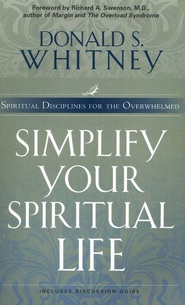
DON WHITNEY ON HOW TO PREPARE FOR EVANGELISM

AN OUTLINE TO HAVE IN MIND WHEN SHARING THE GOSPEL

SYSL WHITNEY

MANY CHRISTIANS THINK THEY CANNOT ADEQUATELY SHARE THE gospel unless they’ve had formal training in evangelism. I’m for evangelism training, but training is not necessary before you can tell someone about Jesus and give your own testimony about how you came to know Him. In John 9 we read of a man born blind who, within an hour after his conversion, is witnessing to Ph.D.s in religion (the Pharisees). Obviously, he’d had no evangelism training, but he was able to talk about Jesus and his own conversion. As Martyn Lloyd-Jones used to say, after being saved and after hearing countless presentations of the gospel in sermons, if Christians still believe they cannot evangelize without massive amounts of training, then either they’ve heard very poor preaching or they’ve been very poor listeners. However, it does boost one’s confidence in sharing the gospel to know a general outline of what to say and to have some appropriate verses of Scripture committed to memory. Several years ago I developed an outline to hang my thoughts on, along with at least two key verses for each section. I don’t follow it woodenly in every situation, for each evangelistic encounter is unique. And sometimes I condense it a bit. But having a full presentation of the gospel ready on my lips does give me a sense of direction and a feeling of preparedness. You’re welcome to adapt the outline for use in your own personal evangelism.

1. There is one God, He is the Creator, He is holy, and He is worth knowing. See Deuteronomy 4:39; Isaiah 46:9; Genesis 1: 1; 1 Peter 1: 16. Such a God is worthy of our pursuit!

2. Everyone is a sinner separated from God. See Romans 3:23; Isaiah 59:2. We have no idea how unholy we are in comparison to God.

3. There is a penalty for sin. See Romans 6:23; Hebrews 9:27; Romans 14:10; Matthew 25:46. The penalty is judgment and Hell.

4. Jesus paid that penalty for all who believe. See Romans 5:8; I Peter 3:18. Jesus took God’s judgment so believers could have mercy.

5. No one can earn God’s forgiveness and favor. See Ephesians 2:8-9; Titus 3:5. We’re not saved by our works, but by faith in Jesus’ work.

6. We should respond with repentance and faith. See Mark 1:15; John 3:16. We should turn from sin and turn to Jesus for forgiveness.

7. We can have assurance of eternal life with God. See 1 John 5:13. Jesus’ resurrection and God’s Word assure believers of forgiveness.

Responding to this great message from the Bible

A. It is not only right for you to live for the God who created you and owns you, but you will find your greatest fulfillment only when you fulfill the purpose for which you were made, and that is to know God and live for Him.

B. Do you believe this great message of the Bible? Genuine belief in its truth is demonstrated by turning from living for yourself and believing that because of His death and resurrection Jesus Christ can make you right with God.

C. Are you willing to express repentance and faith in prayer to God right now?

*SOURCE: Donald S. Whitney. Simplify Your Spiritual Life: Disciplines for the Overwhelmed. Colorado Springs: NavPress, 2003.

ABOUT DONALD S. WHITNEY

Donald S. Whitney

Since 2005, Don Whitney has been Associate Professor of Biblical Spirituality at The Southern Baptist Theological Seminary in Louisville, Kentucky, where he also serves as Senior Associate Dean. Before that, he held a similar position (the first such position in the six Southern Baptist seminaries) at Midwestern Baptist Theological Seminary in Kansas City, Missouri, for ten years. He is the founder and president of The Center for Biblical Spirituality.

Don grew up in Osceola, Arkansas, where he came to believe in Jesus Christ as Lord and Savior. He was active in sports throughout high school and college, and worked in the radio station his dad managed.

After graduating from Arkansas State University, Don planned to finish law school and pursue a career in sportscasting. While at the University of Arkansas School of Law, he sensed God’s call to preach the Gospel of Jesus Christ. He then enrolled at Southwestern Baptist Theological Seminary in Fort Worth, Texas, graduating with a Master of Divinity degree in 1979. In 1987, Don completed a Doctor of Ministry degree at Trinity Evangelical Divinity School in Deerfield, Illinois. Currently, he is completing his Doctor of Theology with Specialization in Christian Spirituality at the University of South Africa.

Prior to his ministry as a seminary professor, Don was pastor of Glenfield Baptist Church in Glen Ellyn, Illinois (a suburb of Chicago), for almost fifteen years. Altogether, he has served local churches in pastoral ministry for twenty-four years. His books include: Spiritual Disciplines for the Christian Life; Ten Questions to Diagnose Your Spiritual Health; How Can I Be Sure I’m a Christian?; and Spiritual Disciplines within the Church.

HOWARD HENDRICKS ON TEN MARKS OF A MENTOR

AISI Hendricks

The IDEAL MENTOR is a person who:

1. Seems to have what you personally need.

2. Cultivates relationships.

3. Is willing to take a chance on you.

4. Is respected by other Christians.

5. Has a network of resources.

6. Is consulted by others.

7. Both talks and listens.

8. Is consistent in his lifestyle.

9. Is able to diagnose your needs.

10. Is concerned with your interests.

Source: Howard Hendricks and William Hendricks. As Iron Sharpens Iron (Kindle Locations 713-715). Kindle Edition. Chicago: Moody Press, 1995.