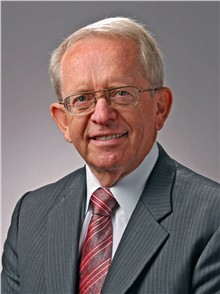
Dr. John Hannah on The Place of Theology in the Postmodern World

Is the Study of Theology and History an Antiquated Discipline?

OL Hannah

The opening lines of Charles Dickens’ 1837 novel, A Tale of Two Cities, a description of turbulent revolutionary times in France and England, seems an appropriate starting point for a description of our times. There is warrant for wondering if the era of the birth of the noble experiment in enlightened thought differs significantly from the era of its unraveling and denigration. “It was the best of times; it was the worst of times. It was the age of wisdom; it was the age of darkness. It was the epoch of belief; it was the epoch of incredulity. It was the season of light; it was the season of darkness. It was the spring of hope, it was the winter of despair,” wrote the literary craftsman and social critic.

Many in the social sciences alert us that we are living in times of upheaval, a time of transition from one system of values and assumptions to another. Some suggest that the unease will subside as we make our peace with the changes; others that we are entering a dark, glacial age and the destruction of civilization.

Comfortable or not, at least two things can be argued from all of this.

First, this is a time of rapid and often disconcerting cultural and social change; the contrasts between the world of our grandparents and ours is akin to Gulliver’s transport to the land of the Lilliputians in its newness and culture shock.

Second, no amount of wishful thinking will make the negative features of the postmodern world, or even the “modern world,” vanish as a bad dream in the night. The church will live and flourish in this era as it has in every other because its origins and power are not of this world, but from heaven; religious doomsayers will all prove as wrong as the naturalistic optimists. The former is true because we are prone to forget, in the flurry of religious activities, that behind the scene of events is the Lord of all history who “works all things according to the counsels of his good pleasure.” The latter is true because human engineering and political agendas, enhanced by vast access to new information now accumulating at a truly staggering rate, have never overcome the destructive potential of human greed from within, nor can they. It is into this world, resolving to trust in the God of the heavens, that we face with joy and delight, seriousness and pain, the challenges of the new century.

The Denigration Of Theology In The Postmodern World

In this strange new world, how much of the past is still relevant and useful? Even more strange in our times is the suggestion that history and theology are beneficial for the health of the church today; but that is exactly what the church needs.

In our day, theology is regarded as an irrelevant, even destructive topic for the health of the church. Parishioners are more attuned to quick, easy solutions to their questions—the gratification of felt-needs and slick and easily grasped answers—instead of the pain of reflection and mental exertion. Pastors, not desiring to bore the flock of God or unnecessarily divide them, seem to view theology as a subject to be broached with extreme caution, even embarrassment, while waxing eloquent on topics that are hardly the central focus of God’s revelation to us. Though perhaps a cruel judgment, it can be argued that contemporary sermonic fare deals far more frequently with self-help and psychological issues than with the knowledge of the character of God, leading to behavior that is the fruit of sound theology.

Thomas Erskine was quite correct when he argued that “religion is about grace, ethics about gratitude.” Worship is more often a celebration of personal security and temporal happiness than the frightening, yet wonderful experience of coming before a holy God whose demands are only met in his Son. “I Am So Glad I’m a Part of the Family of God” is not a song for Sunday morning; far more fitting is “Holy, Holy, Holy.” Theology is wrapped in a veil of silence, like some haunting past hurtful experience. Or we are told that theology is actually harmful for postmoderns. I reject such talk as wickedly flawed and destructive for our Lord’s church. Yet it bears asking, “What, then, is the value of theology in today’s world?” Why has so much that has been written by so many over the centuries now lying unread? Is the study of theology and history of marginal value in the Christian community today?

While there are some notable exceptions, articles on the contemporary relevance of theology seen through the lens of history have been written generally by academicians for the scholarly community. Such defenses are rarely aimed at our pastors and an inquiring laity. Largely this is the case, I suspect, because the intellectual content of the Christian faith has been diluted. Theology is not merely about the occupation of scholars; the intended audience is that of pastors, Christian workers, and the Lord’s people in general. A truly biblical theology seeks to avoid the perils of lofty but irrelevant intellectualism and mere speculation on the one hand and the often superficiality of popular literature on the other. It arises from the belief that the quest for the knowledge of God is not an idle pastime, that spiritual vitality in any era is found in people who know their God, and that the greatest danger for the church is ignorance of God. Fears and adversaries come and go, but only those who know God can change the course of human events, bring permanence from impermanence, and speak a word of peace in a world that knows only self-advancement, self-hope, and self-fulfillment. In short, theology is a call to the church to return to God and make him the center of its priorities and life.

Let’s think a moment. Has the decline of doctrinal preaching in our churches prevented the intellectual anemia and cultural irrelevancy that has marginalized the church as an advice-giver among Americans? Has the de-emphasis on God brought to the church more willing hearers and maturity to the people who are already there? No! I believe that the decline of theological content in preaching is the cause of the weaknesses of the church today. When the message of the church merely affirms the morals of the culture or makes us more culturally identifiable, the church has ceased to be the church. The essence of Christianity is not morals; morals are the fruit of a vibrant profession of it. If we aim to promote the fruit of Christian faith without its foundation in the knowledge of God in Christ, how are we any different from the moral Jehovah’s Witness, Mormon, or secularist? A person can certainly have a solid home, raise good children, and contribute to the betterment of society without Christ. Those wonderful things are not what distinguishes a Christian from others.

I am asserting in this article that theology does matter in the life of the church today. Both history and theology are indispensable to the vitality of the church. Scholars have lamented the denigration of historical studies; departments of history have steadily fallen prey to budgetary restraints while investments for science and technology have mushroomed. If financial expenditure is an evidence of priorities, theology and history have hit upon hard times to say the least! Such decline of interest among our scholars and teachers has an interesting parallel to the disinterest in theology in the churches. It seems to be far easier to worship God with our emotions and affections today than it is with our intellectual energies. Did not the Lord instruct us that the foremost of the commandments is that we should “love the Lord our God with all your hearts, and with all your soul, and with all your mind, and with all your strength” (Mark 12:30)? A fragmented society has led to a fragmented church. A culture that marginalizes rational reflection has infiltrated the church of the Savior; we live in a world that generally appreciates knowledge for its pragmatic and utilitarian ends rather than as substantive essence. The Bible asserts that the fear of God is the beginning of knowledge. The pulpit fare in our churches, at times, appears to be sending the message that what is most important is to get in contact with the innermost recesses of the self. Failure, impotency, and disappointment come from ignorance of the appropriate recovery group or the latest “secret” of walking with God.

In short, the church seems to be in a rather awkward situation. Having struggled for several centuries to deflect the intellectual attacks posed by Enlightenment rationalism, which denigrated the biblical notions of God, sin, and grace, the church shows signs of imbibing those very characteristics: the penchant for micro-management (the emphasis on procedures, “steps,” and “rules” for everything from church growth to personal happiness); pluralism; tolerance; and privitization (i.e., truth is only personal and private, not public or universal). Theology, once the “queen” of all the sciences, is rapidly becoming “an embarrassing encumbrance.” (See David F. Wells, No Place for Truth: Or, Whatever Happened to Evangelical Theology? Grand Rapids, Michigan: Eerdmans, 1993, 300).

Thomas C. Oden suggests that the state of the church is that of “an ecclesiastical swamp.” This has been produced, in his judgment, by three intellectual sources: first, the emergence of “an intellectual immune deficiency syndrome, a marked decline of Christian content in the churches with a corresponding emphasis on the emotions”; second, “an acceptance of many of the premises of modernity”; and, third, “an ignorance of the roots of the church in classic orthodoxy.” (See Thomas C. Oden, “On Whoring After the Spirit of the Age,” in No God but God: Breaking with the Idols of Our Age. New Brunswick, New Jersey: Rutgers University Press, 1963, 196).

If this is true, then the church is truly in a precarious time. The church, and I mean the evangelical portion of it, is in a strange situation. We are increasingly defined by and identified by the very movement we invested enormous energies to denounce as unbiblical and ungodly. It may be argued that modern evangelicalism stands under the same judgment as turn-of-the-century liberalism that also berated doctrine while stressing morals and culture. I write from the conviction that the church must be aroused to reinvest heart and mind in historic, Christian orthodoxy. A Christianity separated from historical credibility is not a biblical faith; a Christianity without theology is morality and not the “faith once for all delivered to the saints of God” (Jude 3).

The Place Of Theology In The Life Of The Church

While theology is not to be confused with the Bible, there is an inseparable linkage between the two. As the Spirit of God and the Word of God are never severed (that is, God speaks most assuredly through his Word to our consciences, both private and corporate), so the Word and theology are inseparable. The source of our knowledge of God, which is the meaning of the term “theology,” is fundamentally Word and Spirit related. Theology is the fruit of the study of the Word that is the voice of God.

The Role of Theology in the Church is at least Four-fold:

(1) First, the task of the skilled theologian or pastor is to gather together the knowledge of God available to us with a view to the church’s worship and service. Older theologians, particularly of the English Puritan tradition, did not seem to define theology in cognitive terms (i.e., the science of the knowledge of God) though their endeavor to understand the Scriptures was remarkable as a scientific endeavor. They often referred to it as “the art of living unto God” or “the art of living blessedly forever.” Theology was neither a mere intellectual discipline nor the attainment of a body of knowledge; it was a means to an end, a godly life. Theology, then, may be defined as the distilled knowledge of God that is the foundation of a walk with God. No one can walk with a person they do not know, neither can we say we walk with God if we do not have an accurate knowledge of him. It is not about the admiration of gathered insights, however wonderful. It is about responding appropriately and regularly to the God revealed to us. This is the task of the pastor for his people. The pastor is to lead his people to a deepening knowledge of God. His tool is a knowledge of God derived from the Bible.

(2) A second function of theology, and here I have in mind historical theology, is to preserve the church from fads and novelty Knowledge of the past keeps the church from confusing the merely contemporary with the enduringly relevant; it distinguishes the transient from the permanent. In so doing, it spares the church of harmful diversions, which at the moment may appear promising. Knowledge of the past bequeaths a stability and confidence in a world where flamboyant voices lend credibility to spurious ideas promising success. In essence, theology presents to the church a valuable accumulation of enduring insights, often acquired at an enormous price, without expense to us along with many relevant lessons and warnings. It abounds in lessons and examples, both positive and negative, for the contemporary church. It thus functions with a view to the growth and maturity of the church by increasing the church’s understanding of its teaching. The relationship between the study of systematic theology and the study of historical theology is integral. Theology is both a science and an art concerning itself with the meaning of the Bible. Historical theology is a discipline that seeks to understand what the church has taught that the Bible teaches. The two disciplines function together. Knowledge of the past provides a wealth of insight about the meaning of texts. History is not opposed to creativity, though it is opposed to novelty.

History is not opposed to creativity,

though it is opposed to novelty.

(3) Third, theology in its historic context and development will preserve the church from error; it provides both apologetic and polemic weapons against deception. The accumulated wisdom of the church can provide an arsenal of arguments as we struggle to preserve the church today from its opponents within and without. For example, the church has been ravaged both by an over-intellectualization of the gospel, as well as by a de-emphasis on the cognitive aspects of the faith; it has alternated between an arid faith full of knowledge but with little vitality and an experienced-centered faith with little intellectual content. An over-emphasis in either direction has proven destructive to Christian experience. Though a contemporary issue, this is not the first time that the church has been forced to articulate the relationship between “the faith as known” and “the faith as experienced.” The collective insights of the past are instructive in gaining a perspective.

Another issue that has recurred in the church is (the question of) the cause of something and its proper effect. Are morals in some sense the cause of salvation or are they the necessary and proper effect? The struggle of the church in the past with this issue provides helpful insights as we attempt to handle the same controversies in a contemporary setting.

(4) Fourth, knowledge of history and theology provide a bulwark against pride and arrogance borne of the thought that any one church or ecclesiastical tradition stands in the exclusive heritage of first century orthodoxy. While all ecclesiastical expressions of the church today mirror a continuity with the one, holy, and apostolic church, there are also significant discontinuities as well. Various ecclesiastical traditions, whether Episcopalian, Presbyterian, or Congregational, claim biblical warrant for their structures yet each have evolved forms. Some have more elaborate structures than others. But do they possess explicit biblical justification for all their forms? Church structure often has emerged out of a particular historic setting and answers needs of the time. While it may be argued that one form or another more faithfully reflects the Bible, each evidences modification from the embryonic structure of the New Testament.

Knowledge of continuity in the midst of discontinuity should have a multiple function. First, it should cause us to be careful in claiming a biblical precedent for all that any particular church does. Second, it should cause us to make continuity with the New Testament, not later additives, the ground of true fellowship. And, third, it should cause us to focus on those areas of truth that are truly timeless and enduring, recognizing we all cling to certain things that are more a part of our tradition and our own accustomed way of doing things than strictly biblical.

In the process of the proclamation and defense of the faith through the centuries, the church has become the heir of a rich treasure. In countless books and other forms of literary witness men and women have recorded their faith in action. With literary skill and biblical insight the people of God have defended the faith, explained its deepest complexities, and revealed its practical implications. It is not too much to assert, it seems, that much of the literature produced by the church today appears trite, superficial, and anemic when compared to the rich treasury of the centuries. The works of Athanasius, Augustine, Cyril of Jerusalem, Anselm, Aquinas, Luther, Calvin, and the English Puritans, to mention some now silent voices, have bequeathed such a wonderful heritage of insights that we are impoverished if we remain in ignorance of them.

Finally, knowledge of doctrine supports the Bible’s witness to the triumph of the church. Through times of duress and trial the people of God have been preserved and steadfastly have proclaimed the gospel of our Lord Jesus Christ. The devil has employed every strategy to destroy the church, armies have marched against it, faithless scholarship has relentlessly assaulted it, internal bickering has rent it, and martyrdom has depleted its ranks from time to time. Yet the church marches forward in triumphal anticipation of the great consummation when the kingdoms of this world will be put under Christ’s feet, and the bride, without spot or blemish, will be given to the king. Theology witnesses to the truth of the Scriptures that the world will not end with some deluded false messiah pulling off the ultimate threat to destroy the globe through a nuclear holocaust, holding the world hostage, but in the glorious reign of the King of Kings.

Can We Have A Knowledge Of God Without The Study Of Theology?

(1) Certain basic assumptions support the endeavor of studying theology. Our fundamental assumption is that there is truth available to us; it is found both in the Bible and in the church’s study of the Bible. The Bible is the Word of God written; Christ is the Word of God revealed in it; and the Spirit is the voice of God in it revealing Christ. The Bible is the work and witness of the triune God. Faith is Word-invoked by the Spirit who reveals Christ, our redeemer, enlightening our eyes, redeeming the soul, and infusing the very life of God into us. With child-like embrace, the church has clung to the Bible, searching its pages for direction in life and work. The central focus of the Bible is Christ.

(2) A second assumption is that the Bible has been and can be accurately understood by the church. The Spirit promised through the apostle John that he would lead us into all truth (1 John 2:27). While this has been the subject of considerable discussion, it cannot possibly mean that all the details of orthodoxy are universally known in the church or that unanimity of teaching would prevail. There is simply too much division of opinion in the churches. “All truth” seems to be a reference not to all truth without distinction, but to all truth without exception; it embraces what Christians essentially believe and have commonly embraced across all traditions and denominations. It is a reference to Christ, his person and his work, which the Spirit reveals universally to all believers. While Christians have not been able or are able to agree on a wide range of topics (e.g., the sacraments, spiritual gifts, form of church government, eschatology), there is common consent in the redeemed community about the Lord Jesus Christ.

(3) A third assumption is more difficult to explain. It is the idea that our understanding of what the Bible teaches or says (i.e., theology, doctrine, and dogma) has evolved both negatively and positively. History tells us that theology often has deviated from the path of biblical permissibility while simultaneously it has maintained a remarkable congruity to it. It is one of the duties of the historical theologian and pastor to demonstrate how the church has stood in continuity and discontinuity with the apostolic age.

While the evangelical Christian church has correctly understood the essentials of the gospel, this does not suggest that in every particular the various churches stand in continuity with the apostles’ teachings; this is a logical impossibility. Either one particular community is in conformity with the first century revelation of God or none of them is in every detail. It is my understanding that no single assembly of saints or denomination, however orthodox, evangelical, or primitive, strictly follows the Bible. While the church has sought to be always faithful, the meaning of texts is often subject to more than one interpretation. Theology is often the art of establishing central, classic texts, and every system of doctrine may fail to give proper regard to certain other proof texts. Circumstances also can furnish profound insight into the meaning of texts or current prejudices. No single individual, church, or denomination has escaped human frailty, though there is continuity and uniformity in the essentials of Christ, his person and work.

(4) A fourth assumption is that theology has been forged in church history; the content of our faith was given by the apostles and understood clearly through the centuries in the believing church. However, the explanation of the revelation of God, not the fact of it, has emerged in history. It is amid attack from the enemies of the church or the serious intellectual inquiries of those inside the church that has occasioned the development of theology.

The Bible neither came to us completely intact as today nor with a topical index! It came to us a volume at a time; it was the verbal expression of the oral message of the church. For example, some have argued that the doctrine of the absolute co-equality of Christ with God implied that Christianity was not a monotheistic faith, an early Gnostic charge. Today some claim that the idea of the deity of Christ is not a first-century truth, but one that was invented in the fourth century by the bishops of the church at the first ecumenical council, Nicea (325). The Gnostics understood that the early churchmen made this claim; others deny that they ever made the claim. The answer is that the church has always made the claim, but it took serious reflection upon the Scriptures, as well as other circumstances, to explain, not invent, it. Theology is made in history; it is the result of the study of the revelation of God. It is a human endeavor by fallible people who engage all their intellectual strength and Spirit-inspired ability to understand an infallible book with the sure promise that he will lead us into “all truth.” Theology is a historical question and answer exercise. Presented with questions, apparent difficulties with the coherency of our faith, the church has given them serious thought. The church, in thinking about the inquiries, has reflected deeply on the Bible as the fountain for the substance of an adequate reply. Those answers, when delivered in written form, are doctrine. This formulated reply derived from the Holy Scriptures, the church has used to answer her critics.

Can We Have A Knowledge Of God Without The Study Of Theology And History?

While scholars throughout the disciplines of historical studies follow the same basic method of research, generally the rudiments set forth by Francis Bacon years ago, there are significant differences in their philosophical assumptions in approaching the task. The overarching assumption for the Christian pastor is a belief in the sovereignty of God in all human affairs and the decreed outworking of his purposes. His pastoral work is a blending of the data derived from the Bible including history and prophecy as well as the study of the events and various circumstances outside the Bible. A rather insightful attempt at writing a history of mankind employing this method was devised by the American Puritan Jonathan Edwards in his A History of Redemption (1739) to which I am indebted for many of my own views in the matter. In this particular book, Edwards suggests that the divine purpose in creating and sustaining mankind through the centuries is that God is gathering a bride for his Son, the Lord Jesus.

The Bible describes human history from beginning to end; it is selective of material and there are enormous gaps in the story, particularly of the events between the two testaments and the two advents or comings of Christ as well as the creation itself. The Bible begins with a description of a created, unspoiled garden and concludes in the same fashion, one in time and the other in eternity. The function of the book is also two-fold. It is a revelation of comfort and condescension.

It is about the comfort of God for his people through his condescension to them through prophets, judges, and kings though most perfectly and completely in the Lord Jesus Christ, and it is about his triumph in and through history. History is really a redemptive drama! If the subject of the Bible is Christ, the central event in the revelation of God is the cross.

The Bible is composed of two testaments or covenants, an old one and a new one. The Old Testament is a book of shadows; the ceremonies and symbols the ancient people of God anticipated the coming of a promised deliverer. Beginning with the promise to Adam after the Edenic catastrophe (Genesis 3:15), God progressively revealed the One who would crush evil. The Old Testament describes his person and his work. Gradually the former is unveiled as details about him are progressively disclosed (e.g., he is to be a male; a Semite; a son of Abraham, Issac, and Jacob; a son of Judah; a son of David). His work is gradually unveiled through ceremonies such as the Passover and the Day of Atonement. The summit of the shadowed unveiling is the revelation of Isaiah the prophet (chapter 53). In essence the Old Testament era is one of anticipation of the coming of the vaguely explained deliverer, shadows that gradually take on substance.

No longer revealed in shadow as in the Old Testament (Hebrews 1:1), Christ stands in his wonderful clarity in the New Testament revelation, where the person and work of the promised deliverer is unmistakably unveiled. The central event of the Bible is Calvary where God’s promised deliverer became mankind’s redeemer. There he rendered a sacrifice, a payment in his own life’s blood, to divine justice in behalf of sinners, where atonement was made for sin, so that God could justly and freely forgive sin without a violation of his holiness.

(1) The first of two monumental events in the Bible, one of two central foci of the book, is the cross of Christ. The long-anticipated Christ became our sin-bearer enduring the wrath of God due the sinner (2 Corinthians 5:21). There the debt of sin was paid so that God could be both just in his character remaining always holy and yet justifying, declaring sinners righteous in his sight. Beyond the gospels and in the epistles God revealed something of the early history of the church. Then through prophecy we are told about his second coming, not as a savior but as the Lord and king of history.

(2) The second grand focus of the Bible is his return as king to rule over his redeemed in a renovated garden. If the great period before the advent of Christ can be called one of anticipation, the period before his coming again may be called one of both anticipation and reflection. Christians the world over have a double view as they gather for worship week after week; we express expectancy of the Lord’s return and we reflect in the study of the Scriptures on his first coming, either from shadowed, Old Testament texts or the clearer New Testament revelation. At the end of time, when Christ comes to reign as king over the earth, the third era will commence, the era of fulfillment. All the promises of God, from both testaments, will come to fruition just as the Bible indicates; righteousness will prevail, not chaos. The era between the two advents of the Savior comprise the period of the history of the church, the era of the development of the apostle’s doctrine.

A Plea For The Importance Of Theology In The Postmodern World: The Study Of Theology Is At The Heart Of Our Task

Having written on the history of Christian thought and the importance of theology for the church today, I am compelled to ask the question that haunts every writer. Are my thoughts a service to the Lord’s church or has all this work simply added to the proliferation of small, useless ideas that have littered the publishing landscape? Does anyone really care about theology anymore?

These concerns are particularly intense because we are now living in the world of post-modernity. We exist within a culture that has repudiated many of the assumptions of modernity, such as the importance of the rational, the propriety of the orderly, and the possibility of objective truth. We live in a world where personality has more street value than character, psychological wholeness than spiritual authenticity. We find ourselves in a world where pleasures are embraced without moral norms and social responsibility. Christian truth is attacked not so much for its particular assertions, but for its fundamental claim that there is such a thing as binding, objective truth. The quest for truth has been replaced with the preoccupation for pleasure and entertainment. Thus, we live in a world of the therapeutic and the psychological, an endless quest for self-fulfillment and entitlement. Sin has become little more than the infringement of personal rights and privileges; there is little thought of defining it by the standard of the holiness of God. It is in this kind of a world that the question of the relevance of theology is raised. With so much interest in the management of life, what is the benefit of such a seemingly esoteric thing as timeless, transcendent, historic truth?

The question is complicated by the fact that modern evangelicalism is in a state of crisis. The very community that historically has been deeply interested in transcendent, timeless truth seems more earnestly intent upon focusing on the merely private, personal, and temporal. If I could be so blunt, the church has lost its soul. The quest for contemporary relevance has led it down the path of increasing irrelevancy and marginalization. The evangelical church is on the brink of becoming another of the many social, do-good agencies whose mission purpose has to do with helping people more fully to enjoy this life while neglecting the implications of eternity. While our culture has shown a marked inclination to secularism, the church seems to have followed suit. One of our recent Christian social critics has summarized the problem quite succinctly, “The stream of historic orthodoxy that once watered the evangelical soul is now damned by a worldliness that many fail to recognize as worldliness because of the cultural innocence with which it presents itself” (No Place for Truth, 11).

This is characterized by a decline of Christian content in teaching and preaching, with an accompanying interest in self-help programs that merely promise a better management of everyday crises. There is also an appalling ignorance in the churches of their rich Christian heritage (“On Whoring After the Spirit of the Age,” 196). Mark Noll speaks of “the scandal of the evangelical mind,” the denigration of the intellectual content of the faith and the elevation of the subjective and personal (Mark A. Noll, The Scandal of the Evangelical Mind. Grand Rapids, Michigan: Eerdmans, 1994, 35–36). Barna complains that the average Christian is uninterested in life-changing religious convictions, having little more than the most superficial awareness of sin, grace, and redemption (George Barna, The Barna Report. Ventura, California: Regal, 1994, 44, 58).

This moral and intellectual crisis comes to the evangelical church when Christianity is without a serious secular opponent; there are no potent rivals in our culture making claims to having objective, final truth. Such truth claims have been abandoned in the postmodern experience.

David Wells has found a general parallel to the situation in the churches today to the era just prior to the Reformation in the sixteenth century.

(1) First, the two churches, he suggests, are similar in that they each manifest a lack of confidence in the Word of God. In the fourteenth and fifteenth centuries the denigration of the Scriptures was manifested in the church’s appeal to papal pronouncements; today, it is to business know-how and psychological counseling.

(2) Second, both churches reflect a flawed understanding of the seriousness of sin. One of our philosophers, having reflected on the decline of the discussion of sin within his own religious heritage simply has stated: “The new language of Zion fudges: ‘Let us confess our problem with human relational adjustment dynamics, and especially our feebleness in networking’… ‘Peanut Butter Binge’ and ‘Chocolate Decadence’ are sinful; lying is not. The measure of sin is caloric.” (Cornelius Plantinga, “Natural Born Sinners: Why We Flee from Guilt and the Notion of Sin,” Christianity Today 38. November 14, 1995, 26).

(3) Third, in both instances the church, having lost its grasp on sin, has minimized the glory and efficacy of the death of Christ (David F. Wells, Losing our Virtue. Grand Rapids, Michigan: Eerdmans, 1998, 28–29). Sin and grace are intrinsically linked. The former is the problem; the latter the solution. Weak, unbiblical views of mankind’s plight lead to a weak solution to it. Without the biblical doctrine of human depravity, Calvary is little more than a moral object lesson of how to behave when misunderstood and tragically treated. Christ is reduced to a pathetically misunderstood fellow who neither died for sin or rose from the dead to verify his victory over it.

These very circumstances are the reason for the plea. It is a call for the church—pastors, teachers, and laity—to reverse the recent trends that pose a threat to the historic gospel of Christ by humanizing sin and, therefore, speaking lightly of the work of the Savior. It is time for us to listen to the Scriptures for our message, not the beckoning cry of a pleasure inebriated culture. The need of the hour is not for revival; it is for something even more fundamental. It is time for a reformation in the church. Revival has to do with the extension of the gospel; the greatest need in the contemporary church is to rediscover the gospel, its glory and its power. It is time to return to the fundamentals of the faith and be refreshed in its truths, to gain anew a love and respect for the Holy Scriptures. Revival without reformation is religious fervor at best; revival out of reformation is the only hope of the church.

The Centrality Of The Gospel In Christian Proclamation

My plea is a rather simple one. It is one that has been stated with regularity, but practiced infrequently. Theoretically, I suppose, it is easy to talk about gradation of convictions.

(1) First, there are those beliefs that each of us holds that are simply essential. These are the core doctrines of Christianity without which there can be no Christianity, the beliefs that one would hold as so central that there should be a willingness to die for them. Among these, for example, may be the existence of God, the deity of Christ, the atonement, and salvation by grace without any human merit.

(2) Second, there is that cluster of beliefs that are reckoned to be very important and are held with the same conviction from the Scriptures as those most essential truths, but with the recognition that there is legitimate debate among Christians on their interpretation. Often these are what you might call “denominational distinctives,” if held by a particular religious group, or simply personal convictions. Examples of these types of convictions might be a particular view of baptism or the Eucharist, church polity, or the chronology of Last Things. While they may be fervently held, they are nonetheless teachings that are subject to a variance of opinion and are not issues that should divide the fellowship of the saints in the broadest sense.

(3) Third, there is another realm of beliefs that are distinctly personal. They are neither core doctrines of Christianity nor those embraced in a creed by any particular Christian group. They are simply private, personal views that arise from the study of the Bible and the experience of life. Traditionally these have been defined as “adiaphoria,” in matters of difference. They might have to do with certain moral issues that are neither prohibited nor propounded by the Scriptures. Experientially, however, these concentric circles of beliefs are often blended together; sometimes, mere personal beliefs are treated as core truths. My plea is that these distinctions be recognized and that our Christian pastors, teachers, missionaries, and laity make sure that the central truths be foremost in our proclamation of Christianity.

The cardinal doctrines of the Christian faith concern the person and work of Jesus Christ, the gospel. The most important person in all of history is Jesus Christ; he alone must always be the passionate message of the church. Without Christ, there can be no gospel that is really good news. He is the essence of the Bible. While there are teachings that are important, greatly adding to the maturity of the church, Christ is the keystone of it all. The very center of the Scriptures is Christ. The cross of Christ is the great moment of redemptive history. That should always be, along with all the teachings of Christ that fill out its deepest meaning, the essential proclamation of the Christian community.

What Happens When The Non-Essential Becomes A Preoccupation?

There is a hazard for the church of Jesus Christ when the peripheral becomes a preoccupation, when the core doctrines of the faith are superseded by other, perhaps even, solid and wonderful teaching. I see at least two negative consequences.

(1) First, when the non-essential teachings consistently are taught, the impression is conveyed that they are the very heart and core of the faith. To be biblical means, at least in part, that one not only derives the content of teaching from the

Bible, but that one also submits to the priorities and centralities of the Bible. The pages of history are replete with examples of people who have majored on the minors instead of minoring on them. Such a tendency distorts the gospel of Jesus Christ when the time-honored central teachings of the church are substituted with the particular insights of a teacher or a group, teachings not shared by the entire Christian community. My plea is that we become “catholic” in our profession of Christianity. We must stand together on the historic Christian doctrines, majoring on them in our proclamation of Christ, and not allow ourselves to be drawn away by the attractions of novelty or complexity.

Novelty will always get a crowd

and build a following, but it does

not last beyond the gifted and winsome

teacher or teachers who proclaim it.

(2) Second, there is also a danger in majoring on minors for those who preach and proclaim them. Novelty will always get a crowd and build a following, but it does not last beyond the gifted and winsome teacher or teachers who proclaim it. There is a rather wonderful dynamic in all this. Christ has so ordered things, it appears, that the enduring truths of Scripture last from generation to generation, but novelty is short-lived. Those who teach other than the core truths of the gospel as gospel-truth can be compared to a person who walks along a beach in the soft, moist sand when the tide is out. In this analogy, they leave their footprints or teachings, as it were, in the sand, but the tide eventually comes and washes them away. In past centuries, many have taught unique or novel insights, but most of them have passed with the “tide” of time. In refusing to major on the great and timeless truths of the gospel, precious time is poorly managed, the gospel distorted, and the Lord’s people confused.

Where To Go From Here?

The history of Christian thought suggests that there is a timeless core of Christian truth. It is what we call theology. It has survived the battering of those unsympathetic with it and the minimizing of it by its advocates. Because Christ and his gospel came to us from heaven, it has and will survive the ravages of friend and foe. Will it, however, in the American churches? Or will our churches drift like the churches of the great European Reformation in the sixteenth century, the churches once vibrant with the teachings of Luther and Calvin, that are now emptied of all but the old? Do our churches have the potential of becoming tomorrow’s museums? Our pastors and teachers must make theology and history their task, the pulpit and lectern their forum. In this era of theological drivel, we must be people of courage in the proclamation of timeless truth. The issue is not that much in our contemporary churches is not stimulating and exciting; it is that it is not eternal! “Help us, O Lord, not to be ashamed of the simplicity and wonder of the gospel of Jesus Christ. To preach nothing other than Christ and him crucified calling men and women, boys and girls to this One who has loved us and loosed us from our sins in his precious blood. Amen!”

*This article is a summary of John Hannah’s excellent book on Doctrinal history, Our Legacy (Colorado Springs, Colorado: NavPress, 2001). RAR 11:1 (Winter 2002), pp. 12-32.

About Dr. John Hannah

John Hannah

Department Chair and Research Professor of Theological Studies, Distinguished Professor of Historical Theology

B.S., Philadelphia College of Bible, 1967; Th.M., Dallas Theological Seminary, 1971; Th.D., 1974; M.A., Southern Methodist University, 1980; Ph.D., University of Texas at Dallas, 1988; postdoctoral fellowship, Yale University, 1994.

Dr. Hannah has enjoyed a distinguished career for more than 35 years at Dallas Seminary. He is a frequent and popular church and conference speaker both at home and abroad. His teaching interests include the general history of the Christian church, with particular interest in the works of John Calvin, Jonathan Edwards, and John Owen. His publications include books, journals, chapters in books, audio materials, and computerized works. He currently is researching and writing a history of Dallas Seminary, with a general history of the Christian church after that. He remains active in church ministries and serves on the boards of several organizations.

The Power of the Gospel in Kirsten Powers Life

Kirsten Powers

She is a political analyst, blogger, columnist and commentator. She is a Democrat who regularly contributes to USA Today, Newsweek, The Daily Beast, Fox News and the Wall Street Journal among other publications. She formerly served under the Clinton administration from 1993-1998 and was appointed Deputy Assistant U.S Trade Representative for Public Affairs.

In an interview with Focus on the Family, she shares how she converted from atheism to Christianity. She said: “I was not looking to be a Christian. The last thing in the world I wanted to be was a Christian. I had grown up as an Episcopalian, but not evangelical, born again, or any of those kinds of things. It was very high church, kind of mainline, protestant, episcopalian. I did believe in God, but it wasn’t anywhere near what would come to happen to me later in life.

“When I went away to college, whatever little faith I had, I lost. I ended up graduating from college. I worked in the Clinton administration. All my friends were secular liberals. At this point, I really got even more deeply into an incredibly secular world because now, all my friends were basically atheists, or if they had any kind of spirituality, they were very hostile towards religion, Christianity in particular. So, I really didn’t have any interest in it.

“I started dating someone who went to Tim Keller’s church, Redeemer Presbyterian in New York City. Out of curiosity, I went with him. But I told him upfront that I would never become a Christian; that it’s never going to happen. After about six or seven months, I began to think that the weight of history is more on the side of what [I was hearing at this church] than not. Tim Keller had made such a strong case, that I began to think it’s not even smart to reject this. It just doesn’t seem like a good intellectual decision.

“Really, it was like God sort of invaded my life. It was very unwelcome. I didn’t like it. Obviously, I started having a lot of different experiences where I felt God was doing a lot of things in my life. It’s kind of hard to describe, but I did have this moment where the scales just fell off of my eyes, where I was saying, ‘this is just totally true, I don’t even have any doubt.’ …I don’t really feel like I had any courage when I became a Christian, I just gave in. I wasn’t courageous; I didn’t have any choice. I kept trying to not believe but I just couldn’t avoid [accepting Christ]. If I could have avoided it, I would have. There is nothing convenient about it in my life or in the world I live in. It’s not like living in the South where everybody is a Christian. I live in a world where nobody is a believer. But God pursued me.” Her name is Kirsten Powers.

Article adapted from: Kirsten Powers: How a Liberal Democrat and Former Atheist Came to Know Jesus Christ as her Savior – Gospel Light Minute ^ | 2 June 2013 – Posted on July 14, 2013 5:59:59 AM PDT by Gamecock

Dan DeWitt on How is Evil Compatible with the Gospel?

Dan DeWitt

LOUISVILLE, Ky. (BP) — “There are man-eating sharks in every ocean. But we still swim. Every second somewhere in the world lightning strikes. But we still play in the rain. Poisonous snakes can be found in 49 of the 50 states. But we still go looking for adventure. A car can crash. A house can crumble. But we still drive. And love coming home.

“Because I think deep down we know all the bad things that can happen in life they can’t stop us from making our lives good.”

The preceding words are from an All State Insurance commercial. The line “People live for good” appears on the screen at the end.

Believers and unbelievers face the fatal force of a cruel and uncaring cosmos every day. Atheist author Alex Rosenberg makes this point: “Reality is rough. But it could have been worse. We could have been faced with reality in all its roughness plus a God who made it that way.”

He’s right. It could have been worse, especially if God really did make it this way. For Rosenberg, the universe was born from chance headed toward certain doom that doesn’t care about what happens on the frail surface of one of its planets.

Rosenberg admits that from a naturalistic perspective there is no objective category of evil. But a critique often leveled against the Christian faith is that the existence of evil is incompatible with belief in a loving and all-powerful God.

I believe God is sovereign. I totally get it when we say that God does all things for His glory. But how does this jive with our day to day encounters with evil?

I’m not sure that I will ever be able to exhaust all of what that means and how all it all works out. I believe God is all-loving and all-powerful. I believe He could stop evil. And everyday reality reminds me that He hasn’t. Yet. I believe there is a timeline, that the Father alone knows, when evil will be extinguished.

But there are some foundational truths that frame the way I think about evil in our world that keep me from despair and actually enable human suffering to point to the goodness of God.

I know that God created the universe as good (Genesis 1). I believe what the psalmist said that to be near to God is our good (Psalm 73:28). And I also know that from the very beginning of time humanity has chosen to go the opposite direction.

We have to see Adam’s fall (and ours) against the backdrop of God’s providence. An all-wise Creator made a creature who possessed the ability to make meaningful decisions. Adam chose unwisely, and so do we.

As John Lennox has pointed out, parents take the same risk when they choose to have children. Kids can choose to reject their parents or to love them. God reveals Himself as Father, and even when Jesus told a story of God’s great love He packed it in a parable about a rebellious son who received astounding grace from his father upon returning home.

So here we are in a fallen and cursed world facing natural and moral evil as we serve a Heavenly Father we can’t see. God never promised it would be easy. But we can experience His goodness even in the midst of the bitterness of this life.

God has promised to bring an end to evil and to reverse the curse. God promised Adam and Eve that one of their descendants would crush the head of the serpent. This was inaugurated by Jesus’ life and ministry but it will not be fully realized until His return.

So we live in the “already — not yet” of this reality.

We should be careful not to too quickly appropriate certain promises that belong to the “not yet” of the Christian faith. A passage we often quote at funerals is that Jesus has removed the sting from death (1 Corinthians 15). In context, this is part of the culmination of history when Jesus destroys all of His enemies, including His final enemy, which is death.

So for now death does sting. For now the grave feels victorious. Consequently, we grieve. But we don’t grieve as those without hope (1 Thessalonians 4:13). This is the power of the Gospel at work in the life of the Christian.

Dark times may tempt us to doubt the reality of God’s power and goodness. But God expressed His love for us by entering our suffering. In the incarnation Christ took on the form of a servant to be mocked, whipped and nailed to a tree.

And Christ’s resurrection was God’s validation stamp on the expiration date of the grave. Death is not final. Thanks be to God who gives us the victory through our Lord Jesus Christ (1 Corinthians 15:57).

I’m not sure how the problem of evil could be considered incompatible with Christian faith if it is viewed through a biblical framework of creation, separation, incarnation and regeneration.

We rebelled against our Creator, He responded in love when He entered our despair, died in our place and defeated the grave so that we might have new life. This is the Gospel.

Like the commercial, I believe people live for good. I believe this is the image of God stamped on every individual, and I believe it is, in part, a result of the common grace bestowed upon all of humanity.

But I don’t think we can muster the kind of confidence we need to face a shark and snake infested world by placing ourselves in the good hands of an insurance company. I believe our good will be found in the hands of a loving God who will one day crush the snake and kill death itself.

Article adapted from Baptist Press: First Person, July 15, 2013. Dan DeWitt is dean of Boyce College, the undergraduate school of Southern Baptist Theological Seminary. Get Baptist Press headlines and breaking news on Twitter (@BaptistPress), Facebook (Facebook.com/BaptistPress ) and in your email (baptistpress.com/SubscribeBP.asp).

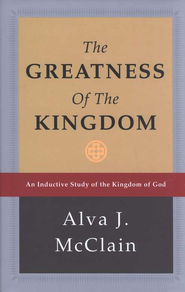
Alva J. McClain on The Greatness of the KIngdom Part 4

PART 4: THE MEDIATORIAL KINGDOM FROM THE ACTS PERIOD TO THE ETERNAL STATE

TGOTK McClain

[EDITOR’S NOTE: This article is the third in the series by Dr. McClain, Former President of Grace Theological Seminary, which constituted the W. H. Griffith Thomas Memorial Lectureship at Dallas Theological Seminary, November 9–12, 1954]

The Mediatorial Kingdom in the Period of the Acts

Two mistakes have been made in approaching the Book of Acts. At the one extreme are a few who see nothing there but the Kingdom; while at the other extreme are those who insist that Acts concerns the church alone. Here again I insist that, as in the Gospels, the Book of Acts must be interpreted historically, i.e., in accordance with the movement of events. To do otherwise will result in serious problems, both in Eschatology and Ecclesiology.

In spite of all our Lord’s teaching prior to Calvary, the disciples had failed to harmonize the fact of his death with their hopes concerning the kingdom. “We hoped,” they say, “that it was he who should redeem Israel” (Luke 24:21, ASV). The solution of their problem was his resurrection, of course, as he reminds them: “Ought not Christ to have suffered these things, and [after that] to enter into his glory?” This would have been clear to them had they not been “slow of heart to believe all that the prophets have spoken” (Luke 24:25–26). That the kingdom has not been abandoned is evidenced by the question of his chosen apostles, asked at the close of 40 days of teaching by the risen King himself on the subject of the “Kingdom of God.” They said, “Lord, wilt thou at this time restore again the kingdom of Israel?” The crucial point of this question is not whether or not there ever would be such a restoration, but rather is the time element. Not will this be done? but when? This is clearly indicated by the order of the words in the original: “Lord, at this time, wilt thou restore again the kingdom to Israel?”  As Alford observes, any other explanation of the question “would make our Lord’s answer irrelevant” in the next verse: “It is not for you to know the times or the seasons” (Acts 1:3–7). However, although the time element is to remain hidden, there is no indication that the kingdom may not be restored within the lifetime of the apostles. We tend to read 19 centuries into these Biblical passages.

Peter’s sermon on the day of Pentecost suggests that the Day of the Lord may be near at hand, and also powerfully argues the right of the risen Jesus to the throne of David. The effect on the audience, composed wholly of Jews from all over the known world, was startling: three thousand were convinced, and their so-called “communism” suggests that they were looking for the great social changes of the kingdom immediately (Acts 2:5–45).

But perhaps the best key to the historical situation in the Book of Acts is found in the third chapter  where Peter, speaking to Israel from the temple porch with all the authority of one to whom Christ had committed the “keys” of the kingdom, makes an official reoffer of that kingdom (Acts 3:12–21). Peter’s words here are unmistakable: even their rejection and crucifixion of the King have not utterly lost for Israel her opportunity. If they will repent and turn again, their sins will be blotted out, and Jesus Christ shall be sent from heaven to restore all the things spoken of by the Old Testament prophets. And in confirmation of the bona fide character of this reoffer of the kingdom, we find early in the Acts period many of the miraculous signs and wonders which were associated with our Lord’s own original offer of the kingdom. This is at least one explanation of why some things are found here which are not being exactly duplicated today.

I do not mean to suggest that there are no miracles in the present age, but rather that they are now of a different character; not great public demonstrations designed to compel recognition (cf. Acts 4:16), as in this early part of the Christian era. The very Greek terms used are indicative of the special nature of these miracles: they were signs and wonders to a nation that by divine prophetic sanction had a right to expect such signs in connection with the promised kingdom. Consider, for example, the outpouring of the Spirit tangible to both sight and hearing (2:1–4), special miracles of healing the sick (3:1–10; 19:11–12), great physical wonders (4:31; 8:39; 16:26), immediate physical judgment on sinners (5:1–11; 12:23; 13:11), miraculous visions (7:55; 9:3, 10; 11:5), visible angelic ministry (5:19; 10:3; 12:7), and instant deliverance from physical hazards (28:5 ).

But once again the authenticating “signs” fail to convince the nation of Israel, although now these signs have become even more impressive by reason of the historical fulfillment of the death and resurrection of the King. For the problem was spiritual and moral rather than intellectual, and throughout the book of Acts we can trace the same growth of Jewish opposition to a definite crisis of official rejection, as in the ministry of our Lord. It came this time, not in Jerusalem, but in the great metropolis of Rome where Paul, now a political prisoner, gathered together the influential leaders of Israel into “his own hired” dwelling. They came in great numbers, and for an entire day he spoke with them, “testifying the kingdom of God, and persuading them concerning Jesus, both from the law of Moses and from the prophets” (Acts 28:23–29). But there was no agreement, and after quoting once more the terrible prophecy of Isaiah which had been quoted by our Lord on a former and similar occasion, the Apostle Paul turns definitely and finally to the Gentiles. Again the nation of Israel had been faced with a decision, a moral and spiritual decision, and once more they made it the wrong way. Thus the historical die was cast, their holy city was shortly destroyed, they were scattered throughout the nations, to abide “many days without a king, and without a prince, and without a sacrifice,” until they are ready to receive their promised King as he comes down from heaven to save them in their last great extremity.

To summarize briefly: the period of the Acts is therefore transitional in character, and its preaching and teaching had a twofold aspect.

First, there is the continued proclamation of the coming kingdom as an immediate possibility, depending on the attitude of the nation of Israel. But at the same time we have a church, begun on Pentecost, as the spiritual nucleus of the coming kingdom.

Second, as the tide of Jewish opposition grows, there seems to be a change of emphasis in the preaching. Whereas the period had opened with the kingdom in first place, the church having almost no distinguishable separate identity; as the history unfolds, the church begins to assume first place, with a glory of its own, while the established kingdom becomes more remote.

The Mediatorial Kingdom in the Present Church Age

Does the mediatorial kingdom exist in any sense during the present era; and if so, what is the relation of the church to this kingdom? I refer, of course, to the spiritual body of Christ, the true church, not that abnormal thing which is called “Christendom.” The promise of God to all believers of the present era is that we shall “reign with Him” in the coming kingdom. This body of true believers constitutes the royal family, the ruling aristocracy of the kingdom. It would not be improper, therefore, to speak of the kingdom as now existing on earth, but only in the restricted sense that today God is engaged in selecting and preparing a people who are to be the spiritual nucleus of the established kingdom. Thus, as Christian believers, we actually enter the kingdom prior to its establishment on earth, something so remarkable that it is spoken of as a translation (Col 1:13).

This peculiar aspect of the kingdom is set forth by our Lord in a series of parables which refers to the “mysteries” of the kingdom. We learn from these that the present era is a time of seed-sowing, of mysterious growth, mixed growth, and abnormal growth; a period of spreading error; a period which will come to the crisis of a harvest; yet out of this period, even apart from the harvest, there will come a pearl of great price (the church), and a treasure (the remnant of Israel purified and regenerated). Thus at the present time while God is forming the spiritual nucleus for the coming kingdom, He is also permitting a parallel development of righteousness and evil in the world; and both shall be brought to a harvest when good and bad will be separated, and the kingdom established on earth in power and righteousness at the second coming of the mediatorial King.

If I understand the words of certain premillenarian writers, they have made two kingdoms out of the one kingdom of Old Testament prophecy; one a purely spiritual kingdom which was established at Christ’s first coming; the second a visible kingdom to be established at his second coming. In the interest of clearer understanding and discussion, it would be much better to say that at his first coming our Lord laid the spiritual basis for the kingdom which will be set up at his second coming.

In support of the above mentioned theory, its adherents have pointed to the fact that so late as the history recorded in Acts 28 the Apostle Paul was engaged in “preaching the kingdom of God” (v. 31), which seems to be regarded as proof that a kingdom of God of some kind had already been established. This, in the field of argument, is a perfect non sequitur. The Old Testament prophets, twenty-five hundred years ago, preached the kingdom. In these very lectures, I am preaching the kingdom. But there is one thing about the kingdom which seems to be completely absent from all the recorded preaching of our present church era; that is the preaching of the “gospel” of the kingdom. If we stick to the Biblical records, the preaching of this “good news” was strictly limited to John the Baptist, our Lord, the Twelve, and the Seventy; all specially accredited messengers. What was this gospel of the kingdom? Fortunately, Mark tells us exactly what it was: “The time is fulfilled, and the kingdom of God is at hand; repent ye and believe the gospel” (1:15). That there was sometime to be a mediatorial kingdom was no particular news to the Jewish people; they had always firmly believed in that. What they did not know had to do with the “time”; and the good news preached by our Lord was that at last the time had come when God was ready to establish the long expected kingdom. The church today may indeed “preach the kingdom of God,” and should preach it; but to assume to preach the gospel of the kingdom today would involve a knowledge of the “times and seasons” certainly not possessed by any of our wisest theologians.

The Mediatorial Kingdom in the Millennial Age

This “age to come” will be ushered in by the exercise of our Lord’s immediate power and authority. He has “all power” now; he will take this power and use it to the full when he comes down from heaven. The age-long “silence” of God, the perennial taunt of unbelief, will be broken first by the resurrection and translation of the Church; then by the unloosing of divine judgment long withheld; then by the personal and visible appearance of the mediatorial King himself; followed by the complete establishment of his kingdom on the earth for a period specified by Holy Scripture as a “thousand years” (Rev 20:1–6). The description of this period, as set forth in Revelation 20, is very brief with few details. If any should ask the reason for this extreme brevity, the answer is at hand: The Old Testament prophets had already revealed these details in rich profusion, and the reader is presumed to know them. There should be no serious complaint on this point, except by those who do not take the prophets seriously or by those who misinterpret their writings.

Having already dealt with these details at some length, it will be sufficient here for me to say merely that during this glorious period every aspect of the mediatorial kingdom of prophecy will be realized upon earth—truly the “Golden Age” of history. Children are born, life goes on, men work and play; but under ideal conditions, the only limitations being those involved in the sinful nature and mortality which will still obtain among the earthly subjects of the kingdom. The period will close with a brief rebellion of unsaved humanity; and then the final judgment, its subjects being the “dead,” not the living. Before that great white throne will appear only those who have chosen death rather than life. Those who have trusted in Christ have already passed out of death into life, and cannot come into judgment for sin.

The Mediatorial Kingdom in the Eternal State

When the last enemy is put down by our Lord as the mediatorial king, when even death itself is abolished and complete harmony is established, then the purpose of his mediatorial kingdom will have been fulfilled. Then the Son will deliver up his kingdom to God the Father, to be merged into the eternal kingdom, thus being perpetuated forever, but no longer as a separate entity (1 Cor 15:24–28). This does not mean the end of the rule of our Lord Jesus Christ. He only ceases to reign as the mediatorial King in history. But as the only begotten Son, very God of very God, He shares with the other Persons of the Triune God the throne of the eternal kingdom. In that final and eternal city of God, center of a redeemed new heaven and earth, there is but one throne. It is called “the throne of God and of the Lamb (Rev 22:3–5).

“And his servants shall serve him:
  And they shall see his face;
  And his name shall be in their foreheads.
  And there shall be no night there;
  And they need no candle,
  Neither light of the sun;
  For the Lord God giveth them light:
  And they shall reign for ever and ever…
  These sayings are faithful and true.”

 Article above adapted from BSac 112:448 (OCTOBER 1955), pp. 305-320.
 About Alva J. McClain (1888-1968)

Alva J. McClain

Alva J. McClain, the founder and first president of Grace Theological Seminary and Grace College, was born in Iowa and later grew up in Sunnyside, Washington. Shortly after his marriage to Josephine Gingrich in 1911, he and his wife were saved under the preaching of Dr. L.S. Bauman. He had been attending the University of Washington, but removed to Los Angeles, where he attended the Bible Institute of Los Angeles and sat under the teaching of Dr. R.A. Torrey.

Upon graduating from Biola, he enrolled in Xenia Theological Seminary and completed work for the B.D. and Th.M. degrees–following which he was called to the First Brethren Church of Philadelphia, where he served from 1918 to 1923. During the pastorate he taught at the Philadelphia School of the Bible. Because of ill health, he resigned and removed to California, where he finished his work for the A.B. degree at Occidental College, graduating as valedictorian. Later he was awarded the honorary degree of LL.D. at Bob Jones University, and the D.D. degree at the Bible Institute of Los Angeles.

In 1925 and 1926, he served as professor of Bible at Ashland College. In 1927-1929 he taught Christian theology at the Bible Institute of Los Angeles. In 1930, the first graduate school of theology in the Brethren Church was organized at Ashland College under his leadership, where he served as its first academic dean and professor of Christian theology.

In 1937 Grace Theological Seminary was organized under his direction, and as first president and professor of Christian theology, he served from 1937 to 1962. Dr. McClain authored many short treatises, but will be remembered for his monumental work on Christian theology, The Greatness of the Kingdom, one of seven volumes he had projected concerning the entire scope of Christian faith. He will long be remembered as scholar, theologian, educator, master teacher, and Christian gentleman.

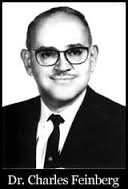
Charles Lee Feinberg on The State of Israel

The Land Grant

Map of Israel

To the little land of Palestine, about 150 miles long and 60 miles wide, almost a billion souls—Jews, Christians, and Moslem—look as the sacred center of their faith (John C. Trever, Cradle of Our Faith, p. v). Though many are not aware of the fact, one of the integral features of the Abrahamic Covenant is the grant of the land of Palestine to Abraham and his seed in perpetuity (See Gen 12:7). This promise is reiterated in Genesis 13:14–18, 15:18–21, and 17:6–8  to Abraham; in Genesis 26:1–5 it is confirmed to Isaac; and in Genesis 28:1–4 and 35:11–12  the grant is reconfirmed to Jacob. Similarly, the Davidic Covenant contained as an inseparable element the same promise of the land to the seed of Abraham (Note 2 Sam 7:10). It is with ample justification, then, that the Mosaic writings spend so much time in relating how Israel came back to the land from Egypt, that the Book of Joshua occupies itself so largely with the matter of the distribution of the land among the tribes of Israel, and that the Book of Ezekiel closes with a detailed presentation of the allotment of the land in the time of the earthly reign of the Lord Jesus Christ.

The Land in the Prophets

Every repetition of the Davidic Covenant among the prophets is explicit in stating that Israel will be settled in the land under the reigning Messiah. Compare Isaiah 9:6–7; 11:11–16; 49:8–21; Jeremiah 23:1–8; Ezekiel 11:17–21; 34:11–15; 36:24–28; Daniel 7:23–27 (especially verse 27 ); Hosea 3:5 and 13:10; Joel 3:17–21; Amos 9:11–15; Obadiah 21; Micah 4:1-8; Zephaniah 3:14–20; Zechariah 8:1–8; 14:16–21; and Malachi 3:12. It is imperative that the reader study these passages carefully in order to catch the full import of the place of the land in the program of the future of Israel. These promises form the basis for the strong and unquenchable desire that resides in the heart of the Jewish people to return to the land of their fathers. Their national anthem (“The Hope”) dwells on the one theme: the restoration of the nation Israel to the land of promise.

The Land Forsaken

It is well known that in the Egyptian bondage the descendants of Abraham were separated from the land of Palestine. We have indication that the people did groan under the galling servitude of the Egyptians, but nothing is stated of a longing to return to their homeland. As a matter of fact, the desire was expressed more than once during the wilderness wandering to the land, that the people preferred in their distress to return to Egypt. Because of idolatry in the northern and southern kingdoms, Israel was exiled to Assyria and Babylon in the eighth and sixth centuries B.C. The sentiment is recorded in the Psalms that the godly yearned for the land of their birth (See Ps 137). After seventy years the Lord restored His people to the land where they were when Messiah came in fulfillment of Old Testament prediction. In 70 A.D. under the Roman Titus came the third wholesale separation of the people of Israel from their homeland. This exile is in its second millennium.

The Land in National Aspiration 

For centuries the longing of the Jewish heart has been expressed in the words of Psalm 137:5–6. Again and again in the liturgy of the orthodox Jew we meet the words “Next year in Jerusalem!” Modern Zionism may be said to stem from the disillusionment of the nineteenth century which followed the period of enlightenment, when liberty, fraternity, and equality were heralded on every side. Anti-Jewish laws and the persecutions of the Jews in Europe fed the fires of hope for a homeland for downtrodden Israel. During the first part of the nineteenth century there had been several proposals for the acquisition of Palestine as a homeland for the Jews, but no one was able to bring any program to fruition. When Rabbi Z. H. Kalischer (1795–1870) began to write and speak for the return of the land, most religious Jews considered his attempts blasphemous, for the restoraton to Zion is considered as a part of the work of the Messiah alone. However, he was successful in arousing interest which resulted in the establishment in 1870 of an agricultural school for young colonists near Jaffa.

Rabbi Samuel Mohilever (1824–1898), deeply burdened because of the pogroms against the Jews of Russia and Poland in 1881, founded in Warsaw that year the association called “Lovers of Zion.” Historically, this is the first group to be formed to carry out Zionist aspirations. Mohilever is considered the founder of the religious wing of Zionism, called Mizrachi. The earliest agricultural settlements of East European Jews were founded by the “Lovers of Zion” in the period from 1882 to 1903. The new settlers found conditions extremely difficult: hostility from the Turks and Arabs, disease, adverse climatic conditions, and an impoverished soil.

The actual founder of modern Zionism was Theodor Herzl. At the celebrated trial of Captain Alfred Dreyfus in Paris, Herzl served as a correspondent of the Viennese Neue Freie Presse, and saw the degradation of Dreyfus on January 5, 1895. Up to this time Herzl had been an assimilationist, advocating the assimilation of Jews into the country of their residence, but now in his profound emotional shock over the demonstration of the anti-Semitic mob, he saw only one solution for the problem of the Jew: a Jewish State. He wrote his now famous essay, Der Judenstaat (The Jewish State), which is the plan of political Zionism.

He called the First Zionist Congress which was held August 29–31, 1897, in Basle, Switzerland. The “Basle Program,” which was projected at that time, stated: “The aim of Zionism is to create for the Jewish people a home in Palestine secured by public law.” Herzl wrote in his diary on that occasion: “In Basle I established a Jewish State. If I were to say that aloud today, universal laughter would be the response. Maybe in five years, certainly in fifty, everybody will recognize it.” Actually, the Jewish State was founded some fifty years later.

Along with the growth of political Zionism came the revival of Hebrew as a living language. A distinguished body of literature appeared before long covering the different phases of Jewish life. A new wave of immigration came during the years 1904 and 1914, consisting of young students and intellectuals who were for the most part members of the Labor Zionist Movement. Their aim was to settle on the land, cultivate the soil, and make this type of life a national pattern.

The outbreak of World War I set East European Zionists in trenches against Central European Zionists. To make matters worse, the Turkish Government embarked on a vigorous and ruthless program of extirpating Zionism from Palestine. Some of the leaders of Zionism today (even the present President of the State of Israel, Yitzhak Ben Zvi) were deported at that time, and found refuge in the United States.

The Land under Mandate

For aid given the Allied cause in World War I (especially in the realm of explosives by Dr. Chaim Weizmann, Professor in the University of Manchester, England), Lord Arthur James Balfour, British Foreign Secretary, issued on November 2, 1917, what is now known as the Balfour Declaration. It provides as follows: “His Majesty’s Government view with favour the establishment in Palestine of a national home for the Jewish people, and will use their best endeavours to facilitate the achievement of this object, it being clearly understood that nothing shall be done which may prejudice the civil and religious rights of existing non-Jewish communities in Palestine, or the rights and political status enjoyed by Jews in any other country.” In the years following the war both Arabs and Jews claimed promises from Great Britain assured them of possession of the land. Ambiguity in the agreements was exploited to the full.

In the meantime a new wave of immigration into Palestine began from Europe. During 1918–25 there were some 60,000 settlers; 84,000 immigrated during 1925–35. New life was manifesting itself and building was carried on from Dan in the north to Beersheba in the Negev wilderness. No less than one hundred new settlements were founded in the eighteen years following the issuance of the Balfour Declaration. The mandate for Palestine had been assigned to Great Britain on April 25, 1929 by the League of Nations.

From 1920 to the latter part of the next decade there were many incidents of violence between the Arabs and Jews in the land, a result of a number of unfortunate factors. The answer of the British Government to these accumulated facts of violence was to restrict drastically Jewish immigration, a policy stated in the well known “White Paper” of May, 1939. Apart from a short respite during World War II the violence between Jews, Arabs, and the English continued unabated. By 1946 the river of strife had reached flood-tide. The British finally announced to the United Nations (considered the successor of the now defunct League of Nations) that the mandate was no longer workable.

The Land and the United Nations

The General Assembly of the United Nations responded with a partition plan for separate Jewish and Arab States in Palestine and for the internationalization of the city of Jerusalem. This was on November 29, 1947. Thus was the ancient prophecy of Joel 3:2 (last clause) brought to remarkable fulfillment. On the matter of the status of the city of

Jerusalem, we note that  “The question of Jerusalem has been before the United Nations since November 29, 1947, when the original resolution dealing with an over-all peaceful solution of the Palestine question was passed by a substantial majority. At that time concern was expressed by a great number of delegates regarding the ultimate fate of the Holy Places in Jerusalem. In order to assure the protection of these Holy Places, as a major objective of the United Nations, internationalization of Jerusalem was proposed.” The Jews, happy that at last they were assured of a Jewish State in Palestine authorized by the nations of the world, accepted the partition plan. The Arabs have loudly and consistenly rejected it in toto from that hour to this.

The Land and the State of Israel

When the British High Commissioner left Haifa on May 14, 1948 after most of the British Army had retired from Palestine, the British Mandate came to a sudden end. On the same day the National Council, representing all segments of the Jewish population, met at Tel-Aviv and heard David Ben-Gurion,read the Proclamation of Independence, forming the Jewish State with the name Medinath Israel, the State of Israel. The Government of the United States was the first power to give practically immediate recognition to the new nation. The Council elected Dr. Chaim Weizmann as President and David Ben-Gurion as Prime Minister.

While the United Nations was seeking unsuccessfully to implement its partition plan, it became abundantly clear that a war between the Jews and Arabs was in the offing. On March 9, 1948 a call for mobilization was issued by the Jewish leaders. The creation of the State of Israel on May 14, 1948 was the occasion for the invasion of Israel by the seven Arab states of Egypt, Iraq, Lebanon, Trans-Jordan, Saudi Arabia, Syria, and Yemen. The invaders overestimated their strength and underestimated the force of their enemies. The Arab armies took the old city of Jerusalem on May 18, 1948, and tried to take the new city which was inhabited by Jews. The siege was broken on June 11, 1948. By July 20, 1949 Israel had negotiated separate truce terms with the Arab powers. With the war’s end Israel found itself in possession of more territory than the original partition plan of the United Nations had allotted. The Arabs have found the State of Israel entirely distasteful to them, and claim to be prepared to sacrifice millions of lives to blot it out of existence. The chief concern of the United Nations seems to be with the disposition of Jerusalem and especially the Holy Places. The latest suggestion of the State of Israel, and many have been the proposals, regarding the Holy Places is to allow the Arabs and Jews to hold their respective positions already attained in the political realm, but to set up an international trusteeship of the Holy Places under the authority of the United Nations. Since virtually all the Holy Places are in Arab hands, no plan yet suggested has been implemented.

A large bibliography is available to the interested reader who desires to acquaint himself with the accomplishments in the new State of Israel. For our purpose we choose certain milestones along the way. On January 25, 1949 the first election was held in Israel with 440,000 Jews, Arabs, and Christians voting for incumbents for 120 seats in the Knesset (Parliament), and for Dr. Chaim Weizmann as the first President of Israel. On May 11, 1949 the United Nations admitted Israed as the 59th member of that body. The population statistics of Israel are always interesting to the student of Scripture. The population of the State of Israel at the end of July, 1954 was 1,687,886.  Tel Aviv, Haifa, and Jerusalem enjoyed in 1948 sixty per cent of the population but only forty-three per cent in 1953. One of the subjects of the late King Abdullah contrasted in this way the Jewish development in Israel with the backwardness of his own country: “Israel is travelling at the rate of an express train, while we Arabs are plodding along at the speed of a camel.” The great influx of population over such a short period of time has inevitably created numerous and grave social, cultural, and economic problems. The leaders of the State are looking hopefully toward the natural resources of the land. Their great expectation is to find oil in the Negev. The Dead Sea has an uncalculated amount of chemical deposits. In the Lake Huleh region there are said to be some twenty million tons of peat.

Space permits us to mention a few of the interesting pieces of legislation that have been enacted since the establishment of the newest democracy in the Near East. The Law of the Return (1952) gave all Jews throughout the world the right to settle in Israel. In that same year the Law of Citizenship provided that all who were residents in Israel at the time automatically became citizens of the State, unless they expressed a desire to the contrary. This citizenship (dual citizenship) was valid, though one might be a citizen of another country.  In 1953 legislation was passed dealing with old age pensions, workmen’s compensation, and social security. In February, 1954 capital punishment was abolished, except for those convicted of Nazi crimes. Politically the situation is very tense between Arabs and Jews. The United States has given and is giving economic aid to Israel, but the shipping of arms to the Arabs has been strongly protested throughout the State of Israel. Religiously the picture is quite varied: the State can boast of the extreme of the extreme orthodox in Judaism as well as those without any religious preference. Though the religious segment is quite vocal in the councils of the State, the majority is inclined to the opposite position. Educationally and scientifically the State is keeping pace with the rest of the world. The Hebrew University of Jerusalem is the most important institution of higher education in Israel. It was the dream of Dr. Weizmann and was opened with Dr. Judah Magnes, an American, as Chancellor on April 1, 1925. By 1951 it had 1,862 students with a faculty of 290, many of them internationally famed scholars and scientists. Its library has the largest collection of Hebraica and Judaica in the world. In 1933 the Weizmann Institute for scientific research was opened in Rehoboth. It has already become one of the most significant research centers in the world.

The Land in Proper Perspective

Much of the literature in recent years on the State of Israel has lacked the proper perspective. Claims have been made, as though based on Scripture, which are not founded on the Word of God. Let us state some postulates clearly and unequivocally.

First of all, the present return to the land is not the fulfillment of the Abrahamic Covenant. The present boundaries of the State of Israel are a far cry from those given in Genesis 15:12–21.

Secondly, the present return to the land is a fulfillment of prophecy only to the extent that Scripture (Zeph 2:1–2; Matt 24:12; Rev 11; 16:21) reveals Israel will be back in the land in the latter days of Israel’s age in unbelief. The current regathering to the land is not a regathering to the Lord. As a matter of sober fact, their present non-religious trend and the uneasy peace that prevails in the land can easily set the stage for their relations with the Roman beast and the false prophet (the Anti-Christ) of the Great Tribulation, after the Church is raptured to glory.

Thirdly, we must reiterate with all the force at our command that the material prosperity of Israel is not tantamount, and never has been, with spiritual prosperity. They are not being prospered because they are now in the will of God, but in spite of their being out of His will through personal and individual rejection of Christ as Messiah and Savior.

Fourthly, Israel is doomed to sad and dismal disappointment as they place their trust in the United Nations. This will prove to be just such a bruised reed as dependence upon the now interred League of Nations.

Fifthly, God Himself will regather Israel to the land in the last days (Isa 27:13; Matt 24:31) to accomplish His consummating purposes with the nation there.

Lastly, the Lord Himself, when Israel is in the place of obedience and national spiritual restoration, will give them all the land granted originally and solemnly to Abraham their forefather. Let us not misjudge the existence of the State of Israel in the world today, and let us realize as never before that earth’s time is running out rapidly.

Article Adapted from BSac 112:448 (October 1955) pp. 312-321.

About Chales Lee Feinberg (June 12, 1909 – August 22, 1995)

Charles Lee Feiberg

Dr. Feinberg was an American biblical scholar and professor of Semitics and Old Testament. He was an authority on the Jewish history, languages and customs of the Old Testament and biblical prophecies.

Feinberg was born in Pittsburgh, Pennsylvania and raised in an Orthodox Jewish home – graduating from the Hebrew Institute of Pittsburgh and the University of Pittsburgh in preparation to be a rabbi. In 1930, he converted from Judaism to Christianity through the ministry of Chosen People Ministries. He went on to earn his Th.M. (1934) and Th.D. (1935) from Dallas Theological Seminary, his A.M. (1943) from Southern Methodist University and his Ph.D. (1945) in Archaeology and Semitic languages from Johns Hopkins University. Feinberg married Priscilla in 1935, and together they had three children (Paul, Lois and John). Paul (deceased) and John are both outstanding theologians in their own right (both professors at Trinity Evangelical Divinity School).

Charles joined the faculty of Dallas Theological Seminary as professor of Old Testament in 1934 and began radio broadcasting messages the following year. During that time, he also served as pastor of a church from 1936 to 1940. In 1948, Feinberg joined the faculty of what later become Talbot Theological Seminary, and in 1952 became its first and longest serving dean. He also served as pastor at two Los Angeles churches until 1955. In 1958, he oversaw the update to The Fundamentals, a defense of the central teachings of Christianity, and later was on the team that originally translated the New American Standard Bible.

Some of his books include: The Prophecy of Ezekiel: The Glory of the Lord; God Remembers: A Study of Zechariah; Millennialism: The Two Major Views; The Minor Prophets; Hosea: God’s Love for Israel; and Jeremiah: a Commentary.

Friday Humor: It’s a Bummer When the Elevator Isn’t Working

flight of stairs

Series: Friday Humor #17

Fred, Ted and Harry went to a party. After the party they returned to the hotel. The hotel was 600 stories high.

Unfortunately for them, the elevator was not working. They made a plan for the first 200 stories, Fred will crack jokes.

The second 200 stories Ted will tell a happy story and lastly Harry will tell a sad story.They then started up the steps.

After 2 hours it was Harry’s turn. He turned to the other two and said “Ok guys, here’s my sad story. I forgot the keys downstairs.”

Alva J. McClain on The Greatness of the Kingdom Part 3

PART 3: THE MEDIATORIAL KINGDOM IN THE TEACHING OF CHRIST

TGOTK McClain

[EDITOR’S NOTE: This article is the third in the series by Dr. McClain, Former President of Grace Theological Seminary, which constituted the W. H. Griffith Thomas Memorial Lectureship at Dallas Theological Seminary, November 9–12, 1954]

I have in mind here, of course, the teaching of our Lord during the historical period covered by the gospel records. In approaching this important body of material, it is possible for men to forget that the stream of history never stands still, not even in the brief time-span of our Lord’s public ministry. His teaching about the kingdom, therefore, cannot be read accurately apart from the background of the constantly changing historical situation. This principle has been rightly stressed in connection with the great expanse of Old Testament history. It is no less important in dealing with the gospel records when the very narrowness of the time increased the swiftness of the current. Hence, we shall do well, not only to heed exactly what the King has said about his kingdom, but also to give careful attention to the time when he said what he did. To neglect this principle will plunge the interpreter into misunderstanding and confusion.

It is hardly necessary to remind you that the Gospels open with the announcement of a kingdom. It is announced by angels (Luke 1:11, 26), anticipated by the Magi (Matt 2:1–6), preached by John the Baptist (Matt 3:1–3), by our Lord himself (Matt 4:17, 23) then by the twelve apostles (Matt 10:1–7), after that by the seventy (Luke 10:1–9). Several strong expressions are used to indicate the proximity of this kingdom. As to its supernatural powers, it had come upon men (Luke 11:20). As to its King, it was actually in the midst of  men (Luke 17:21). As to its complete establishment on earth, the kingdom was at hand,” that is, impending or imminent (Mark 1:15).

It has been well said that “The Gospels present Christ as king. Matthew, tracing his genealogy, gives special prominence to his royal lineage as son of David. He tells of the visit of the Magi who inquire for the newborn king of the Jews, and the scribes answer Herod’s question by showing from Micah’s prophecy that the Christ to be born in Bethlehem would be a ‘governor,’ and would rule, ‘be shepherd of my people Israel’ (2:5–6). Luke’s account of the nativity contains the declaration that the child to be born and named Jesus would occupy the throne of David and reign over the house of Jacob forever (1:32–33). In John’s account of the beginning of Christ’s ministry, one of his early disciples, Nathanael, hails him as ‘King of Israel’ (1:49). And Jesus does not repudiate the title” (Archibald M’Caig, “King, Christ as,” The International Standard Bible Encyclopaedia, III, 1802).

Relationship to Old Testament Teaching

Now the question naturally arises: What is the relation of the kingdom announced by our Lord and his disciples to that kingdom set forth by the prophets of the Old Testament? Perhaps the many answers to this question can be summarized under about four heads:

First, the Liberal view—that Christ took from the Old Testament prophets chiefly the moral and social elements, and made these the program of a kingdom which it is the responsibility of his followers to establish on earth today.

Second, the Critical view—that Jesus at first embraced fully the ideas of Old Testament prophecy, some of which were current among the Jews of his day; but later in the face of opposition he grew discouraged and changed his message. As to the nature and extent of this change the critics are not agreed.

Third, the “Spiritual” view that Christ took up certain spiritual elements from the Old Testament prophetic picture, either dropped or spiritualized the political and physical aspects, and then added some original ideas of his own.

Fourth, the Biblical view—that the kingdom proclaimed by our Lord was identical with that of the Old Testament prophets. I have named this fourth view the “Biblical” one because it is supported by the New Testament literature taken at its face value; which, by the way, is the only material anyone has on the subject. Without intending to imply that the late James Orr would have endorsed in every detail the view set forth in these lectures, it is fair to say that his words do support my central thesis: “In announcing the approaching advent of ‘the kingdom of heaven,’ Jesus had in view the very kingdom which the prophets had foretold” (James Orr, “Kingdom of God,” Hastings Dictionary of the Bible, II, 849).

That the kingdom announced by our Lord as “at hand” was identical with the kingdom of Old Testament prophecy is very evident. The name “kingdom of heaven,” so often upon the lips of Christ, seems to have been derived from Daniel 2:44 and 7:13-14.  In support of his proclamation of the kingdom, our Lord constantly appealed to the Old Testament prophets; and he characterizes two hesitant disciples as “fools” because they have failed to believe “all that the prophets have spoken” (Luke 24:25; cf. 4:18–19; 7:27; 20:41–44). The closest search of the gospel records will discover no passage in which Christ ever intimated that his conception of the kingdom was different from that of the prophets. If the prophets were wrong in any respect, how simple to say so. But there is nothing. On the contrary, from the beginning of his ministry on earth to the end of it, his evaluation of the prophetic Scriptures remains the same: “All things must be fulfilled, which were written in the law of Moses, and in the prophets, and in the Psalms, concerning me” (Luke 24:44; cf. Matt 5:17–18). Furthermore, the very events attending the appearance of the Messianic King demonstrate the identity of the two kingdoms. Consider only two examples: Micah had predicated that the One who was to be God’s “ruler in Israel” would be born in Bethlehem (5:2 ); and Zechariah saw this king riding up to the city of Jerusalem “upon an ass, even upon a colt the foal of an ass” (9:9, ASV). Do I need to remind this audience that these very things came to pass exactly as predicted, that the gospel writers were fully aware of the connection between the prophecy and the history, and that no legitimate Biblical criticism has been able to remove the passages from the literary and historical records?

Still further, in the works and teachings of Christ may be found every aspect and element of the Old Testament prophetic kingdom, although we should not expect here the fullness of detail so apparent in the prophets.

First, the kingdom announced by our Lord is basically spiritual in nature, so much so that except men repent and “be born again” they cannot enter into it (Matt 3:2; John 3:3–5).

Second, its ethical aspect is set forth especially in the Sermon on the Mount, a body of material which contains little that is absolutely new, the main ideas being found in the Old Testament at least in germ. Some of the Beatitudes are transported almost verbally (Cf. Matt 5:5 with Ps 37:11).

Third, the correction of social evils appears often in our Lord’s teaching; and in his forecast of the complete establishment of his kingdom all such evils will be sternly gathered out by supernatural agency (Matt 13:41–43).

Fourth, the ecclesiastical aspect of his kingdom is recognized when he whips the money changers out of the temple. Why not simply ignore the temple if, as some argue, God is done with the nation of Israel and the Old Testament theocratic idea? On the contrary, as the mediatorial Priest-King, Christ lays claim to the Jewish temple, citing an Old Testament prophecy of the kingdom in defense of his action, “My house shall be called a house of prayer for all nations” (Mark 11:15–17, ASV; cf. Isa 56:7–8).

Fifth, even the political aspect of the kingdom is assigned an important place in such passages as Matthew 19:28, where our Lord promises the Twelve that they “shall sit upon twelve thrones, judging the twelve tribes of Israel,” and Matthew 25 where we have his own description of himself sitting upon a throne of glory judging living nations on the earth, in accordance with the vision of Isaiah.

Sixth, as to the physical aspects of the kingdom, read the New Testament record of blind men that saw, lame that walked, deaf that heard, the lepers that were cleansed; consider also the multitudes fed by supernatural power, and the deliverances from hazards of wind and storm and violence. That not one of these elements can be omitted without distorting our Lord’s picture of the kingdom, is being admitted even by critical scholars.

If the kingdom announced as “at hand” by our Lord was merely a “spiritual kingdom,” or as some have defined it, “the rule of God in the hearts of men,” such an announcement would have had no special significance whatever, because such a kingdom of God had always been recognized among the people of God. Compare the Psalmist’s confession, “God is my king of old” (74:12). Any denial of this would certainly be a new kind of dispensationalism.

And this brings me to a passage so important that it must be quoted in full. John the Baptist is in prison liable to lose his head for rebuking the immorality of an earthly ruler; strange situation for the herald of the great King who, according to the prophets, would correct all such injustices. Did John’s faith waver? It may be so, for he sent messengers to Jesus, asking wistfully, “Art thou he that should come (ho ercomenos—The Coming One), or do we look for another?” Now the answer of Jesus to John furnishes an infallible key to the interpretation of the Old Testament prophets and also the relation of his own message to their vision of the kingdom: “Go and tell John the things which ye hear and see; the blind receive their sight, and the lame walk, the lepers are cleansed, and the deaf hear, and the dead are raised up, and the poor have good tidings preached to them” (Matt 11:2–6, ASV).  Such an answer was worth a thousand merely verbal affirmations. To John it proved that he had not been mistaken about the identity of the promised King of Old Testament prophecy. And to us it should prove what to John required no proof, namely, that when the kingdom comes it will be a literal kingdom, identical with the kingdom of the prophets.

But to this official answer sent back to John in the Roman prison, our Lord added a very special and personal word, an assurance intended to guard John’s mind against all future contingencies and doubts: “Blessed is he,” said Jesus, “Whosoever shall find no occasion of stumbling in me.” How tender and gracious! For the rising tide of Jewish opposition had already demonstrated historically that the King would be rejected and the complete establishment of his kingdom long delayed—and John must die. He walked bravely, I am sure, into the valley of the shadow with this last precious assurance from his Lord, the King.

One other point should be noticed in this connection: The fact that John and Christ began their preaching of the good news of the kingdom with no formal explanation of its character indicates an assumption that their audiences would understand what kingdom was being announced. Why this assumption? The answer should be obvious: Israel had the prophets, read and taught in every synagogue. If the conception of our Lord had differed from the prophets, then a formal definition was essential at the very beginning. But there is nothing of this kind. This lack of more definite explanation has caused speculation and disagreement, when it should have sent us to the Old Testament.

Perhaps I should guard what has been said, by explaining that while our Lord follows closely the Old Testament prophetic pattern, there is no mere slavish repetition of words, phrases and texts. Rather he unfolds and interprets the utterances of the prophets, so that meanings become deeper and richer. Furthermore, it is quite evident that he did emphasize the spiritual and ethical aspects of the Old Testament vision, not only because these things were important in themselves, but also because the Jewish teachers had neglected them and were concentrating largely upon the political and national aspects. And like all true preachers of the Word, our Lord fought many of his battles over neglected truth. Today, were he standing in some pulpits, he might stress the other side.

Contingent Character of the Kingdom

In his own teaching, Christ and the kingdom which he proclaimed were inseparably connected. The kingdom was “at hand” because the King was present. Without the King there could be no kingdom on earth as it is in heaven. To reject the King would be to reject the kingdom. And this brings us to a most significant fact, namely that the good news of the kingdom was announced to Israel alone. Even down to the work of the Seventy, the disciples were expressly forbidden to enter into any “way of the Gentiles” or “any city of the Samaritans” (Matt 10:5). More than one interpreter has had trouble  with that dictum of Christ: “I am not sent but unto the lost sheep of the house of Israel” (Matt 15:24). The most satisfactory explanation of the problem is to see, what our Lord saw clearly, the contingent nature of his announcement of the kingdom as “at hand.” To put the matter in a sentence: the immediate establishment of his kingdom was contingent upon the attitude of the nation of Israel, to whom pertained the divine promises and covenants (Rom 9:4). Not that the favor of God would terminate upon this nation, but rather that through them all the blessings of the mediatorial kingdom would flow to the world of nations.

That our Lord understood the contingent nature of his kingdom proclamation is clear from his evaluation of John the Baptist and his career. Every intelligent Jew knew that the final word of the final Old Testament prophet predicted the appearance of Elijah as the precursor of the established kingdom (Mal 4:5–6). And Christ declared concerning John the Baptist, “If ye are willing to receive him, this is Elijah, that is to come” (Matt 11:14, ASV margin). Still later, when historical events have demonstrated the certainty of his rejection and death at the hands of the Jewish nation, our Lord again refers to John; but now the historical situation has changed, and the die is cast. “Elijah indeed cometh, and shall restore all things,” he assures his disciples; but then he quickly adds, “I say unto you that Elijah is come already, and they knew him not” (Matt 17:11–12 ASV).  We have here a key to one of the most puzzling problems of New Testament eschatology in relation to the kingdom: How could the kingdom be “at hand,” and yet not near at hand? (Mark 1:15 with Luke 19:11). The answer is to be found in the word “contingency.” The very first announcement of the kingdom as “at hand” also called upon the nation of Israel to make a decision (Mark 1:15), a genuine decision, a moral and spiritual decision, and they made it; tragically the wrong way. The fact that all this was “by the determinate counsel and foreknowledge of God” does not in the least detract from its moral reality. Those who fail to see this can make nothing out of certain portions of our Lord’s prophetic teaching.

It should be clearly understood, however, that when I speak of “contingency” I refer to the human aspect of history. Certainly our Lord was not caught by surprise. There are evidences in his earliest teaching (recalled and recorded by the latest gospel writer, as we might expect, knowing the historical sequence) which indicate at least a veiled reference to his rejection and death (John 2:18–22; 3:14). Moreover his ministry met with opposition from the very beginning (Luke 4:28–29); even his popularity with the common people was only sporadic (Cf. John 6). This tide of opposition grew steadily to a definite crisis, and can easily be traced in the record of the gospels. The crisis is reached when his miraculous credentials are not only denied validity, but are actually attributed to the powers of the evil one (Matt 12:24–32). Not long afterward, having gathered his disciples about him, and having heard their adverse reports as to the public reaction toward his claims, there is a sharply defined turning point in his ministry: “From that time forth began Jesus to shew unto his disciples, how that he must…suffer…and be killed…and be raised again” (Matt 16:21).

Kingdom Teaching in the Light of Rejection

We come now to a large and important body of material which may be termed his preparatory teaching in view of the historical certainly of his rejection by the nation of Israel. He outlines in a remarkable series of parables the future of the kingdom in the peculiar form (hitherto unrevealed) which it will assume during the temporary period of Israel’s rejection. And the parabolic method of teaching at this particular point, according to our Lord, is a divine judgment upon a people who have rejected a simple method of teaching (Matt 13:10–15). (How any expositor could miss this clearly stated fact might also be well called a “mystery”). Furthermore, Christ now for the first time announces the building of a new thing, the church, something wholly unforeseen by the Old Testament prophets (Matt 16:13–18). At the same time, in the clearest terms he assures his followers that the kingdom has not been abandoned, but that its establishment on earth is only deferred; and he carefully prepares them for the delay which will ensue before its ultimate establishment. While on their way to Jerusalem, because the disciples still “thought that the kingdom of God should immediately appear,” he outlined the course of future events in a parable: A nobleman goes into a far country; there he receives a kingdom; then he returns; reckons with his servants who have been put to work during his absence; and suppresses by judgment all the “citizens” who had hated him and rebelled against his authority and rule (Luke 19:11–27). This is the divine program, according to the rejected king, who now unfolds it in perfect correlation with the movement of history. The disciples are not to be disturbed about the changing situation; they shall yet have a part in the coming kingdom, sitting on “thrones judging the twelve tribes of Israel” (Matt 19:27–28; Luke 22:28–30).

In the face of the now historically certain rejection, our Lord leaves nothing undone in the prophetic program, but goes up to Jerusalem to offer himself as the Messianic king finally and officially in accordance with Old Testament prophecy (Luke 19:28–44). The triumphal entry, celebrated by Christendom for the most part without understanding, was an event of tremendous import, fulfilling to the very day the greatest time-prediction of the Old Testament (Dan 9:25).  Weeping over the city in divine compassion, because its people knew not the “time” of their “visitation,” our Lord turns to his disciples and privately unfolds the prophetic program more fully, revealing the parenthesis of time which will intervene before his return to establish the kingdom, but leaving its length undetermined for reasons which will appear later. In the record by Luke (21:10–27) the present era is clearly marked out and isolated from the “fearful sights and great signs” of the end; its beginning being indicated by the words, “But before all these” (v. 12), and its scope and close by the words, “Until the times of the Gentiles be fulfilled” (v. 24).

It becomes necessary also for our Lord to forewarn his disciples of changing conditions which they will soon be facing: In his personal presence and under his immediate supervision they had been sent out with neither scrip nor purse and they had lacked nothing, but now when they go some material provision should be made: “He that hath a purse, let him take it.” (Luke 22:35, 36). The supernatural effects in the physical realm, properly associated with the kingdom, will recede into the background during the era of the church. This will not mean an end of the supernatural, but rather that its operation will be largely behind the veil of divine providential control. Those who in the future kingdom shall be “first” must now for a time be satisfied to be “last”; and those who by every law of the kingdom should live must understand that now persecution and death by the hands of wicked men will often be their portion (Luke 21:12–19).

The Lord also now reveals more completely the various details related to his second coming and the kingdom (Matt 24:27—25:46). In this part of the gospel records there is a great wealth of material which must be passed over, except to say that believers are to be “faithful” during the King’s absence, watching for his return, and prepared to render an account of their stewardship at his coming.

One of the most striking facts about the career of our Lord upon earth is that during the death trials he continued calmly to urge, more clearly than ever before, his claim to be the mediatorial King of Old Testament prophecy. Before the Sanhedrin, before Pilate, his testimony is unwavering.

Consider, first, his examination by the Sanhedrin, where the charge was primarily religious in nature. Angered by his silence under accusation by false witnesses, the high priest placed him under a solemn oath to answer whether or not he was “the Christ, the Son of God.” While the law of the formal oath (Lev 5:1) doubtless required our Lord to break his silence, there was something at issue greater than this, which was his identity as the mediatorial King of Old Testament prophecy. And thus his answer to the high priest becomes memorable: Thou hast said (Matt 26:64). This was not an evasion, as the ordinary English reader might suppose, but definitely “a Greek affirmative,” as A. T. Robertson has well said. Mark records it simply, “I am” (14:62). But the simple affirmation was not enough at a time like this. What is the evidence that his affirmation is true? His answer is: “Hereafter shall ye see the Son of Man sitting on the right hand of (the) power, and coming in the clouds of heaven.” The unmistakable reference was to a pair of the greatest kingdom prophecies of the Old Testament, Psalm 110:1 and Daniel 7:13, and Christ applied them to himself. Bruce has paraphrased in striking fashion the answer of the Lord to his Sanhedrin judges: ”The time is coming when you and I shall change places; I then the Judge; you the prisoners at the bar” (A. B. Bruce, “The Gospel of Matthew,” Expositors Greek New Testament, I, 320). The high priest, better schooled than some theologians, understood his claim, rent his clothing judicially, and called upon his fellow judges to pronounce him “guilty of death” (Matt 26:65). The action of the great Jewish council, dramatic as it seemed under the circumstances, was only a tardy judicial ratification of a tragic decision which had already become a fact of history.

Let us come now to the examination before Pilate the Roman governor. The charge here was political, and was so intended by the Jews who made it: “We found this fellow perverting the nation, and forbidding to give tribute to Caesar, saying that he himself is Christ a king” (Luke 23:2). Now, however contemptuous Pilate may have been with the technicalities of Jewish religion, he could not ignore the political charge. Knowing this, the Jewish leaders were not slow to press their advantage: “If thou let this man go, thou are not Caesar’s friend; whosoever maketh himself a king speaketh against Caesar” (John 19:12). There are some interpreters who argue that this charge was a total misrepresentation of the true nature of the Messianic kingdom, and that our Lord’s answer to Pilate proves that his kingdom was wholly a “spiritual” matter, having no political or material implications whatsoever. It is passing strange that men have not seen the utter folly of trying to erect an adequate definition of our Lord’s kingdom based in large part on a brief conversation between him and a cynical Roman governor who knew nothing about the kingdom of God, and cared less. But what are the facts? In the record of John’s Gospel, the examination consists of three questions by Pilate and three responses on the part of Christ (18:33–38 ).

The first question was, “Art thou the King of the Jews?” (v. 33). Our Lord’s reply to this is a question of his own: “Sayest thou this thing of thyself, or did others tell it thee of me?” (v. 34). The purpose of this question was not to gain information—Christ certainly knew the identity of his accusers—but rather by this means to clarify the exact meaning of Pilate’s inquiry so that it could be answered intelligibly. If the source of the charge was Pilate, then it would be entirely political and nothing more. In that case the Lord’s answer would be, No, I am not a king in that narrow sense of the term. But on the other hand, if Pilate is voicing a charge made by “others,” that is, by the Jewish people; then the question is wholly different and must be answered differently. A charge of regal claims on the part of Jesus, if originated by the Jewish leaders, would carry with it all the implications of the Old Testament mediatorial kingdom; and would have to be answered accordingly.

We come now to the second question: “Am I a Jew? Thine own nation and the chief priests have delivered thee unto me; what hast thou done?” (v. 35). Thus Pilate scornfully disclaims any and all responsibility for the charge, and the way is cleared for our Lord’s reply to the original question. The first part of his reply is wholly negative: “My kingdom is not of this world” (v. 36). The preposition is “ek,” indicating source or originating cause. His kingdom does not originate in the present kosmos or world system. As concrete evidence of this negative proposition, our Lord refers Pilate to the actual situation before his eyes: “If my kingdom were of this world, then would my servants  fight” (v. 36). This was something that Pilate could understand: a “king” with no military support, and who actually had to be protected from physical violence on the part of his own subjects, could give no possible concern to the politically realistic Pilate.

This brings us to the third question of Pilate. He has satisfied himself that there is no political danger in the strange figure before him—a little later he will actually write over his head, “This is the King of the Jews”—but just now he is mildly intrigued by the notion of a kingdom without any armed legions to support it; and so he asks of Jesus, “Art thou a king then?” (John 18:37). The answer of our Lord is without equivocation: “Thou sayest that I am a king,” or “Thou sayest it because I am a king.”  (So Alford, Ellicott, Robertson, and others).

Marcus Dods thinks we “must” render it, Thou art right, for a king am I.” (Marcus Dods, “The Gospel of John,” Expositors Greek New Testament, I, 852). That this is the proper meaning is made certain by the words which follow: “To this end have I been born, and to this end am I come into the world, that I should bear witness unto the truth” (v. 37, ASV). To this, Pilate has no answer, except to drop his cynical, “What is truth?” as he left the hall of judgment, tragically unaware that he had been in the presence of the King who is the God of all truth.

Now to deduce from this brief exchange between Pilate and Jesus the sweeping proposition that the Messianic kingdom is exclusively a kingdom of love and truth, which will never employ force in dealing with sinful men upon earth, is certainly theological conjecture at its worst. The Old Testament prophets had agreed that Messiah would rule over the nations “with a rod of iron,” and this was confirmed by the King himself in the days of his flesh (Luke 19:14, 27); but the force used will be that of divine omnipotence, not the force of human armies. In that remarkable vision of the coming of the King from heaven to establish his kingdom on the earth, John says that “the armies which are in heaven followed him” (Rev 19:11–14). Strange armies they are, bearing no weapons, and striking no blows. For it is the “sharp sword” of the King himself which strikes the enemy and wins the victory—”which sword proceeded out of his mouth” (Rev 19:21). That there is in the God of heaven a spiritual power which can produce political and physical effects on earth was clearly affirmed by our Lord in his final word to Pilate, “Thou couldest have no power at all against me, except it were given thee from above” (John 19:11). Is it necessary for us to argue as to the nature of this “power” which our Lord says had been “given” to Pilate “from above”? Surely, in no sense was it “spiritual,” but clearly political and nothing else. And the inference is compelling: If this power from above can make itself manifest on earth in the political career of a Pilate, on what ground of either reason or revelation can anyone deny the possibility of its greater exercise through the perfect mediatorial King and his saints when he comes down to earth again?

Our Lord’s consciousness of his own regal person and authority never wavered, but only grew the stronger as he passed through the judgment of Calvary. Even there, suffering the agonies of crucifixion, he exercised the royal prerogatives which he claimed, by throwing open the doors of Paradise to a poor thief who prayed in his extremity, perhaps as only a Jew might have prayed, “Lord, remember me when thou comest into thy kingdom” (Luke 23:39–43).

In closing this part of the discussion, a question might well be raised: Why was the Lord Jesus Christ rejected by the nation of Israel when he offered himself and the kingdom for which they had long waited and prayed? I suggest at least six reasons, without pretending at all that these add up to a total answer:

First, the high spiritual requirements our Lord laid down as essential for entrance into the kingdom (Mark 1:15; John 3:3–5; Luke 18:15–17).

Second, his refusal to establish a kingdom merely social and political in character (Luke 12:13–30; John 6:5–15).

Third, his denunciation of the current religion with its traditionalism, legalism, and ritualism (Luke 11:37–54).

Fourth, his scathing arraignment of the ruling classes (Matt 23).

Fifth, his association with “sinners” (Luke 15:1–2; Matt 9:10–13).

Sixth, his exalted claims for himself (John 5:16–18; 10:24–33; 18:7). This last, however, would have been no stumbling block if Christ had given them their own fleshly desires. The world will deify any leader who will give them enough “bread and circuses.” But they will reject the true God if He asks them to receive what they do not want.

In this connection we should not make the mistake of blaming all this on the ruling classes in Israel. Luke speaks of three classes of men whose voices were united in the demand for the rejection and death of the King; the rulers,” the priests,” and the people (Luke 23:13–23). It was, shall we say, a combination of civil, religious and democratic authority. And the “people” here could not have been merely a “street mob,” for it was the Passover season, and leading Jews from all over the known world were present in the city. The name of Jesus had been on every lip. These happenings were not done in a corner (Acts 26:26).

One curious twist in the situation was that the “people” seemed to be sympathetic almost to the last moment (Luke 19:48—20:8; 20:19–26; 21:37—22:2). But suddenly the temper of the crowd changes. Matthew says that the chief priests and elders “persuaded the multitude” to ask Pilate for the release of Barabbas and the execution of Jesus (27:20). What arguments were used by these leaders, we are not told. But doubtless their arguments would have had something to do with the main charge laid before the Roman governor, and that was political, namely, that Jesus had forbidden the paying of tribute to Caesar, “saying that he himself is Christ a king” (Luke 23:2). Certainly the Jewish people here could have had no bias in favor of the Caesars; in fact, they would have welcomed with open arms any king who could deliver them from the tribute and bondage of Rome. And there had been a time when, impressed by our Lord’s supernatural power, they had been ready to take him by force and make him king. But now they see him, where he had never been before, apparently helpless in the hands of the Roman authorities. Does anyone suppose that the astute and highly intelligent Jewish leaders would fail to exploit the situation to their own advantage with the crowd? How easy now to point out the appalling incongruity before their eyes—the King of the Jews and a Crown of Thorns! Did the applause of the people, disappointed in their “hero,” turn swiftly into vicious anger? If so, nothing could have been more plausible psychologically. History has shown that the disappointment of the “people” can become at times a very terrible and violent thing.

 Article above adapted from BSac 112:447 (JULY 1955), pp. 210-225.
 About Alva J. McClain (1888-1968)

Alva J. McClain

Alva J. McClain, the founder and first president of Grace Theological Seminary and Grace College, was born in Iowa and later grew up in Sunnyside, Washington. Shortly after his marriage to Josephine Gingrich in 1911, he and his wife were saved under the preaching of Dr. L.S. Bauman. He had been attending the University of Washington, but removed to Los Angeles, where he attended the Bible Institute of Los Angeles and sat under the teaching of Dr. R.A. Torrey.

Upon graduating from Biola, he enrolled in Xenia Theological Seminary and completed work for the B.D. and Th.M. degrees–following which he was called to the First Brethren Church of Philadelphia, where he served from 1918 to 1923. During the pastorate he taught at the Philadelphia School of the Bible. Because of ill health, he resigned and removed to California, where he finished his work for the A.B. degree at Occidental College, graduating as valedictorian. Later he was awarded the honorary degree of LL.D. at Bob Jones University, and the D.D. degree at the Bible Institute of Los Angeles.

In 1925 and 1926, he served as professor of Bible at Ashland College. In 1927-1929 he taught Christian theology at the Bible Institute of Los Angeles. In 1930, the first graduate school of theology in the Brethren Church was organized at Ashland College under his leadership, where he served as its first academic dean and professor of Christian theology.

In 1937 Grace Theological Seminary was organized under his direction, and as first president and professor of Christian theology, he served from 1937 to 1962. Dr. McClain authored many short treatises, but will be remembered for his monumental work on Christian theology, The Greatness of the Kingdom, one of seven volumes he had projected concerning the entire scope of Christian faith. He will long be remembered as scholar, theologian, educator, master teacher, and Christian gentleman.

20 Questions To Ask When Choosing a Career by Doug Sherman

20 Great Questions To Ask When Choosing a Career

TQB Biehl

Choosing a career is the most significant  investment of your life and time that you will make. The selection of a career field obviously will determine what you will be doing during this time, what kind of life-style you will enjoy, and your level of fulfillment. However few will select a career field and stay with it for their entire adult lives. The average person graduating from college today will have four separate careers and several jobs with each career. As a result, your criteria for career selection will be very important to you. Choose wisely! Here are some questions to ask that may help. – Bobb Biehl, The Questions Book, p.41.

(1) What contribution would I like to make to others? No amount of money will offset a career that is not fulfilling. You will be most fulfilled when you know you are in a career that makes a contribution to society and you know your efforts are important to that contribution.

(2) Do I have the proper training to make that contribution? Find out the education and training needed to be an asset to the career field you are considering. In a time of rapid technological change, continuing education will likely be significant to you.

(3) Am I prepared to pay the price the career will demand of me? This question is not simple. You must ask yourself what kind of time and emotional energy will be required in light of your commitment to non work responsibilities.

(4) What is the work environment that allows me to do my best? Do you like working inside or outside? Do you like a fast pace or a slower, more steady routine? Do you like change or predictability?

(5) Where will I be in this job in ten years? Picture your position, your income, and your responsibility ten years from now. Would you be content with what you envision?

(6) Will a person I respect in the career be willing to talk to me about it? Look for someone with gray hair in the career or company you are interested in. The person can provide a wealth of wisdom about what you would be expected to do and what the career might hold for you. Find out the good and the bad. Every job has both.

(7) What would the ideal boss look like? Do you need structure, or do you need lots of freedom? Can you work with a boss who is fairly autocratic, or do you need a more participative style of leadership from your supervisor? Should you be on your own?

(8) What are the ethical challenges I will face? To find this out, you need to talk to an ethical person in the prospective career field. The more you can find out ahead of time, the better you can prepare yourself to keep your integrity.

(9) What is the reputation of the company I’m interested in? Go to the library [internet] and get help in researching articles and information about the company. Find out its reputation among the critics.

(10) What is the market for the product the company offers? Some products have a short-lived life span. Some high-tech companies have products that can become obsolescent in a few years. Your future is tied to the company, so know something about its future.

Other Questions to Consider

(11) Do I need to have increasing levels of responsibility to be happy?

(12) What kind of people will I be working with?

(13) What would an average day look like in this career?

(14) What kind of non work life will I have?

(15) How much travel would I be comfortable with?

(16) Am I open to moving around the country?

(17) What are the annual sales of the company over the last few years?

(18) In what ways will my job challenge me?

(19) What weaknesses could hinder me in this job?

(20) What strengths would make me an asset to this company and career?

Doug Sherman

Doug Sherman is founder of Career Impact Ministries, a Christian organization that helps business people integrate their faith and vocation. Mr. Sherman’s career started with service in the Air Force Academy and followed with a degree from Dallas Theological Seminary. He is the author of several helpful books on your vocation including: More Than Ordinary: Enjoying Life with God;  How to Succeed Where It Really CountsKeeping Your Head Up When Your Job’s Got You Down and Your Work Matters to God & How to Balance Time Demands (co-authored with William Hendricks).

Book Review on Tim Keller’s “The Obedient Master”

“The Only Love That Can’t Let You Down” Reviewed by David P. Craig

TOM Keller

Here we have a beautiful essay by Tim Keller on the practical ramifications of the active and passive obedience of Christ in the Garden of Gethsemane before He went to the cross. The passive obedience of Christ explores how Jesus took the penalty that we deserved for our sin. Dr. Keller masterfully articulates how Jesus suffered privately in the Garden before His public suffering on the cross. Jesus willingly endured the cup of God’s wrath poured out on Him – He died the death we should have died. Jesus received the penalty for our disobedience to the Law of God. Since Jesus paid our debt, we are totally free from all condemnation for our sins (Romans 8:1).

Keller also explores Christ’s active obedience. Jesus lived the life we should have lived. He perfectly obeyed the Law’s requirements and thus fulfilled the righteous requirements demanded by God in the Old Testament. Keller writes, “Jesus not only died the death we should have died in order to take the law’s curse for us, he also lived the great life of love and fidelity we should have lived in order to earn God’s blessing for us…And because Jesus not only fulfilled the law of God passively but actively–in our place, as our substitute–it means not only that he got the penalty we deserved, we get the reward from God that he deserved.”

In this essay we see the practical ramifications of Christ’s suffering in the Garden: (1) Jesus’ is a model of integrity – He does the right thing when no one is looking; just as He does the right thing publicly when He goes to the cross; (2) He models authentic prayer by demonstrating that the purpose of prayer is not to bend God’s will to ours, but our will to His; (3) In the Garden Jesus models His amazing patience with people – who are failures (they couldn’t keep watch with him for one hour). Keller remarks, “Jesus came not to just be a model but a Savior. He changes us on the inside so that we can be slowly but surely made over into his image. He does not just tell us how to live; he gives us the power to live that way.”

Keller’s essay is a motivational reminder of Christ’s amazing love for us. Jesus’ love didn’t fail or falter in the Garden, nor did it fail or falter on the cross; and His love assures us that when we falter and fail Him; He will never falter or fail to endure in His love for us. As Jesus says in Romans 8:38 and Hebrews 13:5, “Nothing can separate us from the love of Christ…I will never leave you nor forsake you.”

R.C. Sproul on What Happens To The Person Who Never Heard of Jesus?

Objection #3 To Christianity Answered: “What About the Poor Native Who Never Heard of Christ?”

Objections Answered image

As a teacher of theology I am regularly faced with a plethora of questions raised by inquiring students. Though I’ve never tabulated these queries with a computer, I am convinced there is one question that heads the list in terms of numerical frequency. The question most often raised is, “What happens to the poor innocent native in Africa who has never heard of Christ?” The query expresses a deep concern for the person who dwells in remote parts of the earth, far removed from the exposure of modern media or communication. This person lives and dies without hearing a single word of the biblical message. Where does that person stand with God?

Why is this question asked so frequently? Why are so many students plagued by it? Perhaps there are several factors that stimulate the inquiry. First of all, people in the Western world are acquainted enough with Christianity to have some idea of the central motif of the love of God. Add to that the common understanding that at the core of the Christian faith is the assertion of the unique importance of the person and work of Christ. If Christ is unique and necessary for redemption, how can one avail himself of this redemption if he has no knowledge of it? If God is so loving, why does He not light up the skies with a celestial message that is broadcast so clearly that none could possibly miss it? Why is the “good news” of redemption in Christ limited to those living in cultures that have access to it?

The question is stimulated not only by matters of speculative theology but also by a spirit of human compassion. if compassion resides within us at all, we must be ever sensitive to those who live in less privileged circumstances than we. We are not concerned here with a paternalistic or imperialistic sense of cultural privilege but with an ultimate sense of redemptive privilege. There can be found no intrinsic sense of righteousness within us that would induce God to make the means of redemption available to us in a privileged way. It might even be argued that our “privilege” is rooted in our greater need for redemption owing to our greater corruption. However, since sin is universal and not restricted to either civilized or uncivilized, Western or non-Western humanity, we can hardly find the answer there.

What Happens to the Innocent Person Who Never Heard of Christ?

Regardless of the motivations for it, we are still faced with the question. What does happen to the innocent person who has never heard of Christ? The way the question is phrased will affect the answer given. When we ask, “What happens to the innocent person who has never heard?” we are loading the question with significant assumptions. If the question, however, is asked in this manner the answer is easy and is obvious. The innocent native who never hears of Christ is in excellent shape, and we need not be anxious about his redemption. The innocent person does not need to hear of Christ. He has no need of redemption. God never punishes innocent people. The innocent person needs no Savior; he can save himself by his innocence.

When the question is framed in this way, however, it betrays the assumption that there are innocent people in this world. If that is so (an assumption which Christianity emphatically denies), then we need not be concerned about them. But we are faced still with the larger question, “What happens to the guilty person who has never heard?”

The question of innocence often slips into the question unnoticed. What is often meant is not a perfect innocence, but a relative innocence. We observe that some persons are more wicked than others. The wickedness appears all the more wicked when it occurs within a context of privilege. When a person lives wickedly knowing the details of God’s commandments and has been instructed in them repeatedly, his wickedness appears heinous when measured against those who live in relative ignorance.

On the other hand, if the remote native is guilty, wherein lies his guilt? Is he punished for not believing in a Christ of whom he has never heard? If God is just, that cannot be the case. If God were to punish a person for not responding to a message he had no possibility of hearing, that would be a gross injustice; it would be radically inconsistent with God’s own revealed justice. We can rest assured that no one is ever punished for rejecting Christ if they’ve never heard of Him.

Before we sigh too deep a breath of relief, let us keep in mind that the native is still not off the hook. Some have stopped at this point in their consideration of the question and allowed their sigh of relief to lull them too quickly into a comfortable ease about the question. The unspoken assumption at this point is that the only damnable offense against God is rejection of Christ. Since the native is not guilty of this we ought to let him alone. In fact letting him alone would be the most helpful and redemptive thing we could do for him. If we go to the native and inform him of Christ, we place his soul in eternal jeopardy. For now he knows of Christ, and if he refuses to respond to Him, he can no longer claim ignorance as an excuse. Hence, the best service we can render is silence.

But what if the assumption above is incorrect? What if there are damnable offenses against God? That would change the situation and rouse us from our dogmatic slumbers. What if the person who has never heard of Christ has heard of God the Father and has rejected Him? Is rejection of God the Father as serious as a rejection of God the Son? It would seem to be at least as serious if not more serious.

What About the Person Who Knows About God?

It is precisely at this point that the New Testament locates the universal guilt of man. The New Testament announces the coming of Christ to a world that had already rejected God the Father. Christ Himself said, “I came not to call the righteous, but the sinner to repentance. Those who are well have no need of a physician” (see Matthew 9:12-13).

The biblical response to the question of the person who never heard of Christ is found in Romans 1, beginning with verse 18. The section begins with an awesome announcement of the wrath of God:

For the wrath of God is revealed from heaven against all the ungodliness and unrighteousness of men, who by their unrighteousness suppress the truth.

Notice that God’s wrath is revealed not against innocence or ignorance but against ungodliness and wickedness. What kind of wickedness? Both the word “ungodliness” and the word “wickedness” are generic terms describing general classes of activity. What is the specific act that is provoking the divine wrath? The answer is clear, the suppressing of truth. We must ask, “What truth i being suppressed?” The rest of the text provides the answer:

For what can be known about God is plain to them, because God has shown it to them. For his invisible attributes, namely, his eternal power and divine nature, have been clearly perceived, ever since the creation of the world, in the things that have been made. So they are without excuse. For although they knew God, they did not honor him as God or give thanks to him, but they became futile in their thinking, and their foolish hearts were darkened (Romans 1:19-21).

Here the apostle gives us a description of what theologians call “general revelation.” This means simply that God has revealed something generally. The “general” character of the revelation refers to two things, content and audience. The content is general in that it does not provide a detailed description of God. The trinity is not a part of this revelation. God reveals that He is, that He has eternal power and deity. The audience is general in  that all men receive this revelation. God does not reveal Himself only to a small elite group of scholars or priests but to all mankind.

What else does this text teach about general revelation?

First, we learn that it is clear and unambiguous. This knowledge is said to be plain (manifest) to them; that God has shown it to them; that it has been clearly perceived. Thus, this knowledge is not obscure.

Secondly, we learn that the knowledge “gets through” and finds its mark. God does not merely provide an available objective revelation of Himself that may or may not be subjectively received. We read “they knew God.” Man’s problem is not that he doesn’t know God but that he refuses to acknowledge what he knows to be true.

Thirdly, we learn that this revelation has been going on since the foundation of the world. It is not a once-for-all event but continues in a constant way.

Fourthly, we learn that revelation comes by way of creation. God’s invisible nature is revealed “through the things that are made.” The whole creation is a glorious theater which gives a magnificent display of its creation.

Fifthly, we learn that the revelation is sufficient to render man inexcusable. The passage says, “So they are without excuse.” What excuse do you suppose the apostle had in mind? What excuse does general revelation eliminate? Obviously the excuse eliminated is that of ignorance. If the apostle is correct about general revelation then none will ever say to God, “I’m sorry I didn’t worship and serve you. I didn’t know you existed. If only I had known I most certainly would have been your obedient servant. I wasn’t a militant atheist; I was an agnostic. I didn’t think there was sufficient evidence to affirm your existence.” If God has in fact clearly revealed Himself to all men, no man can plead ignorance as an excuse for not worshiping Him.

Ignorance may function as an excuse for certain things under certain circumstances. The Roman Catholic Church, in developing their moral theology, adopted a distinction between vincible ignorance and invincible ignorance. Vincible ignorance is that ignorance which could and should be overcome. It does not excuse. Invincible ignorance is that ignorance which could not possibly be overcome. It does excuse.

Suppose a person from Texas drove his care to California and came to San Francisco. Upon entering the city limits of San Francisco the motorist promptly ran a red light. A police officer accosted him and gave him a ticket for going through a red light. The motorist protested saying, “I did not know it was against the law to go through a red light in California. I am from Texas.” Would this appeal to ignorance excuse the man? Certainly not. If the Texan presumes to drive his car in California, he is responsible to know the traffic laws. The laws are readily available and are not concealed by being locked up in a secret vault. This man’s ignorance would be vincible, leaving him without excuse.

Suppose on the other hand, that the city council of San Francisco were desperate for accumulating money quickly. Hence they meet in a secret conclave and pass a local municipal ordinance that outlaws driving through green lights and stopping at red lights. They decide the penalty for violating the law is a $100 fine. The catch is they decide not to notify the press or make any mention of the new secret law. The plan is to have a policeman at every intersection arresting motorists who stop on red and go on green. Could the arrested motorists plead ignorance as an excuse? Yes, their ignorance would be invincible and should excuse them.

Thus, the person who has never heard of Christ can plead ignorance at that point but cannot plead ignorance with respect to God the Father.

But aren’t the people who live in remote areas of the world religious? Doesn’t their religious activity remove them from any danger of the wrath of God? Isn’t it true that many anthropologists tell us that man is homo religiosus, that religion is universal? Such people may not be educated or sophisticated in their religious activity. Perhaps they worship totem poles, cows, or bee trees. But at least they are trying and doing the best they can. They surely don’t know any better. If they are born and raised in a culture that worships cows, how can they be expected to do any differently?

It is precisely at this point that the notion of general revelation is devastating. If Paul is correct, the practice of religion does not excuse the pagan but in fact compounds his guilt. How can that be? Paul continues his treatment of general revelation by saying:

Claiming to be wise, they became fools, and exchanged the glory of the immortal God for images resembling mortal man and birds and animals and creeping things. Therefore God gave them up in the lusts of their hearts to impurity, to the dishonoring of their bodies among themselves, because they exchanged the truth about God for a lie and worshiped and served the creature rather than the Creator, who is blessed forever! Amen (Romans 1:22-25).

Here the apostle examines pagan religion. He views it as a distortion of truth. An “exchange” takes place between the truth of God and the lie. God’s glory is replaced by the substitution of the “glory” of the creature. Creature worship is religion, but it is the religion of idolatry. To be zealous in the worship of idols is to be zealous in the insulting of the glory and dignity of God. If God clearly reveals His glory and that glory is replaced by the worship of creatures, the ensuing religion is not pleasing, but displeasing to God.
Thus the fact that people are religious does not in itself mean that God is pleased with them. Idolatry represents the ultimate insult to God. To reduce God to the level of a creature is to strip God of His deity. This is particularly odious to God in light of the fact that all men have received enough revelation about Him to know that He is not a creature. Pagan religion is viewed then not as growing out of an honest attempt to search for God, but out of a fundamental rejection of God’s self-revelation.
How Are the Pagans Judged?
The New Testament makes it clear that people will be judged according to the light that they have. All the elements of the Old Testament Law are not known by people living in remote parts of the world. But we read that they do have a law “written on their hearts” (Romans 2:15). They are judged by the law they do not know and are found wanting. No one keeps the ethic he has even if he invents it himself.
I counseled once with a college student who was in my office as a “captive audience.” He had come at his mother’s insistence. His mother was a zealous Christian who continuously sought to persuade her son to become a Christian. The son was deeply alienated and resisted her persuasion. His rebellion was radical as he opted for a life-style that was on a collision course with his family values. As he spoke to me he argued that everyone had the right to develop his own ethic. He believed in a “do your own thing” morality. He complained that his mother had no right to “shove religion down my throat.”
I asked him why he objected to his mother’s tactics. If his mother followed his ethic she would have every right to shove religion down his throat. His mother’s “thing” was shoving religion down people’s throats. I explained to him that his mother was not being consistent with her own Christian ethic because she was so insensitive to her son. Yet she was being consistent with her son’s ethic. As we talked, he came to realize that what he really believed was that people could do their own thing as long as their own thing did not impinge on his own thing. He wanted one ethic for himself but quite another for everybody else. It is when we complain about other people’s behavior that we reveal what our deepest views of ethics are.
The pagan in Africa has an ethic. But even that ethic is violated. Thus, he remains exposed to the judgment of God. So often the primitive is idealized as being untainted by the corruption of civilization. Such idealized descriptions, however, do not fit the facts.
Thus if a person in a remote area has never heard of Christ, he will not be punished for that. What he will be punished for is the rejection of the Father of whom he has heard and for the disobedience to the law that is written on his heart. Again, we must remember that people are not rejected for what they haven’t heard but for what they have heard.
If all men have heard of the Father but naturally reject Him, then it follows that all men need to know of the redemption offered in Christ. To have no knowledge of Christ is to be in jeopardy because of the prior rejection of the revelation of the Father. But to hear of Christ and reject Him is to be in a state of double jeopardy. Now not only has the Father been rejected but the Son as well. Thus every time the gospel is proclaimed it bears a two-edged sword. To those who believe, it is the savor of glory. To those who reject, it is death.
How Can the Native Hear?
If the person who never heard of Christ is in serious jeopardy, how can his plight be alleviated? The answer comes in a simple statement made by the apostle Paul:
How then will they call on him in whom they have not believed? And how are they to believe in him of whom they have never heard? And how are they to hear without someone preaching? And how are they to preach unless they are sent? As it is written, “How beautiful are the feet of those who preach the good news!” (Romans 10:14-15).
Here the apostle reiterates the need for the mission of the church. Mission (from the Latin “to send”) begins with the love of God. It is because God so loved the world that He “sent” His Son into the world. The mission of Christ was in behalf of those who rejected the Father. The rejected Father sent the Son sent His church. That is the basis for the world mission of the church. It is the mandate of Christ that those who have not heard do hear. They cannot hear without a preacher, and there cannot be a preacher without a “sending.” The mandate of Christ is that the gospel be preached in every land and nation, to every tribe and tongue, to every living person. If this mandate were carried out by the church, the question of what happens to those who never heard would be a moot one.
The Christian must ask a second question after he has dealt with the question of those who have never heard. The Christian must ask, “What happens to me if I never do anything to promote the world mission of the church?” If the Christian takes this question seriously then his response must be equally serious. His concern for the remote native must begin with compassion, and it must also culminate in a response of compassion.
The question of the fate of the person who never hears of Christ is one that must not only be answered with words but by action as well. The action of mission must be prompted not by paternalism nor by imperialism but by obedience to the “sending” of Christ. All men need Christ, and it is the duty of the church to meet the need.

Key Points to Remember:

(1) All men know God the Father (Romans 1:18ff). The problem of the pagan who has never heard the gospel is the problem of our universal fallenness. We must emphasize that God has revealed Himself to all men. All men know there is a God. Thus, no one can plead ignorance as an excuse for denying God.

(2) All men distort and reject true knowledge of God. Since all men know God and all distort or reject that knowledge, they are not innocent.

(3) There are no innocent people in the world. People who die without hearing the gospel  will be judged according to the knowledge they have. They will be judged guilty for rejecting God the Father. God never condemns innocent people.

(4) God judges according to the knowledge people have. Idolatry as a “religion” does not please God but adds insult to injury to the glory of God (see Isa. 42:8). Idolatry does not represent man’s search for God but rather man’s flight from God.

(5) The gospel is God’s gift of redemption for the lost. God sends Christ to give people an opportunity for redemption from the guilt  they already have. If men reject Christ they face the double judgment of rejecting both the Father and the Son (see Colossians 1:13-17).

(6) The pagan needs Christ to reconcile him to God the Father. Christ Himself viewed the pagan as being in a “lost” condition.

(7) Christ commands the Church to make sure everyone hears the gospel (see Mark 16:15).

(8) Rejection of Christ brings a double judgment (see 2 Tim. 4:1).

(9) “Religion” does not redeem people but may add to their guilt.

About The Author:

Sproul R C image seated with Bible

Dr. R.C. Sproul has been a professor of Apologetics, Philosophy, and Theology at numerous Seminaries. He is the Founder of Ligonier Ministries, President of Reformation Bible College, and the Senior Minister of St. Andrews Presbyterian Church in Sanford, Fl. He has authored over 70 books including the following books on Apologetics: The Psychology of AtheismDefending the FaithNot a Chance; and a contributor to Classical Apologetics. The article above was adapted from Chapter 3 in his book Reason to Believe (previously – Objections Answered. Grand Rapids: Zondervan, 1982).