At Home In Mitford by Jan Karon

81HHNyakuXL._AC_UY436_QL65_ML3_.jpg

Encouragement for the Soul

Book Review by Dr. David P. Craig

When I listen to music when I’m reading I usually listen to what most people would describe as “Easy Listening” music. It’s not too fast, not too slow, not too loud or distracting. Jan Karon’s first novel could be described as the book version or “easy listening.” 

The key characters are a pastor, various parishioners, and numerous stories that are taking place in the fictional town of Mitford (somewhere in the south of the United States). Jan Karon does a wonderful job of transporting you into this place and the lives that make Mitford a taste of heaven on earth. 

As a pastor myself, I loved this book. After thirty years of pastoring I find that I can relate to almost every person, story, and event that transpires. I love the mixture of all the emotions that Karon brings to the table: laughter, sorrow, joy, tears, elation, heartbreak, and everything in-between. She also creates intrigue, romance, expectation, hope, and does not disappoint with bringing together and weaving several plots.

At Home in Mitford is pleasant, calming, encouraging, and delightful. It’s “easy listening” for the mind and soul. I highly recommend this book and can’t wait to read the rest of the series (there are 9 books in the Mitford Series).

No God But One: Allah or Jesus? by Nabeel Qureshi

51SbZbeolML.jpg

Excellent Analysis Comparing Christianity and Islam

Book Review by Dr. David P. Craig

In this sequel to his fantastic autobiography (Seeking Allah, Finding Jesus) Nabeel Quereshi continues where he left off. Nabeel recounts how he decided to put Christianity to total scrutiny over a period of four years before he put his beloved Islam to the same kind of evidential scrutiny. In this book Nabeel compares his findings in regard to the two largest religions of the world: Christianity and Islam.

In Part One the author compares islam’s way of salvation (Sharia) with Christianity’s way of salvation (Grace). In Part Two he compares the two different God’s of Islam (Tawhid) and Christianity (Trinity). Part 3 is an examination of the two founders of each religion: Muhammed versus Jesus. Part 4 Compares the Quran with the Bible. Part 5 is an examination of Jihad and the Crusades. 

After examining the major distinctions of Islam and Christianity he then goes on to examine why he became a believer in Jesus. He evaluates the following important questions: (1) Did Jesus Die on the Cross?; (2) Did Jesus Rise from the Dead?; (3) Did Jesus claim to be God; (4) Is Muhammad a Prophet of God; and (5) Is the Quran the Word of God?

I think that Nabeel builds a strong case for Christianity and shows that the Islam he grew up with has many problematic beliefs. As a former Muslim, Nabeel is gracious in his approach, very clear in his articulation of Islam and Christianity, and very convincing in demonstrating why Jesus is the right choice.

How Do Jesus and Muhammed Compare?


32227.jpg

Series: Comparing Christianity & Islam – Jesus versus Muhammed

Chart Compiled by Dr. David P. Craig

JESUS MUHAMMAD
IDENTITY Creator (Col. 1:16) Creature
CLAIMED TO BE God & Son of God Prophet
SINCE Eternal (John 1:1,14) Khadija (wife) said he must be a prophet because he was hearing voices
CLAIM IS Proven by the Resurrection Disproven by false prophecies
RAISED The dead to life (Luke 7:12-15) An army to put many to death
LIED TO None Many (taqiyya) – lying to infidels to advance and protect Isalm – considered a virtue and a duty
MISTOOK None Satan’s voice as Allah’s
ROBBED None Many
FORGAVE Everyone None who offended
HEALED Thousands None
WALKED ON Water (Matt. 14:25) The blood of those he slaughtered
HISTORY His life is rooted in historically documented facts Mixed with myth and legend
SAID OF OTHER Warned of his kind (Matt. 7:15-17) Praised Jesus
SINNED Never (2 Cor. 5:20-21) Constantly
EPITOMIZED Love (John 15:13; 1 John 4:10) Violence
SACRIFICED Himself to save others Others to save himself
KILLED No one Thousands. For example, when the Jews of Banu Qurayza surrendered to him in 627 AD after a 25 day siege, Muhammed had all of the approximately 900 male captives bound and beheaded.
NATURE God Incarnate (John 1:14,18) Merely Human
MISSION Redeem Sinners (Mark 10:45) Promote Submission to Allah
PROPHECY Fulfillment of hundreds None
WIVES None 12+ 595 AD: Married Khadijah, the daughter of Khuwailid (she died in 619 AD); 619 AD: Married Ai’sha, the daughter of Abu Bakr (she was 6 years old, when he was 50); 619 AD: Married Sawdah, the daughter of Zama; 624 AD: Married Hafsah, the daughter of Omar; 625 AD: Married Zaynab, the daughter of Gahsh and the wife of Zayd (see above);

626 AD: Married Salmah, the daughter of Abu Ummaiah Sohail; 627 AD: Married Zainab, the daughter of Khuzaima; 628 AD: Married Ramlah, the daughter of Abu Sufyan; & Married Gawariah, the daughter of al-Harith; 629 AD: Married Hind, the daughter of Abu Umayah; & Married Safiah, the daughter of Huyay; 630 AD: Married Maimunah, the daughter of al-Harith; 631 AD: Married Maria, a gift from the king of Egypt

MESSAGE “Come to me, all who labor and are heavy laden, and I will give you rest. Take my yoke upon you, and learn from me, for I am gentle and lowly in heart, and you will find rest for your souls. For my yoke is easy, and my burden is light.” ~  Matt. 11:28-30 (1) There is only one God (Allah); (2) All people must live in submission to God; (3) Humans will be held accountable at the last judgment
ROLE Servant, Savior, and Lord Orphan, Caravan Driver, Husband & Father, Spiritual Seeker, Prophet, Soldier, Governor, Ruler
CURRENTLY Resurrected (1 Cor. 15:4) Dead
FUTURE Eternally Enthroned as King (Revelation 22) Divine Judgment

A Comparison of Covenant Theology and Dispensational Theology

74686.jpg

MUSINGS ON BRIDGING THE GAP BETWEEN THESE TWO THEOLOGICAL SYSTEMS

By Dr. Bruce Ware

These are both movements that really affect a large swath of the evangelical Church with Covenant Theology affecting so much of the Church in the Reformed tradition and Dispensationalism largely through the first study Bible that came out, The Scofield Reference Bible (that was the only one when I was growing up; my folks had the Scofield Reference Bible). It made a big impact on Dallas Seminary and all of its graduates when Dallas was putting out so many pastors for Bible churches and independent Baptist churches. The Bible school movement was largely Dispensational. Moody Bible Institute and most of the Bible schools around the country were Dispensational. Some other seminaries that were Dallas-influenced are Talbot Seminary, Biola University (it used to be Bible Institute of Los Angeles and that is where Biola comes from; J. Vernon McGee and a number of people connected with Biola were Dispensational), Western Seminary (where I went) used to be a Dallas clone and it was Dispensational. So many areas in evangelical life in North America were affected by it.

We need to take a brief look at these two views. One heartening thing I will tell you at the beginning is it is one of those wonderful areas where, though there was such disagreement forty years ago, to the point where there were strong accusations being made by both sides about the other, today there has been a coming together of these movements by sort of progressives of both sides. With Modified Covenantalists and Modified Dispensationalists, the differences between them now, among those Modified groups, is minor in significance. It is not that much to worry about, to be honest with you. It is one area where godly, humble biblical scholarship and theological reflection has resulted in both sides being willing to acknowledge the excesses of their traditions and make changes. The result of that has been to come together in a marvelous way. If you want to read something that talks about this well, Dr. Russ Moore wrote his dissertation on the changing theological positions of Dispensationalism and Covenant Theology as that affects socio-political action. But in order to get that “as it affects” part, he had to do quite a bit of theological ground work in describing what was going on in these two movements. A large portion of his dissertation relates to mega-changes, and the mega-shifts that have taken place in both of these movements. It is very well done.

A. Covenant Theology

1. General Description – Two Broad Covenants

Covenant theology holds, in terms of its basic understanding of Scripture, that we should understand the Bible as portraying fundamentally two covenants: a Covenant of Works and a Covenant of Grace.

In the Covenant of Works, God made a covenant with Adam in the Garden, according to Covenant Theology. Namely, if you obey me and follow me and resist eating of the tree of the knowledge of good and evil; if you stay away from that, if you don’t eat of that tree and follow me in obedience, then you will ultimately receive life. Covenant theologians have seen this as something more than the life of Adam then. It is not just a continuation of his life in the garden temporally, but what we would speak of as eternal life. They propose that there must have been a probationary period in which this testing was undertaken. Had Adam passed the test (who knows how much longer it might have been; maybe two more days and the test would have been over; we just don’t know), then he would have received eternal life because of his works. But if Adam failed the test, if he were to eat of the tree of the knowledge of good and evil in the garden, then we know from the text, in the day that you eat from it you will surely die (Gen 2:17). So death for disobedience; life, presumably a better life, a greater that the life he had now for obedience.

Covenant theologians acknowledge that the first part of this, the promise of life for obedience, is not stated explicitly in Scripture. But they think that it is implied by the negative statement, “If you eat of it you will die”. If you don’t eat of the tree, then you would receive the gift of eternal life. If that is the case, then it must be something different than what you have now, and if that is the case, there must be a probationary period. There must be a time period after which this would be given. All of that follows from what they know to be the case; namely, there is command given that if you eat of the tree you will die. The other part of it is spin off from that.

We all know that Adam failed the test and brought death upon himself and all of his progeny. Romans chapter 5 tells us that in Adam all sin and deserve his death. So we learn from Paul in Romans 5:12 and following that all die in Adam’s one sin.

In order to save sinners, God brings about another covenant. This is not a Covenant of Works because sinners could never work to make the payment necessary to satisfy a holy God on account of the offense that has been committed. The guilt is too great, and the offense is too serious. Another Covenant of Works (work it off now, pay your dues, pay off your debt) won’t work for human beings, for sinners. God inaugurates, instead, a Covenant of Grace, whereby his Son will pay the penalty for sinners, and those sinners in exchange will receive the righteousness of Christ. It is quite a deal for sinners. We give Christ our sins and he gives us his righteousness.

Double imputation is part of this understanding as well. Our sin is imputed to Christ, so he pays the penalty for our guilt and it is charged against him even though he doesn’t deserve to pay it. That’s what imputation means at that point; our sin is charged against Christ, and his righteousness is imputed to us; it is credited to our account by faith – justification.

How much of the Bible does the Covenant of Works cover, what does it span? The Covenant of Works covers Genesis 1, 2 and part of Genesis 3 where the sin takes place. What about the Covenant of Grace where sinners now cannot be saved by works? If they are going to be saved it has to be by grace? Genesis 3 to Revelation 22. The point of this is that it leads Covenant theologians, in the traditional understanding, to think in terms of the broad sense of the holistic nature of virtually all of the Bible, from Gen 3 on, which is most of the Bible. Basically, the whole Bible fits under this Covenant of Grace notion. This leads to, in Covenant Theology, a strong sense of uniformity throughout the Bible, that is a strong sense of continuity. There is one thing God is doing from the sin in the garden and on, that is he is providing for human sin and saving the people. The Covenant of Grace spans both Testaments; it spans Israel and Church. In that sense, it leads to a unified sense in all of Scripture: Old and New Testaments together.

2. Covenant Hermeneutic

Because of this sense of unity that takes place, the hermeneutic of Covenant Theology tends to see in Scripture a unified teaching in both Testaments. So there is less of a notion in Covenant Theology that new things come about in divine revelation at new periods of revelation, rather there is more of a notion of simply amplifying or explaining with grater clarity or precession what has been there from the beginning. So for example, in Covenant Theology there is much more a tendency to look back in the Old Testament and see the same kinds of things as you do in the New Treatment. I’ll give you an example of that; some of you know that I teach an elective on the doctrine of the Holy Spirit. The older Covenant theologians (some of the more recent ones, Richard Gap and Sinclair Ferguson have not have gone this route) would tend to see everything that is true of the of the Holy Spirit’s work in the New Testament, his indwelling, his sealing, his empowering that is true for New Testament believers, is also true for Old Testament believers because of this uniformity idea. So if you ask the question what is new at Pentecost or new in the New Covenant? It is more a sense of extension of coverage than it is qualitative experience in the lives of true believers. God will extend this to the ends of the earth: Jerusalem, Judea, and Samaria. To the ends of the earth means extending this beyond the boundaries of the restricted members of the people of God. It is going to go public, nationwide, worldwide. My view is that this is a mistake to think this way. Instead there is a radical new happening when the Holy Spirit comes at Pentecost that the Old Testament actually prophesied and predicted was going to happen that would make a tremendously different change to the people of God. So you really have to have, it was once this way but now is this way. There really is a change, a marked qualitative kind of change that takes place in the coming of the Spirit in the New Covenant than in the Old. This is a more Dispensational way of thinking. Take a text like Romans 8:3-4

“For what the Law could not do [under the law this didn’t happen, the Law couldn’t do this], weak as it was through the flesh, God did: sending his Son in the likeness of sinful flesh [we are talking history now, at this point in history, when Christ comes], and as an offering for sin, Him condemned sin in the flesh, so that the requirement of the Law might now be fulfilled in those who do not walk according to the flesh but according to the Spirit.” (Rom 8:3-4) So that looks to me like we ought to read it as under the Law things were one way, but now that the Spirit has come, Christ has come, things are different. But if you read the Old Covenant writers on the Holy Spirit, you will find a very strong urge to assume that New Testament teachings about the Holy Spirit must be true of Old Testament saints as well.

A similar thing might be said of Christology. There is a very strong sense of trying to see as much as possible of Christ in the Old Testament. Luke 24 makes it very clear that Christ taught concerning himself from the Law, the Prophets and the Writings (Luke 24:27).

It is a matter of which texts, what they are saying, and to what extent. There is a tendency in Covenant Theology to see more than what others might see from other traditions. The main point I am trying to stress here is that with this Covenant hermeneutic there is a tendency to see uniformity of content between the Testaments.

3. Israel and the Church

One of the places where this becomes both the clearest and most decisive in terms of separating covenant and Dispensational views is how Covenant Theology understands Israel and the Church. Here again, with the basic hermeneutic of uniformity, Covenant Theology would view true Israel as the people of God, that is, true Israel, saved Israel as the people of God and the Church as the people of God. There is really one people of God in both Testaments, both saved by faith, both serving the same God, both the special objects of God’s saving love. Israel really could be thought of and spoken of as the Old Testament Church. The Church in the New Testament can rightly be thought of as New Testament Israel. So we have Old Testament Church, that’s Israel, and we have New Testament Israel, that’s Church. So there really should not be seen significant differences as they are the people of God. Granted Israel is also ethnic and the Church is multiethnic. But apart from that difference, as it relates to nation and ethnicity, we ought to understand the people of God, as believers, constituting the same group of people.

What about promises made to Israel that seem to relate to a time in the future; for example, Israel coming back to her land, or her ultimate salvation by God. What about promises that look like they are eschatological in the Old Testament, and are not fulfilled at any particular point in history in the Old Testament or New Testament period? What do we say about those promises that relate to Israel? God makes the promise, I’ll take from your lands where you have been and I’ll bring you back to your land and you shall have one God, and I will reign over you, and I will destroy your enemies. All of these promises given to Israel, what should we do with those? In Covenant Theology, there is a very strong tendency to go in the direction of saying those promises made to Israel are fulfilled in the New Testament Israel – the Church. So the Church becomes the object of those promises.

In Covenant Theology there is a very strong tendency to see Old Testament promises as coming straight forward and being fulfilled in the Church. So the land promises (you will be back in your land) shouldn’t be understand as literal land; there is not going to be a day when the ethnic people of Israel occupy literal geography; that is not the point of those promises. It is rather that they will have their kingdom, and it is a spiritual kingdom.

So the promises to Israel are to be fulfilled in a spiritual manner in the Church. When it talks about the Jews being saved, we are all Jews. Remember Paul in Romans 2 says, we are circumcised in Abraham. We are, by faith, part of the seed of Abraham in Galatians (Galatians 3:16). We should understand that all of us are Jews spiritually because we are tied in through Christ, through the seed of Abraham. After all, the promise in Genesis 12 was that through Abraham all the nations in the world will be blessed. (Genesis 12:3). So we are tied in.

What about the reign of Christ over nations? This is not a political military reign; it is a spiritual reign as people from every tribe and nation are brought into subjection to Christ. So in Covenant Theology there is a very strong tendency to see, basically, Israel and the Church as equated spiritually.

One place that you see that Reformed Baptists differ is with pedobaptism. In Presbyterian, Anglican, and the majority of reformed theology, they hold to pedobaptism. Here the same thing is happening; Israel circumcised their people as a sign of the Covenant and we are the new Israel. The difference is that our sign of the Covenant is a sign that is Christological in nature because we have been brought together in Christ; everything in the Old Testament pointed to him. Christ has now come, so the sign of the Covenant changes to baptism as a mark of Christ’s death and resurrection. Just as Israel’s sign of the covenant was given to infants, so the Church’s sign of the Covenant should be given to infants. Honestly, the strongest argument for pedobaptism (in my judgment) is a theological argument; if you try to argue texts, you run out quickly. In a used bookstore in Springfield, Illinois (we were visiting there as a family to look at all of the Lincoln memorabilia that was there), I spotted a rather sizable book on the shelve; the spine was pretty fat. It said on it, All That The Bible Teaches About Infant Baptism. That was the title of it. Wow, I thought, this is a thick book; it is impressive. So I took it off of the shelf and opened it up and it was an empty book. It was just all blank pages. They were charging something like $18 for it, so I didn’t buy it, but I wish I had. I would like to have a copy of that book. The argument is really a theological one: Israel, Church, sense of unity, and hence a very strong case is made on theological grounds for pedobaptism.

One question is: How do they understand a more unified sense of the Holy Spirit’s work in the Old Testament when it looks as though in the Old Testament there are these special works with selective people? What they argue, in particular, are primarily theological arguments. These people had to be regenerated. How does regeneration take place? We know from John 3, it must come from the Holy Spirit. So you see how this works; these people exercised faith didn’t they? Where did faith come from? It must have come from the Holy Spirit. So it is a theological argument that utilizes what the New Testament says the Holy Spirit does. It sees those same actions or similar actions in the Old Testament and concluded that Holy Spirit must do these things as well. It is a very important question of how to account for Hebrews 11, the faith chapter. How do you account for a Daniel and a Joseph who exercised tremendous trust in God through very difficult experiences? It is a very good question, and I think that we just have to work very hard in the Old Testament to try to understand what is said there and what is happening there and take seriously the notion that something new takes place. Roman 8:3-4, says, “In order that the requirement of the Law might now be fulfilled in those who do not walk according to the flesh but according to the Spirit. Those are remarkable words. Or in Galatians 3 (Galatians 3:24, to be precise) the Law is a tutor to lead us to Christ. It is a tough question; I’ll admit it. I think that are some things that can be said, but it’s why this theological reasoning is persuasive to a number of Reformed people. The problem is so many Old Testament texts indicate the selectivity of the Spirit at work in the Old Testament and then there are specific texts that promise a future day that matches New Testament reality. Ezekiel 36:27 says, “I will put my Spirit within you and cause you to walk in my statutes, you will be careful to observe my ordinances.” You read that and realize the holiness that He requires of his people will come about when the Holy Spirit comes and works in them. Think of 2 Corinthians 3:3, the letter written on their hearts by the Spirit. This is New Covenant.

B. Dispensationalism

1. General Description – Progressive Revelation

Dispensationalism is an understanding of the Bible, of biblical history, that notices and points to distinguishable Dispensations or administrations of God’s purposes, will, and relationships with people in general and particularly his people.

The key idea in Dispensationalism is progressive revelation. This is the bottom rock notion in this understanding of reading the Bible. Progressive revelation means, essentially, that God provides revelation at a particular time and that revelation provides certain commandments, requirements, warnings and promises. Some of those commands, warnings, and promises may continue beyond when that revelation is given, beyond the next period when great revelation is given. Or some revelations may stop at that particular point. When new revelation comes with Noah, or then with Abraham, or with Moses (think of these periods where new great revelation is given), some things continue on, and some things continue all the way through. Obey the Lord your God; that is from the beginning right to the end. In the revelation given to Adam in the garden, the command, “You shall not to eat of the fruit of the knowledge of good and evil for in the day you eat of it you will die,” (Gen 2:17) doesn’t apply to you and me anymore, specifically as a commandment. Where is that tree? How could you eat of it? You can’t. So it applies to Adam very much so. When revelation comes, there may be new things that start up that were not here before.

Noah is told that he can eat animals; that is part of the statement made to Noah after the flood. He can eat these animals (Genesis 9), but he cannot kill human beings (I take it that continues). I don’t find vegetarianism theological defensible. Both because of what God says to Noah about eating animals (which I assume continues), and certainly the prohibition of killing humans continues. Nor do you find it defensible in light of Israel, in what they are permitted to eat. And Jesus who pronounced all foods clean is obviously talking about unclean foods, which would include pork. So I guess you can have a bacon or a ham sandwich.

The point is that with progressive revelation, you see some things that are new which continue only for a time, and there are other things that might start, ones that weren’t here before, which continue all the way through, and some things which are just for that time period itself. This, then, amounts to different dispensations, different ways in which God administers his relationship with people. The most obvious example is the Mosaic Covenant and the New Covenant. We now have in this time period these laws that relate to the sacrificial system; and it is clear that they last until Christ comes who fulfills what they are pointing to: the Lamb of God who takes away the sin of the world. When God’s Lamb comes, then you don’t have to keep taking your lamb to the priest to be slaughtered. When the High Priest reigns, you don’t need a priest any longer. So here we have in this time period laws that are very relevant, extremely relevant, in exact literal detail. Fulfilling those Laws is extremely important in this time period, then when Christ comes they end. You don’t take a lamb; you don’t go to the priest; the priest doesn’t have to prepare himself for the Day of Atonement. All of these things that were there before are done. This is the main idea of Dispensationalism. It is progressive revelation. When revelation comes you need to notice what things have quit what was revealed before, what things start that weren’t revealed before and what things endure. Whatever you come up with in that time period marks that particular dispensation as the revelation of God in that time period.

2. Dispensational Hermeneutic

This notion of progressive revelation has lead Dispensationalist to interpret the Bible, to look at biblical history and interpret where you are in the Bible, very differently than the way Covenant theologians look at the Bible. The tendency in Covenant Theology is to look for uniformity; there is one Covenant of Grace that spans virtually the entire Bible. So there is a tendency to see this uniformity; there is one people of God. In Dispensationalism the mindset is very different. It is instead to notice discontinuity, differences in how God relates to people depending on the revelation that is given at that particular time. It is much more attuned to the discontinuities between various dispensations and to respect those, to be careful not to interpret something in this dispensation as you are reading it from a different time period. So you are not being respectful of what it means here. Charles Ryrie no doubt overstated it in his book, Dispensationalism Today, but he gave this threefold sine qua non (a Latin phrase meaning without which there is none) of Dispensationalism or the essential markings of Dispensationalism. One of them is a literal hermeneutic. He didn’t mean you interpret poetry literally. John kicked the bucket means that John died; that is the way you are supposed to interpret it. He didn’t mean literal in the sense of ignoring metaphorical poetic meanings or terms. What he meant by that is, when reading the Bible, understand what an author intends to say within the historical context of when he is writing it, so that you don’t read back into it things from the future or read forward of things in the past. You take care to read it within its own dispensation. That is what he meant by literal hermeneutic; to understand what the author meant then and there as he spoke at that time.

3. Israel and the Church

A literal hermeneutic has led to, in particular, the way Israel and the Church are evaluated. It is clear in Dispensationalism that Dispensationalists insist upon seeing Israel as Israel and the Church as the Church. There is a strong discontinuity between the two. The Church starts as Christ built it. Remember Jesus said in Matthew 16:18, “I will build my Church.” Therefore, we shouldn’t talk about it in the Old Testament, even though the term ekklesia is used in the Septuagint (it is not being used in the technical sense, it just means a gathering of people together). We shouldn’t talk about Old Testament Israel as the Church. Jesus said, “I will build my Church, the gates of Hell will not prevail against it. Wait in Jerusalem until the Spirit comes” (Acts 1:4), “And when he comes he will anoint you with power” (Acts 1:8). So Pentecost is the beginning of the Church. We shouldn’t talk about Israel as the Old Testament Church nor should we talk about the Church as the New Testament Israel because Israel is an ethnic national group and we are multiethnic; we are multinational. It is confusing to talk of the Church as Israel.

So as it pertains to these promises we talked about under Covenant Theology, what do you do with the Old Testament promises that particularly relate to Israel? How do understand these when God says through the prophet Ezekiel in Ezekiel 36:24, I will take you from the lands where you have been and bring you back to your land. And he goes on to say at the end of Ezekiel 37 that the Messiah will reign as your king; David will reign as your king. What do you do with these promises that relate to a future for Israel where the Messiah is reigning over his people in the land, the nations are subjected to the Messiah, and there is peace on earth; what do you do with these?

If these promises have to do with Israel, instead of seeing them fulfilled in the Church (because the Church is not Israel), you see them fulfilled at a future time when God will finish his promised work with Israel. There is a sense in which the premillennial view for Dispensationalism is supported because of Old Testament promises to Israel whether or not you have Revelation 20. Revelation 20 is a really nice extra to have because it gives you the exact time period, a thousand years. It makes it crystal clear that this comes after Christ has returned to earth and he reigns upon the earth for this thousand year period. That is nice to know all that, but we didn’t need Revelation 20 to know there had to be a time period in the future after Christ returned for God to finish his work with Israel. Why? Because these promises back here talk about land, Messiah, Jerusalem. According to a literal hermeneutic, what did Ezekiel, Isaiah, and Zachariah mean when they said “Jerusalem”? What did they mean when they said “in your land”? What were the authors intended meanings of these terms: land, Israel, Messiah, and other nations? They understood those things to be referring to physical realities. Have they happened yet? Has Messiah come? No. Is Israel in her land? Hence all the hoopla over 1948; this is when Dispensationalism just went nuts because here we have what appears to be (of course people said it much stronger than that back then) God’s movement to begin the fulfillment of bringing Israel back to her land to fulfill all of these promises. Then there were all kinds of speculation that came in terms of date setting and that kind of stuff.

In my judgment, Dispensationalism has far more merit as a Biblical Theology than its popularizers have allowed it to have in public perception. The popularizers went too far; they extended it into the unknowable. It was speculation but stated as fact. This has hurt the Dispensational movement, in my view.

So for dispensationalists, God is going to come back and wipe out the nations and save Israel, that will happen during the tribulation and he (The Messiah) is going to reign in Jerusalem over his people in the Millennial period fulfilling Old Testament promises.

C. Modifications of both Dispensational and Covenantal Understandings

What has happened, essentially, is that the notions that Israel equals the Church or Israel is totally separate from the Church have been challenged by both representatives in the Covenantal tradition and representatives in the Dispensation tradition. Both have come to see that a better model is one in which there is continuity and discontinuity together. Something like a screen between the two rather than a complete equation or a complete separation of the two. Some things can pass through (hence the screen), yet there are differences between them.

One the Covenant side there has been a recognition, for example, that we really should think of a future for Israel. There was a time when very few Covenant theologians would deal with Romans 11 (Roman 11:17, 23, 24, 26) where Paul talks about the olive tree and the natural branches were cut off and the unnatural branches were grafted on. But a time will come when he will graft the natural branches back on to the tree; that is Israel. That analogy is so helpful. How many trees are there in that analogy? One. How many kinds of branches? Two. Do you have one people of God or two? If you mean one people in Christ, then there is one. If you mean specifically designated Jewish people, for whom God has specifically promised salvation, verses the rest of God’s saved people, then it is two. How else do you understand the natural branches and the unnatural branches? Doesn’t Paul continue to think of the people of God as comprised of Jews and Gentiles? At the moment, most of those Jews are not saved; there is a hardening that has taken place. That is how he describes it in Romans 11. This hardening has taken place, so the Gospel has gone to Gentiles, but the day will come when he will graft the natural branches back on. Who are those people? They are Jews; they are going to be saved. So Paul says, all Israel will be saved. It was difficult for Covenant theologians and Covenant interpreters (a few did but not many) to see that as ethnic Israel. But increasingly in this more modified understanding, you are finding more and more Covenant theologians, people from the Covenant tradition acknowledging that, yes, this is what Paul means; he means that there will be some kind of future salvation of Jews – literal ethnic Jews. Whether this has to happen in the way Dispensationalist conceive it in a tribulation period where vast persecution takes place, tremendous destruction of people and material well-being in everything across the world, and at the same time massive conversions of Jews to Christ, or whether it happens in this age through some kind of evangelistic effort is really beside the point. That is a secondary question. Where there is much more agreement among Dispensationalists and Covenant theologians (in the Modified groups) is that it does look like there is future salvation of Israel.

Dispensationalists have changed. I think it might be fair to say that they have done more changing than the Covenant side. I think that is correct. In other words, Dispensationalists have recognized a bit more that has needed to be changed in their views and tradition than has necessarily been the case in with Covenant theologians.

I will give an example of this. In fact, I have written an article on this in the book that Darrell Bock and Craig Blaising edited entitled, Dispensationalism, Israel and the Church: The Search for Definition. I have a chapter in there on the New Covenant. Here is basically what I talk about in there. In the old view for Dispensationalism, Israel is one thing and the Church is another and you can’t mix the two. Here you are, reading your New Testament and you hear Jesus say, “This cup is the new covenant in my blood” (1 Cor 11:25). And Paul says, I am a minister of the New Covenant (2 Cor 3:6). And Hebrews speaks of the Old Covenant is taken away, and the New Covenant has come (Heb 8:13). The New Covenant is the Covenant for the Church, the Old Covenant is the Mosaic Covenant, the Covenant for Israel.

What do you do with how Jeremiah 31-34 relates to the New Covenant for the Church, the New Covenant that Paul talks about in 2 Corinthians 3, where he says he is a minister of the New Covenant? How do you relate Jeremiah 31 to that? There is a real problem with that because Jeremiah 31 (Jeremiah 32:31) says, “Behold, days are coming when I will make a new covenant with the house of Israel and the house of Judah.” In traditional Dispensationalism, Israel is one thing, the Church is another and here you have this statement about a new covenant with the house of Israel, so what relation does this Jeremiah 31 New Covenant have to do with the 2 Corinthians 3 New Covenant, of which Paul is a minister? Jesus says, “This cup is the New Covenant of my blood”(Luke 22:20), and Paul in 1 Corinthians 11:25 repeats that, so what is the relation between the two? The dispensational answer is that they are two separate Covenants. Traditional Dispensationalism had a two New Covenant view. Because Jeremiah 31 had to be for Israel, whatever Paul is talking about, whatever Jesus is talking about, and (here is where it get really messy) whatever Hebrews is talking about has got to be a different covenant.

Now why did I say that, here is where it gets really messy in reference to Hebrews? Because Hebrews 8 and 10 quote Jeremiah 31 twice (Hebrews 8:8,9; 10:16) in making the point that the Old Covenant, the Mosiac Covenant is done away and New Covenant, to quote Jeremiah 31, “has taken its place”. Even despite that, they maintain this difference. This is how strong the theological commitment was to two peoples, Israel and the Church; keep them separate and don’t confuse them. It was so strong that even with Hebrews starring at them quoting Jeremiah 31, they insisted on two different Covenants. The text won with Progressive Dispensationalists (That is what they are called). Craig Blaising, who taught here for years, is one of the main leaders of this movement. He and Darrell Bock at Dallas are the champions of Progressive Dispensationalism. They argue that we have got to say that the New Covenant of Jeremiah 31 is the Church’ New Covenant. What else would Jesus be referring to? The phrase, New Covenant, is only used one time in the Old Testament; it is in Jeremiah 31. Hebrews quotes it and says the old has passed and this has come in its place. So we have got to understand this is to be the Church’s New Covenant. In my article here is what I proposed: Are we to say then that everything that Jeremiah 31 talks about is fulfilled now in the Church? In other words, should we do this sort of an interpretation of Jeremiah 31; in which we have an Old Testament promise and we draw the arrow straight forward and say Jeremiah 31 is fulfilled in the Church period? I say no. Rather, I think that we draw an arrow forward and we draw an arrow to the future; we draw both. What allows for a “both and” answer? It is both in some sense fulfilled in the Church and in some sense fulfilled in the future. This is the theology of one of the strongest opponents of Dispensationalism: George Eldon Ladd.

Ladd is the one who really faced the evangelical church with this “already not yet” theology. We understand biblical eschatology as being fulfilled in a preliminary partial way, but are still awaiting the complete consummation, complete fulfillment.

This is a different topic; I’ll come back to New Covenant. How do answer the question has the Kingdom of Christ come, or is the Kingdom of Christ here? “Yes but,” or “Yes and no.” Don’t you have to say both? Is the Kingdom of Christ here? Yes, Colossians 1:13 says, We have been transferred from the dominion of Satan into the Kingdom of his beloved Son. In Matthew 12, Jesus casts out a demon, and the Pharisees said he casts out demons by Beelzebul (Matthew 12:24 ). But he says in response, “But if I cast out demons by the Spirit of God, then the kingdom of God has come upon you” (Matthew 12:28). So has the kingdom come? Yes. But what does the New Testament call Satan at various points? The god of this world (2 Cor 4:4), the ruler of this world (John 12:13), and the prince of the power of the air (Eph 2:2). When you read Isaiah 9:6, 7, have you ever asked yourself the question, has this happened? “For a child will be born to us, a son will be given to us; And the government will rest on his shoulders; And his name will be called Wonderful Counselor, Mighty God, Everlasting Father, Prince of Peace. And of increase of his government there will be not end to establish it and to uphold it from this day forth and for ever more for the zeal of the LORD of hosts will accomplish this.” Has this happened? Did you read the paper this morning? Something tells me we are not there yet. This was exactly John the Baptist’s problem. This is huge to get this. John the Baptist in Matthew 11 sent his disciples to ask Jesus, “Are you the appointed one or shall we look for another?” (Matt 11:3). This is an incredible question, an unbelievable question. John the Baptist witnessed the dove descend on Jesus (John 1:32), and was told, “The One upon whom you see the dove descend, this is my son; follow him (John 1:33). John the Baptist baptized Jesus (Matthew 3:13-16). John the Baptist was the one who said, “He must increase, but I must decrease” (John 3:30) and, “I am not worthy to untie the thong on his sandal” (John 1:27). He said, “Behold, the Lamb of God who takes away the sin of the world” (John 1:29). This is John the Baptist who now in prison says, I’m not sure if this is the anointed one. What has happened?

John knows his Old Testament. This is the problem; he knows the promises that relate to the Messiah. When the Messiah comes, guess what the Messiah is going to do? Isaiah 9:6, 7 says he is going to reign over nations. Read the prophecies of the coming of the Messiah. Incredible devastation to unrighteousness; he is going to destroy those who stand against him; he is going to exalt Israel. Here is the forerunner of the Messiah in prison. What is wrong with this picture? That is what John is thinking. So he thinks, maybe this isn’t the Messiah after all. Consider the angst that he must have been going through in prison, the huge spiritual struggle he must have been facing for that question to come out of him, of all people.

Jesus’ response is brilliant. “Go tell John what you hear and see: the blind see, the lame walk, the deaf hear, and poor have the Gospel preached to them” (Matthew 11:4, 5). Jesus is quoting Old Testament prophesies about the Messiah. So the point is, John, don’t miss it; the Messiah is fulfilling prophecy; I am the Messiah. But not all prophecy, not all now, it is “already and not yet.” Is the kingdom here? Already and not yet. Yes and no, you have to say. Yes, in some things; no, in others.

Back to the New Covenant, how do we see the New Covenant fulfilled? Already in the Church; in some aspects, in a preliminary partial way, we enter into this new covenant, but even a reading of Jeremiah 31 will show that not all of it is fulfilled yet. Because it says, “I will put my Law within you and you won’t have to teach each one his neighbor, ‘Know the LORD,’ for they will all know me, from the least of them to the greatest of them (Jer 31:33, 34). That hasn’t happened yet. We have teachers in the Church appointed by God to tell people about God, teach them about the Lord. We have the gift of teaching in the Church for that very purpose. So it hasn’t happened yet.

Everyone acknowledges that there has to be an “already not yet.” It includes, in my view, an already in this age predominately gentiles (who were not even given the New Covenant, it was given to Israel) who get in through the seed of Abraham: Jesus. That is our avenue. They get in as Jews, well granted through faith in Christ, they will be brought to faith in Christ, but no other ethnic national group is promised, “I am going to save you.” God promises that to Israel though; they will be saved as a whole ethnic group. Not Babylonians, not Assyrians not anybody else, but Jews will be because God chose them. It is clear in Deuteronomy 7; God chose them, and he is going to save them. When that happens, the New Covenant God made with Israel and Judah is going to be fulfilled. You watch; God will keep his word

Blessings on You.

Dr. Bruce Ware

– See more at: http://www.biblicaltraining.org/library/covenant-theology-dispensationalism/systematic-theology-i/bruce-ware#sthash.NKg0GYoD.dpuf

George Marsden’s – “Jonathan Edwards: A Life”

41so1Ga7RlL._AC_UY436_QL65_ML3_.jpg

A Masterful Cultural Biography

Book Review by Dr. David P. Craig

It’s hard to fathom how many hours of research and writing that went into this masterful biography of Jonathan Edwards. Marsden is to be commended for presenting the cultural and historical milieu in which Jonathan Edwards lived and served his God.

In this thorough yet readable account of Edwards life, Marsden paints a multi-faceted picture of the historical, cultural, political, philosophical, and theological climates in which Edwards lived and breathed. The author does a wonderful job of drawing the reader into the early to late eighteenth century of the pre-Revolutionary colonial British colonies.

If you are interested in American history, philosophy, theology, politics, and Christianity you will immensely benefit from this book. It is a treasure trove of helpful information, explanation of Edwards key ideas, and will illuminate your understanding and respect for the man that has been called the following: “The greatest mind America has ever produced” ; “The greatest Pastor in the history of America” ; “The greatest Philosopher in American History”; and “The greatest Theologian America has ever produced.” 

I recommend this book highly and know without any reservation whatsoever that lovers of Edwards will benefit richly from this outstanding biography of one of the most exceptional Christians that has graced our planet.

12 Ways Sin Helps Us Understand The Bible

Unknown-1.jpeg

*By David Murray

Is there any greater help to interpreting and understanding the Bible than a deep sense of one’s own sin?

  1. When I feel my sinfulness, I am much more motivated to search the Scriptures for grace to help in my time of need.
  1. When I am convicted of my sin, I doubt my own wisdom and rely more upon the Holy Spirit.
  1. When I see my sin, I understand the character of God better – His frightening holiness and His refreshing love.
  1. When I’m confronted with my sinful inability, I have no doubts about my need of sovereign electing grace.
  1. When I grasp how bad my best deeds are, salvation by faith without works becomes fascinating and utterly compelling.
  1. When I’m utterly condemned, all new perspectives on justification look ridiculous and I get a far deeper insight into the old but ever new perspective of justification by faith alone.
  1. When I mourn my spiritual deadness, the resurrection of Christ is not only a doctrine but my only source of life.
  1. When I sense my immeasurable guilt, I have no difficulty whatsoever in grasping the existence and eternality of hell.
  1. When I absorb the enormity of my enmity, substitution is no longer a theory of the atonement but my only and enthralling hope.
  1. When I see the untrustworthiness of my heart and mind, the inerrancy of Scripture becomes a matter of life or death.
  1. When I perceive the deceitfulness of my own heart, I understand so much better how to minister the Word to other similar hearts.
  1. When I behold the ugliness and vileness of my sin, my eyes are opened to behold more of the glory and beauty of Christ.

A deep sense of sin gives deep insights into the deep things of the Bible

*Article by David Murray. He is Professor of Old Testament and Practical Theology at Puritan Reformed Theological Seminary, and an Adjunct Professor at Westminster Theological Seminary. He blogs at headhearthand.org (9/10/13)

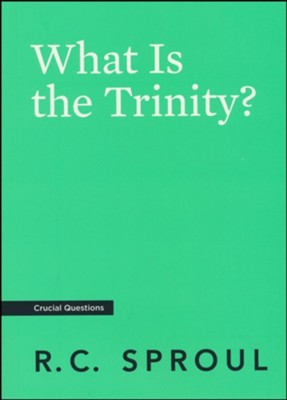
R.C. Sproul’s What Is The Trinity?

890457.jpg

What The Triune God Isn’t and What He Is

Book Reviewed by Dr. David P. Craig

If you were asked to clearly define what it means that God is Triune could you do it? In this short book (60 pages) Sproul helps you to understand the biblical doctrine that God is one in essence and three in person. In his inimitable style Sproul gives a lucid  and cogent defense of the Trinity as articulated in key passages of Scripture and as has been defended in the great early Church Council’s of Nicea and Chalcedon.

One of the most helpful sections in this book is when Sproul explains what the Trinity is, by explaining what it isn’t. He gives a brief history of the different early heresies with reference to the early teachings of the church in trying to articulate a unified understanding of the doctrine of God – His character, nature, and essence. He explains and shows the weaknesses of all the major early heresies with reference to a misunderstanding of the Trinity: Adoptionism, Monarchianism, Modalism, Monarchianistic Modalism, Monophysitism, Nestorianism, and Dynamic Monarchianism.

I highly recommend this book on the Trinity as a good place to start in trying to comprehend the biblical doctrine of how God can be one in essence and three in person. Don’t let the shortness of this book turn you away. Sproul is always deep, clear, biblical, theologically precise, and easy to understand. You are sure to learn something new and practical to help you in your walk with Jesus.

Favorite Quotes on Bible Study

Unknown.jpeg

“Body parts make sense only in relation to a whole human; and every Bible text is understood only in relation to the whole Bible.” ~ F.F. Bruce

“The analogy of faith is the rule that Scripture is to interpret Scripture.”  ~ R.C. Sproul

“Isn’t is amazing that almost everyone has an opinion to offer about the Bible, and yet so few have studied it?” ~ R.C. Sproul

“When there’s something in the Word of God that I don’t like, the problem is not with the Word of God, it’s with me.” ~ R.C. Sproul

“We fail in our duty to study God’s Word not so much because it is difficult to understand, not so much because it is dull and boring, but because it is work. Our problem is not a lack of intelligence or a lack of passion. Our problem is that we are lazy.” ~ R.C. Sproul

“One of the great realities of the Bible is the way its story connects with our story at our point of deepest need.” ~ Anonymous

“The shortest road to an understanding of the Bible is the acceptance of the fact that God is speaking in every line.” ~ Donald G. Barnhouse

“We do not worship the Bible, but in the Word of God written, in a sense we have God in a book. In Jesus, we have God in a body. In the Bible, God is on a page. In Jesus God is a person. In the Bible, God is on a leaf; in Jesus, God is in a life. The living and the printed word, then are twin records of God in this world.” ~ John Bisagno

“If you reject the Bible, you will reject Jesus Christ. If you believe the Bible, you will accept Him. He is the subject of it.” ~ James Montgomery Boice

“Don’t say God is silent when your Bible is closed.” ~ Matt Brown

“Rebellion against the Word of God is rebellion against the God whose word it is.” ~ Kevin DeYoung

“If I can twist the Bible to make it say anything I want it to then it is no longer God speaking to me, it’s just me talking to myself.” ~ Joshua Harris

“Ignorance of Scripture is ignorance of Christ.” ~ Jerome

“The fact that God’s Word is alive can be seen in the life it produces in all who take it up and act on its instructions.” ~ Walter Kaiser

“The Bible tells us foolishness is a proud willfulness that keeps us from learning, form seeing the evidence.” ~ Tim Keller

“Unless you have an authoritative view of the Bible, you’ve got a God you created and you’re going to be lonely.” ~ Tim Keller

“The Bible says that our real problem is that every one of us is building our identity on something besides Jesus.”  ~ Tim Keller

“If we believe he is who he said he was, then we must accept the entire Bible as God’s word.” ~ Tim Keller

“So Jesus’ authority & the absolute authority of the Bible stand or fall together.” Tim Keller

“If you only obey God’s Word when it seems reasonable or profitable to you – well, that isn’t really obedience at all.” ~ Tim Keller

“When you’re interpreting the Scriptures, the clear parts should inform the murkier parts.” ~ Tim Keller

“We need to remember to rely not only the Word of the Lord, but also on the Lord of the Word.” ~ Tim Keller

“We need to see the Bible as a Story with principles sprinkled throughout, as opposed to a book of doctrines sprinkled with stories.” ~ Tim Keller

“There are, in the end, only two ways to read the Bible: Is it basically about me or basically about Jesus?” ~ Tim Keller

“If Jesus didn’t think he could handle life without knowing the Scripture inside and out, what makes you think you can?” ~ Tim Keller

“It can, and perhaps ought to be, read cover to cover—as you might read any other book. In fact, the Bible can be read, at a speaking speed, in approximately eighty hours. This means it takes no more than thirteen minutes per day to read through the Bible from start to finish in a year; this is less time than is given over to commercials in one hour of television.” ~ Jerry Root , Introduction in the C.S. Lewis Study Bible, p. xxii.

“Ignorance of Scripture is the root of every error in religion, and the source of every heresy.” ~ J.C. Ryle

“Scripture is not man-centered as though salvation were the main theme, but it is God-centered because His glory is the center.” ~ C. Ryrie

“The Bible teaches that salvation is not an end in itself but is rather a means to the end of glorifying God.” ~ C.C. Ryrie

“We come to Scripture each day to discover where we are not listening, not assure ourselves we are right.” ~ Pete Scazzero

“Only a strong view of Scripture can withstand the pressure of relativistic thinking.” ~ Francis Schaeffer

“If we believe the Bible is the Word of God, it’s natural not to want to miss a word of it.” ~ R.C. Sproul

“Take away the Scriptures and you take away Jesus, take away Jesus and you take away life.” ~ R.C. Sproul

“The more I expose myself to the Word of God, the greater my faith will be.” ~ R. C. Sproul

“The word of God can be in the mind without being in the heart, but it cannot be in the heart without first being in the mind.” ~ R.C. Sproul

“There is an inseparable relationship between your affection for Christ and your affection for the Scriptures.” ~ R.C. Sproul

“The greatest weakness in the church today is no one believes that God invests His power in the Bible. Everyone is looking for power in a program, in a methodology, in a technique, in anything but that in which God has placed it—His Word.” ~ R.C. Sproul

“I think the greatest weakness in the church today is that almost no one believes that God invests His power in the Bible. Everyone is looking for power in a program, in a methodology, in a technique, in anything and everything but that in which God has placed it—His Word. He alone has the power to change lives for eternity, and that power is focused on the Scriptures.”  ~ R.C. Sproul

“The Word of God, whether it is preached and heard or read and memorized, is more than simply true. It is effectual.” ~ Sam Storms

“The Bible isn’t about people trying to discover God, but about God reaching out to find us.” ~ John R.W. Stott

“The Word of God comes to us most effectively in the context of community.” ~ Steve Timmis

“The Bible is a narrative, it tells us everything we need to know about mid-life concerns. The Bible is the great story of redemption that encompasses the stories of every human life. It is the overarching ‘everything’ story. It is comprehensive in scope without being exhaustive in content. It gives us wisdom for everything without directly discussing every particular thing.” (Paul Tripp, Lost In the Middle, Loc. 74)

Hear, O Israel: the Lord our God is one Lord: and thou shalt love the Lord thy God with all thine heart, and with all thy soul, and with all thy might. And these words, which I command thee this day, shall be upon thine heart: and thou shalt teach them diligently unto thy children, and shalt talk of them when thou sittest in thine house, and when thou walkest by the way, and when thou liest down, and when thou risest up. And thou shalt bind them for a sign upon thine hand, and they shall be for frontlets between thine eyes. And thou shalt write them upon the door posts of thy house, and upon thy gates. — Moses, in Deuteronomy 6:4-9

We fail in our duty to study God’s Word not so much because it is difficult to understand, not so much because it is dull and boring, but because it is work. Our problem is not a lack of intelligence or a lack of passion. Our problem is that we are lazy. — R.C. Sproul

To get the full flavor of an herb, it must be pressed between the fingers, so it is the same with the Scriptures; the more familiar they become, the more they reveal their hidden treasures and yield their indescribable riches. — John Chrysostom, A.D. 347-407

The New Testament lies hidden in the Old, and the Old Testament is unveiled in the New.— Augustine, A.D. 354-430

Though our covetous clerics are altogether carried away by bribery, heresy, and many other sins, and though they despise and oppose the scripture, as much as they can, yet the common people cry out for the scripture, to know it, and obey it, with great cost and peril to their lives — Prologue to the Wyclif Bible, c. 1395.

Mark the plain and manifest places of the Scriptures, and in doubtful places see thou add no interpretation contrary to them; but (as Paul saith) let all be conformable and agreeing to the faith. — William Tyndale, Preface to the New Testament, 1526.

Our malicious and wily hypocrites … with wresting the scripture unto their own purpose clean contrary unto the process, order, and meaning of the text … so delude [the laymen] in descanting upon it with allegories, and amaze them expounding it in many senses before the unlearned lay people (when it hath but one simple literal sense whose light the owls cannot abide), that though thou feel in thine heart and art sure how that all is false that they say, yet couldest thou not solve their subtle riddles. Which thing only moved me to translate the New Testament. Because I had perceived by experience, how that it was impossible to stablish the lay people in any truth, except the scripture were plainly laid before their eyes in their mother tongue, that they might see the process, order, and meaning of the text. — William Tyndale, Preface to the Pentateuch, 1530.

Again, it shall greatly help thee to understand scripture, if thou mark not only what is spoken or written, but of whom, and unto whom, with what words, at what time, where, to what intent, with what circumstance, considering what goeth before, and what followeth after. For there be some things which are done and written, to the intent that we should do likewise: as when Abraham believeth God, is obedient unto his word, and defendeth Lot his kinsman from violent wrong. There be some things also which are written, to the intent that we should eschew such like. As when David lieth with Urias’ wife, and causeth him to be slain. Therefore (I say) when thou readest scripture, be wise and circumspect: and when thou commest to such strange manners of speaking and dark sentences, to such parables and similitudes, to such dreams or visions as are hid from thy understanding, commit them unto God or to the gift of his holy spirit in them that are better learned than thou. — Miles Coverdale, Preface to the Bible, 1535.

But still ye will say I can not understand it. What marvel? How shouldest thou understand, if thou wilt not read, nor look upon it? Take the books into thine hands, read the whole story, and that thou understandest, keep it well in memory; that thou understandest not, read it again, and again. If thou can neither so come by it, counsel with some other that is better learned. Go to thy curate and preacher; show thyself to be desirous to know and learn, and I doubt not but God – seeing thy diligence and readiness (if no man else teach thee) – will himself vouchsafe with his holy spirit to illuminate thee, and to open unto thee that which was locked from thee. — Thomas Cranmer, Preface to the Great Bible, 1540.

And considering how hard a thing it is to understand the holy Scriptures, and what errors, sects, and heresies grow daily for lack of the true knowledge thereof, and how many are discouraged (as they pretend) because they cannot attain to the true and simple meaning of the same, we have also endeavored both by the diligent reading of the best commentaries, and also by the conference with the godly and learned brethren, to gather brief annotations upon all the hard places, as well for the understanding of such words as are obscure, and for the declaration of the text, as for the application of the same as may most appertain to God’s glory and the edification of his Church. — Geneva Bible Preface, 1560.

For though, whatsoever things are necessary are manifest, as S. Chrysostom saith, and as S. Augustine, In those things that are plainly set down in the Scriptures, all such matters are found that concern Faith, Hope, and Charity. Yet for all that it cannot be dissembled, that partly to exercise and whet our wits, partly to wean the curious from loathing of them for their every-where plainness, partly also to stir up our devotion to crave the assistance of God’s spirit by prayer, and lastly, that we might be forward to seek aid of our brethren by conference, and never scorn those that be not in all respects so complete as they should be, being to seek in many things ourselves, it hath pleased God in his divine providence, here and there to scatter words and sentences of that difficulty and doubtfulness … — King James Version Preface, 1611.

I want to know one thing, the way to heaven: how to land safe on that happy shore. God himself has condescended to teach the way; for this very end he came from heaven. He hath written it down in a book. O give me that book! At any price give me the Book of God! I have it: here is knowledge enough for me. Let me be homo unius libri. Here then I am, far from the busy ways of men. I sit down alone; only God is here. In his presence I open, I read his book; for this end, to find the way to heaven. Is there a doubt concerning the meaning of what I read? Does any thing appear dark or intricate? I lift up my heart to the Father of Lights. “Lord, is it not thy word, If any man lack wisdom, let him ask it of God? Thou givest liberally and upbraidest not. Thou hast said, if any be willing to do thy will, he shall know. I am willing to do. Let me know thy will.” I then search after and consider parallel passages of Scripture, comparing spiritual things with spiritual. I meditate thereon, with all the attention and earnestness of which my mind is capable. If any doubt still remain, I consult those who are experienced in the things of God: And then, the writings whereby being dead, they yet speak. And what I thus learn, that I teach. —John Wesley, Preface to Sermons on Several Occasions, 1746.

In the language of the sacred writings, we may observe the utmost depth, together with the utmost ease. All the elegancies of human composures sink into nothing before it: God speaks not as man, but as God. His thoughts are very deep; and thence his words are of inexhaustible virtue. And the language of his messengers also, is exact in the highest degree: for the words which were given them accurately answered the impression made upon their minds: and hence Luther says, “divinity is nothing but a grammar of the language of the Holy Ghost.” To understand this throughly, we should observe the emphasis which lies on every word; the holy affections expressed thereby, and the tempers shewn by every writer. — John Wesley, Preface to the New Testament, 1754.

THIS BOOK contains the mind of God, the state of man, the way of salvation, the doom of sinners and the happiness of believers. Its doctrines are holy, its precepts are binding, its histories are true, and its decisions are immutable. Read it to be wise, believe it to be safe and practice it to be holy. It contains light to direct you, food to support you and comfort to cheer you. It is the traveller’s map, the pilgrim’s staff, the pilot’s compass, the soldier’s sword and the Christian’s charter. Here paradise is restored, heaven opened and the gates of hell disclosed. Christ is its grand object, our good is its design and the glory of God its end. It should fill the memory, rule the heart, and guide the feet. Read it slowly, frequently, and prayerfully. It is a mine of wealth, a paradise of glory, and a river of pleasure. It is given you in life, will be opened in the judgement, and will be remembered forever. It involves the highest responsibility, will reward the greatest labour, and will condemn all who trifle with its sacred contents. — Anonymous

Born in the East and clothed in Oriental form and imagery, the Bible walks the ways of all the world with familiar feet, and enters land after land to find its own everywhere. It has learned to speak in hundreds of languages to the heart of man. It comes into the palace to tell the monarch that he is a servant of the Most High, and into the cottage to assure the peasant that he is a son of God. Children listen to its stories with wonder and delight, and wise men ponder them as parables of life. It has a word of peace for the time of peril, a word of comfort for the time of calamity, a word of light for the hour of darkness. Its oracles are repeated in the assembly of the people, and its counsels whispered in the ear of the lonely. The wicked and the proud tremble at its warnings, but to the wounded and the penitent it has a mother’s voice. The wilderness and the solitary place have been made glad by it, and the fire on the hearth has lit the reading of its well-worn pages. It has woven itself into our dearest dreams; so that love, friendship, sympathy and devotion, memory and hope put on the beautiful garments of its treasured speech, breathing of frankincense and myrrh. — Henry van Dyke

The Bible is a corridor between two eternities down which walks the Christ of God; His invisible steps echo through the Old Testament, but we meet Him face to face in the throne room of the New; and it is through that Christ alone, crucified for me, that I have found forgiveness for sins and life eternal. The Old Testament is summed up in the word Christ; the New Testament is summed up in the word Jesus; and the summary of the whole Bible is that Jesus is the Christ. — Bishop Pollock

All things in Scripture are not alike plain in themselves, nor alike clear unto all; yet those things which are necessary to be known, believed, and observed, for salvation, are so clearly propounded and opened in some place of Scripture or other, that not only the learned, but the unlearned, in a due use of the ordinary means, may attain unto a sufficient understanding of them … The infallible rule of interpretation of Scripture is the Scripture itself; and therefore, when there is a question about the true and full sense of any scripture (which is not manifold, but one), it must be searched and known by other places that speak more clearly. — Westminster Confession of Faith, 1647.

In order to be able to expound the Scriptures, and as an aid to your pulpit studies, you will need to be familiar with the commentators: a glorious army, let me tell you, whose acquaintance will be your delight and profit. Of course, you are not such wiseacres as to think or say that you can expound Scripture without assistance from the works of divines and learned men who have laboured before you in the field of exposition. If you are of that opinion, pray remain so, for you are not worth the trouble of conversion, and like a little coterie who think with you, would resent the attempt as an insult to your infallibility. It seems odd, that certain men who talk so much of what the Holy Spirit reveals to themselves, should think so little of what he has revealed to others. — C.H. Spurgeon, Commenting and Commentaries, 1890.

Men must interpret to the best of their ability each particular part of Scripture separately, and then combine all that the Scriptures teach upon every subject into a consistent whole, and then adjust their teachings upon different subjects in mutual consistency as parts of a harmonious system. Every student of the Bible must do this, and all make it obvious that they do it by the terms they use in their prayers and religious discourse, whether they admit or deny the propriety of human creeds and confessions. If they refuse the assistance afforded by the statements of doctrine slowly elaborated and defined by the Church, they must make out their own creed by their own unaided wisdom. The real question is not, as often pretended, between the word of God and the creed of man, but between the tried and proved faith of the collective body of God’s people, and the private judgment and the unassisted wisdom of the repudiator of creeds.— A. A. Hodge, A Short History of Creeds and Confessions, 1869.

Every one who knows what it is to give a lesson or an address occasionaly on Scripture is aware how the verse or paragraph on which he has had to prepare himself to speak stands out in his Bible afterwards from the rest of the text, as if its letters were embossed on the page. Something thus to awaken the mind and concentrate the attention should be devised by every one; because it is not mere reading, but meditation — “meditation all the day,” as the Psalmist says — which extracts the sweetness and the power out of Scripture. — Dr. James Stalker, How to Study the Bible, 1895.

I had then, and at other times, the greatest delight in the holy Scriptures, of any book whatsoever. Oftentimes in reading it, every word seemed to touch my heart. I felt a harmony between something in my heart, and those sweet powerful words. I seemed often to see so much light, exhibited by every sentence, and such a refreshing ravishing food communicated, that I could not get along in reading. Used oftentimes to dwell long on one sentence, to see the wonders contained in it; and yet almost every sentence seemed to be full of wonders. — Jonathan Edwards, quoted in Jonathan Edwards and the Bible by Robert E. Brown (Bloomington: Indiana University Press, 2002), p.3.

Again, we are taught by this passage [John 5:39-40], that if we wish to obtain the knowledge of Christ, we must seek it from the Scriptures; for they who imagine whatever they choose concerning Christ will ultimately have nothing of him but a shadowy phantom. First, then, we ought to believe that Christ cannot be properly known in any other way than from the Scriptures; and if it be so, it follows that we ought to read the Scriptures with the express design of finding Christ in them. Whoever shall turn aside from this object, though he may weary himself throughout his whole life in learning, will never attain the knowledge of the truth; for what wisdom can we have without the wisdom of God? Next, as we are commanded to seek Christ in the Scriptures, so he declares in this passage that our labors shall not be fruitless; for the Father testifies in them concerning his Son in such a manner that He will manifest him to us beyond all doubt. But what hinders the greater part of men from profiting is, that they give to the subject nothing more than a superficial and cursory glance. Yet it requires the utmost attention, and, therefore, Christ enjoins us to search diligently for this hidden treasure. Consequently, the deep abhorrence of Christ which is entertained by the Jews, who have the Law constantly in their hands, must be imputed to their indolence. For the lustre of the glory of God shines brightly in Moses, but they choose to have a vail to obscure that lustre. — John Calvin, Commentary on the Gospel of John (1563).

So then, from this we must gather that to profit much in the holy Scripture we must always resort to our Lord Jesus Christ and cast our eyes upon him, without turning away from him at any time. You will see a number of people who labor very hard indeed at reading the holy Scriptures — they do nothing else but turn over the leaves of it, and yet after ten years they have as much knowledge of it as if they had never read a single line. And why? Because they do not have any particular aim in view, they only wander about. And even in worldly learning you will see a great number who take pains enough, and yet all to no purpose, because they kept neither order nor proportion, nor do anything else but gather material from this quarter and from that, by means of which they are always confused and can never bring anything worthwhile. And although they have gathered together a number of sentences of all sorts, yet nothing of value results from them. Even so it is with them that labor in reading the holy Scriptures and do not know which is the point they ought to rest on, namely, the knowledge of our Lord Jesus Christ.— John Calvin, Sermon on Ephesians 2:19-22 (1559).

Heresy is not so much rejecting as selecting. The heretic simply selects the parts of the Scripture he wants to emphasize and lets the rest go. This is shown by the etymology of the word heresy and by the practice of the heretic. “Beware,” an editorial scribe of the fourteenth century warned his readers in the preface to a book. “Beware thou take not one thing after thy affection and liking, and leave another: for that is the condition of an heretique. But take everything with other.” The old scribe knew well how prone we are to take to ourselves those parts of the truth that please us and ignore the other parts. And that is heresy. —A. W. Tozer, We Travel An Appointed Way.

One does not hear God’s word of grace in the Scriptures unless he has decided that this is the word he really needs and wants to hear. He must decide that as he hears he is prepared to submit to the voice of God, to be judged by it and to have it challenge all that he knows and intends. He must understand that what he hears the Bible say can change his very life. Therefore, he cannot come to the New Testament as the disputer, the wise man, the judge over the word of God. He can come only as the child who needs to be made wise by the Wisdom of God (I Cor. 1:18-31). —Glenn W. Barker, The New Testament Speaks (New York: Harper & Row, 1969), p. 18.

It is strange how powerful is the tradition of the pulpit; how often able and thoughtful men will go all their lives taking for granted that an important passage has that meaning which in youth they heard ascribed to it, when the slightest examination would show them that it is far otherwise. —John A. Broadus, A Treatise on the Preparation and Delivery of Sermons

When I Read the Bible Through

by Amos R. Wells

I supposed I knew my Bible
Reading piecemeal, hit and miss,
Now a bit of John or Matthew,
Now a snatch of Genesis,
Certain chapters of Isaiah
Certain Psalms (the twenty-third);
Twelfth of Romans, First of Proverbs
Yes, I thought I knew the Word;
But I found that thorough reading
Was a different thing to do,
And the way was unfamiliar
When I read the Bible through.

Oh, the massive, mighty volume!
Oh, the treasures manifold!
Oh, the beauty of the wisdom
And the grace it proved to hold!
As the story of the Hebrews
Swept in majesty along,
As it leaped in waves prophetic,
As it burst to sacred song,
As it gleamed with Christly omens,
The Old Testament was new,
Strong with cumulative power,
When I read the Bible through.

Ah! Imperial Jeremiah,
With his keen, coruscant mind;
And the blunt old Nehemiah,
And Ezekiel refined!
Newly came the song idyllic,
And the tragedy of Job;
Deuteronomy, the regal,
To a towering mountain grew,
With its comrade peaks around it
When I read the Bible through.

What a radiant procession
As the pages rise and fall,
James the sturdy, John the tender
Oh, the myriad-minded Paul!
Vast apocalyptic glories
Wheel and thunder, flash and flame,
While the church triumphant raises
One incomparable name.
Ah, the story of the Saviour
Never glows supremely true
Till you read it whole and swiftly,
Till you read the Bible through.

You who like to play at Bible,
Dip and dabble, here and there,
Just before you kneel, aweary,
And yawn thro’ a hurried prayer;
You who treat the Crown of Writings
As you treat no other book
Just a paragraph disjointed,
Just a crude, impatient look
Try a worthier procedure,
Try a broad and steady view;
You will kneel in very rapture
When you read the Bible through.

Tolle lege

A man was looking for some guidance from God so he asked God to make his Bible open at the page He wanted him to read. So the man opened his bible randomly and the first verse that his eyes met was 2 Corinthians 13:12, “Greet one another with a holy kiss.” A little discouraged he tried again and this time he found himself at 1 Corinthians 14:39 “Do not forbid the use of tongues.”

He tried again the next day, and the first verse he found was Matthew 27:5, “he went and hanged himself.” The next verse was Luke 10:37, “… go and do likewise!”

Bible Interpretation Help from John Goldingay

083290.jpg

*Interpreting the Bible

The Rev. J. E. Goldingay, B.A., is Lecturer in Old Testament at St. John’s College, Nottingham. The following is the outline of a paper originally given at the C.B.R.F. Seminar in June 1980.

Four key features of the way we go about this task:

1. REVERENTLY

(a)  The Bible is God’s book: by his providence (books such as Kings, Luke) by His initiative (books such as Isaiah, Revelation)

(b)  It is therefore wholly true, because He is true (Jn. 17:17)

(c)  But each individual theological statement has to be seen in the context of the whole of biblical truth and of its place in the biblical story (e.g. God’s justice and His love).

Each individual behavioural demand has to be seen in the context of the whole of biblical theology and ethics and of its place in the biblical story (cp. Jesus’s discussion of divorce, Mk. 10).

Each individual ‘historical’ narrative has to be understood in the light of the kind of narrative it is (e.g. Genesis 1; differences between the Gospels).

(d)  Hence part of the problem of the stress on inerrancy is that it tends to imply that the whole Bible is a blow-by-blow chronological narrative, when actually its narrative is more like a portrait than a photograph; and, of course, much of the Bible is not narrative at all, so that the concept is an inappropriate one. It’s not that the Bible has any ‘mistakes’―it’s that this is the wrong question.

(e)  It is the fact that it is a collection of God’s words that gives us confidence it will speak today, and obliges us to be committed to believe and do all that we find in it.

2. HISTORICALLY

(a) Because God spoke through men who lived in history, the only way to understand his statements is to understand them on the lips of the men who uttered them and in the ears of those to whom they were spoken. (The problem with much prophetic interpretation lies in ignoring this point.)


(b)  The NT doesn’t always interpret the OT historically, but it encourages us to do so by picturing God himself speaking historically.

(c)  In understanding the Bible, however, we are building on the fact that we are one with the biblical writers in many ways (we share in their humanity, their experience of God, their indwelling with the Holy Spirit, and so on).

(d)  At the same time, the fact that we feel one with them can also make us mishear what they are saying, and we need all possible aids to true hearing.

(e)  Thus understanding the Bible involves a paradoxical combination of being objective, distancing ourselves from it (to try to lessen the extent to which we mishear it and enable us really to hear what God was saying back then) with. appropriating it for ourselves by making our response to God as we hear him speaking in some long-past context―speaking not just then but to me too. The Holy Spirit is involved in the whole of this process.

3. RELEVANTLY

(a)  Many passages of Scripture are of clear meaning and timeless significance, and can be applied directly to today. But precisely how they apply we have to ‘work out’, ‘guess’, or seek the Spirit’s leading on. We need to understand the world, ourselves, and our congregation as well as Scripture, to be able to do this. A preacher has to be a man of two worlds. (J. D. Smart)

(b)  Different biblical books address different situations and have different emphases according as they see people needing challenge or encouragement, the building up of faith, hope or obedience, and so on. We need to be able to understand where our congregation is so as to be able to apply the right biblical emphasis to them, to move them on from where they are now to the next place of God’s leading.

(c) A brief consideration of books such as Deuteronomy or 1 Chronicles reveals that many chapters are of no direct application today. Here we have to seek to see what principles may be inferred from these chapters and then see how those principles apply today.

(d)  Biblical narratives (e.g. stories in Genesis or the Gospels) can be relevant in one of two ways. Sometimes their once-for-all historicalness is what we note. (Jesus rose from the dead: that fact is part of the basis of my faith in him.) Sometimes they can be examples of how God always acts (God’s raising Jesus is paralleled by his giving me new life). We can thus link our story to God’s story. But note that in preaching we too easily fall into ‘moralizing―turning stories into examples of how we ought to act (or ought not to act)―which often wasn’t their purpose (e.g. stories about Abraham).

(e)  The Bible itself remains the check on what we think is the Spirit’s teaching on how it applies today.


4. IMAGINATIVELY

Our aim in preaching is to enable the inspired Word of God to get home today to the people of God by the help of the Spirit of God. This involves him breathing new life into:

(a)  the direct teaching of the Bible (e.g. prophets, letters). Classical expository preaching is at its best here, following the writer’s argument and letting the sermon’s structure reflect it. Note the need of bringing biblical symbols back to life (e.g. kingdom, redemption, fatherhood).

(b)  the narratives in the Bible (Genesis to Esther, Matthew to Acts), which teach indirectly. We usually turn them into direct teaching, losing their particular value. We need to retell stories, incorporating new insight, comment, and application as the original writer did (in the way Chronicles does this to Kings, and Matthew to Mark)―not making the story the mere lead into a list of ‘lessons’. Help people to get into the story, identifying with situations and characters as if hearing it for the first time. Value of drama.

(c)  the imaginary stories in the Bible (parables). The parables worker: by starting in people’s familiar world and taking people on to something totally revolutionary; a parable is a story with a kick in the tale. Our problem is that the familiar world is now strange and the revolutionary punchline is old hat. We have to bring old parables to life and tell new ones.

*http://www.biblicalstudies.org.uk/John Goldingay, “Interpreting the Bible,” Christian Brethren Review 31, 32 (1982): 145-148.


5 Things To Pray For Your Pastor

Unknown.jpeg

5 Ways to Pray for Your Pastor in 2020

By Nicholas Batzig

As a pastor, I sometimes mistakenly think that those most in need of my prayers in the church are those who have the most noticeable spiritual or physical weaknesses. I would imagine that, if we are honest with ourselves, we have all thought or said at some time or another something along the lines of, “So-and-so is really going to need a lot of prayer.” On the one hand, it is entirely right that we acknowledge that our brothers and sisters who have more noticeable weaknesses have a great need for our prayers. On the other hand, however, those to whom God has given the most gifts and graces are also greatly in need of our prayers. Contrary to what some might suppose, ministers of the gospel desperately need the prayers of the saints.

Pastors need the saints’ prayers because they are ever the object of the flaming arrows of the evil one. In addition, the world is eager to run them over at any opportunity. As one of my seminary professors so illustratively put it, “Ministers have a bull’s eye on their backs and footprints up their chests.” Sadly, this is even a reality for pastors within the context of the local church.

With so much opposition and difficulty within and without, pastors constantly need the people of God to be praying for them. The shepherd needs the prayers of the sheep as much as they need his prayers. He also is one of Christ’s sheep and is susceptible to the same weaknesses. While there are many things one could pray for pastors, here are five straightforward scriptural categories:

1. Pray for their spiritual protection from the world, the flesh, and the devil.

Whether it was Moses’ sinful anger leading to his striking of the rock (Num. 20:7-12), David’s adultery and murder (2 Sam. 11), or Simon Peter’s denial of the Lord (Matt. 26:69-75) and practical denial of justification by faith alone (Gal. 2:11-21), ministers are faced with the reality of the weakness of the flesh, the assaults of the world, and the rage of the devil. There have been a plethora of ministers who have fallen into sinful practices in the history of the church and so brought disgrace to the name of Christ. Since Satan has ministers of the gospel (and their families) locked in his sight—and since God’s honor is at stake in a heightened sense with any public ministry of the word—members of the church should pray that their pastor and their pastor’s family would not fall prey to the world, the flesh, or the devil.

2. Pray for their deliverance from the physical attacks of the world and the devil.

While under prison guard in Rome, the Apostle Paul encouraged the believers in Philippi to pray for his release when he wrote, “I know that this will turn out for my deliverance through your prayer and the supply of the Spirit of Jesus Christ” (Phil. 1:19; see also 2 Cor. 1:9-11.). After Herod imprisoned Simon Peter, we learn that “constant prayer was offered to God for him by the church” (Acts 12:5). After an exodus-like deliverance from prison, Luke tells us that Peter showed up at the home where the disciples were continuing to pray for his deliverance. This is yet another example of the minister being delivered from harm due, in part, to the prayers of the saints.

3. Pray for doors to be opened to them for the spread of the gospel.

In his letter to the Colossians, Paul asked the church to be praying “that God would open to us a door for the word, to speak the mystery of Christ, for which I am also in chains” (Col. 4:3). The success of the spread of the gospel is dependent in part on the prayers of the people of God. In this way, the church shares in the gospel ministry with the pastor. Though he is not the only one in the body who is called to spread the word, he has a unique calling to “do the work of an evangelist.” The saints help him fulfill this work by praying that the Lord would open doors “for the word, to speak the mystery of Christ.”

4. Pray that they might have boldness and power to preach the gospel.

In addition to praying for open doors for the ministry of the word, the people of God should pray that ministers would have Spirit-wrought boldness. When writing to the church in Ephesus, the Apostle Paul asked them to pray for him “that utterance may be given to me, that I may open my mouth boldly to make known the mystery of the gospel” (Eph. 6:19). There is a well-known story of several college students going to visit the Metropolitan Tabernacle in London in order to hear Charles Spurgeon preach. As the story goes, Spurgeon met them at the door and offered to show them around. At one point he asked if they wanted to see the church’s heater plant (boiler room). He took them downstairs where they saw hundreds of people praying for God’s blessings on the service and on Spurgeon’s preaching. The gathering of the people of God to pray for the ministry of the word is what he called “the heating plant”! Believers can help ministers by praying that they would be given boldness and power in preaching the gospel.

5. Pray that they might have a spirit of wisdom and understanding.

One of the most pressing needs for a minister of the gospel is that he would be given the necessary wisdom to counsel, to know when to confront, to mediate, and to discern the particular pastoral needs of a congregation. This is an all-encompassing and recurring need. The minister is daily faced with particular challenges for which he desperately needs the wisdom of Christ. It is said of Jesus that “the Spirit of wisdom and knowledge, and of counsel and might” was upon Him (Is. 11:2). The servants of Christ need that same Spirit. Much harm is done to the church as a whole if the minister does not proceed with the wisdom commensurate to the challenges with which he is faced. Those who benefit from this wisdom can help the minister by calling down this divine blessing from heaven upon him.

*Article adapted from Ligonier Ministries, ligonier.org  (January 3, 2020)