Faith and the Power of God by Jerry Bridges

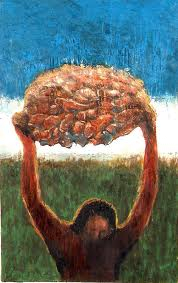
Feeding of the 5000

The healing of the demon possessed boy (Matt. 17:14–20) at first glance seems to be only one more in a series of miraculous healings recorded by Matthew. What makes this one unique is Jesus’ emphasis on the role of faith. It is true that faith is prominent in the miracles recorded in chapter 9, but in chapter 17 it is the lack of faith that is emphasized by Jesus.

That God is not dependent on human faith for accomplishing His work is clear from the accounts of other miracles recorded by Matthew. The transfiguration of Jesus immediately prior to the healing of the boy is a prime example. It was a spectacular miracle; yet no human faith was involved. This is also true in the feeding of the five thousand (Matt. 14:13–21) and the four thousand (15:32–38). So the first thing we need to learn about faith and the power of God is that He is not dependent on our faith to do His work. God will not be hostage to our lack of faith.

The second thing we need to learn, however, is that God often requires our faith in the carrying out of His purposes. We see this in the healing of the demon possessed boy. Mark, in his account, brings this out sharply in Jesus’ conversation with the boy’s father. The father, in great distress, said to Jesus: “But if you can do anything, have compassion on us and help us” (Mark 9:22). He had already experienced the failure of the disciples, so he was not sure if Jesus could help. His faith at this point may be described as no more than an uncertain hope that Jesus could do what the disciples could not do.

Jesus responded to the father: “If you can! All things are possible for one who believes” (v. 23). Biblical faith may be described in different ways depending on the situation. The description of faith in Hebrews 11:1 as “the assurance of things hoped for, the conviction of things not seen,” was appropriate for the Jewish recipients of the letter, who were facing severe opposition and needed to be encouraged as to the certainty of their hope in Christ.

For the father of the boy, faith would mean believing that Jesus could heal his son. We are often like the father. We may face what seems to be an intractable situation, and because we have prayed a long time without an answer, we begin to doubt that God can answer our prayer. But we must believe that with God nothing is impossible.

Sarah, the wife of Abraham, doubted that God could give them a son in their advanced age, to which God replied, “Is anything too hard for the Lord?” (Gen. 18:14). Centuries later, the prophet Jeremiah wavered in his faith when God told him to buy a field in the face of the Chaldeans’ invasion (Jer. 32:6-26). Again God’s response was: “Is anything too hard for me?” (v. 27). To have faith in God, even in the face of unanswered prayer or a seemingly impossible situation, means we continue to believe that He can do what seems impossible to us.

The importance of faith is further emphasized in Jesus’ answer to the disciples’ question: “Why could we not cast it out?” (Matt. 17:19). He said it was because of their little faith. We are not told in what way their faith was deficient. We do know that Jesus had previously given them authority over demons to cast them out (Matt. 10:1–8), so why was their faith so weak at this time? Perhaps it was because the demon did not respond immediately to their command, and so they began to doubt the power of Jesus. Or perhaps they presumed that because they had been successful before, they would be at that time. So we see that faith not only involves a firm reliance on Jesus’ power and ability, but also a complete renunciation of any confidence in our own.

Last month we looked briefly at the subject of God’s providence. In Matthew 17 we see an example of it in action, in connection with a mundane event — the paying of the temple tax. Jesus, as the Son of God, was under no obligation to pay the tax. Yet in order to give no offense, He sent Peter to catch a fish in whose mouth was the required shekel. This brief account raises some questions: How did the shekel get into the mouth of the fish? How did Peter just “happen” to catch that fish and not another one nearby? It is possible that Jesus performed a miracle and created the coin out of nothing in the mouth of the fish.

It is more likely, however, that it was a work of providence. Someone “accidentally” dropped a shekel into the sea. A particular fish grabbed it, and it stuck in its mouth. The fish swam to the exact spot where Peter cast his net and the fish was caught. None of these events was miraculous; yet all of them were necessary to accomplish Jesus’ purpose, and Jesus was in control of each one of them. God’s power is as much at work in His providence as in His miracles. So as we struggle with our own faith, or lack of it, in the difficult situations of life, let us believe that God is able, whether through miracles or providence, to care for us.


About Dr. Jerry Bridges: an author and speaker, as well as a staff member at The Navigators in Colorado Springs, Colorado.

Article above from © Tabletalk magazine. July 1st, 2008. 
Permissions: You are permitted and encouraged to reproduce and distribute this material in any format provided that you do not alter the wording in any way, you do not charge a fee beyond the cost of reproduction, and you do not make more than 500 physical copies. For web posting, a link to this document on our website is preferred (where applicable). If no such link exists, simply link to http://www.ligonier.org/tabletalk. Any exceptions to the above must be formally approved by Tabletalk.

Please include the following statement on any distributed copy: From Ligonier Ministries and R.C. Sproul. © Tabletalk magazine. Website: http://www.ligonier.org/tabletalk. Email: tabletalk@ligonier.org. Toll free: 1-800-435-4343.

How J. Hudson Taylor Learned How to Abide in Christ

Abiding, Not Striving or Struggling

Missionary pioneer J. Hudson Taylor of China was working and worrying so frantically that his health was about to break. Just when his friends feared he was near a breakdown, Taylor received a letter from fellow missionary John McCarthy that told of a discovery McCarthy had made from John 15—the joy of abiding in Christ. McCarthy’s letter said in part:

Abiding, not striving or struggling; looking off unto Him; trusting Him for present power … this is not new, and yet ’tis new to me.… Christ literally all seems to me now the power, the only power for service; the only ground for unchanging joy.

As Hudson Taylor read this letter at his mission station in Chin-kiang on Saturday, September 4, 1869, his own eyes were opened. “As I read,” he recalled, “I saw it all. I looked to Jesus, and when I saw, oh how the joy flowed!” Writing to his sister in England, he said:

As to work, mine was never so plentiful, so responsible, or so difficult; but the weight and strain are all gone. The last month or more has been perhaps the happiest of my life, and I long to tell you a little of what the Lord has done for my soul.…

When the agony of soul was at its height, a sentence in a letter from dear McCarthy was used to remove the scales from my eyes, and the Spirit of God revealed the truth of our oneness with Jesus as I had never known it before. McCarthy, who had been much exercised by the same sense of failure, but saw the light before I did, wrote (I quote from memory): “But how to get faith strengthened? Not by striving after faith but by resting on the Faithful One.”

As I read, I saw it all!.… As I thought of the Vine and the branches, what light the blessed Spirit poured into my soul.

Source of illustration: Robert J. Morgan. Nelson’s Complete Book of Stories, Illustrations, and Quotes. Nashville: Thomas Nelson Publishers, 2000.

How To Pray Using the F-A-C-T-S Acronym By Hank Hanegraaff

“Your Father Knows”

 (*Article adapted from Hank Hanegraaff, The Prayer of Jesus, Nashville: Word, 2001, Chapter 3)

Over sixty years ago the famous fictional character named Jabez Stone hit the big time in the Academy Award winning movie The Devil and Daniel Webster. Stone wasn’t evil, but he appeared to be the unluckiest man in all of New Hampshire. Unlike men who have the Midas touch, everything he touched turned to gravel in his teeth. One day he couldn’t take it anymore. He had just broken his plowshare, his horse was sick, his children came down with the measles, his wife was ailing and he had just injured his hand. Although Stone was religious, that day he vowed he would sell his soul to the Devil for a shortcut to success in life.

The Devil obliged, and at the expense of his soul promised to prosper Stone for seven years. Outwardly, Stone’s life was immediately flooded with good fortune and all the trappings of success. Inwardly, however, his spirit had begun to shrivel up and die. He was about to gain the whole world but lose his very soul. As I watched the movie and read the famous story by Stephen Vincent Benet on which the movie is based, I could not help but think back to the haunting words of Jesus, “You fool! This very night your life will be demanded from you” (Luke 12:20).

Like Stone, all of us have been tempted to look for shortcuts to success. And nowhere is this truer than when it comes to our prayer lives. We desperately want good fortune. We want a formula that will open up the windows of heaven and rain down its blessings. If you want to get right down to it, our prayers often sound dangerously close to the pleas of pagans, who constantly worry, saying, “What shall we eat? What shall we drink? What shall we wear?” (Matthew 6:31)

Thus, before Jesus launches into the principles of prayer through the most beautiful, symmetrical, and majestic of all biblical prayers, he first warns his disciples against praying as pagans do. The last thing he wants his disciples to do is turn the prayer he is about to teach them into what the New King James version of the Bible describes as “vain repetitions” (Matthew 6:7). So, says Jesus, “When you pray, do not keep on babbling like pagans, for they think they will be heard because of their many words. Do not be like them, for your Father knows what you need before you ask him” (vv. 7-8).

As the father of eight children, I can tell you that I sometimes know what my children need before they ask me. However, what I, as an earthly father, only sometimes know, our eternal Father always knows. There’s no need to pull out the prayer beads or attempt to wear God down by repeating the same prayers over and over. He already knows what you need before you ask him.

This statement by Christ inevitably leads to this question: Why bother praying if God knows what we need before we even ask him? I fear the very reason that this question is so often posed is that we have been conditioned to think that supplication is the sole sum and substance of prayer. The prayer of Jabez, now on the lips of multitudes, is an example of supplication.

It is great to ask God to “bless me indeed” so that I can be a blessing to others. It is glorious that God should ‘enlarge my border” so that I might reach more people for the kingdom. It is right to ask that God’s “hand might be with me” so that I might be led through the challenges of life by his sovereign control and not by chance. And it is proper to pray, “Keep me from harm that it man not pain me.” Prayer, however, is not merely a means of presenting requests, it is a means of pursuing a relationship with our heavenly Father.

As I write, the lyrics of a Country Western song, sung by Grammy Award-winning singer and song writer Paul Overstreet, wash through my mind.

‘How much do I owe you,” said the man to his Lord,

“For giving me this day, and all the days that’s gone before?

Shall I build a temple, shall I make a sacrifice?

Tell me Lord, and I will pay the price.

And the Lord said,

“I won’t take less than your love, sweet love.

No, I won’t take less than your love.

All the treasures of this world could never be enough,

And I won’t take less than your love (Paul Overstreet and Don Schlitz, “I Won’t Take Less Than Your Love,” Pegram, Tenn.: Scarlett Moon Records, 1999).

The point of the lyrics, which deal not only with the relationship of a man to his Lord but with the relationship to his wife and a mother to her son, is that relationships are cemented not just by giving and getting but love and communication.

The fact that I often know what my kids are going to ask before they open their mouths does not mean I don’t want them to ask. Rather, I long for them to verbalize their thoughts and feelings. That’s how our relationship blossoms and grows. Likewise, if we are to nurture a strong bond with our Creator, we must continually communicate with him. And prayer is our primary way of doing just that. A memorable way of prioritizing the principles of such communication through prayer is found in the acronym F-A-C-T-S (F-A-C-T-S discussion adapted from Hank Hanegraaff, Christianity in Crisis, Eugene, Ore.: Harvest House Publishers, 1997, 288-90; A-C-T-S used widely many years).

(F)AITH

Faith is only as good as the object in which it is placed. Put another way, it is the object of faith that renders faith faithful. The secret is not in the phrases we utter but in the coming to know ever more fully the One to whom we pray. Since God is awesomely revealed in his Word, the prayer of faith must always be rooted in Scripture. Prayer becomes truly meaningful when we enter into a relationship with God through Christ. We can then build on that foundation by saturating ourselves with Scripture. As R.A. Torrey so wonderfully expressed it:

To pray the prayer of faith we must, first of all, study the Word of God, especially the promises of God, and find out what the will of God is…We cannot believe as that is not faith but credulity; it is “make believe.” The great warrant for intelligent faith is God’s Word. As Paul puts it in Romans 10:17, “Faith comes from hearing the message, and the message is heard through the word of Christ” (R.A. Torrey, The Power of Prayer, Grand Rapids: Zondervan, 1981, 123-24).

Jesus summed up the prayer of faith with these words: “If you remain in me and my words remain in you, ask whatever you wish, and it will be given to you” (John 15:7). 

(A)DORATION

Faith in God naturally leads to adoration. Prayer without adoration is like a body without a soul. It is not only incomplete, but it just doesn’t work. Through adoration we express our genuine, heartfelt love and longing for God. Adoration inevitably leads to praise and worship, as our thoughts are focused on God’s surpassing greatness. The Scriptures are a vast treasury overflowing with descriptions of God’s grandeur and glory. The Psalms, in particular, can be transformed into passionate prayers of adoration.

Come, let us worship and bow down;

Let us kneel before the Lord our Maker.

For He is our God, and we are the people of His pasture,

And the sheep of His hand. – Psalm 95:6-9 NASB

 (C)ONFESSION

Not only do the Psalms abound with illustrations of adoration, but they are replete with exclamations of confession as well. Those who are redeemed by the person and work of Jesus are positionally declared righteous before God. In practical terms, however, we are still sinners who sin every day. While unconfessed sin will not break our union with God, it will break our communion with God. Thus confession is a crucial aspect of daily prayer.

The concept of confession carries the acknowledgement that we stand guilty before God’s bar of justice. There’s no place for self-righteousness before God. We can only develop intimacy with the Lord through prayer when we confess our need for forgiveness and contritely seek his pardon. The Apostle John sums it up beautifully when he writes, “If we confess our sins, he is faithful and just and will forgive us our sins and purify us from all unrighteousness” (1 John 1:9).

 (T)HANKSGIVING

Nothing, and I mean nothing, is more basic to prayer than thanksgiving. Scripture teaches us to “enter his gates with thanksgiving and his courts with praise” (Psalm 100:4). Failure to do so is the stuff of pagan babblings and carnal Christianity. Pagans, says Paul, know about God, but “they neither glorified him as God nor gave thanks to him” (Romans 1:21).

Carnal Christians likewise fail to thank God regularly for his many blessings. They suffer from what might best be described as selective memories and live by their feelings rather than their faith. They are prone to forget the blessings of yesterday as they thanklessly barrage the throne of grace with new requests each day.

That, according to the Apostle Paul, is a far cry from how we should pray. Instead we ought to approach God “overflowing with thankfulness” (Colossians 2:7) as we devote ourselves “to prayer, being watchful and thankful” (4:2). Such thankfulness is an action that flows from the sure knowledge that our heavenly father knows exactly what we need and will supply it. Thus says Paul we are to “be joyful always; pray continually; give thanks on all circumstances, for this is God’s will for you in Christ Jesus” (1 Thess. 5:16-18; also Eph. 5:20).

(S)UPPLICATION

We began by noting that prayer begins with a humble faith in the love and resources of our heavenly Father. Thus prayer becomes a means through which we learn to lean more heavily upon him and less heavily upon ourselves. Such faith inevitably leads to adoration as we express our longing for an ever deeper and richer relationship with the One who knit us together in our mothers’ wombs. The more we get to know him in the fullness of his majesty, the more we are inclined to confess our unworthiness and to thank him not only for his saving and sanctifying grace but also for his goodness in supplying all our needs.

It is in the contest of such a relationship that God desires that his children bring their requests before his throne of grace with praise and thanksgiving. After all it was Jesus himself who taught us to pray, “Give us this day our daily bread.” And as we do we must ever be mindful f the fact that the purpose of supplication is not to pressure God into providing us with provisions and pleasures, but rather to conform us to his purposes. As we read in 1 John 5:14-15, “This is the confidence we have in approaching God: that if we ask anything according to his will, he hears us. And if we know that he hears us—whatever we ask—we know that we have what we have asked of him.”

SO, WHY ASK?

This brings us back to the question posed earlier: If God knows what we need before we even ask, why bother asking at all? My initial response was a reminder that supplication is not the sole sum and substance of our prayers. Fat from merely being a means of pursuing a dynamic relationship with him.

Furthermore, we should note that God ordains not only the ends but also the means. Thus, to ask, “Why pray if God knows what we need?” is akin to asking, “Why get dressed in the morning and go to work?” For that matter, if God is going to do what he’s going to do anyway, why bother doing anything? As C.S. Lewis once put it, “Why, then, do we not argue as the opponents of prayer argue, and say that if the intended result is good God will bring it to pass without your interference, and that if it is bad He will prevent it happening whatever you do? Why wash your hands? If God intends them to be clean, they’ll come clean without your washing them. If He doesn’t they’ll remain dirty (as Lady Macbeth found – cf. Shakespeare, Macbeth V, I, 34-57) however much soap you use. Why ask for the salt? Why put on your boots? Why do anything? Lewis provides the answer as follows:

We know that we can act and thus that our actions produce results. Everyone who believes in God must therefore admit (quite apart from the question of prayer) that God has not chosen to write the whole of history with his own hand. Most of the events that go on in the universe are indeed out of our control, but not all. It is like a play in which the scene and the general outline of the story are fixed by the author, but certain minor details are left for the actors to improvise. It may be a mystery why He should have allowed us to cause them by praying than by any other method.

He gave us small creatures the dignity of being able to contribute to the course of events in two different ways. He made the matter of the universe such that we can (in those limits) do things to it; that is why we can wash our own hands and feed or murder our fellow creatures. Similarly, he made His own plan or plot of history such that it admits a certain amount of free play and can be modified in response to our prayers (C.S. Lewis, God in the Dock, edited by William Hooper, Eerdmans: Grand Rapids, 1979, 105).

Lewis goes on to explain that God has ordained that the work we do and the prayers we utter both produce results. If you pull out a weed, it will no longer be there. If you drink excessively, you will ruin your health. And if you waste planetary resources, you will shorten the lifeline of history. There is, however, a substantive difference between what happens as a result of our work and what happens as a result of our prayers. The result of pulling up a weed is “divinely guaranteed and therefore ruthless.” Thankfully, however, the result of prayer is not. God has left himself discretionary power to grant or refuse our requests, without which prayer would destroy us. Says Lewis,

It is not unreasonable for a headmaster to say, “Such and such things you may do according to the fixed rules of this school. But such and such other things are too dangerous to be left to general rules. If you want to do them you must come and make a request and talk over the whole matter with me in my study. And then—we’ll see” (Ibid, 107).

While our Father knows what we need before we even ask, our supplications are in and of themselves an acknowledgement of our dependence on him. And that alone is reason enough to pray without ceasing.


*Hank Hanegraaff serves as president and chairman of the board of the North Carolina-based Christian Research Institute International. He is also host of “The Bible Answer Man” radio program, which is broadcast daily across the United States and Canada as well as around the world through the Internet at http://www.equip.org.

Widely considered to be one of the world’s leading Christian apologists, Hanegraaff is deeply committed to equipping Christians to be so familiar with truth that when counterfeits loom on the horizon, they recognize them instantaneously.Through his live call-in radio broadcast, Hanegraaff equips Christians to read the Bible for all it’s worth and answers questions on the basis of careful research and sound reasoning. Additionally, Hanegraaff regularly interviews today’s most significant leaders, apologists, and thinkers.

Hanegraaff is the author of award-winning best sellers, including The Prayer of Jesus, – from which the above article Chapter 3 “Your Father Knows” is derived, Christianity in Crisis, Resurrection and Has God Spoken? He has written many other acclaimed books as well, numbering in the dozens. He is a regular contributor to “Christian Research Journal” and “The Plain Truth” magazine. A popular conference speaker, he addresses churches, schools, and businesses worldwide. He is frequently invited to appear on national media programs to discuss a wide range of issues.

Hanegraaff and his wife, Kathy, live in North Carolina and are the parents of nine children–Michelle; Katie; David; John Mark; Hank, Jr.; Christina; Paul; Faith; and baby Grace–and the grandparents of five.

World Renowned Classical Guitarist Shares How Christ Changed His Life

Christopher Parkening: Life Story and Christian Testimony  


For over a quarter century, I have been known in the classical music world as a concert guitarist, following the tradition of the great Spanish guitarist Andrés Segovia. However, there was a time in my life when I stopped concertizing and recording, and even gave up practicing the instrument. Apart from a small amount of teaching at Montana State University, I quit the guitar completely. This is the story of why I decided to perform once again.

Growing Up in Los Angeles

I grew up in Los Angeles and started playing the guitar at the age of 11, inspired by my cousin, Jack Marshall, who was staff guitarist at MGM Studios. I loved the way he played the guitar, and I asked him about studying the instrument. He recommended that I learn classical technique first to establish solid technical skills. He also suggested I purchase the recordings of Andrés Segovia, the greatest guitarist in the world. I was so impressed with Segovia’s playing that I started classical, loved it, and stayed with it.

Even before I began playing the guitar, I had a great love of the outdoors, in particular, fly-fishing for trout. My dad taught me the art of dry fly-fishing when I was six years old. The most enjoyable times of my life were spent on a trout stream in the High Sierras of Northern California. My goal in life was to some day own my own ranch with my own private trout stream.

As I grew up, I became convinced that my aim should be to make a lot of money, retire early and enjoy the good life. Since my father had retired at 47, I decided that 30 would be a good retirement age for me. And as I became more proficient with the guitar, I wondered if my musical ability might somehow help me achieve that goal.

Working Toward Early Retirement

I grew up in a home that taught me the value of hard work and discipline. With my father’s encouragement, I would get up at 5:00 a.m. and practice for an hour and a half before school and again in the afternoon. You can imagine what a conflict that created for a young man with a keen interest in sports.

However, with the support of my parents, the hard work began to pay off. Four years later, at age 15, I was invited to attend Andrés Segovia’s first United States master class held at the University of California at Berkeley. It was a great honor to play for the man who had inspired me for so many years. He told me I had the potential for a wonderful career with the classical guitar and encouraged me to work “very hard.” It was my good fortune to continue private study with Segovia and later, when I attended the University of Southern California, to study musical interpretation with the world renowned cellist Gregor Piatigorsky.

At age 19, I signed with Capitol Records for a series of six albums, and was asked to start a guitar department at the University of Southern California. The following year I signed with Columbia Artists Management for a rigorous concert schedule touring the United States, Canada, Europe, and Asia, eventually performing over 90 concerts a year!

Needless to say, as I added a grueling concert schedule to my teaching and recording obligations, my life became ever more stressful. Frankly, I was miserable on tour. I hated the hotel rooms, the airplanes, the monotony of one concert after the next. But, I thought, There will come a day when I will be happy. I’ll have my own ranch with my own trout stream and I can retire. I can do what I want to do, go where I want to go, and be content. And that was the goal I pursued.

At 30, I achieved my goal. I stopped playing the guitar, I found a ranch with a beautiful trout stream in Montana, and I moved there from Southern California. I called Capitol Records, USC, and Columbia Artists Management to thank them, and to let them know that I wouldn’t be playing the guitar anymore. I had achieved my life’s dream.

For the next four years I was doing everything I wanted to do. I was fishing to my heart’s content, learning every trout stream in the area, and going back to Southern California in the winter to escape the snow and cold weather. I was living the good life—or so I thought.


Searching for Truth

There’s an old proverb: “Be careful what you wish for, you might get it.” Well, that was the case with me. Soon after retirement, I became bored with my life and began to feel empty inside. It was like Solomon said in the Bible, “Vanity of vanities! All is vanity” (Ecclesiastes 1:1). My “ideal” life was turning out to be not so ideal after all. I needed something more, something to provide the fulfillment my success wasn’t giving me.

During one of my winter visits to Southern California a neighbor leaned over the backyard fence and invited me to Grace Community Church. I decided to go. John MacArthur preached a sermon entitled “Examine Yourself Whether You Be in the Faith,” and he read this passage from the Bible:

Not every one that saith unto me, Lord, Lord, shall enter into the kingdom of heaven; but he that doeth the will of my Father which is in heaven. Many will say to me in that day, Lord, Lord, have we not prophesied in thy name? and in thy name have cast out devils? and in thy name done many wonderful works? And then will I profess unto them, I never knew you: depart from me, ye that work iniquity (Matthew 7:21-23).

Now, when I was a young child my parents took me to Sunday school every week and even had me baptized. I had read the Bible occasionally during my boyhood and had been lead to believe I was a Christian. I was convinced that because I knew the “facts” about Jesus Christ, I would get into heaven one day. But, as I listened to the words that Pastor MacArthur was reading I felt something cutting deep into my heart. “That’s me!” I thought, “I would be one of those who would say, ‘Lord, Lord, I believe who You are. I went to Sunday school. My parents even had me baptized!’” In my heart I knew that Jesus would answer me, “You never cared to glorify Me with your life or with your music. All you cared about were your ranches and your trout streams. Depart from Me, I never knew you!” It was in that sudden, terrible moment I realized that I was not a Christian. I thought I had faith and yet my lifestyle had been characterized by total selfishness and disobedience. (I supposed I had wanted a Savior to save me from hell, but I had never wanted a Lord of my life whom I should follow, trust, and obey.)

That night I lay awake, broken over my sins. I realized that my life was a total washout. I had lived very selfishly and it had not made me happy. Knowing I was a sinner before God, I prayed and asked Him to forgive me. It was then that I asked Jesus Christ to come into my life, to be my Lord and Savior. For the first time, I remember telling Him, “Whatever You want me to do with my life, Lord, I’ll do it.”


Performing for God’s Glory

My new commitment to Christ gave me a great desire to read the Bible and learn more about the Word of God. One day I read a passage from 1 Corinthians which said, “Whatsoever ye do, do all to the glory of God” (1 Corinthians 10:31). Well, there were only two things I knew how to do: one was fly-fishing for trout, and the other was playing the guitar. The latter seemed the better option to pursue. The great composer J.S. Bach said, “The aim and final reason of all music is none else but the glory of God.” Bach signed many of his compositions with the initials S.D.G., which stands for Soli Deo Gloria (to God alone the glory). I thought, If Bach could use his great ability for that purpose, that would be the least I could do with whatever ability or talent the Lord had given me. It became evident that the Lord wanted me to return to playing the guitar again, but this time with a different purpose—to honor and glorify my Lord and Savior Jesus Christ.

Shortly after making my decision to return to playing, I sold my ranch in Montana and returned to California. Initially, I had a rude awakening when I contacted my former manager in New York. He told me flatly that I had thrown away a very valuable career and that it would be extremely difficult, if not impossible, to return to the concert stage after a four year absence. I knew that all things are according to God’s will and that it would be only by His grace that I would be able to return to a professional music career. The Lord has been gracious! Since my return to the music world I have played with every major orchestra in the nation, traveled the world on countless concert tours and have even played for the President of the United States at the White House!

Andrés Segovia was my musical inspiration growing up, and I still desire to follow with excellence the musical tradition he left us. However, my true goal in life now is to be a good and faithful servant of the Lord Jesus Christ. My career is only a means to an end, and that end is to glorify the Lord with my life and with the music that I play. Pursuing that goal gives me great joy and contentment; the fulfillment which eluded me so many years ago has at last been found and the emptiness I once felt has gone forever.


Sharing the Good News

One day I had the opportunity to share with my 11-year-old niece, Christi, what it means to be a Christian. I said, “Christi, if you were to die tonight and stand before God and He were to say to you, ‘Why should I let you into My heaven?’ what would you say?”

“Well,” she replied, “I would say ‘Because I’ve been a good girl.’”

“How good have you been?,” I asked, “Have you been perfect?”

“No,” she admitted, “I haven’t been perfect.”

“That’s true,” I said, “No, no one is perfect. In fact, the Bible says, ‘For all have sinned and come short of the glory of God (Romans 3:23).’ But God requires us to be perfect (James 2:10), and who can be perfect? Nobody, right? Nobody can be perfect.”

I told her that salvation is a free gift received by faith. Ephesians 2:8-9 says, “For by grace are ye saved through faith; and that not of yourselves: it is the gift of God: Not of works, lest any man should boast.” I said, “You’re not saved by your good deeds; you are saved by grace, and grace means God is freely giving you something you don’t deserve.”

I also told her the Bible says that God is holy and just. Hebrews 10:31 says, “It is a fearful thing to fall into the hands of the living God.” And Exodus 34:7 says that God “will by no means clear the guilty.” Since God is just, He will judge those who sin. 1 Peter 1:16 says, “Be ye holy; for I am holy.”

I went on to say that God is also a loving God. That famous Bible verse, John 3:16, says, “For God so loved the world, that he gave his only begotten Son, that whosoever believeth in him should not perish, but have everlasting life.” God judges those who sin, but in love He gave His Son to die on a cross to bear our sin and judgment.

How can God judge sinners and yet love them? To illustrate the answer, I told her a story about a king who was a wise and just ruler of his people:

Someone was embezzling from the king’s treasury, so the king issued an edict throughout all the land, saying, “Whoever is guilty, come forward and receive a just punishment of 10 public lashings.” But no one came forward.

The second week someone was continuing to steal from the king’s treasury, so the king set the punishment at 20 public lashings. But still no one came forward.

The third and fourth weeks went by and the thievery continued. On the fifth week the king set the punishment at 50 public lashings.

Finally, the guilty person was discovered. The one embezzling from the king’s treasury turned out to be the king’s own mother! The whole kingdom turned out to see what the king was going to do because they knew he was in a real dilemma: On the one hand he loved his mother, yet he knew that 50 lashes would very likely kill her. On the other hand he had a reputation for being a just king who would certainly punish the crime.

On the day for sentencing to be carried out, his mother was tied to a stake and a big man was ready to flog her with a whip. Then the king gave his order: “Render the punishment!” Just as he spoke, he took off his own robe, baring his own back, and putting his arms around his mother, he then took the lashes that she deserved, thereby satisfying the demand for justice.

The Bible says:

But he was wounded for our transgressions, he was bruised for our iniquities: the chastisement of our peace was upon him; and with his stripes we are healed. All we like sheep have gone astray; we have turned every one to his own way; and the Lord hath laid on him the iniquity of us all (Isaiah 53:5-6). Who his own self bare the sins in his own body on the tree, that we, being dead to sins, should live unto righteousness: by whose stripes ye were healed (1 Peter 2:24).

As I told little Christi, that’s exactly what Jesus Christ did for us. Jesus Christ, by His death and physical resurrection, paid for our sins and purchased a place in heaven for us, which He offers as a gift that may be received by faith. I told her, “You have a choice in this life: You can stand before God when you die and say, ‘I’ve been a good girl,’ but you will fall short. You could say, ‘The good I’ve done outweighs the bad,’ but you will still fall short. You can even invent your own standard for heaven and achieve that, but God’s standard is perfect righteousness! Or, you can humble yourself and receive the gift that God has described in the Bible: ‘Neither is there salvation in any other: for there is none other name under heaven given among men, whereby we must be saved’ (Acts 4:12). Jesus said, ‘I am the way, the truth, and the life: no man cometh unto the Father, but by me’ (John 14:6).

“Apart from the death of Christ on the cross for your sins, no one has access to the Father, no one has access to heaven. That’s what the Bible says. True saving faith, then, is trusting in Jesus Christ alone for your salvation—and the response to true faith will be an overwhelming desire to be obedient to the Lord. Jesus said in Luke 6:46, ‘And why call ye me, Lord, Lord, and do not the things which I say?’ That’s what it means to make Him ‘Lord and Savior.’”

In conclusion, I’m very thankful I had the opportunity that day to share with Christi what the Bible says about true salvation. But what about you? Are you willing to humble yourself before God and confess to Him that you are a sinner? Are you willing to repent, turn from your sins and receive Christ as your Savior and Lord? If so, you might wish to pray the following prayer from your heart:

Lord Jesus, I know that I’m a sinner. I’ve been trusting in my own good deeds to save me, but now I’m putting my trust in You. I accept You as my personal Savior. I believe You died for me. I receive You as Lord and Master over my life. Help me to turn from my sins and follow You. In Jesus’ name I pray. Amen.

I hope that you will make this prayer your own so that you can join with me in living life for God’s glory. If you have any questions, I hope you will contact a Bible teaching church in your area or write to me at:

Christopher Parkening

PO Box 2067, Malibu, CA 90265-7067

Website: http://www.parkening.com/

Book Review: Three Candles by Will Corcoran

The Amazing Power of Love

 This book is primarily about the author growing up with tremendous verbal and physical abuse from his parents, and the lessons he learns as an adult about love from his son “Henry” who is living with an incurable disease. In reading the book you go through all kinds of emotions – sadness, anger, joy and laughter. The chapters alternate between the authors’ life as a child and as an adult. I think the main theme of the book isn’t about abuse, or an incurable disease. The main theme of the book is about choosing to live with love and a positive attitude and to make the most of your opportunities in life no matter what the obstacles happen to be.

The author is a wonderful writer – he is authentic and transparent and his prose flows effortlessly. He “hooks” you immediately and the only thing that kept me from reading the book in one day (I read it in two days) was the tug on your emotions. He is tackling weighty real life stuff. There is tremendous evil encountered in this book – countered equally by amazing benevolence. In the end you will be encouraged by the story. It will make you appreciate your life and inspire you to make the best of your situation. You will say if, “Will or Henry can survive and thrive with what they have been through then so can I.” It will fortify you for life and motivate you to boldly love those around you with words and actions.

In the end of the book Will gives some examples of how he has been able to keep going with the obstacles in his life. Will and Henry, his granny, his wife, and his other children are an inspiration. I wouldn’t doubt that this book will end up getting picked up by a major movie producer – it should. It would make for a very good movie, because good movies come from heroic stories. This is a heroic story that involves faith, hope, and love – and as the Bible says in 1 Corinthians 13, “The greatest of these is love.” This is a great story ultimately about love – the most powerful thing in the universe outside of God himself, but only made possible because God is love.

Book Review: Mere Apologetics by Alister E. McGrath

An Outstanding Primer on Apologetics to Post Moderns

What C.S. Lewis’ “Mere Christianity” was to “Moderns” this book is a very helpful primer in how to communicate and build foundational bridges of truth leading to the gospel in a postmodern context. Tim Keller’s book “The Reason for God” would be the 21st equivalent of Lewis’ aforementioned book – addressing post moderns, rather than moderns. In McGrath’s book we have a bridge building handbook of sorts in how to show post moderns that the Christian ship is safe to board and sail in troubled waters and land on islands of truth in this journey of life.

Dr. McGrath shows how apologetics has changed over the years, what remains the same, and what we can learn from the biblical and historical apologists as they have cogently articulated the faith in their own cultural milieus, as we seek to reach post moderns in the 21st century with the unchanging gospel. He makes an excellent case for the fact that we need many approaches as we address the differing mind-sets of those we encounter with the gospel – just as Jesus, Paul, Peter, Jonathan Edwards, and C.S. Lewis did in their times. He then gives numerous examples from our own times in how we can dialogue and build bridges with the “new atheists” and others to pave a way for the gospel.

Throughout the book McGrath weaves in and out of discussions applying the benefits of apologetics as a precursor to evangelism. Perhaps the best description of this aspect of the book is noted in chapter five where he writes, “Yet conversion is ultimately the task of evangelism. Apologetics is about preparing the way for such conversion by showing that it makes sense to believe in God. It’s about clearing away rubble and debris in the path of evangelism. We may not be able to prove—in the absolute sense of the word—that there is a God. But we can certainly show that it is entirely reasonable to believe that such a God exists, in that it makes more sense of life, history, and experience than anything else—and then we can invite someone to respond to this loving God and trust this God’s promises.”

McGrath has written cogently, concisely, and lovingly in this outstanding handbook of how we can build bridges with our hearers to pave a way for the gospel, and how we can do this successfully where God has placed us in an ever changing world of ideas, with a never changing gospel. I highly recommend this book as a resource that Christian apologists can benefit from for years to come with an amazing array of helpful examples of how to tackle the issues of our day defensively, offensively, and most importantly with gentleness and respect so that it may benefit our hearers and give them a reason for our hope in Christ.

Funny Story: Pastor On Salary By Faith

I heard about a pastor who candidated at a church and was called, provided that he lived by faith. He asked the six men on the committee what they meant by living by faith. What it meant was that he would have no stated salary but that he would simply trust God for his needs. The candidate made a suggestion that cost him the church: “Each of you men has a salary, so why don’t we put all of our salaries together, divide the total by seven and all of us can live by faith.” (God Isn’t In a Hurry, by Warren Wiersbe, p. 23)