
The 25th Anniversary Sermon, Delivered at Tenth Presbyterian Church in Philadelphia on May 23, 1993, by Dr. James Montgomery Boice
But as for you, continue in what you have learned and have become convinced of, because you know those from whom you learned it, and how from infancy you have known the holy Scriptures, which are able to make you wise for salvation through faith in Christ Jesus— 2 Timothy 3:14, 15.
On a morning like this it is a temptation to reminisce over the quarter century of ministry I have had at Tenth Presbyterian Church. And I would do it, except for the fact that others have been doing it all weekend and in a much more complimentary way than I could myself— at least if I were to be honest. I could reveal a lot of things that the others are not aware of, including the disappointments and failures. But that would spoil things, and it is not what this weekend is about. It is certainly not what a worship service such as this should accomplish.
I remember that when John, the author of Revelation, fell at the feet of the angel of God to worship him, the angel replied, “Do not do it! I am a fellow servant with you and with your brothers who hold to the testimony of Jesus. Worship God!” (Revelation 19:10). So I remind you and myself that this is what we are about this morning.
And I direct you to God’s Word.
Our text is 2 Timothy 3:14,15. “But as for you, continue in what you have learned and have become convinced of, because you know those from whom you learned it, and how from infancy you have known the holy Scriptures, which are able to make you wise for salvation through faith in Christ Jesus.”
The Priority of God’s Word
I want to talk about the most important thing that Tenth Presbyterian Church has stood for over the one hundred sixty-four years of its distinguished history, and that is the priority of the Bible as the Word of God. That priority has been both doctrinal and practical. It is doctrinal because we believe the Bible to be the Word of God, the only infallible rule of faith and practice, and it is practical because we believe the Bible must be the treasure most valued and attended to in the church’s life.
This has been a factor from the very beginning— from the days of Thomas A. McAuley, the first pastor (1829- 1833), and Henry Augustus Boardman, the first minister to serve a long pastorate (1833-1876). But it is best illustrated by an incident from the early days of the ministry of Donald Grey Barnhouse (1927-1960), who had a profound and personal influence on my own idea of what the ministry should be.
A week or two after Barnhouse became pastor of Tenth Church, he entered the pulpit one Sunday morning and opened the great pulpit Bible to a point near the middle, where he then placed his sermon notes, his Bible and a hymn book. As he looked down he noticed that the words on the pages of the Bible were part of a curse upon those nations that do not know God. It occurred to him that he would like to have before him a passage containing words of a great promise.
He opened the Bible to Isaiah 55:10, 11, which says, “As the rain and the snowcome down from heaven, and do not return to it without watering the earth and making it bud and flourish, so that it yields seed for the sower and bread for the eater, So is my word that goes out from my mouth: It will not return to me empty, but will accomplish what I desire and achieve the purpose for which I sent it.”
To his surprise he discovered that for decades his predecessors had apparently done the same thing. The edges of the Bible were worn in half circles curving inward from the bindings at that text, and the pages were torn and mended. As he later observed, those pages “containing the great fifty-fifth chapter of Isaiah and the preceding page with the fifty-third chapter of Isaiah concerning the Lord Jesus Christ as God’s Lamb, give mute evidence that the men who have stood in the pulpit of Tenth Church for more than a century were men of the Living Word and the written Word.” (Donald Grey Barnhouse, “Isaiah 55:11” in Holding Forth the Word: 1927-1952. Manuscript Collection of the Tenth Presbyterian Church).
Later Barnhouse discovered that there was another section of the Bible that was similarly worn. It was the great psalm of the Bible, Psalm 119. Evidently, his predecessors, finding it difficult to keep their notes on the Isaiah pages, looked for another passage that would remind them of the power and priority of God’s Word.
Barnhouse told this story in a memorial booklet marking the twenty-fifth anniversary of his pastorate at Tenth Church, concluding this way: “It is my prayer that no man shall ever stand in this pulpit as long as time shall last who does not desire to have all that he does based upon this Book. For this Book does not contain the Word of God, it is the Word of God. And though we may preach the Word with all the stammering limitations of our human nature, the grace of God does the miracle of the ministry, and though human lips speak the divine Word, and the hearts of the people are refreshed. There is no other explanation for the continuing power of a church that is poorly located, that is without endowment, but which continues to draw men and women to the capacity of its seating arrangements, morning and evening, summer and winter, and which sends its sons and daughters by the score to preach the unsearchable riches of Christ throughout the world.” (Ibid).
The Inerrancy of God’s Word
About ten years into my pastorate, at the end of 1977 and the beginning of 1978, I helped start an organization that was also concerned with the priority of the Word of God but which focused its efforts on the important matter we perceived to be under attack at that time, namely, the Bible’s inerrancy. Our organization was called the International Council on Biblical Inerrancy, and it had within it such outstanding evangelical leaders as Francis Schaeffer, J. I. Packer, A. Wetherell Johnson, R. C. Sproul, John Gerstner, Roger Nicole and many others. It had as its purpose the task of “elucidating, vindicating and applying the doctrine of biblical inerrancy as an essential element for the authority of Scripture and a necessity for the health of the church of God.”
In the 1970s the evangelical church was drifting from its roots, and professors in prominent evangelical institutions were teaching that the Bible contains errors of historical and scientific fact but that it does not matter that it does. We believed that it does matter and tackled this deviation head on.
We held three gatherings of prominent evangelical scholars to hammer out three documents of “affirmation and denial.” They became nearly creedal in some quarters. The first was on inerrancy itself (“The Chicago Statement on Biblical Inerrancy”), the second on principles of interpretation (“The Chicago Statement on Biblical Hermeneutics”), and the third on application (“The Chicago Statement on the Application of the Bible to Contemporary Issues”). We also held two large lay conferences, the first in San Diego in the spring of 1982 and the second in Washington in the fall of 1988.
In the early days we were often asked why inerrancy was important since “it should be enough merely to believe that the Bible is trustworthy in areas of faith and morals.” But it is not that simple. To begin with, the Bible is an historical book and Christianity is an historical religion. So if the Bible errs in matters of historical fact, Christianity itself is affected. One hundred years of German “historical Jesus” research proved that. The scholars involved in this movement wanted to separate the Christ of faith from the Jesus of history, finding out who the true Jesus was. But as Albert Schweitzer proved in his classic study, The Quest for the Historical Jesus, all they succeeded in doing was making Jesus into the scholars’ own images. Rationalists produced a rationalist Jesus, socialists a socialistic Jesus, moralists a moralistic Jesus, and so on. The attempt to have Christianity without its historical base was a failure.
Besides, if part of the Bible is true and part is not, who is to tell us what the true parts are? There are only two answers to that question. Either we must make the decision ourselves, in which case the truth becomes subjective.
The thing that is true becomes merely what appeals to me. Or else, it is the scholar who tells us what we can believe and what we cannot believe. We argued that God has not left us either to our own whims or to the whims of scholars. He has given us a reliable book that we can read and understand ourselves.
The inerrancy of the Bible is what I wrestled with during my seminary years. It is not that I questioned it. Anyone who had been raised with the teaching of Donald Grey Barnhouse and others like him could hardly doubt that God has given us an inerrant revelation. My problem was that my teachers did not believe this, and much of what I was hearing in the classroom was meant to reveal the Bible’s errors so students would not depend on it too deeply. What was a student to do? The professors seemed to have all the facts. How were professors to be challenged when they argued that recent scholarship has shown that the old simplistic views about the Bible being inerrant are no longer valid and we have to admit that the Bible is filled with errors?
As I worked on this I discovered some interesting things. First, the problems imagined to be in the Bible were hardly new problems. For the most part they were known centuries ago, even by such ancient theologians as Saint Augustine and Saint Jerome. They debated problems of apparent contradictions in their correspondence.
I also discovered that results of sound scholarship have not tended to uncover more and more problems, as my professors were suggesting, still less disclose more and more “errors.” Rather they have tended to resolve problems and show that what were once thought to be errors are not errors at all. Let me give some illustrations.
Second Kings 15:29 speaks of a king of Assyria named Tiglath-Pileser. He is said to have conquered the Israelites of the northern kingdom and to have taken many of them into captivity. A generation ago liberal scholars were saying that this king never existed, because they had no independent record of him, and that the fall of the northern kingdom to Assyria was mythology. But then archaeologists excavated Tiglath-Pileser’s capital city and found his name pressed into bricks which read: “I, Tiglath-Pileser, king of Assyria, . . . am a conqueror from the Great Sea which is in the country of Amurru as far as the Great Sea which is in the Nairi country,” that is, the Mediterranean. In other words, archaeologists have found evidence not only of Tiglath-Pileser’s existence, but even of the very campaign 2 Kings describes. The English reader can find accounts of these battles in James B. Prichard’s Ancient Near Eastern Texts Relating to the Old Testament.
Here is another example. A generation ago scholars were saying that Moses could not have written the Pentateuch, the first five books of the Old Testament, because, so the argument went, writing was not known in Moses day. That seemed irrefutable at the time because, if writing was not known in Moses day, Moses could not have known how to write, and if Moses did not know how to write, he could not have written the Pentateuch. But in this case, it was the underlying premise that was wrong. As it turns out, not only was writing known in Moses day, there were actually many written languages. Today we know of at least six different languages from the very area of the world in which Moses led the Israelites for forty years.
My favorite example is a personal one. At the end of 1974 Time magazine ran a cover story entitled “How True Is the Bible?” It surveyed the liberal attacks on the Bible’s reliability and concluded, somewhat as I did after my study of what the evidence in this area has proved, that the credibility of the Bible has actually grown in recent decades. Time wrote,
The breadth, sophistication and diversity of all this biblical investigation are impressive, but it begs a question: Has it made the Bible more credible or less? Literalists who feel the ground move when a verse is challenged would have to say that credibility has suffered. Doubt has been sown, faith is in jeopardy. But believers who expect something else from the Bible may well conclude that its credibility has been enhanced. After more than two centuries of facing the heaviest scientific guns that could be brought to bear, the Bible has survived— and is perhaps the better for the siege. Even on the critics’ own terms— historical fact— the Scriptures seem more acceptable now than they did when the rationalists began the attack (Time, December 30, 1974, p. 41).
I found it interesting that the Bible was being defended by a secular magazine. But I said to myself, “I’m going to have to wait two weeks to see the letters that come in reaction to this, because I can’t believe that the liberal scholars will ignore it.” Sure enough. Two weeks later there were two strong letters from two of the most prominent critics: Martin Marty, a regular writer for the Christian Century, and Harvey Cox of the Harvard Divinity School. One of them ended— I do not remember which one— “The faith of your Bible believers is the opposite of biblical faith!”
I was offended. I said to myself, “That’s terribly unfair. Time has presented a balanced article. It hasn’t even claimed inerrancy, only historical reliability, and these men can’t even stand to have the Bible called reliable.” I got so angry, I had to stop and pray. I think the Lord answered me by saying, “Don’t worry about it. It’s not bothering me, why should it bother you. Go on and read the magazine.”
So I did. The letters were on page 38, and I read on to page 65, which turned out to be the section on science. On that page there was a report of an archeological expedition in the southern area of the Sinai Peninsula under the direction of a Jewish archeologist named Beno Rothenberg. He had been working at a place called “Solomon’s mines” because an ancient smelting operation had been there, and he wanted to find out if the area had really been worked by Jews, and who had begun it.
Rothenberg discovered that the area had been occupied by Jewish workmen at the time of Solomon. So it may truly have been where Solomon melted down his gold for the temple. But then he pushed back through the strata at the site and discovered that this ancient foundry had been developed originally by the Midianites. Midianites? Time knew that few of its readers would have any idea who the Midianites were. So the writer explained, “. . . the Midianites, a little-known people who dwelled in the area and are identified in Genesis as the first metal workers” (Time, January 13, 1975, p. 65).
At that point I began to understand why the Lord was urging me to go on and read the magazine. Because of all the places where that little bit of Bible verification could have appeared, it was in the very issue in which the liberal scholars were objecting, “The faith of your Bible believers is the opposite of biblical faith.”
The Holy Spirit really does have a sense of humor.
The Sufficiency of God’s Word
I want to say here, however, that important as I believe the matter of inerrancy is— and I do believe it. I believe churches will flounder and die if this is forgotten. Important as this is, I do not think it is the most critical issue about the Bible facing the American church today. The issue I would pinpoint today is the sufficiency of God’s Word.
I would ask the questions: Do we really believe that God has given us what we need in this book? Or do we think we have to supplement the Bible with other man-made things? Do we need sociological techniques to do evangelism? Do we need psychology and psychiatry for Christian growth? Do we need extra-biblical signs or miracles for guidance? Is the Bible’s teaching adequate for achieving social progress and reform?
The reason I believe this is important is that it is possible to believe that the Bible is the inerrant Word of God, the only infallible rule of faith and practice, and yet neglect it and effectually repudiate it just because we think that it is not great enough for today’s tasks and that other things need to be brought in to supplement the revelation. I think this is exactly what many evangelicals and evangelical churches are doing.
Have you ever realized that this is the point of each of the three great passages about Scripture that were read this morning. These three passages (Psalm 19, Matthew 4 and 2 Timothy 3) are probably the three most important passages in the Bible about the nature of the Word of God. The first contrasts it with God’s general revelation. The second shows how Jesus used the Bible to overcome temptation. The third is Paul’s advice to Timothy in view of the terrible times he saw coming. But notice. Each passage stresses that it is the Word of God alone that is sufficient for these challenges.
Psalm 19 speaks of the wonderful revelation of God in nature. But then it continues,
The law of the Lord is perfect, reviving the soul.
The statues of the Lord are trustworthy. making wise the simple.
The precepts of the Lord are right, giving joy to the heart.
The commands of the Lord are radiant, giving light to the eyes.
The fear of the Lord is pure, enduring forever.
The ordinances of the Lord are sure and altogether righteous.
They are more precious than gold, than much pure gold;
They are sweeter than honey, than honey from the comb.
By them is your servant warned, and in keeping them there is great reward. (vv. 7-11)
The revelation of God in nature is wonderful, but it is limited. By contrast, the revelation of God in Scripture is perfect, trustworthy, right, radiant, pure, sure, precious, sweet and rewarding. By what language would it be possible for the psalmist more effectively to emphasize the complete and utter sufficiency of God’s Word?
In Matthew 4 we discover the sufficiency of the Word of God in times of temptation, for it was by quotations from Deuteronomy 8:3; 6:16 and 6:13 that Jesus withstood Satan. Jesus did not reason with Satan without Scripture. He did not resort to supernatural power or ask God for some special sign or intervention. He knew the Bible, stood on it and used it forcefully.
Second Timothy 3 is the same. Paul is warning his young protege against the terrible times coming in the last days. They will be days like ours, in which “people will be lovers of themselves, lovers of money, boastful, proud, abusive, disobedient to their parents, ungrateful, unholy, without love, unforgiving, slanderous, without self-control, brutal, not lovers of the good, treacherous, rash, conceited, lovers of pleasure rather than lovers of God.” And if that is not terrible enough, they will be days in which these vices will be found even in the churches.
For they will be found among those “having a form of godliness but denying its power” (vv. 1-5).
What is Timothy to do when such days come? Surely Paul must have some secret new weapon, some unexpected trick for him to use. No, that is not what we find. Instead of something new, we find Paul recommending what Timothy has had all along— the Word of God— because the Bible is sufficient even for terrible times like these. “But as for you, continue in what you have learned and have become convinced of, because you know those from whom you learned it, and how from infancy you have known the holy Scriptures, which are able to make you wise for salvation through faith in Christ Jesus” (2 Timothy 3:12, 15).
Sufficient in All Areas
But it is not only that the Word of God is sufficient for all times, even times like ours. It is also sufficient in all areas, that is, it is able to do all we need it to do and are commissioned to do as Christians.
Let me list a few of these areas.
1. Evangelism. The Word of God is sufficient for evangelism. Indeed, it is the only thing that works in evangelism. Everything else— captivating music, personal testimonies, emotional appeals, even coming forward to make a commitment to Jesus Christ— all that is at best supplementary. And if it is used or depended upon apart from the faithful preaching and teaching of the Word of God, the “conversions” that result are spurious conversions, which is to say that those who respond do not actually become Christians. They become Christians in name only. The only way the Holy Spirit works to regenerate lost men and women is through the Word of God.
Peter said it: “You have been born again, not of perishable seed, but of imperishable, through the living and enduring word of God” (1 Peter 1:23).
2. Sanctification. I have been preaching on the book of Romans for seven years. I have discovered many interesting things in that time. But the most significant for me has been Paul’s approach to sanctification, which is not at all what we would expect or what many people today desire. When we think of sanctification today, most of us think of either one of two things. Either we think of a method (“Here are three steps to sanctification; do this and you will be holy”), or else we think of an experience (“You need a second work of grace, a baptism of the Holy Spirit,” or something). Paul’s approach is to know the Bible and its teaching about what has been done for us by God in our salvation.
Paul makes this clear in the sixth chapter where he says, “In the same way, count yourselves dead to sin but alive to God in Christ Jesus” (v. 11). This is the first time in the letter that Paul tells his readers to do something, and what they are to do is “count” or “reckon upon” the fact that God has done an irreversible work in their lives as a result of which they have died to sin (the verb is in the past tense, an aorist) and have been made alive to God in Christ Jesus. The only way they can understand what has happened to them is to know the Bible, which teaches them what has happened. But then, because they know it, they are to go on with God, acting on the basis of what has been done. In other words, they cannot go back to being what they were before. They are new creatures in Christ. So the only thing they can do is get on with living the Christian life. There is no way for them to go but forward.
That is the Bible’s approach to sanctification, and it has nothing to do with either a method or an experience. It has everything to do with knowing and living by the sufficient Word of God.
3. Guidance. Not long ago we had Phillip D. Jensen, the minister of St. Matthias Church in Sydney, Australia, with us for the Philadelphia Conferences on Reformed Theology. It was his first time in the United States, and it was my privilege to introduce him to American Christians this way. Mr. Jensen has written a book called The Last Word on Guidance whose sole point is that this “last word on guidance” is the Bible. That is what God has given us to indicate how we are to live and what we are to do to please him. All we need is in the Bible. So if there is something we want or think we need that is not in the Bible— what job we should take, who we should marry, where we should live— it doesn’t matter what we do as long as we are obeying what God teaches about living a godly life.
That doesn’t mean that God does not have a detailed plan for our lives. He does. He has a detailed plan for all things, ordering “whatsoever comes to pass,” as the Westminster Confession of Faith has it. But it does mean that we do not have to know this plan in advance and, indeed, cannot. What we can know and need to know is what God has told us in the Bible.
4. Social reform. The final area in which we need to be reminded that the Word of God is sufficient is for social renewal and reform. We are very concerned about this today and rightly so, because we live in a declining culture and we want to see the lordship of Jesus acknowledged and justice and true righteousness prevail. We want to see the poor relieved of bitter want and suffering. How is this to happen? I want to suggest that what is needed is not more government programs or increased emphasis on social work, but first and above all the teaching and practice of the Word of God.
Geneva under Calvin: A Case Study
I want to close with this important example, what happened in Geneva, Switzerland, in the sixteenth century through the ministry of John Calvin. In August of 1535 the Council of Two Hundred, which governed Geneva, voted to reject Catholicism and align the city with the Protestant Reformation. They had very little idea what that meant. Up to this point the city had been notorious for its riots, gambling, indecent dancing, drunkenness, adultery and other vices. People would literally run around the streets naked, singing indecent songs and blaspheming God. The people expected this state of affairs to continue, even after they had become Protestants, and the Council did not know what to do. The Council passed regulation after regulation designed to restrain vice and remedy the situation. Nothing they tried worked. Public discipline and morals continued their decline.
Calvin came to Geneva in August of 1536, a year after the change. He was practically ignored. He was not even paid the first year. Besides, as everybody knows, his first attempts to preach proved so unpopular that he was dismissed by the Council in early 1538, and went to Strasbourg. Calvin was happy in Strasbourg and had no desire to go back. When the situation got so bad in Geneva that public opinion turned to him again in desperation, he told his friend William Farel, “I should prefer a hundred other deaths than this cross on which I should have to die a thousand times a day.”
Nevertheless, driven by a sense of duty, Calvin returned to Geneva on September 13, 1541.
Calvin had no weapon but the Word of God. From the very first his emphasis had been on Bible teaching, and he returned to it now, picking up his exposition of Scripture at precisely the place he had left it three and a half years earlier. He preached from the Word every day, and under the power of that preaching the city began to change. As the Genevan people acquired knowledge of God’s Word and allowed it to influence their behavior, their city became almost a New Jerusalem from which the gospel spread to the rest of Europe, Great Britain and the New World.
Moreover, this change made other changes possible. One student of this historical period wrote,
Cleanliness was practically unknown in towns of his generation and epidemics were common and numerous. He moved the Council to make permanent regulations for establishing sanitary conditions and supervision of markets. Beggars were prohibited from the streets, but a hospital and poorhouse were provided and well conducted. Calvin labored zealously for the education of all classes and established the famous Academy, whose influence reached all parts of Europe and even to the British Isles. He urged the council to introduce the cloth and silk industry and thus laid the foundation for the temporal wealth of Geneva. This industry . . . proved especially successful in Geneva because Calvin, through the gospel, created within the individual the love of work, honesty, thrift and cooperation. He taught that capital was not an evil thing, but the blessed result of honest labor and that it could be used for the welfare of mankind. Countries under the influence of Calvinism were invariably connected with growing industry and wealth…It is no mere coincidence that religious and political liberty arose in those countries where Calvinism had penetrated most deeply (Marcellus Kik, Church and State: The Story of Two Kingdoms. New York: Thomas Nelson & Sons, 1963, p. 83. See pp. 71-85).
There has probably never been a clearer example of extensive moral and social reform than the transformation of Geneva under John Calvin, and it was accomplished almost entirely by the preaching of God’s Word.
Conclusion
I take you back to 2 Timothy. Paul encouraged Timothy to continue on the path of ministry he has been walking because “from infancy you have known the holy Scriptures, which are able to make you wise for salvation through faith in Christ Jesus.” Why is the Bible able to do that? It is because it is “God-breathed.” That is, it is the very Word of God and therefore carries with it the authority and power of God. Yes, and it is useful too. It is useful for “teaching, rebuking, correcting and training in righteousness, so that the man of God may be thoroughly equipped for every good work” (vv. 14-17).
That is exactly it. That is what we need. It is what everybody needs. And only the Word of God is sufficient for it.
Tag: James Boice
God or Man? By James Montgomery Boice

“Enoch, the seventh from Adam, prophesied about these men – Jude 14.
Jude tells us that Enoch was a preacher who lived in the time before the flood and who preached against the ungodliness of his generation. Enoch had a message of judgment that centered on the ungodliness of his contemporaries. The text uses the word ungodly four times. It was a true message, since his was a particularly wicked culture, but the message was also unpopular.
Genesis tells the secret of Enoch’s success in such a dismal time. Genesis 5:24 says, “Enoch walked with God.” This was an age in which hardly anyone else was walking with God. Certainly his ungodly cousins (Irad, Mehujael, Methushael, Lamech and his sons), of whom we read in Genesis 4, were not. Like Joseph, Enoch lived in a time and place when sin was ascendant. People were undoubtedly saying, “Why should you stand apart? Why should you think you’re better than other people? Come down off your high horse! Do what others do!” Enoch did not yield to that argument because he was walking with God, and this was the most important factor in his life. As long as he was walking with God, well—not everyone was sinning. As long as he was standing for righteousness, others might stand for righteousness too. Hebrews 11:5 adds: “By faith Enoch was taken from this life, so that he did not experience death; he could not be found, because God had taken him away. For before he was taken, he was commended as one who pleased God.”
Enoch pleased God! As long as you and I are in this world, we must serve God first and hope that in pleasing him and receiving his blessings we also please men and women and find their favor. For most of us this is the story of a lifetime. But let us observe that there are times when it is not possible to serve or please both God and man. When that happens, we must be clear in our minds that we are to please God first of all and then actually choose for him, whatever the consequences. Enoch was undoubtedly despised by his contemporaries; he was certainly ridiculed. But he stood for God and was vindicated in due time. We need a generation of men and women like that today. We need Christians who serve humanity as they serve Jesus, but who serve Jesus above all and listen for his commendation: “Well done, good and faithful servant! You have been faithful with a few things; I will put you in charge of many things. Come and share your master’s happiness!” (Matt. 25:23).
Sermon Excerpt adapted from: Boice, James Montgomery (2011-09-01). Come to the Waters: Daily Bible Devotions for Spiritual Refreshment (Kindle Locations 9585-9605). Baker Book Group. Kindle
Dr. James Montgomery Boice on Laying Your Burdens Before The Throne
“He drew me up from the pit of destruction, out of the miry bog, and set my feet upon a rock, making my steps secure.” – Psalm 40:2
“If You’re Defeated, Bring Your Defeats to God”
What is your slimy pit? Some people are caught in the mud and mire of sin. David himself was an example of this at one point in his life. He began his descent into this pit by staying home from battle in the season when kings were supposed to be at war. While enjoying himself in Jerusalem, he saw a woman named Bathsheba bathing herself on the roof of a home close to the palace. David brought her to the palace, slept with her, and then, when he learned she was pregnant, arranged to have her husband Uriah abandoned in battle so that he was killed by enemy soldiers. David continued nearly a year in this condition. The story is in 2 Samuel 11.
Maybe you are caught in just such a sin. Perhaps one sin has led to another. You know what is happening but you can’t get out of it. That is no surprise. Sin is like that. Romans Chapter One describes the downward pull of sin on all people. When you are caught in this way, there is no point beyond which you may not go. You need help. Where is your help to come from if not from God?
Some people have a very different kind of pit from which they need to be lifted. It is the pit of personal defeat, whether at work or school or in the home or in some other setting or relationship. Some people would say that their entire lives have been one long and unending defeat. They have never succeeded at anything.
I do not want to trivialize your discouragement. But I can tell you this. God does have things he wants you to succeed at, and he will enable you to succeed at those, even though they may be different from what you are doing now. The place to begin is where David began. He began by laying his problem before the Lord. There was a time early in his life when he could have spoken very graphically of his defeats. No matter what he did, he was unable to please King Saul, and Saul in his hatred and jealousy of David ruthlessly hounded the young man from place to place. It was many years before the Lord intervened to remove Saul and eventually bring David to the throne. If you are defeated, bring your defeats to God. Wait on God. David “waited patiently for the Lord.” That is how Psalm 40:1 begins: “I waited patiently for the Lord; He inclined to me and heard my cry.”
If you wait patiently, you too will learn that God has important things for you to do, and he will give you significant victories in his own perfect time.
About James Montgomery Boice:

Dr. James Montgomery Boice, just 8 weeks after being diagnosed with a fatal liver cancer, died in his sleep on June 15, 2000. The senior pastor of Tenth Presbyterian Church in Philadelphia, he was a world-famous Bible teacher, author, and statesman for Reformed theology. He informed his congregation of 32 years of his condition on May 7, proclaiming his complete confidence in God’s sovereignty and goodness.
In the past 72 years, historic Tenth Presbyterian Church had two senior pastors, Donald Grey Barnhouse and James Montgomery Boice – previous to Dr. Philip Graham Ryken (Currently the President at Wheaton College). Founded in 1828, the church itself predates their tenure by another hundred years. Tenth Presbyterian Church lies in the very heart of the city and today has about 1,200 members.
James Montgomery Boice accepted the position as senior pastor in 1968, and was the teacher of the Bible Study Hour since 1969 and the more recent God’s Word Today broadcast as well. Dr. Boice held degrees from Harvard, Princeton Theological Seminary, and the University of Basel, Switzerland. He had written or contributed to nearly 50 books, including Foundations of the Christian Faith, Living by the Book, and exegetical commentaries on Genesis, Psalms, Acts, and Romans.
He was no less involved in the preserving of the fundamentals of the faith than his predecessor, Dr. Barnhouse. In 1985, Boice assumed the presidency of Evangelical Ministries, Inc., the parent organization of the Bible Study Hour, Bible Study Seminars, Bible Studies magazine, and other teaching ministries. In 1997, Evangelical Ministries merged with Christians United for Reformation and the Alliance of Confessing Evangelicals, taking the latter as the new organization’s name, and Dr. Boice assumed the presidency. In 1997, he was a founding member of, and chaired, the International Council on Biblical Inerrancy.
Of particular concern to Boice was the matter of the church and her relationship to and engagement of society. His recent book, Two Cities, Two Loves, maintains that Christians are citizens of the kingdom of this world and the kingdom of heaven and that they have responsibilities in each. He urged Christians to “participate in secular life rather than merely shoot from the sidelines at secular people.”
His wife, Linda, and three daughters survive Dr. Boice. Characteristic of his ministry was his pushing Christians to commit themselves to staying in one place. He lived what he preached, committing to the church and his downtown neighborhood for 30 years. A gifted pastor and leader, he turned down many attractive opportunities in order to build a sense of permanence and belonging. And he urged his parishioners to do the same.
The article above is adapted from a Book of Sermons by Dr. Boice entitled: Psalm 1-41: An Exposition of the Psalms, Volume 1. Grand Rapids: Baker, 1994/2004, pages 348-349.
Dr. James M. Boice on the Importance of God’s Wrath in The Gospel
“For the wrath of God is revealed from heaven against all ungodliness and unrighteousness of men, who by their unrighteousness suppress the truth.” – Romans 1:18

“The Angry God” – A Biblical Exposition of Romans 1:18 – Dr. James M. Boice
Today’s preaching is deficient at many points. But there is no point at which it is more evidently inadequate and even explicitly contrary to the teachings of the New Testament than in its neglect of “the wrath of God.” God’s wrath is a dominant Bible teaching and the point in Romans at which Paul begins his formal exposition of the gospel. Yet, to judge from most contemporary forms of Christianity, the wrath of God is either an unimportant doctrine, which is an embarrassment, or an entirely wrong notion, which any enlightened Christian should abandon.
Weakness of Contemporary Preaching
Where do most people begin when making a presentation of Christian truth, assuming that they even speak of it to others? Where does most of today’s Christian “preaching” begin?
Many begin with what is often termed “a felt need,” a lack or a longing that the listener will acknowledge. The need may involve feelings of inadequacy; a recognition of problems in the individual’s personal relationships or work or aspirations; moods; fears; or simply bad habits. The basic issue may be loneliness, or it may be uncontrollable desires. According to this theory, preaching should begin with felt needs, because this alone establishes a point of contact with a listener and wins a hearing. But does it? Oh, it may establish a contact between the teacher and the listener. But this is not the same thing as establishing contact between the listener and God, which is what preaching is about. Nor is it even necessarily a contact between the listener and the truth, since felt needs are often anything but our real needs; rather, they can actually be a means of suppressing them.
Here is the way Paul speaks of a felt need in another letter: “For the time will come when men will not put up with sound doctrine. Instead, to suit their own desires, they will gather around them a great number of teachers to say what their itching ears want to hear” (2 Timothy 4:3). “What their itching ears want to hear” is a classic example of a felt need. In this passage the apostle warns Timothy not to cater to it. Obviously he himself did not structure the presentation of his gospel around such “needs.”
Another way we present the gospel today is by promises. We offer them like a carrot, a reward to be given if only the listener accepts Jesus. Through this approach, becoming a Christian is basically presented as a means of getting something. Sometimes this is propounded in a frightfully unbiblical way, so that what emerges is a “prosperity gospel” in which God is supposed to be obliged to grant wealth, health, and success to the believer.
We also commonly offer the gospel by the route of personal experience, stressing what Jesus has done for us and commending it to the other person for that reason.
The point I am making is that Paul does not do this in Romans, and in this matter he rebukes us profitably. D. Martyn Lloyd-Jones puts it like this:
Why is he [Paul] ready to preach the gospel in Rome or anywhere else? He does not say it is because he knows that many of them [the Romans] are living defeated lives and that he has got something to tell them that will give them victory. He does not say to them, “I want to come and preach the gospel to you in Rome because I have had a marvelous experience and I want to tell you about it, in order that you may have the same experience—because you can if you want it; it is there for you.”
This is not what Paul does.… There is no mention here of any experience. He is not talking in terms of their happiness or some particular state of mind, or something that might appeal to them, as certain possibilities do—but this staggering, amazing thing, the wrath of God! And he puts it first; it is the thing he says at once (D. M. Lloyd-Jones, Romans: An Exposition of Chapter 1, The Gospel of God. Grand Rapids: Zondervan, 1985, p. 325).
The reason, of course, is that Paul was God-centered, rather than man-centered, and he was concerned with that central focus. Most of us are weak, fuzzy, or wrong at this point. Paul knew that what matters in the final analysis is not whether we feel good or have our felt needs met or receive a meaningful experience. What matters is whether we come into a right relationship with God. And to have that happen we need to begin with the truth that we are not in a right relationship to him. On the contrary, we are under God’s wrath and are in danger of everlasting condemnation at his hands.
Wrath: A Biblical Idea
There is a problem at this point, of course, and the problem is that most people think in human categories rather than in the terms of Scripture. When we do that, “wrath” inevitably suggests something like capricious human anger or malice. God’s wrath is not the same thing as human anger, of course. But because we fail to appreciate this fact, we are uneasy with the very idea of God’s wrath and think that it is somehow unworthy of God’s character. So we steer away from the issue.
The biblical writers had no such reticence. They spoke of God’s wrath frequently, obviously viewing it as one of God’s great “perfections”—alongside his other attributes. Says J. I. Packer, “One of the most striking things about the Bible is the vigor with which both Testaments emphasize the reality and terror of God’s wrath.” Arthur W. Pink wrote, “A study of the concordance will show that there are more references in Scripture to the anger, fury, and wrath of God than there are to His love and tenderness” (J.I Packer. Knowing God. Downers Grove, ILL.: IVP, 1973, pp.134-35; A.W. Pink. The Attributes of God. Grand Rapids: Baker, 1975, p. 82).
In the Old Testament more than twenty words are used to refer to God’s wrath. (Other, very different words relate to human anger.) There are nearly six hundred important passages on the subject. These passages are not isolated or unrelated, as if they had been added to the Old Testament at some later date by a particularly gloomy redactor. They are basic and are integrated with the most important themes and events of Scripture.
The earliest mentions of the wrath of God are in connection with the giving of the law at Sinai. The first occurs just two chapters after the account of the giving of the Ten Commandments: “[The Lord said,] ‘Do not take advantage of a widow or an orphan. If you do and they cry out to me, I will certainly hear their cry. My anger [wrath] will be aroused, and I will kill you with the sword; your wives will become widows and your children fatherless’” (Exodus 22:22-24).
Ten chapters later in Exodus, in a very important passage about the sin of Israel in making and worshiping the golden calf (a passage to which we will return), God and Moses discuss wrath. God says, “Now leave me alone so that my anger [wrath] may burn against them and that I may destroy them.…” But Moses pleads, “Why should your anger burn against your people, whom you brought out of Egypt with great power and a mighty hand? Why should the Egyptians say, ‘It was with evil intent that he brought them out, to kill them in the mountains and to wipe them off the face of the earth’? Turn from your fierce anger; relent and do not bring disaster on your people” (Exodus 32:10-12).
In this early and formative passage, Moses does not plead with God on the grounds of some supposed innocence of the people—they were not innocent, and Moses knew it—nor with the fantasy that wrath is somehow unworthy of God’s character. Rather Moses appeals only on the grounds that God’s judgment would be misunderstood and that his name would be dishonored by the heathen.
There are two main words for wrath in the New Testament. One is thymos, from a root that means “to rush along fiercely,” “to be in a heat of violence,” or “to breathe violently.” We can capture this idea by the phrase “a panting rage.” The other word is orgē which means “to grow ripe for something.” It portrays wrath as something that builds up over a long period of time, like water collecting behind a great dam.
In his study of The Apostolic Preaching of the Cross, Leon Morris notes that apart from the Book of Revelation, which describes the final outpouring of God’s wrath in all its unleashed fury, thumos is used only once of God’s anger. The word used in every other passage is orgẽ. Morris observes, “The biblical writers habitually use for the divine wrath a word which denotes not so much a sudden flaring up of passion which is soon over, as a strong and settled opposition to all that is evil arising out of God’s very nature” (Leon Morris, The Apostolic Preaching of the Cross. Grand Rapids: Eerdmans, 1955, pp. 162, 163).
John Murray describes wrath in precisely this way when he writes in his classic definition: “Wrath is the holy revulsion of God’s being against that which is the contradiction of his holiness” (John Murray. The Epistle to the Romans. Grand Rapids: Eerdmans. 1968, p. 35).
We find this understanding of the wrath of God in Romans. In this letter Paul refers to wrath ten times. But in each instance the word he uses is orgẽ, and his point is not that God is suddenly flailing out in petulant anger against something that has offended him momentarily, but rather that God’s firm, fearsome hatred of all wickedness is building up and will one day result in the eternal condemnation of all who are not justified by Christ’s righteousness. Romans 1:17 says, on the basis of Habakkuk 2:4, that “the righteous will live by faith.” But those who do not live by faith will not live; they will perish. Thus, in Romans 2:5 we find Paul writing, “Because of your stubbornness and your unrepentant heart, you are storing up wrath against yourself for the day of God’s wrath, when his righteous judgment will be revealed.”
Wrath Revealed
But it is not only a matter of God’s wrath being “stored up” for a final great outpouring at the last day. There is also a present manifesting of this wrath, which is what Paul seems to be speaking of in our text when he says, using the present rather than the future tense of the verb, “The wrath of God is being revealed from heaven against all the godlessness and wickedness of men who suppress the truth by their wickedness.” How is this so? In what way is the wrath of God currently being made manifest?
Commentators on Romans suggest a number of observations at this point, listing ways in which God’s wrath against sin seems to be disclosed. Charles Hodge speaks of three such manifestations: “the actual punishment of sin,” “the inherent tendency of moral evil to produce misery,” and “the voice of conscience” (Charles Hodge, A Commentary on Romans. Edinburgh and Carlisle, Pa.: The Banner of Truth Trust, 1972, p. 35. Original edition – 1935).
D. Martyn Lloyd-Jones lists “conscience,” “disease and illness,” “the state of creation,” “the universality of death,” “history,” and (the matter he thinks Paul mainly had in view) “the cross” and “resurrection of Christ” (Lloyd-Jones. Romans: An Exposition of Chapter One, pp. 342-350).
Robert Haldane has a comprehensive statement:
The wrath of God … was revealed when the sentence of death was first pronounced, the earth cursed and man driven out of the earthly paradise, and afterward by such examples of punishment as those of the deluge and the destruction of the cities of the plain by fire from heaven, but especially by the reign of death throughout the world. It was proclaimed by the curse of the law on every transgression and was intimated in the institution of sacrifice and in all the services of the Mosaic dispensation. In the eighth chapter of this epistle the apostle calls the attention of believers to the fact that the whole creation has become subject to vanity and groaneth and travaileth together in pain. This same creation which declares that there is a God, and publishes his glory, also proves that he is the enemy of sin and the avenger of the crimes of men.… But above all, the wrath of God was revealed from heaven when the Son of God came down to manifest the divine character, and when that wrath was displayed in his sufferings and death in a manner more awful than by all the tokens God had before given of his displeasure against sin (Robert Haldane. An Exposition of the Epistle to the Romans. MacDill AFB: MacDonald Publishing, 1958, pp. 55, 56).
Each of these explanations of the present revelation of the wrath of God is quite accurate. But in my opinion Paul has something much more specific in view here, the matter that Charles Hodge alone mentions specifically: “the inherent tendency of moral evil to produce misery.” This is what Paul goes on to develop in Romans 1. In verses 21 through 32 Paul speaks of a downward inclination of the race by which the world, having rejected God and therefore being judicially abandoned by God, is given up to evil. It is set on a course that leads to perversions and ends in a debasement in which people call good evil and evil good. Human depravity and the misery involved are the revelation of God’s anger.
A number of years ago, Ralph L. Keiper was speaking to a loose-living California hippie about the claims of God on his life. The man was denying the existence of God and the truths of Christianity, but he was neither dull nor unperceptive. So Keiper directed him to Romans 1, which he described as an analysis of the hippie’s condition. The man read it carefully and then replied, “I think I see what you’re driving at. You are saying that I am the verifying data of the revelation.”
That is exactly it! The present revelation of God’s wrath, though limited in its scope, should be proof to us that we are indeed children of wrath and that we need to turn from our present evil path to the Savior.
Turning Aside God’s Wrath
Here I return to that great Old Testament story mentioned earlier. Moses had been on the mountain for forty days, receiving the law. As the days stretched into weeks, the people waiting below grew restless and prevailed upon Moses’ brother Aaron to make a substitute god for them. It was a golden calf. Knowing what was going on in the valley, God interrupted his giving of the law to tell Moses what the people were doing and to send him back down to them.
It was an ironic situation. God had just given the Ten Commandments. They had begun: “I am the Lord your God, who brought you out of Egypt, out of the land of slavery. You shall have no other gods before me. You shall not make for yourself an idol in the form of anything in heaven above or on the earth beneath or in the waters below. You shall not bow down to them or worship them; for I, the Lord your God, am a jealous God, punishing the children for the sin of the fathers to the third and fourth generation of those who hate me, but showing love to thousands who love me and keep my commandments” (Exodus 20:2–6). While God was giving these words, the people whom he had saved from slavery were doing precisely what he was prohibiting. Not only that, they were lying, coveting, dishonoring their parents, committing adultery, and no doubt also breaking all the other commandments.
God declared his intention to judge the people immediately and totally, and Moses interceded for them in the words referred to earlier (Exodus 32:11–12).
At last Moses started down the mountain to deal with the people. Even on a human level, quite apart from any thought of God’s grace, sin must be judged. So Moses dealt with the sin as best he knew how. First he rebuked Aaron publicly. Then he called for any who still remained on the side of the Lord to separate themselves from the others and stand beside him. The tribe of Levi responded. At Moses’ command they were sent into the camp to execute the leaders of the rebellion. Three thousand men were killed, approximately one-half of one percent of the six hundred thousand who had left Egypt at the Exodus (Exodus 32:28; cf. 12:37—with women and children counted, the number may have been more than two million). Moses also destroyed the golden calf. He ground it up, mixed it with water, and made the people drink it.
From a human standpoint, Moses had dealt with the sin. The leaders were punished. Aaron was rebuked. The allegiance of the people was at least temporarily reclaimed. But Moses stood in a special relationship to God, as Israel’s representative, as well as to the people as their leader. And God still waited in wrath on the mountain. What was Moses to do?
For theologians sitting in an ivory-tower armchair, the idea of the wrath of God may seem to be no more than an interesting speculation. But Moses was no armchair theologian. He had been talking with God. He had heard his voice. He had receive his law. Not all the law had been given by this time, but Moses had received enough of it to know something of the horror of sin and of the uncompromising nature of God’s righteousness. Had God not said, “You shall have no other gods before me”? Had he not promised to punish sin to the third and fourth generation of those who disobey him? Who was Moses to think that the judgment he had imposed would satisfy a God of such holiness?
Night passed, and the morning came when Moses was to ascend the mountain again. He had been thinking, and during the night a way that might possibly divert the wrath of God had come to him. He remembered the sacrifices of the Hebrew patriarchs and the newly instituted rites of the Passover. God had shown by such sacrifices that he was prepared to accept an innocent substitute in place of the just death of the sinner. God’s wrath could sometimes fall on the substitute. Moses thought, “Perhaps God would accept.… ”
When morning came, Moses ascended the mountain with great determination. Reaching the top, he began to speak to God. It must have been in great anguish, for the Hebrew text is uneven and Moses’ second sentence breaks off without ending (indicated by a dash in the middle of Exodus 32:32). This is the strangled sob welling up from the heart of a man who is asking to be damned if his own judgment could mean the salvation of those he had come to love. The text reads: “So Moses went back to the Lord and said, ‘Oh, what a great sin these people have committed! They have made themselves gods of gold. But now, please forgive their sin—but if not, then blot me out of the book you have written” (Exodus 32:31–32). Moses was offering to take the place of the people and accept judgment on their behalf.
On the preceding day, before Moses had come down from the mountain, God had said something that could have been a great temptation. If Moses would agree, God would destroy the people and start again to make a new Jewish nation from Moses (Exodus 32:10). Even then Moses had rejected the offer. But, after having been with his people and being reminded of his love for them, his answer, again negative, rises to even greater heights. God had said, “I will destroy the people and save you.”
Now Moses replies, “Rather destroy me and save them.”
Moses lived in the early years of God’s revelation and at this point probably had a very limited understanding of God’s plan. He did not know, as we know, that what he prayed for could not be. He had offered to go to hell for his people. But Moses could not save even himself, let alone Israel. He, too, was a sinner. He, too, needed a savior. He could not die for others.
But there is One who could. Thus, “But when the time had fully come, God sent his Son, born of a woman, born under law, to redeem those under law, that we might receive the full rights of sons” (Gal. 4:4–5). That person is Jesus, the Son of God. His death was for those who deserve God’s wrath. And his death was fully adequate, because Jesus did not need to die for his own sins—he was sinless—and because, being God, his act was of infinite magnitude.
That is the message Paul will expound in this epistle. It is the Good News, the gospel. But the place to begin is not with your own good works, since you have none, but by knowing that you are an object of God’s wrath and will perish in sin at last, unless you throw yourself upon the mercy of the One who died for sinners, even Jesus Christ (Material in this article sometimes closely parallels the chapter on “The Wrath of God” in James Montgomery Boice. Foundations of the Christian Faith: A Comprehensive and Readable Theology. Downers Grove, Ill.: InterVarsity Press, 1986, pp. 246–255).
About the Author:
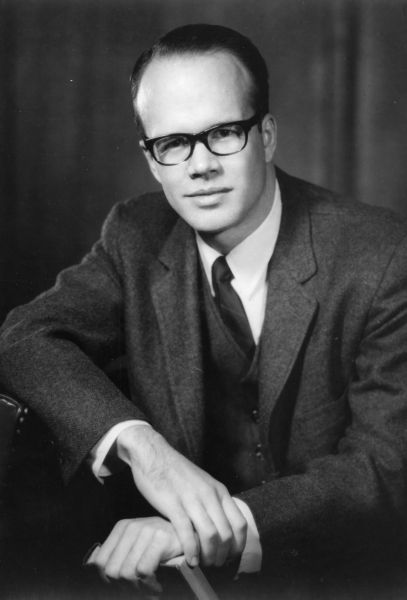
James Montgomery Boice, Th.D., (July 7, 1938 – June 15, 2000) was a Reformed theologian, Bible teacher, and pastor of Tenth Presbyterian Church in Philadelphia from 1968 until his death. He is heard on The Bible Study Hour radio broadcast and was a well known author and speaker in evangelical and Reformed circles. He also served as Chairman of the International Council on Biblical Inerrancy for over ten years and was a founding member of the Alliance of Confessing Evangelicals. The article/sermon above was adapted from Chapter 14 in Dr. James Montgomery Boice. The Boice Commentary Series: Romans Expositions vol. 1: Justification by Faith. Grand Rapids: Baker, 2005 (reprinted).
Dr. James Montgomery Boice on God’s Amazing Grace
There is no difference, for all have sinned and fall short of the glory of God, and are justified freely by his grace through the redemption that came by Christ Jesus. –Romans 3:22-24 (condensed)

In the last study I introduced four doctrines found in Romans 3:21–31:
(1) God has provided a righteousness of his own for men and women, a righteousness we do not possess ourselves;
(2) this righteousness is by grace;
(3) it is the work of the Lord Jesus Christ in dying for his people, redeeming them from their sin, that has made this grace on God’s part possible; and
(4) this righteousness, which God has graciously provided, becomes ours through simple faith. We have already looked at the first of these four doctrines: the righteousness that God has made available to us apart from law. Now we will examine the second doctrine: that this righteousness becomes ours by the grace of God alone, apart from human merit.
That is the meaning of grace, of course. It is God’s favor to us apart from human merit. Indeed, it is favor when we deserve the precise opposite. D. Martyn Lloyd-Jones has written, “There is no more wonderful word than ‘grace.’ It means unmerited favor or kindness shown to one who is utterly undeserving.… It is not merely a free gift, but a free gift to those who deserve the exact opposite, and it is given to us while we are ‘without hope and without God in the world.’ ”
But how are we to do justice to this great concept today? We have too high an opinion of ourselves even to understand grace, let alone to appreciate it. We speak of it certainly. We sing, “Amazing grace—how sweet the sound—That saved a wretch like me!” But we do not think of ourselves as wretches needing to be saved. Rather, we think of ourselves as quite worthy. One teacher has said, “Amazing grace is no longer amazing to us.” In our view, it is not even grace.
There is No Difference
This is why the idea expressed in Romans 3:23 is inserted at this point. For many years, whenever I came to this verse, I had a feeling that it was somehow in the wrong place. It was not that Romans 3:23 is untrue. Obviously it is, for that is what Romans 1:18–3:20 is all about. What bothered me is that the verse did not seem to belong here. I felt that the words “there is no difference, for all have sinned and fall short of the glory of God” belonged with that earlier section. The verse seemed somehow an intrusion here, because Romans 3:21–31 is not talking about sin but about the way of salvation.
I think differently now, however. And the reason I think differently is that I now understand the connection between this verse and grace. The reason we do not appreciate grace is that we do not really believe Romans 3:23. Or, if we do, we believe it in a far lesser sense than Paul intended.
Let me use a story to explain what I mean. In his classic little book All of Grace, Charles Haddon Spurgeon begins with the story of a preacher from the north of England who went to call on a poor woman. He knew that she needed help. So, with money from the church in his hand, he made his way through the poor section of the city to where she lived, climbed the four flights of stairs to her tiny attic apartment, and then knocked at the door. There was no answer. He knocked again. Still no answer. He went away. The next week he saw the woman in church and told her that he knew of her need and had been trying to help her. “I called at your room the other day, but you were not home,” he said.
“At what time did you call, sir?” she asked.
“About noon.”
“Oh, dear,” she answered. “I was home, and I heard you knocking. But I did not answer. I thought it was the man calling for the rent.”
This is a good illustration of grace and of our natural inability to appreciate it. But isn’t it true that, although most of us laugh at this story, we unfortunately also fail to identify with it? In fact, we may even be laughing at the poor woman rather than at the story, because we consider her to be in a quite different situation from ourselves. She was unable to pay the rent. We know people like that. We feel sorry for them. But we think that is not our condition. We can pay. We pay our bills here, and we suppose (even though we may officially deny it) that we will be able to pay something—a down payment even if not the full amount—on our outstanding balance in heaven. So we bar the door, not because we are afraid that God is coming to collect the rent, but because we fear he is coming with grace and we do not want a handout. We do not consider our situation to be desperate.
But, you see, if the first chapters of Romans have meant anything to us, they have shown that spiritually “there is no difference” between us and even the most destitute of persons. As far as God’s requirements are concerned, there is no difference between us and the most desperate or disreputable character in history.
I have in my library a fairly old book entitled Grace and Truth, written by the Scottish preacher W. P. Mackay. Wisely, in my judgment, the first chapter of the book begins with a study of “there is no difference.” I say “wisely,” because, as the author shows, until we know that in God’s sight there is no difference between us and even the wildest profligate, we cannot be saved. Nor can we appreciate the nature and extent of the grace needed to rescue us from our dilemma.
Mackay illustrates this point with an anecdote. Someone was once speaking to a rich English lady, stressing that every human being is a sinner. She replied with some astonishment, “But ladies are not sinners!”
“Then who are?” the person asked her.
“Just young men in their foolish days,” was her reply.
When the person explained the gospel further, insisting that if she was to be saved by Christ, she would have to be saved exactly as her footman needed to be saved—by the unmerited grace of God in Christ’s atonement—she retorted, “Well, then, I will not be saved!” That was her decision, of course, but it was tragic.
If you want to be saved by God, you must approach grace on the basis of Romans 1:18–3:20—on the grounds of your utter ruin in sin—and not on the basis of any supposed merit in yourself.
Common Grace
It is astonishing that we should fail to understand grace, of course, because all human beings have experienced it in a general but nonsaving way, even if they are not saved or have not even the slightest familiarity with Christianity. We have experienced what theologians call “common grace,” the grace that God has shown to the whole of humanity. Jesus spoke of it when he reminded his listeners that God “causes his sun to rise on the evil and the good, and sends his rain on the righteous and the unrighteous” (Matt. 5:45b).
When Adam and Eve sinned, the race came under judgment. No one deserved anything good. If God had taken Adam and Eve in that moment and cast them into the lake of fire, he would have been entirely just in doing so, and the angels could still have sung with great joy: “Holy, holy, holy is the Lord God Almighty, who was, and is, and is to come” (Rev. 4:8). Or, if God had spared Adam and Eve, allowing them to increase until there was a great mass of humanity in the world and then had brushed all people aside into everlasting torment, God would still have been just. God does not owe us anything. Consequently, the natural blessings we have are due not to our own righteousness or abilities but to common grace.
Let me try to state this clearly once more. If you are not a believer in Jesus Christ, you are still a recipient of God’s common grace, whether you acknowledge it or not. If you are alive and not in hell at this moment, it is because of God’s common grace. If you are in good health and not wasting away in some ward of hopeless patients in a hospital, it is because of common grace. If you have a home and are not wandering about on city streets, it is because of God’s grace. If you have clothes to wear and food to eat, it is because of God’s grace. The list could be endless. There is no one living who has not been the recipient of God’s common grace in countless ways. So, if you think that it is not by grace but by your merits alone that you possess these blessings, you show your ignorance of spiritual matters and disclose how far you are from God’s kingdom.
Unmerited Grace
But it is not common grace that Paul is referring to in our Romans text, important as common grace is. It is the specific, saving grace of God in salvation, which is not “common” (in the sense that all persons experience it regardless of their relationship to God), but rather is a gift received only by some through faith in Jesus Christ, apart from merit.
This is the point we need chiefly to stress, of course, for it takes us back to the story of the preacher’s visit to the poor woman and reminds us that the reason we do not appreciate grace is that we think we deserve it. We do not deserve it! If we did, it would not be grace. It would be our due, and we have already seen that the only thing rightly due us in our sinful condition is a full outpouring of God’s just wrath and condemnation. So I say again: Grace is apart from good works. Grace is apart from merit. We should be getting this by now, because each of the blessings enumerated in this great chapter of Romans is apart from works, law, or merit—which are only various ways of saying the same thing.
The righteousness of God, which is also from God, is apart from works.
Grace, which is the source of that righteousness, is apart from works.
Redemption, which makes grace possible, is apart from works.
Justification is apart from works.
Salvation from beginning to end is apart from works. In other words, it is free. This must have been the chief idea in Paul’s mind when he wrote these verses, for he emphasizes the matter by repeating it. He says that we are “justified freely by his grace through the redemption that came by Christ Jesus” (v. 24, italics mine).
One of the most substantial works on grace that I have come across is by Lewis Sperry Chafer, the founder of Dallas Theological Seminary, and it goes by that title: Grace. In the very first chapter Chafer has a section captioned “Seven Fundamental Facts About Grace.” I am not happy with everything he says in this section, particularly the last two of these points. But I refer to him here because of what he says about grace and demerit:
1. “Grace is not withheld because of demerit” and
2. “Grace cannot be lessened because of demerit.”
These are important points, since they emphasize the bright side of what usually appears to us as undesirable teaching.
Most of us resent the thought of “free” grace. We want to earn our own way, and we resent the suggestion that we are unable to scale the high walls of heaven by our own devices. We must be humbled before we will even give ear to the idea.
But if we have been humbled—if God has humbled us—the doctrine of grace becomes a marvelous encouragement and comfort. It tells us that the grace of God will never be withheld because of anything we may have done, however evil it was, nor will it be lessened because of that or any other evil we may do. The self-righteous person imagines that God scoops grace out of a barrel, giving much to the person who has sinned much and needs much, but giving only a little to the person who has sinned little and needs little. That is one way of wrongly mixing grace with merit. But the person who is conscious of his or her sin often imagines something similar, though opposite in direction. Such people think of God’s withholding grace because of their great sin, or perhaps even putting grace back into his barrel when they sin badly.
Thank God grace is not bestowed on this principle! As Chafer says:
God cannot propose to do less in grace for one who is sinful than he would have done had that one been less sinful. Grace is never exercised by him making up what may be lacking in the life and character of a sinner. In such a case, much sinfulness would call for much grace, and little sinfulness would call for little grace. [Instead] the sin question has been set aside forever, and equal exercise of grace is extended to all who believe. It never falls short of being the measureless saving grace of God. Thus, grace could not be increased, for it is the expression of his infinite love; it could not be diminished, for every limitation that human sin might impose on the action of a righteous God has, through the propitiation of the cross, been dismissed forever.
Grace humbles us, because it teaches that salvation is apart from human merit. At the same time, it encourages us to come to God for the grace we so evidently need. There is no sin too great either to turn God from us or to lessen the abundance of the grace he gives.
Abounding Grace
That word abundance leads to the final characteristic of grace to be included in this study. It is taught two chapters further on in a verse that became the life text of John Newton: Romans 5:20. Our version reads, “.… But where sin increased, grace increased all the more.” But the version Newton knew rendered this, “But where sin abounded, grace did much more abound,” (kjv.)
John Newton was an English clergyman who lived from 1725 to 1807. He had a wide and effective ministry and has been called the second founder of the Church of England. He is best known to us for his hymns.
Newton was raised in a Christian home in which he was taught many great verses of the Bible. But his mother died when he was only six years old, and he was sent to live with a relative who mocked Christianity. One day, at an early age, Newton left home and joined the British Navy as an apprenticed seaman. He was wild and dissolute in those years, and he became exceedingly immoral. He acquired a reputation of being able to swear for two hours without repeating himself. Eventually he deserted the navy off the coast of Africa. Why Africa? In his memoirs he wrote that he went to Africa for one reason only and that was “that I might sin my fill.”
In Africa he fell in with a Portuguese slave trader in whose home he was cruelly treated. This man often went away on slaving expeditions, and when he was gone the power in the home passed to the trader’s African wife, the chief woman of his harem. This woman hated all white men, and she took out her hatred on Newton. He tells us that for months he was forced to grovel in the dirt, eating his food from the ground like a dog and beaten unmercifully if he touched it with his hands. For a time he was actually placed in chains. At last, thin and emaciated, Newton made his way through the jungle, reached the sea, and there attracted a British merchant ship making its way up the coast to England.
The captain of the ship took Newton aboard, thinking that he had ivory to sell. But when he learned that the young man knew something about navigation as a result of his time in the British Navy, he made him ship’s mate. Even then Newton fell into trouble. One day, when the captain was ashore, Newton broke out the ship’s supply of rum and got the crew drunk. He was so drunk himself that when the captain returned and struck him in the head, Newton fell overboard and would have drowned if one of the sailors had not grabbed him and hauled him back on deck in the nick of time.
Near the end of the voyage, as they were approaching Scotland, the ship ran into bad weather and was blown off course. Water poured in, and she began to sink. The young profligate was sent down into the hold to pump water. The storm lasted for days. Newton was terrified, sure that the ship would sink and he would drown. But there in the hold of the ship, as he pumped water, desperately attempting to save his life, the God of grace, whom he had tried to forget but who had never forgotten him, brought to his mind Bible verses he had learned in his home as a child. Newton was convicted of his sin and of God’s righteousness. The way of salvation opened up to him. He was born again and transformed. Later, when the storm had passed and he was again in England, Newton began to study theology and eventually became a distinguished evangelist, preaching even before the queen.
Of this storm William Cowper, the British poet who was a close friend of John Newton’s, wrote:
God moves in a mysterious way,
His wonders to perform;
He plants his footsteps in the sea
And rides upon the storm.
And Newton? Newton became a poet as well as a preacher, writing some of our best-known hymns. This former blasphemer wrote:
How sweet the Name of Jesus sounds
In a believer’s ear!
It soothes his sorrows, heals his wounds,
And drives away his fear.
He is known above all for “Amazing Grace”:
Amazing grace—how sweet the sound—
That saved a wretch like me!
I once was lost, but now am found—
Was blind, but now I see.
’Twas grace that taught my heart to fear,
And grace my fears relieved;
How precious did that grace appear
The hour I first believed.
Through many dangers, toils, and snares,
I have already come;
’Tis grace has brought me safe thus far,
And grace will lead me home.
Newton was a great preacher of grace. And no wonder! He had learned what all who have ever been saved have learned: namely, that grace is from God, apart from human merit. He deserved nothing. But he found grace through the work of Jesus.
About the Author:
James Montgomery Boice, Th.D., (July 7, 1938 – June 15, 2000) was a Reformed theologian, Bible teacher, and pastor of Tenth Presbyterian Church in Philadelphia from 1968 until his death. He is heard on The Bible Study Hour radio broadcast and was a well known author and speaker in evangelical and Reformed circles. He also served as Chairman of the International Council on Biblical Inerrancy for over ten years and was a founding member of the Alliance of Confessing Evangelicals.The article/sermon above was adapted from Dr. James Montgomery Boice. The Boice Commentary Series: Romans Expositions vol. 1: Justification by Faith. Grand Rapids: Baker, 2005 (reprinted). Pages 355-362.
Dr. James Boice on How We Can Find Fulfillment and Happiness in Life
The sermon below “The Fast Lane or the Right Path” was excerpted from James Boice. Psalms 1-41: An Exposition of the Psalms. Grand Rapids: Baker, Grand Rapids, 2003. Today, July 7th is Dr. Boice’s birthday in Heaven!
“The Fast Lane or the Right Path” – A Sermon on Psalm 1
Blessed is the man who does not walk in the counsel of the wicked
or stand in the way of sinners
or sit in the seat of mockers.
But his delight is in the law of the Lord, and on his law he meditates day and night.
He is like a tree planted by streams of water,
which yields its fruit in season
and whose leaf does not wither.
Whatever he does prospers.
Not so the wicked!
They are like chaff
that the wind blows away.
Therefore the wicked will not stand in the judgment,
nor sinners in the assembly of the righteous.
For the Lord watches over the way of the righteous,
but the way of the wicked will perish. – Psalm 1:1-6
The first psalm is among the best known, if not the best known, psalm in the entire Psalter, and rightly so, for it stands as a magnificent gateway to this extraordinary ancient collection of Hebrew religious verse. To use another image, it is a text of which the remaining psalms are essentially exposition. Psalm 1 is a practical psalm. Since it leads the collection, we are taught at once that study of the Psalter must have practical effects if the psalms are to achieve the purpose for which God gave them to us. Psalm 1 introduces us to the way in which we may find happiness and fulfillment in life. It is by meditation on and delight in the law of God. The psalm also warns us of sure, eventual, and eternal ruin if we do not.
Divergent Ways
Psalm 1 introduces us to the doctrine of the two ways, which is a very common concept. Most Americans are acquainted with Robert Frost’s use of the idea in the poem “The Road Not Taken.”
Two roads diverged in a wood, and I—
I took the one less traveled by,
And that has made all the difference.
Those who know literature a bit more thoroughly are aware that the idea of paths diverging in a wood is also found in Dante Alighieri, the Florentine poet of the Middle Ages, whose Divine Comedy begins,
Midway this way of life we’re bound upon,
I woke to find myself in a dark wood,
Where the right road was wholly lost and gone.
But there are biblical examples too. The most important is the use of the idea by Jesus toward the end of the Sermon on the Mount as recorded by Matthew. The last section of the sermon lists a series of contrasts, between which choices must be made: two gates and two roads, two trees and their two types of fruit, two houses and two foundations. The part regarding the two ways says, “Enter through the narrow gate. For wide is the gate and broad is the road that leads to destruction, and many enter through it. But small is the gate and narrow the road that leads to life, and only a few find it” (Matt. 7:13–14). Psalm 1 is the clearest, most carefully developed, and first full expression of this idea in the Bible.
But let me back up slightly.
The psalms have been classified in a variety of types or genres, about seven of them, and one of them is “wisdom psalm,” which is what this is. It portrays the way the wise man chooses. But Psalm 1 is more than this. It is the father of all the wisdom psalms. Saint Jerome, the translator of the Latin Vulgate, calls Psalm 1 “the preface of the Holy Spirit” to the Psalter. The great Baptist preacher Charles Haddon Spurgeon, who also calls Psalm 1 a “Preface Psalm,” adds, “It is the psalmist’s desire to teach us the way to blessedness, and to warn us of the sure destruction of sinners. This then, is the matter of the first psalm, which may be looked upon in some respects, as the text upon which the whole of the psalms make up a divine sermon.”
In his helpful introduction to the psalms Tremper Longman III, an associate professor of Old Testament at Westminster Theological Seminary, writes, “Psalm 1 deliberately [draws] two portraits in our minds: the portrait of the wicked man and the portrait of the wise man. The question then is posed: Which are we? As we enter the sanctuary of the psalms to worship and petition the Lord, whose side are we on?”
The Two Ways Described
The first verse of Psalm 1, and therefore also the first verse of the Psalter, begins with the word blessed. This is important certainly, for it is a way of saying that the psalms (as well as all Scripture) have been given to us by God to do us good. Blessed means supremely happy or fulfilled. In fact, in Hebrew the word is actually a plural, which denotes either a multiplicity of blessings or an intensification of them. The verse might correctly be translated, “O the blessednesses of the man who does not walk in the counsel of the wicked.”
At first glance it might seem surprising that the idea of the blessed or the happy man is followed immediately by a description of the wicked man, particularly since a description of the way of the wicked also appears later in verses 4 and 5. But it is actually an excellent device. By starting in this way the poet achieves three important things.
First, he begins where we are. None of us automatically starts out being righteous. We start out being sinners, and if we do eventually enter by the straight gate upon the narrow road that leads to life, it is by God’s grace. No one, either in the Old Testament or in the New Testament period, was saved in any other way.
Second, the poet is able to introduce the doctrine of the two ways from the start. We do not have to wait until verse 4 to read that there is a way other than the way of the godly.
Third and finally, the author says something important about godliness. He is going to present godliness positively as the way of the one who delights in the law of the Lord. But any positive affirmation, to have meaning, must have a negative to go with it. Thus, in order to say what the way of the godly man is, we must also be able to say what it is not, and that is what the first verse of the first psalm accomplishes.
How beautifully it does it! The most striking feature of Hebrew poetry is what is known as parallelism, that is, saying the same thing or a variety of the same thing, in two linked lines. That is what we have here, only in this verse there are three linked lines and there are three parallel terms in each line: set 1, “walk, stand, sit”; set 2, “counsel, way, seat”; and set 3, “wicked, sinners, mockers.”
Because of this common feature of Hebrew poetry, a number of writers are reluctant to see any special progression in these terms. But it is hard to believe that the phrases are not saying that the way of the wicked is downhill and that sinners always go from bad to worse. Certainly Spurgeon thought so. He said, “When men are living in sin they go from bad to worse. At first they merely walk in the counsel of the careless and ungodly, who forget God—the evil is rather practical than habitual—but after that, they become habituated to evil, and they stand in the way of open sinners who willfully violate God’s commandments; and if let alone, they go one step further, and become themselves pestilent teachers and tempters of others, and thus they sit in the seat of the scornful. They have taken their degree in vice, and as true Doctors of Damnation they are installed.”
This interpretation is built into the psalm. The psalm does not merely describe the lifestyle of the wicked; it shows the fruit of that way of life and its end. To the unsaved, “the way of sinners” may seem wonderful and exciting. It is the track they want to be on. But the psalmist warns that it is actually a fast track to emptiness and frustration here as well as judgment in the life to come.
What about the other way, the way of the righteous? We might expect, since the wicked man has been described in terms of his associations, that the godly man will now be described in terms of his associations too, that is, as a person who associates with the godly. But that is not the case. Instead, he is described as one whose “delight is in the law of the Lord” on which “he meditates day and night” (v. 2).
That is a powerful expression: to “delight” in the law of the Lord. But it is also somewhat puzzling, at least at first glance. The British scholar and Christian apologist C. S. Lewis found it to be so. In Reflections on the Psalms he describes how at first he found the psalmist’s delight in God’s law “utterly bewildering” and “mysterious.” Lewis said he could understand how one could delight in God’s mercies, visitations, and attributes, but not how one could delight in God’s law. You do not delight in law, not really. Rather law is something you respect and (one hopes) obey.
I would argue that it is possible to delight in a good law, one that is both well written and effective in promoting righteousness. But I think Lewis is also right when he suggests that more than this is involved. He finds the clue to the psalmist’s meaning in the idea of meditation on God’s law. This makes the law a subject of the righteous man’s study. So, for the ancient Jew, saying that he delights in the law is much like what we might mean if we said that we love history or physics or archaeology. But, of course, it is even more than that. For when we study the Bible—the word law is used to refer to the whole of God’s inscripturated revelation—we are really learning, not about human beings or nature primarily (which is what the other disciplines teach us), but about God. And, as Lewis says, “The Order of the Divine mind, embodied in the Divine Law, is beautiful.” The language of the poet is “not priggery nor even scrupulosity; it is the language of a man ravished by a moral beauty.”
John R. W. Stott adds wisely that this delight “is an indication of the new birth, for ‘… the sinful mind is hostile to God. It does not submit to God’s law, nor can it do so’ (Rom. 8:7). As a result of the inward, regenerating work of the Holy Spirit, however, the godly find that they love the law of God simply because it conveys to them the will of their God. They do not rebel against its exacting demands; their whole being approves and endorses it. … Delighting in it, the godly will meditate in it, or pore over it, constantly, day and night.”
The contrast between the two ways may be put like this. It is the difference between those who are in love with sin and those who love God. The first class love sin’s ways and follow it. The second love God and seek him in Scripture, where he may be found.
Flourishing or Fruitless
When most people think of the results of upright or godly living they think of rewards. That is, they think that if they do what God tells them to do, he will reward them, but that if they do not, they will be punished. There is an element of truth in this; it is what is involved in the doctrine of the final judgment. But what the psalmist actually says here is quite different. He is talking about “blessedness,” the blessedness of the man “who does not stand in the way of sinners” but whose “delight is in the law of the Lord.” His point is that this is not a reward but rather “the result of a particular type of life.”
The poet uses two images to show the result of these two ways. The first is a fruitful tree. It describes the man who delights in the law of God and draws his spiritual nourishment from it as a tree that draws its nourishment from an abundantly flowing stream. The land about might be quite dry and barren. The winds might be hot. But if the tree is planted by the stream, so that it can sink its roots down and draw nourishment, it will prosper and yield fruit. This is the godly man.
He is like a tree planted by streams of water,
which yields its fruit in season
and whose leaf does not wither.
Whatever he does prospers.
Years ago a couple who had gone to China as missionaries used this image to describe their life there after the communists had taken over China at the end of the Second World War. Their name was Matthews, and they were the last missionaries of the China Inland Mission to escape from that country. They were under communism for two years, during which time they lived with their young daughter Lilah in a small room. Their only furniture was a stool. They could not contact their Christian friends for fear of getting them into trouble. Except for the smallest trickle, their funds were cut off by the government. Heat came from a small stove which they lit once a day to boil rice for dinner. The only fuel they had was dried animal refuse that Art Matthews collected from the streets. These were indeed dry times. But afterward, when they wrote their testimony to God’s grace in the midst of such privations, they called their book Green Leaf in Drought Time, because they found that those who delight in the Word of God do not wither but instead produce the Holy Spirit’s fruit.
The second illustration the psalmist uses is chaff, to which he compares the wicked. The picture here is of a threshing floor at the time of the grain harvest. The threshing floors of Palestine are on hills that catch the best breezes. Grain is brought to them, is crushed by animals or by threshing instruments that are drawn over it, then is pitched high into the air where the wind blows the chaff away. The heavier grain falls back to the threshing floor and is collected. The chaff is scattered or burned, and it is what the psalmist says those who live wickedly are like.
The wicked are like chaff in two senses. Chaff is worthless, and chaff is burned. This pictures the futile, empty, worthless life of the godless, as well as their inevitable judgment.
If only those who are running away from God could see this! But they cannot, because they will not listen to God and the world is shouting the exact opposite of the Bible’s teaching. The world says that to be religious is foolishness. Religious people never have any fun or accomplish anything, the wicked say. If you want to amount to something and enjoy yourself doing it, get on the fast track of sin, reach out for whatever you want, and take it. Be happy. That is what the world teaches. But it is all a lie, which is exactly what Paul calls it in Romans 1 where he analyzes this fast downward spiral (v. 25).
In Eden, the devil told Eve that if she disobeyed God by eating of the forbidden tree, her eyes would be “opened” and she would be “like God, knowing good and evil” (Gen. 3:5). But she did not become like God; she became like Satan. And her eyes were not opened; they had been open. Now she (and her husband) became blind to spiritual realities.
Do not believe the devil’s lie. Do not follow the world when it tries to draw you from righteous living by beguiling falsehoods.
Two Final Ends
Verse 6 is a fitting end to the psalm and a proper thematic statement from which to proceed on into the Psalter. It distinguishes between the final end of the righteous and the final end of the wicked, saying,
For the Lord watches over the way of the righteous, but the way of the wicked will perish.
The verse describes the destiny of these two groups of people. Wise King Solomon wrote,
There is a way that seems right to a man, but in the end it leads to death (Prov. 14:12).
That is the way of the wicked. The way of the righteous is the way of the Lord Jesus Christ, who described himself as “the way and the truth and the life” (John 14:6) and promised to keep those who follow him (Matt. 28:20).
I do not want to read too much prophecy into the psalms, though there is some, and I do not want to suggest that the author of this psalm, whoever he may have been, was looking forward to the coming of the Lord Jesus Christ when he wrote it. I do not believe he was. Nevertheless, it is hard not to notice, as Arno C. Gaebelein, an excellent devotional writer on the psalms, has said, that “the perfect man portrayed in the opening verses … is … the Lord Jesus.” He is the only one who was really like this.
Let me close with this story. Harry Ironside, the Bible teacher, told of a visit to Palestine years ago by a man named Joseph Flacks. He had an opportunity to address a gathering of Jews and Arabs and took for the subject of his address the first psalm. He read it and then asked the question: “Who is this blessed man of whom the psalmist speaks? This man never walked in the counsel of the wicked or stood in the way of sinners or sat in the seat of mockers. He was an absolutely sinless man.”
Nobody spoke. So Flacks said: “Was he our great father Abraham?”
One old man said, “No, it cannot be Abraham. He denied his wife and told a lie about her.”
“Well, how about the lawgiver Moses?”
“No,” someone said. “It cannot be Moses. He killed a man, and he lost his temper by the waters of Meribah.”
Flacks suggested David. It was not David.
There was silence for a long while. Then an elderly Jew arose and said, “My brothers, I have a little book here; it is called the New Testament. I have been reading it; and if I could believe this book, if I could be sure that it is true, I would say that the man of the first Psalm was Jesus of Nazareth.”
Jesus is that man, of course. He is the only perfect man who ever lived, and he is the sinner’s Savior. It is he who stands at the portal of this book to show us the way to live and help us do it.
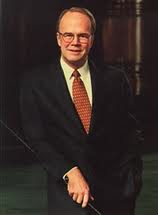
Author: James Montgomery Boice, Th.D., (July 7, 1938 – June 15, 2000) was a Reformed theologian, Bible teacher, and pastor of Tenth Presbyterian Church in Philadelphia from 1968 until his death. He is heard on The Bible Study Hour radio broadcast and was a well known author and speaker in evangelical and Reformed circles. He also served as Chairman of the International Council on Biblical Inerrancy for over ten years and was a founding member of the Alliance of Confessing Evangelicals. He is the author of numerous Bible expositions and one of my favorite Systematic Theologies called Foundations of the Christian Faith.
May 7th in Christian History – Dr. James M. Boice and Elisha A. Hoffman
Series: On This Day In Christian History
Dr. James Montgomery Boice: “He Realized His Boyhood Dream”
 As a boy, James Montgomery Boice attended Tenth Presbyterian Church in Philadelphia with his family. He loved his pastor, Donald Grey Barnhouse, and he was an avid listener to Barnhouse’s radio program, The Bible Study Hour. At the age of twelve Boice decided he wanted to become a minister. Little did he know how closely he would follow in his beloved minister’s footsteps (Tenth Presbyterian Church in Philadelphia pictured left).
Boice attended Harvard, where he received a degree in English literature. There he met his future wife, Linda Ann McNamara, at InterVarsity Christian Fellowship. She received a master of arts from Harvard, and they shared a dream of creating a Christian college preparatory school for needy inner-city youth.
After Harvard, Boice went to seminary top prepare himself for becoming a minister. He then married Linda, and they moved to Switzerland so Jim could study at the University of Basel. After he received his doctorate, they settled in Washington, D.C., where he worked for the magazine Christianity Today.
In 1968 Tenth Presbyterian Church in Philadelphia, the church of his youth, called him to be their pastor. In 1969 he also became the speaker for The Bible Study Hour. Boice continued Barnhouse’s legacy of providing clear, intellectual, heartfelt expository preaching to the Tenth Presbyterian congregation. Under Boice’s leadership the church grew in numbers, budget, and outreach programs. The church became ethnically diverse and intensely missions focused. Many of its ministries grew out of inner-city location: ministries to internationals, HIV positive individuals, inner-city youth, women with crisis pregnancies, and the homeless. Jim and Linda achieved their dream of a Christian college preparatory school for needy inner-city youth with the creation of City Center Academy, which was started and run by Tenth Presbyterian. Despite the lack of parking in its downtown location , the church has well over a thousand members.
In the 1970’s Boice started the Philadelphia Conference on Reformed Theology, which spawned many similar conferences in cities throughout the country. In 1977 he founded the International Council on Biblical Inerrancy, a topic on which he frequently wrote. In all he wrote or contributed to more than sixty books. Under Boice’s leadership Tenth Presbyterian left the Presbyterian USA in 1981 and joined the Presbyterian Church in America, a denomination that conformed more closely to the church’s Reformed theological beliefs.
On Good Friday 2000, two hours before he was to preach, Dr. Boice learned that he had an aggressive form of liver cancer. His prognosis was not good.
 Jim Boice (pictured on left) mounted the pulpit of Tenth Presbyterian for the last time on Sunday, May 7, 2000. He announced to his stunned congregation that he was rapidly dying of cancer. He said to them: “Should you pray for a miracle? Well, you’re free to do that, of course. My general impression is that the God who is able to perform miracles—and he certainly can—is also able to keep you from getting the problem in the first place…Above all, I would say pray for the glory of God. If you thin of God glorifying himself in history and you say, “Where in all of history has God most glorified himself?’ the answer is that he did it at the cross of Jesus Christ, and it wasn’t by delivering Jesus from the cross, though he could have…And yet that’s where God is most glorified.”
On June 15, 2000, at the age of sixty-one, James Montgomery Boice died peacefully in his sleep, just eight weeks after his diagnosis.
Reflection:
How do you think you would react if you were given news of your impending death?
Dr. Boice’s inclination was not to pray for a miracle but rather to pray that Christ be glorified in his death.
What is your reaction to what Dr. Boice told his congregation?
“While we live, we live to please the Lord. And when we die, we go to be with the Lord. So in life and in death, we belong to the Lord.” – Romans 14:8
Author’s of the Article Above: Mike and Sharon Rusten are not only marriage and business partners; they also share a love for history. Mike studied at Princeton (B.A.), the University of Minnesota (M.A.), Westminster Theological Seminary (M.Div.), Trinity Evangelical Divinity School (Th.M.), and New York University (Ph.D.). Sharon studied at Beaver College, Lake Forest College, and the University of Minnesota (B.A.), and together with Mike has attended the American Institute of Holy Land Studies (now Jerusalem University College). Mike and Sharon have two grown children and live in Minnetonka, Minnesota. This article was adapted from the May 7th entry in their wonderful book The One Year Book of Christian History, Carol Stream, IL: Tyndale, 2003.
Elisha A Hofman: “I Must Tell of Jesus”
Many New Testament promises have corresponding verses in the Old Testament that reinforce their power. When Peter, for example, said, “God cares for you, so turn all your worries over to him” (1 Peter 5:7), he was but restating David’s words in Psalm 55:22: “Our Lord, we belong to you. We tell you what worries us, and you won’t let us fall.”
Elisha A. Hoffman loved those verses. He was born May 7, 1839 in Orwigsburg, Pennsylvania. His father was a minister, and Elisha followed Christ at a young age. He attended Philadelphia public schools, studied science, and then pursued the classics at Union Seminary of the Evangelical Association. He worked for 11 years with the association’s publishing house in Cleveland, Ohio. Then, following the death of his young wife, he returned to Pennsylvania and devoted 33 years to pastoring Benton Harbor Presbyterian Church.
Hoffman’s pastime was writing hymns, many of which were inspired by pastoral incidents. One day, for example, while calling on the destitute of Lebanon, Pennsylvania, he met a woman whose depression seemed beyond cure. She opened her heart and poured on him her pent-up sorrows. Wringing her hands, she cried, “What shall I do? Oh, what shall I do?” Hoffman knew what she should do; for he had himself learned the deeper lessons of God’s comfort. He said to the woman, “You cannot do better than to take all your sorrows to Jesus. You must tell Jesus.”
Suddenly the lady’s face lighted up. “Yes!” she cried, “That’s it! I must tell Jesus.” Her words echoed in Hoffman’s ears, and he mulled them over as he returned home. He drew out his pen and started writing, I must tell Jesus! I must tell Jesus! / I cannot bear my burdens alone; / I must tell Jesus! I must tell Jesus! / Jesus can help me, Jesus alone.
Hoffman lived to be 90, telling Jesus his burdens and giving the church such hymns as What A Wonderful Savior, Down at the Cross, Are You Washed in the Blood?, Leaning on the Everlasting Arms, and a thousand more.
 The Scriptures say, “God opposes proud people, but he helps everyone who is humble.” Be humble in the presence of God’s mighty power, and he will honor you when the time comes. God cares for you, so turn all your worries over to him. 1 Peter 5:5b-7
About the Author: Robert J. Morgan, is the pastor of Donelson Fellowship in Nashville, Tennessee and the author of the best-selling Then Sings My Soul, From This Verse, Red Sea Rules, and On This Day – this article was adapted from the May 7th entry in this excellent book. He conducts Bible conferences, parenting and marriage retreats, and leadership seminars across the country.
Significant Events on This Day:
1274: The Council of Lyons II met. The council was supposed to promote plans to reunite the Eastern and Western Churches, but nothing came of it.
1794: French revolutionaries proclaimed the worship of a “supreme being,” a Deist god.
 1823: A group of Russian Orthodox missionaries left Irkust to evangelize the Aleutian Islands and Alaska.
1844: Protestants burned dozens of Irish Catholic homes and the St. Augustine Church in Kensington, a suburb of Philadelphia. The action was in retaliation for the killing of one of their own by a Catholic the day before during an ill0advised rally in the Irish streets. Protestants were outraged that Catholics would not participate in school Bible reading (the Catholics believed that Church leaders, not individuals, should interpret Scripture). In defense of their property, Catholics killed several more Protestants as the riot progressed.
1859: Guido Verbeck and his bride, Maria, destined for Shanghai, sailed from New York aboard the Surprise. With them were Rev. and Mrs. Brown and the medical missionary Duane B. Simmons and his wife. Verbeck was so notable a missionary that the Japanese honored him highly.
A. Kenneth Curtis and Daniel Graves edited This Day In Christian History. Camp Hill, PA: Christian Publications Inc., 2005. The events above were adapted from the entry for May 7th.
Where is the Best Place to Go When You Need Encouragement and Hope?
 “The Encouragement of the Scriptures”
By Dr. James Montgomery Boice
For everything that was written in the past was written to teach us, so that through endurance and the encouragement of the Scriptures we might have hope. – Romans 15:4 (pictured at left – the Alps in Switzerland – James Boice received his Doctorate in Theology in Basel, Switzerland)
A number of years ago a German theologian named Juergen Moltmann wrote a book entitled The Theology of Hope. His point, which meant a great deal to Bible scholars at the time, was that eschatology (the doctrine of the last things) should not be an appendix to Christian theology—something tacked on at the end and perhaps even dispensable to Christian thought—but should be the starting point of everything. He said that it is confidence in what God is going to do in the future that must determine how we think and act now.
I am not sure that is entirely right. I would call the cross of Christ, not eschatology, the center, arguing that we must take our ideas even of the future from the cross. But Moltmann was correct in stressing that hope is important for living well now. To have hope is to look at the future optimistically. So to some extent a person must have hope to live. The Latin word for hope is spes, from which the French derived the noun espoir and the Spanish, esperanza. But put the particle de in front of those words, and the resulting word is despair, literally “without hope.” People who despair do not go on. When John Milton wanted to depict the maximum depth to which Satan fell when he was cast out of heaven, he has him say to the other fallen spirits in hell, “Our final hope is flat despair.”
How can any sane person have hope in the midst of the desperate world in which we live? The frivolous can, because they do not think about the future at all. Thinking people find the future grim. Winston Churchill, one of the most brilliant and influential people of his age, died despairing. His last words were, “There is no hope.”
Our text says that a Christian can have hope and that the way to that sound and steadfast hope is through the Bible.
In The Wizard of Oz, Dorothy and her friends—the scarecrow, the tin man, and the cowardly lion—make their way down a yellow brick road to find their future. Our text likewise gives us a road to hope. That road leads first through teaching, second through patient endurance, and third through encouragement. The text says, “For everything that was written in the past was written to teach us, so that through endurance and the encouragement of the Scriptures we might have hope” (Rom. 15:4).
The Teaching of the Scriptures
The first and most important stop along this important road leading to hope is teaching, because it is through the teaching of the Scriptures that the other elements, endurance and encouragement, come. Christianity is a teaching religion, and our text is the Bible. It is true that those whose minds have been enlightened by the Bible often go on to learn in other areas too. Some of the greatest scholars in the world have been Christians, and many have traced their love of learning to their Christian roots. Moreover, wherever the gospel has gone throughout the world, schools and colleges and other institutions of higher learning have gone with it. Still, Christians maintain that however much a person may come to know in other areas, if he or she does not know what God has revealed about himself and the way of salvation in the Bible, that person is ignorant and remains a great fool.
Paul said of the Gentile Christians at Ephesus, among whom there must have been many learned persons, that before they had been taught about Jesus and had received him as their Savior, they were “excluded from citizenship in Israel and foreigners to the covenants of the promise, without hope and without God in the world” (Eph. 2:12). They may have been educated, but they were ignorant of the things that matter most. After they had been taught and came to faith in Christ, however, they had hope of “the riches of [God’s] glorious inheritance in the saints,” which was future, and “his incomparably great power for us who believe,” which was present (Eph. 1:18–19).
Our text in Romans is about the teaching of the Scriptures and tells us at least three important things about the Bible:
(1) The Bible is from God. When Paul says that everything written in the past “was written to teach us,” he is not saying that when Moses wrote the Pentateuch, the first five books of the Bible, he did so intending that the church in future ages might be blessed by his writings, or that David wrote the psalms so that we might profit by them. His point is that God caused the human writers of the Bible to write as they did, because what he had in mind was the edification and encouragement of his people through the ages, whether or not the human writers understood this.
This also flows from the context. We remember that Paul has just quoted Psalm 69:9, applying it to Jesus Christ, whom he brought forward as an example for our right conduct. Some may object, “How can you imagine that David was writing about Jesus Christ, who was born so many hundred of years after his own age, or that this has anything to do with us?” Paul is answering, in effect, as F. Godet suggests, “If I thus apply this saying of the psalmist to Christ and ourselves, it is because, in general, all Scripture was written to instruct and strengthen us.”
Of course, many other verses say the same thing. Peter wrote, “Above all, you must understand that no prophecy of Scripture came about by the prophet’s own interpretation. For prophecy never had its origin in the will of man, but men spoke from God as they were carried along by the Holy Spirit” (2 Peter 1:20–21).
Similarly, Paul told Timothy, “All Scripture is God-breathed and is useful for teaching, rebuking, correcting and training in righteousness, so that the man of God may be thoroughly equipped for every good work” (2 Tim. 3:16–17). The reason the Scriptures are so valuable is that they are unlike other books written by mere human beings. They are from God; therefore they have the authority and power of God within them. Besides, God has promised to bless them to the ends for which they have been given (Isa. 55:10–11).
(2) Everything in the Bible is for our good and is profitable. The second important teaching about the Scriptures in Romans 15:4 is that all Scripture is for our good and is profitable. In 2 Timothy 3:16, Paul wrote, “All Scripture is God-breathed and is useful.…” In our text he uses the words “everything that was written,” but he means the same thing in both passages.
This is not an endorsement of every piece of ancient literature, as if the words “everything that was written in the past” refer to the writings of the ancient Babylonians, Egyptians, Greeks, or Romans. Paul is not writing about secular literature, but about the writings that are “God-breathed.” Other books may instruct and even charm us wonderfully, but only the Bible gives us a sure ground for hope, since only it speaks with full authority and trustworthiness about what God did to save us from sin and give us eternal life.
Paul’s statement is, however, an endorsement of all of the Bible. That is, he is informing us that “all Scripture … is profitable” and “everything that was written in the past was written to teach us.”
Some critics of the Bible have found things in it that they do not like and have therefore argued either that the Bible is from men only, not from God, or that it is a mixture of the two—some parts being from God and some from man. The parts that are from God are then regarded as authoritative, but the parts said to be from human beings only are discarded as error-prone and nonauthoritative. This is a convenient way of pretending to submit to the Bible’s authority while at the same time avoiding anything in the Bible that is convicting or contrary to the critic’s thought. This is not the Bible’s teaching. It is not historic Christianity. The Bible teaches that everything in it is the true Word of God and that it is binding upon the minds and consciences of all persons. Therefore, if we are being led by God’s Holy Spirit, we will conform our thoughts and actions to whatever we find in his Word.
(3) Nothing in the Bible is without value. Paul’s third point is that not only is everything in the Bible for our good and profitable, but nothing that is in the Bible is without value.
John Calvin was strong in this conviction: “This notable passage shows us that the oracles of God contain nothing vain or unprofitable.… It would be an insult to the Holy Spirit to imagine that he had taught us anything which it is of no advantage to know. Let us also know that all that we learn from Scripture is conducive to the advancement of godliness. Although Paul is speaking of the Old Testament, we are to hold the same view of the writings of the apostles. If the Spirit of Christ is everywhere the same, it is quite certain that he has accommodated his teaching to the edification of his people at the present time by the apostles, as he formerly did by the prophets.”
Patient Endurance
The second checkpoint we must pass along the road to hope is endurance, which some versions of the Scriptures translate patience (King James Version), perseverance (New American Standard Bible) or even patient endurance, since the word involves both passively accepting what we cannot change and actively pressing on in faithful obedience and discipleship. This word (hypomonê) occurs thirty-two times in the New Testament, sixteen times in Paul’s writings, six of which are in Romans.
Is Paul saying that endurance comes from the Bible—that is, from knowing the Bible? I raise that question because a detail of the Greek text provokes it. Paul uses the word for through (dia) twice, once before the word endurance and once before the word encouragement (the New International Version omits it the second time). According to the strictest rules of Greek grammar, that should mean that endurance is separated from encouragement with the result that the words “of the Scriptures” should be attached to encouragement only. In other words, Paul would be saying that it is through our own personal enduring as well as through the encouragement that we have in studying the Bible that we find hope.
Leon Morris is a fine Greek scholar, and he is led to this position by his grammatical sensitivity. “[Paul’s] construction seems to show that only encouragement is here said to derive from the Bible,” he says.
In my judgment this is a place where it may be wrong to read too much into a fine point of grammar. Grammatically Morris is right. But in terms of the flow of thought it is hard to suppose that Paul is not thinking of the role the Scriptures have in producing endurance too. For one thing, he links the two ideas together in verse 5, saying, “May the God who gives endurance and encouragement.… ” Again, in verse 4 both terms follow Paul’s opening words about the use of the Scriptures for teaching: “For everything that was written in the past was written to teach us, so that…” Or again, even apart from what Paul is saying, elsewhere we are taught that endurance comes from reading how God has kept and preserved other believers even in terrible circumstances.
James wrote, “Brothers, as an example of patience in the face of suffering, take the prophets who spoke in the name of the Lord. As you know, we consider blessed those who have persevered. You have heard of Job’s perseverance and have seen what the Lord finally brought about. The Lord is full of compassion and mercy” (James 5:10–11). He is saying that we learn to endure by reading about the way God helped others before us.
Although they recognize the grammatical issue, a large number of other writers nevertheless see the matter as I have outlined it here. Among these are John Murray, Charles Hodge and F. Godet.
Encouragement
The third checkpoint along the road to hope is encouragement, which also comes to us through Scripture. Encouragement (paraklêsis) is found twenty times in Paul’s writings out of twenty-nine occurrences in the whole New Testament. It occurs three times in Romans.
The interesting thing about this word is that it is virtually the same one Jesus used to describe the work of the Holy Spirit among believers, saying, “It is for your good that I am going away. Unless I go away, the Counselor will not come to you; but if I go, I will send him to you” (John 16:7; see 14:26; 15:26), and that the apostle John used to describe the work of Jesus himself: “My dear children, I write this to you so that you will not sin. But if anybody does sin, we have one who speaks to the Father in our defense—Jesus Christ, the Righteous One” (1 John 2:1). The word Counselor and the phrase “one who speaks … in our defense” translate the same Greek word paraklêtos, which is also sometimes translated advocate. The literal meaning is “one who comes alongside of another person to help him or her,” to back the person up or defend him. So together the passages teach that Jesus himself does this for us, the Holy Spirit does it, and the Scriptures do it too. Indeed, it is through the Scriptures that the Holy Spirit chiefly does his work.
The end result of this is hope. In our text the article is present before the word hope (“the hope”), meaning the Christian hope. This is not just optimism that Paul is writing about, not a hope founded on something the world thinks possible. Also, the verb have is in the present tense, meaning that hope is a present possession. As Calvin says, “The particular service of the Scriptures is to raise those who are prepared by patience and strengthened by consolation to the hope of eternal life, and to keep their thoughts fixed upon it.”
An Example from History
But enough analysis! If we are to travel the road of endurance and encouragement to hope by learning from the Scriptures, we should study how it actually works.
There are hundreds of examples of this in the Bible, of course, but let’s examine the familiar story of Joseph. Joseph was the next-to-youngest son of Jacob, and he was favored by his father because he was born of his much-beloved wife Rachel and also perhaps because he was an extraordinary young man. His brothers hated him for his virtue so they threw him into a cistern and then sold him to Midianite traders who were on their way to Egypt. Joseph was just seventeen years old. In Egypt he became a slave of a rich man named Potiphar. Joseph served the man well, and he was placed in charge of his entire household. Then Potiphar’s wife was attracted to Joseph and tried to seduce him. When Joseph refused to sleep with her, the proud, angry woman denounced him falsely to her husband, and Joseph was thrown into prison.
Joseph languished in prison for two years. Once when he had correctly and favorably interpreted the dream of Pharaoh’s cupbearer, predicting that he would be taken from the prison where he too had been confined and restored to his previous position, Joseph asked the man to remember him when he was released and speak a good word to Pharaoh to get him out of prison. But the cupbearer forgot.
The years dragged on. One day God gave a dream to Pharaoh. No one in the palace could interpret it, but the cupbearer remembered Joseph and his ability to interpret dreams and told the king about him. Pharaoh sent for the young man, and Joseph interpreted the dream, predicting seven years of prosperity to be followed by seven years of severe famine. He recommended that the king appoint a wise man to save grain during the good years so that the people would not starve when the years of scarceness came.
You know the story. Pharaoh appointed Joseph to the task. Joseph served well. The land was saved, and in time, when the famine drove Joseph’s wicked brothers to Egypt to buy grain, God used Joseph to bring the brothers to repentance. The family was reconciled, and Jacob moved all of them to Egypt, where the people stayed and prospered for many years.
The climax of this great story comes in the final chapter of Genesis, when Jacob dies and the brothers come to plead with Joseph not to take revenge on them. They had completely misunderstood him. He had no intention of doing any of them any harm. “Don’t be afraid,” he exclaimed. “Am I in the place of God? You intended to harm me, but God intended it for good to accomplish what is now being done, the saving of many lives” (Gen. 50:19–20). The story teaches that God is sovereign even in such terrible circumstances as those that overtook Joseph. And from it we learn to trust God’s sovereignty, endure in hardship, be encouraged, and so grow strong in hope.
I have picked this particular story because of Psalm 105, which refers to it. It may have been written by King David, but whoever the writer was, he was a man who needed encouragement. He found it in Joseph’s story:
Give thanks to the Lord, call on his name; make known among the nations what he has done.…
He [God] called down famine on the land and destroyed all their supplies of food;
and he sent a man before them—Joseph, sold as a slave.
They bruised his feet with shackles, his neck was put in irons,
till what he foretold came to pass, till the word of the Lord proved him true.
The king sent and released him, the ruler of peoples set him free.
He made him master of his household, ruler over all he possessed,
to instruct his princes as he pleased and teach his elders wisdom. – Psalm 105:1, 16–22
This writer clearly knew that “everything that was written in the past was written to teach us, so that through endurance and the encouragement of the Scriptures we might have hope.” Do you know that? If you do, you will study what God has spoken and move ahead boldly for him and with hope.
 About the Author: James Montgomery Boice, Th.D., (July 7, 1938 – June 15, 2000) was a Reformed theologian, Bible teacher, and pastor of Tenth Presbyterian Church in Philadelphia from 1968 until his death. He is heard on The Bible Study Hour radio broadcast and was a well known author and speaker in evangelical and Reformed circles. He also served as Chairman of the International Council on Biblical Inerrancy for over ten years and was a founding member of the Alliance of Confessing Evangelicals. He is the author of numerous Bible expositions and one of my favorite Systematic Theologies called Foundations of the Christian Faith. The article above was adapted from James M. Boice. Romans, vol. 4. Grand Rapids: Baker, 1991, 1803-1809).


Dr. James M. Boice on “Whatever Happened To God?”
 A Strong Call To Reformation in Our Churches By Dr. James Boice
In any discussion of reformation in doctrine one must come to the realization that the real problem of our time is that there is hardly any doctrine at all to reform. So when we talk about reformation we must focus on a recovery of theology, period. Certainly in the liberal churches there is a lack of exposition of Scripture and sound doctrine, and unfortunately, this is rapidly becoming the case in evangelical circles as well.
Now you might ask which doctrines are missing? I argue that primarily what we need is a recovery of the doctrine of God. You have to have some kind of starting point and that’s the point where I think we should begin. People have lost any real sense of the fact that when we come to church we come to worship and learn about God. Years ago I spoke at a conference and my topic was on a number of the attributes of God. Later I got some feedback from a gentleman who was listening to my presentation. He had been in the church for thirty years, and in fact was now an elder, and that was the first time that he ever heard a series of messages on the attributes of God. And after hearing this his friend asked him, ‘Well, whom did you think you were worshiping all that time?’ But he hadn’t really thought about those things and I’m convinced that we have literally thousands of people in our churches today who really seldom, if ever, think about who it is they are worshiping, if they think about God at all.
Now, I think there are some reasons for this. One reason is the terrible impact of television on our culture which has produced a virtually mindless age. Television is not a medium which shares information well, it is primarily an entertainment medium. It puts pictures on the screen onto which people project their own aspirations and desires, and because it works so powerfully and is so pervasive it has the tendency to transform anything it touches into entertainment, and it does it very quickly. One of the most significant books I’ve read in the last few years in terms of what is actually happening to the mind is Neil Postman’s, Amusing Ourselves to Death: Public Discourse in the Age of Show-Business. It’s not that entertainment itself is bad. But television is most damaging when it tries to be serious. So when you put news on TV, you get brief little sound bites encased in slick images, and this is not really information, it is entertainment.
This happens to politics, it happens to education, and according to Postman, it happens to religion. Postman even raises the question of what one loses when one puts religion on television. It is obvious what there is to gain: a mass audience, money. But what do you lose? He argues you lose everything that is important: tradition, creeds, theology, etc. And he says above all, you lose a sense of the transcendent. And what he means is that you lose a sense of the presence of God. When Christians meet together to worship God, whether it is in a cathedral or a simple chapel, typically there will be prayers and open Bibles for the study of God’s Word. There is a sense that God is present in these activities. And you lose that when religion is put on TV. All you have on television is the picture of the star of the show who is the ‘entertainer.’ Postman says God necessarily, in that kind of medium, comes out second banana. And when the preacher becomes the star of the show he begins to think and act as if he is a Hollywood star then you have the kind of tragedies that we’ve seen in the industry. Postman has a very serious comment at this point. He says, ‘Now, I’m not a theologian and maybe I don’t have the right word for it, but I think the word for it is ‘blasphemy.”
All of this would be irrelevant if it were not for the fact that all this has a significant impact on our churches. So just as God is absent from televised religion, there is tremendous pressure to push him out of our church services in favor of a more upbeat entertainment-oriented Sunday morning visit. We do all kinds of things to fill in that vacuum, but as Augustine said, “we are made for God and our hearts are restless until they rest in him.” In my judgment, we have a hollow core at the heart of evangelicalism, and that is the cause of all the restlessness.
The Sovereignty of God
If we want to recover the doctrine of God we have to recover the attributes of God, and one attribute that is sorely missing in our time is the attribute of God’s sovereignty. What happens in the Christian world if you don’t give attention to the sovereign God? Human sovereignty comes in to take the true God’s place. Idols always replace the true if the true is not kept there. So you have human beings becoming sovereign in their own estimation in a variety of ways.
Theologically: we are the ones who elect God rather than God electing us.
Programmatically: we are the ones who determine what should be done in our worship rather than following the statements of Scripture.
In this sort of business God gets relegated to the sidelines, we really don’t need him. But really, when you think about it, this is secularism.
I think the best illustration of this in the Bible is the story of Nebuchadnezzar when he stood on the roof of his palace in Babylon and he looked over that magnificent city with its famous hanging gardens and he said, ‘Is not this the great Babylon I have built as the royal residence, by my mighty power and for the glory of my majesty?’ That is probably the best statement in all of literature of what we call secular humanism, because he is claiming that the world he observed was of him, by him and for his own glory. But the sad thing is that it is not just secular humanism, but is becoming ‘evangelical’ humanism as well. If we’re the ones who conceive of what should be done and we’re the ones who accomplish it by our skills, whatever they may be, often without prayer (because we are not a prayerful people), then I guess the glory should go to ourselves. So we find ourselves right back where Nebuchadnezzar was, right around the time God judged him with insanity. And as I look at the evangelical world I’d say a lot of it is insane. In addition, Nebuchadnezzar was driven out to live with the animals to behave in a bestial way. And when I read the polls that tell me that evangelicals behave virtually no different from their secular counter-parts, and I recognize the bestial manner that the world around us is behaving, I think that maybe the judgment of Nebuchadnezzar has come home to us as well.
Fortunately, Nebuchadnezzar got the message. For his final testimony reads:
At the end of that time, I, Nebuchadnezzar, raised my eyes toward heaven, and my sanity was restored. Then I praised the Most High; I honored and glorified him who lives forever. His dominion is an eternal dominion; his kingdom endures from generation to generation. All the peoples of the earth are regarded as nothing. He does as he pleases with the powers of heaven and the peoples of the earth. No one can hold back his hand or say to him: ‘What have you done?’ …Now I, Nebuchadnezzar, praise and exalt and glorify the King of heaven, because everything he does is right and all his ways are just. And those who walk in pride he is able to humble. (Dan 4:34-35, 37)
God is not only able to humble them. He does humble them, and perhaps that ought to be a good starting point for renewal in our churches. We evangelicals need it especially.
The Holiness of God
If there is any doctrine that rivals God’s sovereignty in importance it is the holiness of God. But do we have any sense or appreciation of the holiness of God in our churches today? David Wells writes that God’s holiness weighs ‘lightly upon us.’ Why? Holiness involves God’s transcendence. It involves majesty, the authority of sovereign power, stateliness or grandeur. It embraces the idea of God’s sovereign majestic will, a will that is set upon proclaiming himself to be who he truly is: God alone, who will not allow his glory to be diminished by another. Yet we live in an age when everything is exposed, where there are no mysteries and no surprises, where even the most intimate personal secrets of our lives are blurted out over television to entertain the masses. We are contributing to this frivolity when we treat God as our celestial buddy who indulges us in the banalities of our day-to-day lives.
Perhaps the greatest problem of all in regard to our neglect of God’s holiness is that holiness is a standard against which human sin is exposed, which is why in Scripture exposure to God always produces feelings of shame, guilt, embarrassment and terror in the worshiper. These are all painful emotions, and we are doing everything possible in our culture to avoid them. One evidence of this is the way we have eliminated sin as a serious category for describing human actions. Karl Menninger asked the question years ago with his classic book, Whatever Became of Sin? He answered his own question by arguing that when we banished God from our cultural landscape we changed sin into crime (because it is now no longer an offense against God but rather an offense against the state) and then we changed crimes into symptoms. Sin is now something that is someone else’s fault. It is caused by my environment, my parents or my genes.
But once again, this is not simply a problem outside the church. We too have bought into today’s therapeutic approach so that we no longer call our many and manifold transgressions sin or confront sin directly, calling for repentance before God. Instead we send our people to counselors to work through why they are acting in an ‘unhealthy’ manner, to find ‘healing.’
David Wells claims that ‘holiness fundamentally defines the character of God.’ But ‘robbed of such a God, worship loses its awe, the truth of his Word loses its ability to compel, obedience loses its virtue, and the church loses its moral authority.’ It is time for the evangelical churches to recover the Bible’s insistence that God is holy above all things and explore what that must mean for our individual and corporate lives. To begin with we need to preach from those great passages of the Bible in which people were exposed to God’s awe-inspiring majesty and holiness. If nothing else, we need to preach the Law without which preaching the Gospel loses its power and eventually even its meaning.
Reformation in Worship
John R. W. Stott has written a book on some essentials of evangelical religion in which he affirms “that true worship is the highest and noblest activity of which man, by the grace of God, is capable.” But that highlights our weakness, namely, that for large segments of the evangelical church, perhaps the majority, true worship is almost non-existent.
A. W. Tozer, a wise pastor and perceptive Bible student, saw the problem nearly fifty years ago. He wrote in 1948, “Thanks to our splendid Bible societies and to other effective agencies for the dissemination of the Word, there are today many millions of people who hold ‘right opinions,’ probably more than ever before in the history of the church. Yet I wonder if there was ever a time when true spiritual worship was at a lower ebb. To great sections of the church the art of worship has been lost entirely, and in its place has come that strange and foreign thing called the ‘program.’ This word has been borrowed from the stage and applied with sad wisdom to the type of public service which now passes for worship among us.”
It is not unusual to read in books dealing with worship that worship is hard to define, but I do not find that actually to be the case. I think it is very easy to define. The problems-and there are many of them-are in different areas.
To worship God is to ascribe to Him supreme worth, for He alone is supremely worthy. Therefore, the first thing to be said about worship is that it is to honor God. Worship also has bearing on the worshiper. It changes him or her, which is the second important thing to be said about it.
William Temple defined worship very well:
“To worship is to quicken the conscience by the holiness of God,
to feed the mind with the truth of God,
to purge the imagination by the beauty of God,
to open the heart to the love of God,
to devote the will to the purpose of God.”
In defining worship, William Temple also gives us a good description of the true godliness throughout the Christian life.
John H. Armstrong is editor of a journal called Reformation and Revival, and he devoted the 1993 winter issue to worship. In the introduction Armstrong calls what passes for the worship of God today ‘Mc-Worship,’ meaning that worship has been made common, cheap or trivial. What is the problem? Why is so little of that strong worship that characterized past ages seen among us? There are several reasons.
First, ours is a trivial age, and the church has been deeply affected by this pervasive triviality. Ours is not an age for great thoughts or even great actions. Our age has no heroes. It is a technological age, and the ultimate objective of our popular technological culture is entertainment.
I argue that the chief cause of today’s mindlessness is television, as I discussed earlier. Because it is so pervasive-the average American household has the television on more than seven hours a day-it is programming us to think that the chief end of man is to be entertained. How can people whose minds are filled with the brainless babble of the evening sitcoms have anything but trivial thoughts when they come to God’s house on Sundays morning if, in fact, they have thoughts of God at all? How can they appreciate his holiness if their heads are full of the moral muck of the afternoon talk shows? All they can look for in church, if they look for anything, is something to make them feel good for a short while before they go back to the television culture.
Second, ours is a self-absorbed, man-centered age, and the church has become sadly, even treasonously, self-centered. We have seen something like a Copernican revolution. In the past true worship may not have taken place all the time or even often. It may have been crowded out by the ‘program,’ as Tozer maintained it was in his day. But worship was at least understood to be the praise of God and to be something worth aiming at. Today we do not even aim at it, at least not much or in many places.
Pastor R. Kent Hughes, the former Senior Pastor of the College Church in Wheaton, is on target when he says, “The unspoken but increasingly common assumption of today’s Christendom is that worship is primarily for us-to meet our needs. Such worship services are entertainment focused, and the worshipers are uncommitted spectators who are silently grading the performance.”
From this perspective preaching becomes a homiletics of consensus-preaching to felt needs-man’s conscious agenda instead of God’s. Such preaching is always topical and never textual. Biblical information is minimized, and the sermons are short and full of stories. Anything and everything that is suspected of making the marginal attender uncomfortable is removed from the service, whether it be a registration card or a ‘mere’ creed. Taken to the nth degree, this philosophy instills a tragic self-centeredness. That is, everything is judged by how it affects man. This terribly corrupts one’s theology.
As I have been arguing all along, we are oblivious to God. In recent years, as I have traveled around the country speaking in various churches, I have noticed the decreasing presence and in some cases the total absence of service elements that have always been associated with the worship of God. These desperately need to be recovered.
Whatever Happened to Prayer?
It is almost inconceivable to me that something that is called a worship service can be held without any significant prayer, but that is precisely what is happening. I mean really, what do you go to a church service for if it is not to pray? And yet, you can go to evangelical services filled with thousands of people and hear virtually no prayers at all. There is usually a very short prayer at the beginning of the service and another prayer at the time the offering is received. But longer prayers-pastoral prayers-have all but vanished. Whatever happened to the ACTS acrostic in which ‘A’ stands for adoration, ‘C’ for confession of sin, ‘T’ for thanksgiving, and ‘S’ for supplication? Now and then a few supplications are tacked onto the offering prayer, but most all other prayers have been thrown out. How can we say we are worshipping when we do not even pray?
The Reading of the Word
The reading of any substantial portion of the Bible is also vanishing. In the Puritan age ministers regularly read one long chapter of the Old Testament and one chapter of the New Testament in every service. In some services I’ve attended there are no Scripture readings at all, other times it is a reading of only one or two verses. Sometimes it just precedes the sermon and very often it is only a pretext because the sermon has nothing whatsoever to do with the passage. I’m not talking about liberal churches, mind you. I’m talking about the lack of Scripture readings in our evangelical churches. We must again recover the apostle’s command to ‘devote [ourselves] to the public reading of Scripture’ (1Tim. 4:13).
The Exposition of the Word
In this television age of ours, preachers are expected to be charming and entertaining. And so your sermons have to be shortened because people have short attention spans, they are funny if they can be, and you have to eliminate any theological material that would cause people to think, and you most certainly do not bring up negative theological material like sin because that makes people feel uncomfortable. Preachers want to be liked, and in order to be liked today you have to be entertaining. I am reminded of Jesus’ harsh words to the Pharisees about wanting to be popular, seeing the smiles from the folks in the market place. As our Lord said, ‘They have their reward.’ But for pastors who are looking for more than smiles, and parishioners who are looking for more than to have their ears tickled, our Lord gave a very simple explanation of what the exposition of the Word is really all about. ‘You search the Scriptures thinking that in them you have eternal life: yet these are they which testify of me’ (John 5:39). The preaching of God’s Word is about Christ, and him crucified. This central message is food for our souls. But we are settling for junk food.
Confession of Sin
Who confesses sin today-anywhere, not to mention in church as God’s humble, repentant people? It is not happening, because there is so little awareness of both God and sin. Instead of coming to church to admit our transgressions and seek forgiveness, we come to church to be told that we are really all right, we want to be affirmed.
Hymns
One of the saddest features of contemporary worship is that the great hymns of the church are on the way out. They are not gone entirely, but they are going. And in their place have come trite jingles that have more in common with contemporary advertising ditties than the psalms. Now, not all of them are bad and I would even argue that there is a place for some of them, like when you’re having a fun night with the Jr. High. But what place do they have in serious worship? The problem here is not so much the style of the music, though trite words fit best with trite tunes and harmonies. Rather it is with the content of the songs. The old hymns expressed the theology of the church in profound and perceptive ways and with winsome memorable language. Today’s songs reflect only our shallow or non-existent theology and do almost nothing to elevate one’s thoughts about God.
Worst of all are songs that merely repeat a trite idea, word or phrase over and over again. Songs like this are not worship, though they may give the churchgoer a religious feeling. They are mantras, which belong more in a gathering of New Agers than among the worshipping people of the triune God.
Reformation in The Church
The disaster that has overtaken the church in our day in regard to worship is not going to be cured overnight. But we ought to make a beginning, and one way to begin is to study what Jesus said about worship. He had been traveling with his disciples and had stopped at the well of Sychar while the disciples went into the city to buy food. A woman came to draw water and Jesus got into a discussion with her. As the discussion progressed he touched on her loose moral life, revealing his insight into her way of living, and she tried to change the topic by asking him a religious question. ‘Sir,’ she said, ‘I can see that you are a prophet. Our fathers worshipped on this mountain, but you Jews claim that the place where we must worship is in Jerusalem’ (John 4:20).
Jesus’ answer is the classic biblical statement of what worship is all about: ‘Believe me, woman, a time is coming when you will worship the Father neither on this mountain nor in Jerusalem. You Samaritans worship what you do not know; we worship what we do know, for salvation is from the Jews. Yet a time is coming and has now come when the true worshipers will worship the Father in spirit and truth, for they are the kind of worshipers the Father seeks. God is spirit, and his worshipers must worship in spirit and in truth’ (vv. 21-24). There are several important things about this.
First, there is but one true God, and true worship must be of this true God and none other. This is the point of Jesus saying that the Samaritans did not know whom they were worshipping but that the Jews did, that ‘salvation is from the Jews.’ He meant that the true God is the God who had revealed himself to Israel at Mount Sinai and who established the only acceptable way of worshipping him, which is what much of the Old Testament is about. Other worship is invalid, because it is worship of an imaginary god.
We need to think about this carefully because we live in an age in which everyone’s opinion about anything, especially his or her opinion about God, is thought to be as valid as any other. That is patently impossible. If there is a God, which is basic to any discussion about worship, then God is what he is. That is, he is one thing and not another. So the question is not whether any or all opinions are valid but rather what this one true existing God is like. Who is he? What is his name? What kind of a God is he? Christianity teaches that this one true God has made himself known through creation, at Mount Sinai, through the subsequent history of the Jewish people, and in the incarnation, life, death and resurrection of his Son Jesus Christ. In addition, he has given us a definitive revelation of what he is like and what he requires of us in the Bible. So that is the point at which we start. There is one God, and he has revealed himself to us. That is why there can be no true worship of God without a faithful teaching of the Bible.
Second, the only way this one true God can be truly worshipped is ‘in spirit and in truth.’ Jesus was indicating a change in worship when he said this. Before this time worship was centered in the temple at Jerusalem. Every Jew had to make his way there three times annually for the festivals. What took place in the local synagogues was more like a Bible school class than a worship service. But this has been changed. Jesus has come. He has fulfilled all that the temple worship symbolized. Therefore, until the end of the age worship is not to be by location, either in Jerusalem or Samaria, but in spirit and according to the truth of God.
Worship should not be confused with feelings. It is true that the worship of God will affect us, and one thing it will frequently affect is our emotions. At times tears will fill our eyes as we become aware of God’s great love and grace toward us. Yet it is possible for our eyes to fill with tears and for there still to be no real worship simply because we have not come to a genuine awareness of God and a fuller praise of God’s nature and ways.
True worship occurs only when we actually meet with God and find ourselves praising him for his love, wisdom, beauty, truth, holiness, compassion, mercy, grace, power, and all his other attributes.
Reformation in Life
Surveys of contemporary Christian conduct tell us that most Christians do not act significantly different from non-Christian people. This is not surprising since little contemporary preaching teaches anything that might actually make a difference. But we obviously should be different, at least if we take the Bible seriously. Christians are to be the new humanity, a community of those who “love…God, even to the contempt of self’ as opposed to those who ‘love…self, even to the contempt of God” (Augustine).
Where should we start? The scope of this subject is analogous to that of the reformation of the church in doctrine with which this article began. I asked what doctrines needed to be recovered, and I answered ‘all the major doctrines of all the creeds.’ Here I ask, what areas of Christian life and conduct need to be recovered, and the answer is: all areas of life both for ourselves as individuals and the church. We need the Ten Commandments, the Sermon on the Mount and the ethical teaching of the epistles. It is all needed. In short, we need to recover what it means to ‘love the Lord your God with all your heart and with all your soul and with all your mind’ and to ‘love your neighbor as yourself’ since ‘all the Law and the Prophets hang on these two commandments’ (Matt. 22:37-40). We need to live out our faith, not to obtain grace, but because we have obtained God’s grace in Christ.
To God Alone Be Glory
This article began with God, and it is appropriate that it end with God, too, for a recovery of the sense of the reality, presence, will and glory of God is what it is about. It is significant that Paul’s conclusion to the great doctrinal section of the book of Romans ends with a doxology. The last words are: “For from him and through him and to him are all things. To him be the glory forever! Amen” (Rom. 11:36).
Moreover, after the closing application section of the letter, the entire epistle ends similarly: “To the only wise God be glory forever through Jesus Christ! Amen” (Rom. 16:27).
I would argue that the reason the evangelical church is so weak today and why we do not experience renewal, though we talk about our need for it, is that the glory of God has been largely forgotten by the church. We are not likely to see revival again until the truths that exalt and glorify God in salvation are recovered. How can we expect God to move among us until we can again truthfully say, ‘To God alone be the glory’?
The world cannot say this. It is concerned for its own glory instead. Like Nebuchadnezzar, it says, ‘Look at this great Babylon I have built by my power and for my glory.’ Arminians cannot say it. They can say, ‘to God be glory,’ but they cannot say, ‘to God alone be glory,’ since Arminian theology takes some of the glory of God in salvation and gives it to man. Even those in the Reformed camp cannot say it if what they are chiefly trying to do in their ministries is build their own kingdoms and become important people on the religious scene. We will never experience renewal in doctrine, worship and life until we are honestly able to say, ‘to God alone be glory’ in all that we do.
To those who do not know God that is perhaps the most foolish of all statements. But to those who do know God, to those who are being saved, it is not only a right statement, it is a happy, true, inescapable, necessary and highly desirable confession.
 Author: *James Montgomery Boice, Th.D., (July 7, 1938 – June 15, 2000) was a Reformed theologian, Bible teacher, and pastor of Tenth Presbyterian Church in Philadelphia from 1968 until his death. He is heard on The Bible Study Hour radio broadcast and was a well known author and speaker in evangelical and Reformed circles. He also served as Chairman of the International Council on Biblical Inerrancy for over ten years and was a founding member of the Alliance of Confessing Evangelicals. He is the author of numerous Bible expositions and one of my favorite Systematic Theologies called Foundations of the Christian Faith.
©1996, 1999 Alliance of Confessing Evangelicals
 LifeCoach4God