From Mecca to Calvary: The Testimony of Thabiti Anyabwile

Interview with Thabiti Anyabwile – on his book “The Gospel for Muslims”

 By Matt Svoboda
From the Bible belt, to Islam, to following Jesus, to going into the ministry, and now he has a nationwide stage. Thabiti Anyabwile is a gospel-centered pastor who has preached at the last several Together for the Gospel conferences.  He served under Mark Dever at Capitol Hill Baptist Church in Washington DC before becoming the Senior Pastor at First Baptist Church in Grand Cayman in the Cayman Islands.  I can’t forget to mention that he doesn’t even like the beach!  He has written a few other books, all of which I have read, and I have been greatly blessed by his preaching and writing ministry.

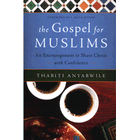
Thabiti Anyabwile has written a book that I have not read, but have ordered it and am very much looking forward to reading. The Gospel for Muslims appears to be a great book for helping Christians to share Christ with confidence to Muslims. I am grateful that Thabiti agreed to do this interview.  Admittedly, I have not really studied Islam or how to share the gospel with Muslims.  This interview and book will be as beneficial for me as anyone. Enjoy the interview below and you can buy the book at the link above:

1) Could you summarize your testimony of how you converted from Islam to Christianity? What were a couple of “milestones” in your process of conversion?

I grew up in small town North Carolina, smack in the middle of the Bible belt.  My family was nominally Christian, attending church at Easter, Christmas, and few times during the year.  The first turning point came for me when I was arrested after my sophomore year in high school.  I’d never been in trouble before; so I did what my big brothers sometimes did when they got in trouble—I went to church.  But sadly, I didn’t have ears to hear the gospel, and I don’t think the gospel was always preached clearly.

So, I went off to college an angry young man.  There, I began friendships with a number of Muslim men.  By my sophomore year in college, I became a practicing Muslim, zealous for Islam.  I practiced Islam through the rest of undergraduate school and a short time after.  The next turning point came near the end of undergraduate school.  During Ramadan, the Muslim month of prayer and fasting, while reading the Qur’an, I was suddenly aware that the Qur’an admitted too much about Jesus on the one hand (virgin birth, miracles, prophet, gospels are signs from God, etc.) but denied too much on the other hand (not the Son of God, not crucified, etc.).  After a year of trying to find satisfactory answers, I finally concluded that the inconsistencies couldn’t be explained.  Islam was false.

About the same time, a casual conversation with co-workers exposed a nagging problem I’d had all along.  We were discussing various people from world history who we respected.  And a co-worker look at the group and said she couldn’t think of anyone more righteous than me.  After my protests, she continued to insist and to list off the reasons why she thought that.  In that conversation I could see that the righteousness she described was all external behaviors.  But inside, I knew my heart was corrupt and sinful, full of unrighteousness.  I knew I didn’t have the kind of righteousness that would satisfy a holy God.

Rather than turn to Christ, I went further in despair.  Around that time, my wife and I found out we were pregnant with what would have been our first child.  We lost the child three months into the pregnancy.  The Lord dealt us a kind blow.  He humbled us.  And in that period of humbling, we heard the preaching of the gospel with faith for the first time.  The preacher, expounding Exodus 32, explained the sinfulness of sin, and I was deeply convicted.  And the preacher held out Jesus Christ, the only Savior, who not only took God’s wrath against sin but also supplied the perfect righteousness we need to satisfy a holy God.  In God’s amazing kindness, my wife and I both came to faith in the Lord that morning.

2) What is the main reason that you wanted to write this book “The Gospel for Muslims?”

I’m often asked by people who know my testimony, “How can we share the gospel with Muslims?”  When they ask this, they’re really asking, “Is there any special knowledge I need or technique that will be effective in evangelizing Muslims?”  But when you think about it, that’s the wrong question.  The question suggests that we lack confidence in the gospel itself to change the hardest hearts or to save our Muslim neighbors.  So, I wrote the book to remind Christians that “the gospel is the power of God unto salvation for everyone who believes, to the Jew first but also to the Gentile,” including the Muslim.  What we need is fresh confidence in Christ and the news of His salvation through His death, burial, resurrection, and coming.  If we know the gospel, we know everything we need to know to see our Muslim friends, coworkers, and neighbors saved from the coming wrath of God, and saved to love and enjoy the Savior forever.

3) What are some common misconceptions that Christians have about Muslims?

There are many.  We sometimes think that every Muslim is a terrorist.  Television images and our own fear have a lot to do with that.  But the chances are overwhelming that our Muslim friend or neighbor is not a terrorist.  They’re people with the same concerns, ambitions, and needs as our non-Muslim neighbors.

Also, many people tend to think that every Muslim has memorized the Qur’an by three years old and is able to give extended and sophisticated explanations of their faith.  But in reality, most Muslims don’t know the Qur’an very well at all.  And Islam itself is not one thing all over the world.  Arab Islam differs significantly from Islam in Indonesia (the largest Muslim country in the world) and North Africa and North America.  You’re more likely to meet a nominal Muslim, much like my nominal Christian family back in NC, than you are to meet a Muslim with the entire Qur’an committed to memory.

But perhaps the biggest myth is that Muslims do not convert.  That simply is not true.  Many, many Muslims are saved by God’s sovereign grace through faith in Christ all the time!  They pay significant costs—losing family, friends and sometimes jobs.  But this is exactly what Jesus tells His followers to expect, and it’s worth it.  As those who already believe, we should expect that the same gospel that saved us will save our Muslim friends.  And we should be ready to help them pay the costs of following our Lord.

4) What are the key passages in Scripture that you use when sharing the gospel with Muslims?  Is there a certain “method” that you use?

I don’t use a certain method in evangelism.  Rather, I concentrate on explaining the gospel clearly, making distinctions in terms so that things like “repentance” and “faith” are seen to be distinct from those things in Islam.  Also, I want to make sure that distinctively Christian realities—like the Trinity, the crucifixion and resurrection, the necessity of turning from sin, abandoning our righteousness, and trusting Jesus alone to save us—are driven home.  I want to make sure my Muslim friend knows that these are personal issues, not just abstract theological issues.  His sin is real.  He has personally offended the holy God of all creation.  His rejection of Jesus means He is abiding in His sin and in God’s wrath.  And unless he repents and trusts Christ, he will suffer eternal judgment.

In my experience, most Muslims are eager to either hear what we think about Jesus, or to try and disprove the gospel.  To do that, they often turn to the gospels themselves.  That puts us on home turf, familiar ground.  Normally, I start where they start and I make sure to read the five verses before and after the verse they usually misquote.  It’s amazing how often the gospel is right there in the context!  So, simply modeling good Bible reading and explaining what’s there tends to “work” as an evangelistic approach.  The Spirit blesses the word.

5) Along with reading your book, how can Christians get trained in order to better share the gospel with Muslims?

There are many good books out there on evangelism.  Continue to read books that encourage in a biblical approach to evangelism.  I’d recommend Mark Dever’s The Gospel and Personal Evangelism and Mack Stiles’ Marks of the Messenger and Speaking of Jesus (which has a video training resource as well).  Those would be wonderful works to study.  Also, reading good books on the gospel itself, including: Greg Gilbert’s What is the Gospel?, and John Murray’s Redemption Accomplished and Applied.

But there’s really no training like actually sharing your faith.  Don’t worry about “having all the answers.”  In the process of sharing and being questioned, God gives us grace and teaches us things we won’t likely learn any other way.  Consider Philemon 6: “I pray that you may be active in sharing your faith, so that you will have a full understanding of every good thing we have in Christ.”  Isn’t it awesome of God to tie our evangelism together with granting us “a full understanding of every good thing we have in Christ”?  The Lord simultaneously reaches the sinner and rewards the evangelist!

6) Are there any “pitfalls” that Christians often fall into when sharing the gospel with Muslims?

There are several, most of them connected with the misconceptions we have of Muslims.  We sometimes give in to the fear of man.  We sometimes find ourselves playing Bible “ping pong,” lobbing verses back and forth in an effort to win an argument.  Sometimes we try to make unpleasant aspects of the gospel more appealing by leaving them out or softening them.  Or, we’re lured into accepting the claims and premises of Islam as though they were true.  All of these can be pitfalls.

7) What are some “things to avoid” when sharing the gospel with Muslims?

I don’t think it’s helpful to get into discussions of politics, to attack the Qur’an or Prophet Muhammad, or to be disrespectful.  When we’re fearful, feeling under-prepared, and lose sight of the fact that we’re trying to win people to the truth that is in Christ, our flesh exerts enormous control and we tend to do things we’d probably be better off avoiding.

Also, it’s important to avoid serving pork products (or having them in your home) if you’re inviting a Muslim friend or neighbor over.  Avoid immodest clothing and cross-gender conversations.  Many Muslims associate Christianity with the decadence and moral decay of the West.  We want to avoid those associations.

Try your best to avoid assumptions, like: they’d never be interested in attending my church.  Actually, your Muslim neighbor or friend may find themselves with freedoms and interests that they couldn’t pursue in other countries.  Don’t assume they’re not interested in the faith and the church.

8) What are some good ways Christians can lovingly engage Muslims in their community?

Love Muslims the way you’d love anyone.  They’re people made in God’s image, and they experience the same burdens, needs, ambitions, and cares as everyone else.  So, in general, simply move toward them in intentional love.  As we pay attention to them, opportunities for specific acts of kindness and love will emerge.

But some general things also come to mind.  Volunteer in an English-as-Second-Language class or group.  Invite them to your home for a meal or to watch a game.  Most internationals will live in the United States without ever entering an American home.  Practice hospitality.  Also, if you both have children, ask them how they and the kids are adjusting to the culture and ways of the U.S.  Invite your Muslim neighbor and their children to participate in a ball game or some other activity you share with your children.  Be something of a cultural broker, empathizing with their struggles and helping them negotiate life in your community.

9) Any final thoughts or advice that you would like to share with Christians who would like to better engage Muslims with the gospel?

Let the gospel do the work!  Be confident in the power of God encased in the gospel.  Get out there are share the good news and trust the Spirit to use you for the glory of Christ!

More About Thabiti Anyabwile: He is the Senior Pastor of First Baptist Church of Grand Cayman in the Grand Cayman Islands and a Council member with The Gospel Coalition. In his own words, “I love the Lord because He first loved me. I love His people because He has given me a new heart. I have received God’s favor in the form of my wife, Kristie. And together we know His blessing through three children. I was once a Muslim, and by God’s grace I have been saved through faith in Jesus Christ. By God’s unfathomable grace I am a preacher of the Gospel of Jesus Christ, in which I hope to serve Him until He returns or calls me home!”

He earned his B. A. and M. S. degrees in psychology from North Carolina State University in Raleigh, NC. Before moving to minister in the Caribbean, he served with Dr. Mark Dever at Capitol Hill Baptist Church in Washington, D.C. He is married to Kristie and they have three children: Afiya, Eden, and Titus. As a native of Lexington, North Carolina, he has an affinity for Western-NC-BBQ. Thabiti writes regularly at Pure Church as part of The Gospel Coalition blog crew. He has also authored several books, The Gospel for Muslims: An Encouragement to Share Christ with Confidence (Thabiti converted to Christianity from Islam); Finding Faithful Elders and Deacons; Ephesians: God’s Big Plan for Christ’s New People; May We Meet in the Heavenly World: The Piety of Lemuel Haynes; What Is A Healthy Church Member?; The Decline of African American Theology: From Biblical Faith to Cultural Captivity; The Faithful Preacher: Recapturing the Vision of Three Pioneering African American Pastors. He has also contributing chapters to the following books: For the Fame of God’s Name: Essays in Honor of John Piper; Holy, Holy, Holy: Proclaiming the Perfections of God; Proclaiming a Cross-Centered Theology; Glory Road: The Journeys of 10 African-Americans into Reformed Christianity; and John Calvin: A Heart for Devotion, Doctrine & Doxology.

The Interview above took place on About the Author: Thabiti Anyabwile is the Senior Pastor of First Baptist Church of Grand Cayman in the Grand Cayman Islands and a Council member with The Gospel Coalition. In his own words, “I love the Lord because He first loved me. I love His people because He has given me a new heart. I have received God’s favor in the form of my wife, Kristie. And together we know His blessing through three children. I was once a Muslim, and by God’s grace I have been saved through faith in Jesus Christ. By God’s unfathomable grace I am a preacher of the Gospel of Jesus Christ, in which I hope to serve Him until He returns or calls me home!”

He earned his B. A. and M. S. degrees in psychology from North Carolina State University in Raleigh, NC. Before moving to minister in the Caribbean, he served with Dr. Mark Dever at Capitol Hill Baptist Church in Washington, D.C. He is married to Kristie and they have three children: Afiya, Eden, and Titus. As a native of Lexington, North Carolina, he has an affinity for Western-NC-BBQ. Thabiti writes regularly at Pure Church as part of The Gospel Coalition blog crew. He has also authored several books, The Gospel for Muslims: An Encouragement to Share Christ with Confidence (Thabiti converted to Christianity from Islam); Finding Faithful Elders and Deacons; Ephesians: God’s Big Plan for Christ’s New People; May We Meet in the Heavenly World: The Piety of Lemuel Haynes; What Is A Healthy Church Member?; The Decline of African American Theology: From Biblical Faith to Cultural Captivity; The Faithful Preacher: Recapturing the Vision of Three Pioneering African American Pastors. He has also contributing chapters to the following books: For the Fame of God’s Name: Essays in Honor of John Piper; Holy, Holy, Holy: Proclaiming the Perfections of God; Proclaiming a Cross-Centered Theology; Glory Road: The Journeys of 10 African-Americans into Reformed Christianity; and John Calvin: A Heart for Devotion, Doctrine & Doxology.

The interview above took place on May 7, 2010 and can be found on SBC Voices: http://sbcvoices.com/interview-thabiti-anyabwile-the-gospel-for-muslims/

Tim Keller: An Agenda for Recovering Christianity in America

See part one in this series, Why Is Christianity on Decline in America?

Part 2: In the Discussion of Ross Douthat’s “Bad Religion” by Dr. Tim Keller

Ross Douthat’s Bad Religion attributes Christianity’s decline in the United States to:

(1)  political polarization that has sucked churches into its vortex;

(2)  the sexual revolution that has undermined the plausibility of Christian faith and practice for an entire generation;

(3)  globalization that has made the exclusive claims of Christianity seem highly oppressive;

(4)  materialism and consumerism that undermines commitment to anything higher than the self; and

(5)  alienation of the cultural elites and culture-shaping institutions from Christianity.

What, if anything, can we do about the decline of Christianity? This question has triggered an entire generation of books and blogs. Douthat’s book is mainly descriptive and critical. He even admits that the book was “written in a spirit of pessimism.” Yet he rightly responds that for any Christian, “pessimism should always be provisional.” So in his last chapter he very briefly proposes four factors that could lead to the “recovery of Christianity.”

First, he speaks of the “postmodern opportunity.” The same relativism and rootlessness that has weakened the church is also proving exhausting rather than liberating to many in our society. Even in the academy, postmodern theory is now widely seen as being in eclipse, and there is no “next big thing” on the horizon. Douthat wonders about the possibility of a kind of revolution from above—that is, a revival of Christianity among cultural elites.

Second, he notes the opposite impulse at work, the “Benedict option”—a new monasticism that does not seek engagement with culture but rather the formation of counter-cultural communities that “stand apart . . . and inspire by example rather than by engagement.” Douthat suggests that these first two measures should not be seen as completely opposed and, indeed, could benefit by being paired with one another, otherwise engaging the culture can become accommodation and being an example can become separatism and sectarianism.

Third, he cites “the next Christendom,” meaning the explosively growing Christian churches of the former Third World could evangelize the West. Under the first two proposals Douthat can name some existing efforts that hold promise, but this factor is much more than a dream. In European and North American cities literally thousands of new churches and missions have already begun under the leadership of African, Latin American, and Asian Christians.

Finally, he proposes that “an age of diminished [economic] expectations”—along with the devastation of the sexual revolution and the exhaustion of postmodern rootlessness—could lead to the masses again looking to Christianity for hope and help. A church that could welcome them, he warns, would need three qualities. First, it would have to be political without being partisan. That is, it would have to equip all its members to be culturally engaged through vocation and civic involvement without identifying corporately with one political party. Second, it would have to be confessional yet ecumenical. That is, the church would have to be fully orthodox within its theological and ecclesiastical tradition yet not narrow and harsh toward other kinds of Christians. It should be especially desirous of cooperation with non-Western Christian leaders and churches. Third, the church would not only have to preach the Word faithfully, but also be committed to beauty and sanctity, the arts, and human rights for all. In this brief section he sounds a lot like Lesslie Newbigin and James Hunter, who have described a church that can have a “missionary encounter with Western culture.”

It is worth noting that each of these positive measures takes aim at one or two of the factors that have led to decline. The Benedict option seeks to break the hold of political polarization on the church. The postmodern opportunity aims to re-engage the cultural elites. The next Christendom has already strongly undermined the contention that Christianity merely reflects Western culture and imperialism. And if there is an “age of diminished expectations,” it could erode both the materialism and even the sexual licentiousness (which always works best in the midst of material plenty) that have undermined faith.

But how successful will these be? I don’t know, but I think these are the right strategies and responses. Why? First, each of the proposals addresses one of the five barriers to faith in our culture, so we should at least attempt to deal with them. Second, though treated briefly, these are essentially the same ideas that others such as Newbigin and Hunter have proposed. That confirms them in my mind. Third, as many readers know, I simply think these are features of a biblical ministry.

Near the very end of this book, Douthat (whom I have not met as of this writing) very kindly used our Redeemer Presbyterian Church as a good example of some of the things he proposes for the church in our time. When I read it I was startled, then humbled, then strongly overwhelmed by a sense that, for all God’s kindness to us over the years, we at Redeemer are so far from realizing our goals and aims. It actually discouraged me for several days until I noticed a little quote by G. K. Chesterton that Douthat cites near the end of his book. In The Everlasting Man Chesterton surveys the many forces over the last 2,000 years that threatened and should have destroyed Christianity.

“‘Time and again,’ Chesterton noted, ‘the Faith has to all appearances gone to the dogs.’ But each time, ‘it was the dog that died.'”

This post is from Tim Keller’s blog at Redeemer City to City.

About Dr. Tim Keller: He was born and raised in Pennsylvania, and educated at Bucknell University, Gordon-Conwell Theological Seminary, and Westminster Theological Seminary. He was first a pastor in Hopewell, Virginia. In 1989 he started Redeemer Presbyterian Church in Manhattan with his wife, Kathy, and their three sons. Today, Redeemer has more than five thousand regular attendees at five services, a host of daughter churches, and is planting churches in large cities throughout the world. He is the author of a study of Mark entitled King’s Cross; The Prodigal God based on Luke 15; The Freedom of Self-Forgetfulness; Generous Justice; Counterfeit Gods; Ministries of Mercy: The Call of the Jericho RoadThe Meaning of Marriage; a wonderful small group study entitled Gospel In Life; and the New York Times bestseller The Reason for God; & the forthcoming Center Church (August 2012). Tim has a passion for Jesus Christ, making the Gospel clear, church planting, and reaching cities for Christ. If you really want to understand the gospel, and how grace applies to all of life I urge you to devour his books and sermons!

Thabiti Anyabwile on Winning Souls With C.H. Spurgeon

At the conclusion of T4G, a dear brother approached me to give me a copy of Spurgeon’s classic, The Soul Winner: Advice on Effective Evangelism.  Perhaps he felt sorry for me because I didn’t have any Spurgeon quotes for my sermon.  But I suspect, having gotten to know him and his wife a little, it was one of those loving gestures that so often occur in the brief exchanges God blesses us with at our churches and at conferences.  Praise the Lord.

I’ve been reading the book slowly, enjoying Spurgeon’s unique gift and praying the Lord would make me a better evangelist.  In God’s grace, I’m feeling fresh stirring and I’m praying the Lord would not stop until He gives me real fire.

From time to time, I’m hoping to reflect a little on The Soul Winner and I hope you’ll join me.  We begin today with chapter 1, “What Is It to Win a Soul?”

That’s a foundational question, isn’t it?  We have to be clear about the “it” before we can do “it.”  And it’s important that we maintain a sense of the priority of evangelism.  Spurgeon writes, “Soul-winning is the chief business of the Christian minister; indeed, it should be the main pursuit of every true believer” (p. 5).  Amen.  But what is soul winning?

What Soul-Winning Is Not

Spurgeon identifies three things soul-winning is not:

(1) “We do not regard it to be soul-sinning to steal members out of churches already established, and train them to utter our peculiar Shibboleth: we aim rather at bringing souls to Christ than at making converts to our synagogue.”  

He continues, “We count it utter meanness to build up our own house with the ruins of our neighbors’ mansions” (p. 5).  How often do we hear boasts of swelling numbers added to the ranks of the converted (or more often baptism and church membership) at the expense of neighboring fellowships?  I agree with Mr. Spurgeon; that’s not soul-winning as much as its plain ol’ competition.  I love Spurgeon’s charge:

There is such a thing as selfishness in our eagerness for the aggrandizement of our own party; and from this evil spirit may grace deliver us!  The increase of the kingdom is more to be desired than the growth of a clan.  We would do a great deal to make a Paedo-baptist brother into a Baptist, for we value our Lord’s ordinances; we should labor earnestly to raise a believer in salvation by free-will into a believer in salvation by grace, for we long to see all religious teaching built upon the solid rock of truth, and not upon the sand of imagination; but, at the same time, our grand object is not the revision of opinions, but the regeneration of our natures.  We would bring men to Christ and not to our own peculiar views of Christianity.  Our first care must be that the sheep should be gathered to the great Shepherd; there will be time enough afterwards to secure them for our various folds.  To make proselytes is a suitable labor for Pharisees: to beget men unto God is the honorable aim of ministers of Christ. (p. 6)

(2) “We do not consider soul-winning to be accomplished by hurriedly inscribing more names upon our church-roll, in order to show a good increase at the end of the year (p. 6).  Here!  Here!

(3) “Nor is it soul-winning, dear friends, merely to create excitement” (p. 9).

What Soul-Winning Is

Having dispelled the imitation acts, Spurgeon then turns to positively defining “soul-winning” as he sees it.  He brings his students’ attention to three positive aspects of evangelism:

(1) ”I take it that one of its main operations consists in instructing a man that he may know the truth of God (p. 10).

To try to win a soul for Christ by keeping that soul in ignorance of any truth, is contrary to the mind of the Spirit; and to endeavor to save men by mere claptrap, or excitement, or oratorical display, is as foolish as to hope to hold an angel with a bird-lime, or lure a star with music.  The best attraction is the gospel in its purity. The weapon with which the Lord conquers men is the truth as it is in Jesus. The gospel will be found equal to every emergency; an arrow, which can pierce the hardest heart, a balm which can heal the deadliest wound.  Preach it, and preach nothing else.  Rely implicitly upon the old, old gospel.  You need no other nets when you fish for men; those your Master has given you are strong enough for the great fishes, and have meshes fine enough to hold the little ones.  Spread these nets and no others, and you need not fear the fulfillment of His Word, “I will make you fishers of men.” (p. 13)

(2) “Secondly, to win a soul, it is necessary, not only to instruct our hearer, and make him know the truth, but to impress him so that he may feel it (p. 13).

A sinner has a heart as well as a head; a sinner has emotions as well as thoughts; and we must appeal to both.  A sinner will never be converted until his emotions are stirred.  Unless he feels sorrow for sin, and unless he has some measure of joy in the reception of the Word, you cannot have much hope of him.  The Word must be like a strong wind sweeping through the whole heart, and swaying the whole man, even as a field of ripening corn waves in the summer breeze.  Religion without emotion is religion without life. (p. 14)

You and I must continue to drive at men’s hearts till they are broken; and then we must keep on preaching Christ crucified till their hearts are bound up; and when this is accomplished, we must continue to proclaim the gospel till their whole nature is brought into subjection to the gospel of Christ.  Even in these preliminaries you will be made to feel the need of the Holy Ghost to work with you, and by you; but this need will be still more evident when we advance a step further, and speak of the new birth itself in which the Holy Spirit works in a style and manner most divine. (p. 16)

(3) “Of all whom we would fain win for Jesus it is true, ‘Except a man be born again, he cannot see the kingdom of God.’  The Holy Spirit must work regeneration in the objects of our love, or they never can become possessors of eternal happiness” (p. 16).

According to Spurgeon, regeneration will be shown in:

(1) conviction of sin,

(2) the exhibition of a simple faith in Jesus Christ,

(3) unfeigned repentance of sin,

(4) a real change of life,

(5) true prayer, and

(6) a willingness to obey the Lord in all His commandments.  

It’s funny, but many today would regard anything more than “a simple faith in Jesus Christ” as a telltale sign of legalism.  But Mr. Spurgeon was no legalist.  It’s more likely that our own day has so low a view of conversion–equating it only with “a public profession of faith”–that we’ve grown squeamish and downright afraid of insisting that regeneration must entail newness of life, a radical change, a friendly disposition toward God rather than a stubborn refusal (enmity).  If we have any hesitancy at affirming the bulk of this list, might we be unaware of our slippery grip on the magnificence of the new birth?  Might we be in danger of rushing to affirm “professions” while overlooking the fruit of conversion?

It hardly seems necessary to say that the problems Spurgeon identified are with us today, and were with the church during the apostolic era.  The evidence of false converts–biblical, historical, and contemporary–is plentiful.  And one could become discouraged, judgmental, contentious, or indifferent.  But when the Lord of the harvest commands we pray the Lord of the harvest to send laborers, we’re meant to understand that the Lord of the harvest plans on reaping and there’s no need for fainting!  We should be encouraged because the problem of false converts simply means the unsaved have been brought near!  We should be encouraged that the cotton has grown so high that by God’s grace we may pick without stooping!  Brother, be encouraged to win souls!

So much more could be said, but Mr. Spurgeon should have the final word of exhortation:

You may say to yourself, at the close of a service, “Here is a splendid haul of fish!”  Wait a bit.  Remember our Savior’s words, “The kingdom of heaven is like unto a net, that was cast into the sea, and gathered of every kind; which, when it was fully, they drew to shore, and sat down, and gathered the good into vessels, but cast the bad away.”  Do not number your fishes before they are broiled; not count your converts before you have tested and tried them.  This process may make your work somehow slow; but then, brethren, it will be sure.

Do your work steadily and well, so that those who come after you may not have to say that it was far more trouble to them to clear the church of those who ought never to have been admitted than it was to you to admit them.  If God enables you to build three thousand bricks into His spiritual temple in one day, you may do it; but Peter has been the only bricklayer who has accomplished that feat up to the present.

“Do not go and paint the wooden wall as if it were solid stone; but let all you building be real, substantial, and true, for only this kind of work is worth the doing.  Let all your building for God be like that of the apostle Paul According to the grace of God given to me, like a skilled master builder I laid a foundation, and someone else is building upon it. Let each one take care how he builds upon it. For no one can lay a foundation other than that which is laid, which is Jesus Christ. Now if anyone builds on the foundation with gold, silver, precious stones, wood, hay, straw—each one’s work will become manifest, for the Day will disclose it, because it will be revealed by fire, and the fire will test what sort of work each one has done. If the work that anyone has built on the foundation survives, he will receive a reward. If anyone’s work is burned up, he will suffer loss, though he himself will be saved, but only as through fire” (1 Corinthians 3:10-15; pp. 27-28).

Preach, Mr. Spurgeon! Preach!

About the Author: Thabiti Anyabwile is the Senior Pastor of First Baptist Church of Grand Cayman in the Grand Cayman Islands and a Council member with The Gospel Coalition. In his own words, “I love the Lord because He first loved me. I love His people because He has given me a new heart. I have received God’s favor in the form of my wife, Kristie. And together we know His blessing through three children. I was once a Muslim, and by God’s grace I have been saved through faith in Jesus Christ. By God’s unfathomable grace I am a preacher of the Gospel of Jesus Christ, in which I hope to serve Him until He returns or calls me home!”

He earned his B. A. and M. S. degrees in psychology from North Carolina State University in Raleigh, NC. Before moving to minister in the Caribbean, he served with Dr. Mark Dever at Capitol Hill Baptist Church in Washington, D.C. He is married to Kristie and they have three children: Afiya, Eden, and Titus. As a native of Lexington, North Carolina, he has an affinity for Western-NC-BBQ. Thabiti writes regularly at Pure Church as part of The Gospel Coalition blog crew. He has also authored several books, The Gospel for Muslims: An Encouragement to Share Christ with Confidence (Thabiti converted to Christianity from Islam); Finding Faithful Elders and Deacons; Ephesians: God’s Big Plan for Christ’s New People; May We Meet in the Heavenly World: The Piety of Lemuel Haynes; What Is A Healthy Church Member?; The Decline of African American Theology: From Biblical Faith to Cultural Captivity; The Faithful Preacher: Recapturing the Vision of Three Pioneering African American Pastors. He has also contributing chapters to the following books: For the Fame of God’s Name: Essays in Honor of John Piper; Holy, Holy, Holy: Proclaiming the Perfections of God; Proclaiming a Cross-Centered Theology; Glory Road: The Journeys of 10 African-Americans into Reformed Christianity; and John Calvin: A Heart for Devotion, Doctrine & Doxology.

The article above is adapted from http://thegospelcoalition.org/blogs/thabitianyabwile/2012/05/03/winning-souls-with-charles-spurgeon

Good advice here – well done!

Jared Olivetti's avatarGentle Reformation

Keep your conduct among the Gentiles honorable, so that when they speak against you as evildoers, they may see your good deeds and glorify God on the day of visitation. (1 Peter 1:12)

Dan Savage is a leading sex-advice columnist and homosexual activist. In a recent lecture/memoir, he describes his Roman Catholic upbringing, his identity as a homosexual and the tragic death of his loving mother. He wrestles with the Roman church as an organization that drove him to atheism through its hypocrisy and stand on homosexuality. Yet his mother’s legacy continues to gnaw at him, drawing him into cathedrals as he longs to be able to believe as his mother did. He even compares this desire to believe with a virus that lay dormant until his mother’s death. His memoir is heartfelt and moving, yet also deeply disturbing to those who believe the Bible and trust its God.

View original post 517 more words

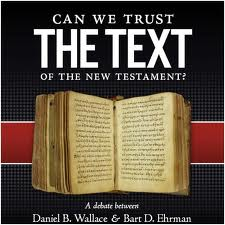
Dr. Daniel B. Wallace: Can We Trust The Text of the New Testament?

AN INTERVIEW WITH DANIEL B. WALLACE ON THE NEW TESTAMENT MANUSCRIPTS

As Craig Blomberg has written, “Dan Wallace has clearly become evangelical Christianity’s premier active textual critic today.” In addition to teaching New Testament at Dallas Theological Seminary, he serves as executive director of the cutting-edge Center for the Study of New Testament Manuscripts (CSNTM). He recently made quite a stir when he announced that next year an academic publication will reveal the discovery of a first-century fragment from the Gospel of Mark. (See, for example, this interview with Hugh Hewitt.)

He was kind enough to answer some questions about the discipline of textual criticism, the number of manuscripts, the earliest manuscripts (including the soon-to-be famous fragment), why the process of copying is nothing like the “telephone game,” and other questions.

What is “textual criticism?”

Textual criticism is the discipline that attempts to determine the original wording of any documents whose original no longer exists. There are other, secondary goals of textual criticism as well, but this is how it has been classically defined.

This discipline is needed for the New Testament, too, because the originals no longer exist and because there are several differences per chapter even between the two closest early manuscripts. All New Testament manuscripts differ from each other to some degree since all are handwritten manuscripts.

How many NT manuscripts do we know of?

As far as Greek manuscripts, over 5800 have been catalogued. The New Testament was translated early on into several other languages as well, such as Latin, Coptic, Syriac, Armenian, Georgian, Gothic, etc. The total number of these versional witnesses has not been counted yet, but it certainly numbers in the tens of thousands.

At the same time, it should be pointed out that most of our manuscripts come from the second millennium AD, and most of our manuscripts do not include the whole New Testament. A fragment of just a verse or two still counts as a manuscript. And yet, theaverage size for a NT manuscript is more than 450 pages.

At the other end of the data pool are the quotations of the NT by church fathers. To date, more than one million quotations of the NT by the church fathers have been tabulated. These fathers come from as early as the late first century all the way to the middle ages.

What’s the earliest manuscript we have?

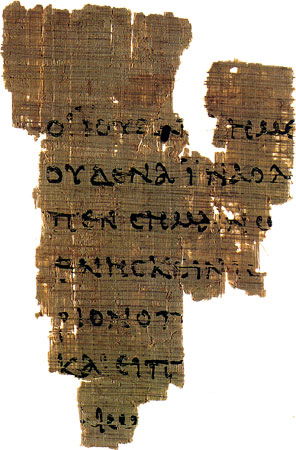
Up through the end of 2011, the following would be the answer: A papyrus fragment that had been sitting in unprocessed ancient documents at the John Rylands Library of Manchester University, England, is most likely the earliest NT document known today. Known as P52 or Papyrus 52, this scrap of papyrus has John 18:31-33 on one side and John 18:37-38 on the other.

It was discovered in 1934 by C. H. Roberts. He sent photographs of it to the three leading papyrologists in Europe and got their assessment of the date—each said that it was no later than AD 150 and as early as AD 100. A fourth papyrologist thought it could be from the 90s. Since the discovery of this manuscript, as many as eleven NT papyri from the second century have been discovered.

On February 1, 2012, I made the announcement in a debate with Dr. Bart Ehrman at UNC Chapel Hill, that as many as six more second-century papyri had recently been discovered. All of them are fragmentary, having only one leaf or part of a leaf. One of them rivals the date of P52, a fragment from Luke’s Gospel. But the most significant find was a fragment from Mark’s Gospel, which a leading paleographer has dated to the first century!

What makes this so astounding is that no manuscripts of Mark even from the second century has surfaced. But here we may have a document written while some of the first-generation Christians were still alive and before the NT was even completed. All seven of these manuscripts will be published by E. J. Brill sometime in 2013 in a multi-author book. Until then, we should all be patient and have a “wait and see” attitude. When the book comes out it will be fully vetted by textual scholars.

How does the number of NT manuscripts compare to other extant historical documents?

NT scholars face an embarrassment of riches compared to the data the classical Greek and Latin scholars have to contend with. The average classical author’s literary remains number no more than twenty copies. We have more than 1,000 times the manuscript data for the NT than we do for the average Greco-Roman author. Not only this, but the extant manuscripts of the average classical author are no earlier than 500 years after the time he wrote. For the NT, we are waiting mere decades for surviving copies. The very best classical author in terms of extant copies is Homer: manuscripts of Homer number less than 2,400, compared to the NT manuscripts that are approximately ten times that amount.

What are the different kinds of variants, and how do they affect the meaning of the texts?

The variants can be categorized into four kinds:

  • Spelling and nonsense readings
  • Changes that can’t be translated; synonyms
  • Meaningful variants that are not viable
  • Meaningful and viable variants

Let me briefly explain each of these.

Spelling and nonsense readings are the vast majority, accounting for at least 75% of all variants. The most common variant is what’s called a movable nu—that’s an ‘n’ at the end of one word before another word that starts with a vowel. We see the same principle in English with the indefinite article: ‘a book,’ ‘an apple.’ These spelling differences are easy for scholars to detect. They really affect nothing.

The second largest group, changes that can’t be translated and synonyms, also do not affect the meaning of the text. Frequently, the word order in the Greek text is changed from manuscript to manuscript. Yet the word order in Greek is very flexible. For the most part, the only difference is one of emphasis, not meaning.

The third group is meaningful variants that are not viable. By ‘viable’ I mean a variant that can make a good case for reflecting the wording of the original text. This, the third largest group, even though it involves meaningful variants, has no credibility. For example, inLuke 6:22, the ESV reads, “Blessed are you when people hate you and when they exclude you and revile you and spurn your name as evil, on account of the Son of Man!” But one manuscript from the 10th/11th century (codex 2882) lacks the words “on account of the Son of Man.” That’s a very meaningful variant since it seems to say that a person is blessed when he is persecuted, regardless of his allegiance to Christ. Yet it is only in one manuscript, and a relatively late one at that. It has no chance of reflecting the wording of the original text, since all the other manuscripts are against it, including quite a few that are much, much earlier.

The smallest category by far is the last category: meaningful and viable variants. These comprise less than 1% of all textual variants. Yet, even here, no cardinal belief is at stake. These variants do affect what a particular passage teaches, and thus what the Bible says in that place, but they do not jeopardize essential beliefs.

Isn’t the process of copying a copy of a copy somewhat akin to the old “telephone game”?

Hardly. In the telephone game the goal is to garble an original utterance so that by the end of the line it doesn’t resemble the original at all. There’s only one line of transmission, it is oral rather than written, and the oral critic (the person who is trying to figure out what the original utterance was) only has the last person in line to interrogate.

When it comes to the text of the NT, there are multiple lines of transmission, and the original documents were almost surely copied several times (which would best explain why they wore out by the end of the second century).

Further, the textual critic doesn’t rely on just the last person in the transmissional line, but can interrogate many scribes over the centuries, way back to the second century.

And even when the early manuscript testimony is sparse, we have the early church fathers’ testimony as to what the original text said.

Finally, the process is not intended to be a parlor game but is intended to duplicate the original text faithfully—and this process doesn’t rely on people hearing a whole utterance whispered only once, but seeing the text and copying it.

The telephone game is a far cry from the process of copying manuscripts of the NT.

One of Ehrman’s theses is that orthodox scribes tampered with the text in hundreds of places, resulting in alterations of the essential affirmations of the NT. How do you respond?

Ehrman is quite right that orthodox scribes altered the text in hundreds of places. In fact, it’s probably in the thousands. Chief among them are changes to the Gospels to harmonize them in wording with each other.

But to suggest that these alterations change essential affirmations of the NT is going far beyond the evidence. The variants that he produces do not do what he seems to claim. Ever since the 1700s, with Johann Albrecht Bengel who studied the meaningful and viable textual variants, scholars have embraced what is called ‘the orthodoxy of the variants.’ For more than two centuries, most biblical scholars have declared that no essential affirmation has been affected by the variants. Even Ehrman has conceded this point in the three debates I have had with him. (For those interested, they can order the DVD of our second debate, held at the campus of Southern Methodist University. It’s available here.)

For those who want to explore further, could you give us a reading list of some of the chapters/papers you have written on textual criticism, from the most basic on up?

First, I would recommend my chapter, “The Reliability of the New Testament Manuscripts,” in Understanding Scripture: An Overview of the Bible’s Origin, Reliability, and Meaning (published by Crossway). It’s a brief introduction, very user-friendly, to the issues involved. The rest of the book has excellent chapters on various aspects of biblical interpretation, reliability, and canon.

Next, I would recommend Reinventing Jesus, a book I co-authored with Ed Komoszewski and Jim Sawyer. This book wrestles with a number of issues—such as the historical reliability of the Gospels, the reliability of the manuscripts as witnesses to the original text, whether the ancient Church got the canon right (the 27 NT books), and whether they were right about the divinity of Christ. It’s a solid primer on many of the hot topics about the New Testament today.

Finally, a book that came out last October called Revisiting the Corruption of the New Testament, which I edited and contributed to, takes head-on Bart Ehrman’s Orthodox Corruption of Scripture. My essay is essentially the transcript of my debate with him at the Fourth Annual Greer-Heard Forum, held at New Orleans Baptist Seminary in April 2008. (For a more truncated version of my lecture, along with Ehrman’s lecture, see The Reliability of the New Testament: Bart D. Ehrman and Daniel B. Wallace in Dialogue.) The rest of the chapters were written by my students and deal with various aspects of Ehrman’s hypothesis.

Interview with Daniel B. Wallace from Justin Taylor’s blog “Between Two Worlds” @ http://thegospelcoalition.org/blogs/justintaylor/2012/03/21/an-interview-with-daniel-b-wallace-on-the-new-testament-manuscripts/

About Dr. Daniel B. Wallace is a Professor of New Testament Studies at Dallas Theologcal Seminary. He has a B.A., Biola University, 1975; Th.M., Dallas Theological Seminary, 1979; Ph.D., 1995.

Dr. Wallace influences students across the country through his textbook on intermediate Greek grammar. It has become the standard textbook in the English-speaking world on that subject. He is a member of the Society of New Testament Studies, the Institute for Biblical Research, the Society of Biblical Literature, and the Evangelical Theological Society. Dr. Wallace is also the senior New Testament editor of the NET Bible and coeditor of the NET-Nestle Greek-English diglot.

Some of his books include: The Reliability of the New Testament: Bart Ehrman and Daniel Wallace in Dialogue. Fortress Press, 2011; Revisiting the Corruption of the New Testament: Manuscript, Patristic, and Apocryphal Evidence (Text and Canon of the New Testament). Kregel, 20011; Granville Sharp’s Canon and Its Kin: Semantics and Significance. Peter Lang Publishing, Inc: 2009; Dethroning Jesus: Popular Culture and the Quest to Unseat the Biblical Christ. Thomas Nelson, 2007; New Testament Syntax and The Basics of New Testament Syntax. Zondervan, 2007; Greek Reinventing Jesus: How Contemporary Skeptics Miss the Real Jesus and Mislead Popular Culture. Crossway Books, 2006; & Greek Grammar Beyond the Basics. Zondervan, 1997.

He has been a consultant on four different Bible translations. Recently his scholarship has begun to focus on John, Mark, and nascent Christology. He works extensively in textual criticism, and has founded The Center for the Study of New Testament Manuscripts (csntm.org), an institute with an initial purpose of preserving Scripture by taking digital photographs of all known Greek New Testament manuscripts. He has traveled the world in search of biblical manuscripts. His postdoctoral work includes work on Greek grammar at Tyndale House in Cambridge, textual criticism studies at the Institut für neutestamentliche Textforschung in Münster, and the Universität Tübingen, Germany. He is in demand as a speaker at churches, colleges, and conferences. Dr. Wallace and his wife, Pati, have four adult sons, three daughters-in-law, one granddaughter, a Beagle, a Labrador Retriever, and a cat. They enjoy all their children and the dogs.

Is The Bible Trustworthy For All of Life? By Dr. R.C. Sproul

One of the biggest issues of our day revolves around the trustworthiness and the authority of the Scriptures for all of life – private and public. This is a classic sermon by one of the most influential theologians living today. Though given in the late 70’s during the beginning stages of the development of the International Council of Biblical Inerrancy – it is just as pertinent, relevant, and needed today. R.C. teaches with absolute clarity and expositional and theological precision that the Scriptures are indeed authoritative and sufficient for all of life and practice privately and publicly. Enjoy this wonderful sermon by Dr. R.C. Sproul.

Now the serpent was more crafty than any other beast of the field that the LORD God had made. He said to the woman, “Did God actually say, (“hath God said” in KJV) ‘You shall not eat of any tree in the garden’?” – Genesis 3:1

“Hath God Said?” By Dr. R.C. Sproul

I think that we are all not only aware, but in many cases painfully aware, of the continued academic, technical, and intellectual difficulties that we face when we make an affirmation of the inerrancy of Holy Scripture. I trust that we have not been bathed in obscurantism to a degree that makes us ignorant of the avalanche of criticism that has been directed toward the church’s classic position over the last two hundred years. And I hope that we recognize that much of that criticism may not be lightly dismissed. To do so, of course, would not be wise.

I think we are aware that it is our duty and the urgent need of the Christian community of our day, not to rest merely on the splendid statements of our fathers in defense of the authority of Scripture. Surely our generation is called to face the new issues that have been raised in academic circles. What I am saying simply is this: that there exist problems of an academic and intellectual nature with respect to the confessions that we are so bold to make. But that’s not what I am concerned to focus our attention on this morning.

For in addition to these questions of an intellectual nature, which at times indeed may be excruciating, there are other facets to this question that must never be overlooked. There is an emotional dimension. There is a psychological dimension. There is a theological, or perhaps what we may call a religious dimension that touches the heart of this issue.

As you recall a few months ago, I had the privilege in behalf of the International Council on Biblical Inerrancy to be involved in dialogue with a group of very respected theologians and biblical scholars in this country. It was a behind-closed-door session of question and discussion, clarification of our position, vis-à-vis theirs. The discussions went for an intense period of seven hours. And at no time during that discussion did it become one of vituperative or vitriolic exchange. It was a sanguine atmosphere and the discussion was carried on in the spirit of cordiality. But it was intensely academic in nature, and I believe that we were all weary at the end of it. What I recall was that after the discussions were over and we were moving to the parking lot, one of the elder statesmen of the other group who has been a friend and colleague of mine for years came up to me, not in a paternalistic way, but in a genuine fatherly gesture. He put his arm around me and said, “R.C., why do you get so exercised over this question? Why are you devoting so much of your time to the question of biblical inerrancy? Why can’t we leave that aside and move on the real issues of reaching the fallen people of this generation?”

I’m sure that this man’s primary concern was precisely that we get on with the business of the work of the church and of Christ and not be paralyzed by internal disputes and debates about matters like these. He was expressing genuine concern over my particular career as a teacher. And he was almost weeping as he raised that question.

As I stepped out of the academic and intellectual atmosphere that had characterized the previous hours and looked at him, I answered his question as emotionally as he asked it. And I said, “I can’t help it. Scriptures are my life. I am not a second generation Christian. I came to Jesus Christ from the streets, and that’s what brought me into the kingdom of God, the words from this Book. I love it. The contents, the message broke through the recalcitrance of my pagan heart and brought me into the kingdom of God and showed me the loveliness and sweetness of Christ.”

And then in a statement of perhaps characteristic belligerence, I said to him, “No one will ever take this Book from me.” And I had to admit candidly that I am somewhat prejudiced and emotionally involved in this question. I raised this point with him. “I understand,” I said, “the difficulties that criticism has raised, and I know that many feel that as a matter of intellectual integrity they must set aside this doctrine, that they cannot cling to it merely for emotional or sentimental reasons. I must agree with the integrity of that.” But I said to him, “What I would like to see when that happens, is that our Christian brothers and scholars who have abandoned this point lay it down with tears. And I haven’t seen that.”

I would think that if we came to the conclusion that this point of the faith of our fathers indicates an error of our tradition, and that we must abandon inerrancy, that if we did, in fact, come to that conclusion, that we would do it with tears, rather than in the attitude or spirit we have seen in some circles. I don’t see this in evangelical circles, but in some circles there seems to be a certain delight and glee in finding difficulties in the text of Scripture. At that point it becomes religious, moral, and I think that we are facing the problem not only of the academic but the problem of enormous pressure to conform to contemporary drifts of opinion. Many have said quite candidly, “It is not expedient for us to take such a stand in this day and age.”

Again another candid and private conversation I had with a pastor for whom I have great respect and love. He said, “R.C., I am not a scholar. I am not an academician. I am not a trained and skilled apologist. I am a pastor and my concerns are pastoral in nature. Now, R.C., in my heart I believe in the inerrancy of Scripture, but I simply cannot defend it. I do not have the tools, the erudition necessary in this sophisticated era to make a good defense. And so I prefer not to stand for the doctrine.” It was only a few months later that this pastor was asked in a public situation, “Do you, sir, affirm the inerrancy of Scripture?” and his response publicly was, “I do not.”

Now it’s possible that the man changed his mind in the intervening months between our private conversation and his public statement. But I am also recognizing the real possibility that the intimidation that he was experiencing was more than he could bear in his humanity. And who of us has not had to face that kind of pressure? Who of us has not succumbed to it at one point or another in our lives? We have sinned and do sin, my brothers and sisters, and we must be careful in this concern that we not give the idea that we are the ones who maintain a pristine purity of Christian life and obedience, while others have easily and quickly capitulated and negotiated the faith of Jesus Christ. We all have participated at one time or another in such capitulation.

We are often put to the test, and the test of our faith is very infrequently couched in terms of strict theological affirmation such as, “Do you believe in God?” We all confess that we believe in God, but the point at which we negotiate is a different question. “Do you believe God?” That’s the issue. And that’s where the point of testing is focused in our day. Now the idea of a test at the point of believing God is nothing new. And it’s not an experience that we are facing as a first generation of the tested, but rather to God that is the test of fidelity.

Let me say it another way. The two greatest tests in the history of mankind focus the term of the test precisely on the point of whether or not the ones being tested believed God. I am referring, of course, to the test of our original parents in paradise and the test of our Redeemer in the wilderness. And I would like to direct your attention in the time that is remaining to an examination again of the terms and the circumstances and the outcome of those two critically important moments of test.

Let’s look at the third chapter of Genesis. It begins with three words that appear to be innocuous in the text, but which the late E. J. Young throws into bold relief in his commentary as having interesting and significant import. Those three words are, “Now the serpent … ” E. J. Young rhapsodizes on the significance of those three words as they introduce the third chapter of Genesis. Everything that has preceded those three words is a majestic statement of God’s acts of creation. Everything is so positive and so lovely and so good and so true about God and his created order, until that note of dissonance is introduced into biblical history.

“Now the serpent … ” It sort of suggests that something sinister and negative is about to be unfolded. And the words continue, “Now the serpent was more subtle than any of the other of the wild beasts of the field that God had created.” This draws attention to the subtlety or craftiness of the creature being introduced. We read that this subtle serpent comes and speaks to the woman and asks what appears to be at the outset a harmless question, a request for information.

“Did God say, ‘You shall not eat of any of the trees in the garden’?” The question again in the ancient version is, “Hath God said, ‘You shall not eat of any of the trees in the garden’?” It’s a very, very interesting question. You might wonder why the serpent raised the question in the first place. Was he just saying in “Columbo” fashion, “There’s just one thing that I’m not quite sure about; do you mind if I ask you a personal question? Let’s see if I have it right here. Did God say that you shall not eat of any of the trees of the garden? Is that what he said? Just wanted to get the record straight.” Perhaps Adam and Eve were to assume that the serpent was doing a job of recording the facts for posterity.

I don’t think that’s what it was about here. But before I suggest what it was about, let me indicate another alternative. Do you think that the serpent did not know what God had said? Do you think that the serpent was ignorant of the terms of the probationary test that God had put before his creatures? I think the serpent knew very well what God had said. But listen to the subtlety of the question. “Hath God said, ‘You shall not eat of any of the trees of the garden’?” What’s the suggestion there? Satan knew very well that was not the case. They say, “No. In fact, God said we could eat freely of all the trees of the garden, but one. And that one, of course, he said if we touched, we would surely die.”

Existentialist Jean Paul Sartre in the twentieth century has made it a matter of evangelistic zeal to maintain that unless man is utterly and completely autonomous, he is not, in fact, free. Sartre gives one of the most fascinating and clever arguments against the existence of God I have ever read. Traditionally we have argued, if there is man, and we have to explain and account for his creation, then there must be a God. Sartre turns that around; he says, “If man is, God cannot be. Because intrinsic to our notion of humanity is the concept of human subjectivity and freedom. And if there is a God to whom we are ultimately accountable and responsible, a God who has sovereignty over us, then we do not have autonomy. If we do not have autonomy, we do not have freedom. If we do not have freedom, we do not have subjectivity. If we do not have subjectivity, we do not have humanity.” Ergo. “Since we do have these things, there is no God.”

The point is very subtle; unless you are utterly and completely free you are not free at all, and Satan is raising that very point here. “Hath God said, ‘You shall not eat of any of the trees of the garden’?” Every one of us has encountered this question of freedom in our own lives, particularly those of us who are parents. My daughter comes and asks, “Daddy, can I go to this rock concert in Pittsburgh on Friday night?” I say, “I’m sorry, honey, I have to say, ‘No.’” And what do you suppose her response is? “You never let me do anything!” Put that one restriction there and the natural reaction is, “I’m not free at all.” Unless I can have total freedom, absolute autonomy, I’m not really free; and that’s the subtlety of the serpent that is being repeated again and again and again, even down to this very day.

But the test shifts from matters of subtlety to a direct contradiction and denial of what God in fact had said. Now the serpent leaves his “Columbo” methodology, becomes very straightforward, and says, “You shall not die, but you shall be as gods.” I say that because so frequently I have heard it said that the initial slogan of humanism was the famous statement from Protagoras: Homo neusura—Man, the measure. Man is the measure of all things. No, my friends, the irony of history is that humanism’s slogan does not begin with Protagoras; it begins with the serpent in Genesis who said, “You shall be as gods.” An irony of ironies: the father of humanism was not even human.

Now it becomes a test of whom to believe. God says, “You’ll die.” The serpent says, “You will not die.” Today some have said that’s all right; they contradict but contradiction is the hallmark of truth. We say contradiction is the hallmark of the lie. Imagine the theory that contradiction is the hallmark of truth in this situation. Adam and Eve are wrestling with the dialectic. “God says, ‘You will die,’ whatever that means. This one says “we will not die.”

“Now that’s a contradiction,” says Adam. “And contradiction’s a hallmark of truth, so this serpent must be the ambassador of the truth. And if God is the truth, then this must be God’s ambassador who is now abrogating and setting aside the earlier prohibition. So let’s go to the tree. It looks sweet; it’s delightful; let’s help ourselves.” The issue in the Fall was the issue of believing God’s Word.

Now let’s go to the New Testament to the new Adam, and to the work that he performs immediately following his baptism. We read, “Jesus, full of the Holy Spirit, returned from the Jordan and was driven (or led) by the Spirit into the wilderness.” Now, before we consider the content of the test of Jesus, let’s take a moment to examine the scenario in terms of the differences between the temptation of the second Adam and the conditions under which the first Adam received his test.

The first Adam was subjected to a test of righteousness and obedience in the midst of a lush garden, a garden that provided for him all of the resources and benefits that he required to sustain his bodily needs. In fact, if I understand the test correctly, he was in a gourmet’s paradise. Whatever he wanted to eat was there, readily available to him.

But the circumstance and the context of the test of Jesus was that of a fast. Not a three-day fast, but a forty-day fast during which Jesus ate nothing.

Jesus is not in paradise, but he was driven into the wilderness, outside the camp into the outer darkness into that desert place, which to be sure in one sense is the traditional meeting place between God and his people; yet at the same time, it symbolizes that threatening, ominous state of fear and solitude. Solitude is quite significant for our consideration, because the test that is given to Adam and Eve is given to them in the context of a supportive community, indeed the most supportive community that God has ever instituted, namely that of marriage. When Adam underwent a test, he had at least the support of a helpmate that was suitable for him, who stood next to him, shoulder to shoulder. And as the evil one came to seduce them, to cause them to negotiate and compromise their loyalty and devotion to God, they had each other for mutual consolation and support. But Jesus was alone.

Again I take you back to the original account of creation where in every aspect of creation, after God does his work, he pronounces a benediction: “That’s good.” And yet the first malediction of biblical history comes when God sees something that is not good.

It is not good that man should be alone. God understands the anguish that is involved with one who is sentenced to solitude. Kierkegaard is eloquent on this point when he discusses the problem of existential solitude, pointing out that one of the worst punitive measures we can enact against a criminal is to place him in a situation of solitary confinement. Yes, indeed, there are moments when we crave our privacy, and even Jesus at times sought the respite of solitude, but how many of us could stand it for day after day after day? And then have to face temptation when we are alone.

But when we as Christians come together and sing together and work together, I feel a sense of encouragement welling up, a challenge to stand firm where I might, if left to myself, be quite willing to compromise my faith. And most of the sins of which we are most deeply ashamed are done in secret, things we would keep from the scrutiny and the knowledge of the community. There is a sense in which solitude gives us a certain freedom to do things that we might not do publicly.

This is not the sense in which Jesus is saying, “OK. I’ve just come out of the Jordan River and here publicly John the Baptist has sung the Agnus Dei. He has declared me to be the Lamb of God who taketh away the sins of the world. He said such marvelous things: that he is not worthy to untie my shoe laces. And now I’m being put to the test in front of the public.” In that situation it would be difficult for Jesus to compromise. But now, it’s off in the wilderness, by himself, no wife, no support system, utterly alone, no one there to offer restraints in terms of public opinion, and along comes that same serpent. And the point is not so much the contrast, but the similarity.

But … the issue is precisely the same. I have heard sermons on this many, many times, and I hear the text frequently read like this, “If you are the Son of God, change these stones into bread.” The preacher focuses on the agony and anguish of Jesus’ hunger, which, indeed, must have been great, but I think the point is in the beginning of this thing. “If you are the Son of God, change the stones into bread.” Jesus is not confronted with the statement by Satan, “Jesus, since you are the Son of God, go ahead and change the stones into bread,” or “Because you are the Son of God, go ahead and change the stones into bread.” But he says, “If you are the Son of God.”

Ah, there’s that subtlety again. What were the last words, as far as we know from the biblical record, that Jesus had heard from the mouth of God? When he came up out of the Jordan River after his baptism, the heavens opened and the dove descended and a voice was heard saying, “This is my beloved Son.” God had declared it. He had made an utterance to the effect that Jesus of Nazareth was his son. Now I suspect that if God, in this day, in this room, opened up the heavens and spoke to us directly and immediately, not through the medium of human authorship of the Scriptures or anything like that, but directly and immediately, and said, “This Book is the inerrant Word of God,” the debates would be over.

But it wasn’t over with Christ, because Satan came and said, “If you are the Son of God.” I wonder. I don’t want to be a heretic here and maybe wander to the rim of heresy to even ask the question, but I wonder if during that ordeal that Jesus suffered, the thought may have come into his mind, “If I am the Son of God, why am I going through this hunger? I am happy to do it, Lord, I’ll hold out to the end, and I won’t play with the stones; I won’t eat; I won’t break the fast. I’ll do all those things, but this seems to be a very strange way for the Son of God to have to live.” But that’s the way Satan comes on. “If you are the Son of God.” He is suddenly suggesting that maybe what God said at Jesus’ baptism was not altogether true.

But Jesus responded quite differently from Adam and Eve. He said, “Satan, it is written.” (I think it has been demonstrated once and for all that this has the force of a technical formula, by which the biblical authors are referring to sacred Scripture.) “It is written, ‘Man shall not live by bread alone, but by every Word that proceedeth forth from the mouth of God.’ Satan, the Bible says that I am not to live merely by bread. Now I am hungry. I would love to have a piece of bread. There is nothing I would like better than a piece of bread. but I don’t live by bread alone, and you’ve forgotten that it is my duty to live by every word that proceeds from the mouth of God.”

Our doctrine of inspiration confesses that the words of Scripture proceed ultimately from the mouth of God. We grant the mediation of human authorship and all the qualifications that are made, but we are speaking in terms of inspiration of the origin of this Word, as having been breathed out by God. And it is my duty, says the Lord, to live by that Word. Now let’s look at Luke’s version of the temptation rather than Matthew’s—the progression is different. (It’s one of those problems we have to deal with.) “And the devil took him up, and showed him all the kingdoms of the world in a moment of time, and said to him, ‘To you I will give all this authority and their glory; for it has been delivered to me, and I give it to whom I will. If you, then, will worship me, it shall all be yours’” (Luke 4:5–7).

The devil is saying: “I know the Father has promised you a blessing, if you go through your humiliation. You probably have some idea that exultation is at the end of the road, that all glory and power and dominion will be yours. But you have to go the via dolorosa, and this would make it so much easier, so much more expedient for you, since the end is the same. What difference does it make what means we use to get there? I can give you the same thing that God can give you: the kingdom. I can give you a kingdom here and all you have to do is genuflect ever so slightly. Bow one knee, that’s all; we are out here in the wilderness and nobody’s going to see you. John the Baptist will never know it. The multitudes who are to hear your sermon on the mount will have no report of it. Just one slight action of homage and it’s yours.”

And Jesus said, “That sounds so easy. But there’s something you have overlooked. You’ll have to excuse me, Satan, if I tend to be a bit rigid on this point, but it is written, it is written. You see, Satan, it says here, ‘you shall worship the Lord your God and him only shall you serve.’”

And Satan says, “That’s all right, you can still serve him. I’m not asking you to quit serving God; I am just asking you momentarily to give me a little homage. Why can’t you serve us both? Oh, I guess I didn’t read that text right, did I? ‘Him only shall you serve.’”

“Satan, I can’t serve two masters, and what you’ve asked me to do is to choose this day whom I will serve, and the choice is clear. I go by what is written.”

Satan responds, “But that was written so long ago. Is it really relevant to this live situation in which you are finding yourself today? Come on, certainly, Jesus, you have been a victim of the errors of your day and you are restricted by your human knowledge and living on the basis of Midrashic tradition and the like; certainly we don’t have to enforce that ancient prohibition that wasn’t written by Moses in the first place.”

Now very shortly Satan began to get the idea that this tactic was not working, so his subtlety became even more intense. “And he took him to Jerusalem, and set him on the pinnacle of the temple” (v. 9). For you see, Satan perceived that Jesus was a very religious man. So he took him out of that isolated circumstance of the wilderness, out of the arena of profanity, and brought him into the temple’s dominion itself. Indeed, to the pinnacle of the temple. It was comfortable, his Father’s house. And then Satan says again, “If you are the Son of God, throw yourself down from here, for it is written … OK, Jesus, you have come after me all the time with this ‘It-is-written’ stuff, so let me give it back to you. I read the Bible too. I know what it says. Now look.” Now it becomes a question of hermeneutics. “It is written,” says Satan, “‘He will give his angels charge of you, to guard you,’ and ‘On their hands they will bear you up, lest you strike your foot against a stone’” (vv. 10, 11).

Jesus said, “I know what’s in that Book. But does it not also say, ‘You shall not tempt the Lord your God’? And, Satan, we must not set Scripture against Scripture.”

What’s Jesus saying here? He is saying that the Scripture prohibits us from putting God to a test of fidelity. “God has said as you have pointed out, Satan, that he will give his angels charge over me. Now at the present time I can look all around the temple and I can go back to the wilderness and look behind every bush, and I have to confess I haven’t seen an angel in the whole forty days I have been here. I know that God says that he will give his angels charge, and I haven’t seen any. So you want me really to see if God meant what he said. You want me to see if God’s Word is trustworthy for this particular life situation I am in. You want me to jump off the temple and see if the angels catch me in their arms. Well, you see, there is something that you don’t understand, Satan. What’s going on here is not a test of God, but God is testing me.”

Some have interpreted this text to suggest that Jesus is saying that Satan is inappropriate in testing Jesus, as touching his divine nature. And this is cryptically a confession of Jesus’ deity by Jesus himself, saying, “You should not tempt the Lord your God, and since you are here tempting, or testing me, you are doing something that is quite diabolical which is your nature, namely: to suggest that I as the Lord God incarnate, may be tempted.” I don’t think that is the point at all in the context. Remember that this test is being done to Christ as the second Adam. Jesus is representing man. I don’t want to divide the two natures obviously, but I think that we can safely distinguish them at times, and here Jesus is saying, “I have no right touching my humanity, as one undergoing a test, as the second Adam, to turn that test around and throw it in God’s lap. Why should God be put to the test? Has not the whole redemptive history demonstrated again and again that our God is a God of truth? Our God never violates his covenant. Our God never breaks his Word. The question of loyalty is not one that we can raise about God. The question that history raises is the loyalty of man. I am the one who is to be tested, not the Father. So go away, with your distorted applications of Scripture.”

And we read that, “Satan departed from him until he could find a more opportune or convenient moment.”

I want to conclude with one more contrast between them. Jesus believed God’s Word indicating that he was the Son of God. Jesus believed God that angels would be given charge over him. Now we read in the Scriptures in Matthew’s account that as soon as Satan departed, what happened? The angels appeared and embraced Jesus. They nourished his broken, mutilated physical body that had gone through this struggle and trial. I suggest that Jesus’ physical appearance by the end of that forty days must have resembled that of a Mahatma Gandhi after a hunger strike. He must have experienced the ravages of the lack of food on his frame, and the angels came and embraced him and nourished him and applauded his triumph.

What happened when the tempter left the original Adam? There we read that the serpent left, and “God came back into the garden.” Before, when our parents heard the voice, they walked in the cool of the evening. They were delighted and their souls were thrilled. They couldn’t wait to go up and speak and have direct and intimate fellowship with God, but after their test, God came into their presence, and they fled and hid. They were naked; they were aware of their nakedness. They were ashamed. They were embarrassed to be in the presence of God because they had denied God.

Do you remember Peter standing outside of the judgment hall where his test came? Even after he had been warned as to what was at hand and prepared for it, when the test came, not by the princes of the church or the accrediting educational institutions … but some washerwoman came up and said, “Do you know the man?” not only did Peter say, “I don’t know the man,” but he began to swear he didn’t know him.

And just as Jesus was being led from one of the places of judgment, as they were escorting him under arrest, the Scriptures tell us, “His eyes fell upon Peter.” He didn’t say anything. He just looked at him. That was the most painful moment of Peter’s life, when he looked into the eyes of Christ, who even at that moment was going to deliver himself to the forces of hell rather than betray his Father. And Jesus looked at him and knew that Peter had failed the test.

“Do you believe God?” This must never be seen as a purely academic question. This is a matter that touches our faith in Jesus Christ. Faith, not in the sense of assent, but faith in the sense of fidelity. Do we live, or do we not live by every word that proceeds forth from the mouth of God?

I am weak, and you are weak. We are all too susceptible to subtle pressures and temptations to compromise on this point. But it is a real test. And it requires in our lives nothing less than a dependence on the grace of God from moment to moment and a clear recognition that we understand that our feet are of clay and that our frames are of dust and that we must cling tenaciously to that grace that God has given us. If left to ourselves, there would be no perseverance. And not only do we need the grace of God, but part of that grace and its outworking in this world is the support of the Christian brotherhood, the fellowship of the church, the communion of the saints. We are told again and again in Scripture, “Encourage one another.” What we need in this hour is not simply knowledge and erudition, but I am convinced what we need is moral courage. And so I ask you to encourage me and to encourage each other and to encourage the church and even the world that God’s Word is true.

Article adapted from R.C. Sproul’s chapter entitled “Hath God Said? Genesis 3:1” in the book Can We Trust the Bible? Earl D. Radmacher, ed. Wheaton: Tyndale, 1979.


About the Author: Dr. R.C. Sproul is the founder and chairman of Ligonier Ministries, an international Christian education ministry located near Orlando, Florida. His teaching can be heard on the program Renewing Your Mind, which is broadcast on hundreds of radio outlets in the United States and in 40 countries worldwide. He is the executive editor of Tabletalk Magazine and general editor of The Reformation Study Bible, and the author of more than seventy books (including some of my all time favorites: THE HOLINESS OF GOD; CHOSEN BY GOD; KNOWING SCRIPTURE; WILLING TO BELIEVE; REASON TO BELIEVE; and PLEASING GOD) and scores of articles for national evangelical publications. Dr. Sproul also serves as president of Ligonier Academy of Biblical and Theological Studies and Reformation Bible College. He currently serves as senior minister of preaching and teaching at Saint Andrew’s in Sanford, FL.

“How Can I Become A Christian?” By John R.W. Stott

“Becoming A Christian”

 The Fundamental Problem

Ignorance is probably the greatest enemy of the Christian faith today, and muddle-headedness is one of the sins of the age. Hundreds of people reject Christianity without any clear understanding of what it is, and hundreds more would like to become Christians if they only knew how. It is the purpose of this article to outline simply how to become a Christian, for the sake of those who really want to know.

Christianity claims to be God’s solution to man’s greatest problem. It is, of course, impossible to understand the solution, let alone accept it, unless we are clear about the problem. This then is where we must begin.

Let the Bible state it: “This is the message we have heard from him and proclaim to you, that God is light and in him is no darkness at all. If we say we have fellowship with him while we walk in darkness, we lie and do not live according to the truth” (1 John 1:5-6). It is true that John wrote this verse in a letter to people who were already Christians. Nevertheless, man’s fundamental problem is clearly set out here. It can be summarized in three statements of fact.

First, men “walk in darkness.” Or, dropping the metaphor, all men are sinners. Sin is a distasteful subject, but we cannot close our eyes to an obvious fact which the Bible declares and experience confirms. The darkness of selfishness and sin overshadows our whole life.

Secondly, “God is light.” Unlike men there is in him “no darkness at all.” He is absolutely pure and spotless.

Thirdly, as light and darkness can never live together, neither can God and sin. This is the logical conclusion. He “dwells in unapproachable light” (1 Timothy 6:16). Just as darkness is dispelled by light, so the sinner is inevitably banished from God’s holy presence, and he cannot “have fellowship with Him” until his sin has been cleansed away. As the prophet Habakkuk had said years before, “You are of purer eyes than to behold evil and canst not look on iniquity” (1:13).

The problem is now laid bare before us. How can I who am a banished sinner be reconciled to a holy God? How can my sins be forgiven so that I can have fellowship with God?

The Christian Answer

Once again, let the Bible state the answer in its own words, “The saying is sure and worthy of full acceptance, that Christ Jesus came into the world to save sinners” (1 Timothy 1:15). The Lord Jesus Christ came into the world to solve man’s fundamental problem. He came to be the Savior of men. “For us men and for our salvation He came down from heaven,” and he accomplished this salvation when he died on the cross. Indeed he came to earth principally not to live but to die. The shadow of the cross lay athwart his path from the beginning, although then “his hour had not yet come” (John 7:30). Later, he “set His face steadfastly to go to Jerusalem” (Luke 9:51), knowing perfectly well that death awaited him there. Several times indeed, he clearly predicted it. The night on which he was betrayed, in the upper room, when he broke bread and poured out wine, he had not foretold his death but explained its purpose. ‘This is My blood of the [new] covenant, which is poured out for many for the forgiveness of sins” (Matthew 26:28).

What connection has his death with our forgiveness? The real meaning of the cross is not to be found in the excruciating physical agony of crucifixion, nor in the mental pain of his friends’ desertion and his enemies’ abuse, but in the spiritual anguish which he endured for three bitter hours. From 12 noon until 3 o’clock there was darkness over the face of the land. It was but an impressive outward symbol of the darkness of our sin which was engulfing the soul of the Savior. “All we like sheep have gone astray; we have turned every one to his own way; and the Lord has laid on Him the iniquity of us all” (Isaiah 53:6). Paul went so far as to say in simple, awe-inspiring monosyllables, “For our sake [God] made him to be sin who knew no sin” (2 Corinthians 5:21). But even this is not all. As the prophet Isaiah had foretold in the verse preceding the one quoted above, “He was wounded for our transgressions; He was bruised for our iniquities; the chastisement of our peace was upon Him; and with His stripes we are healed.” He bore not only our sins but the penalty of our sins. Now, as we have seen, this penalty—the inevitable consequence of the holiness of God—is death, or separation from God (Romans 6:23). God who is light and in whom is no darkness at all could not be in fellowship with darkness even when his dear, only begotten Son was enveloped in it for us. So, being of purer eyes than to behold evil, he turned away his face, and Jesus cried out in desolate abandonment, “My God, My God, why hast Thou forsaken Me?”

When he had borne “our sins in his body on the tree” (1 Peter 2:24), he cried out again, this time not in despair but in triumph, “It is finished” (John 19:30). The work of salvation was accomplished. Then, as if to confirm the truth of the words which Jesus had spoken, God gave his dramatic reply. “The curtain of the temple was torn in two, from top to bottom” (Mark 15:38). The thick veil which for centuries had stood as a symbol of the barrier which sin had erected between the sinner and God was hurled aside. The righteousness of God was perfectly satisfied; Christ had fully borne the  penalty for the sins of the whole world and so had “opened the gate of Heaven to all believers.”

There was none other good enough

To pay the price of sin.

He only could unlock the gate

Of heaven and let us in.

In order to give final decisive proof that Christ’s sacrifice had been effective for the removal of sin and that He was satisfied, God raised him from the dead and exalted him to his own right hand. There Christ is represented as seated, for he is resting after perfectly completing the work he had been given to do. He made on the cross, the Prayer Book declares, “a full, perfect and sufficient sacrifice, oblation and satisfaction for the sins of the whole world.” Man’s sin is the fundamental problem. Christianity is therefore primarily what Paul called a “message of reconciliation” (2 Corinthians 5:19). It is a “gospel,” that is, good news of what God has done in Christ to put away our sins.

What Must I Do?

 That Christ finished his work is certain. But some people thoughtlessly suppose that, through his death on the cross, forgiveness of sins is automatically conferred upon all men. God’s solution to the fundamental problem of sin is, however, not mechanical and impersonal. He does not impose salvation on those who do not want it. He still respects his own gift of free will to mankind. He offers me salvation. He does not oblige me to accept it. We cannot achieve it by our own efforts, but we must receive it from God if we are to possess it. How?

To be quite direct and personal, if I am to benefit from Christ’s death I must take three simple steps, of which the first two are preliminary and the third so final that to take it will make me a Christian. The reader should consider these steps very carefully, looking up the verses mentioned.


(1) I must acknowledge myself to be in God’s sight a helpless sinner. In Romans 3:22,23 this unequivocal statement is made: “There is no distinction; since all have sinned and fall short of the glory of God.” All men are sinners indiscriminately. That is to say, there may be some distinction between men in the degree to which they have sinned; there is no difference in the fact. This statement includes me. In thought, word and deed I have continually disobeyed God’s commandments and fallen short of what I should have been. Consequently, I have been banished from his presence as Isaiah 59:1, 2 makes clear. “Your iniquities have separated you and your God, and your sins have hid his face from you.” Moreover, I am helpless to remedy the situation. No amount of good deeds on my part can win God’s favor. I am a hopeless, helpless sinner. I need a Savior to bring me back to God.

(2) I must believe that Jesus Christ died on the cross to be the very Savior I have just admitted I need. “The Son of God loved me and gave himself for me” (Galatians 2:20). He bore my sins in his own body. He was made sin for me. More than that, he voluntarily endured the penalty which those sins of mine deserved. He was wounded for my transgressions and bruised for my iniquities. Clearest of all verses is 1 Peter 3:18, which says that, in order to bring me back to God, Christ, the innocent One, suffered for the sins which I, the guilty one, had committed.

(3) I must come to Christ and claim my personal share in what he did for everybody. He died to be the Savior of the world; I must ask him to be my Savior. He bore the sins of all men; I must ask him to take sins away. He suffered to bring everybody back to God. I must ask him to bring me. Exactly what I must do is explained by Christ in Revelation 3:20, “Behold, I stand at the door and knock; if any one hears my voice and opens the door, I will come in to him.” The house is a picture of my life. Christ stands outside the front door. He will not put his shoulder to it. He does not use a battering ram. He waits patiently until I open the door. Then he will come in, and on entering he will have become to me the Savior I have acknowledged I need, and I shall find myself reconciled to God, enjoying that fellowship with him for which I was created.

Some Sobering Thoughts

Before taking this step, it will be wise to pause to consider thoughtfully its implications. The Lord Jesus himself constantly discouraged people from following him if they were in danger of being swept into his allegiance by irresponsible emotion. He urged them not to begin building until they had worked out the cost of construction. We too, before accepting him, must think out what is involved in the step. There is rich compensation in Christ, but there is a price to be paid. What demands does Christ make on me, both at the time of accepting him, and afterwards?

(1) I must repent of my sin. “Repent and believe,” he said (Mark 1:15). The faith which receives Christ must be accompanied by the repentance which rejects sin. Repentance does not mean that I must simply be sorry for the past. Sorrow is not enough. I must repent. That is, I must resolutely turn my back on everything in my past like which I know to be wrong, and I must be willing for Christ to cast it out of my life forever. I shall not be able to do it by myself. I must be willing for him to do it. If my repentance is genuine it will include making restitution, wherever my sin has affected someone else, by repaying stolen money or property or time, by making some needed apology, by contradicting false reports about others which I have been spreading, and so on.

(2) I must surrender to Christ. He wants to be my Lord as well as my Savior. He wants to take possession of my house and rule in it so that from today onwards his Word is law to me. I shall consult him before making and decisions, pray constantly about my career, and do my utmost to discover and obey his will in little things and big. I shall never forget what he said about denying myself and following him (Mark 8:34).

(3) I must confess Christ before men. I realize that I cannot be a secret disciple. If I open the door to him today, I will tell someone what I have done. Then I shall not be ashamed to show by my life that I am a Christian, and if I am challenged, I will own up to the fact. I am quite well aware that this may lose me some of my old friends, and will bring me many a sneer, but Christ told me not to be ashamed of him (Matthew 10:32,33; Mark 8:38). I shall count it a privilege to suffer for his sake (Acts 5:41).

A Prayer

We have seen what it means to be a Christian, and also what it costs to be a Christian. The issues are clearly before us. If Christ makes exacting demands, he also gives handsome rewards. Nothing can compare in this world with the deep, inward satisfaction of knowing him (Philippians 3:8). And then there is the cross. Even if we were the losers by coming to him, his dying love is such that we cannot turn away.

If the reader has clearly understood what Christ accomplished on the cross and has considered carefully the demands he makes, there is nothing to stop him from becoming a Christian. The best thing for him to do would be to go somewhere where he can be quiet and alone, without fear of interruption. Then he can pray some such prayer of faith as this:

“Lord Jesus Christ, I humbly acknowledge that I have sinned in my thinking and speaking and acting, that I am guilty of deliberate wrongdoing, and that my sins have separated me from Your holy presence, and that I am helpless to commend myself to You.

I firmly believe that You died on the cross for my sins, bearing them in Your own body and suffering in my place the condemnation they deserved.

I have thoughtfully counted the cost of following You. I sincerely repent, turning away from my past sins. I am willing to surrender to You as Lord and Master. Help me not to be ashamed of You;

So now I come to You. I believe that for a long time You have been patiently standing outside the door knocking. I now open the door. Come in, Lord Jesus, and be my Savior and Lord forever. Amen.”

Some Final Suggestions

Here are some concluding words of advice for those readers who have humbly and sincerely echoed this prayer, and received the Lord Jesus Christ:

(1) Tell somebody today what you have done.

(2) Do not be in doubt that the Lord Jesus has come into your life. Do not worry if you do not feel any different. His sure promise, not your fluctuating feelings, is to be ground of your certainty. Read Revelation 3:20 and John 6:37. He has promised to come in if you received him, and to receive you if you come to him. Believe his Word. He will not break it.

(3) Join a Christian fellowship. God does not intend us to live the Christian life alone. Sunday worship is a Christian duty.

(4) Maintain and develop your new friendship with Christ by disciplining yourself to have a daily time, morning and evening, of quiet Bible reading and prayer. You will find this indispensable.

(5) As soon as you have found your feet, start praying for someone else to bring to Christ. You cannot enjoy a monopoly of the gospel.

About the Author: John R.W. (Robert Walmsley) Stott died on July 27, 2011 at the age of ninety. He was a world-renowned pastor, theologian, and author of numerous bestselling books and Rector Emeritus of All Souls Church in London.

New York Times columnist David Brooks wrote (quoting Michael Cromartie of the Ethics and Public Policy Center) that if evangelicals chose a pope, they would likely select John Stott. As a principal framer of the Lausanne Covenant (1974), a defining statement for evangelical Christians, Stott was at the heart of evangelical renewal in the U.K. for more than half a century. In 2005, he was honored by Time magazine as one of the “100 Most Influential People in the World.” His many books and sermons have inspired and transformed millions throughout the world.

Stott was born April 27, 1921, in London to Sir Arnold Stott, a leading physician, and his wife, Emily. His father was an agnostic, while his mother was a Lutheran who attended church at All Souls, Langham Place. He converted to Christianity at Rugby School in 1938, and after finishing there he went on to study modern language at Trinity College, Cambridge. After earning double firsts in French and theology, he transferred to Ridley Hall Theological College, Cambridge, and was ordained as an Anglican clergyman in 1945. Stott became a curate at All Souls Church (1945–1950) and then rector (1950–1975). He resigned as rector in 1975, although he remained in the church and was appointed Rector Emeritus. In 1974 he founded Langham Partnership International (known as John Stott Ministries in the U.S.), a ministry that seeks to equip Majority World churches for mission and spiritual growth. Stott finally retired from public ministry in 2007 at the age of eighty-six.

Stott’s influence on evangelicalism throughout the world is extensive. He has written more than fifty books, including various Bible studies and Bible commentaries. As Stott’s main publisher in the U.S., Intervarsity Press enjoyed a wonderful partnership with the man they called “Uncle John.” IVP associate publisher for editorial Andy Le Peau said that Stott’s works were embraced for their “clear, balanced, sound perspective on Scripture and life. He was filled with a grace and strength that will be dearly missed in this era of extreme viewpoints and harsh rhetoric.”

“We are deeply grateful for this long publishing partnership and friendship with one of the most influential and beloved evangelical leaders for the past half-century,” said Intervarsity Press publisher Bob Fryling. “John Stott was not only revered; he was loved. He had a humble mind and a gracious spirit. He was a pastor-teacher whose books and preaching not only became the gold standard for expository teaching, but his Christian character was a model of truth and godliness. We will miss ‘Uncle John’ but we celebrate his life and writings as an extraordinary testimony of one who was abundantly faithful to his Lord Jesus Christ.”

Derek Thomas’ reflects on John Stott: “Any theology which cannot be communicated as gospel is of minimal value.” So wrote John Stott (Culture and the Bible [IVP, 1981], 38). And as I now think about the massive contribution he made to twentieth century evangelicalism, it is his communication of the gospel that comes to mind. His writings will remain as definitive expositions for a long time to come. His commentaries on Romans, Acts, the Pastoral Epistles, for example, are essential reading — who else has made Romans as accessible as John Stott? Your Mind MattersBasic ChristianityChristian Mission in the Modern World, Between Two Worlds: The Challenge of Preaching Today and The Cross of Christ are classics in their own right. The Preacher’s Portrait, New Testament word study analysis of what preachers are and do was for me groundbreaking. His more recent contribution (2007), The Living Church: Convictions of a Lifelong Pastor, was breathtaking in its provocative advocacy of a biblical approach to such things as worship, evangelism, giving and ministry. One thinks, too, of the (yes, for American readers, controversial) green-edged politics of his ethical-social analysis of war and conservation issues in Issues facing Christians Today. And we could go on.

Summing up a biographical study of John Stott (2-volumes, 1,000+ pages), Timothy Dudley-Smith cites one of Stott’s study assistant’s: “People ask me, ‘What is John Stott’s secret?’ This is an annoying question, to which there is no good answer. Instead of answering directly, I have taken to telling people that although you have no ‘secret’ there are several characteristics. I have observed in you that I will seek to emulate for the rest of my life. The three things I always mention are rigorous self-discipline, absolute humility and a prayerful spirit. Perhaps the most important thing I have learned from you is that, by grace, faithfulness to God is a combination of these three qualities.” (John Stott: A Biography, Volume 2 The Later Years [IVP, 453]).

St. Augustine Was Baptized On This Day – April 25 in 387

Series: On This Day in Christian History – “Raised to New Life”

 By A. Kenneth Curtis and Daniel Graves

“And we were baptized and all anxiety for our past life vanished away.” With these joyous words Augustine recorded his entrance into the church on this day in 387.

It had taken Augustine thirty-three years to get to the public confession of Christ that was represented by his baptism. He was born in North Africa in 354 to a Christian mother and a pagan father. He became a student in Carthage at twelve years of age. At sixteen, he began to teach grammar.

While he was young, he became promiscuous. He tells in his famous Autobiography that he boasted of sins he had not had the opportunity to commit, rather than seem to have fallen behind his peers.

His mother, Monica, was determined to see him converted. He was equally determined to have pleasures. He took a mistress, and she bore him a son, whom they named Adeodatus, which means “gift of God.” For awhile Augustine resented the lad but soon became inseparable from him.

When he was twenty-nine, Augustine’s restless spirit drove him to Italy. His mother decided to accompany him so that her prayers might be reinforced by her presence. But Augustine gave her the slip, sailing away while she knelt praying in a chapel.

In Rome he taught rhetoric for a year, but was cheated of his fees. And so he looked for a more fertile field of labor and settled on Milan. His mother caught up with him and prevailed upon him to attend the church of St. Ambrose. Augustine found that Christian singing moved him deeply, and in spite of himself he began to drift toward his mother’s faith. He found the writings of the Apostle Paul deeply stirring and more satisfying than the cool abstractions of philosophy. He wrestled with deep conviction but was unable to yield himself to God because of his strong attachment to the flesh.

Finally he reached a day when his inner struggles were too great to bear. He tried reading Scripture but abandoned the effort. Unable to act on the truth he knew, he began to weep and threw himself behind a fig tree. “How long, O Lord,” he cried. And his heart answered “Why not now?” A child’s sing song voice came clearly to him, repeating over and over, “Take it and read it.” It seemed a message from God. Augustine snatched up the Bible and read Paul’s words:

“Let us behave decently…not in orgies and drunkenness, not in sexual immorality and debauchery, not in dissension and jealousy. Rather, clothe yourselves with the Lord Jesus Christ, and do not think about how to gratify the desires of the flesh” (Romans 13:13-14).

Faith flooded upon him. He immediately thrust aside the sins of the flesh that had held him in bondage. “But faith would not let me be at ease about my past sins, since these had not yet been forgiven me by means of your baptism.” He entered the water and was relieved.

After his mother’s death, Augustine returned to Africa, where he founded a monastery and became the bishop of Hippo and a brilliant and prolific theologian. More than any other man, his imprint was stamped upon the medieval Church.

Other Significant Events on April 25th in Church History:

799: Pope St. Leo III’s eyes were stabbed and his tongue torn out in a conspiracy by the nephews of an earlier pope. He recovered and crowned Charlemagne emperor.

974: Ratherius, who raised a ruckus to end clergy marriages, died on this day.

1475: A young Savonarola left home and walked to Bologna, taking the family Bible with him. He became a monk and later a reformer. He was eventually martyred for his faith.

1800: William Cowper, a depressed but original poet and hymn writer, died. He is remembered for his friendship with ex-slaver John Newton and for his hymn “There is a Fountain Filled with Blood.”

1879: Joseph Barber Lightfoot, considered the greatest biblical scholar of his day, was consecrated as bishop of Durham. He was a godly man and became one of the greatest bishops of the day.

1911: A rare Gutenberg Bible sold for $50,000, the equivalent of at least $500,000 today.

Adapted from the April 25th entry in This Day In Christian History, edited by A Kenneth Curtis and Daniel Graves, Camp Hill, PA: Christian Publications

Ross Douthat on the “Character of Christianity’s Decline,” Part 1 By Tim Keller

18th of April 2012 by Tim Keller

Ross Douthat’s new book, Bad Religion: How We Became a Nation of Heretics, is very helpful for Christians seeking to understand why the Church is in decline in the U.S. Before the book’s publication I gave a high-level look at its basic theses. In these next posts, I’ll share more details of Ross’s proposals and interact somewhat with his material.

Ross Douthat speaks of “five major catalysts” for the decline.

First, he points to the political polarization between Left and Right that drew many churches into it.

Mainline Protestants and some Catholics were pulled into line with the political positions of liberalism, while the evangelical churches (and again, some Catholics) became instruments of conservative political policy. He writes: “Issues that were swiftly turned to partisan ends by politicians in both parties…divided churches against one another as no controversies had since slavery.” As Robert Putnam has demonstrated in American Grace, this has greatly weakened the credibility of Christianity in the culture. Since so many parts of the Christian church are now strongly tied to one end of the political spectrum or the other, it means each branch of Christianity can be dismissed by a majority of the population (moderates and those on the other end of the spectrum) as partisan pawns. It has been particularly damaging to see white evangelicals voting overwhelmingly in the opposite way as black evangelicals. This has all given rise to a broadly held perception that religion is really not about God and the Bible but about politics.

We should keep in mind that in the 1950s, the two great enemies were the fascism of Hitler and the Communism of Stalin and Mao—both movements that had severely persecuted their national churches. Marxism was of course intensely atheist. And so in the average American’s mind, religion and Christianity were associated with freedom and democracy while secularism and atheism were not. Today, post 9-11, that has been completely reversed. In the average American’s mind religion and fundamentalism are associated with political extremism and terrorism. They are now seen as the enemies of pluralistic, western society.

Second, he points to the sexual revolution and the birth control pill that made it possible.

“Before the sexual revolution,” Douthat writes, “a rigorous ethic of chastity and monogamy had seemed self-evidently commonsensical even to many non-Christians.” Why? The fear of “illegitimacy, abandonment, and disease.” But the pill changed all this. “Over the course of a decade or so, a large swath of America decided that two millennia of Christian teaching on marriage and sexuality were simply out of date.” The arguments against the traditional ethic had been around for centuries, but the hard reality was that sex produced babies and so the only really safe sex was married sex. The pill swept that argument away. Now far more people wanted (and were free) to believe these arguments for extra-marital sex because of “the new sexual possibilities” that the birth control pill afforded.

The importance of the sexual revolution for the loss of Christianity’s credibility can’t be over-estimated. For centuries individuals have justified and rationalized sex outside of marriage, but this had never occurred on a culture-wide basis as it now did in the West. Today there are enormous numbers of professing Christians, including card-carrying evangelical believers, who simply have stopped practicing the Christian sex ethic. It is seen as unrealistic and even perverse by thousands of people who identify as believers. This is massively discrediting and makes Biblical faith implausible to hundreds of millions both inside and outside the church.

The new sexual view of the world is one of the main barriers today to belief in historic Christianity. Most apologetics books (including mine!) give a chapter to each of the main objections to the faith, and yet few address what is almost the number 1 “defeater” for young skeptics—the regressive and supposedly unrealistic Christian view of sex and homosexuality.

The third factor has been the dawn of globalization and the impression that Christianity was imperialistically “western”.

After World War II, the “Third World” de-colonialized—dozens of former Western colonies were given their freedom. “To celebrate the new global civilization was to celebrate the eclipse of European dominance…[and] to cast a cold eye across the many sins of Western civilization.” This occurred during the 1960s through the 1980s with the rise of academic studies of colonialism and western imperialism, through books about U.S. genocide toward Native Americans (e.g. Dee Brown’s Bury My Heart At Wounded Knee), through discovery of southern white churches’ resistance to Civil Rights (e.g. The 1988 film Mississippi Burning), and to the uncovering of the history of the European church’s support of anti-Semitism in the wake of the Nazi Holocaust. Meanwhile “the more the world was swept up in the drama of decolonialization and Third World empowerment, the more tainted Christianity seemed by its centuries of association with the now-discredited imperial projects of the European West.” Out of “Christian guilt” over all this, the number of professing Christians who were willing to say that their faith is the one, true faith plummeted. Globalization has seemed to support those who attack Christianity’s claims to uniqueness.

The fourth factor in Christianity’s decline, according to Douthat, is the enormous growth in the kind of material prosperity that generally works against faith.

This explanation was striking to me personally. Most religious-cultural analysts do not go here, but I found this argument persuasive. John Wesley was famous for his insistence that whenever a society (or a portion of society) becomes more wealthy, Christianity loses its power. Why? One underrated reason for the decline in the quality and quantity of those pursuing the ministry as a vocation is that other professions now provide far more wealth and status (as they did not 50 years ago). Another is that Biblical Christianity actually contains a very trenchant, powerful critique of greed and acquisition, as it does of sexual immorality. Just as the sexual revolution makes it hard for people to stomach one part of Biblical wisdom, so a highly materialistic society makes it hard to stomach the other. In addition, the consumerism of our culture is so pervasive and powerful that it has shaped American Christians’ attitude toward the church—namely, it makes the church irrelevant. Americans are conditioned to think of themselves as customers of goods and services, and churches as vendors that can be used or discarded on the basis of cost-benefit analysis. Douthat adds that in a materialistic society people are extremely mobile and they tend to commute long-distances to work. “Religious community proved harder to sustain in the new commuter society than it had been in an America of small towns and urban neighborhoods.” That’s right. In a society of increasing wealth, human community becomes less important for sustaining your life. Both church and neighborhood becomes superfluous.

The fifth and final factor in Christianity’s decline is the loss of the elites and the academic and cultural institutions they control.

In some ways all of the other four factors have had their most powerful impact on what Christopher Lasch called the “knowledge classes”—the most educated and affluent, and this in turn magnifies secularization, because this class controls the media, newspapers, and networks, the academy, publishing, the arts, the most powerful and rich foundations, and much of the government and business world. Here Ross sounds a lot like Lasch (The Revolt of the Elites: And the Betrayal of Democracy) or James Hunter’s To Change the World. He argues that the educated and affluent have “gained the most from the new sexual freedoms and…suffered the least from their darker repercussions.” They were more cosmopolitan, multi-cultural, and well-traveled, and so they held more intensely to the view that religion was culturally narrow and imperialistic. The result is that the cultural elites have not merely “rejected” the faith. “Orthodoxy was less rejected than dismissed, reflexively, as something unworthy of an educated person’s intellect and interest.”

Article above posted originally on April 18, 2012 at: http://redeemercitytocity.com/blog/

All quotes taken from Ross Douthat, Bad Religion: How We Became a Nation of Heretics (Free Press, 2012) pp.65-81

About Ross Gregory Douthat: (pronounced /ˈdaʊθət/; born November 28, 1979) is a conservative American author, blogger and New York Times columnist. He was a senior editor at The Atlantic and is author of Privilege: Harvard and the Education of the Ruling Class (Hyperion, 2005) and, with Reihan Salam, Grand New Party (Doubleday, 2008), which David Brooks called the “best single roadmap of where the Republican Party should and is likely to head.” He is a film critic for National Review and has also contributed to The New York Times, The Wall Street Journal, The Weekly Standard, the Claremont Review of Books, GQ, Slate, and other publications.


About Tim Keller: was born and raised in Pennsylvania, and educated at Bucknell University, Gordon-Conwell Theological Seminary, and Westminster Theological Seminary. He was first a pastor in Hopewell, Virginia. In 1989 he started Redeemer Presbyterian Church in Manhattan with his wife, Kathy, and their three sons. Today, Redeemer has more than five thousand regular attendees at five services, a host of daughter churches, and is planting churches in large cities throughout the world. He is the author of KING’S CROSS, THE MEANING OF MARRIAGE, COUNTERFEIT GODS, THE PRODIGAL GOD, and the New York Times bestseller THE REASON FOR GOD, SELF-FORGETFULNESS  & the forthcoming CENTER CHURCH (August 2012).


“How Can I Become a Christian?” By Dr. James Montgomery Boice

The ABC’s of Salvation

How does a person become a Christian? There are three points—two things we must believe and one thing we must do. They are as simple as ABC.

A stands for “admit.” We must admit that we are sinners and that we are therefore under God’s judgment.

B stands for “believe.” We must believe that God loves us in spite of our sin and that he has acted in Jesus Christ to remove sin and restore us to himself.

C stands for “commit.” This is an act of faith by which we give up trying to run our own life and instead place ourselves in the hands of the Lord Jesus Christ, who died for us and rose again.

Admitting Sin

First, God demands that we admit without reservation that we are sinners and that we should therefore be separated from his presence forever. We are in rebellion against him, either consciously or unconsciously, and we deserve not grace but judgment.

Sin is an everyday experience and the number one problem of mankind. What is more, they recognize that the Bible everywhere insists upon this.

The Scripture declares that the whole world is a prisoner of sin,” wrote Paul in the book of Galatians (Gal. 3:22).

In 1 Kings, chapter 8, King Solomon declared, “There is no one who does not sin” (v. 46).

Psalm 143:2 says, “No one living is righteous before you.”

Isaiah observed, “We all, like sheep, have gone astray, each of us has turned to his own way” (Isa. 53:6).

In the first letter of the apostle John, we are admonished, “If we claim we have not sinned, we make him out to be a liar and his word has no place in our lives” (I John 1:10).

This is also the burden of the first chapters of Paul’s letter to the Romans, where we find the doctrine of the universality of man’s sin stated in its most comprehensive form.

According to the first three chapters of Romans there are three types of people.

The first type is what we would call hedonists, those whose basis for life is materialism. Paul discusses them in Romans 1:18-32. Hedonists have determined to live for their own enjoyment and for whatever pleasures they can find. “Why is this man a sinner?” Paul asks. “He is a sinner because he is on a path that is leading him away from God and therefore away from any real beauty, truth or inner satisfaction.” As Paul describes it, this path is marked by empty imaginings, darkened intellects, a profession of wisdom by one who is actually foolish and, finally, a perversion of the worship of God which leads to a final debasement (vv. 21-23).

The second type of person, the type discussed in Romans 2:1-16, is what we would call a moral man. In Paul’s day, this was the Greek philosopher or professor of ethics. In our day, it would be anyone who has high ethical standards but who does not believe in the Lord Jesus Christ as his Savior. Why does God consider this person a sinner? The answer has two parts. First, he is a sinner because he has come short of God’s standard of righteousness. God’s standard is perfection. It is the standard of the life of the Lord Jesus Christ, the only perfect man who ever lived. All fall short of it. Second, he is a sinner because he falls short of his own standards no matter how high or low they may be.

What is your standard of morality? You may say, “My standard is the Sermon on the Mount. Isn’t that a good standard?” Yes, that is a good standard; but the question is: Do you live up to it? In the Sermon on the Mount Jesus said, “Be perfect, therefore, as your heavenly Father is perfect” (Matt. 5:48). Are you perfect? Of course not! In that case, you are condemned by the standard of your own choosing.

You may not like that conclusion, or course. So you may say, “Well, I’ll just lower my standard and make it the Golden Rule—‘In everything, do to others what you would have them do to you.’” Do you keep that standard? Do you always do to other people all that you would like done by them to yourself? Once again, the answer is no! The point is that all of us are condemned by whatever standard we erect, for none of us is able to live up to even the lowest standards of morality. We are all sinners, and deep within we know it.

There is one more type of person. Paul describes him in Romans 2:17-29. This is the man who would admit most if not all of what Paul has been saying and yet who would attempt to escape the conclusions by pleading his religion. “I have been baptized,” he would say. “I am confirmed. I have given large sums of money to the church’s support and have served on its committees.”

“Good for you,” Paul answers. “But you are still a sinner, because God’s requirement of perfection includes a change of the heart, and none of the outward things of religion—church membership, the sacraments, service or stewardship—can do anything about this most basic problem.” At the end of this section of Romans Paul sums his teaching up by saying, “There is no one righteous, not even one; there is no one who understands, no one who seeks God. All have turned away, they have together become worthless; there is not one who does good, not even one” (Rom 3:10-12).

 Believing on Jesus

The second point to becoming a Christian is to believe that God loves you in spite of your sin and that he has acted in Jesus Christ to remove that sin and to begin to make you perfect once more by conforming you to Christ’s image.

“God demonstrates his own love for us in this: While we were still sinners, Christ died for us” (Rom. 5:8).

“For God so loved the world that he gave his one and only Son, that whoever believes in him shall not perish but have eternal life” (John 3:16).

In the Bible, there are three great terms for what God does in salvation. The first is propitiation, a word that occurs in Romans 3:23-26, Hebrews 2:17, 1 John 2:2 and 4:10 (the NIV translates this as sacrifice of atonement”). Propitiation is the act of performing a sacrifice by which the wrath of God against sin is averted. It refers to what Jesus accomplished in relation to God by his death.

Propitiation presupposes the wrath of God. Right here many modern thinkers would stop, arguing that the term should not be used. “We can understand,” such a person might say, “how the idea of propitiation would be appropriate in paganism where God was assumed to be capricious, easily offended and therefore often angry. But this is not the biblical picture of God. According to the Christian revelation, God is not angry. Rather, he is gracious and loving. Moreover, it is not God who is separated from us because of sin, but rather we who are separated from God.” Those who have argued this way have either rejected the idea of propitiation entirely, considering its presence in the Bible to be merely a carry-over from paganism, or they have interpreted the basic Greek word for propitiation to mean, not Christ’s propitiation of the wrath of God, but rather the covering over or expiation of our guilt by his sacrifice.

We must be appreciative of those who have distinguished the pagan idea of propitiation from the Christian idea. For it is quite true that God is not capricious. We do not propitiate him in order to keep in his good graces, for God is a God of grace and love.

Still, this is not the whole of the matter. In the first place, we do not want to forget what the Bible tells us about God’s just wrath against sin in accordance with which sin will be punished either in Christ or in the person of the sinner. We may feel that the wrath of God and the love of God are incompatible. But this is not the biblical perspective. Rather, the Bible teaches that God is wrath and love at the same time. What is more, the wrath is not just a small and insignificant element that somehow is there alongside the far more significant and overwhelming love of God. Actually, it is a major element that may be traced all the way from God’s judgment against sin in the Garden of Eden to the final cataclysmic judgments prophesied in the Book of Revelation.

Second, although the word “propitiation” is used in biblical writings, it is not used in precisely the same way it is used in pagan writings. In pagan rituals, sacrifice was the means by which man placated an offended deity. But in Christianity, it is never the man who takes the initiative or makes the sacrifice, but God himself who out of his great love for the sinner provides the way by which his own wrath against sin may be averted. Moreover, he is himself the way—in Jesus. This is the true explanation of why God is never the explicit object of the propitiation in the biblical writings. He is not the object because he is, even more importantly, the subject. In other words, God himself placates his wrath against sin so that his love may go out to embrace and fully save the sinner.

The second great term for God’s work of salvation is redemption. Redemption speaks of what Jesus Christ did for us in salvation and of what it cost him to do it. It also occurs in Romans 3:23-26, and in many other places.

The Greek word translated as “redeem,” “Redeemer” or “redemption” in our Bibles has to do with loosing someone’s bonds so that, for example, a prisoner becomes free. At times it was used of procuring the release of a prisoner by means of a ransom. Spiritually, the idea is that, though we have fallen into desperate slavery through sin and are held as by a cruel tyrant, Christ has nevertheless purchased our freedom from sin by his own blood. He paid the price to free us.

We have what is perhaps the greatest biblical illustration of redemption in the story of Hosea. Hosea was a minor prophet whose marriage was unfortunate from a human viewpoint, for the woman proved unfaithful to him. But it was a special marriage from the viewpoint of God. God had told Hosea that the marriage would work out in this fashion. Nevertheless, he was to go through with it in order to provide an illustration of how God loves his people, even when they prove unfaithful by committing spiritual adultery with the world and its gods. The marriage was to be a pageant in which Hosea was to play the part of God and his wife would play the part of unfaithful Israel.

The climax comes at the point at which Gomer fell into slavery, probably because of debt. Hosea was told to buy her back as a demonstration of the way by which the faithful God loves and saves his people. Slaves were always sold naked in the ancient world, and this would have been true of Gomer as she was put up on the auction block in the city of Samaria. She apparently was a beautiful woman. So when the bidding started the offers were high, as the men of the city bid for the body of the female slave.

The bidding was competitive. But as the low bidders dropped out, someone added, “Fifteen pieces of silver and a bushel of barley.” “Fifteen pieces of silver and a bushel and a half of barley,” said Hosea. The auctioneer must have looked around for a higher bid and seeing none, would have said, “Sold to Hosea for fifteen pieces of silver and a bushel and a half of barley.” Now Hosea owned his wife. He could have killed her if he had wished. He could have made a public spectacle of her in any way he might have chosen. But instead, he put her clothes back on her, led her away into the anonymity of the crowd, and demanded love of her while promising the same from himself. Here is the way he tells it. “The LORD said to me, ‘Go, show your love to your wife again, though she is loved by another and is an adulteress. Love her as the LORD loves the Israelites, though they turn to other gods and love the sacred raisin-cakes.’ So I bought her for fifteen shekels of silver and about a homer and a lethech of barley” (a “shekel” was about 2/5 ounce or 11 grams; a “homer” was about 6 bushels or 220 liters; a “lethech” was about 3 bushels or 110 liters).

Then I told her, ‘You are to live with me many days; you must not be a prostitute or be intimate with any man, and I will live with you’” (Hos. 3:1-3). Hosea had the right to demand what she had formerly been unwilling to give. But as he demands it he promises love from himself. For it is thus that God loves all who are his true spiritual children.

The third word for describing God’s work in salvation is justification, the central doctrine of Christianity. Why is it central? Because justification by faith is God’s answer to the most basic of all religious questions, namely, “How can a man or woman become right with God?”

We are not right with him in ourselves; this is what the doctrine of sin means. Sin means that we are in rebellion against God, and if we are against God we cannot be right with God. We are all transgressors. The doctrine of justification by faith is the most important of all Christian doctrines because it tells how one who is in rebellion against God may become right with him. It says that we may be justified by the work of Christ alone received by faith, and not by our own works-righteousness.

Paul puts it like this: “All who believe . . . are justified freely by his [that is, God’s] grace through the redemption that came by Christ Jesus” (Rom. 3:22-24); “A man is justified by faith apart from observing the law” (v. 28); “To the man who does not work but trusts God who justifies the wicked, his faith is credited as righteousness” (Rom. 4:5). These verses teach that justification is God’s work and that it flows from God’s grace.

The Christian doctrine of justification is, therefore, actually God’s declaring the believing individual to be righteous, not on the basis of his own works or irrespective of works, but on the basis of Christ’s sacrifice. In justification, God declares that he has accepted the sacrifice of Christ as the payment of our debt to the divine justice and his imputed Christ’s righteousness to us in place of the sin.

Paul’s own conversion is an illustration of these points. He was not a hedonist; far from it. He was better than that, having effected in his life a combination of the second and third types of men he described in the opening chapters of Romans. He was religious and moral, and he trusted for his salvation to what he could achieve in these areas. He tells about it in Philippians 3:4-8: “If anyone else thinks he has reasons to put confidence in the flesh, I have more: circumcised on the eighth day, of the people of Israel, of the tribe of Benjamin, a Hebrew of Hebrews; in regard to the law, a Pharisee; as for zeal, persecuting the church; as for legalistic righteousness, faultless. But whatever was to my profit I now consider loss for the sake of Christ.”

What Paul is saying is that in the days before he met Christ, he had something like a balance sheet in his life. It had assets and liabilities, and he thought that being saved consisted in having more in the column of assets than in the column of liabilities. Moreover, he thought there were considerable assets, some inherited and some earned. Among the inherited assets was the fact that Paul had been born into a Jewish family and had been circumcised according to Jewish law on the eighth day of life. He was a pure-blooded Jew, born of Jewish parents (“a Hebrew of Hebrews”). He was also an Israelite, that is, a member of God’s covenant people. Moreover, he was of the loyal tribe of Benjamin. Then, too, Paul had advantages that he had won for himself. In regard to the law, he was a Pharisee, the most faithful of all Jewish sects in adherence to the law. Moreover, he had been a zealous Pharisee, which he had proved by his persecution of the infant church.

These were real assets from a man’s point of view. But the day came when Paul saw to what these amounted in the sight of the righteous God. It was the day Jesus appeared to him on the road to Damascus. Before that time, Paul thought he was attaining righteousness by keeping the law. But when he saw Christ, he discerned that these acts of righteousness were actually like filthy rags. Before this, he had said, “As for legalistic righteousness, faultless.” Now he said, “I am the worst of sinners,” and he rejected any attempts to justify himself. He turned to God who on the basis of Christ’s death freely justifies the ungodly. So far as his balance sheet was concerned, Paul recognized that all he had accumulated as an asset was in reality not an asset at all. It was a liability, for it had kept him from Christ. This is where he placed it. He called it “loss.” Then, under assets he entered: “Jesus Christ alone.”

It is the glory of the Christian gospel that when a person who has been made alive by God turns from his own works, which can only condemn him, and instead by faith embraces the Lord Jesus Christ as his Savior, God declares his sins to have been punished at Calvary and imputes the righteousness of Christ to his account.

Commitment

Finally, there must be an act by which you actually commit yourself to Christ. Or, to put it another way, you open the gate of your heart and admit him. This does not mean that you are responsible for your own salvation. If you do open the door, it is only because Christ is there beforehand moving you to do it. Still, from your own point of view, the act itself is absolutely indispensable.

What matters is the reality of your own personal commitment to Jesus. Are you a Christian? That is the question. Is it real? The answer to that question does not depend upon your good works but rather upon your relationship to the Savior. Have you asked Jesus Christ to be your Savior?

You must say,

“Lord Jesus Christ, I admit that I am a sinner and stand under your judgment, that I deserve nothing, that I have no claims upon you. Nevertheless, I believe that you love me and died for me, and that now by grace I can stand before you clothed in your righteousness. I commit my life to you. Receive me now as one of your followers.”

This has been the heart of Christian experience. It has been embodied in many of our hymns. One of them says:

Nothing in my hand I bring,

Simply to thy cross I cling;

Naked, come to thee for dress,

Helpless, look to thee for grace;

Foul, I to the Fountain fly;

Wash me, Savior, or I die.

 Rock of ages, cleft for me,

Let me hide myself in thee.

If you will pray that prayer, God will wash you, and he will give you that righteousness which is above anything you can personally attain.

Author: James Montgomery Boice, Th.D., (July 7, 1938 – June 15, 2000) was a Reformed theologian, Bible teacher, and pastor of Tenth Presbyterian Church in Philadelphia from 1968 until his death. He is heard on The Bible Study Hour radio broadcast and was a well known author and speaker in evangelical and Reformed circles. He also served as Chairman of the International Council on Biblical Inerrancy for over ten years and was a founding member of the Alliance of Confessing Evangelicals. He is the author of numerous Bible expositions and one of my favorite Systematic Theologies called Foundations of the Christian Faith. The article above “How To Become a Christian?” was adapted from Chapter One in the book How to Live the Christian Life, Chicago: Moody Press, 1982.