Jonathan Edwards for Armchair Theologians by James P. Byrd

231990.jpg

Excellent Introduction To Edwards Life, Times, and Theology

Book Reviewed by Dr. David P. Craig

The past three years have been a lot of fun for me as I’ve decided to saturate myself in the writings by, and on great Christians of history. Last year I picked C.S. Lewis, the year before that – Francis Schaeffer. This year I’m embarking upon the adventure of learning from and about Jonathan Edwards. He is considered by many Americans to be our greatest theologian and perhaps one of the top five theologians in history.

This book is a part of series of books entitled “For Armchair Theologians.” There are other books in this series on Thomas Aquinas, Augustine, Karl Barth, Dietrich Bonhoeffer, John Calvin, Martin Luther, John Wesley and several topics like Heretics, The Reformation, and Liberation Theology. I was so impressed with this book introduction to Edwards that I plan on reading all of the books in this series.

Byrd’s introduction consists of seven chapters and 174 pages before the final sections composed of notes, a helpful bibliography for further reading, and an excellent index. The chapters focus on seven areas: (1) Edwards youth – especially emphasizing his spiritual and scientific curiosity; (2) His experiences and accounts of revival in New England; (3) His ministry and eventual ousting from his church in Northampton; (4) An explanation and commentary on his theological masterpiece: “Freedom of the Will”; (5) An explanation and commentary on his work “Original Sin”; (6) An explanation and commentary on the two works: “The End For Which God Created the World” as well as his “The Nature of True Virtue”; (7) The book concludes with Edwards legacy and how he has impacted evangelicals since his time in at least three powerful ways: (a) “In their revival practice they hailed Edward’s legendary accomplishments and his scientific analysis of the effects of revival success; (b) In their personal piety they found in Edwards a model for humility and entire devotion to God; (c) And in the Life of David Brainerd, evangelicals embraced a narrative description of Edward’s theology that fit perfectly with their zeal for missions.

I enjoyed this book immensely. It has motivated me to read more biographies on Edwards, more works on his theology, but mostly it has inspired me to read the Works of Edwards and let him speak for himself. Byrd has written a concise, thorough, warm, insightful, and readable introduction that packs a punch with wit, style, and grace. I wholeheartedly recommend this book as a starting point for anyone who is intimidated by beginning a study of the great works of America’s greatest Theologian.

“Jesus in The Present Tense” By Warren Wirsebe – Reviewed by Dr. David P. Craig

21448EB.jpg

How Jesus’ ‘I Am’ Sayings Make A Difference in Our Lives Today

Book Reviewed by Dr. David P. Craig

Warren W. Wiersbe is one of my favorite Christian writers because he is biblical, encouraging, and practical. This offering is no different and especially offers much encouragement for the weary Christian. In this journey through the ‘I Am’ sayings of Jesus, and treatments of many other Scripture passages as well, Wiersbe articulates the amazing difference Jesus makes today in the lives of those who are followers of Him.

There is great encouragement to be found in the pages of this book for those who want to understand who Jesus is, why He came as God incarnate, and how He helps us today. I found this book to be a great reminder that Jesus is more than a historical person or a distant deity. He is alive and present in our lives and more than ready to help us bear fruit for that which will last for eternity. The ‘I Am’ sayings dealt with in this book are a wonderful picture of how Jesus is the same yesterday, today, and forever, and demonstrate how we get to be an integral part of these realities.

I highly recommend this book for understanding and applying the ‘I Am’ sayings of Jesus and the bonus chapters that also show how Jesus makes all the difference in having an abundant life through Him in the here and now.

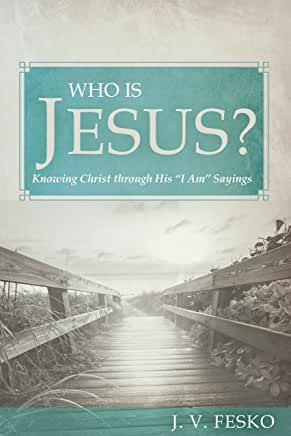
Book Review on J.V. Fesko’s “Who Is Jesus?” by David P. Craig

71Y-e4mau7L._AC_UY436_QL65_ML3_.jpg

How The ‘I Am Statements’ of Jesus Connect The Old Testament and Now Testament Dots

Book Reviewed by Dr. David P. Craig

J.V. Fesko does a wonderful job in this short book (93 pages) showing the Old Testament connections of Jesus’ New Testament claims in his eight ‘I Am’ sayings in the book of John.

Fesko elaborates on how in the Old Testament “Only Yahweh walks on the water, but Jesus walks on the water and tells the disciples not to fear because He is I Am” with reference to John 6:20 when Jesus says “Do not be afraid. I Am.”

When Jesus says He is the “Bread of Life” in John 6:35, 40 the author shows how “Jesus draws the crowd’s attention to the exodus, when God fed Israel with manna from heaven. Jesus tells the crowd that He too is from heaven and that God intends to feed them with His Son, the bread of life.”

Commenting on John 8:12 where Jesus says He is “the light of the world” Fesko states, “During the Feast of Tabernacles, Jesus invokes the exodus , particularly the theme of the pillar of fire guiding Israel by night. Israel identified the pillar with Yahweh, but now Jesus tells the crowds that He is the light of the world, not just Israel.”

With each of the eight sayings the author does a thorough job of exploring the themes, types, shadows, and fore-shadowing of Jesus in the Old Testament and how He comes to reveal the incarnation and redemptive plans of God in the New Testament.

J.V. Fesko’s book is concise, thorough, and contains good food for thought and discussion. I recommend this book especially for small group study (7-8 weeks) – as each chapter concludes with 3-4 questions for discussion. I found the book helpful as I preached on the ‘I Am’ sayings of Christ in a recent 8 week series in my church.

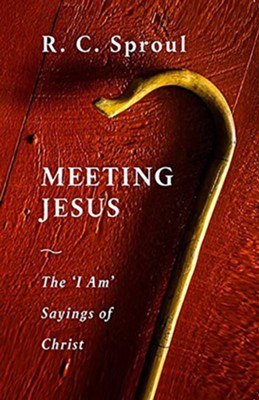
Book Review on R.C. Sproul’s “Meeting Jesus”

719284.jpg

A Helpful Guide To Understanding The ‘I Am” Sayings of Jesus

Book Review by Dr. David P. Craig

The stated purpose of the Gospel of John is found in the second to the last chapter in verses 30-31 of chapter 20, “Now Jesus did many other signs in the presence of the disciples, which are not written in this book; but these are written so that you may believe that Jesus is the Christ, the Son of God, and that by believing you may have life in his name.” Before arriving at this conclusion John gives many proofs along the way of Jesus’ deity. Perhaps the most profound examples of Christ’s deity are His eight “I am” sayings in chapters 6, 8, 10, 11, 14, and 15.

In this short little book (77 pages), R.C. Sproul covers the 8 ‘I am’ sayings of Jesus in the following order: (1) The Bread of Life; (2) The Light of the World; (3) The Door; (4) The Good Shepherd; (5) The Resurrection and the Life; (6) The Way, the Truth and The Life; (7) The True Vine; and (8) Before Abraham Was, I Am.

In each chapter Sproul uses biblical theology to show how the types, shadows, and illustrations of the person and work of Jesus in the New Testament have been the total fulfillment of Israel’s expectations. Each chapter articulates how the person and work of Jesus demonstrates how the realities of Christ’s birth, life, death, and resurrection are essential for our salvation and abundant living in Christ in the hear and now.

The book is based on a series of lectures that R.C. Sproul gave available through Ligonier Ministries. I also found that the Study Guide available from Ligonier Ministries entitled  “Knowing Christ: The ‘I Am’ Sayings of Jesus” by Sproul was also very helpful for further study, discussion questions for small groups, and cross references related to each ‘I Am’ saying. I highly recommend the book, study guide, and lecture series by Sproul for anyone who wants to better understand the person and work of Christ.


Book Review on Costi W. Hinn’s “God, Greed, And The (Prosperity) Gospel by David P. Craig

355274.jpg

The Truth About The False Gospel

One of the first papers I wrote in Bible college in 1985 was a critique on the so-called “Prosperity Gospel.” At the time, the big name prosperity preacher in America was Robert Schuller. As I compared his teaching with the Bible it was very clear that what’s been come to be known as the “prosperity gospel” is clearly a false or non-gospel. It’s not good news because it’s not the biblical gospel – it’s a mirage that is synonymous with the so-called “American Dream.”

As I did my research for my paper on Schuller, something really caught my attention. One, I realized that nobody in the Bible lived with total health, wealth, and prosperity. Pick just about anyone from the Old Testament or New Testament. What they all had in common wasn’t health, wealth, and prosperity, but suffering, pain, and ultimately death – many of them martyrs deaths for the sake of the real gospel. Compare the American dream with the life of Joseph, Job, Paul, Peter, and Jesus – and you have a clear bifurcation of the real and unreal gospel.

Another thing that stood out to me was how Schuller’s “Hour of Power” (his TV show watched by millions of people around the world) couldn’t get traction in communist Russia. I talked with a Russian evangelical pastor and he told me that Schuller couldn’t get traction in Russia because what he was teaching didn’t work in Russia. He wasn’t preaching the gospel because the gospel works everywhere: among the poor and rich, free and suppressed; educated and uneducated; every language; every ethnic group, etc. The gospel has never changed. The reality of the gospel is it works everywhere because it’s true and has the power of God behind it (Romans 1:16). If it can’t be preached everywhere and to everyone than its simply NOT the biblical gospel!

Unfortunately, the false gospel known as the “Prosperity-Gospel” continues to be propounded world-wide. Among the most famous proponents of this false gospel has been Benny Hinn – the uncle of the author, Costi W. Hinn. First of all, kudos to Costi for his courage in writing this book. Costi understands that people’s eternal lives and earthly lives are at stake as to how we understand and what we believe about the gospel. It’s essential that we get the gospel right.

Who should read this book? Everyone! I have been an evangelical pastor for over 30 years and it never ceases to amaze me how many church going people don’t read their Bibles, don’t understand the gospel, and are prone to believe in deceptive lies of the enemy that are proclaimed by wolves in sheep’s clothing.

Costi does a wonderful job of bringing the reader into the world view of prosperity gospel ministries. He gives an honest assessment of its strengths and weaknesses and testifies to how he was deceived growing up in this movement. He then goes on to compare prosperity theology with biblical theology. He compares false teaching and doctrine with biblical doctrine and teaching.

He has some very helpful sections in the book that help you biblically detect false teachers and false doctrines; shows how the prosperity gospel contradicts the real gospel; and gives a balanced view of healing, health, and wealth that is truly biblically based. He also has a great section on helps to reach those who are lost and caught up in false religions and cults.

By God’s grace Costi has been spared from a life apart from truth and the genuine gospel. Now he proclaims God’s grace and the genuine gospel as a pastor and writer. May our Lord use this book to help many flee from the darkness and run to the light of the gospel: That Jesus died for our sins according to the Scriptures, that He was buried, and rose again according to the Scriptures, and that those who repent of their sins and trust in Him may have eternal life. May all those who are deceived have the blinders taken off and may God use this great book to help us in reaching those who were once like Costi – who was once dead spiritually and is now alive spiritually because of the mercy of God delineated by the apostle Paul in 1 Corinthians 15:1-6 & Ephesians 2:1-10.


Prayer: The Prelude To Revival by Dr. Roger Nicole

51DcbZQ8BbL._AC_UY436_QL70_.jpg

It is in keeping with Reformed thought that revival should be grounded in prayer, because in prayer we acknowledge God’s sovereignty. God alone is the One who can dispense revival. So, revival is not something that is within the reach of human beings; it is something God alone can provide.

Sometimes people have expressed the attitude they think we ought to have in a motto which goes like this: “You ought to pray like a Calvinist and preach like an Arminian.” That is, pray as if everything depended upon God and preach as if everything depended on you. I would like to suggest a change in this formula which will improve it by fifty percent: “You ought to pray like a Calvinist and preach like a Calvinist.” Do not pray as if everything depends on God. (There is no good reason to have an “as if” in that motto, because things do depend on God. He is the One who sovereignly ordains and blesses.) Then preach like a Calvinist, because there, too, the results depend on God. Do not imagine that either prayer or preaching are activities in which we suddenly take leave of the doctrine of God’s sovereignty.

What Does Prayer Change?

When we consider prayer, there are questions which often are disturbing to the minds of some people. The first question is: “Do you think that you can really change the mind of God? That is, can prayer make God modify His sovereign plan?” There are people who feel that unless you are prepared to say this, there is no great value in prayer. I do not know what the reader’s particular idea on this subject may be, but I would like to say that if you believe you can change the mind of God through prayer, I hope you are using some discretion. If that is the power you have, it is certainly a most dangerous thing. Surely God does not need our counsel in order to set up what is desirable. Surely God, whose knowledge penetrates all minds and hearts, does not need to have us intervene to tell Him what He ought to do. The thought that we are changing the mind of God by our prayers is a terrifying concept.

I will be frank to confess that if I really thought I could change the mind of God by praying, I would abstain. I would have to say, “How can I presume, with the limitations of my own mind and the corruptions of my own heart-how can I presume to interfere in the counsels of the Almighty?” It is almost as if you were to introduce somebody who is utterly ignorant of electronics to a weapons plant in which, by pushing certain buttons, one might precipitate an explosion. You say, “Go ahead and push buttons. Never mind what happens.” Oh, no! There is comfort for the child of God in being assured that our prayers will not change God’s mind. This is not what is involved in prayer, and we are not in danger of precipitating explosions by some rash desire on our part.

But then people say, “If you cannot change God’s mind, what is the point of praying? If prayer does not change things, prayer is worthless.”

Here you have perhaps noticed that I have changed the formula. I did not say,”change the mind of God,” but “change things.” I never said that prayer does not change things. Prayer does change things, but it does not change the mind of God. The reason prayer changes things but does not change God is that He has appointed prayer as an effectual means for accomplishing His own purpose. This effectual means is essential for this accomplishment. When we have a right understanding of the sovereignty of God, we recognize that God has established a plan in which not only the effects but also the causes are ordained. We cannot disconnect the causes from the effects or the effects from the causes.

For example, I lift a book in your sight. Because the book has risen into the air, I am in a position to say, “God has ordained that it should get to this particular place.” He must have ordained it because that is where the book is. But notice, God did not ordain for the book to rise all by itself. He ordained that it should rise at the end of my hand. He ordained that I should have strength in my arm to lift it. He ordained that I should choose this particular book in order to illustrate this particular point. There is a connection between the book’s rising and the subject I wish to develop. All these things are tied up together. If there were no lecture, there would be no point of illustrating the power of second causes. If there were no desire to illustrate the power of second causes, my hand would have remained at my side. If my hand had remained at my side, the book would not have risen. I think we can argue in this way.

God, however, ordained that there should be this lecture, that there should be a desire to show the correlation of causes and effects in His sovereign plan, that this particular illustration should come to my mind, and that I should implement it by the strength that He has given me. One cannot say, “If you hadn’t touched it, it would have risen anyway,” because God did not ordain that it should rise anyway. He ordained that it should rise through my hand.

That is exactly the case with prayer. Prayer is an effectual secondary cause that God has related to the effects involved. Just as the activity of human beings on earth is related to the effects that are produced, just as the book rising is related to the hand lifting, so are the effects of prayer related to the prayer that is offered. So although prayer does not change the mind of God, it does change things. God has appointed change through prayer, even though the way in which the cause is related to the effect is not perfectly clear to us.

The fact that the way this happens is not clear does not give us grounds for denying the relationship. We pray for healing. If God provides healing, we cannot say, “There would have been healing whether I prayed or not; I would have gotten well anyway.” God provided healing in relation to prayer.

We pray for an increase in the knowledge of God and earnestness in His service. If God is pleased to bless our lives in this way, we cannot say, “This would have happened whether I prayed or not.” God provides His blessing in relation to the prayer.

We pray for the salvation of someone we love, someone God placed on our hearts to intercede and plead for. That person is born again by the work of the Holy Spirit. We cannot say, “This would have happened whether I prayed or not.” It is related to our prayers. God, who has appointed the salvation, has also appointed prayer as the means to that salvation. We cannot omit any link in that chain and say that the chain will exist whether the link is there or not.

A final question is: “How can I pray if I do not see how prayer works?” That is not a wise way of handling the matter, since it is God who tells us that prayer is part of His plan for us. It is not necessary that we have an understanding of the ways in which God’s purposes are implemented. God has put this means at our disposal. He encourages us to pray. In 2 Chronicles 7:14 He says, “If My people, who are called by My name, will humble themselves and pray and seek My face and turn from their wicked ways, then will I hear from heaven and will forgive their sin and will heal their land.” To insist that we must have an understanding of how this works is a very unreasonable attitude.

Even in affairs of daily life we do not have this attitude. I am sure you have used a touch-system telephone. Do you understand how it works? Do you have that consummate knowledge of communications to know exactly what goes on when you press those little buttons? Do you know how those numbers are changed into binary code and used to track down the particular telephone you wish to call? Experts may understand this. But I must say, as far as I am concerned, when I am calling, I do not think of any of those things. I just pick up the phone and touch the buttons. I do not worry about how this happens. I am interested only in whom I am going to reach and what I will say.

It is the same with prayer. We do not have to know how it works. It is enough to know that it does work. Prayer is part of God’s sovereign plan and is an effectual means by which we can share with God in the fulfillment of that plan. When we pray, we are cooperating; we are working together with God in the work to which, in His own mercy, He has been pleased to call us.

Since prayer is part of God’s plan, we are not forcing God’s hand at any time by praying. We are not intruding our own will in a way that is disagreeable or uncomfortable to God. We do not need to fear that we are finagling with buttons about which we know nothing, which might bring disaster on ourselves and others. We are praying in line with the great purposes of God. Without prayer there are many things that would be different. It is by virtue of prayer that they are what God has planned them to be.

In Scripture, prayer is presented as a prerequisite for revival. It is a prelude. If you study the history of revivals, you will find that they are best documented not only in their effects but also in their preparatory prayer periods. This was true of the revival in New England under the ministry of Jonathan Edwards. It was true in the revival in Wales under Evan Roberts. It was true of the revivals attending the ministry of Charles Grandison Finney in the United States. Revival that is worthwhile is bathed in prayer. When He wants a revival, God is pleased to lead His people· to pray that revival might be forthcoming.

(1) The prayer that leads to revival must be believing prayer. This is the point the apostle James makes in his Epistle (James 1:5-7, “If any of you lacks wisdom, let him ask God, who gives generously to all without reproach, and it will be given him. But let him ask in faith, with no doubting, for the one who doubts is like a wave of the sea that is driven and tossed by the wind. For that person must not suppose that he will receive anything from the Lord”). When we come to the Lord we must come with the expectation that He is able and will do great things. If we come vacillating, wondering whether God is able to accomplish anything, whether the situation is really so desperate that even God cannot touch it, then obviously our prayer is lacking in fervency. We are just going through the motions, as it were. We are not really praying.

God wants us to come to Him in faith. Indeed, prayer is an exercise of faith in which we are steeped in the supreme greatness and ability of God, and have our eyes fixed on the majesty of His purpose and the superlative quality of His resources. Nothing is impossible for our God. Our God is able to move mountains. He is able to transform hearts, break resistances, reach out even underneath the conscious lives of people to transform them. So we should never say, “Here is somebody beyond God’s reach. The hardness of heart is so great, the wickedness of life is so manifest, that this cannot possibly be a candidate for acceptance into the kingdom of God. We might as well give up on this person.”

In spite of the fact that the early church had seen God do many great things, it undoubtedly thought this way about Paul. The early Christians thought. “This one is lost. There is no way God will bring Paul into the kingdom. He is a persecutor, an enemy, an opponent. There is no hope for him.” When Paul tried to join the church, they gave him the cold shoulder (Acts 9:26). They said, “We can’t trust this man. He will be spying on us and then use his knowledge to annihilate the church.” It took Barnabas to reason, “God saved me; maybe He can save Paul, too.” He went close to Paul and befriended him at great danger to himself. He made sure that Paul truly was a child of God. Then he brought him to the apostles (Acts 9:27). We, too, might think, “What less likely a candidate for election than Paul?” Yet God was pleased to reach him and change him. God made him the great apostle of the Gentiles, the benefit of whose ministry is still with us to this day. We need believing prayer, prayer that does not concentrate on the obstacles. We must not say, “He is hopeless,” or “Our country has gone to the dogs,” or “Our church has gone liberal.” Prayer must recognize that God is all-powerful and can do wonders. If anyone prays and does not believe, that one is unstable (James 1:6-7). He cannot expect anything. But if we come with faith, accepting the reality of the power of God, we will experience that effective prayer which changes things in keeping with God’s purpose.

(2) The second characteristic of the prayer that brings revival is submission. It must be submissive prayer. That is, we must be prepared to submit our own ideas, aims, and ambitions to the sovereign God. We must not intrude with our outlook, pressing it on God, as it were. Rather, we must come with a desire to understand God’s outlook and subordinate our desires to what He has ordained.

Some people say, ”That kind of prayer is not really effective. If you start by saying, ‘If it be Your will … ‘you are attempting to give God an out in case He is not going to do it. You are not believing.” That is not the point at all. We do not need to give God an out. God does not need an out. What we are doing when we say, “If it is Your will … ” is articulating the principle that we are not telling God what should be done but are actually identifying with His purpose and asking to work together with Him in fulfillment of that purpose.

We have a moving example of this kind of prayer on the lips of our Lord Himself. In Gethsemane He said, “If it is possible . . . Yet not as I will, but as You will” (Matt. 26:39). This is mysterious to us, for it indicates that at that point of His human consciousness, our Lord was left in suspense as to what the will of God was. “Not as I will, but as You will.” That is the condition of effective prayer-that we should be willing to accept what God has ordained in order that His purpose might be accomplished.

Sometimes it is hard for us to pray that way, because our will is so strong, and our understanding of what God should want is so clear that we do not even feel like saying, “Your will be done.” When we pray for revival, especially, we say, “We do not need to introduce conditional clauses. The very fact that God leads us to pray is an indication that He wills that some form of revival should come.” Still, the very essence of a consecrated prayer is that it should be in keeping with the will of God.

This is what is meant by praying in the name of Jesus. To pray in the name of Christ is not simply to have a little addition to your prayer, in which you use those words almost as a magical formula to insure success. To pray in the name of Christ is to identify yourself with Christ, with His aims, His purposes, His ministry. It is to say, “I am with Jesus, I am for Him and His purposes.” The one who prays in the name of Jesus does not need to fear disappointments, because unity with the purpose of God protects him from that. There is a submission to God which acknowledges with gratitude the way in which God is pleased to answer.

This prayer must be God-centered. It must relate itself to God’s glory rather than to our private desires. Of course, God permits us to present our private desires as well. There is nothing wrong in asking God to give us good weather for mountain climbing if good weather is important for it. But here again, it would be wise to say, “If it be Your will,” because there are also people, such as farmers, who need rain. Since the desire of the mountaineer may conflict with the desire of the farmer, it would be good for both of them to be submitted to whatever God is pleased to send. God permits us to present our desires, but we must have a supreme desire, especially in the prayer for revival, to see the glory of God manifested.

Some of the most effective prayers in Scripture do this. They are even argumentative at this point.Think of the prayer of Abraham when he prayed for Sodom and Gomorrah. He even argued with God, saying, “Is it right for You to destroy those cities if fifty … forty-five … forty: .. thirty… twenty… ten righteous people live there?” (Gen. 18:24-33). God blessed that prayer. So we can say that if Lot and his family were saved, it was because of the faithful intercession of Abraham, who did not relent, even though, in the end, the number he cited was not sufficiently small to warrant ID salvation of the wicked cities.

Think of the prayer of Moses who argued, “If You destroy Your people, what will happen to Your name? Your glory is at stake. Don’t do it” (Ex.32:11-13).God blessed that glorious intercessory prayer of Moses, who disregarded his personal ambitions in order to identify with the purposes of God.

A prayer for revival should be centered, not in the desire that we should have more money for our church (because there will be more people coming), not that there should be a new Vitality in our denomination (as compared with other denominations), nor that any other of our human desires and ambitions should be satisfied, but rather that the glory of God might be manifested. We should pray that His name might be exalted, that His kingdom might be made evident, that His glorious reign might be established even more widely in the hearts of men and women.

(3) Our prayer must be persistent. The Scripture emphasizes that we ought not easily be discouraged in prayer (Luke 18:1). If we do not receive at once the answer we are looking for, we ought not to reason, “Well, God just doesn’t want me to have that; I guess I’ll give up.” There are people who have been wonderfully persistent in prayer-for husbands or wives, children or parents-and God has blessed their persistence. Do not give up too soon. Do not conclude too rapidly that God is uninterested. So long as you have a burden on your heart, keep praying.

In the church in which I am a member there is a man who has moved me profoundly in this respect. It is a wonderful church now. We have a preacher who is a wonderful expositor of the Word of God. I never attend a service there at which my soul is not blessed. But some 40 years ago this church was exceedingly small-there were about 10 or 12 people on a Sunday morning-and it was passing through a veritable desert from the point of view of biblical ministry. I understand that at one time one of the pastors was actually a practicing Christian Scientist.

Throughout this bleak period this man, Deacon George Day, was praying. He did not say, “This church gives me nothing. There is nothing to be expected here, nothing to be hoped. I am going to find another fellowship that will be more fruitful for me.” No! This man said, “This is my church. I am not going to give up. Since I do not get any spiritual nurture from the sermons, I will get it from the Bible directly. I will attend some other meetings in other places, but I am still going to be in my own church on Sunday morning, and I am going to pray for this ministry.” Deacon Day kept praying for that church for years. Now he is an old man, more than 80. There is hardly any strength left in his body. When he can come to church he uses an earphone, because he is very deaf. But there is joy in his heart which moves one to tears. Whenever I see Deacon Day, I see the power of God to answer persistent prayer. I see a warrior who did not allow himself to be defeated, but who stayed at his post, pleading for his church and asking God’s blessing upon it.

(4) Finally, the prayer that leads to revival must be consistent prayer, in which we are prepared also to do what we can to achieve what we are asking. If we pray for the conversion of our loved ones, somehow we must give out witness, too. We must witness by life and words, when they can be effectually presented. If we pray for revival, we must be prepared to open our hearts so that God may revive them. We ought never to take prayer as a means of avoiding the actions God challenges us to.

My father had an experience which I would like to relate to illustrate this point. As a young minister he had been an assistant in a large church which had only two pastors in 50 years, one ministry of 25 years, followed by another of 25 years. After having been in that church, my father became pastor of a very small church in a little village in southern France. Prayer meeting was on Wednesday evening, and there was usually a very limited attendance. One Wednesday there was a frightful storm. The wind was blowing. Rain was falling in buckets. My father thought, “There is not going to be anybody at the prayer meeting tonight. If I go, I will only drench myself. I might as well stay home.” My father was very interested in Hebrew and was studying the song of Deborah in the book of Judges. The temptation was great to stay in his cozy home and deal with that.

As my father was wrestling with this, there came to his memory a sermon given at the time of his ordination. It was on the passage which says, “Go out and make them come in” (Luke 14:23). Most of the time we think about the expression “make them come in.” But on this occasion, the preacher had focused on the phrase, “Go out.” He had said, ” ‘Go out’ means to reach out for people; it means, do not stay in the coziness of your study. You must go out and reach out.” While the gales were blowing and the wind was hitting the windows, my father remembered that and concluded, “Well, I guess God wants me to go out. I do not expect many people. I do not expect very much of anything at this prayer meeting. But if God has told me to go out, I will go out and speak at the prayer meeting;” This was the meeting in which revival started in his church!

Prayer is the prelude to revival. Do you want revival? Then be prepared to pray. “If My people, who are called by My name, will humble themselves and pray . . . then will I hear from heaven and will forgive their sins and will heal their land.”

*This article was originally an address given at the 1982 Philadelphia Conference on Reformed Theology, Philadelphia, PA. and is adapted from Dr. Roger R. Nicole, “Prayer: The Prelude to Revival” in Reformation and Revival, A Quarterly Journal for Church Leadership (Volume 1, No. 3, Summer, 1992).

About the Author: Dr. Roger R. Nicole (1915-2010) was a native Swiss Reformed Baptist theologian and taught for many years at Gordon-Conwell Theological Seminary as well as the founder of the Evangelical Theological Society.

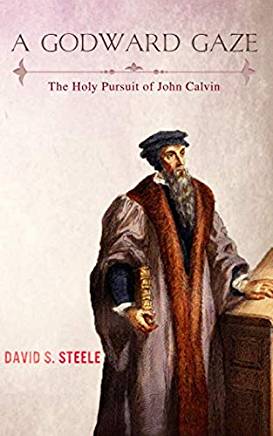
Book Review on David S. Steele’s “A Godward Gaze: The Holy Pursuit of John Calvin”

416HWmRy7xL._AC_UY436_QL70_.jpg

An Exhortation to God-Centered Living

By David P. Craig

It was such a joy and delight to read this new offering from my good friend David S. Steele. I highly recommend this book four five primary reasons:

  1. It’s brevity. It’s only 68 pages long. However, upon starting and completing the book in about an hour and a half – I was refreshed, renewed and rejuvenated in my passion for our Awesome God.
  2. It’s content. It’s a tour de force theologically. In it Steele brilliantly weaves the authority of the Scriptures, the gospel, and personal sanctification in a way that my heart, mind, and affections were stirred to continue to be faithful in my calling as a Christian Pastor.
  3. It’s snapshot of John Calvin. John Calvin – may be one of the least understood theologians in Church History; and yet perhaps the one theologian-pastor that should be most admired, studied, and emulated. Steele’s brief snippets from the life and pen of Calvin – will spur on the desire of those who read this book to go to the primary sources for more of Calvin – and that’s a good thing!
  4. It’s biblically saturated. Steele bleeds bibline. Every page “oosiates” Scripture. There is an authoritative ring of truth throughout the book. Therefore, one senses the presence of and the counsel of the Holy Spirit throughout the book.
  5. It’s convicting. The subject of the entire book is based on Isaiah 66:1-2. The themes of repentance, contrition, humility, and a love for God and His Word are hammered home throughout. As convicting as I was by the Spirit, I was also exhorted by the same Holy Spirit to be renewed in my joy in Christ and His gospel through repentance and faith in following the practical steps articulated in this excellent book to help me get back on track in my God-centered gaze.

Ten Key Ideas from C.S. Lewis’s Works

41e9FVEBHIL._SX351_BO1,204,203,200_.jpg

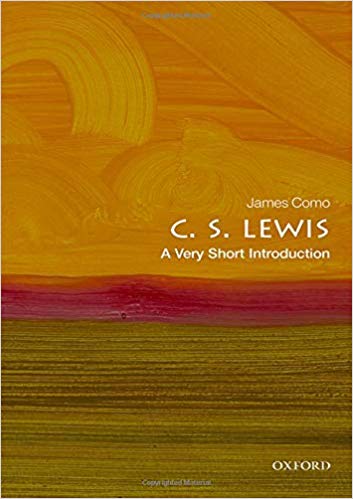
(Adapted from C.S. Lewis: A Very Short Introduction by James Como, Box 2)

These are central to Lewis’s  thinking: many of his arguments are based upon them and they were central to his life. Omitted are orthodox Christian ideas (e.g., the incarnation), as well as political ones (e.g., the danger of fetishizing equality: ‘I’m as good as you’):

  1. Joy (Sehnsucht): is a longing conveyed by some image or memory or event that does not originate in any of those but comes through them. It is from a place beyond the senses and kindles a hope that there is Heaven, that Heaven is our home, and that we will return there. It is painful because nothing in the world can satisfy it, no matter how hard we may try to do so; it is sweetly painful because we can intuit its origin and our destiny.
  2. Contemplation and Enjoyment (or At/Along), or knowing from the outside and from the inside, where a phenomenon (such as religious belief or being in love) may seem very different. We need both.
  3. Chronological snobbery: is the uncritical acceptance of our own intellectual climate, as though past beliefs or practices are useless simply because they came before us. A corollary is that our belief in progress is misplaced: we must ask what it is we are ‘progressing’ towards.
  4. Subjectivism is poisonous: because it leads to an exaltation of the Self, a form of idolatry, especially when applied to morality, as when something is deemed good because it feels good.
  5. Reason is objectively valid: and, though one’s logic may be flawed in any given case, is a sign of our non-material nature: atoms moving randomly in our brains is not thought. It is the ‘organ of truth’.
  6. Morality is objective: outside of any personal preference or perception and accessible to Reason. To be subjective respecting this Natural Law (the Tao) is to submit to those who have the power, especially the technological power, to enforce their preferences, leading to ‘the abolition of man’. It merits obedience.
  7. Imagination: especially when realized as metaphor, symbol, and myth, is the ‘organ of meaning’, antecedent to truth. It helps extend language without distorting or destroying it (‘verbicide’).
  8. Quiddity: is the ‘thingness’ of a thing, be it food, weather, or a person. We must pay attention to things as they are, name them appropriately, and respond ordinately to them.
  9. Personhood: is not at all the same as ‘personality’, the expression of which ought not to be one’s goal; rather we should apply the Law of Inattention, allowing us to pay attention to all sorts of signs outside of the Self, especially to other people. What am I feeling? matters less than What is that? After all, ‘feelings come and go, mostly they go’.
  10. Ultimate Reality: is not the plane of existence we occupy, which is but a ‘shadowland’, a sort of training camp for the realist thing. That solid place sends signs (e.g., Joy) and, because it is so much richer than our shadowland, must clothe those signs in words and objects that already have ordinary meaning to us (like erotic imagery symbolizing religious devotion). That is how sacramentalism works: a higher reality is transposed into a more limited key having ‘notes’ we recognize as ordinary.

About The Author: James T. Como holds a Ph.D. in Language, Literature, and Rhetoric from Columbia University and is now Professor Emeritus of Rhetoric and Public Communication at York College (CUNY). A founding member of the New York C. S. Lewis Society (1969), Dr. Como’s books include Branches to Heaven: The Geniuses of C. S. Lewis, a study of Lewis as a rhetorician, and Remembering C. S. Lewis. These, along with his many articles on Lewis in journals including The Wilson Quarterly and The New Criterion, and on-air commentary for five biographical documentaries, have established Dr. Como as one of the most highly-regarded Lewis scholars in the world. The Ten Key Ideas above are from his outstanding Introduction to C.S. Lewis in the series of books “A Very Short Introduction” published by Oxford University Press.

Book Review on R.C. Sproul Jr.’s – Growing Up With R.C. – Truths I Learned About Grace, Redemption, and The Holiness of God

71MhPDz6cHL._AC_UL872_QL65_.jpg

Reviewed By David P. Craig

I have to admit that I read this book with great reluctance. I was hoping it would not be another Franky Schaeffer angrily vomiting on his famous parents type of book. I was pleasantly surprised to read a book that endeared me even more to R.C. Sproul Sr., and made me appreciate the honesty and respect of R.C. Jr., for his wise and loving Heavenly and Earthly Father’s.

I am grateful that R.C. Jr. has written this book for three reasons: (1) It made me understand more of where he is coming from – I especially appreciated his transparency and humility in admitting his own struggles with the flesh; (2) I appreciated his insights and gleanings of grace and wisdom from his dad and mom over his lifetime; (3) I am grateful for his Christ-centered focus and glorying in the grace of God in the Gospel.

I just want to say “thank you” to R.C. Jr. for sharing your father with us. Thank you for owning up to your own struggles and modeling repentance and faith in Jesus alone. Thank you, Lisa (R.C. Jr.s, wife) for praying for and unconditionally loving your husband. And thank You R.C. Sr. and Vesta for your passion for Jesus and for the grace and mercy you have given your children. 

I heartily commend this book as a respectful tribute to R.C. Sr., and an even greater tribute to our Gracious and Merciful Lord and Savior – Jesus Christ.

14 CLASSIC ARGUMENTS FOR THE EXISTENCE OF GOD

the-creation-of-adam.jpg

(1) The Argument from Motion There is motion (locomotion) in the universe. Something cannot move itself; an external agent or force is required. An infinite regress of forces is meaningless. Hence, there must be a being who is the ultimate source of all motion while not being moved itself. This being is God, the unmoved mover (*a posteriori) ~ Thomas Aquinas
(2) The Cosmological Argument Every effect has a cause. There must be an infinite regress of finite causes. Therefore, there must be an uncaused cause or necessary being. This being is God. (*a posteriori) ~ Thomas Aquinas
(3)The Argument from Possibility and Necessity Things exist in a network of relationships to other things. They can exist only within this network. Therefore, each is a dependent thing. However, an infinite regress of dependencies is contradictory. There must, then, be a being who is absolutely independent, not contingent on anything else. This being is God. (*a posteriori) ~ Thomas Aquinas
(4) The Argument from Perfection It can be observed from the universe that there is a pyramid of beings (e.g., from insects to humans), in an ever-increasing degree of perfection. There must be a final being who is absolutely perfect, the source of all perfection. This being is God. (*a posteriori) ~ Thomas Aquinas
(5) The Teleological Argument – Also Called The Argument from Design There is an observable order or design in the world that cannot be attributed to the object itself (e.g., inanimate objects). This observable order argues for an intelligent being who established this order. This being is God. (*a posteriori) ~ Thomas Aquinas
(6) The Moral or Anthropological Argument All people possess a moral impulse or categorical imperative. Since this morality is not always rewarded in this life, there must be some basis or reason for moral behavior that is beyond this life. This implies the existence of immortality, ultimate judgment, and a God who establishes and supports morality by rewarding good and punishing evil (*a posteriori) ~ Immanuel Kant, C.S. Lewis
(7) The Argument That God Is An Innate Idea All normal human beings are born with the idea of God implanted in the mind , though it is suppressed in unrighteousness (Romans 1:18). As the child grows into adulthood, this idea becomes clearer. Critical experience in the course of life may make this idea come alive.  (**a priori) ~ Augustine, John Calvin, Charles Hodge
(8) The Argument from Mysticism Mankind is able to have a direct mystical experience with God resulting in an ecstatic experience. This union with God is so uniquely overpowering that it self-validates the existence of God. (**a priori) ~ Evelyn Underhill
(9) The Argument from Truth All people believe that something is true. If God is the God of truth and the true God, then God is Truth. This Truth (capital T) is the context for all other truth. Therefore, the existence of truth implies the existence of Truth, which implies the existence of God. (**a priori) 
(10) The Ontological Argument Major premise: Mankind has an idea of an infinite and perfect being. Minor premise: Existence is a necessary part of perfection.

Conclusion: An infinite and perfect being exists, since the very concept of perfection requires existence.  (**a priori) ~ Anselm of Canterbury

(11) The Argument From Finitude Humans are aware of their finitude. What makes them aware of this? God is continually impressing humans with God’s infinitude. Therefore the sense of finitude itself is proof that an infinite being, God, exists. (**a priori) ~ Aristotle
(12) The Argument  From Blessed-ness Humans are restless, with a vague longing for blessedness until they rest in God. This longing was given by God. The presence of this longing is an indirect proof of God’s existence. (**a priori) ~ Augustine, Thomas Aquinas
(13) The Argument From Perception Human beings are able to perceive (sense) things. This cannot be caused either by physical events (perception as a mental act) or by human beings themselves. Therefore, the existence of perception implies Gods existence as the only rational explanation for human perceptions. (**a priori) ~ Bishop George Berkeley
(14) The Existential Argument  God proves Himself via the kerygma, which is His declaration of love, forgiveness, and justification of mankind. Those who decide for the kerygma then know God exists. No other evidence is needed. God is not so much proven as He is known, and this occurs existentially, from experiences in life. (**a priori) ~ Auguste Sabatier

*a posteriori = knowledge, thought, statements or arguments that logically follow from, arises after, or are dependent on, sense experience.

**a priori = knowledge, thought, statements or arguments that are logically prior to, or arising from a concept or principle that precedes empirical verification, or that occurs independently of experience.