Jonathan Edwards on the Life of a Christian

5 Things Jonathan Edwards Teaches Us about the Christian Life

9781433535055


This is a guest post by Dane Ortlund. He is the author of Edwards On the Christian Life: Alive to the Beauty of God. Wheaton: Crossway, 2014.originally posted @http://www.crossway.org/blog/2014/08/5-things-jonathan-edwards-teaches-us-about-the-christian-life/

Jonathan Edwards for the Rest of Us

For many of us, Jonathan Edwards is a skinny white guy who never smiled, except when talking about hell. If we know anything more, it’s:

  • that he wrote a lot of really dense books

  • that he talked a lot about the glory of God

  • that he was part of the Great Awakening

  • that John Piper likes him a lot

And that’s about it.

But there are riches to be mined in Jonathan Edwards far beyond what you may have been exposed to. Reading Jonathan Edwards is not for historians and professors mainly, but for the rest of us.

Here are five things Edwards teaches us about the Christian life—your Christian life:

1. If you’re a Christian, you don’t realize how radically different and freshly empowered you now are.

When sinners repent and believe for the first time, it often feels as if nothing much has happened, and it often looks as if nothing much has happened. Our wrinkles don’t go away. Our Myers-Briggs personality profile doesn’t change. Our IQ isn’t improved. Our driver’s license photo looks the same after conversion as before, just a few years older and grayer.

Similarly, a foreigner who has just attained citizenship in their country of residence will not feel or look much different, upon receiving formal declaration of citizenship. Yet they now belong to an entirely new nation. More than this, they now have all the rights and privileges that belong to citizens of that nation.

Edwards teaches us that the quiet, seemingly innocuous change that takes place in the new birth is of eternal—even cosmic—significance. A fallen sinner has just become an invincible heir of the universe. The Holy Spirit has just taken up permanent residence in the temple of this soul. In new birth, Edwards writes, the Christian “is a new creature, he is just as if he were not the same, but were born again, created over a second time.”

For a Christian to wallow in sin and misery is for a butterfly to crawl miserably along the branch as if it were still a caterpillar.

2. Even if you’re a Christian, you don’t realize how radically fallen and blindly dysfunctional you remain.

If we understate the positive change in new birth, we also tend to understate the fallenness that remains. But Edwards knew of the strange dysfunctions that remain among all of us, including true believers. He saw it in himself.

Edwards spoke frequently, for example, of the lurking dangers of pride: “It is a sin that has, as it were, many lives. If you kill it, it will live still. If you suppress it in one shape, it rises in another. If you think it is all gone, it is there still. Like the coats of an onion, if you pull one form of it off, there is another underneath.”

We often don’t feel the weight of our sin. Why? Because of our sin. The disease is itself what prevents us from detecting the disease.

How do we get out? One answer is: read Jonathan Edwards. His sermons will do wonders to re-sharpen your blunted conscience and re-sensitize your heart to its fallenness.

3. Authentic discipleship to Jesus Christ calms and gentle-izes (not radicalizes and excites) Christians.

Edwards is famous for his hellfire sermons, but it is striking to trace the evolution of his preaching over his three decades in the pulpit. Scholars point out that the hellfire sermons were more typical of the young Edwards and gradually decreased over his career, while other themes grew increasingly strong: the beauty of Christ, the loveliness of holiness, the calmness of a justified life, the gentleness of God.

A sermon that nicely sums up the core of Edwards’ ministry is “The Spirit of the True Saints Is a Spirit of Divine Love,” based on 1 John 4:16. There we read statements like:

  • “The very nature of God is love. If it should be enquired what God is, it might be answered that he is an infinite and incomprehensible fountain of love.”

  • “He who has divine love in him has a wellspring of true happiness that he carries about in his own breast, a fountain of sweetness, a spring of the water of life. There is a pleasant calmness and serenity and brightness in the soul that accompanies the exercises of this holy affection.”

  • “God in Christ allows such little, poor creatures as you are to come to him, to love communion with him, and to maintain a communication of love with him. You may go to God and tell him how you love him and open your heart and he will accept of it.”

That, more than anything else, is the pulsating core of Edwards’ ministry. Radical godliness is not obnoxious, showy, or boisterous. It is quiet, gentle, and serene.

4. Christianity is gain, and only gain.

Toward the end of his life, Edwards was kicked out of his church by a vote of ten to one—by professing Christians, upstanding church members. This, and other trials he encountered during his life, lead me to conclude that the lofty vision of Christian living that he has left to us is not naïve idealism. He felt the pain not only of rejection, but of rejection by close friends and family members who were part of his church. And yet, having his eyes opened to present pain did not close his eyes to future glory.

Why? Because we will have God, in heaven, unfiltered, forever. Consider the following breathtaking statement:

The glorious excellencies and beauty of God will be what will forever entertain the minds of the saints, and the love of God will be their everlasting feast. The redeemed will indeed enjoy other things; they will enjoy the angels, and will enjoy one another: but that which they shall enjoy in the angels, or in each other, or in any thing else whatsoever that will yield them delight and happiness, will be what shall be seen of God in them.

Christians leave nothing behind when they die. All is gain.

5. Revival is not what you think it is.

When evangelicals today hear the word “revival,” we generally picture tears, loudness, animated preaching, exuberance, humiliating confession of sin, and so on. Some of these things may be present in revival, perhaps, but Edwards came to long for revival because he saw that it is not a move from the ordinary to the extraordinary so much as a move from the sub-ordinary to the ordinary. We become human again. We breathe once more.

Edwards witnessed two revivals. One was local, contained to New England, in the mid-1730s. The other, six years later, was transatlantic and became known as the Great Awakening. Edwards made the fascinating observation that, in the first revival, God’s people tended “to talk with too much of an air of lightness, and something of laughter,” whereas in the second revival “they seem to have no disposition to it, but rejoice with a more solemn, reverential, humble joy.” The first revival’s joy was real but frothy. The second revival’s joy was deeper and more calm.

Simply put, revival isn’t weird. True revival is rehumanizing. It re-centralizes not the extraordinary gifts of the Spirit so much as the ordinary fruit of the Spirit.


Dane C. Ortlund (PhD, Wheaton College) is Senior Vice President for Bible Publishing at Crossway. He is the author of several books, including Edwards on the Christian Life: Alive to the Beauty of God, and serves as an editor for the Knowing the Bible study series. He lives with his wife, Stacey, and their four kids in Wheaton.

Book Review: Heaven – From Crossway’s Theology in Community Series

A Comprehensive Biblical Look At Heaven

M52781

Book Review By David P. Craig

Having already read Suffering and Goodness of God (2008); The Glory of God (2010); The Deity of Christ (2011); The Kingdom of God (2012); and Fallen: A Theology of Sin (2013) I was anxiously anticipating this sixth installment of the Theology in Community Series. Heaven (as all the other books in this series) did not disappoint. Each book in this series features chapters written by different theologians; pastors; and scholars that demonstrate how the particular theme is taught in history, systematically, biblically, and its practical relevance and ramifications for the modern Church.

Robert Peterson (PhD, Drew University; is Professor of Systematic Theology at Covenant Theological Seminary) opens the book up with four ancient and modern stories of how false teaching on Heaven has resulted in some cases tragically. He then examines the Noetic effects of sin on our understanding of Heaven. In closing his chapter he asks and answers seven common questions people ask concerning Heaven: (1) Will everyone go to Heaven? (2) What happens when believers die? (3) What about purgatory? (4) Will we recognize others in Heaven? (5) Will we be married and enjoy sex in Heaven? (6) Will there be sorrow in Heaven over those in Hell? (7) What kind of bodies will we have in heaven?

Raymond C. Ortlund Jr. (PhD, University of Aberdeen; is Senior Pastor of Immanuel Church in Nashville, TN.) tackles six key texts on Heaven in the Old Testament: Genesis 28; Exodus 24; 1 Kings 22; Job 1-2; Isaiah 6; and Daniel 7. In each passage Ortlund mines exegetical, theological, and practical principles that we learn about Heaven as taught in the Old Testament. Earth and Heaven are currently very distinct, but the unfolding revelation of Heaven from the Bible as Ortlund makes clear is that Heaven and Earth will one day be transformed together into the dwelling place of God.

Jonathan T. Pennington (PhD, University of St. Andrews; is Associate Professor of New Testament Interpretation at Southern Baptist Theological Seminary) writes about the language of Heaven in the Synoptic Gospels and Acts. The word we typically translate as “heaven” in English from the Greek is used 161 times in the Synoptics and Acts. Pennington demonstrates in his chapter that the word for Heaven conveys various ideas. He brings out the crucial aspects of how the worldview of the biblical writers and of our own day are in conflict and how we need to return to a biblical worldview in order to make sense of Heaven as a real physical and non-abstract place.

Stephen J. Wellum (PhD, Trinity Evangelical Divinity School; is Professor of Christian Theology at Southern Baptist Theological Seminary) approaches Paul’s teaching on Heaven in three distinct ways: (1) How Paul understands Heaven according to the Old Testament; (2) How Paul thinks about Heaven in a Systematic and meditative way; and (3) How Paul hones in on Heaven as the believer’s final, and future state prior to and as a result of Christ’s Second Coming.

Jon Laansma (PhD, University of Aberdeen; is Associate Professor of Ancient Languages and New Testament at Wheaton College) writes concerning how the 8 general canonical epistles (Hebrews, 1&2 Peter, James, Jude, 1-3 John) represent the distinctive perspectives on heaven by sketching out their primary concerns and contours with references to their pastoral intentions. He is very helpful in showing how the Christological elements of Heaven are tied to the practical concerns of Christians on Earth.

Andreas J. Kostenberger (PhD, Trinity Evangelical Divinity School; is Professor of New Testament and Greek at Southeastern Baptist Theological Seminary) explores the distinctive contributions that John makes in his Gospel and the book of Revelation to helping us understand what Heaven is and what it is like.

Robert A. Peterson writes his second essay in this compilation on Pictures of Heaven that are portrayed throughout the Scriptures. Taking into consideration the story line of the Bible (creation–fall–redemption–consummation) Peterson demonstrates how the Bible is a picture book that sketches the gospel story of these four stages of the story line by using five pictures to illustrate the gospel: Heaven and Earth; Sabbath Rest; The Kingdom of God; The Presence of God; and The Glory of God. Peterson presents a masterful biblical theology of Heaven and ties it into the macro-storyline of the Gospel from Genesis to Revelation.

Gerald Bray (DLitt, University of Paris-Sorbonne; is Research Professor of Divinity at Beeson Divinity School) writes about two themes in his essay: (1) Heaven as Understood before the Coming of Christ; and (2) Heaven as Understood since the Coming of Christ.

Stephen F. Noll (PhD, University of Manchester; is Vice Chancellor Emeritus of Uganda Christian University) gives a biblical theology of angels (good and evil) and about their relationship to God and us in Heaven as revealed in the Scriptures.

Ajith Fernando (ThM, Fuller Theological Seminary; is Teaching Director of Youth For Christ in Sri Lanka) addresses how the reality of Heaven helps Christians who are being persecuted historically and in the present. He spends the bulk of his chapter showing how the “biblical foursome” of (1) Evangelism triggers (2) persecution. (3) The presence of Christ helps us bear the persecution and gives a foretaste of heaven. (4) The Heavenly vision helps us be faithful amidst persecution. Fernando reminds us the prospect of Heaven is a great motivation to be faithful in taking up our crosses and following Christ.

David B. Calhoun (PhD, Princeton Theological Seminary; is Professor Emeritus of Covenant Theological Seminary) closes out the book by writing about his own struggle with cancer and how suffering and pictures of the hope of Heaven are crucial when going through the hard trials and tests of life.

All of the essays in this book were biblical; theologically thought-provoking; dealt with current practical scenarios; and were gospel centered and Christ exalting. I highly recommend this book for Christians who want to learn what the Bible has to say rather than much of the subjective drivel that is being churned over Heaven in many of the popular books of our day.

*I was furnished with a copy of this book for review by the publisher and was not required to write a favorable review.


Book Review: Greg Forster’s “Joy For The World: How Christianity Lost Its Cultural Influence and Can Begin Rebuilding It

Renewing Your Vision for Cultural Change

538000

Book Review By Dr. David P. Craig

As a Senior Pastor one of the most difficult challenges I’ve faced over the years is how to keep and shepherd a flock in holiness and influence the world without being contaminated by it at the same time. Tim Keller is a pastor who has been able to do both. Tim writes the forward to this book and his own churches vision statement is as follows: “We at Redeemer Church (Manhattan, New York) seek to build a great city for all people through a gospel movement that brings about personal conversion, community formation, social justice, and cultural renewal in New York City and the world.”

What Dr. Forster does in this book is show how this type of vision is desperately needed in the Western Church today. He shows historically how churches in Europe and America were once the primary influencers in culture and how that now they are more influenced by the culture than influencing culture. Forster’s knowledge of history and theology allows him to make penetrating insights into how Christianity has lost ground in influencing society, and yet offers hope in how to turn this paradigm around.

According to Forster the “exilic challenge of the Israelites in Babylon is the permanent state of the New Testament church. If so, we should consider the Lord’s instructions to His people during the Babylonian Exile: “But seek the welfare of the city where I have sent you into exile, and pray to the LORD on its behalf, for in its welfare you will find your welfare” (Jeremiah 29:7). Forster uses this passage as a stepping stone to develop the idea of “whole-life” discipleship which encompasses the walls inside and outside of our churches. He forges practical ways and examples to penetrate our communities with the gospel in the context of our families, workplace, educationally, socially, and politically.

In the final analysis Forster has written a book that is especially helpful for Christians and Churches that have become “ingrown”, “inward-focused,” “isolated,” and “self-absorbed.” He gleans principles from the Bible and the Reformation that are particularly helpful in getting the Church back on track in the balancing act that is theologically deep and practically relevant. I highly recommend this book for pastors, lay-leaders, and Christians of all stripes that seek to become ambassadors for Christ who make a difference in our communities and in our world for our joy and God’s glory.


Dr. John Piper: Is Your Job For The Glory of God?

How to Decide About Your Next Job

How to Decide About Your Next Job

In 1997 I put a list of Bible texts together to help folks think through what job to pursue. Below I have taken that list and added comments to flesh out more specifically what I had in mind.

My prayer is that these thoughts will help saturate your mind with the centrality of Christ in all of life. He made you to work. And he cares about what you do with the half of your waking life called “vocation.” He wants you to rejoice in it. And he wants to be glorified in it.

May the Lord position you strategically in the workplace, as only he can when his people care deeply about these kinds of questions.

12 Questions to Consider

1. Can you earnestly do all the parts of this job “to the glory of God,” that is, in a way that highlights his superior value over all other things?

Whether, then, you eat or drink or whatever you do, do all to the glory of God. (1 Corinthians 10:31)

It almost goes without saying that a job that requires you to sin will not be done to the glory of God. Sin is any feeling, word, or action that implies the glory of God is not supremely valuable. So you can’t sin to the glory of God. But things are often not that clear. A job may involve me in questionable practices that are not clearly sin. Then the question becomes: Is my conscience clear? And the crucial text becomes Romans 14:23, “But whoever has doubts is condemned if he eats, because the eating is not from faith. For whatever does not proceed from faith is sin.”

2. Is taking this job part of a strategy to grow in personal holiness?

For this is the will of God, your sanctification. (1 Thessalonians 4:3)

When Paul says, “Pursue righteousness” (1 Timothy 6:112 Timothy 2:22), he does not mean: at church and home, but not work. Our work is about half our waking life. If personal holiness in all of life is our calling, then how this happens at work matters. God will be pleased if you ask the question: How does this job fit into the overall strategy of my pursuit of Christ-like character.

3. Will this job help or hinder your progress in esteeming the value of knowing Christ Jesus your Lord?

I count all things to be loss in view of the surpassing value of knowing Christ Jesus my Lord. (Philippians 3:8)

Think through the demands of this job and how it may affect your pursuit of knowing and treasuring Jesus. For example, will it require you to choose between excellence in work and faithfulness in corporate worship? Will it present you with sinful images or offers, to which you are most vulnerable — that is, which lure you to treasuring this world more than Christ?

4. Will this job result in inappropriate pressures on you to think or feel or act against your King, Jesus?

You were bought with a price; do not become slaves of men. (1 Corinthians 7:23)

The point here is bondage. All jobs constrain behavior. We must show up. We must produce these outcomes. We must follow these procedures. Constraints are not bondage if we joyfully affirm their wisdom. Will this job pressure you in ways that are in fact unduly oppressive and enslaving?

5. Will this job help establish an overall life-pattern that will yield a significant involvement in fulfilling God’s great purpose of exalting Christ among all the unreached peoples of the world?

Jesus came up and spoke to them, saying, “All authority has been given to me in heaven and on earth. Go therefore and make disciples of all the nations, baptizing them in the name of the Father and the Son and the Holy Spirit, teaching them to observe all that I commanded you; and lo, I am with you always, even to the end of the age.” (Matthew 28:18–20)

I assume every one is a goer, sender, or disobedient, when it comes to the great commission. There’s no neutral zone. We don’t all go. But we all care that there be goers. We are all world-Christians. We are all burdened by how many unreached peoples there are. And we are all thrilled with news of gospel spreading.

Some jobs may advance this life-goal significantly by involving travel or multi-ethnic interactions. Other jobs may seem unrelated. But are they? Workplaces are the source of income for giving to the cause of Christ. Workplaces are places of conversion and recruitment for the global mission. Workplaces are places of training for the kinds of things one could do for a living in another country with few Christians. Workplaces are places for speaking intelligently and wisely about the peoples of the world.

6. Will this job be worthy of your best energies?

Whatever your hand finds to do, do it with your might. (Ecclesiastes 9:10)

Nothing is to be done half-heartedly. This means that things that are not worth doing whole-heartedly should drop away from your life. Tasks don’t have to be high-impact to be worthy of high-effort. Most of the things we do in any given day are relatively low-impact. Working on an assembly line means doing hundreds of times a task that in itself seems low-impact. But if the product or the service is valuable, the cumulative effect of thousands of low-impact tasks is huge. These tasks can be transposed by an act of faith into worship. That is what it means to do them with your might and for the glory of God.

7. Will the activities and environment of this job tend to shape you or will you be able to shape it for the Christ-magnifying purposes of God?

Do not be conformed to this world, but be transformed by the renewing of your mind. (Romans 12:2)

Know yourself. We are all more or less vulnerable to different temptations. Christians are to be shapers of the world rather than being shaped by the world. Yes, it is true that we are all shaped by our culture (language, dress, etc.). But God means for this to be reciprocal. We share the culture of this world in order to communicate that we live for a treasure beyond this world. Does this job hold out hope for that? Or, realistically, is it too resistant?

8. Will this job provide an occasion for you to be radically Christian so as to let your light shine for your Father’s sake, or will your participation in the vision of the business tend by definition to snuff your wick?

Let your light shine before men in such a way that they may see your good works, and glorify your Father who is in heaven. (Matthew 5:16)

There are companies — increasingly so — whose policies and procedures would muzzle your voice so seriously, you would not be able to speak with truth and love without being fired. Is the acceptance of this job the acceptance of that muzzle? Is that God’s will for you?

9. Does the aim of this job cohere with a growing intensity in your life to be radically, publicly, fruitfully devoted to Christ at any cost?

If anyone wishes to come after me, let him deny himself, and take up his cross, and follow me. (Mark 8:34)

If you are in a season of serious spiritual growth, ask how a new job will affect that. There are kinds of tasks, kinds of people, kinds of pressures, kinds of schedules, that may bring that growth to a screeching halt. Is this new level of love to Christ precious enough that you will prioritize it, if necessary, above the new job?

10. Will the job feel like a good investment of your life when these “two seconds” of preparation for eternity are over?

You are just a vapor that appears for a little while and then vanishes away. (James 4:14)

God says that there is a wisdom that comes when we consider the number of our days (Psalm 90:12). Therefore, it will serve your wise choice of a new job to ask how it relates to the brevity of life. When the Lord calls for us or comes for us, we want to be found doing what pleases him. And we want to feel good that we made a wise choice in view of how short and vulnerable life is.

11. Does this job fit with why you believe you were created and purchased by Christ?

“Everyone who is called by my name … I have created for my glory” (Isaiah 43:6–7). “You have been bought with a price: therefore glorify God in your body.” (1 Corinthians 6:20)

You are unique. That is amazing and true. I often marvel, in a crowded airport, that the thousands of people all look human, and they all look different. How can there be so many differences in this one kind of being? But there are. And none of them is an accident. God designed them all like unique prisms that refract his glory as only this prism can. The question is: Will this job conceal the uniquenesses of your prism? Or will it give you space to shine?

12. Does this job fit together with the ultimate truth that all things exist for Christ?

For by him all…have been created by [Christ] and for him. (Colossians 1:16)

If all things exist for Christ, can there be any wrong jobs? Yes. Because humans try to use things for purposes other than the glory of Christ. Everything God made is good. It exists to communicate something of his greatness and beauty. Will this job free you to take what he has made and turn it for uses that honor him?

I hope you can tell from this that there are few easy answers when asking about what job to pursue. The aim here is not to make it easy, but to make it Christ-centered, Christ-exalting, and Christ-empowered. If your heart is right on these kinds of questions, God will guide you. Seek him supremely in these ways, and let your heart be your guide.

About the author: John Piper (@JohnPiper) is founder and teacher of desiringGod.org and chancellor of Bethlehem College & Seminary. For 33 years, he served as pastor of Bethlehem Baptist Church, Minneapolis, Minnesota. He is author of more than 50 books. This article is adapted from September 9, 2014 (http://www.desiringgod.org/blog/posts/how-to-decide-about-your-next-job)


Jonathan Edwards: Why Did God Create The World?

The theological riches of the Puritans’ writings are often hid from modern readers because of the archaic language. As Ben Stevens says in his introduction to Why God Created the World: A Jonathan Edwards Adaption, Edwards’s “tone and grammatical acrobatics make the original text nearly impossible to read.”

In his new book, Stevens reworks the tone and style of Edward’s brilliant work, Dissertation Concerning the End for Which God Created the World (1765). Stevens’s efforts have resulted in making a daunting and difficult text accessible for a general audience.

We’re pleased to provide an excerpt from chapter two of the book that provides “first steps toward an answer” to the question, “Why did God create world?”

Let’s begin by considering the implications of what Christians already agree on about God’s personality. That will greatly reduce the scope of the things we need to consider, and given the size of this topic, that reduction would be a relief. Christians from across the spectrum agree on a surprising number of things on this point, but let me list the two that I think help us zero in on an answer.

First, we agree that God is glorious and happy, independent of any external circumstances. His glory and happiness are eternal, and he doesn’t live in fear that someone will steal or wound his joy. Second, we agree that the universe receives everything from God’s hand and consequently has nothing to give back to him that he didn’t already have before creation.

These are not radical Christian convictions, but they go a long way toward eliminating many popular suggestions about why God created the world. I would summarize their implications like this: If God does not need, and cannot receive, anything new from something he creates, then he must not have created in order to fill a need he had.

With one stroke this point wipes out much of what the world’s pagan religions have thought about their gods for millennia. But at the same time, it raises another question: If God didn’t create because of a need he had, then what prompted him to create at all? I think the most logical conclusion is that if creation does not arise to fulfill some need that God has, then it must arise because of the way it promotes something he values.

This short set of considerations has already carried us most of the way to our answer. Let’s take a final step by thinking about what makes things valuable. I think that piece will complete the puzzle.

Value

As I explained in the last chapter, some things have value because of the way they serve a greater purpose. We might say they have a preliminary value. In this case, however, we are talking about things that are inherently valuable, things that God valued before there was any creation. Broadly speaking, we might say we’re looking for things that are, in and of themselves, good, true, and beautiful.

With this point in mind, ask yourself the question: What existed before the creation of the world that was good, true, and beautiful? I believe you will see that everything that existed before the creation of the world, which was good, true, and beautiful . . . was God. If there is a God who created the universe as we know it, then that means there was also a time when everything we love, which inspires us, and which gives us goose bumps, was all simply an aspect of his personality.

Life as we experience it now doesn’t force us to recognize this point. A man can experience love, for example, whether he believes in or acknowledges God at all. But this is a result of creation. It’s a result of the fact that God has diffused himself throughout human experience. There was a time before the creation of the world when the distinction would have been invalid, a time in which the thing we have come to know as love was literally embodied entirely in one (triune) being.

Creation must have arisen because of the way it accomplishes something God values. God values things like goodness, truth, and beauty. And yet those words are simply labels we have come up with to describe things that were, before creation, all him. So I think we are logical to conclude that if God could have created the universe to expand and increase himself—and, implicitly, all the things that we have come to know in the abstract as goodness, truth, and beauty—then that best explains the logic behind his decision to create a universe in the first place.

Perfect Priorities

At first this may all sound very odd, but I am simply suggesting that God makes the same connection that we make in the course of properly setting our values and priorities. For example, we value things like paintings. But we would never value a single painting more than the artist who painted it. In fact we value the artist more because he is the source of such great beauty. Setting his value higher actually acknowledges the value of any one of his individual paintings. And Christians would want to take the last logical step and affirm that God, who first had the idea to make artists, should have an even higher place in our priorities for the same reason: that he is the source of artists.

The idea I want to propose is that the logic that leads us to value God more than anything else . . . must also lead God himself to value God more than anything else. He must, or at least ought to, come to the same conclusion about the importance and value of his role that we do: that he should have the greatest priority because his existence and work lead to the existence and work of all other good.

Let me take this a step further. We believe that God is good, not just because he’s divine, but because he makes perfect judgments, and because he faithfully evaluates and appraises whatever he sees. In contrast to the often haphazard way humans put one thing before another, God uses accurate weights and measures. So, although it seems strange at first, we put God’s judgment into question if we assume that he doesn’t accurately esteem the most valuable entity imaginable: himself.

Conclusion

I recognize that in some ways, the thesis I have offered here raises as many questions as it answers. But we still have plenty of time to fill in the gaps and think through the implications. For now, I believe it is logical to conclude that:

1. God created not out of a need he had but because of the way creation accomplished something he valued.

2. God ought to value himself and his attributes more than anything.

3. Creation must have resulted from the way God saw the value of expanding himself: his goodness, truth, beauty, and all the things that are a part of him.

That is my theory in its most essential form. What it means, whether it is true, and whether we can know it’s true—that’s where we’re headed next.

* * * * *

Excerpt taken from Why God Created the World by Ben Stevens. Copyright © 2014. A NavPress resource published in alliance with Tyndale House Publishers, Inc. All rights reserved.

Ben Stevens (MDiv, Trinity Evangelical Divinity School) works for Greater Europe Mission in Berlin, Germany. Keep up with him on Twitter and at www.benstevens.de.

Tim Keller on Christ Centered Exposition of the Scriptures

Moralism vs. Christ-Centered Exposition 

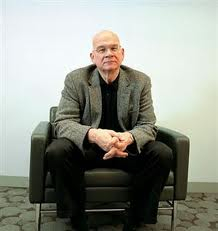
Tim Keller seated image

We have said that you must preach the gospel every week–to edify and grow Christians and to convert non-Christians. But if that is the case, you cannot simply ‘instruct in Biblical principles.’ You have to ‘get to Jesus’ every week.

For example, look at the story of David and Goliath. What is the meaning of that narrative for us? Without reference to Christ, the story may be (usually is!) preached as: “The bigger they come, the harder they’ll fall, if you just go into your battles with faith in the Lord. You may not be real big and powerful in yourself, but with God on your side, you can overcome giants.” But as soon as we ask: “how is David foreshadowing the work of his greater Son”? We begin to see the same features of the story in a different light. The story is telling us that the Israelites can not go up against Goliath. They can’t do it. They need a substitute. When David goes in on their behalf, he is not a full-grown man, but a vulnerable and weak figure, a mere boy. He goes virtually as a sacrificial lamb. But God uses his apparent weakness as the means to destroy the giant, and David becomes Israel’s champion-redeemer, so that his victory will be imputed to them. They get all the fruit of having fought the battle themselves.

This is a fundamentally different meaning than the one that arises from the non-Christocentric reading. There is, in the end, only two ways to read the Bible: is it basically about me or basically about Jesus? In other words, is it basically about what I must do, or basically about what he has done? If I read David and Goliath as basically giving me an example, then the story is really about me. I must summons up the faith and courage to fight the giants in my life. But if I read David and Goliath as basically showing me salvation through Jesus, then the story is really about him. Until I see that Jesus fought the real giants (sin, law, death) for me, I will never have the courage to be able to fight ordinary giants in life (suffering, disappointment, failure, criticism, hardship). For example how can I ever fight the “giant” of failure, unless I have a deep security that God will not abandon me? If I see David as my example, the story will never help me fight the failure/giant. But if I see David/Jesus as my substitute, whose victory is imputed to me, then I can stand before the failure/giant. As another example, how can I ever fight the “giant” of persecution or criticism? Unless I can see him forgiving me on the cross, I won’t be able to forgive others. Unless I see him as forgiving me for falling asleep on him (Matt.27:45) I won’t be able to stay awake for him.

In the Old Testament we are continually told that our good works are not enough, that God has made a provision. This provision is pointed to at every place in the Old Testament. We see it in the clothes God makes Adam and Eve in Genesis, to the promises made to Abraham and the patriarchs, to the Tabernacle and the whole sacrificial system, to the innumerable references to a Messiah, a suffering servant, and so on. Therefore, to say that the Bible is about Christ is to say that the main theme of the Bible is the gospel–Salvation is of the Lord (Jonah 2:9).

So reading the Old Testament Christocentrically is not just a “additional” dimension. It is not something you can just tack on – to the end of a study and sermon. (“Oh, and by the way, this also points us to Christ”.) Rather, the Christocentric reading provides a fundamentally different application and meaning to the text. Without relating it to Christ, the story of Abraham and Isaac means: “You must be willing to even kill your own son for him.” Without relating it to Christ, the story of Jacob wrestling with the angel means: “You have to wrestle with God, even when he is inexplicable-even when he is crippling you. You must never give up.” These ‘morals-of-the-story’ are crushing because they essentially are read as being about us and what we must do.

A BASIC OUTLINE FOR CHRIST-CENTERED, GOSPEL-MOTIVATED SERMONS
The following may actually be four points in a presentation, or they may be treated very quickly as the last point of a sermon. But more generally, this is a foundational outline for the basic moral reasoning and argument that lies at the heart of the application.

The Plot winds up: WHAT YOU MUST DO.
“This is what you have to do! Here is what the text/narrative tells us that we must do or what we must be.”

The Plot thickens: WHY YOU CAN’T DO IT.
“But you can’t do it! Here are all the reasons that you will never become like this just by trying very hard.”

The Plot resolves: HOW HE DID IT.
“But there’s One who did. Perfectly. Wholly. Jesus the—. He has done this for us, in our place.”

The Plot winds down: HOW, THROUGH HIM, YOU CAN DO IT.
“Our failure to do it is due to our functional rejection of what he did. Remembering him frees our heart so we can change like this…”

a) In every text of the Scripture there is somehow a moral principle. It may grow out of because of what it shows us about the character of God or Christ, or out of either the good or bad example of characters in the text, or because of explicit commands, promises, and warnings. This moral principle must be distilled clearly.

b) But then a crisis is created in the hearers as the preacher shows that his moral principle creates insurmountable problems. The sermon shows how this practical and moral obligation is impossible to meet. The hearers are led to a seemingly dead end.

c) Then a hidden door opens and light comes in. The sermon moves both into worship and into Christ-application when it shows how only Jesus Christ has fulfilled this. If the text is a narrative, you can show how Christ is the ultimate example of a particular character. If the text is didactic, you can show how Christ is the ultimate embodiment of the principle.

d) Finally, we show how our inability to live as we ought stems from our rejection of Christ as the Way, Truth, and Life (or whatever the theme is). The sermon points out how to repent and rejoice in Christ in such a way that we can live as we ought.

Tim Keller: 7 Applications of the Gospel in Ministry

Tim Keller seated image

These wonderful excerpts from a sermon on 1 Peter 1:1-12 and 1:22-2:12 were given in “The Spurgeon Fellowship Journal – Spring 2008.” I appreciate the wonderful abilities that Tim Keller has to explain, elucidate, and illuminate on the gospel of our Lord and Savior Jesus Christ. There is great food for thought here, and wonderful implications for living out the gospel in ministry – enjoy! – Dr. David P. Craig

Tim Keller on Gospel-Centered Ministry

I am here to talk to you about what ministry shaped by the gospel, profoundly shaped by the gospel, really looks like . . .

In this letter, Peter was not writing to the same type of situation Paul addressed in his letter to the Corinthians. Paul was writing into a situation where there were doctrinal fractions, divisions, and party divisiveness . . . Peter was speaking to a persecuted church – a church which was both passively and actively persecuted . . . they were being beset by a culture around them with very different values that they do not know how to relate to. So, of course, you can never divide the doctrinal from the practical issues. However, I would say that Peter here was less concerned about expounding on the content of the gospel as Paul was in 1 Corinthians 15. I’ll show how the gospel should shape the way in which we live, our ministry, and how the church operates as a community.

When I was looking through 1 Peter 1 and 2, I found seven features that Peter uses to describe the gospel . . . Since everything in these seven points has already been explicated in the previous sermon, I am simply going to draw out the implications for ministry. I am going to read a nice long section: 1 Peter 1:1-12, 1:22-2:12. Chapters one and two are remarkable at giving you all the features of the gospel and helping us to understand the ministry implications:

“Peter, an apostle of Jesus Christ, to those who are elect exiles of the dispersion in Pontus, Galatia, Cappadocia, Asia, and Bithynia, according to the foreknowledge of God the Father, in the sanctification of the Spirit, for obedience to Jesus Christ and for sprinkling with his blood: may grace and peace be multiplied to you. Blessed be the God and Father of our Lord Jesus Christ!

According to his great mercy, he has caused us to be born again to a living hope through the resurrection of Jesus Christ from the dead, to an inheritance that is imperishable, undefiled, and unfading, kept in heaven for you, who by God’s power are being guarded through faith for a salvation ready to be revealed in the last time. In this you rejoice, though now for a little while, if necessary, you have been grieved by various trials, so that the tested genuineness of your faith— more precious than gold that perishes though it is tested by fire—may be found to result in praise and glory and honor at the revelation of Jesus Christ.

 Though you have not seen him, you love him. Though you do not now see him, you believe in him and rejoice with joy that is inexpressible and filled with glory, obtaining the outcome of your faith, the salvation of your souls. Concerning this salvation, the prophets who prophesied about the grace that was to be yours searched and inquired carefully, inquiring what person or time the Spirit of Christ in them was indicating when he predicted the sufferings of Christ and the subsequent glories. It was revealed to them that they were serving not themselves but you, in the things that have now been announced to you through those who preached the good news to you by the Holy Spirit sent from heaven, things into which angels long to look. 

Having purified your souls by your obedience to the truth for a sincere brotherly love, love one another earnestly from a pure heart, since you have been born again, not of perishable seed but of imperishable, through the living and abiding word of God; for “All flesh is like grass and all its glory like the flower of grass. The grass withers, and the flower falls, but the word of the Lord remains forever.” And this word is the good news that was preached to you. So put away all malice and all deceit and hypocrisy and envy and all slander. Like newborn infants, long for the pure spiritual milk, that by it you may grow up into salvation— if indeed you have tasted that the Lord is good. As you come to him, a living stone rejected by men but in the sight of God chosen and precious, you yourselves like living stones are being built up as a spiritual house, to be a holy priesthood, to offer spiritual sacrifices acceptable to God through Jesus Christ. For it stands in Scripture:

 “Behold, I am laying in Zion a stone, a cornerstone chosen and precious, and whoever believes in him will not be put to shame.” So the honor is for you who believe, but for those who do not believe, “The stone that the builders rejected has become the cornerstone,” and “A stone of stumbling, and a rock of offense.” They stumble because they disobey the word, as they were destined to do. But you are a chosen race, a royal priesthood, a holy nation, a people for his own possession, that you may proclaim the excellencies of him who called you out of darkness into his marvelous light. Once you were not a people, but now you are God’s people; once you had not received mercy, but now you have received mercy. Beloved, I urge you as sojourners and exiles to abstain from the passions of the flesh, which wage war against your soul. Keep your conduct among the Gentiles honorable, so that when they speak against you as evildoers, they may see your good deeds and glorify God on the day of visitation.”

I hate to do what I am about to do, which is a “fly-over.” I hate to go by some of these verses. These verses are deep wells, as we know. I know at least three or four men of God who would probably base their entire lives on one or two of these verses. I thought of Ed Clowney as I went by verses 2 and 9. Nevertheless, we are here for an overview. And therefore, I would suggest to you that Peter shows us in these two chapters that there are seven features of the gospel that we have to tease out of the ministry. I will say them here so you can write them down.

The gospel is: (1) historical, (2) doxological, (3) Christocentrical, (4) personal, (5) cultural, to quote Don Carson, (6) “massively transformational,” and (7) wonderful. Each one has a ministry implication.

(1) The gospel is historical . . . The word “gospel” shows up twice. Gospel actually means “good news.” You see it spelled out a little bit when it says “he has caused us to be born again to a living hope through the resurrection of Jesus Christ”. Why do we say that the gospel is good news? Some years ago, I heard a tape series I am sure was never put into print by Dr. Martin Lloyd-Jones. It was an evening sermon series on 1 Corinthians 15. He clarified how the Gospel is based on historical events in how the religion got its start. He said there was a big difference between advice and news. The Gospel, he would say, is good news, but not good advice. Here’s what he said about that: “Advice is counsel about something that hasn’t happened yet, but you can do something about it. News is a report about something that has happened which you can’t do anything about because it has been done for you and all you can do is to respond to it.”

So he says think this out: here’s a king, and he goes into a battle against an invading army to defend his land. If the king defeats the invading army, he sends back to the capital city messengers, envoys, and very happy envoys. He sends back good newsers. And what they come back with is a report. They come back and they say: It’s been defeated and it’s been all done. Therefore respond with joy and now go about your lives in this peace which has been achieved for you. But if he doesn’t defeat the invading army, and the invading army breaks through, the king sends back military advisers and says . . . “Marksmen over here and the horseman over there, and we will have to fight for our lives.”

Dr. Martin Lloyd-Jones says that every other religion sends military advisers to people. Every other religion says that if you want to achieve salvation, you will have to fight for your life. Every other religion is sending advice saying, “here are the rites, here are the rituals, here’s the transformation of the consciousness and here are the laws and the regulations. Marksmen over here and horsemen over there and we are going to fight for our lives.” We send heralds; we send messengers and not military advisers. Isn’t that clarifying? It’s just incredibly clarifying. And it’s not like there’s nothing to do about it, my goodness. Both the messenger and the military adviser get an enormous response. One is a response of joy and the other one is a response of fear. All other religions give advice and they drive everything you do with fear . . . as you know, when you hear the gospel, when you hear the message that it’s all been done for you, it’s a historical event that has happened, your salvation is accomplished for you, what do you want to do? You

want to obey the Ten Commandments, you want to pray, and you want to please the one that did this for you.

If, on the other hand, military advisers say you have to live a really good life if you want to get into heaven, what do you do? You want to pray and you want to obey the Ten Commandments. It looks the same, doesn’t it? But for two radically different reasons: One is joy and the other one is fear. In the short run, they look alike. But in the long run, over here we have burn out and self-righteousness and guilt and all sorts of problems. And that’s fascinating.

But having said that, what’s the ministry implication? The ministry implication is this: the significance of preaching, of proclamation, of declarative preaching, is irreplaceably central in Gospel ministry. Declarative preaching is irreplaceably central.

Why? If basically we are sending people “how to”, if we are saying here’s the “how to” to live the right way, if that’s the primary message, I am not sure words are necessarily the best thing to send. You want to send a model. If I were to teach an advanced seminar on preaching (and I never have) I would make everybody read CS Lewis’ Studies in Words. It’s amazing because we are wordsmiths and he shows you how important it is to craft your words properly. The last chapter is called “At the Fringe of Language” and he says language can’t do everything. He says that one of the things language cannot do is describe complex operations. On the other hand, when it comes to describing how, to explain to somebody that Joshua Chamberlain, without any ammunition, charged down Little Round Top in an incredible, risky adventure at the height of the Battle of Gettysburg, and as a result changed the course of history. You don’t show people that, you tell them that. It’s something that happened, you describe it. You tell them that. If you are going to give them how-tos, very often what you want is modeling and dialogue, action and reflection and so forth.

Therefore, if you believe the gospel is good news, declarative preaching (verbal proclaiming) will always be irreplaceably central to what we do. However, if you subscribe to the assertion that the gospel is simply good advice on how to live a life that changes people and connects to God . . . dialogue would be alright. Stories and modeling and reflection would be more important. In other words, you would believe what some people would quip: “proclaim the gospel, use words if necessary”. You’ve probably heard that. That shows, I think, that they don’t quite understand what the gospel is all about.

(2) The gospel is Doxological. The purpose of the gospel is not merely forgiveness of individuals, but to bring people to full flourishing through glorious worship. Now where do you see that?

Karen Jobs, in her commentary of 1 Peter, points out what all commentators point out, but I like the way she titled it. Chapter 1 verse 3 to verse 12 is all one sentence in Greek. Therefore, there is a main clause. All that follows are subordinate clauses to the main clause. Here is the main clause: “Praise be to the God and Father and our Lord Jesus Christ”. She entitled the whole section, (and that’s what I like about it), “Doxology and Basis for the Christian Life,” because everything in there, even the new birth, is to the praise of the glory of God. Now why is this so important?

One of the most life-changing and especially ministry-changing things in my life was reading Martin Luther’s “Larger Catechism” a few years ago. In “Larger Catechism,” he lays out his understanding of the Ten Commandments. Luther says that the first commandment is first because (he thinks) all the other commandments are based on it. In other words, when you break any of the commandments two through ten, you have already broken or are in the process of breaking commandment one. So, Martin Luther says you don’t lie unless you have already made something else more than God your functional savior; something else is your greatest joy. Why do you lie? You lie either because the approval of other people is more important than God’s or because money is more than the security you have in God. So you wouldn’t lie unless you already have first made something else more important than God in your life . . . something more fundamental to your meaningless in life or happiness or joy. And then Luther went one step further and said underneath every sin is idolatry in general. And underneath every idolatry in general is always some form of work-righteousness in general, in particular some kind of self-salvation project . . . whenever you make something more important than God, that thing is essentially a savior of your making.

Martin Luther says of the first commandment, you have to believe the Gospel. You can’t look to anything else for your justification . . . you have to believe in the Gospel and you can’t look to anything else for your justification . . . If he were here today, he would say that underneath everything from eating disorders to racism is a self-salvation project, a failure to believe in the Gospel, and is some form of idolatry. You have either made an idol of thinness . . . or of your race and your blood . . . your heart’s imagination is captured. Your heart is essentially adoring and dotting on something other than God . . .

Some years ago . . . I was talking to a young woman, a fifteen year-old girl in my church in Virginia . . . she was really struggling and said this: “I really understand this, I am a Christian. I have clothed myself in the righteousness of Christ, I have a guaranteed place in heaven, and I am the delight of the Father. But what good is that when the boys in high school won’t even look at me?” She was absolutely honest. You might say: is she even a Christian? Of course she was a Christian, as far as I can tell. If I look back on it and she looks back on it, there have been changes. Here’s the point: boys were on video, and God was on audio . . . if you have an audio and video happening at the same time, you know which one wins. Right?

Jonathan Edwards would say that the ultimate purpose of preaching is not just to make the truth clear, but also to make it real. Of course for it to be real, it’s got to be clear. If it’s confused . . . sorry, no worship happens. But you can’t stop there. We are, I think, afraid of the spirit of the age, of subjectivism, because we believe in objective truth. As a result, our expository messages are too cognitive. Jonathan Edwards did not tell stories, he was incredibly rational. But he was also unbelievably vivid. He was incredibly logical, and precise, and clear because he knew that unless the truth is clear, it will never be real. It’s got to be crystal clear, amazingly clear. But it also has to be vivid.

I don’t think this is going to be very easy. I see the narrative preaching approach which works superficially on people’s emotions. And you have a kind of an expository preaching that tends to be like a Bible commentary that works more on the head. But the heart is not exclusively the emotions, and certainly not just the intellect . . . Therefore, the preaching has to be gripping . . .

What I love about Edwards is how incredibly rational he is, how logical and persuasive he is and yet at the same time, so vivid. You go into his messages and there’s the sun, the moon, and the stars. There are mountains and dandelions . . . it’s just astounding . . . he understood that telling stories to tweak the emotions, is like putting dynamite on the face of the rock, blowing it up and shearing off the face but not really changing the life.

One the other hand, if you bore down into it with the truth, and put dynamite in there, if you are able to preach Christ vividly, and you are able to preach the truth practically and you are able to preach it out of a changed life and heart in yourself (which obviously isn’t the easiest thing by any means) then when there is an explosion, it really changes people’s lives. I don’t think we have the right end of the stick in general, either in the movement of the people who are working towards telling stories because they want to get people emotionally or working towards giving people the truth because they want to be sure that people are doctrinally sound.

The Doctor, Martyn Lloyd-Jones, was not a touchy-feely type . . . based on his understanding of Edwards, he asserts that the first and primary object of preaching is not to give information. It is, as Jonathan Edwards said, to produce an impression. This is the Doctor, now. It is the impression at the time that matters, even more than what you can remember subsequently. Edwards, in my opinion, understood the true notion of preaching. It is not primarily to impart information . . . while you write your notes, you may be missing something that will impact your spirit.

As preachers, we must not forget this. We should tell our people to read books at home and to take notes at home; the business of preaching is to make such knowledge live. Now, by the way, I don’t mind if people are taking notes in my sermons, in the first part of the sermon. But if you are still taking notes at the end of the sermon, I don’t think that I have made it home . . .

Thomas Chalmers puts it like this:

“It is seldom that any of our bad habits or flaws disappear by a mere nature process of natural extinction. At least it is very seldom it is done by the instrumentality of reasoning or by the force of mental determination. What cannot be destroyed however may be dispossessed. One case may be made to give away to another and to lose its power entirely has the reigning affect of the mind. Here’s an example: A youth may cease to idolize sensual pleasure but it is because of the idol of wealth. The desire to make money has gotten ascendancy, so he becomes disciplined. But the love of money might have ceased to be in his heart if he was draw to ideology and politics. Now he is lorded over by the love of power and moral superiority instead of wealth. But there is not one of these transformations in which the heart is left without an object. The human heart’s desire for one particular object is conquered. But its desire to have some object of adoration is unconquerable. The only way to dispossess the heart of all its affection is by the explosive power of a new one. Thus is it not enough to hold out to the world the mirror of its own imperfections, it is not enough to come forth with the demonstration . . . of the character of their enjoyment, it is not enough to just simply speak the conscience, to speak its follies. Rather, you must seek, as a preacher, every legitimate method of finding access to the heart for the love of Him who is greater than the world.”

(3) The gospel is Christocentrical. The gospel, as Don [D.A. Carson] pointed out, in a certain sense, the gospel is just Jesus. What is the gospel? It is who Jesus is and what He did for us. The Gospel is Jesus. Of course, you see this in 1 Peter 1:10 where it says, “About which salvation the prophets sought out and searched out, prophesying concerning the grace for you; searching for what, or what manner of time, the Spirit of Christ made clear within them, testifying beforehand of the sufferings of Christ, and the glories that should follow.”

What’s intriguing to me is this: reading in Luke and Acts how Jesus got His disciples together during the forty days before He ascended after He was resurrected. What was He doing? I am sure He was doing more than what we are told. But if you look in Luke 24, it looks like He was giving them a New Testament hermeneutical seminar. This should give professors a lot of hope . . . even Jesus thought running a seminar on hermeneutics was a good idea! If he was running them in those forty days, maybe it is a good idea to run them now. Basically, He was saying that everything in the Old Testament points to Him . . .

He told Cleopas and the other disciples on the road to Emmaus and in the upper room that everything in the Prophets and the Psalms and the Law points to Him. It’s intriguing, we see that in Luke and now here in 1 Peter we have an echo of it. Peter was in on that seminar . . . now he is explaining that concerning this salvation, the salvation of the gospel of Christ, the Prophets had the Holy Spirit in them pointing them towards Jesus . . . Peter is saying what Jesus was saying . . . that everything pointed towards Jesus. Every text in the Old Testament was pointing toward Jesus.

Now my ministry implication is this: The basic subject of every sermon ought to be Jesus, regardless of what passage is at hand. It doesn’t matter whether it is Old or New Testament; it’s got to be about Jesus. By the way, you might say this is only about Old Testament hermeneutics; no, you need to know that my friend Sinclair Ferguson says most evangelical ministers don’t preach Christ. Not only do they not preach Christ in the Old Testament . . . they don’t preach Christ in the New Testament. I will get back to this in a second.

I know this is somewhat of an internal debate here and I’ve got to be careful. I don’t want to be a party guy and say, “I follow Chapell, or I follow Goldsworthy.” And you know there are people who say that you preach everything in the Bible pointing to Jesus and there are other good men that just don’t think that’s right. You shouldn’t preach Christ from Jacob wrestling with God . . . you should preach about wrestling with God in prayer or suffering or something like that. Honestly, I believe those good and sincere men are wrong on the basis of reading the Bible and the understanding of hermeneutics and so on.

But part of this goes back, I remember, some years ago, to when I sat down with my wife. You know what that’s like – on the way home – after the sermon. First you are hoping she will say: “Great sermon, honey.” But if she doesn’t say anything, you fear the worst. I remember one day we really got into it. I said, “Let me ask you, how often do you think it was a great sermon? How many weeks out of the month?” And she said “no more than one in every four or five weeks.” So, we sat down and here’s what she said: “For a good part of your sermon, your sermons are great. They are rational and biblical, and they are exegetical. They show me how I should live, and what I should believe. But every so often – suddenly at the end – Jesus shows up. And when Jesus shows up, it suddenly becomes not a lecture but a sermon for me, because when you say this is what you ought to do, I think to myself, ‘I know, I know, okay. Now I am a little clearer about it and I am a little more guilty about it. Fine.’ But sometimes you get to the place where you say, ‘This is what you ought to do, though you really probably can’t do it; but there is one who did. And because He did it on our behalf, and because He did it in our place, we believe in Him. We will begin to be able to do it.’” This is true only to the degree that we understand what He did for us. And she says: “That’s different. One time out of four or five, your lecture becomes a sermon when Jesus shows up and I want to do that. I have hope. And I begin to see how I can do it.”

I really didn’t understand . . . but basically, now I do. Here’s the thing. Your preaching will never be doxological and it won’t be central unless it is Christocentric. Here’s why: if you tell people they need to be generous, and ask why they aren’t being more generous . . . I happen to know about people being generous. Sometimes you don’t know about the lust in someone’s heart week to week, but you know if people are being generous week to week.

Why aren’t people being more generous? Are they just being sinners? Let’s go back to Martin Luther. Let’s go back to the catechism. If you are not being generous, then there is something going on there, is there not? You are saying your status or your security, which is based on money, is very important to you. You need to be able to buy certain cloths and live in certain circles and go to certain places. Human approval, security, there’s idols underneath the lack of generosity. The money is more than just money. It’s security, it’s significance, it’s status. You’ve got to make more money, and then you will give it away.

How do you do that? You have to show that Jesus Christ is their true wealth. You have to show them what their idols are. You have to get to Jesus. As a result, if you don’t get there, you are going to find that you are wailing on people’s wills. You are beating on wills. Sinclair Ferguson wrote a book . . . called Preaching Christ in the Old Testament. And this is what he says: Not only do most ministers not preach Christ in the Old Testament; they don’t preach Christ from the New Testament. The preacher has looked into the text, even in the New Testament, to find himself and the congregation . . . not to find Christ. You can do this even in the New Testament, in the Gospels. The sermon, therefore, is consequently about the people in the Gospels and not the Christ in that Gospel. The more fundamental issue is this question: What is the Bible really about? Is the Bible basically about me and what I must do or is it about Jesus and what He has done? Is the Bible about the objective and indicative?

Here’s an example. Hermeneutics is important. You can’t just find Jesus in every little twig. And there needs to be a way where you are following the trajectory of the text no matter what that text is to Jesus. You have to show how Jesus is the ultimate fulfillment of that particular trajectory of the text. You’ve got to be responsible. And yet, like Sinclair said, it’s more like an instinct. It’s not so much just the right hermeneutical principles; it’s an instinct. Do you believe the Bible is basically about you or basically about Him? Is David and Goliath basically about you and how you can be like David and Goliath or about Him, the One that took on the only giants in life who can kill us? You see. And His victory is imputed on us. Who is this all about? That’s the fundamental question.

And when that happens, you start to read the bible anew. Jesus is the true and better Adam who passed the test in the garden. His garden is a much tougher garden and his obedience is imputed on us. Jesus is the true and better Abel, who though innocently slain has blood that cries out: not for our condemnation but for our acquittal. Jesus is the true and better Abraham, who answers the call of God, who leaves all the familiar comforts of the world into the void, not knowing where He went. Jesus is the true and better Isaac who is not only offered by his father on the mount but who was truly sacrificed for us all. While God said to Abraham: “Now I know you truly love me, because you did not withhold your son, your only son, from me.” Now we, at the foot of the cross, can say to God: “Now we know you love us because you did not withhold your Son, your only Son, whom you love, from us.”

Jesus is the true and better Jacob, who wrestled and took the blows of justice that we deserved so we like Jacob only receive the wounds of grace that wake us up and disciple us. Jesus is the true and better Joseph, who is at the right hand of the king, and forgives those who betrayed and sold him and uses his power to save them. Jesus is the true and better Moses, who stands in the gap between the people and the LORD and mediates the new covenant. Jesus is the true and better rock of Moses who struck with the rod of God’s justice now gives us water in the desert. Jesus is the true and better Job, He is the truly innocent sufferer who then intercedes for and saves His stupid friends. Is that a type? That’s not typology. That’s an instinct.

Jesus is the true and better David, whose victory becomes the people’s victory even though they didn’t lift a stone to accomplish it themselves. Jesus is the true and better Esther, who didn’t just risk losing an earthly palace but lost ultimately the heavenly one, who didn’t just risk His life but gave His life, who didn’t say if I perish I perish but when I perish, I perish for them . . . to save my people. Jesus is the true and better Jonah who was cast out into the storm so we can be brought in. He’s the real Passover Lamb; He’s the true temple, the true prophet, the true priest, the true king, the true sacrifice, the true lamb, the true life, the true bread. The Bible is not about you. And that’s an instinct.

Until that shows up in your sermons, it will be lectures and not sermons. It won’t be doxological, it won’t be central.

(4) The gospel is personal and individual. Don [D.A. Carson] already said this. In 1 Peter 1 and 2, we see a lot of references to the new birth. What does the new birth mean – think about the metaphor of the birth – you can’t make yourself a Christian? You can make yourself a Buddhist. You can make yourself a Muslim. You can make yourself an Atheist. But you can’t make yourself a Christian. To become a Christian, you have to be converted . . . notice that’s a passive. You don’t convert yourself, something happens to you. Through faith you’re born again. You are confronted with you sin in front of a holy and jealous God. And you see the provision. Now, that’s individual conversion. This is very important, at this moment, in all our lives as Christians, especially in North America, but I am sure in other places as well. There is an erosion in the confidence of the thing that I just said. It is the idea that we have sinned against a holy and jealous God, the wrath of God has to be satisfied, Jesus Christ stood in our place, substitutionary atonement is provided, and when we believe in this, both in His suffering and obedience is imputed to us . . .

J.I. Packer, in his little chapter on grace in Knowing God, said there are two things you have to know in order to understand the concept of grace. Grace isn’t the opposite of Law. First of all, you have to understand how lost you are, how bad you are, how dire your condition is, and how big the debt is. You have to understand that . . .

Now if somebody says, “I believe Jesus died for me, He shed His blood for me and I have given my life to Christ. I accepted Him; I walked forward and invited Him into my life,” but you don’t see any change in that person’s life, you don’t see identify shifting, behavior transformation and joy, what’s the problem? It’s clear that this person doesn’t understand the size of the debt, and therefore the size of the payment . . . Jim Packer used to say to understand grace, and for grace to be transforming, first you have to understand the debt.

The second thing you have to understand, besides the size of the debt, is the magnitude of the provision. There are people who do understand that they are pretty bad. They do understand how flawed they are. They do understand how far short they fall. But they aren’t convinced of the magnitude, sufficiency, freeness, and fullness of the provision. They may only believe that Jesus died the death that we should have died. And maybe they also don’t believe Jesus lived the life that we should have lived . . . And you also see Pharisees – people who are really under the burden of guilt. As a result, they are withdrawn and hostile and moralistic and legalistic. And we look at these two groups of people and the evangelical world is filled with them. Easy-Believeism is really deadly. The Cost of Discipleship book by Bonhoeffer explains why Easy-Believeism was the reason Nazism could come into power. That’s pretty dangerous. Why Easy-Believesim? Why the Moralism? Because they don’t understand the gospel; the old gospel, the historic gospel. The gospel of salvation by grace through faith and the work of Jesus Christ alone, and substitutionary atonement . . . they don’t get it.

So what’s the solution to all the Easy-Believeism? Why is it that we don’t have people living the life they ought to live? Why do we see people culturally withdraw, being really negative and narrow? Because people think the solution is “let’s change the gospel” . . . I can’t imagine that anybody is going to write a hymn that goes like this: “my chains fell off and my heart was free, I rose forth and followed thee.” It’s just not going to happen . . .

(5) The gospel is cultural. What do I mean by cultural? The gospel creates a culture called The Church. It’s not just an aggregation of saved individuals. It’s a culture. The gospel is so different in what it says about God, you, and your standing with God. It’s so identity transforming; every other religion or system motivates you through fear and pride to do the right thing. Only the gospel motivates you through joy . . . the fear and trembling joy . . . the fear of God joy. That doesn’t mean that now we are a bunch of saved individuals with wonderful internal fulfillment. It means that when we get together we want to do things differently. We will do everything differently. The gospel is massively transformational and it creates a counter culture but it also makes us as people relate to the culture around us. And this comes out especially in 1 Peter 2. I will be brief on this but it’s crucial.

Those of us who believe in that individual gospel often miss the communal aspects of the gospel. And in 1 Peter 2:12, he says “Keep your conduct among the Gentiles honorable, so that when they speak against you as evildoers, they may see your good deeds and glorify God on the day of visitation.” Right before this, he says, “Beloved, I urge you as aliens and strangers.” In 1 Peter 1:1, “Peter, an apostle of Jesus Christ, To God’s elect, strangers in the world.” There’s been a lot of discussion about this. There’s pretty much a consensus. The word “strangers” there means not a tourist who’s just passing through the world briefly, but not a citizen of the world either. Somebody who’s going to be there a long time whose true citizenship and value belongs somewhere else.

Peter makes an amazingly balanced statement and we have to understand this. The gospel, I believe, is radical. The nature of the gospel, on the one hand, does say “you need to engage” to the legalists who are afraid to be polluted by the culture and have the tendency to bolster their fragile sense of righteousness by feeling superior to the sinners around them. On the other hand, the gospel also confronts the secular, irreligious, liberal Christian, who asserts that we really can’t believe in sin or the holiness of God and hell because it offends people.

The gospel says that there are dangers on both sides: cultural accommodation, culture withdrawal. Most of us as Christians today think that most of the dangers today are on one side. We tend to get together with a group of people and say: the main danger, the main danger today is cultural accommodation. On the other side, there are Christians who think the main danger is cultural isolation and irrelevance. No one will see the good deeds of those who withdraw from the world and just hate the world. They don’t glorify God. They are not involved with caring for the poor; they are not engaged. On the other hand, people who accommodate the culture are never persecuted. How do we know that the radical gospel is turning us into a counter-culture for the common good? This counter-culture should be distinct, very different from the side we have inside of us, but a side that shows that we love the world and care about the world. We love our enemies because we are saved by a man who died loving His enemies.

Therefore, this balance is awfully hard to maintain. In Jeremiah 29, the exiles, wanted to stay outside of Babylon and remain pure. The Babylonians wanted to come in to Babylon, and lose their cultural identity. God told them through Jeremiah to do the hardest thing possible. In a sense, He said, “I don’t want you to stay out and be different. I don’t want you to go in and become like them. I want you to go deeply in and stay very different.” And that’s exactly what 1 Peter is talking about. Peter calls them exiles. He knows that the relationship with the culture around them has to be the same relationship as the Jewish exiles had with the Babylonians. We need to seek the welfares of the city. We need to care about that. We need to follow in the footsteps of the one who serves His enemies and forgave His enemies and died for His enemies.

At the same time, we have to be telling people that they are going to hell. Now, generally speaking, by and large, the people who want to be prophetic don’t want to be priestly. The people that want to talk about going to hell do not just sacrificially pour out themselves and say we are going to love you and we are going to serve you, whether you really like what we do or not. And the people who are serving like that are afraid of talking about things like hell or wrath. I don’t know whether we can become a movement of people who understand what 1 Peter is saying: that the gospel creates a counter culture, but a culture that engages the community around us at the expense of persecution . . .

New Yorkers love what the Bible says about forgiveness and reconciliation and caring about the poor. They hate what it says about sex and gender and family. Go on to the Middle East and find people who love what the Bible says about sex and gender and family, but abhor the idea of forgiving people, 70 times 7. I think what 1 Peter 2:12 is trying to say is in every single culture, if you actually live distinctively in an engaged way, you will get persecution AND you will get approval. It will always be different depending on the culture. You will attract people, you will influence people. You will be salt and light and at the same time you will get punched in the mouth.

If you are only getting punched in the mouth, or if you are only getting praise, you are not living the gospel life. Either you are falling into legalism and withdrawal or you are falling into accommodation.

(6) The gospel is massively transformational. When I say the gospel is massively transformational, I am just saying the gospel creates a worldview, a basis of worldview that actually touches every area of life; the way you do business, the way you do art, the way you conduct your family life. What do I mean when I say the gospel is wonderful? 1 Peter 1:12, “It was revealed to them that they were not serving themselves but you, when they spoke of the things that have now been told you by those who have preached the gospel to you by the Holy Spirit sent from heaven. Even angels long to look into these things.”

Angels love to look into the gospel. They never get tired of it. So what does that mean? It means gospel ministry is endlessly creative. It means you can preach the gospel and never have to be afraid of boring people . . .

(7) The gospel is wonderful. Isn’t that amazing? The gospel is not the ABC’s of Christianity, it’s A to Z. It’s not just the elementary and introductory truths. The gospel is what drives everything that we do. The gospel is pretty much the solution to every problem. The gospel is what every theological category should be expounding when we do our systematic theology. It should be very much a part of everything.

Even angels long to look into it. And you should. Let’s pray.

About Dr. Tim Keller: He was born and raised in Pennsylvania, and educated at Bucknell University, Gordon-Conwell Theological Seminary, and Westminster Theological Seminary. He was first a pastor in Hopewell, Virginia. In 1989 he started Redeemer Presbyterian Church in Manhattan with his wife, Kathy, and their three sons. Today, Redeemer has more than five thousand regular attendees at five services, a host of daughter churches, and is planting churches in large cities throughout the world. He is the author of a study of Mark entitled King’s Cross; The Prodigal God based on Luke 15; The Freedom of Self-Forgetfulness; Generous Justice; Counterfeit Gods; Ministries of Mercy: The Call of the Jericho RoadThe Meaning of Marriage; a wonderful small group study entitled Gospel In Life; and the New York Times bestseller The Reason for God; & the forthcoming Center Church (August 2012). Tim has a passion for Jesus Christ, making the Gospel clear, church planting, and reaching cities for Christ. If you really want to understand the gospel, and how grace applies to all of life I urge you to devour his books and sermons!

Book Review on Phil A. Newton’s “Elders in the Life of the Church”

Transitioning to A Biblical Model of Leadership

442728

Book Review By Dr. David P. Craig

It’s been my experience that most churches are way off base in their leadership structures. In light of what the New Testament says about leadership in the churches this is difficult to comprehend. Nevertheless Phil Newton has done a great service to the 21st Century church by providing an introductory guide to developing a biblical infrastructure for churches that take being biblically based and effective seriously.

Newton divides his helpful book into three sections:

Part One is composed of answering the question: Why Churches Should have Elders. In Part Two Newton exposits  three key texts on how Elders functioned in the New Testament: Acts 20:17-31; Hebrews 13:17-19; and 1 Peter 5:1-15. In giving a thorough exposition of each passage he demonstrates how Elders are models for their congregations; how Elders and the congregation work together in harmony; and how their primary calling is to be spiritual leaders for the good of the congregation and God’s greater glory.

In my opinion the most helpful section of the book is in part three. In this section Newton shows how a leadership team can transition into a fully functioning Elder Leadership in the Church with Deacons as well. All four examples are of large Baptist churches going from a Diaconate Board to two separate functioning boards of Elders and another of Deacons.

Giving a step-by-step process Newton shares from personal experience [South Woods Baptist Church] and from the experience of other well-known ministries (Mark Dever’s [Capital Hill Baptist Church in Washington D.C.], Jeff Noblit [First Baptist Church of Muscle Shoals, Alabama], and John Piper’s [Bethlehem Baptist Church in Minneapolis, MN.] transitions from Deacon Board structures to adding Elders into the mix). The process is slow, methodical, and takes into consideration traditions, a thorough study of biblical passages on leadership, and how the principles are studied and bandied about in teams. The process for the four cases studied is very helpful to keep in mind no matter what background your church has, and where it’s at in the transitional process.

I think this is an excellent book for leadership teams to study and for pastors, staffs, deacons, and elders to use in seeking to become as biblically effective as possible in seeking to develop a healthy infrastructure for the good of the Church and the glory of God. What I especially like about Newton’s book in particular is that he doesn’t impose any particular church government upon a church, but allows the Bible to speak for itself. He encourages a thorough study of the biblical evidence in arriving at one’s model of church government. I highly recommend this book as an extremely helpful guide in leading one toward a more biblical model of church government.

John Piper: “Were Women Deacons in the New Testament?”

Were Women Deacons?

Feeding of the 5000

By Dr. John Piper

Probably yes. There are four observations that incline me to think that this office was held by both men and women.

1. The Greek word for deacon can be masculine or feminine in the same form. So the word itself does not settle the issue.

2. In the middle of the qualifications for deacons in 1 Timothy 3:8-13 Paul says, “The women likewise must be serious, not slanderers, but temperate, faithful in all things.” This could be the wives of the deacons, but could also be the women deacons. The latter is suggested by the fact that no reference to women is made in 3:1-7. Since women were not candidates for the eldership in the New Testament (1 Timothy 2:12-13) because of its authoritative function in teaching and oversight, the absence of the reference to women in 1 Timothy 3:1-7 would be expected. But this confirms the probability that the reference to women in 3:11 is to women deacons, not merely to wives of deacons.

3. The deacons were distinguished from the elders in that they were not the governing body in the church nor were they charged with the duty of authoritative teaching. So the role of deacon seems not to involve anything that Paul taught in 1 Timothy 2:12 (or anywhere else) which is inappropriate for women to perform in the church.

4. In Romans 16:1, Phoebe is very probably called a deacon. “I commend to you our sister Phoebe, a deacon(ess) of the church at Cenchreae, that you may receive her in the Lord as befits the saints, and help her in whatever she may require from you, for she has been a helper of many and of myself as well.”

It appears then that the role of deacon is of such a nature that nothing stands in the way of women’s full participation in it. Within the deaconate itself, the way the men and women relate to each other would be guided by the sense of appropriateness, growing out of the Biblical teaching of male and female complementarity.

Qualifications of Deacons (1 Timothy 3:8-13)

3:8 “Deacons likewise must be serious. . .”

Serious, Earnest, Honorable (semnous)

The idea of “serious” by itself seems inadequate. This would be an unsatisfactory translation of Philippians 4:8: “Think on these things . . . whatever is true, whatever is honorable. . .” “Serious” is morally neutral. But this word isn’t. The person should not be flippant, but earnest about life.

3:8 “. . . not double-tongued. . .”

Genuine, Authentic (me dilogous)

“Double-tongued” implies saying one thing to be true here and another thing to be true there, according to what people would think. So it implies a lack of love for truth and a fear of human disapproval and a general instability.

3:8 “. . . not addicted to much wine. . .”

Temperate (me oino pollo prosechontas)

Prosechontas implies “to concern oneself with” or “to give attention to” or “to turn one’s mind toward.” So there should be a freedom from drink, and presumably from all substances that would be harmful if taken too freely.

The picture is of a person under control, not carried along 1) by the opinions of others (genuine, authentic) or 2) by his appetites (temperate) or 3) by levity (serious, honorable).

3:8 “. . . not greedy for gain. . .”

Content with simplicity (me aischrokerdeis)

This word is used in Titus 1:7 of elders and in adverb form of elders in 1 Peter 5:2. It corresponds to aphilargon (not a lover of money) in 1 Timothy 3:3.

It seems to be a fourth dimension of freedom (see “temperate” above for the first three), freedom from the pull of money. Other motives should drive him. There should be a contentment in God and a heavenly mindedness.

3:9 “…having the mystery of the faith in a clean conscience.”

Deep Convictions Concerning The Faith

The issue of conscience does not appear to be the general issue as in 1:5; 4:2; 2 Timothy 1:3Titus 1:15. But 1:19 is a very close connection: “holding faith and a good conscience.”

It seems that the conscience bears directly on the “faith in good conscience.” This inclines me to think that the issue is the sincerity of the faith. Do the deacons really have faith rooted in their hearts or are there sneaking doubts? Are their consciences clear when they make a public profession of their faith?

3:10 “And let them also be tested first. . .”

Tested (dokimazesthosan)

The test is not specified, but it is to precede the work as deacons. The test would be two-fold: the life they have lived and the assessment of it by those who know them and by some appropriate body of the church.
This would surely apply to all the leaders including elders and deacons.

I see three usual steps in the testing and selection of leaders.

1. The elders would take responsibility to see that the testing and approval is done in accord with Biblical criteria since they are responsible for the general oversight of the church and for the doctrinal purity of the leadership.

2. They may need to involve representatives of the congregation who have a wider knowledge of some people than they do.

3. The congregation itself would be the final test of approval, as they are the last court of appeal in matters of church discipline (Matthew 18:171 Corinthians 5:4). Therefore, all would be approved by the church as the final step of “testing” and “approval.”

3:10 “. . . then if they prove themselves blameless let them serve as deacons.”

Blameless (anegkletoi)

Blameless in the sense that no blame is discovered that has not been settled in a Biblical way. It does not mean perfect, but free from ongoing guilt for some unsettled wrong.

3:11 We will come back to this verse.

3:12 “Let the deacons be the husband of one wife. . .”

One Woman’s Husband

(See section on 1 Timothy 3:2)

3:12 “. . . and let them manage their children and their households well.”
This would seem to imply some measure of administrative ability, but note well, unlike the case with the elders in 3:5, it does not say, “for if a man does not know how to manage his own household, how can he care for God’s church?” General oversight does not appear to be in view as with the “overseers” of 3:1-7.

Rather, the point is probably the general truth that much of a man’s true character and gifts come out in the way he leads his family. Something is significantly wrong if the man appears religious and able at church but has a disorderly home.

Again the home is the proving ground for all fitness for leadership in the church.

3:13 “For those who serve well as deacons gain a good standing for themselves and also great confidence in the faith which is in Christ Jesus.”

This is not a qualification but a promise of what comes with the faithful execution of the diaconate.

A good standing for themselves may mean a respectable place in the Christian community or a safe place in the last Day of Judgment as in 6:19.

And great confidence is the subjective boldness that rises with the faithful performance of duty.

(Now back to 3:11 and the question of the women.)

3:11 “Likewise the women. . .”

Is this a reference to the wives of the deacons or a reference to women who were deaconesses? See pages 56-57 for a slightly fuller treatment of this issue.

In Favor of “Deaconesses”:

  1. The use of “likewise” to introduce the group in the same way the deacons were introduced in verse 8 suggests a new order, namely, deaconesses.

  2. The women are not mentioned in verses 1-7 where overseers are being discussed. If wives are in view, you would expect that they would be. But if women as a distinct order are in view, you would not, because the elders are given responsibilities which Paul says women should not assume. So the absence of women among the overseers and the presence of the women among the deacons suggests an order, not wives.

  3. Phoebe in Romans 16:1-2 appears to be a deaconess.

  4. The deacons are not charged with any duties that in themselves would contradict what Paul says is appropriate for women to do in the church.

In Favor of “Wives”:

  1. You would expect that they would be called “deaconesses” instead of women or wives.

  2. Paul returns to the qualifications of deacons in the next verse, which seems strange if he had begun to discuss a new order.

It seems that the decision will not be made with confidence simply from this text alone but will be made on the basis of the wider considerations of what is appropriate for women to do according to all the New Testament teachings.

3:11 “. . . must be serious. . .”

See above on 3:8, Serious, Earnest, Honorable.

3:11 “. . . no slanderers. . .”

Not Slanderers, Gossips (me diabolous)

A woman who has itchy ears and a loose tongue will not be a good deaconess. Her words must build up. She must keep confidences and not be addicted to scuttlebutt.

3:11 “. . .temperate. . .”

See above on 3:2, Temperate.

3:11 “. . . faithful in all things.”

Honest, Trustworthy, Reliable, Loyal (pistas in pasin)

See above on Titus 1:6, Honest.

Source: ©2014 Desiring God Foundation. Used by Permission.

Permissions: You are permitted and encouraged to reproduce and distribute this material in its entirety or in unaltered excerpts, as long as you do not charge a fee. For Internet posting, please use only unaltered excerpts (not the content in its entirety) and provide a hyperlink to this page. Any exceptions to the above must be approved by Desiring God.

Please include the following statement on any distributed copy: By John Piper. ©2014 Desiring God Foundation. Website: desiringGod.org

Tim Keller on Mars Hill Preaching, Homosexuality, and Transgender Identity

Tim Keller in office image

Owen Strachan with Tim Keller

I recently had the privilege of interviewing Manhattan pastor Tim Keller for Christianity Today. The interview was about Keller’s new book Encounters with Jesus: Unexpected Answers to Life’s Biggest Questions (Dutton, Nov. 2013). It’s a book that would be marvelous to read whether for one’s own edification or for the purposes of discipleship or evangelism. If you’re in college ministry, and in particular ministry to thoughtful students on a secular college campus, this book will be very valuable.

In the course of my free-ranging conversation with Keller, we touched on some matters that were not directly related to the book and thus weren’t included in the CT interview. I was helped and heartened by Keller’s characteristically winsome, gracious, and convictional thoughts on these topics, and I’m glad to share them.

Keller on quoting cultural authorities in his preaching to “bring people along”:

The only reason to do so is if you’re in an Acts 17 setting. In Acts 13, Paul goes to a synagogue and expounds the Bible. But these are people who trust the Bible…so Paul does a very simple exposition. In Acts 17, Paul’s talking to people with no faith. There’s disagreement over how much he’s quoting, but he quotes poets and pagan authors and makes a more common appeal to natural reason, as it were.

What I try to do since I have people in a spectrum—people who don’t trust the Bible at all or people who trust it a lot—so what I do is expound Scripture, and then I add sources where people agree. I’m not basing my authority on Dylan Thomas, but when I’m able to bring in someone that the broader culture really trusts, it helps the people who doubt biblical authority to see how the Bible is true.

If I was speaking in a Mars Hill situation, I might give a topical talk like Paul did. So most of my preaching is somewhere in the middle. I’m supplementing my points to make it a little easier for the skeptic to accept my point. I’m trying to bring people along; I want the person to come with me. In the earlier parts of my sermon I’m trying to fortify—this psychologist says that, and so on. But at the end, I’m bringing in Jesus as the solution to the problem, and I’m not using those sources anymore.

Keller on how the church should speak to the issue of homosexuality:

You always want to speak in the most disarming way, but still be very truthful. Both disarming and truthful. I’m not sure most of us speak in that way—trying to be both. Ed Clowney, former President of Westminster Theological Seminary, said this many years ago: We tend to say we preach the Bible, but you tend to preach the answers to the questions you’ve posed to the Bible. Whether you know it or not, you read the Bible with certain questions. A Korean might have a question in mind when he reads that an African wouldn’t have. Right now our culture asks certain questions and we can’t help but respond to them. We do that in the most disarming way, but to some degree we can’t ignore the culture’s questions. We need to give biblical answers to the culture’s questions. You don’t give them the answers they want, you give them the answers they need. You can’t be a responsible pastor if you don’t.

If we are going to shepherd and teach, we must give the most disarming and truthful answers.

Keller on how the church should handle the shift to transgender identity in the broader culture:

Jerome Kagan in The Atlantic has talked about how we’re all wired—there are three basic ways to deal with threats. Some run, some fight, some stop and get philosophical. You find this insight in neurochemistry—across 36 cultures, these instincts are wired into us. These are very much who we are. In only a small percentage of the threatening situations is our habitual approach the right one. The worst thing parents can do is listen to the culture when it says, “Let your child be who that child is. Don’t try to change him.” Kagan says that’s the worst thing you can do. Children need to be pulled out of their natural instincts. Parents need to intervene and not let their natures run them. Doing so is a form of child neglect.

I’ve never forgotten that with the transgender question. We’re told we can only affirm [this identity] today. The lack of wisdom in this response will become more evident over time. We’re now a radical individualistic culture. If you do anything against it, you’re sacrilegious. I think we’ll see 20 years of mistakes, and then we’ll realize it wasn’t a good idea.

Keller on the state of the complementarian movement:

The arguments are pretty well made now. At this point, complementarians need to get our own house in order and show that our families and churches are thriving places. That’s more important than anything right now….Kathy and I are very committed to saying that Christians are committed to complementarianism.

Read more: http://www.patheos.com/blogs/thoughtlife/2014/06/tim-keller-on-mars-hill-preaching-homosexuality-and-transgender-identity/#ixzz34R1n4Myf