Friday Humor: A Poll Regrading The Meaning of “Habakkuk”

FRIDAY HUMOR: #25

Habakkuk Live By Faith

I got some funny answers when I took a poll regarding the Book of Habakkuk. Some of the answers were:

  • a word spelled backwards,

  • a Jewish holiday,

  • a village in Vietnam,

  • a new game,

  • a disease of the lower back.

– Chuck Swindoll, The Tale of the Tardy Oxcart.

The Gospel Made Simple: “How Can I Know God?” by Dr. Tim Keller

Series: Presentations of the Gospel #3

prayer before a cross

HOW CAN I KNOW GOD PERSONALLY?

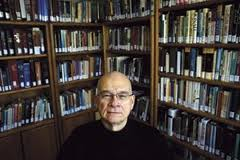
by Dr. Tim Keller

What is Christianity? Some say it is a philosophy, others say it is an ethical stance, while still others claim it is actually an experience. None of these things really gets to the heart of the matter, however. Each is something a Christian has, but not one of them serves as a definition of what a Christian is. Christianity has at its core a transaction between a person and God. A person who becomes a Christian moves from knowing about God distantly to knowing about him directly and intimately. Christianity is knowing God.

“Now this is eternal life; that they may know you, the only true God, and Jesus Christ, whom you have sent.” – John 17:3

Why do I need to know God?

Our desire for personal knowledge of God is strong, but we usually fail to recognize that desire for what it is. When we first fall in love, when we first marry, when we finally break into our chosen field, when we at last get that weekend house–these breakthroughs arouse in us an anticipation of something which, as it turns out, never occurs. We eventually discover that our desire for that precious something is a longing no lover or career or achievement, even the best possible ones, can ever satisfy. The satisfaction fades even as we close our fingers around our goal. Nothing delivers the joy it seemed to promise. Many of us avoid the yawning emptiness through busyness or denial, but at best there is a postponement. “Nothing tastes,” said Marie Antoinette.

There are several ways to respond to this:

By blaming the things themselves – by finding fault in everyone and everything around you. You believe that a better spouse, a better career, a better boss or salary would finally yield the elusive joy. Many of the most successful people in the world are like this–bored, discontented, running from new thing to new thing, often changing counselors, mates, partners, or settings.

By blaming yourself – by trying harder to live up to standards. Many people believe they have made poor choices or have failed to measure up to challenges and to achieve things that would give them joy and satisfaction. Such people are wracked with self-doubts and tend to burn themselves out. They think, “If only I could reach my goals, then this emptiness would be gone.” But it is not so.

By blaming the universe itself – by giving up seeking fulfillment at all. This is the person who says, “Yes, when I was young I was idealistic, but at my age I have stopped howling after the moon.” This makes you become cynical, you decide to repress that part of yourself that once wanted fulfillment and joy. But you become hard, and you can feel yourself losing your humanity, compassion, and joy.

By blaming and recognizing your separation from God – by seeing that the emptiness comes from your separation from God, and by establishing a personal relationship with him.

In order to form a personal relationship with God, you must know three things:

1) Who we are:

God’s creation. God created us and built us for a relationship with him. We belong to him, and we owe him gratitude for every breath, every moment, everything. Because humans were built to live for him (to worship), we will always try to worship something — if not God, we will choose some other object of ultimate devotion to give our lives meaning.

Sinners. We have all chosen (and re-affirm daily) to reject God to make our own joy and happiness our highest priority. We do not want to worship God and surrender ourself as master, yet we are built to worship, so we cling to idols, centering our lives on things that promise to give us meaning: success, relationships, influence, love, comfort and so on.

In spiritual bondage. To live for anything else but God leads to breakdown and decay. When a fish leaves the water, which he was built for, he is not free, but dead. Worshiping other things besides God leads to a loss of meaning. If we achieve these things, they cannot deliver satisfaction, because they were never meant to be “gods.” They were never meant to replace God. Worshiping other things besides God also leads to self-image problems. We end up defining ourselves in terms of our achievement in these things. We must have them or all is lost; so they drive us to work hard, or they fill us with terror if they are jeopardized.

2) Who God is:

Love and justice. His active concern is for our joy and well-being. Most people love those who love them, yet God loves and seeks the good even of people who are his enemies. But because God is good and loving, he cannot tolerate evil. The opposite of love is not anger, but indifference. “The more you love your son, the more you hate in him the liar, the drunkard, the traitor,” (E. Gifford). To imagine God’s situation, imagine a judge who is also a father, who sits at the trial of a guilty son. A judge knows he cannot let his son go, for without justice no society can survive. How mush less can a loving God merely ignore or suspend justice for us–who are loved, yet guilty of rebellion against his loving authority?

Jesus Christ. Jesus is God himself come to Earth. He first lived a perfect life, loving God with all his heart, soul, and mind, fulfilling all human obligation to God. He lived the life you owed–a perfect record. Then, instead of receiving his deserved reward (eternal life), Jesus gave his life as a sacrifice for our sins, taking the punishment and death each of owed. When we believe in him: 1) our sins are paid for by his death, and 2) his perfect life record is transferred to our account. So God accepts and regards us as if we have done all Christ has done.

3) What you must do:

Repent. There must first be an admission that you have been living as your own master, worshipping the wrong things, violating God’s loving laws. “Repentance” means you ask forgiveness and turn from that stance with a willingness to live for and center on him.

Believe. Faith is transferring your trust from your own efforts to the efforts of Christ. You were relying on other things to make you acceptable, but now you consciously begin relying on what Jesus did for your acceptance with God. All you need is nothing. If you think, “God owes me something for all my efforts,” you are still on the outside.

Pray after this fashion: “I see I am more flawed and sinful than I ever dared believe, but that I am even more loved and accepted than I ever dared hope. I turn from my old life of living for myself. I have nothing in my record to merit your approval, but now I rest in what Jesus did and ask to be accepted into God’s family for his sake.”

When you make this transaction, two things happen at once: 1) your accounts are cleared, your sins are wiped out permanently, you are adopted legally into God’s family and 2) the Holy Spirit enters your heart and begins to change you into the character of Jesus.

Follow through: Tell a Christian friend about your commitment. Get yourself training in the basic Christian disciplines of prayer, worship, Bible study, and fellowship with other Christians.

Why should I seek God?

On the one hand, you may feel that you “need” him. Even though you may recognize that you have needs only God can meet, you must not try to use him to achieve your own ends. It is not possible to bargain with God (“I’ll do this, if you will do that”). That is not Christianity at all, but a form of magic or paganism in which you “appease” the cranky deity in exchange for a favor. Are you getting into Christianity to serve God, or to get God to serve you? Those are two opposite motives and they result in two different religions. You must come to God because 1) you owe it to him to give him your life (because he is your creator) and 2) you are deeply grateful to him for sacrificing his son (because he is your redeemer).

On the other hand, you may feel no need or interest to know God at all. This does not mean that you should stay uncommitted. If you were created by God, then you owe him your life, whether you feel like it or not. You are obligated to seek him and ask him to soften your heart, open your eyes, and enlighten you. If you say, “I have no faith,” that is no excuse either. You need only doubt your doubts. No one can doubt everything at once–you must believe in something to doubt something else. For example, do you believe you are competent to run your own life? Where is the evidence for that? Why doubt everything but your doubts about God and your faith in yourself? Is that fair? You owe it to God to seek him. Do so.

What if I’m not ready to proceed?

Make a list of the issues that you perceive to be barriers to your crossing the line into faith. Here is a possible set of headings:

Content issues. Do you understand the basics of the Christian message–sin, Jesus as God, sacrifice, faith?

Coherence issues. Are there intellectual problems you have with Christianity? Are there objections to the Christian faith that you cannot resolve in your own mind?

Cost issues. Do you perceive that a move into full Christian faith will cost you dearly? What fears do you have about commitment?

Now talk to a Christian friend until these issues are resolved. Consider reading: Mere Christianity, by C.S. Lewis (MacMillan) and Basic Christianity, by John Stott (IVP) – [or Tim Keller’s The Reason for God (Dutton)].

@ 1991, Timothy Keller.

About Tim Keller:

In 1989 Dr. Timothy J. Keller, his wife and three young sons moved to New York City to begin Redeemer Presbyterian Church. In 20 years it has grown to meeting for five services at three sites with a weekly attendance of over 5,000. Redeemer is notable not only for winning skeptical New Yorkers to faith, but also for partnering with other churches to do both mercy ministry and church planting.  Redeemer City to City is working to help establish hundreds of new multi-ethnic congregations throughout the city and other global cities in the next decades.

Dr. Tim Keller is the author of several phenomenal Christo-centric books including:

Joy for the World: How Christianity Lost Its Cultural Influence and Can Begin Rebuilding It (co-authored with Greg Forster and Collin Hanson (February or March, 2014).

Encounters with Jesus:Unexpected Answers to Life’s Biggest Questions. New York, Dutton (November 2013).

Walking with God through Pain and Suffering. New York, Dutton (October 2013).

Judges For You (God’s Word For You Series). The Good Book Company (August 6, 2013).

Galatians For You (God’s Word For You Series). The Good Book Company (February 11, 2013).

Every Good Endeavor: Connecting Your Work to God’s Plan for the World. New York, Penguin Publishing, November, 2012.

Center ChurchDoing Balanced, Gospel-Centered Ministry in Your City. Grand Rapids: Zondervan, September, 2012.

The Freedom of Self Forgetfulness. New York: 10 Publishing, April 2012.

Generous Justice: How God’s Grace Makes Us Just. New York: Riverhead Trade, August, 2012.

The Gospel As Center: Renewing Our Faith and Reforming Our Ministry Practices (editor and contributor). Wheaton: Crossway, 2012.

The Meaning of Marriage: Facing the Complexities of Commitment with the Wisdom of God. New York, Dutton, 2011.

King’s Cross: The Story of the World in the Life of Jesus (Retitled: Jesus the KIng: Understanding the Life and Death of the Son of God). New York, Dutton, 2011.

Gospel in Life Study Guide: Grace Changes Everything. Grand Rapids, Zondervan, 2010.

The Reason For God: Belief in an Age of Skepticism. New York, Dutton, 2009.

Counterfeit Gods: The Empty Priorities of Money, Sex, and Power, and the Only Hope That Matters. New York, Riverhead Trade, 2009.

Heralds of the King: Christ Centered Sermons in the Tradition of Edmund P. Clowney (contributor). Wheaton: Crossway Books, 2009.

The Prodigal God. New York, Dutton, 2008.

Worship By The Book (contributor). Grand Rapids: Zondervan, 2002.

Ministries of Mercy: The Call of the Jericho Road. Phillipsburg: P&R Publishing, 1997.

John Stott Interview with Al Mohler on Preaching Between Two Worlds

Between Two Worlds: An Interview with John R. W. Stott

[The funeral for John R. W. Stott, one of the most famous evangelical preachers of the last century, will be held today in London at All Souls Church [August 8, 2011], Langham Place, where he served with distinction for so many decades of ministry. In honor of John Stott, I here republish an interview I conducted with the great preacher in 1987. The interview was first published in Preaching magazine, for which I was then Associate Editor.]

John R. W. Stott has emerged in the last half of the twentieth century as one of the leading evangelical preachers in the world. His ministry has spanned decades and continents, combining his missionary zeal with the timeless message of the Gospel.

For many years the Rector of All Souls Church, Langham Place, in London, Stott is also the founder and director of the London Institute for Contemporary Christianity. His preaching ministry stands as a model of the effective communication of biblical truth to secular men and women.

The author of several worthy books, Stott is perhaps best known in the United States through his involvement with the URBANA conferences. His voice and pen have been among the most determinative forces in the development of the contemporary evangelical movement in the Church of England and throughout the world.

Preaching Associate Editor R. Albert Mohler interviewed Stott during one of the British preacher’s frequent visits to the United States.

Mohler: You have staked your ministry on biblical preaching and have established a world-wide reputation for the effective communication of the gospel. How do you define ‘biblical preaching’?

Stott: I believe that to preach or to expound the Scripture is to open up the inspired text with such faithfulness and sensitivity that God’s voice is heard and His people obey Him. I gave that definition at the Congress on Biblical Exposition and I stand by it, but let me expand a moment.

My definition deliberately includes several implications concerning the scripture. First, it is a uniquely inspired text. Second, the Scripture must be opened up. It comes to us partially closed, with problems which must be opened up.

Beyond this, we must expound it with faithfulness and sensitivity. Faithfulness relates to the Scripture itself. Sensitivity relates to the modern world. The preacher must give careful attention to both.

We must always be faithful to the text, and yet ever sensitive to the modern world and its concerns and needs. When this happens the preacher can come with two expectations. First, that God’s voice is heard because He speaks through what He has spoken. Second, that His people will obey Him — that they will respond to His Word as it is preached.

Mohler: You obviously have a very high regard for preaching. In Between Two Worlds you wrote extensively of the glory of preaching, even going so far as to suggest that “preaching is indispensable to Christianity.”

We are now coming out of an era in which preaching was thought less and less relevant to the church and its world. Even in those days you were outspoken in your affirmation of the preaching event and its centrality. Has your mind changed?

Stott: To the contrary! I still believe that preaching is the key to the renewal of the church. I am an impenitent believer in the power of preaching.

I know all the arguments against it: that the television age has rendered it useless; that we are a spectator generation; that people are bored with the spoken word, disenchanted with any communication by spoken words alone. All these things are said these days.

Nevertheless, when a man of God stands before the people of God with the Word of God in his hand and the Spirit of God in his heart, you have a unique opportunity for communication.

I fully agree with Martyn Lloyd-Jones that the decadent periods in the history of the church have always been those periods marked by preaching in decline. That is a negative statement. The positive counterpart is that churches grow to maturity when the Word of God is faithfully and sensitively expounded to them.

If it is true that a human being cannot live by bread only, but by every word which proceeds out of the mouth of God, then it also is true of churches. Churches live, grow, and thrive in response to the Word of God. I have seen congregations come alive by the faithful and systematic unfolding of the Word of God.

The Text Means What the Author Meant

Mohler: You have pictured the great challenge of preaching as creating a bridge between two worlds — the world of the biblical text and the world of the contemporary hearer. That chasm seems ever more imposing in the modern world. How can the preacher really bridge that chasm?

Stott: Any bridge, if it is to be effective, must be firmly grounded on both sides of the canyon. To build a bridge between the modern world and the biblical world we must first be careful students of both. We must be ever engaged in careful biblical exegesis, conscientiously and continually, and yet also involved in careful study of the contemporary context. Only this will allow us to relate one to the other.

I find it helpful in my own study to ask two questions of the text — and in the right order. First, “What does it mean?” and second, “What does it say?”

The answer to the first is determined by the original author. I am fond of citing E. D. Hirsch in his book Validity in Interpretation, when he wrote: “The text means what its author meant.”

That is my major quarrel with the existentialists, who say that the text means what it means to me — the reader — independent of what the author meant. We must say “no” to that. A text means primarily what its author meant. It is the author who establishes the meaning of the text.

Beyond that, we must accept the discipline of grammatical and historical exegesis, of thinking ourselves back into the historical, geographical, cultural, and social situation in which the author was writing. We must do this to understand what the text means. It cannot be neglected.

The second question moves us from the original meaning of the text to its contemporary message — “What does it say?” If we ask the first question without asking the second, we lapse into antiquarianism, unrelated to modern reality.

On the other hand, if we leap to the second question, “What does it say today?,” we lapse into existentialism, unrelated to the reality of biblical revelation. We have to relate the past revelation of God to the present reality of the modern world.

Mohler: That requires a double exegesis — an exegesis of the text and also an exegesis of life. Is it your opinion that most evangelicals are better exegetes of the text than they are of life?

Stott: Oh, I am sure of it. I am myself and always have been a better student of Scripture than of the present reality. We love the Bible, read it and study it, and all of our preaching comes out of the Bible. Very often it does not land on the other side of that chasm, it is never earthed in reality.

The attractiveness of liberal or radical preaching, whatever it is called these days, is that it tends to be done by genuinely modern people who live in the modern world, understand it, and relate to it. But their message often does not come from the Bible. Their message is never rooted in the textual side of the chasm. We must combine the two relevant questions.

Mohler: Most of us think of ourselves as modern persons, and yet we may lack a suitable hermeneutic of the contemporary. What have you found to be helpful as you seek to be a better student of the contemporary world?

Stott: I mentioned in Between Two Worlds how very helpful I found involvement in a reading group I founded about fifteen years ago. They are graduates and professional people — doctors, an architect, an attorney, teachers and so on. All are committed to Christ and the Scripture and yet anxious to be modern and contemporary people. We meet every month or so when I am in London.

We decide to read a particular book, or see a particular play or exhibition, and spend the evening discussing it. We give most attention to books. We go around the circle and give our immediate impression before eventually turning and asking “Now, what has the Gospel to say to this?” I have found it enormously helpful to be forced to think biblically about modern issues.

Mohler: So you would point biblical preachers not only to the biblical text, but to a very wide reading?

Stott: Absolutely. I think wide reading is essential. We need to listen to modern men and women and read what they are writing. We need to go to the movies, to watch television, to go to the theater. The modern screen and stage are mirrors of the modern world. I seldom go on my own. I go with friends committed to the same kind of careful understanding.

Mohler: You have made it clear that you see preaching as a glorious calling and vocation. What do you see as the greatest contemporary need in preaching? Where is biblical preaching falling tragically short?

Stott: Well, in the more liberal churches, it falls woefully short of being fully biblical. Amongst the evangelical churches it falls short by being less than fully contemporary. I can only repeat the great need of struggling to understand the issues of the modern world. Nevertheless, there is a tremendous correlation between the issues of the biblical world and the modern world.

People are actively seeking the very answers Jesus provides. People are asking the very questions Jesus can answer, if only we understand the questions the world is asking.

I Began with a Very Strong Commitment to Scripture

Mohler: Your service over many years at All Souls Church in London had a tremendous impact throughout much of the world. There, in the midst of London’s busiest retail area, you presented the gospel with great effectiveness and power. Did your preaching change at all during your ministry at All Souls?

Stott: I began with a very strong commitment to Scripture, a very high view of its authority and inspiration. I have always loved the Word of God — ever since I was converted. Therefore, I have always sought to exercise an expository or exegetical ministry.

In my early days I used to think that my business was to expound and exegete the text; I am afraid I left the application to the Holy Spirit. It is amazing how you can conceal your laziness with a little pious phraseology! The Holy Spirit certainly can and does apply the Word for the people. But it is wrong to deny our own responsibility in the application of the Word.

All great preachers understand this. They focus on the conclusion, on the application of the text. This is what the Puritans called “preaching through to the heart.” This is how my own preaching has changed. I have learned to add application to exposition — and this is the bridge-building across the chasm.

Mohler: You have recently published a major volume on the cross [The Cross of Christ, InterVarsity Press, 1986]. This has always been central to your preaching — and all genuinely Christian preaching. Do you perceive an inadequate focus on the cross in the pulpit today?

Stott: Indeed, so far as I can see, it is inadequate. I think we need to get back to the fact that the cross is the center of biblical Christianity. We must not allow those on the one hand to put the incarnation as primary, nor can we allow those on the other hand to put the primary focus on the resurrection.

Of course, the cross, the incarnation, and the resurrection belong together. There could have been no atonement without the incarnation or without the resurrection. The incarnation prepares for the atonement and the resurrection endorses the atonement, so they belong always together.

Yet the New Testament is very clear that the cross stands at the center. It worries me that some evangelicals do not focus on Christ crucified as the center. Of course, we preach the whole of biblical religion, but with the cross as central.

One of the surprises which came as a product of the research for the book was the discovery that most books on the cross focus only on the atonement. There is much the New Testament has to say about the cross which is not focused on the atonement.

We are told, for example, to take up our cross and follow Christ. Communion is a cross-centered festival. There is the whole question of balance in the modern world. The problems of suffering and self-image are addressed by the cross. These issues appear quite differently when our world-view is dominated by the cross.

We Belong in a Study, Not an Office

Mohler: You are probably as well known in America as in England. Furthermore, you know America — its churches and its preachers. What would be your word to the Servants of the Word on this side of the Atlantic?

Stott: I think my main word to American preachers is, as Stephen Olford has often said, that we belong in a study, not in an office. The symbol of our ministry is a Bible — not a telephone. We are ministers of the Word, not administrators, and we need to relearn the question of priority in every generation.

The Apostles were in danger of being diverted from the ministry to which they had been called by Jesus — the ministry of Word and prayer. They were almost diverted into a social ministry for squabbling widows.

Now both are important, and both are ministries, but the Apostles had been called to the ministry of the Word and not the ministry of tables. They had to delegate the ministry of the tables to other servants. We are not Apostles, but there is the work of teaching that has come to us in the unfolding of the apostolic message of the New Testament. This is our priority as pastors and preachers.

Jesus preached to the crowds, to the group, and to the individual. He had the masses, the disciples, and individuals coming to Him. He preached to crowds, taught the disciples, and counseled individuals. We must also have this focus. It is all in the ministry of the Word.

 This interview is republished by the kind permission of Preaching magazine, Dr. Michael Duduit, editor. See http://www.preaching.com

The Gospel Made Simple: Our “Quest for Joy” by John Piper

Series: Presentations of the Gospel #2

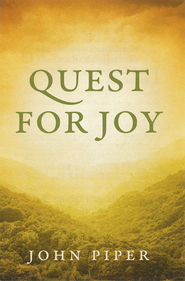
THE QUEST FOR JOY by Dr. John Piper

QFJ Piper

Did you know that God commands us to be glad?

 “Delight yourself in the Lord and he will give you the desires of your heart.” (Psalm 37:4)

1) God created us for his glory

“Bring my sons from afar and my daughters from the ends of the earth,… whom I created for my glory.” (Isaiah 43:6-7)

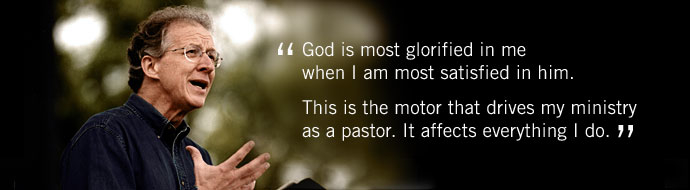
God made us to magnify his greatness – the way telescopes magnify stars. He created us to put his goodness and truth and beauty and wisdom and justice on display. The greatest display of God’s glory comes from deep delight in all that he is. This means that God gets the praise and we get the pleasure. God created us so that he is most glorified in us when we are most satisfied in him.

2) Every human should live for God’s glory

“So whether you eat or drink or whatever you do, do it all for the glory of God.” (1 Corinthians 10:31)

If God made us for his glory, it is clear that we should live for his glory. Our duty comes from his design. So our first obligation is to show God’s value by being satisfied with all that he is for us. This is the essence of loving God (Matthew 22:37) and trusting him (1 John 5:3-4) and being thankful to him (Psalm 100:2-4) It is the root of all true obedience, especially loving others (Colossians 1:4-5).

3) All of us have failed to glorify God as we should

“All have sinned and fall short of the glory of God.” (Romans 3:23)

What does it mean to “fall short of the glory of God?” It means that none of us has trusted and treasured God the way we should. We have not been satisfied with his greatness and walked in his ways. We have sought our satisfaction in other things, and treated them as more valuable than God, which is the essence of idolatry (Romans 1:21-23). Since sin came into the world we have all been deeply resistant to having God as our all-satisfying treasure (Ephesians 2:3). This is an appalling offense to the greatness of God (Jeremiah 2:12-13).

4) All of us are subject to God’s just condemnation

“The wages of sin is death…” (Romans 6:23)

We have all belittled the glory of God. How? By preferring other things above him. By our ingratitude, distrust and disobedience. So God is just in shutting us out from the enjoyment of his glory forever. “They will suffer the punishment of eternal destruction and exclusion from the presence of the Lord and from the glory of his might” (2 Thessalonians 1:9).

The word “hell” is used in the New Testament fourteen times—twelve times by Jesus himself. It is not a myth created by dismal and angry preachers. It is a solemn warning from the Son of God who died to deliver sinners from its curse. We ignore it at great risk.

If the Bible stopped here in its analysis of the human condition, we would be doomed to a hopeless future. However, this is not where it stops…

5) God sent his only son Jesus to provide eternal life and joy

“Here is a trustworthy saying that deserves full acceptance: Christ Jesus came into the world to save sinners…” (1 Timothy 1:15)

The good news is that Christ died for sinners like us. And he rose physically from the dead to validate the saving power of his death and to open the gates of eternal life and joy (1 Corinthians 15:20). This means God can acquit guilty sinners and still be just (Romans 3:25-26). “For Christ died for sins once for all, the righteous for the unrighteous, to bring us to God” (1 Peter 3:18). Coming home to God is where all deep and lasting satisfaction is found.

6) The benefits purchased by the death of Christ belong to those who repent and trust him

“Repent, then, and turn to God, so that your sins may be wiped out” (Acts 3:19). “Believe in the Lord Jesus and you will be saved” (Acts 16:31).

“Repent” means to turn from all the deceitful promises of sin. “Faith” means being satisfied with all that God promises to be for us in Jesus. “He who believes in me,” Jesus says, “shall never thirst” (John 6:35). We do not earn our salvation. We cannot merit it (Romans 4:4-5). It is by grace through faith (Ephesians 2:8-9). It is a free gift (Romans 3:24). We will have it if we cherish it above all things (Matthew 13:44). When we do that, God’s aim in creation is accomplished: He is glorified in us and we are satisfied in him – forever.

Does this make sense to you?

Do you desire the kind of gladness that comes from being satisfied with all that God is for you in Jesus? If so, then God is at work in your life.

What should you do?

Turn from the deceitful promises of sin. Call upon Jesus to save you from the guilt and punishment and bondage. “All who call upon the name of the Lord will be saved” (Romans 10:13). Start banking your hope on all that God is for you in Jesus. Break the power of sin’s promises by faith in the superior satisfaction of God’s promises. Begin reading the Bible to find his precious and very great promises, which can set you free (2 Peter 1:3-4). Find a Bible-believing church and begin to worship and grow together with other people who treasure Christ above all things (Philippians 3:7).

The best news in the world is that there is no necessary conflict between our happiness and God’s holiness. Being satisfied with all that God is for us in Jesus magnifies him as a great Treasure.

“You have made known to me the path of life; you will fill me with joy in your presence, with eternal pleasures at your right hand.” (Psalm 16:11)

*You are permitted and encouraged to reproduce and distribute this material in its entirety or in unaltered excerpts, as long as you do not charge a fee. For Internet posting, please use only unaltered excerpts (not the content in its entirety) and provide a hyperlink to this page. Any exceptions to the above must be approved by Desiring God.

Please include the following statement on any distributed copy: By John Piper. ©2013 Desiring God Foundation. Website: http://www.desiringgod.org/

About John Piper

Piper J famous quote

“The ministry of preaching is the central labor of my life. My prayer is that through that ministry and everything else I do, the great glory of our God and Savior Jesus Christ would be magnified as more and more people come to live out the obedience of faith more and more deeply.” – John Piper

Growing Up

John Stephen Piper was born January 11, 1946, in Chattanooga, Tennessee, to Bill and Ruth Piper. His father was a traveling evangelist, and the Pipers lived near Chattanooga to be near a Christian college for which Bill served on the board. When the school moved to Greenville, South Carolina, the Pipers moved as well, and it was in Greenville that John spent his growing-up years. John honored his father in a 2008 biographical message called “Evangelist Bill Piper: Fundamentalist Full of Grace and Joy” and in the 2013 ebook A Tribute to My Father. John also wrote a tribute to his mother, who died in 1974, in the book What’s the Difference, and commended her in his Mother’s Day sermon in 2005, “Honoring the Biblical Call of Motherhood: A Tribute to Ruth Piper.”

Schooling

John graduated from Wade Hampton High School in 1964, and he majored in Literature and minored in Philosophy at Wheaton College (1964–68). Studying Romantic Literature with Clyde Kilby stimulated the poetic side of his nature, and today he regularly writes poems to celebrate special family occasions and rich, biblical truths. At Wheaton, John also met Noël Henry whom he married in 1968.

Following college, he completed a Bachelor of Divinity degree at Fuller Theological Seminary in Pasadena, California (1968–71). While at Fuller, John discovered the writings of Jonathan Edwards.

John did his doctoral work in New Testament Studies at the University of Munich in Munich, Germany (1971–74). His dissertation, Love Your Enemies, is now available through Crossway Books. Upon completion of his doctorate, he went on to teach Biblical Studies at Bethel College in St. Paul, Minnesota for six years (1974–80).

Bethlehem Baptist Church

In 1980, sensing an irresistible call to preach, John became the senior pastor of Bethlehem Baptist Church in Minneapolis, Minnesota, where he ministered for 33 years, until Easter 2013. Together with his people, John was dedicated to spreading a passion for the supremacy of God in all things for the joy of all peoples through Jesus Christ — a mission he continues now for the wider church through the ministry of desiringGod.org.

Desiring God and Bethlehem College & Seminary

John is the author of over 50 books and now frequently travels to speak, and writes regularly, through Desiring God. He also became chancellor of Bethlehem College & Seminary at its founding in 2009 and continues to serve as both chancellor and professor.

Family

John and Noël have four sons, a daughter, and twelve grandchildren.

Steven J. Lawson on The Great Significance of Preaching the Word

“Preach the Word”

Bounty Bible image

by 

Every season of reformation and every hour of spiritual awakening has been ushered in by a recovery of biblical preaching. This cause and effect is timeless and inseparable. J.H. Merle D’Aubigné, noted Reformation historian, writes, “The only true reformation is that which emanates from the Word of God.” That is to say, as the pulpit goes, so goes the church.

Such was the case in the Protestant Reformation of the sixteenth century. Martin Luther, John Calvin, and other reformers were raised up by God to lead this era. At the forefront, it was their recovery of expository preaching that helped launch this religious movement that turned Europe and, eventually, Western civilization upside down. With sola Scriptura as their battle cry, a new generation of biblical preachers restored the pulpit to its former glory and revived apostolic Christianity.

The same was true in the golden era of the puritans in the seventeenth century. A recovery of biblical preaching spread like wildfire through the dry religion of Scotland and England. A resurgence of authentic Christianity came as an army of biblical expositors — John Owen, Jeremiah Burroughs, Samuel Rutherford, and others — marched upon the British Empire with an open Bible and uplifted voice. In its wake, the monarchy was shaken and history was altered.

The eighteenth century witnessed exactly the same. The Bible-saturated preaching of Jonathan Edwards, George Whitefield, and the Tennents thundered through the early colonies. The Atlantic seaboard was electrified with the proclamation of the gospel, and New England was taken by storm. The Word was preached, souls were saved, and the kingdom expanded.

The fact is, the restoration of biblical preaching has always been the leading factor in any revival of genuine Christianity. Philip Schaff writes, “Every true progress in church history is conditioned by a new and deeper study of the Scriptures.” That is to say, every great revival in the church has been ushered in by a return to expository preaching.

D. Martyn Lloyd-Jones, preacher of Westminster Chapel London, stated, “The most urgent need in the Christian Church today is true preaching; and as it is the greatest and the most urgent need in the Church, it is the greatest need of the world also.” If the doctor’s diagnosis is correct, and this writer believes it is, then a return to true preaching — biblical preaching, expository preaching — is the greatest need in this critical hour. If a reformation is to come to the church, it must begin in the pulpit.

In his day, the prophet Amos warned of an approaching famine, a deadly drought that would cover the land. But not an absence of mere food or water, for this scarcity would be far more fatal. It would be a famine for hearing God’s Word (Amos 8:11). Surely, the church today finds itself in such similar days of shortage. Tragically, exposition is being replaced with entertainment, doctrine with drama, theology with theatrics, and preaching with performances. What is so desperately needed today is for pastors to return to their highest calling — the divine summons to “preach the word” (2 Tim. 4:1–2).

What is expository preaching? The Genevan reformer John Calvin explained, “Preaching is the public exposition of Scripture by the man sent from God, in which God Himself is present in judgment and in grace.” In other words, God is unusually present, by His Spirit, in the preaching of His Word. Such preaching starts in a biblical text, stays in it, and shows its God-intended meaning in a life-changing fashion.

This was the final charge of Paul to young Timothy: “Preach the word; be ready in season and out of season; reprove, rebuke, and exhort, with complete patience and teaching” (2 Tim. 4:2). Such preaching necessitates declaring the full counsel of God in Scripture. The entire written Word must be expounded. No truth should be left untaught, no sin unexposed, no grace unoffered, no promise undelivered.

A heaven-sent revival will only come when Scripture is enthroned once again in the pulpit. There must be the clarion declaration of the Bible, the kind of preaching that gives a clear explanation of a biblical text with compelling application, exhortation, and appeal.

Every preacher must confine himself to the truths of Scripture. When the Bible speaks, God speaks. The man of God has nothing to say apart from the Bible. He must not parade his personal opinions in the pulpit. Nor may he expound worldly philosophies. The preacher is limited to one task — preach the Word.

Charles Haddon Spurgeon said, “I would rather speak five words out of this book than 50,000 words of the philosophers. If we want revivals, we must revive our reverence for the Word of God. If we want conversions, we must put more of God’s Word into our sermons.” This remains the crying need of the hour.

May a new generation of strong men step forward and speak up, and may they do so loud and clear. As the pulpit goes, so goes the church.

Article above from the January 1, 2010 issue of © Tabletalk magazine

Permissions: You are permitted and encouraged to reproduce and distribute this material in any format provided that you do not alter the wording in any way, you do not charge a fee beyond the cost of reproduction, and you do not make more than 500 physical copies. For web posting, a link to this document on our website is preferred (where applicable). If no such link exists, simply link to http://www.ligonier.org/tabletalk. Any exceptions to the above must be formally approved by Tabletalk.

Please include the following statement on any distributed copy: From Ligonier Ministries and R.C. Sproul. © Tabletalk magazine. Website: http://www.ligonier.org/tabletalk. Email: tabletalk@ligonier.org. Toll free: 1-800-435-4343.

About the Author:

Steve Lawson pointing

Dr. Steven J. Lawson is the Senior Pastor of Christ Fellowship Baptist Church in Mobile, Alabama, having served as a pastor in Arkansas and Alabama for the past twenty-nine years. He is a graduate of Texas Tech University (B.B.A.), Dallas Theological Seminary (Th.M.), and Reformed Theological Seminary (D. Min.).

The focus of Dr. Lawson’s ministry is the verse-by-verse exposition of God’s Word. The overflow of this study and preaching has led to his authoring fifteen books, including In It to Win It, The Kind of Preaching God Blesses,  & The Unwavering Resolve of Jonathan Edwards. His other recent books include The Gospel Focus of Charles SpurgeonThe Expository Genius of John Calvin, The Heroic Boldness of Martin Luther,  Foundations of Grace 1400 BC-AD 100, volume one of a multi-volume series & Pillars of Grace AD 100 – 1564, also, three volumes in the Holman Old Testament Commentary Series, Job, Psalms Volume I (Psalms 1-75), and Volume II (Psalms 76-150).

He has contributed to John Calvin: A Heart for Devotion, Doctrine, and Doxology, work celebrating the 500 year anniversary of the birth of John Calvin. He is the Series Editor for A Long Line of Godly Men Profile, a series of biographies of noted Christian leaders.

Dr. Lawson has also authored Famine in the Land: A Passionate Call to Expository PreachingMade In Our ImageAbsolutely SureThe LegacyWhen All Hell Breaks Loose, and Faith Under Fire. His books have been translated into various languages around the world, including Russian, Italian, Portuguese, Spanish, German, Albanian, Korean, Dutch, and the Indonesian language.

He has contributed several articles to Bibliotheca Sacra, The Southern Baptist Journal of Theology, The Faith and Mission, Decision Magazine, and Discipleship Magazine, among other journals and magazines.

Dr. Lawson’s pulpit ministry takes him around the world, preaching in such places as Russia, the Ukraine, Scotland, Wales, England, Ireland, Germany, Japan, New Zealand, Switzerland, Italy and many conferences in the United States, including The Shepherd’s Conference and the Resolved Conference at Grace Community Church, Sun Valley, California, the Ligonier National and Pastor’s Conference, and the Philadelphia Conference on Reformed Theology.

He is president of New Reformation, a ministry designed to bring about biblical reformation in the church today. He serves on the Executive Board of The Master’s Seminary and College and is a Teaching Fellow with Ligonier Ministries and a Visiting Professor at the Ligonier Academy, teaching Expository Preaching and Evangelism and Missions in the Doctor of Ministry program. Dr. Lawson taught in the Distinguished Scholars Lecture Series at The Master’s Seminary, lecturing in 2004 on “Expository Preaching of the Psalms.” He also serves on the Advisory Council for Samara Preachers’ Institute & Theological Seminary, Samara, Russia.

Steve and his wife Anne have three sons, Andrew, James, and John, and a daughter, Grace Anne.

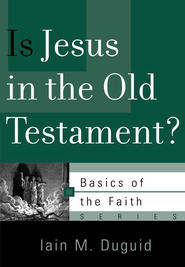
Book Review of Iain M. Duguid’s: “Is Jesus in the Old Testament?”

“The Whole Old Testament is About Jesus”

 Book Review By David P. Craig

IJITOT? Duguid

There is currently a resurgence of interest on books on Jesus in the Old Testament. Many of these books are very scholarly and technical. Duguid’s primer is a welcome addition to this mix. He writes for the novice, or lay person with relation to how rightly interpreted, the whole Old Testament focuses on and prepares us for Christ’s sufferings and glories that will follow in the gospel.

Duguid points out first of all that the Gospel is the center of the Bible and as such three important implications result from this fact:

(1) This means that the gospel (the good news about Jesus’ death and resurrection is not merely the starting point of the Christian life from which move on, but that it is the very heartbeat of our lives as Christians – the central focus to which we must return again and again.

(2) Being gospel focused helps us realize that our sanctification is rooted in, and flows out of our justification. The gap in our understanding of Scriptures isn’t so much in our knowledge, but in our lack of obedience due to a faulty dichotomy of segregating the law from the gospel (i.e. “moralism”).

(3) Duguid writes, “Our aim in studying the Scriptures (both OT and NT) is not merely to know more ancient history or to learn useful life principles, but rather to be brought to see in a new way the glory of God in Jesus Christ and to bow our hearts before him in adoration and praise.”

Dr. Duguid goes on to give examples of several wrong ways we read the Old Testament and how this can be remedied by viewing each passage through the lens of the overall plan of God which is completely fulfilled by Jesus in the New Testament. One of the ways we can do this is by asking the some of the following questions of an Old Testament passage:

“How does this event our story advance God’s program and point us to the great work that God is accomplishing in this world, which is the work of salvation through the gospel?”

“How does this passage show us the sufferings of Christ and the glories that follow? For example, does it uncover the sins for which Christ had to come and die?”

“How does it demand our demonstrate the righteous behavior that Jesus came to perform in our place?

“How does this gospel then teach us to live in light of this specific portion of God’s Word, out of gratitude fro what God has done?”

In the bulk of Duguid’s book he gives us a history of the Old Testament and demonstrates how its incompleteness, and thus fulfillment can only be met in the Person and work of the Lord Jesus Christ. He cogently demonstrates how all of history is the story of God carrying out his grand plan in this world for the redemption of his people in Christ. Jesus applies all of Israel’s history in the Old Testament to himself (Matt. 12:3). As a prophet, Jesus authoritatively declares God’s word to his listener’s (Matt. 5:27). As the archetypal wise man, Jesus embodies wisdom in human form (Matt. 6:28, Luke 2:40; Col. 2:3). In other words, as the Old Testament consists of law, history, and wisdom books – Jesus fulfills in himself all three divisions of the Old Testament: he is the ultimate sacred historian, prophet, and wise man. All the prophets, kings, and priests point to Him.

Duguid masterfully tells the story of redemption from the Old Testament and how it’s fulfilled in Christ in three primary ways: (1) Jesus comes first of all as the new Adam (Rom. 5:18-19; 1 Cor. 15:22); (2) Jesus is also the true son of Abraham (Matt. 1:1; 2:15); (3) Jesus is the new David (Acts 13:22). In talking about Jesus’ roles as Priest, Prophet, and King – Duguid writes, “The ministry of Christ in his suffering and resurrection is thus the central focus of the whole Old Testament: he is the one toward whom the whole Old Testament is constantly moving, the one for whom as well by whom it exists…the Old Testament shows us repeatedly why no one and nothing other than God himself in human form could possibly be the answer to our deepest need and provide deliverance from our sins.”

I highly recommend this book as an excellent primer that will give you the big picture of the Bible as the gospel is threaded from Genesis to Revelation making a continual bee line to Christ’s glorious Person and work for our redemption and restoration.

Who is God According to the Bible?

“THE TRUE GOD AS REVEALED IN THE SCRIPTURES” 

DR. JAMES MONTGOMERY BOICE

Foundations of the Xian Faith image

It is evident that we need more than a theoretical knowledge of God. Yet we can know God only as he reveals himself to us in the Scriptures, and we cannot know the Scriptures until we are willing to be changed by them. Knowledge of God occurs only when we also know our deep spiritual need and when we are receptive to God’s gracious provision for our need through the work of Christ and the application of that work to us by God’s Spirit.

Having established this base, we nevertheless come back to the question of God himself and we ask, “But who is God? Who is this one who reveals himself in Scripture, in the person of Jesus Christ and through the Holy Spirit?” We may admit that a true knowledge of God must change us. We may be willing to be changed. But where do we begin?

“I Am Who I Am”

Since the Bible is a unity we could answer these questions by starting at any point in the biblical revelation. We could begin with Revelation 22:21 as well as with Genesis 1:1. But there is no better starting point than God’s revelation of himself to Moses at the burning bush. Moses, the great leader of Israel, had long been aware of the true God, for he had been born into a godly family. Still, when God said that he would send him to Egypt and through him deliver the people of Israel, Moses responded, “If I come to the people of Israel and say to them, ‘The God of your fathers has sent me to you,’ and they ask me, ‘What is his name?’ what shall I say to them?” We are told that God then answered Moses by saying, “I AM WHO I AM. . . . Say this to the people of Israel, ‘I AM has sent me to you’” (Ex. 3:13-14).

“I AM WHO I AM.” The name is linked with the ancient name for God, Jehovah. But it is more than a name. It is a descriptive name, pointing to all that God is in himself. In particular, it shows him to be the One who is entirely self-existent, self-sufficient and eternal.

These are abstract concepts, of course. But they are important, for these attributes more than any others set God apart from his creation and reveal him as being what he is in himself. God is perfect in all his attributes. But there are some attributes that we, his creatures, share. For instance, God is perfect in his love. Yet by his grace we also love. He is all wise; but we also possess a measure of wisdom. He is all powerful; and we exercise a limited power. It is not like that in regard to God’s self-existence, self-sufficiency and eternity, however. He alone possesses those characteristics. He exists in and of himself; we do not. He is entirely self-sufficient; we are not. He is eternal; we are newcomers on the scene.

Self-existence means that God has no origins and consequently is answerable to no one. Matthew Henry says, “The greatest and best man in the world must say, By the grace of God I am what I am; but God says absolutely — and it is more than any creature, man or angel, can say — I am that I am.1 So God has no origins; his existence does not depend on anybody.

Self-existence is a hard concept for us to grapple with for it means that God as he is in himself is unknowable. Everything that we see, smell, hear, taste or touch has origins. We can hardly think in any other category. Anything we observe must have a cause adequate to explain it. We seek for such causes. Cause and effect is even the basis for the belief in God possessed by those who, nevertheless, don’t truly know him. Such individuals believe in God, not because they have had a personal experience of him or because they have discovered God in Scripture, but only because they infer his existence. “Everything comes from something; consequently, there must be a great something that stands behind everything.” Cause and effect point to God, but — and this is the issue — they point to a God who is beyond understanding, indeed to one who is beyond us in every way. They indicate that God cannot be known and evaluated like other things can.

A. W. Tozer has noted that this is one reason why philosophy and science have not always been friendly toward the idea of God. These disciplines are dedicated to the task of accounting for things as we know them and are therefore impatient with anything that refuses to give an account of itself. Philosophers and scientists will admit that there is much they don’t know. But it is another thing to admit that there is something they can never know completely and which, in fact, they don’t even have techniques for discovering. To discover God, scientists may attempt to bring God down to their level, defining him as “natural law,” “evolution” or some such principle. But still God eludes them. There is more to God than any such concepts can delineate.

Perhaps, too, this is why even Bible-believing people seem to spend so little time thinking about God’s person and character. Tozer writes,

Few of us have let our hearts gaze in wonder at the I AM, the self-existent Self back of which no creature can think. Such thoughts are too painful for us. We prefer to think where it will do more good — about how to build a better mousetrap, for instance, or how to make two blades of grass grow where one grew before. And for this we are now paying a too heavy price in the secularization of our religion and the decay of our inner lives.2

God’s self-existence means that he is not answerable to us or to anybody, and we don’t like that. We want God to give an account of himself, to defend his actions. Although he sometimes explains things to us, he doesn’t have to and often he does not. God doesn’t have to explain himself to anybody.

No Needs

The second quality of God communicated to us in the name “I AM WHO I AM” is self-sufficiency. Again it is possible to have at least a sense of the meaning of this abstract term. Self-sufficiency means God has no needs and therefore depends on no one.

Here we run counter to a widespread and popular idea: God cooperates with human beings, each thereby supplying something lacking in the other. It is imagined, for example, that God lacks glory and therefore creates men and women to supply it. He takes care of them as a reward. Or again, it is imagined that God needs love and therefore creates men and women to love him. Some talk about the creation as if God were lonely and therefore created us to keep him company. On a practical level we see the same thing in those who imagine that women and men are necessary to carry out God’s work of salvation as witnesses or as defenders of the faith, forgetting that Jesus himself declared that “God is able from these stones to raise up children to Abraham” (Lk. 3:8).

God does not need worshipers. Arthur W. Pink, who writes on this theme in The Attributes of God, says,

God was under no constraint, no obligation, no necessity to create. That he chose to do so was purely a sovereign act on his part, caused by nothing outside himself, determined by nothing but his own mere good pleasure; for he “worketh all things after the counsel of his own will” (Eph. 1:11). That he did create was simply for his manifestative glory. . . . God is no gainer even from our worship. He was in no need of that external glory of his grace which arises from his redeemed, for he is glorious enough in himself without that. What was it moved him to predestinate his elect to the praise of the glory of his grace? It was, as Ephesians 1:5 tells us, “according to the good pleasure of his will.” . . . The force of this is [that] it is impossible to bring the Almighty under obligations to the creature; God gains nothing from us.3

Tozer makes the same point. “Were all human beings suddenly to become blind, still the sun would shine by day and the stars by night, for these owe nothing to the millions who benefit from their light. So, were every man on earth to become an atheist, it could not affect God in any way. He is what he is in himself without regard to any other. To believe in him adds nothing to his perfections; to doubt him takes nothing away.”4

Nor does God need helpers. This truth is probably harder for us to accept than almost any other. For we imagine God as a friendly, but almost pathetic, grandfather figure bustling about to see whom he can find to help him in managing the world and saving the world’s race. What a travesty! To be sure, God has entrusted a work of management to us. He said to the original pair in Eden, “Be fruitful and multiply, and fill the earth and subdue it; and have dominion over the fish of the sea and over the birds of the air and over every living thing that moves upon the earth” (Gen. 1:28). God also has given those who believe in him a commission to “go into all the world and preach the gospel to the whole creation” (Mk. 16:15). True, but no aspect of God’s ordering of his creation has a necessary grounding in himself. God has chosen to do things thus. He didn’t need to do them. Indeed, he could have done them in any one of a million other ways. That he did choose to do things thus is therefore solely dependent upon the free and sovereign exercise of his will and so does not give us any inherent value to him.

To say that God is self-sufficient also means that God does not need defenders. Clearly, we have opportunities to speak for God before those who would dishonor his name and malign his character. We ought to do so. But even if we should fail, we must not think that God is deprived thereby. God does not need to be defended, for he is as he is and will remain so regardless of the sinful and arrogant attacks of evil individuals. A God who needs to be defended is no God. Rather, the God of the Bible is the self-existent One who is the true defender of his people.

When we realize that God is the only truly self-sufficient One, we begin to understand why the Bible has so much to say about the need for faith in God alone and why unbelief in God is such sin. Tozer writes: “Among all created beings, not one dare trust in itself. God alone trusts in himself; all other beings must trust in him. Unbelief is actually perverted faith, for it puts its trust not in the living God but in dying men.”5 If we refuse to trust God, what we are actually saying is that either we or some other person or thing is more trustworthy. That is a slander against the character of God, and it is folly. Nothing else is all-sufficient. On the other hand, if we begin by trusting God (by believing in him), we have a solid foundation for all life. God is sufficient, and his Word to his creatures can be trusted.

Because God is sufficient, we may begin by resting in that sufficiency and so work effectively for him. God does not need us. But the joy of coming to know him is in learning that he nevertheless stoops to work in and through those who are his believing and obedient children.

Alpha and Omega

A third quality inherent in the name of God given to Moses (“I AM WHO I AM”) is everlastingness, perpetuity or eternity. The quality is difficult to put in one word, but it is simply that God is, has always been and will always be, and that he is ever the same in his eternal being. We find this attribute of God everywhere in the Bible. Abraham called Jehovah “the Everlasting God” (Gen. 21:33). Moses wrote, “LORD, thou hast been our dwelling place in all generations. Before the mountains were brought forth, or ever thou hadst formed the earth and the world, from everlasting to everlasting thou art God” (Ps. 90:1-2). The book of Revelation describes God as the “Alpha and the Omega, the beginning and the end” (Rev. 1:8; 21:6; 22:13). The creatures before the throne cry, “Holy, holy, holy, is the Lord God Almighty, who was and is and is to come” (Rev. 4:8).

The fact that God is eternal has two major consequences for us. The first is that he can be trusted to remain as he reveals himself to be. The word usually used to describe this quality is immutability, which means unchangeableness. “Every good endowment and every perfect gift is from above, coming down from the Father of lights with whom there is no variation or shadow due to change” (Jas. 1:17).

God is unchangeable in his attributes. So we need not fear, for example, that the God who once loved us in Christ will somehow change his mind and cease to love us in the future. God is always love toward his people. Similarly, we must not think that perhaps he will change his attitude toward sin, so that he will begin to classify as “permissible” something that was formerly prohibited. Sin will always be sin because it is defined as any transgression of or lack of conformity to the law of God, who is unchangeable. God will always be holy, wise, gracious, just and everything else that he reveals himself to be. Nothing that we do will ever change the eternal God.

God is also unchangeable in his counsels or will. He does what he has determined beforehand to do and his will never varies. Some will point out that certain verses in the Bible tell us that God repented of some act — as in Genesis 6:6, “The LORD was sorry that he had made man.” In this example, a human word is being used to indicate God’s severe displeasure with human activities. It is countered by such verses as Numbers 23:19 (“God is not man, that he should lie, or a son of man, that he should repent. Has he said, and will he not do it? Or has he spoken, and will he not fulfil it?”); 1 Samuel 15:29 (“The Glory of Israel will not lie or repent; for he is not a man, that he should repent”); Romans 11:29 (“The gifts and call of God are irrevocable”); and Psalm 33:11 (“The counsel of the LORD stands for ever, the thoughts of his heart to all generations”).

Such statements are a source of great comfort to God’s people. If God were like us, he could not be relied on. He would change, and as a result of that his will and his promises would change. We could not depend on him. But God is not like us. He does not change. Consequently, his purposes remain fixed from generation to generation. Pink says, “Here then is a rock on which we may fix our feet, while the mighty torrent is sweeping away everything around us. The permanence of God’s character guarantees the fulfillment of his promises.”6

The second major consequence for us of God’s unchangeableness is that he is inescapable. If he were a mere human and if we didn’t like either him or what he was doing, we might ignore him knowing that he might always change his mind, move away from us or die. But God does not change his mind. He does not move away. He will not die. Consequently, we cannot escape him. Even if we ignore him now, we must reckon with him in the life to come. If we reject him now, we must eventually face the One we have rejected and come to know his eternal rejection of us.

No Other Gods

We are led to a natural conclusion, namely, that we should. seek and worship the true God. This chapter has been based for the most part on Exodus 3:14, in which God reveals to Moses the name by which he desires to be known. That revelation came on the verge of the deliverance of the people of Israel from Egypt. After the exodus, God gave a revelation on Mount Sinai which applies the earlier disclosure of himself as the true God to the religious life and worship of the delivered nation.

God said, “I am the LORD your God, who brought you out of the land of Egypt, out of the house of bondage. You shall have no other gods before me. You shall not make for yourself a graven image, or any likeness of anything that is in heaven above, or that is in the earth beneath, or that is in the water under the earth; you shall not bow down to them or serve them; for I the LORD your God am a jealous God, visiting the iniquity of the fathers upon the children to the third and the fourth generation of those who hate me, but showing steadfast love to thousands of those who love me and keep my commandments” (Ex. 20:2-6). These verses make three points, all based on the premise that the God who reveals himself in the Bible is the true God:

  • We are to worship God and obey him.
  • We are to reject the worship of any other god.
  • We are to reject the worship of the true God by any means that are unworthy of him, such as the use of pictures or images.

At first glance it seems quite strange that a prohibition against the use of images in worship should have a place at the very start of the ten basic principles of biblical religion, the Ten Commandments. But it is not strange when we remember that the characteristics of a religion flow from the nature of the religion’s god. If the god is unworthy, the religion will be unworthy too. If the concept of God is of the highest order, the religion will be of a high order also. So God tells us in these verses that any physical representation of him is dishonoring to him. Why? For two reasons. First, it obscures his glory, for nothing visible can ever adequately represent it. Second, it misleads those who would worship him.

Both of these errors are represented by Aaron’s manufacture of the golden calf, as J. I. Packer indicates in his discussion of idolatry. In Aaron’s mind, at least, though probably not in the minds of the people, the calf was intended to represent Jehovah. He thought, no doubt, that a figure of a bull (even a small one) communicated the thought of God’s strength. But, of course, it didn’t do so adequately. And it didn’t at all communicate his other great attributes: his sovereignty, righteousness, mercy, love and justice. Rather, it obscured them.

Moreover, the figure of the bull misled the worshipers. They readily associated it with the fertility gods and goddesses of Egypt, and the result of their worship was an orgy. Packer concludes,

It is certain that if you habitually focus your thoughts on an image or picture of the One to whom you are going to pray, you will come to think of him, and pray to him, as the image represents him. Thus you will in this sense “bow down” and “worship” your image; and to the extent to which the image fails to tell the truth about God, to that extent you will fail to worship God in truth. That is why God forbids you and me to make use of images and pictures in our worship.7

“My Lord and My God”

To avoid the worship of images or even the use of images in the worship of the true God is not in itself worship. We are to recognize that the true God is the eternal, self-existent and self-sufficient One, the One immeasurably beyond our highest thoughts. Therefore, we are to humble ourselves and learn from him, allowing him to teach us what he is like and what he has done for our salvation. Do we do what he commands? Are we sure that in our worship we are actually worshiping the true God who has revealed himself in the Bible?

There is only one way to answer that question truthfully. It is to ask: Do I really know the Bible, and do I worship God on the basis of the truth I find there? That truth is centered in the Lord Jesus Christ, as seen in the Bible. There the invisible God is made visible, the inscrutable knowable, the eternal God disclosed in space and time. Do I look to Jesus in order to know God? Do I think of God’s attributes by what Jesus shows me of them? If not, I am worshiping an image of God, albeit an image of my own devising. If I look to Jesus, then I can know that I am worshiping the true God, as he has revealed himself. Paul says that although some knew God they nevertheless “did not honor him as God or give thanks to him” (Rom. 1:21). Let us determine that this shall not be true of us. We see God in Jesus. So let us know him as God, love him as God, serve him as God and worship him as God.


Notes

  1. Matthew Henry, Commentary on the Whole Bible, Vol. 1 (New York: Fleming H. Revell, n.d.), p. 284
  2. A. W. Tozer, The Knowledge of the Holy (New York: Harper & Row, 1961), p. 34.
  3. Arthur W. Pink, The Attributes of God (Grand Rapids, Mich.: Baker Book House, n.d.), pp. 2-3.
  4. Tozer, p. 40.
  5. Ibid., p. 42.
  6. Pink, p. 41.
  7. J. I. Packer, Knowing God, p. 41

Author

Boice JM holding bible w smile

James Montgomery Boice held a B.D. from Princeton Theological Seminary and a Doctor of Theology from the University of Basel in Switzerland. He was the pastor of the Tenth Presbyterian Church in Philadelphia and the author of many books, including the three volumes in the series, “Foundations of the Christian Faith”. This article is taken from volume one of that same series, entitled The Sovereign God.

Friday Humor: Pastor on Salary by FAITH

GIIAH Wiersbe image

Series: Friday Humor # 24

I heard about a pastor who candidated at a church and was called, provided that he lived by faith. He asked the six men on the committee what they meant by living by faith. What it meant was that he would have no stated salary but that he would simply trust God for his needs. The candidate made a suggestion that cost him the church: “Each of you men has a salary, so why don’t we put all of our salaries together, divide the total by seven and all of us can live by faith.” (God Isn’t In a Hurry, by Warren Wiersbe, p. 23)

Keller & Clowney: Preaching Christ in a Post-Modern World

Some of the most helpful resources on preaching Christ from all of Scripture that you will ever find. HIGHLY RECOMMENDED!!!

Ted Torreson's avatarFaith In Motion


I love sharing God’s word through preaching.  Since I’m moving to preaching every week, as we launch The Exchange Community in Jackson, Mo, I thought It would be good to reexamine my preaching and how I interpret and display God’s word.  I remembered a friend of mine shared, a number of years back, that Tim Killer and Edmond Clowney team taught a class at Reformed Theological Seminary on Preaching Christ in a Post-Modern World.  As I started to listen through these teachings, I desired to share them with other church planters, preachers, and pastors that may not be aware of their existence.  Even if you don’t fit in these categories, this is an excellent resource to understand and share scripture.

Free Resources:

Audio from itunes

Course Material in PDF These notes were extremely difficult to find.  I believe they are notes from this course as it was later modified.  They do not…

View original post 272 more words

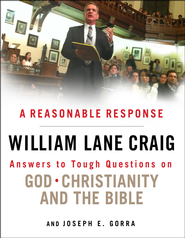
Book Review on William Lane Craig’s and Joseph E. Gorra’s A Reasonable Response

“A Great Application of 1 Peter 3:15”: Book Review by David P. Craig

ARR Craig and Gorra

One of the most famous verses in the Bible used in the field of apologetics is 1 Peter 3:15, “But in your hearts honor Christ the Lord as holy, always being prepared to make a defense to anyone who asks you for a reason for the hope that is in you; yet do it with gentleness and respect” (ESV). In apologetics when a person “defends” the faith of Christianity it’s easy to get “defensive” when arguing with someone of another opinion. The beauty of this book is that Craig and Gorra are able to give the finest evidences for the Christian faith and answer the biggest objections to Christianity and do so while “speaking the truth in love” (Eph. 4:15).

Craig and Gorra are not  only a gifted apologists, but loving evangelists and truly demonstrate how the gospel can be the center piece of all evidence with reference to offensive evidences as well as defending attacks on the Christian faith.

The six sections of this helpful book in answering difficult questions are as follows: (1) Questions on Knowing and Believing What Is Real – questions such as: Does Knowledge require certainty?; What is the criterion for a good argument?; Is there such a thing as objective truth?; and Is the price of biblical errancy too high to pay? (2) Questions About God – such as: Is a Maximally Great Being Possible?; Is Trinity Monotheism Orthodox?; and In What Sense Is God a “Simple Being”? (3) Questions about Origins and the Meaning of Life – like the following: Must the Cause of the Universe Be Personal?; Is there a contradiction in God’s creation of time?; Is life absurd without God?; and Is Scientism Self-refuting? (4) Questions about the Afterlife and Evil – like: Does creation benefit the lost?; Do the damned in Hell accrue further punishment?; and Was the slaughter of the Canaanites an act of “Divine Genocide”? (5) Questions about Jesus Christ and Being His Disciple: What does it mean that Jesus is the Son of God?; Can one justifiably infer Jesus’ resurrection on the basis of the empirical evidence?; and What does it mean to have a personal relationship with God? (6) Questions about Issues of Christian Practice – such as: Do we live in a Postmodern Society?; How might we think about a Christian marrying a non-Christian?; and “Can someone be a “Christian Homosexual?”

Also of immense help are the three appendixes which include: (1) Tips on using the book for small group study;  (2) Fostering question-asking and answer-seeking environments; (3) Civility guidelines for (online) “third places.”

Perhaps nobody will agree with 100% of the answers given, or be totally convinced of all the evidence or answers provided. However, anyone reading this book will benefit richly from it. The myriad of questions addressed by both believers and non-believers are answered cogently and practically. I will return to this book again and again as a virtual encyclopedia of great answers to great questions on the Christian faith. You will learn from these seasoned apologists how to “always be prepared to make a defense to everyone who asks you for a reason for the hope that is in you” and you will be guided in how to do this “with gentleness and respect.”