“No Super Christians” by Steve W. Brown

After a week of meetings in Pittsburgh, a man came up to meet me following the service. A former missionary and member of the church for over thirty years, he said something to me I still haven’t been able to classify as either a compliment or something otherwise. “Steve,” he said, “I’ve really appreciated what you’ve said this week.” I told him I was glad. Then he added, “I’ve been in church all my life, and all my life I’ve heard pastors say that they were sinners. You’re the first one I ever really believed.”

Though I still chuckle about that remark, I acknowledge with complete sincerity his observation. You see, I’m not a pastor and radio preacher because I’m good or have abilities or because I’m talented. I’m where I’m at because God put me here. And sometimes I’ll be soft and sometimes I’ll be hard, but you remember, I’m just like you. God must remind me over and over that even when people call me Reverend, I’m not. Christ established an equality in the brotherhood that has direct implications for me as well as for you.

In every congregation of believers, God sets aside brothers and sisters who are called of God to lead. But the problem is, sometimes we get the idea that we are God’s gift to the world, and when that happens, the delicate balance between gifted leadership and ecclesiastical elitism gets shattered. There’s no room in the Body of Christ for elitism of any sort. That’s the world’s way.

After Queen Victoria and Prince Albert had had one of their famous, loud arguments, Prince Albert went to his room and slammed and locked the door. Queen Victoria marched after him and pounded on his door.

“Who is it?” asked Prince Albert.

“It is the Queen of England.”

Dead silence. The again the question: “Who is it?”

“It is your sovereign ruler,” replied the Queen.

Then once again, “Who is it?”

“It is your wife, Victoria, Albert.”

At that point Albert opened the door.

You may be an elder or deacon or a leader in your Sunday school. Perhaps you lead in some of the other groups in your church and conduct Bible studies. Whatever your role, I thank God for you. But remember that you’re doing it (or at least should be) because God told you to do it, not because you’re a super Christian. There are no super Christians in the body of Christ. All of us are just one among equals. So when a Christian brother or sister stands on the pedestal of his or her own status…when a peacock feathers start flying in the breeze…don’t bow. That kind of behavior doesn’t need to be encouraged. Honesty does. The importance of being honest and acknowledging our true condition and coequal status cannot be overstated.

When a Christian gets honest, something exciting happens. We get to the point where God can use us. Evangelist D.L. Moody once said, “I’ve had more trouble with D.L. Moody than with any other man I’ve ever known.” Thomas a Kempis said, “Be not angry that you cannot make others as you wish them to be since you cannot make yourself as you wish yourself to be.” If we don’t get honest with ourselves, then God is going to force it on us.

Let me tell you a prayer that God always answers: “Lord, show me myself.” Don’t pray it unless you mean it because God will surely answer you, and you won’t like what you see. But he’ll make you different through it—I guarantee it.

Super Christians? They don’t exist. There are only sinners saved by the blood of the Lamb. Remember the next time you find yourself enjoying compliments so much. If you listen carefully, you will hear them sound like a cape flapping vainly in the wind.

*Steve Brown is a radio broadcaster, seminary professor and author. He previously served as a pastor for over twenty-five years and now devotes much of his time to the radio broadcast, Key Life.

With such varied experience and unique perspective on life, Steve is an original. He refuses to be a “guru,” doesn’t want to be anyone’s mother and gives, in his teaching, the freedom to think. Overall, Steve has become known for his refreshing and practical Biblical applications.

Steve serves as Professor Emeritus of Preaching and Pastoral Ministry at Reformed Theological Seminary. He sits on the board of the National Religious Broadcasters and Harvest USA. Traveling extensively, Steve is a much-in-demand speaker.

Steve is the author of numerous books including A Scandalous Freedom, Approaching God, When Being God Isn’t Good Enough, What Was I Thinking? And Three Free Sins. His articles appear in such magazines and journals as Leadership, Decision, Plain Truth and Today’s Christian Woman. Article above No Super Christians adapted from Steve Brown, Jumping Hurdles, Hitting Glitches, Overcoming Setbacks, Colorado Springs, NavPress, 1992, 107-108.

The 10 Books That Have Most Influenced Dr. R.C. Sproul

“Read as an act of worship. Read to be elevated into the great truths of God so that you may worship the Trinity in Spirit and in truth. Be selective about what you read, however. Measure all your reading against the touchstone of Scripture. So much of today’s Christian literature is froth, riddled with Arminian theology or secular thinking. Time is too precious to waste on nonsense. Read more for eternity than time, more for spiritual growth than professional advancement.” Joel R. Beeke

 The New Oxford American Dictionary defines a “classic” as that which is “judged over a period of time to be of the highest quality and outstanding of its kind.” Therefore, based this definition here are some books that RC considers classics or “must” reading:

                                Freedom of the Will by Jonathan Edwards

Bondage of the Will by Martin Luther

Institutes of the Christian Religion by John Calvin

Charity and Its Fruits by Jonathan Edwards

The Person of Christ by G.C. Berkouwer

Gospel Fear by Jeremiah Burroughs

Gospel Worship by Jeremiah Burroughs

Elenctic Theology (3 vols.) by Francis Turretin

Principles of Conduct by John Murray

Here I Stand (On the Life of Martin Luther) by Roland Bainton

Other Books That Have Influenced RC:

God and Modern Philosophy by James Collins

A Time for Truth by William Simon

Moby Dick by Herman Melville

American Caesar by W. Manchester

Power Golf by Ben Hogan

*Dr. R.C. Sproul is the founder and chairman of Ligonier Ministries, an international Christian education ministry located near Orlando, Florida. His teaching can be heard on the program Renewing Your Mind, which is broadcast on hundreds of radio outlets in the United States and in 40 countries worldwide. He is the executive editor of Tabletalk Magazine and general editor of The Reformation Study Bible, and the author of more than seventy books (including some of my all time favorites: THE HOLINESS OF GOD; CHOSEN BY GOD; KNOWING SCRIPTURE; WILLING TO BELIEVE; REASON TO BELIEVE; and PLEASING GOD) and scores of articles for national evangelical publications. Dr. Sproul also serves as president of Ligonier Academy of Biblical and Theological Studies and Reformation Bible College. He currently serves as Senior Minister of preaching and teaching at Saint Andrew’s in Sanford, FL. I believe that his book The Holiness God will stand the test of time as a classic for generations to come. Next to the Bible no other book has influenced me more in my understanding of God, sin, and my own need of salvation and sanctification. I am forever indebted to Sproul’s influence in my life in helping me understand more than anyone else the importance of knowing the nature, character, and attributes of God, and how they impact every aspect of life.

God’s Answer for Discouragement by Warren W. Wiersbe

Adapted from Chapter 26: From The Book Turning Mountains into Molehills by Warren W. Wiersbe, Grand Rapids: Baker, 1992.

 This poem was written by a man planning to commit suicide.

 To whom can I speak today?

The gentle man has perished,

The violent man has access to everybody.

To whom can I speak today?

The iniquity that smites my land,

It has no end.

To whom can I speak today?

There are no righteous men,

The earth is full of criminals.

The interesting thing is this: the poem was not written by a frustrated twentieth century businessman. It is written by an Egyptian citizen over four thousand years ago. Violence and crime and corruption and thoughts of suicide are not modern problems, are they? They are ancient problems—and they have an ancient solution.

It takes little imagination to understand the mind of our anonymous Egyptian poet. He saw crime and violence all around him. The old values were changing. The good man was hanging on the scaffold and the evil man was sitting on the throne. There seemed to be no justice, no hope, no future. After pondering the situation, he decided that there was only one way out—to commit suicide.

Of course, suicide did not solve any problems. It never does. But here was a man who had absolutely no resources to depend on, no one to turn to in this hour of need. “To whom can I speak today?” he asks, and never does get an answer. It’s the picture of a lonely, helpless man at the crossroads of life, with no one to help him.

I’m sure that this picture can be multiplied many times today. All around us are frustrated people who simply don’t know what to do. Their world is collapsing around them. Everything they used to depend on has been destroyed; their foundations are gone. They don’t know where to turn, and perhaps they may be entertaining thoughts of ending it all.

It might interest you to know that some of the greatest men in the Bible had their hours of disappointment and defeat, and some of them asked God to take their lives. I’m not saying they were right; but I’m saying they went through experiences that were terribly disillusioning, and yet they came out victoriously.

For example, the great Jewish leader Moses became so discouraged one day that he asked the God of the Bible to kill him. Listen to the record from Numbers 11: “Then Moses heard the people weep throughout their families…and Moses also was displeased. And Moses said unto the Lord, Why have you afflicted your servant?…Have I conceived all this people?…Have I begotten them?…I am not able to bear all this people alone, because it is too heavy for me. And if you deal this way with me, kill me…and let me not see my wretchedness.”

Moses was discouraged because he was carrying a heavy burden and the people did not appreciate his leadership. Where would the nation of Israel have been without the leadership of Moses? How often it is that those who do the most for us, are the least appreciated. When Moses heard the people weeping and complaining, his heart sank within him.

Listen to the great prophet Elijah as he sits under the juniper tree: “It is enough; now, O Lord, take away my life; for I am not better than my fathers.”

Elijah was discouraged because he felt he was a failure. He had met the false prophets face to face and had defeated them; yet the people had not rallied to Elijah’s side in the great revival that he had longed to see. When Queen Jezebel threatened to kill him, Elijah fled for his life. And then he asked God to kill him! If Elijah had really wanted to die, he should have surrendered to Jezebel. How often we say and do foolish things simply because we are discouraged.

Suppose God would have answered the prayers of these men and taken their lives? Think of all they would have missed. Moses would have missed seeing God’s wonders in the wilderness. He would have missed that great farewell at Jordan, recorded in the Book of Deuteronomy. He would have missed commissioning Joshua to take his place. And he would have missed seeing the beautiful land of Promise.

Elijah would have missed his fellowship with young Elisha; he would have missed the joy of training the new prophet to take his place. And he would have missed a glorious chariot ride into heaven! Yes, it’s a good thing God does not answer our prayers when we are discouraged and defeated. If He did, we would miss out on so many blessings.

Our Egyptian poet had no one to speak to. “To whom can I speak today?” was his question. But Moses and Elijah had someone to speak to: they took their disappointments to the Lord. We may not agree with their prayers, but we do agree with their praying.

Have we trials and temptations?

Is there trouble anywhere?

We should never be discouraged;

Take it to the Lord in prayer.

That’s the first secret of victory over discouragement: take it to the Lord in prayer. Open your heart; tell Him just the way you feel. The psalmist David puts it this way in Psalm 142: “I cried unto the Lord with my voice…I pouted out my complaint before Him; I showed before Him my trouble. When my spirit was overwhelmed within me, then You knew my path…Attend to my cry, for I am brought very low. Bring my soul out of prison, that I may praise Your name.

When life seems the darkest, then God’s dawn is about to break. He sees the end from the beginning, and He has a perfect plan for your life. “For I know the plans I have for you declares the Lord, plans for welfare and not calamity, to give you a future and a hope” (Jeremiah 29:11). Disappointment is often “His appointment.” And God permits these difficulties to come our way, not to discourage us, but to encourage us to look away from changing circumstances to the unchanging God who is on the throne.

Even the great apostle Paul had his days of discouragement when it seemed he would have to give up. This is what he writes: “For we do not want you to be unaware, brothers and sisters, regarding the affliction that happened to us in the province of Asia, that we were burdened excessively, beyond our strength, so that we despaired even of living. Indeed we felt as if the sentence of death had been passed against us,so that we would not trust in ourselves but in God who raises the dead. He delivered us from so great a risk of death, and he will deliver us. We have set our hope on him that he will deliver us yet again,” (2 Corinthians 1:8-10).

The answer to discouragement is not to run away, but to run to God. “God is our refuge and strength, a very present help in trouble” (Ps. 46:1). That word trouble means “tight places” –“a very present help in tight places.” Moses prayed, and God met his need; Elijah prayed, and God met his need. And if you and I pray , God will meet our needs as well.

Now, when we pray, God does not always change the circumstances around us. But he does put new strength and hope within us so that we can face the circumstances courageously and keep on going. It has often been said that what life does to us depends on what life finds in us. If we are filled with doubt and despair, then life will crush us. If we are filled with faith and with God’s power, then life can never overcome us. Instead of being victims, we will be victors; for, “If God be for us, who can be against us?” (Rom. 8:31).

When you are discouraged follow the counsel from God’s Word.

First, don’t do anything drastic. Never, never make an important decision when you are going through a black night of despair.

Second, turn to God and tell Him just the way you feel. Open your heart, as David did, and “pour out your complaint before Him.”

Third, wait on the Lord. He has His purposes and He has His times. To run ahead of Him would mean to miss the wonderful things He has planned for you.

Finally, rest on His promises. Spend much time with your Bible, and claim the promises of the Word. When the night is the darkest we see the stars the clearest; and when life is dark, the promises of God shine like stars.

If you are one of God’s children, and if you are seeking to do His will, you can be sure that, in spite of circumstances, “all things are working together for good” (Romans 8:28). One day soon the lights will dawn, the shadows will flee away, and you will understand why God permitted you to suffer as you did. But until that day, “Commit your way to the Lord, trust in Him, and He will make your paths straight” (Ps. 37:5).

*Warren W. Wiersbe is the Distinguished Professor of Preaching at Grand Rapids Baptist Seminary, and is the author of more than 100 books. Billy Graham calls him “one of the greatest Bible expositors of our generation.” Interestingly, Warren’s earliest works had nothing to do with scriptural interpretation. His interest was in magic, and his first published title was Action with Cards (1944).

“It was sort of imbecilic for a fifteen-year-old amateur magician to have the audacity to write a book and send it to one of the nation’s leading magic houses,” Warren says. But having a total of three books published by the L.L. Ireland Magic Company—before the age of 20—gave him a surge of confidence. In later years, he applied his confidence and writing talent to the Youth for Christ (YFC) ministry.

Warren wrote many articles and guidebooks for YFC over a three-year period, but not all his manuscripts were seen by the public eye. One effort in particular, The Life I Now Live, based on Galatians 2:20, was never published. The reason, Warren explains with his characteristic humor, is simple: it was “a terrible book…Whenever I want to aggravate my wife, all I have to say is, ‘I think I’ll get out that Galatians 2:20 manuscript and work on it.’” Fortunately, Warren’s good manuscripts far outnumbered the “terrible” ones, and he was eventually hired by Moody Press to write three books.

The much-sought-after author then moved on to writing books for Calvary Baptist Church. It was during his ten years at Calvary that Expository Outlines on the New Testament and Expository Outlines on the Old Testament took shape. These two works later became the foundation of Warren’s widely popular Bible studies known as the Be series, featuring such titles as Be Loyal (a study on Matthew) and Be Delivered (a study on Exodus). Several of these books have been translated into Spanish.

His next avenue of ministry was Chicago’s Moody Memorial Church, where he served for seven years. He wrote nearly 20 books at Moody before moving to Lincoln, Nebraska, where he and his wife, Betty, now live. Prior to relocating, he had been the senior pastor of Moody Church, a teacher at Trinity Evangelical Divinity School, and a producer of the Back to the Bible radio program.

During all these years of ministry, Warren held many more posts and took part in other projects too numerous to mention. His accomplishments are extensive, and his catalog of biblical works is indeed impressive and far-reaching (many of his books have been translated into other languages). But Warren has no intention of slowing down any time soon, as he readily explains: “I don’t like it when people ask me how I’m enjoying my ‘retirement,’ because I’m still a very busy person who is not yet living on Social Security or a pension. Since my leaving Back to the Bible, at least a dozen books have been published, and the Lord willing, more are on the way.”

Wiersbe’s recent books include Your Next Miracle, The 20 Essential Qualities of a Child of God, The Bumps are What You Climb On, Classic Sermons on the Fruit of the Spirit, Classic Sermons on Jesus the Shepherd, Key Words of the Christian Life, Lonely People, A Gallery of Grace, Real Peace: Freedom and Conscience in the Christian Life, and On Being a Leader for God.

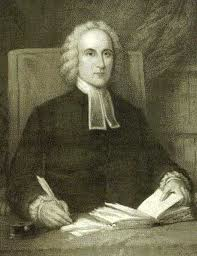
Jonathan Edwards Resolutions Modernized By Dennis Griffith

Revised Resolutions of Jonathan Edwards

January 1, 2012 By *Dennis Griffith

As a young man – a teenager, really – Jonathan Edwards set down on paper a series of thoughts and practices to help cultivate growth in grace.  (See 2 Peter 3.18)  Edwards then re-read this list at least once a week to keep his mind focused and renewed.  The result: A man of humble godliness, who was to become a significant spark used to ignite one of the greatest revivals known to history.  Even many unbelieving scholars admit Edwards may have been the greatest mind to be born on the North American continent.

The Resolutions of Jonathan Edwards are still a practical and beneficial tool for spiritual cultivation.  But one problem for many is that the early 18th Century language makes it sometimes difficult to grasp what Edwards wrote.   I have taken it upon myself to attempt to translate Edwards’ meaning in hopes that some might use these resolutions who might otherwise feel discouraged by the archaic words.  And while I admit that there are a few of these resolutions that I cannot embrace, I will leave it to each individual to pick out anything that might seem worthy for adoption among his/her own personal resolutions.

***

Aware that I am unable to do anything without God’s help, I do pray that, by his grace, he will enable me to keep these Resolutions, so far as they are in line with his will, and that they will honor Christ.

NOTE: Remember to read over these Resolutions once a week.

1. Resolved:  I will DO whatever I think will be most to God’s glory; and my own good, profit and pleasure, for as long as I live. I will do all these things without any consideration of the time they take.  Resolved: to do whatever I understand to be my duty and will provide the most good and benefit to mankind in general. Resolved to do this, whatever difficulties I encounter, and no matter how many I experience or how severe they may be.

2. Resolved: I will continually endeavor to find new ways to practice and promote the things from Resolution 1.

3. Resolved: If ever – really, whenever – I fail & fall and/or grow weary & dull; whenever I begin to neglect the keeping of any part of these Resolutions; I will repent of everything I can remember that I have violated or neglected, …as soon as I come to my senses again.

4. Resolved: Never to do anything, whether physically or spiritually, except what glorifies God.  In fact, I resolve not only to this commitment, but I resolve not to even grieve and gripe about these things, …if I can avoid it.

5. Resolved: Never lose one moment of time; but seize the time to use it in the most profitable way I possibly can.

6. Resolved: To live with all my might, …while I do live.
7. Resolved: Never to do anything which I would be afraid to do if it were the last hour of my life.

8. Resolved: To act, in all respects, both in speaking and doing, as if nobody had ever been as sinful as I am; and when I encounter sin in others, I will feel (at least in my own mind& heart) as if I had committed the same sins, or had the same weaknesses or failings as others.  I will use the knowledge of their failings to promote nothing but humility – even shame – in myself. I will use awareness of their sinfulness and weakness only as an occasion to confess my own sins and misery to God.

9. Resolved: To think much, on all occasions, about my own dying, and of the common things which are involved with and surround death.

10. Resolved: When I feel pain, to think of the pains of martyrdom – both of Jesus and of Believers around the world; and remind myself of the reality of hell.

11. Resolved:  When I think of any theological question to be resolved, I will immediately do whatever I can to solve it, … if circumstances don’t hinder.

12. Resolved: If I find myself taking delight in any gratification of pride or vanity, or on any other such empty virtue, I will immediately discard this gratification.

13. Resolved: To be endeavoring to discover worthy objects of charity and liberality.

14. Resolved: Never to do anything out of revenge.

15. Resolved: Never to suffer the least emotions of anger about irrational beings.

16. Resolved: Never to speak evil of anyone, except if it is necessary for some real good.

17. Resolved: I will live in such a way, as I will wish I had done when I come to die.

18. Resolved: To live, at all times, in those ways I think are best in me during my most spiritual moments and seasons – those times when I have clearest understanding of the gospel and awareness of the World that is to come.

19. Resolved: Never to do anything, which I would be afraid to do if I expected it would not be more than an hour before I would hear the last trump sound.  (i.e. when Jesus returns.)

20. Resolved: To maintain the wisest and healthiest practices in my eating and drinking.

21. Resolved: Never to do anything, which if I saw another do, I would consider a just reason to despise him for, or to think in any way lesser of him.

22. Resolved: To endeavor to obtain for myself as much happiness in the world to come as I possibly can.  To accomplish this I will use all the strength, power, vigor, and vehemence – even violence – I am capable of, or can bring myself to exert, in any way that can be thought of.

23. Resolved: Frequently take some deliberate action – something out of the ordinary – and do it for the glory of God. Then I will trace my intention back and try to discern my real and deepest motive: What did I really desire out of it? If I find that my truest motive was not for God’s glory, then I consider it as a breach of the 4th Resolution. (See Above)

24. Resolved: Whenever I do any conspicuously evil action, I will trace it back till I come to the original cause; and then I will carefully endeavor BOTH 1) to do so no more AND 2) to fight and pray with all my might against the source of the original impulse.

25. Resolved: To examine carefully, and constantly, what that one thing in me is that causes me to doubt of the love of God, even the least little bit; and then to direct all my forces against it.

26. Resolved: To oust away anything I find that diminishes my assurance of God’s love and grace.

27. Resolved: Never intentionally omit or neglect anything, except if such an omission would be for the glory of God. NOTE to Self: frequently examine anything I have omitted.

28. Resolved: To study the Scriptures so steadily, and so constantly, and so frequently, that it becomes evident – even obvious – to myself that my knowledge of them has grown.

29. Resolved: Never consider something a prayer, nor to let pass for a prayer, any petition that when making I cannot actually hope that God will answer; nor offer as a confession anything which I cannot hope God will accept.

30. Resolved: To strive to my utmost every week to be brought to a higher spiritual place, and to a greater experience of grace, than I was the week before.

31. Resolved: Never to say anything at all against anybody; except when to do so is perfectly consistent with the highest standards of Christian honor and love to mankind; and except when it is consistent with the sense of greatest humility and awareness of my own faults and failings. Then, whenever I have said anything against anyone, I will examine my words against the strictest test of the Golden Rule.

32. Resolved: To be strictly and firmly faithful to whatever God entrusts to me.  My hope is that the saying in Proverbs 20.6,  “A faithful man who can find?” may not be found to be even partly true of me.

33. Resolved: Always do whatever I can towards making, maintaining, establishing and preserving peace, whenever it can be, but without over-balancing the value peace to such a degree that it becomes a detriment in other respects.

34. Resolved: When telling stories, never to speak anything but the pure and simple truth.

35. Resolved: Whenever I so much as question whether I have done my duty, to a point that my peace and tranquility is disturbed, I will stop and question myself until my concern is resolved.

36. Resolved: Never to speak evil of anyone, except I have some particular good purpose for doing so.

37. Resolved: To inquire every night, as I am going to bed, where I may have been negligent, what sin I have committed, and how I have denied myself. I will also do this at the end of every week, month, and year.

38. Resolved: Never to speak anything that is ridiculous, trivial, or otherwise inappropriate on the Lord’s Day or Sabbath evening.

39. Resolved: Never to do anything when the lawfulness is questionable. And then afterward, resolve to consider and examine whether or not whatever I have just done is truly lawful and/or whether whatever I have refrained from doing would have actually been permissible.

40. Resolved: To inquire every night, before I go to bed, whether I have acted in the best way I possibly could, with respect to eating and drinking.

41. Resolved: To ask myself at the end of every day, week, month and year, where I could have possibly done better in any respect.

42. Resolved: To frequently renew my dedication to God, which was first made at my baptism and which I solemnly renewed when I was received into the communion of the church; and which I have now solemnly re-made this [DATE] day of [MONTH], [YEAR].

43. Resolved: Never, from this day until the day I die, act as if I were in any way my own, but entirely and altogether belong to God, and then live in a way agreeable to this reality.

44- Resolved: That nothing other than the gospel shall have any influence at all on any of my actions; and that no action shall be, even in the very least circumstance, anything other than gospel declares, demands, and implies.

45. Resolved: Never to allow any pleasure or grief, joy or sorrow, nor any affection at all, nor any degree of affection, nor any circumstance, but what advances the gospel.

46. Resolved: Never allow the least measure of any fretting or uneasiness about my father or mother. Resolved to never allow the effects of disappointment in them, or frustrations with them, to even in the very least alter what I say to them or about them, or any activity in reaction to them.  Let me be careful about this, not only about my parents, but also with respect to any of our family.

47. Resolved: To endeavor to my utmost to deny whatever is not most agreeable to a good, and universally sweet and benevolent, quiet, peace able, contented, easy, compassionate, generous, humble, meek, modest, submissive, obliging, diligent and industrious, charitable, even, patient, moderate, forgiving, sincere temper; and to do at all times what such a temper would lead me to. Examine strictly every week, whether I have done so. Sabbath morning. May 5,1723.

48. Resolved: With the utmost niceness and diligence, and with the strictest scrutiny, constantly be looking into the state condition of my soul, so that I may know whether or not I have truly an interest in Christ at any given time. I will do this so that, when I come to my end in death, I will not have neglected to repent of anything I have found.

49. Resolved: That Neglect never shall be, if I can help it.

50. Resolved: I will act in such a way as I think I will judge to have been best and most prudent, when I have come into the future world – Heaven.

51. Resolved: That I will act in every respect, as I think I would wish I had done, if in the end for some reason I would have be damned.

52. I frequently hear persons in old age say how they would live, if they were to live their lives over again, so… Resolved: That I will live just as I can imagine I shall wish I had done, supposing I live to old age.

53. Resolved: To improve every opportunity, when I am in the best and happiest frame of mind, to cast and venture my soul on the Lord Jesus Christ, to trust and confide in him, and consecrate myself wholly to him; that from this I may have assurance of my eternal safety, knowing that my confidence is in my Redeemer.

54. Resolved: Whenever I hear anything spoken in a conversation of any person, if I think what is said of that person would be praiseworthy in me, I will endeavor to imitate it.

55. Resolved: To endeavor to my utmost to act as I can imagine I would if I had already seen all the happiness of heaven, as well as the torments of hell.

56. Resolved: Never to give up, nor even slacken up, in my fight with my own corruptions, no matter how successful or unsuccessful I may be.

57. Resolved: When I fear misfortunes and adversities, to examine whether I have done all I am expected to do, and resolve to do everything I am able to do.  Once I have done all that God requires of me, I will accept whatever comes my way, and accept that it is just as God’s Providence has ordered it.  I will, as far as I can, be concerned about nothing but my own duty and my own sin.

58. Resolved: Not only to refrain from an air of dislike, fretfulness, and anger in conversations, but also to exhibit an air of love, cheerfulness and graciousness.

59. Resolved: Whenever I am most conscious of feelings of ill nature, bad attitude, and/or anger, I will strive then the most to feel and act good naturedly.  At such times I know I may feel that to exhibit good nature might seem in some respects to be to my own immediate disadvantage, but I will nevertheless act in a way that is gracious, realizing that to do otherwise would be imprudent at other times (i.e. times when I am not feeling so irked).

60. Resolved: Whenever my feelings begin to appear in the least out of sorts, when I am conscious of the least uneasiness within my own heart and/or soul, or the least irregularity in my behavior, I will immediately subject myself to the strictest examination. (i.e. Psalm 42.11)

61. Resolved:  I will not give way to that apathy and listlessness which I find artificially eases and relaxes my mind from being fully and fixedly set on God’s Grace. Whatever excuses I may have for it, whatever my listlessness inclines me to do, or rather whatever it inclines me to neglect doing, I will realize that it would actually be best for me to do these things.

62. Resolved: Never to do anything but what God, by the Law of Love, requires me to do. And then, according to Ephesians 6.6-8, I must do it willingly and cheerfully as to the Lord, and not for man.  I must remember that whatever good thing any man has or does he has first received from God; and that whenever a man is compelled by faith to act with love and charity toward others, especially those in need, that we do it as if to/for the Lord.

63. On the hypothetical supposition that at any one time there was never to be but ONE individual in the world who was a genuine and complete Christian, who in all respects always demonstrated the Faith shining in its truest luster, and appearing excellent and lovely, from whatever angle and under whatever circumstance this Faith is viewed… Resolved: To act just as I would do, if I strove with all my strength, to be that ONE; and to live as if that ONE should live in my time and place.

64. Resolved: Whenever I experience those “groanings which cannot be uttered” (Romans 8.26), of which the Apostle speaks, and those “longings” that consume our souls, of which the Psalmist speaks (Psalm 119:20), I will embrace them with everything I have within me. And I will not be weary of earnestly endeavoring to express my desires, nor of the repetitions so often necessary to express them and benefit from them.

65. Resolved: To exercise myself in all my life long, with the greatest openness I am capable of, to declare my ways to God, and lay open my soul to him: all my sins, temptations, difficulties, sorrows, fears, hopes, desires; and every thing in every circumstance. (See Dr. Manton‘s 27th Sermon on Psalm 119.)

66. Resolved:  I will endeavor always to keep a gracious demeanor, and air of acting and speaking in all places and in all companies, except if it should so happen that faithfulness requires otherwise.

67. Resolved: After afflictions, to inquire in what ways I am now the better for having experienced them. What good have I received by them? What benefits and insights do I now have because of them?

68. Resolved: To confess honestly to myself all that I find in myself – whether weakness or sin. And if it something that concerns my spiritual health, I will also confess the whole case to God, and implore him for all needed help.

69. Resolved: Always to do that which I will wish I had done whenever I see others do it.

70. Let there be something of benevolence, in all that I speak.

*Article Adapted from the excellent Blog: “Grace and Peace” http://wdennisgriffith.wordpress.com/2012/01/01/revised-resolutions-of-jonathan-edwards/. Dennis Griffith lives in Bristol, Tennessee with his wife Carolyn, their three children: Andrew, Matthew and Rebekah; and Ike, their Great Dane.  Dennis also has the privilege of serving as pastor of Walnut Hill Presbyterian Church and chaplain to the Bristol White Sox, the Appalachian League affiliate of the Chicago White Sox. In addition Dennis is a contributing columnist for the Bristol Herald Courier.

Book Review: The Explicit Gospel by Matt Chandler

The Antidote to Gospel Inoculation

When Saint Augustine was living a life of licentiousness many generations ago he was hearing some children playing near where he was seated, playing a game with the refrain “Take up and read, take up and read.” He picked up his Bible and opened it to the book of Romans and proceeded to read about his sin and his desperate need of the provision of Christ’s imputed righteousness by faith in his death, burial, and resurrection in exchange for his sin. He was convicted of his sin and powerfully drawn by the work of the Holy Spirit toward faith and repentance in the person and work of Christ.

Whether you are a rebel, or someone who has heard the gospel (or what may pass for the gospel today) – you are well advised to take up this book and read it. In the past men like Augustine, Luther, and Calvin understood with passion and clarity our need to comprehend the richness and depth of the gospel, and proclaim it with passionate urgency – because souls are hanging in the balance. In this book Chandler definitively understands and articulates the power of the gospel and the desperate need we all have to understand the depth of our sin before a Holy God, and the just requirements He has that we have failed to meet, and thus our desperate need for what Christ came to save us from and unto.

In three parts Chandler clearly articulates the gospel essentials (God, Man, Christ, and our response); the gospel’s theological underpinnings (Creation, Fall, Reconciliation, and Consummation); and lastly its implications and applications for all of the aspects of our lives. The author is to be commended for writing a book that is passionate about the gospel; clearly articulates the gospel; calls for a response to the gospel; and demonstrates how to communicate and live out the gospel.

I highly recommend this book especially for preachers who proclaim the word of God week in and week out. He will inspire you to NOT compromise the gospel and to rest in the work of the Holy Spirit in applying it’s power in the lives of your people. My hope and prayer is that in reading this book your passion will be stirred to unflinchingly proclaim the gospel powerfully in truth and love – resulting in the saving of many lives. I think that the Apostle Paul would wholeheartedly agree with all that Chandler articulates in this book and would add, “For I am not ashamed of the gospel (as conveyed in this book), for it is the power of God for salvation to everyone who believes, to the Jew first and also to the Greek” (Rom. 1:16).

Matt Chandler is the lead pastor of The Village Church, a multi-campus church in the Dallas metroplex of over 10,000 people. He has recently taken the post as President of the Acts 29 Church Planting Network. His sermons are among the top selling (free) podcasts on itunes and he speaks at conferences worldwide. Prior to accepting the pastorate at The Village, Matt had a vibrant itinerant ministry for over ten years where he spoke to hundreds of thousands of people in America and abroad about the glory of God and beauty of Jesus. He lives in Texas with his wife, Lauren, and their three children: Audrey, Reid and Norah.

Dr. J.I. Packer Answers the Question “Will A Loving God Really Condemn People to Hell?”

*Dr. J.I. Packer’s answer to this very important question comes from Chapters One and Five of the book J.I. Packer Answers Questions For Today with Wendy Murray Zoba, Wheaton: Tyndale, 2001, pp. 15, 45-46, 75-77, 79-80.

The problem of individual human destiny has always pressed hard upon thoughtful Christians who take the Bible seriously, for Scripture affirms these three things:

(1) The reality of hell as a state of eternal, destructive punishment, in which God’s judgment for sin is directly experienced;

(2) The certainty of hell for all who choose it by rejecting Jesus Christ and his offer of eternal life; and

(3) The justice of hell as an appropriate divine judgment upon humanity for our lawless and cruel deeds.

It was, to be sure, hell-deserving sinners whom Jesus came to save. All who put their trust in him may know themselves forgiven, justified, and accepted forever—and thus delivered from the wrath to come. But what of those who lack this living faith—those who are hypocrites in the church; or “good pagans” who lived before Christ’s birth; or those who, through no fault of their own, never heard the Christian message, or who met it only in an incomplete and distorted form? Or what of those who lived in places where Christianity was a capital offense, or who suffered from ethno-nationalistic or sociocultural conditioning against the faith, or who were so resentful of Christians for hurting them in some way that they were never emotionally free for serious thoughts about Christian truth? Are they all necessarily lost?

The universalistic idea that all people will eventually be saved by grace is a comforting belief. It relieves anxiety about the destiny of pagans, atheists, devotees of non-Christian religions, victims of post-Christian secularity—the millions of adults who never hear the gospel and millions of children who die before they can understand it. All sensitive Christians would like to embrace universalism. It would get us off a very painful hook.

However, no biblical passage unambiguously asserts universal final salvation, and some speak very explicitly about the lost ness of the lost. Universalism is a theological speculation that discounts the meaning of these New Testament passages in favor of what Universalists claim to be thrust of New Testament thinking: that is, that God’s retributive justice toward humanity is always a disciplinary expression of love that ultimately wins them salvation.

It would be nice to believe that, but Scripture nowhere suggests it when speaking of judgment, and the counterarguments seem overwhelmingly cogent. Universalism ignores the constant biblical stress on the decisiveness and finality of this life’s decisions for determining eternal destiny.

“God ‘will give to each person according to what he has done.’ To those who by persistence in doing good seek glory, honor and immortality, he will give eternal life. But for those who are self-seeking and who reject the truth and follow evil, there will be wrath and anger. There will be trouble and distress for every human being who does evil…but glory, honor, and peace for everyone who does good…For God does not show favoritism” (Romans 2:6-11). This is Paul affirming God’s justice according to the classic definition of justice, as giving everyone his or her due. All Scripture speaks this way.

Universalism condemns Christ himself, who warned people to flee hell at all costs. If it were true that all humanity will ultimately be saved from hell, he would have to have been either incompetent (ignorant that all were going to be saved) or immoral (knowing, but concealing it, so as to bluff people into the kingdom through fear).

The Universalist idea of sovereign grace saving all non-believers after death raises new problems.

If God has the ability to bring all to faith eventually, why would he not do it in this life in every case where the gospel is known?

If it is beyond God’s power to convert all who know the gospel here, on what grounds can we be sure that he will be able to do it hereafter?

The Universalist’s doctrine of God cannot be made fully coherent.

Universalism, therefore, as a theory about destiny, will not work. This life’s decisions must be deemed to be decisive. And thus, proclaiming the gospel to our fallen, guilty, and hell-bent fellows must be the first service we owe them in light of their first and basic need.

“I am obligated both to Greeks and non-Greeks…to preach the gospel,” wrote Paul. “For ‘every one who calls on the name of the Lord will be saved.’ How, then can they call on the one…of whom they have not heard?…Faith comes from hearing the message, and the message is heard through the word of Christ” (Rom. 1:14-15; 10:13-14, 17; see Joel 2:32).

Isn’t Telling People About Hellfire Passé?

There has been a strong reaction in Christian circles against imaginative presentations of hell, the endless fire and all of that. But people do need to know that lostness is a fact.

My concept of hell owes much to C.S. Lewis, whose key thought is that what you have chosen to be in this world comes back at you as your eternal destiny; if you’ve chosen to put up the shutters against God’s grace rather than receive it, that’s how you will spend eternity. Hell is to exist in a state apart from God, where all of the good things in this world no longer remain for you. All that remains is to be shut up in yourself, realizing what you have missed and lost through saying no to God.

In Jean Paul Sartre’s play about hell, No Exit, four people find themselves in a room they can’t leave, and they can’t get away from one another. What Sartre presents is the ongoing, endless destruction of each person by the others. Though Sartre was n atheist, his nightmare vision of this process makes substantial sense to me as image of hell—one aspect of it, anyway. The unending realization of God’s displeasure and rejection has to be in reality in hell, too.

Can Someone Who Has Died Be Converted After Physical Death?

Hebrews 9:27 says, “Man is destined to die once, and after that to face judgment.” When the writer of Hebrews speaks of dying “once,” he uses a word that means “once for all”; not once as distinct from two or more times. By happening once, the event changes things permanently so that the possibility of it happening again is removed. That is what the word means when it is applied in verses 26 and 28 to Jesus’ atoning sacrifice on the Cross.

The unrepeatable reality of physical death leads directly to reaping what we sowed in this world. This is what Jesus taught in his story of the callous rich man and Lazarus the beggar (Luke 16:19-31), and when he spoke of dying in one’s sin as something supremely dreadful (John 8:21-23). And this is what Paul taught when he affirmed that, on judgment day, all will receive a destiny corresponding to their works. The New Testament is solid in viewing death and judgment this way.

Modern theologians are not all solid here. Some of them expect that some who did not embrace Christ in this life may yet do so savingly in the life to come. Some link with this idea that a God of grace owes everyone a clear presentation of the gospel in terms they understand, which is certainly more than many receive in this life. Others, like the Universalists presume all humans will finally enjoy God in heaven, and therefore that God must and will continue to exert loving pressure, one way or another, till all have been drawn to Christ. The late Nels Ferre described hell as having “a school and a door” in it—when those in hell come to their senses about Christ, they may leave, so that place ends up empty. But this is non-scriptural speculation and reflects an inadequate grasp of what turning to Christ involves.

How a newly-dead person’s perceptions differ from what they were before death is more than we have been told. But Scripture says nothing of prevenient grace triggering postmortem conversions. That being so, we should conclude that the unbeliever’s lack of desire for Christ and the Father and heaven before death remains unchanged after death. For God to extend the offer of salvation beyond the moment of death, even for thirty seconds, would be pointless. Nothing would come of it.

What Does It Mean To Choose Jesus?

The phrase “choose Jesus” might suggest it is like choosing the preferred dish form a menu—a choice where you opt for what strikes you as the best of the bunch, knowing that if your first choice is not available, as second is always possible. But coming savingly to Christ is not like that. When it occurs, there is a sense of inevitability about it, springing from three sources.

First, there is the pressure of the gospel truth that feels too certain to be denied;

Second, there is the sense of God’s presence forcing one to face the reality of Jesus Christ; and

Third, there is the realization that without him, one is lost.

This sense is generated by God’s action of making the first move, what we call prevenient grace (meaning the prompting of the Holy Spirit). There is no commitment to Christ-no “choice for Jesus,” if one prefers to say it that way—apart from this convicting divine action.

The act of the heart in choosing Jesus Christ is not always performed in a single moment, nor is it always performed calmly and clearheadedly. At the surface level there are often crosscurrents of reluctance. C.S. Lewis, dissecting his own conversion story, wrote of “the steady, unrelenting approach of him whom I so earnestly desired most to meet.” He scoffed at the idea that anyone who is not a believer, no matter how religiously inclined, really seeks the real God and the real, living Christ, with their dominating, dictatorial demands for discipleship. (“You might as well speak of the mouse’s search fro the cat”) But in every real conversion, prevenient grace ensures a real change of heart through the irresistible Calvary love of Christ. Then you not only acknowledge the Savior’s reality, but you speak to him and embrace him and hand yourself over to him, not just because you know you should, but because you want to.

Isaac Watts put it into verse this way:

My dear almighty Lord,

My Conqueror and King,

Thy scepter and Thy sword,

Thy reigning grace I sing:

Thine is the power; behold, I sit

In willing bonds before Thy feet.

*A Mini-Biography of Dr. J.I. Packer

J I Packer in study image

“A Speckled Bird”

The son of a working-class man who was in his recollection, “unfit for major responsibility,” James Innell Packer was brought up in Gloucester, England, in an environment that hardly seemed a likely incubator for one of the greatest Christian minds of the twentieth century. Spending his childhood fumbling to fit in, Packer’s intellectual and bookish qualities often estranged him from his peers. “A violent collision with a bread van” served to further remove him from social acceptance. In the incident, after being chased into a street by some schoolboys, he was hit by a van and “Lost a bit of [his] head as a result.” From then on he recalls, he “Used to move around wearing on [his] head an aluminum plate with a rubber pad attached around the edge.” Frustrated by being, in his words, “A speckled bird,” Packer struggled to fit in. But his opportunity to play sports, like cricket, and live actively had been dashed with the van accident. Ultimately, he embraced his own intellectual curiosity and spent the bulk of his childhood reading voraciously.

His Blossoming Faith

Packer grew up going to church because of the habitual attendance of his parents, but it wasn’t until he was in secondary school that he began thinking seriously about the Christian faith. By the time he entered Corpus Christi College at Oxford in 1944, his vigorous study of the Bible and other Christian writers, including C. S. Lewis, had won his intellectual assent for Christianity. However, Packer recalls, it wasn’t until he attended a meeting of the Oxford Christian Union that he finally made, “A personal transaction with the living Lord, the Lord Jesus.”

Packer didn’t solve his social problems by becoming a Christian, and even at college he began feeling an increased sense of isolation. During this time he happened to start reading some of the great Puritan authors, like John Owen and John Bunyan, and found in their works the inspiration to be ordained and subsequently pursue doctoral studies.

Following Packer’s ordination in the Anglican Church, a providential scheduling mix-up on the part of a friend, changed his life forever. Having double-booked himself for an evening, Packer’s friend asked James to speak to an audience in his absence. This speaking engagement not only broke through Packer’s fear of public situations but also introduced him to his future wife, Kit Mullett, who was sitting in the audience. Together they would have three children, Naomi, Ruth, and Martin and, Packer recalls, a slew of pets.

“Centered on the Lord”

Gaining respect in academic circles, Packer wrote his first book, a critique of Christian Fundamentalism called Fundamentalism and the Word of God, in 1958. Knowing God, his most widely read book, was published fifteen years later in 1973. He worked to found the International Council on Biblical Inerrancy (ICBI). He surprised the academic community in 1979, by leaving his Anglican evangelical community to take a position at Regent College in Vancouver, British Columbia. Regent flourished because of his presence, growing from a tiny institution into the largest center of theological education in its region. Since arriving at Regent he has published a book every year. Together his books have sold more than three million copies. His wife Kit is quick to point out the source of his success, “His devotion to the Lord is the reason for everything he’s done. His writing, his preaching, his lecturing, his living are all centered on the Lord.” To read more about Packer, a recent biography by Alister McGrath, entitled J. I. Packer, gives a careful and sensitive examination of his life.

What Can We Learn About the Resurrection of Jesus from the Life of Job? By Dr. James M. Boice

 *“He Lives!”

I do not know if you have had the experience of gaining an insight or receiving a revelation so important that you wished it could be preserved forever. If you have, or if you have even experienced that in a partial way, you will understand the tone in which Job spoke his most widely quoted lines, beginning, I know my Redeemer lives.” We hear something said in a particularly vivid way, and we say, “If I could just remember that!” Or we have an insight and say, “If I could just get that written down so I won’t forget it!”

That was the feeling that Job experienced. He had suffered a great deal, first by the loss of his possessions, then by the loss of his ten children and eventually his own health. His friends came to comfort but actually abused him, charging that his misfortunes were the result of some particularly outstanding sin in his life. In the midst of one reply Job gave vent to the insight to which I am referring.

Job perceived that his story was not being told completely in this life and that a later day would vindicate him. In fact, he perceived that there was an individual who would vindicate him, even Jesus Christ, whom Job calls “my Redeemer.” This individual would stand on the earth in some future day, would raise Job from death, and would enable him to see God.

Can you imagine Job’s excitement as he gave expression to this hope? There were many who shared it in Job’s day; few understood it. So Job said that he wished his words might be preserved. “Oh, that my words were recorded, that they were written on a scroll, that they were inscribed with an iron tool on lead, or engraved in rock forever!” (Job 19:23-24). Fortunately for us, Job’s wish was fulfilled. Not only were his words preserved in a book; they have been preserved in the Book of books, the Bible.

A Kinsman-Redeemer

“I know that my Redeemer lives, and that in the end he will stand upon the earth” (Job 19:25).

The first thing we shall look at in Job’s statement is its key word: “Redeemer.” This is a rich and particularly illuminating term. In Hebrew the word is goel, which refers to a relative who performs the office of a redeemer for his kin. We must visualize a situation in which a Hebrew has lost his inheritance through debt. He has mortgaged his estate and, because of a lack of money to meet the debt, is about to lose it. This happened in the case of Naomi and Ruth so that, although they had once possessed the land, they had become impoverished. In such a situation was the goel’s duty, as the next of kin, to buy the inheritance; that is to pay the mortgage and restore the land to his relative. Boaz did that for Ruth.

That custom is what Job refers to in his expression of faith in a divine Redeemer, and it is why this passage must refer to Job’s own resurrection. As Job spoke those words he was in a dire physical condition. He had lost his family and health. He must have imagined that he was about to lose his life, too. He would die. Worms would destroy his body. But that was not the end of the story. For his body, like the land, was his inheritance; and there is one who will redeem it for him. Years may go by, but at the latter day the Redeemer will stand upon the earth and will perform the office of a goel in raising his body. He will bring Job into the presence of God.

I recognize that there are different ways of translating the phrase “Yet in my flesh I will see God” (19:26). Some versions read, “Yet without my flesh.” But those fail to make full sense of the passage. What is redeemed if it is not Job’s body? Not the soul or the spirit certainly, for those are never forfeited. And not Job’s physical possessions, for the passage is not even considering them. It is the body that will be redeemed. Consequently, it is in this body and with his own physical eyes that Job expects to see God.

A second duty of the goel was to redeem by power, if that should be necessary. Abraham performed this duty when Lot had been captured by the four kings who made war against the king of Sodom and his allies. Abraham armed his household, pursued the four kings and their prisoners, and then, attacking by night, recovered both prisoners and spoil. That is what the Lord Jesus Christ did, was it not? He attacked in power—we speak rightly of resurrection power—and broke death’s hold.

Finally, the goal had a duty to avenge a death. Imagine that an Israelite has been attacked and is dying. The goal learns who has struck his relative. He snatches up his own sword and dashes off to avenge his own sword and dashes off to avenge the murder. Our Christ is likewise our avenger. We are dying people, but we have a Redeemer. We read of Him: “For he must reign until he has put all his enemies under his feet. The last enemy to be destroyed is death…Where, O death, is your victory? Where, O death, is your sting? The sting of death is sin, and the power of sin is the law. But thanks be to God! He gives us the victory through our Lord Jesus Christ” (1 Corinthians 15:25-26, 55-57).

A Living Redeemer

As we think about his words in greater detail, we discover next that Job took confidence, not only in the fact that he had a Redeemer, but that he had a living Redeemer. That is important, because a redeemer must be living to perform his function.

If Job had been able to say merely that he had a Redeemer, that would have been wonderful. If he could have said further that the Redeemer of whom he was speaking was the Christ, that would have been even more wonderful. To have known such a one, to have been related to him, to have been able to look back to what he had done—all that would have been both pleasant and comforting. But so far as the present need was concerned it would have been inadequate. A person in that position could say, “I had a Redeemer, and I value that.” But he would undoubtedly add, “But I wish I had him now.” A redeemer must be living if he is to buy back the estate, recover the prisoners, and defeat the enemy.

Job does not say that he had a Redeemer. He says that he has a Redeemer and he is living. We too have a living Redeemer, the same Redeemer, who is Jesus.

That is the thrust of our testimony on Easter Sunday. And indeed on every other Lord’s Day. We testify that Jesus rose from the dead and that he ever lives to help all who call upon him. The evidences for this are overwhelming. There is the evidence of the narratives themselves. They are quite evidently four separate and independent accounts, for if they were not, there would not be so many apparent discrepancies—the time at which the women went to the tomb, the number of angels and so on. At the same time, it is also obvious that there is a deep harmony among them—not a superficial harmony but rather a detailed harmony that is increasingly evident as the accounts are analyzed. In fact, the situation is precisely what we would expect if the accounts are four independent records of those who were eyewitnesses.

One writer summarized the evidence like this:

It is plain that these accounts must be either a record of facts that actually occurred, or else fictions. If fictions, they must have been fabricated in one of two ways, either independently of one another, or in collusion with one another. They cannot have been made up independently; the agreements are too marked and too many. They cannot have been made up in collusion…the apparent discrepancies are too numerous and too noticeable. Not made up independently, not made up in collusion, therefore, it is evident they were not made up at all. They are a true relation of facts as they actually occurred (R.A. Torrey, The Bible and Its Christ: Being Noonday Talks with Business Men on Faith and Unbelief, New York: Revell, 1904-1906, pp. 60-61).

The resurrection of the Lord Jesus Christ is also proved by the transformed lives of the disciples. Before the resurrection two negative charges could be made against them; and these by their own confession. First, they had failed to understand Jesus’ teaching about the crucifixion and resurrection. Second, they were cowardly. Peter had said that he would defend Jesus to the death and never deny him. But on the night of the arrest he did deny Him. He abandoned Him, as did the other disciples. On the day of the resurrection, but before Jesus had appeared to them in the upper room, we find them hiding in fear of the Jews. Yet hours later they were standing up boldly in Jerusalem to denounce the execution of Jesus and call for faith in Him. Moreover, when they were arrested later we do not find them cowering in fear of the future but rather giving full testimony to Christian faith and doctrine. What made the difference? What made cowards bold, a scattering body of individuals a cohesive force, a disillusioned following evangelists? Only one thing accounts for it: the resurrection of Jesus Christ.

There are many evidences, but I cannot help but mention a third—the change in the day of worship. Before the resurrection the followers of Christ worshipped, as did all Jews, on Saturday. The need to do this would not even have been questioned—it had been practiced for centuries. Yet from that time on we find the newly formed body of Christians meeting, not on Saturday, but on the first day of the week, Sunday. Clearly it was because of Jesus’ resurrection.

A Personal Redeemer

There is a third point to Job’s statement. Not only does Job declare that he has a Redeemer, not only does he affirm that He is living Redeemer—he adds, quite properly, that He is his Redeemer. “My” is the word he uses. “I know that my Redeemer lives.” Do you know that “my” in relationship to Jesus Christ? It is a reminder of the need for personal religion.

This is what we desire, is it not? We are persons, and we desire personal relationships. We are made in God’s image, as persons; so we desire a personal relationship with God.

In my church I notice that the young people often have a great deal of appreciation for one another. There are young women, for instance, who greatly appreciate certain young men. And there are young men who appreciate certain young women, even though they sometimes fail to say so. That is a wonderful thing. I am glad that virtue and good looks are noticed. But I have observed that in addition there are also many young women who would like to be able to say, not only, “Look at that fellow; how handsome he is!” but also, “Look at my fellow.” And some of the young men would like to say, “Look at my girl.” Admiration is good, but personal involvement is better.

That is our privilege in relation to Christ. It is good to admire Him. He is the risen Lord of glory after all; it would be foolish not to do so. But how much better to know Him personally, as Job did. Jesus came to earth to die for sin and to rise again. Can you say, “My God came as my Redeemer to die for my sin and to rise again for my justification? You give no real evidence of being a Christian until you can.

Do not delay. Do not say, “I’ll do it next year.” I can give no guarantee that you will be here next year. On the contrary, some who read these words will not be. Even tomorrow may be too late. The Bible says, “Now is the time of God’s favor, now is the day of salvation” (2 Corinthians 6:2).

Assurance

I would also like you to possess Job’s assurance. That is the fourth point. Not only does Job refer to his Redeemer and declare that he is both a living and personal Redeemer, he also says that he knows all these things: “I know that my Redeemer lives, and that in the end he will stand upon the earth.”  You should possess such assurance if you are a Christian.

I do not know why some people think that it is meritorious to express doubt in matters of religion. They think that it is somehow vain or impolite to be certain and that it is humble and therefore desirable to say, “I do not know…I hope so…I would like to believe…I think…” Nothing could be more faulty. The humble person is the one who bows before God’s revelation and accepts it because of who God is. It is the proud man who thinks he knows enough about anything to doubt God. Besides, God says that doubt is the equivalent of calling Him a liar; it is as much to say that His word is untrustworthy (cf. 1 John 5:10). Jesus lives! Believe it! Declare it! Act upon it! Say with Job, “I know that my Redeemer lives, we shall live. His resurrection is the pledge of our own.

Then, too, we shall see God. This is the second benefit. We shall live again and in that living form shall see God. What a wonderful thought. And how much more wonderful than anything else that might be said. Notice that Job did not say, “I shall see heaven.” That was true, but it was relatively unimportant compared to the fact that he would see God. Spurgeon wrote, “He does not say, ‘I shall see the pearly gates, I shall see the walls of jasper, I shall see the crowns of gold and the harps of harmony,’ but ‘I shall see God’; as if that were the sub and substance of heaven” (Charles Haddon Spurgeon, “I know that My Redeemer Lives,” in the Metropolitan Tabernacle Pulpit, vol.9, Pasadena, Tex.: Pilgrim, Tex.: Pilgrim Publications, 1969, 214.) Nor does he say, “I shall see the holy angels.” That would have been a magnificent sight, at least it seems so to us we look through the eyes of John the evangelist, who wrote the book of Revelation. I find  few scenes more thrilling than John’s description. But that too pales beside the gaze of the soul on God. Notice, finally, that Job did not even say, ”I shall see those of this world who have gone before me,” even though that would be a great joy and his departed children would be among them. Job would see all these things: the pearly gates, the holy angels, and his children. But over and above and infinitely more glorious than any of those, he would see God.

Do not think that this is a narrow vista, wonderful but small, like looking at one of those old-fashioned pastoral scenes within a candy egg. God is infinite. To see God is to experience perfect contentment and to be satisfied in all one’s faculties.

 Living Memorials

Our conclusion is this: If Job, who lived at the dawn of recorded history, centuries before the time of the Lord Jesus Christ—if Job knew these things, how much more should we know them, we who are aware of Christ’s resurrection and have witnessed his power in our lives. Job lived in a dark and misty time, before the dawning of the Lord Jesus Christ, that sun of righteousness. Job lived in an age before Jesus brought life and immortality to light through the gospel. If he had failed to understand about the resurrection and had failed to believe in it, who could blame him? Nobody. Yet he believed. How much more than should we?

Can you say with Job, “I know that my Redeemer lives, and that in the end he will stand upon the earth. And after my skin has been destroyed, yet in my flesh I will see God”? If so, then live in that assurance. Do not fear death. During the next twelve months death will certainly come for some, but there will also be a resurrection. Besides, Jesus is also coming; and if that should happen soon, He will receive us all.

I add one more thought. We believe these truths, yes. But let us not only believe them; let us pass them on so that others may share in this resurrection faith also. What was Job’s desire after all? It was that his words might be preserved and that his faith in the resurrection might be saved for coming generations. The resurrection hope has come down to us through many centuries of church history. Let it pass to our children and to our children’s children until the living Lord Jesus Christ returns in His glory. Jesus Christ lives. He lives! Then let us tell others, and let us shout with Job, “I know that my Redeemer lives, and that in the end he will stand upon the earth.”

*”He Lives” is an Easter Sermon excerpted from Chapter One in James Boice, The Christ of the Empty Tomb, Chicago, Moody Press, 1985; reprinted in 2008. James Montgomery Boice, Th.D., (July 7, 1938 – June 15, 2000) was a Reformed theologian, Bible teacher, and pastor of Tenth Presbyterian Church in Philadelphia from 1968 until his death. He is heard on The Bible Study Hour radio broadcast and was a well known author and speaker in evangelical and Reformed circles. He also served as Chairman of the International Council on Biblical Inerrancy for over ten years and was a founding member of the Alliance of Confessing Evangelicals.

Why Was The Death of Christ on The Cross Necessary? By Dr. Wayne Grudem

An Atonement Primer:

We may define the atonement as follows: The atonement is the work Christ did in his life and death to earn our salvation. This definition indicates that we are using the word atonement in a broader sense than it is sometimes used. Sometimes it is used to refer only to Jesus’ dying and paying for our sins on the cross. But, as will be seen below, since saving benefits also come to us from Christ’s life, we have included that in our definition as well.

The Cause of the Atonement: What was the ultimate cause that led Christ’s coming to earth and dying for our sins? To find this we must trace the question back to something in the character of God himself. And here Scripture points to two things. And here Scripture points to two things: the love and justice of God.

The love of God as a cause of the atonement is seen in the most familiar passage in the Bible: “For God so loved the world that he gave his only Son, that whoever believes in him should not perish but have eternal life” (John 3:16). But the justice of God also required that God find a way that the penalty due to us for our sins would be paid (for he could not accept us into fellowship with himself unless the penalty was paid). Paul explains that this was why God sent Christ to be a “propitiation” (Rom. 3:25 NASB) (that is, a sacrifice that bears God’s wrath so that God becomes “propitious” or favorably disposed toward us): it was to show God’s righteousness, because in his divine forbearance he had passed over former sins” (Rom. 3:25). Here Paul says that God had been forgiving sins in the Old Testament but no penalty had been paid–a fact that would make people wonder whether God was indeed just and ask how he could forgive sins without a penalty. No God who was truly just could do that, could he? Yet when God sent Christ to die and pay the penalty for our sins, “it was to prove at the present time that he himself is righteous and that he justifies him who has faith in Jesus (Rom. 3:26).

Therefore both the love and the justice of God were the ultimate cause of the atonement. It is not helpful for us to ask which is more important, however, because without the love of God, he would never have taken any steps to redeem us, yet without the justice of God, the specific requirement that Christ should earn our salvation by dying for our sins would not have been met. Both the love and the justice of God were equally important.

The Necessity of the Atonement. Was there any other way for God to save human beings than by sending his Son to die in our place?

Before answering this question, it is important  to realize that it was not necessary for God to save any people at all. When we appreciate that “God did not spare the angels when they sinned, but cast them into hell and committed them to pits of nether gloom to be kept until judgement (2 Peter 2:4), then we realize that God could also have chosen with perfect justice to have left us in our sins awaiting judgment: he could have chosen to save no one, just as he did with the sinful angels. So in this sense the atonement was not absolutely necessary.

But once God, is his love, decided to save some human beings, then  several passages in Scripture indicate that there was not other way for God to do this than through the death of his Son. Therefore, the atonement was not absolutely necessary, but, as a “consequence” of God’s decision to save some human beings, the atonement was absolutely necessary. This is sometimes called the “consequent absolute necessity” view of the atonement.

In the Garden of Gethsemene Jesus prays, “If it be possible, let this cup pass from me; nevertheless, not as I will, but as you will” (Matt. 26:39). We may be confident that Jesus always prayed according to the will of the Father, and that he always prayed with fullness of faith. Thus it seems that this prayer, which Matthew takes pains to record for us, shows that it was not possible for Jesus to avoid the death on the cross which was soon to come to him (the “cup” of suffering that he had said would be his). If he was going to accomplish the work that the Father sent him to do, and if people were going to be redeemed for God, then it was necessary for him to die on the cross.

He said something similar after his resurrction, when he was talking with two disciples on the road to Emmaus. They were sad that Jesus had died, but his response was, “O foolish men, and slow of heart to believe all that the prophets have spoken! Was it not necessary that the Christ should suffer these things and enter into his glory?” (Luke 24:25-26). Jesus understood that God’s plan of redemption (which he explained for the disciples from many Old Testament Scriptures, Luke 24:27) made it necessary for the Messiah to die for the sins of his people.

As we saw above, Paul in Romans 3 also shows that if God were to be righteous, and still save people, he had to send Christ to pay the penalty for sins. “It was to prove at the present time that he himself is righteous and that he justifies him who has faith in Jesus” (Rom. 3:26). The epistle to the Hebrews emphasizes that Christ had to suffer for our sins: “He had to be made like his brethren in every respect, so that he might become a merciful and faithful high priest in the service of God, to make expiation [lit. ‘propitiation’] for the sins of the people” (Hebrews 2:17). The author of Hebrews aslo argues that since “it is impossible that the blood of bulls and goats should take away sins (Hebrews 10:4), a better sacrifice is required (Hebrews 9:23). Only the blood of Christ, that is, his death, would be able  really to take away sins (Hebrews 9:25-26). There was no other way for God to save us than for Christ to die in our place.

Dr. Wayne Grudem, research professor of theology and biblical studies at Phoenix Seminary, received his A.B. from Harvard University, M.Div. from Westminster Seminary, and a Ph.D in New Testament from the University of Cambridge. He is a board member of the Council on Biblical Manhood and Womanhood, a past president of the Evangelical Theological Society, and the author of more than a dozen books -including his magnum opus “Systematic Theology”, Grand Rapids:  Zondervan, 2009 – from which this article is excerpted from chapter 27.

How Christian Coaching Can Help You? By Dr. Gary R. Collins

After being a senior pastor for over twenty years and now being a full-time “Pastoral Life Coach” I’m often asked by people – “What is life coaching and how is it different from counseling?” I don’t think I’ve come across a better answer for this than that of *Gary R. Collins in Appendix C in his fantastic book Christian Coaching, published by NavPress, Colorado Springs: 2009. Gary Collins describes almost perfectly what I seek to do with those I coach:

COACHING FACTS

 What is coaching?

The first time it was ever used, the word coach described a horse-drawn vehicle—a stagecoach that would get people from where they were to where they wanted to be. A modern bus does the same thing, and often these vehicles are called coaches. Most often today, coaches are people who help athletes and teams more from one place to another that is better and where they want to be. Even Tiger Woods has a coach to help his game of golf.

But coaches also help musicians, public speakers, and actors, who rely on coaching to improve their skills, overcome obstacles, remain focused, and get to be where they want to be. Coaching is very popular in business and corporate settings around the world where “executive coaches” help managers and other business leaders deal with change, develop new management styles, make wise decisions, become more effective, cope with their hyperactive lifestyles, and deal with stress.

Executive coaches work with people in business to help them move from where they are to levels where they are more competent, fulfilled, and self-confident than they would have been otherwise.

In summary, coaches guide people from where they are toward the greater competence and fulfillment they desire. Christian coaching is the art and practice of working with a person or group in the process of moving from where they are to where God wants them to be {My [DPC] own definition is similar, “Christian Coaching is taking a person from where they are to where God wants them to be in reflecting the image of Christ.”}.

Why would anybody want a coach?

 Coaching helps people who want to:

  • Get unstuck

  • Build their confidence

  • Expand their vision for the future

  • Fulfill their dreams

  • Unlock their potential

  • Increase their skills

  • Move through transitions

  • Take practical steps toward their goals

How does coaching differ from counseling? 

  • Unlike counseling or therapy, coaching is less threatening, less about problem solving, more about helping people reach their potential.

  • Coaching is not for people who need therapy to overcome painful influences from the past; coaches help people build vision and move toward the future.

  • Coaching is not about looking back; it’s about looking ahead.

  • Coaching is not about healing; it’s about growing.

  • Coaching focuses less on overcoming weaknesses and more on building skills and strengths.

  • Usually coaching is less formal than the counselor/counselee relationship; more often it is a partnership between two equals, one of whom has experiences, perspectives, skills, or knowledge that can be useful to the other.

What do coaches do to help others? 

Coaches stimulate better skills. Good coaching helps people anticipate what they could become, overcome self-defeating habits or insecurities, manage relationships, develop new competencies, and build effective ways to keep improving.

Coaches stimulate vision. Many individuals and churches have no clear vision. They keep doing what they have done for years, without much change and with little expectation that things will ever be different. Coaches work with individuals and organizations (including churches) as they think beyond the present, more clearly envision the future, and plan how to get there.

Coaches help people grow through life transitions. Whenever we encounter major changes in our lives—such as a new job, a promotion, a move, the death of a loved one, the launch of a new career, or retirement—we face uncertainty and the need to readjust. Experienced coaches better enable people to reassess their life goals, find new career options, change lifestyles, get training, reevaluate their finances, or find information so they can make wise decisions.

Coaches guide Christians in their spiritual journeys. Many believers understand the basics of the faith and aren’t looking to be discipled. But they need focused time with somebody who has been on the spiritual road longer, who models Christlikeness, can point out the barriers to growth, and can guide the journey.

Coaches speak the truth in love. Good coaches know that sometimes the best way to help is by refusing to ignore harmful behavior patterns. Instead, coaches nudge people to deal with attitudes and behavior that should be faced and changed.

What happens in coaching?

Coaching is a relationship that most often is client centered and goal directed. Every coaching situation is unique, but usually coaches will begin by exploring the issues that the person wants to change. In what areas does he or she want to grow? Sometimes the person wants to be a better leader, better self-manager, or someone with a clearer perspective about where to go in the future. Christians in coaching may seek to determine where God appears to be leading them to go.

There is also the need for better awareness of where the person is at present. What are his or her strengths, weaknesses, abilities, interests, passions, spiritual gifts, values, worldviews, and hopes? Often the coach will use assessment tools to enable people to learn more about themselves.

Then comes vision. Coaches might assist people, organizations, or churches in formulating life-vision or life-mission statements. Coaches might ask, for example, “Considering your gifts, abilities, driving passions, and unique God-given personality, what is your life mission?” It takes time to answer a question like that, but without a clear vision, people, churches, organizations, and even governments tend to drift with no direction.

At some time, coaches will help people set goals and plan ways to reach these goals.

When obstacles get in the way, coaches challenge, encourage, and give accountability so the person can get past the obstacles and experience success. A coach can help you remove the blinders, allowing you to see what you may not recognize and give support as you move forward. A Christian coach is there for you, prayerfully listening to your concerns and asking questions that will give you clarity on your situation, get you past your own blocks, realize your God-given potential, and challenge you to be your best.

{DPC I’d like to add my two cents about the coaching I do – I love coaching it allows me to focus on the specific needs of individuals and organizations and intentionally help them become Christ focused and thus more strategic and effective in that which truly satisfies and will last forever. The primary means I use to help people in coaching is by helping individuals develop what I call a ‘Vertical Life Plan.” A VLP is a personalized goal plan to integrate all of life holistically centered in and around Jesus as your Leader, and you as a devoted follower of Him as your Savior and Lord.  If you are interested in personal or organizational life coaching I’d love to hear how I can serve you – Dr. David P Craig – I can best be reached at: LifeCoach4God@gmail.com}

*Gary R. Collins is a licensed clinical psychologist with a Ph.D. in clinical psychology from Purdue University. He is the author of numerous articles and over 50 books, including Christian Counseling: A Comprehensive Guide, The Biblical Basis of Christian Counseling, and Christian Coaching: Helping Others Turn Potential into Reality. Gary was general editor of the thirty-volume Resources for Christian Counseling series of professional counseling books mostly published in the 1980s, the Word Christian Counseling Library of cassette tapes, and the twelve-volume Contemporary Christian Counseling series of books that appeared in the early 1990’s.

In December 2001 NavPress published Gary’s book Christian Coaching, a book that has been revised, expanded, updated, and published in 2009. The third edition of Christian Counseling (revised, expanded and completely updated) was published by Thomas Nelson publishers in 2007, followed by an accompanying Casebook of Christian Counseling, also published by Nelson.

Gary Collins grew up in Canada and graduated from McMaster University in Hamilton, Ontario and the University of Toronto before taking a year of study at the University of London. His first teaching occurred during that year as he taught courses for the University of Maryland in Germany and England. Gary spent several years in the Royal Canadian Navy Reserve before moving to the United States to study clinical psychology at Purdue University. He took his clinical psychology internship at the University of Oregon Medical School Hospitals (now University of Oregon Health Sciences University) in Portland and subsequently enrolled at Western Seminary for a year of theological study.

At Western he met his wife Julie. They were married in 1964 and moved to Minnesota where Gary taught psychology at Bethel College in St. Paul. Their two daughters, Lynn and Jan were born in Minnesota. After a year on the faculty of Conwell School of Theology in Philadelphia, the Collins family moved to Illinois where Gary taught psychology and counseling at Trinity Evangelical Divinity School. For much of that time he was department chairman.

In 1991, Gary assumed responsibility for co-leading the fledgling American Association of Christian Counselors. In the seven years that followed, Gary was AACC Executive Director and later the organization’s first President. During that time AACC grew from about 700 paid members to more than 15,000. In addition to these duties, Gary founded Christian Counseling Today, the official AACC magazine which he edited for several years. In October, 1998 Gary Collins resigned from his responsibilities with AACC so he could devote more time to developing Christian counseling and Christian coaching worldwide. In addition to his other responsibilities, he currently holds a position as Distinguished Professor of Coaching and Leadership at Richmont Graduate University (formerly Psychological Studies Institute) in Atlanta and Chattanooga. In addition he is Distinguished Visiting Professor in the School of Psychology and Counseling at Regent University in Virginia where he consults with the faculty and annually teaches an accredited on-line doctoral course in coaching.

Gary has accepted invitations to speak in more than fifty countries and he continues to travel overseas and within North America to give lectures and lead workshops on Christian counseling, leadership, and Christian coaching. Gary also has a small coaching practice, writes the weekly Gary R. Collins Newsletter, and mentors a number of young, emergent leaders. He is active in a local fitness center, is blessed with boundless energy and good health, and has no plans to retire. Gary and Julie Collins live in northern Illinois, not far from their two daughters, their son-in-law, and their grandson Colin Angus McAlister.

“Prophecy and the Bible” By James Montgomery Boice

What The Bible Has To Say About The Future:

Part 1 in a Series of 9 By *James M. Boice

Years ago the noted English agnostic Thomas Huxley was in Dublin, Ireland, for some speaking engagements. On one occasion he left his hotel in a hurry to catch a train, taking one of the city’s famous horse drawn taxis. Huxley thought that the doorman at the hotel had told the driver where he was going, so he simply settled back in the cab and told the man at the reins to drive fast. The driver set off at a vigorous pace. In a few minutes Huxley realized that the cab was headed away from the station. “Do you know where you are going?” he shouted to the driver, “No, your honor,” the driver answered, “but I’m driving fast.”

This story seems to sum up more than just the spirit of Huxley and his followers toward the end of the nineteenth century. It is also an illustration of the outlook of many in our tumultuous age. There is much motion, much speed. Yet few in our day seem to know where they are or where they are headed. For most of our contemporaries, life is as Franklin Delano Roosevelt described it in his inaugural address: “We don’t know where we are going but we are on our way.”

This state of affairs is completely abnormal, of course. Or, to put another way, the confusion is not God’s fault. In fact, God’s revelation in the Bible exists to accomplish just the opposite. The Bible is God’s revelation to men of where we have been, where we are, and where we are headed. It is a revelation of our past, present, and future; and these are revealed, not only in reference to the individual, but also as the concern nations and the movements of history. What will happen to us in the years to come? Where is history headed? How will it end? Is God in control or has He forgotten us? Do the events of our life have significance?

If you are interested in these questions and have not been satisfied with the predictions of politicians or pollsters, then this series of studies of what the Bible has to say about the future is for you.

 Why Study Prophecy?

 I must admit that for many years I have been reluctant to write on this subject – for two reasons. First, I believe that in the last generation there has been an overemphasis on prophecy in the writings of certain evangelical leaders. Prophecy is a part of the Bible. It should be studied. Yet sometimes prophecy has been discussed to the exclusion of many other vital and urgent doctrines. That is inexcusable when some still do not know about sin or about Christ’s atonement.

The second reason that I have hesitated to write on this subject has been an inner suspicion that much teaching on prophecy has been directed toward a wrong level of involvement both for the teacher and for the listener. Many are interested in prophecy solely because of a desire to know something that no one else knows, to have the final word on things to come in the future. In some circles this has led to a certain smugness which has destroyed the very compassion and outreach to humanity that a true understanding of the subject is intended to produce.

Since in the face of such misgivings, I have decided to write a series on biblical prophecy, it would be well to give you my reasons. There are four of them.

Four Reasons To Study Biblical Prophecy

First, for anyone who has determined, as I have, to explore the whole counsel of God by means of a thorough exposition of the Bible, it is impossible to avoid prophecy, for the Bible is full of it. In fact, from one point of view, the Bible is almost entirely prophecy. It is the record of God’s promises of a Redeemer and of the salvation of the human race, together with a record of the fulfillment of those promises insofar as they occurred. One-fourth of the Bible is specifically prophetic. Whole books, both in the Old Testament and the New Testament, are devoted to prophecy. It is a recognition of this fact that has led most good Bible students to treat the subject at least to some degree. A list of them would include such names as Sir Isaac Newton, Blaise Pascal, Jonathan Edwards, H.A. Ironside, I.M. Haldeman, C.I Scofield, Arno C. Gaebelein, G.H. Pember, and, in our day, J. Dwight Pentecost, Hal Lindsey, Billy Graham, and many others.

It is relevant here to point out that 2 Timothy 3:16-17 does not let us regard prophecy, any more than any other part of Scripture, as unprofitable. For we are told, “all Scripture is given by inspiration of God and profitable for doctrine, for reproof, for correction, for instruction in righteousness, that the man of God may be perfect, thoroughly furnished unto all good works.”

My second reason for treating prophetic themes at this time is the current secular interest in the future, particularly as shown by the involvement of many with astrology and spiritualism. It is true that humanity has had an interest in the future throughout history. The Babylonians, Egyptians, Greeks, and Romans all had fortune-telling priests and astrologers. Although condemned by Christianity, astrology was popular in the western world until after the Renaissance, when increased scientific study discredited it. However, the study of astrology has revived in recent years. Today an interest in the future is everywhere apparent. Astrological signs abound. Newstands are filled with books and pamphlets on what is to come. Astrology was brought to the popular level by the rock musical Hair, with its highly successful song “Aquarius.” Millions consult their horoscopes daily. In fact, according to Hal Lindsey, a new and popular writer on prophecy, columns on astrology now run in 1220 of 1750 daily newspapers in the United States. Twenty years ago only 100 papers ran astrology columns.

There is also an interest in the more popular prophets of the day such as Jeanne Dixon, Carroll Righter, and Syndey Omarr. In Europe there are literally thousands of mediums. According to one estimate, there is a fortune-teller for every 120 Parisians. I have been told that there are over 200 mediums in the city of Zurich, Switzerland, alone. Certainly, this kind of interest needs to be countered by the legitimate biblical approach to the events associated with the culmination of our age.

The third reason is the current renewed interest in biblical eschatology by established theologians. The best known of these is the German theologian named Juergen Moltmann, a professor of systematic theology at the University of Tuebingen. His first widely successful book, The Theology of Hope, is an attempt to look at all Christian doctrine from the perspective of God’s future promises, and it has set off a wide range of related studies by others. Thus, although a generation ago many scholars laughed at any interest on the part of conservatives in biblical prophecy, today many would agree with Henry P. Van Dusen who has argued that “the problem of eschatology my shortly become, if it is not already, the framework of American theological discussion,” and perhaps indeed of theological discussion generally (Henry P. Van Dusen, “A Preview of Evanston,” Union Seminary Quarterly Review, March, 1954, p.8).

God’s Challenge

My fourth and final reason for writing this series of studies is the most important one, however. It completely overshadows the others. The reason is this: God Himself appeals to the fulfillment of prophecy as evidence that He alone is God and that He is faithful to all who follow Him. In fact, He challenges those who do not yet believe to investigate personally the fulfillment of biblical prophecy.

I know that some will say, “But I have never heard of that. Where in the Bible does God make such an appeal?” God does so in many places, but the greatest appeal is in a section of nine chapters from the heart of the book of Isaiah, chapters 40-48. The theme of these chapters is the greatness and majesty of the true God, and the appeal is to prophecy.

In chapter 40 God begins by contrasting His own performance on behalf of His people with the performance of idols. The point is that the idols can do nothing.

To who then will you liken God?

Or what likeness will you compare with Him?

As for the idol, a craftsman casts it,

A goldsmith plates it with gold,

And a silversmith fashions chains of silver.

He who is too impoverished for such an offering

Selects a tree that does not rot:

He seeks out for himself a skillfull craftsman

To prepare an idol that will not totter. (Isaiah 40:18-20, NASB)


In the next chapter an appeal is made to the idols:

“Present your case,” the LORD says.

“Bring forward your strong arguments,”

The King of Jacob says.

Let them bring forth and declare to us what is going to take place;

As for the former events, declare what they were,

That we may consider them, and know their outcome;

Or announce to us what is coming.

Declare the things that are going to come afterward,

That we may know that you are gods;

Indeed, do good or evil,

that we may anxiously look about us and fear together.

Behold, you are of no account,

And your work amounts to nothing;

He who chooses you is an abomination. (Isaiah 41:21-24, NASB)

The point of these verses is that the idols are ineffective. No one but God Himself can tell the future, since no one but God can control it. The argument continues in this vein for several chapters until it is summed up in chapter 48, “Who can foretell the future?” God asks.

I declared the former things long ago

And they went forth from My mouth, and I proclaimed them.

Suddenly I acted, and they came to pass. (Isaiah 48:3, NASB)

This is the test of the true God and of the one who claims to speak in His name. No one in biblical times – or today, for that matter – doubts that there are people in every age who will pretend to possess insight into future events. The idols, as well as Jehovah, had their prophets. There have always been astrologers and mystics. But the question is not “Are there prophets?” The question is “Whose prophecies come true?” By this standard, it is the claim of God and of the Bible that all that is prophesied in the Bible has either come to pass or is coming to pass and that men should believe on the God of the Bible because of it.

God’s Spokesman

In this series we will be looking primarily at the biblical prophecies of things that have not yet come to pass. Yet it would be inadequate to look at prophecies that relate to the future without at least considering some of the many prophecies that are also part of the biblical revelation. For one thing, we need to look at the past to meet God’s challenge to Isaiah. For another, only as we do this will we be able to approach the future prophecies, not as guesses by reasonably intelligent men, but rather as further divine revelations, through those who have already been tested, of what awaits this race and the individuals in it.

An excellent place to begin is with a little known prophet, Micaiah. His story is told in 1 Kings 22. Micaiah was a prophet of God in Israel during the days of the divided monarchy when Ahab was king of Israel and Jehoshaphat was king of Judah. At one point in their reigns Jehoshaphat went north to visit Ahab, and the two kings got into a discussion about an area of ancient Palestine called Ramoth-gilead, which bordered on Israel. Ahab had wanted the land for some time, and he saw an opportunity in Jehoshaphat’s visit to possess it. He suggested, “We could take Ramoth-gilead if we did it together, you and I. Shall we do it?”

Jehoshaphat answered, “I am as thou art, my people as thy people, my horses as thy horses.” Ahab was not a worshiper of Jehovah and, in fact, was quite wicked, while Jehoshaphat was more or less a believer in God. So, before they went to battle, Jehoshaphat said, “Let’s consult the Lord before we break camp.” Ahab responded by producing four hundred of his court prophets and asking them, “Shall I go against Ramoth-gilead to battle, or shall I forbear?” The prophets gave the answer that the king wanted to hear.

“Go up; for the Lord shall deliver it into the hand of the king.” This word from the prophets satisfied king Ahab (actually, he would gone even without consulting the prophets) but Jehoshaphat was not satisfied. These men were paid mouthpieces, and Jehoshaphat knew it. So he said to Ahab, “But isn’t there a real prophet, a prophet of the Lord, that we may ask the outcome from him?” Ahab replied that there was one, a man named Micaiah, but that he hated Micaiah because Micaiah never prophesied anything good about him, only evil. Nevertheless, at Jehoshaphat’s insistence, Micaiah was called.

Now if ever there was a situation in which the deck was stacked against one poor prophet, this was it. First, Micaiah was warned as to what he should say. Second, he was brought into the capital city and into the marketplace where all the troops, the false prophets, and the two kings were assembled. Third, he was confronted by the king who hated and feared him. The question was asked: Micaiah, shall we go against Ramoth-gilead to battle; or shall we forbear?”

At first Micaiah ridiculed the kings. He said, “Go and prosper; for the LORD shall deliver it into the hand of the king.” What Micaiah said was a direct quotation of the false prophets, and everyone knew it. Ahab became angry. He literally roared at Micaiah: “I adjure thee that thou tel me nothing but that which is true in the name of the LORD.” So Micaiah replied, “I saw all Israel scattered upon the hills, as sheep that have not a shepherd. And the LORD said, These have no master; let them return every man to his house in peace.”

Ahab recognized that this was a prophecy of his death. He turned to Jehoshaphat and said, “See? What did I tell you? Didn’t I say that he would prophesy no good about me, only evil?” Ahab then disguised himself. But in the fighting one of the Syrian soldiers shot an arrow at random which entered a joint in Ahab’s armor and killed him. So the king died and the people of Israel were scattered, as Micaiah had prophesied.

Isaiah

A much better known prophet is Isaiah. Isaiah had a long life, prophesying over a period of sixty years, during the lifetimes of four successive kings of Judah. Many of his prophecies have been fulfilled, some during and others after his lifetime.

In the year 701 B.C., in the fourteenth year of the reign of King Hezekiah (the third king under whom Isaiah prophesied), the Assyrian king Sennacherib besieged the city of Jerusalem, threatening its total destruction. Sennacherib later wrote that he shut up Hezekiah “like a caged bird…in…his royal city.”

In the midst of the siege, which dragged on and on because of the city’s strong fortifications, Sennacherib sent one of his deputies named Rabshaketh to Jerusalem with a speech intended to weaken the morale of the defenders and perhaps lead to a revolt within the city and subsequent surrender. Rabshaketh spoke in Hebrew, rehearsing all that had happened to other cities and then threatening the same fate for the inhabitants of Jerusalem. The speech had a deadly effect, so much so, in fact, that the city officials asked Rabshaketh to speak Aramaic, the language of international diplomacy, lest the people be further discouraged by hearing him. At this confession of weakness, the deputy merely kept on with his destructive propaganda.

Word came to Hezekiah of what was happening, and he was dismayed. He sent to Isaiah and asked him to pray for the people and the city. Instead, Isaiah immediately sent back a prediction of what would happen. He said, “Thus saith the LORD, Be not afraid of the words which thou hast heard, with which the servants of the king of Assyria have blasphemed me. Behold, I will send a blight upon him, and he shall hear a rumor, and shall return to his own land; and I will cause him to fall by the sword in his own land” (2 Kings 19:6, 7; Is. 37:6,7).

That is precisely what happened. Soon a plague swept through Sennacherib’s army. Then the king apparently heard rumors of rebellion and insurrection at home, and the army left Palestine. Sennacherib was assassinated by two of his sons when he returned to Nineveh (2 Kings 19:35-37).

Later Isaiah predicted the fall of Jerusalem to the armies of Babylon, the captivity of the people, the overthrow of Babylon by the Medes and the Persians, and the eventual return of the Jewish exiles to their homeland. All these events took place roughly one hundred, one hundred fifty, and two hundred years after Isaiah had foretold them.

Prophecies of the Messiah

Spectacular as these specific prophecies relating to Jewish history are, however, the most important of Isaiah’s prophecies are not those relating to the nation at all. They are the prophecies of the Messiah. Here, however, the testimony of Isaiah is supplemented by the predictions of many other prophets who lived both before and after his time.

These men told a great deal about the Messiah and they told it in exquisite detail. The Old Testament tells us that the Messiah was to be a descendent of Abraham through King David (2 Sam. 7:12, 13; 1 Chron. 17:11-14; Jer. 23:5). Micah, one of the so-called Minor Prophets, wrote that the Messiah would be born in Bethlehem (Mic. 5:2). This prophecy was quoted by the Jewish leaders in Jerusalm as an answer to the Wise Men, who came to the city inquiring where the King of the Jews had been born. Isaiah revealed that the Messiah would be the child of a virgin (Isa. 7:14). He also foretold the King’s rejection by Israel and described His suffering (Isa. 53). Zechariah spoke of the price of the Messiah’s betrayal: “So they weighed for my price thirty pieces of silver” (Zech 11:12). Parts of the Psalms describe the crucifixion and intense suffering of the Chosen One; Psalm 22 contains prophecies of the mocking of the Messiah, the piercing of His hands and feet, and the division of His garments by those who carried out his execution.

In Daniel there is even a prophecy of the time at which this would take place. The Messiah was to come shortly before the destruction of the temple built by Herod; that is, before A.D. 70 (Dan. 9:24-26). Moreover, Daniel foretold that the time between the publishing of the decree permitting the rebuilding of the temple after the destruction of the first temple by the Babylonians and the “cutting off” of the Messiah would not exceed 483 years (69 weeks of years or 69 times 7). Since the date of the decree to permit the building of the temple has been fixed from several sources at 445 B.C., the latest possible date for the death of the Messiah is fixed at A.D. 38, meaning that if the prophecies of the Bible are correct, all the events foretold about the Messiah had to be fulfilled before that time (note: The prophecy may be even more accurate than these figures show. For if, as Charles C. Ryrie argues, the “years” of Daniel are based upon 360 rather than 365 days, the prophecy spans 173,880 days and the cutoff date for the Messiah falls on 6 April A.D. 32, the most probable date for Christ’s crucifixion. Justification for a 360-day year lies in the fact that the Scriptures seem to equate 1260 days with 42 months or 31/2 years in prophetic passages, See Ryrie, “The Bible and Tommorow’s News”, Wheaton, ILL.: Scripture Press, n.d., pp.52-56).

Were these prophecies fulfilled? Of course, they were fulfilled. They were fulfilled in the genealogy, birth, life, death, and resurrection of Jesus of Nazareth, who is thereby identified as the Messiah, the Son of God.

A Future World

In Part Two of our series we will begin to look at the biblical prophecies of things to come. But before we do that, we need to take note of the following three conclusions. First, if the prophecies we have already looked at have been fulfilled, as the Bible and history reveal them to have been fulfilled, then the  God of the Bible is the true God and we should worship Him. That is the conclusion that must be reached if we take God’s own challenge through the prophet Isaiah seriously.

Second, if these prophecies have been fulfilled, as we know them to have been fulfilled, then the Bible is a supernaturally trustworthy and totally authoritative book. This will guide our approach as we turn to future things. The Bible is a record of prophecy. If the prophecies have been fulfilled, then what Peter said about this Book is true. “No prophecy of the Scripture is of any private interpretation. For the prophecy came not at any time by the will of man, but holy men of God spoke as they were moved by the Holy Spirit” (2 Pet. 1:20, 21). God Himself stands behind this Book. It follows that we can trust the Bible for what it has to say about our own condition and about God’s plan of salvation through the death and resurrection of Jesus Christ.

Finally, if the biblical prophecies about the past events have come true and if we may expect the biblical prophecies about future events to come true, then the future is bright for those who believe in the Lord Jesus Christ and are His followers. One day the rays of the sun will rise on that last and future world that has been spoken of so much by our contemporaries. But it will not be a world devastated by an atomic holocaust, as some are predicting. It will not be a world decimated by the inevitable encroachment of worldwide famine, which others are warning about. It will not even be a dehumanized world composed of machines and the men who serve them. These things may come. The Bible even predicts that some of them will come. But this will not be the end. The Bible teaches that there is a future beyond them when the Lord Jesus Christ, the Messiah who came once to suffer and will return again, will reign in righteousness and will establish a social order in which love and justice will prevail.

[This article was adapted from Chapter One in one of the first of James Boice’s plethora of books, and is entitled: The Last and Future World, Grand Rapids, MI.: Zondervan, 1974. Though this book was written almost 40 years ago – it’s contents are just as relevant today as when it was first written, since most of the prophecies taught in the Scriptures and addressed by Dr. Boice have yet to be fulfilled.]

*Dr. James Montgomery Boice (July 7, 1938 – June 15, 2000) was a Reformed theologian, Bible teacher, and pastor of Tenth Presbyterian Church in Philadelphia from 1968 until his death. He is heard on The Bible Study Hour radio broadcast and was a well known author and speaker in evangelical and Reformed circles. He also served as Chairman of the International Council on Biblical Inerrancy for over ten years and was a founding member of the Alliance of Confessing Evangelicals. He was the author of numerous expositions of the Bible (e.g. Genesis and Romans), Theological writings (e.g. Whatever Happened to Grace? & Foundations of the Christian Faith), and on the practical Christian life (e.g. Living By The Book & The Cost of Discipleship).