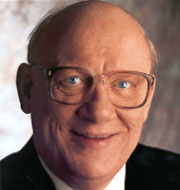
Book Review: The Legacy By Steven J. Lawson

How To Leave A Godly Legacy for Your Children Starting Today

During the Promise Keepers Movement in the 1990’s a swarm of books were published for men to be better husbands and fathers. I read a few of them – and most of them were very good, but this is the only book I’ve come to again and again – especially for help in raising my five children (and now – two grandchildren).

Lawson grabs the reader’s attention from the beginning with thinking about the importance of what we are leaving behind with our children with a gripping story of Max Jukes’ and Jonathan Edwards’ amazing legacy. Two men who lived in the same time period – one left a legacy of ruined lives; and the other a legacy of godliness that continues until this very day.

Steve Lawson is an excellent Bible teacher and preacher – and has made it a practice in his pastorates to train, equip, and spend time with men. As a father, pastor, and man’s man – he does an outstanding job of equipping men to be outstanding leaders – especially with their families.

In Part One he writes two chapters on demonstrating the fact that we all leave legacies – the only question is whether it will be a good one, or a poor one.

In Part Two there are 14 chapters on where to focus your time and teaching with your family. He shows how to build a legacy by growing, developing, modeling, and teaching in the following areas in order to leave a legacy for years to come in: godliness, love, obedience, respect, gentleness, maturity, discipline, wisdom, responsibility, strength, and prayer. The ultimate goal is to leave behind a godly legacy like Jonathan Edwards that continues on for generations. However, you can’t expect your children to be – what you are not. They will follow in your footsteps.

Lawson’s book is convicting, challenging, and very encouraging. He bases all his points on Scripture, hammers the principles on the anvil of real life experience, and gives many practical ways to start leaving behind a godly legacy today. If you are a dad – read this book and do what it says. You will be grateful to our Lord for Lawson’s advice – and so will your future generations!

Book Review: If God Is In Charge by Steve Brown

The subtitle of this book is “Thoughts on the nature of God for skeptics, Christians, and skeptical Christians.” And these thoughts are at times profound, other times humorous, and always based on Biblical truth. Steve Brown’s books (I’ve read of all of them) are full of stories, good quotes, illustrations, and most importantly – practical expositions of important Biblical passages related to the topic. This book is no exception.

In this enjoyable read Brown tackles the topic of God’s Sovereignty and each chapter looks at the evidence for and the application of each truth. The premise is that if God is in charge:

1)    What is He like?

2)    How is He in Charge?

3)    Why do I hurt so much?

4)    Then I’m Not

5)    Then I’m Responsible to Him

6)    Then I’m Free

7)    Then I can Risk

8)    Then I can Question

9)    Then I can Praise

10) Then I can Dream

The foundations of this book from beginning to end are that God is Big, He’s in Charge, and He loves you. The author mines principles for each of the topics above based on sound Biblical evidence from each text. It’s encouraging, entertaining, thought provoking, and very practical. I think the sign of a really good book is that it’s one you will read over and over again – this is definitely one of those books. Thanks for doing it again and again Steve Brown – Keep the helpful books coming.


The Music of Freedom (The Boy Who Loved Music)

[Chapter 2 of the excellent book on God’s Grace and Freedom by Steve Brown]

When Being Good Isn’t Good Enough, Thomas Nelson, 1990.

“The elders have ceased gathering at the gate,

and the young men from their music. The

joy of our heart has ceased; our dance

has turned into mourning.” – Lamentations 5:14-15

            Before we go any further in our discussion of freedom and grace I want to tell you a story. It is not fiction. Fiction is the telling of a story that is not true in a way that makes it seem true. The story I am going to tell is true, but its truth is deeper than the story. It is myth in the deeper sense of the word.

Some say that parables are closer to truth than polemics and that stories tell more than sermons. Or to put it another way, myth sometimes touches a deeper truth in us than philosophy. I suspect that is particularly true when presenting fairly radical ideas.

As you continue to read this book, you may grow confused and perhaps a little angry. You may think that I have gone off the “deep end” or that I have become a heretic. You may even find yourself wishing that the things I have said were true, but you are afraid to believe them because nothing could be that good!

On those occasions I want you to read this story again. In it you will find the essence of this book and, without sounding presumptuous, the essence of the Christian faith. Now relax and let me tell the story.

There once was a little boy named Ebed. Ebed had music in his heart, but he wanted it in his hands. He wanted to play the piano. In fact, he wanted to play the piano more than anything else in the world. No one knew it, of course. Boys aren’t supposed to play the piano; they’re supposed to fish and camp and play sports. Ebed liked all those things, but more than anything he wanted to play the piano.

But Ebed’s family couldn’t afford the piano lessons for him. So when his friends talked about learning to play the piano, Ebbie would laugh and make fun of them.

“Playing the piano,” he would say, “is for girls. It’s more fun to play ball. Pretty soon you guys will be wearing dresses and carrying purses!” And then Ebbie would walk off with a smirk on his face. But inside he knew the truth. More than anything in the world, he wanted to play the piano.

Sometimes when no one was around he would sit down at the piano at school and try to play. He really wasn’t that bad for someone who had never had a lesson. In fact, his untutored playing made Ebbie think that he might have talent.

One day at the local ice cream parlor Ebbie noticed his friends and their piano teacher eating ice cream and laughing together. It was obvious to Ebbie that the piano teacher not only taught his students to play the piano but was also their friend. They, of course, didn’t see Ebbie standing by the door. They were too absorbed in one another. Ebbie stood there for the longest time, afraid they would notice him, but also, in a strange way, afraid they wouldn’t.

After a while Ebbie left the ice cream parlor. He felt very sad. He kept up a good front in the parlor, but if anyone had noticed him, they would have noticed the tears welling up in his eyes. Ebbie ran down to the lake, where he went sometimes when he wanted to be alone. Once he was sure nobody was around, he sat down on a rock and began to cry.

Ebbie cried and thought for a long time. He thought about how much he wanted to play the piano, and he thought about the piano teacher. He knew his family was poor and there were some things he just couldn’t have. But still, it would be nice to have a friend like the piano teacher.

All of a sudden Ebbie heard the sound behind him. Turning quickly, he found to his horror that the piano teacher was standing there, smiling at him.

“Where did you come from?” Ebbie asked more harshly than he intended.

“I noticed you at the ice cream parlor,” the piano teacher replied. “You looked lonely and I thought I would follow you. Do you mind if I sit down for a while?”

“Suit yourself,” Ebbie said, “but I did come here to be alone, and I didn’t invite you.”

The piano teacher sat down on the same rock with Ebbie and for a long time didn’t say a word. When the teacher did speak, his voice was soft and understanding.

“Ebed, would you like to play the piano?”

“What makes you think that? The piano is for girls and…” Ebbies voice trailed off as he looked into the piano teacher’s eyes. He couldn’t lie. “Yes,” Ebbie admitted slowly, “I would like to play the piano. In fact, sir, I have always wanted to play the piano, but I don’t have the money to pay for lessons.”

“Well, maybe I can do something to help.”

“Yeah,” Ebbie responded, “like what?”

“Well, I could be your friend. Friends don’t charge for helping. If I was your friend, I could teach you to play the piano.”

“That would be great!” Ebbie shouted, jumping up. In his excitement, he almost fell off the rock into the lake. But the piano teacher caught Ebbie just in time, and they both started to laugh. Ebbie couldn’t remember a time he had laughed so hard.

“You know my name,” Ebbie remarked. “I can’t believe you know my name.”

“Yes,” the piano teacher agreed. “I have known your name for a long time.”

“Well, if we’re going to be friends, I guess I ought to know your name too.”

“It’s Immanuel,” the teacher said, “But my best friends call me ‘Manny.’ I hope you will call me Manny too.”

Ebbie decided that day he was going to be the best piano player who ever lived. “Others,” he thought to himself, “don’t think playing the piano is that important, but it’s what I’ve wanted all my life. I will work and work until I’m the best piano student the teacher has, and he will be very proud of me.”

But over the next few weeks, Ebbie found that playing the piano was not as easy as he had supposed. He had thought he would be well on his way after only a few lessons. Nobody, however, had told him about scales, the hours of practice, and the simple little tunes beginners have to play.

One day, after an extremely frustrating lesson, Ebbie turned to his teacher dejectedly, “I’ll never get this right, Manny. I keep making the same mistakes over and over again. And I can see it in your eyes. You’re about ready to give up on me, and I would understand. It’s all my fault.”

“Ebed.” Immanuel’s smile made his words almost unnecessary. “I will never give up on you. Friends don’t give up on friends.”

“What if I leave and don’t come back?”

“Ebed, if you never came back, you are still my friend. I will always be here to give you lessons.” And then with a grin Immanuel asked, “Do you still want to play the piano?”

“Of course, I want to play. I’ve always wanted to play, but nobody ever told me it was going to be this hard.”

“Did I tell you it would be easy?”

“No sir.”

“But I did say you would learn to play the piano, and that I would be your friend. We’re working on the first, and the second will always be.”

Immanuel sat down on the piano bench beside Ebbie.

“Let’s look at the piece you’re working on.”

Ebbie sheepishly got out his beginner’s book and turned to “Twinkle, Twinkle Little Star.” Ebbie blushed to show his teacher that he had gotten no further in the book.

“Play it for me,” Immanuel said.

“But I can only play the treble line well.”

“Doesn’t matter. Play it for me anyway.”

So Ebbie began to peck out the melody of “Twinkle, Twinkle Little Star.” To be perfectly honest, the little star didn’t twinkle very brightly. Ebbie kept missing notes and stopping often to make sure his fingers were in the right position. His rhythm was halting.

And then, to his surprise, Ebbie heard the most beautiful music he had ever heard. He looked to his right, Immanuel was adding to Ebbie’s notes with his right hand. And then, without missing a beat, the piano teacher eased himself behind Ebbie, encircled Ebbie from behind with his arms, and added bass notes with his left hand as well! Ebbie continued to play his one-note melody, but now it sounded totally different.

Immanuel’s melody wove into Ebbie’s single line, transforming the simple melody into a complex symphony of sound. Ebbie was so fascinated that he almost forgot to keep playing. The harmonies, one on top of the other, soared in an increasingly complicated arrangement, sounding almost like an orchestra. Soon Ebbie was totally lost in the wonder and beauty of the music coming from the piano.

When Immanuel and Ebbie finished playing the piece, Ebbie felt tears stinging in his eyes, and through the tears he could see Immanuel smiling.

“We make pretty good music together,” Immanuel said.

“You don’t mean ‘we,’ do you?”

“Yes, Ebed. We made the music together. You did what you could, and I did the rest.”

And then Immanuel invited Ebbie into his study. Over the weeks, Ebbie had enjoyed sitting and talking with Immanuel as much as he enjoyed learning to play the piano. In fact, if the truth were known, Ebbie enjoyed his time with Immanuel more than anything else in the world.

Immanuel lived in a large house close to the lake where he and Ebbie had first met. The house was almost overpowering in its size, and Ebbie always felt as if he were visiting the house of a great nobleman. At least, that is how he felt until Immanuel would answer the door. Then the cold, foreboding nature of the house was transformed by the presence of the teacher, and Ebbie felt he was visiting a good friend. But then, Ebbie thought often, any place where Manny lived could not help but be wonderful.

Immanuel was obviously quite wealthy and had wonderful taste. Ebbie was too young to understand the intricacies of interior design, but he was old enough to know that the house was “right.” From the paintings which hung in the large entrance hall and the thick carpet on the floors to the grand piano on which Immanuel gave lessons, everything fit together and made Ebbie feel comfortable.

One thing always puzzled Ebbie, but whenever he was with Manny, he forgot to ask him about it. Ebbie knew Manny had a lot of students, but Ebbie never saw any of them. In fact, when Ebbie was with Manny, there was never anyone else around and, even more surprising, Manny never seemed to be in a hurry to get to another lesson. Often Ebbie would expect his time to be limited, but it never was. Today wasn’t any different—Many seemed to have all the time in the world.

Immanuel’s book-lined study, where they were now sitting, felt right to Ebbie too. The study was just off the studio where Immanuel taught his students. They were sitting in easy chairs, Immanuel’s big frame filling his chair and Ebbie’s small frame almost swallowed up by his. Ebbie’s feet barely touched the floor.

“Ebed,” Immanuel began when they were settled, “you said I had made the music, or, at least, you insinuated it.”

“Well,” Ebbie replied, “you did make the music. You didn’t need my single line to produce the kind of music you played today.”

“That’s true. I could make music by myself, but I have chosen not to do that. I have chosen instead to work with my friends and to help them make the music.”

“Like today?”

“Yes, like today. You played as best as you could, and I made up for the rest. Ebed, from now on it will be that way. Whenever you do what you can, I will make up for the lack. If you do nothing, I will still make up for the rest, and when you are older and play with greater competence than you do now, you will still make some mistakes. Just remember that even then when others think you don’t need me, I will still make up for the lack.

“And there is one other thing I want you to remember always. It won’t mean a lot to you right now, but later you will think of it and be glad.”

“What’s that, Manny?” Ebbie asked, feeling a little uncomfortable.

“Don’t look so pained,” Immanuel laughed reassuringly. “It’s good. I want you to always remember that you are my piano student. No matter where you go, no matter what you do, no matter how well or poorly you play the piano, you will always be my student. And Ebed, you can hang your hat on this: Someday, perhaps in another place and time, you will be able to play the piano exactly the way I play the piano. Even then, you will be my student and my friend.”

Then, to emphasize his words, Immanuel leaned forward. “Do you understand what I am saying?”

“I think I do,” Ebbie responded.

“Ebed, I love you far more than you can possibly understand now. That will never, ever stop, no matter what else happens. I give my life for my students, and because of that they are always my students.”

Ebbie thought a lot about what Manny had said to him that day. In fact, he never forgot it for the rest of his life.

But once he almost did.

As Ebbie continued piano lessons he found others teased him the way he had teased Manny’s students before he started taking piano lessons.

“Don’t see you much on the ballfield much any more,” one boy snickered at him after school one day.

“I’ve been busy,” Ebbie responded somewhat hesitantly.

“Playing the piano, huh?”

“Yeah, mostly.”

“What have you become, some kind of fairy? You and the girls ought to get along just fine.”

That was just the beginning. Soon, the other boys joined in the teasing, making fun, not only of Ebbie’s piano playing but of Ebbie’s piano teacher as well. At first, Ebbie was angry at them, but after a while he started listening to and believing some of the things they said. Little boys need friends, and Ebbie was losing his rapidly.

Ebbie visited Manny’s house less frequently, and he almost stopped practicing the piano altogether, even though he had been making genuine progress. The more he had practiced the better he had played. But now he was almost back to the level of a beginner. He was so ashamed that he finally stopped going to see Immanuel.

Weeks passed and, even though his friends had stopped making fun of him, Ebbie felt miserable. Sometimes he would look at the piano at school and think about playing, but it was just too costly. At night Ebbie would think about Manny and sometimes he would cry. He didn’t know why he cried, but he did know that he missed Manny. Then, before finally falling asleep, Ebbie would make all kinds of promises to himself about getting back to the piano and going to see Manny. But when mourning came he always forgot about the promises.

“Manny asked about you yesterday,” Martus, (Greek for “witness”) one of Immanuel’s other piano students, told Ebbie one day at recess. “He said to tell you not to forget what he told you.”

Ebbie didn’t know what Martus meant until later that afternoon when he remembered that special talk in Manny’s study. Ebbie felt the tears well up in his eyes. Instead of going home, he went to Immanuel’s house.

“I’ve been expecting you,” Immanuel said as he opened the door. “Are you ready for your next lesson?”

“But I haven’t played in so many months.” Ebbie looked down and pretended to find something quite interesting in the rock floor on the porch.

“Doesn’t matter. You are always my piano student, and that hasn’t changed. You may have been a poor one for the past few months,” Immanuel smiled, “But you are my student. Come on in, and we can begin where we left off.”

It was the best piano lesson Ebbie had ever had. In fact, Ebbie thought at home later, I’m almost glad I turned away from Manny and his piano lessons. If I had never turned away, I would never have known how much Immanuel loves me and how much he wants me to continue piano lessons.

It was a growth experience for Ebbie. Whenever his friends teased him he would remember how he had caved in to their criticism and how Immanuel still loved him, and his sadness would be transformed into joy and thankfulness.

But the trouble Ebbie had with those who didn’t understand the importance of playing the piano was minor compared to the trouble he had with his fellow piano students.

Ebbie thought that once he had become a piano student he would become part of a family of musicians where everyone understood and helped each other play the piano better. It was not to be.

“You’re doing it all wrong!” shouted a little girl who had overheard him practicing on the piano at school. “You’re playing soft when you ought to playing loud, and you’re playing loud when you ought to be playing soft.”

“You’re rhythm is all off,” criticized another student who had heard Ebbie play. “How do you ever expect to play the piano if you can’t tell the difference be between 4/4 and ¾ time?

“You hit three wrong notes,” another exclaimed, “If you don’t start playing the right notes, you are going to disappoint the teacher. And after all he has done for you! The rest of us have been talking and we’ve decided that if you don’t get better, you’re going to shame all of us.”

“If you are ever going to play the piano properly, you must practice at home, not at school,” one of the students informed Ebbie one day after class.

“But I don’t have a piano at home,” protested Ebbie.

“Well, why don’t you get your parents to buy you one?”

“We don’t have the money. That’s why.”

There was a long silence, but Ebbie noticed a look of disdain on his fellow student’s face as he walked away. He knew the boy felt that Ebbie should quit taking piano lessons if he couldn’t afford a piano.

One afternoon when Ebbie had finished his lesson, Immanuel said to him, “Ebed, you seem sad. What’s the matter?”

“Oh, nothing,” Ebbie replied, betraying his words with the grimace on his face.

“The others bothering you?”

“Sometimes.”

“They bother me too sometimes.”

“But you don’t hear all the things they say.”

And then Immanuel smiled. “Ebbie, I know my students. The girl who told you that you needed to play soft when you are playing loud, and loud when you ought to be playing soft, is only criticizing you because she is doing so badly with her own lessons. The boy who criticized you’re your rhythm hasn’t been to a lesson in almost three months. He thinks if he points out your mistakes, people will not notice his own.

“The boy who told you about the wrong notes is so busy telling others about their wrong notes, he doesn’t have much time to play himself. If he played the piano very much, which he doesn’t, he would probably hit more wrong notes than you do. The boy who told you to buy a piano with money you don’t have has three pianos, but he hardly ever plays any of them. People always admire his pianos, and he thinks it’s the same thing as admiring his piano playing.

“And the others who suggested that you were hurting the reputation of all the students are very insecure about their own piano playing. Your playing is different, and the other students don’t like piano players who are different.

“And Ebbie, the comment about disappointing me isn’t true. Never let another piano student tell you that you disappoint me. If I’m disappointed, I’ll tell you. When I’m pleased, I’ll tell you that too. But I am the only one who knows whether I’m disappointed or pleased.”

Ebbie felt a whole lot better after Immanuel told him about the other students. In fact, he felt a little superior to the others. That is, until Immanuel said to him, “Ebbie, I’m telling you all this so you will remember that I have made you my student, even with your mistakes, because I love you. But I don’t love you more than the others. The only reason I told you about them—and if I chose, I could tell them a lot about you—is so you will remember that there isn’t a single piano student in the world who doesn’t make some serious errors. Their problem is that they tried to pretend that they were better than you.

“Now you know the truth. Remember it, and don’t make their mistake. Remember how you forgot about me for so long? How you quit practicing and how I accepted you when you wanted to resume your lessons? Remember how I never stopped loving you? I will do the same for them. All my piano students are equal because they have the same teacher. You must never think you are better than the others just because you know the truth.

“And Ebbie, never forget that I make up the difference for them, just as I do for you.”

After that, Ebbie loved Immanuel more than he ever had. When he walked away from the teacher’s house, he felt free. He didn’t have to pretend to be a wonderful piano student. Nor did he have to pretend not to care. He didn’t have to point out the mistakes of the other students in order to feel better about himself; after all, the piano teacher loved all the piano students. All Ebed had to do was stay close to the piano teacher.

Every spring, Immanuel had a recital at his home for his students’ parents. Ebbie had worked for weeks on his piece, and his mother had bought him a new suit with some money she had saved. Ebbie felt wonderful—until he got up to play.

When he started to walk toward the piano and saw all the people waiting for him to perform, he panicked. He wanted to run. But when he looked over at Immanuel, his teacher gave him a “thumbs up” sign. No way am I going to disappoint Manny, Ebbie thought.

But as Ebbie began to play, he forgot the music. He played the wrong notes. Once he even lost his place and had to start over. When Ebbie got up from the piano bench, he didn’t dare look at the audience or his parents or, especially, Immanuel. He had wanted to do so much better. But instead, he had disappointed everyone.

Ebbie was so miserable he didn’t notice that the audience was applauding. In fact, they applauded for almost five whole minutes, shouting, “Encore! Encore!” Ebbie didn’t hear it. He had already walked out the back door and headed down to the lake where he sat on his rock and cursed himself.

Hours passed and the night grew cold. Suddenly, Ebbie heard a rustle behind him, and he turned to find Immanuel standing there.

“I really botched it.”

“Yes, you really botched it. But they didn’t know.”

“What do you mean, they didn’t know? Of course they knew. I’m so ashamed. How can I ever face them again? And Manny, I’m even more ashamed to face you. You loved me. You trusted me. You taught me to play the piano, and I let you down. Please don’t look at me that way, Manny. I don’t believe I can stand it.”

“Ebed,” Manny said, taking an uninvited seat on the rock by the boy, “you misinterpret my look. I’m not disappointed in you. You must remember that I’ve been teaching piano for a long time—longer than you could possibly know. Do you think your performance surprised me?”

“Well, I guess not. But…”

“No buts, child. Your vanity has been hurt, but you haven’t failed me. Ebed, I love you. I told you that, but you forgot.”

“I guess I did,” Ebbie whispered.

“And you forgot something else.”

“What’s that?”

“Remember, I told you I would always make up for your lack. I did that tonight.”

“You mean…”

“That’s right. You didn’t play as well as you will play some day, and perhaps you didn’t play as well as you could have played. But you played, and I made up for the difference. The audience heard the music, not the mistakes!”

Ebbie jumped up and started to dance on the rock. Immanuel laughed heartily, but managed to caution Ebed, “You are going to fall off this rock if you aren’t careful, and I don’t relish going swimming on this kind of night.”

That night was one of the most important nights of Ebed’s life, second only to the evening he had met Immanuel. Ebed began to practice playing the piano far more than he had previously.

In the years to come, Ebed botched some other concerts. Sometimes he got angry at Immanuel. Sometimes he thought about giving up on the whole thing, and he even walked away a few more times. But Immanuel was always there, loving him and helping him make music.

You might wonder what happened to the little boy. That’s the best part.

Ebed grew up and became a world-class pianist. He came to be known, as one critic put it, as “the essence of perfection.” In concert after concert, all over the world, Ebed played to standing-room-only audiences. When he finished a concert, after the applause had died away, Ebed would smile and remember that no one had heard his mistakes. Later he would always thank Immanuel for making up for the lack.

One evening after a concert in New York, when he was almost seventy years old, Ebed was dining with some friends when he felt a mild pain in his chest. He marked it up to indigestion, but as the evening wore on the pain became more and more acute. Halfway through the dinner he collapsed, and his friends called an ambulance.

Ebed was only half conscious when they put him on the stretcher and placed him in the ambulance, but then he woke up. It was a strange kind of awake because he seemed to be looking at the whole scene in the ambulance from a different perspective. One of the attendants looked at the other and sighed, “We’ve lost him.”

“You haven’t lost me!” Ebed wanted to shout. “I’m right here!”

But before Ebed could speak the sound of a piano caught his ears—the most beautiful music he had ever heard! Turning around, he found himself at Immanuel’s house. Well, maybe it wasn’t Immanuel’s house, but it looked the same, only even more beautiful than he remembered.

Drawn through the front door by the music, Ebed found Immanuel playing a magnificent concerto at the grand piano. Ebed listened, entranced.

When Immanuel finished, neither he nor Ebed spoke for a moment. Then, turning to Ebed, Immanuel broke the silence. “Now, it is your turn.”

“Me?”

“Yes, you!” Immanuel laughed, “And I believe you are in for a surprise!”

Ebed sat down at the piano, and as he placed his hands on the keys, he felt a freedom and power he had never before felt. Every nuance, every note, every rhythm was perfect. The music soared and filled the room. Out of the corner of his eyes, Ebed could see Immanuel smiling, as a father smiles when his son performs perfectly. Ebed’s heart beat excitedly.

“Ebed,” Immanuel said softly, “now you play just the way I play.”

“Yes,” Ebed replied smiling, “I know.”

“And I have a new name for you, Ebed. Before, you have been called Ebed (Hebrew for “servant” or “slave”). Now your name is Deror (Hebrew for “liberty” or “freedom”). Now the music is yours forever. You are home.”

Power for The Pressures of Life

“The Bible teaches power under pressure, not power without pressure.” – Steve Brown from the Book If God Is In Charge

How God Scrutinizes Our Paths – Chuck Swindoll

A Great Illustration of Psalm 139:1-2 By Chuck Swindoll (The Mystery of God’s Will)

“For Christmas one year we bought our children what was called ‘Ant City.’ This consisted of clear plastic plates on either side, filled with sand and ants. From our vantage point outside and above, we could see what these busy little creatures were doing underground. We watched as they tunneled their way around, leaving a maze of trails.

In a similar fashion, God scrutinizes our paths. From where we are, tunneling along, all we see is the sand immediately ahead, behind, and beside us. But from His vantage point, He can see exactly where we’ve been and precisely where we’re going. ‘He is intimately acquainted with all my ways.‘”

“God Made You” – A Good Word from Jerry Bridges

Here is a great quote related to Psalm 139:14, “I praise you because I am fearfully and wonderfully made” – by Jerry Bridges from his Book Trusting God in Chapter 11:

“David praised God, not because he was handsome, but because God made him. We need to dwell on that thought. The eternal God who is infinite in His wisdom and perfect in His love personally made you and me. He gave you the body, the mental abilities, and the basic personality you have because that is the way He wanted you to be just that way because He loves you and wants to glorify Himself through you.”

Book Review: When Being Good, Isn’t Good Enough by Steve Brown

All of *Steve Brown’s books contain great illustrations, stories, quotes, and make you laugh and sometimes cry. He has the ability (as few do) to make reformed theology fun.

This book is no exception. I think that Chapter 2 “The Music of Freedom” (a marvelous parable on sanctification) is worth the price of the book. Brown writes this book to help stave off the legalism that is so prevalent among Christians. He writes this book to articulate this thesis: “Obedience doesn’t lead to freedom. Freedom leads to obedience. If that is backwards you lose both your freedom and eventually your obedience.”

The number one reason to read this book is that it will encourage you. It will fill you with practical principles from God’s Word that will help you tap into the glorious riches you already have in Christ.

*Steve Brown is a radio broadcaster, seminary professor and author. He previously served as a pastor for over twenty-five years and now devotes much of his time to the radio broadcast, Key Life.

With such varied experience and unique perspective on life, Steve is an original. He refuses to be a “guru,” doesn’t want to be anyone’s mother and gives, in his teaching, the freedom to think. Overall, Steve has become known for his refreshing and practical Biblical applications.

Steve serves as Professor Emeritus of Preaching and Pastoral Ministry at Reformed Theological Seminary. He sits on the board of the National Religious Broadcasters and Harvest USA. Traveling extensively, Steve is a much-in-demand speaker.

Steve is the author of numerous books including A Scandalous Freedom, What Was I Thinking? and Approaching God. His articles appear in such magazines and journals as Leadership, Decision, Plain Truth and Today’s Christian Woman.

Book Review: On Being a Leader for God by Warren W. Wiersbe

I have never been disappointed reading anything by Wiersbe. He is especially helpful for anyone who teaches the Scriptures. This book is filled with helpful bible verses, quotes, stories, and illustrations of what it means to be a godly and biblical leader for God’s glory. He has a way of writing that always keeps you interested, turning the page, and constantly saying to yourself, “That was an excellent point…” or “well put.”

According to Wiersbe, “Christian leaders are people who, by faith, willingly use their character, abilities, authority, and opportunities to serve others and to help them reach their fullest potential, to their benefit, the benefit of the organization, and the glory of God.” The body of the book is used as a practical exposition of this definition of leadership.

Warren Wiersbe uses his pastoral experience and breadth of reading and writing experience to give us a plethora of Biblical, historical, and modern day examples of what makes for an outstanding leader of God.

Reading Wiersbe is like reading from a Biblical Patriarch. He is knowledgeable, godly, wise, and puts the leadership principles on the bottom shelf – where any Christian can learn and grow to become a better leader for God as a result of reading and applying the principles laid out in this excellent book.

*Distinguished Professor of Preaching at Grand Rapids Baptist Seminary, Warren Wiersbe is the author of more than 100 books. Billy Graham calls him “one of the greatest Bible expositors of our generation.” Interestingly, Warren’s earliest works had nothing to do with scriptural interpretation. His interest was in magic, and his first published title was Action with Cards (1944).

“It was sort of imbecilic for a fifteen-year-old amateur magician to have the audacity to write a book and send it to one of the nation’s leading magic houses,” Warren says. But having a total of three books published by the L.L. Ireland Magic Company—before the age of 20—gave him a surge of confidence. In later years, he applied his confidence and writing talent to the Youth for Christ (YFC) ministry.

Warren wrote many articles and guidebooks for YFC over a three-year period, but not all his manuscripts were seen by the public eye. One effort in particular, The Life I Now Live, based on Galations 2:20, was never published. The reason, Warren explains with his characteristic humor, is simple: it was “a terrible book…Whenever I want to aggravate my wife, all I have to say is, ‘I think I’ll get out that Galations 2:20 manuscript and work on it.’” Fortunately, Warren’s good manuscripts far outnumbered the “terrible” ones, and he was eventually hired by Moody Press to write three books.

The much-sought-after author then moved on to writing books for Calvary Baptist Church. It was during his ten years at Calvary that Expository Outlines on the New Testament and Expository Outlines on the Old Testament took shape. These two works later became the foundation of Warren’s widely popular Bible studies known as the Be series, featuring such titles as Be Loyal (a study on Matthew) and Be Delivered (a study on Exodus). Several of these books have been translated into Spanish.

His next avenue of ministry was Chicago’s Moody Memorial Church, where he served for seven years. He wrote nearly 20 books at Moody before moving to Lincoln, Nebraska, where he and his wife, Betty, now live. Prior to relocating, he had been the senior pastor of Moody Church, a teacher at Trinity Evangelical Divinity School, and a producer of the Back to the Bible radio program.

During all these years of ministry, Warren held many more posts and took part in other projects too numerous to mention. His accomplishments are extensive, and his catalog of biblical works is indeed impressive and far-reaching (many of his books have been translated into other languages). But Warren has no intention of slowing down any time soon, as he readily explains: “I don’t like it when people ask me how I’m enjoying my ‘retirement,’ because I’m still a very busy person who is not yet living on Social Security or a pension. Since my leaving Back to the Bible, at least a dozen books have been published, and the Lord willing, more are on the way.”

Wiersbe’s recent books include Your Next Miracle, The 20 Essential Qualities of a Child of God, The Bumps are What You Climb On, Classic Sermons on the Fruit of the Spirit, Classic Sermons on Jesus the Shepherd, Key Words of the Christian Life, Lonely People, A Gallery of Grace, Real Peace: Freedom and Conscience in the Christian Life, and Preaching in Black and White: What We Can Learn From Each Other.

Book Review: New International Encyclopedia of Bible Difficulties by Gleason L. Archer Jr.

The author – Gleason L. Archer Jr., (1916-2004 – B.A., M.A., Ph.D., Harvard University; B.D., Princeton Theological Seminary; L.L.B., Suffolk Law School) was a biblical scholar, theologian, educator, and author. He served as an assistant pastor of Park Street Church in Boston from 1945 to 1948. He was a Professor at Fuller Theological Seminary for 16 years, teaching New Testament, Greek, Hebrew, and Arabic. From 1965 to 1986 he served as a Professor of Old Testament and Semitics at Trinity Evangelical Divinity School, Deerfield, Illinois. He became an emeritus faculty member in 1989. He also served for many years as a minister of the Evangelical Free Church of America. The remainder of his life was spent researching, writing, and lecturing.

Legend has it, (I have not been able to verify whether this is 100% true or not) that he was so gifted in languages that for fun (and as a challenge) he would study the Bible in a different language every year to continue to grow and develop mentally.

Archer served as one of the 50 original translators of the NASB published in 1971. He also worked on the team which translated the NIV Bible published in 1978. I give this introduction, because many people are not familiar with Archer (unfortunately), but he was a brilliant Christian scholar who could have excelled as a lawyer (his father was the founder and president of Suffolk Law School), and chose to use his exceptional gifts to defend the inerrancy and integrity of the Scriptures over the span of his entire adult life. I would say that along with Bruce Waltke and Walter Kaiser Jr., he was one of the most elite and influential Old Testament Evangelical Scholars at the end of the Twentieth Century.

As for this book – it’s simply outstanding. It covers all the thorny issues from Genesis to Revelation in biblical order, and considers questions from the cultural, linguistic, and authorial intent of each passage considered. Of all the books I have on questions, and Bible answers, this is the one I turn to the most. It is extremely thorough and will increase anyone’s’ belief in the supernatural authorship of the sixty-six books in the Protestant Canon. It is definitely a “must have” for any interpreter/student/teacher of the Bible, or an apologist for the Christian faith.

Book Review: Essential Truths of The Christian Faith by R. C. Sproul

Next to the Bible and R.C. Sproul’s book “The Holiness of God” I have given away more copies of this book than anything else for a few reasons:

1)    Everyone is a theologian – but most people are weak theologians (In other words everyone – even atheists have an opinion about God and truth). This book helps you to become a better theologian. It covers all the major doctrines of the Bible in a succinct, logical, and clear manner.

2)    It’s organization – Each chapter is brief, yet packed with a practical discussion of the doctrine; evidence for it’s importance from the Scriptures; an itemized summary listing the major points made in the chapter (usually 5-6 key points); and a list of 5-6 Biblical references for further reflection and study.

3)    It’s breadth and depth of coverage – It is divided up into Major Doctrinal sections with sub topics for each doctrine – therefore it can be used as q quick reference tool on 102 different topics of the Scripture. For example, under the first section on Revelation of the Scriptures, you can look up chapter 7 on “The Canon of Scripture” to see how the Bible came to be formed and accepted as the authoritative Word of God, or chapter 8 on some basic principles of “How to Interpret the Bible.”

Here are the Contents of the Book (Each Chapter is Approximately 2-4 pages long:

Section I. Revelation (1. Divine Revelation; 2. Paradox, Mystery, and Contradiction; 3. Immediate, and Mediate General Revelation; 4. Special Revelation and the Bible; 5. The Law of God; 6. The Prophets of God; 7. The Canon of the Bile; 8. Interpreting the Bible; 9. Private Interpretation)

Section II The Nature and Attributes of God (10. The Incomprehensibility of God; 11. The Tri-unity of God; 12. The Self-Existence of God; 13: The Omnipotence of God; 14. The Omnipresence of God; 15. The Omniscience of God; 16. The Holiness of God; 17. The Goodness of God; 18. The Justice of God)

Section III The Works and Decrees of God (19. Creation; 20. Providence; 21. Miracles; 22. The Will of God; 23. Covenant; 24. Covenant of Works)

Section IV. Jesus Christ (25. The Deity of Christ; 26. The Subordination of Christ; 27. The Humanity of Christ; 28. The Sinlessness of Christ; 29. The Virgin Birth; 30. Jesus Christ as the Only Begotten; 31. The Baptism of Christ; 32. The Glory of Christ; 33. The Ascension of Christ; 34. Jesus Christ as Mediator; 35. The Threefold Office of Christ; 36. The Titles of Jesus)

Section V. The Holy Spirit (37. The Deity of the Holy Spirit; 38. The Personality of the Holy Spirit; 39. The Internal Testimony of the Holy Spirit; 40. The Illumination of the Holy Spirit; 41. The Baptism of the Holy Spirit; 42. The Holy Spirit as Comforter; 43. The Holy Spirit as Sanctifier)

Section VI. Human Beings and the Fall (44. Knowledge of Self and Knowledge of God; 45. Human Beings Created in the Image of God; 46. Human Beings as Body and Soul; 47. Human Beings as Flesh and Spirit; 48. Satan; 49. Demons; 50. Sin; 51. Original Sin; 52. Human Depavity; 53. Human Conscience; 54. The Unfrogiveable Sin; 55. Syncretism)

Section VII. Salvation (56. Salvation; 57. Predestination; 58. Predestination and Reprobation; 59. Effectual Calling; 60. Rebirth; 61. Atonement; 62. Definite Atonement; 63. Free Will; 64. Faith; 65. Saving Faith; 66. Justification by Faith; 67. Faith and Works; 68. Repentance; 69. Merit and Grace; 70. Perseverance of the Saints; 71. The Assurance of Salvation; 72. The Intermediate State; 73. The Last Resurrection; 74. Glorification)

Section VIII. The Church and Sacraments (75. The Apostles; 76. The Church; 77. The Marks of a True Church; 78. Excommunication; 79. The Sacraments; 80. Baptism; 81. Infant Baptism; 82. The Lord’s Supper; 83. Transubstantiation; 84. The Sabbath; 85. Oaths and Vows)

Section IX. Spirituality and Living in This Age (86. The Fruit of the Spirit; 87. Love; 88. Hope; 89. Prayer; 90. Antinomianism; 91. Legalism; 92. The Threefold Use of the Law; 93. Perfectionism; 94. Civil Government; 95. Marriage; 96. Divorce)

Section X. End Times (97. The Antichrist; 98. The Return of Christ; 99. The Kingdom of God; 100. Heaven; 101. The Beatific Vision. 102. Hell)

End Notes

Suggested Reading: He lists two-five helpful books for each of the ten sections.

I don’t agree with everything Sproul says in this book (He is a Covenant Theologian – I am coming from more of a “Reformed Baptist” perspective), however, I always learn something, or I’m reminded of something important whenever I read him. He is a master communicator – He is a deep and practical thinker, and easy to understand. I think he is the finest theologian of our generation. I believe anyone reading or using this book as a quick reference and introduction to all the major doctrines of the Bible will benefit immensely from its contents. I have given this book to many High School and College Graduates over the years, as well as to new followers of Jesus Christ. Many of those recipients have gone on to become outstanding students and teachers of God’s Word.


*Dr. Robert Charles Sproul was born in 1939 in Pittsburgh, Pennsylvania. He is the founder and chairman of Ligonier Ministries, which started as the Ligonier Valley Study Center in Ligonier, Pennsylvania, more than thirty years ago. In an effort to respond more effectively to the growing demand for Dr. Sproul’s teachings and Ligonier’s other educational resources, the general offices were moved to Orlando, Florida, in 1984, and the ministry was renamed “Ligonier Ministries.”

Dr. R.C. Sproul is featured daily on Renewing Your Mind, an international radio broadcast that has aired for more than ten years with an estimated two million people tuning in every week on more than 235 radio outlets in the United States and throughout more than 40 countries. Dr. Sproul is a respected teacher, theologian, and pastor. He is currently serving as the director of Serve International, and as senior minister of preaching and teaching at Saint Andrew’s Chapel in Sanford, Florida. Dr. Sproul is ordained as a teaching elder in the Presbyterian Church in America.

In addition, Dr. Sproul was the general editor of The Reformation Study Bible, which was also known as The New Geneva Study Bible, and he is the executive editor of Tabletalk magazine. As a prolific author he has written more than 60 books and scores of articles for national evangelical publications. Dr. Sproul has produced more than 300 lecture series and has recorded more than 80 video series on subjects such as the history of philosophy, theology, Bible study, apologetics, and Christian living. He signed the 1978 Chicago Statement on Biblical Inerrancy, which affirmed the traditional view of biblical inerrancy, and he wrote a commentary on that document titled Explaining Inerrancy.

Dr. Sproul completed his undergraduate work at Westminster College, and then went on to earn three postgraduate degrees at Pittsburgh Theological Seminary, Free University of Amsterdam, and Geneva College, and he has had a distinguished academic teaching career at various colleges and seminaries, including Reformed Theological Seminary in Orlando, Florida, and Jackson, Mississippi, and Knox Theological Seminary in Ft. Lauderdale, Florida.

Ligonier Ministries:

In 1971, a group of Christian leaders at Dr. R.C. Sproul’s church approached him with the intent of establishing a study center in Ligonier Valley, Pennsylvania. This study center provided a place where lay people could receive the benefits of seminary-level teaching without having to attend seminary. Christians from all over the United States attended the Ligonier Valley Study Center to hear Dr. Sproul and other leading evangelical scholars. The sessions provided the students and teachers an opportunity to explore the truths of Scripture, the great doctrines of classical Christianity, and develop spiritual disciplines. Many relished the chance to learn how to be articulate defenders of the faith.

From the outset, a goal of the Ligonier Valley Study Center was to provide educational materials to all Christians, even if they could not attend lectures at the study center. As a result, lectures were recorded and made available around the country. In an effort to respond more effectively to the growing demand for Dr. Sproul’s teachings and Ligonier’s other educational resources, the general offices were moved to Orlando, Florida, in 1984. At this time, the organization changed its name to Ligonier Ministries.

In 2001, Ligonier Ministries celebrated 30 years of ministry. As the need for substantive Christian resources continues to rise, Ligonier Ministries looks for new outlets to proclaim the holiness of God. Ligonier Ministries carries out its mission primarily through the teaching of its chairman — author and theologian Dr. R.C. Sproul.

Ligonier Ministries offers more than 360 teaching series on subjects including apologetics, biblical studies, philosophy, ethics, Christian theology, and discipleship in audiocassette, CD, DVD, and video formats. Each series is appropriate for individual or group study, and many have study guides available to enhance the learning process.

Ligonier Ministries offers over 400 books from more than 100 classic and modern authors. Topics include church history, Christian living, apologetics, biblical studies, systematic theology, family issues, and children’s interest.

Ligonier Ministries presents a national conference each spring in Orlando, Florida, to provide extensive study of a particular biblical theme or issue. Thousands gather to fellowship with other believers, as they explore and affirm biblical truths under Dr. Sproul and other evangelical scholars. In the fall, Ligonier hosts several regional conferences throughout the country and a special pastors conference in Orlando.

Since 1979, Ligonier Ministries has published the daily Bible study magazine Tabletalk. Each month, feature articles develop an important biblical, theological, or cultural issue. Daily Bible studies take readers through a systematic study of one or more books of the Bible every year. Thousands turn to this magazine for in-depth Bible study and helpful articles on important topics by Dr. Sproul and other noted pastors and theologians.

Since 1994, Renewing Your Mind with Dr. R.C. Sproul (RYM) has provided sound, in-depth teaching to those who might otherwise never receive it. This braodcast is available on more than 235 radio outlets in the United States to a potential audience of 2.5 million people per week and is also available to countless other throughout the world via shortwave radio.

In 2003, Ligonier Ministries established a music division to promote the sense of reverence and gravitas found in more classical forms of Christian worship. There are recordings by the Atlanta Boy Choir, various international orchestral and choral groups, a full selection of classical Christmas albums, and several resources featuring Grammy award-winning tenor Stuart Neill performing new arrangements of classic hymns. The Classic Sermon Series and other audio productions are also being released in an effort to reintroduce some of the great sermons of the past to Christians today.

A long-standing goal of the ministry was to move into the book-publishing market. In September 2004, Soli Deo Gloria (SDG) became a division of Ligonier Ministries and the first step in reaching that goal.

In keeping with this step, Ligonier Ministries released Reformation Trust Publishing in 2006. This new imprint will be committed to publishing books that help readers develop a closer walk with God through a deeper understanding of the Scriptures and the historic Christian faith. It aims to become a trusted resource for the church by producing biblically and theologically solid books using high-quality materials to ensure a lengthy shelf life. Three of its first releases were Dr. R.C. Sproul’s A Taste of Heaven and The Lightlings and Dr. Steven Lawson’s Foundations of Grace.