
Category: Warren W. Wiersbe


God’s Answer for Discouragement by Warren W. Wiersbe
Adapted from Chapter 26: From The Book Turning Mountains into Molehills by Warren W. Wiersbe, Grand Rapids: Baker, 1992.
This poem was written by a man planning to commit suicide.
To whom can I speak today?

The gentle man has perished,
The violent man has access to everybody.
To whom can I speak today?
The iniquity that smites my land,
It has no end.
To whom can I speak today?
There are no righteous men,
The earth is full of criminals.
The interesting thing is this: the poem was not written by a frustrated twentieth century businessman. It is written by an Egyptian citizen over four thousand years ago. Violence and crime and corruption and thoughts of suicide are not modern problems, are they? They are ancient problems—and they have an ancient solution.
It takes little imagination to understand the mind of our anonymous Egyptian poet. He saw crime and violence all around him. The old values were changing. The good man was hanging on the scaffold and the evil man was sitting on the throne. There seemed to be no justice, no hope, no future. After pondering the situation, he decided that there was only one way out—to commit suicide.
Of course, suicide did not solve any problems. It never does. But here was a man who had absolutely no resources to depend on, no one to turn to in this hour of need. “To whom can I speak today?” he asks, and never does get an answer. It’s the picture of a lonely, helpless man at the crossroads of life, with no one to help him.
I’m sure that this picture can be multiplied many times today. All around us are frustrated people who simply don’t know what to do. Their world is collapsing around them. Everything they used to depend on has been destroyed; their foundations are gone. They don’t know where to turn, and perhaps they may be entertaining thoughts of ending it all.
It might interest you to know that some of the greatest men in the Bible had their hours of disappointment and defeat, and some of them asked God to take their lives. I’m not saying they were right; but I’m saying they went through experiences that were terribly disillusioning, and yet they came out victoriously.
For example, the great Jewish leader Moses became so discouraged one day that he asked the God of the Bible to kill him. Listen to the record from Numbers 11: “Then Moses heard the people weep throughout their families…and Moses also was displeased. And Moses said unto the Lord, Why have you afflicted your servant?…Have I conceived all this people?…Have I begotten them?…I am not able to bear all this people alone, because it is too heavy for me. And if you deal this way with me, kill me…and let me not see my wretchedness.”
Moses was discouraged because he was carrying a heavy burden and the people did not appreciate his leadership. Where would the nation of Israel have been without the leadership of Moses? How often it is that those who do the most for us, are the least appreciated. When Moses heard the people weeping and complaining, his heart sank within him.
Listen to the great prophet Elijah as he sits under the juniper tree: “It is enough; now, O Lord, take away my life; for I am not better than my fathers.”
Elijah was discouraged because he felt he was a failure. He had met the false prophets face to face and had defeated them; yet the people had not rallied to Elijah’s side in the great revival that he had longed to see. When Queen Jezebel threatened to kill him, Elijah fled for his life. And then he asked God to kill him! If Elijah had really wanted to die, he should have surrendered to Jezebel. How often we say and do foolish things simply because we are discouraged.
Suppose God would have answered the prayers of these men and taken their lives? Think of all they would have missed. Moses would have missed seeing God’s wonders in the wilderness. He would have missed that great farewell at Jordan, recorded in the Book of Deuteronomy. He would have missed commissioning Joshua to take his place. And he would have missed seeing the beautiful land of Promise.
Elijah would have missed his fellowship with young Elisha; he would have missed the joy of training the new prophet to take his place. And he would have missed a glorious chariot ride into heaven! Yes, it’s a good thing God does not answer our prayers when we are discouraged and defeated. If He did, we would miss out on so many blessings.
Our Egyptian poet had no one to speak to. “To whom can I speak today?” was his question. But Moses and Elijah had someone to speak to: they took their disappointments to the Lord. We may not agree with their prayers, but we do agree with their praying.
Have we trials and temptations?
Is there trouble anywhere?
We should never be discouraged;
Take it to the Lord in prayer.
That’s the first secret of victory over discouragement: take it to the Lord in prayer. Open your heart; tell Him just the way you feel. The psalmist David puts it this way in Psalm 142: “I cried unto the Lord with my voice…I pouted out my complaint before Him; I showed before Him my trouble. When my spirit was overwhelmed within me, then You knew my path…Attend to my cry, for I am brought very low. Bring my soul out of prison, that I may praise Your name.
When life seems the darkest, then God’s dawn is about to break. He sees the end from the beginning, and He has a perfect plan for your life. “For I know the plans I have for you declares the Lord, plans for welfare and not calamity, to give you a future and a hope” (Jeremiah 29:11). Disappointment is often “His appointment.” And God permits these difficulties to come our way, not to discourage us, but to encourage us to look away from changing circumstances to the unchanging God who is on the throne.
Even the great apostle Paul had his days of discouragement when it seemed he would have to give up. This is what he writes: “For we do not want you to be unaware, brothers and sisters, regarding the affliction that happened to us in the province of Asia, that we were burdened excessively, beyond our strength, so that we despaired even of living. Indeed we felt as if the sentence of death had been passed against us,so that we would not trust in ourselves but in God who raises the dead. He delivered us from so great a risk of death, and he will deliver us. We have set our hope on him that he will deliver us yet again,” (2 Corinthians 1:8-10).
The answer to discouragement is not to run away, but to run to God. “God is our refuge and strength, a very present help in trouble” (Ps. 46:1). That word trouble means “tight places” –“a very present help in tight places.” Moses prayed, and God met his need; Elijah prayed, and God met his need. And if you and I pray , God will meet our needs as well.
Now, when we pray, God does not always change the circumstances around us. But he does put new strength and hope within us so that we can face the circumstances courageously and keep on going. It has often been said that what life does to us depends on what life finds in us. If we are filled with doubt and despair, then life will crush us. If we are filled with faith and with God’s power, then life can never overcome us. Instead of being victims, we will be victors; for, “If God be for us, who can be against us?” (Rom. 8:31).
When you are discouraged follow the counsel from God’s Word.
First, don’t do anything drastic. Never, never make an important decision when you are going through a black night of despair.
Second, turn to God and tell Him just the way you feel. Open your heart, as David did, and “pour out your complaint before Him.”
Third, wait on the Lord. He has His purposes and He has His times. To run ahead of Him would mean to miss the wonderful things He has planned for you.
Finally, rest on His promises. Spend much time with your Bible, and claim the promises of the Word. When the night is the darkest we see the stars the clearest; and when life is dark, the promises of God shine like stars.
If you are one of God’s children, and if you are seeking to do His will, you can be sure that, in spite of circumstances, “all things are working together for good” (Romans 8:28). One day soon the lights will dawn, the shadows will flee away, and you will understand why God permitted you to suffer as you did. But until that day, “Commit your way to the Lord, trust in Him, and He will make your paths straight” (Ps. 37:5).
 *Warren W. Wiersbe is the Distinguished Professor of Preaching at Grand Rapids Baptist Seminary, and is the author of more than 100 books. Billy Graham calls him “one of the greatest Bible expositors of our generation.” Interestingly, Warren’s earliest works had nothing to do with scriptural interpretation. His interest was in magic, and his first published title was Action with Cards (1944).
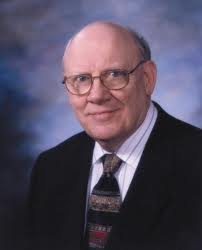
“It was sort of imbecilic for a fifteen-year-old amateur magician to have the audacity to write a book and send it to one of the nation’s leading magic houses,” Warren says. But having a total of three books published by the L.L. Ireland Magic Company—before the age of 20—gave him a surge of confidence. In later years, he applied his confidence and writing talent to the Youth for Christ (YFC) ministry.
Warren wrote many articles and guidebooks for YFC over a three-year period, but not all his manuscripts were seen by the public eye. One effort in particular, The Life I Now Live, based on Galatians 2:20, was never published. The reason, Warren explains with his characteristic humor, is simple: it was “a terrible book…Whenever I want to aggravate my wife, all I have to say is, ‘I think I’ll get out that Galatians 2:20 manuscript and work on it.’” Fortunately, Warren’s good manuscripts far outnumbered the “terrible” ones, and he was eventually hired by Moody Press to write three books.
The much-sought-after author then moved on to writing books for Calvary Baptist Church. It was during his ten years at Calvary that Expository Outlines on the New Testament and Expository Outlines on the Old Testament took shape. These two works later became the foundation of Warren’s widely popular Bible studies known as the Be series, featuring such titles as Be Loyal (a study on Matthew) and Be Delivered (a study on Exodus). Several of these books have been translated into Spanish.
His next avenue of ministry was Chicago’s Moody Memorial Church, where he served for seven years. He wrote nearly 20 books at Moody before moving to Lincoln, Nebraska, where he and his wife, Betty, now live. Prior to relocating, he had been the senior pastor of Moody Church, a teacher at Trinity Evangelical Divinity School, and a producer of the Back to the Bible radio program.
During all these years of ministry, Warren held many more posts and took part in other projects too numerous to mention. His accomplishments are extensive, and his catalog of biblical works is indeed impressive and far-reaching (many of his books have been translated into other languages). But Warren has no intention of slowing down any time soon, as he readily explains: “I don’t like it when people ask me how I’m enjoying my ‘retirement,’ because I’m still a very busy person who is not yet living on Social Security or a pension. Since my leaving Back to the Bible, at least a dozen books have been published, and the Lord willing, more are on the way.”
Wiersbe’s recent books include Your Next Miracle, The 20 Essential Qualities of a Child of God, The Bumps are What You Climb On, Classic Sermons on the Fruit of the Spirit, Classic Sermons on Jesus the Shepherd, Key Words of the Christian Life, Lonely People, A Gallery of Grace, Real Peace: Freedom and Conscience in the Christian Life, and On Being a Leader for God.
Preachers: 10 Questions To Ask in Taking Inventory of Your Sermon by David and Warren Wiersbe
 (Adapted form Elements of Biblical Preaching by David and Warren Wiersbe, Wheaton: Tyndale House, 1986)
(1) Is the message solidly based on Scripture?
(2) Does it exalt the Person and work of Jesus Christ?
(3) Will it meet the needs of the people?
(4) Is the theme a timeless truth worth talking about?
(5) Is the message organized so that I can preach it clearly and the people understand it easily? Is there a concise and clear statement of purpose? Is there a clear plan of development? Is there practical application that makes the message personal?
(6) Are all Scripture references and historical facts accurate?
(7) Is the message real to me personally so that I may make it real to others?
(8) Does the message fit into the total “preaching plan” for this church and into the context of the church’s ministry at this time?
(9) Does the message fit into the ministry of the Church at large and Christ’s concern to save a lost world?
(10) Is the message worth preaching again?
 *Warren W. Wiersbe is the Distinguished Professor of Preaching at Grand Rapids Baptist Seminary, Warren Wiersbe is the author of more than 100 books. Billy Graham calls him “one of the greatest Bible expositors of our generation.” Interestingly, Warren’s earliest works had nothing to do with scriptural interpretation. His interest was in magic, and his first published title was Action with Cards (1944).
“It was sort of imbecilic for a fifteen-year-old amateur magician to have the audacity to write a book and send it to one of the nation’s leading magic houses,” Warren says. But having a total of three books published by the L.L. Ireland Magic Company—before the age of 20—gave him a surge of confidence. In later years, he applied his confidence and writing talent to the Youth for Christ (YFC) ministry.
Warren wrote many articles and guidebooks for YFC over a three-year period, but not all his manuscripts were seen by the public eye. One effort in particular, The Life I Now Live, based on Galations 2:20, was never published. The reason, Warren explains with his characteristic humor, is simple: it was “a terrible book…Whenever I want to aggravate my wife, all I have to say is, ‘I think I’ll get out that Galations 2:20 manuscript and work on it.’” Fortunately, Warren’s good manuscripts far outnumbered the “terrible” ones, and he was eventually hired by Moody Press to write three books.
The much-sought-after author then moved on to writing books for Calvary Baptist Church. It was during his ten years at Calvary that Expository Outlines on the New Testament and Expository Outlines on the Old Testament took shape. These two works later became the foundation of Warren’s widely popular Bible studies known as the Be series, featuring such titles as Be Loyal (a study on Matthew) and Be Delivered (a study on Exodus). Several of these books have been translated into Spanish.
His next avenue of ministry was Chicago’s Moody Memorial Church, where he served for seven years. He wrote nearly 20 books at Moody before moving to Lincoln, Nebraska, where he and his wife, Betty, now live. Prior to relocating, he had been the senior pastor of Moody Church, a teacher at Trinity Evangelical Divinity School, and a producer of the Back to the Bible radio program.
During all these years of ministry, Warren held many more posts and took part in other projects too numerous to mention. His accomplishments are extensive, and his catalog of biblical works is indeed impressive and far-reaching (many of his books have been translated into other languages). But Warren has no intention of slowing down any time soon, as he readily explains: “I don’t like it when people ask me how I’m enjoying my ‘retirement,’ because I’m still a very busy person who is not yet living on Social Security or a pension. Since my leaving Back to the Bible, at least a dozen books have been published, and the Lord willing, more are on the way.”
Wiersbe’s recent books include Your Next Miracle, The 20 Essential Qualities of a Child of God, The Bumps are What You Climb On, Classic Sermons on the Fruit of the Spirit, Classic Sermons on Jesus the Shepherd, Key Words of the Christian Life, Lonely People, A Gallery of Grace, Real Peace: Freedom and Conscience in the Christian Life, and On Being a Leader for God.
Book Review: The Elements of Preaching by Warren W. Wiersbe and David Wiersbe
Very Helpful Primer on the Basics of Preaching
This helpful handbook by father and son preaching veterans – Warren and David Wiersbe is divided into two sections. There are twenty-six preaching principles and fourteen preaching prohibitions that are developed. Each chapter is only one to two pages in length. They really pack this book in with great quotes, wisdom, and the type of advice that you can only get from preachers that have put a lot of mileage in the pulpit.
In the preaching principles section the Wiersbe’s remind us “Methods are many, principles are few. Methods always change, Principles never do.” Here are just ten of the twenty-six topics they develop:
Preaching is the communicating of God’s truth by God’s servant to meet the needs of people.
The Preacher is a part of the message.
Preaching is an act of worship.
A sermon must have both intent and content if it is to be effective.
The sermon should be based on the essentials of the text and not the accidentals of the translation you are using.
Build your outline on the unique features of the text.
Keep your preaching within the bounds of what the text says and what the people can receive.
Preach to express, not to impress.
Sermons preached as part of a series must be independent and yet related.
Speak the truth in love.
Never be satisfied with your preaching.
At the end of the book they include a very helpful checklist for “Taking Inventory of the Message:”
- Is the message solidly based on Scripture?
- Does it exalt the Person and work of Jesus Christ?
- Will it meet the needs of the people?
- Is the theme a timeless truth worth talking about?
- Is the message organized so that I can preach it clearly and the people understand it easily? Is there a concise and clear statement of purpose? Is there a clear plan of development? Is there practical application that makes the message personal?
- Are all Scripture references and historical facts accurate?
- Is the message real to me personally so that I may make it real to others?
- Does the message fit into the total “preaching plan” for this church and into the context of the church’s ministry at this time?
- Does the message fit into the ministry of the Church at large and Christ’s concern to save a lost world?
- Is the message worth preaching again?
I have used this little book (approximately 100 pages) as a refresher, idea generator, and kick-starter for years. It’s well worth having for beginning, intermediate and experienced preachers of the Word. Perhaps the most important asset of this book is the encouragement it will give you from two men who have been faithfully delivering God-centered sermons in the trenches for years.

*Warren W. Wiersbe is the Distinguished Professor of Preaching at Grand Rapids Baptist Seminary, Warren Wiersbe is the author of more than 100 books. Billy Graham calls him “one of the greatest Bible expositors of our generation.” Interestingly, Warren’s earliest works had nothing to do with scriptural interpretation. His interest was in magic, and his first published title was Action with Cards (1944).
“It was sort of imbecilic for a fifteen-year-old amateur magician to have the audacity to write a book and send it to one of the nation’s leading magic houses,” Warren says. But having a total of three books published by the L.L. Ireland Magic Company—before the age of 20—gave him a surge of confidence. In later years, he applied his confidence and writing talent to the Youth for Christ (YFC) ministry.
Warren wrote many articles and guidebooks for YFC over a three-year period, but not all his manuscripts were seen by the public eye. One effort in particular, The Life I Now Live, based on Galations 2:20, was never published. The reason, Warren explains with his characteristic humor, is simple: it was “a terrible book…Whenever I want to aggravate my wife, all I have to say is, ‘I think I’ll get out that Galations 2:20 manuscript and work on it.’” Fortunately, Warren’s good manuscripts far outnumbered the “terrible” ones, and he was eventually hired by Moody Press to write three books.
The much-sought-after author then moved on to writing books for Calvary Baptist Church. It was during his ten years at Calvary that Expository Outlines on the New Testament and Expository Outlines on the Old Testament took shape. These two works later became the foundation of Warren’s widely popular Bible studies known as the Be series, featuring such titles as Be Loyal (a study on Matthew) and Be Delivered (a study on Exodus). Several of these books have been translated into Spanish.
His next avenue of ministry was Chicago’s Moody Memorial Church, where he served for seven years. He wrote nearly 20 books at Moody before moving to Lincoln, Nebraska, where he and his wife, Betty, now live. Prior to relocating, he had been the senior pastor of Moody Church, a teacher at Trinity Evangelical Divinity School, and a producer of the Back to the Bible radio program.
During all these years of ministry, Warren held many more posts and took part in other projects too numerous to mention. His accomplishments are extensive, and his catalog of biblical works is indeed impressive and far-reaching (many of his books have been translated into other languages). But Warren has no intention of slowing down any time soon, as he readily explains: “I don’t like it when people ask me how I’m enjoying my ‘retirement,’ because I’m still a very busy person who is not yet living on Social Security or a pension. Since my leaving Back to the Bible, at least a dozen books have been published, and the Lord willing, more are on the way.”
Wiersbe’s recent books include Your Next Miracle, The 20 Essential Qualities of a Child of God, The Bumps are What You Climb On, Classic Sermons on the Fruit of the Spirit, Classic Sermons on Jesus the Shepherd, Key Words of the Christian Life, Lonely People, A Gallery of Grace, Real Peace: Freedom and Conscience in the Christian Life, and On Being a Leader for God.
Book Review: The Strategy of Satan by Warren Wiersbe

Understanding and Overcoming Satan’s Tactics Primer
Review by David P. Craig
Warren Wiersbe can always be trusted to be biblical, concise, clear, and give ample practical illustrations and applications to modern life. In this short primer on Satan’s tactics and our responses to his tactics the book may be broken down in the following three ways:
First, the writer shows how Satan is the ultimate deceiver, destroyer, ruler, and accuser. In each of the first four chapters Wiersbe gives an Old Testament example in each of these four areas in order to demonstrate Satan’s target, weapon, purpose, and then tactical defenses we can use against his deceptions, evil plans, feeding our pride, and his accusations towards us.
Secondly, the middle of the book is about increasing our faith in God, and how not to give Satan a foothold in our life so as not to paralyze and immobilize us in God’s work on earth. He focuses on the positive ways we can overcome the Evil One’s tactics by trusting and obeying Christ.
Thirdly, Wiersbe gives a masterful exposition of all the armor we have been given in the battle against Satan and demons from Ephesians 6, and how Satan attacks the family, and churches as a key strategy in his arsenal of tactics.
Overall, this book is thorough, biblically sound, and very useful in its many practical applications. I highly recommend this book – especially if you have never read anything on the wiles of the Enemy and how to overcome our greatest Adversary.

*Distinguished Professor of Preaching at Grand Rapids Baptist Seminary, Warren Wiersbe is the author of more than 100 books. Billy Graham calls him “one of the greatest Bible expositors of our generation.” Interestingly, Warren’s earliest works had nothing to do with scriptural interpretation. His interest was in magic, and his first published title was Action with Cards (1944).
“It was sort of imbecilic for a fifteen-year-old amateur magician to have the audacity to write a book and send it to one of the nation’s leading magic houses,” Warren says. But having a total of three books published by the L.L. Ireland Magic Company—before the age of 20—gave him a surge of confidence. In later years, he applied his confidence and writing talent to the Youth for Christ (YFC) ministry.
Warren wrote many articles and guidebooks for YFC over a three-year period, but not all his manuscripts were seen by the public eye. One effort in particular, The Life I Now Live, based on Galations 2:20, was never published. The reason, Warren explains with his characteristic humor, is simple: it was “a terrible book…Whenever I want to aggravate my wife, all I have to say is, ‘I think I’ll get out that Galations 2:20 manuscript and work on it.’” Fortunately, Warren’s good manuscripts far outnumbered the “terrible” ones, and he was eventually hired by Moody Press to write three books.
The much-sought-after author then moved on to writing books for Calvary Baptist Church. It was during his ten years at Calvary that Expository Outlines on the New Testament and Expository Outlines on the Old Testament took shape. These two works later became the foundation of Warren’s widely popular Bible studies known as the Be series, featuring such titles as Be Loyal (a study on Matthew) and Be Delivered (a study on Exodus). Several of these books have been translated into Spanish.
His next avenue of ministry was Chicago’s Moody Memorial Church, where he served for seven years. He wrote nearly 20 books at Moody before moving to Lincoln, Nebraska, where he and his wife, Betty, now live. Prior to relocating, he had been the senior pastor of Moody Church, a teacher at Trinity Evangelical Divinity School, and a producer of the Back to the Bible radio program.
During all these years of ministry, Warren held many more posts and took part in other projects too numerous to mention. His accomplishments are extensive, and his catalog of biblical works is indeed impressive and far-reaching (many of his books have been translated into other languages). But Warren has no intention of slowing down any time soon, as he readily explains: “I don’t like it when people ask me how I’m enjoying my ‘retirement,’ because I’m still a very busy person who is not yet living on Social Security or a pension. Since my leaving Back to the Bible, at least a dozen books have been published, and the Lord willing, more are on the way.”
Wiersbe’s recent books include Your Next Miracle, The 20 Essential Qualities of a Child of God, The Bumps are What You Climb On, Classic Sermons on the Fruit of the Spirit, Classic Sermons on Jesus the Shepherd, Key Words of the Christian Life, Lonely People, A Gallery of Grace, Real Peace: Freedom and Conscience in the Christian Life, and On Being a Leader for God.
The Importance of God’s Word
“God’s Word is a light to guide us, and we must follow. It is water to wash us, and we must bathe. It is a mirror to show us our blemishes, and we must be honest. It is medicine to heal our hurts, and we must apply it. We don’t just look at the Word to learn the Word; we must live by the Word.” – Warren W. Wiersbe (God Isn’t In a Hurry, p. 96)
Book Review: God Isn’t In A Hurry by Warren W. Wiersbe
Help For Impatient People
I am someone who struggles with waiting. As such, I am grateful for this book. There are various topics covered in these 30 devotionals penned by this godly and wise pastor to pastors – Dr. Warren Wiersbe (once the pastor of the Historic Moody Memorial Church in Chicago). This book is the third of it’s type – the other two being Turning Mountains into Molehills, and The Bumps Are What You Climb On.
The subtitle of the book is really what all the devotionals center around: “Learning to slow down and live.” I have read this book daily for a month several times, and have flipped through it trying to find the right title to suit whatever I’ve been going through during a difficult time.
This book is full of Biblical insights and principles, encouragement, and will definitely help you to be reminded of God’s sovereignty and goodness in your life. He also encourages you by showing how important your life is in the overall plans of God. I come to this book again and again to slow down and rest in the Lord.
Funny Story: Pastor On Salary By Faith
I heard about a pastor who candidated at a church and was called, provided that he lived by faith. He asked the six men on the committee what they meant by living by faith. What it meant was that he would have no stated salary but that he would simply trust God for his needs. The candidate made a suggestion that cost him the church: “Each of you men has a salary, so why don’t we put all of our salaries together, divide the total by seven and all of us can live by faith.” (God Isn’t In a Hurry, by Warren Wiersbe, p. 23)
Book Review: Turning Mountains into Molehills By Warren W. Wiersbe
How To Turn Your Mountains Into Molehills
This concise devotional by the prolific writer Warren W. Wiersbe consists of 30 short devotionals (one for each day of the month) originally aired over “Songs in the Night” – the radio broadcasts of Moody Memorial Church in Chicago.
I have read through this book several times over the years. It is especially good to read when you are battling discouragement, depression, or going through some kind of adversity. Each chapter stands alone and is full of Biblical principles, insights, and applications for helping you turn your own personal mountains into molehills by being reminded of God’s power, sovereignty, and love for you in the person and work of Jesus Christ.
I hope that you will get this book and be encouraged as I have so many times over the years. I highly recommend it as a treasury of reminders of God’s love for you, and how He always works out everything for our good and His glory.
4 Good Reasons We Go Through Trials by Warren W. Wiersbe
“A Land of Hills and Valleys”
Excerpt from Chapter 1: From the Wonderful Devotional book Turning Mountains into Molehills by Warren W. Wiersbe (Grand Rapids: Baker, 1987 – Only changes are that the Scriptures are from KJV to ESV)
For some reason, I have never enjoyed geography. Perhaps I didn’t study hard enough in school. But as I study my Bible, I find myself becoming greatly interested in God’s geography, particularly something that God said about the Promised Land He was giving to His people, Israel. “But the land that you are going over to possess is a land of hills and valleys, which drinks water by the rain from heaven (Deuteronomy 11:11).” I can’t think of a better description of the Christian life—a land of hills and valleys.
 Christians today have a great deal in common with the nation of Israel back in Moses’ day, even though there are some radical differences. For example, there was a time when the people were in bondage; and God set them free. Once you and I were in bondage to sin; but God has set us free. God set Israel free by the blood of the lamb; and God has set us free by the blood of Jesus Christ, God’s Lamb without spot or blemish. God led the nation with a cloud by day and a pillar of fire by night; and God leads us today through His Holy Word. God brought His people to the border of their inheritance and told them to go in and possess the land by faith; but, unfortunately they fell into unbelief and failed to posses the land.
The Lord has given Christians today a wonderful spiritual inheritance in Christ, and all we have to do is possess it by faith. The Bible is the divine road map that describes our inheritance for us; and God says that our inheritance is “a land of hills and valleys.”
Now, this fact may come as a surprise to some of you. Many people have the idea that the Christian life is an easy life—that once you are saved, your troubles are over. Well, once you are saved, many problems are solved; but many new ones appear. Jesus never promised that it would be easy for us to claim our inheritance. “In this world you will have tribulation,” He warned His disciples. “If they have hated me, they will hate you.” The Christian life is a land of hills and valleys.
Let’s begin with the valleys. Have you ever noticed that most of the great people in the Bible went through valley experiences? In Genesis 15 I find Abraham going through “the horror of a great darkness.” I find Isaac trembling because one of his sons has tricked him. I see Jacob wrestling all night until he is willing to surrender to God. I hear Moses crying out to God, “I am not able to bear all this people alone…kill me, I beg you.” I see David hiding in a cave a wondering if the crown would ever be on his head. I hear the prophet Isaiah lamenting, “I have labored in vain; I have spent my strength for nothing and in vain!” (Isa. 49:4). I watch John the Baptist in prison as he sends his disciples to Jesus to ask, “Are you the Messiah, or should we look for another?” Yes, I even hear the great apostle Paul saying, “For we would not have you ignorant, brothers, or our trouble which came to us in Asia, that we were pressed out of measure, above strength, insomuch that we despaired even of life.” These men knew what it was to go through the valley.
Why does God permit these valleys to come into our lives? For one thing we learn some lessons in the valleys  that we could never learn on the mountaintop. Do you think that David could have written those wonderful psalms if had never known the trials in the valley? How could he have written ‘Even though I walk through the valley of the shadow of death, I will fear no evil, for I know that you are with me,” if he had not gone through the valley himself? Suppose Jeremiah had never gone through that terrible valley that made him the “Weeping Prophet”? Could he ever have written, “His compassions never fail; they are new every morning; great is your faithfulness” (Lam. 3:22,23)? Suppose Paul had never gone through the valley with his thorn in the flesh? Could he have written, “My grace is sufficient for you”? When we go through the valley, we learn lessons we could never learn any other way.
And, we grow in character in a way we could never grow apart from the valley. Great Christians are made by great trials. A man does not become patient simply by reading a book or praying a prayer. He becomes patient by going through the valley. Faith is cultivated in the darkness of the valley. God may teach us in the light, but he tests us in the darkness. This is why Paul wrote: “But we had the sentence of death in ourselves, that we should not trust in ourselves, but in God who raises the dead.” The Christian graces are developed as we walk through the valley.
But God has another purpose for the valley: as we go through the valley, we learn to help others. Psalm 84:6 puts it this way: “Who passing through the valley of weeping makes it a place of springs.” Here is a pilgrim going through a difficult valley, so difficult he is even weeping; but he leaves behind a well to refresh the pilgrims that will follow him. Perhaps the reason you are in the valley today is that God may comfort you so you in turn may comfort someone else. He wants you to leave a well behind. Paul had this in mind when he wrote, “God comforts us in all our tribulation that we may comfort them which are in any trouble, by the comfort we have received from God” (2 Cor. 1:4).
The Christian life is a land of hills and valleys. God ordains the valleys that He might teach us lessons we could never learn any other way. He leads us through the valleys so that we may grow in our Christian character, and so that we may help others when they go through the valley. But there’s a fourth reason He permits valleys, and it’s this: you cannot have hills unless you have valleys.
Wouldn’t it be wonderful if life were just a series of mountaintop experiences? Wouldn’t we be happier if there were no valleys in our lives? The Christian life is a land of hills and valleys, but we must never forget that you cannot have hills unless you have valleys.
God knows how to balance our lives. All sunshine makes the desert, says the old proverb; and all hills, without valleys, will make an immature and shallow life. If you and I want to enjoy the hilltops of happiness, we must be willing to experience the valleys of trial. It’s comforting and encouraging to know that at the end of every valley there is a hill, and atop that hill is a new experience of blessing from the Lord.
 I can’t help but notice that the lives of God’s people in the Bible were made up of both hills and valleys. Abraham received a great promise from God one day, and the next day the land was plunged into drought and famine. Isaac was born, and Abraham’s joy was complete. A few years later, God told him to offer his beloved son on the altar. The great prophet Moses experienced his hills and valleys. No sooner had he led the nation out of Egypt when they began to complain and ask to go back to bondage! Moses met God on the mountaintop and saw His glory; then he came down and discovered Israel dancing before a golden idol. Hills and valleys!
It was true even in the earthly life of our Lord. When Jesus was baptized in the Jordan River, the Father spoke from heaven and the Spirit came down on Jesus like a dove. What a mountaintop experience! But then the Spirit drove Jesus into the wilderness to be tempted by the devil. What a valley to go through! See Him as He enters Gethsemane, as he prays and sweats great drops of blood. See Him hanging on a cross! What a valley He endured! But then, see Him risen from the dead—radiant in the glorified body! What a mountaintop experience! Then He ascends to the highest heaven and sits at the right hand of God!
This is God’s word of encouragement to you as you go through the valley. He has a glorious blessing waiting for you at the end of the valley. The Christian life is a land of hills and valleys; and wherever you find a valley, you will always find a mountaintop at the other end. This is true because our Lord Jesus Christ has already gone before us to prepare a way. Every valley that we go through, Christ has already traveled before us.
I’m glad the Christian life is a land of hills and valleys. There is nothing monotonous about it. Every day presents a new challenge to grow in grace, a new opportunity to help others, a new privilege to receive grace and strength from Jesus Christ. It is a land of hills and valleys, and our God is a God of the hills and a God of the valleys.
*Warren W. Wiersbe is the Distinguished Professor of Preaching at Grand Rapids Baptist Seminary, Warren Wiersbe is the author of more than 100 books. Billy Graham calls him “one of the greatest Bible expositors of our generation.” Interestingly, Warren’s earliest works had nothing to do with scriptural interpretation. His interest was in magic, and his first published title was Action with Cards (1944).
“It was sort of imbecilic for a fifteen-year-old amateur magician to have the audacity to write a book and send it to one of the nation’s leading magic houses,” Warren says. But having a total of three books published by the L.L. Ireland Magic Company—before the age of 20—gave him a surge of confidence. In later years, he applied his confidence and writing talent to the Youth for Christ (YFC) ministry.
Warren wrote many articles and guidebooks for YFC over a three-year period, but not all his manuscripts were seen by the public eye. One effort in particular, The Life I Now Live, based on Galations 2:20, was never published. The reason, Warren explains with his characteristic humor, is simple: it was “a terrible book…Whenever I want to aggravate my wife, all I have to say is, ‘I think I’ll get out that Galations 2:20 manuscript and work on it.’” Fortunately, Warren’s good manuscripts far outnumbered the “terrible” ones, and he was eventually hired by Moody Press to write three books.
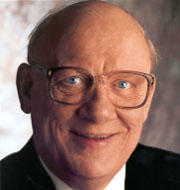 The much-sought-after author then moved on to writing books for Calvary Baptist Church. It was during his ten years at Calvary that Expository Outlines on the New Testament and Expository Outlines on the Old Testament took shape. These two works later became the foundation of Warren’s widely popular Bible studies known as the Be series, featuring such titles as Be Loyal (a study on Matthew) and Be Delivered (a study on Exodus). Several of these books have been translated into Spanish.
His next avenue of ministry was Chicago’s Moody Memorial Church, where he served for seven years. He wrote nearly 20 books at Moody before moving to Lincoln, Nebraska, where he and his wife, Betty, now live. Prior to relocating, he had been the senior pastor of Moody Church, a teacher at Trinity Evangelical Divinity School, and a producer of the Back to the Bible radio program.
During all these years of ministry, Warren held many more posts and took part in other projects too numerous to mention. His accomplishments are extensive, and his catalog of biblical works is indeed impressive and far-reaching (many of his books have been translated into other languages). But Warren has no intention of slowing down any time soon, as he readily explains: “I don’t like it when people ask me how I’m enjoying my ‘retirement,’ because I’m still a very busy person who is not yet living on Social Security or a pension. Since my leaving Back to the Bible, at least a dozen books have been published, and the Lord willing, more are on the way.”
Wiersbe’s recent books include Your Next Miracle, The 20 Essential Qualities of a Child of God, The Bumps are What You Climb On, Classic Sermons on the Fruit of the Spirit, Classic Sermons on Jesus the Shepherd, Key Words of the Christian Life, Lonely People, A Gallery of Grace, Real Peace: Freedom and Conscience in the Christian Life, and On Being a Leader for God.
 LifeCoach4God