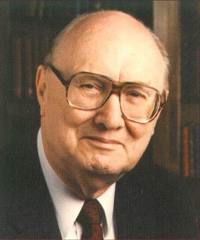
A.W. Tozer on God’s Unchanging Nature

The Immutability of God

portugal surfing sunset

O Christ our Lord, Thou hast been our dwelling place in all generations. As conies to their rock, so have we run to Thee for safety; as birds from their wanderings, so have we flown to Thee for peace. Chance and change are busy in our little world of nature and men, but in Thee we find no variableness nor shadow of turning. We rest in Thee without fear or doubt and face our tomorrows without anxiety. Amen.

The immutability of God is among those attributes less difficult to understand, but to grasp it we must discipline ourselves to sort out the usual thoughts with which we think of created things from the rarer ones that arise when we try to lay hold of whatever may be comprehended of God.

To say that God is immutable is to say that He never differs from Himself. The concept of a growing or developing God is not found in the Scriptures. It seems to me impossible to think of God as varying from Himself in any way. Here is why:

For a moral being to change it would be necessary that the change be in one of three directions. He must go from better to worse or from worse to better; or, granted that the moral quality remain stable, he must change within himself, as from immature to mature or from one order of being to another. It should be clear that God can move in none of these directions. His perfections forever rule out any such possibility.

God cannot change for the better. Since He is perfectly holy, He has never been less holy than He is now and can never be holier than He is and has always been. Neither can God change for the worse. Any deterioration within the unspeakably holy nature of God is impossible. Indeed I believe it impossible even to think of such a thing, for the moment we attempt to do so, the object about which we are thinking is no longer God but something else and someone less than He. The one of whom we are thinking may be a great and awesome creature, but because he is a creature he cannot be the self-existent Creator.

As there can be no mutation in the moral character of God, so there can be none within the divine essence. The being of God is unique in the only proper meaning of that word; that is, His being is other than and different from all other beings. We have seen how God differs from His creatures in being self-existent, self-sufficient, and eternal. By virtue of these attributes God is God and not some other being. One who can suffer any slightest degree of change is neither self-existent, self-sufficient, nor eternal, and so is not God.

Only a being composed of parts may change, for change is basically a shift in the relation of the parts of a whole or the admission of some foreign element into the original composition. Since God is self-existent, He is not composed. There are in Him no parts to be altered. And since He is self-sufficient, nothing can enter His being from without.

“Whatever is composed of parts,” says Anselm, “is not altogether one, but is in some sort plural, and diverse from itself; and either in fact or in concept is capable of dissolution. But these things are alien to Thee, than whom nothing better can be conceived of. Hence, there are no parts in Thee, Lord, nor art Thou more than one. But Thou art so truly a unitary being, and so identical with Thyself, that in no respect art Thou unlike Thyself; rather Thou art unity itself, indivisible by any conception.”

“All that God is He has always been, and all that He has been and is He will ever be.” Nothing that God has ever said about Himself will be modified; nothing the inspired prophets and apostles have said about Him will be rescinded. His immutability guarantees this.

The immutability of God appears in its most perfect beauty when viewed against the mutability of men. In God no change is possible; in men change is impossible to escape. Neither the man is fixed nor his world, but he and it are in constant flux. Each man appears for a little while to laugh and weep, to work and play, and then to go to make room for those who shall follow him in the never-ending cycle.

Certain poets have found a morbid pleasure in the law of impermanence and have sung in a minor key the song of perpetual change. Omar the tentmaker was one who sang with pathos and humor of mutation and mortality, the twin diseases that afflict mankind. “Don’t slap that clay around so roughly,” he exhorts the potter, “that may be your grandfather’s dust you make so free with.” “When you lift the cup to drink red wine,” he reminds the reveler, “you may be kissing the lips of some beauty dead long ago.”

This note of sweet sorrow expressed with gentle humor gives a radiant beauty to his quatrains but, however beautiful, the whole long poem is sick, sick unto death. Like the bird charmed by the serpent that would devour it, the poet is fascinated by the enemy that is destroying him and all men and every generation of men.

The sacred writers, too, face up to man’s mutability, but they are healthy men and there is a wholesome strength in their words. They have found the cure for the great sickness. God, they say, changes not. The law of mutation belongs to a fallen world, but God is immutable, and in Him men of faith find at last eternal permanence. In the meanwhile change works for the children of the kingdom, not against them. The changes that occur in them are wrought by the hand of the inliving Spirit. “But we all,” says the apostle, “with open face beholding as in a glass the glory of the Lord, are changed into the same image from glory to glory, even as by the Spirit of the Lord.”

In a world of change and decay not even the man of faith can be completely happy. Instinctively he seeks the unchanging and is bereaved at the passing of dear familiar things.

O Lord! my heart is sick,

Sick of this everlasting change;

And life runs tediously quick

Through its unresting race and varied range:

Change finds no likeness to itself in Thee,

And wakes no echo in Thy mute Eternity.

—Frederick W. Faber

These words of Faber find sympathetic response in every heart; yet much as we may deplore the lack of stability in all earthly things, in a fallen world such as this the very ability to change is a golden treasure, a gift from God of such fabulous worth as to call for constant thanksgiving. For human beings the whole possibility of redemption lies in their ability to change. To move across from one sort of person to another is the essence of repentance: the liar becomes truthful, the thief honest, the lewd pure, the proud humble. The whole moral texture of the life is altered. The thoughts, the desires, the affections are transformed, and the man is no longer what he had been before. So radical is this change that the apostle calls the man that used to be “the old man” and the man that now is “the new man, which is renewed in knowledge after the image of him that created him.”

Yet the change is deeper and more basic than any external acts can reveal, for it includes also the reception of life of another and higher quality. The old man, even at his best, possesses only the life of Adam: the new man has the life of God. And this is more than a mere manner of speaking; it is quite literally true. When God infuses eternal life into the spirit of a man, the man becomes a member of a new and higher order of being.

In the working out of His redemptive processes the unchanging God makes full use of change and through a succession of changes arrives at permanence at last. In the Book of Hebrews this is shown most clearly. “He taketh away the first, that he may establish the second,” is a kind of summation of the teaching of that remarkable book. The old covenant, as something provisional, was abolished, and the new and everlasting covenant took its place. The blood of goats and bulls lost its significance when the blood of the Paschal Lamb was shed. The law, the altar, the priesthood—all were temporary and subject to change; now the eternal law of God is engraven forever on the living, sensitive stuff of which the human soul is composed. The ancient sanctuary is no more, but the new sanctuary is eternal in the heavens and there the Son of God has His eternal priesthood.

Here we see that God uses change as a lowly servant to bless His redeemed household, but He Himself is outside of the law of mutation and is unaffected by any changes that occur in the universe.

And all things as they change proclaim

The Lord eternally the same.

—Charles Wesley

Again the question of use arises. “Of what use to me is the knowledge that God is immutable?” someone asks. “Is not the whole thing mere metaphysical speculation? Something that might bring a certain satisfaction to persons of a particular type of mind but can have no real significance for practical men?”

If by “practical men” we mean unbelievers engrossed in secular affairs and indifferent to the claims of Christ, the welfare of their own souls, or the interests of the world to come, then for them such a book as this can have no meaning at all; nor, unfortunately, can any other book that takes religion seriously. But while such men may be in the majority, they do not by any means compose the whole of the population. There are still the seven thousand who have not bowed their knees to Baal. These believe they were created to worship God and to enjoy His presence forever, and they are eager to learn all they can about the God with whom they expect to spend eternity.

In this world where men forget us, change their attitude toward us as their private interests dictate, and revise their opinion of us for the slightest cause, is it not a source of wondrous strength to know that the God with whom we have to do changes not? That His attitude toward us now is the same as it was in eternity past and will be in eternity to come?

What peace it brings to the Christian’s heart to realize that our Heavenly Father never differs from Himself. In coming to Him at any time we need not wonder whether we shall find Him in a receptive mood. He is always receptive to misery and need, as well as to love and faith. He does not keep office hours nor set aside periods when He will see no one. Neither does He change His mind about anything. Today, this moment, He feels toward His creatures, toward babies, toward the sick, the fallen, the sinful, exactly as He did when He sent His only-begotten Son into the world to die for mankind.

God never changes moods or cools off in His affections or loses enthusiasm. His attitude toward sin is now the same as it was when He drove out the sinful man from the eastward garden, and His attitude toward the sinner the same as when He stretched forth His hands and cried, “Come unto me, all ye that labour and are heavy laden, and I will give you rest.”

God will not compromise and He need not be coaxed. He cannot be persuaded to alter His Word nor talked into answering selfish prayer. In all our efforts to find God, to please Him, to commune with Him, we should remember that all change must be on our part. “I am the Lord, I change not.” We have but to meet His clearly stated terms, bring our lives into accord with His revealed will, and His infinite power will become instantly operative toward us in the manner set forth through the gospel in the Scriptures of truth.

Fountain of being! Source of Good!

Immutable Thou dost remain!

Nor can the shadow of a change

Obscure the glories of Thy reign.

Earth may with all her powers dissolve,

If such the great Creator will;

But Thou for ever art the same,

I AM is Thy memorial still.

From Walker’s Collection

Article adapted from Chapter 9 of A.W. Tozer’s classic book on the Attributes of God entitled: The Knowledge of the Holy. Harper, many reprints – most recently 2008.

About the Author. Aiden Wilson Tozer was born April 21, 1897, on a small farm among the spiny ridges of Western Pennsylvania. Within a few short years, Tozer, as he preferred to be called, would earn the reputation and title of a “20th-century prophet.”

Able to express his thoughts in a simple but forceful manner, Tozer combined the power of God and the power of words to nourish hungry souls, pierce human hearts, and draw earthbound minds toward God.

When he was 15 years old, Tozer’s family moved to Akron, Ohio. One afternoon as he walked home from his job at Goodyear, he overheard a street preacher say, “If you don’t know how to be saved . . . just call on God.” When he got home, he climbed the narrow stairs to the attic where, heeding the preacher’s advice, Tozer was launched into a lifelong pursuit of God.

In 1919, without formal education, Tozer was called to pastor a small storefront church in Nutter Fort, West Virginia. That humble beginning thrust him and his new wife Ada Cecelia Pfautz, into a 44-year ministry with The Christian and Missionary Alliance.

Thirty-one of those years were spent at Chicago’s Southside Alliance Church. The congregation, captivated by Tozer’s preaching, grew from 80 to 800.

In 1950 Tozer was elected editor of the Alliance Weekly now called Alliance Life. The circulation doubled almost immediately. In the first editorial dated June 3, 1950, he set the tone: “It will cost something to walk slow in the parade of the ages while excited men of time rush about confusing motion with progress. But it will pay in the long run and the true Christian is not much interested in anything short of that.”

Tozer’s forte was his prayer life which often found him walking the aisles of a sanctuary or lying face down on the floor. He noted, “As a man prays, so is he.” To him the worship of God was paramount in his life and ministry. “His preaching as well as his writings were but extensions of his prayer life,” comments Tozer biographer James L. Snyder. An earlier biographer noted, “He spent more time on his knees than at his desk.”

Tozer’s love for words also pervaded his family life. He quizzed his children on what they read and made up bedtime stories for them. “The thing I remember most about my father,” reflects his daughter Rebecca, “was those marvelous stories he would tell.”

Son Wendell, one of six boys born before the arrival of Rebecca, remembers that, “We all would rather be treated to the lilac switch by our mother than to have a talking-to by our dad.”

Tozer’s final years of ministry were spent at Avenue Road Church in Toronto, Canada. On May 12, 1963, his earthly pursuit of God ended when he died of a heart attack at age 66. In a small cemetery in Akron, Ohio, his tombstone bears this simple epitaph: “A Man of God.”

Some wonder why Tozer’s writings are as fresh today as when he was alive. It is because, as one friend commented, “He left the superficial, the obvious and the trivial for others to toss around. . . . [His] books reach deep into the heart.”

His humor, written and spoken, has been compared to that of Will Rogers–honest and homespun. Congregations could one moment be swept by gales of laughter and the next sit in a holy hush.

For almost 50 years, Tozer walked with God. Even though he is gone, he continues to speak, ministering to those who are eager to experience God. As someone put it, “This man makes you want to know and feel God.”

Joe Aldrich on Some Marks of Maturity For a Pastor

LE Aldrich

Some Marks of Maturity for a Pastor

To help identify the kind of shepherd who stimulates beauty, let’s look now at some marks of maturity for a pastor. These are goals to shoot for, a direction to move. Since pupils are to become like their teachers, they are really goals for all of us.

The Mark of an Expanding Faith

Faith is that God-given ability to take the promises of God out of mothballs and apply them to the challenges of everyday living. Men of faith dream God-sized dreams and then move out to transform those dreams into reality. God has said that without faith, it is impossible to please him (Hebrews 11:6). Pleasing him is believing him. Faith as belief is affirming who he is while faith as action is responsible behavior in the light of who he is and what he has promised.

Sometimes it is behavior which overcomes overwhelming odds. By faith men of God “conquered kingdoms … shut the mouths of lions … became powerful in battle” (11:33-34). More often it is a tenacious behavior which endures in the midst of intense struggle and personal loss. “Others were tortured and refused to be released, so that they might gain a better resurrection” (11:35). Some accepted joyfully the seizure of their property because they knew they had a better and an eternal possession (10:34). Faith is not shrinking back, whether one faces opportunity or oppression. Our Lord warned against the leaven of the Sadducees (rationalism). Rationalism—eliminating the supernatural—becomes the great enemy of faith. The deceptive thing about the leaven of the Sadducees is its reasonableness. Rationalism is reasonable and safe. Faith often appears unreasonable and risky. It was both unreasonable and risky for Peter to attempt to walk on water. It was unreasonable for Noah to build a boat, for Abraham to expect a son, for Moses to abandon the prestige of Egypt, and for George Mueller to care for orphans. We must all grow in faith if we are to please him. Certainly we want to do that! The great faith chapter (Hebrews 11) gives us three clues for faith building.

1. Belief in the Invisible. These faith giants saw through the problems of the natural world to a supernatural Being. They saw him who is invisible (11:27). The writer to the Hebrews exhorts us to do the same: “Let us run with perseverance the race marked out for us. Let us fix our eyes on Jesus, the author and perfecter of our faith” (12:1-2). Our eyes must move from the waves to the Master of the waves, from the storm to the Savior, from the fire to the Father. Abraham left the familiar and went out into the unfamiliar, the new, the untested, the uncharted, because he saw that God was the architect and builder of his future (11:10). Cultivation of our relationship with him who is invisible is the first key for building faith.

2. Faith in What Has Been Promised. The heroes of faith not only saw him who was invisible, but they welcomed his promises from a distance (11:13). As we cultivate a relationship with God we are able to claim with assurance (faith) the promises which grow out of that relationship. Sarah was enabled to conceive because Abraham believed God would be faithful to what he had promised (11:11). He believed God was reliable. Our pastor must know both the person of God and the promises of God if he is to be a man of faith.

Two things hinder this process: 1) A lack of knowledge of the promises of God, and 2) a lack of faith in the person and character of God. Men and women of faith welcome the promises of God from a distance. That is, their major expectations are in the future, in life beyond the veil. Moses claimed the promises of God and turned his back on the prestige, power, and wealth of Egypt because “he was looking ahead to his reward” (11:26). Others joyfully accepted the confiscation of their property knowing that they had “better and lasting possessions” (10:34). They will be winners; they will not be ashamed for the choices they made because God is faithful, his promises are true, and “he has prepared a city for them” (11:16). An expanding faith must be marked by confidence in God’s promises.

3. Living a Faith Life Style. A real winner feels the gold medal around his neck before he enters the race. So should the pastor. He should run to win, and motivate by his courageous example a multitude to run with him. The promises of God should be the fabric of his future. Faith begins with the person of God, moves to his promises, and then to a pattern for living. Ours is a living faith and a faith to be lived.

There is a faith life style summed up in Hebrews 11:13: “All these people were still living by faith when they died. They did not receive the things promised; they only saw them and welcomed them from a distance.” And they admitted that they were aliens and strangers on earth.

Pastors of all people must make this confession. It is the Magna Carta of Christian living. These heroes of the faith abandoned any hope of ultimate fulfillment in this life. They determined to ever be foreigners in their own countries, to live as aliens in their own land.

No city on this earth, no geographical location, no second home in the mountains has foundations which will last. We should abandon all hope of being satisfied and fulfilled with what is temporal. Our heartache is eternal, and no temporal bicarbonate will ease it. Nothing less than seeing Jesus face to face and dwelling in his presence will ever satisfy our deep longing. It’s a longing for home, and this world will never be our home.

Much of the Christian community acts as though this world is its home. Materialism is rampant. We have followed the gospel of the worldling who hopes that by doubling the cost of his new home he can double his happiness. This perverted gospel cripples the impact of countless Christians. The visible mark of faith is an alignment with an eternal home which creates an attitude and life style marked by its contrast with the secularism of our day. This alignment refocuses everything else. It changes our goals and objectives. It redirects our gifts and abilities and resources. It redefines our mission. Suddenly eternity with the Lord is everything, and his purposes become critical as we prepare for that great day. The “alien and stranger” lives for the possibility of hearing his Master say, “Well done, good and faithful servant.” Like Moses, he looks forward to the reward.

Pastors must be examples to the church of total stewardship. They should richly enjoy all that God has given, but their heavenly citizenship should be obvious. The deceitfulness of wealth, of any treasure but God himself, is a dangerous time bomb. Some pastors err in the other direction. They parade their poverty and continually let their needs be known, and then praise God for his wonderful provision. Be careful, and pray for balance.

Faith is the essential ingredient that pleases God. Faith is fueled as the pastor cultivates the presence of God. As D. L. Moody used to say, “I am a leaky vessel, and I need to keep under the tap.” Faith is freed as the pastor develops confidence in the promises of God. It is properly focused as he adopts God’s pattern of living. The man of faith is an alien sent by God as an agent of reconciliation. An ad in a secular magazine stated, “Once you discover you can change the world you’ll never be the same.” How true! Faith moves mountains.

The Marks of a Positive Ministry

Faith and hope are inseparable friends. The gospel itself is literally “good news.” A pastor should both be and communicate good news. It’s largely a matter of attitude. Many pastors gravitate toward a negative, critical, condemning pattern of life and ministry. Such a life style is not from God.

It is often thought that the Christian faith is a deprivation of joy in living, or that it is a mere pattern of religious observances, or that it is a hairsplitting system of beliefs. Christianity does involve some of these elements but they are only incidental. The modern evangelist has to sell the biblical point of view that the Christian faith is God’s way to undreamed of personal fulfillment. This will necessitate a shift to a more positive point of view in order to change this false but popular image of Christianity (James Jauncy, Psychology for Successful Evangelism [Chicago: Moody Press, 1972], 39).

Pastors need to be ministers of hope. It should permeate their lives and their preaching. Recently I heard a speaker say that the one who brings the most hope gains the most authority. That’s an amazing and scary thought. Lenin came with a message of hope and changed the world. As his “Utopia” unfolded, people gave everything, even their very lives, to further the cause. People rally around the bearer of hope and submit themselves to him. Hope is a vital quality for pastors.

Peter reminds us that we are to be ready to give an answer, with “gentleness and respect,” to everyone who asks us the reason for our hope (1 Peter 3:15). This is not “pumping sunshine.” Ministry is tough. It involves heartache, tragedy, and despair. The shepherd needs to have a faith which produces a hope that encourages, comforts, and strengthens even as the dark clouds gather. Those who worship Jesus Christ have reason for hope.

A ministry founded on and giving rise to hope is composed of several positive factors:

1. An Unveiled Face—Authenticity. One of the joys of the new covenant is that the veils can come off. Moses came down from the mountain and veiled his face so that his people could not see his glory fade away. In 2 Corinthians 3:12-18 Paul tells us that we no longer have to function as did Moses. When one “turns to the Lord, the veil is taken away” (3:16). Let’s not bring back what God has taken away. The Christian pilgrimage is not one sanctifying experience after which we put on the veil. We don’t reach a point where a veil becomes necessary. The longer we walk with him, the less a veil should be needed. Paul encourages us to look at him with unveiled face as we “are being transformed into his likeness with ever-increasing glory” (3:18).

People are attracted by authenticity. The pastor must guard himself against accepting the illusions, fantasies, or distorted expectations of his congregation. Integrity is the critical element. It is so easy to deceive from the pulpit, to preach about things we have not experienced and do not consistently practice. It is so easy to overstate, to play on guilt, and to imply that we solved a particular problem long ago. If we haven’t and imply that we have (often by what we don’t say), we are inauthentic.

2. A Diligent Student of the Word. The demands of ministry are great, but they must not take the pastor away from the Book. Since when should the pastor do the calling, teach Sunday school, chair three or four committees, fold the bulletins, oversee the youth ministries, plan the retreats, and on and on? His job has never been to do the work of the ministry. He is to equip others to do it.

Bible study, however, is hard work. There are plenty of things to keep a pastor “busy” and to provide an excuse for his lack of preparation. Poor preaching keeps most churches poor. Poor preaching in most cases is the result of poor priorities and procrastination. The minister who is going to build a contagious congregation must handle truth skillfully, knowing that truth is the foundation of beauty. Besides direct study of Scripture, the pastor must continue to learn. Seminars, books, retreats, and significant fellowship should have high priority in his schedule. Many secular management training programs are excellent. Each local church should set aside a substantial sum for its pastor’s continuing enrichment. It is money well spent.

3. A Liberator of the Body. The marvelous doctrine of reconciliation helps us see that ultimately evangelism is what Jesus Christ is doing through his church to reach his world. The pattern looks like this. At Christ’s incarnation, God was “reconciling the world to himself in Christ” (2 Corinthians 5:19). Since Christ ascended to his Father’s right hand, the Father “has committed to us the message of reconciliation. We are therefore Christ’s ambassadors, as though God were making his appeal through us” (5:19-20). That’s what Christ is doing today. He entreats a lost world to be reconciled through his church, which is his body. Christ sows his good seed (beautiful seed) in the world, where his work is to take place.

The pastor must focus his church outward, not inward. His motto should be, “When the saints, go marching out!” The church is not a holy huddle, it is a task force whose primary focus must always be the “fields ripe for harvest.” Unfortunately, bigger buildings, larger programs, and more staff dictate church mission. We must justify our large expenditures, and the basic evangelism strategy becomes herding fish toward our expensive, stained-glass trap. Instead, the church should be God’s family extending itself to meet needs in the name of Jesus. Evangelism is what Jesus is actually doing through the preaching, the worship and fellowship, and the service of the church.

The pastor more than any other individual determines the character of the church’s preaching, fellowship, worship, and service. The content and style of his preaching is critical to the church’s health and beauty. If a church is to be a learning center, the pastor must make diligent preparation so that what is delivered is biblical, balanced, relevant, and liberating. Likewise, the pastor is the key to liberating the church to be a healing communion as he gives himself to building up the body so that it moves toward health. The pastor is also the key to whether or not the church is free to worship and to respond as a family to the presence of God in its midst. Finally, the service of the church is conditioned by the pastor’s vision (or lack of it). Liberating a congregation to be God’s people in service can be threatening. It often involves a rethinking of the pastoral and leadership roles. In most cases it means seeking a lower profile and elevating the gifts and abilities of others.

Jesus desires to explode himself through the lives of his people and do greater works than he did while on earth. He wants once again to touch the untouchables, feed the hungry, bring light where there is darkness and life where there is death. He wants to invite the thirsty—whoever they are, wherever they are—to discover living water. In the counsels of eternity, God decided for a time to link himself (and in a sense limit himself) to the frailties of his creatures. Why he has not evangelized with the hosts of heaven we do not know. What we do know is that Jesus’ mission today is done through us, his ambassadors. We are now members of the second incarnation called to make visible the invisible God. His impact, his mission, is linked to our obedience and vision. If we draw limits he has not drawn, he becomes limited in his outreach. If our hearts have no compassion for the lost, we neglect our commission and Christ’s mission is aborted.

Who do you think God wants to use to reach your neighborhood? Is he doing it? Why not? Pastor, you are God’s instrument to set people free—to encourage them, to liberate them, to give them your blessing to mark the lost for Christ. It may mean you will have to change your attitudes toward the unsaved. You may need to realign your understanding of separation with biblical truth. Perhaps you will have to eliminate some programs, change the thrust and tone of your preaching, focus again on the essentials, and start reaching your own neighborhood. People may need to be encouraged not to attend the programs and activities of the church so they can spend time with the unsaved. Your church may need, with your firm leadership, to move out into the community and serve it. Neglected widows may need help, injustice in your community may need to be confronted, programs may need to be implemented to care for the poor and needy … with no strings attached. You may need to brainstorm with your leadership team about where Jesus would go in your community to meet needs, and then direct resources and people into that area. Christianity in action under qualified leadership is always effective evangelistically.

4. A Builder of Men. Men attract men, especially in a church context. A primary part of the pastor’s job is the building of men. To nudge men on toward maturity takes time and commitment. His must help others to minister—not do the work of ministry himself. The minister is like the foreman in a machine shop, or the coach of a team. He does not do all the work, nor does he make all the plays. (Though he is a working foreman and a playing coach!) If a man can’t operate a lathe, the foreman rolls up his sleeves and shows him how. If a player can’t carry out an assignment, the coach demonstrates how to make the play (Leighton Ford, The Christian Persuaders [New York: Harper & Row, 1969], 49).

Even though the pastor is a shepherd who loves the entire body, a ministry to men must have a special place in his heart. While in the pastorate I met with at least five groups of men each week. I met one on one with a dentist friend, with two other board members, with a group of twenty or thirty businessmen, with the entire board, and with the pastoral staff (seven men). Although the group dynamics were different, the purposes were similar. With mutual accountability we shared the Word, prayer, schedules, and relationships. Each year, at my request, the board of elders met without me to evaluate my ministry, my marriage and family, and anything else they desired. This information, often painful, was shared in love and resulted in growth and encouragement. It also set a precedent. As they saw the value of evaluation, the board members requested that each of them be evaluated too.

We as a board recognized our need to be a redemptive community. We structured our weekly board meetings so that the first hour focused on instruction and worship. Board members rotated the teaching assignment among themselves. I spent hours working with some of the men helping prepare them to preach and teach. What an exciting experience to sit on the front row as one of them delivers the morning message! Men, help your pastor by being honest with him. I remember so well the evening a man in my congregation said to me, “Joe, you’ve been my pastor for two years. I’m disappointed you haven’t built into my life more effectively.” It was a time of soul searching … and growth. You may need to pose a similar question to your pastor to nudge him into one of his most important responsibilities. An effective pastor builds into his leaders to establish the base for a healthy and attractive ministry. Before a church is ready to add members, it must increase the quality and quantity of its leadership. A wise pastor learns how to be a builder of men, then makes this challenge central to his ministry.

5. A Family Specialist. Focus on the family! Target sermons regularly on marriage and family living. Take advantage of the excellent video series and printed materials available. People are hurting desperately in this area. Meet these needs and evangelism problems are practically solved. If your church cannot accept the wreckage of broken homes and shattered dreams, it is not a place where Jesus lives. Your church should be the greatest garbage dump in town—a place where the broken, oppressed, misplaced, abandoned, and unloved can come and find a family where they are accepted and loved … as is. “As is” people are Jesus’ kind of people. The Pharisees despised them. They still do. “As is” people become great disciples and great soul winners. Those who have been forgiven the most love the most. The effective church ministers effectively to families because it is a family. Pastor, you’re the key. Father the fatherless, rebuke the offenders, encourage the discouraged, rejoice with those who rejoice, and weep, weep, weep. If your heart is not broken by broken people, you don’t have Jesus’ heart. If your heart is not compelled to go when lost men stumble in darkness, you don’t have Jesus’ heart. Pray that his mission will recapture the hearts of his children and of their leaders.

6. A Careful Planner. The old adage is true: If you fail to plan, you plan to fail. A goal is a statement of faith about the future. Visions remain visions unless goals are established as steps to the visions’ realization. Aim at nothing and you’ll hit it every time. A careful planner simply puts a foundation under his fantasy.

Some years ago I put together a document which has been very influential in shaping my life. It contains my personal objectives, goals, and standards. I established objectives and goals in five areas: spiritual, intellectual, physical, family, and ministry. Objectives became broad statements of purpose. Suppose one objective in my spiritual life is to be conformed to the image of Christ. That is a broad, unmeasurable purpose. To achieve it I must establish several goals. One goal would be to maintain a regular Bible study program. Another might be to develop a significant prayer life. Reading Christian biographies could be another goal. If I meet these goals I will be well on my way toward my objective of Christ-likeness. Unfortunately, these goals are still too general and unmeasurable. Therefore, I must establish standards to quantify my goals and make them measurable. Here is a sample:

I. Objective: To be conformed to the image of Christ.

Goal: Regular Bible study Standard:

30 minutes each day in Bible study

Standard: 10 minutes each day in devotional literature

Standard: Weekly reading of pertinent journals, such as Christianity Today

Goal: Develop a significant prayer life

Standard: 30 minutes each day

Standard: Written requests with answers recorded

Standard: Daily prayer with wife and family

Standard: Daily prayer with staff

Goal: Read significant Christian biographies

Standard: One biography per month

Such an exercise is invaluable. The more you plan, the more efficient is your time spent in working. Perhaps the greatest value of planning is the “self-fulfilled prophecy” effect Planning plants seeds which enable visions to grow into realities. Planning is simply taxing the mind to solve the problems that keep us from a fruitful future. Not to plan is not to set in operation the incredible resources of the human mind, a resource which when linked with faith can move mountains. A man of vision plans … so does an effective shepherd.

Our fifth and final question is one only the pastor can answer: “What changes must take place in the life of the pastor to make him that kind of a person?” It is a critical question. Pastors need the insight and the feedback of their leaders to answer it effectively. The question cannot be answered unless it’s asked. My prayer is that many pastors will take the risk … and ask.

Article adapted from the ‘Pastor and Evangelism” in Joe Aldrich. Lifestyle Evangelism: Learning to Open Your Life to Those Around You (pp. 149-160). Random House, Inc.. Kindle Edition.

About the Author:

Dr. Joe Aldrich (Th.D – Dallas Theological Seminary) was the Senior Pastor of Mariners Church in Newport Beach in the 1970’s, and the President of Multnomah School of the Bible in Portland, Oregon in the 1980’s and early 90’s.

James Montgomery Boice on the Distinction Between the Rapture and the Lord’s Day

Two Great Days: The Day of the Lord and the Day of Christ

What The Bible Has To Say About The Future: Part 3 in a Series of 9 – By Dr. James M. Boice

To the people of the ancient east the stars had great significance. They were the means by which people determined the hours of the night and the seasons of the year. The morning star was particularly important for it heralded the rising of the sun and the coming of a new day. The Lord Jesus Christ is our morning star, according to the book of Revelation (Revelation 22:16). He is coming. The dark night of human history may be long and filled with grim terrors, but the Daystar is coming and with Him the dawning of a new age.

We will consider the importance of this theme in biblical prophecy, to distinguish between two important aspects of Christ’s coming under the descriptive phrases “the day of the Lord” and “the day of Jesus Christ,” and to develop the relevance of the theme of the Lord’s return.

A Prominent Doctrine

It is unfortunate that in our day the second coming of Jesus Christ has faded to a remote and sometimes irrelevant doctrine in the opinion of many persons, even, it seems, within large segments of the evangelical church. That may be true in part because many extravagant, foolish, and utterly unscriptural  teachings have been linked to the doctrine of the Lord’s return. But that has been true of all biblical doctrines at some point of history, and that alone should not deter us from seeking to appreciate a theme which is prominent in the Word of God.

How prominent is this doctrine? In the New Testament 1 verse in 25 deals with the Lord’s return. It is mentioned 318 times in the 260 chapters of the New Testament. It occupies a prominent place in the Old Testament, inasmuch as the greater part of the prophecies concerning the coming of Christ in the Old Testament deal, not with His first advent in which He died as our sin-bearer, but with His second advent in which He is to rule as King. The return of Jesus Christ is mentioned in every one of the New Testament books except Galatians (which deals with a particular problem that had emerged within the churches of Galatia) and the very short books of the New Testament such as 2 and 3 John and Philemon.

The various New Testament writers obviously believed in the Lord’s return. Mark traced the origins  of his belief to the very words of Jesus. The first reference to the return of Jesus in Mark occurs in chapter 8. There is recorded Peter’s great confession of faith – “You are the Christ” – which was in turn the occasion of a greater revelation by Christ of the most important events that were to come in His ministry. First, He foretold His death and resurrection. He spoke of discipleship. Then, at the very end of the chapter, He spoke of His coming again.   Jesus said, “For whoever is ashamed of me and my words in this adulterous and sinful generation, of him will the Son of Man also be ashamed when he comes in the glory of his Father with the holy angels.”

Mark 13, where Jesus outlined what would come in the last days, is also full of this doctrine. Jesus spoke of the horror of the days immediately preceding His return, then added, “And then they will see the Son of Man coming in the clouds with great power and glory. And then he will send out the angels and gather his elect from the four winds, from the ends of the earth to the ends of heaven.” At this point the discourse moved on to teach that the disciples should be watching for this return; Jesus emphasized the point by an illustration: “It is like a man going on a journey, when he leaves home and puts his servants in charge, each with his work, and commands the doorkeeper to stay awake. Therefore stay awake — for you do not know when the master of the house will come, in the evening, or at midnight, or when the rooster crows, or in the morning– lest he come suddenly and find you asleep” (34-36).

Finally, this doctrine is mentioned in the account of Christ’s trial before the Jewish high priest (Mark 14). Jesus answered a question about whether or not He was the Messiah by saying, “I am, and you will see the Son of Man seated at the right hand of Power, and coming with the clouds of heaven” (Mark 14:62). Here are three expressions of the truth of Christ’s return in a book which most scholars consider to be the oldest of the four gospels.

In the other three gospels the same doctrine is prominent. Matthew and Luke repeated most of the sayings about the second coming given by Mark, sometimes with additions and variations, and John added others. For instance, John recorded a number of lengthy farewell discourses given by Jesus just before His crucifixion. In one of these Jesus declared, “Let not your hearts be troubled. Believe in God; believe also in me. In my Father’s house are many rooms. If it were not so, would I have told you that I go to prepare a place for you? And if I go and prepare a place for you, I will come again and will take you to myself, that where I am you may be also” (John 14:1-3). Christ’s return is also referred to in the last chapter of John’s gospel, in the record of Jesus’ conversation with Peter after His resurrection. The reference is incidental to Jesus’ point, but is all the more authentic on that account. Jesus had been encouraging Peter to faithfulness in discipleship, but Peter with his usual impetuosness turned and saw John. He asked Jesus, “Lord, what about this man?’ Jesus said to him, “If it is my will that he remain until I come, what is that to you? You follow me!” (John 21:21-22). John himself then points out that although many of the Christians of his day had interpreted that to mean that John would not die until Christ came back, that was not what Jesus had said. He had said only that even if that were the case, it should not affect Peter’s call to faithful service.

In all four gospels, then, there are unmistakable quotations from Jesus Christ to the effect that He would return to this earth a second time in glory, and these are quoted in such a way that we cannot doubt that the early church believed that these promises were to be fulfilled literally and in detail, possibly within its lifetime.

Paul’s letters are also full of this doctrine. To the church at Thessalonica he wrote, “For the Lord himself will descend from heaven with a cry of command, with the voice of an archangel, and with the sound of the trumpet of God. And the dead in Christ will rise first. Then we who are alive, who are left, will be caught up together with them in the clouds to meet the Lord in the air, and so we will always be with the Lord” (1 Thessalonians 4:16-17). To the Philippians Paul wrote: “But our citizenship is in heaven, and from it we await a Savior, the Lord Jesus Christ, who will transform our lowly body to be like his glorious body, by the power that enables him even to subject all things to himself” (Philippians 3:2–21).

Peter called the return of Jesus Christ our “living hope” (1 Pet. 1:3). Paul called it our “blessed hope” (Titus 2:13), John declared with conviction: “Behold, he is coming with the clouds, and every eye will see him” (Rev. 1:7a). The same author ended the New Testament with the words, “He who testifies to these things says, ‘Surely I am coming soon.’ Amen. Come, Lord Jesus!” (Revelation 22:20).

In these verses and in many others the early Christians expressed their belief in a personal return of Jesus Christ, a return  which would be the first of the unfolding events prophesied in the end time. The return of Jesus would be associated with a time of great wickedness on earth, the resurrection and transformation of their own bodies, an earthly rule of Jesus, and a final concluding judgment upon all men and nations. They comforted themselves with these truths in the midst of persecution or some while attempting to live their lives on a moral plane that would be honoring to the returning One.

The Day of the Lord

In the picture I have just presented, however, two important ideas have been merged. Therefore, to paint the prophetic picture for the end times in clearer detail and to have a basis for understanding some of the most important New Testament prophesies we must distinguish between them.

The first idea is associated with the phrase “the day of the Lord.” This phrase is quite prominent in the Old Testament, but it occurs frequently in the New Testament too, even in the context of some of the passages I have been quoting. This phrase is a technical phrase used initially by the Old Testament prophets to designate a future period of catastrophic judgment. Literally, it the day of Jehovah, the day in which Jehovah will break silence and intervene in history to judge Israel and the Gentile nations. The characteristics of this day can be seen in the following quotations:

“For the LORD of hosts has a day against all that is proud and lofty, against all that is lifted up–and it shall be brought low” (Isaiah 2:12).

“Wail, for the day of the LORD is near; as destruction from the Almighty it will come!…Behold, the day of the LORD comes, cruel, with wrath and fierce anger, to make the land a desolation and to destroy its sinners from it. For the stars of the heavens and their constellations will not give their light; the sun will be dark at its rising, and the moon will not shed its light” (Isaiah 13:6, 9-10).

“Woe to you who desire the day of the LORD! Why would you have the day of the LORD? It is darkness, and not light, as if a man fled from a lion, and a bear met him, or went into the house and leaned his hand against the wall, and a serpent bit him. Is not the day of the LORD darkness, and not light, and gloom with no brightness in it?”  (Amos 5:18-20).

It is obvious from the reference to the darkening of the sun, moon, and stars that this is the event referred to by Jesus in Matthew 24, where Jesus taught that He would exercise judgment. It is also the event of which Peter spoke when he wrote,

“But the day of the Lord will come like a thief, and then the heavens will pass away with a roar, and the heavenly bodies will be burned up and dissolved, and the earth and the works that are done on it will be exposed” (2 Peter 3:10).

In the liturgy of the church this is expressed by the Dies Irae, which means the day of the wrath of God. From an examination of these and other texts (Jer. 46:10; Lam. 2:22; Ezek. 30:3ff.; Joel 1:15; 2:1-11; 3:14-16; Zeph. 1:7-2:3; Zech. 14:1-7; Mal. 4:5) several things are clear.

  • First, the day of the Lord is the day of God’s judgment.
  • Second, the day is still future.
  • Third, it is preceded by a time of great trouble on earth.
  • Fourth, it is followed by the earthly rule of the Messiah.
  • Fifth, it has nothing to do with the church of Jesus Christ, for the church is not in these prophecies and was, in fact, completely unknown to the Old Testament writers who compiled them.

To be sure, as Kenneth S. Wuest, who summarized much of the data in his collection of Word Studies in the Greek New Testament, observed, “Some of the references to the day of the Lord in the Old Testament have a fulfillment in the past, and are precursors of the day of the Lord to follow (Kenneth S. Wuest, Wuest’s Word Studies From the Greek New Testament, vol. 3 [Grand Rapids: Eerdmans, 1966, p. 35]). But that does not alter the fact that the strict fulfillment of most of these prophecies awaits a future day.

That day is coming. The disasters of this life — pestilence, famine, wars, natural catastrophes — are only little judgments which come in the most part from man’s activities. When the day of God’s wrath is revealed, these things will pale by comparison, and no one who is not united to Christ by faith will be able to stand against Him.

No one can be sure of defending himself even from man-made destruction. For instance, there is an extensive military radar network called DEW line (Distant Early Waning), which stretches across the North American Continent. This line of defense has cost the United States billions of dollars. It was designed to limit to a minimum  the breakthrough of Soviet long-range bombers coming to wreak nuclear destruction on the United States; but today it is outmoded by missiles. Man can never defend himself adequately against the possibility of future destruction.

Thus, too, does he stand before God. Man has run away from God, and God has pursued him. God came to die for him in Jesus Christ. God has warned us of judgment — distant warnings and near warnings, early warnings, and late warnings — and He has warned us that He can penetrate any defense which we may try to throw up against Him. Man stands naked before God. The day of judgment is near. If you are not yet a believer, let me encourage you to turn to Christ. Martin Luther looked at this day and wrote for those of his time:

Great God, what do I see and hear!

The end of things created!

The Judge of mankind doth appear

On clouds of glory seated!

The trumpet sounds, the graves restore

The dead which they contained before:

Prepare, my soul, to meet him.

If you are a believer in Christ, let me encourage you to look up and be faithful to Him.

The Day of Christ (The Rapture)

The second major idea is associated with the phrase “the day of Jesus Christ.” That is not the same as “The day of the Lord.” The day of Jesus Christ is a happy day rather than a day of judgment. Moreover, far from warning men to fear it, the New Testament actually speaks of it as an event to be warmly anticipated. Christians are to be ready and watching, and they are to encourage one another because of it.

What is the nature of this day? The clearest answer to this question is in the verses already quoted from Paul’s first letter to the Christians at Thessalonica. They were in sorrow over certain of their number who had died, and Paul wrote to them to comfort them with the thought that they would see their departed friends once again at the day of Jesus Christ. He describes it thus:

“For the Lord himself will descend from heaven with a cry of command, with the voice of an archangel, and with the sound of the trumpet of God. And the dead in Christ will rise first. Then we are alive, who are left, will be caught up together with them in the clouds to meet the Lord in the air, and so we will always be with the Lord” (1 Thessalonians 4:16-17).

Quite obviously, this day does not concern Christ’s earthly rule. It is an aspect of His coming to draw believers out of this world to Himself. He will come in the air and gather His church up to meet Him, first those who have died and then — almost in the same instant — those who are living.

Jesus described this event, also stressing its unexpected and selective nature:

“Then two men will be in the field; one will be taken and one left. Two women will be grinding at the mill; one will be taken and one left. Therefore, stay awake, for you do not know on what day your Lord is coming” (Matthew 24:40-42).

In biblical theology this event is generally called the rapture. It is the first in the whole series of events prophesied for the end times. It is possible that at this point some of this teaching has become confusing. So let me elaborate upon the distinction between the day of Jesus Christ and the day of the Lord by looking at the way the Apostle Paul dealt with a similar confusion in his day.

Wherever he went, Paul apparently preached the full body of Christian doctrine as it had been revealed to him. And that included, quite naturally, the doctrine of the Lord’s imminent return to be followed, after certain events, by God’s judgment. These events  included persecution and great tribulation. We know that this doctrine had been accepted by the church at Thessalonica, for Paul alluded to it in his first letter, reminding the Christians there that they were to be comforted by the doctrine of the Lord’s return in face of the death of their friends. Some time after he had written this letter, however, a time of persecution broke out in the church at Thessalonica. Because the persecution seemed terrible and intense, someone began to teach that the persecutions were those leading to the day of the Lord, with its ultimate judgements, and that the Christians in Thessalonica, therefore, had missed the rapture. The Thessalonians may actually have received a letter purporting to be from Paul which affirmed this idea (2 Thessalonians 2:2).

News of their distress reached Paul, and he immediately wrote to the Thessalonians again, attempting to explain the meaning of their present persecution assuring them that they had not missed the coming again of the Lord Jesus Christ for those who believe in Him. First, he dealt with the meaning of present persecution. This occupies the first chapter. Then, in the second chapter, he begins to deal with the view that Christians might already be going through days of tribulation.

“Now concerning the coming of our Lord Jesus Christ and our being gathered together to him, we ask you, brothers, not to be quickly shaken in mind or alarmed, either by a spirit or a spoken word, or a letter seeming to be from us, to the effect that the day of the Lord has come. Let no one deceive you in any way. For that day will not come, unless the rebellion comes first, and the man of lawlessness is revealed, the son of destruction, who opposes and exalts himself against every so-called god or object of worship, so that he takes his seat in the temple of God, proclaiming to be God. Do you not remember that when I was still with you I told you these things?”  (2 Thessalonians 2:1-5).

Paul’s main points clearly were that the present suffering of the Christians at Thessalonica was not the tribulation prophesied  in the Old Testament and taught by himself, that the final tribulation would not come until after the Christians were caught up to meet the Lord Jesus Christ in the air, therefore, that the coming of Christ rather than the final judgment should be uppermost in the minds of believers.

(Note: There is a view in prophetic theology known at “posttribulationism.” According to this view, the church of Jesus Christ will go through the great tribulation, after which Jesus will return for those believers who are remaining. In reply, it is enough to note that, although the church has gone through periods of great persecution in the past and undoubtedly may go through intense persecutions before Christ’s return, nevertheless, the view of a posttribulation rapture is impossible for the simple reason that it makes meaningless the very argument that Paul was presenting in the Thessalonian letters. Paul was arguing for the imminence of Christ’s return. That is to be a major source of comfort for suffering believers. If Christ will not come until after the great tribulation [that is, a specific time of unusual and intense suffering still in the future], then the return of the Lord is not imminent and tribulation rather than deliverance is what we must anticipate. In view of the Bible’s message we must be careful not to adopt any view which turns our minds from Christ. If anything must occur before we see Christ personally, then the anticipation of that event will turn our eyes from Him to it. We may even guess that Satan will try to turn the believers’ eyes from Christ to events or signs that are supposed to precede Him and we should be warned accordingly).

All these themes will be treated in later articles, but even at this point we need to note the importance of the two events which Paul says must take place before the day of God’s judgment. The second event is the appearance of one whom he calls “the man of lawlessness” (2 Thess. 2:3). This person will attempt to centralize all human worship in himself, and will actually sit in the temple at Jerusalem, claiming that he is God. Since that has not happened, says Paul, the day of the Lord is yet future.

The first event that must take place before the day of the Lord comes is called “the falling away” in the Authorized Version of the Bible (2 Thess. 2:3). This is an unfortunate translation. The basis for this translation lies in the fact that elsewhere in the Bible a time of great apostasy or “falling away” from true Christian doctrine is prophesied for the time preceding the Lord’s return. Although this is true in itself, however, it is not the meaning of the Greek word here. The word apostasia, preceded by the definite article. Apostasia has given us our word “apostasy,” but the word itself simply means “a departure.” In a context where the truth or falsity of doctrine is in view, the word would naturally mean, “a departure from true doctrine” or “apostasy.” But here, where the issue is the past or future coming of Jesus Christ for his saints and where a particular event is specified by the use of the article, the word can mean equally well “the departure of believers to be with Jesus” or “the rapture.”

In Kenneth S. Wuest’s study, referred to earlier, these following additional facts are elaborated. Apostasia occurs in the New Testament only twice. But it is based on the verb aphistemi which occurs fifteen times. Eleven times it is translated “depart,” never “a falling away.” Unfortunately, most of the English versions follow the leading of the Authorized text (The ESV translates apostasia as “rebellion”). But it is significant that in the versions that precede the publication of the King James Bible — those of Tyndale (1534), Coverdale (1535), Cranmer (1539), and the Geneva Bible (1560) — apostasia was translated as “departure,” and the reference was obviously to the much-anticipated rapture of God’s saints.

It is worth pointing out that precisely the same order of events is presented in 1 Thessalonians. Once again the two different days — the day of the Lord and the day of Jesus Christ — are in view, as well as two distinct classes of people. The day of the Lord is a day that should concern unbelievers. Paul speaks of this group as “they” and “them.” The day of Jesus Christ is for believers only. Paul speaks of this class as “us” and “you.”

“For you yourselves are fully aware that the day of the Lord will come like a thief in the night. While people are saying, ‘There is peace and security,’ then sudden destruction will come upon them as labor pains come upon a pregnant woman, and they will not escape. But you are not in darkness, brothers, for that day to surprise you like a thief…So then let us not sleep, as others do, but let us keep awake and be sober…For God has not destined us for wrath, but to obtain salvation through our Lord Jesus Christ” (1 Thessalonians 5:2-4, 6, 9).

Paul’s teaching clearly indicates that the rapture, “the day of Jesus Christ,” must come first. Then will come the unfolding of the other events of prophecy, beginning with a period of great tribulation and continuing though Christ’s return to earth to judge Israel and the nations, the millennium, the final judgment, and a complete transition from the life of this world to the life of eternity.

These are the two greatest days of future world history — the day of Jesus Christ and the day of the Lord. Every man who has ever lived must stand before the Lord Jesus Christ on one of these two days. Which will it be in your case? Will it be the day of the Lord with its judgments? Or will it be the day of Jesus Christ with the joy of seeing Him and the glorification and rewarding of believers? Believers wait only for the coming of Jesus Christ, and they rejoice, knowing that this the next event in the unfolding of God’s prophetic timetable.

A Practical Doctrine

Thus far in our study of the return of Jesus Christ we have dealt with the importance of the doctrine of the New Testament books and with the precise meaning of His return as it is related to the catching away of believers first and to God’s judgment. It would be wrong to stop at this point, however, for we must go on to see that the doctrine of the Lord’s return is practical. In other words, it should have a bearing on our lives.

(1) First of all, the imminent return of the Lord Jesus Christ should be an incentive to godly living. That is the point Jesus Himself made when talking about His return in Matthew 24. The chapter is filled with imperatives: “See that no one leads you astray” (v. 4); “See that you are not alarmed” (v. 6), “flee to the mountains” (v. 16); “pray” (v. 20); “do not believe it” (vv. 23, 26); “learn” (v. 32); “know” (v. 33). Jesus concluded with the warning, “Therefore you also must be ready, for the Son of Man is coming at an hour you do not expect” (Matthew 24:44). The apostle John, who undoubtedly heard the Lord on this occasion, later made the identical point in one of his letters, “Beloved, we are God’s children now, and what we will be has not yet appeared; but we know that when he appears we shall be like him, because we shall see him as he is. And everyone who this hopes in him purifies himself as he is pure” (1 John 3:2-3).

This thought should affect every aspect of your personal life — your prayer life, your choices in the area of ethics and morals, even your social concerns. Lord Shaftesbury, the great English social reformer and a mature Christian, said near the end of his life, “I do not think that in the last forty years I have ever lived one conscious hour that was not influenced by the thought of our Lord’s return.” In his case, the expectation of meeting Jesus was undoubtedly one of the strongest motives behind his social programs.

Are you looking for Christ’s return? In an earlier study of this same subject I once wrote:

If you are motivated by prejudice against other Christians or others in general, whether they are black or white, rich or poor, cultured or culturally naive, or whatever they may be–then the return of Jesus Christ has not made its proper impression on you. If you are contemplating some sin, perhaps a dishonest act in business, perhaps trifling with sex outside marriage, perhaps cheating on your income tax return–then the return of Jesus Christ has not made its proper impression on you. If your life is marked by a contentious, divisive spirit in which you seek to tear down the work of another person instead of building it up–then the return of Jesus Christ has not made its proper impression on you. If you first protect your own interests and neglect to give food, water, or nothing to the needy as we are instructed to do in Christ’s name–then the return of Jesus Christ has not made its proper impression on you (James Montgomery Boice, Philippians: An Expositional Commentary [Grand Rapids: Zondervan, 1971], p. 249).

(2) The second result of a belief in the imminent return of the Lord Jesus Christ should be an effort on our part to comfort Christians who are suffering, particularly those who are suffering the close loss of a friend or relative. We have already seen how the Apostle Paul did this in the case of his friends at Thessalonica. They suffered persecution. They had lost friends through death. Paul wrote to them, reminding them of the blessed hope of Christians. He then observed, “Therefore encourage one another with these words” (1 Thessalonians 4:18).

Dr. R.A. Torrey, a former president of the Bible Institute of Los Angeles (BIOLA) and a great Bible teacher, wrote along the same line: “Time and again in writing those who have lost for a time those whom they love, I have obeyed God’s commandment and used the truth of our Lord’s return to comfort them, and many have told me afterwards how full of comfort this truth has proven when everything else has failed” (R.A. Torrey, The Return of the Lord Jesus [Grand Rapids: Baker, 1966], p. 15). The return of the Lord Jesus Christ is the one doctrine with which God commands us to comfort suffering saints.

(3) Finally, the return of the Lord Jesus Christ should make us more and more energetic in evangelism. If it is true that the Lord is coming, then it is not true, as scoffers say, that all things will “continue as they were from the beginning” (2 Peter 3:4). The end is in sight. The days for evangelism are numbered. Is it not a lesson for our own time that, when the disciples began to ask Jesus Christ for specific details of the time of His coming after His resurrection and before His ascension, He brushed their requests aside and instead reiterated the church’s great commission to evangelize throughout the duration of this age? They were not to look for a precise timetable. They were to go into the world with the Gospel.

He said to them “It is not for you to know times or seasons that the Father has fixed by his own authority. But you will receive power when the Holy Spirit has come upon you, and you will be my witnesses in Jerusalem and in all Judea and Samaria, and to the end of the earth” (Acts 1:7-8).

These were Jesus’ last words on earth. The next words we hear may well be the question: “How well have you carried out my commission?”
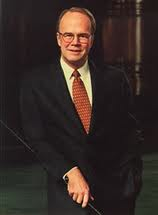
James Montgomery Boice, Th.D., (July 7, 1938 – June 15, 2000) was a Reformed theologian, Bible teacher, and pastor of Tenth Presbyterian Church in Philadelphia from 1968 until his death. He is heard on The Bible Study Hour radio broadcast and was a well-known author and speaker in evangelical and Reformed circles. He also served as Chairman of the International Council on Biblical Inerrancy for over ten years and was a founding member of the Alliance of Confessing Evangelicals.James Boice was one of my favorite Bible teachers. Thankfully – many of his books and expositions of Scripture are still in print and more are becoming available. He was one of only a handful of reformed theologians that was premillennial in his eschatology (Steven J. Lawson, John MacArthur, Erwin W. Lutzer, S. Lewis Johnson, Rodney Stordtz, John Hannah and John Piper also come to mind). However, what makes him really unique is that he was not Historic Premillennial – but leaned Dispensational (Held to a pre-tribulation rapture) as well. This article was adapted from Chapter Three in one of the first of James Boice’s plethora of books, and is entitled: The Last and Future World, Grand Rapids, MI.: Zondervan, 1974 (currently out of print). This book is based on 9 sermons that Dr. Boice preached at Tenth Presbyterian Church in Philadelphia in 1972. Though this book was written almost 40 years ago – it is just as relevant as when it was first written since many of the prophecies taught in the Scriptures and addressed by Dr. Boice in this book have yet to be fulfilled. Scripture verses are quoted from the more modern English Standard Version – DPC.


Chart of All The Supernatural Events Recorded in the Bible

Supernatural Events in the Bible Chronicled: Compiled by Dr. Norman L. Geisler

MATMM Geisler

Genesis

1 Creation of the world.
5:19–24 Translation of Enoch to be with God.
7:9–12, 17–24 The Noahic Flood.
11:1, 5–9 The Judgement on the Tower of Babel.
12:10–20 Plagues on Pharaoh for taking Abraham’s wife.
17:15–19; 18:10–14
21:1–8 Sarah’s conception of Isaac.
19:9–11 Angels blind the Sodomites.
19:15–29 The destruction of Sodom and Gomorrah.
19:24–26 Lot’s wife turned to salt.

Exodus

3:1–15 The Burning Bush.
4:1–5 Moses’ rod turned into a serpent and back.
4:6–7 Moses’ hand become leprous and is restored.
7:10–12 Aaron’s rod turns into a serpent and swallows up the rods of the Egyptian sorcerers.
7:19–24 Water in Egypt turned into blood.
8:5–7; 12–13 Frogs brought forth on the land of Egypt.
8:16–18 Lice are brought forth on the land of Egypt.
8:20–24 Swarms of flies are brought forth on Egypt but not on the land of Goshen.
9:1–7 Murrian (deadly pestilence) is brought on the cattle of the Egyptians, but not on Israel’s cattle.
9:8–11 Ashes produce boils on the Egyptians but not on Israel’s men and animals.
9:22–26 A terrible storm of thunder, hail, and fire which ran along the ground.
10:3–19 A plague of locusts on the Egyptians.
10:21–23 A plague of darkness was brought on the Egyptians while Israel had light.
12:29–30 Slaying the first born children.
13:21–22 The pillar of cloud led Israel by day, and the fire led them by night.
14:19–20 The angel of the Lord protects Israel from the Egyptians.
14:21–29 The parting of the Red Sea.
15:23–25 Sweetening of the bitter waters of Marah.
16:12–13 The camp of Israel is covered with quail.
16:14–15 Manna is provided for Israel to eat.
17:5–6 Moses strikes the rock and water is provided.
17:8–16 Remarkable victory over Amalek.
19:16–18 Fire and smoke engulf Mount Sinai.
19:19–25 God answers Moses from the Mount.
20:1–17 God gives the Ten Commandments to Moses.

Leviticus

9:23–24 Fire from the Lord consumes the burnt offering.
10:1–7 The fatal judgment upon Nadab and Abihu.

Numbers

11:1–2 Fire from God to consume murmuring Israelites.
12:10–15 Miriam is made leprous and is healed.
16:35 Fire from the Lord consumes 250 men who offered incense.
16:28–33 Korah and his rebels are swallowed by the earth.
16:46–48 The plague stopped by the offering of incense.
17:8 Aaron’s rod buds.
20:7–11 Moses strikes the rock to bring forth water.
21:6–9 Healing by looking at the brass serpent.
22:21–35 Balaam’s donkey speaks.

Joshua

3:14–17 The waters of the Jordan are divided.
5:13–15 The appearance of the Captain of the Lord’s hosts.
6 The fall of Jericho.
10:12–14 The sun stands still upon Gibeon.

Judges

2:1–5 The Angel of the Lord appears to Israel.
3:8–11 The Spirit of the Lord comes upon Othniel.
3:31 Shamgar slays 600 Philistines with an ox-goad.
6:11–24 The Angel of the Lord appears to Gideon.
6:36–40 The sign of Gideon’s fleece.
7:15–25 God delivers Midian into the hands of Gideon.
13:3–21 The Angel of the Lord appears to Manoah.
14:5–6 Samson slays the young lion.
15:14–17 Samson slays the Philistines with the jawbone of a donkey.
16:3 Samson tears down the city gate and carries it away.
16:27–31 Samson causes the collapse of the temple of Dagon.

1 Samuel

3:2–10 The voice of God calling Samuel.
5:1–5 The overturning of the god, Dagon.
5:6–12 Philistines in Ashdod smitten with tumors.
6:19 The Lord smites the men of Beth-Shemesh.
28:15–20 Samuel appears from the dead to rebuke Saul.

2 Samuel

6:6–7 The Lord fatally smites Uzzah.

1 Kings

3:3–28 God gives Solomon great wisdom.
17:1 Elijah prays and rain does not come for 3 years.
17:2–6 Elijah is fed by the ravens.
17:8–16 Meal and oil are supplied for the widow of Zarephath.
17:17–24 Elijah raises the widow’s son.
18:17–38 Fire from heaven consumes the sacrifice of Elijah on Mt. Carmel.
18:41–46 Elijah prays and God sends an abundance of rain in response.
19:5–8 Elijah is fed by the Angel of the Lord.

2 Kings

1:9–15 Fire from heaven consumes two captains and their men.
2:7–8 Elijah parts the waters of the Jordan and walks across on dry ground.
2:11 Elijah is taken up into heaven in a chariot of fire.
2:13–14 Elisha parts the waters of the Jordan.
2:19–22 Elisha heals the waters of Jericho.
2:24 Blasphemous youths killed by she bears.
3:15–20 Ditches are mysteriously filled with water.
4:1–7 A widow’s oil pot is refilled with oil by God.
4:8–17 Elisha prophesies and the Shunammite woman bears a son.
4:32–37 Elisha raises the Shunammite’s son.
4:38–41 Elisha detoxifies the poisonous pottage.
4:42–44 One hundred men are abundantly fed with 20 loaves of bread and 20 ears of corn.
5:1–14 Naaman is healed of leprosy.
5:27 Gehazi is struck with leprosy.
6:5–7 Iron axe head floats on water.
6:16–17 Elisha’s servant’s vision of the mountain full of horses and chariots of fire.
6:18 The Syrian army is struck with blindness.
6:19–20 God opens the eyes of the Syrians after Elisha leads them into Samaria.
13:20–21 A dead man is raised by contact with elisha’s bones.
20:9–11 Ahaz’s sundial returns backward by ten degrees.

Job

38–42:6 God speaks to Job from the whirlwind.

Isaiah

1:1 Isaiah’s vision concerning Jerusalem.
6 Isaiah’s vision of the Lord.

Exekiel

1 Exekiel has a vision of God’s glory.

Daniel

2:26–45 Daniel recounts and interprets Nebuchadnezzar’s dream.
3:14–30 Three Hebrew youths delivered from the fiery furnace.
5:5 The handwriting on the wall.
6:16–23 Daniel saved from the lions.
7:1–8:14 Daniel’s visions.
9:20–27 Daniel’s vision of the 70 weeks.
10:1–12:13 Further visions of Daniel.

Jonah

1:4–16 Tempestous storm from God to arrest the fleeing Jonah.
1:17 The Lord prepared a great fish to swallow Jonah.
4:6 The Lord prepares a gourd to shade Jonah.
4:7 The Lord prepared a worm to smite the gourd.
4:8 The Lord prepared a vehement east wind.

Matthew, Mark, Luke, & John

Matthew Mark Luke John Description
1:11–19 An angel of the lord appears to Zacharias.
1:20–22 Zacharias is struck dumb.
1:26–38 Angel of the Lord appears to Mary.
1:64 Zacharias healed of dumbness.
2:9–15 Angels appear to shepherds.
3:16–17 1:9–11 3:21–23 Holy Spirit decended as a Dove, and a voice from Heaven spoke.
4:11 1:13 Angels minister to Jesus after the temtation.
1:42–48 Jesus sees Nathanael under the fig tree.
2:1–11 Water turned into wine.
2:23 Jesus performs many signs.
4:46–53 Nobleman’s sone healed.
4:30 Jesus escapes from the hostile crowd.
5:6 Catching a draught of fish.
1:23–25; 4:33–35 Casting out an unclean spirit.
8:14–15 1:30–31 4:38–39 Healing Peter’s mother-in-law.
8:16 1:32–34 4:40 Healing many sick people.
4:23–24 1:39 Jesus heals all manner of sickness and casts out many demons.
8:2–3 1:40–42 5:12–13 Cleansing a leper.
9:2 2:3–5 5:18–20 Healing a paralytic.
5:6–9 Healing an infirmed man at Bethseda.
12:9–13 3:1–5 6:6–10 Healing the man’s withered hand.
12:15 3:10 Healing of many people.
8:5–13 7:1–10 Healing a centurion’s servant.
7:11–15 Raising a widow’s son at Nain.
12:22 Casting out a demon from a blind mute.
8:23–26 4:35–39 8:22–24 Stilling the storm on the sea of Galilee.
8:28–32 5:6–13 8:28–33 Casting out the demons and allowing them to enter swine.
9:23–25 5:35–42 8:49–55 Raising the ruler’s daughter.
9:20–22 5:25–34 8:43–48 Healing the woman with an issue of blood.
9:27–30 Healing two blind men.
6:5 Jesus heals a few sick people in Nazareth.
9:32–33 Casting out a demon from a deaf mute.
9:35 Jesus heals the sick in many cities.
14:14 Jesus heals the sick among the great multitude.
14:15–21 6:35–44 9:10–17 6:5–13 Feeding the five thousand.
14:25 6:48 6:19 Walking on the sea.
14:35–36 6:55–56 Healing of many at Gennesaret.
15:21–28 7:24–30 Healing the Canaanite woman’s daughter.
7:31–35 Healing a deaf mute.
15:30–31 Jesus heals many among a great multitude.
15:32–38 8:1–8 Feeding the four thousand.
8:22–25 Healing a blind man at Bethsaida.
17:1–8 9:2–8 9:28–36 Jesus’ transfiguration.
17:14–18 9:17–27 9:38–42 Healing the Epileptic boy.
17:24–27 Temple tax in the fish’s mouth.
9:1–7 Healing a man born blind.
11:14 Curing a demon-possessed, blind mute.
13:11–13 Healing an infirmed woman.
14:2–4 Healing a man with dropsy.
11:43–44 Raising Lazarus.
17:12–14 Cleansing ten lepers.
19:1–2 Jesus heals many at the borders of Judea.
20:30–34 Healing the two blind men.
21:14 18:35 Jesus heals the blind and the lame man in the temple.
21:18–19 11:12–14; 20 Withering the fig tree.
12:28–29 A voice from Heaven.
22:51 Restoring a servant’s ear.
27:51 15:38 23:45 The Veil of the Temple is torn from top to bottom.
27:51 A great earthquake, and the rocks were broken.
27:52–53 The tombs were opened and many of the dead are raised.
28:1–10 16:1–8 24:1–12 20:1–9 The resurrection of Jesus.
28:1–7 An angel rolls the stone from the grave and speaks to the women.
28:5–8 16:5–7 24:4–8 Angelic appearance to those at the sepulcher.
20:11–13 Two angels appear to Mary.
16:9 20:14–17 Jesus appears to Mary Magdalene.
28:9–10 Jesus appears to the women.
16:12 24:13–35 Jesus appears to the two on the road to Emmaus.
20:19–23 Jesus appears to 10 apostles.
28:16–20 16:14–18 24:36–49 20:26–31 Jesus appears to 11 apostles.
21:1–25 Jesus appears to 7 apostles.
21:6 Miraculous catch of fish.

Acts

1:3–5 Jesus appears to all the apostles. (Lk 24:24–51)
1:6–9 Jesus ascends into heaven.
1:10–11 Two angels appear to the apostles.
2:1–4 The coming of the Holy Spirit on the apostles.
2:4–13 The apostles speak with other tongues.
3:1–11 Peter heals the lame man in the temple.
5:5–10 Ananias and Sapphira are killed.
5:12 Many signs and wonders performed by the apostles.
5:18–20 Anel releases the apostles form prison.
7:55–56 Stehen sees Jesus at the right hand of God.
8:7 Unclean spirits are cast out of many.
8:13 Philip performs miracles and signs.
8:14–17 The Samarians receive the Holy Spirit.
8:39–40 Philip caught away by the Holy Spirit.
9:3–7 Jesus appears to Saul (cf. 1 Cor. 15:8).
9:10–16 Jesus appears to Ananias.
9:17–19 Saul’s sight is restored.
9:32–34 Peter heals Aneneas.
9:36–42 Dorcas is restored to life.
10:1–8 Cornelius receives a vision.
10:9–16 Peter receives a vision three times.
10:44–48 Cornelius’ household receives the Holy Spirit.
12:7–10 An angel releases Peter from prison.
12:23 The angel of the Lord kills Herod.
13:8–11 Elymas the sorcerer is blinded.
14:8–10 Paul heals a lame man at Lystra.
16:16–18 Paul casts a demon out of a young woman.
18:9–10 The Lord appears to Paul.
19:6 Believers at Ephesus receive the Holy Spirit.
19:11–12 Many unusual signs performed by Paul.
20:9–12 Eutychus is restored to life.
23:11 The Lord appears to Paul.
28:3–6 Paul protected from the viper bite.
28:7–8 Paul heals the father of Publius.
16:25–26 Prison doors opened and Paul’s and Silas’ bands are broken off.

1 Corinthians

15:6 Jesus’ appearance to five hundred people.
15:7 Jesus’ appearance to James.

2 Corinthians

12:1–6 Paul’s vision of heaven.

Revelation

1:1–3:22 John’s vision of Jesus.
4:1–22:21 John’s vision of the future.
6:12 A great earthquake.
6:12 The sun becomes black as sackcloth.
6:12 The moon becomes as blood.
6:13 The stars fall from heaven to earth.
6:14 Every mountain is moved out of its place.
8:7 Hail and fire mingled with blood falls on the earth.
8:8 Something like a great burning mountain is cast into the sea, and a third part of the sea becomes blood.
8:9 A third part of the creatures in the sea die.
8:9 A third part of the ships are destroyed.
8:10–11 A great, burning star falls from heaven and a third part of the rivers and fountains become bitter.
8:12 A third part of the sun is darkened.
8:12 A third part of the moon is darkened.
8:12 A third part of the stars are darkened.
9:1 A star falls from heaven.
9:2 The sun is darkened by the smoke from the botomless pit.
9:3–11 A plague of locusts are given power to torment men for 5 months.
9:18 A third part of mankind is killed.
11:5 The two witnesses devour their enemies by fire from their mouths.
11:6 The two witnesses stop the rain for 3 1/2 years.
11:6 The two witnesses turn water into blood.
11:6 The two witnesses smite the earth with many plagues.
11:11 The two witnesses are raised from the dead.
11:12 The two witnesses ascend into heaven.
11:13 There is a great earthquake in which a tenth part of the city falls, and 7000 men are slain.
11:19 There are lightenings, voices, thunderings and earthquake and great hail.
16:2 Fowl and loathsome sores fall on men who worship the beast.
16:3 The sea becomes as blood, and every living soul in it dies.
16:4 The rivers and fountains of waters become blood.
16:8 The sun scorches men with fire.
16:10 Darkness covers the kingdom of the beast.
16:12 The water of the river Euphrates is dried up.
16:18 There are voices and thunders and a great earthquake.
16:20 The islands flee and the mountains cannot be found.
16:21 A great hail of heavy stones falls on people.
18:1–24 The fall of Babylon.
19:11–16 The return of Jesus Christ.
21:1 The new heaven and the new earth appear.
21:10 The new Jerusalem descending from heaven.

Not all these events are miracles in the technical sense of a direct action of God superseding a natural law. Some (e.g. Gen. 7, 19) may be a special act of divine providence where God uses natural laws to accomplish His purpose.

Chart adapted from Appendix 2 in Norman L. Geisler. Miracles and the Modern Mind: A Defense of Biblical Miracles. Grand Rapids, MI: Baker (1992).

50 Reasons For a Pretribulational Rapture By Dr. John F. Walvoord

Dr. John Walvoord’s 50 Arguments For A Pretribulational Rapture

TRQ Walvoord

In previous discussion of premillennialism in relation to the Tribulation, the respective arguments for pretribulationism, partial rapture, posttribulationism, and midtribulationism have been examined and the pretribulational position in general sustained. By way of conclusion and summary, some fifty arguments for pretribulationism can now be proposed. It is not presumed that the statement of these arguments in themselves establishes their validity but rather that the previous discussion supports and justifies this summary of reasons for the pretribulational view.

For the sake of brevity, the term rapture or translation is used for the coming of Christ for His church, while the term second coming is uniformly used as a reference to His coming to the earth to establish His millennial kingdom, an event that all consider posttribulational. While the words rapture and translation are not quite identical, they refer to the same event. By the term rapture, reference is made to the fact that the church is “caught up” from the earth and taken to heaven. By the term translation the thought is conveyed that those who are thus raptured are transformed in their physical bodies from natural and corruptible bodies to spiritual, incorruptible, and immortal bodies. Strictly speaking, the dead are raised while the living are translated. In common usage, however, this distinction is not normally maintained.

In the discussion, the posttribulational view is considered the principal contender against pretribulationism and is primarily in mind in the restatement of the arguments. The other positions, however, are also mentioned insofar as they oppose pretribulationism on some special point. The preceding discussion has pointed to the preponderance of argument in support of the pretribulational position, and the following restatement should serve to clarify the issues involved.

 Historical Argument

1. While posttribulationism appeared as early as 2 Thessalonians 2, many in the early church believed in the imminency of the Lord’s return, which is an essential doctrine of pretribulationism.

2. The detailed development of pretribulational truth during the past few centuries does not prove that the doctrine is new or novel. Its development is similar to that of other major doctrines in the history of the church. Hermeneutics

3. Pretribulationism is the only view that allows literal interpretation of all Old and New Testament passages on the Great Tribulation.

4. Pretribulationism distinguishes clearly between Israel and the church and their respective programs.

Nature of the Tribulation

5. Pretribulationism maintains the scriptural distinction between the Great Tribulation and tribulation in general that precedes it.

6. The Great Tribulation is properly interpreted by pretribulationists as a time of preparation for Israel’s restoration (Deut. 4:29-30; Jer. 30:4-11). It is not the purpose of the Tribulation to prepare the church for glory.

7. None of the Old Testament passages on the Tribulation mention the church (Deut. 4:29-30; Jer. 30:4-11; Dan. 8:24-27; 12:1-2).

8. None of the New Testament passages on the Tribulation mention the church (Matt. 13:30, 39-42, 48-50; 24:15-31; 1 Thess. 1:9-10, 5:4-9; 2 Thess. 2:1-11; Rev. 4-18).

9. In contrast to midtribulationism, the pretribulational view provides an adequate explanation for the beginning of the Great Tribulation in Revelation 6. Midtribulationism is refuted by the plain teaching of Scripture that the Great Tribulation begins long before the seventh trumpet of Revelation 11.

10. The proper distinction is maintained between the prophetic trumpets of Scripture by pretribulationism. There is no proper ground for the pivotal argument of midtribulationism that the seventh trumpet of Revelation is the last trumpet in that there is no established connection between the seventh trumpet of Revelation 11, the last trumpet of 1 Corinthians 15:52, and the trumpet of Matthew 24:31. They are three distinct events.

11. The unity of Daniel’s seventieth week is maintained by pretribulationists. By contrast, posttribulationism and midtribulationists destroy the unity of Daniel’s seventieth week and confuse Israel’s program with that of the church.

Nature of the Church

12. The translation of the church is never mentioned in any passage dealing with the second coming of Christ after the Tribulation.

13. The church is not appointed to wrath (Rom. 5:9; 1 Thess. 1:9-10; 5:9). The church therefore cannot enter “the great day of their wrath” (Rev. 6:17).

14. The church will not be overtaken by the day of the Lord (1 Thess. 5:1-9), which includes the Tribulation.

15. The possibility of a believer escaping the Tribulation is mentioned in Luke 21:36.

16. The church of Philadelphia was promised deliverance from “the hour of trial that is going to come upon the whole world to test those who live on the earth” (Rev. 3:10).

17. It is characteristic of divine dealing to deliver believers before a divine judgment is inflicted on the world as illustrated in the deliverance of Noah, Lot, Rahab, etc. (2 Peter 2:5-9).

18. At the time of the translation of the church, all believers go to the Father’s house in heaven (John 14:3) and do not immediately return to the earth after meeting Christ in the air as posttribulationists teach.

19. Pretribulationism does not divide the body of Christ at the Rapture on a works principle. The teaching of a partial rapture is based on the false doctrine that the translation of the church is a reward for good works. It is rather a climactic aspect of salvation by grace.

20. The Scriptures clearly teach that all, not part, of the church will be raptured at the coming of Christ for the church (1 Cor. 15:51-52; 1 Thess. 4:17).

21. As opposed to a view of a partial rapture, pretribulationism is founded on the definite teaching of Scripture that the death of Christ frees from all condemnation.

22. The godly remnant of the Tribulation are pictured as Israelites, not members of the church as maintained by the posttribulationists.

23. The pretribulational view, as opposed to posttribulationism, does not confuse general terms like elect and saints, which apply to the saved of all ages, with specific terms like church and those in Christ, which refer to believers of this age only.

Doctrine of Imminency

24. The pretribulational interpretation teaches that the coming of Christ is actually imminent.

25. The exhortation to be comforted by the coming of the Lord (1 Thess. 4:18) is very significant in the pretribulational view and is especially contradicted by most posttribulationists.

26. The exhortation to look for “the glorious appearing” of Christ to His own (Titus 2:13) loses its significance if the Tribulation must intervene first. Believers in that case should look for signs.

27. The exhortation to purify ourselves in view of the Lord’s return has most significance if His coming is imminent (1 John 3:2-3).

28. The church is uniformly exhorted to look for the coming of the Lord, while believers in the Tribulation are directed to look for signs.

The Work of the Holy Spirit

29. The Holy Spirit as the restrainer of evil cannot be taken out of the world unless the church, which the Spirit indwells, is translated at the same time. The Tribulation cannot begin until this restraint is lifted.

30. The Holy Spirit as the restrainer must be taken out of the world before “the lawless one,” who dominates the tribulation period, can be revealed (2 Thess. 2:6-8).

31. If the expression “except there come a falling away first” (KJV) is translated literally, “except the departure come first,” it would plainly show the necessity of the Rapture taking place before the beginning of the Tribulation.

Necessity of an Interval Between the Rapture and the Second Coming

32. According to 2 Corinthians 5:10, all believers of this age must appear before the judgment seat of Christ in heaven, an event never mentioned in the detailed accounts connected with the second coming of Christ to the earth.

33. If the twenty-four elders of Revelation 4:1-5:14 are representative of the church as many expositors believe, it would necessitate the rapture and reward of the church before the Tribulation.

34. The coming of Christ for His bride must take place before the Second Coming to the earth for the wedding feast (Rev. 19:7-10).

35. Tribulation saints are not translated at the second coming of Christ but carry on ordinary occupations such as farming and building houses, and they will bear children (Isa. 65:20-25). This would be impossible if all saints were translated at the Second Coming to the earth, as posttribulationists teach.

36. The judgment of the Gentiles following the Second Coming (Matt. 25:31-46) indicates that both saved and unsaved are still in their natural bodies. This would be impossible if the translation had taken place at the Second Coming.

37. If the translation took place in connection with the Second Coming to the earth, there would be no need of separating the sheep from the goats at a subsequent judgment, but the separation would have taken place in the very act of the translation of the believers before Christ actually sets up His throne on earth (Matt. 25:31).

38. The judgment of Israel (Ezek. 20:34-38), which occurs subsequent to the Second Coming, indicates the necessity of regathering Israel. The separation of the saved from the unsaved in this judgment obviously takes place sometime after the Second Coming and would be unnecessary if the saved had previously been separated from the unsaved by translation.

Contrasts Between the Rapture and the Second Coming

39. At the time of the Rapture the saints meet Christ in the air, while at the Second Coming Christ returns to the Mount of Olives to meet the saints on earth.

40. At the time of the Rapture the Mount of Olives is unchanged, while at the Second Coming it divides and a valley is formed to the east of Jerusalem (Zech. 14:4-5).

41. At the Rapture living saints are translated, while no saints are translated in connection with the second coming of Christ to the earth.

42. At the Rapture the saints go to heaven, while at the Second Coming to the earth the saints remain on the earth without translation.

43. At the time of the Rapture the world is unjudged and continues in sin, while at the Second Coming the world is judged and righteousness is established in the earth.

44. The translation of the church is pictured as a deliverance before the day of wrath, while the Second Coming is followed by the deliverance of those who have believed in Christ during the Tribulation.

45. The Rapture is described as imminent, while the Second Coming is preceded by definite signs.

46. The translation of living believers is a truth revealed only in the New Testament, while the Second Coming with its attendant events is a prominent doctrine of both Testaments.

47. The Rapture concerns only the saved, while the Second Coming deals with both saved and unsaved.

48. At the Rapture Satan is not bound, while at the Second Coming Satan is bound and cast into the abyss.

49. No unfulfilled prophecy stands between the church and the Rapture, while many signs must be fulfilled before the Second Coming.

50. No passage dealing with the resurrection of saints at the Second Coming ever mentions translation of living saints at the same time. The blessed hope of the return of the Lord for His church is a precious aspect of faith and expectation. While learned and devout saints have not always agreed as to the content of this hope, the present discussion has attempted to justify this important aspect of truth. May the promise of our Lord “I will come back and take you to be with me that you also may be where I am” (John 14:3) bring comfort and hope to us in a modern world as it was intended to do for the disciples in the upper room on that dark night before the Crucifixion. “The Spirit and the bride say, ‘Come!’ And let him who hears say, ‘Come!’…He who testifies to these things says, ‘Yes, I am coming soon’“ (Rev. 22:17, 20).

Article adapted from John F. Walvoord. The Rapture Question. Grand Rapids, MI. Zondervan, 1979 (Chapter 20).

About Dr. John F. Walvoord

Walvoord J F image

John F. Walvoord (May 1, 1910 – December 20, 2002) was a Christian theologian, pastor, and president of Dallas Theological Seminary from 1952 to 1986. He was the author of over 30 books, focusing primarily on eschatology and theology including The Rapture Question, and was co-editor of The Bible Knowledge Commentary with Roy B. Zuck. He earned AB and DD degrees from Wheaton College, an AM degree from Texas Christian University in philosophy, a ThB, ThM, and ThD in Systematic Theology from Dallas Theological Seminary, and a LittD from Liberty Baptist Seminary.

Walvoord was brought up in a Christian home, but had little interest in the faith until he was fifteen, when his family moved to Racine after his father accepted a position as superintendent of the junior high. They joined the Union Gospel Tabernacle where he committed his life to Christ after attending a Bible study on Galatians.

After continuing his education at Wheaton College, Walvoord went on to Texas Christian University and Dallas Theological Seminary where he completed his ThD in 1936. Seminary president and mentor Lewis Sperry Chafer appointed Walvoord registrar. During his tenure, he also taught systematic theology at the seminary, and pastored the Rosen Heights Presbyterian church in Fort Worth. Walvoord became more involved in the administration of the school, serving as Chafer’s assistant and secretary to the faculty, and upon Chafer’s death in 1952, became the seminary’s second president where he served until his retirement in 1986.

In addition to his responsibilities at the seminary, Walvoord earned a reputation as one of the most influential dispensational theologians of the 20th century and played a prominent role in advocating a rapture of Christians from the earth prior to a time of great tribulation, followed by a literal thousand-year millennial reign of Christ, and a renewed focus of God on the nation of Israel as distinct from the church.

Books Authored

The Revelation of Jesus Christ. Chicago. Moody Publishers (1966).

Daniel: The Key to Prophetic Revelation. Chicago. Moody Publishers (1971).

Philippians. Chicago. Moody Publishers (1971).

Armageddon, Oil and the Middle East Crisis. Grand Rapids: Zondervan (1974, rev. ed. 1976 and 1990).

Jesus Christ Our Lord. Chicago. Moody Publishers (1974).

Major Bible Themes (with Lewis Sperry Chafer) Grand Rapids: Zondervan (1974).

The Blessed Hope and the Tribulation: A Historical and Biblical Study of Posttribulationism (1976).

The Rapture Question. Grand Rapids: Zondervan (1979).

The Millennial Kingdom. Grand Rapids: Zondervan (1983).

The Bible Knowledge Commentary, (with Roy B. Zuck). Wheaton: Cook Communications (1989).

The Holy Spirit: A Comprehensive Study of the Person and Work of the Holy Spirit Chicago: Moody Press (1991).

(Contributor: “The Augustinian-Dispensational Perspective”) Five Views on Sanctification. Grand Rapids: Zondervan (1996).

(Contributor: “The Literal View”) Four Views on Hell. Grand Rapids: Zondervan (1996).

Matthew: Thy Kingdom Come, The Moody Bible Institute of Chicago (1974).

The Final Drama: Fourteen Keys to Understanding the Prophetic Scriptures. Grand Rapids: Kregel Publications (1997).

Every Prophecy of the Bible. Colorado Springs: Cook Communications (1990, 2011).

The Church in Prophecy: Exploring God’s Purpose for the Present Age. Grand Rapids: Kregel Publications (1999).

The Power of Praying Together: Experiencing Christ Actively in Charge, (with Oliver W. Price). Grand Rapids: Kregel Publications (1999).

Major Bible Prophecies. Grand Rapids: Zondervan (1999).

Blessed Hope. (Autobiography with Mal Couch), AMG Publishers (2001).

Prophecy in the New Millennium. Grand Rapids: Kregel Publications (2001).

1 & 2 Thessalonians. Chicago: Moody Publishers (Reprinted, 2012).

Dr. Sidney Greidanus on Ten Steps from Text to Sermon

Dr. Greidanus’ *Ten Steps from Text to Sermon

Sidney Greidanus

(1) Select the preaching text.

Select the preaching text with an eye to congregational needs. The text must be a literary unit and contain a vital theme.

(2) Read the text in its literary context.

Read and reread the text in its context and jot down initial questions.

(3) Outline the structure of the text.

In the Hebrew/Aramaic or Greek text, note the major affirmations, clausal flow, plot line, scenes, or other literary structures. Mark major units with headings and verse references.

(4) Interpret the text in its own historical setting.

a. Literary interpretation

b. Historical interpretation

c. Theocentric interpretation

Review your results with the help of some good commentaries.

(5) Formulate the text’s theme, goal, and need addressed.

a. State the textual theme in a brief sentence that summarizes the message of the text for its original hearers: subject and predicate. What is the text saying?

b. State the goal of the author for his original hearers. What is the text doing? Does the author aim to persuade, to motivate, to urge, to warn, to comfort? Be specific.

c. State the need the author addressed – the question behind the text.

(6) Understand the message in the contexts of canon and redemptive history.

a. Canonical interpretation: interpret the message in the context of the whole canon;

b. Redemptive-historical interpretation: understand the message in the context of God’s redemptive history from creation to new creation;

c. Christocentric interpretation: explore the ways of (1) redemptive-historical progression, (2) promise-fulfillment, (3) typology, (4) analogy, (5) longitudinal themes, (6) New Testament references, and (7) contrast.

(7) Formulate the sermon theme, goal, and need addressed.

a. Ideally, your sermon theme will be the same as your textual theme (Step 5a). If Step 6 forces a change, stay as close as possible to the textual theme. Your theme will guide especially the development of the body of the sermon.

b. Your goal must be in harmony with the author’s goal (Step 5b) and match the sermon theme. Your goal will guide the style of the sermon as well as the content of its conclusion.

c. State the need you are addressing. This need should be similar to the need addressed by the author. The need will inform the content of your introduction.

(8) Select a suitable sermon form.

Select a sermon form that respects the form of the text (didactic or narrative, deductive or inductive) and that achieves the goal of the sermon.

(9) Prepare the sermon outline.

If possible, follow the flow of the text (Step 3) in the body of the sermon. Main points, derived from the text, support the theme. The introduction should expose the need. The conclusion should clinch your goal.

(10) Write the sermon in oral style.

Say it out loud as you write it. Write in oral style, using short sentences, vivid words, strong nouns and verbs, active voice, present tense, images and illustrations.

PCFD Greidanus

*Adapted from Appendix One in Sidney Greidanus. Preaching Christ From Daniel (Foundations For Expository Sermons). Grand Rapids, MI. Eerdmans, 2012.

About the Author:

Sidney Greidanus received his B.A. from Calvin College in Grand Rapids, MI, his B.D. from Calvin Theological Seminary, also in Grand Rapids, and his Th.D. from the Free University in Amsterdam, The Netherlands. His dissertation, Sola Scriptura: Problems and Principles in Preaching Historical Texts, was first published in 1970 and reprinted in 1979. Since returning to North America, he served as pastor of two Christian Reformed Churches in Canada, taught at Calvin College in Grand Rapids, MI, The King’s College in Edmonton, AB, Canada, and since 1990 has been professor of preaching at Calvin Theological Seminary.

Besides many articles and sermons, he has published several excellent scholarly and theologically rich books on preaching including:

Preaching Christ from Daniel: Foundations for Expository Sermons. Grand Rapids: Eerdmans, 2012.

Preaching Christ from Ecclesiastes: Foundations for Expository Sermons. Grand Rapids: Eerdmans, 2010.

Preaching Christ from Genesis: Foundations for Expository Sermons. Grand Rapids: Eerdmans, 2007.

Sola Scriptura: Problems and Principles in Preaching Historical Texts. Wipf & Stock Publishers, 2001.

Preaching Christ from the Old Testament: A Contemporary Hermeneutical Method. Grand Rapids: Eerdmans, 1999. (from which the article above is adapted).

The Modern Preacher and the Ancient Text: Interpreting and Preaching Biblical Literature: Grand Rapids: Eerdmans. 1989. Selected “The 1990 Book of the Year” by the Journal Preaching.

Thomas Watson’s 24 Steps To Serious Bible Study

Thomas Watson

1. Remove hindrances. (a) remove the love of every sin. (b) remove the distracting concerns of this world, especially covetousness [Matthew 13:22, “As for what was sown among thorns, this is the one who hears the word, but the cares of the world and the deceitfulness of riches choke the word, and it proves unfruitful]. (c) Don’t make jokes with and out of Scripture. 

2. Prepare your heart. [1 Samuel 7:3, And Samuel said to all those of the house of Israel, “If you are returning to the Lord with all your heart, then put away the foreign gods and the Ashtaroth from among you and direct your heart to the Lord and serve him only, and he will deliver you out of the hand of the Philistines.”Do this by: (a) collecting your thoughts (b) purging unclean affections and desires (c) not coming to it rashly or carelessly.

3. Read it with reverence, considering that each line is God speaking directly to you.

4. Read the books of the Bible in order.

5. Get a true understanding of Scripture. [Psalm 119:73, “Your hands have made and fashioned me; give me understanding that I may learn your commandments.”] This is best achieved by comparing relevant parts of Scripture with each other.

6. Read with seriousness. [Deuteronomy 32:47, “For it is no empty word for you, but your very life, and by this word you shall live long in the land that you are going over the Jordan to possess.”] The Christian life is to be taken seriously since it requires striving [Luke 13:24, “Strive to enter through the narrow door. For many, I tell you, will seek to enter and will not able.“] and not falling short [Hebrews 4:1, “Therefore, while the promise of entering his rest still stands, let us fear lest any of you should seem to have failed to reach it”].

7. Persevere in remembering what you read. [Psalm 119:52, “When I think of your rules from of old, I take comfort, O LORD “] Don’t let it be stolen from you [Matthew 13:4, 19, “And as he sowed, some fell along the path, and the birds came and devoured them…When anyone hears the word of the kingdom and does not understand it, the evil one comes and snatches away what has been sown in his heart. This is what was sown along the path“]. If it doesn’t stay in your memory it is unlikely to be much benefit to you.

8. Meditate on what you read. [Psalm 119:15, “I will meditate on your precepts and fix my eyes on your ways.“] The Hebrew word for meditate means to be intense in the mind. Meditation without reading is wrong and bound to err, reading without meditation is barren and fruitless. It means to stir the affections, to be warmed by the fire of meditation [Psalm 39:3, “My heart became hot within me. As I mused, the fire burned; then I spoke with my tongue”].

9. Read with a humble heart. Acknowledge that you are unworthy that God should reveal himself to you [James 4:6b, “God opposes the proud, but gives grace to the humble”].

10. Believe it all to be God’s Holy Word. [2 Timothy 3:16, “All Scripture is God-breathed and profitable for teaching, for reproof, for correction, and for training in righteousness”]. We know that no sinner could have written it because of the way it describes sin. No saint could blaspheme God by pretending his own Word was God’s. No angel could have written it of the same reason [Hebrews 4:2, “For good news came to us just as to them, but the message they heard did not benefit them, because they were not united by faith with those who listened”].

11. Prize the Bible highly. [Psalm 119:72, “The law of your mouth is better to me than thousands of gold and silver pieces”]. It is your lifeline; you were born by it [James 1:18, “Of his own will he brought us forth by the word of truth, that we should be a kind of firstfruits of his creatures“]; you need to grow by it [1 Peter 2:2, “Like newborn infants, long for the pure spiritual milk, that by it you may grow up into salvation”].

12. Love the Bible ardently [Psalm 119:72, “The law of your mouth is better to me than thousands of gold and silver pieces”].

13. Come to read it with an honest heart [Luke 8:15, “As for that in the good soil, they are those who, hearing the word, hold it fast in an honest and good heart, and bear fruit with patience”]. (a) Willing to know the entire and complete will of God (b) reading in order to be changed and made better by it [John 17:17, “Sanctify them in the truth; your word is truth”].

14. Apply to yourself everything that you read, take every word as spoken to yourself. Its condemnation of sins as the condemnation of your own sins; the duty that it requires as the duty God would require from you [2 Kings 22:11, “When the king heard the words of the Book of the Law, he tore his clothes.”].

15. Pay close attention to the commands of the Word as much as the promises. Think of how you need direction just as much as you need comfort.

16. Don’t get carried away with the minor details, rather make sure to pay closest attention to the great things [Hosea 8:12, “Were I to write for him my laws by the ten thousands, they would be regarded as a strange thing”].

17. Compare yourself with the Word. How do you compare? Is your heart something of a transcript of it, or not?

18. Pay special attention to those passages that speak to your individual, particular and present situation. e.g. (a) Affliction – [Hebrews 12:7, “It is for discipline that you have to endure. God is treating you as sons. For what son is there whom his father does not discipline?”; Isaiah 27:9, “Therefore by this guilt of Jacob will be atoned for, and this will be the fruit of the removal of his sin: when he makes all the stones of the altars like chalkstones to pieces, no Asherim or incense altars will remain standing.”; John 16:20, “Truly, truly, I say to you, you will weep and lament, but the world will rejoice. You will be sorrowful, but your sorrow will turn into joy.”]; 2 Corinthians 4:17, “For this light momentary affliction is preparing for us an eternal weight of glory beyond all comparison”]. (b) Sense of Christ’s presence and smile withdrawn – Isaiah 54:8, “In overflowing anger for a moment I hid my face from you, but with everlasting love I will have compassion on you,’ says the LORD, your redeemer.”; Isaiah 57:16, “For I will not contend forever, nor will I always be angry; for the spirit would grow faint before me, and the breath of life that I made.”; Psalm 97:11, “Light is sown for the righteous, and joy for the upright in heart”]. (c) Sin – Galatians 5:24, “And those who belong to Christ Jesus have crucified the flesh with its passions and desires.”; James 1:15, “Then desire when it has conceived gives birth to sin, and sin when it is fully grown brings forth death.”; 1 Peter 2:11, “Beloved, I urge you as sojourners and exiles to abstain from the passions of the flesh, which wage war against your soul.”; Proverbs 7:10,14, 22-23, “And behold, the woman meets him, dressed as a prostitute, wily of heart…The mouth of forbidden women is a deep pit; he with whom the LORD is angry will fall into it. Do not rob the poor, because he is poor, or crush the afflicted at the gate, for the LORD will plead their cause and rob life of those who rob them.”  (d) Unbelief – Isaiah 26:3, “You keep him in perfect peace whose mind is stayed on you, because he trusts in you.”; 2 Samuel 22:31, “This God–his way is perfect; the word of the LORD proves true; he is a shield for all those who take refuge in him.”; John 3:15, “that whoever believes in him may have eternal life.”; 1 John 5:10, “Whoever believes in the Son of God has the testimony in himself. Whoever does not believe God has made him a liar, because he has not believed in the testimony that God has borne concerning his Son.”; John 3:36, “Whoever believes in the Son has eternal life; whoever does not obey the Son shall not see life, but the wrath of God remains on him.”

19. Pay special attention to the examples and lives of people in the Bible as living sermons. (a) Punishments – Nebuchadnezzar and Herod (b) mercies and deliverances – Daniel, Jeremiah, the 3 youths in the fiery furnace.

20. Don’t stop reading the Bible until you have your heart warmed. [Psalm 119:93, “I will never forget your precepts, for by them you have given me life.” Let it not only inform you but also inflame you – Jeremiah 23:29, “Is not my word like fire, declares the LORD, and like a hammer that breaks the rock in pieces?”; Luke 24:32, They said to each other, “Did not our hearts burn within us while he talked to us on the road, while he opened to us the Scriptures?”

21. Put into practice what you read. [Psalm 119:66 & 105 “Teach me good judgment and knowledge, for I believe in your commandments…Your word is a lamp to my feet and a light to my path”; Deuteronomy 17:19, “And it shall be with him, and he shall read in it all the days of his life, that he may learn to fear the LORD his God by keeping all the words of this law and these statutes, and doing them.

22. Christ is for us Prophet, Priest and King. Make use of His office as Prophet [Revelation 5:5, “And one of the elders said to me, ‘Weep no more; behold, the Lion of the tribe of Judah, the Root of David, has conquered, so that he can open the scroll and its seven seals.”; John 8:12, Again Jesus spoke to them, saying, “I am the light of the world. Whoever follows me will not walk in darkness, but will have the light of life.”; Psalm 119:102-103, “I do not turn aside from your rules, for you have taught me…How sweet are your words to my taste, sweeter than honey to my mouth!“] Get Christ not only to open the Scriptures up to you, but to open up your mind and understanding [Luke 24:45, “Then he opened their minds to understand the Scriptures“].

23. Make sure to put yourself under a true ministry of the Word, faithfully and thoroughly expounding the Word [Proverbs 8:34, “Blessed is the one who listens to me, watching daily at my gates, waiting beside my doors”]. be earnest and eager waiting on it.

24. Pray that you will profit from reading the Word [Isaiah 48:17, “Thus says the LORD, your Redeemer, the Holy One of Israel: ‘I am the LORD your GOd, who teaches you to profit, who leads you in the way you should go.”; Psalm 119:18, “Open my eyes, that I may behold wondrous things out of your law.”; Nehemiah 9:20, “My soul is consumed with longing for your rules at all times”].

 About Thomas Watson (c. 1620-1686)
Excerpt from Meet the Puritans
by Dr. Joel Beeke and Randall J. Pederson

Thomas Watson was probably born in Yorkshire. He studied at Emmanuel College, Cambridge, earning a Bachelor of Arts degree in 1639 and a Master of Arts degree in 1642. During his time at Cambridge, Watson was a dedicated scholar. After completing his studies, Watson lived for a time with the Puritan family of Lady Mary Vere, the widow of Sir Horace Vere, baron of Tilbury. In 1646, Watson went to St. Stephen’s, Walbrook, London, where he served as lecturer for about ten years, and as rector for another six years, filling the place of Ralph Robinson.

In about 1647, Watson married Abigail Beadle, daughter of John Beadle, an Essex minister of Puritan convictions. They had at least seven children in the next thirteen years; four of them died young.

During the Civil War, Watson began expressing his strong Presbyterian views. He had sympathy for the king, however. He was one of the Presbyterian ministers who went to Oliver Cromwell to protest the execution of Charles I. Along with Christopher Love, William Jenkyn, and others, he was imprisoned in 1651 for his part in a plot to restore the monarchy. Although Love was beheaded, Watson and the others were released after petitioning for mercy. Watson was formally reinstated to his pastorate in Walbrook in 1652.

When the Act of Uniformity passed in 1662, Watson was ejected from his pastorate. He continued to preach in private—in barns, homes, and woods—whenever he had the opportunity. In 1666, after the Great Fire of London, Watson prepared a large room for public worship, welcoming anyone who wished to attend. After the Declaration of Indulgence took effect in 1672, Watson obtained a license for Crosby Hall, Bishopsgate, which belonged to Sir John Langham, a patron of nonconformists. Watson preached there for three years before Stephen Charnock joined him. They ministered together until Charnock’s death in 1680. Watson kept working until his health failed. He then retired to Barnston, in Essex, where he died suddenly in 1686 while engaged in private prayer. He is buried in the same grave as his father-in-law who served as a minister at Barnston.

Watson’s depth of doctrine, clarity of expression, warmth of spirituality, love of application, and gift of illustration enhanced his reputation as a preacher and writer. His books are still widely read today.

Modern Reprints

All Things for Good (BTT; 128 pages; 1988). Watson once said he faced two great difficulties in is ministry: to make the unbeliever sad without grace and to make the believer glad with grace. In this study of Romans 8:28, formerly titled A Divine Cordial (first printed in 1663, one year after two thousand ministers were ejected from the Church of England), Watson encourages God’s people to rejoice. He explains how the best and worst experiences work for good. He writes, “To know that nothing hurts the godly, is a matter of comfort; but to be assured that all things which fall out shall co-operate for their good, that their crosses shall be turned into blessings, that showers of affliction water the withering root of their grace and make it flourish more; this may fill their hearts with joy till they run over.”

If someone asks, “Why do bad things happen to good people?” or “How can I know if I am called by God?,” offer them this book. Its chapters on the love of God, effectual calling, and the purpose of God are especially helpful in understanding Romans 8:28. Chapter 5, on the “tests of love to God,” is particularly searching.

The Art of Divine Contentment (SDG; 133 pages; 2001). Watson’s works are all marked by profound spirituality, terse style, impressive remarks, and practical illustrations. This book, first printed in 1653, is no exception. Based on Philippians 4:11, “I have learned, in whatsoever state I am therewith to be content,” Watson writes, “For my part, I know not any ornament in religion that doth more bespangle a Christian, or glitter in the eye of God and man, than this of contentment. Nor certainly is there any thing wherein all the Christian virtues do work more harmoniously, or shine more transparently, than in this orb. If there is a blessed life before we come to heaven, it is the contented life.”

Godly contentment is a theme missing from many pulpits today. A serious reading of this treatise or Jeremiah Burroughs’s Rare Jewel of Christian Contentment would do much to fill this void.

The Beatitudes (BTT; 307 pages; 1971). First published in 1660, this exposition of Matthew 5:1-12 is rich with instruction. For example, in explaining the blessedness of meekness (5:5), Watson explains meekness towards God as submission to His will and flexibility to His Word. Meekness towards man, he says, involves bearing injuries, forgiving injuries, and recompensing good for evil. In bearing injuries, meekness opposes a hasty spirit, malice, revenge, and speaking evil of others. In forgiving injuries, meekness forgives truly, fully, and often. In recompensing good for evil, Watson says, “To render evil for evil is brutish; to render evil for good is devilish; to render good for evil is Christian.” He offers numerous reasons why Christians should be meek, such as: Jesus Christ is meek; meekness is a great ornament to a Christian; meekness is the way to be like God; meekness argues a noble and excellent spirit; meekness is the best way to conquer and melt the heart of an enemy; meekness contains great promises, for the meek shall inherit the earth; and an un-meek spirit hinders peace. All of this is cogently explained in a mere fifteen pages (pp. 105-119).

A Body of Divinity (BTT; 316 pages; 1998). This book, first published after Watson’s death in 1692, was his magnum opus and became his most famous work. Following the questionand-answer format of the Westminster Shorter Catechism, it offers 176 sermons on the essential teachings of Christianity. It shows the author’s deep understanding of spiritual truths and his ability to make them clear to anyone. Unlike most other systematic theologies, it weds knowledge and piety together, and can be used effectively in daily devotions. It is perhaps the most experiential systematic theology ever written, with the exception of Wilhelmus à Brakel’s The Christian’s Reasonable Service.

The Lord’s Prayer and The Ten Commandments (cf. below) complete Watson’s exposition of the Shorter Catechism. This trilogy on the Shorter Catechism has been reprinted often over the centuries in one or three volumes.

The Duty of Self-Denial and Ten Other Sermons (SDG; 210 pages; 2001). This book includes eight chapters on self-denial, based on Luke 9:23, and ten additional sermons, seven of which have not been reprinted since the seventeenth century. Watson teaches that “self-denial is the first principle of Christianity.” He describes what self-denial is, then demonstrates the Christ-asserting nature of every self-denying act. The additional sermons in this volume are also valuable, particularly those on God as the reward of His people (Gen. 15:1), “kissing” the Son (Ps. 2:12), the comforting rod (Ps. 23:4), and the Judgment Day (Acts 17:31).

The Fight of Faith Crowned (SDG; 191 pages; 1996). This book contains six sermons that had not yet been reprinted in the twentieth century. They include “The Crown of Righteousness” (2 Tim. 4:8), “The Righteous Man’s Weal and the Wicked Man’s Woe” (Isa. 3:10-11), “Time’s Shortness” (a funeral sermon for the Puritan preacher John Wells, based on 1 Cor. 7:29), “The Fight of Faith Crowned” (a funeral sermon for Henry Stubbs, based on 1 Tim. 4:7-8), “A Plea for Alms” (Ps. 112:9), and “The One Thing Necessary” (Phil. 2:12). The last sermon strips away every excuse for not seeking God and pleads that we bow to the demands of the gospel. Watson concludes by explaining six helps for working out one’s salvation: Christ’s strength, diligence, love, humility, hope, and prayer.

Gleanings from Thomas Watson (SDG; 144 pages; 2001). This work offers quotations from Watson’s writings. It sorts them according to fifteen areas of the believer’s walk with Christ, including contentment, persecution, temptation, preaching, prayer, and meditation. Watson had the gift of presenting profound doctrinal truth in vivid images and colorful metaphors that are particularly memorable.

Here are a few samples:

• He who is ashamed of Christ is a shame to Christ.
• Worldly sorrows hasten our funerals.
• They that bear the cross patiently shall wear the crown triumphantly.

The Godly Man’s Picture (BTT; 252 pages; 1992). This work is subtitled Drawn with a Scripture Pencil, or, Some Characteristics of a Man who is Going to Heaven. After explaining the nature of godliness, Watson describes twenty-four marks of a godly man, including “moved by faith,” “fired with love,” “prizes Christ,” “loves the Word,” “is humble,” “is patient,” and “loves the saints.” The concluding chapters offer helps to godliness, advice on how to persevere in godliness, counsel and comfort for the godly, and teaching on the mystical union between Christ and His people.

Harmless as Doves: A Puritan’s View of the Christian Life (CFP; 188 pages; 1994). This book contains ten excellent sermons that provide a biblical picture of practical Christian living. They include “Christian Prudence and Innocency,” “On Becoming A New Creature,” “The Evil Tongue,” “Not Being Weary in Well-Doing,” “On Knowing God and Doing Good,” “Christ All in All,” “The Preciousness of the Soul,” “The Soul’s Malady and Cure,” “The Beauty of Grace,” and “The Trees of Righteousness Blossoming.” These sermons reveal Watson’s colorful and compelling style of preaching. They are experiential and practical and make excellent devotional reading.

Heaven Taken by Storm (SDG; 135 pages; 1992). This is an excellent handbook—perhaps the best ever written—on how to use the various means of grace. Based on Matthew 11:12, Watson describes how the Christian is to take the kingdom of heaven by holy violence through the reading and exposition of Scripture, prayer, meditation, self-examination, conversation, and keeping the Lord’s Day. He explains how the believer is to battle against self, Satan, and the world, and counters objections and hindrances to offering such violence. An appendix to the book includes two additional sermons: “The Happiness of Drawing Near to God” and “How We May Read the Scriptures with Most Spiritual Profit.”

This book helped lead Colonel James Gardiner (1688-1745) as well as many others to conversion. It is an excellent book to give to those who want to start reading the Puritans.

The Lord’s Prayer (BTT; 332 pages; 1994). Originally produced as a companion to A Body of Divinity on the Shorter Catechism, Watson continues the question-and-answer format to explain the petitions of Jesus’ model prayer. In our opinion, this book matches Herman Witsius’s The Lord’s Prayer in usefulness. Witsius’s work is more deliberate and theological, while Watson’s is more devotional and practical.

The Mischief of Sin (SDG; 176 pages; 1994). This is Watson’s most definitive treatment of sin. It includes four parts: “The Mischief of Sin,” “The Desperateness of Sinners,” “An Alarm to Sinners,” and “Hell’s Furnace Heated Hotter.” “The Mystery of the Lord’s Supper” is included in an appendix.

John MacArthur writes, “Thomas Watson’s study of sin is profound, convicting, thought-provoking, and filled with rich spiritual insight. It distills the best attributes of Puritan writing. As devotional as it is doctrinal, as practical as it is biblically sound, and as delightful as it is convicting, this books cuts to the very heart of the biblical issues regarding sin. You cannot read it and remain indifferent toward sin in your own life.”

A Plea for the Godly and Other Sermons (SDG; 480 pages; 1997). This collection containing some of Watson’s best work includes: “Comfort for the Church,” “The Happiness of Drawing Near to God,” “The Tongue, a World of Iniquity,” “The Mystical Temple,” “Christ All in All,” “The Perfume of Love,” “A New Creature,” “The Heavenly Race,” “The Fiery Serpents,” and Watson’s farewell sermon.

The Puritan Pulpit: Thomas Watson (c.1620-1686) (SDG; 233 pages; 2004). This book, the second in the Puritan Pulpit Series, is a collection of ten sermons not found in any other work of Watson’s in print today: “A Christian on Earth Still in Heaven,” “Christ’s Loveliness,” “God’s Anatomy Upon Man’s Heart,” “The Beauty of Grace,” “The Preciousness of the Soul,” “The Saint’s Desire to be with Christ,” “The Saint’s Spiritual Delight,” “The Soul’s Malady and Cure,” “The Tree of Righteousness Blossoming and Bringing Forth Fruit,” and “The Spiritual Watch.” These sermons are vintage Watson—pastoral and easy to understand, rich with illustration and abounding in application.

Religion Our True Interest (BB; 144 pages; 1992). This work consists of Watson’s notes on Malachi 3:16-18. It offers helpful teaching on religious conversation, God-centered thinking, God’s disposition toward His people, and the fear of God, which Watson defines as “reverencing and adoring God’s holiness, and setting ourselves always under His sacred inspection.” Today, we’re sorely in need of such teaching, for too many people who call themselves Christians lack this mark of grace, which Watson calls “the best certificate to show for heaven” though “the fear of God is not our plea, yet [it is] our evidence for heaven.”

The covenant-keeping character of God is evident as Watson explains God’s promise “They shall be mine” from the book of Malachi. Believers belong to God, Watson says, but God and all His riches also belong to believers. God says, “My wisdom shall be yours to teach you, my holiness shall be yours to sanctify you, my mercy shall be yours to save you,” to which Watson responds, “What richer dowry than deity? God is a whole ocean of blessedness. If there is enough in Him to fill the angels, then surely He has enough to fill us.” This book is rich fare for the encouraging, enlightening, and admonishing of believers.

Sermons of Thomas Watson (SDG; 745 pages; 1997). This work was originally titled Discourses on Interesting and Important Subjects, being the Select Works of the Reverend Thomas Watson (2 volumes). With the exception of The Beatitudes, this reprint puts everything in the original two volumes under one cover. It includes “The Christian’s Charter of Privileges,” “The Saint’s Spiritual Delight,” “A Treatise Concerning Meditation,” “The Upright Man’s Character,” and “The Godly Man’s Picture Drawn with a Scripture Pencil.” The treatise on meditation is particularly valuable. Edward Reynolds writes in the introductory epistle: “Meditation is the palate of the soul whereby we taste the goodness of God; the eye of the soul whereby we view the beauties of holiness; the askesis and gymnasia, whereby our spiritual senses are exercised,… it is the key to the wine-cellar, to the banqueting house, to the garden of spices, which letteth us in unto him whom our soul loveth; it is the arm whereby we embrace the promises at a distance, and bring Christ and our souls together.”

The Ten Commandments (BTT; 245 pages; 1998). This third volume that Watson wrote on the Shorter Catechism examines the moral law as a whole as well as each of its commandments. Watson repeatedly shows the various ploys of indwelling sin. In view of the importance of law in Christian living, this is an extremely valuable work.

The Hour That Changes The World – A 12 Step Way to Pray By Dick Eastman

In the United States today is the “National Day of Prayer” and do we ever need to be praying. Our nation is crumbling before our eyes spiritually, morally, economically, and in many other ways. The only way I can fathom any significant change is for the gospel to go forth in power resulting in repentance and faith in Christ in droves.

One of the mysterious means God has given us as Christians to work in this world is the gift of prayer. Whereby Christ mediates our prayers in the power and through the working of the Holy Spirit to the throne room of God the Father. God answers our prayers in accordance with His sovereign plans.

Today I will be working through the twelve steps of prayer below presented as a template and expounded upon in the excellent book on prayer by Dick Eastman entitled: “The Hour That Changes The World.” Dick Eastman’s book is highly recommended in that it provides a plethora of outstanding resources on how to pray biblically, and therefore with great effectiveness and power. Today I will be praying through these twelve steps with a special emphasis on praying for the USA – and it’s much-needed revival!

Dick Eastman suggests using this template to pray for an hour. You may not be able to pray for an hour – and that’s ok. It’s not the time that matters. It’s really about your intimacy with God and focusing in and honing in on what’s important to Him so it’s also important to you – and you become a doer of what He wants done on earth. Revival starts with the Church and then results in penetrating culture. I hope you will join me today in praying for our beloved country and for all the nations of the earth that so desperately need to repent of their sins and trust in Jesus’ provision for them on the cross, and through His resurrection.

HTCTW Eastman

The Hour That Changes The World – By Dick Eastman 

(1) Begin with Praise – Recognize God’s Nature

Psalm 63:3, “Because your steadfast love is better than life, my lips will praise you.

(2) Waiting – Silent Soul Surrender

Psalm 46:10, “Be still, and know that I am God. I will be exalted among the nations, I will be exalted in the earth!”

(3) Confession – Temple Cleansing Time

Psalm 139:23-24, “Search me, O God, and know my heart! Try me and know my thoughts! And see if there be any grievous way in me, and lead me in the way everlasting!”

(4) Scripture Praying – Word Enriched Prayer

Jeremiah 23:29, “Is not my word like fire, declares the Lord, and like a hammer that breaks the rock in pieces?”

(5) Watching – Develop Holy Alertness

Colossians 4:2, “Continue steadfastly in prayer, being watchful in it with thanksgiving.”

(6) Intercession – Remember The World

1 Timothy 2:1-2, “First of all, then, I urge that supplications, prayers, intercessions, and thanksgivings be made for all people, 2 for kings and all who are in high positions, that we may lead a peaceful and quiet life, godly and dignified in every way.”

(7) Petition – Share Personal Needs

Matthew 7:7, “Ask, and it will be given to you; seek, and you will find; knock, and it will be opened to you.”

(8) Thanksgiving – Confess My Blessings

1 Thessalonians 5:18, “give thanks in all circumstances; for this is the will of God in Christ Jesus for you.”

(9) Singing – Worship In Song

Psalm 100:2, “Serve the Lord with gladness! Come into his presence with singing! 

 (10) Meditation – Ponder Spiritual Themes

Joshua 1:8, “This Book of the Law shall not depart from your mouth, but you shall meditate on it day and night, so that you may be careful to do according to all that is written in it. For then you will make your way prosperous, and then you will have good success.”

(11) Listening – Receive Spiritual Instruction

Ecclesiastes 5:2, “Be not rash with your mouth, nor let your heart be hasty to utter a word before God, for God is in heaven and you are on earth. Therefore let your words be few.”

(12) Praise – Recognize God’s Nature

Psalm 52:9, “I will thank you forever, because you have done it. I will wait for your name, for it is good, in the presence of the godly. 

“Aslan and Jesus” Louis A. Markos with C.S. Lewis

Aslan and Narnia

Aslan


As an English professor, I have spent the last two decades guiding college students through the great books of the western intellectual tradition.   And yet, though I have taught (and loved) the works of Homer, Sophocles, Virgil, Dante, Chaucer, Shakespeare, Milton, and Dickens, I do not hesitate to assert that Aslan is one of the supreme characters in all of literature.   Though many readers assume that Aslan, the lion king of Narnia who dies and rises again, is an allegory for Christ, Lewis himself disagreed.

According to his creator, Aslan is not an allegory for Christ but the Christ of Narnia.   The distinction is vital.   Were Aslan only an allegory, a mere stand-in for the hero of the gospels, he would not engage the reader as he does.   In fact, as Lewis explained, Aslan is what the Second Person of the Trinity (God the Son) might have been like had he been incarnated in a magical world of talking animals and living trees.   As such, Aslan takes on a force and a reality that speaks to us through the pages of the Chronicles of Narnia.

In Aslan, we experience all the mighty paradoxes of the Incarnate Son: he is powerful yet gentle, filled with righteous anger yet rich with compassion; he inspires awe and even terror (for he is not a tame lion), yet he is as beautiful as he is good; The modern world has ripped apart the Old and New Testament, leaving us with two seemingly irreconcilable deities:

an angry, wrathful Yahweh who cannot be approached, and a meek and mild Jesus who is too timid to defend his followers from evil. Aslan allows us to reintegrate—not just intellectually and theologically, but emotionally and viscerally as well—the two sides of the Triune God who calls out to us on every page of the Bible, from Genesis to Revelation.

Every time a character comes into the presence of Aslan, he learns, to his great surprise, that something can be both terrible and beautiful, that it can provoke, simultaneously, feelings of fear and joy. Borrowing a word from Rudolph Otto, Lewis referred to this dual feeling as the numinous. The numinous is what Isaiah and John felt when they were carried, trembling and awe-struck, into the throne room of God, and heard the four-faced cherubim cry out “holy, holy, holy!”   It is what Moses felt as he stood before the Burning Bush, or Jacob when he wrestled all night with God, or Job when Jehovah spoke to him from the whirlwind, or David when he was convicted of his sin with Bathsheba and experienced (all at once) the wrathful judgment and infinite mercy of the Holy One of Israel.

Our age has lost its sense of the numinous, for it has lost its sense of the sacred.   Through the character of Aslan, Lewis not only instructs us in the nature of the numinous, but trains us how to react when we are in its presence.   When we finish the Chronicles, we may not be able to define the numinous, but we know we have felt it: each and every time Aslan appears on the page.

Jesus

No person has ever had a greater impact on the history of the world, and yet no person has been the focal point of more controversy and strife.   No person has ever been worshipped with such devotion or manipulated with such selfish ingenuity.   For well over a century, an ever-changing band of biblical “scholars” (some of them genuine, but most of them self-appointed) have organized themselves under the rubric of the Jesus Seminar and have taken as their goal the grail-like search for the “historical Jesus.”   Sadly, though the majority of their findings are based on their readings of Matthew, Mark, Luke, and John (with an occasional gnostic gospel thrown in),

most members of the Jesus Seminar refuse to treat the canonical gospels with the respect they deserve.   And that despite the growing number of historians and textual critics who have judged the gospels to be reliable historical documents based on eyewitness accounts that corroborate, rather than duplicate, one another.

Though C. S. Lewis was not a trained biblical scholar, he was an expert reader of literature with a fine eye for the distinctions between genres.   Long before modern scholarship confirmed the historical accuracy of the gospels, Lewis had already explained to his readers that the Jesus of the gospels and the “historical Jesus” of revisionist scholarship were one and the same.

Anyone who reads the gospels alongside other ancient texts will immediately see the difference.   There is nothing legendary about the gospels.   They are, Lewis asserts, sober biographies grounded in real, down-to-earth details— the kind of details that do not appear in literature until the 19th century.   As for Jesus himself, he emerges from the gospels with a concrete
As for Jesus himself, he emerges from the gospels with a concrete reality that surpasses all other figures in the ancient world (only Socrates comes close).   When we read the gospels, we know Jesus in a way we do not know anyone else before the modern period.

As for the claims Jesus makes in the gospels, Lewis, in what is perhaps his best known apologetical argument, defuses all those critics who would treat Jesus as a good teacher or prophet and nothing more.   In Mere Christianity (II. 3), Lewis gives the lie to this attempt to domesticate and defang the historical Jesus of the gospels.

Again and again, Lewis reminds us, Jesus makes incredible claims about himself: he is the Way, the Truth and the Life; he is the Resurrection and the Life; he is one with the Father; he has the authority to forgive sins; he calls on people to follow him (and not just his teachings); he takes upon himself the power to reinterpret the Law.

A person who made these claims and was not the Son of God would not be a prophet or even a good man. He would either be a deceiver on a grand scale or a certifiable maniac. Yet the overwhelming consensus of the gospels and of those who knew Jesus rule out the possibility that he was either a liar or a lunatic. Once these two options are eliminated, however, we are left with only one possibility: that he was who he claimed to be.

And that is why Lewis concludes that we can shut Jesus up as a lunatic, kill him as a devil, or fall at his feet in worship—but “let us not come with any patronizing nonsense about His being a great human teacher. He has not left that open to us. He did not intend to.”

Articles adapted from Markos, Louis A. (2012-10-01). A To Z With C. S. Lewis (Kindle Locations 74-79 & 377-379).  . Kindle Edition.

Jesus: Our Perfect High Priest by Nancy Guthrie


OYBODJITOT Guthrie 

None of Israel’s high priests ever lived up to what God intended for those he set apart to serve him in his Temple. Aaron sinned by leading the people in false worship. His sons sinned by offering unholy fire on God’s altar. Eli sinned by failing to discipline his sons who were such wicked priests that God struck them both down on the same day. Eventually the priesthood broke down altogether, so that the Old Testament ends with this warning: “The words of a priest’s lips should preserve knowledge of God, and people should go to him for instruction, for the priest is the messenger of the LORD of Heaven’s Armies. But you priests have left God’s paths. Your instructions have caused many to stumble into sin. You have corrupted the covenant I made with the Levites,” says the LORD of Heaven’s Armies. (Malachi 2: 7-8)

While the priesthood was responsible for its sinful failure, it was never meant to last forever, but rather to prepare God’s people for the perfect Priest God would send. Jesus came, not to fit into the earthly system of priestly ministry, but to fulfill and put an end to that human priesthood, and to orient our attention to his ministry on our behalf in heaven. As our perfect High Priest, Jesus ministers in a superior place— not in the Temple, but in heaven itself. “For Christ did not enter into a holy place made with human hands, which was only a copy of the true one in heaven. He entered into heaven itself to appear now before God on our behalf” (Hebrews 9: 24).

Jesus ministers to us with superior righteousness— not external, like a holy set of clothes, but intrinsic to his own holy person. “He is holy and blameless, unstained by sin” (Hebrews 7:26).

Jesus ministers to us with superior sympathy— he “understands our weaknesses, for he faced all of the same testings we do, yet he did not sin” (Hebrews 4:15).

Jesus ministers to us with superior longevity“There were many priests under the old system, for death prevented them from remaining in office. But because Jesus lives forever, his priesthood lasts forever” (Hebrews 7: 23-24).

And Jesus ministers to us, offering a superior sacrifice— not by the repeated sacrifices of animals, but with the once-for-all sacrifice of himself. “With his own blood— not the blood of goats and calves— he entered the Most Holy

Place once for all time and secured our redemption forever” (Hebrews 9:12).

Prayer: Jesus, my merciful and faithful High Priest, you are the kind of priest I need because you are holy and blameless, unstained by sin.

Article adapted from the FABULOUS RESOURCE by Nancy Guthrie (2012-10-08). The One Year Book of Discovering Jesus in the Old Testament (Kindle Locations 7946-7965). Tyndale House Publishers. Kindle Edition.

Guthrie Nancy image

About Nancy Guthrie (In Her Own Words):

“God has been preparing me my whole life for teaching his Word,” says Nancy Guthrie. “He has blessed me with so many sound Bible teachers to sit under–from my days as a college student in Bible classes, to terrific Bible Study Fellowship leaders, gifted pastors — as well as several teachers like Tim Keller and John Piper that I listen to almost daily on my ipod.”

Nancy’s life experience–dealing with the loss of two of her children–has significantly affected her teaching substance and style. “I’ve had to dig into God’s Word in search of answers to hard questions about how he works, and I and that my listeners usually have the same struggles and questions. And while I openly share the deep hurts in my life, I also like to laugh. People who hear me teach say that I’m very real, and that is certainly what I want to be.” “To me, God’s Word is a treasure to be mined,” Nancy says. “The deeper I go in it, the more I see its wisdom, the more it authenticates itself, the more it reveals to me the amazing mystery of God.”

Nancy is the author of six books including Holding on to Hope, The One Year Book of Hope, Hoping for Something Better, Dinner Table Devotions, Hearing Jesus Speak Into Your Sorrow, and When Your Family’s Lost a Loved One (co-written with her husband, David). She is also the editor of several anthologies published by Crossway, collections of great writing by noted classic and contemporary Bible teachers and theologians including Come Thou Long Expected Jesus, Jesus, Keep Me Near the Cross, Be Still My Soul, and O Love That Will Not Let Me Go.

She is currently working on another book for Tyndale’s One Year line that will be One Year of Discovering Jesus in the Old Testament.

Nancy and her husband David live in Nashville, Tennessee while their son, Matt is off to Western Kentucky University.In addition to teaching opportunities at her church, Christ Presbyterian Church in Nashville, Nancy speaks regularly at conferences and events around the country such as the Ravi Zacharias International Ministries Conference, The Brooklyn Tabernacle, Second Baptist Church of Houston, Taylor University, Covenant College, and in countries including Scotland and Colombia.