A Lesson on Suffering From the Book of Job

830251.jpg

The Problem of Suffering in the Book of Job

By *Dr. R.K. Harrison

It is almost a truism to state that one of the most urgent problems of this day and age which confronts the social responsibilities of Christianity is that of disease and suffering, and that there is an immediate need for a re-interpretation and greater understanding of that age-old problem, and of its spiritual implications. Nevertheless, it still remains true that there is probably nothing which has quite so telling and far-reaching an effect on the religious convictions of an individual than the incidence of personal suffering, whether as a result of disease or not. The annals of history teem with persons of otherwise mature action who have discarded their religious convictions because after what seems to them sincere and honest efforts to evaluate the situation, they have been unable to reconcile the depth, extent and apparent injustice of suffering in the world generally, and in particular as they themselves have been affected.

Against this, however, it is necessary to set the multitudes who have plumbed the depths of human suffering, and who have emerged from that experience with a vastly wider conception of the scheme of things, enriched and ennobled by the dominant spiritual tone which has supplied for them a means of probing the mystery. To arrive at such a frame of mind posits an experience which calls for some explanation, and which will be considered subsequently in this paper. At this stage it is enough to point out that the problem is one of immense proportions, and that it occupies an important place in human life.

Our own generation has witnessed the attack on the problem by a vast concentration of scientific forces, spurred on by the urgency of discovering timely and practicable solutions to the issues involved. Neither money nor material has been lacking, and the question of suffering, particularly that aspect of it which is exhibited in the development and dissemination of disease, has challenged the best efforts of highly skilled men and women. For that reason it is vitally important that we should be able to offer to humanity an interpretation of the situation in terms of Christian experience which is fully cognizant of and sympathetic towards the scientific movement.

This is of particular significance for the clergy, since it is clear that a pastor who has not faced up realistically to the implications of the whole problem of suffering and disease is hardly likely to be able to meet the needs of his people. The sober fact is that in so many cases the incapacity of the minister in this direction produces in his people a conviction that the problem is completely beyond his powers of attack and solution, and in despair they turn elsewhere for advice which should have been his prerogative to give. If they are exploited in the process, the problem is only deepened as far as they are concerned.

We must make clear at this point that in a discussion of the problem of suffering we are not dealing with something which is of passing moment, or which is an isolated concern. We can never come to any understanding of the spiritual significance of the issue of suffering unless we are clear regarding our views of the nature of God, the purpose of life, and the relation between them. So many of the wrong conclusions presented for our consideration from time to time are the result of muddled thinking based on untrue or only partially correct premises.

Because the problem is at once age-old and deeply theological, we can perhaps most conveniently consider it in relation to its profoundest Biblical expression in the Book of Job, where the human and divine aspects of the issue are clearly set forth. That this book is no casual exposition of family fortunes in antiquity, but rather a statement of timeless significance regarding the entire issue, has been recognized by commentators for centuries. What is not always made clear, however, is the precise and apposite manner in which the book deals with a problem which has perplexed man from earliest times, and which we shall endeavor to expound.

We are introduced in the book to a patriarch in the land of Uz, a prosperous landowner with a large, happy family. His performance of those religious duties which are his portion through the call of duty and the prompting of conscience is punctilious and exact. His relationships with his family and friends exhibit marks of love and respect of an order rare in our own day. Life for him is very pleasant, and his righteousness, of which he is very conscious, has indeed been acknowledged by God.

But then we are given a glimpse behind the scenes of this drama, where the adversary is in conference with the Almighty, and where the depth and the sincerity of Job is called into question by being equated with decency and respectability which in reality is designed to further his own ends in life. The prose introduction with which the book opens, depicts God as allowing the adversary to test Job by affliction and suffering without his person being harmed. When all this takes place it is borne with exemplary courage and fortitude, and it makes no appreciable impact upon the faith of Job. So far, it appears, the adversary has failed in his testing. He avows that the “success” of Job was due to the fact that the suffering has not affected his own person, and is granted permission by God to send upon Job acute personal plagues.

Exactly what the affliction was which troubled Job is not clear. The word for “boil” (shĕchin) is elsewhere rendered by “sore” or (inflamed) ulcer, as in the Egyptian plagues which “broke forth with blains upon man and upon beasts”. It may have been the “botch of Egypt”, where the same Hebrew word is used to describe a swelling or eruptive discoloration of the skin, and this may have been similar to the cutaneous symptoms of elephantiasis or “black leprosy”.

At all events we see the formerly happy and successful man oppressed by a series of misfortunes, culminating in personal affliction and intense suffering, happening without any apparent reason and completely beyond human control. As we well realize, this pattern of events is constantly being re-enacted, and this factor gives the book its timeless nature and appeal. One very significant point for our later discussion is that we see clearly depicted in the book the fact that even worse to Job than the incidence of physical agony was the mental distress which he underwent, his agonized grappling with the problem of the rationale of things―why this should happen to him of all people. In the ensuing speeches made by Job and his friends, Bildad, Zophar and Eliphaz, we see the essence of the message which the book has for us regarding the problem of suffering and disease.

The friends whose observations occupy a considerable proportion of the book came in traditional Oriental manner to sit with him and to comfort him in his affliction and loss. As the discourses unfold, they are represented as being sympathetic towards Job, but it becomes increasingly clear that they are concerned primarily in maintaining their own religious position. For them the matter is so simple that it makes further discussion superfluous. Job is a sinner, and as a result is being punished by God for his iniquity. This standpoint is stated with such obvious sincerity by Job’s friends that their remarks smack of self-satisfaction and naive smugness.

Even the opening speech of Eliphaz, which is not particularly controversial, and which presents his views in a mild and generalized manner, seems to indicate that for him also there is no real problem. There is no real “giving” of the self to the situation, no proper appreciation of the tragedy which has beset Job, no real sympathy for the man himself. It is clear that the weight, the mystery and the intensity of the problem escapes them completely. At best they can only assert that the way of the transgressor is hard, and when Job has at last convinced them by voluble protest and reasoned assurance that he is completely innocent of any fault of which he is aware that may have resulted in the suffering and affliction, his friends are hurt and shocked.

The reason for this latter state of mind is not hard to find. The assertions which Job makes evidently threaten the security of their implied confidence and full understanding of the problem which has arisen. The debate becomes more and more heated, which only goes to prove that the real concern of the friends was to alleviate the emotional shock and upset which they themselves had sustained, rather than to help Job in his troubles. For his part, Job speaks in a direct and vivid manner, but there is no direct arraignment of God, even when he is tempted to do so by his wife. In actual fact this standpoint is probably the crux of the entire position which we are studying.

At this juncture a new figure comes on the scene in the person of Elihu. He gives deference to the opinions of the three friends, but rebukes them for their shallowness and lack of feeling. He points out that afflictions are designed for the good of the sufferer, even though they may not be the direct result of transgression. Job is reproved for trying to justify himself rather than God, and the divine character is vindicated. In particular, Job is criticized for his lack of faith and inability to comprehend the nature of the spiritual forces at work in this situation. This is the essence of Elihu’s discourse.

It is followed by a theophany, the judgment of Jehovah on the matter under consideration. Job is upbraided for his preoccupation with his own afflictions and his lack of appreciation of the greatness and magnificence of Jehovah by contrast with the insignificance of men. The comforters, too, come in for their share of criticism because they have exhibited shallowness of thought on the one hand, and yet on the other they have been so presumptuous as to convey the impression that they had final and detailed knowledge concerning the deeper things of God and of human life.

Job acknowledges his shortcomings and intercedes for his friends, who are thereby themselves saved from punishment. It is clear that he has entered into a new and deeper spiritual relationship with God, manifesting itself in a more comprehensive vision of life. The book closes with a note concerning the restoration of the original state of prosperity, with further material blessings added.

From this outline of the contents it is possible for us to draw some inferences which are basic to a discussion of the problems involved. In the first place we must recognize that the book is not merely a tale of human fortitude under affliction, which is the most that some commentators have seen in it. The book in fact constitutes a theodicy, a justification of the ways of God with men. But if the Deity is taken as the dominating figure in the drama, the meaning tends to become obscured. It would appear that the book is more concerned with the intrinsic nature of man than in revealing the inner workings of the divine plan, which it is not usually given to man to know. It is enough for him that the sequences of life should help to shape a true, loyal and submissive spirituality. In short, suffering was shown to be a necessary factor in the development of spiritual maturity, and it has remained so to this day.

It is important for us to realize that the problem which the book presents is depicted as deep and profound, with an obvious element of the mysterious coloring the entire proceedings. For that reason, if for none other, it cannot be effectively dismissed by a smart answer or a knowing wink. It goes to the very bottom of the cauldron of strivings, conflicts and desires which have so profound a part to play in the expression of the human personality. The arguments of the three friends of Job are characteristic of the shallow thought of much contemporary spirituality, and inadequate for the very good reason that they are not based on a discernment of the force of the problem and its implications for humanity.

The basic teaching, then, is quite evident. The suffering inflicted upon Job was in no sense a punishment for sin. God is not whimsical, vindictive or capricious, but acts according to an ordered sequence. The effect of the suffering in this case was a transformation of the entire mental outlook of Job, a new knowledge of God, a new perspective on life, influenced and directed by the realization of the insignificance of man as compared with the greatness and majesty of the Almighty. We might in fact say that the spiritual benefits which accrued to him were nothing less than a complete readjustment of his sense of eternal values, a conversion in the best sense, a profound deepening of his spiritual life.

One of the lessons which we learn from the Book of Job is startlingly modern in its implications. It is evident that there is practically no suffering which can be called exclusively physical, and similarly there is very little which can be designated as specifically mental or spiritual. We are living today in times which are witnessing the exodus of what had been called “machine-age medicine”, in which the affected organ was treated, frequently without reference to the patient as a person, with the obvious tendency of isolating disorders with reference to a particular organ, and then applying either symptomatic treatment or radical surgical procedures, all of which carefully excluded the sense of “wholeness” or unity which the individual manifests in the ordinary way.

In place of this outmoded therapy we see the progress of the psychosomatic concept, the view that there is an intimate connection between emotional conflict and physical illness. Modern psychological and psychiatric investigation has revealed that there is a close link between emotional conflict or derangement and physical illness, and this discovery only serves to reinforce the conclusions reached long ago in Scripture that man is a personality rather than a mere body. It follows that when emotional conflicts exist within the personality, their expression is often in terms of what has been styled “organ language”, that is to say, a particular organ begins to display indications of a pathological condition when at first no somatic pathology is present. Hence the psychogenic factor is a matter of immediate and pressing concern in the vast majority of illnesses, bringing the physical and mental aspects of the affliction into close association.

As a general rule, mental suffering results from the conflict of conscious and unconscious forces, and often this is heightened and brought into clear focus by the lack of integration or wholeness in the personality. It is a startling fact that many disease-syndromes have their genesis in part or in whole within this lack of personal integration. Through organ-language the conflicts of the emotions and the personality may be consciously alleviated, though this development cannot be considered in any sense as an advance, since one form of bad health is merely replacing another one.

Space does not permit us to examine in detail at this point the significance of the above comments for the problem of suffering. Suffice it to say, however, that modern scientific investigation clearly supports the assertion that mental, emotional and often spiritual factors are frequently basic in disease. The clinical demonstration of the unconscious mind and its manifestations by Sigmund Freud has paved the way for extensions of scientific knowledge in this regard, and has thrown new light on the very problem with which we are concerned. The existence of conflict in the individual nature as described by modern investigators is very reminiscent of the Pauline introspection which confessed that “it is no more I that do it, but sin that dwelleth in me… the good that I would I do not, but the evil which I would not, that I do” (Romans vii. 17 ff.). The conflict here could easily be interpreted as having physical manifestations.

It will be seen from the above that the manner in which spiritual and emotional elements were compounded in the suffering of Job has its counterpart in more recent times. Let us go a step further. The healing of the “disturbance” in the personality of Job and the creation of his new relationship to God, issuing in a more profound state of spiritual mastery, made the reintegration of his personality as a whole possible. Such a step is a necessary prerequisite for successful therapy of much of modern disease which is rooted in conflict and disturbance of the personality.

With this background we may attempt to examine the goal of our efforts with respect to this awesome problem of suffering. Here one must say immediately that such suggestions must be of a tentative nature, since we are very far from proper possession of even some of the facts, let alone of them all. A glib answer one way or the other satisfies neither the sufferer nor the one who is endeavoring to bring treatment to bear upon him, and the problem must be faced up to honestly and sincerely for the best results to be obtained. But if suffering has mental, emotional and spiritual implications along with the characteristic physical manifestations, and if the re-integration of the

personality is the most effective attack upon the problem, we must be careful to draw up the very best method or technique for this renewal of a consciousness of “wholeness”.

In the case of Job, the re-integration took the form of an improvement in his relationships with God through his re-assimilation and consequent revision of the truths of the divine nature as experienced in relationship to the nature of man. This could never have been achieved through a sustained attempt to instruct the intellect alone, as is evident in the failure of his friends’ logic to make the desired impress. For integration to be realized it was necessary for a total redirection of the personality to take place.

Surely this significant fact throws a good deal of light on our modern problem of suffering. Is it not just as true to-day as in the time of Job that this re-integration is necessary? Do not the people of our own day stand in desperate need of a consciously realized power and love which is able to cast out not merely fear―which plays a large part in all mental conflict―but also the repressions, maladjustments of personality, phobias and psychoses which are so common at the present? Though our answer to all these questions may well be an avowed affirmative, there must accompany it the realization that we are not thereby proposing any simple solution to the issue, nor are we by that means dissipating in any way whatever the force, depth and the unpredictable nature of suffering itself. The advantage of this standpoint is that we are presented with a pattern for our efforts at reaching the goal, and we have now arrived at the point where we may conveniently consider the techniques by which this re- integration may be best achieved.

Let us for the first time introduce into our discussion the term “maturity” as being for our purposes an improvement on the term “integration”. Maturity, as we all recognize, refers to the ability of an individual to accept himself for what he is, in full recognition of his own limitations and deficiencies in various areas of life. In a spiritual sense it implies the possession of realistic goals for living, having regard to the fact that man is a child of God, and that the spiritual content of human nature posits a certain amount of reciprocity between man and God. There are a number of other commonly accepted criteria for maturity, but the above general delineation is adequate for the purposes of this article.

Now in order to reach this stage of maturity, the experience of some pattern of suffering is generally necessary. The mental mechanisms of defense which we employ in painful or unpleasant situations must be exposed, and in order to do this some form of suffering, often physical as well as mental, is frequently necessary. Nor is this question of maturity merely personal in its implications. Because man is a social organism, it is necessary for the familial relationships to be examined carefully in order to avoid a lack of clarity between familial and divine allegiances.

On the alleviation of mental suffering, we may observe that the conflict which exists within the individual may be disentangled carefully by a skilled and sympathetic therapist, who will probably employ one or other of the modern counseling techniques to this end. But we must also remark that the very same result can be achieved by the spontaneous sympathy of a warm-hearted untrained friend. If the approach of the sufferer to God is to be mature, this type of thing is usually all that is necessary for a redirection of the personality, and its opening to the healing and consoling forces of God. The majority of ministers who undertake this latter role cannot claim such training as is the lot of the psychiatrist, nor indeed would such be desirable. What is important is the possession of a sympathetic appreciation of the situation, and of the issues involved in the individual personality alone, to say nothing of extraneous factors which are not infrequently concomitants of suffering.

The final consideration is that this maturity or integration must be achieved through a conscious deepening of the relationship with God, and at this point the therapeutic power of the Christian Gospel is very much in evidence. Integration other than on this basis is not really integration at all, and whilst the ills of the personality may be palliated by other means, it still remains true that the climax of maturity must come, as it did for Job, in the deepening of the spiritual life, for which the Gospel of the Risen Christ is the only specific. Upon this step the value and permanence of the whole sequence depends, and it is at this point that the minister can bring his own experience of Christ to bear upon the situation so that a realistic conversion results, thereby opening the way for progressive deepening of the spiritual life in “after-care”. The act of faith or complete reliance upon God is the mark of integration, and prayer will also play a significant part in the entire process.

We have seen something of the vastness of the problem of suffering, the relation which the Book of Job has to it, and the manner in which the basic principles exemplified in that book may be related to modern knowledge and its more practical application to suffering. That this application is of special importance will probably be agreed by all, and it is certainly a challenge to the ministry of the Christian Church to perform more of those works without which its faith is dead.

About the author: R. K.Harrison (1920-1993) studied at the University of London (B.D., 1943; M.Th., 1947, Ph.D., 1952) and taught at Clifton College, Bristol from 1947 to 1949, before his appointment as Hellmuth Professor of Old Testament Studies at Huron College, University of Western Ontario. In 1960 he became Professor of Old Testament Studies at Wycliffe College, University of Toronto, where he stayed until his retirement in 1986.

Harrison was best known for his Introduction to the Old Testament (1969) but wrote many other books, including commentaries on Leviticus (ISBN 184474258X) and Jeremiah and Lamentations (ISBN 0830842217). He was on the Executive Review Committee of the New King James Version, and translated several of the Minor Prophets in the New International Version. Together with Merrill Unger, he edited The New Unger’s Bible Dictionary.

In 1988, a Festschrift was published in his honor, Israel’s apostasy and restoration: essays in honor of Roland K Harrison (ISBN 0801038308). Edited by Avraham Gileadi, it included contributions by Clarence Hassell Bullock, Eugene Merrill and Bruce Waltke.

*The article above has been adapted from R.K. Harrison, “The Problem of Suffering and the Book of Job,” The Evangelical Quarterly 25.1 (1953): 18-27. See also: http://www.biblicalstudies.org.uk/

Is God Responsible for Natural Disasters?

81f8WUFFOeL._AC_UY436_QL65_ML3_.jpg

Why let the nations say, “Where is their God?” Our God is in the heavens, and he does as he wishes. ~ Psalm 115:2-3

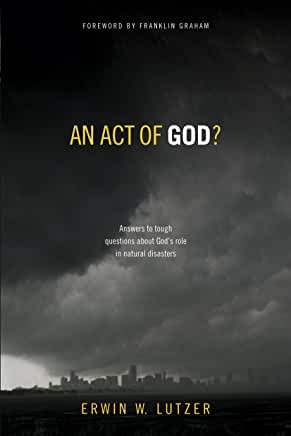
BY *DR. ERWIN LUTZER

I’m told that after an earthquake in California a group of ministers met for a prayer breakfast. As they discussed impassable expressways and ruined buildings, they agreed that God had very little to do with the disaster. They concluded that since the earth is under the Curse from Creation, earthquakes and other natural disasters simply happen according to laws of nature. But even after they made that conclusion, one of the ministers closed in prayer, thanking God for the timing of the earthquake that came at five o’clock in the morning when there were fewer people out on the roads.

So did God have anything to do with that earthquake or didn’t He? How can a person conclude that God is not involved and then thank Him for His involvement? It can’t be both ways.

Hurricanes, tornadoes, tsunamis, earthquakes. Our earth is not immune to disasters. So how does God fit in? Intuitively, people know God is in charge. When tragedy strikes, people call out to Him. We know that when something is outside of our control, we need to call upon a higher power for help. But if people intuitively know that God is in charge, how do we explain the heart-wrenching suffering that accompanies such disasters?

Who Is Responsible?

There’s no doubt about it—natural disasters aren’t very good for God’s reputation. As a result, many Christians try to absolve Him of any and all responsibility for these horrific events. They want to “get Him off the hook” in order to help Him maintain His loving image. Some do this by saying that God is weak—He can’t really stop these disasters from happening, but He will work really hard to bring something good out of them. Others try to give the devil all the blame, saying God is not involved at all in any of the bad things that happen—He’s just a bystander.

Is God Weak?

Let’s begin with people who try to protect God’s reputation by claiming that He is unable to prevent our planet from getting pounded by one calamity after another. These folks fear that if we say God is responsible for natural disasters or that He allows them because of a higher purpose, we will drive people away from the Christian faith. “Why would people want to come to a God who would do such horrible things?” they ask. When we glibly say that “God will bring good out of it” or that “in the end we win,” it does little to comfort those who have lost loved ones or possessions in a disaster.

I agree that glib statements about suffering being part of God’s plan will not immediately comfort the grieving. In fact, it probably is true that giving such answers without any compassion or understanding could indeed drive people away from God rather than toward Him. As Christians, we do need to be very careful what we say to those who are grieving from great loss. Sometimes it is best to remain silent, not pretending that we have the right to speak on God’s behalf, but to act benevolently on His behalf instead. I will talk more about this later in this chapter.

To take the approach that God is weak, unable to handle the forces of nature, is to believe that God is finite. If it is true that God is not all-powerful and must deal with natural disasters as best as He can after they happen, how can a God like that be trusted? If God is helpless in the face of a hurricane, how confident can we be that He can one day subdue all evil? To believe that God is finite might get Him off the hook for natural disasters, but it also puts end-time victories in jeopardy. The Bible does not describe a weak God, however. In fact, just the opposite. God is omnipotent—all-powerful. Consider just a sampling of Scripture that focuses on God’s power over His creation:

“In the beginning God created the heavens and the earth.” ~ Genesis 1:1

“You formed the mountains by your power and armed yourself with mighty strength. You quieted the raging oceans with their pounding waves and silenced the shouting of the nations.” ~ Psalm 65:6-7

“The heavens are yours, and the earth is yours; everything in the world is yours—you created it all. You created north and south. Mount Tabor and Mount Hermon praise your name. Powerful is your arm! Strong is your hand! Your right hand is lifted high in glorious strength.” ~ Psalm 89:11-13

“Look up into the heavens. Who created all the stars? He brings them out like an army, one after another, calling each by its name. Because of his great power and incomparable strength, not a single one is missing.” ~ Isaiah 40:26

[Jesus] got up and rebuked the wind and waves, and suddenly there was a great calm.” ~ Matthew 8:26

“For ever since the world was created, people have seen the earth and sky. Through everything God made, they can clearly see his invisible qualities—his eternal power and divine nature. So they have no excuse for not knowing God.” ~ Romans 1:20

It would be strange indeed if the God who created the world were unable to control it. To describe God as too weak to handle natural disasters doesn’t help God’s reputation, it doesn’t get Him off the hook, and it isn’t biblical. The answer to the question, “Is God weak?” is a resounding no! God is all-powerful and completely able to control nature.

 Are Disasters the Devil’s Fault?

The second way some Christians try to exempt God from involvement in natural disasters is to simply blame everything on the devil. God is not responsible for what happens, they say. He created the world and lets it run; nature is fallen, and Satan, who is the god of this world, wreaks havoc with the natural order.

Scripture clearly tells us that nature is under a curse just as people are: “The ground is cursed because of you. All your life you will struggle to scratch a living from it” (Genesis 3:17). It follows, then, that Satan might indeed be involved in natural disasters. We have an example of this in the book of Job, when God gave Satan the power to destroy Job’s children. Acting under God’s direction and within certain set limitations, Satan used lightning to kill the sheep and the servants and a powerful wind to kill all ten of Job’s children (Job 1). Clearly the devil takes great pleasure in causing havoc and destruction. Take a moment to look at the wretched life of the demon-possessed man before Jesus commanded the legion of demons to leave him. The Gospel of Luke describes him as homeless and naked, living in a cemetery, shrieking, breaking chains and shackles, completely alone, and without hope (Luke 8:26-29). This is a snapshot of Satan’s ultimate goal for living things. Here is proof, if proof is needed, that satanic powers might indeed be connected to the natural disasters that afflict our planet.

So if the devil is involved, does this mean that God is removed from Does He really have a “hands-off policy” when it comes to disasters? Does this absolve God of responsibility? Is it all the devil’s fault? Clearly the answer to all of these questions is no. God has not relegated calamities to His hapless archrival the devil without maintaining strict supervision and ultimate control of nature. No earthquake comes, no tornado rages, and no tsunami washes villages away but that God signs off on it.

But that conclusion creates its own set of questions…

So What Does It Mean That God Is in Control?

If God isn’t too weak to deal with His creation, and if we cannot put all the blame on Satan, then where does that leave us? It leaves us with the fact that God is all-powerful and in control—and that applies to natural disasters. We must think carefully at this point.

We must distinguish between the secondary cause of disastrous events and their ultimate cause. The secondary cause of the lightning and the wind that killed Job’s children was the power of Satan. But follow carefully: it was God who gave Satan the power to wreak the havoc. It was God who set the limits of what Satan could or could not do. In effect, God said, “Satan, you can go this far, no further. I’m setting the boundaries here.” That’s why Job, quite rightly, did not say that the death of his children was the devil’s doing. Instead, Job said, “The LORD gave me what I had, and the LORD has taken it away. Praise the name of the LORD!” (Job 1:21).

Scientifically speaking, we know that the secondary cause of an earthquake is due to a fault beneath the earth’s crust; the top of the earth’s crust moves in one direction while the levels under the earth’s crust gradually move in the opposite direction. The secondary causes of a tornado are unstable atmospheric conditions combined with warm, moist air. The secondary cause of a hurricane is a large air mass heated and fueled by the warmth of the ocean. All of these weather patterns might or might not receive their momentum from Satan, yet we can be sure that the ultimate cause of these events is God. He rules through intermediate causes and at times by direct intervention, but either way, He is in charge. After all, He is the Creator, the Sustainer, of all things. We sing with Isaac Watts,

There’s not a plant or flower below,

But makes Thy glories known;

And clouds arise, and tempests blow,

By order from Thy throne.

So what does it mean for us that God is in control, even when natural disasters occur? How do we begin to process this?

First, many theologians who agree that God is in charge of nature emphasize that God does not decree natural disasters but only permits them to happen. Understanding the difference between these words is helpful, especially since in the book of Job God permitted Satan to bring about disasters to test Job. However, keep in mind that the God who permits natural disasters to happen could choose to not permit them to happen. In the very act of allowing them, He demonstrates that they fall within the boundaries of His providence and will. The devil is not allowed to act beyond the boundaries God sets.

Second—and this is important—God is sometimes pictured as being in control of nature even without secondary or natural causes. When the disciples were at their wits’ end, expecting to drown in a stormy sea, Christ woke up from a nap and said to the waves, “Silence! Be still!” The effect was immediate: “Suddenly the wind stopped, and there was a great calm” (Mark 4:39). Christ could have spoken similar words to the tidal wave in Papua New Guinea or the rain that triggered the mudslides in Venezuela, and they would have obeyed Him. At the word of Christ, the tsunami in Southeast Asia would have ended before it hit the coastlines. Notice how the Scriptures credit tidal waves and tsunamis to God: “The LORD’s home reaches up to the heavens, while its foundation is on the earth. He draws up water from the oceans and pours it down as rain on the land. The LORD is his name!” (Amos 9:6).

Third, if the heavens declare the glory of God, if it is true that the Lord reveals His character through the positive side of nature, doesn’t it make sense that the calamities of nature also reveal something about Him too? If nature is to give us a balanced picture of God, we must see His judgment, too. “The LORD does whatever pleases him throughout all heaven and earth, and on the seas and in their depths. He causes the clouds to rise over the whole earth. He sends the lightning with the rain and releases the wind from his storehouses” (Psalm 135:6-7).

God’s Signature

After the tsunami in Southeast Asia, a supposed Christian cleric was asked whether God had anything to do with the disaster. “No,” he replied. “The question as to why it happened demands a geological answer, not a theological answer.” Is he reading the same Bible I am? Or has he read the Bible and simply chosen not to believe it?

Who sent the Flood during the time of Noah? God said, “I am about to cover the earth with a flood that will destroy every living thing that breathes. Everything on earth will die” (Genesis 6:17). God determined the timing, the duration, and the intensity of the rain. And it happened according to His word. It would have been difficult to convince Noah that God had nothing to do with the weather, that all He could do was weep when the Flood came.

Who sent the plagues on Egypt? Who caused the sun to stand still so that Joshua could win a battle? Who first sealed the heavens and then brought rain in response to Elijah’s prayer? Who sent the earthquake when the sons of Korah rebelled against Moses? This event recorded in the Bible is of special interest:

[Moses] had hardly finished speaking the words when the ground suddenly split open beneath them. The earth opened its mouth and swallowed the men, along with their households and all their followers who were standing with them, and everything they owned. So they went down alive into the grave, along with all their belongings. The earth closed over them, and they all vanished from among the people of Israel (Numbers 16:31-33).

Can anyone say that God is not the ultimate cause of these disasters? In the story of Jonah, the biblical writer leaves no doubt as to who caused the storm that forced the sailors to throw the stowaway overboard. “The LORD hurled a powerful wind over the sea, causing a violent storm that threatened to break the ship apart” (Jonah 1:4, italics added). The sailors agonized about unloading their unwanted cargo, but we read that they “picked Jonah up and threw him into the raging sea, and the storm stopped at once!” (Jonah 1:15). It appears that the Bible is not as concerned about God’s reputation as some theologians are. It puts God clearly in charge of the wind, the rain, and the calamities of the earth.

What do all these stories have in common? Notice that God is meticulously involved. Whether an earthquake, a raging wind, or a rainstorm, the events came and left according to God’s word. In addition, many of these calamities were acts of judgment by which God expressed how much He hated disobedience. In Old Testament times, these judgments generally separated godly people from wicked people (this is not the case today, as we shall see in the next chapter). However, even back then, sometimes the godly were also victims of these judgments. Job’s children were killed not because they were wicked, but because God wanted to test their father.

On the other hand, we should also note that in both the Old and New Testaments God sometimes sent a natural disaster to help His people. During a battle when Saul’s son Jonathan killed a Philistine, we read, “Then panic struck the whole [enemy] army—those in the camp and field, and those in the outposts and raiding parties—and the ground shook. It was a panic sent by God” (1 Samuel 14:15, NIV, italics added). And in the New Testament, an earthquake delivered Paul and Silas from prison: “Around midnight Paul and Silas were praying and singing hymns to God, and the other prisoners were listening. Suddenly, there was a massive earthquake, and the prison was shaken to its foundations. All the doors immediately flew open, and the chains of every prisoner fell off!” (Acts 16:25-26). Both of these earthquakes had God’s signature on them. God uses nature to do His bidding. Directly or indirectly, He can cause an earthquake to happen at five in the morning. God does as He wills.

Is Our God Really Good?

If God is the ultimate cause of all things and if He does as He wills on this earth—including with nature and natural disasters—can we put the blame on Him for the evil and suffering that these disasters cause? How can God be good when He permits (or does) things that seem so destructive and hurtful to human beings? Surely if we had the power to prevent an earthquake, if we could have stopped the tsunami, we would have done so.

Natural disasters are not “evil” in the usual sense of the word. If a tsunami took place in the middle of the ocean and did not affect any people, we would not think of it as evil. It’s when humans are affected, and when death and suffering occur, that such disasters become “evil.”

In light of what I’ve said, should God be blamed for such destructive disasters that create unfathomable human suffering? The word blame implies wrongdoing, and I don’t believe such a word should ever be applied to God. But even asking if God is responsible for natural disasters also might not be best, since the word responsibility usually implies accountability, and God is accountable to no one: “Our God is in the heavens, and he does as he wishes” (Psalm 115:3).

Let’s begin by agreeing that God plays by a different set of rules. If you were standing beside a swimming pool and watched a toddler fall in and did nothing to help, you could be facing a lawsuit for negligence. Yet God watches children drown—or, for that matter, starve—every day and does not intervene. He sends drought to countries in Africa, creating scarcity of food; He sends tsunamis, wiping out homes and crops.

We are obligated to keep people alive as long as possible, but if God were held to that standard, no one would ever die. Death is a part of the Curse: “You were made from dust, and to dust you will return” (Genesis 3:19). What for us would be criminal is an everyday occurrence for God.

Why the difference? God is the Creator; we are the creatures. Because God is the giver of life, He also has the right to take life. He has a long-term agenda that is much more complex than keeping people alive as long as possible. Death and destruction are a part of His plan. “‘My thoughts are nothing like your thoughts,’ says the LORD. ‘And my ways are far beyond anything you could imagine. For just as the heavens are higher than the earth, so my ways are higher than your ways and my thoughts higher than your thoughts’” (Isaiah 55:8-9).

The philosopher John Stuart Mill wrote that natural disasters prove that God cannot be both good and all-powerful. If He were, suffering and happiness would be carefully meted out to all people, each person getting exactly what he or she deserved. Since natural disasters appear to be random, affecting both good and evil people, God therefore cannot be both good and all-powerful. Mill forgets, however, that we don’t receive our final rewards and punishments in this life. Indeed, the Scriptures teach that the godly often endure the most fearful calamities. God always acts from the standpoint of eternity rather than time; His decisions are made with an infinite perspective. Therefore, it comes down to this: we believe that God has a good and all-wise purpose for the heartrending tragedies disasters bring.

Speaking of the earthquake in Turkey that took thousands of lives, pastor and author John Piper says, “[God] has hundreds of thousands of purposes, most of which will remain hidden to us until we are able to grasp them at the end of the age” (John Piper, “Whence and Why?” World Magazine, September 4, 1993, 33). God has a purpose for each individual. For some, His purpose is that their days on earth end when disaster strikes; for the survivors there are other opportunities to rearrange priorities and focus on what really matters. The woman who said she lost everything but God during Hurricane Katrina probably spoke for thousands of people who turned to Him in their utter despair. God does not delight in the suffering of humanity. He cares about the world and its people: “But you, O Lord, are a God of compassion and mercy, slow to get angry and filled with unfailing love and faithfulness” (Psalm 86:15). God does not delight in the death of the wicked but is pleased when they turn from their wicked ways (Ezekiel 18:23). We finite beings cannot judge our infinite God. He is not obligated to tell us everything He is up to. As Paul described it, the clay has no right to tell the potter what to do (Romans 9:19-21). It is not necessary for us to know God’s purposes before we bow to His authority. And the fact that we trust God even though He has not revealed the details is exactly the kind of faith that delights His heart. “It is impossible to please God without faith” (Hebrews 11:6). In chapter 5 we shall see that this sovereign God has given us reasons to trust Him. Faith will always be necessary, but our faith has strong supports. We do not believe clever fables but rather a credible account of God’s will, God’s power, and God’s dealings with us in the Bible.

Responding to the Hurting with Compassion

The God who created the laws of nature and allows them to “take their course” is the very same God who commands us to fight against these natural forces. Before the Fall, God gave Adam and Eve the mandate to rule over nature. After the Fall, the mandate continued even though the ground would yield thorns and thistles and childbearing would mean struggling with pain. The desire to live would become the fight to live.

We’ve seen it over and over—the relentless compassion of people reaching out to help others who have been faced with calamity. People offer money, goods, services, and their time and labor to bring aid where it is most needed. Charitable giving to the American Red Cross for Haiti relief set a record for mobile-generated donations, raising seven million dollars in twenty-four hours when Red Cross allowed people to send ten-dollar donations by text messages (Doug Gross, “Digital Fundraising Still Pushing Haiti Relief,” CNN, January 15, 2010, http://articles.cnn.com/2010-01-15/tech/online.donations.haiti_1_earthquake-haiti-haiti-relief-twitter-andfacebook?_s=PM:TECH). This is when God’s glory shines through even in the darkest times.

God uses nature both to bless and challenge us, to feed and instruct us. He wants us to fight against the devastation of natural disasters, even as we fight against the devil, so that we might become overcomers in this fallen world. Although nature is under God’s supervision, we are invited to fight disease and plagues.

We can and should strive for better medical care and clean water and food for the starving in Third World countries. We should be willing to help those who are in distress—even at great personal risk.

Martin Luther, when asked whether Christians should help the sick and dying when the plague came to Wittenberg, said that each individual would have to answer the question for himself. He believed that the epidemic was spread by evil spirits, but added, “Nevertheless, this is God’s decree and punishment to which we must patiently to which we must patiently submit and serve our neighbor, risking our lives in this manner John the apostle teaches, “If Christ laid down his life for us, we ought to lay down our lives for the brethren’” (1 John 3:16 and for more on Martin Luther see Timothy Lull, ed., Martin Luther’s Basic Theological Writings. Minneapolis, MN: Augsburg Fortress Publishers, 1989, 744).

In recent years, the news media have carried stories of virulent flu viruses that have infected humans in epidemic proportions. Some Christians might wonder if they should help those who are sick, risking their own lives for the sake of others. Disasters such as these make Luther’s comments about Wittenberg plague relevant. Martin Luther continued:

If it be God’s will that evil come upon us, none of our precautions will help us. Everybody must take this to heart: first of all, if he feels bound to remain where death rages in order to serve his neighbor, let him commend himself to God and say, “Lord, I am in thy hands; thou hast kept me here; they will be done. I am thy lowly creature. Thou canst kill me or preserve me in the pestilence in the same way if I were in fire, water, drought or any other danger”  (Ibid, 742).

Yes the plague was “God’s decree,” but we also must do what we can to save the lives of the sick and minister to the dying, We should thank God when He gives us the opportunity to rescue the wounded when a disaster strikes. Tragedies give us the opportunity to serve the living and comfort the dying all around us. Through the tragedies of others, we have the opportunity to leave our comfortable lifestyles and enter the suffering of the world.

Historically, the church has always responded to tragedies with sacrifice and courage. During the third century, the writer Tertullian recorded that when plagues deserted their nearest relatives in the plague, Christians stayed and ministered to the sick.

When Hurricane Katrina hit the Gulf Coast, churches rose to the occasion to help the victims. Church members prepared tens of thousands of meals for people left homeless and scattered in shelters. One church would help another begin the painful process of relocation and reconstruction. Even the secular press had to admit that governmental red tape did not stop the churches from sacrificially helping in time of need. What the government and the Red Cross could not do, the people of God did. This is how it should be. This is how we become Jesus’ hands and feet in the world.

In the days after the 2011 Joplin tornado, one pastor’s wife wrote to a friend, “It [the tornado and its aftermath] has certainly stretched us. All the things that pastors deal with on a day-today basis—marriages in crisis, pettiness, misunderstandings, sins of all varieties—do not go away when the storms come. They do get put on the back burner. They catch fire. Other things that pastors deal with on a day-today basis—tireless, selfless, tenderhearted servants who are constantly seeking to please God and serve His church—do not go away either. They catch fire. I am amazed at these people.”

Jesus was touched by the plight that the curse of sin brought to this world. We see Him weep at the tomb of Lazarus, and we hear His groans. “Jesus, once more deeply moved, came to the tomb. It was a cave with a stone laid across the entrance” (John 11:38). After the stone was removed, Jesus shouted, “Lazarus, come out!” (v. 43) and the dead man came to life in the presence of the astonished onlookers. The Jesus who stayed away for a few extra days so Lazarus would die is the very same Jesus who raised him from the dead.

Like Jesus, we mourn for the horrendous pain people experience on this planet. Like the weeping prophet Jeremiah, we find ourselves saying, “Rise during the night and cry out. Pour out your hearts like water to the Lord. Lift up your hands to him in prayer, pleading for your children, for in every street they are faint with hunger” (Lamentations 2:19).

Although modern medicine and technology allow us to stave off death as long as possible, eventually we will all be overcome by its power. Yet in the end, we sin! Christ has conquered death.

Responding to God in Faith

If there is still some doubt in your mind that ultimately God has control of nature, let me ask you: Have you ever prayed for beautiful weather for a wedding? Have you ever prayed for rain at a time of drought? Have you ever asked God to protect you during a severe storm? Many people who claim God has no control over the weather change their minds when a funnel cloud comes toward them. The moment we call out to Him in desperate prayer, we are admitting that He is in charge.

It is also vital to understand that if nature is out of God’s hands, then we are also out of God’s hands. We should be nothing more than victims of nature and thus die apart from His will. Jesus, however, assures His children that He will take care of us. “What is the price of five sparrows—two copper coins? Yet God does not forget a single one of them. And the very hairs on your head are all numbered. So don’t be afraid; you are more valuable to God than a whole flock of sparrows” (Luke 12:6-7). The God who cares for the tiny sparrows and counts the hairs on our heads is in charge of nature.

The ministers in California were right in thanking God that the earthquake came early in the morning when there was little traffic on the expressways. They were wrong, however, for saying that God was not in charge of the tragedy. Of course He was—both biblically and logically.

There is, perhaps, no greater mystery than human suffering, so let us humbly admit that we can’t determine God’s ways.

The eighteenth-century English poet William Cowper put the mysteries of God in perspective:

God moves in a mysterious way

His wonders to perform;

He plants His footsteps in the sea,

And rides upon the storm.

Deep in unfathomable mines

Of never-failing skill

He treasures up His bright designs,

And works His sovereign will.

Ye fearful saints, fresh courage take;

The clouds ye so much dread

Are big with mercy, and shall break

In blessing on your head.

Judge not the Lord by feeble sense,

But trust Him for His grace;

Behind a frowning providence

He hides a smiling face.

His purposes will ripen fast,

Unfolding every hour;

The bud may have a bitter taste,

But sweet will be the flower.

Blind unbelief is sure to err,

And scan His work in vain;

God is His own interpreter,

And He will make it plain (William Cowper, “God Moves in a Mysterious Way,” Cowper’s Poems, ed. Hugh I’Anson Fausset. New York: Everyman’s Library, 1966, 188-189).

“Grieve not because thou understand not life’s mystery,” wrote a wise man. “Behind the veil is concealed many a delight” (Quoted in Charles Swindoll, The Mystery of God’s Will. Nashville, TN: Thomas Nelson, 1999, 115).

The trusting believer knows this is so.

*Article/Sermon above adapted from the excellent book by Dr. Erwin Lutzer, An Act of God?, Chapter 2.

7 Deadly Flaws of Relativism

58066.jpg

“Seven Fatal Flaws of Moral Relativism”

BY GREG KOUKL

Moral relativism is a type of subjectivism which holds that moral truths are preferences much like our tastes in ice-cream. Moral relativism teaches that when it comes to morals, that which is ethically right or wrong, people can and should do what ever feels right for them. Ethical truths depend on the individuals, groups and cultures who hold them. Because they believe that ethical truth is subjective, the words ought and should are meaningless because everybody’s morality is equal; no one has a claim to an objective morality that is incumbent on others. Relativism does not require a particular standard of behavior for every person in similar moral situations. When faced with exactly the same ethical situation, one person may choose one response while another may choose the opposite. No universal rules of conduct apply to everyone.

Flaw 1

Moral relativists can’t accuse others of wrongdoing. Relativism makes it impossible to criticize the behavior of others, because relativism ultimately denies such a thing a ‘wrongdoing’. If one believes that morality is a matter of personal definition, then you surrender the possibility of making objective moral judgments about the actions of others, no matter how offensive they are to your intuitive sense of right or wrong. This means that a relativist cannot rationally object to murder, rape, child abuse, racism, sexism or environmental destruction if those actions are consistent with the perpetrator’s personal moral understanding of what is right and good. When right and wrong are a matter of personal choice, we surrender the privilege of making moral judgments about the actions of others. However if we are certain that some things must be wrong and that some judgments against another’s conduct are justified – then relativism is false.

Flaw 2

Relativists can’t complain about the problem of evil. The reality of evil in the world is one of the first objections raised against the existence of God. This entire objection hinges on the observation that true evil exists. Objective evil cannot exist if moral values are relative to the observer. Relativism is inconsistent with the concept that true moral evil exists because it denies that anything can be objectively wrong. If there is no moral standard, then there can be no departure from the standard. Thus relativists must surrender the concept of true evil and, ironically, must also surrender the problem of evil as an argument against the existence of God.

Flaw 3

Relativists can’t place blame or accept praise. Relativism renders the concepts of praise and blame meaningless, because no external standard of measurement defines what should be applauded or condemned. Without absolutes, nothing is ultimately bad, deplorable, tragic or worthy of blame. Neither is anything ultimately good, honorable, noble or worthy of praise. Relativists are almost always inconsistent here, because they seek to avoid blame, but readily accept praise. Since morality is a fiction, so too relativists must remove the words praise and blame from their vocabularies. If the notions of praise and blame are valid, then relativism is false.

Flaw 4

Relativists can’t make charges of unfairness or injustice. Under relativism, the notions of fairness and justice are incoherent as both concepts dictate that people should receive equal treatment based on some agreed external standard. However relativism does away with any notion of external binding standards. Justice entails punishing those who are guilty of a misdemeanor. But under relativism, guilt and blame do not exist – if nothing is ultimately immoral, there is no blame and therefore no guilt worthy of punishment. If relativism is true, then there is no such thing as justice or fairness because both concepts depend on an objective standard of what is right. If the notions of justice and fairness make sense, then relativism is defeated.

Flaw 5

Relativists can’t improve their morality. Relativists can change their personal ethics, but they can never become better people. Under relativism, one’s ethics can never become more ‘moral’. Ethics and morals can change, but they can never improve, as there is no objective standard to improve against. If, however, moral improvement seems to be a concept that makes sense, then relativism is false.

Flaw 6

Relativists can’t hold meaningful moral discussions. What’s there to talk about? If morals are entirely relative and all views are equal, then no way of thinking is better than another. No moral position can be judged as adequate or deficient, unreasonable, acceptable, or even barbaric. If ethical disputes make sense only when morals are objective, then relativism can only be consistently lived out in silence. For this reason, it is rare to meet a rational and consistent relativist, as most are quick to impose their own moral rules like “It’s wrong to push your own morality on others”. This puts relativists in an untenable position – if they speak up about moral issues, they surrender their relativism; if they do not speak up, they surrender their humanity. If the notion of moral discourse makes sense intuitively, then moral relativism is false.

Flaw 7

Relativists can’t promote the obligation of tolerance. The relativist’s moral obligation to be tolerant is self-refuting. Ironically the principle of tolerance is considered one of the key virtues of relativism. Morals are individual, so they say, and therefore we ought to tolerate the viewpoints of others and not pass judgment on their behavior and attitudes. However, if there are no objective moral rules, there can be no rule that requires tolerance as a moral principle that applies equally to all. In fact, if there are no moral absolutes, why be tolerant at all? Relativists violate their own principle of tolerance when they fail to tolerate the views of those who believe in moral objective standards. They are, therefore, just as intolerant as they frequently charge the moral objectivist of being. The principle of tolerance is foreign to relativism. If, however, tolerance seems to be a virtue, then relativism is false.

The Bankruptcy of Relativism

Moral relativism is bankrupt. It is not a true moral system. It is self-refuting. It is hypocritical. It is logically inconsistent and irrational. It is seriously undermined by simple practical examples. It makes morality unintelligible. It is not even tolerant! The principle of tolerance makes sense only in a world in which moral absolutes exist, and only if one of those absolute standards for conduct is “All people should respect the rights of others to differ in conduct or opinion”. The ethic of tolerance can be rational only if moral truth is objective and absolute, not subjective and relative. Tolerance is a principle at home in moral absolutism and is irrational from any perspective of ethical relativism.

People are drowning in a sea of moral relativism. Relativism destroys the conscience. It produces people without scruples, because it provides no moral impulse to improve. This is why we don’t teach relativism to our children – in fact, we labour to teach them just the opposite. Ultimately, relativism is self-centered, egoistic and hypocritical. “Doing our own thing” is fine for us, but we don’t want others to be relativists. We expect them to treat us according to an accepted moral standard.

“I have freed Germany from the stupid and degrading fallacies of conscience and morality… We will train young people before whom the world will tremble.” Adolf Hitler

Moral relativism, in a practical sense, is completely unliveable. What kind of world would it be if relativism was true? It would be a world in which nothing was wrong – nothing is considered evil or good, nothing worthy or praise or blame. It would be a world in which justice and fairness are meaningless concepts, in which there would be no accountability, no possibility of moral improvement, no moral discourse. And it would be a world in which there is no tolerance. Moral relativism produces this kind of world.

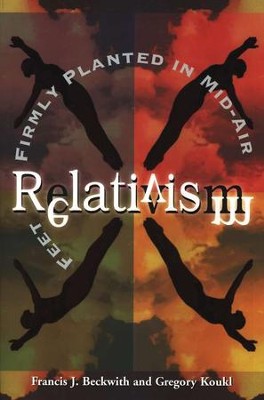
The late Dr Francis Schaeffer’s remark could well apply to moral relativists, who “…have both feet firmly planted in mid-air.”

*Article above adapted from the excellent and highly recommended book by  Francis Beckwith and Greg Koukl, Relativism – Feet Firmly Planted in Mid-Air, Grand Rapids, MI.: Baker Books, 2002.

What is the Role of a Biblical Deacon?

433641.jpg

*What Is The Role of a Deacon? 

(Benjamin Merkle, 40 Questions & Answers Series)

Whereas the office of elder is often ignored in the modern church, the office of deacon is often misunderstood. In many churches, the board of deacons provides the spiritual leadership in the church in partnership with the pastor. They are involved in making the important decisions of the church and often involved in teaching and shepherding. But based on the NT data, the role of the deacon is mainly a servant role.

Deacons are needed in the church to provide logistical and material support so that the elders concentrate their efforts on the Word of God and prayer.

Differences with Elders

The NT does not provide much information concerning the role of deacons. The requirements given in 1 Timothy 3:8-13 focus on the deacon’s character and family life. There are, however, some clues as to the function of deacons when their requirements are compared with those of the elders. Although many of the qualifications are similar, there are some notable differences.

Perhaps the most notable distinction between elders and deacons is that deacons do not need to be “able to teach” (1 Tim. 3:2). Deacons are called to “hold” to the faith with a clear conscience, but they are not called to “teach” the faith (1 Tim. 3:9). This suggests that the deacons do not have an official teaching role in the church. D.A. Carson rightly comments, “Deacons were responsible to serve the church in a variety of subsidiary roles, but enjoyed no church-recognized teaching authority akin to that of elders” (D.A. Carson, Evangelical Dictionary of Theology, p. 229). Wayne Grudem likewise states, “It is significant that nowhere in the NT do deacons have ruling authority over the church as the elders do, nor are deacons ever required to be able to teach Scripture or sound doctrine” (Wayne Grudem, Systematic Theology, p. 920).

Again, this does not mean that deacons cannot teach in any capacity but simply that they are not called to teach or preach as a matter of responsibility related to their office as deacon.

Like elders, deacons must manage their house and children well (1 Tim. 3:4, 12). But when referring to deacons, Paul does not compare managing one’s household to taking care of God’s church (1 Tim. 3:5). The reason for this omission is most likely due to the fact that deacons are not given a ruling or leading position in the church—a function that belongs to the elders.

Other differences provide us with less information. Some maintain that the omission for deacons be gentle and not quarrelsome (1 Tim. 3:3) may indicate that the elders were often put in situations that required such characteristics. Knight, for example, suggests that this omission “may reflect the fact that the deacon is not in the role of one who must give oversight and direction, as well as discipline, in sometimes difficult situations that make such qualifications imperative” (George W. Knight, The Pastoral Epistles, p. 167).

Although Paul indicates that a person must be tested before he can hold the office of deacon (1 Tim. 3:10), the requirement that he cannot be a new convert is not included. Paul notes that if an elder is a recent convert, “he may become puffed up with conceit” (1 Tim. 3:6). One implication of this distinction could be that those who hold the office of elder—because they possess leadership over the church—are more susceptible to pride. On the contrary, it is not as likely for a deacon—someone who is in more of a servant role—to fall into the same sin.

The fact that Paul includes the character of a deacon’s wife also might reveal an important distinction (1 Tim. 3:11). Because the role of a deacon is focused toward serving and not leading, a wife could easily be involved. The wife of an elder would be more limited since Paul forbids women “to teach or exercise authority over a man” (1 Tim. 2:12). Finally, the title “overseer” (1 Tim. 3:2) implies general oversight over the spiritual well-being of the congregation, whereas the title “deacon” implies one who has a service-oriented ministry.

Duties of Deacons

We have discussed some distinctions between elders and deacons, but we have yet to specify the precise duties of deacons. We already have indicated that deacons are not responsible to teach or lead the congregation. They are not the spiritual elders of the church. Instead, the deacons provide leadership over the service-oriented functions of the church. The Bible, however, does not clearly indicate the function of deacons. But based on the pattern established in Acts 6 with the apostles and the Seven, it seems best to view the deacons as servants who do whatever is necessary to allow the elders to accomplish their God-given calling of shepherding and teaching the church (The role of the Seven should not be compared too closely with the role of the deacons since Steven was also a miracle-worker [Acts 6:8] and preacher [Acts 6:8-10] and Philip was an evangelist [Acts 21:8]).

Just as the apostles delegated administrative responsibilities to the Seven, so the elders are to delegate responsibilities to the deacons so that the elders can focus their efforts elsewhere. Newton rightly concludes, “In the servant role, deacons take care of those mundane and temporal matters of church life so that elders are freed to concentrate upon spiritual matters. Deacons provide much needed wisdom and energy to the ample physical needs of the church, often using such provision as opportunities to minister as well to the spiritual needs of others” (Phil A. Newton, Elders in Congregational Life, p. 41). As a result, each local church is free to define the tasks of deacons based on its particular needs.

There are some clues as to the function of deacons based on the requirements in 1 Timothy 3. Wayne Grudem offers some possibilities:

“Deacons seem to have had some responsibility in caring for the finances of the church, since they had to be people who were “not greedy for gain” (v. 8). They perhaps had some administrative responsibilities in other activities of the church as well, because they were to manage their children and their households well (v.12). They may have ministered to the physical needs of those in the church or community who needed help [Acts 6]…Moreover, if verse 11 speaks of their wives (as I think it does), then it would also be likely that they were involved in some house-to-house visitation and counseling, because the wives are to be “no slanderers” (Grudem, ST, p. 919).

We must note, however, that some of the requirements could have been given to counter the characteristics of false teachers and were not so much directed toward deacons’ duties. William Mounce maintains that the requirements listed suggest that a deacon would have substantial contact with people: he must not be double-tongued, must have a dignified wife, be faithful in marriage, and have a well-managed family (William D. Mounce, Pastoral Epistles, 46:195). Although such a conclusion is possible, it cannot be given too much weight.

What are some duties that deacons might be responsible for today? Basically they could be responsible for any item not related to teaching and ruling in the church. Below is a list of possible duties:

Benevolence – Similar to what took place in Acts 6 with the daily distribution to the widows, the deacons should be involved in administering funds for the needy.

Facilities – The deacons could be responsible for the basic management of the church property. This would include making sure the place of worship is prepared for the worship service. Other items may include cleanup, sound system, etc.

Finances – Some believe that matters of finance should be handled by the elders since the famine-relief money brought by Paul and Barnabas was delivered to the elders (Acts 11:30). But while the elders can oversee the financial business of the church, it is probably best left to the deacons to handle the day-to-day matters. This would include collecting and counting the offering, record keeping, helping to set the church budget, etc.

Logistics – Deacons should be available to help in a variety of ways so that the elders are able to concentrate on teaching and shepherding the church.

Ushers – The deacons could be responsible for distributing bulletins, seating the congregation, preparing the elements for communion, etc.

Summary

The role of a deacon is different from the role of an elder. Whereas elders are charged with the tasks of teaching and shepherding the church, deacons are given a more service-oriented function. That is, they are given the task of taking care of matters related more to the physical or temporal concerns of the church. For example, they might have responsibility over areas such as benevolence, facilities, finances, and other matters related to the practical logistics of running a church.

Reflection Questions

(1) What are the roles of the deacons in your church?

(2) In one sentence, how would you describe the main function of the deacons from a biblical perspective?

(3) What are the main differences between the elders and the deacons?

(4) Are there any clues given in the qualifications for deacons that might shed light on their duties?

(5) What are some needs deacons might fill in your church?

*Article Adapted from Chapter 36: “What Is the Role of a Deacon?” in 40 Questions About Elders and Deacons by Benjamin L. Merkle. Benjamin L. Merkle is Professor of New Testament and Greek at Southeastern Baptist Theological Seminary in Wake Forest, North Carolina where he has taught since 2008. 

America’s First Foreign Missionary: Adoniram Judson

231899.jpg

On this Day: February 6, 1812

Christian parents worry about sending their sons and daughters to colleges and universities. Sometimes with good reason. Young people can “lose their faith” there. But some lose it only to regain it later with added strength.

Adoniram Judson grew up in parsonages around Boston in the 1700’s. He entered Brown University at the age of 16 and graduated valedictorian of his class. While there he became best friends with Jacob Eames. Jacob was a deist and, in practical terms, an atheist. Ridiculing Judson’s faith, he challenged him with the writings of Voltaire and the French philosophers. When Adoniram returned home, he told his parents that he, too, had become an atheist. His mother broke into sobs. His father roared and threatened and pounded the furniture. 

Adoniram, 21, migrated to New York City to establish himself as a playwright. But then, hearing tales from the American frontier, he saddled his horse and headed west. One evening, weary from traveling, he stopped at an inn. The proprietor said, “Forgive me, sir, but the only room left — well, it’ll be a bit noisy. There’s a young fellow next door awfully sick.” Adoniram, too tired to care, took the key.

The night became a nightmare. The tramping of feet coming and going. Muffled voices. Painful groans. Chairs scraping against the floor. Adoniram was troubled by it all, and he wondered what his friend Jacob Eames would say about fear, illness, and death.

The next morning while checking out, he asked about the young man in the next room. The proprietor said, “I thought maybe you’d heard. He died, sir, toward morning. Very young. Not more than your age. Went to that Brown University out East.” Adoniram, stiffened. The man continued, “His name was Jacob Eames.”

The West suddenly lost its lure, and Adoniram, turned his horse toward home. Soon he gave his life to Christ, and shortly afterward, devoted himself to missions. On February 6, 1812, Adoniram Judson was commissioned as America’s first foreign missionary. He, his wife, and companions sailed for Burma on February 18.

The Scriptures say that the Messiah must suffer, then three days later he will rise from death. They also say that all people of every nation must be told in my name to turn to God, in order to be forgiven. So beginning in Jerusalem, you must tell everything that has happened.

Then he [Jesus] opened their minds [the disciples] to understand the Scriptures, and said to them, “Thus it is written, that the Christ should suffer and on the third day rise from the dead, and that repentance for the forgiveness of sins should be proclaimed in his name to all nations, beginning from Jerusalem. You are witnesses of these things. And behold, I am sending the promise of my Father upon you. But stay in the city until you are clothed with power from on high.” ~ Luke 24:45-48

Article from Robert J. Morgan’s, On This Day: 365 Amazing And Inspiring Stories about Saints, Martyrs and Heroes. Kindle, Loc. 1146-1162.

JONATHAN EDWARDS LEGACY

3329x.gif

*THE LEGACY OF A DAD’S LIFE

“TELL ME WHO YOUR FATHER IS AND I’LL TELL YOU WHO YOU ARE” 

Every father leaves a legacy with his children—no exceptions. The only question is, what kind of legacy?

A few years ago, a team of New York state sociologists attempted to calculate the influence of a father’s life on his children and the following generations. In this study, they researched two men who lived in the 18th century. One was Max Jukes, the other Jonathan Edwards. The legacy that each of these men left their descendants stands as a study in contrasts; they are as different as night and day.

Max Jukes was an unbeliever, a man with no principles. His wife also lived and died in unbelief. What kind of a lasting influence did he leave his family? Among the 1,200 known descendants of Max Jukes were:

  • 440 lives of outright debauchery (excessive indulgence in sensual pleasures)
  • 310 paupers and vagrants
  • 190 public prostitutes
  • 130 convicted criminals
  • 100 alcoholics
  • 60 habitual thieves
  • 55 victims of impurity
  • 7 murderers

Research shows that not one of Jukes’ descendants made a significant contribution to society—not one! To the contrary, this notorious family collectively cost the state of New York $1,200,000.00.

Not much of a legacy.

What about the family of Jonathan Edwards? Regarded as the most brilliant mind America has ever produced, Edwards was a noted pastor and astute theologian. This renowned scholar was the instrument God used to bring about the Great Awakening in colonial America. Later, he served as the president of Princeton College.

Jonathan Edwards came from a godly heritage and married Sarah, a women of great faith. Together, they sought to leave an entirely different legacy. Among his male descendants were:

  • 300 pastors, missionaries , or theological professors
  • 120 college professors
  • 110 lawyers
  • 60 physicians
  • 60 authors of good books
  • 30 judges
  • 14 presidents of universities
  • numerous giants in American industry
  • 3 U.S. congressmen
  • 1 vice-president of the United States

There is scarcely any great American industry that has not had one of Jonathan Edwards descendants as its chief promoter. Such is the lasting influence of a godly man.

Now that’s a legacy!

Every man leaves a lasting influence on his children that will affect future generations for centuries to come. But let’s face it, not all legacies are the same. Some are productive, others destructive. Some are illustrious, others are infamous. How you live your life will affect generations to come. The only question is, what kind of a legacy will you leave behind?

THIS IS YOUR LIFE

To help you answer that question, I want you to imagine that you have just walked into a church to attend a funeral service. The mood is somber, the crowd quiet. Loved ones are making there way past the open casket for the final viewing of the body. Many are weeping. Some are wiping their eyes with handkerchiefs. A few stand gazing at the lifeless body.

The specific time has now come for the service to begin. As the minister approaches the pulpit, he motions for the congregation to rise. The family of the deceased slowly proceeds down the center aisle to the front.

Anxiously, you look up to identify the family. As you peer into the face of each member, you are in for the shock of your life. Suddenly, you realize this is your family!

You are attending…your funeral!

In stunned disbelief, you respond to the minister’s directions for the congregation to be seated. He begins by expressing his feelings of appreciation for your life. What he says is nice and flattering. But at the same time, his words are generic and impersonal.

Let’s be honest, it’s the words of your family, those closest to you that matter most. What will your wife say about you? What will your children say about you? 

The minister finishes his eulogy and motions to your children to come to the pulpit. They approach the platform, waiting their turn to speak about how you influenced their lives. One by one, your kids reflect on their years with you and share remembrances of you as their dad. They recall incidents you have long forgotten. They remember your impact, reflect on your character, and recite your virtues. 

At this point, all you can do is listen. With riveted attention, you hang on their every word. These are the most important sentences you will ever hear anyone speak about you. Your lasting success as a dad is measured by what they say.

All imagination aside, if you died today, what would your children remember you for? What would be your legacy to them?

What your children take from your life, in large measure, will define your legacy as a dad. Your lasting influence upon their lives will mark whether or not you lived successfully as a dad. This will be your legacy.

*Adapted from the book The Legacy: What Every Father Wants To Leave His Child by Steven J. Lawson, pp. 13-15

*Ask People How You Can Pray for Them

Unknown.jpeg

It’s a short, easily remembered question. You can use it with longtime friends or with people you’ve just met. It doesn’t seem too personal or pushy for those who’d rather give you a shallow answer just now, and yet it often leads to a full hearing of the gospel. You can ask it of people nearly every time you speak with them and it doesn’t get old. Just simply and sincerely ask, “How can I pray for you?” You’ll be surprised at the results.

Over and over I’ve seen one simple question open people’s hearts to hear the gospel. Until I asked this question, they showed no interest in spiritual matters. But then after six words—only seventeen letters in English—I’ve seen people suddenly begin to weep and their resistance fall. The question is, “How can I pray for you?”

This may not seem like such a powerful question to you. Perhaps that’s because you hear it, or a question like it, quite often. Your Bible study group or your church prayer meeting asks for prayer requests every week. You may even see requests for prayer solicited each Sunday morning in the worship bulletin.

But realize that most people in the world never hear such a question. And while many churchgoers know that a minister is willing to pray for them, in some traditions they’re expected to make a special donation to the church for such services. So when you ask, “How can I pray for you?” and it’s obvious that you’re asking out of love alone, it can touch a person more deeply than you imagine.

This question is similar to one that Jesus Himself sometimes asked: “What do you want me to do for you?” (Matthew 20:32). For what we are really asking is, “What do you want me to ask Jesus to do for you?” And by means of this question, we can show the love of Christ to people and open hearts previously closed to the gospel.

I had tried to talk about the things of God many times to a business-hardened, retired executive who lived next door. He was a pro at hiding his feelings and keeping conversations at a superficial level. But the day we stood between our homes and I asked, “How can I pray for you?” his eyes filled with tears as hisBut the day we stood between our homes and I asked, “How can I pray for you?” his eyes filled with tears as his façade of self-sufficiency melted. For the first time in seven years he let me speak with him about Jesus.

It’s a short, easily remembered question. You can use it with longtime friends or with people you’ve just met. It doesn’t seem too personal or pushy for those who’d rather give you a shallow answer just now, and yet it often leads to a full hearing of the gospel. You can ask it of people nearly every time you speak with them and it doesn’t get old. Just simply and sincerely ask, “How can I pray for you?” You’ll be surprised at the results.

*Excerpted from Donald S. Whitney, Simplify Your Spiritual Life (Colorado Springs, Colo.: NavPress, 2003). Copyright © 2003, Donald S. Whitney. All rights reserved. Read more sample chapters from this book at http://www.BiblicalSpirituality.org


Is Evolution a Viable Option Scientifically?

Unknown-2.jpeg

Some Key Problems With Evolution

  • Darwinian evolution is based on a hopelessly illogical premise, the concept of spontaneous generation, or life arising from non-living matter.
  • If Darwinian evolution were true we should literally find millions of transitional forms in the fossil record, but the missing links are still missing.
  • Darwinists claim that natural selection is evidence of macroevolution. However, natural selection, which is basic science, simply demonstrates change within species or microevolution.
  • Critiquing Darwinism does not make a person anti-science. We all share the same scientific evidence. The question is, what theory or interpretive framework best explains the evidence? (Ron Carlson, Christian Ministries International)

Synopsis of 6 Big Problems with Evolution:

(1) Scientists today generally agree that the universe had a beginning. This implies the existence of a Beginner or Creator (Hebrews 3:4, “For every house is built by someone, but the builder of all things is God.”).

(2) The universe is so perfectly fine-tuned for life on earth, it must have come from the hands of an intelligent Designer ([God] Romans 1:20 & Psalm 19:1, “For his invisible attributes, namely, his eternal power and divine nature, have been clearly perceived, ever since the creation of the world, in the things that have been made. So they are without excuse….The heavens declare the glory of God, and the sky above proclaims his handiwork”).

(3) If evolution were true, the fossil records would reveal progressively complex evolutionary forms with transitions. However, no transitional links (with species forming into different species) have been discovered in the fossil records.

(4) Evolution assumes a long series of positive and upward mutations. In almost all known cases, however, mutations are not beneficial but are harmful to living beings. This is a huge problem for evolution.

(5) The Second Law of thermodynamics, which has never been contradicted in observable nature, says that in an isolated system (like our universe), the natural course of things is degenerate. The universe is running down, not evolving upward. In a closed, isolated system, the amount of useable energy decreases. That is, matter and energy deteriorate gradually over time. Also, things tend to move from order to disorder, not the reverse.

(6) Evolutionists often make false claims. Some have claimed that scientific evidence confirms that evolution is true. They generally appeal to the fact that mutations do occur within species (microevolution). But an incredible leap of logic is required to say that mutations within species prove that mutations can yield entirely new species (macroevolution). Two dogs cannot produce a cat! (Ron Rhodes, 5-Minute Apologetics for Today)

How Did the Universe Come to Be? The opening line of Genesis puts it succinctly: “In the beginning God created the heavens and earth” (1:1). The Bible teaches that through an act of God the temporal creation of the universe came from nothing (ex nihilo).

CREATOR CREATION
Uncreated Created
Necessary Contingent
Eternal Temporal
Infinite Finite
Changeless Changing

Christianity teaches that God is the Originating Cause (Eph. 3:9) who created the space-time universe and is also the Sustaining Cause that keeps everything together (Col. 1:17). Moses declared, “For in six days the LORD made the heavens and earth, the sea, and all that is in them, but He rested on the seventh day” (Exodus 20:11).

According to Gottfried Wilhelm Leibniz (1646-1716), a German philosopher and mathematician, everything that exists has a cause for its existence. We know the universe exists and didn’t get here on its own. God is the necessary being who produces external causes that don’t exist necessarily because they are contingent on something greater than their own existence.

But there are two other options: (1) Naturalism teaches that nothing created the universe—it just came to be with no real explanation. (2) Pantheism teaches that God and the universe are one and eternally the same. The problem with naturalism is that it holds to a contradictory claim that nothing created something created itself. But this is fundamentally irrational. Pantheism, on the other hand, is fundamentally flawed because it identifies the universe as eternal, when the Second Law of Thermodynamics proves that wrong.

To know there is a God who created the universe and controls all things ought to give you great comfort. Evolutionists attempt to rule out a Creator, but thankfully as a Christian, you know God as a personal Creator, and we are made in His image. (See Genesis 1-2; Job 26:10; Isaiah 40:22; John 1:3; Colossians 1:17; Hebrews 1:3).

Is Evolution a Viable Option? Although macroevolution is the dominant scientific theory taught in schools and upheld in academia, the majority of the public still holds to a belief in creation. But how is this possible? How is it that the majority of people still don’t buy into the explanation of evolution? We will provide three essential flaws to the theory of evolution, but first, here’s evolution in a nutshell:

Evolution (common ancestry) is simply defined as a gradual development of simple life forms into more complex life forms brought about by natural processes. Thus, for evolution to be a viable option, it must be able to explain (1) the origin of the universe, (2) the origin of first life, and (3) the origin of new life forms.

  1. the origin of the universe: According to cosmic evolution, the universe just popped into existence. Though evolutionists now admit the universe had a beginning, they deny and designed cause or purpose behind the existence of the universe. Thus, evolution offers no real explanation for the existence of an incredibly big and complex universe.
  1. the origin of first life: Biological evolutionists teach that a primordial soup (simple organic chemicals) produced the first life a few billion years ago as the earth was shaped, formed, and cooled down. But the earth had to be incredibly fine-tuned from the start in order for the necessary and specific conditions to be balanced precisely to produce life. Some evolutionists even speculate that life arose on another planet and was transported here. But this is simply speculation; there is no real evidence for it. Further, if life arose elsewhere, the same problem exists, namely, that non life does not produce life.

(3) the origin of new life forms: Evolution teaches that certain genetic mutations occurred among species that eventually caused them to transition into completely new species with all new genetic information. This is known as macroevolution. The evolutionist bases this idea on observing slight changes or modifications in species within their environment (macroevolution). Yet, macroevolution is a huge leap from the slight modifications that we witness and has absolutely no evidence to support it. What we do observe and can verify is that there is a single common ancestor of humankind (Adam and Eve). Humans beget humans and dogs beget dogs (Gen. 1:21-24). Thus, evolutionists make unwarranted claims that have never been proven that different species emanated from a single cell, or common ancestry.

Most revealing is that Darwin himself admitted, in his book Origin of Species (written in 1859), to the lack of evidence for “intermediate links” in the fossil record. The fossil evidence (as a whole) is even greater than in Darwin’s day, and yet it still does not show evidence of macroevolution. What the fossil record does show, however, are fully formed and fully functional species. This confirms the obvious: transitional forms cannot survive with missing or evolving parts, especially considering survival of the fittest. 

Someone may ask, “What about Archaeopteryx?” Isn’t this a great example of a transitional species from a feathered dinosaur to modern birds? The problem with Archaeopteryx is that it’s not a transitional life form that evolved from reptile to bird. Rather, Archaeopteryx appears in the fossil record as a fully developed bird. Thus, Archaeopteryx is not a missing link between birds and reptiles. It’s a bird. 

In the end, what the evidence points to is a designer who created a good design and applied it to various other species to gain the best results.

When talking to evolutionists, make sure not to assume what they believe, and don’t allow them to make up evidence in support of evolution. Some great questions to ask evolutionists are:

  • What do you mean by evolution?
  • If there is no God, why is there something rather than nothing?
  • Where did the first life come from?
  • Doesn’t there have to be preexisting life for life to exist?
  • What caused nonliving chemicals to produce life?
  • How did non intelligent matter produce intelligent life?

See Genesis 1-2; 5:1-3; Psalms 8; 33; Isaiah 42:5-9; Acts 17:26; Romans 1:20-27; 2 Peter 3:3-6.

Did God use Evolution as His method of creation? Under the banner of ‘theistic evolution,’ a growing number of Christians maintain that God used evolution as his method for creation. It is one thing to believe in evolution; it is quite another thing to blame God for it.

First, the biblical account of creation specifically states that God created living creatures according to their own “kinds” (Genesis 1:24-25). As confirmed by science, the DNA for a fetus is not the DNA for a frog, and the DNA for a frog is not the DNA for a fish. Rather, the DNA of a fetus, frog, or fish is uniquely programmed for reproduction after its own kind. Thus, while Scripture and science allow for microevolution (transitions within “the kinds”), they do not allow for macroevolution (amoebas evolving into areas or apes evolving into humans).

Furthermore, evolution is the cruelest, most inefficient system for creation imaginable. Perhaps Nobel Prize-winning evolutionist Jacques Monod put it best: “The struggle for life and elimination of the weakest is a horrible process, against which our whole modern ethic revolts.” Indeed, says Monod, “I am surprised that a Christian would defend the idea that this is the process which God more or less set up in order to have evolution.”

Finally, theistic evolution is a contradiction in terms—like the phrase flaming snowflakes. God can no more direct an undirected process than he can create a square circle. Yet this is precisely what theistic evolution presupposes. Evolutionism is fighting for its very life. Rather than prop it up with theories such as theistic evolution, thinking people everywhere must be on the vanguard of demonstrating its demise.

“From one man he made every nation of men, that they should inhabit the whole earth; and he determined the times set for them and the exact places where they should live. God did this so that men would seek him and perhaps reach out for him and find him, though he is not far from each one of us.” ~ Acts 17:26-27

Is it Possible for a Protein Molecule to Come into Existence by Chance? Evolutionary theory concerning how the first organized form of primitive life evolved hardly corresponds to reality.

First, there is not the slightest evidence for an evolutionary sequence among the unimaginably varied cells existing on our planet.

Furthermore, no living system can rightly be called primitive with respect to any other. Consider, for example, that life at bare minimum demands no fewer than 250 different kinds of protein molecules.

Finally, giving the evolutionary process every possible concession, the probability of arranging a simple protein molecule by chance is estimated to be one chance in 10[161] (that’s a 1 followed by 161 zeros). For a frame of reference, consider the fact that there are only 10[80] (that’s a 1 followed by 80 zeros) atoms in the entire known universe.

If in time a protein molecule were eventually formed by chance, forming a second one would be infinitely more difficult. As such, the science of statistical probability demonstrates that forming a protein molecule by random processes is not only improbable, it is impossible—and forming a cell or a chimp, beyond illustration. “The fool says in his heart, ‘There is no God.’” ~ Psalm 14:1

The Fossil Record: Historically, the most convincing evidence for evolution is the fossil record. Evolutionists claim that the fossil record displays a gradual evolution of animal and plant life from primitive forms to complex forms with transitional phases between major classes (e.g., between fish and amphibians, amphibians and reptiles, reptiles and birds, and so on).

But this scenario has no support. There is no evidence that complex life forms evolve from primitive life forms because no such transitional species between any of these groups of animals have ever been found in the tons of fossil-bearing rock recovered over the past one hundred thirty years. Textbook drawings of transitional species are simply artists’ conceptions of what they think such animals would look like if they did exist. All the major groups of animals are distinct from one another throughout the fossil record, and their particular characteristics are fully formed and functional when they first appear. For example, when feathers and wings first show up, they are fully formed feathers and wings. No part-leg/part-wing or part-scale/ part-feather fossils have ever been found. What use would a part-leg/ part-wing have anyway? According to evolution, for any trait to be passed along, it must have survival value. Certainly a part-leg/part-wing would have no survival value to either a reptile or a bird. In fact, it would likely be a detriment.

On the other hand, the creationist model explains the absence of transitional species. The Bible teaches that God created living creatures “after their kind” (Gen. 1:24). This can be interpreted to mean that God created all the original kinds of animals with specific “gene pools” that contained all of the genetic potential needed for each type of animal to produce diverse varieties within its own kind. For example, the canine family probably arose from an original created kind. From the first dog, all the various wild and domestic dogs on earth developed. But this is not evolution in the sense that modern canines evolved from some pre-dog ancestor. Rather, the original created dog-kind developed, through adaption to diverse environmental conditions, into the numerous forms of dogs we see today. This process is called microevolution, which is not one species evolving from a more primitive species but a created kind fulfilling its full genetic potential within the limits of its original gene pool. Both extinct and modern canines have always been just dogs. In the fossil record, there has never been a half dog/half cat or half dog/half some other animal. There has always been just dogs.

Natural selection within created gene pools accounts for every change seen in every kind of animal on earth, extinct or modern. All the illustrations given by evolutionists to prove evolution are in reality no more than adaptions within specific gene pools. Science has never seen in nature or observed in a laboratory one species of animal evolve into another. When cockroaches become resistant to a pesticide, it does not represent the evolution of a new species of cockroach. Rather it illustrates natural selection within the cockroach gene pool, allowing insects already resistant to a particular pesticide because of their existing genetic makeup to become dominant within a population of cockroaches. But the new breed of resistant cockroaches are still cockroaches.

Mutations: A second important argument used to support evolution focuses on mutations. Evolutionists argue that the mechanism by which one species evolves into another is through genetic mutations. The idea goes something like this. Through a genetic foul-up, a species of animal is born with a new trait that aids its survival. For instance, an animal is born with a deformed ear that actually allows that animal to hear an approaching predator better than others of his species. Because this characteristic is beneficial, that particular animal survives to pass on the trait to its offspring, which in turn benefit from the same trait and pass it on to their offspring. Eventually, after millions of years and countless generations, the animals with the more efficient hearing dominate the species, and what was once a deformity is now part of the genetic makeup of all the animals within that particular species. Evolutionists teach that with vast amounts of time, thousands of these tiny mutations can eventually give rise to an entirely new species of animal. Thus accidental mutations plus long time spans plus natural selection (“survival of the fittest”) result in the continual emergence of new species of animals.

The flaw in this theory is twofold. First, in practically every known case, a mutation is not beneficial but harmful to an animal and usually kills it. A deformity lessens the survival potential of an animal—it does not strengthen it. And even if there are “good” mutations, the tremendous number of bad mutations would overwhelm the fewer number of good ones. What one would expect to see, if mutations were passed along to future generations, is a tendency for a species to degenerate and eventually become extinct, not evolve upward to a new or better species.

The second flaw in the mutation theory is that the time needed for a primitive animal to evolve into a higher animal through random mutational changes is mathematically impossible. The problem lies in the fact that there must be a series of both related mutations and subsequent mutations that are complementary to one another. A new trait does not evolve in one generation. For a deer to evolve greater speed requires not only that it slowly, over countless generations, develops more powerful legs but that corresponding mutations in other areas of its body must also take place at the same time. To run faster, more efficient circulation, heart, lungs, and so on are needed. Creationist Dr. Gary Parker explains that the chances of getting three related mutations in a row is one in a billion trillion (1021). To illustrate the odds of this, he states that “the ocean isn’t big enough to hold enough bacteria to make it likely for you to find a bacterium with three simultaneous or sequential related mutations.” Moreover, the time that would be needed for enough mutations to occur to evolve even a simple organism is many billions of years longer than what evolutionists themselves believe the age of the earth to be.

A similar problem exists with regard to the probability of life accidentally coming into existence from nonlife through chemical processes in the earth’s alleged primordial soup. With the discovery of the genetic code, we now know that the amount of information coded in the organization of a simple living cell is so vast that its accidental formation by random processes is beyond possibility. According to Sir Fred Hoyle, an eminent mathematician and astronomer, if the earth is 4.6 billion years old, as most evolutionists believe, the probability of a single living cell originating by random processes would be one chance in 1040,000 (ten with forty thousand zeros behind it). In other words, the probability is so small that it is not even considered as a viable option by most scientists familiar with information theory and probability studies. Today, thanks to “super computers,” it is firmly established that chance, long time spans, and mutations cannot account for the origin of life nor confirm the evolution of even a simple organism. As Hoyle puts it, “The chance that higher life forms might have emerged in this way is comparable with the chance that a tornado sweeping through a junkyard might assemble a Boeing 747 from the materials therein.”

The Age of the Earth: The third ingredient vital to the evolution recipe is an old earth. Although the age of the earth is not a factor in the creationist model of origins (remember, even if the earth is 5 billion years old, it is still not old enough for even simple organisms to evolve), time is of the utmost importance on the evolution model.

Evolutionists generally agree that the age of the earth is between 4.5 and 5 billion years old. The most common dating methods used by science to substantiate this age are one of several radiometric systems. These methods measure geologic time according to the rate of disintegration of radioactive elements. They are based on the assumption that decay processes have remained fairly stable throughout geologic history.

Today, much data is available that questions the accuracy of radiometric dating systems, and there are numerous other dating methods that suggest a young earth. In fact, over sixty chronometers date the earth as young (in geologic time, a young earth would be tens of thousands to hundreds of millions of years old rather than billions of years old). Dating methods that point to a geologically young earth include the decay of the earth’s magnetic field, the accumulation of meteoritic dust on the earth’s crust, the amount of helium in the atmosphere, the influx of sediment into the oceans via rivers, and the influx of specific chemicals into the oceans. In all of these cases, if the earth was billions of years old, the amount of decay or accumulation would be much greater than they are today.

Thermodynamics: The first and second laws of thermodynamics are foundational to all of science and have never been contradicted in observable nature. The first law, also called the “law of conservation of mass-energy,” states that matter and energy are neither being created nor destroyed. In other words, matter and energy do not have within themselves the ability to create. This implies that they must have been created. The first law of thermodynamics points away from evolution to a creator.

The second law, also called the “law of increasing entropy,” states that entropy (which is the measurement of disorganization) always increases in an isolated system (a system which does not have an external influence that can sustain or increase its available energy, such as the universe). Now, what does this mean? Simply put, it means that the natural course of anything is to degenerate. An old automobile in a junkyard eventually rusts away. An animal is born and eventually grows old and dies. A star burns out and vanishes. In short, the universe is running down. But if the universe is running down, it must have had a beginning. It is not eternal. This implies a creator. It also contradicts evolution which depicts life moving upward rather than slowly degenerating.

The Anthropic Principle: One of the most compelling evidences supporting creationism involves the anthropic principle, although it is sometimes used as an argument supporting evolution. The anthropic principle observes that the earth is fashioned so precisely that life as we know it could not exist if the earth were even minutely different. Evolutionists acknowledge this and then argue that, although the universe is incredibly complex and wonderfully ordered, we should not be surprised that life came into existence through random process. Why? Because the very fact that we exist demonstrates that evolution occurred. In other words, in an infinite universe, the diverse circumstances needed for life to occur were bound to fall into place sooner or later—even if only once—no matter how unlikely it may be.

The fundamental problem with this argument should be obvious. It is merely a philosophical statement that relies on circular reasoning. It assumes that evolution accounts for the origin of life and then states, because life exists, we have proof that evolution is true. To counter this, we can offer our own philosophical statement. Robert Newman does this well: “If such a being as the God of the Bible exists, then an apparently designed universe such as ours would be a likely result rather than such a surprise as we have in an accidental universe.”

Hence, we are right back to arguing which model, creation or evolution, best fits the available evidence. And here is where the creationists can use the anthropic principle to their advantage. The value of the anthropic principle, as a support for creation, lies in its recognition that life can exist only within very narrow margins. For example, if the earth was located closer or farther from the sun, life could not exist due to excessive heat or cold. If the chemical composition of the atmosphere varied only slightly, the air would be poisonous to life. If the sea-to-land-mass ratio, depth of the oceans, and the earth’s cloud cover were different, the earth’s ability to store and release heat would change dramatically. All such events could result in the absence of life on earth. Rather than all of these variables being the result of accidental processes (luck), it appears much more probable that the earth was specifically designed to sustain life. And if it was designed, there must be a Designer—God.

Actually, this concept can be carried a step further. According to the evolutionary scenario, when the earth was formed, it did not initially possess the right chemical balance for life to exist. A hardening ball of gases would hardly support life. For the earth to reach a stage in which it could support life, some form of inorganic (nonliving) evolution would have had to occur. This would be necessary in order to achieve the right combination of ingredients from which organic molecules could emerge. Even if we can envision organic evolution (the evolution of living plants and animals), it takes a colorful imagination to accept the premise that nonliving elements such as gases and minerals evolved to a point where they could support life. I’m convinced that evolutionists demand we believe in the absurd.

Applying Scientific Evidence (Creationism vs. Evolutionism)

Evidence Creationism Evolutionism
No transitional fossils Not expected because God created “Kinds.” Needed for evolution to work but missing in the fossil record.
Mutations Most mutations are “bad” and destroy organisms. The earth is not old enough for “good” mutations to account for evolution. Without an abundance of good mutations, there is no way to account for evolutionary change.
Age of earth Creation model fits with both an old and young earth. Old earth is necessary for evolution.
Thermodynamics Demonstrates the universe had a beginning (created) and is running down (will end). Violates the evolutionary assumptions that the universe is eternal and uncaused.
Anthropic Principle Explains the order and design in the universe as the product of an intelligent Creator. God created the earth specifically to sustain life. Evolution requires that the ingredients necessary to support life are the product of random processes.

Atheism: The atheist often criticizes the believer by remarking, “How can you believe in creation when there is no God?” To say there is no God is to say one has enough knowledge to conclude there is no God. But an atheist can never have sufficient knowledge to be certain there is no God. He would have to be omniscient, for if there is something outside his area of knowledge, that something could include God. An atheist would have to be everywhere in and out of the universe all at one time; for if there is anywhere he cannot be, God could be there.

No atheist can claim total knowledge; therefore, atheism is self-refuting. Knowing everything and being everywhere is to be like God. Since no one can prove God does not exist, the question becomes irrelevant and so does atheism. Thus, creation cannot be ruled out as a potential alternative.

Origin of God: The Bible makes no attempt to prove the existence of God, nor to describe His origin. It simply says, “God has spoken; God has acted.” The first chapter of Genesis uses the word “God” 32 times, it is the most God-centered chapter in the Bible.

“The idea of creation is inconceivable without God.” (Wemher Von Braun, Vice President, Fairchild industries, German-town, Maryland)

Alexander I. Solzhenitsyn, winner of the 1970 Nobel Prize for Literature gave an address in London in which he endeavored to explain why so much evil had befallen his people, the Soviets: “Over a half century ago, while I was still a child, I recall hearing a number of old people offer the following explanation for the great disasters that had befallen Russia: Men have forgotten God; that’s why all this has happened.

“Since then I have spent well-nigh 50 years working on the history of our revolution; in the process I have read hundreds of books, collected hundreds of personal testimonies, and have already contributed eight volumes of my own toward the effort of clearing away the rubble left by that upheaval. But if I were asked today to formulate as concisely as possible the main cause of the ruinous revolution that swallowed up some 60 million of our people, I could not put it more accurately than to repeat: Men have forgotten God; that’s why all this has happened.”

The Atheistic Faith: Atheistic evolutionists believe:

* No supernatural power exists.

* All creation is the product of chance.

* Living matter comes from dead matter.

* intelligence and conscience appeared without sponsorship.

* Matter is self-creative, self-determinate and indestructible.

Conclusion:

* Nothing produced something.

* Intelligence, design, conscience, and personality are free from any external influence.

* Life follows a deterministic law.

It boils down to choosing to have faith in accidental miracles or created miracles—God or man.

“… In the last days scoffers will come, scoffing and following their own evil desires. They will say, ‘Where is this coming he promised? Ever since our fathers died, everything goes on as it has since the beginning of creation.…’ But the day of the Lord will come like a thief. The heavens will disappear with a roar; the elements will be destroyed by fire, and the earth and everything in it will be laid bare. Since everything will be destroyed in this way, what kind of people ought you to be? You ought to live holy and godly lives as you look forward to the day of God and speed its coming. That day will bring about the destruction of the heavens by fire, and the elements will melt in the heat. But in keeping with his promise we are looking forward to a new heaven and a new earth, the home of righteousness” (2 Peter 3:4 NIV).

Evolution is an animistic religion requiring completely uncritical faith, offering an absurd life and absolute death as rewards for belief. The evolutionist says he does not believe in God because he cannot believe the supernatural miracles which violate or deviate from the known laws of nature. However, the theory of evolution violates every known law for its existence. The atheistic faith is more incredible than Christian faith in light of the evidences.

Is Evolution Scientific? No matter how one looks at it, the theory of evolution must trace back to a point at which inanimate matter became a living form. Here is the absurd story of evolution:

Unknown chemicals

in the primordial past …

through.…

Unknown processes

which no longer exist …

produced …

Unknown life forms

which are not to be found …

but could, through …

Unknown reproduction methods

spawn new life …

in an …

Unknown atmospheric composition …

in an …

Unknown oceanic soup complex …

at an …

Unknown time and place.

Composed by Dr. Henry Morris, the above reveals evolution does not constitute a bona fide scientific theory. Evolution is 20th century mythology.

The Odds for Evolution: One of the best known evolutionists, Julian Huxley, surmised that the probability of natural selection leading to higher forms to be one chance in a number so large, it would occupy 1500 pages of print. Yet he made the following statement, which shows the amazing depth of his anti-God religious zeal:

“No one would bet on anything so improbable happening … and yet it happened” (Huxley, Evolution in Action, 1953).

In his book, The Creation Evolution Controversy, R. L. Wysong makes a forceful expression from a technical standpoint.

“Evolution requires plenty of faith: a faith in proteins that defy chance formation; a faith in the formation of DNA codes which if generated spontaneously would spell only pandemonium; a faith in a primitive environment that in reality would fiendishly devour any chemical precursor to life; a faith in (origin of life) experiments that prove nothing but the need for intelligence in the beginning; a faith in a primitive ocean that would not thicken but would hopelessly dilute chemicals; a faith in natural laws including the laws of thermodynamics and biogenesis that actually deny the possibility for the spontaneous generation of life; a faith in future scientific revelations which when realized always seem to present more dilemmas to the evolutionists; faith in probabilities that reasonably tell two stories—one denying evolution, the other confirming the creator; faith in transformations that remain fixed; faith in mutations and natural selection that add to a double negative for evolution; faith in fossils which embarrassingly show fixity through time, regular absence of transitional forms and striking testimony to a worldwide water deluge; a faith in time which proves to only promote degradation in the absence of mind; and faith in reductionism that ends up reducing the materialist’s arguments to zero and forcing the need to invoke a supernatural creator.”

Battle Between Two Religions: The controversy over creation and evolution is really a battle between two religions. One must choose the chance, randomness, no-God evolutionary philosophy which provides the basis for the religion of humanism in which ‘anything goes’; homosexuality, nudity, abortion, incest, etc., cannot be regarded as evil, for evil does not exist. Or one must choose the absolutes of the Creator God who made everything, and therefore has the authority to dictate what is right or wrong for His creation. The choice, then, is between the religion of Christianity with the basis of its Gospel in a literal creation, or the religion of humanism with its basis in evolution.

What Scientists Think of Evolution:

Ultimately the Darwinian theory of evolution is no more nor less than the great cosmogenic myth of the twentieth century.—Michael Denton, molecular biologist and medical doctor

It is becoming increasingly apparent that evolutionism is not even a good scientific theory.—Dr. Willem J. Ouweneel, Research Associate in Developmental Genetics, Ultrech, Netherlands

What I have learned in the past ten years of review of recent scientific knowledge of cellular morphology and physiology, the code of life (DNA), and the lack of supporting evidence for evolution in the light of recent scientific evidence is a shocking rebuttal to the theory of evolution.—Dr. Isaac Manly of Harvard Medical School

The human fossil record is strongly supportive of the concept of Special Creation. On the other hand, the fossil evidence is so contrary to human evolution as to effectively falsify the idea that humans evolved.—Professor Marvin L. Lubenow, in his book Bones of Contention

For the scientist who has lived by his faith in the power of reason, the story ends like a bad dream. He has scaled the mountains of ignorance; he is about to conquer the highest peak; as he pulls himself over the final rock, he is greeted by a band of theologians who have been sitting there for centuries.—Robert Jastrow, Ph.D. Chief of the Theoretical Division of the National Aeronautics and Space Administration (1958–61) and Founder/Director of NASA’s Goddard Institute; Professor of Geophysics at Columbia University; Professor of Space Studies—Earth Sciences at Dartmouth College, in his book God and the Astronomers

Can all of life be fit into Darwin’s theory of evolution?… If you search the scientific literature on evolution, and if you focus your search on the question of how molecular machines—the basis of life—developed, you find an eerie and complete silence. The complexity of life’s foundation has paralyzed science’s attempt to account for it.… I do not think [Darwin’s mechanism] explains molecular life.—Michael Behe, Associate Professor of Biochemistry at Lehigh University

Views of Creation: Evolution (Dr. James Boice)

In the beginning God created the heavens and the earth. Now the earth was formless and empty, darkness was over the surface of the deep, and the Spirit of God was hovering over the waters. ~ Genesis 1:1–2

When Charles Darwin published The Origin of Species in 1859, he received more abuse than perhaps any modern scientist. To be sure, even Einstein originally objected to Slipher’s discovery of an expanding universe. He wrote, “This circumstance irritates me.” Others also objected. But none of these heaped personal abuse on Slipher. Darwin, by contrast, was greeted with: “Rotten fabric of speculation. … Utterly false. … Deep in the mire of folly [and] … I laughed till my sides were sore.”2 The remarkable thing, however, is that the theory that became the laughing stock and then eventually the battleground of the second half of the nineteenth century has now become widely accepted, not only by scientists but also by a wide variety of people from most walks of life.

This is not to say that evolution is the only theory going. It is merely the dominant view today and is therefore the one with which any discussion of the theory of origins should start. Actually, our discussion in this and the following chapters is going to take us over five competing theories: 1) atheistic evolution, 2) theistic evolution, 3) the so-called “gap theory” popularized by C. I. Scofield, 4) six-day creationism, and finally 5) progressive creationism. We are going to see what each of these theories has to commend it and then also explore its weaknesses.

Let us say at the beginning that a final answer as to how the universe came into being may not be attainable now. We may exclude some possibilities, both as Christians and as scientists. As Christians we may exclude even more. But this still falls short of a full answer to the “how.” Indeed, even taking the explanations of origins in the order proposed above does not necessarily imply that the latter positions are better than the earlier ones. They are taken in this order simply because they have appeared in this order historically.

The Evolutionary Theory

We begin by noting that in spite of the association of evolution with the name of Charles Darwin, evolution itself is nothing new. It existed among the ancient Greeks, for example. Thales, Anaximander, Anaximenes, Epicurus, and Lucretius were all evolutionists. So also was Aristotle (384–322 b.c.), who believed in a complete gradation in nature accompanied by a perfecting principle. This was imagined to have caused gradation from the imperfect to the perfect. Man, of course, stood at the highest point of the ascent.

Again, there were evolutionists in more modern times before Darwin. Some early precursors were Francis Bacon (1561–1626), René Descartes (1596–1650), and Immanuel Kant (1724–1804). The first biologist to make a contribution to evolutionary thought was George Louis Leclerc de Buffon (1707–1788), the French naturalist. Another was Erasmus Darwin (1731–1802), the grandfather of Charles Darwin. The first fairly complete theory of evolution was by Chevalier de Lamarck (1744–1829), who became a professor in zoology at the Museum of Natural History in Paris and later popularized his views in Philosophie Zoologique.

It was Charles Darwin, however, who rightly captured the world’s attention. His theory was developed to a degree that none of the others were and, perhaps even more importantly, it was supported by an impressive array of observations collected initially on the world-encircling tour of the HMS Beagle from 1831 to 1836. Darwin’s theory may be arranged in these postulates and conclusions.

Postulate number one: variation. There are variations within individuals of the same species.

Postulate number two: overproduction. In most cases, more individuals are born to a species than can possibly survive to maturity.

Conclusion number one: struggle for existence. In order to survive individuals must compete with other members of the same species.

Postulate number three: survival of the fittest. In a competitive environment only those individuals best fitted to survive will survive.

Postulate number four: inheritance of favorable characteristics. Fit individuals pass their “good” characteristics to their descendants.

Final conclusion: New species arise by the continued survival and reproduction of the individuals best suited to their particular environment.

What has happened to this theory in the one hundred or so years since the publication of Darwin’s Origin? For the most part it is still held, though much work has been done in the one area that presents a flaw in the argument. As anyone can see, the chief mechanism of evolution according to Darwin’s theory is “natural selection,” the impersonal preference given to a certain variation in a species permitting one individual rather than another to survive. This is supposed to explain how the variety of forms we know came about. But this is precisely what it does not do. Natural selection may explain how certain individuals have more offspring than others and therefore survive, or survive and have offspring while other less favored individuals do not. But it does not tell us how there came to be the various organisms or “good” characteristics of organisms in the first place.

Thomas Bethell, editor of the Washington Monthly, has written of this problem in an article for Harper’s Magazine. He observes, “There is, then, no ‘selection’ by nature at all. Nor does nature ‘act’ as it so often is said to do in biology books. One organism may indeed be ‘fitter’ than another from an evolutionary point of view, but the only event that determines this fitness is death (or infertility). This, of course, is not something which helps create the organism, but is something that terminates it.”

To deal with this problem evolutionists have come to speak of mutations as the primary source of variations. This was proposed first by a Dutch botanist, Hugo de Vries, in a work entitled Species and Varieties: Their Origin by Mutation (1905). It has since been suggested that mutations are caused by cosmic radiations, the latter being perhaps far more intense than in modern times.

The Fossil Record

What are we to say of Darwin’s theory? We must begin by noting that there is no question on the part of any informed thinker or writer that there are varieties within a given species. This is simply to say that all individuals are not alike. Some are tall, some short. Some are strong, others weak, and so on. The question is whether these acknowledged variations are sufficient to account for the development of entirely different species and, second, whether such development has in fact occurred. (The possibility of the development of species in this manner does not prove that this is the way it happened.)

At this point we have to turn to the evidence for evolution, and when we do we must acknowledge that the only true historical evidence is the evidence of fossils. There are other things that might be seen as supporting evolution: the possibility of classifying organisms from the simple to the more complex, similarities of structure in “related” species, the existence of vestigial organs (that is, organs like the human appendix for which no present function is known), similar blood types between some species. But these are all circumstantial arguments, and in some cases they are also ambiguous. The only truly historical evidence—evidence that evolution has actually occurred—is fossils.

The fossil remains may be evidence of evolution, but what is not adequately said today is that they do not prove evolution and are in fact highly questionable when applied to evolutionary theory. Let us begin with positive statements. First, although very fragmentary, the fossils do lend themselves to a historical sequence in which the more simple forms of life may be dated earlier (because found in older rock) and more complex forms of life may be dated later. Thus, although the very ancient dates given may be wrong, it does seem that algae, protozoa, and sponges came first. After that are fish, reptiles, and amphibians, then the land animals, including the dinosaurs. Finally, there are the animals we know today, and then man. Another positive statement is that some species have become extinct, the dinosaurs being the most notable example. The combination of these two sets of observations suggests that new forms of life develop and that others become extinct—according to Darwin.

But it is not that simple. There are problems in fitting the fossil record into an evolutionary system. Moreover, these are so great as to bring the entire theory into question.

For example, if evolution is true, what we should expect to find in the fossil record is finely graded and generally continuous development from the simplest forms to the higher forms. Although this is often claimed for the fossil record, it is not what is in fact found when we study it closely. Certainly there are simpler forms in (presumably) earlier rocks. Higher forms (like man) come relatively late. But there are no gradual developments. On the contrary, the major groups appear suddenly, and there is little or no evidence of transition. Everett C. Olson, a well-known evolutionist, mentions this difficulty: “More important, however, are the data revealed by the fossil record. There are great spatial and temporal gaps, sudden appearances of new major groups, equally sudden appearances of old, including very rapid extinctions of groups that had flourished for long periods of time. There were mass extinctions marked by equally simultaneous death of several apparently little associated groups of organisms. At the time the record first is seen with any real clarity [in Cambrian rock strata], the differentiation of phyla is virtually complete. As far as major groups are concerned, we see little clear evidence of time succession in differentiation with the simpler first and the more complex later.”

It may be argued at this point—indeed, it is argued by evolutionists—that the fossil record is simply incomplete, that if fossils for every prior form of life existed, such gaps would be filled. But in a hundred years of study the tendency has not been this way, and it is hard to convince oneself today that this will yet happen. It is not just a question of several missing links. There are hundreds of missing links. Moreover, the grouping of major species in certain past periods of earth’s history works strongly against this argument. Christians can argue, even if they cannot fully prove, that special creation is a far better explanation.

A second major problem with the use of fossils to support evolution is the subjective nature of arranging fossil histories. It might be argued by one who has seen the difficulty just mentioned that there is nevertheless evidence for development within one of the ancient time periods, even if not from one to the other. The supposed development of the horse from the Eocene period to modern times is an oft-cited example. During 60 million or so years the horse is supposed to have increased in size, lengthened its limbs, reduced and then eventually discarded toes, and become a grazer. Many museums have skeletons or pictures that are supposed to represent this development. But the fossils do not prove this development. They may suggest it, and the development they suggest may in fact be right. But there is still no evidence that one supposed form of the horse gave place to another. In actuality the skeletons may have come from similar but otherwise unrelated animals. Moreover, even if the fossils of these horselike animals prove a development, it is still not an example of the development of new species but only of a change within a species.

Mutations

Another area of difficulty for evolution is the mechanism used to explain the emergence of significant variations in the species, chiefly mutations (sudden unexpected changes brought about by otherwise unexplained alterations in the organism’s genes). This was the solution to the problem of “newness” proposed by Hugo de Vries. De Vries did his work with the evening primrose, a weed that he found in a potato field. He bred this plant over a period of several generations in the course of which he noticed a number of abrupt changes that he called mutations. He concluded that these were developments of such magnitude that the process itself could explain the emergence of new species.

Unfortunately, the new “species” of de Vries were not new species but simply varieties within the same species. Moreover, they were not produced by mutations in the sense of that word today but rather by breeding out recessive characteristics. In other words, de Vries produced nothing that was not in the plant originally.

De Vries’s failure does not entirely discredit the theory, however, for mutations do occur and can be passed down from generation to generation. The question is whether these mutations are sufficient to account for new species. Are they? Many evolutionists would say yes at this point. But it is important to note that no one has as yet demonstrated this to be so. In fact, there is important evidence to the contrary. Walter Lammerts is a rose breeder from southern California and the author of the books Why Not Creation? and Scientific Studies in Creation. He tells of attempts to breed roses with more petals or less petals, using every imaginable technique including radiation. He acknowledges that it is possible to use radiation to create roses with a significant increase in petals. But here is the point: there is a limit beyond which the increase in petals apparently will not go. If a rose has forty-four petals, for example, it may be reduced to thirty-two or increased to fifty-six. But that is all. Moreover, if the hybrid rose is left to mix with others from that point on, it does not retain its new characteristics but soon loses them. In fact, all the hybrid roses we have would soon turn to wild roses if left to them-selves—because they are bred from the wild roses originally. And if that in itself is not enough to cast doubt on the theory, there is the fact that the “improved” roses did not attain their improved form naturally but rather through the concentrated and prolonged efforts of Lammerts and other breeders. In other words, even in so limited a matter as this there is need for a design and a designer, a planner and a plan.

The Crucial Areas

An essay such as this can only begin to suggest a few of the problems the theory of evolution poses. But even in such a short study, concentrating on the basic scientific evidence for and against evolution, we can hardly pass over the far greater and (from the point of view of the Christian) unsolvable problems that exist where the crucial points of evolution are concerned. There are four of them.

First, even were we to grant the truthfulness of the evolutionary system as currently put forth, we still have the problem of the origin of the matter from which the later forms sprang. Evolution implies matter by the very meaning of the word, for in order for something to evolve there must be something there in the first place to evolve, and that first something cannot evolve but rather must be either eternally present or created. Since the eternity of matter is today increasingly untenable, as we saw in a previous study, we must have God as Creator. And this obviously nudges us toward the Christian position, whatever our opinions of a greater or lesser degree of evolutionary development may be.

Second, there is the form of matter. We may speak of “mere” matter as if it were a simple irreducible entity, but we do not actually know of any such “simple” matter and cannot in fact even conceive of it. Everything we know, however simple, already has a form—generally a highly complex form. Even hydrogen, the basic building block of everything according to astrophysics, is not simple. It has a proton, neutron, and electron, all operating according to fixed laws. Where did this fixed form and laws come from? They did not evolve. They are in matter to start with.

Third, there is the emergence of life. This is a complex problem, and much has been done to develop laboratory models according to which life could have arisen on earth during the early ages of the planet. The most acceptable model is a three-stage process involving: 1) the origin of bio-organics (amino acids, sugars) from inorganic compounds (hydrogen, water, ammonia, carbon dioxide, methane); 2) the origin of biopolymers (large molecules such as proteins) from the bio-organics; and finally 3) the origin of primordial life (simple plant or algaelike cells) from the biopolymers. But this is an extremely complex process, even assuming that this is how life came about, and therefore has an extremely low level of probability. True, scientists have achieved the first two of these stages in carefully controlled laboratory experiments. But the crucial third stage is elusive. And even in the second stage, the polymers seem to deteriorate faster than they would normally be created in anything approaching a natural environment. Again, it is not a matter of a single event of low probability. It is a matter of a long series of events, each with a very small probability, so that, as one writer says, “for all practical purposes the probability of this series of events may safely be regarded as zero.”

Two scientists, who nevertheless believe in the spontaneous generation of life, write, “The macromolecule-to-cell transition is a jump of fantastic dimensions, which lies beyond the range of testable hypothesis. In this area, all is conjecture. The available facts do not provide a basis for postulating that cells arose on this planet.”

The fourth of the truly great problems for an atheistic theory of evolution is the emergence of personality in man, or to be more specific, the emergence of the soul, spirit, or God-consciousness. What caused non-man to become man? One writer asks, “Where did the soul of man come from? Why is it that the highest and best animals are unable to pray? They are unable to communicate in a rational way. They are unable to do the things that man is able to do. The lowest type of man upon the face of the earth is far higher than the highest of the animals, because he has the capacity to worship God and can be brought to be a child of God, able to live in the glory of God through Jesus Christ, and that is true of none of the animals.” This writer concludes, “I am not ashamed to say that I believe in the first chapter of Genesis, but I should be ashamed to say that I held to any form of evolution.”

Why Evolution?

I conclude with this question. Why is it, if the theory of evolution is as weak as it seems to be, that it has the popular appeal acknowledged at the beginning of this chapter? Why is it that evolution is today’s dominant view and not one of the other views mentioned? I think there are four answers, three of which I want to put in the form of statements and one of which I want to put in the form of a question.

The statements are these. First, according to evolution, everything—absolutely everything—is knowable, and this has obvious appeal. Everything comes from something else, and we can trace the developments back. It is a closed system. There is no need for anything outside. Above all, there is no need for God who by the very definition of that word is One who is unknowable and who does not need to give an account of himself. Second, according to evolution, there is one explanation for everything. Everything evolves: matter, life, ideas, even religion. We can project this framework from our own small world throughout the universe. Third, and this is perhaps the chief reason, if creation of the world by God is eliminated (as many clearly wish to do), evolution is the only other option.

On the basis of those three statements I now ask my question: Is it not possible, then, that in the last analysis the appeal of evolution is in its elimination of God and its exaltation of man? In this system man does not merely become the highest point of creation, which Christians would themselves willingly affirm. He becomes the god of creation. Consequently, to challenge evolution is to blaspheme against man, and blasphemy against man is the sin for which there is now no pardon. Algernon Charles Swinburne gives expression to this spirit in his Hymn of Man.

But God, if a God there be, is the

Substance of men which is Man.

Thou art smitten, thou God, thou art smitten;

Thy death is upon thee, O Lord.

And the love-song of earth as thou diest

Resounds through the wind of her wings—

Glory to Man in the highest!

For Man is the master of things.

Is man the master? If he is, then he can go his way and devise any theory of origins he chooses. But if he is not—if there is a God—then he is the creation of this God and owes this God allegiance.

George Sweeting’s 7 Steps To Personal Revival

*George Sweeting’s Seven Steps To Revival:

Dr_George_Sweeting_intro.jpg

(1) Develop the desire to know Jesus Christ better. Develop a holy dissatisfaction. The contented Christian is the sterile Christian. Paul said in substance, “Jesus arrested me on the Damascus road. Now I want to lay hold of all that for which I was arrested by God.” Be thoroughly dissatisfied with your spiritual posture.

(2) Pray for a revolutionary change in your life. I think of Jacob wrestling with God. He wanted a blessing. He wouldn’t be denied. Throw your entire life into the will of God. Seek God’s very best.

(3) Do what you know to do. If we pray for revival and neglect prayer, that’s hypocrisy. To pray for growth and neglect the local church is absolute foolishness. To pray that you’ll mature and neglect the Word of God is incongruous. Put yourself in the way of blessing.

(4) Totally repent. “Create in me a clean heart!” David sobbed. For a whole year David was out of fellowship. But he confessed his sin; he turned away from that sin, and then he could sing again; he could write again; he could pray again.

(5) Make the crooked straight. If you owe a debt, pay it. Or have an understanding with the people you owe. Zacchaeus stood and said to the Lord, “Behold, Lord, the half of my goods I give to the poor. And if I have defrauded anyone of anything, I restore it fourfold.” (Luke 19:8). As much as possible, make the crooked straight.

(6) Develop a seriousness of purpose. Keep off the detours. Let nothing deflect that magnetic needle of your calling. If there is anything that is a trojan horse in our day, it is the television set. Beware lest it rob you of your passion and purpose.

(7) Major in majors. The Christian life requires specialists. Jesus said in effect, “Be a one-eyed man” (Luke 11:34-36, “Your eye is the lamp of your body. When your eye is healthy, your whole body is full of light, but when it is bad, your body is full of darkness. Therefore be careful lest the light in you be darkness. If then your whole body is full of light, having no part dark, it will be wholly bright, as when a lamp with its rays gives you light”). Paul said, “This one thing I do.” Too many of us burn up too much energy without engaging in things that bring us nearer to God.

Refuse to rust out. Start sharing your faith. Make yourself available. Back your decision with your time and talent and dollars. Finally, ask God for great faith in Him. Begin to expect great things.” ~ George Sweeting

*This insight on Revival was gleaned from the book of Quotes and Illustrations called Who Said That? by George Sweeting. Dr. Sweeting was the sixth president (1971–1987) and chancellor of Moody Bible Institute. He received a diploma from Moody Bible Institute (1945), his B.A. from Gordon College and his Doctor of Divinity from Gordon-Conwell Theological Seminary. Dr. Sweeting has served as a pastor in several churches, including Grace Church, Madison Avenue Baptist Church and The Moody Church and also spent nine years traveling the world as an evangelist. Dr. Sweeting has written numerous books, including The Joys of Successful Aging, Too Soon to Quit, Lessons from the Life of Moody and Don’t Doubt in the Dark. He formerly hosted the Moody Radio program Climbing Higher and is a former columnist for Moody Magazine. Dr. Sweeting and his wife, Hilde, reside in the Chicagoland area.

Great Article on Journaling Your Prayers by Bill Hybels

51wdafk7lZL._AC_US436_QL65_.jpg

Note from Dr.David Craig – The book Honest To God? by Bill Hybels is unfortunately out of print. The article below is adapted from Chapter Two of the Book. I include it here with the hope that those who read it will be especially helped with regard to their prayer lives. I can still remember reading this chapter as a young youth pastor trying to develop an authentic and intimate prayer life with God. The example Hybels gives of journaling prayer has been immensely helpful to me over the last 28 years of life and ministry. May God use this article to help you connect intimately and authentically with God. 

*”A New Dimension in Spirituality” by Bill Hybels

I backed the car out of the driveway as I do every morning at 5:45. I switched the radio from a program on ethics to the Tokyo stock closing. While I drove through the neighborhood subdivision, I critiqued architectural designs. I bought coffee at the twenty-four-hour coffee shop and successfully avoided the talkative cashier. As I turned onto the church campus, I formulated a convincing defense for a ministry plan I hoped the staff would adopt. I climbed to my third floor office, wondering about the productivity of the nighttime maintenance crew. I shuffled through the mountain of mail on my desk and wished someone else could answer it.

I spun the my chair around and looked out the window at the church lake, steaming in the crispness of the morning. In that quiet moment I saw the previous quarter hour for what it had been—an hour tainted by purely human perspective. Not once during that hour had I seen the world through godly eyes. I had been more interested in international finances than in the moral demise of out nation. I thought more about houses than the people inside them. I had considered the tasks awaiting me more important than the woman who served my coffee. I had been more intent on logically supporting my plans than sincerely seeking God’s. I’d thought more about staff members’ productivity than their walk with the Lord or their family life. I’d viewed correspondence as a drudgery rather than a way to offer encouragement, counsel, or help.

It was 6:00 A.M. and I needed a renewed heart and mind. Like a compass out of adjustment, my thoughts and feelings were pointing in the wrong direction. They needed to be recalibrated—to be realigned with God’s accurate, perfect perspective.

You see, in the space of a day my relationship with Jesus Christ can fall from the heights to the depths, from vitality to superficiality, from life-changing interaction to meaningless ritual. That’s a humbling admission, but it’s true. In a mere twenty-four hours, I can slide from spiritual authenticity into spiritual inauthenticity.

Some years ago I got tired of this daily descent. I decided then to either do something to stop it, or to get out of the ministry. Christendom didn’t need another inauthentic leader.

I began to pray for guidance and to experience with various disciplines that would help me be more consistent. Eventually I developed a three-phased discipline that I employ every day to keep me truly “connected” to God. It’s not the only path to spiritual authenticity, but for me and many of my friends, coworkers, and church members, it’s proven to be a genuinely life-changing discipline.

YOU WANT ME TO DO WHAT?

Over the years, as I traveled and spoke at churches and conferences, I occasionally met leaders who somehow seemed to avoid the daily slide into artificial Christianity. Whenever I could, I asked what their secret was. In almost every case, they said “journaling”—the daily process of examining and evaluating their lives in written form.

Now if you think I heard that and ran out to buy a journal, you’re dead wrong. I thought the idea was ridiculous. I envisioned the saints of antiquity, with fragile parchments and ink-dipped quills, waxing eloquent in the flickering light of a candle. People who had time for that were not like me. They didn’t have my schedule or live with my kind of pressure. Besides, blank sheets of paper scared me. I’m not the “deep” type; I haven’t had an original thought in my life. What would I write?

Still I had to admit that too often I repeated the same mistakes again and again. Too often I went to bed with regrets about my actions. Too often I made decisions inconsistent with my professed values. In a rare moment of honesty, I faced the fact that I was living under the tyranny of an unexamined life.

At that time, I was chaplain for the Chicago Bears. Occasionally before the Monday morning Bible study, I’d join them at Halas Hall while they watched films and did postgame analysis! They would go over every play of the previous day’s game so they could learn from their mistakes and not repeat them in the next game.

Finally, I understood. The journal’s were simply telling me to do a postgame analysis! How could I expect to be conformed to the image of Christ without evaluating my mistakes and progress? How could I grow without examining my character, decision-making, ministry, marriage, child-rearing? Maybe journaling was for me.

YESTERDAY

I was still worried about facing a blank sheet of paper, but a well-known author offered a simple suggestion: Buy a spiral notebook and restrict yourself to one page a day. Every day start with the word “Yesterday.” Write a brief description of people you met with, decisions you made, thoughts or feelings you had, high points, low points, frustrations, Bible-reading—anything about the previous day. Then analyze it. Did you make good decisions, or bad? Did you use your time wisely or waste it? Should you have done anything differently?

Evaluating my day would help me avoid repeating my mistakes. But writing for five or ten minutes would also slow down my pace. I knew I needed that. I’m a morning person, and when I get to the office at 6 A.M., I’m ready to roll. The phone starts ringing, the adrenaline starts pumping, and there’s no stopping me. If journaling could slow me down, I would be ready to really connect with God.

I decided to try it. My first journal entry says this: “Yesterday I said I hated the concept of journals, and I still do. But if this is what it takes to rid myself of inauthentic spirituality, I’ll do it. If this is what it takes to reduce my RPM’s enough to talk and walk with Christ, I’ll do it. I’ll journal.

And I have—nearly every day. I’ve never written anything profound, but in simple terms I’ve chronicled the activity of God in my life, relationships, marriage, children, and ministry. I’ve also worked through feelings, confronted fears, and weighed decisions. And I’ve slowed down enough to meet with God.

NOW WHAT?

The only problem with slowing down and meeting with God was that I realized I didn’t have much to say. The second part of my path to spiritual authenticity, my prayer life, was amazingly weak, and had been for years.

It wasn’t that I hadn’t wanted to pray. I always had good intentions. I tried to pray. But I would get down on my knees and say, “Dear God…” and in five seconds my mind would be in outer space. I would start thinking of people I hadn’t seen in years, making up problems for solutions that didn’t exist, strategizing for new ministries, or planning family vacations. 

It was so frustrating. I normally have a tremendous ability to concentrate. I pride myself with an ability to stick with a project till it’s done. But prayer did me in every time. I would hear of people speak of praying for four hours, and I would feel terrible knowing I couldn’t pray for four minutes. 

I would probably still be a prayerless man if a friend hadn’t suggested his habit of writing out his prayers. He said God created him with a very active mind, and the only way he had been able to “capture” it and focus on God was to write out his prayers. I thought to myself, “That’s me! That’s what I need to do.” 

Another concern I had about my prayer life was imbalance. I knew how easy it was to fall into the “Please God” syndrome. “Please God give me…help me…comfort me…strengthen me…” I didn’t want to do that. I wanted to pray with balance.  So adopted a simple pattern of prayer that’s not original with me. But it includes the four sturdy legs of balanced prayer.

ADORATION

Each morning after filling out my “yesterday page,” I write a big A on the next page, then spend a few minutes writing a paragraph of praise to the Lord. Sometimes I paraphrase a psalm, or attempt to write a poem. Sometimes I write the words to a praise song, then sing it quietly in the privacy of my office. Often I focus on the attributes of God, sometimes listing them all, sometimes meditating on just one. 

Though I’ve been a Christian for years, I never privately worshiped God on a consistent basis—until I started writing out my prayers. Worship os foreign to us. We were made for it. Yet because of sin, worship doesn’t come naturally. We have to work at it; we have to be disciplined at it. And like any other learned activity, the first few times we try it, we feel awkward. But our sincerity, not our eloquence, is what matters to God.

There are several reasons for beginning prayer with worship. First, worship reminds us that we’re addressing the Holy Majestic God and prevents us from reducing prayer to a wish list—the “Please God…” syndrome again.

Second, worship establishes the identity of God. It reminds us that God has power to intervene in any situation, that He cares about us, and whether we are in a car, an office, or an airplane, He is always available to us.

Adoration also purges. After five or ten minutes in adoration, I find my spirit has been softened. My heart has been purified. My agenda changes. That burning issue I just had to bring to God’s attention suddenly seems less crucial. My sense of desperation subsides. I begin to say, and mean, “It is well with my soul. I am enjoying You, God. I am at peace.”

Finally, adoration is the appropriate introduction to prayer simply because God deserves it.

Begin to worship God when you pray. Be creative. Experiment. Use verses and psalms to get you started. Don’t worry if you feel clumsy at first. God’s heart is thrilled by even our most feeble attempts.

CONFESSION

I used to be an “oops” confessor. I would say an unkind word to someone, then say, “Oops, Lord, I’ll have to confess that to You later.” Then I would exaggerate a story, and say, “Oops, Lord, I’ll catch that one later too.” All day I would add the tally, fully intending to clear the bill later.

But later seldom came. When it did, I would make a blanket confession of “my many sins.” I thought I was wonderfully honest and humble, claiming my sins like that. In reality, it was a colossal cop-out.

You see, blanket confessions are nice, virtually painless. But they do nothing to transform our hearts. It seems confession has to hurt a bit, even embarrass us, before we’ll take it seriously. 

One way to make confession hurt is to write out specific sins. Do you know what it’s like to see your sins in print? Try writing something like this: “Yesterday I chose to wound Lynne with my words. I was cruel, insensitive, and sinful.” Or, “Last night I told Todd I would play ball with him, but I didn’t keep my word. I lied to my son.”

It’s easy to justify our behavior: “I had a rough day. I was busy. Lynne shouldn’t have expected so much from me.” Or, “I intended to play ball. It just didn’t work out.” But we need to see our sins for what they are. Writing them out helps.

In one particular Sunday message, I emphasized the fact that we’re all sinners who need a Savior. After the service, a salesman informed me that he didn’t consider himself a sinner. I asked If he had been faithful to his wife. “Well, I travel a lot you know…” Then I asked about his expense account. “Oh, everybody stretches the truth a little bit…” Finally, I questioned his sales techniques. Did he ever exaggerate or overstate a claim? “That’s standard in the industry…” “Well,” I said, “you just told me you’re an adulterer, a cheater, and a liar.” “How dare you call me those things?!” He was appalled by my “brash insensitivity.”

As hard as it was for him to hear those words, I believe I did him favor. I also believe I do myself a favor when I write in my journal, “I am a liar. I am greedy. I have a problem with lust. I am envious.: Two things happen when we confess our sins honestly.

First, we experience the freedom of forgiveness. For years I tried to run the race of faith with chains of unconfessed sin tangled around my legs. I didn’t know how much they were hindering me until I quit playing games and got honest with God.

Second, gratitude for God’s forgiveness motivates us to forsake our sin. Why hurt Someone who loves us that much? Why disobey Someone who extends so much grace to us?

There doesn’t appear to be much true confession in Christian circles. That’s a shame, because exciting things happen when God’s children get honest about their sin. Five days of having to call oneself a liar, a greedy person, a cheat, or whatever, is enough to drive any spiritually sensitive person to forsake that sin.

A man in my church recently began “confessing” in his journal. He said, “My sins didn’t bother me much before. Now I realize I have to take them seriously, and do my best to forsake them. When it comes to this sin business, I have to fish or cut bait.”

We all need to realize that sin is serious business and enlist the Holy Spirit’s help in forsaking it. Then we can make progress in rooting specific sins out of our lives, and we’ll know what the Scripture means when it says, “the old has gone, the new has come!” (2 Corinthians 5:17).

THANKSGIVING

First Thessalonians 5:18 says, “Give thanks in all circumstances.” For years I misunderstood this. I thought having feelings of gratitude toward God was the same as thanksgiving. It isn’t.

Do you remember the ten leapers described in Luke 17? They begged Jesus to heal them, but when He did, only one bothered to thank Him. Jesus asked, “Where are the other nine?”

I am confident that the other nine were thankful. They had to be. If you had a debilitating, terminal illness that rotted your limbs and made you a social outcast, and suddenly you were cleansed and healed, wouldn’t you have tremendous feelings of gratitude toward your Healer? Of course you would. But nine lepers didn’t take the time to say it. And that mattered to Jesus.

One summer I took my son Todd for a helicopter ride at a county fair. He was so excited he could hardly stand it. Later, I thought he was asleep in the car until he slid his arm around my shoulder and said, “Dad, I just want to thank you for taking me to that fair.” That expression of gratitude tempted me to turn the car around and go back to the fair for round two.

When I understood that distinction between feeling gratitude and expressing thanksgiving. I decided to become a more “thanks-giving” man. I want to be like the one leper who ran back and showered Jesus with thanks. I want to be like Todd, who warmed my heart with his gratitude.

We’re God’s children. We have the power to offer Him joy through thanksgiving. In my journal, I thank God for answered prayers, and for specific spiritual, relational, and material blessings. Almost everything in my life fits under one of those categories. By the time I finish my list. I’m ready to go back to adoration.

An added benefit of giving thanks is a transformed attitude. I used to be a very covetous man. I struggled hard with wanting more than I had. But a daily look at my blessings has led me from covetousness to contentment to awe at the abundance in my life.

SUPPLICATION

Do not be anxious about anything, but in everything, by prayer and petition, with thanksgiving, present your requests to God” (Philippians 4:6). After adoring God, confessing our sins, and thanking Him for His goodness, we’re in the right frame of mind to ask God for what we need.

Nothing is too big for God to handle or too small for Him to be interested in. But sometimes I still wonder if my requests are legitimate. So I’m honest with God. I say, “God I have told You how I feel about this situation. You’ve asked me to make my requests known, so I have. I would love to see You do this. But if You have other plans, I don’t want to get in the way. If these requests are wrong, or the timing isn’t right, that’s fine. We’ll go Your way.”

Sometimes I don’t even know how to begin to pray about a certain situation. Then I say, “I don’t know what to say, Lord.” If You’ll tell me how to pray, I’ll pray that way.”

God honors that kind of prayer. James 1:5 says, “If any of you lacks wisdom, let him ask God, who gives generously to all without reproach, and it will be given him.” 

I break my prayers into four categories: ministry, people, family, and personal. Under ministry I pray for my church. Under people I pray for my staff and elders, and I pray for my friends, both Christian and non-Christian. Under family I pray for Lynne, Todd, and Shauna. I pray that I would be a godly father and husband. I pray about finances, education, vacations, and other areas of my family life.  Under personal I pray about my character. I pray that God would help me be more righteous man. 

Make up your own categories of prayer. Then keep a list of what you’ve prayed about. After a few weeks, look back over it. You’ll be amazed at what God has done.

LISTENING

Journaling and writing out my prayers slow me down enough to hear God’s still, small voice. The third step in my daily discipline is to listen and ask God to speak to me.

Scripture says, “Be still, and know that I am God” (Psalm 46:10). It’s these quiet moments after prayer that really matter. They nourish authentic Christianity. Power flows out of stillness, strength out of solitude. Decisions that change the course of our lives come out of these quiet times. 

I begin with these words: “Lord, You talked to Your children all through history, and You said You’re unchangeable God. Talk to me now. I’m listening. I’m open.”

Then I ask four questions. I never hear an audible voice, but often I get impressions that are so strong I write them down.

First, I ask, “What is the next step in my relationship with You?” Sometimes I sense nothing, and interpret that to mean, “We’re all right. Don’t worry. If I wanted to say something I would. Just relax in My presence.”

At other times He tells me I need to learn more about His character. One time I sensed God telling me to loosen up. I was too concerned with how to please Him, and had to learn to enjoy Him more.

Second, I ask, “What’s the next step in the development of my character?” I always get a response from this one. There seems to be plenty of rough edges for God to chip away at! “Honesty,” He’ll say, or “Humility,” or “purity.”

God has taught me that in regard to character, little things matter. At the office, I usually do only ministry-related correspondence; the church pays the postage. Occasionally, however, the distinctions between ministry and personal correspondence blurs. Once during my listening time, I sensed God telling me to be more scrupulous in distinguishing between ministry and personal mail.

That afternoon I taped quarters to two of my outgoing letters. My secretary said, “What’s this?” I said, “Just pay the meter. It’s important.” It’s such a little thing, but not to God.

Third, I ask, “What’s the next step in my family life?” Again, God gets specific. “Be more encouraging Lynne. Take time to serve her.” Or, “You’ve been out of town a lot. Plan a special getaway with the kids.” Being a godly husband and father is a tremendous challenge for me. I need God’s suggestions.

Finally, I ask “What’s the next step in my ministry?” I don’t know how anyone survives ministry without listening to God. Most of my illustrations, messages, and new ministry directions come out of this time of listening. I would have little creativity and insight without it. 

You might ask other questions: What’s the next step in my vocation? In my dating relationship? In my education?

Over time, you’ll become more adept at sensing God’s answers to these questions. You’ll receive Scripture verses, ideas, or insights that are just what you need. Those moments of inspiration will become precious memories you carry with you all day.

The great adventure of listening to God can be scary sometimes. Often God tells me to call or write someone, or apologize for something I’ve done, or give away a possession, or start a new ministry, and I think, “Why? I don’t understand?”

But I’ve learned to walk by faith, not by sight. God’s leadings don’t have to make sense. Some of the wisest direction I’ve received has been ridiculous from a human viewpoint. So If God tells you to write someone, write. if He tells you to serve somewhere, serve. Trust Him, and take the risk.

PURSUE THE DISCIPLINES

Several years ago, I played on a park district football team. During the warm-up before our first game, I learned that I would play middle linebacker on the defensive unit. That was fine with me; my favorite professional athlete is Mike Singletary, All_pro middle linebacker for the Chicago Bears.

The game started. When it was time for the defense to take the field, I stood in my middle linebacker position, determined to play with the same intensity and effectiveness I’d so often seen in Mike. Scenes of nationally televised Sunday afternoon football games flashed through my mind and psyched me for a major hit.

The opposing offensive unit approached the line to run the first play. Mimicking Mike, I crouched low and stared intently at the quarterback, readying myself to explode into the middle of the action in typical Singletary style. The battle raged…and reality struck with a vengeance. Using a simple head fake, the quarterback sent me in the opposite direction of the play, and the offense gained fifteen yards.

So went the rest of the game. By the fourth quarter I came to a brilliant conclusion: If I wanted to play football like Mike Singletary, I would have to do more than mimic his on-the-filed actions. I would have to get behind the scenes, and practice like he practiced. I would have to lift weights and run laps like he did. I would have to memorize plays and study films as he did. If I wanted his success on the field, I would have to pursue his disciplines off the field. Discipling is no less important on the field of Christian living.

One of the most positive trends in the contemporary church is the recent interest in the spiritual disciplines. Dallas Willard’s book, The Spirit of the Disciplines: Understanding How God Changes Lives, has been called “the book of the decade,” and I believe it is. After five years of journaling, writing out my prayers, and listening to God, I am delighted to discover additional disciplines to further enhance my pursuit of a consistent spiritual life.

Willard asserts that the key to being conformed to the image of Christ is to follow Him in the overall style of life He chose for Himself.

If we have faith in Christ, we must believe that he knew how to live. We can, through faith and grace, become like Christ by practicing the types of activities he engaged in, by arranging our whole lives around the activities he engaged in, by arranging our whole lives around the activities he himself practiced in order to remain constantly at home in the fellowship of his Father (Dallas Willard, The Spirit of the Disciplines: Understanding How God Changes Lives. San Francisco: Harper and Row, 1988, ix.).

If we want to be like Christ, we have to live as He lived. That doesn’t mean we focus on the special moments when His character and compassion shone in the public spotlight or try to mimic Him in the way I tried to mimic Mike Sigletary on the football field. It means we imitate His entire life, including the behind-the-scenes disciplines that prepared Him to shine when the pressure was on. It means we “practice the activities he practiced.”

What are these activities? The disciplines include “solitude and silence, prayer, simple and sacrificial living, intense study and meditation upon God’s Word and God’s way, and service to others (See Willard, ix).

Every true Christian wants to live like Jesus lived—to love the unlovely, to serve with grace, to resist temptation, to uphold conviction, exhibit power. But we can only live that way if we devote ourselves to the same disciplines He practiced. If Jesus pursued these disciplines to maintain spiritual authenticity, how much more must we.

In his book, Willard suggests disciplines of abstinence and engagement. The former include solitude, silence, fasting, frugality, chastity, secrecy, and sacrifice. The latter include study, worship, celebration, service, prayer, fellowship, confession, and submission (See Willard, 158). 

We have looked at the discipline of prayer. I conclude with a discussion of solitude and fasting.

SOLITUDE

The discipline of solitude isn’t entirely new to me. For years I’ve spent my first hour at the office alone, journaling, praying, and listening. After that, I spend time in quiet message preparation before meeting with other staff members. I’ve also made periodic use of brief getaways for solitary retreats.

Recently, however, I have incorporated even more solitude into my schedule. As I get in better touch with the natural ebb and flow of my life, I see a direct correlation between ministry effectiveness and the amount of time I spend alone. Solitude builds my emotional and spiritual reserves and increases my ability to help others.

I am a relational person. I thrive on the stimulation of being with people. I’m learning, however, that there is a danger in being with people too much. It can drain my spiritual vitality and dilute my effectiveness. I may still enjoy being with people, but I have nothing worthwhile to offer them. Lately, when I’ve noticed my life getting too crowded with people and activity, I’ve scheduled lunchtimes alone. I go to a local restaurant, eat by myself, and let God refresh me.

Because of the demands in my work, I was often tempted to schedule ministry appointments one after the other. If I had an evening meeting at church, I would return to my office immediately after dinner so I could “get some work done” before the meeting. I’ve learned however, than an hour of “disengaging” may be a better use of time. If I sit for an hour in my backyard, and enjoy the evening sun, I can attend the meeting refreshed and offer something worthwhile.

What do I do in these occasional hours of quietness? I step out of the day’s frantic pace, and focus my attention on God. I remind myself that He’s in control. I ask for the infilling power of the Holy Spirit. I dwell on His love. Sometimes I sit and watch my kids play, or just sit quietly with my wife. Sometimes I walk in the country. There are no set rules for making solitude count. Just be quiet. Let God do His work.

FASTING

I hesitate to write about fasting, because I’m such a novice at it. But if this book is to honestly chronicle the work of God in my life right now, I have to mention the tremendous impact that fasting has had on me.

There are numerous benefits to fasting. One is the purely physical benefit of cleansing our bodies; another is the psychological benefit of learning self-control and denial. But what has most benefitted me is the increased alertness to spiritual perspectives. Prayer, Bible study, and meditation on Scripture, worship—all are enhanced when I am fasting. I think I feel an inner abandonment that makes me a more usable vessel.

Once Jesus’ disciples complained because they were unable to cast out a certain demon. Jesus said, “But this kind does not go out except by prayer and fasting” (Matthew 17:21). I’m beginning to understand why Jesus said that. Spiritually motivated fasting seems to unlock a deeper dimension of spiritual power. Recently, I’ve sensed God working in and though me in ways I hadn’t previously experienced. I attribute the excitement and productivity in my ministry to this simple discipline of fasting.

Are you ready for a spiritual challenge that holds a storehouse of rewards? Try fasting. If you don’t know how to begin, read the fifth chapter of Stormie Omartian’s book, Greater Health God’s Way. She gives careful guidelines and thoroughly explains the physical, psychological, and spiritual benefits.

To people who have grown up in food-obsessed America, fasting sounds like a fate worse than death. In reality, it opens the door to freedom and strength.

A WHOLE NEW DIMENSION

I took a giant step on the path to spiritual authenticity when I started journaling, writing out my prayers, and listening to God. The disciplines of solitude and fasting have opened up new dimensions of that journey.

I can’t say what it will take for you to become spiritually authentic. But before I can say this: There are no shortcuts. Wishing for spirituality isn’t enough. Growth that produces power and consistency requires strategy and discipline.

*Adapted from Chapter Two in Honest To God by Bill Hybels, Grand Rapids: Zondervan, 1990.