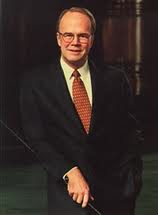
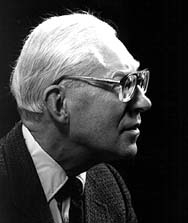
Dr. James M. Boice Makes An Excellent Case For Premillennialism

A Presbyterian Who Was Premillennial!

“Earth’s Golden Age: The Future Coming Kingdom Reign of Christ on Earth”

[James Boice was one of my favorite Bible teachers. Thankfully – many of his books and expositions of Scripture are still in print and more are becoming available. He was one of only a handful of reformed theologians (that I know of, Steven J. Lawson, John MacArthur, Erwin W. Lutzer, S. Lewis Johnson, Rodney Stordtz, John Hannah and John Piper also come to mind) that was premillennial in his eschatology. However, what makes him really unique is that he was not Historic Premillennial – but Dispensational (Held to a pre-tribulation rapture) as well. This article was adapted from Chapter Two in one of the first of James Boice’s plethora of books (currently out of print), and is entitled: The Last and Future World, Grand Rapids, MI.: Zondervan, 1974. Though this book was written almost 40 years ago – it is just as relevant today as when it was first written since most of the prophecies taught in the Scriptures and addressed by Dr. Boice in this book have yet to be fulfilled – DPC] 

What The Bible Has To Say About The Future: Part 2 in a Series of 9

 By Dr. James M. Boice

At the heart of biblical prophecy lies the statement that the same Jesus of Nazareth who came to this earth to die for salvation will one day come again to establish perfect social order – a golden age. To be sure, His coming is a complex affair, as we shall see. His return, in part, will be to take his followers to be with Him in heaven. Shortly after that He will appear on earth bodily to set up an earthly kingdom. He will appear once again as a judge of men and nations. Nevertheless, at the heart of these prophecies lies the promise of a golden age for mankind which will be established by the Lord Jesus Christ at His coming.

This thought should be of great interest to us all, of course, for one of the dreams shared by thinking people from all periods of history and all cultures is of an age in which men and women can live in peace and prosperity and find life meaningful.

The idea of a golden age exists in the philosophical writings and myths of most of the world’s great civilizations. Plato wrote of a perfect age in his Republic. Virgil popularized the theme for the Romans in his Fourth Eclogue. In more recent history the dream of a utopia has been voiced by Thomas More, Samuel Butler, and Edward Bellamy, as well as by Henry David Thoreau, Robert Owen, and Leo Tolstoy, all of whom actually tried to create one. In our day communists express the same vision as “the classless state,” by western governments in terms of material prosperity, and by the youth of most countries as a time of universal love, brotherhood, peace, and understanding. The difficulty is that no person or culture has ever achieved this ideal and even the future, which has always been the bright hope of dreamers, does not look promising.

Even though men dream of a golden age and have some idea of what it should be like, nothing in actual history gives us any ground for hoping that anything like a utopia is forthcoming. One writer concluded:

The rule of man…has been characterized with irreconcilable ambitions and conflicts of interests. The brains of man have been dedicated to the production of military machines and accouterments for the scattering of death and desolation among the inhabitants of the earth. The highest considerations and culture of the race have been blown to pieces by the withering blasting of bursting shells. Man has looked for peace and found war. He has talked of brotherhood and love and seen hatred and persecution. He has boasted of his civilization, enlightenment, and progress, and the so-called heathen have upbraided him for his godless practices. He has bowed down to the god of gold and broken the backs of old and young, and starved millions to get it. He has spent billions of dollars for war; millions for pleasure; and only a few paltry thousands of spreading the gospel of Christ. He has professedly worshiped in his mosques, cathedrals, temples, synagogues, and churches, and over many of them God has since written “Ichabod”—“the glory of God has departed,” due to formalism and ritualism, which have been substituted for the blood of Christ, and to the sinful denials of the faith. Everywhere and in every age, the rule of man has been characterized by greed, avarice, covetousness, robbery, plunder, rebellion, confusion, pride, presumption, boastings, poverty, pestilence, disease, suffering, and sin. It is no better now and gives no promise of improvement. As it was, so it is, and will be until the King comes back. There has not been a period since the fall of man in which the race has enjoyed or witnesses the condition which prophecy declares shall obtain in the Kingdom of the Lord Jesus Christ  (Note 1: Quoted in W.H. Rogers, The End From the Beginning. New York: Arno C. Gaebelein, Inc., 1938, 262-263).

Some people would think these words too harsh. But they are a far more accurate description today than in the day when they were written. For Rogers wrote in 1938, before World War II, the Korean War, the Vietnamese conflict, or any of the other social upheavals and problems that characterize our time. We dream of a golden age. But if there is ever to be such an age, it seems certain that God Himself must establish it.

 God’s Rule

This, of course, is exactly what we find in the Bible. One of the prophets who had the clearest vision of the golden age was Isaiah. He lived in a period of great social upheaval, witnessing the overthrow of the southern kingdom of Judah by the Babylonians in 586 B.C. In Isaiah’s day events were growing worse and worse. Yet even as they did, he wrote prophetically of a better and, indeed, perfect day to come.

The theme first occurs in the second chapter of Isaiah’s prophecy.

It shall come to pass in the latter days

that the mountain of the house of the Lord

shall be established as the highest of the mountains,

and shall be lifted up above the hills;

and all the nations shall flow to it,

and many peoples shall come, and say:

“Come, let us go up to the mountain of the Lord,

to the house of the God of Jacob,

that he may teach us his ways

and that we may walk in his paths.”

For out of Zion shall go the law,

and the word of the Lord from Jerusalem.

He shall judge between the nations,

and shall decide disputes for many peoples;

and they shall beat their swords into plowshares,

and their spears into pruning hooks;

nation shall not lift up sword against nation,

neither shall they learn war anymore. (Isaiah 2:2-4)

According to these verses, there will come a time when God Himself will rule the earth from Jerusalem and war will cease.

In chapter 4 Isaiah speaks of the golden age again, referring on this occasion to the rule of the messiah, whom he terms “the branch of the Lord” (v.2). Chapter 9, which speaks of the birth of this Messiah, also foretells His eventual reign.

Then, in chapter 11, the theme is developed in much greater detail.

There shall come forth a shoot from the stump of Jesse,

and a branch from his roots shall bear fruit.

And the Spirit of the Lord shall rest upon him,

the Spirit of wisdom and understanding,

the Spirit of counsel and might,

the Spirit of knowledge and the fear of the Lord.

And his delight shall be in the fear of the Lord.

He shall not judge by what his eyes see,

or decide disputes by what his ears hear,

but with righteousness he shall judge the poor,

and decide with equity for the meek of the earth;

and he shall strike the earth with the rod of his mouth,

and with the breath of his lips he shall kill the wicked.

Righteousness shall be the belt of his waist,

and faithfulness the belt of his loins.

The wolf shall dwell with the lamb,

and the leopard shall lie down with the young goat,

and the calf and the lion and the fattened calf together;

and a little child shall lead them.

The cow and the bear shall graze;

their young shall lie down together;

and the lion shall eat straw like the ox.

The nursing child shall play over the hole of the cobra,

and the weaned child shall put his hand on the adder’s den.

They shall not hurt or destroy

in all my holy mountain;

for the earth shall be full of the knowledge of the Lord

as the waters cover the sea. (Isaiah 11:1-9)

From this point on the idea of a golden age is repeated again and again, almost as leitmotif throughout the prophecy (in chapters 25, 32, 42, 49, and 52), until near the end of the book the tempo picks up again.

Arise, shine, for your light has come,

and the glory of the Lord has risen upon you.

For behold, darkness shall cover the earth,

and thick darkness the peoples;

but the Lord will arise upon you,

and his glory will be seen upon you.

And nations shall come to your light,

and kings to the brightness of your rising. (Isaiah 60:1-3)

In these final chapters the prosperity of the earth under the rule of the Messiah is emphasized, as well as the special blessing that will come upon the Jewish nation.

It is impossible to give here all the references in Scripture to the coming age of God’s rule. But in addition to these full prophecies of Isaiah, several other significant passages should be mentioned.

First, in the Book of Micah there is a prophecy of great material prosperity during the same period. Micah writes, “But they shall sit every man under his vine and under his fig tree, and not one shall make them afraid, for the mouth of the LORD of hosts has spoken” (Micah 4:4). This is Micah’s way of describing individual prosperity in an age when neither life not possessions will be threatened by warfare.

Second, in Jeremiah 33 there is a lengthy description of the blessing that will come upon Jerusalem in that age. The special and solemn emphasis upon the literal nature f the promises is noteworthy. The opening verses say that God will return the captivity of Judah—that is, He will bring those who were exiled from Judah back to their own land – and He will cleanse them of sin. The middle verses speak of the rule of the Messiah. Then God says, “If you can break my covenant with the day and my covenant with the night, so that day and night will not come at their appointed time, then also my covenant with David my servant may be broken, so that he shall not have a son to reign on his throne, and my covenant with the Levitical priests my ministers” (Jeremiah 33:20-21). In other words, God vows by the regularity of the day and night that the promise to David of an heir to reign upon his throne forever will be fulfilled.

The third passage that deserves special mention is in Revelation 20. In this chapter two new ideas are introduced. First, the chapter tells us that in the golden age the devil, who has long deceived the nations, will be bound that he might do no more harm. And adds that this binding of Satan will last one thousand years, after which he will be loosed for a little time. “Then I saw an angel coming down from heaven, holding in his hand the key to the bottomless pit and a great chain. And he seized the dragon, that ancient serpent, who is the devil and Satan, and bound him for a thousand years, and threw him into the pit, and shut it and sealed it over him, so that he might not deceive the nations any longer, until the thousand years were ended. After that he must be released for a little while” (Revelation 20:1-3). This phrase “thousand years” occurs six times in the first seven verses of this chapter and has given us, as an Anglicization of the Latin word for thousand, the important theological term “millennium.”

A Literal Millennium?

At this point we must stop and ask a question which has become prominent in biblical interpretation: Is the promise of a golden age to be understood literally or is it only a symbol of something spiritual? In discussions about the millennium there have been three major views, two of which regard the millennium as literal and one which sees it as symbolic. They are premillennial, postmillennial, and amillennial interpretations.

Literally, the term postmillennial means that Jesus Christ will return after the millennium. But the heart of the postmillennial position lies in its view of history. According to those who have held this view, the church will, little by little, bring truth and righteousness to the whole earth so that all will eventually be converted. During this time Jesus will reign in and through the church. He will return to the earth bodily as judge only after the church’s mission is accomplished. The great Catholic theologian Thomas Aquinas and reformed theologians Charles Hodge and B.B. Warfield were proponents of this view.

One who holds the view in our day is Loraine Boettner, author of the valuable studies The Reformed Doctrine of Predestination, Studies in Theology, Immortality, and The Millennium. Several years ago in an article for Christianity Today he wrote,

The redemption of the world, then, is a long, slow process, extending through the centuries, yet surely approaching an appointed goal. We live in the day of advancing victory and see the conquest taking place. From the human viewpoint there are many apparent setbacks, and it often looks as though the forces of evil are about to gain the upper hand. But as one age succeeds another, there is progress. Looking back across the nearly two thousand years that have elapsed since the coming of Christ, we see that there has been marvelous progress. All over the world, pagan religions have had their day and are disintegrating. None of them can stand the open competition of Christianity. They wait only the coup de grace of an aroused and energetic Christianity to send them into oblivion…The Church must conquer the world, or the world will destroy the Church. Christianity is the system of truth, the only one that through the ages has had the blessing of God upon it. We shall not expect the final fruition within our lifetime, nor within this century. But the goal is certain and the outcome sure. The future is as bright as the promises of God. The great requirement is faith that the Great Commission of Christ will be fulfilled through the outpouring of the Holy Spirit and preaching of the everlasting Gospel (Note 2: Quoted from Loraine Boettner, “Christian Hope and the Millennium,’ Christianity Today, September 29, 1958, p. 14).

What should be said about this view? One objection to it is clearly that this does not seem to be happening, as Boettner admits. In fact, the pagan religions are actually experiencing a resurgence, though they were not in 1958 when these words were written. One may argue, as Boettner does, that we must judge by faith rather than sight. But the reply is surely that the kingdom, even according to postmillennialists, is literal and therefore must be literally seen. If we do not see it, it is not irreligious or faithless to doubt that it is coming.

A second objection to the postmillennial position is that, if these views are right, then all the promises of literal blessing upon Israel in the future age (some of which we have outlined) must either be forgotten or else spiritualized; that is, applied not to Israel but to the church.

The third, and, in my opinion, the decisive objection is that the Scriptures themselves teach something entirely different for the course of this age. For instance, Jesus warned the disciples against supposing that, as the result of their preaching, the whole world would eventually come to believe in the Gospel and that, therefore, truth and righteousness would prevail.

In Matthew 13 is a collection of parables called “the parables of the kingdom,” by which Jesus forecast the developments of the church during the present church age. The first parable is the parable of the sower. A certain man went out to sow seed, and the seed fell on different types of soil. Some of it fell by the wayside where it was quickly eaten up by the birds. Some seed fell on stony ground where it sprang up quickly, only to be scorched by the sun. Some fell among thorns and the growing plants were choked. The rest fell on good ground and produced in some cases a hundred bushels of grain for one bushel of seed and, in others, sixty for one or thirty for one (v.8).

Jesus then explained the parable, showing that the seed stood for the Gospel. The Gospel would always be received in four distinct ways by those who heard it. The devil would quickly snatch away the seed of the Gospel from those without understanding. Others who heard the Gospel would apparently receive it with joy, but it would not penetrate deeply and so would easily be scorched out by persecution. For still others, the cares of the world would choke out the message. Only a fourth part would actually hear the Gospel and have it take root and produce fruit in them.

This parable must mean that the church age is to be a seed-growing age in which only a part of the preaching of the Gospel will be successful. This parable alone dispels the idea that the preaching of the Gospel will be more and more successful as time goes on and that it will eventually bring a total triumph for the church.

The second parable makes the same point. It is the story of a man who had sowed grain in his field but discovered that an enemy had come and sown tares. The servants of the owner of the field wanted to root out the tares, but they were told not to do so lest they tear up some of the wheat in their zeal to exterminate the weeds. Instead, they were to let both grow together until the harvest, at which time the entire field would be harvested, the wheat separated from the chaff and gathered into the barns, and the tares burned. When Jesus explained this parable to the disciples, He showed that the field was the world and that the world would always contain believers and unbelievers mixed together until the day of His judgment.

The rest of Christ’s parables in this chapter are unexplained. The explanation of the first two, however, gives us the clue by which the rest of the parables are to be understood. Thus, the parable of the mustard seed points to the unnatural growth of church structures. The parable of the leaven shows that in this age the kingdom of heaven will always have evil present within it, since leaven is a symbol of evil in the Bible. The stories of the field with treasure in it and the pearl of great price tell of the sacrifice Jesus made to redeem a people for Himself, while implying at the same time that He did not die to save everyone. Finally, the parable of the dragnet points to the day in which Jesus will be the judge of all men, separating those who have been made righteous through His death and resurrection from those who have not and who will be put away from Him forever.

In our age God is calling out a group of people to Himself – people from every walk of life and with every imaginable ethnic and intellectual background – and is changing them into men and women who are becoming more and more like the Lord Jesus Christ.

It is worth adding that whatever our particular view of Christ’s parables, this was nevertheless the message that got through to the disciples. For there is very little in their writing that can be interpreted as optimistic regarding the course of human history. Thus Peter wrote of the last days: “But false prophets also arose among the people, just as there will be false teachers among you, who will secretly bring in destructive heresies, even denying the Master who bought them, bringing upon themselves swift destruction. And many will follow their sensuality, and because of them the way of truth will be blasphemed” (2 Peter 2:1-2). Jude wrote “In the last time there will be scoffers, following their own ungodly passions” (Jude 18). Paul declared, “Now the Spirit expressly says that in later times some will depart from the faith by devoting themselves to deceitful spirits and teachings of demons, through the insincerity of liars whose consciences are seared” (1 Timothy 4:1-2). He added later, “For the time is coming when people will not endure sound teaching, but having itching ears they will accumulate for themselves teachers to suit their own passions, and will turn away from listening to the truth and wander off into myths” (2 Timothy 4:3-4).

None of these verses envisions an increasingly successful expansion of the gospel message. Rather, they encourage a faithful adherence to and preaching of the Gospel in spite of the fact that it will not be universally received and that there will be a period of increasing unbelief and lawlessness. It is significant that the period of recent history culminating in two world wars has witnessed the death of any widespread enthusiasm for the postmillennial position.

Amillennialism

In the place of the old postmillennialism, there developed in some important circles a new interest in a view known to be amillennialism. This means there is to be no literal millennium, as we have already indicated. There were individuals who spoke along such lines previously, but many of them assumed the amillennial position non-critically. That is, they tended to be amillennial by default. It is not until fairly recent times that this view has had any great development (Note 3: The Reformers were apparently amillennialists, but their views on prophecy must not be overstated inasmuch as they tended to view most prophetic ideas as referring to the struggles of their own day. Thus, the Pope became the Antichrist, the Roman Catholic Church became the great whore of Babylon, and so on. Augustine has also been cited as an amillennialist, largely due to his heavy polemic against the Chiliasts, who were excessively literal in their views. However, since he went on to identify the millennium with the history of the church on earth – in his City of God – he seems to me much more of a post-millennialist).

According to amillennialists, much of what has been said in criticism of the postmillennial position is right. There will be no gradually unfolding triumph for the church militant before Christ’s return. But, on the other hand, there will be no literal reign of Christ either. According to this view, the millennium (if it is even right to speak of it as “the” millennium) must be spiritualized.

Now we must say that most amillennialists hold to important doctrines of conservative biblical theology. The doctrine of man is correct. There is a genuine expectation of Christ’s literal, second coming. Salvation is of grace. The period of the offer of God’s grace is followed by judgment. All this is good. Yet I cannot help but feel that the spiritualizing of the prophecies concerning Christ’s rule is inadequate.

The amillennial view cannot answer the problem of unfulfilled prophecy, for example, the promise of God to Abraham that his descendents would possess the land from the river of Egypt to the Euphrates. This promise is contained in Genesis 15 and is set in the context of the most solemn and unconditional pledge of the truth of the promise to Abraham. We are told that God commanded Abraham to prepare animals in the form of a ceremony often used in antiquity (“And the men who transgressed my covenant and did not keep the terms of the covenant that they made before me, I will make them like the calf that they cut in two and passed between its parts—the officials of Judah, the officials of Jerusalem, the eunuchs, the priests, and all the people of the land who passed between the parts of the calf. And I will give them into the hand of their enemies and into the hand of those who seek their lives. Their dead bodies shall be food for the birds of the air and the beasts of the earth” – Jeremiah 34:18-20).

He then appeared to Abraham to renew His promises and to forecast the next four hundred years of Jewish history. The Lord reiterated His promise of blessing, saying, “On that day the Lord made a covenant with Abram, saying, “To your offspring I give this land, from the river of Egypt to the great river, the river Euphrates, the land of the Kenites, the Kenizzites, the Kadmonites, the Hittites, the Perizzites, the Rephaim, the Amorites, the Canaanites, the Girgashites and the Jebusites” (Genesis 15:18-21).

It is not possible to identify precisely all the territory possessed by the people listed in these verses, but it is certain that it covered an enormous expanse of land involving at least all of what we would today call Sinai, Israel, Jordan, Lebanon, Iran, Iraq, and portions of Turkey, and it is fairly certain that the Jews have never literally possessed all of it (Note 4: it has been argued persuasively by proponents of the amillennial position that Israel has possessed the land promised to Abraham, as a comparison of Genesis 15:18-21 with 1 Kings 4:20, 21 and 2 Chronicles 9:26 is supposed to show. We may agree that there is a resemblance between these descriptions of the borders of the land possessed by Solomon and God’s original promises of the land to Abraham. However, there are three difficulties:

(1) even at the height of his great power Solomon did not actually possess all the land described in these verses but only a part of it, receiving tribute from the rest;

(2) the word used for “river” in the phrase “the river of Egypt” does not mean “wadi” or “stream” [there is another word in Hebrew for that] but actually denotes a river. Thus the reference is to the Nile rather than the Wadi el Arish, and this marks off territory which Israel has never possessed;

(3) if the land of the Hittites is in view in Genesis 15:18-20, then this area also lies outside any land previously occupied by the Jewish nation. This point is negated, of course, if the reference is only to the Hittite people or there were Hittites in Canaan [Exodus 3:8; Deut. 7:1; 20:17]).

What are we to do with such promises? We cannot dismiss them, for there is nothing in the words of God to Abraham to suggest that they were conditional, as some other promises were. We cannot apply them to the church, for there is no relationship between these precise geographic boundaries and the church’s nature, growth, or commission. The promises must be literal. Thus, if they have not yet been fulfilled in history, then they must be fulfilled in the future. The obvious time for that is in the period immediately following the return of the Lord Jesus Christ in power at the end of this age.

God’s Rule

The third of the three major views on the millennium is premillennialism. Premillennialists hold that the millennium is literal, that Christ will rule, and that this will follow and indeed be the direct result of His return in power to this earth, as He has promised.

Some of my reasons for interpreting the promises concerning the earth’s golden age in this way are already obvious.

First, there is an obligation to interpret Scripture as literally as possible; that is, to take a passage in the literal sense unless it is demonstrably poetic or unless it simply will not bear a literal interpretation. Thus, to give one example, when this principle is applied to Revelation 20, it is hard to escape the feeling that a definite time sequence is envisioned, whatever one may think of the actual figure of one thousand years. We come to the chapter after a description of the proclamation of the marriage supper of the Lamb (Rev. 19:7-10), the vision of the Lord Jesus Christ riding forth in glory to conquer the nations (Rev. 19:11-16), and the account of Armageddon (Rev. 19:17-21). The description of this period is then followed by an account of the final judgment and of the establishment of a new heaven and a new earth (Rev. 20:11-22:5). Clearly, there is no reason why this cannot be a listing of a series of literal events.

The second reason for anticipating a literal millennium has already been given in part. It is the unfulfilled nature of some of the promises made to Israel during the Old Testament period. It is true, of course, that some of the promises made are conditional; but not all of them are. Among these unconditional promises are some that have not been fulfilled, such as the promises regarding the land. We may remind ourselves here that Paul lived after Jesus Christ’s first coming and was quite aware of the fact that, temporarily at least, Israel had forfeited her heritage. But it was Paul above all the other New Testament writers who stressed a future period of national blessing for Israel (Rom. 11:26-32).

To my mind, however, the best and ultimate reason why there must be a literal millennium is that only in a literal millennium do we have a meaningful culmination of world history.

We must realize at this point that one of the reasons for the continuation of history as we know it is God’s desire to demonstrate man’s utter ruin in sin and man’s total responsibility for the state of the world as we find it. God has told us that before Him “every mouth will be stopped” (Rom. 3:19), and yet men’s mouths have never yet stopped finding excuses for themselves and for encouraging sin.

The first obvious excuse men had for their conduct must have been voiced shortly after Cain had killed Abel and God had responded by marking Cain so no one would kill him (Gen. 4:15). We are told that the state of affairs in the world then grew so bad there were multiple murders and other evil acts. Now if God had approached men at this time and had asked them, “What have you done? Why is there so much wickedness?” men could have replied by throwing the blame back upon God. They could have said, “It’s your fault, God. When Cain killed his brother, You protected him. Since nothing happened to Cain, others thought they could get away with murder too, and that’s why things are as they are. Why, if You had let us make an example of Cain, we’d have dealt so roughly with him that no one would ever have done such a thing again!”

“Well,” God may have said then, “we’ll try it your way. We’ll institute capital punishment.” So we read several chapters later in God’s message to Noah after the flood, “Whoever sheds the blood of man, by man shall his blood be shed, for God made man in his own image” (Genesis 9:6). Obviously conditions did not improve. Thus, while capital punishment may be a deterrent to crime in some instances, no one would dare to argue that even the most rigid enforcement of capital punishment would bring in the age we long for.

At this point men had what we could call the powers of human government. But when the world did not improve by the exercise of such powers, there was “True, we now have the power. But the difficulty lies in the fact that we do not know where to apply it. In short, we do not know what You want us to do.”

“All right,” says God, “I’ll tell you what to do.” So the law of Moses was given, but  the unanimous and united testimony of the race is that law, even the law of Moses, cannot bring the millennium.

“Well,” says another, “the problem now is that the law is abstract. It is full of do’s and don’ts. If only we could see an example of what You want to be done.” So God sent the Lord Jesus Christ, the only perfect Man who ever lived, the Man who could say to His enemies and leave them speechless, “Which of you can convict me of sin?” And what was the result? Christ so exposed the moral and spiritual failures of even the best men of His day that they hated Him for it and eventually had Him executed on false charges.

Following the death of Jesus Christ and His resurrection, God gave His own Spirit to those who believed in Christ, so that today we may be said to be living in an age of great grace out of which God provides for all the needs of His children. But still men will not accept God’s way and continue to devise their excuses.

Some of the excuses are merely repetitions of those which have already been given, but there is one excuse that has not been exposed. Today, while men can no longer truly blame God for the present state of the world – and will not blame themselves – a little thought will show anyone who really seeks an escape that he can still blame the devil. “Satan must be responsible,” he can argue. Those who know the Bible know, of course, that is untrue. James, the Lord’s brother, wrote his brief letter, “What causes quarrels and what causes fights among you? Is it not this, that your passions are at war within you?” (James 4:1). Jesus Himself declared, “For from within, out of the heart of man, come evil thoughts, sexual immorality, theft, murder, adultery, coveting, wickedness, deceit, sensuality, envy, slander, pride, foolishness. All these evil things come from within, and they defile a person” (Mark 7:21-23). The Bible clearly declares that the blame lies on man. And yet, men still have a chance to blame the devil and the environment they declare he created.

The millennium, then, will be the final proof of man’s total depravity and full responsibility. God says He will establish a perfect age, a golden age. He will begin by eliminating the devil as a factor in world affairs (Rev. 20:2,3). Satan will be bound for one thousand years. God will establish a perfect government on this earth under Jesus Christ, who will rule in and through the redeemed of all ages. The earth itself will be transformed, experiencing an increase in fertility.

That will mean the abolition of the “curse” to which the earth was subjected as the result of God’s initial judgments upon sin (Rom. 8:19-23). It will mean the end of the predatory nature of the animal kingdom (Isa. 11:6-9). Out of this change great prosperity will come. There will be no more war. All the desirable elements that the philosophers, sociologists, historians, theologians, and dreamers have ever envisioned for the earth’s golden age will appear – literally and abundantly. There should then be total and eternal gratitude to the Lord Jesus Christ, who has brought such conditions to the earth. And yet, to prove the totally perverse nature of the human heart, when Satan is released at the end of the thousand years, men will immediately cry out upon seeing him, “Thank God for the devil.” And they will rebel against Christ.

This rebellion is the great purpose of the millennium. We know from the scriptural account that this final, great rebellion will not succeed. In fact, we know it will be brief and will be followed at once by God’s final judgment upon sin and by the entrance of all things into the eternal state. Nevertheless, the fact will have been demonstrated. Men cannot run their affairs by themselves and are, in fact, themselves the reason why they cannot.

Teaching for Today

We must not lose sight of the fact that several important doctrines for the present follow from this millennium teaching. First, if we really understand the purpose of the millennium, as I have outlined it, then called in reformed the “total depravity” of man. We will do what we can in this world. We will always work to see that truth and righteousness prevail. Nevertheless, we will not be fooled by the futile belief that men will solve their own problems; men are the source of their problems. So they need a Savior.

Second, we will be increasingly dependent upon God. Salvation does not come by men or through men. So if they will ever be even a limited amount of truth and righteousness in this age, it will come only through those whose lives are yielded to God. This gives us a great present role as His children.

Third, it teaches us patience. It is true that history has continued without significant moral change for thousands of years. It may continue much longer. But if it does, we may be sure that God has His own definite purposes in it all. What are these purposes?

One of them is to draw out people to Himself. If you are a Christian, aren’t you glad that the Lord Jesus did not return to establish His reign before you were born and grew old enough to understand these things and become a thinking believer? That is exactly what Peter was talking about in his second letter when he wrote, “The Lord is not slow to fulfill his promise as some count slowness, but is patient toward you, not wishing that any should perish, but that all should reach repentance” (2 Peter 3:9). That does not mean that all men will be saved, but that God is delaying the return of Jesus Christ until all whom He has chosen in Christ will be born and be saved. You are among this great company if you are a Christian.

On the other hand, if you have not yet believed, the very fact that Christ has not returned is your hope. Won’t you turn to Him who alone is your Savior? Commit yourself to Him. Say, “Lord Jesus Christ, I admit that I have fallen short of what You require, that I am a sinner; but I also know that You died for me and are able to give me new life. Take me now as one of Your children and give me assurance of salvation.”

About the Author: James Montgomery Boice, Th.D., (July 7, 1938 – June 15, 2000) was a brilliant Reformed theologian, Bible teacher, and pastor of Tenth Presbyterian Church in Philadelphia from 1968 until his death. He is heard on The Bible Study Hour radio broadcast and was a well-known author and speaker in evangelical and Reformed circles. He also served as Chairman of the International Council on Biblical Inerrancy for over ten years and was a founding member of the Alliance of Confessing Evangelicals. He is the author of numerous Bible expositions and one of my favorite Systematic Theologies called Foundations of the Christian Faith.
Larry Burkett on Financial Advice For The Second Half of Your Life

[Adapted from the Excellent Book by Larry Burkett. Your Money After the BIG 5-0: Wealth for the Second Half of Life. Nashville: B&H Publishing Group, 2007, 215-219.


“Take Hold of the Life That Is Truly Life”

 The hardest struggle of all is to be something different from what the average man is.

 – CHARLES M. SCHWAB

 Money never made a man happy yet, nor will it. There is nothing in its nature to produce happiness. The more a man has, the more he wants. Instead of its filling a vacuum, it makes one. If it satisfies one want, it doubles and trebles that want another way. That was a true proverb of the wise man, rely upon it; “Better is little with the fear of the Lord, than great treasure, and trouble therewith.”

 – BENJAMIN FRANKLIN

 Why would you settle for such brief, short-term, inadequate, low-yield dividend pleasures offered by the world when eternal pleasures—tens of thousands of years of pleasures—await?

 – HEARD FROM THE PULPIT OF AN ANONYMOUS PASTOR

“Do not store up for yourselves treasures on earth,

where moth and rust destroy,

and where thieves break in and steal.

But store up for yourselves treasures in heaven,

where neither moth nor rust destroys,

and where thieves do not break in or steal.”

 – MATTHEW 6:19–20

The media refer to “the graying of America.” Sociologists analyze “the coming of age of the baby boomers.” The politically correct would say we are “chronologically challenged.” Really, we are just plain growing old. We are learning to be content with that. As someone recently reminded us in an e-mail, there are some good things about getting older. Your investment in health insurance is finally beginning to pay off. Your secrets are safe with your friends because they can’t remember them either. Your supply of brain cells is finally down to a manageable size. Your eyes won’t get much worse. People no longer view you as a hypochondriac. Things you buy now won’t wear out. There’s nothing left to learn the hard way. Your joints are more accurate than the National Weather Service. In a hostage situation you are likely to be released first. You are smarter, much smarter, at fifty-plus than when you were only twenty-five. Rather than approaching the second half of life with dread or fear, see it as a great adventure with the Lord. Think of the wisdom you have learned throughout your life—some earned by a degree from the School of Hard

Knocks and some earned by prudently following biblical counsel and teaching.

At every stage, the demographic phenomenon of the baby boomer generation has made a great impact on American society. With increased prosperity and longevity, will your wealth and life have a lasting impact on your family and the Kingdom? Avoid fitting in with what Ralph Waldo Emerson described when he said, “We are always getting ready to live but never living.”

Take hold of the life that is truly life—the abundant life available through a personal relationship with the Creator God and His Son, Jesus Christ.

As our friend Bob Buford said, “Do you want to get to the end of your life, stand before God, and hear Him say, ‘So what’? No, you want Him to tell you, ‘Well done.’”

We have purposed in this book to share all the financial wisdom we possess, all the wisdom we could borrow from others, and all the wisdom available in God’s Word. Our recommendations may vary from the world’s advice. We encourage you to keep working in some capacity during retirement, though the world says you are entitled to leisure. We recommend to pay off debt, though others give reasons to keep or increase debt. We recommend diversifying to preserve, though the secular instinct is to get rich quick. It is hard to go against the grain of a materialistic, status-seeking society.

The story of Mr. and Mrs. Thing provides a vivid reminder of truth. Mr. and Mrs. Thing are a very pleasant and successful couple. At least, that’s the verdict of most people who tend to measure success with a “thingometer.” When the “thingometer” is put to work in the life of Mr. and Mrs. Thing, the result is startling.

There is Mr. Thing sitting down on a luxurious and very expensive thing, almost hidden by a large number of other things.

Things to sit on, things to sit at, things to cook on, things to eat from, all shiny and new. Things, things, things.

Things to clean with and things to wash with and things to clean and things to wash. And things to amuse and things to give pleasure and things to watch and things to play.

Things for the long, hot summer and things for the short, cold winter. Things for the big thing in which they live and things for the garden and things for the deck and things for the kitchen and things for the bedroom.

And things on four wheels and things on two wheels and things to put on top of the four wheels and things to pull behind the four wheels and things to add to the interior of the thing on four wheels.

Things, things, things.

And there in the middle are Mr. and Mrs. Thing, smiling and pleased as punch with things, thinking of more things to add to things. Secure in their castle of things. Do they sound familiar?

The story of Mr. and Mrs. Thing always strikes a chord with the audience when shared in a public forum. Everyone, it seems, knows someone who fits their description. (And all of us probably see something of ourselves in this couple.)

Mr. and Mrs. Thing may be secure in their castle of things, but that’s not the end of their story.

Here it is: Well, I just want you to know that your things can’t last. They’re going to pass. There’s going to be an end to them.

Oh, maybe an error in judgment, maybe a temporary loss of concentration, Or maybe you’ll just pass them off to the secondhand thing dealer. Or maybe they’ll wind up a mass of mangled metal being towed off to the thing yard. And what about the things in your house? Well, it’s time for bed. Put out the cat, make sure you lock the door so some thing-taker doesn’t come and take your things. And that’s the way life goes, doesn’t it?

And someday, when you die, they only put one thing in the box. You.

—ANONYMOUS

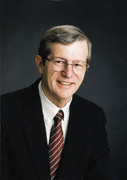
About the Author: Larry Burkett (Pictured Above) was among the people who played a role in fulfilling President John F. Kennedy’s dream of landing on a man on the moon. After serving as an electronics technician in the Air Force’s Strategic Air Command, Burkett, who had degrees in marketing and finance, headed an experimental facility that served the Mercury, Gemini, and Apollo manned space programs.

After Larry and his wife, Judy, became Christians in the early 1970s, he began extensive studies of the Bible in which he found more than 700 direct and hundreds of indirect references to money. Just one year after becoming a Christian, he found himself living in Atlanta and working as a financial counselor with Campus Crusade for Christ. Concluding that most of the problems facing Larry’s counselees were the result of mismanaging funds, the Burketts began Christian Financial Concepts (CFC) in 1976. Their first office was in the basement of their home in Tucker, Georgia. In 1977, the first CFC newsletter was published. More than simply a collection of stories, the newsletter contained articles to help every family with their finances, including practical ideas for around the home, stewardship, personal testimonies, and biblical principles for managing money. In 2003, “Money Matters” now has a circulation of nearly 200,000.

Larry Burkett was also the author of over 50 books, including Debt-Free Living, Your Finances in Changing Times, and The Coming Economic Earthquake, and a guide for kids on money management, called What If I Owned Everything. Together with Ed Strauss, he wrote the World’s Easiest Pocket Guide series with books on everything from buying a first car, renting an apartment, getting a credit card, and more. Larry even branched out into the fiction arena with best-selling novels such as The Illuminati and Solar Flare.

In 1995, Larry was diagnosed with cancer which led to the publishing of several other books, including Nothing to Fear: The Key to Cancer Survival which Burkett used to share his own personal experiences and offer insight to his readers. One of the central principles Larry taught is that we don’t really own things; we are simply stewards and managers of what God has entrusted to us. In Larry’s case, that included the ministry he founded.

Until his death July 4, 2003, Larry and Judy Burkett resided in Gainesville, Georgia. He is survived by his wife Judy, four adult children, and nine grandchildren.

F.F. Bruce on The Formation of the Canon of Scripture

F.F. Bruce on The Criteria of Canonicity of the Bible 

Tests in The Apostolic Age

The earliest Christians did not trouble themselves about criteria of canonicity; they would not have readily understood the expression. They accepted the Old Testament scriptures as they had received them: the authority of those scriptures was sufficiently ratified by the teaching and example of the Lord and his apostles. The teaching and example of the Lord and his apostles, whether conveyed by word of mouth or in writing, had axiomatic authority for them.

Criteria of a kind, however, were found to be desirable quite early. When prophets, for example, claimed to speak in the Lord’s name, it became necessary to ‘discern the spirits’ by which they spoke. Some members of the church were given ‘the ability to distinguish between spirits’ (1 Cor. 12: 10). According to Paul, the decisive criterion to apply to prophets is their testimony to Christ: ‘no one can say “Jesus is Lord” except by the Holy Spirit’ (1 Cor. 12:3). Somewhat later, John suggests a more specific test: ‘every spirit which confesses that Jesus Christ has come in the flesh is of God’ (1 Jn. 4:2). Such tests anticipated the later insistence on orthodoxy as a criterion of canonicity.

Again, when Paul suspected that letters were circulating in his name which were none of his, he gave his friends a simple criterion by which his genuine letters could be recognized: although he regularly dictated his letters to amanuenses, he took the pen himself to write the final greetings—sometimes, but not necessarily, accompanied by his actual signature (cf. 1 Cor. 16:21; Gal. 6:11; Col. 4:18; 2 Thess. 3: 17; also Philemon 19). Paul’s handwriting was evidently so distinctive that it could not be easily forged. This was, of course, a temporary criterion of authenticity. No document containing Paul’s handwriting has survived to our day, and even if one had survived, the handwriting would not be recognizable as his at this late date.

Apostolic Authority

Since Jesus himself left nothing in writing, the most authoritative writings available to the church were those which came from his apostles. Among his apostles none was more active in writing (as well as otherwise) than Paul. There were some in Paul’s own day, and a few in later generations, who questioned his right to be called an apostle, but throughout the churches of the Gentiles his apostleship was generally undoubted—inevitably so, because a number of those churches would not have existed except for his apostolic ministry (See Paul’s argument in 2 Cor. 3:1-3: the existence of the church was the only letter of accreditation he needed—at Corinth). The authority of his authentic letters continued to be acknowledged after his death, not only by the churches to which they were severally addressed but by the churches as a whole. It is not surprising that Paul’s letters were among the first, if not absolutely the first, of our New Testament documents to be gathered together and to circulate as a collection.

Letters in antiquity normally began with the writer’s name, and so did Paul’s letters. But many of the New Testament documents do not contain the writers’ names: they are strictly anonymous—to us, completely anonymous. The writer to Theophilus was well enough known to Theophilus (See Lk. 1:3; Acts 1:1), but his name has not been preserved either in the Third Gospel or in Acts; to us, therefore, these two works are anonymous. Traditionally they are ascribed to Luke, but if we wish to examine the validity of this tradition, we have to consider which Luke is meant, and what the probability is of their being the work of that Luke.

Similarly, the recipients of the letter to the Hebrews no doubt were well acquainted with its author (in that sense they would not have regarded it as an anonymous communication), but since it does not bear his name, his identity was forgotten after a generation or two, and has never been certainly recovered.

From the second century onward, two of the four Gospels were ascribed to apostles—to Matthew and John. Whether Marcion knew of this ascription or not we cannot say, but if he did, that in itself would have deprived them of all Christian authority in his eyes: these two men belonged to the group which, he believed, had corrupted the pure message of Jesus. An eccentric churchman like Gaius of Rome might ascribe the Fourth Gospel to Cerinthus, but the views of eccentric churchmen have never disturbed the general consensus.

It is remarkable, when one comes to think of it, that the four canonical Gospels are anonymous, whereas the ‘Gospels’ which proliferated in the late second century and afterwards claim to have been written by apostles and other eyewitnesses. Catholic churchmen found it necessary, therefore, to defend the apostolic authenticity of the Gospels which they accepted against the claims of those which they rejected. Hence come the accounts of the origin of the canonical four which appear in the Muratorian list, in the so-called anti-Marcionite prologues, and in Irenaeus. The apostolic authorship of Matthew and John was well established in tradition.

But what of Mark and Luke? Their authorship was also well established in tradition, but it was felt desirable to buttress the authority of tradition with arguments which gave those two Gospels a measure of apostolic validation. As early as Papias, Mark is said to have set down in writing Peter’s account of the sayings and doings of the Lord, and Peter’s apostolic authority was not in doubt. As for Luke’s Gospel, its author was early identified with the man whom Paul calls ‘Luke, the beloved physician’ (Col. 4:14). This meant that he was one of Paul’s associates, and something of Paul’s apostolic authority rubbed off on him. Some, identifying Luke with the unnamed ‘brother’ of 2 Corinthians 8:18 ‘whose praise is in the gospel’, went so far as to see in these words of Paul a reference to the Gospel of Luke, if they did not indeed go farther still and see a reference to it in Paul’s mention of ‘my gospel’ (Rom. 2:16; 16:25; 2 Tim. 2:8). Fortunately, the value of Luke’s Gospel can be vindicated with stronger arguments than these; but the fact that these were the arguments used in its defence in the second and third centuries shows how important some degree of apostolic authorization seemed to be for the books which the church accepted as uniquely authoritative.

The fortunes of the letter to the Hebrews provide a further example of the importance attached to apostolic authority (if not authorship). Those who (like the church of Alexandria) accepted this letter as the work of Paul recognized it without more ado as canonical. If someone with a critical faculty like Origen’s realized that, as it stood, this document was not Paul’s work, a way round this offered itself: the Greek text indeed was not Paul’s (perhaps it was Luke’s), but a Hebrew work of Paul lay behind it. (An even better developed critical faculty might have indicated that Hebrews was not written in translation-Greek.) Those who (like well-informed members of the Roman church) knew that the work was not Paul’s, esteemed it highly as an edifying document handed down from the early age of the church, but did not accept it as apostolic. When at last, in the fourth century, the church of Rome was persuaded to fall into line with the other churches and recognize Hebrews as canonical, a natural tendency followed to treat it as Pauline also—but Pauline with a qualification. ‘I am moved rather by the prestige of the eastern churches’, said Augustine, ‘to include this epistle too among the canonical writings’; but he had reservations about its authorship.

Like his older contemporary Jerome, he distinguished between canonicity and apostolic authorship. Even at an earlier period, apostolic authorship in the direct sense was not insisted on, if some form of apostolic authority could be established. Membership of the holy family apparently carried with it near-apostolic status: Paul indeed seems to include James the Lord’s brother among the apostles (Gal. 1:19)—but so far as James was concerned there was the further consideration that to him, as to Paul himself, the Lord had appeared in resurrection (1 Cor. 15:7). If therefore the James who names himself as author of the letter addressed ‘to the twelve tribes in the Dispersion’ was identified with the Lord’s brother, that was good enough reason for accepting the letter among the apostolic writings. And if ‘Jude, a servant of Jesus Christ and brother of James’ was indicated in those words to be another member of the holy family, that was sufficient to tip the balance in favour of accepting the short letter so superscribed, especially in view of the ‘words of heavenly grace’ of which (as Origen said) it was full. The early church knew several works claiming the authority of Peter’s name. Among these no difficulty was felt about 1 Peter; its attestation goes back to the first half of the second century, and it was handed down as one of the undisputed books.

There was considerable hesitation about 2 Peter, but by the time of Athanasius it was no longer a disputed book in the Alexandrian church or in western Christendom. Its explicit claim to be the work of the apostle Peter was probably felt to be supported by the fact that it contained nothing unworthy of him. Among the Johannine writings 1 John was always closely associated with the Fourth Gospel: if the Gospel was acknowledged to be apostolic and canonical, so was this epistle, although it was as anonymous as the Gospel. Those who doubted the apostolic authorship of 2 and 3 John and the Apocalypse tended to doubt their canonical status also. The disinclination to accept the Apocalypse was due not mainly to doubts about the identity of the John who wrote it with John the apostle; it was due much more to the antipathy which was widely felt in the Greek world to its millenarianism. Dionysius of Alexandria, who ascribed it on grounds of literary criticism to another John than the apostle and evangelist, acknowledged it to be a genuine work of prophecy. Two aspects of the apostolic criterion were themselves used as subsidiary criteria—antiquity and orthodoxy.

Antiquity

If a writing was the work of an apostle or of someone closely associated with an apostle, it must belong to the apostolic age. Writings of later date, whatever their merit, could not be included among the apostolic or canonical books. The compiler of the Muratorian list had a high regard for the Shepherd of Hermas; he recognized it evidently as a genuine work of prophecy. However, it had appeared too late to be included among the canonical prophets; and equally it had appeared too late to be included among the apostolic writings, for it was written only the day before yesterday, so to speak. This argument could have been employed more freely than it was in settling problems of authenticity, at a time when so many works were appearing which claimed to have been written by apostles and their associates. But perhaps most of the churchmen who concerned themselves with this problem lacked the information or the expertise to appeal confidently to the evidence for dating such documents: they preferred to judge them by their theology.

Orthodoxy

In other words, they had recourse to the criterion of orthodoxy. By ‘orthodoxy’ they meant the apostolic faith—the faith set forth in the undoubted apostolic writings and maintained in the churches which had been founded by apostles. This appeal to the testimony of the churches of apostolic foundation was developed specially by Irenaeus. Whatever differences of emphasis may be discerned by modern students within the corpus of New Testament writings, these are irrelevant to the issues which confronted churchmen of the second and third centuries. They had to defend the apostolic teaching, summed up in the rule of faith, against the docetic and gnostic presentations which were so attractive to many in the climate of opinion at that time. When previously unknown Gospels or Acts began to circulate under the authority of apostolic names, the most important question to ask about any one of them was: What does it teach about the person and work of Christ? Does it maintain the apostolic witness to him as the historical Jesus of Nazareth, crucified and raised from the dead, divinely exalted as Lord over all?

A good example of the application of this test is provided by the case of Bishop Serapion and the Gospel of Peter. When Serapion found that this document was being read in the church of Rhossus, he was not greatly disturbed; he certainly did not examine its style and vocabulary (as Dionysius of Alexandria might have done) to see if its claim to be the work of Peter or a product of the apostolic age was well founded or not. But when he discovered that its account of the Lord’s death was tinged with docetism (it implies that he did not really suffer), then he decided that he ought to pay the church of Rhossus a pastoral visit to make sure that it had not been led astray by this heterodox teaching. Other ‘Petrine’ literature circulating among the churches was equally unauthentic, but since it did not inculcate heresy, it caused no great concern. The Muratorian compiler, for example, seems to draw upon the Acts of Peter (which gave an account of the apostle’s Roman ministry and execution) and he expressly includes the Apocalypse of Peter in his list (although he concedes that some refused to let it be read in church).

But in due course the non-apostolic character of these works became sufficiently evident to ensure that they did not find a permanent place in the New Testament canon. It is doubtful if any book would have found a place in the canon if it had been known to be pseudonymous. The Acts of Paul, one of the earliest exercises in Christian novel-writing, dating from shortly after the middle of the second century, was orthodox enough, and indeed quite edifying (especially to those who believed that celibacy was a superior state of life to matrimony). It was not pseudonymous, for its author was known; but it was fictitious, and unworthy of the great apostle for love of whom it was said to have been written; the author was therefore deposed from his office as presbyter in one of the churches of Asia. Anyone who was known to have composed a work explicitly in the name of an apostle would have met with even greater disapproval.

Catholicity

A work which enjoyed only local recognition was not likely to be acknowledged as part of the canon of the catholic church. On the other hand, a work which was acknowledged by the greater part of the catholic church would probably receive universal recognition sooner or later. We have seen how the Roman church ultimately consented to receive Hebrews as canonical so as not to be out of step with the rest of orthodox Christendom. It might have been argued that the letters of Paul were too local and occasional in character to be accepted as universally and permanently authoritative. The issues to which he addressed himself in the letters to the Galatians and the Corinthians, for example, were of temporary urgency in the churches to which those letters were sent. How could their inclusion among the scriptures of the catholic church be justified? The earliest answer given to this question was one which was evidently found satisfactory at the time, although to us it seems curiously far-fetched. It was this: Paul wrote letters to seven churches, and in view of the symbolic significance of the number seven, that means that he wrote for the church universal.

The same conception of seven as the number of perfection was applied to the seven churches addressed in the Apocalypse. Indeed, the compiler of the Muratorian list preposterously regards John as setting the precedent in this regard which Paul followed: in both sets of letters, what was written to seven was spoken to all. Even Paul’s letters to individuals have an ecumenical reference, says the Muratorian compiler: ‘they have been hallowed for the honour of the catholic church in the regulation of ecclesiastical discipline.’ Each individual document that was ultimately acknowledged as canonical started off with local acceptance—the various epistles in the places to which they were sent, the Apocalypse in the seven churches of Asia, even the Gospels and Acts in the constituencies for which they were first designed. But their attainment of canonical status was the result of their gaining more widespread recognition than they initially enjoyed.

Traditional Use

Catholicity has been classically defined in the fifth-century ‘Vincentian canon’ as ‘what has been believed everywhere, always, by all’. What has always been believed (or practiced) is the most potent factor in the maintenance of tradition. Suggested innovations have regularly been resisted with the argument ‘But this is what we have always been taught’ or ‘what we have always done’. It was so in the early Christian centuries with the recognition of certain books as holy scripture, and it is still so (whether this is consciously realized or not). The reading of ‘memoirs of the apostles’ in church along with the Old Testament writings (to which Justin Martyr bears witness) became an established practice which made it easy to accord to those ‘memoirs’ the same formal status as that accorded from the church’s earliest days to the law and the prophets. If any church leader came along in the third or fourth century with a previously unknown book, recommending it as genuinely apostolic, he would have found great difficulty in gaining acceptance for it: his fellow-Christians would simply have said, ‘But no one has ever heard of it!’ (We may think, for example, of the widespread hesitation in accepting 2 Peter. Cf Eusebius, Hist. Eccl. 3.3. 1: ‘But the so-called second epistle [of Peter] we have not received as “intestamented”; nevertheless it has appeared useful to many, and has been studied with the other the other scriptures.”).

Or, even if the book had been known for some generations, but had never been treated as holy scripture, it would have been very difficult to win recognition for it as such. When William Whiston, in the eighteenth century, argued that the Apostolic Constitutions should be venerated among the New Testament writings, few if any took him seriously. For one thing, Whiston’s eccentricities were well known; for another thing, better judges than he had discerned its fourth-century date. But, even if Whiston had been a model of judicious sobriety, and even if strong reasons could have been adduced for dating the Apostolic Constitutions in the first century, there would have been no possibility of the work’s being added to the canon: the tradition of all the churches would have been too strong.

Inspiration

For many centuries inspiration and canonicity have been closely bound up together in Christian thinking: books were included in the canon, it is believed, because they were inspired; a book is known to be inspired because it is in the canon. How far was this so in the early church? One distinguished student of the early history of the canon has said that ‘apostolicity was the principal token of canonicicy for the west, inspiration for the east’—not indeed in a mutually exclusive sense, since ‘in the west apostolicity to a certain extent includes inspiration, while in the east apostolicity was an attendant feature of inspiration’. In Origen’s view, for example, ‘the’ crucial point … is not apostolicity but inspiration’. By inspiration in this sense is meant that operation of the Holy Spirit by which the prophets of Israel were enabled to utter the word of God. The vocabulary was theirs; the message was his. Only to certain individuals, and only occasionally to them, was this enablement granted. But in the New Testament age the situation was different.

On one occasion, when Moses was told that two men were prophesying who had not received any public commission to do so, he replied, ‘Would that all the Lord’s people were prophets, that the Lord would put his spirit upon them!’ (Num. 11:29). The New Testament records the answer to Moses’ prayer, telling how, on the first Christian Pentecost, God initiated the fulfilment of his promise to pour out his Spirit ‘on all flesh’ (Joel 2:28, quoted in Acts 2:17). All members of the new community of believers in Jesus received the Spirit: ‘any one who does not have the Spirit of Christ’, says Paul, ‘does not belong to him’ (Rom. 8:9). This did not mean that all of them received the specific gift of prophecy: the gift of prophecy—of declaring the mind of God in the power of the Spirit—was but one of several gifts of the Spirit distributed among members of the church.

Only one of the New Testament writers expressly bases the authority of what he says on prophetic inspiration. The Apocalypse is called ‘the book of this prophecy’ (e.g., Rev. 22:19); the author implies that his words are inspired by the same Spirit of prophecy as spoke through the prophets of earlier days: it is in their succession that he stands (Rev. 22:9). ‘The testimony of Jesus is the Spirit of prophecy’ (Rev. 19:10): the prophets of old bore witness to Jesus in advance, and the same witness is still borne, in the power of the same Spirit, not only by a prophet like John but by all the faithful confessors who overcome the enemy ‘by the blood of the Lamb and by the word of their testimony’ (Rev. 12:11). The readers of the seven letters at the outset of the book are expected to hear in them ‘what the Spirit says to the churches’ (Rev. 2:7, etc.). Whether the seer of Patmos was the son of Zebedee or not, his appeal throughout the Apocalypse is not to apostolic authority but to prophetic inspiration.

It was plain that at the beginning of the Christian era the inspiration of the prophetic oracles of the Old Testament was believed to extend to the Old Testament scriptures as a whole. The writer to the Hebrews sees the Holy Spirit as the primary author not only of the warning of Psalm 95:7—11, ‘Today, when you hear his voice…’ (Heb. 3:7—11), but also of the structure and ritual of the Mosaic tabernacle (Heb. 9:8). Timothy is reminded, with regard to the sacred writings which he has known from childhood, that ‘all scripture is inspired by God and profitable’ for a variety of purposes (2 Tim. 3:15—17). When the New Testament writings were later included with the Old Testament as part of ‘all scripture’, it was natural to conclude that they too were ‘inspired by God’. That they were (and are) so inspired is not to be denied, but most of the New Testament writers do not base their authority on divine inspiration. Paul, for example, claims to have ‘the mind of Christ’; his gospel preaching, he says, was attended by ‘demonstration of the Spirit’ (which was the secret of its effectiveness), and his instruction was imparted ‘in words not taught by human wisdom but taught by the Spirit’ (1 Cor. 2:14—16).

But when he needs to assert his authority—authority ‘for building up and not for tearing down’ (2 Cor. 13:10)—he rests it on the apostolic commission which he had received from the exalted Lord. In his exercise of this authority, he told the Corinthian Christians, they would find the proof which they demanded ‘that Christ is speaking in me’ (2 Cor. 13:3). John the evangelist implies, by his report of the Lord’s promises regarding the Paraclete in the upper-room discourses, that he himself in his witness experiences the Spirit’s guidance ‘into all the truth’ as he brings to the disciples’ remembrance what the Lord had said and makes its meaning plain (Jn 14:26; 16:12—15). Luke, for his part, claims no more than to give a reliable account in his twofold work, based on eyewitness testimony and on his own participation in the course of the events which he narrates (Lk. 1:1—4).

The patristic idea that his Gospel owes something to the apostolic authority of Paul is quite unfounded. As for Mark, the tradition that his record is based (in part at least) on the preaching of Peter may have a foundation in fact, but no appeal is made to Peter’s authority in the course of the record. Neither is any appeal made to divine inspiration. ‘If the writings of Mark and Luke are to be judged canonical’, said N. B. Stonehouse, ‘it must be because these evangelists were controlled by the Spirit of the Lord in such a manner that their writings, and not merely the apostolic message which they set forth, are divine. In other words, it is Mark’s inspiration (which, to be sure, is not to be isolated from his historical qualifications), and not Peter’s inspiration, which provides the finally indispensable ground for the acceptance of that work as canonical.’ On this be it said, again, that the divine inspiration of the Gospels of Mark and Luke is not to be denied,
but these works were accepted, first as authoritative and then as canonical scripture, because they were recognized to be trustworthy witnesses to the saving events. Clement of Rome acknowledges that Paul wrote ‘with true inspiration’.

But he makes similar claims for his own letter. ‘You will give us joy and gladness’, he tells the Corinthians as he draws to a conclusion, ‘if you are obedient to the things which we have written through the Holy Spirit.’ He is far from putting himself on a level with ‘the blessed Paul the apostle’, but he and Paul had received the same Spirit. The high authority which he recognizes in Paul is his apostolic authority. Similarly Ignatius claims to speak and write by the Spirit: he, indeed, had the gift of (occasional) prophecy. ‘It is not according to the flesh that I write to you’, he tells the Roman church, ‘but according to the mind of God.’ But, as bishop of another church, he has no thought of imposing his authority on the Romans, as he might have done on the Christians of Antioch. ‘I do not command you like Peter and Paul’, he says: ‘they were apostles; I am a convict.’ Peter and Paul were also convicts at the end of their time in Rome, it might have been said; but the point is that, even as convicts in the eyes of Roman law, they were apostles in the eyes of the Roman church, and as such entitled to exercise the authority which the Lord had entrusted to them. When the Muratorian list makes Paul follow the precedent of John in writing to seven churches, it may imply further that the precedent of John’s Apocalypse, as a prophetic writing, validated the acceptance of Paul’s letters as also prophetic. This has been argued in a well-known essay by Krister Stendahl.

To those who argued that the apostles and evangelists spoke before they possessed ‘perfect knowledge’ (so that their works required gnostic amplification and interpretation) Irenaeus replied that they wrote after Pentecost: the power of the Holy Spirit with which they were invested then imparted the ‘perfect knowledge’ necessary for the execution of their commission. The evangelists were the antitype of Ezekiel’s four living creatures, animated by the same Spirit. Irenaeus in some degree, and Origen to a much greater extent, show their belief in the divine inspiration of the New Testament (as well as of the Old Testament) by their allegorical treatment of it. According to R. P. C. Hanson, ‘Irenaeus is the first writer to allegorize the New Testament’, and he feels free to do so ‘because he is among the first writers to treat the New Testament unreservedly as inspired Scripture’. Origen allegorizes both Testaments alike as liberally as his fellow-Alexandrian Philo allegorized the Old Testament two centuries earlier. This means that, instead of reading out of the
inspired text what is actually there, he often reads into it what is not there. With Origen, as with Philo, this allegorizing treatment was based on the conviction that the text under consideration was inspired word for word: only such an inspired text had a deeper meaning of a kind that allegorization alone could bring out. But at this stage inspiration is no longer a criterion of canonicity: it is a corollary of canonicity. ‘It was not until the red ribbon of the self-evident had been tied around the twenty-seven books of the New Testament that “inspiration” could serve theologians as an answer to the question: Why are these books different from all other books?’

Other Issues

There were other, more practical, corollaries of canonicity. As we have seen, it was helpful for church officials in times of persecution to distinguish between those books which might, as a last resort, be handed over to the police and those which must be preserved, if need be, at the cost of life itself. Then there was the question of those books which might properly be read in church. Those which were recognizably vested with the authority of the Lord and the apostles were prescribed for public reading; but in some churches at least other works were read which, although they lacked apostolic authority, were orthodox and edifying. Dionysius, bishop of Corinth, wrote to the bishop of Rome about AD 170 to express the thanks of his church for a letter and a gift which had been received from the Roman church. ‘Today’, he says, ‘we observed the Lord’s holy day, and we read out your letter, which we shall keep and read from time to time for our admonition, as we do also with the letter formerly written to us through Clement.’ So, between seventy and eighty years after it was sent, 1 Clement continued to be read at services of the Corinthian church. Neither it nor the more recent letter from Rome carried anything like the authority of the letters which the Corinthian church had received from Paul; but they were helpful for the building up of Christian faith and life.

An issue of high importance for theologians in the church was the distinguishing of those books which might be used for settling doctrinal questions from those which were generally edifying. Only those books which carried apostolic authority (together with the Old Testament writings as interpreted in the New) were to be appealed to either for the establishing of truths to be ‘most surely believed’ in the church or for deciding disputed points in controversies with heretics. In such controversies it was naturally most satisfactory if appeal was made to those writings which both sides acknowledged in common. Tertullian in a legalistic mood might deny the right of heretics to appeal to the holy scriptures, but when he himself engaged in controversy with them, it was on those scriptures that he based his arguments (he could do no other) and he expected his opponents to follow his arguments and admit their force. If the heretics refused to acknowledge the books to which orthodox churchmen appealed, or if they appealed to writings of their own, their error in these respects too had to be exposed; but the unique authority of the canonical writings must be preserved inviolable.

About The Author: Frederick Fyvie Bruce was born in 1910 in Elgin, Scotland, the oldest of seven children. His father was an evangelist in the Open Brethren Church, and the son maintained membership in that church throughout his own life. He describes his growing-up years as times of “plain living and high thinking.” (In Retrospect: Remembrance of Things Past)

He graduated from the University of Aberdeen and Cambridge University with degrees in Classics, and then moved on to the University of Vienna, where he intended to present himself as a Ph.D. candidate. However, in the midst of that process, he was offered a position as an assistant teacher of Greek at Edinburgh University. Wishing both to achieve a foothold on the academic teaching ladder and, even more, to marry his fiancée, Betty Davidson, he accepted the offer. He observes, “Had I been an American, the non-completion of a Ph.D. course might have been a serious handicap in my future academic career. As it was, it made not the slightest difference.” (In Retrospect)

He remained at Edinburgh from 1935-38, moving on to Leeds University as lecturer in Greek from 1928-1947. During those years, his research and teaching began to move away from the classics and toward the Greek New Testament, Hebrew, and biblical studies. Influential in this change of academic focus was [another Brethren scholar] W.E. Vine who, in 1939, asked him to help in reading the proofs of Vine’s Expository Dictionary of New Testament Words. He was appointed to the new chair of biblical studies at Sheffield University (1947-1959) and later to that of biblical criticism and exegesis at Manchester (1959-1978).

F.F. Bruce served as president of both the Society for Old Testament Study and for New Testament Study. He edited The Evangelical Quarterly (1949-1980) and Palestine Exploration Quarterly (1957-1971). He was the general editor of The New International Commentary on the New Testament, contributed volumes on Acts and Hebrews, and co-authored volumes on Ephesians and Colossians. In addition to other commentaries on most of the New Testament, his works include Paul: Apostle of the Heart Set Free, Israel and the Nations, and The Spreading Flame. He loved books and writing, and describes the latter condition as cacoethes scribendi, loosely translated meaning “scribbler’s itch.” (Three full chapters of In Retrospect are devoted to books—those he owned, those he wished he owned, how much he paid for them, and descriptions of favorite book shops where he bought them.)

Before his death in 1990, Bruce and Betty traveled widely, combining teaching engagements with family visits to their son Iain and his family in Newfoundland, and to Uganda and later Australia to visit their daughter Sheila and her family. Included in these tours were frequent North American stays and an on-going close association with Regent College in Vancouver. His faith in Christ was warm and vital, and of supreme importance to him in his life and ministry, as scholar, husband, and father. The article above was adapted from F.F. Bruce. The Canon of Scripture. Downers Grove, IVP, 1988, Chapter 21.

Dr. Erwin Lutzer on One of The Biggest Lies Moderns Believe About God

 LIE BELIEVED: “God Is More Tolerant Than He Used to Be”

“I’M GLAD NO ONE REALLY BELIEVES the Bible anymore, or they’d stone us.” Those were the words of a gay activist, replying to a Christian who was using the Bible to condemn homosexuality. The activist’s argument was clear: Since the penalty for homosexuality in the Old Testament was death, how can you say you believe the Bible? And if you don’t believe it, then don’t use it to argue against homosexuality!

How do we answer those who insist that God is more tolerant today than He was in the days of the Old Testament? Back then, the law dictated that homosexuals be stoned to death, along with adulterers, children who cursed their parents, witches, and blasphemers. I have discovered about a dozen different sins or transgressions that Jewish law considered capital crimes in Old Testament times.

Today everything has changed. Homosexuals are invited into our churches; parents are told to love their rebellious children unconditionally; adulterers are given extensive counseling. Yes, murder and incest are still crimes, but witches are allowed to get rich practicing sorcery in every city in America.

We hear no more stories of Nadab and Abihu, struck dead for offering “unauthorized fire.” We read no more documented accounts of people like Uzzah who touched the ark contrary to God’s instructions and was instantly killed (2 Sam. 6:6-7). Today people can be as irreverent or blasphemous as they wish and live to see old age. As R. C. Sproul has observed, if Old Testament penalties for blasphemy were in effect today, every television executive would have been executed long ago.

Is God more tolerant than He used to be?

We need to answer this question for two reasons. First, we want to know whether we are free to sin with a minimum of consequences. Can we now live as we please, with the assurance that God will treat us with compassion and not judgment? A young Christian woman confided to me that she chose a life of immorality in part because she was sure that “God would forgive her anyway.” She had no reason to fear His wrath, for Christ had borne it all for her. Her statement begs the question: can conduct that in the Old Testament received strong rebuke or even the death penalty now be chosen with the sure knowledge that God is forgiving, showering us with “unconditional love”?

At one time Christians in America might have been described as legalists, adhering to the letter of the law. No one would accuse us of that today. We are free—free to ski in Colorado and romp on the beach in Hawaii, but also free to watch risqué movies, gamble, free to be as greedy as the world in which we work—free to sin. Is it safer for us to sin in this age than it was in the days of the Old Testament?

There is a second reason we want an answer: we want to know whether it is safer for others to do wrong today. If you have been sinned against, you want to know whether you can depend on God to “even the score.” The girl who has been raped, the child who has been abused, the person who was chiseled out of his life’s savings by an unscrupulous salesman—all of these victims and a hundred like them want to know whether God is so loving that He will overlook these infractions. What is the chance that these perpetrators will face justice? We want God to judge us with tolerance; however, we hope that He will not extend the same patience to those who have wronged us. So we wonder: can we depend on God to be lenient or harsh, merciful or condemning?

Many people decry God’s apparent silence today in the face of outrageous and widespread sin. The question is, how shall we interpret this silence? Is God indifferent, or biding His time? Has he changed?

In a PBS program hosted by Bill Moyers, Genesis: A Living Conversation, the participants agreed that there was development in God. He sent the flood to the world, but then, like a child who builds a sandcastle only to destroy it in anger, God regretted what He had done, felt duly chastised, and so gave the rainbow with a promise to never do that again. Most of the panelists agreed that the Flood was evil; it had no redeemable value. Choose almost any human being at random, and he/she would have been more benevolent than God, they said.

The panel assumed, of course, that the Bible is only a record of what people throughout the centuries have thought about God. So as we evolved to become more tolerant, our conception of God became more tolerant. Thus the New Testament, with its emphasis on love, is a more mature, gracious representation of God. This surely would explain the apparent difference between the Old and New Testaments.

Other religious liberals believe that the Bible reveals two Gods: the wrathful God of the Old Testament and the more loving, inclusive God of the New. Again, this is based on the same premise: as humanity changes, so our ideas about God change. In primitive times men’s ideas of God were harsh and unrelenting; in more enlightened times, men’s conceptions are more tolerant and loving. This, as we have already learned, is building a concept of God beginning with man and reasoning upward.

There is another possibility. We can affirm that God has not changed, His standards are the same, but He has chosen to interact with people differently, at least for a time. In fact, in this chapter we will discover that the attributes of God revealed in the Old Testament are affirmed in the New. Even in the Old Testament we see the severity of God, but also His goodness; we see His strict judgments, but also His mercy.

The neat division sometimes made between the Old Testament with its wrath and the New Testament with its mercy is not a fair reading of the text. Yes, there were strict penalties in the Old Testament, but there also was grace; in fact, looked at carefully, God appears tolerant. Note David’s description of his “Old Testament God”:

The LORD is compassionate and gracious, slow to anger, abounding in love. He will not always accuse, nor will he harbor his anger forever; he does not treat us as our sins deserve or repay us according to our iniquities. For as high as the heavens are above the earth, so great is his love for those who fear him; as far as the east is from the west, so far has he removed our transgressions from us. (Ps. 103:8-12)

The fact is, the same balance of attributes is found in both Testaments. There are compelling reasons to believe that God has not changed a single opinion uttered in the Old Testament; the New Testament might emphasize grace more than law, but in the end God reveals Himself with amazing consistency. Properly understood, the penalties also have not changed. And thankfully, His mercy also remains immutable.

Join me on a journey that will probe the nature and works of God; we will see the magnificent unity between the Old Testament and the New. And when we are finished we will worship as perhaps never before.

 GOD UNCHANGING

Who made God? You’ve heard the question, probably from the lips of a child, or for that matter, from the lips of a skeptic who wanted to argue that believing the universe is eternal is just as rational as believing that God is eternal. If we don’t know where God came from, the argument goes, then we don’t have to know where the universe came from.

Of course there is a difference: the universe does not have within itself the cause of its own existence. The living God, and not the universe, has always existed, for He is, as theologians say, “the uncaused cause.” We can’t get our minds around the concept of an uncaused being, but both the Bible and logic teach that if there were no “uncaused being,” nothing would ever have existed, for out of nothing, nothing can arise.

Scripture tells us, “Before the mountains were born or you brought forth the earth and the world, from everlasting to everlasting you are God” (Ps. 90:2). From eternity past to eternity future, God exists, and as we shall see, He does not change.

 God’s Nature Does Not Change

God cannot grow older; he does not gain new powers nor lose ones He once had. He does not grow wiser, for He already knows all things. He does not become stronger; He already is omnipotent, powerful to an infinite degree. “He cannot change for the better,” wrote A. W. Pink, “for he is already perfect; and being perfect, he cannot change for the worse” (A.W. Pink quoted in J.I. Packer, Knowing God. Downers Grove, Ill.: InterVarsity Press, 1973, 63). “Every good and perfect gift is from above, coming down from the Father of the heavenly lights, who does not change like shifting shadows” (James 1:17).

God’s Truth Does Not Change

Sometimes we say things we do not mean, or we make promises we cannot keep. Unforeseen circumstances make our words worthless. Not so with God: “The grass withers and the flowers fall, but the word of our God stands forever” (Isa. 40:8). David agreed when he wrote, “Your word, O LORD, is eternal; it stands firm in the heavens…. Long ago I learned from your statutes that you established them to last forever” (Ps. 119:89, 152). God never has to revise His opinions or update His plans. He never has had to revamp His schedule. Yes, there are a few passages of Scripture that speak of God as regretting a decision and changing His mind (Gen. 6:6-7; 1 Sam. 15). In these passages Scripture shows God changing His response to people because of their behavior. But there is no reason to think that this reaction was either unforeseen or not a part of His eternal plan. As J. I. Packer put it, “No change in His eternal purpose is implied when He begins to deal with a man in a new way” (Packer, Knowing God, 72).

 God’s Standards Do Not Change

The Ten Commandments are not just an arbitrary list of rules; they are a reflection of the character of God and the world that He chose to create. We should not bear false witness because God is a God of truth; we should not commit adultery because the Creator established the integrity of the family. “Be holy, because I am holy” is a command in both Testaments (Lev. 11:44; 1 Pet. 1:16). God intended that the commandments hold His standard before us. “Love your enemies, do good to them, and lend to them without expecting to get anything back. Then your reward will be great, and you will be sons of the Most High, because he is kind to the ungrateful and wicked” (Luke 6:35).

The command to love the unlovable is rooted in the very character of God. God’s attributes are uniquely balanced. He combines compassion with a commitment to strict justice, describing Himself as “the LORD, the compassionate and gracious God, slow to anger, abounding in love and faithfulness, maintaining love to thousands, and forgiving wickedness, rebellion and sin. Yet he does not leave the guilty unpunished; he punishes the children and their children for the sin of the fathers to the third and fourth generation” (Exod. 34:6-7).

Though we die, nothing in God dies; He unites the past and the future. The God who called Abraham from Ur of the Chaldees called me into the ministry. The Christ who appeared to Paul en route to Damascus saved me. The Holy Spirit who visited the early church with great blessing and power indwells those of us who have received salvation from Christ. The Bible could not state it more clearly: God has not changed and will not change in the future. The prophet Malachi recorded it in six words: “I the LORD do not change” (Mal. 3:6).

Reverend Henry Lyte had to leave the pastorate in Devonshire, England, because of poor health. As he bade farewell to his beloved congregation, he shared these words, which many of us have often sung.

Abide with me: fast falls the eventide;

The darkness deepens; Lord, with me abide:

When other helpers fail, and comforts flee,

O Thou who changest not, abide with me. (Abide with Me)

At the Moody Church where I serve, there is a motto in the front of the sanctuary that reads, “Jesus Christ: the same yesterday, today and forever” (see Heb. 13:8). Yes, the One who changes not abides with us.

 GOD’S ADMINISTRATION HAS CHANGED

How then do we account for the difference between the consequences of disobedience in the Old and the New Testaments? If God cannot be more tolerant than He used to be, why are the Old Testament penalties not carried out? Why does it appear to be so safe to sin today? God’s judgments abide, but His method of managing them has changed. He relates to us differently without altering either His opinions or requiring less of us. He is neither more tolerant nor more accommodating to our weaknesses. Let me explain. When a four-year-old boy was caught stealing candy from a store, his father gave him a spanking. Let us suppose that the same lad were to steal candy at the age of twelve; the father might choose not to spank him but to give him some other form of punishment, such as a loss of privileges or a discipline regime. If the boy repeated the practice at age twenty, there might not be any immediate consequences pending a future date in court. My point is simply that the parents’ view of thievery does not change, but they would choose to deal with this infraction differently from one period of time to another. Rather than lessen the penalty as the child grows older and has more knowledge, his parents might exact a more serious penalty. Just so, we shall discover that God’s opinions have not changed; His penalties are yet severe. But there is a change in the timetable and method of punishment.

The more carefully we look at the Scriptures, the more we become aware of the unwavering consistency of God and His intention to punish sin. He hates it just as much today as ever. Thankfully, He offers us a remedy for it. In Hebrews 12:18-29 we see the unity of God reflected in both Mount Sinai and Mount Calvary. Here, like a diamond, the fuller range of God’s attributes are on display. We see that God has not lowered His standards; He will in the end prove that He has not mellowed with age. Those who are unprepared to meet Him face a future of unimaginable horror. No, He has not changed.

This change in management can be represented in three ways. Stay with me—the contrast between Sinai andCalvary will give us the answers we seek.

 The Earthly versus the Heavenly

The author of Hebrews gave a vivid description of the mount at Sinai when he reminded his readers: You have not come to a mountain that can be touched and that is burning with fire; to darkness, gloom and storm; to a trumpet blast or to such a voice speaking words that those who heard it begged that no further word be spoken to them, because they could not bear what was commanded: “If even an animal touches the mountain, it must be stoned.” The sight was so terrifying that Moses said, “I am trembling with fear” (Heb. 12:18-21).

On Mount Sinai God’s glory humbled Moses and Aaron into silence and worship. God called Moses to the top of the mountain to see the fire, lightning, and smoke. Moses then returned to tell the people that they would be struck down if they came too close to the mountain. The physical distance between the people and the mountain symbolized the moral distance between God and mankind. Not even Moses was able to see God directly, though he was given special privileges. The word to the people was, “Stay back or be killed!” Imagine the power needed to shake a mountain! Even today we see the power of God in tornadoes, hurricanes, and earthquakes. God accompanied this special revelation with a physical act that would remind the people of His power and judgment. They were to stand back because He is holy. There was also a vertical distance between God and man. God came down out of heaven as a reminder that we are from below, creatures of the earth. He is separated; He exceeds the limits. To quote Sproul, “When we meet the Infinite, we become acutely conscious that we are finite. When we meet the Eternal, we know we are temporal. To meet God is a study in contrasts” (R.C. Sproul. The Holiness of God. Wheaton: Tyndale. 1985, 63).

Imagine a New Ager standing at Mount Sinai, engulfed in bellows of fire and smoke, saying, “I will come to God on my own terms. We can all come in our own way!” Sinai was God’s presence without an atonement, without a mediator. It pictures sinful man standing within range of God’s holiness. Here was the unworthy creature in the presence of his most worthy Creator. Here was a revelation of the God who will not tolerate disobedience, the God who was to be feared above all gods. Now comes an important contrast. The writer of Hebrews affirms, “But you have come to Mount Zion, to the heavenly Jerusalem, the city of the living God” (Heb. 12:22). When David conquered Jerusalem and placed the ark on Mount Zion, this mountain was considered the earthly dwelling place of God and later the word Zion was applied to the entire city. Centuries passed and Christ came and died outside of its walls, fulfilling the prophecies that salvation would come from Zion.

Mount Zion represents the opening of heaven, and now we are invited to enjoy six privileges. Look at Hebrews 12:22-24.

First, we come to “the heavenly Jerusalem” (v. 22). As believers we are already citizens of heaven. As we have learned, we are invited into the “Most Holy Place” by the blood of Jesus.

Second, the writer says we come to the presence of hundreds of millions of angels “in joyful assembly” (v. 22). We come to celebrating angels whom we join in praising God. Don’t forget that angels were present at Sinai too (Gal. 3:19), but the people were not able to join them there; these heavenly beings were blowing the trumpets of judgment. Like God, they were unapproachable. But now we can join them, not for fellowship, but for rejoicing over God’s triumphs in the world. Whereas Sinai was terrifying, Zion is inviting and gracious. Sinai is closed to all, for no one can keep the demands of the law; Zion is open to everyone who is willing to take advantage of the sacrifice of Christ. In Jesus the unapproachable God becomes approachable.

Third, we come to the “church of the firstborn, whose names are written in heaven,” that is, the body of Christ (v. 23). Jesus said that the disciples should not rejoice because the angels were subject to them, but rather because their names were “written in heaven” (Luke 10:20). The names of all believers are found there in the Book of Life; all listed there are members of the church triumphant.

Fourth, we come to God, “the judge of all men” (v. 23), for the veil of the temple was torn in two and we can enter “the Most Holy Place by the blood of Jesus” (Heb. 10:19).

Fifth, we come to “the spirits of righteous men made perfect” (v. 23), which probably refers to the Old Testament saints who could only look forward to forgiveness, pardon, and full reconciliation with God. In Christ we receive in a moment what they could only anticipate. In a sense they had to wait for us (Heb. 11:40). The bottom line is that we will be united with Abraham and a host of other Old Testament saints. What a family!

Finally, and supremely, we come to “Jesus the mediator of a new covenant, and to the sprinkled blood that speaks a better word than the blood of Abel” (v. 24). God accepted Abel’s sacrifice, but his shed blood could not atone for his sin, much less for the sin of his brother. Jesus’ blood, however, is sufficient for us all. The contrast is clear. Sinai was covered with clouds; Zion is filled with light. Sinai is symbolic of judgment and death; Zion is symbolic of life and forgiveness. The message of Sinai was “Stand back!” The message of Zion is “Come near!” Look at a calendar and you will agree that Christ splits history in two—we have B.C. and A.D.—but He also splits salvation history in two, even as the veil of the temple was torn from top to bottom. Now that His blood is shed, we can come to God in confidence. Does this mean that God’s hatred for sin has been taken away? Has Christ’s coming made the Almighty more tolerant? It’s too early in our discussion to draw any conclusions. Let’s continue to study the passage, and our questions will be answered. There is a second way to describe this change of administration. The Old Covenant versus the New Covenant Jesus, we have learned, is the mediator of “a new covenant” (v. 24). What does this mean? If He gave us a new covenant, what was the old covenant?

In Old Testament times God made a covenant with the entire nation of Israel. He chose to rule directly through kings and prophets, revealing his will step by step, and expecting them to follow His instructions. The prophets could say, “The word of the Lord came to me” and tell the kings what God’s will was. There was no separation between religion and the state, as we know it; the state existed to implement the divine will of God. Obviously, there was no freedom of religion in the Old Testament era. Death was the punishment for idolatry. “You shall have no other gods before me” was the first of the Ten Commandments given to the nation Israel. If people did not obey, the penalties were immediate and, from our standpoint, severe. Jesus brought with Him a radical teaching, the idea that it would be possible for His followers to live acceptably under a pagan government. He did not come to overthrow the Roman occupation of Israel; indeed, His kingdom was not of this world. When faced with the question of whether taxes should be paid to the pagan Romans, Christ replied, “Give to Caesar what is Caesar‘s, and to God what is God’s” (Luke 20:25). Yes, believers could pay taxes to a corrupt government, and yes, they could fulfill their obligations to God as well. There are two major changes inherent in Jesus’ teaching.

First, God would no longer deal with one nation, but with individuals from all nations. He would now call out from among the nations a transnational group comprised of every tribe, tongue, and people, to form a new gathering called the church. These people would live, for the most part, in political regimes that were hostile to them. But we who are a part of this program are to continue as salt and light, representing Him wherever we find ourselves.

Second, in our era, we are to submit, as far as possible, to worldly authorities; we are to do their bidding unless such obligations conflict with our conscience. Indeed, Paul, writing from a jail cell in Rome, said that we must submit to the governing authorities (in his case, Nero) because they were established by God (see Rom. 13:1). Our agenda as a church is not to take over nations, politically speaking. Of course Christians should be involved in government as good citizens, but our primary message is the transformation of nations through the transformation of individuals.

The early disciples had all of our national woes and more, and yet without a political base, without a voting block in the Roman senate, they changed their world, turning it “upside down,” as Luke the historian put it (Acts 17:6, NLT). When Paul came to the immoral city of Corinth, he taught what surely must have appeared a novel idea, namely,that it was not the responsibility of the church to judge the unbelieving world with regard to their morals, but only to judge them in relation to the gospel, which is “the power of God” (1 Cor. 1:18).

To the church he wrote: “I have written you in my letter not to associate with sexually immoral people—not at all meaning the people of this world who are immoral, or the greedy and swindlers, or idolaters. In that case you would have to leave this world. But now I am writing you that you must not associate with anyone who calls himself a brother but is sexually immoral or greedy, an idolater or a slanderer, a drunkard or a swindler. With such a man do not even eat. What business is it of mine to judge those outside the church? Are you not to judge those inside? God will judge those outside. “Expel the wicked man from among you” (1 Cor. 5:9-12).

If you work in the unbelieving world and decide not to eat with those who are immoral, greedy, or idolaters, you just might have to eat your lunch alone! Of course we can eat with such people if they do not claim to be believers in Christ. But if a Christian lives this way and we have fellowship with him over a meal, or if we enjoy his company, we are in some sense approving of his sin. To help such see the error of their ways, Paul says don’t even eat with them.

Now we are ready to understand why we do not put people to death today as was done in the Old Testament. We have no authority to judge those who are outside the fellowship of believers; the state is to penalize those who commit certain crimes, and those laws must be upheld. But—and this is important—all the behaviors that merited the death penalty in the Old Testament are infractions for which we now discipline believers within the church.

We do not have the right to take a life, we do not have the right to inflict physical death, but we can announce spiritual death to those who persist in their sins. Paul instructed the Corinthian church to put the immoral man not to death but out of the congregation (1 Cor. 5:5). Such discipline is our duty. It is foolish for us to think that we can sin with impunity just because Christ has come. The purpose of redemption
was to make possible our holy lives. It is blessedly true, of course, that God does forgive, but our sin, particularly deliberate sin, always invites the discipline of God. We are to pursue holiness, for “without holiness no one will see the Lord” (Heb. 12:14).

God has not revised His list of offenses.

A woman said to her pastor, “I am living in sin, but it’s different because I am a Christian.” The pastor replied, “Yes, it is different. For a Christian, such sin is much more serious.” Indeed, God takes our disobedience so seriously that the Scriptures warn: “My son, do not make light of the Lord’s discipline, and do not lose heart when he rebukes you, because the Lord disciplines those he loves, and he punishes everyone he accepts as a son” (Heb. 12:5-6). There is a final and important way to describe the contrast between Sinai and Calvary, and at last we will specifically answer the question of whether God is more tolerant than He used to be. Immediate, Physical Judgment versus Future, Eternal Judgment Continue to read this breathtaking passage. See to it that you do not refuse him who speaks. If they did not escape when they refused him who warned them on earth, how much less will we, if we turn away from him who warns us from heaven? At that time his voice shook the earth, but now he has promised, “Once more I will shake not only the earth but also the heavens.” The words “once more” indicate the removing of what can be shaken—that is, created things—so that what cannot be shaken may remain. (Heb. 12:25-27)

We can’t miss it: if God judged the people for turning away from Him when He spoke at Sinai, just think of the greater judgment that will come to those who turn away from the voice that comes out of heaven, from Mount Zion! The Jews who heard God speak at Sinai did not get to enter the promised land but died in the wilderness. Their primary punishment was physical death, though for the rebellious there was eternal spiritual death as well. Today God does not usually judge people with immediate physical death, but the judgment of spiritual death remains, with even greater condemnation. If God judged the Jews, who had a limited understanding of redemption, think of what He will do to those who have heard about the coming of Christ, His death, and His resurrection!

If the first did not enter the promised land, those today who reject Christ will forfeit spiritual blessings in this life and will assuredly be severely judged by an eternal death. Imagine their fate! At Sinai God shook the earth. From Zion He is going to shake the whole universe. “Once more I will shake not only the earth but also the heavens” (v. 26). The phrase is borrowed from Haggai 2:6, where the prophet predicts that God will judge the earth (see Rev. 6:12-14). Everything that can be shaken, which denotes the whole physical order, will be destroyed and only eternal things will remain (see 2 Pet. 3:10). Don’t miss the first principle: the greater the grace, the greater the judgment for refusing it. The more God does for us, the greater our responsibility to accept it.

The judgment of the Old Testament was largely physical; in the New Testament it is eternal. If you, my friend, have never transferred your trust to Christ for salvation, the terrors of Calvary are much greater than the terrors of Sinai could ever be! Elsewhere, the author of Hebrews faces directly the question of whether God has relaxed His judgments as we move from the past to the present. If we keep in mind that the law at Sinai is spoken of as accompanied by angels, we will understand his argument, “For if the message spoken by angels was binding, and every violation and disobedience received its just punishment, how shall we escape if we ignore such a great salvation?” (2:2-3,). He argues from the lesser to the greater: if the law demanded exacting penalties, think of the more severe punishment for those who refuse grace!

In a sense we can say that the harsh penalties of the Old Testament demonstrated an overabundance of grace: by seeing these punishments immediately applied, the people had a visual demonstration of why they should fear God. In our day, these penalties are waived, and as a result people are free to misinterpret the patience of God as laxity or indifference. Today God allows sins to accumulate and delays their judgment. Paul, writing to those who had hardened their hearts against God, said, “Because of your stubbornness and your unrepentant heart, you are storing up wrath against yourself for the day of God’s wrath, when his righteous judgment will be revealed” (Rom. 2:5).

Retribution and justice have not escaped God’s attention. Grace gives the illusion of tolerance and, if not properly interpreted, can be construed as a license to sin. Indeed, the New Testament writer Jude warned that there “are godless men, who change the grace of our God into a license for immorality and deny Jesus Christ our only Sovereign and Lord” (Jude 4). They confuse the patience of God with the leniency of God. A second principle: we should never interpret the silence of God as the indifference or God. God’s long-suffering is not a sign of either weakness or indifference; it is intended to bring us to repentance. “The Lord is not slow in keeping his promise, as some understand slowness. He is patient with you, not wanting anyone to perish, but everyone to come to repentance” (2 Pet. 3:9). It would be a mistake to think that His “slowness” means that He is letting us skip our day of judgment.

Solomon in Ecclesiastes warned that a delay in applying punishment encourages wrongdoing: “When the sentence for a crime is not quickly carried out, the hearts of the people are filled with schemes to do wrong” (Eccles. 8:11). How easily we misinterpret divine patience as divine tolerance! In the end, all penalties will be exacted; retribution will be demanded; nothing will be overlooked.

At the Great White Throne judgment, the unbelievers of all ages will be called into account and meticulously judged. Those who see a difference between the severity of the Old Testament and the tolerance of the New should study this passage carefully: “The sea gave up the dead that were in it, and death and Hades gave up the dead that were in them, and each person was judged according to what he had done. Then death and Hades were thrown into the lake of fire. The lake of fire is the second death. If anyone’s name was not found written in the book of life, he was thrown into the lake of fire” (Rev. 20:13-15). Nothing that terrifying occurs in the Old Testament.

Is it safe to sin? In The Lion, the Witch, and the Wardrobe, C. S. Lewis tells the story of four children who encounter

a magical world through the back of an old attic wardrobe. In this land, Narnia, animals talk, and one especially glorious creature, a majestic lion, represents Christ. Some beavers describe the lion to Lucy, Susan, and Peter, who are newcomers to Narnia, and they fear meeting Asian. The children ask questions that reveal their apprehension. “Ooh!” said Susan, “I’d thought he was a man. Is he—quite safe? I shall feel rather nervous about meeting a lion.” “That you will, dearie, and no mistake,” said Mrs. Beaver, “if there’s anyone who can appear before Asian without their knees knocking, they’re either braver than most or else just silly.” “Then he isn’t safe?” said Lucy. “Safe?” said Mr. Beaver. “Don’t you hear what Mrs. Beaver tells you? Who said anything about safe? ‘Course he isn’t safe. But he’s good. He’s the King, I tell you” (C.S. Lewis. The Lion, the Witch, and the Wardrobe. New York: Macmillan, 1950, 75-76).

Is God safe? Of course not. “It is a dreadful thing to fall into the hands of the living God” (Heb. 10:31). But thankfully, He is good, and if we respond to Him through Christ, He will save us. If we still think that God is more tolerant of sin in the New Testament than in the Old, let us look at what His Son endured at Calvary; imagine Him as He languishes under the weight of our sin. There we learn that we must either personally bear the penalty for our sins, or else it must fall on the shoulders of Christ. In either case, the proper and exact penalties shall be demanded. And because we ourselves cannot pay for our sins, we shall have to live with them for all of eternity—unless we come under the shelter of Christ’s protection. Only Christ can turn away the wrath of God directed toward us.

Is it true that justice delayed is justice denied? For human courts this is so, for as time passes evidence is often lost and the offender is freed. But this does not apply to the Supreme Court of heaven; with God, no facts are lost, no circumstances are capable of misinterpretation. The whole earthly scenario can be re-created so that scrupulous justice can be satisfied. Judicial integrity will prevail, and we shall sing forever, “Salvation and glory and power belong to our God, for true and just are his judgments” (Rev. 19:1-2).

Is Jesus only, as the old rhyme goes, “meek and mild”? In the same C. S. Lewis story I quoted above, the children meet Aslan the Lion. Lucy observes that his paws are potentially very inviting or very terrible. They could be as soft as velvet with his claws drawn in, or as sharp as knives with his claws extended. Christ is both meek and lowly, but also fierce and just.

Read this description of Christ, and you will agree that the warnings of the New Testament are as terrifying as the Old: “With justice he judges and makes war. His eyes are like blazing fire, and on his head are many crowns. He has a name written on him that no one knows but he himself. He is dressed in a robe dipped in blood, and his name is the Word of God. The armies of heaven were following him, riding on white horses and dressed in fine linen, white and clean. Out of his mouth comes a sharp sword with which to strike down the nations. “He will rule them with an iron scepter.” He treads the wine-press of the fury of the wrath of God Almighty. On his robe and on his thigh he has this name written: KING OF KINGS AND LORD OF LORDS” (Rev. 19:1-6).

What follows in this passage is an unbelievable description of the carnage that takes place after Jesus executes His judgment. With sword in hand, He smites His enemies and leaves them dying on the battlefield. Even if we appropriately grant that the account is symbolic, it can mean nothing less than the revelation of the vengeance of God Almighty. The Lord God of Sinai is the Lord God of Zion. Finally, figuratively speaking, we must come to Sinai before we come to Zion.

We must see our sin before we can appreciate grace. In the allegory called Pilgrim’s Progress, a man named Christian travels with the weight of sin on his shoulders, but the burden proves too much for him. Thankfully, he comes to Calvary, and there his load is rolled onto the shoulders of the one Person who is able to carry it. To his delight the terrors of Sinai are borne by the Son at Calvary. What a tragedy to meet people who are comfortable with who they are, people who have not felt the terrors of God’s holy law. Since they do not see themselves as lost, they need not be redeemed; absorbed in themselves, they have lost the capacity to grieve over their sin. To those aware of their need, we say, “Come!” Come to Mount Zion to receive mercy and pardon. Stand at Mount Sinai to see your sin, then come to linger at Calvary to see your pardon. “Therefore, since we are receiving a kingdom that cannot be shaken, let us be thankful, and so worship God acceptably with reverence and awe, for our ‘God is a consuming fire’” (Heb. 12:28-29). There was fire at Sinai; there will also be fire at the final judgment. A consuming fire!

Donald McCullough writes: “Fire demands respect for its regal estate. It will not be touched, it will be approached with care, and it wields its scepter for ill or for good. With one spark it can condemn a forest to ashes and a home to a memory as ghostly as the smoke rising from the charred remains of the family album. Or with a single flame it can crown a candle with power to warm a romance and set to dancing a fireplace blaze that defends against the cold. Fire is dangerous to be sure, but we cannot live without it; fire destroys but it also sustains life” (McCullough, The Trivialization of God, 20).

There is a story that comes to us from the early days, when a man and his daughter spotted a prairie fire in the distance. Fearing being engulfed by the flames, the father suggested they build a fire right where they stood. They burned one patch of grass after another, in an ever-widening circle. Then when the distant fire came near, the father comforted his terrified daughter by telling her that flames would not come to the same patch of ground twice; the father and daughter would be safe if they stood where the fire had already been. When we come to Mount Zion, we come to where the fire of Sinai has already struck. We come to the only place of safety; we come to the place where we are welcome. There we are sheltered from terrifying judgment. God’s Son endured the fire that was headed in our direction. Only those who believe in Him are exempt from the flames.

A PERSONAL RESPONSE

There is a story about some members of a synagogue who complained to a rabbi that the liturgy did not express what they felt. Would he be willing to make it more relevant? The rabbi told them that the liturgy was not intended to express what they felt; it was their responsibility to learn to feel what the liturgy expressed.

There is a lesson here. In our day some have so emphasized “felt needs” in worship that they have forgotten that in a future day our most important “felt need” will be to stand before God covered by the righteousness of Christ. The real issue is not how we feel, but rather how God feels. Our responsibility is to “learn to feel” what God does. Let us worship at both of the mountains that are symbolic of the two covenants. We must first come to Mount Sinai as a reminder of our sinfulness; then we stand at Mount Calvary as a reminder of grace. On the morning of the third day there was thunder and lightning, with a thick cloud over the mountain, and a very loud trumpet blast. Everyone in the camp trembled. Then Moses led the people out of the camp to meet with God, and they stood at the foot of the mountain. Mount Sinai was covered with smoke, because the LORD descended on it in fire. The smoke billowed up from it like smoke from a furnace, the whole mountain trembled violently, and the sound of the trumpet grew louder and louder. Then Moses spoke and the voice of God answered him. The LORD descended to the top of Mount Sinai and called Moses to the top of the mountain.

So Moses went up and the LORD said to him, “Go down and warn the people so they do not force their way through to see the LORD and many of them perish.” (Exod. 19:16-21) And now we turn to Mount Calvary.

At the sixth hour darkness came over the whole land until the ninth hour. And at the ninth hour Jesus cried out in a loud voice,“Eloi, Eloi, lama sabachthani?”—which means, “My God, my God, why have you forsaken me?” When some of those standing near heard this, they said, “Listen, he’s calling Elijah.” One man ran, filled a sponge with wine vinegar, put it on a stick, and offered it to Jesus to drink. “Now leave him alone. Let’s see if Elijah comes to take him down,” he said. With a loud cry, Jesus breathed his last. The curtain of the temple was torn in two from top to bottom. And when the centurion, who stood there in front of Jesus, heard his cry and saw how he died, he said, “Surely this man was the Son of God!” (Mark 15:33-39)

Let us join with the centurion and say, “Surely He was the Son of God!”

About the Author:

Erwin Lutzer image

Since 1980, Erwin W. Lutzer has served as senior pastor of the world-famous Moody Church in Chicago, where he provides leadership to Chicago pastors. Dr. Lutzer earned his B.Th. from Winnipeg Bible College, a Th.M. from Dallas Theological Seminary, an M.A. in philosophy from Loyola University, an LL.D. from Simon Greenleaf School of Law, and a D.D. from Western Conservative Baptist Seminary.

Dr. Lutzer is a featured radio speaker on the Moody Broadcasting Network and the author of numerous books, including The Vanishing Power of Death, Cries from the Cross, the best-selling One Minute Before You Die and Hitler’s Cross, which received the Evangelical Christian Publishers Association (EPCA) Gold Medallion Book Award. He speaks both nationally and internationally at Bible conferences and tours and has led tours of the cities of the Protestant Reformation in Europe. The article above was adapted from Chapter 3 in the excellent book by Dr. Erwin Lutzer. 10 Lies About God: And the Truths That Shatter Deception. Grand Rapids: Kregel, 2009.

Tim Keller and David Powlison’s Questions For Pastoral Self-Evaluation

Pastor’s Self-Evaluation Questionnaire 

“Pay close attention both to yourself and to your teaching; persevere in these things; for as you do this you will save both yourself and those who hear you.” – 1 Timothy 4:16

The questions that follow help you to pay close attention to yourself and to your teaching. The purpose is to bless you and those you seek to love and serve. For the vast majority of readers, it will help you set a positive, personal agenda for growth as God’s instrument. The Great Shepherd of the sheep will by His grace continue to develop you in His image. Conduct your self-evaluation in the light of His love.

Perhaps for a few readers it will prove to be a pass-fail test for your current ministry. Perhaps God has not given you certain gifts. Perhaps you are walking in some disqualifying pattern of sin. Even in these cases the questionnaire serves a positive purpose. The Lord has another place for those gifts that He has given you. The Lord has a way of repentance and renewal for sins that sabotage pastoral integrity and effectiveness. Remember the grace of the gospel.

So set your heart on Christ, on His gospel of mercy, on His high call, on His abounding riches of grace, on His honor in your life and His church. Here are some suggestions on how to profit from this study.

Read the questions carefully. The questions are posed first, followed by work-sheets. The questions range widely over the pastor’s role. If you are not a pastor, you can still profit. Ignore the questions that do not apply to your situation.

Think hard. Answer each question honestly after taking time to ponder. Set aside a day or several evenings to reflect on your life and ministry. Wherever possible give concrete examples of fruitfulness or failure, of growth or struggle.

Pray. Pray for wisdom to know God and yourself better. Pray for wisdom to serve God more effectively. Pray to know yourself before the eyes of the God who is both light and love.

Seek counsel from others. Many of the questions are difficult to answer about yourself. This self-evaluation questionnaire will be most useful when you combine it with feedback from others. Ask other leaders, friends, spouse, coworkers on a ministry team, and so forth.

Plan. The work-sheets will guide you in practical planning.

Acknowledge that others have gifts that complement yours. The second half of the questionnaire deals with pastoral skills. You may have limitations which God covers by providing others on the pastoral team with complementary gifts. In acknowledging personal weaknesses, ask yourself whether or not your pastoral team as a whole is covering all the bases.

Remember, the goal of this self-evaluation is to guide you in the path of growing holiness and growing pastoral skill. The questions are divided into these two major sections: personal holiness and pastoral skills. Effective ministers demonstrate holiness by humility, love, integrity and spirituality. Effective ministers are skilled in nurture, communication, leadership and mission.

Under each category you will find several questions. Notice that each question is two-sided. This captures that you fail either by omission or by commission. For example, biblical love is neither careless detachment from others nor obsession with others. You will likely find that you tend towards one side of each question. Let the questions stimulate you to ask further questions. They are not exhaustive. Some will apply to you; some won’t.

Part I. Personal Qualifications of Effective Ministers: Holiness

A. Humility

1. Do you acknowledge your limitations and needs out of confidence in Christ’s gracious power?

Are you honest enough? Do you demonstrate a willingness to admit your limits, mistakes, sins and weaknesses? Are you defensive, guarded, hypersensitive? Do you model that the Christian life is the open life? Do you demonstrate that the Christian life is a work in process rather than a completed product? Do you deal forthrightly with the common temptations you face: anger, anxiety, escapism, love of pleasure, self-love, materialism, perfectionism, and the like?

Are you too open? Do you wear your heart on your sleeve, indulging and wallowing in your limits, mistakes, sins and weaknesses? Are you morbidly or ‘exhibitionistically’ confessional? Or have you learned to speak of your weaknesses in ways that (1) point to your confidence in Christ, (2) genuinely seek help from people who can help, and (3) edify others?

2. Do you demonstrate a flexible spirit out of confidence in God’s control over all things, God’s authority over you, and God’s presence with you?

Are you flexible enough? Do you adapt faithfully, flexibly and creatively to the unexpected? Do you value and encourage the ideas and gifts of others? Do you insist on your own way, whether forcefully or through subtle manipulation? Do you exemplify confidence in the sovereign control of God down to the details of life? Are you caught up in the various aggressions and fears produced by a drive to ensure your own control?

Are you willing to try things experimentally and then reevaluate and make changes? Are you evidently a learner?

Are you too flexible? Do you bend too much? Do you blow in the wind of others’ opinions and get overwhelmed by people’s demands and agendas? Do you compromise, under-assert, seek to please, fail to push things that need to be pushed? Do you let people or circumstances control you rather than the Lord?

B. Love

1. Do you have a positive approach to people because of confidence in the power and hope of the Gospel of Jesus Christ?

Do you give grace to others? Do you love and encourage persons, even when under stress or in the face of an attack? Do you exhibit core biblical virtues: love for enemies, gentleness with opponents, patience with people and circumstances when undergoing trial or suffering? Are you able to confront the failings of others—to discipline your children, to admonish wanderers, to conduct church discipline—in a way that is not punitive, irritable, or censorious but breathes the invitations of God’s grace? Can you say hard things lovingly? Is your “speaking the truth” harsh, opinionated, idiosyncratic? Do you create problems by making mountains out of molehills? Do you contribute to destructive conflict or to peacemaking?

Are you too tolerant? Are you naively optimistic about people? Do you massage people’s egos with praise and “unconditional positive regard”? Is your “love” limp and truthless? Do you whitewash or minimize problems rather than tackle them? Because of biblical love are you willing to enter into constructive conflict? Are you a peace-lover and conflict-avoider rather than a peacemaker?

2. Do you show a servant’s heart to people because you are first and foremost a servant of the Lord?

Do you serve willingly? Do you serve yourself or others primarily? Do you truly serve the well-being of others and shepherd them under the Lord? Do you strive for personal glory either aggressively (compulsively driven “on an ego trip”) or passively (preoccupied with your “low self-esteem”)? Do you manifest the combination of forcefulness and sensitivity, commitment and flexibility, which characterizes servants of the Lord’s glory? Do you lord it over other people? Do you resist or avoid serving and loving others?

Do you serve compulsively? Do you serve other people slavishly, kowtowing to their demands, expectations, and whims? Do you let others lord it over you? Are you confused about what it means to serve and love others? Do you know how to say “No” realistically, firmly and graciously? Do you regularly rest and lay aside your work?

C. Integrity

1. Are you responsible to God first and foremost?

Are you irresponsible? Do you follow through on convictions and commitments? Do you speak the truth firmly, confidently, faithfully? Do you “trim” the truth or waffle on your commitments because of convenience or social pressures? Do you fail to demand of yourself and others things that God demands? Do you follow your impulses, moods, and feelings? Are you walking in the grip of a sin: e.g., greed, lust, outbursts of anger, fear of man, drunkenness, pride?

Are you overly demanding? Do you behave in a rigid manner? Do you sledgehammer people because of your commitment to principle? Are you legalistic in your commitments and nit-picking in your convictions? Do you major in minors? Do you make demands of yourself and others which God does not make?

2. Do you demonstrate a disciplined lifestyle under the Lordship of Jesus?

Are you undisciplined? Is your visible life and behavior disciplined, consistent and attractive? Do you manifest the joy, humility, and winsomeness of wisdom and holiness? Would people want to imitate what they see of your faith, your faithfulness, your character? What would people see if they could tag along with you for a week? Do you work diligently or are you lazy?

Are you too rigid? Are you too disciplined, organized, “perfect” on the outside? Does your visible example actually discourage or intimidate people? Are you in effect playing the role of “pastor” or “mature Christian”? Is your visible discipline a mask for hypocrisy, a cover for ignorance of yourself or a denial of a deviant inner life? Are you humbled by conscious awareness that you fight the common besetting temptations of every human heart: pride, fear of man, attachment to money, sexual lust, preoccupation with your own performance, control, judgmentalism, love of various pleasures, and the like? Do you have an active sense of humor? Do you take time to rest or are you consumed with anxious toil?

3. Are your family commitments a proper priority under the Lord?

Do you give yourself to your family? Are you over-committed to your ministry and under-committed to your family? Do you love your family in such a way that they willingly become committed to your ministry and really stand with and behind you? Are they being sacrificed to “ministry”? Are they being dragged along behind you? Do you give to them significantly, substantially, willingly?

Are you over-involved in your family? Are you over-committed to your family so that they provide an improper refuge, distraction and excuse to avoid ministry? Is family life an excuse for selfishness?

D. Spirituality

1. Do you demonstrate personal piety and vigor in your relationship with God?

Is your piety genuine? Is your communion with God rich and growing? Is your personal prayer life both spontaneous and disciplined or are you mostly a public pray-er? Do you apply the Bible searchingly and encouragingly to yourself or only to your hearers? Do you praise, enjoy and thank God with heartfelt integrity? Do you know God, rely on God, seek God, praise God genuinely? What does Christ mean in your life on a day-in, day-out basis? Are you significantly prayer-less, Bible-less, praise-less, God-less, Christ-less?

Are you ‘pietistic’? Do you escape into pious clichés and misuse the spiritual disciplines? Do you use “I’ll pray about it” or “I need to study the Bible” in order to avoid problems for which you feel inadequate? Do you pray too much (Matthew 6:7) or self-centeredly (James 4:3) because you do not know God very well? Is your Bible, praise and prayer life a hypocritical diversion in a life far from God?

2. Do you demonstrate faithfulness to the Bible and sound doctrines?

Are you biblically and theologically careful? Are you orthodox, faithful to the whole counsel of God? Do you have clear, definite, and thought-out biblical positions on the central issues of life? Do you have theological quirks or hobby-horses which upset the balance of truth? Do you articulate core biblical truth clearly and consistently, with a working feel for its personal and pastoral application? Are you ignorant? Fuzzy? In error? Unbalanced?

Are you a theological nit-picker? Are your theological convictions abstract, theoretical, and scholastic? Are you narrowly dogmatic, combative, critical, reductionistic, overly precise in your interpretations and applications of Scripture? Are you simplistic or superficial in your understanding of contemporary life and of human nature? Do you recognize the broad range of questions on which Scripture bears? Do you recognize the many variables which influence the application of Scripture to particular situations?

Part II. Functional Qualifications of Effective Ministers: Pastoral Skill

A. Nurture

1. Do you show involved caring that comes from genuine love in Christ for your brothers and sisters?

Do you involve yourself with the needs of others? Do you keep people at a distance? Are you able to develop relationships of honesty and trust through which you can comfort and challenge persons? Are you approachable? Do you create frequent conflict? Do you approach people warmly? Do you communicate care for people in ways they can sense?

Do you become overly absorbed in people? Do you become overly involved with people, caring too much because of a desire to be liked or a savior-complex or a fear of failure? Do you seek relationships as an end in themselves rather than as a component of pastoring people unto godliness?

2. Do you counsel people the Lord’s way?

Do you counsel biblically? Are you skilled in helping people respond to and solve personal problems using biblical principles? Do you counsel biblically both informally and formally? Do you use unbiblical conceptual categories and methods? Is what you say in your office congruent both with what you say in the pulpit and with how you yourself live? Do you get involved constructively with troubled people, or do you disdain them, refer them, avoid them? Are individuals encouraged in godliness, amid their sufferings and sins, through your personal ministry?

Do you go overboard on counseling? Do you become overly centered on problem people and focus on one-on-one remedial counseling to the detriment of more positive, preventive, building-up and corporate aspects of the ministry? Do you tend to turn the church into a counseling center or therapy group?

3. Do you discipline others into maturity in Christ and use of their gifts?

Do you help others productively serve the Lord? Do you demonstrate skills in nurturing growth in grace in individuals and in developing their gifts? Does your ministry have a positive, equipping thrust to it? Do you develop leaders and team ministries?

Do you focus too much on activism and productivity? Does your focus on gifts and discipleship have an elitist flavor? Are Christians with minimal gifts and energies neglected? Are there certain kinds of gifts which you recognize and encourage to the neglect of other kinds of gifts? Do you tend to move only with the movers?

4. Do you give yourself to discipline and to patrolling the boundaries of the church which God bought with His own blood?

Do you protect Christ’s honor in the church? Are you committed to church discipline? Are you able to confront winsomely and persistently? Do you recognize the limits of the edification ministries of counseling, care and discipling? Do you stand courageously against real errors and falsehoods which encroach into the body of Christ that you shepherd? Are you realistic that the ministry is a savor both of life and death? Do you try to be so positive that you cannot be properly and biblically negative?

Are you over-absorbed in border patrol? Do you demonstrate a nit-picking, sectarian, vigilante spirit? Are you uncompassionate of people’s failings, negativistic rather than upbuilding? Do you create in others a fear of failure and a fear of being found wrong, rather than creating love for ongoing growth in the Lord and love for ever-deepening truth?

B. Communication

1. Do you preach the whole counsel of God?

Are you preaching and teaching the Word of God? Are you skillful in expounding the Word of God publicly so that people are convicted, encouraged, and edified? Do you use the pulpit effectively? Do you downplay the importance of the pulpit and teaching in your attitudes, practice, and theory of ministry? Is what you say in the pulpit congruent both with what you say in your office and with how you yourself live? Do you take adequate time and work hard at preparation, or are you casual and presumptuous?

Are you overly absorbed in your pulpit? Are you overly concerned with pulpit ministry to the detriment of other aspects of pastoral care? Does pride puff you up or does the fear of men tie you in knots? Do you envision yourself as a “pulpiteer,” to the harm of reaching people where they live? Do you take too much time to prepare for public ministry because of perfectionism, self-trust, or fear?

2. Do you provide education for God’s many kinds of people?

Do you educate all? Are you skilled in identifying Christian Education needs and in helping people learn? Does your philosophy of Christian Education reach all age groups and all different kinds of needs? Is biblical and doctrinal knowledge undervalued? Do you tend to ignore, despise, or belittle the educational needs of certain kinds of people? Does your approach to Christian Education effectively combine truth and practice?

Do you overeducate? Do you tend to turn your church into a school? Is education and factual or doctrinal knowledge overvalued in comparison with other aspects of the Christian life? Is the teacher-pupil role the dominant one in the church or only one role among many?

3. Do you lead others to worship the Lord?

Do you lead others to worship God in truth? Do you lead people into the presence of God? Is your worship perfunctory and rote? Do you yourself worship God as you lead, or does worship become a performance and task? Do you undervalue worship, viewing it only as a glorified warm-up for the message?

Are you overly absorbed in worship? Do you over-emphasize the “worship experience” to the detriment of truth and the other aspects of church life? Are you overly subjective, gauging the Christian life by emotions and sentiment? Do you use words, music, and staging to manipulate experience? Is God at the center of your worship or do you worship the worship?

C. Leadership

1. Do you lead God’s people into effective work together?

Do you lead groups of people well? Do you help groups develop a biblical vision, and do you motivate them towards biblical goals? Are you confused about what the goals of groups should be? Are you overly absorbed either in personal one-on-one work with people or in impersonal programs and public ministry? Do you function constructively in groups, or do you hamper and divert groups from achieving God’s ends? Do you value groups and encourage them to take on significant responsibilities?

Are you overly absorbed in groups? Do you tend to see groups, committees, and task forces as a panacea or a substitute for other aspects of ministry? Does a task orientation sabotage other biblical goals such as prayer, worship, caring, and counseling?

2. Do you administer well, creating a church that is wise in its stewardship?

Are you a good administrator? Are you skilled in using time, money, and people efficiently to achieve biblical goals in the church? Do you neglect or despise administration?

Are you overly absorbed in administration? Do you tend to over-administer or retreat to administrative tasks because they are easier or are the squeaky wheel?

3. Do you mediate fellowship among God’s people?

Do you help people come together? Are you skilled in stimulating the congregation to mutual ministry in love? Does your ministry create one-anothering opportunities and activities among God’s people? Do you enhance a family atmosphere in the church? Are you able to teach people how to make significant friendships through your teaching, manner, and example?

Are you overly absorbed with the church’s social life? Are you so oriented towards “fellowship and family feeling” that the church’s fellowship with God and orientation to mission are lost?

4. Do you create cooperative and team ministry within the church and between churches that honor Christ?

Are you a team player? Do you work well as part of a ministry or pastoral team, or do you always insist on leading (in overt or covert ways)? Do you tend to stake out turf? Is your leadership based on true biblical wisdom or on personal drive, clerical status, and political savvy? Do you build unity and mutual respect among different parts of the body of Christ? Can you cooperate with other evangelical churches and pastors, or do you have sectarian instincts? Are you committed in practical ways to see the work of the local congregation as part of the larger work of Christ? Are you too independent and not enough of a “churchman”?

Do you allow the team to shield you from the front lines of ministry? Do you shirk leadership responsibilities out of diffidence or laziness and seek to embed yourself safely within a niche? Do you put your attention too much into the work of presbyteries, synods, general assemblies, conferences, associations, conventions, ministeriums, school boards and the like? Are you a politician and too much a “churchman” rather than a pastor?

D. Mission

1. Do you evangelize those outside of Jesus Christ?

Are you active in evangelism? Are you skilled both in effectively sharing the gospel and in leading the church in outreach? Are you committed in theory and personal practice to evangelize the lost? Do you believe with all your heart that people without Christ remain under the wrath of God? Do you neglect evangelism out of ignorance, love of comfort, fear, prejudice, bad experiences? Do you lead your people to support worldwide missionary efforts?

Are you overly committed to evangelism? Do you overemphasize evangelism or one evangelistic technique to the detriment of the church’s overall ministry? Do you create ministry activists rather than godly people? Do you play a numbers game with evangelism? Do your evangelistic methods hold the message of salvation in Christ in proper balance with God’s sovereignty in grace and with the call for us to demonstrate genuine love for each other and the lost? Are missionaries idolized as a higher species of Christian?

2. Do you show social concern for the many needs of people that God desires to address?

Do you care for the whole person? Are you skilled in applying the resources of the church to the social and material needs of mankind? Do you value diaconal work and the mercy gifts? Do you believe that the gospel addresses the whole man, or do you drift towards a gospel that is a bare verbal message? Do you care in practical ways for justice, or do you tacitly accept the status quo? Can you identify the social needs of your community and mobilize effective modes of addressing these needs?

Are you overly involved in social needs? Do you overemphasize social concerns and drift towards a “social gospel”? Do you ride the hobby-horse or one particular point of view or one particular social policy issue? Do you tend to view people through the eyes of politics, economics or sociology rather than through the eyes of the God of the Bible?

 Application Work Sheet

Part I. Personal Qualifications of Effective Ministers: Holiness

A. Humility

1. Do you acknowledge your limitations and needs out of confidence in Christ’s gracious power?

2. Do you demonstrate a flexible spirit out of confidence in God’s control over all things, God’s authority over you, and God’s presence with you?

B. Love

1. Do you have a positive approach to people because of confidence in the power and hope of the Gospel of Jesus Christ?

2. Do you show a servant’s heart to people because you are first and foremost a servant of the Lord?

C. Integrity

1. Are you responsible to God first and foremost?

2. Do you demonstrate a disciplined lifestyle under the Lordship of Jesus?

3. Are your family commitments a proper priority under the Lord?

D. Spirituality

1. Do you demonstrate personal piety and vigor in your relationship with God?

2. Do you demonstrate faithfulness to the Bible and sound doctrine?

Part II: Functional Qualifications of Effective Ministers: Pastoral Skill

A. Nurture

1. Do you show involved caring that comes from genuine love in Christ for your brothers and sisters?

2. Do you counsel people the Lord’s way?

3. Do you disciple others into maturity in Christ and use of their gifts?

4. Do you give yourself to discipline and to patrolling the boundaries of the church which God bought with His own blood?

B. Communication

1. Do you preach the whole counsel of God?

2. Do you provide education for God’s many kinds of people?

3. Do you lead others to worship the Lord?

C. Leadership

1. Do you lead people into effective work together?

2. Do you administer well, creating a church that is wise in its stewardship?

3. Do you mediate fellowship among God’s people?

4. Do you create cooperative and team ministry within the church and between churches that honor Christ?

D. Mission

1. Do you evangelize those outside of Jesus Christ?

2. Do you show social concern for the many needs of people whom God desires to address?

You have looked at yourself, hopefully through God’s eyes. Now work with what you have seen.

If you could change in one area in the next year, which would it be? Where do you most need to mature in wisdom? What changes in you would bring the greatest glory to God and greatest blessing to other people?

Confess your sins and failings to God. Jesus Christ is your faithful high priest and shepherd. He is the Pastor of pastors. “Come with confidence to the throne of His grace that you may receive mercy and grace to help you in your time of need” (Hebrews 4:16). Believe it and do it. The Lord’s strength is made perfect in your weakness.

Now what must you do? Prayerfully set goals. How will you become a more godly person and pastor? Are there people you must ask to pray for you and hold you accountable? Are there Bible passages or books you must study? Are there plans you must make? Do you need advice from a wise Christian about how to go about changing?

About the Authors: Dr. Tim Keller is the pastor of Redeemer Presbyterian Church in New York City. He is the author of numerous helpful books including: The Prodigal God; Counterfeit Gods; The Meaning of Marriage; The Reason for God & Center Church: Doing Balanced, Gospel-Centered Ministry in Your City. Dr. David Powlison is the editor of The Journal of Biblical Counseling and served for many years as a professor at Westminster Theological Seminary. David is currently faculty member at CCEF and a counselor with over thirty years of experience. He has written many counseling articles, booklets, and books including Seeing with New Eyes; Speaking Truth in Love; and Power Encounters.

Two sources in which these evaluation questions have appeared are The Journal of Biblical Counseling, Vol. XII, No. 1, Fall 1993 & The Appendix in Curtis C. Thomas. Practical Wisdom for Pastors: Words of Encouragement and Counsel for a Lifetime of Ministry. Wheaton: Crossway Books, 2001.

Dr. R.C. Sproul on Making Your Calling and Election Sure

“Fear Not”

We are fragile mortals, given to fears of every sort. We have a built-in insecurity that no amount of whistling in the dark can mollify. We seek assurance concerning the things that frighten us the most.

The prohibition uttered most frequently by our Lord is the command, “Fear not.” He said this so often to his disciples and others he encountered that it almost came to sound like a greeting. Where most people greet others by saying “Hi” or “Hello,” the first words of Jesus often were “Fear not.”

Why? Perhaps Jesus’ predilection for those words grew out of his acute sense of the thinly veiled fear that grips all who approach the living God. We fear his power, we fear his wrath, and most of all we fear his ultimate rejection.

The assurance we need most is the assurance of salvation. Though we are loathe to think much about it or contemplate it deeply, we know, if only intuitively, that the worst catastrophe that could ever befall us is to be visited by God’s final punitive wrath. Our insecurity is worsened by the certainty that we deserve it.

Many believe that assurance of eternal salvation is neither possible or even to be sought. To claim such assurance is considered a mask of supreme arrogance, the nadir of self-conceit.

Yet, if God declares that it is possible to have full assurance of salvation and even commands that we seek after it, then it would be supremely arrogant to deny our need or neglect the search.

In fact, God does command us to make our election and calling sure: Therefore, my brothers, be all the more eager to make your calling and election sure. For if you do these things, you will never fall” (2 Pet. 1:10).

This command admits of no justifiable neglect. It addresses a crucial matter. The question, “Am I saved?” is one of the most important I can ever ask myself. I need to know the answer; I must know the answer. This is not a trifle. Without the assurance of salvation the Christian life is unstable, vulnerable to the debilitating rigors of mood changes. Basing assurance on changing emotions allows the wolf of heresy to camp on the doorstep. Progress in sanctification requires a firm foundation in faith. Assurance is the cement of that foundation. Without it the foundation crumbles.

How, then, do we receive assurance? The Scripture declares that the Holy Spirit bears witness with our spirit that we are the children of God. This inner testimony of the Holy Spirit is as vital as it is complex. It can be subjected to severe distortions, being confused with subjectivism and self-delusion. The Spirit gives his testimony with the Word and through the Word, never without the Word or against the Word.

Since it is possible to have false assurance of salvation it is all the more urgent that we seek the Spirit’s testimony in and through the Word. False assurance usually proceeds from a faulty understanding of salvation. If one fails to understand the necessary conditions for salvation, assurance becomes, at best, a guess.

Therefore, we insist that right doctrine is a crucial element in acquiring a sound basis for assurance. It may even be a necessary condition, though it is by no means a sufficient condition. Without sound doctrine we will have an inadequate understanding of salvation. However, having a sound understanding of salvation is no guarantee that we have the salvation we so soundly understand.

If we think the Bible teaches universal salvation we may arrive at a false sense of assurance by reasoning as follows:

Everybody is saved.

I am a body.

Therefore, I am saved.

Or, if we think salvation is gained by our own good works and we are further deluded into believing that we possess good works, we will have a false assurance of salvation.

To have sound assurance we must understand that our salvation rests upon the merit of Christ alone, which is appropriated to us when we embrace him by genuine faith. If we understand that, the remaining question is, “Do I have the genuine faith necessary for salvation?”

To answer that question two more things must be understood and analyzed properly. The first is doctrinal. We need a clear understanding of what constitutes genuine saving faith. If we conceive of saving faith as a faith that exists in a vacuum, never yielding the fruit of works of obedience, we have confused saving faith with dead faith, which cannot save anyone.

The second requirement involves a sober analysis of our own lives. We must examine ourselves to see if the fruit of regeneration is apparent in us. Do we have a real affection for the biblical Christ? Only the regenerate person possesses real love for the real Jesus. Next we must ask the tough question, “Does my life manifest the fruit of sanctification?” I test my faith by my works.

I call this last question the tough question for various reasons. We can lose assurance if we think perfect obedience is the test. Every sin we commit after conversion can cast doubt upon our assurance. That doubt is exacerbated by Satan’s assault of accusation against us. Satan delights in shaking the true Christian’s assurance.

Or we can delude ourselves by looking at our own works with an exalted view of our goodness, seeing virtue in ourselves when there is none. Here we quake in terror before our Lord’s warning: “Many will say to me on that day, ‘Lord, Lord, did we not prophesy in your name, and in your name drive out demons and perform many miracles?’ Then I will tell them plainly, ‘I never knew you. Away from me, you evildoers!’” (Matt. 7:22–23).

Real assurance rests on a sound understanding of salvation, a sound understanding of justification, a sound understanding of sanctification, and a sound understanding of ourselves. In all these matters we have the comfort and assistance of the Holy Spirit who illumines the text of Scripture for us, who works in us to yield the fruit of sanctification, and who bears witness with our spirit that we are the children of God.

The article above adapted from Chapter 7 in the short book edited by Dr. R.C. Sproul. Doubt & Assurance. Grand Rapids: Baker, 2000.

About Dr. R.C. Sproul: He is the founder and chairman of Ligonier Ministries, an international Christian education ministry located near Orlando, Florida. His teaching can be heard on the program Renewing Your Mind, which is broadcast on hundreds of radio outlets in the United States and in 40 countries worldwide. He is the executive editor of Tabletalk magazine and general editor of The Reformation Study Bible, and the author of more than seventy books (including some of my all time favorites: The Holiness of God; Chosen By God; Reason to Believe; Knowing Scripture; Willing to Believe;  Intimate Marriage; Pleasing God; If There’s A God, Why Are There Atheists?, and Defending The Faith) and scores of articles for national evangelical publications. Dr. Sproul also serves as president of Ligonier Academy of Biblical and Theological Studies and Reformation Bible College. He currently serves as Senior Minister of preaching and teaching at Saint Andrew’s in Sanford, FL.

Dr. James Boice on How We Can Find Fulfillment and Happiness in Life

The sermon below “The Fast Lane or the Right Path” was excerpted from James Boice. Psalms 1-41: An Exposition of the Psalms. Grand Rapids: Baker, Grand Rapids, 2003. Today, July 7th is Dr. Boice’s birthday in Heaven!

“The Fast Lane or the Right Path” – A Sermon on Psalm 1

Blessed is the man who does not walk in the counsel of the wicked

or stand in the way of sinners

or sit in the seat of mockers.

But his delight is in the law of the Lordand on his law he meditates day and night.

He is like a tree planted by streams of water,

which yields its fruit in season

and whose leaf does not wither.

Whatever he does prospers.

Not so the wicked!

They are like chaff

that the wind blows away.

Therefore the wicked will not stand in the judgment,

nor sinners in the assembly of the righteous.

For the Lord watches over the way of the righteous,

but the way of the wicked will perish. – Psalm 1:1-6

The first psalm is among the best known, if not the best known, psalm in the entire Psalter, and rightly so, for it stands as a magnificent gateway to this extraordinary ancient collection of Hebrew religious verse. To use another image, it is a text of which the remaining psalms are essentially exposition. Psalm 1 is a practical psalm. Since it leads the collection, we are taught at once that study of the Psalter must have practical effects if the psalms are to achieve the purpose for which God gave them to us. Psalm 1 introduces us to the way in which we may find happiness and fulfillment in life. It is by meditation on and delight in the law of God. The psalm also warns us of sure, eventual, and eternal ruin if we do not.

Divergent Ways

Psalm 1 introduces us to the doctrine of the two ways, which is a very common concept. Most Americans are acquainted with Robert Frost’s use of the idea in the poem “The Road Not Taken.”

Two roads diverged in a wood, and I—

I took the one less traveled by,

And that has made all the difference.

Those who know literature a bit more thoroughly are aware that the idea of paths diverging in a wood is also found in Dante Alighieri, the Florentine poet of the Middle Ages, whose Divine Comedy begins,

Midway this way of life we’re bound upon,

I woke to find myself in a dark wood,

Where the right road was wholly lost and gone.

But there are biblical examples too. The most important is the use of the idea by Jesus toward the end of the Sermon on the Mount as recorded by Matthew. The last section of the sermon lists a series of contrasts, between which choices must be made: two gates and two roads, two trees and their two types of fruit, two houses and two foundations. The part regarding the two ways says, “Enter through the narrow gate. For wide is the gate and broad is the road that leads to destruction, and many enter through it. But small is the gate and narrow the road that leads to life, and only a few find it” (Matt. 7:13–14). Psalm 1 is the clearest, most carefully developed, and first full expression of this idea in the Bible.

But let me back up slightly.

The psalms have been classified in a variety of types or genres, about seven of them, and one of them is “wisdom psalm,” which is what this is. It portrays the way the wise man chooses. But Psalm 1 is more than this. It is the father of all the wisdom psalms. Saint Jerome, the translator of the Latin Vulgate, calls Psalm 1 “the preface of the Holy Spirit” to the Psalter. The great Baptist preacher Charles Haddon Spurgeon, who also calls Psalm 1 a “Preface Psalm,” adds, “It is the psalmist’s desire to teach us the way to blessedness, and to warn us of the sure destruction of sinners. This then, is the matter of the first psalm, which may be looked upon in some respects, as the text upon which the whole of the psalms make up a divine sermon.”

In his helpful introduction to the psalms Tremper Longman III, an associate professor of Old Testament at Westminster Theological Seminary, writes, “Psalm 1 deliberately [draws] two portraits in our minds: the portrait of the wicked man and the portrait of the wise man. The question then is posed: Which are we? As we enter the sanctuary of the psalms to worship and petition the Lord, whose side are we on?”

The Two Ways Described

The first verse of Psalm 1, and therefore also the first verse of the Psalter, begins with the word blessed. This is important certainly, for it is a way of saying that the psalms (as well as all Scripture) have been given to us by God to do us good. Blessed means supremely happy or fulfilled. In fact, in Hebrew the word is actually a plural, which denotes either a multiplicity of blessings or an intensification of them. The verse might correctly be translated, “O the blessednesses of the man who does not walk in the counsel of the wicked.”

At first glance it might seem surprising that the idea of the blessed or the happy man is followed immediately by a description of the wicked man, particularly since a description of the way of the wicked also appears later in verses 4 and 5. But it is actually an excellent device. By starting in this way the poet achieves three important things.

First, he begins where we are. None of us automatically starts out being righteous. We start out being sinners, and if we do eventually enter by the straight gate upon the narrow road that leads to life, it is by God’s grace. No one, either in the Old Testament or in the New Testament period, was saved in any other way.

Second, the poet is able to introduce the doctrine of the two ways from the start. We do not have to wait until verse 4 to read that there is a way other than the way of the godly.

Third and finally, the author says something important about godliness. He is going to present godliness positively as the way of the one who delights in the law of the Lord. But any positive affirmation, to have meaning, must have a negative to go with it. Thus, in order to say what the way of the godly man is, we must also be able to say what it is not, and that is what the first verse of the first psalm accomplishes.

How beautifully it does it! The most striking feature of Hebrew poetry is what is known as parallelism, that is, saying the same thing or a variety of the same thing, in two linked lines. That is what we have here, only in this verse there are three linked lines and there are three parallel terms in each line: set 1, “walk, stand, sit”; set 2, “counsel, way, seat”; and set 3, “wicked, sinners, mockers.”

Because of this common feature of Hebrew poetry, a number of writers are reluctant to see any special progression in these terms. But it is hard to believe that the phrases are not saying that the way of the wicked is downhill and that sinners always go from bad to worse. Certainly Spurgeon thought so. He said, “When men are living in sin they go from bad to worse. At first they merely walk in the counsel of the careless and ungodly, who forget God—the evil is rather practical than habitual—but after that, they become habituated to evil, and they stand in the way of open sinners who willfully violate God’s commandments; and if let alone, they go one step further, and become themselves pestilent teachers and tempters of others, and thus they sit in the seat of the scornful. They have taken their degree in vice, and as true Doctors of Damnation they are installed.”

This interpretation is built into the psalm. The psalm does not merely describe the lifestyle of the wicked; it shows the fruit of that way of life and its end. To the unsaved, “the way of sinners” may seem wonderful and exciting. It is the track they want to be on. But the psalmist warns that it is actually a fast track to emptiness and frustration here as well as judgment in the life to come.

What about the other way, the way of the righteous? We might expect, since the wicked man has been described in terms of his associations, that the godly man will now be described in terms of his associations too, that is, as a person who associates with the godly. But that is not the case. Instead, he is described as one whose “delight is in the law of the Lord” on which “he meditates day and night” (v. 2).

That is a powerful expression: to “delight” in the law of the Lord. But it is also somewhat puzzling, at least at first glance. The British scholar and Christian apologist C. S. Lewis found it to be so. In Reflections on the Psalms he describes how at first he found the psalmist’s delight in God’s law “utterly bewildering” and “mysterious.” Lewis said he could understand how one could delight in God’s mercies, visitations, and attributes, but not how one could delight in God’s law. You do not delight in law, not really. Rather law is something you respect and (one hopes) obey.

I would argue that it is possible to delight in a good law, one that is both well written and effective in promoting righteousness. But I think Lewis is also right when he suggests that more than this is involved. He finds the clue to the psalmist’s meaning in the idea of meditation on God’s law. This makes the law a subject of the righteous man’s study. So, for the ancient Jew, saying that he delights in the law is much like what we might mean if we said that we love history or physics or archaeology. But, of course, it is even more than that. For when we study the Bible—the word law is used to refer to the whole of God’s inscripturated revelation—we are really learning, not about human beings or nature primarily (which is what the other disciplines teach us), but about God. And, as Lewis says, “The Order of the Divine mind, embodied in the Divine Law, is beautiful.” The language of the poet is “not priggery nor even scrupulosity; it is the language of a man ravished by a moral beauty.”

John R. W. Stott adds wisely that this delight “is an indication of the new birth, for ‘… the sinful mind is hostile to God. It does not submit to God’s law, nor can it do so’ (Rom. 8:7). As a result of the inward, regenerating work of the Holy Spirit, however, the godly find that they love the law of God simply because it conveys to them the will of their God. They do not rebel against its exacting demands; their whole being approves and endorses it. … Delighting in it, the godly will meditate in it, or pore over it, constantly, day and night.”

The contrast between the two ways may be put like this. It is the difference between those who are in love with sin and those who love God. The first class love sin’s ways and follow it. The second love God and seek him in Scripture, where he may be found.

Flourishing or Fruitless

When most people think of the results of upright or godly living they think of rewards. That is, they think that if they do what God tells them to do, he will reward them, but that if they do not, they will be punished. There is an element of truth in this; it is what is involved in the doctrine of the final judgment. But what the psalmist actually says here is quite different. He is talking about “blessedness,” the blessedness of the man “who does not stand in the way of sinners” but whose “delight is in the law of the Lord.” His point is that this is not a reward but rather “the result of a particular type of life.”

The poet uses two images to show the result of these two ways. The first is a fruitful tree. It describes the man who delights in the law of God and draws his spiritual nourishment from it as a tree that draws its nourishment from an abundantly flowing stream. The land about might be quite dry and barren. The winds might be hot. But if the tree is planted by the stream, so that it can sink its roots down and draw nourishment, it will prosper and yield fruit. This is the godly man.

He is like a tree planted by streams of water,

which yields its fruit in season

and whose leaf does not wither.

Whatever he does prospers.

Years ago a couple who had gone to China as missionaries used this image to describe their life there after the communists had taken over China at the end of the Second World War. Their name was Matthews, and they were the last missionaries of the China Inland Mission to escape from that country. They were under communism for two years, during which time they lived with their young daughter Lilah in a small room. Their only furniture was a stool. They could not contact their Christian friends for fear of getting them into trouble. Except for the smallest trickle, their funds were cut off by the government. Heat came from a small stove which they lit once a day to boil rice for dinner. The only fuel they had was dried animal refuse that Art Matthews collected from the streets. These were indeed dry times. But afterward, when they wrote their testimony to God’s grace in the midst of such privations, they called their book Green Leaf in Drought Time, because they found that those who delight in the Word of God do not wither but instead produce the Holy Spirit’s fruit.

The second illustration the psalmist uses is chaff, to which he compares the wicked. The picture here is of a threshing floor at the time of the grain harvest. The threshing floors of Palestine are on hills that catch the best breezes. Grain is brought to them, is crushed by animals or by threshing instruments that are drawn over it, then is pitched high into the air where the wind blows the chaff away. The heavier grain falls back to the threshing floor and is collected. The chaff is scattered or burned, and it is what the psalmist says those who live wickedly are like.

The wicked are like chaff in two senses. Chaff is worthless, and chaff is burned. This pictures the futile, empty, worthless life of the godless, as well as their inevitable judgment.

If only those who are running away from God could see this! But they cannot, because they will not listen to God and the world is shouting the exact opposite of the Bible’s teaching. The world says that to be religious is foolishness. Religious people never have any fun or accomplish anything, the wicked say. If you want to amount to something and enjoy yourself doing it, get on the fast track of sin, reach out for whatever you want, and take it. Be happy. That is what the world teaches. But it is all a lie, which is exactly what Paul calls it in Romans 1 where he analyzes this fast downward spiral (v. 25).

In Eden, the devil told Eve that if she disobeyed God by eating of the forbidden tree, her eyes would be “opened” and she would be “like God, knowing good and evil” (Gen. 3:5). But she did not become like God; she became like Satan. And her eyes were not opened; they had been open. Now she (and her husband) became blind to spiritual realities.

Do not believe the devil’s lie. Do not follow the world when it tries to draw you from righteous living by beguiling falsehoods.

Two Final Ends

Verse 6 is a fitting end to the psalm and a proper thematic statement from which to proceed on into the Psalter. It distinguishes between the final end of the righteous and the final end of the wicked, saying,

For the Lord watches over the way of the righteous, but the way of the wicked will perish.

The verse describes the destiny of these two groups of people. Wise King Solomon wrote,

There is a way that seems right to a man, but in the end it leads to death (Prov. 14:12).

That is the way of the wicked. The way of the righteous is the way of the Lord Jesus Christ, who described himself as “the way and the truth and the life” (John 14:6) and promised to keep those who follow him (Matt. 28:20).

I do not want to read too much prophecy into the psalms, though there is some, and I do not want to suggest that the author of this psalm, whoever he may have been, was looking forward to the coming of the Lord Jesus Christ when he wrote it. I do not believe he was. Nevertheless, it is hard not to notice, as Arno C. Gaebelein, an excellent devotional writer on the psalms, has said, that “the perfect man portrayed in the opening verses … is … the Lord Jesus.” He is the only one who was really like this.

Let me close with this story. Harry Ironside, the Bible teacher, told of a visit to Palestine years ago by a man named Joseph Flacks. He had an opportunity to address a gathering of Jews and Arabs and took for the subject of his address the first psalm. He read it and then asked the question: “Who is this blessed man of whom the psalmist speaks? This man never walked in the counsel of the wicked or stood in the way of sinners or sat in the seat of mockers. He was an absolutely sinless man.”

Nobody spoke. So Flacks said: “Was he our great father Abraham?”

One old man said, “No, it cannot be Abraham. He denied his wife and told a lie about her.”

“Well, how about the lawgiver Moses?”

“No,” someone said. “It cannot be Moses. He killed a man, and he lost his temper by the waters of Meribah.”

Flacks suggested David. It was not David.

There was silence for a long while. Then an elderly Jew arose and said, “My brothers, I have a little book here; it is called the New Testament. I have been reading it; and if I could believe this book, if I could be sure that it is true, I would say that the man of the first Psalm was Jesus of Nazareth.”

Jesus is that man, of course. He is the only perfect man who ever lived, and he is the sinner’s Savior. It is he who stands at the portal of this book to show us the way to live and help us do it.

Author: James Montgomery Boice, Th.D., (July 7, 1938 – June 15, 2000) was a Reformed theologian, Bible teacher, and pastor of Tenth Presbyterian Church in Philadelphia from 1968 until his death. He is heard on The Bible Study Hour radio broadcast and was a well known author and speaker in evangelical and Reformed circles. He also served as Chairman of the International Council on Biblical Inerrancy for over ten years and was a founding member of the Alliance of Confessing Evangelicals. He is the author of numerous Bible expositions and one of my favorite Systematic Theologies called Foundations of the Christian Faith.

Chuck Swindoll on The Only Way to Find Rest for Your Soul

“Man’s Quest”

Greece said…Be wise, know yourself.

Rome said…Be strong, discipline yourself.

Judaism says…Be holy, conform yourself.

Epicureanism says…Be sensuous, enjoy yourself.

Education says…Be resourceful, expand yourself.

Psychology says…Be confident, fulfill yourself.

Pride says…Be superior, promote yourself.

Asceticism says…Be inferior, suppress yourself.

Diplomacy says…Be reasonable, control yourself.

Communism says…Be collective, secure yourself.

Humanism says…Be capable, trust yourself.

Philanthropy says…Be unselfish, give yourself.

And on and on goes the quest of man. No wonder people are confused! Pick any thought-dish from this smorgasbord of human philosophy, then digest it completely…and you will find yourself suffering from the worst case of indigestion imaginable. It may smell good and even satisfy your rhetorical palate during the time you are consuming it…but it will leave you hungry, uneasy, and searching for something else to satisfy.

Rollo May’s word’s often interrupt my thinking as I ponder the plight of searching men and women today: “It is an old and ironic habit of human beings to run faster when we have lost our way.”

And so it is! Look across your office desk tomorrow and chances are you’ll be observing a living example of someone still searching, still running to find inner satisfaction. Step out in front of your apartment or home tomorrow morning and look both ways…listen to the roar of automobiles…study the dwellings around you. Those sights and sounds represent people who have, like Little Bo-Peep’s sheep, “lost their way,” and, tragedy upon tragedy—they don’t know where to find it. Many of them have tried hard to “be religious” or “live by the golden rule” or “tie a knot and hang on” or “be sincere,” but they are still running blind and bored and baffled.

They are attempting to fill the inner vacuum with everything but the only thing. You name it, it’s being tried. As Henry Thoreau declared: “The mass of men lead lives of quiet desperation.”

Robert Ingersol, the bold and brilliant agnostic, spent many years of his life opposing and attacking the Scriptures and Christ’s claims. On his deathbed…at the end of his race, he uttered:

“Life is a narrow veil between the cold and barren peaks of two eternities. We strive in vain to look beyond the heights. We cry aloud, and the only answer is the echo of our wailing cry.”

Ingersol’s pursuit is best described in the bumper sticker I saw on my way to work:

DON’T FOLLOW ME…I’M LOST

Pontius Pilate, Judea’s notorious governor, stood eyeball to eyeball with Jesus of Nazareth. In the judicial process of interrogation, he heard Christ refer to “everyone who is of the truth,” to which Pilate replied, “What is truth?” That question hangs heavily on the thin wire of reason in many a mind in this very hour. Pilate never waited for an answer. Jesus could have told him that He alone had satisfying words of life…for He alone is “the way, the truth, and the life” (John 14:6).

Christianity is not a system of human philosophy nor a religious ritual nor a code of moral ethics—it us the impartation of divine life through Christ. Apart from the Way there is no going…apart from the Truth there is no knowing…apart from the Life there is no living.

God says…Be in Christ, rest yourself.

“Man’s Quest” was written by Chuck Swindoll and is excerpted from the excellent devotional book: Growing Strong in the Seasons of Life. Portland: Multnomah, 1983, pp. 216-217.

About the Author: In the summer of 1977, the sermons that Chuck Swindoll preached at the First Evangelical Free Church in Fullerton, California, were broadcast on twenty-seven stations in the United States. Listeners responded immediately to the lively message of this down-to-earth pastor who could communicate God’s truth in terms they could understand and apply to their lives. In 1979, the radio ministry of Insight for Living was officially born, beginning on just a handful of stations. Today, more than two thousand stations carry the program around the world in seven different languages.

Two passions have directed the life and ministry of Chuck Swindoll: an unwavering commitment to the practical communication and application of God’s Word and an untiring devotion to seeing lives transformed by God’s grace. Chuck has devoted more than four decades to these goals, and he models the contagious joy that springs from enthusiastically following Jesus Christ

While on the island of Okinawa during his tour of duty in the United States Marine Corps, Chuck recognized that the Lord was calling him to devote his life to the gospel ministry. With Cynthia, his partner in life for more than fifty-one years, Chuck has devoted himself to the challenge of communicating practical, biblical truth and its application in the context of God’s grace.

After being honorably discharged from the Marine Corps, Chuck enrolled in Dallas Theological Seminary [DTS]. Chuck’s course of study at DTS and the lifelong mentors he met there have permanently marked his life and the course of his ministry.

Chuck graduated magna cum laude from Dallas Theological Seminary in 1963 with three major honors:

  • Harry A. Ironside Award for Expository Preaching
  • Christian Education Award for the greatest achievement in the field of his academic major
  • Faculty Award for the most outstanding graduate in the opinion of the faculty

Chuck has also received four honorary doctorate degrees in recognition of his outstanding contributions to ministry:

  • Doctor of Divinity, Talbot Theological Seminary, 1977
  • Doctor of Humane Letters, Taylor University, 1986
  • Doctor of Laws, Pepperdine University, 1990
  • Doctor of Literature, Dallas Baptist University, 1997

For more than forty years, Chuck’s pulpit ministry has emphasized the grace of God alongside an uncompromising commitment to practical, biblical truth and its application. He has served the following congregations in his pastoral ministry:

  • Grace Bible Church, Dallas, Texas, Assistant Pastor, 1963–1965
  • Waltham Evangelical Free Church, Waltham, Massachusetts, 1965–1967
  • Irving Bible Church, Irving, Texas, 1967–1971
  • First Evangelical Free Church, Fullerton, California, 1971–1994
  • Stonebriar Community Church, Frisco, Texas. In October of 1998, Chuck founded Stonebriar Community Church, where he continues to serve as senior pastor.

As a pastor, Chuck has received the following awards:

  • Clergyman of the Year, Religious Heritage of America, 1988
  • Named one of the top twelve preachers in the nation by the Effective Preachers Program of Baylor University and George W. Truett Theological Seminary, 1997

Ranked second to Rev. Billy Graham in a 2009 survey which asked 800 Protestant pastors to name the living Christian preachers who most influenced them (survey conducted by LifeWay Research).

Chuck’s congregation extends far beyond the local church body. Through the Insight for Living broadcast, Chuck’s teaching is on the air in every major Christian radio market in all fifty states and  through more than 2,100 outlets worldwide in numerous foreign languages, and it is also available to an exploding Webcast and podcast audience. While Chuck serves as chairman of the board, his wife, Cynthia, serves as president and chief executive officer of Insight for Living. They have directed its expansion to become one of the leading radio programs in Christian broadcasting. Their leadership has made Chuck’s messages accessible to 100 percent of the world’s population. Headquartered in Plano, Texas, Insight for Living now has a staff of over 125 employees. We also maintain offices in Melbourne for our Australian listeners, in Brasilia for our Brazilian listeners, in Vancouver for our Canadian listeners, and in London for our listeners in the United Kingdom.

As teacher on Insight for Living, Chuck has received the following awards:

  • Program of the Year, National Religious Broadcasters, 1994
  • Religious Broadcaster of the Year, National Religious Broadcasters, 1999
  • Hall of Fame Award, National Religious Broadcasters, 2000

Chuck’s prolific writing ministry has blessed the body of Christ for over thirty years. Beginning with You and Your Child in 1977, Chuck has contributed more than seventy titles to a worldwide reading audience. His most popular books in the Christian Bookseller’s Association include: Strengthening Your Grip, Improving Your ServeDropping Your GuardLiving on the Ragged EdgeLiving Above the Level of MediocrityThe Grace AwakeningSimple FaithLaugh AgainThe Finishing TouchIntimacy with the AlmightySuddenly One MorningThe Mystery of God’s WillWisdom for the WayThe Darkness and the DawnA Life Well Lived, and the Great Lives from God’s Word series, which includes JosephDavidEstherMosesElijahPaulJobJesus: The Greatest Life of All, and his most recent addition, The Church Awakening: An Urgent Call for Renewal.

As a writer, Chuck has received the following awards:

  • Gold Medallion Lifetime Achievement Award, Evangelical Press Association, 1997

Twelve Gold Medallion Awards, more than any other Christian author to date

After serving as Dallas Theological Seminary’s fourth president for seven years (1994–2001), Chuck became the seminary’s chancellor in 2001. As the sixth-largest seminary in the world, DTS’s primary goal is to equip godly servant-leaders for the proclamation of God’s Word and the building up of the body of Christ worldwide, a mission Chuck wholeheartedly supports in his life and teaching. He continues to uphold the school’s motto, “Preach the Word,” as he serves in leadership at Dallas Theological Seminary, at Insight for Living, and at Stonebriar Community Church.

Dr. John Piper on the question “Is Being Born Again Up to Us?”

John 3:3 Jesus answering Nicodemus – “Truly, truly, I say to you, unless one is born again he cannot see the kingdom of God.”

The following is an edited transcription of the audio.

Is being born again up to us?

It’s no more up to us than it was up to my grandson, who was born two days ago, to get out of the womb. In other words, birth is something done to us. It’s not something that we do.

It is, however, something that we react to. The first cry of a newborn in Christ is faith. I would never write a book on how to be born again—because that is like writing a book for babies on how to get out of the womb—but I would write a book on how to be saved, because that is about faith in Jesus Christ.

I’ve never met a believer who, when you ask how they came to Christ, really wants to take credit for it. I’ve never talked to anybody who wants to say that they were the one who really provided the decisive initiative and the decisive work behind their salvation. Almost every believer, because of the work of God within them, wants to give God the credit for their salvation.

When you have two brothers listening to a sermon together, and one is awakened to see the spiritual beauty of Christ while the other isn’t, can this awakening in the one be attributed to any innate wisdom or sensitivity to spiritual things? No! These things are not innate. The Bible says that we are all dead in our trespasses and sins and that it is God who makes us alive together with Christ. God, in his sovereign mercy, is the one who quickens people and causes them to be born again.

The new birth is the prior, miraculous, subconscious work by which people are enabled to see and savor and embrace Jesus Christ. Therefore we must pray accordingly.

I’ve prayed for my own children, before they were born again, that God would do a decisive, regenerating work in their hearts. I didn’t pray that God would keep his distance and leave it up to my son to come to Christ. I prayed, “Break in! Crash in! Take out the heart of stone and give a heart of tenderness!”

We pray for regeneration—we pray for new birth—so that people can believe. They don’t believe so that they can be born again. They’re born unto a living hope so that they can believe. People don’t believe unless God breaks into their lives, raises them from the dead, gives them a new heart, and enables them to see the beauty of Christ.

Do you think we’ll ever be able to resolve the tension between God’s sovereignty and man’s responsibility?

Yes, in heaven. I think it can be resolved to a significant measure here, if you read the very best analyses of it. (Jonathan Edward’s book The Freedom of the Will is as good as they get, and I think he comes to a pretty close solution. But practically I find that lay people, by and large, are not going to read such a heavy-duty book).

In the end, however, we have to live with mystery because we are finite. And we must make sure that we draw the line for mystery in the right place. I find that a lot of people agree that there is mystery, but they don’t agree on what that mystery is.

The mystery is not between the sovereignty of God that governs all things (including the will of man) and the absolutely self-determining free will of man. That is not the biblical mystery.

The biblical mystery is between God, who is sovereign over all things and governs all things (including the will of man), and our accountability and responsibility to will what we ought to even though we don’t have absolute self-determination. That’s the mystery. And I’m willing to live with that because the Bible teaches both of those things.

What is the first step in our responsibility?

If we read Jesus in John 3 we see that the new birth is God’s work. The wind of God’s Spirit blows where he wills. And if was talking to another person who showed some interest in spiritual things, I would say to them, “There is evidence that the wind is blowing here because of your concern, interest, and conviction. Therefore, take this initiative that God has wrought in your life and use it to close with Christ. Come to Christ. Come to the cross, and reach out with the arms of your heart and will, and embrace Christ as Savior and Lord.”

Then the person must admit, “I was brought to this point by the Spirit of God. Yet now I must use my will, enabled by God, to embrace him, to receive him” (John 1:12).

So I would plead with people to come to Christ as the fountain of living water and as the bread of heaven (Isaiah 55:1-3). And when people come and embrace Christ with faith they are saved, their sins are forgiven, and they have the hope of eternal life. Then they’ll look back some day and say, “I came because he drew me. I came because I was born again. He opened my eyes. He gave me ears to hear. He enabled me to taste and see that the Lord is good.”

Article above: By Dr. John Piper, Novmeber 9, 2007. ©2012 Desiring God Foundation. Website: desiringGod.org. He has written an outstanding book on the topic of Regeneration called Finally Alive: What Happens When We Are Born Again? Published by the British Publishers – Christian Focus, 2009 (Pictured at the beginning of the article above).

About the Author: John Piper is pastor for preaching and vision at Bethlehem Baptist Church in the Twin Cities of Minnesota. He grew up in Greenville, South Carolina, and studied at Wheaton College, Fuller Theological Seminary (B.D.), and the University of Munich (D.theol.). For six years he taught Biblical Studies at Bethel College in St. Paul, Minnesota, and in 1980 accepted the call to serve as pastor at Bethlehem. John is the author of more than 40 books and more than 30 years of his preaching and teaching is available free at desiringGod.org. John and his wife, Noel, have four sons, one daughter, and twelve grandchildren.

Dr. J.I. Packer on Freedom in Christ and What It Really Means

ANTINOMIANISM: WE ARE NOT SET FREE TO SIN

Dear children, do not let anyone lead you astray. He who does what is right is righteous, just as he [Christ] is righteous. – 1 JOHN 3:7

Antinomianism, which means being “anti-law,” is a name for several views that have denied that God’s law in Scripture should directly control the Christian’s life.

Dualistic antinomianism appears in the Gnostic heretics against whom Jude and Peter wrote (Jude 4-19; 2 Pet. 2). This view sees salvation as for the soul only, and bodily behavior as irrelevant both to God’s interest and to the soul’s health, so one may behave riotously and it will not matter.

Spirit-centered antinomianism puts such trust in the Holy Spirit’s inward prompting as to deny any need to be taught by the law how to live. Freedom from the law as a way of salvation is assumed to bring with it freedom from the law as a guide to conduct. In the first 150 years of the Reformation era this kind of antinomianism often threatened, and Paul’s insistence that a truly spiritual person acknowledges the authority of God’s Word through Christ’s apostles (1 Cor. 14:37; cf. 7:40) suggests that the Spirit-obsessed Corinthian church was in the grip of the same mind-set.

Christ-centered antinomianism argues that God sees no sin in believers, because they are in Christ, who kept the law for them, and therefore what they actually do makes no difference, provided that they keep believing. But 1 John 1:8–2:1 (expounding 1:7) and 3:4-10 point in a different direction, showing that it is not possible to be in Christ and at the same time to embrace sin as a way of life.

Dispensational antinomianism holds that keeping the moral law is at no stage necessary for Christians, since we live under a dispensation of grace, not of law. Romans 3:31 and 1 Corinthians 6:9-11 clearly show, however, that law-keeping is a continuing obligation for Christians. “I am not free from God’s law but am under Christ’s law,” says Paul (1 Cor. 9:21).

Dialectical antinomianism, as in Barth and Brunner, denies that biblical law is God’s direct command and affirms that the Bible’s imperative statements trigger the Word of the Spirit, which when it comes may or may not correspond exactly to what is written. The inadequacy of the neo-orthodox view of biblical authority, which explains the inspiration of Scripture in terms of the Bible’s instrumentality as a channel for God’s present-day utterances to his people, is evident here.

Situationist antinomianism says that a motive and intention of love is all that God now requires of Christians, and the commands of the Decalogue and other ethical parts of Scripture, for all that they are ascribed to God directly, are mere rules of thumb for loving, rules that love may at any time disregard. But Romans 13:8-10, to which this view appeals, teaches that without love as a motive these specific commands cannot be fulfilled. Once more an unacceptably weak view of Scripture surfaces.

It must be stressed that the moral law, as crystallized in the Decalogue and opened up in the ethical teaching of both Testaments, is one coherent law, given to be a code of practice for God’s people in every age. In addition, repentance means resolving henceforth to seek God’s help in keeping that law. The Spirit is given to empower law-keeping and make us more and more like Christ, the archetypal law-keeper (Matt. 5:17). This law-keeping is in fact the fulfilling of our human nature, and Scripture holds out no hope of salvation for any who, whatever their profession of faith, do not seek to turn from sin to righteousness (1 Cor. 6:9-11; Rev. 21:8).

Article above adapted from J.I. Packer. Concise Theology. Wheaton: Tyndale, 1993, pp. 178-180.

About the Author: James Innell Packer (born in Gloucester, England) is a British-born Canadian Christian theologian in the Calvinistic Anglican tradition. He currently serves as the Board of Governors’ Professor of Theology at Regent College in Vancouver, British Columbia. He is considered to be one of the most important evangelical theologians of the late 20th century.

The son of a clerk for the Great Western Railway, Packer won a scholarship to Oxford University. He was educated at Corpus Christi College, obtaining the degrees of Bachelor of Arts (1948), Master of Arts (1952), and Doctor of Philosophy (1955).

It was as a student at Oxford where he first met C.S. Lewis whose teachings would become a major influence in his life. In a meeting of the Oxford Inter-Collegiate Christian Union, Packer committed his life to Christian service.

He spent a brief time teaching Greek at Oak Hill Theological College in London, and in 1949 entered Wycliffe Hall, Oxford to study theology. He was ordained a deacon (1952) and priest (1953) in the Church of England, within which he became recognized as a leader in the Evangelical movement. He was Assistant Curate of Harborne Heath in Birmingham 1952-54 and Lecturer at Tyndale Hall, Bristol 1955-61. He was Librarian of Latimer House, Oxford 1961-62 and Principal 1962-69. In 1970 he became Principal of Tyndale Hall, Bristol, and from 1971 until 1979 he was Associate Prinicipal of Trinity College, Bristol, which had been formed from the amalgamation of Tyndale Hall with Clifton College and Dalton House-St Michael’s.

In 1978, he signed the Chicago Statement on Biblical Inerrancy, which affirmed a conservative position on Biblical inerrancy.

In 1979, Packer moved to Vancouver to take up a position at Regent College, eventually being named the first Sangwoo Youtong Chee Professor of Theology, a title he held until his retirement. A prolific writer and frequent lecturer, although best known for a single book, “Knowing God,” Packer is widely regarded in conservative Protestant circles as one of the most important theologians of the modern era. He is a frequent contributor to and an executive editor of Christianity Today. Since arriving at Regent he has published a book every year. Together his books have sold more than three million copies. His wife Kit is quick to point out the source of his success, “His devotion to the Lord is the reason for everything he’s done. His writing, his preaching, his lecturing, his living are all centered on the Lord.”

Packer served as general editor for the English Standard Version of the Bible (2001), an Evangelical revision of the Revised Standard Version of 1971. He is now at work on his magnum opus, a systematic theology.

To read more about Packer, a recent biography by Alister McGrath, entitled J. I. Packer, gives a careful and sensitive examination of his life.