
Category: Book Excerpts
Book excerpts – many of which are unavailable or out of print – These excerpts are here with the hope that you will like what you read and purchase books by the authors (if available) for your own study and the edification of those you influence as a disciple of the Lord Jesus Christ.

When Christians Disagree: Some Positive Steps To Take

There are certain positive actions that all of us as adult Christians can and should take if we are determined to help ease the tension over issues like the future unfolding of God’s plan or the age of the earth (areas that we disagree on):
POSITIVE ACTIONS
(1) Determine to understand opposing views better and why they are held.
(2) Determine to be less caustic about other evangelicals and their views when they differ from your own.
(3) Determine not to suspect a person’s orthodoxy because he or she doesn’t agree with you.
(4) Determine to cooperate and build fellowship whenever and wherever possible with those evangleicals who hold different views than your own.
NEGATIVE ACTIONS NEEDED
(1) Avoid majoring on minors.
(2) Avoid unwanted dogmatism and conclusions.
(3) Avoid a holier-than-thou attitude.
(4) Avoid giving the impression that you have all the answers and others have all the problems.
(5) Avoid thinking a view must be without problems or it can’t be right.
An epithet appears in a Latin treatise designed to uphold Lutheranism and at the same time call for peace in that church. This treatise reportedly was published in Germany sometime between 1615 and 1630. The message of the poem is most fitting for our day as well, especially in regard to differences over God’s plan for the future. I can’t think of a better suggestion for action than this. Translated into English it reads:
“In essentials unity. In uncertainties freedom, In all things love.”
*SOURCE: Adapted from pp. 185-86 in The Last Days Handbook by Robert P. Lightner. Nashville: Thomas Nelson, 1990.
Zig Ziglar: Having Your Best Attitude
“The Best News”

There are many different attitudes. Roberto De Vincenzo, a golfer from Argentina, beautifully displayed one of the best ones many years ago when he won the Masters golf tournament but was denied the coveted green jacket.
I say he won it because he had the lowest score at the end of four days. But his playing partner who kept the score had inadvertently written that he had made a five in on one of the holes when in reality he had made a four.
De Vincenzo signed the card, and when an incorrect card is signed, the player is disqualified. He had not cheated, but the rules stood. What was his reaction when he learned he was disqualified? Did he blame his playing partner? No, he said he made a stupid mistake. He accepted full responsibility himself. Now what kind of man is he?
Some time later he won another tournament. After they gave him the check, he spent a great deal of time in the dressing room. He was in no particular hurry. When he got out to the parking lot, it was empty except for a young woman. She approached him saying she didn’t have a job, her sick baby was at the point of death, and she didn’t have the money to pay the hospital or the doctors. De Vincenzo signed his tournament winnings over to the young woman and went on his way.
The next week he was in a country club. One of the PGA officials told him he had been a victim of fraud—that the woman didn’t have a baby and was not even married. De Vincenzo said, “You mean there is not a sick baby at all?” The official said, “That’s right.” De Vincenzo said, “You have just given me the best news I’ve heard all year.”
Where’s your heart? What’s your attitude? How would you have felt under those circumstances? Who had the greater problem—the golfer or the young woman? I think it is obvious isn’t it? How many of you think De Vincenzo really brooded the rest of his life over that woman who had beaten him out of that check? I don’t think he gave it another thought. He was truly glad that there had not been an ill child. Now that takes compassion, it takes heart, but it also takes wisdom.
When is maturity in attitude reached? Is attitude a head thing, a heart thing, or both? Maturity in attitude is reached when you fully understand what you can change and what you can’t change, and you respond accordingly. De Vincenzo couldn’t change the figures on his score card retrieve the money he had signed over to the lying woman. Fussing and fuming would not change the reality of either mistake. He chose to accept what had happened and move forward. By doing so he saved his partner any further embarrassment and grief over the mistake. He showed everyone who witnessed the other incident his true character and was not made to look like a naïve fool by an official who was all too proud to have the scoop.
People with a good heart are exposed most readily in times of stress and ill fortune. De Vincenzo was more interested in the needs of his golfing partner and the wlfare of a baby than he was in claiming to have been wronged. A heart like his, one that is honest, expects the best and holds no malice. It is developed over a lifetime.
Roberto De Vincenzo at some point decided he was responsible for his circumstances in life, that he had control over how he responded to disappointment, and that a good attitude and a trusting heart offered many more rewards than their counterparts. Make the same decisions for yourself and relax into a more fulfilling life.
Message!
It’s not what happens to you; it’s how you handle it that will determine whether you are happy or miserable.
About Zig Ziglar:
Zig Ziglar was born in Coffee County, Alabama on November 26, 1926 and was the tenth of 12 children. In 1931, when Ziglar was five years old, his father took a management position at a Mississippi farm, and family moved to Yazoo City, Mississippi, where he spent his early childhood. In 1932, his father died of a stroke, and his younger sister died two days later.
Zigler served in the Navy during World War II (circa 1943-1945). He was in the Navy V-12 College Training Program, attending the University of South Carolina. In 1944 he met his wife Jean, in Jackson, Mississippi; he was 17 and she was 16. They married in late 1946.
Ziglar later worked as a salesman in a succession of companies. In 1968 he became the vice president and training director for the Automotive Performance company, moving to Dallas, Texas.
In 1970, Ziglar went into the business of motivational speaking full-time, with an emphasis on Christian values. Until then, he called himself by his given name, Hilary, but now satarted using his nickname, Zig, instead.
Until 2010 (aged 86) Ziglar traveled around the world taking part in motivational seminars, but has been somewhat limited recently due to a fall down a flight of stairs in 2007 that has impaired his short-term memory and physical abilities.
Through the ups and downs of life Ziglar has maintained his optimism and encouraged thousands of people to be their best in the particular endeavors to which God has called them. Zig Ziglar is one of the most inspirational people on the planet today and is a terrific example of someone who has embraced the struggle of life giving God the glory each step of the way.
The article above was adapted from Chapter 5 in the very encouraging book by Zig Ziglar entitled Zig Ziglar’s Life Lifters: Moments of Inspiration for Living Life Better. Nashville, TN.: B&H, 2003.
Zig Ziglar’s Books:
Ziglar, Zig; Ziglar, Tom. Born to Win: Find Your Success Code. Dallas: SUCCESS Media (2012).
Something Else To Smile About: More Encouragement and Inspiration for Life’s Ups and Downs. Nashville: Thomas Nelson (2010).
Ziglar, Zig; Norman, Julie Ziglar. Embrace the Struggle: Living Life on Life’s Terms. New York: Howard Books (2009).
The One-Year Daily Insights with Zig Ziglar. Tyndale House Publishers (2009)
Inspiration 365 Days a Year with Zig Ziglar. SIM (2008)
God’s Way is Still the Best Way. Nashville: Thomas Nelson (2007).
Better Than Good: Creating a Life You Can’t Wait to Live. Nashville: Thomas Nelson Publishers (2006).
Conversations with My Dog. B&H Books (2005).
The Autobiography of Zig Ziglar. New York: Random House (2004).
Confessions of a Grieving Christian. Nashville: B&H Publishing Group 2004).
Courtship After Marriage: Romance Can Last a Lifetime. Nashville: Thomas Nelson (2004).
Staying Up, Up, Up in a Down, Down World. Nashville: Thomas Nelson (2004).
Zig Ziglar’s Life Lifters: Moments of Inspiration for Living Life Better. B&H (2003).
Selling 101: What Every Successful Sales Professional Needs to Know. Nashville: Thomas Nelson Publishers (2003).
Ziglar, Zig and Hayes, John P. Network Marketing For Dummies. Foster City, Calif: IDG Books (2001).
Success for Dummies. Foster City, Calif: IDG Books (1998).
Something to Smile About: Encouragement and Inspiration for Life’s UPS and DOWNS. Nashville: Thomas Nelson (1997).
Great Quotes from Zig Ziglar. Career Press (1997)
Over the Top. Nashville: Thomas Nelson Publishers (1994).
Five Steps to Successful Selling. Nigtingale-Conant Corp. (1987).
Top Performance: How to Develop Excellence in Yourself and Others. New York: Berkley Books (1986).
Raising Positive Kids in a Negative World. Nashville: Oliver Nelson (1985).
Zig Ziglar’s Secrets of Closing the Sale. New York: Berkley Books (1982).
See You at the Top. Gretna: Pelican (1975).
About Golfer Roberto De Vincenzo
The world will always remember Roberto De Vicenzo for what he lost, not for what he won-for that careless mistake he made at the 1968 Masters, signing an incorrect scorecard that had him making a par and not a birdie on the 17th hole that Sunday afternoon-and, thus, his uttering of the immortal golf quote, “What a stupid I am.” Yet there is so much more to De Vicenzo’s career and the contributions he made to golf around the world than what occurred in the scorer’s tent at Augusta National that should not overshadow the man’s legacy. Roberto De Vicenzo won more than 230 golf tournaments, including the 1967 Open Championship at Hoylake, where he held off the Sunday charges of Jack Nicklaus and Gary Player to become, at 44, the oldest winner of the world’s oldest golf championship.
Facing success and catastrophe and treating those twin imposters the same inspired British golf writer Peter Dobereiner to use the Rudyard Kipling quote when giving De Vicenzo his due. In Dobereiner’s words, “By that standard, De Vicenzo is a giant of a man because he faced the greatest triumph and the most devastating disaster which the game of golf can provide.” The United States Golf Association and the Golf Writers Association of America agreed, presenting De Vicenzo with the Bob Jones and William Richardson Awards, respectively, in 1970.
All the trophies he captured didn’t mean as much to De Vicenzo as the friends he made traveling the globe. He won national opens in Belgium, Brazil, Chile, Colombia, Holland, France, Germany, Jamaica, Mexico, Panama, Peru, Spain, Uruguay, Venezuela and Argentina, a country he represented 17 times in the World Cup. Essayist Jack Whitaker once said that if golf were war, Roberto would have conquered more countries than Alexander the Great. But golf was not war to De Vicenzo. And that is what made him so loved.
Born in Buenos Aires April 14, 1923, De Vicenzo learned the game as a caddy’s assistant. He turned professional at age 15 and won his first of nine Argentine Open titles six years later. Three-time Open Championship winner Henry Cotton once said there were very few professionals in the business who would not take the play through the green of Argentine golfing master Roberto De Vicenzo, and his game never left him. At 51 he won the PGA Seniors’ Championship and in 1980, at age 57, the inaugural U.S. Senior Open.
He believed in hard practice, routinely hitting 400 balls a day and maintaining a slow pace. “If you hurry,” he would say, “then nothing seems to go right.” He’d visualize a shot, pick a club and hit. His method was simple to watch, and it held up under pressure.
It did that final round at the Masters in 1968. What’s lost behind that staggering mistake made by fellow competitor Tommy Aaron and signed for by De Vicenzo is that Roberto shot what has been called one of the greatest rounds in major championship history. He took only 65 strokes around Augusta National that day, including a bogey at the 18th, on his 45th birthday. His 31 on the front side started with an eagle 2 at the first and tied the course record. It should have been good enough to tie Bob Goalby and set up a playoff which, had he won, would have given Roberto De Vicenzo both the Open Championship and Masters titles at the same time.
How Dr. R.C. Sproul Met Jesus Personally
*R.C. Sproul’s Christian Testimony: A Personal Pilgrimage

The quest for the meaning of life was a troublesome problem for me from an early age. The “why” questions were the ones that gripped my mind—not so much physical questions but metaphysical questions. Many children are fascinated by “how” things work. They may even pester their parents with questions like, What makes a car run? How does a clock work? How does a seed turn into a flower? I had childhood friends like that, forever tinkering with cars and lawnmowers and skeletons. Some became engineers, some doctors, one a geologist and one a physicist. But I was bored with those questions. I knew they were very important questions, but they simply were not the ones on my mind.
As a youth I had two consuming passions. One was sports and the other the “why” questions. I saw no relationship between them at the time but in present reflection I think I can see how they fit together in my own circumstances.
I was a wartime child. The earliest question that plagued me was the question of war. I wanted to know why there were wars. They seemed pretty silly to me at the age of four. I couldn’t sit at a table and resolve their differences without using tanks and bombs and ships. Of course I had a personal vested interest in the question. What the war meant to me personally was the absence of my father. From the age of two to age six my father was a picture of a man in uniform. He was the one who wrote air letters to us. He was the one my mother talked about and typed letters to every night. She let me punch the X and O keys at the end of every letter. For some strange reason none of my childhood friends’ fathers were away at war. I kept wondering, “Why does everyone else have a dad at home and I don’t?
The plaguing question of war evaporated for me with a happy ending. Playing stickball on the streets of Chicago I was startled by a sound of people screaming and beating on pots and pans. I watched them hug each other and behave in a strange manner. I was upset that their antics interrupted the stickball game until I understood what it was all about—V.J. Day, 1945.
The full implications of their jubilation did not hit me until I stood in a railroad terminal that looked as if it was filled with a million men in uniform and a lot of weeping women. Then the troop trains came in. In the midst of a multitude of soldiers who all looked the same, one of them caught my eye. Fifty feet away he dropped his duffle bag, dropped to his knees and threw open his arms with a flashing grin on his face. I broke from my mother’s hand and covered fifty feet in Guinness record time. Dodging servicemen and running around duffle bags I flew into the arms of my father. The war didn’t matter anymore.
Then came school. From day one I didn’t like school. It is still something of a mystery to me how I ever ended up in an academic vocation. I remember walking to school on Mondays dreaming about Fridays. The thought that plagued me was why do I have to go to school five days a week and get to play only two? It didn’t make sense to me. My father’s schedule looked even worse. It seemed like he was always working. I wondered what life was all about when you had to spend so much time doing what you don’t like so you could spend so little time doing what you do like.
I was a good student but my heart wasn’t in it. Sports were my passion. Sports made sense to me. I took a sensuous and intellectual pleasure in them. I liked the feel of my body responding to action moves: dodging a would-be tackler, driving through the key for an “unmakeable” lay-up; skirting across the bag at second and firing to first for a double play. I was consumed by sports. I read every book in the town library on sports. I was a walking encyclopedia of sports “trivia.” My hero was the fictional Chip Hilton. He excelled at everything; he was a pristine model of fair play; he was a champion.
Practice for sports was never work. I was never so tired that I wanted practice to end. I loved every second of it. There was a reason for practice. The game. Victory. The game had a starting point, a goal, and an end point. Victory was a real possibility; defeat never entered my mind. When we were behind my thoughts were never “What if we lose?” but rather, “How can we win?” Like Vince Lombardi, I never lost a game but just ran our of time on a few occasions. My coaches were my real life idols because they always pointed ways to victory. We would be willing to die for them on the field as a matter of obvious course.
But something happened that changed all that and changed me so radically that I’m not over it yet. I was 16 years old when my mother came to me and said, “Son, your father has an incurable disease. There is nothing the doctors can do for him. You can still play some sports but you’ll have to cut back and get a part time job. Dad is dying and you have to be the man of the house.” I took the message outwardly with stoic heroism. Inwardly I was enraged. I could not believe there was something as an unsolvable problem. We won the war, didn’t we? We always found a way to win ball games. Why can’t we beat this? There must be a cure. The doctors are wrong. But there was no cure. The doctors were right. Dad didn’t die right away. He died a day at a time. Every night I fireman-dragged his emaciated body to the dinner table.
I still played sports for a while but it was different. They were foolishness. The coach said, “Sproul, I want you to take this football and carry it with you everywhere you go. I want you to take it to dinner ad sleep with it. You have to eat, drink, and sleep football.”
Two weeks earlier if had said that to me I would have loved him for it. Now I wanted to scream at him, “You idiot!” Don’t you know this stuff doesn’t matter at all!” Practice was misery. The games became a nightmare. Sports, like life, were an exercise in futility. Chip Hilton was a myth and life a bitter joke. When the referee blew his whistle and called a foul I pushed his whistle in his mouth. When the umpire called me out I took a swing at him. Bitter, frustrated, confused, I knew only defeat. Now there was no way to win. I quit.
The last time my father fell I picked him up and carried him to bed, unconscious. Twenty hours later he was dead. No tears from me—no emotion. I “quarter-backed” the funeral arrangements. When we put him in the ground my soul went under with him. The next year was a year of unrestrained degeneracy. (Anger can do a lot of things to a young man.) I became the paradigm of the angry young man. In junior high I graduated second in my class, legitimately; from senior high I was one hundred fifty-seventh by every crooked means available.
Sandlot football won me a scholarship to college. Then came radicalizing number two. One week on campus and my life was turned upside down again. The star of the football team called me aside and told me about Jesus. I couldn’t believe this guy. In my eyes ministers were “pansies,” and “Christian” was a synonym for “sissy.” I don’t remember what he said to me; but it drove me to the New Testament. Truth breathed from every page. It was my virgin experience with the Bible. It was a spiritual experience of revolution. I always knew there was a God but I hated Him. In this week my anger and bitterness dissolved into repentance. The result was forgiveness and life.
It would perhaps be appropriate to relate a story of coming to Christ via the route of intellectual inquiry. But that’s not how it happened with me. The intellectual drive came later. For one year I had a consummate passion to learn the Scriptures. I couldn’t understand why everyone didn’t believe them. Most of my professors were skeptics. The campus atmosphere was mostly secular. I was quickly faced with every conceivable objection to Christianity. I was most vulnerable, in light of my past history, to the charge that my faith grew out of my emotional trauma and psychological need for Jesus to be my “Father” and to give me hope in my despair and bitterness.
I wasn’t a Christian long until I had to face the question squarely: Was my conversion rooted in objective reality or was it merely an expression of my own subjective needs? I began to experience what Saint Augustine called, “Faith seeking understanding.” Thus I turned my attention to the study of philosophy as my major academic pursuit.
The study of the history of philosophy exposed me to virtually every serious alternative to Christianity the world has brought forth. I began to see the bankruptcy of secular world views. I found valuable insights in Spinoza, Kant, Sartre, and others. But no one seemed to have a consistent and coherent life and world view. The philosophers themselves were their own best critics. Hume critiqued Locke; Kant critiqued Hume; Hegel critiqued Kant, and so on it went. There emerged no “sure results” of speculative thought. The study of philosophy did provide very important tools for critical analysis which proved very helpful for my own pilgrimage. The more I studied philosophy the more intellectually credible and satisfying Christianity became.
After college came seminary. Naively I expected seminary to be a citadel of scholarly interpretation and defense of Christianity. Instead I found it to be a fortress of skepticism and unbelief. A negative posture toward classical Christianity prevailed which exposed me to a wide variety of contemporary critical theories that rejected orthodox Christianity. Thus seminary exposed me to a wide variety of scholarly criticisms of the Bible. This forced me to face the question of the trustworthiness of Scripture. Fortunately I was blessed with two crucial support systems. On the one hand I was well enough equipped with the tools of analytical philosophy to spot the philosophical assumptions that the negative critics were using. Through philosophical tools I was able, to some degree, to critique the critics. I was intellectually unimpressed by the weak philosophical assumptions of the “liberal” professors. On the other hand I was fortunate to study under one professor who did affirm classical Christianity. He was our toughest professor and most academically demanding. His “bear-trap” mind and singular ability for “close” and “tight” reasoning impressed me. He seemed to tower over the rest of the professors both in knowledge and analytical brilliance.
From seminary I went on to a doctoral program in Europe. It was a difficult and exhilarating experience. Almost al of my work had to be done in foreign languages which required a new kind of intellectual discipline for me. Studying under G. C. Berkouwer of the Free University of Amsterdam exposed me to all the latest theories of theology and biblical studies. The European system exposed me to the method of approaching theology and biblical studies as a technical science. Studying the primary sources in original languages such as Dutch, German and Latin gave new tools for scholarship.
From Europe I returned to America and began my teaching career. Teaching in both college and seminary I had an unusual pattern of teaching assignments. At one college I taught almost exclusively in the field of philosophy. In another college I was responsible to teach theology and biblical studies. My first seminary appointment had me teaching philosophical theology which combined both philosophy and theology. Oddly enough I was also asked to teach New Testament theology. In an age of specialization I was forced into being a “generalist,” working in several different but related fields.
The science of apologetics which offers intellectual defense of the credibility of Christianity finally became my point of “specialty.” That is usually what happens to generalists.
My training was not in a conservative “hothouse.” I have been through the gamut of liberal scholarship. I am a first-generation conservative—by conviction, not heritage or training.
The teaching arena has been the crucible of my thinking. The more I study and the more I teach and engage in dialogue with unbelievers and critics the more confident I have become in the rock-solid intellectual integrity and truth of Christianity. In fact, I am overwhelmed by the profundity, coherency, and intricate internal consistency of Christianity. I am awed by the majesty and brilliance, not to mention the power, of the Scriptures. Take away the Scriptures and you take away Christ. Take away the Christ and you take away life. My conviction is one with that of Luther: Spiritus Sanctus non scepticus: “The Holy Spirit is not a skeptic and the assertions He has given us are surer and more certain than sense and life itself.”
*This article was published in the Introduction to the book Reason To Believe (originally published in 1978 as Objections Answered) by R. C. Sproul, pp. 11-18.

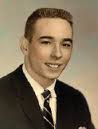 Dr. R.C. Sproul is the founder and chairman of Ligonier Ministries, an international Christian education ministry located near Orlando, Florida. His teaching can be heard on the program Renewing Your Mind, which is broadcast on hundreds of radio outlets in the United States and in 40 countries worldwide. He is the executive editor of Tabletalk magazine and general editor of The Reformation Study Bible, and the author of more than seventy books (including some of my all time favorites: THE HOLINESS OF GOD; CHOSEN BY GOD; KNOWING SCRIPTURE; REASON TO BELIEVE; and PLEASING GOD) and scores of articles for national evangelical publications. Dr. Sproul also serves as president of Ligonier Academy of Biblical and Theological Studies and Reformation Bible College. He currently serves as senior minister of preaching and teaching at Saint Andrew’s in Sanford, FL. (The picture to the left was taken approximately around the time of Sproul’s conversion as a College student).

James Boice Sermon: Genesis Part 13 – “The Seventh Day”
SERIES: GENESIS – PART 13

Thus the heavens and the earth were completed in all their vast array. By the seventh day God had finished the work he had been doing; so on the seventh day he rested from all his work. And God blessed the seventh day and made it holy, because on it he rested from all the work of creating that he had done. – Genesis 2:1-3
What does it mean, God rested on the seventh day? It does not mean that God closed his eyes and went to sleep. He did not take a nap. It does not mean that God rested in the sense that he became indifferent to what the man and woman were doing. We know God was not indifferent because when Adam and Eve sinned he was immediately there in the garden calling them to an accounting. He pronounced judgment and held out hope of a Redeemer to come. Rest is not to be understood in either of those ways.
What is involved here is what St. Augustine had in mind when, with his magnificent use of words, he contrasted the rest of God with our restlessness. He said, “Thou has made us for Thyself, and our hearts are restless until they find their rest in Thee.” Augustine was thinking of the turmoil of the human heart. He was saying that our true destiny is to find the rest that is found in God only.
Is it not the case that what is involved here is this kind of rest? God, having completed his work of creation, rests, as if to say, “This is the destiny of those who are my people; to rest as I rest, to rest in me.”
Rest and Restlessness
One thing that makes our lives restless is the pace of change. I wonder how many people have had the experience of watching a population clock. I did at the first of the world congresses on evangelism in Berlin in 1966 and can report that it is a very disturbing experience. In the Congress Halle in Berlin, where the meetings took place, there was a population clock display. It was a printout of numbers that kept increasing at the rate of the increase of the population of this planet. The numbers went by very rapidly. They were literally flipping by in front of our eyes—ten, twenty, thirty, forty, fifty, a hundred, two hundred, three hundred, a thousand, two thousand, three thousand. … That is the way they went. As I stood watching this clock, I was overwhelmed by the rapid pace of change. On this occasion even the clock was overwhelmed, because the mechanism was unable to keep up with the increase of the population and the poor thing began to slow down. Toward the end of the assembly someone had to announce from the platform that the clock was not keeping up with the population and if you wanted to know what it was, you had to upgrade the numbers by a certain amount.
If we fail to recognize how disturbing this is, we need to think of this further fact: not only are the numbers increasing, indicating that time is quickly marching on, but even the rate of increase is increasing. The population increases are accelerating. Instead of slowing down, the clock should have been speeding up. The speed at which it was going back in 1966 for the World Congress on Evangelism was much slower than it would have to be if it were keeping pace with the increase of the world’s population today.
Moreover, the problem is not just the increase in population. That would not be such a bad thing in itself. It is that everything is changing. This is why Alvin Toffler in his book Future Shock speaks of a pending monumental breakdown of people who live in industrialized lands. It is not a case, as some have said, of our choices being increasingly eliminated and industry forcing us into greater and greater uniformity. Rather, our options are increasing and at an ever faster rate of speed. People cannot keep up with the choices they are compelled to make. We look at such things and conclude, rightly and inescapably, that this is an age of great distress and restlessness.
However, we still have not come to the real cause of restlessness. If we were to go back in history before what we regard as the modern age and the quickly accelerating pace of modern life, we would still find people having the kind of restlessness about which St. Augustine wrote. He lived in an age of change. But if we could have asked him, “Augustine, how can it be that you, living back in what we regard as the early periods of western history, can speak of restlessness? We see our problem as having to do with the fast pace of modern life.” Augustine would have said, “It’s not the fast pace of modern life or the slow pace of life that is your problem; the basic problem is sin, which brings turmoil to the heart.” Perhaps he would have pointed us to those words of Scripture that speak of the wicked having lives that are like the churning sea that never rests. That is what sin causes.
The devil was the first one to sin, and he has as one of his names, Diabolos, which means “the disrupter.” The word diabolos is based on two Greek words: dia, which means “through” or “among,” and ballō, which means “to throw.” We get our word “bowling” from it. Together the words describe one who is always throwing something into the middle of things. He is the one who throws the monkey wrench into the machinery. He disrupts. And so does sin! If we were sinless, we would have the peace of the Lord Jesus Christ within. But because we do not, we are at odds with God (who has become our enemy), with others (with whom we are in constant conflict), and ourselves. Even when we sit by ourselves we are unable to be at peace. An author once said, “The greatest problem with men and women is that they do not know how to sit and be still.”
Sabbath Rest
What is the cure for restlessness? It is interesting that these verses in Genesis are picked up by the author of Hebrews in a chapter that is entirely given over to this subject. He begins in chapter 3, but it is really in chapter 4 that he talks about what he calls “Sabbath-rest” (v. 9). He calls attention to the fact that although God has created rest for his people, we are not at rest. He points out that when God led Israel out of Egypt into the wilderness in their days of wandering, he had as a goal to bring them into the Promised Land. It was to be a place where they would find rest from their wandering. It was a symbol of heaven. But the people rebelled, as we do, and God judged that generation. The author quotes Psalm 95:11 in which God says, “I declared on oath in my anger, ‘They shall never enter my rest.’ ” The author asks how this can be. Here is God, who creates a day of rest and promises rest and yet swears that his people will never enter into that rest. He replies that we do not enter into rest because we will not come to God at that point at which rest may be found, namely, in the Lord Jesus Christ.
The author exhorts the people of his day. He says, in effect, “Don’t go on as those people did who perished in the wilderness, about whom these things were said. Rather strive to enter into God’s rest. Cast off sin. Cast off everything that keeps you from Christ. Come in the fullness of faith to rest in him.”
Jesus himself made that offer. Before his crucifixion when he was with his disciples in the upper room, he recognized that they were bothered by what was happening. They had heard his prophecies of his death, and although they did not understand them fully they knew that things were going to change. They were troubled, but he said, “Do not let your hearts be troubled. Trust in God; trust also in me” (John 14:1). He went on to talk about heaven and the giving of the Holy Spirit and the privilege of prayer, and when he got to the end he gave them something that can rightly be regarded as his legacy: peace. He said, “My peace I give you. I do not give to you as the world gives. Do not let your hearts be troubled and do not be afraid” (v. 27).
How does that come about? It is by finding Christ who has done what we need. Sin is the basic cause of restlessness, and sin is the problem with which we must deal. We cannot handle it. We are the sinners. But the Lord Jesus Christ not only can, he does. He comes; he dies; he pays the penalty for our sin. He opens the door into the presence of God for all who believe in him. Then God, on the basis of the death of Christ, pronounces the believing one justified. That one now stands before the presence of God clothed in the righteousness of Jesus Christ.
As long as we live we will be troubled by sin. But we can begin to enter into God’s rest now and can look forward to that day when we will be made like Jesus and stand before God in holiness.
Holiness and Sin
That leads to the second point. God not only promises rest in these verses, he promises holiness as well. Holiness means to be set apart. So God sets the Sabbath day apart to teach that we are to enter not only into rest but also into holiness.
The two go together, because holiness is the opposite of sin, and sin is what makes us restless. Why is it that when we go out into the world with the gospel the world is not willing to respond to Christ’s teaching? Why is it that when we talk about rest, the world, which is restless, does not rush with open arms to embrace the gospel? The answer is that rest is connected with holiness and the world does not want holiness.
The attributes of God are always an offense to men and women. God is sovereign. That is offensive because we want to be our own sovereign. We want to be lords of our lives. We want to say, as one of the poets did, “I am the master of my fate; I am the captain of my soul.”
God is also omniscient. He knows everything. This is troublesome, too, because it means that God knows us. We do not want to be known, certainly not well. We want to be noticed. We want to be praised, built up. But we do not want to be known as we are because we are ashamed of what we are. Yet God knows us as no other man or woman will ever know us, and to be exposed in the sight of a holy God is frightening.
The most troublesome of all the attributes of God is holiness. God is absolutely holy. He has no place for sin. There is not a sinful thought, not a sinful wish, not a sinful deed or emotion in God. Yet everything we do is marred by sin. It says a little later in the Book of Genesis that the thoughts of people had become “only evil all the time” (Gen. 6:5). We may resist the judgment of God and say that this is not true, but this is the way God sees it. We tend to minimize sin. We say, “Of course, there are times when I do not do everything I should, but generally I’m pretty good.” God says, “Even those good times are so infused with sin that, if you could see as I see, you would abhor yourself in ashes.”
Men and women do not like God for his holiness, and it is this that makes the gospel so hard to preach. People need rest, yes. But they need it in the way it is to be found: by having sin’s penalty removed through the work of Christ; sin’s power broken through the power of the Holy Spirit; sin’s presence eradicated by Christ’s return, when those who believe on him shall be made like him in all his perfections.
For believers there is a sense in which the seventh day is fulfilled in us now. We enter by degrees into the rest and holiness Christ provides. But the ultimate realization of the Sabbath is to be at Christ’s return when we go to be with him and rest with him in holiness forever.
To the Work
In spite of the promise of the seventh day, it is nevertheless the case that the seventh day is succeeded by the first day, which also has importance for us. Donald Grey Barnhouse in his devotional study of the Book of Genesis has an interesting word at this point. Each segment of Genesis is followed by a devotional comment, and at this point, after the words “on the seventh day God finished the work which he had done and rested,” Barnhouse remarks, “But not for long.” Sin entered, and God was soon at work again in Christ to bring redemption. Jesus said, “The Father worketh hitherto, and I work.” That work is still going on. So if God the Father, the Lord Jesus Christ, and the Holy Spirit are working, then we had better be working too, because there is much work to be done.
It is significant that the Christian day of worship is not the Sabbath day of rest (characteristic of the Old Testament period) but the first day of the week, Sunday, which is a day of joy, activity, and expectation. Why is it a day of joy? Because we see the culmination of the gospel in Jesus Christ. Before, God’s people lived in expectation. They looked for the coming of the Messiah. Now the Messiah has come, and we rejoice in him. Christ’s first word to the women after his resurrection was “Rejoice.” They were to rejoice because there was much to rejoice about.
Then let us be done with the long faces and solemn demeanors that so often characterize the people of God on the Lord’s Day. And let us be done with the type of worshiper who comes to church only to go home. If you do not enjoy the worship of God and the fellowship of God’s people, if you do not enjoy the preaching of the Word and the response of the congregation in word and song, stay home! In the early days of the church the apostles did not have to go around ringing doorbells to get people to come out to the service. They did not have to maintain every-member visitation plans to renew flagging interest. In fact, the opposite was true. We read in the second chapter in Acts that the Christians “devoted themselves to the apostles’ teaching and to the fellowship, to the breaking of bread and to prayer. … Every day they continued to meet together in the temple courts. They broke bread in their homes and ate together with glad and sincere hearts, praising God and enjoying the favor of all the people. And the Lord added to their number daily those who were being saved” (vv. 42, 46–47).
These were happy Christians. Other people liked to be with them, perhaps most of all because they were happy. Friendships developed. Then on the basis of these friendships the Lord moved and added to the church daily those who were being saved.
The second characteristic of the Lord’s Day is activity. The first Lord’s Day was a day of activity: the women on the way to the tomb, the appearances of Jesus, the return to Jerusalem of the Emmaus disciples, the sharing of experiences, communion, the Lord’s commission. It is possible that if you have been working hard for the other six days of the week, Sunday might have to be a “day of rest” for you. But this is not an integral part of the Lord’s Day. The Sabbath was the day of rest. If you need to rest, try resting on Saturday. The Lord’s Day should be a day of activity.
This does not mean that just any old activity will reflect the fullest significance of the day. You may mow your grass, if you wish. You are not under law. But this does not have much to do with Christ, nor does it help to express your joy in his resurrection.
Worship is significant. It may strike some persons as strange to speak of worship as an activity; for in many minds worship is conceived in a passive sense, that is, sitting in a pew and letting the words of the day run through one’s head like water. But this is a travesty of real worship. The Lord said that real worship is done “in spirit and in truth” (John 4:24). Truth involves content. So worship is above all else an active, rational activity.
Why do we have Scripture readings in the speech of the people instead of in Hebrew, Greek, or Latin? Why are the words of music in common speech? Why does a sermon stand at the heart of each service? The answer is: to engage our minds.
“We must therefore beware of all forms of emotional, aesthetic or ecstatic worship in which the mind is not fully engaged, and especially of those which even claim that they are superior forms of worship,” writes John R. W. Stott, retired rector of All Souls Church in London. “The only worship pleasing to God is heart-worship, and heart-worship is rational worship. It is the worship of a rational God who has made us rational beings and given us a rational revelation so that we may worship Him rationally, even ‘with all our mind’ ” (John R.W. Stott. Christ the Controversialist. Downers Grove: IL.: IVP, 1978, 165).
Another activity that ought to characterize the Lord’s Day is witness. Jesus revealed this characteristic when he instructed the women, “Go tell my brethren,” and later informed the disciples that they were to carry the good news of his life, death, and resurrection into all the world. You can do that on any day, of course. It is of the essence of our day that anything done on Sunday can also be done (and perhaps should be done) on other days also. But do you at least bear witness on Sunday? This is a day on which to invite your friends to go with you to hear God’s Word. At the very least it is a day on which you should teach what you know about Christ to your children.
There is one thing more: the first day should be characterized by expectation. I love Sunday, and one of the reasons why I love Sunday is that I never know in advance what will happen. As I leave my house on the way to church I never know precisely whom I will meet. I never know who will be present in church or who will respond to the preaching. I never plan messages to preach at problems that I imagine to be present in the congregation, yet it is often the case that what I say is used of the Lord to speak precisely to some problem. Lives are changed. Not infrequently, the day is the turning point in someone’s entire spiritual experience.
We who know the reality of the rest and holiness of God should of all people be most joyful, active, and expectant as we take the gospel’s glorious message to a world that knows neither rest nor holiness, but needs them desperately.
About the Preacher

James Montgomery Boice, Th.D., (July 7, 1938 – June 15, 2000) was a Reformed theologian, Bible teacher, and pastor of Tenth Presbyterian Church in Philadelphia from 1968 until his death. He is heard on The Bible Study Hour radio broadcast and was a well-known author and speaker in evangelical and Reformed circles. He also served as Chairman of the International Council on Biblical Inerrancy for over ten years and was a founding member of the Alliance of Confessing Evangelicals. James Boice was one of my favorite Bible teachers. Thankfully – many of his books and expositions of Scripture are still in print and more are becoming available. The sermon above was adapted from Chapter 13 in Genesis 1-11: An Expositional Commentary. vol. 1: Creation and Fall. Grand Rapids: Baker, 2006.
Under Dr. Boice’s leadership, Tenth Presbyterian Church became a model for ministry in America’s northeastern inner cities. When he assumed the pastorate of Tenth Church there were 350 people in regular attendance. At his death the church had grown to a regular Sunday attendance in three services of more than 1,200 persons, a total membership of 1,150 persons. Under his leadership, the church established a pre-school for children ages 3-5 (now defunct), a high school known as City Center Academy, a full range of adult fellowship groups and classes, and specialized outreach ministries to international students, women with crisis pregnancies, homosexual and HIV-positive clients, and the homeless. Many of these ministries are now free-standing from the church.
Dr. Boice gave leadership to groups beyond his own organization. For ten years he served as Chairman of the International Council on Biblical Inerrancy, from its founding in 1977 until the completion of its work in 1988. ICBI produced three classic, creedal documents: “The Chicago Statement on Biblical Inerrancy,” “The Chicago Statement on Biblical Hermeneutics” and “The Chicago Statement on the Application of the Bible to Contemporary Issues.” The organization published many books, held regional “Authority of Scripture” seminars across the country, and sponsored the large lay “Congress on the Bible I,” which met in Washington, D.C., in September 1987. He also served on the Board of Bible Study Fellowship.
He founded the Alliance of Confessing Evangelicals (Alliance) in 1994, initially a group of pastors and theologians who were focused on bringing the 20th and now 21st century church to a new reformation. In 1996 this group met and wrote the Cambridge Declaration. Following the Cambridge meetings, the Alliance assumed leadership of the programs and publications formerly under Evangelical Ministries, Inc. (Dr. Boice) and Christians United for Reformation (Horton) in late 1996.
Dr. Boice was a prodigious world traveler. He journeyed to more than thirty countries in most of the world’s continents, and he taught the Bible in such countries as England, France, Canada, Japan, Australia, Guatemala, Korea and Saudi Arabia. He lived in Switzerland for three years while pursuing his doctoral studies.
Dr. Boice held degrees from Harvard University (A.B.), Princeton Theological Seminary (B.D.), the University of Basel, Switzerland (D. Theol.) and the Theological Seminary of the Reformed Episcopal Church (D.D., honorary).
A prolific author, Dr. Boice had contributed nearly forty books on a wide variety of Bible related themes. Most are in the form of expositional commentaries, growing out of his preaching: Psalms (1 volume), Romans (4 volumes), Genesis (3 volumes), Daniel, The Minor Prophets (2 volumes), The Sermon on the Mount, John (5 volumes, reissued in one), Ephesians, Phillippians and The Epistles of John. Many more popular volumes: Hearing God When You Hurt, Mind Renewal in a Mindless Christian Life, Standing on the Rock, The Parables of Jesus, The Christ of Christmas, The Christ of the Open Tomb and Christ’s Call to Discipleship. He also authored Foundations of the Christian Faith a 740-page book of theology for laypersons. Many of these books have been translated into other languages, such as: French, Spanish, German, Japanese, Chinese and Korean.
He was married to Linda Ann Boice (born McNamara), who continues to teach at the high school they co-founded.
Source: Taken directly from the Aliance of Confessing Evangelicals’ Website
James Montgomery Boice’s Books:
1970 Witness and Revelation in the Gospel of John (Zondervan)
1971 Philippians: An Expositional Commentary (Zondervan)
1972 The Sermon on the Mount (Zondervan)
1973 How to Live the Christian Life (Moody; originally, How to Live It Up,
Zondervan)
1974 Ordinary Men Called by God (Victor; originally, How God Can Use
Nobodies)
1974 The Last and Future World (Zondervan)
1975-79 The Gospel of John: An Expositional Commentary (5 volumes,
Zondervan; issued in one volume, 1985; 5 volumes, Baker 1999)
1976 “Galatians” in the Expositor’s Bible Commentary (Zondervan)
1977 Can You Run Away from God? (Victor)
1977 Does Inerrancy Matter? (Tyndale)
1977 Our Sovereign God, editor (Baker)
1978 The Foundation of Biblical Authority, editor (Zondervan)
1979 The Epistles of John: An Expositional Commentary (Zondervan)
1979 Making God’s Word Plain, editor (Tenth Presbyterian Church)
1980 Our Savior God: Studies on Man, Christ and the Atonement, editor (Baker)
1982-87 Genesis: An Expositional Commentary (3 volumes, Zondervan)
1983 The Parables of Jesus (Moody)
1983 The Christ of Christmas (Moody)
1983-86 The Minor Prophets: An Expositional Commentary (2 volumes,
Zondervan)
1984 Standing on the Rock (Tyndale). Reissued 1994 (Baker)
1985 The Christ of the Open Tomb (Moody)
1986 Foundations of the Christian Faith (4 volumes in one, InterVarsity
Press; original volumes issued, 1978-81)
1986 Christ’s Call to Discipleship (Moody)
1988 Transforming Our World: A Call to Action, editor (Multnomah)
1988, 98 Ephesians: An Expositional Commentary (Baker)
1989 Daniel: An Expositional Commentary (Zondervan)
1989 Joshua: We Will Serve the Lord (Revell)
1990 Nehemiah: Learning to Lead (Revell)
1992-94 Romans (4 volumes, Baker)
1992 The King Has Come (Christian Focus Publications)
1993 Amazing Grace (Tyndale)
1993 Mind Renewal in a Mindless Age (Baker)
1994-98 Psalms (3 volumes, Baker)
1994 Sure I Believe, So What! (Christian Focus Publications)
1995 Hearing God When You Hurt (Baker)
1996 Two Cities, Two Loves (InterVarsity)
1996 Here We Stand: A Call from Confessing Evangelicals, editor with
Benjamin E. Sasse (Baker)
1997 Living By the Book (Baker)
1997 Acts: An Expositional Commentary (Baker)
1999 The Heart of the Cross, with Philip Graham Ryken (Crossway)
1999 What Makes a Church Evangelical?
2000 Hymns for a Modern Reformation, with Paul S. Jones
2001 Matthew: An Expositional Commentary (2 volumes, Baker)
2001 Whatever Happened to the Gospel of Grace? (Crossway)
2002 The Doctrines of Grace, with Philip Graham Ryken (Crossway)
2002 Jesus on Trial, with Philip Graham Ryken (Crossway)
Chapters
1985 “The Future of Reformed Theology” in David F. Wells, editor,
Reformed Theology in America: A History of Its Modern Development
(Eerdmans)
1986 “The Preacher and Scholarship” in Samuel T. Logan, editor, The
Preacher and Preaching: Reviving the Art in the Twentieth Century
(Presbyterian and Reformed)
1992 “A Better Way: The Power of Word and Spirit” in Michael Scott
Horton, editor, Power Religion: The Selling Out of the Evangelical Church?
(Moody)
1994 “The Sovereignty of God” in John D. Carson and David W. Hall,
editors, To Glorify and Enjoy God: A Commemoration of the 350th
Anniversary of the Westminster Assembly (Banner of Truth Trust)
SOURCE: from the Tenth Presbyterian Church, Philadelphia, website
THE FIVE GOSSIPS YOU WILL MEET – BY TIM CHALLIES AND MATTHEW MITCHELL

Gossip is a serious problem. It is a problem in the home, in the workplace, in the local church and in broader evangelicalism. It is a problem in the blogosphere, in social media, and beyond. In his book Resisting Gossip, Matthew Mitchell defines gossip as “bearing bad news behind someone’s back out of a bad heart” and shows that when the book of Proverbs uses the word “gossip,” it does so in the noun form, not the verb form. In other words, the Bible is concerned less with the words that are spoken and more with the heart and mouth that generate such destruction. Words matter, but they are simply the overflow of the heart. As always, the heart is the heart of the matter.
Here, drawn from Mitchell’s book, is a gallery of gossips, five different gossiping people you will meet in life.
GOSSIP #1: THE SPY
The first kind of gossip, and I know you’ve run across this person before, is The Spy. Solomon describes him in Proverbs 11:13: “A gossip betrays a confidence, but a trustworthy man keeps a secret.” The Spy is an informer, a person who gathers secrets so he can use them to his personal advantage. This is the person who is always listening for rumors and who always seems to know everyone else’s business. His ear is always to the ground. The Spy’s main motivation is power. It may be the thrill of knowing something before everyone else, or it may be the power that comes when threatening others by revealing their secrets. He uses information to elevate himself and to destroy others.
GOSSIP #2: THE GRUMBLER
The second gossip is The Grumbler and we find him in Proverbs 16:28: “A perverse man stirs up dissension, and a gossip separates close friends.” The Grumbler complains and criticizes. She criticizes other people and complains about them behind their backs. She spreads all their secrets, describes exactly how she feels about them, and then excuses it all by saying, “I just needed to vent for a while.” Because she is miserable, and because misery loves company, she drags other people into her grumbling. Her motive is often jealously or envy. She wants what another person has and grumbles because she does not have it herself.
GOSSIP #3: THE BACKSTABBER
We all know The Backstabber, don’t we? The Backstabber is a complainer, but he is more than that. He is also angry and malicious and is out destroy others. He may bring full-out lies in order to bring down another person, or he may engage in a smear campaign. He looks for something, anything, everything wrong with his enemies and makes sure everyone knows about those things; if he can’t find them, he makes them up. The Backstabber is often motivated by revenge for some deep offense, some opportunity lost, or some hardship gained. This offense or perceived offense has led to bitterness which has taken root and motivated this desire for revenge. Today, many of these people begin web sites and do their work as loudly and publicly as possible.
GOSSIP #4: THE CHAMELEON
The Chameleon is the person who uses gossip to fit in with the crowd at work or school or church or even in the family. She is desperate to blend in and to be accepted. Since everyone else gossips, she gossips too, so that she can join in the conversation. Since respect comes through sharing juicy facts about others, she finds and then shares that kind of information. Her motivation is fear—the fear of man. She is afraid of what others will think of her, and especially afraid of being excluded from the crowd. Prov 29:25 describes her well: “Fear of man will prove to be a snare, but whoever trusts in the LORD is kept safe.”
GOSSIP #5: THE BUSYBODY
The final kind of gossip is The Busybody. The Busybody is the person who is idle, and his idleness leads to meddling and gossip. Proverbs 26:17 speaks to him: “Like one who seizes a dog by the ears is a passer-by who meddles in a quarrel not his own.” We meet The Busybody man in both of Paul’s letters to the Thessalonians and we meet The Busybody woman in his first letter to Timothy. The Busybody loves the titillation that comes through gossip and loves living vicariously through other people’s stories. The Busybody loves to be online where he can troll celebrity gossip sites in the name of amusement and Christian celebrity gossip sites in the name of discernment.
Most of us have met these people. Most of us have been these people. Each of us is in desperate need of God’s forgiveness and God’s sanctifying grace.
*SOURCE: December 5, 2013 @ http://www.challies.com/christian-living/the-5-gossips-you-will-meet.
HIGHLY RECOMMENDED BOOK: Matthew G. Mitchell. Resisting Gossip: Winning the War of the Wagging Tongue. CLC, 2013.
PAUL TRIPP: 6 Essential Commitments For A Solid Marriage

COMMITMENT #1: We will give ourselves to a regular lifestyle of confession and forgiveness.
COMMITMENT #2: We will make growth and change our daily agenda.
COMMITMENT #3: We will work together to build a sturdy bond of trust.
COMMITMENT #4: We will commit to building a relationship of love.
COMMITMENT #5: We will deal with our differences with appreciation and grace.
COMMITMENT #6: We will work to protect our marriage.
*SOURCE: Paul David Tripp. What Did You Expect?? Redeeming the Realities of Marriage. Wheaton. Crossway Books, 2010. (Many times in the book – from the Table of Contents and following).
Warren Wiersbe: The Power of God’s Name

“From the rising of the sun, even to its going down, My name shall be great among the Gentiles; in every place incense shall be offered to My name, and a pure offering; for My name shall be great among the nations,” says the LORD of hosts.” – Malachi 1:11
The first step down for any church is taken when it surrenders its high view of God, wrote A.W. Tozer in his excellent book The Knowledge of the Holy. For “church” you may substitute “Christian” or “Sunday school teacher” or “missionary.” The prophet Malachi ministered to the Jewish exiles who had returned to their land from Babylon to rebuild Jerusalem and the temple. Unfortunately, the level of their spiritual life was not very high. They could have glorified the name of the Lord before the Gentiles, but instead they chose to argue with the Lord. Believers today have three responsibilities when it comes to the names of God.
(1) We must know God’s name. In Bible times, names were indications of character and ability, and the names of God tell us who he is and what he can do. Jehovah means “I Am Who I Am” (Exodus 3:13-14). He is the self-existent, eternal God who always was, always is, and always will be. Jehovah-Sabaoth is “the LORD of hosts, the LORD of the armies of heaven” (1 Samuel 1:3,11), while Jehovah-Rapha is “the LORD who heals” (Exodus 15:22-27). For the battles in life, we must know Jehovah-Nissi, “the LORD our banner” (Exodus 17:8-15), who can give us victory. Jehovah-Shalom is “the LORD our peace” (Judges 6:24), and Jehovah Ra-ah is “the LORD our shepherd” (Psalm 23:1). I could go on, but I suggest you pursue this study yourself with the help of a good study Bible. To know God’s names is to know him better and be able to call on him for the help we need. “Those who know Your name will put their trust in You; for You, LORD have not forsaken those who seek You” (Psalm 9:10).
(2) We must honor God’s name. The priests in the temple were not honoring God’s name but were despising it by performing their ministries carelessly and offering the Lord sacrifices unacceptable to him (Malachi 1:6-10). Malachi used the word “contemptible” to describe their work (1:7,12; 2:9). God demands that we give him our best and serve him in a way that honors his name (1 Chronicles 21:24). The Lord would rather that someone close the temple doors than allow such cheap sacrifices to be offered on his altar (Mal. 1:10; Lev. 22:20). The priests were not rejoicing in their ministry but were weary of the whole thing (Mal. 1:13). “Serve the LORD with gladness; come before His presence with singing” (Ps. 100:2). We must give glory to his name (Mal. 2:2) and fear his name (1:14; 4:2). There was a godly remnant that did fear the Lord and honor his name (3:16-19), and they were the hope of the nation.
(3) We must spread his name abroad. The Lord wanted his name to be “magnified beyond the border of Israel” (1:5). The prophet saw a day when Jews and Gentiles would be one people of faith in Jesus Christ (Eph. 2:11-22). When he died on the cross, Jesus tore the veil of the temple, opening the way to God for all people and breaking down the wall that separated Jews and Gentiles (Eph. 2:14) so that we are “all one in Christ Jesus” (Gal. 3:28). The name of Jesus Christ and his gospel must be shared with the world, for there are no borders that must confine us. “Therefore those who were scattered went everywhere preaching the word” (Acts 8:4). Are we doing our part?
*SOURCE: Adapted from Warren Wiersbe. Old Testament Words For Today. Grand Rapids: Baker, 2013, Chapter 95.
DAVID JEREMIAH: 7 Ways To Study The Bible Effectively

(1) READ IT – Find time every day to read the Bible. Build this into your routine each morning, Pray as you read, asking God for insight.
(2) LOOK FOR A NEW VERSE EACH DAY – As you read, ask God for a special verse to meet that day’s need. Read until you arrive at that verse, and then write down and carry it with you. You’ll discover new strength!
(3) STUDY BOOK-TO-VERSE-TO-WORD – One of the best methods of Bible study is book-to-verse-to-word, some times called inductive Bible study. Choose the book you want to study, then read through the book introduction and the Bible text several times for a sweep of its contents. Then read all you can about the background of that book. Next…
(4) LOOK FOR THE OUTLINE OR THEME OF THE BOOK – After that, you’re ready to study chapter by chapter. Read through each chapter, making notes, underlining verses, and looking for key thoughts. When you have a good idea of what each chapter says, study the individual verses themselves, down to the various words that are used. Then…
(5) READ THE BIBLE WITH PEN IN HAND – Underline, circle, and draw lines from verse to verse. Thoroughly read (A good study Bible – like the Jeremiah Study Bible) notes and their cross references. Scribble comments and insights in the margins, and post dates besides verses that God gives you on particular days. Someone once said, “A well-marked Bible means a well-fed soul.” You can also use a journal to analyze sentences, paraphrase verses, and condense passages, list points, and record observations.
(6) MEMORIZE SCRIPTURE AND MEDITATE ON IT – Memorized Scripture is the fodder for meditation, and meditating on God’s Word opens the door of our hearts to the real riches of Scripture. When we memorize God’s Word, we can think about it all the time, mulling it over as we eat breakfast, as we drive to work, as we fall asleep at night. We digest its meaning, and it becomes part of us.
(7) JOIN A BIBLE STUDY GROUP – One of the most exciting developments in many churches has been the proliferation of Bible study groups. Find a good group and sign up. The right small group can make a big difference in your appreciation of Scripture.
SOURCE: *Adapted from “Ways To Study The Bible Effectively” in The Jeremiah Study Bible. Worthy Media, 2013. xv.
ABOUT THE AUTHOR

 LifeCoach4God