
Category: Books
Excerpts, Reviews, Recommendations, Classics

PAUL TRIPP: 6 Essential Commitments For A Solid Marriage

COMMITMENT #1: We will give ourselves to a regular lifestyle of confession and forgiveness.
COMMITMENT #2: We will make growth and change our daily agenda.
COMMITMENT #3: We will work together to build a sturdy bond of trust.
COMMITMENT #4: We will commit to building a relationship of love.
COMMITMENT #5: We will deal with our differences with appreciation and grace.
COMMITMENT #6: We will work to protect our marriage.
*SOURCE: Paul David Tripp. What Did You Expect?? Redeeming the Realities of Marriage. Wheaton. Crossway Books, 2010. (Many times in the book – from the Table of Contents and following).
Book Review: David Jeremiah Study Bible
BOOK REVIEW: AN OUTSTANDING RESOURCE

By David P. Craig
One of the great things about living in the 21st century is the proliferation of great study Bibles that are now available. David Jeremiah’s Study Bible is the result of 40 years of study and 4 years laboring specifically on this Bible. The results are terrific. It’s a Bible that is chalked full of theological insights, practical applications, and a plethora of helpful information to help you grow in your understanding of, and application of the Scriptures.
Some of the unique features of this Bible are:
Easy-to-read type; Book Introductions; 8,000 study notes; 100’s of sidebars on 100’s of topics; Over 50 articles on Doctrinal issues; Helpful illustrations; Answers to tough questions; Wise insights; Words of Jesus in red-letter print; Colorful charts, tables, and maps; A massive topical index and concordance; and a Harmony of the Gospels; available in King James and New King James Versions. One of the best features can be found online or on your phone. There are places throughout the Bible to scan your phone or go on the web for even more articles and helpful tools by Dr. Jeremiah for Bible study.
You can get a great introduction to this Bible by watching a video from Dr. Jeremiah at http://www.JeremiahStudyBible.com. I purchased this Bible for my parents and my wife, and so far we are all really enjoying Jeremiah’s insights and notes. I personally like the balance of theological explanation and practical application in the study notes. This study Bible will only help you better apply Paul’s exhortation to Timothy: “Be diligent to present yourself approved to God, a worker who does not need to be ashamed, rightly dividing the word of truth” (2 Timothy 2:15). I highly recommend this Study Bible for your personal growth in the Lord.
Warren Wiersbe: The Power of God’s Name

“From the rising of the sun, even to its going down, My name shall be great among the Gentiles; in every place incense shall be offered to My name, and a pure offering; for My name shall be great among the nations,” says the LORD of hosts.” – Malachi 1:11
The first step down for any church is taken when it surrenders its high view of God, wrote A.W. Tozer in his excellent book The Knowledge of the Holy. For “church” you may substitute “Christian” or “Sunday school teacher” or “missionary.” The prophet Malachi ministered to the Jewish exiles who had returned to their land from Babylon to rebuild Jerusalem and the temple. Unfortunately, the level of their spiritual life was not very high. They could have glorified the name of the Lord before the Gentiles, but instead they chose to argue with the Lord. Believers today have three responsibilities when it comes to the names of God.
(1) We must know God’s name. In Bible times, names were indications of character and ability, and the names of God tell us who he is and what he can do. Jehovah means “I Am Who I Am” (Exodus 3:13-14). He is the self-existent, eternal God who always was, always is, and always will be. Jehovah-Sabaoth is “the LORD of hosts, the LORD of the armies of heaven” (1 Samuel 1:3,11), while Jehovah-Rapha is “the LORD who heals” (Exodus 15:22-27). For the battles in life, we must know Jehovah-Nissi, “the LORD our banner” (Exodus 17:8-15), who can give us victory. Jehovah-Shalom is “the LORD our peace” (Judges 6:24), and Jehovah Ra-ah is “the LORD our shepherd” (Psalm 23:1). I could go on, but I suggest you pursue this study yourself with the help of a good study Bible. To know God’s names is to know him better and be able to call on him for the help we need. “Those who know Your name will put their trust in You; for You, LORD have not forsaken those who seek You” (Psalm 9:10).
(2) We must honor God’s name. The priests in the temple were not honoring God’s name but were despising it by performing their ministries carelessly and offering the Lord sacrifices unacceptable to him (Malachi 1:6-10). Malachi used the word “contemptible” to describe their work (1:7,12; 2:9). God demands that we give him our best and serve him in a way that honors his name (1 Chronicles 21:24). The Lord would rather that someone close the temple doors than allow such cheap sacrifices to be offered on his altar (Mal. 1:10; Lev. 22:20). The priests were not rejoicing in their ministry but were weary of the whole thing (Mal. 1:13). “Serve the LORD with gladness; come before His presence with singing” (Ps. 100:2). We must give glory to his name (Mal. 2:2) and fear his name (1:14; 4:2). There was a godly remnant that did fear the Lord and honor his name (3:16-19), and they were the hope of the nation.
(3) We must spread his name abroad. The Lord wanted his name to be “magnified beyond the border of Israel” (1:5). The prophet saw a day when Jews and Gentiles would be one people of faith in Jesus Christ (Eph. 2:11-22). When he died on the cross, Jesus tore the veil of the temple, opening the way to God for all people and breaking down the wall that separated Jews and Gentiles (Eph. 2:14) so that we are “all one in Christ Jesus” (Gal. 3:28). The name of Jesus Christ and his gospel must be shared with the world, for there are no borders that must confine us. “Therefore those who were scattered went everywhere preaching the word” (Acts 8:4). Are we doing our part?
*SOURCE: Adapted from Warren Wiersbe. Old Testament Words For Today. Grand Rapids: Baker, 2013, Chapter 95.
DAVID JEREMIAH: 7 Ways To Study The Bible Effectively
(1) READ IT – Find time every day to read the Bible. Build this into your routine each morning, Pray as you read, asking God for insight.
(2) LOOK FOR A NEW VERSE EACH DAY – As you read, ask God for a special verse to meet that day’s need. Read until you arrive at that verse, and then write down and carry it with you. You’ll discover new strength!
(3) STUDY BOOK-TO-VERSE-TO-WORD – One of the best methods of Bible study is book-to-verse-to-word, some times called inductive Bible study. Choose the book you want to study, then read through the book introduction and the Bible text several times for a sweep of its contents. Then read all you can about the background of that book. Next…
(4) LOOK FOR THE OUTLINE OR THEME OF THE BOOK – After that, you’re ready to study chapter by chapter. Read through each chapter, making notes, underlining verses, and looking for key thoughts. When you have a good idea of what each chapter says, study the individual verses themselves, down to the various words that are used. Then…
(5) READ THE BIBLE WITH PEN IN HAND – Underline, circle, and draw lines from verse to verse. Thoroughly read (A good study Bible – like the Jeremiah Study Bible) notes and their cross references. Scribble comments and insights in the margins, and post dates besides verses that God gives you on particular days. Someone once said, “A well-marked Bible means a well-fed soul.” You can also use a journal to analyze sentences, paraphrase verses, and condense passages, list points, and record observations.
(6) MEMORIZE SCRIPTURE AND MEDITATE ON IT – Memorized Scripture is the fodder for meditation, and meditating on God’s Word opens the door of our hearts to the real riches of Scripture. When we memorize God’s Word, we can think about it all the time, mulling it over as we eat breakfast, as we drive to work, as we fall asleep at night. We digest its meaning, and it becomes part of us.
(7) JOIN A BIBLE STUDY GROUP – One of the most exciting developments in many churches has been the proliferation of Bible study groups. Find a good group and sign up. The right small group can make a big difference in your appreciation of Scripture.
SOURCE: *Adapted from “Ways To Study The Bible Effectively” in The Jeremiah Study Bible. Worthy Media, 2013. xv.
ABOUT THE AUTHOR

Dr. David Jeremiah is the senior pastor of Shadow Mountain Community Church in El Cajon, California, and chancellor of San Diego Christian College. He is also the founder of Turning Point, a ministry committed to providing sound Bible teaching through national radio and television broadcasting. Dr. Jeremiah has authored numerous books, including the best-selling “Captured by Grace,” “Life Wide Open,” “My Heart’s Desire,” and “Sanctuary.”
PEYTON MANNING: Actions Speak Louder Than Words
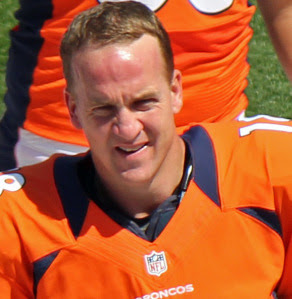
This season Peyton Manning, the quarterback of the Super Bowl bound Denver Broncos, completed the greatest statistical regular season at the quarterback position in the 94-year history of the National Football League (NFL). This regular season saw Manning set records in yards passed in a season (5,477) and touchdowns thrown in a season (55), and he led his team to accumulate more points (606) in a regular season than had ever been done before. Manning also tied the record for touchdowns thrown in a game (7) in the Broncos Week 1 win over the defending Super Bowl champions, the Baltimore Ravens.
Any fan of Peyton Manning or the NFL generally knows that Manning is the consummate professional. He treats the fans, media personnel, teammates, and opponents with respect. He works as hard–and probably harder–at his craft than any other player in the league. And he produces one fun, family friendly commercial after another, showing his sense of humor and a humble assessment of his own importance. But what many fans of Manning and the NFL may not be aware of is Manning’s Christian faith. In the excerpt below from Peyton’s book Manning (available on Amazon), which he co=wrote with his father Archie Manning in 2001, the record-breaking quarterback gives a rare description of his faith and its importance to him. The description is a rare one, not because Peyton’s faith is an insignificant part of his life, but because, as Peyton explains in the excerpt, he has intentionally chosen to speak more by his actions than by his words.
Here is the excerpt:
Like my dad, I make it a point when I speak to groups to talk about priorities, and when it’s schoolkids, I rank those priorities as: faith, family, and education, then football. And I tell all of them that as important as football is to me, it can never be higher than fourth. My faith is number one since I was thirteen years old and heard from the pulpit on a Sunday morning in New Orleans a simple question: “If you died today, are you one hundred percent sure you’d go to heaven?” Cooper was there and Eli (Peyton;s two brothers) but it didn’t hit them at the time the way that it hit me. It was a big church, and I felt very small, but my heart was pounding. The minister invited those who would like assurance through Jesus Christ to raise their hands, and I did. Then he invited us to come forward and take a stand, and my heart really started pounding. And from where we sat, it looked like a mile to the front.
But I got up and did it. And I committed my life to Christ, and that faith has been the most important thing to me ever since. Some players get more vocal about it–the Reggie Whites, for example–and some point to Heaven after scoring a touchdown and praise God after games. I have no problem with that. But I don’t do it, and don’t think it makes me less of a Christian. I just want my actions to speak louder, and I don’t want to be more of a target for criticism than I already am. Somebody sees you drinking a beer, which I do, and they think, “Hmmm, Peyton says he’s this, that, or the other, and there he is drinking alcohol. What’s that all about?”
Christians drink beer. So do non-Christians. Christians also make mistakes, just as non-Christians do. My faith doesn’t make me perfect, it makes me forgiven, and provides me with the assurance I looked for half my life ago. I think God answered our prayers with Cooper, and that was a test of our faith. But I also think I’ve been blessed–having so little go wrong in my life, and being given so much. I pray every night, sometimes long prayers about a lot of things and a lot of people, but I don’t talk about it or brag about it because that’s between God and me, and I’m no better than anybody else in God’s sight.
But I consider myself fortunate to be able to ask Him for guidance, and I hope (and pray) I don’t do too many things that displease Him before I go to Heaven myself. I believe, too, that life is much better and freer when you’re committed to God in that way. I find being with others whose faith is the same has made me stronger. J.C. Watts and Steve Largent, for example. They’re both in Congress now. We had a voluntary pregame chapel at Tennessee, and I attended chapel every Sunday with players on the team at Indianapolis. I have spoken to church youth groups, and at Christian high schools. And then simply as a Christian, and not as good a one as I’d like to be.
How do I justify football in the context of “love your enemy?” I say to kids, well, football is most definitely a “collision sport,” and I can’t deny it jars your teeth and at the extreme can break your bones. But I’ve never seen it as a “violent game,” there are rules to prevent that, and I know I don’t have to hate anybody on the other side to play as hard as I can within the rules. I think you’d have to get inside my head to appreciate it, but I do love football. And yes,, I’d play it for nothing if that was the only way, even now when I’m no longer a child. I find no contradiction in football and my faith.
Ah, but do I “pray for victory?” No, except as a generic thing. I pray to keep both teams injury free, and personally, that I use whatever talent I have to the best of my ability. But I don’t think God really cares about who wins football games, except as winning might influence the character of some person or group. Besides. If the Colts were playing the Cowboys and I prayed for the Colts and Troy Aikman prayed for the Cowboys, wouldn’t that make it a standoff?
I do feel this way about it. Dad says it can take twenty years to make a reputation, and five minutes to ruin it. I want my reputation to be able to make it through whatever five-minute crises I run into. And I’m a lot more comfortable knowing where my help is.
Dr. Ted Engstrom on The Power of a Positive Attitude

Our attitude at the beginning of a job will affect the outcome of the job more than anything else.
Our attitude toward life determines life attitude toward us.
Our attitude toward others will determine their attitude toward us.
Before we can achieve the kind of life we want, we must think, act, walk, talk, and conduct ourselves in ways characteristic of who we ultimately wish to become.
The higher we go in any organization of value, the better the attitude we’ll find.
Holding successful, positive thoughts in our minds will make all the difference in the world.
If we always make a person feel needed, important, and appreciated, he or she will return this attitude to us.
Part of a good attitude is to look for the best in new ideas. So look for good ideas everywhere. We will find them in the most wonderful places: on the bumpers of cars, on restaurant menus, in books, in travel, out of the innocent mouths of children.
Don’t broadcast personal problems. It probably won’t help you, and it cannot help others.
Don’t talk about your health unless it’s good.
Radiate the attitude of well-being. Don’t be embarrassed to share visions, desires, and goals.
Treat everyone with whom you come in contact as a fellow member of the human race—with all the rights, duties, and privileges thereof. The Golden Rule still applies: Do unto others as you would have them do unto you.
ABOUT THE AUTHOR

Dr. Ted W. Engstrom (1916-2006) led several major evangelical institutions – including World Vision, Zondervan Publishing House, Youth For Christ International, and Azusa Pacific University. He wrote or co-authored over 50 books and specialized in mentoring and developing leaders. “His ability to integrate the gospel with everyday life was absolutely inspiring,” said Dean R. Hirsch, head of World Vision International. “Dr. Ted made work and faith walk together.” This excerpt was adapted from Motivation to Last a Lifetime: Grand Rapids: Zondervan, 1983.
What Is Dispensationalism and What Does It Have to Do with Lordship Salvation?
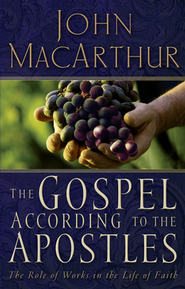
By John MacArthur
One of the most confusing elements of the entire lordship controversy involves dispensationalism. Some have supposed that my attack on no-lordship theology is an all-out assault against dispensationalism. That is not the case. It may surprise some readers to know that the issue of dispensationalism is one area where Charles Ryrie, Zane Hodges, and I share some common ground. We are all dispensationalists.
Many people are understandably confused by the term dispensationalism. I’ve met seminary graduates and many in Christian leadership who haven’t the slightest idea how to define dispensationalism. How does it differ from covenant theology? What does it have to do with lordship salvation? Perhaps we can answer those questions simply and without a lot of theological jargon.
Dispensationalism is a system of biblical interpretation that sees a distinction between God’s program for Israel and His dealings with the church. It’s really as simple as that.
A dispensation is the plan of God by which He administers His rule within a given era in His eternal program. Dispensations are not periods of time, but different administrations in the eternal outworking of God’s purpose. It is especially crucial to note that the way of salvation—by grace through faith—is the same in every dispensation. God’s redemptive plan remains unchanged, but the way He administers it will vary from one dispensation to another. Dispensationalists note that Israel was the focus of God’s redemptive plan in one dispensation. The church, consisting of redeemed people including Jews and Gentiles, is the focus in another. All dispensationalists believe at least one dispensation is still future—during the thousand-year reign of Christ on earth, known as the millennium, in which Israel will once again play a pivotal role.
Dispensationalism teaches that all God’s remaining covenant promises to Israel will be literally fulfilled—including the promises of earthly blessings and an earthly messianic kingdom. God promised Israel, for example, that they would possess the promised land forever ( Gen. 13:14–17 ; Exod. 32:13 ). Scripture declares that Messiah will rule over the kingdoms of the earth from Jerusalem ( Zech. 14:9–11 ). Old Testament prophecy says that all Israel will one day be restored to the promised land ( Amos 9:14–15); the temple will be rebuilt ( Ezek. 37:26–28 ); and the people of Israel will be redeemed ( Jer. 23:6 ; Rom. 11:26–27). Dispensationalists believe all those promised blessings will come to pass as literally as did the promised curses.
Covenant theology, on the other hand, usually views such prophecies as already fulfilled allegorically or symbolically. Covenant theologians believe that the church, not literal Israel, is the recipient of the covenant promises. They believe the church has superseded Israel in God’s eternal program. God’s promises to Israel are therefore fulfilled in spiritual blessings realized by Christians. Since their system does not allow for literal fulfillment of promised blessings to the Jewish nation, covenant theologians allegorize or spiritualize those prophetic passages of God’s Word.
I am a dispensationalist because dispensationalism generally understands and applies Scripture—particularly prophetic Scripture—in a way that is more consistent with the normal, literal approach I believe is God’s design for interpreting Scripture. For example, dispensationalists can take at face value Zechariah 12–14 , Romans 11:25–29 , and Revelation 20:1–6. The covenant theologian, on the other hand, cannot.
So I am convinced that the dispensationalist distinction between the church and Israel is an accurate understanding of God’s eternal plan as revealed in Scripture. I have not abandoned dispensationalism, nor do I intend to.
Note, by the way, that Dr. Ryrie’s description of dispensationalism and his reasons for embracing the system are very similar to what I have written here. Some years ago he wrote, “The essence of dispensationalism, then, is the distinction between Israel and the church. This grows out of the dispensationalist’s consistent employment of normal or plain interpretation” (Charles Ryrie. Dispensationalism Today. Chicago: Moody Press, 1965, 47). On these matters, it seems, Dr. Ryrie and I are in fundamental agreement. It is in the practical outworking of our dispensationalism that we differ. Dr. Ryrie’s system turns out to be somewhat more complex than his own definition might suggest.
The lordship debate has had a devastating effect on dispensationalism. Because no-lordship theology is so closely associated with dispensationalism, many have imagined a cause-and-effect relationship between the two. In The Gospel According to Jesus, I made the point that some early dispensationalists had laid the foundation for no-lordship teaching. I disagreed with dispensational extremists who relegate whole sections of Scripture—including the Sermon on the Mount and the Lord’s Prayer—to a yet-future kingdom era. I was critical of the way some dispensationalists have handled the preaching and teaching of Jesus in a way that erases the evangelistic intent from some of His most important invitations. I decried the methodology of dispensationalists who want to isolate salvation from repentance, justification from sanctification, faith from works, and Christ’s lordship from His role as Savior, in a way that breaks asunder what God has joined together.
Several outspoken anti-dispensationalists hailed the book as a major blow to dispensationalism. They wanted to declare the system dead and hold a celebratory funeral.
Frankly, some mongrel species of dispensationalism ought to die, and I will be happy to join the cortege. But it is wrong to write off dispensationalism as altogether invalid. My purpose is not to attack the roots of dispensationalism, but rather to plead for a purer, more biblical application of the literal, historical, grammatical principle of interpretation. The hermeneutic method that underlies dispensationalism is fundamentally sound and must not be abandoned. That is not the point of the lordship debate.
Who are dispensationalists? Virtually all dispensationalists are theologically conservative evangelicals. Our view of Scripture is typically very high; our method of interpretation is consistently literal; and our zeal for spiritual things is inflamed by our conviction that we are living in the last days.
How does dispensationalism influence our overall theological perspective? Obviously, the central issue in any dispensationalist system is eschatology, or the study of prophecy. All dispensationalists are premillennialists. That is, they believe in a future earthly thousand-year reign of Christ. That’s what a literal approach to prophecy mandates (cf. Rev. 20:1–10 ). Dispensationalists may disagree on the timing of the rapture, the number of dispensations, or other details, but their position on the earthly millennial kingdom is settled by their mode of biblical interpretation.
Dispensationalism also carries implications for ecclesiology, or the doctrine of the church, because of the differentiation between the church and Israel. Many dispensationalists, myself included, agree that there is some continuity between the Old and New Testament people of God in that we share a common salvation purchased by Jesus Christ and appropriated by grace through faith. But dispensationalists do not accept covenant theology’s teaching that the church is spiritual Israel. Covenant theology sees continuity between Jewish ritual and the New Testament sacraments, for example. In their system, baptism and circumcision have similar significance. In fact, many covenant theologians use the analogy of circumcision to argue for infant baptism. Dispensationalists, on the other hand, tend to view baptism as a sacrament for believers only, distinct from the Jewish rite.
So dispensationalism shapes one’s eschatology and ecclesiology. That is the extent of it. Pure dispensationalism has no ramifications for the doctrines of God, man, sin, or sanctification. More significantly, true dispensationalism makes no relevant contribution to soteriology, or the doctrine of salvation. In other words, nothing in a legitimate dispensational approach to Scripture mandates that we define the gospel in any unique or different way. In fact, if the same zealous concern for literal hermeneutics that yields a distinction between Israel and the church were followed consistently in the salvation issue, there would be no such thing as no-lordship soteriology.
What Is the Connection Between Dispensationalism and No-lordship Doctrine?
Yet the fact remains that virtually all the champions of no-lordship doctrine are dispensationalists. No covenant theologian defends the no-lordship gospel. Why?
Understand, first of all, that dispensationalism has not always been well represented by its most enthusiastic advocates. As I have noted, the uniqueness of dispensationalism is that we see a distinction in Scripture between Israel and the church. That singular perspective, common to all dispensationalists, sets us apart from nondispensationalists. It is, by the way, the only element of traditional dispensationalist teaching that is yielded as a result of literal interpretation of biblical texts. It also is the only tenet virtually all dispensationalists hold in common. That is why I have singled it out as the characteristic that defines dispensationalism. When I speak of “pure” dispensationalism, I’m referring to this one common denominator—the Israel-church distinction.
Admittedly, however, most dispensationalists carry far more baggage in their systems than that one feature. Early dispensationalists often packaged their doctrine in complex and esoteric systems illustrated by intricate diagrams. They loaded their repertoire with extraneous ideas and novel teachings, some of which endure today in various strains of dispensationalism. Dispensationalism’s earliest influential spokesmen included J. N. Darby, founder of the Plymouth Brethren and considered by many the father of modern dispensationalism; Cyrus I. Scofield, author of the Scofield Reference Bible; Clarence Larkin, whose book of dispensational charts has been in print and selling briskly since 1918; and Ethelbert W. Bullinger, an Anglican clergyman who took dispensationalism to an unprecedented extreme usually called ultradispensationalism. Many of these men were self-taught in theology and were professionals in secular occupations. Darby and Scofield, for example, were attorneys, and Larkin was a mechanical draftsman. They were laymen whose teachings gained enormous popularity largely through grass-roots enthusiasm.
Unfortunately some of these early framers of dispensationalism were not as precise or discriminating as they might have been had they had the benefit of a more complete theological education. C. I. Scofield, for example, included a note in his reference Bible that contrasted “legal obedience as the condition of [Old Testament] salvation” with “acceptance … of Christ” as the condition of salvation in the current dispensation (The Scofield Reference Bible. New York, : Oxford, 1917, 11115). Nondispensationalist critics have often attacked dispensationalism for teaching that the conditions for salvation differ from dispensation to dispensation. Here, at least, Scofield left himself open to that criticism, though he seemed to acknowledge in other contexts that the law was never a means of salvation for Old Testament saints (In a note at Exodus 19:3, where Moses was being given the law, Scofield wrote, “The law is not proposed as a means of life, but as a means by which Israel might become ‘a peculiar treasure’ and a ‘kingdom of priests” (Ibid, 93).
The maturing of dispensationalism, then, has mainly been a process of refining, distilling, clarifying, paring down, and cutting away what is extraneous or erroneous. Later dispensationalists, including Donald Grey Barnhouse, Wilbur Smith, and H. A. Ironside, were increasingly wary of the fallacies that peppered much early dispensationalist teaching. Ironside’s written works show his determination to confront error within the movement. He attacked Bullinger’s ultradispensationalism (Wrongly Dividing the Word of Truth. New York: Loizeaux, n.d.). He criticized teaching that relegated repentance to some other era (Except Ye Repent. Grand Rapids: Zondervan, 1937). He condemned the “carnal Christian” theology that helped pave the way for today’s radical no-lordship teaching (Eternal Security of Believers. New York: Loizeaux, 1934). Ironside’s writings are replete with warnings against antinomianism (See, for example, Full Assurance. Chicago: Moody, 1937, 64, 77-87; also Holiness: The False and the True. Neptune, N.J.: Loizeaux, 1912, 121-26).
Nondispensationalists have tended to caricature dispensationalism by emphasizing its excesses, and frankly the movement has produced more than its share of abominable teaching. Dispensationalists have often been forced to acknowledge that some of their critics’ points have been valid (Ryrie, for example, conceded in Dispensationalism Today that Scofield had made “unguarded statements” about dispensationalist soteriology and that dispensationalists often give a wrong impression about the role of grace during the Old Testament era (112,117). The biblical distinction between Israel and the church remains unassailed, however, as the essence of pure dispensationalism.
In recent years, dispensationalism has been hit with a blistering onslaught of criticism, mostly focusing on dispensationalism’s love affair with the no-lordship gospel. Evidence of this may be seen in John Gerstner’s Wrongly Dividing the Word of Truth: A Critique of Dispensationalism (Brentwood, Tenn.: Wolgemuth & Hyatt, 1991. Cf. Richard L. Mayhue, “Who Is Wrong? A Review of John Gerstner’s Wrongly Dividing the Word of Truth,” Master’s Seminary Journal 3:1, Spring 1992: 73-94).
Gerstner rightly attacks elements of antinomianism and no-lordship soteriology in some dispensationalists’ teaching. He wrongly assumes, however, that those things are inherent in all dispensationalism. He dismisses the movement altogether because of the shoddy theology he finds in the teaching of several prominent dispensationalists.
It is a gross misunderstanding to assume that antinomianism is at the heart of dispensationalist doctrine. Moreover, it is unfair to portray all dispensationalists as unsophisticated or careless theologians. Many skilled and discerning students of Scripture have embraced dispensationalism and managed to avoid antinomianism, extremism, and other errors. The men who taught me in seminary were all dispensationalists. Yet none of them would have defended no-lordship teaching (Moreover, everyone on The Master’s Seminary faculty is a dispensationalist. None of us holds any of the antinomian views Dr. Gerstner claims are common to all dispensationalists).
Nevertheless, no one can deny that dispensationalism and antinomianism have often been advocated by the same people. All the recent arguments that have been put forth in defense of no-lordship theology are rooted in ideas made popular by dispensationalists. The leading proponents of contemporary no-lordship theology are all dispensationalists. The lordship controversy is merely a bubbling to the surface of tensions that have always existed in and around the dispensationalist community. That point is essential to a clear understanding of the whole controversy.
Thus to appreciate some of the key tenets of the no-lordship gospel, we must comprehend their relationship to the dispensationalist tradition.
Tritely Dividing the Word?
For some dispensationalists, the Israel-church distinction is only a starting point. Their theology is laden with similar contrasts: church and kingdom, believers and disciples, old and new natures, faith and repentance. Obviously, there are many important and legitimate distinctions found in Scripture and sound theology: Old and New Covenants, law and grace, faith and works, justification and sanctification. But dispensationalists often tend to take even the legitimate contrasts too far. Most dispensationalists who have bought into no-lordship doctrine imagine, for example, that law and grace are mutually exclusive opposites, or that faith and works are somehow incompatible.
Some dispensationalists apply 2 Timothy 2:15 (“Study to show thyself approved unto God, a workman that needeth not to be ashamed, rightly dividing the word of truth ”— kjv , emphasis added) as if the key word were dividing rather than rightly. The dispensationalist tendency to divide and contrast has led to some rather inventive exegesis. Some dispensationalists teach, for example, that “the kingdom of heaven” and “the kingdom of God” speak of different domains (Scofield, The Scofield Reference Bible, 1003). The terms are clearly synonymous in Scripture, however, as a comparison of Matthew and Luke shows ( Matt. 5:3 // Luke 6:20 ; Matt. 10:7 // Luke 10:9 ; Matt. 11:11 // Luke 7:28 ; Matt. 11:12 // Luke 16:16 ; Matt. 13:11 // Luke 8:10 ; Matt. 13:31–33 // Luke 13:18–21 ; Matt. 18:4 // Luke 18:17 ; Matt. 19:23 // Luke 18:24 ). Matthew is the only book in the entire Bible that ever uses the expression “kingdom of heaven.” Matthew, writing to a mostly Jewish audience, understood their sensitivity to the use of God’s name. He simply employed the common euphemism heaven. Thus the kingdom of heaven is the kingdom of God.
This tendency to set parallel truths against each other is at the heart of no-lordship theology. Jesus’ lordship and His role as Savior are isolated from one another, making it possible to claim Him as Savior while refusing Him as Lord. Justification is severed from sanctification, legitimizing the notion of salvation without transformation. Mere believers are segregated from disciples, making two classes of Christians, carnal and spiritual. Faith is pitted against obedience, nullifying the moral aspect of believing. Grace becomes the antithesis of law, providing the basis for a system that is inherently antinomian.
The grace-law dichotomy is worth a closer look. Many early dispensationalist systems were unclear on the role of grace in the Mosaic economy and the place of law in the current dispensation. As I noted, Scofield left the unfortunate impression that Old Testament saints were saved by keeping the law. Scofield’s best-known student was Lewis Sperry Chafer, co-founder of Dallas Theological Seminary. Chafer, a prolific author, wrote dispensationalism’s first unabridged systematic theology. Chafer’s system became the standard for several generations of dispensationalists trained at Dallas. Yet Chafer repeated Scofield’s error. In his summary on justification, he wrote,
According to the Old Testament men were just because they were true and faithful in keeping the Mosaic Law. Micah defines such a life after this manner: “He hath shewed thee, O man, what is good; and what doth the Lord require of thee, but to do justly, and to love mercy, and to walk humbly with thy God?” ( 6:8 ). Men were therefore just because of their own works for God, whereas New Testament justification is God’s work for man in answer to faith ( Rom. 5:1 – See Lewis Sperry Chafer, Systematic Theology, 8 vols., Dallas: Seminary Press, 1948, 7:219 [emphasis added] ).
Though Chafer elsewhere denied that he taught multiple ways of salvation, it is clear that he fixed a great gulf between grace and law. He believed the Old Testament law imposed “an obligation to gain merit” with God (Ibid, 7:179). On the other hand, Chafer believed grace delivers the child of God “from every aspect of the law—as a rule of life, as an obligation to make himself acceptable to God, and as a dependence on impotent flesh” (Lewis Sperry Chafer, Grace, Wheaton, Ill.: Van Kampen, 1922, 344). “Grace teachings are not laws; they are suggestions. They are not demands; they are beseechings, ” he wrote (Ibid).
In Chafer’s system, God seems to fluctuate between dispensations of law and dispensations of grace. Grace was the rule of life from Adam to Moses. “Pure law” took over when a new dispensation began at Sinai. In the current dispensation, “pure grace” is the rule. The millennial kingdom will be another dispensation of “pure law.” Chafer evidently believed grace and law could not coexist side by side, and so he seemed to eliminate one or the other from every dispensation. He wrote,
Both the age before the cross and the age following the return of Christ represent the exercise of pure law; while the period between the two ages represents the exercise of pure grace. It is imperative, therefore, that there shall be no careless co-mingling of these great age-characterizing elements, else the preservation of the most important distinctions in the various relationships between God and man are lost, and the recognition of the true force of the death of Christ and His coming again is obscured (Ibid, 124, emphasis added).
No one denies that Scripture clearly contrasts law and grace. John 1:17 says, “The Law was given through Moses; grace and truth were realized through Jesus Christ.” Romans 6:4 says, “You are not under law, but under grace.” So the distinction between law and grace is obvious in Scripture.
But grace and law operate in every dispensation. Grace is and always has been the only means of eternal salvation. The whole point of Romans 4 is that Abraham, David, and all other Old Testament saints were justified by grace through faith, not because they kept the law (Galatians 3 also makes clear that it was never God’s intent that rightoeusness should come through the law or that slavation could be earned through obedience [see especially vv. 7, 11]. The law acted as a tutor, to bring people to Christ (v. 24). Thus even in the Old Testament, people were saved because of faith, not because of obedience to the law [cf. Romans 3:19-20). Did the apostle Paul believe we can nullify the law in this age of pure grace? Paul’s reply to that question was unequivocal: “May it never be! On the contrary, we establish the Law” ( Rom. 3:31 ).
In fairness, it is important to note that when pressed on the issue, Chafer acknowledged that God’s grace and Christ’s blood were the only ground on which sinners in any age could be saved (Lewis Sperry Chafer, “Dispensational Distinctions Denounced,” Bibliotheca Sacra, July 1944: 259). It must be stressed, however, that Chafer, Scofield, and others who have followed their lead have made too much of the differences between Old and New Testament dispensations. Wanting to avoid what he thought was “careless co-mingling” of law and grace, Chafer ended up with an “age of law” that is legalistic and an “age of grace” that smacks of antinomianism.
Chafer himself was a godly man, committed to holiness and high standards of Christian living. In practice, he would never have condoned carnality. But his dispensationalist system—with the hard dichotomies it introduced; its “grace teachings” that were “suggestions,” not demands; and its concept of “pure” grace that stood in opposition to law of any kind—paved the way for a brand of Christianity that has legitimized careless and carnal behavior.
Chafer could rightly be called the father of twentieth-century no-lordship theology. He listed repentance and surrender as two of “the more common features of human responsibility which are too often erroneously added to the one requirement of faith or belief” (Chafer, Systematic Theology, 3:372). He wrote, “to impose a need to surrender the life to God as an added condition of salvation is most unreasonable. God’s call to the unsaved is never said to be unto the Lordship of Christ; it is unto His saving grace” (Ibid, 3:385). “Next to sound doctrine itself, no more important obligation rests on the preacher than that of preaching the Lordship of Christ to Christians exclusively, and the Saviorhood of Christ to those who are unsaved” (Ibid, 3:387).
It is important to note that when Chafer wrote those things, he was arguing against the Oxford Movement, a popular but dangerous heresy that was steering Protestants back into the legalism and works-righteousness of Roman Catholicism. Chafer wrote,
The error of imposing Christ’s Lordship upon the unsaved is disastrous.… A destructive heresy is abroad under the name The Oxford Movement, which specializes in this blasting error, except that the promoters of the Movement omit altogether the idea of believing on Christ for salvation and promote exclusively the obligation to surrender to God. They substitute consecration for conversion, faithfulness for faith, and beauty of daily life for believing unto eternal life. As is easily seen, the plan of this movement is to ignore the need of Christ’s death as the ground of regeneration and forgiveness, and to promote the wretched heresy that it matters nothing what one believes respecting the Saviorhood of Christ if only the daily life is dedicated to God’s service.… The tragedy is that out of such a delusion those who embrace it are likely never to be delivered by a true faith in Christ as Savior. No more complete example could be found today of “the blind leading the blind” than what this Movement presents (Ibid, 3:385-386).
But Chafer prescribed the wrong remedy for the false teachings of the Oxford Movement. To answer a movement that “omit[s] altogether the idea of believing on Christ for salvation and promote[s] exclusively the obligation to surrender to God,” he devised a notion of faith that strips believing of any suggestion of surrender. Although the movement he opposed was indeed an insidious error, Chafer unfortunately laid the foundation for the opposite error, with equally devastating results.
The notion of faith with no repentance and no surrender fit well with Chafer’s concept of an age of “pure grace,” so it was absorbed and expanded by those who developed their theology after his model. It endures today as the basis of all no-lordship teaching.
One other particularly unfortunate outgrowth of Chafer’s rigid partitioning of “the age of law” and “the age of grace” is its effect on Chafer’s view of Scripture. Chafer believed that “The teachings of the law, the teachings of grace, and the teachings of the kingdom are separate and complete systems of divine rule” (Ibid, 4:225). Accordingly, he consigned the Sermon on the Mount and the Lord’s Prayer to the yet-future kingdom age, and concluded that the only Scriptures directly applicable to this age of grace are “portions of the Gospels, portions of the Book of Acts, and the Epistles of the New Testament” (Ibid, 4:206) —the “grace teachings.” How does one know which portions of the Gospels and Acts are “grace teachings” meant for this age? Chafer was vague:
The grace teachings are not, for convenience, isolated in the Sacred Text. The three economies appear in the four Gospels. The grace teachings are rather to be identified by their intrinsic character wherever they are found. Large portions of the New Testament are wholly revelatory of the doctrine of grace. The student, like Timothy, is enjoined to study to be one approved of God in the matter of rightly dividing the Scriptures (Ibid, 4:185).
In other words, there is a lot of law and kingdom teaching mixed into the New Testament. It is not explicitly identified for us, but we can fall into error if we wrongly try to apply it to the present age. Scripture is therefore like a puzzle. We must discern and categorize which portions apply to this age and categorize them accordingly. We can do this only by “their intrinsic character.”
Chafer was certain about one thing: much if not most of Christ’s earthly teaching is not applicable to the Christian in this age:
There is a dangerous and entirely baseless sentiment abroad which assumes that every teaching of Christ must be binding during this age simply because Christ said it. The fact is forgotten that Christ, while living under, keeping, and applying the Law of Moses, also taught the principles of His future kingdom, and, at the end of His ministry and in relation to His cross, He also anticipated the teachings of grace. If this threefold division of the teachings of Christ is not recognized, there can be nothing but confusion of mind and consequent contradiction of truth (Ibid, 4:224).
Dispensationalists who follow Chafer at this point wrongly divide the Word of truth, assigning whole sections of the New Testament to some other dispensation, nullifying the force of major segments of the Gospels and our Lord’s teaching for today (Ultradispensationalists take Chafer’s methodology even a step further. Noting that the apostle Paul called the church a mystery “which in other generations was not made known to the sons of men, as it has now been revealed to His holy apostles and prophets in the Spirit” [Eph. 3:5], they concluded that the church age did not begin until this point in Paul’s ministry. Thus they abrogate all the New Testament except for Paul’s prison epistles).
Which Gospel Should We Preach Today?
Not long ago I received a paper that has been circulated widely by a well-known dispensationalist. He wrote, “Dr. MacArthur was quite correct in titling his book The Gospel According to Jesus. The Gospel that Jesus taught in His pre-Cross humiliation, as Israel’s Messiah and to covenant people under the law was, for all intents and purposes, Lordship salvation.” But, he added, “Lordship salvation is based upon the Gospel according to Jesus, John the Baptist, and the early disciples. This Gospel is directed to the covenant nation of Israel.… The Lord Jesus’ Kingdom Gospel had nothing whatsoever to do with Christians, or the Church.”
The paper quotes heavily from Dr. Chafer’s writings, attempting to demonstrate that Jesus’ gospel “was on the level of the law and the earthly kingdom” and has nothing to do with grace or the current dispensation. The paper’s author notes that I wrote, “On a disturbing number of fronts, the message being proclaimed today is not the gospel according to Jesus.” To that he replies, “How blessedly true! Today we are to minister Paul’s ‘by grace are ye saved through faith’ Gospel … not the Lord Jesus’ Gospel relating to the law-oriented theocratic kingdom.”
He continues, “The convert via the Gospel according to Jesus became a child of the kingdom [not a Christian]. And divine authority will ever be the driving force in his heart—the indwelling Spirit writing the law upon his heart to enable him to surrender to the theocratic kingdom law, under his King.… [But the Christian] is not under authority, he is not seeking to obey—unless he is under law as described in Romans Seven. For him to live is Christ, and that life is not under authority.… Paul was offering an altogether different salvation.”
There, as clearly as can be stated, are all the follies that have ever defiled dispensationalism, synthesized into a single system. Blatant antinomianism: “the Christian … is not under authority, he is not seeking to obey”; multiple ways of salvation: “Paul was offering an altogether different salvation”; a fragmented approach to Scripture: “the Lord Jesus’ Kingdom Gospel had nothing whatsoever to do with Christians, or the Church”; and the tendency to divide and disconnect related ideas: “Today we are to minister Paul’s [Gospel] … not the Lord Jesus’ Gospel.”
Note carefully: This man acknowledges that Jesus’ gospel demanded surrender to His lordship. His point is that Jesus’ message has no relevance to this present age. He believes Christians today ought to proclaim a different gospel than the one Jesus preached. He imagines that Jesus’ invitation to sinners was of a different nature than the message the church is called to proclaim. He believes we should be preaching a different gospel.
None of those ideas is new or unusual within the dispensationalist community. All of them can be traced to one or more of dispensationalism’s early spokesmen. But it is about time all of them were abandoned.
In fairness, we should note that the paper I have quoted expresses some rather extreme views. Most of the principal defenders of no-lordship evangelism would probably not agree with that man’s brand of dispensationalism. But the no-lordship doctrine they defend is the product of precisely that kind of teaching. It is not enough to abandon the rigid forms of extreme dispensationalism; we must abandon the antinomian tendencies as well.
The careful discipline that has marked so much of our post-Reformation theological tradition must be carefully guarded. Defenders of no-lordship salvation lean too heavily on the assumptions of a predetermined theological system. They often draw their support from presupposed dispensationalist distinctions (salvation/discipleship, carnal/spiritual believers, gospel of the kingdom/gospel of grace, faith/repentance). They become entangled in “what-ifs” and illustrations. They tend to fall back on rational, rather than biblical, analysis. When they deal with Scripture, they are too willing to allow their theological system to dictate their understanding of the text. As a result, they regularly adopt novel interpretations of Scripture in order to make it conform to their theology.
A reminder is in order: Our theology must be biblical before it can be systematic. We must start with a proper interpretation of Scripture and build our theology from there, not read into God’s Word unwarranted presuppositions. Scripture is the only appropriate gauge by which we may ultimately measure the correctness of our doctrine.
Dispensationalism is at a crossroads. The lordship controversy represents a signpost where the road forks. One arrow marks the road of biblical orthodoxy. The other arrow, labeled “no-lordship,” points the way to a sub-Christian antinomianism. Dispensationalists who are considering that path would do well to pause and check the map again.
The only reliable map is Scripture, not someone’s dispensational diagrams. Dispensationalism as a movement must arrive at a consensus based solely on God’s Word. We cannot go on preaching different gospels to an already-confused world.
SOURCE: John MacArthur. “Appenidix 2” in The Gospel According to the Apostles. Nashville: Thomas Nelson, 2005.
James Boice Sermon: “Man, God’s Regent” – Genesis 1:28-31
SERIES: GENESIS – PART 12

God blessed them and said to them, “Be fruitful and increase in number; fill the earth and subdue it. Rule over the fish of the sea and the birds of the air and over every living creature that moves on the ground.”
Then God said, “I give you every seed-bearing plant on the face of the whole earth and every tree that has fruit with seed in it. They will be yours for food. And to all the beasts of the earth and all the birds of the air and all the creatures that move on the ground—everything that has the breath of life in it—I give every green plant for food.” And it was so.
God saw all that he had made, and it was very good. And there was evening, and there was morning—the sixth day. – Genesis 1:28-31
In looking at the account of the creation of man by God in Genesis 1, we have already seen two points that are emphasized. First, man is created. This is repeated three times in verse 27, obviously for emphasis. Second, man is created in God’s image. This is repeated four times in verses 26 and 27. Following this clue to what are the most important ideas, we come next to the teaching that man was to rule over creation as God’s regent. This is mentioned twice, in verses 26 and 28.
Who is this who is to rule God’s creation? What is he like? What are his gifts? To whom is he responsible?
For the purpose of this study I want to follow the substance of an address given by Dr. John H. Gerstner, a former professor of church history at Pittsburgh Theological Seminary, to the Philadelphia Conference on Reformed Theology in 1977. His address considered five things about man as God made him. First, man was created, and he still is. Second, man was created male and female, and he still is. Third, man was created body and soul, and he still is. Fourth, man was created dominant over the animals, and he still is. Fifth, man was created holy, and he still is—not.
Created by God
We have already seen that man’s being created in the image of God involves his having a personality, a sense of morality and spirituality. But in relation to his rule over the animals, to which we have now come, man’s creation involves responsibility as well. If man were his own creator, he would be responsible to no one. But he is not his own creator. He is created by God, and this means that he is responsible to God for what he does in every area of his life and particularly for how he carries out the mandate to rule over creation. These verses record God as saying, “Let us make man in our image, in our likeness, and let them rule over the fish of the sea and the birds of the air, over the livestock, over all the earth, and over all the creatures that move along the ground” (v. 26). To man he says, “Be fruitful and increase in number; fill the earth and subdue it. Rule over the fish of the sea and the birds of the air and over every living creature that moves on the ground” (v. 28). Dominion of any kind, but particularly dominion of this scope, implies responsibility.
Today in the western world there is a tendency to deny man’s moral responsibility on the basis of some kind of determinism. It usually takes one of two forms. It may be a physical, mechanical determinism (“man is the product of his genes and body chemistry”), or it may be a psychological determinism (“man is the product of his environment and of the earlier things that have happened to him”). In either case the individual is excused from responsibility for what he or she does. Thus, we have gone through a period in which criminal behavior was termed a sickness and the criminal was regarded more as a victim of his environment than as the victimizer. (Recently there is a tendency at least to reconsider this matter.) Less blatant but nevertheless morally reprehensible acts are excused with, “I suppose he just couldn’t help it.”
The biblical view of man could hardly be more different. As Francis Schaeffer correctly notes, “Since God has made man in his own image, man is not caught in the wheels of determinism. Rather man is so great that he can influence history for himself and for others, for this life and the life to come.” Man is fallen. But even in his fallen state he is responsible. He can do great things, or he can do things that are terrible.
God created the man and woman and gave them dominion over the created order. Consequently, they were responsible to him for what they did. When man sins, as the Genesis account goes on to show that he does, it is God who requires a reckoning: “Where are you? … Who told you that you were naked? … What is this you have done?” (Gen. 3:9, 11, 13). In the thousands of years since Eden many have convinced themselves that they are not responsible. But the testimony of Scripture is that this area of responsibility still stands and that all will one day answer to God at the judgment. “The dead were judged according to what they had done as recorded in the books” (Rev. 20:12).
People are also responsible for their acts toward others. This is the reason for those biblical statements instituting capital punishment as a proper response to murder; for instance, “Whoever sheds the blood of man, by man shall his blood be shed” (Gen. 9:6). These verses are not in the Bible as relics of a more barbarous age or because in the biblical outlook man is not valuable. They are there for precisely the opposite reason: Man is too valuable to be wantonly destroyed. Thus, the harshest penalties are reserved for such destruction. In a related way, James 3:9–10 forbid the use of the tongue to curse others because these others are also made in God’s image: “With the tongue we praise our Lord and Father, and with it we curse men, who have been made in God’s likeness. … This should not be.” In these texts murder of another and cursing of another are forbidden on the grounds that the other person (even after the fall) retains something of God’s image and is therefore to be valued by us, as God also values him.
Male and Female
Second, man was created male and female, and it is still so. In our day many say that there are no essential differences between men and women, or that whatever differences there are, are accidental. This is understandable from those who think that mindless evolution is the means by which we have become what we are. But it is entirely incomprehensible from the standpoint of the Bible, which tells us that nothing is an accident and that sexuality in particular is the result of the creative act of God. Maleness and femaleness are therefore good and meaningful, just as other aspects of God’s creation are good and meaningful. Men are not women. Women are not men. One of the saddest things in the universe is a man who tries to be a woman or a woman who tries to be a man. “But who is superior?” someone asks. I answer: A man is absolutely superior to a woman—at being a man; a woman is absolutely superior to a man—at being a woman. But let a woman try to be a man or a man try to be a woman, and you have a monstrosity.
This is thought to deny equality before God, as if equality means indistinguishability. But this thought is neither biblical nor rational. The man and the woman are equal before God, but they are not indistinguishable. In the economy of the family (and the church), the man is to lead, protect, care for, cherish, act upon, and initiate. The woman is to respond, receive, be acted upon, bear, nurture, follow. In this the human family is a deliberate parallelism to the Trinity. We say in theology that within the Trinity the three persons are “one God, the same in substance, equal in power and glory.” But there are also distinctions according to which the second person of the Godhead, the Son, voluntarily subordinates himself to carry out the wishes of the Father in redemption, and the third person, the Holy Spirit, voluntarily subordinates himself to the united wills of the Father and Son.
The subordination of the woman to the man in marriage is a voluntary submission. As Gerstner writes, “No woman need accept the proposal of any man. But when she enters voluntarily into holy matrimony with that man, she becomes as 1 Peter 3 demands, ‘submissive’ and ‘obedient’ to her husband.” In the same way, children are under the divine command to “obey” and “honor” their fathers and mothers. “We know from sorry experience that many of them choose not to do so, but if they do (as they are under a divine mandate to do), they must do so voluntarily. So there is in the economy of the human family, which God made in his own image, a replica of the divine Trinity itself, in which there is a proper and voluntary subordination.”
Body and Soul
Third, God made man body and soul, and he still does. There is a debate at this point between those who believe in a three-part construction of man’s being and those who believe in a two-part construction (the position Gerstner takes in the address I am following). But the debate is not as significant as it sometimes seems. All parties recognize that the human being consists at least of the physical part that dies and needs to be resurrected and the immaterial part that lives beyond death. The only question is whether this immaterial part can be further distinguished as containing, on the one hand, a soul or personality and, on the other hand, a spirit that alone relates us to God.
Here the linguistic data should be determinative, but unfortunately it is not as clear as one could wish. Sometimes, particularly in the earlier parts of the Old Testament, soul (nephesh) and spirit (ruach) are used interchangeably. But in other places, particularly in the later parts of the Old Testament, ruach increasingly comes to designate that element by which men and women relate to God, in distinction from nephesh, which then meant merely the life principle. In conformity to this outlook, “soul” is used in reference to animals, while “spirit” is not. Conversely, the prophets, who heard the voice of God and communed with him in a special sense, are always said to be animated by the “spirit” (but not the “soul”) of God. In the New Testament the linguistic data is similar. While soul (psyche) and spirit (pneuma) are sometimes freely exchanged for one another, as in the Old Testament, pneuma nevertheless also expresses that particular capacity for relating to God that is the redeemed man’s glory as opposed to mere psyche, which even the unsaved man possesses (1 Cor. 2:9–16).
In this area the particular words are possibly less important than the truths they convey. Those who insist on the unity of man, nevertheless believe that he is more than mere matter. If they adhere to a two-part scheme, they recognize that there is that about him that sets him off from animals.
The body is the part we see, the part that possesses physical life. We have a body in common with every living thing.
The soul is the part of the person we call personality or self-identity. This is not a simple matter to talk about. The soul is related to the body through the brain, a part of the body. It is also related to the qualities we associate with spirit. Nevertheless, in general terms soul refers to what makes an individual unique. We might say that the soul centers in the mind and includes all likes and dislikes, special abilities or weaknesses, emotions, aspirations, and anything else that makes the individual different from all others of his species. It is because we have souls that we are able to have fellowship, love, and communication with one another.
But man does not only have fellowship, love, and communication with others of his species. He also has love and communion with God, and for this he needs a spirit. The spirit is that part of human nature that communes with God and partakes in some measure of God’s essence. God is nowhere said to be body or soul. But God is defined as spirit. “God is spirit,” said Jesus; therefore, “his worshipers must worship in spirit and in truth” (John 4:24). Because man is spirit (or comes to possess a spirit by means of the new birth) he can have fellowship with God and worship him.
In speaking of soul and body, Gerstner has a good insight. He notes that “the quirk of human nature in its present state, unlike its original condition, is that we have a tendency to recognize that the other person is a conscious, rational and moral soul, but that we treat ourselves as if we were merely a combination of chemicals and reactions. A boy once said to his mother, ‘Mother, why is it that whenever I do anything bad it’s because I am a bad boy, but whenever you do anything bad it’s because you are nervous?’ That is the principle. When the boy does something bad the mother recognizes that he is a spirit. He is a morally responsible individual who can be properly reprimanded for his misbehavior. But when she does the same thing … she reminds her son that she is a body of nerves and should somehow not be responsible.”
But we are responsible. The soul does have dominion over the body. Consequently, whatever our weaknesses may be, we are responsible to subordinate our fleshly desires and live for God.
Dominion Over the Animals
Fourth, man was created dominant over the animals—the point particularly stressed in these verses. Martin Luther wrote in his lectures on Genesis that in his opinion Adam in his original state was superior to the animals even in those points where they were strong. “I am fully convinced,” he said, “that before Adam’s sin his eyes were so sharp and clear that they surpassed those of the lynx and eagle. He was stronger than the lions and the bears, whose strength is very great; and he handled them the way we handle puppies.” Later on, as he begins to think of Adam’s intellectual powers, he says, “If … we are looking for an outstanding philosopher, let us not overlook our first parents while they were still free from sin.” It was with such capacities that man ruled creation.
At the present time we have this horrible situation. In his sin man either tends to dominate and thus violate the creation, subjecting it to his own selfish ends, or else he tends to fall down and worship the creation, not realizing that his debasement is brought about in the process. As the Bible describes them, the man and the woman were made “a little lower than the heavenly beings” (Ps. 8:5); that is, they were placed between the highest and lowest beings, between angels and beasts. But it is significant that man is described as being slightly lower than the angels rather than being slightly higher than the beasts. That is, man’s privilege is that he is to be a mediating figure, but he is also to be one who looks up rather than down. The unfortunate thing is that when man severs the tie that binds him to God and tries to cast off God’s rule, he does not rise up to take God’s place, as he desires to do, but rather sinks to a more bestial level. In fact, he comes to think of himself as a beast (“the naked ape”) or, even worse, a machine.
Holy and Still is—Not
This brings us to the last point: God created man holy, and now he is—not. The other items we have considered remain, though they are distorted by sin in each case. Man is still a created being, though weak and destined to die. He is still male and female. He is still body and soul. He is still dominant over the animals. But man was also created holy as God is holy, and of this original righteousness not a vestige remains. Rather, as the Scriptures say, “Every inclination of the thoughts of his heart was only evil all the time” (Gen. 6:5).
This is why man needs a Savior. God made man upright, but he sought out his own devices. In turning each to his or her own way man brought ruin on the race. Now, not only is no one holy, none is capable even of regaining that holiness. Before the fall, to use Augustine’s phrase, man was posse non peccare (“able not to sin”). But he was also, as Augustine also faithfully declared in accordance with the Bible’s teaching, posse peccare (“able to sin”), which choice he exploited. Now he is non posse non peccare (“not able not to sin”). It is as though he jumped into a pit where he is now trapped. He must remain in that pit until God by grace through the work of Christ and the power of the Holy Spirit lifts him out.
About the Preacher

James Montgomery Boice, Th.D., (July 7, 1938 – June 15, 2000) was a Reformed theologian, Bible teacher, and pastor of Tenth Presbyterian Church in Philadelphia from 1968 until his death. He is heard on The Bible Study Hour radio broadcast and was a well-known author and speaker in evangelical and Reformed circles. He also served as Chairman of the International Council on Biblical Inerrancy for over ten years and was a founding member of the Alliance of Confessing Evangelicals. James Boice was one of my favorite Bible teachers. Thankfully – many of his books and expositions of Scripture are still in print and more are becoming available. The sermon above was adapted from Chapter 12 in Genesis 1-11: An Expositional Commentary. vol. 1: Creation and Fall. Grand Rapids: Baker, 2006.
Under Dr. Boice’s leadership, Tenth Presbyterian Church became a model for ministry in America’s northeastern inner cities. When he assumed the pastorate of Tenth Church there were 350 people in regular attendance. At his death the church had grown to a regular Sunday attendance in three services of more than 1,200 persons, a total membership of 1,150 persons. Under his leadership, the church established a pre-school for children ages 3-5 (now defunct), a high school known as City Center Academy, a full range of adult fellowship groups and classes, and specialized outreach ministries to international students, women with crisis pregnancies, homosexual and HIV-positive clients, and the homeless. Many of these ministries are now free-standing from the church.
Dr. Boice gave leadership to groups beyond his own organization. For ten years he served as Chairman of the International Council on Biblical Inerrancy, from its founding in 1977 until the completion of its work in 1988. ICBI produced three classic, creedal documents: “The Chicago Statement on Biblical Inerrancy,” “The Chicago Statement on Biblical Hermeneutics” and “The Chicago Statement on the Application of the Bible to Contemporary Issues.” The organization published many books, held regional “Authority of Scripture” seminars across the country, and sponsored the large lay “Congress on the Bible I,” which met in Washington, D.C., in September 1987. He also served on the Board of Bible Study Fellowship.
He founded the Alliance of Confessing Evangelicals (Alliance) in 1994, initially a group of pastors and theologians who were focused on bringing the 20th and now 21st century church to a new reformation. In 1996 this group met and wrote the Cambridge Declaration. Following the Cambridge meetings, the Alliance assumed leadership of the programs and publications formerly under Evangelical Ministries, Inc. (Dr. Boice) and Christians United for Reformation (Horton) in late 1996.
Dr. Boice was a prodigious world traveler. He journeyed to more than thirty countries in most of the world’s continents, and he taught the Bible in such countries as England, France, Canada, Japan, Australia, Guatemala, Korea and Saudi Arabia. He lived in Switzerland for three years while pursuing his doctoral studies.
Dr. Boice held degrees from Harvard University (A.B.), Princeton Theological Seminary (B.D.), the University of Basel, Switzerland (D. Theol.) and the Theological Seminary of the Reformed Episcopal Church (D.D., honorary).
A prolific author, Dr. Boice had contributed nearly forty books on a wide variety of Bible related themes. Most are in the form of expositional commentaries, growing out of his preaching: Psalms (1 volume), Romans (4 volumes), Genesis (3 volumes), Daniel, The Minor Prophets (2 volumes), The Sermon on the Mount, John (5 volumes, reissued in one), Ephesians, Phillippians and The Epistles of John. Many more popular volumes: Hearing God When You Hurt, Mind Renewal in a Mindless Christian Life, Standing on the Rock, The Parables of Jesus, The Christ of Christmas, The Christ of the Open Tomb and Christ’s Call to Discipleship. He also authored Foundations of the Christian Faith a 740-page book of theology for laypersons. Many of these books have been translated into other languages, such as: French, Spanish, German, Japanese, Chinese and Korean.
He was married to Linda Ann Boice (born McNamara), who continues to teach at the high school they co-founded.
Source: Taken directly from the Aliance of Confessing Evangelicals’ Website

 LifeCoach4God