
Category: Books

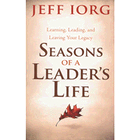
BOOK REVIEW: JEFF IORG’S “SEASONS OF A LEADERS LIFE”
LEARNING, LEADING, AND LEAVING A LEGACY
Leadership Lessons from the Life of Peter the Apostle
Book Review by David P. Craig
Just as life has seasons, leaders also have stages or phases of leadership. In this practical book Jeff Iorg tackles the three seasons or phases of a leader’s life. Using the Apostle Peter as his thematic teaching point, Iorg highlights leadership lessons from the three seasons or phases of leadership: Phase One – learning about leadership; Phase Two – actively leading; and Phase Three – leaving a legacy.
In Part One – Lessons for Emerging Leaders – Iorg tackles 21 lessons for leaders to grapple with in the earliest phases of their leadership development. Some of the topics addressed include: a leader’s calling, identity, prayer life, how to forgive, and serve humbly. The first section of the book highlights leadership principles and lessons from the stories in the Gospels where the Apostle Peter is specifically singled out by Jesus.
Part Two – Priorities for Active Leaders – contains 13 priorities for leaders in their prime, including: calling people to Jesus, accessing God’s power, confronting sin, defending the faith, working with other leaders, and how to move on after making mistakes. In this section of the book Iorg gives emphasis to every story in Acts and the Epistles where Peter is involved in leadership and the lessons or insights we can glean from his example.
In Part Three – Convictions of Maturing Leaders – Iorg expounds upon 10 powerful convictions of a leader intent on leaving a lasting legacy, including: Jesus is enough, pursuing purity, building good relationships, trusting Jesus and His Word, and giving glory to Jesus. The last section of the book summarizes Peter’s legacy from the wisdom he gained, the disciples and leaders he influenced, and the convictions he held to and modeled for a generation of leaders to come.
Jeff Iorg has written a very insightful and practical book that helps leaders learn more about leadership, focus on what’s most important in leadership, and finish well in one’s calling by leading effectively and leaving a legacy for future leaders. Written with emerging leaders and veteran leaders in mind, this book is filled with great insights for leaders of all seasons, ages, and phases of life. Each short chapter includes helpful questions for reflection and discussion. The book would be an excellent resource for church leaders to use in a discipleship type setting over a period of several months. It could also be a very helpful book for older pastors to mentor younger pastors with. I highly recommend this book as a great resource to return to throughout the varied seasons of a leader’s life.
DON WHITNEY ON HOW TO PREPARE FOR EVANGELISM
AN OUTLINE TO HAVE IN MIND WHEN SHARING THE GOSPEL
MANY CHRISTIANS THINK THEY CANNOT ADEQUATELY SHARE THE gospel unless they’ve had formal training in evangelism. I’m for evangelism training, but training is not necessary before you can tell someone about Jesus and give your own testimony about how you came to know Him. In John 9 we read of a man born blind who, within an hour after his conversion, is witnessing to Ph.D.s in religion (the Pharisees). Obviously, he’d had no evangelism training, but he was able to talk about Jesus and his own conversion. As Martyn Lloyd-Jones used to say, after being saved and after hearing countless presentations of the gospel in sermons, if Christians still believe they cannot evangelize without massive amounts of training, then either they’ve heard very poor preaching or they’ve been very poor listeners. However, it does boost one’s confidence in sharing the gospel to know a general outline of what to say and to have some appropriate verses of Scripture committed to memory. Several years ago I developed an outline to hang my thoughts on, along with at least two key verses for each section. I don’t follow it woodenly in every situation, for each evangelistic encounter is unique. And sometimes I condense it a bit. But having a full presentation of the gospel ready on my lips does give me a sense of direction and a feeling of preparedness. You’re welcome to adapt the outline for use in your own personal evangelism.
1. There is one God, He is the Creator, He is holy, and He is worth knowing. See Deuteronomy 4:39; Isaiah 46:9; Genesis 1: 1; 1 Peter 1: 16. Such a God is worthy of our pursuit!
2. Everyone is a sinner separated from God. See Romans 3:23; Isaiah 59:2. We have no idea how unholy we are in comparison to God.
3. There is a penalty for sin. See Romans 6:23; Hebrews 9:27; Romans 14:10; Matthew 25:46. The penalty is judgment and Hell.
4. Jesus paid that penalty for all who believe. See Romans 5:8; I Peter 3:18. Jesus took God’s judgment so believers could have mercy.
5. No one can earn God’s forgiveness and favor. See Ephesians 2:8-9; Titus 3:5. We’re not saved by our works, but by faith in Jesus’ work.
6. We should respond with repentance and faith. See Mark 1:15; John 3:16. We should turn from sin and turn to Jesus for forgiveness.
7. We can have assurance of eternal life with God. See 1 John 5:13. Jesus’ resurrection and God’s Word assure believers of forgiveness.
Responding to this great message from the Bible
A. It is not only right for you to live for the God who created you and owns you, but you will find your greatest fulfillment only when you fulfill the purpose for which you were made, and that is to know God and live for Him.
B. Do you believe this great message of the Bible? Genuine belief in its truth is demonstrated by turning from living for yourself and believing that because of His death and resurrection Jesus Christ can make you right with God.
C. Are you willing to express repentance and faith in prayer to God right now?
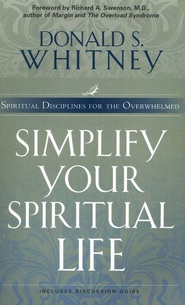
*SOURCE: Donald S. Whitney. Simplify Your Spiritual Life: Disciplines for the Overwhelmed. Colorado Springs: NavPress, 2003.
ABOUT DONALD S. WHITNEY

Since 2005, Don Whitney has been Associate Professor of Biblical Spirituality at The Southern Baptist Theological Seminary in Louisville, Kentucky, where he also serves as Senior Associate Dean. Before that, he held a similar position (the first such position in the six Southern Baptist seminaries) at Midwestern Baptist Theological Seminary in Kansas City, Missouri, for ten years. He is the founder and president of The Center for Biblical Spirituality.
Don grew up in Osceola, Arkansas, where he came to believe in Jesus Christ as Lord and Savior. He was active in sports throughout high school and college, and worked in the radio station his dad managed.
After graduating from Arkansas State University, Don planned to finish law school and pursue a career in sportscasting. While at the University of Arkansas School of Law, he sensed God’s call to preach the Gospel of Jesus Christ. He then enrolled at Southwestern Baptist Theological Seminary in Fort Worth, Texas, graduating with a Master of Divinity degree in 1979. In 1987, Don completed a Doctor of Ministry degree at Trinity Evangelical Divinity School in Deerfield, Illinois. Currently, he is completing his Doctor of Theology with Specialization in Christian Spirituality at the University of South Africa.
Prior to his ministry as a seminary professor, Don was pastor of Glenfield Baptist Church in Glen Ellyn, Illinois (a suburb of Chicago), for almost fifteen years. Altogether, he has served local churches in pastoral ministry for twenty-four years. His books include: Spiritual Disciplines for the Christian Life; Ten Questions to Diagnose Your Spiritual Health; How Can I Be Sure I’m a Christian?; and Spiritual Disciplines within the Church.
Book Review on “Growing Up” by Robby Gallaty
HOW TO BE A DISCIPLE WHO MAKES DISCIPLES

A Powerful Strategy For Discipleship Multiplication
Book Review By David P. Craig
In the twenty five years that I have been involved in ministry as a pastor I have oftentimes been frustrated with discipleship materials. I have found them to either be too simplistic, or too abstract and academic. I think Robby Gallaty has struck a good balance in “Growing Up” by providing disciples of Jesus with a balanced resource for beginning and advanced disciple-makers. The book is full of biblical principles, powerful illustrations, and practical insights to help disciples of Christ make multiplying disciples of Christ.
In the first four chapters Gallaty gives his own testimonial of how discipleship made a huge impact on his own journey with Christ and gives a passionate biblical argument for discipleship and why being a disciple and the making of more disciples should be at the forefront of a Christian’s life. The strategy of becoming and making disciples articulated in this book is the idea of D-Groups (Discipleship Groups). D-groups ideally consist of a group three to five men or women (gender exclusive) who meet weekly and have three primary purposes: (1) growth in the knowledge and imitation of Christ; (2) growth in the ability to articulate and defend the Christian faith; and (3) and helping to guide others in the faith – sharing what you are learning with others along the discipleship journey.
The ultimate goal of being a disciple is to make more disciples. Gallaty makes a great case for the effectiveness in discipleship groups of 3-5 people. How are D-groups different from a regular small group? Here are some differences: (a) The D-Group is a closed group open by invitation only; (b) consists of believers who desire a deeper walk with Christ; and (c) has the dynamics of community rather than a teacher-pupil or mentor-mentee relationship. Herein lies the key to multiplication.
After twenty-five years of being involved in the process of making disciples I have found this to be true. I haven’t seen a lot of multiplication from one-on-one discipleship, but I’ve seen much more multiplying accomplished in groups of 3-5. I’ve never called them “D-groups” but the principles are the same no matter what you call them. One of the examples Gallaty gives is what if Jesus had discipled Judas one-on-one rather than John, Peter, and James? In other words the disciples knew how to be and build a community of disciples through discipleship. Jesus wasn’t just a teacher who taught pupils – He showed them how to live life with all that it entails.
This is so important because discipleship is more than just information, or just teaching. It is about a radical lifestyle that affects every aspect of life. When 3-5 disciples are growing together there is an organic aspect that takes place in communal growth which one-on-one simply doesn’t usually achieve. The spiritual climate that God uses to bring about growth in our lives involve people, circumstances, and the spiritual disciplines which are best nurtured in the context of communal commitment in a D-Group.
In the second half of the book Gallaty uses the acrostic C.L.O.S.E.R. to talk about six spiritual disciplines that need to be taught, nurtured, and developed in a D-Group. These six chapters focus on six disciplines that Jesus modeled and taught to His disciples: (1) Communicate – how to talk with God through prayer; (2) Learn – to understand and apply God’s Word in your life; (3) Obey – God’s commands; (4) Store – God’s Word in your heart through Scripture memory; (5) Evangelize – how to share Christ with others; (6) Renew – yourself spiritually every day.
Each chapter stands alone, and yet builds on the previous chapter – much like stones making a sturdy wall. All of the chapters have (a) questions to consider for discussion; (b) Points to ponder; and (c) A Scripture verse to memorize on the theme of the chapter. The book is designed to establish D-Groups and is for D-Groups. One of the great features of the Book is the Appendix Section in the back which consists of 11 helpful resources: (1) A Disciple-Making Covenant; (2) Spiritual Journey Inventory; (3) Sample H.E.A.R. Entry (He talks about this in the book – HEAR stands for what to “Highlight” from God’s Word, “Explain” from God’s Word, “Apply” from the passage to your life, and “Respond” to in your life; (4) A Bible Reading Plan Called E100 (from the http://e100challenge.com.; (5) A Prayer Log; (6) A Scripture Memory Card; (7) Accountability Questions; (8) 7 Different avenues for building relationships; (9) 12 Commonly asked questions about D-Groups (e.g., How do I choose disciples?, How many people should be in the group?, Where and how often should we meet? and so forth); (10) Suggested resources for D-groups; and (11) How to pray for lost friends.
I highly recommend this book for five primary reasons: (1) It will fire you up to be a disciple and make disciples in the context of community; (2) It will give you a strategy and plan for making disciples; (3) It will give you all the tools you need for making disciples; (4) It will convince you that discipleship for the Christian is not an option – it’s what it means to be a Christian!; (5) It will make you want to teach and apply the material in your own D-Group.
Robby Galatty’s “Growing Up” is based on Psalm 1:1-2. He plans on writing two more books in this series: “Firmly Planted” based on Psalm 1:3, followed by “Bearing Fruit” based on Psalm 1:3b. I am already looking forward to reading and applying these books with my own D-Group. Gallaty has written a book that is biblical, theologically rich, extremely logical and eminently practical. I predict that it may be one of the most used discipleship training workbooks to ever come along. I am grateful for this book and can’t wait to start a D-Group and apply it!
BOOK REVIEW: JOHN PIPER’S “DOES GOD DESIRE ALL TO BE SAVED?”
GOD’S GENUINE DESIRE AND OFFER FOR ALL TO BE SAVED

Book Review By David P. Craig
John Piper states his purpose for writing this book as follows, “My aim in this short book is to show from Scripture that the simultaneous existence of God’s will for all people to be saved and his will to choose some people for salvation unconditionally before creation is not a sign of divine schizophrenia or exegetical confusion. A corresponding aim is to show that unconditional election therefore does not contradict biblical expressions of God’s compassion for all people and does not rule out sincere offers of salvation to all who are lost among the peoples of the world.”
In Chapter One Piper acknowledges and addresses some of the more perplexing texts that are cited to show that God’s will is for all people to be saved: 1 Timothy 2:4; 2 Peter 3:9; Ezekiel 18:23; and Matthew 23:37. Piper concludes his examination of these passages by stating that the only conclusion we can arrive at is that the Scriptures show that God has two wills: “willing something in one sense that he disapproves in another sense.”
In Chapter Two Piper illustrates God’s “two wills” by examining five explicit examples of this from the Scriptures: (a) In the death of Christ (Acts 2:23); (b) In the war against the Son of God (Rev. 17:16-17); (c) In the hardening of Pharaoh’s heart (Exodus); (d) In the restraint of a King’s evil (Proverbs); (e) In not delighting in the punishment of the wicked (Ezekiel 18:23).
Chapter Three is an exposition of the Sovereign will of God. Piper’s thesis is that “behind the complex relationship of the two wills of God is the foundational biblical premise that God is sovereign in a way that makes him ruler of all actions.” Piper examines various passages of Scripture and concludes, “Terms such as ‘will of decree’ and ‘will of command,’ or ‘sovereign will’ and ‘moral will,’ is not an artificial distinction demanded by Reformed theology. The terms are an effort to describe the whole of biblical revelation. They are an effort to say yes to all of the Bible and not silence any of it. They are a way to say yes to the universal will of Ezekiel 18:23 and Matthew 23:37, and yes to the individual, unconditional election of Romans 9:6-23.”
In the final Chapter Piper ties his argument together by discussing how God does not sin in willing that sin takes place. He answers the question: “What keeps God from saving whom he desires to save? And he goes into a lengthy discussion of the question “What is free will?” In the process he comes back to 1 Timothy 2:4 and gives an exegetical and philosophical argument from some of the great theologians of the Church: John Calvin, Jonathan Edwards, Stephen Charnock, Robert L. Dabney and a wonderful illustration from the life of George Washington.
In the final analysis Piper arrives at 3 concluding statements about the universal love of God and the offer of Christ’s salvation to everyone in the world: “(1) Christ really is the all-powerful, all-wise, all-satisfying Son of God offered in the gospel; (2) by his death and resurrection, he has acted out God’s discriminating, definite electing, regenerating, faith-creating, every-promise-guaranteeing new-covenant love, and thus purchased and secured irreversibly for his elect everything needed to bring them from deadness in sin to everlasting, glorified life and joy in the presence of God; and (3) everyone without any exception, who receives Christ as supreme treasure–who believes in his name–will be united to Christ in the embrace of this electing love and enjoy him and his gifts forever.”
John Piper has done a beautiful job of explaining the mysteries of God’s sovereign will, the offer of salvation, and shown clearly that the Bible teaches that we believe in and practice both – that He is sovereign in His election of those He will save, and that we have a responsibility to declare the gospel to all of humanity because He desires their salvation. I recommend this book to help you understand the depths of God’s sovereign plan, love, and activity in carrying out His redemptive purposes until Christ returns again.
Book Review: “Who’s Your Father?” by Robert Bernecker
RETURNING TO THE LOVE OF THE BIBLICAL GOD

Coming To Grips With God’s Amazing Love For You
Book Review By David P. Craig
One of the main things that has been lost in modern Christianity is the Main Thing – God Himself. The church invests millions of dollars in programming, high-tech equipment, buildings, and the like. However, what we need more than anything is to be drenched with the reality of the character, nature, and intimacy there is to be found in our relationship with God – especially as He has clearly revealed Himself in the Bible.
Robert Bernecker has written a God-drenched book. He has written a book that tackles subjects as vast as the sovereignty of God, His providence, and our responsibility and will with reference to salvation and sanctification. The author tackles the “tough” doctrines of predestination, election, perseverance, and foreknowledge with theological precision, solid exegesis, and insight from 2,000 years of historical theology.
Without getting bogged down in theological debate, Bernecker simply lets the chips fall where they may by giving a plethora of Scriptures on the deepest and profoundest issues of Theology Proper – the doctrine of God. However, not leaving the reader in the realm of the abstract but taking you into the intimate arms of our loving Father.
If you want to understand the mind and heart of God and His will and purposes for humanity I highly recommend this book. It will give you a wonderful biblical theology of how God thinks and works in time and history – past, present, and future. In reading this book you will develop a higher view of God, and of His amazing plan for humanity – and for you – the reader. I urge you to take up this book and read about our Awesome God as revealed in the Scriptures and take the plunge in the waters of being drenched and soaked in God’s glory. It’s what you and I need more than anything else!
BOOK REVIEW: TIM KELLER’S “WALKING WITH GOD THROUGH PAIN AND SUFFERING”
Into The Furnace and Out Like Gold

Book Review By David P. Craig
As someone who has experienced a tremendous amount of loss, grief, pain, and suffering I was excited for Tim’s book on suffering to arrive. Tim Keller has also suffered much, and thus speaks with credibility as a fellow sufferer in the journey of life where there are many hills and valleys along the way.
Keller divides the book into three parts based on the biblical metaphor where suffering is described as a “fiery furnace.” Fire is an image used throughout the Bible as an image describing the torment and pain of suffering. The Bible speaks frequently of troubles and trials as “walking through the fire,” a “fiery ordeal”, and a “fiery furnace.”
Therefore, Keller builds his themes around this image. In Part One Keller considers the furnace from the outside of us. He tackles “the phenomenon of human suffering, as well as the various ways that different cultures, religions, and eras in history have sought to help people face and get through it [suffering].”
In part two Keller moves away from the theoretical realm and begins to hone in on the personal and character issues that are developed when we suffer. He seeks to demonstrate that the common ways we handle suffering via avoidance, denial, and despair are essentially to waste our suffering. On the other hand, the Bible presents a balanced view in how to handle suffering in a step by step fashion. Biblical truth is always balanced and faces hardships head-on because these are the fires that God uses in our lives to mold our character and make us more like Christ.
Part three is the most practical part of the book. Suffering is actually designed by God to “refine us, not destroy us.” Keller explains in this final section how we can can properly orient ourselves toward God in the midst of our suffering so that we walk as Jesus walked in His great suffering.
The best time to read a book on suffering is before you are in the midst of the furnace. Keller recommends that you read sections two and three if you are already in the midst of great suffering. However, the best time to prepare for suffering is before it occurs. Therefore, it would be wise to read this book in the calm before the storm. Christians need to be prepared and develop a theological foundation of suffering before we enter the hot furnaces of life.
Americans seem to suffer more due to the fact that they are even suffering – than because of the suffering in and of itself. Keller wisely shows that suffering is a normal part of living in a fallen world. Life is full of various kinds of sufferings and we will always find ourselves coming into, or coming out of the fires of the furnace. God’s promise is that when you “pass through the waters…when you walk through the fire…I will be with you.” Jesus faced the ultimate suffering and furnace [the cross] and came through unscathed on our behalf. He was victorious over all the fires that we faced so that we too can be victorious as we face the fires that will come in Him, and with Him by our side.
I highly recommend this book as a wonderful resource that takes seriously the problems and complexities of suffering without watering them down. It is a resource that takes a multidimensional approach to suffering – tackling the internal and external realities – and takes us deep theologically and practically. It is good spiritual food for the mind and soul. Keller also weaves many personal stories of men and women along the way in this journey of suffering that will help you connect to the truths that he is communicating – not just for information, but for transformation.
I believe that God will use this book to powerfully help Christians realize that God has a plan and purpose to bring good out of all of our suffering. Out of each furnace that we enter – though difficult and painful – we will be refined by the fire and come out like gold. We will come out shining like the Son if we learn to trust and depend on His grace before, during, and in the aftermath of our trials. As Keller writes, “In Jesus Christ we see that God actually experiences the pain of the fire as we do. He is truly God with us, in love and understanding, in our anguish. He plunged himself into our furnace so that, when we find ourselves in the fire, we can turn to him and know we will not be consumed but will be made into people great and beautiful.”
What is Faith?
WHAT FAITH IS:

- Doing the right thing regardless of the consequences and knowing God will turn the ultimate effect to good.
- Reliance on the certainty that God has a pattern for my life when everything seems meaningless.
- Confidence that God is acting for my highest good when He says no to my prayers.
- Realizing that I am useful to God not in spite of my scars but because of them.
- Accepting the fact that God knows better than I do what is ultimately good for me.
- Living with the unexplained.
- The way to please God.
Excerpts from Pamela Reeve’s Faith Is. Portland: Multnomah Press, 1994
Do you REALLY CARE about the Lost?
A PARABLE OF SAVING LIVES

By Charles R. Swindoll
On a dangerous seacoast notorious for shipwrecks, there was a crude little lifesaving station. Actually, the station was merely a hut with only one boat…but the few devoted members kept a constant watch over the turbulent sea. With little thought for themselves, they would go out day and night tirelessly searching for those in danger as well as the lost. Many, many lives were saved by this brave band of men who faithfully worked as a team in and out of the lifesaving station. By and by, it became a famous place.
Some of those who had been saved as well as others along the seacoast wanted to become associated with this little station. They were willing to give their time and energy and money in support of its objectives. New boats were purchased. New crews were trained. The station that was once obscure and crude and virtually insignificant began to grow. Some of its members were unhappy that the hut was so unattractive and poorly equipped. They felt a more comfortable place should be provided. Emergency cots were replaced with lovely funrniture. Rough, hand-made equipment was discarded and sophisticated, classy systems, and appointments. By its completion, the life-saving station had become a popular gathering place, and its objectives had begun to shift. It was now used as sort of a clubhouse, an attractive gathering place for public gatherings. Saving lives, feeding the hungry, strengthening the fearful, and calming the disturbed rarely occurred by now.
Fewer members were now interested in braving the sea on lifesaving missions, so they hired professional lifeboat crews to do this work. The original goal of the station wasn’t altogether forgotten, however. The lifesaving motifs still prevailed in the club’s decorations. In fact, there was a liturgical lifeboat preserved in the Room of Sweet Memories with soft, indirect lighting, which helped hide the layer of dust upon the once-used vessel.
About this time a large ship was wrecked off the coast and the boat crews brought in loads of cold, wet, half-drowned people. They were dirty, some terribly sick and lonely. Others were black and “different” from the majority of the club members. The beautiful new club suddenly became messy and cluttered. A special committee saw to it that a shower house was immediately built outside and away from the club so victims of shipwreck could be cleaned up before coming inside.
At the next meeting there were strong words and angry feelings, which resulted in a division among the members. Most of the people wanted to stop the club’s lifesaving activities and all involvements with shipwreck victims…(it’s too unpleasant, it’s a hindrance to our social life, it’s opening the door to folks who are not our kind“). As you’d expect, some still insisted on saving lives, that this was their primary objective–that their only reason for existence was ministering to anyone needing help regardless of their club’s beauty or size or decorations. They were voted down and told if they wanted to save the lives of various kinds of people who were shipwrecked in those waters, they could begin their own lifesaving station down the coast! They did.
As years passed, the new station experienced the same old changes. It evolved into another club…and yet another lifesaving station was begun. History continued to repeat itself…and if you visit that coast today you’ll find a large number of exclusive, impressive clubs along the shoreline owned and operated by slick professionals who have lost all involvement with the saving or lives. Shipwrecks still occur in those waters, but now,most of the victims are not saved. Every day they drown at sea, and so few seem to care…so very few.
Do you?
Deepening Your Roots
Read: Colossians 4:2-6; Matthew 5:13-16; and Ephesians Chapter 5
Branching Out
(1) Take time today to pray for someone you know is shipwrecked.
(2) Look for someone in need this week and be his “salvation” by meeting his need.
(3) Keep your porch light on all week (day and night) to remind yourself that you and your home are to be a lighthouse for the world.
*Article adapted from Chuck Swindoll. Growing Strong In The Seasons of LIfe. Portland, OR.: Multnomah Press, 1983, pp. 98-99.
Book Review: The Gospel Transformation Bible
How The Gospel is Revealed in All 66 Books of the Bible
Book Review By David P. Craig

What’s Unique About the Gospel Transformation Bible’s Notes?
(1) It’s unique in how it handles applying the Scriptures. There are many good application study Bibles on the market today. Most of these Bibles focus on two aspects of application: (a) What should we do according to what this passage is teaching? and (b) Where should we be applying these truths? The Gospel Transformation Bible is unique in that it helps you focus on two other important elements of application: (c) Why we should apply the gospel daily; and (d) How we can apply the gospel daily. It guides us in having a proper motivation for obeying God – out of gratitude for His amazing grace. It also demonstrates how we are enabled by the power of the gospel to do what God calls us to do.
(2) It’s unique in the fact that it shows how all the major themes of the Scriptures are integrated and how all these themes ultimately point to or find their fulfillment in the Lord Jesus Christ.
(3) It’s unique in that it shows how each passage is a part of the flow of the gospel in the immediate context, but also in the over all thrust of redemptive history in the rest of the Bible.
(4) It’s unique in that it demonstrates how the good news of the gospel is just as evident in the Old Testament as in the New Testament.
(5) It’s unique in demonstrating how the message of the Bible about God’s love promises, points to, and culminates in Jesus.
(6) It’s unique in showing how the finished work of Christ matters not only in relationship to our past and our future, but especially in the present. We need the power of the gospel to help us in all the difficult realities of life – suffering, pain, decision making, identity issues, and so forth.
(7) It’s unique in that it demonstrate how the grace God pervades all of Scripture and empowers us to stand firm in the gospel over the attacks we face daily with the world, the flesh, and the Devil.
(8) It’s unique in that it gives us pointers to Christ and to the gospel in places that we wouldn’t be naturally inclined to see them (Much like the Ethiopian eunuch in Acts 8 who didn’t understand how Isaiah was talking about Jesus).
(9) It’s unique in that it helps you focus on the big idea that the comprehensive theme that ties the 66 books of the Bible all together is the unfolding narrative of God’s commitment to redeem a family from every language, tribe, and people group and make all things new through Jesus. The notes show how every passage in every chapter of every book in the Bible unfolds the plan of redemption through the gospel.
(10) It’s unique in that it helps you delight in finding Christ for yourself in the text, and seek to be transformed into his likeness out of gratitude for His amazing grace displayed time and again in the gospel. In other words the notes focus on information (knowledge) that transforms the heart (emotions and the will). It isn’t about duty, so much as delight over who God is and what He has provided for us in the gospel of Christ.
(11) It’s unique in that the scholar’s who write the introductions and notes to each book of the Bible articulate how each author focuses on how the particulars of each book reveals and unfolds the grace of God and how their message transforms the heart.
(12) It’s unique in that the notes are targeted at the heart so that your heart is transformed by the Knowldge of the greatness of the gospel. It’s about our identity in Christ and that we serve Him out of our renewed affections for Who God is and what He has done for us through Christ’s Person and work. It is not so much about what you do, or what you know, but about who you “are” in Christ.
The Book of Daniel As An Example
Our temptation or inclination is to typically focus on the prophetic aspects (controversies) of the book of Daniel, or the heroism of Daniel and his friends as exiles in Babylon. The Bible in other words is about information or about us. However, Daniel is really about the people of God who are in exile in a pagan environment. However, in the midst of that exile Daniel and his friends remember that God has given them His Word and that He will be faithful to His promises. Daniel and his friends trust God even when they can’t take care of themselves. The message of Daniel is a message of grace. It is the message that God provides for Daniel and his friends what they can’t provide for themselves. Daniel’s trust and hope lie not in his own wisdom and strength, but in the wisdom, promises, and character of his God. It is in believing in God’s promises and grace that Daniel gets his strength.
What we learn from Daniel is that as the grace of God was revealed to him in the past, present, and future, so can we hope in the promises of God which are ultimately fulfilled in Christ. God demonstrates his faithfulness to Daniel and to us through His revealed prophecies and promises which are found in the coming of Christ. Daniel isn’t primarily about heroism or prophecy, but about the grace of God that culminates in the gospel of Christ. Our hope as exiles in this world is the same. Our hope is in the gospel which frees us from our past, empowers us for today, and gives us hope for the future.
10 Reasons I Recommend The Gospel Transformation Bible
(1) It will help you see the types, promises, and promises of God in the Old Testament that are ultimately fulfilled in Jesus Christ.
(2) It will give you guiding principles for studying how each passage, book, and period of the Bible unfolds the theme of redemption from Genesis to Revelation.
(3) It will impact your affections for Christ and the gospel. You will be touched by the majestic and intimate grace of God for you.
(4) It will motivate you to share the gospel with others. It will re-ignite an excitement in you for the gospel that will overflow out of your heart to your mouth with those who don’t know about Jesus.
(5) It will help you to see that all of the Scriptures are about Jesus. You will learn how to see Jesus through the “Jesus lens” as you read the Old and New Testament’s.
(7) It will help you become less legalistic or irreligious. It will help you to understand God’s grace in such a way that you become a more gracious and balanced individual.
(8) It will help you see the big picture of the Bible. It’s kind of like putting a bunch of pieces together of a large puzzle without the picture. When you read through all the notes in this Bible you will see a beautiful tapestry of Christ – and that He was there all along. He longs for you to discover and bask in His grace.
(9) It will renew and excitement in you for Bible study – and not just to know more doctrine, but because you will find yourself becoming more like Jesus. It will help to transform your character as you are conforming to the image of Christ.
(10) It will help you to personally know God more intimately. You may fall in love with God for the first time, or may rekindle your love for Him. Because you will find in the notes how the message of the Bible and all of history, and meaning itself finds its culmination in a love relationship with God through Christ Jesus.
*I was provided with a Bible to read and review by the publisher. I was not required to write a positive review.
 LifeCoach4God