Charles C. Ryrie’s “Nailing Down A Board: Serving Effectively on the Non-Profit Board”

51LGYoRx8PL._AC_UL640_QL65_ML3_.jpg

Succinct and Helpful Guide For Non-Profit Board Members

Book Review by Dr. David P. Craig 

Many people know the name Charles Ryrie. He was a prolific author, college president, and author of the famous Ryrie Study Bible. What a lot of people don’t know is that Dr. Ryrie served with distinction on many Board’s over his adult life until his death just a few years ago. 

This book has everything you need to know about serving well and effectively on a non-profit Board. As someone that has served on Church and Non-profit Board’s for close to thirty years I’m grateful for this very helpful resource. Here are some of the things Ryrie addresses in this book:

What are the biblical reasons for having a Board of Directors?

Who is qualified to be on a Board?

Why should we have Boards at all? And what does the Bible have to say about this?

How to choose and NOT choose Board Members.

How to make a wise decision on whether or not to serve on a Board.

Financial matters, legal matters, and missional matters that are necessary for a Board.

Primary responsibilities for the Board organizationally – requirements.

The philosophy, agenda, function, and success of Boardmanship.

These and many more topics are covered. As a matter of fact this book is so thorough, succinct, and helpful it could be your one-stop resource for being an effective Board member. I highly recommend this book for anyone who is a part of a Non-profit organization.

Joel C. Rosenberg’s The Persian Gamble

519hq0wNObL.jpg

Book Review on The Persian Gamble by Joel C. Rosenberg

Will Keep You Riveted Until the Very End 

Book Reviewed by Dr. David P. Craig

I’m one of those people that is usually 10 to 15 years behind the latest fads. I’ve heard about Rosenberg’s books for years but this is my first venture with one of his books. There where five reasons why this book kept me riveted from beginning to end:

One, Rosenberg tells a great story. I’ll never understand how writers can keep several characters, places, events, going and bring them all together in the plot. Rosenberg does this as well as anyone I’ve ever read.

Second, the characters in the book are very different, unique, interesting, and draw one into the story.

Third, Rosenberg is able to write a contemporary and relevant novel without the immorality and harsh language that too often accompanies such a work of the action-thriller genre.

Fourth, you learn a lot about history, geography, weapons, warfare, etc. Rosenberg has a good handle on geopolitics and the inner and outer workings of organizations like the Mossad, C.I.A., etc.

Fifth, His book was so good – that I’m excited he’s written 14 more books with another coming out next month called Jerusalem Countdown.

In a day and age where so much of media is graphically immoral, and over the top with foul language – I am grateful for writers like Rosenberg who write well, tell a great story, and entertain without corrupting your mind at the same time. I’m looking forward to his first book and reading them in order from here on out – By the Way his first novel was the Last Jihad – which I’m starting tonight!

Jason Meyer’s Don’t Lose Heart: Gospel Hope For the Discouraged Soul

094422.jpg

A Biblical Guide For Overcoming Despair, Discouragement, and Disappointment

Book Review by David P. Craig

Jason Meyer has written a very concise, and yet helpful book for Christians who battle feeling defeated, depression, discouragement, despair, and disappointment. There are two primary reasons I would recommend this book to those who wrestle with the 5 D’s above:

First, it is thoroughly biblical. Second, it is extremely practical. In Part One: How To Fight For Sight, Meyer deals with what to do when you feel overwhelmed, defeated, and worthless. In Part Two” How To Defeat Despair he tackles what to do when your past paralyzes you; your present disappoints you; and your future scares you.

Full of biblical stories, principles, and personal illustrations Meyer gives sound pastoral advice which reminds the believer of the promises of God in the Gospel. Here are just a few of the great principles in this book to help you with the 5 D’S:

“Discouragement can be defeated only when the full truth of everything that is for us confronts and conquers the half-truth of fear and despair. When the full truth vanquishes those half-truths, our hearts will be comforted and strengthened.”

“The Bible does not pretend that the problems are not there; it simply declares that there is more to see.”

“When we see that the One [Jesus] who is for us is greater than all that is against us, our chains will fall off and our hearts will be free to hope again…Seeing the bigger picture is the key to unlocking the chains of despair.”

“Encouragement does not come from wishful thinking but from seeing the totality of truth and embracing what is truly real.”

“The bottom line in the fight for sight is this: We lose heart when we lose sight of all that we have in Jesus. When we lose sight of Jesus, we see only half the picture, we believe half-truths, and we are robbed of hope. But as believers, we are called to fight back.”

“We lose heart when we buy into the lie that our difficulties are bigger than God, and we lose the fight for sight when we fail to see God correctly. When perception and reality don’t align properly, it is easy to become discouraged.”

“To reset the scales, we must begin by repenting of our false assessment and false measures. repenting involves replacing our human-centered measurements with God-centered ones. Doing that allows us to resize the situation in light of God’s greatness. Instead of saying prayers that turn into a gripe session in which we tell God how big our problems are, we can begin to battle discouragement when we tell our hearts (and our problems) how big our God is.”

“Discouragement grows when we shrink God down to our size.”

“We can either project onto God what we think about ourselves or we can receive from God what he says about us…The opposite of projecting what we think about ourselves onto God is receiving what he says about us from God.”

“Christianity is not about bad people becoming better; it is about dead people becoming alive.”

“Remember, God did not love you and me because we were lovely. He loved us while we were still sinners—morally unlovely. Whenever you feel the talons of discouragement sinking into your heart, look to the cross and see the unchanging, unshakable, irreversible love of God as Jesus bore the burden of sin for you and suffered in your place. He was condemned so that you could be accepted. In Christ, the banner flying high over you says, ‘no condemnation’ (Rom. 8:1).”

“We won’t get to heaven because we love God with all our hearts and souls. We will make it to heaven because God loves us with all his heart and soul.”

I highly recommend this book if you need encouragement. Meyer’s exhortations are Christ-centered, theologically sound, gospel-shaped, and will help you love the Lord more for who He is, what He has done, and what He is doing in your life. You will find all of the 5 D’s mentioned above subsiding and your joy increasing – and that’s a very good thing indeed!

Help for Your Next Board Meeting -Robert’s Rules: QuickStart Guide

61aw2o0t6mL._AC_UY436_QL65_ML3_.jpg

Helpful Handbook For Implementing Robert’s Rules of Order

Book Review by David P. Craig 

Most people don’t like board or committee meetings very much for several reasons. Among these reasons are they are boring, take too long, are unorganized, inefficient, focus on problems rather than solutions, etc.

This little guide is excellent. It will help the following people immensely by making the most of your board meetings: those starting up an organization or business; those who run or chair a board or committee; those who participate on boards – whether for profit or non-profit. It’s also good for people (like me) who have started a church, a non-profit ministry, and been on various board’s for profit and non-profit organizations. It will remind you of how to effectively, efficiently, and legally run a board or committee meeting in accordance with Robert’s Rules of Order.

The helpful chapters in this book are as following: (1) Setting up [your organization] for success; (2) Building [writing] your Bylaws; (3) Making the Most of Your Meetings; (4) The Art of Motion; (5) Ways To Create Great Committees; (6) A Parliamentary Procedure Sample [i.e. How to conduct the business of the organization]. 

Each chapter is brief – and focuses on the majors – not the minors of what you need to know and do in order to conduct an effective Board or Committee meeting. I highly recommend this great handbook as your go-to guide to start or brush up on how to have an effective Board for your organization.

John Grisham’s “Calico Joe”

61okOWeEFgL._AC_UY436_QL65_ML3_.jpg

Heart Warming Story of Forgiveness and Redemption

Book Reviewed by Dr. David P. Craig

Two of my favorite subjects are addressed in this book: Baseball and Redemption. Two definitions for redemption are as follows: (1) the action of being saved from sin, error, or evil; and (2) the action of regaining possession of something in exchange for a payment, or clearing a debt.

In this well-written short story by Grisham (I read it from cover to cover in one sitting), tells a gut wrenching story of an abusive alcoholic father (who happens to be a professional pitcher for the New York Mets); the story of his eleven year old son; and a rookie phenom nicknamed Calico Joe who is setting records left and right coming up to the majors with the Chicago Cubs.

From the three perspectives: alcoholic abusive father; young impressionable son; and talented young phenom Graham develops the story over what happens to each of these key “players” over the next thirty years. Without giving away the plot – the story keeps you gripped as you hope for a great ending. Grisham delivers (as usual) on developing a great plot that does not disappoint.

The reader is drawn in to the story from the get go, and Grisham continues to draw the reader into the story. It’s as if you are involved emotionally, spiritually, and at times, even physically with the characters of the story. The story is one of great lessons: the wasted or  unexamined life isn’t worth living; death is approaching fast – so make your life and relationships count; second chances are available; redemption and forgiveness are possible for everyone. I highly recommend this book as a terrific read that with an ending that is insightful, wise, and full of hope.

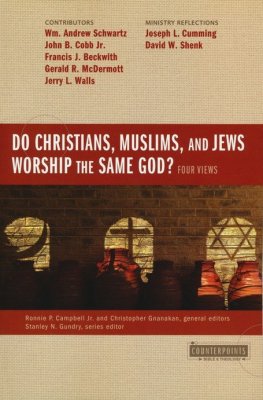
Do Christians, Muslims, and Jews Worship the Same God? Four Views

538035_1_ftc.jpg

A THOUGHT PROVOKING EXPLORATION ON THE DOCTRINE OF GOD

Book Review By Dr. David P. Craig  

If the latest world religions statistics are accurate the questions and answers that are raised, debated, and defended in this book are of monumental significance. In this “Counterpoints” book (a growing series of books on important topics by Zondervan Publishing in Grand Rapids, MI.) four views are defended and debated by five top notch theologian/philosophers.

The first two views promote the idea that Muslims, Jews, and Christians do indeed worship the same God. In the first essay of this book Wm. Andrew Schwartz (professor of process and comparative theology at Claremont School of Theology) and John Cobb, Jr., (professor emeritus at Claremont School of Theology) give several reasons for why they believe that these three major religions worship the same God by defending what they call the “Religious Pluralistic View.” Some of their main points in defense of their argument our as follows:

(1) Theology is not static. Theology is not uniform. Neither are the world’s traditions. In other words (as they are process theologians) they say that it is impossible to nail down any theological absolutes – because of the continual changes in God and in our studying, knowing, and worship of Him.

(2) The Fallacy of the Perfect Dictionary and Problem of Sameness. In addition to recognizing the complexity of Jewish, Muslim, and Christian identity, we should take note of the same ambiguity surrounding the words worship, same, and God. In other words the author’s suggest that it is impossible to agree upon the exactness of what or who God is when there is no perfect definition to be agreed upon. They write, “We should assume that YHWH of Judaism, Allah of Islam, and the God of Christianity are different ways of referring to one and the same divine ultimate…So, in one sense ‘same’ can imply no difference, and in another sense it can incorporate difference.” 

(3) They articulate that from a historical perspective all three religions worship the God of Abraham.

(4) Schwartz and Cobb also argue that all three religions worship a “Loving Creator” – what they call “The Divine Character Argument.” They affirm that in all three religions it is agreed upon that (a) God is One; (b) God is knowledgeable and relational; (c) God is loving and merciful; (d) God is creator; and (e) God is mysterious. They conclude in this section: “we find that parallel descriptions of God across the traditions greatly strengthen the likelihood that the God described and revered in Islam, Christianity, and Judaism is one in the same—the one and only loving and merciful Creator who knows our innermost beings.”

(5) Schwartz and Cobb defend the Ontological Argument – that there is only one being we call God. Here’s there summation of this reality, “If we begin with this declaration, the question as to whether all three worship the same God is strange indeed. After all, what would it mean for them to worship different Gods if there is only one God? From an ontological perspective, if there is, in fact, only one God available to worship, then it is reasonable to conclude that Muslims, Christians, and Jews worship the same God—that is, the only God…If there is only one God, then, for Christians, Muslims, and Jews to worship some God is to worship the same God.”

(6) The Singular Ultimate Reality. Scwartz and Cobb say that all three religions worship the same ultimate reality that they all call “God.” 

(7) Lastly, Schwartz and Cobb write that if Muslims, Jews, and Christians were to agree that we worship the same God it would result in the following: (a) A more peaceful world; (b) Generosity and humility; (c) Mutual transformation; and the (d) Importance of dialogue.

As with most of the Counterpoint books each essay is then responded to by the other essay writers, followed by a rejoinder in response to the other essayists critiques. I have to say that I thought the essayists in the first view wrote well and used some good analogies and arguments and yet I found their argument unpersuasive for two primary reasons: (1) I think their own view of “God” was defective and lacking. It was the equivalent of describing an object in only one dimension – when in reality God is multi-faceted. (2) It articulated a relativistic approach to truth and reality. In honing in on the “sameness” of beliefs of the three religions they left out the multiplicity of “differences” and contradictions of the three religions – which the final two essayists brought into play so very well.

The second view (essay) is presented by Francis Beckwith (professor of philosophy at Baylor University) and is entitled: “All Worship The Same God: Referring to the Same God View.” Beckwith bases his whole essay on a fictional group of students who are atheists and then who ultimately become a Jew, Muslim, and Christian for different reasons based on believing more or less the same things about God: “He is the absolute, uncaused, perfect, rational, unchanging, self-subsistent, eternal creator and sustainer of all that which receives its being from another…He who is metaphysically ultimate and has underived existence.”

Beckwith proceeds to give some historical and biblical points of agreement between the three religions and concludes: “because Christianity, Judaism, and Islam get the divine nature right (based on his definition of God above)—the absolute underived unconditional source of all contingent existence—their disagreements over the Trinity and the incarnation are appropriately viewed as contrary beliefs about the same God to which each faith refers…I am arguing that because there can only in principle be one God——the absolute underived unconditional source of all contingent existence—and because the theologies of each of these faith conditions refer to that one God, it stands to reason that they all worship the same God, even though they disagree about aspects of that God as a result of what each believes is special revelation.” In the final analysis Beckwith concludes his essay: “in recognizing that the three distinct religious traditions refer to the same God one is not contending that they share the same faith.”

Between the first two essays I would be more inclined to say that Beckwith’s was more logical and less abstract – yet still found that he made the same mistake as Schwartz and Cobb. He emphasized that which was similar in the beliefs of the three religions and minimized their radical differences. His last sentence was very telling: “the three distinct religious traditions refer to the same God one is not contending that they share the same faith.” However, those differences in faith most definitely point to a very different God – especially the “God” of Muslims and that of Jews and Christians – which we find defended in the last two essays.

The third essay by Gerald R. McDermott (Chair of Divinity at Beeson Divinity School) is called “Jews and Christians Worship The Same God: Shared Revelation View.” I found this essay to be the most profound and interesting of the four. 

McDermott straight away emphasizes the differences of beliefs related to the character and nature of God between Muslims and Jews/Christians:

(1) The first thing that must be said is that the love for God is never commanded by the Qur’an and rarely even mentioned. McDermott writes, “Daud Rahbar and other scholars agree that the Qur’an mentions love for God, it never commands it. Instead of love, fear of God is commanded by the Qur’an…Rahbar argued that the central theme of the Qur’an is God’s justice, and its most common exhortation is to ‘guard yourselves fearfully against God’s wrath.’” On the other hand the emphasis in the Bible is that God is love. According to both Sufi and non-Sufi Muslims, God does not have unconditional love for humans generally. God’s love is conditional, expressed only toward those who do righteous deeds.

(2) Another huge difference is the contrast of love for one’s neighbor in the Qur’an and what the Bible consistently teaches. The first is that the Qur’an contains repeated admonitions to Muslim believers not to make friends with non-Muslims (3:118). Whereas the greatest commandment in the Bible is to love God and love your neighbor as yourself (Mark 12:30-31). God models love for us in the Bible especially in the greatest act of history where the second person of the Trinity is sent by the Father to model the ultimate act of love – to be punished for our sin in exchange for His righteousness “In this is love, not that we have loved God but that he loved us and sent his Son to be the propitiation for our sins.” ~ 1 John 4:10

(3) At the heart of the dispute between Muslims and Christians in particular is the deity of Jesus Christ. The triune nature of God helps us understand the essence of God as One and yet the distinction of God in His persons. McDermott writes, “the works of the triune God are not divided [among the persons] is helpful. It reminds us that the Father’s works are not to be divided from the Son’s. The Son helps identify the character of the Father, for the Father’s character is revealed by the Son: ‘Whoever has seen me has seen the Father’ (John 14:9). If the Son told his disciples that God loved the world (John 3:16), that they should love God with all their hearts (Matt. 22:37), and that they should love everyone including their enemies (Matt. 5:44), we can infer that the Father has said and commanded the same. This Father is clearly different, then, from Allah of the Qur’an.” 

(4) McDermott then goes on to talk about the Jewishness of Jesus and Paul. With reference to Jesus he writes, “In sum, Jesus was not rejecting the Judaism of his day but illustrating its inner meaning. Therefore the Gospels do not support the notion that Christians worshiping Jesus as the Son of God are worshiping a God different from the God of biblical Judaism.” In respect to Paul he writes, “In one respect, Paul was even more Jewish than Jesus: he took a more positive approach to Pharisees than we see in the Gospels. He proudly presented himself as a Pharisee (Acts 23:6). 

(5) Christianity is not a new religion but the continuation or fulfillment of Judaism. The whole Old Testament. McDermott states, “I have tried to show that Jesus and Paul did not think they were starting a new religion to replace the Judaism they grew up with. They did indeed teach that the Messiah had finally come in Jesus, and that for that reason the Judaism of the first century had reached an epochal moment when the greatest promises had begun to be fulfilled.” 

Continuing in this vein he writes, “Judaism was finding its inner meaning and great climax because the perfect Israelite [Jesus] had appeared as the embodiment of the Law and of Israel herself. But this does not mean that Judaism was being replaced by another religion of a fundamentally different character, it means instead that the God of Israel was bringing the people of Israel to their promised apogee when their messiah was revealed as the Son of God, the meaning of all they had ever known. Rather than opposing Jewish law, Jesus and Paul observed it, even as they testified that Jesus was its living embodiment.”

In the final part of the essay McDermott talks about how some rabbi’s and Jewish traditions allow for the possibilities of the distinct doctrines related to God as revealed in the New Testament: the incarnation, resurrection, and Trinity. He concludes, “The God of Israel had long been known to be one being with internal differentiation. Hence the early church could claim that it was worshiping the God of Israel, but with new clarity about the identities within that differentiation….”

He closes his provocative essay in this manner, “Yet Paul regarded even those Jews who differed on Jesus but worshiped the God of Israel as having a zeal for the same God but ‘without knowledge’ (Rom. 10:2). They needed to hear and receive the gospel (Rom. 1:16), but they were worshipping the same God…

While the God of Israel is the Father of Jesus Christ and shares the same being and character as Jesus, Allah does not. YHWH forgives and saves through sacrifice as prescribed by Torah, and then through the perfect Sacrifice that was foreshadowed in the sacrifices of Torah. He shows in both Testaments that his people should forgive and love their enemies. He is Father to his people, love in his essence. This is true of the God revealed in both Testaments. None of this character can be found in Allah. While Christians and Jews share all (for Jews) or the vast majority (for Christians) of their scriptures, Christians and Muslims share none. For all these reasons, we must say that Christians do not worship the same God designated by Allah, but that Christians worship the same God as those Jews who regard the Old Testament as the Word of God.”

McDermott has written a very thought provoking and provocative essay. I am inclined to say that I agree with most of what he has written – In essence he is saying that those who are completed Jews – Messianic Jews – like the Apostle Paul, indeed worship the exact same God. Jews who have yet to believe in God as revealed in the New Testament via the explicit teachings of the incarnation, life, death, resurrection, and Triune nature of God have the genesis of these teachings in the Old Testament but need the New Testament to complete the Painting or Puzzle that centers on the Person and Work of Jesus as divine and thus worthy of worship.

I think the most logical, theologically precise, biblically based and philosophically cogent view is the final essay presented by Jerry L. Walls (professor of philosophy at Houston Baptist University). The view Walls espouses is entitled: “None Worship The Same God: Different Conceptions View.” 

Walls grapples with the following questions: (a) Do Muslims and Christians refer to the same God? (b) Is it necessary for Muslims and Christians to refer to the same God in order to worship the same God? (c) Do Jews, Christians, and Muslims believe essentially the same thing about God? (d) If they do not, are these differences of belief about God necessarily reflected in essentially different forms and expressions of worship? (e) Can Jews and Muslims be saved even if they are not worshiping the same God as Christians?

(1) Walls first of all makes a powerful case that if Christianity is true, there had been a reference shift in the Muslim use of “God” from God to fiction. He writes, “just as the name Santa Clause originated with a historical character (Saint Nicholas) and underwent a radical reference shift to a fictional character, in a similar way ‘Allah’ underwent a profound reference shift in Islam to the point that ‘Allah’ no longer referred to God, but rather to fiction, which is to say it refers to nothing at all.” 

Walls continues, “As someone who thinks Christianity is true, I am inclined to think there has in fact been a reference shift in the case of Islam but not of Christianity. That is, the dossier for ‘Allah’ includes claims that are so radically at odds with core Christian truth claims that a reference shift has occurred such that ‘Allah’ does not refer to God. Since Christians and Muslims do not even refer to the same God, they do not worship the same God.”

(2) Walls second major point is that “Sameness of Reference Is Not Enough for Sameness of Worship.” He demonstrates this principle in the idolatrous worship of the golden calf and the breaking of the first two commandments from Exodus 20. The point is that to worship a false god – or anything that is not true of God – is idolatry. Only Yahweh is “the one to be praised and worshiped for this signal act of salvation [God’s love revealed in delivering the Israelites from slavery as depicted yearly in the Passover], but Yahweh must never be confused with a golden calf. To worship him and to honor him for this act of salvation requires refraining from even the making of idols, let alone confusing them with Yahweh or bowing down to them and worshiping them.”

(3) The New Testament revelation of God is a game changer. In the New Testament Walls writes, “The God of the Old Testament has revealed to us in the New Testament revelation that he has an eternal Son who was incarnate in Jesus, and who provided salvation on our behalf through his death and resurrection. Indeed, this is God’s supreme act of love on our behalf. Walls continues, “Starting with the resurrection of Jesus and ending with the Trinity, Jews and Muslims deny all distinctively Christian revelation about God. The hard fact of the matter is that the fundamental claims of these three religions  are simply logically incompatible, and they cannot all be true. At least two of these religions are profoundly mistaken in what they believe about God and what he requires of us in terms of obedience and worship.”

(4) In the fourth major point of Walls’ essay he states this, “It is noteworthy that the most ecumenically central act of Christian worship, namely, the sacrament of communion, is a celebration of the death of Christ for our salvation and a looking forward to his return.”

(5) Walls goes on to show biblically how impossible it is to worship God unless you are fully worshiping who He is: the Triune God of the New Testament. He explains, “The radically different beliefs that Jews, Christians, and Muslims have about God do entail essentially different forms and expressions of worship. Stressing this point is imperative. It is precisely the fact that these different expressions of worship are praised on radically different beliefs about who God is and how he has revealed himself most clearly that lead us to conclude that Jews, Christians, and Muslims do not worship the same God.”

(6) I will quote Walls at length on his final argument which is very persuasive: “New Testament worship requires that all worshipers of the God who is fully revealed only in the New Testament humbly acknowledge that he has an eternal Son who was incarnate in Jesus, and that Jesus provided salvation in our behalf through his death and resurrection, and they offer grateful praise for this when properly informed of these truths…

The notion that our response to the incarnate Son is decisive for determining whether we truly know and worship God is major theme of the Gospel and Epistles of John…While it is true that the God who is the Father of Jesus is the same God who called Abraham and spoke to Moses, and that those who worship both the Father and Son are worshiping the same God who spoke to Abraham and Moses, it is no less true that those who refuse to believe and worship Jesus are not worshiping the God who called Abraham and revealed himself to Moses. The coming of Jesus has radically altered the terms of what is required to worship and obey the God of Abraham. This is the same point Paul makes in Romans 9-11, where he draws a distinction between ethnic and true Israel. The chief issue is that ethnic Israel has stumbled over the stumbling stone, which is Christ. It is highly significant that in the context of Romans 9:33, Paul is quoting passages from the Old Testament in reference to Yahweh himself and applying them to Christ. So, to reject Christ is to reject Yahweh!

(7) Walls finishes his essay with a formal agreement and then goes on to defend his formal argument. Here is the formal argument he presents:

  1. No properly informed worshiper who consciously rejects the incarnation and resurrection of Jesus is a worshiper of the God who is fully revealed only in the New Testament.
  2. All properly informed Jews and Muslims consciously reject the incarnation and resurrection of Jesus.
  3. No properly informed Jews and Muslims are worshipers of the God who is fully revealed only in the New Testament.
  4. If no properly informed Jews and Muslims worship the God who is fully revealed only in the New Testament, no properly informed Jews and Muslims worship the same God as those who worship the God who is fully revealed only in the New Testament.
  5. No properly informed Jews and Muslims worship the same God as those who worship the God who is fully revealed only in the New Testament.
  6. All properly informed Christians worship the God who is fully revealed only in the New Testament.
  7. No properly informed Jews and Muslims worship the same God as those who worship the God whom properly informed Christians worship.

In the final analysis one’s salvation hinges on the narrow door and the narrow way that is through Jesus. As Peter preached in Acts 4:12, “And there is salvation in no one else, for there is no other name under heaven given among men by which we must be saved.” Or as the Apostle shared with the Christians in Corinth, “Now I would remind you, brothers, of the gospel I preached to you, which you received, in which you stand, and by which you are being saved, if you hold fast to the word I preached to you—unless you believed in vain. For I delivered to you as of first importance what I also received: that Christ died for our sins in accordance with the Scriptures, that he was buried, that he was raised on the third day in accordance with the Scriptures, and that he appeared to Cephas, then to the twelve. Then he appeared to more than five hundred brothers at one time, most of whom are still alive, though some have fallen asleep” (1 Corinthians 15:1-6); or as Jesus himself said in John 14:6, “I am the way, the truth, and the life. No one comes to the Father except through me.” The only way to really know the God who has made Himself known is to believe the REAL God as He revealed Himself from Genesis to Revelation. 

I highly recommend this book as a thought provoking and deep study in the doctrine of God. No matter where you are coming from in your world view, this book will challenge you, make you think, and hopefully help you make a life changing decision leading you into accepting the truth that can change your life both now and for eternity.

America’s First Foreign Missionary: Adoniram Judson

231899.jpg

On this Day: February 6, 1812

Christian parents worry about sending their sons and daughters to colleges and universities. Sometimes with good reason. Young people can “lose their faith” there. But some lose it only to regain it later with added strength.

Adoniram Judson grew up in parsonages around Boston in the 1700’s. He entered Brown University at the age of 16 and graduated valedictorian of his class. While there he became best friends with Jacob Eames. Jacob was a deist and, in practical terms, an atheist. Ridiculing Judson’s faith, he challenged him with the writings of Voltaire and the French philosophers. When Adoniram returned home, he told his parents that he, too, had become an atheist. His mother broke into sobs. His father roared and threatened and pounded the furniture. 

Adoniram, 21, migrated to New York City to establish himself as a playwright. But then, hearing tales from the American frontier, he saddled his horse and headed west. One evening, weary from traveling, he stopped at an inn. The proprietor said, “Forgive me, sir, but the only room left — well, it’ll be a bit noisy. There’s a young fellow next door awfully sick.” Adoniram, too tired to care, took the key.

The night became a nightmare. The tramping of feet coming and going. Muffled voices. Painful groans. Chairs scraping against the floor. Adoniram was troubled by it all, and he wondered what his friend Jacob Eames would say about fear, illness, and death.

The next morning while checking out, he asked about the young man in the next room. The proprietor said, “I thought maybe you’d heard. He died, sir, toward morning. Very young. Not more than your age. Went to that Brown University out East.” Adoniram, stiffened. The man continued, “His name was Jacob Eames.”

The West suddenly lost its lure, and Adoniram, turned his horse toward home. Soon he gave his life to Christ, and shortly afterward, devoted himself to missions. On February 6, 1812, Adoniram Judson was commissioned as America’s first foreign missionary. He, his wife, and companions sailed for Burma on February 18.

The Scriptures say that the Messiah must suffer, then three days later he will rise from death. They also say that all people of every nation must be told in my name to turn to God, in order to be forgiven. So beginning in Jerusalem, you must tell everything that has happened.

Then he [Jesus] opened their minds [the disciples] to understand the Scriptures, and said to them, “Thus it is written, that the Christ should suffer and on the third day rise from the dead, and that repentance for the forgiveness of sins should be proclaimed in his name to all nations, beginning from Jerusalem. You are witnesses of these things. And behold, I am sending the promise of my Father upon you. But stay in the city until you are clothed with power from on high.” ~ Luke 24:45-48

Article from Robert J. Morgan’s, On This Day: 365 Amazing And Inspiring Stories about Saints, Martyrs and Heroes. Kindle, Loc. 1146-1162.

JONATHAN EDWARDS LEGACY

3329x.gif

*THE LEGACY OF A DAD’S LIFE

“TELL ME WHO YOUR FATHER IS AND I’LL TELL YOU WHO YOU ARE” 

Every father leaves a legacy with his children—no exceptions. The only question is, what kind of legacy?

A few years ago, a team of New York state sociologists attempted to calculate the influence of a father’s life on his children and the following generations. In this study, they researched two men who lived in the 18th century. One was Max Jukes, the other Jonathan Edwards. The legacy that each of these men left their descendants stands as a study in contrasts; they are as different as night and day.

Max Jukes was an unbeliever, a man with no principles. His wife also lived and died in unbelief. What kind of a lasting influence did he leave his family? Among the 1,200 known descendants of Max Jukes were:

  • 440 lives of outright debauchery (excessive indulgence in sensual pleasures)
  • 310 paupers and vagrants
  • 190 public prostitutes
  • 130 convicted criminals
  • 100 alcoholics
  • 60 habitual thieves
  • 55 victims of impurity
  • 7 murderers

Research shows that not one of Jukes’ descendants made a significant contribution to society—not one! To the contrary, this notorious family collectively cost the state of New York $1,200,000.00.

Not much of a legacy.

What about the family of Jonathan Edwards? Regarded as the most brilliant mind America has ever produced, Edwards was a noted pastor and astute theologian. This renowned scholar was the instrument God used to bring about the Great Awakening in colonial America. Later, he served as the president of Princeton College.

Jonathan Edwards came from a godly heritage and married Sarah, a women of great faith. Together, they sought to leave an entirely different legacy. Among his male descendants were:

  • 300 pastors, missionaries , or theological professors
  • 120 college professors
  • 110 lawyers
  • 60 physicians
  • 60 authors of good books
  • 30 judges
  • 14 presidents of universities
  • numerous giants in American industry
  • 3 U.S. congressmen
  • 1 vice-president of the United States

There is scarcely any great American industry that has not had one of Jonathan Edwards descendants as its chief promoter. Such is the lasting influence of a godly man.

Now that’s a legacy!

Every man leaves a lasting influence on his children that will affect future generations for centuries to come. But let’s face it, not all legacies are the same. Some are productive, others destructive. Some are illustrious, others are infamous. How you live your life will affect generations to come. The only question is, what kind of a legacy will you leave behind?

THIS IS YOUR LIFE

To help you answer that question, I want you to imagine that you have just walked into a church to attend a funeral service. The mood is somber, the crowd quiet. Loved ones are making there way past the open casket for the final viewing of the body. Many are weeping. Some are wiping their eyes with handkerchiefs. A few stand gazing at the lifeless body.

The specific time has now come for the service to begin. As the minister approaches the pulpit, he motions for the congregation to rise. The family of the deceased slowly proceeds down the center aisle to the front.

Anxiously, you look up to identify the family. As you peer into the face of each member, you are in for the shock of your life. Suddenly, you realize this is your family!

You are attending…your funeral!

In stunned disbelief, you respond to the minister’s directions for the congregation to be seated. He begins by expressing his feelings of appreciation for your life. What he says is nice and flattering. But at the same time, his words are generic and impersonal.

Let’s be honest, it’s the words of your family, those closest to you that matter most. What will your wife say about you? What will your children say about you? 

The minister finishes his eulogy and motions to your children to come to the pulpit. They approach the platform, waiting their turn to speak about how you influenced their lives. One by one, your kids reflect on their years with you and share remembrances of you as their dad. They recall incidents you have long forgotten. They remember your impact, reflect on your character, and recite your virtues. 

At this point, all you can do is listen. With riveted attention, you hang on their every word. These are the most important sentences you will ever hear anyone speak about you. Your lasting success as a dad is measured by what they say.

All imagination aside, if you died today, what would your children remember you for? What would be your legacy to them?

What your children take from your life, in large measure, will define your legacy as a dad. Your lasting influence upon their lives will mark whether or not you lived successfully as a dad. This will be your legacy.

*Adapted from the book The Legacy: What Every Father Wants To Leave His Child by Steven J. Lawson, pp. 13-15

The Testament by John Grisham

51Qx00iikAL._AC_UY436_QL65_ML3_.jpg

A DEEP PROBING INTO THE MEANING OF LIFE

Book Review By Dr. David P. Craig

Rarely does a work of fiction delve into the philosophical, existential, and theological realm with such insight and wisdom. Grisham, a great story teller, also weaves in this hard to put down novel, a contrast of two world-views: Materialistic Naturalism vs. Judeo-Christian. Jesus in Matthew 16:25-26 put it this way, “For whoever would save his life will lose it, but whoever loses his life for my sake will find it. For what will it profit a man if he gains the whole world and forfeits his soul? Or what shall a man give in return for his soul?”

This book brilliantly contrasts the wasted life characterized by the bulk of characters in the book: a multi-billionaire who leaves behind eleven billion dollars, all of his ex-wives, adult children, and a lawyer who has been in and out of rehabilitation for drugs and alcohol – who also has left behind a wake of disastrous and broken relationships. In the midst of this a lone figure stands as the hero of the story – an unselfish missionary doctor in an obscure area of Brazil who has spent the last eleven years of her life ministering to a primitive group of Indians.

Grisham paints a vivid picture of how greed, envy, addictions, lust, and selfishness destroy. He contrasts this with how someone at peace with God, and who loves unselfishly is fulfilled, satisfied, and full of joy. Those who gain the whole world in the end lose everything, and the one who lives for Jesus gains everything. Without being preachy, overtly theological, or even quoting a single Scripture – Grisham tells the biblical story without using a single biblical character or reference. It’s a story of redemption, hope, and purpose. I highly recommend The Testament as a testament that reveals two contrasting viewpoints of reality in a powerful and compelling way.

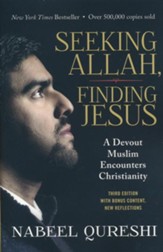
“Seeking Allah, Finding Jesus” by Nabeel Qureshi

092640.jpg

Riveting Testimony of God’s Redeeming Grace

Book Review by Dr. David P. Craig

I had no idea what kind of a treat I was in for in reading this book. I don’t think I’ve ever read such a riveting auto biography. Nabeel Quereshi tells his story of what it is like to grow up in Scotland and America as a a second generation immigrant from Pakistan. It took me two days to read the book because it is close to 400 pages and I’m a slow reader, but I had a hard time putting it down. Nabeel is a phenomenal story teller and has a witty and fantastic intellect.

This book has it all: drama, humor, depth, pathos, wisdom, and fantastic spiritual truths.  Nabeel has a way of bringing you into the story so that you feel like you are in each scene. I laughed, cried, and laughed and cried some more.

This book helped me immensely in the following ways: (1) It gave me tremendous insight into what it’s like to be a second generation Muslim living in America; (2) It helped me to better understand the beliefs, culture, sociology, and religious practices of Islam; (3) It gave me a greater compassion for people of the Muslim faith; (4) It motivated me to befriend, understand, and help Muslims; (5) It motivated me to know what I believe and why I believe it (as a Christian) more than I do; (6) It gave me an excitement to go deeper in my study of Islam and Christianity and how they are similar and different; (7) It made me want to delve deeper into being able to give numerous reasons for and evidences of the infallibility and inerrancy of the Scriptures, the death, burial, and resurrection of Jesus, and evidences for the Deity of Jesus and why this matters immensely for everyone.

I think any Christian, Muslim, or a person of any belief can benefit from reading this book. It will stir in you a desire to know what you believe, why you believe it, and motivate you to seek the truth. Nabeel has a story that will motivate you, liberate you, excite you, and can radically change your life! I can’t recommend this book highly enough – absolutely outstanding. It’s a book I will read again and again for encouragement, motivation, and transformation.