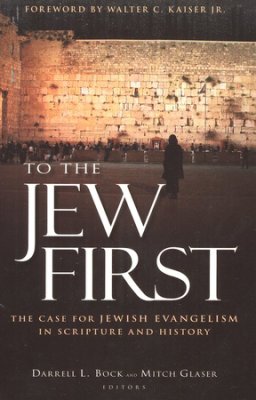
Jewish Evangelism in the New Millennium in Light of Israel’s Future (Rom. 9-11) By Dr. Walter C. Kaiser Jr. 

436580.jpg

It is impossible to read and interpret the epistle to the Romans without confronting its central issue—the relation of the Jewish people to God’s plan of salvation and evangelism. Throughout the entire apostolic ministry of Paul, we, in fact, find this “two-step missionary pattern”: [Note #1: This expression is from Mark D. Nanos, The Mystery of Romans: The Jewish Context of Paul’s Letters (Minneapolis, MN: Augsburg Fortress, 1996), 239-47]. “to the Jew first and also to the Greek” (Rom. 1:16; 2:10 RSV). Paul’s custom, upon arrival in a city where he had not previously preached, was first to enter the synagogue to preach, then to preach to the Gentiles of that city. [Note: #2: Acts 17:1-2, “Now when they had passed through Amphipolis and Apollonia, they came to Thessalonica, where there was a synagogue of the Jews. And Paul went in, as was his custom, and on three Sabbath days he reasoned with them from the Scriptures.”]. This two-step pattern is a distinctive of the apostle’s ministry and message: the Jew first and then to the Gentiles.

Nevertheless, even though all will agree on the correctness of this assessment, it has become commonplace among more recent theologians to regard the Christian church as the new successor and replacement for the Israel of Romans 9-11. Or alternatively, Israel is treated as a parenthetical insertion into, or disruption to the Gentile evangelistic outreach of, the otherwise unified argument of the book of Romans.

Examples of the former mistake can be seen in a fairly large number of places. The second Vatican Council described the Christian church as “the new Israel.” [Note #3: Geoffrey Chapman, The Documents of Vatican II (London: n.p., 1966), 24-26, as cited in D.B. W. Robinson, “The Salvation of Israel in Romans 9-11,” Reformed Theological Review 26 (1967): 81. Robinson also alerted me to several of the surfaces that follow from the church documents.] A similar document titled “Report of the Joint Commission on Church Union of the Congregational, Methodist, and Presbyterian Churches of Australia” also identified the church with “the true Israel.”[Note #4: Joint Commission on Church Union, The Church: Its Nature, Function and Ordering (Melbourne: Joint Board of Christian Education, 1964), 12ff.]. These citations are only a small representation of the reigning thought among many reformed and covenantal theologians today.

But just as troubling is another sentiment among many dispensational and non reformed theologians. This perspective asserts that the doctrine of salvation in the book of Romans can be dealt with apart from the question of the Jewish people. It is thought that Romans 9-11 is merely a parenthetical insertion between Romans 1-8 and Romans 12-16, one that momentarily halts the discussion of the doctrine of salvation in the former passage and its practical implications in the latter. Even though this group correctly believes there is a future for ethnic Israel of the flesh, they do not clearly connect it with the present-day church. It is almost as if the plan of God for salvation changes as the days of the eschaton appear in the windup of the present period of history.

To counter such a belief, both of these positions must come in for some serious modification according to the biblical data. The task of this article, then, is not only to interpret the meaning of Romans 9-11 as faithful to the apostle’s assertions, but also to show that Romans 9-11, with its message about Israel, is integral to the subject matter of the epistle as a whole with its single plan of the salvation of God.

The Ancient Covenant: A Troubling Question

Romans 9-11 is not, as Hendrikus Berkof affirmed, some sort of “eccentric outburst, nor is it particularly difficult, as is suggested by the contradictory explanations.” [Note #5: Hendrikus Berkof, Christ the Meaning of History, trans. Lambertus Buurman, Dutch 4th ed. (Richmond, VA: John Knox Press, 1966), 141.]. Berkhof went on to correctly observe that this text becomes especially difficult only when we wish to make it say something it does not say.

Why, for example, does the apostle say, “I have great sorrow and unceasing anguish in my heart” (Rom. 9:2 NIV)? So strongly does Paul feel about this matter that he could wish himself personally accursed and cut off from the Messiah if it would have the benefit of bringing his Jewish brethren to the light of the gospel in the Messiah (Rom. 9:3).

Surely, this is a noble and praiseworthy sentiment, but it does not explain why the area of Jewish acceptance of the gospel is so troubling for Paul. Only when we get to Romans 11:1 do we find out what is so troubling to the apostle: “Did God reject his people?” The question poses a potential problem not only about Israel, but a bigger problem not only about Israel, but a bigger problem about God. In short, how can the everlasting plan of God be trusted and believed in for the salvation of all peoples? If God—the same God, who, based on His word and his own life (Gen. 12; 22; Her. 6:18)—once promised to Israel similar outcomes as those found in Romans 9-11, but has now rejected Israel and turned his back on them, what is left of the doctrine of the faithfulness and dependability of God? It is simply impossible for God to lie or go back on what he promises. Therefore, the problem of Israel is the problem of God due to his eternal promise-plan. [Note #6: I have developed the continuity theme of the promise-plan of God between the two testaments in my books Toward an Old Testament Theology (Grand Rapids: Zondervan, 1978) and The Christian and the “Old” Testament (Pasadena, CA: William Carey Press, 1999).].

The answer Paul will give to his own question is that the rejection of Israel is not total or complete, but only temporary and partial at that. “It is not as though the word of God had failed; for not all who are descended from Israel are Israel” (Rom. 9:6 NIV). That is, there are many Israelites who are not lost, but are saved. This same divine discriminating policy has been observed from the very beginning. God chose Isaac, not Ishmael; Jacob, not Esau (Rom. 9:7-12). In so doing, Paul argues, God was not unjust. The marvel is that anyone experienced the mercy of God. The better question to ask is why God spared anyone at the time of the golden calf (Rom. 9:14-18). Furthermore, this divine sovereignty does not exempt human responsibility, for while the grace and mercy of God cannot be pursued by works, but only by faith (Rom. 9:31-32), mortals still culpable for their own refusals of this grace of God. But there is more to the answer: in Romans 10 Paul demonstrates that the rejection of so large a number in Israel is not arbitrary or out of character for God. Israel disregarded the righteousness that came from God and substituted instead a homemade righteousness that refused to submit to God’s righteousness (Rom. 10:3). Most of Israel failed to “confess with your mouth that Jesus is Lord and believe in your heart that God raised him from the dead” (Rom. 10:9). Thus, there is no way that any Israelite, who rejects God’s way of salvation, can blame anyone other than themselves. Had not the prophet Isaiah cried out on God’s behalf, “All day long I have held out my hands to an obstinate people, who walk in ways not good, pursuing their own imaginations” (Isaiah 65:2) Paul used in Romans 10:21 this very argument from the prophet Isaiah to show that many of the Jewish people must bear responsibility.

The rejection of the majority of Israel, however, is “neither absolute nor unqualified.” [Note #7: Anthony A. Hoekema, The Bible and the Future (Grand Rapids: Eerdmans, 1979), 142]. Romans 11:1-10 argues that God’s dealings with the Jews and the Gentiles are closely interrelated. What may have seemed to be a divine rejection of the Jewish people was and is not such, for there has always been a remnant selected by grace who did believe and were saved (Rom. 11:5). Thus, the gospel had a twofold effect: some were saved and others were hardened by the same good news. This double effect mirrors that which the plagues of Egypt had on Pharaoh and the Egyptians. The plagues were meant to lead the Egyptians to repentance (Exodus 7:17; 9:14, 29 et passim), but it hardened many off them. Some did believe (Ex. 12:38), but most, like Pharaoh, rejected all of God’s evidences.

Israel: An Indefectible Destiny

It is clear that Paul focuses his attention on Israel in these three chapters, but what “Israel” is Paul thinking about? Nowhere else in Paul’s writings has he expounded and used the term Israel so centrally and so insistently. Elsewhere in Paul’s writings, Israel occurs only five times (NIV):

  1. 1 Corinthians 10:18—“Consider the people of Israel,” a passing allusion to the sacrificial order in the older testament;
  2. 2 Corinthians 3:7, 13—“the Israelites,” who were unable to look on Moses’ face when he came down from Mount Sinai;
  3. Ephesians 2:12—“excluded from citizenship in Israel,” refers to Christians who were not part of the state of Israel;
  4. Philippians 3:5—“of the people [stock] of Israel,” describes Paul as being a legitimate Jew;
  5. Galatians 6:16—“Israel of God,” is a passage hotly contested both for and against an identification with Israel.

In Romans 9-11, however, the term Israel or Israelites occurs fourteen times. But this recurrence represents more than focus: Paul speaks from within, and on behalf, of Israel. We shall badly misunderstand Paul if we think that he has renounced his membership within Israel due to his faith in Jesus. The apostle never seceded from his Jewish heritage and his people, for what he taught was consistent with his Jewish faith taught in the Tenakh.

Paul proposes no new definition for Israel: for him there was only one Israel. C.F.D. Moule had thought that the name Israel had lost its original character, with Paul reserving the name Jews for those who are externally, or by both, Jewish, and the term Israel being reserved for those who were part of the people of God, the religious community. [Note #8: C.F.D. Moule, The Birth of the New Testament (London: Adam and Charles Black, 1962), 46.]. This cannot be sustained however, in biblical usage. These two terms, Jews and Israel, are never contrasting terms, for when Paul wished to make that distinction, he spoke of those who were Jews “outwardly” versus those who were Jews “inwardly” (Rom. 2:28-29).

The real character and definition of Israel is set out in Romans 9:4-5. Their articles of incorporation, as it were, included “the adoption as sons,” “the divine glory,” “the covenants,” “the receiving of the law,” “the temple worship,” “the promises,” “the patriarchs,” and “the human ancestry of Christ [the Messiah]” (NIV). But even more startling, this calling and these gifts were “irrevocable” (Rom. 11:29). God himself could not change his purpose and plan toward his people whom he had set as the object of his election (Rom. 11:2).

It is this simple but complex affirmation that makes Romans 9-11 so difficult for those who approach it with a different idea in mind. The Jewish people are forever loved by God because of the promise God had given to the patriarchs (Rom. 11:28). Moreover, the promise of Isaiah 54:17 was true: “Israel will be saved by the LORD with an everlasting salvation” (NIV). This would be fulfilled when “all Israel” would be saved (Rom. 11:26).

Therefore, we must not separate and set asunder an eschatological Israel of the promise from an ethnic-empirical Israel of history. The Israel that Paul refers to in these three chapters is the one that “descended from Jacob/Israel” (Rom. 9:6, 10). What is more, the salvation of the Gentiles is closely related to the salvation of Israel, two arms of the one and same divine purpose and plan of God. That single plan for both is, in fact, the finale to the whole argument of the book of Romans. Paul concludes, “Messiah has become a minister of the circumcision {Jews} for the truth of God, that he might confirm the promises given to the patriarchs, and that the Gentiles might glorify God for his mercy” (Rom. 15:8-13). Accordingly, the salvation of the Gentiles rests on the promises given to the patriarchs just as much as did the salvation of the Jews. But that same salvation is the one now confirmed in the appearance of the Messiah, Yeshua/Jesus, who is also a minister to the Jewish people with the same message of salvation.

There is the marvel: even though the Gentiles lacked the covenant and the divine promises made with Israel, they can now enter into that same experience though faith without becoming Israelites. They are partners with Israel, but not Israel. As believers, Gentiles are “children of Abraham” (see Gal. 3:29), but that’s not the same thing as saying they are “children of Israel.” [Note #9: This fine point is made by Robinson, “The Salvation of Israel in Romans 9-11,” 89. Robinson notes that this equation is sometimes made by theologians, but Paul never makes it.].

Paul uses the former term, but he refrains from using the latter. Thus, the term of continuity between believers, Jew and Gentiles, is “the people of God.” [Note #10: For further details, see Walter C. Kaiser Jr., “Israel as the People of God,” in The People of God: Essays on the Believer’s Church, dedicated to James Leo Garret Jr. (Nashville: Broadman, 1991), 99-108.]. God may, and does, call other nations as “his.” Egypt, for example, is called “my people” in that future day of the Lord (Isa. 19:25). He also took out of the Gentiles “a people for his name” (Acts 15:14), but in no case did the writers of Scripture ever thereby consider these new believers as the “new Israel” and to be equated with national Israel.

The One Olive Tree

The imagery of the olive tree [Note #11: The most extensive treatment of the olive tree is found in A.G. Baxter and J.A. Ziesler, “Paul and Arboriculture: Romans 11:17-24, “Journal for the Study of the New Testament 24 (1985); 25-32.] is developed to warn the new Gentile believers that they have not supplanted Israel or that the ancient promises made to the patriarchs have been rescinded. W. D. Davies suggests that Paul may have purposely chosen the olive tree analogy over that of the vine, which is more natural to the Jews. The olive, Davies remarks, is a powerful symbol of Athens and the Greek culture. [Note #12: W.D. Davies, “Paul and the Gentiles: A Suggestion Concerning Romans 11:13-24,” in Jewish and Pauline Studies (Philadelphia: Fortress, 1984), 153-63, esp. 155].

Paul’s primary purpose, though, was to make his sharp contrast between the wild and cultivated olive trees. The wild tree (Gr. agrielaios) was unproductive and bore no useful fruit, thereby making it a perfect analogy for contrast between the Jewish culture as supplied by God and the Hellenistic culture of the Gentiles.

The olive tree analogy focuses on the root and the branches. The other symbols in Romans 11:16, that of the “firstfruits,” the “dough,” and the “whole batch,” serve the same purpose as the root and the branches: the solidarity of the part with the whole. The apostle uses the Semitic concept of solidarity when he argues that the character of the root of a tree, or body, carries over into the whole plant or the branches into two separate entities, for the quality of the source of nourishment inheres in the quality of the resulting branches.

But what is the “root”? Whether the root is Abraham, the blessings and promises given to Abraham, or Messiah himself, as he is the “seed of Abraham to whom the promises were made” (Gal. 3:16ff.), makes little difference here. The same covenantal promise of God is referred to in any event: the promised Messiah who would come though Abraham. It is this root that sustains all the branches, whether they are newly grafted in or part of the original olive tree.

The branches, however, are a different story. The olive tree is rightly regarded as the Israelites’ “own olive tree” (Rom. 11:24). But does the entire tree represent Israel? Yes, insofar as it represents the dependence of Israel on the Abrahamic blessing. “Certain,” or “some” (Gr. tines), of the olive branches, however, have been lopped off (Rom. 11:17). So sensitive is Paul to the unbelief of his people that he uses the word “some,” or a “certain”  number, of branches have been cut off, thereby suggesting a minority, even though he perceives that it is a majority for the present time (cf. Rom. 3:3).

But from what have these natural branches been cut? They have not been severed from their ethnic entities, for they are still Jews regardless of their lack of belief. Moreover, Paul uses the passive verb (Gr. exeklasthesan—Rom. 11:17, 19029) for the breaking off of the branches, indicating that it is the action of God himself. (If it is a middle voice, then the action is one that the branches have brought themselves.) The branches have left the promises that God to Abraham. It is not that these branches have been replaced, but branches from a wild olive have been grafted in—in and among those natural branches that still have their roots in the promise of Abraham. The salvation now enjoyed by the Gentiles is continuous with the root of Abraham. In this way, Gentiles share in what had originally been given to Israel, which “some,” or “certain,” of Israel now reject.

The Gentile believers are designated as a wild olive. It is not their “wildness” that is in view here, however, but that they are not “cultivated,” “cultured.” In and of themselves, the Gentiles will never produce olive oil. (Had Paul used a vine for his analogy, it wouldn’t have worked because the wild grapevine does produce wild grapes.) Therefore, if the Gentiles are going to produce anything, they must be grafted into the people of God who spring from the root of Abraham. The Gentiles do not “support the root, but the root supports [them]” (Rom. 11:18 NIV). Without this root, Gentile Christians cannot live—nor can the church exist, for it would float in midair with no anchorage in the past or present.

Has God grown weary of Israel? Is that why some of the natural branches were lopped off? Paul meets this misconception in Romans ,11:19. On the contrary, the Jews have chosen not to believe and thus were lopped off. The Gentiles have been grafted in not because of a superior virtue on their part; rather, it was solely because of their belief (Rom. 11:19-20). Jews who believe in Messiah do not need to be grafted into an alien root as do the Gentiles, who came from paganism (Rom. 11:23-24). Jews could be re-engrafted into the olive tree all the more easily than the Gentiles were grafted in.

The ultimate acceptance of the Jews into those “in Christ” would be like “life from the dead” (Rom. 11:15 NIV). By this, Paul meant that more than merely untold spiritual blessings would result. The “acceptance” (Rom. 11:15—Gr. prolempsis) would be an act inaugurating the end of all things. The final act of history would rest upon the Jews. When these who were “in Abraham” would also be “in Christ,” untold benefits would result, signaling the coming of the eschaton itself.

The Mystery of Romans 11:25

The “mystery” in Romans 11:25 does not hark back to the olive tree analogy so much as it does to the earlier statements in Romans 11:11-14, with its reference to “provoking to emulation,” i.e., “arouse my own people to envy and save some of them” (Rom. 11:14 NIV). The mystery is not so much that “all Israel will be saved” as it is how all Israel will be saved.

So the mystery is not the fact of Israel’s having “stumbled” (Gr. proskoptein). Note that Paul distinguishes between Greek ptaiein, “to stumble,” and Greek piptein, “to fall.” Israel has stumbled but not fallen. The question is why Israel stumbled and how they will be saved. The mystery, then, is the process that God is employing to bring about Israel’s final redemption.

How, then, does the metaphor of “hardening” of Israel illustrate the mystery of how God is dealing with the nation that has rejected him? Paul has used the concepts of “stumbling,” over the “stone that causes men to stumble” (see Rom. 9:32-33 NIV), and the branches that have “been broken off”(Rom. 11:17)—as well as the concept of “hardening” (Rom. 11:7)—to indicated the status of “the others” from the “remnant” (Rom. 11:7, 5). Mark D. Nanos comments that the word hardening (Gr. porosis) is derived from a medical group of words that refers to the hardening swelling of a bone that has been broken. It was used frequently and so interchangeably with the Greek paposis, meaning “maiming,” or “blinding,” that there was often little or no distinction between the two terms. [Note #13: Nanos, The Mystery of Romans, 261]. This hardening is not final, but is a temporary division of Israel that will set up the final benefits that will come in the end times.

What, then is the “partial hardening,” or “hardening in part” (Gr. app merous—Rom. 11:25) that has come over Israel? Some interpreters argue that only a part of the people were hardened while others argue that all Israel is hardened partially. But Paul is only concerned here with that part of Israel that has stumbled, not with all of Israel stumbling partially. Further, not all Israel has been hardened, even partially. There have always been a remnant and holy branches in the nation of Israel. But it is the hardened part in contrast to the remnant, that is in Paul’s view, who will eventually see and believe along with the newly grafted-in Gentile believers.

When will this hardening that has come over a part of the Jewish people end? Not “until [Gr. achri, a conjunction followed by an untranslated relative pronoun hou, that gives a future, temporal sense] the fulness of the Gentiles has come in” (Rom. 11:25 NASB). Sometime during or after the “fulness of the Gentiles” (KJV) takes place, this hardening of part of Israel will end.

But what di Paul mean by “the fulness of the Gentiles”? The “fulness” (Gr. pleroma) usually takes on a numeric quality of that which brings to completion what had been planned or sought. The RSV translates the term “fulness” in Romans 11:12 as the “full inclusion,” or “full number.” Thus, God has in mind a full number of Israelites just as a full number of Gentiles. When the full number of the Gentiles is reached, it will be Israel’s opportunity to experience their full number. The gathering of Gentiles goes on throughout all history, but there will come a time when this process will be wrapped up. That time is similar to Luke 21:24, where “Jerusalem shall be trodden down of the Gentiles, until the times of the Gentiles be fulfilled” (KJV). Upon that happening, Jesus’ comment was, “You know that the kingdom of God is near” (Luke 21:31 NIV).

The benefits that God has bestowed on the Gentiles are but “the proleptic deposit of what God will bestow upon Israel at the culmination of salvation history.” [Note #14: Bruce W. Longenecker, Eschatology and the Covenant: A Comparison of 4 Ezra and Romans 1-11 (Sheffield, UK: Journal for the Study of the New Testament, 1991), 261]. That is the point of Paul’s jealousy motif: Israel will one day realize that some Gentiles are enjoying what was originally promised to all Israel and thereby be provoked to jealousy to start emulating the faith that the Gentiles are exercising. Accordingly, the Gentiles are presently awaiting their full adoption as sons (Rom. 8:23), an adoption that Israel originally enjoyed (Rom. 9:4). These two adoptions come together, as we have already seen in Romans 15:2, where it is said that Gentiles share in the blessings of the Jews.

All Israel Will Be Saved

All Israel” cannot refer to the church. Instead, the real goal of Paul’s ministry could now be announced: it was the restoration of “all Israel” as God had promised (Rom. 11:26).

The “And so” (KJV Gr. kai hoots) that introduces verse 26 is descriptive of a process that plays off the earlier “until the full number of the gentiles has come in.” As Nanos said, “This balance allows one to avoid  the bifurcation most interpreters find necessary to support their larger reading of Paul’s message here. Paul is telling his reader both how and when God is saving ‘all Israel.’” [Note #15: Nanos, The Mystery of Romans, 274].

Surely this will answer Anthony A. Hoekema’s objection that Romans 11:26 does not say, “And then [implying the Greek word tote or epeita] all Israel will be saved,” but it has (kai) hoots (“thus, so, in this manner”), a word manner, not temporal succession. “In other words, Paul is not saying, ‘Israel has experienced a hardening in part until the full number of the Gentiles has come in, and then (after this has happened) all Israel will be saved.’ But he is saying, ‘Israel has experienced a hardening in part until the full number of the Gentiles has come in, and in this way all Israel will be saved.’” [Note #16: Hoekema, The Bible and the Future, 144-45].

Hoekema’s objection was dealt with more than a decade before Hoekema’s time when Hendrikus Berkof also connected the “And so” with “until the full number of the gentiles has come in.” But a point that both Hoekema and Berkhof missed was that Romans 11:27 linked this “And so,” with “this is my covenant with them when I take away their sins.” That has to be a clear reference to the new covenant [Note #17: Walter C. Kaiser Jr., “The Old Promise and the New Covenant,” Journal of the Evangelical Theological Society 15 (1972): 11-23.] that Jeremiah announced in 31:31-34 and that is seen in some sixteen other passages that refer to the “eternal covenant,” “my covenant,” or “the new heart and the new spirit.” The contents of that new covenant are not only a replication of the promises made to Abraham and David but an expansion of them into the future.

The late Reformed theologian John Murray commented, after noting that Romans 11:26-27 is a quotation from Isaiah 59:20-21 and Jeremiah 31:34, “There should be no question but Paul regards these passages as applicable to the restoration of Israel.” He went on to say, We cannot dissociate this covenantal assurance from the proposition in support of which the text is adduced or from that which follows in verse 28 [‘on account of the patriarchs’]. Thus the effect is that the future restoration of Israel is certified by nothing less than the certainty beginning to covenantal institution.” [Note #18: John Murray, The Epistle to the Romans, 2 vols. (Grand Rapids: Eerdmans, 1965), 2:99-100.].

It can be concluded then, that while the “And so” may not be as fully temporal in its reference as some may desire, it is sequential in though and consequential in that it ties the promises of the patriarchal-Davidic-new covenant with the coming of the full number of Israel. Once this interconnectedness is admitted, the three elements—Messiah, the gospel, and the land—come back into play once again.

Hoekema also did not like limiting the “full inclusion” to the end times. But this too came from a refusal to see the past and present remnant of Israel as the foundation and guarantee that God would complete his eschatological and climactic act. Had not the prophets of Israel depicted a remnant returning to the land (e.g., Isa. 10:20-23) and becoming prominent among the nations in the latter day (Isa. 2:2; Mic. 4:1)? Paul’s phrase of “life from the dead” in Romans 11:15 takes on new force in light of Ezekiel’s figure in 37:12, 14. There, Ezekiel intoned, “O my people. I am going to open your graves and bring you up from them; I will bring you back to the land of Israel…I will put my Spirit in you and you will live, and I will settle you in your own land” (NIV).

But how many of Israel will be saved—“all”? It cannot mean “true” or “spiritual” Israel, as some have alleged, as if the church had supplanted Israel. That was the very point Paul was arguing against.

The notion of the substitution of the church for Israel was a historical development that Richardson says first began with Justin Martyr around A.D. 160. [Note #19: Peter Richardson, Israel in the Apostolic Church (Cambridge: Cambridge University Press, 1969), 205-6.]. But this conclusion is not based on what Paul is claiming in this passage; it owes more to many having concluded that Israel has been rejected. Surprisingly, however, Paul claims the reverse: Israel has not been rejected. Indeed, the church is built on the shoulders of the ancient promises to Israel and the future restoration of all Israel.

So how many did “all Israel” involve? “All Israel,” argued Dunn, was a common idiom for corporate or collective Israel as a whole. It referred to Israel as a people, even if not every person was necessarily meant. [Note #20: James D.G. Dunn, Romans 9-16, Word Biblical Commentary (Dallas: Word, 1988), 38B:681. See, for example, 1 Samuel 25:1; 2 Chronicles 12:1; Daniel 9:11, etc.]. The apostle has maintained a distinction between the “remnant” and “the others” in Israel. His goal was to “save some of them” (i.e., “the others,” Rom. 11:14 NIV) who were among the hardened. In this way, he sees all Israel being saved.

How will the coming “deliverer,” who comes out of Zion, accomplish this task of restoring Israel and regathering the dispersed of Israel? Contrary to Mark Nanos, the Dekliverer is a christological figure. He alone is able to “turn godlessness away from Jacob” (Rom. 11:26 NIV). If it is asked, “When shall Deliverer do this?” the answer is “When [he] take [s] away their sins” (Rom. 11:27 NIV), as was promised in the covenant promises.

Thus the pendulum of history swung from Israel to the Gentiles, but it will swing back to Israel again. And that is but another way of stating the mystery of this passage. From the standpoint of Messiah, many of the Jewish people are enemies of the gospel, but from the standpoint of God, they are beloved for the sake of the patriarchs (Rom. 11:28).

Conclusion

It is possible that the Gentile Christian church has lost its rootage and connectedness with its past and the single plan of redemption that stretched from eternity to eternity. When many in the church denied a physical Israel as being a part of God’s plan, it lost its missionary and evangelistic strategy for Jews, for it floated in the air without any antecedent history of, or connectivity to, the plan of God delivered in and through Israel.

The key objection to replacement or parenthetical theologies was made by Willis J. Beecher in his 1904 Stone Lectures at Princeton Seminary. He warned,

“If the Christian interpreter persists in excluding the ethical Israel from his conception of the fulfillment, or in regarding Israel’s part in the matter as merely preparatory and not eternal, then he [sic] comes into conflict with the plain witness of both testaments…Rightly interpreted, the biblical statements include in their fulfillment both Israel the race, with whom the covenant is eternal, and also the personal Christ and his mission, with the whole spiritual Israel of the redeemed in all ages.” [Note #21: Willis J. Beecher, The Prophets and the Promise (Grand Rapids: Baker, 1970), 383. See also Walter C. Kaiser Jr. “The Land of Israel and the Future Return (Zechariah 10:6-12),” in Israel: The Land and the People, ed. H. Wayne House (Grand Rapids: Kregel, 1998), 168-85.].

Jewish evangelism in the new millennium will need to take a full accounting of this marvelous book of Romans. God’s plan of salvation cannot be announced without taking the promise of God given to Israel and her history into its purview. The two-step program of Paul appears to be more than a matter of personal strategy: it is a program to go to the Jew first and also to the Gentiles, and has a divine rationale behind it. It would be wise for the church to once again take another look at how she is carrying out the work of the kingdom and how she is regarding the nation of Israel. Otherwise we will have small victories here and there, but we will miss the full favor of our Lord, who calls us to a much higher biblical standard of performance for the sake of his excellent name and his Jewish people.

Adapted from Chapter Two in To The Jew First: The Case For Jewish Evangelism In Sacrifice and History. Grand Rapids, MI.: Kregel, 2008.

Israel In Prophecy – What Of The State Of Israel?

41nzeKoBsdL._AC_US436_QL65_.jpg

The New State Of Israel

(Chapter 1 in Israel in Prophecy by Dr. John F. Walvoord, Zondervan, 1962)

When Theodor Herzel announced in 1897 the purpose of the Zionist movement—“to create for the Jewish people a home in Palestine secured by public law”—few realized how dramatic would be the fulfillment. The Jews had dreamed for centuries of re-establishing themselves in their ancient land. Now this longing was translated into action. Few nations could point to a richer heritage as a basis for the hope of the restoration of the nation.

The History Of Israel In The Old Testament

The history of Israel began more than thirty-five hundred years ago, when, according to the early chapters of Genesis, the divine call was extended to Abraham to leave his ancient land of Ur and proceed to a land that God would show him. After some delay, Abraham finally entered the land, and there the promised son Isaac was born.

Though God miraculously fulfilled the promise of a son in Isaac, Abraham himself never possessed the Promised Land but lived as a pilgrim and stranger. Rich in earthly goods, Abraham never fulfilled his hope of a homeland in his lifetime. His son Isaac shared a similar fate. Under Jacob, Isaac’s son, the people of Israel forsook the Promised Land entirely and at the invitation of Joseph set up their homes in Egypt where they lived for hundreds of years. It was not until their very existence was threatened in Egypt by a hostile king that the day finally came for Israel’s possession of the land. With Moses as their appointed leader, they began their momentous migration, one of the largest ever undertaken by any nation. After forty years of wandering in the wilderness, they finally completed their pilgrimage from Egypt to the land promised Abraham.

The book of Joshua records the conquest of Palestine and its partial occupation. The nation Israel, however, was doomed to generations of oppression and moral declension. They periodically were oppressed by Gentile nations about them with occasional cycles of spiritual and political revival, led by judges whom God raised up. The political anarchy which characterized the period of the judges was succeeded by the reign of the kings, beginning with Saul, and was followed by the glory and political power of the kingdoms under David and Solomon. Under Solomon, Israel reached its highest point of prestige, wealth, and splendor, and much of the land which God promised Abraham temporarily came under the sway of Solomon.

Again, however, moral deterioration attacked from within. Because of Solomon’s disregard of the law against marriage to the heathen, many of his wives were pagans who did not share his faith in God. His children, therefore, were raised by their pagan mothers and they were trained to worship idols instead of the God of Israel. The resulting judgment of God upon Israel was manifested in the divided kingdoms of Judah and Israel. The ten tribes, united to form the Kingdom of Israel, persisted in complete apostasy from God, and idol worship became the national religion. In 721 B.C. the ten tribes were carried off into captivity by the Assyrians. The Kingdom of Judah, including the tribes of Benjamin and Judah, continued for a little more than another century until they too were taken captive by Babylonia. For a generation, the land of Israel was denuded of the descendants of Abraham.

The book of Ezra records the restoration of Israel which followed the captivities. In keeping with the promise given to Jeremiah that the captivity would continue for only seventy years (Jeremiah 29:10), the first expedition of the children of Israel, led by Zerubbabel, began their trek to their homeland. The book of Ezra records their early steps in restoring the land and building the temple. Nehemiah completes the picture with the building of the walls and the restoration of the city of Jerusalem itself. Once again Israel was in their ancient land, re-established as a nation.

The history of Israel from that point on was not without its serious problems. First, the warriors of Macedon under Alexander the Great swept over Palestine. Then they were subject to the rule of the Seleucian monarchs and later were controlled by Syrians. One of the sad chapters in Israel’s history was the Maccabean revolt which occurred in 167 B.C. and which resulted in severe persecution of the people of Israel. In 63 B.C. Pompey established Roman control and from then on the land of Palestine, the homeland of Israel, was under Roman control for centuries. It was in this period that Jesus Christ was born in Bethlehem. During Christ’s lifetime on earth, Israel was under the heel of Rome and Christ Himself was sent to the cross on the basis of Roman authority.

The History Of Israel Since Christ

The subsequent history of Israel was most unhappy. In A.9. 70, Titus, the Roman general, ordered Jerusalem and its beautiful temple destroyed, and a quarter of a million Jews perished. The remaining Jews continued to revolt and finally in A.9. 135 the desolation of Judea was ordered. Almost a thousand towns and villages were left in ashes and fifty fortresses razed to the ground. The people of Israel, except for a few scattered families who remained, were dispersed to the four winds.

From A.D. 135 to modern times, the nation Israel made their homes all over the world. In the eighth century the Abbasid Arabs took possession of Israel’s ancient land. For a brief period the Frankish crusaders were established in Palestine only to be defeated by Saladin in 1187. The Ottoman Turks assumed power in 1517 and the land of Palestine continued as part of the Ottoman Empire until Turkey was defeated in World War I. The conquering of Palestine by General Allenby in 1917 and the British occupation of Palestine proved to be a dramatic turning point in the history of Israel.

The Return Of Israel To The Land

Before control of Palestine was wrested from the Turks, the Zionist movement had already begun. As early as 1871 some efforts were made by the Jews to re-establish themselves in a small way, but in the entire area there was not one Jewish village and only the more learned were familiar with the Hebrew tongue. In 1881 modern Zionist resettlement began in earnest. At that time only 25,000 Jews lived in the entire area. The Zionist idea as stated in “The Basle Programme” was adopted by the first Zionist congress called by Theodor Herzl in 1897. Its published aim was to reclaim the land of Palestine as the home for Jewish people. By the outbreak of World War I, the number of Jews had swelled to 80,000.

The Zionist movement was, given impetus during World War I when British Foreign Secretary Arthur J. Balfour instituted the Balfour Declaration on November 2, 1917, in which he stated: “His Majesty’s Government views with favor the establishment in Palestine of a national home for the Jewish people…“This declaration, though welcomed by the Jews, was opposed by the Arabs and little came of it. Meanwhile a British mandate given over the land of Palestine by the League of Nations became effective, but through a desire of the British to maintain friendship with the Arab nations, no progress was allowed in establishing a homeland for Israel.

In 1939, during the early portion of World War II, the British government issued a white paper which set forth the conditions for establishing an independent Arab state in Palestine. By that time, 400,000 Jews were in the country. The restrictions on Jewish immigration, however, were severe, and future immigration was subject to Arab consent. Only a small part of the land could be sold to the Jews.

During World War II, however, due to the world-wide sympathy aroused for the people of Israel because of the slaughter of six million Jews under Nazi domination, the feeling became widespread that Israel should have a homeland to which its refugees could come and establish themselves. An Arab league was formed in 1945 to oppose further Jewish expansion. After World War II the British government turned Palestine over to the United Nations and under the direction of this body a partition of Palestine was recommended with the division into a Jewish state and an Arab state. By 1948 Jewish population had risen to 650,000.

The Establishment Of The New State Of Israel

On May 14, 1948, as the British withdrew control, Israel proclaimed itself an independent state within the boundaries set up by the United Nations. Before the day passed, however, Israel was attacked by Egypt, Jordan, Iraq, Syria, Lebanon, and Saudi Arabia, and open warfare broke out. Though both sides suffered heavily, a series of truces began. The first was on June 11 and was followed by a renewal of hostilities which ended in a final truce on July 17. On January 7, 1949, a general armistice was arranged in which Israel was allowed to retain the additional land secured during the hostilities. Israel itself was admitted to the United Nations. In the years that followed no adequate solution was found for the many difficulties attending a permanent peace. The Arab nations refused to recognize Israel and denied it the right of existence. Israel on her part adopted an unrealistic approach to the refugee problem which continued to be an open sore.

Since 1949, the nation Israel has made rapid strides until today it is well established. Though surrounded by enemies, Israel rests in its security of superior arms and effective military organization. Of significance is the unassailable fact, that for the first time since A.D. 70, the nation Israel is independent and self-sustaining, and is recognized as a political state.

The restoration of Israel to its ancient land and its establishment as a political government is almost without parallel in the history of the world. Never before has an ancient people, scattered for so many centuries, been able to return to their ancient land and re-establish themselves with such success and such swift progress as is witnessed in the new state of Israel.

Political And Military Growth Of Israel

Of special significance is the fact that Israel is a recognized political state. In its original declaration on May 14, 1948, provision was made for the establishment of an ordered government in the form of a democratic parliamentary republic. The principal legislative body in Israel is the knesset, from a Hebrew word which means “assembly.” The knesset meets in Jerusalem, which is the capitol of Israel, and temporarily occupies quarters adapted for this purpose. A government center is planned on an elevation which will face Mount Herzl where the founder of the Zionist movement is buried. The knesset has power to make and amend laws, and its approval is necessary before a government can take office. A new government must be formed at such times as the knesset votes no confidence in the existing government. Of its 120 members, the great majority are of Jewish background, but a few Arabs are included.

The constitution of Israel provides that any citizen over twenty-one may be elected, and each citizen over eighteen, without respect to sex, race, or religion, is entitled to vote for members of the knesset. Though most matters of law are handled by civil courts divided into three main categories—namely, magistrate courts, district courts, and the supreme court—a series of special courts corresponding to the religion of respective citizens have been established in regard to marriage, divorce, and similar matters. A Jew therefore is referred to the rabbinical courts, Moslems to the Moslem court, and Christians to the Christian court. All of the religious courts are under the control of the Ministry of Religion. The internal government of Israel allows considerable freedom to minority groups, and provides a proper legal basis for this enterprising nation to grow.

One of the important factors of Israel’s progress has been its highly efficient army. Formed under great difficulty during the early days of the state of Israel when they were being attacked by enemies on all sides, through heroic efforts, it was able to give a good account of itself and actually enlarge the area of Israel by some fifty per cent in the resulting hostilities. The army is called in Hebrew Tsahal, representing the initials of the defense army in Israel known in Hebrew as the Tseva Hagana Leisrael. Included in its organization are forces equipped to fight on land, sea, and air. The army has been trained by experienced officers from Europe and America and several military academies and a staff college have been created.

The corps of the army consists of volunteers who are supplemented by reserves. Men on reaching the age of eighteen serve for two and one half years. They are eligible for service until they are forty-five. Single women are also given two years of training. A system has been devised by which reservists are settled in border areas and Israel is reputed to have the fastest mobilization system of any nation in the world. Along with the development of the army itself has been the creation of an arms industry which has enabled Israel not only to supply its own forces, but to export in large quantities arms of various kinds, including one of the best automatic weapons available today.

Humanly speaking, it is because of the efficiency of their army that Israel has enjoyed peace since the armistice of 1949 and was able to overrun the Gaza Strip in the hostilities which broke out in October, 1956. Though the nations which surround Israel number some thirty million and conceivably could overwhelm the small nation, the army of Israel is more than a match for all of its enemies combined. Because of this, the nation Israel today is in a high state of confidence coupled with alertness.

Development Of Agriculture And Industry

Probably the most astounding aspect of the restoration of Israel is the rapid reclamation of the eroded land and wasted resources which for centuries have characterized the area which Israel now occupies. Travelers who visit Syria and Jordan first before coming to Israel are immediately impressed with the dramatic difference. Everywhere there is evidence of astounding progress in Israel.

One of the first problems which beset Israel was to reclaim the land strewn with rocks and seemingly hopeless as far as vegetation was concerned. By prodigious toil, often on the part of immigrants who had little knowledge of agriculture before, the land was cleared, terraced, and cultivated. In Israel, as in surrounding countries, the scarcity of water is a principal problem. Huge projects provided water for irrigation, not only for the northern portion of the nation, but also for the reclamation of the Negiv, the southern desert which forms a major portion of Israel’s territory.

Travelers through Israel are introduced to field after field of cultivated crops on land that was hopelessly eroded just a few years before. By 1961, eighty million trees had been planted, and the continuing program eventually will make a major contribution in conserving water and providing timber. Orange trees have been planted in abundance, as well as other citrus fruits, and oranges have become a major export of the new nation. Crops such as cotton, sugar cane, grapes, peanuts, and sisal have become major productions, just a few years ago eggs were closely rationed. By 1961 Israel was exporting almost a million eggs a day.

Though hampered somewhat by failure to conclude peace agreements with Arab nations which share the water available, by making the most of its own opportunities, Israel is building a gigantic irrigation system, drawing water from the Yarkon as well as from the Jordan and sending it south to the Negiv. Thousands of acres are being restored to fertility, and it is estimated that the reclaimed land, will permit another one million immigrants during the next decade. Not only have desert lands been reclaimed, but one of the spectacular achievements was the draining of the swampland of the Valley of Esdraelon, the elimination of the mosquito menace, and the restoration of this broad area to cultivation, which has proved to be one of the most fertile areas in all Israel.

Progress in agriculture and reclamation of the land has been matched to some extent by establishment of industries. Textiles have now become an important part of Israel’s production. The cutting of diamonds imported for this purpose, the manufacture of military weapons and arms, and the exploitation of the measureless chemical wealth of the Dead Sea are major factors of Israel’s economy. Some oil has already been discovered as well as gas. One by one problems that beset Israel at the beginning are being solved.

The expanding economy has also furnished a basis for construction of fabulous new cities. The new city of Jerusalem, the capitol of Israel, has been beautifully constructed of stone with lovely streets and parks and by 1961 had attained a population of 160,000. Tel Aviv, the largest of the cities in Israel, has a population nearing 400,000, and offers every convenience of a modern city. Next to Tel Aviv is Haifa, with a population of 175,000. The growth of the cities has kept up with the growth in population which has almost tripled since 1948, reaching over two million in 1960.

Educational System And Revival Of Biblical Hebrew

One of the impressive sights in Israel is the spectacular rise of its educational system. Not only are new elementary schools built throughout the country to take care of the expanding population, but the Hebrew university with an enrollment in 1959-60 of seven thousand is one of the finest in the Middle East. In addition the Israel Institute of Technology has some twenty-five hundred students with training in various aspects of modern science. In the entire educational system Biblical Hebrew is used as the spoken and written language and has restored this ancient language to popular usage in Israel. New terms are being coined to meet modern situations. The revival of Hebrew inevitably ties the people of Israel to their ancient Scriptures in a way that otherwise would have been impossible.

The revival of Hebrew has also paved the way for a renewal of Biblical studies. Unlike American universities which neglect the Bible, the Old Testament is taught in public schools, including the universities, and is considered essential to any true education. Some four hundred study groups have been formed by the Israel Bible Study Association with a membership approaching twenty thousand. The reading of the Old Testament is popular, though often attended by little theological discernment. Even the New Testament is read as religious literature, though not considered on a par with the Old Testament by orthodox Jews. To some extent the new interest in the Bible has created an increased interest in the Jewish religion as such.

Religious Life Of Israel

It is to be expected with the rebirth of the nation and its renewed interest in the Bible that attendance at the synagogue has taken on new life in Israel. Visitors normally will find the synagogue crowded, though meeting in new and spacious buildings. It soon becomes evident, however, that the religious life of Israel is to some extent one of outer form. The religious exercises are devoted primarily to revival of their traditions, their reassurance of the general providence of God, and the application to some extent of moral standards. For Israel their religion is one of works rather than of faith, and their redemption is to be achieved by their own efforts.

The religious life of Israel is directed by some 430 rabbis who actively carry on their duties. It is to these leaders that Israel turns for direction. As a result of the revival of Judaism, the Sabbath is strictly enforced and everyone observes it, even those who never attend the synagogue. The religious life of Israel is largely in the hands of the orthodox, though the majority of ordinary Jews in Israel do not necessarily follow their leaders. The revival of interest, therefore, in the Jewish faith and the religious activities which characterize it, to some extent is an expression of patriotism and enthusiasm for the progress of the state rather than for theological or spiritual reasons. Nevertheless, the movement is a phenomenon without parallel in the modern history of Israel and is doing much to revive their ancient faith. The land of Israel which historically has been the cradle of Judaism, Christianity, and the Moslem faith is once again witnessing a revival of that which held sway for centuries.

Political And Prophetic Significance Of The New State Of Israel

The significance of the new state of Israel is bound up with the growing importance of the Middle East in international affairs. The land of Israel is located geographically in the hub of three major continents. Because of this strategic location, it is involved in the economic life of the world. Any major nation seeking to dominate the world would need to conquer this portion. Its military value is also obvious, for the Middle East is not only a channel of world commerce but is the gateway to the immense reserves in oil and chemicals found in that portion of the world. It is inevitable that any future world conflict would engulf this portion of the world as a primary objective. It is especially significant that from a Biblical standpoint the Middle East remains a center of interest. World events which are yet to unfold will find this area also its major theater. It is for this reason that students of the Bible, whether Jews or Christians, find the development of the new state of Israel one of the most important and significant events of the twentieth century.

The repossession of a portion of their ancient land by the new state of Israel is especially striking because of the promise given by God to Abraham of perpetual title to the land between Egypt and the Euphrates. As recorded in Genesis 15:18 the covenant of God with Abraham included the promise: “Unto thy seed have I given this land, from the river of Egypt unto the great river, the river Euphrates.” This promise was subsequently repeated in Genesis 17:8 in these words: “And I will give unto thee, and to thy seed after thee, the land of thy sojournings, all the land of Canaan, for an everlasting possession; and I will be their God.” Consideration will be given to these passages in later discussion, but their mention at this time demonstrates the great significance of the reoccupation of this area by the new state of Israel.

In the subsequent history of Israel neither Abraham nor his immediate posterity were able to possess the land and, as stated earlier, only at the time of the Exodus was the land ever actually possessed. Of great importance are the Scriptures which describe the dispersion of Israel in the captivities of Babylon and Assyria and the later scattering of Israel resulting from the persecution of the Romans. This will be followed by Israel’s ultimate regathering. A study of some of the great promises relating to this future restoration of Israel to the land will be examined in detail later. The revival of Israel after these many centuries of dispersion introduces the major questions relating to the fulfillment of God’s promise to Abraham and whether the creation of the new state of Israel is indeed a confirmation of Israel’s continuance as a nation.

The return of Israel and the organization of the new state of Israel is especially significant in the light of prophecies to be examined concerning Israel’s future time of trouble when Israel is pictured in the land, as for instance in Matthew 24:15-26. The predictions of the grand climax of the nation’s history, given in Daniel 9:26, 27, when Israel is described as making a covenant with the future world ruler, is of special importance in the light of their renewed presence in their ancient land. Of the many peculiar phenomena which characterize the present generation, few events can claim equal significance as far as Biblical prophecy is concerned with that of the return of Israel to their land. It constitutes a preparation for the end of the age, the setting for the coming of the Lord for His church, and the fulfillment of Israel’s prophetic destiny.

Book Review of Rosaria Champagne Butterfield’s “The Secret Thoughts of an Unlikely Convert.”

527807.jpg

“Insightful Thoughts From a Beautiful Follower of Jesus”

Book Review By Dr. David P. Craig

Rosaria Champagne Butterfield (what a beautiful name) has written a delightful book highlighting her conversion to Christ and instruction on many topics that are thought provoking and insightful. Among the variety of topics covered in this book are evangelism; hospitality; education; homosexuality; church planting; male and female roles in complementarity; hermeneutics; dating; marriage; parenting; foster care; adoption; and worship.

The author writes in an entertaining way, and yet shares insights with tremendous depth and cogent logic. My wife and I have both enjoyed discussing the variety of topics brought forth by Butterfield and are grateful for her wisdom and biblical insight. Though we don’t agree with all of Butterfield’s conclusions we especially appreciated her honesty; critique of Christian legalism; and insights into reaching out to those who identify themselves in any way other than “Christian.”

As a pastor in a very secular community I was given many illustrations that will help me become better at reaching out to those who are “outsiders” of our church community. I am grateful that Rosaria has shared her “secret thoughts” publicly. As a result I think that my wife and I have been equipped to be “salt and light” in our community and will be more effective in our outreach to those who desperately need Christ (as do we) in our community.

Rosaria is to be commended for her service to our Lord as a Christian wife, mother, educator, evangelist, and disciple maker. Any follower of Christ would be encouraged in their pursuit of Christlikeness and better reflect His inner and outer beauty as a result of reading and practicing the wisdom articulated in this delightful book.

Book Review on Stu Weber’s “Four Pillars Of A Man’s Heart”

734501-1.jpg

“Required Reading For Every Man”

Book Review By Dr. David P. Craig

I’m one of those guys who is always about ten to twenty years behind on the latest books, television shows and movies. Stu Weber’s book came out many years ago (In the 1990’s) but as I prepared for a men’s retreat I’ll be leading in a few weeks I think this book stood out more than all the others I read as a book I would whole-heartedly recommend to any man. I missed it when it first came out, but I’m sure glad I read it. I would argue that this book is more relevant today than when Weber first penned it.

Many Christian men are clueless today about what it means to be a man. If men take their cues from our culture they are in serious trouble. However, if they look to the Scriptures for guidance they will find exactly what they need to know about biblical manhood. Stu Weber provides an essential guide to biblical manhood in this book. He identifies what he calls the “Four Pillars of Biblical Manhood.” These pillars when functioning in balance make for a man who is strong and balanced in the way that God designed him to be.

The four pillars (all found in Genesis 2:15-18) in a man’s heart are that he is to be a provider (King); protector (Warrior); teacher (Mentor); and a connector (Friend). If he is out of balance in any of these areas it will lead to chaos. However, if he is balanced in these areas of his life with his relationships; work; and ministry it will result in a tremendous impact on his marriage; family; church; and community/nation.

Weber has written a book that is biblical; full of illustrations and applications; and that is theologically sound. He defines, identifies, and explains clearly God’s design for men in a way that is logical and practical. This is a book that any man of any age will find encouragement, hope, and motivation to be all that he was designed to be for the purposes of God as a man in his brief time on earth.

Book Review Of Stu Weber’s “Tender Warrior”

526139.jpg

“God’s Design For Biblical Manhood”

Book Review by Dr. David P. Craig

I can hardly believe the speed with which God’s design for biblical manhood and womanhood has been decaying in American culture. I am so grateful for the legacy that my own parents have left behind for their four children, and multiple grand, and great grand children. My parents weren’t perfect by any means, but they were godly and strove to be biblical in every aspect of life which nowadays is saying a ton. In a culture where idolatry, selfishness, and any semblance of character and integrity are woefully lacking – this book offers much needed help for men who take God, marriage, parenting,, and friendship seriously.

Using personal examples, biblical examples, and principles based on God’s design for biblical manhood exemplified in Jesus, Stu Weber has written a very good biblical manual for men to help them think and act in accordance with God’s design for manhood. In a day where confusion reigns in regard to God’s purpose for men and women this book gives clarity and practical teaching on the purpose, calling, meaning, and design for manhood. I highly recommend Weber’s book as a helpful guide for men of any age.

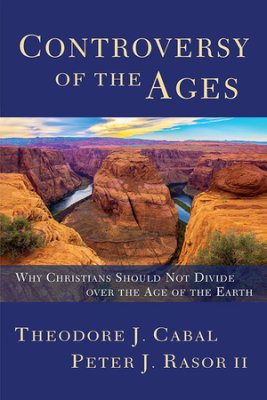
Book Review on Cabal’s and Rasor’s “Controversy Of The Ages”

337752.jpg

A Good Example of Civil Discussion on A Controversial Topic

Book Review by Dr. David P. Craig

As a pastor who tries to keep current with the latest discoveries and teachings in science and how they mesh with the Bible I found this book immensely helpful from a Christian perspective. The author’s do several things really well in this book:

(1) They give a good overview of the history of the interplay between science and biblical interpretation with a very interesting analysis of The Copernican Conflict; The Advent of Darwinian Evolution;  The Scopes Trial and its results; and the more recent controversy over the age of the earth.

(2) They present a consistent hermeneutic learned from Galileo that assumes biblical inerrancy, not inerrant interpretation and the objective truth that nature and and biblical revelation cannot be in conflict/disagree. There must be a striving for both theologians and scientists to pursue truth in special (biblical revelation) and nature (general revelation).

(3) They give a very interesting discussion of evolution and how it was received by both scientists and theologians within a short time following his completing his Origin of the Species. They discuss some of the main issues of conflict brought on by the acceptance of Darwin’s theory from its inauguration until modern times between theologians and scientists of note.

(4) They demonstrate that the resulting world view of Darwinian Evolution has resulted in many liberal theologians and scientists buying into “metaphysical naturalism, that everything interesting about the world reveals there is no God;” as well as how, “human experience rather than the Bible has become the ground of Christian knowledge.”

(5) Throughout the book the author’s give a helpful analysis of the three main views among Theologians and Scientists today as exemplified by Young Earth Creationists (as propounded by Henry Morris, Ken Ham, and Andrew Snelling) and their largest organization: Answers In Genesis; by Old Earth Creationists (as propounded in particular by Hugh Ross and those in his ilk), and its primary organization; Reasons To Believe; and lastly, the most recent organization that sings the praises of Evolution: BioLogos – with its influential proponents like C. Francis Collins.

(6) There is a fascinating discussion of flood theories, fossils, and dating mechanisms in dating the earth – pro and con for both old and young.

(7) One of the most helpful aspects of this book is its discussion of first, second, and third level doctrines that are essential to Christianity. The author’s refer to Albert Mohler’s “Theological Triage of three levels to ascertain theological urgencies.” For example, first level or essential doctrines to Christianity would include “doctrines such as the Trinity, the full deity and humanity of Jesus Christ, justification by faith, and the authority of Scripture.” Second order or level doctrines would include issues that often separate congregations and denominations like the mode and method of baptism and whether women can serve as pastors. Third level doctrines would include the eschatological unfolding of the plan of God (e.g. pre-millennialism, post-millennialism, a-millennialism) and issues like the one the authors are addressing. The authors apply the principle of theological triage to the three main views today with reference to science and theology. It is a very interesting and enlightening discussion of the relative unimportance of “age” with reference to the essentials related to the gospel and what makes one a Christian.

Cabal and Rasor have written a very civil book on the interplay of the various issues and views in regard to scientific and biblical interpretation. I think they have written a book that helps lay people like me understand the complexity of the issues and yet puts the “cookies on the shelf” so that one can see that though these issues are important – they are not essential to the gospel, but are nevertheless important and demand that extremists be balanced and listen to one another as everyone seeks to interpret all of God’s revelation (the written Word and the natural world) in a gracious manner that is always and ever in pursuit of God’s truth.


Book Review on Donald S. Whitney’s Praying The Bible

547843.jpg

A Simple Guide To Learning How To Pray The Scriptures

Reviewed By Dr. David P. Craig

I have completed several books by Donald Whitney over the years and always appreciate the fact that he is doctrinally sound and extremely practical. This little book is no exception. Whitney’s goal in this book is to help the reader overcome the “boring routine of saying the same old things about the same old things” by teaching the reader the variety, freshness, and excitement of praying through the Bible.

Perhaps the most helpful chapter in the book is the section on “Praying the Psalms.” He quotes Ben Patterson, “By praying the Psalms back to God, we learn to pray in tune with the Father, Son, and Holy Spirit.” In learning to pray through the Psalms it helps the one praying to be (a) Balanced in prayer – as the Psalms convey every doctrine in the Bible; (b) Emotionally healthy – as the Psalms deal with every human emotion: joy, anger, fear, anxiety, discouragement, loneliness, etc.; (c) God centered – usually we have a tendency to be self-absorbed – the Psalms get our focus back on God; (d) Accurate – Whitney writes, “God gave the Psalms to us so that we would give the Psalms back to God. No other book of the Bible was inspired for this express purpose.”

Whitney, also has a helpful guide to praying through the 150 Psalms in the back of the book. Praying through this plan insures direction and guidance for prayer as well as momentum for prayer. The author gives great examples of how to pray other Scriptures and various genres and even tackles some thorny questions related to prayer. I have been tremendously helped in my own prayer life by this terrific book and I’m convinced that it will help anyone grow in their excitement and communication with the Lord in prayer.


Book Review of Peter Scazzero’s “Emotionally Healthy Spirituality”

342465.jpg

The Missing Element Of Biblical Discipleship

By Dr. David P. Craig

The two ministry points that I’m most passionate about are biblical preaching and making multiplying disciples of Jesus Christ. I have been discipling men for over thirty years and I have found that the missing element in most discipleship curriculum and workbooks is the whole area of emotional health. Peter Scazzero’s books (he’s also written  The Emotionally Healthy Church and The Emotionally Healthy Leader) are like Biblical Discipleship 201, 301, and 401. It is essential to know how to study the Bible, pray, share one’s faith, etc. However, the emotional health of Christians is often ignored, neglected, and never addressed. Along with other discipleship oriented books – Emotionally Healthy Spirituality will help make a Christian disciple truly whole and holy.

As a pastor for the past thirty years In four different churches I have seen many elderly people who have been Christians for many years, but instead of being mature emotionally, many of these people have simply plateaued at the age of 10, 20, or 30 and have lived stuck in their immaturity emotionally for years. Instead of being Christians for sixty years it’s more like they have lived for sixty years as a ten-year-old Christian.

In this book Scazzero addresses the emotional make-up of people using a plethora of biblical and practical applications. He also draws on historical figures that have much to say about biblical emotions. He also addresses the ramifications of generational sin, familial dysfunctions, and cultural distractions that get between us and our walk with God.

The first seven chapters primarily deal with the problems associated with emotionally unhealthy spirituality and the last three chapters give hope through solutions. Using a variety of spiritual disciplines and personal examples Scazzero helps the Christian identify emotional unhealthiness and easy cures based on the Scriptures. For anyone who is passionate about transformation, liberation from bondage, and following in the steps of Christ this book is a must read. It’s extremely beneficial to read this book in a small group along with the workbook and DVD that are based on this book. I have taken five groups of men through this book and several of the men have described this book as “revolutionary,” “paradigm-shifting,” and “life-transforming.”

I highly recommend Scazzero’s books be read along with their workbooks in small groups (men with men; and women with women) for maximum transparency, accountability, and transformation into the likeness and image of Christ.

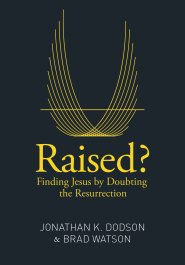
Book Review of Jonathan Dodson and Brad Watson’s “Raised? Finding Jesus by Doubting the Resurrection”

517351.jpg

Why the Death and Resurrection of Jesus is The Bull’s-Eye of The Gospel

By Dr. David P. Craig

Pastor’s Dodson and Watson write two chapters each in this short, yet powerful book, reflecting on what they call the “bull’s eye of the gospel.” They referring to Paul’s substantial treatment of the death and resurrection of Jesus Christ in 1 Corinthians 15. A big part of the focus on this book is that it is much easier to embrace the reality of the death and burial of Jesus Christ than it is his resurrection from the dead. They demonstrate that believing in the resurrection was just as difficult 2,000 years ago as it is today.

The author’s deal cogently and honestly with how both Jews and Gentiles struggled with the idea of a bodily resurrection when Jesus lived. During the time of Christ there were many doubters–Jesus’ friends, contemporary Greeks and Romans, and countless Jews. They go on to show why they doubted the resurrection and demonstrate that “if you doubt the resurrection, you are in good company. Jesus understands your doubts, and he welcomes them. To those who are skeptical and struggling with belief, Jesus remains ready to receive your questions. He will listen to your doubts.”

This book wrestles with the historical evidence of the resurrection, addresses the doubts related to the supernatural event of Christ’s bodily resurrection from the dead (both ancient and modern), and gives in clear and concise answers some of the best reasons to believe that the resurrection of Christ really happened historically. There are also some wonderful applications of this book about how to live the resurrected life in Christ. The resurrection changes everything and this book marvelously makes a case for the practical ramifications of the gospel.

I highly recommend this book to strengthen the faith of believers, and start the journey on the way to faith for non-believers and skeptics. This is a good introduction in answering why millions of people around the world continue to follow Jesus and are convinced in the historical realities and ramifications of his life, death, burial, and resurrection.

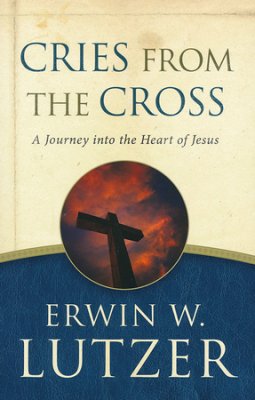
Book Review of Erwin Lutzer’s “Cries From The Cross”

413116.jpg

“Going Deep With Jesus On The Cross”

By Dr. David P. Craig

In this short book by Dr. Erwin Lutzer he does a wonderful job of taking the reader deep into the significance of what Jesus said in his last seven sayings on the cross. The work of Christ on the cross magnifies the holiness and  justice of God and the ugliness and heinous nature of sin. As Lutzer says, “The cross properly understood exalts no one whom it first does not humble; it gives life only to those whom it first ‘puts to death.’ The cross exposes the futility of our self-righteousness; it reminds us we are sinners, incapable of bringing about our own reconciliation with God. Before the cross we can stand with bowed heads and a broken spirit.”

As I devoured this book on Good Friday I was filled with sorrow and grief over my own sins and the sins of humanity; and yet I was also filled with joy over the reminder that Jesus could pronounce “It is finished.” A pronouncement that His life and death accomplished everything He set out to achieve. As the author of Hebrews testified, “But now he has appeared once for all at the end of the ages to do away with sin by the sacrifice of himself” (Hebrews 9:26). In the Old Testament, the priests offered sacrifices, but could never sit down. Their job was never finished. Jesus’ payment covered our indebtedness. He took our spiritual bankruptcy and covered it with the solvency of His perfect righteousness in exchange for our sin.

I love the way Lutzer expresses the truth of Christ as our substitutionary sacrifice: “This means that my sins are on Jesus, not on me. Yes, there is sin within me but not on me. My sinful nature keeps luring me toward sin, and even in my best moments my works are tainted with selfish motives. But legally, I am accepted on the basis of the merit of Jesus. Figuratively speaking, I have a new set of clothes and a clear record in heaven. The righteousness of Jesus has been successfully credited to my account. God’s justice has spent all its ammunition; there is nothing left to be hurled at us.”

Lutzer spends a chapter on each of the last sayings of Christ on the cross showing how they tie the Old Testament and New Testament together; fulfill prophecy; express the unity and purpose of the Trinity in accomplishing our redemption; and practical reflections and meditations that will help you understand and appreciate with greater depth the beauty of redemption. I highly recommend this book for anyone who wants to understand, and delight in the Savior who went to the cross in submission to the Father, to defeat Satan and death, and grant forgiveness of sins and eternal life to those who like the thief on the cross will repent of their sins and put their trust in Jesus as their Lord and Savior.