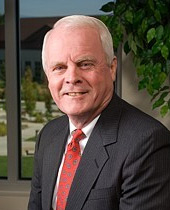
Dr. Ted Engstrom on 4 Steps to Effective Mentoring

“Leadership is both something you are and something you do. A mentor is not a person who can do the work better than his followers; he is a person who can get his followers to do the work better than he can.” – Fred Smith

“We loved you so much that we delighted to share with you not only the gospel of God but our lives as well…” – 1 Thessalonians 2:8

(1) Select a mentoree whose philosophy of life you share. Our greatest mentors are those who are also our models.

(2) Choose a person with potential you genuinely believe in. Some of the nation’s greatest athletes have come from tiny schools that receive no publicity. All those ball players needed was for scouts to recognize the potential that great coaching could bring out. The secret of mentoring in any field is to help a person get to where he or she is willing to go.

(3) Evaluate a mentoree’s progress constantly. An honest mentor will be objective. If necessary, he or she will encourage the person to stay on course, to seek another direction, or even to enter into a relationship with another mentor.

(4) Be committed, serious, and available to mentorees. New York Philharmonic Conductor Zubin Mehta said of the young pianist: “I cannot teach him how to play, for he knows what the composer wanted to say; I simply help him say it.”

Dr. Ted W. Engstrom (1916-2006) led several major evangelical institutions – including World Vision, Zondervan Publishing House, Youth For Christ International, and Azusa Pacific University. He wrote or co-authored over 50 books and specialized in mentoring and developing leaders. “His ability to integrate the gospel with everyday life was absolutely inspiring,” said Dean R. Hirsch, head of World Vision International. “Dr. Ted made work and faith walk together.” The excerpt above was adapted from his book The Fine Art of Mentoring, Eugene, OR: Wipf and Stock Publishers, 1989, 24.

Jonathan Edwards Resolutions Modernized By Dennis Griffith

Revised Resolutions of Jonathan Edwards

January 1, 2012 By *Dennis Griffith

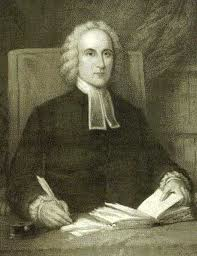
As a young man – a teenager, really – Jonathan Edwards set down on paper a series of thoughts and practices to help cultivate growth in grace.  (See 2 Peter 3.18)  Edwards then re-read this list at least once a week to keep his mind focused and renewed.  The result: A man of humble godliness, who was to become a significant spark used to ignite one of the greatest revivals known to history.  Even many unbelieving scholars admit Edwards may have been the greatest mind to be born on the North American continent.

The Resolutions of Jonathan Edwards are still a practical and beneficial tool for spiritual cultivation.  But one problem for many is that the early 18th Century language makes it sometimes difficult to grasp what Edwards wrote.   I have taken it upon myself to attempt to translate Edwards’ meaning in hopes that some might use these resolutions who might otherwise feel discouraged by the archaic words.  And while I admit that there are a few of these resolutions that I cannot embrace, I will leave it to each individual to pick out anything that might seem worthy for adoption among his/her own personal resolutions.

***

Aware that I am unable to do anything without God’s help, I do pray that, by his grace, he will enable me to keep these Resolutions, so far as they are in line with his will, and that they will honor Christ.

NOTE: Remember to read over these Resolutions once a week.

1. Resolved:  I will DO whatever I think will be most to God’s glory; and my own good, profit and pleasure, for as long as I live. I will do all these things without any consideration of the time they take.  Resolved: to do whatever I understand to be my duty and will provide the most good and benefit to mankind in general. Resolved to do this, whatever difficulties I encounter, and no matter how many I experience or how severe they may be.

2. Resolved: I will continually endeavor to find new ways to practice and promote the things from Resolution 1.

3. Resolved: If ever – really, whenever – I fail & fall and/or grow weary & dull; whenever I begin to neglect the keeping of any part of these Resolutions; I will repent of everything I can remember that I have violated or neglected, …as soon as I come to my senses again.

4. Resolved: Never to do anything, whether physically or spiritually, except what glorifies God.  In fact, I resolve not only to this commitment, but I resolve not to even grieve and gripe about these things, …if I can avoid it.

5. Resolved: Never lose one moment of time; but seize the time to use it in the most profitable way I possibly can.

6. Resolved: To live with all my might, …while I do live.
7. Resolved: Never to do anything which I would be afraid to do if it were the last hour of my life.

8. Resolved: To act, in all respects, both in speaking and doing, as if nobody had ever been as sinful as I am; and when I encounter sin in others, I will feel (at least in my own mind& heart) as if I had committed the same sins, or had the same weaknesses or failings as others.  I will use the knowledge of their failings to promote nothing but humility – even shame – in myself. I will use awareness of their sinfulness and weakness only as an occasion to confess my own sins and misery to God.

9. Resolved: To think much, on all occasions, about my own dying, and of the common things which are involved with and surround death.

10. Resolved: When I feel pain, to think of the pains of martyrdom – both of Jesus and of Believers around the world; and remind myself of the reality of hell.

11. Resolved:  When I think of any theological question to be resolved, I will immediately do whatever I can to solve it, … if circumstances don’t hinder.

12. Resolved: If I find myself taking delight in any gratification of pride or vanity, or on any other such empty virtue, I will immediately discard this gratification.

13. Resolved: To be endeavoring to discover worthy objects of charity and liberality.

14. Resolved: Never to do anything out of revenge.

15. Resolved: Never to suffer the least emotions of anger about irrational beings.

16. Resolved: Never to speak evil of anyone, except if it is necessary for some real good.

17. Resolved: I will live in such a way, as I will wish I had done when I come to die.

18. Resolved: To live, at all times, in those ways I think are best in me during my most spiritual moments and seasons – those times when I have clearest understanding of the gospel and awareness of the World that is to come.

19. Resolved: Never to do anything, which I would be afraid to do if I expected it would not be more than an hour before I would hear the last trump sound.  (i.e. when Jesus returns.)

20. Resolved: To maintain the wisest and healthiest practices in my eating and drinking.

21. Resolved: Never to do anything, which if I saw another do, I would consider a just reason to despise him for, or to think in any way lesser of him.

22. Resolved: To endeavor to obtain for myself as much happiness in the world to come as I possibly can.  To accomplish this I will use all the strength, power, vigor, and vehemence – even violence – I am capable of, or can bring myself to exert, in any way that can be thought of.

23. Resolved: Frequently take some deliberate action – something out of the ordinary – and do it for the glory of God. Then I will trace my intention back and try to discern my real and deepest motive: What did I really desire out of it? If I find that my truest motive was not for God’s glory, then I consider it as a breach of the 4th Resolution. (See Above)

24. Resolved: Whenever I do any conspicuously evil action, I will trace it back till I come to the original cause; and then I will carefully endeavor BOTH 1) to do so no more AND 2) to fight and pray with all my might against the source of the original impulse.

25. Resolved: To examine carefully, and constantly, what that one thing in me is that causes me to doubt of the love of God, even the least little bit; and then to direct all my forces against it.

26. Resolved: To oust away anything I find that diminishes my assurance of God’s love and grace.

27. Resolved: Never intentionally omit or neglect anything, except if such an omission would be for the glory of God. NOTE to Self: frequently examine anything I have omitted.

28. Resolved: To study the Scriptures so steadily, and so constantly, and so frequently, that it becomes evident – even obvious – to myself that my knowledge of them has grown.

29. Resolved: Never consider something a prayer, nor to let pass for a prayer, any petition that when making I cannot actually hope that God will answer; nor offer as a confession anything which I cannot hope God will accept.

30. Resolved: To strive to my utmost every week to be brought to a higher spiritual place, and to a greater experience of grace, than I was the week before.

31. Resolved: Never to say anything at all against anybody; except when to do so is perfectly consistent with the highest standards of Christian honor and love to mankind; and except when it is consistent with the sense of greatest humility and awareness of my own faults and failings. Then, whenever I have said anything against anyone, I will examine my words against the strictest test of the Golden Rule.

32. Resolved: To be strictly and firmly faithful to whatever God entrusts to me.  My hope is that the saying in Proverbs 20.6,  “A faithful man who can find?” may not be found to be even partly true of me.

33. Resolved: Always do whatever I can towards making, maintaining, establishing and preserving peace, whenever it can be, but without over-balancing the value peace to such a degree that it becomes a detriment in other respects.

34. Resolved: When telling stories, never to speak anything but the pure and simple truth.

35. Resolved: Whenever I so much as question whether I have done my duty, to a point that my peace and tranquility is disturbed, I will stop and question myself until my concern is resolved.

36. Resolved: Never to speak evil of anyone, except I have some particular good purpose for doing so.

37. Resolved: To inquire every night, as I am going to bed, where I may have been negligent, what sin I have committed, and how I have denied myself. I will also do this at the end of every week, month, and year.

38. Resolved: Never to speak anything that is ridiculous, trivial, or otherwise inappropriate on the Lord’s Day or Sabbath evening.

39. Resolved: Never to do anything when the lawfulness is questionable. And then afterward, resolve to consider and examine whether or not whatever I have just done is truly lawful and/or whether whatever I have refrained from doing would have actually been permissible.

40. Resolved: To inquire every night, before I go to bed, whether I have acted in the best way I possibly could, with respect to eating and drinking.

41. Resolved: To ask myself at the end of every day, week, month and year, where I could have possibly done better in any respect.

42. Resolved: To frequently renew my dedication to God, which was first made at my baptism and which I solemnly renewed when I was received into the communion of the church; and which I have now solemnly re-made this [DATE] day of [MONTH], [YEAR].

43. Resolved: Never, from this day until the day I die, act as if I were in any way my own, but entirely and altogether belong to God, and then live in a way agreeable to this reality.

44- Resolved: That nothing other than the gospel shall have any influence at all on any of my actions; and that no action shall be, even in the very least circumstance, anything other than gospel declares, demands, and implies.

45. Resolved: Never to allow any pleasure or grief, joy or sorrow, nor any affection at all, nor any degree of affection, nor any circumstance, but what advances the gospel.

46. Resolved: Never allow the least measure of any fretting or uneasiness about my father or mother. Resolved to never allow the effects of disappointment in them, or frustrations with them, to even in the very least alter what I say to them or about them, or any activity in reaction to them.  Let me be careful about this, not only about my parents, but also with respect to any of our family.

47. Resolved: To endeavor to my utmost to deny whatever is not most agreeable to a good, and universally sweet and benevolent, quiet, peace able, contented, easy, compassionate, generous, humble, meek, modest, submissive, obliging, diligent and industrious, charitable, even, patient, moderate, forgiving, sincere temper; and to do at all times what such a temper would lead me to. Examine strictly every week, whether I have done so. Sabbath morning. May 5,1723.

48. Resolved: With the utmost niceness and diligence, and with the strictest scrutiny, constantly be looking into the state condition of my soul, so that I may know whether or not I have truly an interest in Christ at any given time. I will do this so that, when I come to my end in death, I will not have neglected to repent of anything I have found.

49. Resolved: That Neglect never shall be, if I can help it.

50. Resolved: I will act in such a way as I think I will judge to have been best and most prudent, when I have come into the future world – Heaven.

51. Resolved: That I will act in every respect, as I think I would wish I had done, if in the end for some reason I would have be damned.

52. I frequently hear persons in old age say how they would live, if they were to live their lives over again, so… Resolved: That I will live just as I can imagine I shall wish I had done, supposing I live to old age.

53. Resolved: To improve every opportunity, when I am in the best and happiest frame of mind, to cast and venture my soul on the Lord Jesus Christ, to trust and confide in him, and consecrate myself wholly to him; that from this I may have assurance of my eternal safety, knowing that my confidence is in my Redeemer.

54. Resolved: Whenever I hear anything spoken in a conversation of any person, if I think what is said of that person would be praiseworthy in me, I will endeavor to imitate it.

55. Resolved: To endeavor to my utmost to act as I can imagine I would if I had already seen all the happiness of heaven, as well as the torments of hell.

56. Resolved: Never to give up, nor even slacken up, in my fight with my own corruptions, no matter how successful or unsuccessful I may be.

57. Resolved: When I fear misfortunes and adversities, to examine whether I have done all I am expected to do, and resolve to do everything I am able to do.  Once I have done all that God requires of me, I will accept whatever comes my way, and accept that it is just as God’s Providence has ordered it.  I will, as far as I can, be concerned about nothing but my own duty and my own sin.

58. Resolved: Not only to refrain from an air of dislike, fretfulness, and anger in conversations, but also to exhibit an air of love, cheerfulness and graciousness.

59. Resolved: Whenever I am most conscious of feelings of ill nature, bad attitude, and/or anger, I will strive then the most to feel and act good naturedly.  At such times I know I may feel that to exhibit good nature might seem in some respects to be to my own immediate disadvantage, but I will nevertheless act in a way that is gracious, realizing that to do otherwise would be imprudent at other times (i.e. times when I am not feeling so irked).

60. Resolved: Whenever my feelings begin to appear in the least out of sorts, when I am conscious of the least uneasiness within my own heart and/or soul, or the least irregularity in my behavior, I will immediately subject myself to the strictest examination. (i.e. Psalm 42.11)

61. Resolved:  I will not give way to that apathy and listlessness which I find artificially eases and relaxes my mind from being fully and fixedly set on God’s Grace. Whatever excuses I may have for it, whatever my listlessness inclines me to do, or rather whatever it inclines me to neglect doing, I will realize that it would actually be best for me to do these things.

62. Resolved: Never to do anything but what God, by the Law of Love, requires me to do. And then, according to Ephesians 6.6-8, I must do it willingly and cheerfully as to the Lord, and not for man.  I must remember that whatever good thing any man has or does he has first received from God; and that whenever a man is compelled by faith to act with love and charity toward others, especially those in need, that we do it as if to/for the Lord.

63. On the hypothetical supposition that at any one time there was never to be but ONE individual in the world who was a genuine and complete Christian, who in all respects always demonstrated the Faith shining in its truest luster, and appearing excellent and lovely, from whatever angle and under whatever circumstance this Faith is viewed… Resolved: To act just as I would do, if I strove with all my strength, to be that ONE; and to live as if that ONE should live in my time and place.

64. Resolved: Whenever I experience those “groanings which cannot be uttered” (Romans 8.26), of which the Apostle speaks, and those “longings” that consume our souls, of which the Psalmist speaks (Psalm 119:20), I will embrace them with everything I have within me. And I will not be weary of earnestly endeavoring to express my desires, nor of the repetitions so often necessary to express them and benefit from them.

65. Resolved: To exercise myself in all my life long, with the greatest openness I am capable of, to declare my ways to God, and lay open my soul to him: all my sins, temptations, difficulties, sorrows, fears, hopes, desires; and every thing in every circumstance. (See Dr. Manton‘s 27th Sermon on Psalm 119.)

66. Resolved:  I will endeavor always to keep a gracious demeanor, and air of acting and speaking in all places and in all companies, except if it should so happen that faithfulness requires otherwise.

67. Resolved: After afflictions, to inquire in what ways I am now the better for having experienced them. What good have I received by them? What benefits and insights do I now have because of them?

68. Resolved: To confess honestly to myself all that I find in myself – whether weakness or sin. And if it something that concerns my spiritual health, I will also confess the whole case to God, and implore him for all needed help.

69. Resolved: Always to do that which I will wish I had done whenever I see others do it.

70. Let there be something of benevolence, in all that I speak.

*Article Adapted from the excellent Blog: “Grace and Peace” http://wdennisgriffith.wordpress.com/2012/01/01/revised-resolutions-of-jonathan-edwards/. Dennis Griffith lives in Bristol, Tennessee with his wife Carolyn, their three children: Andrew, Matthew and Rebekah; and Ike, their Great Dane.  Dennis also has the privilege of serving as pastor of Walnut Hill Presbyterian Church and chaplain to the Bristol White Sox, the Appalachian League affiliate of the Chicago White Sox. In addition Dennis is a contributing columnist for the Bristol Herald Courier.

How Christian Coaching Can Help You? By Dr. Gary R. Collins

After being a senior pastor for over twenty years and now being a full-time “Pastoral Life Coach” I’m often asked by people – “What is life coaching and how is it different from counseling?” I don’t think I’ve come across a better answer for this than that of *Gary R. Collins in Appendix C in his fantastic book Christian Coaching, published by NavPress, Colorado Springs: 2009. Gary Collins describes almost perfectly what I seek to do with those I coach:

COACHING FACTS

 What is coaching?

The first time it was ever used, the word coach described a horse-drawn vehicle—a stagecoach that would get people from where they were to where they wanted to be. A modern bus does the same thing, and often these vehicles are called coaches. Most often today, coaches are people who help athletes and teams more from one place to another that is better and where they want to be. Even Tiger Woods has a coach to help his game of golf.

But coaches also help musicians, public speakers, and actors, who rely on coaching to improve their skills, overcome obstacles, remain focused, and get to be where they want to be. Coaching is very popular in business and corporate settings around the world where “executive coaches” help managers and other business leaders deal with change, develop new management styles, make wise decisions, become more effective, cope with their hyperactive lifestyles, and deal with stress.

Executive coaches work with people in business to help them move from where they are to levels where they are more competent, fulfilled, and self-confident than they would have been otherwise.

In summary, coaches guide people from where they are toward the greater competence and fulfillment they desire. Christian coaching is the art and practice of working with a person or group in the process of moving from where they are to where God wants them to be {My [DPC] own definition is similar, “Christian Coaching is taking a person from where they are to where God wants them to be in reflecting the image of Christ.”}.

Why would anybody want a coach?

 Coaching helps people who want to:

  • Get unstuck

  • Build their confidence

  • Expand their vision for the future

  • Fulfill their dreams

  • Unlock their potential

  • Increase their skills

  • Move through transitions

  • Take practical steps toward their goals

How does coaching differ from counseling? 

  • Unlike counseling or therapy, coaching is less threatening, less about problem solving, more about helping people reach their potential.

  • Coaching is not for people who need therapy to overcome painful influences from the past; coaches help people build vision and move toward the future.

  • Coaching is not about looking back; it’s about looking ahead.

  • Coaching is not about healing; it’s about growing.

  • Coaching focuses less on overcoming weaknesses and more on building skills and strengths.

  • Usually coaching is less formal than the counselor/counselee relationship; more often it is a partnership between two equals, one of whom has experiences, perspectives, skills, or knowledge that can be useful to the other.

What do coaches do to help others? 

Coaches stimulate better skills. Good coaching helps people anticipate what they could become, overcome self-defeating habits or insecurities, manage relationships, develop new competencies, and build effective ways to keep improving.

Coaches stimulate vision. Many individuals and churches have no clear vision. They keep doing what they have done for years, without much change and with little expectation that things will ever be different. Coaches work with individuals and organizations (including churches) as they think beyond the present, more clearly envision the future, and plan how to get there.

Coaches help people grow through life transitions. Whenever we encounter major changes in our lives—such as a new job, a promotion, a move, the death of a loved one, the launch of a new career, or retirement—we face uncertainty and the need to readjust. Experienced coaches better enable people to reassess their life goals, find new career options, change lifestyles, get training, reevaluate their finances, or find information so they can make wise decisions.

Coaches guide Christians in their spiritual journeys. Many believers understand the basics of the faith and aren’t looking to be discipled. But they need focused time with somebody who has been on the spiritual road longer, who models Christlikeness, can point out the barriers to growth, and can guide the journey.

Coaches speak the truth in love. Good coaches know that sometimes the best way to help is by refusing to ignore harmful behavior patterns. Instead, coaches nudge people to deal with attitudes and behavior that should be faced and changed.

What happens in coaching?

Coaching is a relationship that most often is client centered and goal directed. Every coaching situation is unique, but usually coaches will begin by exploring the issues that the person wants to change. In what areas does he or she want to grow? Sometimes the person wants to be a better leader, better self-manager, or someone with a clearer perspective about where to go in the future. Christians in coaching may seek to determine where God appears to be leading them to go.

There is also the need for better awareness of where the person is at present. What are his or her strengths, weaknesses, abilities, interests, passions, spiritual gifts, values, worldviews, and hopes? Often the coach will use assessment tools to enable people to learn more about themselves.

Then comes vision. Coaches might assist people, organizations, or churches in formulating life-vision or life-mission statements. Coaches might ask, for example, “Considering your gifts, abilities, driving passions, and unique God-given personality, what is your life mission?” It takes time to answer a question like that, but without a clear vision, people, churches, organizations, and even governments tend to drift with no direction.

At some time, coaches will help people set goals and plan ways to reach these goals.

When obstacles get in the way, coaches challenge, encourage, and give accountability so the person can get past the obstacles and experience success. A coach can help you remove the blinders, allowing you to see what you may not recognize and give support as you move forward. A Christian coach is there for you, prayerfully listening to your concerns and asking questions that will give you clarity on your situation, get you past your own blocks, realize your God-given potential, and challenge you to be your best.

{DPC I’d like to add my two cents about the coaching I do – I love coaching it allows me to focus on the specific needs of individuals and organizations and intentionally help them become Christ focused and thus more strategic and effective in that which truly satisfies and will last forever. The primary means I use to help people in coaching is by helping individuals develop what I call a ‘Vertical Life Plan.” A VLP is a personalized goal plan to integrate all of life holistically centered in and around Jesus as your Leader, and you as a devoted follower of Him as your Savior and Lord.  If you are interested in personal or organizational life coaching I’d love to hear how I can serve you – Dr. David P Craig – I can best be reached at: LifeCoach4God@gmail.com}

*Gary R. Collins is a licensed clinical psychologist with a Ph.D. in clinical psychology from Purdue University. He is the author of numerous articles and over 50 books, including Christian Counseling: A Comprehensive Guide, The Biblical Basis of Christian Counseling, and Christian Coaching: Helping Others Turn Potential into Reality. Gary was general editor of the thirty-volume Resources for Christian Counseling series of professional counseling books mostly published in the 1980s, the Word Christian Counseling Library of cassette tapes, and the twelve-volume Contemporary Christian Counseling series of books that appeared in the early 1990’s.

In December 2001 NavPress published Gary’s book Christian Coaching, a book that has been revised, expanded, updated, and published in 2009. The third edition of Christian Counseling (revised, expanded and completely updated) was published by Thomas Nelson publishers in 2007, followed by an accompanying Casebook of Christian Counseling, also published by Nelson.

Gary Collins grew up in Canada and graduated from McMaster University in Hamilton, Ontario and the University of Toronto before taking a year of study at the University of London. His first teaching occurred during that year as he taught courses for the University of Maryland in Germany and England. Gary spent several years in the Royal Canadian Navy Reserve before moving to the United States to study clinical psychology at Purdue University. He took his clinical psychology internship at the University of Oregon Medical School Hospitals (now University of Oregon Health Sciences University) in Portland and subsequently enrolled at Western Seminary for a year of theological study.

At Western he met his wife Julie. They were married in 1964 and moved to Minnesota where Gary taught psychology at Bethel College in St. Paul. Their two daughters, Lynn and Jan were born in Minnesota. After a year on the faculty of Conwell School of Theology in Philadelphia, the Collins family moved to Illinois where Gary taught psychology and counseling at Trinity Evangelical Divinity School. For much of that time he was department chairman.

In 1991, Gary assumed responsibility for co-leading the fledgling American Association of Christian Counselors. In the seven years that followed, Gary was AACC Executive Director and later the organization’s first President. During that time AACC grew from about 700 paid members to more than 15,000. In addition to these duties, Gary founded Christian Counseling Today, the official AACC magazine which he edited for several years. In October, 1998 Gary Collins resigned from his responsibilities with AACC so he could devote more time to developing Christian counseling and Christian coaching worldwide. In addition to his other responsibilities, he currently holds a position as Distinguished Professor of Coaching and Leadership at Richmont Graduate University (formerly Psychological Studies Institute) in Atlanta and Chattanooga. In addition he is Distinguished Visiting Professor in the School of Psychology and Counseling at Regent University in Virginia where he consults with the faculty and annually teaches an accredited on-line doctoral course in coaching.

Gary has accepted invitations to speak in more than fifty countries and he continues to travel overseas and within North America to give lectures and lead workshops on Christian counseling, leadership, and Christian coaching. Gary also has a small coaching practice, writes the weekly Gary R. Collins Newsletter, and mentors a number of young, emergent leaders. He is active in a local fitness center, is blessed with boundless energy and good health, and has no plans to retire. Gary and Julie Collins live in northern Illinois, not far from their two daughters, their son-in-law, and their grandson Colin Angus McAlister.

7 Principles of Accountability by David C. Bentall

(The Company You Keep, by David C. Bentall, published by Augsburg Press, 2004):

 “Iron sharpens iron, and one man sharpens another.” – Proverbs 27:17

(1) To affirm one another

(2) To be available to one another

(3) To pray with and for one another

(4) To be open with one another

(5) To be honest with one another

(6) To treat one another sensitively

(7) To keep our discussions confidential

*In the Book The Company You Keep David C. Bentall explores the experience of three men who have supported each other in friendship for more that twelve years. He chronicles how friendships can inspire, challenge and have the potential to transform lives. He provides suggestions for initiating long-term nurturing friendships. Most importantly, Bentall describes the tremendous benefits such friendships have on all the person’s life, including family relationships, physical fitness, self-esteem, and spirituality.

Are You A Spiritual Orphan or Child of God? By Arrow Ministries

(Chart Below Adapted from Arrow Ministries – Original Source is Unknown)

SUBJECT ORPHANED FROM GOD MARKS OF A CHILD OF GOD
Condition Bondage Liberty
Dependency Independent/self-reliant Interdependent/Acknowledges need
Expression of Love Guarded and conditional; based upon others’ performance as you seek to get your own needs met Open, patient, and affectionate as you lay your life and agendas down in order to meet the needs of others
Future Fight for what you can get! Release your inheritance!
Handling Others Faults Accusation and exposure in order to make yourself look good by making others look bad Love covers as you seek to restore others in a spirit of love and gentleness
Image of God See God as Master See God as loving Father
Motive for Purity ‘Must” be holy to have God’s favor, thus increasing a sense of shame and guilt “Want to” be holy; do not want anything to hinder your intimate relationship with God
Motive for service A need for personal achievement as you seek to impress God and others, or no motivation to serve at all Service that is motivated by a deep gratitude for being unconditionally loved and accepted by God
Need for approval Strive for the praise, approval, and acceptance of man Totally accepted in God’s love and justified by grace
Peer Rela-

tionships

Competition, rivalry, and jealousy toward others’ success and position Humility and unity as you value others and are able to rejoice in their blessings and success
Position Feel like a servant/slave Feel like a beloved son/daughter
Sense of God’s Presence Conditional and Distant Close and intimate
Source of Comfort Seek comfort in counterfeit affections: addictions, compulsions, escapism, busyness, hyper-religious activity Seek times of quietness and solitude, to rest in the Father’s presence and love
Theology Live by the love of Law Live by the Law of Love
View of Admonition Difficulty receiving admonition; you must be right so you easily get your feelings hurt and close your spirit to discipline See the receiving of admonition as a blessing and need in your life so that your faults and weaknesses are exposed and put to death
View of Authority See authority as a source of pain; distrustful toward them and lack a heart attitude of submission Respectful, honoring; you see them as ministers of God for good in your life
Vision Spiritual ambition; the earnest desire for some spiritual achievement and distinction and the willingness to strive for it; a desire to be seen counted among the mature To daily experience the Father’s unconditional love and acceptance and then be sent as a representative of his love to family and others


26 Excellent Self Evaluation Questions By Gordon MacDonald

Accountability Questions For You and Your Mentoree/Disciple

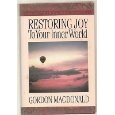
 (Adapted from *Gordon MacDonald, Restoring Joy to Your Inner World, Inspiration Press, p. 573)

“Chances are that you have a physical once a year or every two years. I recommend that you also have a “spiritual” once a year as well. Your soul care is just as important as your body care! This is an excellent list of questions to help care for your soul.” – Dr. David P. Craig

(1) Where are you right now in your relationship with God?

(2) What have you read in the Bible in the last week?

(3) What has God been saying to you in this?

(4) Where do you find yourself resisting God these days?

(5) What specific things do you find yourself praying for regarding others?

(6) What specific things do you find yourself praying for yourself?

(7) What specific tasks are facing you that you consider incomplete?

(8) What habits are intimidating you at present?

(9) What have you read in the secular press this week?

(10) What general reading have you been doing?

(11) What have you done to play this week?

(12) How are you doing with your spouse/kids?

(13) If I were to ask your spouse about your state of mind, spirit, etc., what would he/she say?

(14) Are you sensing any spiritual attacks from the enemy this week? Today?

(15) If Satan were to try to invalidate you as a servant of God, where or how would he attack you?

(16) What is the state of your sexual life (temptation, fantasy, etc)?

(17) Where are you at financially (Do you have control, debts, etc)?

(18) Are there any unresolved conflicts (ailing relatives, stress, disputes) in your circle of relationships right now (family, friends those among whom we’re supposed to feel safe)?

(19) When was the last time you spent time with a friend of the same gender?

(20) What kind of time have you spent with a non-Christian this past week?

(21) What challenges do you expect to face in the coming month?

(22) What are your fears at the present time (letting family down, bodies letting us down, etc)?

(23) Are you sleeping well?

(24) What three things are you most thankful for?

(25) Do you like yourself at this point of your pilgrimage?

(26) What are you greatest confusions about your relationship with God?


*Gordon MacDonald has been a pastor and author for over forty years. For many years he pastored Grace Chapel in Lexington, Massachusetts and continues to serve as Pastor Emeritus. He has also provided leadership to influential ministries such as Intervarsity Christian Fellowship, which he served as President for three years, and World Relief, which he currently serves as Chairman. Gordon’s best-selling books include Ordering Your Private World, Mid-Course Correction and, most recently, A Resilient Life. He also writes and serves as Editor-at-Large for Christianity Today’s Leadership Journal. When not writing, leading or speaking at conferences, Gordon and his wife Gail can be found hiking the trails of New England.

15 Great Questions for Personal Evaluation by Carson Pue

(Adapted from *Carson Pue, Mentoring Leaders, Grand Rapids, MI: Baker, 2005, p. 243)

 Spiritual Questions

Distractions: Have you used anything other than God in an attempt to meet your emotional or spiritual needs this week?

God’s Word: Have you been purposefully filling your mind with the knowledge of God’s Word daily? If not, how often? How do you plan to change?

Fasting: Have you fasted and prayed in the last month? If not, when was the last time? When have you next scheduled these disciplines?

Obedience: Is your conscience clear? If not, why? How do you plan to attain a clear conscience?

 Physical Health Questions

Sleep: Are you getting enough sleep each night? If not, how much are you getting? How do you plan to change?

Exercise: Are you exercising daily? If not, how often are you exercising? How do you plan to change?

Eating: Are you eating properly? If not, what are you eating/not eating? How do you plan to change?

Substances: Are you abusing harmful substances? If not, when and how often have you taken them? How do you plan to change?

 Action Oriented Questions

Finances: Where are you financially right now? Are things under control? Are you feeling anxious? Is there any great debt? How are you planning to proceed in this area of your life?

Purity: Have you kept your mind pure (thoughts of anger, bitterness, movies, magazines, Internet pornography, other)? If not, when did you fall?

What temptations need to be removed or precautions taken to prevent it?

Material Goods: Do you have anything that is used for evil needing to be destroyed or removed? If so, what? When and how will you (we) destroy or remove them?

Control: Have you lost control either verbally or otherwise since we last met? If so, when? When and how will you do something to restore and correct your actions?

Relational Questions

Deposits: Have you made positive emotional and spiritual deposits with your kids and your spouse? If not, why? What might you be able to do to make this a natural response?

Family: Have you offended any family member since we last met? If so, when? When and how will you restore and correct those actions?

Truthfulness: Have you told the whole truth in your answers to the questions I have asked you? If not, what do you need to correct? What actions do we need to take to stay and remain accountable?

Process: Is the asking of any of these questions adequate for you? If not, what changes are needed? Who else needs to be a part of this process?

*Carson Pue is the Executive Director at First Baptist Church right smack in the heart of downtown Vancouver, Canada. He describes the church this way, “Congregating in this historic stone building in the very heart of the downtown is a community. We are young, old and in-between, rich, poor, employed and re-training, multicultural, families and singles, Bible scholars, seekers. All share a heart for the city.”

For fourteen years Carson served as CEO of Arrow Leadership a ministry recognized as a global leader in Christian leadership development. Arrow develops leaders worldwide “to be led more by Jesus, lead more like Jesus, and to lead more to Jesus.” They have been highly successful in transforming and enriching the lives and  leadership of men and women who are now deployed around the world.

Recognized as a leader of leaders Carson has an ability to identify leaders and invest wisdom into their development through mentoring, teaching and spiritual guidance.He is also best-selling author: “Mentoring Leaders: Wisdom for Developing Character, Calling and Competency” by Baker Books and his new  Mentoring Wisdom: Living and leading well. Carson is known through his speaking at conferences, published articles, national radio programs and commentaries. Through referrals over 50,000 leaders benefit from his monthly leadership emails “To the Point” “Mentoring Questions” and magazine columns.

With his encouraging style, creative ideas, engaging humor and ministry experience, people find Carson well fitted for his role. In a straightforward manner Carson shares both from success and failure in ministry, believing that leaders learn from both. He is a popular keynote speaker on themes around leadership, spiritual development and the realities of being a pastor today.Carson extends his leadership by serving on the board of directors for World Vision,  Crossroad Communications and CTS Television Network. In addition he is an advisor for the boards of The Billy Graham CenterTruefaced, and the Entrepreneurial Leaders Organization.  He is a trusted advisor to Christian leaders across Canada and the USA and connects globally with The Lausanne Movement and World Evangelical Alliance.

When not traveling the world encouraging leaders, he loves sailing with his BFF and first mateBrenda whom he has been married to since 1976. He loves time with his three sons, two daughters by marriage and three grandsons. He is also restored by laughter, sailing, Ireland, writing and spiritual retreats.

What is the Difference Between Discipleship & Mentoring? By Ted Engstrom

“A discipler is one who helps an understudy (1) give up his own will for the will of God the Father, (2) live daily a life of spiritual sacrifice for the glory of Christ, and (3) strive to be consistently obedient to the commands of his Master. A mentor, on the other hand, provides modeling, close supervision on special projects, individualized help in many areas—discipline, encouragement, correction, confrontation, and a calling to accountability.” – Ted Engstrom (The Fine Art of Mentoring, recently re-published by Wipf and Stock Publishers, 2008 )

Dr. Ted W. Engstrom (1916-2006) dedicated his life to effective Christian ministry leadership. His 60 years of Christian service include careers as Christian book editor at Zondervan, president of Youth for Christ International, president of World Vision, and author of more than 50 books. He was a board member for dozens of Christian organizations and assisted religious and political leaders in 136 other countries where he stood as a model of godly leadership.

Twelve Steps Toward Balance by Carson Pue

12 WAYS TO BRING MORE BALANCE INTO YOUR LIFE

(Adapted from *Carson Pue, Mentoring Leaders, Grand Rapids, MI: Baker, 2005, p. 227)

(1) Set boundaries…If you don’t set boundaries, other people will set them for you. Establish ones that are healthy for you and your family without taking advantage of the ministry God has called you to do.

(2) Watch, ask, and listen…Observe other leaders and talk with a mentor about managing the demands of ministry, marriage, and family life.

(3) Work smarter, not harder…Often people default to do what is easiest first, rather than those things that are most important.

(4) Make appointments…Entries in our day planner should reflect what’s important to us, such as family, reading times, time for neighbors and friends, etc. Write them in!

(5) Begin small…Give yourself the gift of a couple of hours of freedom. Then expand it to a half-day block of time.

(6) Leave work at the office…Or it can ruin your days off, cause feelings of guilt, consume emotional energy; turn off your cell phone, BlackBerry, etc.

(7) Teach yourself to grow into your leisure time…It takes practice, but it’s fun. Develop a healthy theology of leisure.

(8) Find other ways to get all the work done…Keep chipping away at the tasks and delegate.

(9) Let people know when you are “off”…Keep staff informed and set boundaries.

(10) Find ways to clear your mind after work…Take an hour every Friday to organize your next week; it helps to unclutter your mind for the weekend.

(11) Create more space around activities…Resist packing more into each day, and instead build a little margin into your activities.

(12) Learn to not over schedule errands…Avoid pushing all your personal errands onto your days off.

Carson is today the Executive Director at First Baptist Church right smack in the heart of downtown Vancouver, Canada. He describes the church this way, “Congregating in this historic stone building in the very heart of the downtown is a community. We are young, old and in-between, rich, poor, employed and re-training, multicultural, families and singles, Bible scholars, seekers. All share a heart for the city.”
For fourteen years Carson served as CEO of Arrow Leadership a ministry recognized as a global leader in Christian leadership development. Arrow develops leaders worldwide “to be led more by Jesus, lead more like Jesus, and to lead more to Jesus.” They have been highly successful in transforming and enriching the lives and  leadership of men and women who are now deployed around the world.

Recognized as a leader of leaders Carson has an ability to identify leaders and invest wisdom into their development through mentoring, teaching and spiritual guidance.He is also best-selling author: “Mentoring Leaders: Wisdom for Developing Character, Calling and Competency” by Baker Books and his new  Mentoring Wisdom: Living and leading well. Carson is known through his speaking at conferences, published articles, national radio programs and commentaries. Through referrals over 50,000 leaders benefit from his monthly leadership emails “To the Point” “Mentoring Questions” and magazine columns.

With his encouraging style, creative ideas, engaging humor and ministry experience, people find Carson well fitted for his role. In a straightforward manner Carson shares both from success and failure in ministry, believing that leaders learn from both. He is a popular keynote speaker on themes around leadership, spiritual development and the realities of being a pastor today.Carson extends his leadership by serving on the board of directors for World Vision,  Crossroad Communications and CTS Television Network. In addition he is an advisor for the boards of The Billy Graham CenterTruefaced, and the Entrepreneurial Leaders Organization.  He is a trusted advisor to Christian leaders across Canada and the USA and connects globally with The Lausanne Movement and World Evangelical Alliance.

When not traveling the world encouraging leaders, he loves sailing with his BFF and first mateBrenda whom he has been married to since 1976. He loves time with his three sons, two daughters by marriage and three grandsons. He is also restored by laughter, sailing, Ireland, writing and spiritual retreats.

Developing Vision in Those You Are Mentoring By Asking Great Questions by Bobb Biehl

Developing Vision in Your Mentoree/Disciple

(Adapted from Bobb Biehl, Mentoring, pp. 201-202)

 DREAMING…about the Future in a Practical Way

  1. God: What three changes in me would most please our Eternal God in His Holy Heaven?
  1. Dream/Purpose: What can I do to make the most significant difference for God in my lifetime? Why am I on the earth? What is the very best organizational context for my dream?
  1. Primary Result: What is the single best measurable indicator that I am making progress with my dream?


  1. Life Priorities: If I could accomplish only three measurable priorities before I die, what would I accomplish?
  1. Ten-Year Focus: If I could accomplish only three measurable priorities in the next ten years what would make a 50% difference in my life-long contribution, what would I accomplish?
  1. Annual Focus:
    • Focus – What single word best captures the focus of my next year?
    • Opportunity – Where was my greatest unexpected success last year? Why? What three steps could I take now to take full advantage of this “Window of Opportunity” this coming year?
    • Land Mines – What three land mines or roadblocks need my immediate attention? What have I been praying most about in the past 30 days? What three changes could reduce my “risk” by 50%?
    • 30/10/50% – If I could only accomplish three measurable priorities in the next twelve months that would make a 50% difference in my contribution in the next ten years, which 3 things would I most want to accomplish?
  1. Quarterly Focus: What three measurable priorities could I accomplish in the next ninety days to make a 50% difference in the results I see by the end of the year?
  1. Organization: What three categories could I make to see a 50% difference in our morale as a family or team?
  1. Cash: If I had to cut my budget 21%, what would be the first three things to go? If I got a surprise gift of 21% of my budget, what three things would I do immediately?
  1. Quality: What three changes could improve the quality of my work by 50% in the next twelve months?

*Bobb Biehl is an executive mentor. He graduated from Michigan State University (psychology major) in 1964 and received a Master’s degree (counseling) from Michigan State in 1966.

In 1976, Bobb founded Masterplanning Group International. As its president, he has consulted personally with over 400 clients. In that time, he has met one-on-one with over 3,500 executives (board members, senior executives, and staff members) and invested an estimated 40,000 hours in private sessions with some of the finest leaders of our generation. His clients are primarily large or fast-growing churches, nonprofit organizations, for profit corporations, and government agencies.

Based on these thousands of hours of practical “rubber-meets-the-runway” experience, Bobb has originated 35 resources (books, tapes, notebooks) in the area of personal and organizational development. These resources include published books entitled Boardroom Confidence, Dreaming, Leading with Confidence, Masterplanning, Mentoring, Stop Setting Goals, and Why You Do What You Do. His latest book, Dreaming Big, is co-authored with Dr. Paul Swets.

Bobb is a founding member of the board of directors of Focus on the Family. He is also a member of the board of directors of Liquid Metal (publicly traded). Prior to starting Masterplanning Group, Bobb was on the executive staff of World Vision International. While at World Vision he designed and developed the Love Loaf program, which has raised millions of dollars worldwide.

Bobb and his wife, Cheryl, have been married since 1964.