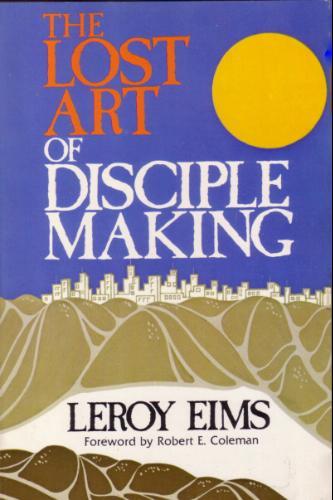
Profiles of a Convert, Disciple, Worker & Leader

WHAT DO CONVERTS, DISCIPLES, WORKERS, AND LEADERS LOOK LIKE?

((Adapted from Leroy Eims, The Lost Art of Disciple Making, pp. 184-186)

 Profile of a Convert:

  • Gives evidence of possessing new life (2 Cor. 5:17)
  • Attitude toward Christ is now favorable.
  • Attitude toward sin is unfavorable.

Profile of a Growing Disciple:

  • As a follower of Jesus Christ, places Christ first in the major areas of life and is taking steps to separate from sin (Luke 9:23; Romans 12:1-2).
  • Continues in the Word through such means as Bible study and Scripture memory; is regular in applying the Word to life with the help of the Holy Spirit (John 8:31; James 1:22-25; Psalm 119:59).
  • Maintains a consistent devotional life and is growing in faith and intercessory prayer (Mark 1:35; Hebrews 11:6; Colossians 4:2-4).
  • Attends church regularly and demonstrates Christ’s love by identifying with and serving other believers (Psalm 122:1; Heb. 10:25; John 13:34-35; 1 John 4:20-21; Galatians 5:13).
  • Is openly identified with Jesus Christ where he or she lives and works, manifests a heart for witnessing, gives testimony clearly, and presents the gospel regularly with increasing effectiveness (Matt. 5:16; Col. 4:6; 1 Peter 3:15).
  • A learner who is open and teachable (Acts 17:11).
  • A visible follower and learner of Jesus Christ, and demonstrates consistency and faithfulness in all of the above areas (Luke 16:10).

Profile of a Worker

  • Evidences growth in the virtues and skills outlined above (1 Peter 3:18).
  • Shows a growing compassion for the lost and demonstrates ability to lead others into a personal relationship with Christ (Matt. 9:36-38; Rom. 1:6).
  • Being used of God to establish believers who have become disciples, either personally or in a discipling group context (Col. 1:28-29).
  • Is currently engaged in the task of making disciples (Matt. 28:19).
  • Regular intake of the Word by all means and the quiet time are now regular habits (Philippians 4:9).

Profile of a Leader 

  • Is an equipped worker who evidences growth in the virtues and skills listed above.
  • Has been used of God to help disciples become workers.
  • Is banding and leading workers in evangelizing the lost and establishing believers.
  • Displays faithfulness and integrity in balancing life and ministry.

Time Element: Convert to disciple – 2 years; Disciple to worker – 2 years; Worker to leader – 3 years.
Book Review: Finding Faithful Elders and Deacons by Thabiti M. Anyabwile

A Useful Primer For Biblical Leadership in the Church

 In this book experienced pastor Thabiti Anyabwile writes three sections on how to find deacons, elders, and specify what their roles are in the church. Pastor Anyabwile gives the pertinent biblical requirements for deacons and elders, and gives numerous helps on biblical qualifications, traits to watch for, and questions and observations for examining whether or not those under consideration are wise choices for the respective offices of elder and deacon.

I think the best way to use this book is to use it as Thabiti Anyabwile intended it to be used:

 “First, use it prayerfully. Pray for pastors and elders as they shepherd and serve the sheep. Pray for more men to be raised up in the congregation for this important work. Pray that the Lord would pour out his grace on those serving these tasks. Pray that the members of the church would show genuine appreciation, love, and care for their shepherds. Pray that all the men in the church would grow in the qualities that elders should possess. Pray that men would have a godly desire to give their lives in serving the body of Christ as servant-leaders.

Second, use this book practically. The book does not delve into a lot of detailed argumentation, hoping instead to make application easily and quickly. I want the book to help in actually doing something—identifying and training elders—not just considering something. Put the suggestions into practice, and improve them with the experience and wisdom that come from your particular church setting and other faithful leaders.

Finally, use the book pedagogically. That is, use it to teach and instruct. Perhaps a church needs to select its first elders after a period of planning and study. Pastors may wish to use these brief chapters to ‘flesh out’ for the average church member which qualities the congregation as a whole needs to be looking and praying for in their prospective elders. Examination and pastoral search committees may find similar help.”

Take it from my own experience in over twenty years of pastoring – you want to get all the help you can in the wise selection of, praying for, training of, and role implementation of your elders and deacons – because the church will ultimately rise to great heights or fall to low depths based on the quality, character, and biblical execution of it’s leaders.

I highly recommend this book for church planters, existing leadership teams, solo pastors, deacons, and elders. It serves as a concise handbook that you can use to strengthen your existing leadership, develop future leaders, and most certainly add health and value to Christ’s church as you seek to be a good steward of its most valuable resources.

Book Review: Being George Washington by Glenn Beck

A Call To Lead in the Ilk of Our First President

 I was encouraged to read this book because of the gaping hole in leadership internationally, nationally, and locally – whether in politics, education, business, or in the church. Simultaneous with my reading of this book I was interested in something that John Gardner (in an essay on leadership) pointed out, “When the United States was formed, the population stood at around 3 million. That 3 million produced at least six leaders of world class—Washington, Adams, Jefferson, Franklin, Madison, and Hamilton.” Today we have a population 90 times larger than that and I can’t name a single leader that comes close to the aforementioned six men. Along with Gardner I ask the question “Where are they?”

Therefore, my curiosity was peaked in reading this book to discover what we can learn from Washington’s life – and whether we can truly produce great leaders today. One of the main points that Beck makes in the book early on is that “for America to achieve the greatness that George Washington achieved, we have to remember that it is achievable.” In story after story Beck brings out some of the keys to great leadership – character (based on a strong faith in God and His good providence); putting others before self – especially what’s best for the whole; having a vision for liberty and fighting for it; focusing on that which will last beyond us. In a nutshell Beck highlights Washington’s character, trust, and honor in story after story and demonstrates how he united America around freedom so that we could be the best we could be.

The primary lesson of this book and of great leadership is stated by Beck in this manner, “Everything we do in life—every battle that we fight and every mountain that we climb, no matter how many times we fall—may be for no other purpose than to prepare us for that moment when we are called upon to make a difference in this world…What Washington did do was accept the responsibility he had been given, beg the grace of God upon himself and his army, and then work relentlessly to accomplish his goals. What he did do was to keep on working, regardless of the personal sacrifices required or the setbacks that he encountered. He kept the faith, no matter who stood against him; regardless of the gossip, the naysayers and sometimes, regardless even of the betrayal of his friends.”

In conclusion Beck states that if you and I are to be like George Washington in today’s world means:

“a daily struggle between your heart and your brain; between instant gratification and enduring greatness.”

“looking out for our families, our neighbors, and our countrymen—standing for them when they can’t stand for themselves.”

“putting country before party.”

“becoming a leader – not of a country or army, but of yourself, your community, and your own family. It means taking personal responsibility for your actions and holding those around you to the same standard.”

“accepting that this country was chosen for Divine protection because the struggle for freedom is worthy of protection.”

In other words, great leadership involves humility before God; responsibility with what He has stewarded unto us, and faithfulness to the task at hand. This book was a pleasure to read, and pointed out both the strengths and weaknesses of Washington. However, the constant reminder was to be what we can be with God’s help, and do what we can do (not focus on what we can’t do), one step or opportunity at a time. Being a great leader like Washington involves great sacrifice, risk, unselfishness, and tremendous dedication. In the final analysis we need to be willing to personally answer the key question that Beck asks, “Are you willing to lose everything to do what is right?” I am grateful that Washington did, hope I will too, and that his tribe will increase abundantly.


Book Review: Gospel Centered Family by Ed Moll and Tim Chester

Helping Parents Become What God Wants Them To Be

 Parenting is difficult at times, and also very rewarding. Moll and Chester state, “Good parenting is not about adopting certain techniques. It’s about living as part of God’s story and letting God’s good news shape your values, attitudes, and behavior.” I couldn’t agree more. This outstanding workbook for parents offers 12 chapters in four sections on helping families become: 1) Gospel-centered; 2) Grace-centered; 3) Word-centered; and 4) Mission-centered.

Each chapter stands alone and contains the following five sections:

Consider this – A scenario—often based on a real-life situation—which raises some kind of dilemma or frustration in gospel ministry.

Biblical background – A relevant Bible passage together with some questions to help you think it through.

Read all about it – A discussion of the principle, both in terms of its theological underpinning and its contemporary application.

Questions for reflection – Questions that can be used for group discussion or personal reflection.

Ideas for action – Some ideas or an exercise to help people think through the application of the principle to their own situation.

The chapters are short, chalked full of great advice and ideas for implementation, and very encouraging. I believe that God will use this workbook to help parents be more focused and intentional in equipping their families for impacting culture with the gospel. I highly recommend this book as well as the Gospel Centered Church, Gospel Centered Marriage, and The Gospel Centered life – all outstanding workbooks for individuals and especially for small group/community discipleship.

Book Review: Going Deep by Gordon MacDonald

Go Deeper and Out of the Shallows

 I am a fan of Gordon MacDonald’s books because he has a unique style of writing where he synergistically integrates principles, personal experiences, and biblical insights in such a way that he makes one think and desire to put into practice what he is writing about.

In his newest offering – continuing in the context of what he wrote about in a previous book, “Who Stole My Church” – MacDonald sets out to explore and develop the statement, “The future of the Christian faith will not be determined by the number of people who fill the pews but by the spiritual depth of those people…We seem to know how to get unchurched people to visit our buildings. We even seem to know how to draw them across the line into a declaration of personal faith in Jesus. But what we do not seem to know is how to cultivate spiritually deep people. Tomorrow’s church could be headed for trouble.” This book is a fictional exploration in answering these observations based on the experiences of the fictional pastor – GMAC – and his large congregation set in New England in the modern era. Macdonald sets out to “offer a detailed plan of helping churches cultivate people of depth–spiritually mature Christians that truly desire to make a difference for Christ with their lives, that will help grow the church.”

I personally enjoyed the book because as a pastor myself I can relate to almost every story, person, thought, and implication in the book. Like MacDonald I am a pastor that has had many ups and downs with people in seeking to be a “deep Christian” and what that means in the context of seeking to grow a disciple making church. I think pastors will enjoy this book more than most people – because they will be able to identify more with the story than non-pastors will. I would recommend this book either be read while on vacation, or a chapter a day – for Type A people – you will get frustrated because the story line will move too slow for you. As for the more reflective and melancholy types – you will enjoy the story more because it will appeal to you emotionally and you will be more patient with the developing story.

I am very concerned about the shallowness and lack of depth of most churches today, and I am all for “going deep” and think that MacDonald’s book will be used to help steer many church leaders, and thus churches in a positive direction. I hope that this type of book will spur church leaders toward deeper thinking, and result in developing disciples that are deeper and less shallow than what our previous leaders have done with their churches.

I received this book free from the publisher through the BookSneeze®.com book review bloggers program. I was not required to write a positive review. The opinions I have expressed are my own. I am disclosing this in accordance with the Federal Trade Commission’s 16 CFR, Part 255


Gordon MacDonald has been a pastor and author for over forty years. For many years he pastored Grace Chapel in Lexington, Massacusetts and continues to serve as Pastor Emertius. He has also provided leadership to influential ministries such as Intervarsity Christian Fellowship, which he served as President for three years, and World Relief, which he currently serves as Chairman. Gordon’s best-selling books include Ordering Your Private WorldMid-Course Correction and, most recently, A Resilient Life. He also writes and serves as Editor-at-Large for Christianity Today’s Leadership Journal. When not writing, leading or speaking at conferences, Gordon and his wife Gail can be found hiking the trails of New England.

Vision: The Difference Between Day and Night!

A Great Statement on Vision

“All men dream: but not equally. Those who dream by night in the dusty recesses of their minds wake in the day to find it was vanity: but the dreamers of the day are dangerous men, for they may act their dreams with open eyes, to make it possible. This I did.” – T.E. Lawrence from his introduction to Seven Pillars of Wisdom

Book Review: How To Lead and Still Have a Life by Dale Burke

Helping You To Go From Surviving to Thriving!

The two books I give away to help people (especially leaders) balance their lives more than any others are this one by Burke and “Life Focus” by Jerry Foster. As a professional Life Coach and Pastor I have found in over 25 years of ministry that most people (even leaders) are merely surviving and very few are actually thriving. The principles and practices articulated in this book by Burke (former pastor of Fullerton Evangelical Free Church for many years) are biblical, logical, practical, and when applied – liberating.

In the first chapter Burke talks about how difficult it is to be a leader today and explicates the following ten facts:

1) The Rules Have Changed
2) Life is Faster
3) Change is Accelerating
4) Expectations Are Higher
5) The Culture Is in Moral Decay
6) Servant-leadership Is Stretching
7) You Are a Limited Resource
8) Leadership Is a Draining Experience
9) More is Not the Answer
10) There Is Hope

In my experience as a leader, pastor, and life coach I see leaders respond to these challenges by trying to do more (like a juggler who drops all the plates because he’s trying to do too much), or they give up – because it’s just too hard.

Burke offers a solution as an antidote to doing more, or giving up, by doing less by utilizing your strengths, your schedule, and by operating in each of these areas when you are at your best in short blocks of time. I for one, and many others I’ve coached have been helped immensely by applying the “less is more” philosophy.

In the rest of the book Burke breaks down leadership into manageable categories and responsibilities:

Section One: The Inner Ring–the Heart of the Leader

Section Two: The Middle Ring–The Heart of Leadership

Section Three: The Outer Ring–The Heart of Execution

Honestly, I am amazed that more people haven’t read this book or heard of Dale Burke. He is a leader who knows what he’s talking about – by knowledge, action, and experience, and he is an excellent communicator. I believe that this book will help any person who desires to be less overwhelmed with the responsibilities of life, and have more balance and effectiveness immensely. Read it and than give a copy away to your disciple, apprentice, or mentoree – you and they will be glad you did and so will those you live and work with – guaranteed!


Book Review: What is The Mission of The Church? By Kevin DeYoung and Greg Gilbert

Balanced Because It’s Biblical In What It Says About The Mission of the Church

As a pastor for over twenty years you see a lot of fads come and go in the way churches seek to make an impact in our communities and culture.  I have never met a pastor (worth his salt) who didn’t want to be pleasing to God and make a difference for the sake of Christ in his community and culture. However, I have become more and more concerned as I see pastors watering down the message of the gospel; focusing more on programs than on the message of the gospel; and being influenced more by the culture, than influencing culture with the message of the Bible. Therefore, I wholeheartedly endorse and applaud this latest offering on the “mission” of the church because I think it is an excellent treatment of the relevant biblical passages and how they bear on the issues we are facing in the 21st century on what the mission/purpose of the church should be. It is missional and Biblical; truthful and loving without compromise; theologically profound and culturally relevant.

Without giving away the mission of the church as defined and defended in this book, I can say that DeYoung and Gilbert do a fantastic job of discussing issues like helping the poor, economics and social justice, the Kingdom, the gospel, and how a church can make an impact on the world without sacrificing the truth and absolutes.

The strengths of this book lie in its simplicity and clarity, exposition and insightful interpretation of the Scriptures, and it’s very clear explanation and application of the gospel as revealed in the 66 books of the Bible. I recommend this book especially for pastor’s young and old, leadership teams of churches, missionaries, and Christians who want to know how they can be purposefully a part of the only organization of which the “gates of hell will not prevail.”

At the end of the day – this book is highly recommended because the author’s build a great case for how to be biblically focused, God-centered, and culturally penetrating without sacrificing the most important truths and main story line of the Bible – the centrality of Jesus Christ as Lord and King to whom is all praise, glory and honor forever.

Book Review – For The City: Proclaiming and Living Out the Gospel By Darrin Patrick & Matt Carter

How The Gospel Impacts and Transforms Culture for Christ

Darrin Patrick (Pastor of The Journey in St. Louis, MO) and Matt Carter (Pastor of Austin Stone Community Church in Texas) both tell the stories of their calling to plant churches – specifically in the city. The two pastors’ inspire existing churches to think through how we proclaim and live out the gospel, and extend a call to the masses to influence our cities with and for the gospel.

I love Carter’s description of his “church model” taken largely from His reflections on reading about Charles Spurgeon’s amazingly effective ministry in London, England in the mid-1800’s:

“Imagine an urban church so influenced by the power of the gospel that it seized every opportunity to proclaim and live out the gospel for the good of the city. Imagine that this church physically and spiritually served the poorest of the poor, but also lovingly rebuked the wealthy. Imagine this church as the epicenter of straight-up, God-fearing, Spirit-filled, revival, leading thousands of people to eternal life in Christ in just a few years. Imagine a church that built elderly housing, housed all the orphans in the city, and taught wealthy business people to have a ‘double bottom line’ so they could run a profitable business in order to support the work of the church and meet the needs of the city. In other words, imagine a church that boldly preached the gospel and lived out the values of the kingdom. Don’t you want to be a part of a church like that?”

My answer is “yes” I do! Along the way the authors show what a gospel centered ministry looks like from their perspectives of planting and pasturing in Mid America and in the South. The subjects they address are how the gospel relates to contextualization, building community, serving in the city, equipping the saints, suffering, and sharing their weaknesses, failures, and by God’s grace – their successes too.

I highly recommend this book for anyone who wants to grow in their understanding and application of the gospel and how to penetrate the culture with the gospel through the ministry of the local church.

Book Review: Why Small Groups? Together Toward Maturity by C. J. Mahaney

Excellent Introduction Into “Why?” Any Church Should Have Small Groups

I don’t know of a better study guide than this one to begin the process of training facilitators of small groups in the local church. I have used this little guide many times over the years and find that it lends itself to the great dynamics of what it takes to build a healthy. It contains 7 lessons written by pastors with over 100 years of experience in serving the local church in the context of small groups. Their ultimate goal is to help your church be a church of small groups, rather than just with small groups.

The Eight Chapters are divided as follows:

1)    C. J. Mahaney writes the opening chapter and delineates the fact that healthy small groups result in a community of believers that grows in their sanctification, mutually cares for one another, shares intimate fellowship, and experiences and expresses various out workings of the spiritual gifts.

2)    James Loftness addresses what biblical fellowship really looks like, as well as what it doesn’t look like.

3)    Greg Somerville writes about the many ways that the members of the small group may commit themselves to the group using their gifts, talents, abilities, and passion to demonstrate the fruit of the Spirit to build up the Christian community.

4)    Mark Mullery builds a case for the complementarian characteristics of a great leader – committed, of proven character, submitted, having a love, in a commendable marriage (if applicable), trained, consistent in the spiritual disciplines, able to lead, a tither, and male.

5)    Mickey Connolly deals with the “art of care and correction. He provides some great insights into resolving conflicts, confronting sin in others, and confessing our own sins – in order to create a community of repentance and restoration.

6)    John Butler looks at how to challenge your group toward outreach and assimilation – to never be comfortable – but missional.

7)    Dave Harvey writes an excellent chapter on the different “viruses” that can attack a group and how we can build up the local church body as a community that works together for the common good of the church.

8)    Walt Russell pens the appendix, which should not be overlooked. He writes an excellent article addressing how to properly interpret the Scriptures, and then apply them. In essence he says, “The meaning of a text never changes. Our first goal is to discover this fixed thing. In contrast, the significance of the text to me and to others is very fluid and flexible.”

All the sessions are based on Biblical passages, and approximately 10 questions per chapter for group discussion based on the reading, and Scripture references discussed by each author. Each chapter contains sidebars, which contain quotes, verses, passages for further study, and helpful suggestions and ideas for further discussion. I recommend this resource highly for anyone who is interested in “Why” you should have small groups in your church – it will motivate you to begin right away!