10 Principles of Discipleship

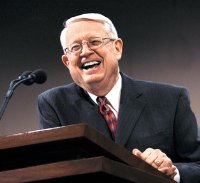
FTM Michael J. Wilkins
1.     Discipleship is about a Relationship

Michael Wilkins has defined a disciple of Jesus as one who “has come to Jesus for eternal life, has claimed Jesus as Savior and God, and has embarked upon the life of following Jesus.”[1] His very presence in my life and his promise to never leave nor forsake me, encourages me to daily follow Him.  At the heart of following Him is this undeserved relationship I have with Him.

2.     Discipleship is enabled and empowered by the work of the Holy Spirit who transforms us into the image of Christ.

The Holy Spirit indwells and fills believers (Eph. 5:18), guides us into all truth (John 16:13), brings forth fruit in our lives (Gal. 5:22-23) and empowers us for ministry in the church and in the world.[2]  The Spirit is God’s presence in us (Rom. 8:11) to confirm that we are indeed children of God (Rom. 8:16) and to convict us of sin for the continuing process of conforming us into the image of Christ.  Understanding the role of the Holy Spirit encourages the response of submission to His sanctifying work.

3.     Discipleship is grounded and guided by the Word of God

The Bible is our authority in all areas of life.  “If you abide in my word, you are truly my disciples, and you will know the truth, and the truth will set you free” (John 8:31-32). Consistent nourishment is a vital component of one’s spiritual growth (Psalm 1, John 15).

4.     Discipleship is nurtured in community

Community with other believers is a vital part of our growth as disciples.  We were made to be in fellowship with one another.  Thus the imagery of the body of Christ portrays how vitally linked we are to one another.  In such community we are able to fulfill the command of loving one another and with this community then to love the world.

5.     Discipleship is a continuing process of being transformed from the inside-out

“The ultimate goal of the believer’s life is to be conformed to the image of Christ (Ro 8:29).”[3]  Jesus described a radical way of life in the sermon on the mount.  In a world in which righteousness was very much regarded by one’s outward actions, Jesus emphasized the transformation of the heart.

6.     Discipleship produces spiritual fruit

As the Holy Spirit works to transform the individual and change is made from the inside-out, the characteristics of God become evident in the believer’s life:  love, joy, peace, patience, kindness, goodness, faithfulness, gentleness, self-control (Gal. 5:22-23).

7.     Disciples of Christ who are in the process of inward transformation, yield to the Spirit’s leading in service and mission.

Spiritual formation is both about the inward change of heart and the outward manifestation of that changed heart.  Christ modeled the life of service for His disciples and commands us to serve in humility and love while proclaiming His truth in a lost world.

8.     Disciples are called to share in the fellowship of Christ’s sufferings

As we live in a sin-cursed world, we bear the effects of sin on a daily basis.  With the presence of Christ and the promise of future hope with Him, we are able to endure the pain and even be transformed in the process. Paul writes of this truth in 2 Cor. 4:17: “For this light momentary affliction is preparing for us an eternal weight of glory beyond all comparison.”  God invites us to suffer for His sake, for living to honor Christ in a world that is hostile toward Him.  In this, we share in his sufferings and bring glory to Him.

9.     Disciples Must Count the Cost 

Following Christ as His disciple means letting go of one’s own will and seeking the will of God in all things (Luke 9:23).  Nothing must take the place of Jesus as the “focus of allegiance,” as Wilkins explains.[4]

10.   Discipleship is a Life-long Journey

In my own life, describing my faith and discipleship in terms of the journey metaphor has been vitally important on many different levels.  As I come to different forks in the road, or experience difficult trials, knowing that Jesus is my trustworthy Master and Leader, is my sole comfort and motivation to continue in this journey of faith.  We must continue to realize and endeavor to endure the trials of faith that come with renewed commitment to following Christ on a daily basis.


[1] Michael J. Wilkins, Following the Master: A Biblical Theology of Discipleship (Grand Rapids: Zondervan, 1992), 40.

[2] Michael Glerup, “The Holy Spirit and Spiritual Formation,” in The Kingdom Life: A Practical Theology of Discipleship and Spiritual Formation, ed. Alan Andrews (Colorado Springs: NavPress, 2010), 251.

[3] Michael J. Wilkins, Following the Master: A Biblical Theology of Discipleship (Grand Rapids: Zondervan, 1992), 133.

[4] Michael J. Wilkins, An Outline Study Guide to “Following the Master: A Biblical Theology of Discipleship,” 69. 

*Article above adapted from http://www.thetwocities.com/practical-theology/discipleship-2/discipleship-principles/ Posted by Jeannette Hagen – February 25, 2013

About the Author:

Jeanette Hagan is currently a PhD candidate in New Testament at the University of Durham.  Studying under John M.G. Barclay, she is writing her thesis on the relationship between Paul’s doctrine of justification by faith and the continuing participation a believer experiences in the death, resurrection and life of Christ.  Previously, she studied English literature for her B.A. at Biola University while being in the first graduating class of the Torrey Honors Institute. In 2011 she completed her M.A. in New Testament at Talbot School of Theology. Her passion is training and equipping disciples to follow the Lord wholeheartedly.   She has served in a variety of ministry capacities.  Highlights include: organizing summer camps and humanitarian efforts for orphans in Ukraine and Russia, traveling 5 continents sharing the Gospel, helping to facilitate for theological and practical ministry training for believers around the world, and serving in a church plant in Whittier, CA.  In her free time she enjoys reading, being outdoors in a variety of recreational capacities, playing piano, and mostly just spending quality time with family and friends.
Are You Bitter or Better?

Neal Jeffrey: A Case Study

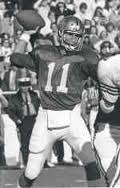
Neil Jeffrey quarterbacking

One of my favorite people, and certainly one of America’s One finest communicators, is Neal Jeffrey. Neal, as quarterback, led the Baylor Bears football team to the Southwest Conference championship in 1974. Today, he addresses many youth groups as well as adult businesspeople. He is truly one of the most humorous, sincere, and capable speakers I’ve ever heard. The interesting thing is that Neal is a stutterer. However, he has chosen to make stuttering an asset, not a problem. Now think about what you just read. A very successful quarterback and public speaker who stutters doesn’t compute in the minds of most people. Neal Jeffrey has taken a negative and turned it into a positive. After speaking a few minutes, he tells audiences that in case they hadn’t noticed, he stutters. Then with a big smile, he says, “Sometimes I do get hung up a little bit. But don’t worry. I guarantee you something’s coming!” The audience invariably responds enthusiastically Neal is the classic example of an outstanding individual who chose to make an obstacle an asset. The obstacle has forced Neal to be more creative and to do more reading, research, and studying so he can most effectively turn that liability into an asset. Result: He got better, not bitter. He is better not in spite of his stutter, but because of his stutter. Neal has reached and is reaching goal after goal in all areas of his life. I believe that you can do the same thing. When (not if) troubles and problems come your way, remember that the only way to the mountaintop is through the valley. All of us have liabilities that can hold us back or propel us forward. In most cases, the choice is ours. So, take your obstacles or liabilities, recognize and evaluate them, and then find a way to turn them into assets.

STSA Ziglar

– Zig Ziglar. Something to Smile About: Encouragement and Inspiration for Life’s Ups and Downs (Kindle Locations 1215-1226). Kindle Edition.

The Importance of Mentoring for Succession by David P. Craig

Two Gulf Baseball players

Paul instructed Timothy, “You then, my child, be strengthened by the grace that is in Christ Jesus, and what you have heard from me in the presence of many witnesses entrust to faithful men who will be able to teach others also” (2 Timothy 2:1-2, ESV).

Jesus commission to the disciples: “All authority in heaven and on earth has been given to me. Go therefore and make disciples of all nations, baptizing them in the name of the Father and of the Son and of the Holy Spirit, teaching them to observe all that I have commanded you. And behold, I am with you always, to the end of the age” (Matthew 28:18b-20, ESV).

 Succession Isn’t An Option

In Joe Aldrich’s excellent book on evangelism he retells this insightful legend on successionism related to the great commission:

There is a legend which recounts the return of Jesus to glory after his time on earth. Even in heaven he bore the marks of his earthly pilgrimage with its cruel cross and shameful death. The angel Gabriel approached him and said, “Master, you must have suffered terribly for men down there.” “I did,” he said. “And,” continued Gabriel, “do they know all about how you loved them and what you did for them?” “Oh, no,” said Jesus, “not yet. Right now only a handful of people in Palestine know.” Gabriel was perplexed. “Then what have you done to let everyone know about your love for them?” Jesus said, “I’ve asked Peter, James, John, and a few more friends to tell other people about me. Those who are told will in turn tell still other people, and my story will be spread to the farthest reaches of the globe. Ultimately, all of mankind will have heard about my life and what I have done.” Gabriel frowned and looked rather skeptical. He knew well what poor stuff men were made of. “Yes,” he said, “but what if Peter and James and John grow weary? What if the people who come after them forget? Haven’t you made any other plans?” Jesus answered, “I have no other plans. I’m counting on them.” Twenty centuries later, he still has no other plan. He’s counting on you and me. High on God’s “To Do” list is the evangelization of the world. His early disciples adopted his priorities and devoted themselves to reaching their world. Christ counted on them, and they delivered. Have we done as well? (Joe Aldrich. Lifestyle Evangelism: Learning to Open Your Life to Those Around You. Portland, OR.: Multnomah Press, pp. 15-16).

It is my contention that what is true of evangelism above is also true of discipleship with particular regard to the succession of developing leaders in the church. There are many ways to go about developing leaders. I would look to share one of the simplest yet incredibly effective ways to make this happen.

If we desire to be effective leaders it’s absolutely essential that we also become effective disciple makers and mentors. I have been helped in the whole idea of succession in leadership by many mentors I have had along the way in my thirty years of ministry in the church. The most beneficial concept I’ve learned will be shared in this chapter from the big idea gleaned from Ron Lee Davis’ wonderful book: Mentoring: The Strategy of the Master (Thomas Nelson: Nashville, 1991). In that book Davis articulates a great strategy for successful succession in leadership based on having a Paul, a Timothy, and a Barnabas in your life. Unfortunately, this book is no longer in print, and many people have never heard about this great idea. In this chapter I will share how you can benefit from the idea of having a Paul in your life – someone more spiritually mature than you in a particular skill or area of character; a Timothy – someone you are investing in – to develop particular strengths in character and skill; and a Barnabas – a colleague that is committed to your success as you seek to invest your life in others.

 Mentoring and Discipleship Defined

I once led a Bible study with about twenty men present on a weekly basis. I can remember one night we had over thirty men show up and the topic was on discipleship and mentoring. Most of the men were non-believers or new believers and they all shared they had never been mentored or discipled and wanted to know what the difference was between the two of them. On a whim I asked these men, “how many of you had a father that was a follower of Christ that you would want to emulate in your own life?” To my total shock only one man in over thirty had a dad who was even a believer! I realized right then and there that I needed to get super serious about discipleship and mentoring in my church. I had taken for granted the modeling that I had received from a wonderful Christian dad and presumed that most men in my church had the same. Boy was I wrong!

I have read a lot of books on “mentoring” and “discipleship” in my life. One of the better definitions on mentoring comes from Paul Stanley and J.R. Clinton in their book Connecting where they define mentoring as “a relational experience in which one person empowers another by sharing God-given resources.” They define discipling as “a relational process in which a more experienced follower of Christ shares with a newer believer the commitment, understanding, and basic skills necessary to know and obey Jesus as Lord” (J. Robert Clinton and Paul D. Stanley. Connecting: The Mentoring Relationships You Need To Succeed In Life. Colorado Springs, NavPress, 1992).

Ted Engstrom in his book The Fine Art of Mentoring brings discipleship and mentoring together in this way, “A discipler is one who helps an understudy (1) give up his own will for the will of God the Father, (2) live daily a life of spiritual sacrifice for the glory of Christ, and (3) strive to be consistently obedient to the commands of his Master. A mentor, on the other hand, provides modeling, close supervision on special projects, individualized help in many areas—discipline, encouragement, correction, confrontation, and a calling to accountability” (Ted Engstrom. The Fine Art of Mentoring. Brentwood, TN.: Wolgemuth & Hyatt, 1989, p. 17).

There are many other good definitions in my files on discipleship and mentoring. Sometimes the definitions are almost identical. Usually the definitions of discipleship focus on knowledge of the Scriptures, whereas mentoring focuses on the “how to” or “hands on” application of the Scriptures and various skills and character development. Ron Lee Davis states simply, “mentoring is a process of opening our lives to others, of sharing our lives with others; a process of living for the next generation” (Ron Lee Davis. Mentoring, p.16).

 The Search for a New Definition

In my opinion Jesus discipled and mentored the disciples. The word “mentor” is not found in the Bible, but the concept is in all sixty-six books. If ever someone “opened,” “shared,” and “lived” his life for others – Jesus did. If ever someone taught people to love and obey God, and serve others – Jesus did. A word I have made up over the years to help people get the bridge between discipleship and mentoring is “investoring.” The word investoring combines the spiritual, intellectual, emotional, and applicational elements of discipleship and mentoring. Investoring is the process of investing in someone’s eternal future by storing up in them the knowledge, skills, character and obedience of Christ as revealed in the Scriptures to the glory of God. Thus investoring combines all the elements of discipleship and mentoring – the intellect, the heart, and the hands for the sake of Christ’s glory. It involves a conscious and intentional commitment into someone’s life where you are storing Christ in him or her.

 Investoring is a Community Project

You may say, “But I’m not Jesus!” And you are 100% correct. That’s why we need a plurality of leaders and disciples working together to help one another conform to the image of Christ. Paul told the Corinthian church, “Be imitators of me, as I am of Christ” (1 Corinthians 11:1, ESV). One of the dangers of being a leader is that you think everyone needs to think like you, be like you, and act like you. It’s no wonder our churches are so dysfunctional. As leaders we need to do all we can to be, look, and act like Christ, but we also need to realize that we need the whole body of Christ to participate if we are going to be effective in investoring for the sake of Christ. It’s no wonder that the Apostle Paul told the Corinthian church to keep on practicing and pursuing the spiritual gifts (1 Corinthians 12-14). It takes a community of personalities, experiences, skills, and character to make healthy multiplying disciples of Christ.

The Trinity is a community in unity. Leadership in the Old Testament and New Testament has involved Prophets, Priests, and Kings, Elders, and Deacons in community and unity. If we take the great commission seriously then it’s important that we think intentionally and strategically about investoring and sucessionism in our ministries.

 No Plan B

Investoring should take into consideration reaching the lost, building them up in the faith, and unleashing them for a life long ministry of investoring. We will draw some important principles from the following parable by Win Arn:

Now it came to pass that a group existed who called themselves fishermen. And lo, there were many fish in the waters all around. In fact, the whole area was surrounded by streams and lakes filled with fish. And the fish were hungry. Week after week, month after month, and year after year these, who called themselves fishermen, met in meetings and talked about their call to go about fishing. Continually they searched for new and better methods of fishing and for new and better definitions of fishing. They sponsored costly nationwide and worldwide congresses to discuss fishing and to promote fishing and hear about all the ways of fishing, such as the new fishing equipment, fish calls, and whether any new bait was discovered. These fishermen built large, beautiful buildings called “Fishing Headquarters.” The plea was that everyone should be a fisherman and every fisherman should fish. One thing they didn’t do, however; they didn’t fish. All the fishermen seemed to agree that what is needed is a board which could challenge fishermen to be faithful in fishing. The board was formed by those who had the great vision and courage to speak about fishing, to define fishing, and to promote the idea of fishing in far-away streams and lakes where many other fish of different colors lived. Large, elaborate, and expensive training centers were built whose purpose was to teach fishermen how to fish. Those who taught had doctorates in fishology. But the teachers did not fish. They only taught fishing. Some spent much study and travel to learn the history of fishing and to see far-away places where the founding fathers did great fishing in the centuries past. They lauded the faithful fishermen of years before who handed down the idea of fishing. Many who felt the call to be fishermen responded. They were commissioned and sent to fish. And they went off to foreign lands . . . to teach fishing. Now it’s true that many of the fishermen sacrificed and put up with all kinds of difficulties. Some lived near the water and bore the smell of dead fish every day. They received the ridicule of some who made fun of their fishermen’s clubs. They anguished over those who were not committed enough to attend the weekly meetings to talk about fishing. After all, were they not following the Master who said, “Follow me, and I will make you fishers of men”? Imagine how hurt some were when one day a person suggested that those who don’t catch fish were really not fishermen, no matter how much they claimed to be. Yet it did sound correct. Is a person a fisherman if year after year he/ she never catches a fish? Is one following if he/ she isn’t fishing? (Win Arn, The Pastor’s Church Growth Handbook, vol. 1, Monrovia, California: Church Growth, Inc., 1979, pp. 151-154).

Win Arn is addressing the church’s obsession with talking about evangelism, but doing precious little actual evangelism. I think it’s just as bad in the arena of making multiplying disciples and leaders in the church. We have a lot of programs, meetings, and training sessions, but we actually do very little relational investoring. We need to answers Arn’s question about investoring. “Are we fishing?” “Are we catching any fish?” And may I add, “What are we doing with the fish once we catch them?” How are we really doing at making disciples and raising up, training, and unleashing leaders in the church?

 Simple Steps Toward Investoring

Every pastor I know is extremely busy. However, we need to ask the question, “Am I making disciples?” “Am I doing anything that resembles what Jesus did two thousand years ago with his twelve disciples?” Yes, you are preparing sermons. Yes, you are counseling. Yes, you are doing weddings and funerals. But the kicker is “Am I making multiplying disciples?” If you were to die today what would happen to your leadership team? What would happen to your church? Many pastors are very skilled, gifted, and have amassed a large following. However, is this following made up of invested in, stored into, Christ-like leaders? I think it’s of crucial importance that we answer this question with a resounding “YES!” However, you will not be able to answer “Yes” without an intentional plan for successional investoring.

The good news is that every pastor has the three things you need for successful investoring: time, a calendar, and the ability to make your own schedule. As a pastoral life coach one of the main things I help people with is fulfill their vision by scheduling the steps needed to achieve your vision. Here is an example. Many pastors say to me, “I don’t have any non-Christian friends, so how am I supposed to reach non-Christians for Christ?” I then ask them, “When do you intentionally get together with non-believers?” They always say, “What?” And I say when’s the last time you invited a neighbor over for a barbeque or to watch a football game, or to play tennis? In other words what bridges can you build with people in your sphere of influence for the sake of investoring?

I was speaking at a conference for a young church planting team in Argentina about this concept of investoring with the lost and a thirty-year-old businessman came up to me afterwards as if I had just discovered plutonium or something. He said, “You mean I can invite my co-workers on a fishing trip and build a friendship with them, and share my faith with them over time?” “Yes! Absolutely!” This man has since that time led several of his friends to Christ – some of which are now, like him, leaders in the church.

As pastors we expect to be equippers of the saints to do the work of the ministry right? What about Paul’s admonition to Timothy, “As for you, always be sober-minded, endure suffering, do the work of an evangelist, fulfill your ministry” (2 Timothy 4:5). You may say, well I preach the gospel every week – that’s my work in evangelism.” But don’t forget the word “always” in the passage. Evangelism shouldn’t just take place on Sunday’s but “always.”

This is where our schedule comes in. I coach leaders to use their calendars to schedule their investoring. I think the most important thing we need to schedule is our time with God first. Right now as I write these words it’s August. So one of the first things I do with pastors is help them schedule blocks of time with God. Some of those times are one-hour blocks and some two-hour blocks of time – for prayer and devotional time with God. Next to schedule blocks of time with your spouse – dates, prayer time, study time, discussion time, financial discussion and so forth. Then schedule blocks of time for family and individual dates with your kids – sporting events, dates, discipleship, and various intentional meetings for investoring. Lastly, to schedule times with unbelievers – tennis, golf, barbeques and the like. We need to schedule investoring times with men that are investoring in us (Paul’s); encouraging us (Barnabas’); and men we are investoring in (Timothy’s).

 The Power of a Paul in Your Life: Investoring Relationship #1

Timothy had a spiritual Father – the Apostle Paul. For me my physical father was also my spiritual father. My dad is ninety years old as I write this, and yet there is no one who has been a greater influence on my spiritual life. He taught me primarily by his actions not by his words. I never woke up without him reading the Bible on his lap in the morning. He instilled in me a love for the Scriptures because he lived them out in real life. My dad was an international businessman and as a result we traveled a lot. There was never a Sunday where we missed church. He loved to hear the word preached and to spend time in worship. He taught me to tithe, study the word, be involved in the church, and have Christo-centric lenses with which to filter all of reality – all through his modeling of these things.

It’s important to have many Paul’s. My dad is a tremendous example to me, but he’s not perfect – he has strengths to imitate and weaknesses to avoid. It’s important as pastors that we recognize this in our heroes. I have a Paul who helps me with finances. We have been friends for many years and I have learned a ton about giving, saving, and investing from my “financial Paul.” I have another Paul who helps me with my attitude. I can always count on this Paul to help me with my thinking when I see the glass half empty rather than half full. He has the ability to steer my thoughts heavenward when they are going wayward!

I’ve approached good preachers to help me with my preaching; others to help me with leadership skills; and still others to help me with counseling, conflict management, and various helps with growth in character and skill development. The main thing to remember is that you constantly schedule times with your Paul’s to grow in Christ-like character and skill.

Here are some specific examples I’ve had with Paul’s over the years. One year I was struggling with creativity in preaching. I had been preaching topically for several years and this well-known preacher was an expositional preacher. I called him and invited him out for coffee and he graciously met with me over a period of several months to teach me how to put together expositional sermons. It was the highlight of my week to meet with this excellent expositor of the Word and learn how to become an expository preacher. He would critique my previous weeks sermon; give me ideas of how to have a stronger introduction, big idea, main points, application, and conclusion. As a result I became a much better Bible student, and preacher. The many ways this “Paul” helped me with my preaching were and are incalculable. I learned how to put together an outline, develop a manuscript, and preach without notes from this individual. He radically changed the way I think, prepare, and preach sermons for the glory of God.

Another year I focused on “joy” in my life as a key element missing in manifesting the fruit of the Spirit. I read books on joy, but found a wise older man to meet with every other week for coffee who was known for his joy. I asked him about his habits, thought process when difficulties come, and many other issues related to joy. He’s since gone home to be with the Lord and I still struggle with joy in my life, but I often reflect on what this man taught me about joy, and just thinking about him – brings joy into my life – because he so reflected the joy of Christ in his own.

A Paul can be a life-long mentor for you, or a short-term relationship. The key is that you are proactive in finding and pursuing relationships with Paul’s. The steps I’ve taken in pursuing Paul’s are these: (1) Ask leaders around me what my blind spots are or areas where I could use some growth (I’ve been told in the past I needed more skill in communication – thus the preaching – and needed to smile more – thus the pursuit of joy); (2) Set a time frame for the particular skill or character development. For example, I spent three months learning how to preach expostionally, and one year learning how to become more joyful. This doesn’t mean I don’t still work on becoming a better preacher or becoming more joyful. As a matter of fact – I’m currently looking for mentors in both of these areas again! (3) Commit to your relationship with your Paul. Write out some goals and a plan that you will both agree to – time; place; boundaries; expectations; and some goals. (4) Don’t break off the relationship – but give a time of closure to the process. Most people that you want to be a “Paul” in your life need to invest in others as well. Thank them for their time and release them and encourage them to invest in other “Timothy’s.” (5) Never stop praying for, looking for, and asking for people to invest in you.

I like to have a new Paul in my life each year. I usually have a Paul for some aspect of my character (e.g. – love, patience, joy), and another in a particular skill area (finances, parenting, preaching). The sky is the limit in your growth with a Paul in your life.

Here is what I look for in a Paul. I primarily look for someone who is Christ-like. I’m looking for an area in my own life where I don’t look like Jesus, but for someone I know who does look like Jesus in a particular area of character or skill. I also want someone that believes in me and will commit to me. Therefore, if they meet these criteria I set up a time to meet with them, and give them a head’s up about why I’m meeting with them. For example, when I met with the expository preacher I told him that I admired his preaching and asked if he would be willing to meet with me over a period of three months to show me how he puts together a sermon. I was going through the book of Philippians at the time, so he worked with me on outlining the book, asking questions of the text, and coming up with illustrations and applications from each pericope.

Do you have someone with excellent skills that can help you to improve in areas where you are weak? Do you have someone who is spiritually mature and models biblical values in your life? Do you have someone who is a Christ-like model worth emulating? Do you have someone to go to for wise counsel and advise? Do you have a Paul who is pouring his life into you as the Apostle did with Timothy? Be proactive – prioritize and pursue your Paul now.

I would also urge you to be a Paul for others. What skills and character traits can you help another Timothy with? Are you being proactive with intentionally developing character traits and skills in the lives of others around you? There is an old Chinese Proverb that says, “If you are planting for a year, plant grain. If you are planting for a decade, plant trees. If you are planting for a century, plant people.” You have areas of strength that will be greatly strengthened when you “investorize” them in others for the glory of God.

 The Presence of a Barnabas in Your Life: Investoring Relationship #2

Do you have someone in your life that encourages you regularly? Do you have someone who supports you, believes in you, and guides you? Chuck Swindoll once stated, “A person is never more like Christ than when full of compassion for those who are down, needy, discouraged, or forgotten.”

Enter Barnabas – “the son of encouragement.” Who wouldn’t want to have a Barnabas in their life? He was generous with his finances (Acts 4:32-37); reached out to Paul when everyone else was skeptical about him (Acts 9:26-31 & 11:25-30); spent time with Mark when he had failed (Acts 15:36-39). If it where not for Barnabas we would not have Paul’s epistles not Mark’s gospel. Neither would we have the rapid spread of the gospel as recorded in the Book of Acts. The fact of the matter is nothing empowers good leadership like encouragement.

People like Barnabas are hard to find. The fact of the matter is – they usually find you. Honestly, for every 100 Jezebels and Judas’ out there, you will find a Barnabas. My only advise on finding a Barnabas is to do your best to be a Barnabas. Someone once told me, “Be kind to everyone, because everyone is facing some kind of battle.”

Most the people in my life that have been a Barnabas for me have gone to be with the Lord. I have a few left, but not many. I simply would say to treasure the Barnabas’ in your life. Be around them as much as possible. Also be like Barnabas as much as you possibly can. There were essentially four keys to Barnabas’ life: (1) He was a man of integrity (Acts 11:24); (2) He was full of the Holy Spirit (John 14:16-17, 26); (3) He was full of faith; and (4) he was teachable (Acts 13:43, 50). Constantly be a Barnabas to others and pray that God will bring you a Barnabas by His grace.

Just like your time with God, your spouse, your kids, and your Paul. If you have a Barnabas schedule time with your Barnabas at least once a month. In seasons of dryness schedule more times as needed. Also, please schedule times to be a Barnabas for others – caregivers, people with cancer, and those who are depressed and suffering – they need to be encouraged in Christ desperately.

 The Potential of a Timothy in Your Life: Investoring Relationship #3

Do you have someone you’re investoring in? Are you investing in the spiritual life of your children? What about those who don’t know Jesus or are young in the faith? Are you teaching anyone how to study their Bibles or how to share their faith? There are so many Timothy’s and so little time!

Timothy’s are the easiest to find. Paul’s are harder to come by, and Barnabas’ are fewer and far between. However, you can definitely be a Paul to a Timothy right now. There is an area in your character as well as a skill that you can teach and model for someone else. I have found that men in particular need help in how to show love to their wives (desperately); raise their children (ultra-desperately); and in sharing their faith with neighbors and co-workers (ultra-ultra-desperately).

Based on our key verse on investoring in 2 Timothy 2:1-2, “You then, my child, be strengthened by the grace that is in Christ Jesus, and what you have heard from me in the presence of many witnesses entrust to faithful men who will be able to teach others.” – We see in a nutshell that investoring involves five essential aspects:

(1) It’s relational. The “you” in verse one refers to Timothy and the “my” refers to the Apostle Paul. People learn how to better love and follow Jesus in the context of a focused and purposeful friendship. Timothy learned about life and ministry as he spent time observing and learning from Paul – mediated through his unique personality, gifting, and style.

(2) It’s grounded in Theology. The Apostle Paul imparted what he had received “in the presence of many witnesses” (marturon “martyrs”). These were men and women that had died for their beliefs and convictions based on the Scriptures. In the first century a martyr denoted a public witness to the truth. The meaning of the word martyr into its present meaning is evidence that Christian truth telling could be terminally costly. In the Greek the word “entrust” means making a secure run to the bank to deposit a treasure. These “treasures” for the martyrs were not based on anything material, but based on the great doctrinal truths that make up the gospel: Christ’s atonement for sin, His ascension, His resurrection, and soon return.

(3) It’s intentional. All of us are involved in many un-intentional relationships – encounters with the mailman; the checker at the market; and so forth. However, in the case of Paul and Timothy we see a relationship that was established for a specific purpose – The succession of church leadership. Intentional relationships usually don’t happen unintentionally or spontaneously. Therefore, it’s important that we work hard at being creative and specific with our intentions in pursuing Paul’s and finding Timothy’s to invest in. Being a Barnabas can be spontaneous but will be manifested more when we are intentional in seeking to encourage others.

(4) It’s transformational. The people who have made the biggest impact on my life have been up close and personal. We can learn much from audio, video, and books, but there is absolutely no substitute for real life modeling in the midst of the ups and downs of life.

(5) It’s reproducible. Paul specifies that his goal with Timothy is that he “will be able to teach others.” The goal is always multiplication. We are not to be stagnant pools of knowledge, but rivers with many outlets. We want to refresh and renew and revive the leaders around us.

 The Bottom Line

Leadership in the Bible is all about succession. God never meant to have great leaders so that we simply remember or follow great leaders. He wants us to be great leaders so that we can point others to and emulate our Great Leader. Ultimately Jesus established the Church as the mission agency for unleashing the gospel through disciple making around the world. There is no plan “B.” God’s plan “A” is that His disciples would make disciples who would make disciples until He returns. Having and being a Paul, Timothy, and Barnabas isn’t the only way to make disciples. It’s a way. It’s a way I highly recommend. It’s intentional, purposeful and strategic. It’s hard work, but well worth the effort. It’s a time-tested and trusted model that we see woven all through the Bible – “Moses mentored Joshua. Naomi mentored her daughter-in-law, Ruth. Ezra mentored Nehemiah. Elijah mentored Elisha. Elizabeth mentored her cousin Mary.  Barnabas mentored Paul and John Mark. Paul mentored his spiritual son Timothy. Paul also mentored Priscilla and Aquilla, who in turn mentored Apollos” (Davis, p. 21). The question that remains for us to answer is who will you be “investoring” in for the sake of Christ and the expansion of His Church for His glory until He returns?

The Jelly Bean Prayer

Jelly Beans

THE COLORS PRAYER

RED is for the blood He gave.

GREEN is for the grass He made,

YELLOW is for the sun so bright.

ORANGE is for the edge of night.

BLACK is for the sins we made.

WHITE is for the grace He gave.

PURPLE is for His hour of sorrow.

PINK is for our new tomorrow.

A bag full of jelly beans colorful and sweet, is a prayer, is a promise, is a special treat!

“Come now, let us reason together says the LORD: though your sins are like scarlet, they shall be as white as snow; though they are red like crimson, they shall become white like wool.” – Isaiah 1:18

Are Your Sins On You? Or Are They On Jesus?

The Gospel Illustrated: Which Criminal Are You?

Luke volume 2 Hughes

Luke 23:39-45

One of the criminals who were hanged railed at him, saying, “Are you not the Christ? Save yourself and us!” 40 But the other rebuked him, saying, “Do you not fear God, since you are under the same sentence of condemnation? 41 And we indeed justly, for we are receiving the due reward of our deeds; but this man has done nothing wrong.” 42 And he said, “Jesus, remember me when you come into your kingdom.” 43 And he said to him, “Truly, I say to you, today you will be with me in Paradise.” 44 It was now about the sixth hour, and there was darkness over the whole land until the ninth hour, 45 while the sun’s light failed. And the curtain of the temple was torn in two. 

The old divines used to say about this text, “One alone was saved upon the Cross that none might despair; and only one, that none might presume.” The thief’s redemption makes it clear that salvation does not come by works. It is all of grace (cf. Romans 11:6). To presume on our works is to be lost.

At the same time we must not despair. Are we caught in sin, perhaps sin so unspeakable that if others knew they would consider us a wretch or worse? Do we imagine we are beyond grace? If so, we are wrong. The only thing that will put us beyond hope is to be like the thief who rejected Christ. He died that day only to become one of the “wandering stars, for whom blackest darkness has been reserved forever” (Jude 13).

The thief’s redemption assures us that it is never too late to turn to Christ. Samuel Johnson was fond of quoting a hopeful epitaph for those who despair. The image is that of a man being pitched to his death from horseback.

*”Between the stirrup and the ground,

I mercy ask’d, I mercy found”

The thief’s reward was Heaven to its fullest—Paradise face to face with Jesus. In Jesus’ Parable of the Workers in the Vineyard (Matthew 20:1–16), the workers who were hired for the last hour were paid the same as those who had labored all day. The landowner’s response to the workers’ complaint was, “ ‘Take your pay and go. I want to give the man who was hired last the same as I gave you. Don’t I have the right to do what I want with my own money? Or are you envious because I am generous?’ So the last will be first, and the first will be last” (vv. 14–16).

My wife’s father died a terrible death with emphysema. But at the eleventh hour he wonderfully repented and turned to Christ in faith. My wife and I came home to Wheaton, Illinois, to attend another funeral over which famed author Joe Bayly officiated. Joe read that parable and said, “Those that come last receive as much as the first!” Our hearts were elevated as we reflected on the grace of God that had come to my wife’s dear father.

Luke’s account of the cross is not about a good thief but about a sinful, wretched thief and a good Savior. It is about the fact that Jesus loved to forgive our sins:

We have heard the joyful sound—

Jesus saves! Jesus saves!

Spread the tidings all around—

Jesus saves! Jesus saves!

Waft it on the rolling tide—

Jesus saves! Jesus saves!

Tell to sinners far and wide—

Jesus saves! Jesus saves!

“Jesus Saves” by Priscilla J. Owens

One Saturday morning Dr. Donald Grey Barnhouse was in his study working when the custodian came in and announced there was a man outside to see him, giving him the man’s card. Dr. Barnhouse read the card, which indicated that the visitor was the captain of the Mauritania, the largest passenger vessel afloat.

When Dr. Barnhouse went out to meet the man, the captain said, “You have a very beautiful church here.” Dr. Barnhouse replied, “We are grateful for all that was done by our faithful predecessors a hundred years ago.” The captain said, “It is very much like the Basilica at Ravenna in Italy.” Dr. Barnhouse responded, “Well, it is an architectural duplication. In fact, years ago they brought workmen from Italy, and the tessellated ceilings and the marble columns and the mosaics were all done by Italian workmen. But that’s not what you came to talk about. You didn’t come to talk about architecture, did you?”

The man said, “No. Twenty-three times a year I sail the Atlantic. When I come down the bank of Newfoundland, I hear your broadcast out of Boston. And as I came this week I thought to myself, ‘I’ve got twenty-four hours in New York. I’m going to go down and see Dr. Barnhouse.’ So I took a train, hoping perhaps I would be able to meet you, and here I am.” Dr. Barnhouse was very straightforward as he said, “Sir, have you been born again?” The captain replied, “That is what I came to see you about.”

By this time they had reached a chalkboard in the prayer room, and Dr. Barnhouse drew three crosses. Underneath the first one he wrote the word “in.” Underneath the third he wrote the word “in.” Underneath the middle cross he wrote the words, “not in.” He said, “Do you understand what I mean when I say those men who died with Jesus had sin within them?” The captain thought and said, “Yes, I do. But Christ did not have sin within him.” Then over the first cross and over the third cross Dr. Barnhouse wrote the word “on.” He said, “Do you understand what that means?” The captain wrinkled his brow.

Dr. Barnhouse said, “Let me illustrate. Have you ever run through a red light?” “Yes.” “Were you caught?” The man said, “No.” “Well, in running that red light you had sin in you. If you would have been caught, you would have had sin on you. So here the thieves bear the penalty of God.” Then he wrote another “on” over Jesus Christ and said, “The one thief’s sins rested on Christ by virtue of his faith in Christ. The other man’s sins remained upon him. Which one are you?”

The man was a very tall, distinguished man, and as he stood Dr. Barnhouse could see that he was fighting back tears. He said to Dr. Barnhouse, “By the grace of God, I am the first man.” Dr. Barnhouse said, “You mean your sins are on Jesus?” He said, “Yes. God says my sins are on Jesus!” He shot out his hand and said, “That’s what I came to find out!” Dr. Barnhouse invited him to lunch and shared with him further, and the man went back to New York a glowing Christian (Donald Grey Barnhouse, The Love Life. Glenddale, CA: Regal, 1974, pp. 270–273).

All of us, like the thieves, have sin in us. But some of us have the penalty of sin resting on us, and others have by grace had it shifted over to Christ. Is your sin on you or on Christ in whom there is no sin? That is the great question.

– Illustration by Donald Grey Barnhouse adapted from Chapter 49 in Kent Hughes. Luke: Volume 2 (The Preaching The Word Commentary Series). Wheaton: Crossway, 2012.

*Note: James Boswell, The Life of Samuel Johnson. London: Penguin, 1979, p. 299. Johnson. ‘Sir, we are not to judge determinately of the state in which a man leaves this life. He may in a moment have repented effectually, and it is possible may have been accepted by God. There is in Camden’s Remains, an epitaph upon a very wicked man, who was killed by a fall from his horse, in which he is supposed to say, “Between the stirrup and the ground, I mercy asked, I mercy found.”

Friday Humor: A History Lesson on High Finance

Series: Friday Humor #22

Fishing on a lake

Brief History:

The questions:

Over a generation ago, in 1923, who was:

1. President of the largest steel company?

2. President of the largest gas company?

3. President of the New York Stock Exchange?

4. Greatest wheat speculator?

5. President of the Bank of International Settlement?

6. Great Bear of Wall Street?

These men were considered some of the worlds most successful of their day.
Now, 80 years later, the history book asks us if we know what
ultimatelybecame of them…?

The answers:
1. The president of the largest steel company, Charles Schwab, died a pauper.

2. The president of the largest gas company, Edward Hopson, went insane.

3. The president of the New York Stock Exchange, Richard Whitney, was released from prison to die at home.

4. The greatest wheat speculator, Arthur Cooger, died abroad, penniless.

5. The president of the Bank of International Settlement, Shot himself……

6. The Great Bear of Wall Street, Cosabee Livermore, also committed suicide.

However, in that same year, 1923, the IGFA Champion and the winner of the most important Fishing Tournament was Eredio Munoz, Sr.

What became of him?

He continued fishing and eating his catch until he was 99, died at the age of 100.
He was alert and financially secure at the time of his death.

The moral of this history lesson:
Forget work……..!
GO FISHING………… !
You’ll live longer and be better off in the end!

Chuck Swindoll on The Huge Importance of Our Attitude

Attitude is the Most Important Thing by Chuck Swindoll

Swindoll C image

“The longer I live the more I realize the impact of attitude on life. Attitude to me is more important than the past, than education, than money, than circumstances, than failures, than success, than what others think, or say, or do. I am convinced that life is 10% what happens to me and 90% how I react to it.”

God Can, and God Does – An Encouraging Word

Lady Walking alone on the beach

When you feel unlovable, unworthy and unclean, when you think that no one can heal you: Remember, friend, God Can.

When you think that you are unforgivable for your guilt and your shame:  Remember, friend, God Can.

When you think that all is hidden and no one can see within:  Remember, friend, God Can.

And when you have reached the bottom and you think that no one can hear:  Remember, my dear friend, God Can.

And when you think that no one can love the real person deep inside of you:  Remember,my dear friend, God Does.

“In this the love of God was made manifest among us, that God sent his only Son into the world, so that we might live through him. In this is love, not that we have loved God but that he loved us and sent his Son to be the propitiation for out sins.” – 1 John 4:9-10

The Heart of a Christian Mentor

Qualities and Qualifications of a Mentor by Ron Lee Davis

Two surfers walking on the beach

In 1 Timothy 3 and Titus 1, the apostle Paul listed the qualities and qualifications for people who would occupy positions of leadership and influence in the church. I believe these lists are just as applicable to the role of mentor as to other positions of influence, such as pastor or elder. Here is my own paraphrase of Paul’s qualifications for a biblical mentor:

(1) A mentor must be well-established in the Christian faith, not a recent convert.

(2) A mentor must be a person of good reputation and above reproach.

(3) A mentor must be faithful to his or her spouse.

(4) A mentor must be level-headed and self-controlled, not controlled by bad habits or addictions.

(5) A mentor must be honest and genuine.

(6) A mentor must love what is good, upright, and holy.

(7) A mentor must be biblically literate, daily studying and holding firmly the truths of Scripture.

(8) A mentor must be able to teach others.

(9) A mentor must be hospitable, ready to welcome both friends and strangers.

(10) A mentor must have a gentle and gracious spirit, not given to violent outbursts or anger, not quarrelsome.

(11) A mentor must not be a lover of money and material possessions.

(12) A mentor must be a mentor at home first; that is, a mentor must prove that he or she can nurture, love, teach, train, and counsel his or her own children before attempting to be an example to others.

Mentoring by Ron Lee Davis

– Ron Lee Davis. Mentoring: The Strategy of the Master. Thomas Nelson: Nashville, 1991, pp. 211-212.

Book Review on Jared C. Wilson’s “The Pastor’s Justification”

The Gospel Graced Pastor – Book Review By David P. Craig

TPJ Wilson

In this much-needed corrective to the purpose driven or pragmatic oriented pastoral model of our day, Wilson gets back to the foundation of pastoral ministry – the centrality of the Gospel in all of life, including pastoral ministry. Wilson critiques modern pragmatism, the modern obsession that pastors have with success, and makes a great case for a thoroughly biblical model of pastoring based on Peter’s first letter to the churches scattered throughout Asia, and the Sola’s of the Reformation.

Jared isn’t so much concerned with success or pragmatism as much as he is with being saturated in the Person and work of the Lord Jesus Christ. In the first half of the back the author addresses the “heart” of the Pastor from 1 Peter 5:1-11. Wilson writes six chapters explaining the context of pastoral ministry, the struggles and temptations of ministry, and how the gospel changes the pastor’s heart and mind and should be his focus for life and ministry.

After addressing the heart of the pastor in part 1 of the book Wilson addresses what he calls the Pastor’s glory. Whereas in part 1 he addresses the soul and character of the pastor; in part two he is concerned with the theological foundations that are needed for pastoral ministry: namely, the power, authority, and sufficiency of the Scriptures in preaching; being saturated by a biblical theology and intimacy with grace; an unshakable faith; being unwavering in Christ centeredness; and being totally committed to the glory of God.

Here is a sampling of the book with some of my favorite quotes from Wilson:

“I’ve concluded that God is as much, if not more, interested in doing a great work in us as he is in doing a great work through us” (Mike Ayers, in the Foreward).

“But there is something both lay elders and career elders have in common…a profound sense of insecurity for which the only antidote is the gospel.”

“In preaching (the pastor), he is broken open upon the rock of Christ that the living water of Christ might flow out freely and flood the valleys of his people.”

“The primary problem in pastoral ministry, brother pastor, is not them. It’s you.”

“We should all want our churches to be moving forward, growing and changing, conforming more with the image of Christ. But we shouldn’t let that image get in the way of loving our church where it is.”

“Pastor, do not let your vision for the church you want get in the way of God’s vision for the church you actually have!”

‘My first thoughts on Monday mornings are to my fatigue and all I must do, but I must push them into thoughts of Christ, of all he is and all he has done. There lies the vision that compels my will.”

“The minute I begin seeing God’s people as problems to be solved (or avoided) is the minute I’ve denied the heart of Christ.”

“The struggle to shepherd willingly happens every time ministry becomes difficult. So we have to see people as Jesus sees them.”

“I say to my leadership, if you give me credit for the increase, you will give me blame for the decrease, so how about we just credit God?”

“A leader who doesn’t trust other gifted and authorized leaders doesn’t trust God.”

“It will be a frustrating–and ultimately failing–endeavor, attempting to maintain forward missional momentum if you are known more for your denials than your affirmations.”

“So whatever you want to see, that you must be.”

“Pastors are not appointed to a church primarily to lead in the instruction of skills and the dissemination of information; they are appointed to a church primarily to lead in Christ-following.”

“I remind myself and my church that a message of grace may attract people, but a culture of grace will keep them.”

“Really what (the church) wants–and our heart wants is Jesus; they just expect to find him in you. And find him in you they will, if you will keep pointing them to the real Jesus and away from yourself.”

“Any worship directed to anyone or anything other than God is essentially self-worship.”

“God uses sinners so that he will get the glory and so that he will get the glory in the vivid, repeating imagery of turning ashes to beauty.”

“When the preferences of the church members are greater than their passion for the gospel, the church is dying” (Thom Rainer).

“When God calls a man to pastoral ministry, he calls him to deal exclusively in the glory of God. God’s glory is our trust, our means, our end.”

“God has promised himself to you in Christ, and he will secure you to himself in Christ. To be hidden with Christ in God is to be as secure as Christ is.”

‘Preaching is proclamation that exults in the exposing of God’s glory.”

“With our sermons we are to deliver what we’ve received, not what we’ve created.”

“in the preaching ministry, we take ourselves lightly and the Word of God heavily.”

“What expository preaching aims to do is explicate what the text means, expound on how it applies to the lives of the hearers, and explain its connection to the gospel story line of the entire Bible.”

“The Bible speaks to all manner of good things useful to men, but the church is starving (starving!) for the glory of God.”

“When we ‘expose’ what God’s Word means, how it applies to our lives, and what it reveals about his saving purposes in Christ, we are showing his glory.”

“The pastoral imperative, then, is to get the gospel indicative into every nook and cranny of church life as we can. We want to be seeding grace in every space.”

“Jesus Christ alone is the hope, treasure, joy, and purpose of pastoral ministry.”

“Let everything be a means to this end: the treasuring of Christ and the enjoying of his glory.”

“It is Christ alone that should be the focus of our message and ministry. Trust in all else will fail, because all else fails. Trust in Christ will prevail, because Christ has prevailed.”

Wilson’s book should be a welcome addition to any leader in the church’s library. It is a book that I will definitely read more than once. I need to be reminded of the essentials and foundations for ministry: Christ, the Gospel, the Scriptures, all for the glory of God, and the good of the Church. We are great sinners, but we have a greater Savior – and Wilson’s book gives the right amount of conviction and encouragement in order for pastors and leaders to be good stewards of what has been entrusted to us as Christ’s servants in His Church!

*I was given a copy of this book for review by the publisher and was not required to write a favorable review.