Stephen W. Brown on The Pain of Unanswered Prayer

When the gods wish to punish us, they answer our prayers.
—Oscar Wilde
Now, boys, remember one thing: Do not make long prayers; always remember that the Lord knows something.
—Joseph H. Choate
Good when He gives, supremely good, Nor less when He denies,
E’en crosses from His sovereign hand
Are blessings in disguise.
—James Harvey
A FATHER OVERHEARD HIS SMALL daughter saying over and over, “Tokyo, Tokyo, Tokyo.” He asked her what she was doing, and she replied that she was praying. “What kind of prayer is that?” he asked. “I had a test in school today,” she replied, “and I was praying that God would make Tokyo the capital of France.”
The question before the house is this: why does God answer some prayers and not others? C. S. Lewis put the matter quite simply:
As regards the difficulty [of unanswered prayer], I’m not asking why our petitions are so often refused. Anyone can see in general that this must be so. In our ignorance we ask what is not good for us or for others, or not even intrinsically possible. Or again, to grant one man’s prayer involves refusing another’s. There is much here which is hard for our will to accept but nothing that is hard for our intellect to understand. The real problem is different; not why refusal is so frequent, but why the opposite result is so lavishly promised (C.S. Lewis, Letters to Malcolm: Chiefly on Prayer. New York: Harcourt Brace Jovanovich, 1964, p. 59).
We, of course, know why God doesn’t make Tokyo the capital of France. But what about prayers for a dying child, a faltering marriage, a divided church, or a straying daughter or son? Those kinds of prayers are reasonable and urgent. The granting of those requests would not seem to take anything from anyone else. A good and loving God would grant those kinds of requests. Why doesn’t he?
There are, of course, the quick and glib answers to those questions: God always knows what is best, and what is best might not be what we desire; God sees the whole picture and knows the beginning from the end, and he is working to bring forth good; we need to grow more than we need to have answers to our prayers; we aren’t exercising the right principles of prayer; God is chastening us for our good. I suspect that some of those answers may be true. I’m just not sure.
The Bible is strangely silent on why God doesn’t answer our prayers. It faces the fact that prayer isn’t answered. The Bible talks about sin and its negative effects on prayer. There are lots of recorded prayers in the Bible. But, mostly, the Bible doesn’t tell us why God doesn’t answer our prayers. What we can glean from the Bible on the subject is almost always indirect and not all that clear. The one book that brings up the questions is the book of Job, and it doesn’t give any answers.
So, don’t expect clear, easy, and simple answers in this chapter. I don’t know any. Believe me, if I did, I would give them to you.
In this world things don’t always make sense, consistency is hard to come by, and everything doesn’t fit into a nice theological box. I grow tired of those who seem to have God in their back pocket. God isn’t in anybody’s back pocket, and we must beware of those who pontificate. They either don’t know what they are talking about or they are fools. God’s response to Job who had been discussing with his friends his existential and theological dilemma was very much to the point: “Who is this who darkens counsel by words without knowledge? Now prepare yourself like a man; I will question you, and you shall answer Me” (Job 38:2–3).
As I write this, our daughter Jennifer is visiting. She is the mother of three daughters (my grandchildren are better than yours), is married to a fine doctor, loves Christ with all her heart, and is the social organizer for the world. To this day, every time I look at her, I remember the first day of her life. She had a blood count that was climbing and a maudlin leg that wasn’t getting nourishment. There was a good chance that her leg might not grow.
When the doctor told me about the problems, I was devastated. I’m not a good person, but my socially redeeming value is that I love my family, and Jennifer, only a day old, was loved by both of her fathers—the One in heaven and the one on earth. I remember listening as the doctor told me about the possibility of taking Jennifer to Boston Children’s Hospital for a complete blood transfusion. He spoke of what was then a fairly high mortality rate for that kind of procedure. He told me he had called in a specialist who had examined her leg, and the specialist didn’t know what to say or what would help.
That night I was with some Christians who knew how to pray. I will never forget the simple prayer those dear Christians prayed: “Lord, we pray for Jennifer. In the name of Christ we ask that you would intervene and heal her. We will give you all the glory.”
The next morning Anna, my wife, who was still in the hospital, called very early. She didn’t say “hello” or “good morning.” She said, “Honey, did anybody pray last night?” I told her about those who had prayed. She said, “The doctor came in early this morning and said, ‘This is miraculous. The blood count is normal, and I’m no longer worried about the leg.’”
That was an amazing answer to prayer. You may have some alternate explanations, and you may talk about coincidence…but don’t talk to me. I don’t have ears to hear that kind of nonsense. God acted in a definite, supernatural, and loving way. That is my personal witness, and it is true. John the apostle gave his witness to Christ and it was hard to ignore: “That which was from the beginning, which we have heard, which we have seen with our eyes, which we have looked upon, and our hands have handled…we declare to you” (1 John 1:1, 3). My witness is sort of like that. I’ve been there. Not only in the case of our daughter, but on hundreds of occasions I have seen God answer prayer in dramatic ways. I’ve seen God act. I know the reality of answered prayer.
Now you may think that an answer like the healing of our daughter would still all the questions. Not even close! In fact, the whole, wonderful action of God has created more questions than you would believe. Why, for instance, if God acted in that kind of definite way, do I still sometimes have doubts about him and his love? How in the name of all that is holy have I managed to be unfaithful to him after he has treated me and my family with such kindness? Where in the world do I get off being anything but a faithful, obedient, and loving servant? There are some answers to those questions, and those answers are not very comforting. They have to do with my own sin and rebellion—my tendency to want to be autonomous. That is why Christ had to die for me.
There are, however, other questions that aren’t so easily answered, and those are the questions of this chapter. Over the years I have buried a great number of babies, have dried the tears of the parents, and have spoken the ancient words of comfort and solace. Why did my baby live and their baby die? They know God better, follow God more closely, and love God more deeply than I do. Why didn’t God save their baby instead of mine? What was it about the prayers for Jennifer of those believers that caused God to hear them and answer their prayers? What is it about the prayers of so many others who love Christ just as much that are not answered in that kind of dramatic way?
And then the questions form a wider circle: Why didn’t God answer the prayers of the Jews in the Holocaust? Was God deaf to the Christians who were killed in the massacre in Rwanda? Did the suffering people in Bosnia and Iraq pray? Why didn’t God answer? Then there are the questions that come from observing the people I love. Why can’t my friend get a job after all the prayers we have offered on his behalf? Why did that Christian marriage fail when the whole church was praying? Why did this one die? Why doesn’t that one quit drinking? After all, we prayed. We prayed hard.
I don’t know. I simply don’t know. But there are some things that I do know, and I want to share them with you in what follows. Again, no simple answers, just some thoughts from a man who has dealt with the unanswered prayers of many people and has a bunch of unanswered prayers of his own. For what it’s worth, I want to tell you why I’m still a Christian after examining a whole lot of data that would suggest that I’m a fool.
A Story of Answered Prayer – At the Very Heart
I’m a Lutheran pastor in New Jersey and prayer is at the very heart of all we do. We have seen the Lord do some remarkable things—like the incident I’m about to describe.
A member of our church named Ashley (who was fourteen at the time) suffered severe head trauma when she fell from the roof of a moving vehicle. She was rushed to a trauma unit in a local hospital, and her parents were told that her head injuries were extensive and that she might not survive.
The next few days were touch-and-go for Ashley. She was purposely kept in a comatose state. Her brain swelled from the injury, so a hole was drilled in her skull and a tube was inserted to release excess fluid. Doctors began to think that she could survive, but because of the brain trauma she had experienced, they believed she would be severely debilitated and would probably never walk or talk again.
Members of our congregation, including several of our prayer teams, prayed fervently for Ashley’s recovery. We also organized a prayer service for her and invited the whole community to attend, including students from our local high school.
On that chilly November evening, our church was filled to overflowing and anyone who wished was given an opportunity to voice their hopes and concerns in prayer. After a great outpouring of compassion for Ashley and her family, we concluded the service by singing “Awesome God.” As we did, we truly sensed His awesome presence among us. We did not know what the future would hold for Ashley, but we were certain of one thing—the Lord was truly present with her and her family. Many of us left worship with a sense of peace that was quite unlike anything that we had ever experienced before. Deep in our souls, we knew that no matter what happened next, somehow it was going to be okay.
Ashley made a recovery that even the doctors termed miraculous. She was able to talk perfectly just a few days later, and her ability to think clearly was intact. In a very short time, she had full use of her limbs and was walking without difficulty. She resumed her normal activities at school, home, and church, and even went skiing several times!
Ashley is now a student at Rutgers University.
We give great credit to Ashley for her determination and to the hospital staff for their expertise and skill; but most of all, we give the credit to our awesome God and the power of prayer. —Jack S.
WHEN GOD SAYS NO
Throughout this book I’ve related a number of incidents of answered prayer. The question isn’t why some prayers aren’t answered. The real question is why any prayers are answered at all. Art DeMoss, perhaps the most effective one-on-one evangelist I have ever known, would always respond to the query about how he was doing with these words: “Better than I deserve.”
The truth is that we are all doing better than we deserve. I grow tired of people who look down on those whose prayers are unanswered and assume the reason is because of the sin of those who prayed. The truth is that if God handed out positive responses to our prayers in proportion to the inherent evil in our hearts and actions, no prayers would ever be answered. If the doctrine of radical and pervasive human depravity is true—and I believe it is demonstrably true—then, by rights, every prayer you ever prayed would have fallen on the deaf ears of a holy and righteous God.
The story Jesus told of the Pharisee and the tax collector is instructive. You will remember that the Pharisee stood before God and was thankful for his personal goodness. He was especially thankful that he was not like the tax collector. There is nothing in the story Jesus told to suggest that the Pharisee was not as good as he said he was. I suspect he did all the things about which he bragged to God: He had not committed extortion, he was not unjust, he had never committed adultery, and he had certainly never taken money from poor people through taxes. He did fast often, and he gave a lot of money to good causes.
You will remember that the tax collector (the most vile of human beings, with the possible exception of a swine keeper, imaginable to a Jew) didn’t talk about his goodness. He didn’t have any about which to talk. Jesus said he stood “afar off” and dared not even look to heaven. His prayer was simple, “God, be merciful to me a sinner!” Jesus made this amazing assessment of the prayer lives of the two men: “I tell you, this man [the tax collector] went down to his house justified rather than the other; for everyone who exalts himself will be humbled, and he who humbles himself will be exalted” (Luke 18:14). Jesus makes at least three salient points in that story.
First, Jesus pointed out that external acts of goodness, even proper ones, are no reason for God to act positively on the prayers that are offered; those external acts of goodness often mask the sinful pride and arrogance of those who do them.
Second, Jesus showed us that God listens to bad people who know they are bad. And third, Jesus was showing us that there is no correlation between external acts of goodness and God’s positive response to our prayers.
The main point, however, is that God heard and answered the prayer of the bad man. If he didn’t, he would never hear my prayers, and he would never hear yours. The question is not why doesn’t God answer?—the question is why does he answer at all? When God doesn’t answer our prayers the way we want him to, the proper response of a wise Christian is praise because he answers any of our prayers at all.
GETTING THE PICTURE CLEAR
Let me give you a principle: the nature of one’s actions can only be determined by the disposition of one’s motivations. In other words, it is not enough to know what a person does—it is also important to know why a person does what he or she does. For example, a man with a knife in his hand going after a strapped-down and helpless victim takes on a different meaning when that man is a surgeon performing a surgical procedure that will save a life.
It is desperately important that we know what God is like before we question what he does. If God is a monster, a cosmic child abuser, or a vindictive sadist, our unanswered prayers mean something quite different from the unanswered prayers by a God who is kind and loving. That is, by the way, the central issue. The Bible teaches that God isn’t just loving, but that he is love (see 1 John 4:8). The Bible doesn’t stop there either; it says that God is not only love but that he is sovereign too (see Rom. 11:34–36).
Rabbi Kushner’s book When Bad Things Happen to Good deals with the problem of pain and suffering (and indirectly with the problem of unanswered prayer) by saying that God is loving but not sovereign People (Rabbi Harold Kushner. When Bad Things Happen to Good People. New York: Avon, 1981). His book is an example of a compassionate and loving treatment of the subject by a man who has paid his dues and is struggling with the issue.
The problem is that if either one of those biblical revelations of God’s nature (that is, his love or his sovereignty) isn’t certain, prayer doesn’t matter. If God is just as upset, helpless, and powerless as we are, then we are in serious trouble. If nobody is in charge of this mess or if the One who is doesn’t care, we have a problem bigger than unanswered prayer.
Belief is a volitional act. When Job said, “Though He slay me, yet will I trust Him” (Job 13:15), he made a volitional choice. It is the same one we all make in the face of prayers that are not answered. At that point, we can choose to look at the unanswered prayer and say, “There isn’t anything to it,” or we can look at the answered prayers we have experienced and the revelation of God’s love and sovereignty and say, “My Father, I don’t understand you, but I trust you.”
C. S. Lewis—by now you have discerned that C. S. Lewis is my hero, so if you know any dirt on him, just keep it to yourself—has written on this subject with great eloquence. Late in his life, he fell in love with and married an American woman. She died of cancer, and he was forced to go through a very difficult and painful time. During that time he wrote a small book titled A Grief Observed, which was first published under a pseudonym. Listen to what he says:
The terrible thing is that a perfectly good God is in this matter hardly less formidable than a Cosmic Sadist. The more we believe that God hurts only to heal, the less we can believe that there is any use in begging for tenderness. A cruel man might be bribed—might grow tired of his vile sport—might have a temporary fit of mercy, as alcoholics have fits of sobriety. But suppose that what you are up against is a surgeon whose intentions are wholly good. The kinder and more conscientious he is, the more inexorable he will go on cutting. If he yielded to your entreaties, if he stopped before the operation was complete, all the pain up to that point would have been useless. But is it credible that such extremities of torture should be necessary for us? Well, take your choice. The tortures occur. If they are unnecessary, then there is no God or a bad one. If there is a good God, then these tortures are necessary. For no even moderately good Being could possibly inflict or permit them if they weren’t (C.S. Lewis. A Grief Observed. New York: Seabury, 1961, pp. 35-36).
Either way, we’re in for it.
When you face the grim reality of unanswered prayer—or at least, prayer that seems unanswered—remember who God is and remember the principle: the nature of God’s actions can only be determined by the disposition of God’s motivations.
A number of years ago, I attended a Monday-evening worship service at a church in our community. They have seven full services and one of them is on a Monday evening. Because I often travel and speak on weekends, this church’s worship service on Monday is ideal for me.
On this particular occasion, I came to the church rather early. Only a few people were in the auditorium. I noticed a lady who was crying three or four rows in front of me. She looked so sad—disheveled and in great sorrow.
I didn’t feel that it was appropriate to intrude so I bowed my head and prayed for her.
Shortly, the auditorium began filling up, and the woman passed from my mind as we began to worship. During that early worship time, the congregation sang the wonderful praise song with the words, “God is good. He is good all the time.”
I remembered the lady for whom I had prayed and sort of leaned over to see if I could see her. I noticed she wasn’t singing the song. Her head was bowed, and she seemed so far from the lyrics of the song. But the second time the congregation sang the chorus, I noticed that her lips were moving. When we got to the third repetition of the chorus, I leaned over and looked at her, and very slowly she raised her hands in the air, looked up with tears streaming down her face, and sang loudly with the congregation: “God is good. He is good all the time!!”
Charles Spurgeon is often quoted as saying, “If you can’t trace God’s hand, trust his heart.” That is so good. The nature of God’s actions can only be determined by the disposition of God’s motivations.
A Story of Answered Prayer – A Day in the Park
I have been a Christian for a long time, but not a “practicing” Christian until about 2002.
I was in an abusive marriage for many years and had three beautiful daughters. After the divorce, the girls and I were put out on the street. With the help of my wonderful father, who loved me and the girls, we began to get our lives in order.
But then I began getting into stupid relationships going nowhere and doing all the wrong things. That’s when I encountered an angel in the local park who told me if I would just begin trusting God, he would do the rest.
I fell on my knees that very week and gave it all to God. I’m now married to a wonderful man I met in a restaurant, and my daughters are grown.
I wanted to tell you the story of a really lost little girl who has finally found her way through the grace of God. – Amy S.
HONESTY IN THE FEARS
Here’s an interesting question in our musings about why prayers seem to go unanswered: did God lie to us about life in general and prayer in particular? It is one thing to be upset with a person who makes a promise about doing something good and then fails to fulfill it and another thing to be upset with a person who has not made the promise in the first place. In the last chapter I gave you a number of biblical references to Jesus’ promises regarding prayer. It is very important to recognize that those promises do not constitute the entirety of what Jesus said about prayer or about the reality of pain and suffering.
Jesus also said, “Blessed are you when they revile and persecute you” (Matt. 5:11).
“For nation will rise against nation, and kingdom against kingdom. And there will be earthquakes in various places, and there will be famines and troubles. These are the beginnings of sorrows. But watch out for yourselves, for they will deliver you up to councils, and you will be beaten in the synagogues. You will be brought before rulers and kings for My sake, for a testimony to them” (Mark 13:8–9).
“They will put you out of the synagogues; yes, the time is coming that whoever kills you will think that he offers God service” (John 16:2).
“In the world you will have tribulation” (John 16:33).
Not only did Jesus say those things, he himself faced the pain of unanswered prayer when he asked the Father to remove the necessity of the Cross.
There are great dangers in believing or teaching that God will always do good things for you if you will only ask him, and if he doesn’t, it is because you didn’t have enough faith, exercise the proper principles of faith, or try hard enough. The truth is that the Bible never says anything even close to that.
I remember her tears.
She was a teacher in a community college and had invited me there to speak to her religion class on Paul’s theology. When I got there, I found out that God had a far more important agenda than Pauline theology. The previous night some well-meaning Christians had told her that her child with juvenile diabetes had already been healed. They had prayed, and they had faith. They told this mother/professor that if she would prove her faith by removing the regular insulin injections from her child, God would honor that by affirming the healing. Her tears mirrored her dilemma: if she stopped the insulin injections, her child could die. If she didn’t, her lack of faith would be the cause for her child’s continuing diabetes and eventual death.
I’m glad I was there. She needed someone who knew what the Bible really said on the subject. She needed someone to tell her that, while those Christians who told her that may have been well-meaning, they were ignorant. In my own experience that story could be repeated countless times. More times than I can remember, I have had to pick up the pieces of the believer who didn’t “exercise the right principles of faith” and who, because the problem got no better, was rejected by those who promulgated that kind of spurious teaching.
Listen to what the Bible says: “These all died in faith, not having received the promises” (Heb. 11:13). Now that is an honest statement of reality. Tell your friends who say the Bible is unrealistic to put that in their pipes and smoke it. The Bible faces the reality of prayers that don’t get answered, of needs that aren’t met, and pain that is not healed.
The much-quoted prayer of the unknown soldier is relevant:
I asked for strength that I might achieve;
I was given weakness that I might obey.
I asked for health that I might do great things;
I was given infirmity that I might do better things.
I asked for riches that I might be happy;
I was given poverty that I might be wise.
I asked for power that I might have the praise of men;
I was given weakness that I might feel the need of God.
I asked for all things that I might enjoy life;
I was given life that I might enjoy all things.
I received nothing I asked for
But everything I hoped for;
My prayer was answered.
I am greatly blessed.
The next time your urgent prayers aren’t answered in the way you would like them to be answered, ask yourself three questions:
(1) has God loved me?
(2) has he demonstrated that love? and
(3) has he ever lied to me?
The proper answers to those questions won’t make the pain go away, but they will remind you that he is there, that he knows what he is doing, and that, even if you don’t understand, he does. It will remind you to never doubt in the dark what he has taught you in the light.
CATCHING GLIMPSES OF PROVIDENCE
Everything I have said so far in this chapter presupposes something that we ought not to presuppose—that the only answer to a prayer is yes. It’s been said so often that I hate to say it again, but I will: God always answers prayer, though not always in the way we would like. Sometimes he says yes, sometimes he says no, and sometimes he says wait.
We are an instant-gratification kind of people. What we want, we want right now—and sooner if at all possible. God is hardly in a hurry about anything. It has been said that God is very slow, but he is never late.
I can’t tell you the tears, the pain, the worry, and the fear that my father’s alcoholism engendered. Nevertheless, my father was the kindest man I have ever known, and he, more than any other, taught me unconditional love. I can understand why those who had horrible and abusive fathers wince when the heavenly Father is mentioned. But that has never been true for me. When Jesus referred to the Father and his goodness, I always thought of my earthly father and figured that if God was as kind, as gentle, and as unconditional in his love as my earthly father, I was going to be fine.
However, alcoholism is a horrible thing, and our family paid a high price for it. My mother, one of the most godly and earthy women I have ever known (she read Charles Spurgeon in the morning and the Bible in the evening; in between, she taught me how to cuss), prayed for my father for thirty years. My brother and I, when we were old enough to understand, joined our prayers to hers.
I can remember the time we thought our prayers had finally been answered. A colleague of my father, whom he respected and who was a recovering alcoholic himself, asked Dad to go with him to an Alcoholics Anonymous meeting. For the first time in his life my father admitted he was helpless in dealing with his alcoholism and consented to do something about it. Do you know what happened? The night before the meeting the man who had invited my father was killed in an automobile accident.
You have no idea how many prayers were said or how often asking God to grant my father sobriety. I often saw my mother pleading with God for this one thing. But it never happened…until three months before my father’s death.
There isn’t room here to tell you the whole story, but in the short version, my father’s witness at the time of his death touched many people. He is in heaven now because a godly doctor said to him, “Mr. Brown, you have three months to live. First, we are going to have a prayer, and then I want to talk to you about something more important than what I just told you.” My father is sober now. And he’s safe because he’s “home.” He’s home because God’s timing was better than our family’s timing.
Am I suggesting that if God says no or wait to your prayers that eventually you will get that for which you pray? Of course not. The truth is that we may never know until we get to heaven why some of our prayers weren’t answered. “We walk by faith, not by sight” (2 Cor. 5:7). That is the reality of having unanswered questions and unanswered prayers. However, sometimes God will allow you to look back and see his hand in the slow and certain answers to your prayers. When he does that, be glad.
A Story of Answered Prayer – Surprise Scholarship
I grew up in a family of moderate means. Some forty-four years ago, God overwhelmed me with his love on the cross, and I decided to head in the direction of seminary. My family helped with college but had no funds for me to go to seminary. So all through college I prayed fervently for the finances to make it through seminary. But by the time I was a senior in college, the money I had earned in high school and college and summer jobs was about gone.
That’s when my parents decided to move. I was upset and angry because I was going to be the first student from Alaska to attend one of our seminaries!
My folks moved and, through a miracle, were able to buy a house in an area where there was a waiting list of 100–150 homes to be built. Right away, they got a constructed house and ended up joining the closest church in our denomination.
And that congregation gave scholarships to students going into full-time church work. They paid for 90 percent of my seminary education—even for the last year after my folks had moved to another part of the country and had joined another congregation! – Glen Z.
WHEN WE GET HOME
Someone has said that there are two magnitudes that most of us forget: the shortness of time and the vastness of eternity. Those magnitudes are not without relevance when we consider the subject of unanswered prayer. It can be a cop-out if we make those magnitudes too glib and utter them too quickly. Those who say too quickly that they don’t fear death are often those who have never dealt with the certainty of their own death.
That being said, don’t forget about heaven.
There is a delightful story about a missionary who came to New York Harbor after a lifetime of work in missions. He was on the same ship with the man who was eventually to become the president of the United States, Teddy Roosevelt. Roosevelt was, at that time, the police commissioner of New York and was quite popular.
When the ship came into harbor, there was a crowd waving banners and a brass band playing. The missionary wished the crowd had come to cheer him and that the band was playing for him. But of course he quickly discovered that they were there for Roosevelt. He watched as Roosevelt was lifted onto the shoulders of the adoring crowd, and to the sound of band music, the crowd made their way into the city.
The missionary walked down the gangplank of the ship to the dock. He was by himself. He was lonely,
hurt, and dispirited. He prayed, Lord, all these years I have served you in difficult places.
When Roosevelt comes home, he is greeted by a cheering crowd and a band. When I come home, there is no one to greet me, no band, no joy, no shouting.
Child, he heard a voice reply, you aren’t home yet!
I don’t want to minimize the pain of unanswered prayer. I have been there, and it hurts. I don’t want to give you clichés about heaven when you are having trouble dealing with the wounds of right now. But while the pain is doing its work and the wounds are beginning to heal, remember that you aren’t home yet. Remember the ancient words of the apostle:
I heard a loud voice from heaven saying, “Behold, the tabernacle of God is with men, and He will dwell with them, and they shall be His people…. And God will wipe away every tear from their eyes; there shall be no more death, nor sorrow, nor crying. There shall be no more pain, for the former things have passed away.” Then He who sat on the throne said, “Behold, I make all things new.” (Rev. 21:3–5)
ON NOT ORCHESTRATING HEAVEN
The purpose of prayer is prayer, not what you can get God to do for you. In other words, God’s desire, indeed, the reason you were created, is to be in a relationship with him. That relationship is the most important of your life. When the relationship becomes an exercise in seeing how we can manipulate God for our own purposes, the relationship is violated.
When I was a young Christian, I spent considerable time in prayer asking God for the salvation of my friends, for the protection of my family, for guidance in my life and ministry, for health, for resources to feed my family, for forgiveness, for my father’s sobriety, for the right husbands for our daughters, and on and on. It was after I had been walking with him for a long time that I heard him saying, Child, I know all of
that. I know all your needs. I won’t ever fail you.Now let’s spend some time together.
I have a dear friend who is quite wealthy. She has been a benefactress for countless universities and educational institutions. She has made a difference in numerous ministries with the benevolent use of her wealth.
We have been friends for over twenty-five years. One time I said to my friend: “I wish you were homeless, penniless, and without any kind of resource.” She was surprised at my words until I told her that one of the major problems of her life was in not being able to have a relationship with someone without wondering why that person wanted the relationship. “You never know,” I told her, “why someone is being nice to you, whether it’s because of who you are and the money you have. You have to always wonder what they’re after. If you had nothing, I could tell you I loved you, and you would believe me.”
God doesn’t have that problem. He knows why we come to him. Not only does he know, he understands. Don’t feel guilty because you have needs and the only resource you have is God. Bible teacher Ron Dunn said, “People are always saying, ‘Jesus is all I need.’ You will never know Jesus is all you need until Jesus is all you’ve got. When Jesus is all you’ve got, then you will know that Jesus is all you need.” Don’t feel guilty because the main reason you go to God is that you are afraid and have great needs. I suspect that he even created things that way so we would go to him.
If our pain were not so deep, our needs so great, and our resources so little, we might never go to him. If we never went to him, we would never find out how much he loves us and what a delightful thing this relationship really is.

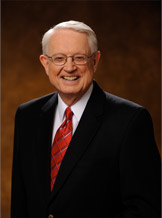
About the Author: Dr. Steve Brown is one of the most sought after preachers and conference speakers in the country. Having had extensive radio experience before entering the ministry, he is now heard weekdays on the national radio program, Key Life, and one minute feature, “Think Spots”. Steve also hosts a weekly radio talk show, “Steve Brown, Etc.”. He served as the senior pastor of Key Biscayne Presbyterian Church for 17 years before joining the Reformed Theological Seminary (RTS) faculty as Professor of Preaching. After teaching full time for almost two decades at RTS, Dr. Brown retired and is Emeritus Professor of Preaching but remains an Adjunct Professor of Preaching teaching occasional classes each year.
Dr. Brown is the author of many (16 and counting) books and also serves on the Board of the National Religious Broadcasters and Harvest USA (He earned his B.A. from High Point College; an S.T.B. from Boston University School of Theology; and an Litt.D. from King College). Steve is one of my favorite writers and speakers because he is authentic, a great story-teller, is a theologian in disguise, and really knows how to address the realities of how sinful humans can experience the amazing grace of God. The article above was adapted from Chapter 11 in his wonderful book on prayer: Approaching God: How to Pray. New York: Howard, 1996.
He Has Authored These Outstanding Books:
Three Free Sins: God’s Not Mad at You. New York: Simon and Schuster/ Howard Books, 2012.
A Scandalous Freedom. New York: Simon and Schuster/ Howard Books, 2009.
What Was I Thinking? Things I’ve learned Since I Knew It All. New York: Simon and Schuster/ Howard Books, 2006.
Follow the Wind: Our Lord, the Holy Spirit. Grand Rapids: Baker, 1999.
Approaching God: How to Pray. New York: Howard, 1996.
Living Free: How to Live a Life of Radical Freedom and Infectious Joy. Grand Rapids: Baker, 1994.
Born Free: How to Find Radical Freedom and Infectious Joy in an Authentic Faith. Grand Rapids: Baker, 1993.
How To Talk So People Will Listen. Grand Rapids: Baker, 1993.
If Jesus Has Come: Thoughts on the Incarnation for Skeptics, Christians and Skeptical Christians by a Former Skeptic. Grand Rapids: Baker, 1992.
Jumping Hurdles, Hitting Glitches, Overcoming Setbacks. Colorado Springs: NavPress, 1992.
No More Mr. Nice Guy! Saying Goodbye to “Doormat” Christianity. Nashville: Thomas Nelson, 1991.
When Being Good Isn’t Good Enough. Nashville: Thomas Nelson, 1990.
Welcome to the Family: A Handbook for Living the Christian Life. Old Tappan, New Jersey: Fleming H. Revell, 1990.
When Your Rope Breaks: Christ-centered advice on how to go on living—when making it through another day is the hardest thing in the world. Nashville: Thomas Nelson, 1988.
Heirs with the Prince. Nashville: Thomas Nelson, 1985.
If God is in Charge: Thoughts On The Nature of God For Skeptics, Christians, and Skeptical Christians. Grand Rapids: Baker 1983.













 LifeCoach4God