Are You Bitter or Better?

Neal Jeffrey: A Case Study

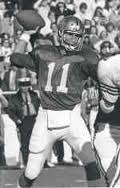
Neil Jeffrey quarterbacking

One of my favorite people, and certainly one of America’s One finest communicators, is Neal Jeffrey. Neal, as quarterback, led the Baylor Bears football team to the Southwest Conference championship in 1974. Today, he addresses many youth groups as well as adult businesspeople. He is truly one of the most humorous, sincere, and capable speakers I’ve ever heard. The interesting thing is that Neal is a stutterer. However, he has chosen to make stuttering an asset, not a problem. Now think about what you just read. A very successful quarterback and public speaker who stutters doesn’t compute in the minds of most people. Neal Jeffrey has taken a negative and turned it into a positive. After speaking a few minutes, he tells audiences that in case they hadn’t noticed, he stutters. Then with a big smile, he says, “Sometimes I do get hung up a little bit. But don’t worry. I guarantee you something’s coming!” The audience invariably responds enthusiastically Neal is the classic example of an outstanding individual who chose to make an obstacle an asset. The obstacle has forced Neal to be more creative and to do more reading, research, and studying so he can most effectively turn that liability into an asset. Result: He got better, not bitter. He is better not in spite of his stutter, but because of his stutter. Neal has reached and is reaching goal after goal in all areas of his life. I believe that you can do the same thing. When (not if) troubles and problems come your way, remember that the only way to the mountaintop is through the valley. All of us have liabilities that can hold us back or propel us forward. In most cases, the choice is ours. So, take your obstacles or liabilities, recognize and evaluate them, and then find a way to turn them into assets.

STSA Ziglar

– Zig Ziglar. Something to Smile About: Encouragement and Inspiration for Life’s Ups and Downs (Kindle Locations 1215-1226). Kindle Edition.

God Can, and God Does – An Encouraging Word

Lady Walking alone on the beach

When you feel unlovable, unworthy and unclean, when you think that no one can heal you: Remember, friend, God Can.

When you think that you are unforgivable for your guilt and your shame:  Remember, friend, God Can.

When you think that all is hidden and no one can see within:  Remember, friend, God Can.

And when you have reached the bottom and you think that no one can hear:  Remember, my dear friend, God Can.

And when you think that no one can love the real person deep inside of you:  Remember,my dear friend, God Does.

“In this the love of God was made manifest among us, that God sent his only Son into the world, so that we might live through him. In this is love, not that we have loved God but that he loved us and sent his Son to be the propitiation for out sins.” – 1 John 4:9-10

Spurgeon on Christ’s Love for You

sunset-in-hawaii-1.jpg

The Love of Christ by Charles Haddon Spurgeon

Christ loved you before you loved him.

He loved you when there was nothing good in you.

He loved you though you insulted him, though you despised him and rebelled against him.

He has loved you right on, and never ceased to love you.

He has loved you in your backslidings and loved you out of them.

He has loved you in your sins, in your wickedness and folly.

His loving heart will still eternally the same, and shed his heart’s blood to prove his love for you.

He has given you what you need on earth, and provided for you an habitation in heaven.

Now, Christian, your religion claims from you, that you should love others, as your Master loved you.

How can you imitate him, unless you love too?

With you “un” kindness should be a strange anomaly. It is a gross contradiction to the spirit of your religion,

And if you do not love your neighbor, I cannot see how you can be a true follower of Jesus.

“This is my commandment, that you love one another as I have loved you. Greater love has no one than this, that someone lay down his life for his friends. You are my friends if you do what I command you.” – John 15:12-14

Andrew Murray on Being in the Center of God’s Will

 *The Center of God’s Will

Wave tube 1

(1) He brought me here. It’s by His will I am in this straight place. In that fact I will rest.

(2) He will keep me here in His love and give me grace to behave as His child.

(3) Then He will make the trial a blessing, teaching me the lessons He intends for me to learn.

(4) In His good time, He will bring me out again—how and when He knows. So let me say: I am

(a) Here by God’s appointment.

(b) In His keeping.

(c) Under His training.

(d) For His time.


*From a Sermon by Andrew Murray on Acts 27:28-29 entitled “Anchors to Throw in a Time of Testing.” Andrew Murray was a Dutch Reformed Church missionary sent from Scotland to South Africa. Andrew pastored churches in Bloemfontein, Worcester, Cape Town and Wellington, all in South Africa. He was a champion of the South African Revival of 1860.

In 1889, he was one of the founders of the South African General Mission (SAGM), along with Martha Osborn and Spencer Walton. After Martha Osborn married George Howe, they formed the South East Africa General Mission (SEAGM) in 1891. SAGM and SEAGM merged in 1894. Because its ministry had spread into other African countries, the mission’s name was changed to Africa Evangelical Fellowship (AEF) in 1965. AEF joined with SIM in 1998 and continues to this day.

He died on January 18, 1917, four months before his eighty-ninth birthday. He was so influenced by Johann Christoph Blumhardt‘s Möttlingen revival that he included a portion of Friedrich Zündel’s biography at the end of With Christ in the School of Prayer. Over the years he has influenced many, including Jessie Penn-Lewis, a key figure in the 1904-1905 Welsh Revival. His writings have greatly influenced the writings of both Watchman Nee and Witness Lee.

What Failure Does, and Doesn’t Mean

track sprinters

Failure doesn’t mean that you are a failure; it does mean you haven’t yet succeeded.

Failure doesn’t mean that you have accomplished nothing; 

it does mean that you have learned something.

Failure doesn’t mean that you have been a fool; it does mean you have a lot of faith.

Failure doesn’t mean that you have been disgraced; it does mean that you were willing to try.

Failure doesn’t mean you don’t have it; it does mean you have to do something in a different way.

Failure doesn’t mean you are inferior; it does mean you are not perfect.

Failure doesn’t mean you’ve wasted your life; it does mean you can start afresh.

Failure doesn’t mean you should give up; it does mean you must try harder.

Failure doesn’t mean you will never make it; it does mean it will take a little longer.

Failure doesn’t mean God has abandoned you; it does mean God has a better way.

– Author unknown

Faith and the Power of God by Jerry Bridges

Feeding of the 5000

The healing of the demon possessed boy (Matt. 17:14–20) at first glance seems to be only one more in a series of miraculous healings recorded by Matthew. What makes this one unique is Jesus’ emphasis on the role of faith. It is true that faith is prominent in the miracles recorded in chapter 9, but in chapter 17 it is the lack of faith that is emphasized by Jesus.

That God is not dependent on human faith for accomplishing His work is clear from the accounts of other miracles recorded by Matthew. The transfiguration of Jesus immediately prior to the healing of the boy is a prime example. It was a spectacular miracle; yet no human faith was involved. This is also true in the feeding of the five thousand (Matt. 14:13–21) and the four thousand (15:32–38). So the first thing we need to learn about faith and the power of God is that He is not dependent on our faith to do His work. God will not be hostage to our lack of faith.

The second thing we need to learn, however, is that God often requires our faith in the carrying out of His purposes. We see this in the healing of the demon possessed boy. Mark, in his account, brings this out sharply in Jesus’ conversation with the boy’s father. The father, in great distress, said to Jesus: “But if you can do anything, have compassion on us and help us” (Mark 9:22). He had already experienced the failure of the disciples, so he was not sure if Jesus could help. His faith at this point may be described as no more than an uncertain hope that Jesus could do what the disciples could not do.

Jesus responded to the father: “If you can! All things are possible for one who believes” (v. 23). Biblical faith may be described in different ways depending on the situation. The description of faith in Hebrews 11:1 as “the assurance of things hoped for, the conviction of things not seen,” was appropriate for the Jewish recipients of the letter, who were facing severe opposition and needed to be encouraged as to the certainty of their hope in Christ.

For the father of the boy, faith would mean believing that Jesus could heal his son. We are often like the father. We may face what seems to be an intractable situation, and because we have prayed a long time without an answer, we begin to doubt that God can answer our prayer. But we must believe that with God nothing is impossible.

Sarah, the wife of Abraham, doubted that God could give them a son in their advanced age, to which God replied, “Is anything too hard for the Lord?” (Gen. 18:14). Centuries later, the prophet Jeremiah wavered in his faith when God told him to buy a field in the face of the Chaldeans’ invasion (Jer. 32:6-26). Again God’s response was: “Is anything too hard for me?” (v. 27). To have faith in God, even in the face of unanswered prayer or a seemingly impossible situation, means we continue to believe that He can do what seems impossible to us.

The importance of faith is further emphasized in Jesus’ answer to the disciples’ question: “Why could we not cast it out?” (Matt. 17:19). He said it was because of their little faith. We are not told in what way their faith was deficient. We do know that Jesus had previously given them authority over demons to cast them out (Matt. 10:1–8), so why was their faith so weak at this time? Perhaps it was because the demon did not respond immediately to their command, and so they began to doubt the power of Jesus. Or perhaps they presumed that because they had been successful before, they would be at that time. So we see that faith not only involves a firm reliance on Jesus’ power and ability, but also a complete renunciation of any confidence in our own.

Last month we looked briefly at the subject of God’s providence. In Matthew 17 we see an example of it in action, in connection with a mundane event — the paying of the temple tax. Jesus, as the Son of God, was under no obligation to pay the tax. Yet in order to give no offense, He sent Peter to catch a fish in whose mouth was the required shekel. This brief account raises some questions: How did the shekel get into the mouth of the fish? How did Peter just “happen” to catch that fish and not another one nearby? It is possible that Jesus performed a miracle and created the coin out of nothing in the mouth of the fish.

It is more likely, however, that it was a work of providence. Someone “accidentally” dropped a shekel into the sea. A particular fish grabbed it, and it stuck in its mouth. The fish swam to the exact spot where Peter cast his net and the fish was caught. None of these events was miraculous; yet all of them were necessary to accomplish Jesus’ purpose, and Jesus was in control of each one of them. God’s power is as much at work in His providence as in His miracles. So as we struggle with our own faith, or lack of it, in the difficult situations of life, let us believe that God is able, whether through miracles or providence, to care for us.


About Dr. Jerry Bridges: an author and speaker, as well as a staff member at The Navigators in Colorado Springs, Colorado.

Article above from © Tabletalk magazine. July 1st, 2008. 
Permissions: You are permitted and encouraged to reproduce and distribute this material in any format provided that you do not alter the wording in any way, you do not charge a fee beyond the cost of reproduction, and you do not make more than 500 physical copies. For web posting, a link to this document on our website is preferred (where applicable). If no such link exists, simply link to http://www.ligonier.org/tabletalk. Any exceptions to the above must be formally approved by Tabletalk.

Please include the following statement on any distributed copy: From Ligonier Ministries and R.C. Sproul. © Tabletalk magazine. Website: http://www.ligonier.org/tabletalk. Email: tabletalk@ligonier.org. Toll free: 1-800-435-4343.

John C. Maxwell on “Listening to the Voices of Vision”

THE VOICES OF VISION

T21IQOAL Maxwell

Where does vision come from? To find the vision that is indispensable to leadership, you have to become a good listener. You must listen to several voices.

The Inner Voice: Vision starts within. Do you know your life’s mission? What stirs your heart? What do you dream about? If what you’re pursuing in life doesn’t come from a desire within—from the very depths of who you are and what you believe—you will not be able to accomplish it.

The Unhappy Voice: Where does inspiration for great ideas come from? From noticing what doesn’t work. Discontent with the status quo is a great catalyst for vision. Are you on complacent cruise control? Or do you find yourself itching to change your world? No great leader in history has fought to prevent change.

The Successful Voice: Nobody can accomplish great things alone. To fulfill a big vision, you need a good team. But you also need good advice from someone who is ahead of you in the leadership journey. If you want to lead others to greatness, find a mentor. Do you have an adviser who can help you sharpen your vision?

The Higher Voice: Although it’s true that your vision must come from within, you shouldn’t let it be confined by your limited capabilities. A truly valuable vision must have God in it. Only He knows your full capabilities. Have you looked beyond yourself, even beyond your own lifetime, as you’ve sought your vision? If not, you may be missing your true potential and life’s best for you.   —The 21 Indispensable Qualities of a Leader  

MAKE SURE YOUR VISION CONTAINS ALL THAT IT MUST FOR YOU TO REACH YOUR POTENTIAL.

Source: Maxwell, John C. (2008-10-28). The Maxwell Daily Reader: 365 Days of Insight to Develop the Leader Within You and Influence Those Around You (Kindle Locations 5088-5102). Thomas Nelson – A. Kindle Edition.

Zig Ziglar on “Being Gratefull For Your Problems”

Gene Tunney Boxer

We all frequently deal with people who complain about the trials and tribulations of their daily lives. Life seems to be one big problem for them. I would like to take a commonsense, realistic approach and address this mind-set. If there were no problems on your job, then your employer would hire a much less capable person than you to do the routine things that don’t require much thought. In the business world, those who are able to solve complex problems are the ones who are the most valuable to the employer.

Many times the problems or challenges we face force us to grow and become more capable. The runner who trains for the mile run in the Olympics by running downhill will have no chance of winning the medal. The runner who trains by running uphill is far more likely to develop the speed, mental toughness, and endurance needed to win the medal. The best thing that ever happened to boxer Gene Tunney was that he broke both hands in the ring. His manager felt that he could never again punch hard enough to be the heavyweight champion. Instead, Tunney decided that he would become a scientific boxer and win the title as a boxer, not a slugger. Boxing historians will tell you that he developed into one of the best boxers who ever fought. They also will tell you that as a puncher, he would not have had a chance against Jack Dempsey, who was considered by many to be the hardest hitter in heavyweight history. Tunny would never have been champion had he not had the problem of his broken hands.

Message: The next time you encounter a difficult climb, obstacle, or problem, you should smile and say, “Here’s my chance to grow”

*Article adapted from the very encouraging book by Zig Ziglar. Something to Smile About: Encouragement and Inspiration for Life’s Ups and Downs (Kindle Locations 1138-1141). Kindle Edition.

Dr. John Maxwell’s 5 Reasons to Live on Purpose

THE POWER OF PURPOSE

John C Maxwell seated

But I want you to know, brethren, that the things which happened to me have actually turned out for the furtherance of the gospel, so that it has become evident to the whole palace guard, and to all the rest, that my chains are in Christ; and most of the brethren in the Lord, having become confident by my chains, are much more bold to speak the word without fear. – PhiIippians 1:12-14

Paul might have been forgiven had he chosen to take a little sabbatical as he sat in prison, awaiting his trial. Yet he used even this opportunity to advance the gospel. Paul was a leader who never drifted from his mission. He determined to leave his mark wherever he went. How did Paul’s sense of purpose keep him in the battle as he sat in prison? What did he learn behind bars? Consider the following:

  1. A purpose will motivate you.
  2. A purpose will keep your priorities straight.
  3. A purpose will develop your potential.
  4. A purpose will give you power to live in the present.
  5. A purpose will help you evaluate your progress.

Article adapted from John C. Maxwell. Leadership Promises for Every Day (Kindle Locations 80-86). Kindle Edition.

“Charles Haddon Spurgeon’s Humor”

Dr. Larry J. Michael and C.H. Spurgeon on “The Medicine of Laughter”
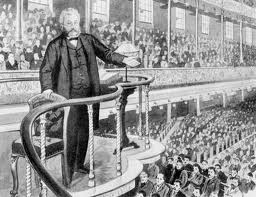
Spurgeon in pulpit image

Dr. Larry Michael is senior pastor at First Baptist Church in Clanton, Ala. He serves as an adjunct professor at Beeson Divinity School in Birmingham. This article is an adaptation of writings from the upcoming book, Spurgeon on Leadership, Kregel Publications, scheduled for release October 2003.

Some years ago there was a documented case in the British Medical Journal about a man who laughed himself well. He actually had a terminal illness, and through the employment of laughter therapy, he allowed his body to successfully fight the disease.

While we may smilingly acknowledge the merit of such a case, for the most part, we find such an incident almost incredible. Can laughter really be that good for us? The Bible definitely supports such a notion.

The Bible advocates laughter

The writer of Ecclesiastes stated: “There’s a time to laugh, and a time to cry” (Ecclesiastes 3:4). We know that there are plenty of reasons to cry. Just a casual glance at our world, with its wars, hatred, violence and evil — makes us sad. Every day we see/hear on the news horrible accounts of hurting people who hurt others. We are grieved at the plight of so many persons who are living in darkness and have rejected the light of Christ. The stark reality of sin in our world is indeed sobering.

It’s not surprising that many of us as leaders may be more inclined toward sadness than to joy. Given the nature and demands of Christian leadership in an increasingly challenging world, one could cynically surmise that leaders may have more reason to be glum than glad these days. The pressures of our organizational responsibilities, and the accompanying stresses, can drag us down. Handling church conflict, losing someone special, helplessly seeing a marriage dissolve, experiencing personal betrayal, facing an unsuspected tragedy — all may give cause for tears.

To counter the sad times, the Scripture also advises that there is a time to laugh. Leaders need to know the balancing therapy of laughter. Toward that goal, we should fully embrace the joys of ministry — celebrating special moments with members, “high-fiving” family achievements, relishing the reaching of hard-earned goals, and savoring the blessing of spiritual growth. But those experiences may still fall short of the biblical pronouncement regarding laughter. C’mon, when was the last time you laughed so hard you cried?! Or, you actually had a good belly laugh?

Spurgeon’s great sense of humor

Many evangelicals know well the stern side of C. H. Spurgeon and his serious pursuit of the holy life. Indeed, his stands for righteous causes, and countering doctrinal error are often recounted. But many readers may not know that he was a man with a great sense of humor. Spurgeon knew the value of laughter and mirth. He virtually took to heart the word in Proverbs 17:22: “A merry heart doeth good like a medicine.”

Spurgeon laughed as often as he could. He laughed at the ironies of life, he laughed at comical incidents, he laughed at the amusing elements of nature. He sometimes laughed at his critics. He loved to share wholesome jokes with his friends and colleagues in ministry. He was known to tell humorous stories from the pulpit. William Williams, a fellow pastor who kept company with Spurgeon, was a near and dear friend in the latter years of Spurgeon’s life. He wrote:

What a bubbling fountain of humour Mr. Spurgeon had! I laughed more, I verily believe, when in his company than during all the rest of my life besides. He had the most fascinating gift of laughter . . . and he had also the greatest ability for making all who heard him laugh with him. When someone blamed him for saying humourous things in his sermons, he said, “He would not blame me if he only knew how many of them I keep back.” 1

Spurgeon considered humor such an integral part of his ministry that a whole chapter in his autobiography is devoted to it. Humor permeates his sermons and writings, often woven into the fabric of his messages. It’s one reason among many why he is still so readable today.

The therapy of laughter

Spurgeon knew the blessing of the treatment of humor. He often spoke of his illness in humorous terms: “I have had sharp pains,” he wrote to a friend, “but I am recovering. Only my back is broken, and I need a new vertebrae.” 2 Once, when he was feeling depressed, he spoke of the remedy of laughter:

The other evening I was riding home after a heavy day’s work. I felt wearied and sore depressed, when swiftly and suddenly that text came to me, ‘My grace is sufficient for thee.’ I reached home and looked it up in the original, and at last it came to me in this way. ‘My grace is sufficient for THEE.’ And I said, ‘I should think it is, Lord,’ and I burst out laughing. I never understood what the holy laughter of Abraham was till then. It seemed to make unbelief so absurd…O brethren, be great believers. Little faith will bring your souls to heaven, but great faith will bring heaven to your souls. 3

Some of Spurgeon’s humor even bordered on the cynical — like the time he was embroiled in the Baptismal Regeneration Controversy. When Spurgeon took on the Church of England clerics because of their belief in baptismal regeneration, he had a baptismal font installed in his back garden as a birdbath. He referred to it as “the spoils of war.” While the great “Prince of Preachers” may have gone over the top on that one, for the most part, his humor was balanced and appropriate.

Laughter a needful release

Laughter is an important release in a leader’s life. It is much-needed therapy for positions that are most often fraught with stress and the burdens of the day. Certainly there is a time to be sober as we face many tough situations in our lives and ministries. But, we need to learn how to experience the relief of laughter. Part of the problem is that too many of us take ourselves way too seriously. When we forget that God has a sense of humor, we need to do as one leader suggested — go look in the mirror!

Spurgeon knew the value of laughter and humor. Both in tough times and sick times, humor was a means for him to deal with his situation. It was a coping mechanism for him. There will always be seasons of sadness and joy for the conscientious leader. But, the leader who learns to balance the two, will learn the discipline of employing laughter and joy in his life. It could very well make a difference in his fulfillment and purpose in his service to the Lord.

Article adapted from Reformed Perspectives Magazine, Volume 9, Number 40, Septemeber 30 to October 6, 2007.

Notes: 1. William Williams, Personal Remembrances of Charles Haddon Spurgeon (London: Passmore and Alabaster, 1895), 24; 2. Ibid, 231; 3. Ibid, 25.