“Every Day With Jesus is Like A Thanksgiving Holiday” By Dr. David P. Craig

I have so much to be thankful for – now 15 treatments into Chemo and Radiation – almost half way done with my 33 treatments here are my reflections on Thanksgiving Day. DPC

lifecoach4God's avatarLifeCoach4God

“Thank God It’s Thanksgiving Everyday – Especially on Thursday’s!”

I have always loved the Thanksgiving Holiday. It’s one of the few times of the year where our very large family can come together from all over the United States and enjoy giving thanks for our many blessings. This year more than likely I’ll be having liquid formula through a feeding tube in my stomach. I already had the G-Tube surgically implanted in my stomach this past week. During chemotherapy and radiation around Thanksgiving time will be a time of great testing for me, when according to my Doctors I will be unable to swallow and chew due to the severity of my treatment for throat and neck cancer. Watching every one I love dearest passing around the turkey with all the trimmings will be something my eyes will enjoy, but not my taste buds. However, I’m good with that. I’m…

View original post 3,962 more words

Zig Ziglar on the Question: Are You a Responder or a Reactor to Life?

It’s Better to Respond Than to React

When you respond to life, that’s positive; when you react to life, that’s negative. Example: You get sick and go to the doctor. Chances are good that after an examination, she would give you a prescription with instructions to return in several days. If, when you walk back in, the doctor starts shaking her head and says, “It looks like your body is reacting to the medicine; we’re going to have to change it,” you probably would get a little nervous. However, if the doctor smiles and says, “You’re looking great! Your body is responding to the medication,” you would feel relieved. Yes, responding to life is good. Reacting to the incidents of life is negative-and that’s bad.

The next example validates that fact.

Today, there is much turmoil in the job market, and many people are losing their jobs through downsizing, mergers, and takeovers. This creates some unusual opportunities for many people. One positive from this trend is that in the last five years, according to the Wall Street Journal, more than fifteen million new businesses have been created, well over half of them by women. Very few of the women had any marketable skills, and all of them had great financial need. Most of the new businesses were “trust” businesses, meaning that the women collected the money before they delivered the goods or services. The Journal comments that virtually none of the women have been prosecuted and jailed for failure to deliver on that trust. That’s exciting!

Many of these new businesses-possibly most of them-would never have been started had not an unfortunate event occurred in the people’s lives. When those events did occur and needs became obvious, the women chose to respond, and there is little doubt that many of them are better off now than they were before the “tragedy” took place.

The message is clear: If you respond to life instead of react to it, then you’ve got a much better chance of achieving success.

About Zig Ziglar:

Zig Ziglar was born in Coffee County, Alabama on November 26, 1926 and was the tenth of 12 children. In 1931, when Ziglar was five years old, his father took a management position at a Mississippi farm, and family moved to Yazoo City, Mississippi, where he spent his early childhood. In 1932, his father died of a stroke, and his younger sister died two days later.

Zigler served in the Navy during World War II (circa 1943-1945). He was in the Navy V-12 College Training Program, attending the University of South Carolina. In 1944 he met his wife Jean, in Jackson, Mississippi; he was 17 and she was 16. They married in late 1946.

Ziglar later worked as a salesman in a succession of companies. In 1968 he became the vice president and training director for the Automotive Performance company, moving to Dallas, Texas.

In 1970, Ziglar went into the business of motivational speaking full-time, with an emphasis on Christian values. Until then, he called himself by his given name, Hilary, but now satarted using his nickname, Zig, instead.

Until 2010 (aged 86) Ziglar traveled around the world taking part in motivational seminars, but has been somewhat limited recently due to a fall down a flight of stairs in 2007 that has impaired his short-term memory and physical abilities.

Through the ups and downs of life Ziglar has maintained his optimism and encouraged thousands of people to be their best in the particular endeavors to which God has called them. Zig Ziglar is one of the most inspirational people on the planet today and is a terrific example of someone who has embraced the struggle of life giving God the glory each step of the way.

The article above was adapted from one of Zig’s many encouraging books: Something to Smile About: Encouragement and Inspiration for Life’s UPS and DOWNS. Nashville: Thomas Nelson, 1997.

Zig Ziglar’s Books:

Ziglar, Zig; Ziglar, Tom. Born to Win: Find Your Success Code. Dallas: SUCCESS Media (2012).

Zig Ziglar. Something Else To Smile About: More Encouragement and Inspiration for Life’s Ups and Downs. Nashville: Thomas Nelson (2010).

Ziglar, Zig; Norman, Julie Ziglar. Embrace the Struggle: Living Life on Life’s Terms. New York: Howard Books (2009).

The One-Year Daily Insights with Zig Ziglar. Tyndale House Publishers (2009)

Inspiration 365 Days a Year with Zig Ziglar. SIM (2008)

God’s Way is Still the Best Way. Nashville: Thomas Nelson  (2007).

Better Than Good: Creating a Life You Can’t Wait to Live. Nashville: Thomas Nelson Publishers (2006).

Conversations with My Dog. B&H Books (2005).

The Autobiography of Zig Ziglar. New York: Random House (2004).

Confessions of a Grieving Christian. Nashville: B&H Publishing Group 2004).

Courtship After Marriage: Romance Can Last a Lifetime. Nashville: Thomas Nelson  (2004).

Staying Up, Up, Up in a Down, Down World. Nashville: Thomas Nelson  (2004).

Zig Ziglar’s Life Lifters: Moments of Inspiration for Living Life Better. B&H (2003).

Selling 101: What Every Successful Sales Professional Needs to Know. Nashville: Thomas Nelson Publishers (2003).

Ziglar, Zig and Hayes, John P. Network Marketing For Dummies. Foster City, Calif: IDG Books (2001).

Zig Ziglar. Success for Dummies. Foster City, Calif: IDG Books (1998).

Zig Ziglar. Something to Smile About: Encouragement and Inspiration for Life’s UPS and DOWNS. Nashville: Thomas Nelson (1997).

Great Quotes from Zig Ziglar. Career Press (1997)

Zig Ziglar. Over the Top. Nashville: Thomas Nelson Publishers (1994).

Zig Ziglar. Five Steps to Successful Selling. Nigtingale-Conant Corp. (1987).

Zig Ziglar. Top Performance: How to Develop Excellence in Yourself and Others. New York: Berkley Books (1986).

Zig Ziglar. Raising Positive Kids in a Negative World. Nashville: Oliver Nelson (1985).

Zig Ziglar’s Secrets of Closing the Sale. New York: Berkley Books (1982).

Zig Ziglar. See You at the Top. Gretna: Pelican (1975).


John C. Maxwell on Contentment vs. Discontentment

Which Tent Do You Live In?

All men live in one of two tents—content or discontent. In which do you live?

The contented man looks beyond his circumstances and sees a better day; the discontented man looks at his circumstances and sees no other way.

The contented man understands the purpose for which he was born; the discontented man looks at other’s success with a face that is filled with scorn.

The contented man has surrendered to a purpose that demands his best; the discontented man has selfishly hoarded much and grasping for more, will not rest.

The contented man has placed his values on things which will forever last; the discontented man has placed his values on things which will soon be past.

The contented man is anchored to clear goals and is hardly ever swayed;  the discontented man has no goals that anchor him and is many times dismayed.

The contented man counts his blessings and names them one by one; the discontented man counts other’s blessings and thinks he has no fun.

All men live in one of two tents—content or discontent. In which do you live?

 About John C. Maxwell:

John C. Maxwell is an internationally renowned pastor, leadership expert, coach, and author who has sold over 21 million books. Dr. Maxwell founded EQUIP and the John Maxwell Company, organizations that have trained more than 5 million leaders in 174 countries. Every year he speaks to Fortune 100 companies, international government leaders, and organizations such as the United States Military Academy at West Point, the National Football League, and the United Nations. A New York Times, Wall Street Journal, and Business Week best-selling author, Maxwell’s The 21 Irrefutable Laws of Leadership has sold more than 2 million copies. Developing the Leader Within You and The 21 Indispensable Qualities of a Leader have each sold more than 1 million copies. The article above was adapted from the encouraging and practical book by John C. Maxwell. Think On These Things. Kansas City: Beacon Hill Press, 1979, Chapter 30. This was the book that launched Maxwell’s writing career!

You can read his blog at JohnMaxwellOnLeadership.com, follow him at Twitter.com/JohnCMaxwell, and learn more about him at JohnMaxwell.com.

Dr. Tim Keller on “The Christian’s Happiness” – Romans 8:28-30

“And we know that for those who love God all things work together for good, for those who are called according to his purpose. For those whom he foreknew he also predestined to be conformed to the image of his Son, in order that he might be the firstborn among many brothers. And those whom he predestined he also called, and those whom he called he also justified, and those whom he justified he also glorified” (Romans 8:28-30)

Cheer Up Christian: “Your bad things turn out for good, your good things can never be lost, and the best things are yet to come.” – Tim Keller

Introduction

If you’re a Christian, you know that Christianity is supposed to be about joy. You probably also know that you’re supposed to experience joy in spite of circumstances. The Bible clearly teaches that joy is available that should make us happy no matter the circumstances. There’s a joy that the deepest trouble can’t put out and, if properly nourished and nurtured, can even overwhelm the greatest grief.

When Jesus prays to the Father in John 17:13, he prays for us—his followers. He says, I pray that “they may have the full measure of my joy within them.” One chapter before, he says to his disciples, “You will rejoice. and no one will take away your joy” (16:22). That’s pretty amazing! He’s talking to the twelve disciples, men who are going to be persecuted. They’re going to be robbed of everything they own, tortured, and put to death. Yet Jesus promises to give them a joy that will withstand all that. Nothing—not disease or persecution or alienation or loneliness or torture or even death—will be able to take it away.

I often wrestle with that concept. I have to ask myself, “Why do things affect me so much? Why is my joy not relentless?” Sometimes I wonder, “Do we have that kind of impervious joy?” I’m afraid not. I don’t think we understand the nature of this joy.

Romans 8 is all about living in a suffering world marked by brokenness. Paul talks about trouble and persecution and nakedness and poverty and how Christians are supposed to live in a world like that. In 8:28–30 he offers three principles for finding joy in suffering. Paul tells us that if we follow Christ, our bad things turn out for good, our good things cannot be lost, and our best things are yet to come. Those are the reasons for our joy.

Our bad things turn out for good

Verse 28 says: “For those loving him, God works together all things for good.”

There are three implications of this first principle.

First, this verse says that all things happen to Christians. That is, the Christian’s circumstances are no better than anybody else’s. It is extremely important for us to understand this if we’re going to experience relentless and impervious joy. Terrible things happen to people who love God. Many Christians explicitly teach—and most Christians implicitly believe—that if we love and serve God, then we will not have as many bad things happen to us. That’s not true! Horrible things can happen to us, and believing in and loving and serving God will not keep them from happening. All the same things that happen to everybody else will happen to people who love God. “All things” means all things, in this text. In verse 35 Paul says, “What can separate us from the love of Christ? Can trouble, hardship, persecution, famine, poverty, danger, or sword?” Those are terrible things. Paul is saying all the same things that happen to everybody else will happen to us, even if we love God. It’s very important to realize that.

The second implication of this point is that when things work together in your life, it’s because of God. Notice Paul does not say, “Things work together for good.” Things never work together for good on their own. Rather, if anything good happens, it is because God is working it together.

Earlier in Romans 8, Paul discusses how things fall apart because the world is burdened with evil and sin. Things are subject to decay. Everyone will eventually experience the decay of their bodies; that’s the nature of things. The little grains of sand on the beach used to be a mountain. Everything falls apart; things do not come together. This verse tells Christians to get rid of the saccharine, sentimental idea that things ought to go right, that things do go right, and that it’s normal for things to go right. Modern, Western people believe that if things go wrong, we should sue, because things ought to go right. But Christians have to discard that idea completely. Christians have to recognize that if our health remains intact, it is simply because God is holding it up. If people love us, if someone is there to hug us or squeeze our hand, if someone loves us in spite of all our flaws—if someone loves us at all—it’s because God is bringing all things together. God is holding it up. Everything that goes well is a miracle of grace.

The third implication of this principle is the most basic: Although bad things happen, God works them for good. This verse does not promise that those who love God will have better circumstances. Nor does this verse say that bad things are actually good things. Rather, it acknowledges that these are bad things, but it promises that they’re working for good. That means God will work them to good effect in your life.

The story of Jesus standing before the tomb of Lazarus is an endless source of insight for me. As he was about to raise Lazarus from the dead, Jesus was not smiling. He was angry. He was weeping. Why? Because death is a bad thing! Jesus wasn’t thinking, “They think that this is a tragedy, but no harm done! I’m about to raise him from the dead. This looks like a bad thing, but it’s not. It’s really a good thing! It’s a way for me to show my glory. It’s really exciting! I can’t wait!” He wasn’t thinking that. Jesus was weeping at the tomb, because the bad thing he’s about to work for good is bad. The story of Lazarus does not give you a saccharine view of suffering, saying bad things are really blessings in disguise or that every cloud has a silver lining. The Bible never says anything like that! God will give bad things good effects in your life, but they’re still bad. Jesus Christ’s anger at the tomb of Lazarus proves that he hates death. He also hates loneliness, alienation, pain, and suffering. Jesus hates it all so much that he was willing to come into this world and experience it all himself, so that eventually he could destroy it without destroying us.

There’s no saccharine view in the Christian faith. The promise is not that if you love God, good things will happen in your life. The promise is not that if you love God, the bad things really aren’t bad; they’re really good things. The promise is that God will take the bad things, and he’ll work them for good in the totality.

Keep in mind that verse 28 says all things work together for good. That doesn’t mean that when something bad happens, we can decide to give God a week to show us how the situation is going to turn out for good. In fact, don’t wait a month. Don’t wait a year. Don’t wait a decade. The promise isn’t for a month or a year or a decade. The promise is not that we will see how every bad patch in our lives works out for our good. The promise is that God will make sure that all the bad circumstances will work together for your life in its totality.

The best summary of this lesson that anybody has ever come up with is John Newton’s. He said: “Everything is necessary that he [God] sends; nothing can be necessary that he withholds.” What John Newton and Paul are saying is that if God has withheld good things—things that you think are good—they would only be good in the short run. In the long run, they would be terrible. They would be good in the partial but not in the whole. On the other hand, God will only bring bad things into your life—things God knows are bad—in order to cure you of things that can destroy you in the long run. The premise is, the things that really hurt—foolishness, pride, selfishness, hardness of heart, and the belief that you don’t need God—are the only things that can hurt you in the long run. In the short run selfishness and self-deception feel great, but in the long run they will destroy you.

Your joy will be impervious if you hold onto these three principles. Bad things will happen to you. We shouldn’t be shocked or surprised when bad things happen. One of the main reasons a lot of Christians are continually overthrown is not simply because bad things happen to them. At least half of their discouragement and despondency is due to their surprise at the bad things that happen to them. Do you see the distinction? Fifty percent of the reason we get so despondent is that we’re shocked. We say, “This isn’t how it’s supposed to be.” We may say life should be better, but that’s not what the promise is. Or we say we love God, therefore, surely we will have more good circumstances. That’s not the promise either. Until you understand what the promise is, you’re going to be continually shocked and even overthrown.

Our good things can never be lost

The second principle in this passage is that the good things we have cannot be lost. If you’ve been a Christian for any period of time, you know that Romans 8:28 is a very famous verse. People use it all the time. It’s what I call a “blessing box” verse. A blessing box is a collection of verses you rip out of context and recite without concern for what came before and after the verse. It feels good, so you use it. For example, people use Romans 8:28 to assure themselves that when bad things happen, then surely good things will happen. You might think, “I didn’t get into the grad school I wanted to get into, but that’s because there’s a better grad school for me somewhere.” Or, “I didn’t marry the girl or guy I wanted to marry, but that means there’s a better one for me somewhere.” That’s not the promise.

There’s a little word between verses 28 and 29 that indicates the verses go together. The little word is for. “All things work together for good for those who love God and are called according to his purpose, for those he foreknew he also predestined to be conformed into the likeness of his Son.”

God does not promise you better life circumstances if you love him. He promises you a better life. Grad school and marriage are circumstances. We’re talking about a joy that goes beyond circumstances. How dare we interpret verse 28 as a joy that is dependent on those things! Here is an important principle: Jesus Christ did not suffer so that you would not suffer. He suffered so that when you suffer, you’ll become like him. The gospel does not promise you better life circumstances; it promises you a better life.

Romans 8:29 tells us the goal toward which all our circumstances are moving us. Paul uses the word predestined. He’s not introducing the word to confuse you—he doesn’t intend to explain the doctrine of predestination or address the issues that arise when that word is mentioned. He uses this word to comfort us. Something that is predestined is fixed. What Paul means is that if you love God, you can count on a promise that is absolutely fixed, no matter what. That’s all he’s trying to get across.

What is it that is predestined? That we will be conformed to the image of Christ. The Greek word here is morpha, from which we get the word metamorphosis. Paul is saying that God promises to “metamorphosize” us. He promises to change our very inner essence into the very inner essence of Jesus Christ. To be a Christian is to become passionately in love with the character of Jesus. You read about him in the Bible and are amazed by the truth and love you find in his life. You see wisdom and utter conviction. You see incredible courage, brightness, and radiance. The good that God is moving you toward through everything that happens in your life—whether externally good or bad—is your transformation into Christ’s nature. If you love God, everything that happens in your life will mold you, sculpt you, polish you, and shape you into the image of his Son. He is making you like him. He’ll give you Christ’s incredible compassion and courage. God is working everything that happens in your life toward that magnificent goal. It’s predestined. It’s guaranteed.

One of the most astounding things in Romans 8:30 is this: “And those he predestined, he also called; those he called, he also justified; those he justified, he also glorified.” Glorified is in the past tense. Shouldn’t Paul say, “The ones he foreknew he predestined, and justified, and will glorify”? Because the apostle is so absolutely certain that you are bound—that God is going to make you as beautiful as Jesus and give you all these incredible things—he writes of the glorification as an accomplished fact. He talks about it in the past tense because it’s as good as done. God is not going to let anything in life get between you and that goal. You are predestined to be conformed to the image of God’s Son.

In Romans 8:29 Paul calls Christ “the firstborn among many brothers.” That means we are all sons of God. We are all adopted into the family. When Paul alludes to adoption, he’s talking about a practice that was common in the Roman world, but one that’s quite different from the way we think of adoption. In the Roman world, most people who were adopted were adults. When a wealthy man had no heir and didn’t want his estate to be broken up when he died, he would adopt an adult male, usually someone who worked for him whom he trusted. By adopting that adult male, he made him his son. The minute the legal procedure took place, their relationship was changed from formal to intimate, from temporary and conditional to permanent and unconditional. All the debts the man owed before his adoption were wiped out, and he suddenly became rich.

Being completely conformed to the likeness of God’s Son is something that we look forward to in the future, although the transformation is happening now gradually. Being adopted among many brothers is something that we have now. The minute you become a Christian, you have intimacy of relationship. You have an unconditional relationship. You become wealthy, because everything that Jesus Christ has accomplished is transferred to you. You become beautiful and spiritually rich in him.

Some people are put off by Paul’s language of adoption because it’s gender insensitive. They argue, “Wouldn’t it be better to say that we become sons and daughters of God?” It would, but that misses the whole point. Some time ago, a woman helped me understand this. She was raised in a non-Western family from a very traditional culture. There was only one son in the family, and it was understood in her culture that he would receive most of the family’s provisions and honor. In essence, they said, “He’s the son; you’re just a girl.” That’s just the way it was.

One day she was studying a passage on adoption in Paul’s writings. She suddenly realized that the apostle was making a revolutionary claim. Paul lived in a traditional culture just like she did. He was living in a place where daughters were second-class citizens. When Paul said—out of his own traditional culture—that we are all sons in Christ, he was saying that there are no second-class citizens in God’s family. When you give your life to Christ and become a Christian, you receive all the benefits a son enjoys in a traditional culture. As a white male, I’ve never been excluded like that. As a result, I didn’t see the sweetness of this welcome. I didn’t recognize all the beauty of God’s subversive and revolutionary promise that raises us to the highest honor by adopting us as his sons.

Our adoption means we are loved like Christ is loved. We are honored like he is honored—every one of us—no matter what. Your circumstances cannot hinder or threaten that promise. In fact, your bad circumstances will only help you understand and even claim the beauty of that promise. The more you live out who you are in Christ, the more you become like him in actuality. Paul is not promising you better life circumstances; he is promising you a far better life. He’s promising you a life of greatness. He is promising you a life of joy. He’s promising you a life of humility. He’s promising you a life of nobility. He’s promising you a life that goes on forever.

 The best things are yet to come

That brings us to the third point. Why can you be joyful no matter what? Your bad things turn out for good, your good things can never be lost, and the best is yet to come. If you understand what is to come, you can handle anything here. What amazes me is that even Ivan Karamazov, the atheist character in Dostoevsky’s The Brothers Karamazov, understood how knowing what is to come helps a person endure present circumstances. He said:

I believe that suffering will be healed and made up for, that in the world’s finality, at the moment of eternal harmony, something so precious will come to pass that it will suffice for all hearts, for the comforting of all resentments, for the atonement of all the crimes of humanity, of all the blood that’s been shed, that it will make it not just possible to forgive, but to justify all that’s happened.

I don’t want you to think that this talk about glory and about heaven trivializes suffering. In fact, Ivan Karamazov said that this hope is the only worldview that takes our brokenness seriously. Our souls are so great and our suffering is so deep that nothing but this promise can overwhelm it. Glory does not trivialize human brokenness. It’s the only thing that takes it seriously. What else could possibly deal with the hurts of our hearts? Your soul is too great for anything but this. Don’t you know a compliment when you hear it?

 About the Author

Timothy Keller is founding pastor of Redeemer Presbyterian Church (PCA) in New York City and the author of numerous books, including The Reason for God, King’s Cross, Counterfeit Gods, The Prodigal God, and Generous Justice.

The sermon above was adapted from a collection of Sermons in a book entitled “Sunday’s Best” published by Hendrickson Publishers in Peabody, Massachusetts, 2011.


John Wooden: 9 Promises To Help Change Your Life

9 Promises To Make a Big Difference in Your Own and Others Lives:

  • Promise to think of the best, to work only for the best, and to expect only the best in yourself and others.
  • Promise to be just as enthusiastic about the success of others as you are about your own.
  • Promise yourself to make all your friends know there is something in them that is special and that you value.
  • Promise yourself that you will talk health, happiness, and prosperity as often as possible.
  • Promise yourself to be so strong that nothing can disturb your peace of mind.
  • Promise to forget the mistakes of the past and press on to greater achievements in the future.
  • Promise to wear a cheerful appearance at all times and give every person a smile.
  • Promise to give so much time to improving yourself that you have no time to criticize others.
  • Promise to be too large for worry, too noble for anger, too strong for fear, and to happy to permit trouble to press on you.

 About Coach John Wooden:

John Wooden was born on his parents’ farm near Centerville, Indiana. Life was difficult for the Woodens. Their farm had neither running water nor electricity and money was often in short supply. In later years, Coach Wooden credited his success to the habits of discipline and hard work he learned on the farm.

Rural America did not share in the prosperity enjoyed by large cities in the 1920s. In 1924, the Woodens, like many farm families, went bankrupt and lost their farm. The family moved to Martinsville, a small town which, like so many in Indiana, took great pride in the performance of its high school basketball teams. Wooden, who had shown a gift for the game from grade school days, soon became a star player on his high school team. The team went to the state championship three years running, and won it twice. While still in high school, John met Nellie Riley. By his own account, it was love at first sight, and the two teenagers decided to marry as soon as John finished college.

John Wooden entered Purdue University in Indiana to study civil engineering, but became an English major instead. In college basketball, he earned a reputation as a fearless player of dazzling speed. He made All-American three years running and won a place in the Basketball Hall of Fame.

After graduation in 1932, he was offered a spot on the Celtics professional basketball team, but passed it up to begin a teaching career and marry his beloved Nellie. His first post was in Dayton, Kentucky, where he not only taught high school English, but coached all of the school’s athletic teams. The basketball team had a losing season, the only one in Wooden’s entire career.

The following year, John and Nellie settled in South Bend, Indiana, where he taught English and coached the basketball team of South Bend Central High School. In eleven years of coaching high school basketball Wooden’s teams won 218 games, losing only 42. The young coach served as a physical education instructor in the United States Navy during World War II. Appendicitis kept him from shipping off for the South Pacific. A Japanese kamikaze plane struck the ship Wooden was to travel on, killing the officer who had taken his place.

After military service, Wooden, like many other teachers he knew, was not re-hired at his old job. He quickly found work however, at Indiana State Teachers’ College, later known as Indiana State University. He coached basketball at the school, resuming his string of winning seasons.

In 1948, Wooden accepted an offer to coach the UCLA Bruins. At the time, the team was considered the weakest in the Pacific conference. The University had not provided the team with the facilities usually considered essential; the Bruins lacked a home court to play in, and had to share practice facilities with the school’s other teams.

Wooden’s Bruins astonished the skeptics by winning 22 out of 29 games in his first season as coach. The following year, they took 24 out of 31 and won their conference championship. Under Wooden’s tutelage, the Bruins maintained their high win-loss ratio, and won the Pacific conference titles again in 1952, 1956, 1962 and 1963.

In 1964, Wooden achieved a long sought-after goal. His team had a perfect season, and won the NCAA championship. The following year, they won the title again, losing only two games in a 30-game season. What they lacked in size, the 1964 and ’65 Bruins made up for in speed, discipline and an extra-keen will to win that has been the hallmark of all of Wooden’s teams. The break-up of this championship lineup may have cost the Bruins the championship in 1966, but they came back with a vengeance in 1967, and held the championship for the next seven years.

The seven-foot center Lew Alcindor (later Kareem Abdul-Jabbar) dominated the Bruins’ game for the first three seasons of their seven-year streak. Bill Walton was the dominant star of the 1973 and ’74 seasons, when UCLA set the all-time record for an unbroken winning streak: 88 consecutive games. In 1974, UCLA again won the Pacific conference title, but lost to North Carolina State in the NCAA semi-finals.

The Bruins bounced back in 1975, Coach Wooden’s last year, winning 27 out of 30 games, turning around a losing semi-final against Louisville in the closing minute of the game. In the final game of the tournament, UCLA defeated the University of Kentucky, 92-85.

In all his years as coach, John Wooden prohibited his players from any use of profanity, and consistently avoided it himself. Still, in his first 12 years at UCLA, the coach developed a fearsome reputation among opposing teams for the fanciful harangues he directed at officials and opposing players from the bench. This habit was virtually the only aspect of his career for which the coach expressed any regret. In the championship years, fans and players alike noticed a distinct mellowing of Wooden’s behavior on the bench.

One of Coach Wooden’s proudest moments, he later recalled, came when he overheard one of his players, an African-American, reply to a reporter’s question about racial tensions on the team: “You don’t know our coach. He doesn’t see color. He just sees ballplayers.” Wooden remained close to many of his former players in his long years of retirement. He died peacefully in Los Angeles at the age of 99. His record of accomplishment remains unmatched.

The 9 Promises above adapted from Wooden: A Lifetime of Observations and Reflections On and Off The Court. Coach John Wooden with Steve Jamison. Contemporary Books: Chicago, 1997, pp. 79-78.

This is Not An Abandoned World! By Steve Brown

While I was driving the other day, I saw the ugliest car I’ve ever seen. This car wasn’t just ugly–it was ugly on top of ugly. It had a large gash on its side; one of the doors was held together with baling wire; and several other parts were almost completely rusted out. The car’s muffler was so loose that with every bump, it hit the street, sending sparks in every direction. I couldn’t tell the original color of the car. The rust had eaten away much of the paint, and so much of the car had been painted over with so many colors that any one of them (or none of them) could have been the first coat. The most interesting thing about the care was the bumper sticker: “THIS IS NOT AN ABANDONED CAR.”

We live in a fallen world, and sometimes it looks as ugly as that car. Almost everywhere you turn, you can see tragedy and heartache. Only a fool misses the point from the morning headlines that we are sitting on the edge of disaster.

A long time ago, in a manger, a baby was born. He was a sign to us. His presence read, ‘THIS IS NOT AN ABANDONED WORLD.”

During every Christmas season, there’s a break in the bleakness; a bit of beauty in the middle of the ugliness shines through. People will laugh and make merry. Most won’t understand why they laugh. Many of them will make merry because that is what one is supposed to do during the holiday season. But there are some who will pause and remember, “For unto us a child is born.”

We have not been abandoned. Someday the Owner will return, then all the ugliness will be remedied. There won’t be anymore pain, and all tears will be dried.

May you live merrily because He came. Make your life merry because He keeps coming. Keep it merry because He is coming again to set things right.

Two Biblical Reminders of Our King and Kingdom to Come:

There shall come forth a shoot from the stump of Jesse,

and a branch from his roots shall bear fruit.

And the Spirit of the Lord shall rest upon him,

the Spirit of wisdom and understanding,

the Spirit of counsel and might,

the Spirit of knowledge and the fear of the Lord.

And his delight shall be in the fear of the Lord.

He shall not judge by what his eyes see,

or decide disputes by what his ears hear,

but with righteousness he shall judge the poor,

and decide with equity for the meek of the earth;

and he shall strike the earth with the rod of his mouth,

and with the breath of his lips he shall kill the wicked.

Righteousness shall be the belt of his waist,

and faithfulness the belt of his loins.

The wolf shall dwell with the lamb,

and the leopard shall lie down with the young goat,

and the calf and the lion and the fattened calf together;

and a little child shall lead them.

The cow and the bear shall graze;

their young shall lie down together;

and the lion shall eat straw like the ox.

The nursing child shall play over the hole of the cobra,

and the weaned child shall put his hand on the adder’s den.

They shall not hurt or destroy

in all my holy mountain;

for the earth shall be full of the knowledge of the Lord

as the waters cover the sea.

In that day the root of Jesse, who shall stand as a signal for the peoples—of him shall the nations inquire, and his resting place shall be glorious (Isaiah 11:1-10).

“Then I saw a new heaven and a new earth, for the first heaven and the first earth had passed away, and the sea was no more. And I saw the holy city, new Jerusalem, coming down out of heaven from God, prepared as a bride adorned for her husband. And I heard a loud voice from the throne saying, “Behold, the dwelling place of God is with man. He will dwell with them, and they will be his people, and God himself will be with them as their God. He will wipe away every tear from their eyes, and death shall be no more, neither shall there be mourning, nor crying, nor pain anymore, for the former things have passed away.”

And he who was seated on the throne said, “Behold, I am making all things new.” Also he said, “Write this down, for these words are trustworthy and true.” And he said to me, “It is done! I am the Alpha and the Omega, the beginning and the end. To the thirsty I will give from the spring of the water of life without payment. The one who conquers will have this heritage, and I will be his God and he will be my son. But as for the cowardly, the faithless, the detestable, as for murderers, the sexually immoral, sorcerers, idolaters, and all liars, their portion will be in the lake that burns with fire and sulfur, which is the second death.”

Then came one of the seven angels who had the seven bowls full of the seven last plagues and spoke to me, saying, “Come, I will show you the Bride, the wife of the Lamb.” And he carried me away in the Spirit to a great, high mountain, and showed me the holy city Jerusalem coming down out of heaven from God, having the glory of God, its radiance like a most rare jewel, like a jasper, clear as crystal. It had a great, high wall, with twelve gates, and at the gates twelve angels, and on the gates the names of the twelve tribes of the sons of Israel were inscribed—on the east three gates, on the north three gates, on the south three gates, and on the west three gates.

And the wall of the city had twelve foundations, and on them were the twelve names of the twelve apostles of the Lamb. And the one who spoke with me had a measuring rod of gold to measure the city and its gates and walls. The city lies foursquare, its length the same as its width. And he measured the city with his rod, 12,000 stadia. Its length and width and height are equal. He also measured its wall, 144 cubits by human measurement, which is also an angel’s measurement. The wall was built of jasper, while the city was pure gold, like clear glass.

The foundations of the wall of the city were adorned with every kind of jewel. The first was jasper, the second sapphire, the third agate, the fourth emerald, the fifth onyx, the sixth carnelian, the seventh chrysolite, the eighth beryl, the ninth topaz, the tenth chrysoprase, the eleventh jacinth, the twelfth amethyst. And the twelve gates were twelve pearls, each of the gates made of a single pearl, and the street of the city was pure gold, like transparent glass.

And I saw no temple in the city, for its temple is the Lord God the Almighty and the Lamb. And the city has no need of sun or moon to shine on it, for the glory of God gives it light, and its lamp is the Lamb. By its light will the nations walk, and the kings of the earth will bring their glory into it, and its gates will never be shut by day—and there will be no night there. They will bring into it the glory and the honor of the nations. But nothing unclean will ever enter it, nor anyone who does what is detestable or false, but only those who are written in the Lamb’s book of life.

Then the angel showed me the river of the water of life, bright as crystal, flowing from the throne of God and of the Lamb through the middle of the street of the city; also, on either side of the river, the tree of life with its twelve kinds of fruit, yielding its fruit each month. The leaves of the tree were for the healing of the nations. No longer will there be anything accursed, but the throne of God and of the Lamb will be in it, and his servants will worship him. They will see his face, and his name will be on their foreheads. And night will be no more. They will need no light of lamp or sun, for the Lord God will be their light, and they will reign forever and ever.

And he said to me, “These words are trustworthy and true. And the Lord, the God of the spirits of the prophets, has sent his angel to show his servants what must soon take place.” “And behold, I am coming soon. Blessed is the one who keeps the words of the prophecy of this book” (Revelation 21:1-22:7).

For Thought:

Reflect on the passages just cited. Try to etch into your mind what the future holds for the children of the King. Then, as you face various hardships, recall your future with Him. And remember, just as He has prepared a great inheritance for His children, so has He chosen to prepare them to receive it. He is with you now, working in your life to make you ready for glory. You can find peace and joy in that.

About Steve Brown:

Dr. Steve Brown is one of the most sought after preachers and conference speakers in the country. Having had extensive radio experience before entering the ministry, he is now heard weekdays on the national radio program, Key Life, and one minute feature, “Think Spots”. Steve also hosts a weekly radio talk show, “Steve Brown, Etc.”. He served as the senior pastor of Key Biscayne Presbyterian Church for 17 years before joining the Reformed Theological Seminary (RTS) faculty as Professor of Preaching. After teaching full time for almost two decades at RTS, Dr. Brown retired and is Emeritus Professor of Preaching but remains an Adjunct Professor of Preaching teaching occasional classes each year.

Dr. Brown is the author of many (16 and counting) books and also serves on the Board of the National Religious Broadcasters and Harvest USA (He earned his B.A. from High Point College; an S.T.B. from Boston University School of Theology; and an Litt.D. from King College). Steve is one of my favorite writers and speakers because he is authentic, a great story-teller, is a theologian in disguise, and really knows how to address the realities of how sinful humans can experience the amazing grace of God. The article above was adapted from pages 62-63 in his excellent book on surviving and thriving in a tough world: Jumping Hurdles, Hitting Glitches, and Overcoming Setbacks. Colorado Springs: NavPress, 1992.

Steve Brown Has Authored These Outstanding Grace-Filled Books:

Three Free Sins: God’s Not Mad at You. New York: Simon and Schuster/ Howard Books, 2012.

A Scandalous Freedom. New York: Simon and Schuster/ Howard Books, 2009.

What Was I Thinking? Things I’ve learned Since I Knew It All. New York: Simon and Schuster/ Howard Books, 2006.

Follow the Wind: Our Lord, the Holy Spirit. Grand Rapids: Baker, 1999.

Approaching God: How to Pray. New York: Howard, 1996.

Living Free: How to Live a Life of Radical Freedom and Infectious Joy. Grand Rapids: Baker, 1994.

Born Free: How to Find Radical Freedom and Infectious Joy in an Authentic Faith. Grand Rapids: Baker, 1993.

How To Talk So People Will Listen. Grand Rapids: Baker, 1993.

If Jesus Has Come: Thoughts on the Incarnation for Skeptics, Christians and Skeptical Christians by a Former Skeptic. Grand Rapids: Baker, 1992.

Jumping Hurdles, Hitting Glitches, Overcoming Setbacks. Colorado Springs: NavPress, 1992.

No More Mr. Nice Guy! Saying Goodbye to “Doormat” Christianity. Nashville: Thomas Nelson, 1991.

When Being Good Isn’t Good Enough. Nashville: Thomas Nelson, 1990.

Welcome to the Family: A Handbook for Living the Christian Life. Old Tappan, New Jersey: Fleming H. Revell, 1990.

When Your Rope Breaks: Christ-centered advice on how to go on living—when making it through another day is the hardest thing in the world. Nashville: Thomas Nelson, 1988.

Heirs with the Prince. Nashville: Thomas Nelson, 1985.

If God is in Charge: Thoughts On The Nature of God For Skeptics, Christians, and Skeptical Christians.Grand Rapids: Baker 1983.


John C. Maxwell On Changing Your Life By Changing Your Thinking

“Finally, brothers, whatever is true, whatever is honorable, whatever is just, whatever is pure, whatever is lovely, whatever is commendable, if there is any excellence, if there is anything worthy of praise, think about these things” (Philippians 4:8)

 “Think About These Things”

I consider the above verses to be one of the most important verses in the Bible. What occupies your mind and what you think means more than anything else in your life. Your thought life will determine how much you earn, where you live, and what you become in life.

Your life today is a result of your thinking yesterday. Your life tomorrow will be determined by what you think today. During a question and answer period at a recent ministerial conference, a pastor spoke up and said, “I think I can build a church to an average of 200. What do you think?” I said, “I agree, you can build one to that size.” Another pastor without raising his hand blurted out, “I think I can build a church up to 500. What do you think?”

The first pastor stood up and said, “That doesn’t seem fair. Why do you think he can build a larger church than I can when you do not even know our abilities and talents?” My reply to the protesting pastor was, “It doesn’t matter which one of you has the greatest ability. That which determines the success of your church’s growth more than any other ingredient is what you think you can do. If you think you can, you can. If you think you are, you are.”

Words have never been more true than in the Proverbs, “As a man thinks in his heart, so is he.” We have all heard the comment about an individual who lacks tact in his conversation: “He says what he thinks.” That comment could be made about each one of us. Although we may not instantly blurt out our initial reactions, they will come out sooner or later if we continue to think about them. What enters our mind and occupies our thought process will somewhere, sometime, come out of our mouth.

My father is an example of the preceding statement. In the past 32 years he has been successful in church leadership. He has been successful as a pastor, district superintendent, and for the last 16 years as president of Circleville Bible College. One of the reasons for his success has been his ability to study and concentrate on church-related subjects. Since this specific area has occupied his thinking process for the past 32 years, he opens his mouth and out come church growth principles. He has become what he thinks about. It has been said before, “Be careful what you set your heart on, for you will surely get it.” Be careful what occupies your mind, because it will greatly determine what you will become tomorrow.

Much of my counseling with people centers around their desire to change their lives. I share with them a simple two-step formula which will help make them a different person. First, I let them read 2 Corinthians 5:17, “Therefore if anyone is in Christ, he is a new creation, old things are passed away, all things are become new.” The new birth that Jesus said we all must experience to be assured of going to Heaven not only determines our eternal destiny, it also changes our life right now. Forgiveness of sins removes much heartache and all guilt from the past. The love, joy, and peace that Jesus gives when we become His children will without question make a change in any individual’s life.

But I know many Christians who still need radical transitions in their home and in their daily lives. The second step to becoming the person you want to be is changing your thought life. You can literally change your life by beginning to think different thoughts. If you desire a mental “spring cleaning” I suggest you check the following areas.

 (1) In What Environment Do You Live?

Each one of us are products of the environment that surrounds our lives. It is no accident that people who tend to be negative are too often found in the same household. Two people can live in the same county, under the same law, with the same privileges, and yet turn out to be drastically different in their values, priorities, and life-styles. Why? Because their environment, especially at home, was drastically different. Their thoughts reflected what they were given by their environment.

 (2) What Are You Doing With Your Free Time?

How you spend the time that is your own will greatly determine what you think about. No doubt. Satan brings his greatest temptations to people when they have time on their hands. It takes discipline of character and proper goals to handle correctly the extra hours given to an individual in our society.

My parents were very concerned about what we children did in our spare time growing up. They were careful to make sure my brother, sister, and I had plenty of games at home so that our friends could come to our house to play. This enabled them to watch over our activities and relationships. I will forever be indebted to them for encouraging me to read the Bible and/or good Christian material for a half-hour daily. They understood the importance of filling my free time with tools that would help me to think right.

(3) Who Are Your Closest Friends?

The people you associate with will greatly determine how you think. One of the positive values of attending church is that the Christian receives encouragement from other believers. It is possible to know the characteristics of a person by knowing his friends. Peer pressure is often the greatest influence upon the life of an individual.

To Sum up, you can change your life by changing your thinking. You can change your thinking by changing your environment, the use of your free time, and your associations. Use Philippians 4:8 as the guideline to be applied in your thought life. Do your best to make it your standard for selecting friends, filling your free time, and changing your surroundings.

About John C. Maxwell:

John C. Maxwell is an internationally renowned pastor, leadership expert, coach, and author who has sold over 21 million books. Dr. Maxwell founded EQUIP and the John Maxwell Company, organizations that have trained more than 5 million leaders in 174 countries. Every year he speaks to Fortune 100 companies, international government leaders, and organizations such as the United States Military Academy at West Point, the National Football League, and the United Nations. A New York Times, Wall Street Journal, and Business Week best-selling author, Maxwell’s The 21 Irrefutable Laws of Leadership has sold more than 2 million copies. Developing the Leader Within You and The 21 Indispensable Qualities of a Leader have each sold more than 1 million copies. The article above was adapted from the encouraging and practical book by John C. Maxwell. Think On These Things. Kansas City: Beacon Hill Press, 1979, Chapter 1. This was the book that launched Maxwell’s writing career!

You can read his blog at JohnMaxwellOnLeadership.com, follow him at Twitter.com/JohnCMaxwell, and learn more about him at JohnMaxwell.com.


God’s 3 Powers At Work Within Us from Ephesians 3:20-21 by Crawford W. Loritts JR.

“God’s Got You Covered”


“Now to him who is able to do far more abundantly than all that we ask or think, according to the power at work within us, to him be glory in the church and in Christ Jesus throughout all generations, forever and ever. Amen” (Ephesians 3:20-21).

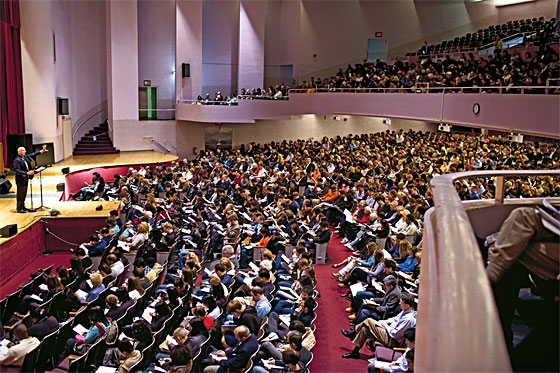
I recently took my ten-year-old nephew J.J. on a speaking engagement. He was overwhelmed when we got there. It was a huge auditorium, thousands of people were there, and television cameras were everywhere.

It made me smile to see J.J.’s reaction to everything, but after a while he asked me a question that made me chuckle. He looked at me and, with a look of concern, on his face, he said, “Uncle C.W., do I need some money for food?”

“No, buddy,” I said with a smile. “You don’t need anything. The folks here have taken care of everything. As long as you’re with Me, you don’t have need of anything.”

It’s a truth we take from the written Word of God: He has us covered! The apostle Paul addressed this issue when he wrote: “Now to him who is able to do far more abundantly than all that we ask or think, according to the power at work within us, to him be glory in the church and in Christ Jesus throughout all generations, forever and ever. Amen” (Ephesians 3:20-21).

What an amazing promise! This means that the same power that raised Jesus from the dead rests within us, ready to enable us to rise to any challenge we may face. No matter what task is ahead, no matter what problem lies before you, God has promised that the power that lives within us through the Spirit of God is more than enough for us to emerge victorious.

In this verse, the verb “work” is in the present tense, meaning that God did not just do the work in us at the time we first received salvation, but continues to work within us. That’s right! God’s power is at work in you at this very moment.

 I want to highlight three ways that God’s power works within us:

  • The first is His conforming us to the image of His Son, meaning He is working in us to make us more like Jesus. God uses the problems we face in this life, combined with the power of His Spirit, to change us and make us into reflections of Christ.
  • The second way that His power works within us is by enabling us to do that which, in our own efforts, is impossible. For example, that power enables us to overcome even the most stubborn habitual sin, and it enables us to speak with authority to others about the Lord Jesus Christ.
  • Third, that power is at work to sustain us. We all go through times of trouble and trial, times when we don’t know what we are going to do next. The power of God works within us during those times to keep us and give us balance.

My friend Joseph Garlington likes to say, “God’s power is getting you ready for what He already has ready for you.” Another way to say that is, no matter what your needs are, no matter how desperate a situation God is taking you through, you will always have the power to be victorious.

Always remember, God’s got you covered!

 ABOUT THE AUTHOR:

CRAWFORD W. LORITTS JR. (B.S., D.Th., Philadelphia Biblical University; D.Div., Biola University) is the senior pastor of Fellowship Bible Church in Roswell, Georgia. He has served as a national evangelist with the American Missionary Fellowship and the Urban Evangelistic Mission, and as Associate Director of Campus Crusade for Christ. He co-founded Oak Cliff Bible Fellowship in Dallas, Texas. He is a frequent speaker for professional sports teams, including three Super Bowls and the NCAA Final Four Chapel, and has spoken at conferences, churches, conventions and evangelistic outreaches throughout Europe, Africa, Asia, the Caribbean and the United States. He is also the host of Living A Legacy, a daily radio program.

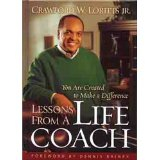
Dr. Loritts has written numerous articles and is the author of six books, including Leadership as an Identity, Lessons from a Life Coach, and For a Time We Cannot See. He co-authored Developing Character in Your Child with his wife, Karen. Dr. Loritts and his wife have four grown children and live in the Atlanta, Georgia area.

Article above adapted from Crawford W. Loritts JR. Lessons From A Life Coach: You Are Created to Make a Difference. Chicago: Moody Press, 2001, pp. 136-137.

Dr. Warren Wiersbe on the question: What is the Purpose of Life’s Trials?

“The Bumps Are What You Climb On”

A little boy was leading his sister up a mountain path and the way was not too easy. “Why, this isn’t a path at all,” the little girl complained. “It’s all rocky and bumpy.” And her brother replied, “Sure, the bumps are what you climb on.” That’s a remarkable piece of philosophy. What do you do with the bumps on the path of life?

I have been a reader of biographies for many years, and I have yet to find a successful person whose life was free from problems and difficulties. Looking at these people from a distance, you might think they had it made and that life was easy for them. But when you get closer, you discover that their climb to the top of the mountain was not an easy one. The road was rocky and bumpy, but the bumps were what they climbed on to get to the top.

We don’t have to read too far in the Bible before we discover the truth. Abraham certainly didn’t become a great man of faith overnight. He had to go through some difficult tests on the road of life before he reached the top of the mountain. No sooner did Abraham arrive in Canaan than a famine came to the land. Imagine facing a famine in the land God has promised you! Then Abraham had problems with his nephew, Lot; and then war came to the land, and Abraham had to go out and fight. His wife led him astray with bad counsel and the result was the birth of Ishmael, a boy who brought sorrow to Abraham’s heart. Finally, Isaac, the promised son, was born, bringing great joy to Abraham and Sarah. Then God asked Abraham to put Isaac on the altar, a sacrifice that would be difficult for any father or mother. Yes, there were many bumps on that road, but Abraham used the bumps to climb higher.

If anybody walked a rocky road, Joseph did. His father pampered him, hated by his brothers, sold for a slave, falsely accused, put into prison, forgotten, and apparently forsaken. But the bumps on the road helped him to climb higher, and one day Joseph became the second in command of all Egypt. Moses had a similar experience, and so did David, Daniel, and Paul. Here were people who did not complain about the road; they accepted the difficulties of life and used them as stepping-stones to the top of the mountain.

I don’t know what difficulties you are going through just now, but I know some of the feelings you have, because I have been on this bumpy road myself. You feel like quitting, like giving up. You can’t understand why the road doesn’t get easier, why God doesn’t remove the stones and straighten the path. If God did that, you might never get to the top, because the bumps are what you can climb on.

Psalm 91 says, “He that dwelleth in the secret place of the most High shall abide under the shadow of the Almighty.” It is a psalm that magnifies the care that God exercises over His children. Eleven different kinds of dangers are named in this psalm-war, snares, sickness, terrors by night, arrows by day, and others-yet God says that He can protect us from them all. This doesn’t mean that we will never experience accidents or injuries; but it does mean that no matter what happens in the will of God, all things will work together for good.

One of the greatest promises found in Psalm 91 has to do with the stones on the path. “For he shall give his angels charge over thee, to keep thee in all thy ways. They shall bear thee up in their hands, lest thou dash thy foot against a stone.” God doesn’t promise to remove the stones from the path, but He does promise to make them stepping-stones and not stumbling blocks. He promises to help us climb higher because of the difficulties of life.

Most of us respond in a predictable wayto the rocks in the path. We complain about them; we kick against them and only hurt ourselves. We try to pick them up and get rid of them, only to discover they are too heavy for us. We can’t always get around them, and we wonder if we can get over them. Some people just stop and go no further. Others give up and turn back. But the child of God does not have to stop or go back; he can use the rocky places in life as stepping-stones to climb higher.

The trouble with most of us is that we are accustomed to paved roads and level sidewalks. But life is not made that way. Sometimes the road is level and easy, and the birds are singing and the way is wonderful. But sometimes the road is rocky and bumpy, and we hear no music and feel no helping hand. Then what? Complain? Give up? No, that’s the time to remember God’s promise: “For he shall give his angels charge over thee, to keep thee in all thy ways.” God’s invisible army is at your service, and God can see you through.

Charlie Brown in the “Peanuts” comic strip is one of my favorite characters. In one particular strip, he is complaining because his team always loses their games. Lucy tries to console him by saying, “Remember, Charlie Brown, you learn more from your defeats than you do from your victories.” And Charlie Brown replies, “That makes me the smartest man in the world!”

If life were nothing but a series of defeats, all of us would get discouraged. God knows how to balance our lives so that we have sunshine and rain, calm and storm, laughter and tears. On the road of life there are level places that delight us, and there are difficult places that challenge us. If we get off the path of God’s will and go on a detour, the way will be rough from start to finish. The detour is always rougher than the main road. But there are rocks and bumps even on the paths of God’s choosing, and we have to learn to accept them and benefit from them. The bumps are what you climb on.

But this takes faith. It is much easier to kick the rock and turn around and go back. The secret to climbing higher is to look away from yourself and your difficulties, and look by faith to Jesus Christ. He knows where you are, how you feel, and what you can do. Turn it all over to Him and start walking by faith. The very rocks that seem like barriers to human eyes will, to the eyes of faith, become blessings. Listen to the promises of Psalm 91:15: “He shall call upon me, and I will answer him: I will be with him in trouble; I will deliver him, and honor him.”

If anybody faced obstacles on the road of life, it was our Lord Jesus Christ. He was born into a poor family, a member of a rejected minority race. He grew up in obscurity in a little town that mentioned only in scorn—“Can any good thing come out of Nazareth?” He gathered about Him a small group of nondescript men, and one of them became a traitor and sold Him for the price of a slave. He was called a liar, a glutton, a drunkard, and a man in league with the devil. Men twisted His words and questioned His motives, yet Jesus Christ continued to do the will of God. Finally, He came to that greatest stone of all—being crucified like a common thief. But He continued to climb that mountain, and God gave Him the victory.

This is why the writer of the Book of Hebrews urges us to look to Jesus Christ and keep on trusting. “Looking unto Jesus the author and finisher of our faith; who for the joy that was set before him endured the cross, despising the shame, and is set down at the right hand of the throne of God” (12:2). We are to look not at ourselves, our circumstances, our troubles, or the bumps in the road, but unto Jesus.

Yes, the bumps are what you climb on!

About Warren W. Wiersbe:

Warren W. Wiersbe is the Distinguished Professor of Preaching at Grand Rapids Baptist Seminary, and is the author of more than 100 books. Billy Graham calls him “one of the greatest Bible expositors of our generation.” Interestingly, Warren’s earliest works had nothing to do with scriptural interpretation. His interest was in magic, and his first published title was Action with Cards (1944).

“It was sort of imbecilic for a fifteen-year-old amateur magician to have the audacity to write a book and send it to one of the nation’s leading magic houses,” Warren says. But having a total of three books published by the L.L. Ireland Magic Company—before the age of 20—gave him a surge of confidence. In later years, he applied his confidence and writing talent to the Youth for Christ (YFC) ministry.

Warren wrote many articles and guidebooks for YFC over a three-year period, but not all his manuscripts were seen by the public eye. One effort in particular, The Life I Now Live, based on Galatians 2:20, was never published. The reason, Warren explains with his characteristic humor, is simple: it was “a terrible book…Whenever I want to aggravate my wife, all I have to say is, ‘I think I’ll get out that Galatians 2:20 manuscript and work on it.’” Fortunately, Warren’s good manuscripts far outnumbered the “terrible” ones, and he was eventually hired by Moody Press to write three books.

The much-sought-after author then moved on to writing books for Calvary Baptist Church. It was during his ten years at Calvary that Expository Outlines on the New Testament and Expository Outlines on the Old Testament took shape. These two works later became the foundation of Warren’s widely popular Bible studies known as the Be series, featuring such titles as Be Loyal (a study on Matthew) and Be Delivered (a study on Exodus). Several of these books have been translated into Spanish.

His next avenue of ministry was Chicago’s Moody Memorial Church, where he served for seven years. He wrote nearly 20 books at Moody before moving to Lincoln, Nebraska, where he and his wife, Betty, now live. Prior to relocating, he had been the senior pastor of Moody Church, a teacher at Trinity Evangelical Divinity School, and a producer of the Back to the Bible radio program.

During all these years of ministry, Warren held many more posts and took part in other projects too numerous to mention. His accomplishments are extensive, and his catalog of biblical works is indeed impressive and far-reaching (many of his books have been translated into other languages). But Warren has no intention of slowing down any time soon, as he readily explains: “I don’t like it when people ask me how I’m enjoying my ‘retirement,’ because I’m still a very busy person who is not yet living on Social Security or a pension. Since my leaving Back to the Bible, at least a dozen books have been published, and the Lord willing, more are on the way.”

Some of Wiersbe’s recent books include Your Next MiracleThe 20 Essential Qualities of a Child of GodThe Bumps are What You Climb OnClassic Sermons on the Fruit of the SpiritClassic Sermons on Jesus the ShepherdKey Words of the Christian LifeLonely PeopleA Gallery of GraceReal Peace: Freedom and Conscience in the Christian Life, and On Being a Leader for God.

The article above was adapted from the very encouraging and practical book by Warren W. Wiersbe. The Bumps Are What You Climb On: Encouragement for Difficult Days. Baker: Grand Rapids, 2003 (Chapter One).

A Supernatural Life by Steve Brown

Series: Friday Humor #3

A friend of mine told me a great story the other day, which he confirmed was true.

A woman shipped a very valuable dog on airplane. But when the clerks checked the cage after the flight was complete, they found the dog dead. So they went out and bought one just like it and replaced the live dog for the dead one. When the woman came to pick up her dog, she looked in the cage and stepped back in surprise.

“What’s the matter?” an attendant asked.

“Why,” she said in a trembling voice, “That dog was dead when I put him in the cage.”

Jesus said that Christians have passed from death to life. Since that’s true, pagans, especially those who knew us before we trusted in Christ, ought to be just as surprised when they come in contact with us as that woman was when she saw her dog. Our new life ought to be different than the old one—so different, in fact, that people notice the difference.

What in your life can only be explained in terms of the supernatural? Ask a pagan. He should know.

Meditation:

What habits of your old life still linger in your new? I know. Old habits die hard, but God is bigger than any habit, and He sure won’t tolerate bad ones. So get through with them. With God at your side, start rooting them out of your life. As long as you can rely on Him you can do it—He promises you (Philippians 4:13)

 For Further Study:

Acts 9:1-31, “But Saul, still breathing threats and murder against the disciples of the Lord, went to the high priest and asked him for letters to the synagogues at Damascus, so that if he found any belonging to the Way, men or women, he might bring them bound to Jerusalem. Now as he went on his way, he approached Damascus, and suddenly a light from heaven shone around him. And falling to the ground he heard a voice saying to him, “Saul, Saul, why are you persecuting me?” And he said, “Who are you, Lord?” And he said, “I am Jesus, whom you are persecuting. But rise and enter the city, and you will be told what you are to do.” The men who were traveling with him stood speechless, hearing the voice but seeing no one. Saul rose from the ground, and although his eyes were opened, he saw nothing. So they led him by the hand and brought him into Damascus. And for three days he was without sight, and neither ate nor drank.

Now there was a disciple at Damascus named Ananias. The Lord said to him in a vision, “Ananias.” And he said, “Here I am, Lord.” And the Lord said to him, “Rise and go to the street called Straight, and at the house of Judas look for a man of Tarsus named Saul, for behold, he is praying, and he has seen in a vision a man named Ananias come in and lay his hands on him so that he might regain his sight.” But Ananias answered, “Lord, I have heard from many about this man, how much evil he has done to your saints at Jerusalem. And here he has authority from the chief priests to bind all who call on your name.” But the Lord said to him, “Go, for he is a chosen instrument of mine to carry my name before the Gentiles and kings and the children of Israel. For I will show him how much he must suffer for the sake of my name.” So Ananias departed and entered the house. And laying his hands on him he said, “Brother Saul, the Lord Jesus who appeared to you on the road by which you came has sent me so that you may regain your sight and be filled with the Holy Spirit.” And immediately something like scales fell from his eyes, and he regained his sight. Then he rose and was baptized; and taking food, he was strengthened.

For some days he was with the disciples at Damascus. And immediately he proclaimed Jesus in the synagogues, saying, “He is the Son of God.” And all who heard him were amazed and said, “Is not this the man who made havoc in Jerusalem of those who called upon this name? And has he not come here for this purpose, to bring them bound before the chief priests?” But Saul increased all the more in strength, and confounded the Jews who lived in Damascus by proving that Jesus was the Christ.

When many days had passed, the Jews plotted to kill him, but their plot became known to Saul. They were watching the gates day and night in order to kill him, but his disciples took him by night and let him down through an opening in the wall, lowering him in a basket.

And when he had come to Jerusalem, he attempted to join the disciples. And they were all afraid of him, for they did not believe that he was a disciple. But Barnabas took him and brought him to the apostles and declared to them how on the road he had seen the Lord, who spoke to him, and how at Damascus he had preached boldly in the name of Jesus. So he went in and out among them at Jerusalem, preaching boldly in the name of the Lord. And he spoke and disputed against the Hellenists. But they were seeking to kill him. And when the brothers learned this, they brought him down to Caesarea and sent him off to Tarsus.

So the church throughout all Judea and Galilee and Samaria had peace and was being built up. And walking in the fear of the Lord and in the comfort of the Holy Spirit, it multiplied.”

Ephesians 4:17-5:12, Now this I say and testify in the Lord, that you must no longer walk as the Gentiles do, in the futility of their minds. They are darkened in their understanding, alienated from the life of God because of the ignorance that is in them, due to their hardness of heart. They have become callous and have given themselves up to sensuality, greedy to practice every kind of impurity. But that is not the way you learned Christ!— assuming that you have heard about him and were taught in him, as the truth is in Jesus, to put off your old self, which belongs to your former manner of life and is corrupt through deceitful desires, and to be renewed in the spirit of your minds,  and to put on the new self, created after the likeness of God in true righteousness and holiness.

Therefore, having put away falsehood, let each one of you speak the truth with his neighbor, for we are members one of another. Be angry and do not sin; do not let the sun go down on your anger, and give no opportunity to the devil. Let the thief no longer steal, but rather let him labor, doing honest work with his own hands, so that he may have something to share with anyone in need. Let no corrupting talk come out of your mouths, but only such as is good for building up, as fits the occasion, that it may give grace to those who hear. And do not grieve the Holy Spirit of God, by whom you were sealed for the day of redemption. Let all bitterness and wrath and anger and clamor and slander be put away from you, along with all malice. Be kind to one another, tenderhearted, forgiving one another, as God in Christ forgave you.

Therefore be imitators of God, as beloved children. And walk in love, as Christ loved us and gave himself up for us, a fragrant offering and sacrifice to God. But sexual immorality and all impurity or covetousness must not even be named among you, as is proper among saints. Let there be no filthiness nor foolish talk nor crude joking, which are out of place, but instead let there be thanksgiving. For you may be sure of this, that everyone who is sexually immoral or impure, or who is covetous (that is, an idolater), has no inheritance in the kingdom of Christ and God. Let no one deceive you with empty words, for because of these things the wrath of God comes upon the sons of disobedience. Therefore do not become partners with them; for at one time you were darkness, but now you are light in the Lord. Walk as children of light (for the fruit of light is found in all that is good and right and true), and try to discern what is pleasing to the Lord. Take no part in the unfruitful works of darkness, but instead expose them. For it is shameful even to speak of the things that they do in secret.”

 About the Writer:

Dr. Steve Brown is one of the most sought after preachers and conference speakers in the country. Having had extensive radio experience before entering the ministry, he is now heard weekdays on the national radio program, Key Life, and one minute feature, “Think Spots”. Steve also hosts a weekly radio talk show, “Steve Brown, Etc.”. He served as the senior pastor of Key Biscayne Presbyterian Church for 17 years before joining the Reformed Theological Seminary (RTS) faculty as Professor of Preaching. After teaching full time for almost two decades at RTS, Dr. Brown retired and is Emeritus Professor of Preaching but remains an Adjunct Professor of Preaching teaching occasional classes each year.

Dr. Brown is the author of many (16 and counting) books and also serves on the Board of the National Religious Broadcasters and Harvest USA (He earned his B.A. from High Point College; an S.T.B. from Boston University School of Theology; and an Litt.D. from King College). Steve is one of my favorite writers and speakers because he is authentic, a great story-teller, is a theologian in disguise, and really knows how to address the realities of how sinful humans can experience the amazing grace of God. The article above was adapted from page 112 in his excellent book on surviving and thriving in a tough world: Jumping Hurdles, Hitting Glitches, and Overcoming Setbacks. Colorado Springs: NavPress, 1992.

Steve Brown Has Authored These Outstanding Grace-Filled Books:

Three Free Sins: God’s Not Mad at You. New York: Simon and Schuster/ Howard Books, 2012.

A Scandalous Freedom. New York: Simon and Schuster/ Howard Books, 2009.

What Was I Thinking? Things I’ve learned Since I Knew It All. New York: Simon and Schuster/ Howard Books, 2006.

Follow the Wind: Our Lord, the Holy Spirit. Grand Rapids: Baker, 1999.

Approaching God: How to Pray. New York: Howard, 1996.

Living Free: How to Live a Life of Radical Freedom and Infectious Joy. Grand Rapids: Baker, 1994.

Born Free: How to Find Radical Freedom and Infectious Joy in an Authentic Faith. Grand Rapids: Baker, 1993.

How To Talk So People Will Listen. Grand Rapids: Baker, 1993.

If Jesus Has Come: Thoughts on the Incarnation for Skeptics, Christians and Skeptical Christians by a Former Skeptic. Grand Rapids: Baker, 1992.

Jumping Hurdles, Hitting Glitches, Overcoming Setbacks. Colorado Springs: NavPress, 1992.

No More Mr. Nice Guy! Saying Goodbye to “Doormat” Christianity. Nashville: Thomas Nelson, 1991.

When Being Good Isn’t Good Enough. Nashville: Thomas Nelson, 1990.

Welcome to the Family: A Handbook for Living the Christian Life. Old Tappan, New Jersey: Fleming H. Revell, 1990.

When Your Rope Breaks: Christ-centered advice on how to go on living—when making it through another day is the hardest thing in the world. Nashville: Thomas Nelson, 1988.

Heirs with the Prince. Nashville: Thomas Nelson, 1985.

If God is in Charge: Thoughts On The Nature of God For Skeptics, Christians, and Skeptical Christians. Grand Rapids: Baker 1983.