What is Faith?

WHAT FAITH IS:

FI Reeve

  • Doing the right thing regardless of the consequences and knowing God will turn the ultimate effect to good.
  • Reliance on the certainty that God has a pattern for my life when everything seems meaningless. 
  • Confidence that God is acting for my highest good when He says no to my prayers.
  • Realizing that I am useful to God not in spite of my scars but because of them.
  • Accepting the fact that God knows better than I do what is ultimately good for me.
  • Living with the unexplained.
  • The way to please God.

Excerpts from Pamela Reeve’s Faith Is. Portland: Multnomah Press, 1994

Dr. John Piper on Having a “Gratitude Ethic”

How Does Gratitude Motivate?John Piper image

On May 29 [1983] in my message on Galatians 5:1-5, I opposed the “Gratitude Ethic” which says: “God has worked for me, now I will return the favor and work for him;” or: “God has given me more than I could ever pay back, but I will devote my life to trying.” But the question was raised by Steve Roy after the service whether there may be another way gratitude could motivate obedience that does not involve a debtor mentality. So I spent about six hours on Memorial Day trying to think that question through. Here is where I am.

Definition: gratitude is a species of joy which arises in our heart in response to the good will of someone who does (or tries to do) us a favor. We do not respond with gratitude to a person if they accidentally do us a favor. Nor do we respond with gratitude if they do us a favor with mercenary ulterior motives. On the other hand, we do respond with gratitude to a person who tries to do us a favor but is hindered by circumstances beyond his control—say, he sacrifices his life to bring us medicine in the jungle but it turns out not to heal. We still feel gratitude toward him. Therefore gratitude is not merely the response of joy to a benefit received. It has special reference to the good will of another person. A person whose joy centers only on a gift received with no sense of joy in the good will of the giver, we call an ingrate. So gratitude is a species of joy which arises in response to the good will of someone who does (or tries to do) us a favor.

This joy, like all joys, has in it an impulse to express or display the value of its cause. This is a crucial insight for understanding how gratitude motivates behavior. It is the nature of joy to demonstrate or express the value of its cause. When something gives us joy we feel an impulse to show the value of it by our words or actions.

The intensity of this joy and its expressive impulse is determined by three varying factors:

1) the importance to us of the gift offered (We are more thankful for a winter coat than for an ice-cream cone);

2) the sacrifice it cost someone to give the gift (We are more thankful if a person risks his life than if his gift is of no inconvenience);

3) our own sense of unworthiness to receive the gift (We are more thankful for free gifts than earned wages).

The question how gratitude can properly motivate good behavior is the question: how should we express or demonstrate the value of God’s good will toward us? Gratitude is the joy that arises in response to God’s good will toward us in all his gifts. This joy has an impulse to express the value of that good will. How should it do so?

Answer: It should express the value of God’s good will in a way that honors the nature andaim of that will and does not contradict it. (For example: I should not try to show my gratitude to someone who just paid my way through an alcohol treatment center by throwing him a beer party.)

Let’s take God’s good will expressed in sending his Son to die, for example. The nature of that act of love is that it was unconditional, undeserved, a gift of sheer grace. The aim of that act was to unleash a power of forgiveness and renewal that would transform people into reflectors of God’s glory. So the way gratitude for this act of God’s good will toward us should express itself is by saying and doing what honors the nature of it as free and theaim of it as God’s glory.

Certain attitudes are thus ruled out: any attempt to pay God back would contradict the nature of the act as free and gracious. Any attempt to turn and become God’s benefactors is ruled out as dishonoring to the nature and aim of the divine act. That was my point last Sunday. But there are some proper ways for the impulse of the joy of gratitude to find expression:

1) the admission that we don’t deserve Christ honors the gracious freeness of the gift.

2) Words of love, praise and thanks will pop out like fruit on the branch of gratitude.

3) Trust in the forgiveness and renewing power unleashed in the cross honors its aim.

4) Acts of self-denying love also show how free we are made by the all-sufficiency of the gift of love in the cross.

This is how I see gratitude motivating obedience to Christ. It does not prompt us to pay him back or to meet his needs. As a species of joy it has in it an impulse to show the value of God’s good will. What shows the value of God’s good will in its true nature and aim are words of praise, a heart of trust, and a life of love.

Thankful for you,

Pastor John

©2013 Desiring God Foundation. May 31, 1983. Used by Permission.

Permissions: You are permitted and encouraged to reproduce and distribute this material in its entirety or in unaltered excerpts, as long as you do not charge a fee. For Internet posting, please use only unaltered excerpts (not the content in its entirety) and provide a hyperlink to this page. Any exceptions to the above must be approved by Desiring God.

Please include the following statement on any distributed copy: By John Piper. ©2013 Desiring God Foundation. Website: desiringGod.org

The Gospel Made Simple: “Come Home”

Series: Gospel Presentations #4 “COME HOME” 

TTT Metzger

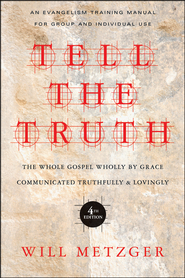
Learning the Gospel Diagram “Come Home” from Will Metzger’s book “Tell the Truth”

A. Procedure for Learning the “Come Home” Gospel Diagram

Introduction. People are looking for relationships where they can find love, meaning, security and joy. God designed families—both natural and spiritual—and homes for this purpose. As part of his plan he intends us to have a home on earth and a home after death.

Theme. God designed us for a relationship with him and others.

Learning the Content of the Gospel. It is essential to take three hours to study chapter three and the amplified diagram, including reading thoughtfully the Bible passages.

Diagram. Draw the Road of Life line one inch from the top of the long side of an 8 1/2″ x 11″ paper two-thirds of the way across paper. Then draw the road going straight down to “homelessness.” Halfway down this line draw a short line intersected by a vertical line to form a cross. Next, extend the horizontal line up to the top of the paper and resume the Road of Life line. Put a triangle at each end to represent God and an H for Hell and another H for Home in appropriate places. Put a question mark on the left side of the cross where it intersects with the road downward. (This diagram is drawn on the cover of “Come Home.” [you need the book to see the diagram which is rather complex as whole, but not in its constituent parts)

Practice. You are now ready to fill in the diagram with the five points of the gospel. You should fill in one point at a time, following the simplified version. Keep practicing this on different sheets of paper until you can do it from memory. As you fill in each point, you can also draw the two signs on the road and fill in the words on the bridge, which form a cross. Sharing How to “Come Home”. After reviewing the amplified version and again looking up the Bible passages, you are ready to share the simplified version of how to “come home” with a Christian friend, drawing the diagram and briefly explaining the five points, main point, Bible verse and illustration under each of the five points. Be sure to stop after point 3 and ask if they sense any personal concern. Ascertain if they see the dilemma. Your partner can either say something like “I think a God of love would just overlook my failures” or “I’m pretty happy with my life right now; I don’t see a need for religion.” You have to decide how to answer this! (Hint: Point 1 is the basis for all we’ve said. God made you, and he is not only a love-giver; he has made road rules, and we are responsible to him—a personal God.) Then ask if you can continue the last two points, for this may clarify things. Reverse roles. Then give each other feedback on what was clear and what wasn’t.

Objective. The objective of practicing the diagram is to help you, as a Christian, get a grip on the content of the good news (gospel). By so doing, you are able to listen to the person you are talking with and bring in various points of the gospel as appropriate. Many times simply communicating what God is like (point 1) is a successful conversation. By knowing the diagram, you can start at any point and move backward or forward as needed. However, it is best to ask for the opportunity to give this overview at some point. This diagram is a grid on which to organize the truth that God says is so important for everyone to know. Be sure you are thoroughly familiar with the amplified version so you can draw on this background when in conversations. Most people are not convicted the first time they hear this story. Your job is to plant and water the seed of God’s Word into the conscience and heart of people. The Holy Spirit may use the truth joined with your friendliness and love to give them faith and a new birth according to his timetable. Sometimes people will find it helpful if you ask them, “What objections/problems do you have with Jesus Christ?” “Can you explain to me what the first three points are saying?” or “What do you think is keeping you from becoming a follower of Jesus?” These questions may allow you to clear up their misunderstandings, bad examples of other Christians or churches and so on—or just to listen to them! The danger is this may get you off on a tangent, so with the “Come Home” diagram in mind, keep coming back to it. What’s really fun is to say, “Can I tell you a story?” Then tell them about Paul walking into Athens and talking to some university professors in Acts 17, or about the two lost sons in Luke 15 and so on. Practice reading the five key Bible passages one paragraph at a time, explaining them to a Christian friend. This Road to Home gives you a visual framework on which to pin the five gospel points.

Introducing the Diagram. With someone you’ve talked with before, simply say, “Many people have found it helpful to see an overview of the main theme of the Bible. Can I show that to you, and then you can point out which part you don’t understand, disagree with or find helpful?” Keep practicing the diagram and the three topics under each point (#4 has four). Then, as you talk to someone, you will find drawing it helps them to follow the story. Or, you may visualize the diagram mentally as you carry on a conversation. You may not get the opportunity to share the simplified version of “Come Home” very often. But knowing this diagram will help you realize when you are not talking about the gospel and only talking around the fringe—as in so many of our conversations. You can then be reminded, as you think back over a conversation, to next time bring in some of these truths. Most important, knowing “Come Home” prepares you for a lifetime of lifestyle witnessing. The following are two versions of the “Come Home” diagram—an amplified version for study and a simplified version for sharing. Each set of pages, with a bit of ingenuity, can be photocopied and folded into handy 5″ x 8″ booklets. The simplified version is the easiest: just photocopy pages 281 and 282 back to back and fold in half with the diagram in the middle. The text of this version can be enlarged by about 33 percent and still fit ordinary paper size for easier reading. In each case you may want to cut pages from the book for easier photocopying. The amplified version can be copied on two 8 1/2″ x 11″ sheets and folded in half, leaving any blank half pages for notes: staple if you wish.

B. Come Home: Overview for Memorization

1. Who Is God?

1. Maker (Owner)

2. Love-Giver (Father)

3. Law-Maker (Judge)

Point: God has rights over you; you are accountable.

Bible: Paul’s sermon—Acts 17:22-34 (Rev 4:11)

Illustration: The inventor has patent rights and instruction book.

2. Life = God-Centered Living

1. One-way road home

2. Two rules 3. Perfect obedience required Point: God’s perfect rules measure all actions/attitudes. Bible: Moral man—Mark 10:17-27 (Mk 12:30-31)

Illustration: Jumping over a pole 100 feet high.

3. Sin = Self-Centered Living

1. Disobedience is sin.

2. Sin separates you from God.

3. Sin must be punished for God is just.

Point: We are self-centered and separated from God.

Bible: Jesus and thirsty woman—John 4:4-30 (Rom 3:20)

Illustration: The Gap; failure of self-effort; heart disease; sin-addiction

Question: Do you admit you are a sinner?

Dilemma: How to get right with God

4. Jesus Christ: The Way Back to Life

1. God provides his Son as a bridge.

2. Jesus perfectly obeys God’s rules (righteousness).

3. Jesus is sin-bearer (takes our penalty).

4. Jesus lives and offers himself to us (righteousness-giver).

Point: Jesus is sinner’s substitute/reconciler/liberator. He is the only Lord and Savior.

Bible: Crucifixion and resurrection—John 19:17–20:31 (Rom 5:6-8)

Illustration: The Bridge; no more doing—done by Jesus

5. Your Response: Coming Home to Jesus

1. Personal response commanded.

2. Turn from sin.

3. Trust in Christ.

Bible: Two lost sons—Luke 15:11-32 (Ps 51:1-4; Rom 10:9-10)

Illustration: A person (representing Jesus) is not received until welcomed in; only three possible responses—investigate, receive, reject (Acts 17:30-34)

Point: Receive Christ as your Savior and Lord. Do You Know the Bible’s Main Theme?

Are you able to express the main theme of the Bible, the most influential book of all literature? Most people, Christian or not, cannot! What is this theme called the “gospel”? This booklet is a tool to help you grasp the essentials of the gospel. Whether you are a seeker of Christ or secure in having found him, you need to get the facts straight.

Secure? If you are a true Christian but don’t have a clear understanding of the gospel, your growth will be hindered in two ways. First, any vagueness about the basic truths might cause you to miss their implications for living the Christian life. You could be misled into looking for something more in addition to what you received when you became a Christian. Second, you won’t be able to give a clear explanation of the gospel to others. Only when truth is kindled by the spark of the Holy Spirit are lives changed. But it’s your responsibility to honor God by clearly expressing basic gospel truths! This booklet’s five-point outline has many unique features: a clear theme (The Road of Life to Home) linking all the points; a starting point (God made you), which establishes that a person is responsible; inclusion of God’s law to expose the need for a Savior; choice of brief verses or reference passages for “story telling” the gospel as Jesus did; illustrations in story and diagram form; emphasis on holiness, repentance and the lordship of Christ; a one-page summary for easy memorizing. (See chapter four of Tell the Truth for an explanation of the “Come Home” outline.)

Having an outline of a God-centered gospel in your mind will free you to listen and be more natural as you tell the truth to others. You can concentrate on what they are saying and bring in any of the five truths of the gospel as appropriate. However, truths 1, 2 and 3 give the foundation for 4 and 5 and normally are needed first to show why Christ is necessary. Therefore, ask for a non-Christian at some point to hold their questions and listen for fifteen minutes as you give an overview of all five truths which as the framework for your answers can really help them understand. Or, at least go over truths 1-3.

This amplified version of the gospel diagram “Come Home” is intended for detailed study by those who wish to have a better knowledge of the content of a God-centered gospel. Christianity is both something to be believed and Someone to be received. To impersonally present these truths would be to contradict the nature of the gospel. Prayer and a personal relationship showing love are all-important. You can follow a printed simplified version for sharing, although a conversation in which you draw the diagram is best. Live the gospel, but words are necessary, so use them. Evangelism is a way to glorify God by knowing the gospel well, living it well and telling it well.

Prayer for Others

“Father in heaven, I come to you humbly and yet boldly because of my salvation, which has united me with your Son. Your grace is reaching more and more people and calling them home. Therefore I pray for __________. Hear my prayer even as you heard the pleading of your friend Abraham and spared his nephew Lot from terrible judgment. Your Son invited the spiritually tired, burdened and thirsty to take of the free water of eternal life. Lord, will you please open still another heart as you did mine? You alone can break addictions to self-righteousness, unbelief and sinful desires. Would it please you to enable them to believe and grant repentance and faith leading to a new birth? Magnify your glory by delivering _________ from spiritual death. Lord, bring fame to your name by once again showing mercy. My plea is not based on my own goodness but on the sovereign love of Jesus Christ. Lord, I desire that you use me in telling the gospel of grace to others. Nevertheless, not my will, but your will be done. Amen.”

These Scriptures provide incentive and direction for your prayers for others. If you’re praying in a group, assign each person one or two passages as a basis for their prayer: Matthew 11:25-30; Luke 15; 16:19-31; John 4:1-42, 10:1-18; Acts 4:24-31; 5:27-32; 17:27-34; 26:19-29; Romans 10:1-4, 9-21; 1 Corinthians 1:18–2:16; 2 Corinthians 2:14-17; 4:1-18; 5:11-21; Ephesians 6:10-20; 1 Thessalonians 1:2–2:13; 2 Timothy 1:6-10; 4:1-5; Revelation 20:11–21:5; 22:17. People for Whom I Will Pray and Witness: 1. 3. 5. 2. 4. 6. Reprinted from Tell the Truth ©2012 by Will Metzger with permission from InterVarsity Press, Downers Grove, Illinois. This helpful training manual for God-centered evangelism in book form is appropriate for individual or group study. It is available through Christian bookstores.

Adapted from Will Metzger. Tell the Truth: The Whole Gospel Wholly by Grace Communicated Truthfully & Lovingly. Downers Grove, IL.: InterVarsity Press, 2013.

About Will Metzger

Will Metzger image

Will Metzger has been a campus minister at the University of Delaware since 1965, where he serves with InterVarsity Christian Fellowship and Christian InterAction (a church and campus connection). His evangelism ministry has taken him to every continent, and he has witnessed to people from varied nationalities both on campus and through a church that he pastored.

Steven J. Lawson on The Great Significance of Preaching the Word

“Preach the Word”

Bounty Bible image

by 

Every season of reformation and every hour of spiritual awakening has been ushered in by a recovery of biblical preaching. This cause and effect is timeless and inseparable. J.H. Merle D’Aubigné, noted Reformation historian, writes, “The only true reformation is that which emanates from the Word of God.” That is to say, as the pulpit goes, so goes the church.

Such was the case in the Protestant Reformation of the sixteenth century. Martin Luther, John Calvin, and other reformers were raised up by God to lead this era. At the forefront, it was their recovery of expository preaching that helped launch this religious movement that turned Europe and, eventually, Western civilization upside down. With sola Scriptura as their battle cry, a new generation of biblical preachers restored the pulpit to its former glory and revived apostolic Christianity.

The same was true in the golden era of the puritans in the seventeenth century. A recovery of biblical preaching spread like wildfire through the dry religion of Scotland and England. A resurgence of authentic Christianity came as an army of biblical expositors — John Owen, Jeremiah Burroughs, Samuel Rutherford, and others — marched upon the British Empire with an open Bible and uplifted voice. In its wake, the monarchy was shaken and history was altered.

The eighteenth century witnessed exactly the same. The Bible-saturated preaching of Jonathan Edwards, George Whitefield, and the Tennents thundered through the early colonies. The Atlantic seaboard was electrified with the proclamation of the gospel, and New England was taken by storm. The Word was preached, souls were saved, and the kingdom expanded.

The fact is, the restoration of biblical preaching has always been the leading factor in any revival of genuine Christianity. Philip Schaff writes, “Every true progress in church history is conditioned by a new and deeper study of the Scriptures.” That is to say, every great revival in the church has been ushered in by a return to expository preaching.

D. Martyn Lloyd-Jones, preacher of Westminster Chapel London, stated, “The most urgent need in the Christian Church today is true preaching; and as it is the greatest and the most urgent need in the Church, it is the greatest need of the world also.” If the doctor’s diagnosis is correct, and this writer believes it is, then a return to true preaching — biblical preaching, expository preaching — is the greatest need in this critical hour. If a reformation is to come to the church, it must begin in the pulpit.

In his day, the prophet Amos warned of an approaching famine, a deadly drought that would cover the land. But not an absence of mere food or water, for this scarcity would be far more fatal. It would be a famine for hearing God’s Word (Amos 8:11). Surely, the church today finds itself in such similar days of shortage. Tragically, exposition is being replaced with entertainment, doctrine with drama, theology with theatrics, and preaching with performances. What is so desperately needed today is for pastors to return to their highest calling — the divine summons to “preach the word” (2 Tim. 4:1–2).

What is expository preaching? The Genevan reformer John Calvin explained, “Preaching is the public exposition of Scripture by the man sent from God, in which God Himself is present in judgment and in grace.” In other words, God is unusually present, by His Spirit, in the preaching of His Word. Such preaching starts in a biblical text, stays in it, and shows its God-intended meaning in a life-changing fashion.

This was the final charge of Paul to young Timothy: “Preach the word; be ready in season and out of season; reprove, rebuke, and exhort, with complete patience and teaching” (2 Tim. 4:2). Such preaching necessitates declaring the full counsel of God in Scripture. The entire written Word must be expounded. No truth should be left untaught, no sin unexposed, no grace unoffered, no promise undelivered.

A heaven-sent revival will only come when Scripture is enthroned once again in the pulpit. There must be the clarion declaration of the Bible, the kind of preaching that gives a clear explanation of a biblical text with compelling application, exhortation, and appeal.

Every preacher must confine himself to the truths of Scripture. When the Bible speaks, God speaks. The man of God has nothing to say apart from the Bible. He must not parade his personal opinions in the pulpit. Nor may he expound worldly philosophies. The preacher is limited to one task — preach the Word.

Charles Haddon Spurgeon said, “I would rather speak five words out of this book than 50,000 words of the philosophers. If we want revivals, we must revive our reverence for the Word of God. If we want conversions, we must put more of God’s Word into our sermons.” This remains the crying need of the hour.

May a new generation of strong men step forward and speak up, and may they do so loud and clear. As the pulpit goes, so goes the church.

Article above from the January 1, 2010 issue of © Tabletalk magazine

Permissions: You are permitted and encouraged to reproduce and distribute this material in any format provided that you do not alter the wording in any way, you do not charge a fee beyond the cost of reproduction, and you do not make more than 500 physical copies. For web posting, a link to this document on our website is preferred (where applicable). If no such link exists, simply link to http://www.ligonier.org/tabletalk. Any exceptions to the above must be formally approved by Tabletalk.

Please include the following statement on any distributed copy: From Ligonier Ministries and R.C. Sproul. © Tabletalk magazine. Website: http://www.ligonier.org/tabletalk. Email: tabletalk@ligonier.org. Toll free: 1-800-435-4343.

About the Author:

Steve Lawson pointing

Dr. Steven J. Lawson is the Senior Pastor of Christ Fellowship Baptist Church in Mobile, Alabama, having served as a pastor in Arkansas and Alabama for the past twenty-nine years. He is a graduate of Texas Tech University (B.B.A.), Dallas Theological Seminary (Th.M.), and Reformed Theological Seminary (D. Min.).

The focus of Dr. Lawson’s ministry is the verse-by-verse exposition of God’s Word. The overflow of this study and preaching has led to his authoring fifteen books, including In It to Win It, The Kind of Preaching God Blesses,  & The Unwavering Resolve of Jonathan Edwards. His other recent books include The Gospel Focus of Charles SpurgeonThe Expository Genius of John Calvin, The Heroic Boldness of Martin Luther,  Foundations of Grace 1400 BC-AD 100, volume one of a multi-volume series & Pillars of Grace AD 100 – 1564, also, three volumes in the Holman Old Testament Commentary Series, Job, Psalms Volume I (Psalms 1-75), and Volume II (Psalms 76-150).

He has contributed to John Calvin: A Heart for Devotion, Doctrine, and Doxology, work celebrating the 500 year anniversary of the birth of John Calvin. He is the Series Editor for A Long Line of Godly Men Profile, a series of biographies of noted Christian leaders.

Dr. Lawson has also authored Famine in the Land: A Passionate Call to Expository PreachingMade In Our ImageAbsolutely SureThe LegacyWhen All Hell Breaks Loose, and Faith Under Fire. His books have been translated into various languages around the world, including Russian, Italian, Portuguese, Spanish, German, Albanian, Korean, Dutch, and the Indonesian language.

He has contributed several articles to Bibliotheca Sacra, The Southern Baptist Journal of Theology, The Faith and Mission, Decision Magazine, and Discipleship Magazine, among other journals and magazines.

Dr. Lawson’s pulpit ministry takes him around the world, preaching in such places as Russia, the Ukraine, Scotland, Wales, England, Ireland, Germany, Japan, New Zealand, Switzerland, Italy and many conferences in the United States, including The Shepherd’s Conference and the Resolved Conference at Grace Community Church, Sun Valley, California, the Ligonier National and Pastor’s Conference, and the Philadelphia Conference on Reformed Theology.

He is president of New Reformation, a ministry designed to bring about biblical reformation in the church today. He serves on the Executive Board of The Master’s Seminary and College and is a Teaching Fellow with Ligonier Ministries and a Visiting Professor at the Ligonier Academy, teaching Expository Preaching and Evangelism and Missions in the Doctor of Ministry program. Dr. Lawson taught in the Distinguished Scholars Lecture Series at The Master’s Seminary, lecturing in 2004 on “Expository Preaching of the Psalms.” He also serves on the Advisory Council for Samara Preachers’ Institute & Theological Seminary, Samara, Russia.

Steve and his wife Anne have three sons, Andrew, James, and John, and a daughter, Grace Anne.

An Interview with Author Richard F. Lovelace on Revival

An Interview with Author Richard Lovelace & Christian Book Distributors (CBD)
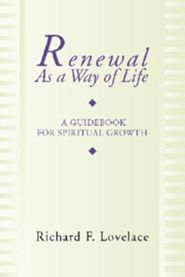
RAAWOL Lovelace

“Revival is an infusion of new spiritual life imparted by the Holy Spirit to existing parts of Christ’s body.”
-Richard Lovelace

Richard F. Lovelace (Th. D., Princeton), professor emeritus of church history at Gordon-Conwell Theological Seminary, is the author of Homosexuality and the Church,The American Pietism of Cotton Mather, and Dynamics of Spiritual Life. He has written numerous articles and has recently written Renewal as A Way of life.

Richard F. Lovelace


The following comments were made by Richard Lovelace in an interview with Christianbook.com on August 26th 1999. 

CBD: Could you describe yourself, your background, your hobbies and interests?

Lovelace:  Ok. This is sort of a first!  I am 68 years old.  I am a graduate of Yale College with a BA in philosophy, as well as a Graduate of Westminster Seminary and of Princeton Theological Seminary. I am emeritus professor of Church History at Gordon-Conwell Seminary, a writer, and still teaching.  I am married [and have] three children.

I have a great interest in music. I was a classical DJ for a year on Boston’s WBAQ before we moved, and I would still be doing that if there were a place to.  I am an avid fisherman.  My son has converted me to fly fishing trout!

CBD: Could you describe the overall premise of your book The Dynamics of Spiritual life, as well as your current book Renewal as a Way of Life ?

Lovelace: Certainly.  I would encourage people to read the second book as well, which can be downloaded on the web athttp://www.overit.com/lovelace/lovelacebooks/index.html I wroteThe Dynamics of Spiritual Life, published in 1978, because I wanted to set forth what I call the unified field theory of Christian Spirituality that would make use of insights particularly on the Reformation, the Puritans, the Great Awakening movements, catholic spirituality, and other areas.  It is a very catholic book.  It really endeavors to reach out everywhere to come upon Biblical principles of spirituality. It is a book on what is called spiritual theology or the historical theology of Christian experience. I started out my own Christian life absorbed in a Christian community which was an offshoot tracing back to the Welsh Revival—the overcomer conference in England. The name of the group was Peniel, it’s still in existence, and I am still working in it.  It has devoted itself to the production of pastoral theology, and practical theology of the Christian life. It was there that I got interested in the subject of spiritual awakening, revival, and renewal in the Church.  The Dynamics of Spiritual life book attempts to set forth both a Biblical portrayal of individual spiritual life, but it also attempts to deal with the great movements of spiritual awakening, because in my opinion these things are related. You can pursue individual spiritual growth but inevitably you will come up with the realization that there is a corporate aspect to this. Christians grow as they are immersed in currents of spiritual life that are larger than individual or local congregations for instance.

CBD: Could you give a definition of what you think revival is, and what it would be distinguished by?

Lovelace: As used by all the historians of revivals, it means an infusion of new spiritual life imparted by the Holy Spirit to existing parts of Christ’s body.  In other words, it happens to a church or community that has already been brought into spiritual life in the past in which that life is ebbing or is at a low ebb.  These are also simply communities that are in covenant with God. I would say that God’s covenant embraces over the generations groups of persons moving through history in what are called denominations. So that in the Presbyterian or Baptist churches for example, you have a collection of people whose grandparents were vital Christians, and God is faithful to his covenant and will strike again and again [to ignite revival] in those lines.

In my own denomination, the Presbyterian Church, we were born half-dead in America.  People with a somewhat dead orthodoxy came over and a powerful movement of Revival through the Log Collegemen (people trained in William Tennent’s in New Jersey) carried the message of not just having orthodox beliefs, but also being born again, and having the vital presence of the Holy Spirit. That divided the Presbyterian Church for 17 years, but it also was a powerful movement of multiplying Christians and the church reunited and that was the first great Awakening from about the 1730’s and 1740’s.  There was another powerful movement again in the congregational and Presbyterian Church’s called the Second Great Awakening from about 1795 to roughly 1838. You see splits occur again and again in revival periods. Yet, I don’t see this to be an evidence of revival nor an end goal. This is a very counter theory to the idea that you become more and more revived the more you split. I don’t see that in history although everything that splits is still on the board, still operating.  If you take a great movement such as the Anglican Communion, there are still streams of life pouring into it, especially from Africa.  You could do this with a local congregational history too. If you could go back to a local congregation that started in 1745, which would be in the middle of the First Great Awakening, you would find that it went though periods of decline in renewal.

CBD: In your book you see great prospects for either Christian Revival or anti-Christian movements. How important is Revival in terms of the outcome?

Lovelace : This depends on what is called your eschatology.  Whether you are pre mill, post mill, a mill, or don’t even know what mill is.  But during the 18th and 19th century it didn’t matter what you were, pre-mill or post-mill or a-mill, everybody expected a triumphant increase.  Just think of the Hymn “Jesus Shall Reign from Shore to Shore.”  That is a declaration of war on the powers of darkness. That is according to Psalm 72 that the gospel will spread to the ends of the earth.  Jesus says  “the gospel will be preached in every nation and then will come the end.  Generally, during the 18 th and 19th centuries people believed that there would be increasing degeneracy as the end drew near, ultimately seen in the coming of many Anti-Christs and then the Anti-Christ.  But also, they believed that there would be great outpourings of the Holy Spirit as Joel predicts and simply on the basis of Acts 2; that as Christians pray, they will be equipped and enabled to move out and advance the kingdom. The great historical example of that was the early Church in the first four centuries. They really did not expect that they would conquer the Roman Empire.  God didn’t let on that they were going to do it either.  Nevertheless, it occurred. Christianity became so powerful a force that the people at the top had to change.  We see that happen over and over again in History. We have seen this bring a quiet infusion of life in the Church that has brought about at least nominal Christianity to a lot of places. Right now, we are sitting here looking at I don’t now how much of the planet under the veil of Islam, the Moslems, that’s where I would expect Spiritual Awakening to spread to. If you are going to say that the Gospel is preached to every nation, I would say a powerful lot of Web site, internet, or radio and TV communication would have to take place in the Moslem area. Also there is China, in which one recent figure said that 28,000 Christians are being made there everyday. If you project that for a decade or so, it will mean a very powerful spread of the gospel there.

CBD: What specifically is your eschatology and your current view of the prospects for Revival?

Lovelace: Here is my eschatology basically.  It is a quote from a conference held in 1801.  “The world is coming to either Christ or to Beelzebub, and the parties are arming on both sides.”  In other words, what is seen as a decline in American culture, is just an extremely obnoxious upsurge of the Beelzebub party so to speak, which is much smaller than it appears at times.  What happens in such an upsurge is usually that the people of God began to call out to God in prayer for a revival.  That is what is happening today.  The most exciting things going on today are with David Bryant’s prayer ministry, and other things related to the prayer movements that are bubbling up everywhere on the planet.  There are huge numbers of these that are now interlocked by the Web.  This is also seen in Bill Bright’s movements of fasting and prayer for revival.  The Bryant people are trying to get a praying area called a lighthouse for every one of those nine digit zip codes in America.  This is human methodology, but it reflects a tremendous upsurge in a burden for revival.  I would say where you see this kind of fireplace being built there is going to be a fire.  There already is a fire.

CBD: A current modern day revival is documented in Jim Cymbala’s book Fresh Wind, Fresh Fire. The striking note of his account is the dominant role of prayer in the church ministry of the Brooklyn Tabernacle.  How is revival linked to the prayer ministry?

Yes, also you have areas of this planet in which simultaneously horrific disasters are occurring, in Africa particularly where the AIDS virus is just ravaging the continent, but also there is every evidence of very, very deep spirituality and growing Christian influence there.  In all of this, one of the things to bear in mind for today is Jonathan Edwards prediction which was that just as the printing press was a catalyst for the Reformation, so new methods of communication and travel  would be used by the Holy Spirit in a great outpouring.

CBD: That’s fascinating!

Lovelace: What we are dealing with today on the Internet is this: it is changing everything.  It is changing business, it is changing the economy, and what happening there is literally a big footrace between the “Beelzebub forces,” and the “Christian forces.”  The question is, how much good stuff can we get out there on the Internet because of course it is accessible all over the planet. Everybody speaks English.  They have to in order to do business.   In addition to this, one can easily translate languages- for example I have this $99 program that translates Swahili web sites!

CBD: In your work you speak of Jonathan Edwards, Distinguishing Marks of a Work of the Spirit of God.  Among those, where do you see the Church going?

Lovelace: Jonathan Edwards said a work of the Holy Spirit will have a strong renewed interest and emphasis on Jesus Christ. It will renew faithful reading of Scripture.  It will damage the Kingdom of darkness.  It will lead to a rebuilding of strong Orthodox theology, and it will generate love towards God and man.  He later revised those to some degree in his treatise on the Religious Affections. Basically, there was a strong emphasis through Evangelicals on solid Biblical study and orthodox Reformation theology.  Evangelicals have not been so strong on experience.  They tend to be rationalistic at times.

The Wesleyan quadrilateral, which is like a baseball diamond, has Scripture as its home plate.  The first base is tradition.  The second base is reason, and the third base is experience. According to Albert Outler in John Wesley, you had to run around that diamond and keep coming back to Scripture.  So, it starts with Scripture, followed by tradition, which is orthodox theology. Then reason, that is applying things to what we know now, and experience—that’s the impact of the Holy Spirit in your life.  Finally, you come back to Scripture.

Evangelicals are very strong on Scripture, tradition, and reason. Charismatics and Pentecostals have been real strong on experience, to some degree also on Scripture. They have not been at all involved deeply in tradition, and sometimes don’t make enough use of reason. But what I see coming is a balance of all of this.  My hope is that we will not have glossolalic and non-glossolalic communities all absolutely isolated from one another, but that we will have communities in which the nine gifts in 1 Corinthians 12 are displayed. Evangelicals could use some of these, words of knowledge, words of wisdom.  I see more of a vanilla-fudge mixture coming in the future, where you can’t tell the Charismatics from the Evangelicals. You have a lot people in the Roman Catholic Church who can’t tell what they are either, but when they talk you listen.

What I am expecting is a stronger emphasis on the doctrine of the Holy Spirit, but also a renewed Christology. This is where the battle lines are being drawn in the mainline denominations now.  There are these skirmishes over homosexuality and sexuality in general, but the real skirmish is over the deity and salvific work of Christ, and also over Scripture. All of those things, you are going to see the screen come into better focus if God continues to give us a reviving work.

Incidentally, I wrote an article which so far has not been published, in which I analyze the last forty years and I consider that a low key but real revival has taken place during this time. That has especially proceeded from the work of the likes of Billy Graham, Bill Bright, and Intervarsity for example.  There’s been a lot of proliferation of real Christians during this time.  Christians may currently be partially disarmed or unarmed for Christian warfare, but if they tensed up the society would feel the brunt of this.

CBD :  If Christians were to “tense up”, react, and take their stand, what kind of responses would you suggest should take place?

Lovelace:  Well, historically the Second Awakening was the high water mark of cultural impact of Protestantism.  In that awakening decades of evangelistic growth was the basis of what ever occurred.  Out of that came home and foreign missions as a first level or phase.

¨ The first phase of response is seen in the great missions movement and great number of Evangelicals who fill pulpits in America. This is evident in the Presbyterian movement, which has been colonized with people from Gordon-Conwell and Fuller Seminary.

¨ The second phase is the production of edifying literature, some of which is not so edifying, but Christian writings could totally absorb the New York Times book review all the time.

¨ Thirdly, there is an educational movement.  This is occurring all over the place, especially as it is seen in the homeschooling movement.  This is also evident in the proliferation of lower level Christian schools.  We haven’t yet created major Christian Universities, but I really like what Regent University has done.  We have colonized the Notre Dame department.  This is amazing!  They are all Evangelicals there. If you are going to see this whole society revived the way it was in the first fifty years of the 19th century (1800-1850), you are going to have to have a massive educational revival.  Because if you are going to find one toxic drip that has been dripping into us, it is our school systems.

¨ Fourthly, great solid crusades against moral depravity must take place.  We have had a couple of groups take a whack at this, but they often appear to be the Republican party at prayer, which is not a broad enough base.

¨ The fifth phase would be great crusades for social justice, where a mass of born again Catholics, Evangelicals, Charismatics, and Pentecostals, get mad at some things that are wrong. I have a list of things that are really bad in this country, from campaign finance reform to the gun situation, from our education, to a whole bunch of other stuff. The generation of righteous indignation in the 19th century abolished slavery. .  We are not doing well with this. Probably because our leaders have been told that you can’t manage social reform, you just have to evangelize. Maybe that was right for a while. But when you get enough Christians that are alive and they get mad about something like abortion, or other deformities on the scene. They are probably going to start praying about it and there are going to be changes.

Some people have said that the anti-abortion crusade is the equivalent of the anti-slavery crusade. The evangelicals in England whipped out slavery essentially. Other issues in need of attention would be the low level of health care in this country. There are so many poor people who don’t have it. That’s an atrocity. What are we going to do? Let all the humanists in Sweden beat us on this?  So, I do see those five phases that we might expect or aim at.

CBD:  What additional thoughts have you contributed to The Dynamics of Spiritual Life in your recent book Renewal as a Way of Life?

Lovelace: The one thing I did do in Renewal, is to develop more a theology of renewal based on the Kingdom of God, or the Kingdom of Christ. I tried to make it kingdom centered prayer and renewal.  Recently, I was out in Holland Michigan, the land of what is sometimes called “frozen chosen,” and I discovered that they weren’t all frozen. There were people translating Abraham Kuyper and Herman Baavinck.  I read some Kuyper and I was amazed at the spiritual vitality of Kuyper. It was like reading Andrew Murray or Mrs. Penn Lewis.  There was a real strong sense of spiritual conflict and the Holy Spirit’s operation in history.  Kuyper has a very positive attitude towards culture, event the French revolution which is a black beast for him had elements in the revolution which to him reflected elements of the resurrection.  We would not have what we have in the Western world had it not been for Christ’s resurrection.

Kuyper went to Keswick, a great spiritual growth center in England.  He was spiritually hungry and said that got fed there, but there are a couple of places there that are not running on all cylinders.  One of them is that they have become somewhat introverted in their spirituality, and they don’t realize the necessity to conquer in the realm of ideas.  The famous statement that he made was that “there isn’t a square inch of territory in this planet in which Jesus Christ is not Lord now.”  He says that we have got to be able to out think the forces that are broadcasting material inimical to Christ. So, firstly we have to get our minds filled with the spirit, and secondly, Kuyper said, we cannot surrender any areas of our society to the forces of darkness without putting up a fight in prayer.  Kuyper started up a newspaper, a University, a Political part, and he is elected premier of Holland for decades.  It is a case study of what happens when there is a real spirit filled renewal in a local area.  What happens, as Phillip Schaff and Alexis de Tocqueville in the 19th century said when they came to America.  “This is amazing! There are no established churches, but Christianity in all these denominations, they hand together enough to make Christianity rule the roost.  Back in 1850 we ran the store in this country.  I hope to see at least a movement in that direction in the next century.

CBD: Thank you for sharing these comments with us.

Emergency Numbers in The Bible

“My presence will go with you, and I will give you rest.” – Exodus 33:14b

dark sunset at the beach

When in SORROW, call John 14

When people FAIL you, call Psalm 27

When you have SINNED, call Psalm 51

When you WORRY, call Matthew 6:19-34

When you are in DANGER, call Psalm 91

When God seems FAR AWAY, call Psalm 139

When your FAITH needs stirring, call Hebrews 11

When you are LONELY and FEARFUL, call Psalm 23

When you grow BITTER and CRITICAL, call 1 Corinthians 13

When you feel DOWN and OUT, call Romans 8:18-39

When you want REST and PEACE, call Matthew 11:25-30

When the WORLD seems BIGGER than God, call Psalm 90

When you want Christian ASSURANCE, call Romans 8:1-30

When you leave home for LABOR or TRAVEL, call Psalm 121

When your PRAYERS grow narrow or SELFISH, call Psalm 67

When you want COURAGE for a task, call Joshua 1

When you think of INVESTMENTS and RETURNS, call Mark 10

How to get along with DIFFICULT people, call Romans 12

For great INVENTION/OPPORTUNITY, call Isaiah 55

For Paul’s secret to HAPPINESS, call Colossians 3:12-17

For a SUMMARY OF CHRISTIANITY, call 1 Corinthians 5:15-19

If you are DEPRESSED, call Psalm 27

If you want to be FRUITFUL, call John 15

If your FINANCIALLY BROKE, call Psalm 37

If your are LOSING CONFIDENCE in PEOPLE, call 1 Corinthians 13

If people seem UNKIND, call John 15

If your are DISCOURAGED about your WORK, call Psalm 126

If you find the world growing SMALL, and you GREAT, call Psalm 19

Are You Bitter or Better?

Neal Jeffrey: A Case Study

Neil Jeffrey quarterbacking

One of my favorite people, and certainly one of America’s One finest communicators, is Neal Jeffrey. Neal, as quarterback, led the Baylor Bears football team to the Southwest Conference championship in 1974. Today, he addresses many youth groups as well as adult businesspeople. He is truly one of the most humorous, sincere, and capable speakers I’ve ever heard. The interesting thing is that Neal is a stutterer. However, he has chosen to make stuttering an asset, not a problem. Now think about what you just read. A very successful quarterback and public speaker who stutters doesn’t compute in the minds of most people. Neal Jeffrey has taken a negative and turned it into a positive. After speaking a few minutes, he tells audiences that in case they hadn’t noticed, he stutters. Then with a big smile, he says, “Sometimes I do get hung up a little bit. But don’t worry. I guarantee you something’s coming!” The audience invariably responds enthusiastically Neal is the classic example of an outstanding individual who chose to make an obstacle an asset. The obstacle has forced Neal to be more creative and to do more reading, research, and studying so he can most effectively turn that liability into an asset. Result: He got better, not bitter. He is better not in spite of his stutter, but because of his stutter. Neal has reached and is reaching goal after goal in all areas of his life. I believe that you can do the same thing. When (not if) troubles and problems come your way, remember that the only way to the mountaintop is through the valley. All of us have liabilities that can hold us back or propel us forward. In most cases, the choice is ours. So, take your obstacles or liabilities, recognize and evaluate them, and then find a way to turn them into assets.

STSA Ziglar

– Zig Ziglar. Something to Smile About: Encouragement and Inspiration for Life’s Ups and Downs (Kindle Locations 1215-1226). Kindle Edition.

In All Your Trouble Seek God

Robert Salmon Storm at Sea

In all your trouble you should seek God. You should not set him over against your troubles, but within them. God can only relieve your troubles if in your anxiety you cling to Him. Trouble should not really be thought of as this thing or that in particular, for our whole life on earth involves trouble; and through the troubles of our earthly pilgrimage we find God.

– Augustine of Hippo (Painting by Robert Salmon, “Storm at Sea”)

The Jelly Bean Prayer

Jelly Beans

THE COLORS PRAYER

RED is for the blood He gave.

GREEN is for the grass He made,

YELLOW is for the sun so bright.

ORANGE is for the edge of night.

BLACK is for the sins we made.

WHITE is for the grace He gave.

PURPLE is for His hour of sorrow.

PINK is for our new tomorrow.

A bag full of jelly beans colorful and sweet, is a prayer, is a promise, is a special treat!

“Come now, let us reason together says the LORD: though your sins are like scarlet, they shall be as white as snow; though they are red like crimson, they shall become white like wool.” – Isaiah 1:18

Chuck Swindoll on The Huge Importance of Our Attitude

Attitude is the Most Important Thing by Chuck Swindoll

Swindoll C image

“The longer I live the more I realize the impact of attitude on life. Attitude to me is more important than the past, than education, than money, than circumstances, than failures, than success, than what others think, or say, or do. I am convinced that life is 10% what happens to me and 90% how I react to it.”