The Gospel Brings About Reformation By Dr. Philip Ryken

Series: On This Day in Christian History

 Martin Luther at the Diet of Worms – April 17, 1521 – By *Dr. Philip Ryken

It is customary to date the beginning of the Protestant Reformation to October 31, 1517, the day on which a young German monk and Bible scholar named Martin Luther nailed his famous “Ninety-five Theses” to the door of Wittenburg.

Luther’s document attacked the common Roman Catholic practice of allowing people to reduce the punishment for their sin by buying indulgences. His “ninety-five-Theses” also gave the first inkling of his major personal and theological breakthrough: the doctrine of justification by faith alone (If you’re not familiar with them, I have posted Luther’s 95 Theses on this website under the Category Church History).

Luther needed a breakthrough because he had long been troubled by his sins. How could an unrighteous man like himself serve a righteous God? As he later wrote:

“Though I lived as a monk without reproach, I felt that I was a sinner before God with an extremely disturbed conscience. I could not believe that he was placated by my satisfaction. I did not love, yes, I hated the righteous God who punishes sinners, and secretly, if not blasphemously, certainly murmuring greatly, I was angry with God” (Luther’s Works, eds. Jaroslav Pelikan [vols. 1-30] and Helmut T. Lehmann [vols. 31-55], Minneapolis: Fortress and Concordia, 1955-76, 34:336-37).

What especially troubled Luther was Paul’s announcement at the beginning of his epistle to Romans: “In the gospel a righteousness from God is revealed, a righteousness that is by faith from first to last” (Rom. 1:17). This verse was a terror to Luther because the only righteousness he ever heard of was the kind that destroyed sinners like himself.

Then Luther had his breakthrough:

At last, by the mercy of God, meditating day and night, I gave heed to the context of the words, namely, “In it the righteousness of God is revealed, as it is written, ‘He who through faith is righteous shall live.’” There I began to understand that the righteousness of God is that which the righteous lives by a gift of God, namely by faith. And this is the meaning: the righteousness of God is revealed by the gospel, namely, the passive righteousness with which a merciful God justifies us by faith, as it is written, “He who’s faith is righteous shall live.” Here I felt that I was altogether born again and had entered paradise itself through open gates (Luther’s Works, 34:336-37).

That was the beginning of the Reformation, but only the beginning. Luther soon attracted the attention of the pope, not so much for his doctrine of justification as for his criticism of the church. But during the next several years it would still have been possible for the church to have been reformed without being divided. It was not until the Diet of Worms (“Diet” here is a meeting – not the process of losing weight) that the break between the Reformers and the Catholics became final, which is why that meeting, which took place on April 17, 1521, was the most significant event in the church history of the sixteenth century.

Luther had been summoned to Worms by the Holy Roman Emperor himself, Charles V. When the Reformer entered the imperial chamber, he found his writings spread out on the table. These were the writings the emperor wanted Luther to recant, declaring publicly that everything he had ever written about the gospel and the church was mistaken.

Luther hardly knew what to say. Some of his works were devotional writings which no one would wish to recant. Others contained criticisms of the Roman Catholic church which no one could deny. Yet Luther was aware that some of his other writings contained harsh criticisms he perhaps ought to recant. But this he would only do on one condition, namely, that someone exposes his errors “by the writings of the prophets and the evangelists.” “Once I have been taught,” Luther went on to say, “I shall be quite ready to renounce every error, and I shall be the first to cast my books into the fire.”

This was hardly the answer the emperor and his counselors were looking for, especially since they did not have the theological expertise to refute Luther themselves. Again they pressed him to repudiate his doctrine. Finally, Luther spoke his famous words:

Unless I am convinced by the testimony of the Scriptures or by clear reason (for I do not trust either in the pope or in councils alone, since it is well-known that they have often erred and contradicted themselves), I am bound by the Scriptures I have quoted and my conscience is captive to the Word of God. I cannot and I will not retract anything, since it is neither safe nor right to go against conscience. God help me. Amen. Here I stand, I cannot do otherwise (For the full account of Luther’s trial, see Luther’s Works 32:103-31).

With these words, Luther staked all his theological claims on the second great principle of the Reformation: Scripture alone (sola scriptura). For the churches of the Reformation, the Bible and the Bible alone was the final authority for Christian faith and practice.

When Luther refused to place the authority of the church on par with the authority of Scripture, he was taking a stand that would end up dividing the church. And rightly so! The church can only be the church when it preaches the gospel of salvation by grace alone through faith alone in Christ alone, as is taught in Scripture alone.

The great doctrines of the Reformation are as badly needed today as they were in the sixteenth century. Pope John Paul II announced that would grant an indulgence to anyone who made a pilgrimage to Israel in the year 2000. This is just one example of the way the Roman Catholic Church still encourages its members to pay for their sins by doing good works. For this and many other reasons, the world still needs to hear the voice of Martin Luther, who wrote the following paraphrase of Psalm 130:

From trouble deep I cry to thee,

Lord God, hear thou my crying;

Thy gracious ear, oh, turn to me,

Open it to my sighing.

For if thou mean’st to look upon

The wrong and evil that is done,

Who, Lord, can stand before thee?

With thee counts nothing but grace

To cover all our failing.

The best life cannot win the race,

Good works are unavailing.

Before thee no one glory can,

And so must tremble every man,

And live by thy grace only (Luther’s Works 53:223).

About the Author: *Philip Graham Ryken (D.Phil., University of Oxford) is the 8th president of Wheaton College and, prior to that, served as senior minister at Philadelphia’s historic Tenth Presbyterian Church. He has written several books for Crossway, and has lectured and taught at universities and seminaries worldwide. Dr. Ryken and his wife, Lisa, live in Wheaton and have five children. The article above is adapted from Chapter 41 in his book He Speaks To Me Everywhere, Phillipsburg, New Jersey: P&R Publishing, 2004. Historical details of this article were drawn chiefly from Mark A. Noll, Turning Points: Decisive Moments in the History of Christianity, Grand Rapids: Baker, 1997, 151-74; among the best biographies of Martin Luther is Roland H. Bainton, Here I Stand: A Life of Martin Luther, New York: Abingdon, 1950.

*Significant Events on April 17th in Church History:

326: St. Alexander died. He was appointed to the patriarchate of Alexandria instead of Arius, who denied Christ’s divinity. Alexander was kind to Arius, even while supporting Athanasius, the defender of the Trinity.

341: Simeon, bishop of Seleucia, Ktesiphon (located south of Baghdad), was executed for refusing to levy an extra war tax on his church people. He was one of many Persian martyrs.

858: Pope Benedict III died. Emperors Lothaire and Louis II had confirmed Anastasius in his place, but popular protest brought Benedict back.

1640: Robert Torkillus of Sweden became the first Lutheran pastor to arrive in the American colonies when they landed in Delaware.

1713: William Law was suspended from his pulpit for nonconformist views. He is famed as the author of A Serious Call to a Devout and Holy Life and a later book entitled The Power of the Spirit.

1912: The International Conference of the Negro began. Although not explicitly Christian, out of it came a renewed interest to reach Africa for Christ.

*Adapted from This Day In Christian History, edited by A Kenneth Curtis and Daniel Graves, Camp Hill, PA: Christian Publications.

Dr. James M. Boice on “Whatever Happened To God?”

A Strong Call To Reformation in Our Churches By Dr. James Boice

In any discussion of reformation in doctrine one must come to the realization that the real problem of our time is that there is hardly any doctrine at all to reform. So when we talk about reformation we must focus on a recovery of theology, period. Certainly in the liberal churches there is a lack of exposition of Scripture and sound doctrine, and unfortunately, this is rapidly becoming the case in evangelical circles as well.

Now you might ask which doctrines are missing? I argue that primarily what we need is a recovery of the doctrine of God. You have to have some kind of starting point and that’s the point where I think we should begin. People have lost any real sense of the fact that when we come to church we come to worship and learn about God. Years ago I spoke at a conference and my topic was on a number of the attributes of God. Later I got some feedback from a gentleman who was listening to my presentation. He had been in the church for thirty years, and in fact was now an elder, and that was the first time that he ever heard a series of messages on the attributes of God. And after hearing this his friend asked him, ‘Well, whom did you think you were worshiping all that time?’ But he hadn’t really thought about those things and I’m convinced that we have literally thousands of people in our churches today who really seldom, if ever, think about who it is they are worshiping, if they think about God at all.

Now, I think there are some reasons for this. One reason is the terrible impact of television on our culture which has produced a virtually mindless age. Television is not a medium which shares information well, it is primarily an entertainment medium. It puts pictures on the screen onto which people project their own aspirations and desires, and because it works so powerfully and is so pervasive it has the tendency to transform anything it touches into entertainment, and it does it very quickly. One of the most significant books I’ve read in the last few years in terms of what is actually happening to the mind is Neil Postman’s, Amusing Ourselves to Death: Public Discourse in the Age of Show-Business. It’s not that entertainment itself is bad. But television is most damaging when it tries to be serious. So when you put news on TV, you get brief little sound bites encased in slick images, and this is not really information, it is entertainment.

This happens to politics, it happens to education, and according to Postman, it happens to religion. Postman even raises the question of what one loses when one puts religion on television. It is obvious what there is to gain: a mass audience, money. But what do you lose? He argues you lose everything that is important: tradition, creeds, theology, etc. And he says above all, you lose a sense of the transcendent. And what he means is that you lose a sense of the presence of God. When Christians meet together to worship God, whether it is in a cathedral or a simple chapel, typically there will be prayers and open Bibles for the study of God’s Word. There is a sense that God is present in these activities. And you lose that when religion is put on TV. All you have on television is the picture of the star of the show who is the ‘entertainer.’ Postman says God necessarily, in that kind of medium, comes out second banana. And when the preacher becomes the star of the show he begins to think and act as if he is a Hollywood star then you have the kind of tragedies that we’ve seen in the industry. Postman has a very serious comment at this point. He says, ‘Now, I’m not a theologian and maybe I don’t have the right word for it, but I think the word for it is ‘blasphemy.”

All of this would be irrelevant if it were not for the fact that all this has a significant impact on our churches. So just as God is absent from televised religion, there is tremendous pressure to push him out of our church services in favor of a more upbeat entertainment-oriented Sunday morning visit. We do all kinds of things to fill in that vacuum, but as Augustine said, “we are made for God and our hearts are restless until they rest in him.” In my judgment, we have a hollow core at the heart of evangelicalism, and that is the cause of all the restlessness.

 The Sovereignty of God

If we want to recover the doctrine of God we have to recover the attributes of God, and one attribute that is sorely missing in our time is the attribute of God’s sovereignty. What happens in the Christian world if you don’t give attention to the sovereign God? Human sovereignty comes in to take the true God’s place. Idols always replace the true if the true is not kept there. So you have human beings becoming sovereign in their own estimation in a variety of ways.

Theologically: we are the ones who elect God rather than God electing us.

Programmatically: we are the ones who determine what should be done in our worship rather than following the statements of Scripture.

In this sort of business God gets relegated to the sidelines, we really don’t need him. But really, when you think about it, this is secularism.

I think the best illustration of this in the Bible is the story of Nebuchadnezzar when he stood on the roof of his palace in Babylon and he looked over that magnificent city with its famous hanging gardens and he said, ‘Is not this the great Babylon I have built as the royal residence, by my mighty power and for the glory of my majesty?’ That is probably the best statement in all of literature of what we call secular humanism, because he is claiming that the world he observed was of him, by him and for his own glory. But the sad thing is that it is not just secular humanism, but is becoming ‘evangelical’ humanism as well. If we’re the ones who conceive of what should be done and we’re the ones who accomplish it by our skills, whatever they may be, often without prayer (because we are not a prayerful people), then I guess the glory should go to ourselves. So we find ourselves right back where Nebuchadnezzar was, right around the time God judged him with insanity. And as I look at the evangelical world I’d say a lot of it is insane. In addition, Nebuchadnezzar was driven out to live with the animals to behave in a bestial way. And when I read the polls that tell me that evangelicals behave virtually no different from their secular counter-parts, and I recognize the bestial manner that the world around us is behaving, I think that maybe the judgment of Nebuchadnezzar has come home to us as well.

Fortunately, Nebuchadnezzar got the message. For his final testimony reads:

At the end of that time, I, Nebuchadnezzar, raised my eyes toward heaven, and my sanity was restored. Then I praised the Most High; I honored and glorified him who lives forever. His dominion is an eternal dominion; his kingdom endures from generation to generation. All the peoples of the earth are regarded as nothing. He does as he pleases with the powers of heaven and the peoples of the earth. No one can hold back his hand or say to him: ‘What have you done?’ …Now I, Nebuchadnezzar, praise and exalt and glorify the King of heaven, because everything he does is right and all his ways are just. And those who walk in pride he is able to humble. (Dan 4:34-35, 37)

God is not only able to humble them. He does humble them, and perhaps that ought to be a good starting point for renewal in our churches. We evangelicals need it especially.

The Holiness of God

If there is any doctrine that rivals God’s sovereignty in importance it is the holiness of God. But do we have any sense or appreciation of the holiness of God in our churches today? David Wells writes that God’s holiness weighs ‘lightly upon us.’ Why? Holiness involves God’s transcendence. It involves majesty, the authority of sovereign power, stateliness or grandeur. It embraces the idea of God’s sovereign majestic will, a will that is set upon proclaiming himself to be who he truly is: God alone, who will not allow his glory to be diminished by another. Yet we live in an age when everything is exposed, where there are no mysteries and no surprises, where even the most intimate personal secrets of our lives are blurted out over television to entertain the masses. We are contributing to this frivolity when we treat God as our celestial buddy who indulges us in the banalities of our day-to-day lives.

Perhaps the greatest problem of all in regard to our neglect of God’s holiness is that holiness is a standard against which human sin is exposed, which is why in Scripture exposure to God always produces feelings of shame, guilt, embarrassment and terror in the worshiper. These are all painful emotions, and we are doing everything possible in our culture to avoid them. One evidence of this is the way we have eliminated sin as a serious category for describing human actions. Karl Menninger asked the question years ago with his classic book, Whatever Became of Sin? He answered his own question by arguing that when we banished God from our cultural landscape we changed sin into crime (because it is now no longer an offense against God but rather an offense against the state) and then we changed crimes into symptoms. Sin is now something that is someone else’s fault. It is caused by my environment, my parents or my genes.

But once again, this is not simply a problem outside the church. We too have bought into today’s therapeutic approach so that we no longer call our many and manifold transgressions sin or confront sin directly, calling for repentance before God. Instead we send our people to counselors to work through why they are acting in an ‘unhealthy’ manner, to find ‘healing.’

David Wells claims that ‘holiness fundamentally defines the character of God.’ But ‘robbed of such a God, worship loses its awe, the truth of his Word loses its ability to compel, obedience loses its virtue, and the church loses its moral authority.’ It is time for the evangelical churches to recover the Bible’s insistence that God is holy above all things and explore what that must mean for our individual and corporate lives. To begin with we need to preach from those great passages of the Bible in which people were exposed to God’s awe-inspiring majesty and holiness. If nothing else, we need to preach the Law without which preaching the Gospel loses its power and eventually even its meaning.

Reformation in Worship

John R. W. Stott has written a book on some essentials of evangelical religion in which he affirms “that true worship is the highest and noblest activity of which man, by the grace of God, is capable.” But that highlights our weakness, namely, that for large segments of the evangelical church, perhaps the majority, true worship is almost non-existent.

A. W. Tozer, a wise pastor and perceptive Bible student, saw the problem nearly fifty years ago. He wrote in 1948, “Thanks to our splendid Bible societies and to other effective agencies for the dissemination of the Word, there are today many millions of people who hold ‘right opinions,’ probably more than ever before in the history of the church. Yet I wonder if there was ever a time when true spiritual worship was at a lower ebb. To great sections of the church the art of worship has been lost entirely, and in its place has come that strange and foreign thing called the ‘program.’ This word has been borrowed from the stage and applied with sad wisdom to the type of public service which now passes for worship among us.”

It is not unusual to read in books dealing with worship that worship is hard to define, but I do not find that actually to be the case. I think it is very easy to define. The problems-and there are many of them-are in different areas.

To worship God is to ascribe to Him supreme worth, for He alone is supremely worthy. Therefore, the first thing to be said about worship is that it is to honor God. Worship also has bearing on the worshiper. It changes him or her, which is the second important thing to be said about it.

William Temple defined worship very well:

“To worship is to quicken the conscience by the holiness of God,

to feed the mind with the truth of God,

to purge the imagination by the beauty of God,

to open the heart to the love of God,

to devote the will to the purpose of God.”

In defining worship, William Temple also gives us a good description of the true godliness throughout the Christian life.

John H. Armstrong is editor of a journal called Reformation and Revival, and he devoted the 1993 winter issue to worship. In the introduction Armstrong calls what passes for the worship of God today ‘Mc-Worship,’ meaning that worship has been made common, cheap or trivial. What is the problem? Why is so little of that strong worship that characterized past ages seen among us? There are several reasons.

First, ours is a trivial age, and the church has been deeply affected by this pervasive triviality. Ours is not an age for great thoughts or even great actions. Our age has no heroes. It is a technological age, and the ultimate objective of our popular technological culture is entertainment.

I argue that the chief cause of today’s mindlessness is television, as I discussed earlier. Because it is so pervasive-the average American household has the television on more than seven hours a day-it is programming us to think that the chief end of man is to be entertained. How can people whose minds are filled with the brainless babble of the evening sitcoms have anything but trivial thoughts when they come to God’s house on Sundays morning if, in fact, they have thoughts of God at all? How can they appreciate his holiness if their heads are full of the moral muck of the afternoon talk shows? All they can look for in church, if they look for anything, is something to make them feel good for a short while before they go back to the television culture.

Second, ours is a self-absorbed, man-centered age, and the church has become sadly, even treasonously, self-centered. We have seen something like a Copernican revolution. In the past true worship may not have taken place all the time or even often. It may have been crowded out by the ‘program,’ as Tozer maintained it was in his day. But worship was at least understood to be the praise of God and to be something worth aiming at. Today we do not even aim at it, at least not much or in many places.

Pastor R. Kent Hughes, the former Senior Pastor of the College Church in Wheaton, is on target when he says, “The unspoken but increasingly common assumption of today’s Christendom is that worship is primarily for us-to meet our needs. Such worship services are entertainment focused, and the worshipers are uncommitted spectators who are silently grading the performance.”

From this perspective preaching becomes a homiletics of consensus-preaching to felt needs-man’s conscious agenda instead of God’s. Such preaching is always topical and never textual. Biblical information is minimized, and the sermons are short and full of stories. Anything and everything that is suspected of making the marginal attender uncomfortable is removed from the service, whether it be a registration card or a ‘mere’ creed. Taken to the nth degree, this philosophy instills a tragic self-centeredness. That is, everything is judged by how it affects man. This terribly corrupts one’s theology.

As I have been arguing all along, we are oblivious to God. In recent years, as I have traveled around the country speaking in various churches, I have noticed the decreasing presence and in some cases the total absence of service elements that have always been associated with the worship of God. These desperately need to be recovered.

Whatever Happened to Prayer?

It is almost inconceivable to me that something that is called a worship service can be held without any significant prayer, but that is precisely what is happening. I mean really, what do you go to a church service for if it is not to pray? And yet, you can go to evangelical services filled with thousands of people and hear virtually no prayers at all. There is usually a very short prayer at the beginning of the service and another prayer at the time the offering is received. But longer prayers-pastoral prayers-have all but vanished. Whatever happened to the ACTS acrostic in which ‘A’ stands for adoration, ‘C’ for confession of sin, ‘T’ for thanksgiving, and ‘S’ for supplication? Now and then a few supplications are tacked onto the offering prayer, but most all other prayers have been thrown out. How can we say we are worshipping when we do not even pray?

The Reading of the Word

The reading of any substantial portion of the Bible is also vanishing. In the Puritan age ministers regularly read one long chapter of the Old Testament and one chapter of the New Testament in every service. In some services I’ve attended there are no Scripture readings at all, other times it is a reading of only one or two verses. Sometimes it just precedes the sermon and very often it is only a pretext because the sermon has nothing whatsoever to do with the passage. I’m not talking about liberal churches, mind you. I’m talking about the lack of Scripture readings in our evangelical churches. We must again recover the apostle’s command to ‘devote [ourselves] to the public reading of Scripture’ (1Tim. 4:13).

The Exposition of the Word

In this television age of ours, preachers are expected to be charming and entertaining. And so your sermons have to be shortened because people have short attention spans, they are funny if they can be, and you have to eliminate any theological material that would cause people to think, and you most certainly do not bring up negative theological material like sin because that makes people feel uncomfortable. Preachers want to be liked, and in order to be liked today you have to be entertaining. I am reminded of Jesus’ harsh words to the Pharisees about wanting to be popular, seeing the smiles from the folks in the market place. As our Lord said, ‘They have their reward.’ But for pastors who are looking for more than smiles, and parishioners who are looking for more than to have their ears tickled, our Lord gave a very simple explanation of what the exposition of the Word is really all about. ‘You search the Scriptures thinking that in them you have eternal life: yet these are they which testify of me’ (John 5:39). The preaching of God’s Word is about Christ, and him crucified. This central message is food for our souls. But we are settling for junk food.

Confession of Sin

Who confesses sin today-anywhere, not to mention in church as God’s humble, repentant people? It is not happening, because there is so little awareness of both God and sin. Instead of coming to church to admit our transgressions and seek forgiveness, we come to church to be told that we are really all right, we want to be affirmed.

Hymns

One of the saddest features of contemporary worship is that the great hymns of the church are on the way out. They are not gone entirely, but they are going. And in their place have come trite jingles that have more in common with contemporary advertising ditties than the psalms. Now, not all of them are bad and I would even argue that there is a place for some of them, like when you’re having a fun night with the Jr. High. But what place do they have in serious worship? The problem here is not so much the style of the music, though trite words fit best with trite tunes and harmonies. Rather it is with the content of the songs. The old hymns expressed the theology of the church in profound and perceptive ways and with winsome memorable language. Today’s songs reflect only our shallow or non-existent theology and do almost nothing to elevate one’s thoughts about God.

Worst of all are songs that merely repeat a trite idea, word or phrase over and over again. Songs like this are not worship, though they may give the churchgoer a religious feeling. They are mantras, which belong more in a gathering of New Agers than among the worshipping people of the triune God.

Reformation in The Church

The disaster that has overtaken the church in our day in regard to worship is not going to be cured overnight. But we ought to make a beginning, and one way to begin is to study what Jesus said about worship. He had been traveling with his disciples and had stopped at the well of Sychar while the disciples went into the city to buy food. A woman came to draw water and Jesus got into a discussion with her. As the discussion progressed he touched on her loose moral life, revealing his insight into her way of living, and she tried to change the topic by asking him a religious question. ‘Sir,’ she said, ‘I can see that you are a prophet. Our fathers worshipped on this mountain, but you Jews claim that the place where we must worship is in Jerusalem’ (John 4:20).

Jesus’ answer is the classic biblical statement of what worship is all about: ‘Believe me, woman, a time is coming when you will worship the Father neither on this mountain nor in Jerusalem. You Samaritans worship what you do not know; we worship what we do know, for salvation is from the Jews. Yet a time is coming and has now come when the true worshipers will worship the Father in spirit and truth, for they are the kind of worshipers the Father seeks. God is spirit, and his worshipers must worship in spirit and in truth’ (vv. 21-24). There are several important things about this.

First, there is but one true God, and true worship must be of this true God and none other. This is the point of Jesus saying that the Samaritans did not know whom they were worshipping but that the Jews did, that ‘salvation is from the Jews.’ He meant that the true God is the God who had revealed himself to Israel at Mount Sinai and who established the only acceptable way of worshipping him, which is what much of the Old Testament is about. Other worship is invalid, because it is worship of an imaginary god.

We need to think about this carefully because we live in an age in which everyone’s opinion about anything, especially his or her opinion about God, is thought to be as valid as any other. That is patently impossible. If there is a God, which is basic to any discussion about worship, then God is what he is. That is, he is one thing and not another. So the question is not whether any or all opinions are valid but rather what this one true existing God is like. Who is he? What is his name? What kind of a God is he? Christianity teaches that this one true God has made himself known through creation, at Mount Sinai, through the subsequent history of the Jewish people, and in the incarnation, life, death and resurrection of his Son Jesus Christ. In addition, he has given us a definitive revelation of what he is like and what he requires of us in the Bible. So that is the point at which we start. There is one God, and he has revealed himself to us. That is why there can be no true worship of God without a faithful teaching of the Bible.

Second, the only way this one true God can be truly worshipped is ‘in spirit and in truth.’ Jesus was indicating a change in worship when he said this. Before this time worship was centered in the temple at Jerusalem. Every Jew had to make his way there three times annually for the festivals. What took place in the local synagogues was more like a Bible school class than a worship service. But this has been changed. Jesus has come. He has fulfilled all that the temple worship symbolized. Therefore, until the end of the age worship is not to be by location, either in Jerusalem or Samaria, but in spirit and according to the truth of God.

Worship should not be confused with feelings. It is true that the worship of God will affect us, and one thing it will frequently affect is our emotions. At times tears will fill our eyes as we become aware of God’s great love and grace toward us. Yet it is possible for our eyes to fill with tears and for there still to be no real worship simply because we have not come to a genuine awareness of God and a fuller praise of God’s nature and ways.

True worship occurs only when we actually meet with God and find ourselves praising him for his love, wisdom, beauty, truth, holiness, compassion, mercy, grace, power, and all his other attributes.

Reformation in Life

Surveys of contemporary Christian conduct tell us that most Christians do not act significantly different from non-Christian people. This is not surprising since little contemporary preaching teaches anything that might actually make a difference. But we obviously should be different, at least if we take the Bible seriously. Christians are to be the new humanity, a community of those who “love…God, even to the contempt of self’ as opposed to those who ‘love…self, even to the contempt of God” (Augustine).

Where should we start? The scope of this subject is analogous to that of the reformation of the church in doctrine with which this article began. I asked what doctrines needed to be recovered, and I answered ‘all the major doctrines of all the creeds.’ Here I ask, what areas of Christian life and conduct need to be recovered, and the answer is: all areas of life both for ourselves as individuals and the church. We need the Ten Commandments, the Sermon on the Mount and the ethical teaching of the epistles. It is all needed. In short, we need to recover what it means to ‘love the Lord your God with all your heart and with all your soul and with all your mind’ and to ‘love your neighbor as yourself’ since ‘all the Law and the Prophets hang on these two commandments’ (Matt. 22:37-40). We need to live out our faith, not to obtain grace, but because we have obtained God’s grace in Christ.

To God Alone Be Glory

This article began with God, and it is appropriate that it end with God, too, for a recovery of the sense of the reality, presence, will and glory of God is what it is about. It is significant that Paul’s conclusion to the great doctrinal section of the book of Romans ends with a doxology. The last words are: “For from him and through him and to him are all things. To him be the glory forever! Amen (Rom. 11:36).

Moreover, after the closing application section of the letter, the entire epistle ends similarly: “To the only wise God be glory forever through Jesus Christ! Amen” (Rom. 16:27).

I would argue that the reason the evangelical church is so weak today and why we do not experience renewal, though we talk about our need for it, is that the glory of God has been largely forgotten by the church. We are not likely to see revival again until the truths that exalt and glorify God in salvation are recovered. How can we expect God to move among us until we can again truthfully say, ‘To God alone be the glory’?

The world cannot say this. It is concerned for its own glory instead. Like Nebuchadnezzar, it says, ‘Look at this great Babylon I have built by my power and for my glory.’ Arminians cannot say it. They can say, ‘to God be glory,’ but they cannot say, ‘to God alone be glory,’ since Arminian theology takes some of the glory of God in salvation and gives it to man. Even those in the Reformed camp cannot say it if what they are chiefly trying to do in their ministries is build their own kingdoms and become important people on the religious scene. We will never experience renewal in doctrine, worship and life until we are honestly able to say, ‘to God alone be glory’ in all that we do.

To those who do not know God that is perhaps the most foolish of all statements. But to those who do know God, to those who are being saved, it is not only a right statement, it is a happy, true, inescapable, necessary and highly desirable confession.


Author: *James Montgomery Boice, Th.D., (July 7, 1938 – June 15, 2000) was a Reformed theologian, Bible teacher, and pastor of Tenth Presbyterian Church in Philadelphia from 1968 until his death. He is heard on The Bible Study Hour radio broadcast and was a well known author and speaker in evangelical and Reformed circles. He also served as Chairman of the International Council on Biblical Inerrancy for over ten years and was a founding member of the Alliance of Confessing Evangelicals. He is the author of numerous Bible expositions and one of my favorite Systematic Theologies called Foundations of the Christian Faith.

©1996, 1999 Alliance of Confessing Evangelicals

12 Benefits of Attending Church Each Week: By Dr. David P Craig

(1) It shows respect for the best day of the week – the Lord’s Day, the day on which Jesus rose from the dead.

(2) It is a great step toward spiritual growth and Christ-likeness.

(3) It makes you a covenant keeper in your commitment to God and to the local church where you are a member.

(4) It demonstrates your strong support for the future of your church.

(5) It is an excellent example and witness to unbelievers when they see your consistency in church attendance.

(6) It is an encouragement to others in the body when they see how changed and energized you are through Christ and fellowship in His body.

(7) It is an encouragement to the leaders and workers in the church who serve you.

(8) It encourages and pleases God the Holy Spirit who has equipped us to serve in His church.

(9) It provides hope and strength to press on for Christ throughout the week.

(10) It shows a spirit of submission and obedience to God.

(11) It shows love and affection for God by wanting to spend the first day of the week with Him.

(12) It makes the family of God more effective and complete when all the members of the family are present.

(Not to mention all the Biblical references to giving, hearing the preaching of the Word, baptism, participating in the ordinances of baptism and the Lord’s Supper, fellowship, using your spiritual gifts, making disciples, etc.)

Also this is perhaps one of the best reasons I’ve heard from Dr. Paul Tripp: “Why should you go to church this morning? Because corporate worship is designed to counteract the false gospels you hear every day with the true gospel of the Lord Jesus Christ.”

Evan Roberts’ – “4 Point Sermon” that Sparked the Last Great Revival

The Last Widespread Revival in America Over 100 Years Ago*

 By Dr. Walter C. Kaiser Jr.

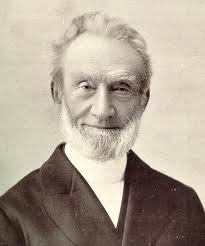
Just over one hundred years ago, a college student in Wales named Evan Roberts, aged twenty-six, obtained permission to leave college to return to his home village of Lougher to preach his first sermon. Seventeen people showed up to listen to his four points (Evan Roberts – pictured on left at the age of 26):

(1) Confess any known sin to God and put away any wrong done to others;

(2) Put away any doubtful habit;

(3) Obey the Holy Spirit promptly; and

(4) Confess Christ openly.

No one could have predicted the nationwide impact that event would have. J. Edwin Orr related that “within three months a hundred thousand converts had been added to the churches of Wales. Five years later a book debunking the revival was published and the main point made by the scholarly author was that of the 100,000 added to the churches, only 80,000 remained after five years (DPC – I’ll take that kind of conversion growth any day! – see J. Edwin Orr, Campus Aflame, Glendale, Calif.: Regal, 1971, 101).

That same revival jumped the ocean and spread to America’s shores and was the last major revival we have seen since 1905.

“Will you not revive us again, that your people may rejoice in you?” – Psalm 85:6

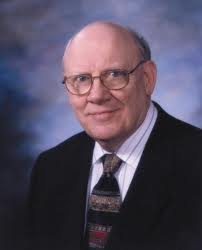
*Walter C. Kaiser Jr. (PhD, Brandeis University) is the distinguished professor emeritus of Old Testament and president emeritus of Gordon-Conwell Theological Seminary in South Hamilton, Massachusetts. Dr. Kaiser has written over 40 books, including Toward an Exegetical Theology: Biblical Exegesis for Preaching and Teaching; A History of Israel; The Messiah in the Old Testament; Recovering the Unity of the Bible; The Promise-Plan of God; Preaching and Teaching The Last Things; and coauthored (with Moises Silva) An Introduction to Biblical Hermeneutics. Dr. Kaiser and his wife, Marge, currently reside at Kerith Farm in Cedar Grove, Wisconsin. Dr. Kaiser’s website is www.walterckaiserjr.com. This article is adapted from the Preface in his outstanding book Revive Us Again, Nashville, B&H, 1999.

Dr. Tim Keller – On Why People Are Spiritual but not Religious

“Religion-Less Spirituality”

By Dr. Tim Keller*

“Growing numbers of Americans say they are spiritual but not religious,” says Robert Wuthnow in After Heaven, his assessment of American spiritual development since 1950.

It is a spirituality without truth or authority but filled with belief in the supernatural. It is a trend born of the modern fears of religion.

The powerful critiques of Freud, Marx, and Nietzsche have penetrated our popular psyche. Freud saw religious performance as a way that guilt-ridden people cleanse themselves and force God to bless them. Marx saw religious principle used by one class of people to oppress another. Neitzsche asserted that anyone claiming to have the truth is making a power play. He asked the powerful: “Why do you call for love? Is it not just a way to keep anyone from revolting against your authority?” He asked the powerless: “Why do you call for justice? Is it not just a way for you to get on top?”

These critiques are powerful because they have the ring of truth. They’re the reasons many who seek spirituality reject religion.

What shall we do then? We must address the real issues of self-righteousness, exclusion, and power-plays. The church must echo Jesus’ own powerful critique of religion and visibly demonstrate the difference between religion and the gospel.

Right word, right time

First, we must do it in word—in our preaching and communication. Even more than Freud, Jesus condemned self-justification through moral performance, at one point claiming that religion was more spiritually dangerous than overt immorality.

Jesus gives us the classic picture of the failure of both religion and irreligion in his parable of the two sons in Luke 15. The elder brother represents the religious leaders; he never disobeys any of the father’s laws. As a result, he tries to control his father and exclude his brother. In the end, he is the one who misses the feast of salvation rather than his profligate brother.

There could not be a more powerful warning: The elder brother is not lost despite his obedience to the father but because of it.

Jesus shows us that the problem is self-justification, the belief that we can win blessing through our virtue. In Luther’s terminology, religion is just another form of works-righteousness, which leads to profound internal instability. We are never sure of our worthiness, yet we need to feel superior to those who do not conform in order to bolster our insecurity.

Following Jesus, we must agree with our critics about the danger of religion, but show them that they are wrong about their solution to it. Secular people see religion as a body of fixed doctrine and ethics that one must adhere to in order to acquire rights to blessing and heaven. They see how often religion leads to self-righteousness, exclusion, and oppression. Modern culture, however, wrongly identifies fixed doctrine (the idea of absolute truth) as the poisonous element.

Both traditional religion and the new spirituality are forms of self-salvation. The religious way of being our own savior leads us to keep God’s laws, while the irreligious way of being our own savior leads us to break his laws. The solution is the gospel.

The gospel shows us a God far more holy than a conservative moralist can imagine—for he can never be pleased by our moral performance. Yet it also shows us a God far more loving than the liberal relativist can imagine—for his Son bore all the weight of eternal justice. His love for us cost him dearly.

Practically speaking, this means in our preaching we must be extremely careful to distinguish between general moral virtue and the unique humility, confidence, and love that flow from the gospel. I’m convinced we must learn carefully from Jonathan Edwards: “An experience of God’s grace is the only basis for ultimate and enduring … true virtue.”

Religion is outside-in; 
the gospel is inside-out.

Edwards says that most virtue is secondary virtue, based on self-love, and therefore on fear (of punishment) and pride (in our superior decency). Edwards appreciates that common morality makes the world a liveable place, but he essentially agrees with Neitzsche that it is really a power play. General moral virtue does not come from a heart that has given up its need to feel superior to others.

Only an experience of grace and free justification can create a heart that does good out of delight in God himself, out of delight in goodness itself, and out of love for our neighbors in themselves. Without the gospel, we can restrain the human heart, but not change the human heart. The gospel calls for repentance over our self-righteousness. The true virtue that results creates an attitude of acceptance toward the poor, the outsider, and the opponent that neither religion nor secularism can produce.

Show me your faith

Second, we must demonstrate the difference between religion and the gospel in our deeds—how we embody the gospel in our community and service. Even more than Marx, Jesus condemned religion as a pretext for oppression: “If you only greet your brothers, what do ye more than others?” (Matt. 5:47).

Lesslie Newbigin makes the bold case that Christianity is a better basis for true tolerance of opposing beliefs than any other religion or even secularism. Saved only by grace, Christians true to the gospel will not feel superior to those with whom they differ.

This must be more than rhetoric. Only when Christians non-condescendingly serve the poor, only when Christians are more firm yet open to their opponents will the world understand the difference between religion and the gospel.

What does this mean practically?

We will be careful with the order in which we communicate the parts of the faith.

Pushing moral behaviors before we lift up Christ is religion. The church today is calling people to God with a tone of voice that seems to confirm their worst fears. Religion has always been outside-in—”if I behave out here in all these ways, then I will have God’s blessing and love inside.” But the gospel is inside-out—”if I know the blessing and grace of God inside, then I can behave out here in all these ways.”

A woman who had been attending our church for several months came to see me. “Do you think abortion is wrong?” she asked. I said that I did. “I’m coming now to see that maybe there is something wrong with it,” she replied, “now that I have become a Christian here and have started studying the faith in the classes.”

As we spoke, I discovered that she was an Ivy League graduate, a lawyer, a long-time Manhattan resident, and an active member of the ACLU. She volunteered that she had experienced three abortions.

“I want you to know,” she said, “that if I had seen any literature or reference to the ‘pro-life’ movement, I would not have stayed through the first service. But I did stay, and I found faith in Christ. If abortion is wrong, you should certainly speak out against it, but I’m glad about the order in which you do it.”

This woman had had her faith incubated into birth our Sunday services. In worship, we center on the question “what is truth?” and the one who had the audacity to say, “I am the truth.” That is the big issue for postmodern people, and it’s hard to swallow. Nothing is more subversive and prophetic than to say Truth has become a real person!

Jesus calls both younger brothers and elder brothers to come into the Father’s arms. He calls the church to grasp the gospel for ourselves and share it those who are desperately seeking true spirituality.

We, of all people, ought to understand and agree with fears about religion, for Jesus himself warned us to be wary of it, and not to mistake a call for moral virtue for the good news of God’s salvation provided in Christ.

Tim Keller is pastor of 
Redeemer Presbyterian Church
New York, New York
RPCNYC@aol.com 

*DR. TIMOTHY KELLER was born and raised in Pennsylvania, and educated at Bucknell University, Gordon-Conwell Theological Seminary, and Westminster Theological Seminary. He was first a pastor in Hopewell, Virginia. In 1989 he started Redeemer Presbyterian Church in Manhattan with his wife, Kathy, and their three sons. Today, Redeemer has more than five thousand regular attendees at five services, a host of daughter churches, and is planting churches in large cities throughout the world. He is the author of KING’S CROSS, COUNTERFEIT GODS, THE PRODIGAL GOD, and the New York Times bestseller THE REASON FOR GOD & the forthcoming CENTER CHURCH (August 2012).

ARTICLE ABOVE Copyright © 1999 by the author or Christianity Today/Leadership Journal, Friday, October 1, 1999.


“No Super Christians” by Steve W. Brown

After a week of meetings in Pittsburgh, a man came up to meet me following the service. A former missionary and member of the church for over thirty years, he said something to me I still haven’t been able to classify as either a compliment or something otherwise. “Steve,” he said, “I’ve really appreciated what you’ve said this week.” I told him I was glad. Then he added, “I’ve been in church all my life, and all my life I’ve heard pastors say that they were sinners. You’re the first one I ever really believed.”

Though I still chuckle about that remark, I acknowledge with complete sincerity his observation. You see, I’m not a pastor and radio preacher because I’m good or have abilities or because I’m talented. I’m where I’m at because God put me here. And sometimes I’ll be soft and sometimes I’ll be hard, but you remember, I’m just like you. God must remind me over and over that even when people call me Reverend, I’m not. Christ established an equality in the brotherhood that has direct implications for me as well as for you.

In every congregation of believers, God sets aside brothers and sisters who are called of God to lead. But the problem is, sometimes we get the idea that we are God’s gift to the world, and when that happens, the delicate balance between gifted leadership and ecclesiastical elitism gets shattered. There’s no room in the Body of Christ for elitism of any sort. That’s the world’s way.

After Queen Victoria and Prince Albert had had one of their famous, loud arguments, Prince Albert went to his room and slammed and locked the door. Queen Victoria marched after him and pounded on his door.

“Who is it?” asked Prince Albert.

“It is the Queen of England.”

Dead silence. The again the question: “Who is it?”

“It is your sovereign ruler,” replied the Queen.

Then once again, “Who is it?”

“It is your wife, Victoria, Albert.”

At that point Albert opened the door.

You may be an elder or deacon or a leader in your Sunday school. Perhaps you lead in some of the other groups in your church and conduct Bible studies. Whatever your role, I thank God for you. But remember that you’re doing it (or at least should be) because God told you to do it, not because you’re a super Christian. There are no super Christians in the body of Christ. All of us are just one among equals. So when a Christian brother or sister stands on the pedestal of his or her own status…when a peacock feathers start flying in the breeze…don’t bow. That kind of behavior doesn’t need to be encouraged. Honesty does. The importance of being honest and acknowledging our true condition and coequal status cannot be overstated.

When a Christian gets honest, something exciting happens. We get to the point where God can use us. Evangelist D.L. Moody once said, “I’ve had more trouble with D.L. Moody than with any other man I’ve ever known.” Thomas a Kempis said, “Be not angry that you cannot make others as you wish them to be since you cannot make yourself as you wish yourself to be.” If we don’t get honest with ourselves, then God is going to force it on us.

Let me tell you a prayer that God always answers: “Lord, show me myself.” Don’t pray it unless you mean it because God will surely answer you, and you won’t like what you see. But he’ll make you different through it—I guarantee it.

Super Christians? They don’t exist. There are only sinners saved by the blood of the Lamb. Remember the next time you find yourself enjoying compliments so much. If you listen carefully, you will hear them sound like a cape flapping vainly in the wind.

*Steve Brown is a radio broadcaster, seminary professor and author. He previously served as a pastor for over twenty-five years and now devotes much of his time to the radio broadcast, Key Life.

With such varied experience and unique perspective on life, Steve is an original. He refuses to be a “guru,” doesn’t want to be anyone’s mother and gives, in his teaching, the freedom to think. Overall, Steve has become known for his refreshing and practical Biblical applications.

Steve serves as Professor Emeritus of Preaching and Pastoral Ministry at Reformed Theological Seminary. He sits on the board of the National Religious Broadcasters and Harvest USA. Traveling extensively, Steve is a much-in-demand speaker.

Steve is the author of numerous books including A Scandalous Freedom, Approaching God, When Being God Isn’t Good Enough, What Was I Thinking? And Three Free Sins. His articles appear in such magazines and journals as Leadership, Decision, Plain Truth and Today’s Christian Woman. Article above No Super Christians adapted from Steve Brown, Jumping Hurdles, Hitting Glitches, Overcoming Setbacks, Colorado Springs, NavPress, 1992, 107-108.

George Mueller the Man with 50,000 Answers to Prayer By Robert J. Morgan

On This Day in Church History – April 11th

George Mueller, born into a German tax collector’s family, was often in trouble. He learned at an early age to steal and gamble and drink. As a teenager he learned how to he learned how to stay in expensive hotels, then sneak out without paying the bill. But at length he was caught and jailed. Prison did him little good, for upon release he continued his crime spree until, on a Saturday night in 1825, he met Jesus Christ.

Mueller married and settled down in Bristol, England, growing daily in faith and developing a burden for the homeless children running wild and ragged through the streets. At a public meeting in Bristol on December 9, 1835, he presented a plan for an orphanage. Several contributions came in. Mueller rented Number 6 Wilson Street, and on April 11, 1836 the doors of the orphanage opened. Twenty-six children were immediately taken in. A second house opened, then a third.

From the beginning Mueller refused to ask for funds or even speak of his ministries financial needs. He believed in praying earnestly and trusting the Lord to provide. And the Lord did provide, though sometimes at the last moment. The best known story involves a morning when the plates and bowls and cups were set on the tables, but there was no food or milk. The children sat waiting for breakfast while Mueller led in prayer for their daily bread. A knock at the door sounded. It was the baker. “Mr. Mueller,” he said, “I couldn’t sleep last night. Somehow I felt you didn’t have bread for breakfast, so I got up at 2 a.m. and baked some fresh bread.” A second knock sounded. The milkman had broken down right in front of the orphanage, and he wanted to give the children his milk so could empty his wagon and repair it.

Such stories became the norm for Mueller’s work. During the course of his 93 years, Mueller housed more than 10,000 orphans, “prayed in” millions of dollars, traveled to scores of countries preaching the gospel, and recorded 50,000 answers to prayer in his journals.

* Robert J. Morgan is the pastor of Donelson Fellowship in Nashville, Tennessee and the author of the best selling Then Sings My Soul, From This Verse, , and Red Sea Rules. He conducts Bible conferences, parenting and marriage retreats, and leadership seminars across the country. This article was adapted from the April 11 entry in his book On This Day, Nashville: Thomas Nelson, 1997.

*Significant Events on April 11th in Church History:

626: Hilde of Whitby was baptized. She was one of England’s most influential women of the Middle Ages. She founded the Whitby Monastery, discovered the early English poet Caedmon and trained five bishops.

1079: Stanislaus, the bishop of Krakow, Poland, was martyred. King Boleslaw II called him a traitor. Stanislaus had excommunicated the evil king, nicknamed “the cruel.”

1567: Thomas Aquinas was elevated to the status of “doctor of the church.” He was arguably the greatest Christian Philosopher of the Middle Ages.

1836: George Muller opened his first orphanage in Bristol, England. He took in twenty-six waifs. Forty years later, his orphanages housed 2,000 children. Their needs were not met by public appeals, but through private prayer – Amazing!

1861: Sarah Doremus, became the first president of the Women’s Union Missionary Society of America for Heathen Lands. She would be known as the “Mother of Missions.”

*Adapted from This Day In Christian History, edited by A Kenneth Curtis and Daniel Graves, Camp Hill, PA: Christian Publications.

God’s Answer for Discouragement by Warren W. Wiersbe

Adapted from Chapter 26: From The Book Turning Mountains into Molehills by Warren W. Wiersbe, Grand Rapids: Baker, 1992.

 This poem was written by a man planning to commit suicide.

 To whom can I speak today?

The gentle man has perished,

The violent man has access to everybody.

To whom can I speak today?

The iniquity that smites my land,

It has no end.

To whom can I speak today?

There are no righteous men,

The earth is full of criminals.

The interesting thing is this: the poem was not written by a frustrated twentieth century businessman. It is written by an Egyptian citizen over four thousand years ago. Violence and crime and corruption and thoughts of suicide are not modern problems, are they? They are ancient problems—and they have an ancient solution.

It takes little imagination to understand the mind of our anonymous Egyptian poet. He saw crime and violence all around him. The old values were changing. The good man was hanging on the scaffold and the evil man was sitting on the throne. There seemed to be no justice, no hope, no future. After pondering the situation, he decided that there was only one way out—to commit suicide.

Of course, suicide did not solve any problems. It never does. But here was a man who had absolutely no resources to depend on, no one to turn to in this hour of need. “To whom can I speak today?” he asks, and never does get an answer. It’s the picture of a lonely, helpless man at the crossroads of life, with no one to help him.

I’m sure that this picture can be multiplied many times today. All around us are frustrated people who simply don’t know what to do. Their world is collapsing around them. Everything they used to depend on has been destroyed; their foundations are gone. They don’t know where to turn, and perhaps they may be entertaining thoughts of ending it all.

It might interest you to know that some of the greatest men in the Bible had their hours of disappointment and defeat, and some of them asked God to take their lives. I’m not saying they were right; but I’m saying they went through experiences that were terribly disillusioning, and yet they came out victoriously.

For example, the great Jewish leader Moses became so discouraged one day that he asked the God of the Bible to kill him. Listen to the record from Numbers 11: “Then Moses heard the people weep throughout their families…and Moses also was displeased. And Moses said unto the Lord, Why have you afflicted your servant?…Have I conceived all this people?…Have I begotten them?…I am not able to bear all this people alone, because it is too heavy for me. And if you deal this way with me, kill me…and let me not see my wretchedness.”

Moses was discouraged because he was carrying a heavy burden and the people did not appreciate his leadership. Where would the nation of Israel have been without the leadership of Moses? How often it is that those who do the most for us, are the least appreciated. When Moses heard the people weeping and complaining, his heart sank within him.

Listen to the great prophet Elijah as he sits under the juniper tree: “It is enough; now, O Lord, take away my life; for I am not better than my fathers.”

Elijah was discouraged because he felt he was a failure. He had met the false prophets face to face and had defeated them; yet the people had not rallied to Elijah’s side in the great revival that he had longed to see. When Queen Jezebel threatened to kill him, Elijah fled for his life. And then he asked God to kill him! If Elijah had really wanted to die, he should have surrendered to Jezebel. How often we say and do foolish things simply because we are discouraged.

Suppose God would have answered the prayers of these men and taken their lives? Think of all they would have missed. Moses would have missed seeing God’s wonders in the wilderness. He would have missed that great farewell at Jordan, recorded in the Book of Deuteronomy. He would have missed commissioning Joshua to take his place. And he would have missed seeing the beautiful land of Promise.

Elijah would have missed his fellowship with young Elisha; he would have missed the joy of training the new prophet to take his place. And he would have missed a glorious chariot ride into heaven! Yes, it’s a good thing God does not answer our prayers when we are discouraged and defeated. If He did, we would miss out on so many blessings.

Our Egyptian poet had no one to speak to. “To whom can I speak today?” was his question. But Moses and Elijah had someone to speak to: they took their disappointments to the Lord. We may not agree with their prayers, but we do agree with their praying.

Have we trials and temptations?

Is there trouble anywhere?

We should never be discouraged;

Take it to the Lord in prayer.

That’s the first secret of victory over discouragement: take it to the Lord in prayer. Open your heart; tell Him just the way you feel. The psalmist David puts it this way in Psalm 142: “I cried unto the Lord with my voice…I pouted out my complaint before Him; I showed before Him my trouble. When my spirit was overwhelmed within me, then You knew my path…Attend to my cry, for I am brought very low. Bring my soul out of prison, that I may praise Your name.

When life seems the darkest, then God’s dawn is about to break. He sees the end from the beginning, and He has a perfect plan for your life. “For I know the plans I have for you declares the Lord, plans for welfare and not calamity, to give you a future and a hope” (Jeremiah 29:11). Disappointment is often “His appointment.” And God permits these difficulties to come our way, not to discourage us, but to encourage us to look away from changing circumstances to the unchanging God who is on the throne.

Even the great apostle Paul had his days of discouragement when it seemed he would have to give up. This is what he writes: “For we do not want you to be unaware, brothers and sisters, regarding the affliction that happened to us in the province of Asia, that we were burdened excessively, beyond our strength, so that we despaired even of living. Indeed we felt as if the sentence of death had been passed against us,so that we would not trust in ourselves but in God who raises the dead. He delivered us from so great a risk of death, and he will deliver us. We have set our hope on him that he will deliver us yet again,” (2 Corinthians 1:8-10).

The answer to discouragement is not to run away, but to run to God. “God is our refuge and strength, a very present help in trouble” (Ps. 46:1). That word trouble means “tight places” –“a very present help in tight places.” Moses prayed, and God met his need; Elijah prayed, and God met his need. And if you and I pray , God will meet our needs as well.

Now, when we pray, God does not always change the circumstances around us. But he does put new strength and hope within us so that we can face the circumstances courageously and keep on going. It has often been said that what life does to us depends on what life finds in us. If we are filled with doubt and despair, then life will crush us. If we are filled with faith and with God’s power, then life can never overcome us. Instead of being victims, we will be victors; for, “If God be for us, who can be against us?” (Rom. 8:31).

When you are discouraged follow the counsel from God’s Word.

First, don’t do anything drastic. Never, never make an important decision when you are going through a black night of despair.

Second, turn to God and tell Him just the way you feel. Open your heart, as David did, and “pour out your complaint before Him.”

Third, wait on the Lord. He has His purposes and He has His times. To run ahead of Him would mean to miss the wonderful things He has planned for you.

Finally, rest on His promises. Spend much time with your Bible, and claim the promises of the Word. When the night is the darkest we see the stars the clearest; and when life is dark, the promises of God shine like stars.

If you are one of God’s children, and if you are seeking to do His will, you can be sure that, in spite of circumstances, “all things are working together for good” (Romans 8:28). One day soon the lights will dawn, the shadows will flee away, and you will understand why God permitted you to suffer as you did. But until that day, “Commit your way to the Lord, trust in Him, and He will make your paths straight” (Ps. 37:5).

*Warren W. Wiersbe is the Distinguished Professor of Preaching at Grand Rapids Baptist Seminary, and is the author of more than 100 books. Billy Graham calls him “one of the greatest Bible expositors of our generation.” Interestingly, Warren’s earliest works had nothing to do with scriptural interpretation. His interest was in magic, and his first published title was Action with Cards (1944).

“It was sort of imbecilic for a fifteen-year-old amateur magician to have the audacity to write a book and send it to one of the nation’s leading magic houses,” Warren says. But having a total of three books published by the L.L. Ireland Magic Company—before the age of 20—gave him a surge of confidence. In later years, he applied his confidence and writing talent to the Youth for Christ (YFC) ministry.

Warren wrote many articles and guidebooks for YFC over a three-year period, but not all his manuscripts were seen by the public eye. One effort in particular, The Life I Now Live, based on Galatians 2:20, was never published. The reason, Warren explains with his characteristic humor, is simple: it was “a terrible book…Whenever I want to aggravate my wife, all I have to say is, ‘I think I’ll get out that Galatians 2:20 manuscript and work on it.’” Fortunately, Warren’s good manuscripts far outnumbered the “terrible” ones, and he was eventually hired by Moody Press to write three books.

The much-sought-after author then moved on to writing books for Calvary Baptist Church. It was during his ten years at Calvary that Expository Outlines on the New Testament and Expository Outlines on the Old Testament took shape. These two works later became the foundation of Warren’s widely popular Bible studies known as the Be series, featuring such titles as Be Loyal (a study on Matthew) and Be Delivered (a study on Exodus). Several of these books have been translated into Spanish.

His next avenue of ministry was Chicago’s Moody Memorial Church, where he served for seven years. He wrote nearly 20 books at Moody before moving to Lincoln, Nebraska, where he and his wife, Betty, now live. Prior to relocating, he had been the senior pastor of Moody Church, a teacher at Trinity Evangelical Divinity School, and a producer of the Back to the Bible radio program.

During all these years of ministry, Warren held many more posts and took part in other projects too numerous to mention. His accomplishments are extensive, and his catalog of biblical works is indeed impressive and far-reaching (many of his books have been translated into other languages). But Warren has no intention of slowing down any time soon, as he readily explains: “I don’t like it when people ask me how I’m enjoying my ‘retirement,’ because I’m still a very busy person who is not yet living on Social Security or a pension. Since my leaving Back to the Bible, at least a dozen books have been published, and the Lord willing, more are on the way.”

Wiersbe’s recent books include Your Next Miracle, The 20 Essential Qualities of a Child of God, The Bumps are What You Climb On, Classic Sermons on the Fruit of the Spirit, Classic Sermons on Jesus the Shepherd, Key Words of the Christian Life, Lonely People, A Gallery of Grace, Real Peace: Freedom and Conscience in the Christian Life, and On Being a Leader for God.

Jonathan Edwards Resolutions Modernized By Dennis Griffith

Revised Resolutions of Jonathan Edwards

January 1, 2012 By *Dennis Griffith

As a young man – a teenager, really – Jonathan Edwards set down on paper a series of thoughts and practices to help cultivate growth in grace.  (See 2 Peter 3.18)  Edwards then re-read this list at least once a week to keep his mind focused and renewed.  The result: A man of humble godliness, who was to become a significant spark used to ignite one of the greatest revivals known to history.  Even many unbelieving scholars admit Edwards may have been the greatest mind to be born on the North American continent.

The Resolutions of Jonathan Edwards are still a practical and beneficial tool for spiritual cultivation.  But one problem for many is that the early 18th Century language makes it sometimes difficult to grasp what Edwards wrote.   I have taken it upon myself to attempt to translate Edwards’ meaning in hopes that some might use these resolutions who might otherwise feel discouraged by the archaic words.  And while I admit that there are a few of these resolutions that I cannot embrace, I will leave it to each individual to pick out anything that might seem worthy for adoption among his/her own personal resolutions.

***

Aware that I am unable to do anything without God’s help, I do pray that, by his grace, he will enable me to keep these Resolutions, so far as they are in line with his will, and that they will honor Christ.

NOTE: Remember to read over these Resolutions once a week.

1. Resolved:  I will DO whatever I think will be most to God’s glory; and my own good, profit and pleasure, for as long as I live. I will do all these things without any consideration of the time they take.  Resolved: to do whatever I understand to be my duty and will provide the most good and benefit to mankind in general. Resolved to do this, whatever difficulties I encounter, and no matter how many I experience or how severe they may be.

2. Resolved: I will continually endeavor to find new ways to practice and promote the things from Resolution 1.

3. Resolved: If ever – really, whenever – I fail & fall and/or grow weary & dull; whenever I begin to neglect the keeping of any part of these Resolutions; I will repent of everything I can remember that I have violated or neglected, …as soon as I come to my senses again.

4. Resolved: Never to do anything, whether physically or spiritually, except what glorifies God.  In fact, I resolve not only to this commitment, but I resolve not to even grieve and gripe about these things, …if I can avoid it.

5. Resolved: Never lose one moment of time; but seize the time to use it in the most profitable way I possibly can.

6. Resolved: To live with all my might, …while I do live.

7. Resolved: Never to do anything which I would be afraid to do if it were the last hour of my life.

8. Resolved: To act, in all respects, both in speaking and doing, as if nobody had ever been as sinful as I am; and when I encounter sin in others, I will feel (at least in my own mind& heart) as if I had committed the same sins, or had the same weaknesses or failings as others.  I will use the knowledge of their failings to promote nothing but humility – even shame – in myself. I will use awareness of their sinfulness and weakness only as an occasion to confess my own sins and misery to God.

9. Resolved: To think much, on all occasions, about my own dying, and of the common things which are involved with and surround death.

10. Resolved: When I feel pain, to think of the pains of martyrdom – both of Jesus and of Believers around the world; and remind myself of the reality of hell.

11. Resolved:  When I think of any theological question to be resolved, I will immediately do whatever I can to solve it, … if circumstances don’t hinder.

12. Resolved: If I find myself taking delight in any gratification of pride or vanity, or on any other such empty virtue, I will immediately discard this gratification.

13. Resolved: To be endeavoring to discover worthy objects of charity and liberality.

14. Resolved: Never to do anything out of revenge.

15. Resolved: Never to suffer the least emotions of anger about irrational beings.

16. Resolved: Never to speak evil of anyone, except if it is necessary for some real good.

17. Resolved: I will live in such a way, as I will wish I had done when I come to die.

18. Resolved: To live, at all times, in those ways I think are best in me during my most spiritual moments and seasons – those times when I have clearest understanding of the gospel and awareness of the World that is to come.

19. Resolved: Never to do anything, which I would be afraid to do if I expected it would not be more than an hour before I would hear the last trump sound.  (i.e. when Jesus returns.)

20. Resolved: To maintain the wisest and healthiest practices in my eating and drinking.

21. Resolved: Never to do anything, which if I saw another do, I would consider a just reason to despise him for, or to think in any way lesser of him.

22. Resolved: To endeavor to obtain for myself as much happiness in the world to come as I possibly can.  To accomplish this I will use all the strength, power, vigor, and vehemence – even violence – I am capable of, or can bring myself to exert, in any way that can be thought of.

23. Resolved: Frequently take some deliberate action – something out of the ordinary – and do it for the glory of God. Then I will trace my intention back and try to discern my real and deepest motive: What did I really desire out of it? If I find that my truest motive was not for God’s glory, then I consider it as a breach of the 4th Resolution. (See Above)

24. Resolved: Whenever I do any conspicuously evil action, I will trace it back till I come to the original cause; and then I will carefully endeavor BOTH 1) to do so no more AND 2) to fight and pray with all my might against the source of the original impulse.

25. Resolved: To examine carefully, and constantly, what that one thing in me is that causes me to doubt of the love of God, even the least little bit; and then to direct all my forces against it.

26. Resolved: To oust away anything I find that diminishes my assurance of God’s love and grace.

27. Resolved: Never intentionally omit or neglect anything, except if such an omission would be for the glory of God. NOTE to Self: frequently examine anything I have omitted.

28. Resolved: To study the Scriptures so steadily, and so constantly, and so frequently, that it becomes evident – even obvious – to myself that my knowledge of them has grown.

29. Resolved: Never consider something a prayer, nor to let pass for a prayer, any petition that when making I cannot actually hope that God will answer; nor offer as a confession anything which I cannot hope God will accept.

30. Resolved: To strive to my utmost every week to be brought to a higher spiritual place, and to a greater experience of grace, than I was the week before.

31. Resolved: Never to say anything at all against anybody; except when to do so is perfectly consistent with the highest standards of Christian honor and love to mankind; and except when it is consistent with the sense of greatest humility and awareness of my own faults and failings. Then, whenever I have said anything against anyone, I will examine my words against the strictest test of the Golden Rule.

32. Resolved: To be strictly and firmly faithful to whatever God entrusts to me.  My hope is that the saying in Proverbs 20.6,  “A faithful man who can find?” may not be found to be even partly true of me.

33. Resolved: Always do whatever I can towards making, maintaining, establishing and preserving peace, whenever it can be, but without over-balancing the value peace to such a degree that it becomes a detriment in other respects.

34. Resolved: When telling stories, never to speak anything but the pure and simple truth.

35. Resolved: Whenever I so much as question whether I have done my duty, to a point that my peace and tranquility is disturbed, I will stop and question myself until my concern is resolved.

36. Resolved: Never to speak evil of anyone, except I have some particular good purpose for doing so.

37. Resolved: To inquire every night, as I am going to bed, where I may have been negligent, what sin I have committed, and how I have denied myself. I will also do this at the end of every week, month, and year.

38. Resolved: Never to speak anything that is ridiculous, trivial, or otherwise inappropriate on the Lord’s Day or Sabbath evening.

39. Resolved: Never to do anything when the lawfulness is questionable. And then afterward, resolve to consider and examine whether or not whatever I have just done is truly lawful and/or whether whatever I have refrained from doing would have actually been permissible.

40. Resolved: To inquire every night, before I go to bed, whether I have acted in the best way I possibly could, with respect to eating and drinking.

41. Resolved: To ask myself at the end of every day, week, month and year, where I could have possibly done better in any respect.

42. Resolved: To frequently renew my dedication to God, which was first made at my baptism and which I solemnly renewed when I was received into the communion of the church; and which I have now solemnly re-made this [DATE] day of [MONTH], [YEAR].

43. Resolved: Never, from this day until the day I die, act as if I were in any way my own, but entirely and altogether belong to God, and then live in a way agreeable to this reality.

44- Resolved: That nothing other than the gospel shall have any influence at all on any of my actions; and that no action shall be, even in the very least circumstance, anything other than gospel declares, demands, and implies.

45. Resolved: Never to allow any pleasure or grief, joy or sorrow, nor any affection at all, nor any degree of affection, nor any circumstance, but what advances the gospel.

46. Resolved: Never allow the least measure of any fretting or uneasiness about my father or mother. Resolved to never allow the effects of disappointment in them, or frustrations with them, to even in the very least alter what I say to them or about them, or any activity in reaction to them.  Let me be careful about this, not only about my parents, but also with respect to any of our family.

47. Resolved: To endeavor to my utmost to deny whatever is not most agreeable to a good, and universally sweet and benevolent, quiet, peace able, contented, easy, compassionate, generous, humble, meek, modest, submissive, obliging, diligent and industrious, charitable, even, patient, moderate, forgiving, sincere temper; and to do at all times what such a temper would lead me to. Examine strictly every week, whether I have done so. Sabbath morning. May 5,1723.

48. Resolved: With the utmost niceness and diligence, and with the strictest scrutiny, constantly be looking into the state condition of my soul, so that I may know whether or not I have truly an interest in Christ at any given time. I will do this so that, when I come to my end in death, I will not have neglected to repent of anything I have found.

49. Resolved: That Neglect never shall be, if I can help it.

50. Resolved: I will act in such a way as I think I will judge to have been best and most prudent, when I have come into the future world – Heaven.

51. Resolved: That I will act in every respect, as I think I would wish I had done, if in the end for some reason I would have be damned.

52. I frequently hear persons in old age say how they would live, if they were to live their lives over again, so… Resolved: That I will live just as I can imagine I shall wish I had done, supposing I live to old age.

53. Resolved: To improve every opportunity, when I am in the best and happiest frame of mind, to cast and venture my soul on the Lord Jesus Christ, to trust and confide in him, and consecrate myself wholly to him; that from this I may have assurance of my eternal safety, knowing that my confidence is in my Redeemer.

54. Resolved: Whenever I hear anything spoken in a conversation of any person, if I think what is said of that person would be praiseworthy in me, I will endeavor to imitate it.

55. Resolved: To endeavor to my utmost to act as I can imagine I would if I had already seen all the happiness of heaven, as well as the torments of hell.

56. Resolved: Never to give up, nor even slacken up, in my fight with my own corruptions, no matter how successful or unsuccessful I may be.

57. Resolved: When I fear misfortunes and adversities, to examine whether I have done all I am expected to do, and resolve to do everything I am able to do.  Once I have done all that God requires of me, I will accept whatever comes my way, and accept that it is just as God’s Providence has ordered it.  I will, as far as I can, be concerned about nothing but my own duty and my own sin.

58. Resolved: Not only to refrain from an air of dislike, fretfulness, and anger in conversations, but also to exhibit an air of love, cheerfulness and graciousness.

59. Resolved: Whenever I am most conscious of feelings of ill nature, bad attitude, and/or anger, I will strive then the most to feel and act good naturedly.  At such times I know I may feel that to exhibit good nature might seem in some respects to be to my own immediate disadvantage, but I will nevertheless act in a way that is gracious, realizing that to do otherwise would be imprudent at other times (i.e. times when I am not feeling so irked).

60. Resolved: Whenever my feelings begin to appear in the least out of sorts, when I am conscious of the least uneasiness within my own heart and/or soul, or the least irregularity in my behavior, I will immediately subject myself to the strictest examination. (i.e. Psalm 42.11)

61. Resolved:  I will not give way to that apathy and listlessness which I find artificially eases and relaxes my mind from being fully and fixedly set on God’s Grace. Whatever excuses I may have for it, whatever my listlessness inclines me to do, or rather whatever it inclines me to neglect doing, I will realize that it would actually be best for me to do these things.

62. Resolved: Never to do anything but what God, by the Law of Love, requires me to do. And then, according to Ephesians 6.6-8, I must do it willingly and cheerfully as to the Lord, and not for man.  I must remember that whatever good thing any man has or does he has first received from God; and that whenever a man is compelled by faith to act with love and charity toward others, especially those in need, that we do it as if to/for the Lord.

63. On the hypothetical supposition that at any one time there was never to be but ONE individual in the world who was a genuine and complete Christian, who in all respects always demonstrated the Faith shining in its truest luster, and appearing excellent and lovely, from whatever angle and under whatever circumstance this Faith is viewed… Resolved: To act just as I would do, if I strove with all my strength, to be that ONE; and to live as if that ONE should live in my time and place.

64. Resolved: Whenever I experience those “groanings which cannot be uttered” (Romans 8.26), of which the Apostle speaks, and those “longings” that consume our souls, of which the Psalmist speaks (Psalm 119:20), I will embrace them with everything I have within me. And I will not be weary of earnestly endeavoring to express my desires, nor of the repetitions so often necessary to express them and benefit from them.

65. Resolved: To exercise myself in all my life long, with the greatest openness I am capable of, to declare my ways to God, and lay open my soul to him: all my sins, temptations, difficulties, sorrows, fears, hopes, desires; and every thing in every circumstance. (See Dr. Manton‘s 27th Sermon on Psalm 119.)

66. Resolved:  I will endeavor always to keep a gracious demeanor, and air of acting and speaking in all places and in all companies, except if it should so happen that faithfulness requires otherwise.

67. Resolved: After afflictions, to inquire in what ways I am now the better for having experienced them. What good have I received by them? What benefits and insights do I now have because of them?

68. Resolved: To confess honestly to myself all that I find in myself – whether weakness or sin. And if it something that concerns my spiritual health, I will also confess the whole case to God, and implore him for all needed help.

69. Resolved: Always to do that which I will wish I had done whenever I see others do it.

70. Let there be something of benevolence, in all that I speak.

*Article Adapted from the excellent Blog: “Grace and Peace” http://wdennisgriffith.wordpress.com/2012/01/01/revised-resolutions-of-jonathan-edwards/. Dennis Griffith lives in Bristol, Tennessee with his wife Carolyn, their three children: Andrew, Matthew and Rebekah; and Ike, their Great Dane.  Dennis also has the privilege of serving as pastor of Walnut Hill Presbyterian Church and chaplain to the Bristol White Sox, the Appalachian League affiliate of the Chicago White Sox. In addition Dennis is a contributing columnist for the Bristol Herald Courier.

Is The Gospel Assumed or Explicit in Your Life?

*The Gospel Assumed or Explicit? By Josh Patterson

Is the gospel assumed in your relationships? Or, is the gospel explicit? I have been thinking about this distinction for a few days now. Those who live life under the banner of an assumed gospel simply navigate the waters of life with an underlying foundation that is personal and meaningful. An assumed gospel often means that a person deeply values the gospel and tries to live life according to the gospel.

The issue with an assumed gospel is that it is often too personal and, therefore, becomes private. The person who lives under the assumption of the gospel often knows how it relates to their life, but nobody else does. Their kids never see how the gospel affects decisions, arguments, finances, etc. Their neighbors never hear of the hope within. Their co-workers are left to wonder about what makes them different. Those who live under the assumed gospel often find it awkward to bring it up and talk about the work of Christ. Why? Because they never bring it up and learn to articulate the implications of Christ’s work and their life.

On the contrary, those who are explicit about the gospel in their relationships have a different effect. By living out the gospel and speaking about the gospel and working through the gospel (verbally), they are helping to connect the dots for those around them. Their kids hear how the gospel relates to the family finances or time or relationships or arguments. Their neighbors hear about the hope within. Co-workers are privy to the reality that this person is not simply a moral guy/girl, but one who is forgiven and transformed by the death and resurrection of Christ.

I want to encourage you to begin, and with some of you, continue to make the gospel explicit in your relationships. Don’t waste life by living an assumed gospel; rather, flesh it out and connect the dots for yourself and those around you. Talk with your spouse about how Christ’s Person and work relates to everything. Pass this on to your kids. Mention Christ. Talk about Christ. Point to Christ. Relate to Christ. Oftentimes where the gospel is assumed, it is quickly lost.

*Josh Patterson is the Executive Pastor at the Village Church in Flower Mound, Texas. This article is from the Appendix in The Explicit Gospel by Matt Chandler, and is from the August 4, 2009 posting from the web site: http://fm.thevillagechurch.net/blog/pastors/?p=308.