The Gospel Made Simple: “Come Home”

Series: Gospel Presentations #4 “COME HOME” 
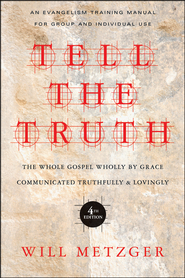
TTT Metzger

Learning the Gospel Diagram “Come Home” from Will Metzger’s book “Tell the Truth”

A. Procedure for Learning the “Come Home” Gospel Diagram

Introduction. People are looking for relationships where they can find love, meaning, security and joy. God designed families—both natural and spiritual—and homes for this purpose. As part of his plan he intends us to have a home on earth and a home after death.

Theme. God designed us for a relationship with him and others.

Learning the Content of the Gospel. It is essential to take three hours to study chapter three and the amplified diagram, including reading thoughtfully the Bible passages.

Diagram. Draw the Road of Life line one inch from the top of the long side of an 8 1/2″ x 11″ paper two-thirds of the way across paper. Then draw the road going straight down to “homelessness.” Halfway down this line draw a short line intersected by a vertical line to form a cross. Next, extend the horizontal line up to the top of the paper and resume the Road of Life line. Put a triangle at each end to represent God and an H for Hell and another H for Home in appropriate places. Put a question mark on the left side of the cross where it intersects with the road downward. (This diagram is drawn on the cover of “Come Home.” [you need the book to see the diagram which is rather complex as whole, but not in its constituent parts)

Practice. You are now ready to fill in the diagram with the five points of the gospel. You should fill in one point at a time, following the simplified version. Keep practicing this on different sheets of paper until you can do it from memory. As you fill in each point, you can also draw the two signs on the road and fill in the words on the bridge, which form a cross. Sharing How to “Come Home”. After reviewing the amplified version and again looking up the Bible passages, you are ready to share the simplified version of how to “come home” with a Christian friend, drawing the diagram and briefly explaining the five points, main point, Bible verse and illustration under each of the five points. Be sure to stop after point 3 and ask if they sense any personal concern. Ascertain if they see the dilemma. Your partner can either say something like “I think a God of love would just overlook my failures” or “I’m pretty happy with my life right now; I don’t see a need for religion.” You have to decide how to answer this! (Hint: Point 1 is the basis for all we’ve said. God made you, and he is not only a love-giver; he has made road rules, and we are responsible to him—a personal God.) Then ask if you can continue the last two points, for this may clarify things. Reverse roles. Then give each other feedback on what was clear and what wasn’t.

Objective. The objective of practicing the diagram is to help you, as a Christian, get a grip on the content of the good news (gospel). By so doing, you are able to listen to the person you are talking with and bring in various points of the gospel as appropriate. Many times simply communicating what God is like (point 1) is a successful conversation. By knowing the diagram, you can start at any point and move backward or forward as needed. However, it is best to ask for the opportunity to give this overview at some point. This diagram is a grid on which to organize the truth that God says is so important for everyone to know. Be sure you are thoroughly familiar with the amplified version so you can draw on this background when in conversations. Most people are not convicted the first time they hear this story. Your job is to plant and water the seed of God’s Word into the conscience and heart of people. The Holy Spirit may use the truth joined with your friendliness and love to give them faith and a new birth according to his timetable. Sometimes people will find it helpful if you ask them, “What objections/problems do you have with Jesus Christ?” “Can you explain to me what the first three points are saying?” or “What do you think is keeping you from becoming a follower of Jesus?” These questions may allow you to clear up their misunderstandings, bad examples of other Christians or churches and so on—or just to listen to them! The danger is this may get you off on a tangent, so with the “Come Home” diagram in mind, keep coming back to it. What’s really fun is to say, “Can I tell you a story?” Then tell them about Paul walking into Athens and talking to some university professors in Acts 17, or about the two lost sons in Luke 15 and so on. Practice reading the five key Bible passages one paragraph at a time, explaining them to a Christian friend. This Road to Home gives you a visual framework on which to pin the five gospel points.

Introducing the Diagram. With someone you’ve talked with before, simply say, “Many people have found it helpful to see an overview of the main theme of the Bible. Can I show that to you, and then you can point out which part you don’t understand, disagree with or find helpful?” Keep practicing the diagram and the three topics under each point (#4 has four). Then, as you talk to someone, you will find drawing it helps them to follow the story. Or, you may visualize the diagram mentally as you carry on a conversation. You may not get the opportunity to share the simplified version of “Come Home” very often. But knowing this diagram will help you realize when you are not talking about the gospel and only talking around the fringe—as in so many of our conversations. You can then be reminded, as you think back over a conversation, to next time bring in some of these truths. Most important, knowing “Come Home” prepares you for a lifetime of lifestyle witnessing. The following are two versions of the “Come Home” diagram—an amplified version for study and a simplified version for sharing. Each set of pages, with a bit of ingenuity, can be photocopied and folded into handy 5″ x 8″ booklets. The simplified version is the easiest: just photocopy pages 281 and 282 back to back and fold in half with the diagram in the middle. The text of this version can be enlarged by about 33 percent and still fit ordinary paper size for easier reading. In each case you may want to cut pages from the book for easier photocopying. The amplified version can be copied on two 8 1/2″ x 11″ sheets and folded in half, leaving any blank half pages for notes: staple if you wish.

B. Come Home: Overview for Memorization

1. Who Is God?

1. Maker (Owner)

2. Love-Giver (Father)

3. Law-Maker (Judge)

Point: God has rights over you; you are accountable.

Bible: Paul’s sermon—Acts 17:22-34 (Rev 4:11)

Illustration: The inventor has patent rights and instruction book.

2. Life = God-Centered Living

1. One-way road home

2. Two rules 3. Perfect obedience required Point: God’s perfect rules measure all actions/attitudes. Bible: Moral man—Mark 10:17-27 (Mk 12:30-31)

Illustration: Jumping over a pole 100 feet high.

3. Sin = Self-Centered Living

1. Disobedience is sin.

2. Sin separates you from God.

3. Sin must be punished for God is just.

Point: We are self-centered and separated from God.

Bible: Jesus and thirsty woman—John 4:4-30 (Rom 3:20)

Illustration: The Gap; failure of self-effort; heart disease; sin-addiction

Question: Do you admit you are a sinner?

Dilemma: How to get right with God

4. Jesus Christ: The Way Back to Life

1. God provides his Son as a bridge.

2. Jesus perfectly obeys God’s rules (righteousness).

3. Jesus is sin-bearer (takes our penalty).

4. Jesus lives and offers himself to us (righteousness-giver).

Point: Jesus is sinner’s substitute/reconciler/liberator. He is the only Lord and Savior.

Bible: Crucifixion and resurrection—John 19:17–20:31 (Rom 5:6-8)

Illustration: The Bridge; no more doing—done by Jesus

5. Your Response: Coming Home to Jesus

1. Personal response commanded.

2. Turn from sin.

3. Trust in Christ.

Bible: Two lost sons—Luke 15:11-32 (Ps 51:1-4; Rom 10:9-10)

Illustration: A person (representing Jesus) is not received until welcomed in; only three possible responses—investigate, receive, reject (Acts 17:30-34)

Point: Receive Christ as your Savior and Lord. Do You Know the Bible’s Main Theme?

Are you able to express the main theme of the Bible, the most influential book of all literature? Most people, Christian or not, cannot! What is this theme called the “gospel”? This booklet is a tool to help you grasp the essentials of the gospel. Whether you are a seeker of Christ or secure in having found him, you need to get the facts straight.

Secure? If you are a true Christian but don’t have a clear understanding of the gospel, your growth will be hindered in two ways. First, any vagueness about the basic truths might cause you to miss their implications for living the Christian life. You could be misled into looking for something more in addition to what you received when you became a Christian. Second, you won’t be able to give a clear explanation of the gospel to others. Only when truth is kindled by the spark of the Holy Spirit are lives changed. But it’s your responsibility to honor God by clearly expressing basic gospel truths! This booklet’s five-point outline has many unique features: a clear theme (The Road of Life to Home) linking all the points; a starting point (God made you), which establishes that a person is responsible; inclusion of God’s law to expose the need for a Savior; choice of brief verses or reference passages for “story telling” the gospel as Jesus did; illustrations in story and diagram form; emphasis on holiness, repentance and the lordship of Christ; a one-page summary for easy memorizing. (See chapter four of Tell the Truth for an explanation of the “Come Home” outline.)

Having an outline of a God-centered gospel in your mind will free you to listen and be more natural as you tell the truth to others. You can concentrate on what they are saying and bring in any of the five truths of the gospel as appropriate. However, truths 1, 2 and 3 give the foundation for 4 and 5 and normally are needed first to show why Christ is necessary. Therefore, ask for a non-Christian at some point to hold their questions and listen for fifteen minutes as you give an overview of all five truths which as the framework for your answers can really help them understand. Or, at least go over truths 1-3.

This amplified version of the gospel diagram “Come Home” is intended for detailed study by those who wish to have a better knowledge of the content of a God-centered gospel. Christianity is both something to be believed and Someone to be received. To impersonally present these truths would be to contradict the nature of the gospel. Prayer and a personal relationship showing love are all-important. You can follow a printed simplified version for sharing, although a conversation in which you draw the diagram is best. Live the gospel, but words are necessary, so use them. Evangelism is a way to glorify God by knowing the gospel well, living it well and telling it well.

Prayer for Others

“Father in heaven, I come to you humbly and yet boldly because of my salvation, which has united me with your Son. Your grace is reaching more and more people and calling them home. Therefore I pray for __________. Hear my prayer even as you heard the pleading of your friend Abraham and spared his nephew Lot from terrible judgment. Your Son invited the spiritually tired, burdened and thirsty to take of the free water of eternal life. Lord, will you please open still another heart as you did mine? You alone can break addictions to self-righteousness, unbelief and sinful desires. Would it please you to enable them to believe and grant repentance and faith leading to a new birth? Magnify your glory by delivering _________ from spiritual death. Lord, bring fame to your name by once again showing mercy. My plea is not based on my own goodness but on the sovereign love of Jesus Christ. Lord, I desire that you use me in telling the gospel of grace to others. Nevertheless, not my will, but your will be done. Amen.”

These Scriptures provide incentive and direction for your prayers for others. If you’re praying in a group, assign each person one or two passages as a basis for their prayer: Matthew 11:25-30; Luke 15; 16:19-31; John 4:1-42, 10:1-18; Acts 4:24-31; 5:27-32; 17:27-34; 26:19-29; Romans 10:1-4, 9-21; 1 Corinthians 1:18–2:16; 2 Corinthians 2:14-17; 4:1-18; 5:11-21; Ephesians 6:10-20; 1 Thessalonians 1:2–2:13; 2 Timothy 1:6-10; 4:1-5; Revelation 20:11–21:5; 22:17. People for Whom I Will Pray and Witness: 1. 3. 5. 2. 4. 6. Reprinted from Tell the Truth ©2012 by Will Metzger with permission from InterVarsity Press, Downers Grove, Illinois. This helpful training manual for God-centered evangelism in book form is appropriate for individual or group study. It is available through Christian bookstores.

Adapted from Will Metzger. Tell the Truth: The Whole Gospel Wholly by Grace Communicated Truthfully & Lovingly. Downers Grove, IL.: InterVarsity Press, 2013.

About Will Metzger

Will Metzger image

Will Metzger has been a campus minister at the University of Delaware since 1965, where he serves with InterVarsity Christian Fellowship and Christian InterAction (a church and campus connection). His evangelism ministry has taken him to every continent, and he has witnessed to people from varied nationalities both on campus and through a church that he pastored.


The Jelly Bean Prayer

Jelly Beans

THE COLORS PRAYER

RED is for the blood He gave.

GREEN is for the grass He made,

YELLOW is for the sun so bright.

ORANGE is for the edge of night.

BLACK is for the sins we made.

WHITE is for the grace He gave.

PURPLE is for His hour of sorrow.

PINK is for our new tomorrow.

A bag full of jelly beans colorful and sweet, is a prayer, is a promise, is a special treat!

“Come now, let us reason together says the LORD: though your sins are like scarlet, they shall be as white as snow; though they are red like crimson, they shall become white like wool.” – Isaiah 1:18

Four Acrostics for F.A.I.T.H

praying man on one knee image

Now faith is the assurance of things hoped for, the conviction of things not seen…And without faith it is impossible to please him, for whoever would draw near to God must believe that he exists and that he rewards those who seek him. – Hebrews 11:1, 6

For by grace you have been saved through faith. And this is not your own doing; it is the gift of God, not a result of works, so that no one may boast. For we are his workmanship, created in Christ Jesus for good works, which God prepared beforehand, that we should walk in them. – Ephesians 2:8-10

Feeling

Afraid

I

Trust

Him

Faith

Asks

Impossible

Things

Humbly

Flouting

Appearances

I

Trust

Him

Forsaking

All

I

Take

Him

Bernard of Clairvaux on Four Kinds of Contemplation

Abbey of Citeaux

4 KINDS OF CONTEMPLATION

(1) The first and the greatest is to wonder at majesty. This demands a heart made pure, so that freed from vices and released from sin, it can ascend easily to heavenly things. Sometimes this contemplation holds the watcher rapt in amazement and ecstasy, if only for a moment.

(2) A second kind of contemplation is necessary for this man. He needs to look at the judgments of God. While this contemplation strikes fear into the onlooker because it is indeed frightening, it drives out vices, strengthens virtues, initiates into wisdom, protects humility. Humility is the true and solid foundation of virtues. For if humility were to collapse, the building-up of the virtues will fall down.

(3) The third kind of contemplation is occupied (for rather at leisure) in remembering kindnesses and, so as to avoid ingratitude, it urges him who remembers to love his Benefactor. Of such says the prophet, speaking to the Lord, “They shall declare the memory of the abundance of your sweetness” (Psalm 14:7).

(4) The fourth contemplation, which forgets what is past, rests wholly in the expectation of what is promised (Philippians 3:13, “Brothers, I do not consider that I have made it my own. But one thing I do: forgetting what lies behind and straining forward to what lies ahead.”), which nourishes patience and nerves the arm of perseverance, for what is promised is eternal.

About Bernard of Clairvaux

Saint Bernard, the founding abbot of Clairvaux Abbey in Burgundy, was one of the most commanding Church leaders in the first half of the twelfth century as well as one of the greatest spiritual masters of all times and the most powerful propagator of the Cistercian reform. He was born in Fontaines-les-Dijon in 1090 and entered the Abbey of Citeaux in 1112, bringing thirty of his relatives with him, including five of his brothers– his youngest brother and his widowed father followed later. After receiving a monastic formation from St. Stephen Harding, he was sent in 1115 to begin a new monastery near Aube: Clairvaux, the Valley of Light. As a young abbot he published a series of sermons on the Annunciation. These marked him not only as a most gifted spiritual writer but also as the “cithara of Mary,” especially noted for his development of Mary’s mediatorial role.

Bernard’s spiritual writing as well as his extraordinary personal magnetism began to attract many to Clairvaux and the other Cistercian monasteries, leading to many new foundations. He was drawn into the controversy developing between the new monastic movement which he preeminently represented and the established Cluniac order, a branch of the Benedictines. This led to one of his most controversial and most popular works, his Apologia. Bernard’s dynamism soon reached far beyond monastic circles. He was sought as an advisor and mediator by the ruling powers of his age. More than any other he helped to bring about the healing of the papal schism which arose in 1130 with the election of the antipope Anacletus II. It cost Bernard eight years of laborious travel and skillful mediation. At the same time he labored for peace and reconciliation between England and France and among many lesser nobles. His influence mounted when his spiritual son was elected pope in 1145. At Eugene III’s command he preached the Second Crusade and sent vast armies on the road toward Jerusalem. In his last years he rose from his sickbed and went into the Rhineland to defend the Jews against a savage persecution.

Although he suffered from constant physical debility and had to govern a monastery that soon housed several hundred monks and was sending forth groups regularly to begin new monasteries (he personally saw to the establishment of sixty-five of the three hundred Cistercian monasteries founded during his thirty-eight years as abbot), he yet found time to compose many and varied spiritual works that still speak to us today. He laid out a solid foundation for the spiritual life in his works on grace and free will, humility and love. His gifts as a theologian were called upon to respond to the dangerous teachings of the scintillating Peter Abelard, of Gilbert de la Porree and of Arnold of Brescia. His masterpiece, hisSermons on the Song of Songs, was begun in 1136 and was still in composition at the time of his death. With great simplicity and poetic grace Bernard writes of the deepest experiences of the mystical life in ways that became normative for all succeeding writers. For Pope Eugene he wrote Five Books on Consideration, the bedside reading of Pope John XXIII and many other pontiffs through the centuries.

Bernard died at Clairvaux on 20 August 1153. He was canonized by Pope Alexander III on 18 January 1174. Pope Pius VII declared him a Doctor of the Church in 1830.

Ray Pritchard on How To Pray For Your Wayward Child

Praying for Your Prodigal – Ephesians 1:18

Prodigal sons return

Sermon by Ray Pritchard preached in June 2006 – I received an email with a heartrending question:

I have a daughter that I don’t believe is saved. I pray for her but often times I can’t. I suppose that I’m angry she isn’t responding and feel incapable of helping her. What can I pray for on a daily basis so that she will come to Christ? At times I feel such sorrow, thinking she might go to hell.

This parent speaks for mothers and fathers everywhere who pray for their prodigal children, often for years, with seemingly no results. I do not doubt that praying parents must at some point feel like giving up, and it must be hard not to get angry when you see your children repeatedly making bad choices or showing no interest in the gospel. What do you do then? How do you keep believing for your own prodigal son or daughter? When I use the word “prodigal,” I’m referring to anyone who has drifted away or run away or totally rejected their Christian heritage. It could refer to a college student who simply stops going to church or to a man who thinks he doesn’t need “religion” or to someone who becomes an atheist. A prodigal could be someone who gets so busy in their career that they have no time for God. In all those cases, the prodigal was raised in a Christian home or had a Christian background and for some reason no longer lives for the Lord. In thinking about cases like this, we often wonder if the prodigal is saved or lost. The answer is, only God knows because only he can read the heart. We see the outside and to us, it may be easy to conclude that the person we thought we knew so well was never saved in the first place. But our knowledge is limited. While the prodigal may appear to have totally rejected his background and he may give all the appearances of being lost, only God knows for certain.In thinking about hard questions, it’s crucial that we start in the right place. Nowhere is this more important than when we pray for our prodigal sons and daughters. Because we have so much invested in them, we may be tempted to give up because the pain of praying when nothing seems to be happening finally becomes overwhelming. After I wrote about this topic on my weblog, I received the following email from a distraught father:

What about prodigals who have been saved and walk away from everything they know to be true? Our daughter has been drifting and living a sinful lifestyle for the past two years. She has recently chosen to totally walk in the ways of the world. She is involved in an abusive relationship and has turned her back on her parents/brothers. This is a young lady who is musically gifted, loves people, and has served the Lord since she was 3 years old. We are a Christian family and have always been close knit. She and I have always had a strong relationship emotionally and spiritually until she got involved with the abusive boyfriend. She has given up everything she loves and has lost her identity. She continues to cut off all communication with us. It is breaking our hearts and we try our hardest to trust the Lord and believe He alone can rescue her from herself. I guess I am just looking for some words of wisdom and encouragement on how we can be the “hope givers” in her life.

Stories like this could be multiplied. And not just about our children. A prodigal may be a pastor who ran off with a woman in his church and now has rejected his family and his faith. It might refer to a brother who used to be an Awana leader who now refuses to go to church at all. It could refer to a former best friend who now lives an openly homosexual lifestyle. You may have learned about Jesus from someone who now rejects the very faith they once taught you. Very often prodigals start out as people who, having been deeply hurt by the circumstances of life, feel abandoned or cheated or mistreated by God.

�A godly mother prays for her wayward son. He was raised in the church, he went to Sunday School, he knows the Bible, but when he left home, he left it all behind. For many years she has prayed for him but to this day he remains a prodigal son. �A wife prays for her husband who left her after twenty-three years of marriage for a younger woman. He seems utterly unreachable and the marriage heads swiftly for divorce.

�A husband prays for his wife who has terminal cancer. She has six, maybe seven months to live. None of the treatments stop the rampaging tumors. The elders anoint her with oil and pray over her in the name of the Lord. She dies five months later.

�A young man prays fervently for deliverance from an overpowering temptation, but the struggle never seems to end. The more he prays, the worse the temptation becomes.

And so we cry out with the Psalmist, “Why, O Lord, do you stand far off? Why do you hide yourself in times of trouble?” (Psalm 10:1)

 Calvin And Hobbes

You wouldn’t think that such a serious subject would make it to the comic strips, but I happened to find it there a few years ago. The comic strip is called “Calvin and Hobbes.” It’s late November and a little boy is waiting with his sled for the first big snowfall. He waits and waits but all he finds is brown grass … and no snow.So he says, “If I was in charge, we’d never see grass between October and May. Then, looking to the heavens, he says, “On ’three,’ ready? One … Two … Three. SNOW!” Nothing happens and the little boy is downcast. Then he shouts to the heavens, “I said snow! C’mon! Snow!” Then shaking his fists he cries, “SNOW!” Now thoroughly disgusted with God’s failure, he says, “Ok then, don’t snow! See what I care! I like this weather! Let’s have it forever!”

But his defiance does not last. In the next frame we see the little boy on his knees offering this prayer, “Please snow! Please?? Just a foot! Ok, eight inches! That’s all! C’mon! Six inches, even! How about just six?? Then he looks to heaven and shouts, “I’m WAAIITING …”

In the next frame we see him running in a circle, head down, fists clenched, making a little-boy sound which the artist spells out as “RRRRGGHHH.” That’s not an English word but every parent has heard it many times. Finally, the little boy is exhausted, his energy spent, his prayer unanswered, with snow nowhere in sight. In the final frame, he looks up at God and cries out in utter desperation, “Do you want me to become an atheist?”

There are many Christian people who feel just like that little boy, only they have prayed for things much more important than a few inches of snow but the end result has been the same. And in their frustration and despair they have cried out to God, “Do you want me to become an atheist?” Some of them have. Most haven’t, but the pain turns many of them into prodigals.

The Heart Has Eyes

At this point we come face to face with the crucial importance of good theology. We need to be reminded that an astounding miracle lies at the heart of our faith. We believe something absolutely incredible–that a man who was dead came back to life on the third day. We believe that God raised him from the dead. Now if God would do that for his Son, indeed if God has the power to raise the dead, who are we to question God’s power to change the hardest hearts? After all, if you go to the cemetery and stay there waiting for a resurrection, you’ll wait a long time. There are lots of people going in and no one coming out. You will see plenty of funerals and no resurrections. What are the chances that a man who had been tortured and then crucified and then buried in a tomb would be raised from the dead? The odds would seem to be against it. You can’t start with what your eyes see or what you can figure out. And you can’t trust your feelings in something like this because your emotions can play tricks on you. We must therefore start with God who can raise the dead, not with the person who is spiritually dead.If it is God alone who can raise the dead, then our focus must be on God alone.

Here are three verses that will help us as we think about praying for our prodigals:

“Above all else, guard your heart, for it is the wellspring of life” (Proverbs 4:23 NIV).

“The king’s heart is in the hand of the LORD, Like the rivers of water; He turns it wherever He wishes” (Proverbs 21:1 NKJV).

“I pray that the eyes of your heart may be enlightened” (Ephesians 1:18 NASB).

The heart has eyes. Did you know that? When Paul speaks of “your heart,” he’s not referring to the organ in your chest that pumps blood throughout your body. The term “heart” refers to what we might call “the real you,” the place inside where the decisions of life are made. The heart is the place where you decide what values you will live by and what direction you will go and how you will live your life each day. Every important decision you make starts in your heart. And your heart has eyes that can be open or closed. When the eyes of your heart are closed to the light of God, you stumble blindly through life, making one dumb choice after another. You fall into sinful patterns, you break God’s laws, you end up driving into the ditch, you make the same mistakes over and over again, and you enter one dead-end relationship after another. Why? Because the eyes of your heart are shut and you lack moral vision. The light of God is shut out of your life. That means you can see and be blind at the same time. That is, you can have 20/20 vision with your physical eyes, but the eyes of your heart can be blind to the light of God. There are lots of people like that in the world. Physically they can see but spiritually they are totally blind.

 Get off the Bench and Into the Game

That describes many young people raised in the church. They know God but their eyes are so filled with the things of the world that they are blind to the truth. Let me illustrate. Here we have a young man who has been raised in a Christian home. He’s been going to church for years—Sunday School, Vacation Bible School, children’s ministry, and the youth group. Now he goes off to college and at last he’s on his own. He meets a girl and they start dating. Soon they are sleeping together. When his parents hear about it, they are furious and worried and upset and they wonder what to do. They argue and plead and cajole and threaten and quote Scripture, all to no avail. What is the problem? It is precisely this: The eyes of his heart are closed to the truth of God. And until those eyes are opened, all the yelling in the world won’t make much difference. A few years ago I met with a young woman who had been part of our church’s youth ministry. She came to see me at the request of her mother who was at her wit’s end in dealing with her daughter. The young woman was sweet and friendly and very open when we met. We talked for a while about this and that, and finally I came to the point. When she went off to college, she met a boy she liked, they started dating, and now they were sleeping together. This much the mother had confided to me. Was it true? The young lady answered yes. I knew it wouldn’t do any good for me to argue with her because she and her mother had been arguing about it for quite a while. But I did ask if she thought it was wrong to sleep with her boy friend. She shrugged her shoulders and said, “I guess so.” Her answer wasn’t really defiant and she didn’t seem angry. In fact, she was very friendly and not rebellious in her manner. She was just a nice girl, raised in the church, who now slept with her boyfriend at college. And what’s wrong with that?As we were talking, an illustration came into my mind. Whenever you watch a football game, you’ll usually see three different groups of players. The first group is the players on the field. They give all they have on every single play. The second group is on the sidelines. They stand together, watching the action the field, waiting for their turn to get into the game. But often there is a third group of players who don’t seem very interested in the game. They sit on the bench laughing and talking and goofing off. Sometimes they turn around and wave to the people in the stands. They could care less whether their team is winning or losing because they’re just along for the ride. As far as the team is concerned, they might as well not be there at all. I explained all of that to the young lady and made this application. Living for Christ means that you’re playing on his team. You’re either on the bench or you’re in the game. “Your problem is, you’re sitting on the bench goofing off when you ought to be in the game serving the Lord. Bench warmers sit around, goof off, laugh, cut up, and trade jokes while the game is going on. If you ever decide to get in the game, you won’t have time to do the things you do now.”

If our young people sleep around, or if they get drunk on the weekends, if they cheat and cut corners, if they are rebellious and unmotivated, those things are only symptoms of a deeper, more fundamental issue. They’ve never made a personal commitment to get serious about Jesus Christ. They’re sitting on the bench when they ought to be in the game. And I tell you this with total certainty, once you get into the game, once Christ becomes the center of your life, no one will have to tell you not to sleep around, and no one will have to tell you, “Don’t get drunk on the weekends.” You just won’t do it. Once the eyes of your heart are opened, the light of God’s truth will come flooding in and you’ll never look at anything the same away again. Sometimes we worry too much about the symptoms without dealing with the root issues of life. We should pray, “Open the eyes of their heart, Lord,” because when that happens, life will radically change. They will grab their helmet and get in the ballgame for the Lord. They’ll go to the huddle and say, “You call the play, Lord. I’m ready to do whatever you say.”

 “I Just Don’t See It”

Opening blind eyes is the supernatural work of the Holy Spirit. He and he alone can do it. But he can do it, and this is the source of our hope. We see this principle very clearly when we witness to those who don’t know Christ. After sharing the gospel with them as best we can, sometimes they will say, “I just don’t see it.” That’s not an excuse. They truly don’t see it. That’s why you can talk to a lost person until you are blue in the face and it will do no good. You can quote Billy Graham, Josh McDowell, Francis Schaeffer, and if you’re creative, you can throw in some John Calvin and Martin Luther. Quote Abraham Lincoln and Mike Ditka if you like. It will do no good. You can quote Scripture all day long and the lost will still be lost. Until their eyes are opened, they will not “see” the truth about Christ.What is the answer? We must pray for the lost that God will open their eyes, give life in place of death, enable them to hear, create within them a desire to understand, give them a hunger for Jesus, and then grant them faith to believe the gospel. In short, as we prepare to share Christ with others, we must fervently pray that God will go before us. When we pray for the lost, we are saying to God, “You go first! If you don’t go first, all our efforts will be in vain.”

This is why we pray for our children and grandchildren and for our family members and for friends and loved ones who today are far from God. As our children grow older, we discover over and over again how little control we have over them. We cannot compel their obedience because we cannot compel their hearts. But we can pray and cry out to God and say, “O Lord, open the eyes of their heart. Help them to see the light of truth.” If you have a prodigal daughter, pray like this: “Lord, open the eyes of her heart so that she can see Jesus.” That prayer is so simple and yet so profound. Apart from God’s grace, we all have the same problem. Our hearts are closed and we cannot see the truth. Only God can open the eyes of the heart. When God opens those eyes, she will see the truth and light from heaven will come flooding in. Do not focus on her going to hell. Focus your prayers on God and his power to change her heart. Ask our Father to do what only he can do—open the eyes of her heart so that she will come to know him.

A Mother’s Tears

One of my favorite stories about the power of prayer to reclaim a prodigal is over 1600 years old. It begins with a woman named Monica who was raised by Christian parents in North Africa. When she was old enough, her parents arranged a marriage to a pagan man. Evidently the marriage was very difficult because of divided spiritual loyalties. Monica and her husband had three children who survived. Two of them followed Christ but one son left the faith of his childhood. By his own admission, he chose the path of worldly pleasure. For many years he lived with a mistress and together they gave birth to a son out of wedlock. He broke his mother’s heart by joining a religious cult. Monica prayed for 17 years that her son would return to Christ and to the church. Looking back, her son said that she watered the earth with her tears for him, praying more for his spiritual death than most mothers pray over the physical death of a child. She fasted and prayed and asked God to save her son. One day she went to see the bishop and with tears asked why her son was still living in sin. The bishop replied with words that have become famous across the centuries: “It is not possible that the son of so many tears should perish. Your son will be saved.” He was right. It took several more years of fervent praying but eventually Monica’s son came to Christ. His name is Augustine. We know him today as St. Augustine. He is universally regarded as one of the greatest thinkers in Christian history. Sixteen centuries later his books and writings are still in print. He makes it clear in his Confessions that his mother prayed him to Jesus. She would not give up and eventually God answered her prayers.I think the bishop was right when he said, “It is not possible that the son of so many tears should perish.” How precious are a mother’s tears! There is no substance on earth more valuable than the tears of a godly mother. There are mothers and grandmothers who have prayed their children and their grandchildren to Christ. There are mothers and grandmothers who have seen their children in the “far country” of sin and have prayed them step by step back to the Father’s House. When everyone else gave up, godly women laid hold of heaven and claimed their offspring in Jesus’ name. And God heard those prayers and answered them.

Please do not misunderstand. I do not believe that our prayers contain merit in and of themselves. But God has ordained both the means and the ends of salvation. And the two chief means of salvation are fervent prayer and the proclamation of his Word. We pray because everything depends on God, and we preach because the gospel is the power of God for salvation. Your prayers are part of heaven’s plan to reach out to the prodigals in your life and bring them back to God. If you are heavily burdened for a loved one, you may be sure that that burden does not come simply from yourself. The burden is a gift from God, a token of his mercy toward the prodigal who at this moment cares nothing for the Lord. Your prayers are thus an indispensable link in the chain of God’s purposes.

I met a woman recently who told me that she prayed for fifty years for her brother to be saved. For most of that time, he showed little interest in spiritual things. But through an amazing series of events, he saw his need of Christ and embraced him as his Savior. For the last six years, he grew in his love for the Lord and he made his faith known to everyone. When he died in March, he died as a Christian, trusting in Christ to the very end. Fifty years is a long time to pray. I’m sure the woman must have felt like giving up many times. Surely it sometimes seemed hopeless to her. But God granted her faith to keep praying and not to lose heart. Eventually her prayers were answered with the miracle of her brother’s conversion. How happy she was when she told the story. And rightly so. Lest we miss it, let me make the theological point very clearly. Salvation is of the Lord, but that does not mean that our prayers do not matter. Our prayers are part of God’s plan to bring the lost to Christ.

A few days ago I received this email from a man I have never met:

I am one of those who never thought my older brother would ever be saved. I had lost all hope for him. Then, May 18 of this year I visited him in the hospital in Missouri (I live in Arkansas) and led him to the Lord. He cried like a baby afterwards and testified to his nurse a few minutes later when she came into his room. BTW, he is 75 and I am 73 and I have prayed for him for many years. God is faithful!!!!!!!!!!!!!!!!!!!

 God is a Better Parent Than We Are

Finally here is one more email that arrived from a mother whose prayers have not yet been answered:

Our third son is a prodigal, (although I suppose we are ALL prodigals in some fashion!). I have experienced a depth of relationship with God that I didn’t know before mothering a prodigal. God has continued to walk this road of parenting with us, revealing his character to us, and growing us through the trials. Before, I didn’t understand the joy in trials that James 1:2-4 speaks of quite like I do now. It is an opportunity to become mature in our faith as we have heartbreak and disappointment in different situations. I thank God for our son actually. He has been, and is the iron that sharpens me. I trust that God is working deep in his heart, even though the outside doesn’t often look that way. I believe that someday his eyes will be opened, and God will remove his heart of stone will give him a heart of flesh! And the renewing of his heart and his mind will be a great testimony to God and who he is.

Everything I have been trying to say is in that email. Here is a mother who has grown spiritually as she has prayed for her son who at this moment is still far from the Lord. Instead of becoming bitter, she has been changed on the inside and brought closer to the Lord. God often uses the prodigals in our lives to bring us closer to him. As long as we try to control our loved ones, either through anger or through our tears or by arguing with them or complaining about them to others, as long as we focus on them, they will not change–and neither will we. Sometimes in our despair, we become prodigals ourselves because our anger at them has ruined our own walk with the Lord. As we pray for our prodigals, we must remember that the first change needs to happen in us. Until we are changed, and our anger is turned to love, we will become bitter and hardened ourselves. And that can happen even though we go to church every Sunday, pray the prayers, sing the songs, serve the Lord, and do all the outward things the church asks us to do. At that point we ourselves have become prodigals just as surely as the loved one for whom we are praying. Notice two key sentences in this woman’s note: “I thank God for our son actually. He has been, and is the iron that sharpens me.” Those are the words of a woman whose heart has been softened and not hardened as she has prayed for her son. The change we seek in others must start in our heart first. I believe God will answer that mother’s prayer sooner or later. A few years ago, when we needed some encouragement, the Lord put this thought into my wife’s heart: “God is a better parent than we are.” No matter how much we love our children, he loves them even more. No matter how much we want the best for them, he wants it even more than we do, and he truly knows what it is best. Not only that, he can see from where they are to where he wants them to be, and no matter where the starting point is, he knows how to lead them from here to there. He does it infallibly, with an abundance of wisdom, a generous helping of tender mercy, and he wastes nothing along the way. Sometimes parents look at their children, especially when they seem to be far from the Lord, and we feel hopeless or guilty or angry or frustrated, or maybe all of the above, and we wonder where God is in the midst of our pain. There are many ways to answer that, but this much is certain. He is not silent or absent or uncaring. Nor is he stumped or surprised by young people who seem to have rejected all they have been taught.

God is a better parent than we are. That’s really good news for those times when we’ve blown it. Because he loves our children far more than we do, he will lead them even when they don’t know they are being led. He can bring them back to himself, though the road back may be long and hard and torturous, though it may seem to go in circles or even be going backwards for a season.

At some point we must relinquish our children into his hands and say, “Lord, they belong to you. Always have, always will.” They never were ours to start with. It is so hard to yield them to the Lord, but it is made easier if we remember that his love never fails, that he knows what he is doing, and that he is a better parent than we are.

Do you have a loved one who is far from the Lord? Does it seem totally impossible that he or she will ever change? Do you get angry thinking about their foolish choices? Do your prayers seem useless to you? Pay no attention to your feelings. There is more going on in the heart of your loved one that you can know.

Don’t give up.

Keep on praying.

Keep believing.

You never know what God will do.

When you pray for a loved one who seems hardened against the Lord, pray that the eyes of their heart might be opened so that the light of God can come flooding in. And if that seems hopeless, at least it puts the hopeless case at God’s doorstep, which is where it belongs. On Saturday night there was a “hopeless case” in the Garden Tomb. On Sunday morning the whole world changed. You never know what God will do, so keep on believing and keep on praying. God specializes in impossible situations, and he loves to prove that hopeless cases aren’t hopeless after all.

So never give up. Pray, pray and keep on praying. Your prayers accomplish more than you have ever dreamed.

© Keep Believing Ministries

Permissions and restrictions: You are permitted and encouraged to use and distribute the content on Keep Believing Ministries free of charge. If you choose to publish excerpts from a sermon or article, please provide a link or attibution back to KeepBelieving.com’s version of this article. The content of KeepBelieving.com must not be redistributed at a fee beyond the cost of reproduction.

If you wish to support Keep Believing Ministries, your prayers and donations are appreciated, and further enable this worldwide ministry to distribute all materials free of charge.

About Ray Pritchard:

Ray Pritchard image

Dr. Ray Pritchard serves as president of Keep Believing Ministries. He has ministered extensively overseas in China, Bolivia, Columbia, Paraguay, Belize, Haiti, Nigeria, Switzerland, Russia, India and Nepal. He is a frequent conference speaker and guest on Christian radio and television talk shows. He has written 27 books, including Stealth AttackFire and RainThe Healing Power of ForgivenessAn Anchor for the SoulThe Incredible Journey of Faith,The ABCs of WisdomLeadership Lessons of Jesus (with Bob Briner)Why Did This Happen to Me?, and Credo: Believing in Something to Die For.

For 26 years he pastored churches in Los Angeles, Dallas and Chicago. Most recently he pastored Calvary Memorial Church in Oak Park, IL for sixteen years. He is a graduate of Tennessee Temple University (B.A.), Dallas Theological Seminary (Th.M.) and Talbot School of Theology (D.Min.). He has been married to Marlene for 37 years. Their three sons (Josh, Mark and Nick) have spent time in recent years teaching English in China. Josh and Leah were married in July 2006. They have one son, Knox, who was born in August 2010. Mark and Vanessa were married in July 2007. They have one son, Eli, who was born in July 2011. His hobbies include biking, surfing the Internet, anything related to the Civil War, and playing with Dudley and Gary, their very excellent basset hounds.

John Piper on How to Pray for a Desolate Church

An Exposition of Daniel 9:1-23

Piper w hands up preaching image

Daniel’s Prayer for His People

In the first year of Darius the son of Ahasuerus, by descent a Mede, who was made king over the realm of the Chaldeans—in the first year of his reign, I, Daniel, perceived in the books the number of years that, according to the word of the Lord to Jeremiah the prophet, must pass before the end of the desolations of Jerusalem, namely, seventy years.

Then I turned my face to the Lord God, seeking him by prayer and pleas for mercy with fasting and sackcloth and ashes. I prayed to the Lord my God and made confession, saying, “O Lord, the great and awesome God, who keeps covenant and steadfast love with those who love him and keep his commandments, we have sinned and done wrong and acted wickedly and rebelled, turning aside from your commandments and rules. We have not listened to your servants the prophets, who spoke in your name to our kings, our princes, and our fathers, and to all the people of the land. To you, O Lord, belongs righteousness, but to us open shame, as at this day, to the men of Judah, to the inhabitants of Jerusalem, and to all Israel, those who are near and those who are far away, in all the lands to which you have driven them, because of the treachery that they have committed against you. To us, O Lord, belongs open shame, to our kings, to our princes, and to our fathers, because we have sinned against you. To the Lord our God belong mercy and forgiveness, for we have rebelled against him and have not obeyed the voice of the Lord our God by walking in his laws, which he set before us by his servants the prophets. 

All Israel has transgressed your law and turned aside, refusing to obey your voice. And the curse and oath that are written in the Law of Moses the servant of God have been poured out upon us, because we have sinned against him. He has confirmed his words, which he spoke against us and against our rulers who ruled us, by bringing upon us a great calamity. For under the whole heaven there has not been done anything like what has been done against Jerusalem. As it is written in the Law of Moses, all this calamity has come upon us; yet we have not entreated the favor of the Lord our God, turning from our iniquities and gaining insight by your truth. Therefore the Lord has kept ready the calamity and has brought it upon us, for the Lord our God is righteous in all the works that he has done, and we have not obeyed his voice. And now, O Lord our God, who brought your people out of the land of Egypt with a mighty hand, and have made a name for yourself, as at this day, we have sinned, we have done wickedly.

“O Lord, according to all your righteous acts, let your anger and your wrath turn away from your city Jerusalem, your holy hill, because for our sins, and for the iniquities of our fathers, Jerusalem and your people have become a byword among all who are around us. Now therefore, O our God, listen to the prayer of your servant and to his pleas for mercy, and for your own sake, O Lord, make your face to shine upon your sanctuary, which is desolate. O my God, incline your ear and hear. Open your eyes and see our desolations, and the city that is called by your name. For we do not present our pleas before you because of our righteousness, but because of your great mercy. O Lord, hear; O Lord, forgive. O Lord, pay attention and act. Delay not, for your own sake, O my God, because your city and your people are called by your name.”

While I was speaking and praying, confessing my sin and the sin of my people Israel, and presenting my plea before the Lord my God for the holy hill of my God, while I was speaking in prayer, the man Gabriel, whom I had seen in the vision at the first, came to me in swift flight at the time of the evening sacrifice. He made me understand, speaking with me and saying, “O Daniel, I have now come out to give you insight and understanding. At the beginning of your pleas for mercy a word went out, and I have come to tell it to you, for you are greatly loved. Therefore consider the word and understand the vision.

The reason I titled this message “How to Pray for a Desolate Church” is that I see much of the Christian church today as desolate. The ruin of Jerusalem and the captivity of Israel in Babylon are pictures of the church today in many places around the world. There are pockets of life and purity and depth and faithfulness and power and zeal around the world. God will never give up on his people and he will get his global purposes done, even if he has to use a remnant to do it.

But much of the Christian movement today has become a desolation of disobedience and disunity and dishonor to the name of Christ. So the way Daniel prays for the desolation of his people is a pointer for how we can pray for the desolation of ours.

Three Aspects of the Desolation of God’s People

Let me mention three aspects of the desolation of God’s people in this text to see if you won’t agree that it sounds like much of the Christian movement today.

1. The People Are Captive to Godless Forces

Two times, verses 11 and 13, Daniel says that this calamity of Babylonian captivity was warned against in the law of Moses. For example, in Deuteronomy 28:36 Moses says that if the people forsake God, “The Lord will bring you . . . to a nation that neither you nor your fathers have known; and there you shall serve other gods.” Now that had come true in Babylon.

In 1520, Martin Luther wrote an essay which he called “The Babylonian Captivity of the Church.” What he meant was that forces and powers that were foreign to Christ and to his Word had captured the mind and heart of the church. She was in bondage to godless forces.

That is the situation in much of the church today. Millions of church-goers today think the way the world thinks. The simple assumptions that govern behavior and choices come more from what is absorbed from our culture than from the Word of God. The church shares the love affair of the world with prosperity and ease and self. Many groups of Christians are just not that different from the spirit of Babylon, even though the Lord says that we are aliens and exiles and that we are not to be conformed to this age. So, like Israel of old, much of God’s church today is captive to godless forces.

2. The People Are Guilty and Ashamed

Daniel spends most of his prayer confessing the sin of the people. For example, verse 5: “We have sinned and done wrong and acted wickedly and rebelled, turning aside from thy commandments.” In other words, we have great guilt before God. And because of this real guilt there is real shame. This is mentioned in verses 7 and 8. The RSV has the phrase “confusion of face”“To us belongs confusion of face.” Literally it means, “To us belongs shame of face.” What we have done is so terrible and so known that our face turns red and we want to cover it and run away. That is the way Daniel felt about the people of God. Their guilt and their shame were great.

Today in the church there is an uneasy conscience. There is the deep sense that we are to be radically different, living on the brink of eternity with counter-cultural values and behaviors of love and justice and risk-taking service that show our citizenship is in heaven. But then, we look in the mirror and we see that the church does not look that way. And the result is a sense of shame based on the real guilt of unbelief and disobedience. So we slink through our days with faces covered, and scarcely anyone knows we are disciples of Jesus.

3. The People Were a Byword Among the Nations

Verse 16b: “Jerusalem and thy people have become a byword among all who are round about us.” “Byword” (in the RSV) means reproach, or object of scorn. It means that the nations look at the defeated and scattered Israelites and they laugh. They mock Israel’s God.

That is the way it is with the Christian church in many places. She has made the name of Jesus an object of scorn by her duplicity—trying to go by the name Christian and yet marching to the drum of the world. So the world sees the name “Christian” as nothing radically different—perhaps a nice way to add a little component of spirituality to the other parts of life that basically stay the same.

So when Daniel prays for the desolations of the people of Israel, I hear a prayer for the desolations of the Christian church—captive to godless forces, guilty and ashamed, and a byword among the nations.

Four Ways to Pray for a Desolate Church

Now how do we pray for such a church?

1. Go to the Bible

First, we pray for a desolate church by beginning where Daniel began. We go to the books.

Verse 2: “In the first year of [Darius’s] reign, I, Daniel, perceived in the books . . . “ The books are the prophet Jeremiah and other biblical books. Prayer begins with the Bible.

George Mueller said that for years he tried to pray without starting in the Bible in the morning. And inevitably his mind wandered. Then he started with the Book, and turned the Book into prayer as he read, and for 40 years he was able to stay focused and powerful in prayer.

Without the Bible in our prayers, they will be just as worldly as the church we are trying to free from worldliness. Daniel’s prayer begins with the Bible and it is saturated with the Bible. Phrase after phrase comes right out of the Scriptures. There are allusions to Leviticus (26:40) and Deuteronomy (28:64) and Exodus (34:6) and Psalms (44:14) and Jeremiah (25:11). The prayer brims with a biblical view of reality, because it brims with the Bible.

What I have seen is that those whose prayers are most saturated with Scripture are generally most fervent and most effective in prayer. And where the mind isn’t brimming with the Bible, the heart is not generally brimming with prayer. This is not my idea. Jesus was pointing to it in John 15:7 when he said, “If you abide in me, and my words abide in you, ask whatever you will, and it shall be done for you” (John 5:7). When he says, “If my words abide in you . . . ,” he means, “If my words saturate your mind . . . if my words shape your way if thinking . . . if my words are memorized and just as likely to come to your mind as advertising jingles . . . then you will pray so as to heal the desolations of the church.”

So the first way to pray for a desolate church is to go to the Book. Saturate your mind with the Bible. Pray the Scripture.

2. Confess Our Sin

The second way to pray for a desolate church is to confess our sin.

About 12 verses of Daniel’s prayer is confession: verses 4–15. This means being truthful about God and about sin.

It means recognizing sin as sin and calling it bad names, not soft names: things like wickedness and rebellion and wrong (v. 5) and treachery and shameful (v. 7) and disobedience (v. 10). It means recognizing God as righteous (v. 7) and great and fearful (v. 4) and merciful and forgiving (v. 9). It means feeling broken and remorseful and guilty (v. 8) before God.

Before God! There is a difference between feeling miserable because sin has made our life miserable and feeling broken because our sin has offended the holiness of God and brought reproach on his name. Daniel’s confession—biblical confession—is God-centered. The issue is not admitting that we have made our life miserable. The issue is admitting that there is something much worse than our misery, namely, the offended holiness and glory of God.

So we pray for a desolate church by going to the Book and by confessing our sins.

3. Remember Past Mercies Knowing God Never Changes

The way to pray for a desolate church is to remember past mercies, and be encouraged that God never changes.

Verse 15: “And now, O Lord our God, who didst bring thy people out of the land of Egypt with a mighty hand . . . “ Daniel knew that the reason God saved Israel from Egypt was not because Israel was so good. Psalm 106:7–8,

Our fathers, when they were in Egypt, did not consider thy wonderful works; they did not remember the abundance of thy steadfast love, but rebelled against the Most High at the Red Sea. Yet he saved them for his name’s sake, that he might make known his mighty power.

Prayer for a desolate church is sustained by the memory of past mercies. Jesus Christ is the same yesterday, today, and forever (Hebrews 13:8). If God saved a rebellious people once at the Red Sea, he can save them again. So when we pray for a desolate church, we can remember brighter days that the church has known, and darker days from which she was saved.

This is why church history is so valuable. There have been bad days before that God had turned around. The papers this week have been full of statistics of America’s downward spiral into violence and corruption. Church history is a great antidote to despair at times like this. For example, to read about the moral decadence and violence of 18th century England before God sent George Whitefield and John Wesley is like reading today’s newspapers. For example,

Only five or six members of parliament even went to church . . . The plague, small pox, and countless diseases we call minor today had no cures . . . Clothing was expensive, so many of the cities’ poor wore rags that were like their bedding, full of lice . . . The penalties for crimes seem barbaric today (hanging for petty thievery) . . . Young boys, and sometimes girls, were bound over to a master for seven years of training. They worked six days a week, every day from dawn to dusk and often beyond . . . If you were unlucky and starving, you might fall foul of the law and be packed off to the stench of New Gate Prison. From there, you might have the chance to go to the New World in a boat loaded with prisoners of all sorts . . . [Drunkenness was rampant] and gin was fed to the babies too, to keep them quiet, with blindness and often death as a result [did you think crack babies were a new thing?] . . . The people’s love of tormenting animals at bull-baitings was equaled only by their delight in a public execution. (“Revival and Revolution,” Christian History 2, pp. 7–8)

All that and more, including a desolate and corrupt and powerless church. Yet God moved with a great awakening. And to add hope upon hope for our prayers, he used two men who could not agree on some significant theological points and one of them was overweight and the other was 5′ 3″ tall and weighed 128 pounds.

We pray for a desolate church by remembering past mercies, past triumphs of grace. We remember that history is not a straight line down any more than it is a straight line up.

4. Appeal to God’s Zeal for the Glory of His Own Name

Finally, we pray for a desolate church by appealing to God’s zeal for the glory of his own name.

Look how the prayer comes to its climax in verses 18b–19: “We do not present our supplications before thee on the ground of our righteousness but on the ground of thy great mercy. O Lord, hear; O Lord, forgive; O Lord, give heed and act; delay not, for thy own sake, O my God, because thy city and thy people are called by thy name.”

The people of God are known by his name. And God has an infinite zeal for his own name. He will not let it be reproached and made a byword indefinitely. That is our deepest confidence. God is committed to God. God is committed with explosive passion to the glory of his name and the truth of his reputation.

So that’s the bottom of our prayer for a desolate church. We are called by your name. We live by your name. Not to us, O Lord, not to us, but to your name give glory. For your name’s sake, O Lord, save. For your name’s sake, revive. For your name’s sake purify and heal and empower your church, O Lord. For we are called by your name.

©2013 Desiring God Foundation. Used by Permission.Permissions: You are permitted and encouraged to reproduce and distribute this material in its entirety or in unaltered excerpts, as long as you do not charge a fee. For Internet posting, please use only unaltered excerpts (not the content in its entirety) and provide a hyperlink to this page. Any exceptions to the above must be approved by Desiring God.Please include the following statement on any distributed copy: By John Piper. ©2013 Desiring God Foundation. Website: desiringGod.org

R.C. Sproul on Do Our Prayers Change God’s Mind?

OSG Boice and Sproul

One of those perennial questions that all Calvinists face from time to time and that you hear quite frequently is: If God is sovereign, then why pray? If that is the case, would not prayer be a superfluous activity, at best an exercise in meditation or some form if inspiring soliloquy? I am sure we have all had to wrestle with this question at times. Moreover, I think that it is not unlike a similar question that Calvinists also hear frequently. That is, if God is sovereign and predestination is true, why should we be involved in evangelism?

Why Pray? Why Evangelize?

In seminary I had the privilege of being in one of Dr. John Gerstner’s classrooms when he was holding forth on the subject of predestination. After he had given his lecture he began his Socratic method of discourse and started to ask up questions. That class was a seminar of about eighteen men, and we were in a semicircle. I was sitting on one end, and he started on the other end by asking that gentleman, “Now, sir, if predestination is true, why should we be involved in evangelism?”

The student looked up at Gerstner and said, “I don’t know.”

Gerstner went down the line to the next fellow, who said, “Beats me.”

The next student said, “I always wondered about that myself, Dr. Gerstner.”

Our professor kept going around the semicircle, knocking us off one by one, and I was sitting over there in the corner feeling like Socrates in one of Plato’s dialogues. Plato had raised the difficult question. He had heard from all the lesser stars. Now Socrates was to give the lofty answer to the impenetrable mysteries of the question that had been raised. I was frightened. Finally Dr. Gerstner came to me. “Well, Mr. Sproul, if predestination is true, why should we be involved in evangelism?”

I slid down in the chair and prefaced my answer with all kinds of apologies, saying to him, “Well, Dr. Gerstner, I know this isn’t what you’re looking for, and I know that you must be seeking for some profound, intellectual response which I am not prepared to give. But just in passing, one small point that I think we ought to notice here is that God does command us to be involved in evangelism.”

Dr. Gerstner laughed and said, “Yes, Mr. Sproul. God does command us to be involved in evangelism. And of course, Mr. Sproul, what could be more insignificant than the fact that the Lord of glory, the Savior of your soul, the Lord God omnipotent, has commanded you to be involved in evangelism?” I got the point in a hurry! So it is with prayer. One reason to pray is that we are commanded to pray. But in addition to being commanded to pray we are also given the privilege of prayer. Prayer for the Christian is both a duty and an unspeakable privilege.

About ten years ago, I had an experience with another theologian—Dr. Nicole—regarding this question. At that time, whenever students at Gordon College asked me questions about prayer I would say to them, “Well, the way I do it is this: I preach like a Calvinist, but I pray like an Arminian.” I said this in Dr. Nicole’s presence, and I looked at him to see what he would say. He looked at me in his warm fashion and said, “Brother Sproul, I think perhaps that God would be more pleased if you would preach like a Calvinist and pray like a Calvinist as well.” I did not forget that! And I thought I had better learn what it means to pray like a Calvinist.

When I began to pay attention to what Calvin had written on the question of prayer, I noticed something very unusual. As I turned to the Institutes I found that Calvin prefaces his treatment of the doctrine of election and predestination (Book III, chapter 21) with a lengthy treatment of the nature and significance of prayer. I have always required that students in my courses on Calvin read Book III, chapter 20, of the Institutes before they even start the first chapter of Book I, so that they should be disarmed of the host of prejudices that surround the figure of John Calvin and that they might see the warmth of his heart and the passion that he had to converse in dialogue with his Creator and Lord.

Let me give a brief quotation from that chapter. Calvin writes, “But, someone will say, does God not know, even without being reminded, both in what respect we are troubled and what is expedient for us, so that it may seem in a sense superfluous that he should be stirred up by our prayers—as if he were drowsily blinking or even sleeping until he is aroused by our voice? But they who thus reason do not observe to what end the Lord instructed his people to pray, for he ordained it not so much for his sake as for ours.”

So the first point in response to the question, “Does prayer change things?” is simply this: Yes, indeed prayer changes things. If nothing else, it changes us. When we come into the presence of God in conversation with him, one of the immediate benefits of that conversation is what happens to us.

The essence of prayer is adoration, confession, and thanksgiving. What happens to a person who comes daily and regularly to the throne of grace with a broken and a contrite heart? Does God’s forgiveness change him? What happens to the heart that experiences gratitude and in the posture of prayer is able to recall what God has done for him? Does a grateful heart change a person? Certainly. People are changed through spending time with God.

Spiritual Treasures

But what of the thorny question concerning that kind of prayer we call supplication? What about intercession? Calvin again, in his own style, says that when we are involved in intercession and supplication we are actively involved in digging up those treasures that God has stored up for us in heaven. I like that image. The business of prayer, the prayer of supplication, is digging up those treasures that God has laid away for us. Do you remember what James said? “You have not, because you ask not” (James 4:2).

Prayer Unlimited

Certainly the New Testament finds no conflict between the sovereignty of God and the effectual power of supplication for his people. But is there any sense in which God’s sovereignty limits the power of prayer? Or is the power of prayer unlimited? I know that when we see answers to our prayers right before our eyes we often get very excited and sometimes overstate our position. We try to encourage everybody to pray, and we sometimes make statements like: “The power of prayer is limitless! We can do anything if we just pray right!” But that is not true. In our enthusiasm and zeal for the power of prayer we sometimes get carried away and attribute to prayer more power than it actually has. Prayer is powerful and rich. But God’s sovereignty places certain limitations on our prayers.

Not too long ago a woman asked me in class, “Mr. Sproul, does prayer change God’s mind?” Do you notice the difference between that question and the question we are dealing with here? It is one thing to ask, “Does prayer change things?” It is quite another thing to ask, “Does prayer change God’s mind?” I looked at the woman and said, “I don’t think so, if you mean by the mind of God his determinate counsel, his eternal decrees.”

I would never presume to ask God to change his eternal decrees. For example, it is foolishness to think that our prayers could change the ultimate blueprint of the plan of redemption. Suppose we went before the throne of grace and said to God, “We would ask you, please, never to send Jesus back to this planet.” Do you think we could change God’s mind? God has decreed that his Son will return in glory, and if you pray against that from now until kingdom come, he still will come. So there are certain limitations. People have said to me, “If we really want to change the world, shouldn’t we get together and pray for the conversion of Satan?” Do not waste your time! The Word of God has made it clear that God has other plans for Satan. Besides, he does not have a mediator. So how could he be saved even if we did pray for him? These are, I hope, obvious illustrations of the way in which God’s sovereignty does at least to some degree limit our prayers.

Another thing that I think we need to look at is the question of the relationship between my will and the will of God. We understand that creatures in this world are volitional beings. We have wills of our own. We have desires and requests and the ability to exercise those desires and make those requests at the throne of grace. But when we are dealing with God, we also think of God as a volitional being. We talk of our freedom, but it is limited by God’s freedom. Do we think for a moment that if there is a conflict of interests between the will of God and my will, my will could possibly prevail? Certainly not! But this is the way the humanist thinks in our day, and these humanistic views often infiltrate the Christian community. A fundamental postulate of humanism is that God’s sovereignty may never impinge upon or overrule human freedom. The Calvinist looks at it another way: man is free, but his freedom can never overrule God’s sovereignty. Do you see the difference? It is a radical difference. It is the difference between God and no God, when it comes right down to it.

Again, we often hear Christians say, “I believe that the Holy Spirit is a gentleman and will never intrude into the life of a person without an invitation.” But that is a monstrous lie! And I am glad that it is a lie, because if God the Holy Spirit had not intruded upon me, if God the Holy Spirit had not come into my heart before I ever thought of inviting him, I would not be a Christian.

Was the Holy Spirit a gentleman with Jeremiah? Jeremiah said, “O God, you have overwhelmed me, and I am overwhelmed.” Jeremiah knew that he was overwhelmed. He never asked to be overwhelmed, but God overwhelmed him. He overwhelmed him in the power and efficacy of his freedom, freedom to take this fallen and destroyed creature and bring him from death into life. If God waited for us to ask him for every droplet of mercy and grace that we receive, we would be spiritually impoverished.

Again, prayer cannot manipulate God. I sometimes hear Christians saying, “If you pray like this or that or if you claim this or that, God is obliged to answer your prayer.” I hear them say, “If I claim the answer to my prayer before I have any evidence that God is pleased to give it to me [I am not talking about an explicit promise in God’s Word], God will grant it.” I see them stand up before others in church and say, “I know that God is going to do such and such for me,” and it sounds like an exercise in faith. Moreover, it sounds as if (now that they have said it publicly) God is going to get a bad reputation if he doesn’t do it. But God does not have to do it.

You cannot manipulate God. You cannot manipulate him by incantations, repetition, public utterances, or your own predictions. God is sovereign. So when you bring your requests to God he may say Yes, and he may say No.

If It Be Your Will

This raises the next big question—the relationship of the will of God and the will of man. Is it proper to pray, “Not my will, but yours be done”? There are evangelicals who believe that to say “If it be your will” in the context of prayer is unbelief. But if that is unbelief, then our Lord was guilty of unbelief in the Garden of Gethsemane, for he came to his Father in precisely this way. It is as simple as that. So if it is proper and fitting for our Lord to pray that way, it is certainly proper and fitting for us to pray that way.

I must add, however, there are times when we should not say, “If it be your will.” There are times where God has made it abundantly clear that, if we do certain things, he will do certain things. In these cases we do not have to say, “If it be your will.” He has revealed that it is his will.

Let me illustrate what I am talking about. I was out in California a few years ago, and a little old woman came up to me in a spirit of great distress. She said, “Mr. Sproul, would you please help me? I’m desperately trying to figure out the will of God for my life. Can you please help me?”

I said, “Well, what’s your problem?”

She said, “I’ve been married to a man for over forty years, and all the time I’ve been married to him I’ve been a Christian. He’s never been a Christian. He still isn’t a Christian. He’s been a good husband as far as the world is concerned. He’s provided a living. He’s been wonderful to the children. He’s been faithful to me. He tolerates my religious devotion. But the things that are precious to me are not important to him, and the things that are vital to him are not important to me. I can’t stand another day of this incompatibility. So two weeks ago I left my husband. Now every night he’s been calling me on the phone, and he’s been weeping and saying, ‘Oh, Mabel, come home. I can’t live without you after forty-two years.’ I don’t know what to do. I can’t go back to him, but I can’t stand his weeping and crying. Please help me find the will of God in this matter.”

I said, “I’ll solve your problem. The first thing to do is stop praying.”

“What do you mean?”

I said, “You can stop because God has already answered your question. What does the Bible say on the question of the marriage of a believer and an unbeliever? If the unbeliever wants to depart, let him go. But if he doesn’t want to depart, the believer must not depart. God’s will is that you go back to your husband.”

Suddenly this woman’s sweet demeanor changed to outright fury. She looked at me and she said, “You wouldn’t say that if you had to live with him!”

I answered, “Well, I don’t know what I would say or what I wouldn’t say. But, you see, you didn’t ask me what I would do if I were in your situation. It’s quite possible that if I had been unequally yoked to an unbeliever twenty-five, thirty, or forty years ago, I would have broken God’s law long before you have. I might have bailed out in sin years ago. But you did not ask me what I would do in the frailty of my fallen nature. You asked me what the will of God is.”

That woman did not want to know what the will of God is. She wanted God to change his mind. She wanted God to change his prescriptive will. She wanted God to set aside his commandment for his people and make a special case for her. And you know, she was even telling her friends that the Lord had led her to leave her husband, that she had prayed about it and felt peace. That peace did not come from God the Holy Spirit. She was praying against God’s sovereignty, not within it.

I must add, however, that this woman was a Christian and that she eventually came to herself and went home, because she had ears to hear.

Last year I saw a television program on which a certain gentleman was being interviewed. He had become very prosperous by running a brothel which had by this time been open for something like eight years. The news commentator was asking him how he ever became involved in prostitution in the first place, and he said, “Well, I was tired of scratching about for a living, and I decided that I should try some new enterprises. I thought of opening up a brothel and hiring prostitutes to work for me. I made a covenant with God. I said, ‘God, if you will bless my business for ten years, then after ten years I will give you the rest of my life in service.’ And look how God has prospered me.” He was serious, absolutely serious. He had asked God to bless him in his business of prostitution, and he thought God had blessed him. But he prayed against what is the clear revelation of God’s Word.

I say all this in order to point out that when the biblical writers give us statements such as, “If two people agree on anything, it will be done,” or “Seek and you shall find; knock and it shall be opened,” these statements must be understood as they are qualified by other passages. We have to be careful how we deal with them.

Personal Petitions

God has invited us to come to him with our personal requests. We are to come with our supplications in a spirit of humility, as Calvin says, and yet with confidence. That is the ironic posture of prayer, the attitude of humility and boldness.

Many people come into the pastor’s study and say, “Oh, please pray for me. I’m driven to despair by guilt.”

“What’s the problem?”

“Well, I did such and such.” They then tell of a dark crime they have committed.

“Have you asked God to forgive you?”

“Yes, I’ve prayed for forgiveness many times, but I still feel guilty.”

“Let’s pray one more time.”

“Why should we pray one more time? I’ve already prayed many times, and I still feel guilty. One more time is not going to do any good.”

“Wait a minute. You’ve prayed for God to forgive you for that sin. This time I’m going to ask God to forgive you for something else.”

“What?”

“For your arrogance.”

“Arrogance? Now wait a minute. I may be guilty of stealing, murder, anger and adultery, but I am certainly humble enough to ask God to forgive me.”

“But does God say that if you confess your sins he will forgive you your sins?”

“Yes, he says that.”

“Does God lie? Are you suggesting for a minute that the God of heaven and earth, in whom there is no shadow of turning whatsoever, could possibly make a promise to you that he would break and violate? Are you attributing to him the same characteristics of covenant-breaking that are so typical of you? How dare you suggest that the God of glory would break an explicit promise to his people! Let’s get down and pray again, because you are determining your confidence of forgiveness on the basis of your feelings rather than on what God has said in his Word.” Do you see? People confuse forgiveness and the feeling of forgiveness, just as they confuse guilt and guilt feelings. So while we pray with humility, we also are to pray with confidence that what God has promised he will certainly do. We know that if we confess our sins, God is “faithful and just to forgive us our sins, and to cleanse us from all unrighteousness” (1 John 1:9).

God’s Hidden Counsel

Finally, what about the big problem? What about the problem of what theologians call concurrence, the relationship between the ultimate providence of God and our human desires and activities? What about God’s hidden counsel? I am not talking now about what he reveals, but about what he chooses to keep hidden. Does not Calvin say, “All events so proceed from his determinate counsel that nothing happens fortuitously”? Does not Augustine say, “In a certain sense God wills everything that takes place”? Does not Basil, that great Calvinist, say, “Fortune and chance are heathen terms, the meaning of which ought not to occupy pious minds”? Here is where the crunch comes. And that is really what this question is about. Does prayer change things? What we really want to know is the connection between what the philosophers call secondary causality and primary causality. What is the relationship?

I can answer that question, and I can answer it clearly and easily: I do not know. I have not a clue!

I used to worry about that. So I went to college and took all the courses I could take in religion. But nobody seemed to know the answer to that question. I went to seminary. I even studied under John Gerstner, and I figured that if anybody would know the answer to that question, he would. I asked him. And he said, “I don’t know.” I went to Europe to see Dr. Berkhouwer, and I asked him. He said, “I don’t know.” In fact, I have not been able to find any university that offers courses in the secret counsels of God. So when I say that “there is just one thing I do not understand,” I am not playing Columbo. I am not pretending that I do not know only to unravel the riddle for you ten minutes later. I really do not know. And all the raincoats in the world are not going to give me the answer.

But I do know that God is sovereign. I know that he invites me to bring my petitions to him, those that are not against his prescribed will. I am invited to come into his presence, and more than that, I am even provided with a mediator who intercedes for me day and night, carrying my weak, stuttering petitions to the very presence of God. I am assisted by God’s Spirit, who does know something of the secret counsels of God and who aids me in prayer. As a result, whenever I am not sure what the will of God is, I come with what the Father has given me and I leave my request with him. That is when I say, “Not my will but your will be done.”

In the final analysis, that is the only answer I can give beyond what Luther said when he declared, “If God told me to eat the dung off the street, not only would I eat it, but I would know that it was good for me.” That was not a stupid statement. That was a statement from a man who knew the trustworthiness of God and who was not afraid of his sovereignty. He knew that anything that God wills in the ultimate sense is redemptive, and he trusted him to that end. This was not blind trust. It was not a leap of faith. It was trust that had been acquired over a period of time in a life which had repeatedly witnessed the manifestation of God’s perfect trustworthiness.

So you ask me about God’s hidden counsel? I say with Luther, “Let God be God.” I say with Calvin, “Wherever God has closed his holy mouth I will desist from inquiry, but where he has spoken I will speak.” The Bible says that the secret things belong to the Lord our God, but that the things which he has revealed belong to us and to our seed forever.

Article above adapted from “Prayer and God’s Sovereignty.” Our Sovereign God: Addresses Presented to the Philadelphia Conference on Reformed Theology, 1974–1976. James M. Boice, ed. Grand Rapids: Baker, 1977.

About the Author:

Sproul in his forties

Dr. R.C. Sproul (Founder of Ligonier Ministries; Bible College and Seminary President and Professor; and Senior Minister at Saint Andrews in Sanford, Florida) is an amazingly gifted communicator. Whether he is teaching, preaching, or writing – he has the ability to make the complex easy to understand and apply. He has been used more than any other person in my life to deepen my walk with Christ and help me to be more God-centered than man-centered. His book the Holiness of God has been the most influential book in my life – outside of the Bible.

An Acronym to Help You With P.R.A.Y.E.R.

 Prayer consists of P.R.A.Y.E.R

Prayer in a dark sunset 

P-etition: “Daniel made his petition three times a day” (Daniel 6:13)

R-everance: “Let us offer to God acceptable worship, with reverence and awe” (Hebrews 12:28)

A-doration: “My lips will praise You” (Psalm 63:3)

Y-earning: “Blessed are those who hunger and thirst for righteousness” (Matthew 5:6)

E-xpection: “Elijah…prayed fervently that it might rain” (James 5:17)

R-equests: “Let your requests be made known to God.” (Philippians 4:6)

The Hour That Changes The World – A 12 Step Way to Pray By Dick Eastman

In the United States today is the “National Day of Prayer” and do we ever need to be praying. Our nation is crumbling before our eyes spiritually, morally, economically, and in many other ways. The only way I can fathom any significant change is for the gospel to go forth in power resulting in repentance and faith in Christ in droves.

One of the mysterious means God has given us as Christians to work in this world is the gift of prayer. Whereby Christ mediates our prayers in the power and through the working of the Holy Spirit to the throne room of God the Father. God answers our prayers in accordance with His sovereign plans.

Today I will be working through the twelve steps of prayer below presented as a template and expounded upon in the excellent book on prayer by Dick Eastman entitled: “The Hour That Changes The World.” Dick Eastman’s book is highly recommended in that it provides a plethora of outstanding resources on how to pray biblically, and therefore with great effectiveness and power. Today I will be praying through these twelve steps with a special emphasis on praying for the USA – and it’s much-needed revival!

Dick Eastman suggests using this template to pray for an hour. You may not be able to pray for an hour – and that’s ok. It’s not the time that matters. It’s really about your intimacy with God and focusing in and honing in on what’s important to Him so it’s also important to you – and you become a doer of what He wants done on earth. Revival starts with the Church and then results in penetrating culture. I hope you will join me today in praying for our beloved country and for all the nations of the earth that so desperately need to repent of their sins and trust in Jesus’ provision for them on the cross, and through His resurrection.

HTCTW Eastman

The Hour That Changes The World – By Dick Eastman 

(1) Begin with Praise – Recognize God’s Nature

Psalm 63:3, “Because your steadfast love is better than life, my lips will praise you.

(2) Waiting – Silent Soul Surrender

Psalm 46:10, “Be still, and know that I am God. I will be exalted among the nations, I will be exalted in the earth!”

(3) Confession – Temple Cleansing Time

Psalm 139:23-24, “Search me, O God, and know my heart! Try me and know my thoughts! And see if there be any grievous way in me, and lead me in the way everlasting!”

(4) Scripture Praying – Word Enriched Prayer

Jeremiah 23:29, “Is not my word like fire, declares the Lord, and like a hammer that breaks the rock in pieces?”

(5) Watching – Develop Holy Alertness

Colossians 4:2, “Continue steadfastly in prayer, being watchful in it with thanksgiving.”

(6) Intercession – Remember The World

1 Timothy 2:1-2, “First of all, then, I urge that supplications, prayers, intercessions, and thanksgivings be made for all people, 2 for kings and all who are in high positions, that we may lead a peaceful and quiet life, godly and dignified in every way.”

(7) Petition – Share Personal Needs

Matthew 7:7, “Ask, and it will be given to you; seek, and you will find; knock, and it will be opened to you.”

(8) Thanksgiving – Confess My Blessings

1 Thessalonians 5:18, “give thanks in all circumstances; for this is the will of God in Christ Jesus for you.”

(9) Singing – Worship In Song

Psalm 100:2, “Serve the Lord with gladness! Come into his presence with singing! 

 (10) Meditation – Ponder Spiritual Themes

Joshua 1:8, “This Book of the Law shall not depart from your mouth, but you shall meditate on it day and night, so that you may be careful to do according to all that is written in it. For then you will make your way prosperous, and then you will have good success.”

(11) Listening – Receive Spiritual Instruction

Ecclesiastes 5:2, “Be not rash with your mouth, nor let your heart be hasty to utter a word before God, for God is in heaven and you are on earth. Therefore let your words be few.”

(12) Praise – Recognize God’s Nature

Psalm 52:9, “I will thank you forever, because you have done it. I will wait for your name, for it is good, in the presence of the godly. 

Faith and the Power of God by Jerry Bridges

Feeding of the 5000

The healing of the demon possessed boy (Matt. 17:14–20) at first glance seems to be only one more in a series of miraculous healings recorded by Matthew. What makes this one unique is Jesus’ emphasis on the role of faith. It is true that faith is prominent in the miracles recorded in chapter 9, but in chapter 17 it is the lack of faith that is emphasized by Jesus.

That God is not dependent on human faith for accomplishing His work is clear from the accounts of other miracles recorded by Matthew. The transfiguration of Jesus immediately prior to the healing of the boy is a prime example. It was a spectacular miracle; yet no human faith was involved. This is also true in the feeding of the five thousand (Matt. 14:13–21) and the four thousand (15:32–38). So the first thing we need to learn about faith and the power of God is that He is not dependent on our faith to do His work. God will not be hostage to our lack of faith.

The second thing we need to learn, however, is that God often requires our faith in the carrying out of His purposes. We see this in the healing of the demon possessed boy. Mark, in his account, brings this out sharply in Jesus’ conversation with the boy’s father. The father, in great distress, said to Jesus: “But if you can do anything, have compassion on us and help us” (Mark 9:22). He had already experienced the failure of the disciples, so he was not sure if Jesus could help. His faith at this point may be described as no more than an uncertain hope that Jesus could do what the disciples could not do.

Jesus responded to the father: “If you can! All things are possible for one who believes” (v. 23). Biblical faith may be described in different ways depending on the situation. The description of faith in Hebrews 11:1 as “the assurance of things hoped for, the conviction of things not seen,” was appropriate for the Jewish recipients of the letter, who were facing severe opposition and needed to be encouraged as to the certainty of their hope in Christ.

For the father of the boy, faith would mean believing that Jesus could heal his son. We are often like the father. We may face what seems to be an intractable situation, and because we have prayed a long time without an answer, we begin to doubt that God can answer our prayer. But we must believe that with God nothing is impossible.

Sarah, the wife of Abraham, doubted that God could give them a son in their advanced age, to which God replied, “Is anything too hard for the Lord?” (Gen. 18:14). Centuries later, the prophet Jeremiah wavered in his faith when God told him to buy a field in the face of the Chaldeans’ invasion (Jer. 32:6-26). Again God’s response was: “Is anything too hard for me?” (v. 27). To have faith in God, even in the face of unanswered prayer or a seemingly impossible situation, means we continue to believe that He can do what seems impossible to us.

The importance of faith is further emphasized in Jesus’ answer to the disciples’ question: “Why could we not cast it out?” (Matt. 17:19). He said it was because of their little faith. We are not told in what way their faith was deficient. We do know that Jesus had previously given them authority over demons to cast them out (Matt. 10:1–8), so why was their faith so weak at this time? Perhaps it was because the demon did not respond immediately to their command, and so they began to doubt the power of Jesus. Or perhaps they presumed that because they had been successful before, they would be at that time. So we see that faith not only involves a firm reliance on Jesus’ power and ability, but also a complete renunciation of any confidence in our own.

Last month we looked briefly at the subject of God’s providence. In Matthew 17 we see an example of it in action, in connection with a mundane event — the paying of the temple tax. Jesus, as the Son of God, was under no obligation to pay the tax. Yet in order to give no offense, He sent Peter to catch a fish in whose mouth was the required shekel. This brief account raises some questions: How did the shekel get into the mouth of the fish? How did Peter just “happen” to catch that fish and not another one nearby? It is possible that Jesus performed a miracle and created the coin out of nothing in the mouth of the fish.

It is more likely, however, that it was a work of providence. Someone “accidentally” dropped a shekel into the sea. A particular fish grabbed it, and it stuck in its mouth. The fish swam to the exact spot where Peter cast his net and the fish was caught. None of these events was miraculous; yet all of them were necessary to accomplish Jesus’ purpose, and Jesus was in control of each one of them. God’s power is as much at work in His providence as in His miracles. So as we struggle with our own faith, or lack of it, in the difficult situations of life, let us believe that God is able, whether through miracles or providence, to care for us.


About Dr. Jerry Bridges: an author and speaker, as well as a staff member at The Navigators in Colorado Springs, Colorado.

Article above from © Tabletalk magazine. July 1st, 2008. 
Permissions: You are permitted and encouraged to reproduce and distribute this material in any format provided that you do not alter the wording in any way, you do not charge a fee beyond the cost of reproduction, and you do not make more than 500 physical copies. For web posting, a link to this document on our website is preferred (where applicable). If no such link exists, simply link to http://www.ligonier.org/tabletalk. Any exceptions to the above must be formally approved by Tabletalk.

Please include the following statement on any distributed copy: From Ligonier Ministries and R.C. Sproul. © Tabletalk magazine. Website: http://www.ligonier.org/tabletalk. Email: tabletalk@ligonier.org. Toll free: 1-800-435-4343.